
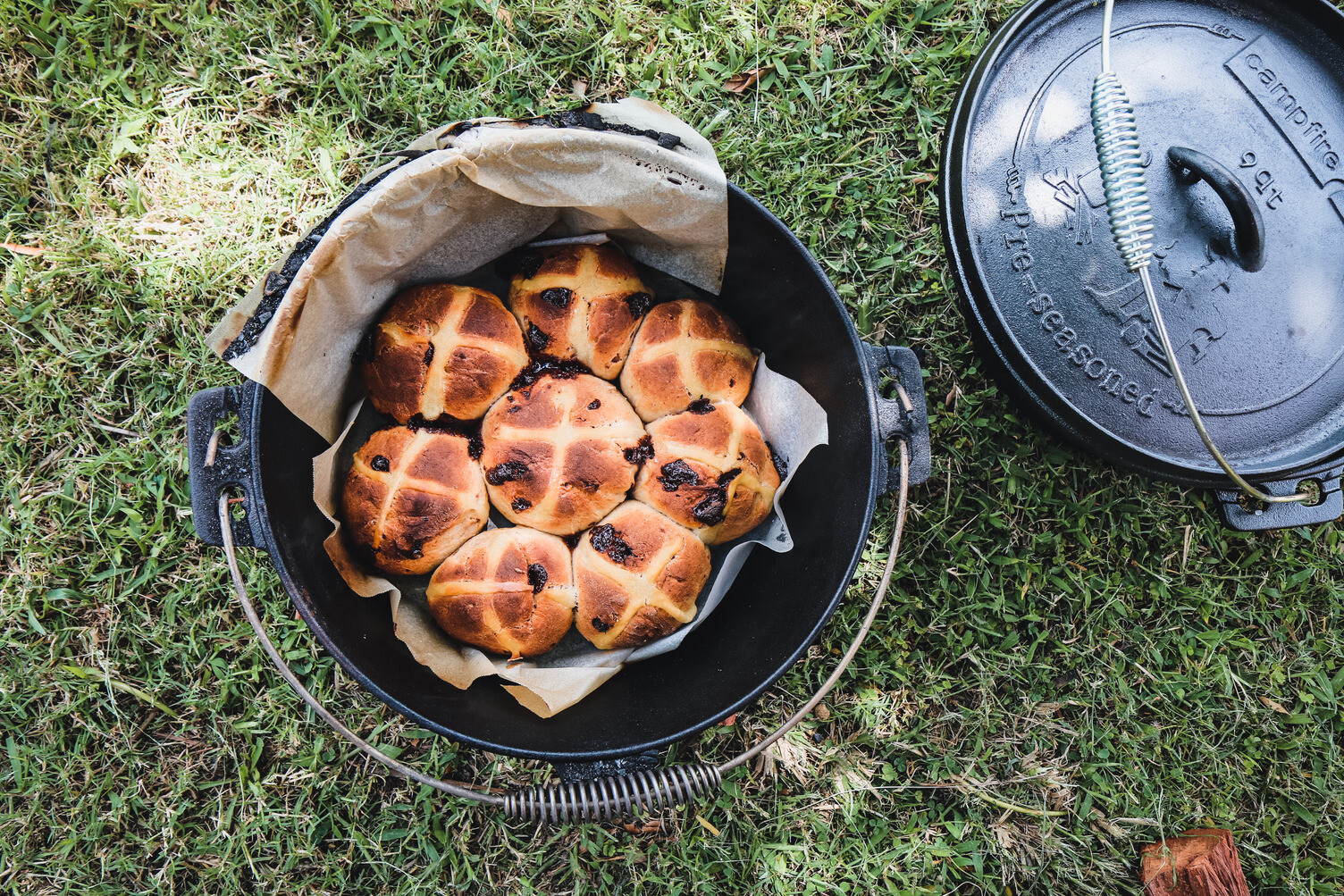
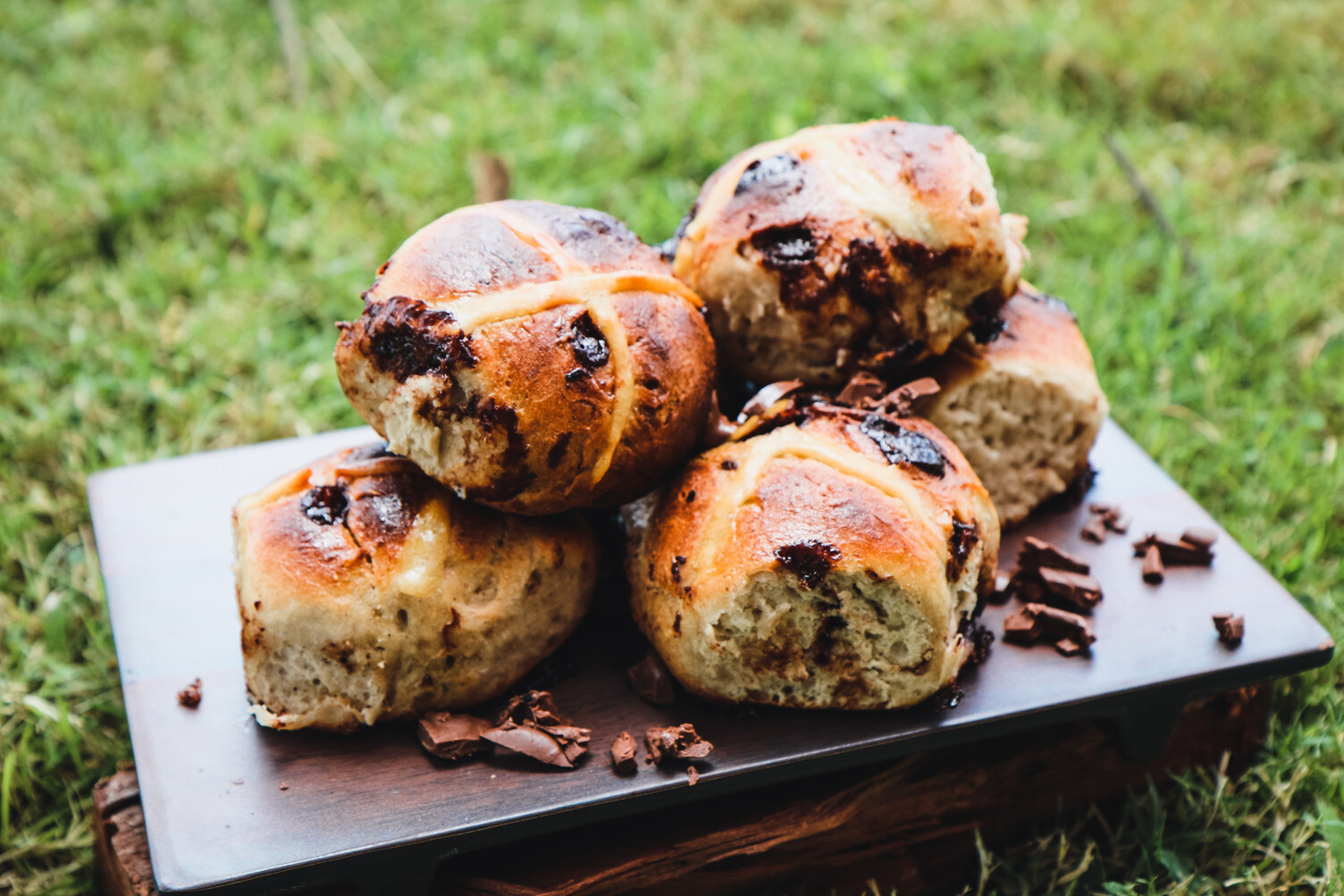
A simple camping recipe for everyone’s favourite Easter treat: Hot cross buns.
Ingredients
- 4 cups plain flour
- 2 eggs, lightly beaten
- 2 x 7g sachets dried yeast
- 1/4 cup caster sugar
- 40g butter, softened
- 300ml milk
- Pinch of salt
- 2 tsp mixed spice (for traditional buns)
- 1.5 cups sultanas/fruit mix or choc chips/smashed Easter eggs
For the cross
- 1.5 cup plain flour
- 6 tbsp water
For the glaze
- 1/4 cup water
- 2-3 tbsp caster sugar
Method
- In a large bowl, combine flour, yeast, salt and sugar. Add mixed spice and sultanas/fruit mix for traditional, or choc chips/Easter eggs for choc chip buns.
- Heat butter and milk in a small saucepan until lukewarm. Add to the spice bowl.
- On a lightly floured surface, knead the dough for about 5 minutes until smooth and elastic. Add the dough to a large, slightly greased bowl then cover with plastic wrap. Leave in a warm place for 45 minutes or until the dough has doubled in size.
- Prepare the coals and preheat your camp oven while the dough rests.
- Remove the risen dough from the bowl and ‘punch down’. Slightly knead, then divide into 12-16 balls.
- Grease and line the oven with baking paper. *Tip: Use a trivet to prevent burning.
- To make the ‘cross’, whisk together flour and water in a small bowl until smooth. Add more water if needed. Make a piping bag out of baking paper or spoon mixture in to a zip-lock bag and cut the corner.
- Place 8 balls (buns) in the 9 Quart camp oven, then pipe the flour mix on top to form crosses. Cook for 30-35 mins, rotating lid and oven every 10 mins (coals on top and bottom).
- To make the ‘glaze’, heat water and sugar in a small saucepan until sugar has dissolved. Brush onto top of buns.
- Serve warm and with butter!
Cookware required
- Campfire 9 Quart Camp Oven
- Campfire Trivet or Steamer Rack
Australian tow bar manufacturer TAG has just released a new range of Tow Ball Mounts and towing accessories designed to work in tough Australian conditions.
A one-size-fits-all approach won’t work for every vehicle on the market, so it’s great to see a wide range of Tow Ball Mounts and Pintle hooks from the team at TAG.
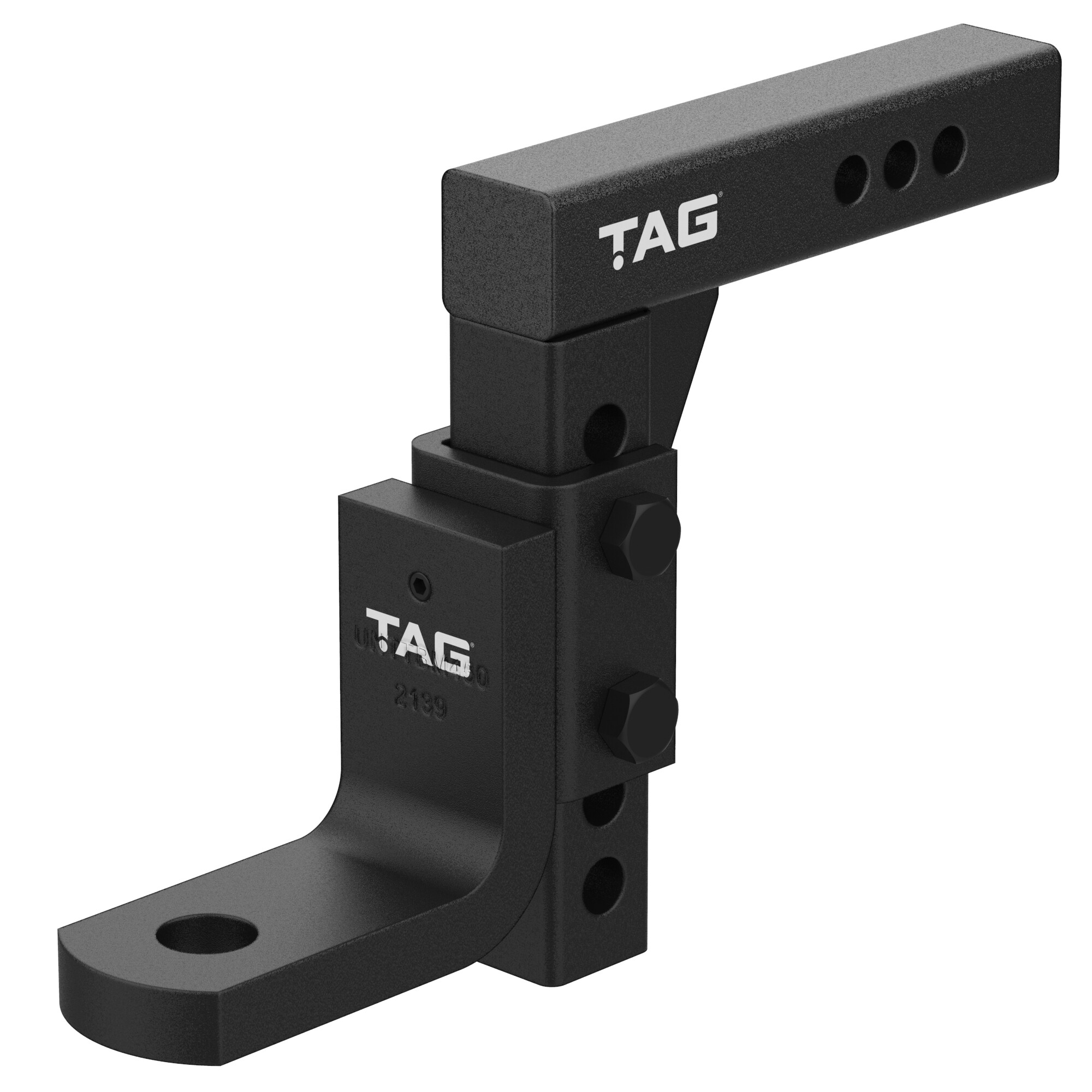
Notable features include the all-new Adjustable Tow Ball Mounts, including a vertically adjustable hitch rated to 3.5 tonnes with three adjustable height positions, up to 135mm.
There’s also a heavy-duty adjustable hitch rated to 4.5 tonnes (when using a 70mm tow ball) with three horizontal and four height-adjustable positions, plus the ability to use it in either drop or rise mode.
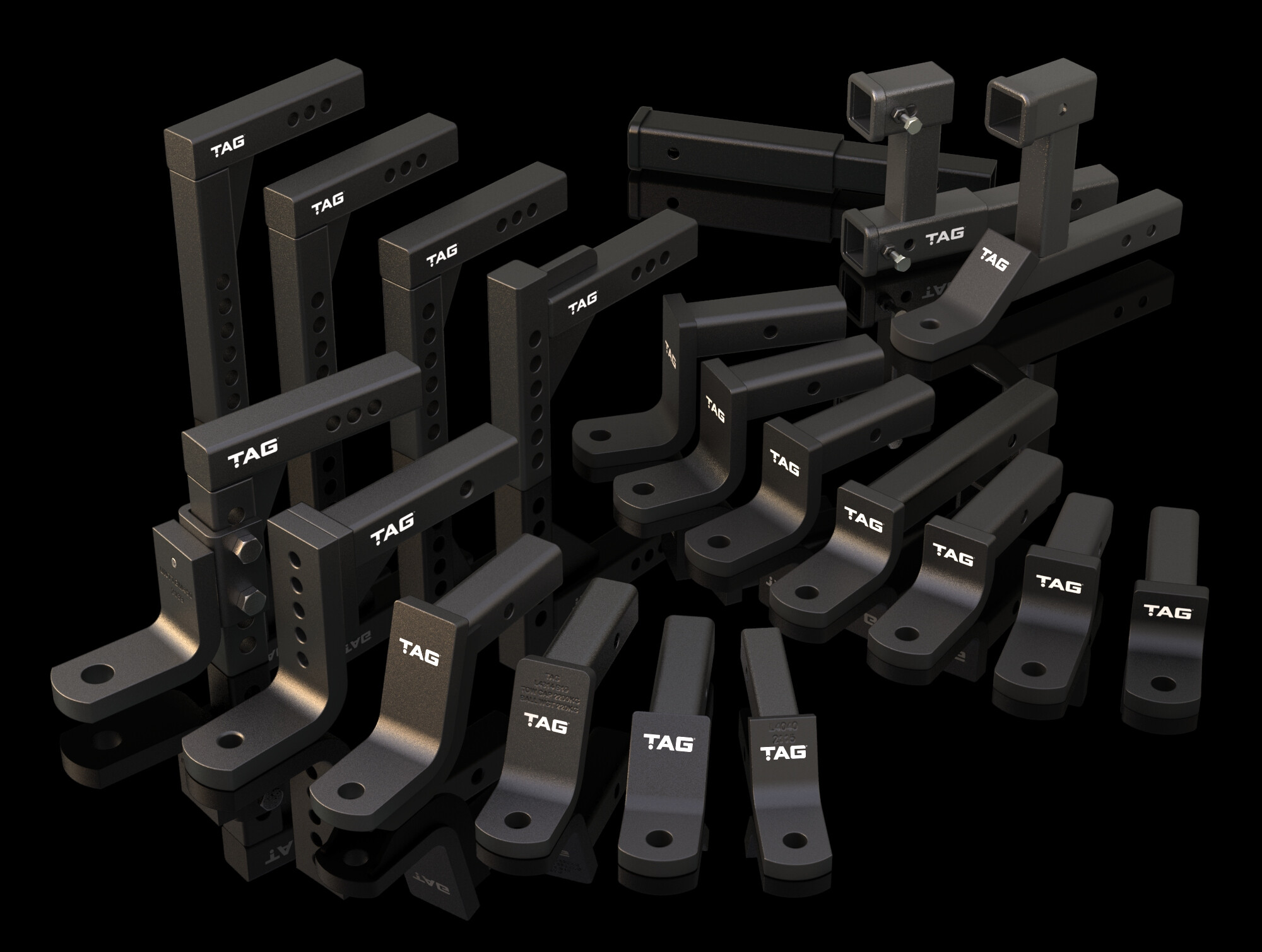
Manufactured using drop-forged steel, CNC milled and robotically welded for precision and consistency; all TAG Tow Ball Mounts are ADR tested and compliant, batch marked and powder-coated for a long-lasting finish.
The range of towing accessories offered by Tag Towbars also includes hitch extenders, pintle hooks, weight distribution shanks and hitches, wrench-friendly tow balls, hitch covers, shin-protectors, locking pins, trailer plugs, adapters and pretty much anything you and your vehicle could require for towing.RRP: From $52.99 to $269
WEBSITE: www.tagtowbars.com.au
The 2023 Nissan Pathfinder Rock Creek has been unveiled in the US as a more rugged, adventure-focused variant of the SUV.
A year after Nissan first showed off its new-generation Pathfinder, the company has launched this Rock Creek variant, designed to add to the vehicle’s off-road capability.
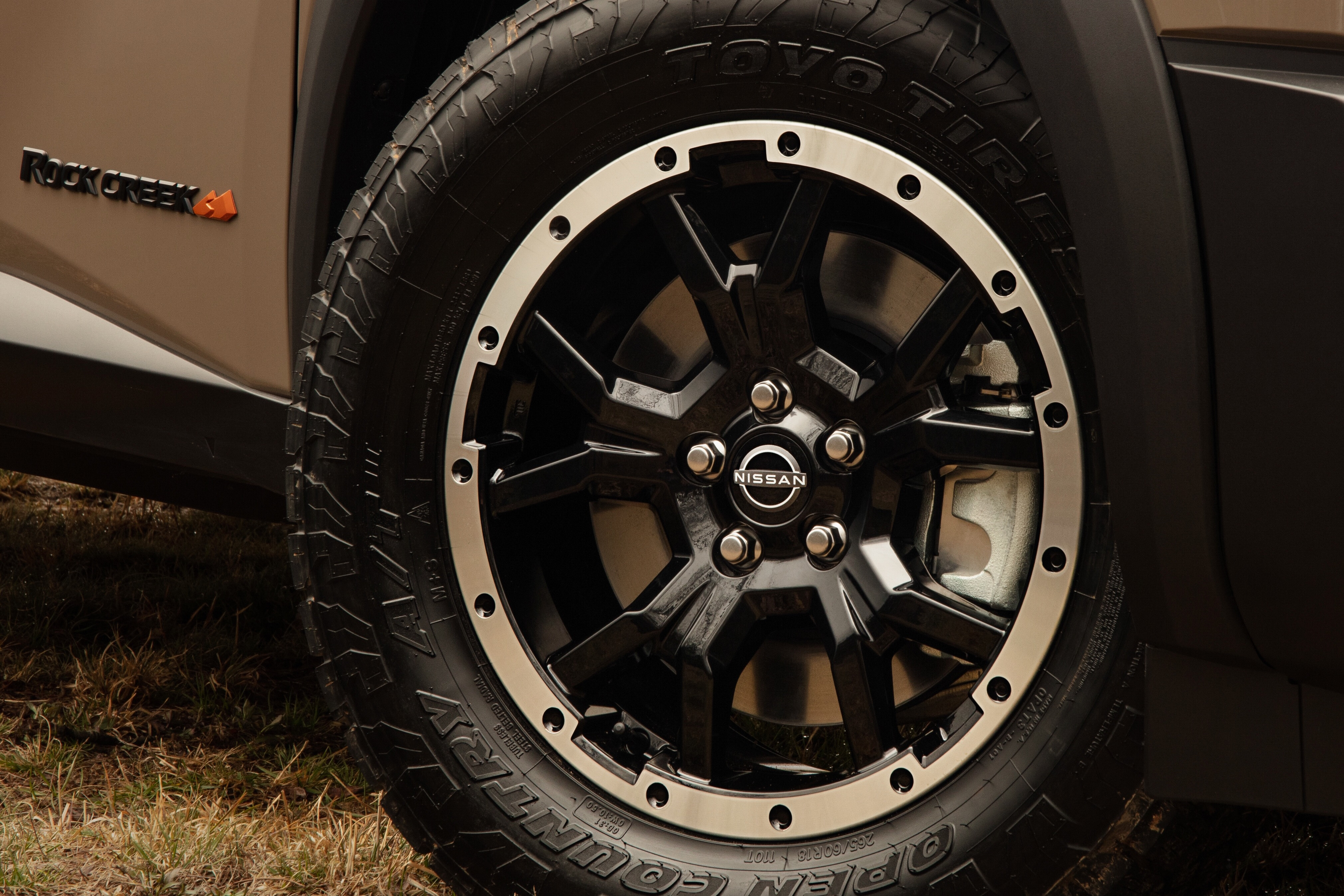
Headlining the changes are a set of 18-inch beadlock-look alloy wheels fitted with 265/60R18 Toyo Open Country A/T tyres, upgraded suspension, and a 16mm lift.
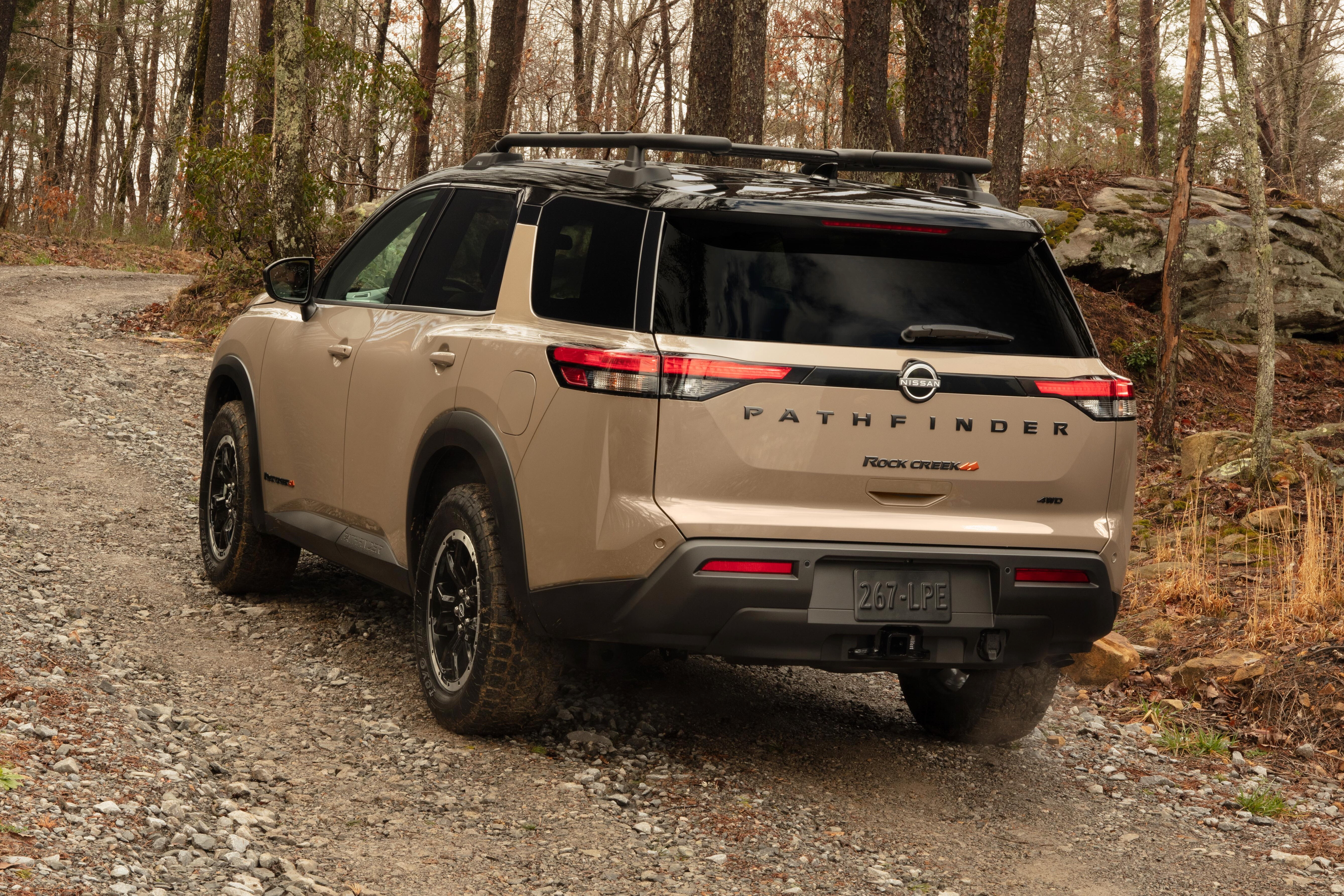
A tubular roof rack with 100kg capacity, unique styling changes, and Rock Creek badges completes the look.
Inside, a synthetic leather and fabric interior with Rock Creek embroidery and orange contrast stitching is standard, while a 360-degree camera helps the driver in more challenging environments.
Also standard are second-row captain’s chairs, a towing package, and LED fog lights.

While it’s not the first Rock Creek edition, the original version was more of a styling exercise, with 18-inch alloys, all-season road tyres, and black plastic trims fitted to give it a rugged look.
Along with upgraded tyres and suspension, the 2023 Pathfinder Rock Creek will get a performance bump, with power increased from 212kW to 220kW thanks to premium fuel and a revised tune, while torque from the 3.5-litre petrol V6 has gone up by 15Nm to 366Nm.
Drive is sent to all four wheels through a nine-speed automatic transmission, with terrain selector and Off-Road Mode.
Nissan Australia hasn’t confirmed any plans for the Rock Creek, but it’s likely the variant has been created solely for North American markets to help the model compete with the likes of the Ford Bronco Sport (not the proper off-roading version) and the Subaru Forester Wilderness.
Australian pricing and specifications for the 2023 Nissan Pathfinder will be announced later in 2022, closer to the SUV’s local launch.
Nissan’s 2022 Australian line-up is coming together
Snapshot
- 2022 SsangYong Musso price and specs announced
- No powertrain changes, but exterior, interior, and tech updates
- Priced from $35,790 drive-away
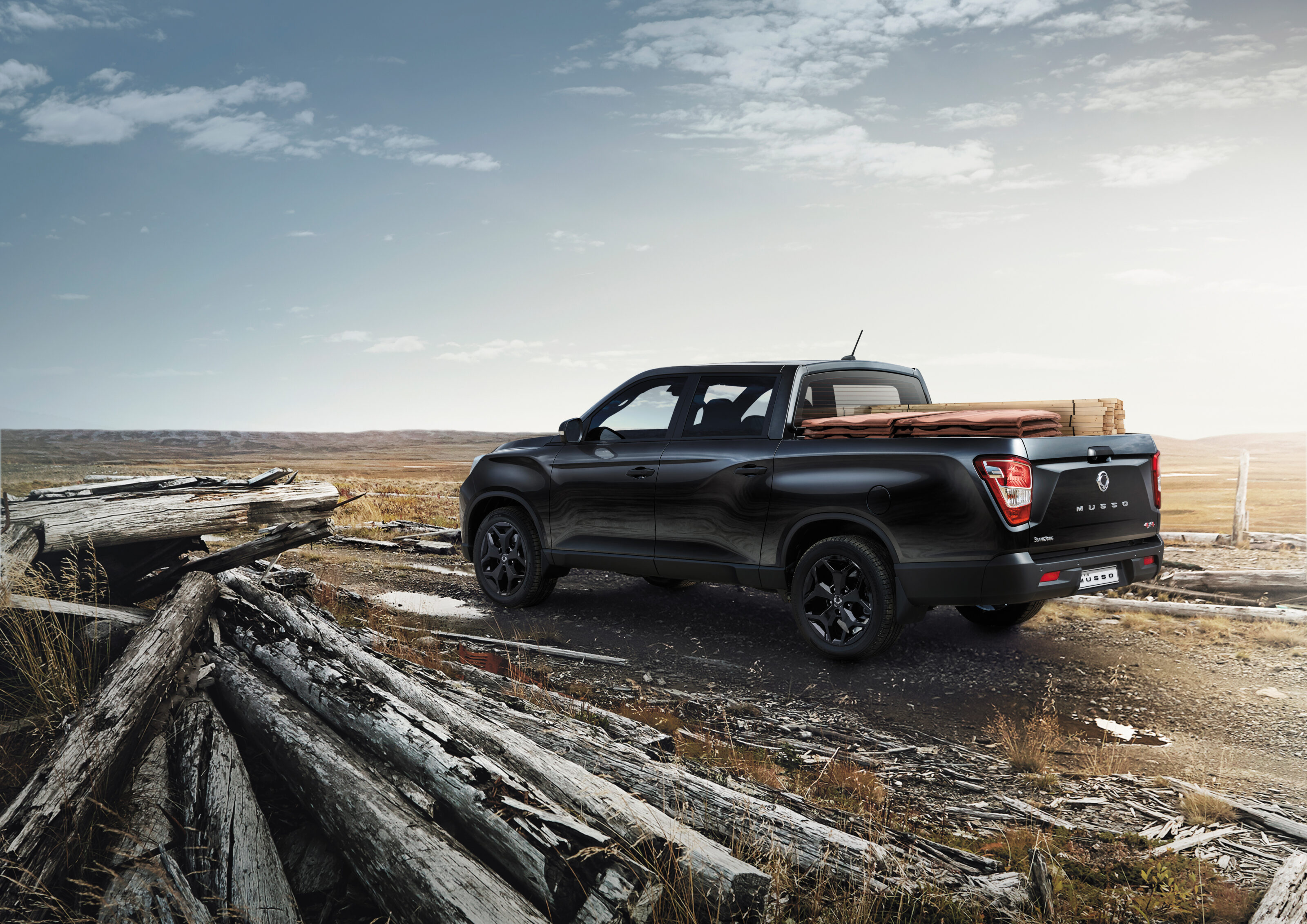
The 2022 SsangYong Musso is about to arrive in Australia, bringing with it a number of tech and styling updates.
SsangYong has kept the Musso range more or less the same for the new year, with a manual ELX starting from $35,790 drive-away, topping out with the Ultimate Luxury XLV for $46,590.
Prices have increased by $800 across the line-up, while optional metallic paint has gone up by $100 to $595.
With the price changes, the Musso’s digital instrument cluster grows from a 7.0-inch screen to 12.3 inches, along with a new overhead console with LED lights and seatbelt reminders.
On the outside, colour-coded tailgate and door handles and mirror caps will also make a return.
SsangYong Australia has retained the Euro 6-compliant 2.2-litre turbo-diesel four-cylinder engine, forgoing the updated engines found on overseas models in order to avoid the addition of AdBlue, which requires the full-size spare to be removed in order to fit an under-tray tank.
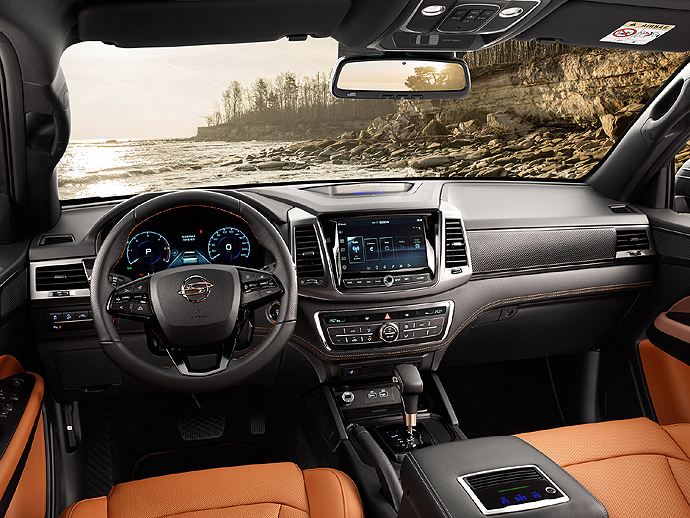
As with previous models, buyers can opt for an ‘XLV’ pack across all grades for an additional $1500, which adds 300mm to the length of the tub, while moving to heavy-duty leaf springs on ELX variants instead of multi-link rear suspension.
A Luxury Pack is also available for Ultimate variants, adding niceties such as premium nappa leather interior, sunroof, and heated rear seats for $3000.
2022 SsangYong Musso Australian Pricing
Note: Drive-away prices listed.
| Model | Price |
|---|---|
| Musso ELX manual | $35,790 |
| Musso ELX XLV manual | $37,290 |
| Musso ELX auto | $37,790 |
| Musso ELX XLV auto | $39,290 |
| Musso Ultimate auto | $42,090 |
| Musso Ultimate XLV auto | $43,590 |
| Musso Ultimate Luxury auto | $45,090 |
| Musso Ultimate XLV Luxury | $46,590 |
Features
Musso ELX
| Colour-coded mirror caps |
| Colour-coded door handles |
| Cruise control |
| Overhead console |
| 12.3-inch digital instrument cluster |
| LED daytime running lights (DRL) |
| Front fog lights |
| 8.0-inch infotainment touchscreen |
| Apple CarPlay and Android Auto |
| Reverse camera |
| Front and rear parking sensors |
| Leather steering wheel |
| 18-inch silver alloy wheels (17-inch for XLV) |
Musso Ultimate, in addition to ELX
| 360-degree camera |
| HID headlights |
| Speed-sensitive power steering (SSPS) |
| Synthetic leather interior |
| Heated and vented front seats |
| Heated steering wheel |
| Tyre pressure monitoring system (TPMS) |
| Walk-away auto-door locking |
| 18-inch black alloy wheels |
Ultimate Luxury, in addition to Ultimate
| Dual zone automatic climate control |
| Power sunroof |
| Premium Nappa leather upholstery |
| Powered front seats |
| Powered drivers lumbar support |
| Heated rear seats |
Engine and driveline
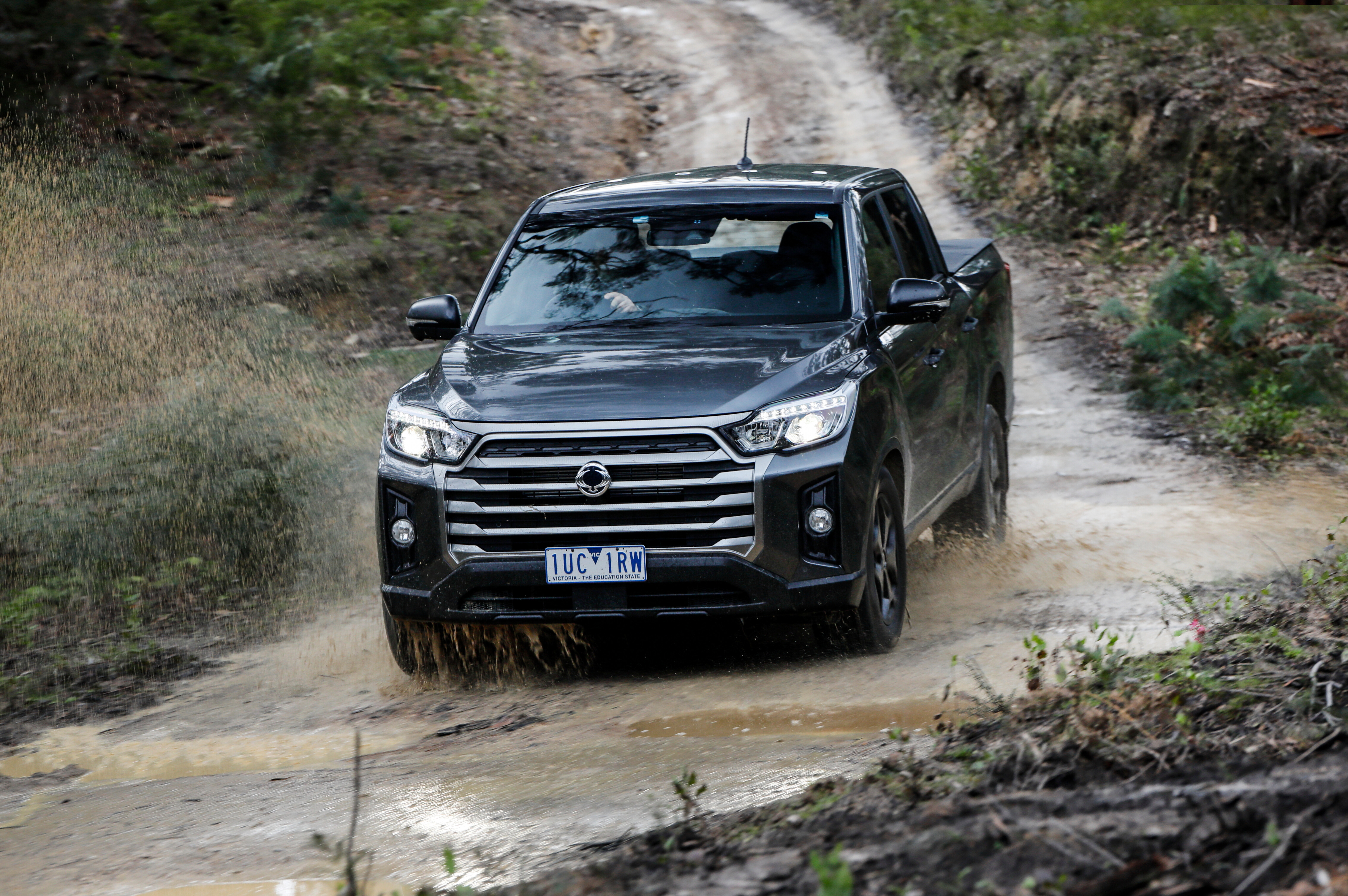
The 2022 SsangYong Musso is powered by a 2.2-litre turbocharged four-cylinder diesel engine producing 130kW and 400Nm – with Ultimate models gaining an extra 20Nm of torque.
All ELX models come standard with a six-speed manual, with an optional six-speed automatic available for an additional $1500. Those who choose an Ultimate variant get the auto as standard.
The Musso comes with selectable part-time low-range four-wheel drive and an automatic locking rear differential for better off-road traction.
Fuel economy has yet to be confirmed for the 2022 model, but nothing should really change from 2021’s manual ELX using 7.9 L/100km combined at the lowest figure, rising to 8.9 L/100km for automatic XLV models at the highest.
Dimensions
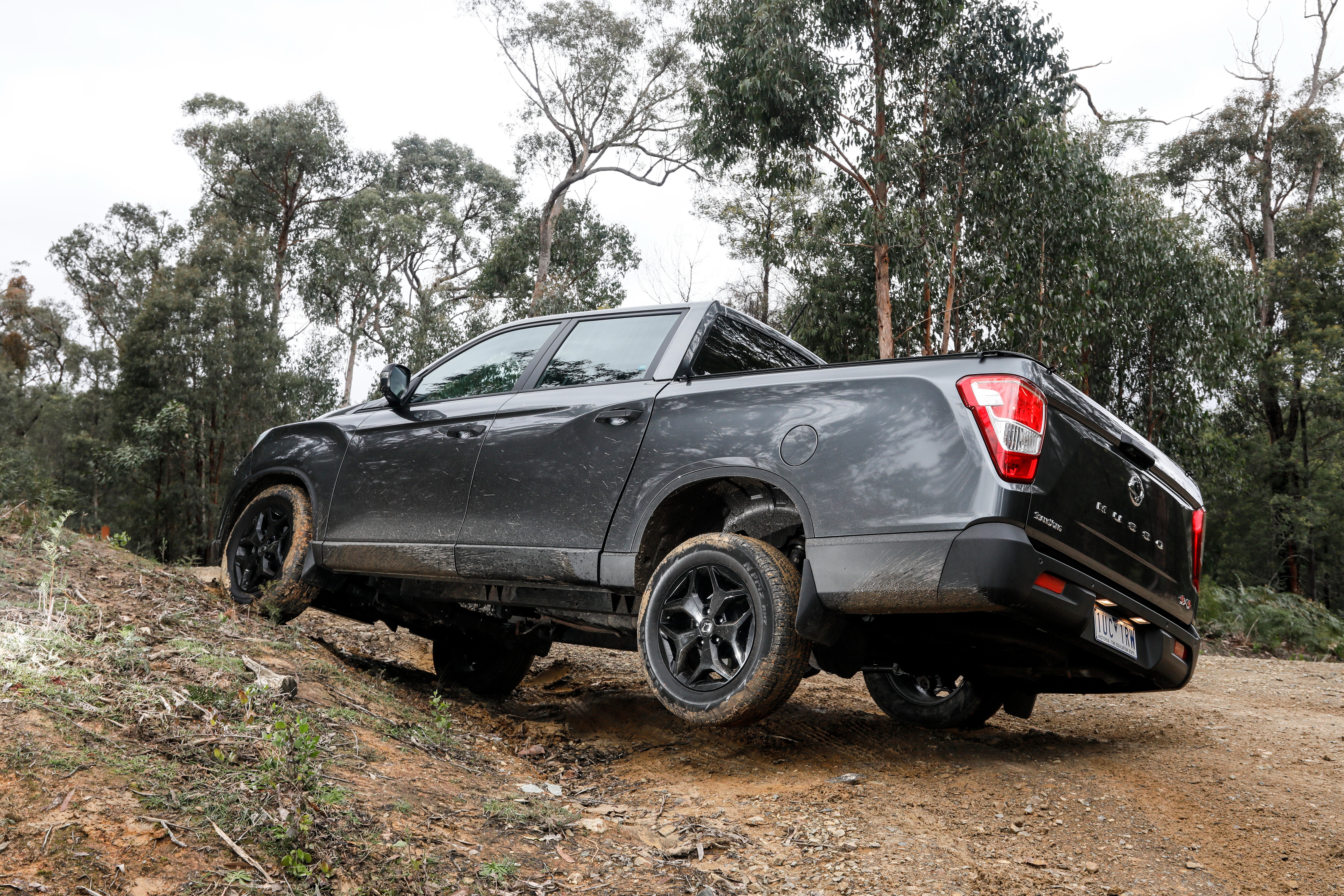
The Musso ELX and Ultimate have a wheelbase of 3100mm, are 5095mm long, 1950mm wide, and 1840mm high.
The XLV Pack increases the wheelbase to 3210mm, while length increases to 5409mm and height goes up to 1855mm.
Payload is 790kg for the ELX and Ultimate, 880kg for the Ultimate XLV, and 1025kg for ELX models with the XLV Pack.
Towing capacity is rated up to 3500kg braked.
Safety
Musso ELX
| Autonomous emergency braking with forward collision warning (FCW) |
| Lane departure warning (LDW) |
Musso Ultimate, in addition to ELX
| Blind spot detection (BSD) |
| Rear cross traffic warning (RCTW) |
| Lane change collision warning (LCW) |
Warranty
All SsangYong models come with a seven-year/unlimited-kilometre warranty, along with seven years of roadside assistance.
When will the 2022 SsangYong Musso be available in Australia?
The 2022 SsangYong Musso is expected to arrive locally in May.
I didn’t actually get as much seat time in the 2022 Isuzu D-Max LS-U Cab-Chassis as I’d have liked, because for the most part, it sat at a mate’s house out of harm’s way. Harm’s way, you ask? Brisbane was hit by that savage flood, which happened to engulf my house as one of its 20,000 residential victims.
The D-Max made it out before the water reached its tyres, along with a couple of my other pride and joys. The house, however, and its contents, were gone. I actually found some spare track car wheels five doors up, in someone’s front yard. Better the wheels than a brand spanking D-Max.
By the time the D-Max was back with me, it was put to work doing cleanup at my house, my neighbours’ houses, and we even used it to do food runs for those who had lost their rides to the cocktail of sewage and Brisbane River water – so it smelt like pizza for a good portion of the testing.
My neighbour’s freshly restored Kingswood was one of the four-wheeled victims we couldn’t save in time, but as he so stoically put it, “I restored it once, I can do it again!”
A fresh-faced D-Max with all but 1000km on it didn’t feel particularly suitable for muddy cleanup efforts, but the alloy tray meant we weren’t trashing it and a good gerni had it looking new again. The timing really couldn’t have been better.
UPDATE, October 2022: MY23 D-Max pricing announced
The updated 2023 D-Max has been detailed, with tweaks to styling, equipment and engine options. Get the full story at the link below. We’ll be driving the updated models as soon as they reach Australia, but mechanically they’re largely unchanged.
Story continues

The 550 kilometres we spent in this D-Max were high stress and it wasn’t babied. Oddly, though, it returned similar fuel use figures to what we usually get from D-Maxes, chugging a respectable 9.1L/100km. Mind you, the sheer number of traffic lights out meant a clean run on just about every drive – a rather post-apocalyptic experience of taking intersections into your own hands.
There’s nothing more suitable than a dual-cab 4×4 ute in situations like the one we were faced with, especially one with a sizeable alloy tray. So despite spending less time behind the wheel than usual, none of its use was mundane.
The updated 2022 D-Max range offers more than just mild visual tweaks, with an all-new LS-U+ variant to bridge the gap between the mid-range LS-U and range-topping X-Terrain, the addition of LS-M and LS-U cab-chassis models, and the return of space cab options.
I tested a space cab D-Max long-term in 2018 and loved it, happily sacrificing rear-seat space for more tray length – so the move to bring the model variant back is one I (and no doubt many tradies, too) applaud.
As well as more choices, the latest generation D-Max range brings more tech, and most critically, more overall carrying capacity thanks to a GCM that jumps from 5,950kg to 6,000kg. All of these range updates actually came ahead of schedule, too. Hats off to Isuzu Ute Australia because, in a delay-ridden pandemic-stricken world, we’ve grown so used to waiting that it seems unusual when deadlines are met ahead of time.

There have been a couple of price hikes, although the range-topping X-Terrain scored an introductory ‘special’ drive-away price of $62,990 (up to $67,500 before on-road costs after the introductory offer wraps up) down from last year’s $63,900. And Isuzu says it will honour prices for orders placed before the April 1 increase.
Our cab-chassis LS-U tester starts at $59,500 without extras and before on-road costs, which is a smidge less than the $56,100 style-tray automatic LS-U but for those who choose the alloy tray, it’s usually utility rather than price that sways the decision.
It’s a more expensive ute than the previous-gen D-Max but you do get greater levels of technology and GCM increase across 4×4 models. With just $1,090 between the new LS-U+ and top-spec X-Terrain – for those that took advantage of the special introductory offer – it would have felt like a no-brainer to buy up.
My last D-Max experience was spending a few months with the new 1.9-litre SX, which felt similar in many ways but definitely didn’t match the grunt of the 4JJ3 3.0-litre engine. The extra torque never hurts, and while it’s not the most powerful in its class, the big donk lazily gets the job done without strain or excessive revs. I still feel the D-Max could do with an extra gear or two, as has been mentioned before, but this engine works just fine with a six-speed automatic.
It really is quite impressive to think the D-Max still uses much the same engine it debuted with in 2008. We’re not knocking it, because it’s a good thing

The long-serving 4JJ3 received a major overhaul last year, resulting in a 10kW/20Nm performance jump and a far more useable torque band. It wasn’t just a better turbo and some mapping changes, either. Isuzu developed an all-new new engine block, crankshaft, cylinder head and lightweight aluminium pistons. An electronically controlled variable geometry turbo was the cherry on top, offering better response alongside the bump in performance.
Among these, other powertrain developments resulted in a quieter, smoother, gruntier Euro V D-Max that holds its own despite its engine being, in reality, a 15-year-old design. It really is quite impressive to think the D-Max still uses much the same engine it debuted with in Australia back in 2008. We’re not knocking it though, because it’s a good thing.
Torque delivery is really where this engine shines, offering up its 450Nm effortlessly and rarely are you stabbing at the accelerator in need of a forced downshift. It’s down on competitor numbers, but it’s useable torque. Especially important for those towing or running around up near GCM, which is where displacement is king.

The D-Max still isn’t quiet, and you definitely know you’re driving a diesel, but it adds to the appeal and reminds you that it’s a work ute. Particularly this cab-chassis model with its tradie-focused alloy tray.
For ’22 the visual changes are minor, both inside and out, with most of the changes coming in the form of tech. As far as we could tell, the revised models are almost indistinguishable from last year’s equivalent models, although the cab-chassis LS-U we tested is a new model entirely.
The D-Max gets LEDs all round, comprising automatic Bi-LED headlights with auto-levelling and automatic high-beam control, DRLs, and LED taillights.
Its 18-inch machined-face alloy wheels are one of the better-looking options in this segment, fitted across multiple D-Max models, and on an alloy tray ute like this one, they’re a step up over steelies.

The interior looks much the same, with the signature D-Max side cup holders we love, plenty of in-cabin storage, a familiar dash and infotainment set-up, and all the controls are where they should be. The seats offer an impressive amount of bolstering – handy when thrashing around off-road – while remaining comfortable for long trips.
Overall finish is polished and appears to be hard-wearing with no flimsy trim pieces or delicate materials.
The cab-chassis we’re testing features an 1800mm-long alloy tray, available in steel if required, along with an increased GCM of 6000kg. The GCM increase doesn’t increase payload when you’re not towing, though, because GVM remains at 3100kg.
To break it down – the GCM increase improves payload while towing at, say, the maximum 3500kg braked towing capacity. With a kerb weight (including the heavy-duty alloy tray) of 2093kg, if you were to tow a 3500kg caravan for example, you’d be left with 407kg of payload. A factory standard tow bar receiver is also worth mentioning, while we’re on the topic of towing.
Manufacturers quite often hide behind impressive maximum braked towing capacity ratings while GCM lags, but Isuzu clearly intends for owners to use the D-Max to its full potential.

GCM rant aside, and in terms of what you can actually carry, payload for the D-Max LS-U Cab Chassis with the heavy-duty alloy tray fitted is 1007kg. Impressive given the LS-U luxury up front, and its 4×4 drivetrain. Yes, a 4×2 equivalent model will be capable of carrying a couple of hundred kegs more, but it won’t be off-road ready.
The Crew Cab Chassis 4×4 variants all receive heavy-duty three-leaf suspension over the standard set-up, which is pretty rough-riding without some weight over the rear axle.
It’s quite likely this is a compromise resulting from the set-up being intended for carrying a decent weight. We didn’t have more than about 100kg in the tray at any one point, but I suspect a heftier load would significantly improve ride quality.
Off-road, while we sadly didn’t get a chance to engage four-wheel-drive, given the circumstances, this would undoubtedly excel much like any other latest-gen D-Max. Ground clearance (240mm), approach angle (30 degrees) and departure angle (20.6 degrees) are on par with other D-Max models, although departure angle does suffer ever so slightly with the alloy tray. The light tray and stiff springs may hinder grip slightly, but with a rear locking diff and a system we know works, it’d be a decent performer.

Tech is where the ’22 models score a bump, although the improvements are subtle. The addition of Smart Keyless Entry and Walk Away Door Lock are the first things we noticed, when the car automatically locked the doors. A true ‘leave your keys in your pocket’ system makes sense, negating the need to ever fumble for the keys while your hands are full.
Another subtle but handy addition is a Lane Support System switch on the steering wheel, which effectively turns off the driver-aid technology. Lane-keep assist, lane departure warning, lane departure prevention, and emergency lane-keeping are silenced with a two-second hold of the switch. Isuzu says the decision to add the switch came off the back of customer feedback, which makes sense because on too many modern vehicles, the D-Max included, it’s difficult to work out how to turn these sometimes intrusive systems off.

An auto-dimming rear vision mirror is standard now, too, although it’s one of those things that works so seamlessly that you don’t really notice it. The rain-sensing wipers are another bit of tech that you’ll notice fairly early on in the piece – if you use the wash-wipe that is. The screenwash comes from the wiper blade itself, rather than traditional bonnet mounted jets, which is great until you’re trying to wet a section of the windscreen not covered by the wipers.
In-cab tech includes a 9.0-inch infotainment system, with the same interface as last year’s model range, offering wireless Apple CarPlay and Android Auto, voice recognition, DAB+ radio and eight speakers. Wireless charging would be nice, but a good ol’ fashioned USB port keeps the juice flowing.
Tech is where the ’22 models score a bump, although the improvements are subtle

Isuzu’s Advanced Driver Assistance System (IDAS) is again standard across the range, offering an impressive suite of driver aids including autonomous emergency braking with turn assist, blind-spot monitoring, forward collision warning, adaptive cruise control, traffic sign recognition, blind-spot monitoring, rear cross-traffic alert, lane keep assist, lane departure warning and emergency lane keeping.
The lane-keep assist is helpful, rather than backseat driving constantly and the autonomous emergency braking also waits until it’s panic-brake time. I only know that because a Barina cut me off and very nearly caused an accident, with the AEB intervening right as I mashed the stop pedal myself. Safety systems always seem to err on the touchy side of things, so we feel Isuzu has nailed the balance with its IDAS features. The new lane support system switch allows you to turn them all off regardless, but we didn’t see a need to.
A five-star ANCAP safety rating carries over to the ’22 range, and all models in the D-Max line-up score eight airbags – even the 4×2 SX workhorse.

Around town, which is where this LS-U Crew Cab saw all of its testing, it’s a bit rougher than a regular LS-U with its heavy-duty rear end. In saying that, though, the alloy tray is quiet and doesn’t knock or clang around.
One downside of the alloy tray is visibility when parking. The reversing camera doesn’t give you a perfectly trustworthy indication of where the tray corners are, likely due to it protruding further than style trays, so using those mirrors is key.
For that one small downside, the tray design is fantastic. Ample side rail and inside tie-down points proved handy, as we opted for ropes rather than straps when testing. Yes, not ideal given the current rules, but ratchet straps soiled with river mud weren’t as suitable as a tried-and-true rope.
We managed 9.1L/100km across two weeks, with very little highway work slotted in. A pretty impressive average against Isuzu’s claimed 8.0L/100km

The 3.0-litre engine does drink when pushed, but its effortless pull means you rarely need to lean on it. It doesn’t overtake at highway speeds with as much haste as others in its class, but still has plenty of go. Around the city it’s punchy and, thanks to a fairly simple six-speed automatic and smooth power delivery, doesn’t trip over its feet trying to find the right gear.
We managed 9.1L/100km across two weeks, with very little highway work slotted in. A pretty impressive average against Isuzu’s claimed 8.0L/100km combined average, given the ute was on the run doing urban cleanup for the week of testing.
Steering is light at low speeds, but firms up to previous-gen D-Max levels by triple figures, and is an example of electric power steering done right. The old D-Max was great on the highway, but a bit of a workout everywhere else.

The wireless Apple CarPlay connected quickly and the familiar infotainment system proved yet again that a simple yet effective interface is best in a work ute.
It’s a shame we couldn’t test this Cab Chassis model off-road, but we’ll have to get it onto some dirt next time.
The as-tested price for this particular D-Max LS-U Cab Chassis is $68,882.54, consisting of the base price ($59,500), metallic paint ($650), heavy-duty alloy tray ($2,871), on-road costs ($4,418), tow bar wiring harness ($359), tow tongue kit ($195.80), electronic brake controller ($820), and stamp duty ($68.74). You’ve only got the option of an auto for this LS-U Cab Chassis model, so there are no savings to be had by changing gears yourself.
This is the D-Max option for those wanting a more rugged tray option, for work or play, but with all the luxury of the mid-spec LS-U model. It probably isn’t a huge chunk of the market, but there are plenty of tradies who would get more use out of this model than a style tray.

Isuzu has carried over its ‘Service Plus 6-7-7’ warranty offer, giving buyers a six-year, 150,000km warranty across the range, seven years of capped-price servicing, and up to seven years of roadside assistance when serviced through Isuzu Ute Australia’s dealer network.
Service time will roll around every 15,000km or 12 months, depending on which comes first, with the first 105,000km worth of capped price servicing coming in at $3513.
The ’22 LSU cab-chassis feels like the already good ’21 LS-U D-Max, but with a few welcome tech updates and a bit more of a rugged edge with the alloy tray. And on that, these updates were driven by customer feedback, which tells us Isuzu listens to its buyers.
If you’re a tradie or weekend handyman that wants luxury while maintaining a rugged alloy tray – one you won’t be afraid to dent or scratch – the LS-U Cab Chassis is a solid choice.
2022 Isuzu D-Max LS-U Crew Cab Chassis specifications
Keen to see your four-wheel drive published in 4X4 Australia magazine? Then send some pics via our Facebook page or shoot an email to [email protected]
Toyota LandCruiser Prado Kakadu
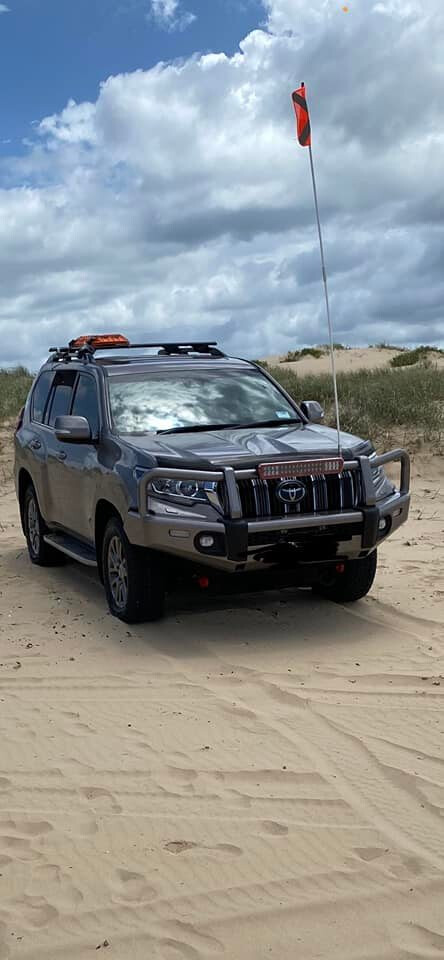
No mods to suspension or engine. It has an ARB Summit bullbar, Intensity V2 light bar, front recovery points, a Toyota standard tow hitch, a roof rack and Falken Wildpeak AT3Ws – Rommel Chrestien
2004 Nissan Patrol GU TD42TI
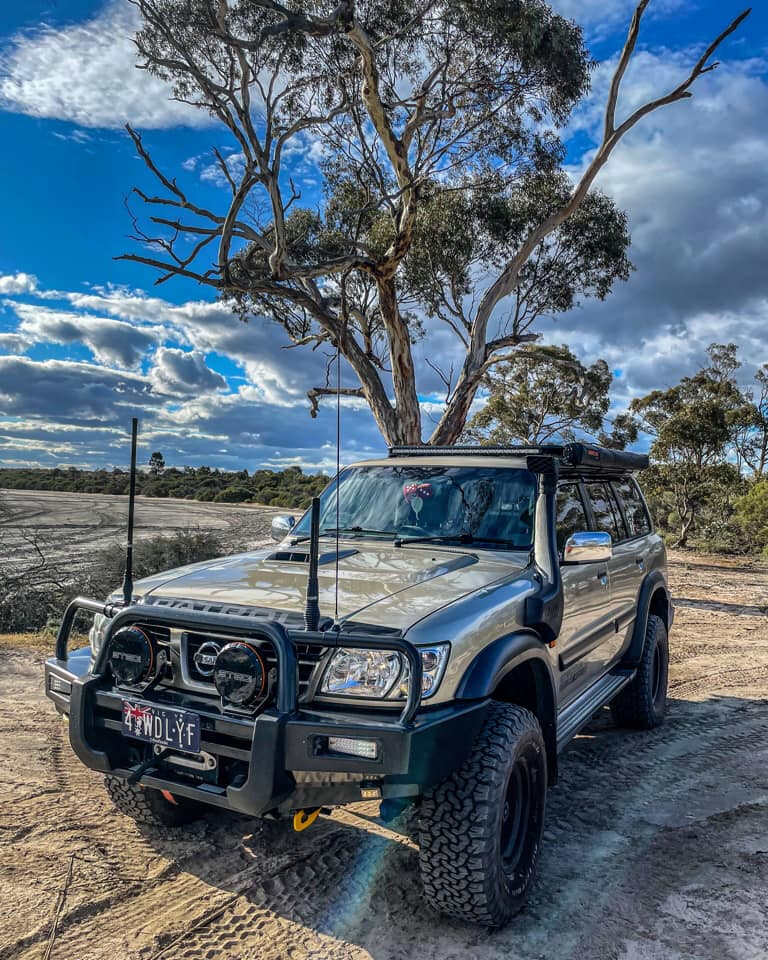
My Patrol is set up for off-road touring. It has a 2.5-inch lift with long-travel three-way adjustable remote reservoir shocks, rear airbags, Kaymar rear bar with swing-away, and a rear custom drawer set-up with 85L on-board water storage – Ayeshan Bandara
2020 Toyota LandCruiser 79 Series
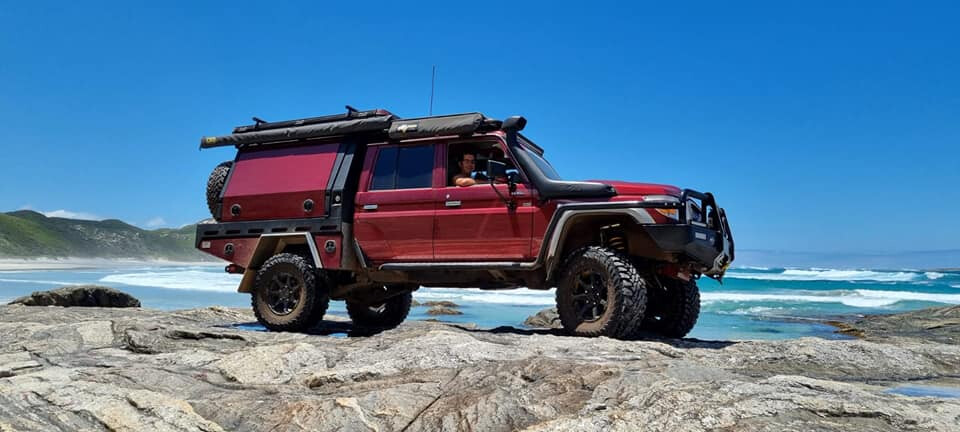
The chassis has been extended and it has portal axles, TJM Pace suspension, TJM bar work and winch, a Bullant tray and canopy, Redarc electrics, and a Drifta rooftop tent. Holland Track is a great track, and down to Bilbunya sand dunes is always a great trip. It also handled very well in the Kennedys – Wayne De Villiers
2014 Toyota Hilux
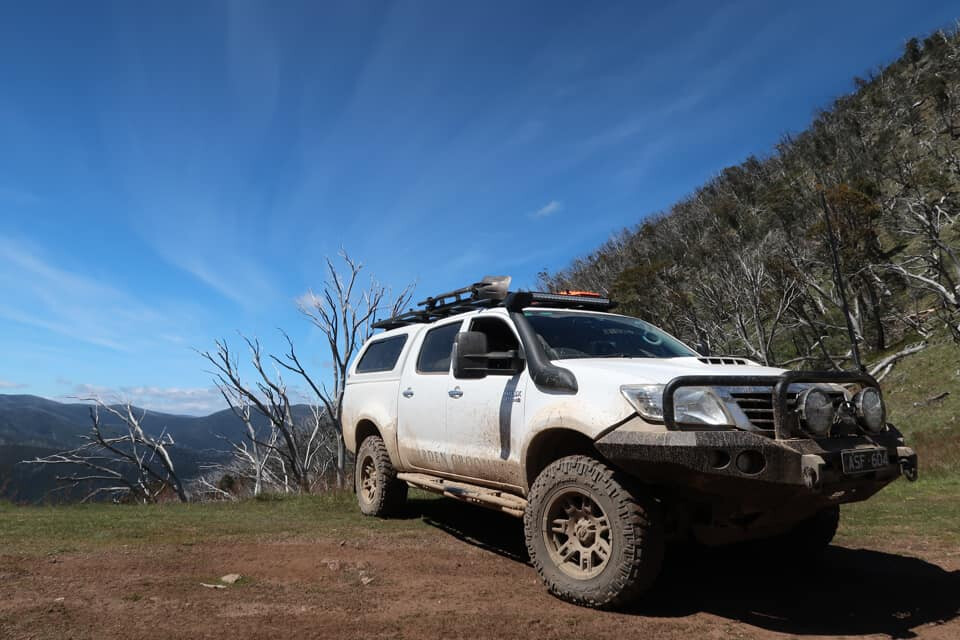
It’s my daily work car (tows a trailer every day), and then I use it for play on the weekends. This pic was taken up in the High Country near Blue Rag track.
Kit includes three-inch Superior remote-res lift; 400kg constant rear leaf; MCC rocker bar; Lightforce LED 215s; Ultimate diesel tune (400 Nm at the wheels); Big Boy intercooler; HPD catch can; PWR trans cooler; VRS 1200 winch; full bar work and plates; Rhino platforms front and rear; EGR canopy (with load bars); Baintech Lithium PowerTop battery and inverter in tub; ARB fridge; Nitto Trail Grappler MTs 265/70R17; Mickey Thompson alloys; GME overhead UHF radio in Outback roof console; Pioneer 10-inch head unit with Apple CarPlay; ClearView mirrors; Redarc brake controller; upgraded front brakes (discs and pads); ARB rear locker; ARB long-range tank; Fox wing; Factor 55 winch hook; throttle controller; diff breathers; TJM snorkel; K&N filter; dual fuel filter since 10,000km (just clicked over 98,000km).
Most importantly, it gets serviced every six months by the legends at Outback 4WD. Only thing I’d like to change is the seats – Jeremy Wilson
2021 Toyota Prado GXL
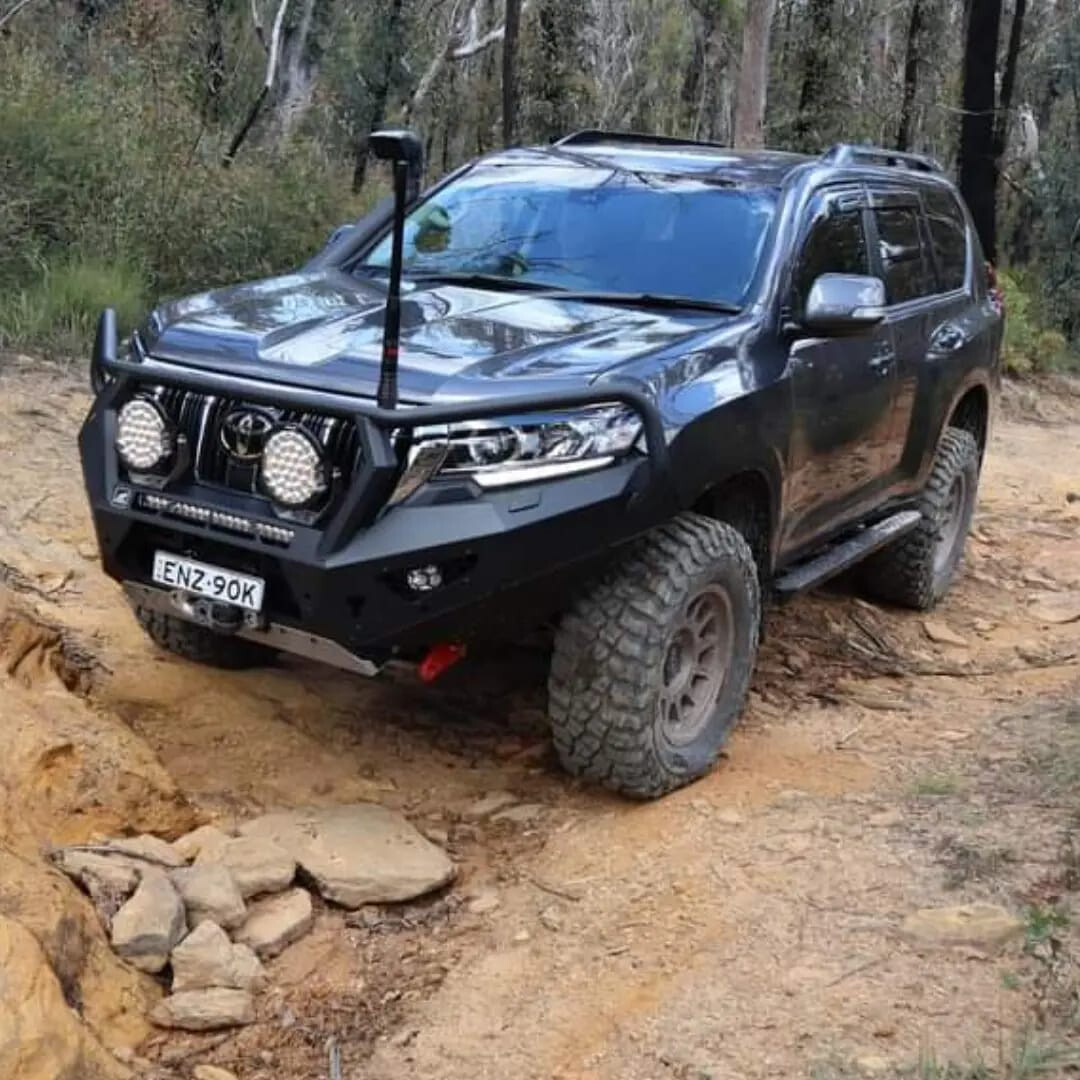
I have only had it for six months and four of those were in lockdown, so a day trip to the Lost City in Litchfield is the only place I’ve taken it so far. It has a Fox 2.0 two-inch lift, bronze Method 703s wrapped in 33-inch BFG muddies, an Offroad Animal bar, lights, sliders, Scout roof rack, dual batteries, ARB on-board air, and a Warn winch – Wayne Marshall
Land Rover 6×6
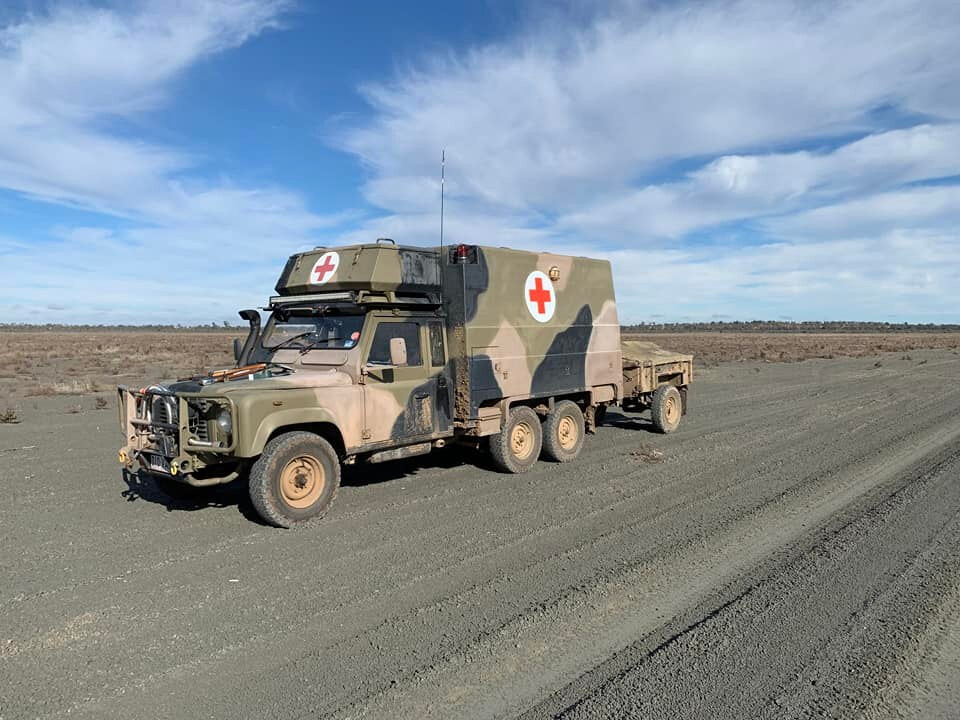
This was designed and built by Jaguar Rover Australia for the Army contract called Perentie. The Army required a vehicle to be able to carry two tonnes cross country, and the winning design was a unique chassis and body that was 75 per cent Australian bespoke built. Running as a constant 4WD, and locking the centre diff on the fly activates the rear axle.
I was going to convert the ambulance into a full camper conversion, but after a few short trips I realised it didn’t need a full rebuild as it already has everything – insulated, air conditioned, extra batteries, PTO winch and multiple storage boxes. This photo was taken when driving down a boat ramp and then across a lake in Victoria that hadn’t had water in it since 2011 – Damien Rafferty
The 2022 Easter Jeep Safari in Moab, Utah has kicked off for its 56th year, showcasing a number of concept cars from the American off-road brand.
Jeep brought a handful of brand-new and previously-seen concept cars to the event, headlined by the Wrangler Magneto 2.0 Concept – the latest to display the company’s electric powertrain technology.
Unlike the majority of battery-powered cars on the road, the Jeep Wrangler Magneto 2.0 doesn’t use electric motors to drive the wheels directly, instead replacing the internal-combustion engine with an e-motor to keep the six-speed manual transmission and low-range gearbox in situ.
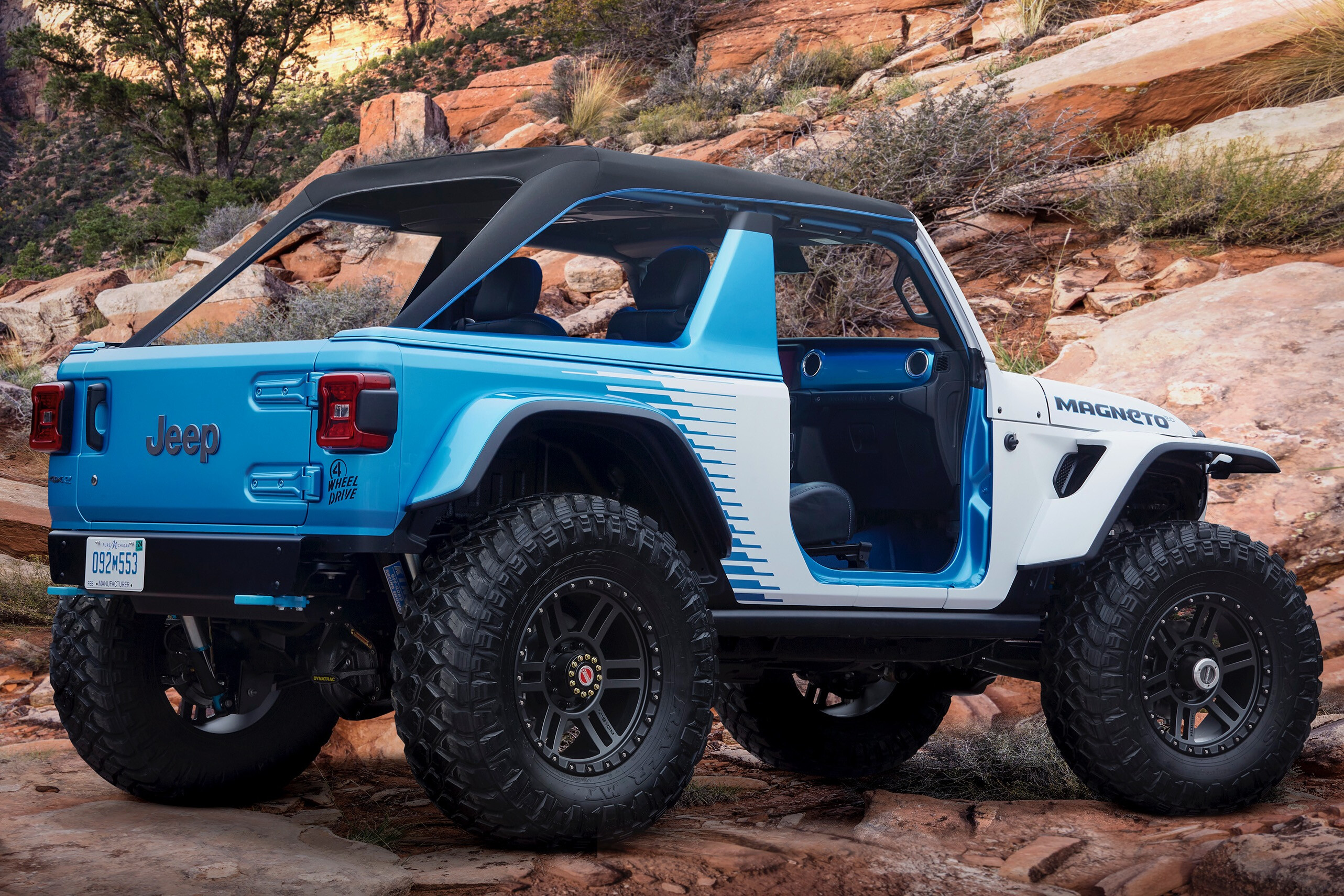
While the original Magneto concept from last year produced a healthy 213kW and 370Nm, this year’s 2.0 has upped its output to 466kW and an astonishing 1153Nm of torque in bursts of up to 10 seconds.
Jeep claims only two seconds are needed for the Magneto 2.0 to hit 97km/h (60mph) from a standstill.
An extra 305 millimetres has been added to the car’s wheelbase to accommodate powertrain components, while a custom 76mm lift kit, Dynatrac 60 Pro-Rock front axle and Dynatrac 80 rear axle, front and rear differential lockers, and 40-inch off-road tyres on 20-inch wheels help the concept to clear Moab’s boulders.
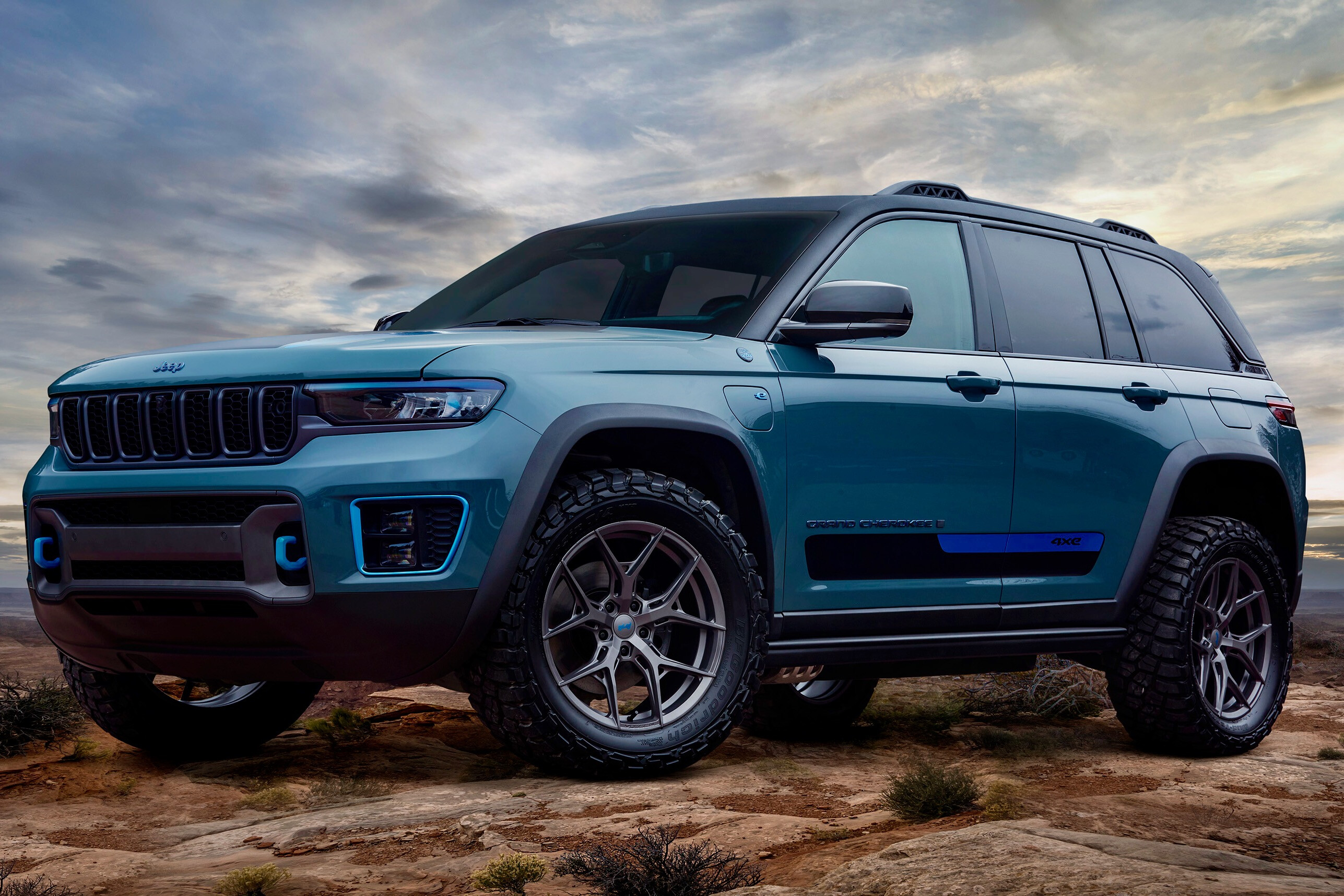
Rock-crawlers may be the centre of attention at the Safari, but Jeep also brought along a Grand Cherokee Trailhawk PHEV Concept, based on the upcoming plug-in hybrid Grand Cherokee 4xe.
Jeep says the Grand Cherokee Trailhawk PHEV Concept has completed the 35 kilometre Rubicon Trail off-road track in electric-only mode, using nearly all of its 40km of its electric driving range.
When the battery is depleted, the vehicle can revert to its 2.0-litre turbocharged four-cylinder engine, coupled with an eight-speed automatic transmission.
A sway-bar disconnect system allows greater wheel articulation, while air suspension allows the Grand Cherokee to increase its ground clearance.
Also on show is the Jeep ‘41 Concept, an homage to the company’s roots, with a retro livery designed to look like the original Willy’s GP (Jeep) from World War II.
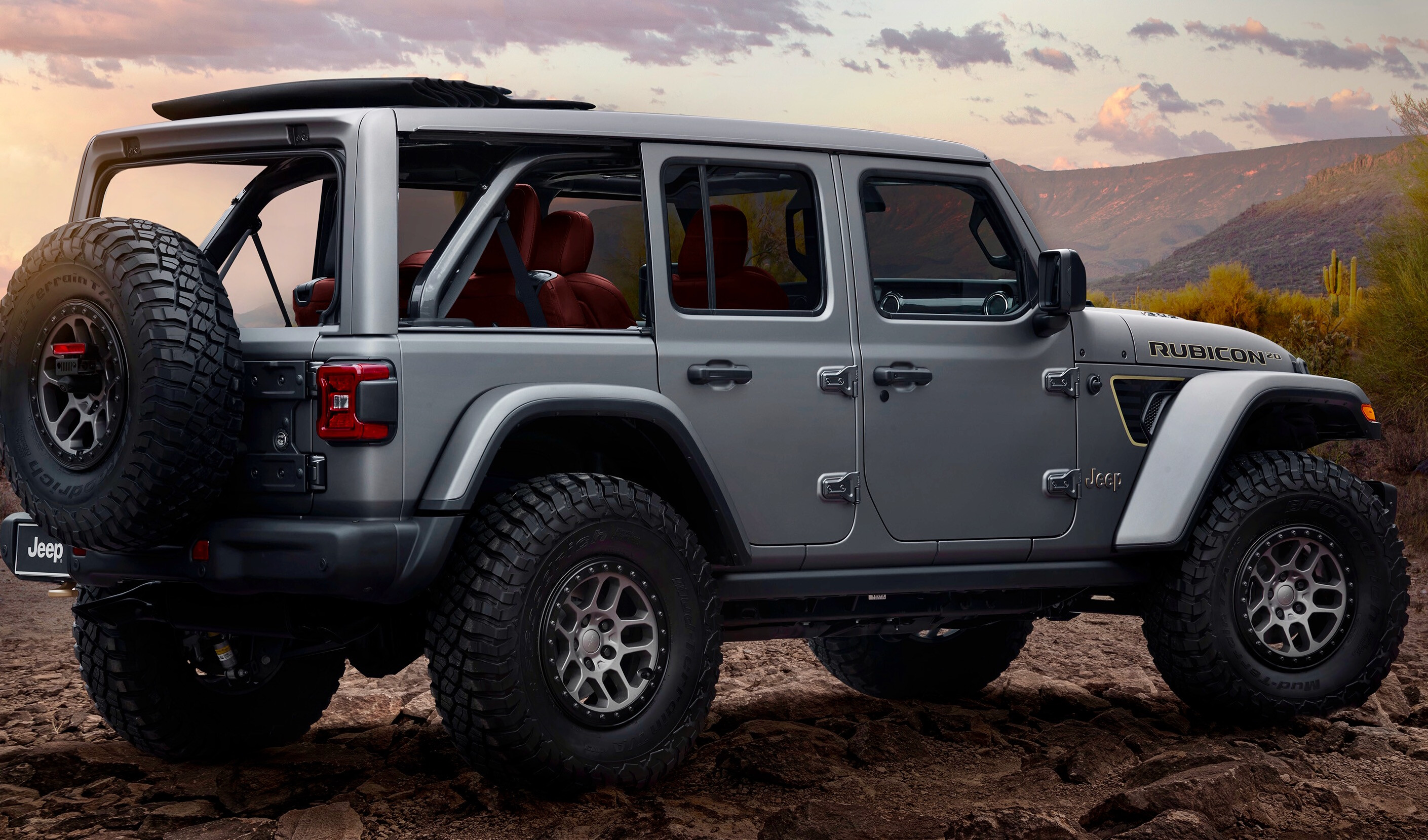
The Jeep Rubicon 20th Anniversary Concept is a celebration of the model’s 20 years, adding a Jeep Performance Parts (JPP) 50mm lift kit, 17-inch Mopar beadlock-capable wheels with 37-inch mud-terrain tyres, Warn winch, and a number of other off-road parts to a V8-powered Rubicon 392.
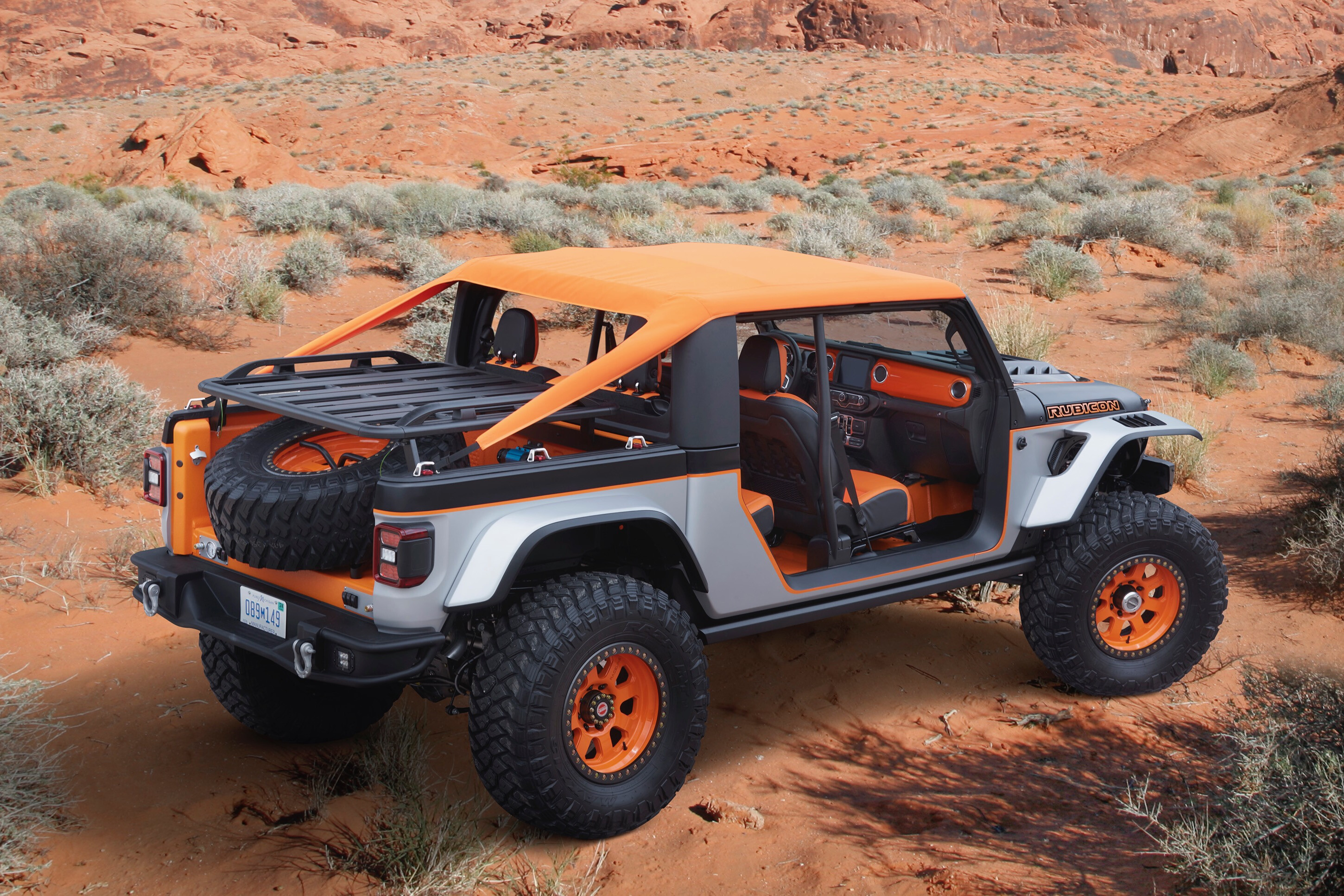
Making its debut at the Safari is the Jeep Bob Concept, which is essentially an extra-cab Gladiator ute with a bobtail tub.
The concept does away with doors and a roof, instead adopting an orange fabric bimini top, adding to the orange theme inside and out.
Jeep Performance Parts brought along two concept cars – the first called the D-Coder, showcasing more than 35 JPP and Mopar parts and accessories.
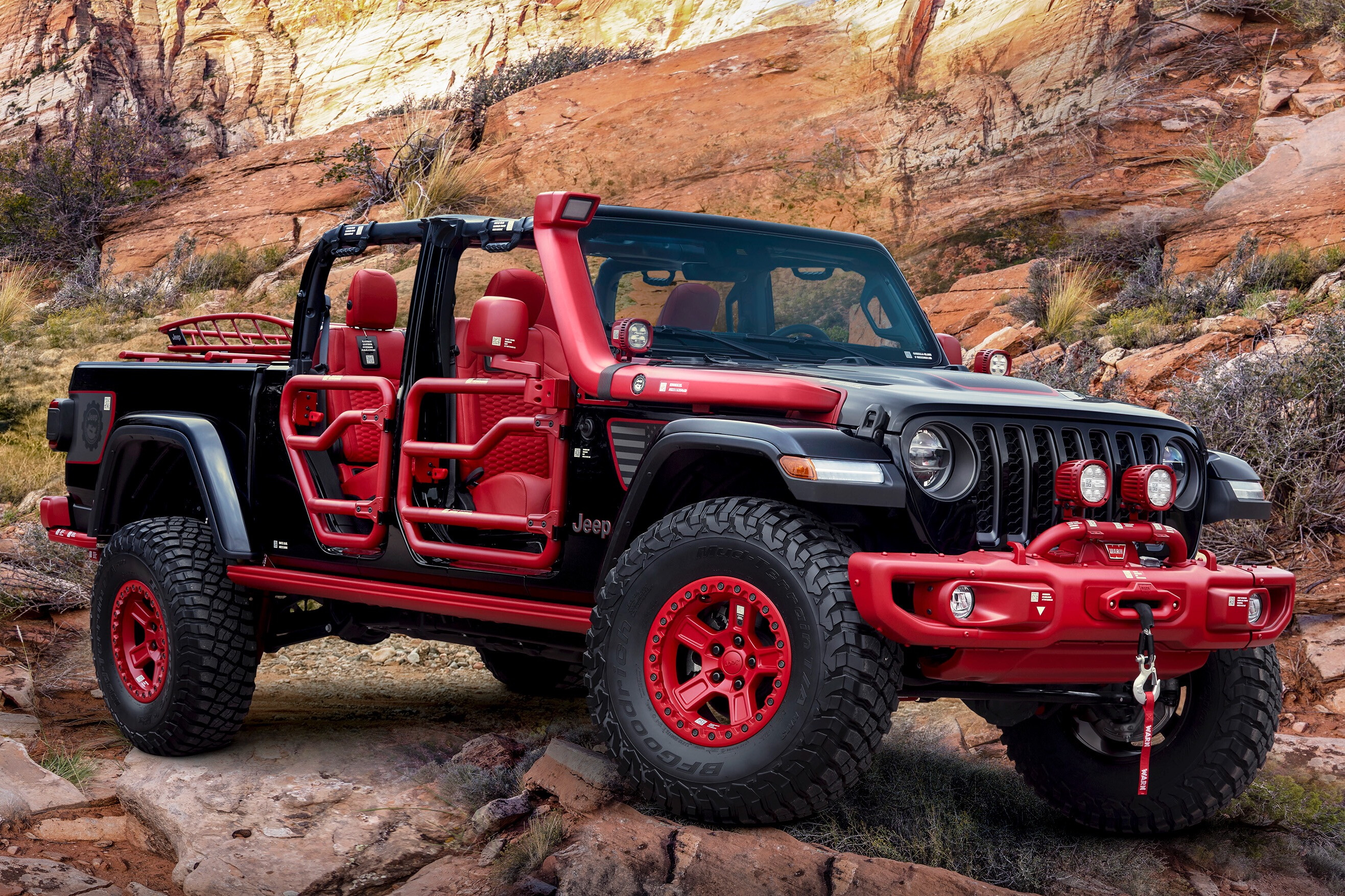
Along with its tube doors and striking red livery, the D-Coder has QR codes which link to the Mopar eStore or JPP catalogue, displaying part numbers and prices for quick reference.
The second was the Jeep Birdcage Concept by JPP, which presented as an “extreme 4×4 machine” with a variety of off-road parts designed to improve the Wrangler’s capability.
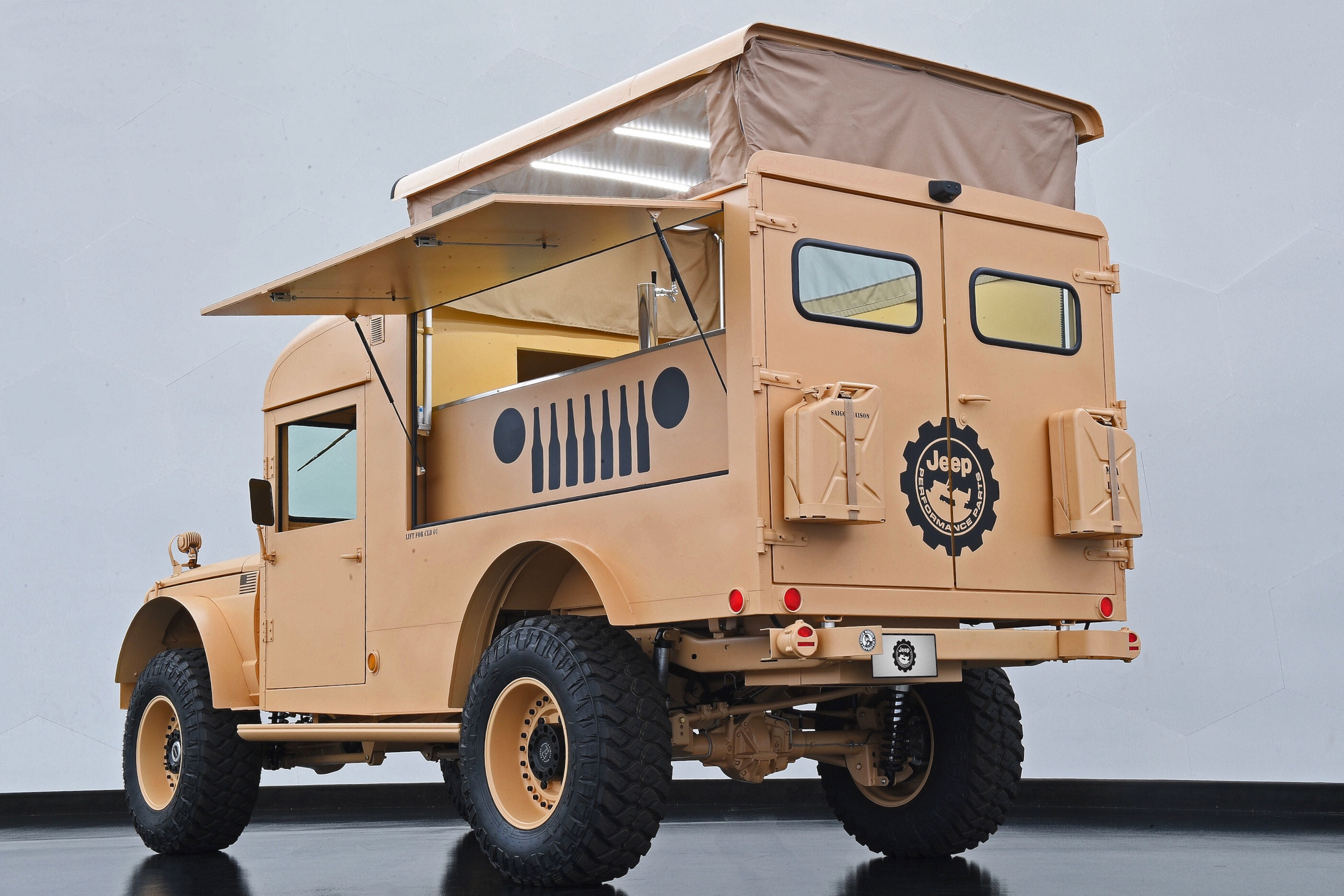
Three concept cars which originally made their debut at the famous SEMA show in 2021 were also on hand, including a 1967 Kaiser Jeep M725 military ambulance converted into a mobile bar, and the Jeep Wrangler Overlook concept – which turns the model into a three-row luxury off-road machine.
“Easter Jeep Safari is the perfect opportunity for the Jeep brand to push the limits of four-wheel-drive development and, most importantly, to stay connected with our customers,” said Jim Morrison, Senior Vice President and Head of Jeep Brand North America.
“Moab is a rite of passage for many Jeep owners, and to own a Jeep is to truly understand the lifestyle – it’s what the Jeep brand is all about,” he said.
“From a fully capable BEV off-roader to rugged and powerful terrain tacklers, every concept is a true reflection of what our customers tell us they want and give a taste of where the future of the Jeep brand and off-roading can go.”
The Toyota Hilux remains Australia’s best-selling 4×4, with a record-breaking 4911 sales of 4×4 variants registered in March 2022.
That’s a whopping 1465 units more than the Mitsubishi Triton in second place, which registered 3446 sales of 4×4 variants.
Ford continues to sell run-out models of its soon-to-be past-gen Ranger, which is indicative of why the Blue Oval ute has slid down the rankings this year. We’ll get a better indication of where the hugely popular vehicle sits in the rankings once the next-gen Ranger lobs later this year.

Still, the ute remains the best-selling vehicle in Australia, and the 4×4 ute segment has held firm despite dwindling sales across other market segments.
A total of 48,241 4×4 utes have been sold so far in 2022, which is up from 45,036 sales at the same time in 2021 – a year-to-date increase of 7.1 per cent.
Light Commercial Vehicle sales have also increased (+6.8 per cent) in 2022 compared to 2021. For comparison’s sake, Passenger (-9.7) and SUV (-0.3) sales are both down.
The Nissan Patrol keeps setting new benchmarks, with 918 sales recorded in March – it once again outsold the LandCruiser 300 Series (844 sales). Pajero Sport sales also skyrocketed, with Mitsubishi shifting 1669 units – a monthly growth of 88.4 per cent. It also scraped into the Top 10 on the year-to-date 4×4 sales chart, with 2236 units finding new homes so far.
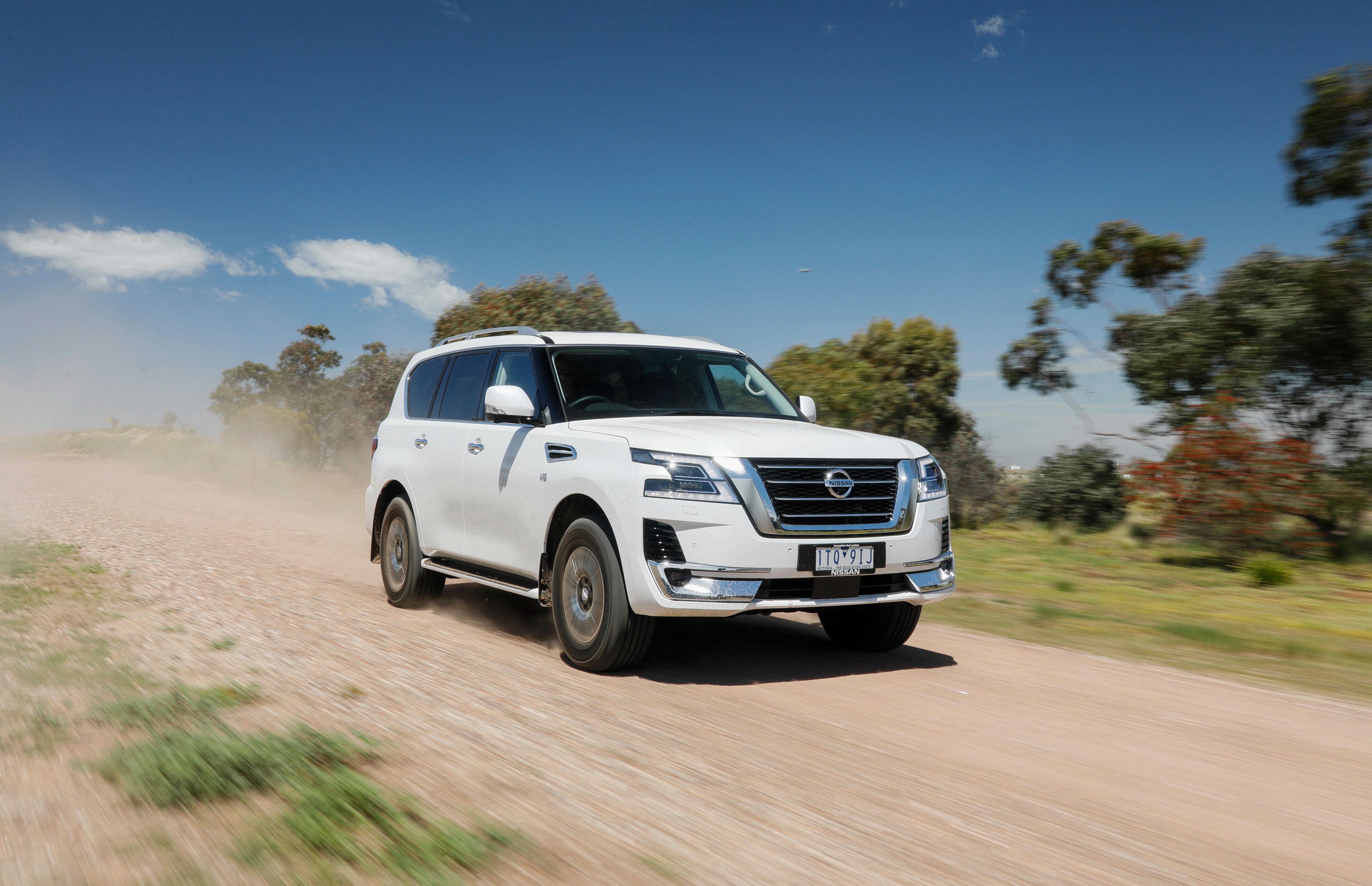
These sales figures aren’t a true reflection of demand though, rather an indication of availability and stock shortages, as FCAI Chief Executive Tony Weber explained.
“This is historically a unique time in which supply rather than demand is determining the size of the market. This is due to manufacturers recovering from the pandemic-related shutdowns and the ongoing global shortage of micro processing units.
“Consumer inquiries and demand for new cars remains strong. Manufacturers are working hard to match this demand with supply,” Weber said.
4×4 sales: March 2022
| Vehicle | Sales |
|---|---|
| Toyota Hilux | 4911 |
| Mitsubishi Triton | 3446 |
| Ford Ranger | 2743 |
| Toyota Prado | 2230 |
| Isuzu D-MAX | 1703 |
| Mitsubishi Pajero Sport | 1669 |
| Nissan Navara | 1305 |
| Mazda BT-50 | 1206 |
| Toyota LC79 | 988 |
| Nissan Patrol | 918 |
4×4 sales: Year to date
| Vehicle | Sales |
|---|---|
| Toyota Hilux | 11,057 |
| Mitsubishi Triton | 9511 |
| Ford Ranger | 8925 |
| Toyota Prado | 7574 |
| Isuzu D-MAX | 4733 |
| Mazda BT-50 | 3563 |
| Nissan Navara | 3504 |
| Isuzu MU-X | 2534 |
| Toyota LC79 | 2531 |
| Mitsubishi Pajero Sport | 2236 |
As the song goes, “you don’t know what you got ’til it’s gone” – the paint on your 4×4 is a bit like that, you don’t really give it much thought until you rip a big old line down to the primer along the side of your door while driving off-road. Great, there goes a grand or two in touch-up work.That’s the thing about paintwork: it’s pretty important. Yeah yeah, it’s not exactly as visually exciting as getting a bullbar or a fresh set of tyres bolted up to your fourby, but think about this for a sec. These days more than ever, your vehicle is an investment – you sink a bunch of time and money in to it, the last thing you want is for it to end up with more scratches in it than a dodgy horse race, especially when it comes time to resell.Luckily, we’re living in the future and there are a multitude of options for keeping your panels pristine. Everything from spray-on liners to adhesive options to combinations of several different methods for a paint job that’d keep even the most OCD of us from developing facial tics.
Gone are the days of covering your ute in tray-liner or, worse, painting it matte black (come on, you’re better than that), pinstripe prevention is easier, and arguably more important than ever without affecting the looks of your vehicle – in some cases actually making it look a whole lot better.Ready to forget that feeling of dread when you see an overgrown track and regain your enjoyment of driving the tight line without the worry of knocking ten-grand off the value of your rig? Let’s take a look at the choices.
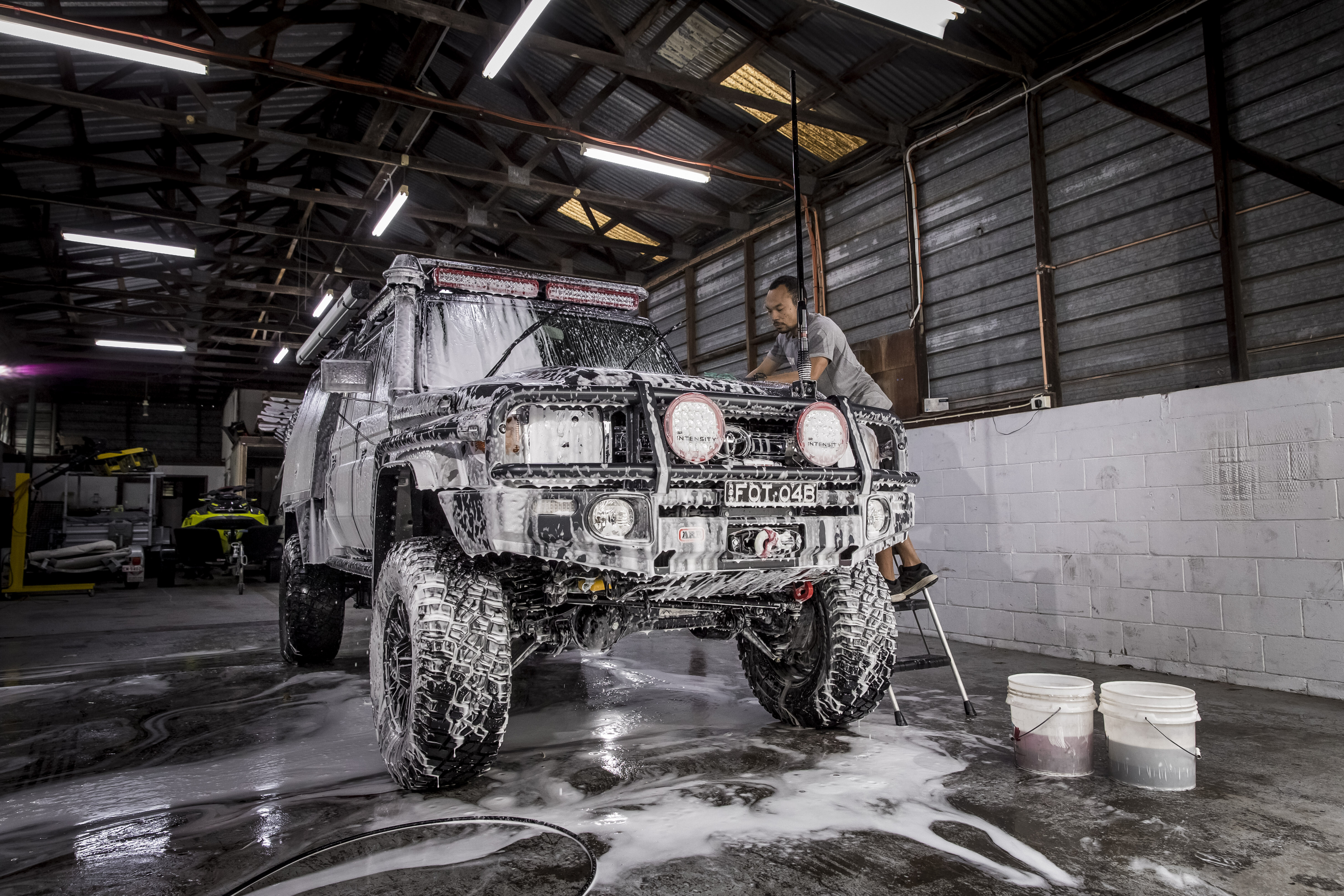
TRAY LINER
Probably the cheapest and most DIY-friendly of our list, tray-liner sprays give you a thick, flexible coating over your paintwork. As the name implies, they’re used commonly for the inside surfaces of ute trays to prevent dings and scratches when you chuck a ton or two of concreting gear in the tub.Quality varies a lot and there seems to be new products popping up in this category every few days, but half-an-hour spent Googling will point you in the right direction. Aside from the looks (which we’ll get to in a sec), tray liners are fantastic. They add a truly excellent amount of durability to a panel and it really does take a lot of weight of hard granite to damage. But (come on, there’s always a ‘but’) they look – how do we say this – like crap. Sorry, we get that looks are subjective and you may love the look of your old beater covered in a hammerstone finish, but a full-vehicle respray with tray liner makes the panels look like Freddy Kruger’s face, and can be a pain to clean too.With that said, when applied tastefully it can look pretty good. We’ve seen it applied to the lower half of panels (where rock-rash is most prevalent) and it suits the vehicle perfectly; but again, we’re not telling you how to modify your car here, we’re just dropping a little knowledge – what you do with it is up to you, but think long and hard before slathering your rig in liner.
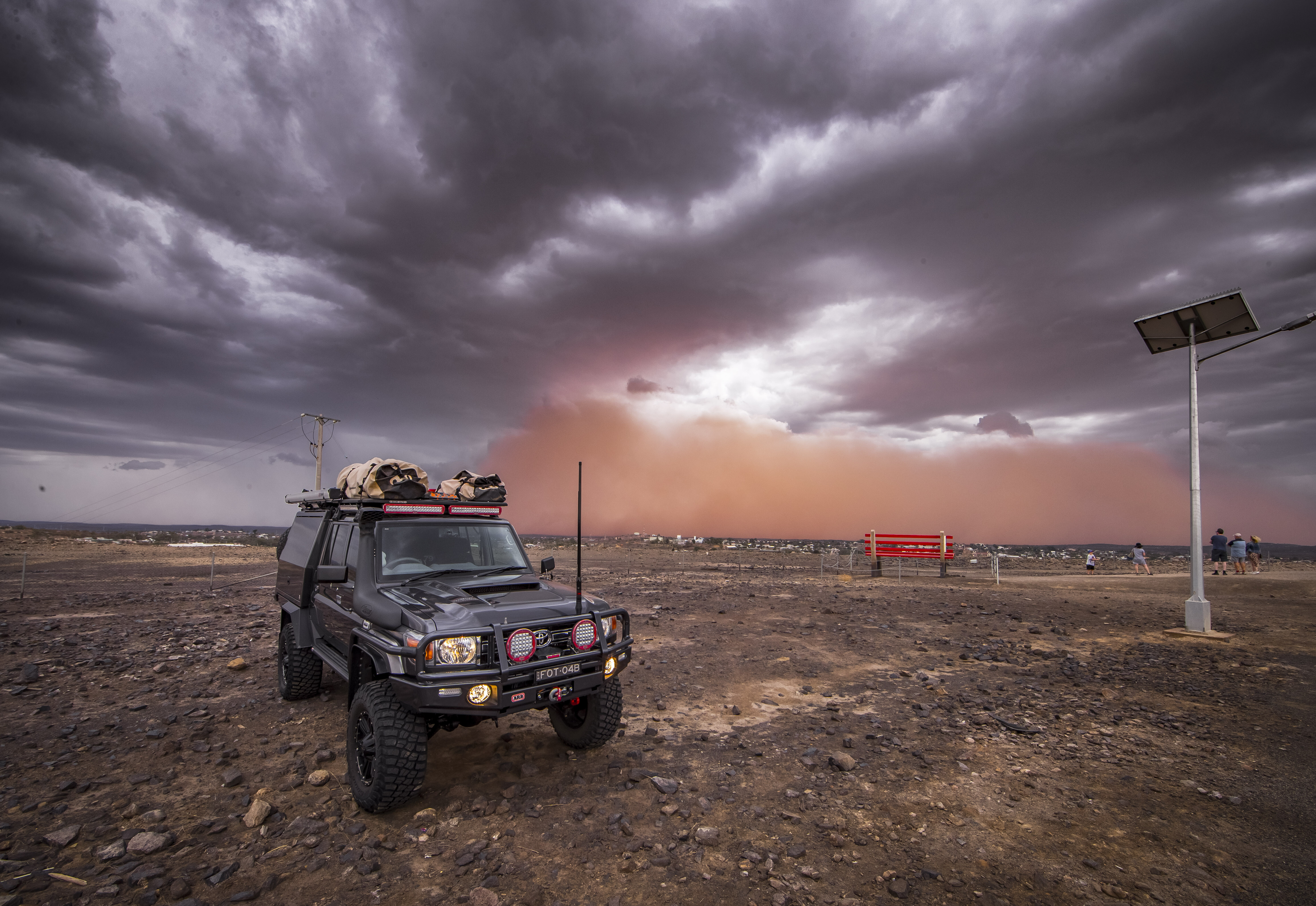
VINYL WRAP
Arguably the most popular option on our list, vinyl wrapping a vehicle is a fantastic way to offer a high level of protection while looking like, well, whatever you want it to. With the advent of digital printing any design, motif, flavour or permutation of an image are available – it’s a great way to give your 4×4 a unique look or advertise your business while gaining a healthy amount of protection from scratches and chips.For those unaware of vinyl wraps, think of them like a giant, hard-wearing sticker for your panels, they’re basically like wearing gloves while working with rough-hewn timber – don’t like splinters in your hands? Wear gloves. Don’t like scratches on your fourby? Wear a vinyl wrap, you get the idea.It’s worth noting that quality is all over the place with vinyl wrapping. Don’t fall for the ‘cheaper is better’ trap thinking that saving a few bucks will see you dollars ahead. Any initial saving will likely be absorbed by the fact that sub-par vinyl will fade in the sun, lose their adhesiveness and have you reapplying them in less time than it takes for you to read this mag. Stick to (see what we did there?) good quality wraps and save yourself a giant headache and get the job done by a professional, unless you happen to enjoy 4×4-sized origami … we ain’t judging you.
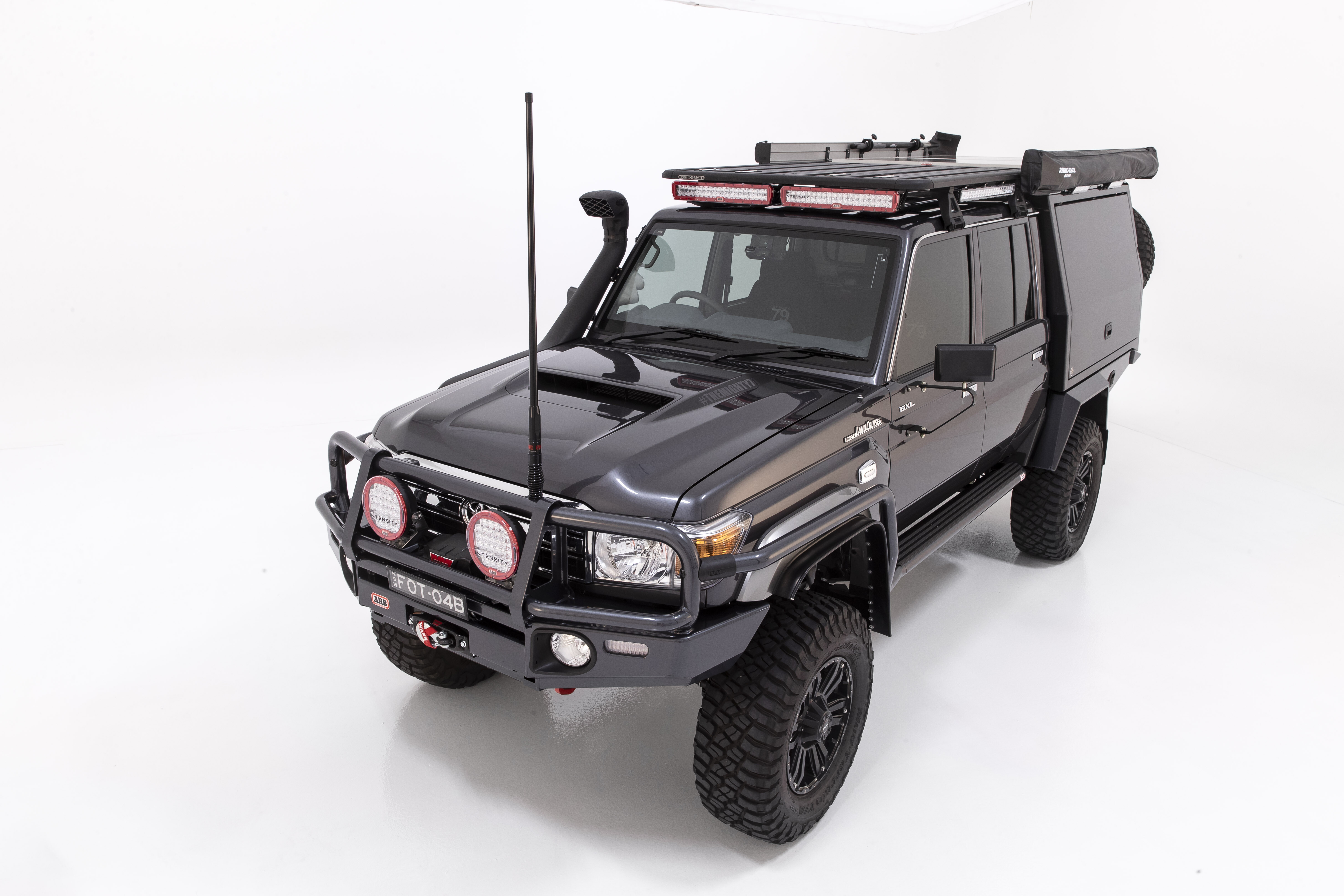
PAINT PROTECTION FILM
PPF is an ultra-thin layer of polyurethane that effectively forms a barrier between your paint and the outside world. It is extremely effective, long-lasting and is one of the best forms of defence against overgrown lantana tracks. The polymer can self-heal after minor scratches and prevents damage from UV rays and hard water. It is applied in a similar fashion to a vinyl wrap, which essentially makes it a professional-install-only job, but the results are outstanding.All that comes at a cost though: not only is it pricey, quality across brands can also vary wildly (3M originated the product and is still widely considered to be the best) and is not always as hydrophobic as it could be. It also requires upkeep to prevent your paint from being damaged, and if the PPF itself does cop a nasty gouge from that boulder you leant up against, you can’t just give it a quick touch-up while the footy is on, the whole film will have to be replaced.If you want the absolute best in paint protection you can also pair PPF with …
CERAMIC COATING
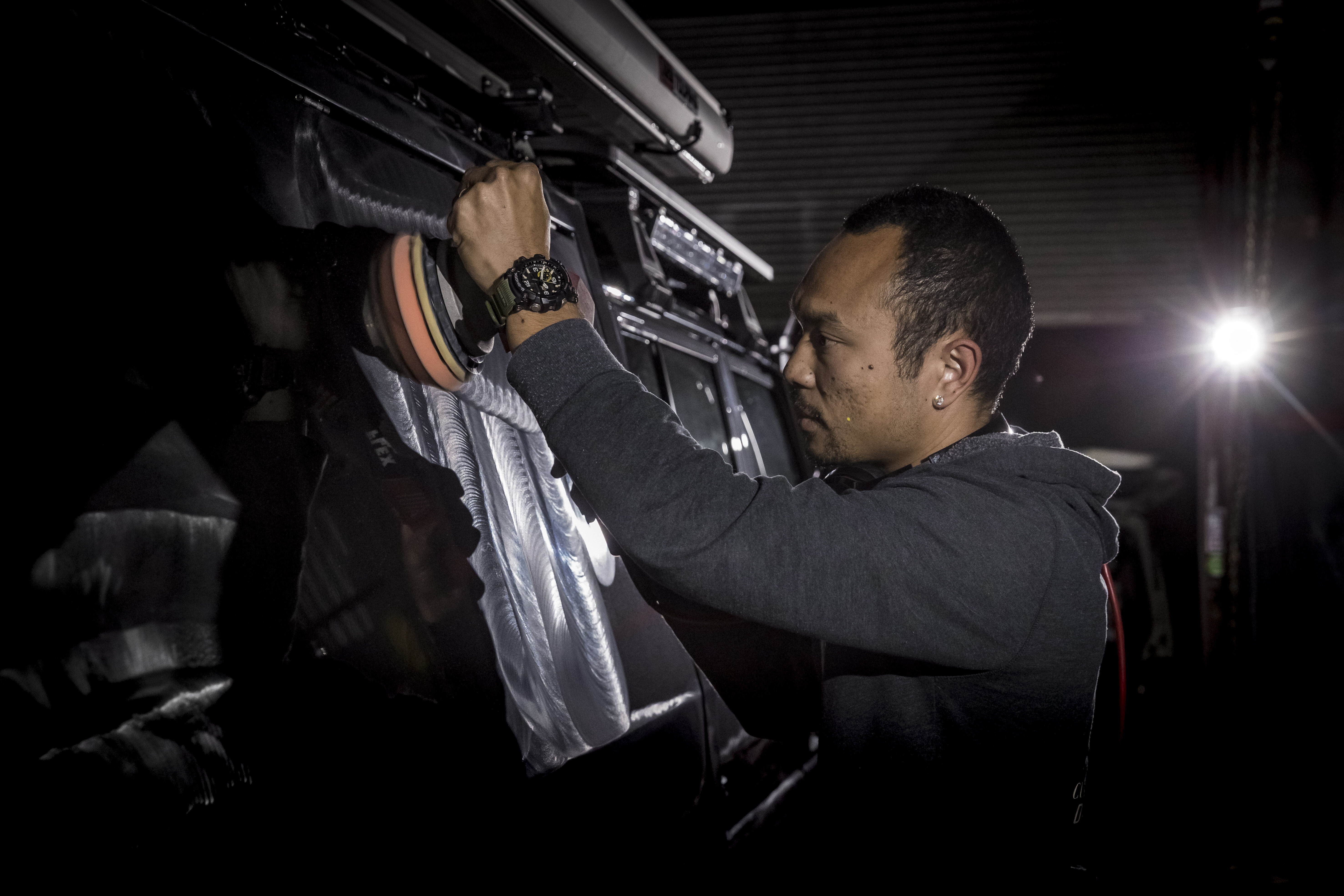
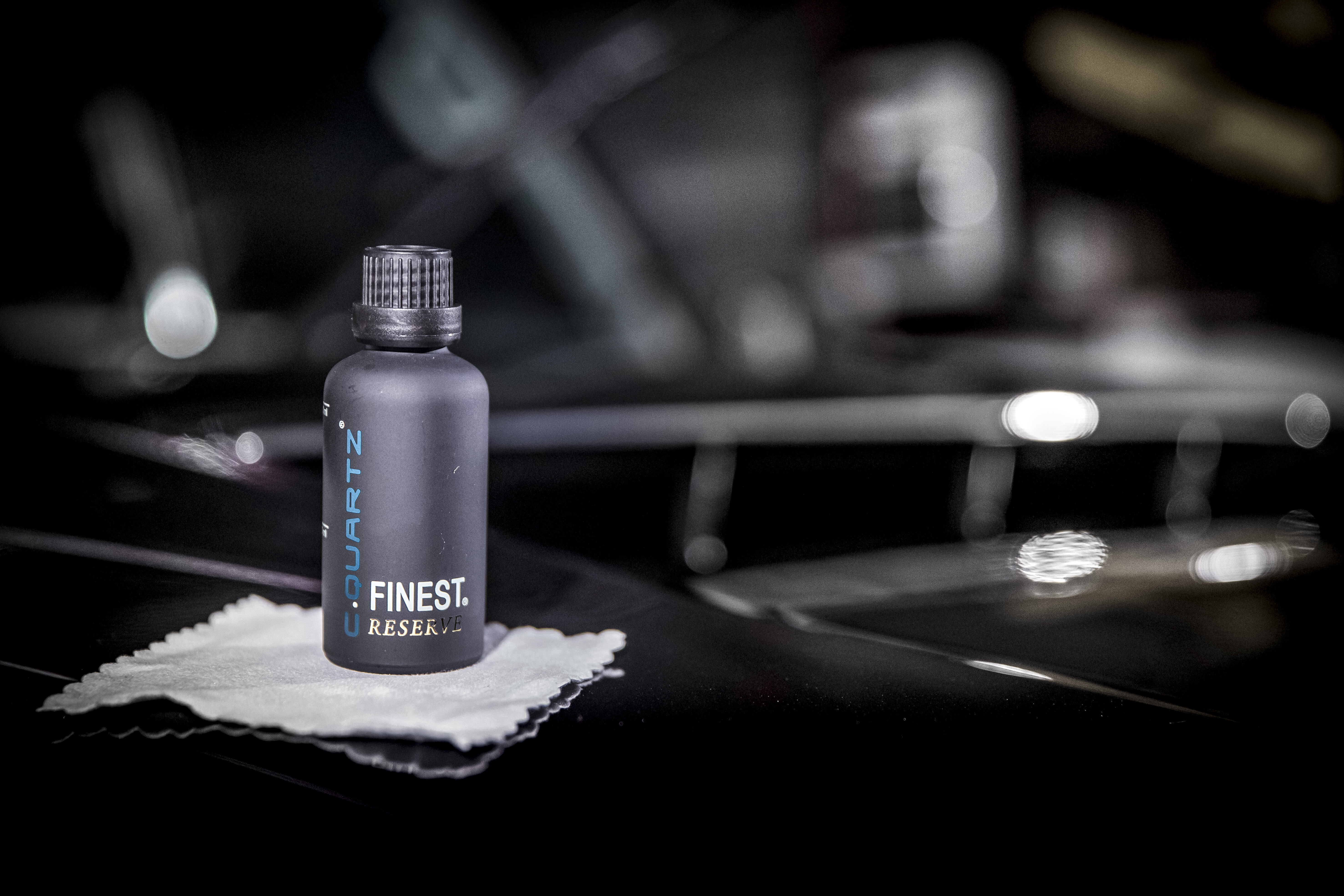
Another polymer, ceramic coating is as the name suggests: a colour-matched ‘paint’ for your 4×4 that essentially means you’ll never have to wax your pride and joy ever again. Not only is the applied layer durable against scratches and chips, it is also very hydrophobic and keeps your paint looking like it came fresh out of the spray gun a couple of days ago. Our very own image connoisseur, Michael Ellem, uses it on his beast of a 79 Series and tells us it’s one of the best things he’s done to his vehicle, and he’s done a lot.It’s worth noting that ceramic coatings are not 100 per cent scratch-proof, nor will they make you vehicle bullet-proof. However, they do add, especially when combined with a good layer of PPF, a solid base of protection which will give you the best chance at keeping the panels in mint condition and your vehicle looking schmick for staring at it lovingly in the driveway or when the time to move it on comes.
MAGNETIC PANELS
A great option for vehicles on day trips that aren’t overly worried about exceeding GVM. The CNC cutting of these stick-on-pull-off panels means there is barely any discernible gap between the stock sheet metal and the magnetised panel, and they can even be colour-matched to your vehicle so it would take an eagle eye using a magnifying glass to even notice they’re on there.As far as price goes, a full vehicle-specific body kit generally comes in under the $1000 mark, so the value is hard to contend with, plus the feeling of rubbing up against that ironbark while knowing your paint remains in showroom condition under the panel, is priceless.
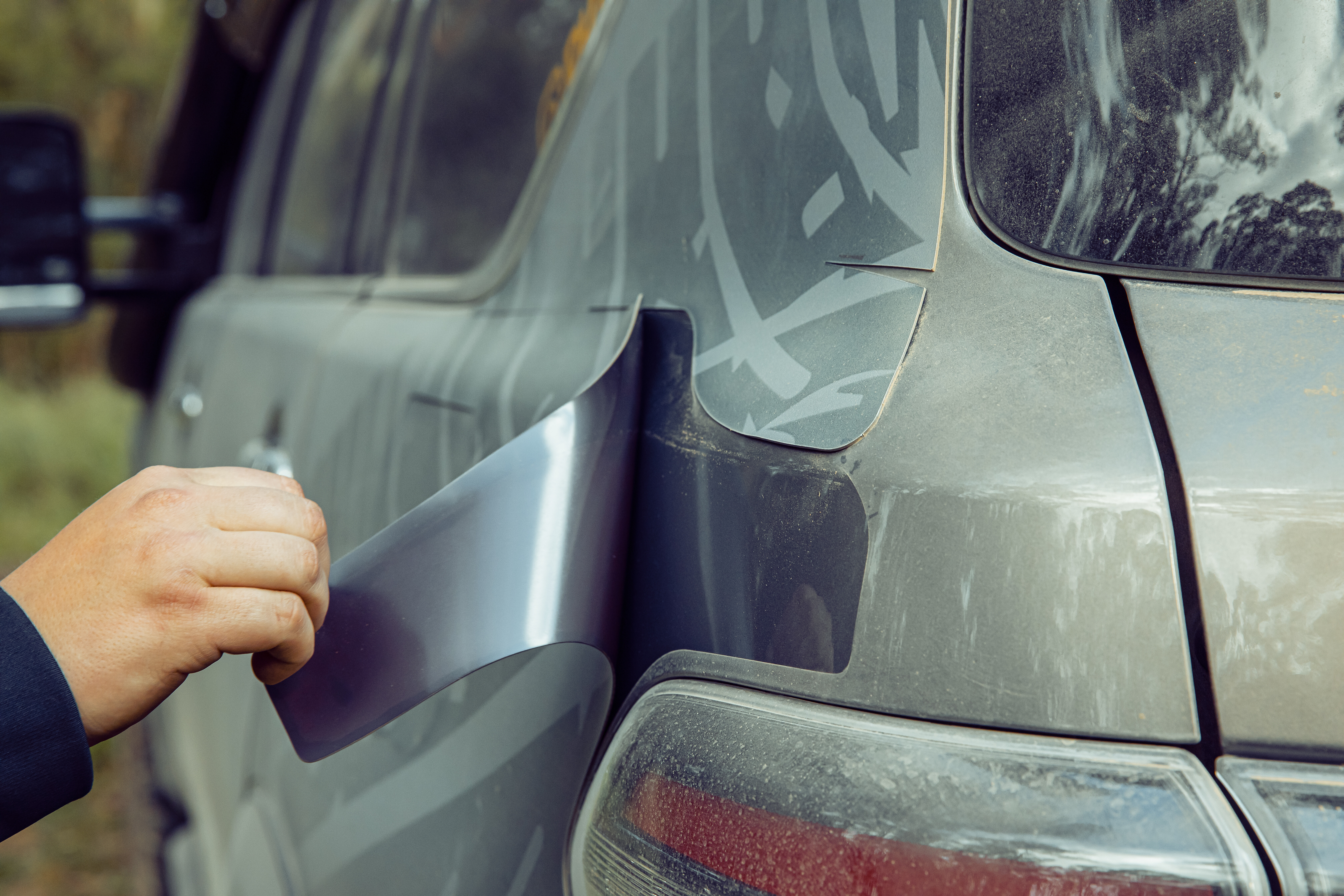
However, the elephant in the room with this option is the weight and convenience of use. Many of us who go camping or touring for extended periods are already giving the weight limits of our vehicles a generous nudge, and adding these extra kilos may tip us over in to illegal territory. Then there’s the fact that they’re not really suited for highway use – triple-digit speeds being more than enough to overcome the magnetic bond of the panels. Oh, and alloy-bodied cars ain’t magnetic – just as you Land Rover and Amarok owners know.
“Life isn’t about the destination. It’s about all the wild stuff that happens along the way.”
When heading north from Melbourne our first outback camp was at Red Banks Conservation Park just outside of Burra in South Australia, before heading into the Flinders Ranges for three peaceful nights. This proved to be a perfect short stay in this natural wonderland and rugged beauty.
The Flinders Ranges is an ancient landscape. Think towering peaks, granite gorges millions of years old, tracks that encompass dry riverbeds and majestic, gnarly gumtrees that look as though they could talk to you. Everyone we’d met had told us how busy it was in the major centres of Rawnsley Park Station and Wilpena Pound, but we found that the station stays were almost always quiet and accessible.
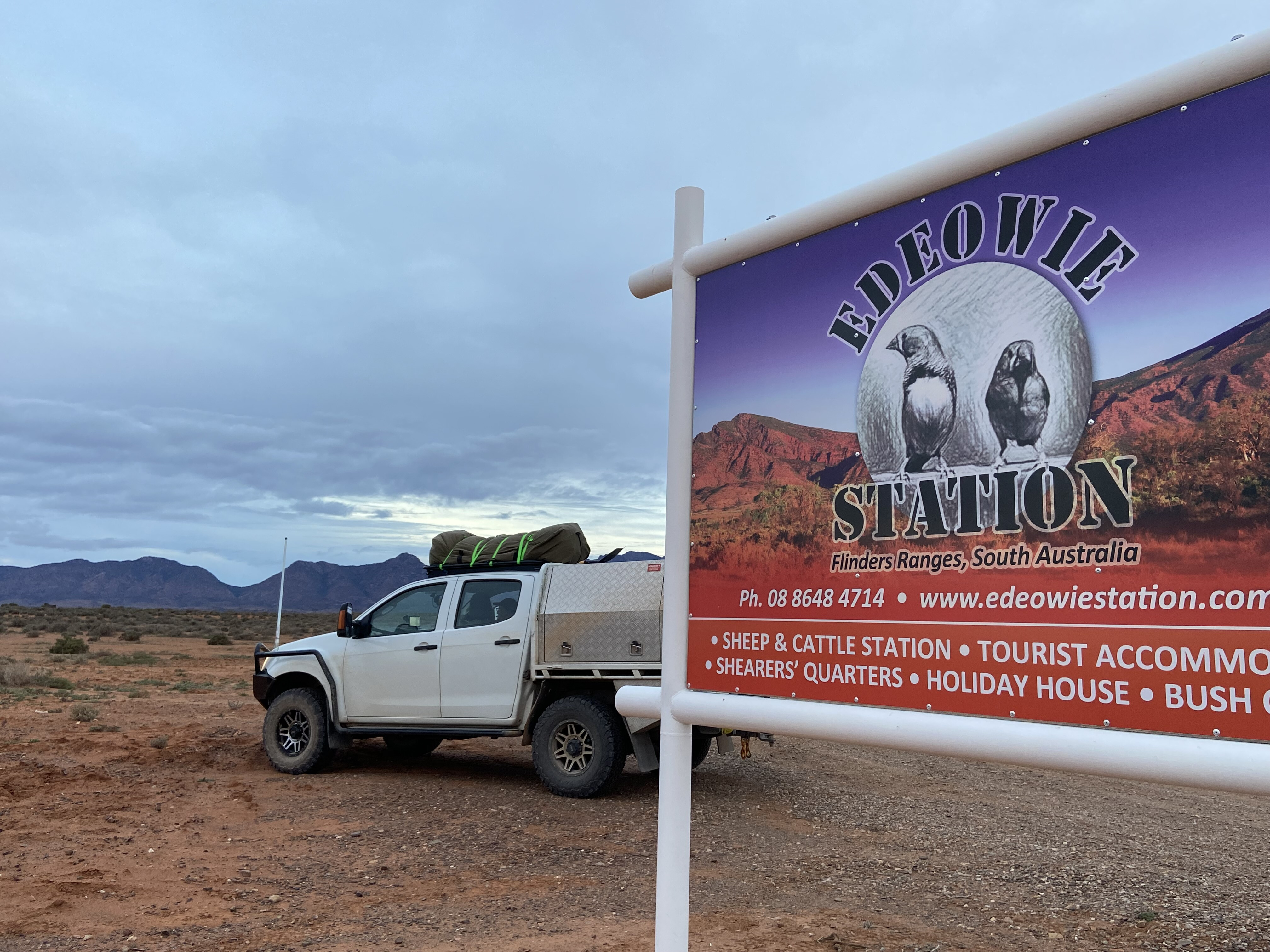
Our station stay at Edeowie on the western side of the Flinders is a brilliant way to begin an outback odyssey. This sheep and cattle property neighbours the National Park and offers access to the Edeowie and Bunyeroo Gorges, with a stunning outlook and spectacular starry skies at night.
There’s a wide range of accommodation available with historic shearers quarters, Edeowie House, Brachina Hut and secluded bush camping sites. We opted for power, had campfires every night and were virtually the only ones there during our three-night stay.
One of the many highlights of a stay at Edeowie Station is a self-guided Bunyeroo 4WD loop drive of 23km from the property, which provides exclusive access to the Bunyeroo Gorge and many rocky tracks to enjoy.
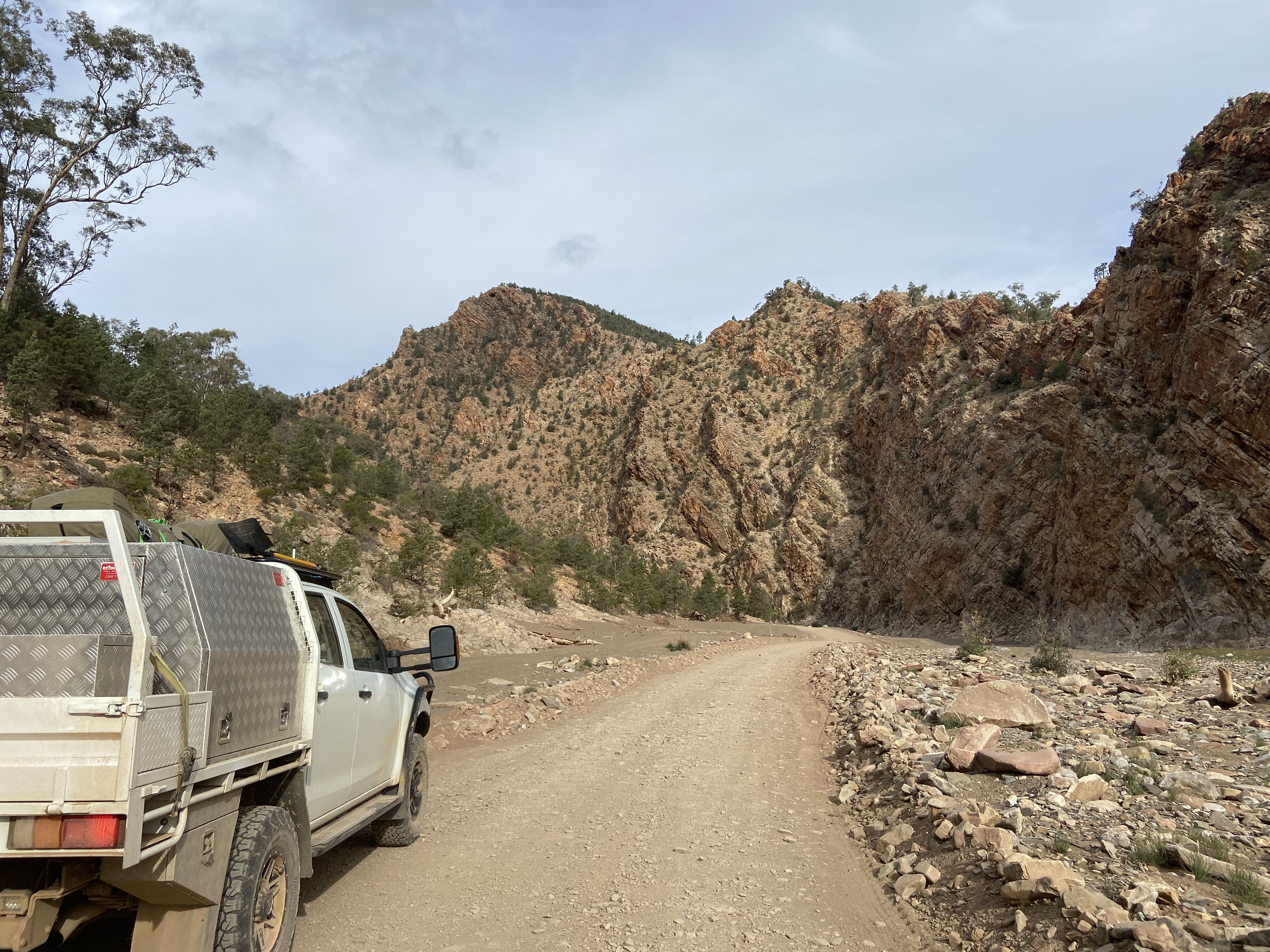
We’re given a mud map by Peter the station manager, so it’s relatively easy to orient ourselves out here on this lonesome open track. There are a few gates marked on the map, which we’re always mindful to open and close as we find them. We drive through dry riverbeds, walk for an hour in to Bunyeroo Gorge and enjoy a late lunch parked out in the middle of nowhere surrounded by those epic views the Flinders is famous for.
Back on the station, it’s a short drive to visit the ruins of the old Edeowie township, established back in 1875. It’s a compelling sight to see these ruins in the late afternoon glow with the stark mountains in the background. This is history, magnificent, mesmerising and utterly enthralling countryside.
Flinders Ranges to Farina
The sun was shining brightly as we left our station stay, with Farina our next destination; a ghost town that’s been lovingly resurrected from the stones and red dust. Signs around town reveal its history with stories telling how the Great Northern Railway arrived in 1882 making Farina the end point for supplies for remote stations and outposts.
By the time the railway arrived, the town of ‘Government Gums’ had been renamed Farina meaning ‘flour’ in Latin echoing hopes that wheat farming would become important. At its height in the 1890s, there was a population of 600 people that lived here, but this wasn’t an easy life.
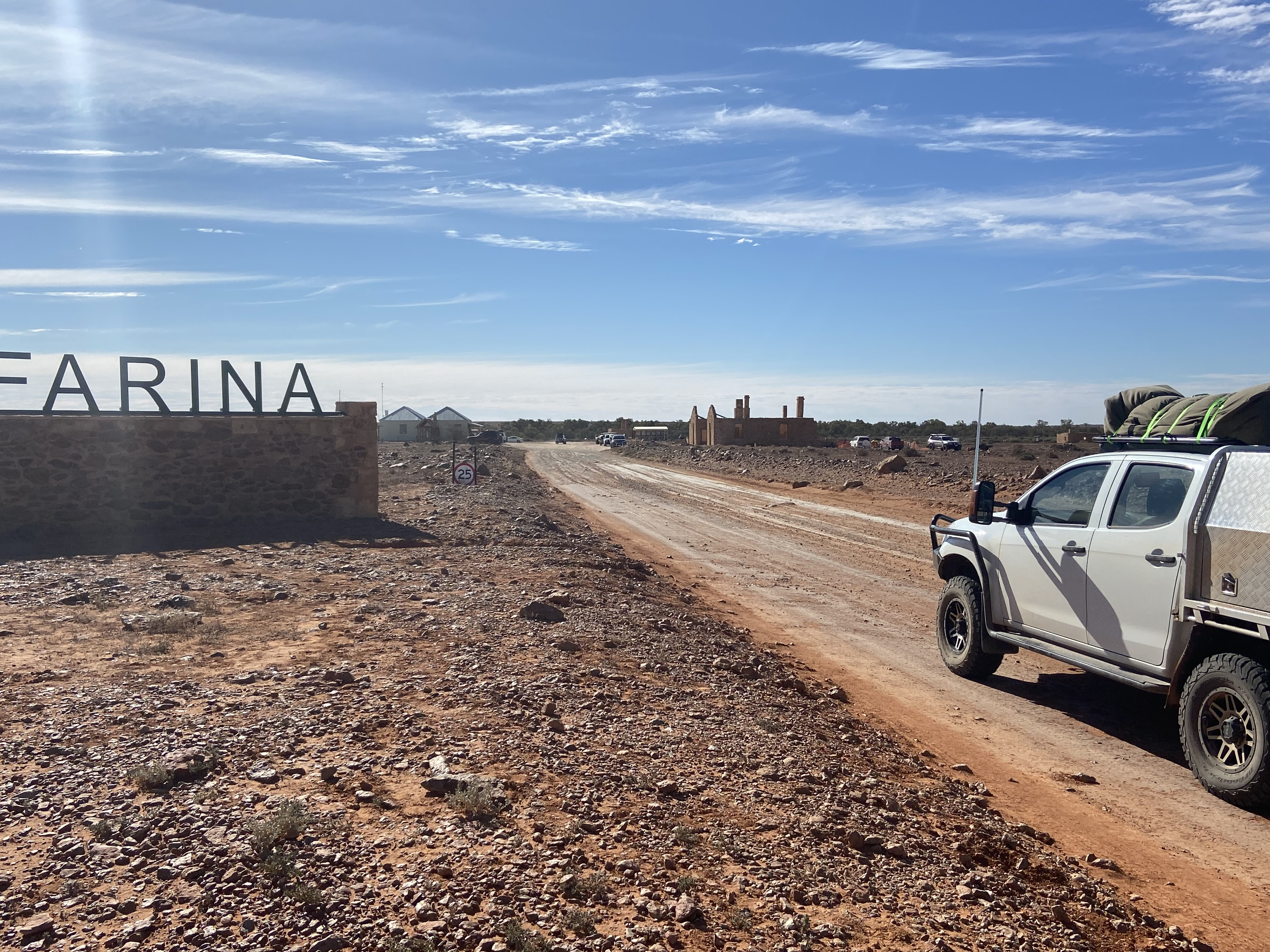
As you walk around town, past ruins of the two hotels, the school and post office you get an idea of how life was here. The ruins are captivating and we spent a couple of hours exploring the history of this once thriving pastoral town.
Truly soak up the atmosphere by staying at the station campground overnight. Facilities are basic and there’s a donkey water heater for those who want a hot shower and don’t have their own.
It costs $20 per car per night and there are no bookings required. It’s a peaceful and welcoming atmosphere, the sunsets are spectacular, the birdlife prolific and we rub shoulders with plenty of other like-minded travellers.
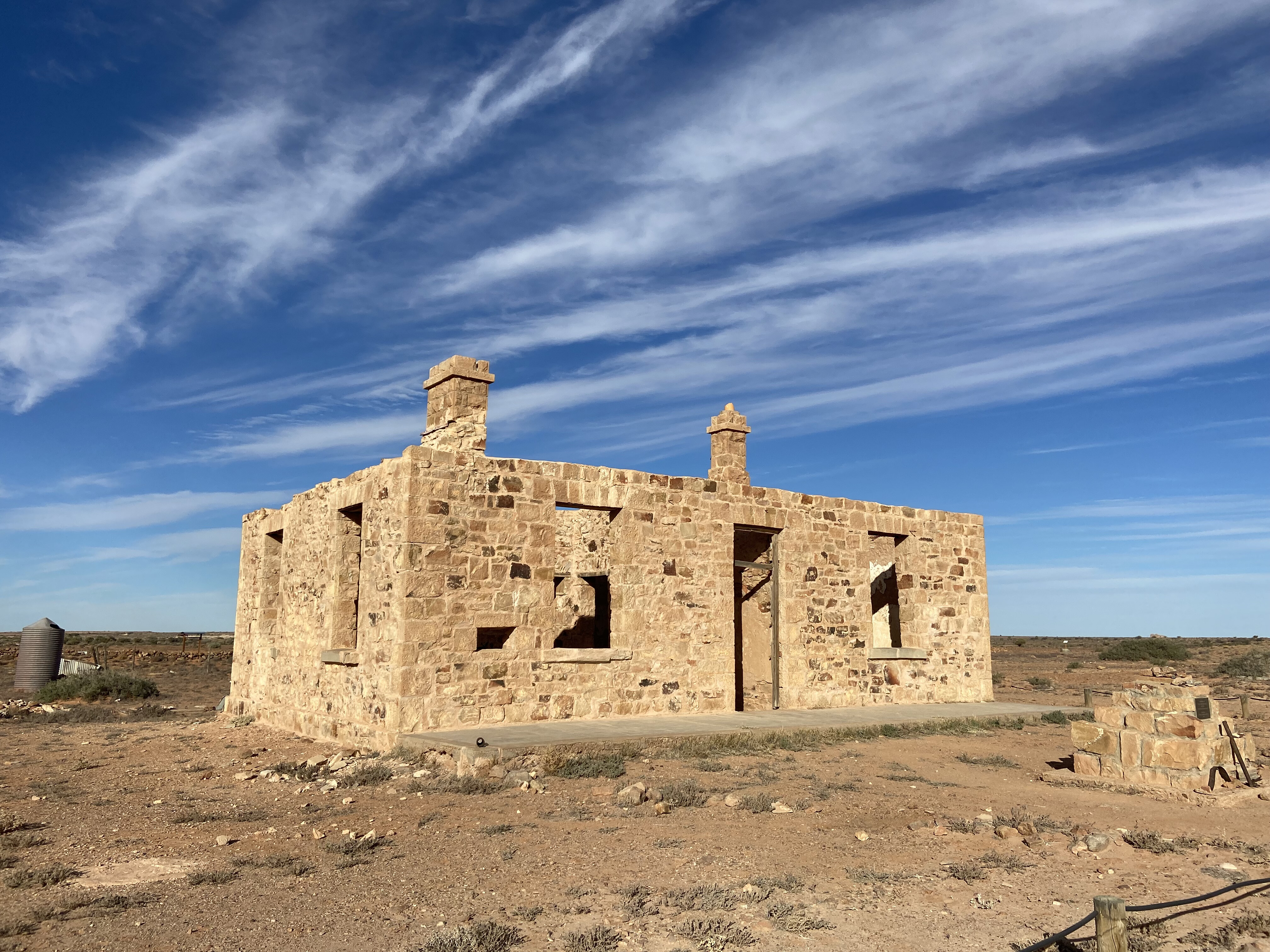
Farina is a photographer’s paradise and in demand by film crews for 4WD commercials. Drop down in to the ancient, rugged hills and explore a hidden salt lake with springs so salty crystals form around the edge, yet fish survive in them. Walking trails leave from the campground, along the Farina Creek to the old railway Red Bridge or the historic cemetery.
Then there’s the bakery. This underground bakery, run by passionate volunteers who converge here to share their skills once a year, is only open eight weeks of the year from late June until July and we’ve lucked it. Fresh bread, custard tarts, apple turnovers, egg and bacon pies for breakfast with coffee, the smells that come out of here are enough to have anyone stopping.
On to the Oodnadatta
The Oodnadatta Track follows the route of the Old Ghan railway. It spans 620km from Marree to Marla in South Australia and is one of Australia’s great historical outback drives. It’s full of tantalising glimpses in to the past and makes for an adventurous way to cross over and head north to Alice Springs, Uluru and Darwin, which is where we’re heading.
Marree is right at the junction of the Birdsville and Oodnadatta Tracks and is a good place to stop, restock and refuel, lower tyre pressures, and prepare for the journey ahead. As with any outback driving, preparation is key.
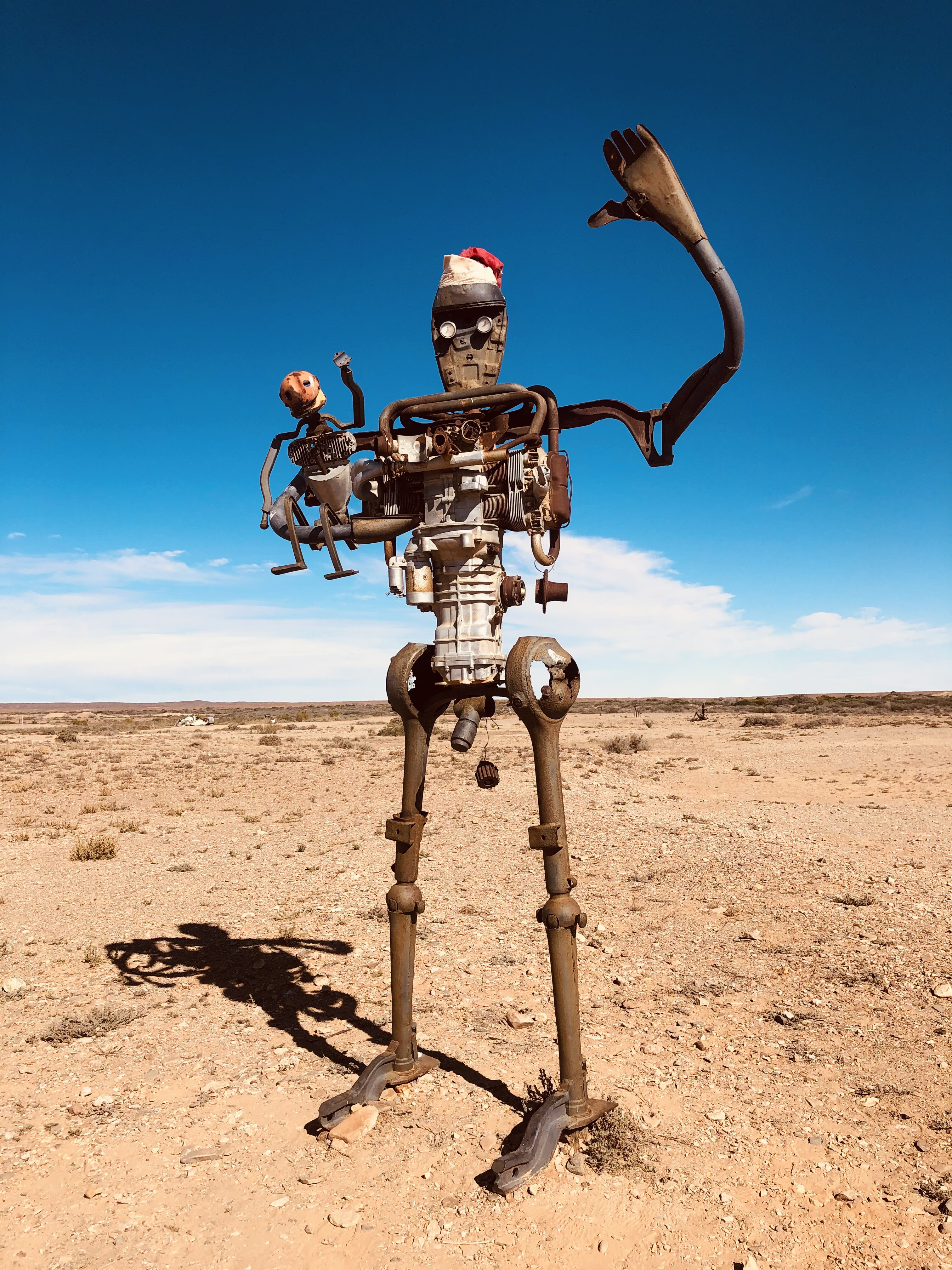
One of the first and surprising things you’ll see on the track are two plane sculptures with their tails in the ground. It’s part of the quirky Mutonia Sculpture Park, created by former Victorian mechanic turned artist Robin Cooke. The Park is full of weird, wonderful, and sometimes funny pieces of art and is well-worth a stop to check them all out.
Next stop is the lookout to Kati Thanda/Lake Eyre and a spectacular place to stop for a walk on the vast and dazzling salt plains. Although nothing beats flying over it (which can be organised from either Marree or William Creek), even just getting a glimpse of this vast lake system from the road is surreal.
Farther along the track we come upon Coward Springs, a bit of an oasis and a popular place for an overnight stay. There’s an artesian spa there but it’s crowded when we visit so we continue on. Not far away we came across Beresford Siding rest area which proved to be a fantastic overnight stop.
There are no facilities here but we’re far enough off the road to not hear any rumbles of trucks, and there’s a dam and an old railway siding. It’s scenic, the sunset is amazing, and we light a campfire. It’s just us and the galahs for the night.
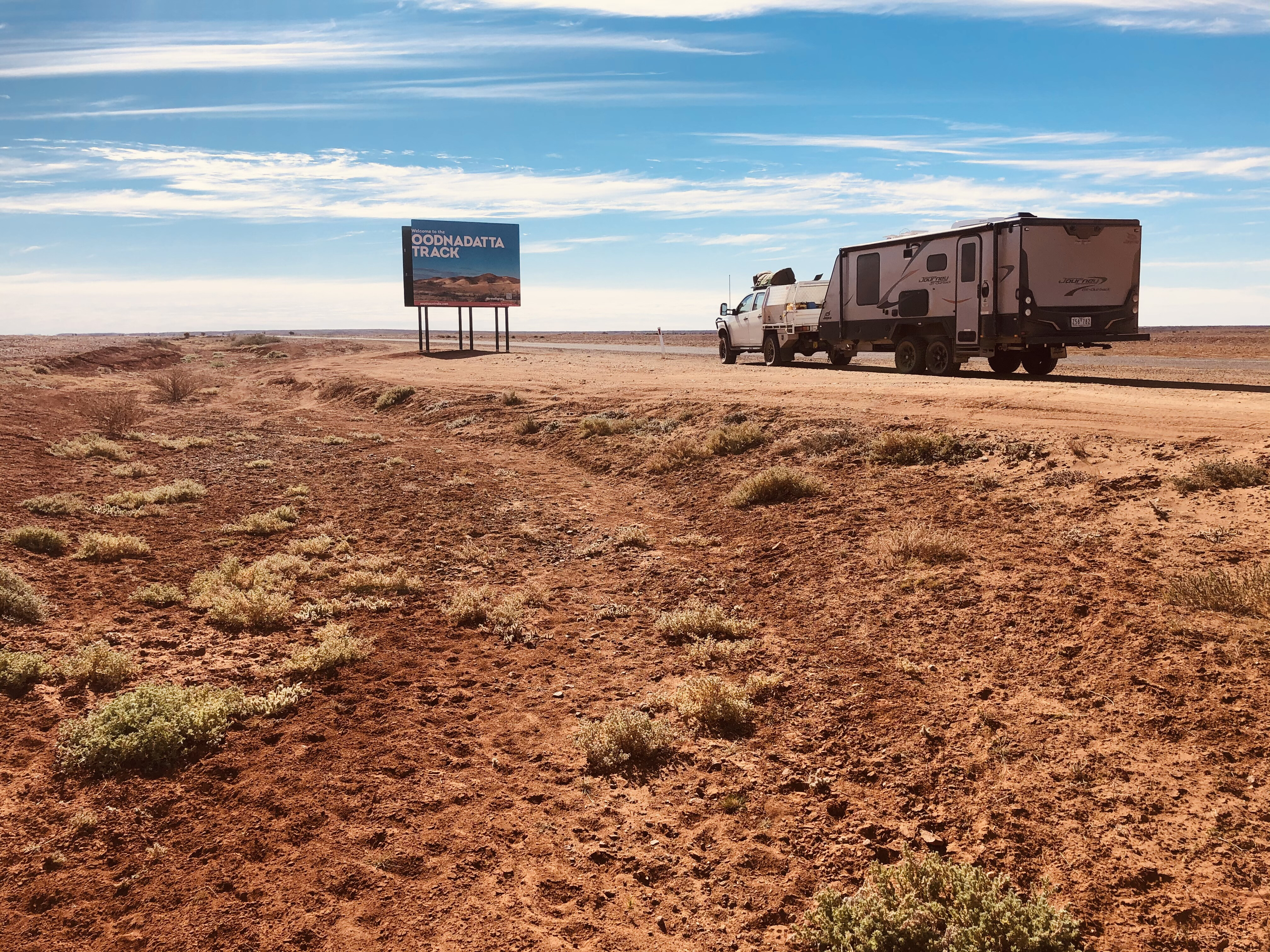
The Oodnadatta Track might be long, but it’s far from boring. It offers a real glimpse in to the past with Ghan railway tracks and bridges and lots of ruins of railway holdings scattered along a track which alternates between long straight stretches to dips and floodplains with pockets of green amid the dry landscape.
It’s at these points you need to slow down and take the dry river crossings carefully, otherwise you might damage your vehicle. The ever-changing scenery and those stunning colours of red, yellow, ochre amid a vibrant blue sky makes the trip diverse.
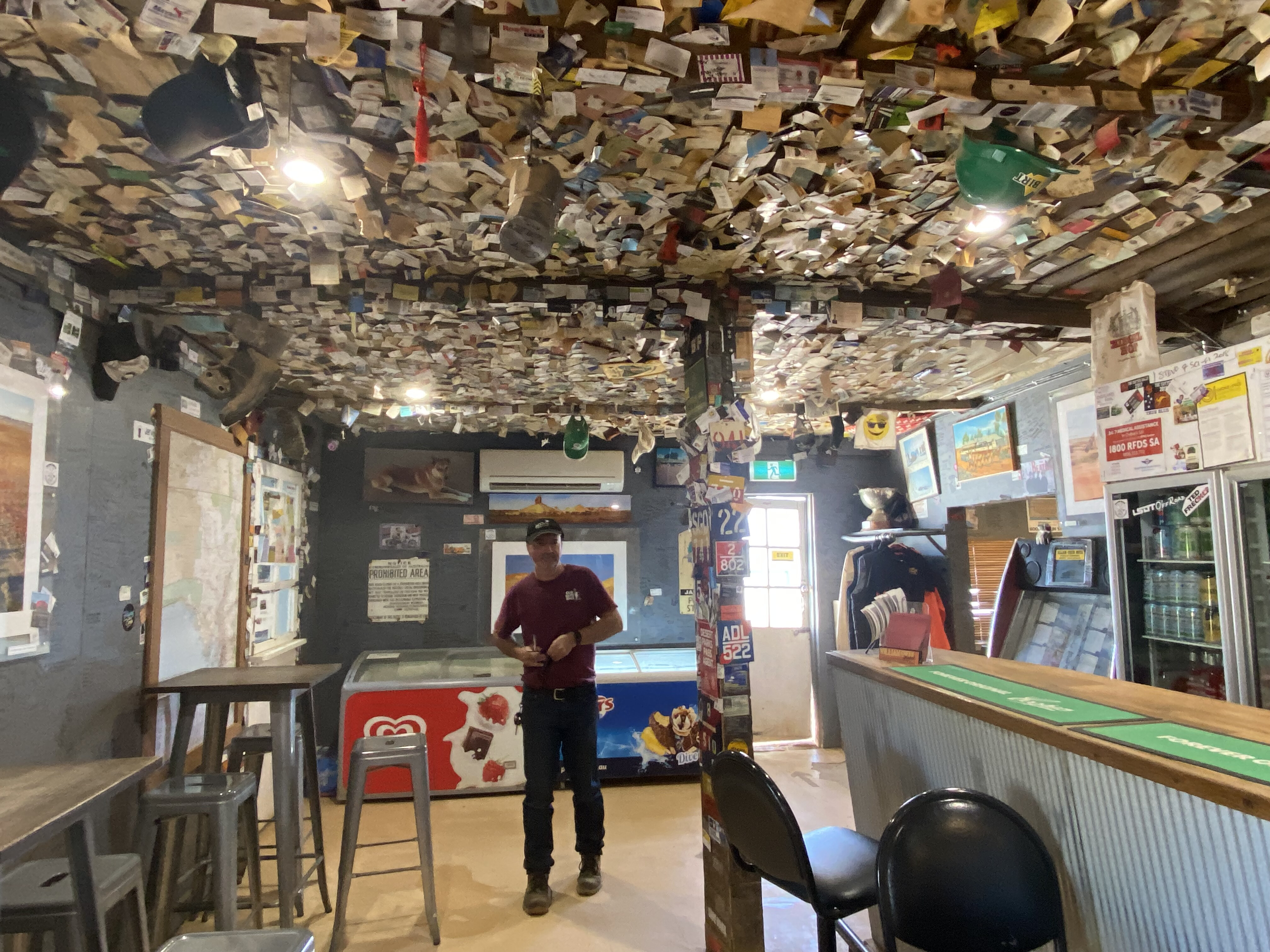
It’s always a relief and somewhat exciting to pull in to a roadhouse, even though we’re carrying extra diesel in the car. Arriving at William Creek in time for lunch, it was a great chance to pull over, refuel and reconnect with the outside world. The pub offers a great feed, cold beer, great coffee, and genuine outback hospitality.
Our second night on the track was spent at Algebuckina Bridge which is about 145km from William Creek. This is the site of the most significant bridge on the Old Ghan railway and a fantastic place to pull over for the night. We find ourselves a flat spot close to the water overlooking the bridge.
Later that night, we walked up to the bridge to read the signs and find out more about this impressive structure which was built in 1892. Its creation is a true engineering feat, which spans almost 600 metres and though no train has passed over it for many years, it remains the largest single bridge in South Australia. The Algebuckina waterhole nearby has never dried out in living memory and is the largest refuge waterhole in the Neales-Peak River system.
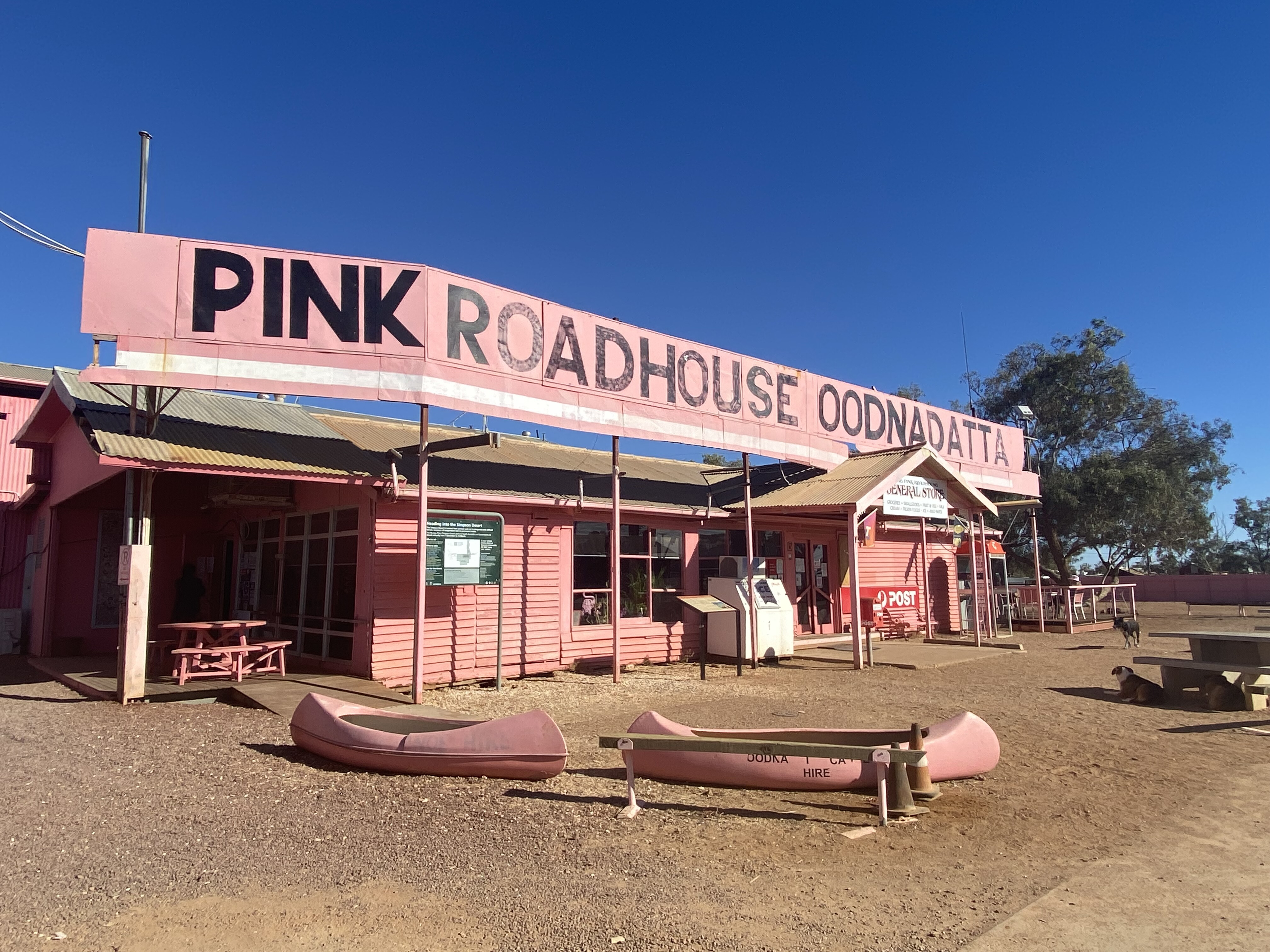
Day three on the Oodnadatta has us arriving at the most iconic attraction on this dirt highway, the Pink Roadhouse. This ‘one stop shop’ has everything in it, including a couple of jobs which we seriously consider might be fun out here. Fuel is ludicrously expensive at $2.10 a litre, but not surprising given its remote location.
From Oodnadatta you have the chance to detour to the Painted Desert which is sheer outback beauty and truly worth the visit. The Painted Desert also leads you to Australia’s opal capital Coober Pedy but as we’d been on a previous visit, we continue towards Marla.
That night, we camped at Kathleen Springs, a peaceful shady spot by the water about 54km past Oodnadatta. When we began our trek, I never would have guessed at the variety of landscapes along the way and the diverse scenery we’d pass. It’s truly an epic adventure, an easy outback route and an exciting way to head north. Just be prepared, check road conditions before you go and get ready for an outback journey you’ll never forget.
Five things to see and do
FLINDERS RANGES The stunning Flinders Ranges is an excellent first stop on an outback tour. There are numerous accommodation options from camping to station stays within or adjacent to the Flinders Ranges NP.
FARINA A one-time thriving railhead from Port Augusta, before the line was extended 55km north to Maree and eventually Alice Springs as the original route of the old Ghan railway, Farina these days is all but a ghost town. Abandoned in the 1980s, Farina has re-emerged as a popular tourist destination.
THE OODNADATTA TRACK Regarded as a great first trip for novice 4×4 outback explorers, the 670km Oodnadatta Track runs from Maree to Marla, alongside the former route of the Old Ghan railway.
THE PINK ROADHOUSE No journey along the Track is complete without a stop-off at the quirky Pink Roadhouse in Oodnadatta. Besides fuel and tucker, the roadhouse has parts and repairs, supplies, accommodation and a post office.
KATI-THANDI/LAKE EYRE NATIONAL PARK From the Oodnadatta Track, you can access Kati-Thandi/Lake Eyre NP via 4WD tracks from either William Creek or Marree. The iconic lake itself is the biggest of a series of endorheic (saltpan) lakes that span a large part of South Australia.