
Ford Australia has jumped back into the emerging full-size pick-up market with the return of the iconic F-150 half-tonne truck.
Available in just two specification models – XLT and Lariat – and a choice of two wheelbases and bed lengths, the 2023 F-150 starts from $106,950 plus ORC for the XLT SWB.
This makes the entry level F-150 the lowest-priced full-size American pick-up truck currently being offered by factory-backed distributors, as the RAM DS range is being run-out and the entry to the RAM DT Big Horn starts at $119,950.
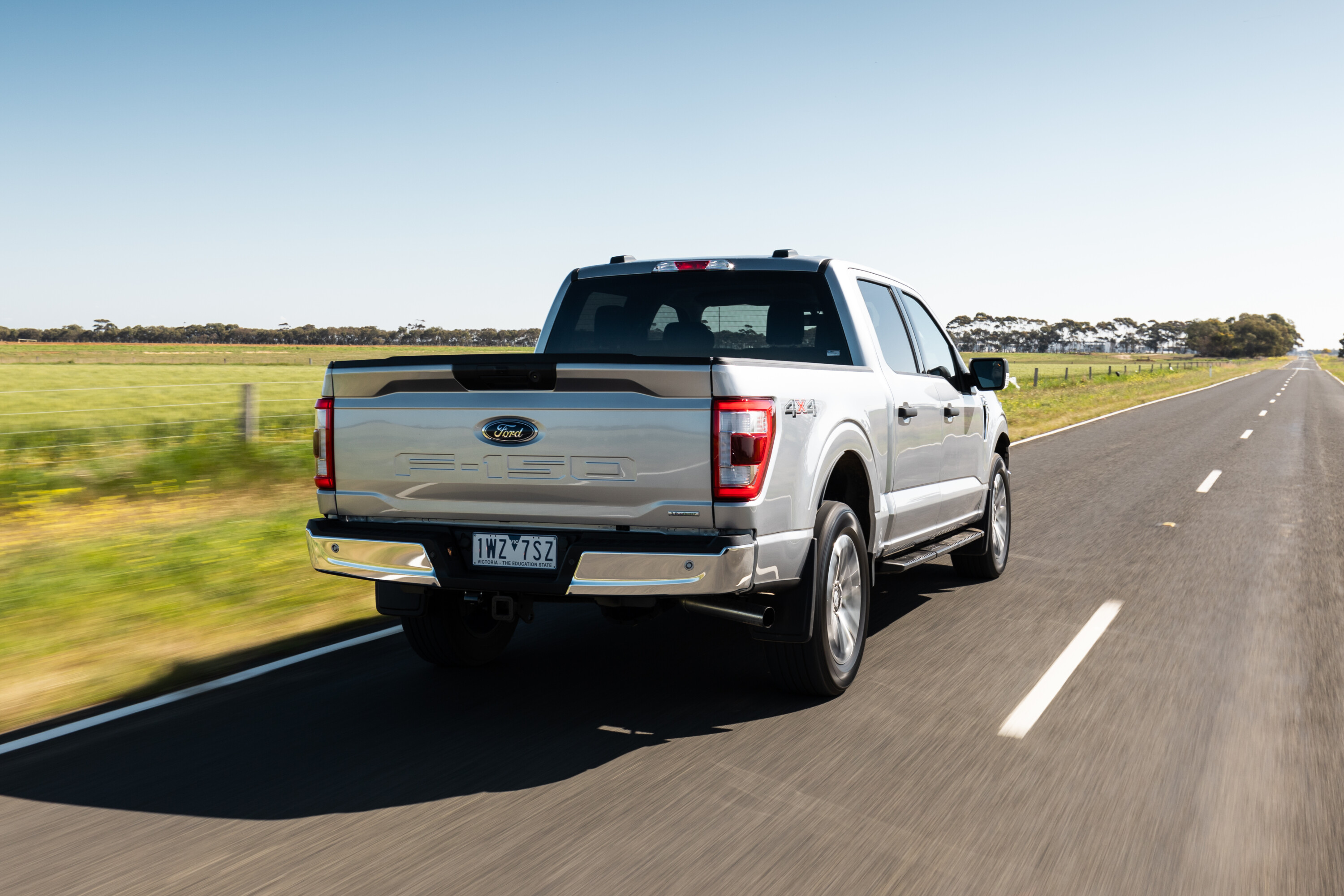
There are only two cost options on the 2023 F-150, an extra $995 extends the wheelbase by 304mm to 3987mm and the cargo bed from 1676mm to 1981mm, and any colour other than plain white will add extra expense.
The 2023 F-150 Lariat starts at $139,950 (+ORC) for the SWB/short-bed model and goes up to $140,945 (+ORC) for the LWB/long-bed variant.
All variants of the F-150 in Australia are built to an Australian-spec in Detroit with an Australian-specific VIN, despite being built as left-hand drive. They are remanufactured from left- to right-hand drive in Melbourne at a new, purpose-built facility run by RMA, where the motto is that the vehicles are built to standards equal to or better than how they arrived from the USA. It is claimed by some that these F-150s are some of the best built in the world.
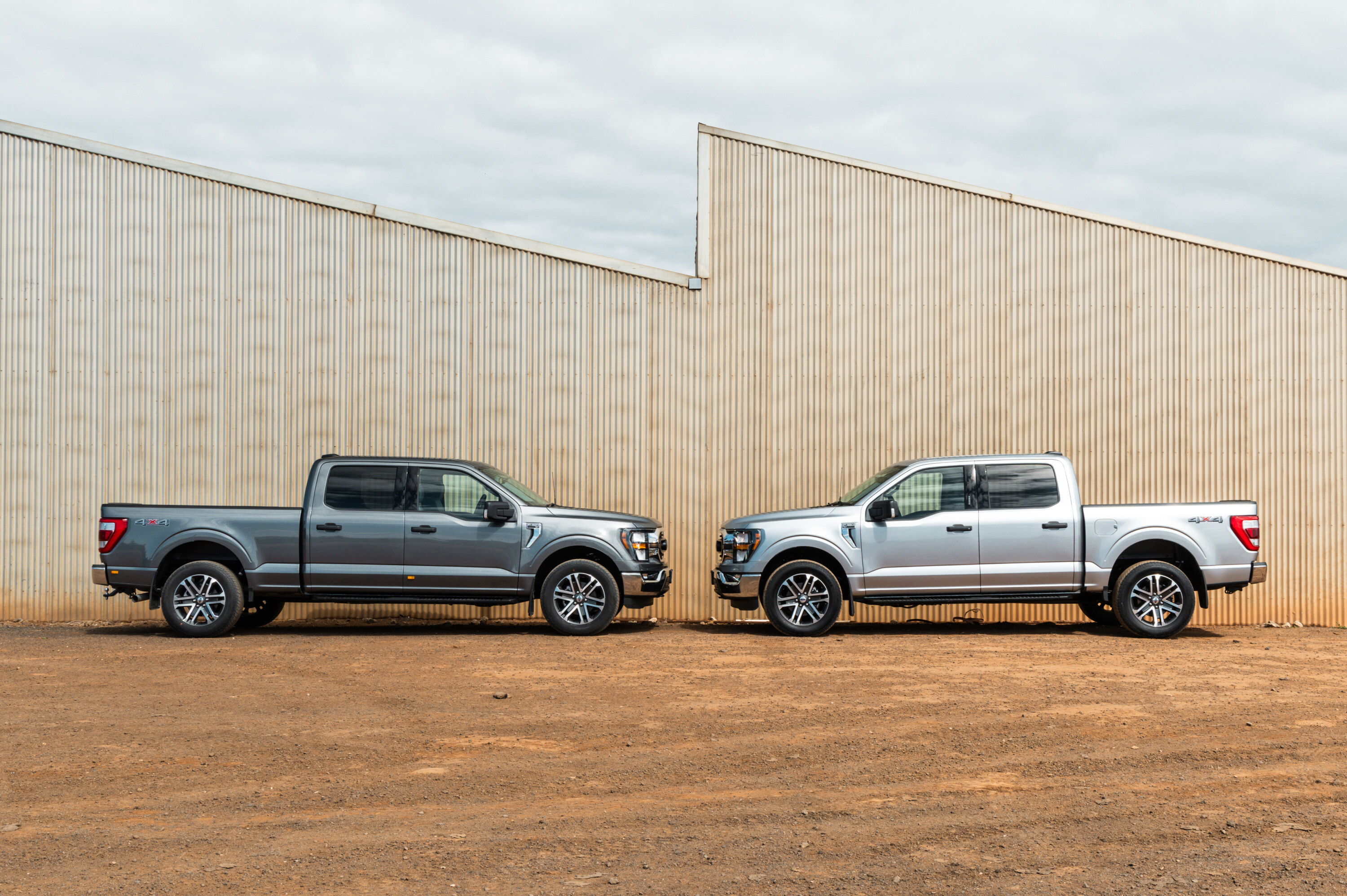
All Australian F-150s are powered by the same 3.5-litre petrol-fuelled twin-turbo V6 engine that makes 298kW and 678Nm and is backed by a 10-speed automatic transmission.
Both F-150 variants are 4×4. The XLT employs a conventional part-time/dual-range four-wheel drive system, but the Lariat adds a transfer case that has a 4×4-auto setting to allow all-wheel drive on sealed and hard-pack road surfaces – just like you find in the higher-spec Ford Ranger models.
JUMP AHEAD
Interior and safety
Both F-150 models are relatively well-equipped, but, as you would expect, the Lariat gets considerably more premium features to almost justify its $30K price hike.
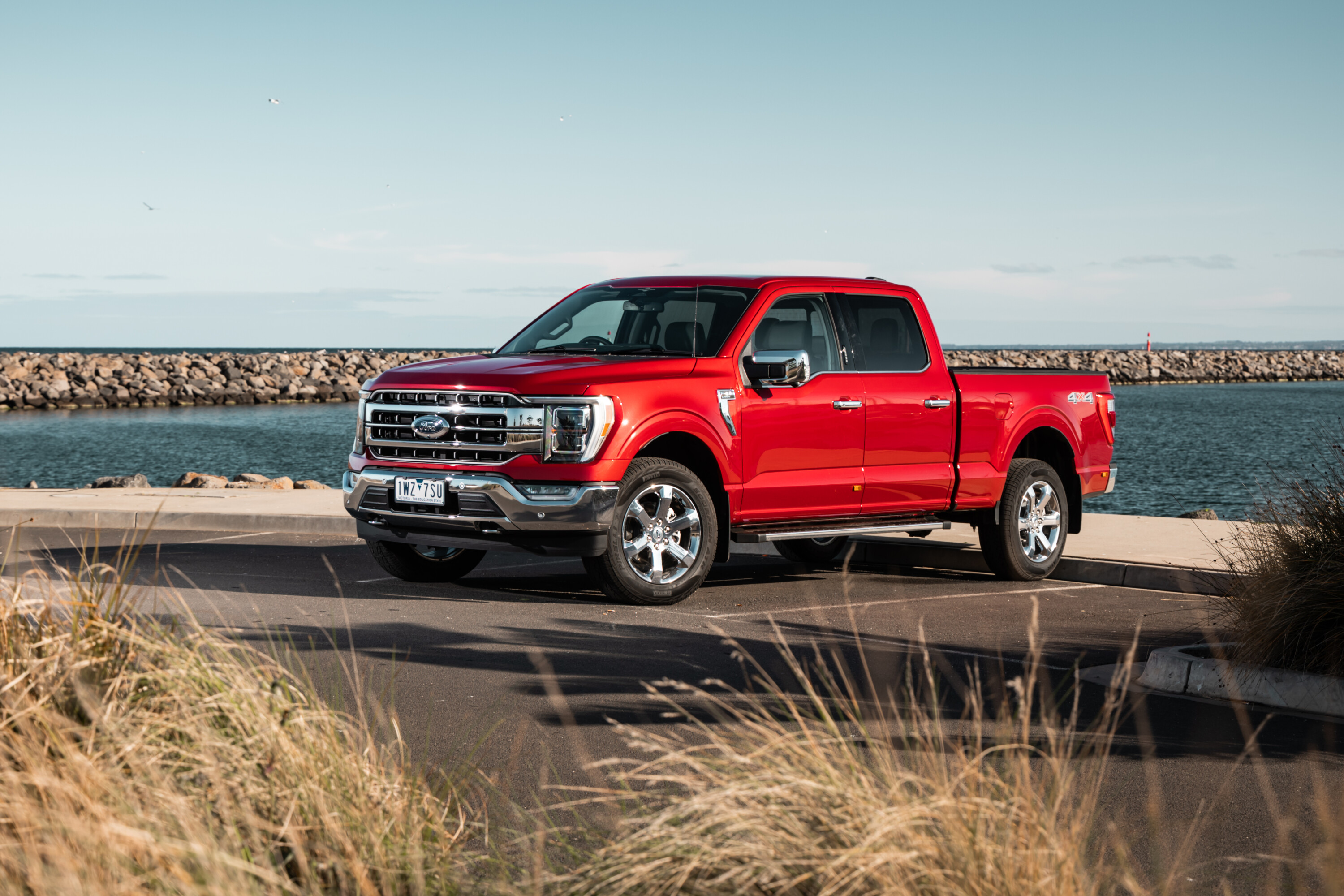
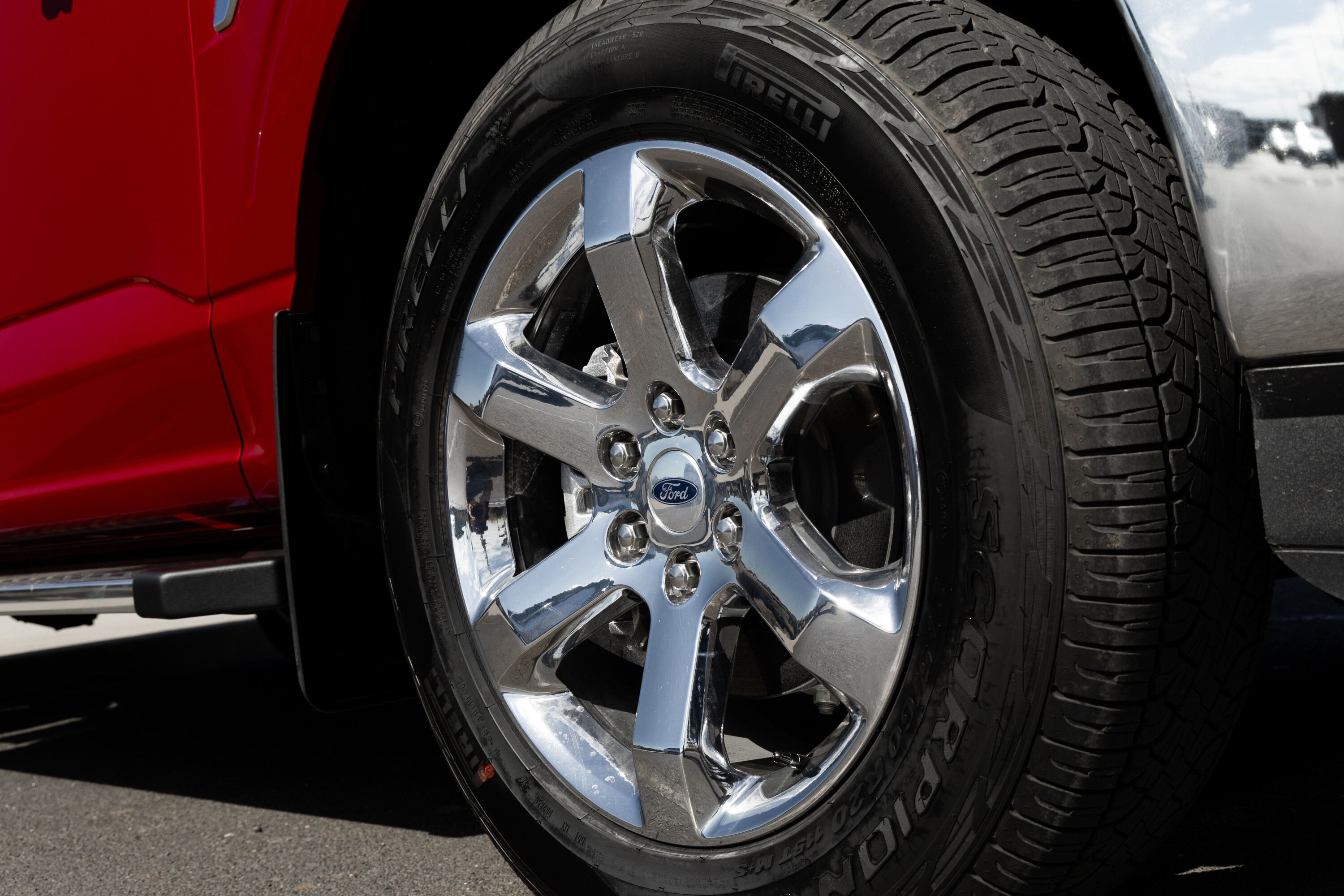
Standard equipment on both models include 20-inch alloy wheels, chrome bumpers, side steps, underbody skid plates, a spray-in bed liner, and cargo management locking cleats in the bed.
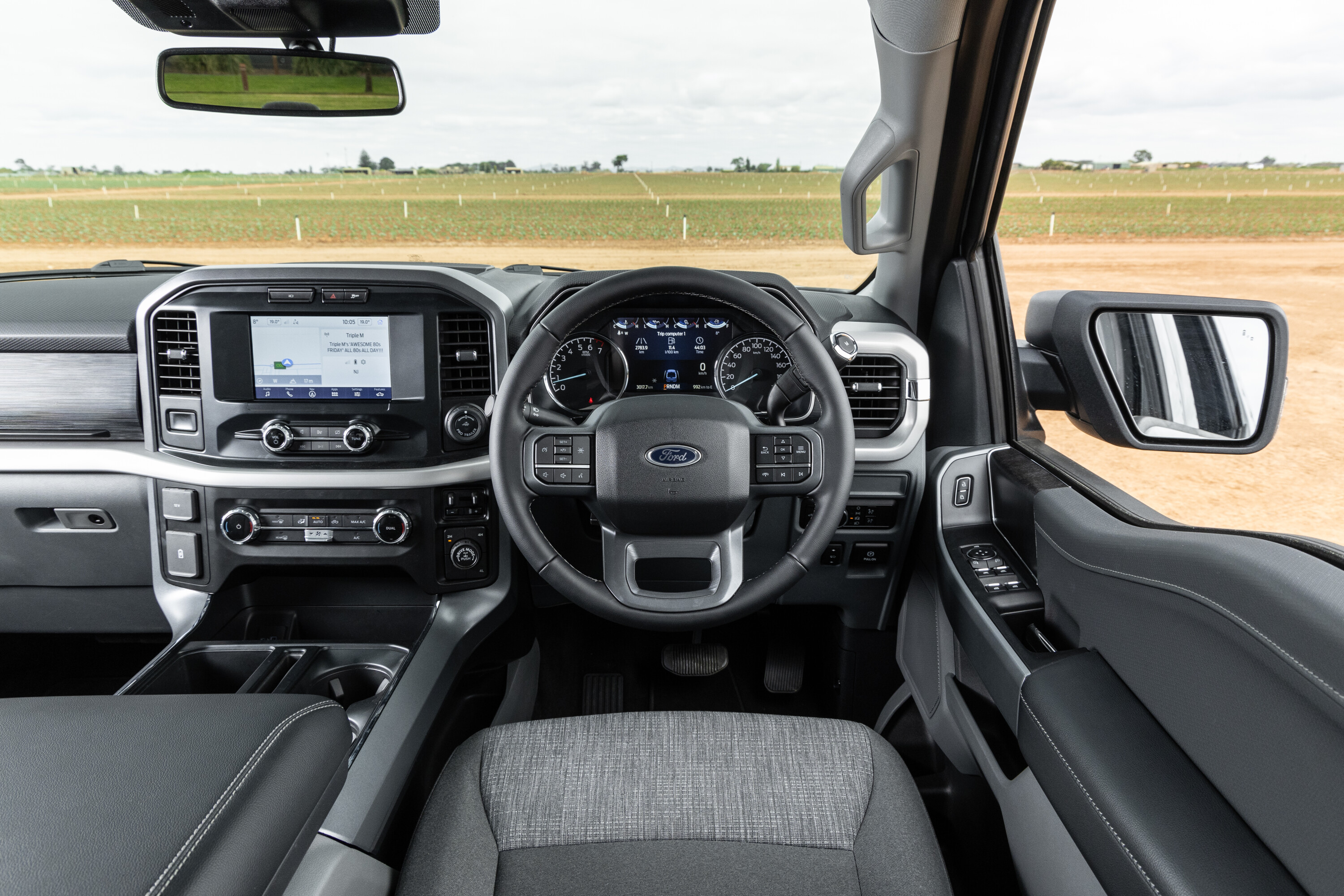
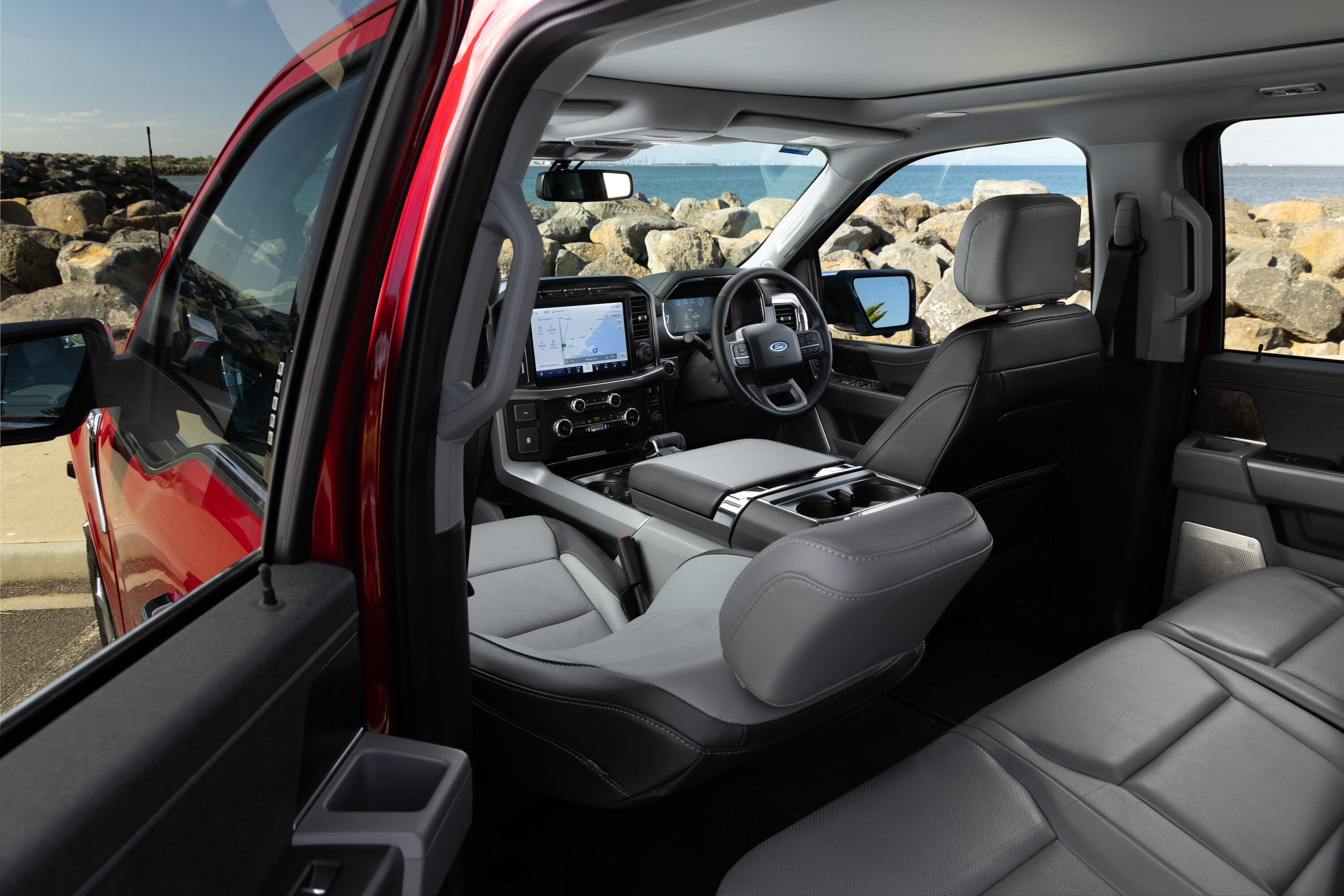
Inside you’ll find a SYNC 4-enabled centre touchscreen (eight-inch in the XLT and 12-inch in Lariat); in-built sat-nav; Apple CarPlay and Android Auto; a 12-way powered driver’s seat and 10-way powered front passenger seat; power-adjustable foot pedals; dual-zone automatic climate control; Ford Pro-Trailer back-up assist; and plenty of room for five adult passengers.
| Safety features | |
|---|---|
| AEB, ABS, ESC and ETC | Pre-collision assist |
| Six airbags | BLIS with cross-traffic alert and trailer tow coverage |
| Rear view camerau00a0 | Lane-keeping aid |
| Driver alert system | Parking sensors |
Some safety features in the Lariat the XLT misses out on include front parking sensors; a 360° camera; adaptive cruise control with stop-and-go and lane-centering; evasive steering assist; speed sign recognition; and wireless phone charging for compatible devices. There’s certainly nothing missing that would make it a deal-breaker.
What’s underneath
As all Australian F-150s include the Towing Pro pack as standard, the chassis comes with a heavier duty rear section than what is standard on the model.
The front end uses independent suspension with coil springs, while the live axle is under the back on leaf springs. The rear axle has a locking differential in both grades.
Ford claims the F-truck will leave a Raptor behind in the 0-100km/h dash
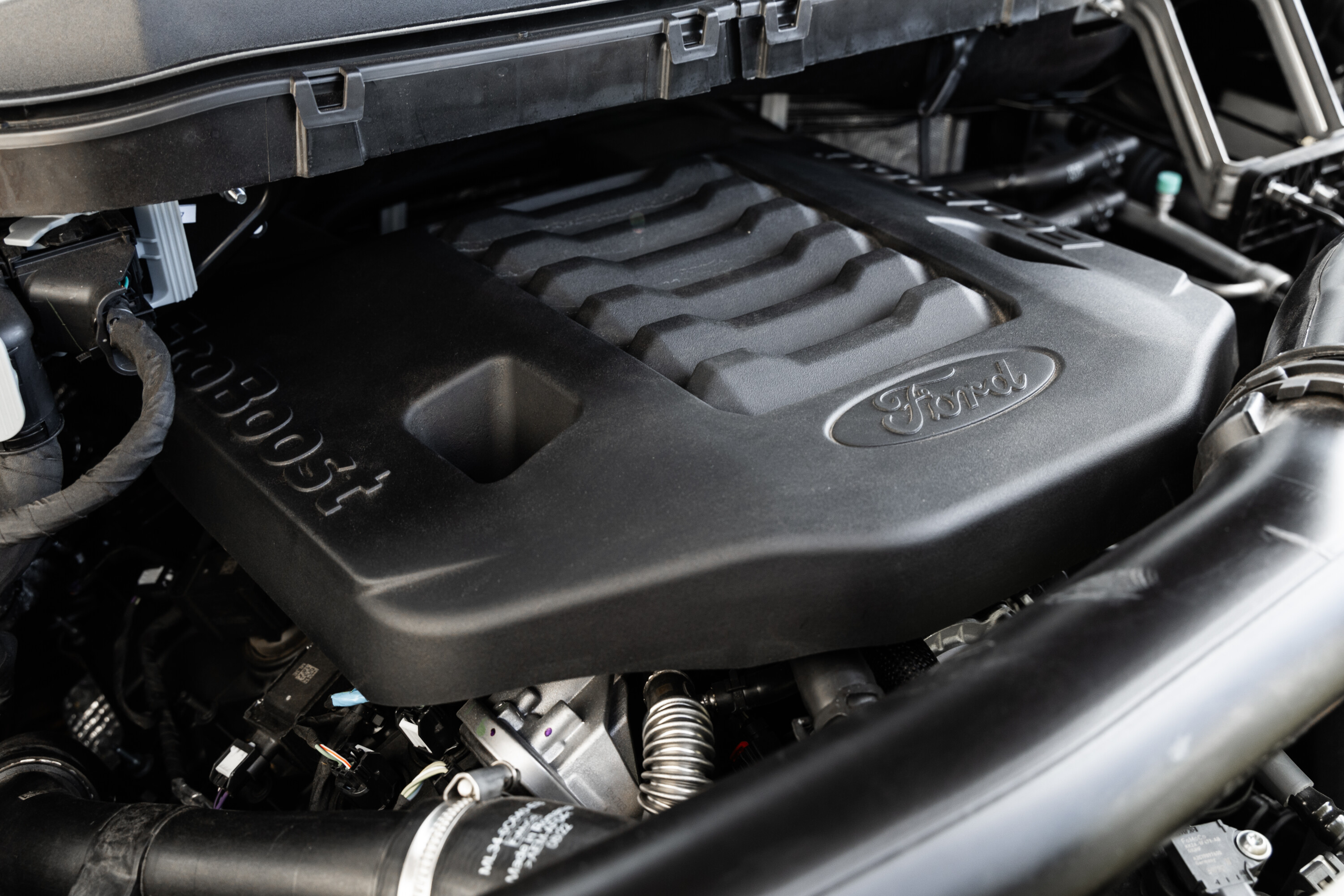
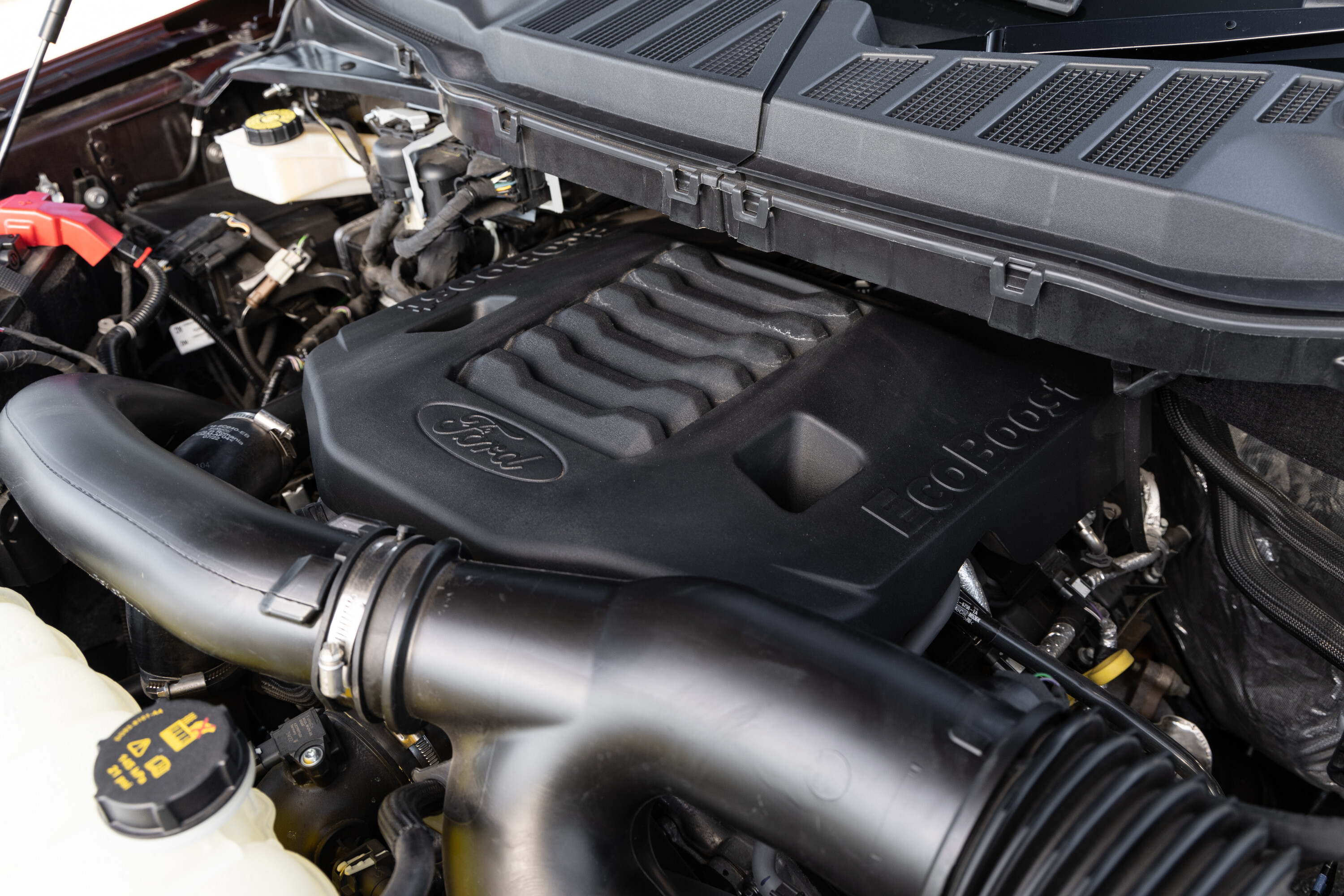
The V6 ‘EcoBoost’ 3.5-litre engine comes from the same family as the Ranger Raptor’s 3.0-litre version, and, as you would expect of the larger capacity, it makes more power and torque than the Raptor. While it doesn’t have the sound of a V8 engine, the Ford V6 makes more torque than the V8s found in both the RAM and Silverado 1500.
Interestingly, with its body made mainly of aluminium, the F-150 XLT SWB weighs 2471kg, which is similar to the smaller Ranger Raptor, and Ford claims the F-truck will leave a Raptor behind in the 0-100km/h dash.
Performance
Our time in the F-150 at the vehicle’s launch didn’t include such sprints, but the engine feels strong and powerful without really pushing you back in the seat when you put your foot down. Nor was it lacking grunt with a near-on three-tonne trailer hooked up behind it; although, it must be said the terrain was all flat with no hills or off-road driving.
The 10-speed auto responds well to throttle input, with firm and sharp shifts when you put the boot in. It’s smooth and seamless on the highway and under light throttle, with no evidence of it hunting for ratios.
Using the column shifter takes a minute to get used to, but you soon forget about it. The buttons on the end of the shifter for manual gear selection are less than ideal if you prefer to make your own gear choices to suit the driving conditions.
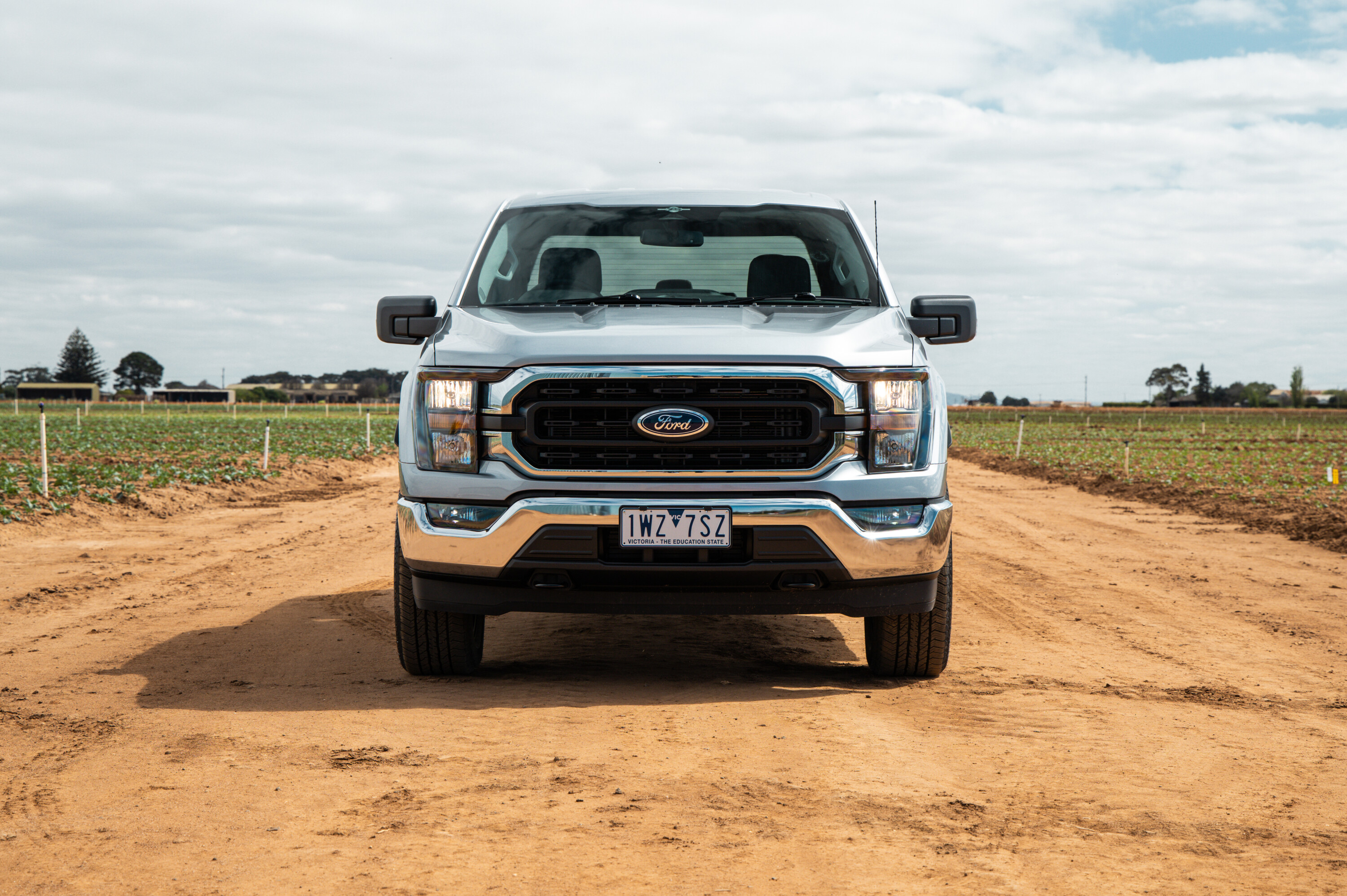
Ford claims 12.5L/100km fuel use on the combined cycle; and with a 136-litre fuel tank coming standard on Australian models, it gives the driver plenty of touring range.
While there was no off-road component to the drive, we did cover some pretty crook secondary roads where the suspension did an excellent job of managing the unladen truck and keeping it controlled at speed. At times there was a little bit of hop from the rear axle to remind you that you were in a leaf-sprung full-size pick-up and not a passenger car.
Overall, the driveline, suspension and cabin delivered a very well-mannered, quiet and refined ride quality on all manner of roads we sampled on the launch.
Capability
Full-size pick-up trucks might be big but their standard payloads don’t reflect this, with the XLT rated to 769kg and the Lariat to 686kg with the SWB and short bed.
The LWB does a bit better at 794kg and 710kg for the models respectively, but still falls well short of what we get from the mid-size 4×4 utes such as Ford’s own Ranger and its competitors.
Where the full-size trucks fare better is in their towing capability, with ratings up to 4500kg when equipped with a 70mm tow ball or 3500kg on a standard 50mm tow ball. GCM for the Effie is 7765kg, so even if you were to load the trailer to the maximum rated 4500kg you would still have a usable 700kg+ payload for passengers and cargo.
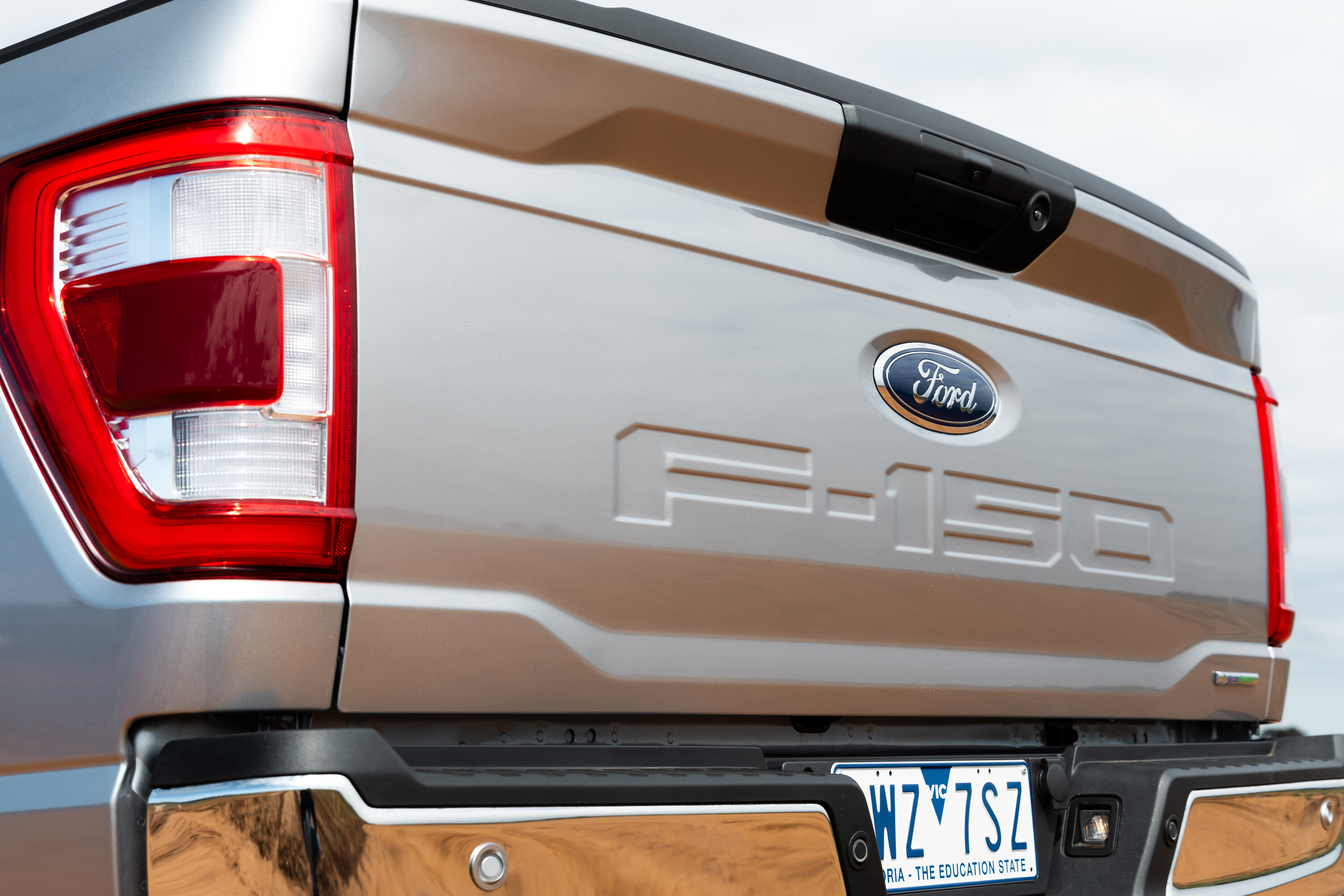
As mentioned, Australian F-150s come with the Tow Pro package that gives you a tow bar that was locally developed and manufactured to meet the Australian standards for a 4500kg rating, and it comes with a 70mm ball as standard.
The kit also includes a system that is claimed to make reversing a trailer easier for inexperienced operators. It uses the rear cameras and a yaw sensor fitted to the trailer to guide the driver, who uses a dial and not the steering wheel to steer the vehicle and trailer back. This system felt fiddly and unnatural and I reckon I could learn to reverse a trailer the conventional way as quickly or quicker than learning this alternative. But it’s a neat party trick.
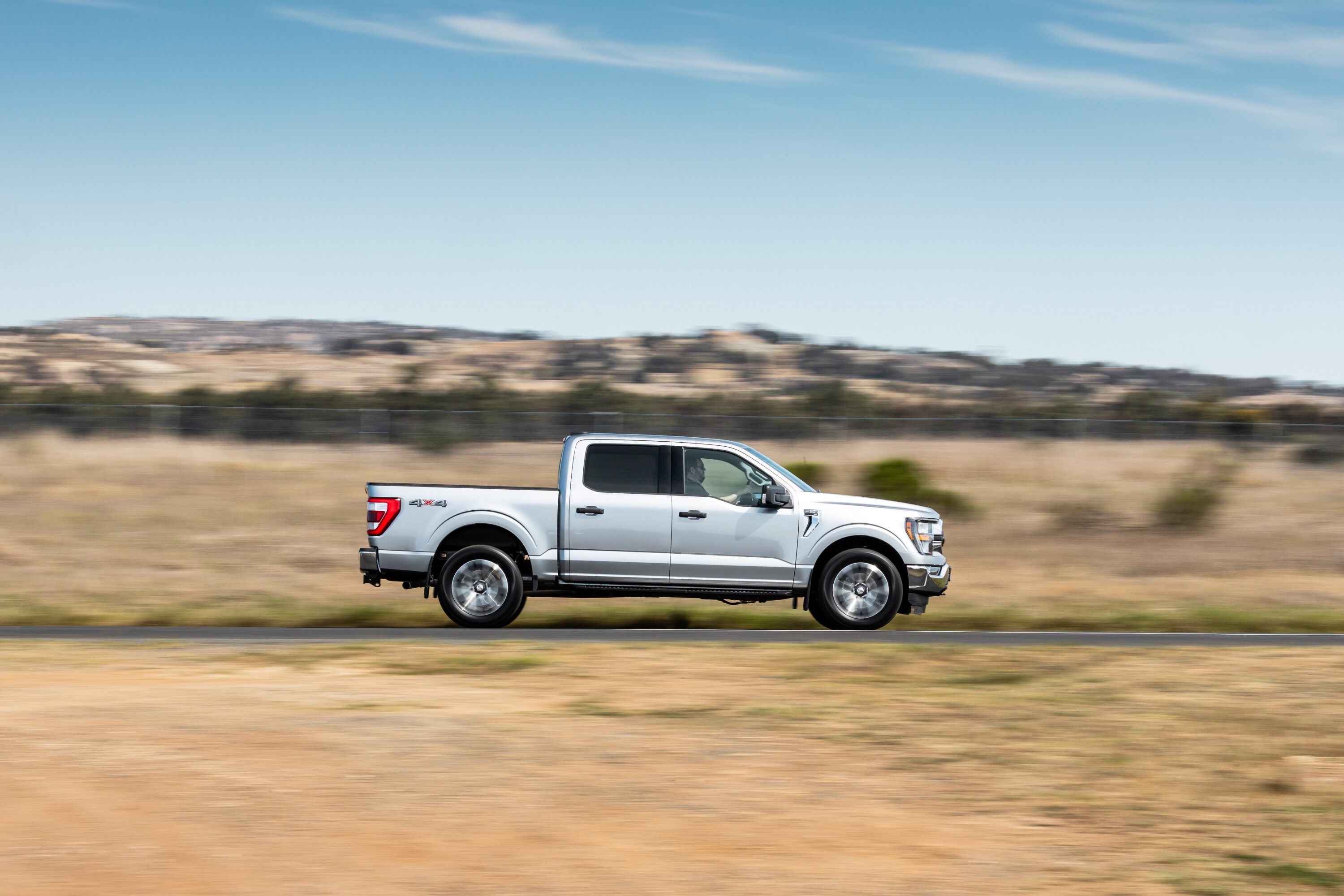
Towing heavy trailers with high-torque trucks easily spins the wheels when towing in two-wheel drive, and we found this in the dry in the XLT – it would be worse on wet or gravel roads and would be worth considering an upgrade to the Lariat if towing a large trailer is your thing. Having the AWD ability of 4A in the transfer case would make it safer and easier on the gear.
As one of the highest-selling vehicles in the world, there is plenty of aftermarket equipment available for the F-150 from the USA and a limited amount from Australian suppliers. With Ford’s strong ties to ARB via its approved products for the Ranger, and with ARB’s huge presence in the USA, we are expecting more gear from them and other manufacturers for the Aussie models soon.
Verdict
While Ford has dabbled in F-Series trucks in Australia a few times over the 75 years of the model’s history, it’s only been the factory-supported efforts of RAM and Chevrolet that have really motivated the segment in this country.
Ford hasn’t gone in half-hearted and is working very closely with the team at RMA to create a vehicle that, in some ways, is better than what was originally manufactured in the USA.
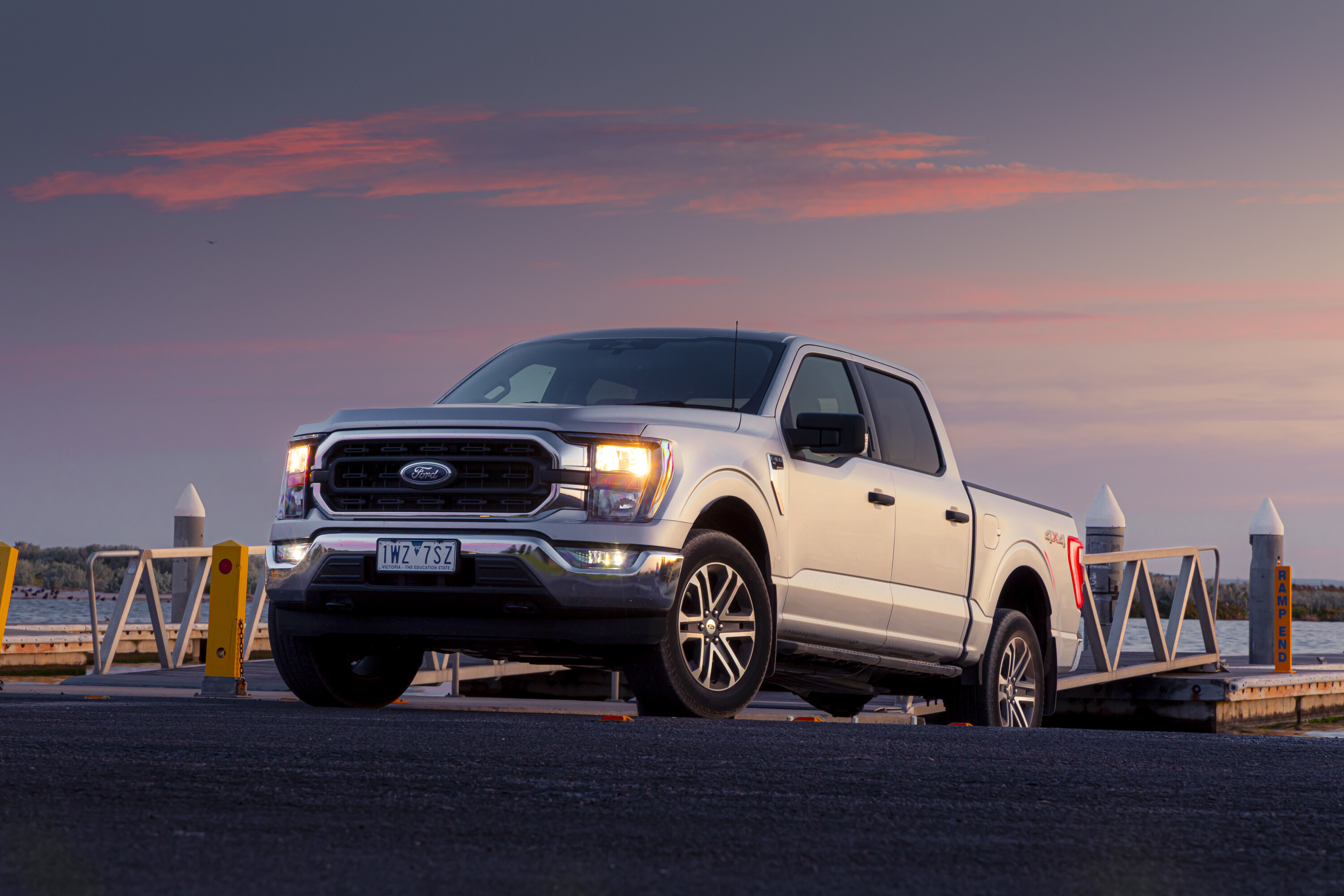
This shows in the way the new F-150 drives on our roads, how everything works as it should, and the attention to detail in the re-manufacturing process. It has delivered a truck that looks and feels like it was always made this way. Having this close relationship between the OEM and the remanufacturer, and the access to ford’s IP and parts, certainly allows the collaboration to deliver a more complete and refined package than what most grey import dealers can offer or produce.
The F-150 is covered by the same five-year/unlimited kilometre warranty as other new Ford vehicles sold in this country.
Ford USA recently unveiled its 2024 F-150 with a facelift and specification changes, and Ford Australia says we should get this revised model late in 2024.
| Ford F-150 XLT SWB specs | |
|---|---|
| Price | $106,950 +ORC |
| Engine | Turbocharged petrol V6 |
| Capacity | 3496cc |
| Max power | 298kW @ 6,000 rpm |
| Max torque | 678Nm @ 3,100 rpm |
| Transmission | 10-speed automatic |
| 4×4 system | Part-time, dual range 4×4 |
| Construction | Aluminium 4-door ute cabin and tub on a steel ladder frame chassisu00a0 |
| Front suspension | IFS with coil springs |
| Rear suspension | Live axle on leaf springs |
| Tyres | 275/60 R20 |
| Weight | 2451kg kerb |
| GVM | 3220kg |
| GCM | 7720kg |
| Towing capacity | 4500kgu00a0 |
| Payload | 769kg |
| Seats | 5 |
| Fuel tank | 136L |
| ADR fuel consumption | 12.5L/100km combined |
| On test fuel consumption | N/a |
| Approach angle | 24.3u00b0 |
| Rampover angle | 20.0u00b0 |
| Departure angle | 25.3u00b0 |
| Ground clearance | 239mm |
You already know the Ford F-150 is popular – it is one of the world’s best-selling vehicles, after all – but it’s the sheer scale of that popularity that might surprise you.
In the US, a new F-150 rolls off the line in Dearborn every 52 seconds and, remarkably, Ford is selling them even faster than they can build them.
A new F-150 sale is racked up every 49 seconds, so it’s little wonder the ‘Effie’ has been America’s top-selling truck for almost five decades.
And now the F-150 has arrived Down Under
Or should we say returned?
Ford last sold the F Series here in 2006, when the F250 and ginormous F350 were imported in right-hand drive from Brazil, but this time around the project is far more ambitious.
Ford’s fresh conversion partner is RMA Automotive and the scale and meticulousness of the new joint venture has to be seen to be believed.
The work takes place at a brand new, 21,000sqm facility north of Melbourne, and if its footprint weren’t enough of a hint, this is no small-time operation. Ford says it will remanufacture 20 units a day.
Remanufacture? You bet. Simply calling it a conversion undersells the depth and quality of the engineering involved.
At 20 trucks each day, that equates to around 5000 units a year and, in an indicator of just how popular full-size American utes are becoming in Australia, Ford and RMA say they can easily ramp up production to meet rising demand.
So how does Australia’s version of the F-150 stack up against the US original? And is it a smarter buy than the other big utes already on sale here, the RAM 1500 and Chevrolet Silverado? We climbed aboard the biggest and most expensive version of the F-150, the Lariat LWB, to find out.
How much is it and what do you get?
Ford offers two versions of the F-150 in Australia. The range opens at $106,950 for the XLT and stretches to $139,950 for the flagship Lariat we’re testing here.
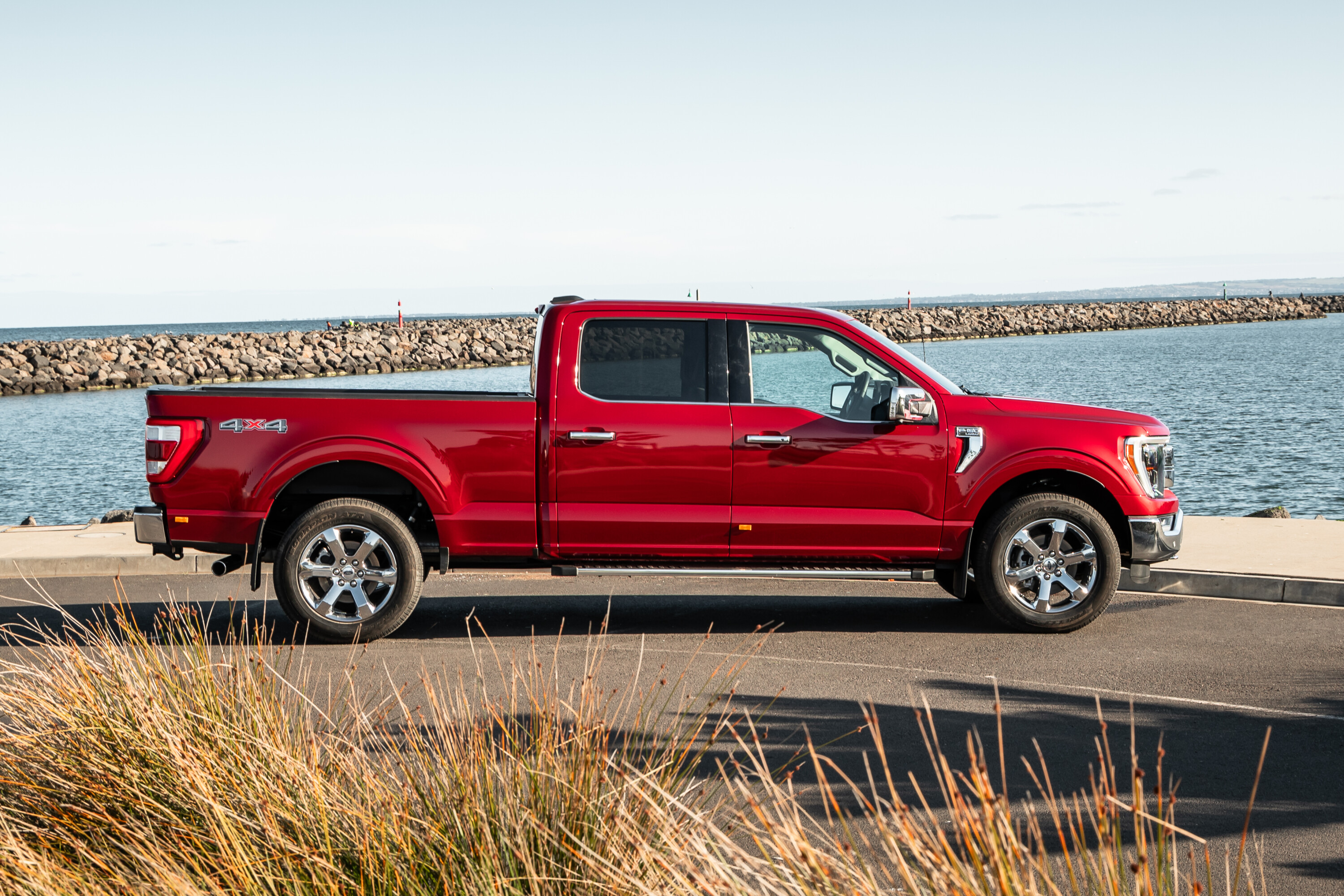
Those prices are for the ‘short wheelbase’ versions, but for an extra $995 both the XLT and Lariat can be had in long-wheelbase form, which grafts an additional 300mm between the axles.
Buyers looking to lug about big loads will likely gravitate towards the LWB versions as every millimetre of that extra length is added to the tray, which grows to 2005mm long.
Mechanically, there’s little to separate the XLT and Lariat. Every version of the F-150 uses Ford’s 3.5-litre twin-turbo Ecoboost V6 that produces 298kW/768Nm – that’s right, unlike the RAM 1500 and Chevy Silverado there’s no V8 under the bonnet – and is paired with a smooth-shifting 10-speed automatic.
Both trim levels roll on 20-inch alloys, share the same basic chassis and suspension hardware, feature chrome bumpers, side steps and underbody skid plates, and crucially, they carry the same 4500kg braked towing capacity.
To help justify the Lariat’s hefty $33,000 premium over the XLT, Ford has loaded it with extra equipment.
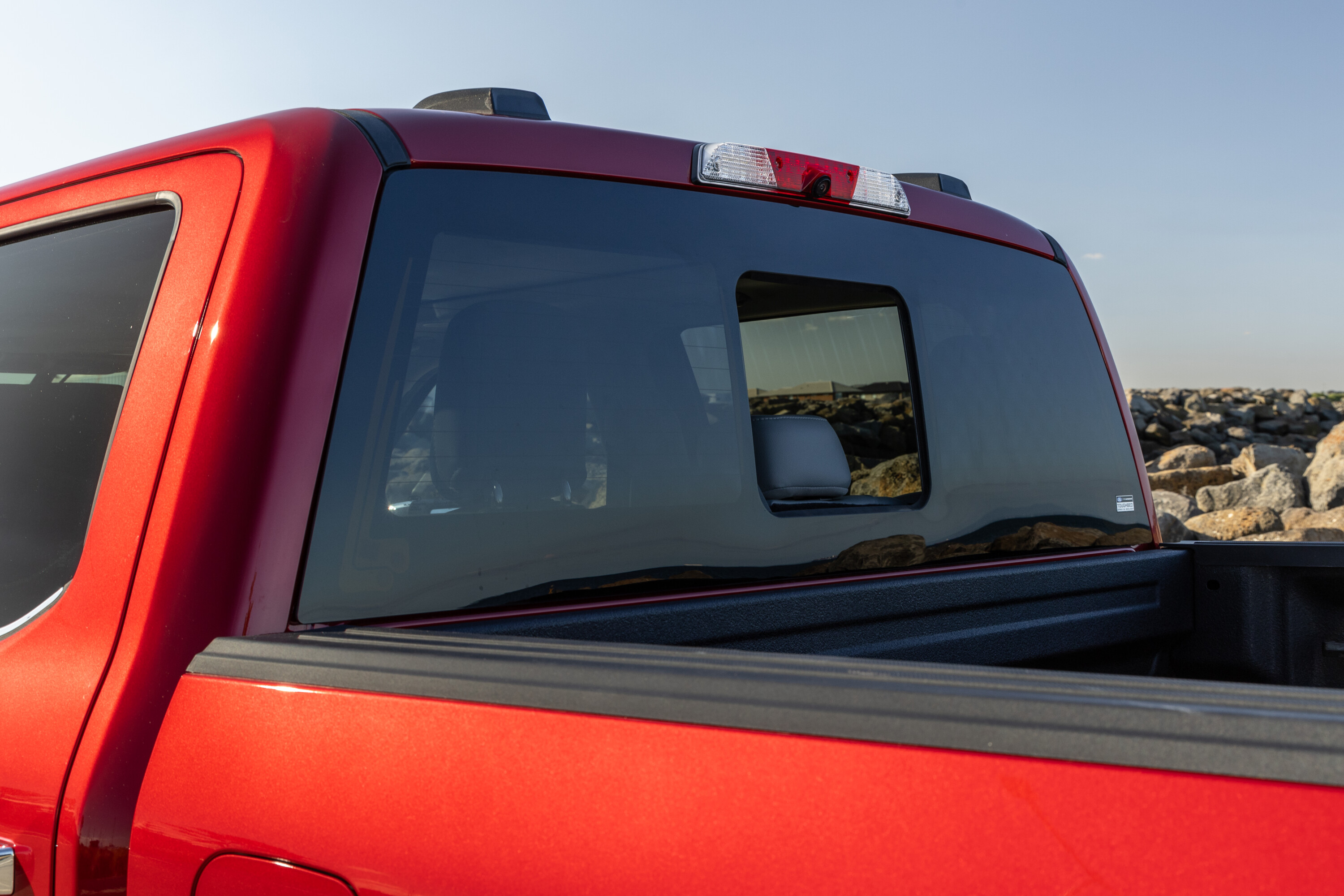
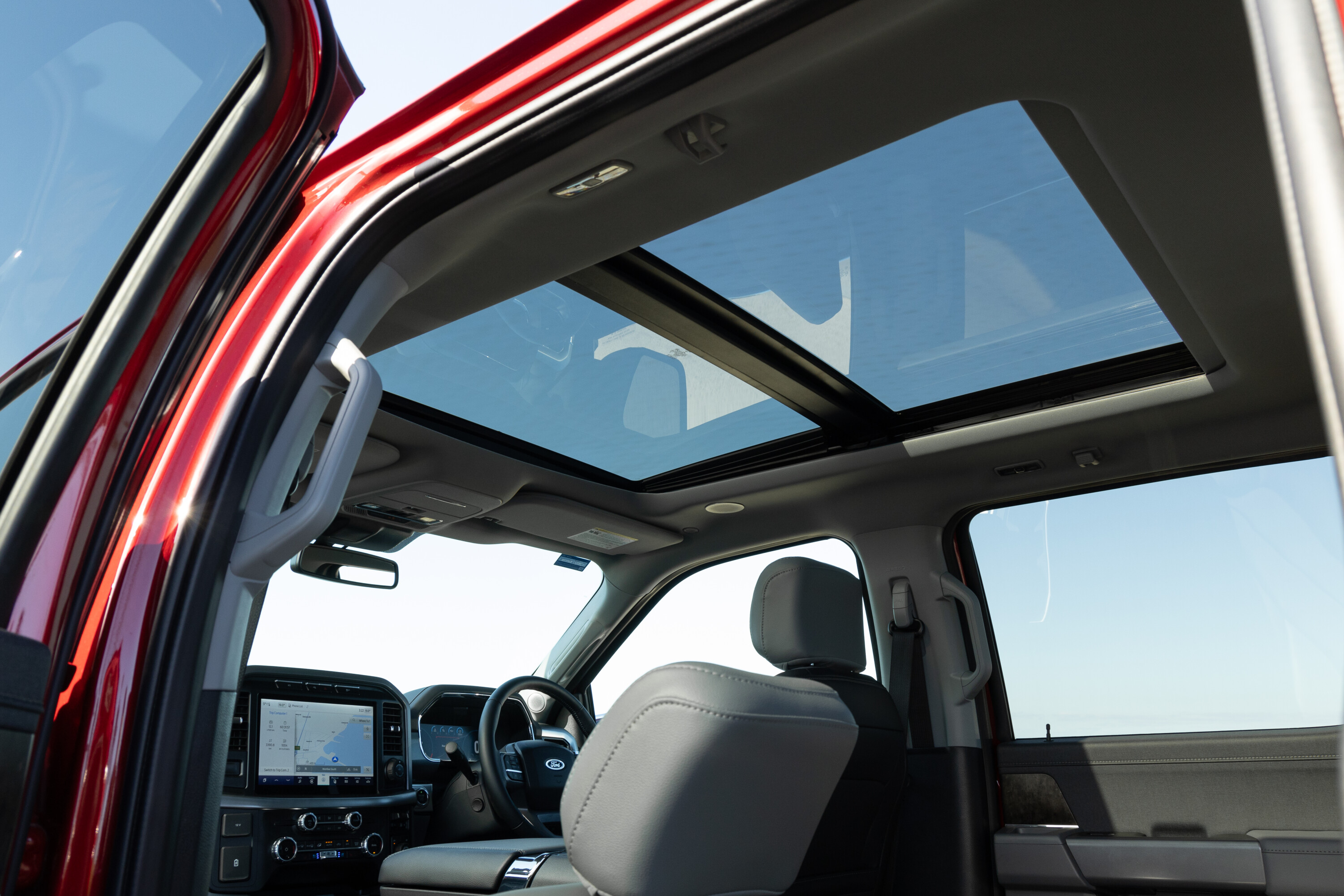
You gain LED headlights, a leather steering wheel with electric adjustment, a two-piece panoramic sunroof, heated/cooled leather seats, a sliding window in the rear windscreen, and the gear shifter is mounted on the centre console rather than the steering column.
The Lariat also features a larger 12.0-inch centre touchscreen and a digital instrument cluster, with the centre screen in particular feeling like a huge upgrade compared to the XLT’s comparatively small 8.0-inch screen.
Enhanced engine noise is piped into the cabin in both the XLT and Lariat, but the higher quality audio system delivers a sound that’s richer, deeper and almost V8-like.
Perhaps the only debatable upgrade are the seats. In the Lariat they’re leather accented but we actually preferred the softer, more lounge-like cloth seats in the XLT.
One important distinction is that the Lariat scores a full-time 4×4 system, meaning you can switch to 4-Auto to help improve traction and stability while towing or on slippery surfaces.
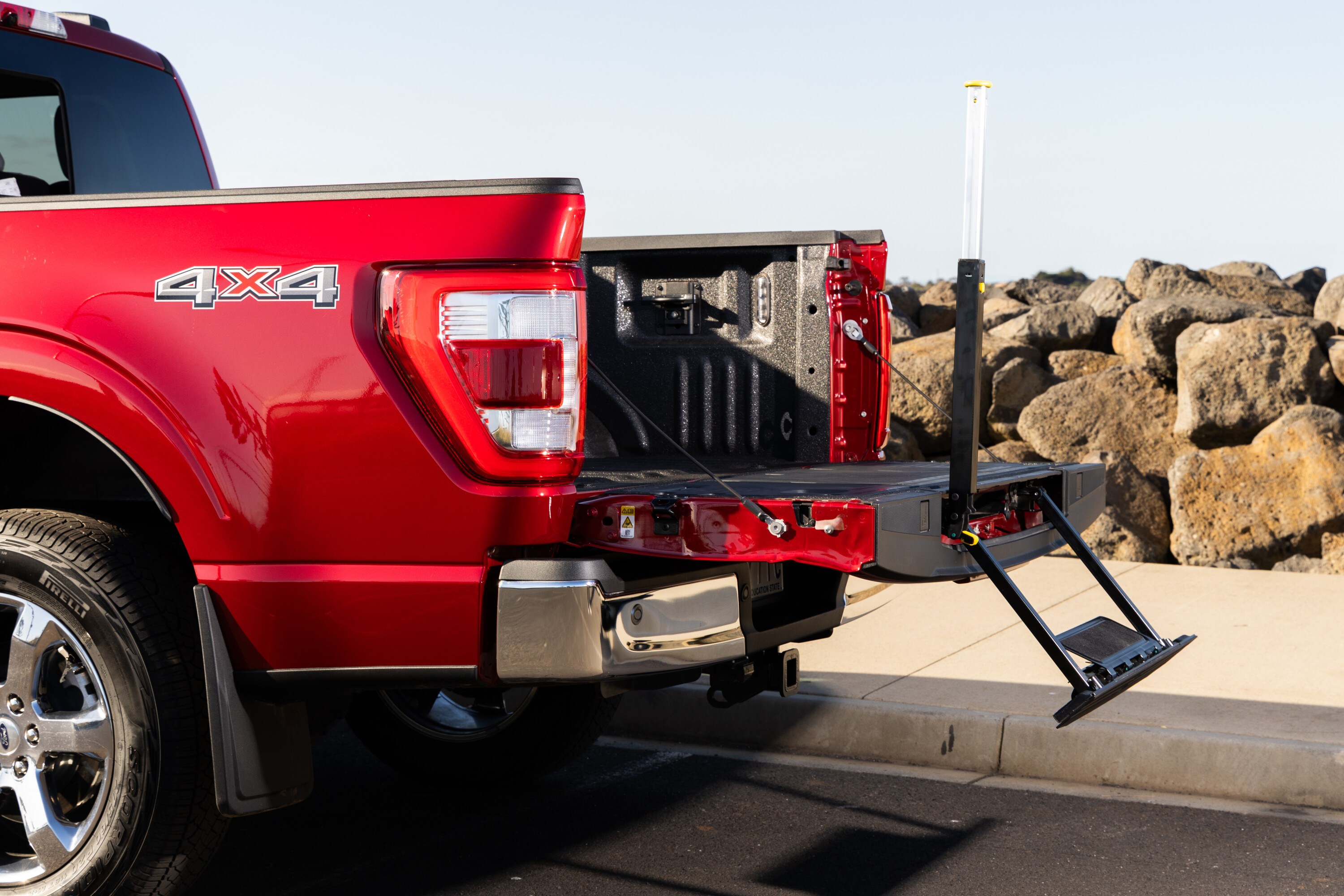
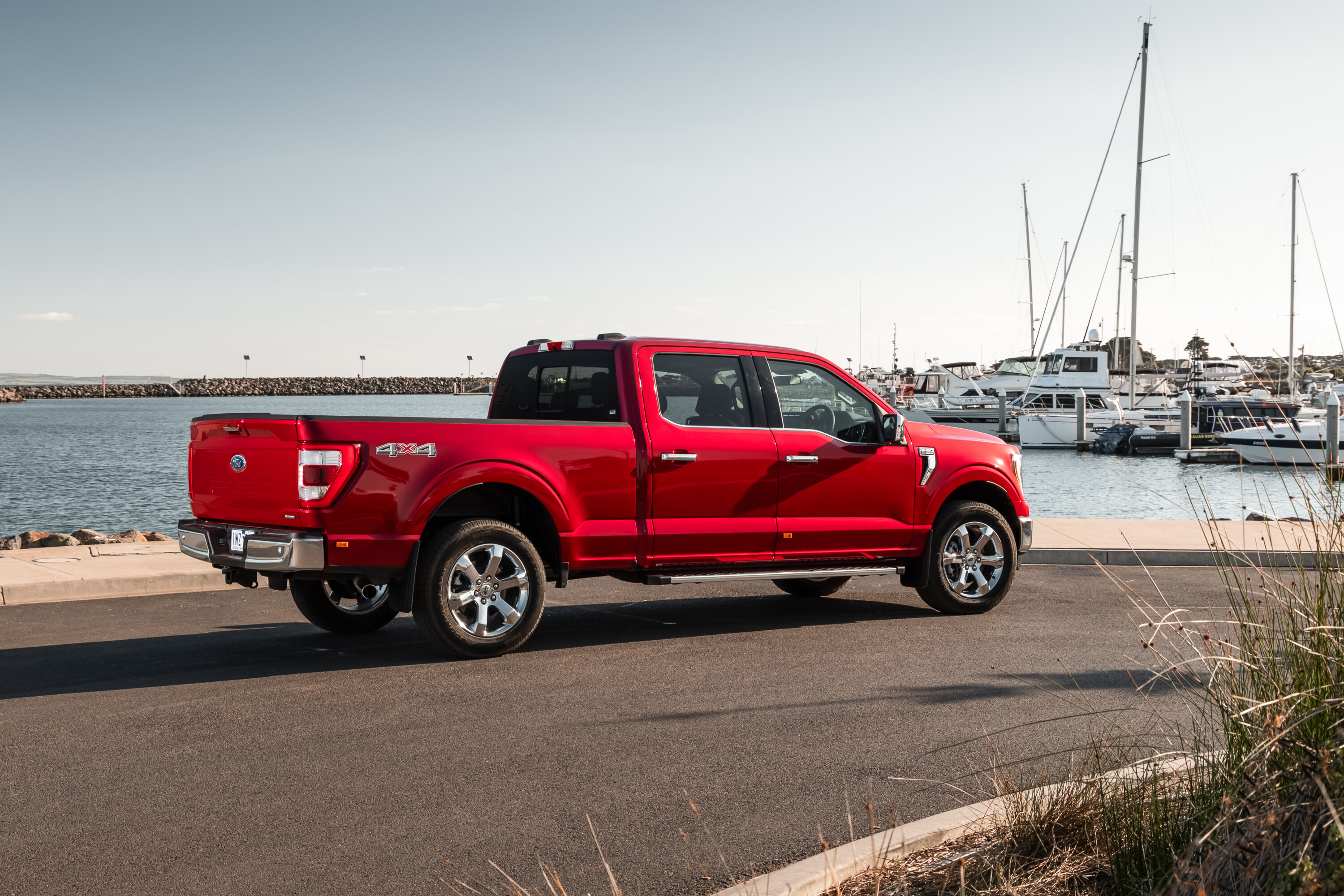
There are some worthwhile upgrades to the Lariat’s tray, too, like a pair of LED lights, a 12V socket and an automatic tailgate. Both versions of the F-150 have a drop-in bed liner, moveable tie-down points and an integrated tailgate step that makes clambering into the tray much easier.
Finally, Lariat models score some desirable active safety gear missing from the XLT.
While both models include six airbags, autonomous emergency braking, blind-spot detection (with trailer coverage) and lane-keep assist, the Lariat builds on that with a host of additional advanced safety systems including: intelligent adaptive cruise control with stop and go, a 360 surround-view monitor, lane-centering, speed-sign recognition, intersection assist, and evasive steering assist.
Does all this justify the Lariat’s $33K premium over the XLT?
We reckon it does, mostly due to the bigger touchscreen, digital instrument cluster and full-time 4X4 system.
Ford also predicts the Lariat will be the more popular model grade and make up 65 percent of sales.
Ford F-150 vs rivals: key stats
| Ford F-150 Lariat LWB | RAM 1500 Big Horn | Chevrolet Silverado 1500 LTZ Premium | |
|---|---|---|---|
| Engine | 3.5L V6TT | 5.7L V8 | 6.2L V8 |
| Power/torque | 298kW/678Nm | 291kW/556Nm | 313kW/624Nm |
| Transmission | 10-speed auto | 8-speed auto | 10-speed automatic |
| Economy | 12.5L/100km | 12.2L/100km | 12.2L/100km |
| Braked towing | 4500kg | 4500kg | 4500kg |
| Payload | 710kg | 878kg | 757kg |
| L/W/H | 6184/2030/1995mm | 6142/2474/1968 | 5931/2086/1930mm |
| Wheelbase | 3994mm | 3898mm | 3750mm |
| Price | $140,945 | $127,950 | $121,000 |
| Warranty | 5yrs/unlimited | 3yrs/100,000km | 3yrs/100,000km |
Interior space, comfort and storage
Space, and loads of it, is clearly a huge attraction when buying an F-150 and it does not disappoint.
Clamber aboard any version of the Aussie F-150 range and you’re greeted by a cabin that feels massive and is also surprisingly comfortable and practical.
Storage cubbies abound. The door pockets are huge, there’s a dedicated slot for your phone (plus a wireless charging pad and twin USB outlets), and the wide centre console is colossal. The console can also double as a work space thanks to a lid the can be folded forwards to create a table big enough for a laptop.
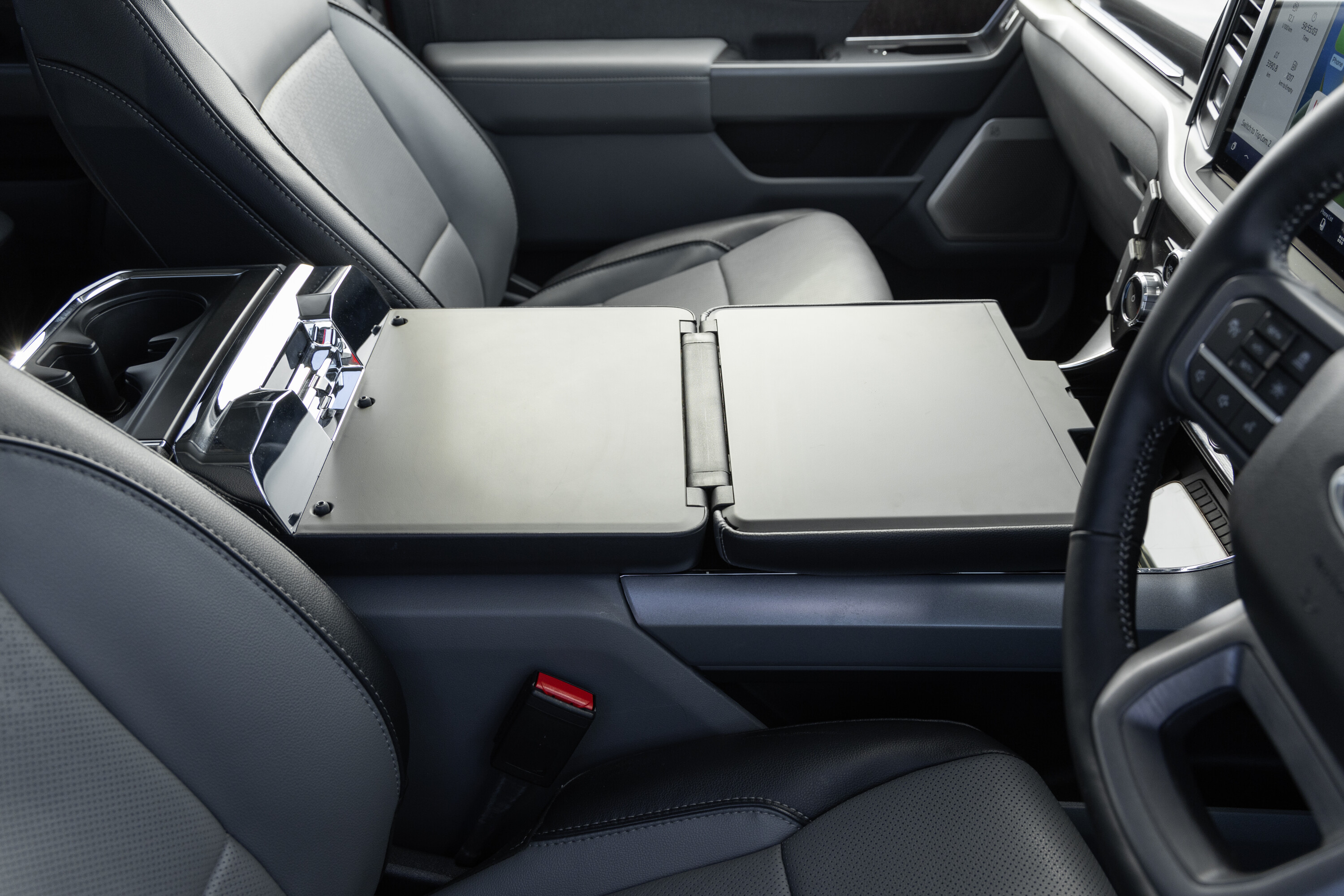
It’s a clever solution but one that requires an extra step in Lariat models. Because the Lariat’s shifter is on the console, rather than the steering column like the XLT, you need to press a button to electrically fold down the gear shifter. It’s a solution RMA is especially proud of, as re-engineering the collapsable shifter for right-hand-drive was a real challenge.
Remarkably the back seats feel even roomier than those in the front. Legroom is especially generous (it’s so roomy we reckon NBA basketballers will have space to spare) and like the front, the seat itself is comfortable and supportive.
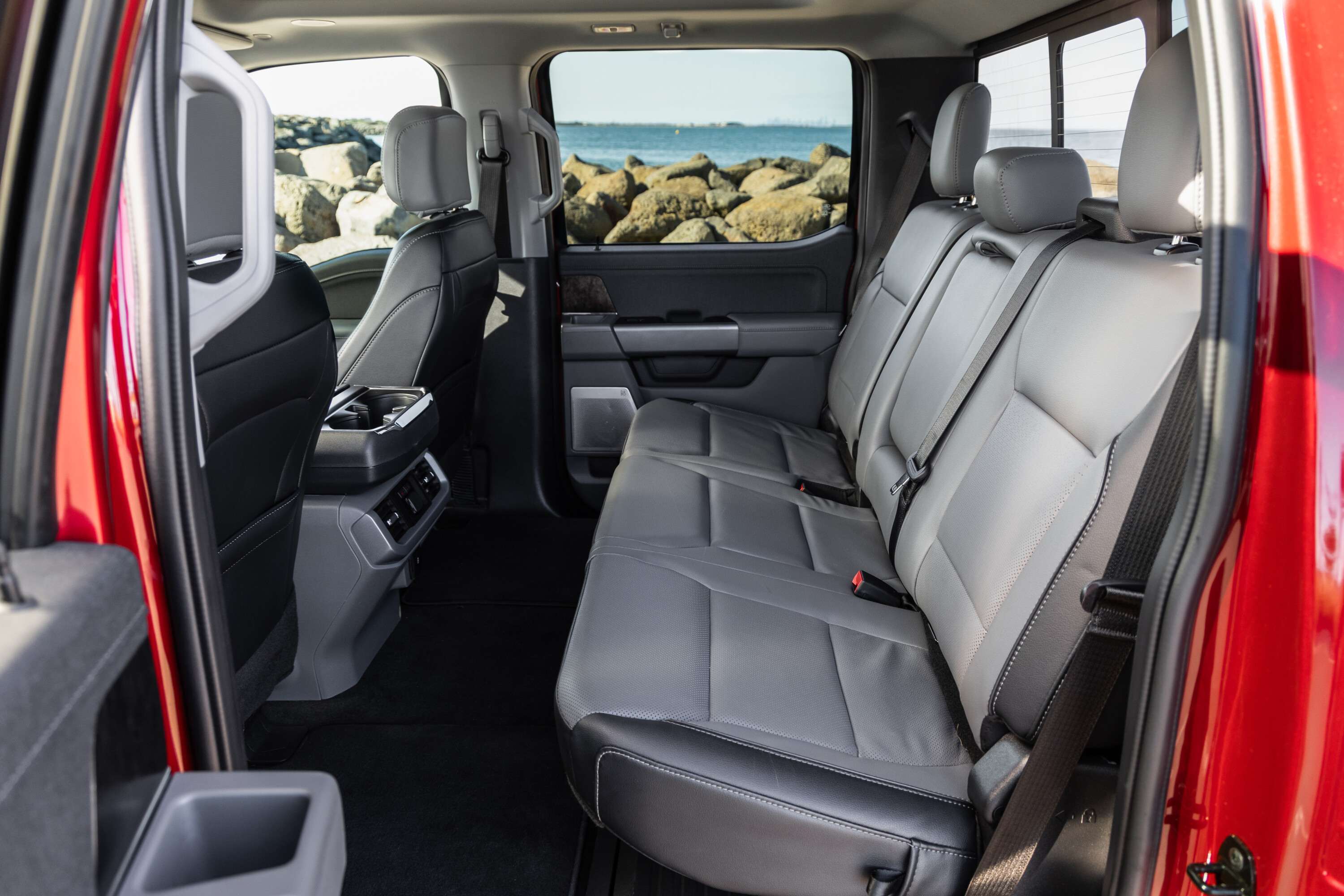
Lariat versions also score heated rear seats and more USB ports, a power outlets and dedicate rear air vents are provided on the rear of the centre console.
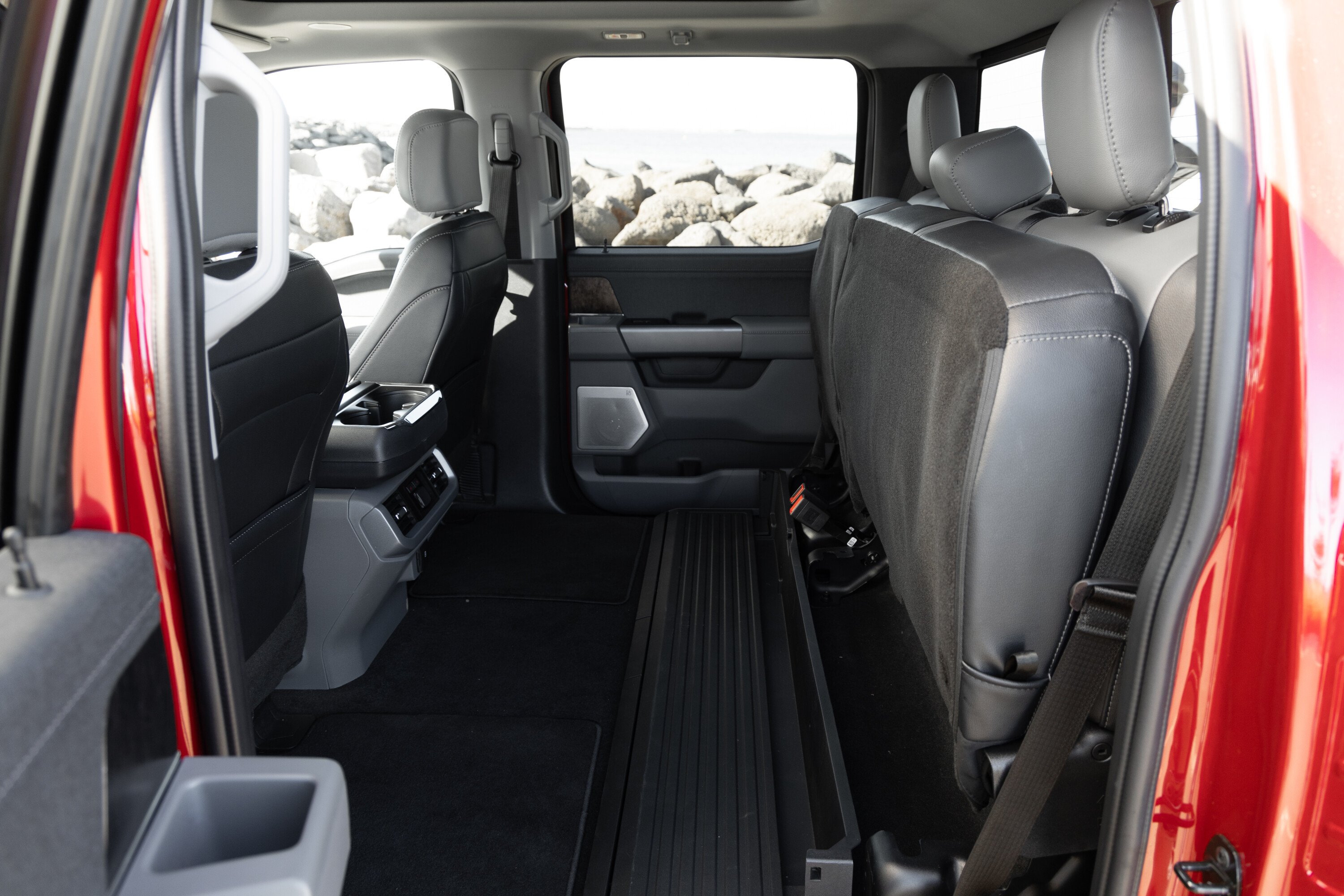
The seat base also folds up and because the floor is also flat, with no intrusive transmission tunnel, it’s possible to use the entire section between the back doors for additional storage.
Lariat versions also score an extra storage box beneath the rear seat that’s missing in the XLT.
What really sets the Lariat apart from XLT, however, are its screens.
In such a large and broad cabin, the XLT’s 8.0-inch centre screen looks comically small and its resolution also isn’t as clear as the bigger screen in the Lariat.
That helps to make the Lariat easier to park (the video feed from the 360 degree camera is clearer) and the bigger screen is also a benefit if you’re towing, especially if you plan on using the F-150’s clever tech when reversing a boat or trailer (more on this below).
What’s it like to drive?
On the move, you might expect the F-150 to feel big, boaty and ponderous. But, amazingly, it drives a lot like a supersized Ford Ranger.
And that’s high praise indeed. Part of the F-150’s dynamic cohesion can be credited to RMA’s conversion work, which included giving our F-150s a unique steering tune.
Aussie versions of the F-150 use the steering rack from the Ford Ranger Raptor and it’s been tuned by Ford’s engineering team at the You Yangs proving ground the deliver better on-centre feel and response.
It’s a change you appreciate most when driving the F-150 on fast, sweeping country roads. Vague steering robs driver confidence, especially at high speed, yet our F-150s are reassuringly responsive and accurate which makes it easy to place the big ute exactly where you want it on the road.
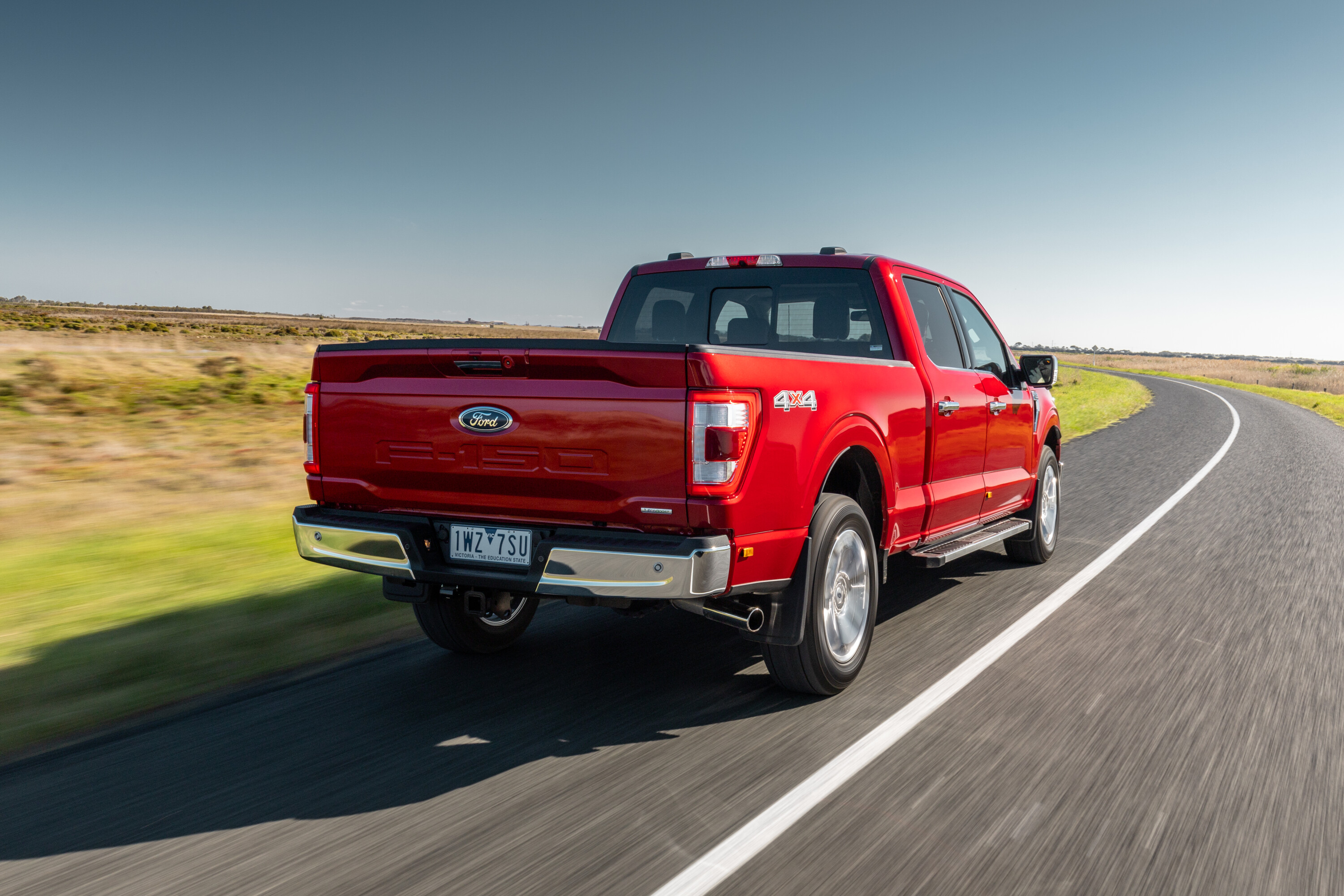
The rest of the F-150’s chassis and suspension is unchanged from the US version. That means an independent coil-sprung front end and leaf springs outback and the good news is that the ride/handling balance is nicely judged.
There’s decent compliance on passive dampers, even on poor roads and despite the large 20-inch alloys, and while you do occasionally notice the telltale tremors and lateral shimmy that plague all light-commercial vehicles, the suspension does an excellent job of controlling the F-150’s mass.
Speaking of weight, the F-150 isn’t as hefty as you might expect. The XLT SWB hits the scales at 2451kg, which actually makes it lighter and faster than the Ford Ranger Raptor. Ford’s engineers sheepishly admitted they’ve clocked the XLT in the high 5.0sec bracket for the 0-100km/h dash.
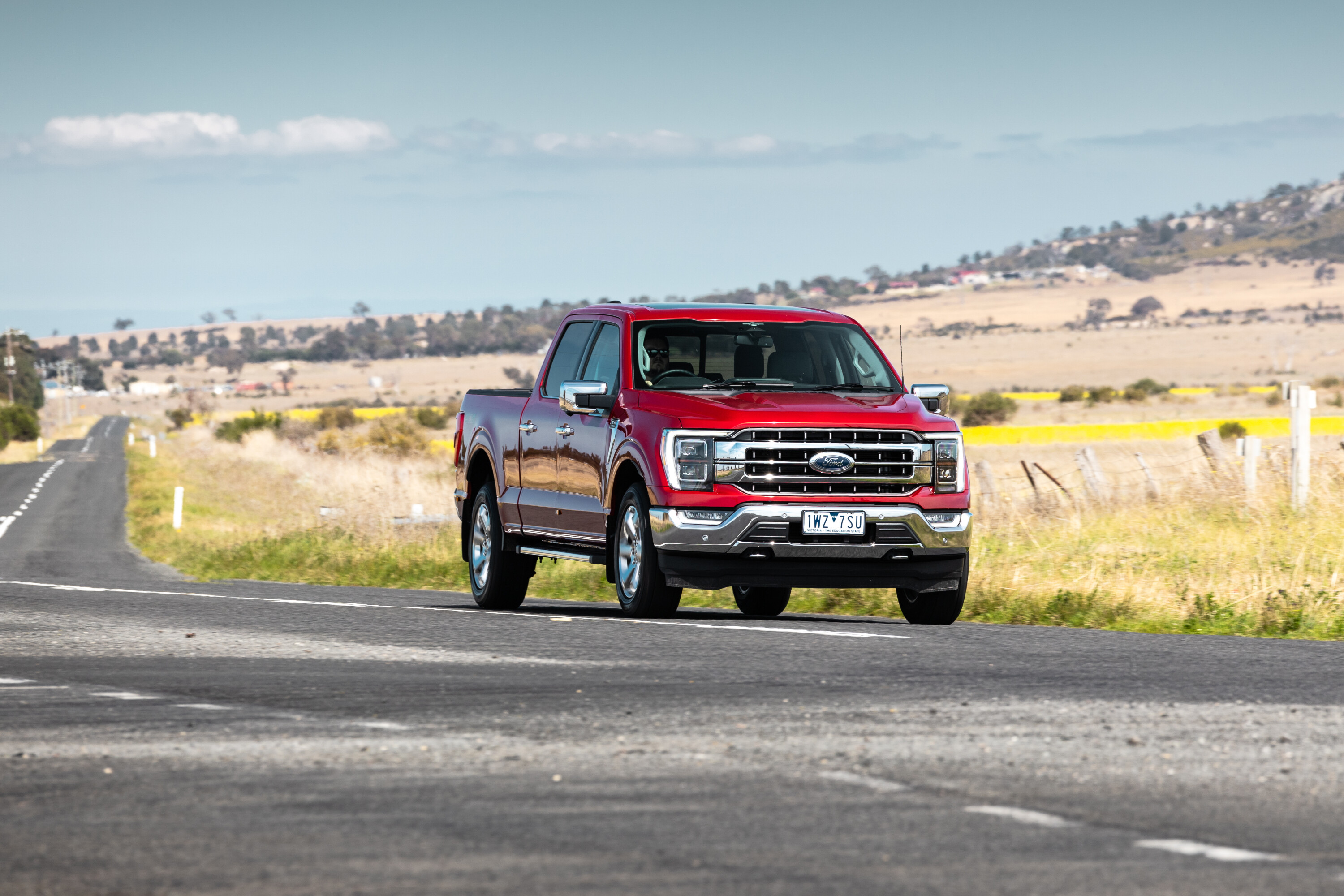
The Lariat LWB weighs about 100kg more and while you do notice it loses some of the short wheelbase’s punch, there’s still ample performance for towing and to execute easy overtakes.
The twin-turbo V6 is a strong engine – its down slightly for outright grunt compared to the V8s in the RAM and Chevy but it trumps both for torque – and it pairs well with the 10-speed auto, which shifts through cogs smoothly and decisively. The F-150 is also armed with a 136L fuel tank which should provide 1000km+ of cruising range.
And it’s long-distance cruising that the F-150 will excel at. Cabin refinement is impressive, vision out is excellent (the extra cutout of glass in the front side windows makes a huge difference) and the seat comfort and space offered in both rows is superb. The rear seats, in particular, are hugely spacious and offer business-class levels of knee room.
A quick word on towing and payload
Aussie F-150’s feature a locally developed tow bar and are rated to tow 4500kg with a 70mm tow ball or 3500kg with a 50mm tow ball. We towed a 3.5T caravan during our time behind the wheel and the F-150 barely broke a sweat, though it would spin up the wheels if left in two-wheel drive.
Switching to tow/haul mode helped, as did toggling the 4×4 system into 4-Auto, which is another reason to choose the Lariat if you plan on regularly towing heavy loads.
As for payload, long-wheelbase versions are rated at 794kg and 710kg for the XLT and Lariat respectively, which isn’t only lower than the payload of the RAM 1500 and Chevrolet Silverado (878kg and 757kg) but actually less than you get from most mid-size dual-cab utes like the Ford Ranger.
Remember that clever towing tech we mentioned earlier?
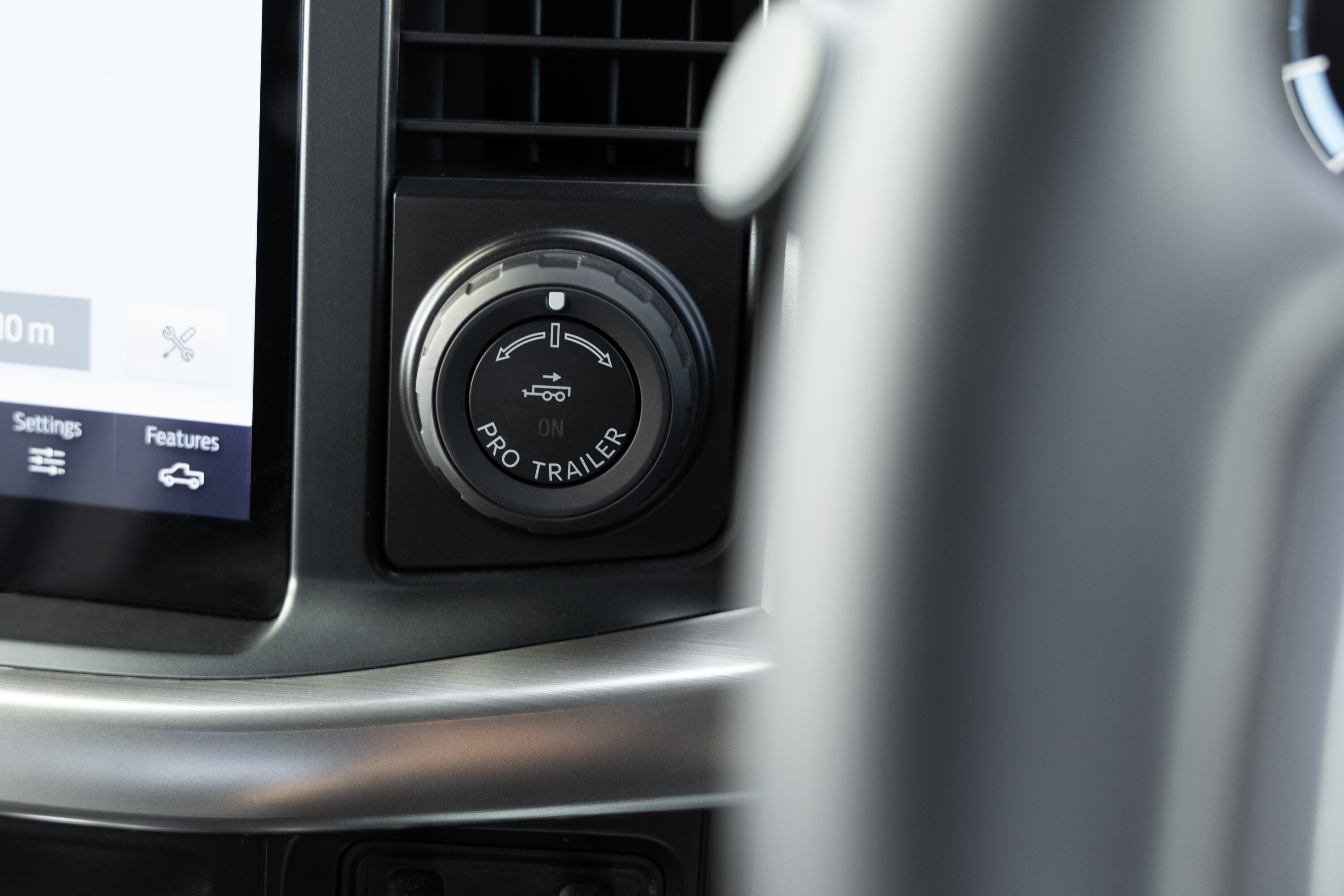
Ford has fitted the F-150 with a system called ‘Pro Trailer Backup Assist’, which is feature designed to take the stress and mental gymnastics out of reversing a caravan or boat. Rather than forcing the driver to counter-intuitively turn the steering wheel in the opposite direction they want the trailer to go, the system instead asks drivers to ‘steer’ via a small dial mounted on the dash.
Using the dial allows drivers to simply twist it in the direction they want to move the trailer and then, using a yaw sensor mounted to the front of the trailer and the F-150’s cameras, the ute turns the steering wheel accordingly. It can take some getting used to, especially if you have lots of experience at towing, but it works well.
How much fuel does the Ford F-150 use?
You might think using a V6 twin-turbo instead of a V8 would give the F-150 an efficiency advantage over the RAM 1500 and Chevrolet Silverado, but weirdly, the Ford is actually thirstier.
At least on the official combined cycle. The F-150’s official consumption figure is 12.5L/100km, which is marginally higher than its key rivals which are both rated at 12.2L/100km.
Happily, it seems that buyers can expect their F-150 to get close to (or even beat) that official claim. During our time with the ute we recorded 12.4L/100km over a decent mix of urban and highway driving, which is encouraging. That figure will rise once you drop a load in the tray or hitch a trailer, of course.
Warranty and servicing costs
The 2023 Ford F-150 comes with a factory backed five year/unlimited km warranty.
While that coverage period is fast becoming the industry standard, in the F-150’s case it’s a key reason to buy one over its key rivals. The warranty period for both the RAM 1500 and Chevy Silverado is three years/100,000km.
Service intervals are every 12 months/15,000km (whichever occurs first) and Ford is yet to reveal capped price servicing costs.
VERDICT
Love them or loathe them, there’s no escaping that big utes are now big business in Australia.
RAM and Chevrolet are both enjoying incredible sales growth and Toyota is also about to wade into the booming segment with the Tundra. And against those competitors, the Ford F-150 stacks up well. Its powertrain is strong and smooth, it drives well and the conversion work by RMA Automotive feels top notch.
There’s also a decent amount of choice available in the range, from the more affordable XLT to the full laden long wheelbase Lariat.
If pushed, we reckon the Lariat is the one to go for due to its extra features, size and capability. Plus, what’s that saying? Go big or go home?
2023 Ford F-150 specifications
| Lariat LWB | XLT SWB | |
|---|---|---|
| Body | Four-door, five-seat dual-cab ute | Four-door, five-seat dual-cab ute |
| Engine | 3.5L V6, dohc, 24v, twin-turbo | 3.5L V6, dohc, 24v, twin-turbo |
| Power @rpm | 298kW @ 6000rpm | 298kW @ 6000rpm |
| Torque @rpm | 678Nm @ 3100rpm | 678Nm @ 3100rpm |
| Transmission | 10-speed automatic | 10-speed automatic |
| L/W/H | 6184/2030/1995mm | 5884/2030/1995mm |
| Wheelbase | 3994mm | 3694mm |
| Track width | 1725/1735mm | 1725/1735mm |
| Tray L/W/H | 2005/1656/543mm | 1705/1656/543mm |
| Weight | 2555kg | 2451kg |
| Economy | 12.5L/100km | 12.5L/100km |
| Wheels | 20-inch alloy | 20-inch alloy |
| Tyres | 275/60 R 20 Pirelli Scorpion ATR | 275//60 R20 Hankook Dynapro AT2 |
| Braked towing | 4500kg | 4500kg |
| Payload | 710kg | 794kg |
| Price | $140,945 | $106,950 |
Snapshot
- 2024 Ssangyong Musso pricing and features
- New infotainment, improved ride comfort, lighter tailgate
- Auto-only ute priced from $40,000 drive-away
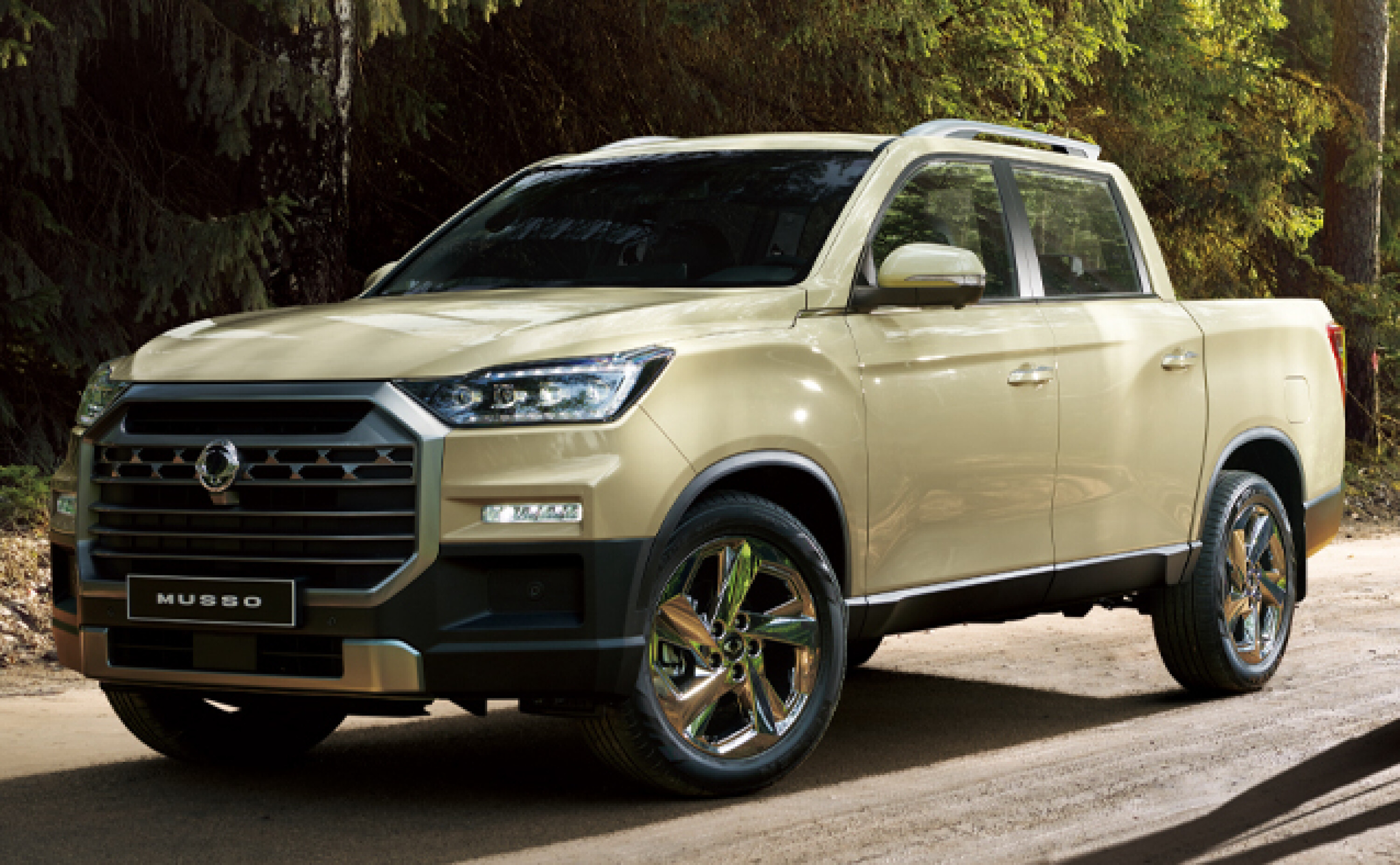
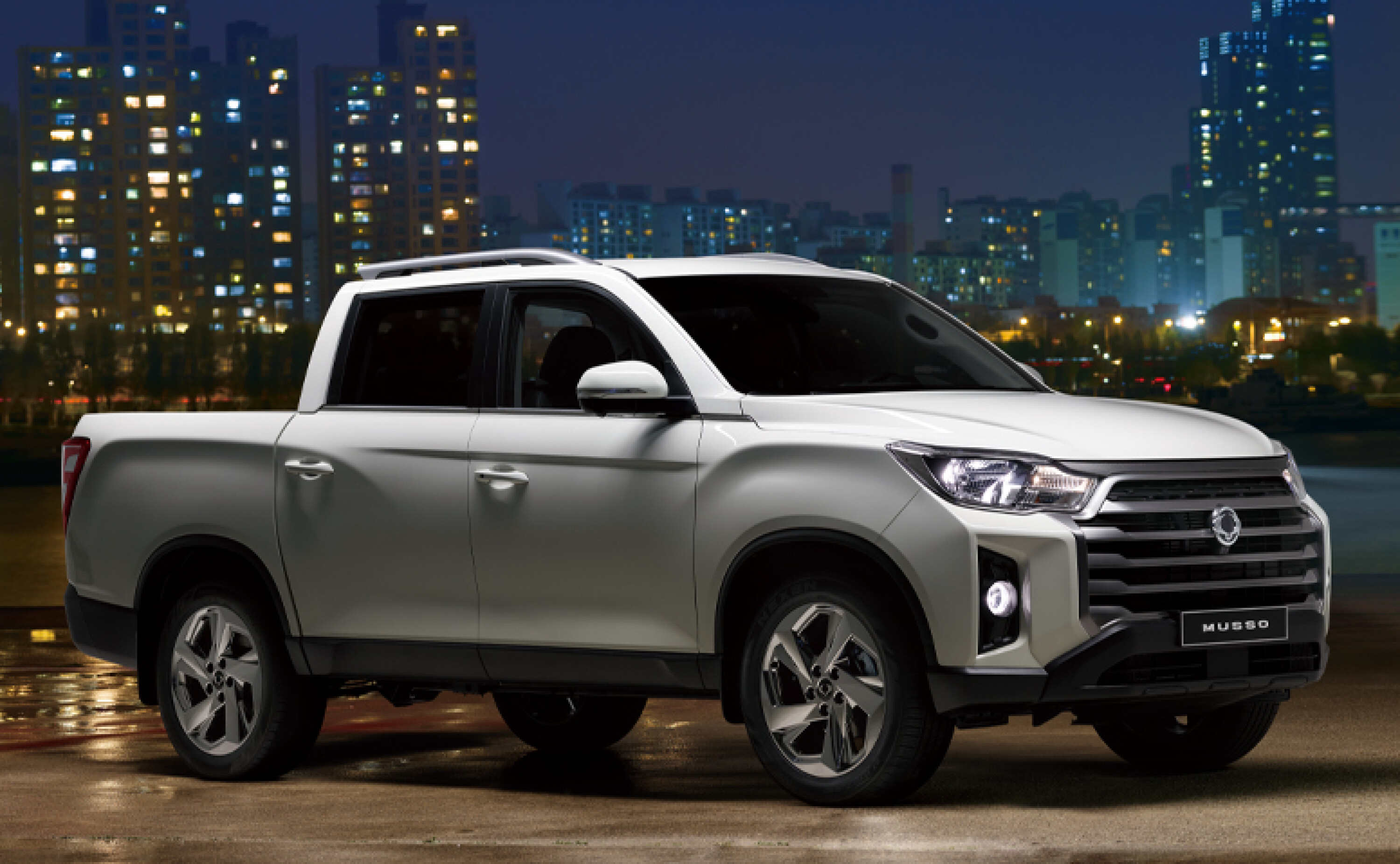
The updated 2024 Ssangyong Musso dual-cab ute has arrived in Australia.
The manual transmission has been deleted for 2024, with the price of entry climbing $3210 to $40,000 drive-away for the base Musso ELX auto – similar to a four-wheel-drive, automatic GWM Ute or LDV T60 Max, as Australia’s most-affordable new off-road utes.
Prices have increased by up to $1910 for carryover automatic variants, while the Korean brand has added a mid-spec Musso Adventure variant.
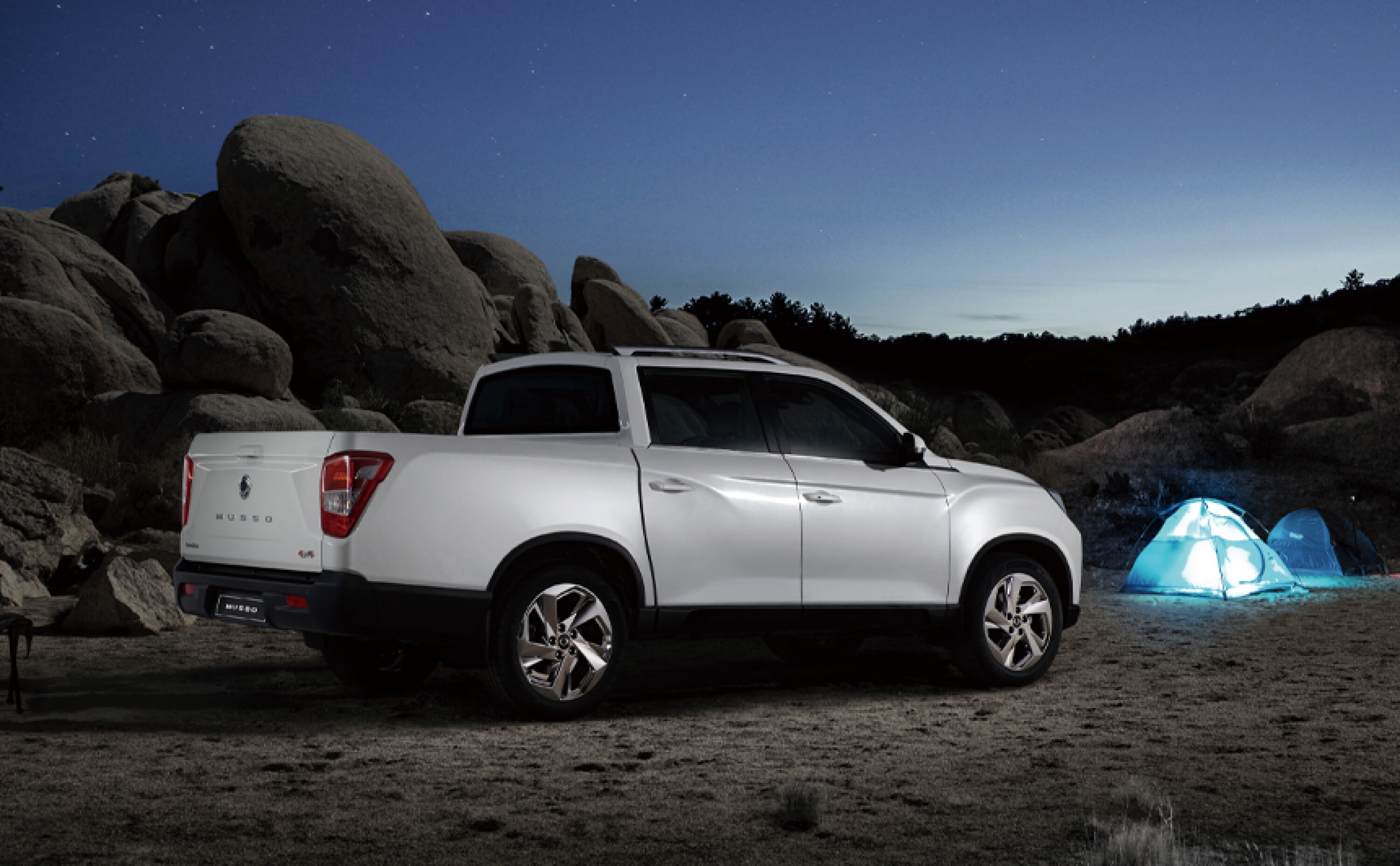
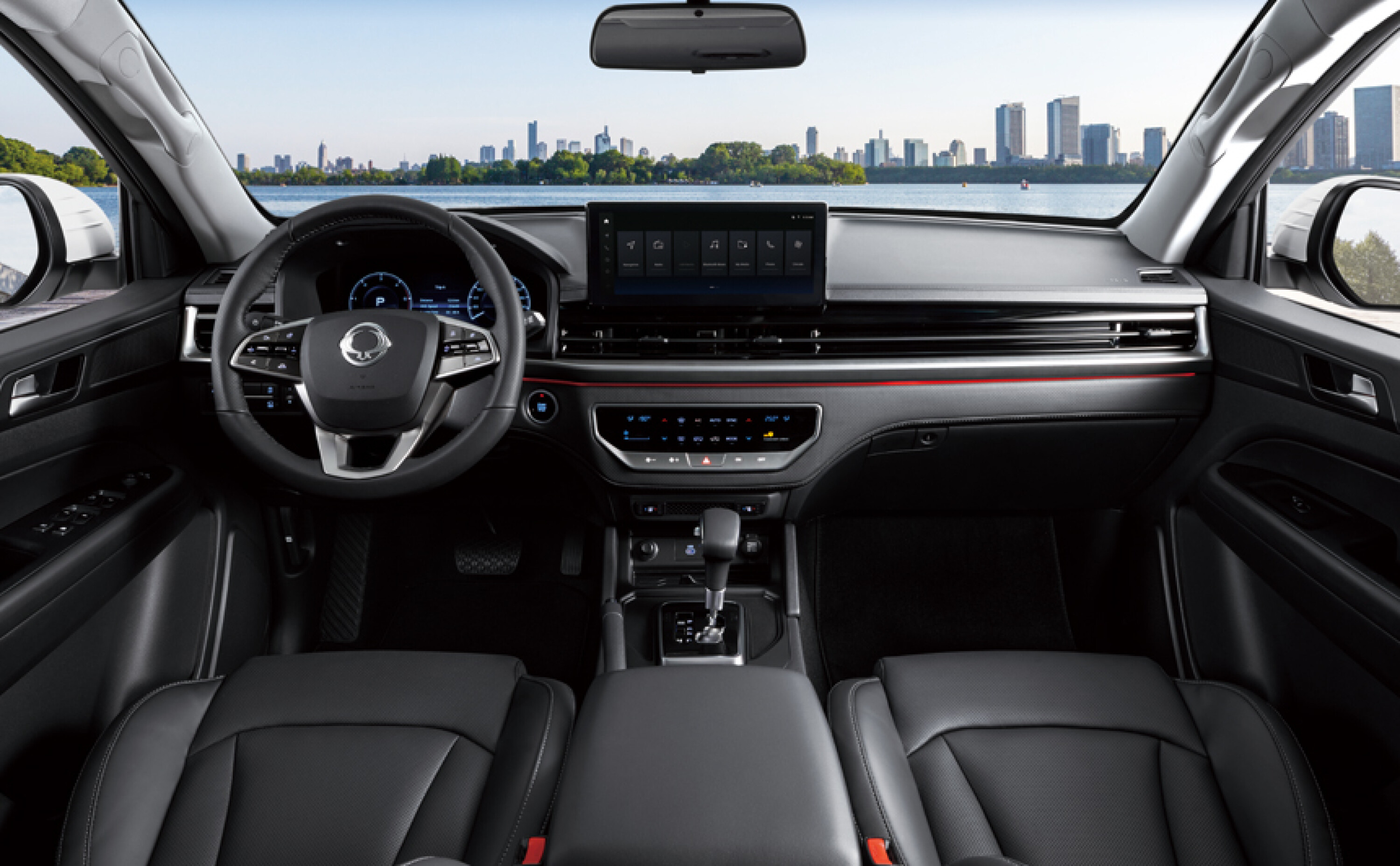
A new high-mounted 12.3-inch infotainment system replaces the previously integrated 8-inch unit. It remains paired with the 12.3-inch digital instrument cluster, while front USB-C ports replace USB-A in the centre console.
The Musso now features a soft opening and easy-close tailgate said to reduce physical effort by 45 per cent.
Ride comfort has been improved with enhanced isolation from road imperfections, thanks to re-engineered body-to-chassis mounts.
The Ultimate Luxury Pack variant adds a full touchscreen design for the dual-zone climate control, touch-sensitive front door locks, and a walk-up welcome system.
The Musso continues to lack a full lap/sash seatbelt for the centre seat, with a lap belt that would likely impact its safety score if it was tested by ANCAP.
JUMP AHEAD
- 2024 Ssangyong Musso pricing
- 2024 Ssangyong Musso features
- Options
- Colours
- Engine, drivetrain, and fuel economy
- Safety
- Dimensions
- Warranty and servicing
- Availability
2024 Ssangyong Musso pricing
All prices are drive-away.
| Model | Pricing | Chang |
|---|---|---|
| ELX | $40,000 | up $1210 |
| ELX XLV | $41,500 | up $1210 |
| Adventure | $42,500 | new |
| Adventure XLV | $44,000 | new |
| Ultimate | $45,000 | up $1910 |
| Ultimate XLV | $46,500 | up $1910 |
2024 Ssangyong Musso features
| 2024 Ssangyong Musso ELX features | |
|---|---|
| 17-inch alloy wheels | Fabric upholstery |
| 12.3-inch infotainment system (new) | Manual cruise control |
| Wired Apple CarPlay and Android Auto | Height-adjustable leather steering wheel |
| 12.3-inch digital instrument cluster | Heated, power-adjustable door mirrors |
| USB-C charge ports (x2, new) | Assisted tailgate operation (new) |
| LED daytime running lights | Front and rear parking sensors |
| Front fog lights | Reversing camera |
2024 Ssangyong Musso Adventure features
| In addition to Musso ELX | |
|---|---|
| 18-inch black alloy wheels | Leather-accented upholsteryu00a0 |
| LED vertical design front fog lights | Height- and reach-adjustable steering wheel with speed-sensitive power steering |
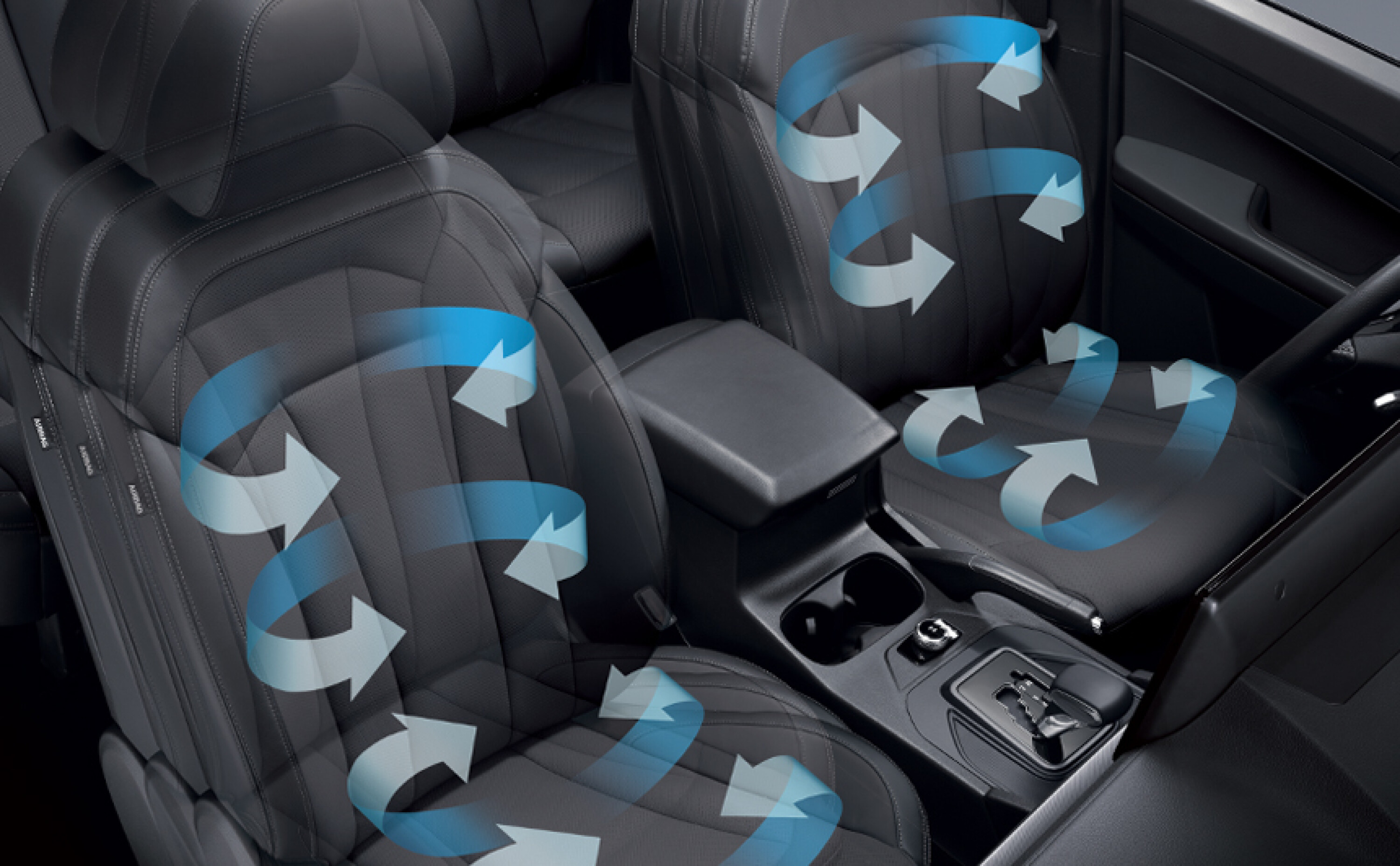
| Heated and ventilated front seats | Tyre pressure monitoring system |
2024 Ssangyong Musso Ultimate features
| In addition to Musso Adventure | |
|---|---|
| Blind-spot alertu00a0 | HID headlights |
| Rear cross-traffic alert | Heated steering wheel |
| Lane change collision warning | Walk-up welcome system |
| Safe exit assist | Touch-sensitive front door locks with walk-away auto-door locking |
| 360-degree camera system | |
Options
Ultimate Luxury Pack (Ultimate, $3000)
| Dual-zone automatic climate control | Powered front seats |
| Powered sunroof | Powered driver’s seat lumbar support |
| Leather upholstery | Heated rear outer seats |
Colours
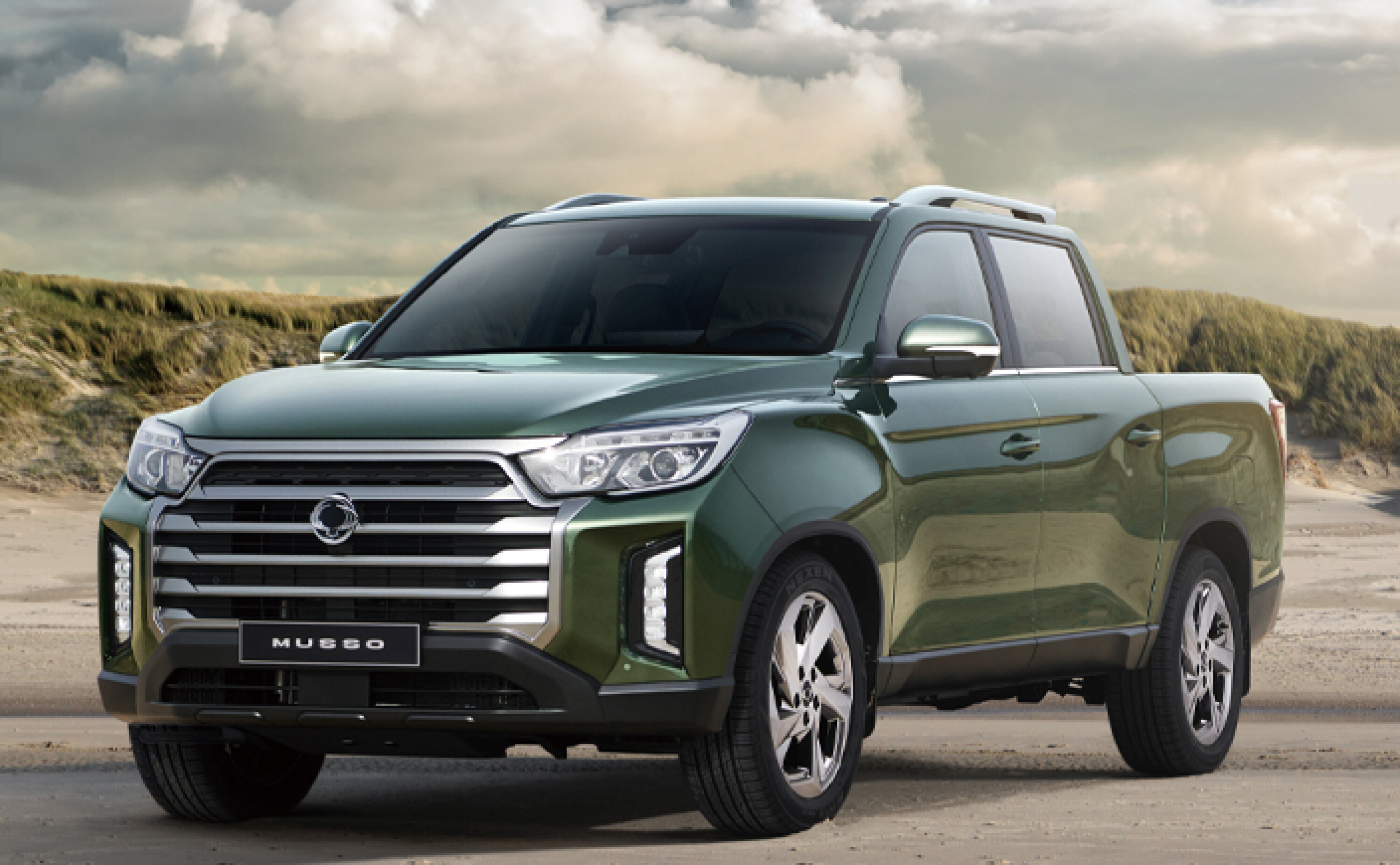
| Amazonian green (new) | Marble grey |
| Grand white | Pearl white |
| Atlantic blue | Space black |
| Indian red |
All colours are included in the Musso’s drive-away price.
Engine, drivetrain, and fuel economy
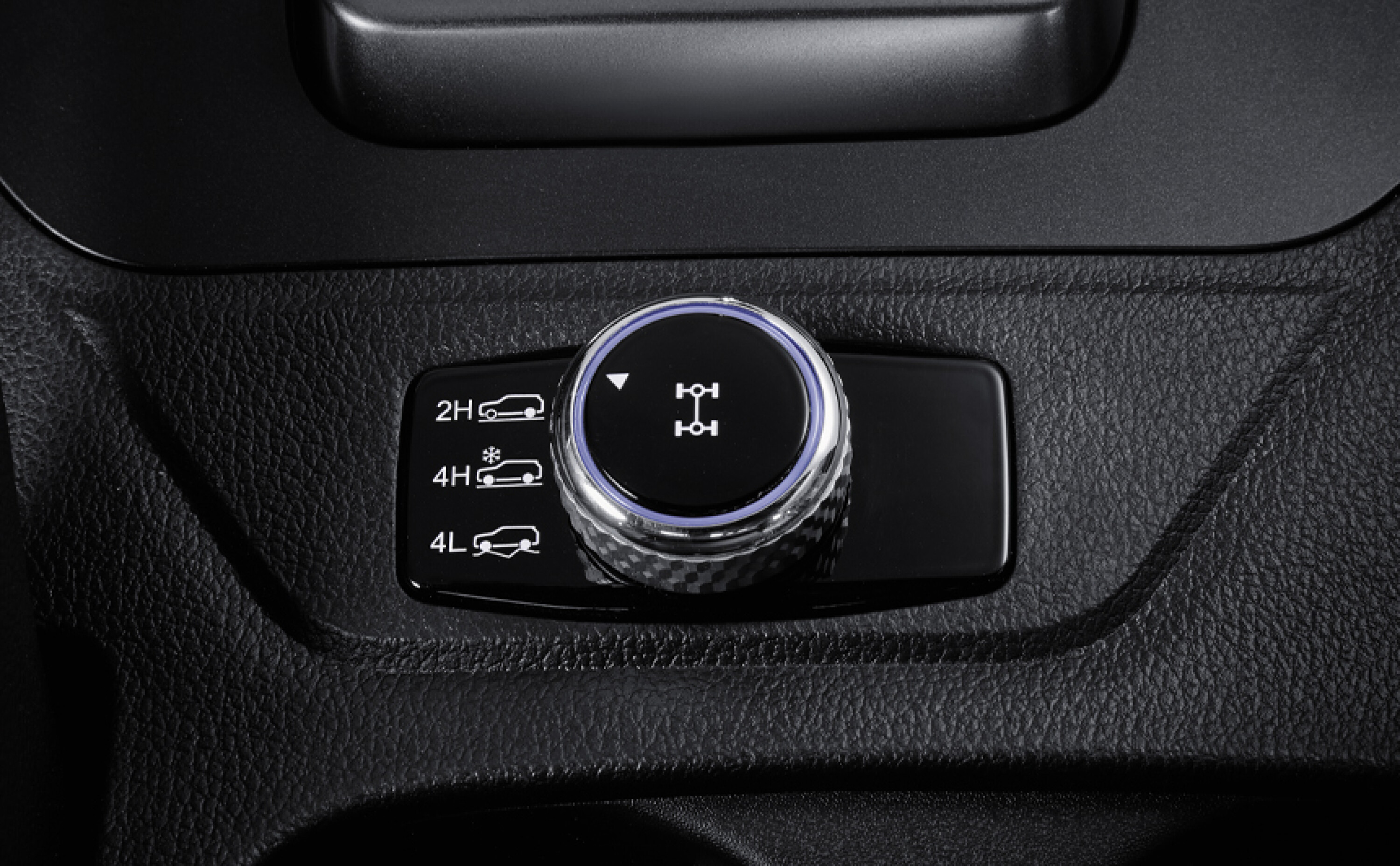
All Ssangyong Musso variants are paired to a 2.2-litre four-cylinder turbo-diesel engine producing 133kW and 400Nm. It is paired to a six-speed Aisin-sourced automatic transmission, with part-time four-wheel-drive and an automatic-locking rear differential.
Braked towing capacity is rated at 3500kg across the range.
All standard-wheelbase variants have multi-link coil spring suspension with a 790-kilogram payload. The extended-length ELX XLV has leaf spring rear suspension with a 1010kg payload, while the Adventure and Ultimate XLVs are reduced to 880kg.
| 2024 Ssangyong Musso fuel economy | ||
|---|---|---|
| Musso | 8.6L/100km | 226g/km |
| Musso XLV | 9.0L/100km | 236g/km |
Safety
The Ssangyong Musso has not received an ANCAP rating.
Six airbags (dual front, side and curtain) are fitted across the Musso range.
A two-point lap seatbelt is found in the centre seat, rather than the three-point lap-and-sash belt found in most other vehicles.
| 2024 Ssangyong Musso active safety features | |
|---|---|
| Autonomous emergency braking | Leading vehicle departure alert |
| Lane departure warning | Driver attention warning |
| Auto high beam | |
Blind-spot alert, rear cross-traffic alert, and lane change assist are limited to the Musso Ultimate.
Dimensions
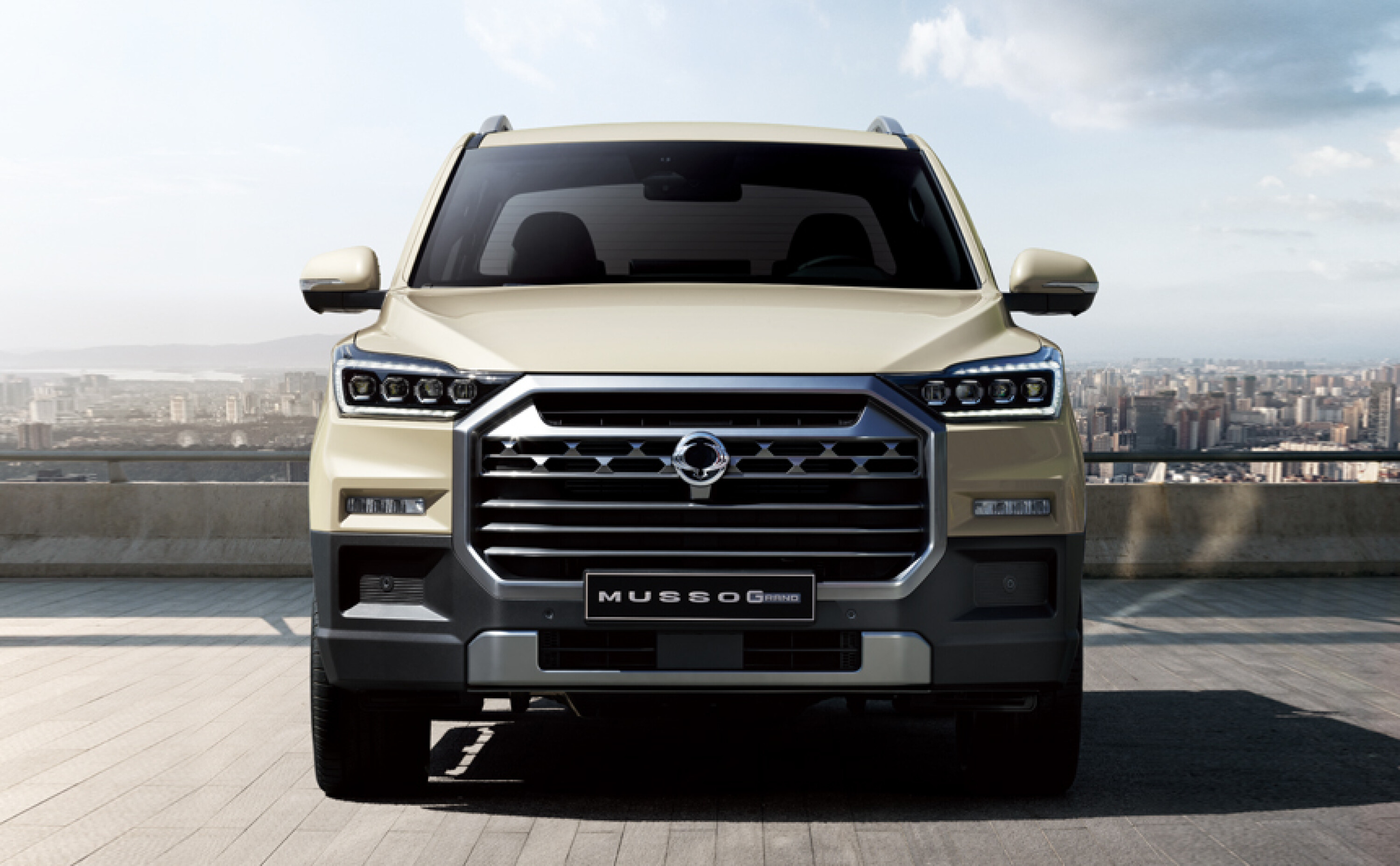
The Musso ELX, Adventure and Ultimate have a wheelbase of 3100mm, are 5095mm long, 1950mm wide, and 1840mm high.
The XLV Pack increases the wheelbase to 3210mm, while length increases to 5409mm and height goes up to 1855mm.
Warranty and servicing
All SsangYong models come with a seven-year/unlimited-kilometre warranty and seven years of roadside assistance.
Availability
The 2024 SsangYong Musso will arrive in Australia this month.
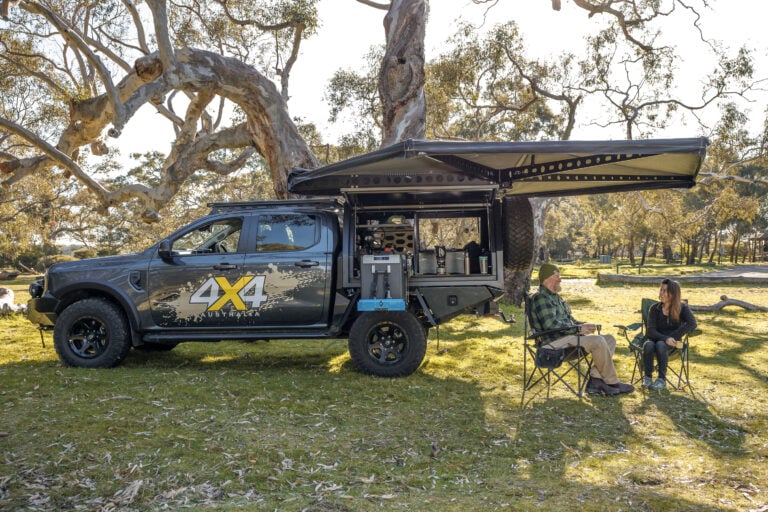
A key part of the Ranger build was always going to be the service body/canopy that we fitted to it, and we have been very fortunate to partner with the team at Trig Point in Melbourne who designed, manufactured and installed the unit for us.
They went over and above on the installation, also fitting the extensive Projecta power system and the MSA Powerslide fridge mount and rear drawer.
From the outset, Murray at Trig Point had something else in mind for our canopy and it is a project that he has been tweaking the design of over the months since fitting the canopy itself.
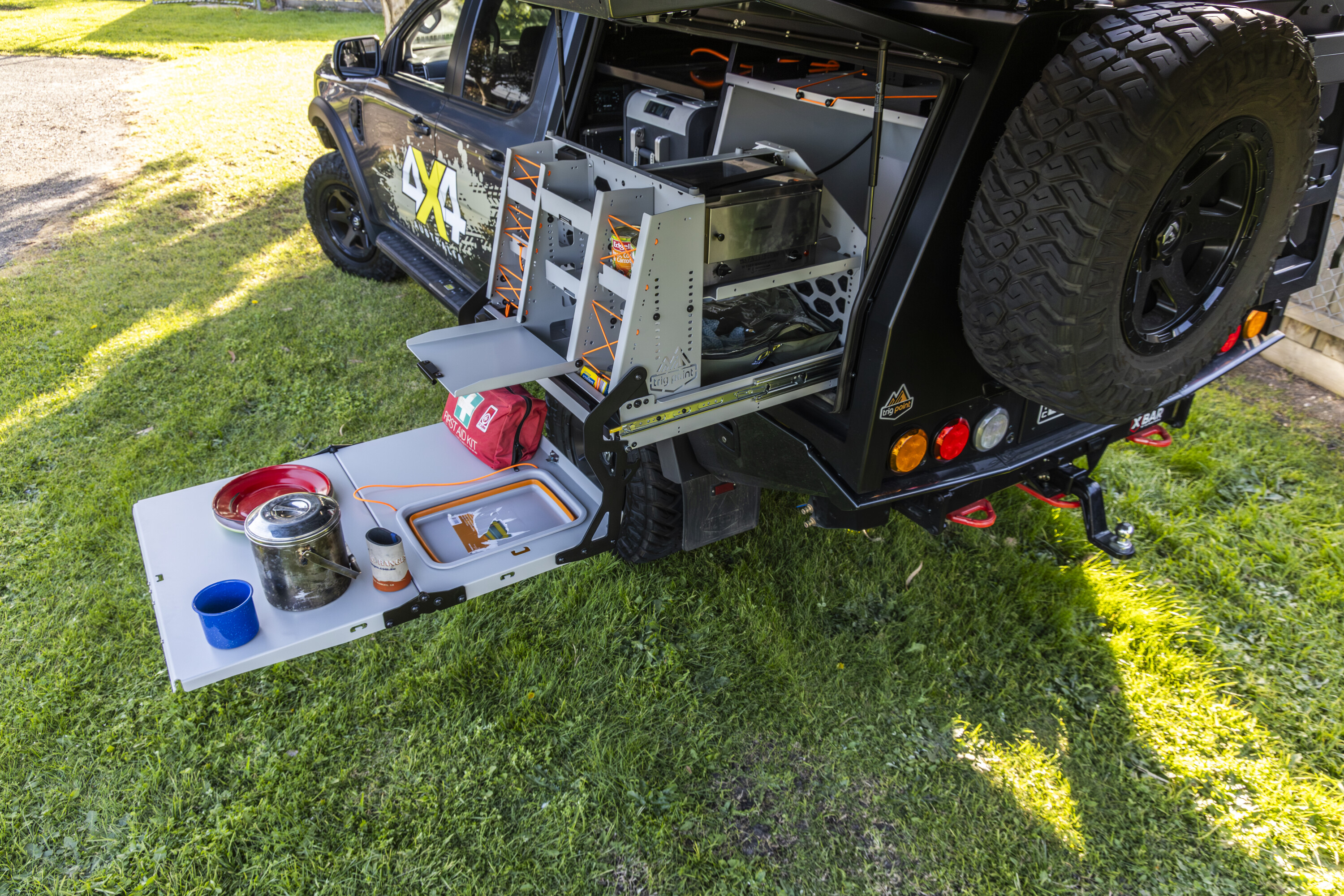
The new product is a slide-out kitchen/pantry and there was space left aside for it on the passenger-side of the canopy alongside the fridge drop slide. This is the side of the Ranger that is covered by the awning and where people will be accessing and preparing food, and generally hanging out when in camp.
The kitchen is designed to be a pantry where you can store all your non-perishable food and kitchenware, where it is secure yet remains easily accessible.
The design allows for direct access to often used sections without having to slide the whole unit out when you just want to make a quick roadside cuppa. Or slide it right out and open it up to give you a large workspace table with a sink bowl.
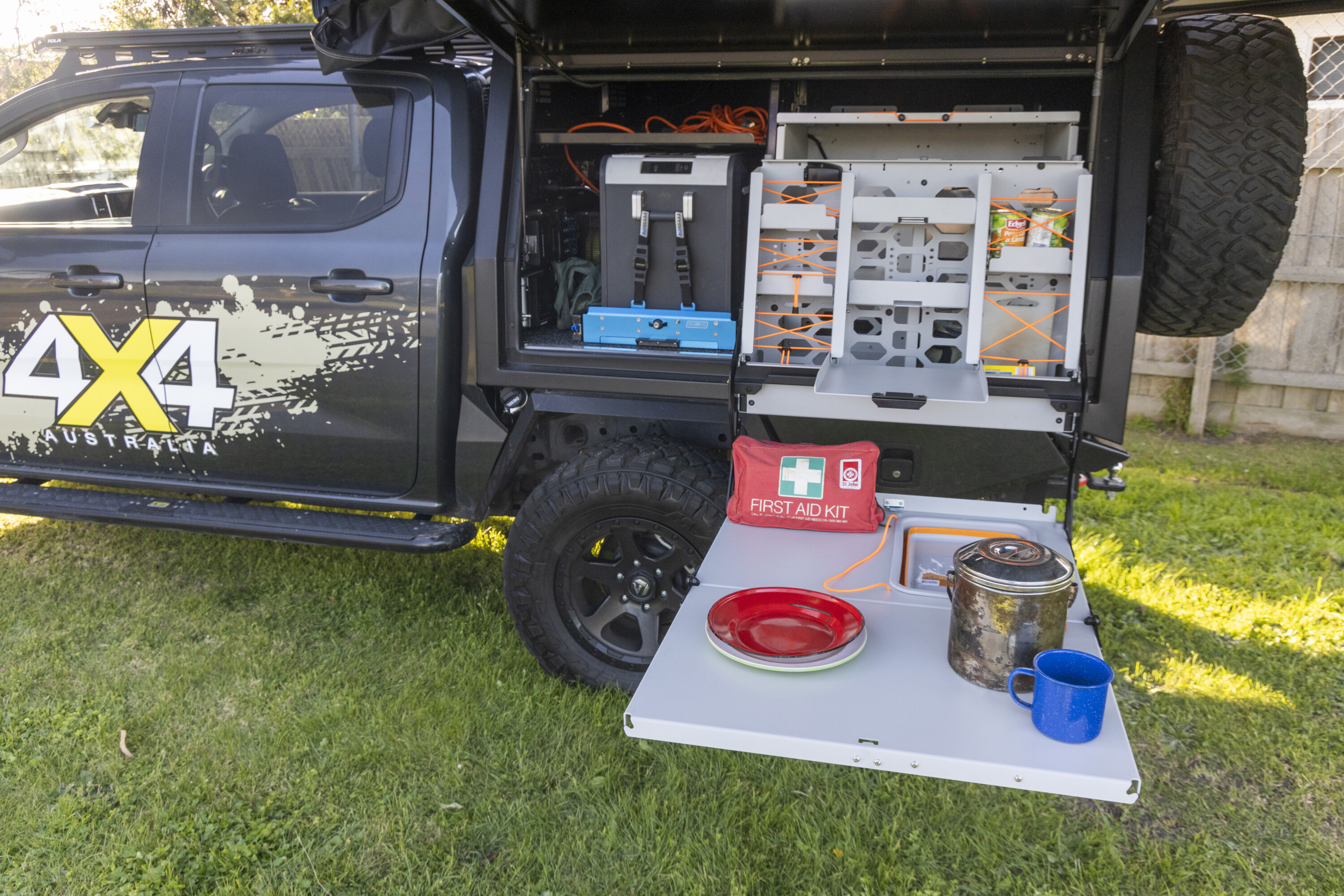
The table drops down to place it at a usable height that is around 180mm lower than the canopy floor, or wherever the kitchen is mounted. This is especially important when the pantry is in a lifted 4×4.
The table is rated to 20kg and folds up above the unit when not in use meaning that the front remains open and accessible without having to unfold the table or slide the unit out.
The overall height leaves space above the kitchen to store your gas stove or induction cooktop when it is in a standard-size Trig Point canopy. From here it is easily accessible, and can be moved down to the table when needed, while elasticised cord holds it securely in place when stored. There’s more space above the kitchen in a LandCruiser 79 canopy, as they are taller overall than a midsize ute canopy like our Ranger’s.
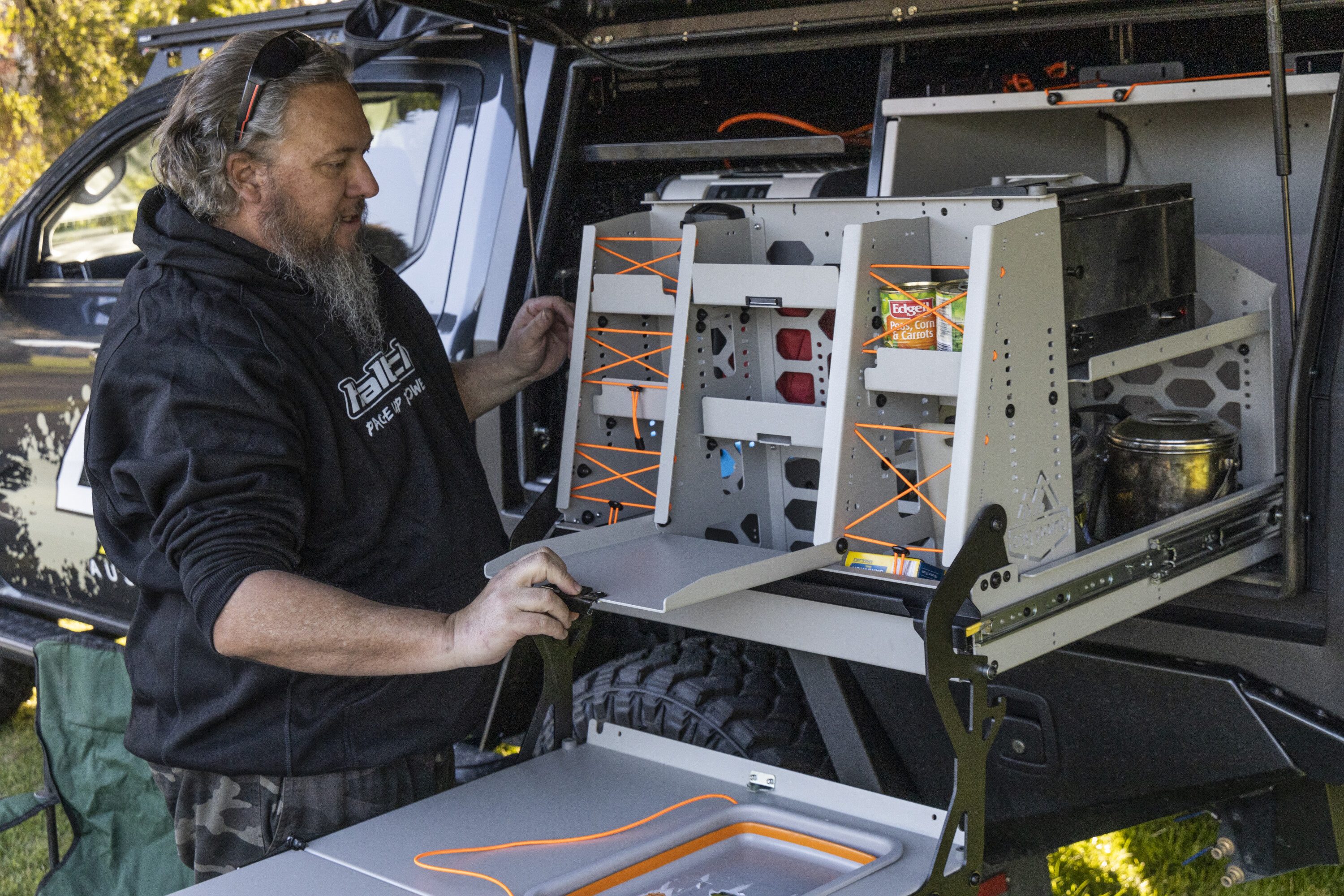
The many storage spaces and shelving are adjustable to accommodate a wide variety of different-sized products. The large space at the rear of the pantry again has a shelf that is adjustable for different heights, and in the case of our unit has been set up to mount a Travel Buddy 12-volt oven up top with a large space underneath that for bigger items like pots and pans. Smaller coffee machines can also be accommodated in this space.
An option for the Trig Point kitchen is a mounting kit for the Travel Buddy and a wiring kit with Anderson plug to power the oven. It also adds a dual USB power outlet to charge devices while in camp. In our Ranger, 240V power is available from the Projecta inverter/charger at the front wall of the canopy.
The positioning of the kitchen at the rear of our canopy places it right next to the water tank outlet and pump switch, making it easy to use for food prep, cleaning and to fill up the 7L pop-out sink.
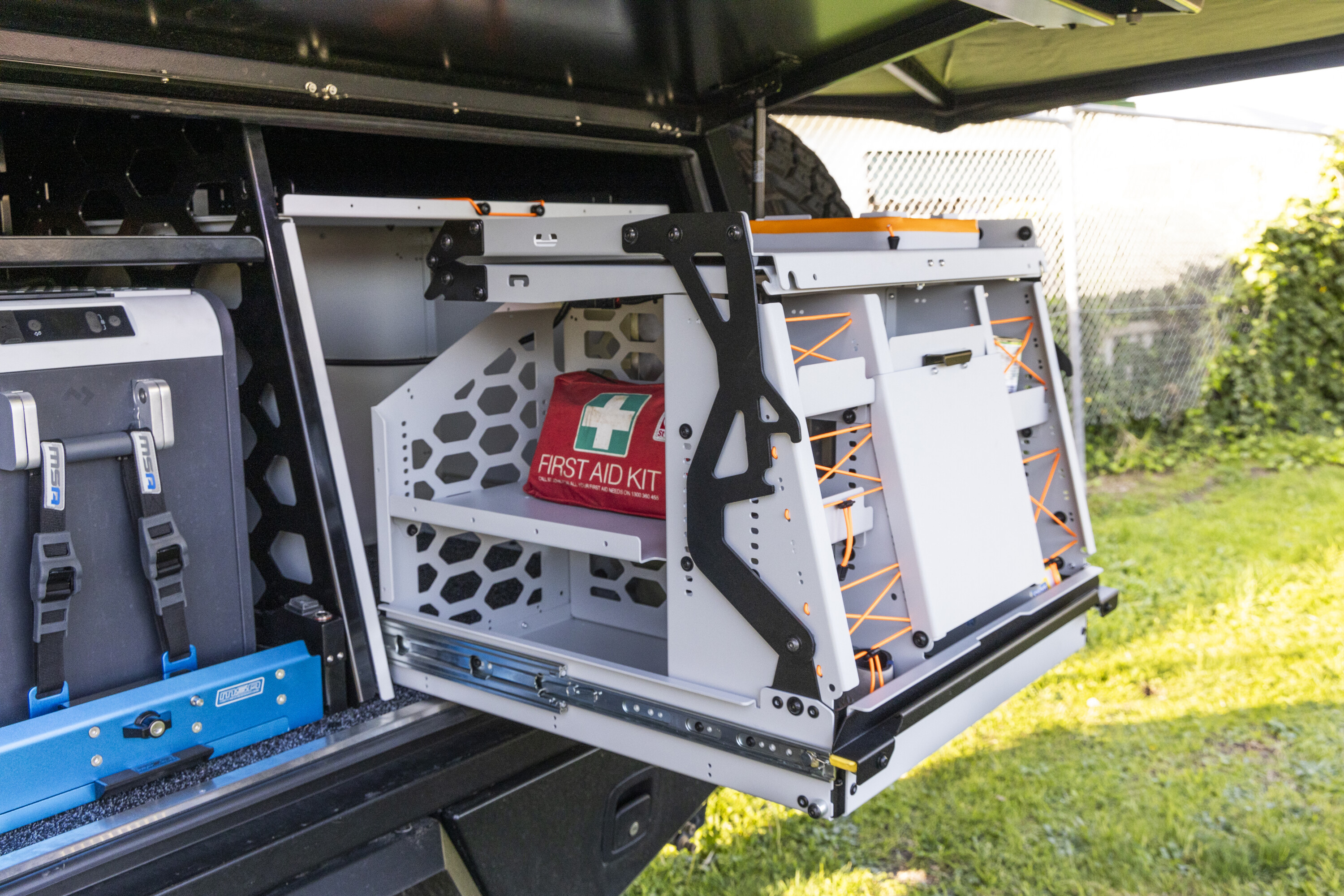
Like the canopy itself, the design, fit and finish of the Trig Point kitchen are all top notch. The unit is made in-house at Trig Point using a mix of 2mm, 2.5mm and 4.0mm aluminium, with steel brackets for the pivoting arms on the table.
Little details like mounting spots for food bags, and the inbuilt bottle opener, all add to the functionality, and the fully powder coated surfaces make them easy to wipe clean as well as protecting them. At the moment the Trig Point kitchen only comes in this grey colour pictured, but soon there will be the option of black powder coating as well.
The Trig Point kitchen measures 750mm (w) x 725mm (d) x 615mm (h) and can be bolted into any canopy or onto any solid surface. The unit weighs in at 41.5kg without any options.
Given the functionality and quality of the product we say it’s money well spent. It’s certainly made life on the road with our Ranger an easier proposition.
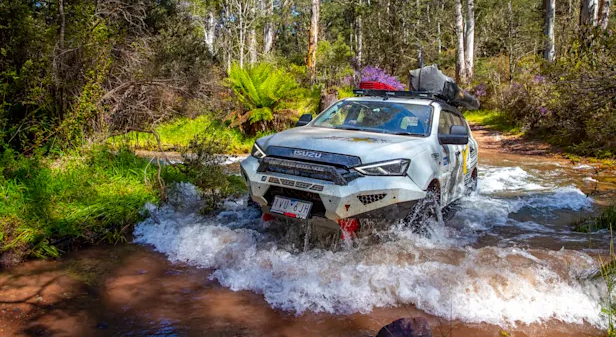
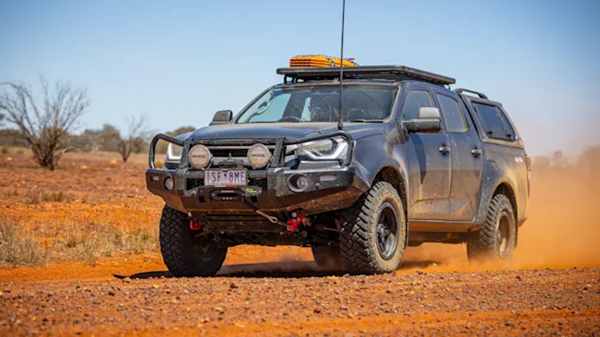
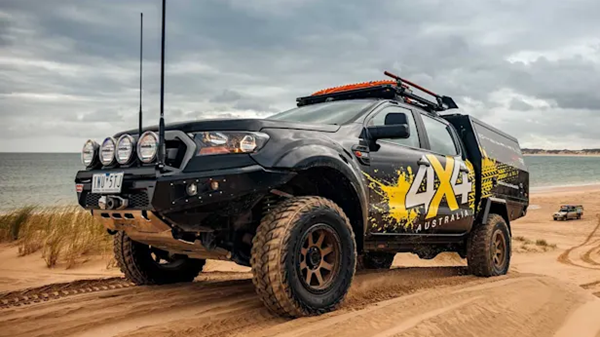
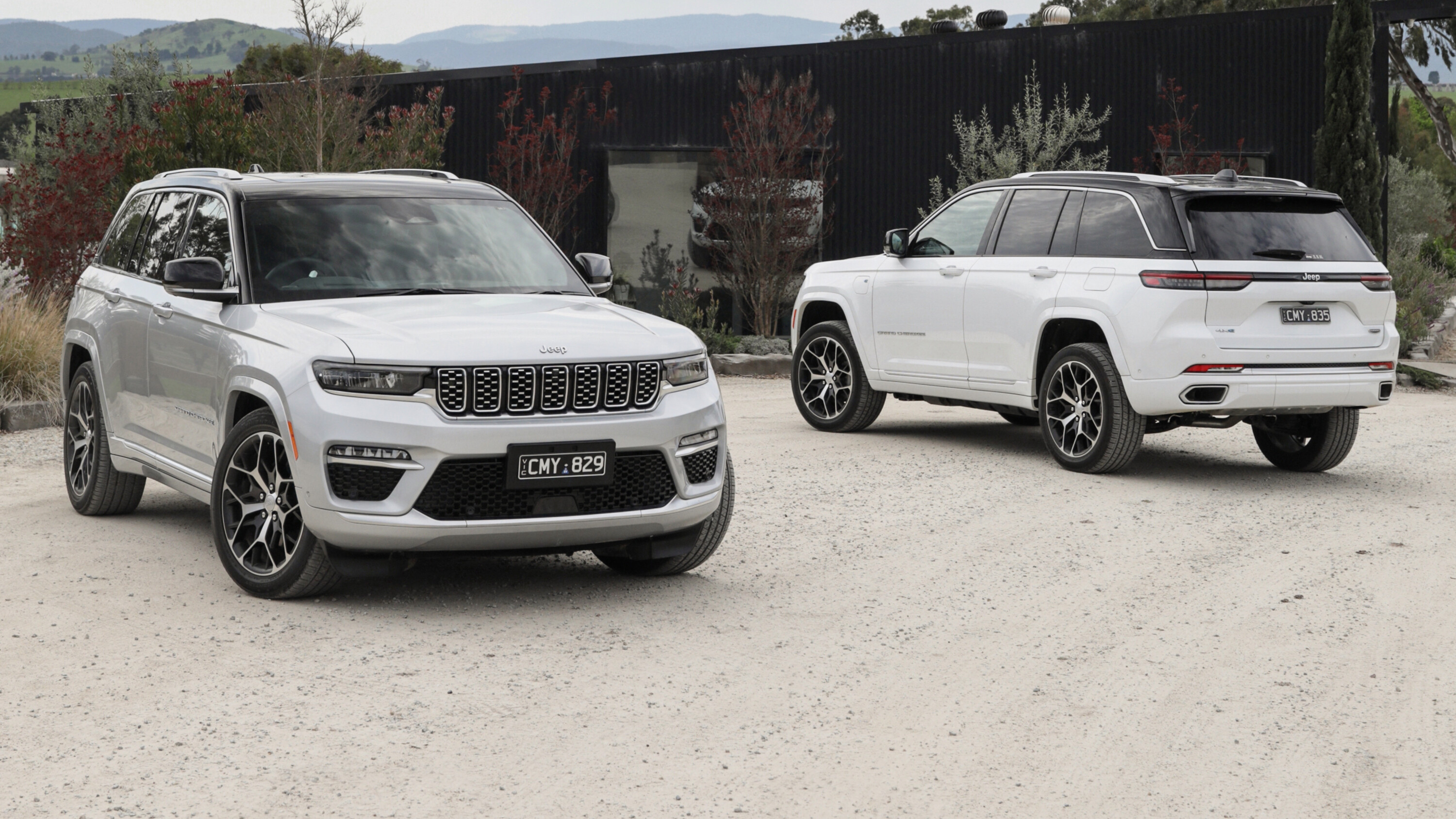
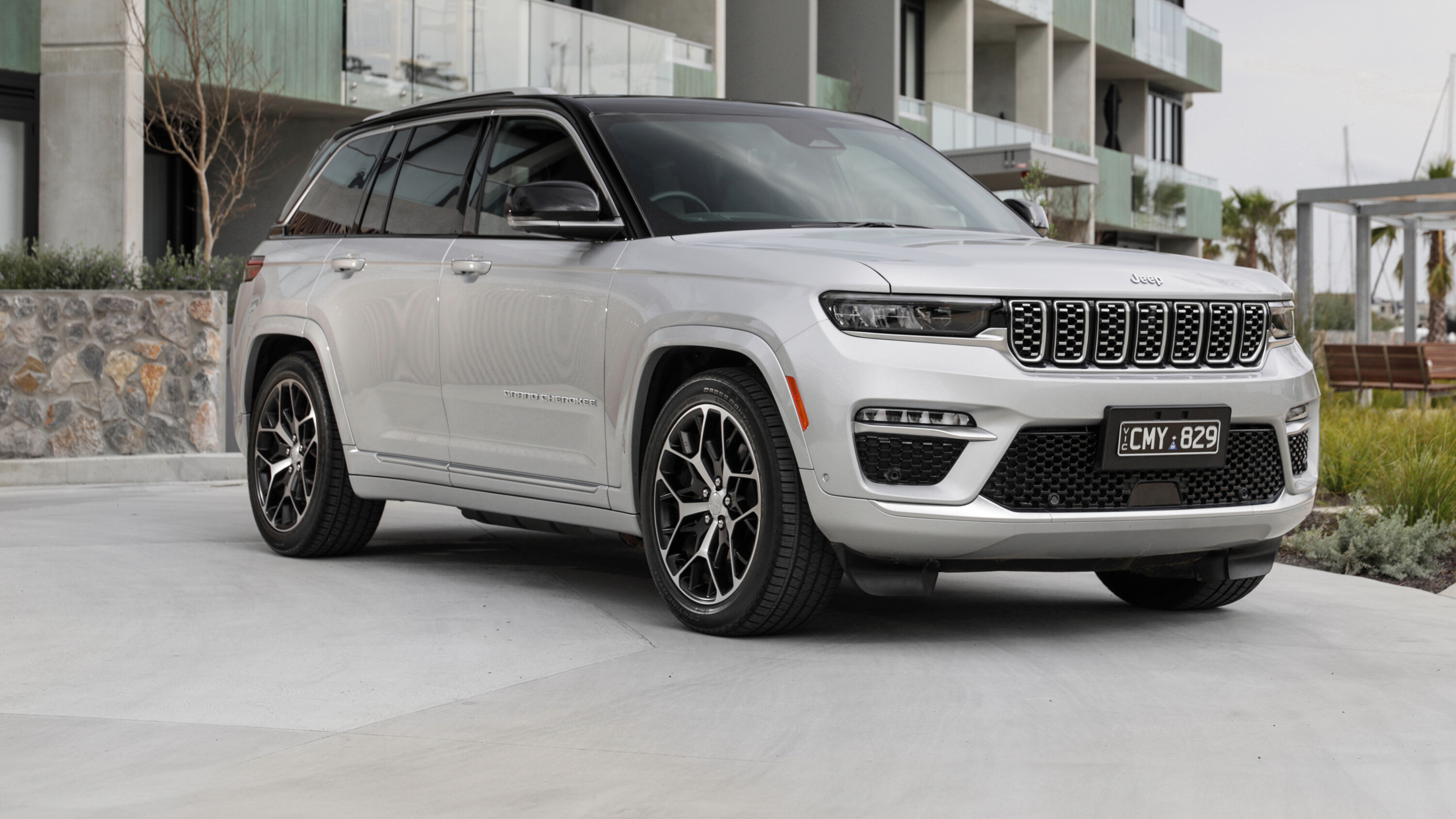
Jeep, like a number of others, is making an effort to move in a more premium part of the new-car market, and part of its strategy includes a new Grand Cherokee that goes further upmarket than any before it.
Technology was given a lift, the styling is handsome, space is abundant and it’ll still hustle off-road like a Jeep should – but its ageing V6 engine was a fly in the ointment.
Now however, there’s a new variant which swaps out the Pentastar donk in favour of a far more contemporary drivetrain to take the seven-slot brand into new territory once again.
With its first plug-in hybrid to be offered in Australia, Jeep has never looked so fresh, but this skirmish into electrification comes at a cost.
What’s changed?
While the versions that launched in 2022 and earlier this year continue with the 3.6-litre petrol V6, this new Grand Cherokee PHEV has a very different powertrain.
In place of the naturally aspirated V6 is a turbocharged 2.0-litre four-cylinder petrol, supplemented by an electric motor and 17.3kWh battery for 52km of electric-only driving.
Jeep estimates charging times of sub-10 hours on a Level 1 domestic plug trickle charger, or less than three hours on a Level 2 wall box at up to 7.4kW AC speeds.
Unlike the V6 versions available in up to four variants, the PHEV, for now, is only on offer as the highest-specification Summit Reserve and shares all the equipment of the seven-seat equivalent.
| Jeep Grand Cherokee 4xe key specs | |
|---|---|
| Powertrain | 2.0-litre turbo four-cylinder petrol engine + dual electric motors |
| Transmission | Eight-speed torque convertor automatic |
| Drive type | 4×4 on-demand |
| Battery size | 17.3kWh (gross) |
| Claimed fuel efficiency | 3.2L/100km |
| Claimed electric range (NEDC combined) | 52km |
| Max AC charging speed | 7.4kW |
| Max DC charging speed | N/A |
| Towing capability | Up to 2722kg |
Pricing
While Jeep has been making commendable progress in delivering vehicles that look and feel better built, and with some genuinely appealing tech and comfort features, the transformation is coming at a price.
Putting the Grand Cherokee 4xe on your driveway will come at $129,950 before on-road costs, which is a lot of cash – especially when you consider BMW will sell you an X5 xDrive 30d M Sport for about the same cash.
Also consider that Jep asks another $5500 for the Advanced Technology Group pack which adds things BMW already includes in the price, such as a head-up display and wireless device charging. It’ll then ask for another $1750 to add premium paint.
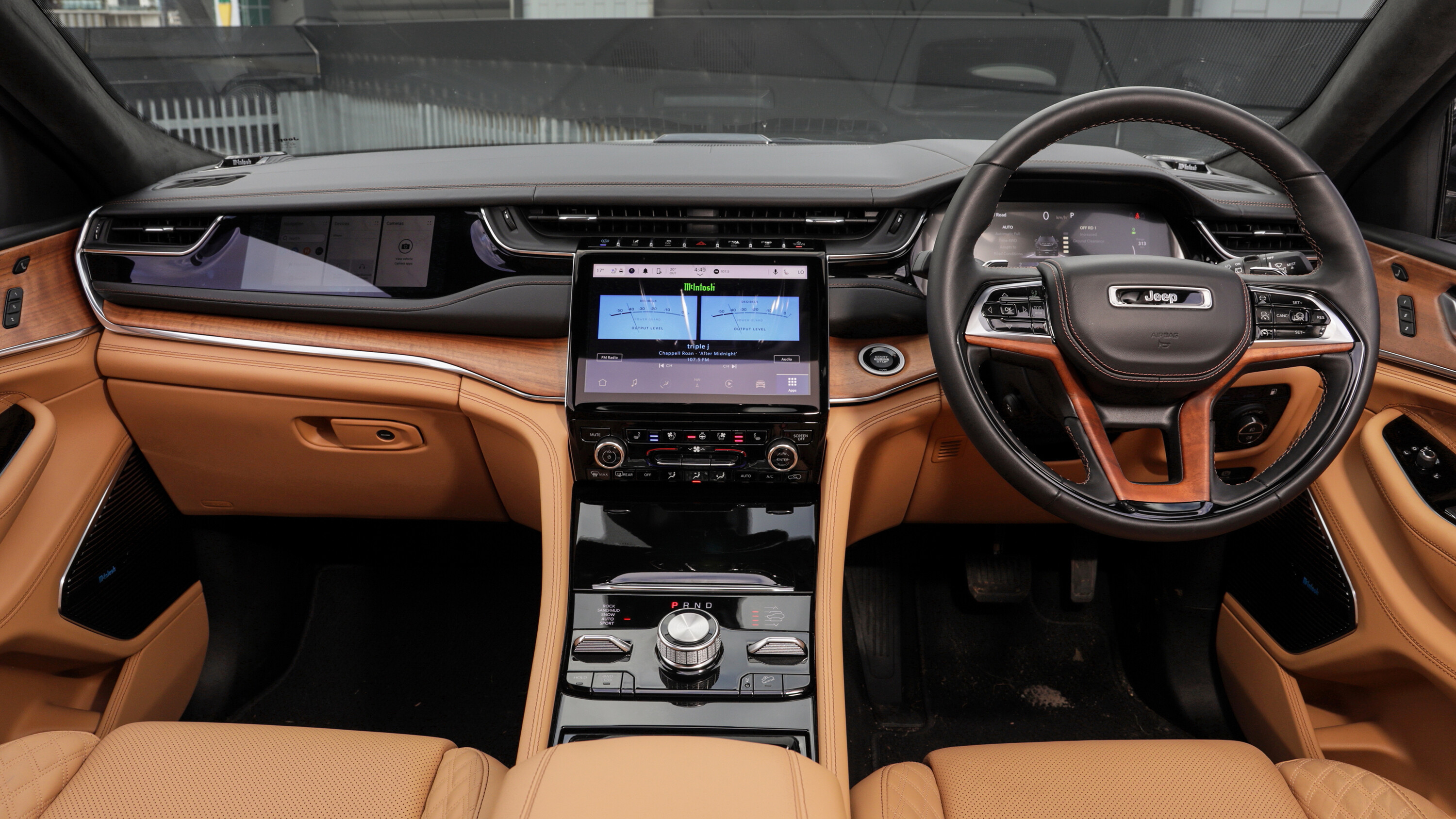
There are some genuinely likeable features included in the price, such as quilted leather seats with massage function, 10.1-inch central touchscreen with smartphone mirroring, fully digital 10.3-inch driver’s instrument cluster, panoramic glass roof, 21-inch wheels and LED headlights but it all adds up.
What would make more sense in our eyes than a kit-packed premium-priced 4xe, is a version that keeps the excellent plug-in powertrain, but rolls in with a more budget standard specification.
If Jeep could trim down a version to sail in under LCT, you could be looking at a very compelling plug-in hybrid large SUV with an attractive price to match.
Interior
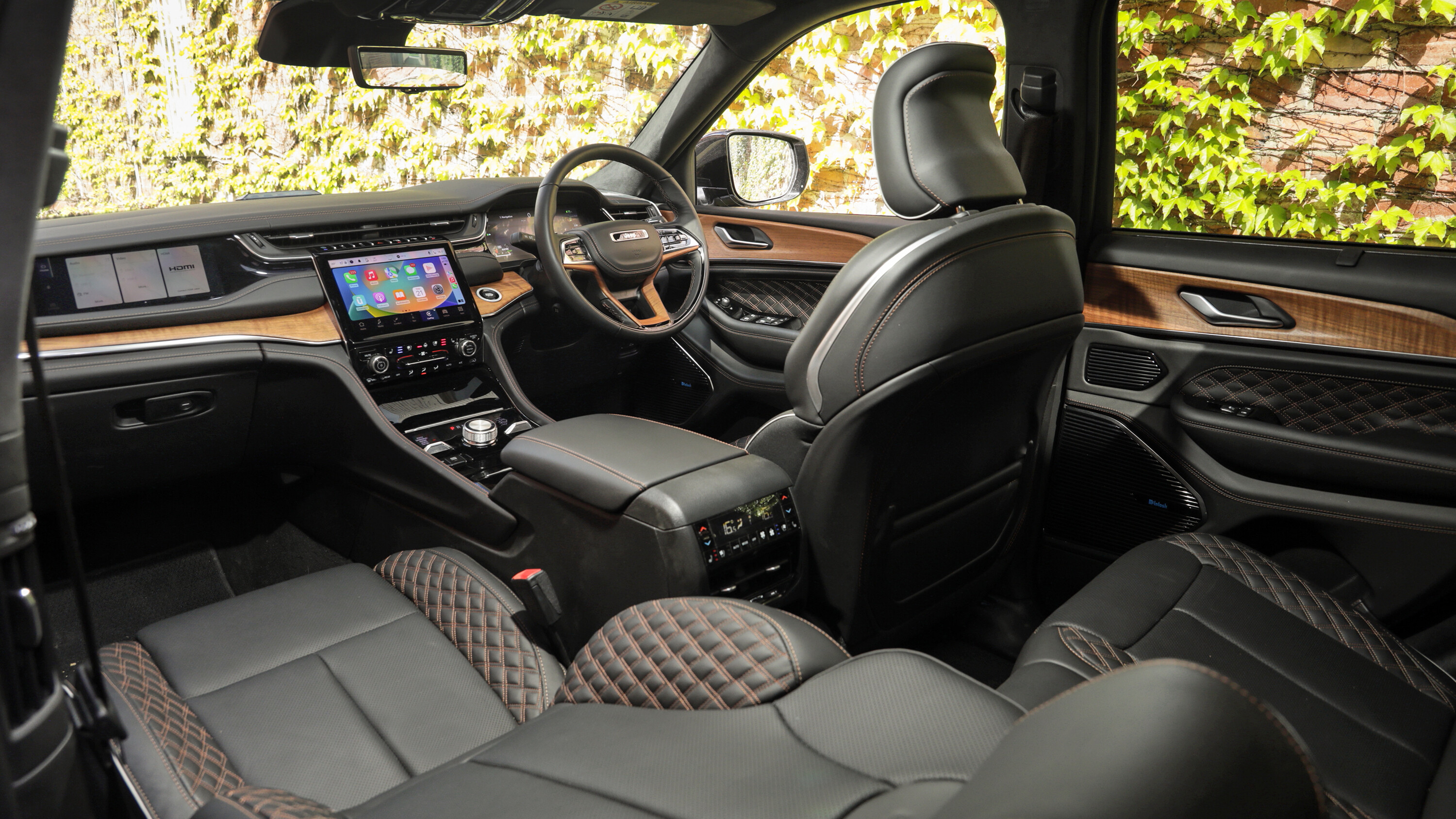
The interior quality is generally good, and we certainly love the styling, but a few wobbly wood trims and scratchy plastics prevent Jeep’s flagship achieving quite the level of premium the company is aiming for.
Something all Grand Cherokees get in abundance, however, is space.
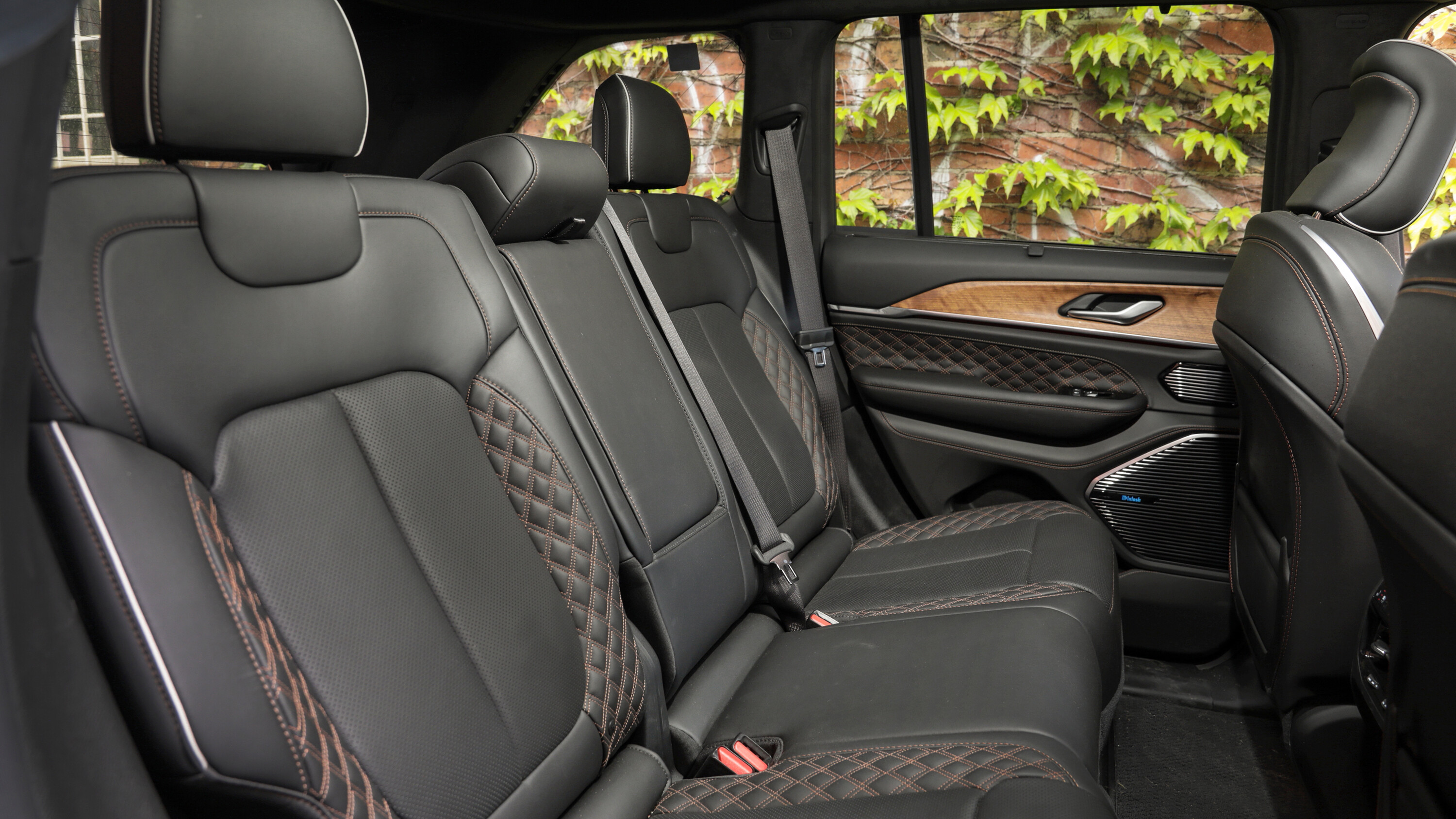
Although a seven-seat version is not available for the PHEV at this stage there’s still tons of room for people and things including a boot Jeep claims can swallow more than 1000 litres of stuff, although this is most likely measuring to the roof not window line.
Either way, it’s still huge and the same goes for the passenger spaces with lots of knee, leg, hip and head-room in both rows.
What makes the space even more impressive is that the inclusion of the battery has not impacted any luggage or occupant space.

On and off the road
The Grand Cherokee 4xe’s hybrid powertrain isn’t one of those afterthought types. It’s clear this one has been engineered to preserve, if not enhance Jeep’s all-terrain reputation.
It’s achieved this by integrating the electric motor into the eight-speed automatic transmission rather than the front or rear axle.
This means all of the Grand Cherokee’s driving, off-road and transmission settings are available when driving in pure electric mode.
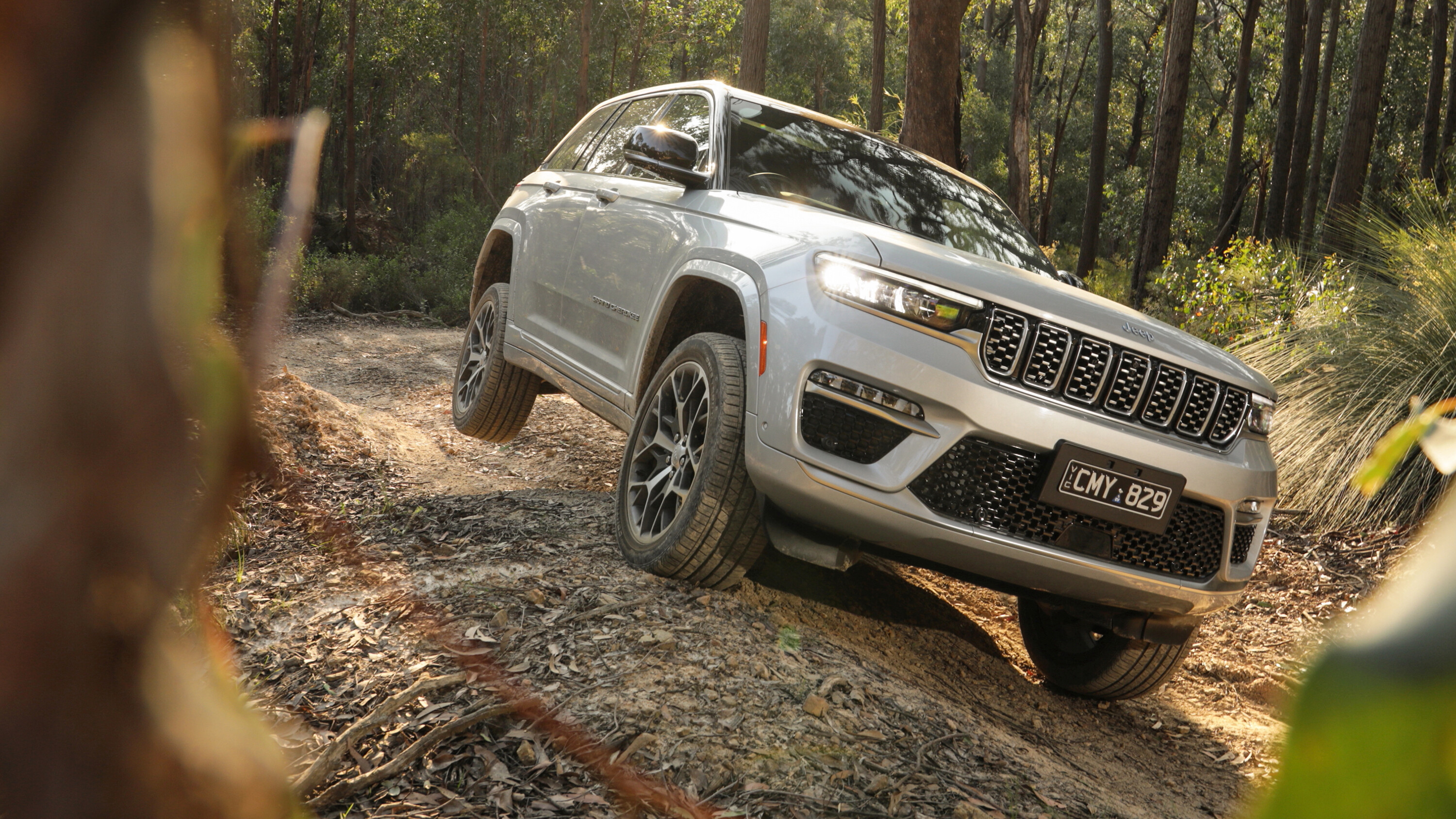
We’ve driven the Grand Cherokee L in some pretty gnarly conditions and it was very impressive. Our first test of the PHEV didn’t involve anything near as tough, but it certainly seems to have the full potential.
Like other electrified off-road vehicles, the 4xe’s instant torque is applied well in an off-road environment when power needs to be carefully controlled. Rather than revving a petrol or diesel hard, the electric motor delivers exactly what’s required with an eerie stoicism.
Jeep also highlights that cruising in an almost silent off-roader allows a better connection to nature, but our cabin was too full of laughs and conversation to fully appreciate that, which we’re chalking up as just as much of a success.
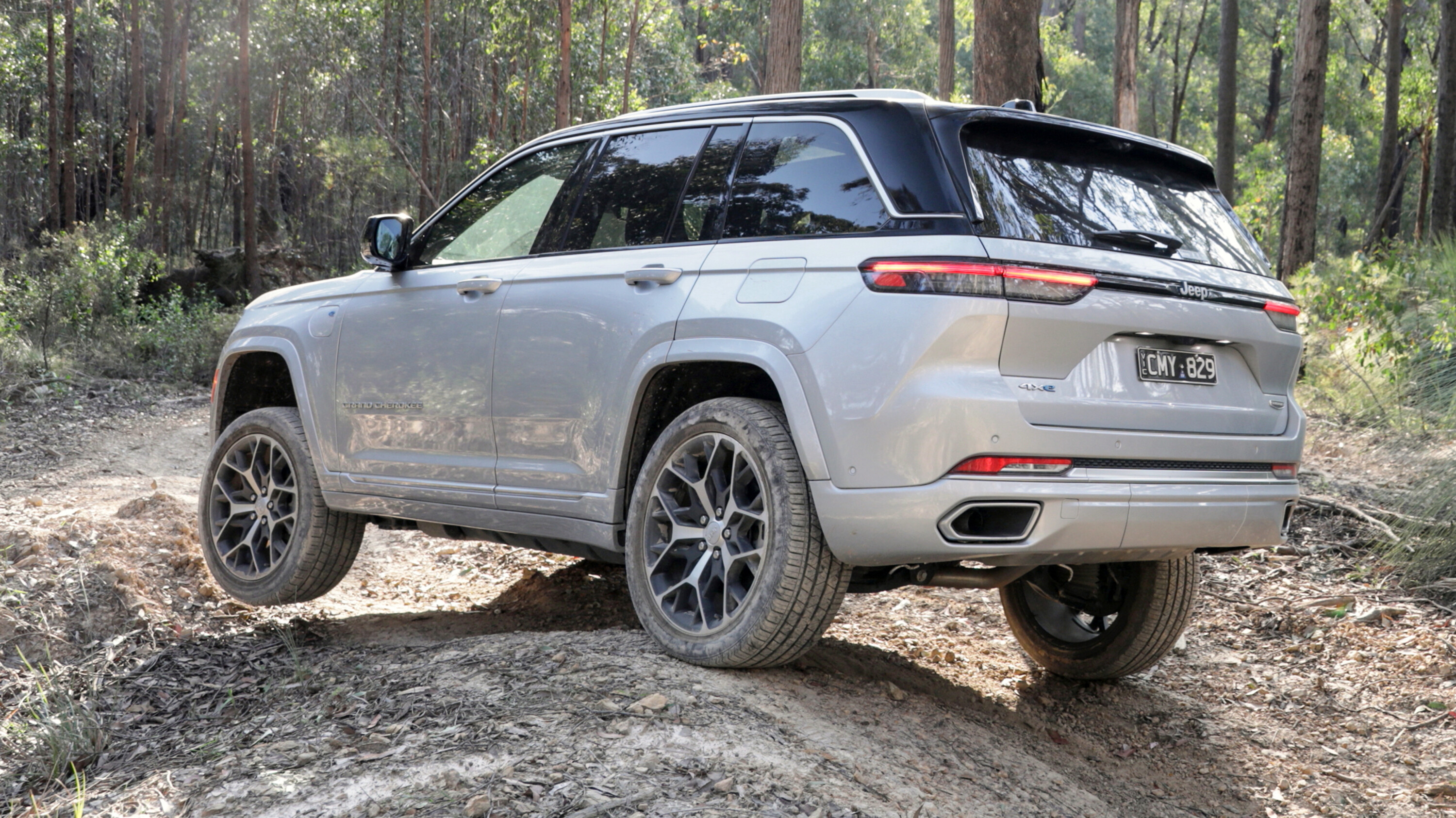
On the road is where the new powertrain really shines. The petrol element is refined and powerful, while the torque-fill of the electric component has resulted in excellent linear and strong performance.
In the previous model, you’d have to browse the V8 versions to compare but, as a fifth-gen eight-cylinder variant is not on the cards for Australia – yet – the 4xe is the performance hero for now.
The ride continues to be relatively comfortable, although there’s a fussy edge when negotiating some of Victoria’s less well maintained roads and, like all high-spec Grand Cherokee variants, there’s plenty of equipment and features to keep all occupants happy.
Fuel consumption
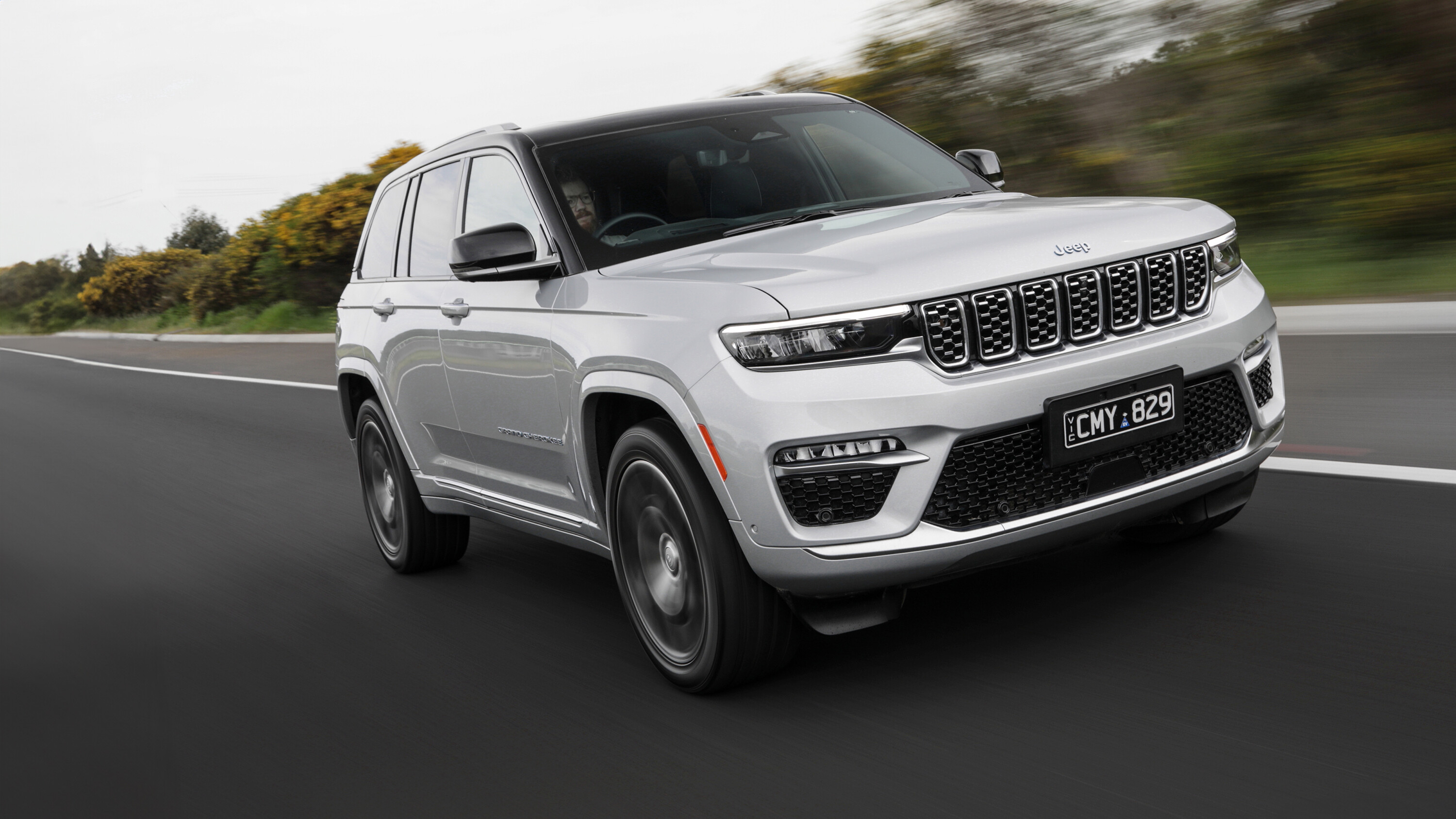
Jeep claims an NEDC average fuel economy figure of 3.2 litres per 100km which includes the use of the hybrid system and a fully charged battery. Once that’s gone however, the 4xe does little better than the V6.
During our time with the new variant, it reported a figure of 11.6L/100km which, if you apply the usual being-driven-by-journalists-on-a-launch-event caveat, would improve somewhat. However, as to how much better a real-world figure could be achieved in out-of-town duties compared with the standard V6’s 9.9L/100km … it’s probably not a massive improvement, if at all.
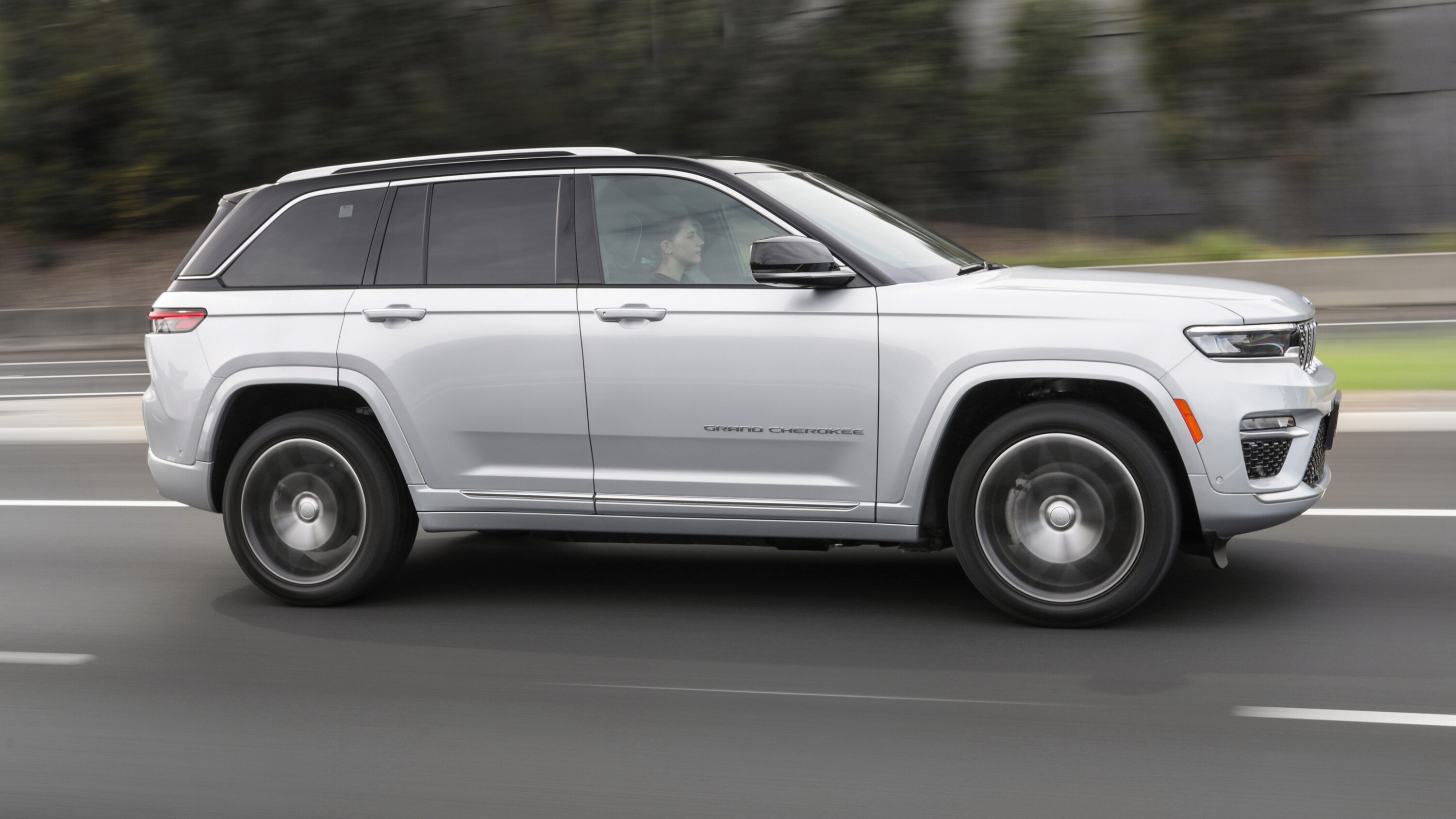
Further impacting the value equation is the 4xe’s smaller fuel tank – 72 litres vs the 87-litre tank in the V6 versions. Jeep doesn’t quote outright ranges due the huge variation depending on the type of driving and loading etcetera, but it’s clear from the similar fuel consumption figures that the hybrid isn’t going to go as far.
If you are into outback adventures, the 4xe does have excellent torque characteristics that would make long drives and towing a breeze, and there’s up to 2722kg of braked trailer capacity to play with.
We sense that, although Jeep is being vocal about the plug-in hybrid’s off-road ability and adventurous spirit, this particular Grand Cherokee is on a bearing into town rather than outwards toward the hills.
Safety
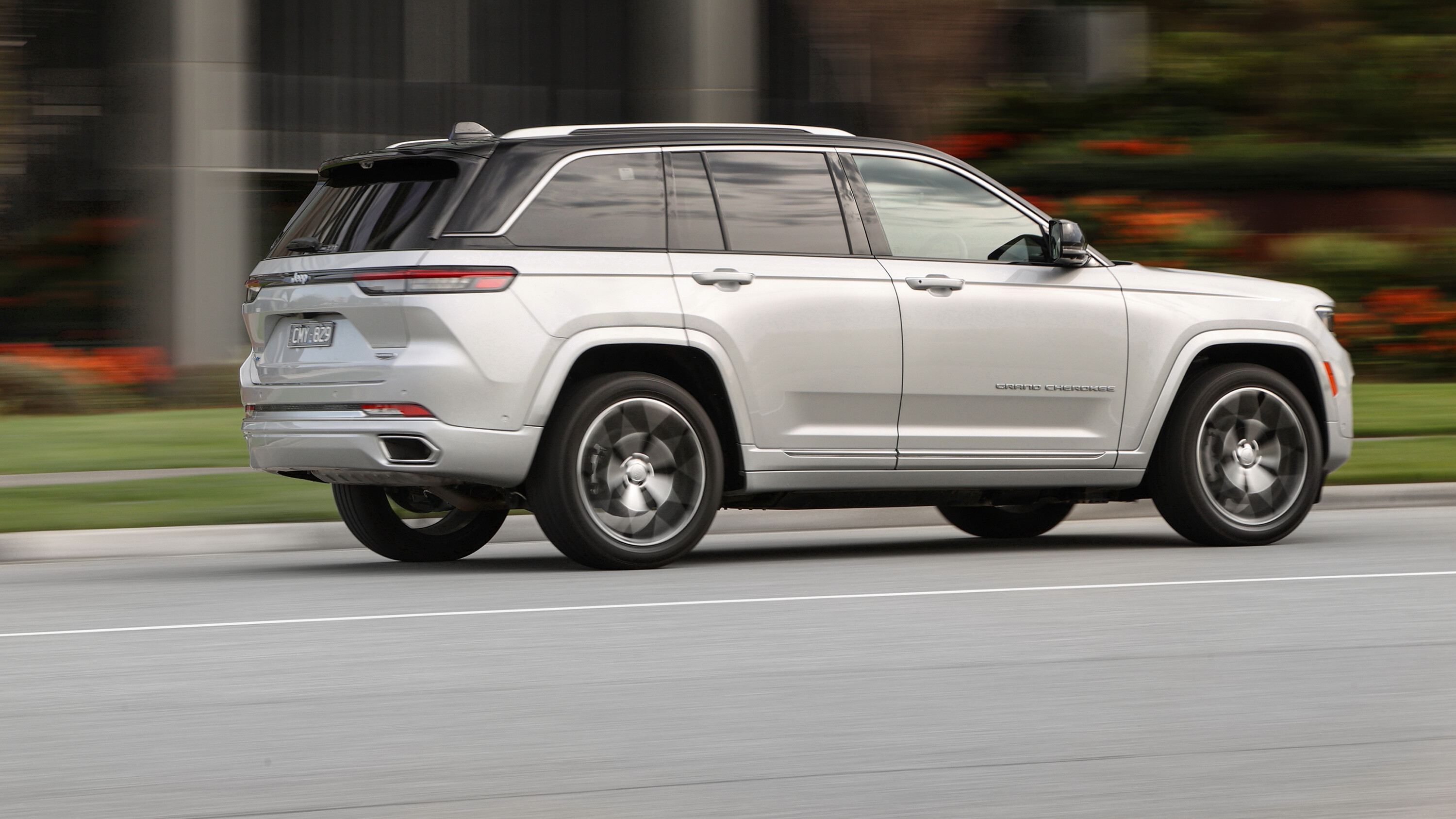
ANCAP tested the long- (seven seat) L and short-wheelbase (five seat) PHEV in one go in September 2022, and awarded it the maximum five-star rating.
It earned a very high score for child occupant protection and good ratings in all other assessment of adult occupant protection, vulnerable road user protection and driver assistance systems.
Standard safety inclusions include adaptive cruise control, AEB with pedestrian and cyclist detection, 360-degree camera, traffic sign recognition, self-parking, lane-keep assistant and blind-spot monitoring (with rear cross-traffic alert) included in the price. Only the digital rear-view mirror is optional.
VERDICT
With a commute of about 52km or less, and somewhere to charge it, the first PHEV with a seven-slot grille makes sense
For now, the Grand Cherokee’s 4xe plug-in hybrid powertrain strengthens the weakest link in the fifth-generation model’s armour. It’s smooth, powerful, responsive and potentially more efficient, and compromises apparently nothing of the brand’s all-terrain promise.
To see the variant’s true value equation however, it’s necessary to look through Jeep’s marketing filter and imagine the plug-in’s true natural habitat – the urban jungle.
With a commute of about 52km and somewhere to charge it, the first PHEV with a seven-slot grille makes more sense than a machine that’ll spend its life cruising freeways and back roads. That said, if the latter is occasional, it’ll double quite nicely.
But with little improvement over the V6 Grand Cherokee’s fuel consumption and shortened range, the more conventional versions are better applied away from the beaten trail. Either way, it’s still expensive.
Jeep will no doubt continue its push into ever more premium territory, but in this case, a more affordable sub-LCT 4xe with a more basic kit list might pair better with the very likeable and powerful plug-in hybrid powertrain – with a price to match.
Picking the right dash cam to suit your needs can be a real challenge, so when Navman, winner of the latest Canstar Blue Independent award for dash cams, releases what they say is their best-ever dash cam, it’s worth noting.
Navman has brought together a range of industry-leading features and designed, manufactured and tested a dash cam that offers everything you would want for your 4WD.
The front camera of the MiView Pro 4K records 3840 x 2160P at 30 frames per second (fps) which is true 4K. The detail the camera captures is perfect for insurance claims, social media uploads and even YouTube-quality footage. The MiView Pro 4K also has a large 1/1.8-inch low light sensor, which at 8MP, pulls in more light and allows greater clarity even in dark situations.
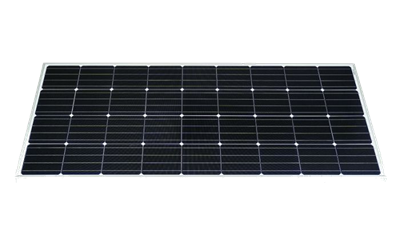
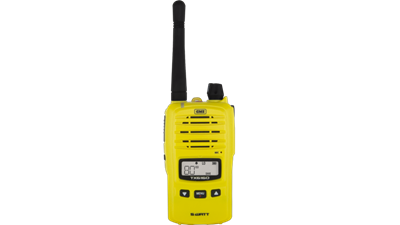
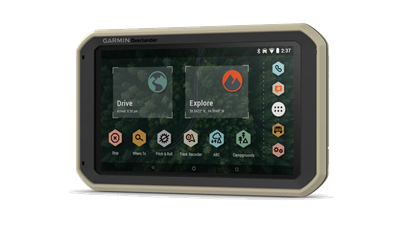

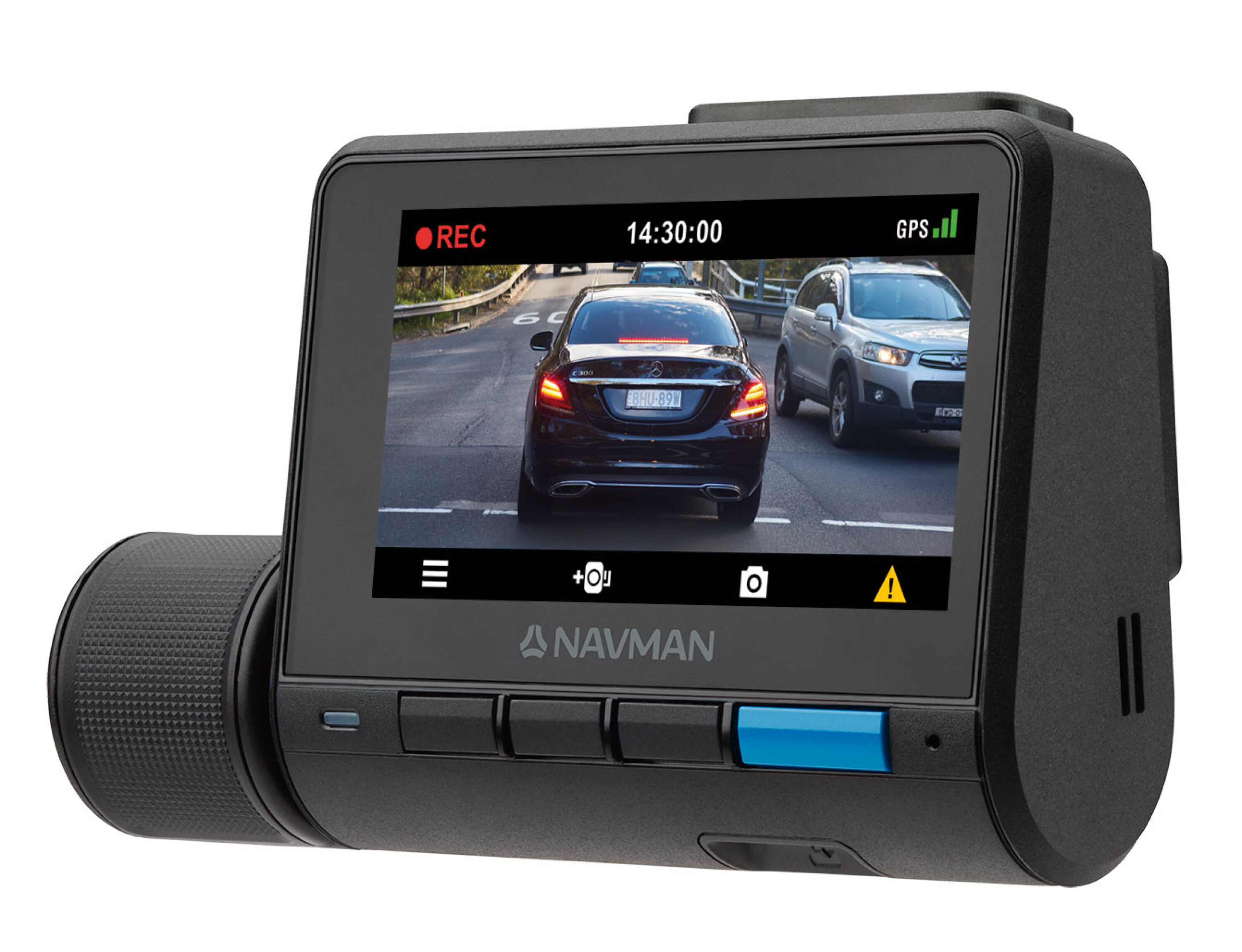
The brilliantly clear footage makes details like number plates and street signs easy to read and, with GPS tagging you will have precise coordinates of any accident site, along with details of the direction of impact thanks to the built-in 3-Axis G-Sensor.
The rear camera on the MiView Pro 4K DC has a premium STARVIS sensor with a 135-degree field of vision while recording at 30fps in 2560 x 1440P or 2.5K.
Voice command is available on the MiView Pro 4K and MiView™ Pro 4K DC, so hard saving any recording doesn’t need to be triggered by touching a button, you can simply tell the camera to start recording verbally. Those of us with older 4WDs will enjoy the inclusion of ADAS warnings, with front collision warnings and lane departure warning systems.
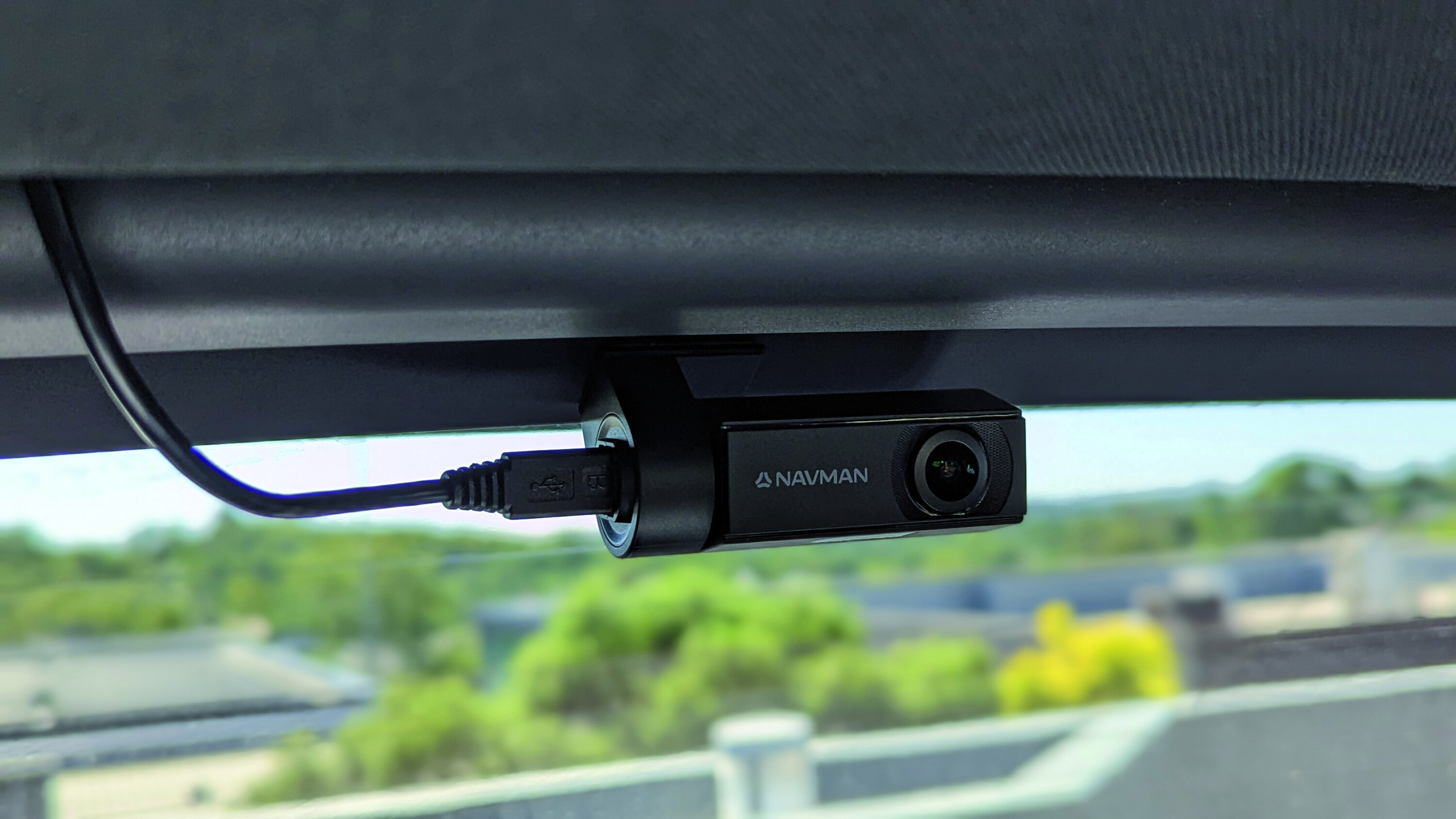
There is also a stop-and-go warning that tells you if the vehicle in front of you has taken off. The MiView Pro 4K DC also has a rear collision warning that will alert you if someone is following too closely behind you. Additional safety camera alerts can also be updated monthly over the air including school zones, railway crossings, speed and other useful warnings.
The MiView Pro 4K retails for $369 and the MiView Pro 4K DC retails for $529, and by purchasing the SmartBox for an additional $79 plus installation, the dash cams will have a continuous power source that enables parking mode to operate even when the engine is switched off.
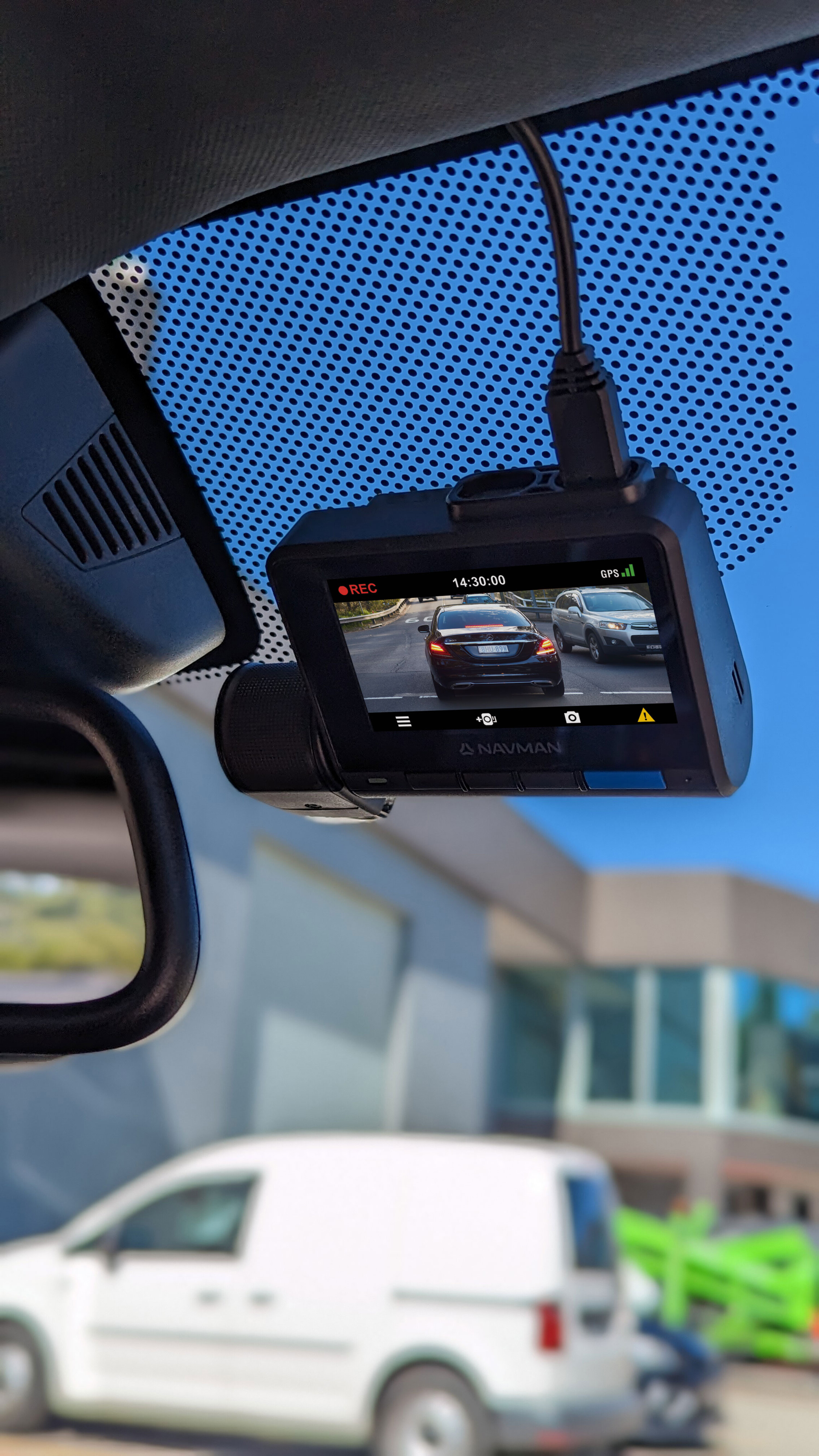
This provides the knowledge that your 4WD is parked safely and if anyone hits it and drives away, record mode is activated via smart motion detection and your MiView Pro 4K will have captured the culprit.
The front camera includes a 2.7-inch LCD screen that allows you to review footage and allows a faster file download, with high-speed WIFI via EZYSHARE instantly to the MiView Pro App on your smartphone that can then be shared easily.
Aussies love the 70 Series, but these heavy duty workhorses lack a bit of finesse when it comes to the side mirrors and interior.
Thankfully, Clearview Accessories offers extensive options to personalise and upgrade the OE mirrors.
The Original Towing Mirror ‘manual black’ is one of Clearview’s all-time, best-selling mirrors and is a readily justifiable upgrade for $785 that replaces the basic metal frame mirrors that are renowned for being next to useless.
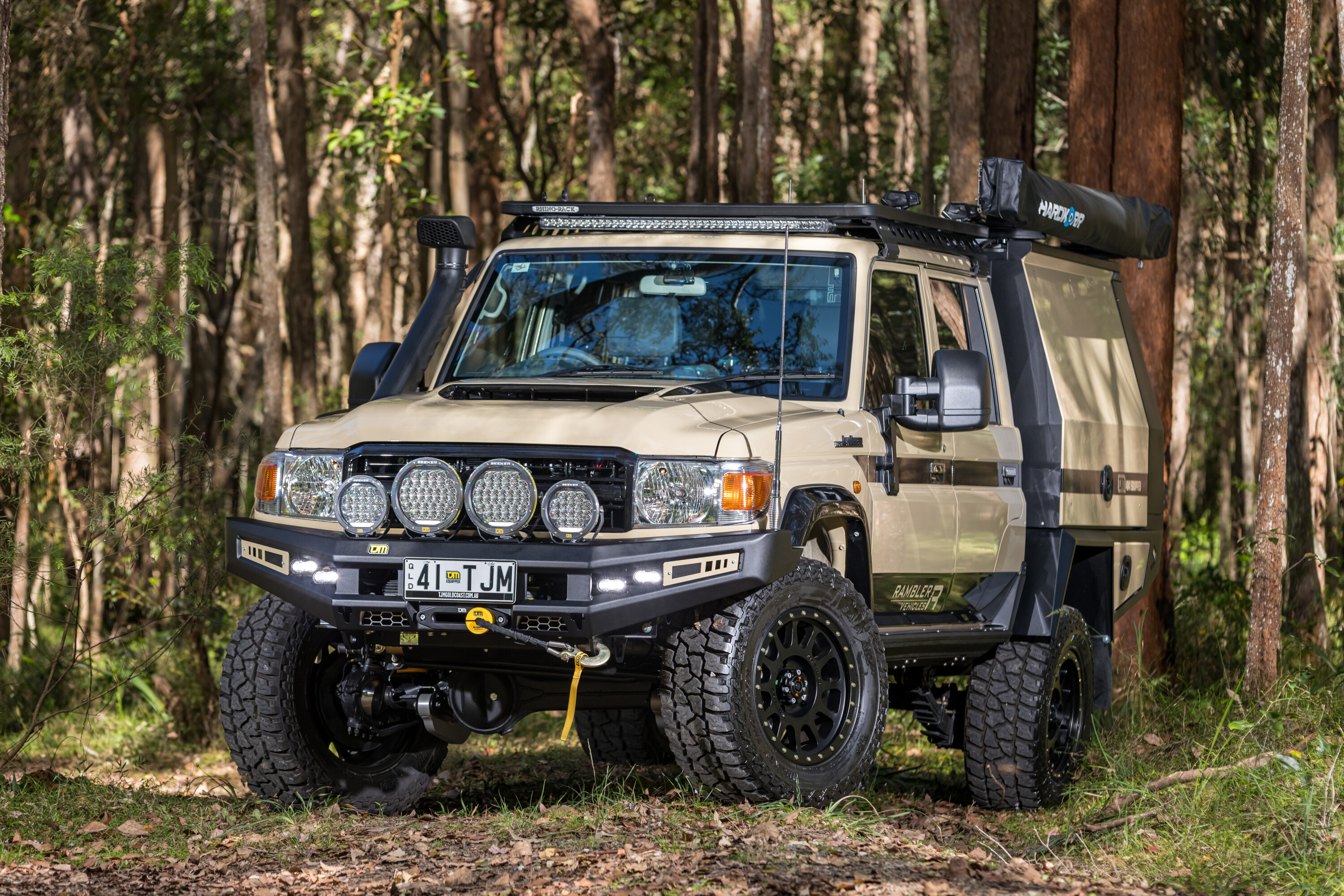
The manual adjustment black mirrors are now also available in the Next Gen and Compact Towing Mirror designs by Clearview Accessories, and retail for $785 for the Compact and $835 for the Next Gen.
This option provides a better-looking, more stable and robust mirror design while also offering the extra visibility that Clearview’s extendable towing mirrors deliver.
Clearview Accessories also offers additional upgrades for the 70 Series including electric mirror adjustment for $150, adding indicators to the mirrors for $100, as well as adding Power Fold functionality for +$670. Clearview does provide the wiring harness and switches with their mirrors to assist in reducing installation time.
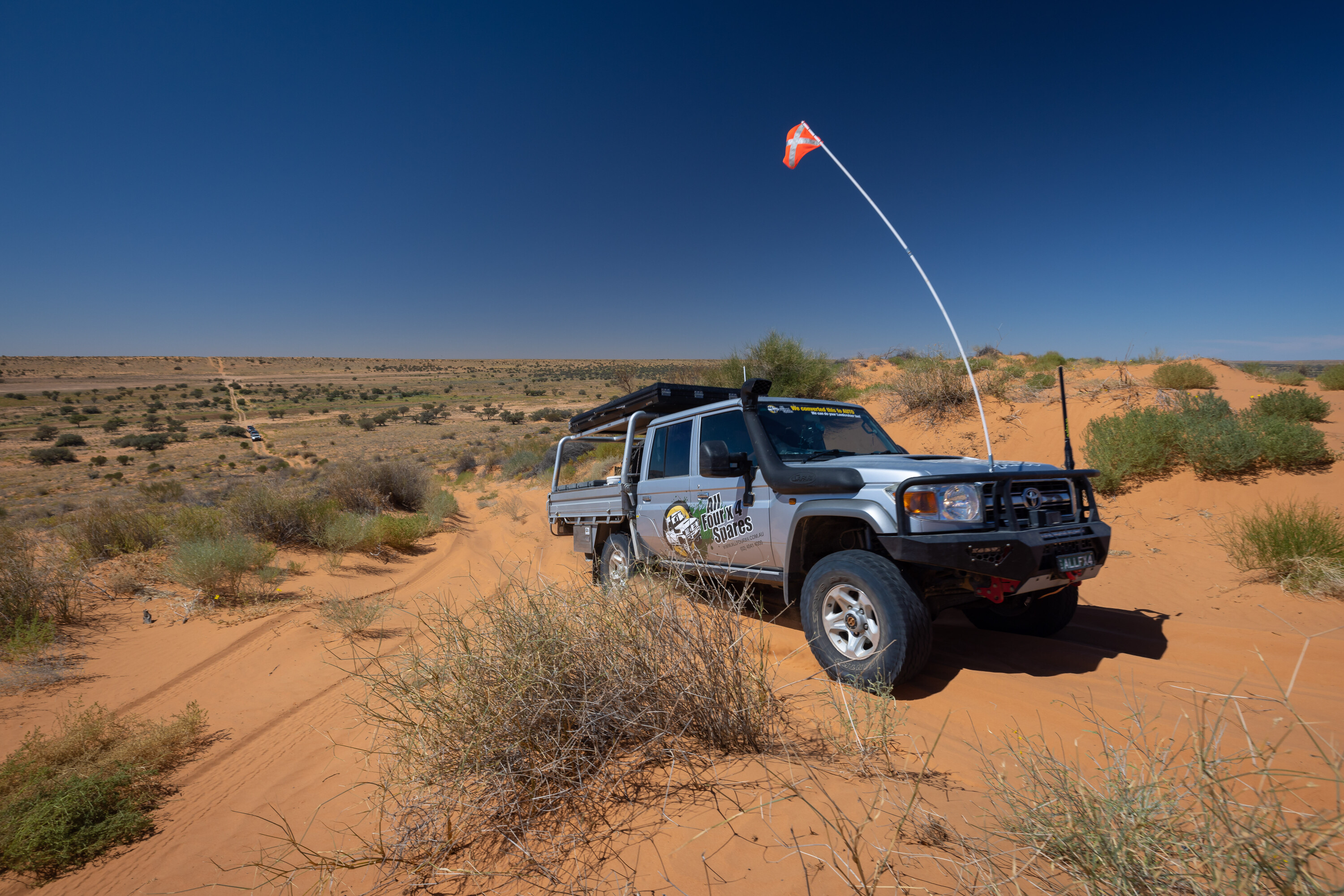
GVM upgrades are popular modifications for 70 Series LandCruisers, and Clearview offers a ‘CAT 6 LED indicators’ option in the Compact and Next Gen Towing Mirrors. These indicators comply with ADR6/00 Category 6 as required for some GVM-upgraded vehicles. All relevant Clearview Compact and Next Gen towing mirrors can be ordered with the CAT 6 indicators if required, for $95 per set.
Upgrading your 70 Series mirrors will extend your field of vision when towing, changing lanes or reversing, which improves safety. The mirrors also fold inwards or outwards if struck while 4WDing or parked, reducing insurance claims.
Snapshot
- 2024 Isuzu D-Max facelift revealed in Thailand
- Updated design and more tech, no powertrain changes
- Expected in Australia soon
The facelifted 2024 Isuzu D-Max ute has debuted in Thailand, ahead of a likely local debut in the coming months.
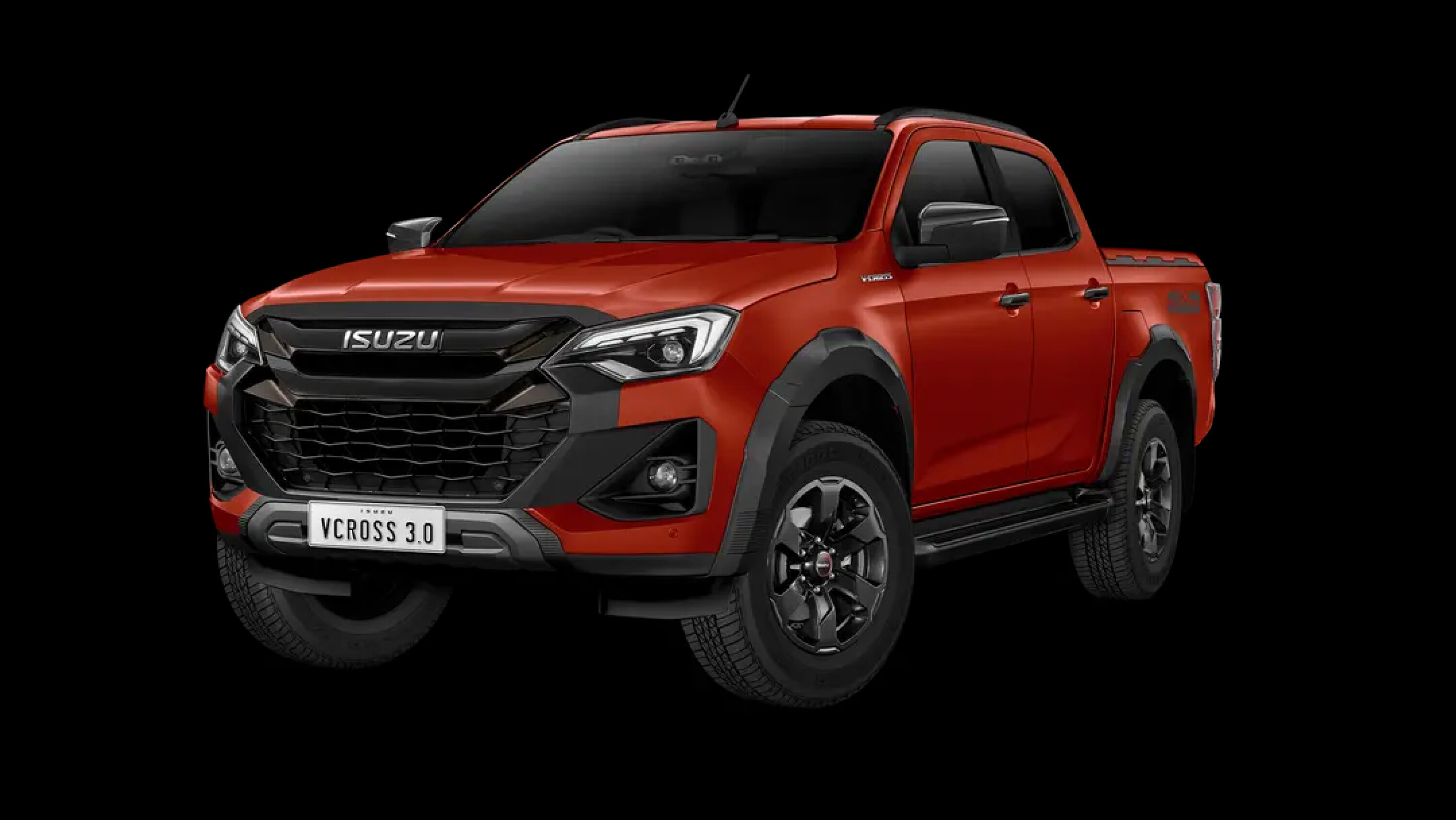
It is headlined by a new-look front end, updated tail-lights, and minor interior revisions, with some features borrowed from its MU-X off-road SUV sibling.
“We are unable to comment on future model plans,” said an Isuzu Ute Australia spokesperson.
“However, Isuzu Ute Australia will continue to monitor the market to ensure that any local product updates meet the Australian market’s requirements, before committing to any changes locally.”
The mid-life facelift for the current-generation D-Max – introduced four years ago in October 2019 – brings redesigned headlights, a new grey or ‘black chrome’ grille, and a new lower bumper with an integrated air vent to improve aerodynamics.
Other exterior changes include updated “triple-armour” LED tail-lights, new wheel designs, and more pronounced flared wheel arches for the flagship D-Max V-Cross, sold in Australia as the X-Terrain.
Inside, the updated D-Max receives steering wheel-mounted paddle shifters, ventilated front seats, a 7-inch semi-digital instrument cluster – up from 4.2-inch – and front and rear USB-C charge ports, replacing USB-A.
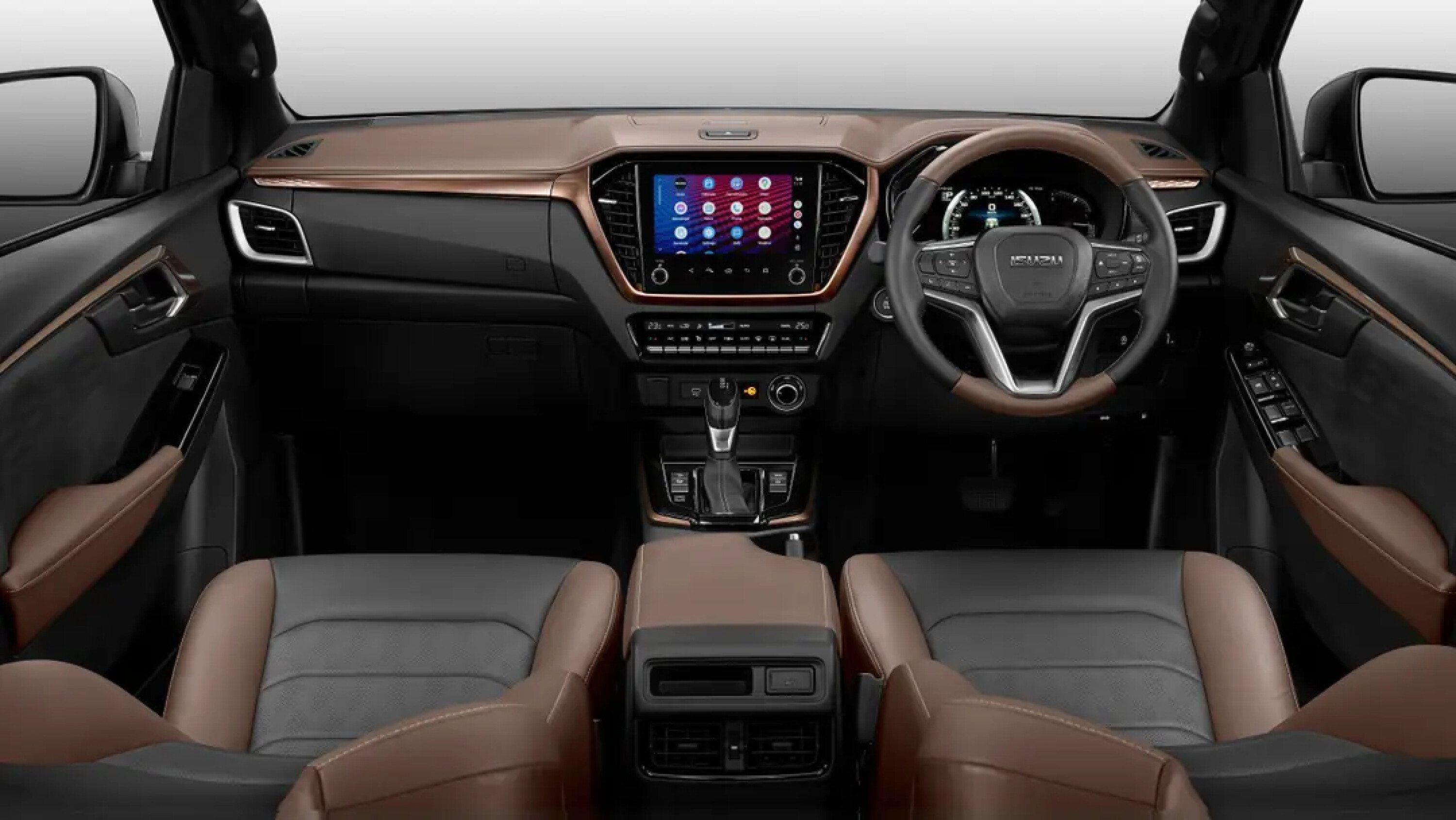
While the central 7- or 9-inch touchscreen remains unchanged, it runs updated infotainment software with wireless Android Auto connectivity, replacing wired-only support and joining wireless Apple CarPlay.
While the updated screen sizes match the new Mitsubishi Triton, the Ford Ranger and Volkswagen Amarok twins are available with a portrait 12-inch infotainment system and a full-digital 12.4-inch instrument cluster.
The Chinese-built D-Max features a digital instrument cluster, a widescreen infotainment system, rear disc brakes, coil spring suspension, and a wireless phone charger – but these changes have not been applied in Thailand, where the D-Max is sourced for Australia.
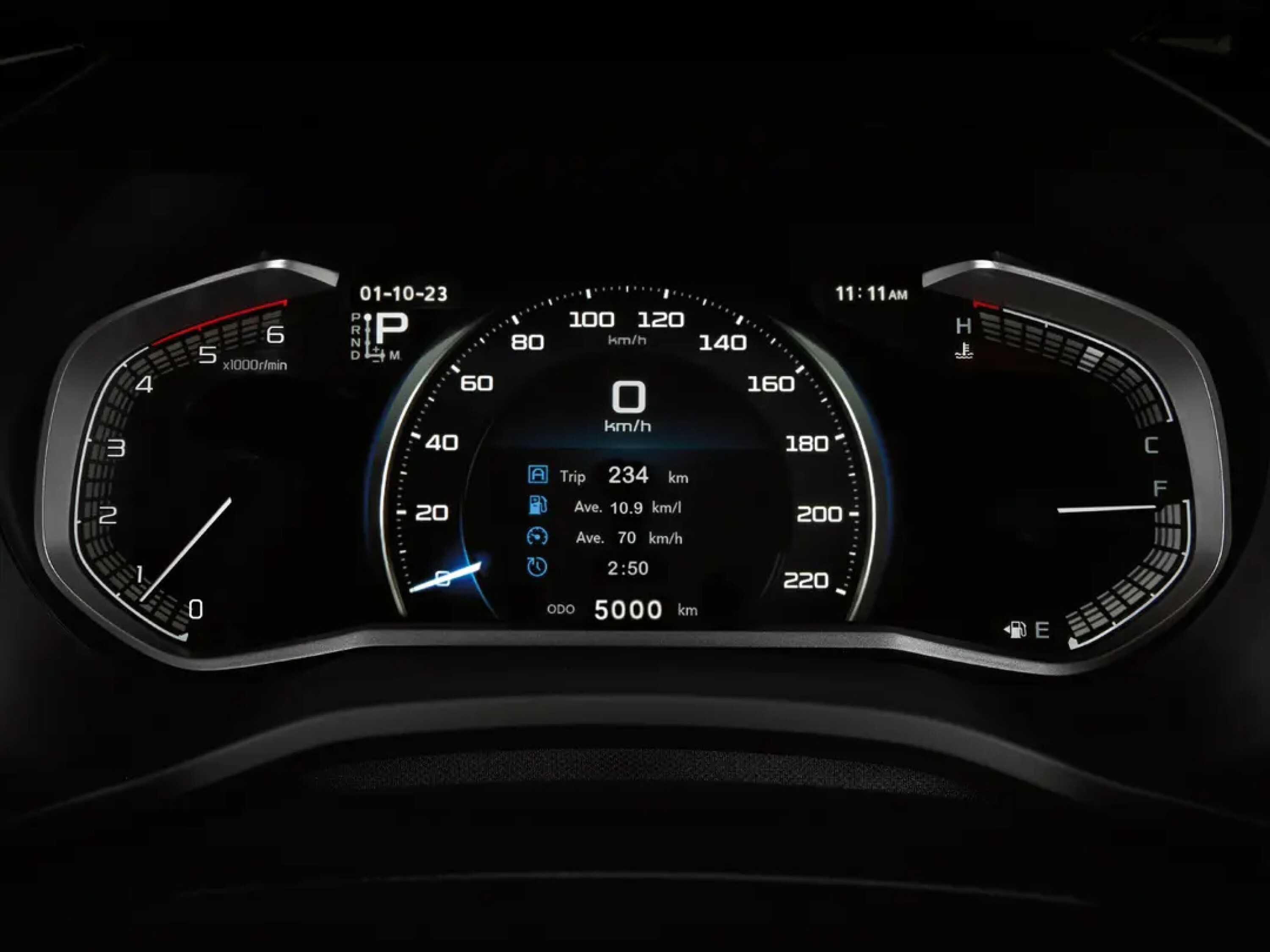
The updated D-Max also features simplified, touch-sensitive controls, volume and tuning dials replacing buttons, and a new brown/black upholstery finish in Thailand with bronze-coloured trim.
First seen in the MU-X, the D-Max receives a ‘rough terrain mode’, which is said to sharpen the brakes and transfer torque to the wheels with the most traction when rock-climbing. It can also automatically engage the rear differential lock.
While there appears to be no change to the active safety suite above that is currently available in Australia, Isuzu claims the front camera module has a “wider and more accurate” view.
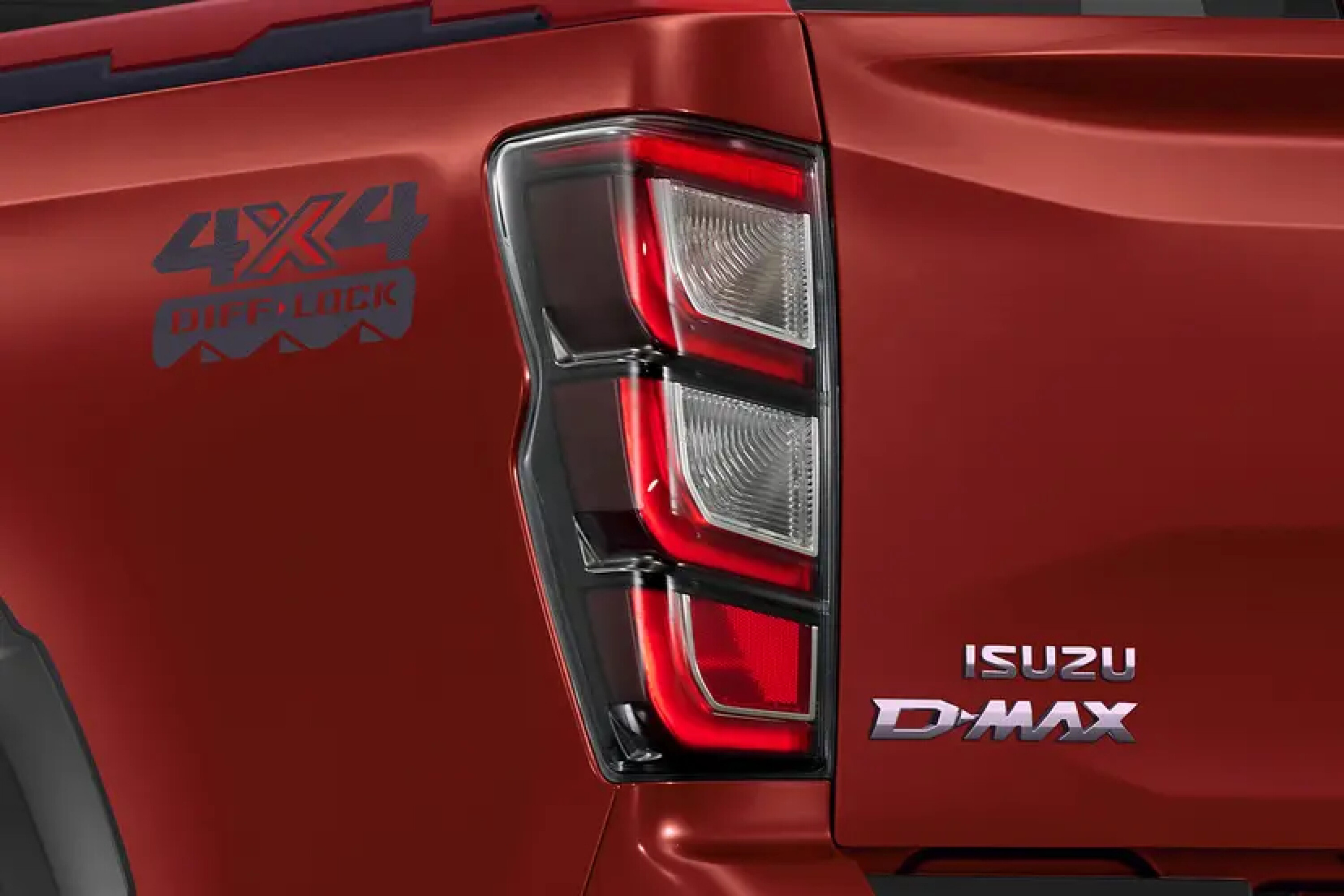
There are no revisions to the D-Max powertrains, with 110kW/350Nm 1.9-litre four-cylinder turbo-diesel or 140kW/450Nm 3.0-litre options, a six-speed manual or automatic transmission, and two-wheel-drive or part-time four-wheel-drive.
The updated 2024 Isuzu D-Max will launch imminently in Thailand. It will likely arrive in Australia in the coming months, with official information due soon.
Similar updates for the related Mazda BT-50 ute and the Isuzu MU-X off-road SUV will likely appear later.
The ute-based Pajero Sport platform may seem a bit long in the tooth, and that’s because it is.
This current platform was released seven years ago in 2015, with a mid-life update in 2020 feeding the SUV wagon with a generous helping of cosmetic niceties including a new-look ‘Dynamic Shield’ front end.
The blacked-out GSR model you’re currently ogling is the most recent addition to the local line-up, released early in 2022 to take the helm as the most premium Paj Sport in Australia.
The GSR is the top Pajero Sport variant in an Australian line-up that comprises the GLX, GLS and Exceed. Five- and seven-seat models are available throughout the range, but the GSR is sold as a seven-seater only.
Essentially an Exceed with a smattering of blacked-out cosmetic features, is the GSR worth the extra coin? Let’s take a closer look.
JUMP AHEAD
- How much is it, and what do you get?
- How do rivals compare on value?
- Interior comfort, space and storage
- What is it like to drive?
- How much fuel does the Pajero Sport GSR use?
- How safe is it?
- Warranty and running costs
- VERDICT
- Specifications
How much is it, and what do you get?
The GSR is the top-of-the-line Pajero Sport variant on sale in Australia, available at a pinch over $60K at $62,440 following a $1000 price hike in December 2022.
It’s only available with Mitsubishi’s Super Select II 4WD system and with seven seats, so if you want a five-pew Pajero Sport with Mitsubishi’s Super Select II 4WD system, you’ll need to opt for the GLX five-seater.

The entire ute-based Pajero Sport range utilises the same 2.4-litre turbo-diesel engine that powers the Triton. The four-cylinder makes 133kW and 430Nm, which are modest digits when compared to the all-new Everest (154kW-500Nm). It is mated to an eight-speed automatic transmission – no third pedal with the Paj Sport, unfortunately.
In addition to the Super Select II 4WD system, GSR models, as well as GLS and Exceed 4WD variants, all come with a rear diff lock as standard.
What differentiates the GSR from the rest of the Pajero Sport range is the addition of black treatment, and plenty of it. The GSR gets 18-inch black alloy wheels, a black rear spoiler, black front and rear bumper garnishes, black headlight garnish, a black grille, two-tone roof (black), and a black Pajero Sport bonnet emblem.
How do rivals compare on value?
At its $60,000 price point, the Pajero Sport GSR undercuts the all-new mid-spec Everest Trend but costs slightly more than the base-spec Ambiente. Comparing apples with apples, the top-spec GSR will yield a saving of more than $15K when pitted against the top-spec Everest Platinum.
Other competitors in the large SUV bracket include the Isuzu MU-X, which in top-spec LS-T guise costs a fraction under $66,000, and the ever-popular Toyota Prado which is a sales juggernaut and costs $60,830 in base-spec GX trim. Opt for the Prado Kakadu and you’re looking to spend around $90,000 … at least.
So for a top-spec off-road-ready vehicle that’s loaded with kit and features, the $62,440 asking price of the GSR starts to look appealing. Still, the lingering question of whether the GSR offers enough over and above its Exceed and GLS stablemates remains.
Interior comfort, space and storage
Where the Pajero Sport most clearly shows its age is inside the cabin, most notably with the eight-inch touchscreen which is small by modern standards and the UI feels generations old when in operation.
Embedded TomTom navigation is standard, but, if you’re anything like us, you’ll never turn it on thanks to the inclusion of Apple CarPlay and Android Auto. On a positive note, it’s easy to find and scroll through apps and functions due to its user-friendly interface, and the premium eight-speaker sound system provides dulcet tunes.

The use of touchscreen buttons makes it difficult to pinpoint input at times, and the use of ‘actual’ buttons and dials would make life a helluva lot easier.
USB power supplies are fitted for front- and second-row passengers, as well as 12V accessory sockets. A 220V power outlet is positioned in the third row.
Despite looking narrow to the naked eye, the front leather-appointed pews of the GSR provide a comfortable and spacious abode for long stints behind the wheel – and not only because they’re heated. The third row does get a little cramped for taller passengers, and getting in and out is not an easy task. With the third row in place, the GSR has 131 litres of space in the rear; opting to fold down the third row lifts that to 502 litres; and popping all the rear seats down creates 1488 litres of space.
A payload capacity of just 650kg limits how much gear you can carry, though.

There are six cupholders, four bottle holders and plenty more storage bins including a clever use of otherwise wasted space beneath the centre console. A rear floor storage box will also prove extremely useful.
As a side note, we experienced a glitchy powered tailgate, an issue we encountered when reviewing the Pajero Sport GLS and also something that was noted in our long-term review of the GLS Deluxe. That it is a recurring issue suggests it mightn’t be user error.
What’s it like to drive?
The Pajero Sport’s ability to adapt to both tarmac and dirt is one of its most endearing attributes. Its 2.4-litre MIVEC DID turbo-diesel engine may be slightly underpowered in its attempt to push the GSR’s hefty 2125kg kerb weight, and you can hear it working its backside off to do so, but it’s not a mitigating factor.
The GSR is also not the most refined nor quiet when travelling on long stretches of bitumen, but its ladder-frame chassis comprises coils front and rear, so it’s a much nicer on-road performer than the ute it’s based on. The eight-speed automatic transmission also feels well-calibrated and smooth by large SUV standards.

The GSR wears 18 x 7.5 black alloy wheels inside 265/60R18 110H Toyo Open Country A32s made specifically for the Pajero Sport.
As mentioned, the Pajero Sport comes with Mitsubishi’s Super Select II 4WD system, which is simple to operate via an easy-to-access dial on the centre console, and it allows the user to tailor the vehicle’s dynamics to the conditions.
Mitsubishi also offers a Remote Smartphone App, which allows the owner to operate the tailgate and monitor vehicle information including fuel consumption. Plus, it has a car-finder function.
As of December 2022, Pajero Sport GLS, Exceed and GSR models now come with a Tyre Pressure Monitoring System (TPMS) as standard. This feature provides up-to-date tyre pressure information, which is invaluable and a feature all 4×4 models should be equipped with from the showroom.
How is it on fuel?
The Pajero Sport is equipped with a 68-litre fuel tank, and Mitsubishi lists the GSR as consuming 8.0 litres of diesel per 100km. On our test, we guzzled closer to 9.0L/100km, which is still quite frugal.
For comparison’s sake, on a recent comparison test between the Ford Everest Platinum and Toyota Prado Kakadu, the Everest drank 11.3L/100km and the Prado 10.6L/100km.
How safe is it?
The entire Pajero Sport range received a five-star ANCAP safety rating when released back in 2015 – albeit under more lenient guidelines than today’s standards.
In 2020, as part of its mid-life update, Mitsubishi added Lane Change Assist (LCA) and Rear Cross Traffic Alert (RCTA) as standard on Exceed models. Blind-spot warning, rear cross-traffic alert and lane-departure warning are now exclusive to Exceed and GSR variants.
The GSR is equipped with parking assistance in the form of a multi-around monitor, a rear-view camera, and front and rear parking sensors.
Safety kit includes
| Forward Collision Mitigation system (FCM) |
| Emergency Stop Signal function (ESS) |
| Emergency Brake Assist system (EBA) |
| Hill Start Assist (HSA) |
| Hill Descent Control (HDC) |
| Active Stability Control (ASC) |
| Trailer Stability Assist (TSA)2 |
| Active Traction Control (ATC) |
| Anti-lock Braking System (ABS) |
| Electronic Brakeforce Distribution (EBD) |
| Brake Override System (BOS) |
| Adaptive Cruise Control (ACC) |
| Lane Change Assist (LCA) |
| Rear Cross Traffic Alert (RCTA) |
| Lane Departure Warning |
| Blind-spot monitoring |
Warranty and running costs
Mitsubishi is industry leading when it comes to after-sales support, with all Mitsubishi vehicles covered by a five-year/100,000km vehicle warranty.
That extends to a 10-year or 200,000km warranty if owners stay on top of their scheduled servicing within the Mitsubishi network.
Servicing intervals are every 12 months or 15,000km, whichever comes first. Mitsubishi will also cap servicing costs for the first ten years or 150,000km.
Verdict
The Pajero Sport is a compelling vehicle for its versatility as a family hauler slash weekend adventure machine. Its competency to take you from the 9 to 5 grind to a campsite on the edge of a map makes it hard to ignore.

Plus, getting all of this in a package that costs around $60K makes it money well spent. If the Pajero Sport is a vehicle that ticks your boxes, though, we’d pocket the $10K and opt for the seven-seat GLS 4×4 variant. Unless blacked-out trim is a high priority, of course.
2023 Mitsubishi Pajero GSR specs
| Engine | 2.4L I4 turbo-diesel |
| Capacity | 2442cc |
| Transmission | 8-speed automatic |
| Poweru00a0 | 133kW @ 3500 |
| Torque | 430Nm @ 2500 |
| 4×4 system | Part-time 4×4 |
| Front suspension | Double wishbone with coils |
| Rear suspension | 3-link with coils |
| Wheels | 18-inch alloys |
| Kerb weight | 2125kg |
| GVM | 2775kg |
| Payload | 650kg |
| Towing capacity | 3100kg |
| Seating | 7 |
| Fuel tank | 68 |
| ADR fuel claim | 8.0L/100km |
| Wading depth | 700mm |
| Approach angle | 30 |
| Departure angle | 24.2 |
| Rampover angle | 23.1 |
| Ground Clearance | 218mm |
| Price | $62,440 |
Snapshot
- 2024 Isuzu D-Max facelift leaked
- Updated exterior design; interior changes unclear
- Expected to debut this week
The facelifted 2024 Isuzu D-Max ute has leaked online, ahead of an expected reveal this week.
Thai publication HeadlightMag [↗] reports the updated D-Max will debut later today, October 6.
An Isuzu Ute Australia spokesperson was unable to confirm this rumour.
“At this point in time, we are unable to comment on future model plans including those of the rumoured facelifted D-Max in Thailand,” the spokesperson said.
“However, Isuzu Ute Australia will continue to monitor the market to ensure that any local product updates meet the Australian market’s requirements, before committing to any changes locally.”
Images posted to Instagram by Kurdistan Automotive Blog [↗] reveal the facelifted D-Max will feature a revised front design and updated tail-lights, four years after the current model debuted in Thailand in October 2019.
https://www.instagram.com/p/CyAY8VyMmmR/
It arrived in Australia in 2020. A minor update launched in 2022 with new-look alloy wheels, a redesigned grille, fresh paint finishes, and updated specifications.
However, the latest revision will include new headlights, another redesign for the grille, and a revised front bumper.
The model in the leak appears similar to our flagship X-Terrain, with darkened accents and what appears to be chunkier flared wheel arches.
It is unclear what changes are planned for the D-Max’s cabin. However, an updated, larger infotainment system is likely to better match the Ford Ranger and Volkswagen Amarok, potentially in line with the Chinese-spec D-Max, which features a digital instrument cluster and a unique dashboard with a widescreen infotainment system.
In China, the current D-Max also sports rear disc brakes, coil spring suspension from the MU-X, and an integrated wireless phone charger.
Similar updates for the related Mazda BT-50 ute and the Isuzu MU-X off-road SUV are likely to appear later.
The 2024 Isuzu D-Max is expected to debut in Thailand this week. It is currently unclear when the update will arrive in Australia, with more details likely to be confirmed once official information is released.