Explore QLD

Gallery 1
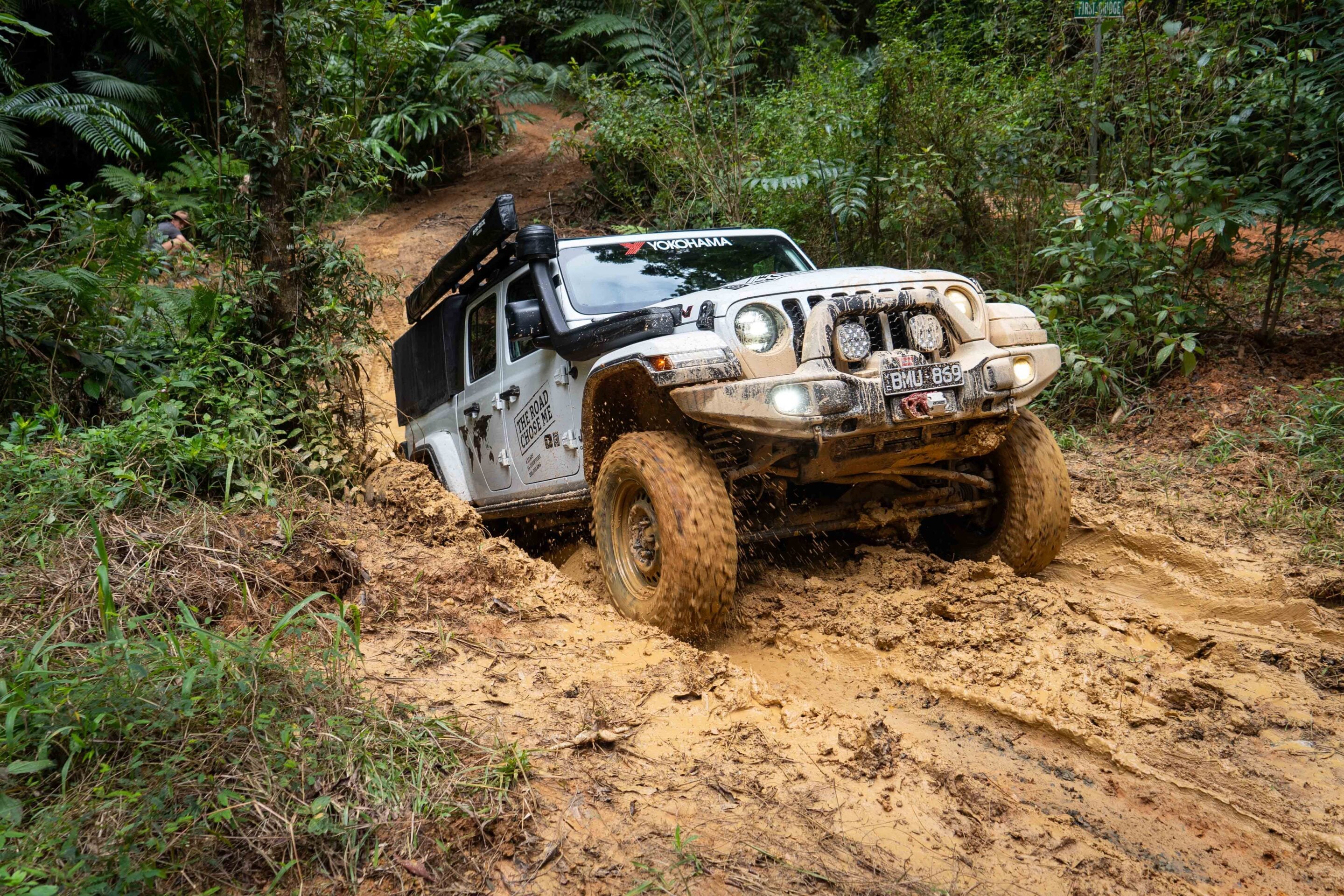
While I’m technically in the driver’s seat, what I’m doing can’t really be called sitting.
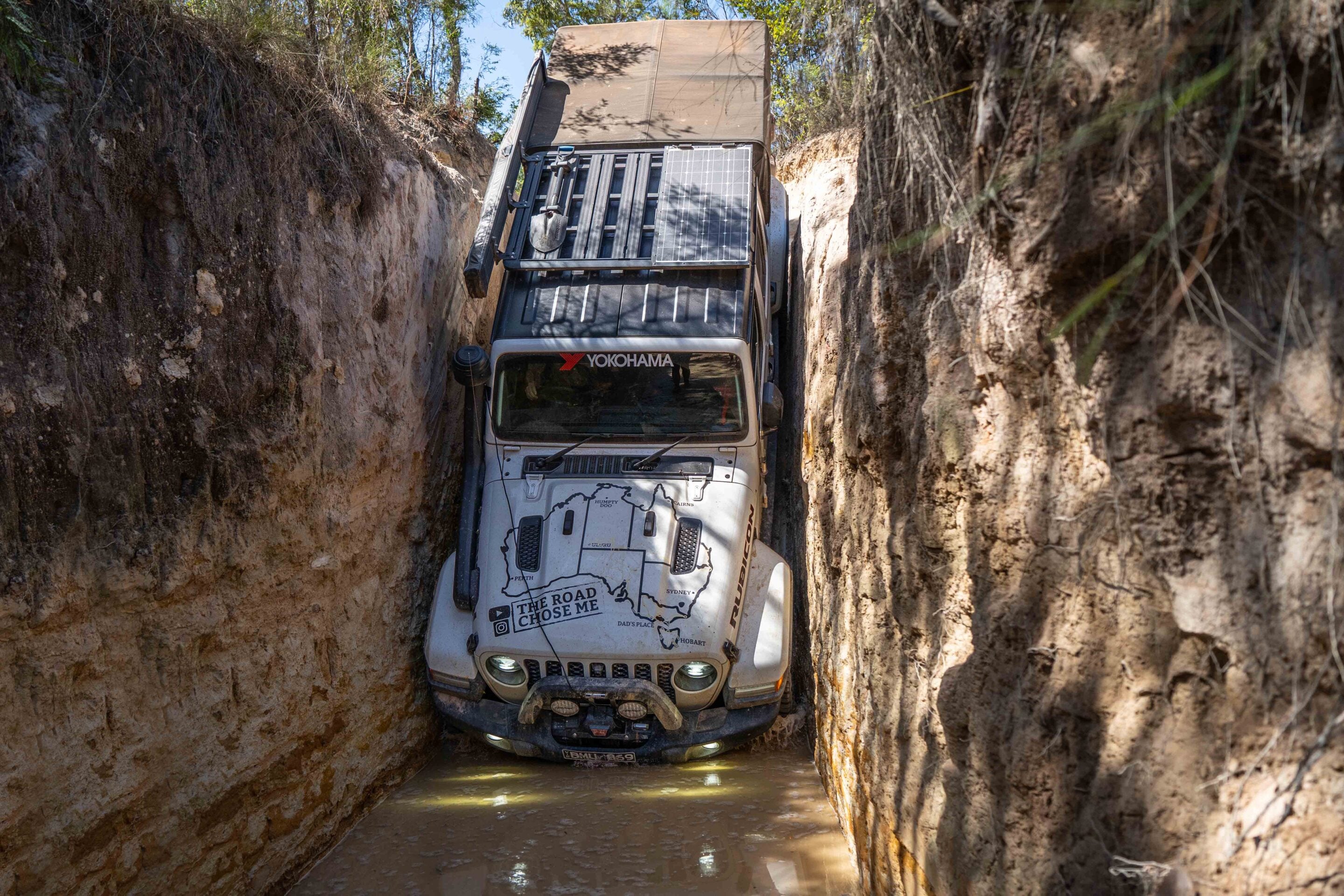
With the Jeep nearly vertical, the steering wheel is directly below me and I’m pushing hard to keep my body off the dashboard and my back against the seat. I can barely see the tip of the bonnet; beyond it, walls of dirt and mud fill my vision.
With only an inch or two on either side, my mirrors are folded in and all my concentration is focused on Josh – the only thing keeping me centred between the vertical mud walls. With my view completely blocked I have no choice but to trust his judgement. I’m gripping the winch controller in my right hand, desperately hoping to avoid the worst-case scenario of getting stuck vertically at the bottom of the mud trench.
While hanging helplessly on the edge, I can’t help thinking this is a really bad idea. But with no alternative I ease off the brakes, inching the Jeep over what is, for all intents and purposes, a cliff. At the point of no return gravity takes over, Kristy lets out a scream and Josh jumps backwards to avoid the wave of mud.
After days of intense four-wheel driving in remote Cape York, I’ve just dropped into Gunshot – probably Australia’s most infamous 4×4 obstacle.
Old Telegraph Track: Cape York’s iconic 4×4 route
Cape York, in the far north-east of Australia, is one of the wildest and most remote corners of what is already a very wild and remote continent.
During early settlement the extreme remoteness made outside communication almost impossible, so – in typical colonial fashion – an ambitious plan to build a telegraph line the length of Cape York was set in motion in 1883.
The thick, jungle-like rainforest and scrubland did not give in easily. The initial survey alone took two years, followed by another two years of hard manual labour during construction. The track was cut roughly two chains wide (about 40yd), and teams of men were assigned to maintain it – a herculean task after the monsoonal rains each season during the annual wet.
1
The telegraph track remained the only way to access the far northern tip of Cape York for more than 100 years, until the Peninsula Development Road (PDR) was completed in 1986. At that point the original telegraph line was replaced by microwave transmission and later fibre optic.
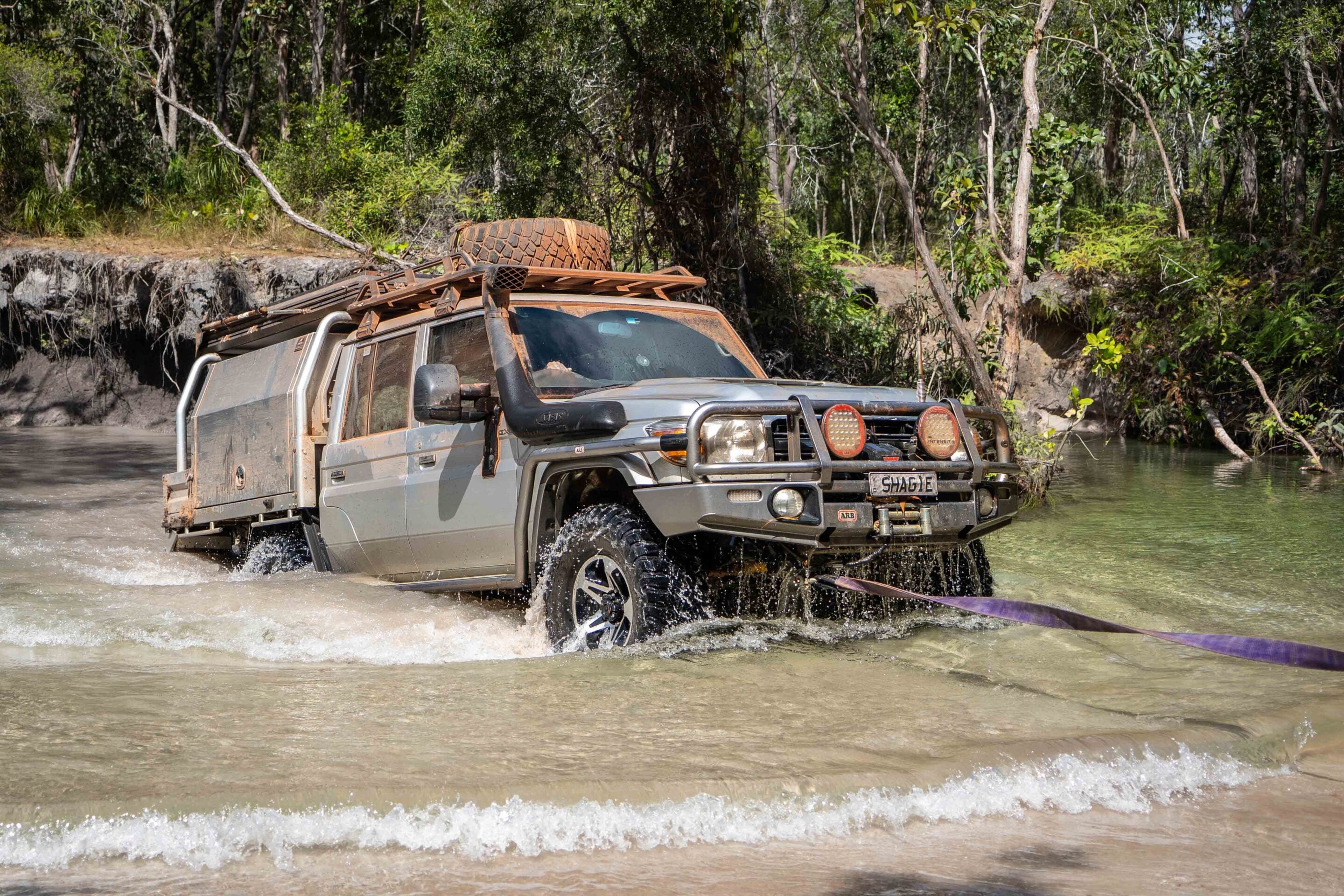
For all intents and purposes the Old Tele is now abandoned and hasn’t seen any maintenance or trail repairs since 1986. The severely rutted and muddy track now stands as the mecca of remote technical four-wheel driving in Australia, and since COVID the route has been busier than ever. Tens of thousands of keen four-wheel drivers descend each year during the dry season, eager to put their vehicles and off-road driving skills to the test.
With countless deep river crossings, stunning waterfalls, mud holes, tree roots, rock shelves, soft sand and plenty of slippery climbs, the multi-day track really does have something for everyone. Although the Tele is only 170km long – tiny by Australian standards – it packs a punch, with almost every kilometre driven in low range. Simply reaching the end in one piece is an achievement to be proud of. Bonus points if you do it without drowning your vehicle.
Aussie 4×4 culture on the Old Tele
It’s no secret that plenty of Aussies love four-wheel driving, and the Old Tele is akin to Graceland for many of them.
With sticky humidity even in the dry season, a well-stocked fridge is essential on the Tele – many seem to contain more beer than drinking water. From sunrise to sunset I rarely see anyone without a cold beer in hand, and the rate of consumption is impressive. Somehow, I’m still impressed that most people manage to stay on their feet.
Without a doubt these mad-keen Aussies are an incredible bunch. They’re always the first to jump in and offer help whenever the need arises – which it often does in these parts. A highlight of the Old Tele is watching other vehicles tackle each obstacle and, like any good sporting venue, the characters in the crowd are often as entertaining as the main event. Make no mistake – this is raw Aussie culture on show.
1
Forming the Cape York convoy
We’ve been exploring the remote tracks of Far North Queensland with an eclectic crew of people and vehicles from around the country who have affectionately dubbed us ‘The Americans’.
That’s partly because we’re driving a Jeep and partly because of Katie’s accent, which stands out like a sore thumb. For the record, Katie is Canadian – but nobody around here seems to know the difference. Josh and Georgie drive a heavily loaded Troopie, while Brad and Kristy pilot a modified TD42 Patrol. Josh has nerves of steel and isn’t afraid of monster wheel lifts or deep mud holes, while Brad and Kristy have a background in competitive 4×4 winch challenges. I bring the least to the table in terms of highly technical four-wheel driving, and I’m extremely happy to have their skills and experience on the team.
After just a few minutes on the track we arrive at Palm Creek, the first major obstacle. With a near-vertical entry and exit, Palm Creek is intimidating enough to make many would-be adventurers turn around before they’ve even begun. As Josh and I scout the line and spot each other down into the creek, we meet India and Luke – a young couple driving a well-worn 1995 HZJ75 LandCruiser. Happy for the company, they join us to round out our ragtag team of adventurers.
1
Early lessons on the Old Tele
It quickly becomes clear that the severity of any obstacle can be judged by the number of vehicle bumpers, mufflers, licence plates and pieces of plastic trim hanging from nearby trees.
It’s almost a rite of passage to leave anything that breaks off behind in a nearby tree, and on the most rutted climbs the trees seem to carry more plastic than leaves. Only an hour into the track Josh drops into a dark, murky mud hole that is so severely off-camber the big Cruiser nearly tips over.
Not wanting to push our luck, the rest of the convoy skirts the hole on the narrowest of bypass lines, happy to get through unscathed. While the heavy LandCruiser is prone to wheel lifts, it soon becomes clear that the Gladiator’s longer wheelbase – and far less weight on the roof – works to my advantage. The Jeep feels far more planted, easily articulating through the complex terrain.
1
Different 4×4 setups, different driving styles
All the vehicles in our convoy are set up differently, and each driver has their own unique driving style.
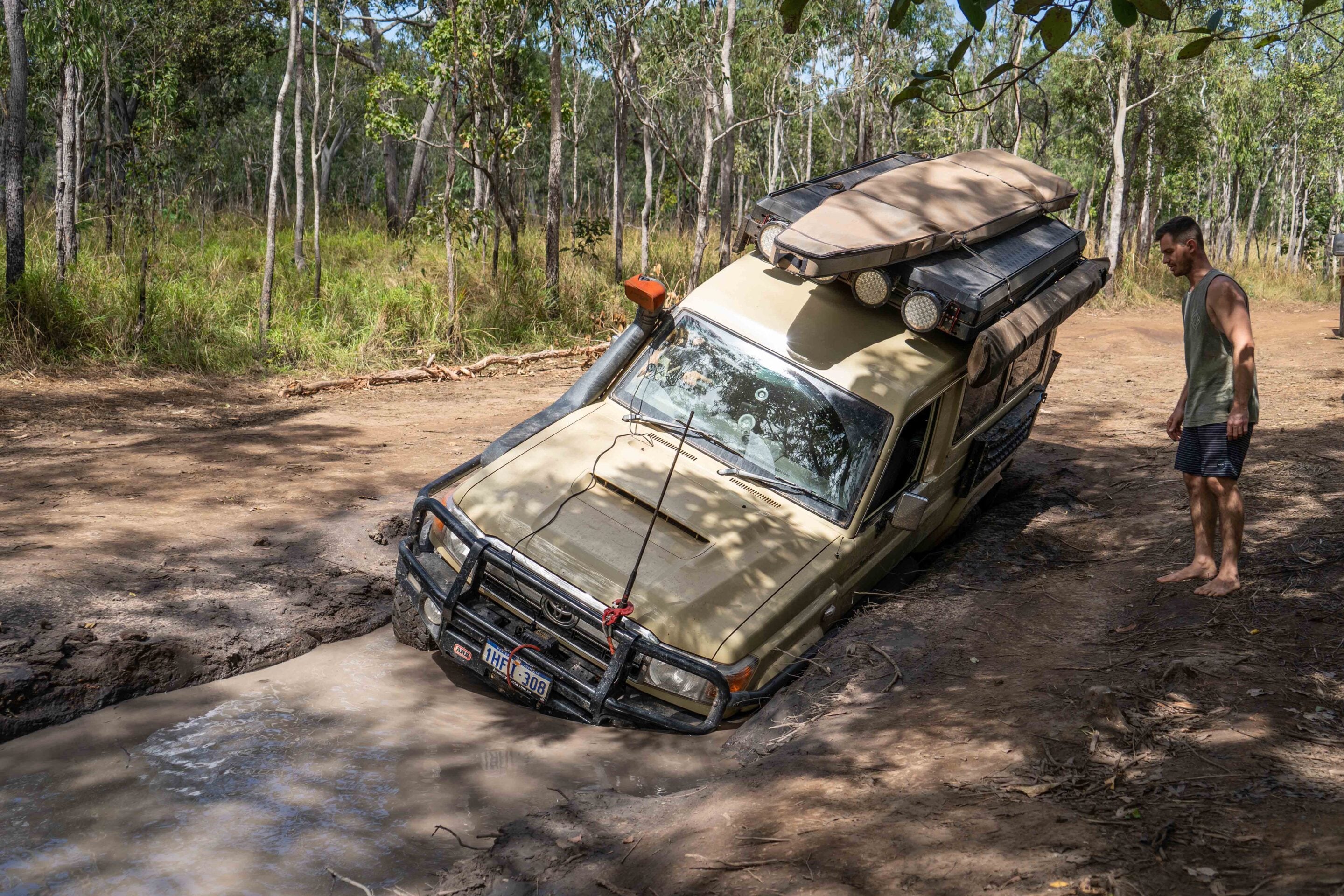
Watching and learning from each vehicle helps improve my own skills – sometimes showing what to do and sometimes what not to do. While the dramatic vertical entries of many river crossings and obstacles like Gunshot make for great photos, they don’t require a great deal of driving skill. With a good spotter it’s simply a matter of slow and steady, and almost any vehicle is capable of sliding to the bottom in a spray of mud. Getting up and out the other side, however, is a different story.
All the major river crossings have steep, rutted exits made wet and slippery by the convoy of vehicles before us. Lumps and holes in the deep tyre ruts test a vehicle’s articulation, and any vehicle without diff locks quickly becomes stuck with a wheel on each axle spinning helplessly in the air.
Brad in the GU Patrol is happiest using a very healthy dose of right foot, resulting in plenty of wheelspin and action. This makes for great spectating, and we all stand well back, never quite sure what will happen next. Driving the Old Tele is often a spectator sport, and we let out shrieks and cheers whatever the outcome.
1
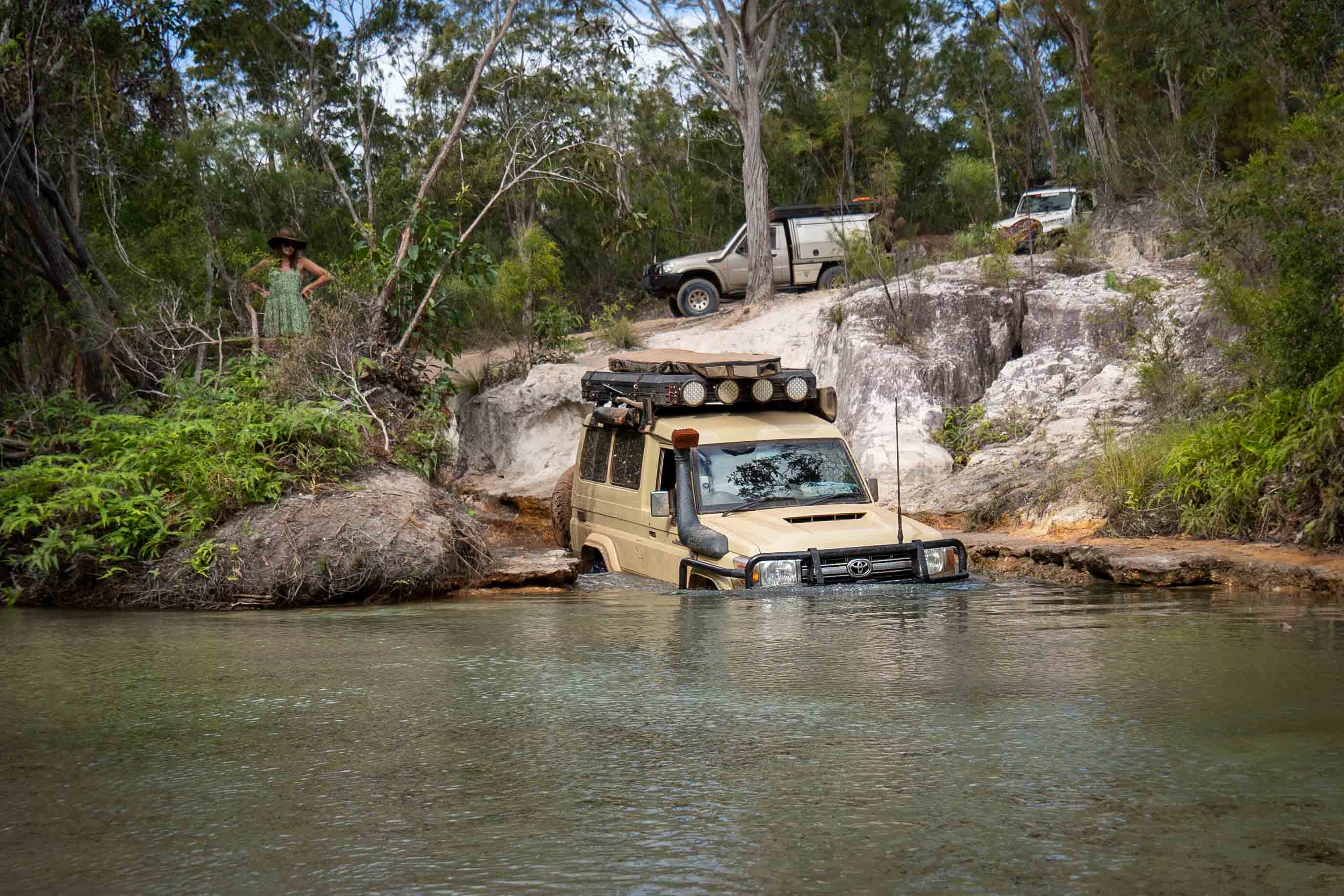
Luke in the old Cruiser is always keen for one more attempt, though his leaf springs and open diffs let him down on many occasions. The Cruiser usually only needs the smallest of winch pulls to get moving again, and we’re all impressed time and again by how well it keeps up with our newer and vastly more expensive vehicles.
Josh in the big Cruiser is a master at staying cool, and I’m always impressed watching him crawl through huge wheel lifts without a care in the world. He knows his vehicle and its limits extremely well and isn’t afraid to walk the line between success and a flop. On a few occasions we dash over to jump on the front bumper or side rails to make absolutely certain it won’t go over, and thankfully it never does.
For my part, I’m repeatedly impressed by how the big Gladiator performs on the technical climbs. With the Jeep in low-range first and both diff locks engaged, it walks to the top of the biggest obstacles on the Old Tele without lifting a wheel or even a tyre slipping. It does this so often – and makes everything look so easy – that Brad can’t help but nickname it ‘Gracie’, because it’s just so graceful.
1
Unexpected natural beauty along the track
While everyone flocks to the Old Tele for the four-wheel drive adventure, the natural wonders on and around the track are nothing short of breathtaking. The rivers flow crystal clear and, in the sticky heat and humidity, we jump in at every opportunity.
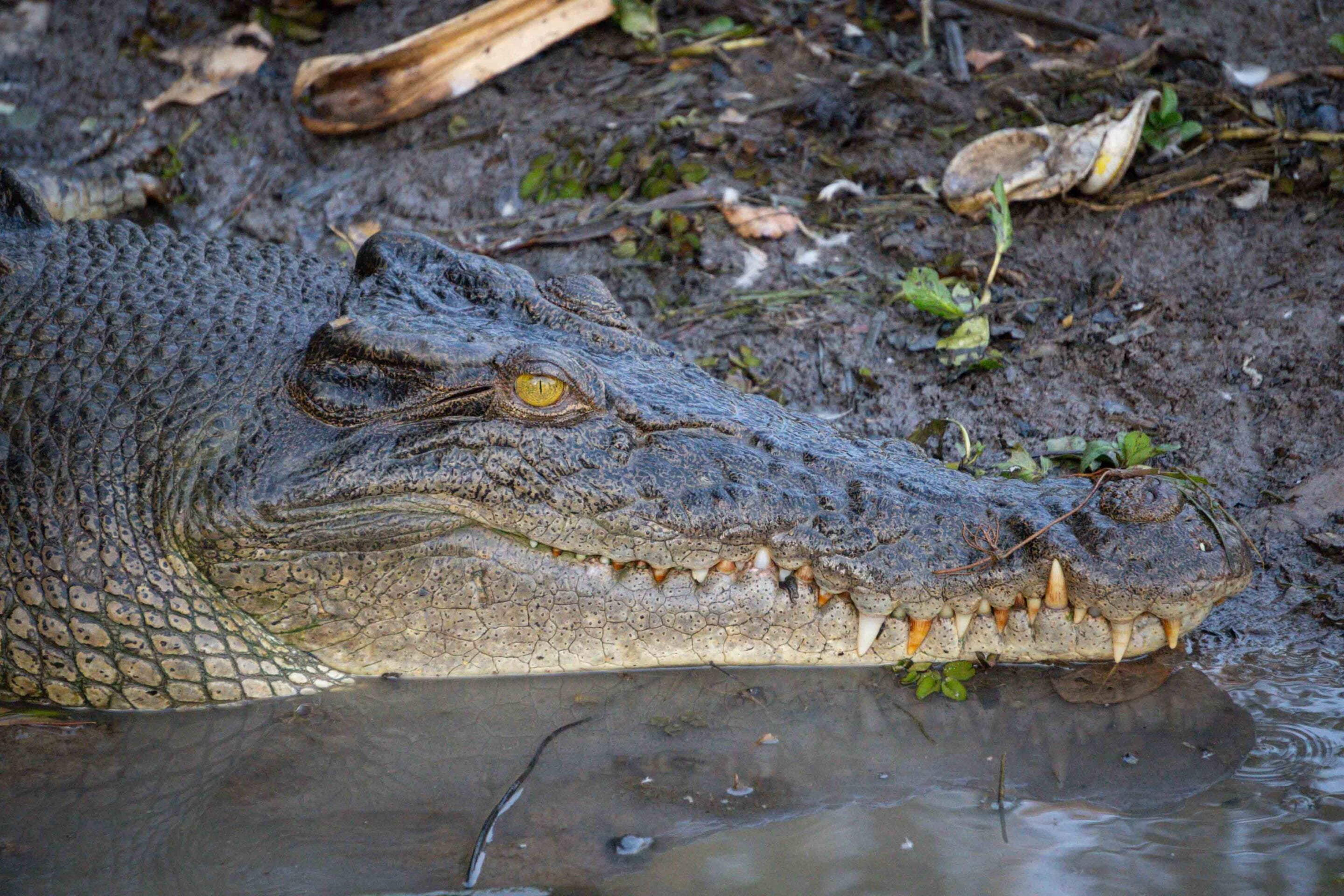
We’re deep in the northern tropics of Australia, which normally means swimming in any body of water is strictly off limits thanks to the huge population of saltwater crocodiles. The rivers on the Old Tele are a bit of an oddity, however, and for whatever reason no large crocs have been spotted here for years. Nobody else appears to be having problems, so we take that as good enough for us and jump right in.
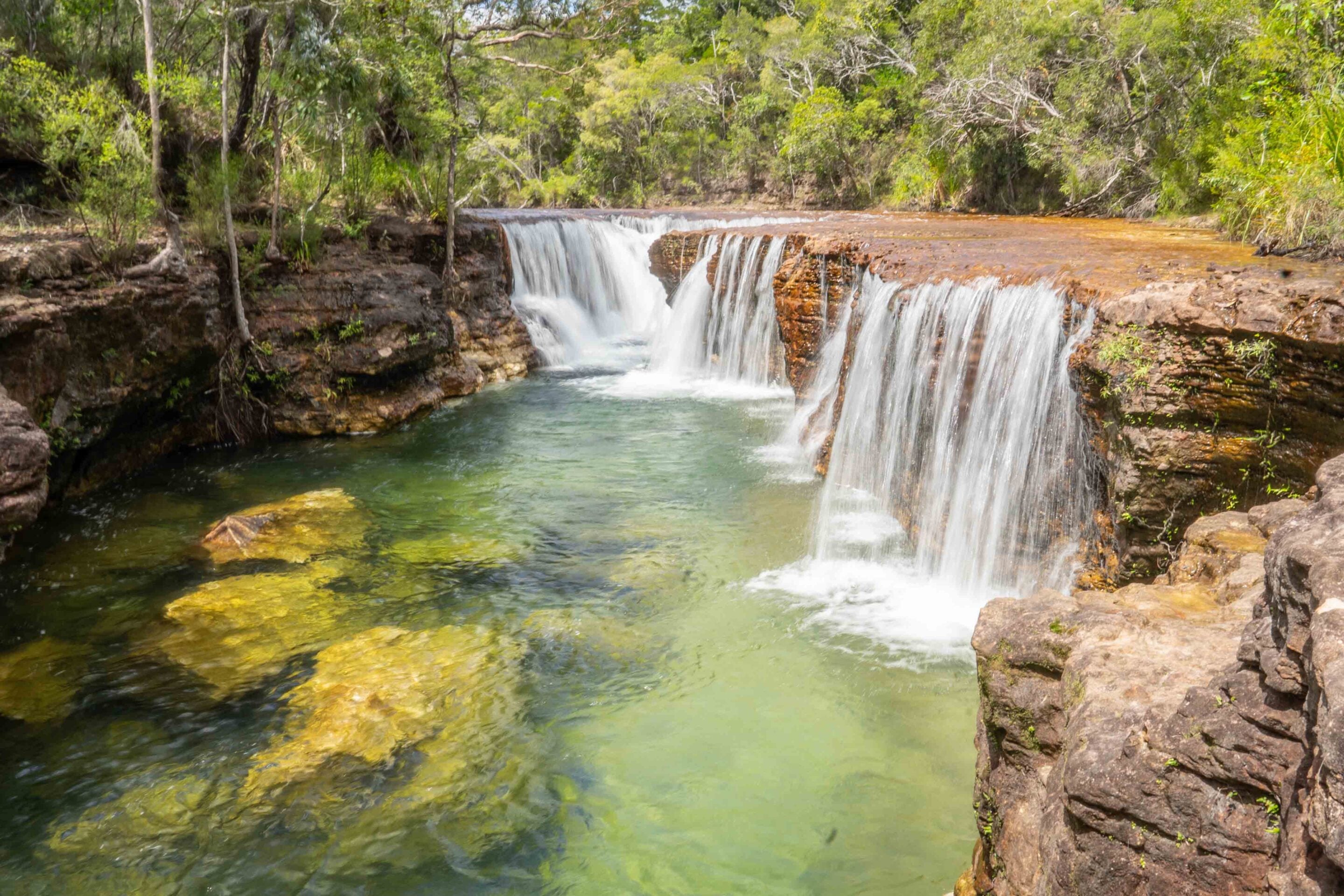
Compared to the dusty scrubland around the track, Fruit Bat Falls is paradise. Crystal-clear Eliot Creek cascades over a large rock shelf to form a stunning swimming pool at the perfect temperature for a dip. Exploring around the falls I’m excited to discover a carnivorous pitcher plant. The sandy soil here is extremely poor in minerals, so these plants have adapted a clever method of getting what they need elsewhere – by eating flies and other insects.
Similar to a Venus flytrap, insects are lured into the pitcher by sweet nectar and can’t escape the slippery pit before being digested by enzymes within. While this isn’t the best outcome for the flies, the number of plants scattered around the area shows the strategy works very well.
1
Another 20 minutes north we spend hours swimming at the equally stunning Eliot and Twin Falls. Scattered across a few hundred metres are swimming holes, waterfalls, canyons and rock formations. There’s enough current to be swept gently through the features, while the surrounding rocks provide great entertainment in the form of cliff jumping. After a couple of days on the track, I’m confident sitting under a waterfall counts as a shower.
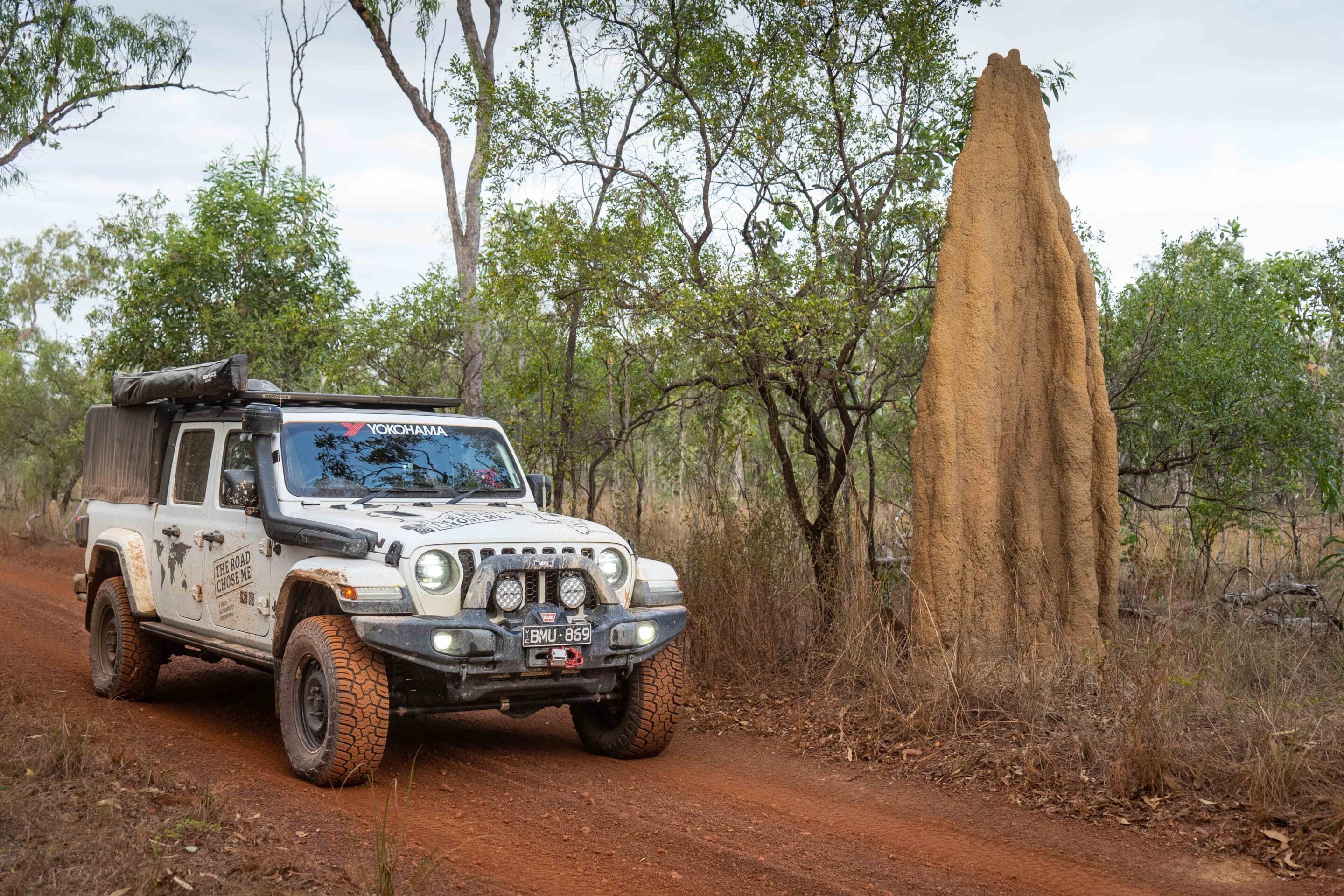
In places the dense jungle gives way to dry, dusty scrubland and as we move further north we encounter enormous termite mounds. These towering dirt columns are often taller than me and are built by billions of termites to keep their colony safely above the seasonal monsoon rains, when more than 2500mm can fall in just a few months. The architecture of these mounds has been studied for decades.
They’re carefully oriented to the points of the compass to maximise cooling in the breeze while minimising heat from the sun. Across northern Australia termites build nests in a variety of designs, each perfectly adapted to the local environment. Every mound is intricate and unique, with an interior resembling a honeycomb lattice that houses the ingenious termites.
1
Iconic Old Tele 4×4 obstacles
The Old Tele contains some of Australia’s most infamous 4×4 obstacles, many with memorable names like Mistake Creek, Gunshot and Cockatoo Creek.
Each one is different, and I always get a shot of adrenaline as I park the Jeep and jump out to scout the line with our crew. Each year the track changes slightly thanks to the massive water flow during the wet season, so you never quite know what you’re going to get.
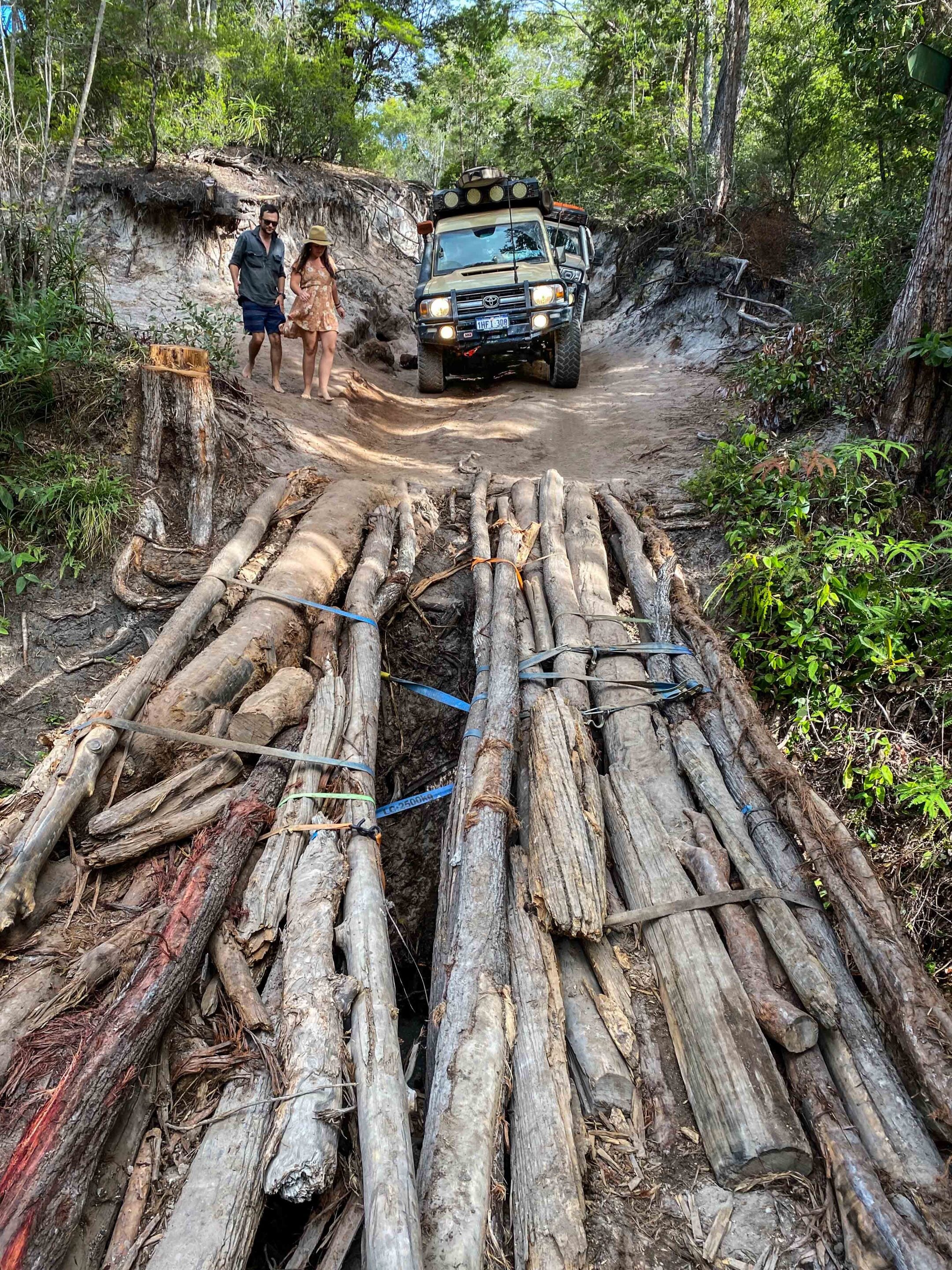
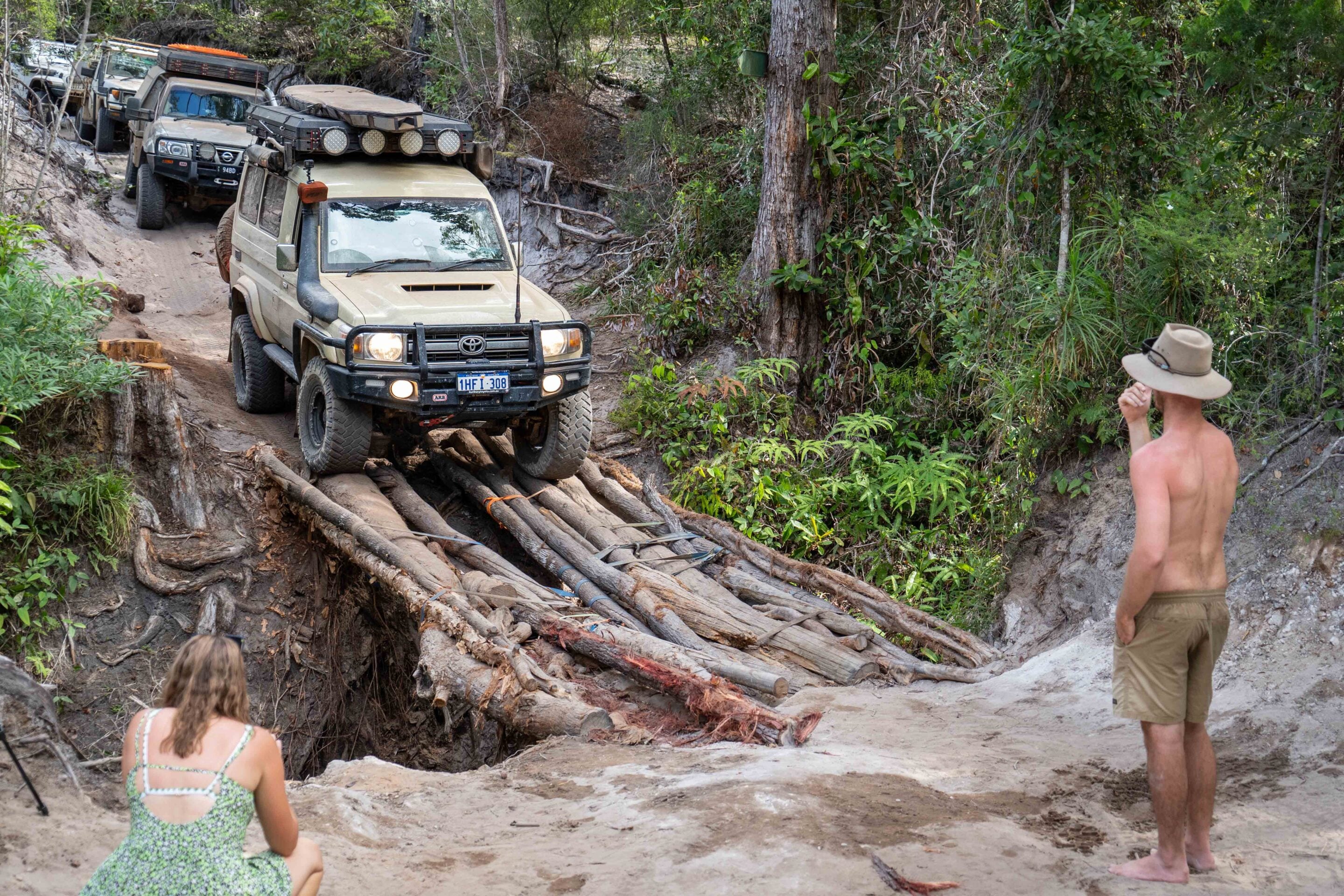
The Sydney Harbour Bridge is undoubtedly Australia’s most famous bridge, though the abomination at Cypress Creek is probably photographed just as often. The haphazard log bridge has to be seen to be believed, and even walking across it feels like a bad idea. It’s rebuilt each year from whatever logs and ratchet straps can be found lying around, and Josh is quick to point out that none of the logs are long enough to span the entire gap – a very unnerving thought. The Gladiator is more than a tonne lighter than Josh’s Cruiser, so I’m more than happy to let him go first.
1
We fall into a steady routine as we scout each obstacle and work together to get through. Afterwards we jump in for a swim and watch the next group tackle the challenge, quietly hoping for some excitement. Each obstacle presents its own challenges, and I find myself exhausted at the end of each day from concentrating on rock ledges, holes and off-camber sections of track. With such a well-equipped team we encounter no major problems, only rarely using Maxtrax or a winch line to prevent panel damage on the towering mud walls.
Our sense of achievement after clearing each obstacle is real, and we let off steam in the evenings playing on rope swings and reliving the day around the campfire. It’s easy to see why people return year after year, stretching the track from four days into two weeks of spectating, swimming and lapping the bigger obstacles.
Nolan’s Creek final crossing carnage
The final river crossing on the Tele is probably responsible for more drowned 4x4s than any other river in Australia.
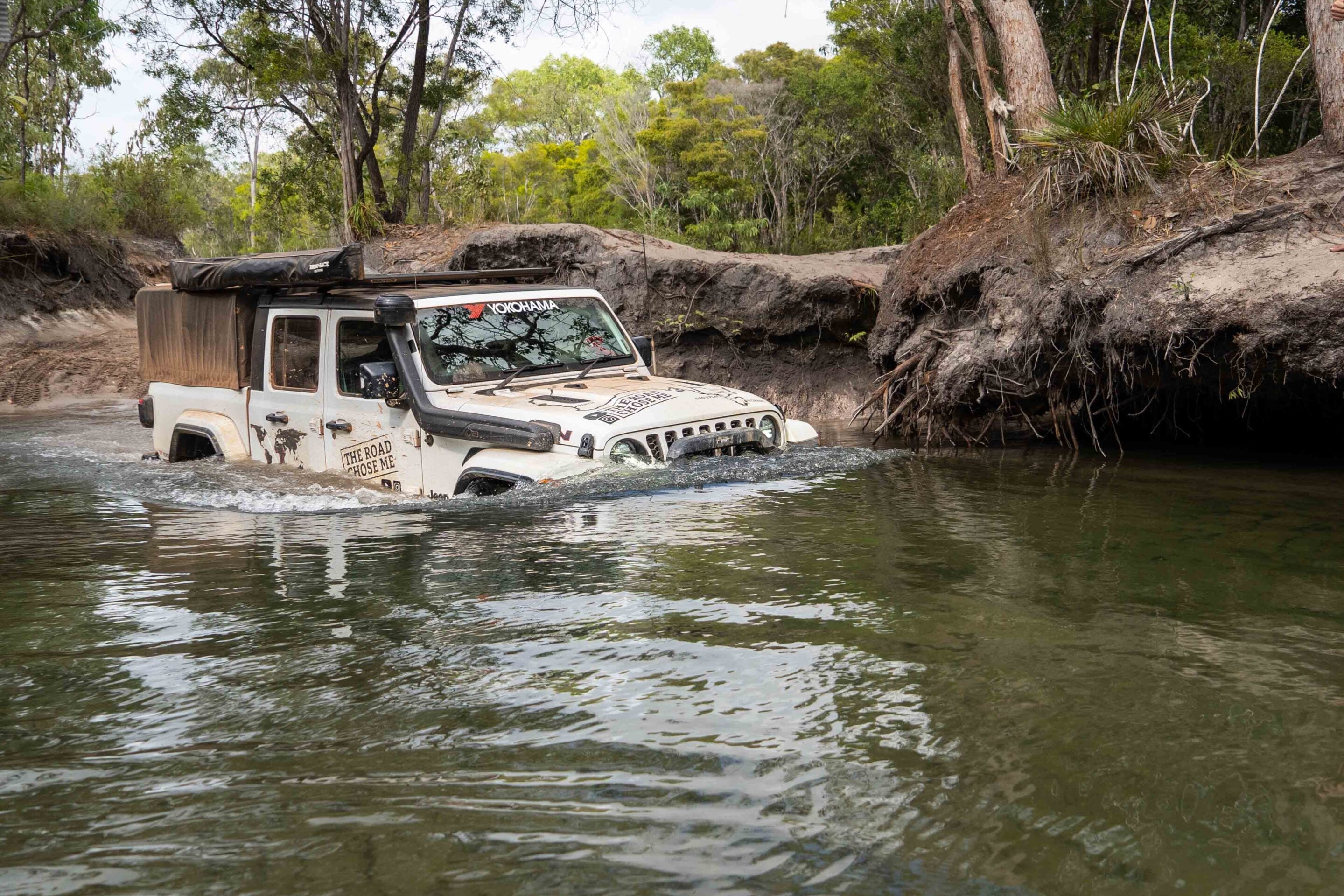
Deceptively, neither the entry nor the exit of Nolan’s Creek looks particularly steep or difficult, and thankfully we’re warned it’s the sandy bottom that catches people out. Even a well-equipped 4×4 will see water lapping over the bonnet, which is deep enough to induce panic. With exhaustion setting in after days on the track and the end literally in sight, extra throttle can seem like the safest option.
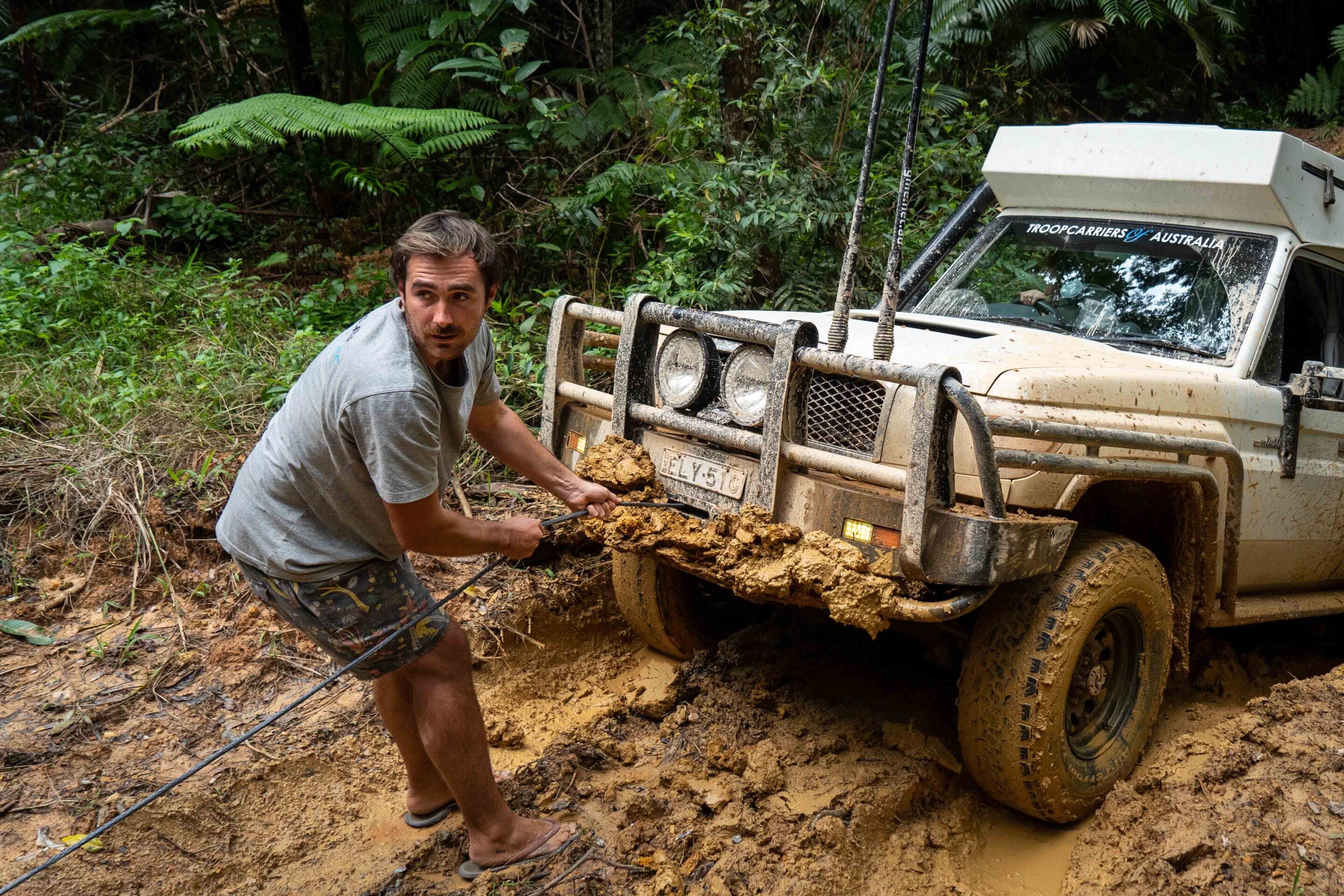
Unfortunately for the uninitiated, the sandy bottom combined with the flowing water behaves like quicksand, and just a hint of wheelspin will quickly sink a heavy 4×4. Even experienced drivers are tempted to add more throttle, and the resulting feedback loop often ensures a lengthy stay in deep water.
1
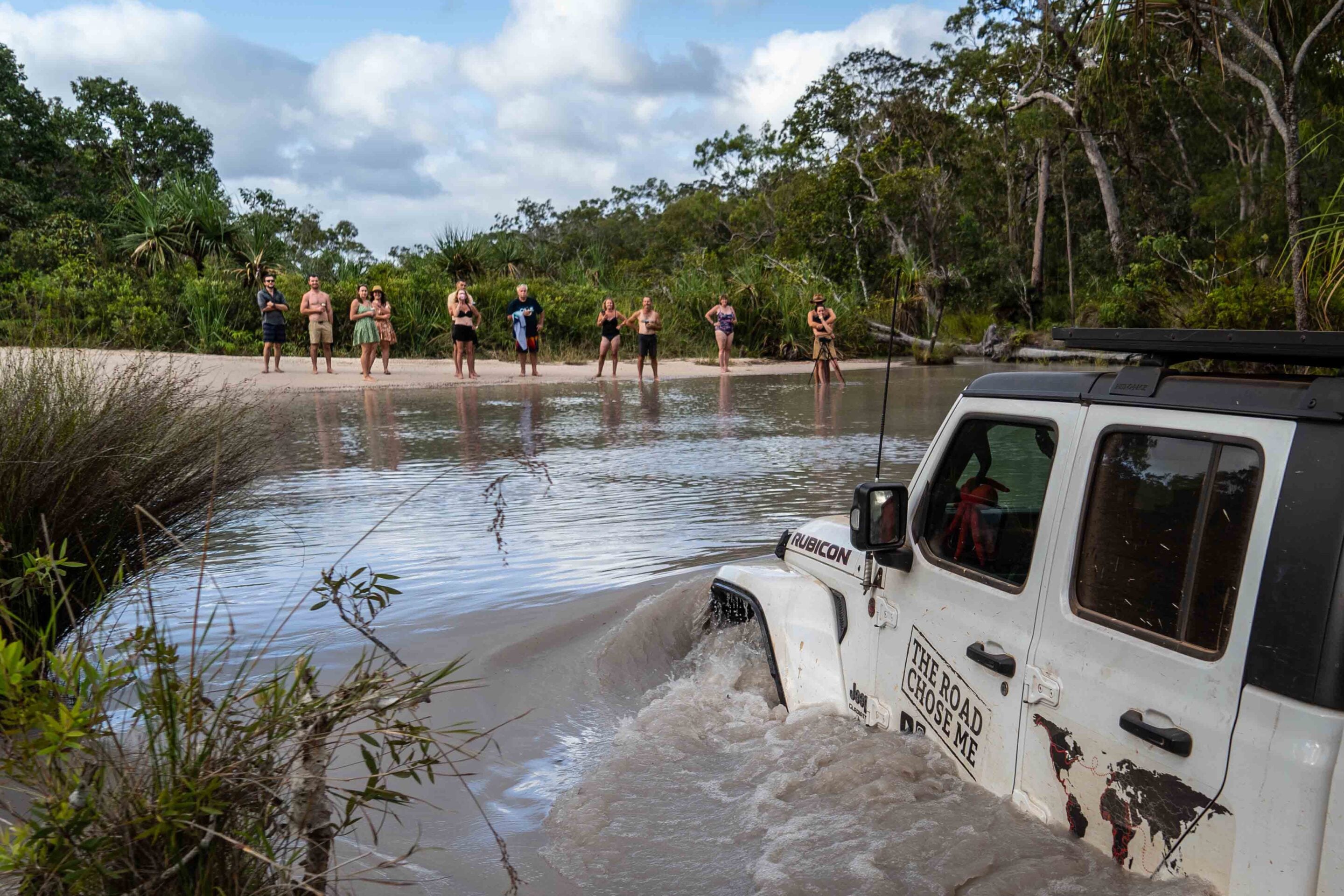
Arriving at Nolan’s right on sunset, we decide it’s wise to make camp for the night. In the morning we’ve barely put the coffee on to boil before the viewing gallery begins forming on the far bank. With a reputation for providing plenty of carnage and drowned vehicles, locals and travellers drive off the PDR to Nolan’s Creek, setting up deck chairs and coolers of beer just to watch. On a busy day upwards of 50 vehicles will cross while dozens of people in the peanut gallery cheer and offer suggestions. By the time we’re ready to cross, the pressure is palpable.
The old Cruiser is the lowest and least capable vehicle in our convoy, and it needs a little TLC. After adding silicone to the broken snorkel we also throw a tarp over the front of the bonnet – extra insurance to keep river water out of the engine. With thoughts of quicksand in mind I lead our team across, concentrating on driving smoothly while maintaining momentum. With the Jeep set up as a quick recovery vehicle, I keep a close eye as each vehicle in our convoy fords the flowing river without incident.
I park high on the bank and walk back to join the peanut gallery, hoping to witness some carnage. With such a big crowd the temptation to put on a show proves too much, and in just 15 minutes I watch three separate vehicles become helplessly stuck in the deep water. Just as predicted, any amount of throttle only makes the problem worse, and without a vehicle ready to provide a quick pull one LandCruiser sits with water lapping over the bonnet for a solid 4 minutes while the owner waves frantically. When it finally reaches dry land, a cascade of water pours from each door – though thankfully the engine continues to idle, highlighting the value of a quality snorkel.
1
Why the Old Telegraph Track stands out
I’ve spent years overlanding around the world on my own, with the unspoken goal of getting as far from people as possible.
Seeing myself as some kind of lone-wolf Indiana Jones, I set out solo along the Pan-American Highway and later circumnavigated Africa. Without a support vehicle, border helpers or even any friends, I was a one-man expedition. I had to rely on my own wit and skill to tackle each new challenge, and I thoroughly enjoyed the intense feeling of self-reliance. Solo adventures are often very serious and, looking back, there’s almost never much laughing.
1
Never before have I driven a track as social as the Old Tele, and it was an absolute riot. Even when the going got tough or stressful, we worked together to think things through, make a plan and keep moving forward without any vehicle damage or terrifying moments. Of course there were plenty of pranks along the way, and having someone yell ‘STOP’ as you drive over a sketchy log bridge is a surefire adrenaline spike. Circling the wagons each night around the communal campfire was the perfect way to relive the day’s adventures, laugh and celebrate our triumphs. The memories are so strong I honestly can’t imagine what the Tele would be like solo.
There was a constant stream of vehicles and people all around us, and seeing familiar faces at each obstacle became both reassuring and entertaining. Each group had different levels of sunburn and alcohol consumption and, while I wouldn’t want to join all of them, everyone finished the track – and everyone was grinning like mad at the shared sense of achievement.
Waiting for the ferry to cross the mighty Jardine River later that afternoon, there was one common sentiment among all the various groups:
I cannot wait to come back!
Follow 4X4 Australia on Google
Get more 4x4 news, reviews and gear stories from 4X4 Australia in your Google feeds.

We recommend
-
 Explore QLD
Cape York by 4x4: A practical guide to reaching Australia’s tip
You want to take a trip to the Tip? Here’s what you need to know to get there and back safely – and make the most of one of Australia’s greatest off-road adventures
-
 Advice
Crocodile safety for 4WD touring in Australia – How to avoid croc attacks
Planning a trip through croc country? Here’s how to stay safe around the water.
-
 Explore QLD
For those up for a challenge, Frenchmans Track in FNQ has it all
Deep water and jungle madness in Far North Queensland!