
BIRDSVILLE must be in a boom period. Just recently, the famous and popular Birdsville Bakery sold for $1.2 million, reportedly the biggest single private tourism investment in the town in more than a decade.
With a growing event calendar, which includes not only the famous Birdsville Races but now the bigger-and-better-each-year Big Red Bash, the town is attracting between 40,000 and 60,000 visitors each year. Not bad for a town that is isolated, doesn’t have a bitumen road to it, and has a permanent population of just 100 people.
The new owner of the bakery, Martin Josselyn, also runs the 4WD tour company, Adventure Australia Treks and Tours, which will now be based in the iconic outback town and will feature plenty of tours around the surrounding region. However, I’m guessing Martin will be pretty busy baking the curried camel pies that made the bakery famous, the recipe of which was handed over with the keys – they sell more than 15,000 pies on the weekend of the races!
While private enterprise is driving much of the boom, there have been a number of public upgrades in Birdsville as well, not the least being the upgrade to the local airport.
For mere mortals like us there are also plenty of opportunities to make a living in the town, which sits on the eastern edge of the Simpson Desert.
The roadhouse and servo run by the legendary Barnsey is looking for an experienced mechanic to look after the workshop and to carry out desert retrievals, while there’s also an opening for a shop assistant in the store. Across the road there’s a spot available for someone to look after the local hardware store, while the famous hotel is looking for a new cook. There’s also an opening for a tour guide and general hand.
So, here’s your opportunity to get away from the big smoke and earn a living in the outback. You may never come back to the city again!
Find out more and explore the Corner Country
ON ONE of the last Sundays of summer more than 130 Jeep Wranglers, plus a few other Jeep 4x4s, gathered at the Melbourne workshop of Double Black Off Road (DBOR) for the fifth Jeep Go Topless Cruise.
Check out the gallery below!
More than just a day out with Jeepers, the annual cruise raises money for the Australian Food Allergy Foundation and, with the help of products donated from sponsors, this year gave more than $16,400 to the foundation.
Double Black is a Jeep specialist shop, and owner Bill Barbas lives the Jeep life to the fullest. He’s always out off-roading with his customers and testing the many products and modification they fit at DBOR. The shop caters for all Jeeps for the off-road enthusiast, from mall crawlers to mountain maulers and everything in between.
The Go Topless Cruise didn’t head off-road this weekend but enjoyed the summer sunshine with a road run across Melbourne, along the iconic St Kilda Beach strip before ending up in a park on the other side of town. Most of the Jeeps had their roofs off and some even removed their doors for the day. The convoy stopped traffic as it ventured across town with all involved having a great time, and it’s all for a good cause.
Double Black Off Road is in the suburb of Moorabbin, and you can find out more at www.doubleblackoffroad.com.
Keep an eye on the site for details of the 2018 Go Topless Day, which promises to be even bigger again.
THE West MacDonnell Ranges is written off by a lot of hardcore four-wheel drivers as too pedestrian to bother with.
Sure, there are quality tarmac roads linking most of the major waypoints, but this is a place of breathtakingly rugged beauty that needs to be experienced by every outback traveller worth their salt.
The ease with which one can tour the West Macs makes it a simple, stress-free family touring destination, and there’s always the option for a side trip if you feel like knocking the car into low range.
A SCENIC EXCURSION Having just driven the Oodnadatta Track to arrive at Alice Springs from the south, the dramatic peaks and escarpments of the West Macs took our breath away from the start. The landscape here stood in stark contrast to the gibber plains and gently undulating outback terrain further south, and just a few minutes’ drive from Alice the rocky cliffs soar to dizzying heights at Simpsons Gap.
Here, a short walk through the dry creek bed that carved the ‘gap’ in wetter times delivered us to the money shot, where two ancient folds of rusted rock attempt in vain to reach one another. It occurred to us what a remarkable town Alice Springs is, out here in the heart of our ancient continent surrounded by scenery not unlike what you’d find in remote corners of the Kimberley.
SECRET WOMEN’S BUSINESS Next up we ventured to Standley Chasm and took another short walk to a similarly breathtaking location, where opposing rock faces stare one another down. This is privately owned Aboriginal land, so we paid the $10 per person entry fee and trekked into the natural spectacle.
Traditionally Standley Chasm was a sacred women’s-only site where bush medicine was collected and sacred rites performed; secret women’s business only the initiated can know about. Of course, this set my imagination alight as I took in the ancient pulse of the place, imagining groups of women going about their business here for millennia. These days, Standley Chasm is well facilitated with a café and a camping area, and all money raised goes back into paying the local staff and maintaining the site.
QUIET DESERT OASIS We then headed west along Namatjira Drive, named after the artist Albert Namatjira who, in 1957, became the first indigenous Australian to be liberated from the oppressive ‘ward of the State’ status and granted Australian citizenship. Hailing from the West MacDonnell Ranges near the town of Hermannsburg to the south, Namatjira carved mainstream success through his Western-influenced art. He was the first Aboriginal Australian to be able to vote, build a house and buy alcohol, and his memory is immortalised here in his ancestral country via this main transport artery through the ranges.
Our next stop was Serpentine Gorge. A little more rugged and less visually spectacular than some of the West Macs’ other waypoints, Serpentine Gorge is nonetheless a very pretty and wonderfully peaceful destination. The diminished glamour factor filters out most of the crowds, as does the 1.5km walk into the gorge. That means you’ll find peace and quiet when you reach the semi-permanent water holes within the sheltered, meandering gorge, which attracts birds and wildlife and is perfect for a dip in the warmer months.
There’s no camping at Serpentine Gorge, but nearby Serpentine Chalet is the pick of the West Mac camping locations for those who enjoy self-sufficient bush camping away from the crowds. There are no facilities here and access is by 4WD only, suitable for camper trailers but not caravans. If you’ve been begrudging the backpacker brigade, this is your best bet for setting up camp. There’s some cleared grassy space for camping, as well as shady sites and a handful of fire pits. You’ll need to bring everything, including water.
NATURE’S MAJESTY OUR next stop at Ormiston Gorge was one of the most spectacular. Here the towering red walls of the gorge stand guard over a permanent water hole, estimated to be 14 metres deep. The landscape is vast and open, and in the morning light the rugged escarpments glow blood red.
There are a couple of walks on offer here. One takes you up and around the rim of the gorge before dropping down to the shady, sandy banks of the water hole. The other is a shorter trek to a scenic lookout where a heartfelt ‘cooee’ into the majestic gorge is sure to prove too much to resist.
Camping is available at Ormiston Gorge, with great facilities including hot showers and barbecues. But be warned, this campsite gets very busy during the cooler months, so for those after peace and quiet try the nearby Two Mile campground on the banks of the Finke River. Access here is 4WD only and there are no facilities, which weeds out the crowds considerably. There’s plenty of space to camp in undesignated sites, and the riverside scenery and wildlife is incredible.
HIGH AND MIGHTY IF you prefer camping with a view, Redbank Gorge might be the place for you. The two campsites are camper-trailer friendly and have drop toilets, picnic tables and barbecues. We opted for the Ridgetop camp which, as the name suggests, is perched on the precipice of a rocky escarpment overlooking the gorge and Mount Sonder beyond. The scenery from our camp was nothing short of stunning, with rich outback colours dancing across the landscape at both sunset and sunrise.
Redbank Gorge centres around a beautiful permanent water hole divided into sections by the ancient gorge. In the warmer months it’s the perfect place to explore by inflatable boat, where you can follow the narrow channels between the rocks to see how they open up to magical, hidden desert oases. The water hole is a reliable source of life-giving hydration for native birds and wildlife.
DREAMING AND SCIENCE WEST of Redbank the road is unsealed and 4WD access only, so naturally that’s where we headed. We turned off to the south towards Hermannsburg, crossing the range and entering into the vast, flat landscape beyond. We’d technically driven out of the West MacDonnell National Park, but we had one more not-to-be-missed stop on our West Mac itinerary – Tnorala, or Gosse Bluff.
Probably the most fascinating destination in the region, Tnorala is a series of dramatic peaks that rise out of nowhere on an otherwise flat landscape. Its unusual visual interest aside, the most incredible thing about Tnorala is the remarkable similarity between its scientific explanation and the Aboriginal dreaming story of its creation. The scientific explanation is that Tnorala was formed more than 130 million years ago when a comet measuring 600m across struck the earth with a force 200,000 times greater than the nuclear explosion that destroyed Hiroshima. The impact created a crater some 20km wide, and the terrain there is still 2km lower than the surrounding country.
Bearing in mind this event was long before the arrival of human beings, the similarity of the dreaming story is amazing. According to the local Arrernte people, Tnorala was formed when a group of women were dancing across the night sky as the Milky Way. One of the women placed her wooden baby carrier, a turna, onto the ground, but it fell to earth instead and the impact created Tnorala. It is thought that indigenous Australians were the world’s first astronomers, and this example seems to validate that idea.
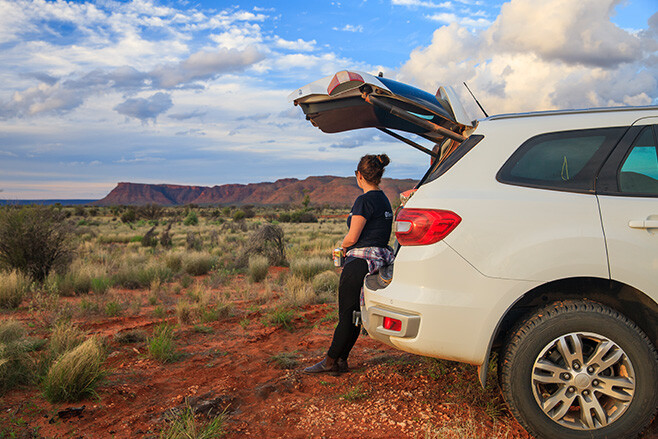
FAST FACTS
The West MacDonnell National Park stretches for 250km west of Alice Springs. It comprises the westernmost section of the broader MacDonnell Ranges, which runs for 644km in total across Central Australia.
The Larapinta Trail is a popular hiking track that runs the length of the West Macs. It is considered one of the most scenic walks in Australia and indeed the world, and can be conquered in its entirety or broken down into sections.
What’s your next off-road destination? Find out and explore.
A CRITICAL aftermarket addition to any serious remote-area tourer is a dual battery system, and Piranha Off Road Products professionally installs its own “boutique system” to meet each one of its clients’ individual needs and applications.
Dual battery tray systems are the focal point of Piranha Off Road’s product range, and Piranha professionally installs its product at several locations Australia-wide – with its head office located in Boronia, Victoria.
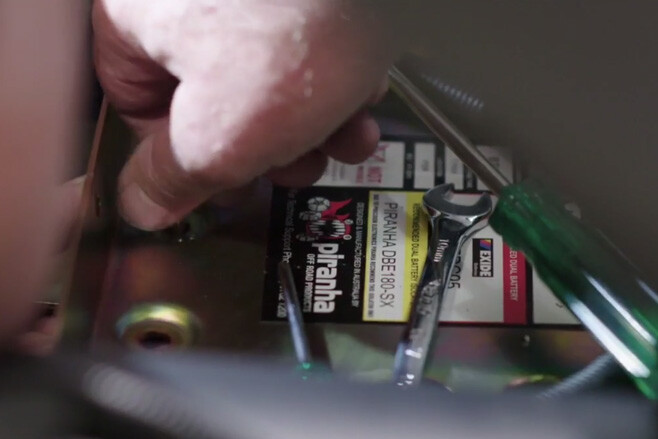
Piranha also sells and installs a range of other products including battery trays (Piranha has a range of 160 different battery trays tailor-made to suit many 4×4 vehicles), battery management systems, battery monitors, driving light looms, fridge slides, false floors, diff breather kits, and mud and snow chains. And while customers can install the products themselves without Piranha’s assistance, Piranha prides itself on the quality of its professional installation.
Put simply, it’s not the sum of the parts, but the effective design and installation of those parts to meet the individual’s needs.
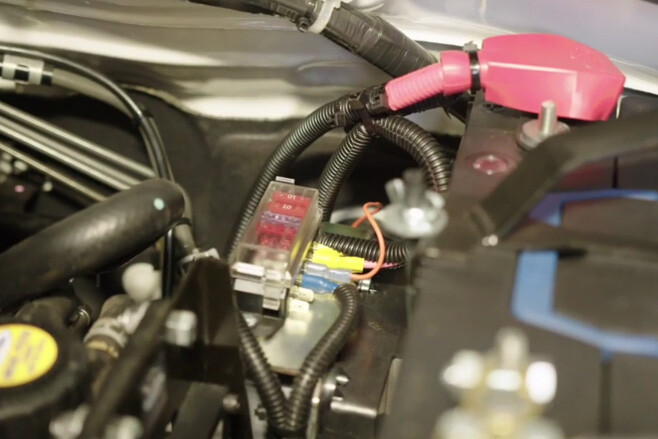
Evidence of this was seen when Piranha installed a package based around a DBE140S management system, an in-cab battery charge monitor and all the associated hardware on our 2010 giveway Hilux last year.
Piranha has been toiling away on manufacturing, supplying and installing dual battery systems since the good ol’ days when electronics rarely featured on a 4×4. However, the company has rolled with the punches and stayed ahead of the game in relation to the latest in vehicle technology, where electronics now feature heavily on new fourbies.
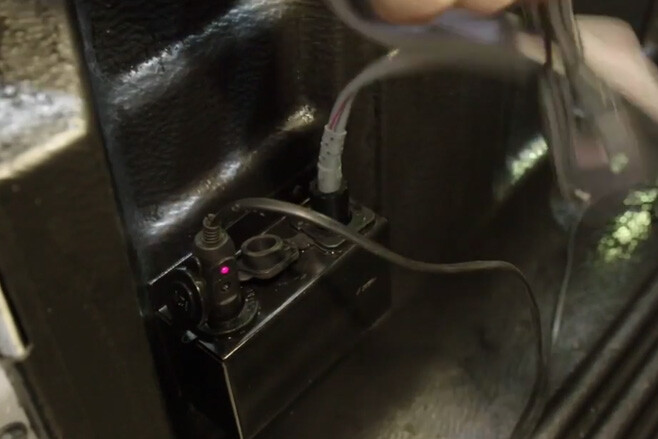
The Australian company also supplies the trays needed to mount additional batteries, as well as all of the ancillary hardware required.
To install a dual battery system and all of the associated hardware, contact Piranha Off Road Products today.
PIRANHA OFF ROAD PRODUCTS Web: www.piranhaoffroad.com.au Ph: (03) 9762 1200 Factory 4, 383 Dorset Road, Boronia, Victoria
WE take an in-depth look at the master-crafted PXII Ford Ranger than adorns the cover of the April 2017 issue of 4X4 Australia.
In the chock-a-block issue we dissect a custom Defender 90, as well as a J-Series Bedford that roams the Kimberley. We also venture to some must-see outback destinations, including the hard-to-access Nimbi Nimbi Sinkhole in the Northern Territory.
To top off an action-packed issue we’ve thrown in a 2017 4X4OTY DVD, where we take you behind the scenes of this year’s event and discuss the pros and cons of each contender.
What else will you find in the April issue?
AN AUSSIE FAVOURITE
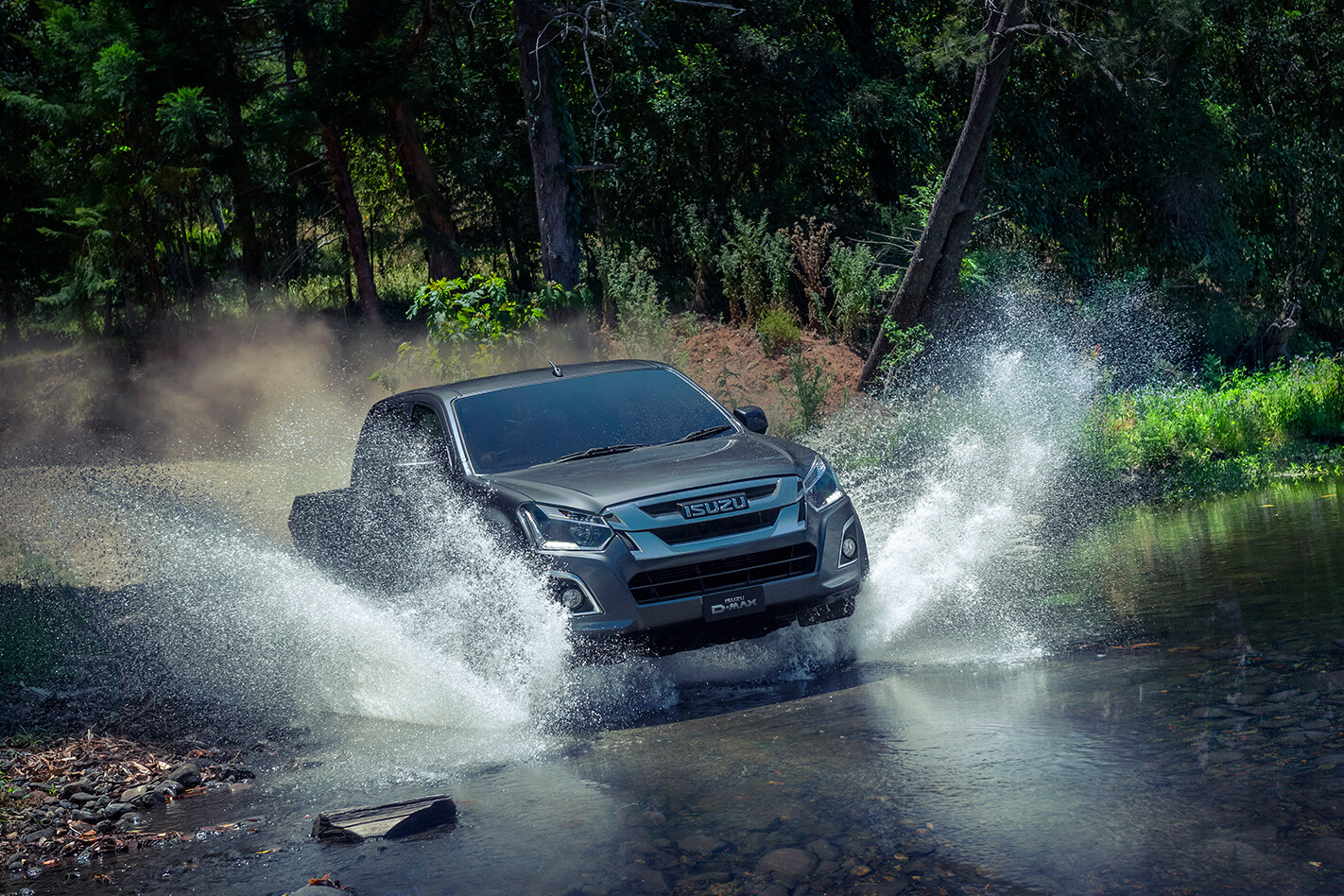
First drive of Isuzu’s all-new D-Max and MU-X.
SUMMER LOVIN’
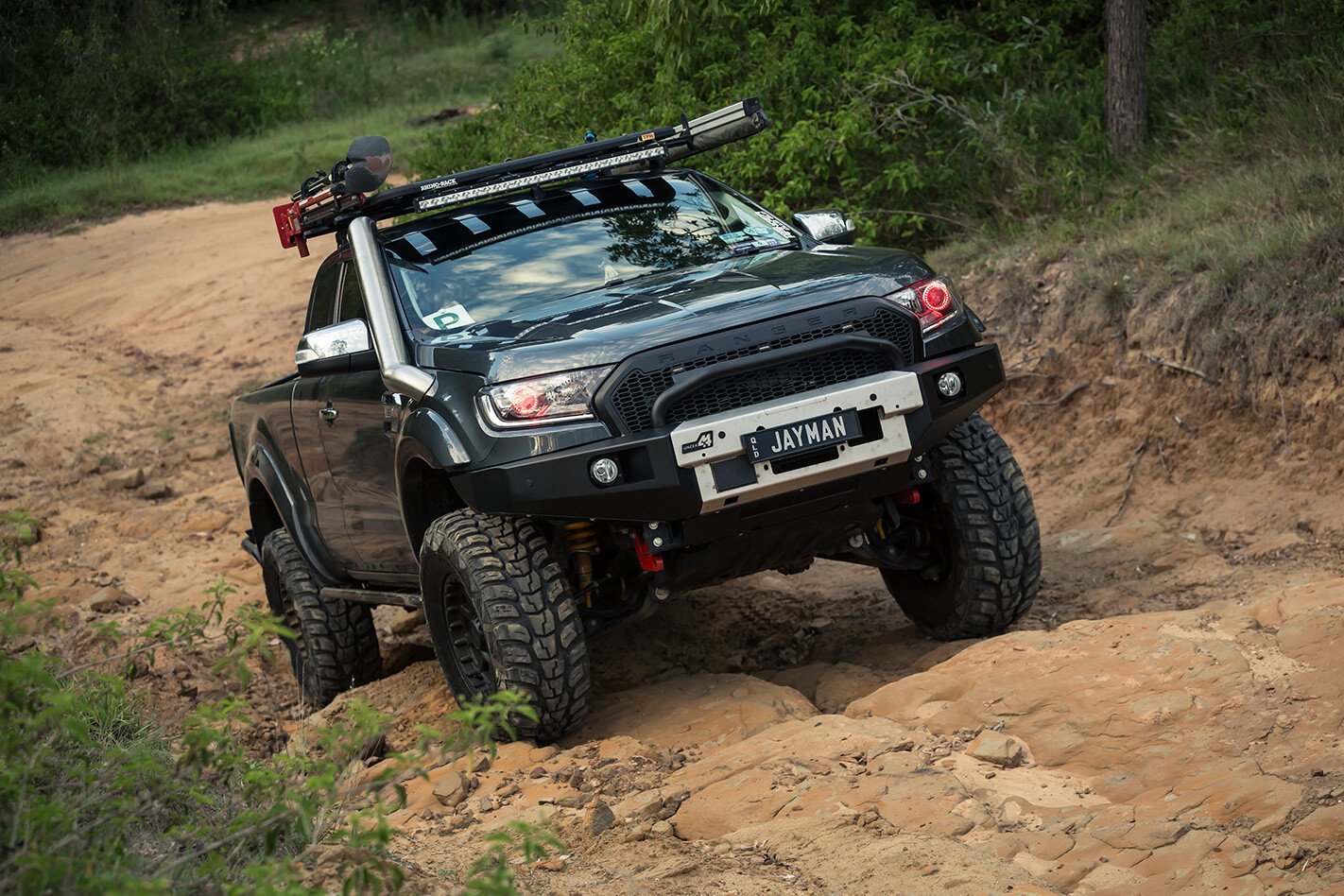
A PXII Ranger that’s perfect for the coast.
ALL-STAR DEFENDER
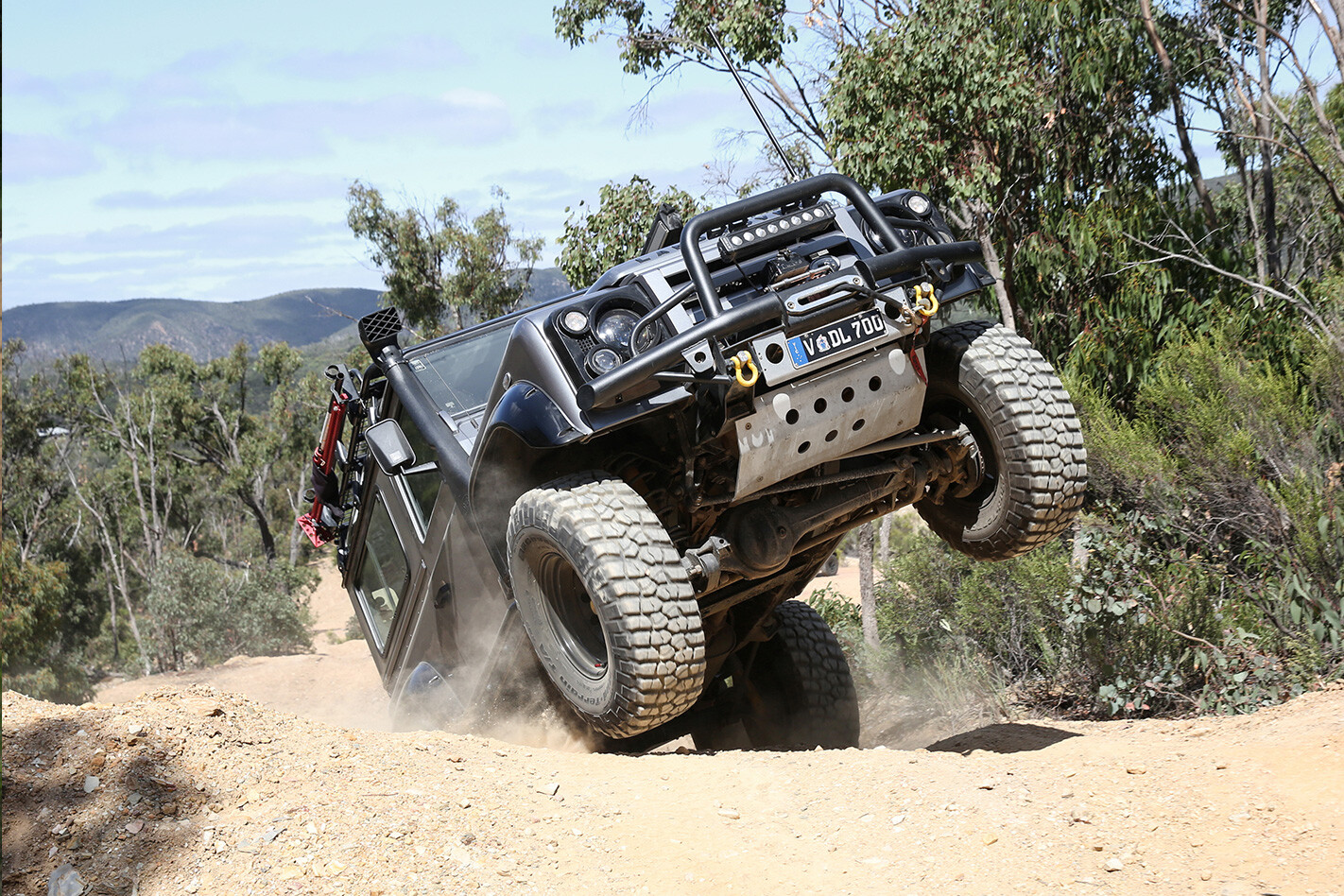
This custom Defender is the result of a new-found obsession.
TURTLE TRAVELS
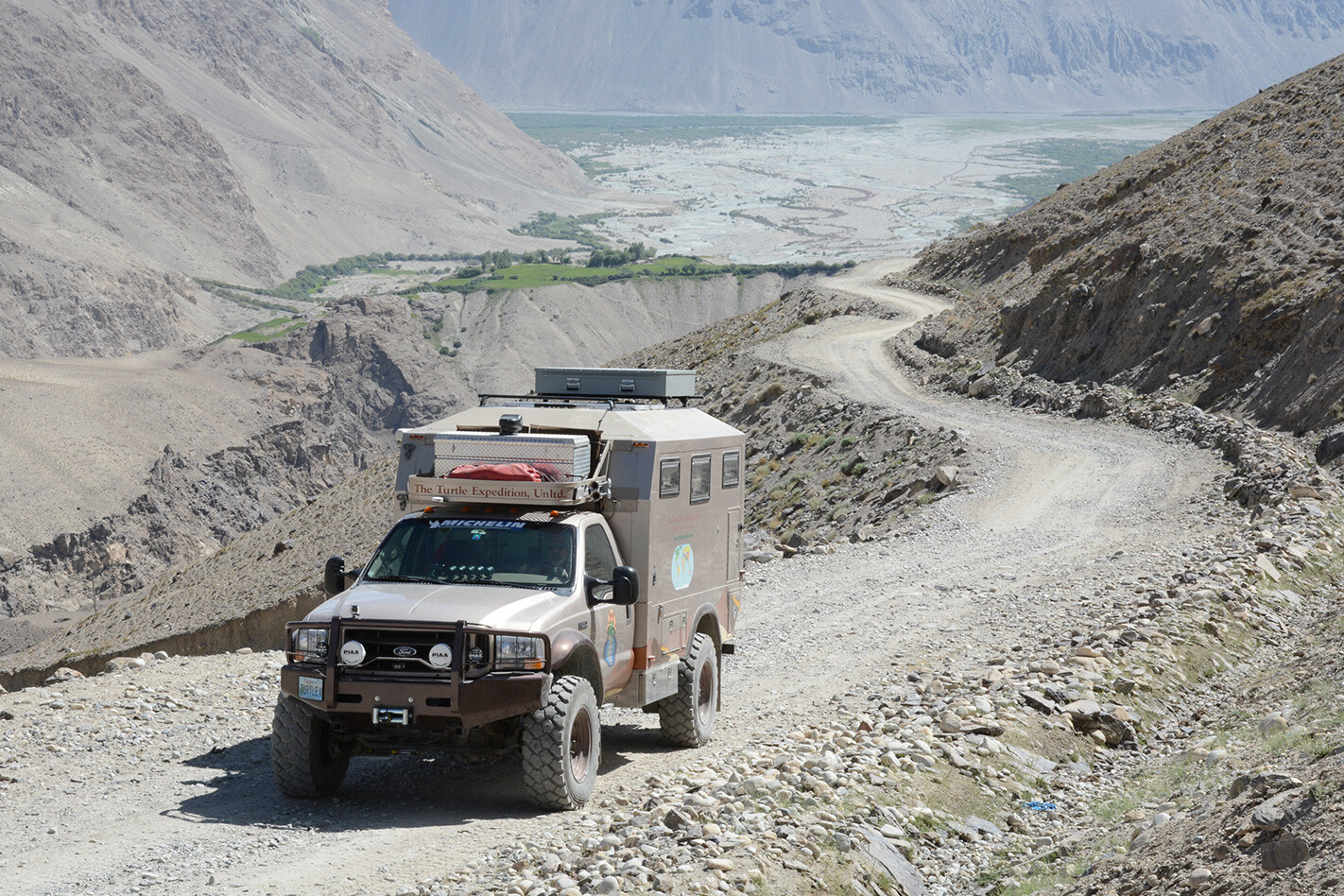
1999 Ford F-550 with a shell returns from a 26-country world odyssey.
KIMBERLEY TOUGH
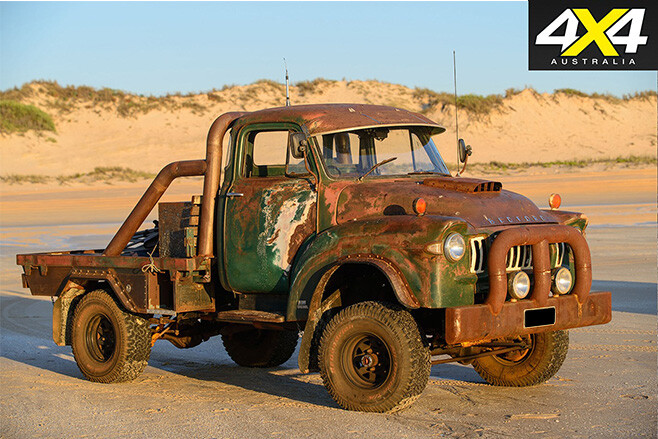
1968 J Series Bedford is as tough as the desert it roams.
ALL-AMERICAN DREAM
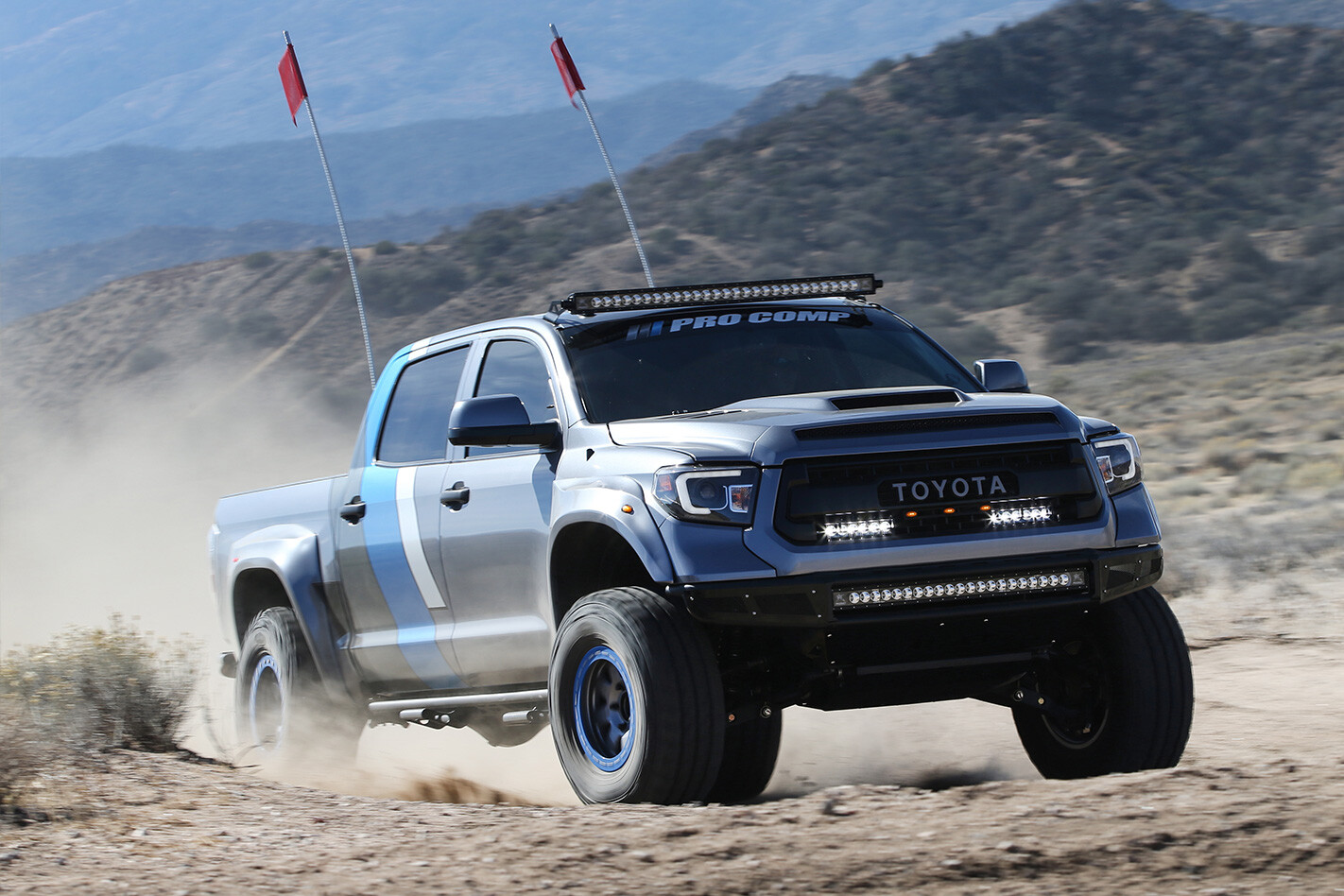
Behemoth Tundra is the US of A’s big-daddy pick-up.
FOUR-WHEELIN’ FRED
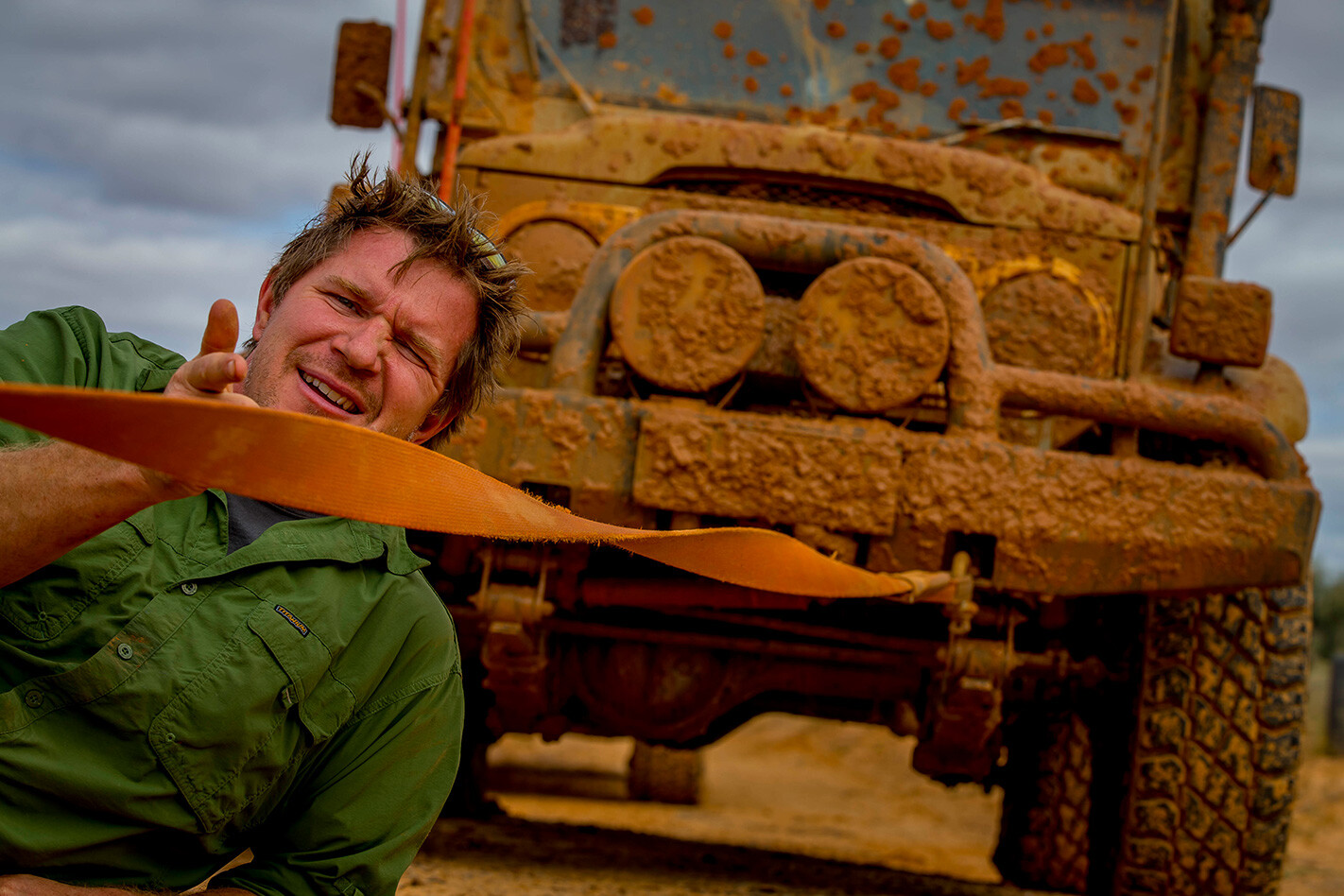
Chewing the fat with Dirt Every Day’s Fred Williams.
BURKE DEVELOPMENT ROAD, QLD
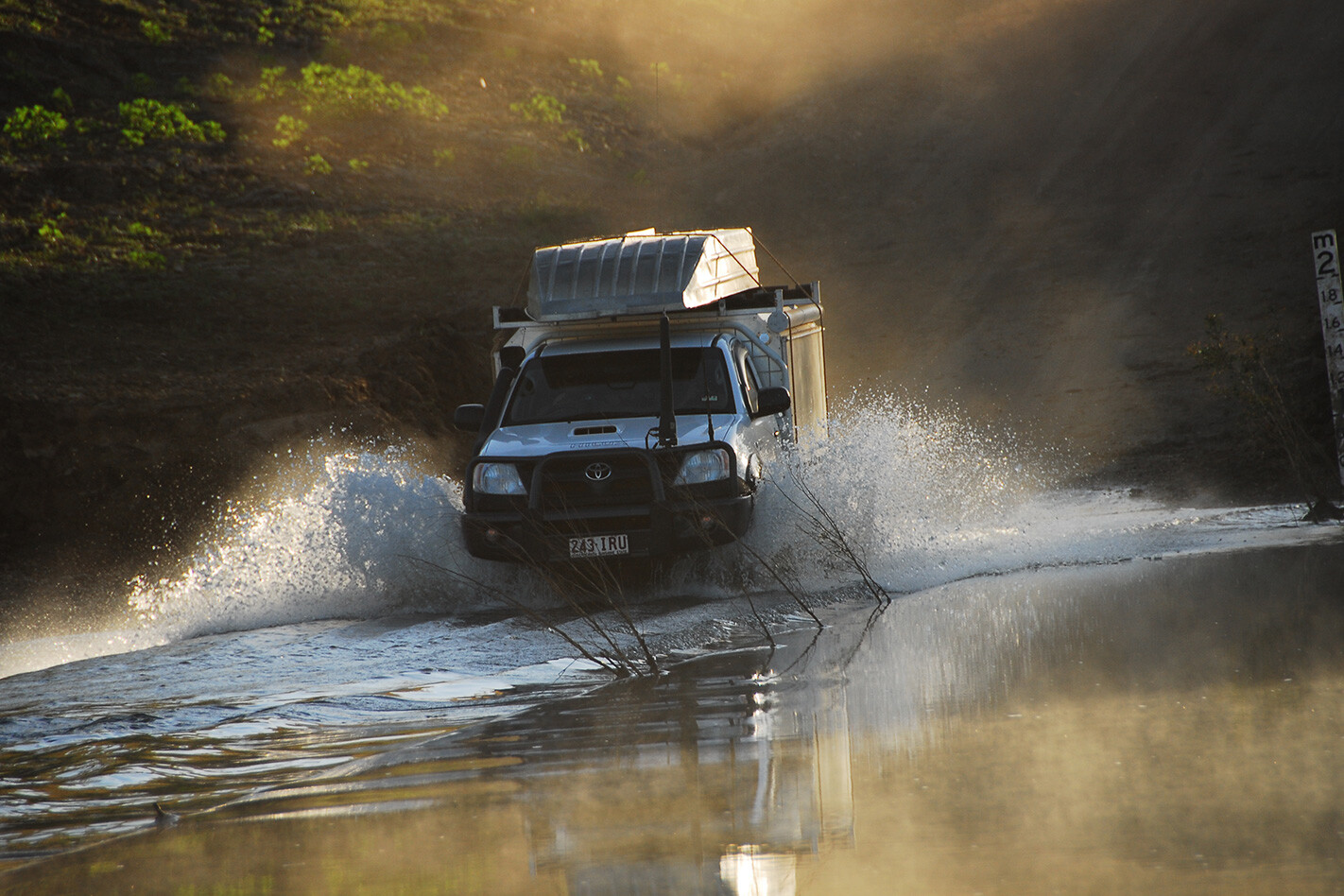
Striking it rich along old mining tracks.
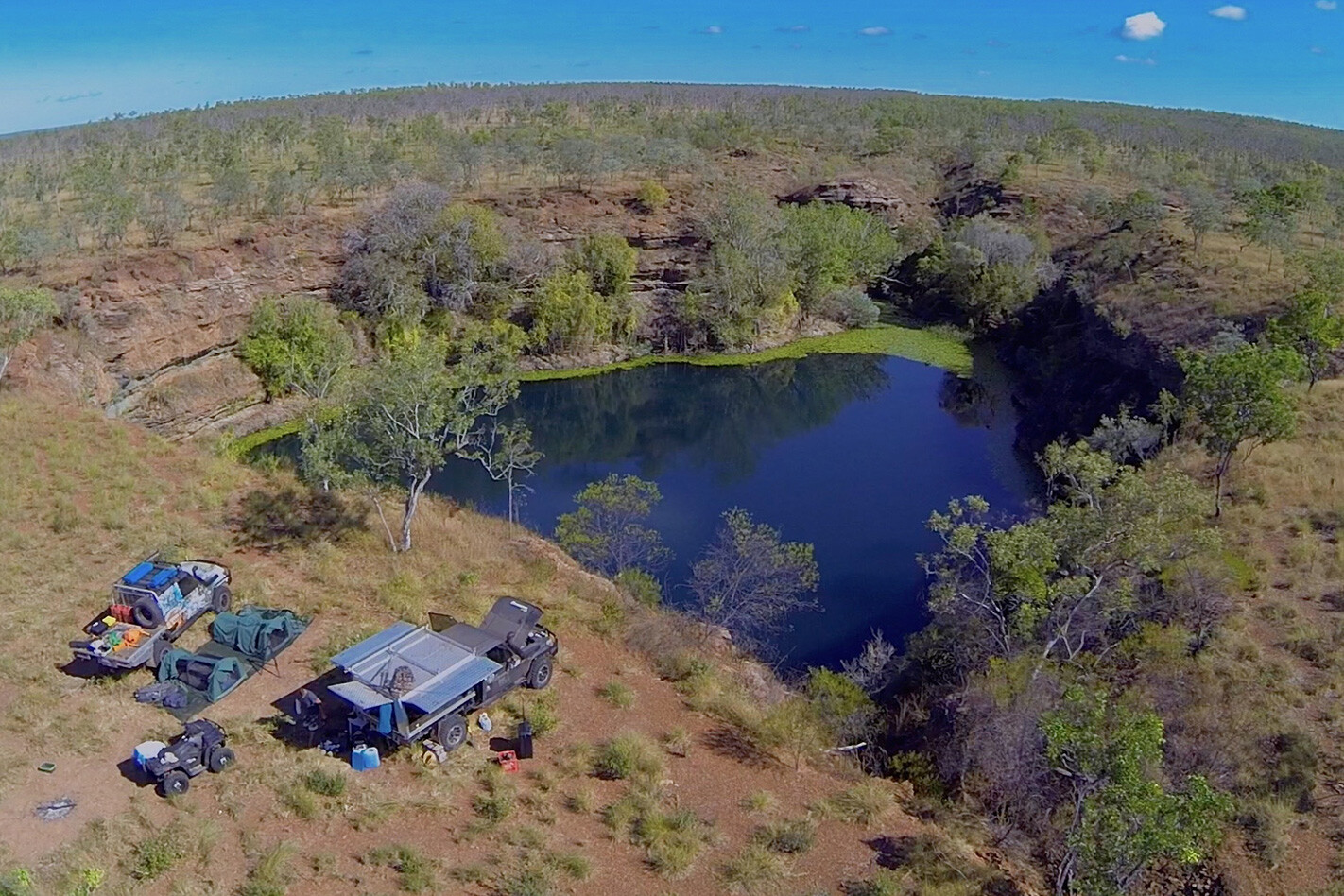
NIMBI NIMBI SINKHOLE, NT
Not for the faint-hearted, this is remote touring at its best.
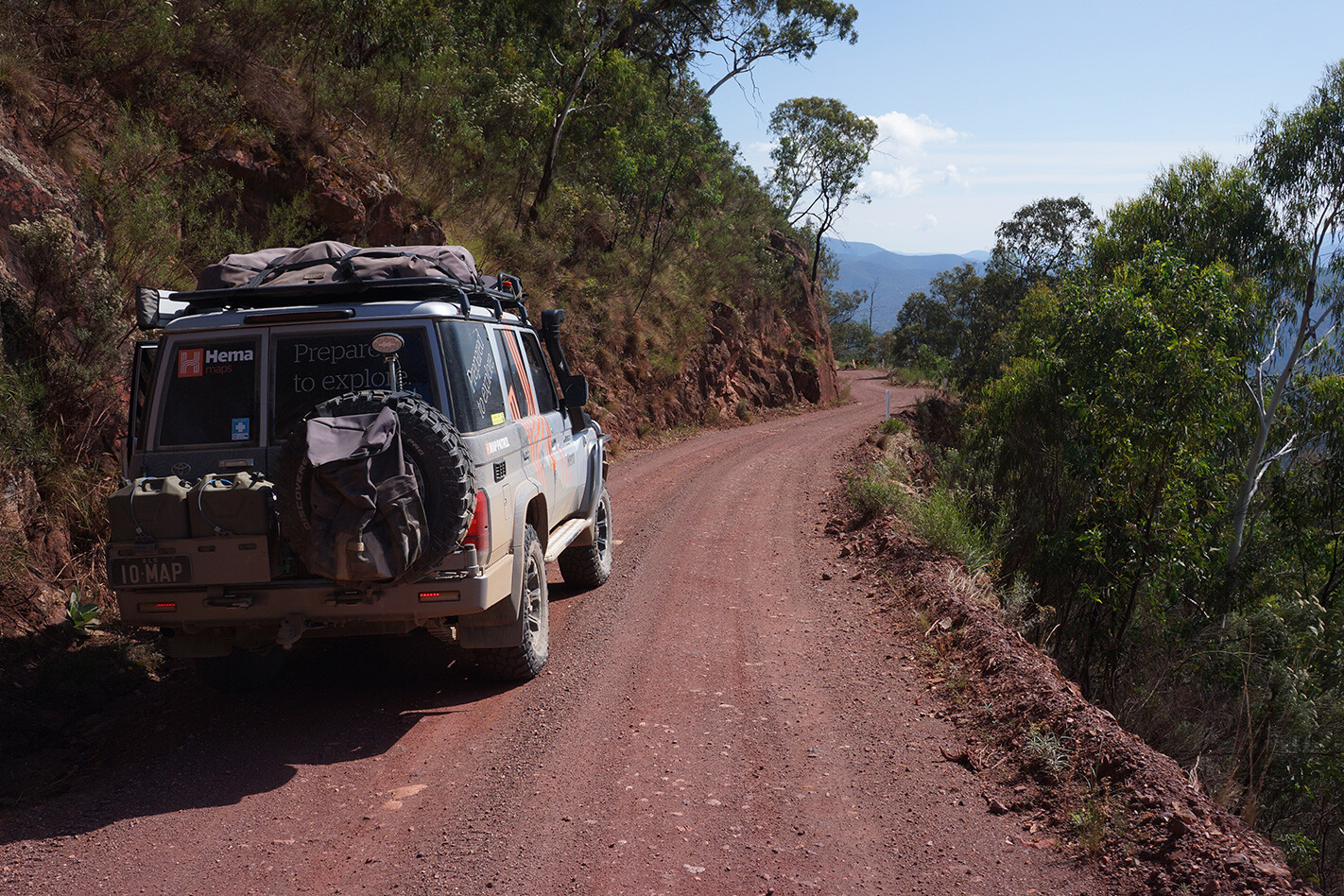
INGEEGOODBEE TRACK, VIC
The Vic High Country track proves the best things in life aren’t easy.
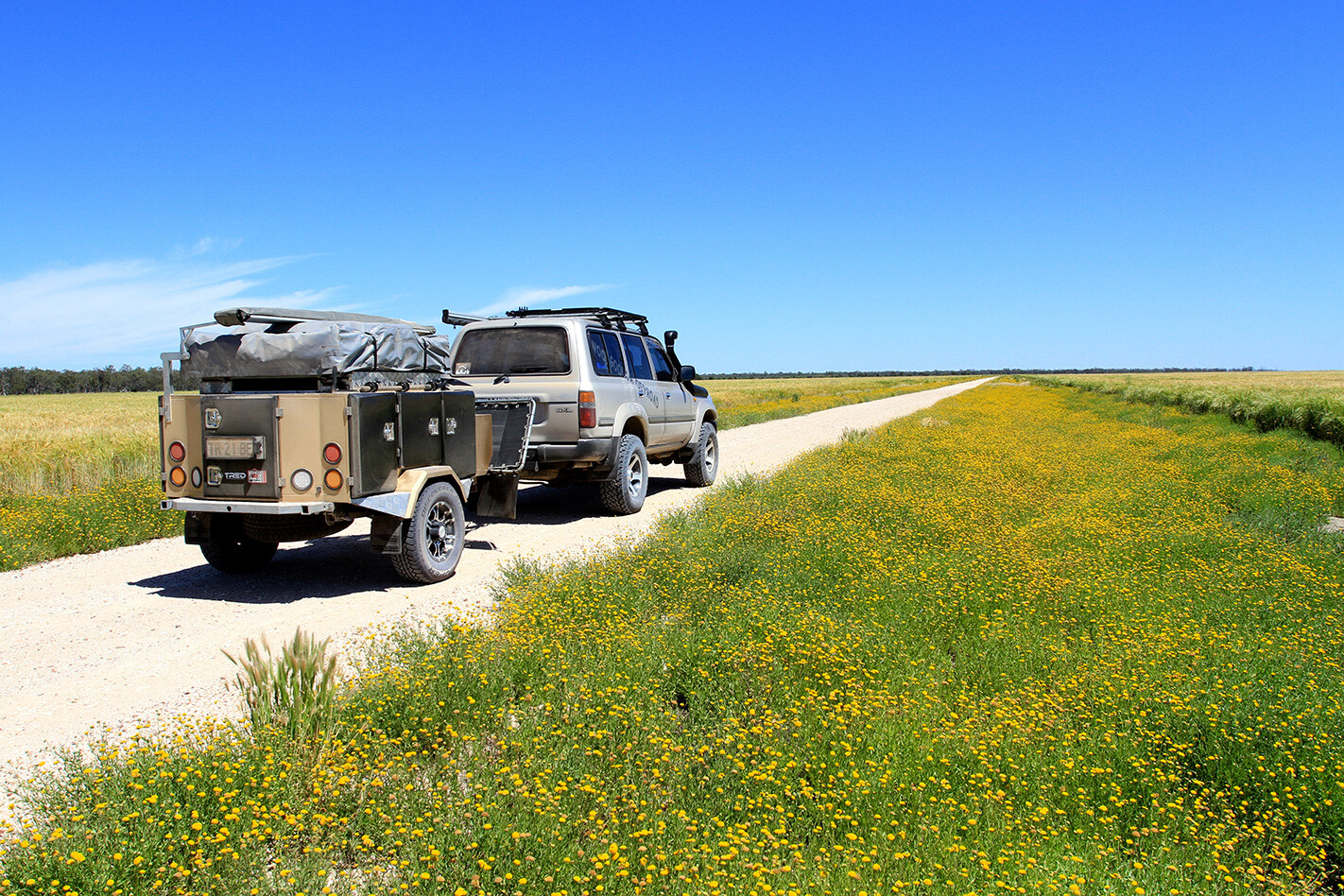
CULGOA FLOODPLAIN NP, QLD
A great off-road destination that’s only a days’ drive from Brisbane.
THE REST
We run through the basics of ECU re-mapping, chat to Narva about its all-new Ultima 215 LED, and explain how re-gearing a 4×4 gets back lost performance. We also test Hella’s 470 LED light bar, Creative Camping Solutions’ Cutlery Box and a Coleman Mountain View Shelter. Plus we get a set of Husky Liner WeatherBeater mats nice and dirty.
We send our resident Cruiser to Bathurst, and the wheels are in motion with Ron’s LC79 build. Plus, Ron explains how web-based booking systems are crap, Deano’s either a great driver or really boring, Fraser muses the self-driving vehicle, and Roothy gives Milo 2 a new donk.
The April issue of 4X4 Australia is in stores NOW.
THE Brabus 550 Adventure 4×4² has made its world premiere at the 2017 Geneva Motor Show.
The bush-tearing Brabus is based on the Mercedes-Benz G500 4×4², but has been sprinkled with additional off-road kit and tweaked to be an extreme wanderer.
It utilises Merc G500 4×4²’s twin-turbo 4.0-litre V8 engine (capable of 310kW/610Nm) as a base, but adds the new Brabus B40-550 PowerXtra performance upgrade kit to lift those numbers to 404kW and 800Nm.
The performance upgrade kit features two high-performance turbochargers with a larger compression unit (and a special core assembly with reinforced axial bearings) to produce higher boost pressure. The kit also comes with a matching plug-and-play PowerXtra auxiliary control unit, which controls boost pressure and optimised mapping for injection and ignition.
Utilising a seven-speed automatic transmission the 3000kg+ Brabus rockets to 100km/h in 6.7 seconds, while top speed is electronically limited to 210km/h.
Helping overcome the rough stuff is custom-developed electronically adjustable Brabus special suspension. The system, controlled by the driver via a touch control panel, features height-adjustable struts made from high-strength aluminium. “The design features an expansion chamber at each strut, resulting in a 15 per cent higher damper fluid volume and thereby tremendous reserves even under maximum loads,” said Brabus in a press statement.
Four damper settings are available: Comfort, Sport, Off-Road and Individual.
Notable exterior features include black-tinted xenon headlights, a front bumper guard, underride guard and winch, while the hood scoop is made from matte naked carbon. Brush guards run from the grille guards to the black roof rack, a pivoting spare tyre carrier is made from carbon, and power retractable steps make getting in and out easy.
The Brabus 550 Adventure 4×4² is available as a complete vehicle, though conversions are available for customers who already own a Mercedes-Benz G500 4×4² – not that it matters to Australian drivers, as no Merc G500 4×4² has arrived in Australia since they were launched.
However, for all other Brabus treatment head to Sharp Performance in Melbourne, or give them a call on (03) 96900377.
We drive the prototype hybrid Range Rover from Nepal to India as part of a formidible 16,000km pre-launch off-road engineering durability test
This article was originally published in the February 2014 issue of 4×4 Australia.
It’s a test that turns out to be a bit more severe than planned. The aim is simple enough, though. In order to prove that a Range Rover Hybrid will climb like a goat and wade like a hippo with all the luxuriant insouciance of your conventional Range Rover, we’ll venture into a rather picturesque river valley.
The valley in question is near Pokhara, in Nepal, and our mission is to dip the car deep enough to experience its wading capability. Right now, we’re easing along a track through some paddy fields, where a river crossing has been spotted. Modest bow waves are soon breaking from the Land Rover’s nose as it swooshes along the pebbled river bed, to the amusement of some locals. We’re in low range, the suspension is riding high and we’re having no trouble. Truth is that lots of Nepal’s battered pickup trucks can cross this without gurgling for air.
So our Land Rover personnel recce a stony spit of land splitting two tendrils of river and conclude that taking the Range Rover for a bath here might produce more dramatic images. A shallow-shelving section is selected for our departure – we line the car up, adjust our trajectory to satisfy the snappers on the other bank, then advance. Within seconds, the Range Rover’s nose is submerged as it plunges far deeper than planned and then we’re listing, the river washing over the bonnet on our nearside as we begin making heavy weather.
“Give it some welly,” comes the brisk command from LR’s David Sneath, and I do, feeling the wheels pawing for grip, the car jerking uncertainly as it battles for purchase on the slippery stones below. We sense the body levelling before the Range Rover’s nose rises slightly. We’re starting to climb to the other side and should be free in seconds. Only… we’re not. The car seems trapped by the river’s steep-sloping bed and the sheer volume of water around us.
We’re in Nepal because this prototype Range Rover Hybrid and two others are passing through the country on their way to Mumbai in India. The starting point for this trip was Land Rover’s base at Solihull in the UK, 30 days earlier. The trio of cars and some Discovery support vehicles have already passed through Germany, Poland, Ukraine, Russia, Kazakhstan, Uzbekistan, Kyrgyzstan, China and Tibet before arriving in Nepal, where your reporter has joined to drive Range Rover Hybrid Prototype 1.
Why is Land Rover doing this? Partly to demonstrate that this part-electrified Range Rover is as tough as its conventional brethren, partly to prove that it has built the most capable hybrid on the planet and partly to perform the final validation test for this complex addition to its line-up. Which is why we’re driving prototypes rather than press cars – these engineering vehicles undertaking a final technology prove-out over 16,000km of the kind of territory that has made Land Rovers famous.
The reason for this particular route is that it partly traces the Silk Route, an ancient trail of interconnecting routes linking Asia to Europe. This network once extended across more than 6000km, got its name from the profitable Chinese silk trade and became a significant spur to the civilisation’s advance from 206 BC until the late 14th century.
We’re to join the journey in Kathmandu and the shadow of the Himalayas, heading west through Nepal to Delhi, India. It’s a distance of 1200km, and if that doesn’t sound like a lot, the conditions soon tell you otherwise.
Range-Rover-Hybrid—India-to-Nepal-drive-arialBut before we begin, a bit about the car. Its hybrid drivetrain delivers 250kW from a TDV6 diesel engine and a 35kW electric motor, the pair producing a fat 700Nm torque peak from a helpfully low 1500rpm. That’s enough to deliver a 0-100km/h time of 6.9sec, top speed of 217km/h and, more impressively, 6.4l/100km combined fuel consumption and 169g/km of CO2. This hybrid’s lithium-ion battery pack is quite modestly scaled, providing the Range Rover with only a mile (1.6km) of electric-only motoring, the aim being to deliver absolute efficiency by blending the motor and engine’s outputs rather than maximising the zero-emissions mode.
Of more interest right now than these raw stats, though, is that the liquid-cooled lithium-ion battery pack is encased in its own boron container below the floor. We haven’t got time to think about the electrical current coursing through this system at a nominal 288 volts, as the Range Rover sits mid-river, its wheels turning intermittently without getting us anywhere.
“Put it in reverse,” suggests Sneath, and we give up our recently won metre of advance as the hybrid backs up, only to halt again. I give it more throttle – all of it, in fact – and the car rocks and bucks as it battles for traction, reversing in short bursts until the rear gradually rises out of the water and we scramble onto the spit. And then the diesel engine dies, apparently exhausted from the effort. Opening the bonnet reveals the inevitable. Water has entered the high-mounted, funnel-like intakes beneath the bonnet’s edges (the Queen Marys, as they’re known) and, with the air intake plenums removed, it’s clear that the engine has ingested water. We have dipped this car too deep.
It’s towed back to the hotel, its vitals are dried (no water entered the cabin, incidentally) and, later that evening, it starts. Bar an odd tap from the engine, it seems okay. But overnight moisture penetrates further, and the following morning the hybrid stops after only a few kilometres. Laptop investigations reveal a malfunctioning ECU (Engine Control Unit), the removal of which reveals damp innards. This pre-production unit is deliberately missing its extra waterproofing sealant in case it has to be opened. It’s swapped for a spare and the Range Rover runs, although the engine’s metallic tap is a worry. So the plan is to limit it to 3000rpm and nurse the car.
Not that there’s much chance of using high revs when you’re fighting through Kathmandu. There’s a kind of order to the traffic. Most vehicles broadly aim to keep left, although this rule soon slips if there’s an obstruction, the goal being to overtake it regardless of other obstacles. These include random cows as the aimless quadrupeds often sitting in packs to form instant roundabouts. All of which makes your high-mounted seat, blind-spot monitors, fine forward visibility, crisp steering and decent grunt a fine armoury against attack. And, while the idea of giving the cows fresher air by running in EV mode might momentarily appeal, its deliberately dulled throttle response is not what you need to surge into a sudden gap.
Eventually, we escape Kathmandu’s densely packed streets to marvel at the luminous green terracing of paddy fields cut neatly into the steep-sided hills. From urban jumble, we have broken into sub-tropical beauty, and a whole lot less traffic. A snaking road, too, although this Range Rover is carrying a roof rack, luggage, three occupants and a pair of winches, adding about 800kg to its already hefty 2394kg, so it’s not the deftest of beasts. You feel the extra heft as you tilt into a turn, but it reacts obediently, your confidence heightened by steering that swivels with an impressively clean, oiled consistency.
Such secure handling is a real asset, not only because the road weaves along the endlessly meandering contours of Nepal’s hills, but also because you need to dodge pedestrians, animals and the near-continuous stream of bellowing Tata trucks. ‘Slow drive, long life’ is popular, and totally ignored.
There are landslips, too. Nepal’s hills are steep and its rainfall is heavy enough to tear open the brilliant green slopes, spilling orange soil and rocks onto the roads below. So there’s plenty of opportunity to harness regenerative braking from a system that does a fine job of blending electric retardation with hydraulic, should you suddenly need to stop faster.
There’s plenty of that when we enter the unremittingly ugly town of Butwal for fuel, leaving us to wonder at the amazing contrast between the heavenly landscapes of Nepal’s hills and the dusty, chaotic and bustling ugliness of its towns.
Nepalgunj, our stop for the night, is less hellish than Butwal but instead provides one of the most challenging traffic jams on earth. Random pedestrians, thrusting trucks, weaving rickshaws, veering taxis, cows, dogs, goats, motorbikes and bicycles fight it out on a road that barely leaves you time to be fascinated. Anything and everything mechanised hoots like it was on fire. This is a test for both driver and the drying Range Rover, its innards coping with stops, starts and sudden surges of gap-chasing power every few seconds.
We’re more confident in the recovering strength of our wheels, especially as the engine’s threateningly metallic tap has faded. Only a stripdown at Gaydon will reveal what that was but, for the moment, it seems to be functioning just fine.
As we break out of Nepalgunj to enjoy more otherworldly countryside, we dare to use more power. The traffic evaporates and there’s a chance to notice more of Nepal. Such as the fact that almost every home is also a shop front, all of them selling packets of crisps strung up like washing.
Eventually the road levels, allowing us the chance to try the hybrid’s Sport mode, whose torrent of syrupy power makes overtaking brief and reassuringly complete. In Sport, the system maximises the battery’s charge, the electric motor ready to fire instant boosts of torque. It’s highly effective, making this Range Rover feel rapid, despite its load and, as a bonus, the torque also heightens its abilities off road.
By now, hybrid engineer Steve Liggins is happy to allow full use of the power, the car seemingly recovered from its immersion. This turns out to have yielded a genuinely useful validation test, says Land Rover’s Paul Bostock, in that the hybrid system is supposed to shut down when the car is half sunk. And that’s exactly what it did, further confirming the robustness of this highly complex hybrid Range Rover.
It also turns in some promising fuel consumption numbers. On our final, hard-fought 340km leg into Delhi, Prototype 1 achieves 8.9l/100km at an average of 35km/h, its stop-start system stilling the engine for 19 per cent of the journey. Another car manages 7.9l/100km, suggesting that 7.0l/100km might be achievable in saner conditions than we have endured. Conditions that have resoundingly underlined what a five-star experience this Range Rover is, even when all around is bedlam. And that includes wet bedlam.
The 11,000-hectare Freycinet National Park on the east coast of Tasmania is a tourist’s delight at any time of the year with its orange boulders, white sand and turquoise water.
This article was originally published in the February 2014 issue of 4×4 Australia.
Travelling in Tasmania is an easy affair. The roads aren’t exactly deserted, but once away from the major centres of Hobart, Launceston and Devonport it’s a far cry from the crowded roads of the mainland. The whole state has the air of a quiet country town and matters are less hurried. Despite Tasmania’s reputation for turning its forests into woodchips, large tracts of unspoilt wilderness remain, with some amazing places to visit.
We arrived in Tasmania with temperatures in the mid-30s and, as we drove up the east coast, smoke from numerous bushfires in the centre and north-east of the state tinted the horizon a muddy yellow and the resulting haze diminished the views of the coastline.
We had hired a Nissan X-Trail for our time in the Apple Isle and, while my preference was for an auto, the only choice was a manual. Perhaps I’ve been driving autos for too long, but I found gear selection a pain. With some six gears to choose from and the very small gap between sixth and fourth, the X-Trail got a rude awakening more than once as the pilot selected second instead of fourth when dropping back from sixth. Otherwise, the X-Trail was a comfortable vehicle that performed well on dirt or bitumen.
Freycinet Peninsula and the Bay of Fires areas are among the most popular tourist destinations in Tasmania.
Freycinet Lodge is the place to stay if you’re not on a tight budget. It has four-star accommodation set within the beautiful Freycinet National Park 200km north of Hobart, and rooms will set you back from $250 to $450 a night for a couple, depending on the time of the year.
The Lodge offers luxury cabin accommodation with 60 units nestled discretely in a bush setting. The main building faces Great Oyster Bay and features a restaurant, bistro, bar and lounge areas. We found the meals excellent and quite well-priced – considering the upmarket nature of the Lodge.
Towering over the Lodge is the Hazard Range with its pink granite outcrops. I initially thought the name might have something to do with its rugged nature, but apparently it is named after pioneering whaler Captain Richard Hazard.
If you just want to sit, read a book and take in the water views through the Lodge’s huge glass windows, Freycinet will not disappoint, but it will reward those who make the effort to explore its hidden treasures. It is a photographer’s paradise with seascapes to die for. I was there for a photographic workshop that hit the road at 4am. Sad but true; photographers get up an hour before the sun – and the sun rises early in summer.
One of Freycinet’s treasures is Sleepy Bay, which is located on the opposite side of the peninsula 2km from the Lodge on the Cape Tourville Road. From the parking bay access to the beach is by way of an easy walk, mostly along a constructed gravel path for about 500 metres and a number of steps down to the water as you approach the beach.
About 200 metres from the car park there is a rocky promontory off to the left that overlooks the bay. It’s not signposted (other than by the boot marks of hundreds of photographers), but venture in and you may recognise the view as one that graces many Tasmanian travel brochures. The boulders and rock ledges that fringe the turquoise green sea are painted with the distinctive orange lichen for which this area and the Bay of Fires are famous.
From the Sleepy Bay car park, follow the road further to the east to Cape Tourville, where there is an easy loop walk around the lighthouse on the point. Here, high above the water, you are treated to amazing ocean views over the Tasman Sea with Freycinet Peninsula to the south-west. It’s also possible to catch a glimpse of the brilliant white beach of Wineglass Bay tucked away behind the Hazards.
At the lookout below the lighthouse, kids large and small will be interested to see the comparative size of various large fish and ocean-going mammals engraved on the boardwalk.
Heading back towards the Lodge is a four-wheel-drive track about one kilometre from the lighthouse car park that runs down to Bluestone Beach. This road definitely required 4WD as it had deep pot-holes, sharp rocks and various other obstacles I don’t think the hired X-Trail had ever seen before. The beach itself was deserted, which wasn’t all that surprising given the drive in.
The shore of Bluestone Beach is littered with smooth rounded granite rocks as far as the eye can see. When you consider the size and weight of the rocks deposited there and shaped by the power of the sea, it serves as a reminder of the rough weather this coastline experiences.
Back at the Lodge and the Cape Tourville turn-off, the road continues south for 2km. From the car park at the end of the road you can find a couple of walking tracks, the most popular of which goes to Wineglass Bay Lookout. As a Class 3 walk of 1.5km, it requires only moderate fitness and, as the name suggests, it provides stunning views over Wineglass Bay.
Those seeking a higher level of adventure and prepared to camp out can explore walks that continue on past the lookout and along the east cost of the peninsula or around its point.
Coles Bay township, 2km from the Lodge on the opposite side of Great Oyster Bay, is a great place to find a more keenly priced meal than the Lodge restaurant. Make sure you book, though, as we found that many Lodge guests head over for lunch and dinner. Having dined at local eatery Tombolos a couple of times, I can vouch for the tasty selection of meals they offer – including fresh Pacific oysters farmed locally. Coles Bay also offers a range of holiday rental accommodation for those planning an extended stay.
Continuing back up the Coles Bay Road about 6km, there is a turn-off to Friendly Beaches on the east coast. Friendly Beaches provides miles of white unspoiled sand with beautiful views of the azure sea beyond. There is a camp site (with toilet) providing basic bush camping in individual campsites cut into the vegetation.
For those wishing to camp at Freycinet, there are 19 powered sites and 27 tent sites located behind Richardsons Beach. All sites have access to potable water and an amenities block with cold showers nearby. There are also seven campsites overlooking Honeymoon Beach that involve a bit of a walk to the amenities. Camp sites are allocated by ballot drawn on 1 August for the period from 18 December to 10 February, plus Easter.
The Bay of Fires Conservation Area 125km by road to the north of Freycinet is accessed by way of the Tasman Highway, passing through Bicheno and St Helens. You could be excused for thinking the Bay of Fires gets its name from the red lichen-covered rocks along the coast. However, it was named by Captain Tobias Furneaux in 1773 after he noticed numerous aboriginal fires along the coast.
It would be easy to spend several days exploring the Bay of Fires area, which is reached by taking the Binalong Bay Road from St Helens and then following a good bitumen road as far as The Gardens, a small collection of fishing shacks at the northern end of the bay.
The area lived up to its reputation with sparkling blue-green seas and whiter-than-white sandy beaches that wouldn’t look out of place in tropical north Queensland. Only the ever-present orange lichen makes it clear that you are a few thousand kilometres further south. The sand is pure quartz, hence the dazzling beaches and the reflected light through the shallows creating a beautiful turquoise colour.
Towns such as St Helens and Binalong Bay offer a range of holiday accommodation or, for the self-sufficient, there are many side tracks as you drive north from Binalong Bay that provide access to the beach, camp sites and lookouts.
Of four of the seven campsites between Binalong Bay and The Gardens have toilet facilities and, while Binalong Bay has at least one cafe, there are no shops north of St Helens.
The ultimate experience is probably the guided four-day Bay of Fires beach walk, staying in luxury accommodation at the Bay of Fires Lodge and its Forester Beach camp. At around $2200 per person, depending on the time of the year, luxury comes at a price, but it does include transfers to and from Launceston and all meals.
With flights from Melbourne to Hobart as little as $39 at the time of writing, Tasmania is an affordable destination for a short getaway. The east coast of the Apple Isle has something for everyone: relaxing, bushwalking, fishing, photography, or just enjoying the laid-back lifestyle.
What’s your next off-road destination? Find out and explore.
A couple of issues ago (December, 2016), before I got sidetracked telling African yarns, I showed you how Nick and I plucked the body off the old 1983 Troopcarrier I’ve been storing as a ‘spare Milo’, with a view to building a new truck. Enter Milo 2, and it is a bit of an entrance, too. With the body off and bits lying all around we’re really taking up some space in Opposite Lock’s workshop.
But they’re as keen as me to get stuck into this build, and plenty of businesses in Caloundra have been offering their support. As much as anything, this is about showing the rest of the world the sort of off-roading depth that exists up on the beautiful Sunshine Coast. Maybe that’s no surprise, as we’re only an hour or so from Fraser Island, and the steep volcanic mountain hinterland country around here has always required the toughest trucks to get anything done. Queensland has the highest number of 4WDs per capita of any state, and the Sunshine Coast is absolutely chockers with them.
I tell you what, though, it is wonderful getting all this help. When I first built Milo it was mostly out in the street in front of our house down on the mudflats. Neighbours would drop in and help lift things or hold something, although often it was just a beer from the Engel. Eventually we built a shed in the backyard and I finished the bodywork on a concrete pad under a real roof, but apart from a bit of help here and there it was mostly solo work all the way.
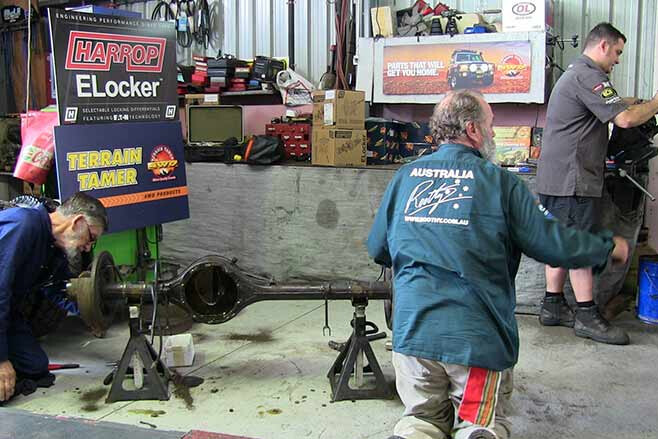
Then, as the little green truck got better known, mostly from being bashed around the country, some of the professionals in the trade got involved. I think they felt sorry for Milo to be honest, as she was pulling some very tough trips. The biggest hand I ever got was from Terrain Tamer, who rebuilt, blue-printed and balanced the 13BT motor and supplied one of their re-engineered gearbox and transfer cases to go behind the new donk. By that stage, like most old Toyota owners, I’d been using Terrain Tamer parts for years because, quite frankly, they’re either as good as stock or improved.
So you could say I’ve had plenty of time to work out what works and what doesn’t when it comes to old Toyotas. You probably wouldn’t say that if I was standing next to Alan Gray. At one stage Alan owned a business called ‘Mr Land Cruiser’, where he specialised in Toyota repairs and built a name for solid engineering. Terrain Tamer soon recruited him to work in researching and developing its parts line-up. It makes sense, as he started his career working on the first Land Cruisers brought into the country by the Thiess Brothers.
Since meeting we’ve become great mates because we share a love of country, motorcycles and old 4WDs. In fact, Al just got off the phone a few minutes ago. Geez, he’s about 150 in the shade and he’s wondering what sort of trail bike he should buy to keep up with the ‘young fellas’.
Talking experience, Nick Flannigan told me about Laurie from Caloundra Auto Protector Care who’s the Sunshine Coast’s expert on rustproofing. Given all the vehicles that drive on beaches up that way I was keen to get him involved. So, while the axles were still bolted under the chassis, we rolled her up to his shed. Laurie gave it a big clean and then examined the chassis closely. Later on he applied the first of a few coats of rustproofing just to seal things up while we built the axles.
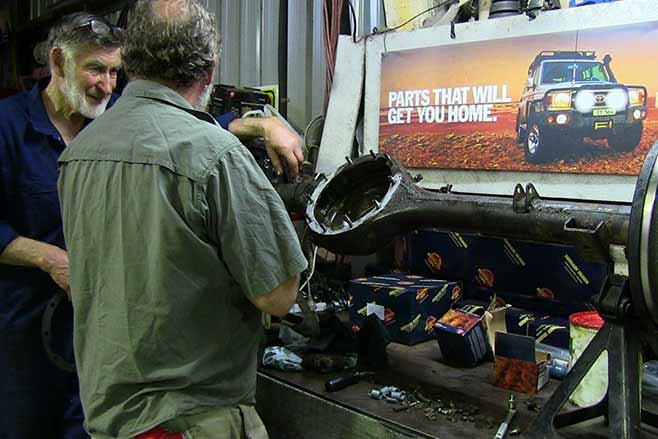
Meanwhile Nick and I had made up a list of parts required to rebuild both axles and sourced them from Terrain Tamer’s Queensland outlet, Sunshine State Spares in Archerfield. While talking to my mate Mark down there he mentioned Alan Gray was heading north to run some courses for the local mechanics. I got on to Al and asked him to stay a day extra so he could spend some time with Nick and me working on the axles. Okay, maybe I forgot to mention the extra details regarding the work part.
It didn’t matter because, as usual, Alan showed up in his overalls, raring to go. He bought a surprise with him, too: the Terrain Tamer kits required to fit the new Elockers into the old diffs. It was a bit intimidating for this old bush mechanic to work alongside Nick and Al who are both trained professionals and very different to the way old Milo went together back in her day.
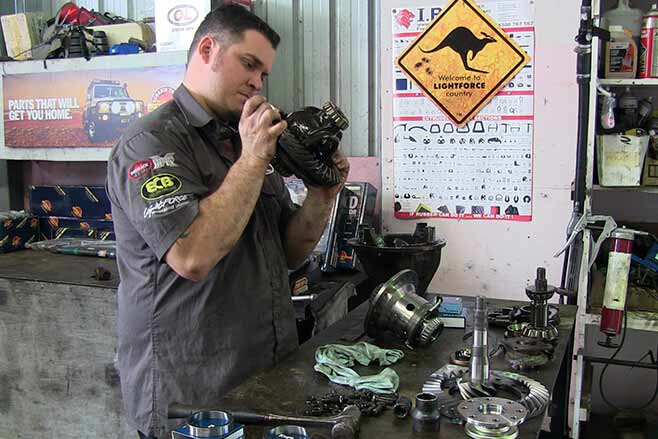
I certainly didn’t start with diff locks. In fact, Milo got around with nothing more than Coopers on the split rims and a couple of inches of flexible suspension for the first few years. Then, over a couple of decades, we used ARB’s air lockers and then TJM’s Prolockers – both of which are excellent products, but different to the new generation Harrop Elockers.
Yep, this time around I’m going for what I know works best right out of the box. That includes the Elockers, a Mark’s Adapters low range kit in the Terrain-Tamer-engineered transfer and gearbox and, err, a fully rebuilt 12HT motor.
Why a 12HT? Well, it’s the last of the fully mechanical injection Toyotas. It’s also a six cylinder, so it’s a tad smoother and more powerful than Milo’s old 13BT. And among us Toyota nuts it’s got a name for being totally robust with it, too. The only problem turned out to be finding one.
Stay tuned – same time, same channel. See you next month!
It’s a battle of the titans in this head to head.
This article was originally published in the August 2014 issue of 4×4 Australia.
Australian choices in utes are limited to vehicles built in Asia plus the odd European make. It’s for this reason many Australian companies, such as Queensland-based Performax, are looking to import and convert American pick-up trucks, but are they worth the cost?
The Toyota Tundra is a comfortable and capable ute both on and off road. The petrol V8 has a $118,990 price tag once imported and converted – for that amount of money, buyers could put two, top-of-the-line Hilux utes on the road with change – at $51,740 for an SR5 Hilux diesel, one must question the value of the American option.
The Tundra becomes an option for a traveller chasing an alternative to a Land Cruiser Sahara, or a premium vehicle more useful than those currently available in our country. There is no doubt Hilux is more realistic in most people’s budgets but is a Tundra worth two-times a Toyota Hilux?
Both of these four-wheel drive Toyotas are designed for hard work – steel bodies, pickup tubs on a ladder-frame chassis, live axles and leaf springs down back, double wishbones and coils up front. But aside from company badges, there are not a lot of similarities between these two four-wheel drive utes.
The Tundra carries a smoother, less fussed style, even while crowned by a huge chrome grille, perhaps contributing to its weight of 2560kg, 600kg heavier than the Hilux.
The Tundra is almost six metres long and two metres wide, sits 1930mm high and has 264mm ground clearance. The Hilux is just more than five metres long and 1860mm high with 210mm of clearance; it’s also narrower in the body at 1835mm.
All this translates to a bigger cargo tray for the Tundra with a 1.69m long by 1.68m wide bed (1.27m between the wheel arches) which has a damped tailgate that opens and closes with a soft touch. The Hilux tub is 1.52m long and 1.5m wide. Its tailgate opens, drops and shuts with a bang.
Strange then that the Hilux is rated to carry 835kg, well ahead of the Tundra’s 705kg but it wins points back with a towing capacity of 4000kg, compared to the Japanese-built Hilux’s 2500kg tow load.
CABIN AND ACCOMMODATION
The body differences are obvious enough when the pair are parked side by side, and again more noticeable when climbing from cabin to cabin.
An SR5 Hilux is not short of gizmos these days – Bluetooth connectivity, rear view camera, satellite navigation and all. The fit and finish is smart.
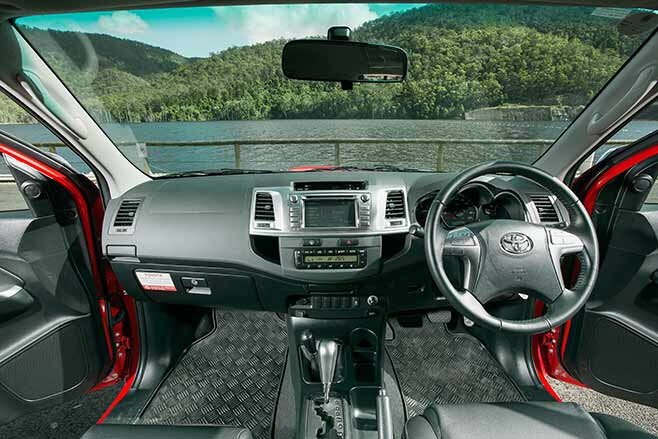
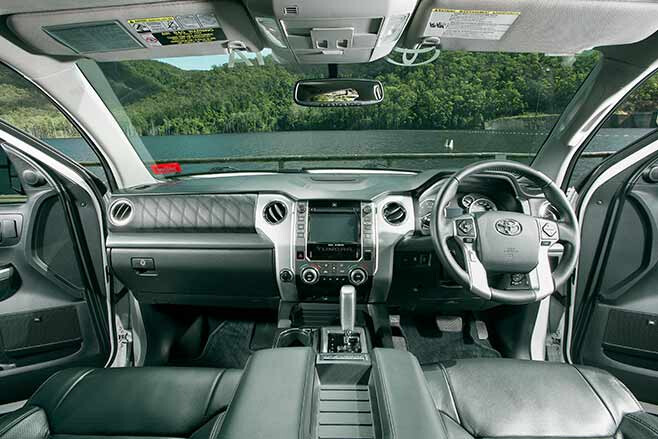
The Tundra Platinum version matches all that and betters it with extras such as heated and ventilated front seats, leather all round, a very clever infotainment system and a powered drop-down rear window.
Four-wheel drive is engaged with a dash-mounted control as opposed to the Hilux’s old lever. The Tundra has 13 cup-holders, the Hilux a mere seven although why you need that many in a vehicle with five seats is beyond us.
The Tundra is more like the Landcruiser Sahara in touch and feel, particularly when it comes to accommodation, with more occupant room in all directions; the front seats are great for long hauls, the driving position excellent and three adults across the back seat don’t have to be the best of friends as they do in the ‘Lux.
DRIVETRAINS
A 5.7 litre petrol V8 with a slick six-speed auto is always going to beat a four-cylinder diesel with five-speed auto in delivering road speed. The three-litre Hilux motor is smooth enough, an honest worker on the highway or through the bush. The Tundra’s engine, as found in the Lexus LX570, is a top performer for a commercial vehicle, running sweet at about 1800rpm for an effortless 100km/h with plenty left to overtake and the auto box is slicker than the one found in the SR5.
Neither motor is troubled finding decent torque on dirt or tar, there’s just an extra 200Nm of it from the V8, which means it’s easier to keep up with, or clear of, the traffic.
But this is where the Tundra is twice the truck – at a claimed 15.7L/100km it uses almost twice as much petrol as the Hilux uses diesel.
ON ROAD
There is little contest here. The big Toyota ute is a quick and comfortable truck for the road, while the Hilux is hampered by a shorter wheelbase, narrower track, lighter weight and blue-collar drivetrain. There is little wrong with the steering and handling of the Hilux but, compared with the Tundra, the ride is firm to lumpy when the road gets rough. Nor can the Hilux driver hope to match the pace of the Tundra on the open road.
It’s when the road narrows and turns to dirt that the smaller Toyota makes up some ground. It doesn’t mind being pushed over bush roads, where it’s allowed to move around a tad, holds its road speed and doesn’t need as much track space as its big American cousin.
In more open country, on tar or dirt, the Tundra steers and handles with surprising ease. The steering may not have quite the weight of the Hilux tiller, especially on the initial turn-in, but there’s rarely any doubt about the direction of the front wheels. A superior ride quality, better driving position, V8 punch and sleeker auto transmission means the Tundra is a nicer proposition for a long distance drive.
OFF ROAD
Beach or bush, the Hilux is a proven offroad worker, but the Tundra is a surprising offroad hauler. Despite the all-American ute’s bulk, and allowing for road-biased tyres, it does not disgrace itself in the rough. Much of its capability when the track turns nasty is down to that drivetrain grunt and smarts. Low-range gearing is very good, there’s a limited-slip rear differential and higher ground clearance.
The Tundra remains comfortable in the rough, it doesn’t pitch passengers around as much as the Hilux. But it is big and, sitting on a longer wheelbase than the smaller Toyota, may get hung up quicker.
The Hilux approach angle is 30 degrees, compared to the Tundra’s 26 degrees; departure angles are 23 degrees and 21 degrees respectively. The Hilux is easier to place and will go further when the track narrows.
There’s no doubt the Tundra will take on a 6.5/10 track (dry) without drama. The Hilux would be comfortable enough on an 8.5/10 trail, after that it begins to rely more on driver skill.
VERDICT
The Tundra was designed for North America and that shows in many aspects of this fine machine. It’s big and it’s thirsty, even compared with some of its US rivals, but it’s also very comfortable and very capable. It’s understood the 2016 Tundra will be sold in the US with a 5-litre, turbocharged V8 diesel option for those worried by the petrol engine’s thirstiness and we can expect that to filter through to the imports here.
Critics in the US there suggest the current Tundra is a bit soft as a full-sized pickup when compared with rivals from General Motors, Ford and Dodge, yet that ‘softness’ is what many here will find appealing. It is less of a truck than the other big Yanks, more like a Sahara or Lexus with a ute tray.
So for those with the dollars, and a decent-sized shed, the Tundra is a very handy, and luxurious, truck for smooth and rough conditions – it’s also covered by Performax’s four-year, 120,000km warranty with 24-hour roadside assist if purchased through the company or its national outlets.
The Hilux remains Australia’s most popular ute, despite this generation being older than rival utes and with, perhaps, less than 12 months left to run before a new model appears. Toyota’s reputation and solid engineering help this Hilux stay with the pack. Here the diesel auto SR5 is a worker but not as sophisticated in its ride or road manners as many rivals or the Tundra. The Hilux dresses up well but it’s more of a commercial vehicle, the Tundra is more of an all-rounder.
So is a Tundra (costing about $A55,000 in the US) twice as good as a 2014 Hilux? Probably not. But if you want the luxury and towing capacity there is only one choice.
Special thanks to Performax and to Land Cruiser Mountain Park for a great facility to test drive these vehicles. Special thanks to JAXQuickfit Tyres at Mitchelton in Brisbane for great service to fix a flat tyre.