IT mightn’t be the kind of vehicle you’ll typically find on these pages, but Nissan has unveiled two camper vans decked out with quality kit.
The NV300 Camper and e-NV200 Camper (a zero emissions variant), unveiled at the Madrid Motor Show in Spain, are completely self-contained vans that have been modified from standard to help punters escape the concrete jungle.
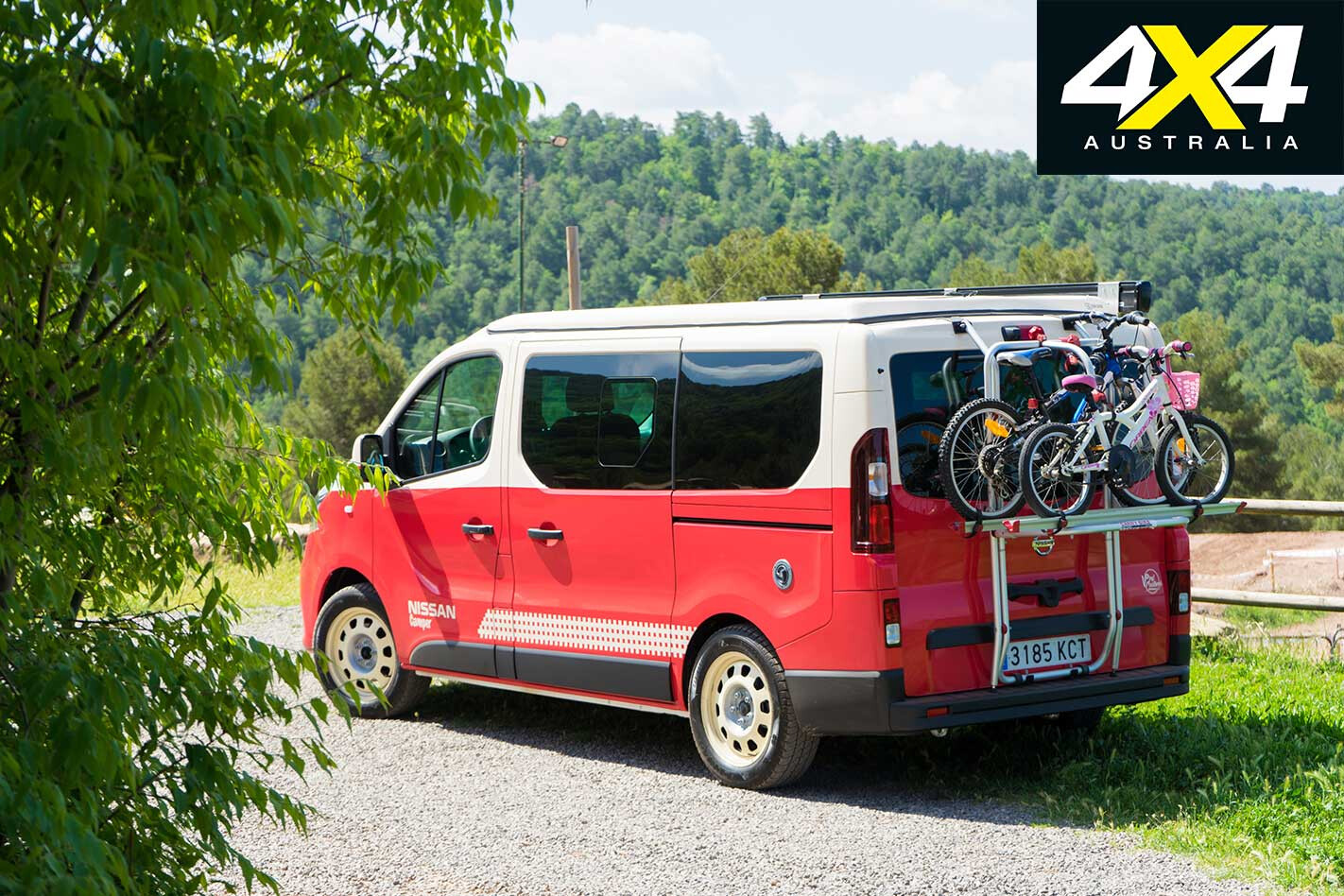
That jungle, however, must be in Spain, as they’re built for the Spanish market only. Still, they’re a pretty cool set-up that could spark an idea or two for Aussie travellers with a similar set-up in mind.
The kitchen features a fridge, a sink as well as water and gas installations; plus there’s a kitchen table big enough to seat four people.
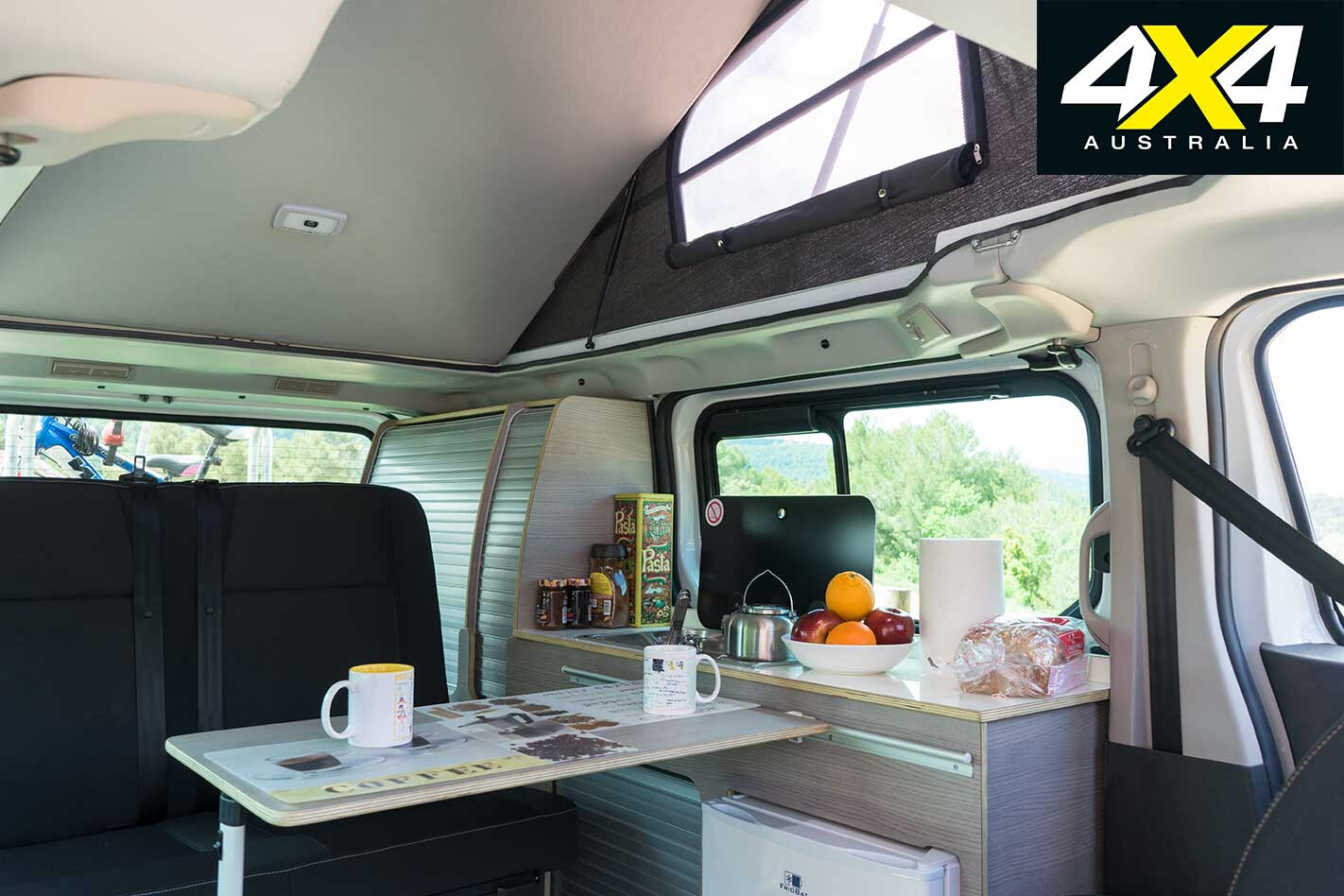
When the sun sets the campers can be converted into bedrooms with window shades and heating, and the NV300 has the capacity for a second double bed in the raised ceiling – the elevating roof also allows up to four people to easily stand up in comfort.
“The new Nissan Camper range will allow the most adventurous to have a balcony with views of the most incredible places in the world and enjoy the essence of traveling with family or friends,” Francesc Corberó, communication director of Nissan Iberia, said.
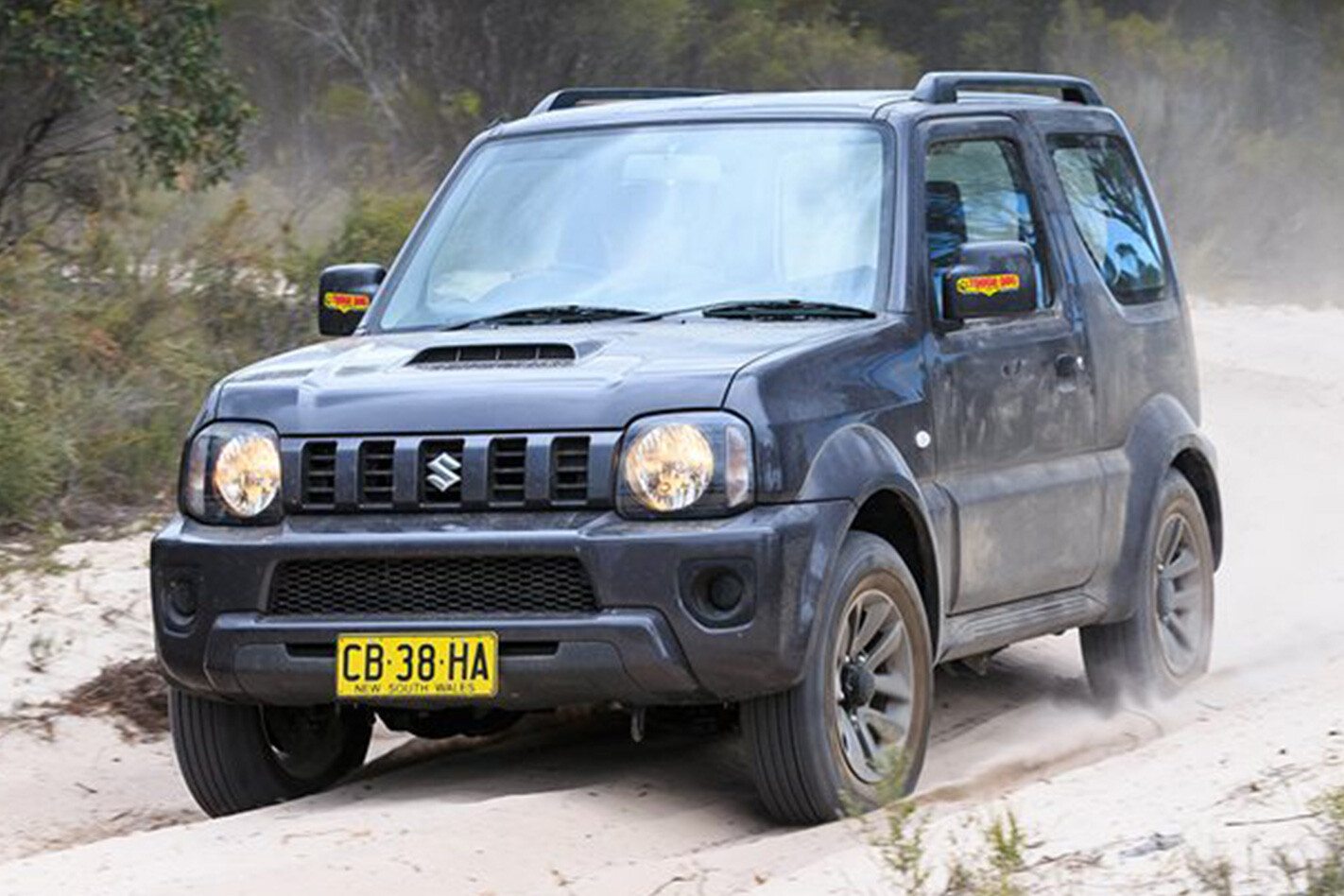
SUZUKI’S brawny, pint-sized off-roader was revealed overnight sans any camouflage, giving Jimny fans their first up-close look at the 2019 model.
The shots, sending blogs and Instagram pages into a frenzy, reveal that the new Jimny, with its black grille and headlight surrounds, harks back to older iterations of the classic compact off-roader, namely the SJ generation.

The 2019 model is expected to sit on a ladder-frame chassis, but what will power the Jimny is still unknown at this stage; either a naturally aspirated 1.2-litre four-cylinder and/or Suzuki’s 82kW/160Nm 1.0-litre turbo triple is most likely.
These latest photos join a growing collection of spy shots that have surfaced recently. Just last week a bunch of Jimnys were snapped sitting behind a Japanese factory, awaiting transport. These pics not only highlighted the colour choices that’ll be available, but it indicated that the Jimny’s global debut isn’t too far away.

Speaking to Wheels magazine earlier this year, Suzuki Australia general manager Michael Pachota said the all-new compact off-roader would be available in two specifications: a stripped down version for the purists, and an upmarket, urban-dwelling version for city streets.
We last tested the ageing – the last gen was first introduced in 1999 – Jimny back in 2015 when ETC and ESC were introduced, and it was an off-road weapon. Read the 2015 Suzuki Jimny review.
Pricing is expected to fall around the $25K mark for the entry-level 2019 model. Expect it to land locally Q4, 2018, or Q1, 2019.
REMEMBER the Colorado Xtreme concept revealed to the world back in 2016 at the Bangkok International Motor Show?
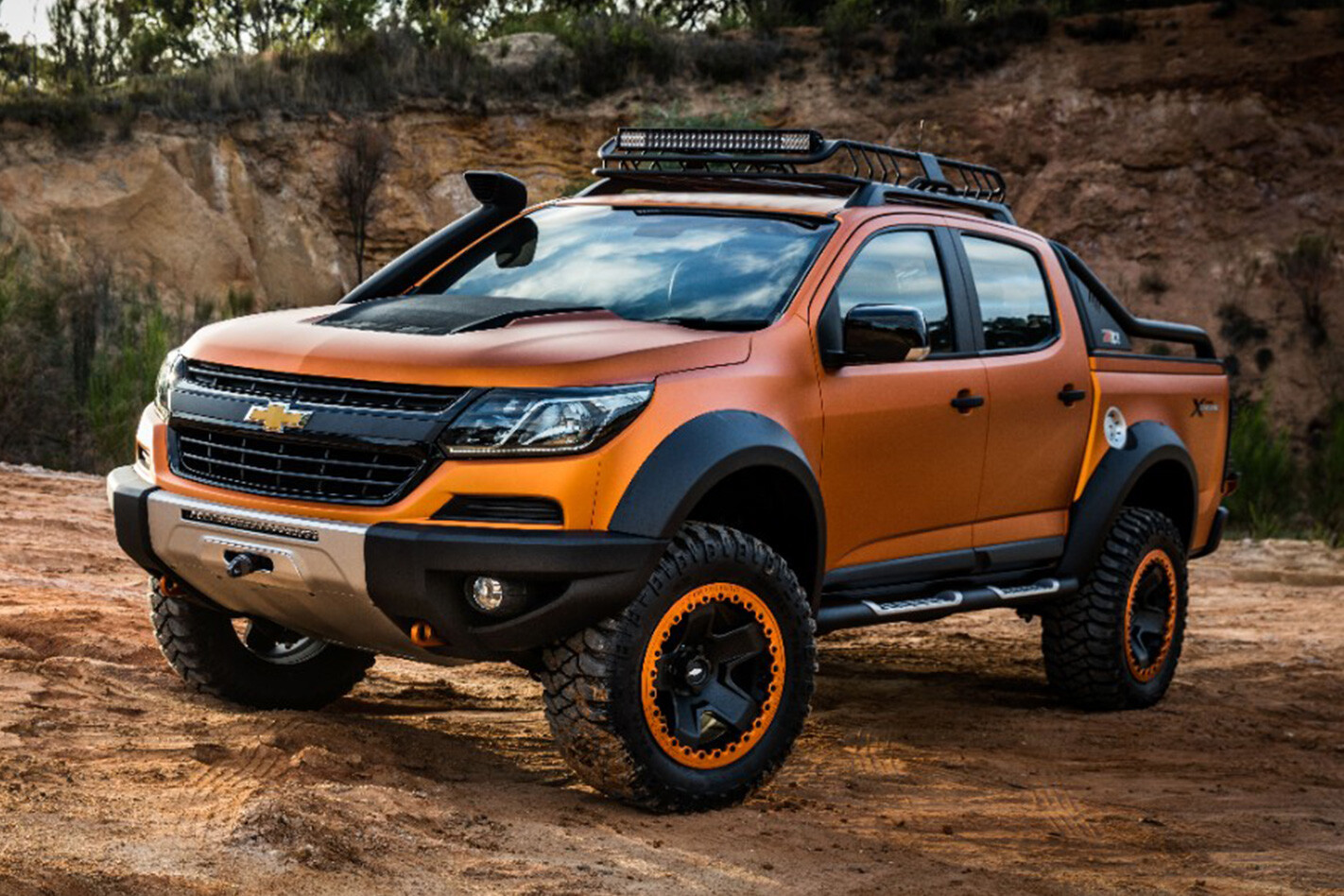
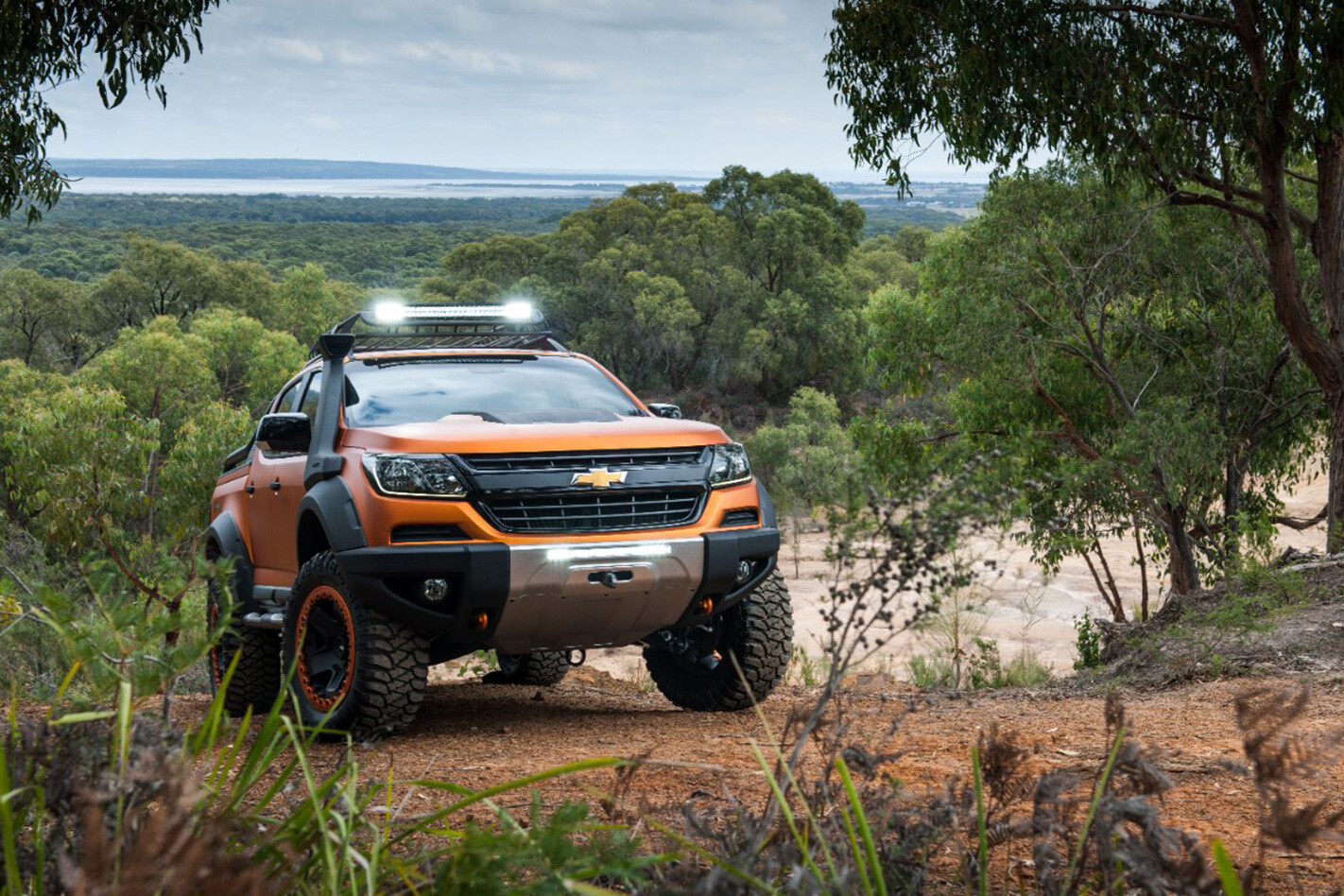
Well, Holden has taken note of the public’s increasing appetite for premium utes and put into production the Colorado Xtreme, which – at this stage – is exclusive to the New Zealand market.
Image courtesy of driven.co.nz
Expected to be in NZ showrooms by year’s end with a $79,990 price tag, the Xtreme is kitted out with a sports bar, black tubular side steps, a rear step, a soft tonneau cover, a tow bar, a black roof tray, and a winch bar with a winch wire harness kit. COLORADO is stamped across the tailgate, while the whole lot rides on 18-inch black alloys surrounded by all-terrain rubber.
“The Xtreme is no longer just a show concept, it’s a fully functional ‘real McCoy’ four-wheel drive and we expect people to put it to the test in a variety of day-to-day, on and off-road situations,” Marc Warr, Holden New Zealand National Marketing Manager, told Driven.co.nz. “We have incorporated a number of highly desirable accessories to create the Colorado Xtreme and anticipate there will be significant interest in the new model.”
Our mates across the ditch may get their hands on it first, but Holden Australia told whichcar.com.au that it is looking at bringing the Xtreme here.
The vehicle will officially premiere at the annual Fieldays event, in Mystery Creek, on June 13-16.
Stay tuned for more details.
THE first RAM 1500 has been driven off the Australian production line ahead of its mid-June local launch.
The American ‘truck’, remanufactured from LHD to RHD at the purpose-built Melbourne facility for the Australian and New Zealand markets, will enter the local market with V8 power and an ability to tow 4.5 tonnes.
Roger Zagorski, the Managing Director of Australia’s official factory appointed RAM importer and distributor, the Ateco Group, drove the first 1500 off the line.
“With the official launch of the RAM 1500 just weeks away, it was great to be at the wheel of the first of what is now a steady stream of RAM 1500 trucks that are coming off the Melbourne production line and getting ready to head to RAM dealers right across Australia and New Zealand,” he said.
“The RAM 2500 and 3500 have paved the way for RAM 1500, but the new truck takes RAM into the heart of the premium ute market in Australia, with major advantages over its rivals, and so the volume expectations are on quite a different scale. This is why we have a new purpose-built production line in Melbourne that is producing RAM Trucks that are without a doubt full production quality.”
Full production quality means the final product isn’t a conversion, rather a remanufactured RHD vehicle. This is achieved by separating the chassis and the body of all new arrivals, and then fitting a re-engineered RHD-specific steering system. An Aussie designed and developed dashboard – as well as a RHD heating and ventilation system – is installed also, before the body and chassis is remarried.
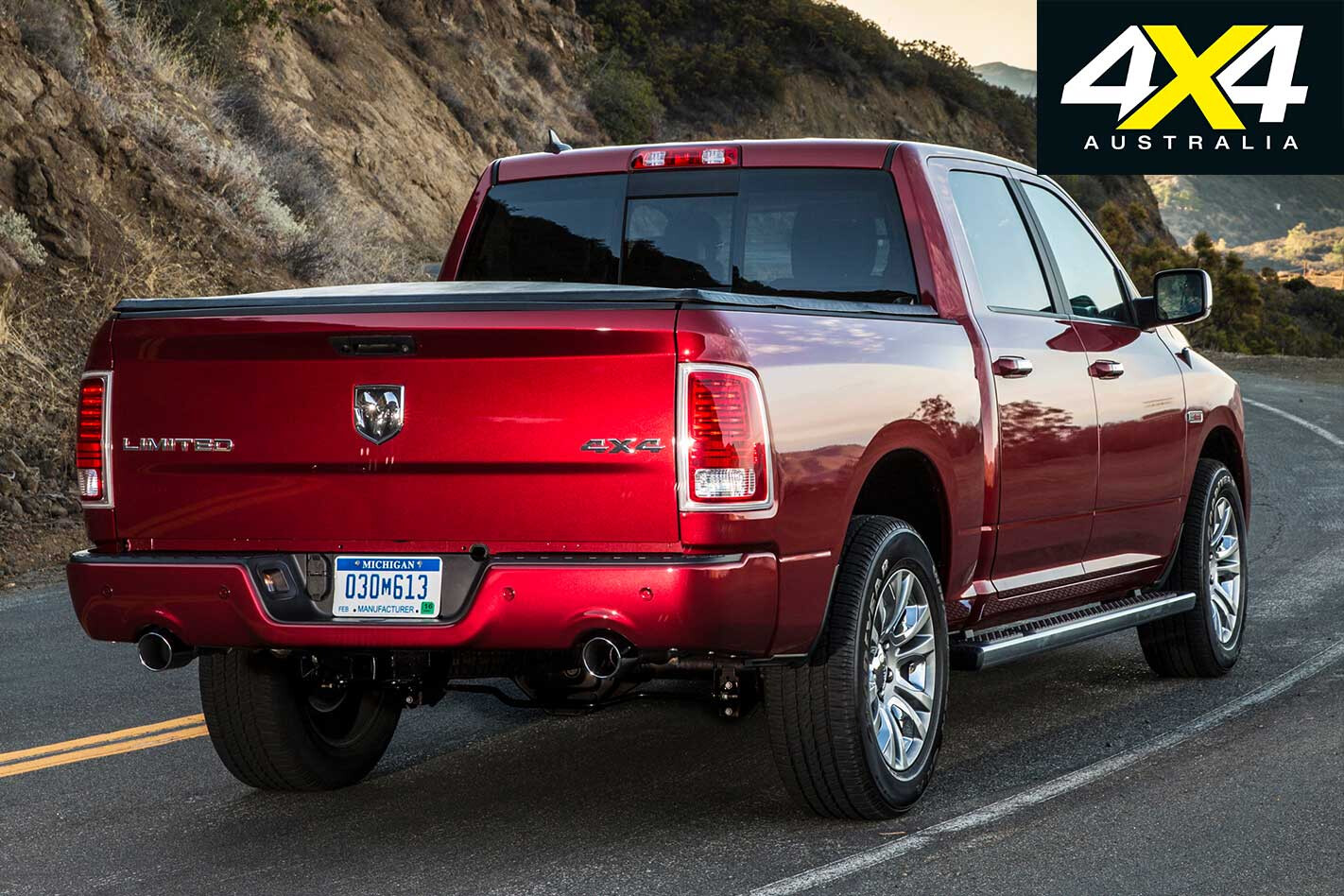
Where the RAM 1500 has an edge on the competition is with its size, its pulling power, and its glorious 5.7-litre HEMI V8.
“The moment that Hemi V8 sprung to life at the end of the production line for the first time, accompanied by its unique throbbing sound track, it was audibly clear that the RAM 1500 will offer Australia something that is uniquely capable to meet all the demands of an Australian lifestyle or business,” Zagorski said. “I am sure, as it rolls into dealers throughout Australia after its mid-June launch, it will be clear that the RAM 1500 will set a host of benchmarks.”
Stay tuned for pricing and specs, which are due to land when the 1500 is launched in mid-June.
EFS 4×4 Accessories have introduced its new VividMax Work Light range, and they’ll look beaut attached to your fourbie.
This feature is an advertiser sponsored content
The work lights, made with extruded aluminium for maximum strength and heat dissipation, are water and dustproof with an IP67 water/dust rating. The lights come complete with 304 stainless steel mount and fittings, as well as a polycarbonate protective cover.
Super-powerful LEDs shine 6500k of bright white light, and they come with a 50,000-hour lifespan.
The LED Lens Cover is designed with multiple light refractors maximise light spread.
Three lights are available: the VividMax Oval (VMWL-OVAL18), VividMax Square (VMWL-315) and VividMax Square (VMWL-424).
VividMax Oval VMWL-OVAL18 – 18W spot beam – 1000 lumens – 6×3-watt Cree LED RRP: $42.00
VividMax Square VMWL-315 – 15W spread beam – 3-inch square – 900 lumens – 5x3W LED RRP: $35.00
VividMax Square VMWL-424 – 24W spread beam – 4-inch square – 1200 lumens – 16x high intensity Osram LEDs. RRP: $42.00
Website: www.efs4wd.com.au
ONLY nine sales separated the Hilux 4×4 and Ranger 4×4 during May, according to the recent VFACTS report, with Toyota once again standing atop the monthly 4×4 sales podium.
Proving the 4×4 market is once again a two-horse race (much like 2017), the Hilux is also the best-selling 4×4 on the YTD charts, edging out the Ranger by 216 sales. There’s then daylight to the rest of the field. What about the X-Class? With 182 sales, it failed to hit the 4×4 top 20 leaderboard for the month.
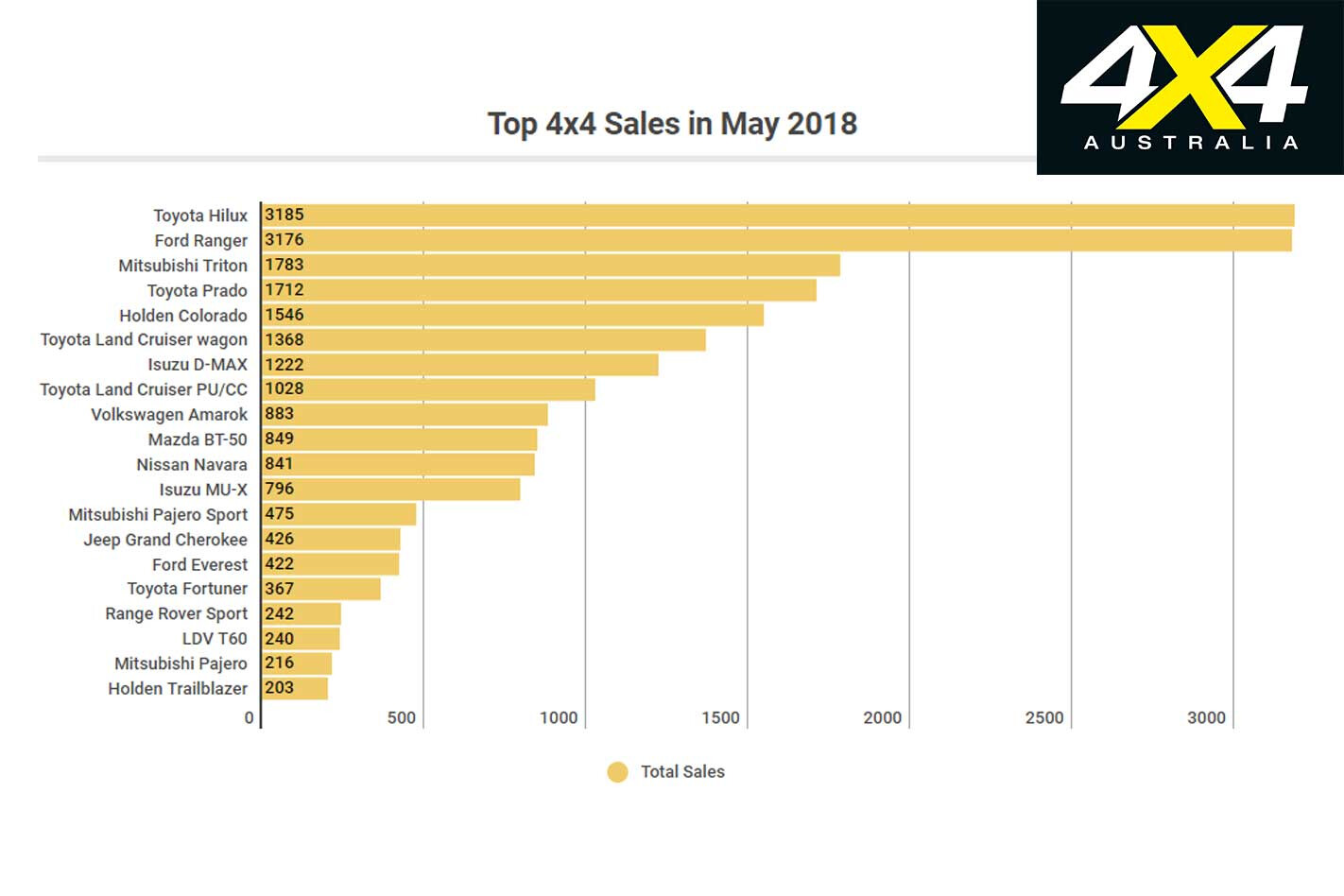
Sales of 4WD pick-up and cab-chassis variants were up 3.0 per cent last month compared to May 2017, despite an overall dip in the LCV market by 0.5 per cent – which is nothing compared to the 15.6 per cent decline in passenger-car sales.
Overall industry sales were also down on the record-setting May 2017, with 100,754 sales compared to 102,901.
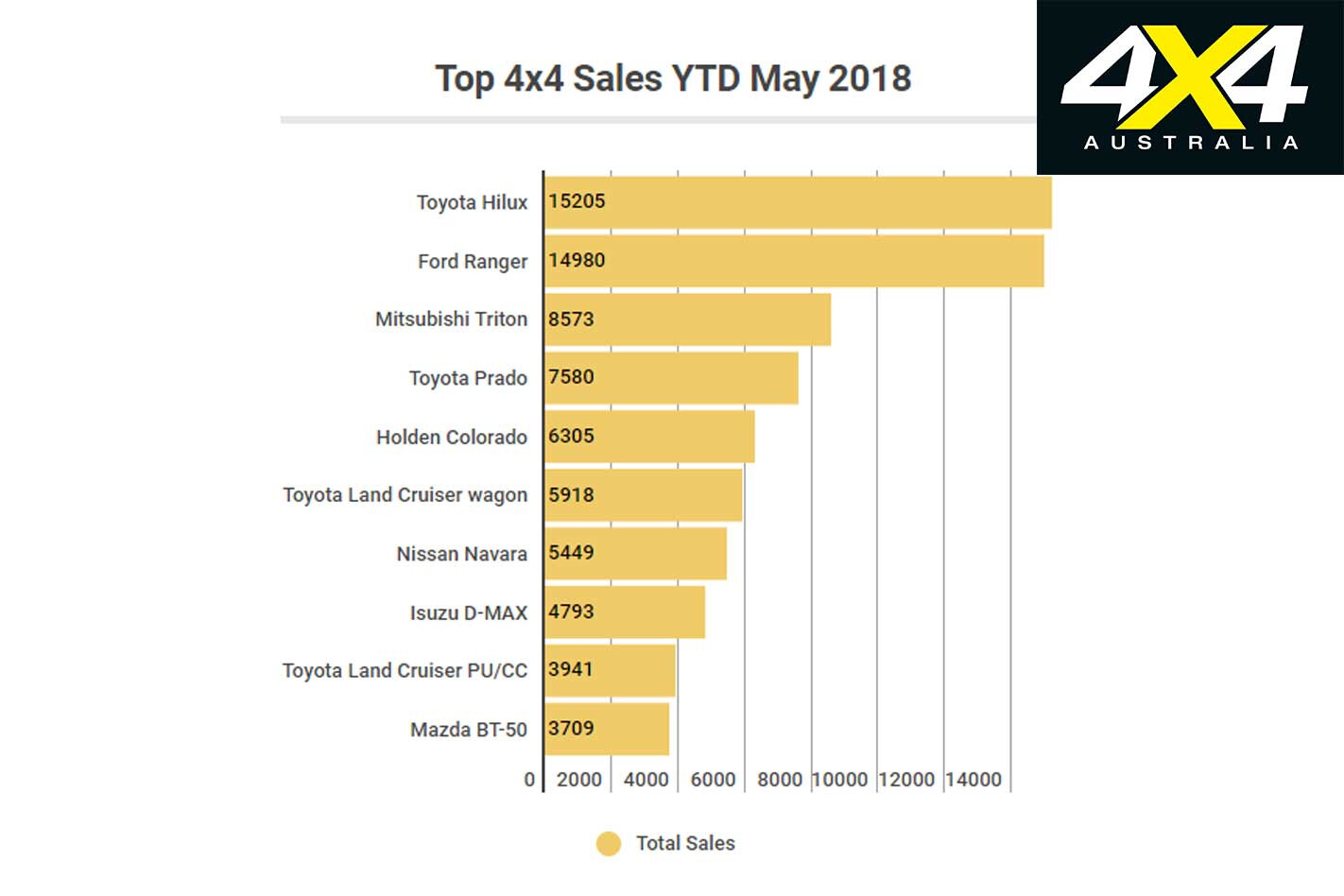
“The market is continuing to hold up well year to date, with the past two months of falls offset by the gains recorded in the first quarter,” Tony Weber, chief executive of the FCAI, said. “In the past 12 calendar months there has been almost 1.2 million new vehicles delivered to customers, which is a remarkable achievement.”
The Hilux 4×2/4×4 remains the best-selling vehicle on the overall market, posting 4385 sales in May; while the Ranger 4×2/4×4 is lagging behind in second spot, with 3674 sales.
Even though the annual Easter Jeep Safari is a far bigger and more elaborate event than the humble one-day trail ride its progenitor was in 1967, hitting the trails is still a main attraction for event goers and Jeep enthusiasts.
This year’s eight-day event features 35 of the region’s most iconic routes. For those who weren’t able to attend the Easter Jeep Safari, but would like to tackle the event’s trails at their leisure, we talked with Red Rock 4-Wheelers, the organising club, on their assessment of the each sanctioned trail’s difficulties with a scale of 1 (put your kid on your lap for their first 4×4 experience) to 10 (update your insurance policy before you lock in the hubs).
Most on this list are sanctioned trail rides, but a few, such as the axle-snapping Upper Helldorado Canyon, are on private land (but open to the public). Each of the official Easter Jeep Safari trails are marked with painted-stenciled icons along the centre line, as it is easy to lose your way through the slickrock without them. If you find yourself in Moab, here are our top picks.
Hell’s Revenge – Trail Rating: 6/10
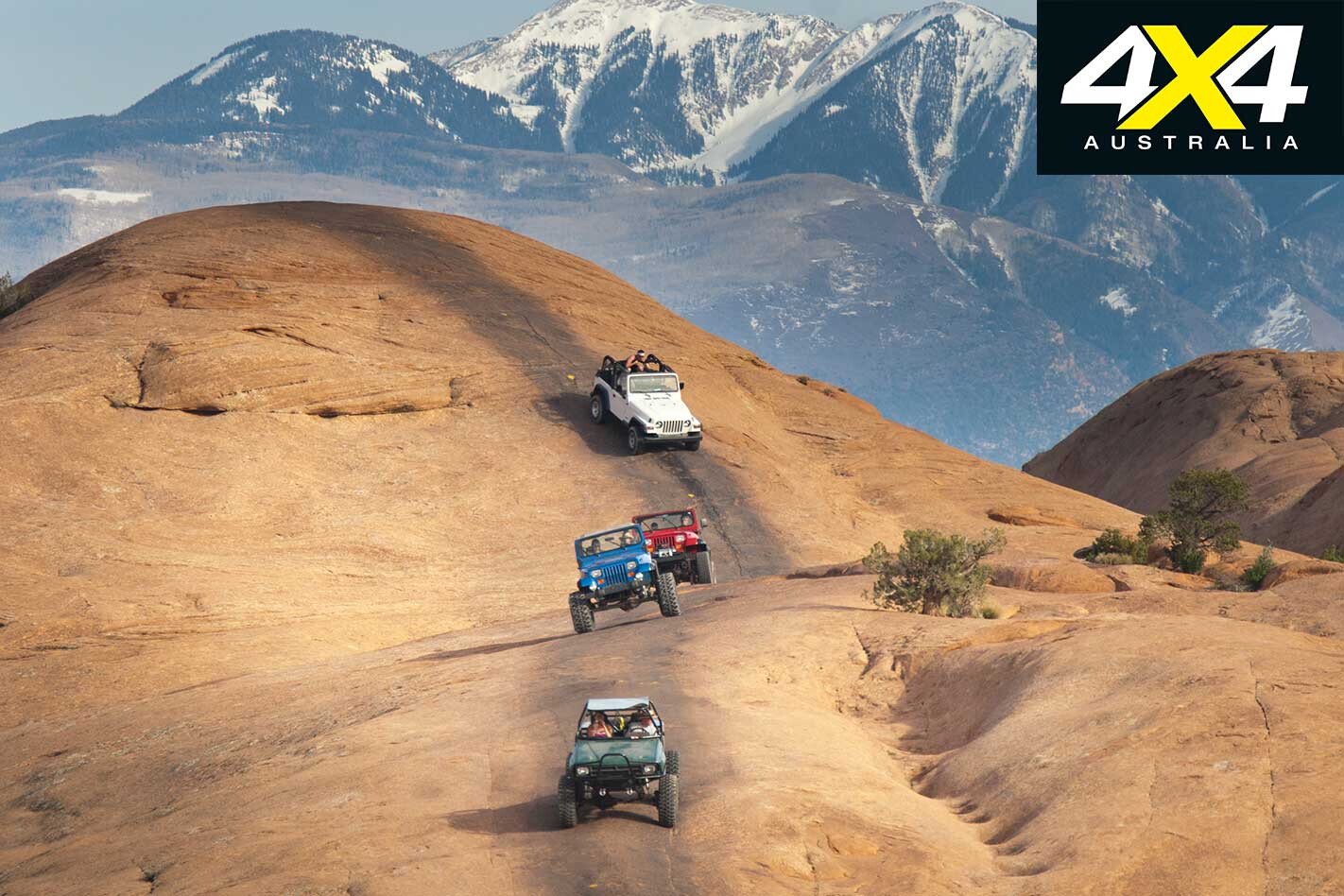
Hell’s Revenge, located just a stone’s toss from town, is one of Moab’s most popular trails. Its slickrock climbs and descents will reveal any white knuckles you may have. On the flip side, despite a fairly high rating, most tougher obstacles have bypasses.
Fins and Things – Trail Rating: 4/10
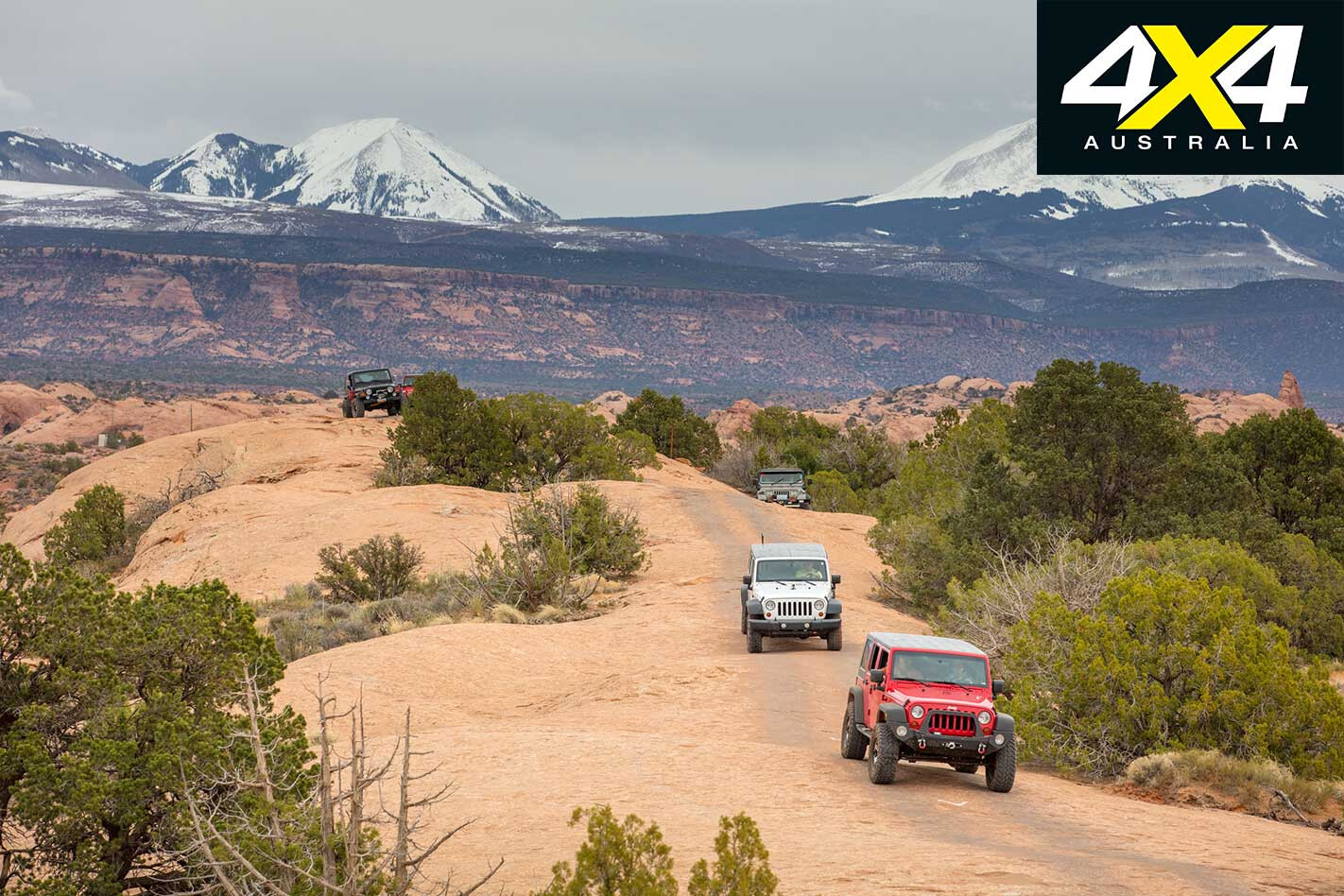
This trail, along with its sister route Hell’s Revenge, traverses a vast region of ancient sand dunes, petrified by intense pressure from tectonic movement and sculpted by wind and rain through the epoch of time. Fins and Things is not exceptionally difficult, but the views of the La Sal Mountains in the background are worth writing home about.
The Hot Tubs – Trail Rating: 4-10/10
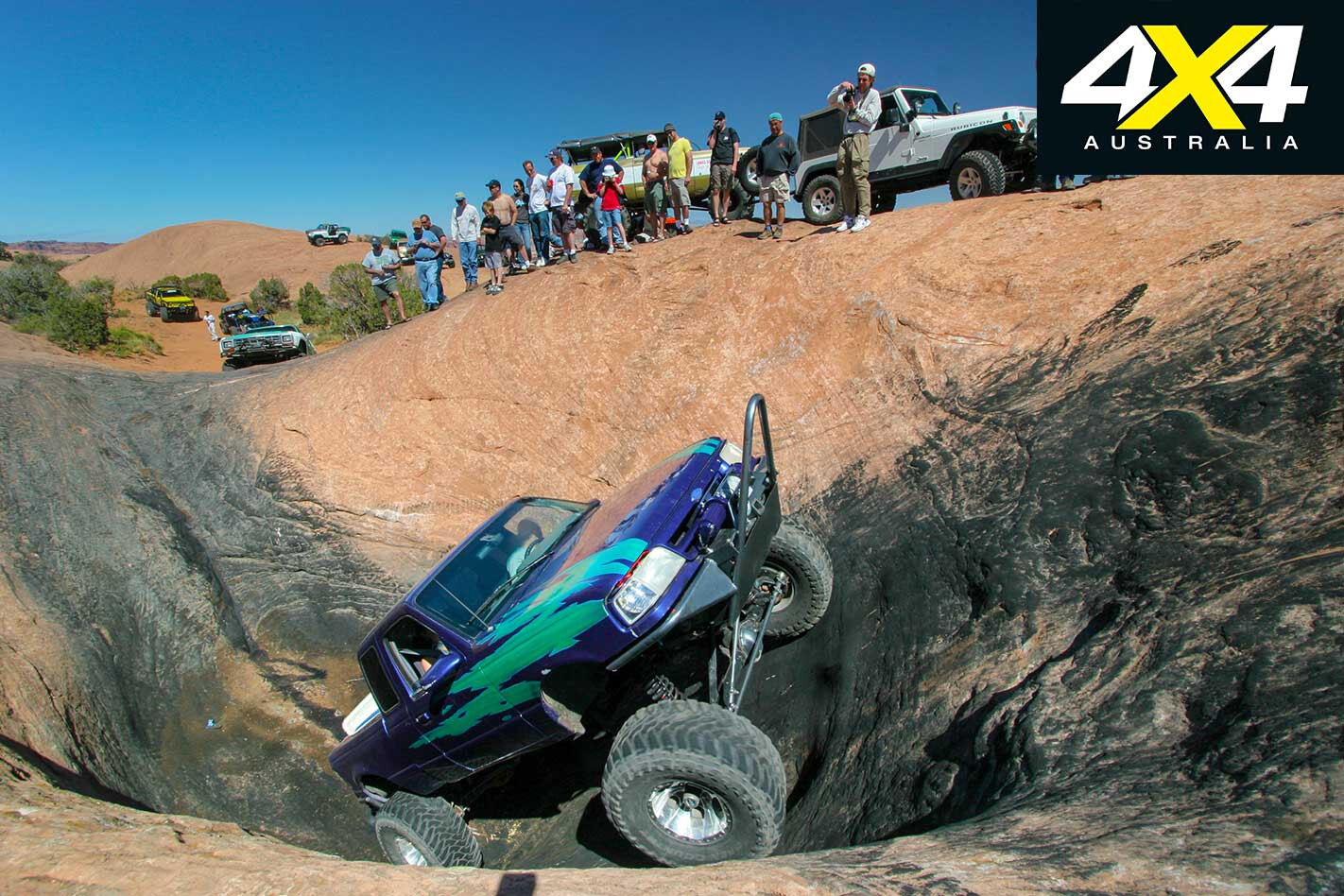
Throughout Southeast Utah are natural depressions in the sandstone known as ephemeral pools or “hot tubs”. When water evaporates, those found along Hell’s Revenge become a thrillseeker’s playground. Mickey’s is difficult and the scene of many a rubber-side-up affair.
Escalator – Trail Rating: 10/10
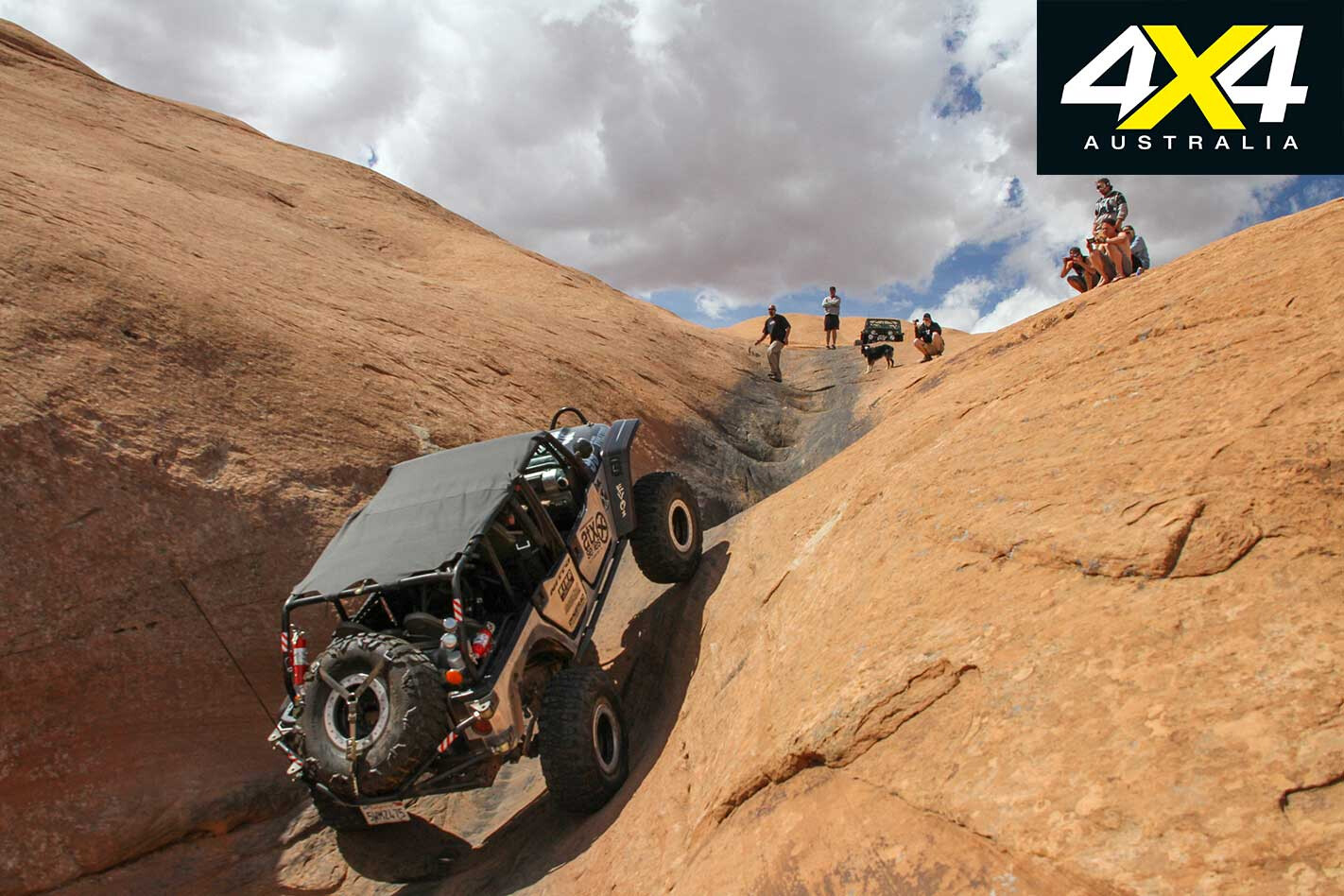
The Escalator, a steep white-knuckle side route on Hell’s Revenge, is not for the faint of heart. It can be tackled by moderately equipped vehicles, but the driver had better be on his/her game.
Potato Salad Hill – Trail Rating: 8/10
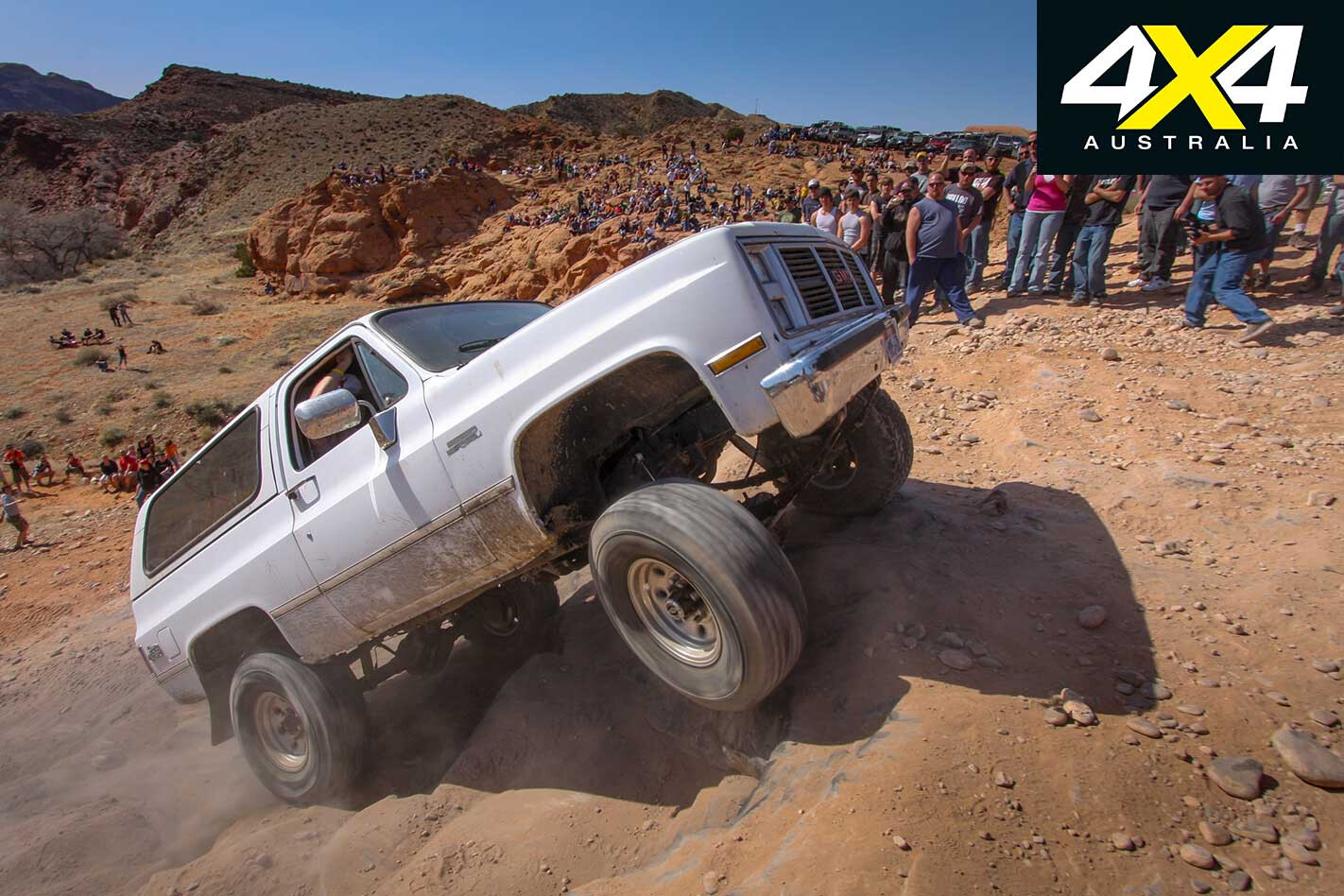
Spectators go wild if you toss your Esky. While not a sanctioned trail, Potato Salad Hill, a 50m series of steep off-camber ledges, gathers huge crowds. It is unforgiving if you choose the wrong line, and has been the “undisclosed” location of many insurance claims.
Dome Plateau – Trail Rating: 4/10
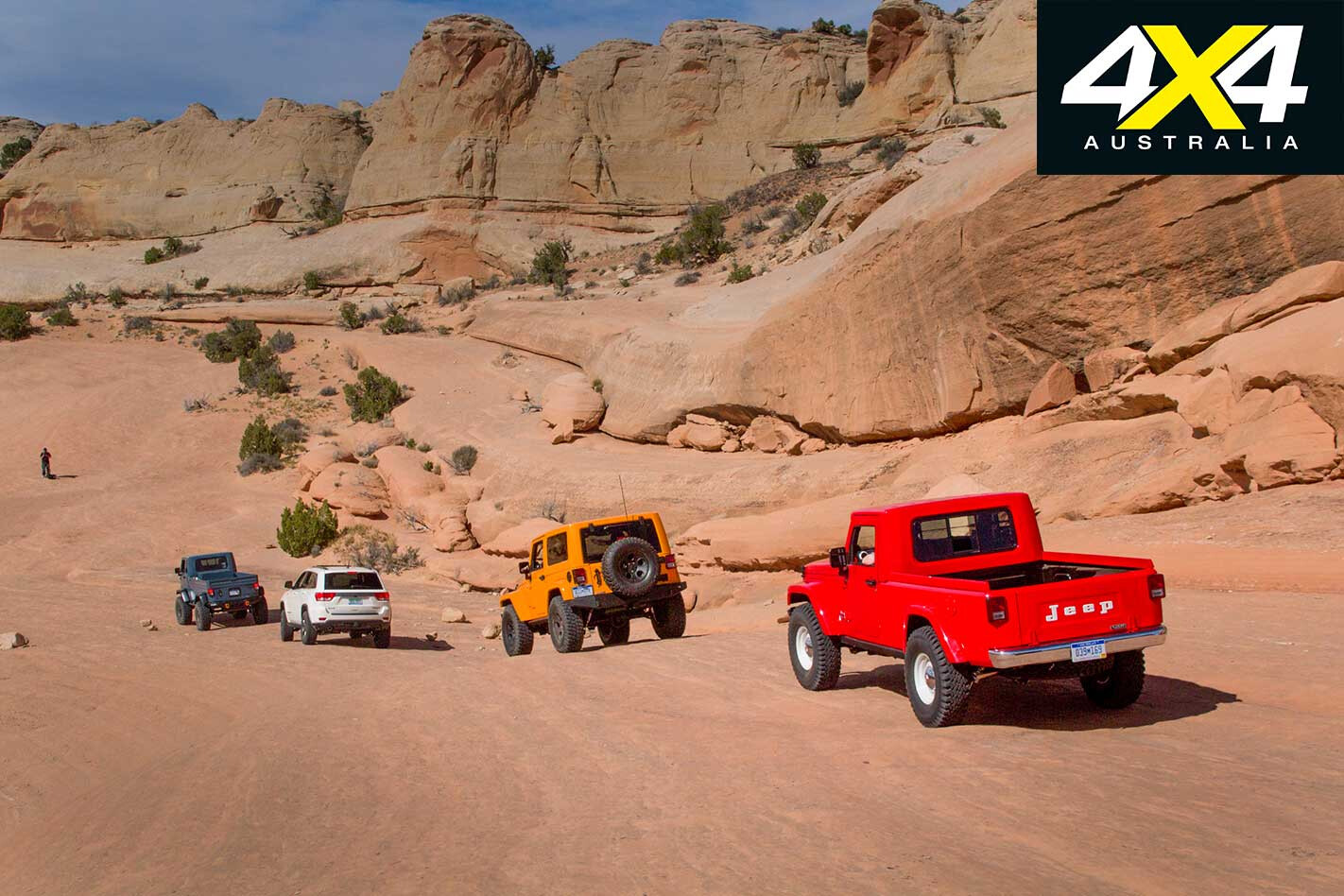
Some 20 miles up the Colorado River from town, the Dome Plateau Trail is great for a scenic day’s cruising. About 25 miles long, it offers Moab’s epic sandstone, river views, and is the site of many petroglyphs from America’s pioneer days of the late 1800s.
The Sand Dunes – Trail Rating: 5-9/10
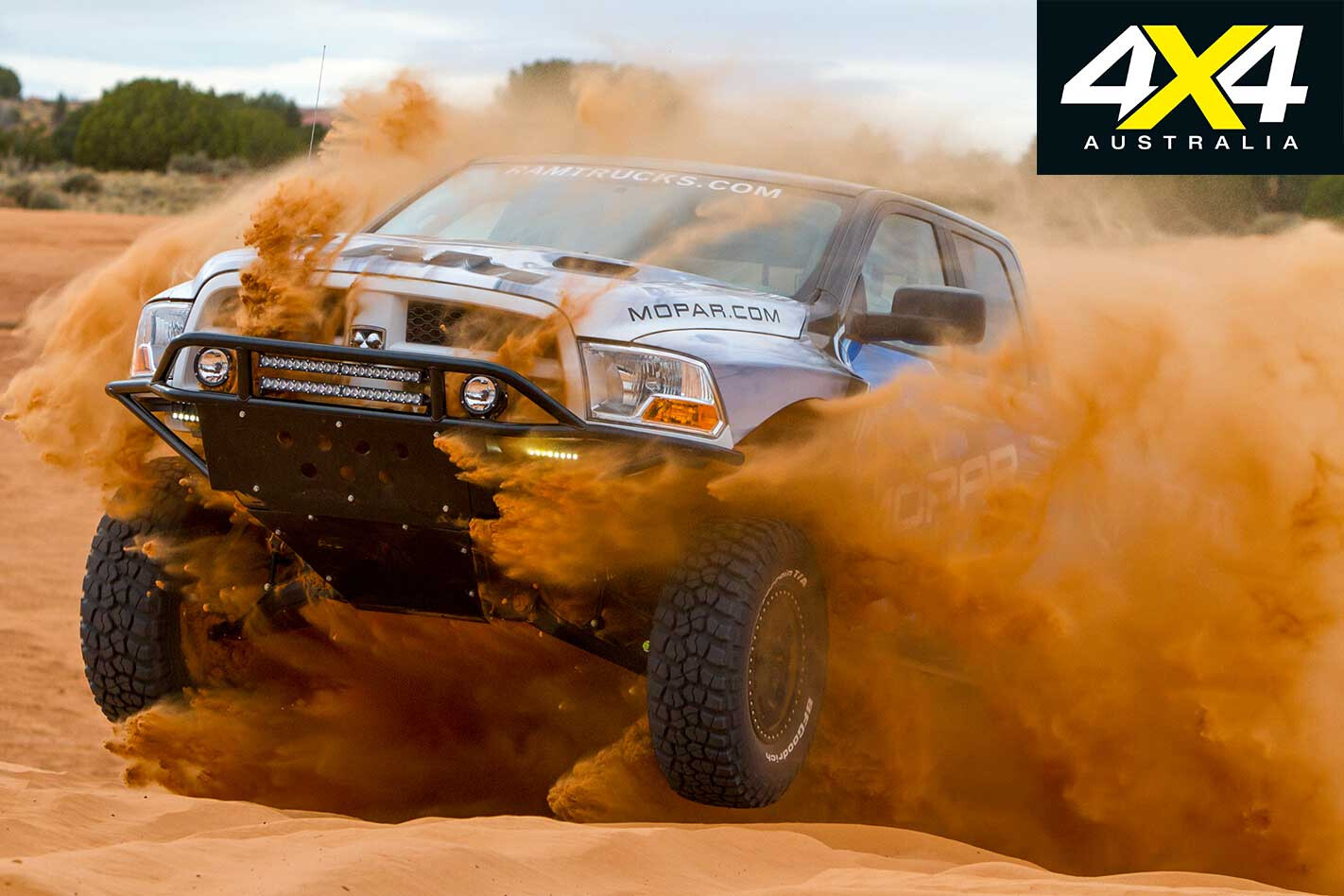
About 15 miles south of town lay a good-sized field of red sand dunes. Carving a few crescents is a must-do before continuing on to the Behind the Rocks Trail.
Hurrah Pass – Trail Rating: 2/10
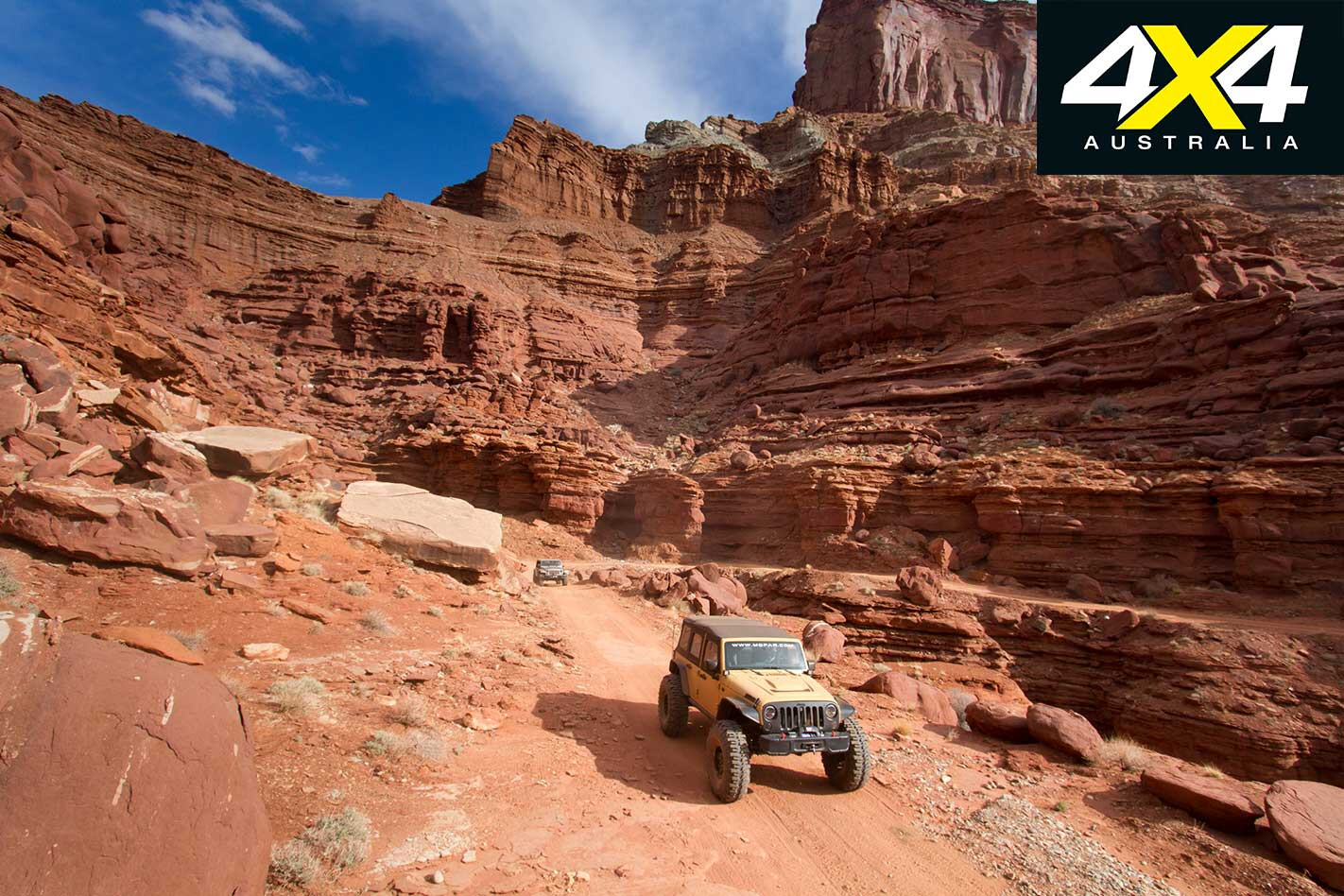
The gateway to the Lockhart Basin and Chicken Corners Trails, Hurrah Pass, while suitable for any four-wheel drive, is one of the most picturesque drives in the area. You are likely to see local wildlife, including herds of big horn sheep and coyotes, while making your way to an overlook above the Colorado River.
Upper Helldorado – Trail Rating: 10/10
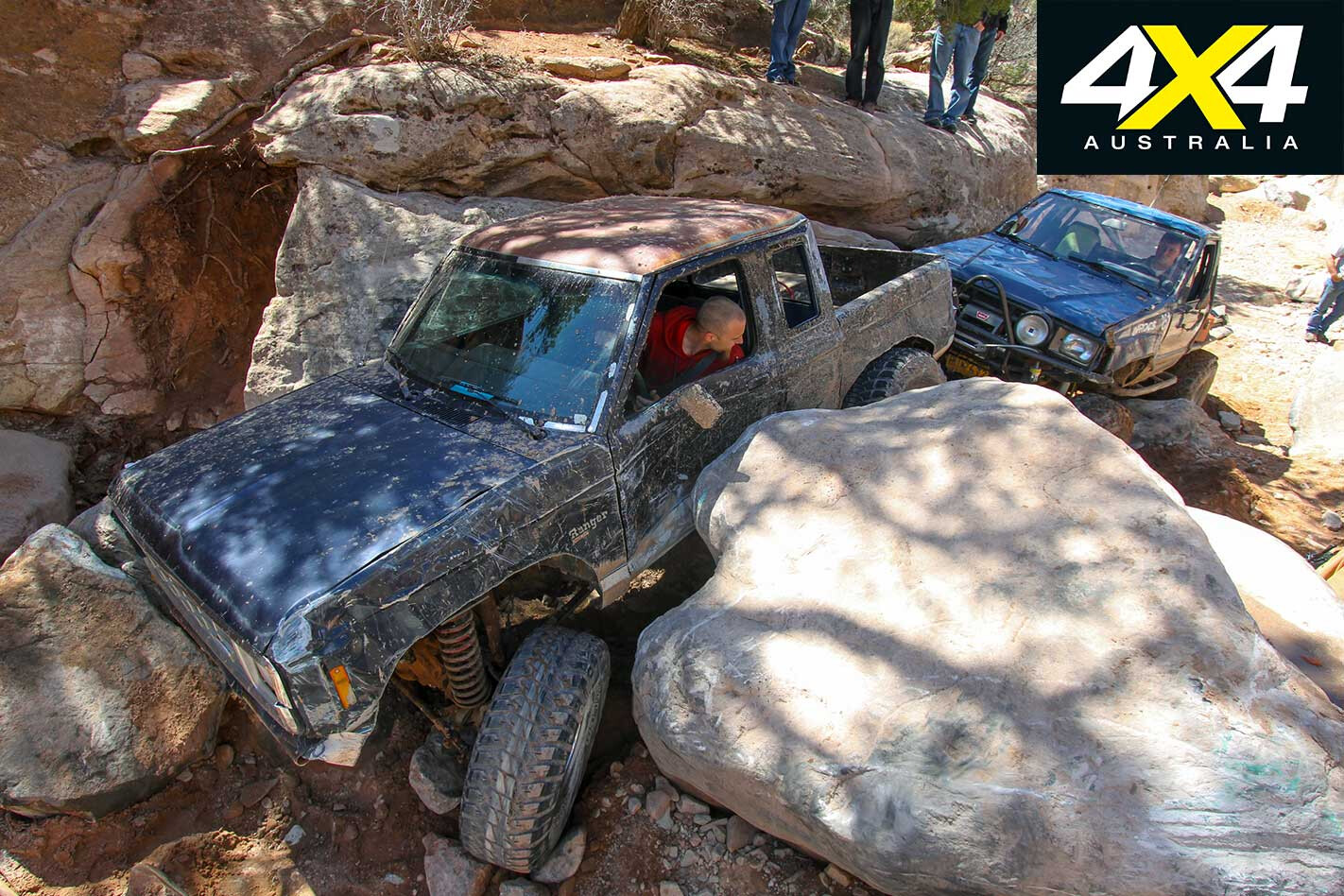
Carnage guaranteed. Experiencing Upper Helldorado is better done as a spectator if you value your sheetmetal and axles. Its crevasses and near-vertical waterfalls (dry) are rock buggy terrain, and while less than a kilometre in length it may take all day to complete … or get towed back to town for repairs.
The Geology Run – Trail Rating: 2/10
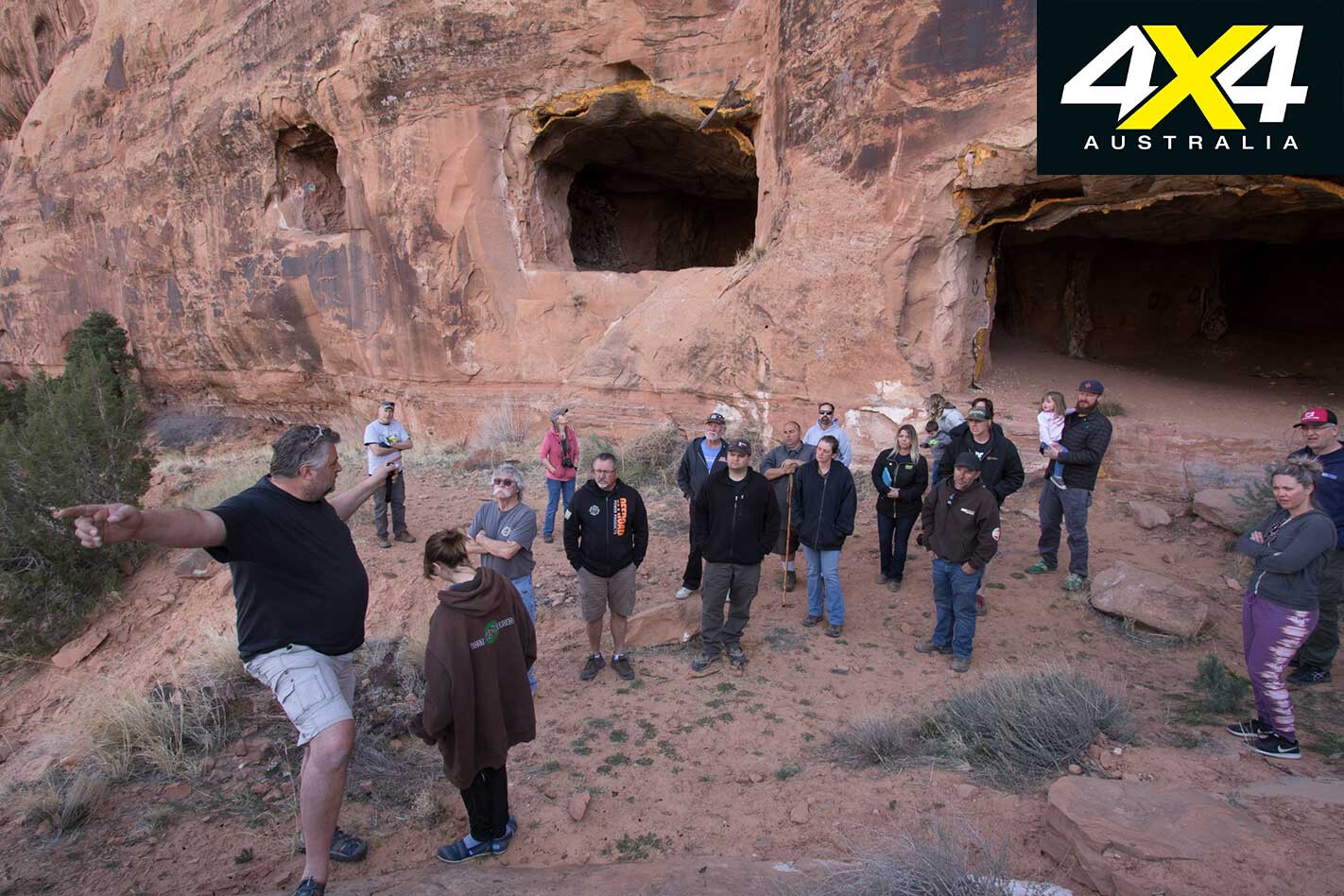
For the past few years we’ve joined professional geologist John Mears for the Lost River Off-road Geology Run. Nearly all trails in the Moab region are the byproduct of the Cold War hunt for uranium, and this year Mears took us to the place it all began.
In 1952, unemployed oil geologist Charles Steen discovered high-grade uranium ore in this ledge. It would become known as “Steen’s Folly” and ignited a flood of freelance prospectors to the region.
Moab Rim – Trail Rating: 7/10
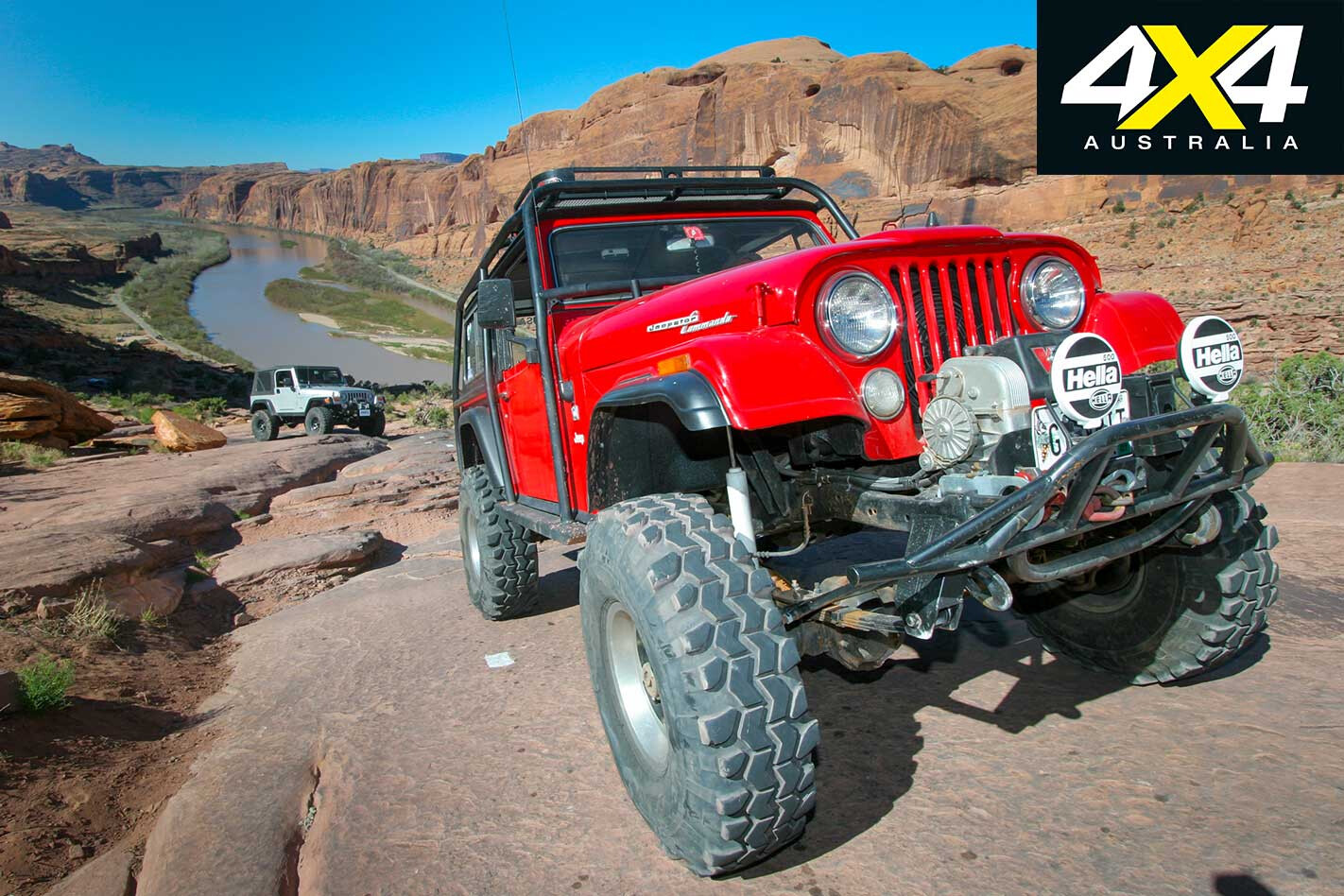
Climbing from the Colorado River to nearly 1000 metres over the town of Moab, “The Rim,” as it is called by Safari regulars, was one of the first trails used in the 1960s. Back in the day (before the era of 12-Volt fridge/freezers), the Red Rock 4-Wheelers would have a small plane fly over the lunch stop and air-drop ice cream for participants.
There’s an Aussie influence to the 2018 RAM 2500 and 3500, with the Australian-market versions of these revised big-bopper workhorses featuring upgraded suspension that is the result of extensive Down Under development work.
The large-size utes – powered by a 6.7-litre Cummins turbo-diesel donk punching out 276kW and a huge 1084Nm – possess an unmatched maximum towing capacity of 6900kg and are proving popular with off-road tourers towing big vans and fifth-wheelers.
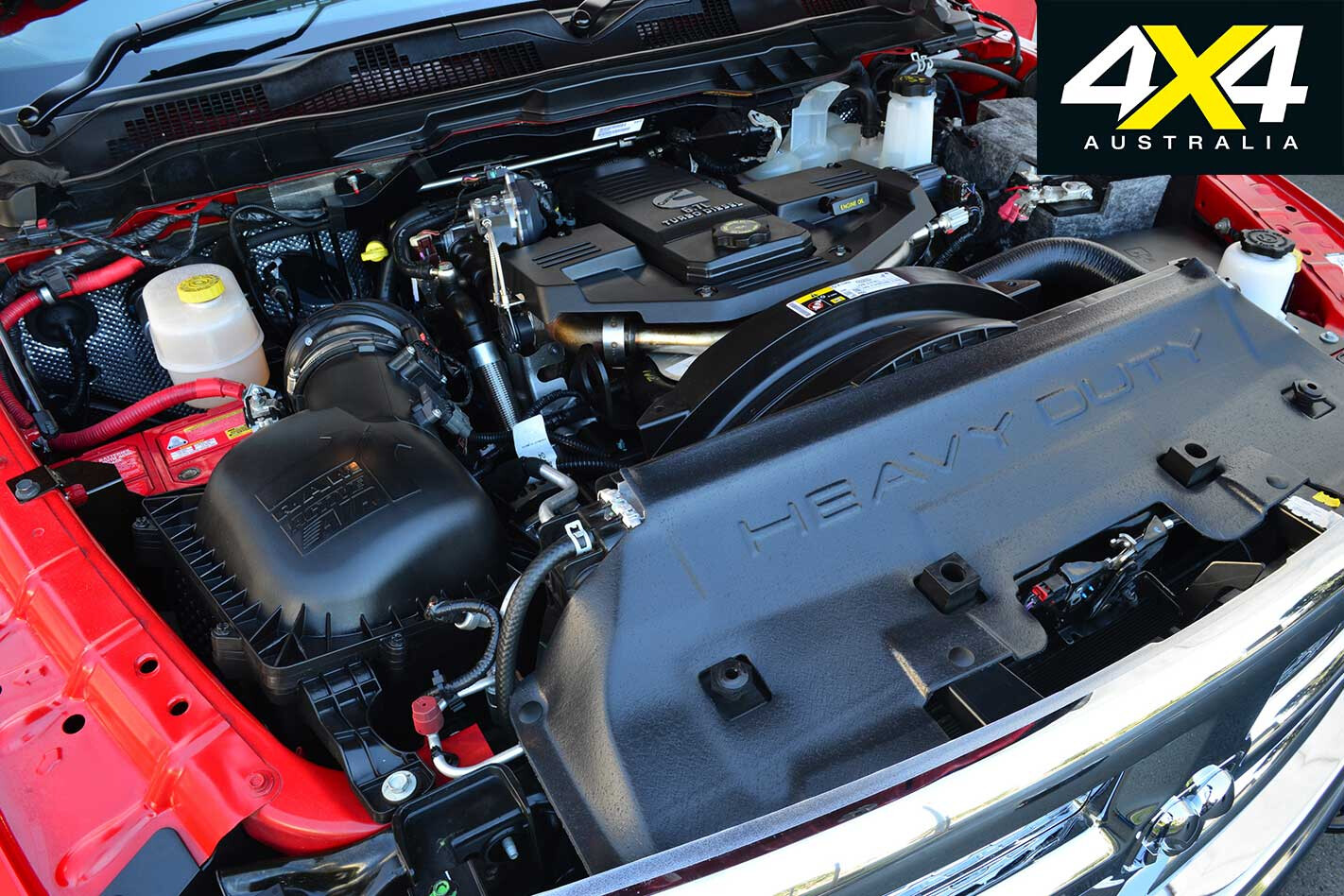
The towing capacity of the RAM duo starts at 3500kg (with 50mm towball), goes to 4500kg with a 70mm ball to the tongue and tops out at that heady 6900kg once you add a pintle to the 70mm ball/tongue. Payloads vary from 913kg for the ‘smaller’ RAM 2500 and go up to 1713kg (depending on spec level) for the big 3500.
Buyers of the 2018 models now also have the choice of the standard six-foot four-inch tub (1938mm) or a new ‘option eight’ tub, stretching the cargo area out to eight feet (2496mm) in length.
As well as that literal shed-load of storage capacity, by ticking the ‘option eight’ box (it’ll set you back an additional $1k), buyers also gain more fuel capacity, with the longer tub featuring a 132-litre fuel tank. Additional to this is yet another option for the bigger tub: auto-levelling rear air suspension ($4000 and a RAM 2500-only option).
Both models now include the latest uConnect 4 system that includes an 8.4-inch touchscreen (with pinch-to-zoom capability), Apple CarPlay and Android Auto, as well as USB flip connection (this allows two phones to be plugged into the entertainment system at the same time.
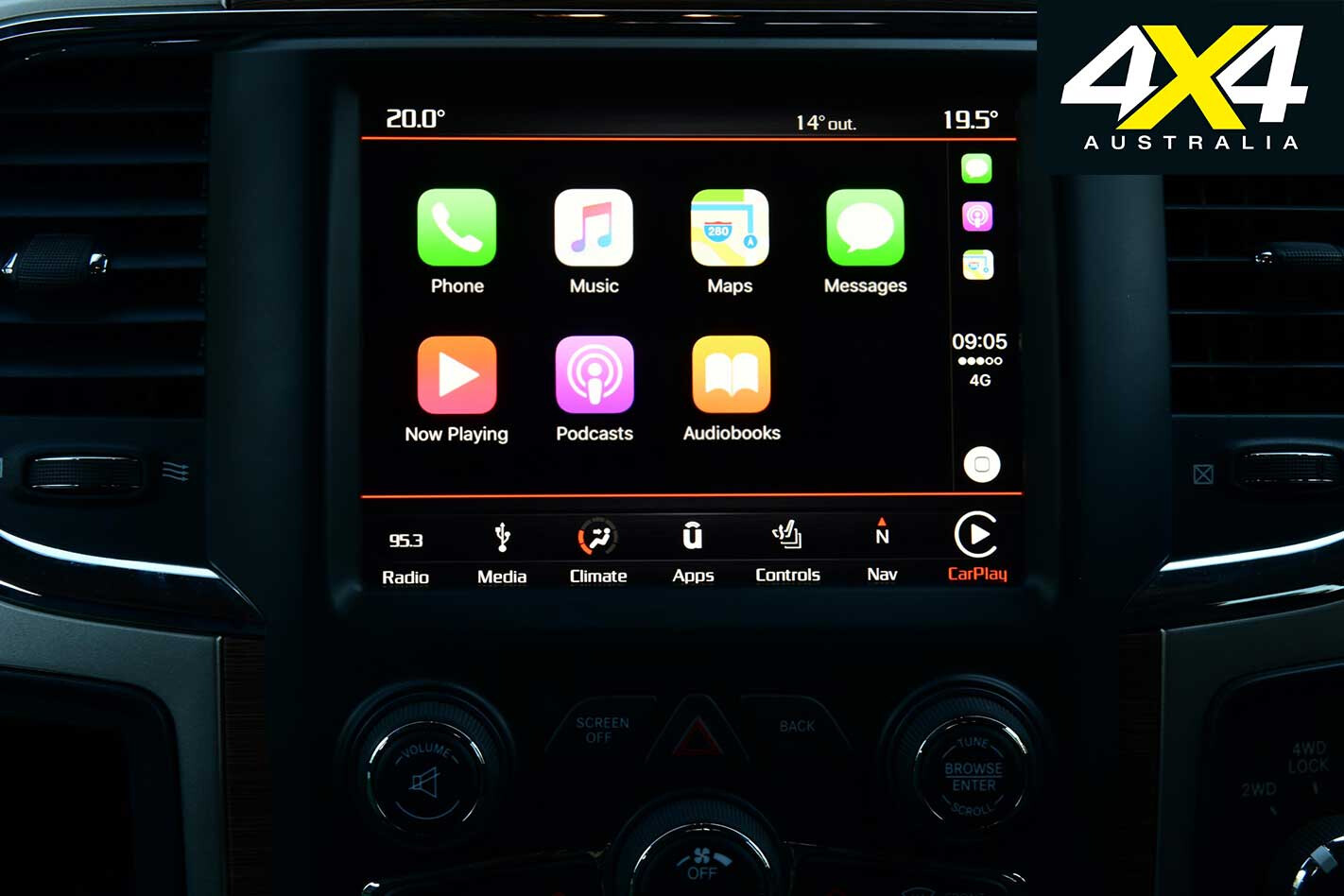
Rain-sensing wipers and auto-dip headlights are two more features for 2018 RAM 2500 and 3500. Also for 2018, the RAM 2500 can now be ordered with five seats (two bucket seats at front), rather than the standard six.
For those who don’t think the RAM 2500 looks tough enough, there’s now a RAM Sport Appearance package option, which includes colour-coded grille, front and rear bumpers, black side-steps, black badges, performance-tuned shocks and black 20-inch wheels shod with Nitto 275/65R20 All Terrain rubber. Tough enough? We think it might be…
Of course, the additional (and welcome) bonus with all these goodies is the fact that they are backed by the RAM US HQ; these rigs are a fully factory-approved import that is built in the US specifically for the market Down Under.
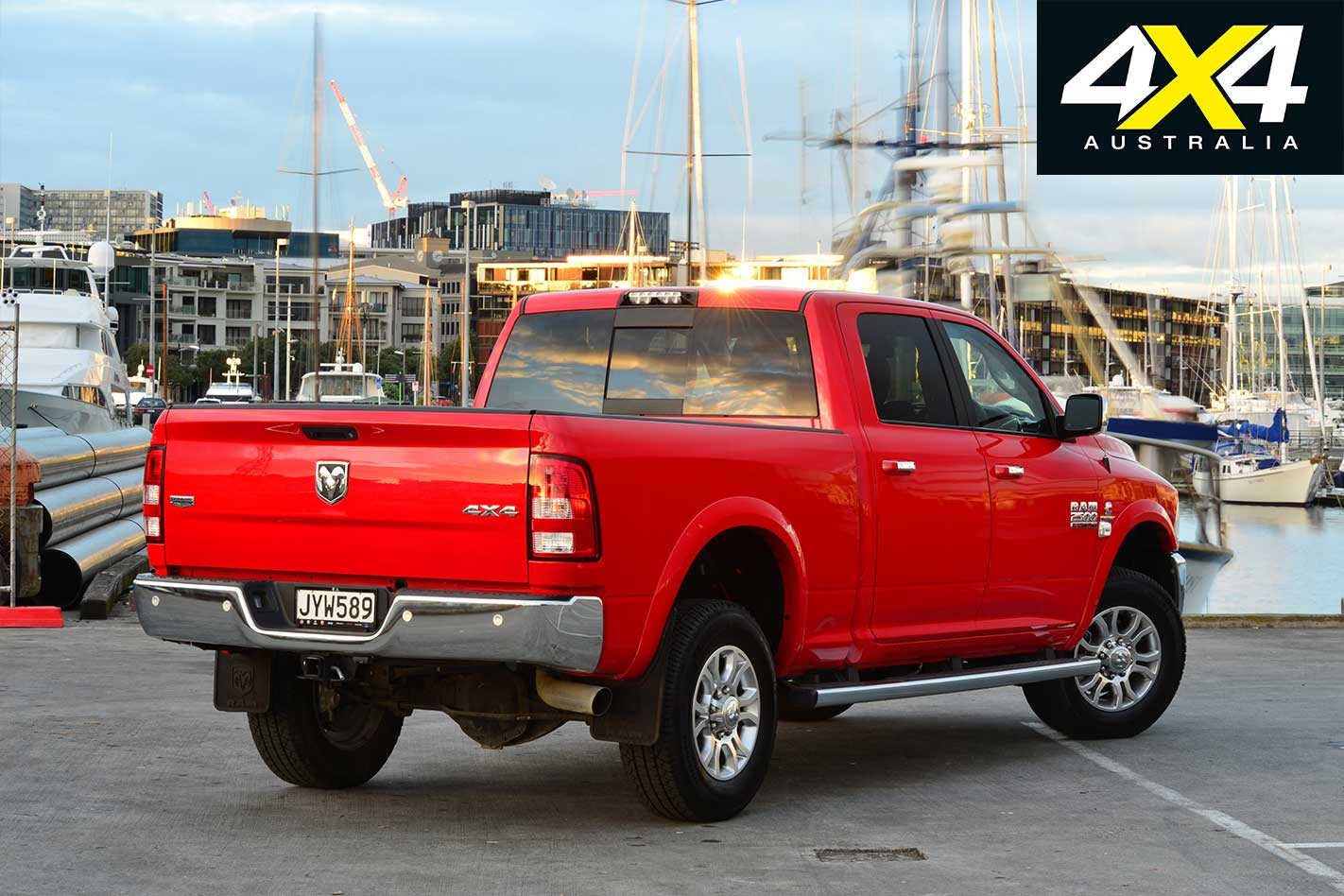
Add this to the sumptuous interiors that include everything from heated/cooled front seats to dual-zone air-con, and plenty of safety tech for heavy towing (think: full exhaust brake system with manual and auto settings, and the ability to switch the vehicles’ chassis and gearbox electronics to a specific tow/haul mode), and the RAM 2500 and 3500 build a compelling case as consideration as an off-road tourer and tow rig.
The RAM 2500 shapes up as the all-rounder, while the ultra-heavy-duty 3500 (fitted with a Hotchkiss rear leaf spring suspension for constant heavy load-carrying; the 2500 has a coil sprung rear) could be a great around-Oz contender.
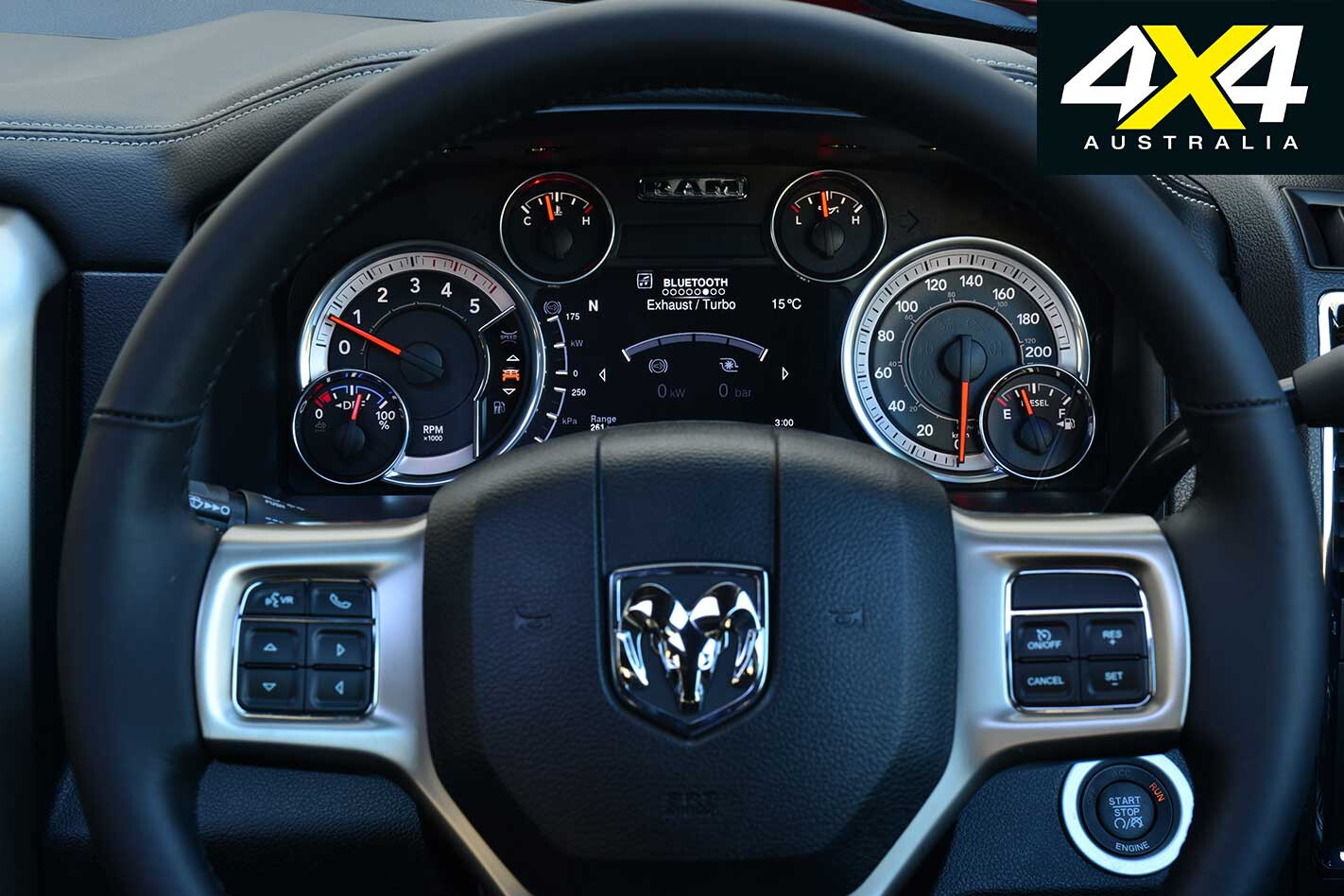
RAM 2500 pricing starts at $139,950 for the Laramie with standard six-foot-four tub, and tops out at just above $150k with the Sport Appearance Pack with RamBoxes cargo system (two 243-litre lockers fitted to each side of the tray and a rack system, with lockable tonneau). RAM 3500 is available in two versions – a car licence rated model and a light rigid truck licence model – with this larger RAM starting at $144,350 and finishing at $147,500.
Visit American Special Vehicle’s Ram website for all model variants and specific options.
FIAT Chrysler Automobiles has confirmed its plans to put a Raptor-hunting Ram Rebel TRX pick-up into production by 2022.
The news was released at the recent FCA investor meeting in Italy, as part of FCA’s five-year plan.
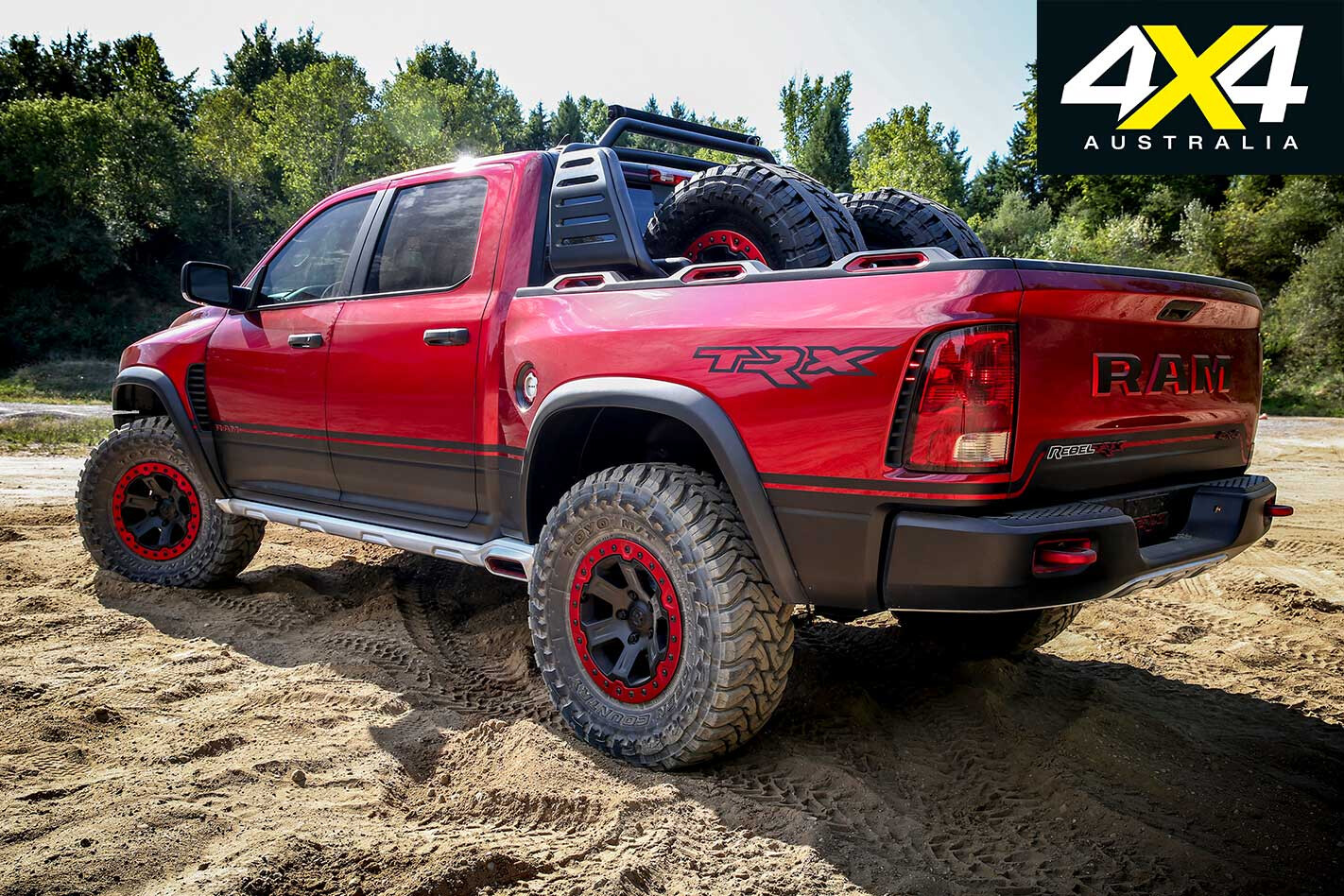
Details of the performance ute are scarce at this stage, but the production version is expected to be reminiscent of the Rebel TRX concept released in 2016. However, changes are, at this stage, unknown.
In 2016 Ram unveiled its supercharged 6.2-litre Hemi V8-powered Rebel TRX concept, a beast capable of a mind-melting 575hp (429kW).
“With 575 supercharged horsepower and a suspension system built to withstand an all-day hammering, the Rebel TRX concept can devour the roughest terrain at more than 100 miles per hour and never look back,” Mike Manley, Head of Ram Brand, FCA –Global, said at the time.
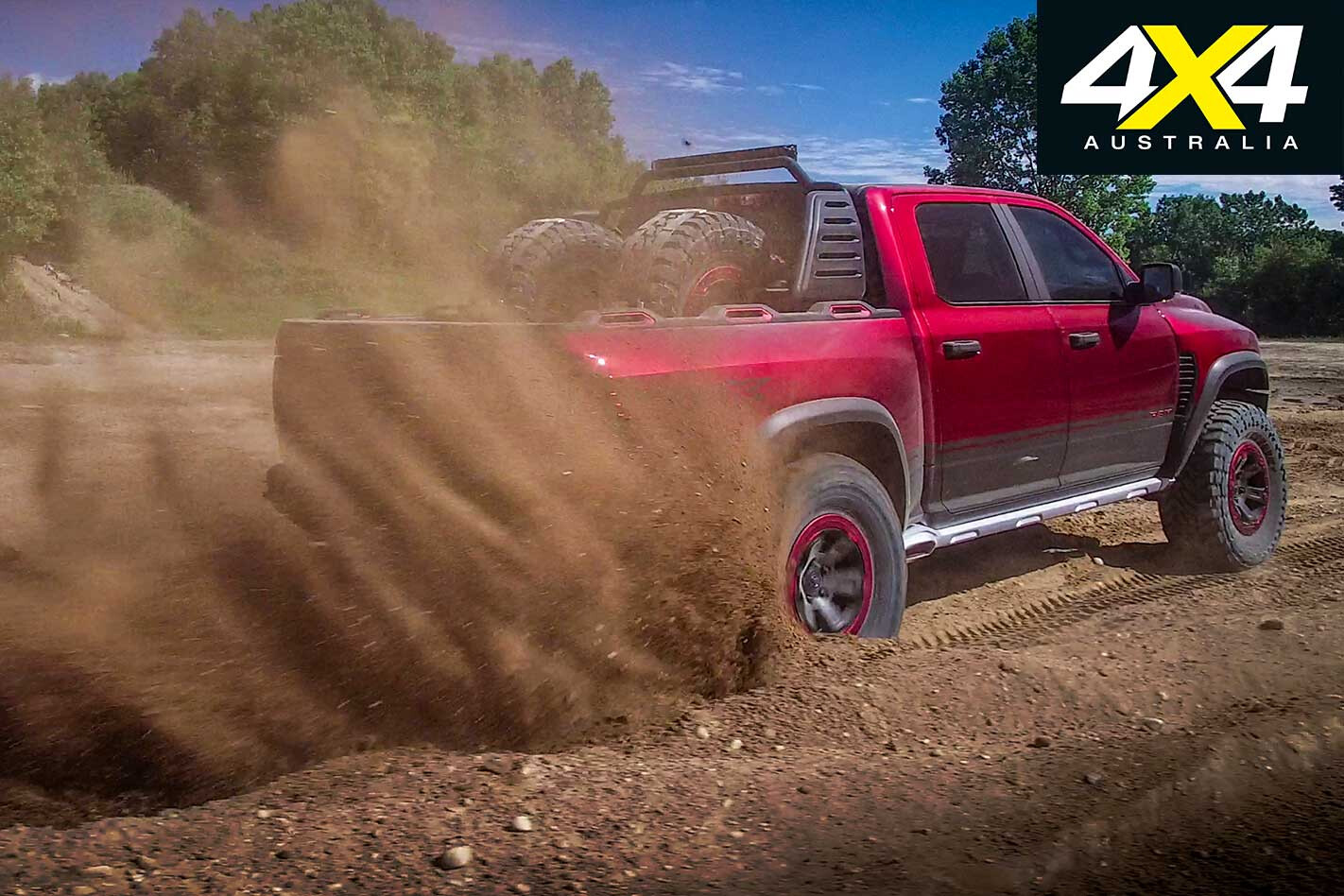
Whether the production version will carry over the concept’s coil-link rear and internal bypass shocks is also unknown.
More details are expected at the 2019 Detroit Auto Show.
MERCEDES-BENZ’S method of entry into the mid-size four-wheel drive ute market is indicative of the huge growth in this segment. The three-pointed-star brand predicts sales of this type of vehicle will grow up to 50 per cent over the next 10 years, so it wanted in as soon as possible.
To make that happen, Benz partnered with Nissan to adapt the existing D23 Navara to become its new X-Class pick-up. By doing so it cut development time of a new model by half and, after being teased for three years, the X-Class finally landed in Australia in April 2018.
However, don’t think the X-Class is simply a rebadged Navara. It might look similar in a lot of aspects, but it is a very different vehicle. It is wider than the Nissan; the cabin is wider for more interior space, meaning the turret and front and rear screens are also wider. This in turn means the bigger cargo tub is unique to the Benz.
The wheel track is wider, too, thanks to longer suspension arms up front and a wider rear live axle, resulting in a 70mm increase in track. While they were fiddling with the rear-end, the Benz techs also fitted disc brakes in lieu of the drums that are the accepted standard for this class.
The axles are tied to a ladder chassis derived from the Navara’s; although, it has been strengthened for better dynamics. Used in the X-Class is Nissan’s coil-sprung multi-link rear suspension; although, the spring and dampener settings are all Benz in the front and rear.
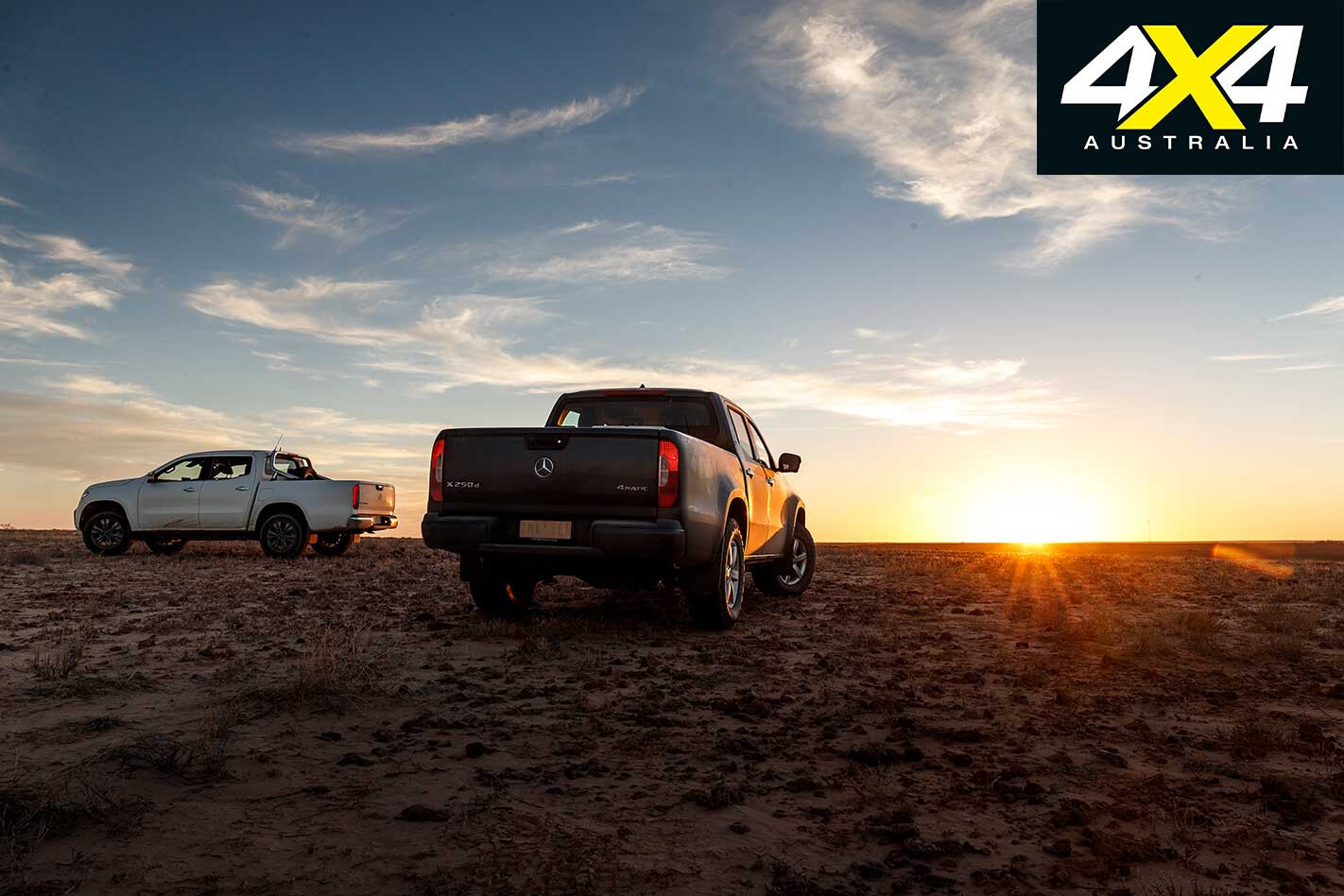
So Benz did a major makeover of the Nissan and then teased us with it all over the world before finally bringing it to Australia; but there’s only one place we want to test a 4×4 ute, no matter what badge it’s wearing. The Aussie Outback is the ultimate test, with its harsh roads, endless dust, rocky tracks and extreme weather variations. These are the conditions any Australian farmer will drive in every day, and well-heeled farmers are the centre point in Mercedes-Benz’s sights for its new ute, even if we expect most units will be sold in the cities.
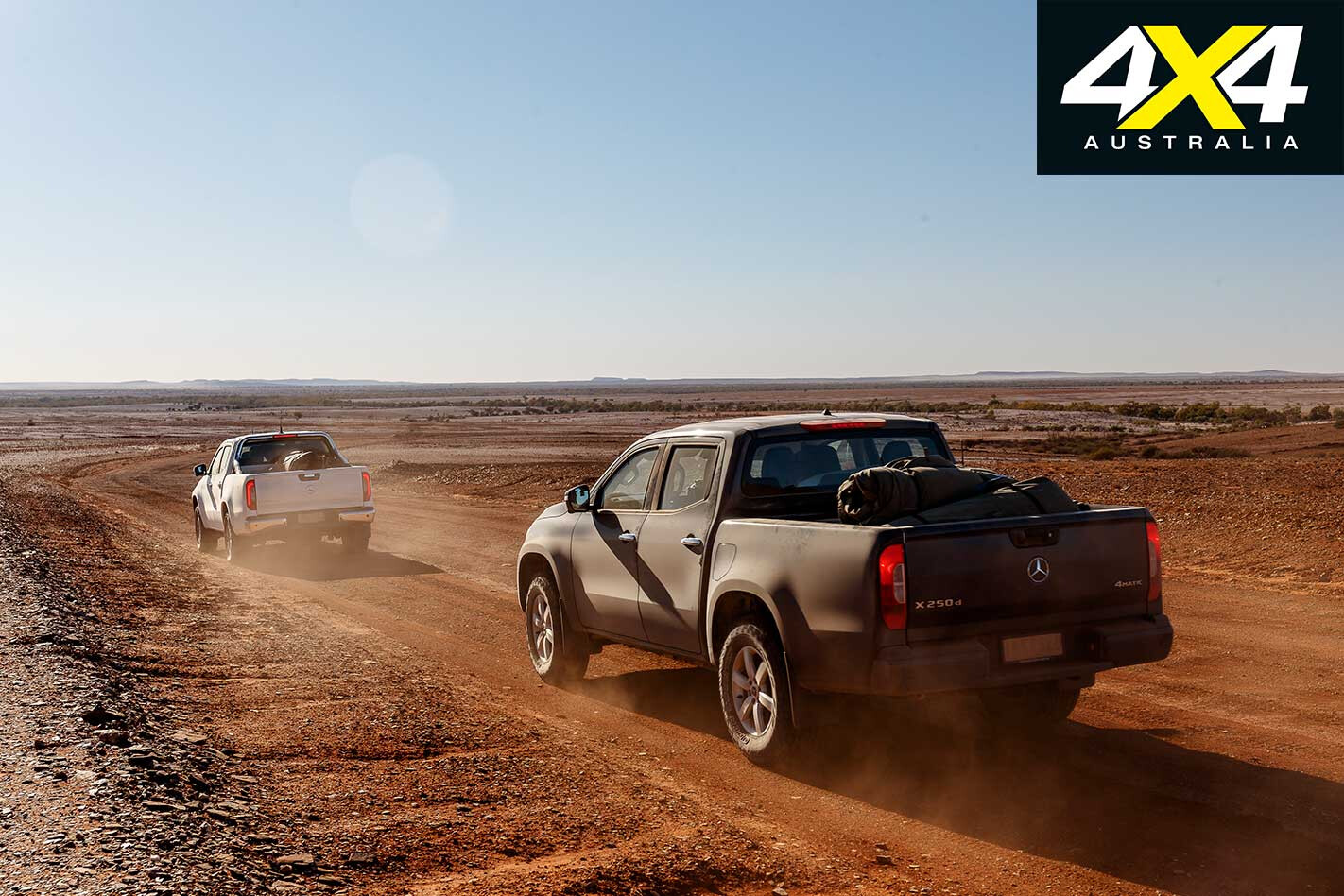
With this in mind we locked in two of the new utes – a pair of X250s in mid-spec Progressive and top-spec Power guises – for an outback adventure (the base-spec is called Pure). The X220d and X250d models were launched earlier this year, while the 550Nm V6-powered X-Class won’t arrive until later this year.
HITTIN’ THE ROAD
Each X-Class was loaded with a 60-litre fridge and all the kit needed for a two-week camping trip. Not a heavy load, but indicative of what most recreational four-wheel drivers would carry.
The X-Class utilises the clever adjustable tie-down rails that are also found in the Navara, and these were used to secure the loads. They are mounted high on the sides of the cargo tub, which isn’t always ideal when you are trying to tie something ‘down’ in the tub. Older Nissans also had the rail mounted on the tub floors, which was a better option. The factory fitted, hard-wired 12-Volt power outlet located in the tub was used to power the fridge.
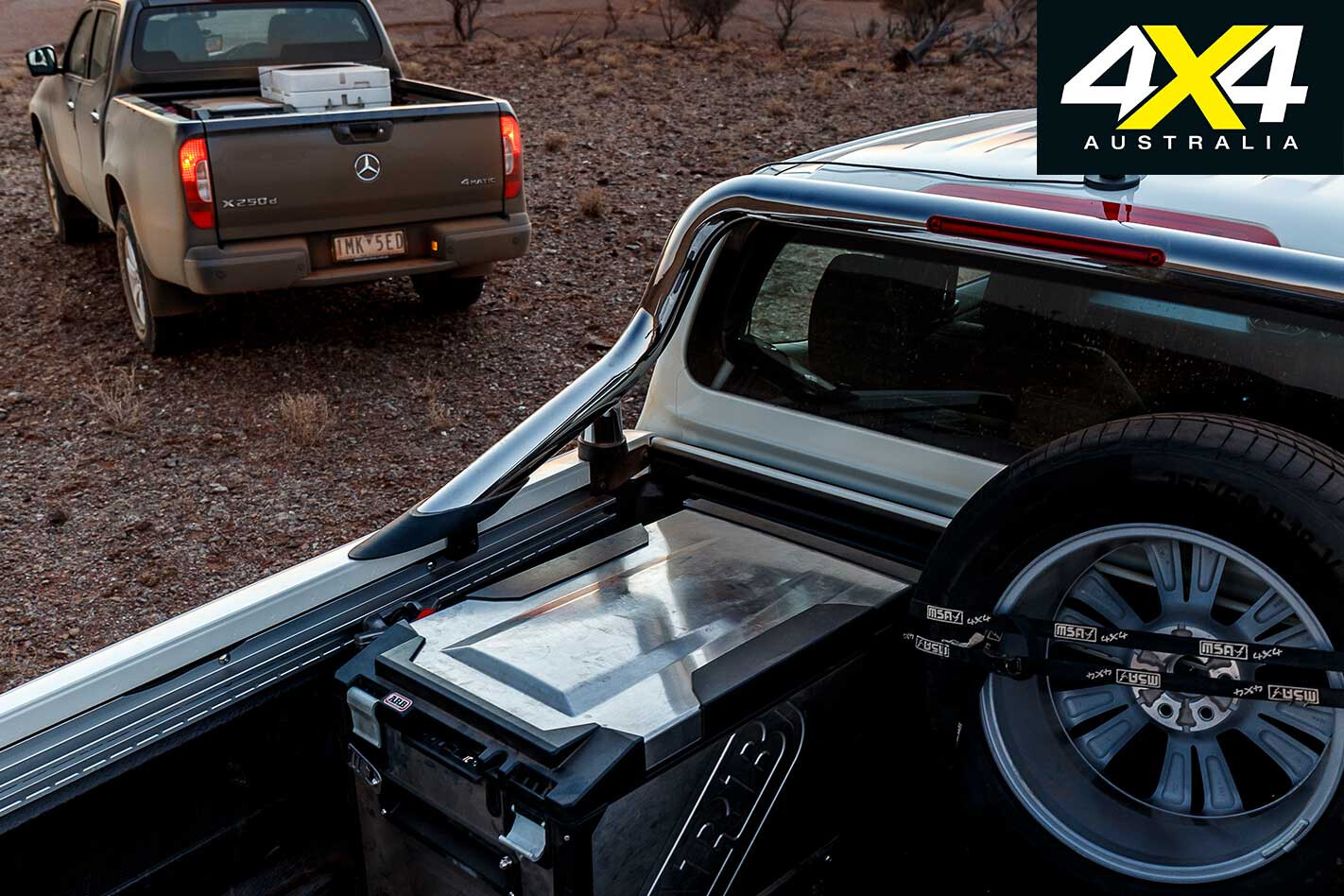
With the rocky roads ahead we wanted to fit some tougher all-terrain tyres, so the X250d Progressive was fitted with a set of Toyo Open Country ATIIs for added durability. The X250d Power rides on 18-inch alloy wheels and suitable tyres weren’t available at such short notice, so we headed off on the standard road-biased rubber with an additional spare.
Day one involved a highway drive from Melbourne to Broken Hill, where the Benzes cruised in comfort and ease. The interior of these utes is a few steps above anything else currently available in this segment, with components taken from the C-Class and V-Class Benzes, including the dash, gauges, seats and trims.
The X250d Power interior is as you’d expect of a Benz. It has heated leather, power-adjustable seats with stitched leather on the dash and door trims, and a black roof lining and trimmed pillars. The Progressive is a bit lower key, with cloth seats, untrimmed dash and pillars, and a light-coloured hood lining.
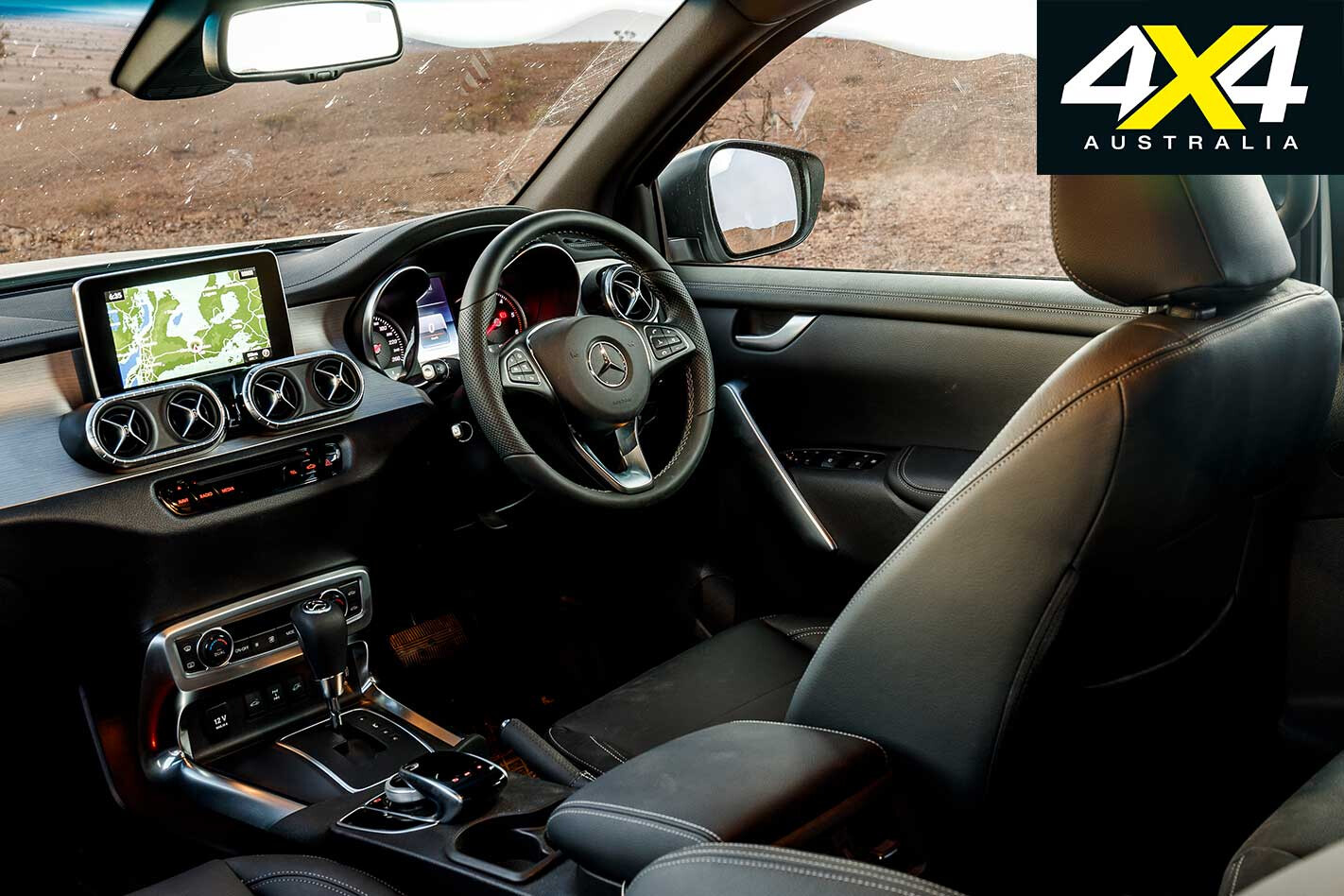
In all X-Class variants the rear seats are raised to improve the view of passengers, and the roof is bulged to accommodate this; however, any passengers more than 180cm tall will find it a tight fit. There were no complaints from those riding up front on long days, though.
One complaint about the cabin is the lack of useable storage space. There is only one coffee-cup holder, and the console bin and glovebox are both small. The door pockets can house large water bottles and map books, while there are three 12-Volt power outlets and two USB ports inside.
Leaving the bitumen behind us at Silverton, we took the back roads north towards Tibooburra, and it wasn’t long before we encountered a problem with the X250d Power. A garden of exposed rocks on a crest in the road was unavoidable, and the X-Class’s tyre pressure monitor almost instantly lit up the dash with a warning.
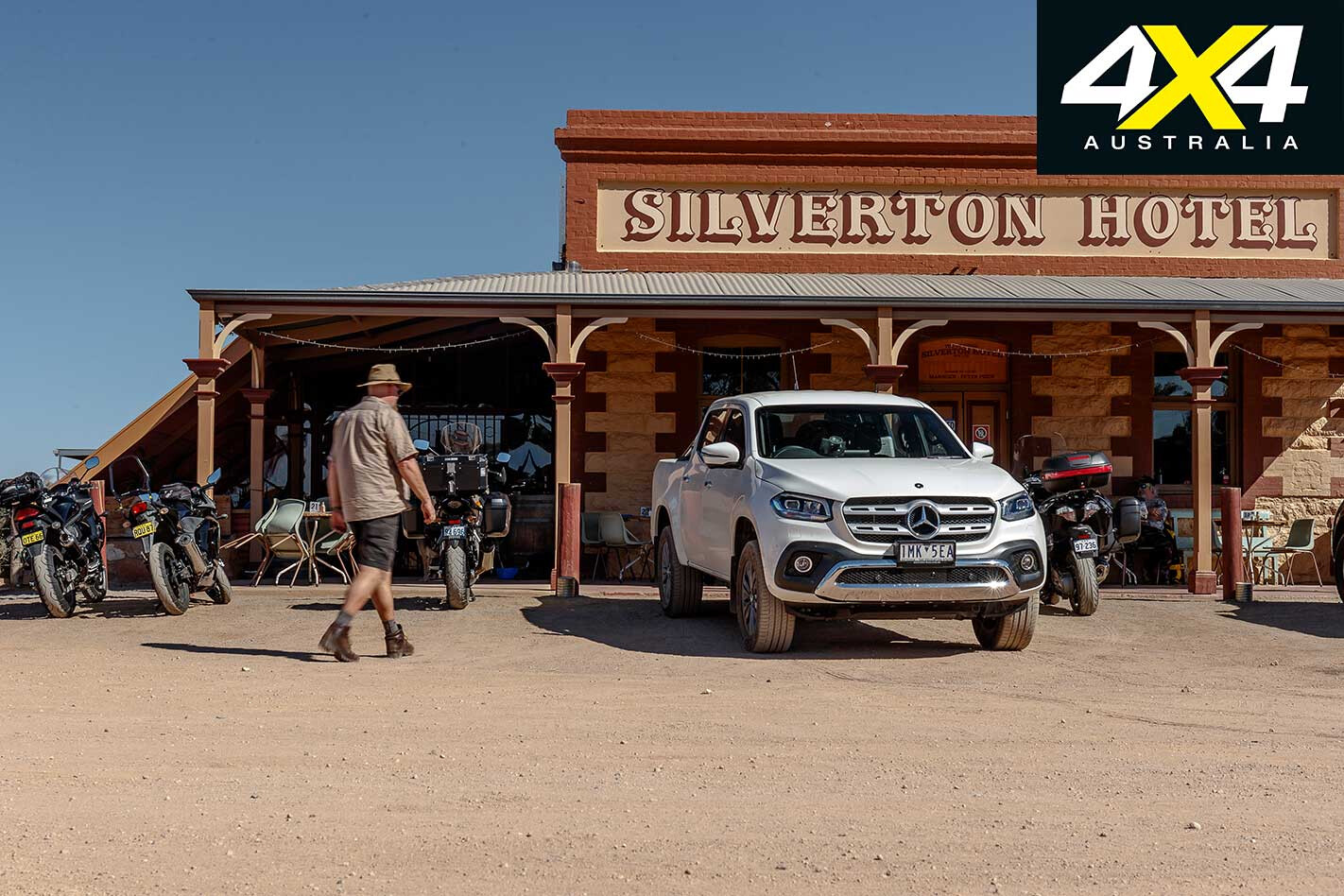
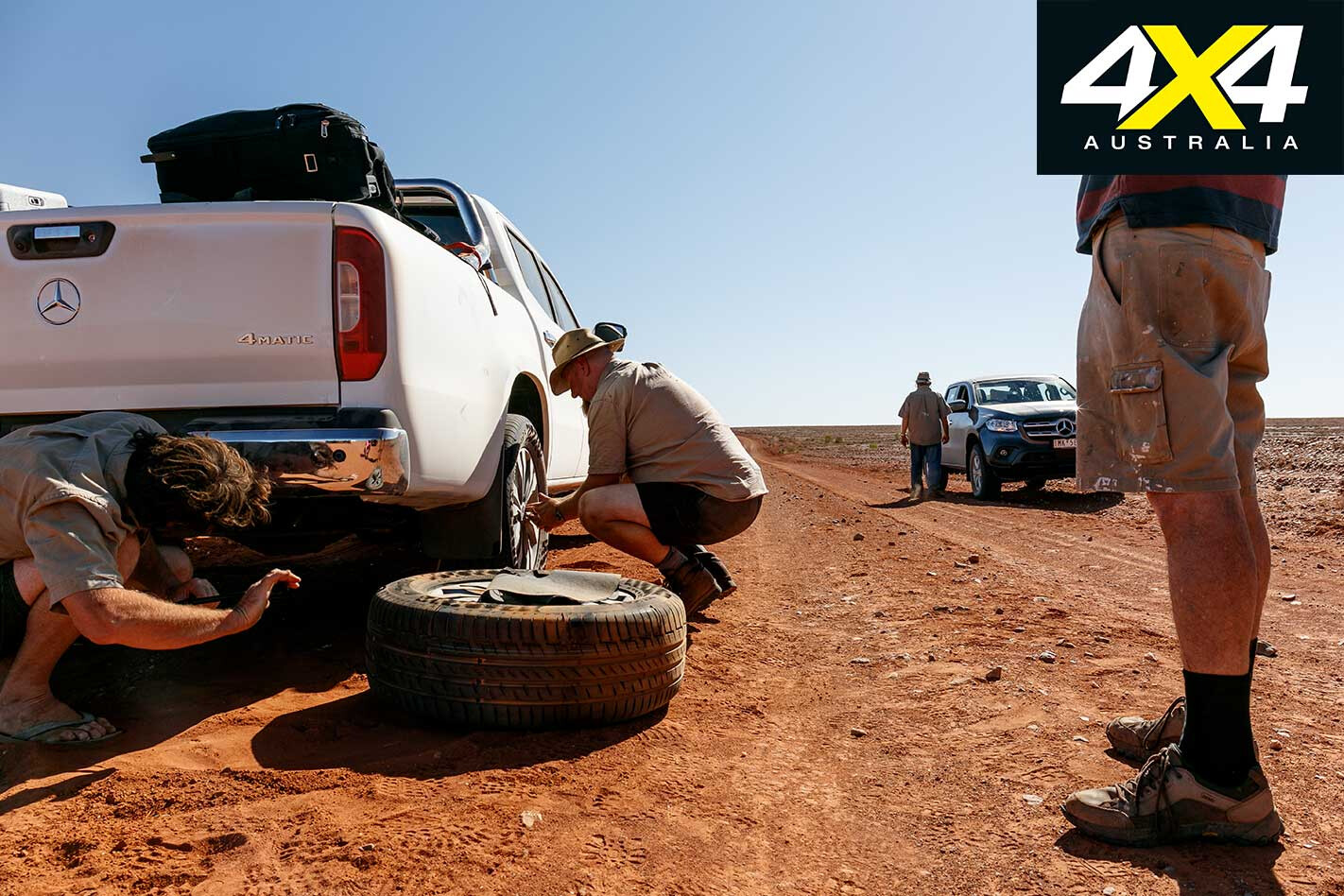
Pulling over revealed a huge cut in the sidewall of the driver’s side rear tyre, and it was duly replaced as we thanked ourselves for that second spare – lucky we did, as the next day we lost another one. This time we were exploring an old mine site, with lots of rocks and sharp stumps scattered around. One of those stumps cut the passenger’s front sidewall, and we felt it before the TPMS had time to warn us.
We crawled along a rocky road to Tibooburra sans spare tyres for the X250d Power, and then hit the phones for replacements. We found a set of General Grabber AT3s that’d serve our purpose, but it meant returning to Broken Hill to have them fitted.
It’s a fitting reminder of how harsh the tracks are out here, and that you shouldn’t be out here on stock road tyres. With the Grabbers on the X250 Power and the Toyo Open Countries on the Progressive, we ventured on without tyre issues for the remainder of the trip.
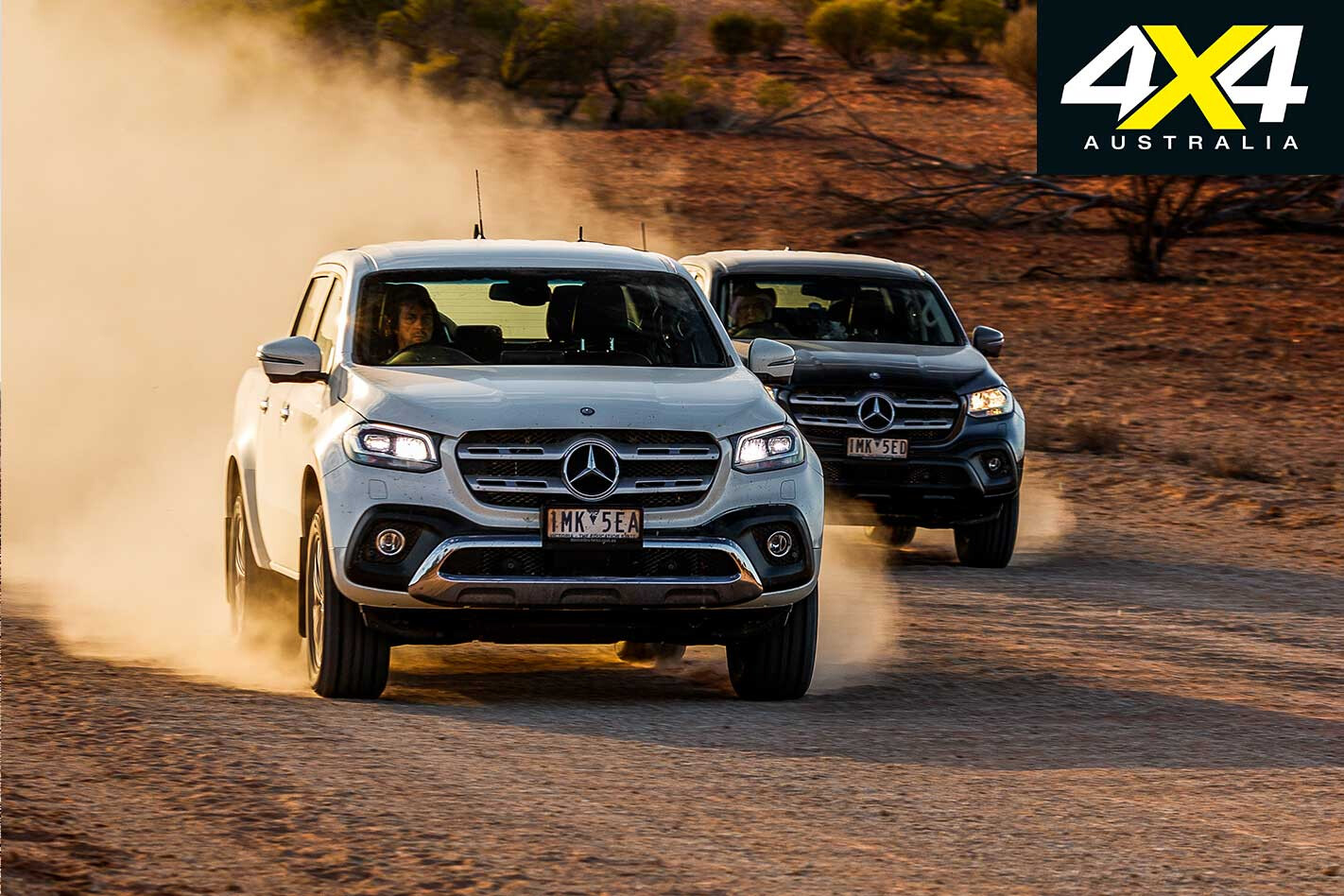
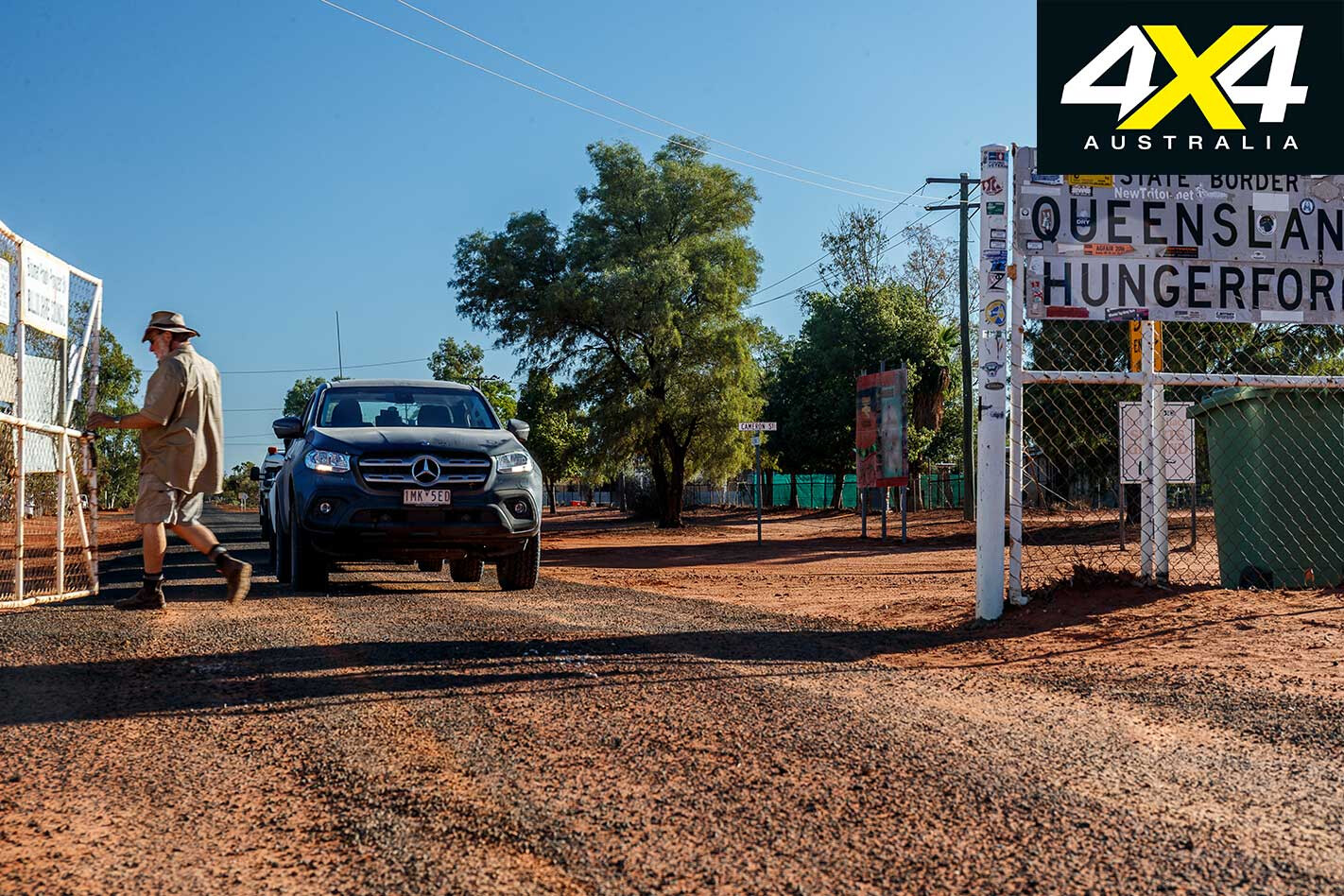
The tracks turned sandy as we passed through Cameron Corner, where the states of New South Wales, South Australia and Queensland meet. The softer, wider tracks allowed a bit more pace, and the stability of the Benzes inspired confidence in these conditions. The added wheel track helps here to spread the weight of the car over a broader footprint, while the calibration of the electronic stability control never interferes unnecessarily on the tracks.
All X-Class models are loaded with safety kit, both passive and active, and this is the first ute in this segment to feature autonomous emergency braking (AEB).
This feature detects any possible forward impact and not only warns the driver of the impending incident but applies the brakes to avoid it if possible, or at least lessen the impact. Other utes have the warning system but not the full AEB at this point; although, we expect other manufacturers to soon follow suit.
The calibration of Benz’s electronic safety systems is very good, but the outback throws up unique conditions (possibly) found nowhere else in the world. One such condition – approaching a cattle grid on a rise which was framed by signs on both sides, on a light sandy-coloured gravel road – tripped up the AEB a couple of times.
The AEB picked up the darker steel grid and signs and suddenly applied the brakes as we hit the grid. After initially applying the brakes, the system must’ve realised there was nothing in front of it and released the brakes, as it didn’t bring the vehicle to a complete stop. This happened three times in the two cars over 5500km of outback roads.
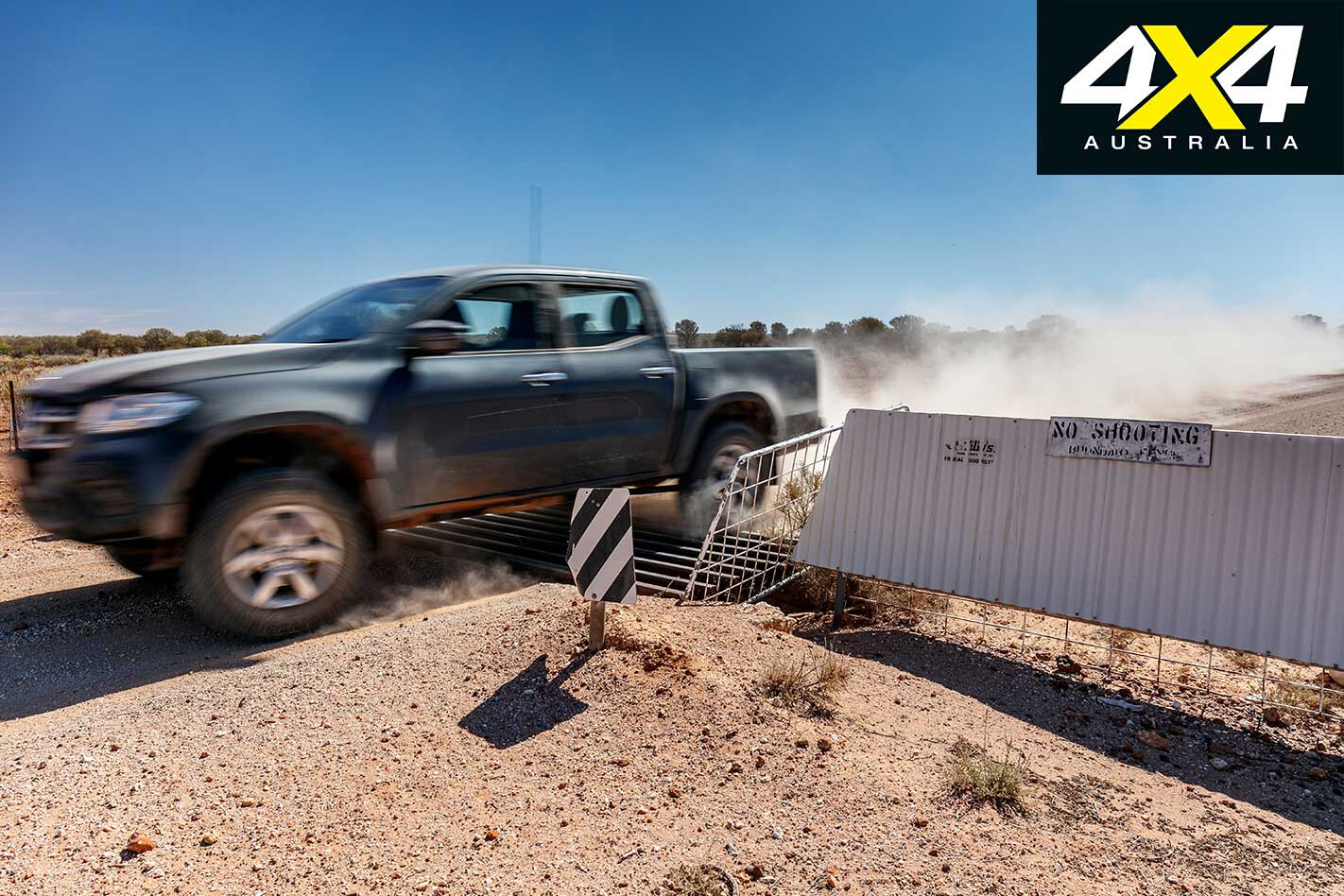
The AEB also activated when avoiding countless kangaroos – another uniquely Australian situation – and even pulled the X-Class up before knocking one over. It slowed the car down and limited the damage, but we felt the ABS calibration could be better for gravel roads – possibly if it had a separate calibration when in 4×4 and on unsealed surfaces.
The four-cylinder X-Class models use a part-time 4×4 system to provide rear-wheel drive, locked 4×4 high range and locked 4×4 low range; standard stuff for a one-tonne ute, as is the inclusion of a rear diff lock. When the V6 X arrives later this year it will have full-time 4×4 including low range, which will be another feature rare in the class – the Mitsubishi Triton being the only other ute with it.
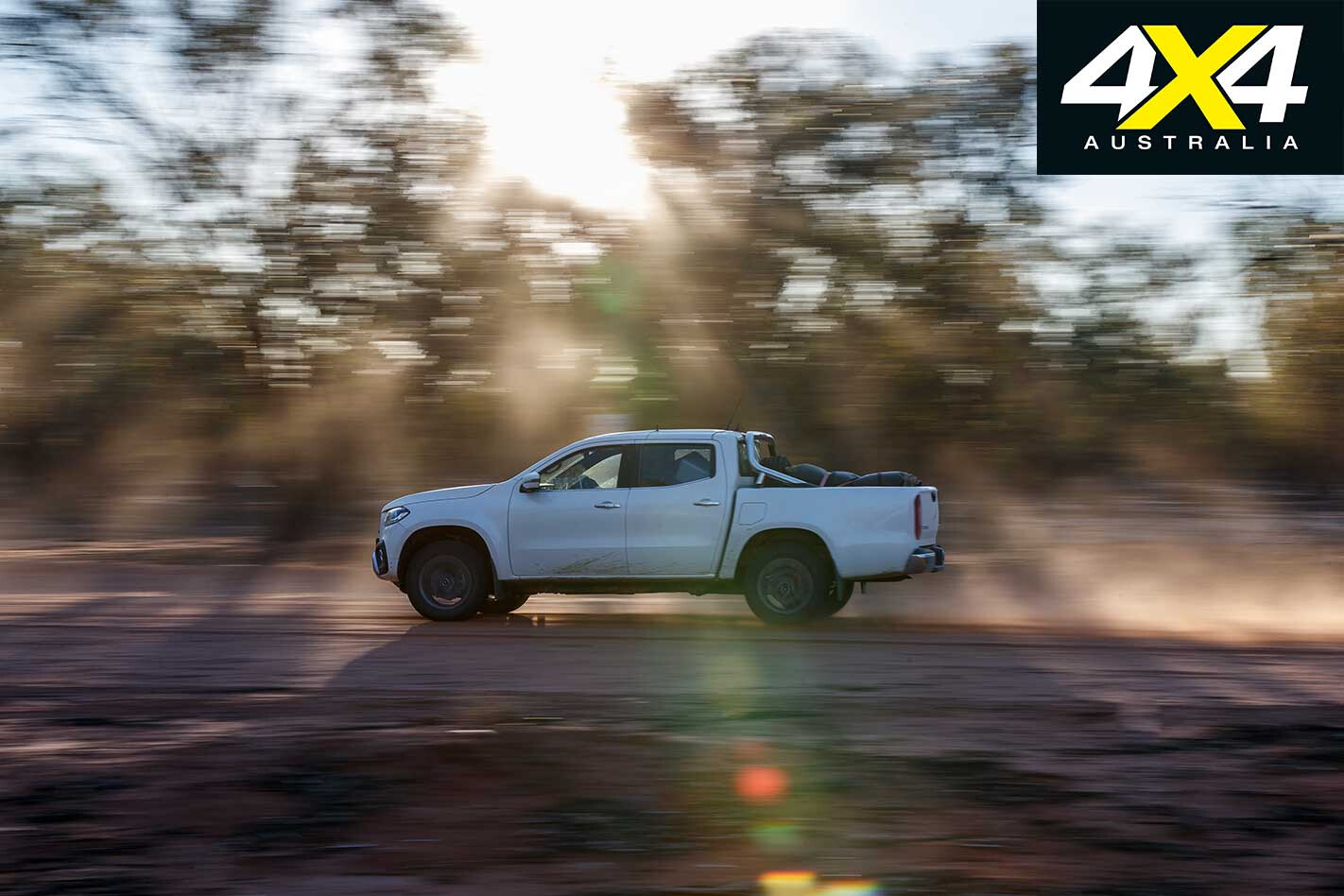
There’s not a lot of need for low range when touring the outback, but slipping into 4×4 high range helps with stability and traction on loose road surfaces. There was the odd occasion for low range when climbing out of a steep, dry river bank or over rocks, and the X wasn’t fazed by these.
Once we crossed into southwest Queensland and broke south toward home, the tracks turned into some of the worst we’d felt on the trip. Surfaces rutted up by previous rains, as well as protruding rocks and corrugations, make for extreme conditions; but throw them all together and it could be vehicle destroying.
On some of the longer sections of these conditions we felt the shocks start to soften up – the stock units can only take so much torture – but they seemed to come back to life when the roads smoothed out and they cooled.
What was impressive was that, when we hit the bitumen again as we approached Wentworth, neither of the cars had any rattles or squeaks in the cabins, indicating these Benzes are built solid. Those roads, as we headed south, were car-destroying, and we didn’t hold back the speed as we traversed them. Tyres, shocks and every nut and bolt are tested to the limits when pounding these tracks, and both Benzes held up very well.
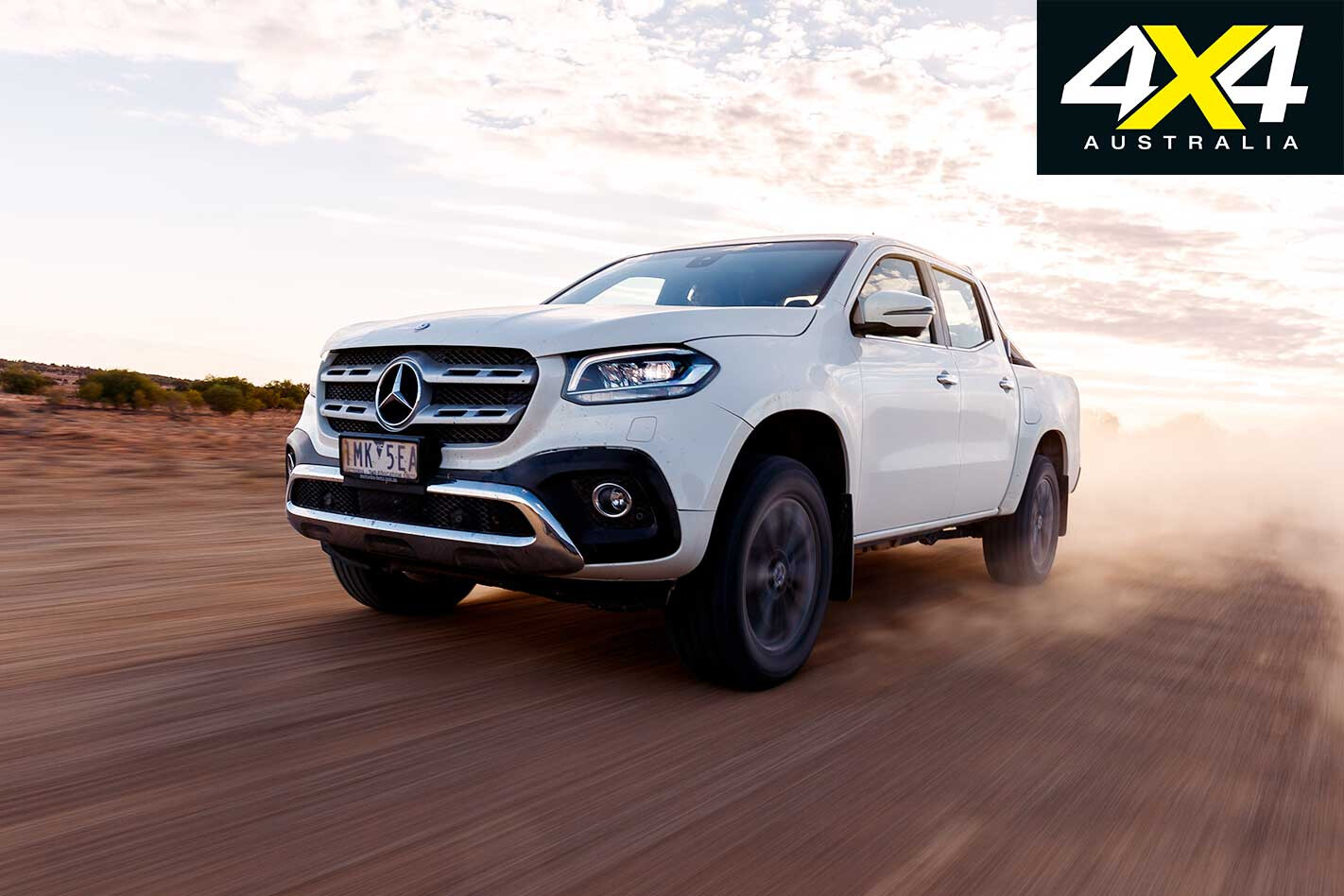
After more than 5500km over two weeks, most of which was on unsealed outback roads, the fuel figures were excellent, with the X250d averaging 9.6L/100km for the trip and the Progressive 9.8L/100km. Bear in mind both cars were on non-OE all-terrain tyres and that the ones fitted to the Progressive were slightly taller than OE spec.
The big question remains: Is the X-Class worth the price premium over its competitors? The Progressive and Power retail for $62,990 and $68,360 respectively as tested with all the options fitted ($54,990 and $61,600 list price) so they represent the top end of the four-cylinder one-tonne ute market. But if you appreciate a more luxurious interior, high levels of safety and better dynamics than the best one-tonne utes currently available, then it’s money well spent.
The real point of difference over the competition will come when the V6 engine lands later this year. It will cost more again, but the X350d will take the category to another level.