
KEEN eyes will remember we drove Marks 4WD’s Land Cruiser back in 2016, where it wowed readers with its portal axles and six-speed conversion.
Leigh Hardman from Marks 4WD joined us on our recent foray to the Vic High Country for the filming of our Adventure Series DVD, and he explained to us that a few things have changed since we last drove it (back in the August 2016 issue of 4X4 Australia).
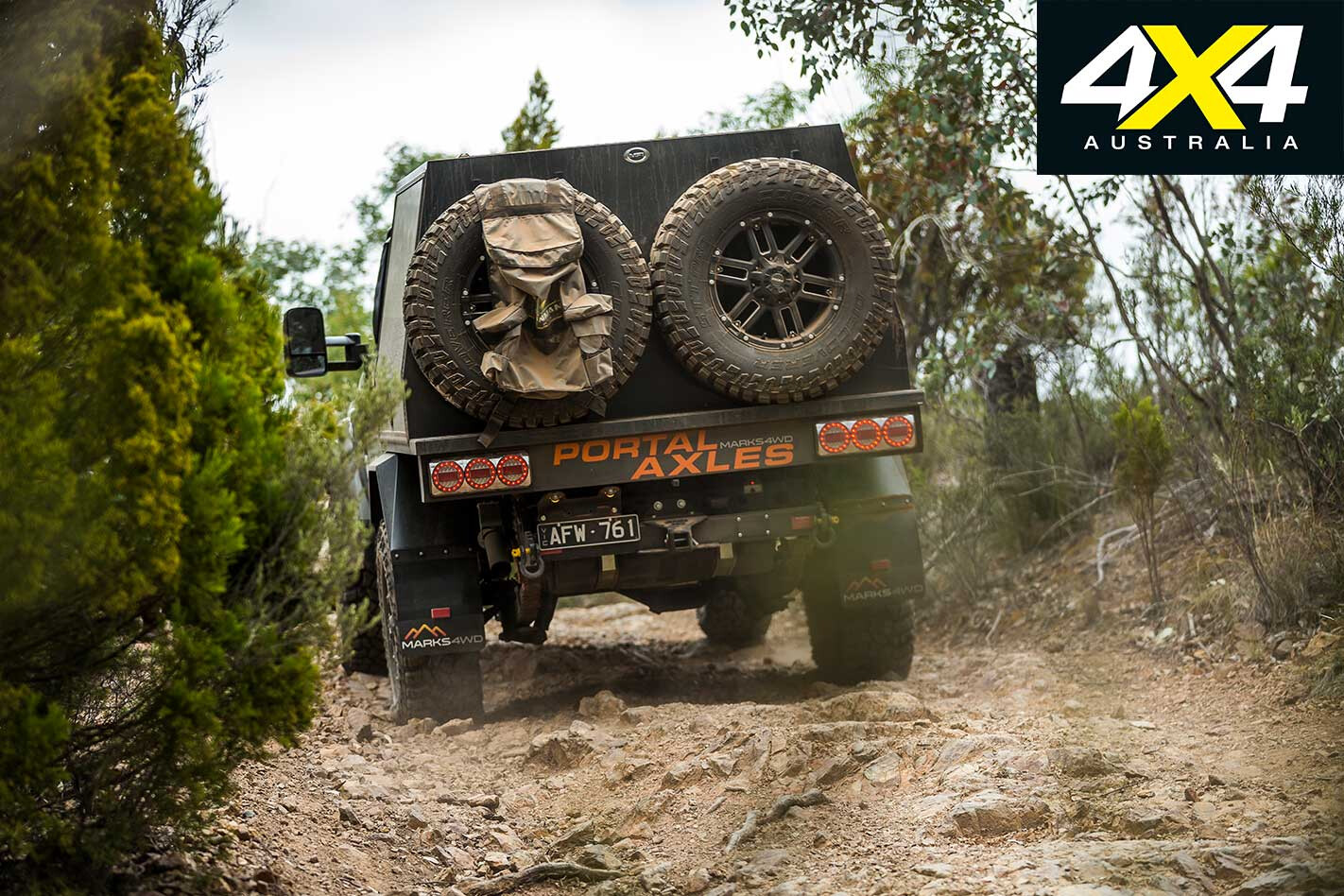
“It’s evolved quite a bit,” Leigh said. “We updated the GVM; it was 3780kg and it’s now 3950kg.”
Marks 4WD also fabricated its own complete rear diff housing, and the truck has evolved with the addition of new wheels, suspension, bar, canopy, seats and an ARB fuel tank.
For the ultimate R&D trip, Leigh loaded up the wife and two kids last year and took off to the Kimberley for a 25,000km round trip, where the ute proved itself as a capable tourer.
The highlight of the build is undoubtedly the portal axles, and Leigh told us that in the last six months, sales have shot through the roof. “At the moment, we can’t keep up,” he said. “We’re probably selling 6-8 sets a month.”
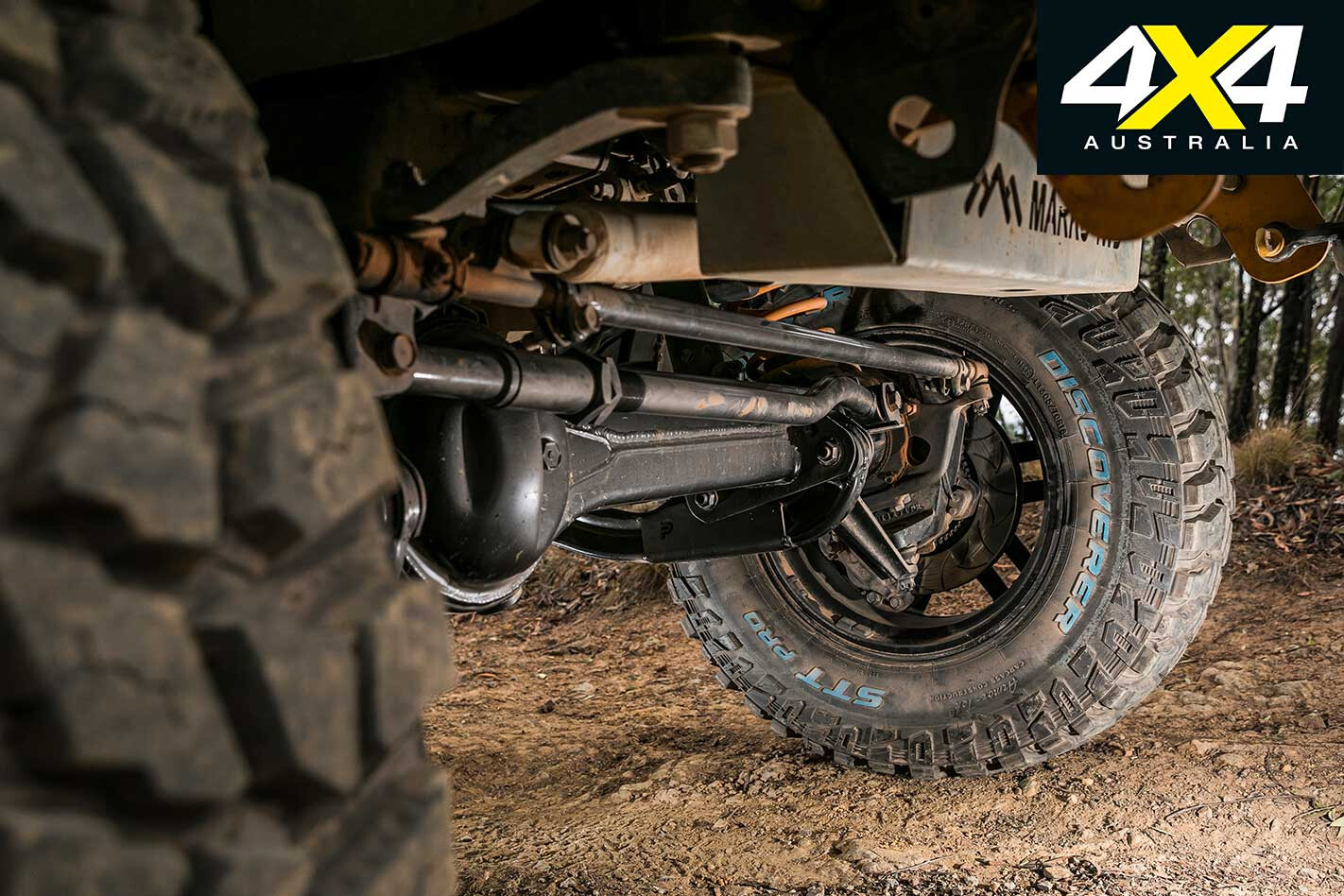
The Vic High Country was the perfect playground for the converted Cruiser, and it made light work of the area’s trickiest tracks.
It’s the ultimate tourer, but it also doubles up as a pretty handy day-to-day transporter.
“It’s a family car,” Leigh said. “I drive it to work, and I drive it away on weekends.”
IN DESIGNING and developing this generation Colorado for release in 2012, GM didn’t piggy-back off Isuzu as it had done for all previous Rodeo utes and even the original Colorado.
Instead, GM marshalled its global resources to design a ute from the ground up, with its VM Motori four-cylinder diesel from Italy, the six-speed auto from GM in the USA, and the whole thing pulled together by a design team headquarted at GM Brazil.
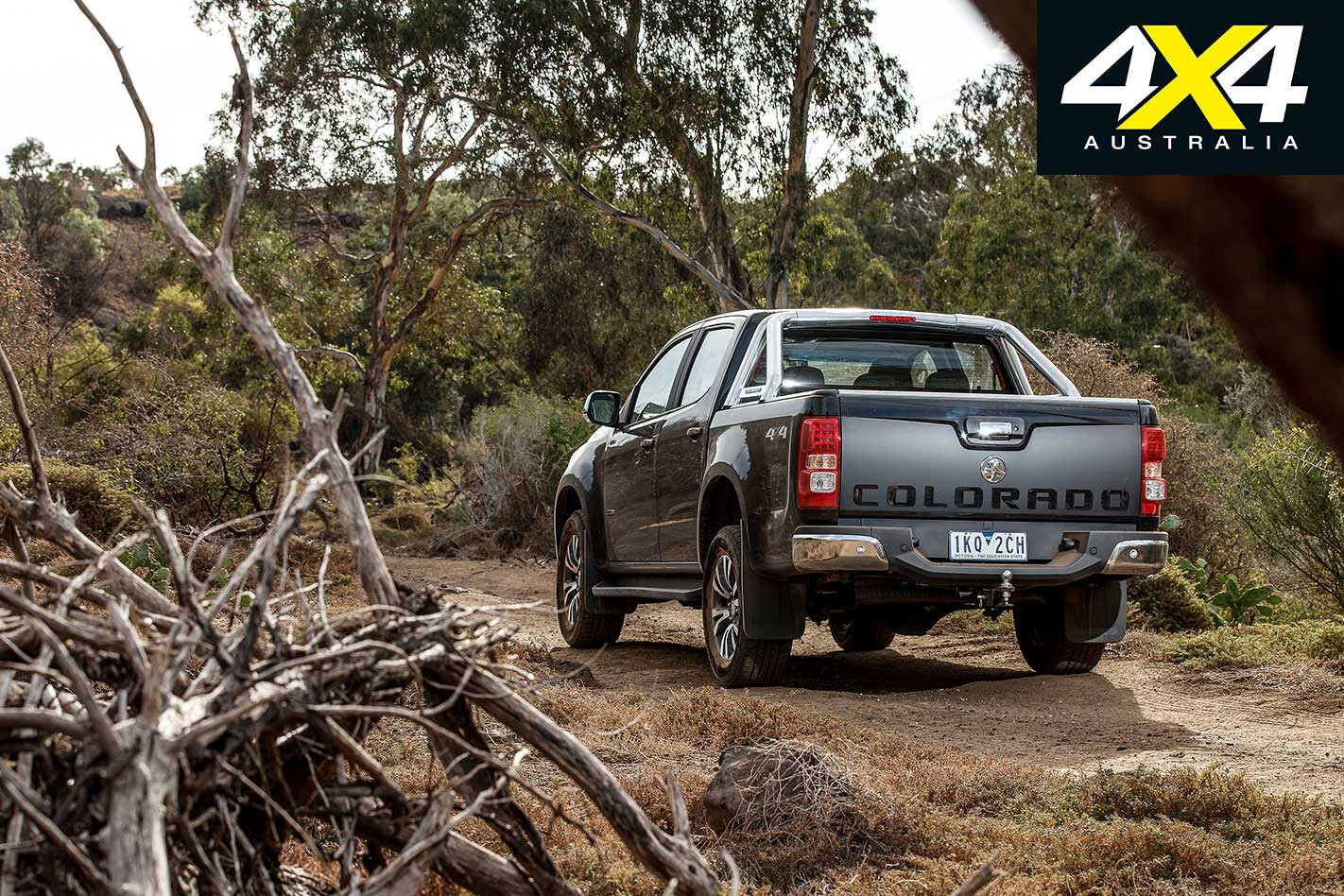
The trouble was that it wasn’t quite right on many fronts and was tweaked in 2013 and then again in 2014, before being pulled right apart – almost down to the last nut and bolt – and put back together with a host of new or revised parts for its 2017 rebirth.
Australian Holden engineers were instrumental in all this, and models for local consumption received additional NVH, an auto gearbox and manual gearing upgrades in addition to the broad-brush global changes.
WHAT YOU GET
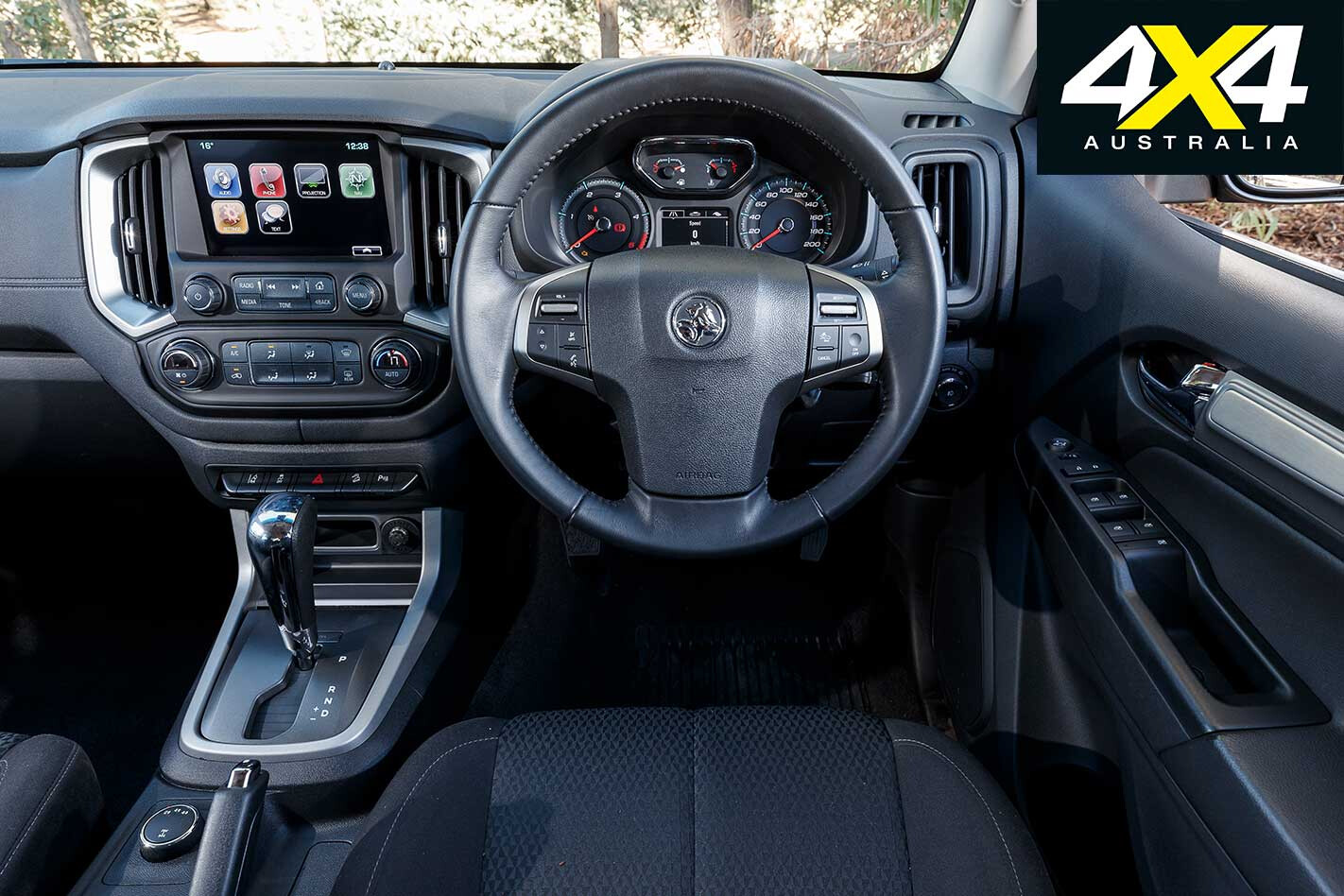
ALL Colorado 4×4 dual-cab pick-ups have seven cabin airbags, a reversing camera, cruise control, rear parking sensors, a digital radio, Apple CarPlay/Android Auto and trailer-sway control.
The LTZ, as tested here, then adds 18-inch alloys, an eight-inch touchscreen, sat-nav, auto wipers, front parking sensors, tyre-pressure monitoring, electric-adjust for the driver’s seat, a soft tonneau, a sports bar, lane-departure warning and forward collision alert.
POWERTRAIN AND PERFORMANCE
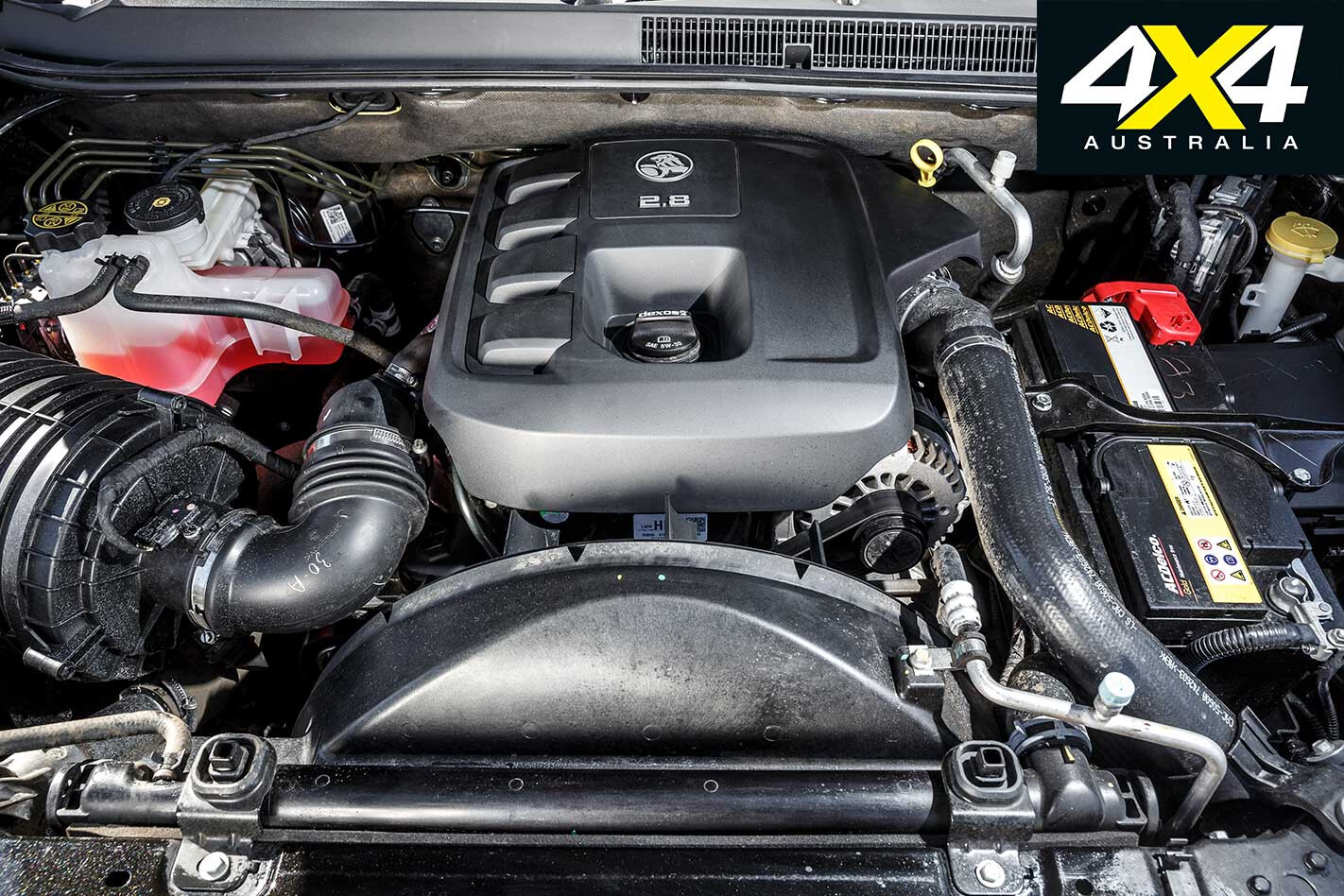
THE Colorado 2.8-litre four-cylinder diesel claims 500Nm, which is more than the notably bigger five-cylinder engines in the Ranger and the BT-50, and only 50Nm less than the potent V6 in the Amarok.
Often on-paper engine output figures don’t translate into real-world get-up-and-go, but that’s not the case with the Colorado, which edges out all of the other utes here, bar the Amarok, for pedal-to-the metal performance.
In general driving, too, the Colorado delivers on its 147kW/500Nm promise and offers plenty of punch, even if it needs to rev harder than the Amarok’s V6 and the bigger five-cylinder engines in the Ranger and BT-50, which also claim 147kW, to get the same job done.
All the while Colorado’s four-cylinder, complete with counter-rotating balance shafts relocated in the MY17 engine upgrade, is smooth enough but still a little on the noisy side, despite being much quieter than it was before the MY17 changes.
The Colorado’s six-speed automatic was also much improved for 2017 and is the pick of the six-speed automatics here in terms of shift quality and its proactive rather than reactive shift protocols.
ON-ROAD RIDE AND HANDLING
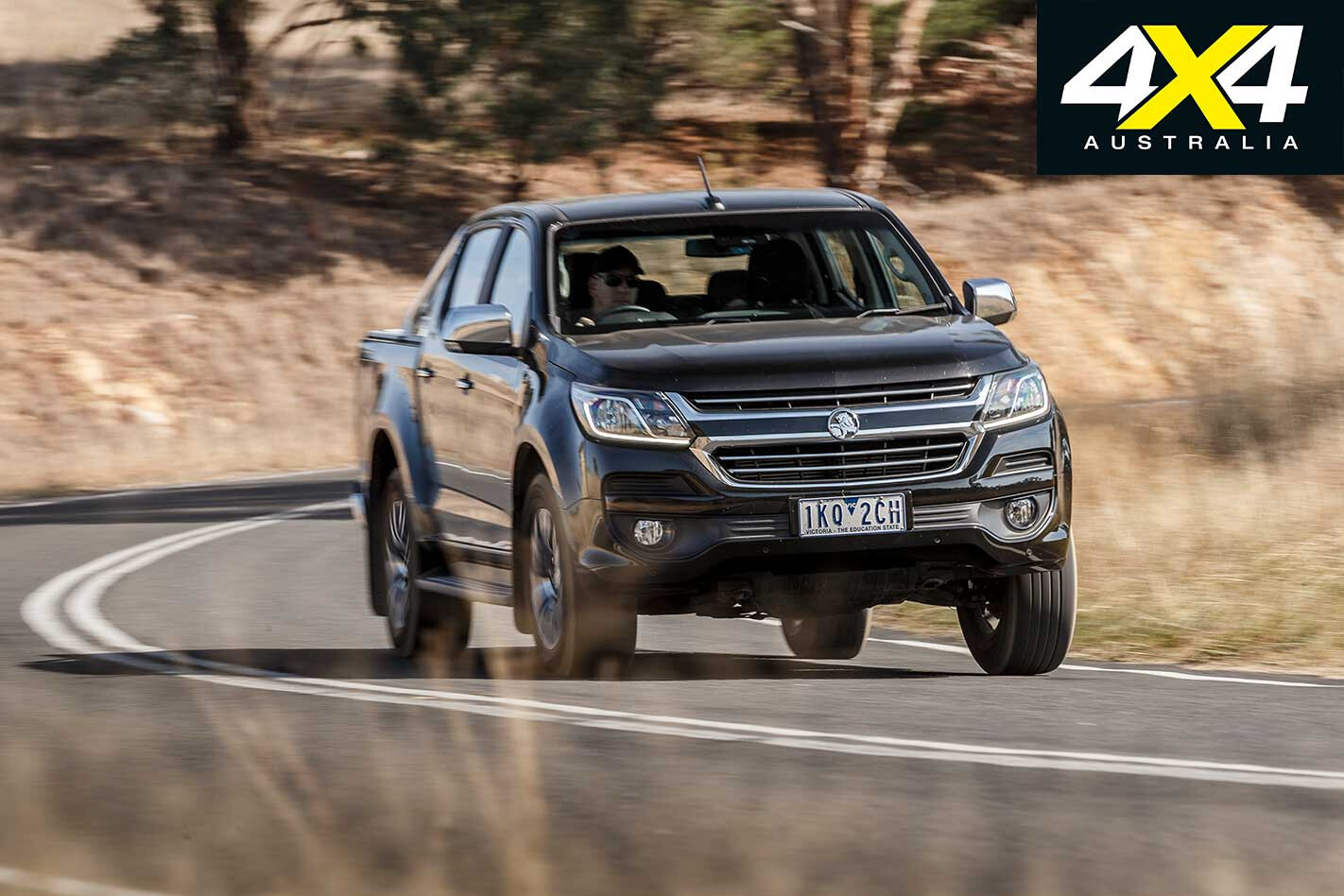
AMONG the raft of improvements implemented for the 2017 model year, the Colorado gained new springs, dampers and swaybar at the front, and new springs and dampers at the rear.
Electric power steering was also introduced, replacing the hydraulically assisted steering used previously. The end result is light steering and good manoeuvrability at parking speeds, yet a very confident and composed feel at highway speeds. Good ride quality, too, for a ute on most roads – even unladen – and the front-to-rear suspension match is well sorted.
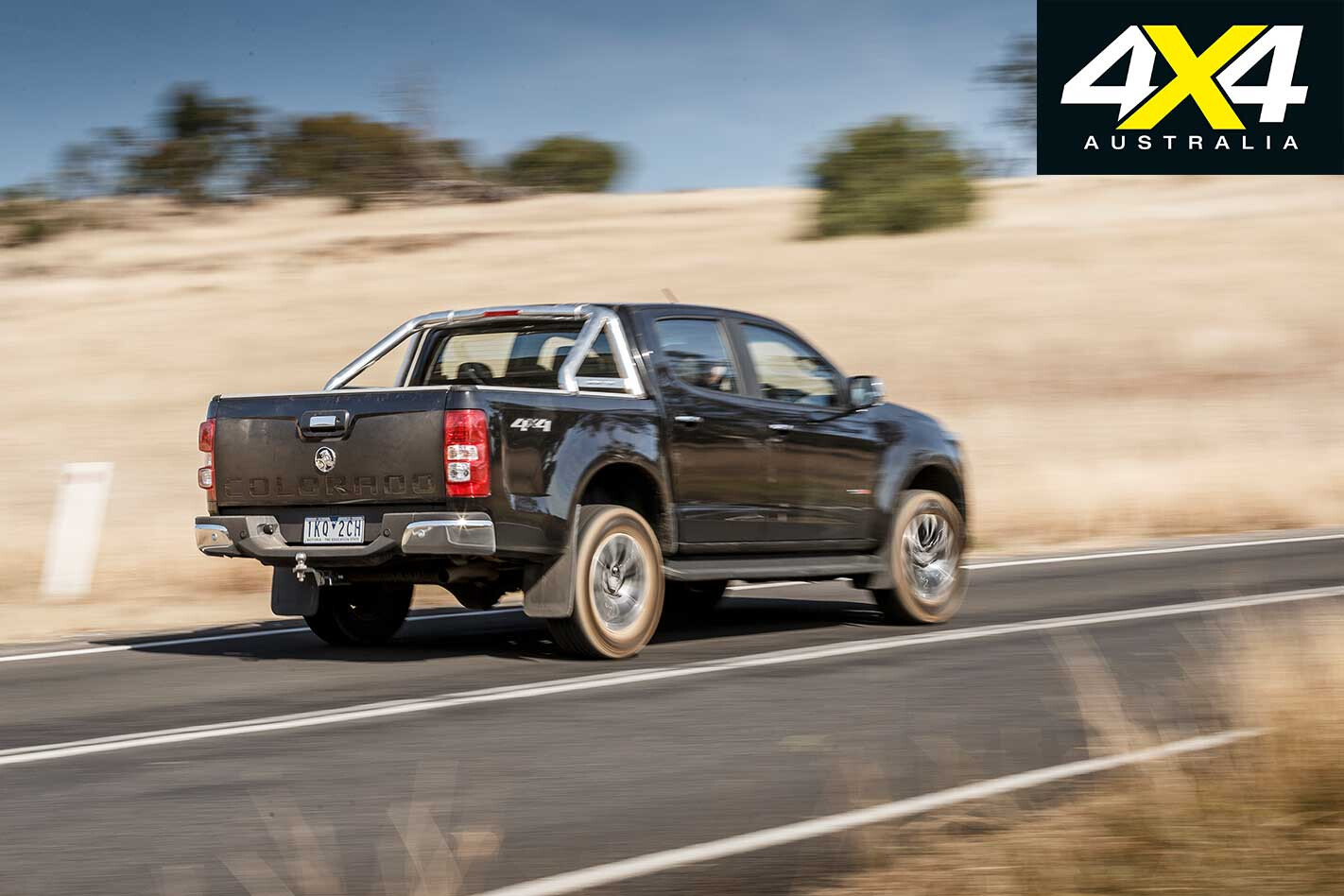
Alone in this company the Colorado has a rear limited-slip diff, which, according to Holden’s engineers, helps particularly on wet bitumen in situations where you need to put your foot down, as when joining a fast-moving traffic stream from a side street.
The LSD prevents the inside rear wheel (remember, part-time 4×4 means rear-drive only on the road) from spinning up and activating the ETC and potentially cutting the engine’s power… not what you want when you have a truck bearing down on you.
OFF-ROAD
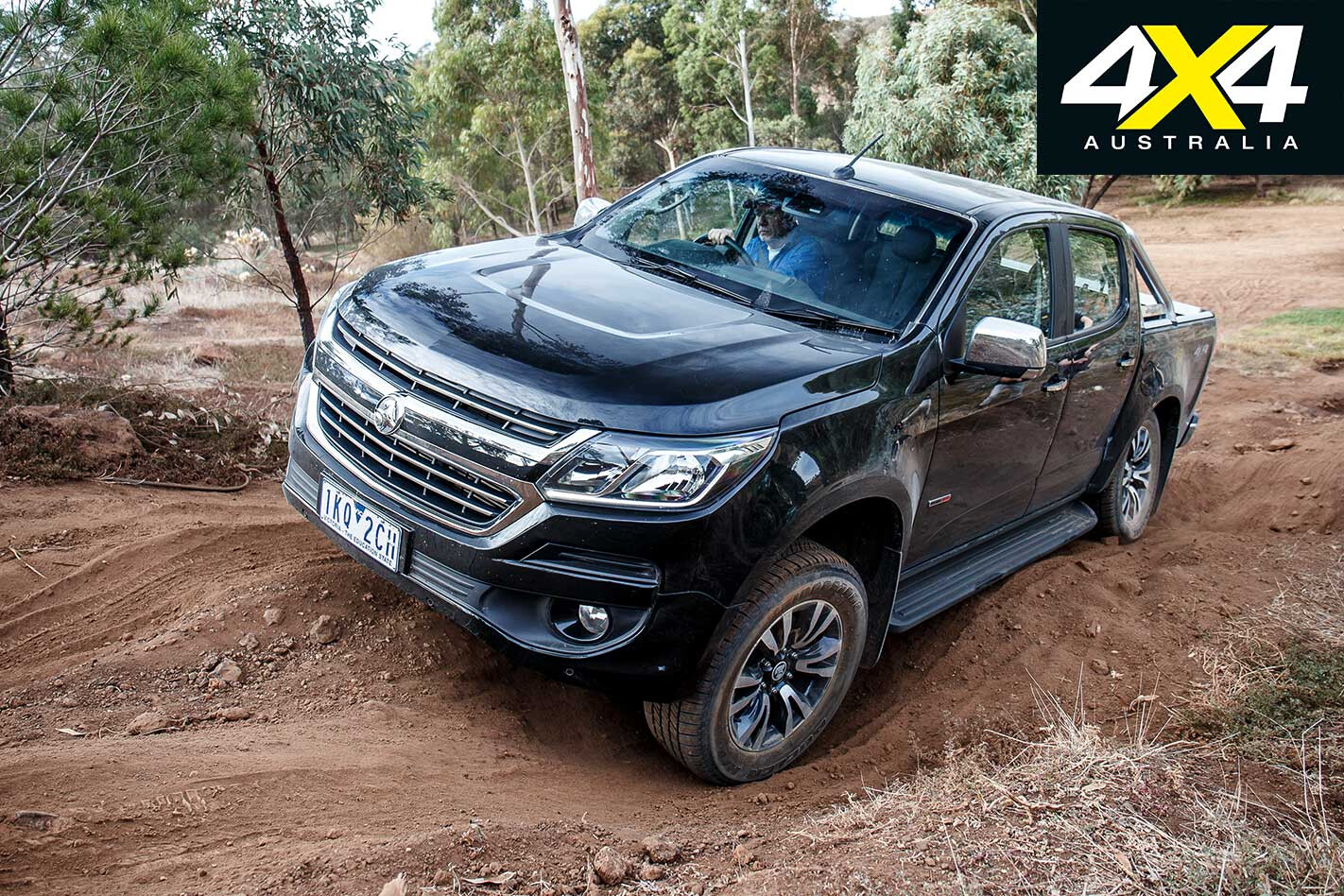
COMPARED to the best off-road utes here, the Colorado needs more wheel travel to be truly competitive. It also doesn’t have a rear locker and is one of only two utes here without one. Not that all lockers are created equal, as some cancel the Electronic Traction Control (ETC) on the front axle when they’re engaged, while others don’t.
Thankfully, the Colorado makes up for its modest travel and no locker with its now very effective ETC, another significant improvement that came with the MY17 upgrade. Where before the Colorado was a tail-ender in this class in terms of off-road ability, it’s now very much a competitive mid-fielder, and while it worked hard to negotiate our gnarly and steep set-piece hill, it still made it to the top.
LOAD CARRYING
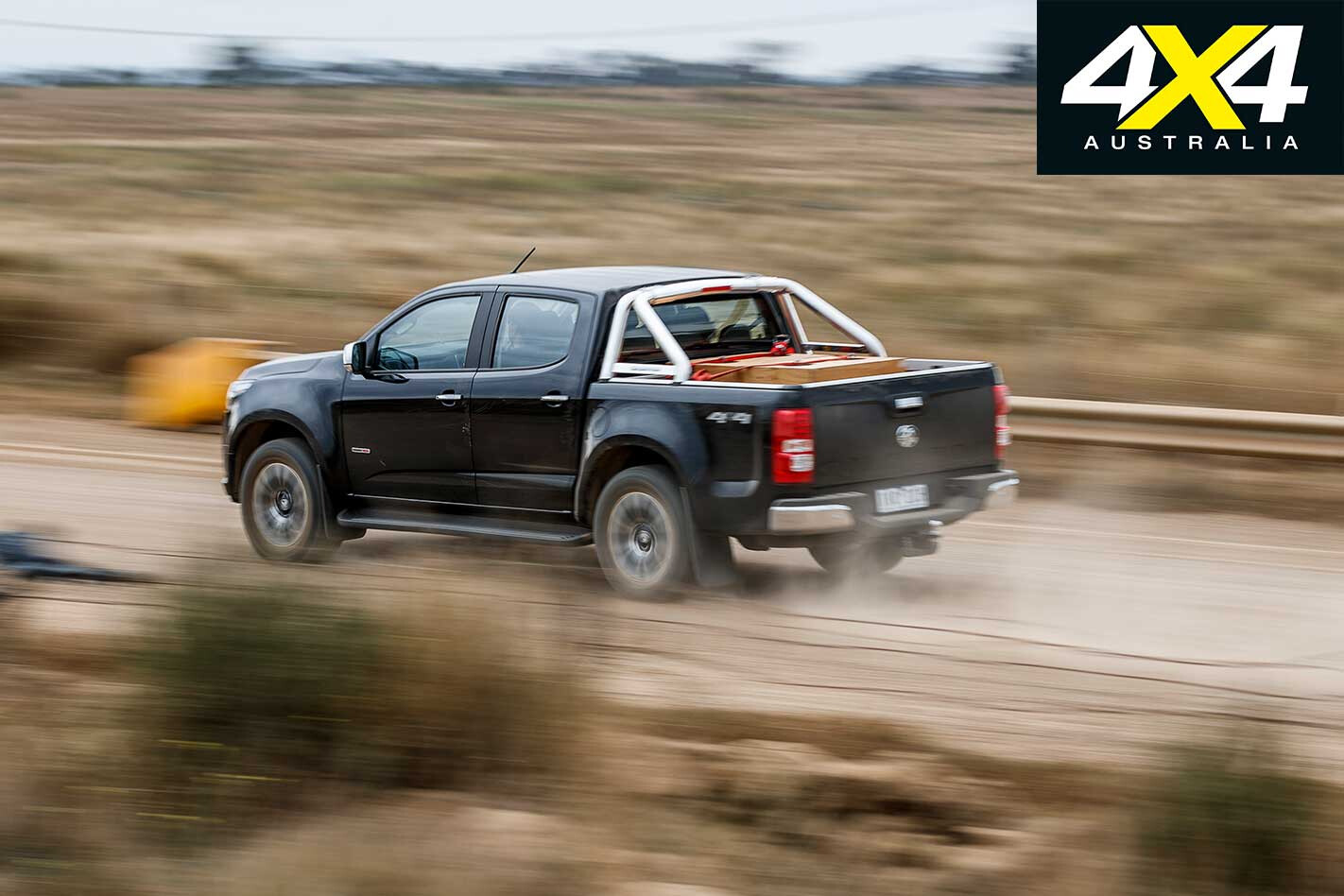
WHILE the Colorado’s 3150kg Gross Vehicle Mass is a nominal 50kg less than the Ranger and BT-50, it’s a little lighter, so it doesn’t suffer at all in terms of payload limits.
With our test 900kg total payload onboard, the Colorado’s chassis coped well and didn’t feel under any particular duress. One of the best here, in fact, even if it’s a notch down on the chassis stability of the Ranger and the very similar BT-50.
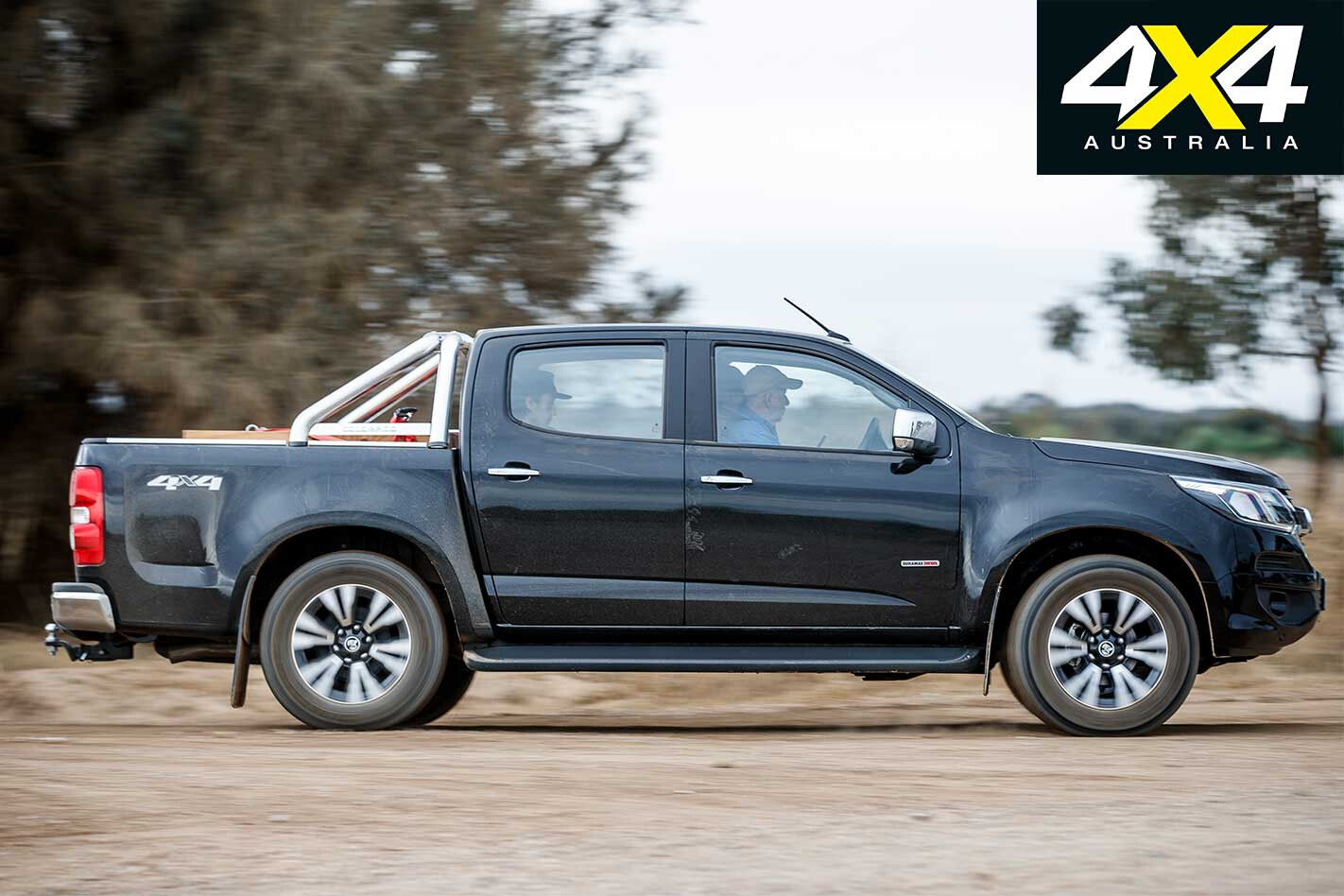
Plenty of power, too, for load hauling, even if you notice the Colorado’s propensity to rev harder than the bigger engines in the Amarok and Ranger/BT-50 than when not carrying a load.
In our recent Max Load and Tow test (which didn’t include the Amarok V6) the Colorado was second only to the winning Ranger and on an equal footing to the BT-50. As with the Ranger and BT-50, the Colorado has a 6000kg Gross Combined Mass and a 3500kg towing capacity.
Negative marks for the Colorado’s tie-down hooks in the tub – the problem is that the two front hooks are mounted high in the tub, which means they are only useful to restrain tall loads.
CABIN AND SAFETY
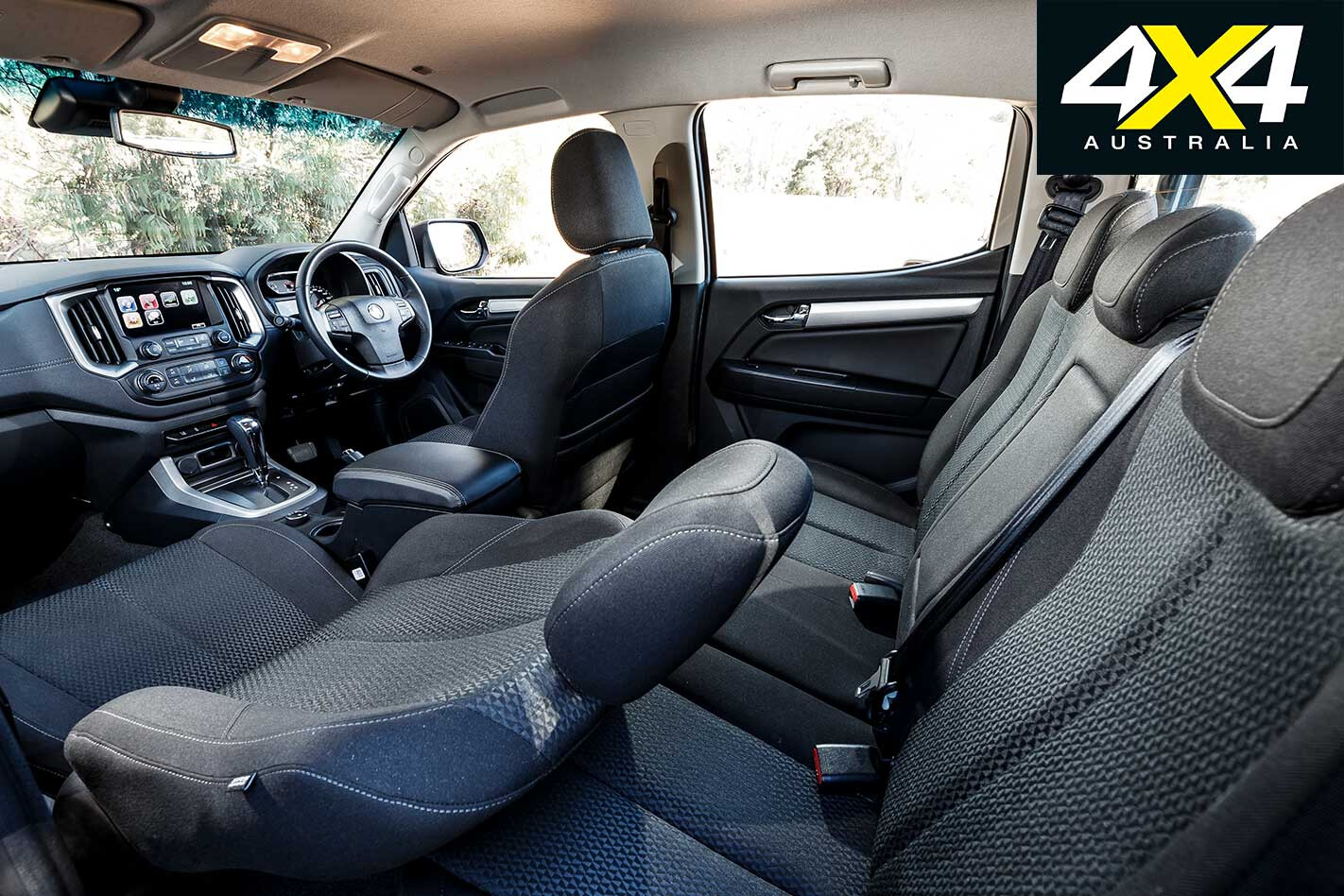
AMONG the many 2017 upgrades, the Colorado received a much needed interior makeover which saw the previous (rather cheap-feeling) dash replaced by something far more classy and presentable.
Plenty of room, too, in the Colorado cabin, even if it’s not as big overall than the Ranger and BT-50, nor as wide as the Amarok – something you notice most with three adults across the rear seat.
There’s a decent level of safety at this popular LTZ spec level, and it comes with a five-star ANCAP rating.
PRACTICALITIES
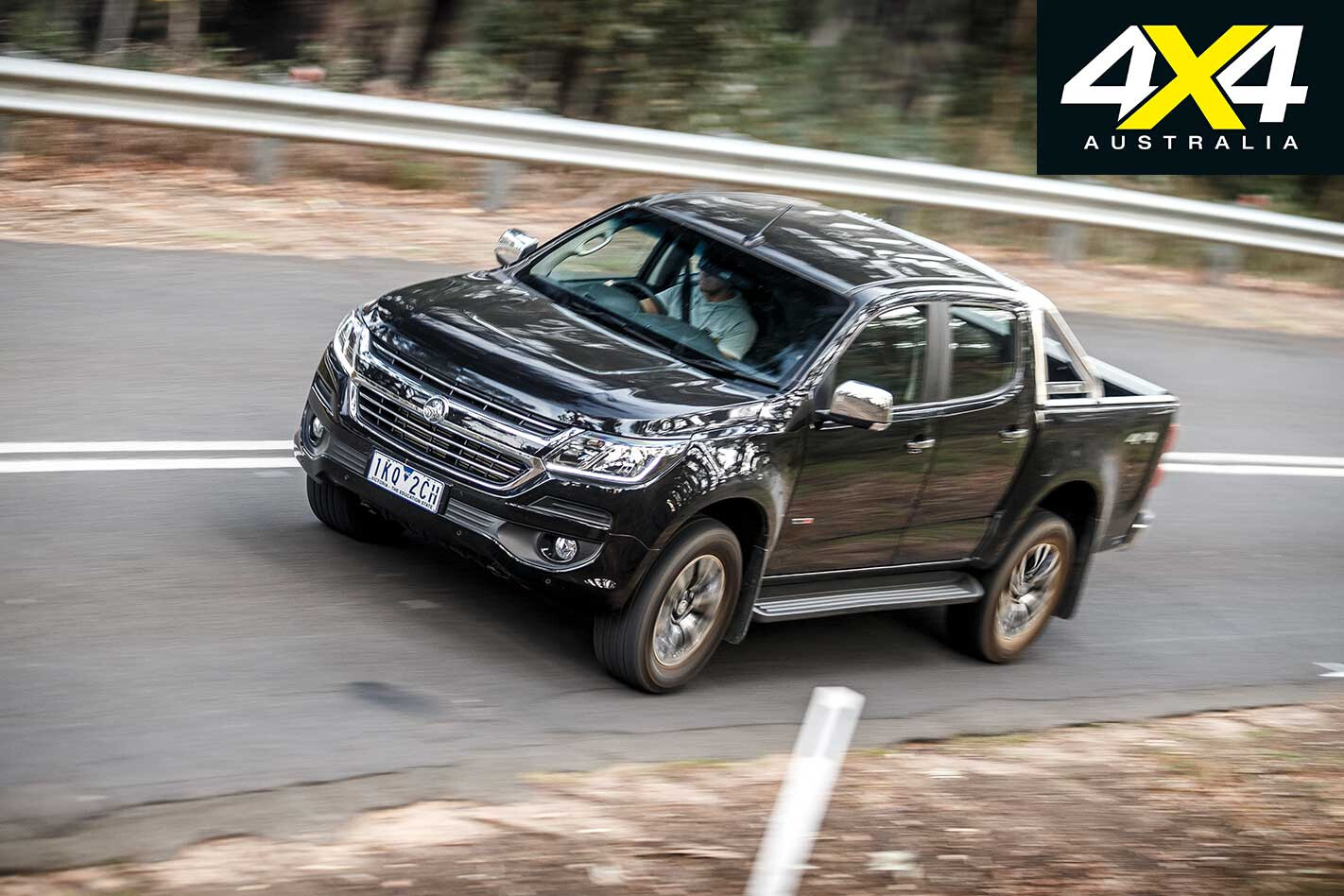
A GOOD spread of dealers – especially in country areas – and plenty of aftermarket accessories are Colorado positives. And while the LTZ wears 18-inch wheels, the 17s from the LT fit and will open up the tyre choice as well as improve ride quality on bumpy roads.
Holden Colorado LTZ Specs Engine: 2.8-litre 4-cyl turbo-diesel Power: 147kW at 3600rpm Torque: 500Nm at 2000rpm Gearbox: 6-speed auto 4X4 system: Dual-range part-time Crawl ratio: 36.4:1 Construction: Separate chassis Front suspension: Independent/coil springs Rear suspension: Live axle/leaf springs Kerb weight: 2121kg GVM: 3150kg Payload: 1029kg Towing capacity: 3500kg Towball Download: 350kg GCM: 6000kg Fuel tank size: 76 litres ADR fuel claim: 8.7L/100km Test fuel use: 9.9L/100km Touring range: 718km* *Based on test fuel use, claimed fuel capacity and a 50km ‘safety’ marginAcceleration and Braking 0-100km/h: 9.5sec 80-120km/h: 6.9sec 100-0km/h: 46.8m
Off-road capabilities Departure angle: 22˚ Rampover angle: 22˚ Approach angle: 28˚ Wading depth: 600mm Ground clearance: 215mm
Holden Colorado Prices** LS: $44,490 LSX: $51,945 LT: $46,990 LTZ: $50,490 Z71: $54,990 **Prices do not include on-road costs
The Results
Results and verdict
Nine utes, but only one winner…
Intro & Contenders
Home of 4X4 Australia’s Ute Test, where we have put all of the popular 4×4 dual-cabs through their paces off-road and on-road.
NORTH America will get the 2019 Ford Ranger, but details are still murky as to whether the US of A will receive the upcoming Ford Ranger Raptor.
However, a video which recently surfaced shows a Red Raptor in left-hand drive formation, indicating it could be on its way to the States. Granted, there are markets other than the USA that steer from the left seat, but this video shows Ford is gearing up to tackle a wider market – and the American market could welcome it with open arms, given the love for the F-150 Raptor.
If it is to land stateside, the US-spec Ranger Raptor is expected to get Ford’s V6 petrol-powered units, rather than the turbo-diesel engines bound for the Asia Pacific market.
The Ranger Raptor was unveiled in Thailand earlier this year, where a 2.0-litre, bi-turbo diesel four-cylinder capable of 156kW and 500Nm was confirmed.
It’s a pretty well-specced piece of kit, too, with long travel suspension aided by Fox Shox dampers and aluminium upper and lower control arms. It also has a locking rear diff, low-and high-range 4WD, a six-mode Terrain Management System with Baja mode, heavy duty skid plates, wider front and rear tracks, increased ride height and angles, and an ability to wade through water at depths of up to 850mm.
Here’s a look at the latest video released by Ford Australia:
We even got to take one for a behind-the-scenes Development Drive in 2017. Watch the video here: https://www.whichcar.com.au/reviews/road-tests/2019-ford-ranger-raptor-development-program
The official Australian launch will take place in July this year, and it’s expected to arrive in Australia in about September/October. The Aussie-spec Raptor will start from $74,990.
DESIGNED and developed in Australia as part of a global Ford effort and arriving in late 2011, the Ranger has gone on to do the near unthinkable and challenge Toyota’s iconic Hilux for Australia’s most popular ute.
In fact, last year it knocked off the Hilux as both Australia’s best-selling 4×4 ute and best-selling 4×4 overall, only falling to Hilux in overall ute sales thanks to the popularity of the Hilux 4×2.
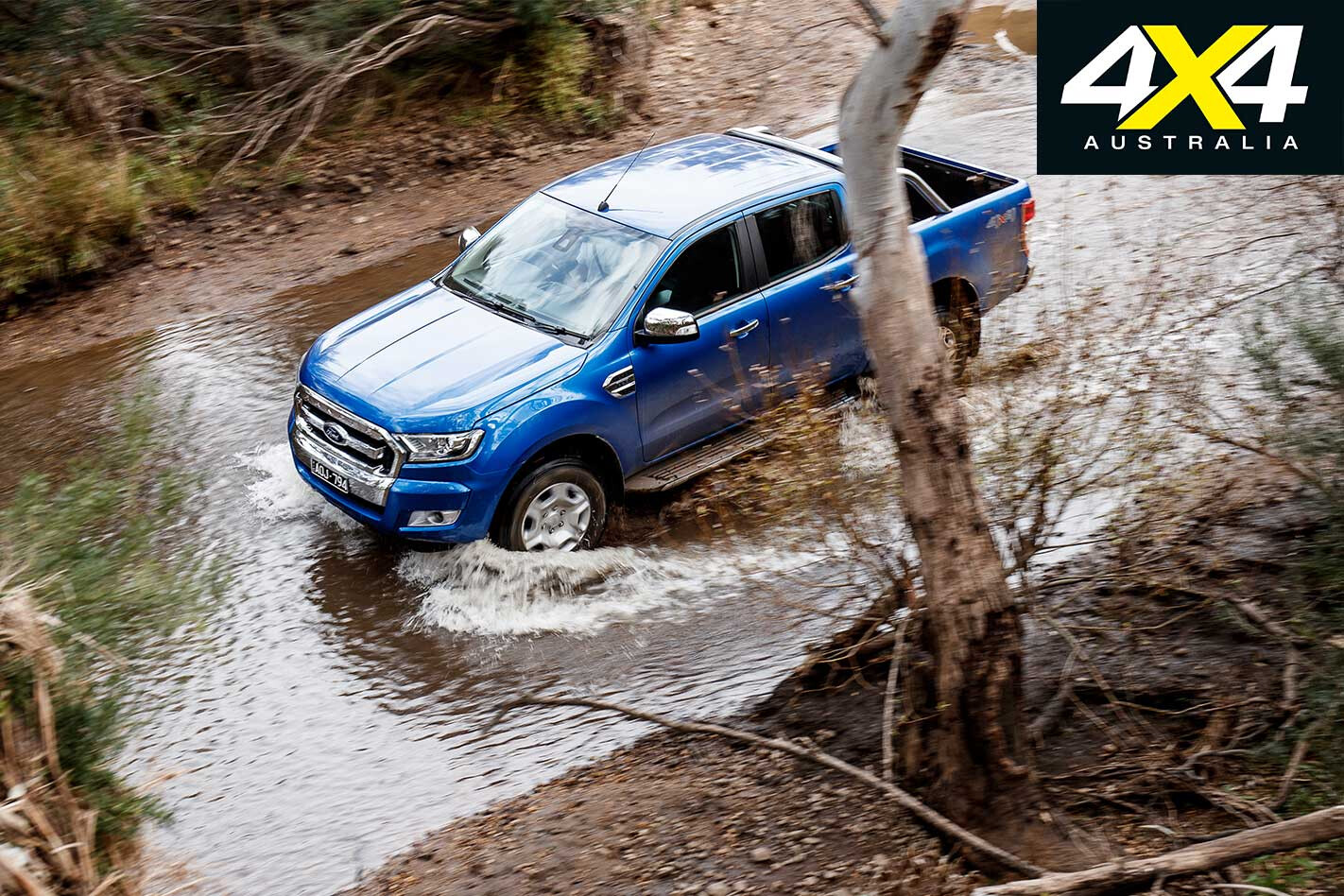
Before year’s end the next upgrade to Ranger will be here, offering, among other things, the option of a more sophisticated and more powerful 157kW/500Nm 2.0-litre four-cylinder bi-turbo diesel engine that will also power Ford’s upcoming ‘hero’ Raptor ute.
WHAT YOU GET
ALL Ranger 4×4 dual-cabs have six cabin airbags, cruise control, auto headlights, rear locker and trailer-sway control as standard.
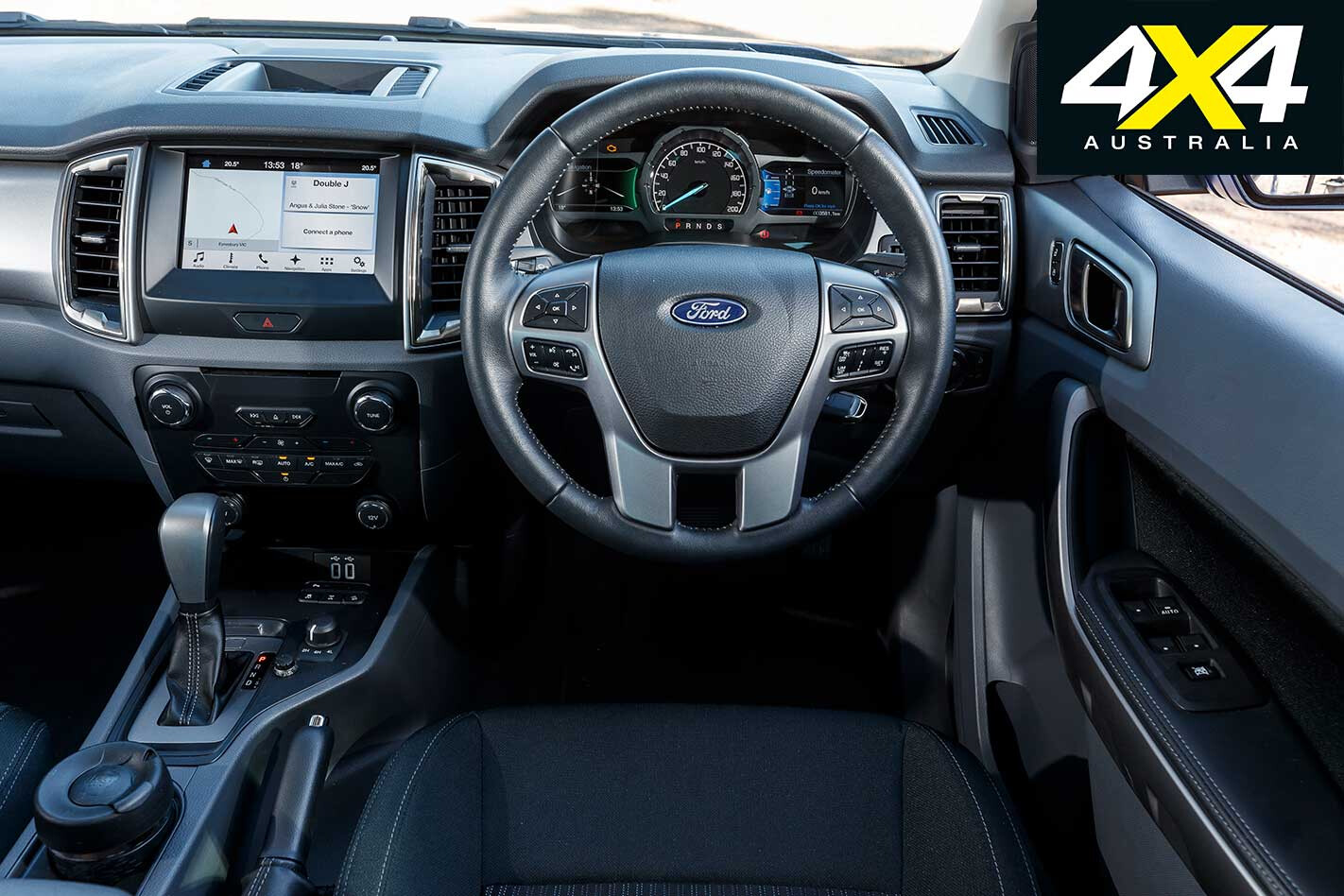
The XLT (tested here) has sat-nav, dual-zone climate, centre-console cooler, rear park sensors, auto wipers, tyre pressure sensors, a 230-Volt outlet in-cabin, 12-Volt outlet in-tub, a sportsbar, side-steps and a 3500kg-rated towbar as standard. Radar cruise control, forward-collision warning, lane-departure warning and a driver-impairment monitor are available as an optional ‘technology pack’ on XLT.
POWERTRAIN AND PERFORMANCE
THAT’S in the future. Now we have the familiar 3.2-litre inline five-cylinder, with a performance and character that defines the very essence of what it’s like to drive a Ranger. This is a lazy, slow-revving engine, but one that’s bursting with torque right from the get-go and gets any job done with very little fuss.
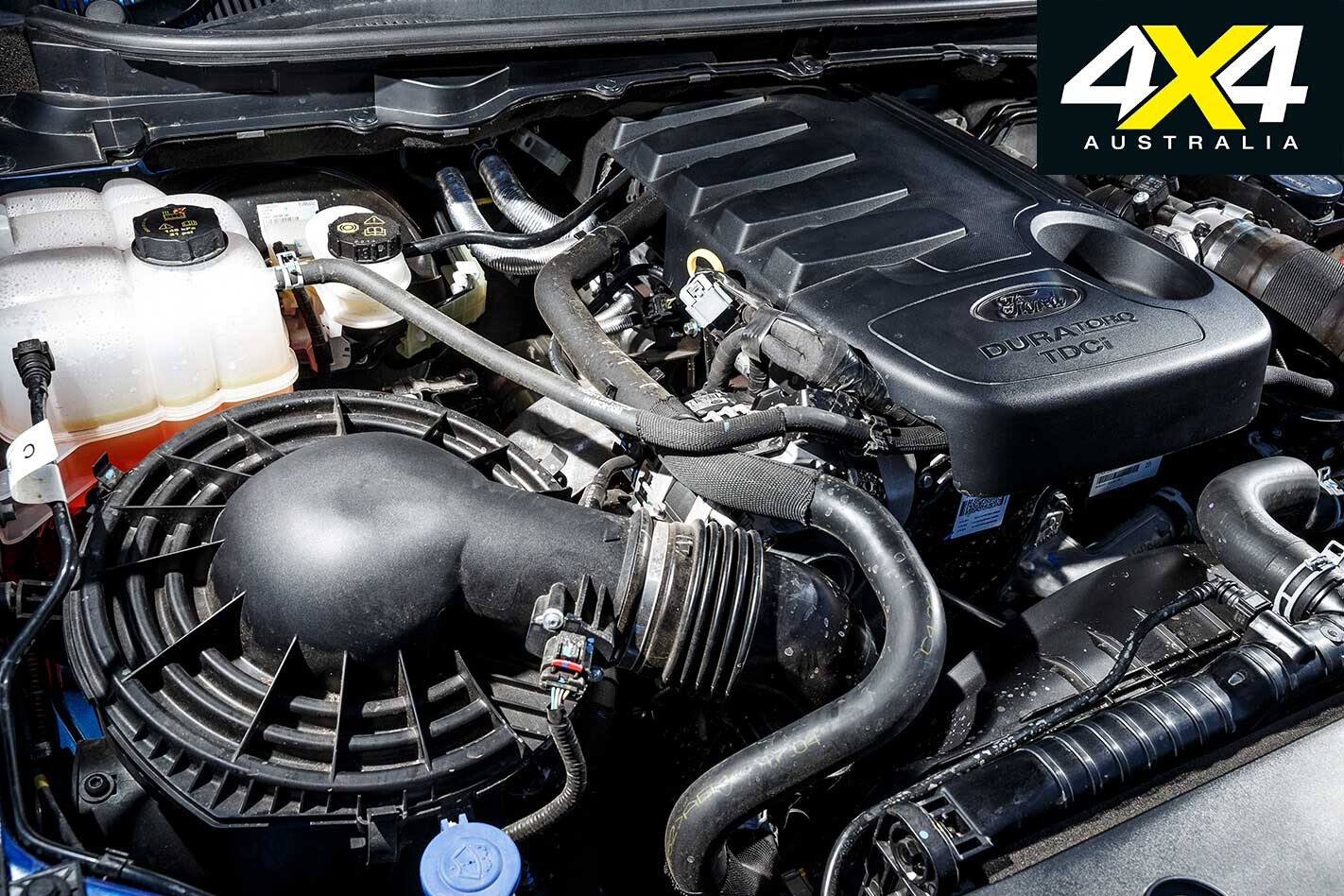
Being a ‘five’ it can be a little lumpy at idle, but it quickly smooths out nicely and, along with its offbeat sound, is very different to the typically more revvy and buzzy fours that dominate this class. In this company only the V6 Amarok has a sweeter engine.
However, despite a significant improvement in refinement for the 2016 model year, it’s still somewhat gruff and noisy. Generally smooth and well-timed shifts from the gearbox, too, and final-drive gearing that’s tall enough to be relaxed out on the highway but not that tall that the engine is looking for a lower gear at the first hill. The only negative is that the Ranger’s ‘big’ five-cylinder is typically heavier on fuel than most here.
ON-ROAD RIDE AND HANDLING
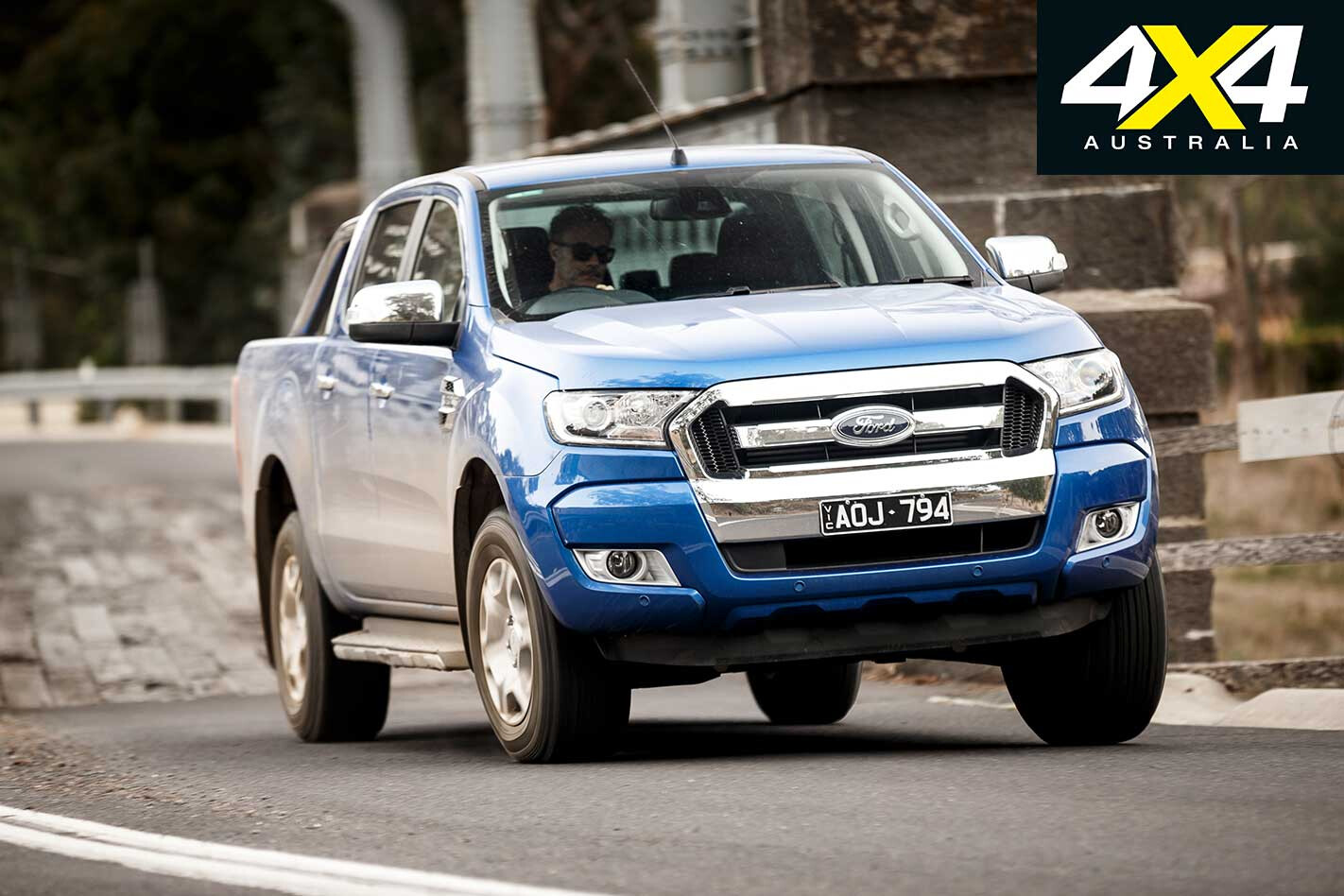
IN MANY ways the Ranger’s on-road steering and handling posture reflects the engine’s relaxed character in as much as it’s stable and steady rather than darty and agile. This is perhaps in part due to having the longest wheelbase here, along with the closely related – but not identical – Mazda BT-50.
One area where the Ranger varies notably from the BT-50 is with the electric power steering it gained in the MY16 updates. The main benefit here is incredibly light steering at parking speeds; although, Ford’s engineers have also done a fine job of dialling in plenty of feel and confidence at highway speeds.
By ute standards, there’s a nicely supple ride, too, and the front-to-rear suspension match, even unladen, is as good as it gets.
OFF-ROAD
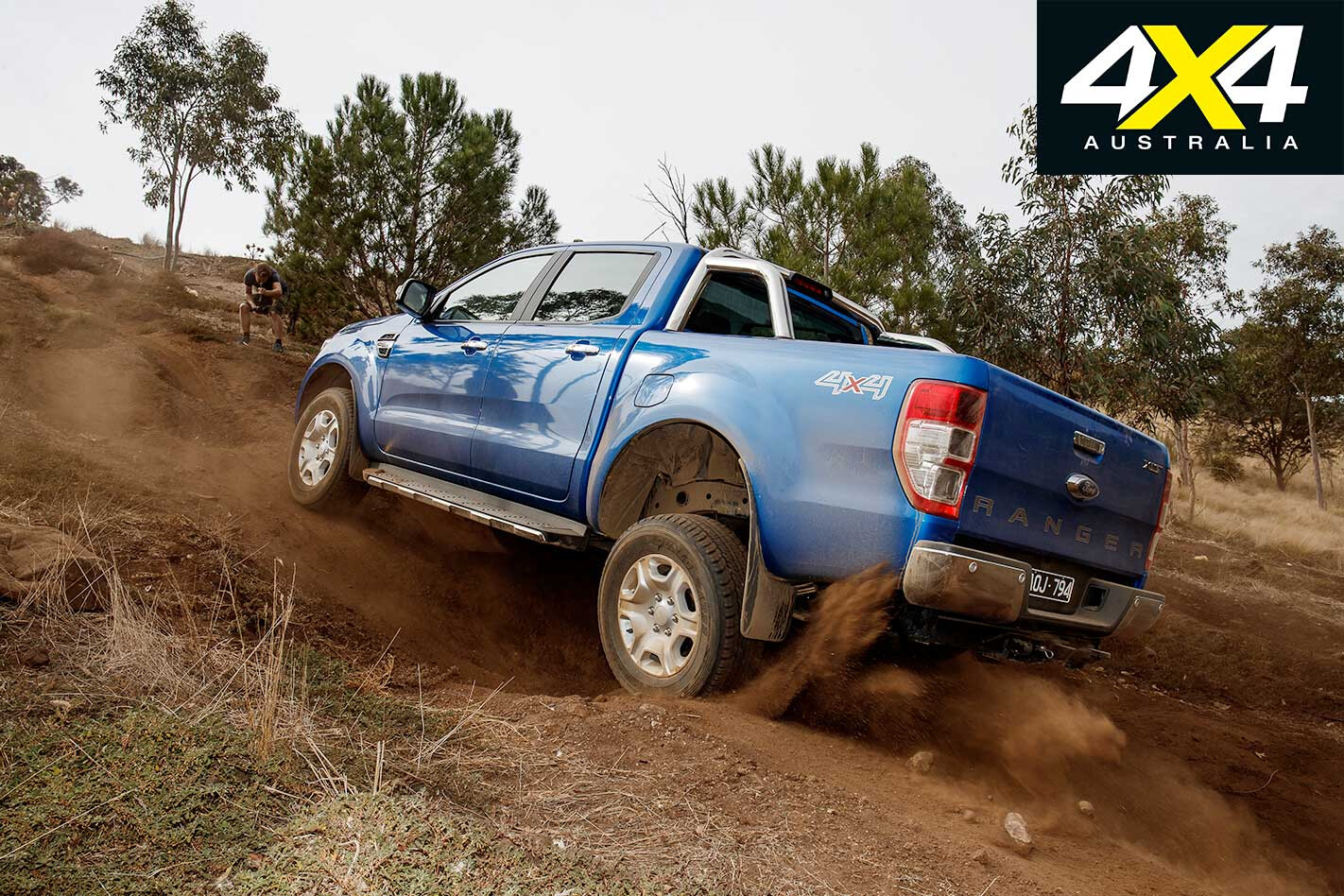
THE Ranger’s star continues to shine off-road, thanks in part to the generous suspension travel at both ends of the chassis. Only the Toyota Hilux has more travel at the rear and this, along with the similar Mazda and Volkswagen, sets the Ranger apart from the rest of the utes here.
The Ranger’s long-travel suspension means the wheels are on the ground longer and more often in gnarly going, which means less reliance on its rear locker and electronic traction control (ETC) to get you where you want. And in what is a major bonus in this company, if you engage the Ranger’s rear locker the ETC stays active on the front axle, all of which puts the Ranger on the top shelf in terms of off-road ability.
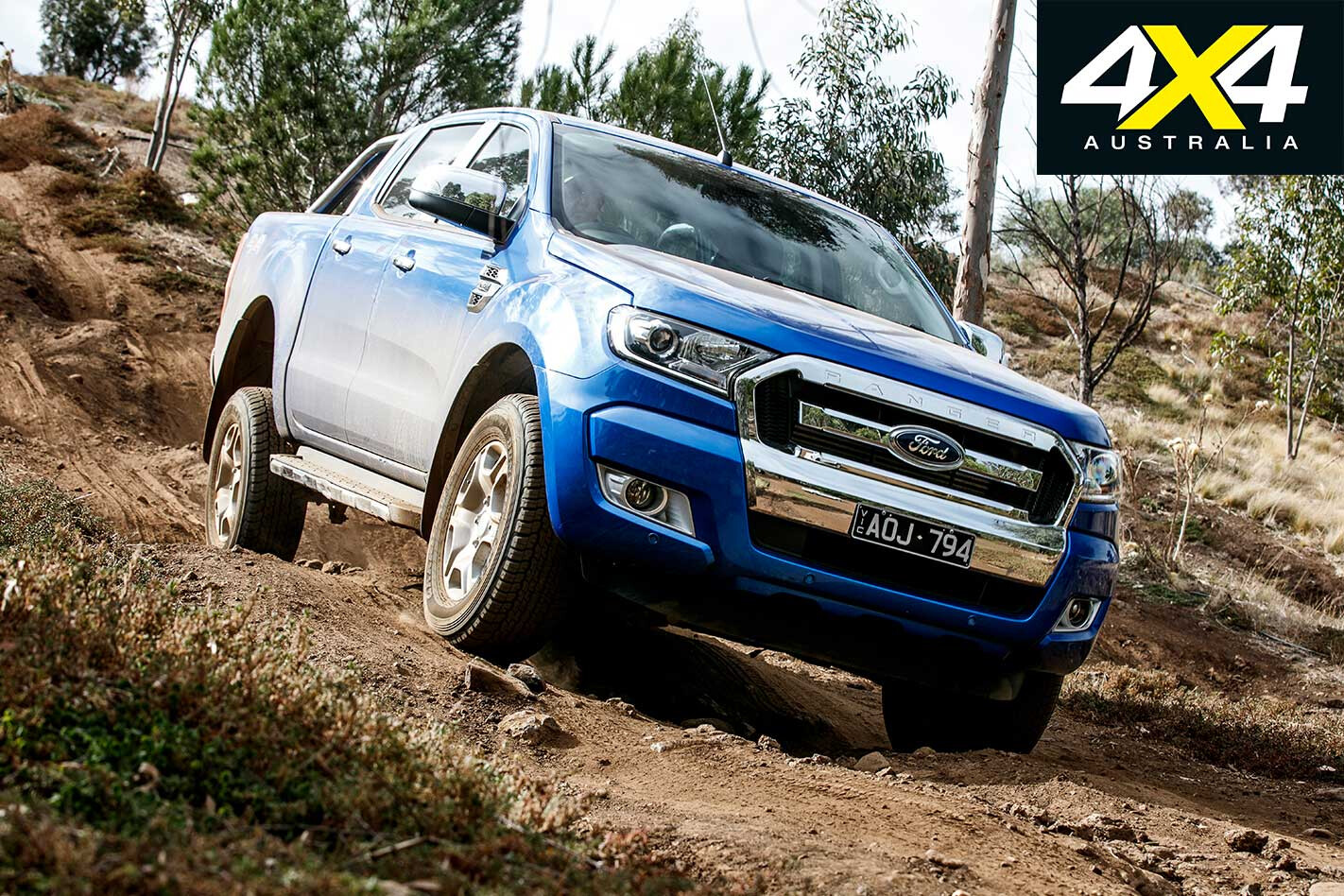
In tight situations, where manoeuvrability is paramount, you notice the Ranger’s length and size and the somewhat compromised vision from the driver’s seat; although, any back-and-fill wheel twirling you need to do is made easy by the lightness of the electric power steering.
LOAD CARRYING
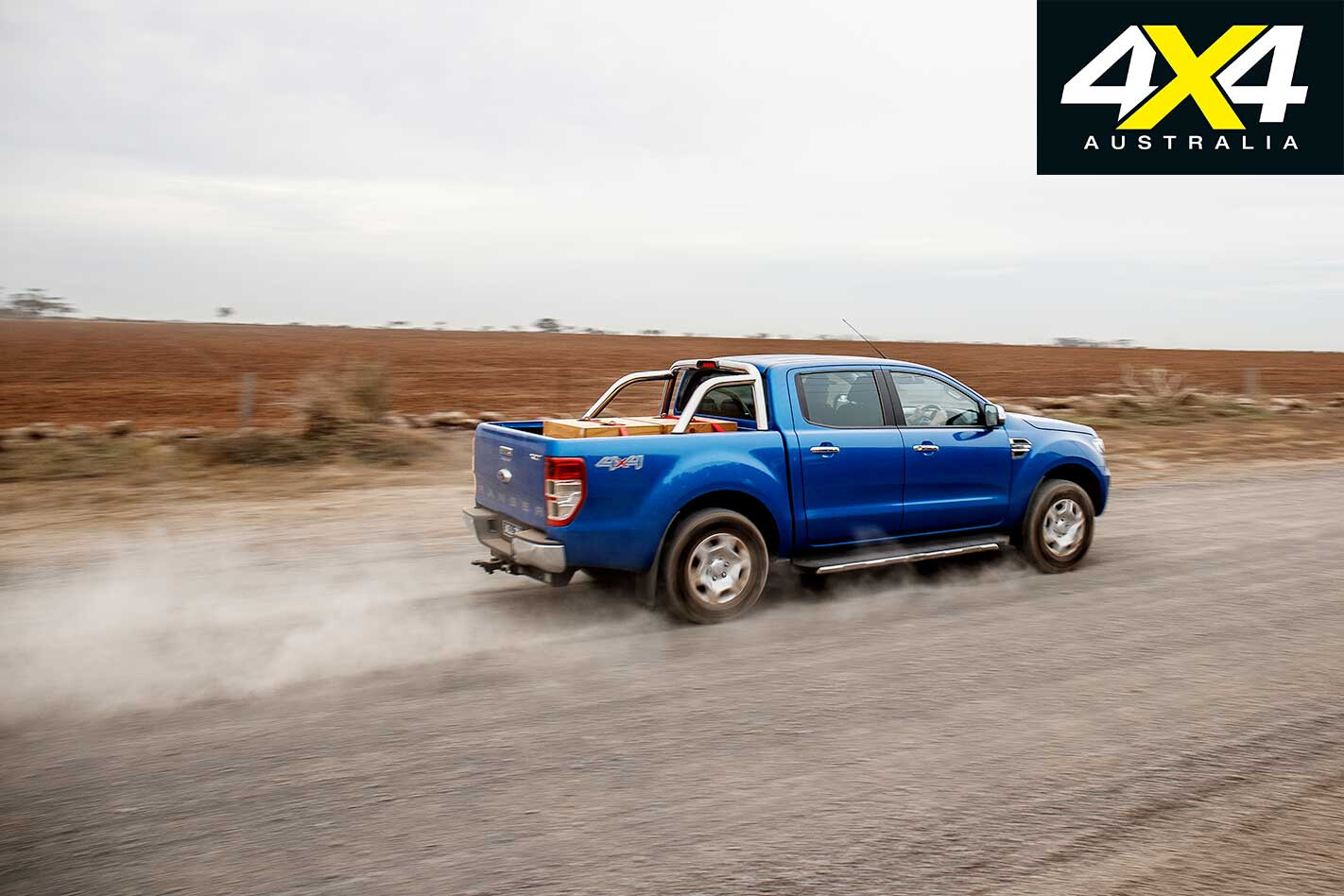
THE Ranger’s ‘working’ credentials, namely its Gross Vehicle Mass (GVM) of 3200kg, its Gross Combined Mass (GCM) of 6000kg and its 3500kg tow capacity, are about as good as it gets in this class, and that promise is paid out when the Ranger is put to the test.
With a 900kg payload onboard, no ute bettered the stable and reassuring feel offered by the Ranger’s chassis. Sure, you could feel the extra weight onboard, but not to the detriment of driving confidence. No nose-up attitude or excessive swaying or pitching, and no bottoming out over the bumps.
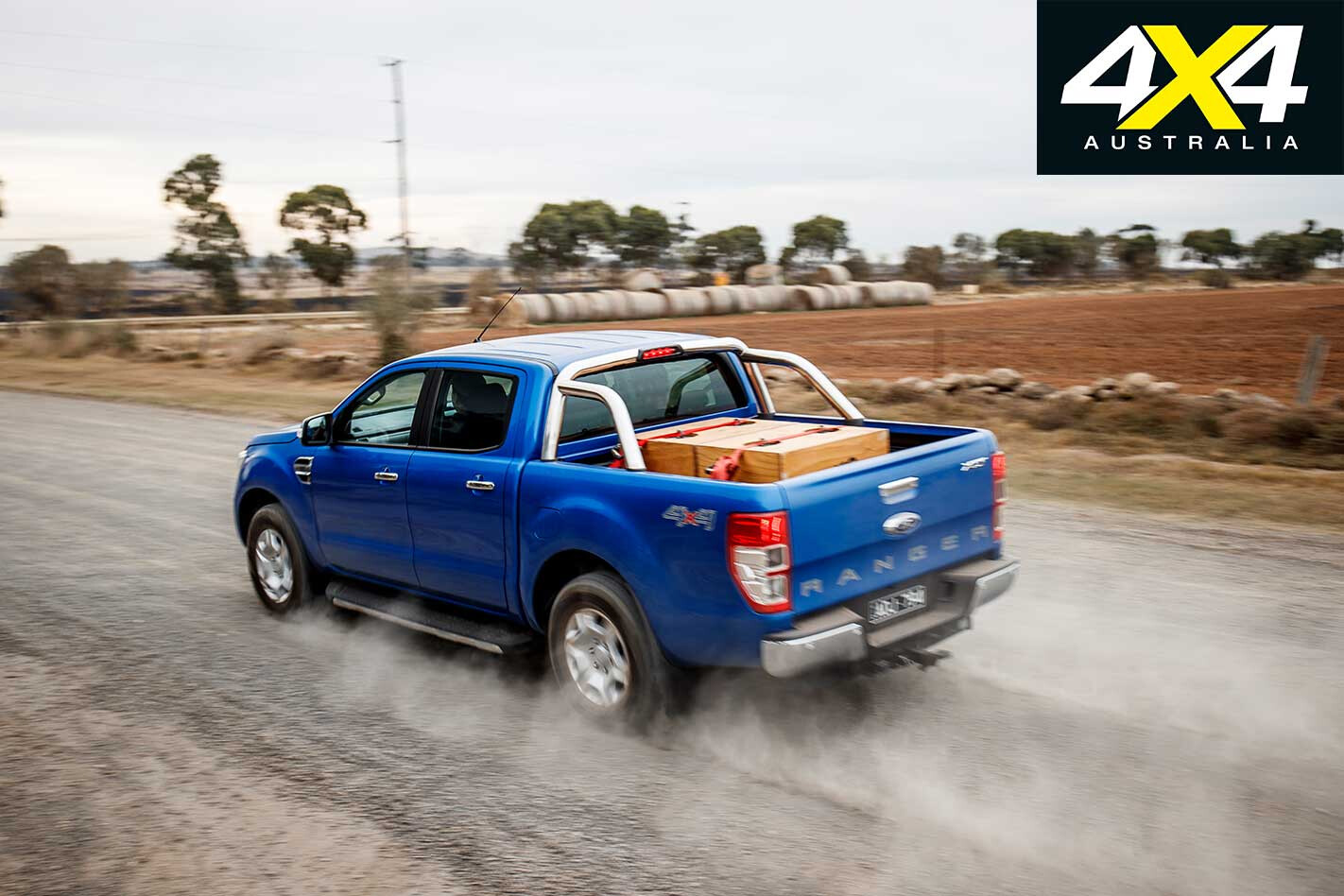
The grunty five-cylinder engine also dispensed with the load without fuss; again, you could feel the extra weight, but the engine didn’t need to work that much harder to get the job done. In our previous Load and Tow test, the Ranger also proved to be a top towing ute.
The Ranger’s tub is also deeper than most and boasts six tie-down points (four of them mounted low in the tub, as they should be) and a 12-volt outlet.
CABIN AND SAFETY
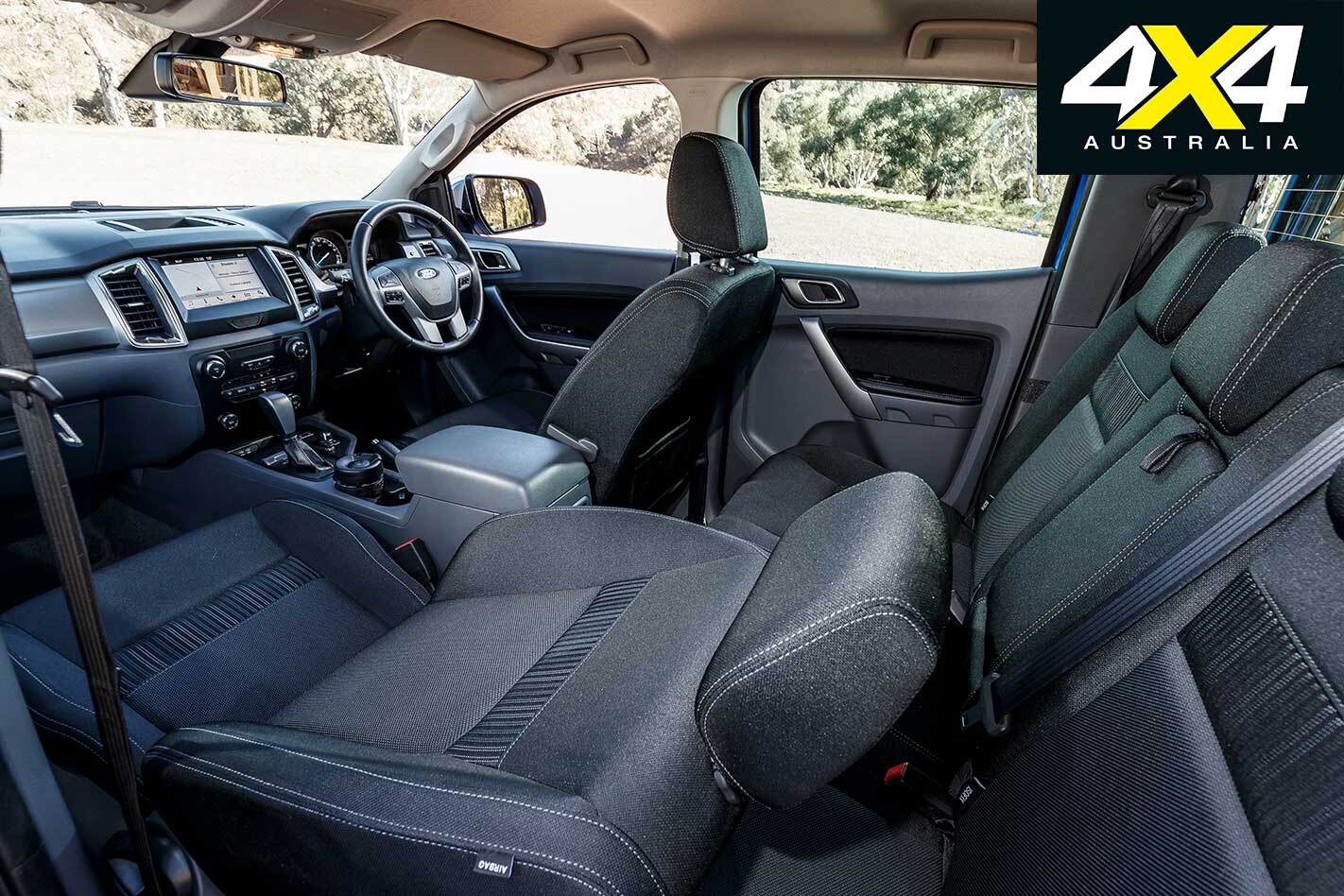
THE Ranger’s cabin is among the most spacious here. None better it (and the BT-50) for combined front and legroom, and only the Amarok is wider though not as long. That means the driver and front seat passenger are treated to lots of room, comfortable seats and a generally well-appointed interior. Plus, there’s decent space for five adults.
However, there’s no steering wheel reach adjustment or smart key entry and start – and, while the lack of road and wind noise is a bonus in the cabin, the engine’s noise doesn’t go unnoticed.
The Ranger offers five-star ANCAP safety across all dual-cab models, while XLT and WildTrak have some optional safety kit to build on that.
PRACTICALITY
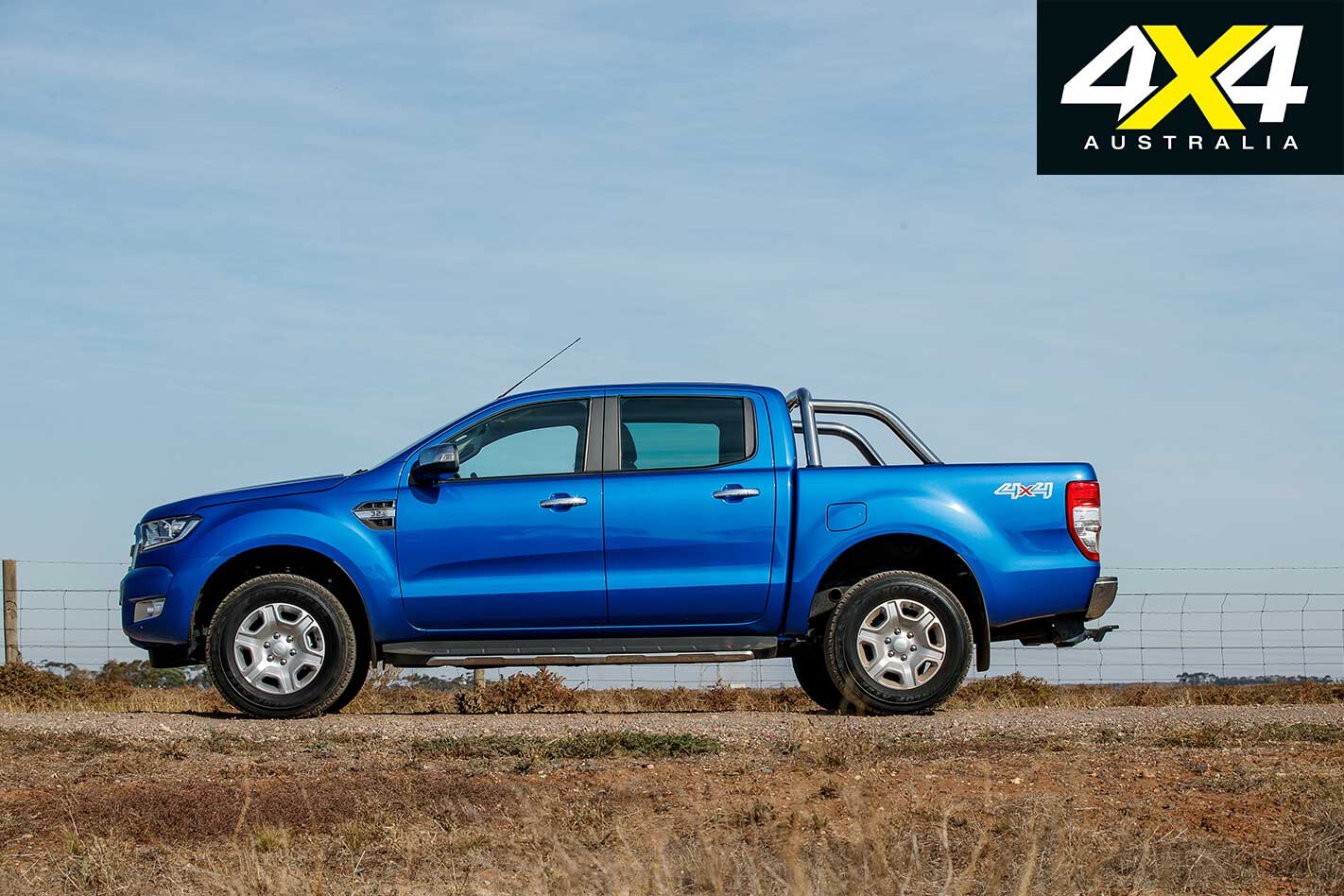
THE Ranger ticks all of the practicality boxes, starting with an 80-litre fuel tank to help offset its above-class-average thirst. The 17-inch wheel and tyre spec are the same as the Hilux, as is the good range of aftermarket support and dealer network, especially away from the major cities.
Ford Ranger XLT Specs Engine: 3.2-litre 5-cyl turbo-diesel Power: 147kW at 3000rpm Torque: 470Nm at 1500-2750rpm Gearbox: 6-speed auto 4X4 system: Dual-range part-time Crawl ratio: 42.3:1 Construction: Separate chassis Front suspension: Independent/coil springs Rear suspension: Live axle/leaf springs Kerb weight: 2159kg GVM: 3200kg Payload: 1041kg Towing capacity: 3500kg Towball Download: 350kg GCM: 6000kg Fuel tank size: 80 litres ADR fuel claim: 9.2L/100km Test fuel use: 12L/100km Touring range: 616km* *Based on test fuel use, claimed fuel capacity and a 50km ‘safety’ marginAcceleration and Braking 0-100km/h: 10.1sec 80-120km/h: 7.9sec 100-0km/h: 44.0m
Off-road capabilities Departure angle: 20˚ Rampover angle: 25˚ Approach angle: 29˚ Wading depth: 800mm Ground clearance: 237mm
Ford Ranger Prices** XL: $47,590 XL Plus (auto): $53,290 XLS: $48,890 XLT: $55,490 Wildtrak: $59,590 **Prices do not include on-road costs
The Results
Results and verdict
Nine utes, but only one winner…
Intro & Contenders
Home of 4X4 Australia’s Ute Test, where we have put all of the popular 4×4 dual-cabs through their paces off-road and on-road.
MORE: Ford Ranger Range Review
MORE: Ford Ranger Specs, Range & Price
DUAL-CAB ute sales may be surging, but we doubt you’ve seen one like this out on the tracks.
That’s because this left-of-field dual cab stems from the crazy idea of its owner, Peter Thorpe, who chopped the venerable Y62 Patrol to create the ultimate all-rounder.
What makes it so special? Well, apart from the dual-cab conversion – which you can read all about here (https://www.whichcar.com.au/reviews/custom-4x4s/custom-nissan-y62-patrol-dual-cab-ute-review) – the rig has some neat aftermarket kit.
Aftermarket gear: – Canopy by WF Fabrications, Bendigo – 60L Engel fridge/freezer – Clear View Easy Slide – Dual spare-wheel carrier – ARB front winch bar, with Warn winch – ARB side-steps – ARB side-rails – ARB Intensity spotties and light bar – TJM Airtec snorkel (with a Unichip) – Pro Comp Xtreme MT2 315/70 R17 tyres – Black Rock Crawler 17×8-inch steel rims – Two-inch lift and ARB BP51 remote-res shocks – Airbag Man airbags (rear) – 150L Long Ranger fuel tank
“I’m absolutely rapt with it,” owner Peter said, “… it just outperforms anything I have ever had. It’s just an amazing vehicle off-road.
“I’ve had heaps of vehicles – Toyotas, loads of other Nissans – but to be honest there’s nothing else that really compares to it.”
Take your time drooling over the pics in the above gallery!
DUAL-cab utes have taken the 4×4 market by storm, and it’s for a damn good reason: versatility. Actually, versatile doesn’t really drive home the point enough. They’re the Swiss Army Knife of off-roading, with attachments and electric blenders folding out of nooks and crannies you never thought possible. All you need to do is set them up right.
The problem, like any 4×4, is knowing how to build it to suit your needs, and knowing where best to spend your money. After all, what should you get first, the coffee percolator or the meat-pie oven? The upgrade paths are endless, with a $5000 build looking significantly different than a $25,000 build.
We’ve pounded out countless kays in and out of dual-cab utes over the past few years, everywhere from the tropics of Far North Queensland to the wide expanses of the Outback, all in the endeavour to help you build the ute of your dreams. Geez, we’re nice blokes!
Turns out you’re a Russian oligarch? Good news. That means not only can you influence elections a world away, you can buy whatever the hell you want for your brand-spankin’ new 4×4. After all, they’re your rubles. When you’ve got north of $25K to spend on your 4×4, the possibility line starts turning into more of a possibility jungle with vines going in every direction.
Hardcore Weekender
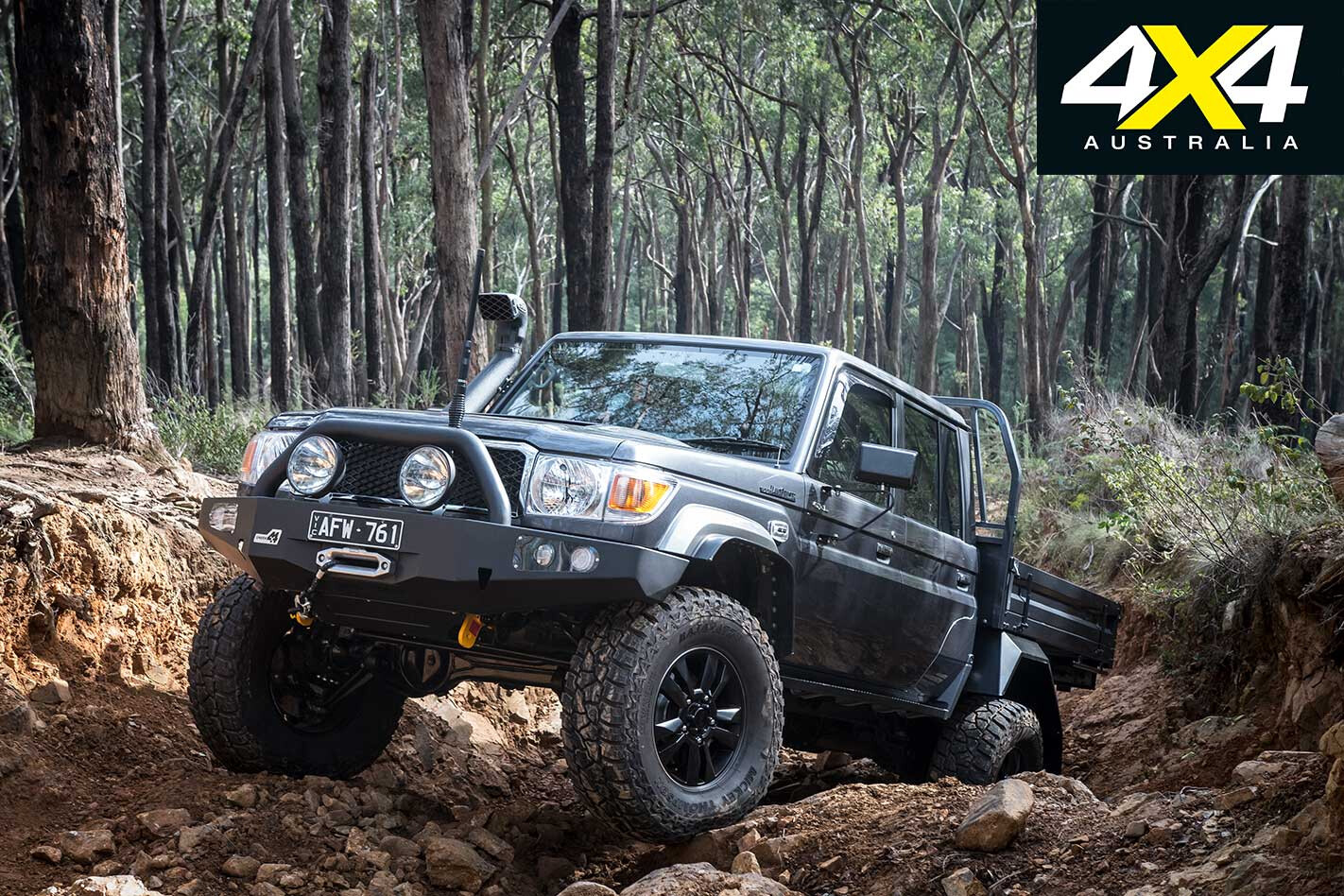
Just about put your dual-cab ute on its lid every time you head bush but run out of things to spend money on? Good news, we’ve got you sorted.
Sure, the easy option is a solid axle swap, but the reality is you’ll lose ground clearance, and they’re a nightmare to engineer if you’re sporting fancy tech like stability control. Instead, get on the blower to the guys from Marks 4WD and tell them you’re onto their secret and you want a set of portals.
They’ve been testing a bunch of prototype portal axles that not only increase your width to make you more stable in off-camber situations, but they also take a load off your drivetrain to make you less likely to break things. They also lift your drivetrain a full six inches higher than stock.
Having the standard 31s and a set of portals would be like running a set of 43-inch muddies, and if that doesn’t get your heart racing you’re in the wrong game.
Modifications Portal axles – $25,000
Remote Tourer
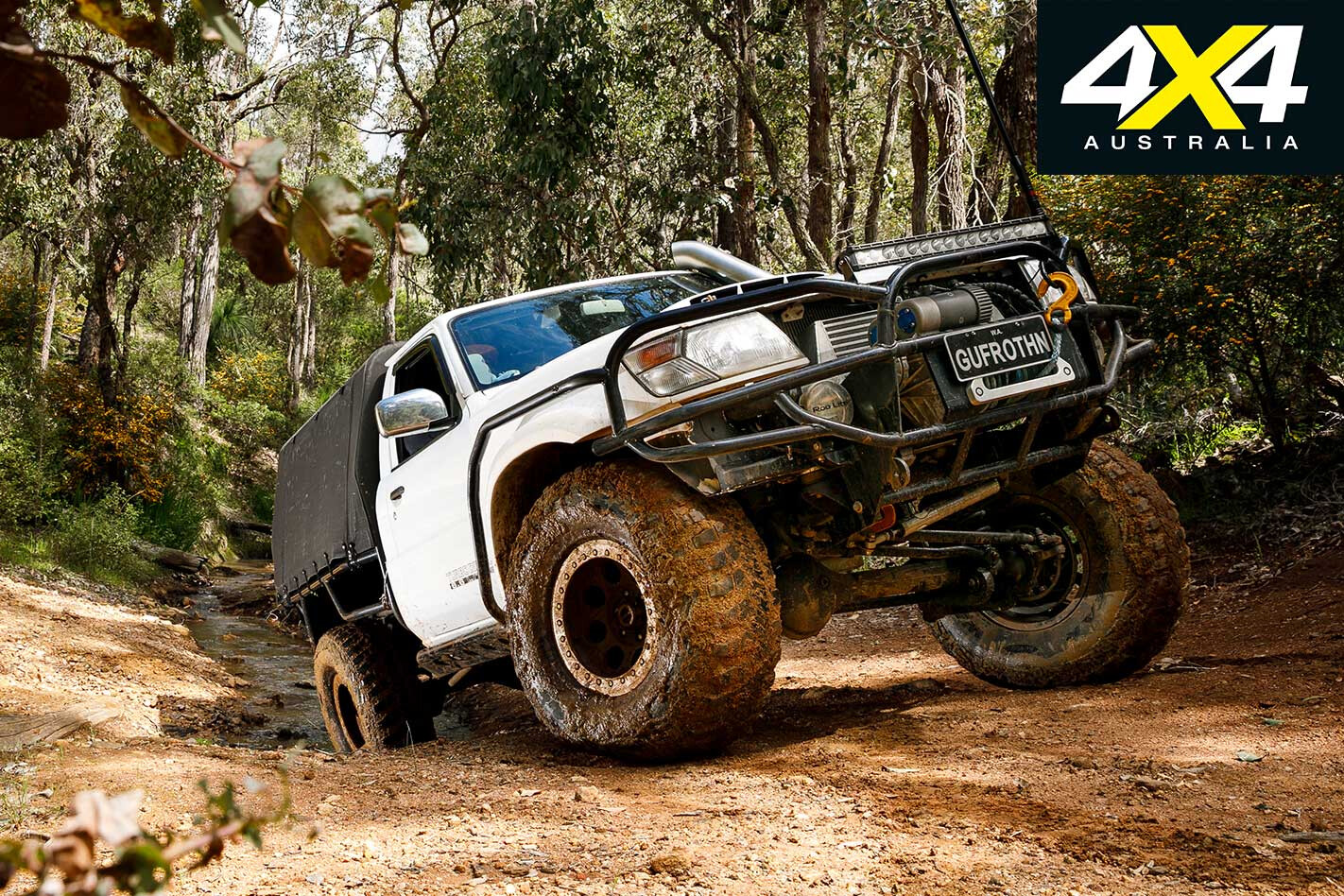
Sick and tired of walking to the back of your dual-cab ute like some sort of sucker? Have we got a solution for you!
Custom alloy canopies not only make it look like you mean business, they’re seriously good things on and off the tracks. You’ll lose all that weak sheetmetal at the rear, giving you more confidence to push through lantana and overgrown tracks, and they come into their own when you pull up at camp.
The possibilities are limited only by your imagination, and by now you’ve done enough kays to know what works for you. Want to roll your swag out inside the canopy? Easy. Want a slide-out barbecue that calls you handsome? Bit weird, but it’s doable.
Want 200 litres of water underneath and a gun turret on the roof? You’re probably on a watch list, but it’s doable. The downside is they can make your 4×4 look a bit like a bumble bee, but if you’re after practicality first, second and third then they’re hands down where you need to be spending your money.
Modifications Touring canopy – $15,000
Family Wagon
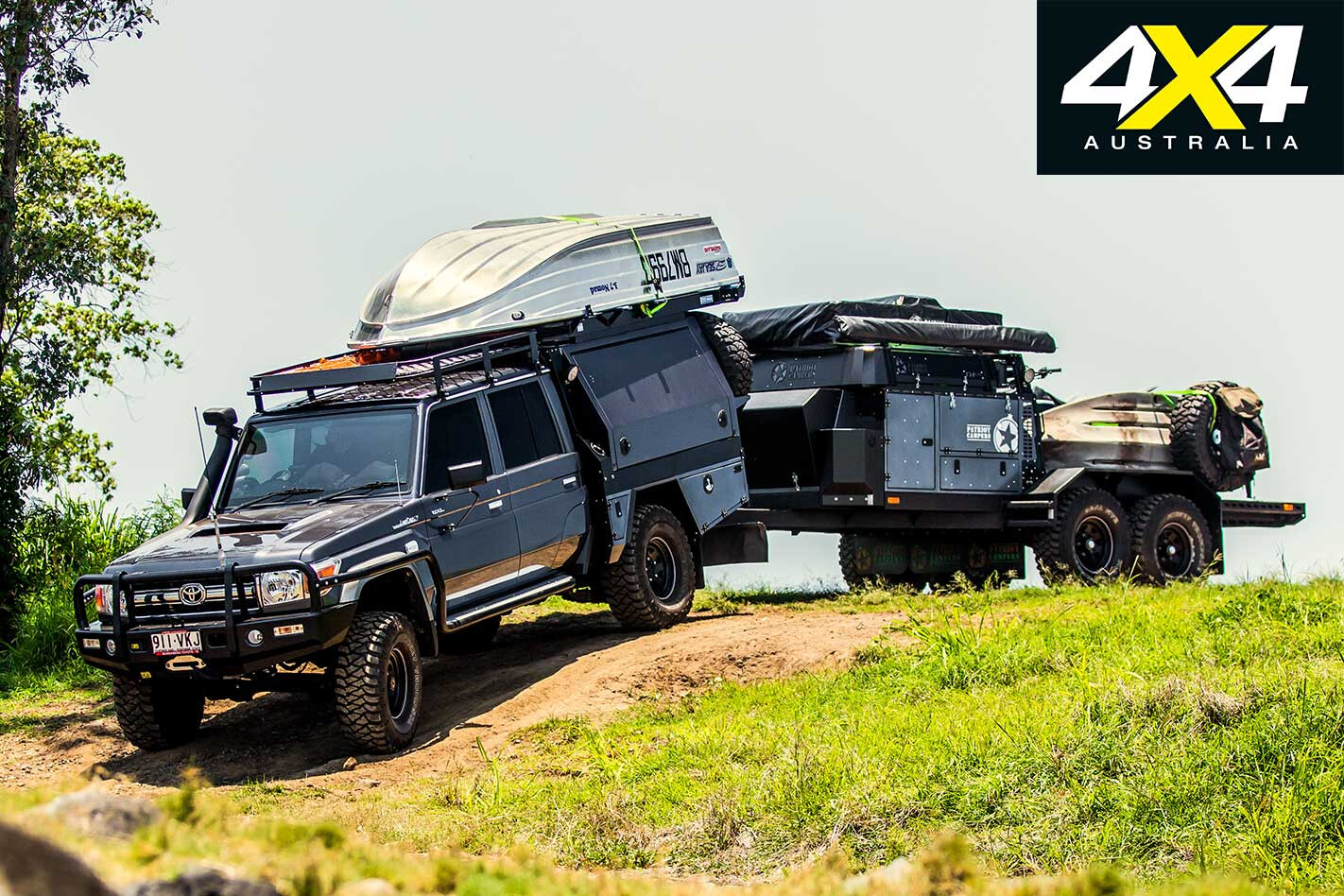
A stonking big V8. Let that soak in a minute. Alright, you’re probably thinking we’ve lost the plot right about now, and, honestly, you may be right. But, and it’s a big but, the whole point of a do-it-all 4×4 is to be everything to everyone.
Duramax swaps might just be the perfect companion to a family 4×4. They’re fuel efficient, incredibly powerful thanks to their 6.6-litres of displacement and eight cylinders, and have an exhaust note that’d see grown men refusing to stand up everywhere you go.
They’re tame enough for the school drop-off, will easily tow whatever you hitch behind it, and then lay the smack down on any high-po sedan you’ll come across at the lights. And stuff it, you’re rich anyway, do what you want.
Modifications Duramax engine conversion – $35,000+
Follow our ‘How to build a ute guide‘ here: – Less than $5000 – $15,000 budget – $25,000 budget
AN AMERICAN defense agency has developed shapeshifting tyre technology for future military-based vehicles, as part of the Ground X-Vehicle Technologies program.
DARPA – Defence Advanced Research Projects Agency – an agency of the United States Department of Defense, is responsible for developing the breakthrough military technology with the intention of strengthening national security.
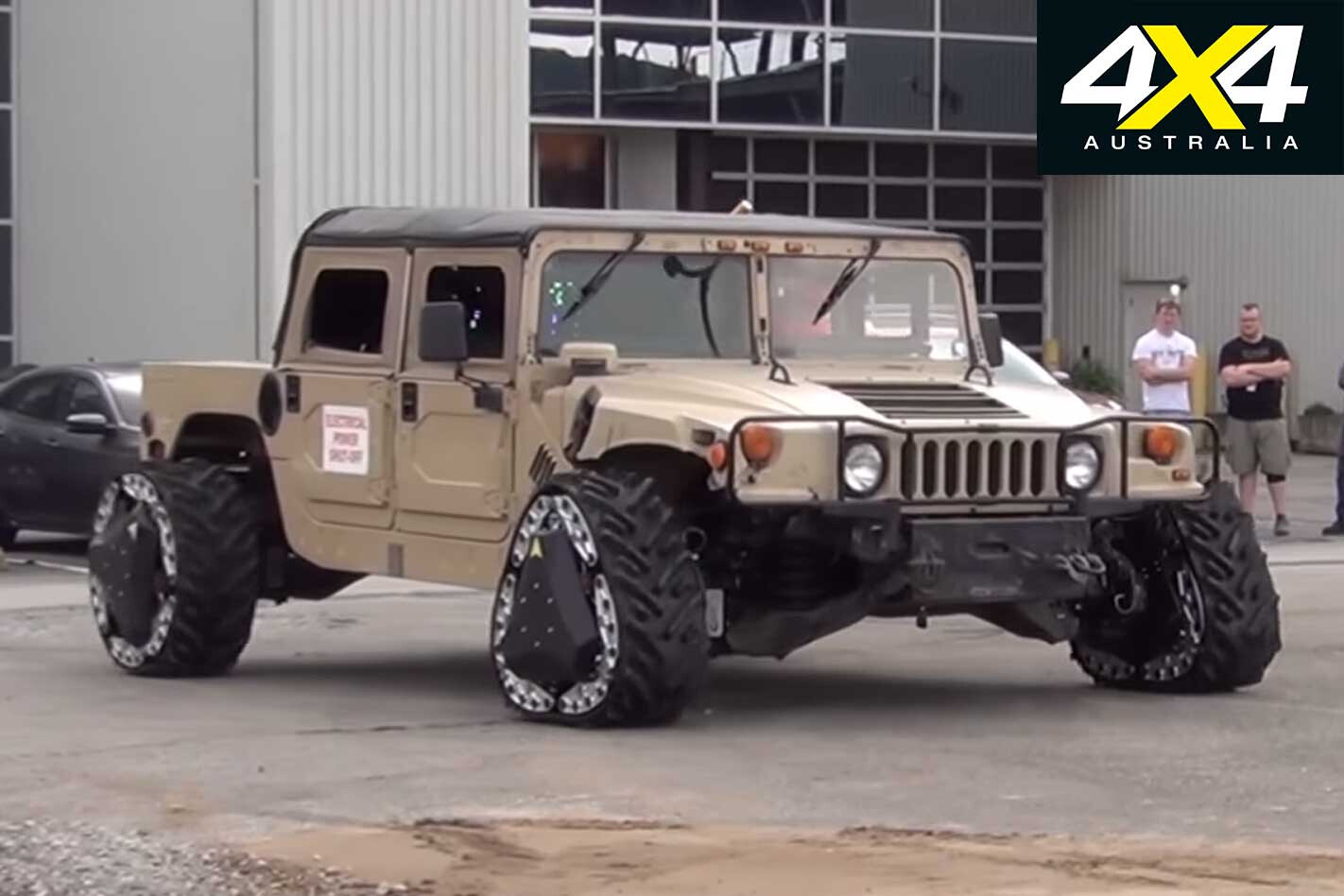
According to the DARPA website, the Ground X-Vehicle Technologies (GXV-T) program “seeks to investigate revolutionary ground-vehicle technologies that would simultaneously improve the mobility and survivability of vehicles through means other than adding more armour, including avoiding detection, engagement and hits by adversaries.
“This improved mobility and warfighting capability would enable future US ground forces to more efficiently and cost-effectively tackle varied and unpredictable combat situations.”
As part of this program, DARPA recently showcased technology called Reconfigurable Wheel-Track (RWT). Developed by a team from Carnegie Mellon University National Robotics Engineering Center, RWT is a shapeshifting tyre that transitions from a triangular track to a round wheel in two seconds, on the fly.
It does this to enable faster travel on- and off-road, with the GVX-T program envisioning future combat vehicles traversing up to 95 per cent of off-road terrain.
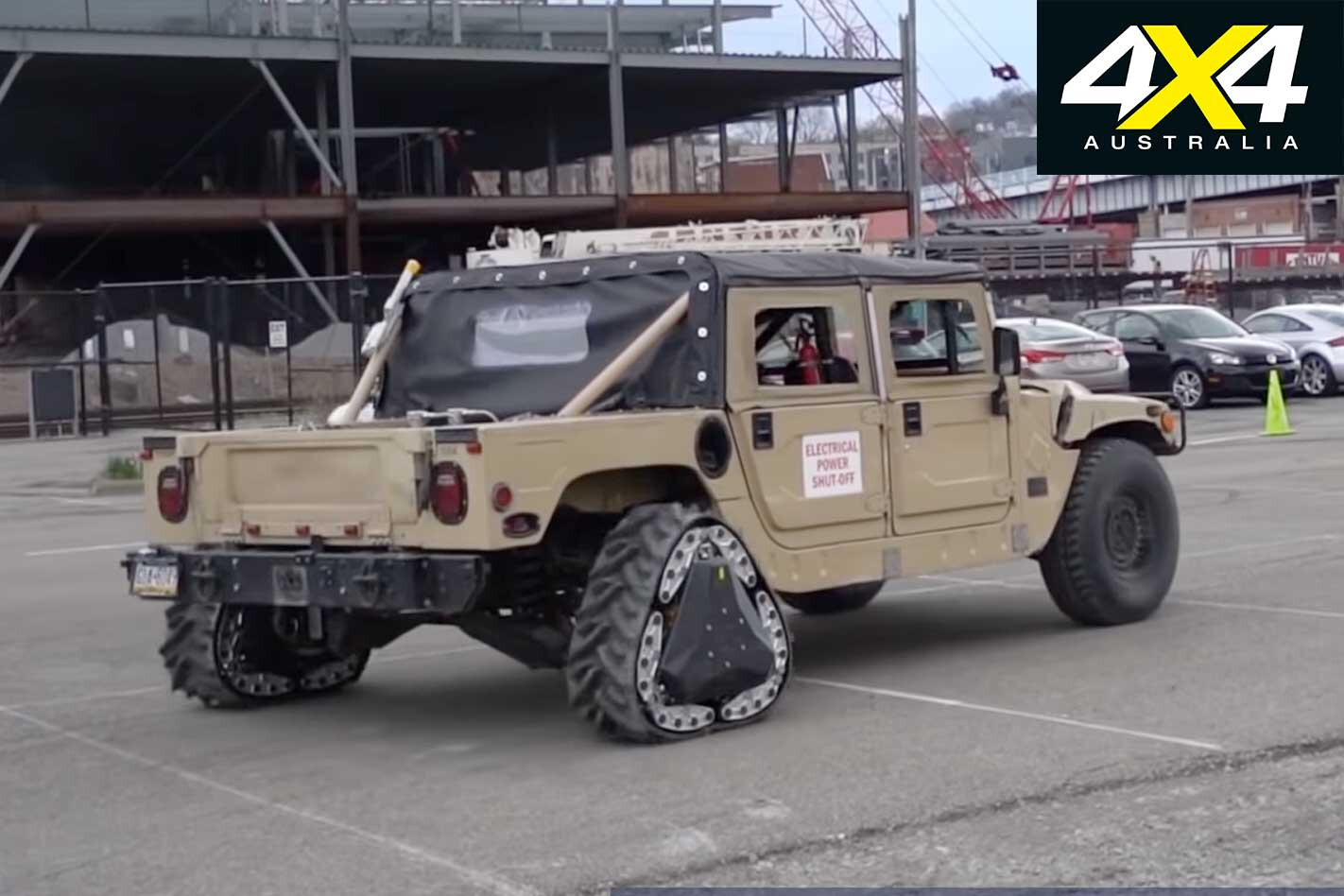
“For mobility, we’ve taken a radically different approach by avoiding armour and developing options to move quickly and be agile over all terrain.” said Major Amber Walker, the program manager for GXV-T in DARPA’s Tactical Technology Office.
In addition to the transforming tyre, the agency is also developing Multi-mode Extreme Travel Suspension (the demo model utilised military-spec 20-inch wheels, advanced short-travel suspension of four to six inches, and high-travel suspension that extends 42 inches up and 30 inches down).
DARPA expects the technologies to transition into ground-vehicle platforms in the future.
DUAL-cab utes have taken the 4×4 market by storm, and it’s for a damn good reason: versatility. Actually, versatile doesn’t really drive home the point enough. They’re the Swiss Army Knife of off-roading, with attachments and electric blenders folding out of nooks and crannies you never thought possible. All you need to do is set them up right.
The problem, like any 4×4, is knowing how to build it to suit your needs, and knowing where best to spend your money. After all, what should you get first, the coffee percolator or the meat-pie oven? The upgrade paths are endless, with a $5000 build looking significantly different than a $25,000 build.
We’ve pounded out countless kays in and out of dual-cab utes over the past few years, everywhere from the tropics of Far North Queensland to the wide expanses of the Outback, all in the endeavour to help you build the ute of your dreams. Geez, we’re nice blokes!
Got another $10,000 to spend? We won’t tell your partner you’ve been down at the dogs again if you don’t tell her what we really paid for that LS engine. Congrats, you’re at the pointy end of 4×4 modification where you’ve got everything a reasonable person could want on their rigs. Well, at least you will by the time you’re done here.
Hardcore Weekender
What a surprise; that big lift you installed started giving you a few issues, didn’t it?
If you’ve cranked the adjusters higher than 50mm you’ll need a diff drop up front to correct your CV angle, while a set of upper control arms will help geometry and alignment, as well as free up additional travel. The CVs sitting flatter means they’ll be stronger, which is great because a front locker is the next step on the list. Your factory traction control should get you just about everywhere, but a locker will make it a smoother process.
A bullbar up front will replace the stock bumper you’ve ripped to shreds, and you’ll be near-on unstoppable with a rear winch. A snorkel may get you Instagram followers, but it also means you don’t need to turn tail when your mates head to the mud.
A re-map and exhaust package will give you better throttle response and more power off-road, but will no doubt ruin your warranty – but you didn’t care about that anyway, did you?
Additional modifications: Rear winch – $800 Differential drop – $700 Upper control arms – $800 Front locker – $2000 Bullbar – $1500 Remap & exhaust – $3500 Snorkel – $700 TOTAL: $10,000 COMBINED TOTAL (from <$5000 basics and $15,000 budget): $22,250
Remote Tourer
Are you an old bushy who believes the best way to head to the hills is with a clunky old Cruiser and a tin of beans? Gloss over this one then, because things are about to get seriously nice.
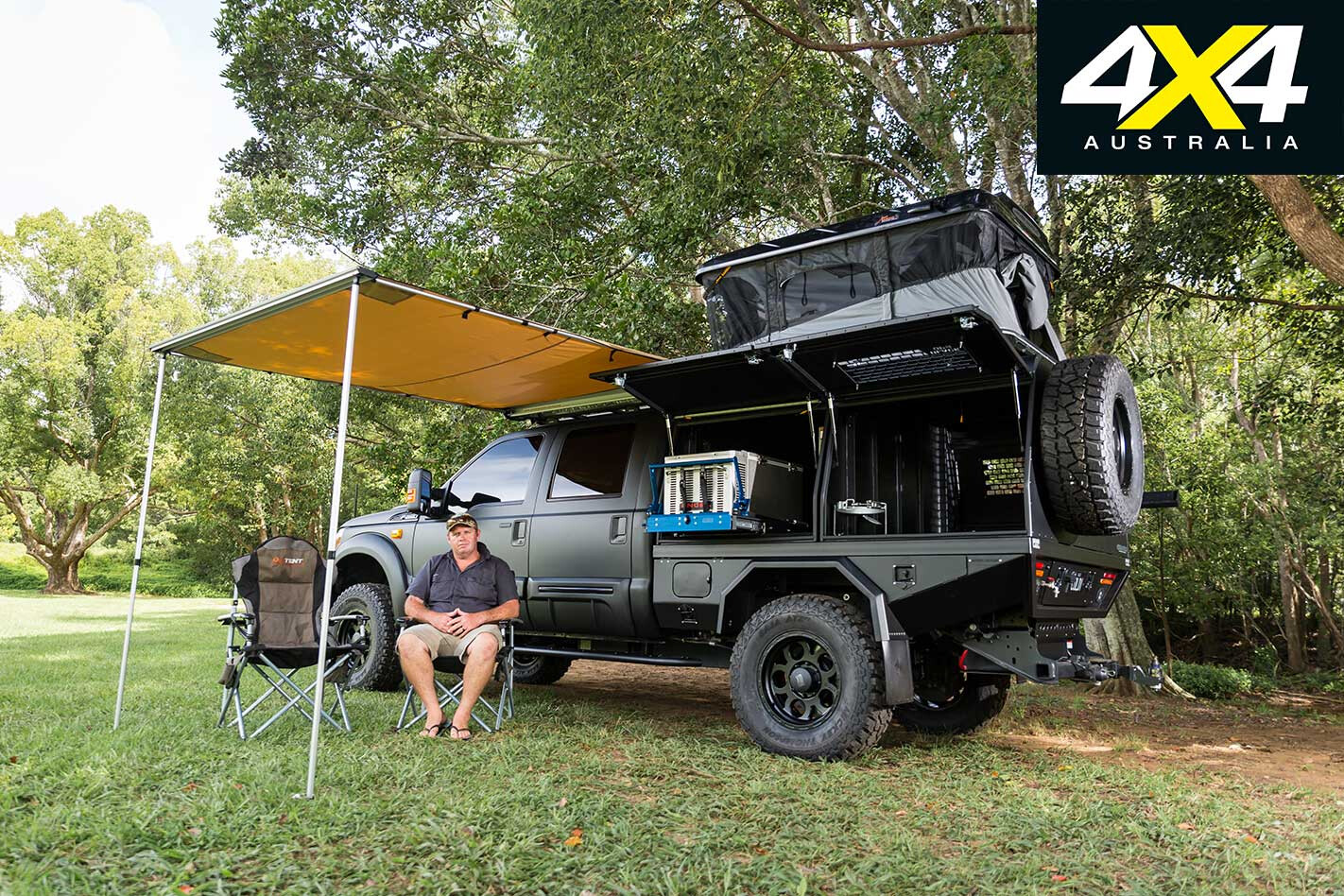
First, stop fighting with the nonsense floating around in your canopy and order up a set of drawers. No, not those one-size-fits-none drawers that waste loads of space; get a quality Aussie-built set screwed together with all sorts of handy features like built-in kitchens. A fridge drop-slide on top will make storage even easier, and a second fridge installed as a freezer extends your stays even longer.
A roof rack and wraparound awning provide plenty of shade, but also give you somewhere to load the firewood now that things are top-shelf in your tray. A GPS and invertor will make life a little easier, too, with a roof console giving you somewhere to stuff your now defunct paper maps.
You could also treat yourself with a gas-powered hot water system. Decent units can be fed from a jerry can, so as long as you’re within walking distance of water you’ll be soaping yourself up every night.
Additional modifications: Invertor – $1000 Awning – $1200 Drawers – $2500 Fridge drop-slide – $800 Roof console – $500 Gas-powered hot water shower – $500 GPS – $800 Roof rack – $1500 TOTAL: $8800 COMBINED TOTAL (from <$5000 basics and $15,000 budget): $23,600
Family Wagon
You’ve bought a perfectly good family runabout, thrown a few mods on it and then beat it to smithereens on the weekend with your mates. The front bumper is scratched and the side steps are more challenging for the kids than the local balance beam.
Take a long hard look at yourself and then start fixing what you’ve busted. A decent bullbar up front will replace the shagged front bumper, while a set of heavy duty side steps will give the kids something to stand on that won’t give them tetanus.
A dual battery system and fridge are essential modifications for a family, and not just so you’ve got cold beers when you’re out in the shed. What about that re-map, exhaust and intercooler? Yeah that’ll … ahh … make it nicer to drive.
Additional modifications: Bullbar – $2000 Side steps – $1000 Re-map & exhaust – $3500 Intercooler – $1500 Fridge – $1000 Dual-battery system – $1000 TOTAL: $10,000 COMBINED TOTAL (from <$5000 basics and $15,000 budget): $25,000
Follow our ‘How to build a ute guide‘ here: – Less than $5000 – $15,000 budget – More than $25,000
AN INCREASE in the illegal dumping of rubbish in parks and forests in Victoria’s north-east has become a major concern for the Forest Fire Management Victoria (FFMVic) department.
If you thought leaving behind loo paper and used tinnies was bad enough, what is most concerning is that forest officers have found junk dumped by what appears to be commercial businesses.
“Illegal dumpers are becoming more and more cunning, and the volumes of waste they are dumping is increasing,” Hume’s Assistant Chief Fire Officer, Aaron Kennedy, said. “Recently, almost 200 used fire extinguishers were found dumped near the Chiltern-Mt Pilot National Park.
“We were also forced to temporarily close a popular roadside rest stop in Edi, after a large amount of asbestos sheeting was found down a disused well.”
During the last few months, officers have been called out to more than 20 reports of illegal dumping of the potentially hazardous commercial waste, as well as household rubbish.
“People who dump rubbish in our forests have no regard for the health and safety of others or the environment,” said Kennedy. “These actions are putting the community at risk, which is unacceptable.”
The cost of removing rubbish from forest areas is in the tens of thousands of dollars per year and, as Kennedy said, “this money should be spent on other things the community requires like improving access tracks and recreational facilities.”
Dumping waste on a site that’s not licensed to accept it attracts a fine of up to $6234 if the case goes to court, while on-the-spot fines start at $317.
Don’t hesitate to report waste you spot to the EPA by calling 1300 372 842, or to report environmental crime on public land contact DELWP on 136 186 or Crime Stoppers on 1800 333 000.
DUAL-cab utes have taken the 4×4 market by storm, and it’s for a damn good reason: versatility. Actually, versatile doesn’t really drive home the point enough. They’re the Swiss Army Knife of off-roading, with attachments and electric blenders folding out of nooks and crannies you never thought possible. All you need to do is set them up right.
The problem, like any 4×4, is knowing how to build it to suit your needs, and knowing where best to spend your money. After all, what should you get first, the coffee percolator or the meat-pie oven? The upgrade paths are endless, with a $5000 build looking significantly different than a $25,000 build.
We’ve pounded out countless kays in and out of dual-cab utes over the past few years, everywhere from the tropics of Far North Queensland to the wide expanses of the Outback, all in the endeavour to help you build the ute of your dreams. Geez, we’re nice blokes!
Snag yourself a pay rise? Have we got some gear to spend your hard-earned on. Another $10K in the kitty brings the grand total to $15K to sink into your pride and joy, but you’ll finally be making real progress.
Hardcore Weekender
Your last tax return focused on getting you out of trouble; this one focuses on getting you into it.
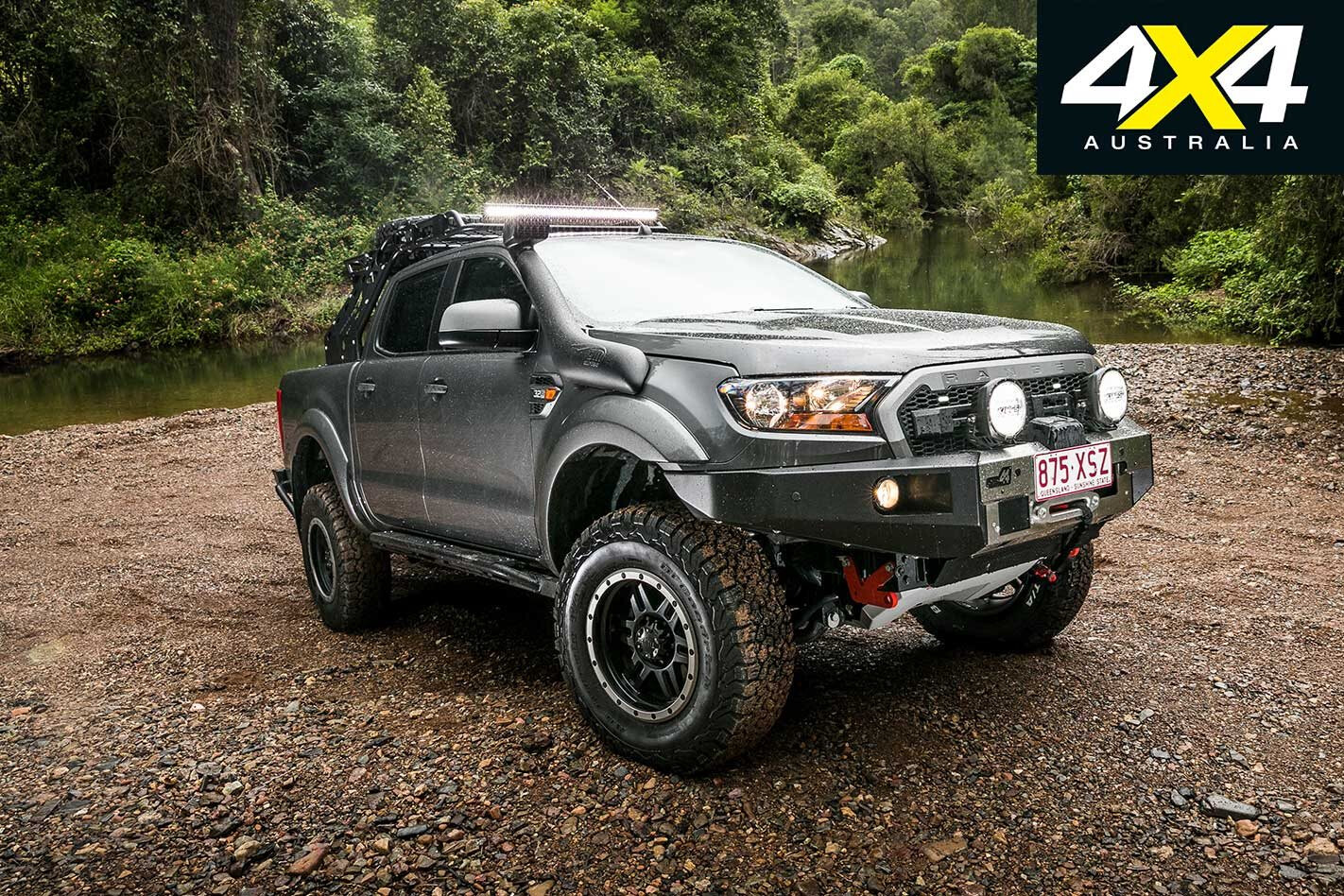
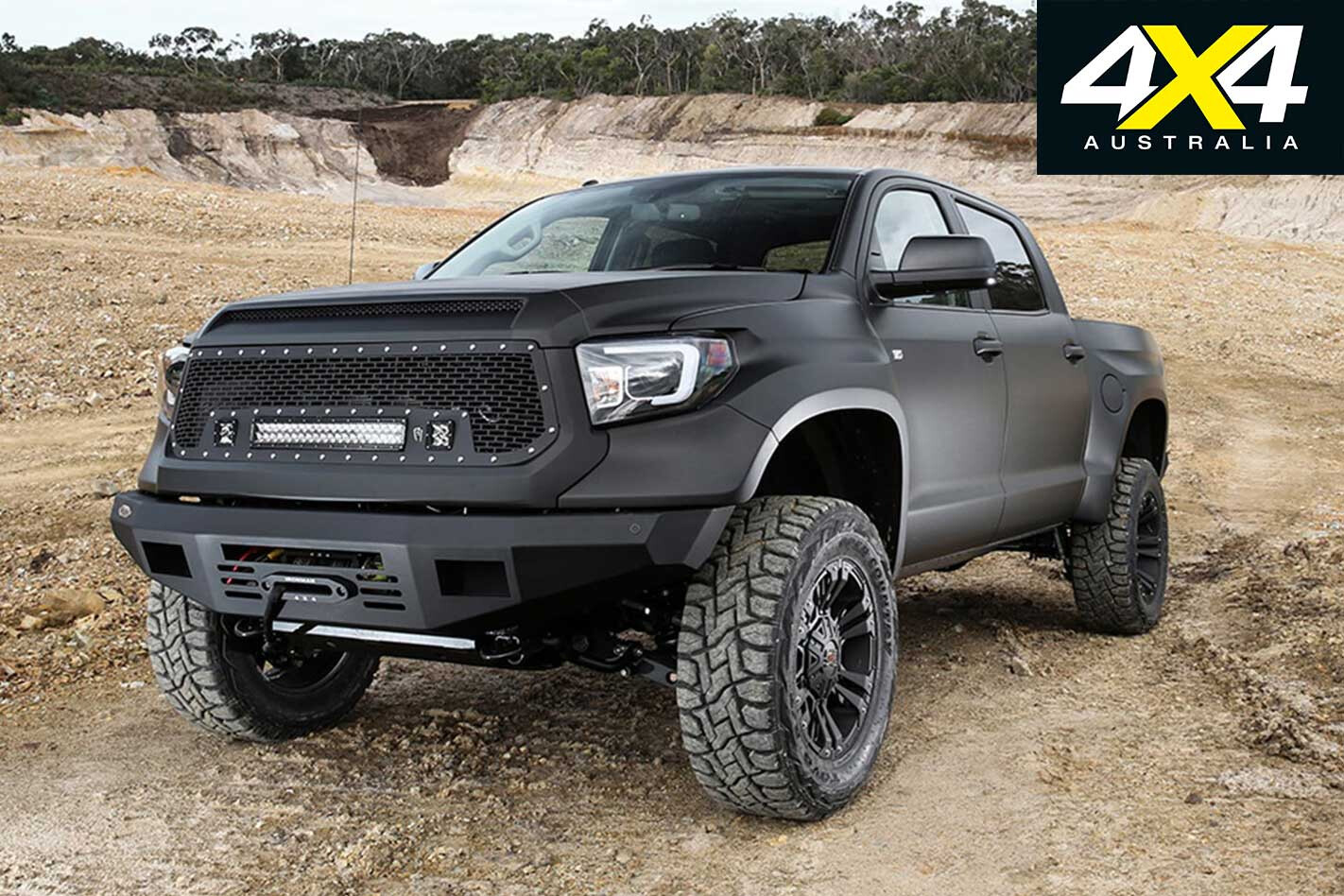
The first step is a good set of mud tyres; just how aggressive will depend on the terrain you drive on, but factor in at least $2000. To make the most of them, a set of beadlock alloys will allow you to drop to single digit pressures, giving you amazing traction and floatation on beaches. However, keep in mind they’re questionably legal, so proceed with caution.
You’re not going to shoehorn these tyres on the stock suspension, though, so get out the credit card and get swiping. You’re aiming for articulation rather than comfort, so while the thickest shocks aren’t a requirement you’ll want a well-balanced system that’s able to be tuned to your needs (read, expensive).
To protect the vulnerable tub sheet-metal from your newfound off-road ability, a simple rear bar with side protection should be on the list.
Additional modifications: Beadlock wheels – $1250 Mud terrain tyres – $2000 Rear bar – $1000 Springs & Shocks – $4000 TOTAL: $8250 COMBINED TOTAL (from <$5000 basics): $12,250
Remote Tourer
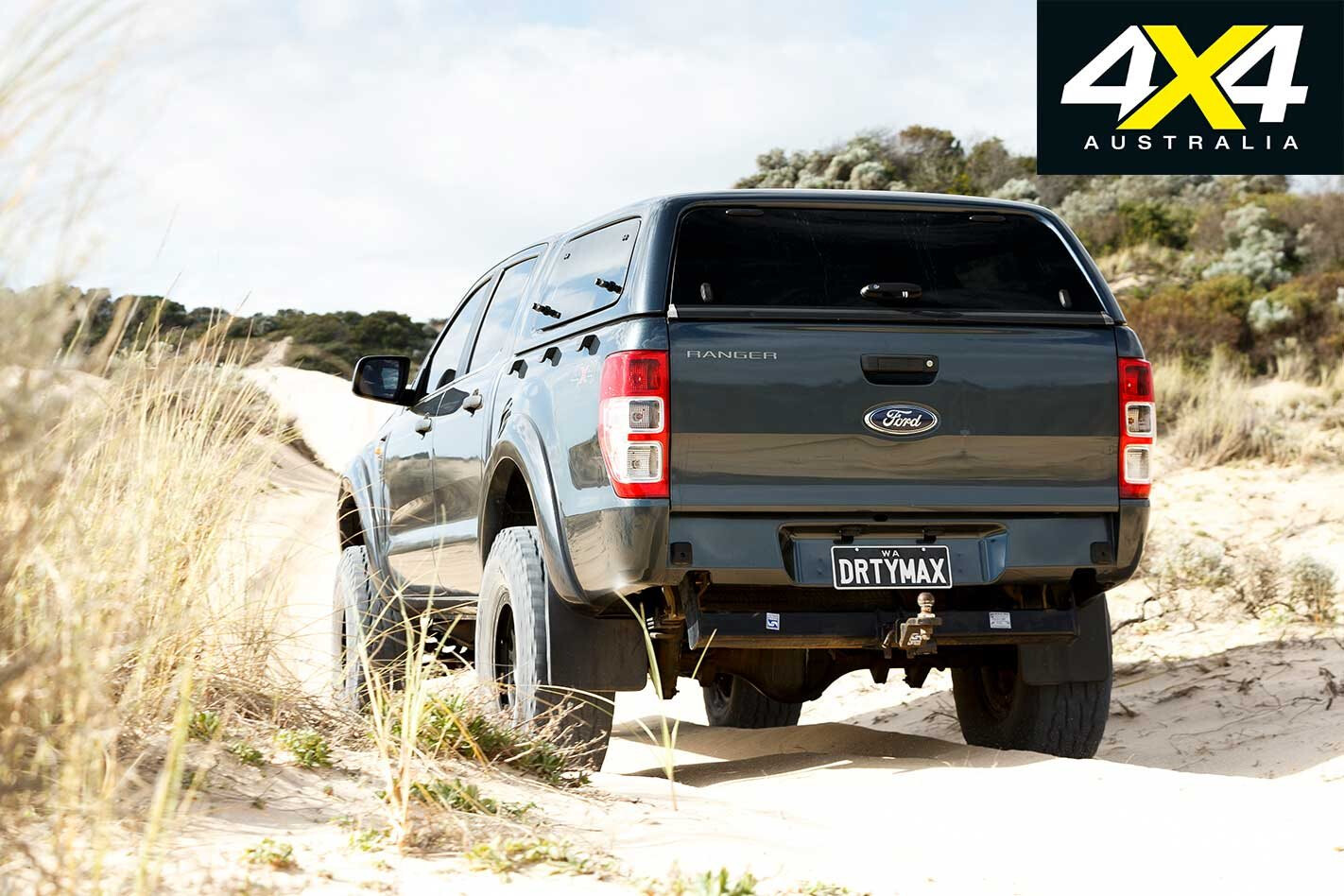
Those shocks of yours are designed to cope with the occasional speed bump, but they’re going to melt into a puddle of disappointment if pushed across endless corrugations. You’ll have no choice but to go for a slight suspension lift, but pay close attention to the shock absorber.
As a general rule, external reservoir and the biggest piston you can get will deal with corrugations the best. Spend big here and you won’t regret it. A long-range fuel tank and a fibreglass canopy will both allow you to go farther, due in part to the increased distance between drinks and how much junk you can now carry.
By now you’re probably sick of shovelling ice into that ice chest. Spend up big on a dual battery system and a fridge, even if it’s strapped to your back seat. The ability to know that chicken you bought in town four days ago won’t kill you is worth every dollar.
Additional modifications: Fridge – $1200 Big-dollar shocks – $3500 Dual-battery system – $800 Long-range tank – $1300 Fibreglass canopy – $3000 TOTAL: $9800 COMBINED TOTAL (from <$5000 basics): $14,800
Family Wagon
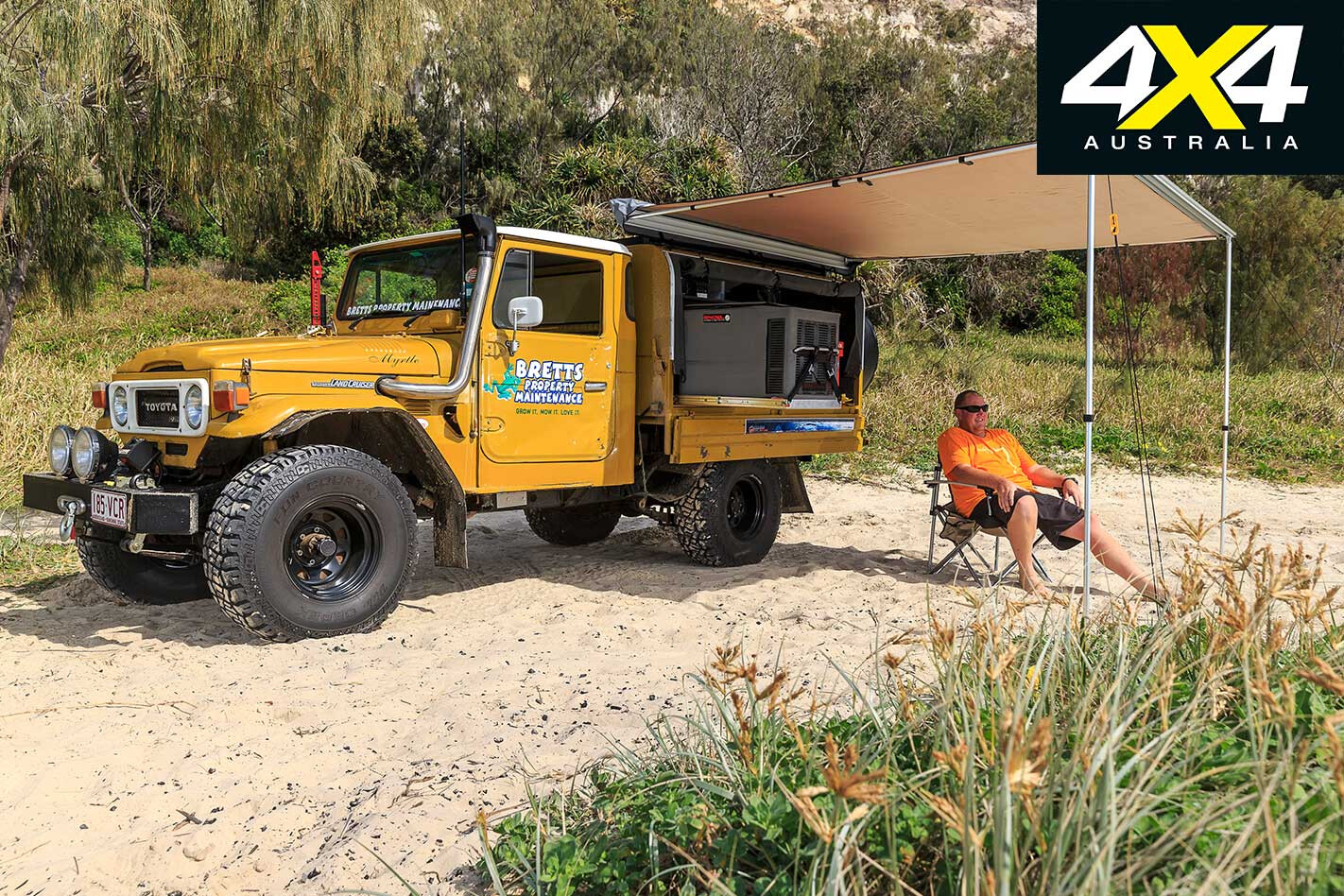
Have you kid-proofed the interior and got enough room for all your gear? Then it’s time for a decent set of tyres and a half-decent suspension set-up.
Unless you’re planning on running the Baja 1000, a basic two-inch lift kit and a slightly larger set of all-terrain tyres should cut the mustard. The higher you go on both the more capable you’ll be, but this increases the chances of running into height issues when at the local shops.
A roof rack up top will provide room for bulky items like kayaks, but it will also serve as a platform for a wraparound awning, making beach adventures that much easier. There are ones you can pick up for less than the price of a servo pie, but they’ll provide about as much shelter as one, especially if you’re trying to hide the whole family beneath it.
Round out your upgrades with the bits and pieces that’ll make remote trips better, without eating into the practicality: a set of storage drawers, a snorkel, UHF and a slimline LED bar up top.
Additional modifications: Snorkel – $700 UHF – $500 Roof-rack – $1500 Awning – $1200 LED light up top – $700 Tyres – $1500 Storage drawer – $1400 Suspension – $2500 TOTAL: $10,000 COMBINED TOTAL (from <$5000 basics): $15,000
Follow our ‘How to build a ute guide‘ here: – Less than $5000 – $25,000 – more than $25,000