
Today’s range of 4×4 pick-up trucks may be the most versatile and practical vehicles on the market, but there is always room for a little improvement when it comes to preparing it for the Outback.
Aspects like lighting, suspension, and power management – while more than adequate for daily usage – could do with a little tweaking if you plan on taking your ute out to the isolated, rough-and-tumble environment of the open country. Because of that, these ute gear are often the first things to get fitted to one’s adventure ute.
ARB Ascent canopy
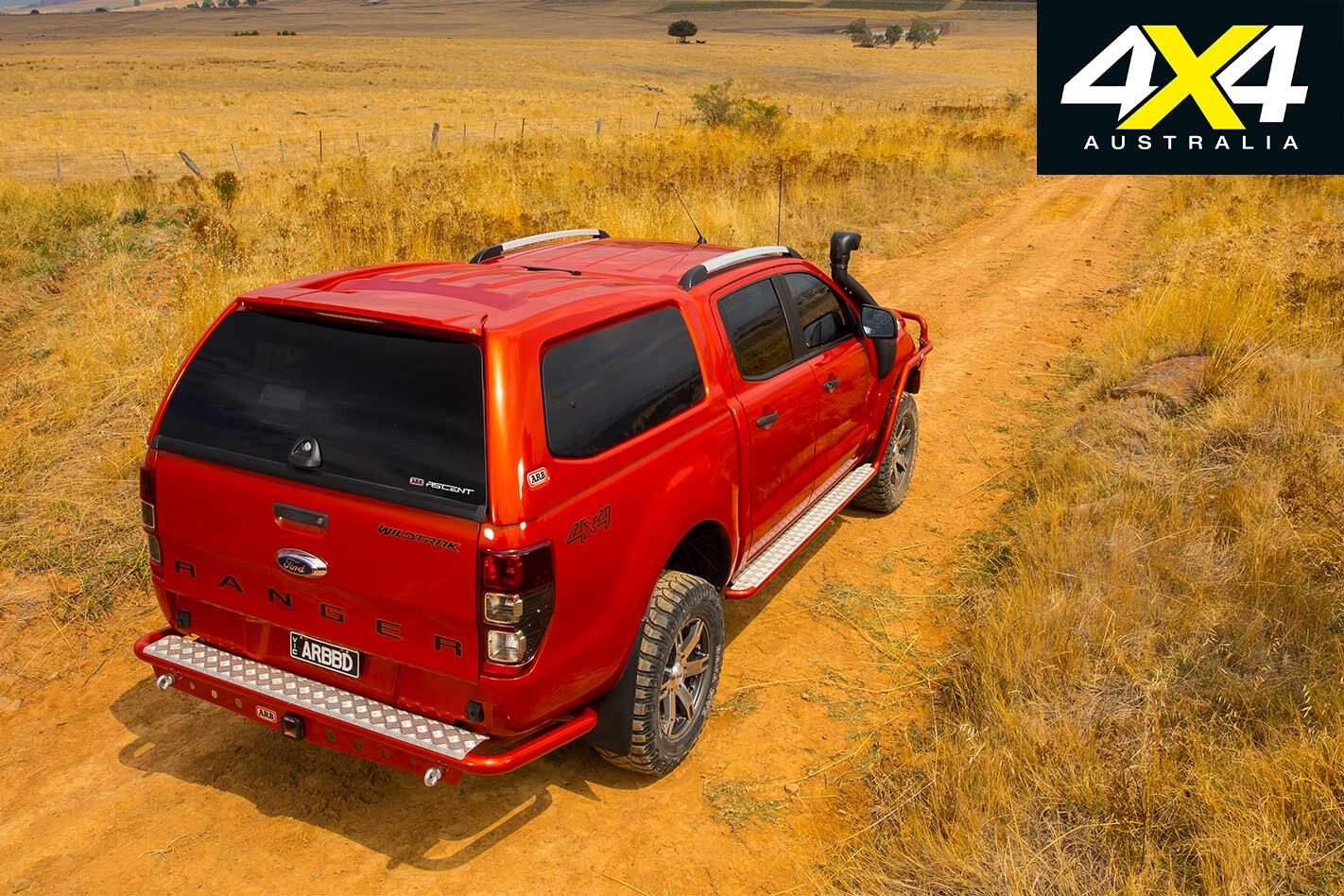
This fully featured canopy is the result of ARB’s many years of experience producing canopies for the dual-cab market.
From its vanishing-edge shell design – effectively making the canopy look like an integrated part of the vehicle – to its frameless windows (5mm tempered glass with 28 per cent tint for optimum UV protection), this canopy exudes quality. The canopy is made from vacuum-formed 9mm ABS thermoplastic, can withstand temps from -20 degrees to 90 degrees Celsius and includes what ARB dubs an ‘invisible’ hinge system to further promote the smooth styling.
The Ascent also features an integrated central locking system, using the vehicle’s key. Roof load weight limit is 100kg and a number of popular roof-racks and cross bars can be fitted.
Website: www.arb.com.au
Clearview clip tray
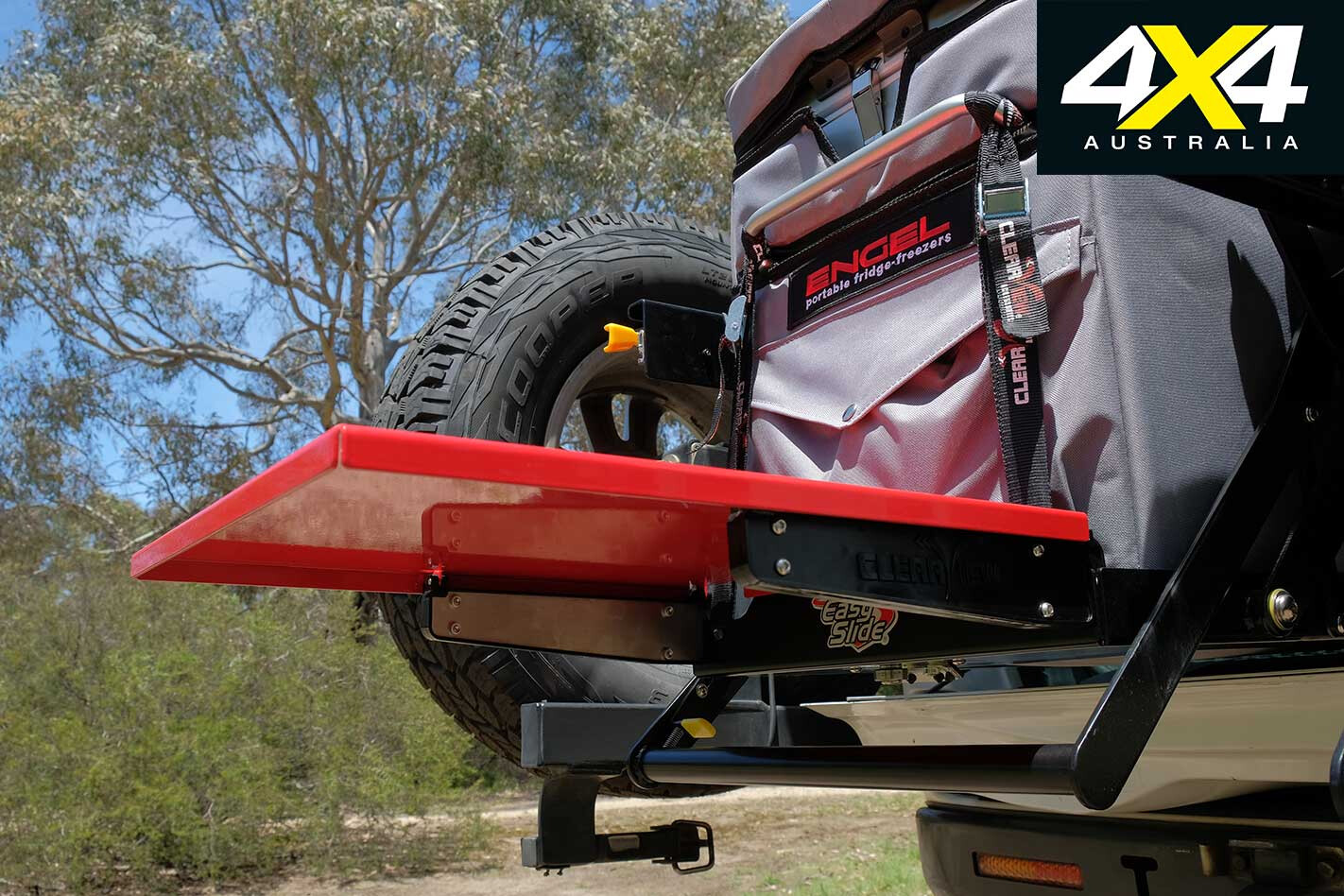
Clearview’s clip-on/clip-off tray is a great addition to the company’s Easy Slide for those who are after more platform space for food prep (the tray only fits the Clearview Easy Slide) when you want to stop either for a quick cuppa or a big lunch.
This tray adds an area of 454mm x 390mm, a fantastic addition to useable space in the back of your rig. Stored in a branded carry bag and able to be left in your ute when not in use, the tray is a simple fit when it is needed. It can support 15kg of weight, too, thanks to its fold-down, injection-moulded legs having inbuilt stainless-steel supports along their length, secured with stainless steel screws.
RRP: $89 Website: www.clearviewmirrors.com.au/
EFS XTR shock kit – Toyota HiLux
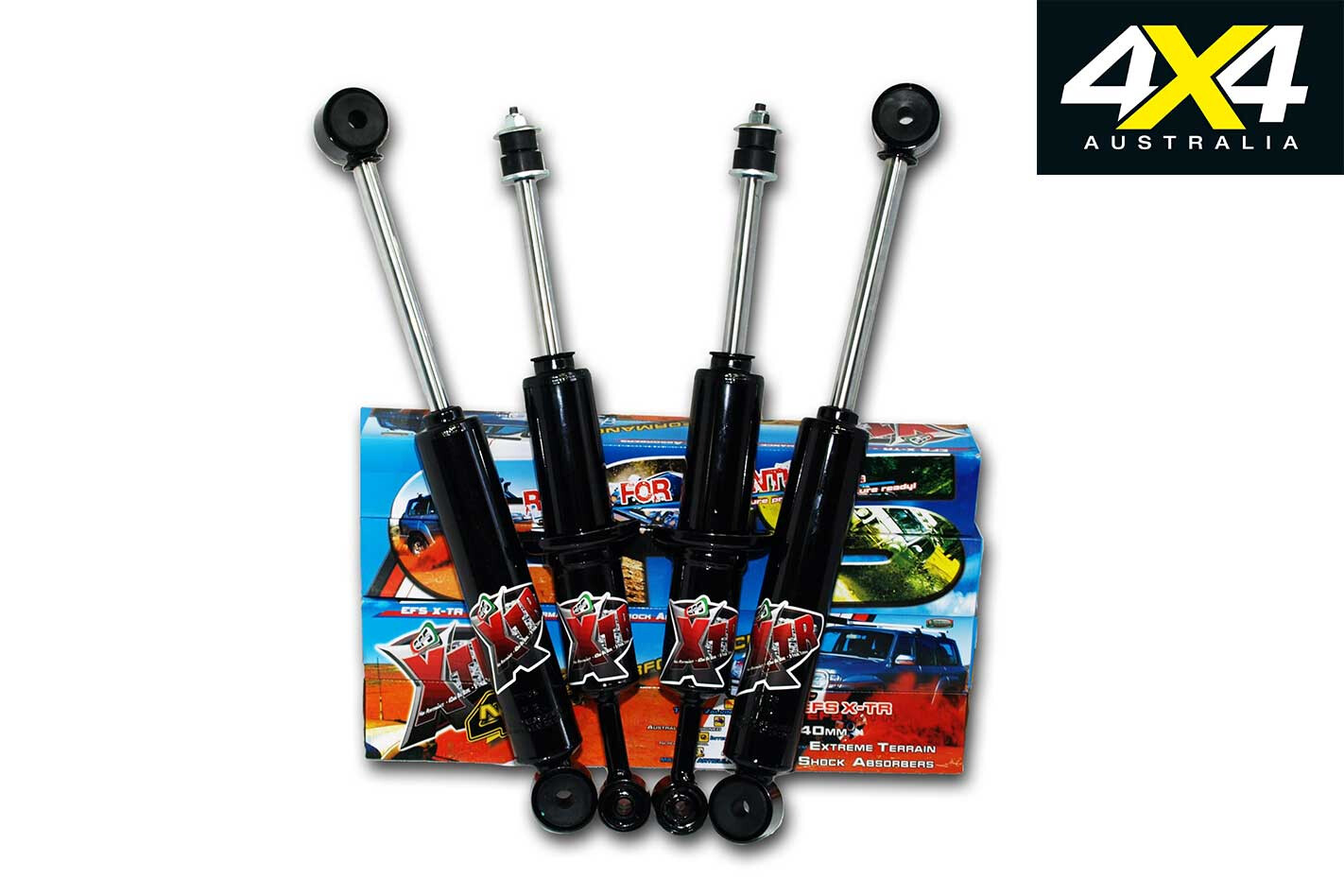
The brainstrust at EFS has released a 40mm bore XTR shock kit for Toyota’s HiLux (dual-cab and single-cab, 2005-2015). The kit allows for an increase in fluid volume which assists in preventing the build-up of heat in the shock, and the resultant fade that you can experience on rugged tracks.
The shocks feature Dynamic Motion Control Technology (DMCT) which alters the valve forces dependent on the velocity of the fluid as it travels through the piston valve. As oil speeds up through the valve, this technology slows that flow down for improved control in high-speed scenarios.
When the oil is passing more slowly through the valve (during off-camber/slow-speed off-road conditions) it allows the oil through the valve at a higher volume to assist in suspension flex.
RRP: $269.50 each (XTR 40mm front strut); $180 each (XTR 40mm rear shocks absorbers) Website: www.efs4wd.com.au
Lightforce Striker LED
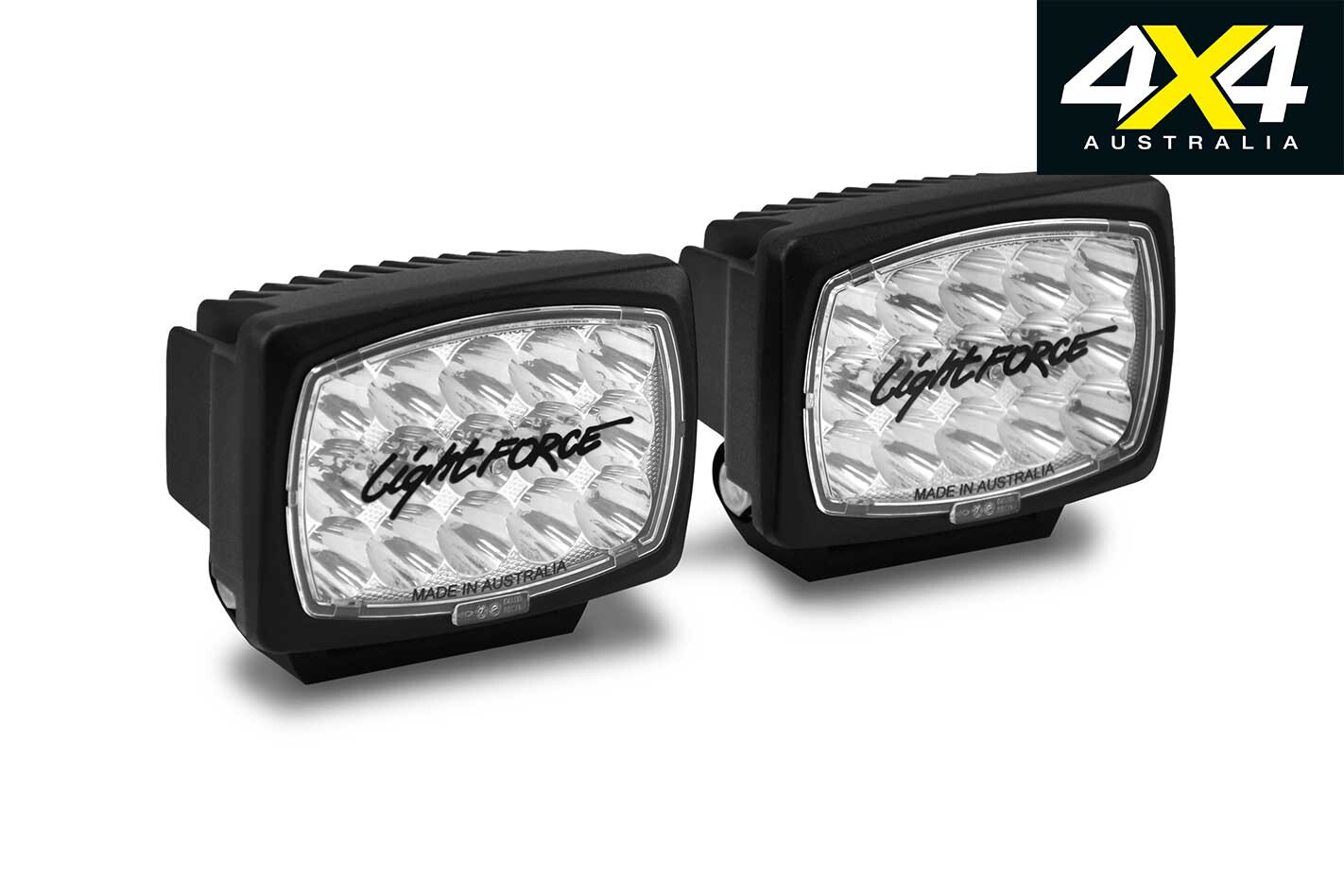
The gurus at Lightforce have done it again, with the release of the new Striker LED lights. As with any Lightforce product, build quality and tech is top-notch, plus the lights are very easy to install, thanks to the included plug-and-play harness.
The Striker LED is a great light for any 4×4 owner – especially those with less front ‘real estate’ in which to fit the lights – thanks to the slim and compact size, along with the lightweight but tough construction. Features include an amazing 1Lux output to 754 metres and a 5000K colour temperature, designed to reduce glare and eye fatigue.
The modular filter system allows for a combo light setup or flood beams. Aussie-made and well proven, the Striker LED is a great option for those looking for additional lighting for their touring rigs.
RRP: $599 Website: www.lightforce.com
Piranha Off Road cabin-mount battery tray – Ford Ranger PX
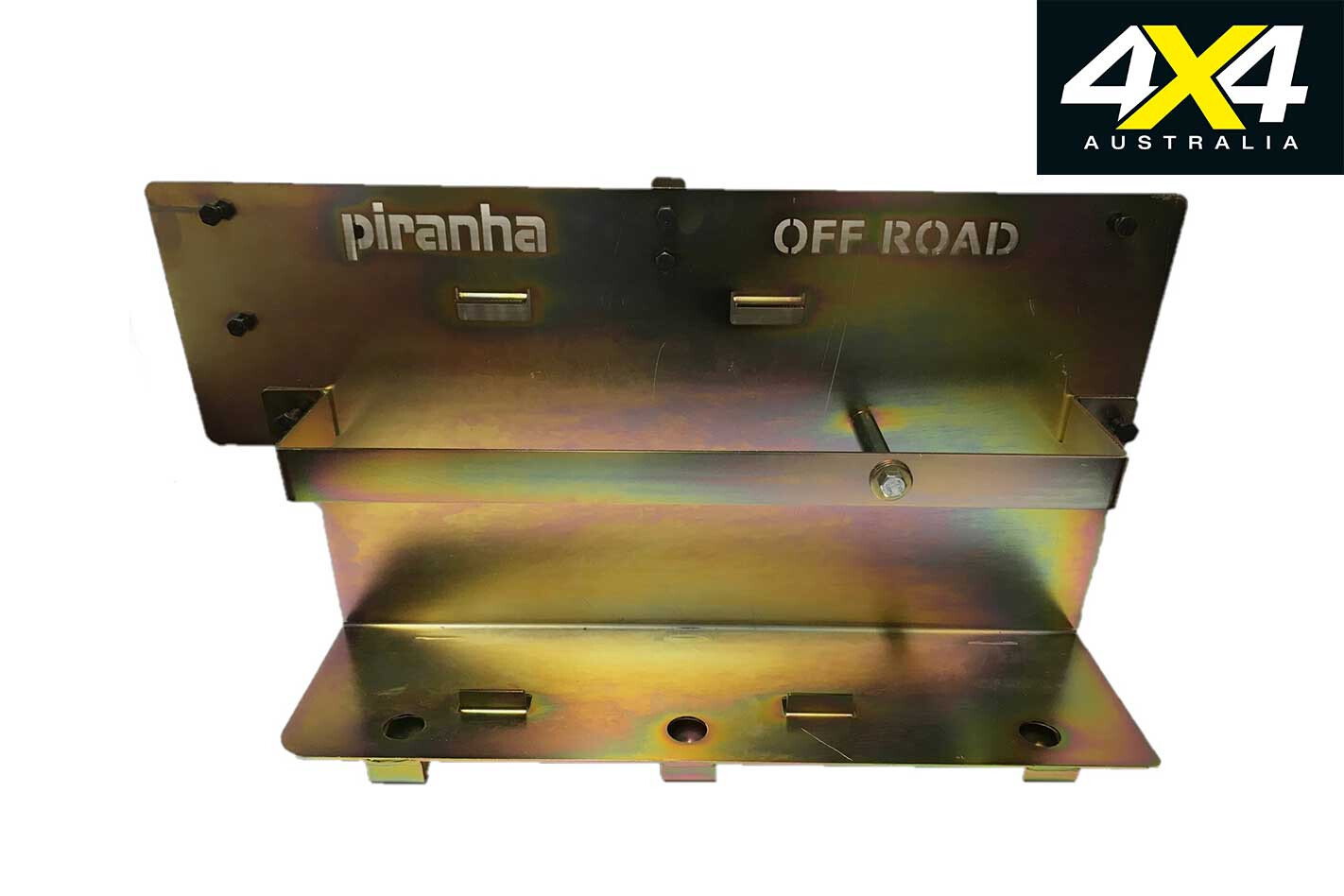
Piranha Off Road has expanded its impressive auxiliary battery tray range, for Ranger’s popular Ranger PX, to three, with this new cabin-mount tray. Already available in under-body and tub fitment versions, this new cabin-mount model is ideal for the remote tourer who will be off the grid for a few days and is keen to keep all their food (and coldies) cold.
This cabin-mount tray fits neatly behind the Ranger’s rear passenger seat on the driver’s side of the vehicle. It can be fitted with either a 100Ah or 150Ah battery, which means plenty of fridge time.
Designed in Melbourne, the tray’s 3mm steel is electro-plated for longevity and durability. By fitting this tray in-cabin, it frees up space under-body for a long-range fuel tank, plus being out of the tub means more space for gear.
RRP: $365 Website: www.piranhaoffroad.com.au
Supafit seat covers
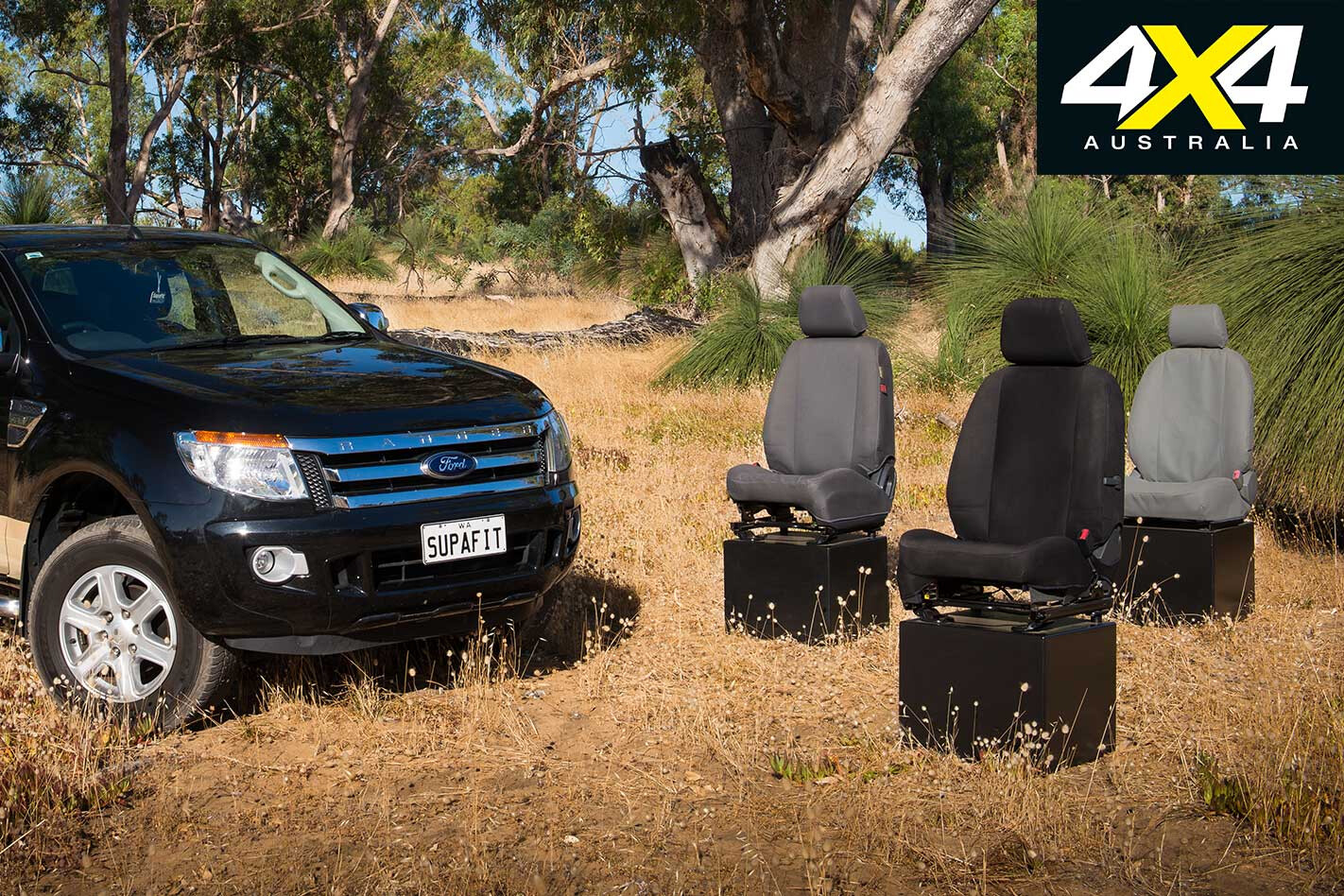
Take your pick with Supafit Seat Covers’ two new products. The heavy-duty canvas seat covers protect your ute’s original upholstery while offering fantastic wear-and-tear resistance thanks to the tough Aussie-made 14.9-ounce poly/cotton canvas material.
These covers are waterproof, mould/bacteria-resistant and UV-stabilised – in short, they’re tough. The denim seat covers are made from 100 per cent cotton-twill fabric and laminated with a high-density 6mm foam backing. These seat covers are super-comfortable, offer a cool feel, protect the original seating from dust and dirt, and have UV protection as well.
Both seat-cover types are airbag-certified and ADR72/00 compliant so work perfectly in the unfortunate circumstance of an accident.
RRP: $317 (single cab); $558 (dual cab) Website: www.supafitseatcovers.com.au
MITSUBISHI’S fifth-generation (MQ) Triton arrived in Australia in mid-2015, replacing the MN that first went on sale in 2009.
In designing and building the MQ, Mitsubishi didn’t attempt to match the notably bigger size of the new-generation utes led by the Ford Ranger and VW Amarok, but instead reworked what it already had in the MN, which means a smaller ute.
The main changes from the MQ centred around an all-new Euro-5-compliant 2.4-litre four-cylinder diesel, a new six-speed manual gearbox, a revised five-speed automatic available on all models and not just the Exceed, various chassis changes, and a restyled body.
Thanks to very sharp pricing and ongoing factory discounting the Triton is only outsold by Hilux and Ranger. And if you want a less expensive ute than the Triton, you’ll have to look at either a Chinese or an Indian ute.
WHAT YOU GET
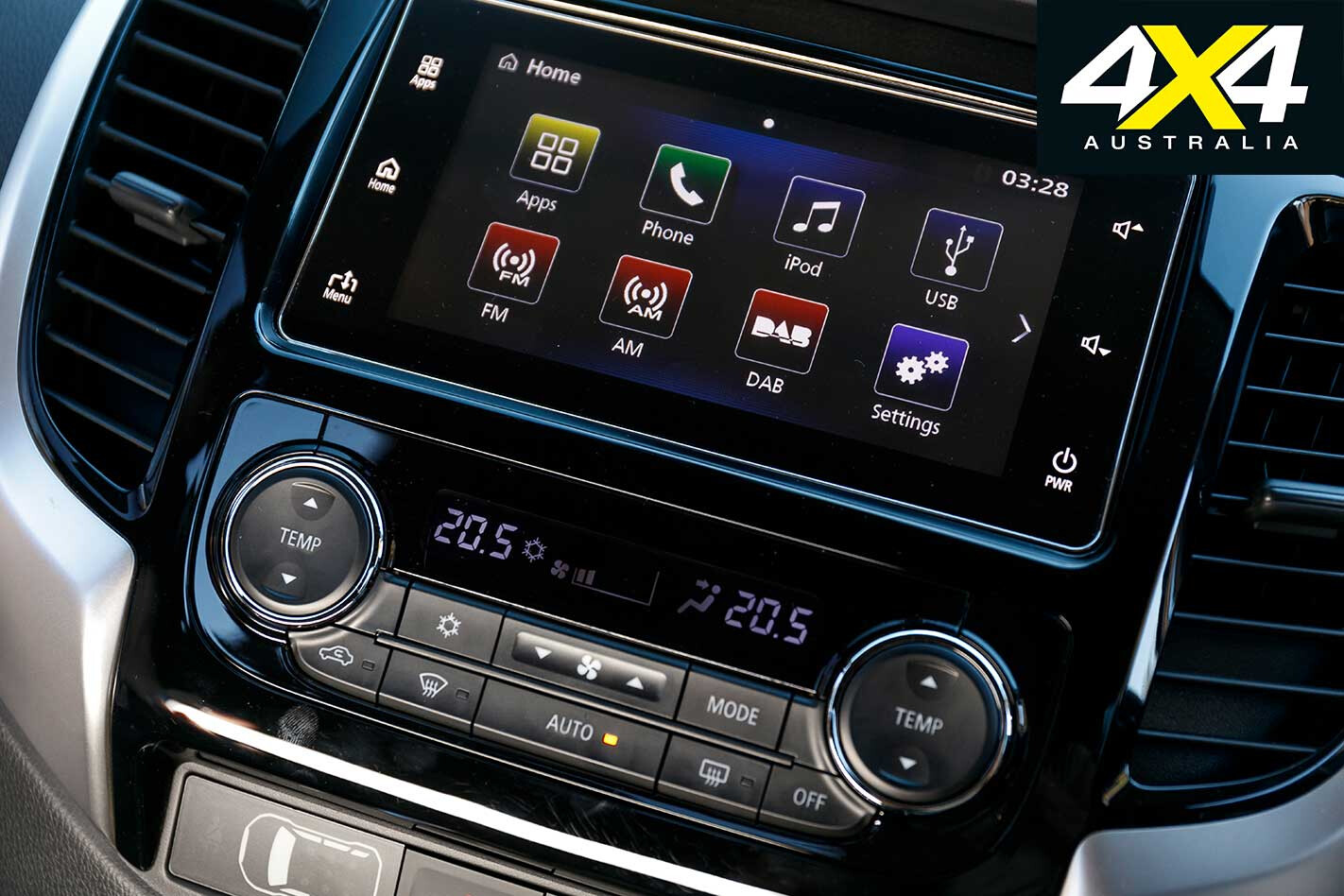
ALL Triton dual-cab 4x4s utes, from the base-grade GXL up, have seven airbags, a reversing camera, tilt-and-reach steering wheel adjustment and Trailer Sway Control. The GLS then adds Super Select 4×4, 17-inch alloys, LED DRLs, a seven-inch touchscreen, Apple CarPlay, Android Auto and a sports bar.
The top-spec auto-only Exceed, as tested here, then adds leather, heated front seats, auto wipers and headlights, paddle shifters, smart-key entry and start, and a rear locker.
POWERTRAIN AND PERFORMANCE
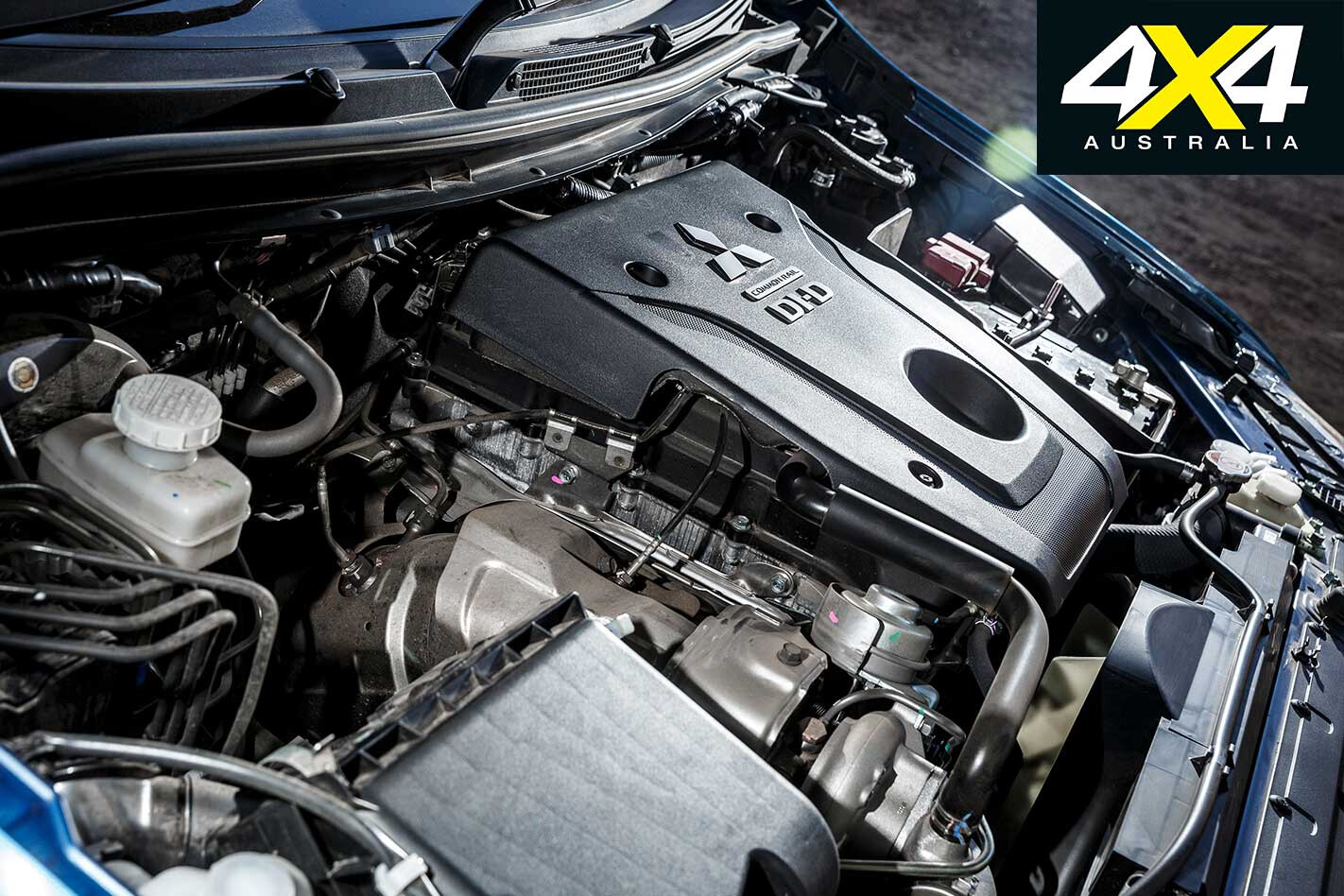
ASIDE from the Navara’s and X-Class’s shared 2.3-litre diesel, which employs a sophisticated bi-turbo arrangement, the Triton’s engine is the smallest capacity here and is down towards the bottom of the list when it comes to on-paper power and torque outputs.
Countering this, the Triton doesn’t weigh as much and isn’t as tall geared as most utes here, so it remains competitive in terms of its pedal-to-the-metal performance.
The Triton’s ‘little’ diesel also revs much harder than most to do the same job, as is evidenced by the fact it doesn’t make its maximum torque until 2500rpm, an unusually high engine speed for a diesel and 1000rpm above where some of the bigger diesels here achieve their maximum torque.
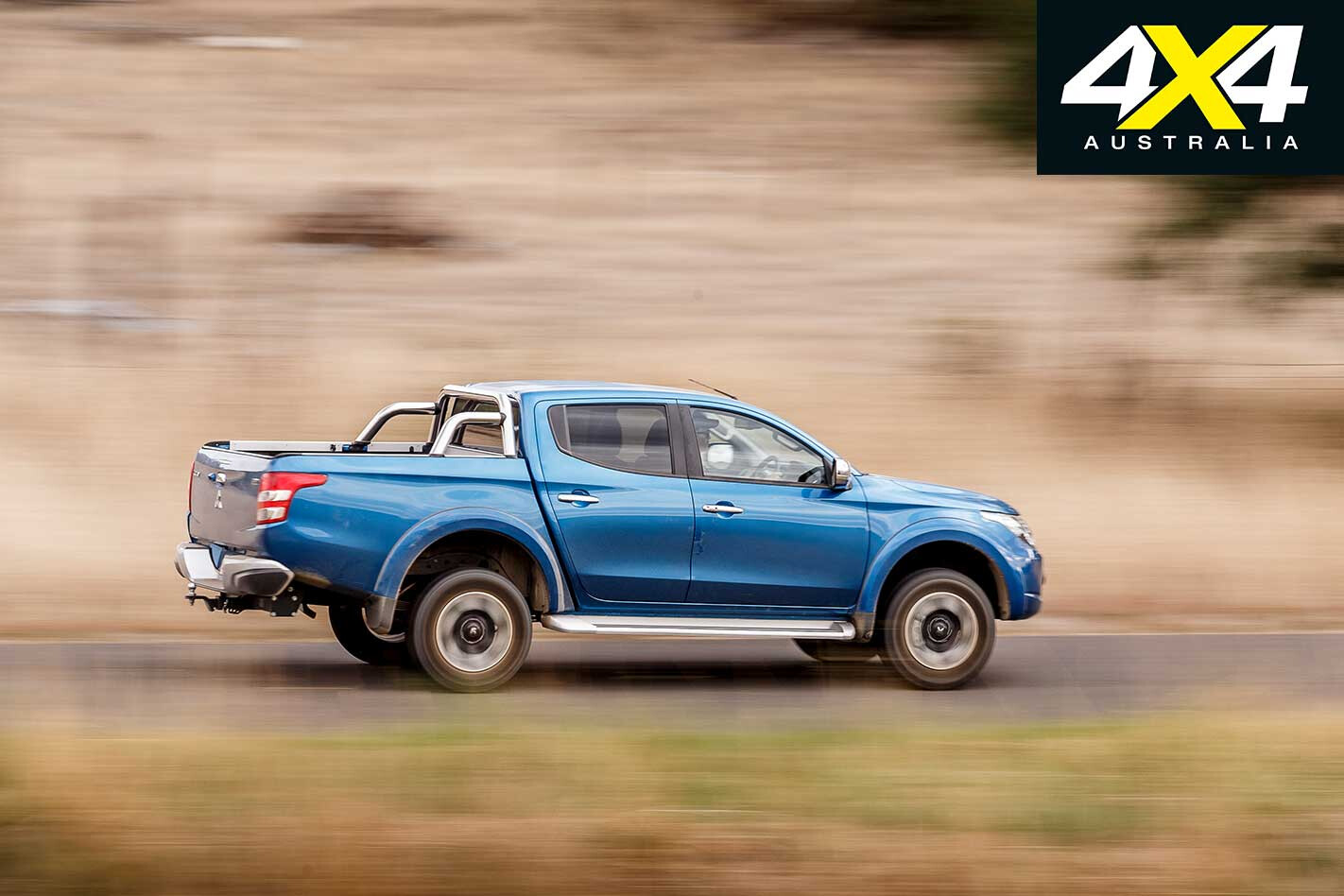
Despite the fact the Triton’s engine likes to rev, it’s still reasonably quiet, refined, smooth and economical, so this is more a characteristic of the engine rather than a criticism.
The Triton is unique here in having a five-speed automatic (all the rest have six or more speeds) and the gearbox is also an old design, even if it has been updated for this generation Triton. It still offers agreeable enough shifts, but it certainly isn’t as slick or as smart as the best gearboxes here.
ON-ROAD RIDE AND HANDLING
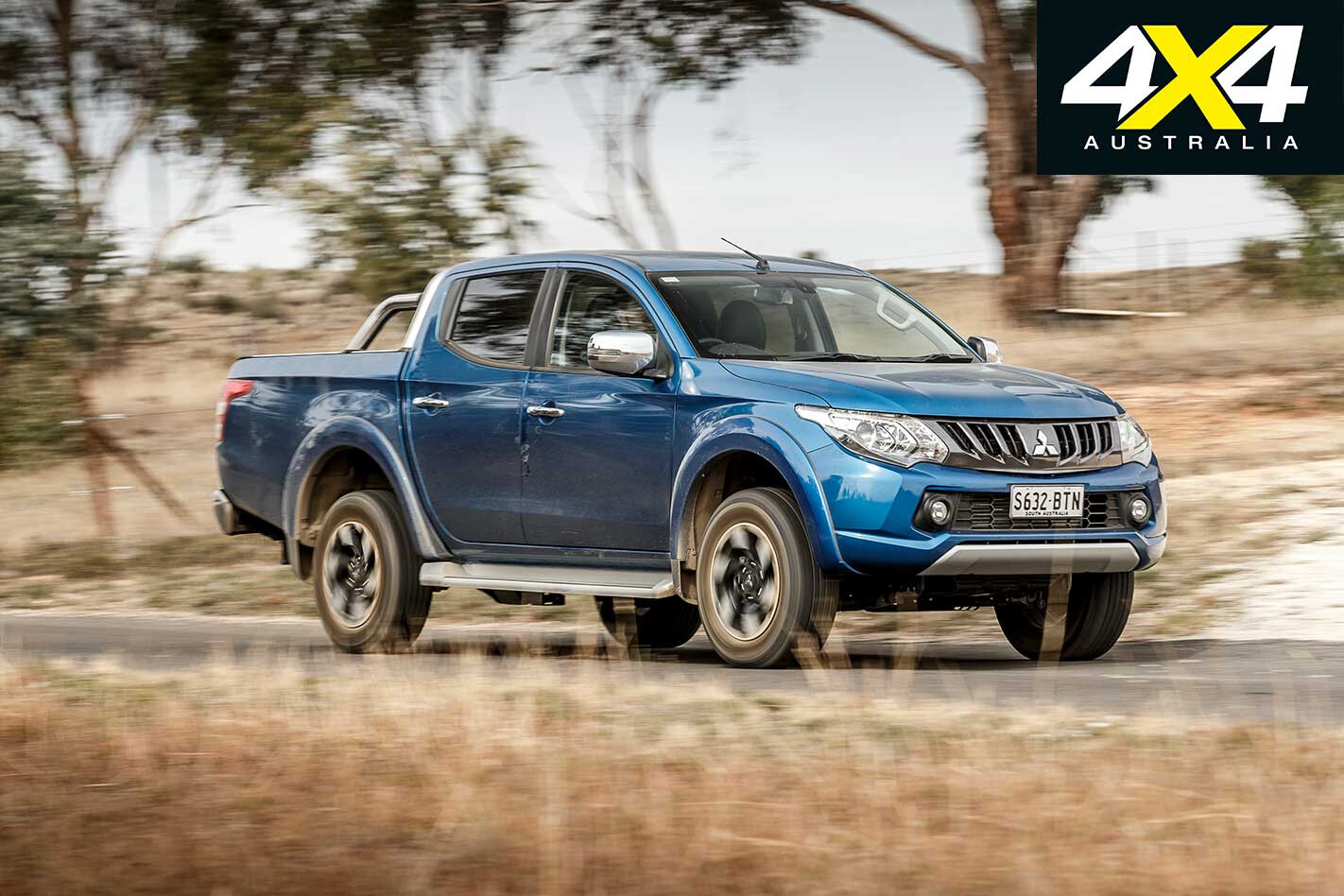
THE Triton continues to stand out in this company in terms of its on-road dynamics thanks to the fact that it’s smaller and lighter than most of the utes here. It certainly feels more agile and nippy, especially compared to the bigger utes, namely the Ranger and BT-50.
More significantly the Triton offers full-time 4×4 via its unique Super Select system, which also allows the driver to select rear-wheel drive. The only other ute here with full-time 4×4 is the Amarok. Full-time 4×4 offers significant safety and driveability benefits, particularly on wet bitumen and where road conditions alternate from sealed to gravel and wet to dry.
The Triton’s suspension is also generally well-resolved, even if the ride quality could be better when unladen. Perhaps the relatively short wheelbase and the fact the rear axle is right under the rear of the cab is part of the issue here?
OFF-ROAD
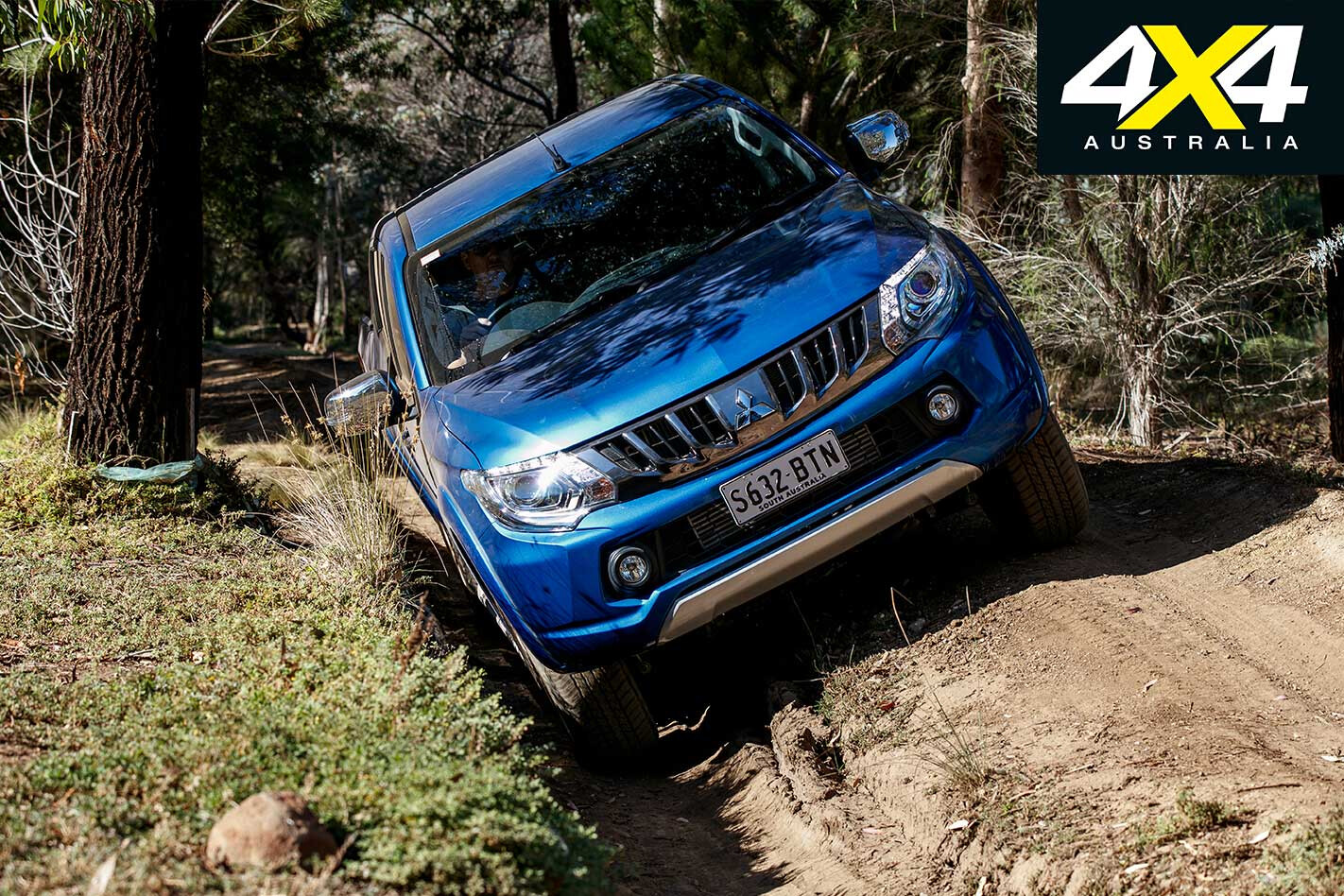
WHILE Super Select’s main benefit translates on-road, it also offers some convenience off-road given its full-time setting allows you to switch from on-road to off-road without touching anything.
If conditions get a bit more difficult you can readily lock the centre diff in an action that’s generally more seamless than engaging 4×4 with any of the part-time utes, all of which can be a bit fiddly and slow to engage on time given they rely on electro-mechanical switching rather than an ‘old fashion’ lever.
Unfortunately that’s where the good news – for what it’s worth – ends for the Triton in terms of off-road ability. The main issue is that the Triton isn’t blessed with lots of wheel travel, nor is the traction control all that effective. And while it has a rear diff-lock (at this spec level), engaging the rear locker cancels the traction control completely, so it’s not always of benefit.
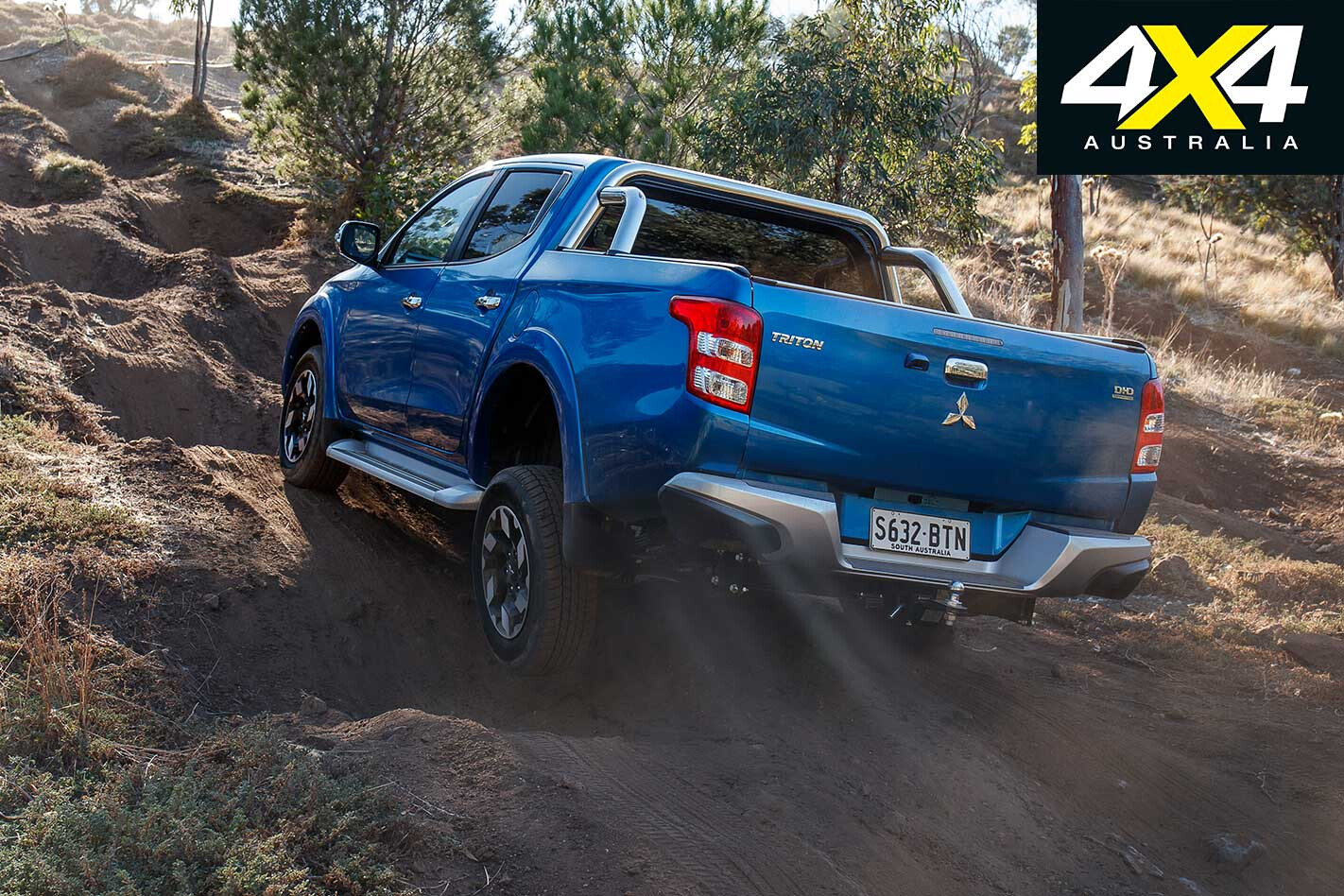
Like the D-Max, the Triton couldn’t make it up our set-piece hill climb; although, it did go farther with the diff-lock than without it.
A relatively low wading depth doesn’t help, either. With a bit of work (snorkel, aftermarket locker) it could be much improved off-road, but out of the box it’s down the back of the pack.
LOAD CARRYING
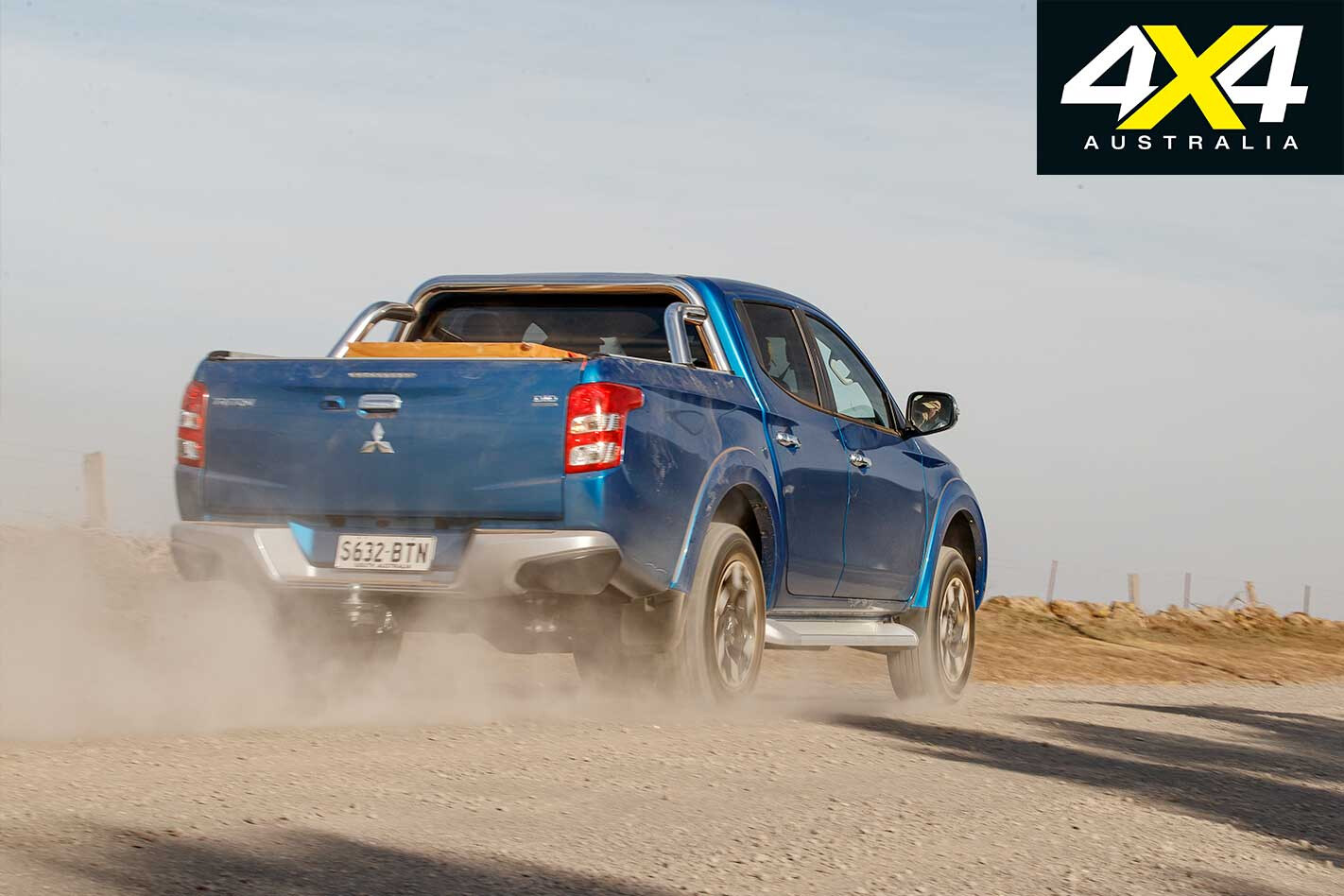
THE Triton has relatively low payload ratings and has the lowest tow rating of all the utes here, a reflection of its small physical size, relative light weight and low GVM and GCM figures. The fact its short wheelbase means all of the tray overhangs the rear axle doesn’t help, either, when heavily loaded. In this company the tray is slightly smaller than most, both in overall dimensions and with the width between the wheel arches.
With our 900kg payload the Triton still coped okay chassis-wise, but it felt the weight more than most here and demanded a steady-as-she-goes approach behind the wheel. The engine, however, fared better, even if it works harder than most to carry what is effectively its maximum payload.
CABIN AND SAFETY
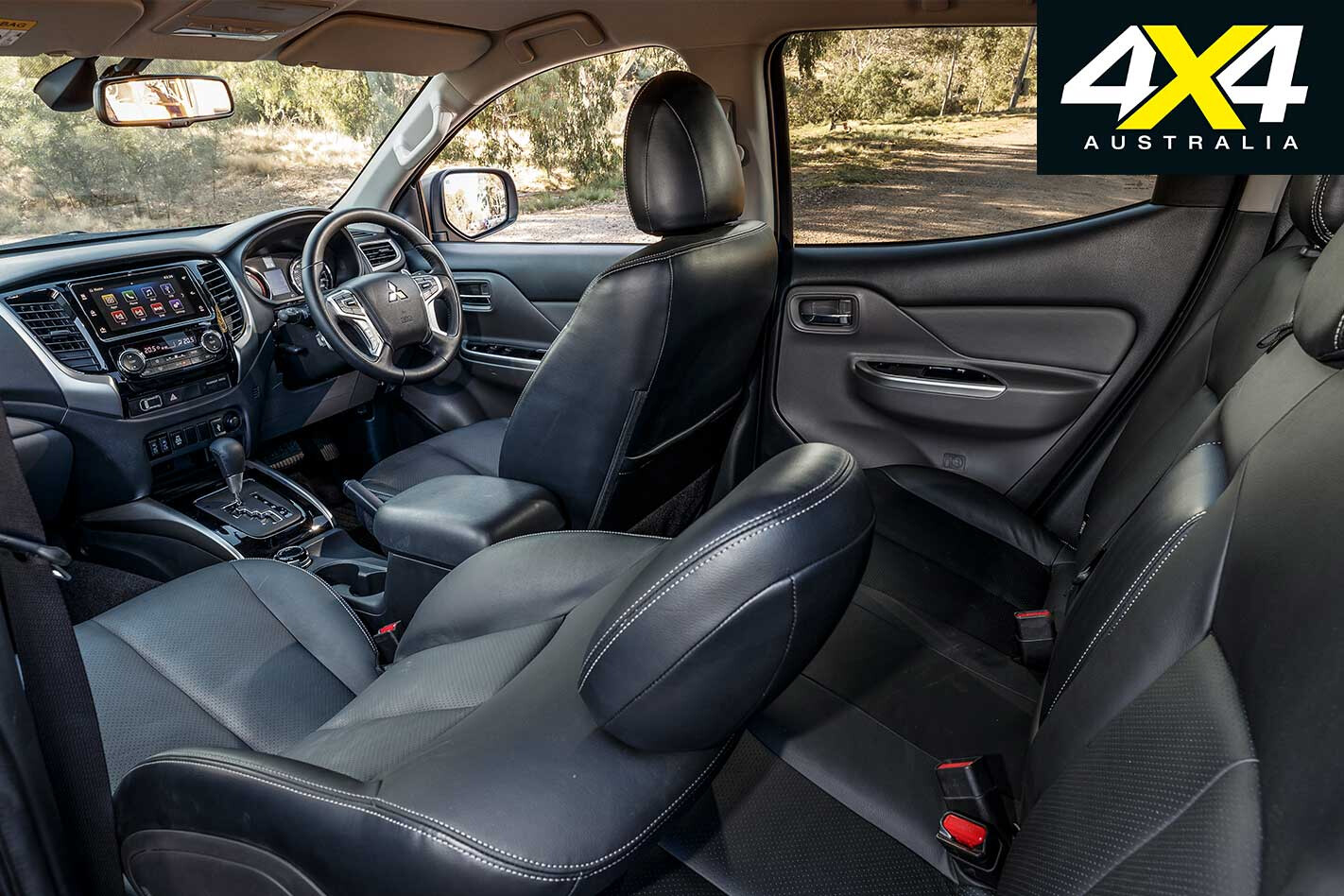
THE Triton’s cabin is arguably the smallest here, which makes its presence most felt if you wish to sit three adults across the back seat. Even up front the driver and passenger don’t have the space of the others, something tall people will notice most.
More positively the Triton offers both tilt-and-reach steering wheel adjustment and what is one of the better-finished cabins. Smart key entry and start at this spec level (and relatively low price) is also a bonus, while no less than seven airbags help contribute to a five-star ANCAP rating.
PRACTICALITIES
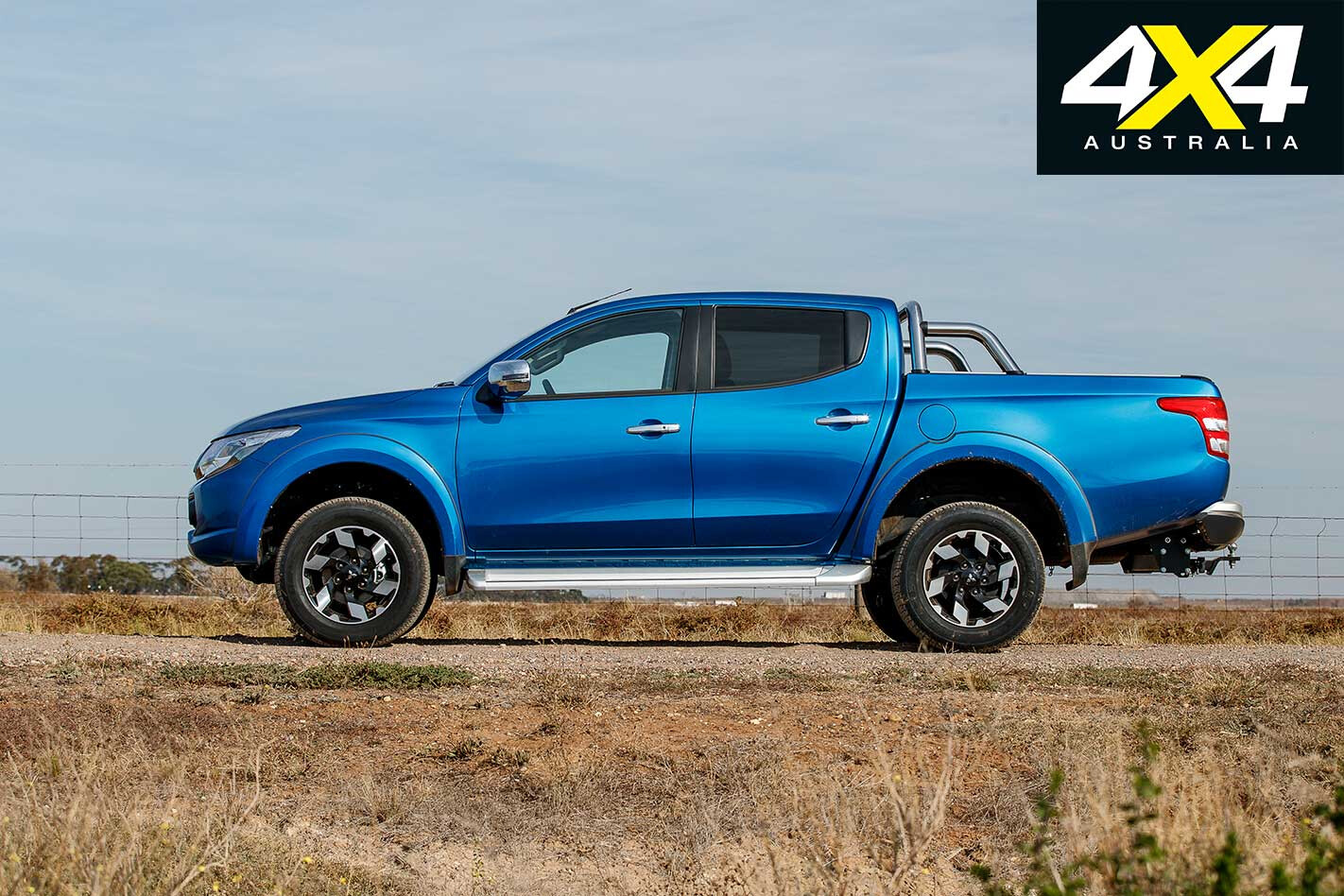
PERHAPS the most practical thing about the Triton is that it’s the least expensive ute here, so you can buy one, add a truckload of accessories, and still come away better off than any of the other utes. The Triton’s small physical size and tight turning circle also makes it handy anywhere where space is at a premium.
The wheel and tyre spec (245/65R17s) are a little smaller than the popular 265/65R17 size on most utes here, but this doesn’t limit replacement options.
Mitsubishi Triton Exceed Specs Engine: 2.4-litre 4-cyl turbo-diesel Power: 133kW at 3500rpm Torque: 430Nm at 2500rpm Gearbox: 5-speed auto 4X4 system: Dual-range part-time (+2WD) Crawl ratio: 35.4:1 Construction: Separate chassis Front suspension: Independent/coil springs Rear suspension: Live axle/leaf springs Kerb weight: 1955kg GVM: 2900kg Payload: 945kg Towing capacity: 3100kg Towball Download: 310kg GCM: 5885kg Fuel tank size: 75 litres ADR fuel claim: 7.0L/100km Test fuel use: 10.5L/100km Touring range: 664km* *Based on test fuel use, claimed fuel capacity and a 50km ‘safety’ marginAcceleration and Braking 0-100km/h: 9.8sec 80-120km/h: 7.2sec 100-0km/h: 42.1m
Off-road capabilities Departure angle: 22˚ Rampover angle: 24˚ Approach angle: 30˚ Wading depth: 500mm Ground clearance: 205mm
Mitsubishi Triton Prices** GXL: $36,500 GXL+: $37,500 GLS: $41,500 Blackline: $43,490 Exceed (auto): $48,000 **Prices do not include on-road costs
The Results
Results and verdict
Nine utes, but only one winner…
Intro & Contenders
Home of 4X4 Australia’s Ute Test, where we have put all of the popular 4×4 dual-cabs through their paces off-road and on-road.
MORE: Mitsubishi Triton Range Review
MORE: Mitsubishi Triton Specs, Range & Price
A VOLTRA eCruiser light electric vehicle – based on the Toyota Land Cruiser 70 Series – is currently being trialled at BHP Billiton’s Olympic Dam site in South Australia, before it joins the company’s underground fleet of light vehicles in July.
The Voltra eCruiser is a 70 Series Land Cruiser that has had its innards removed – diesel engine, exhaust system, fuel tank, radiator, snorkel and other engine-related components – and replaced with battery boxes and lithium cells to create a 4WD with zero emissions.
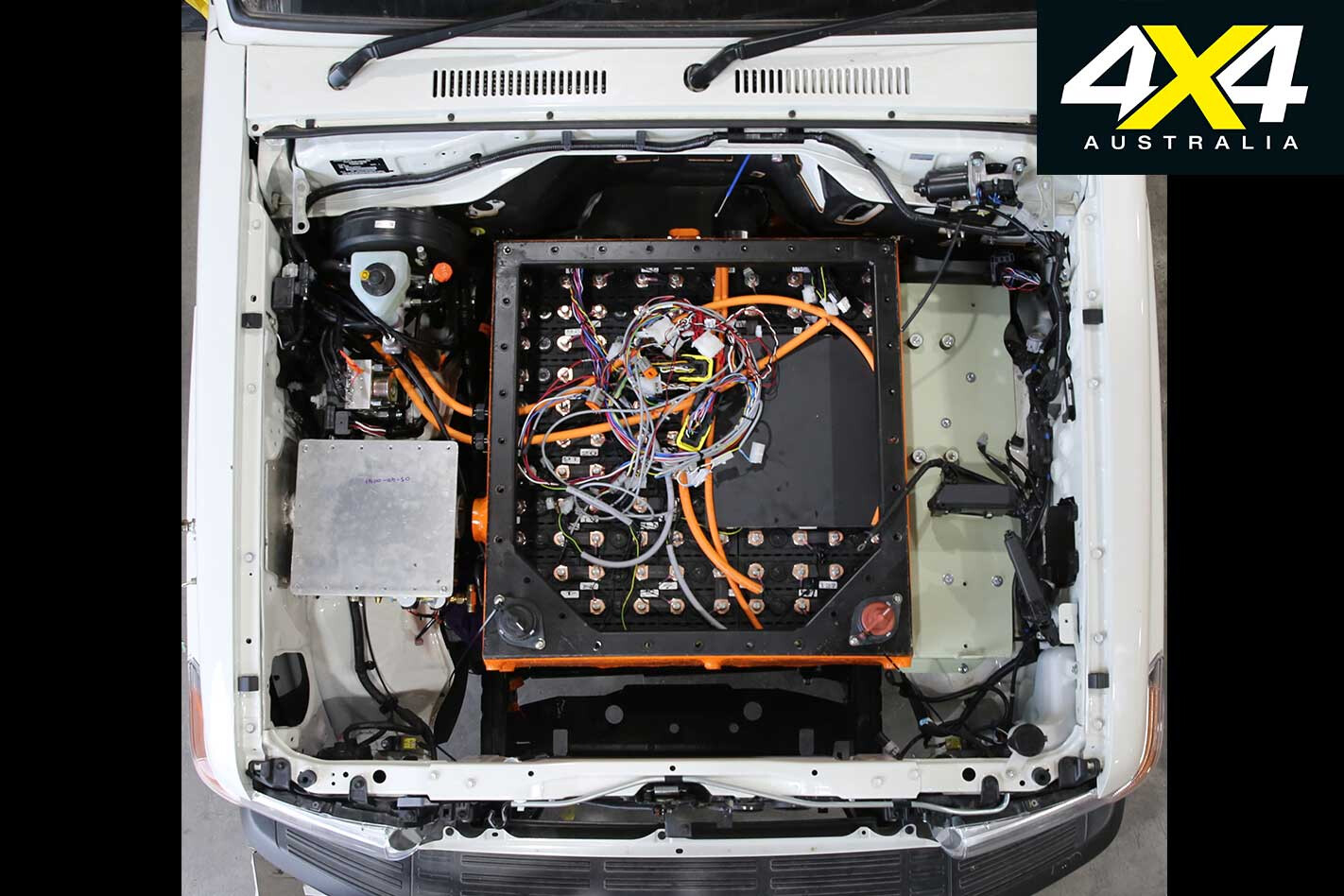
“Charging time is less than one hour when charged with the Voltra fast charger,” Voltra’s Project Manager, Andrew, told 4X4 Australia. “The expected range is 80-100km in mining conditions.”
The benefits of a zero-emissions mining vehicle are obvious, with the most notable being the improved air quality for underground miners, as the workers don’t have to breathe in diesel exhaust particulate matter in the cramped confines of a mine.
Not only will the eCruiser improve greenhouse gas emissions and the quality of life for miners, there are added benefits associated with the changes. According to Andrew, the benefits include: “Less maintenance due to less moving/wearing parts; [a] saving on diesel usage and storage; less heat and noise; greater operator comfort; and less stress on the driveline due to a smoother power delivery than the diesel engine.”
The electric motor also acts as a regenerative brake, and the eCruiser minimises the risk of fire when transporting flammable fuels.
The long-term benefits of a shift to battery power may see a reduction in both overall costs and a mining company’s carbon footprint.
BHP started its trial with the electric Land Cruiser in June, 2018, where it is undergoing final testing before joining the company’s 240-strong underground fleet in July. A second vehicle is expected to join the fleet later in the year.
In a post on the BHP Olympic Dam Facebook page, the company said: “It will be monitored for performance, power supply, maintenance requirements, charging time and corrosion resistance underground. The data we collect will be shared across BHP to help accelerate the broader deployment of electric light vehicles.”
BHP Olympic Dam has included the eCruiser in its fleet, “as part of a company-wide trial aimed at reducing greenhouse gas emissions, exposure to diesel particulate, and costs across our global organisation”.
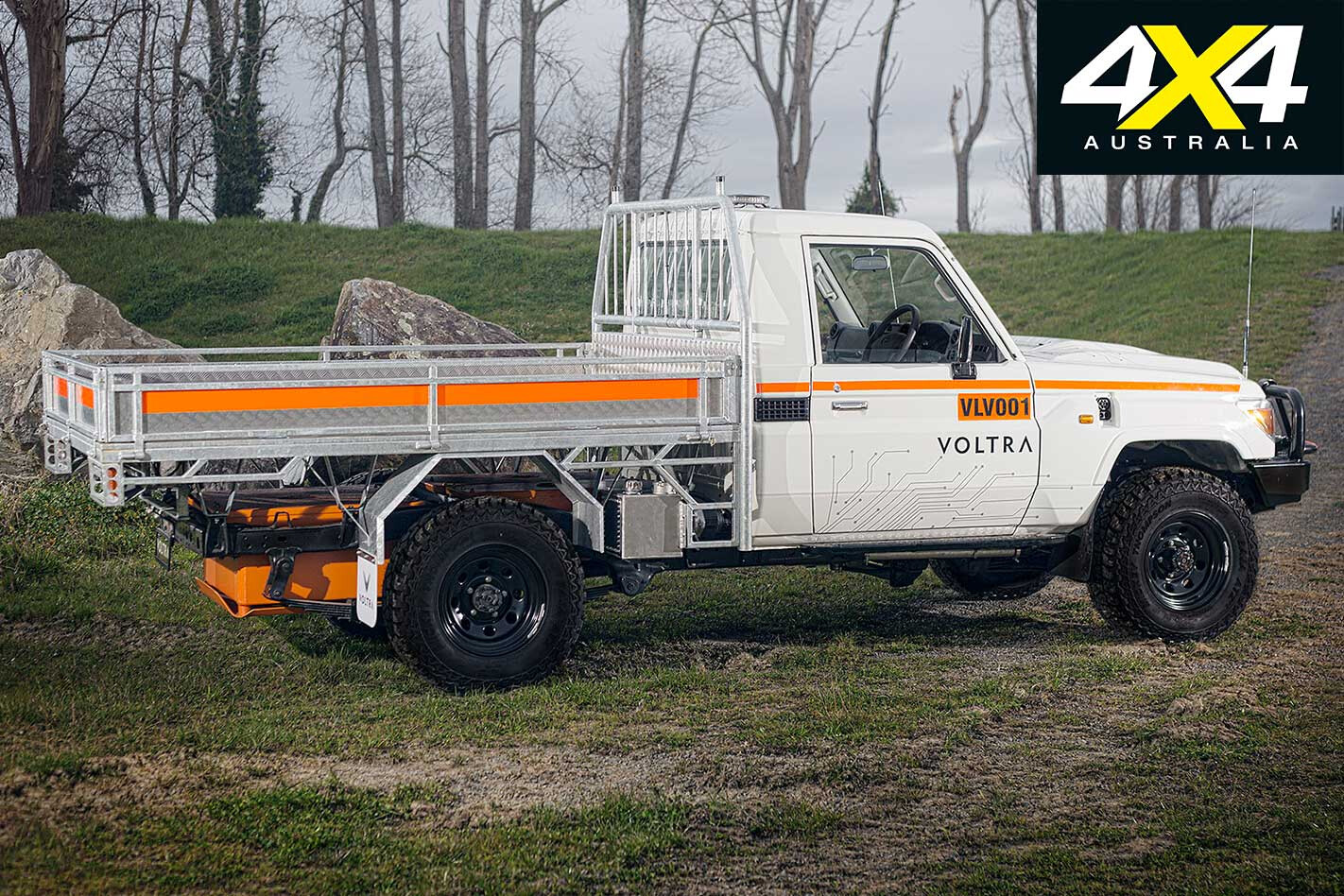
BHP says a decision on wider deployment at Olympic Dam is expected to be made during the upcoming financial year.
BHP isn’t the only mining company in the crosshairs of Voltra, with Andrew from Voltra telling 4X4 Australia that several other mining companies and contractors are looking to implement the eCruiser.
What about other industries? “While this vehicle can be adapted to be used in other industries, Voltra is focusing on the mining industry,” Andrew said. “If demand increases we will look to build a vehicle to suit the requirements of the other industries.”
But, for now, Voltra is focusing its attention on the mining industry, with grand plans in store for the Autoline brand. “We are aiming to convert every mining vehicle in Australia and internationally,” Andrew said.
JON OLSSON, a Swedish-born professional skier and YouTube vlogger, is most famous – to us, at least – for his insane car collection.
His numerous garages have housed a couple of Lamborghinis (Huracan and Murcielago LP640), a modified Audi RS6 and an 570kW Rolls Royce Wraith. But the vehicle we’re most interested in this G500 4×4², and no, it’s not the portal axles, sublime V8 bi-turbo arrangement or 1000mm wading depth that caught our eye… it’s the lack of a roof which lured us in.
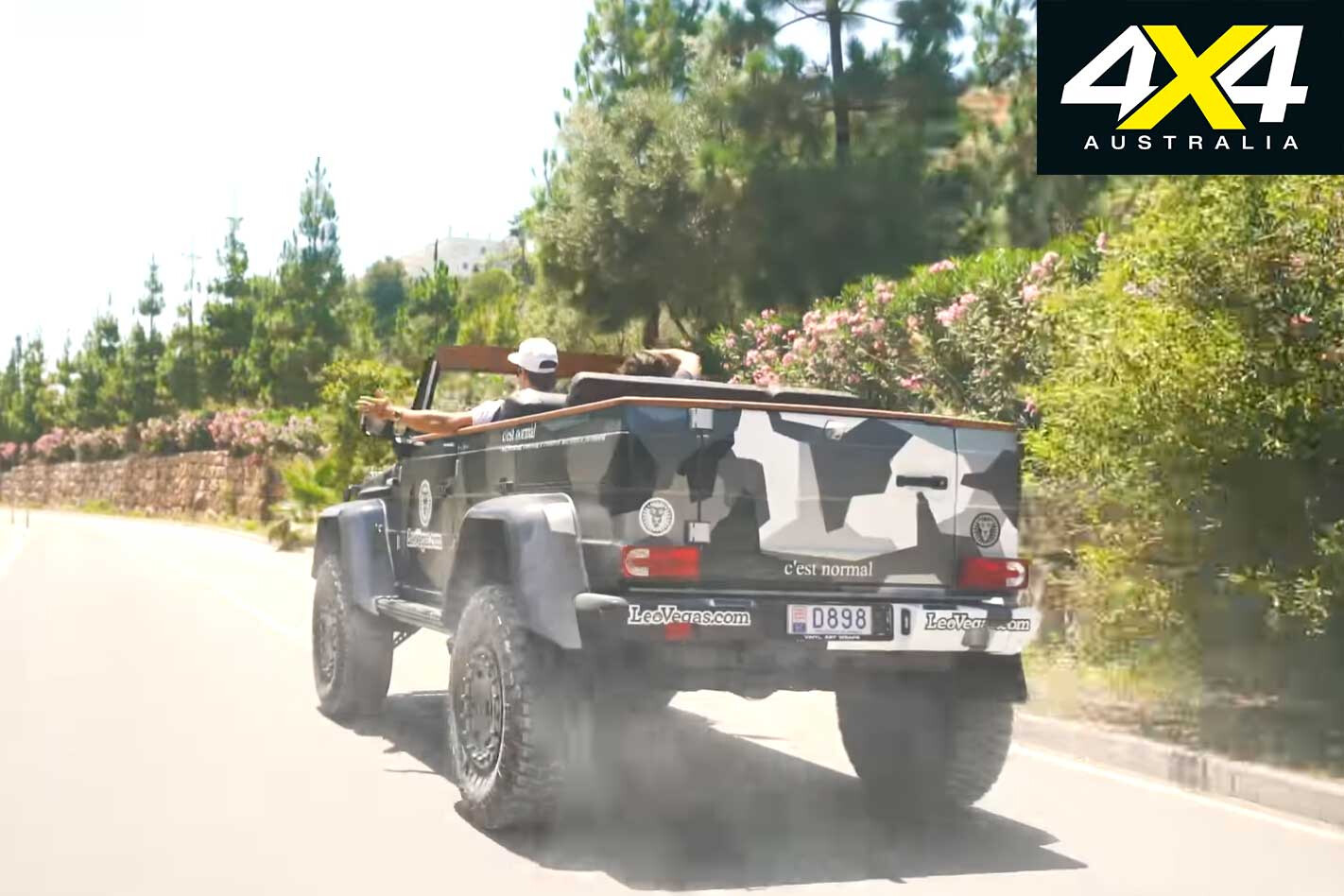
Why cut the roof off a perfectly fine G500? Well, according to Jon, “because it couldn’t fit in the parking garages in Monaco”.
The now permanent open-air “beach cruiser” is decked out with a teak wood-style finish that wouldn’t look out of place on a yacht drifting in Port Hercules, Monaco, and that’s because it was manufactured by a specialist boat shop.
Perhaps the Benz’s neatest feature – other than the intense engine, which we’ll get to in a sec – is the Akrapovic exhaust system, which can have its sound modulated via an iPhone app (head to 4:30 to hear it purr).
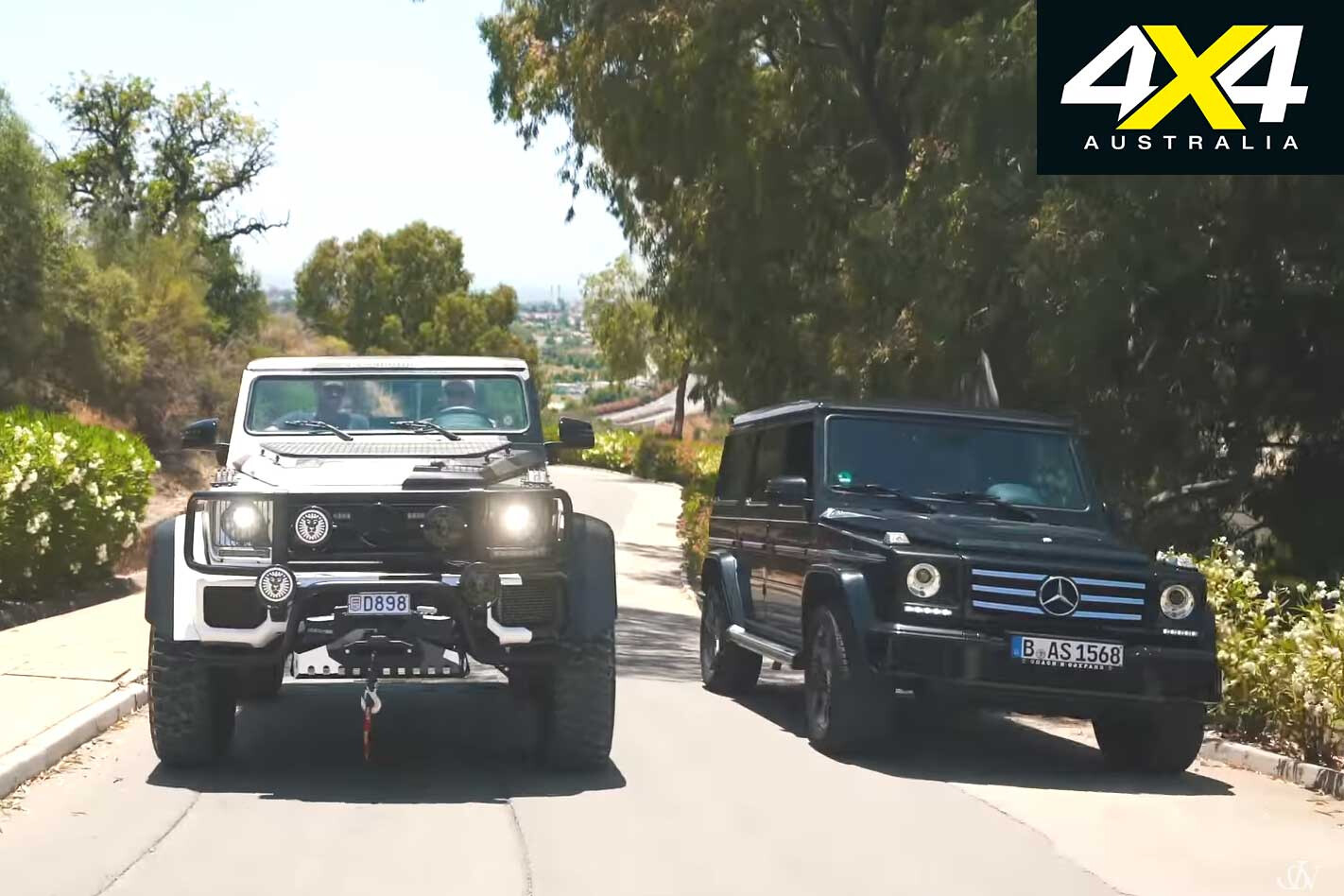
That engine, Benz’s 4.0-litre V8, has been seriously tweaked to boost performance, with power upped from 310kW to an insane 580kW (780hp).
It’s a crazy build and Jon’s best rig yet. Watch the video above.
IT’S no secret Mercedes-Benz’s new X-Class is based on Nissan’s Navara, but don’t think for one minute it’s a Navara carrying a ‘Three-Pointed Star’, as the X-Class has been re-engineered from the ground up. And you’d expect nothing less from a car company that prides itself on engineering excellence.
Were Benz’s engineers happy to design a dual-cab ute without a clean sheet? Probably not, but with pressure to come up with a market-ready product as soon as possible using the Navara as a starting point saved two or three years of development time. Mercedes-Benz has a technology-sharing agreement with the Renault-Nissan Alliance, so the Navara was readily available.
In creating this X-Class, Benz’s engineers took a Navara and removed the body and the powertrain from the chassis. Then the ladder frame was strengthened with extra cross bracing and reinforcement, the track widened via longer wishbones up front (+62mm) and a longer rear axle (+55mm). Disc brakes were fitted to the rear and linked to high-end safety kit including autonomous braking.
New springs, dampers and swaybars were added, as was a revised steering system for less turns lock-to-lock. Then the Navara’s powertrain, remapped no doubt, was reinstalled. In the meantime, Benz designed and built a wider body that was then fitted on the re-engineered chassis. This is not badge-engineering, this is re-engineering.
WHAT YOU GET
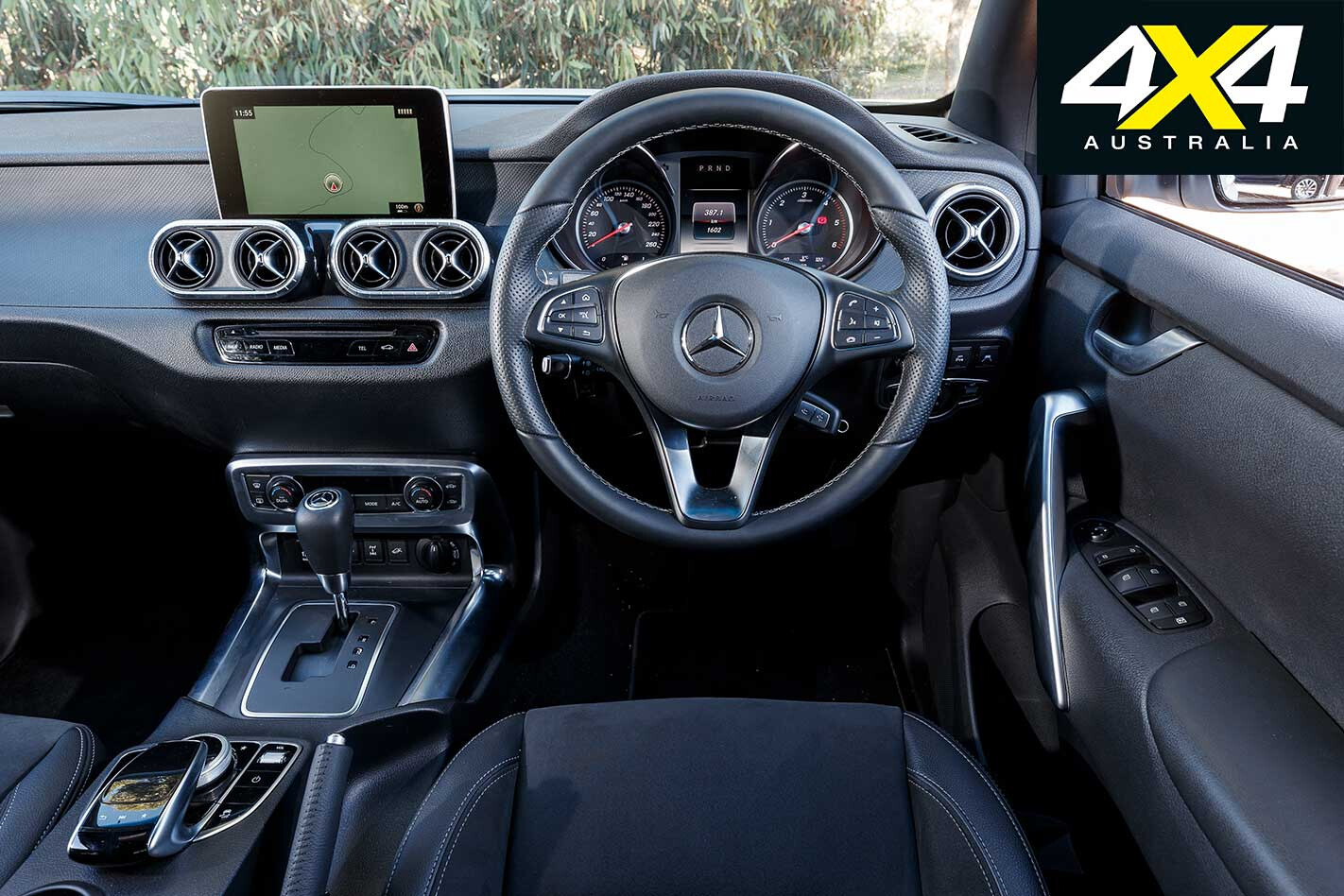
ALL three X-Class grades – Pure, Progressive and Power – have seven airbags, Automatic Emergency Braking, Lane-Keeping Assist, a reversing camera, tilt-and-reach steering wheel adjustment and four-wheel disc brakes.
The as-tested Progressive adds 17-inch alloys, auto wipers, sat-nav, seven-inch touchscreen, tyre-pressure monitoring and adjustable load rails on the sides of the tub. The top-spec Power then adds leather, keyless entry and start, 18s, and LED headlights and tail-lights, among a host of other features.
POWERTRAIN AND PERFORMANCE
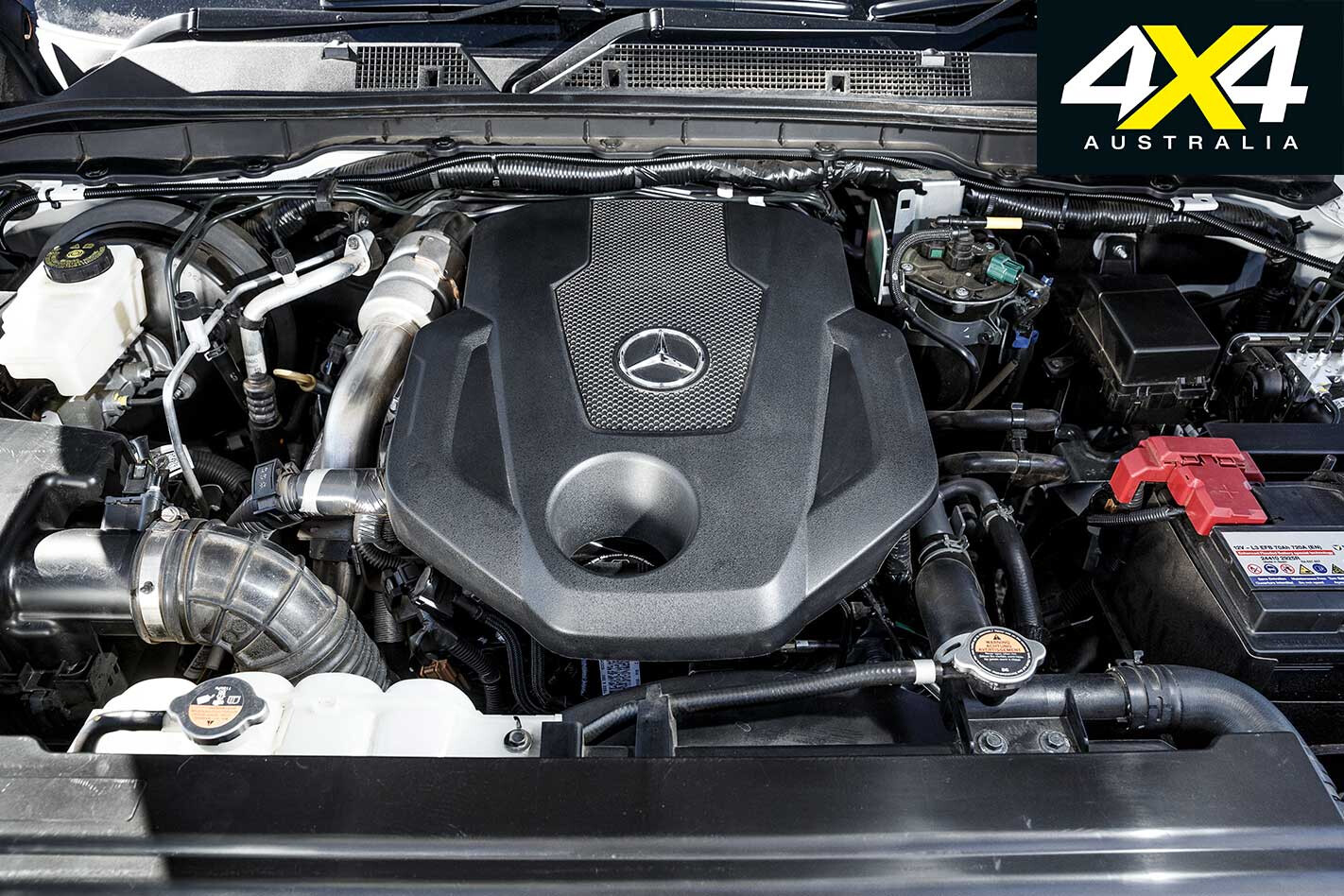
THE X-Class Renault-sourced 2.3-litre four-cylinder bi-turbo engine shares the same 140kW/450Nm numbers with the Navara and comes close to matching it in performance, despite being 160kg to 180kg heavier depending on the specific spec level.
The extra weight comes from the frame strengthening, the wider body, equipment variations and extra sound deadening. That means in this company, Amarok aside, the X-Class is one of the stronger performers.
The extra sound deadening is especially significant as the X-Class is much quieter than the Navara and, in fact, is one of the quietest utes here alongside the Amarok and Hilux. Refinement was obviously a design objective that Benz placed high on the priority list.
ON-ROAD RIDE AND HANDLING
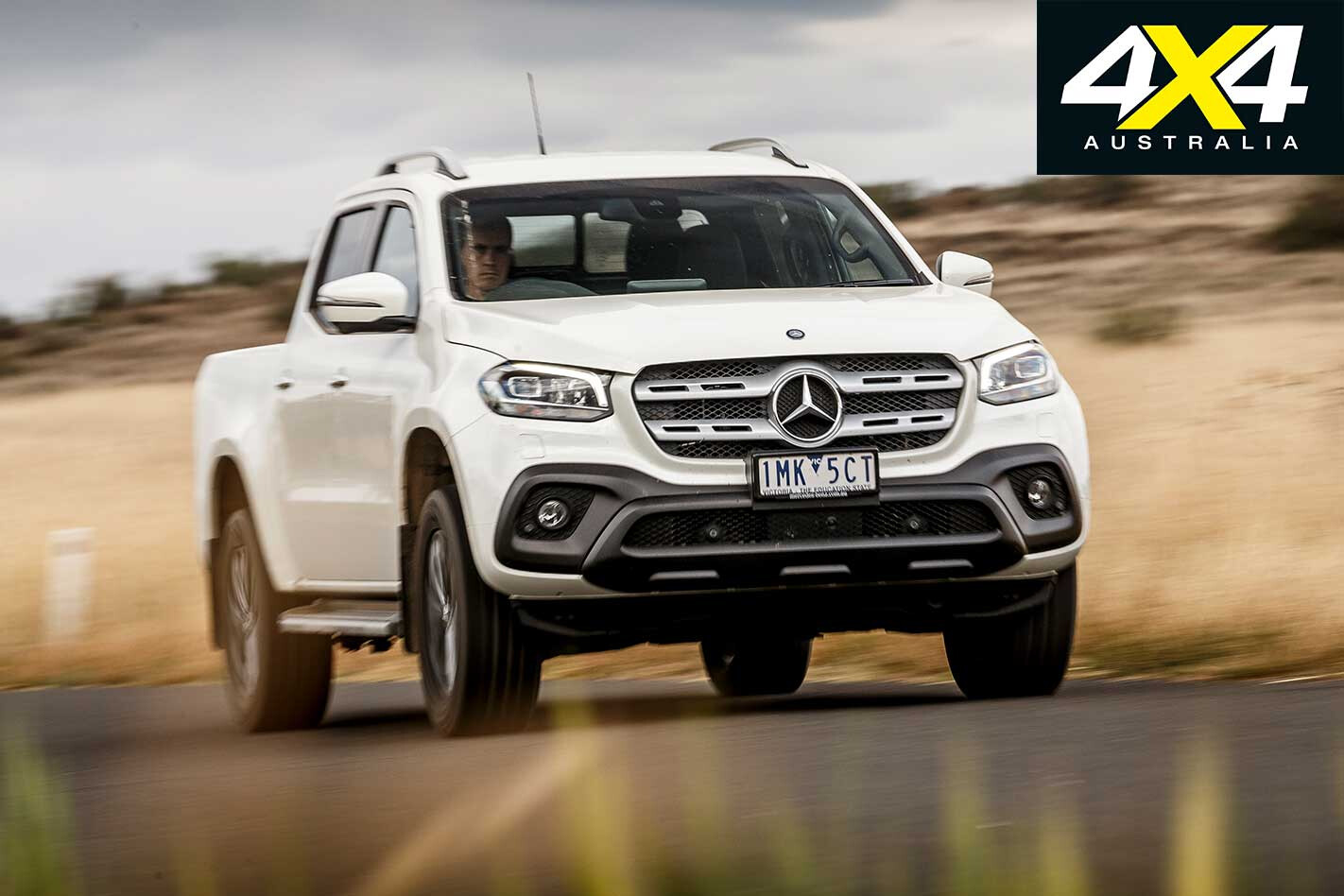
THE same can be said for the chassis, as the X-Class offers what is the most comfortable ride here, combined with very little road or suspension noise. The X-Class also feels very solid and tight – far more so than most of the utes here and a world away from the Navara.
The X-Class not only offers a relatively supple ride, it handles with a confidence that eludes all but the Amarok (and possibly the Ranger) in this company. The wider track (wider than all but the Amarok) would no doubt help here, as would the increased torsional rigidity and suspension tune.
OFF-ROAD
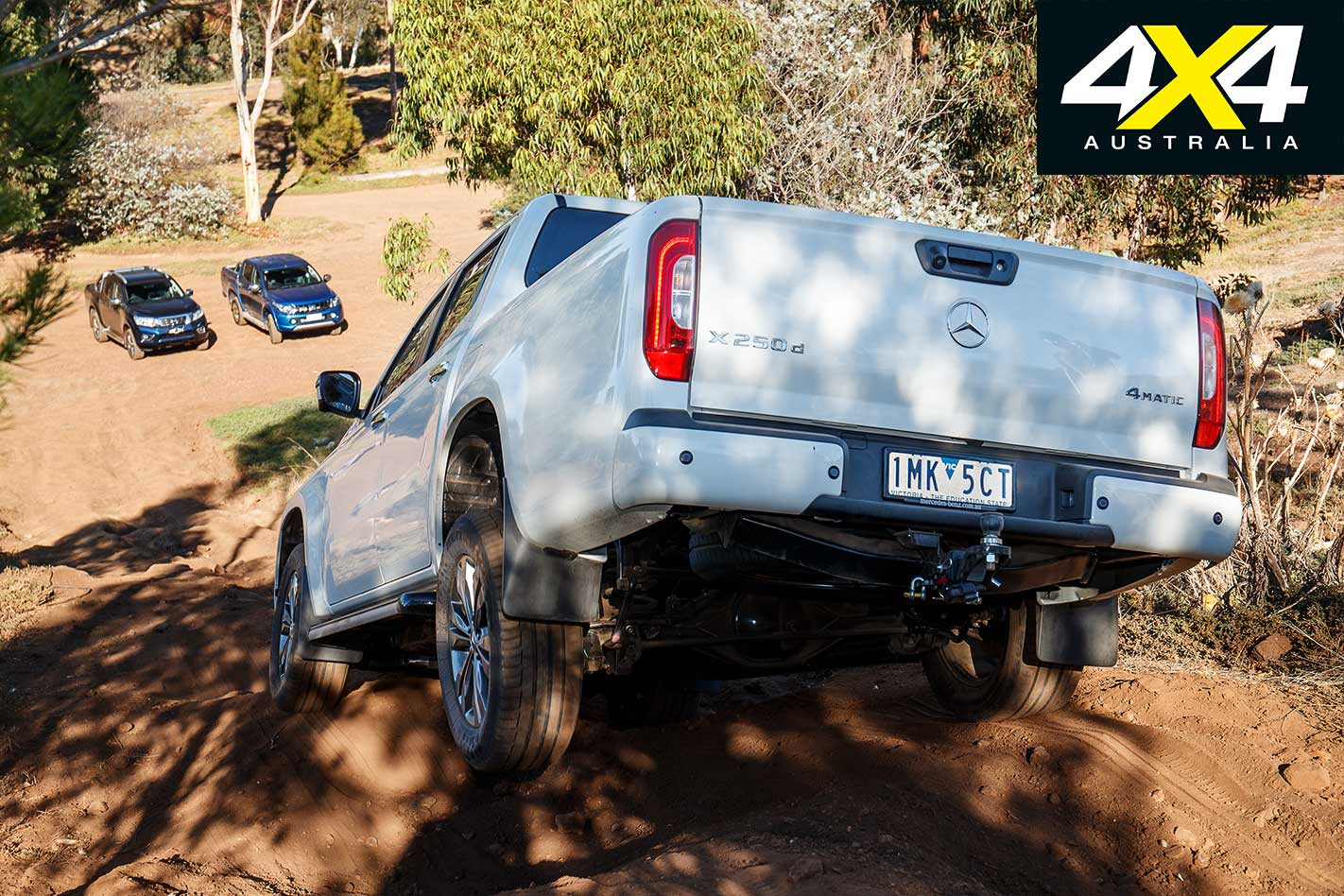
LIKE the Navara, the X-Class has a rear locker and engaging it keeps the electronic traction control active on the front axle, which is good news. Like the Navara, the X-Class scaled our steep set-piece climb with the rear locker engaged, but did so with considerable difficulty and couldn’t make the climb without it.
The X-Class did a little better than the Navara, and its suspension feels a little softer and more supple, which is a bonus off-road. The fact the X-Class sits a bit lower than the already low Navara is a negative, though. Off-road the X-Class isn’t up with the front runners here, but it’s also not the worst.
Interestingly, the X-Class claims a deeper fording depth (600mm) than the Navara’s 450mm, even though the engine air-intake arrangement looks the same.
LOAD CARRYING
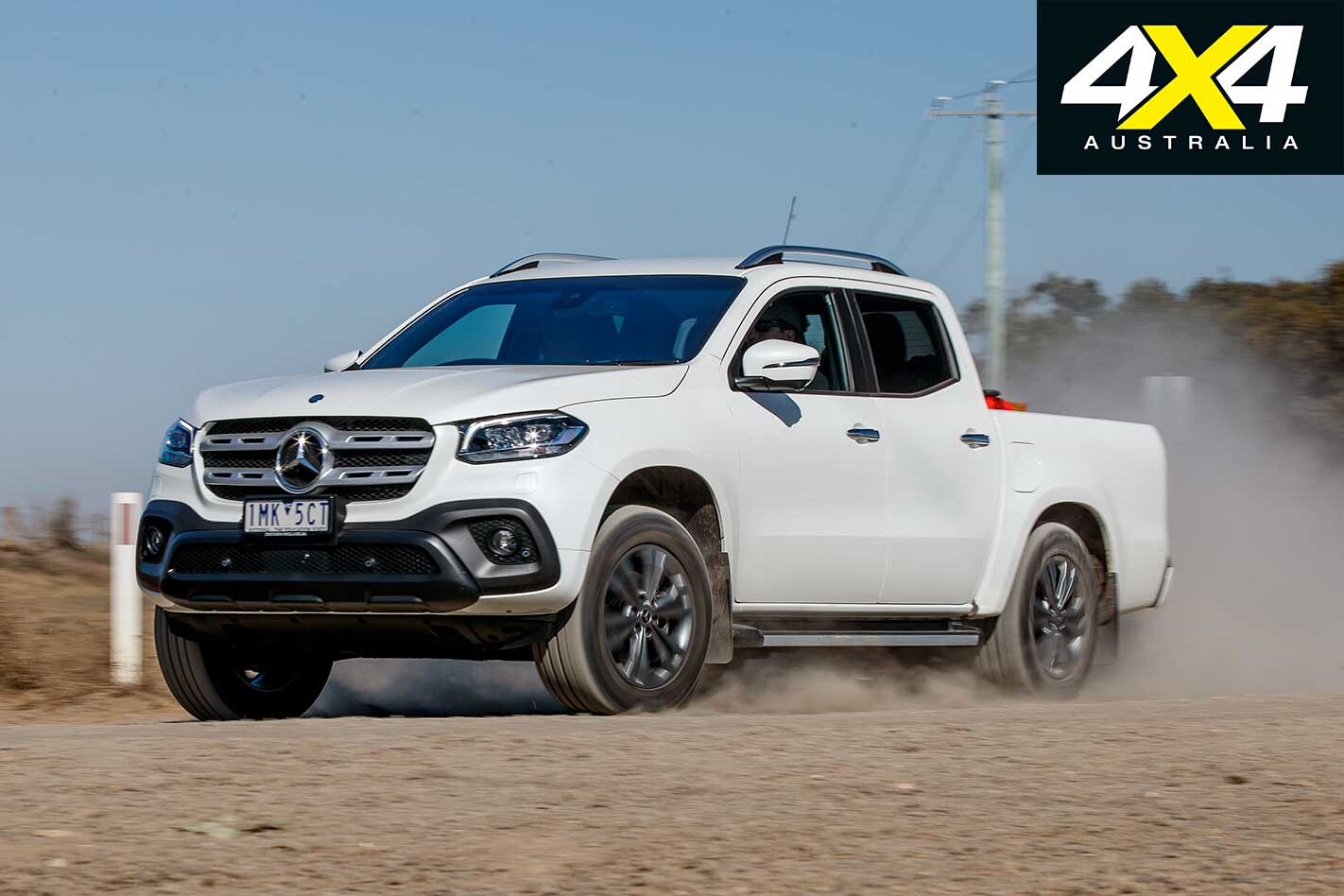
THE extent of the re-engineering involved in turning the Navara into the X-Class can be seen in the 340kg increase in Gross Vehicle Mass and the 220kg increase Gross Combined Mass. That puts the X-Class’s GVM at 3250kg and GCM at 6130kg, which means it betters all of the utes here (Ranger and BT-50, the previous class champions, included).
In turn this means good payload numbers (even if the X-Class is relatively heavy) and a class benchmark 3500kg towing capacity.
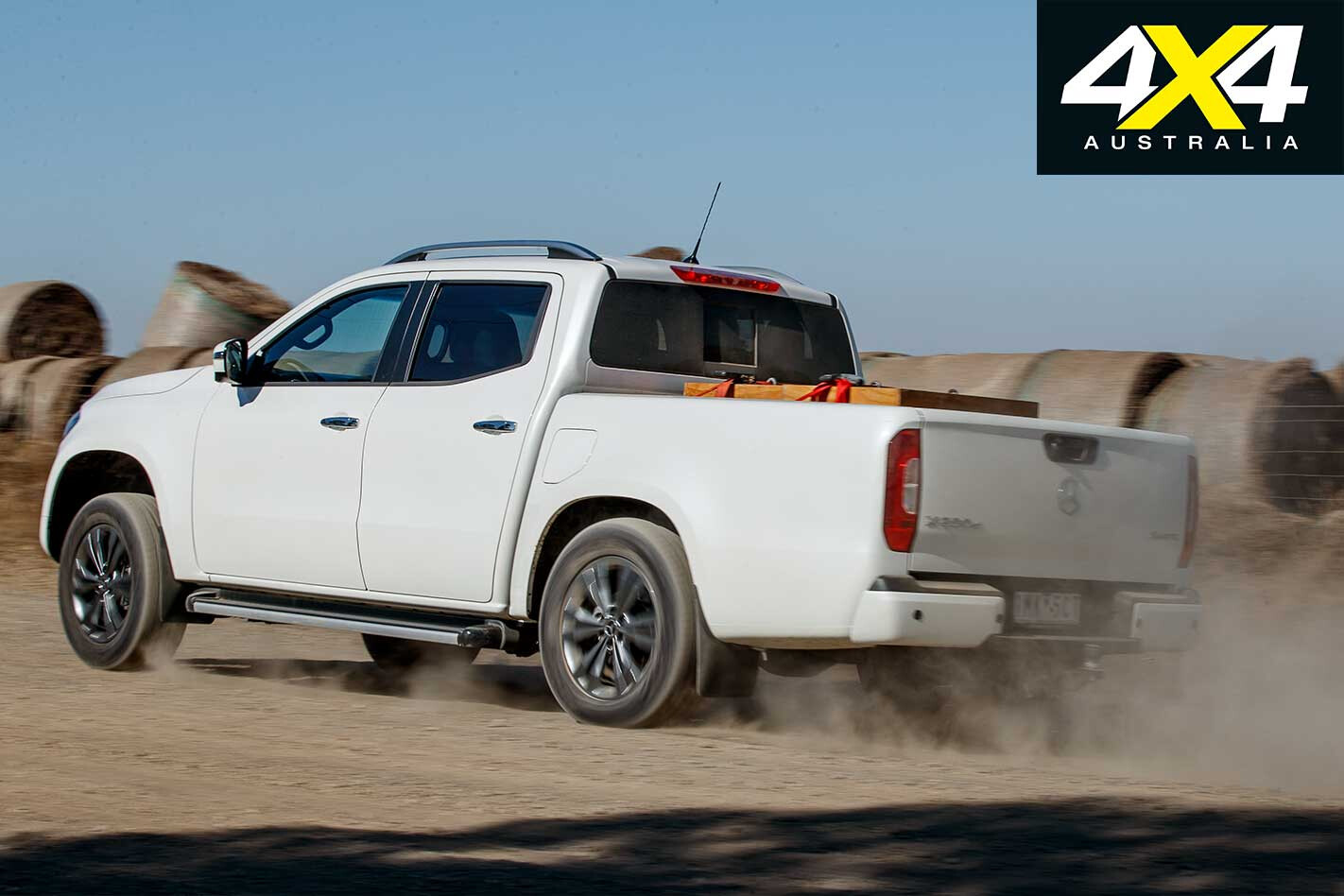
With our test 900kg payload the X-Class didn’t live up to the expectation of those numbers and its chassis felt the least composed of the nine utes. It was reasonable enough to drive, but it simply felt the weight the most in terms of steering confidence and general stability, even if it’s not far behind the Navara and Triton in chassis load performance.
More positively, the flexible engine and short-geared seven-speed auto meant a much better performance from the powertrain with the big load onboard.
A work light and 12-volt outlet in the tub are positives and, as per the Navara, there are high-mounted adjustable tie-downs.
CABIN AND SAFETY
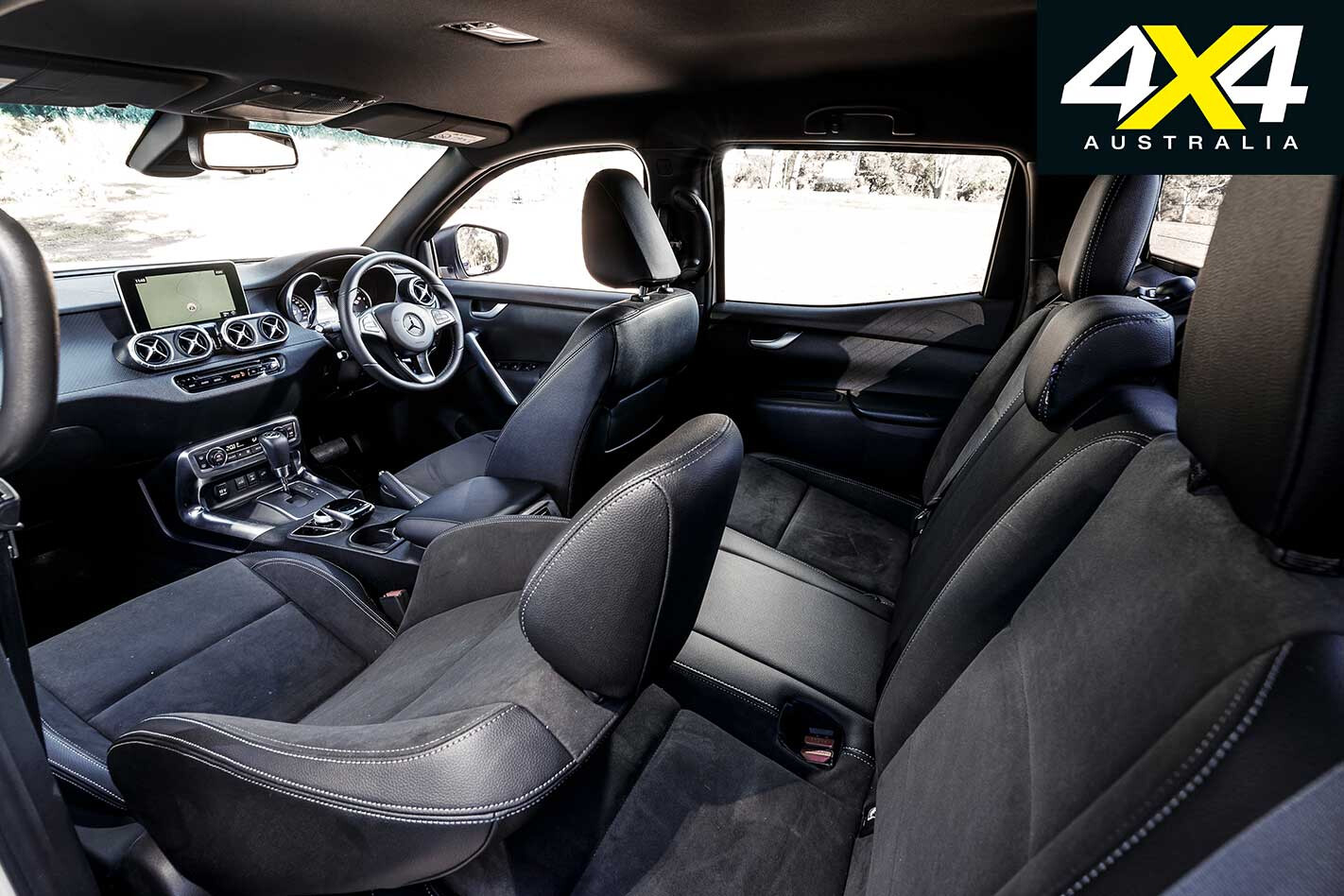
THE X-Class’s cabin presentation is much more upmarket passenger car than ‘working-Joe’ ute, and it stands out from all here thanks to features like the high-tech centre-console touchpad and rotary-dial control for the nav, entertainment, phone and media.
The ‘tablet-style’ touchscreen also adds to the passenger-car feel. Tilt-and-reach steering wheel adjustment is also a nice touch and one that’s lacking in nearly half the utes here.
The X-Class’s cabin is wider than the Navara but it still isn’t a notably big cabin, while the rear ‘stadium’ seating isn’t ideal for taller adults as it compromises rear headroom.
All models have five-star ANCAP safety and advanced safety equipment, notably autonomous braking, a feature unique in this class.
PRACTICALITIES
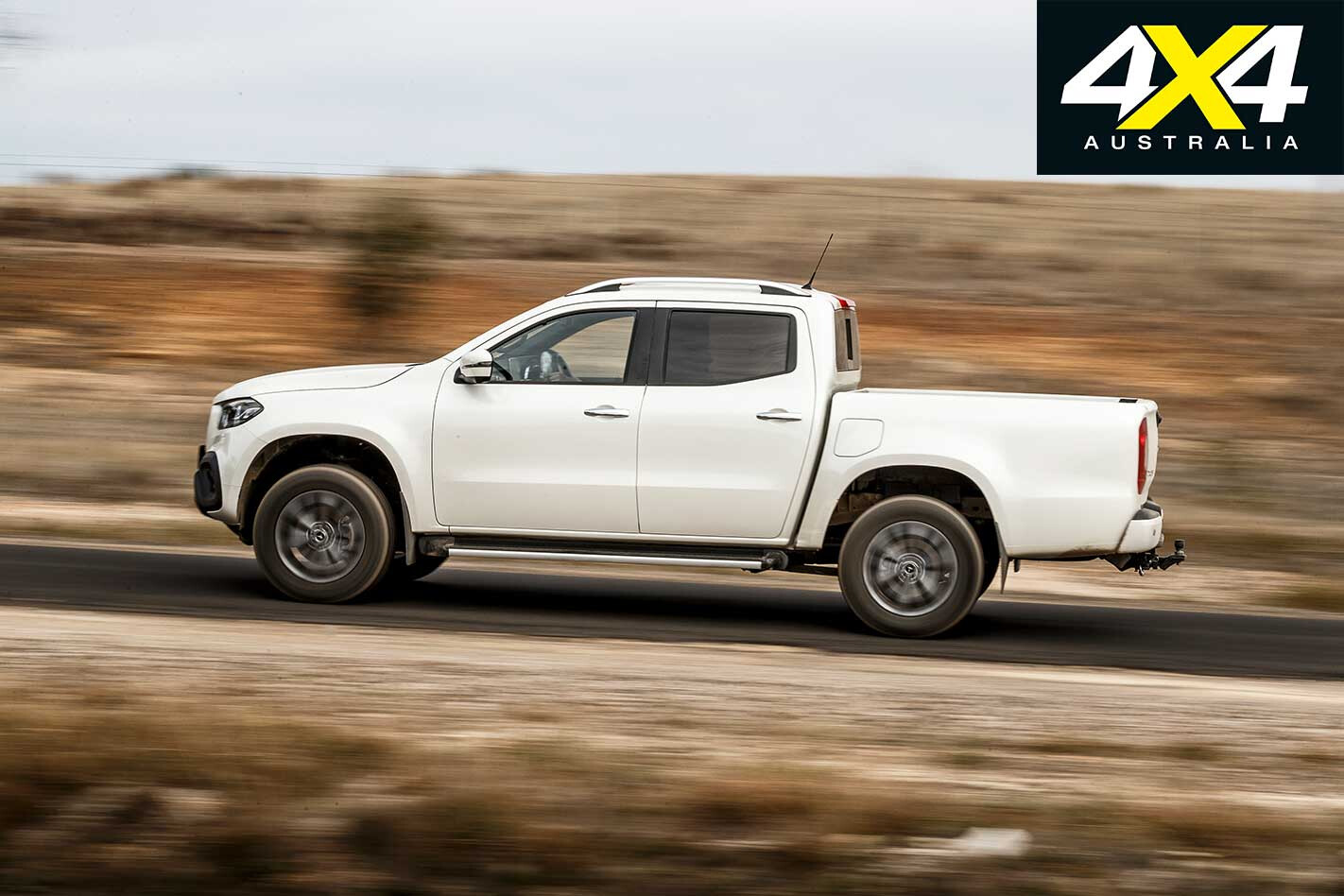
THE X-Class comes in three equipment levels: Pure, Progressive and Power, where the Pure is very much a work-spec ute. The range includes cab-chassis variants, a lower-spec (single-turbo) 120kW engine and the option of a manual gearbox. There’s even a 4×2 model.
Right from launch Benz offered some factory accessories, but it will take a while for aftermarket accessories to come on-stream, and even then that will depend on how well the X-Class sells. A thinner spread of dealers in country areas compared to big-volume car companies is another practicality consideration.
Mercedes-Benz X250d Specs Engine: 2.3-litre 4-cyl bi-turbo-diesel Power: 140kW at 3750rpm Torque: 450Nm at 1500-2500rpm Gearbox: 7-speed auto 4X4 system: Dual-range part-time Crawl ratio: 44.6:1 Construction: Separate chassis Front suspension: Independent/coil springs Rear suspension: Live axle/leaf springs Kerb weight: 2137kg GVM: 3250kg Payload: 1113kg Towing capacity: 3500kg Towball Download: 350kg GCM: 6130kg Fuel tank size: 73 litres ADR fuel claim: 7.9L/100km Test fuel use: 10.4L/100km Touring range: 621km* *Based on test fuel use, claimed fuel capacity and a 50km ‘safety’ marginAcceleration and Braking 0-100km/h: 10.0sec 80-120km/h: 7.1sec 100-0km/h: 39.2m
Off-road capabilities Departure angle: 25˚ Rampover angle: 22˚ Approach angle: 30˚ Wading depth: 600mm Ground clearance: 222mm
Mercedes-Benz X250d Prices** Pure: $52,400 Progressive: $54,900 Power: $61,600 **Prices do not include on-road costs
The Results
Results and verdict
Nine utes, but only one winner…
Intro & Contenders
Home of 4X4 Australia’s Ute Test, where we have put all of the popular 4×4 dual-cabs through their paces off-road and on-road.
READER CODE
For 10 chances to win, enter the reader code from the latest issue of 4×4 Australia below (Don’t have a magazine code? Keep scrolling down!):
Can’t see the entry form? Click here to enter
FREE ENTRY
Enter your details below for your chance to win!
Can’t see the entry form? Click here to enter
From tradies, to families, to 4×4 enthusiasts, today’s 4×4 pick-up truck or ute is a jack of all trades that is built to meet the needs of a diverse audience.
That being said, a bare ute is a blank canvas that serves as a perfect platform for anyone to tailor it to their intentions. So if you plan on taking on any number of 4×4 adventures with your new 4×4 ute, we recommend that you don’t leave home without these sweet 4×4 ute gear.
Aeroklas canopy
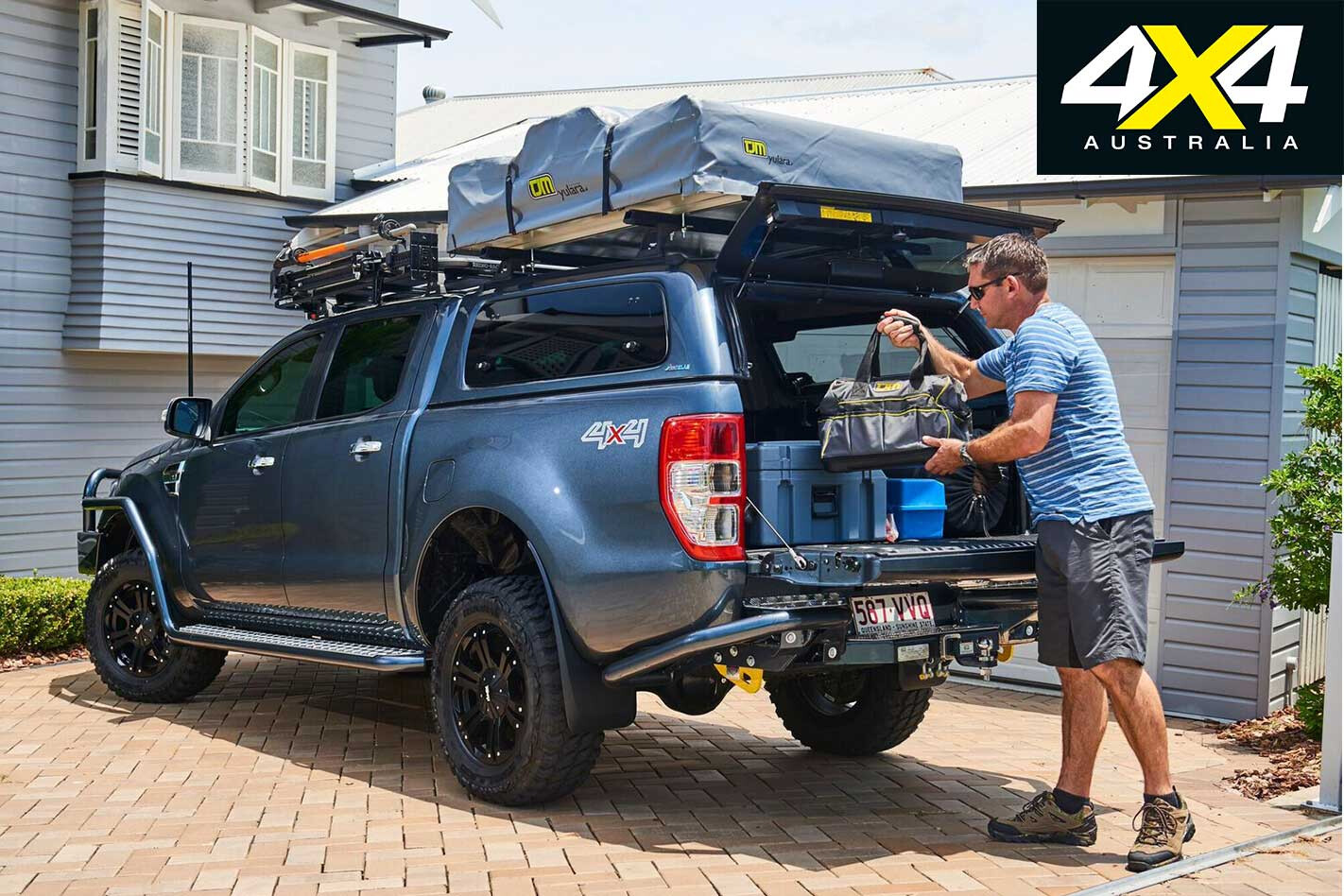
For ute owners looking for a strong, durable and lightweight canopy, Aeroklas jobbies are tailor-made. The canopies feature a twin-skin design (each skin – or layer – is thermoformed from a single piece of ABS, minimising potential stress points) and, being made from ABS, are super-light. The canopies feature central locking, dual lift-up windows as well as a drop-down front window, plus a LED interior light and LED brake light (on most models).
The canopy is easily installed thanks to the C-clamp mount system, and the canopy’s strength is reflected in the fact it will support Rhino Rack roof racks (80kg-rated, track mounted) and is also compatible with internal support systems for those after maximum strength. The canopy also comes colour-coded to your vehicle – sweet! Available at TJM outlets.
Website: www.aeroklas.com.au
Carbon Winches 12K winch
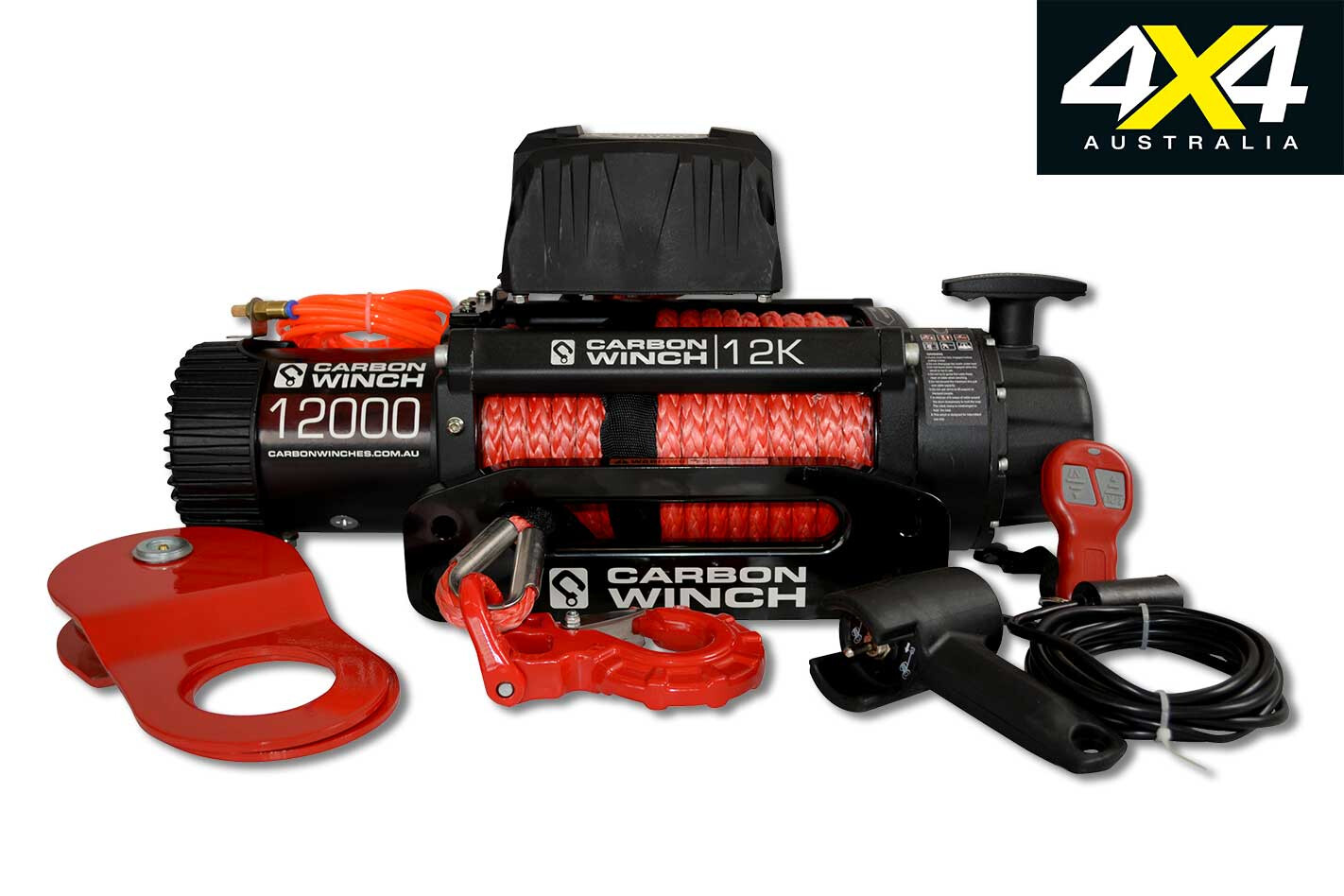
The new 12,000lb winch from Carbon Winches is designed to handle the toughest recovery tasks when you’re off-roading. The winch features a 6.2hp wound motor, a 216:1 three-stage planetary gearbox and a hoist-style camming brake that engages through the gear-train, thus having no contact with the winch drum itself.
The rotating ring gear free-spool clutch assembly is designed to minimise free-spool drag, while also doing away with any clutch engagement issues, making any recovery situation a fast and easy process. The power in and out for the winch is via either a wireless remote controller or a plug-in hand-held remote.
The 500-amp solenoid unit is sealed and has a three-position mount bracket that means you can mount the control box over the drum, the motor or remotely on your 4×4’s bullbar. The winch also comes with a pre-installed winch motor breather.
Ironman 4×4 Amarok bullbars (TDV6)
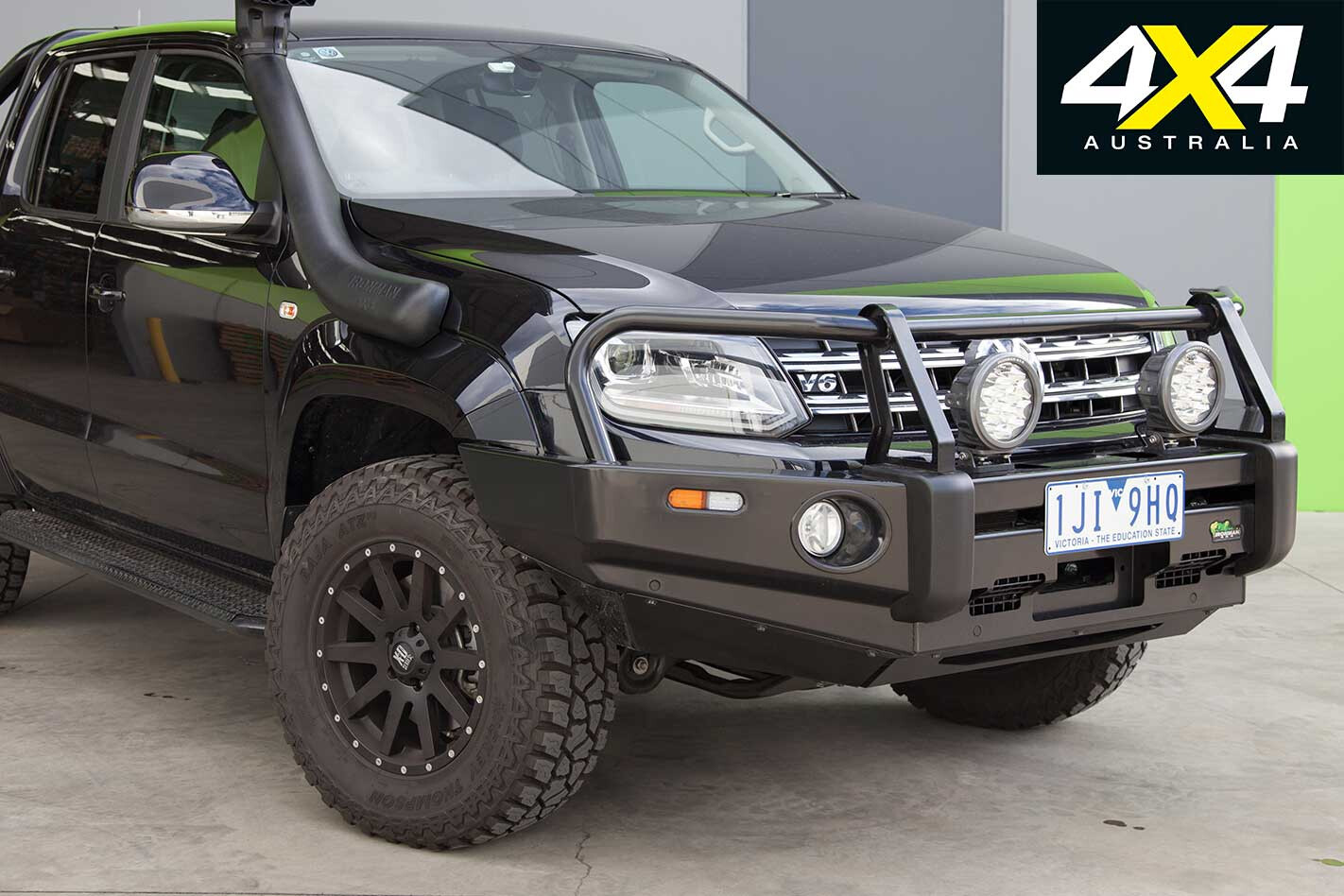
Ironman 4×4 has released two new bullbars for VW’s popular Amarok TDV6 (11/2016-onwards). The two bars – Commercial Deluxe and No Loop models – include all the expected goodies from the company, including full ADR compliance, airbag compatibility and the option(s) of a single or triple loop kit that includes replacement rubber over-riders and all fitting hardware.
The bars are created using premium-grade materials for optimum durability and maximum corrosion resistance. The designs feature triple-folded edges, inset LED parking lights, fog lights, indicators, high-lift jack points, a winch mount and provision for fitment of an aerial and spotties.
The Commercial bar offers increased protection for your vehicle’s grille and lights, etc., while the No Loop model provides great frontal protection with a more minimalist appearance.
Website: www.ironman4x4.com
MSA 4X4 air lumbar support
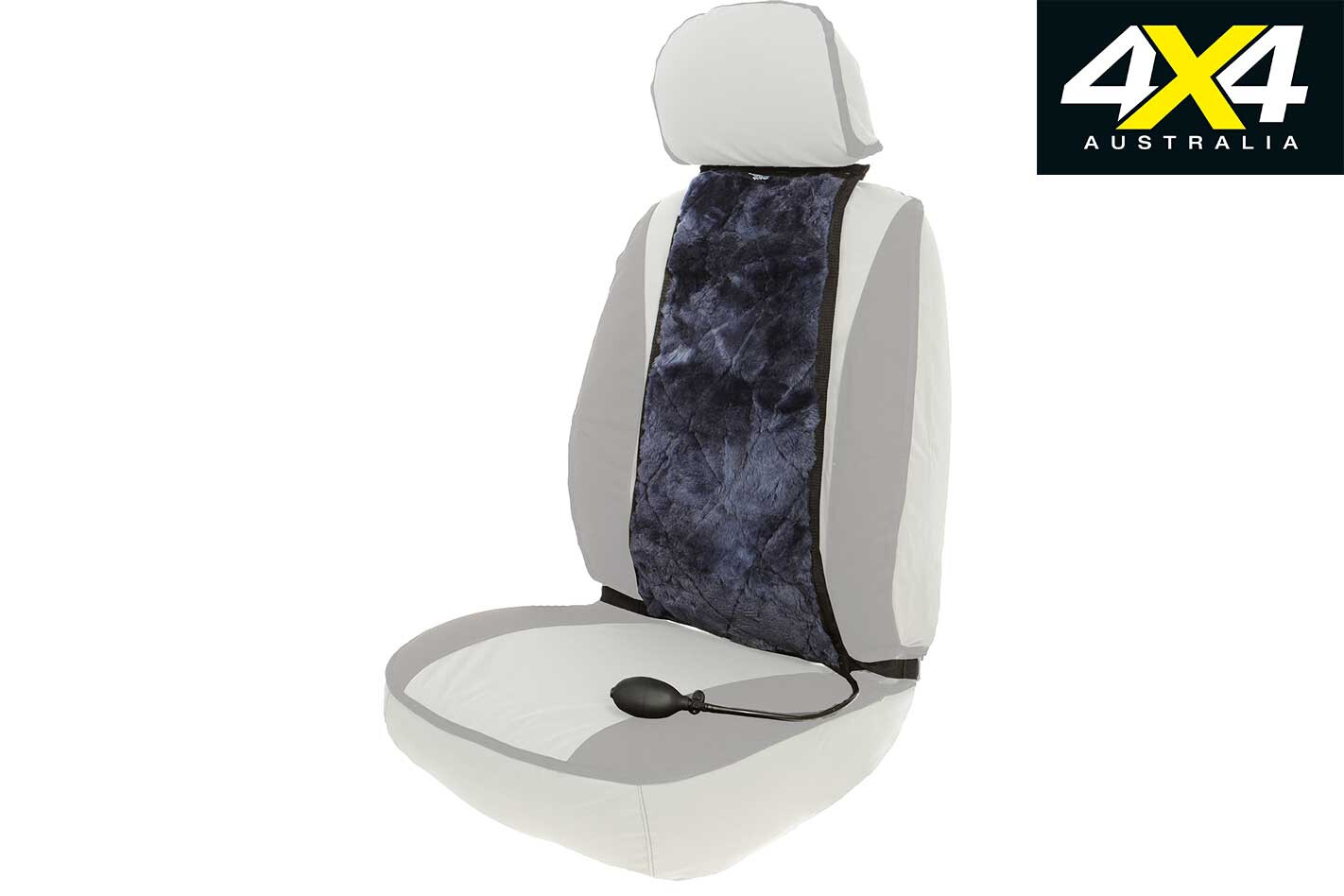
There aren’t many 4×4 utes that couldn’t do with better seating when it comes to comfort. Thankfully, MSA 4X4 has got the comfort levels covered with its air lumbar support system that allows the driver to tweak the lumbar support of their seat throughout their journeys.
The system is very quick to fit (less than a minute) so it can be swapped between vehicles if need be. The air-inflated bladder is easy to shift around (and secure with Velcro straps) to get that optimum support – and you can add up to three additional internal bladders (purchased separately) for multiple support areas in your seat. A hand pump makes it very easy to control the airflow into the bladder.
The air lumbar support system is available with either a heavy-duty canvas outer fabric, or – for the uber-comfort seekers – a sheepskin variant is also available.
RRP: $109 (canvas); $129 (sheepskin) Website: msa4x4.com.au
Safari 4×4 ARMAX
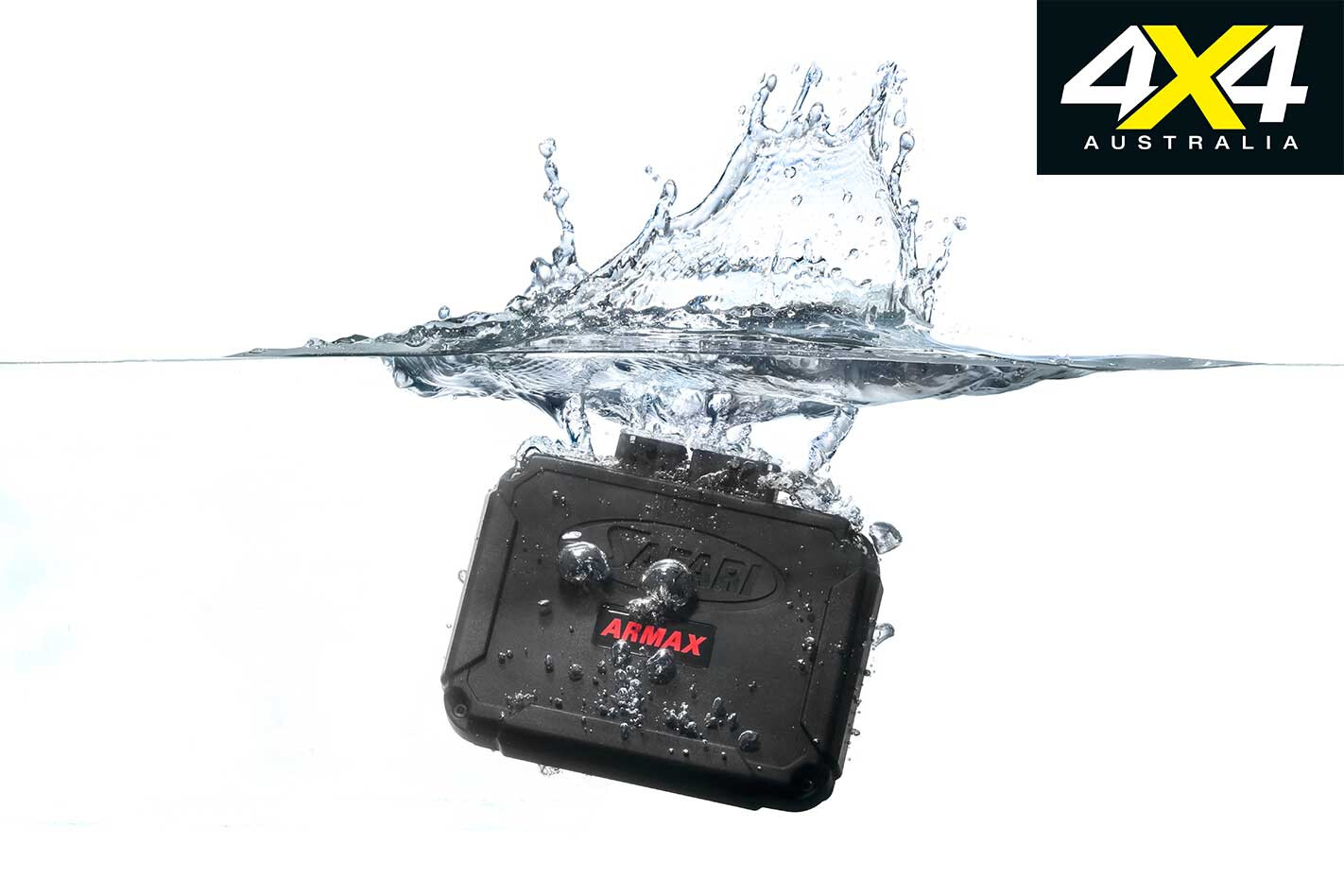
Safari 4×4 has released the new ARMAX Engine Control Unit (ECU) that is designed to work in conjunction with your vehicle’s OE ECU to produce up to 30-35 per cent more torque, 20-25 per cent more power and improved throttle response. The ARMAX is also claimed to improve fuel consumption while reducing turbo lag.
The unit is rated to IP68 for dust- and water-ingress protection (it is operable to a depth of one metre) and it also includes an Exhaust Gas Temp (EGT) control to monitor operating temperatures – a must for modern turbo-diesel engines. The unit is backed by Safari’s engine protection systems that offer constant live monitoring of your vehicle during operation for the best durability.
Website: www.safari4x4.com.au
THIS is Mazda’s new-look 2018 BT-50, complete with a front-end styling treatment that, quite unusually, is exclusive to Australian models. It comes with extra equipment, especially for the entry-level XT, but also includes the addition of the popular smartphone apps across all models. This refresh follows the MY16 upgrade that also saw a front-end restyle and equipment additions.
This ongoing restyling of the BT-50’s front-end says what every Mazda dealer in the country was thinking when the BT-50 and the co-developed Ford Ranger first arrived here in late 2011: namely, “Bugger… wish our ute looked like their ute!”
Despite being as-good-as-mechanically identical when they both first arrived and still very similar following their respective MY16 upgrades, the BT-50 has never sold in the numbers of the Ranger despite being less expensive. Right now, for example, the Ranger 4×4 outsells the BT-50 4×4 about four to one.
For Mazda, the 2011 BT-50 represented a design about-face, as up until this time (and even with the first ute to carry the BT-50 nameplate) Mazda designed and developed its own light commercials, which Ford then rebadged. In this case it was Ford leading the design and development and Mazda following on.
WHAT YOU GET
ALL BT-50 dual-cab 4×4 utes have six airbags, a reversing camera, Trailer Sway Control, a seven-inch (or bigger) touchscreen, Apple CarPlay and Android Auto, and a rear locker.
The top-spec GT, as tested here, has leather, eight-way electric adjust on the driver’s seat, a chrome sports bar and a tub liner in addition to sat-nav, an eight-inch touchscreen, auto headlights and wipers, and the 17-inch alloys it shares with the mid-spec XTR.
POWERTRAIN AND PERFORMANCE
AS WITH many things, the BT-50 shares the same basic engine as the Ranger, namely its 3.2-litre inline five-cylinder diesel, which is a major positive in a market dominated by smaller capacity four-cylinder engines. Bigger capacity always means more easily developed torque, which is always a good thing when there’s work to be done.
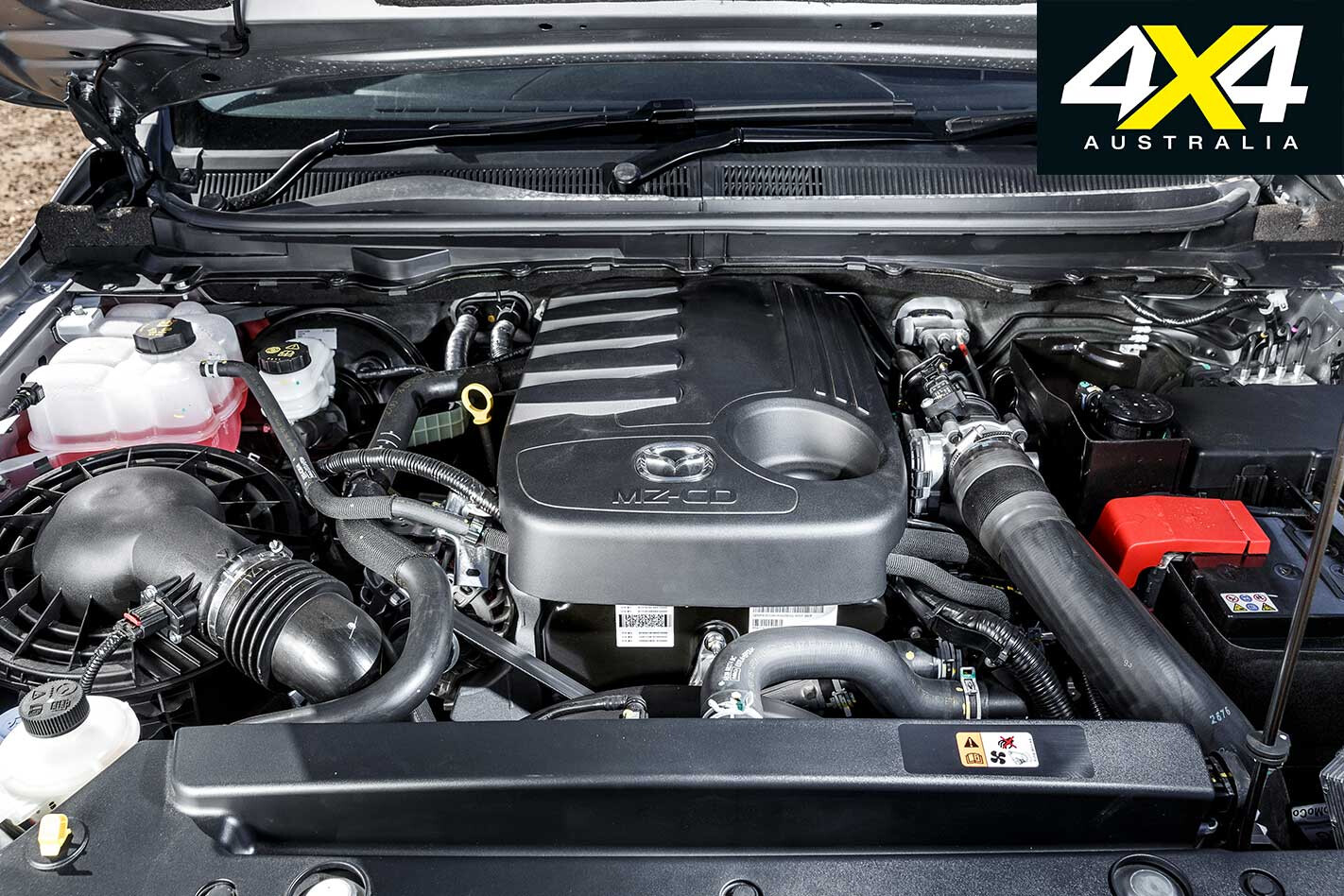
Significantly, for the respective 2016 model, Ford carried out a number of upgrades not adopted by Mazda. While both engines still claim the same maximum power and torque (147kW and 470Nm) the Ford achieves its 470Nm earlier and produces it for longer.
This BT-50’s engine is still low-revving, lazy (in a good way) and generally effortless; although, it’s not quite as flexible as that of the Ranger. It’s also a little noisier than the Ranger and one of the gruffer engines here. But, aside from a being a little lumpy at idle, it’s also smooth running given that an inline five is inherently smoother than an inline four, despite having an odd number of cylinders.
The engine is also well served by its six-speed automatic (originally a ZF design) transmission and final drive gearing that’s tall and relaxed, without being too tall that the engine struggles to hold top gear at highway speeds on undulating roads.
ON-ROAD RIDE AND HANDLING
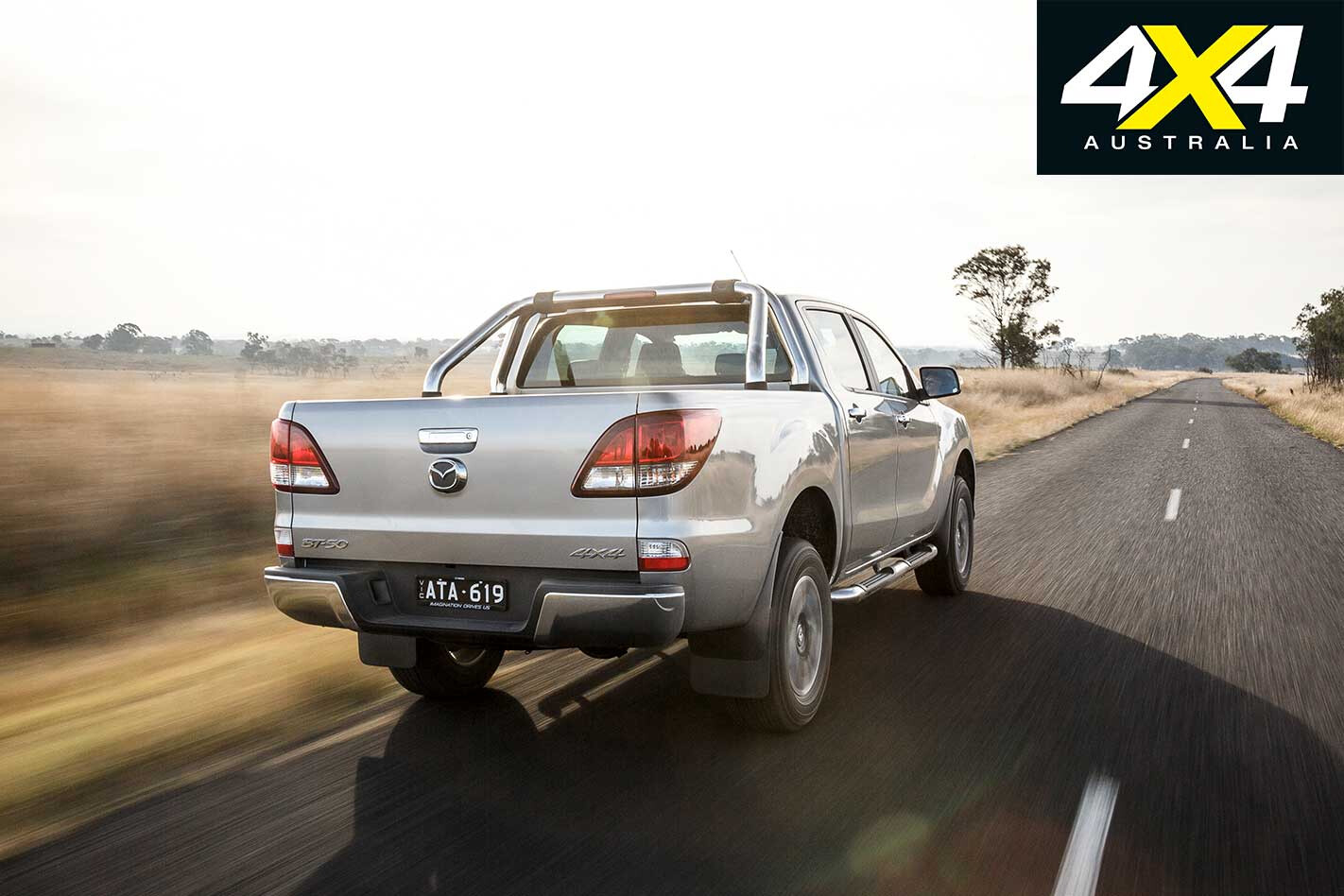
LIKE the Ranger, the BT-50’s handling characteristics are more about stability than agility and come with well-sorted suspension that’s well-matched front to rear, even when unladen. As with the Ranger, the BT-50 feels like a big ute mainly because it is.
One key difference to the otherwise similar Ranger is that the BT-50 has conventional hydraulically assisted steering rather than electric power steering (EPS) that the Ranger adopted as part of its 2016 mid-life upgrade.
The BT-50’s steering at highway speeds still offers good feel, but you notice the extra effort at parking speeds compared to the very light steering effort of Ranger. The counter argument is that hydraulically assisted steering is a well-proven, robust system, which is the reason given by Toyota in not adopting EPS with its latest generation Hilux.
OFF-ROAD
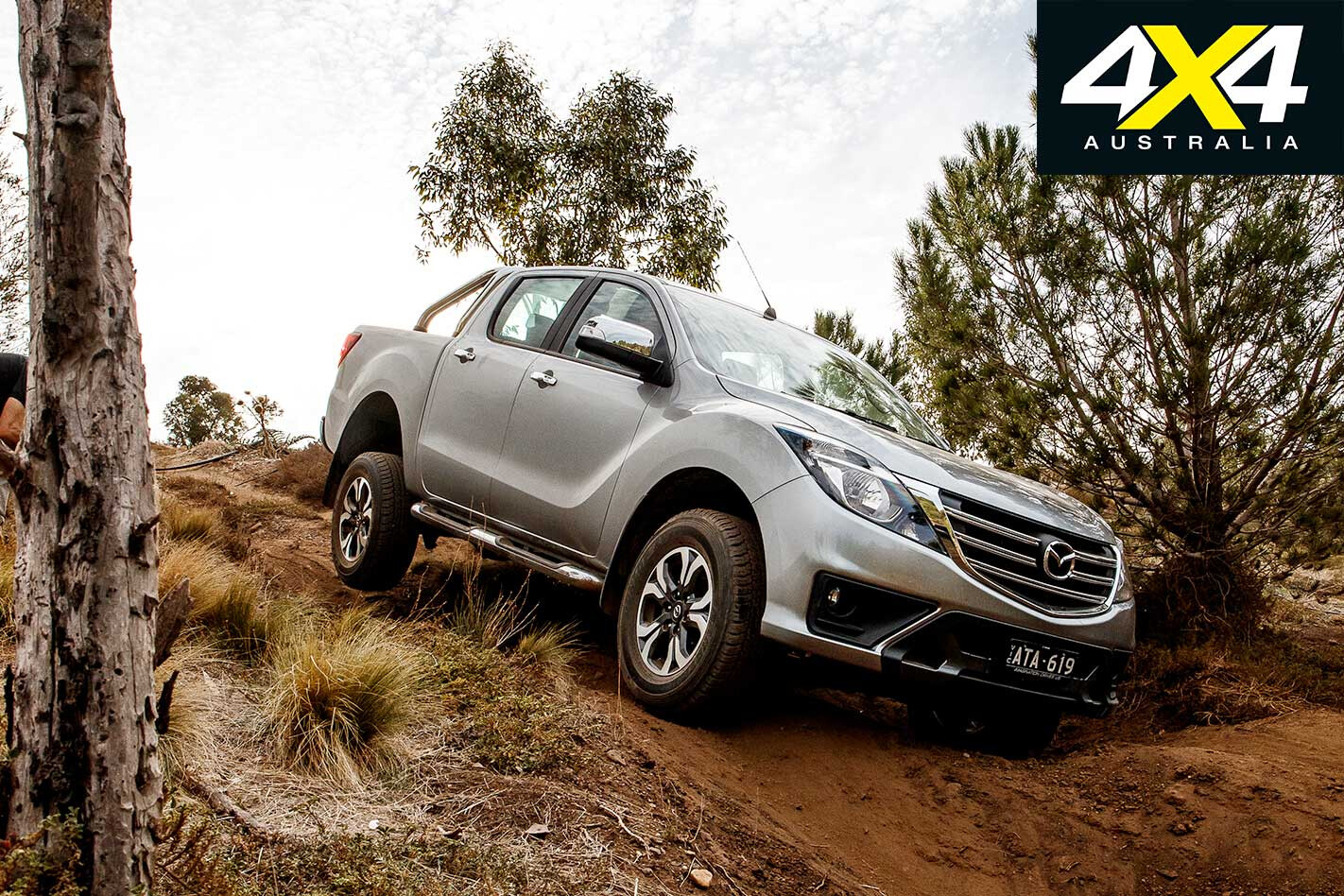
IF THE engine upgrades and EPS are key features that distinguish the current BT-50 from the Ranger, so too is the way the chassis electronics, namely the electronic traction control, work on the two.
When the driver engages the rear diff lock on the Ranger, the ETC remains active on the front wheels. With the BT-50, however, engaging the rear locker cancels ETC completely. This upgrade to the Ranger in 2016 was not adopted by Mazda.
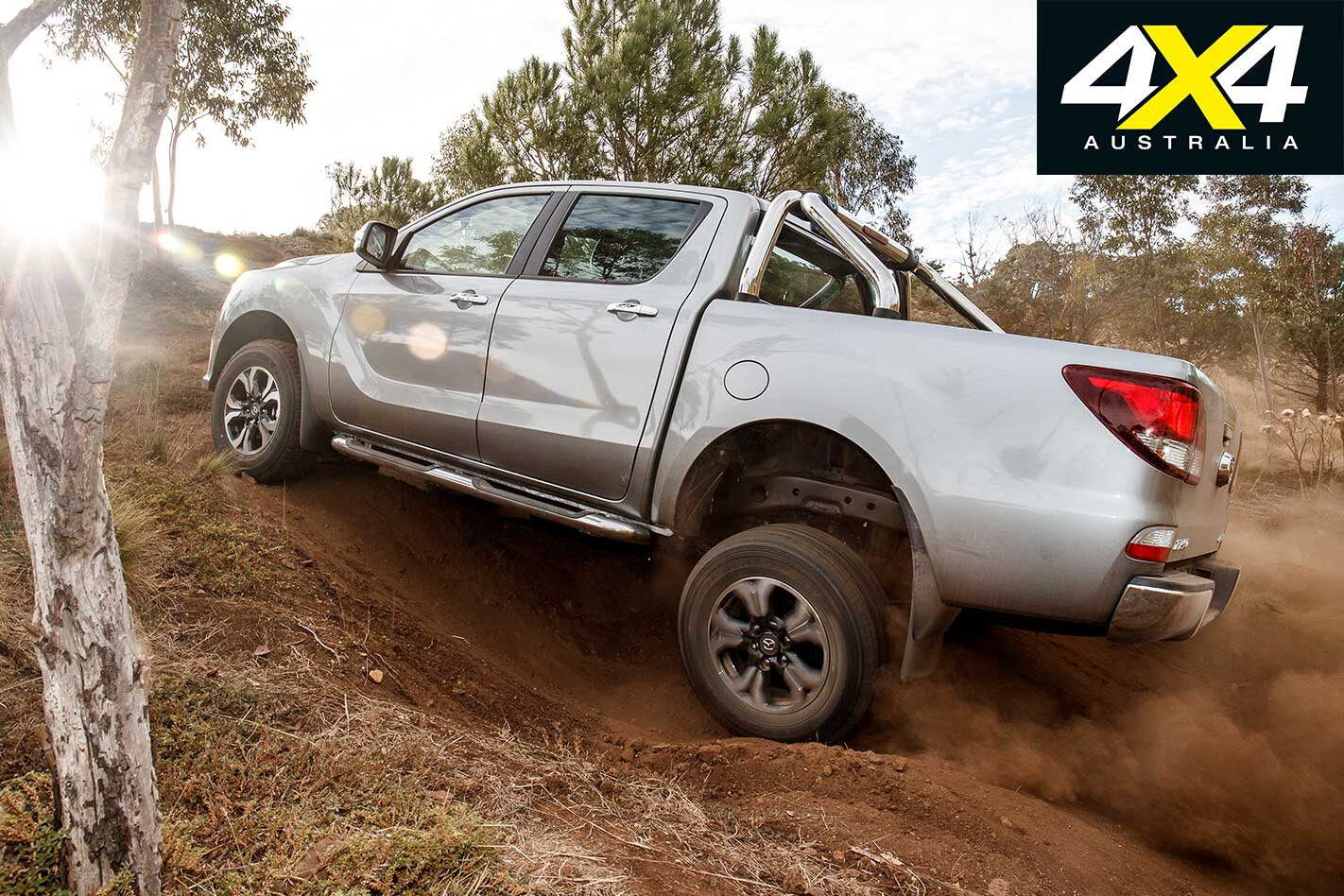
The wash-up here is that engaging the rear locker on the BT-50 doesn’t necessarily help in difficult off-road conditions. On our gnarly and steep set-piece hill, for example, the BT-50 got to the top without the locker but didn’t make it with the rear locker engaged.
Thanks largely to its generous wheel travel (the same as the Ranger), the BT-50 is still amongst the more off-road capable utes here, even if it’s a notch down from the three top-tier performers: Hilux, Amarok and Ranger.
LOAD CARRYING
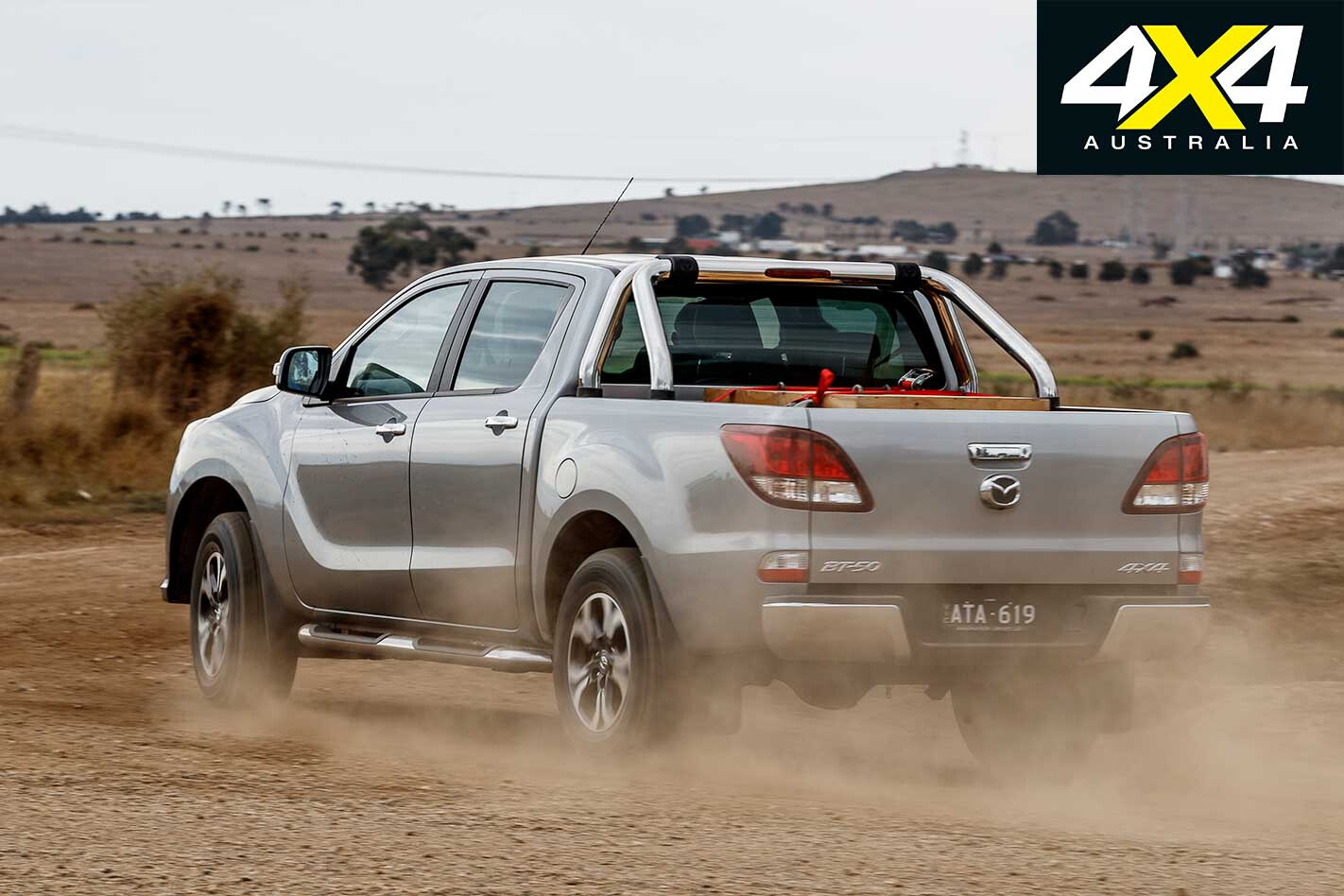
FOR all the same reasons the Ranger is a very good heavy-duty work ute, so is the BT-50. With our test 900kg payload onboard, the BT-50 was largely unfazed in terms of chassis stability and engine performance.
Likewise, when tested with 3500kg tow weight hooked behind in our previous load and tow test, the BT-50 was one of the best performers. The BT-50 falls a little short of the Ranger with its noisier and slightly less responsive engine.
CABIN AND SAFETY
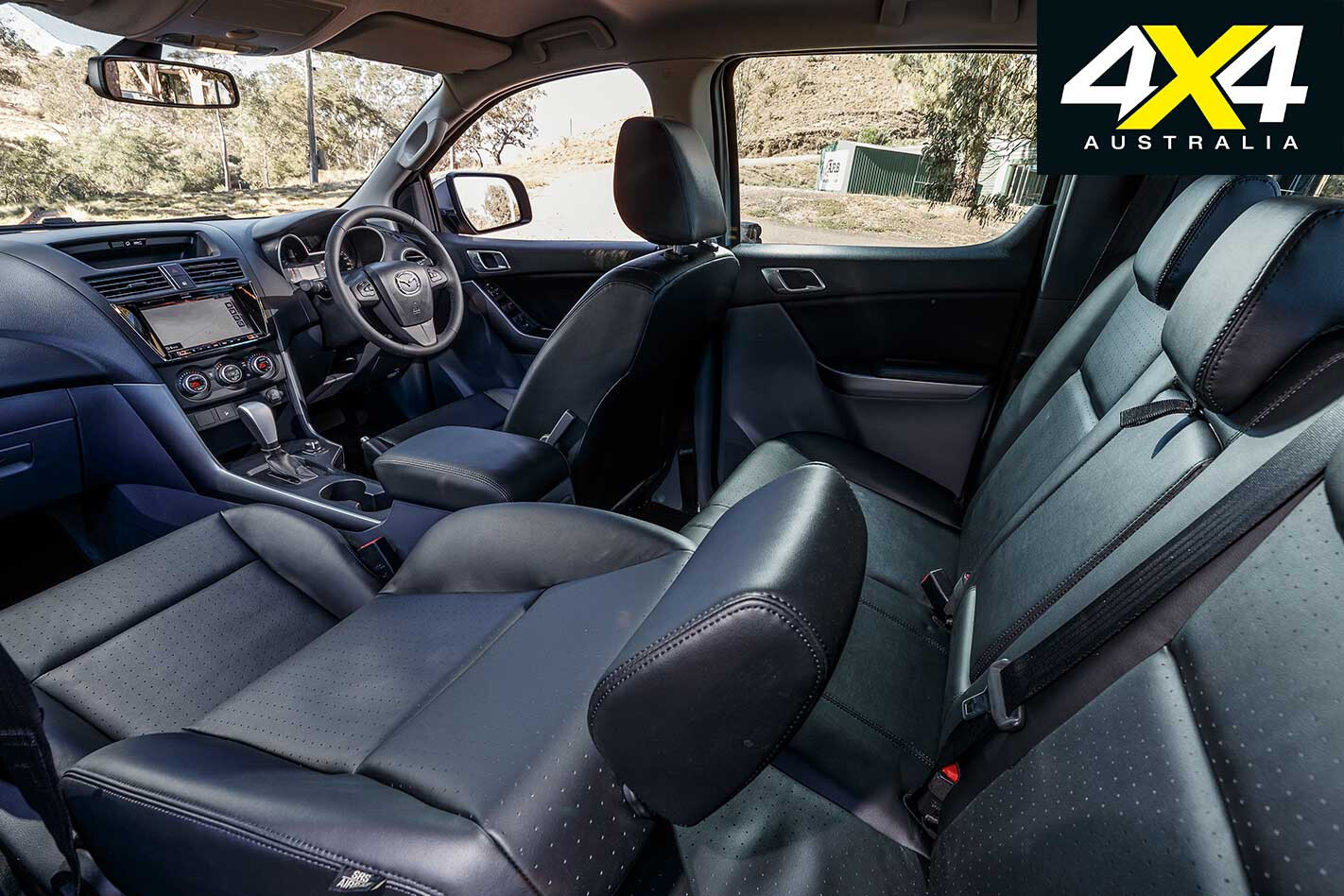
MORE similarities to the Ranger here, with the BT-50 offering a comfortable, spacious and notably long cabin. No ute here has more combined front and rear legroom, and only the Amarok is wider. The bottom-line: if you wish to accommodate five adults, the BT-50 is as good as you’ll get here. Five-star ANCAP safety, too.
On the negative side are no reach adjustment for the steering wheel and no smart key entry and start, even on this top-spec GT model.
PRACTICALITIES
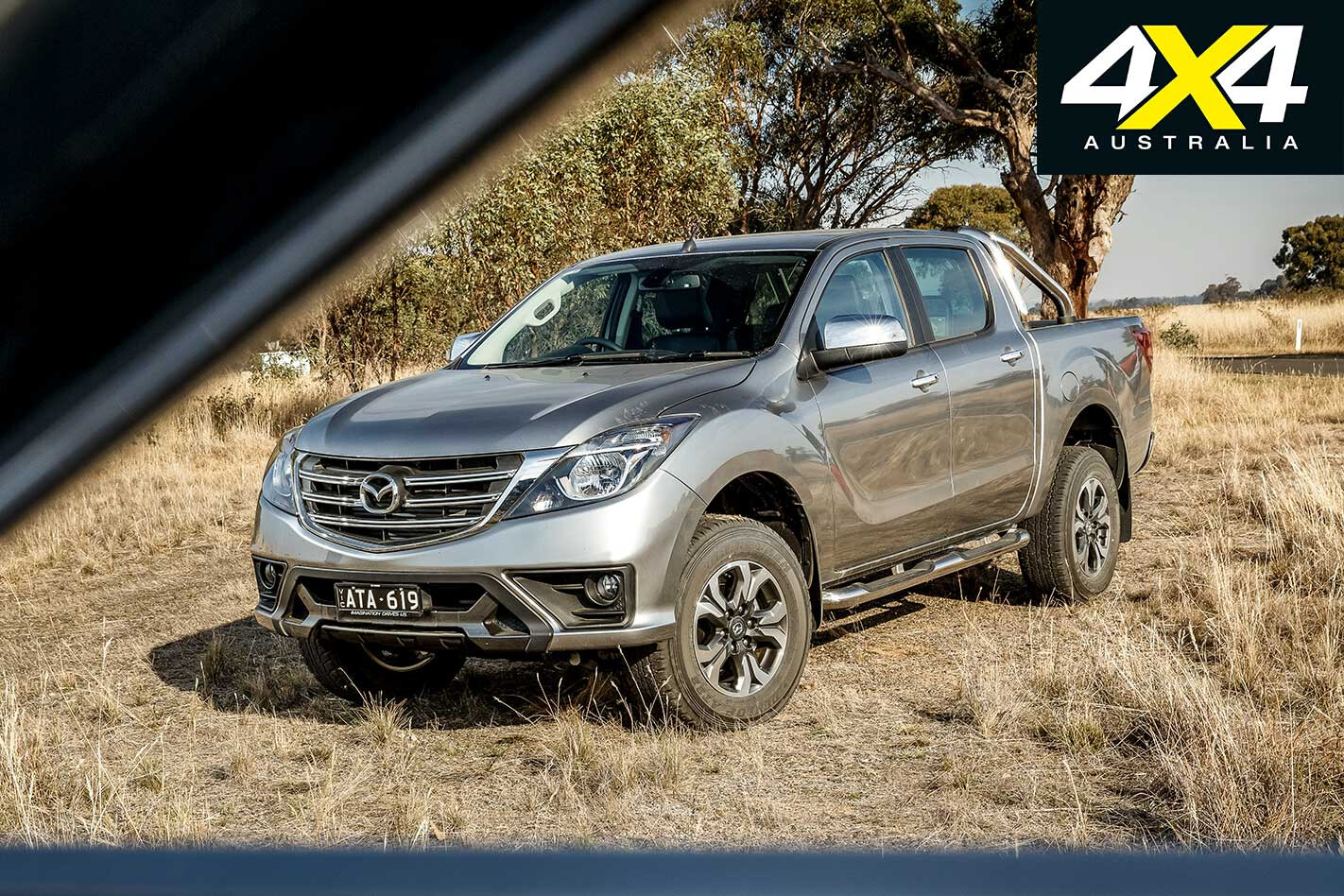
THE commonality with the Ranger means many service parts are interchangeable and are often cheaper when they come in Ford wrapping. There’s also a good range of factory accessories, and the same practical wheel and tyre spec as the Ranger and Hilux.
Like the Ranger, the BT-50 is a little thirsty by class standards; although, the 80-litre tank helps cover for this in terms of fuel range.
Mazda BT-50 GT Specs Engine: 3.2-litre 5-cyl turbo-diesel Power: 147kW at 3000rpm Torque: 470Nm at 1750-2500rpm Gearbox: 6-speed auto 4X4 system: Dual-range part-time Crawl ratio: 42.3:1 Construction: Separate chassis Front suspension: Independent/coil springs Rear suspension: Live axle/leaf springs Kerb weight: 2118kg GVM: 3200kg Payload: 1082kg Towing capacity: 3500kg Towball Download: 350kg GCM: 6000kg Fuel tank size: 80 litres ADR fuel claim: 9.2L/100km Test fuel use: 12.2L/100km Touring range: 605km* *Based on test fuel use, claimed fuel capacity and a 50km ‘safety’ marginAcceleration and Braking 0-100km/h: 10.8sec 80-120km/h: 7.9sec 100-0km/h: 45.0m
Off-road capabilities Departure angle: 26.4˚ Rampover angle: 25˚ Approach angle: 28.2˚ Wading depth: 800mm Ground clearance: 237mm
Mazda BT-50 Prices** XT: $44,615 XTR: $50,490 GT: $52,490 **Prices do not include on-road costs
The Results
Results and verdict
Nine utes, but only one winner…
Intro & Contenders
Home of 4X4 Australia’s Ute Test, where we have put all of the popular 4×4 dual-cabs through their paces off-road and on-road.
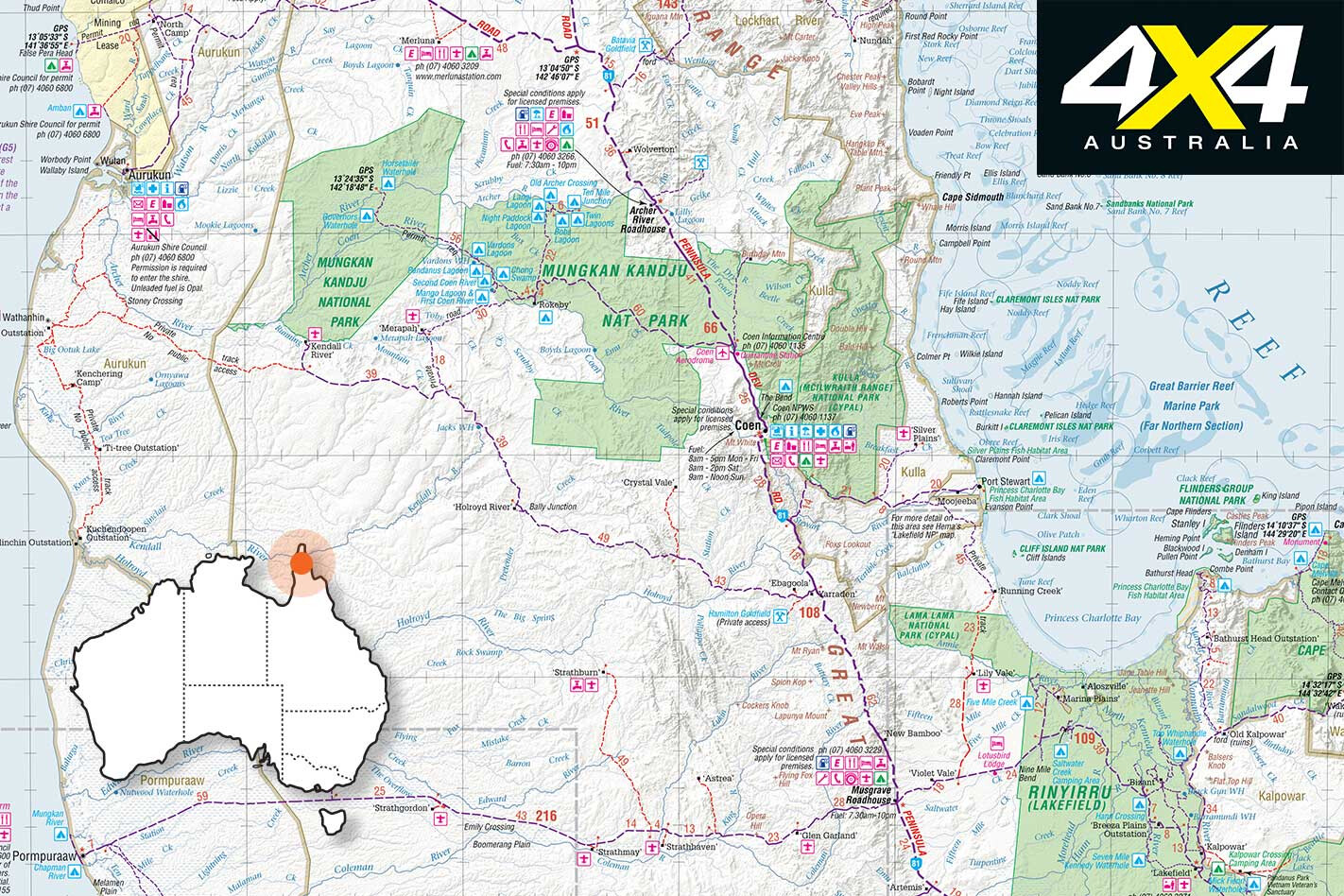
From Rinyirru (Lakefield) National Park you can opt to head north via Olive Vale Station on the Running Creek track to Port Stewart.
The track can be rough and there’s at least one deep tidal creek to be crossed, so it’s best done at low tide – remember this is crocodile country. It cuts through the Lama Lama National Park, though coastal access is difficult as it’s often closed at the whims of the Traditional Owners.
Coen is a historic village, once an Overland Telegraph Line station, but it was ‘rushed’ when gold was found in the surrounding hills. Coen is the gateway to the Oyala Thumotang NP, which is divided into three sections: Langi, Coen River and Archer Bend. The park is bounded by the McIlwraith Range to the east and open monsoon woodlands to the west.
There are many wetlands and two rivers – the Coen and the Archer – in the park which feed huge swamps, billabongs and permanent river and creek pools. In the Langi section the Archer River dries up late in the Dry, though the Coen retains many permanent pools rich in barramundi, saratoga and sooty grunter.
Boat access is possible by launching from the banks into big billabongs that are scattered about the woodlands.
Park information and camping permits are available at the Coen National Park ranger station north of town, and they are a great bunch of people who are always willing to help and assist. Let them know when you will return just in case something bad happens, and don’t forget to tell them when you’re back.
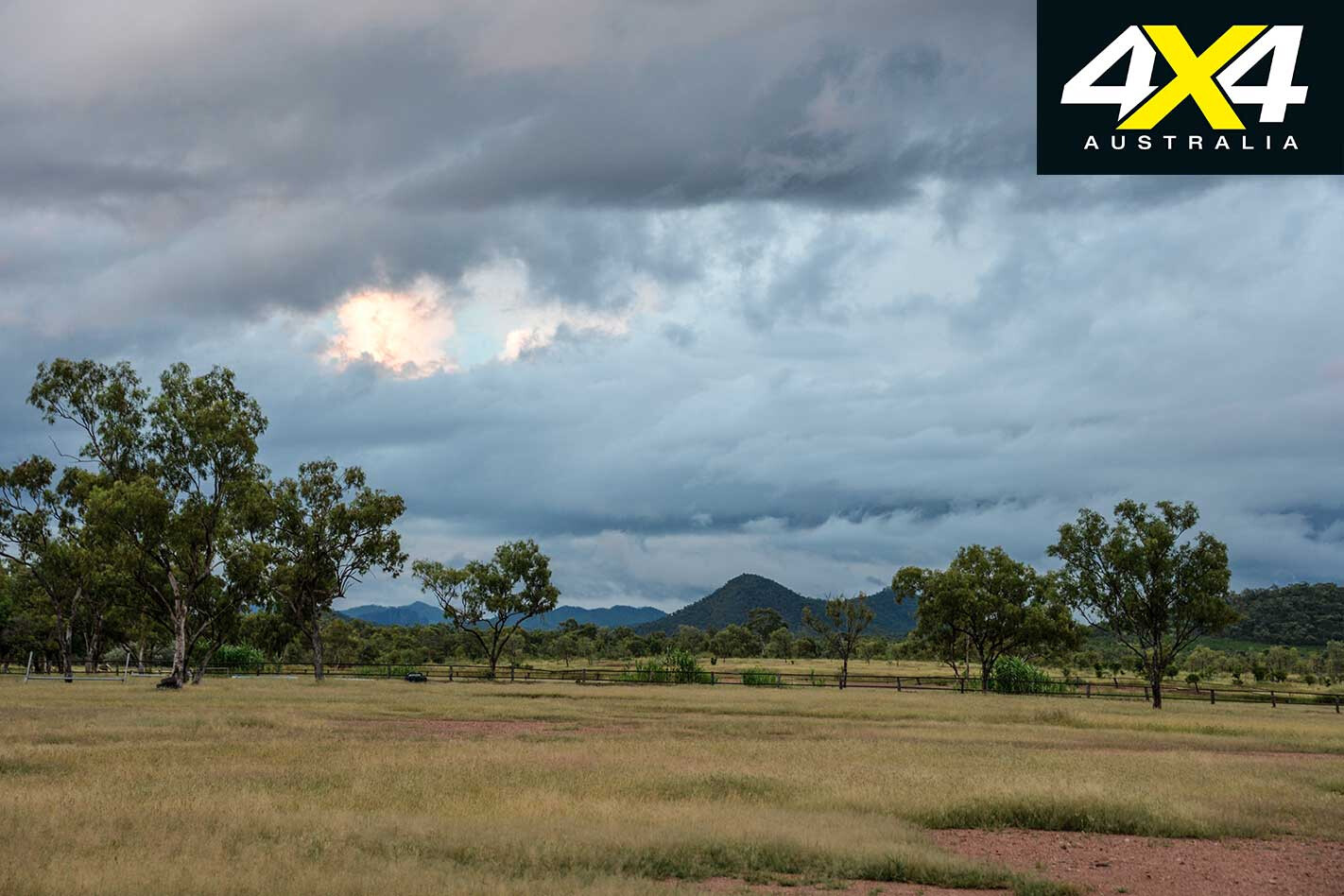
The park is under-utilised for what it is, being one of the most remote and adventurous destinations on the Cape – a custom-made escape for those who love to get away from the masses and spend quality time enjoying the wilderness. Most of the billabongs and sections of the rivers have good bush camping sites. There are no facilities.
I have camped on a billabong here for days, catching and releasing dozens of fish daily. Every morning is magical when one wakes to the calls of myriad birds which never cease to amaze in their diversity of species and numbers, especially toward the end of the Dry when the gallery forests that line the watercourse are in bloom or fruiting.
It attracts many fruit-eating species and migrating cuckoos, Torres Strait pigeons and brilliantly coloured fruit doves. It’s this reason why most visitors are keen birders.
We once had a big, old rangy boar wander into our camp, attracted I suppose by the fillets of barra’ cooking on the grill. I used my Land Cruiser to drive it away from the camp, but he returned in the afternoon with his family – at a time when a visiting elder (a park ranger) dropped in for a yarn and a beer. He had a rifle…
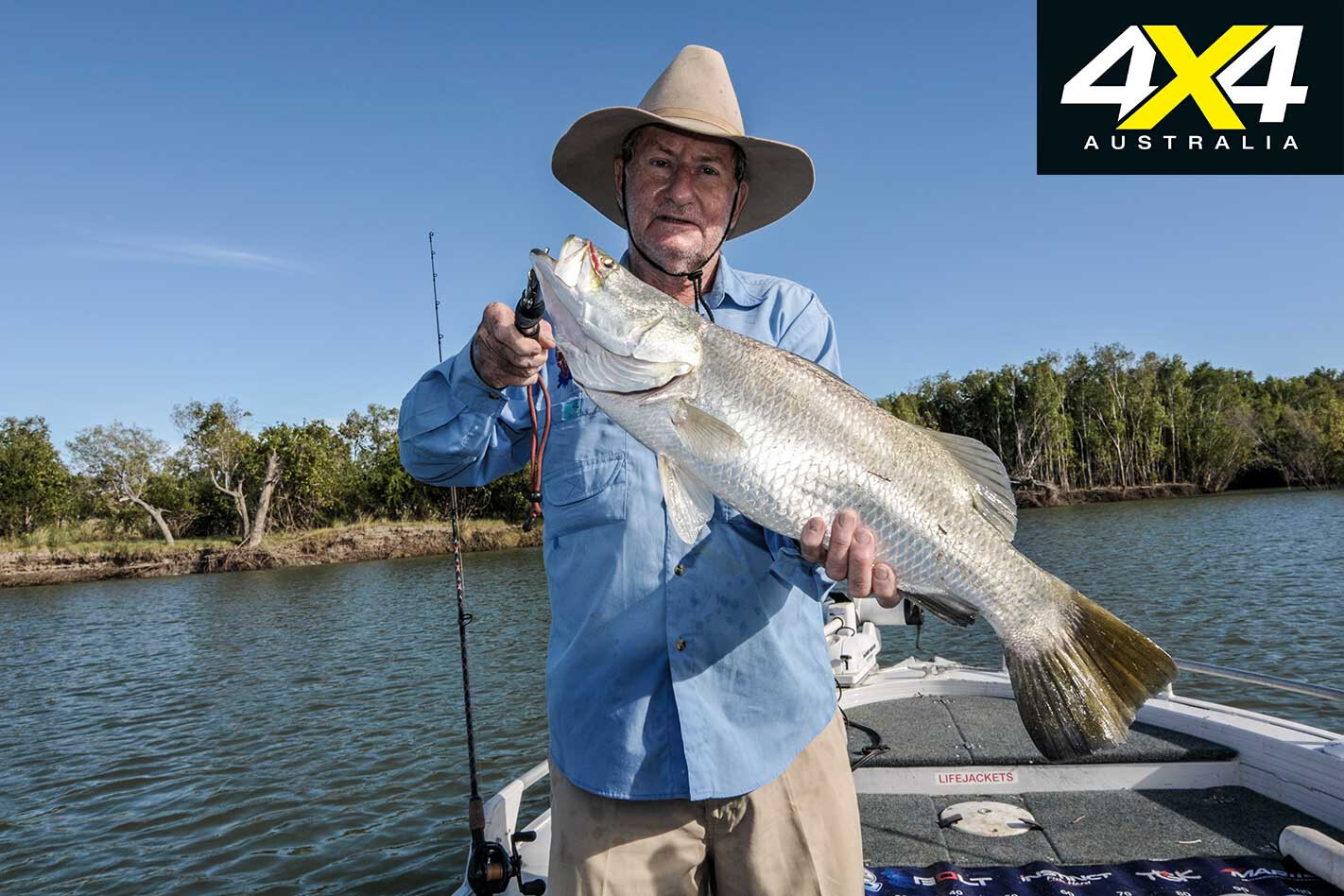
The Archer Bend section ends at the far western end of the track, on the flood plain of the tidal section of the Archer. It has amazing barramundi fishing and, best of all, you and your party are most likely going to be all alone. The Old Archer River Crossing (or Langi Crossing) is popular and was once the original route to the Tip.
Drop in at the Coen Museum, once the old telegraph station, and see the heavy iron-clad boat once used as a ferry when the river was used by linesmen and travelers.
The park tracks are in fair shape, though cyclones and burning often drops big trees across tracks, making the tracks sometimes impossible to pass. A four-wheel drive is highly recommended, while towing a trailer or caravan shouldn’t be a problem. There are no nasty surprises if you take care, apart from crocodiles and the odd snake … of course.
Kutini-Payamu (Iron Range) National Park
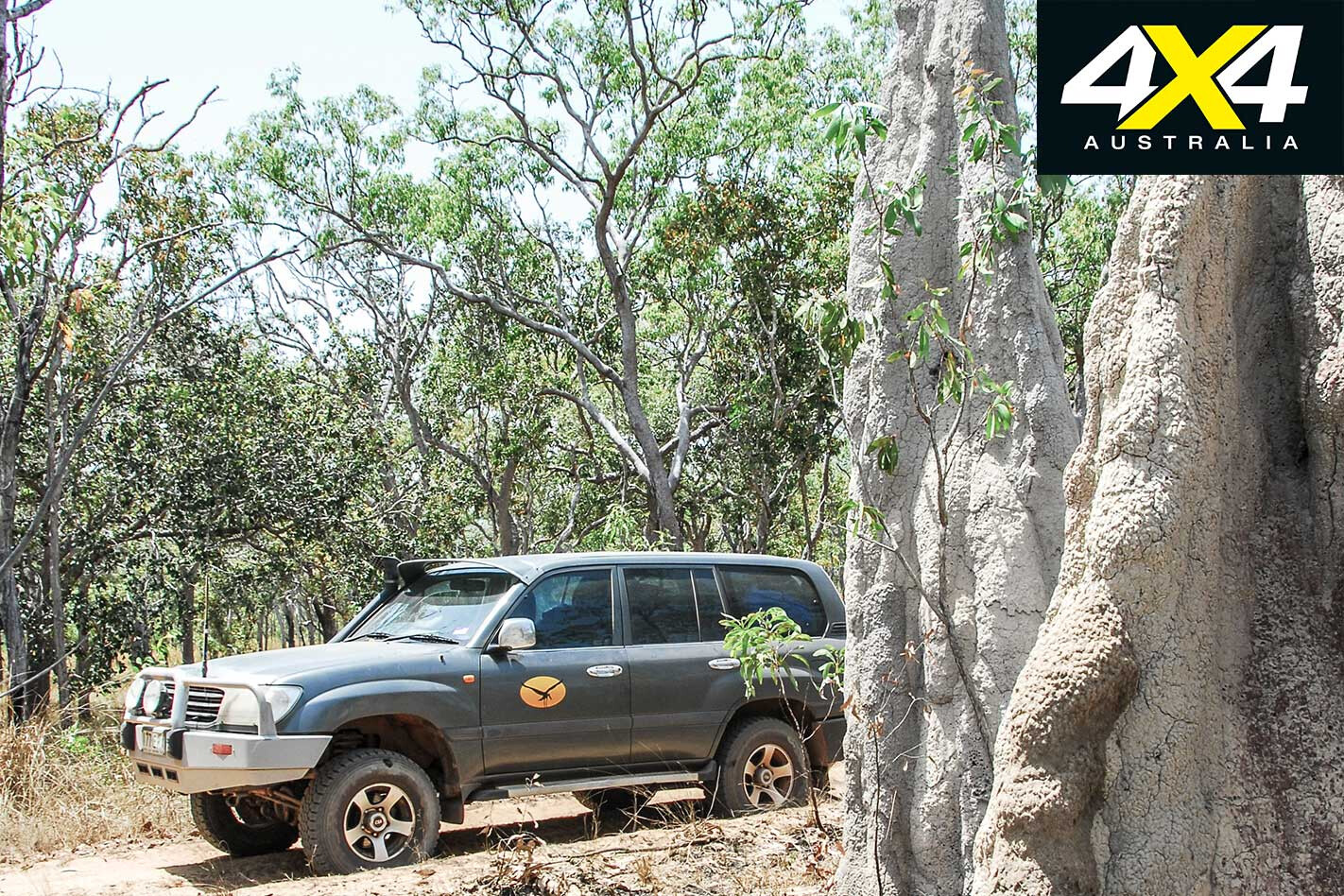
Just up the road a bit from Coen, and after a “short” detour from the Peninsula Development Road (PDR) to the east coast, is my favourite national park on the Cape: Kutini-Payamu. In line with many parks and reserves on the Cape – indeed, across Australia – Traditional Owners are insisting on naming joint-managed parks by traditional names.
This sounds well in theory but it’s often changed at the drop of a hat when a new committee takes over and insists that “their” name should replace the former one. Even communities are not immune on these map-changing decisions. Welcome to Indigenous politics…
The vast Iron and Tozer Ranges have the largest low-land rainforests in Australia. This encapsulated park has huge patches of heathland scrub, monsoonal woodland and rainforest, palm-clad beaches, permanent rivers and creeks, hills, flats and wetlands.
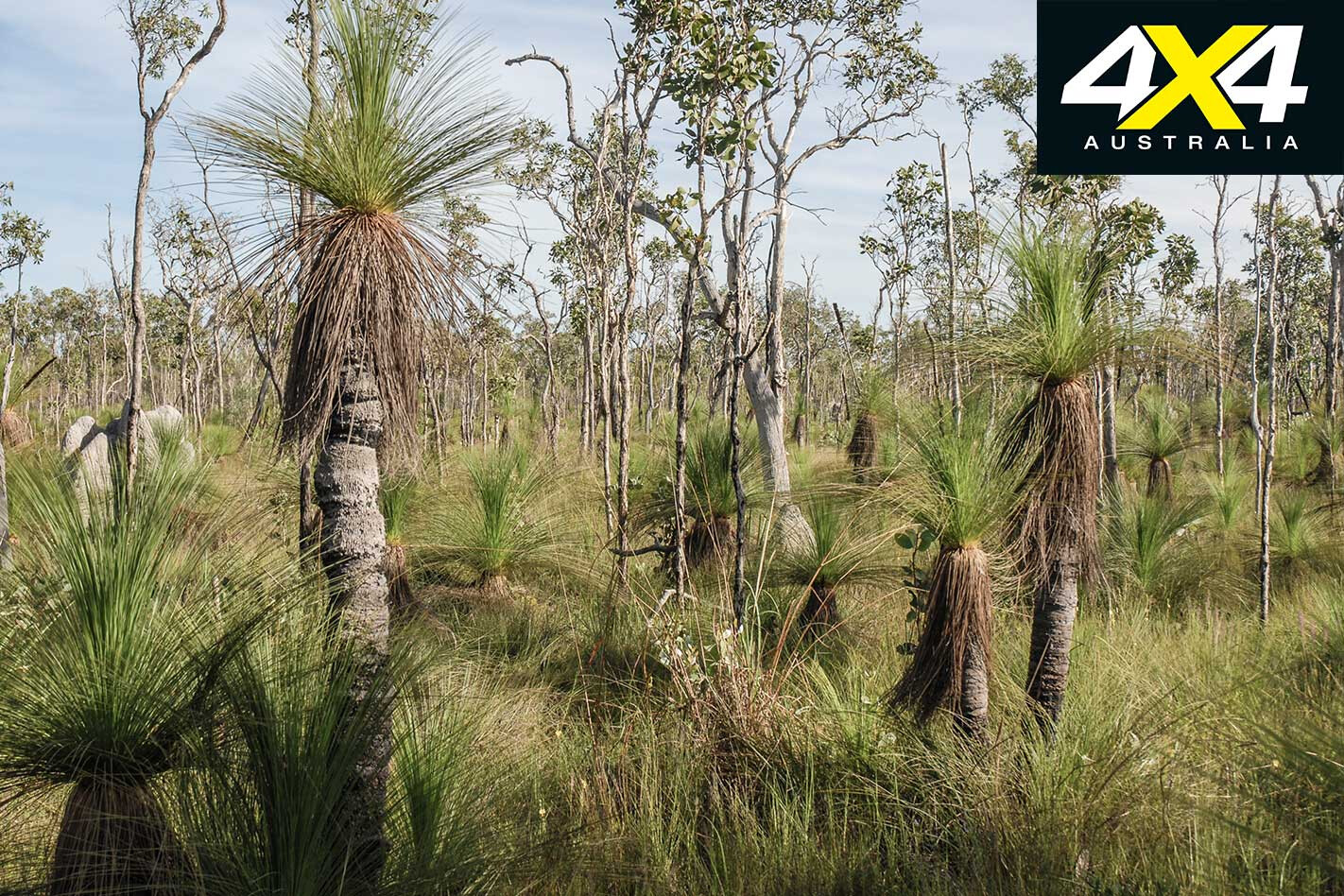
It’s the noisiest park on the Cape, alive day and night with the sound of birds. Most of the noise comes from the cockatoo-sized eclectus parrots, who constantly call out to each other during the day, along with myriad fruit-eating birds: doves, cuckoos, shining starlings, yellow fig birds and orioles. The park is a refuge for much wildlife that only inhabits the Cape and New Guinea.
Tree-nesting hollows are rare enough for the eclectus parrot to claim one permanently as their own, and some birders claim the parrot will even stoop low enough to steal the nest from another couple. To ensure this doesn’t happen, the female remains in the nest or close by while the male is out on the hunt for food. To ensure he doesn’t stray she calls out to him every few minutes, and he returns the call as any good hubbie should.
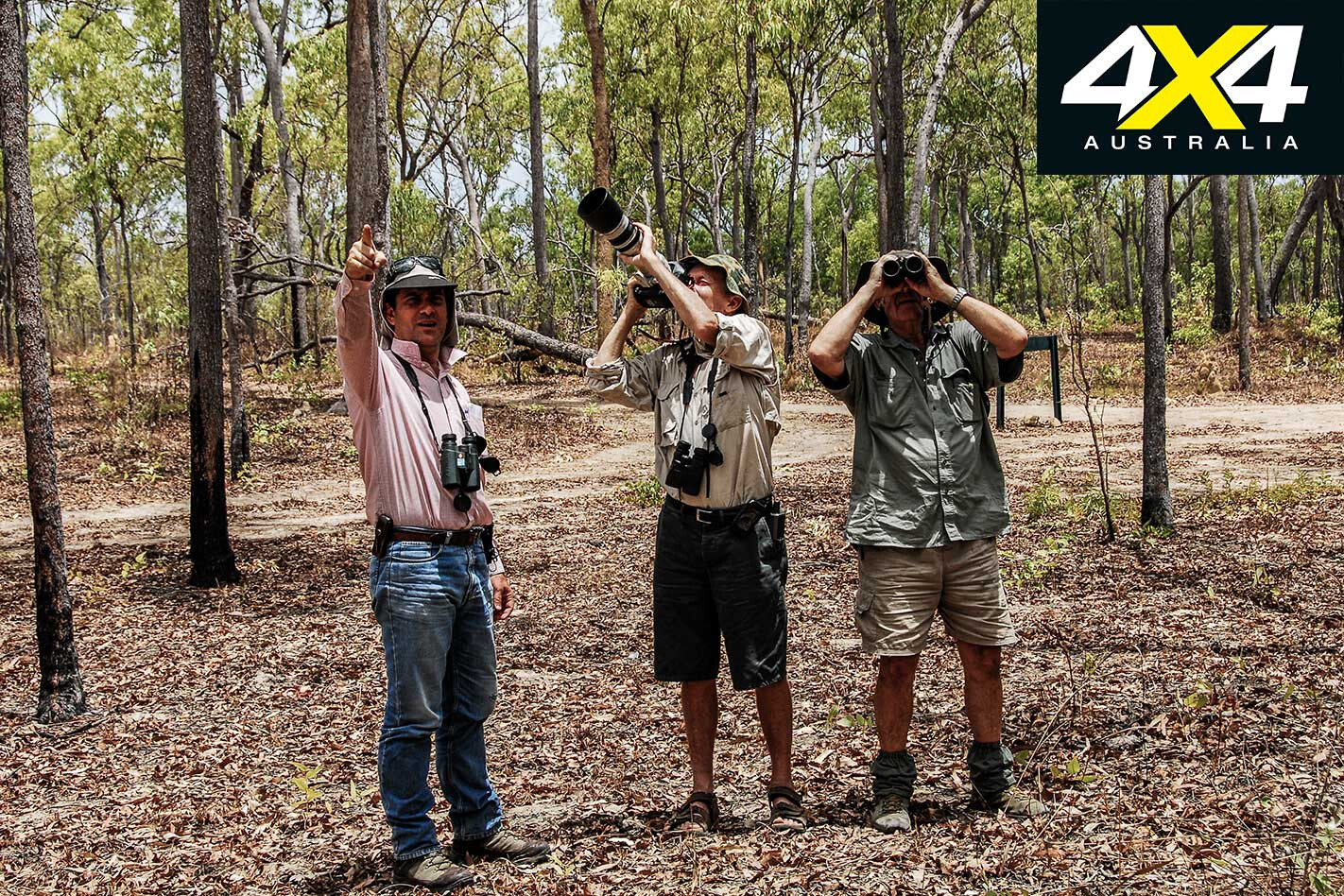
Take a pair of good field glasses and scan the tallest trees, where the hollows generally are. The Lockhart community road is a good spot, while a nesting pair can be found about 100m north of the ablution block at Cook’s Hut campground.
There are several campgrounds in the park under the canopy of the lush rainforest. Each one has walking tracks, including a day walk along the old Portland Roads Road that parallels the current road. It’s a great spot to see rare green pythons, palm cockatoos and eclectus parrots.
Camping in rainforests isn’t to everyone’s liking, and many people head to beautiful Chili Beach. The beach sites are located beneath relatively open gallery rainforest, behind coconut palm groves that line the entire beach.
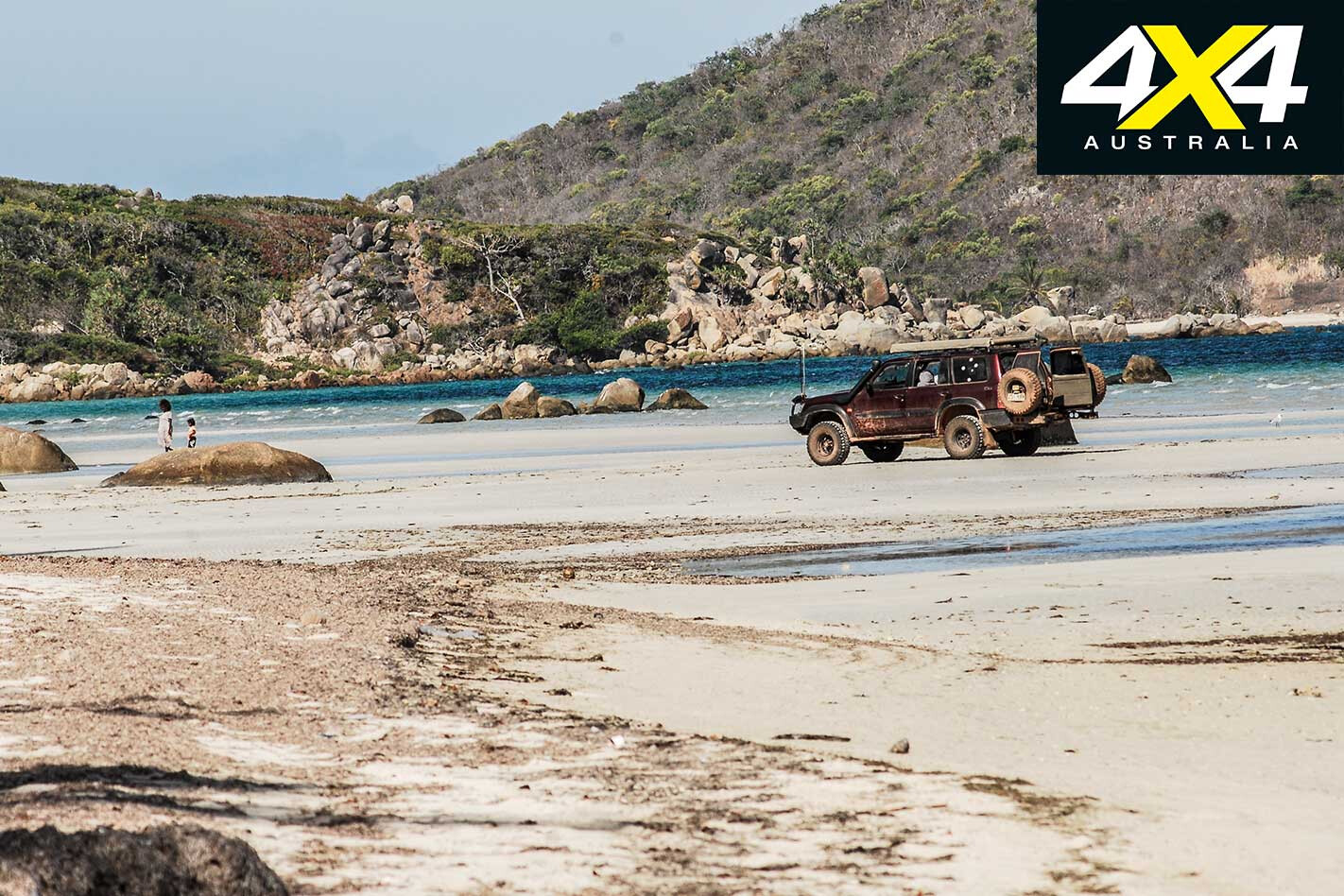
When the trade wind blows it can be very windy, which is one reason not to camp beneath a coconut tree or in an exposed wind-blasted area. When benign, Chili Beach is a wonderful spot to wade or laze about in shallow water, fish or just relax with a coldie.
The little rocky islets in front of the campsites are roosting sites for thousands of shining starlings that wheel and dance in noisy formations at sunset. They arrive in October from New Guinea to breed, and they depart in April.
You can drive to Chili Creek when the tide runs out, but ensure you’re off the beach when the tide runs back in. Stay on the damp sand (the tidal zone) as the upper beach areas are used by nesting turtles and sea birds. This is common sense that applies anywhere, really, when driving on beaches and dunes.
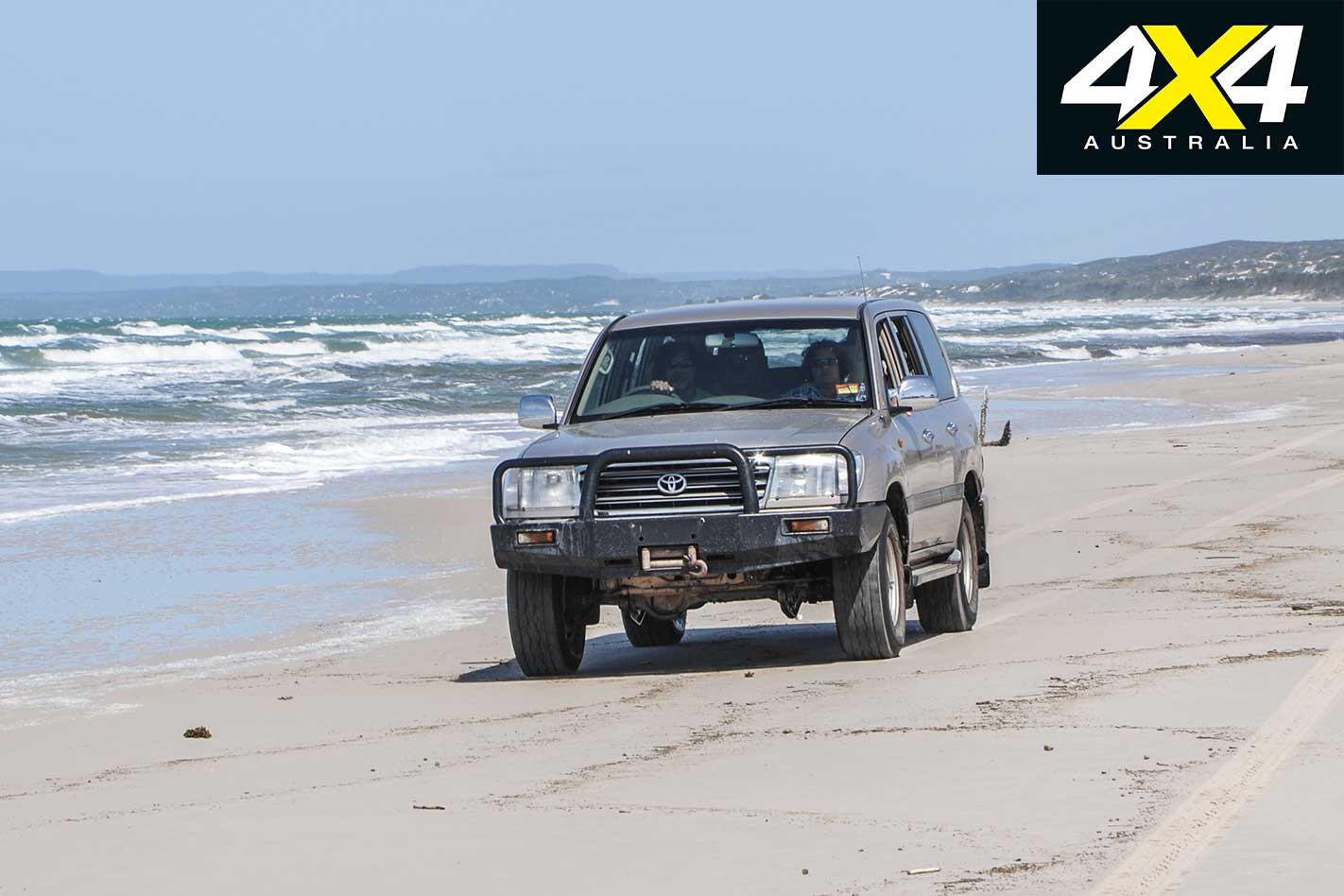
Lockhart River Community is a dry zone. It has a store, fuel, a medical centre, a police station, and a ranger station en route to the airport. The Iron Range airbase was constructed in 1942 and home to the US bomber group, the Jolly Rogers. They saw extensive service during the war, including the Battle of the Coral Sea.
Concrete pillboxes, ammo storage bunkers and other relics are hidden in the rainforest before reaching the airport, and there is also a motel nearby.
Operation Blowdown
On July 18, 1963, a vast section of Iron Range was turned into ashes. Only grey, ghost-like stalks of what were once stately rainforest giants remained skeleton-like, after the Australian Army set off the biggest explosion ever in Australia (up to that period). Some 41 tonnes of TNT was piled on a 41m high tower and exploded at 8.30am. It was observed from an observation post at Mount Lamond, 5km away.
The blast destroyed everything within a 300m radius, with far-reaching damage beyond it. No one spared a thought to what they had just done to a rainforest that had withstood thousands of years of evolution – gone in a split second, along with its entire animal population. It opted one observer to note that the area once known for it taipans “was now cleared”.
Three-Ways
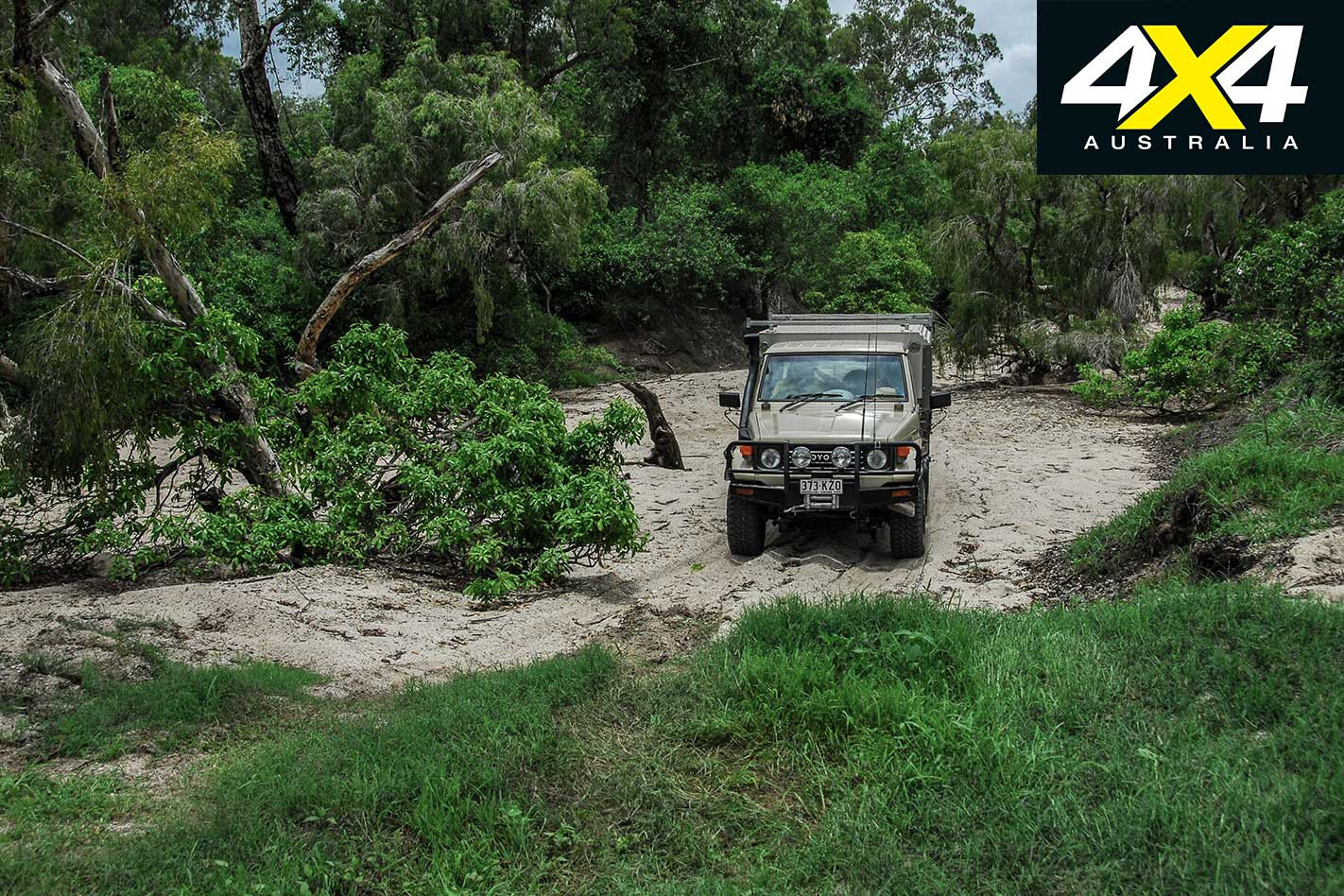
The Portland Roads junction at the Lockhart River Community turnoff is known as the “Three-Ways” by locals – the junction to Portland Roads Road, Lockhart River and the PDR. You have the choice of heading back to the PDR, or taking the Frenchman’s Track.
The turnoff is 27km west from the Three-Ways junction and is only suitable for experienced 4WDers, especially when traveling alone. The Pascoe River crossing is often impossible early in the Dry season, as is the Wenlock. It’s a nice drive across heathland, though, with open panoramic views of the hills and ranges in case you need to return to the Portland Roads Road.
Batavia National Park
This park is opposite the Moreton Telegraph Station Roadhouse. The park is currently in the doldrums waiting for a plan of management and a CYPAL agreement – as several others are, including the Olive River dune field. Keep an eye on their future development as it may give you another reason to go back to the Cape.
Heathlands resources reserve & Jardine River National Park
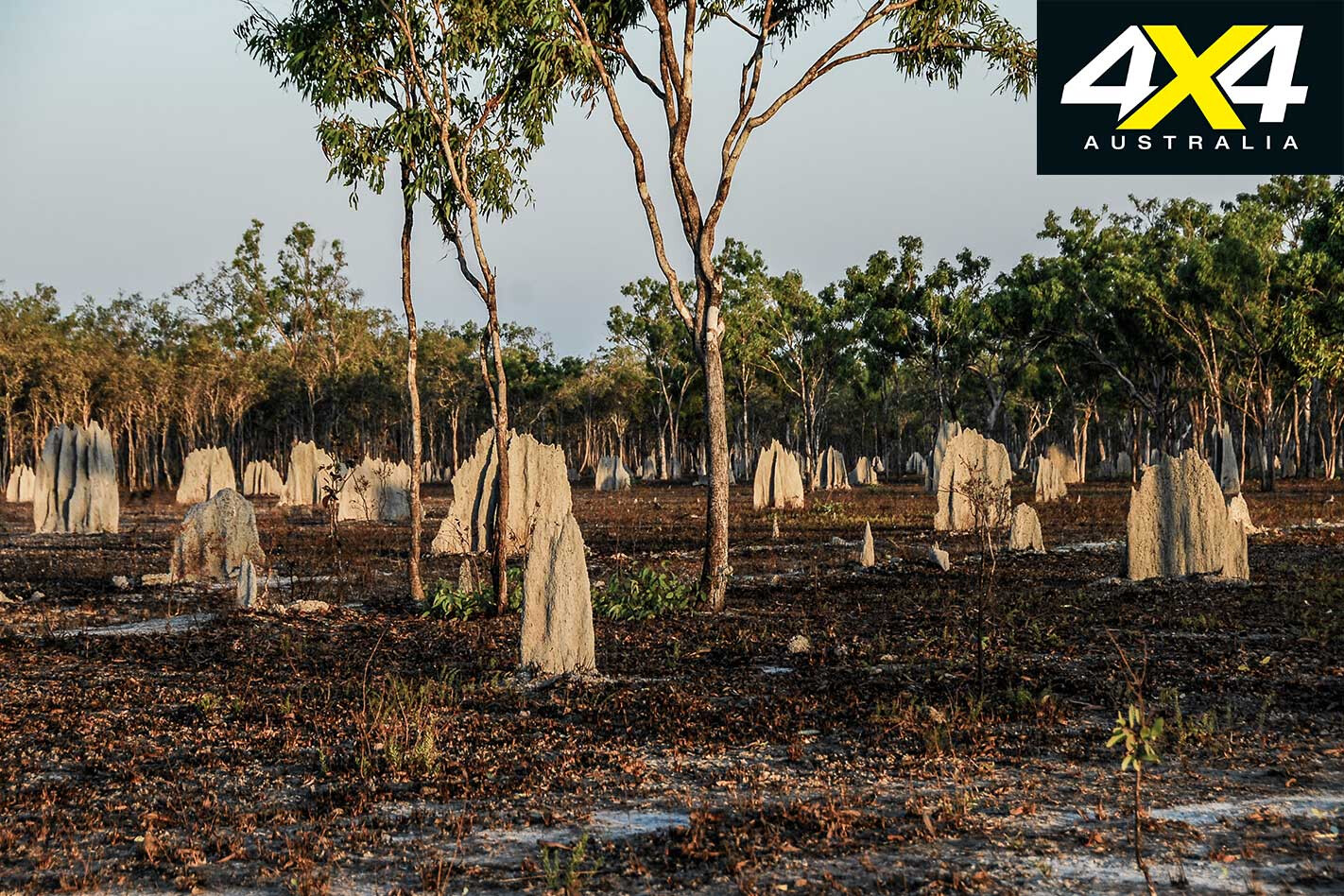
It never ceases to amaze why the National Parks authorities named this amazing region ‘Heathlands’ and ignored the historic ‘Wet Desert’ name bestowed upon it by the Jardine Brothers during their epic drove with cattle and horses from Rockhampton to Somerset in May 1864.
The onset of the Wet season overtook them on the Mitchell River, and they named this sandy heathland region the Wet Desert because, even after 10 minutes after heavy rain, there wouldn’t be enough water for stock to drink. They were on the road for five months and rode more than 2700km, a drove that has never been matched considering the conditions they encountered.
The Heathlands Resources Reserve was established when Heathland Station was abandoned by the Shelburne Pastoral Company, and much of the land was cleared by the company and seeded with “improved” pastures. A barge landing was constructed at Captain Billy Landing, from where beef was supplied in 1972 to the company’s abattoirs at Seisia and Weipa. For all practical purpose the reserve and the Jardine NP are the same and comprise some 366,000 hectares.
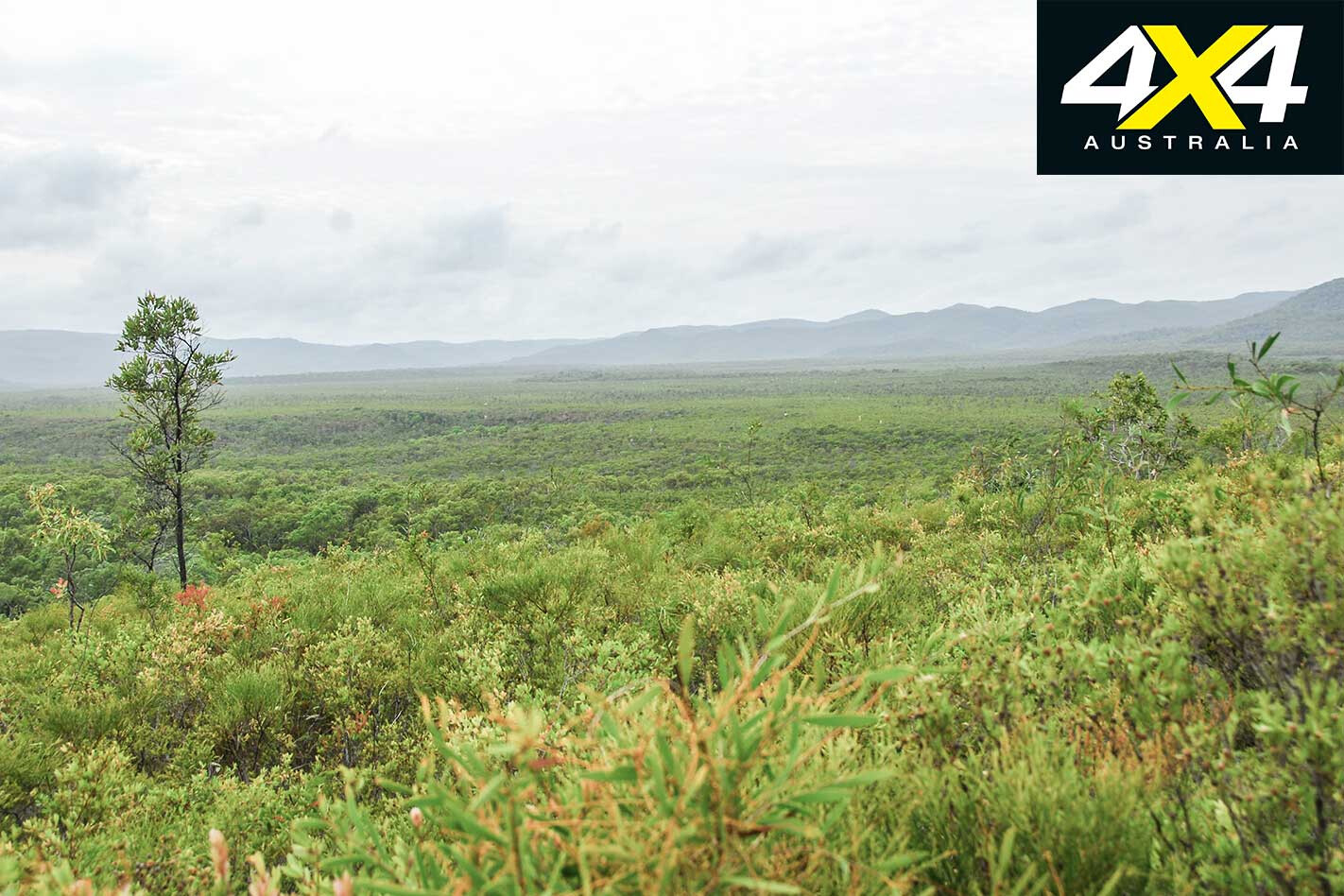
Captain Billy is a nice drive that tracks mostly under a boulevard of rainforest before breaking out above cliffs that overlook the Coral Sea. It’s a great fishing spot when the sea is calm, but it’s not that nice when it’s blowing froth off the waves. There is a shelter – on a first come, first serve basis – on the beach, but here is no shade in the campground, as the wind blows the trees away.
The Old Telegraph Track (OTT) marks the western border of the reserve and the national park, while to the east is the Coral Sea. No camping permits are required if you camp on the track or to the west of it, but the old Jardine River is in the park and requires a permit.
This is a very diverse region and the wettest place in Australia, with more streams born here than anywhere else on the continent. Most streams are lined with verdant gallery monsoonal rainforests alive with vociferous birds, while heathlands cover much of the sandy soils and sand dunes nearer to the east coast. Patches of monsoonal rainforest dominate the Captain Billy track and along the Bamaga Road.
There are several tracks in the park that end at remote attractions, but the most popular routes end at the many watercourses that are crossed on the OTT. The best are Fruit Bat Falls, Eliot and Twin Falls on Eliot Creek. All offer safe swimming, apart from the bottom of Savo Falls where crocodiles have been seen there – but people amazingly still ignore the warnings. Savo Falls is a short walk below Eliot Falls.
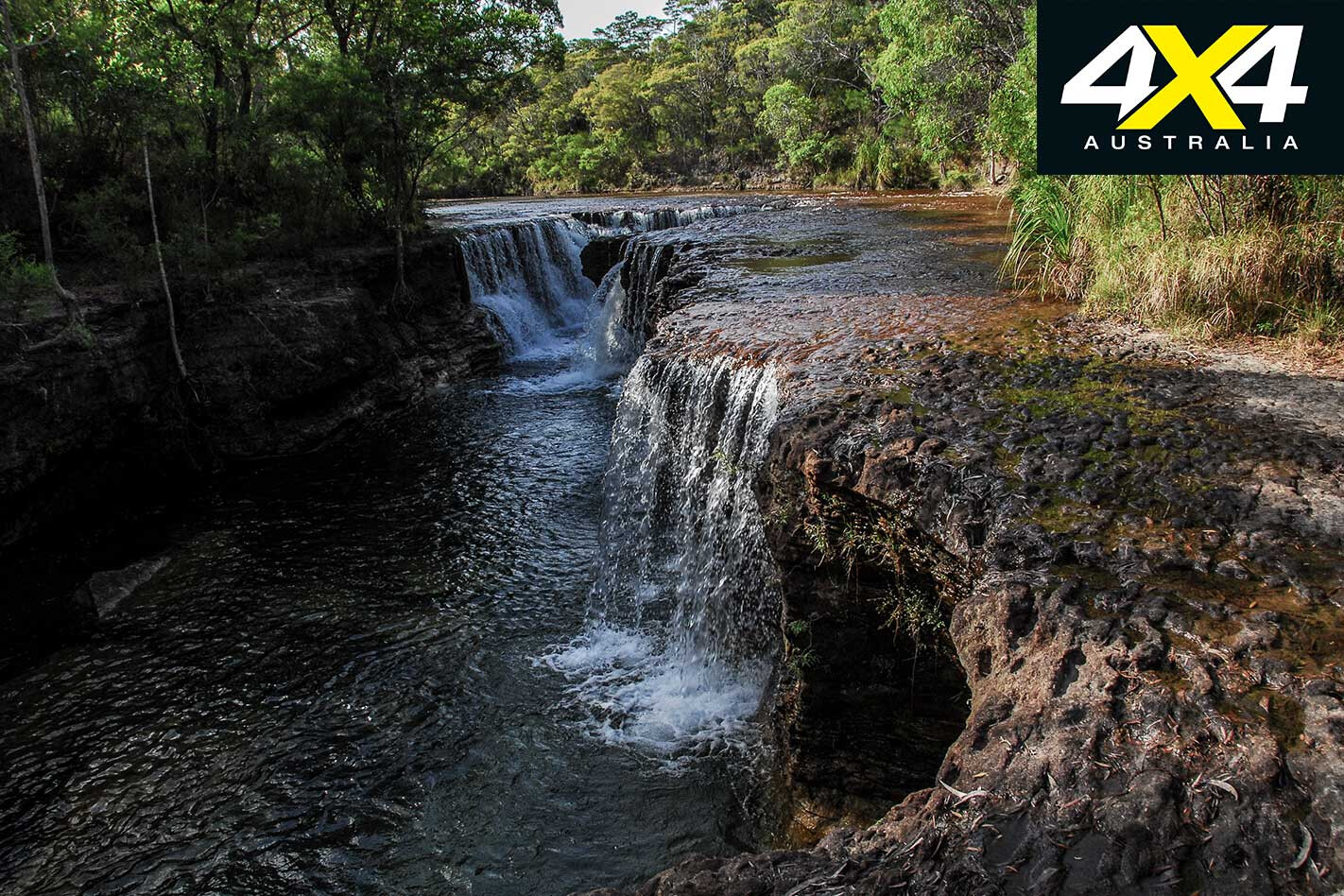
The area is known for its unique flora (especially insect-eating pitcher plants), mammals, reptiles and myriad birds. Camping in the Eliot campground is at a premium during the peak season between June and August, with the masses camping on Canal Creek north of the campground on the northern OTT section.
The Jardine River is the largest perennial stream in Queensland. The Jardine National Park is true wilderness, and camping on the river is something you must do when on the Old Telegraph Track. Yes, you can laze in the shallows to cool down, but avoid the deeper parts where crocodiles live.
The fishing can be outstanding, or it can be extremely frustrating when the barramundi, sarotoga and sooty grunters ignore the bait and lures in the crystal-clear water.
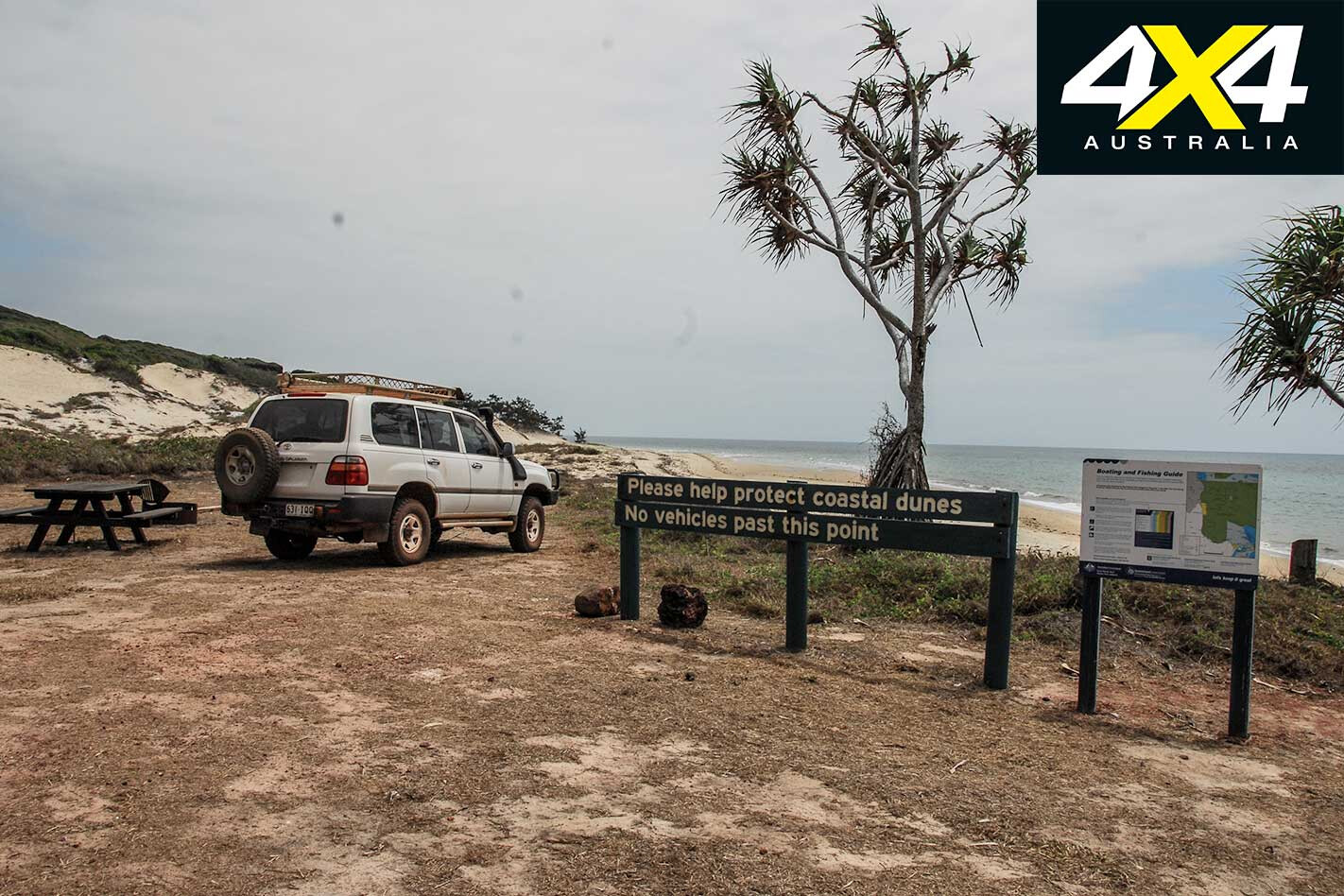
Across the river, the Usher Point Track – experienced 4WDers only – ends at the Coral Sea. The track north to the Kennedy River is overgrown and impossible to traverse, while the once popular beach route to Captain Billy Landing is now blocked by a man-made rock fall that stops all progress.
The rock fall happened after authorities risked life and limb rescuing some idiots that got stuck there. No one is claiming responsibly for this “fate of nature”.
There you have it, the national parks of the Cape York Peninsula. There are none across the Jardine on the Northern Peninsula Area – even though the Narau Beach Track and the Lockerbie Scrub tick all boxes – and the Traditional Owners haven’t shown any inclination to consider it. This is a shame, really, as it would protect these rare jewels for future generations.
THIS generation D-Max first arrived here in 2012. Most notably for a manufacturer with a long history of designing and building its own utes, this D-Max wasn’t a 100 per cent Isuzu product as was its predecessors.
The starting point for this D-Max was, in fact, a GM design, at least in terms of its basic chassis and body shell, even if Isuzu engineers were involved in the design process from early on.
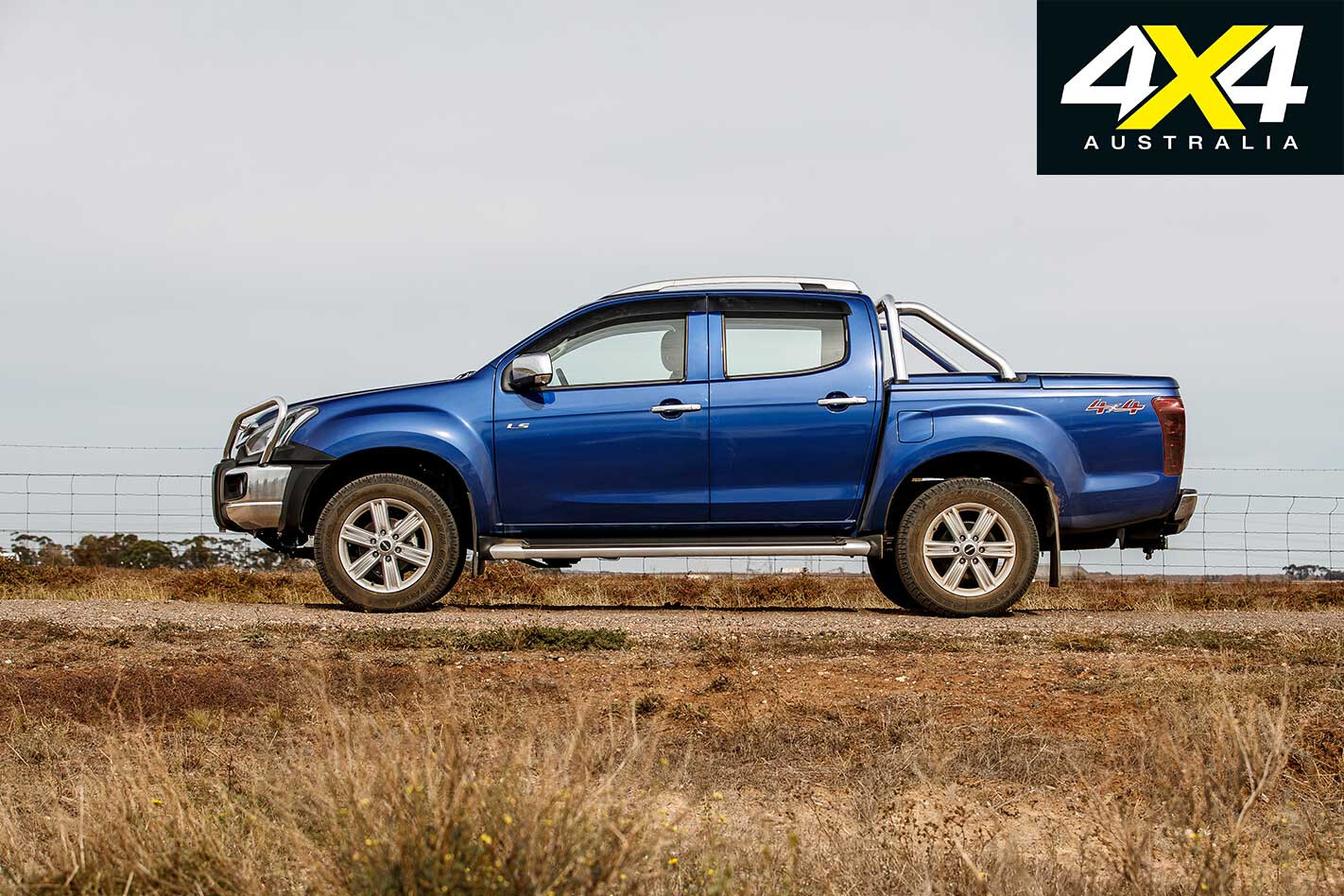
Taking the basic chassis and body shared with the Colorado, Isuzu added its own engine, gearbox, transfer case, rear axle, springs and dampers, interior fit-out and exterior body panels, grille, lights and other details, to end up with what is a very different ute to the Colorado.
Things stayed much the same until 2017, when a heavily revised engine came along, as did six-speed manual and auto gearboxes (replacing the previous five speeders), more NVH control measures and enhanced equipment lists. For the 2018 model (as tested here) further revisions have brought suspension and equipment changes.
WHAT YOU GET
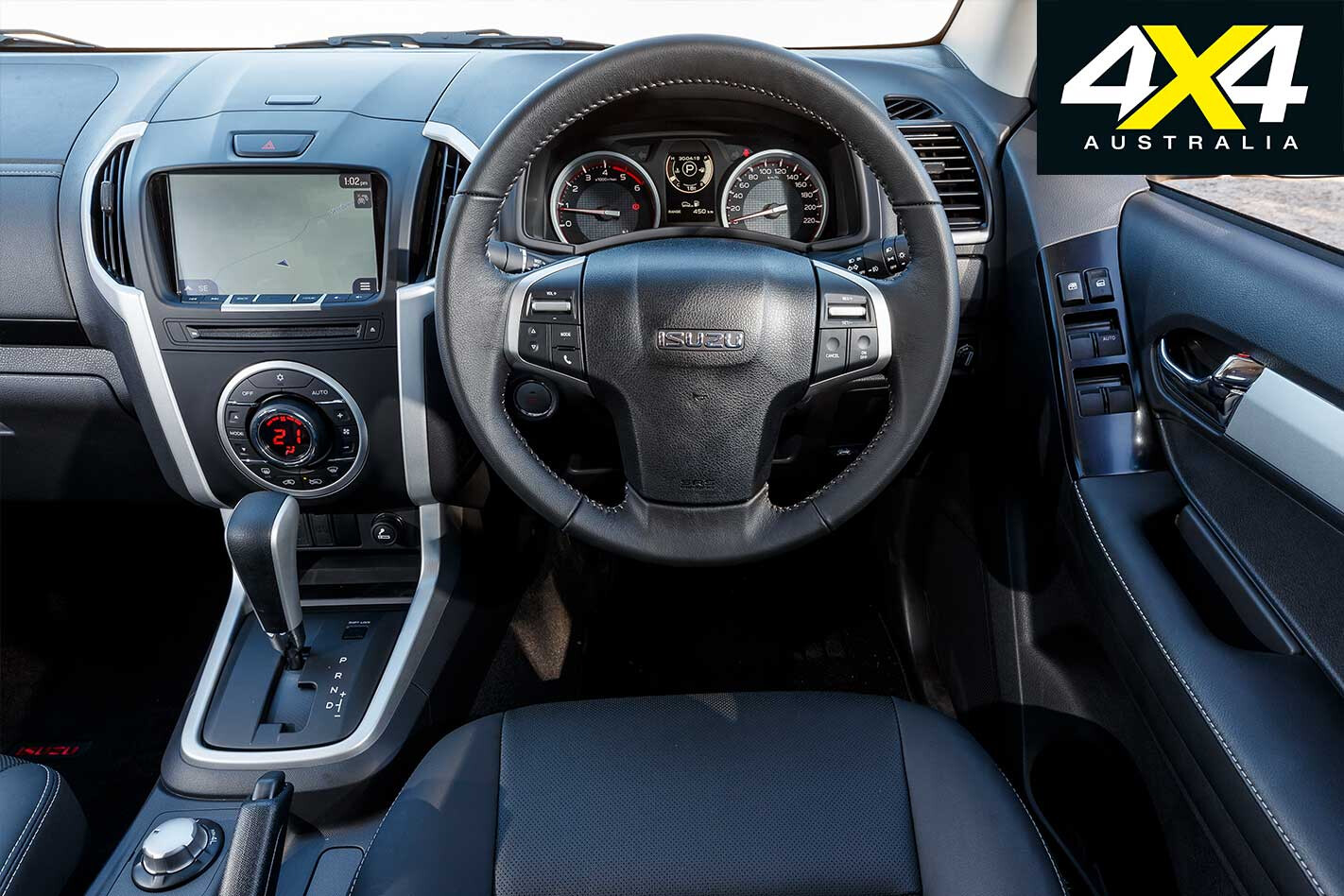
ALL D-Max dual-cab 4×4 utes have six airbags, a reversing camera, eight-speaker audio with a CD slot and USB and iPod inputs, a seven-inch or bigger touchscreen, cruise control, and trailer-sway control as part of the chassis electronics package.
The as-tested top-spec LS-T, which is auto only, has leather, electric adjustment for the drivers seat, proximity-key entry, push-button start, an eight-inch touchscreen, sat-nav, side steps, a reversing camera, projector headlights with DRLs and 18-inch alloys.
POWERTRAIN AND PERFORMANCE
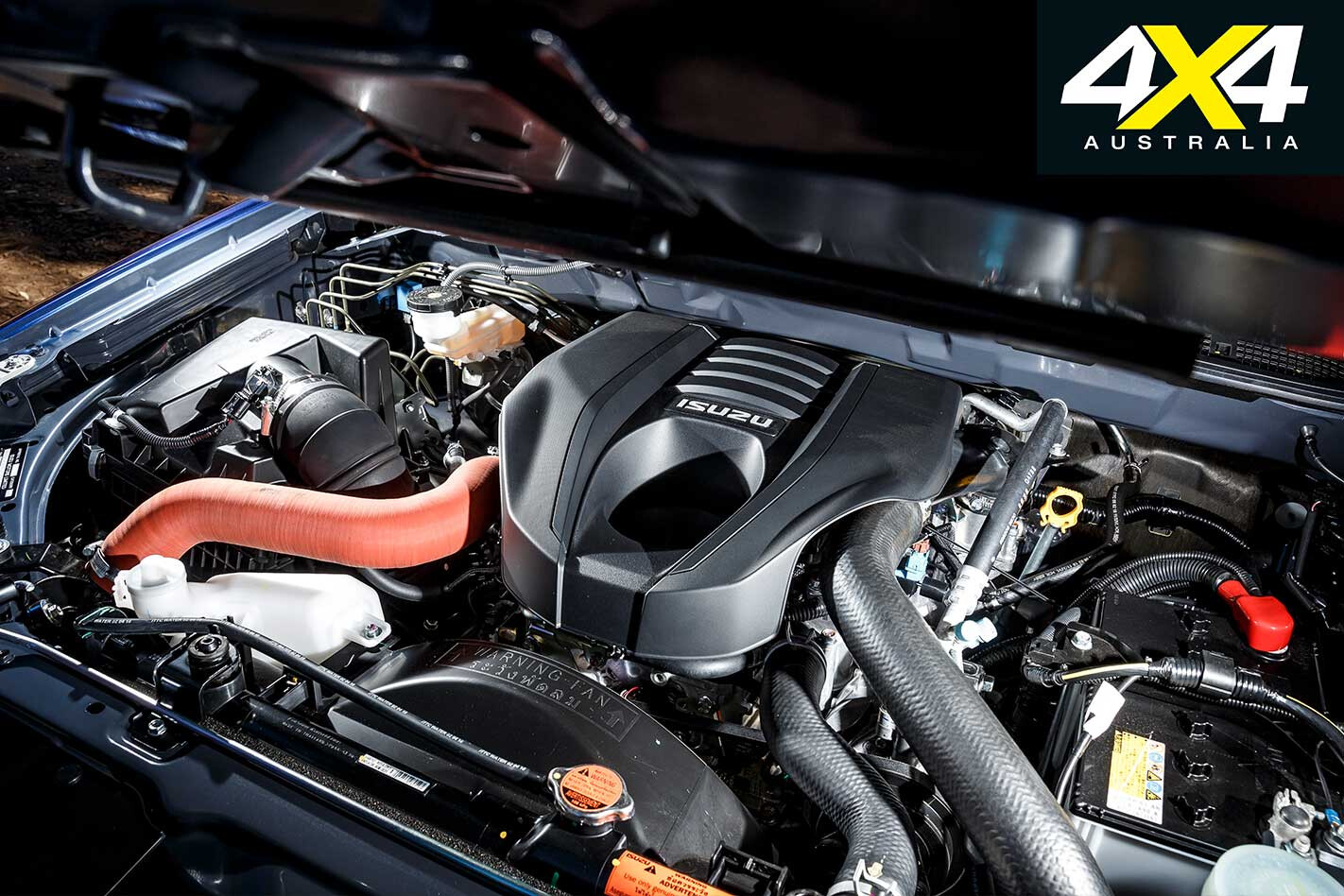
THE D-Max’s 3.0-litre four-cylinder diesel engine can trace its roots back to 2006 when it first appeared in the Holden Rodeo, effectively an Isuzu wearing a Holden badge.
The latest update to this long-serving engine for the 2017 model brought higher-pressure common rail injection, a new variable-geometry low-inertia turbo and new pistons. A diesel particulate filter (DPF), the key Euro 5 technology that is found on all the engines here, was also added.
Despite all these MY17 engine changes, maximum power remains at a modest 130kW (the lowest here along with Hilux) and the maximum torque figure is now 430Nm, up from the previous 380Nm; although, 430Nm is still a class-low figure shared with the Triton.
On the road things play out better than this suggests and, while the D-Max is no powerhouse, it’s still a relaxed engine and doesn’t need to be revved particularly hard to get the job done. It may, for example, have similar power and torque to the Triton, but it does the same job at lower engine speeds.
In its latest iteration the D-Max’s engine is far quieter than before; although, the general engine-running refinement still isn’t anything special. The fact it’s the largest-capacity four-cylinder here, and also runs a relatively high compression ratio, both work against its refinement and make it the harshest and nosiest engine here.
The six-speed automatic (an Aisin unit shared with Hilux) offers reasonably smooth and proactive shift protocols without ever being a sporty gearbox. The two very tall overdrive ratios (again like Hilux) also mean the gearbox is more about economy than performance, and the D-Max shuffles back and forth between fifth and sixth on undulating country roads, as does the Hilux.
As ever, fuel economy is a strong point with the D-Max and it proved the most frugal in this particular test, which is usually the case when it’s run up against any of its competitors.
ON-ROAD RIDE AND HANDLING
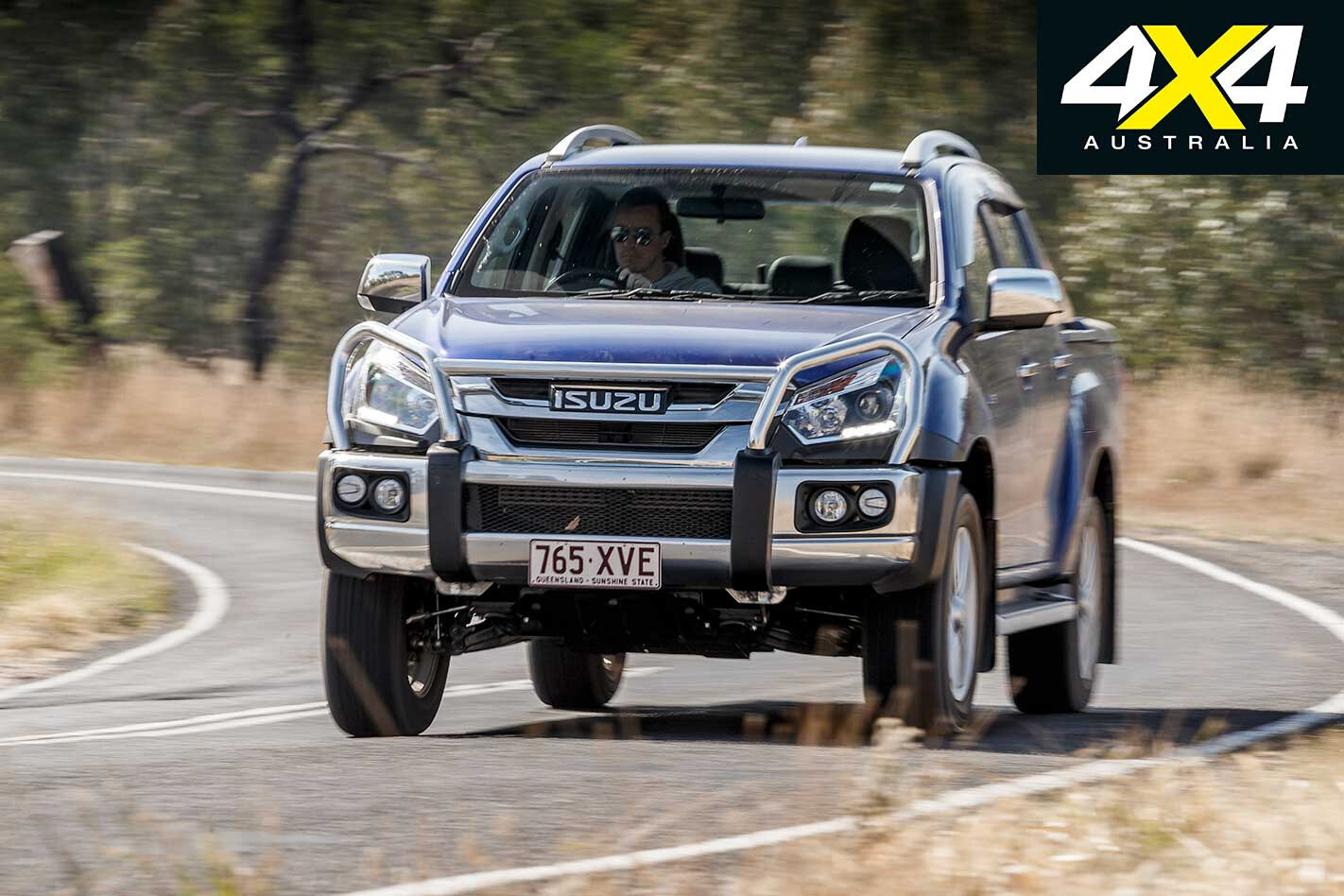
PART of the MY18 upgrade, all SX, LS-U and LS-T dual-cabs have revised rear suspension, with three-leaf springs at the rear instead of the five-leaf springs used previously. The LS-M models retain the five-leaf springs.
The end result is a more comfortable ride at the rear than before, which is something most noticed when the D-Max is unladen. Not that it rode poorly before, nor was the front-to-rear suspension match unpleasant in any way. In fact, before Holden completely revised the Colorado’s suspension for the 2017 upgrade, the D-Max’s suspension tune on the same basic chassis was the more acceptable of the two.
Unlike the Colorado, the D-Max relies on conventional hydraulically assisted steering, which offers more assistance and a lighter feel than the other hydraulically assisted systems here, but it could offer more feel and feedback.
OFF-ROAD
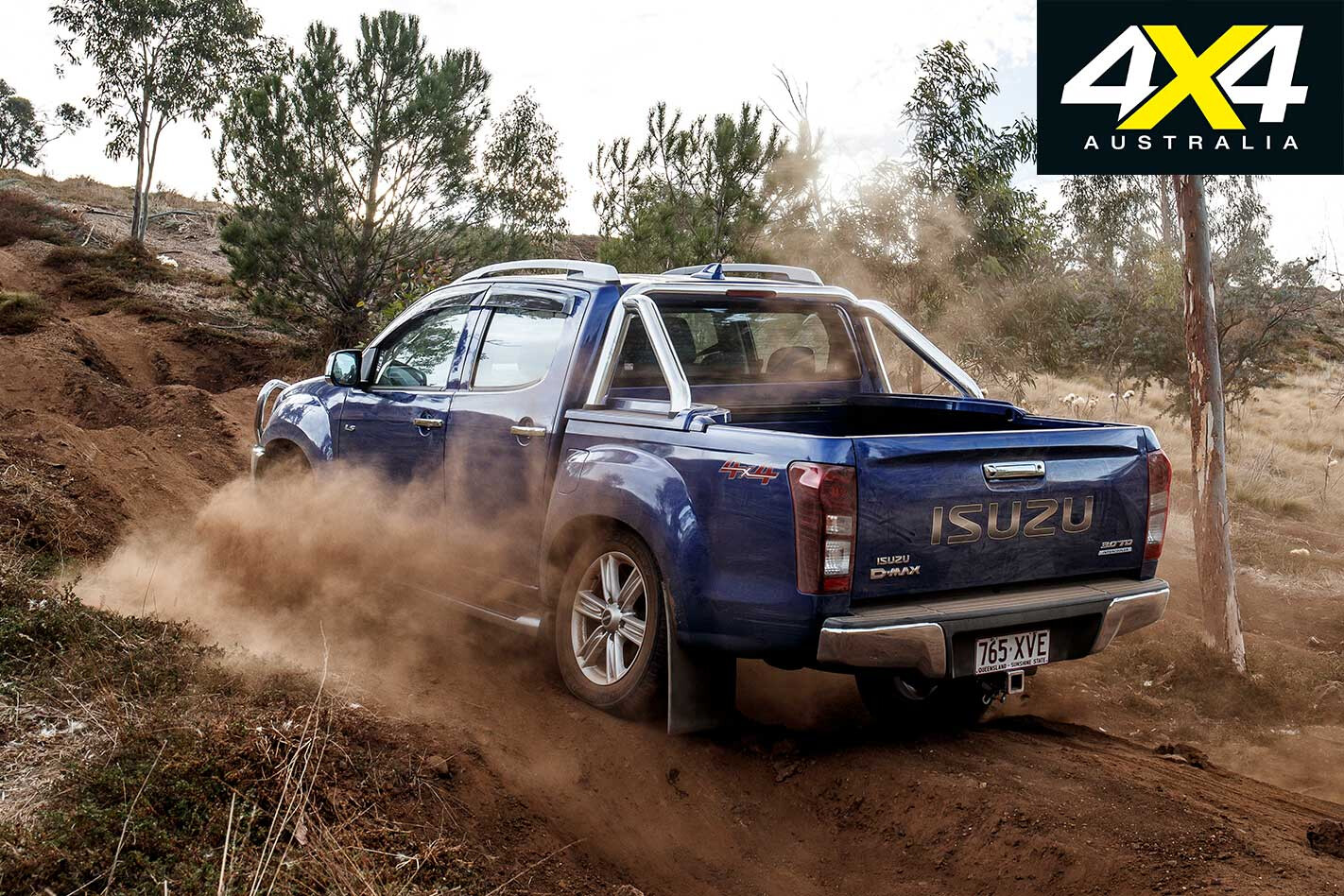
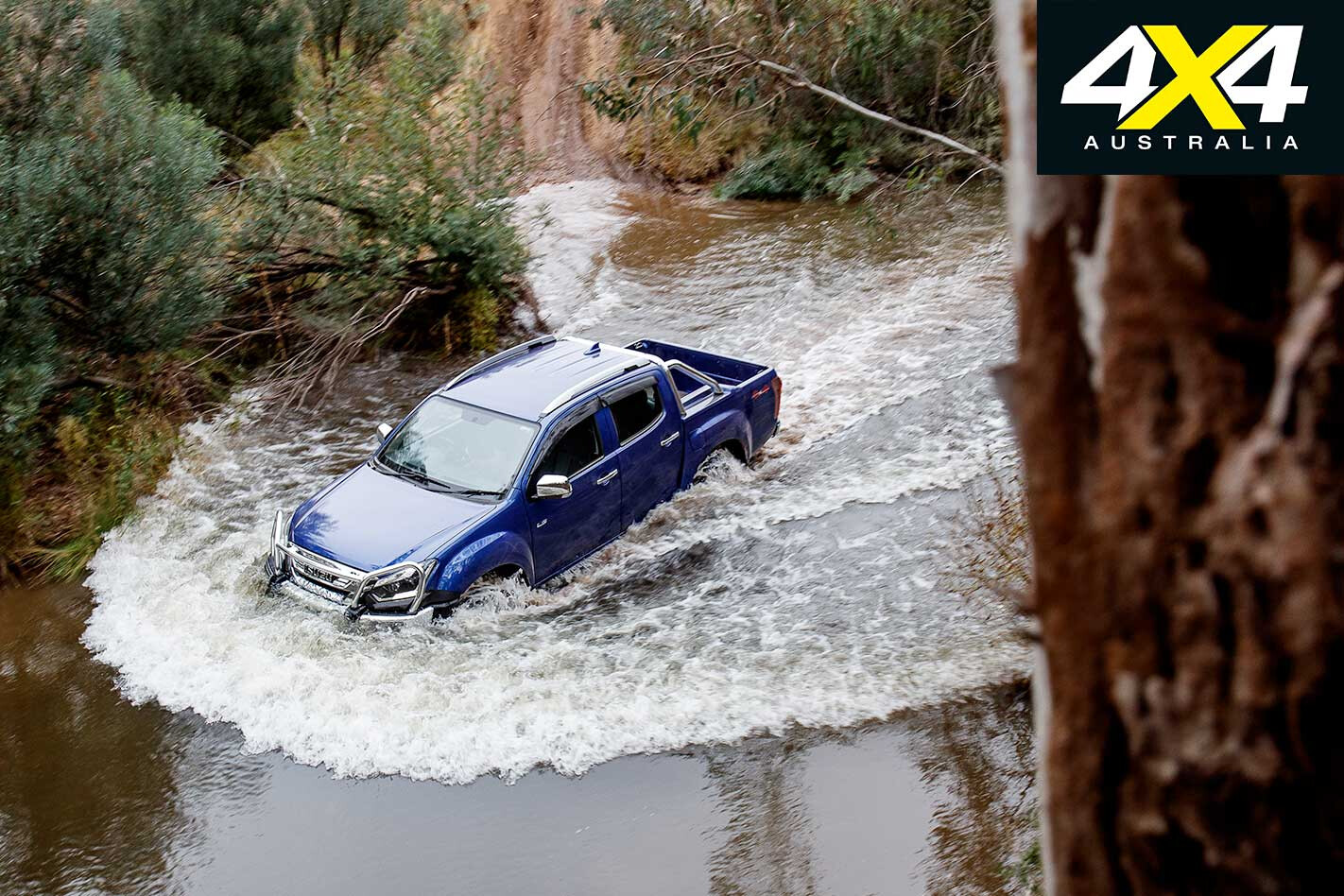
THE D-Max’s off-road armoury is underdone in this company due to a chassis that doesn’t offer the same sort of wheel travel as the best in class, nor does it have a rear diff-lock as any sort of compensation. It’s also not helped by a notably effective traction control, the saviour of post-2017 Colorados which suffer the same modest wheel travel and lack of a rear locker.
Point the D-Max up a gnarly hill with deep holes and, along with the Triton, it is the first to struggle. In fact, only the D-Max and the Triton failed to make it up our set-piece hill climb.
But not all is lost, as the D-Max is still a capable-enough 4×4 for typical recreational off-roading. And, unlike several utes here, the engine air intake is via the inner guard instead of under the bonnet lip or in the engine bay, which is a far better arrangement for deeper water crossings.
LOAD CARRYING
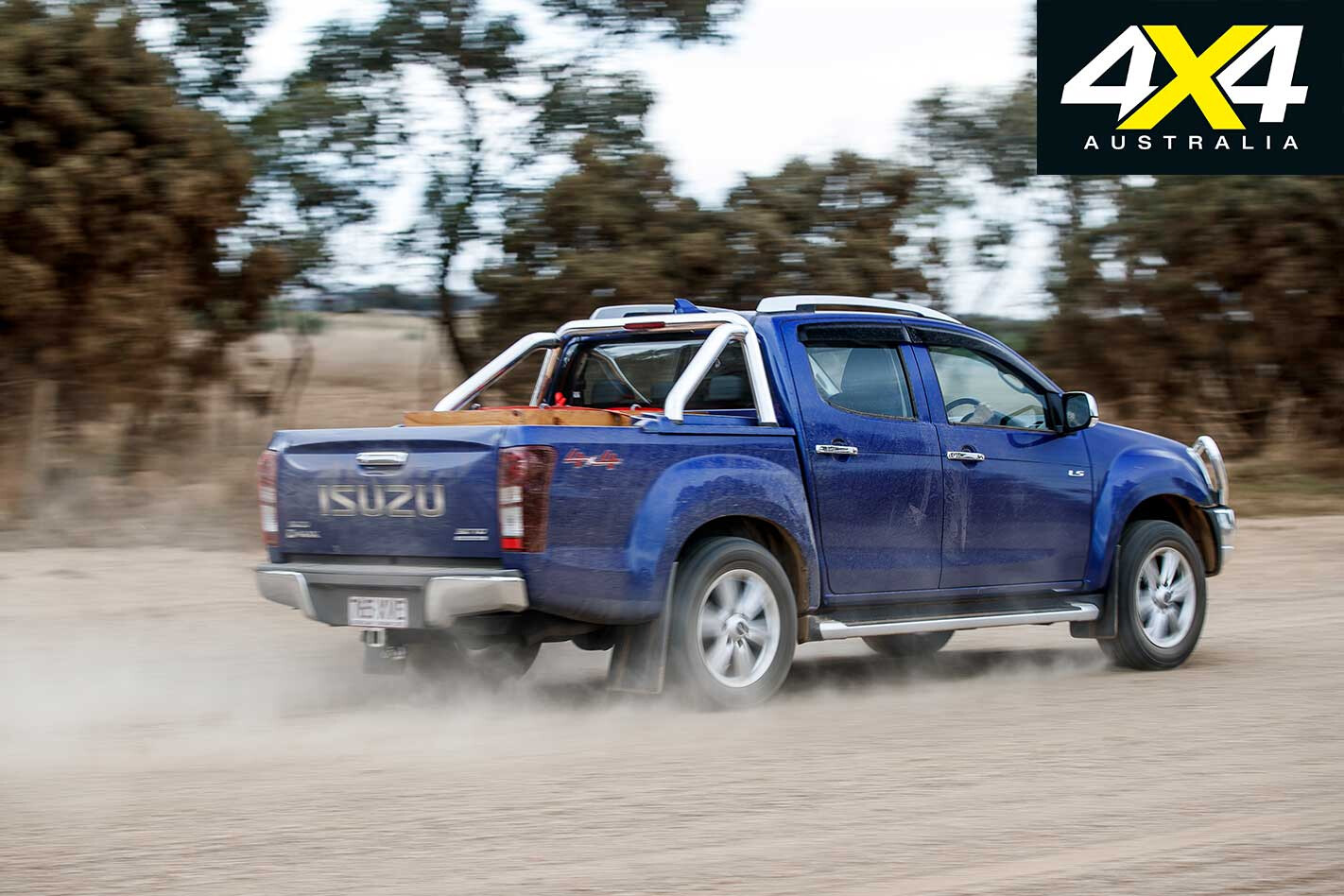
DESPITE the D-Max getting more compliant rear springs for most models in the MY18 upgrade, the GVM of 4×4 models has been increased by 100kg to 3050kg, which seems counterintuitive. And with the 900kg payload, the D-Max didn’t feel as stable or secure chassis-wise than it did when previously payload tested, which was disappointing.
On a positive note the MY17 engine revisions, where more torque is available at lower revs, help carrying heavy loads, even if its modest 130kW doesn’t make the D-Max a frontrunner when it comes to heavy-duty load-carrying performance.
CABIN AND SAFETY
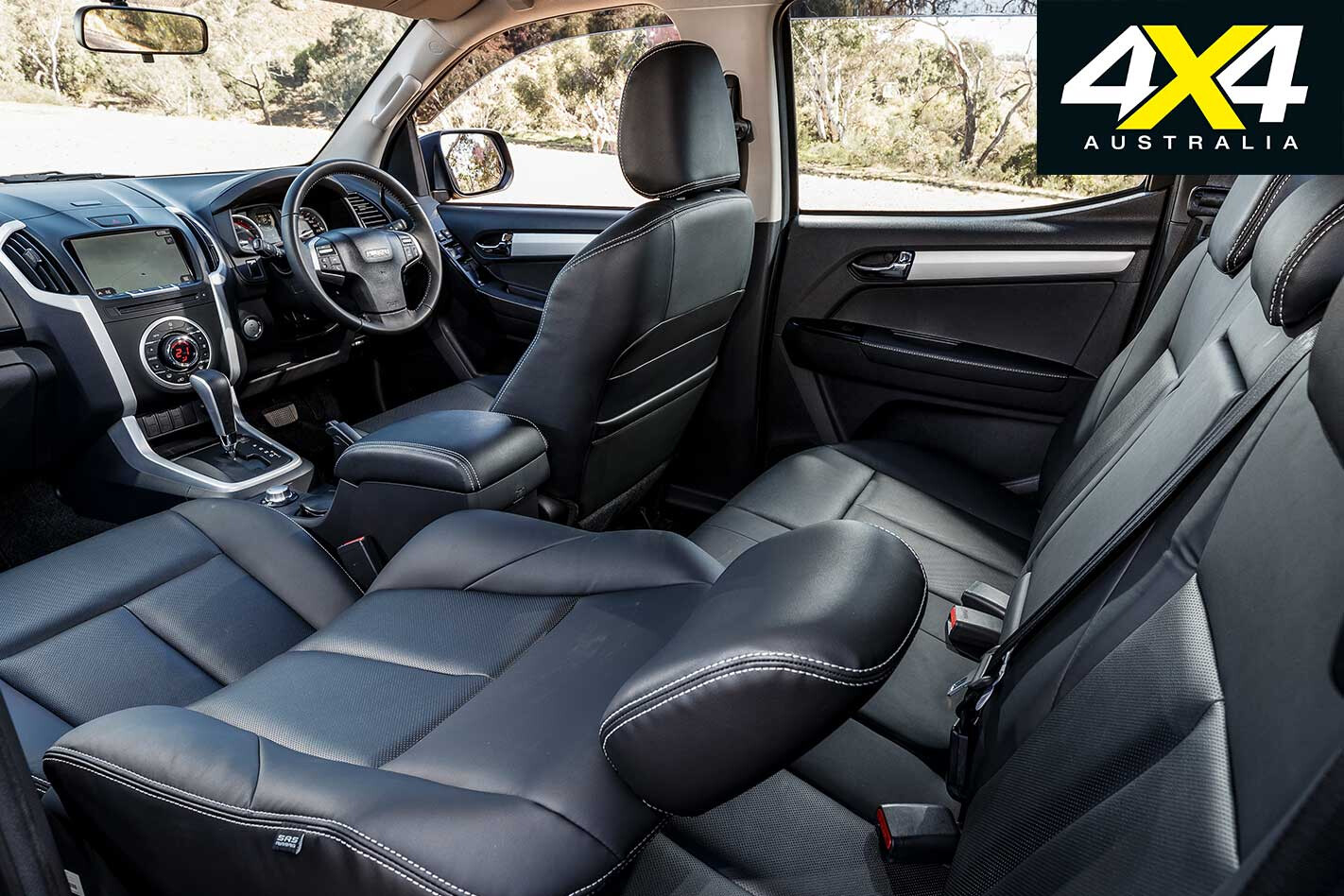
THE recent D-Max upgrades result in a noticeably better finished cabin and more equipment (such as sat-nav) on lower-cost models. This LS-T even extends to smart-key entry and start, but no reach adjustment for the steering wheel.
Still, the D-Max is comfortable enough and, if it’s space you’re after, it matches the Colorado and betters the Hilux, Navara and Triton. Five-star ANCAP, too, but no high-end safety features.
PRACTICALITIES
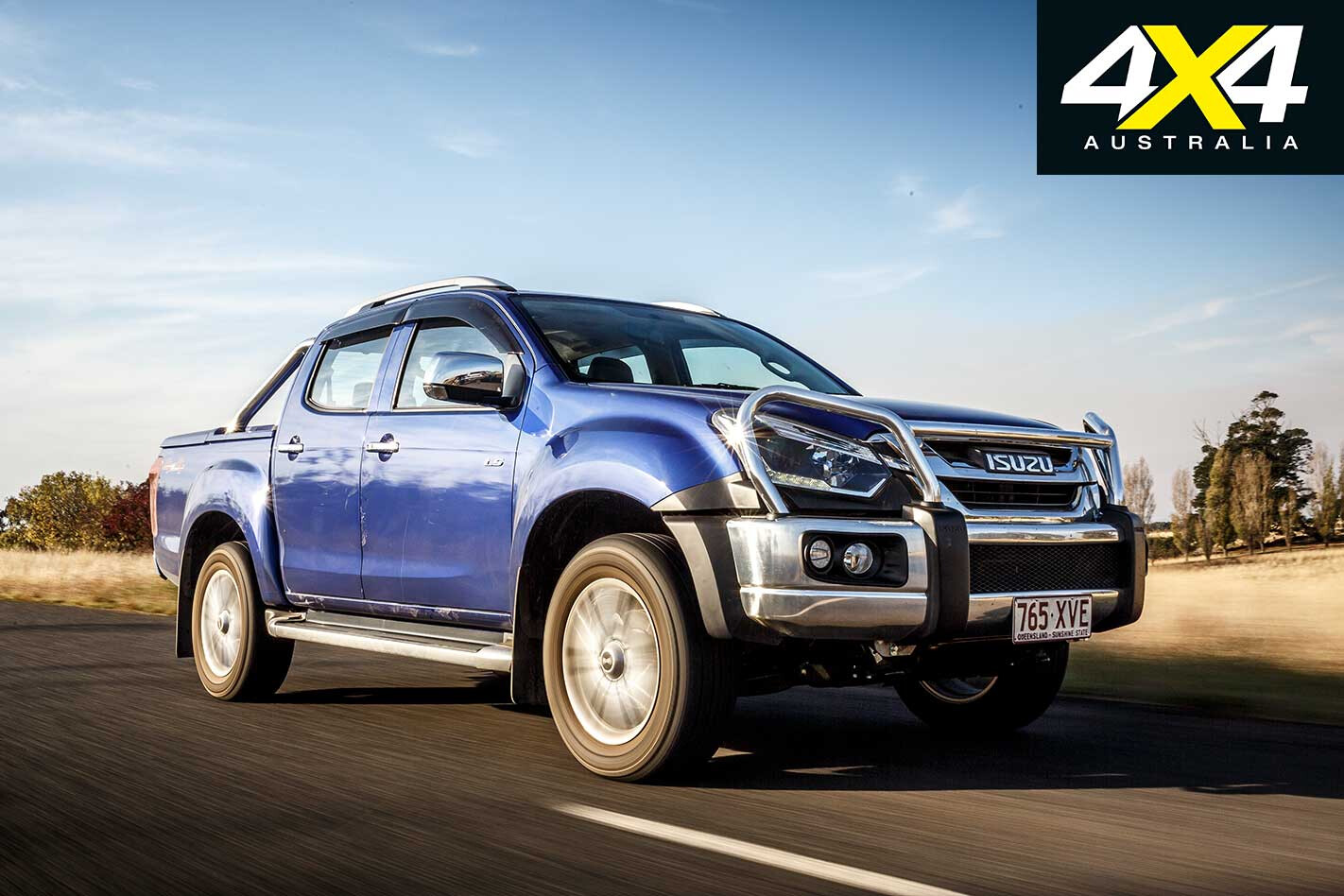
DESPITE Isuzu Ute only setting up shop in Australia in 2008 (even if Isuzu utes wearing Holden badges were sold here for decades before that), Isuzu now has 142 dealers nationally.
When you consider Toyota has 206 dealers nationally, that’s a fair effort. In the meantime the D-Max has a good reputation for reliability, simplicity of service and low service costs. The fact that the D-Max sells in solid numbers (more than 3500 4×4 models YTD) also means good aftermarket support.
Isuzu D-Max LS-T Specs Engine: 3.0-litre 4-cyl turbo-diesel Power: 130kW at 3600rpm Torque: 430Nm at 2000rpm Gearbox: 6-speed auto 4X4 system: Dual-range part-time Crawl ratio: 33.3:1 Construction: Separate chassis Front suspension: Independent/coil springs Rear suspension: Live axle/leaf springs Kerb weight: 2026kg GVM: 3050kg Payload: 1024kg Towing capacity: 3500kg Towball Download: 350kg GCM: 5950kg Fuel tank size: 76 litres ADR fuel claim: 7.9L/100km Test fuel use: 9.3L/100km Touring range: 767km* *Based on test fuel use, claimed fuel capacity and a 50km ‘safety’ marginAcceleration and Braking 0-100km/h: 10.9sec 80-120km/h: 7.9sec 100-0km/h: 49.0m
Off-road capabilities Departure angle: 22.4˚ Rampover angle: 22.7˚ Approach angle: 30˚ Wading depth: 600mm Ground clearance: 235mm
Isuzu D-Max Prices** SX: $44,600 LS-M: $46,900 LS-U: $48,800 LS-T (auto): $54,700 **Prices do not include on-road costs
The Results
Results and verdict
Nine utes, but only one winner…
Intro & Contenders
Home of 4X4 Australia’s Ute Test, where we have put all of the popular 4×4 dual-cabs through their paces off-road and on-road.