
Ranking the utes from our 2018 Ute Test is made difficult by the fact that 4×4 dual cabs can be many different things to different people: family car, recreational 4×4, work or farm truck, load carrier or tow tug. The fact that they are so versatile is what makes them so popular.
Most people probably buy them to fulfil more than one of the roles, if not most or all of them. How you prioritise these roles and balance driving enjoyment, role fulfilment and functionality, and practicality of ownership, will determine your winner. However, for us, the ranking looks like this:
8th Place (tie) – Nissan Navara
Driven in isolation and not driven and tested side-by-side against its peers, as we have done here, the Navara actually feels like a good thing and impresses with its spritely performance and equipment for the money. The chassis, too, is now much better sorted for general driving, even if heavy-duty load and tow still isn’t its forte, nor would it be the first choice for more serious off-road driving.
8th Place (tie) – Isuzu D-Max
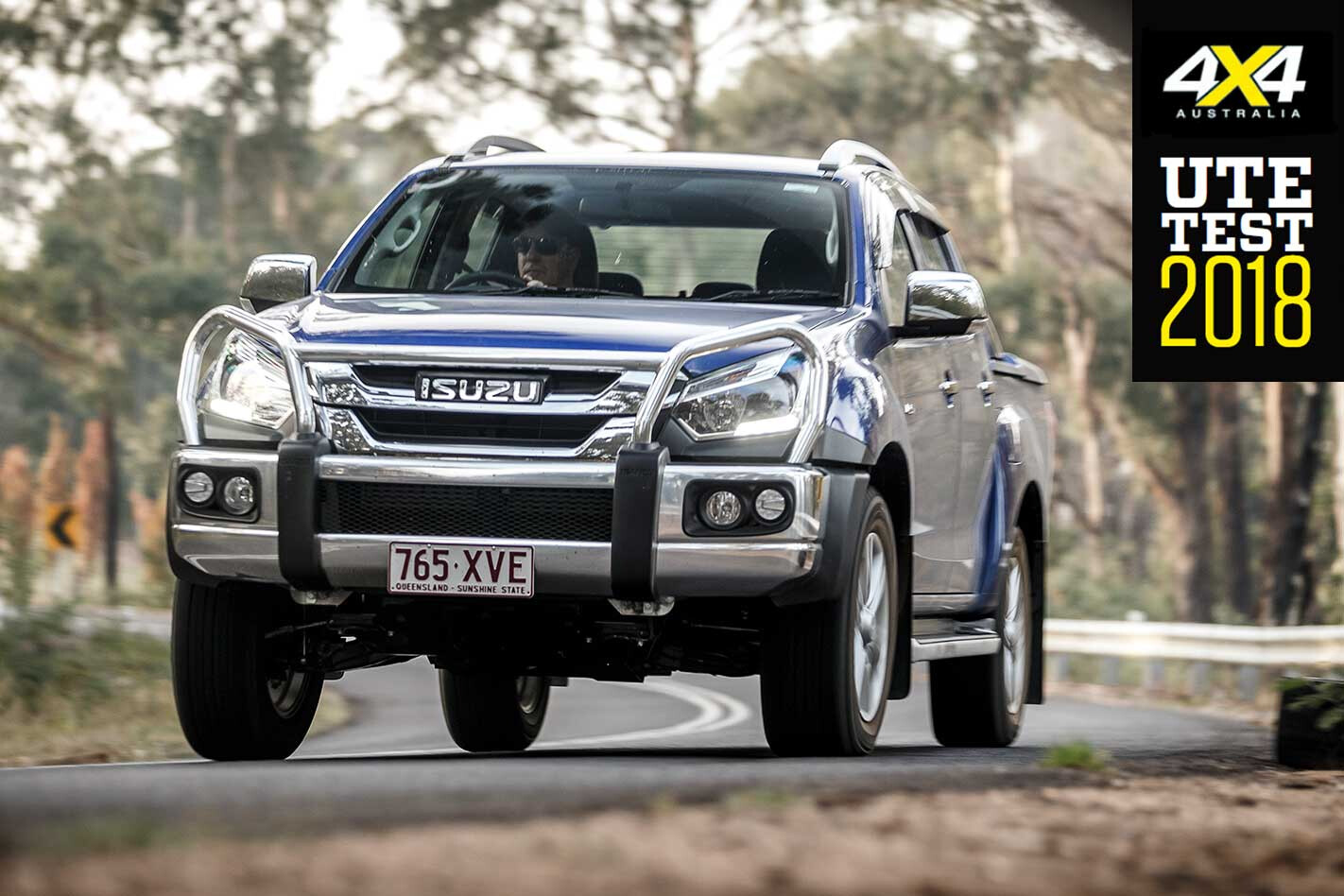
The D-Max doesn’t perform particularly well on- or off-road and isn’t the last word for heavy-duty load or tow performance given its modest engine and the now softer rear springs. Nor does the D-Max offer much in the way of refinement, but it does have a reliable and easy-to-service engine and a proven six-speed auto similar to Hilux.
If you lined up all the utes here and drove them around Australia until they dropped, the D-Max feels like it would be among the last standing. If Isuzu could recalibrate the ETC, at least that would bring it up to speed off-road.
6th Place (tie) – Mercedes-Benz X-Class
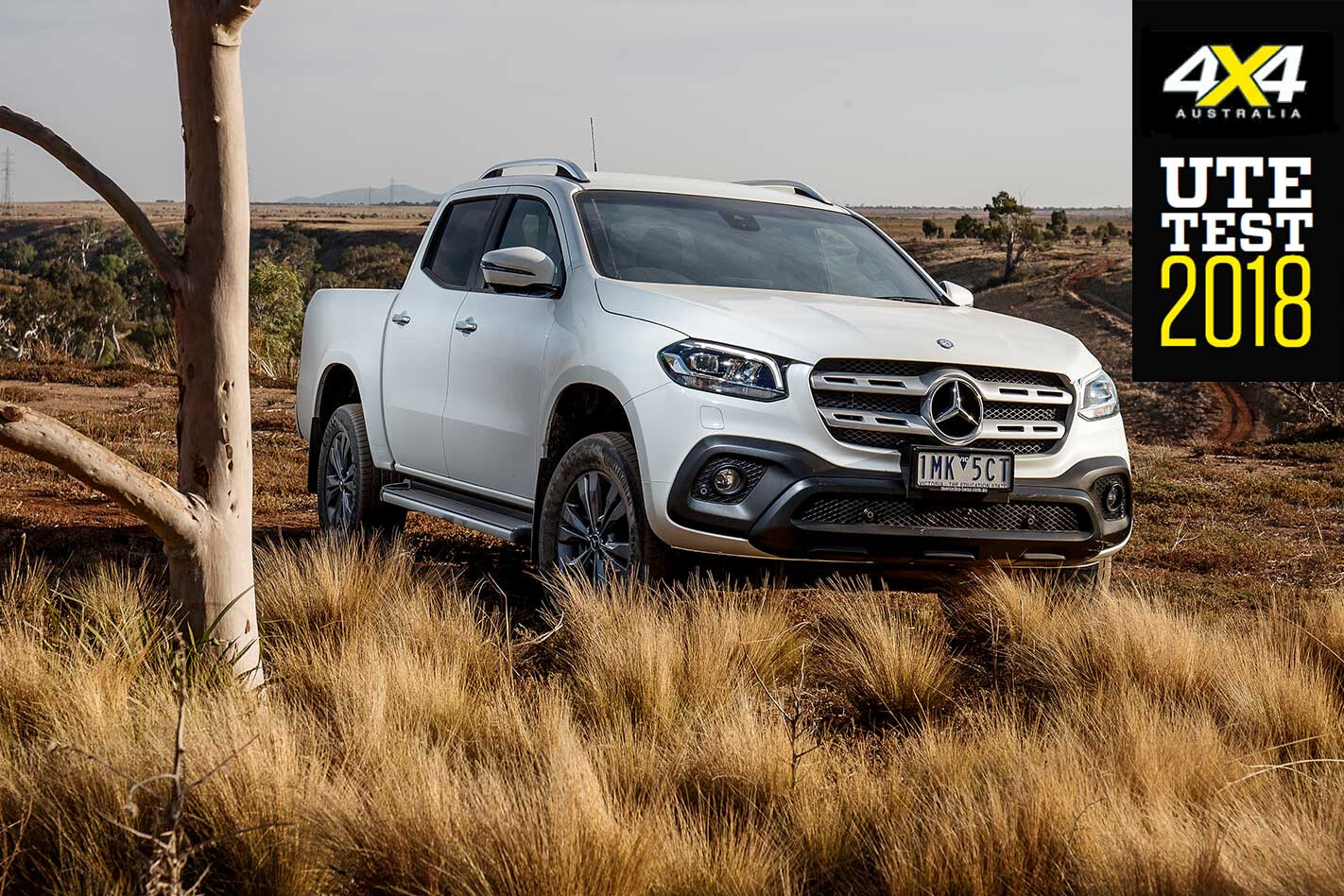
The X-Class is very strong on refinement, comfort and safety, and has a notable solid and robust feel that contributes to a high level of driving enjoyment, all testament to the good work put in by Benz’s engineers. But all this comes at a price and the X-Class isn’t a star off-road performer, nor does it appear to have the chassis for heavy-duty load and tow duties.
6th Place (tie) – Mitsubishi Triton
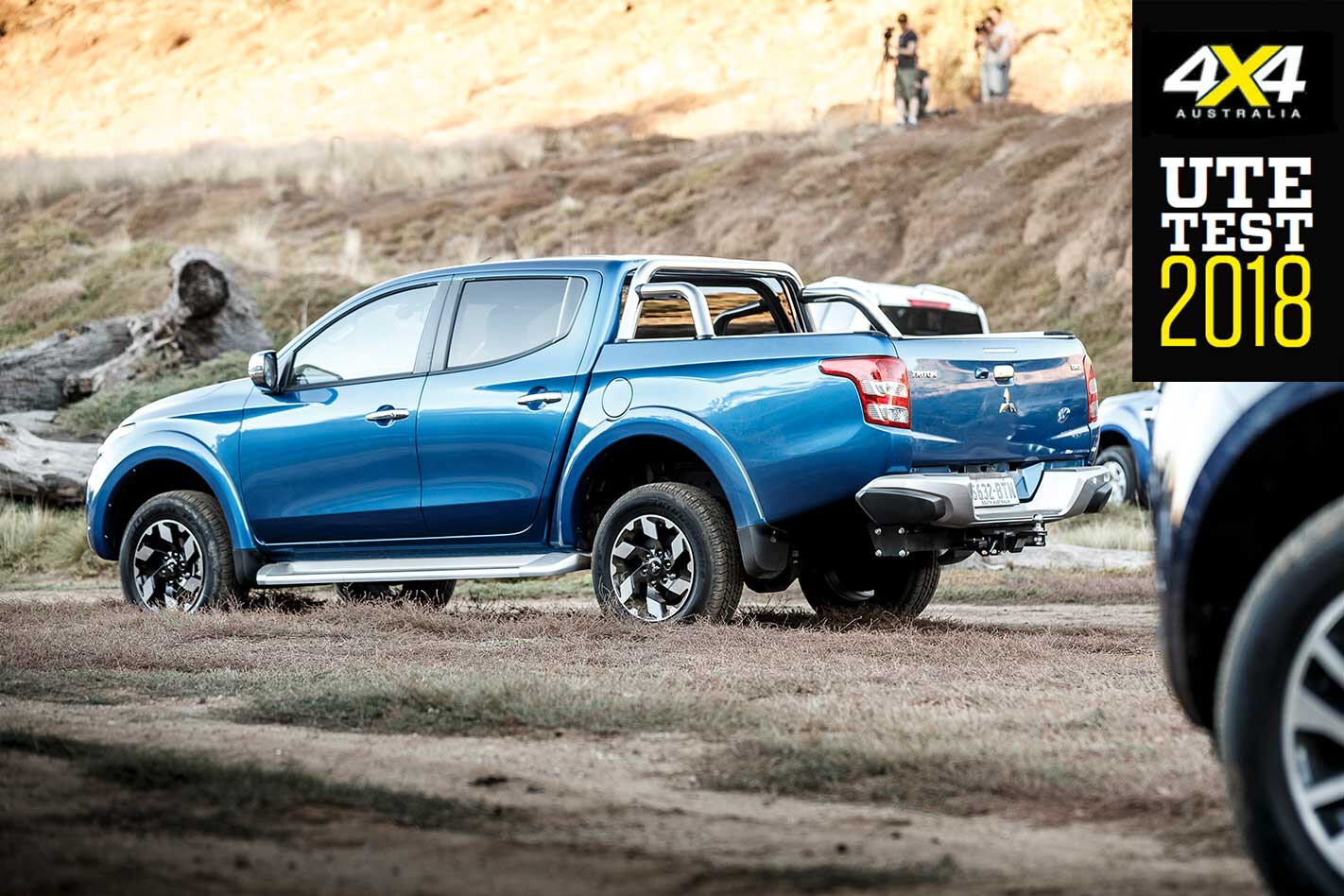
Thanks to ongoing factory discounting, the Triton’s trump card is pricing, which is probably part of the reason why it’s out-sold only by Hilux and Ranger. Full-time 4×4 is also a notable safety and functionality advantage, while its small size and tight turning circle help make it a handy city or general-duties ute. It’s not a good choice for heavy load carrying or towing, or for more hardcore off-road driving.
4th Place (tie) – Mazda BT-50
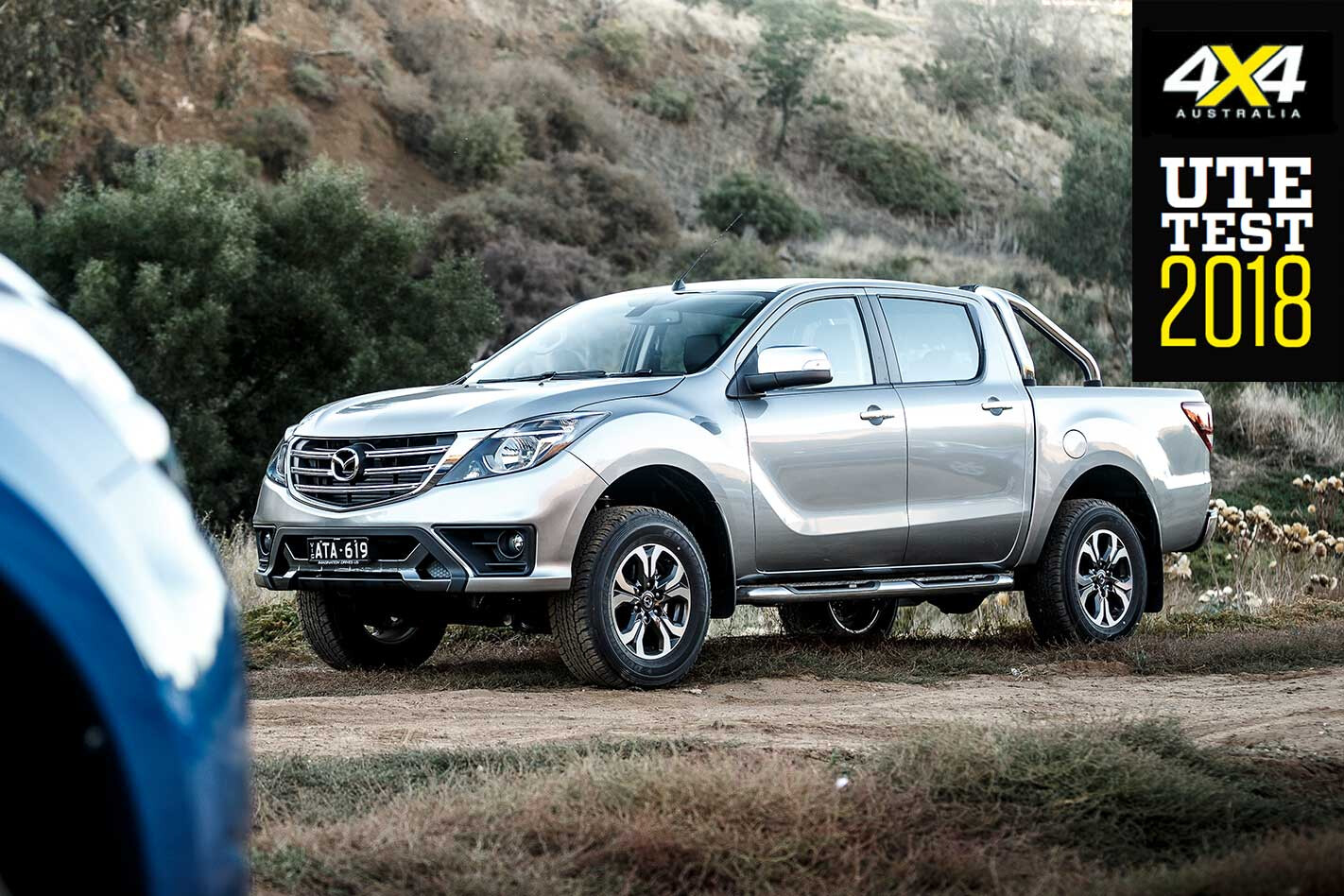
For most of the reasons Ranger is an excellent ute, so too is the closely related BT-50 a good ute. It just lacks some of Ranger’s on- and off-road polish that came about with the 2016 upgrades adopted by Ranger but not with the BT-50. Countering that is the BT-50’s sharper pricing.
Interestingly, the next-gen BT-50 looks like being off the back of a joint venture with Isuzu and not Ford, breaking a long-running relationship.
4th Place (tie) – Holden Colorado
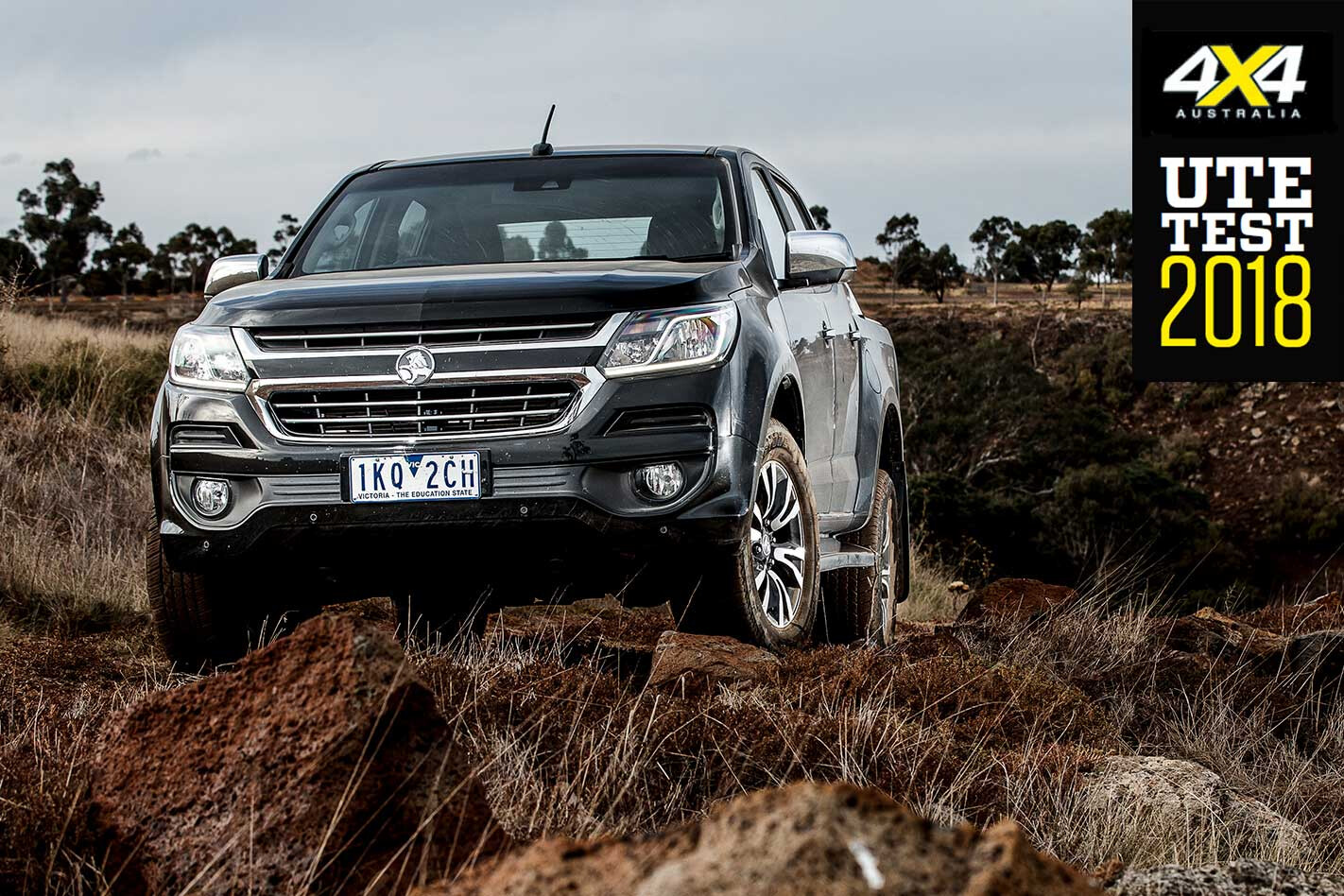
Thanks to the excellent work of Holden’s local engineering team in its 2017 model-year ‘rebirth’, the Colorado has been dragged up by its boot straps from the bottom of the pack to what is now a much more respectable mid-field place in the pecking order. Highlights include a punchy engine, well-sorted on-road dynamics and heavy-duty on load and tow ability. It’s also much better off-road than it originally was.
3rd Place – Toyota Hilux
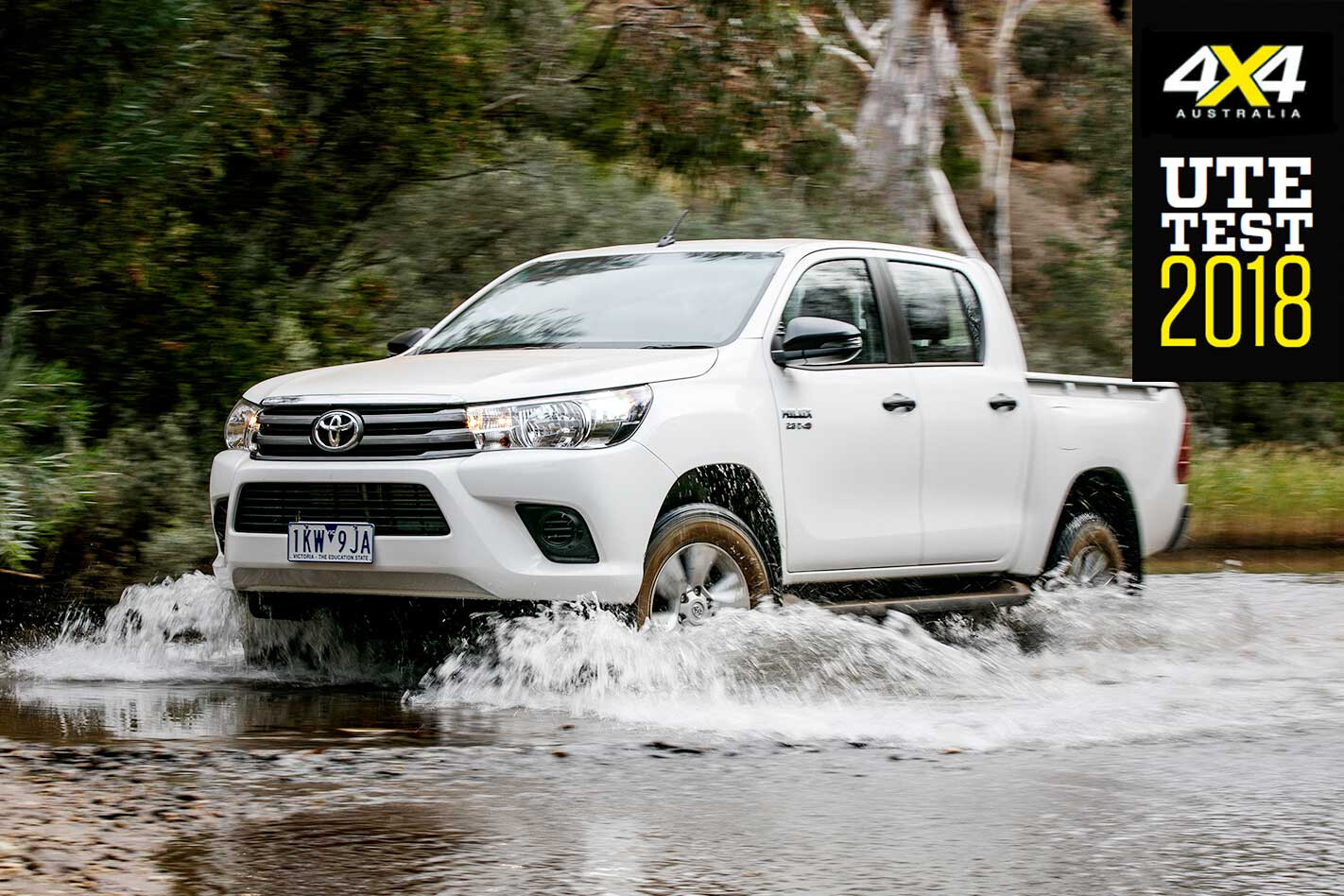
The Hilux isn’t the strongest performing, nor does it offer the confident road feel of the best here, but it’s unbeatable on ownership practicality and offers top build quality and excellent refinement. Like Amarok and Ranger it’s also a top-tier performer in difficult off-road conditions, while the chassis isn’t fazed by heavy loads.
The competition from Ranger also means Toyota isn’t as inflexible on pricing as it once was.
2nd Place – Ford Ranger
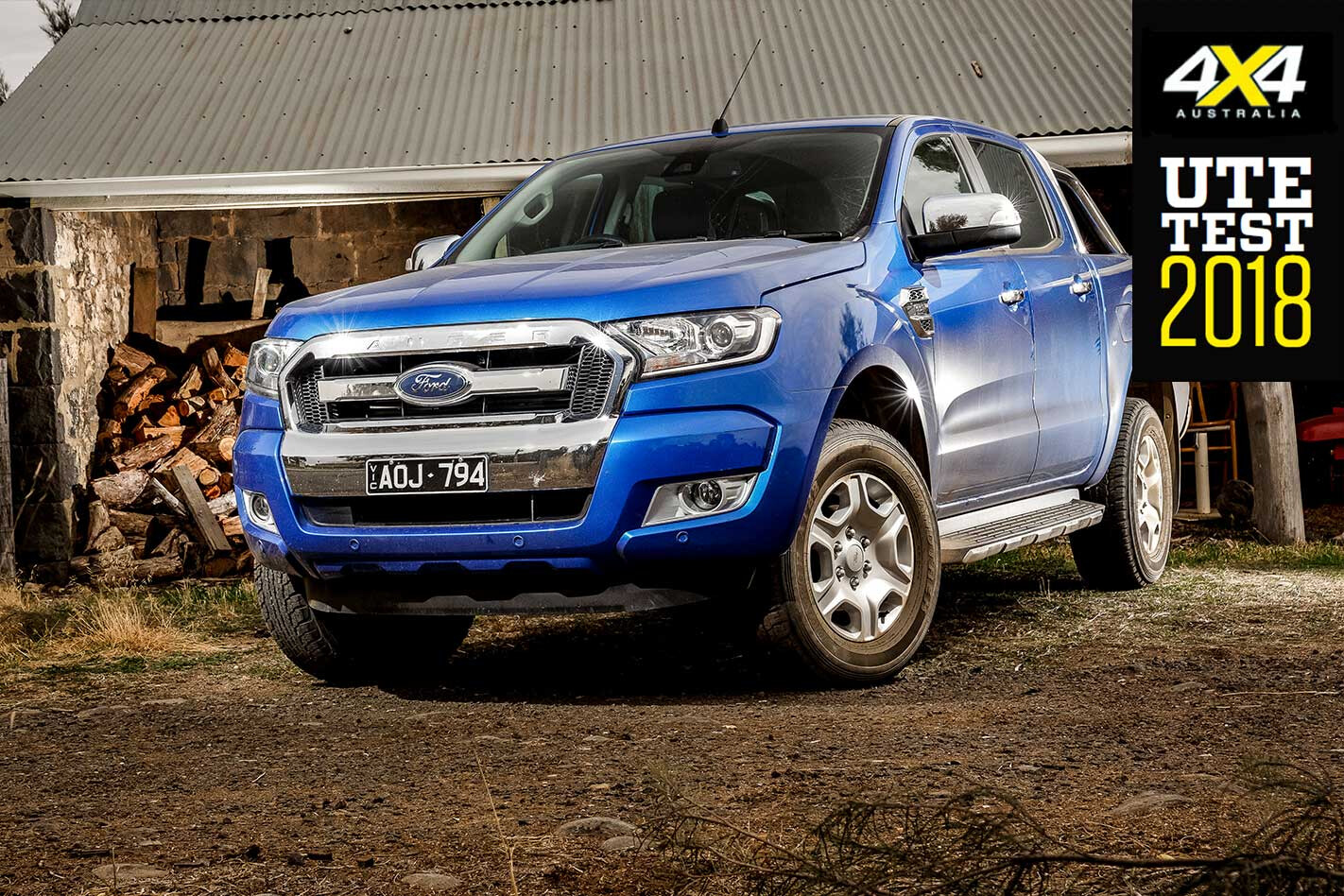
The Ranger is a big, tough ute that does it all, especially when there’s hard work to do or a difficult trail to conquer. A spacious cabin, a relaxed and smooth-running engine, nicely sorted suspension and a stable chassis also make the Ranger an agreeable drive, especially if there’s distance to cover.
A new high-tech 2.0L four-cylinder bi-turbo-diesel with more power and torque than the 3.2 ‘five’ will soon be available on top-end models.
1st Place – Volkswagen Amarok V6
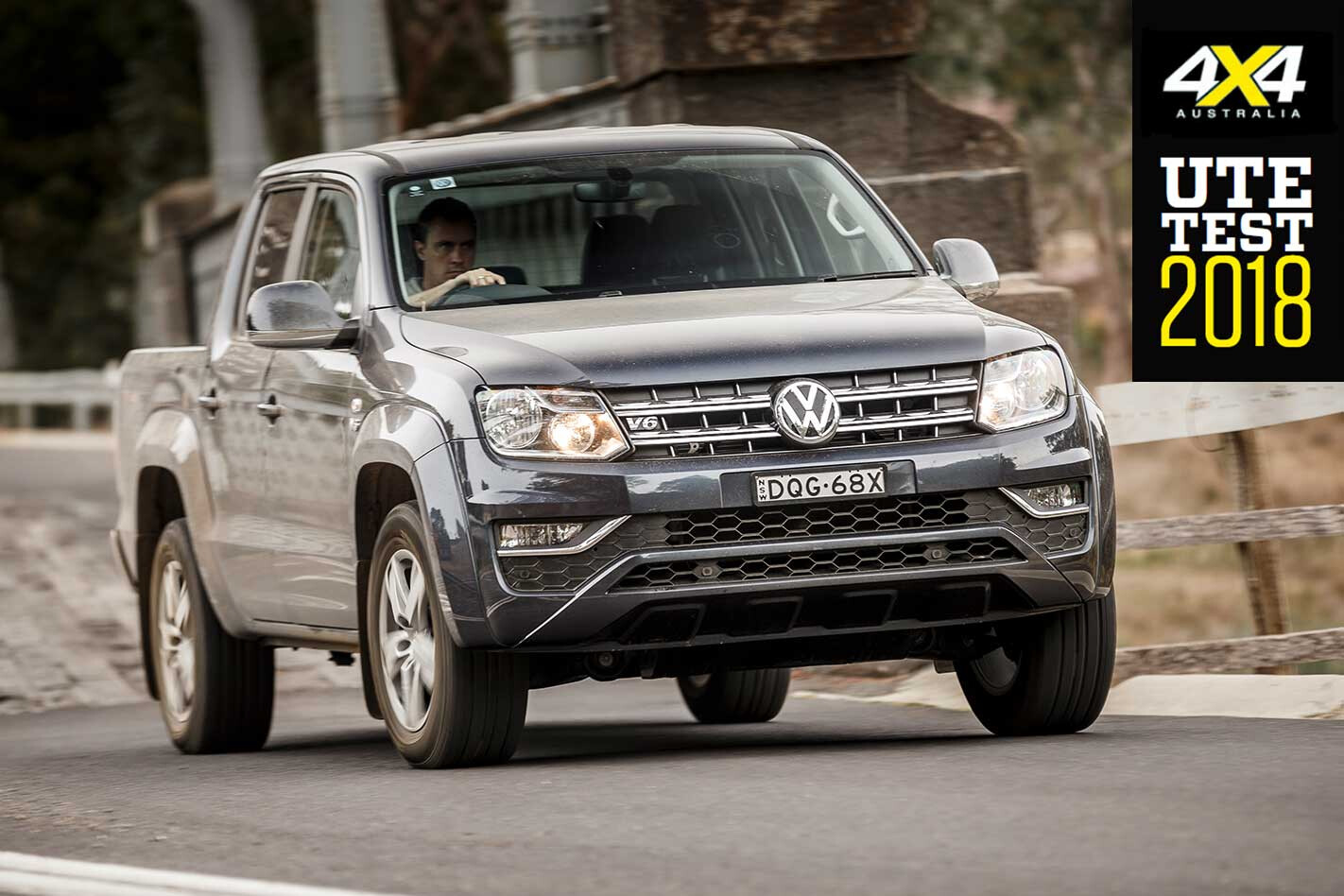
With stellar performance, confident handling, comfortable ride, spacious cabin and excellent refinement, the Amarok is in a class of its own. Throw in hardcore off-road ability as good as it gets, ease of off-road driving that you won’t believe, and class-leading power and torque for heavy-duty load hauling and towing, and the Amarok is impossible to go past. No airbags in the cab’s rear is, however, a notable omission in this company.
The Contenders
View all contenders
Home of 4X4 Australia’s Ute Test, where we have put all of the popular 4×4 dual-cabs through their paces off-road and on-road.
ISUZU UTE Australia (IUA) has recorded significant sales growth for the first half of 2018, putting the Japanese company within reach of its “double-digit growth for a decade” goal.
Since 2008 IUA has posted nine consecutive years of double-digit growth; it finished 2017 with 25,804 sales and a 10.4 per cent growth year-on-year. After six months (January to June) this year, IUA has sold 13,390 D-MAX and MU-X – 4×4 and 4×2 – vehicles to give it a 10.6 per cent year-on-year spike.
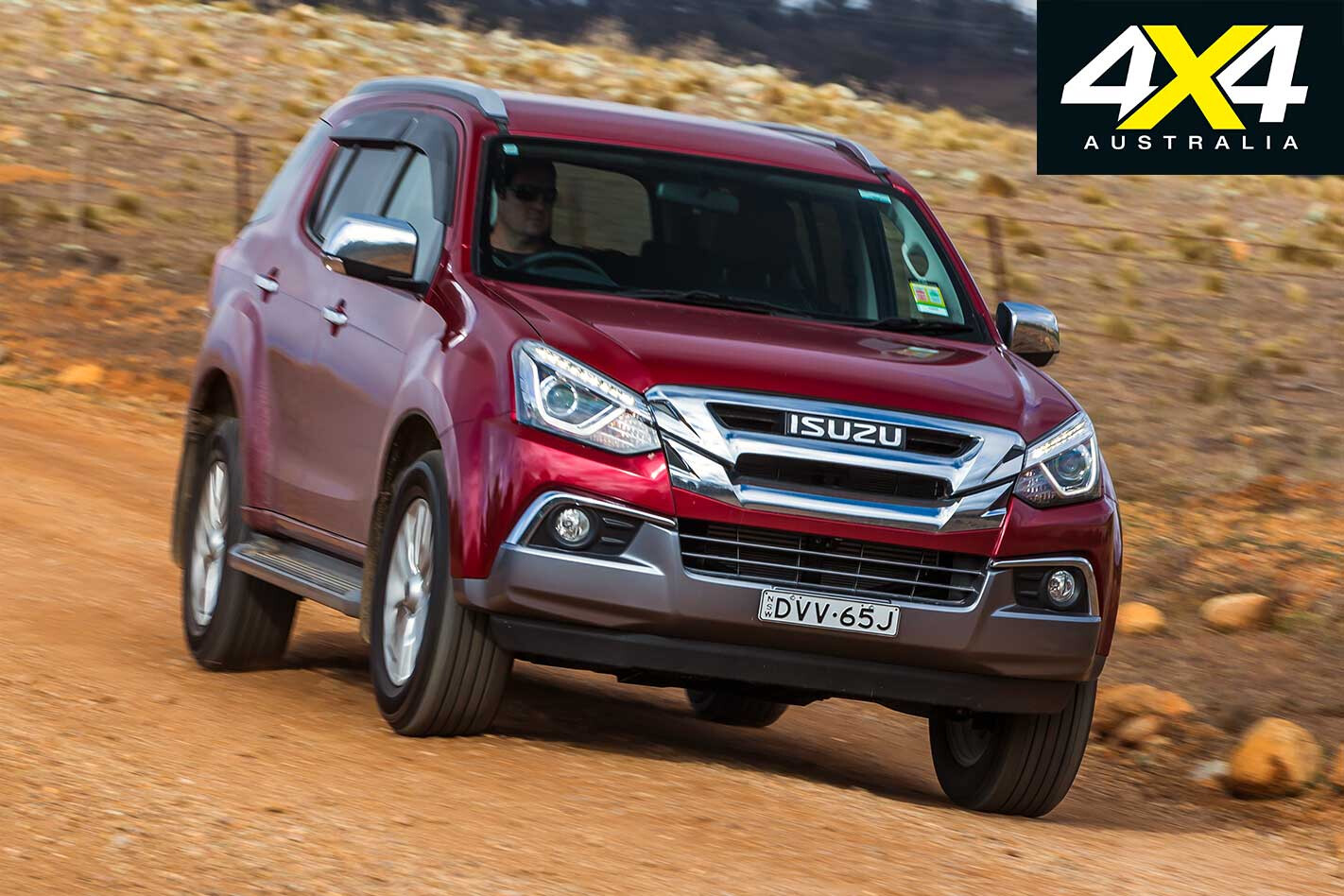
“Our results so far this year have deepened our confidence in achieving our target of a decade of double-digit growth in 2018,” IUA’s Managing Director, Mr. Hiro Kuramoto, said, “and while we are well aware of the challenges ahead of us in the second half of the year, I am confident we can sustain our rapid growth.”
The June 2018 VFACTS report lists 6409 year-to-date sales for the D-MAX 4×4, up 4.6 per cent compared to the same time last year. The percentage growth is even better for the MU-X, with 4385 sales and a 16.7 per cent year-on-year hike. The D-MAX 4×4 was the sixth best-selling 4×4 for June on the overall charts, while the MU-X remains the best-selling ute-based SUV.
Isuzu Ute also scored overwhelmingly positive results in the latest Roy Morgan customer satisfaction survey, a survey which canvasses customer satisfaction with new car purchases. Isuzu Ute scored a customer satisfaction rating of 96.4 per cent, placing it second overall behind Skoda (97.5 per cent).
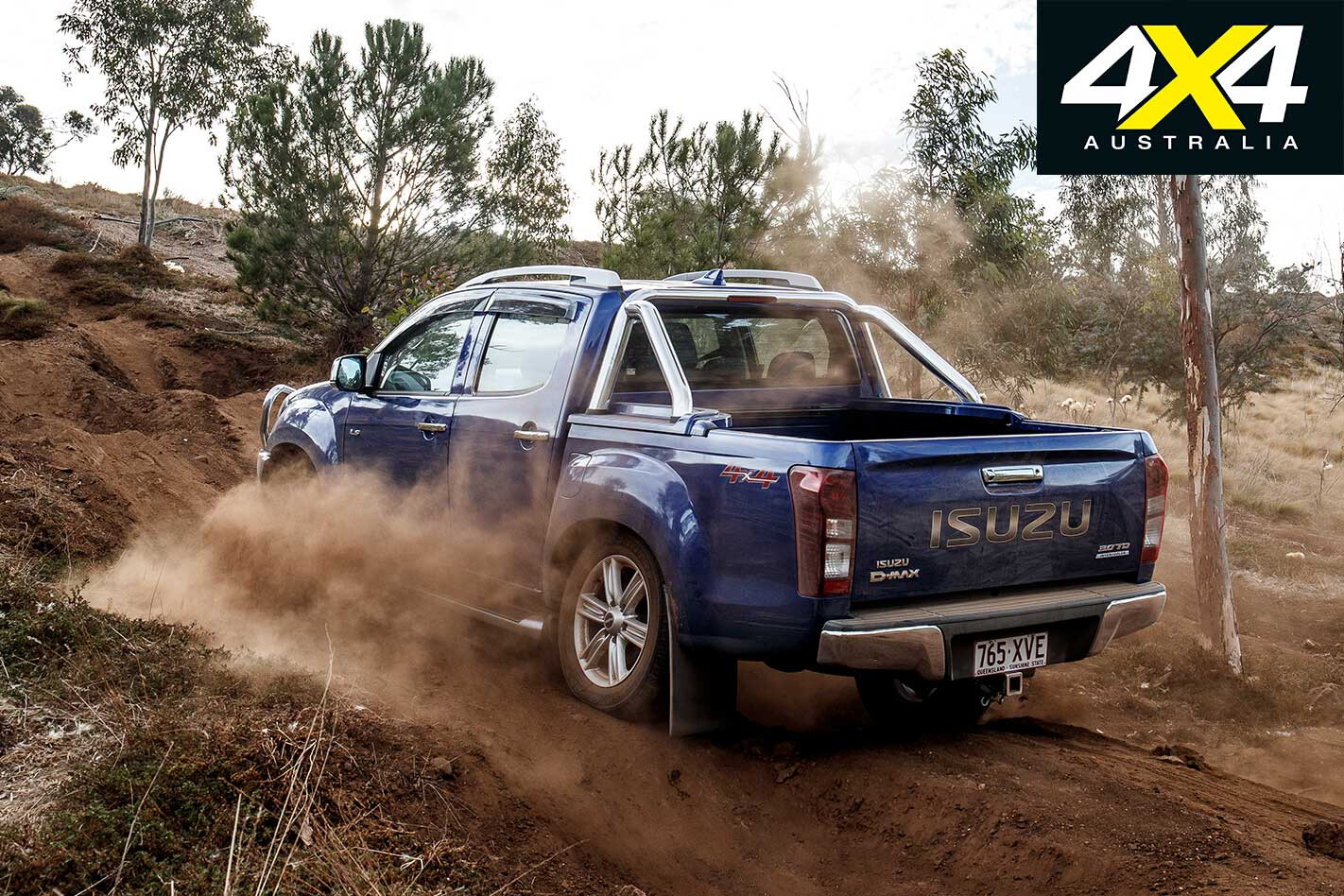
“Since launch our products have continuously evolved on the back of customer feedback, resulting in our ability to deliver honest, reliable products that are not only fit for purpose, but exceed our customers’ expectations.”
Since 2008, IUA has sold more than 133,000 vehicles (D-MAX: 102,989 / MU-X: 30,572).
Following on from last month’s exciting images and specs of a new generation Suzuki Jimny that sticks to its off-road heritage, the company’s Australian arm has confirmed the diminutive 4×4 will be arriving here at year’s end and will be on sale in January.
“The Jimny is synonymous with the Suzuki brand, and to have an all-new model on its way is something worth talking about,” said Michael Pachota, Suzuki Australia General Manager. “The Australian landscape will be a true test for the iconic 4WD and I have no doubt it will rise to the challenge.”
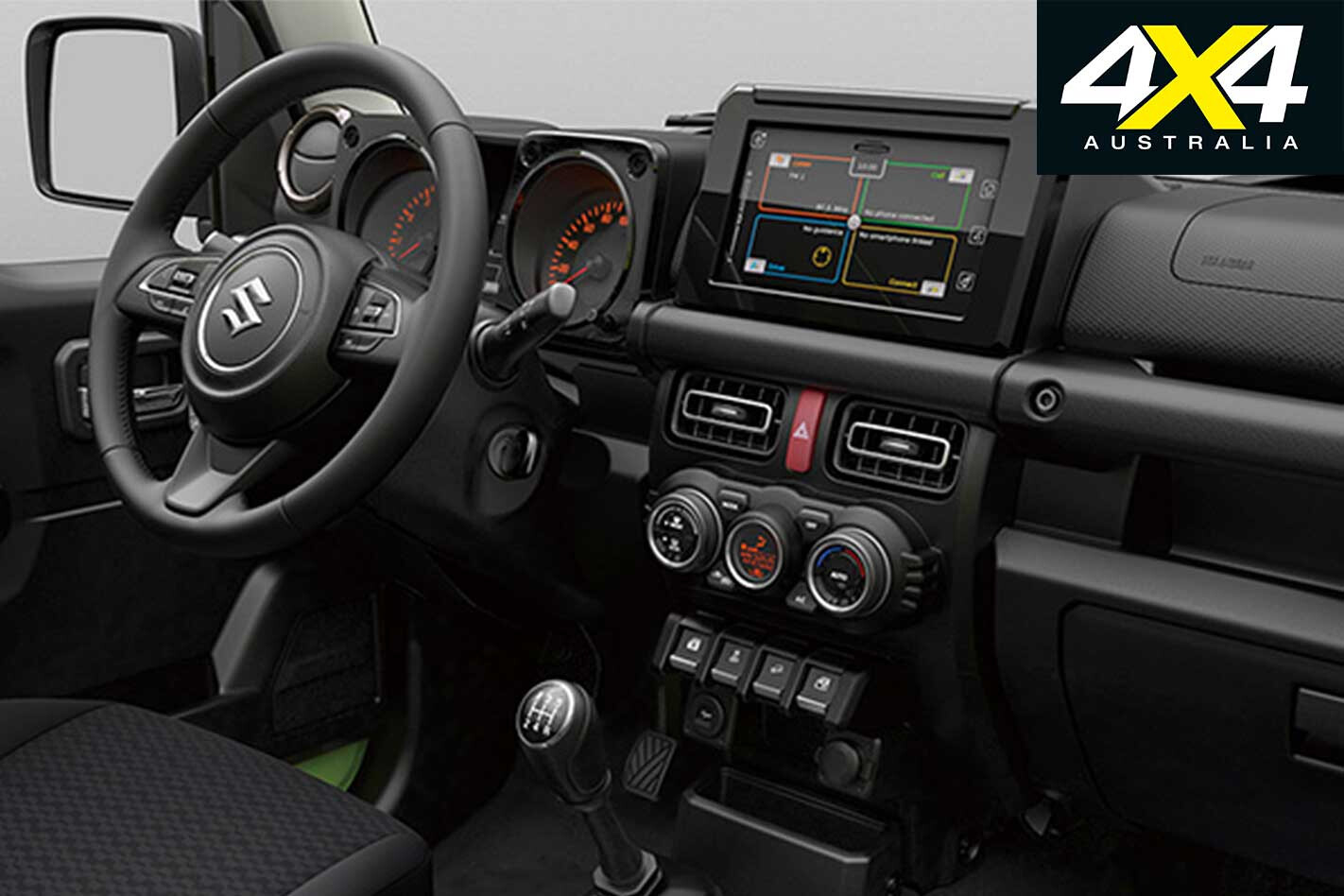
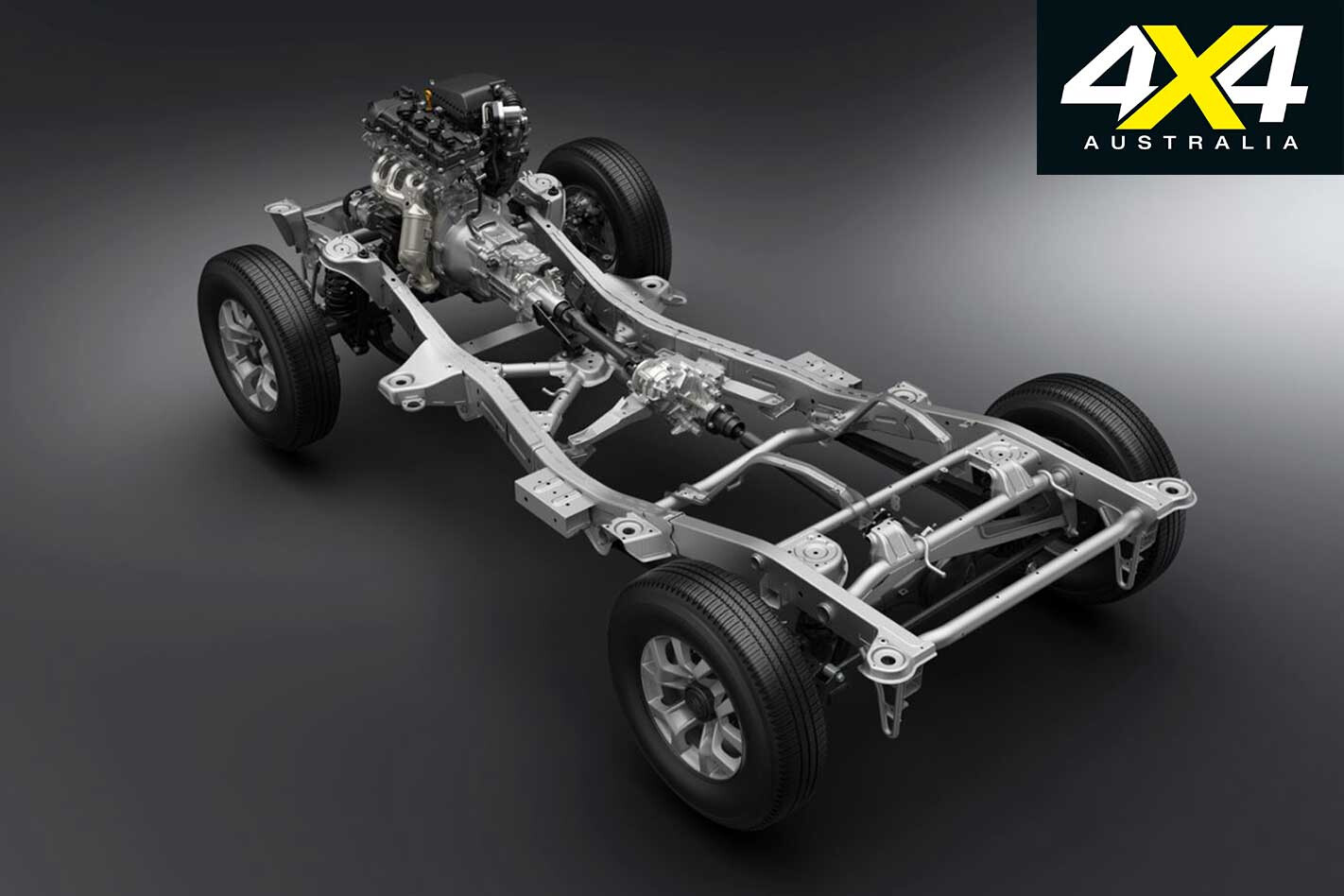
The boxy fourth generation Jimny retains its ladder-frame chassis, live front and rear axles and dual-range transmission (activated by a proper lever no less!), but has been modernised with improved safety and specification.
The chassis has been stiffened for improved dynamics, and tech such as dual front, side and curtain airbags, dual sensor brake support, and Electronic Stability Control, have all been added. There’s even a large multimedia screen in the dash, as well as Apple CarPlay and Android auto.
The powertrain has been confirmed to be a 1.5-litre (up from 1.3L) petrol four-cylinder engine, backed by either a five-speed manual or four-speed automatic transmission with part-time 4×4 and the aforementioned dual-range transfer case.
“I am very excited and highly anticipating the return of this legendary off-road compact SUV, in its all-new guise, to complement our already strong line-up of Suzuki vehicles in Australia.” said Mr. Pachota.
The Jimny and Sierra predecessors are off-road icons and a new model has been highly anticipated. Their light weight and nimble maneuverability has seen them reach places that challenge many bigger and more powerful off-road vehicles.
Chief Engineer for the next generation Jimny, Mr. Hiroyuki Yonezawa, said of the new vehicle: “The Jimny has been loved by customers around the world for nearly 50 years since its launch in 1970. It became an indispensable part of customer’s work, life and outdoor activities with its excellent off-road performance and high maneuverability.”
THE Amarok is the oldest ute here (2010); although, it only gained its 3.0-litre V6 diesel in late 2016. For its part the V6 engine actually dates back to 2004 and is a VW family (Audi) design used in various Porsche, Audi and VW models.
For use in the Amarok it has been detuned and, at the same time, strengthened in the bottom end, to help accommodate its new ‘working’ or commercial vehicle role. The V6 is only available at this stage with an automatic transmission and single-range full-time 4WD.
WHAT YOU GET
THE Sportline is the cheapest Amarok V6 model. Standard kit includes front and front-side airbags (but no airbags in the rear), tilt-and-reach steering wheel adjustment, and four-wheel disc brakes – also standard with four-cylinder Amaroks.
The Sportline V6 has dual-zone climate, front and rear parking sensors, a rear-view camera, Apple CarPlay, 18-inch alloys, and a 12V outlet and lighting for the tray. Unlike the dearer Highline V6, the Sportline doesn’t have sat-nav, side steps, sports bar, tyre-pressure monitoring, bi-Xexon headlights and LED daytime-running lights.
POWERTRAIN AND PERFORMANCE
DETUNED is a relative word here, as the Amarok’s V6 still cranks out at least 165kW and as much as 180kW. Compare that to the next best power figure, the 147kW of the Ranger, BT-50 and Colorado.
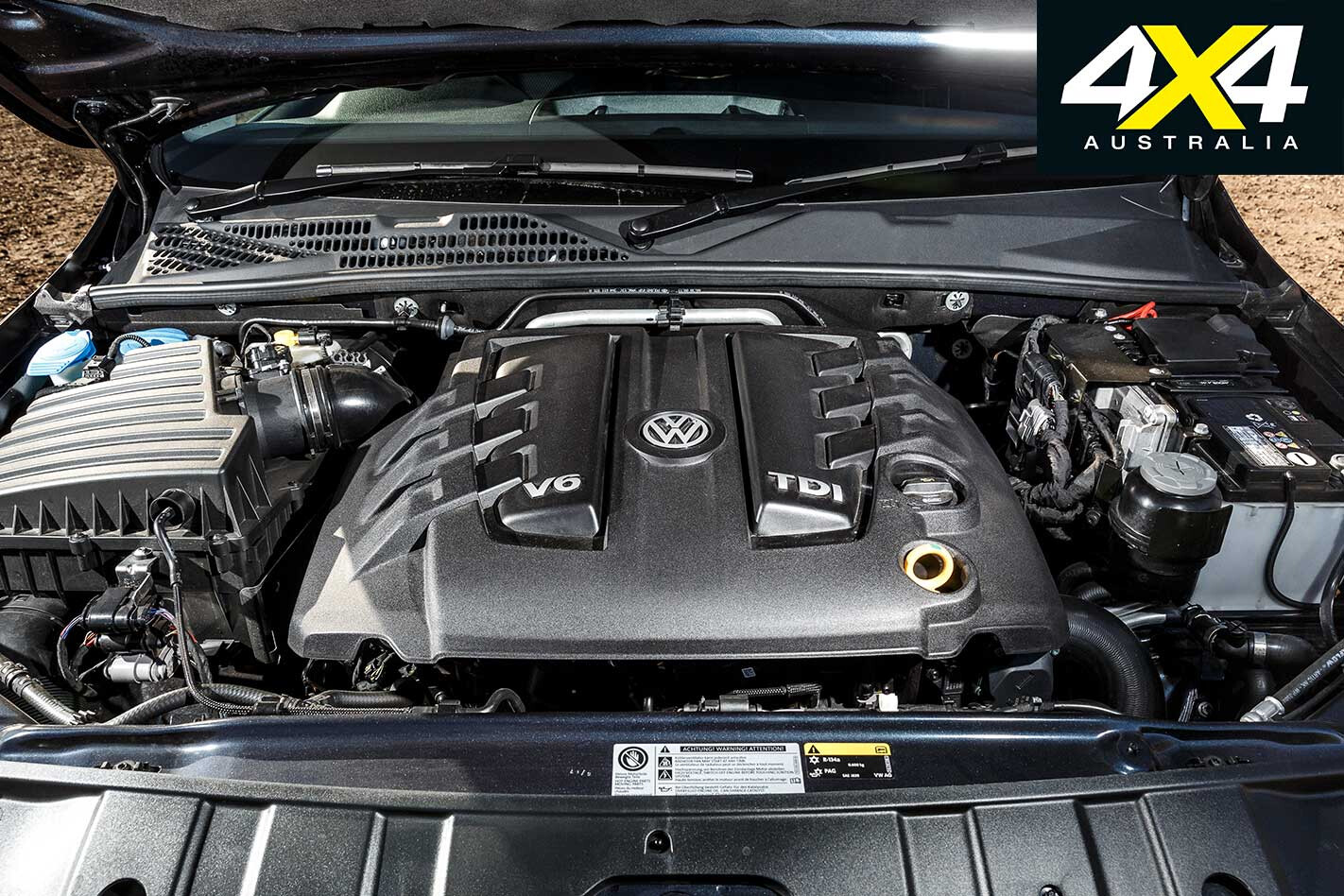
Then throw in the closer ratios and quick shifting of the Amarok’s eight-speed automatic, combined with relatively short final drive gearing, and it’s “see you later” in any sort of side-by-side performance contest. In this company it’s Amarok first, daylight second.
The 180kW is via an overboost function that operates at 70 per cent or more throttle in third and fourth gears, the crucial on-road performance and highway-overtaking gears. Not that you’d know it’s happening – the transition from 165kW to 180kW is totally seamless.
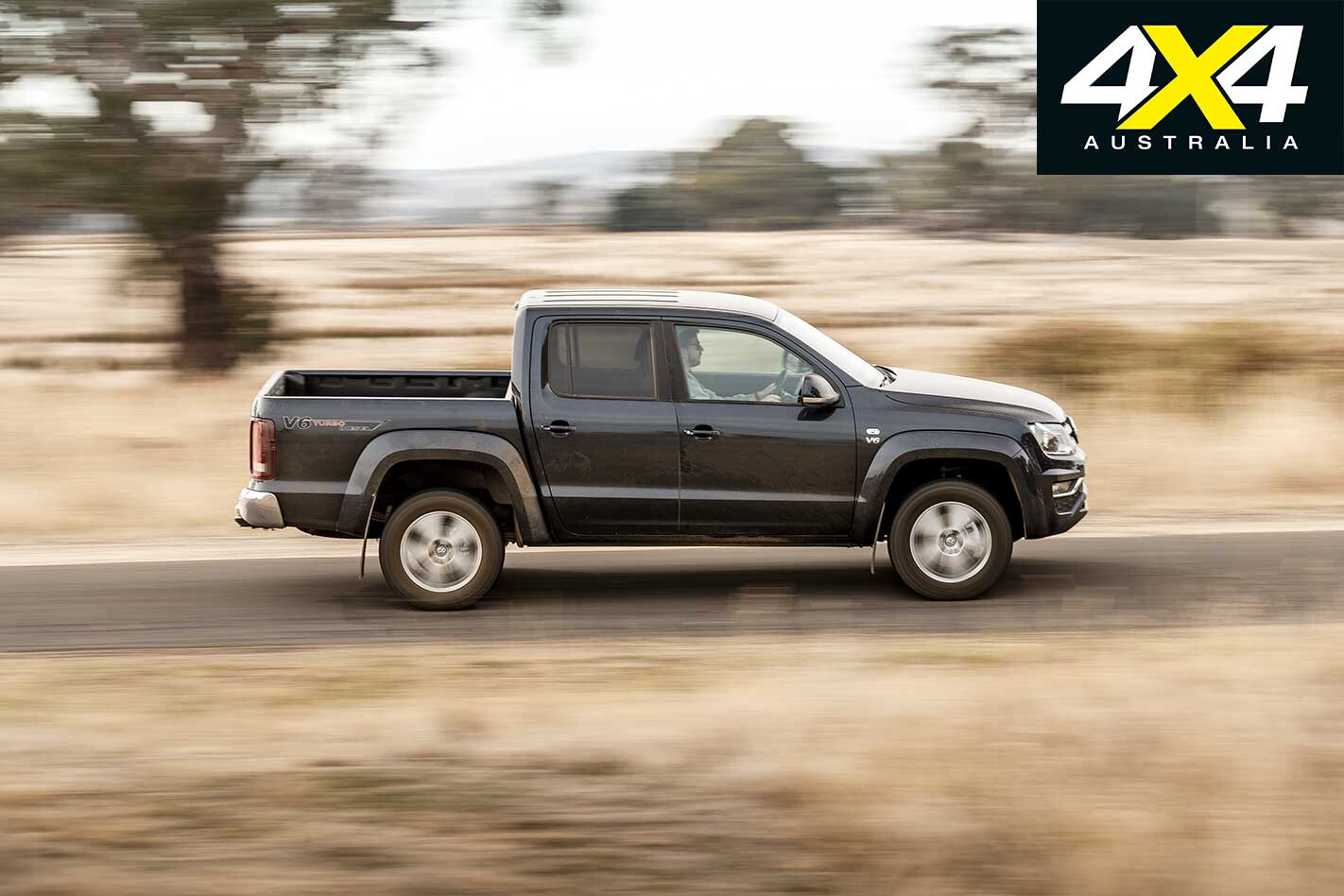
Equally impressive is the V6’s bottom-end torque, with its class-whipping 550Nm on tap from just 1500rpm. That’s more off-idle than even the bigger capacity (3.2-litre) engines in Ranger and BT-50. Combine this low-rpm grunt with willingness to rev and the V6 offers a potent wide-rpm flexibility that no other engine here can match.
All the while the V6’s refinement and noise control is the best of any engine here and, along with the eight-speed auto (the slickest gearbox here) it gives the Amarok a unique luxury-car feel in this company.
ON-ROAD RIDE AND HANDLING
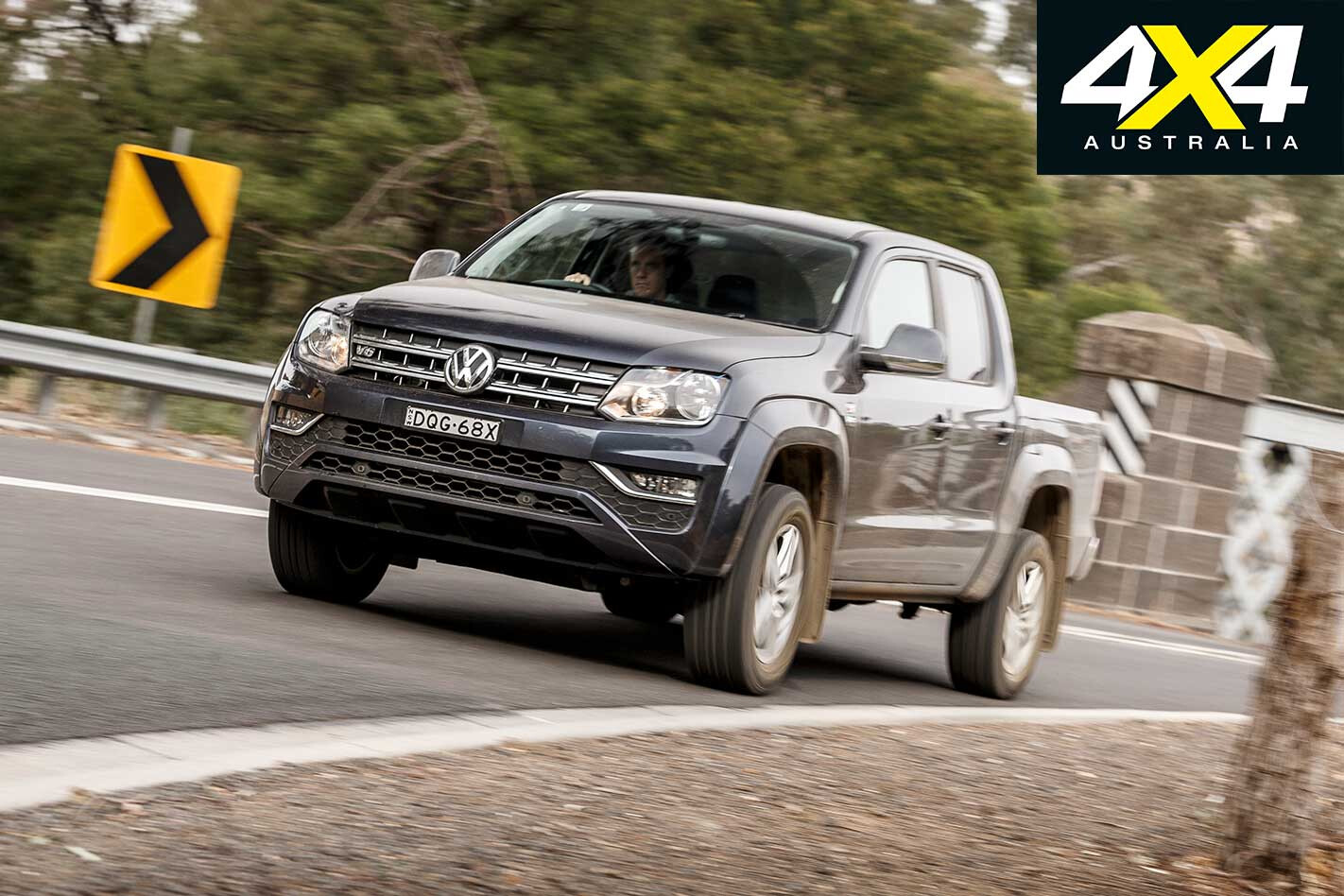
FULL-TIME 4×4 is the Amarok’s on-road trump card and something that sets it well aside from the other utes here, Triton excepted. In any conditions aside from dead-dry sealed roads, full-time 4×4 offers grip, safety and driveability advantages.
To all this the Amarok adds quality suspension that generally feels plush in this company, communicative steering, and the ‘feel’ of a much smaller ute, to provide a driving confidence like no other. As we have noted before, the Amarok feels like a “rally car” compared to the other utes.
OFF-ROAD
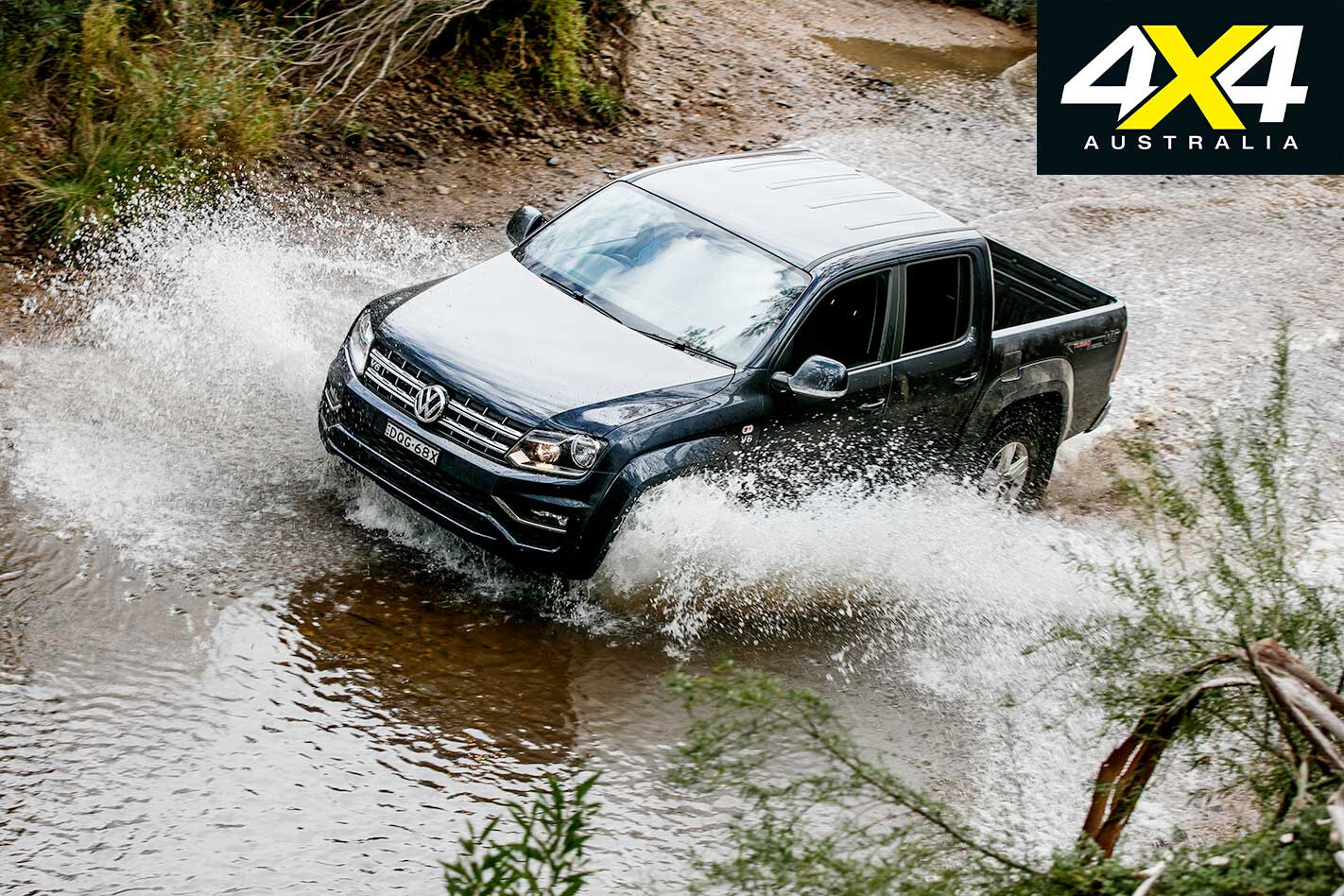
WITHOUT a two-speed, high- and low-range transfer case, you might think the Amarok’s star would fade off-road, but that’s not the case. In fact, nowhere near it, as the Amarok offers top-shelf off-road ability (matched only by Hilux and Ranger) with an ease-of-use that puts it well out on its own.
The Amarok’s number-one party trick is that it can go from whizzing down a freeway at whatever speed you dare, to climbing a gnarly off-road hill without having to touch a button or lever. It’s that simple and clever, as it’s always in 4×4. The centre diff locks automatically and it gets by without low-range, thanks to a relatively low first gear in the eight-speed automatic and the special calibration of the torque convertor.
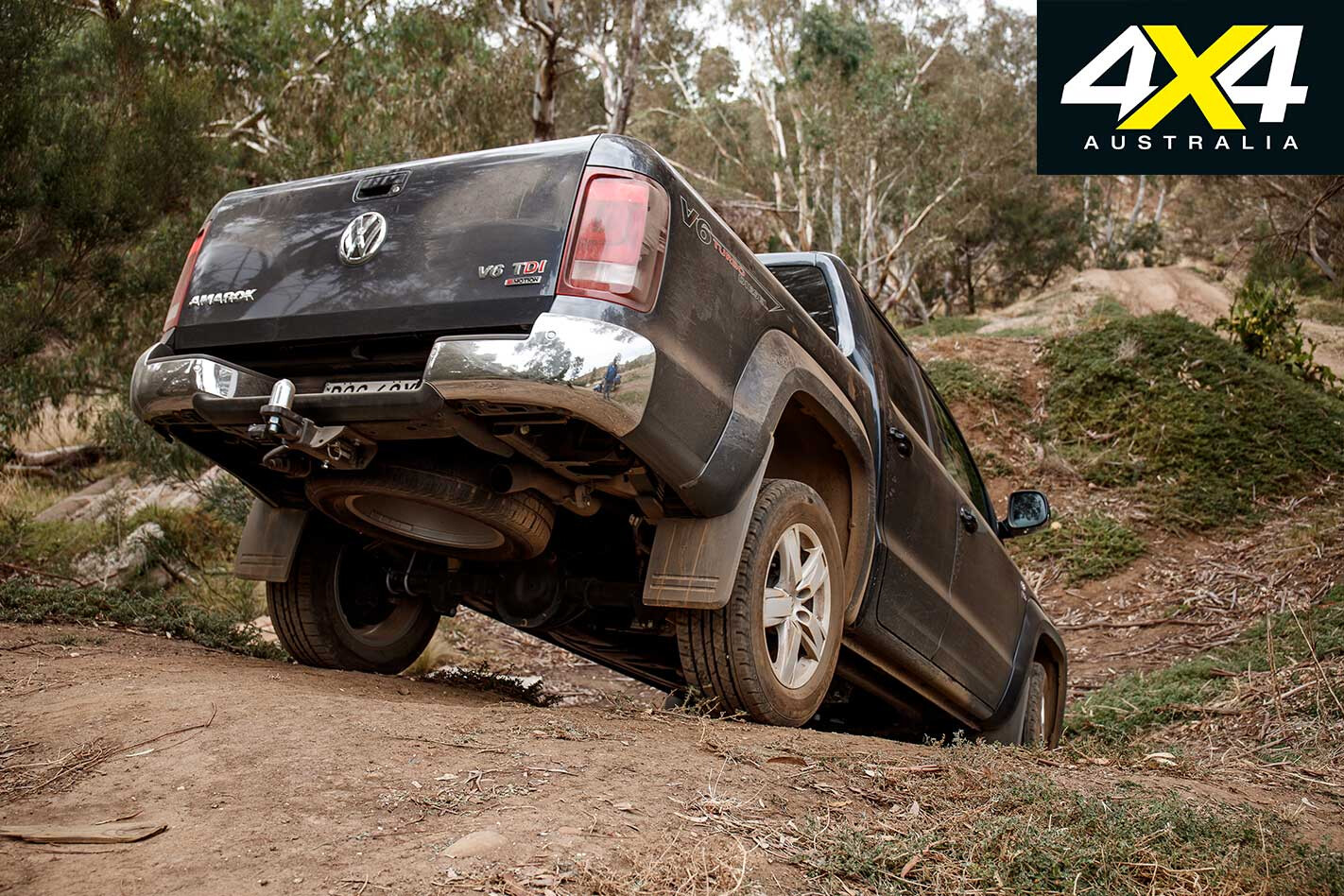
The Amarok’s strong off-road performance also comes off the back of its relatively long-travel suspension, and if you get into difficulty a rear diff-lock keeps the traction control on the front wheels active. Another box ticked. Good vision from the driver’s seat and a ‘clean’ underside are other off-road positives.
The only chink in the Amarok’s off-road armoury is the engine air intake being located in the engine bay, which makes the Amarok the first candidate for a snorkel (or a tarp).
LOAD CARRYING
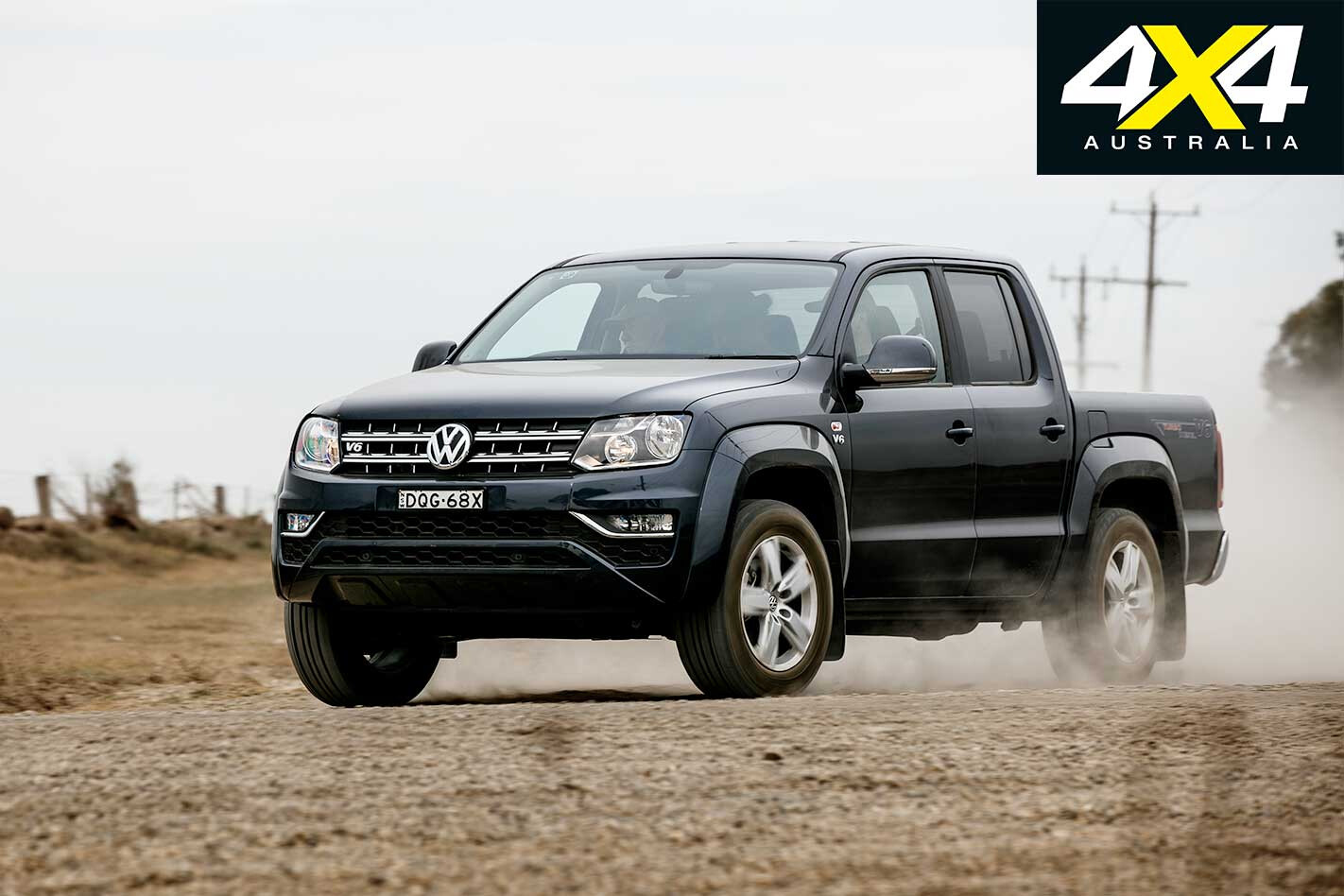
CLASS-LEADING torque is the best way to cope with heavy loads, and the Amarok’s engine dispensed with the 900kg payload easier than any engine here. In fact, it hardly felt it. Good performance from the chassis, too, when loaded to the maximum; although, it wasn’t as absolutely rock-steady as the Ranger.
No doubt the 550Nm would also help when towing the Amarok’s 3500kg tow limit, which matches the best here, while its 6000kg GCM matches Ranger, BT-50 and Colorado. The Sportline, being the lightest of the three Amarok V6s, also has a solid 1000kg payload figure.
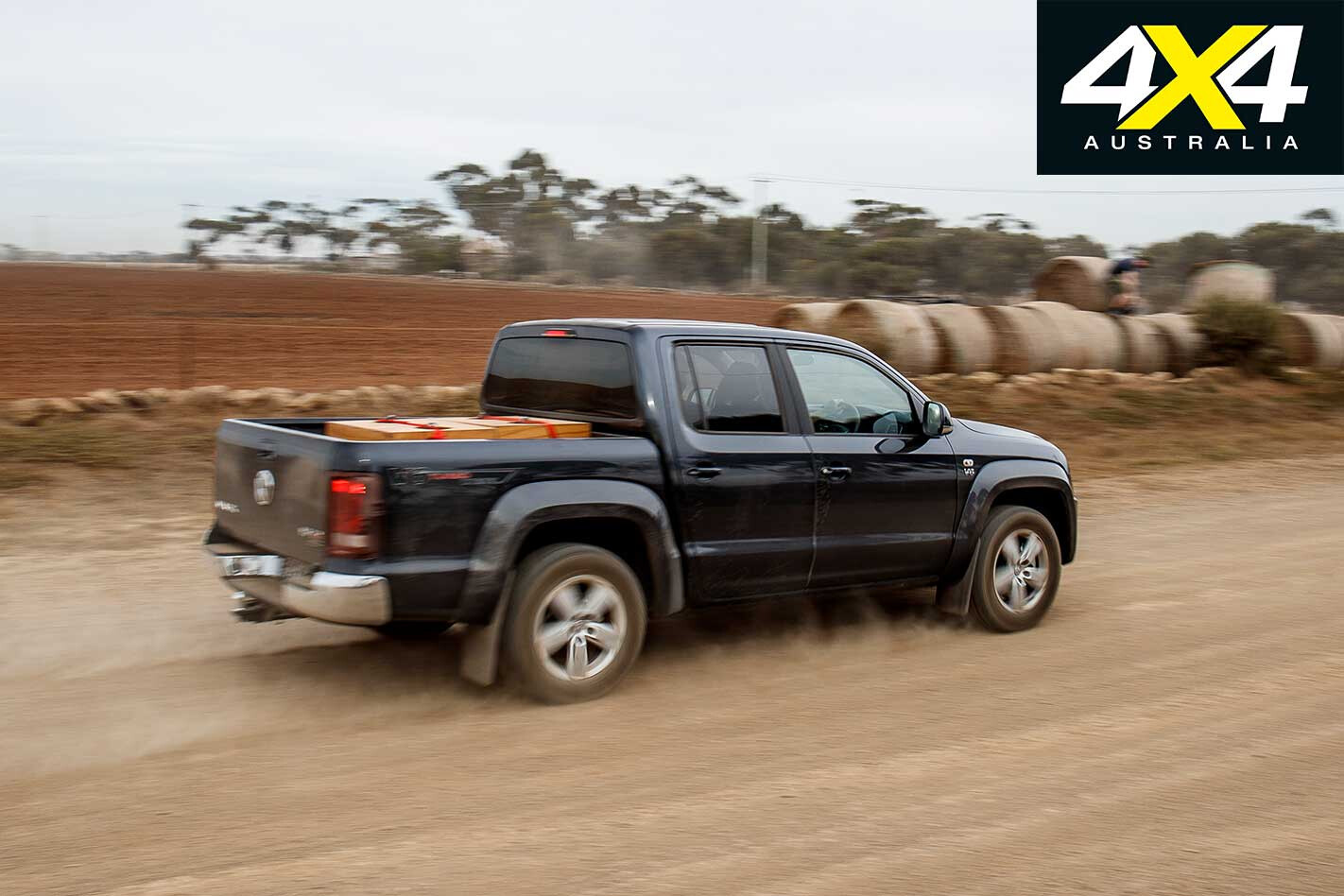
The Amarok’s tray is the only one here to fit a full-size pallet between the wheel arches, a very nice practical touch if you wish to have the looks and aero efficiency of a factory tub combined with some of the load-carrying practicality of an aftermarket tray. You have to wonder why the other ute manufacturers didn’t think of this?
All four of the Amarok’s tie-down hooks in the tub are also mounted low down, where common-sense tells you they should be. There’s also a work light above the tub and a 12-volt outlet, both practical features.
CABIN AND SAFETY
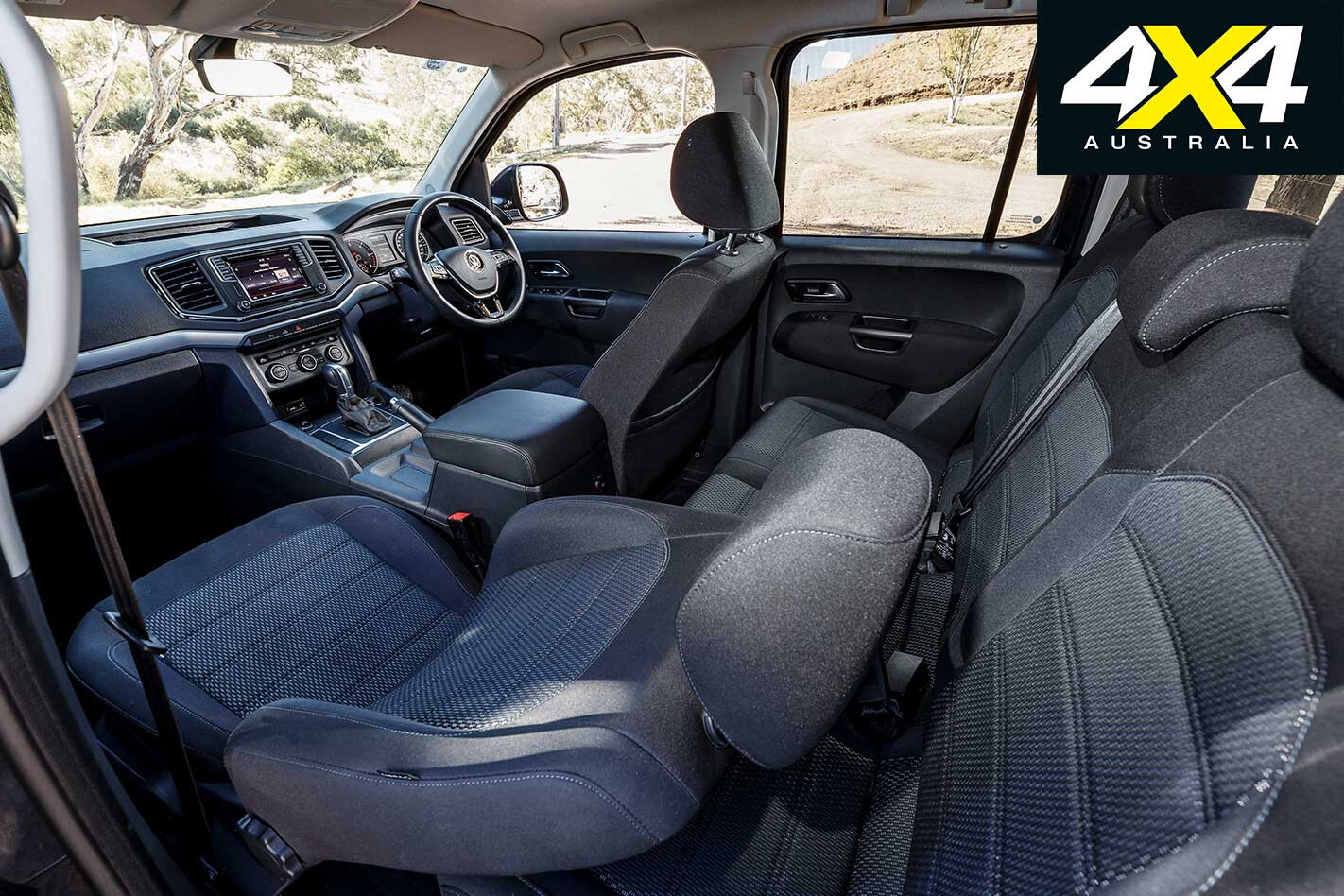
THE Amarok’s cabin is notably spacious (it’s the widest here), very well finished, and offers tilt-and-reach steering wheel adjustment for the driver. The width across the back seat is particularly good for three adults; although, the combined front-to-rear legroom is not as good as the Ranger or BT-50.
There are no airbags for rear-seat passengers; although, it still has a five-star ANCAP safety rating. No sat-nav at this spec level, either.
PRACTICALITIES
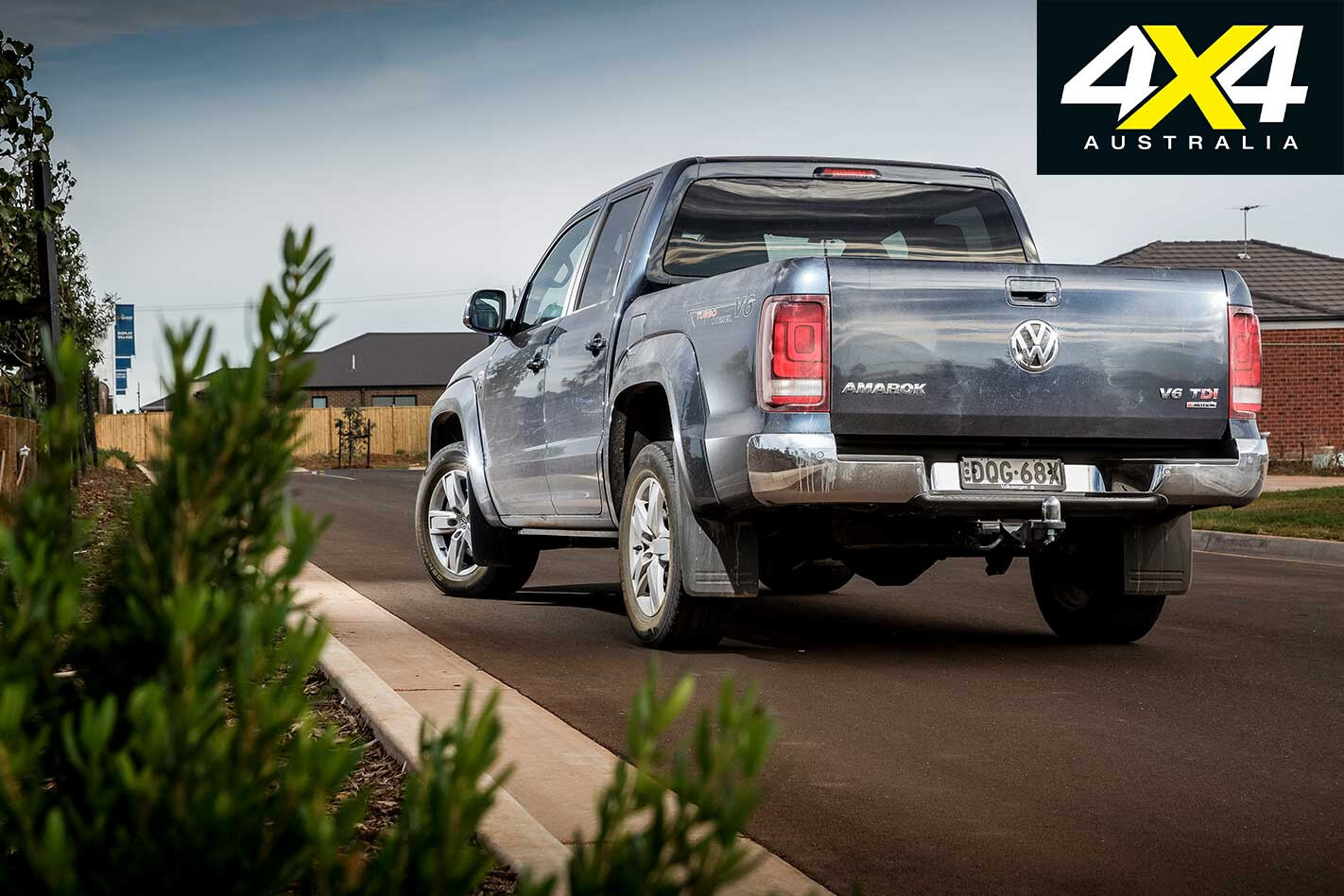
LACK of VW dealers in country areas isn’t ideal, and some independent workshops would prefer to service something else they are more familiar with. The long service intervals (12 month or 15,000km) do offset this to some extent.
Despite the V6 Amarok getting bigger front brakes than the four-cylinder models, you can still fit 17s to replace the factory 18s (or 19s on up-spec V6s) to open up your tyre choice.
Volkswagen Amarok V6 Specs Engine: 3.0-litre V6 turbo-diesel Power: 165kW+ at 2500-4500rpm Torque: 550Nm at 1500-2500rpm Gearbox: 8-speed auto 4X4 system: Single-range part-time Crawl ratio: 17.4:1 Construction: Separate chassis Front suspension: Independent/coil springs Rear suspension: Live axle/leaf springs Kerb weight: 2078kg GVM: 3080kg Payload: 1002kg Towing capacity: 3500kg Towball Download: 350kg GCM: 6000kg Fuel tank size: 80 litres ADR fuel claim: 7.8L/100km Test fuel use: 11.2L/100km Touring range: 664km* *Based on test fuel use, claimed fuel capacity and a 50km ‘safety’ marginAcceleration and Braking 0-100km/h: 7.9sec 80-120km/h: 5.3sec 100-0km/h: 48.4m
Off-road capabilities Departure angle: 23.6˚ Rampover angle: 23˚ Approach angle: 28˚ Wading depth: 500mm Ground clearance: 192mm
Amarok V6 Prices** Sportline: $55,990 Highline: $60,490 Ultimate: $68,490 **Prices do not include on-road costs
The Results
Results and verdict
Nine utes, but only one winner…
Intro & Contenders
Home of 4X4 Australia’s Ute Test, where we have put all of the popular 4×4 dual-cabs through their paces off-road and on-road.
AUSTRALIAN company EFS 4×4 Accessories has released the all-new Recon R10 Winch, which boasts a 10,000lb (4540kg) rated single line pull.
Featuring a super-fast retrieve rate, the R10 winch is fitted with a 7hp, 12-volt electric motor for grunt when you need it most. The R10 also comes with a full-load automatic brake, and the three-stage planetary gears have a 158:1 gear ratio. The motor and gearbox are waterproof.
The winch also features a 10-tonne pulley block, a hawse fairlead, and both a wireless and wired remote (with a 3.8-metre lead).
Website: www.1300efs4wd.com.au Phone: 1300 EFS 4WD
NOW might be the time to get rid of those pennies you’ve been storing and stump-up for a brand-new ute, with Volkswagen and Toyota both launching special offers for the respective Amarok and Hilux dual-cabs.
Competition is starting to boil in the red-hot dual-cab 4×4 segment, with the two major marques enticing consumers with some pretty handy deals.
Included in Volkswagen’s current offers – which will run until September 30 – are the Amarok Core 4×4 dual-cab with the eight-speed auto from $41,990; the Amarok V6 Sportline with eight-speed auto from $53,990; and the Amarok V6 Highline with eight-speed auto from $58,990.
Toyota has returned serve by offering free on-road costs for its Hilux 4×4 WorkMate and SR variants until July 31. It’s also offering a bunch of special deals exclusively for primary producers (farmers), comprising of free on-road costs and $1000 worth of fitted Toyota Genuine Accessories. This deal applies to WorkMate, SR and SR5 Hilux 4×4 models.
Read the fine print at the respective brand’s website.
According to the June 2018 VFACTS report the sales of Light Commercial Vehicles remained steady in a declining market, with LCVs holding a 20.3 per cent year-to-date share of the overall market. This is up from the 19.8 per cent share recorded at the same time last year.
The passenger car market, on the other hand, may hold a 33.7 per cent YTD share of the market, but its grip is steadily slipping – at the same time last year that figure was 38.4 per cent.
It appears bigger is better in the mind of consumers.
Toyota’s reputation for reliability and suitability to Australian roads is being called into question following successive 4X4 Australia tests that uncovered a fault with the air intake system of the Hilux, Fortuner and Prado.
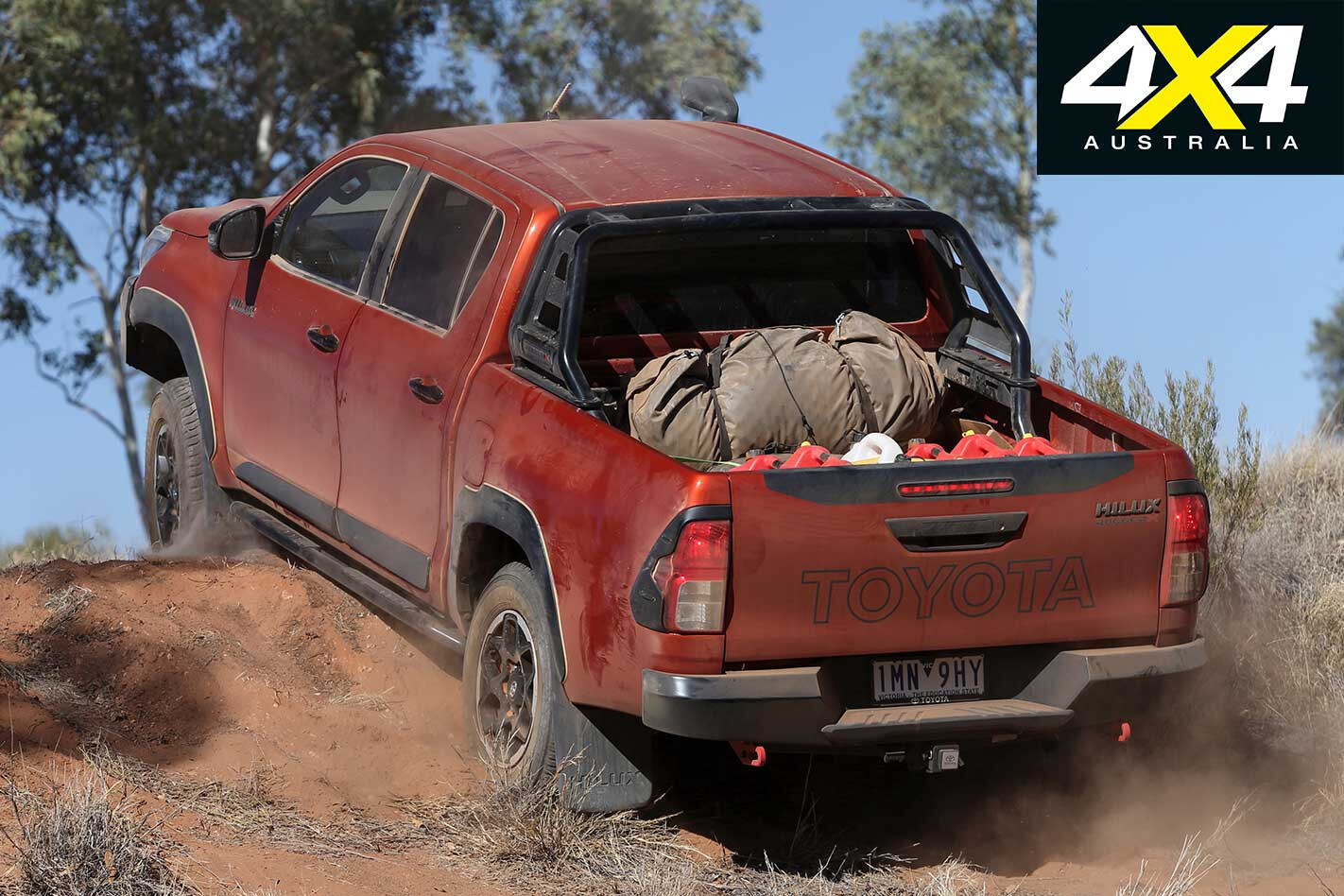
During a recent outback adventure involving the new Hilux Rugged X – the top-of-the-range model claimed to “build on the ‘unbreakable’ reputation of the Hilux” – on four occasions the car triggered a limp-home mode on the engine and disconnected key active safety systems, including stability control.
It follows on from an identical fault in a Fortuner during a 2016 test in the Northern Territory.
Toyota has confirmed the design fault also affects the Prado, in total affecting about 170,000 cars fitted with the latest generation 2.8-litre four-cylinder turbo diesel engine.
Toyota has known about the issue for at least two years, tracking it to dust getting past the air filter and into the mass airflow sensor (MAF), in turn instructing the engine control unit to reduce power and shut down some safety systems.
“It has now been raised as a design issue with Toyota in Japan,” a spokesman told 4X4 Australia. “They will be working on a redesign of the air intake system.”
However, Toyota has no plans to fix the fault in existing cars, instead working on a new air-intake to be introduced to a future update to the Hilux, Fortuner and Prado.
“There are no plans to replace the air filters. Standard maintenance and replacement of filters will continue to occur, and in severely dusty operating conditions Toyota dealers have been advised of the additional maintenance requirements that need to be followed.”
In some cases Toyota is instructing owners to check air intakes more frequently.
“It’s important that the air filter is checked more regularly in extremely dusty conditions … it’s an easy fix to have dust blown out (to clean the sensor).”
A dealer bulletin distributed in March 2017 also instructs dealers to perform additional checks and cleaning for vehicles driven in dusty conditions.
However, owners are not being actively informed of how to reduce the chances of their cars throwing up warnings and reducing power, potentially leaving them underperforming in the rugged, remote conditions they were designed to operate in.
Nor are they instructed what to do if their car throws up the warnings; the recommendation is simply to visit a dealer.
As any number of rural Toyota owners and outback adventurers know, that’s often easier said than done.
For anyone who does experience the fault, we managed to reset the electrical systems by disconnecting then reconnecting the battery.
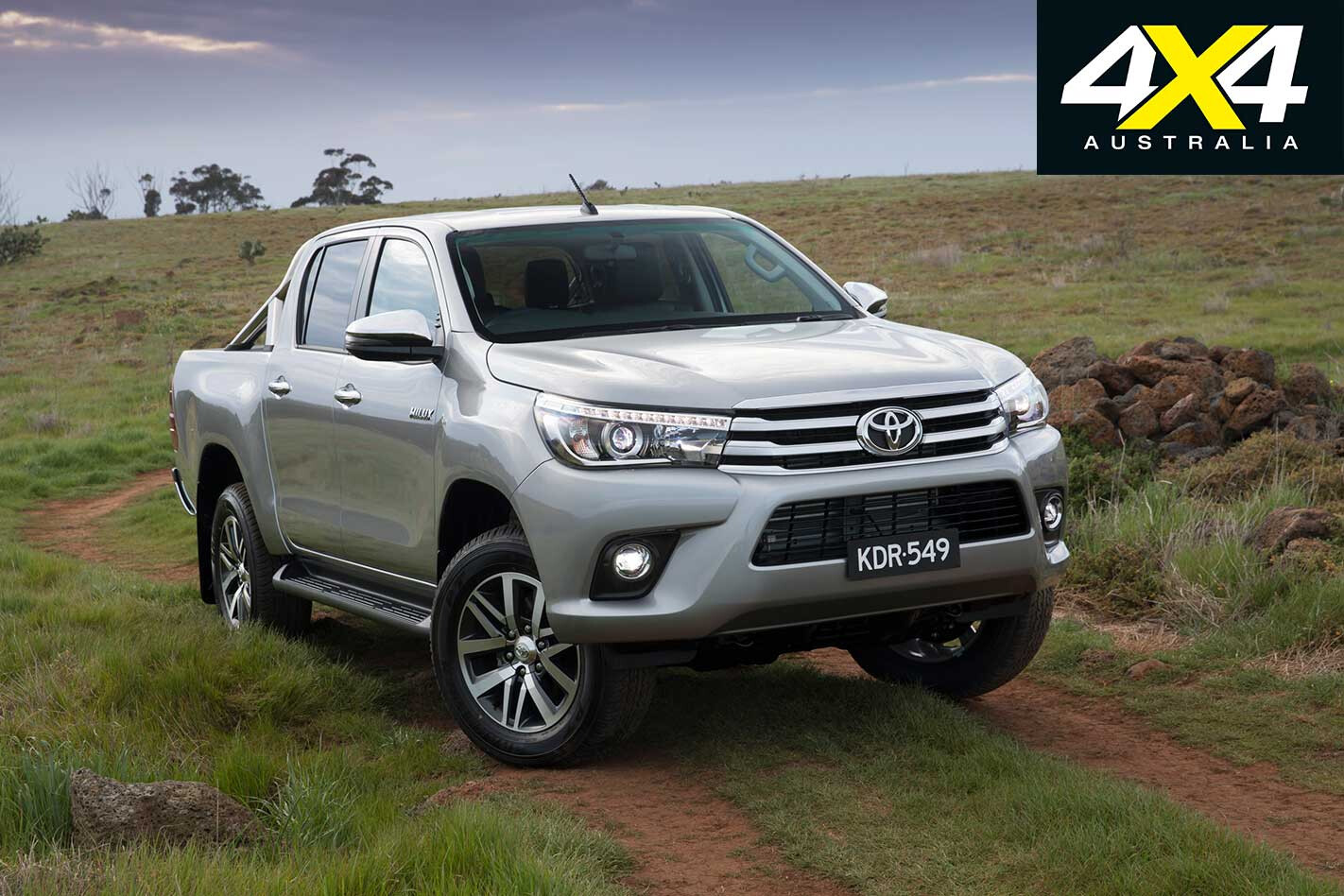
THE Hilux comes to the contest as Australia’s best-selling ute and best-selling 4×4. Throw in the 2WD models and it’s Australia’s best-selling vehicle, bar none.
Not that Hilux has it all its own way, as last year it was pipped by the Ford Ranger as the best-selling 4×4 ute and best-selling 4×4, which has prompted Toyota to tweak the model range with the addition of SR+ models and more kit for the SR5+, among the key changes late last year. Toyota also launched the TRD variant in 2017 and more recently introduced the accessorised Rogue, Rugged and Rugged X models.
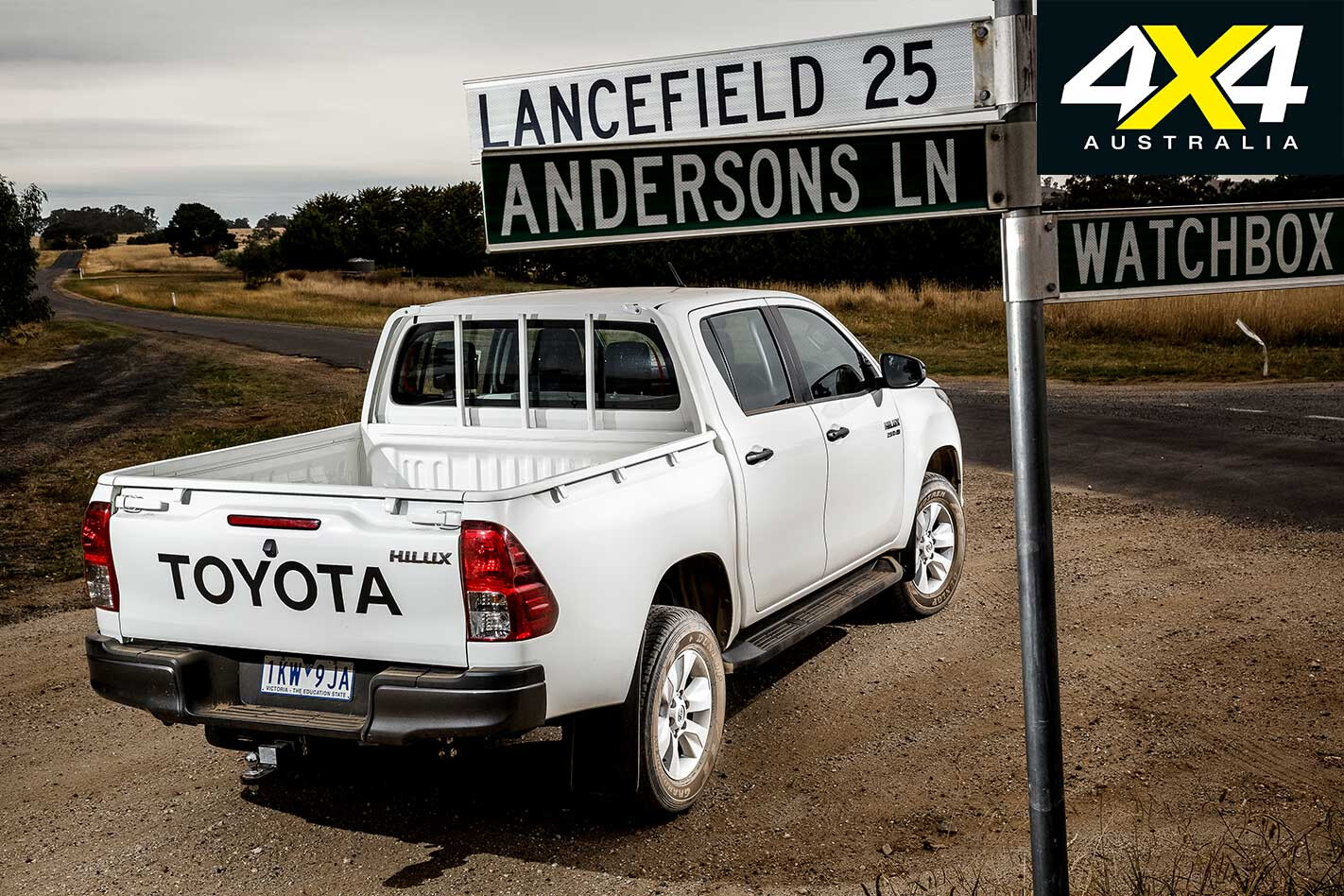
This generation Hilux first appeared in late 2015 as the eighth-generation Hilux and was effectively all-new from the ground up; although, not notably bigger than before. It brought a new generation 2.8-litre diesel (replacing the long-serving 3.0-litre diesel) and new six-speed automatic and manual gearboxes, replacing the previous five-speeders.
WHAT YOU GET
ALL Hilux dual cabs come with seven airbags, a reversing camera (accessory for cab-chassis), tilt-and-reach steering-wheel adjustment, and trailer-sway control.
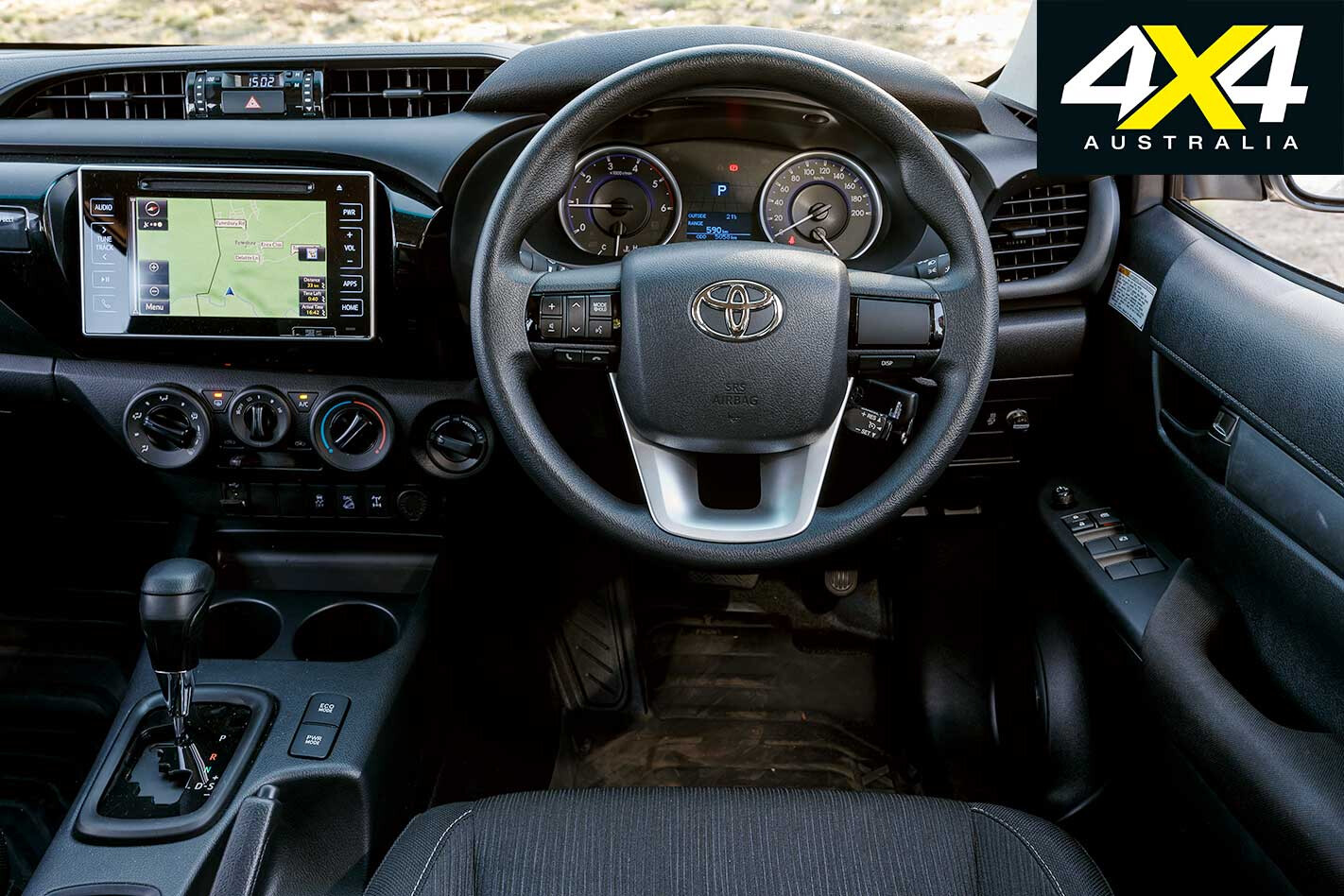
The SR then adds a rear locker, driver’s seat-height adjustment and a seven-inch touchscreen; while the SR+, as tested here, then adds alloys and sat-nav. The SR5 adds to this with auto-key entry, push-button start, LED DRLs, a sports bar and a smooth-sided tub to replace the ‘commercial’ tub on the lower-spec models. The SR5+ then adds leather and heated front seats.
POWERTRAIN AND PERFORMANCE
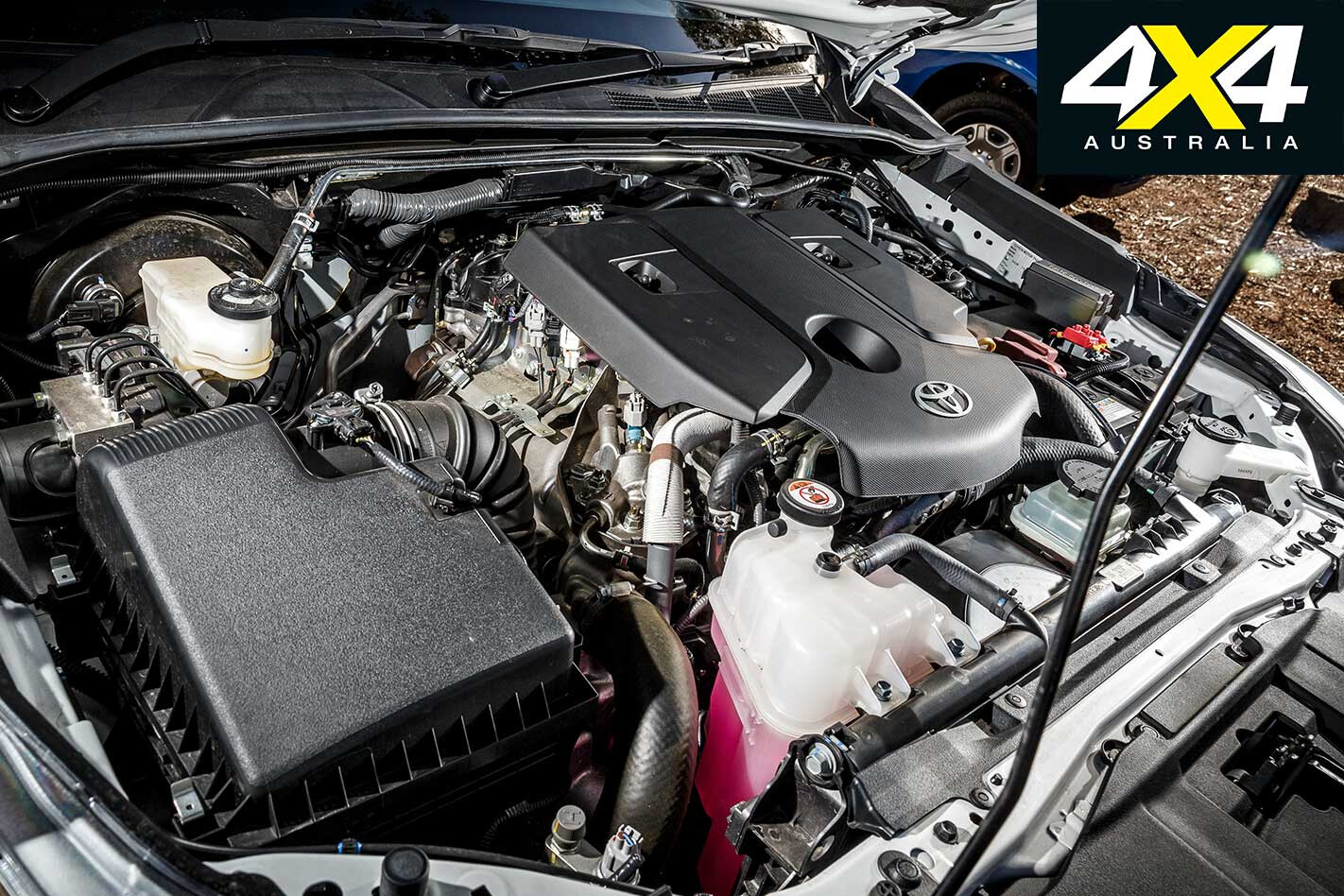
COMPARED to the Hilux’s previous 3.0-litre engine, the 2.8 only brings an extra 4kW (now 130kW) and, while the manual and automatic gearboxes have an extra ratio, both bring a second and taller overdrive ratio rather than tightening up the ratio gaps.
As a result, when pressed, the new engine doesn’t go much harder than the old engine and the overall performance is modest in this company. However, more torque than before (now 450Nm, up from 360Nm) makes for a more flexible and agreeable engine in general driving.
This new engine is more refined and quieter than before and, in this regard, betters most here. It’s certainly quieter than Ranger, Triton and Colorado, the other big sellers.
For its part, Hilux’s six-speed automatic shifts smoothly, but it doesn’t carry the very tall sixth gear particularly well, so there’s a bit of shuffling between fifth and sixth and locking and unlocking of the torque convertor at legal highway speeds on undulating roads.
The automatic needs lower final-drive gearing, or we need higher open-road speed limits! While the manual also has tall fifth and sixth gears, it generally does a better job of holding them and is a much better proposition for country and highway driving.
ON-ROAD RIDE AND HANDLING
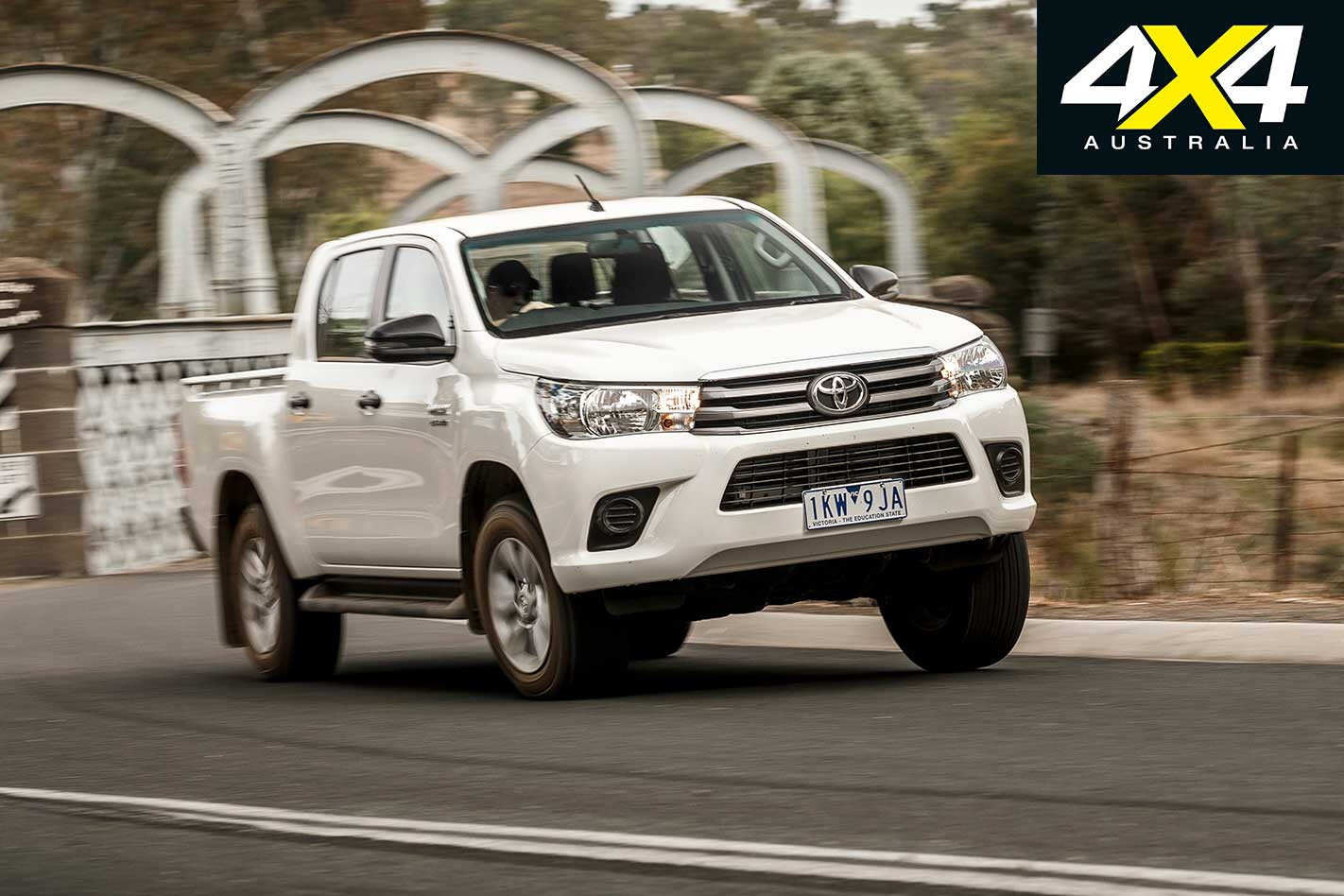
THE Hilux offers a more confident road feel than the previous generation model (one of the more noticeable improvements, in fact), and it feels smaller and more nimble than the likes of Ranger, BT-50, Colorado and D-Max. It’s still only a midfielder in terms of on-road composure, with the Amarok, X-Class, Ranger, Colorado and BT-50 all feeling more settled on bumpy roads, especially unladen.
There’s better news in terms of the excellent road-noise isolation from the Hilux’s chassis and, as with the Amarok and X-Class, the Hilux is one of the quieter utes.
OFF-ROAD
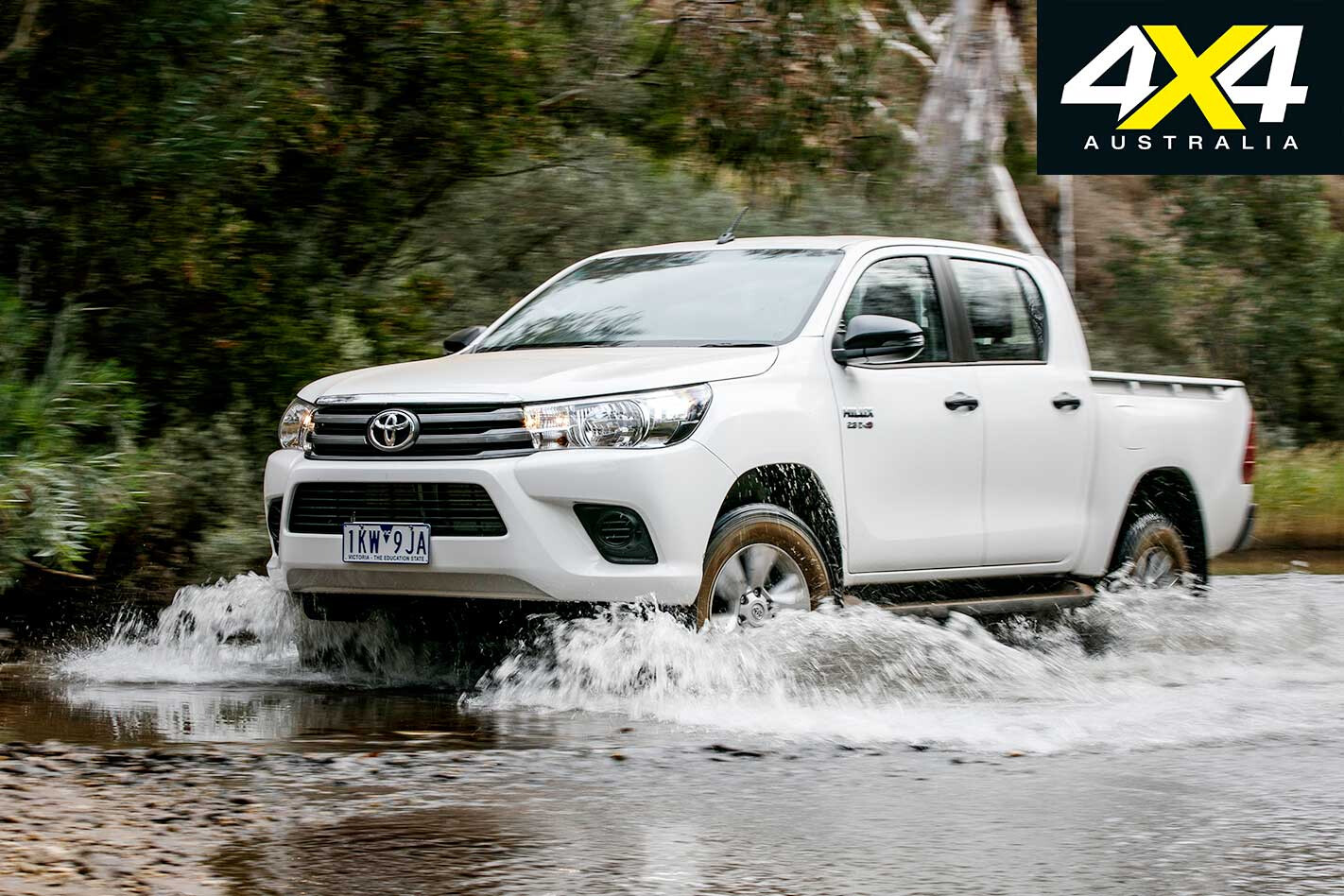
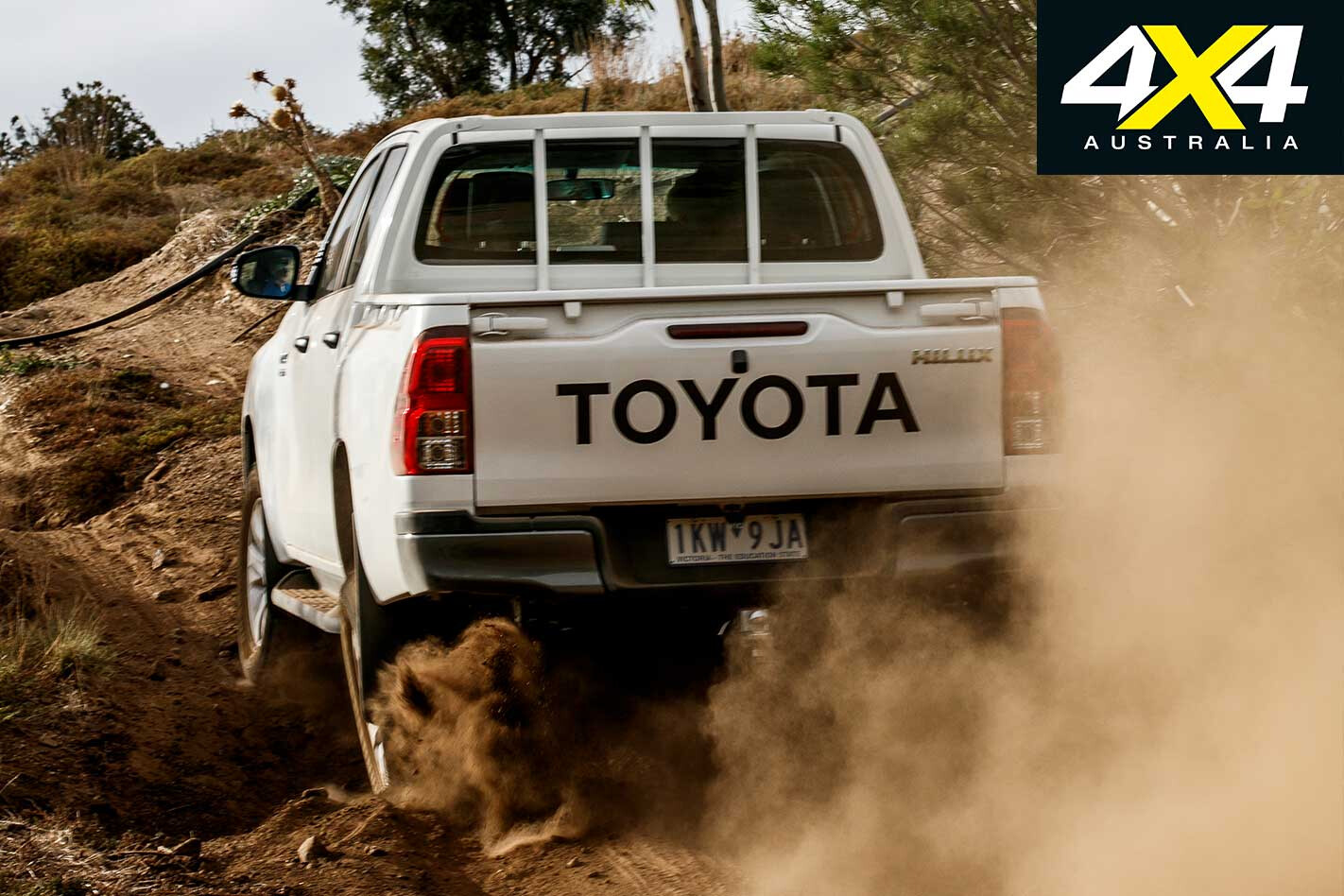
THE Hilux may not be at the front of the pack in terms of its on-road dynamics, but it shoots up the leaderboard to become a tier-one player as soon as you head off-road.
Much of that is thanks to its class-leading wheel travel (as much as 520mm at the rear) and Hilux’s particularly effective electronic traction control (ETC), so much so that the rear locker is redundant in many instances. In fact, the Hilux generally performs better off-road without the rear locker, as engaging it cancels the ETC on the front axle as well as negating the ETC across the rear axle.
The Hilux’s relative smaller size also means it’s more manoeuvrable in tight off-road situations than the bigger utes here; while ground clearance, wading depth, and visibility from the driver’s side are all off-road positives.
LOAD CARRYING
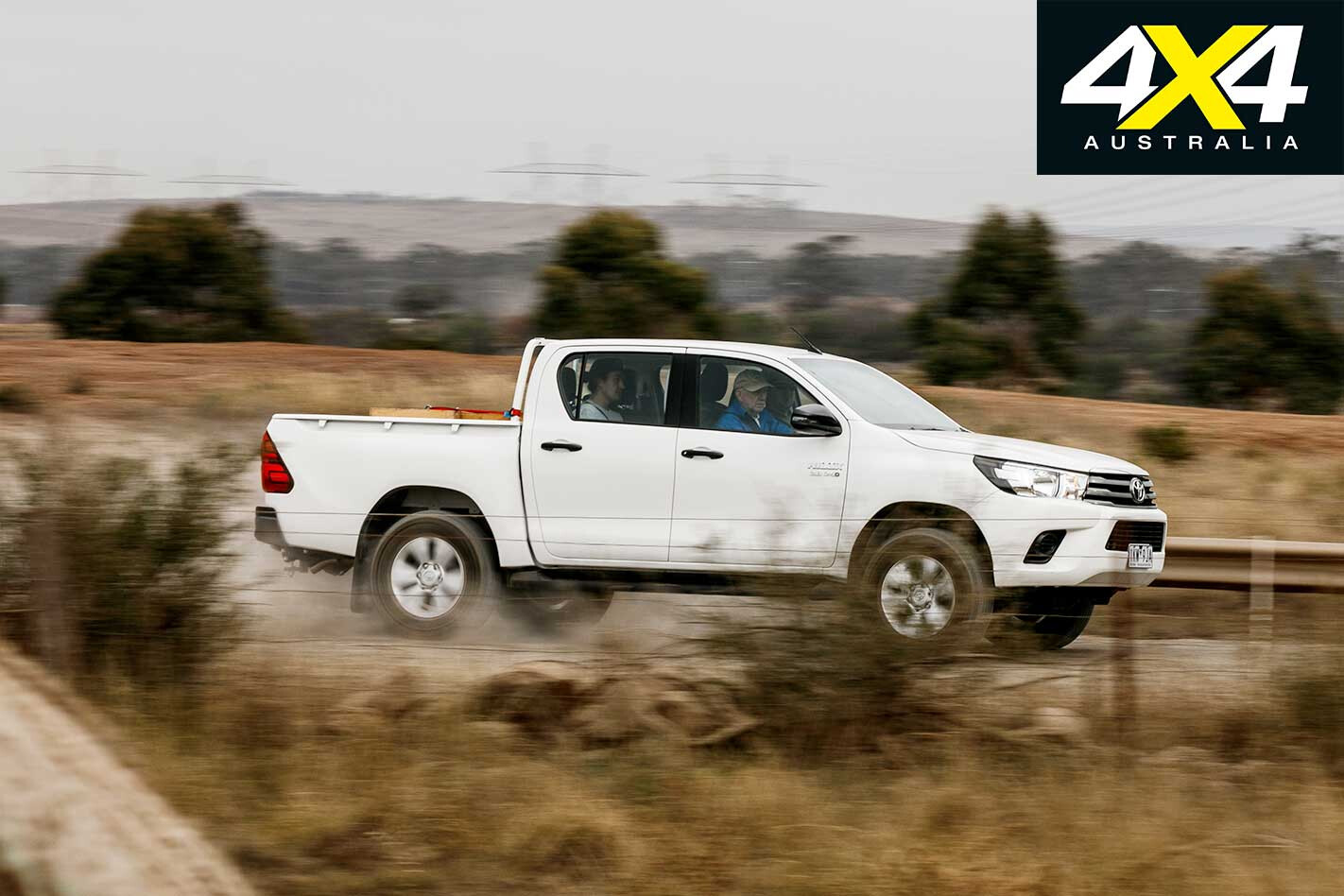
THIS SR+ is a commercial-grade Hilux (we couldn’t get the SR5), which means a work-spec tub (with external tie-downs and not smooth-sided) and a safety headboard rather than the sports bar of the SR5 and SR5+ models.
Given it’s a bit lighter than the more luxurious models, the payload is a useful 1045kg, even if the 3000kg Gross Vehicle Mass is lower than all but the Navara and Triton. This commercial tray may have handy external tie-downs, but no tie-downs in the tub itself.
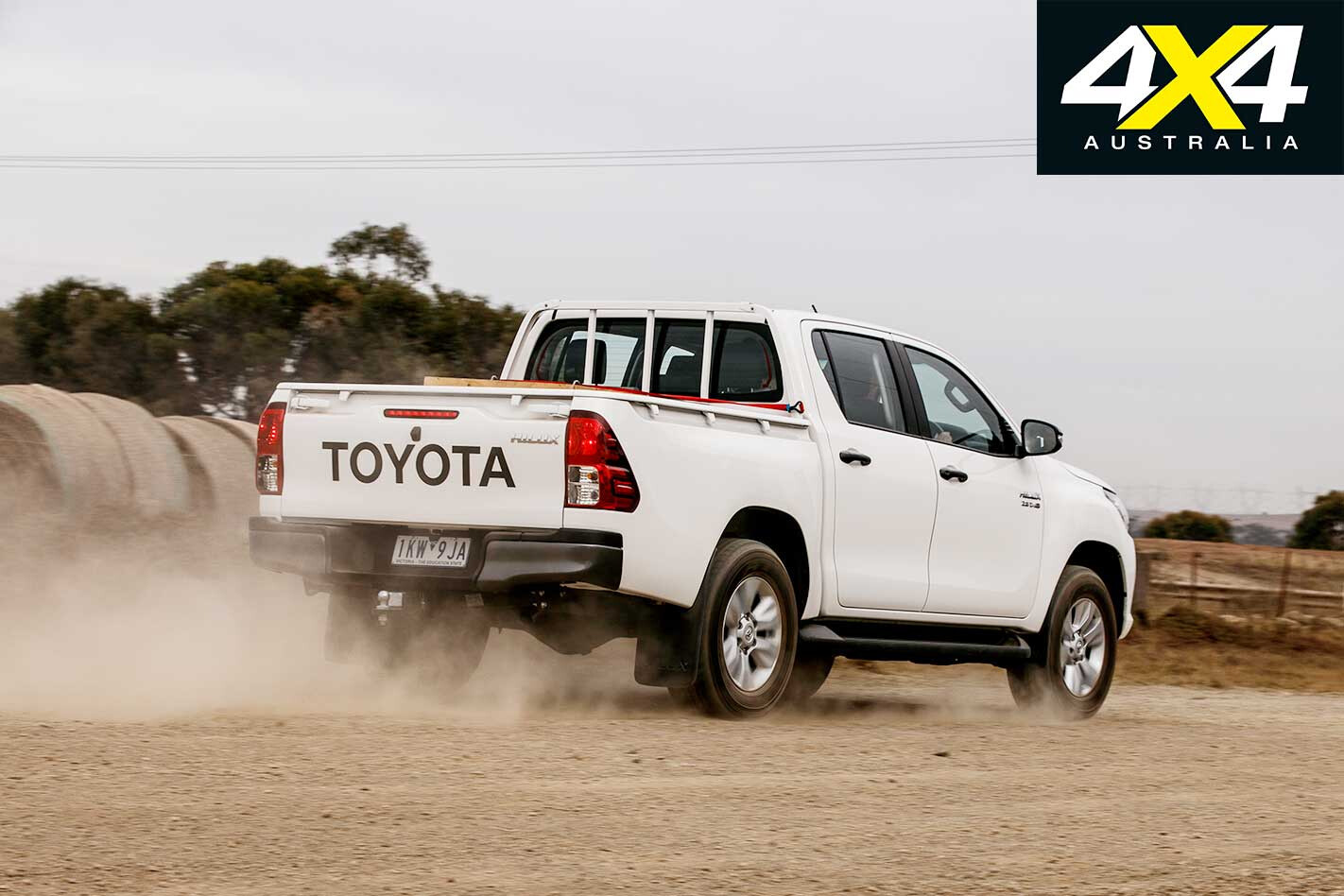
With our 900kg test payload onboard, the Hilux’s chassis hardly flinched and felt reassuringly stable on the road. Honest performance, too, from the engine.
In Toyota’s conservative way, the Gross Combined Mass of 5650kg is the lowest here, and the maximum tow rating (with the automatic, at least), is also down on the best here at 3200kg. However, Hilux 2.8-litre manuals are rated to tow 3500kg.
CABIN AND SAFETY
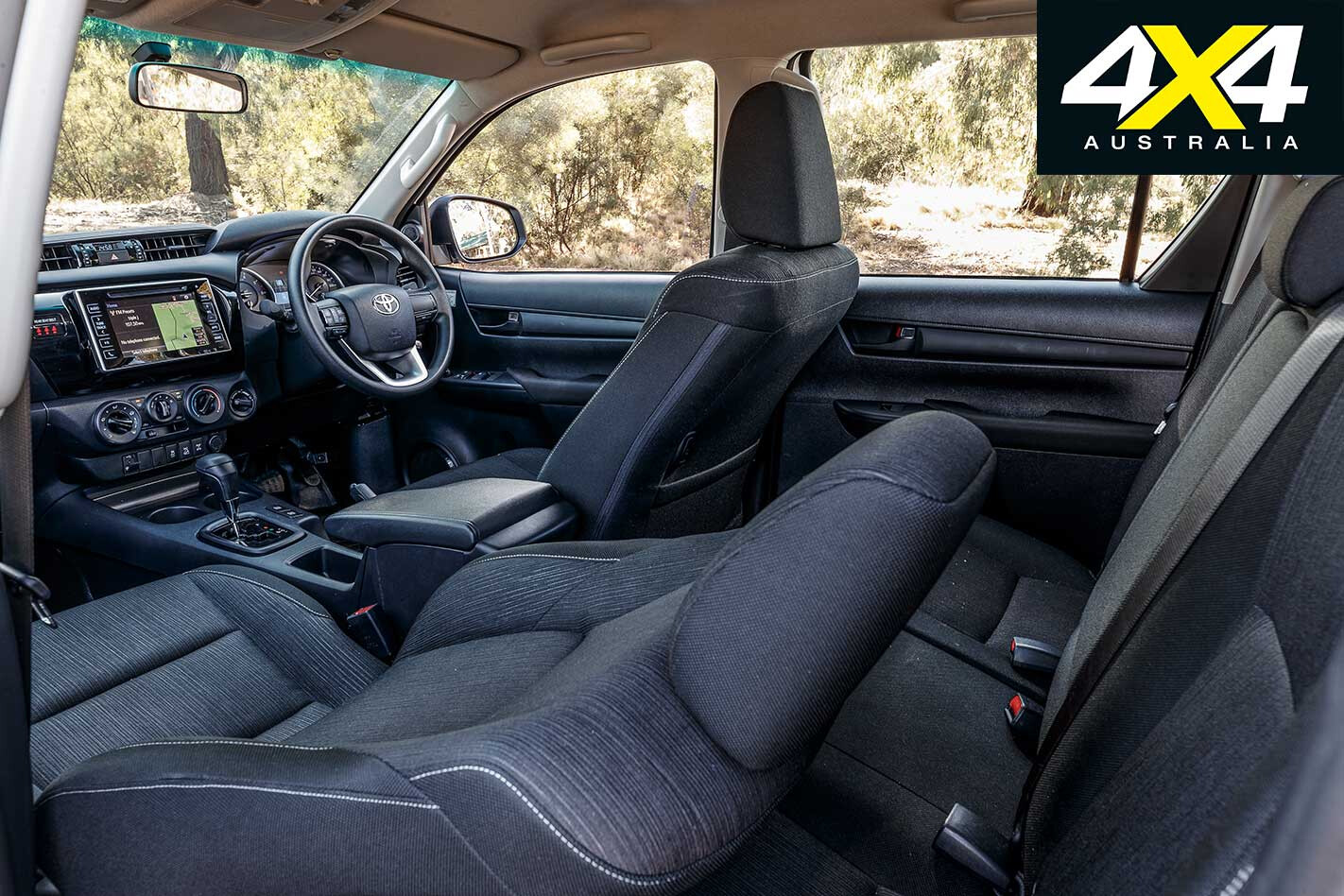
THE Hilux’s cabin is one of the smallest, and the backseat is a bit tight for three adults. The tablet-style touchscreen that dominates the dash may not be to everyone’s liking but, as ever, Toyota’s simple and easy-to-use switchgear is a highlight, even though a simple audio-volume control knob is replaced by the touchscreen and steering wheel audio controls.
The Hilux is comfortable up front and the driver has the benefit of tilt-and-reach steering wheel adjustment; although, there’s no smart-key entry and push-button start at this spec level. For that you need to go to the SR5. Even at this commercial-grade level the cabin still offers a quality feel that’s better than some top-spec models here.
PRACTICALITIES
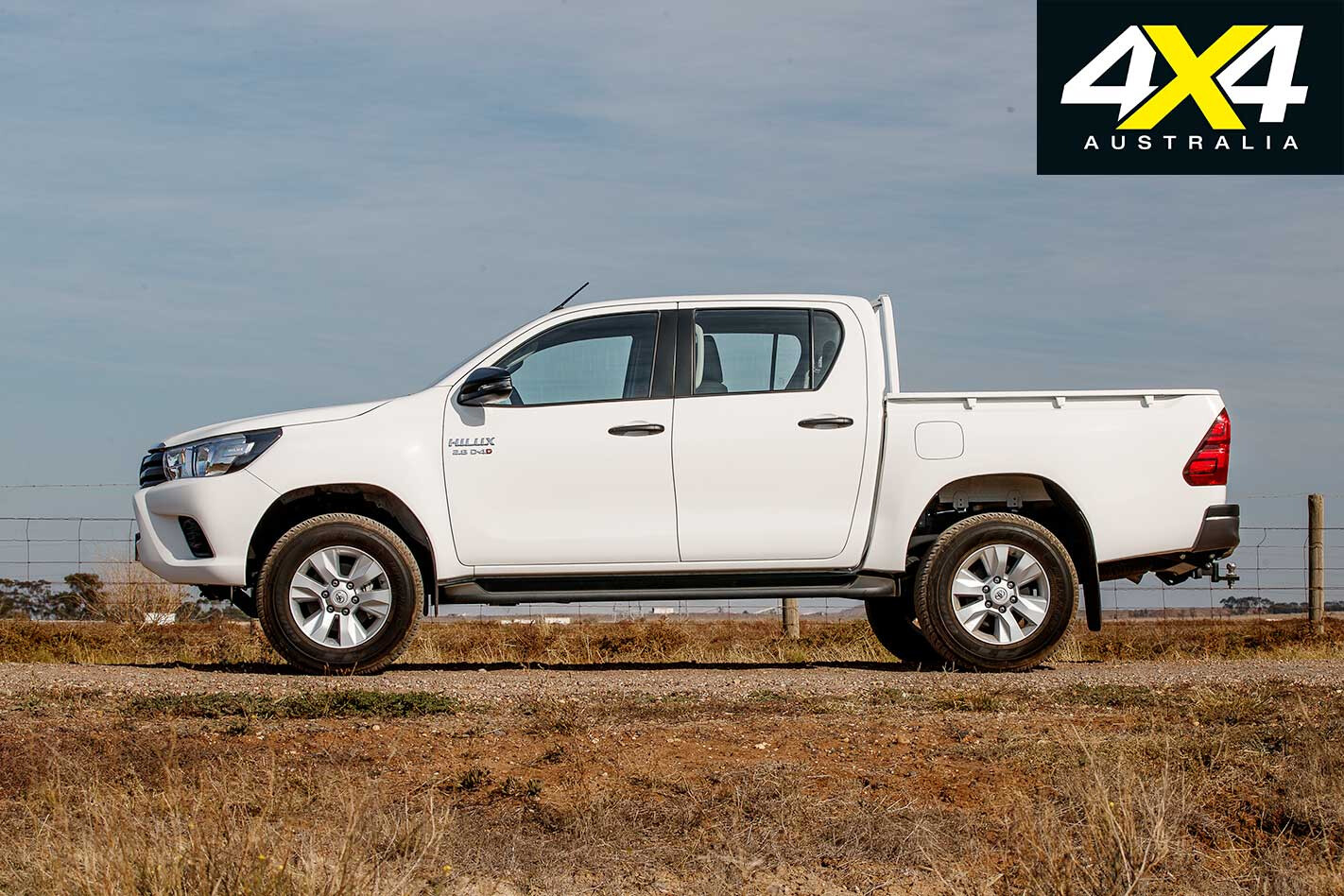
WHAT’S more practical than a Hilux? Probably nothing, thanks to Toyota’s extensive dealer network, especially in country and remote areas where it counts most. There’s also a big range of factory accessories for work or play, and the aftermarket accessory support is second to none. Relatively cheap fixed-price servicing is a bonus, too, even if the service intervals are six months.
Toyota Hilux SR+ Specs
- Engine: 2.8-litre 4-cyl turbo-diesel
- Power: 130kW at 3400rpm
- Torque: 450Nm at 1600-2400rpm
- Gearbox: 6-speed auto
- 4X4 system: Dual-range part-time
- Crawl ratio: 36.1:1
- Construction: Separate chassis
- Front suspension: Independent/coil springs
- Rear suspension: Live axle/leaf springs
- Kerb weight: 1955kg
- GVM: 3000kg
- Payload: 1045kg
- Towing capacity: 3200kg
- Towball Download: 310kg
- GCM: 5650kg
- Fuel tank size: 80 litres
- ADR fuel claim: 8.5L/100km
- Test fuel use: 10.9L/100km
- Touring range: 684km* *Based on test fuel use, claimed fuel capacity and a 50km ‘safety’ margin
- Acceleration and Braking 0-100km/h: 11.2sec
- 80-120km/h: 7.9sec
- 100-0km/h: 44.5m
Off-road capabilities
- Departure angle: 26˚
- Rampover angle: N/A
- Approach angle: 31˚
- Wading depth: 700mm
- Ground clearance: 279mm
Toyota Hilux Prices**
- SR: $46,560
- SR+: $48,560
- SR5: $54,440
- SR5+: $56,440
- Rugged: $54,990
- Rugged X: $61,690
- Rogue (auto): $61,690
**Prices do not include on-road costs
The Results
Results and verdict
Nine utes, but only one winner…
Intro & Contenders
Home of 4X4 Australia’s Ute Test, where we have put all of the popular 4×4 dual-cabs through their paces off-road and on-road.
MORE: Toyota Hilux Range Review
MORE: Toyota Hilux Specs, Range & Price
WE’VE hit the halfway point of the year and the overall 4×4 sales race is tantalisingly close between – no surprises here – Ford’s Ranger and Toyota’s Hilux, with the Japanese brand leading the race by a meagre 21 units.
It has also been a solid year for the Mitsubishi Triton 4×4 which has been purchased 12,187 times. In fact, the Hilux, Ranger and Triton were the three best-selling overall new cars in June when you combine 4×4 and 4×2 variants. The Triton even pipped the always popular Toyota Corolla (3780 sales) and Hyundai i30 (3547 sales).
In June, the Ranger 4×4 outsold the Hilux 4×4 by 204 units, while the Triton had a 36 per cent increase in sales month-to-month. Mercedes-Benz’s new X-Class on the other hand, only found its way to 218 new homes.
The LCV market remains steady, with 28,346 sales recorded for June 2018 (28,253 sales were recorded in June 2017). So far in 2018, 122,895 LCV sales have been recorded (at the same time last year, that number was 118,995). The LCV segment now accounts for 20.3 per cent of the total market, up from June 2017’s 19.8 per cent.
SUV sales continue to strengthen and the segment holds the majority share of overall sales (43.1 per cent). In fact, June 2018 results indicate that SUV sales have increased by 9.3 per cent compared to June 2017.
This is despite an overall market slump – new-car sales are down 2.9 per cent – compared to the same time last year (130,300 versus 134,171), which is largely attributed to the falling passenger car market (down 17.9 per cent compared to June 2017).
THE Navara D23, tagged as the NP300, arrived in mid-2015 and was a significant departure from the outgoing and successful D40, which had been on sale for the better part of the decade. All but one dual-cab D23 featured a coil-sprung live axle at the rear, a feature unique among the mainstream utes in this class.
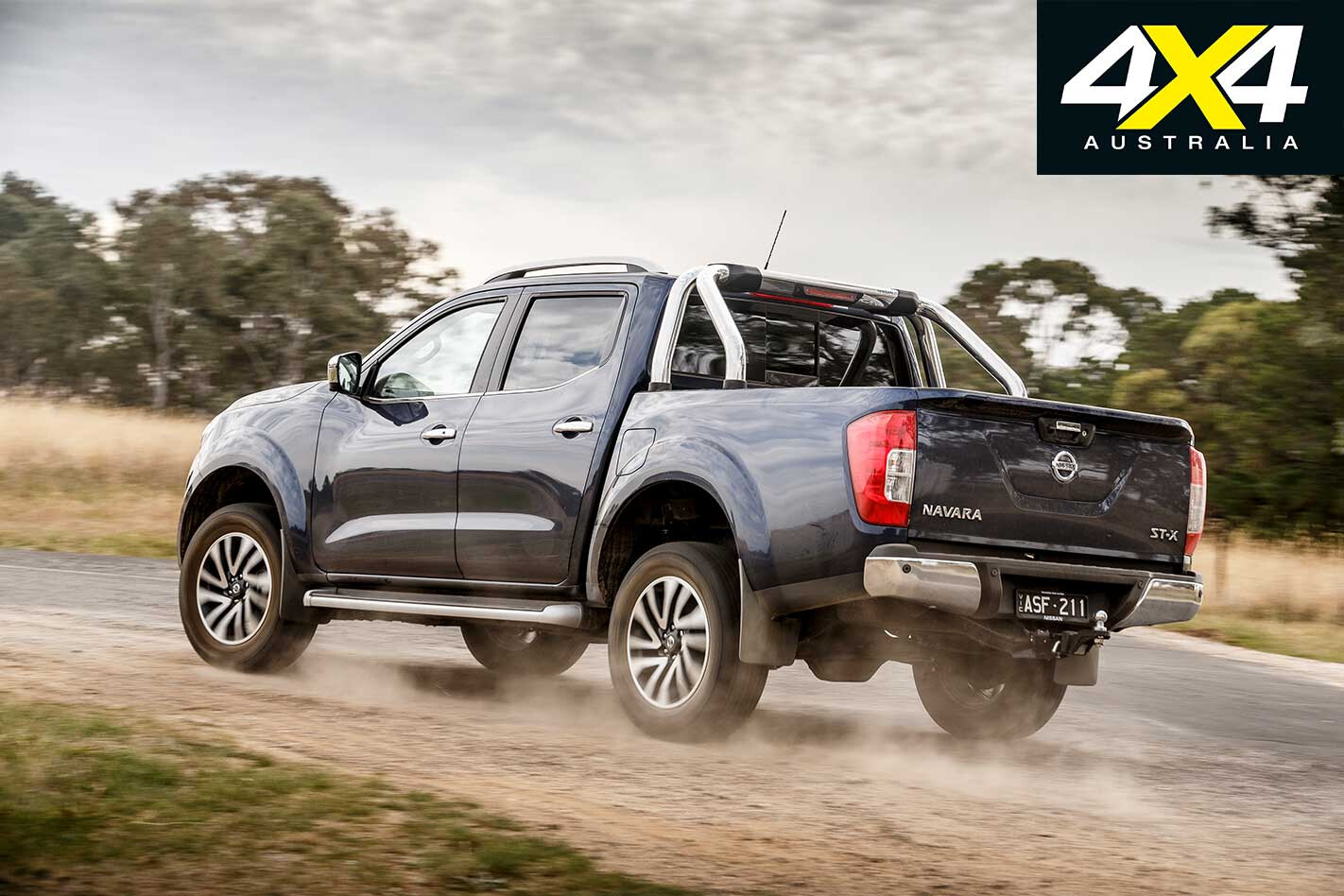
In what Nissan said was response to “feedback from customers and dealers”, changes were announced a little more than a year later in October 2016 and implemented for the 2017 model year. This included the dropping of the NP300 tag (replaced by Series II), the introduction of a new work-spec model and, critically, new coil springs at the rear and new dampers front and rear.
Then, early this year, the suspension was revised again with new coils and new dampers at the back, a new steering rack ratio, and various equipment upgrades.
WHAT YOU GET
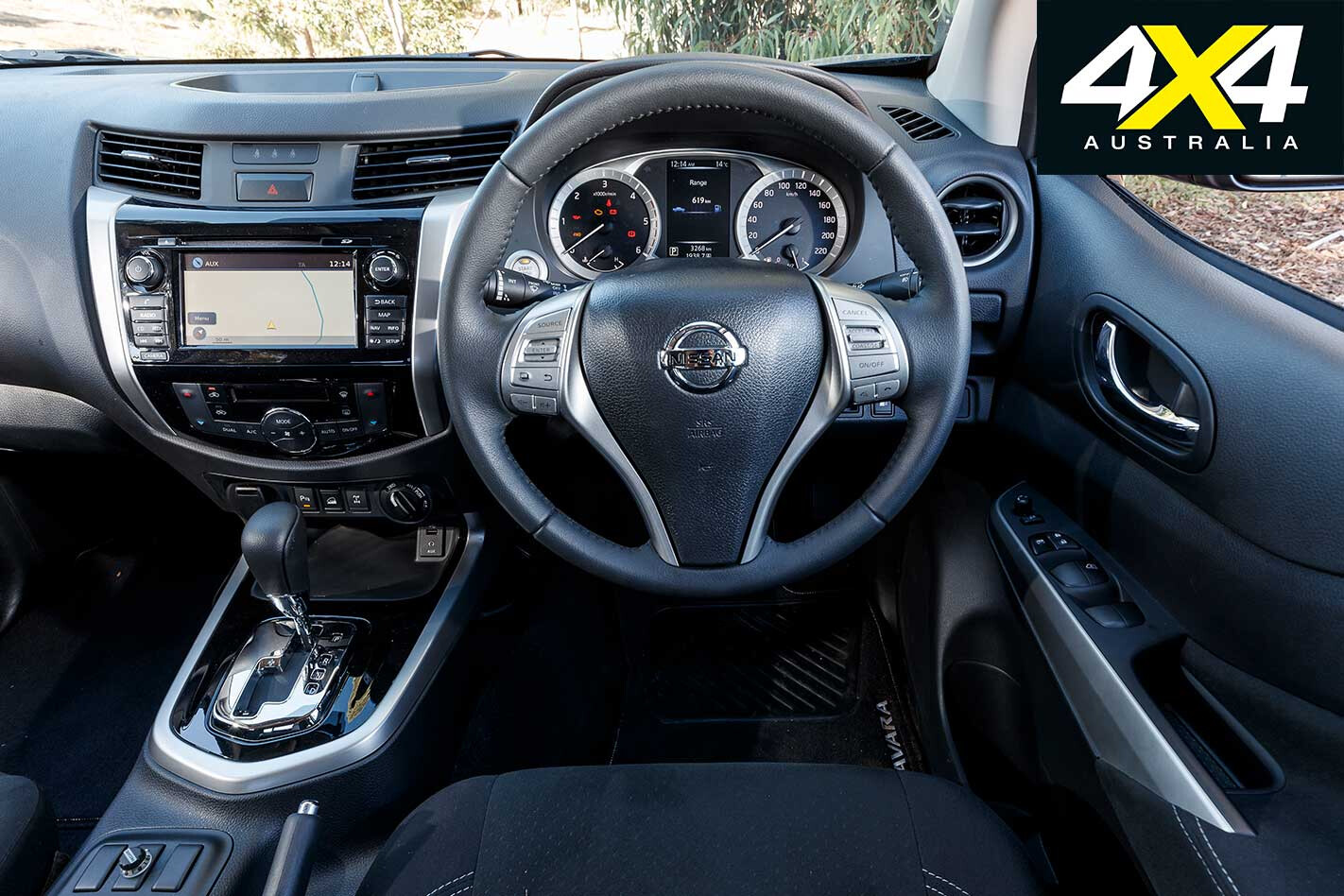
ALL Navara dual-cab 4x4s have seven airbags, tilt-and-reach steering wheel adjustment, a rear-view camera and a 12-Volt outlet in the rear tub. The SL then adds LED headlights with DRLs, while the ST gains 16-inch alloys, a seven-inch touchscreen, sat-nav, fogs, side steps, a chrome ‘sports bar’, and a rear locker.
The top-specification ST-X model then gains leather seats (heated up front), electric adjustment for driver’s seat, and adjustable tie-downs.
POWERTRAIN AND PERFORMANCE
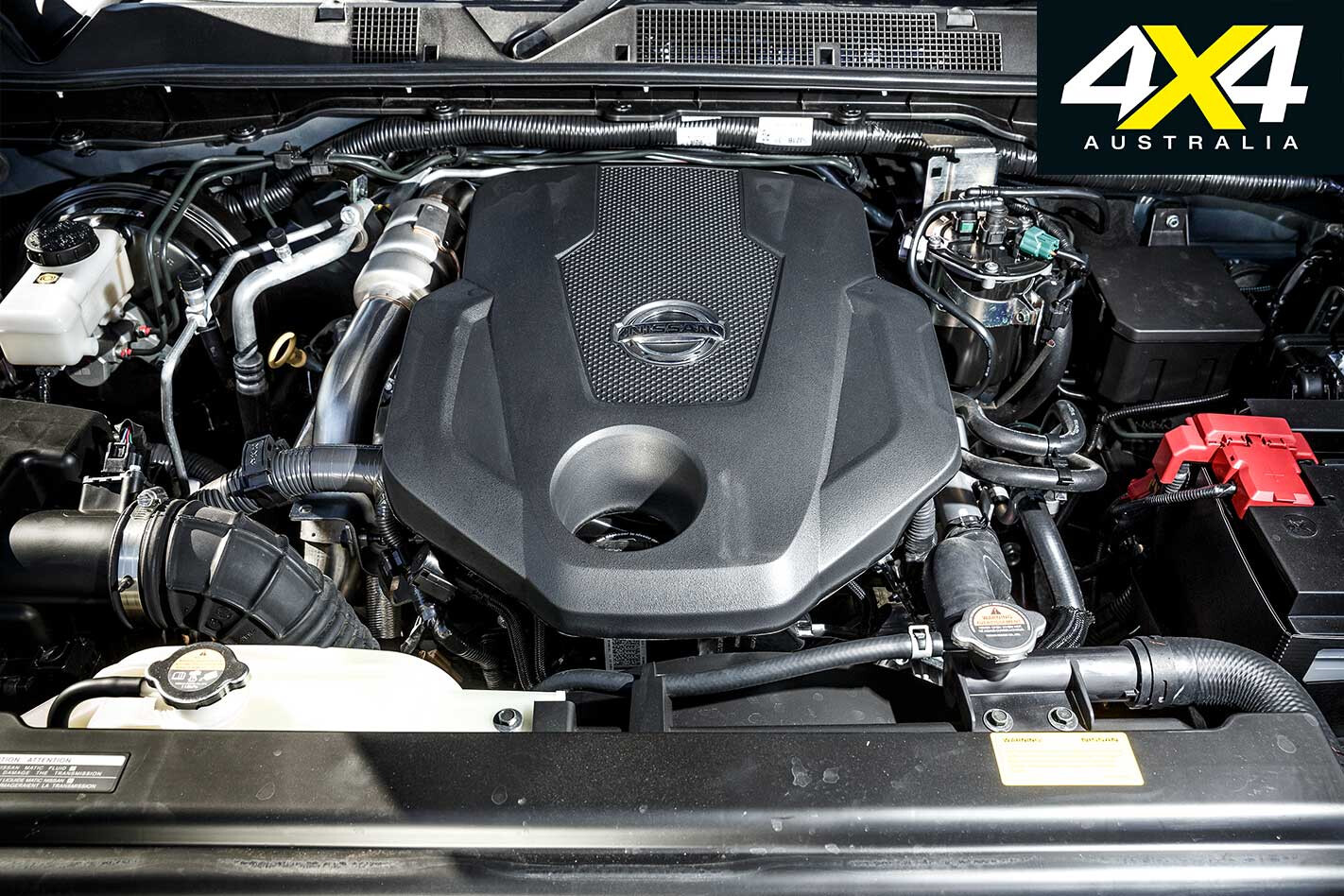
THE Navara’s engine is unique here – well, almost unique, as the same engine is used in the Navara-based Mercedes-Benz X-Class – thanks to having two turbos rather than one. It’s a Renault-sourced engine with a sophisticated bi-turbo arrangement that employs a smaller, quick-spinning turbo for more immediate response off-idle, and then a larger turbo that kicks in to provide the mid-range and top-end punch.
Sequential turbo arrangements like this are commonly used on smaller European diesels (similar to the four-cylinder Amarok, for example) and provide flexibility that comes from having both strong low-rpm torque and good top-end power.
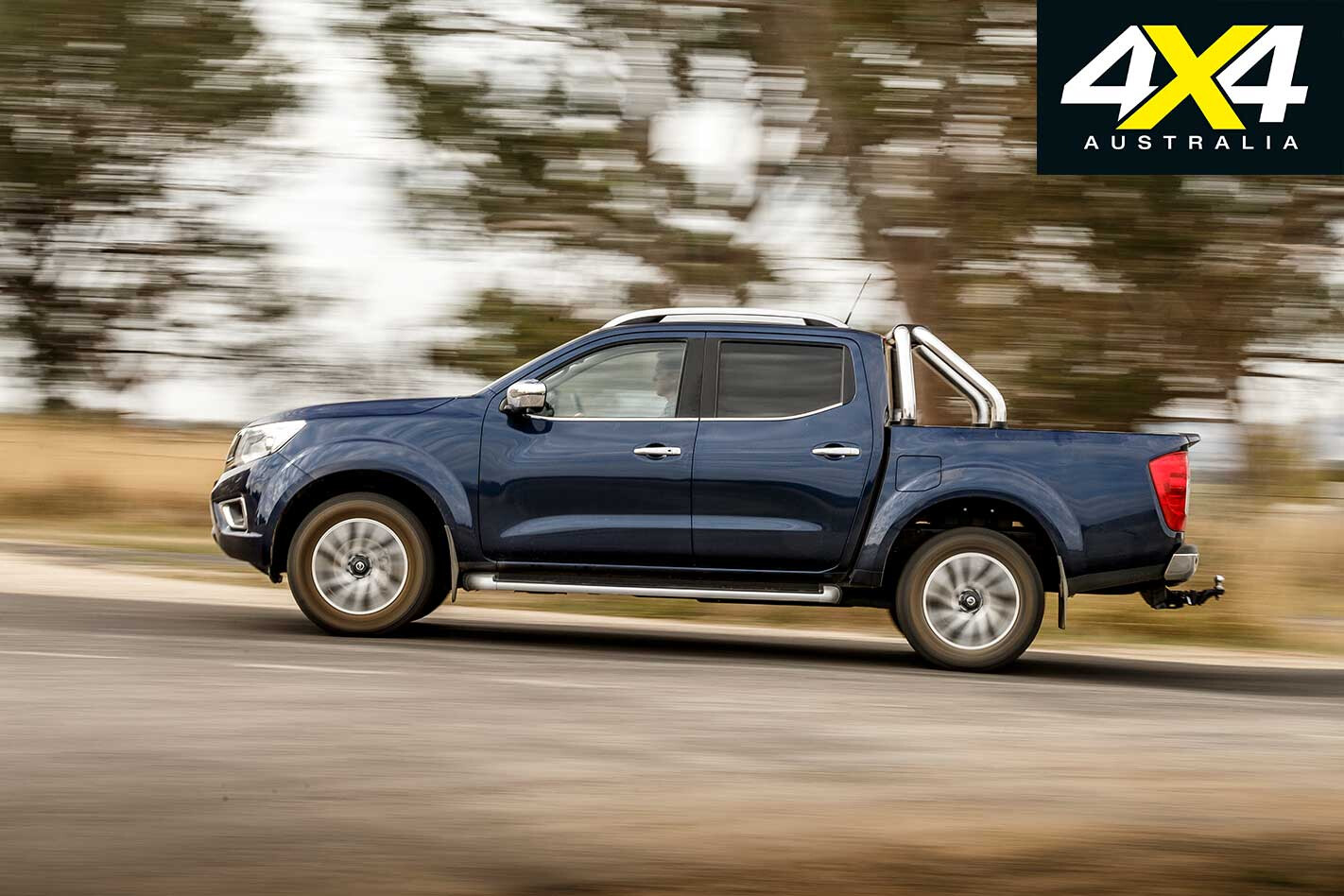
Thanks also to the Navara being one of the lighter utes here and enjoying the benefit of a seven-speed automatic and relatively short overall gearing (55km/h/1000rpm in top), it’s a performance frontrunner, if you ignore the Amarok V6 which is in a league of its own.
The Navara’s 2.3-litre diesel is effortless in general driving and agreeably smooth and quiet, except when pressed hard, where it becomes somewhat noisy. The Navara’s seven-speed automatic offers smooth and slick shifts, but the shift protocols in ‘Drive’ are very much tuned for economy rather than performance.
ON-ROAD RIDE AND HANDLING
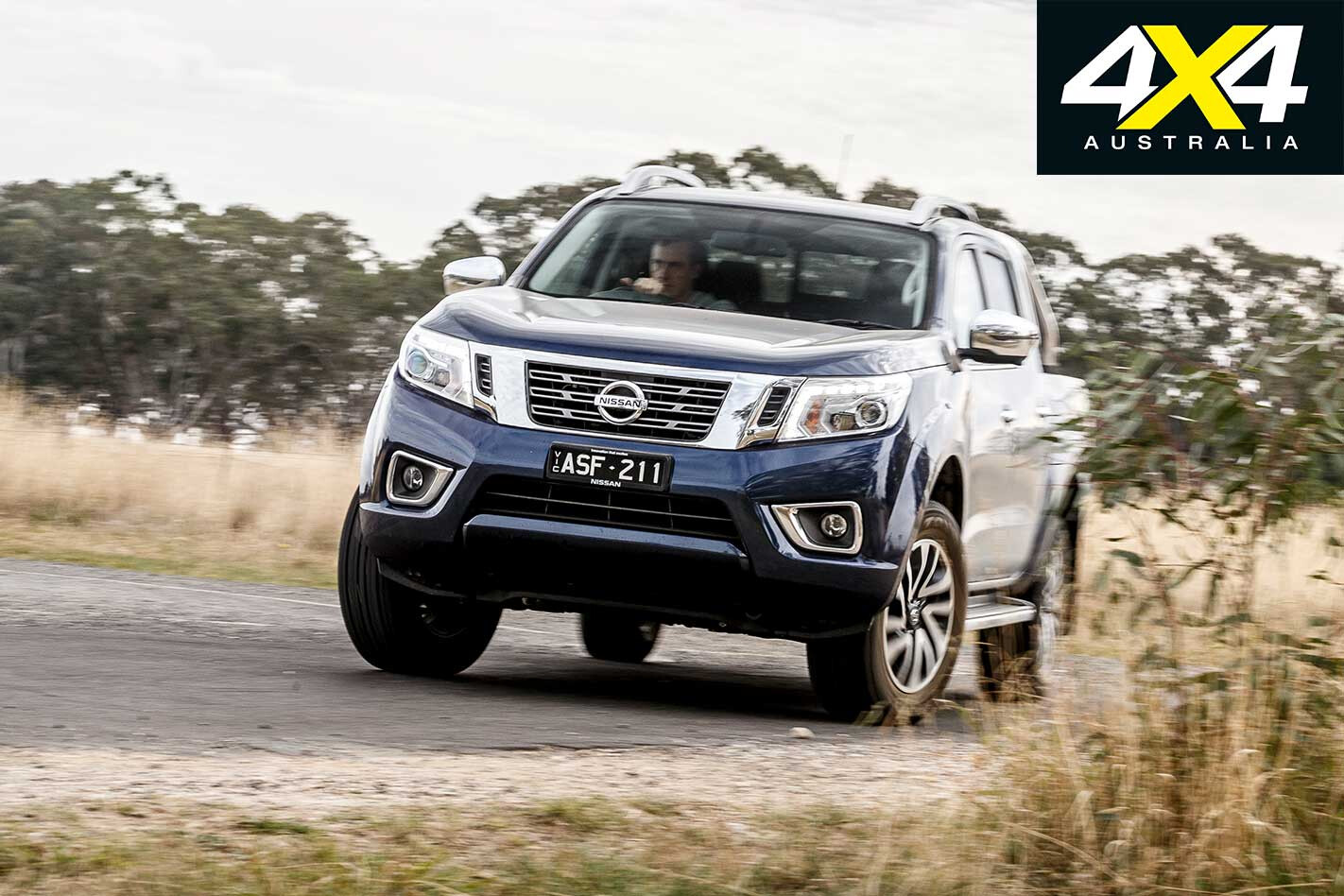
MUCH of the revision work on the MY17 and then the MY18 Navara has centred on the Navara’s heavy load carrying and towing performance (see Load Carrying). It has also addressed the unladen ride and handling and the front-to-rear suspension match, which wasn’t anything special in the original NP300 guise.
In fact, the front-to-rear match was poor (somewhat like the very ordinary D22) and well short of the nicely sorted D40.
Thankfully, the Navara feels much better now suspension-wise, and with the quicker, more responsive steering on the MY18 model, is much more enjoyable to drive, even if the new rear suspension tune means somewhat of a harsh unladen ride.
OFF-ROAD
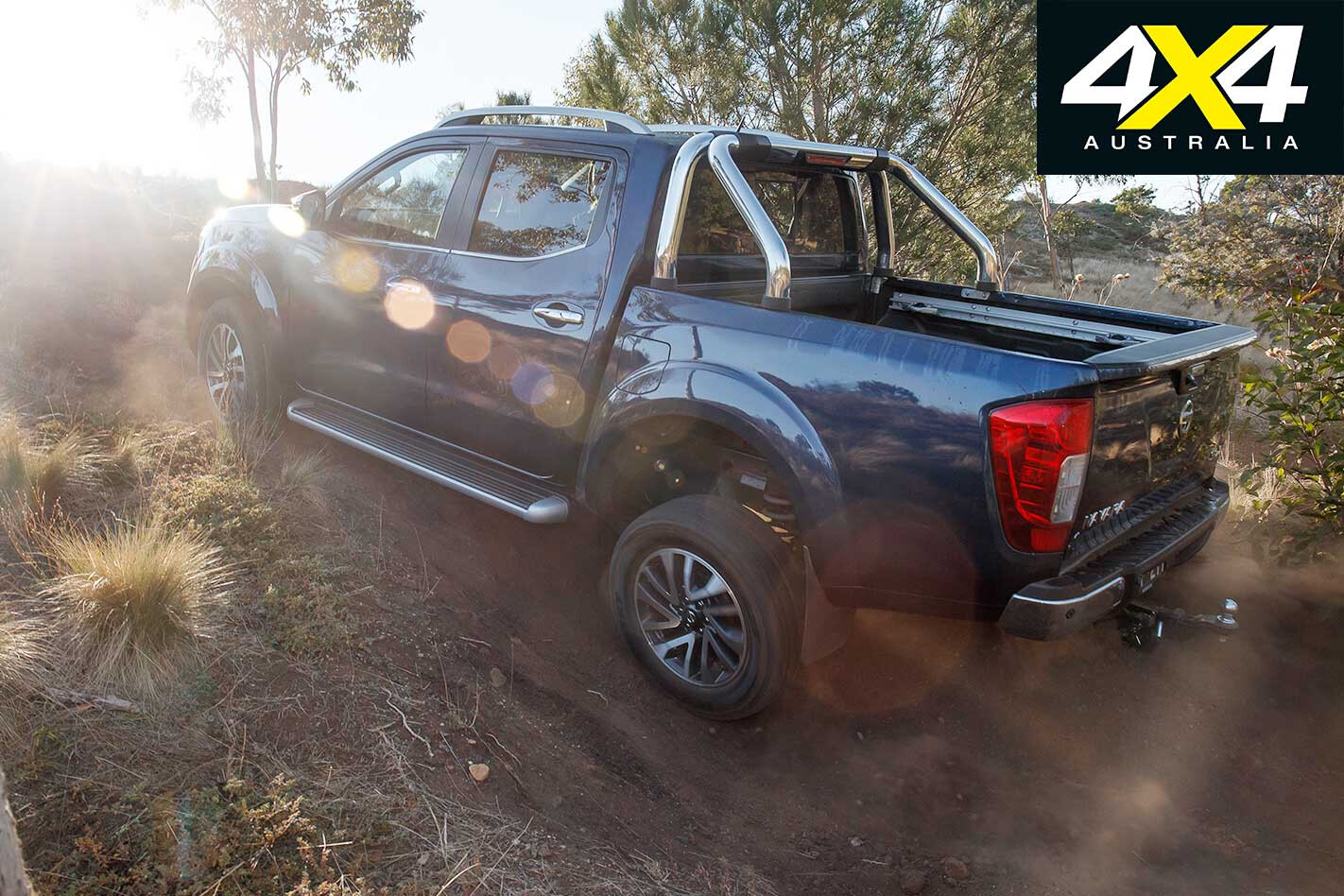
THE Navara has never been particularly capable off-road, as it’s not endowed with much suspension travel (despite the coils at the rear) and is relatively low-slung. ST and ST-X models have a rear locker, and the good news is that when it’s engaged the electronic traction control remains active on the front axle.
The Navara wouldn’t make it up our set-piece hill climb without the rear locker, but it did so with the rear locker engaged. That puts it in front of the Triton and D-Max, even if it did have to work very hard to make the climb.
The Navara is also one of four utes here that doesn’t draw its engine intake air from the inner guard, and it claims the lowest wading depth here of just 450mm. The Navara’s raised bonnet edges also restrict vision.
LOAD CARRYING
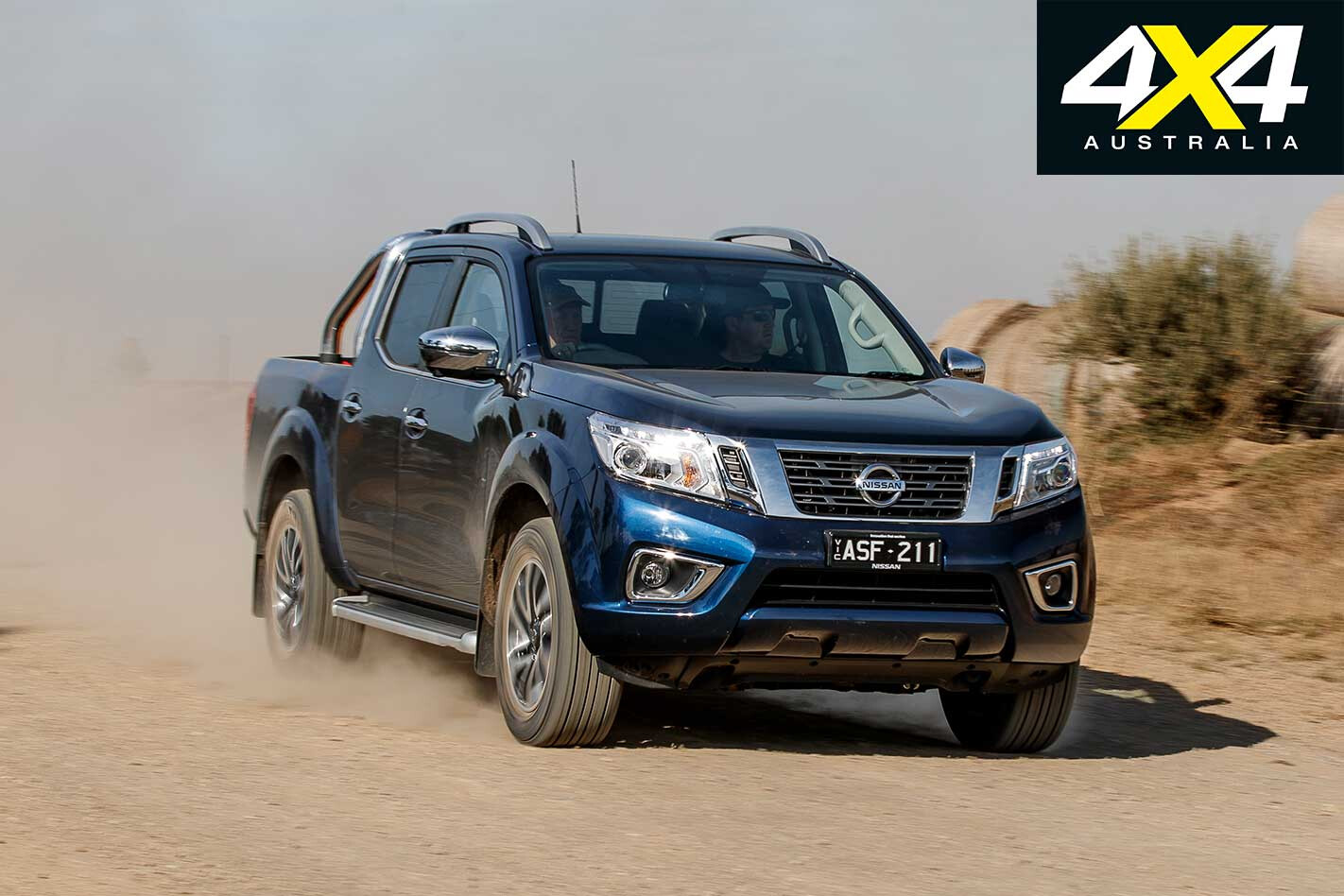
IN ITS original iteration the Navara fared very poorly chassis-wise when towing 3500kg or at maximum payload. In our 2016 Max Load and Tow test it finished at the tail of the field, even if the powertrain coped well enough at the tow and payload limits.
The Series II version did better carrying a maximum payload, with much improved lateral stability, but it still has a nose-up, bum-down attitude on the road. In fact, in this regard, it was no better than before.
With our 900kg payload onboard the MY18 Navara performed better again with acceptable handling and chassis stability. It certainly didn’t drop as much as before at the back; although, overall, the Navara is still short of the best here in terms of the way the chassis carries a heavy load.
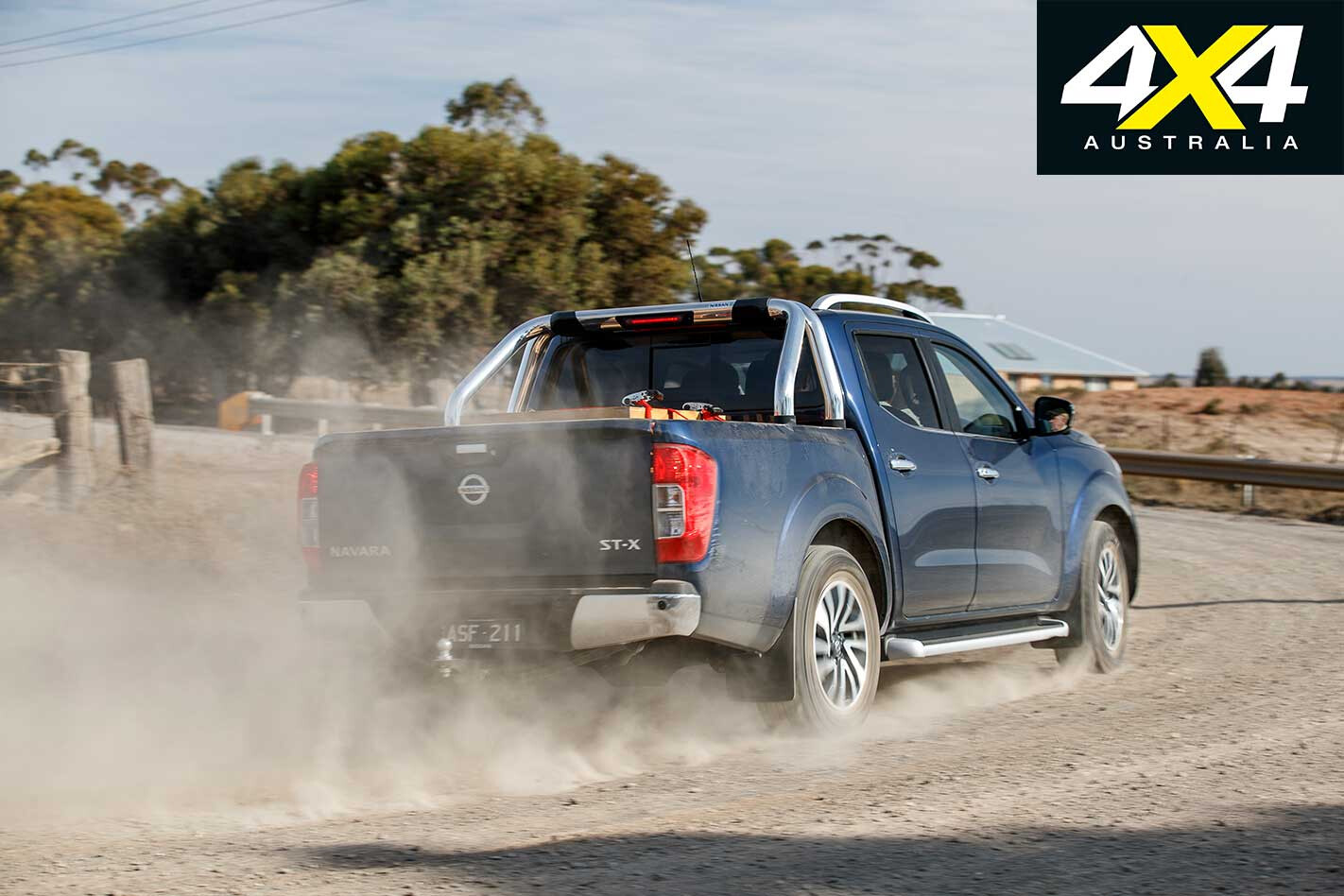
More pleasing is the engine performance with a heavy load onboard. You can still feel the engine working a bit harder, and it’s noisy as a result, but the good low-rpm torque and short gearing means it’s not too fussed.
Cargo tie-downs that can be repositioned fore and aft in the rear tub are a handy fitment with the ST-X, but they would be better mounted on the tub floor rather than high on the tub sides.
CABIN AND SAFETY
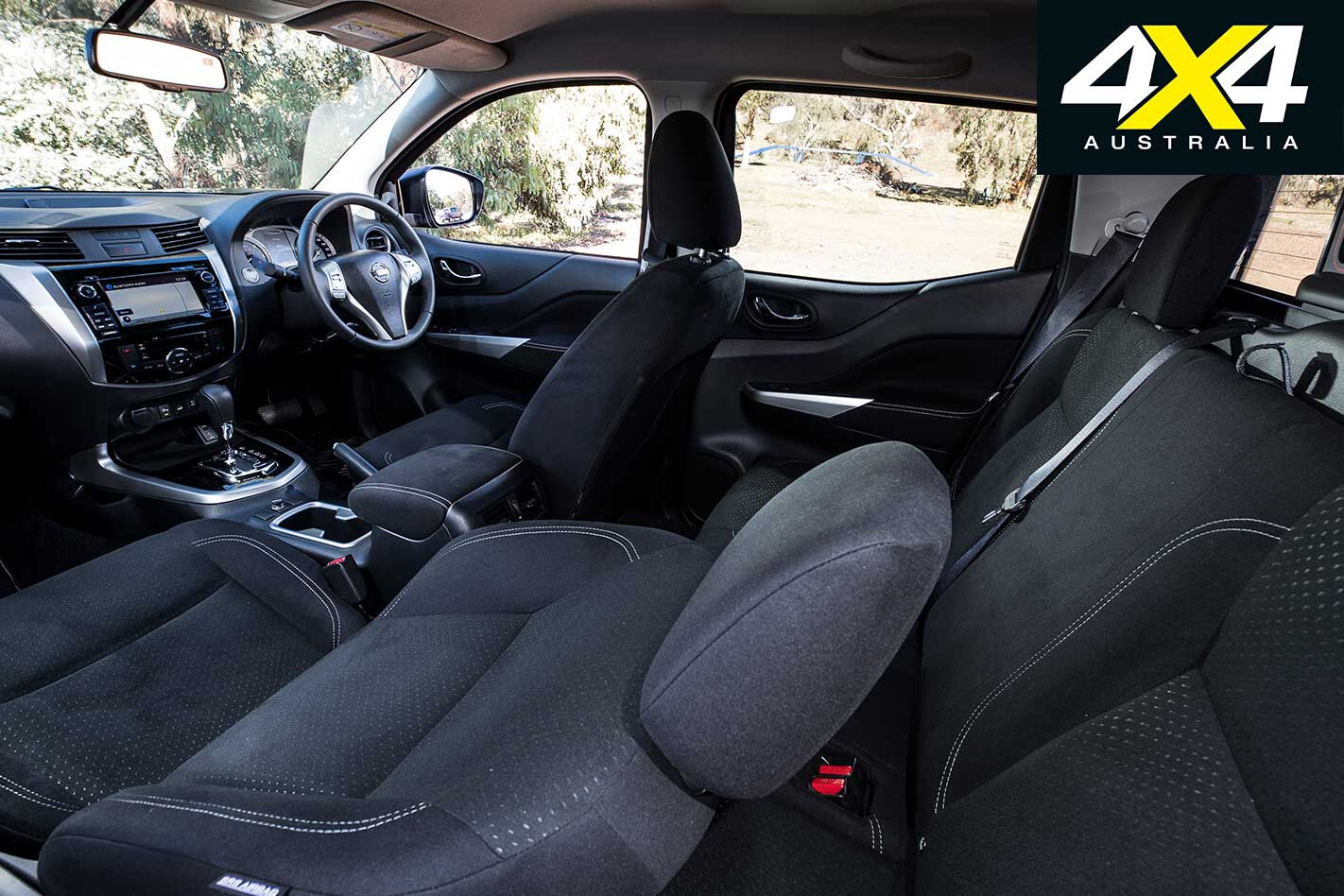
THE Navara has one of the smaller cabins here, so it isn’t the best, especially in terms of rear-seat space for three adults. However, the cabin is nicely finished and has tilt-and-reach steering wheel adjustment. Seven air-bags contribute to the five-star ANCAP safety rating.
There’s plenty of kit at a reasonable price, too, with the ST-X having the option of a sunroof, something unique in this class. A sliding section in the centre of the rear window is a feature unique to the Navara and X-Class.
PRACTICALITIES
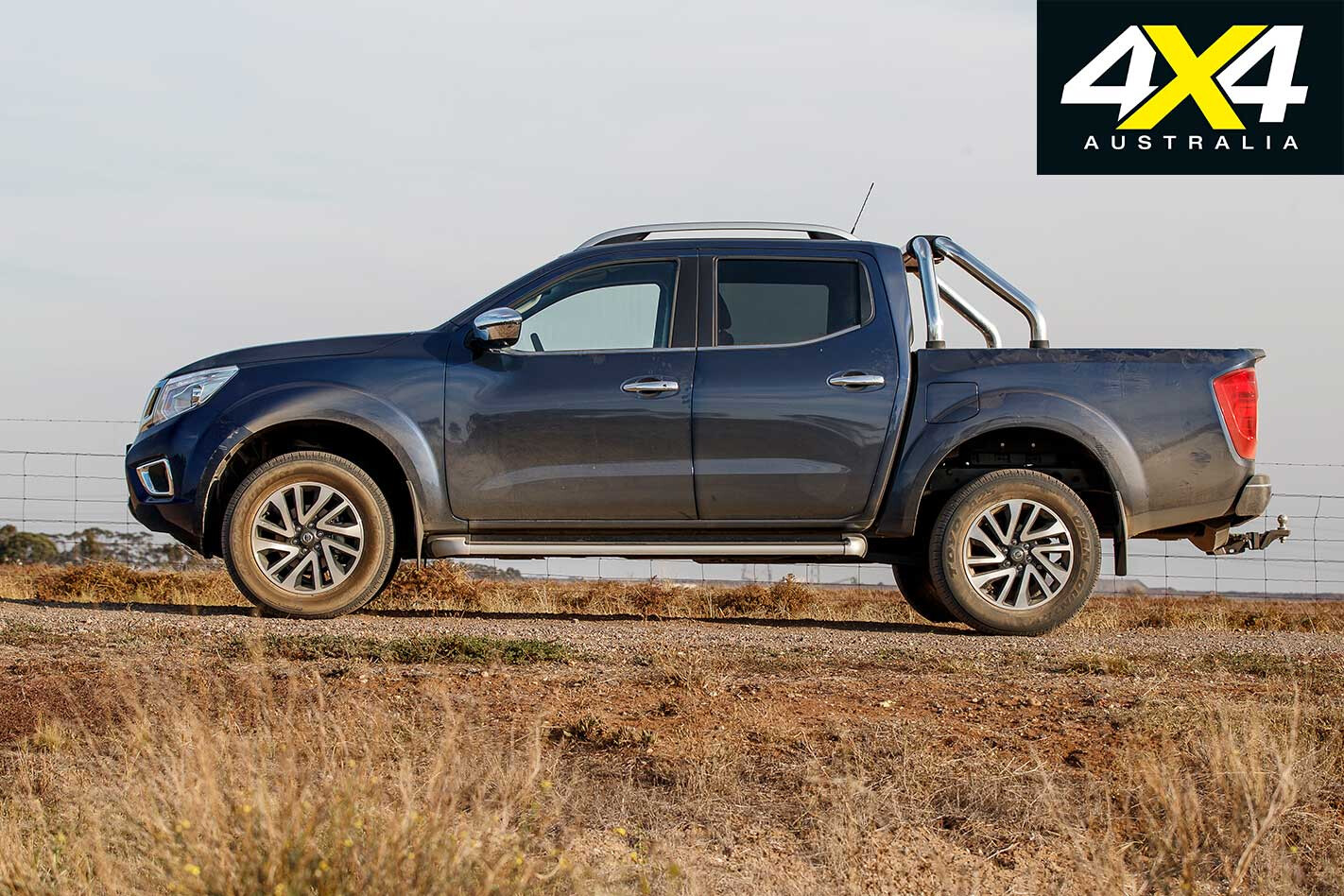
THE Navara offers notably long 12-month/20,000km service intervals and set-price servicing. There’s also a limited range of factory accessories that include steel and aluminium-alloy bullbars; although, the major aftermarket companies provide a greater range of options.
This top-spec Navara rides on 18-inch wheels, but 17s or 16s from lower spec models can be fitted to open up the choice of replacement tyres.
Nissan Navara ST-X Specs Engine: 2.3-litre 4-cyl bi-turbo-diesel Power: 140kW at 3750rpm Torque: 450Nm at 1500-2500rpm Gearbox: 7-speed auto 4X4 system: Dual-range part-time Crawl ratio: 44.6:1 Construction: Separate chassis Front suspension: Independent/coil springs Rear suspension: Live axle/leaf springs Kerb weight: 1980kg GVM: 2910kg Payload: 930kg Towing capacity: 3500kg Towball Download: 300kg GCM: 5910kg Fuel tank size: 80 litres ADR fuel claim: 7.0L/100km Test fuel use: 11.0L/100km Touring range: 677km* *Based on test fuel use, claimed fuel capacity and a 50km ‘safety’ marginAcceleration and Braking 0-100km/h: 9.7sec 80-120km/h: 7.0sec 100-0km/h: 48.7m
Off-road capabilities Departure angle: 26.7˚ Rampover angle: 23.8˚ Approach angle: 32.4˚ Wading depth: 450mm Ground clearance: 228mm
Nissan Navara Prices** SL: $43,900 ST: $47,190 ST-X: $51,990 **Prices do not include on-road costs
The Results
Results and verdict
Nine utes, but only one winner…
Intro & Contenders
Home of 4X4 Australia’s Ute Test, where we have put all of the popular 4×4 dual-cabs through their paces off-road and on-road.