
AN ALL-IN-ONE beach adventure machine is making waves across the Pacific in the USA.
The sun and surf-inspired Surfcamp, based on the 2018 Titan XD Midnight Edition, is the latest vehicle to be released as part of the Titan Adventure series of lifestyle-themed builds. Think: Armada Snow Patrol and Armada Mountain Patrol.
The Surfcamp retains the Titan XD’s Cummins V8 turbo-diesel engine and commercial-grand ladder-frame chassis, but it receives a three-inch suspension lift kit (Stage 5) courtesy of ICON, as well as Nitto Ridge Grappler rubber wrapped around ICON Alpha wheels. A Fab Four Vengeance Series front bumper offers protection from the elements, as well as integrated fishing rod holders.
Wetsuit-inspired seat covers and heavy duty rubber floor mats are a great addition to combat sand and saltwater.
“In the summer, beach parking lots are full of trucks hauling surfboards, fishing rods, boats and campers as people crave the sun and sand,” Fred DePerez, vice president, Nissan North America LCV Business Unit, said.
“Inspired by the vintage beach trucks of the 1960s, Titan Surfcamp is a celebration of the beach truck tradition with all the modern technologies Titan customers want when they head out to surf, shore-fish and camp-out by the water.”
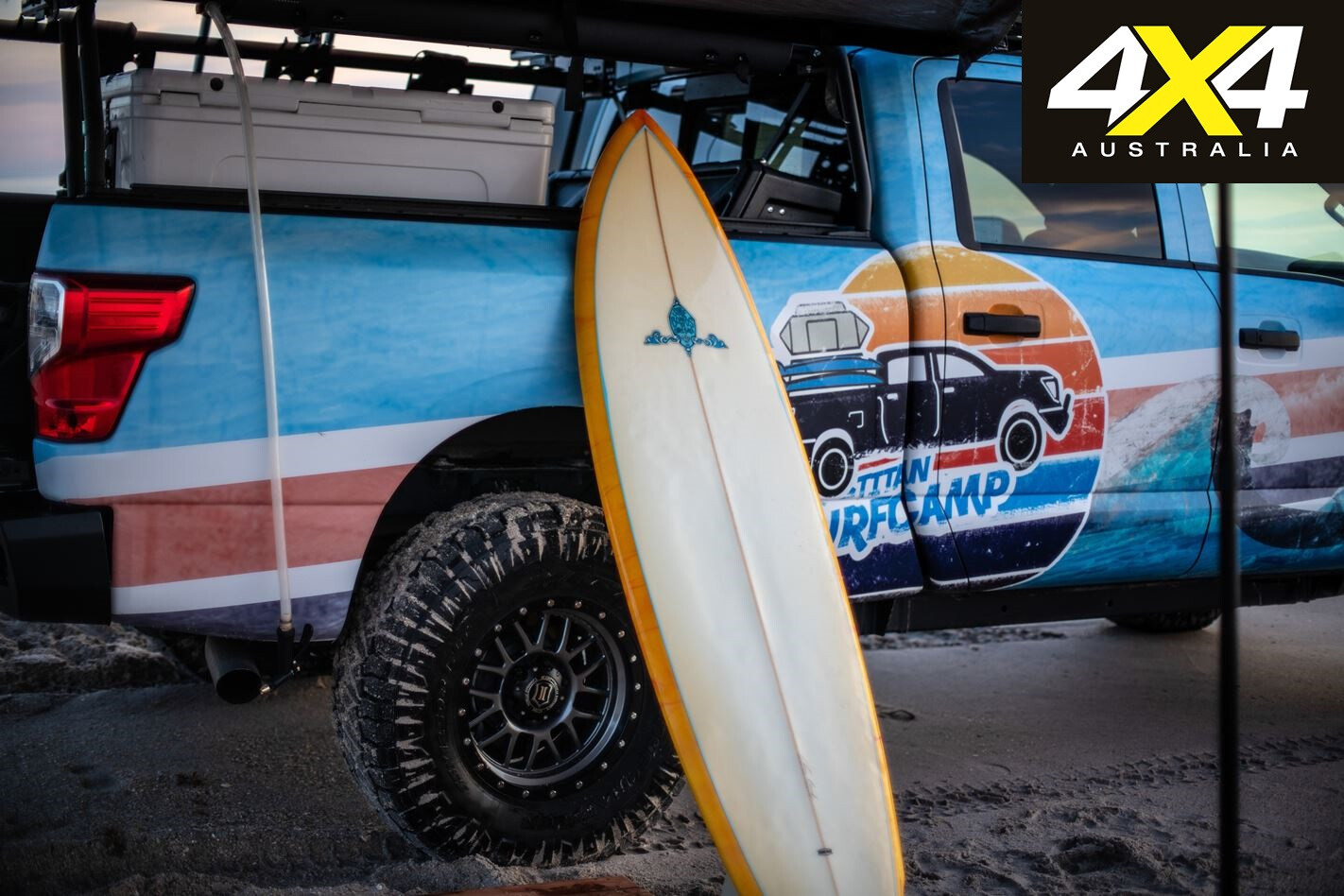
The inspiration from vintage beach trucks is evident in the retro colour scheme and artwork, inspired by Hot Wheels’ 1971 Datsun Bluebird Wagon nicknamed “JNC Surf Patrol”.
To store lures, wetsuits and blow-up crocodiles, the build utilises various storage solutions, including a Decked bed drawer storage system, a Leitner Design cargo rack and a Rhino-Rack USA cab roof rack, as well as specific racks for surfboards and fishing rods.
Other features include a Road Shower rack-mounted solar shower, a Rhino-Rack Batwing awning, a Yeti cooler, lighting from KC, Rigid and Baja Designs, and a roof-mounted Freespirit Recreation Elite Series Automatic tent.
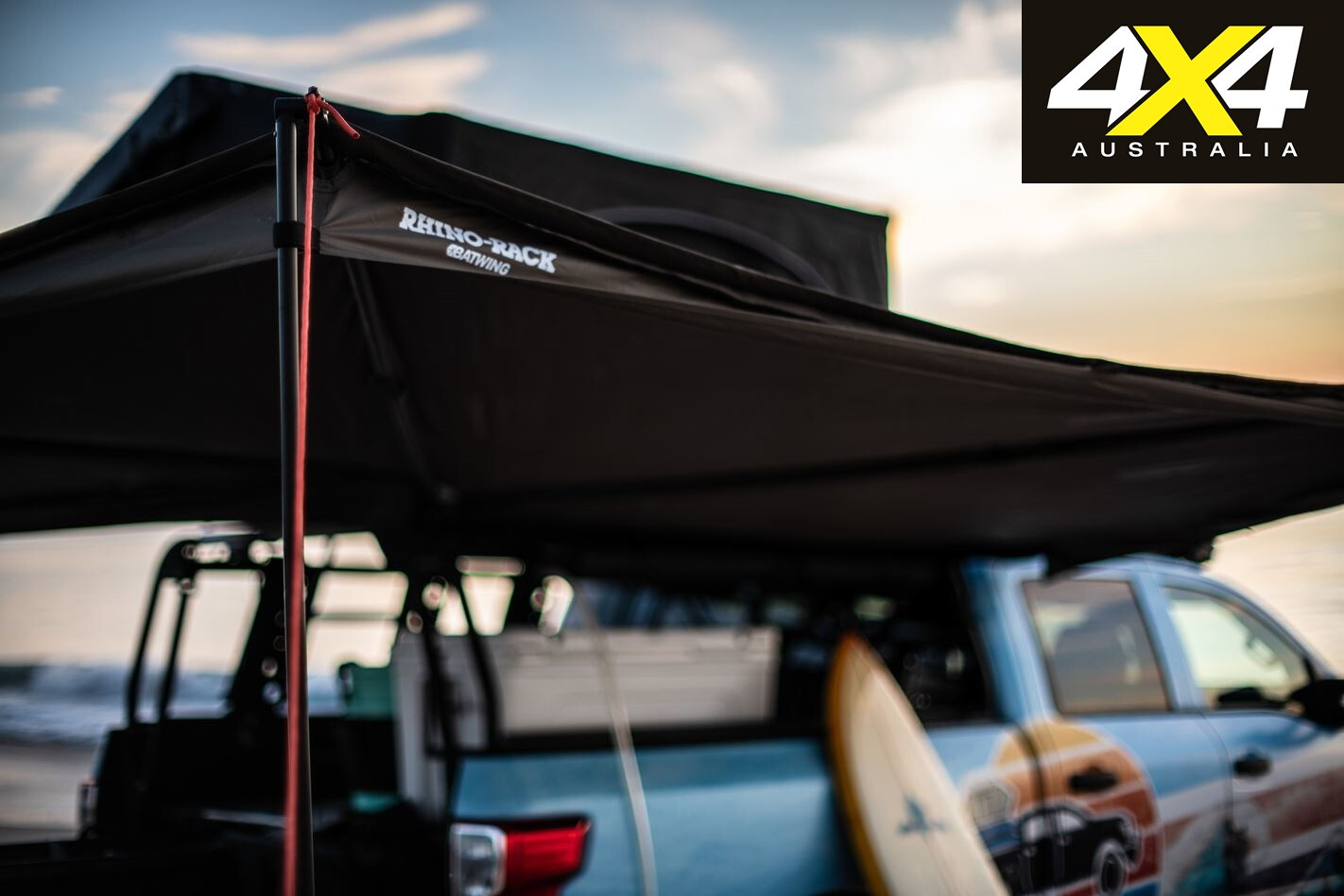
“With Titan Surfcamp, it’s never been easier to hit the beach,” DePerez said. “I hope this amazing show truck inspires surfers, fisherman and beach lovers to add Titan to their weekend adventures.”
The Surfcamp is a show build that’ll remain in the States, but if you’re keen to size-up a converted Titan, go here: – American Vehicle Sales: american.com.au – Performax International: performaxint.com.au
“Dad … we’re so not giving this back”… backseat approval had been decreed.
I was quite stoked when Matt threw me the keys to the top-spec Ti-L Patrol for a long weekend away with the boys and kids on the Murray River. It wasn’t the most arduous off-roading trip, but a weekend up bush under the stars is always enjoyable.
Packing for the trip was easy, as there’s plenty of room in the rear for a fridge, food boxes and clothing; plus, I strapped the kids’ bikes to the Ironman 4×4 roof rack. The kids loved the extra room in the back seats compared to our regular GU Patrol, while the Bluetooth headphones that come with DVD players in the headrests meant there was a complete lack of cords around their feet to get tangled in.
My little Tambo Camper Trailer weighs in at about 800kg loaded, and hooking it up to the Patrol was simple. Towing was a breeze and overtaking was just as easy; there was no dropping a gear on long run-ups, like I need to do with my 3.0L Patrol. Simply wait for a break in traffic, point, squirt the 298kW, and it’s all over and done before you have a chance to glance at the speedo.
We spent the weekend in the Murray River Reserve, about 20 minutes outside Echuca, and there are plenty of riverside options to pull-up for a stay. Christies Beach is popular for good reason, but on this trip we stayed at Betts Beach, as it had a rope swing (OH&S parents disapprove, but kids love it) and is close to the beach.
The roof rack came in handy when it came time to collect wood, as we didn’t want to dirty the plush cabin.
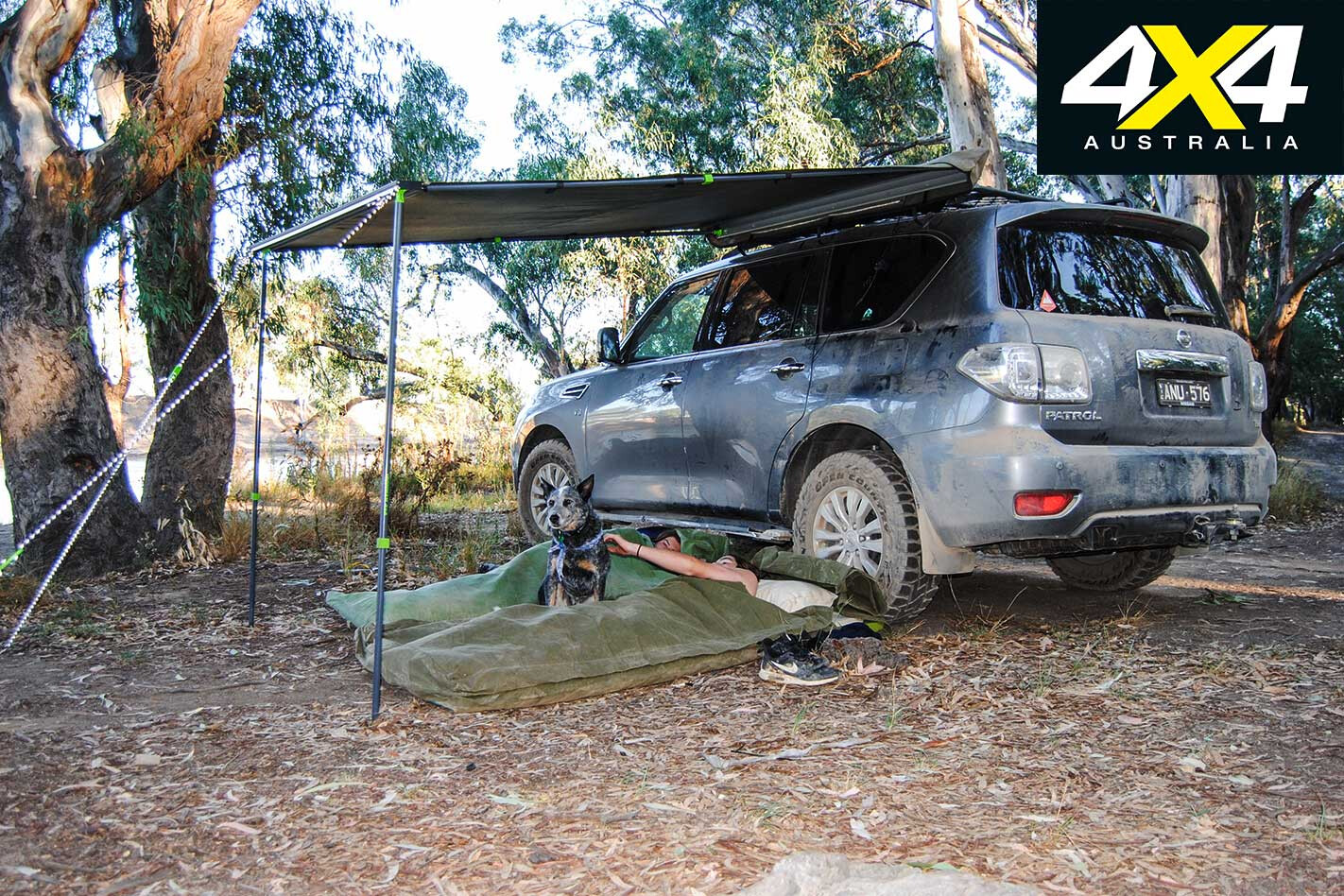
The Ironman Instant Awning was also a bonus, as a couple of the older kids had the old open-to-the-elements swags and the awning kept the dew off them; all they had to worry about was the threat of mozzies and an early morning lick from Max the Blue Heeler. The Ironman awning comes with an inbuilt LED strip light, which is a well-thought-out addition that comes in handy after dark.
If this Patrol was mine, I’d need a fridge slide and a second battery for the fridge – I’m so used to these in my own car that now I’m spoilt. For the long weekend I had take the fridge out of the rear and run it off the trailer’s battery/solar set-up.
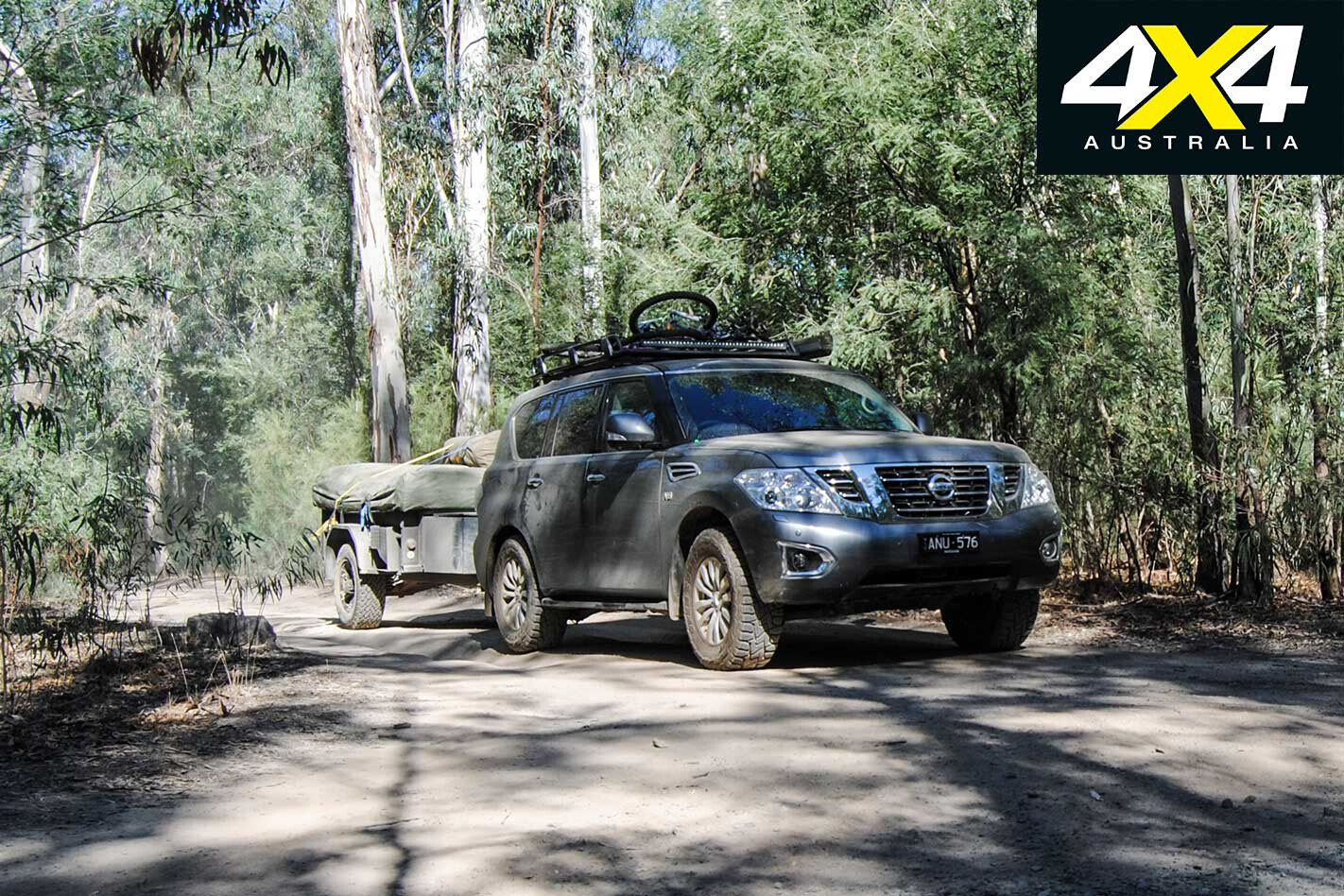
Stepping out of my old, faithful 3.0L GU and into the Ti-L made me realise how far cars have developed since 2001: lane departure and forward collision warnings, blind spot monitors, and Intelligent Distance Control are constant reminders of how far things have come. However, it was that V8, with a complete lack of turbo lag, which was the biggest winner for me.
How much did it drink? Around town I achieved 17.47L/100km; a tour up the Hume one weekend when unladen gave me 13.14L/100km; and on the Echuca camping weekend with the trailer we achieved 18.45L/100km. It’s not the end of the world, but there is a price to pay for effortless power.
Editor’s note
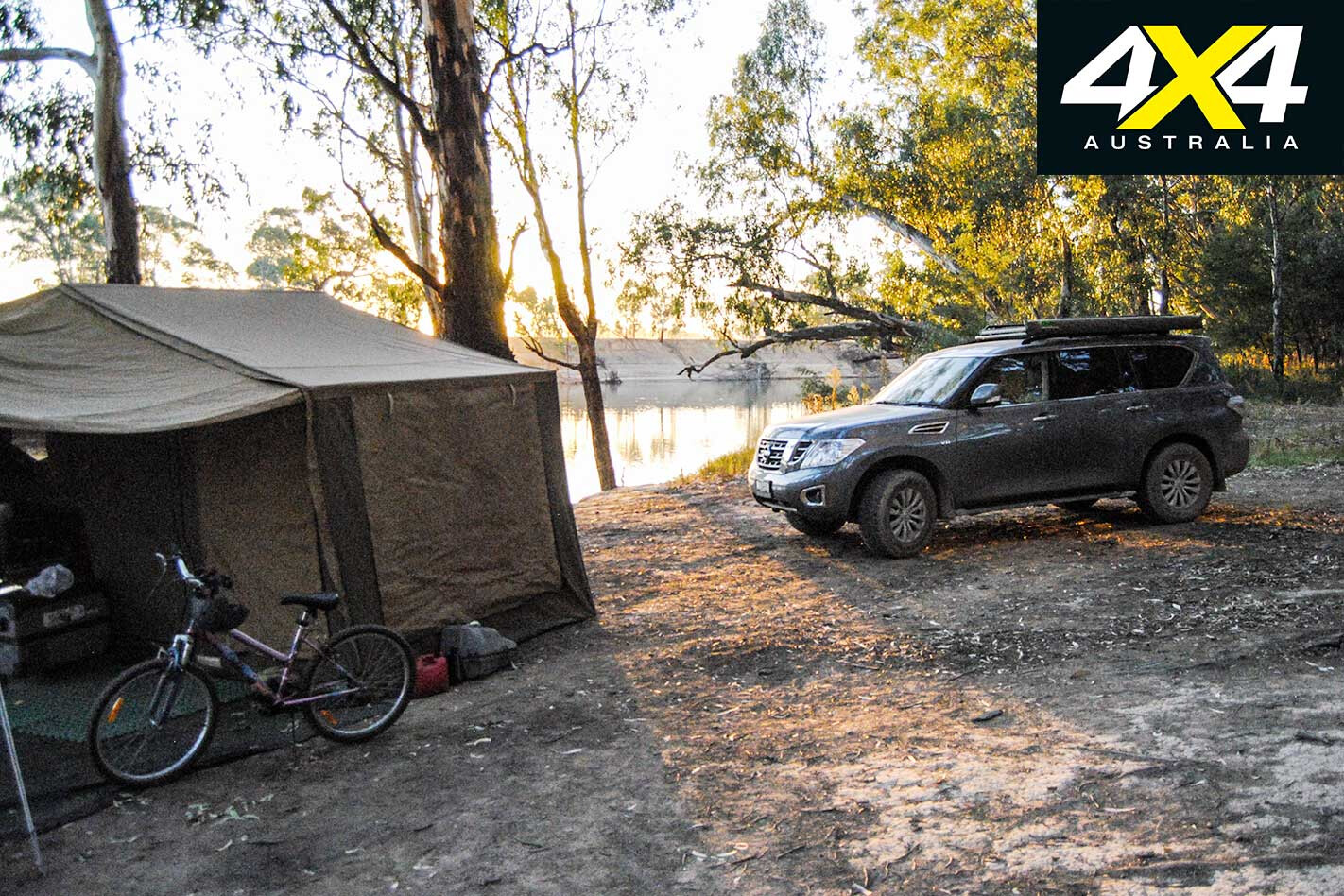
This is the last instalment of our six months with the Y62 Patrol. Just like Stu, we’ve loved it for its power and performance, the massive amount of interior space and its generous list of standard features.
What’s more impressive is the price of the Patrol against any of its large 4×4 wagon competitors. And before anyone wants to complain about the fuel use of a petrol V8 engine, the money you save on purchase price over a similar diesel-fuelled wagon buys you a hell of a lot of premium gasoline. We’re missing the big bus already!
Follow the journey of 4×4 Shed’s 2017 Nissan Patrol Ti-L – Part 1 – Part 2 – Part 3 – Part 4 – Part 5
4×4 Shed Log: 2017 Nissan Patrol Ti-L Current mileage: 14,330km Date acquired: Dec 2017 Price: $88,990 + ORC Mileage this month: 3656km Average fuel consumption: 16.22L/100km
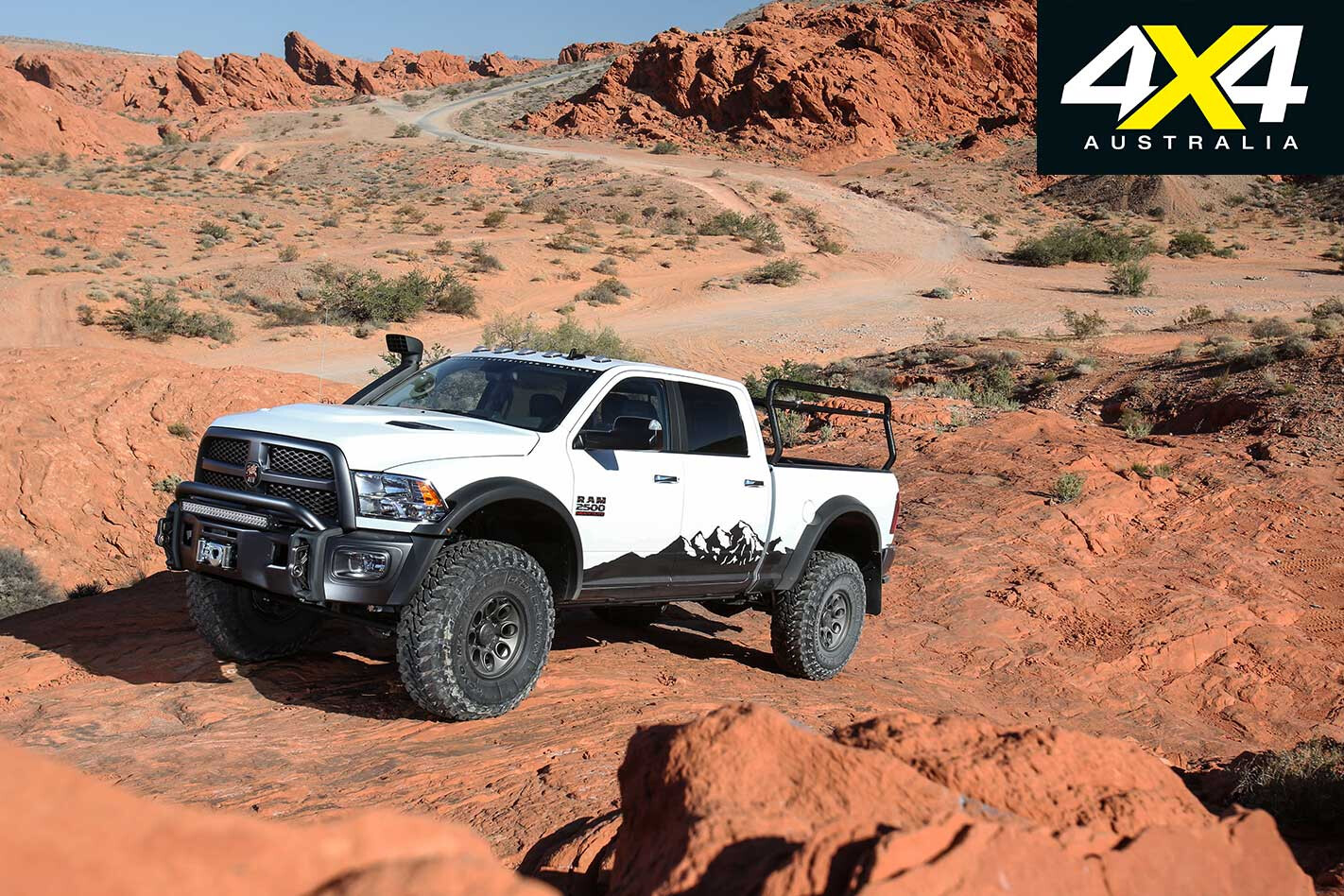
WITH more local companies importing, converting and marketing RAM trucks in Australia, we recall a drive we took with one of the best kitted-out RAMs we’ve come across: the RAM 2500 Prospector from American Expedition Vehicles (AEV).
For 20 years AEV was a Jeep company, but the Detroit firm has expanded its range with RAM vehicles. Its first vehicle was the AEV RAM Prospector XL which was based on the 2500 heavy duty pick-ups, and it’s now building IFS 1500 Series RAMs which it calls the Recruit.
We were lucky enough to snare a drive of a Prospector XL that was specially fitted out as a limited edition to mark AEN’s 20th anniversary.
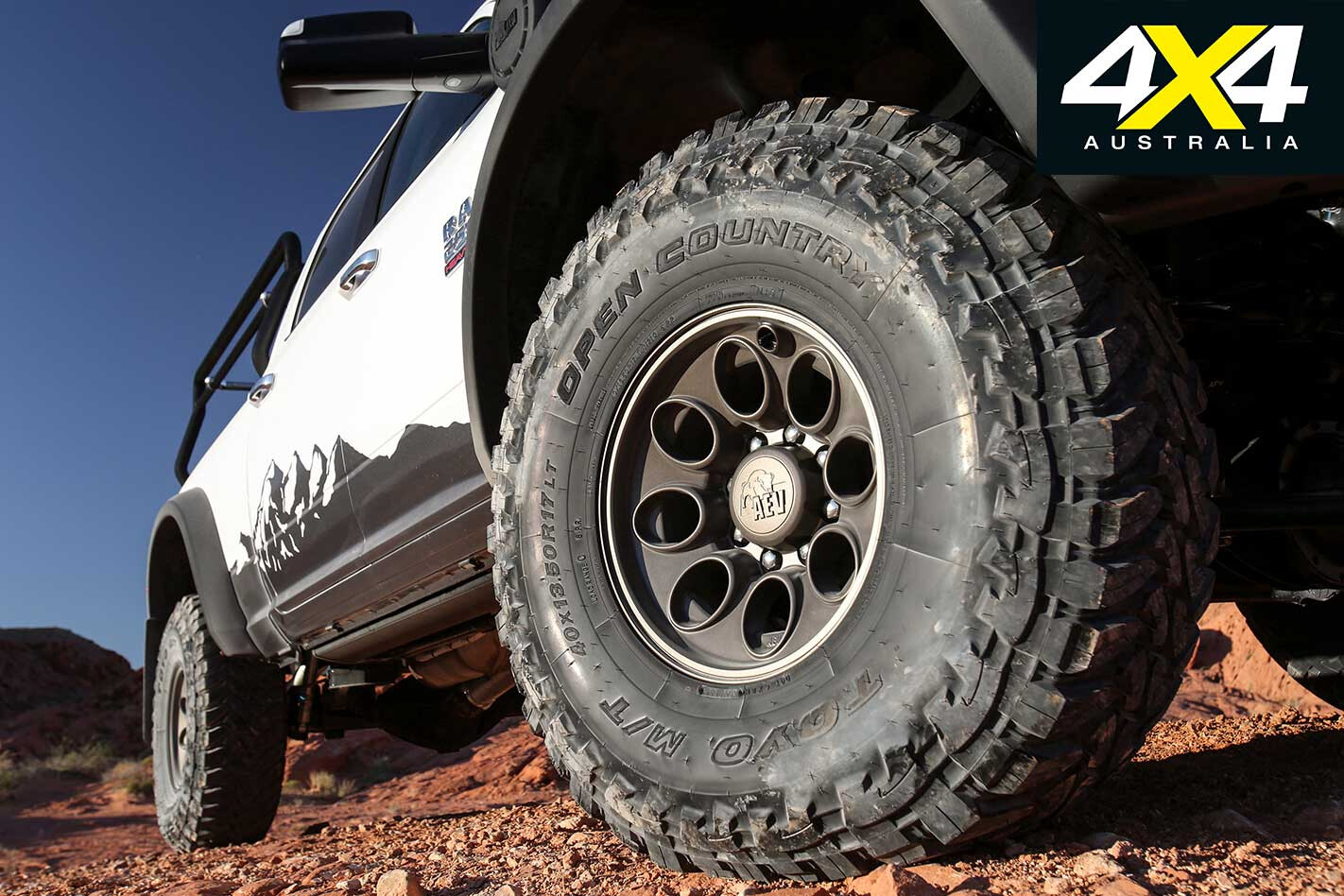
Most of the time XL denotes Extra Large and, while that’s an apt description for this truck, in this case it stands for the Roman numeral 40, which relates to the Prospector’s tyre size. The massive 40-inch Toyo Open Country M/T tyres are cleverly tucked under the guards, with just a 75mm suspension lift thanks to clever design and extension of the wheel arches for clearance. The arches are then finished in High Mark flares.
Other features on this 20th Anniversary Prospector include the AEV heat reduction hood, raised air intake, 17×10-inch AEV Katla alloys, AEV premium front bar, Vision X LED light bar, and a bed rack.
Like the company’s Jeep products, the Prospector still drives like a standard vehicle on the highway, except in keeping with the RAM theme it towers over almost everything else on the road. Even with those massive tyres, the Prospector’s road manners are impeccable.
Off the highway and in the desert the RAM makes light work of the sand dunes; you have to pick your lines through the tight stuff and the steering takes few more turns to get it around, but it’s surprisingly manoeuvrable.
AEV’s clever DualSport Suspension has a lot to do with the truck’s superior handling, and it starts with Bilstein 5160-series remote reservoir shocks with valving optimised by AEV to suit the truck. AEV retains as much of the OE components and engineering as possible including the coil springs and control arms. The 75mm of lift comes via aluminium coil spacers, while brackets move the front axle forward to aid tyre clearance.
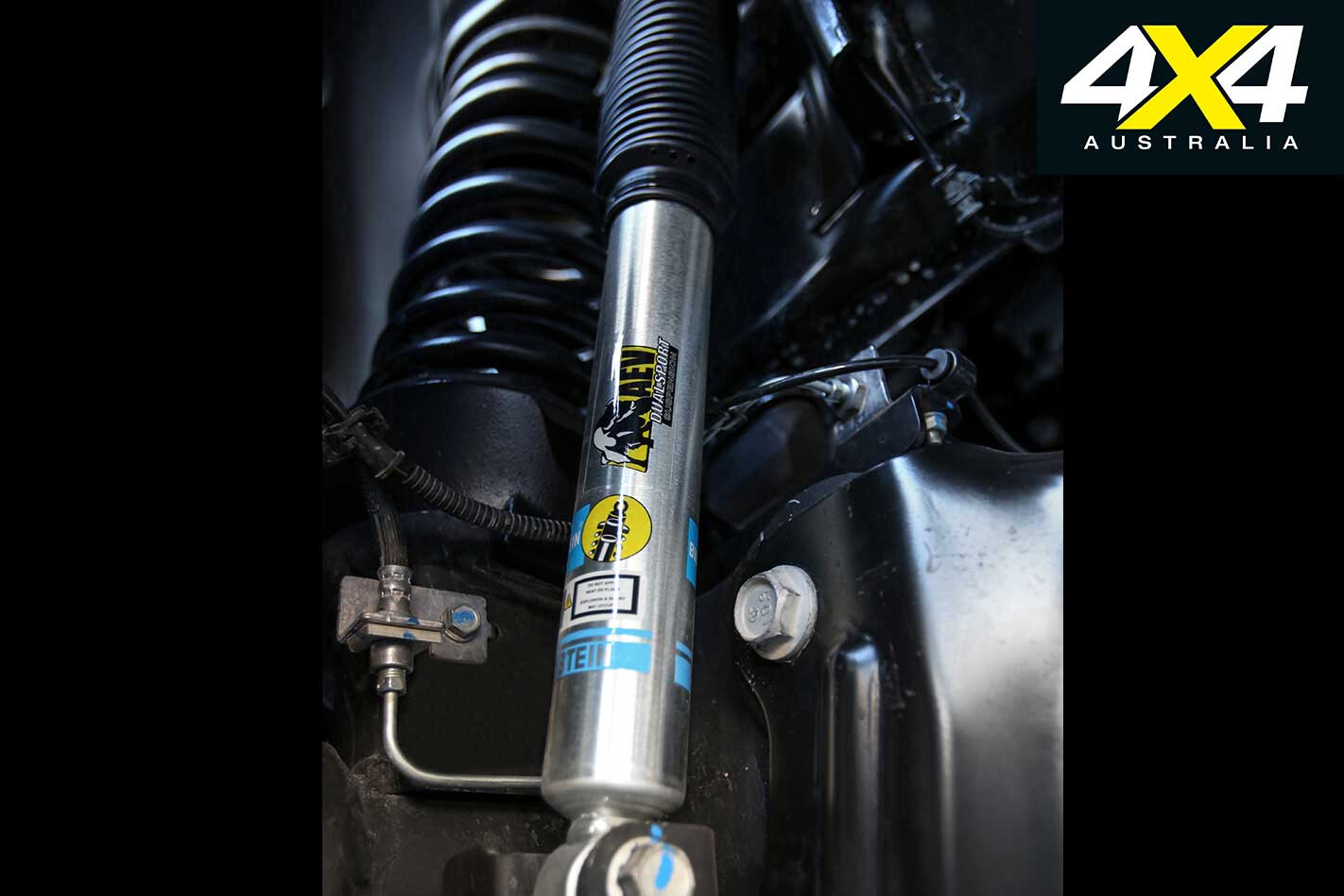
The AEV High Steer Kit restores factory geometry with a replacement draglink, track bar and track bar tower, and these components correct roll centre height, body roll, bump steer and roll steer. Stock steering feel is restored by AEV’s heavy-duty Hydraulic Assist Steering Kit. It all adds up to provide better than stock ride and handling, with the added ground clearance and tyre height of the XL.
While the 6.7-litre Cummins diesel engine and 40-inch tyres make getting through the sand a cinch, the Prospector would be an incredible long-haul tourer with an ability to hold its own off-road.
With RAM trucks becoming more common on Australian roads, we can imagine the Prospector kit will be popular with owners here. Thankfully, like Jeep products, all AEV gear is available through the two local distributors: Murchison Products in Brisbane and JeepKonection in Melbourne.
Distributor links: American Expedition Vehicles: aev-conversions.com Murchison Products: murchisonproducts.com.au JeepKonection: jeepkonection.com.au
Winter doesn’t have to be all cold and depressing as towns around Australia will be hosting numerous events from late-July all the way up to September. These events include rodeos for the adventurous, 4×4 gymkhanas for the enthusiast, and fun fairs for the rest of the family.
CHRISTMAS IN JULY (NSW)
The Blue Mountains is the place to go for those looking for that typical cold and (potentially) snow-filled Yuletide celebration over July and August.
This World Heritage-listed region is only an hour or so from Sydney and offers some great off-road driving in the nearby state forests, plenty of bushwalking and great campsites. Plus, time it right and you could well nab that elusive ‘white christmas’ experience, surrounded by some of Australia’s rugged, mountainous terrain.
See www.visitnsw.com for more info on staying in the region during the winter, as well as the events held.
MILPARINKA GYMKHANA (NSW)
For a chance to witness skilful horsemanship, head to the Milparinka Gymkhana on Saturday, July 14. The event will take place at the Milparinka Sports Grounds and is a great family event with something to interest everyone – plus, it’s on during the school holidays.
Riders travel from near and far, from local stations and interstate, to compete in events such as the men’s and women’s barrel races and horse sprint events, and there’s also live entertainment on the night.
Check out Milparinka Gymkhana’s Facebook page for more information and to see the event list.
LIGHTNING RIDGE OPAL FESTIVAL (NSW)
One of Australia’s must-visit events, the 2018 edition of the Lightning Ridge Opal Festival will run from Wednesday, July 25, through to Saturday, July 28.
The event promises a mix of something for everyone, including an opal and gem expo (there will be more than 150 stalls present), the IOJDAA Trade Show (entry via gold coin donation), and a gala dinner to celebrate the Opal Queen Ball. It’s also worth exploring the surrounds of this iconic outback NSW town.
Head to www.lightningridgeopalfestival.com.au for more info.
HIGH COUNTRY TRACK CLOSURES (VIC)
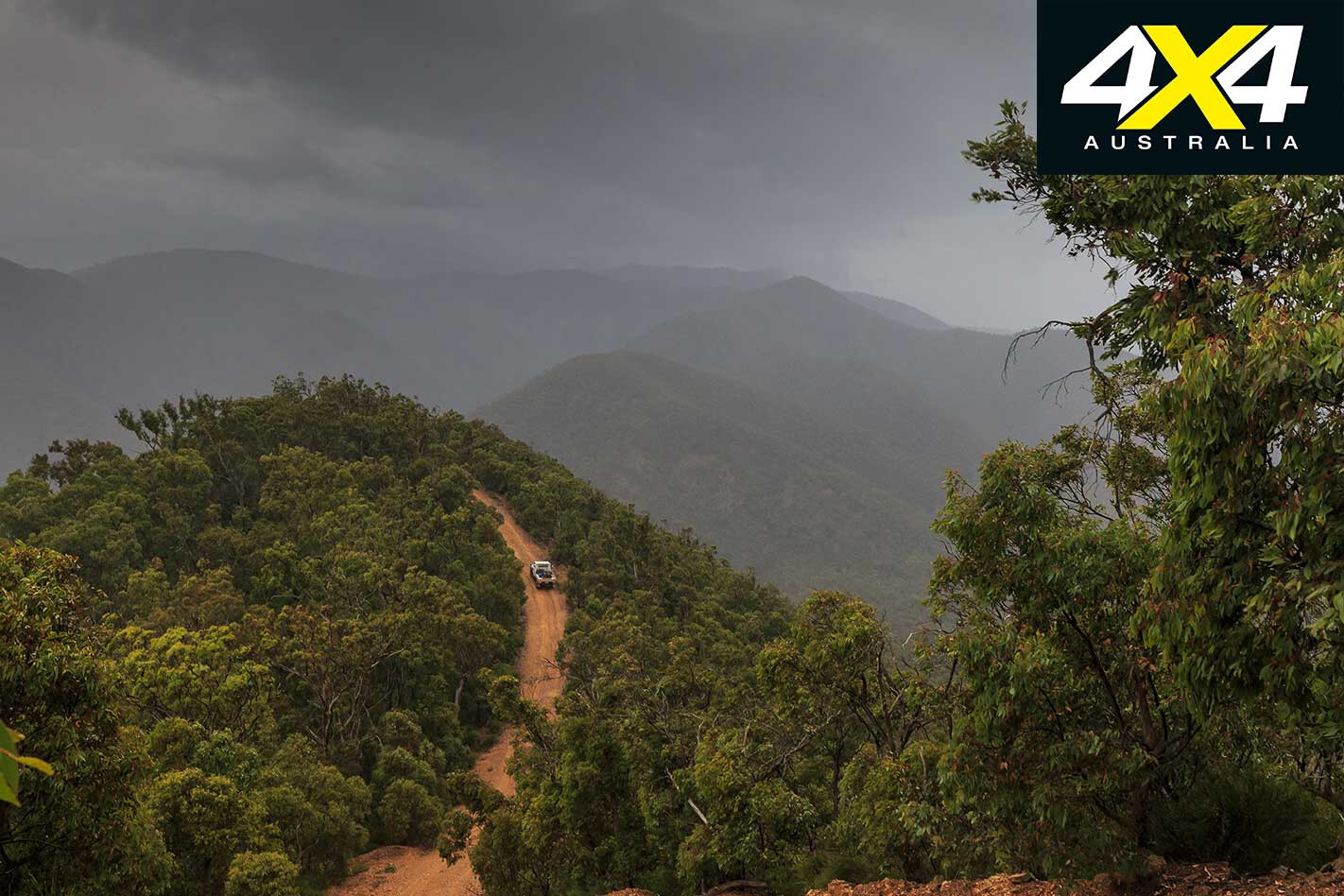
As the chill of winter strikes, a number of 4WD tracks in some of Victoria’s national parks – mainly the High Country, but not exclusively that region – have been closed for both safety and track preservation. This also applies to some of Victoria’s state forests and conservation reserves.
Each of these has different close/open dates, so the best bet to check access to these areas is to visit www.fwdvictoria.org.au and then plan that trip for open season.
DRIVETECH 4X4 CHALLENGE (VIC)
This epic off-road event, held at Bindaree Station, Victoria (address: 2864a Old Sale Road, Willowgrove), will be jam-packed with tracks aimed at really testing competitors. Everything from rally-style stages, big climbs and some cracker winch stages will feature over the two days of the event.
Held on Saturday, July 27, and Sunday, July 28, the Drivetech 4×4 Challenge includes food vendors on-site and parking nearby (4×4 is recommended for the main parking area).
See www.4x4racing.com.au for start times and more info.
DERBY OUTBACK RODEO (WA)
For travellers in the Kimberley, the Derby Outback Rodeo, August 10-12, is well worth checking out. The rodeo is touted as the biggest and best in the northwest, where local station workers and interstate competitors tackle rodeo and gymkhana events (read: campdraft, breakaway roping, barrel races, and poddy rides for the young’uns).
See www.australiasnorthwest.com for more information.
DENILIQUIN UTE MUSTER (NSW)
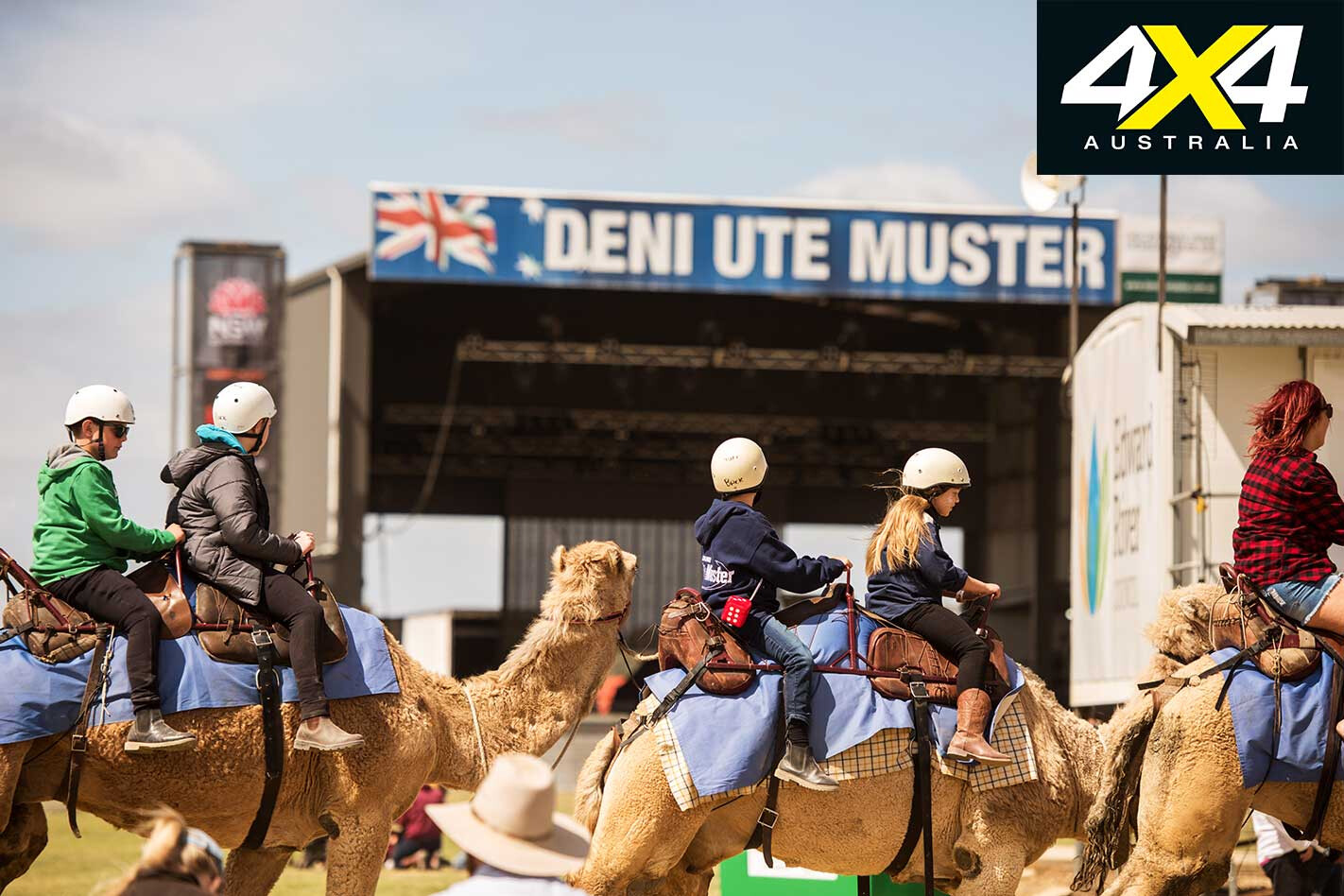
Mark down September 28 and 29 as the weekend to celebrate the 20th year of the mighty Deniliquin Ute Muster. This year’s event provides the chance to check out some cool utes and also watch some of the more unique event inclusions.
From lawn mower racing, live wildlife education shows (three times each day) and the Shimano Fishing Tank Show, through to some brilliant sand sculpture artwork, jumping castles, bull riding, the Brophy Bros Circus, wood-chopping comp and a whip cracking contest, the Deni Ute Muster has something for everyone.
See www.deniutemuster.com.au for more info on the event.
WIRREALPA STATION (SA)
Wirrealpa Station is a 1500km² sheep and cattle property located in the eastern Flinders Ranges, roughly between Wilpena Pound, Arkaroola and Blinman, on the Blinman-Arkaroola Road.
The station provides three different types of accommodation for visitors, as well as a number of guest-access-only 4×4 tracks on which to explore the property and the amazing Flinders landscape. For those with a birdwatching bent, Wirrealpa contains a number of native bird species, too.
Please visit www.stationstayssa.com.au for more information.
TO SAY we’re excited about the forthcoming new Suzuki Jimny Sierra would be an understatement. It’s not every day – or every year, for that matter – we get served up a new 4×4 with live axles front and rear, a strong off-road heritage and genuine off-road ability, let alone one that looks as cool as the little Suzi.
We can’t wait to take the new Jimny off-road, but the question everyone asks is: ‘What about a ute? Where’s the Stockman?’ All we can say on that front is, don’t hold your breath.

Looking back, the first Suzuki ‘ute’ in the Jimny family was the LJ80 long wheelbase cab-chassis that debuted in 1979. The ute continued in the second generation SJ series of the early 1980s when it was called the Suzuki Stockman in Australia, and Holden even rebadged it and marketed it as the Holden Drover.
The Stockman became the farmer’s friend, loved by the man on the land for its simplicity, go-anywhere ability and affordability. The Stockman was cheap but it wasn’t nasty, and many served duty of rural property for decades and tens of thousands of kilometres. You still see them used on properties around Australia, often without registration but always getting on with the job.

The long wheelbase cab-chassis died with the second-generation Jimny/Sierra and the third-gen vehicle was SWB hard-top or soft-top only. Sadly we doubt we’ll see the LWB ute again as the numbers don’t add up to make a business case for it, which is surprising, as farmers and primary producers still need such a vehicle to earn a living on the land.
Maybe if enough followers let Suzuki Australia know they want a new Stockman built of the 2019 Jimny, we might convince them.
THIS immaculate 200 Series Land Cruiser has been meticulously pieced together to become one of – if not the – best 200 Series in Australia.
Why? Because every decision made and every component added was carefully researched and planned, so that the end result would be the near perfect four-wheeler.
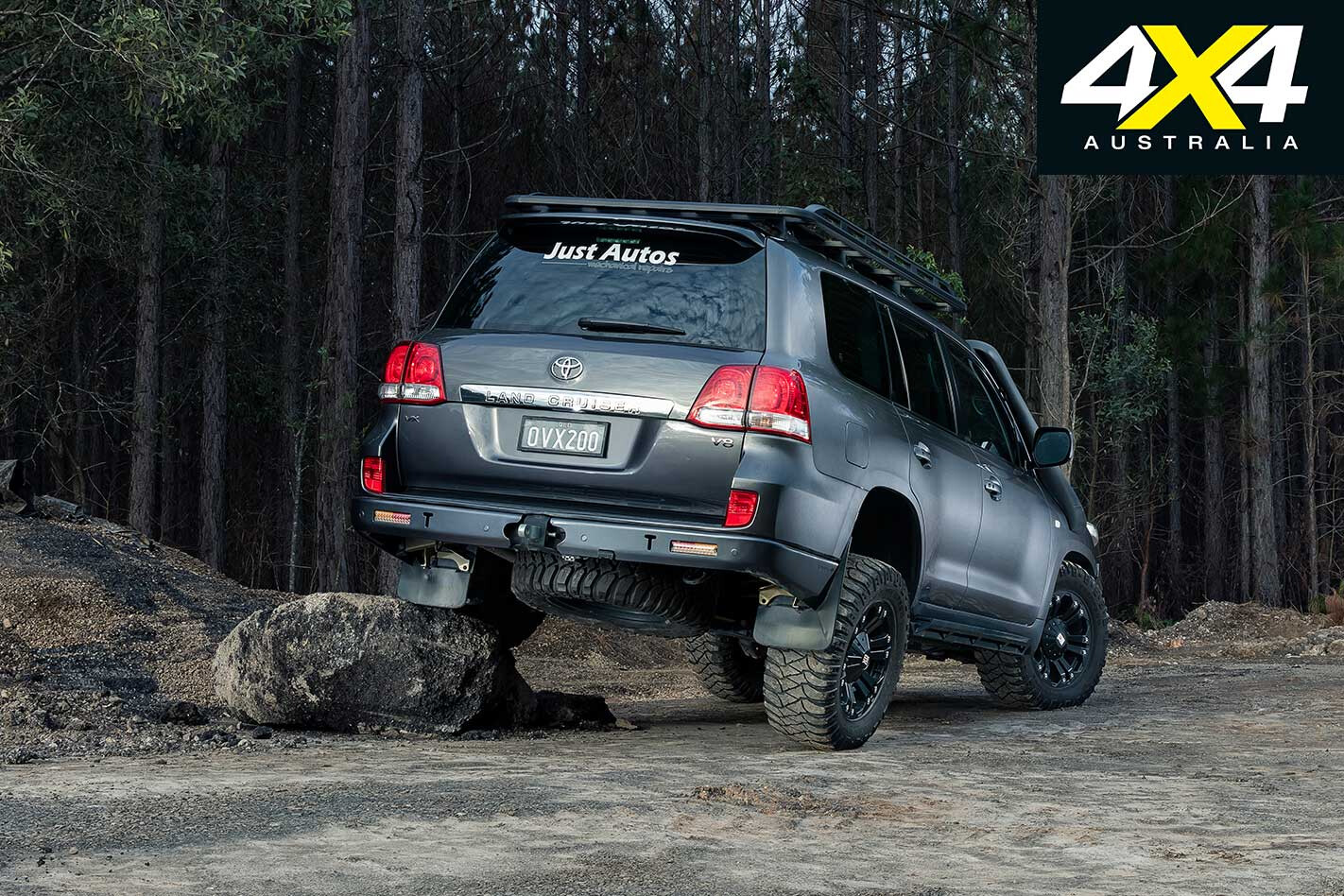
For example, the ECU package from the crew at Just Autos Mechanical Repairs, along with larger injectors and some tuning, netted the LC200 315rwhp (235kW) and a blistering 900Nm – a 20 per cent and 40 per cent gain respectively on the Cruiser’s 4.5-litre V8 turbo-diesel engine.
The LC200 was also hiked 50mm closer to the skies courtesy of a Tough Dog spring and shock package. Up front are Superior Engineering upper control arms, while down back resides Superior Engineering lower control arms and a Panhard rod.
The front and rear barwork is exemplary, and not one component from head to tail looks out of place, highlighting the meticulous nature of the build.
There’s a lot more to it. Read about the build in detail here.
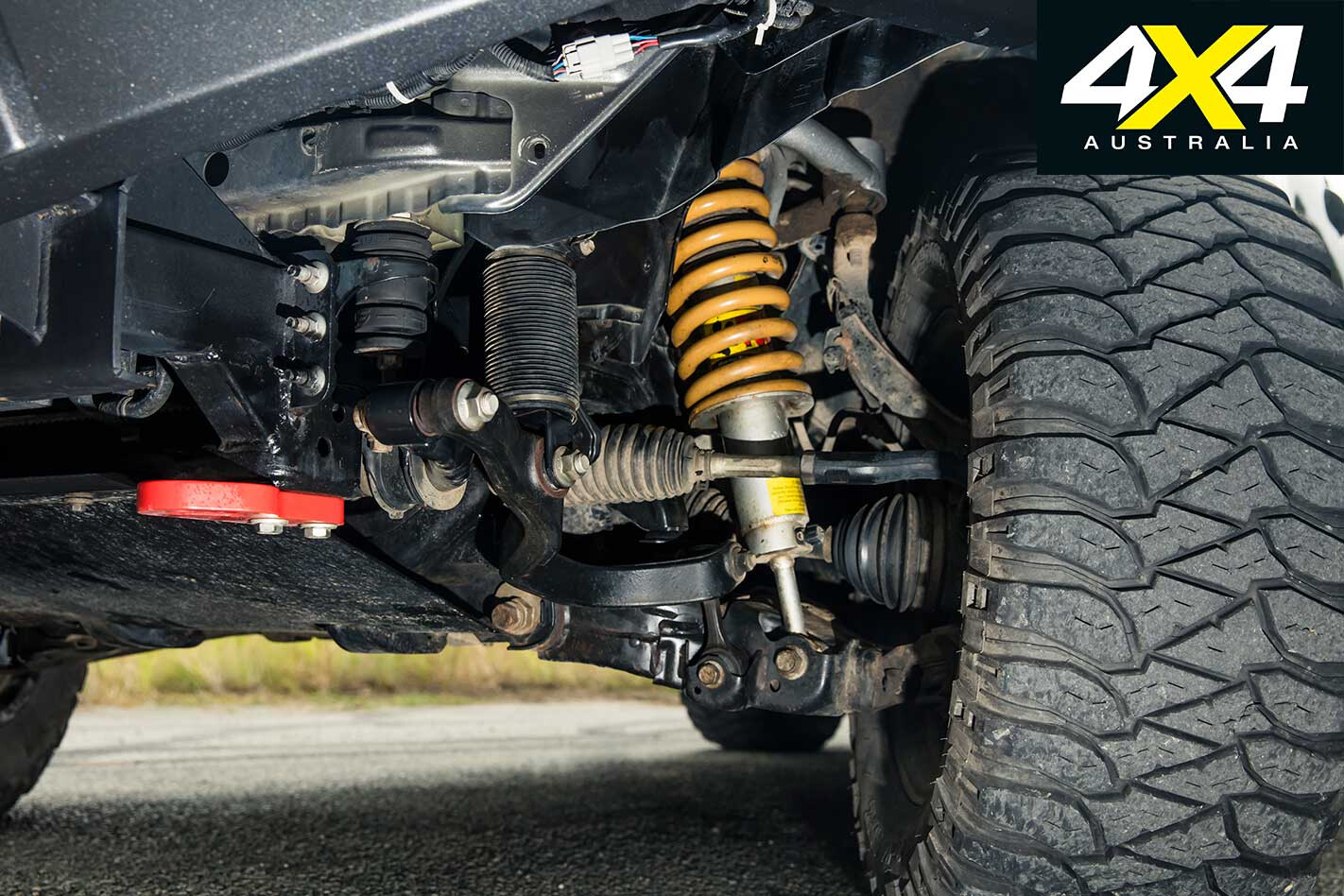
WHAT IT’S PACKING: – Ultima bullbar – Ox winch – Rigid Industries LED light bar – Viper 4×4 side-steps – Kaymar rear bar – TJM bash plates – Mickey Thompson MTZs – Monster XD alloy wheels – 50mm lift: Tough Dog spring and shock package – Superior Engineering upper control arms (front) – Superior Engineering Panhard rod (rear) – Superior Engineering lower control arms (rear) – Rhino Pioneer Platform roof rack – TJM Airtec snorkel – Fingers Fabrication & Machining airbox and custom intake piping – Just Autos Mechanical Repairs’ ECU package – Long Ranger auxiliary tank – Harrop Elockers (front and rear) – Black Widow storage system – Engel fridge – Fullriver batteries – Redarc BCDC1225 charger
ANY TIME you assemble all of the major players in a category and compare them it will produce some heated chatter. Especially when, as was the case with our big one-tonne pick-up comparison test, you team up with the crew from another magazine to get the number of drivers required.
In this case, we partnered with the guys from WHEELS Magazine, who don’t always see eye-to-eye with us on the performance of off-road-capable vehicles. They’re more used to driving sports cars and hot hatches than anything capable of driving off-road or carrying a tonne. Some of them get nose bleeds if they get in anything with upwards of 200mm of ground clearance.
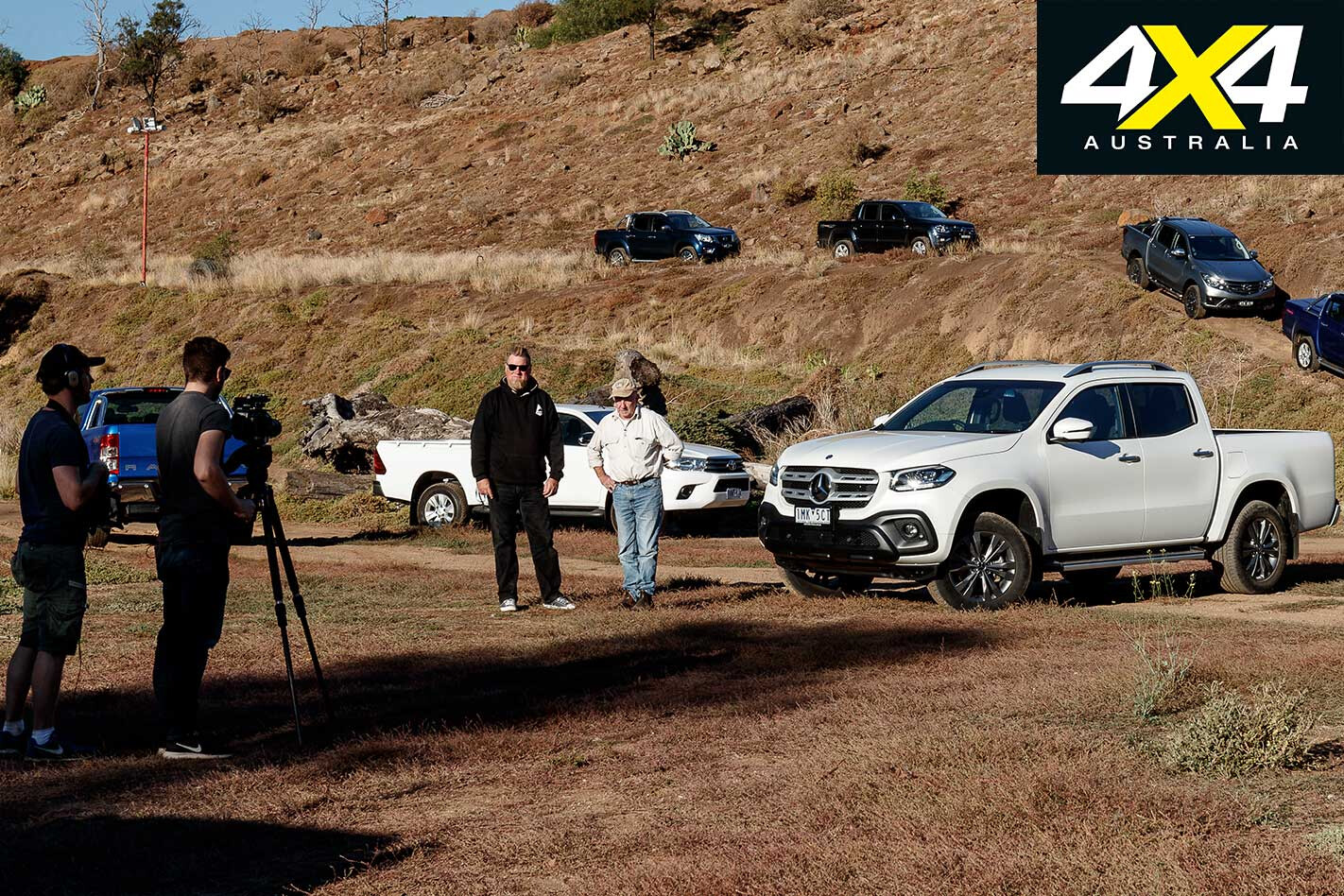
So it did come as a surprise when both our authors came to the same conclusion as to which is the best car in this class. Interestingly, it is the most passenger car-like in the group of utes and the oldest one on the market. Everything else is either new or has copped a major update in the time it has been available.
If you’re silly enough to read this page regularly, you’d know I don’t rate any of the double-cab one-tonne 4×4 utes highly. They’re all too compromised to do anything exceptionally well, as they try to be everything to everyone and don’t excel in any discipline. If I had to choose any of them, I reckon the V6 VW is a pretty good town and country road car.
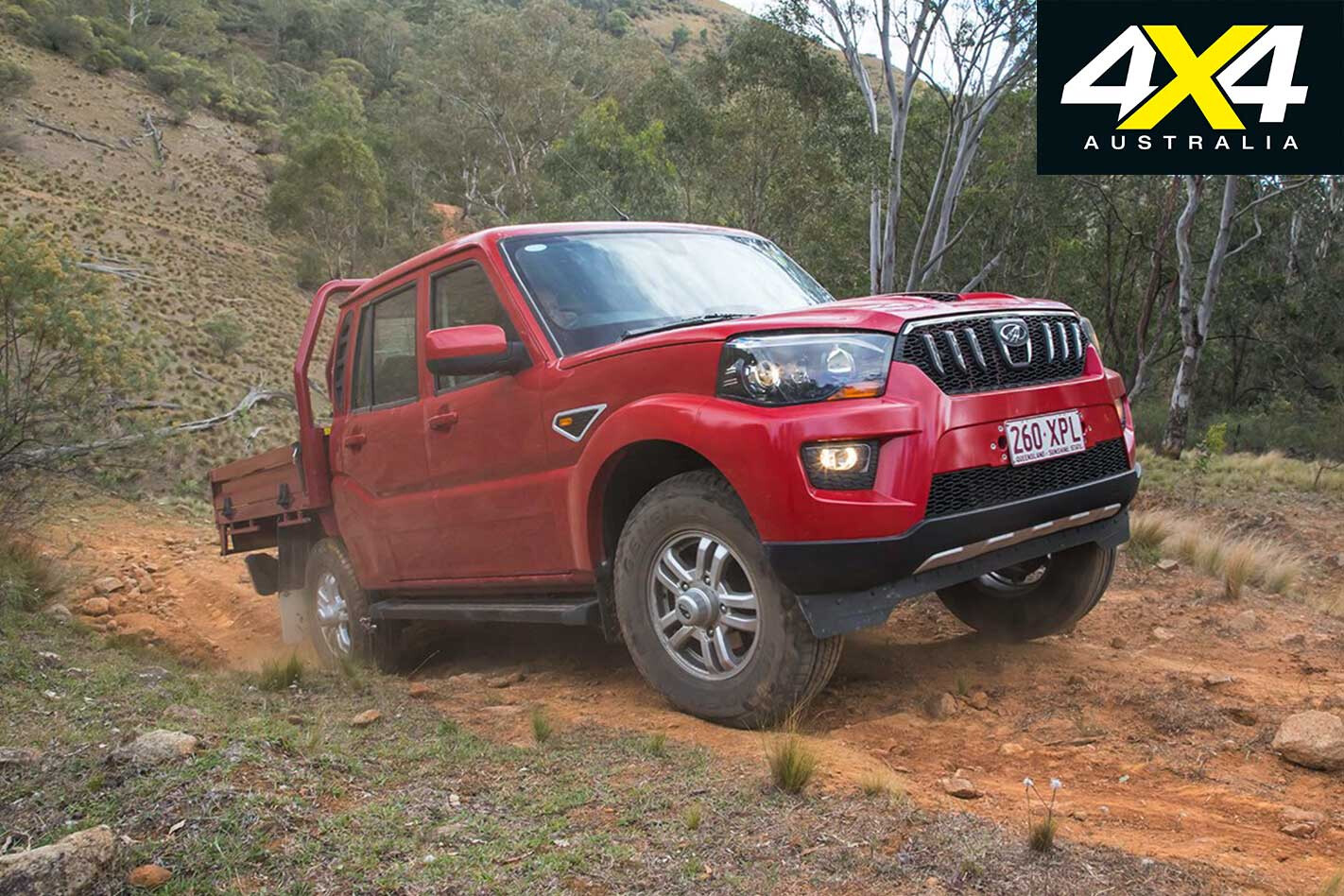
This week I’m driving the Mahindra Pik-Up, and I’d rather own it than any of the utes in our big test. For starters, it’s got a proper gearbox, a good-sized cabin, better visibility from its more upright driving position, it handles a load well, and it costs only $32K. It mightn’t be pretty or refined, but you can’t argue with the performance and value for money.
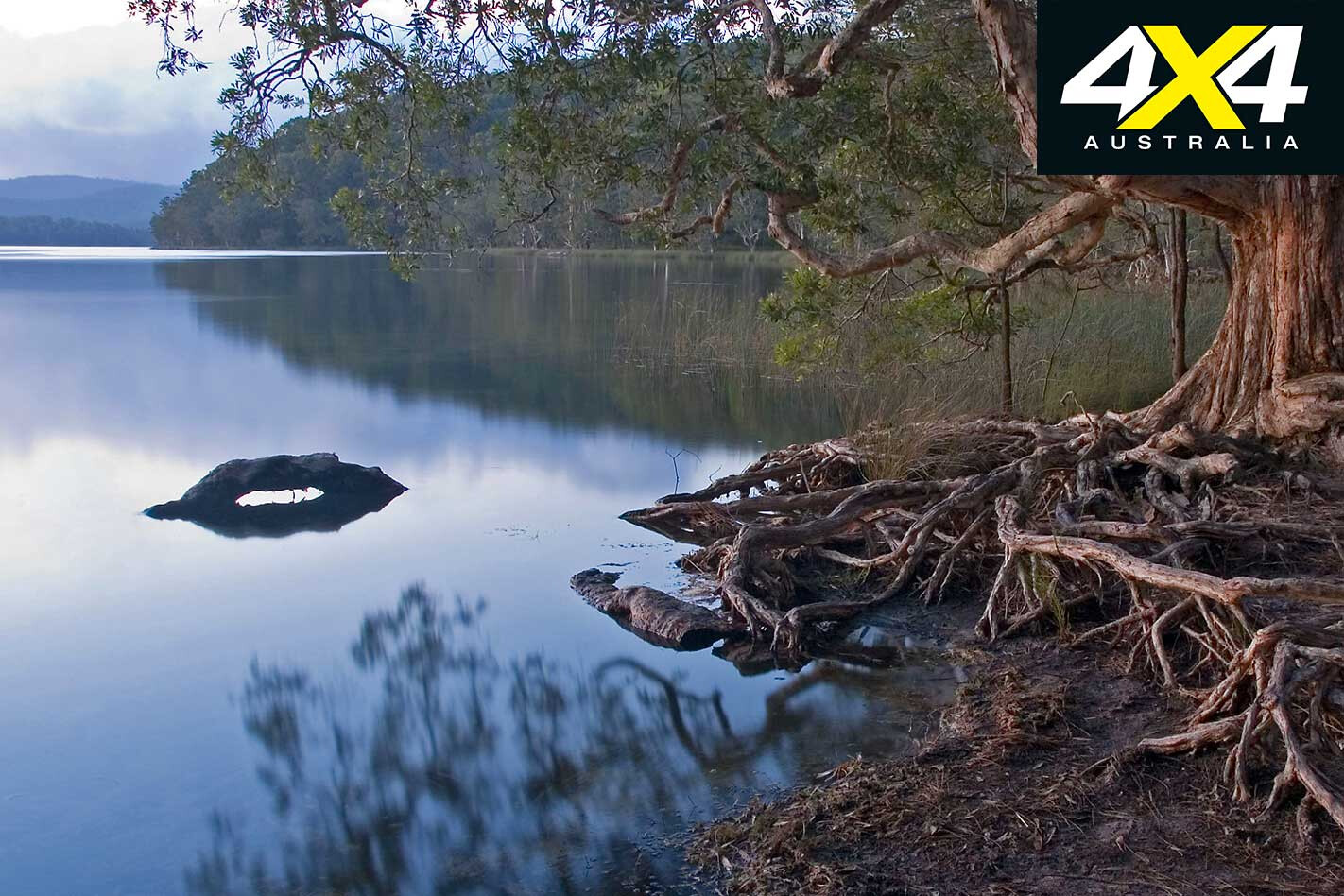
Heading south from Forster, the road dives into Booti Booti National Park of the Great Lakes region, with mesmerising views across the lakes and ocean beaches.
This feature was originally published in 4×4 Australia’s October 2012 issue
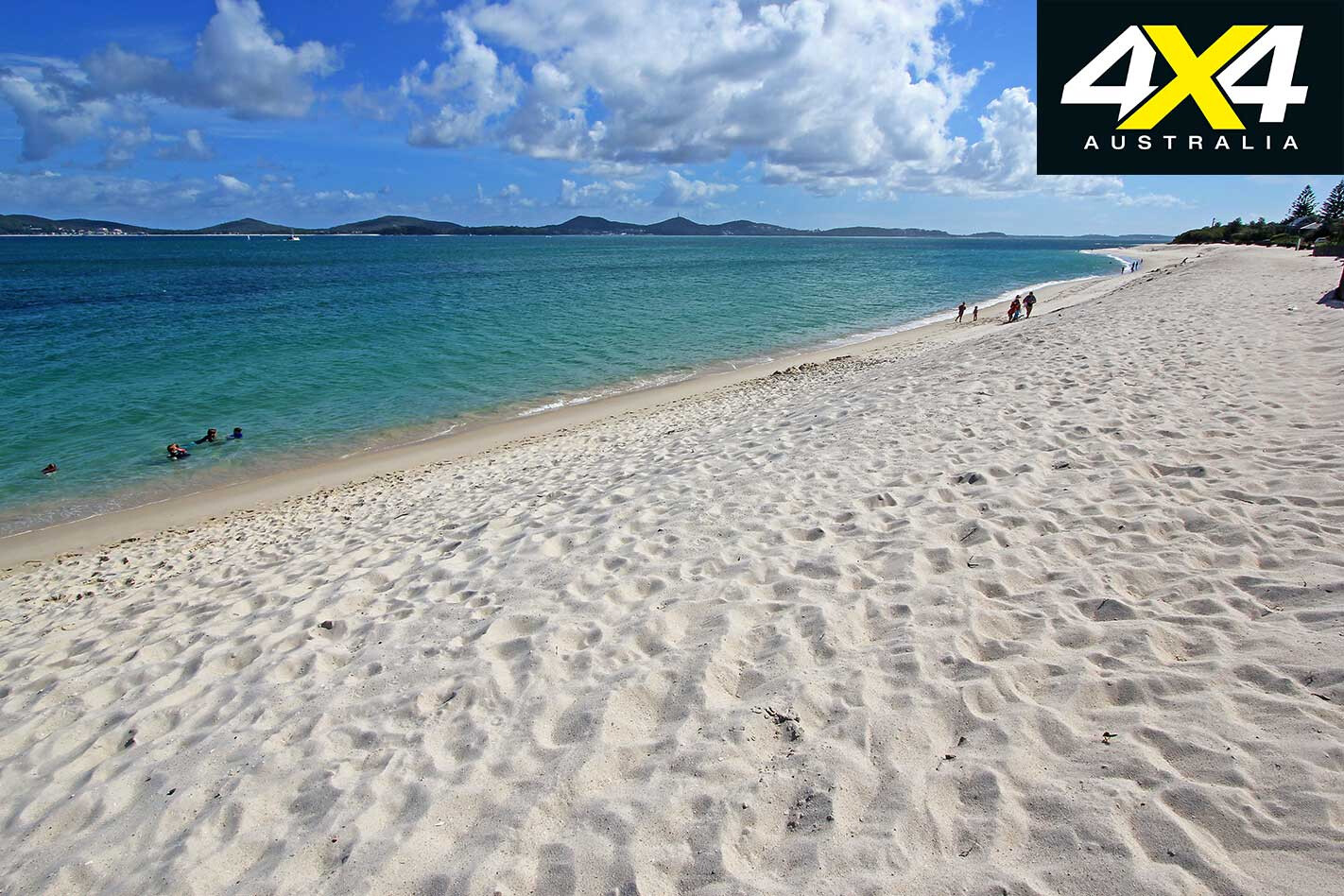
The plan is to explore Myall Lakes National Park, a blend of coastal rainforest, tall stands of mixed forest, ocean beaches, giant sand dunes and a large expansive lagoon system, inviting an endless number of family-based recreational activities.
Myall Lakes NP encompasses 47,593 hectares, east of Bulahdelah, with 40km of ocean beach frontage, stretching south from Seal Rocks towards Yacaaba Head, at the top of Nelson Bay; save for a few pockets of privately-owned land.
The Myall Lakes area is a significant contributor to the prosperity of the region, generating employment in mining, fishing, timber, farming, boat-building and tourism industries, which is evident throughout the park.
The timber industry dates back to the early 1800s when initially cedar and later hardwoods were milled from the area and transported over the lakes by barge. Timber mills have operated at Bulahdelah, Hawks Nest, Boolambayte Creek, Hawks Nest, Myall River, Bungwahl, Neranie and Mayers Point.
Large-scale milling continued in the area until 1973. The demand for timber supported the boat-building industry with barges needed to transport the timber to the major ports.
The construction of the Sugarloaf Point Lighthouse at Seal Rocks in the late 1800s boosted the region’s ability to safely ship timber and seafood. Fishing huts at Tamboi were established for those who worked in the prawning industry and are still used by commercial fishing operators today.
Similar to other areas in the region, the area that is now Myall Lake NP’s coastline was mined for mineral sands such as rutile and zircon. To improve access to the mining operations along the coast an access road from Tea Gardens to Seal Rocks was constructed. With concerns about the wellbeing of the coastal environment, the Myall Lakes NP was declared in 1972 with sand mining banned in all national parks in 1977.
It’s not difficult to appreciate the significance of the area to the Worimi Aboriginal people, who utilised the vast waterways and ocean beaches to obtain food. The Dark Point Aboriginal Place is a cultural site encompassing 647ha.
The area is recognised as being used for ceremonies and feasts and protects traditional burial sites, middens and artefacts. From Mungo Brush Road, the area can be accessed on foot, not far beyond the Mungo Brush campground towards Hawks Nest.
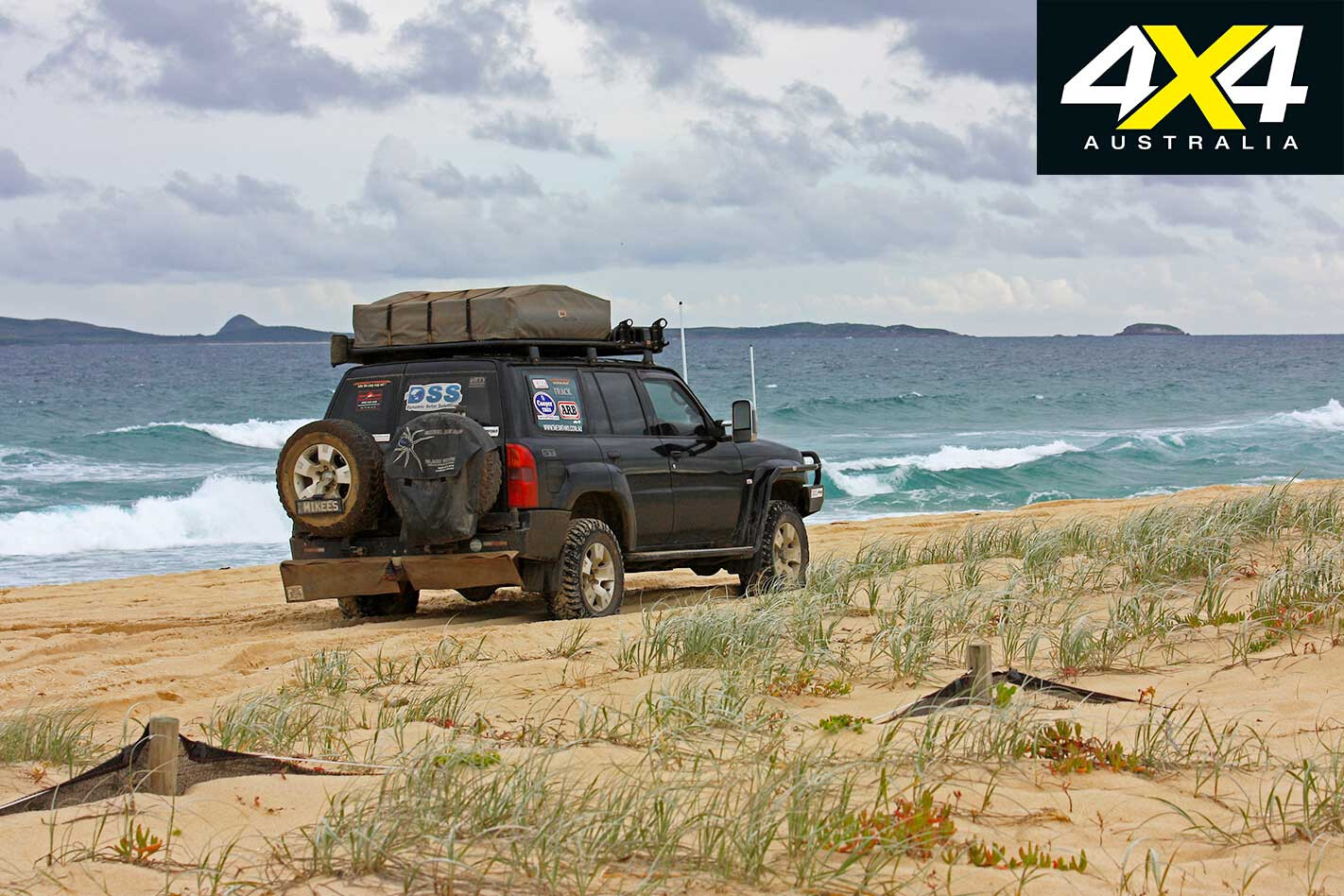
Ambling down to Seal Rocks on the northern boundary, the road is unsealed and narrow in parts but easily accessible by conventional vehicles. There are caravan parks and countless rental options at Seal Rocks or you can find the national park’s bush camp further on at Yagon (37 sites).
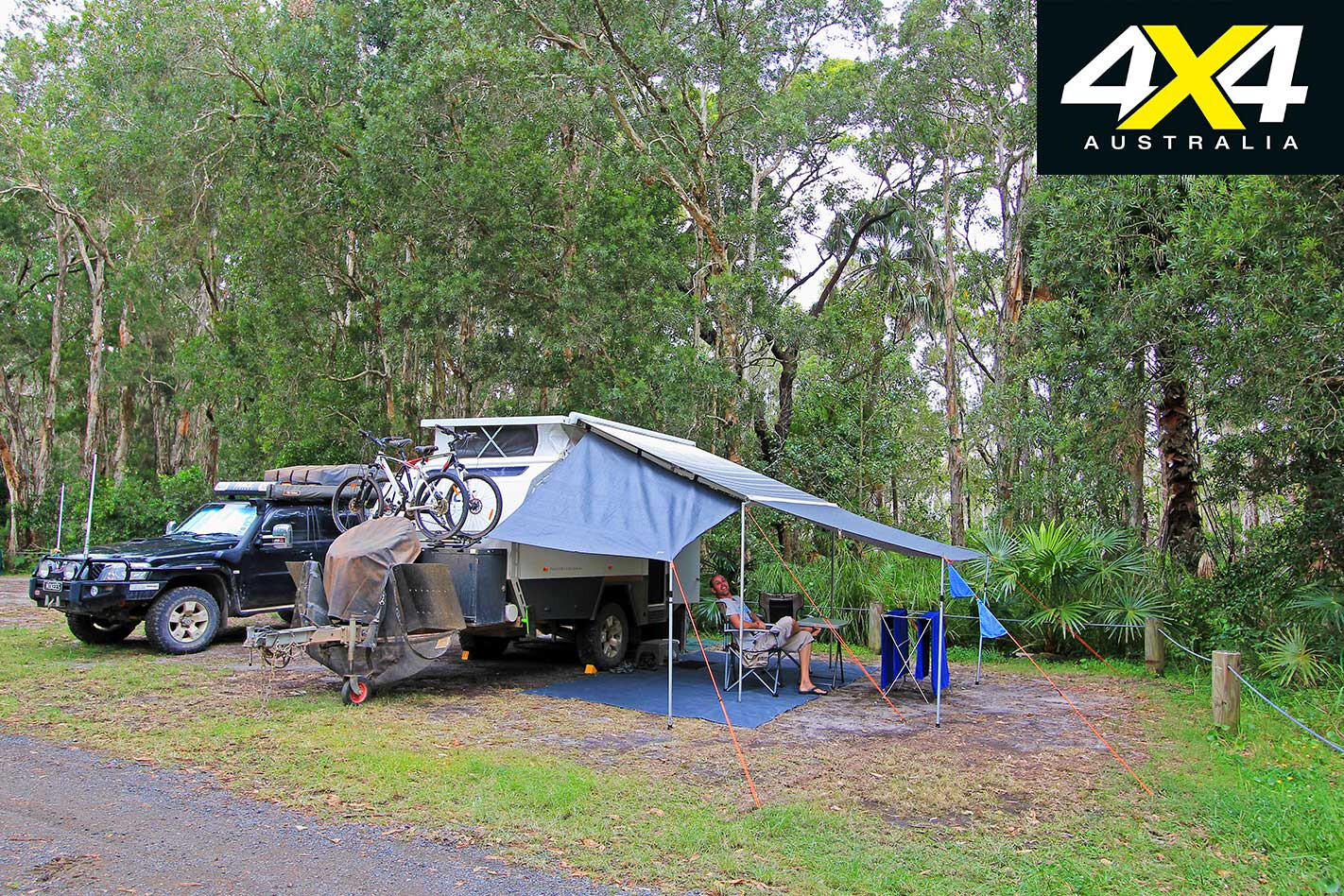
Some of the camp sites are hemmed-in by bollards, making it difficult to reverse into with anything other than a compact camper-trailer or tent. Other sites put you on a precarious lean, even with levelling ramps in use. As there is no pre-booking in the national parks in NSW, it’s a case of first-in, first-served, so it pays to arrive before the holiday rush.
The campground has good facilities with gas barbecues, pit toilets and picnic tables to cater for campers or daytrippers. There are walking tracks to Submarine Beach: one past the large sand dunes with a viewing platform over the beach and the other through a shady forest walk.
Alternative walks include the Sugarloaf Point Lighthouse walk and the Treachery Headland walk, in addition to the usual activities of swimming, fishing or playing around on the beach. Vehicle beach access for 4X4s is available at Lighthouse Beach between Treachery Head and Sugarloaf Point.
If there is one disappointing aspect, it’s the accessibility between Seal Rocks and the rest of the national park. The only direct connection is the old mining road between Seal Rocks Road and Mungo Brush Road, which these days is reserved for foot and pedal traffic only, imparting a lengthy detour around the lakes to get to the other side.
Depending on your level of enthusiasm, there are a number of options for exploring the mining road on foot or by mountain bike. The trail is split into two sections with the first 10km from Seal Rocks Road to Shelley Point Track junction, known as Mining Road Fire Trail, exploring dry eucalypt forest and wet heath areas.
It is joined by Old Gibber Road Fire Trail which carves through a mix of wet heath swamplands and open forest for another 10km, to Boomeri campground on Mungo Brush Road. It’s quite a hike and better suited to mountain bikes if you want to complete it in daylight hours.
Alternatively, you can meander down to Shelley Beach on the shores of Myall Lake (14km) and factor in an overnight bush camp (BYO everything). Spring and early summer provide the best colour displays of wildflowers along the track.
Backtracking along Seal Rocks Road from Yagon, the road eventually skirts around the eastern side of Myall Lake. Neranie Head Camp (25 sites) is the only bush camp offering on the eastern flank, with good access to the lake.
Neranie was formerly an industrial hub of the region with its logging mills and railway junction for timber. Hearts Point picnic area nearby, was built on the former site of the mill. A walking track leads to a cemetery with graves and headstones of some of the early pioneers. The track ends at the headland offering commanding views over the lake and to the south.
There are no campgrounds on the northern side of Myall Lake. Further west, unsealed roads access smaller, secluded campgrounds on Boolambayte and Two Mile Lake, better suited for tents and camper trailers. These include Bungaree Bay (seven sites), Sunnyside (four sites) and Mackaway Bay (three sites). Only Bungaree has toilets.
Korsmans Landing (26 sites) is a bigger area and better suited to vans and with more facilities. In contrast to many of the other campgrounds in the park, fires are permitted in the NPWS fire pits in each of these campgrounds.
To proceed further, it’s back on the Pacific Highway to Bulahdelah, only to depart at Bombah Point Road. This provides the most direct access to the heart of the national park, courtesy of the Bombah Point ferry, which joins Mungo Brush Road on the other side of Broadwater. The ferry runs every 15 minutes transporting six vehicles at a time at $5 per vehicle.
Beyond the ferry, there is a selection of seven national park bush campgrounds and numerous picnic areas, walking tracks and other points of interest in the southern leg of the park, providing easy access to the ocean and Bombah Broadwater.
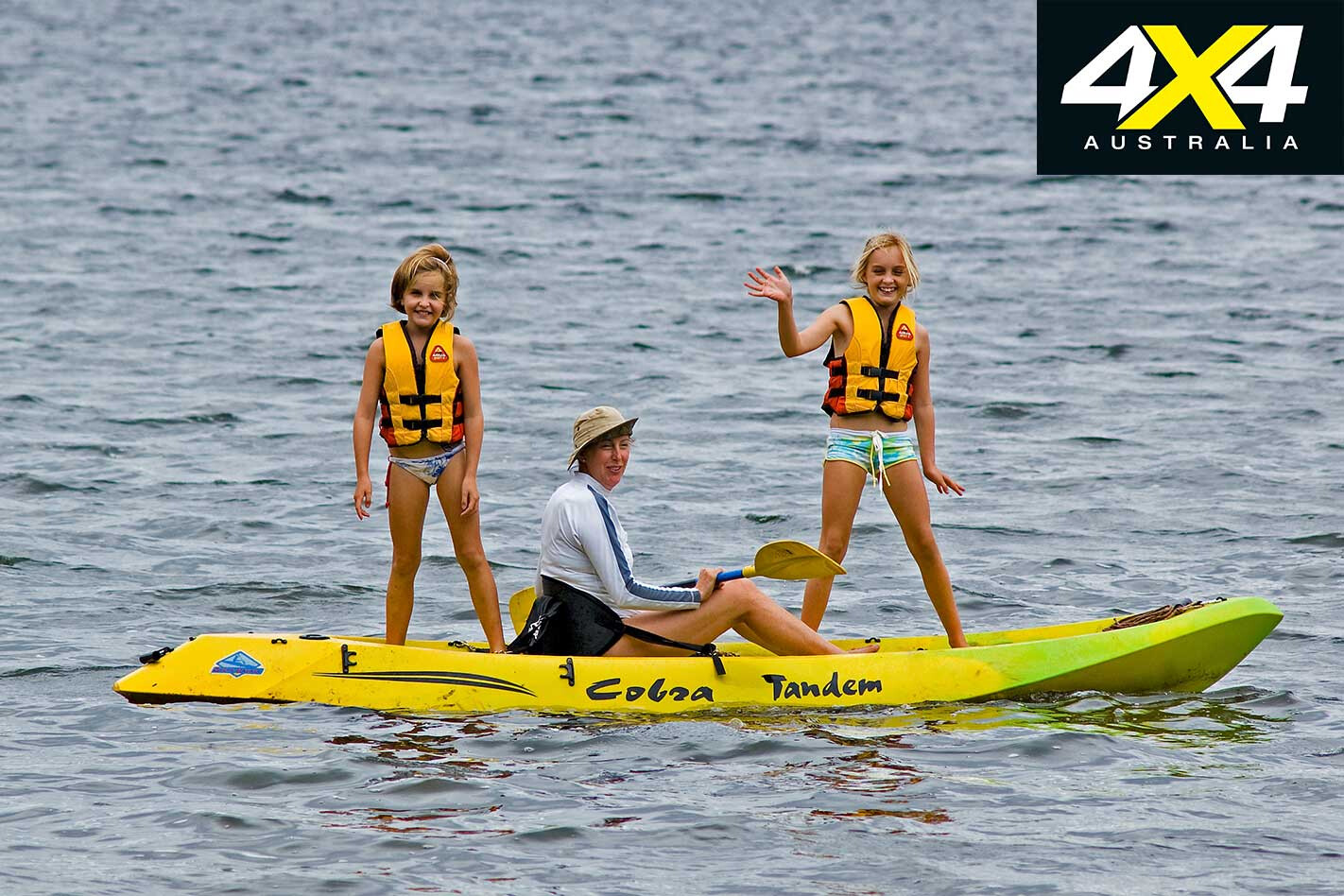
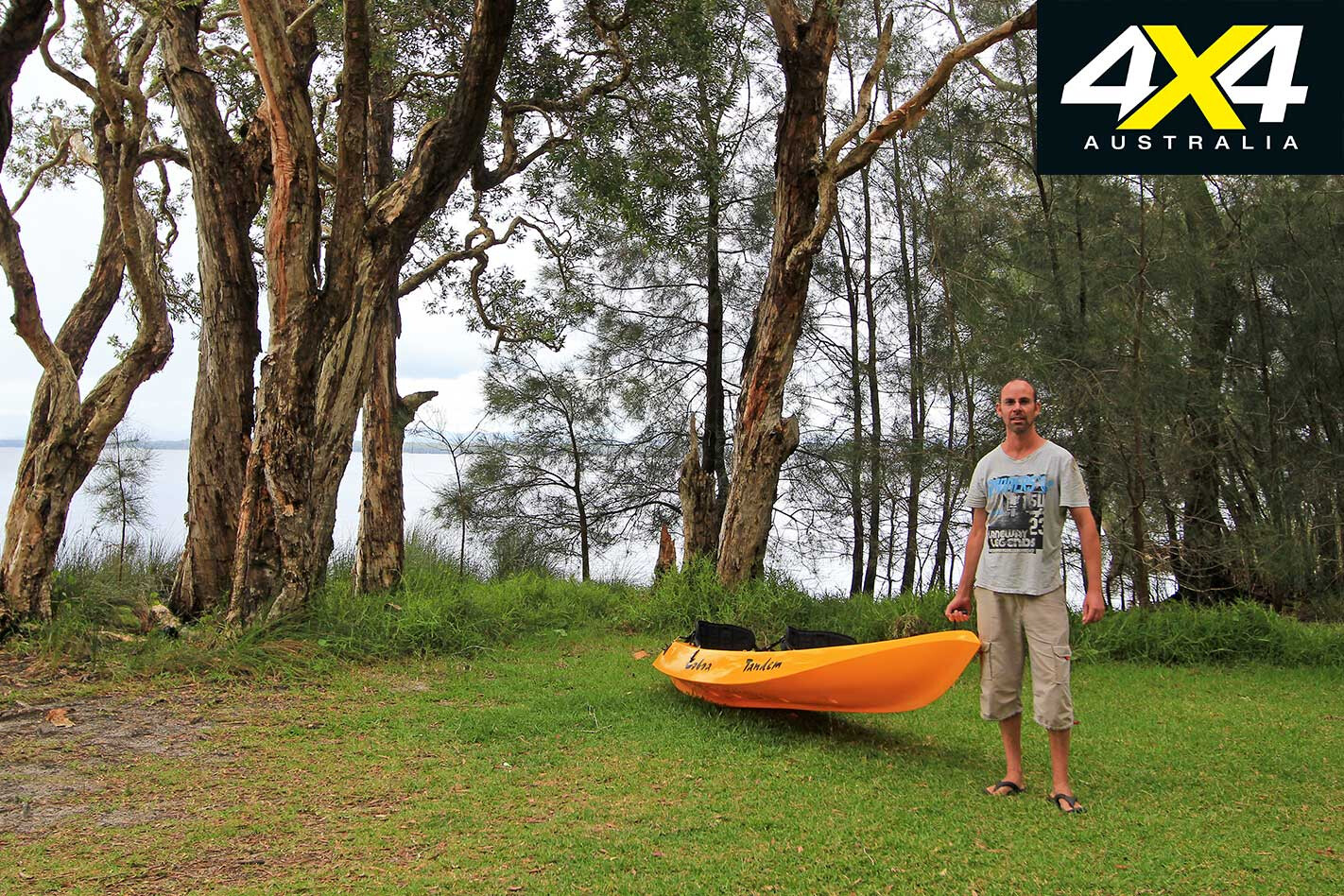
We opt for White Tree Bay campground on the Broadwater, shrouded in lush scrubland. It’s the least populated of the campsites, with gas barbecues, shade and easy access to drop a kayak into the lake.
The biggest campground is Mungo Brush (78 sites). It has the most civil facilities with flush toilets, gas barbecues, picnic tables, a boat ramp and plenty of shade. As expected, it is absolutely chockers during our mid-January visit. Mungo 4X4 beach access is available nearby, up the north side of the beach.
A short rainforest loop-walk departs from the northern end of Mungo Brush camping area. The track passes the ruin of a windmill, a stone terrace and some garden plantings, seemingly the only remnants of an old farmhouse and orchard. For a longer walk, take Tamboi Track from the southern end of the campground to take in views across Myall River to the old Tamboi fishing village.
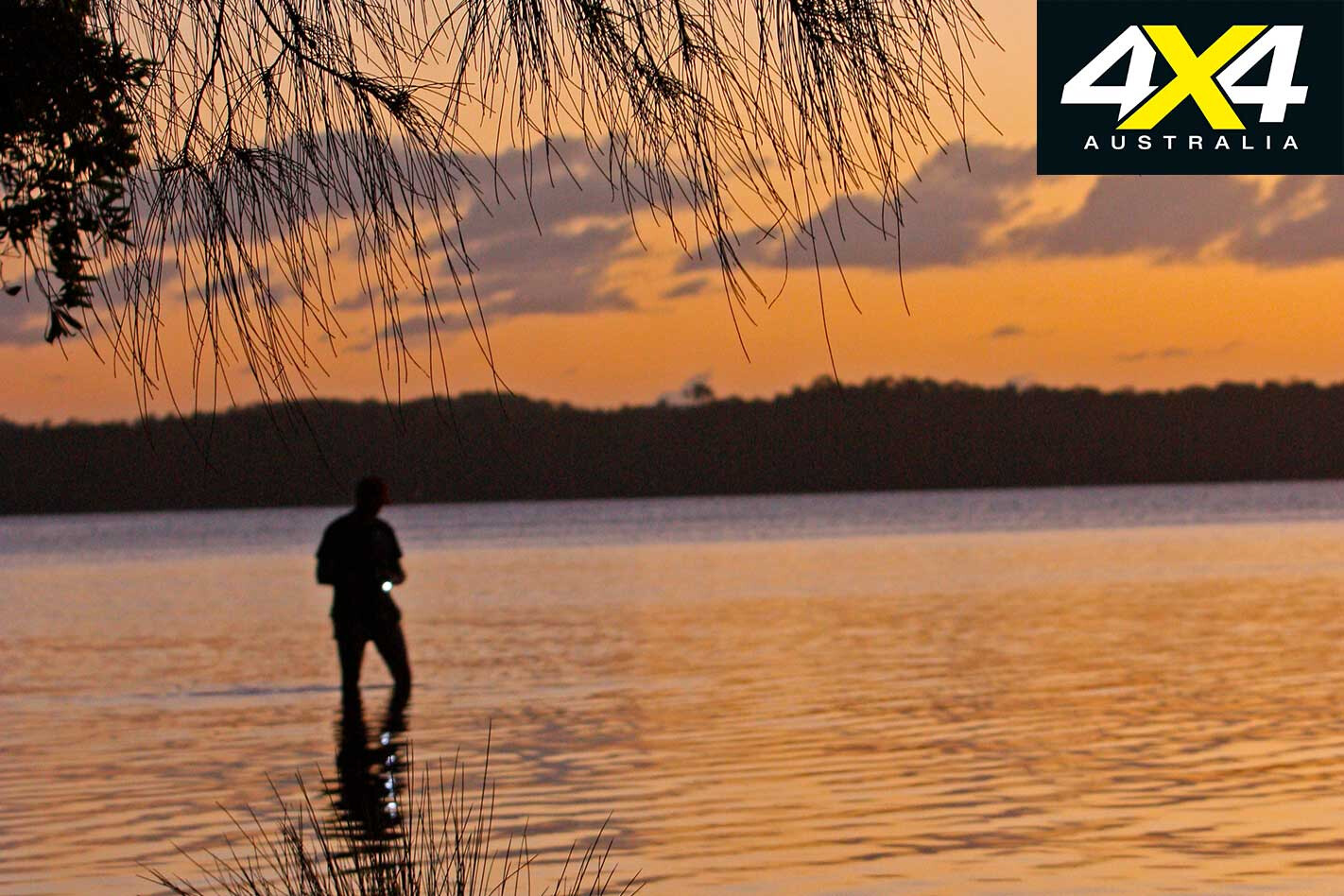
Prawns are the most popular crustacean catch in the lakes. According to the Department of Primary Industries, a good way to catch prawns is to have two people drag a prawn net (about two metres long) through the water over the shallow, sandy sections of the lake. A torch is useful to help spot the prawns, as their eyes glow red in the night.
The best time for prawning is in the evening on the outgoing tide of the new moon. You may also be lucky to bag blue swimmer and mud crabs, which are also common in the area.
Other common catches in the estuaries and ocean here include bream, whiting, tailor, Australian salmon, flathead, estuary perch and mullet. Due to the land-locked nature of the lagoons there is little tidal flushing and the salinity of the water will vary between the east and west sides of the lakes, supporting a range of salt- and freshwater species.
Earlier this year, concerns were raised about the low salinity of the water in Myall River which was believed to be causing ulcerated fish, a problem blamed on the inability of the river to flush from Nelson Bay. This has happened before and in other saltwater rivers where the water salinity declines.
The Department of Primary Industries was called in to investigate but could not identify the cause for the ulcerated fish. The Great Lakes Council has been lobbying the government for funding to dredge the mouth of the river to maintain the salinity.
If you are planning to fish in the area, check with the Great Lakes Council. Ulcerated fish should not be eaten, nor returned to the river.
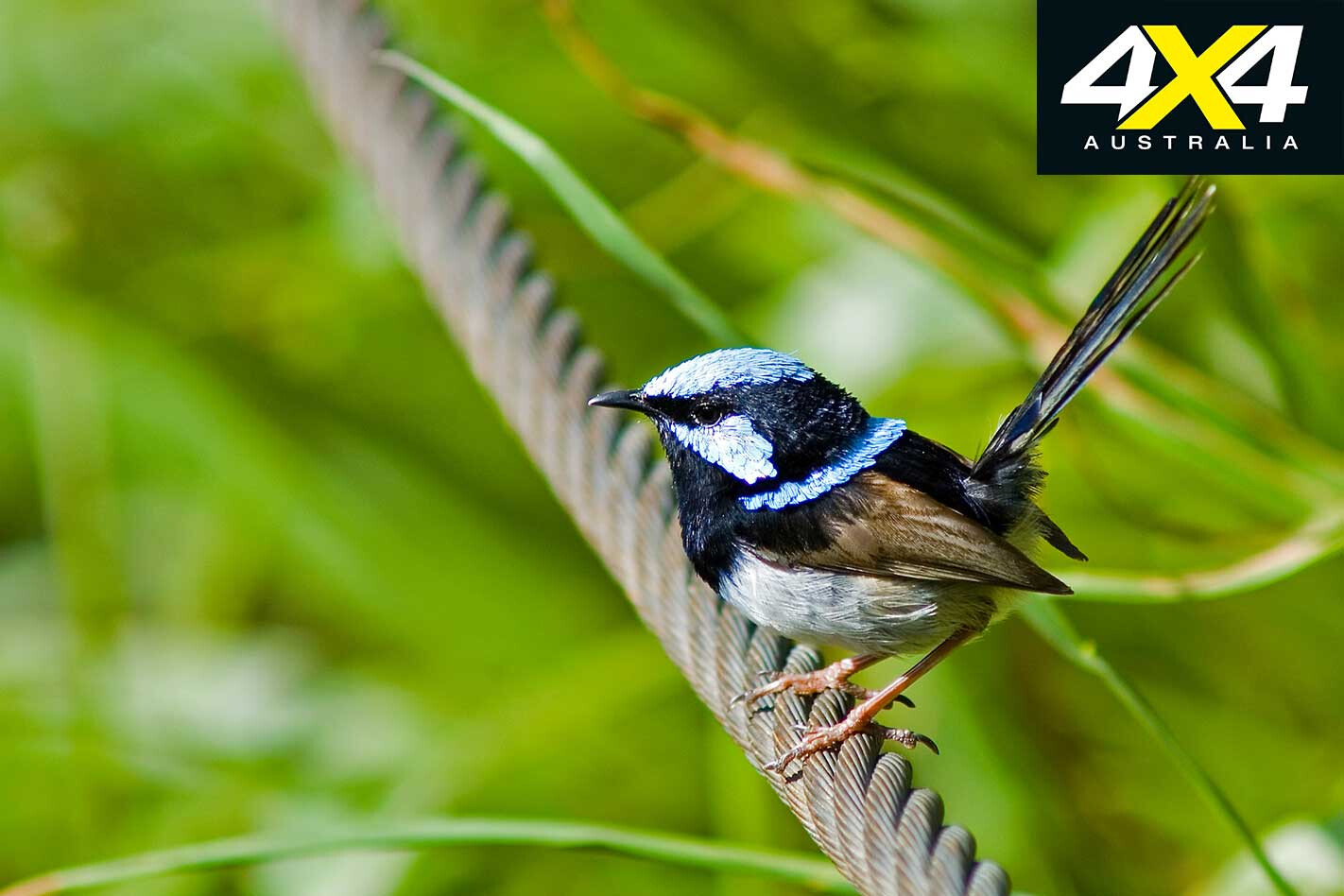
The lakes support significant populations of water birds including ducks, swans, whistling kites, herons, egrets and white-breasted sea eagles. The forest supports its own array of birdlife including brush turkeys, bowerbirds and golden whistlers. Keep an eye out for the conical holes in the walking tracks, said to left by long-nosed bandicoots. Goannas are also popular, regularly doing the rounds of the campgrounds.
There are a few other 4X4 access points within the national park. Sandy Point is a soft sandy track that leads down to a carpark opposite Broughton Island.
There is no vehicle access to the beach, but you can park the truck and wander down to the waterline. Otherwise, make your way to Lemon Tree 4X4 beach access, a few kilometres past Stewart and Lloyds campground, towards Hawks Nest.
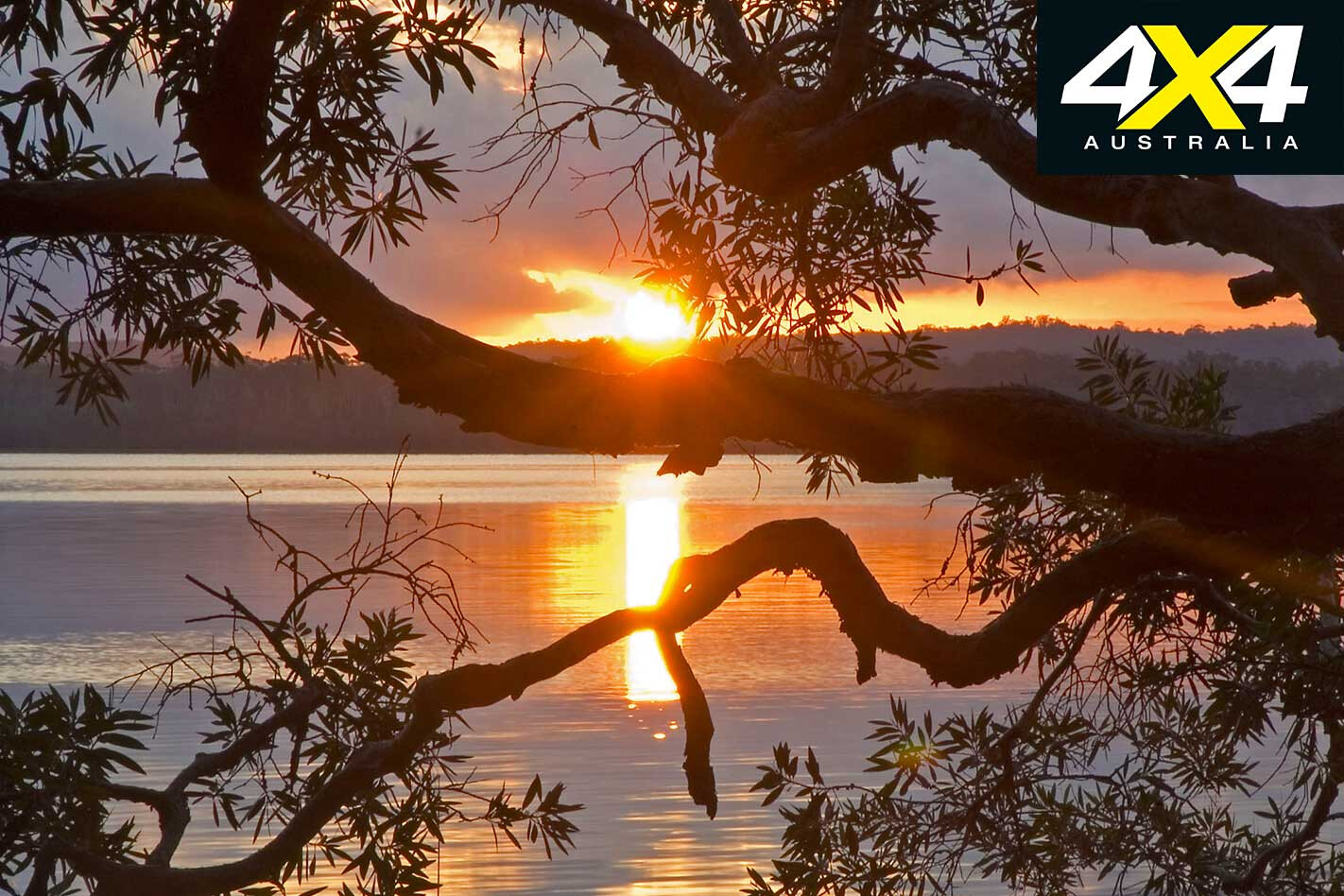
The NPWS vehicle access fee permits you to drive north of the track to Dark Point (Little Gibber Headland). The area south of Lemon Tree is council-owned land that requires a permit from the Great Lakes Council to drive on.
Not far beyond Lemon Tree, Mungo Brush Road hits privately owned land as it nears Hawks Nest. There is an alternative, privately-run bush camping property on the right-hand side known as Myall River Camp, which, as the name suggests, is on Myall River. If you need to run a generator, you can do so here in designated camping areas.
It’s hard to top the Myall Lakes NP. The combination of secluded bush campsites, coastal rainforest, expansive lakes, ocean beaches, historical sites and the inviting warm climate, all converge to offer one of the best family holiday experiences on the NSW mid-north coast.
Travel Planner
WHERE Myall Lakes NP is on the mid-north coast of NSW, 84km north of Newcastle.
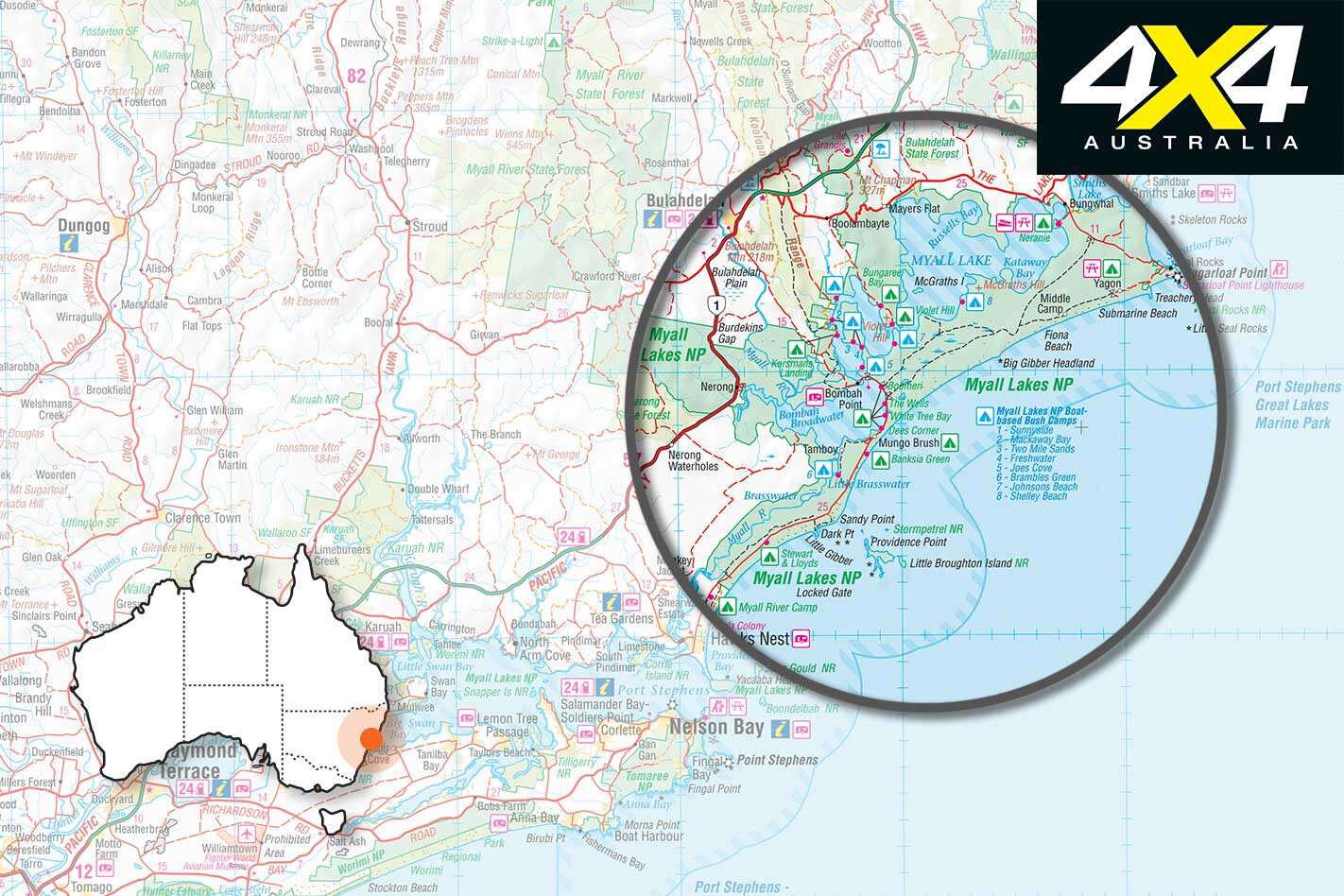
CAMPING There are 22 campgrounds across the national park, some accessible only by foot, water or the majority by vehicle. Myall River Camp, near Hawks Head (outside the national park) offers riverside camping, boat ramp, pit toilets, campfires, generator area, from $15-30/vehicle off-peak/peak, 0409 836 828.
WHAT TO BRING Insect repellent, drinking water, fishing gear, prawn/crab nets, binoculars, torch, standard recovery gear, long-handled shovel, walking shoes, hat, sunglasses, sun cream, fuel stove, firewood, compressor.
SUPPLIES Hawks Nest, Tea Gardens, Bulahdelah, Seal Rocks, Bungwahl and Forster.
MAPS AND GUIDES Hema Mid North Coast & New England NSW, 3rd Edition, 1:375 000 The Myall Lakes Brochure contains a good map of the area: http://www.environment.nsw.gov.au/
CONTACTS & INFORMATION NPWS Parks Contacts: Great Lakes 02 6591 0300. Great Lakes Council 02 6591 7222. www.greatlakes.nsw.gov.au. Department of Primary Industries 1300 550 474 www.dpi.nsw.gov.au. A fishing permit is required for all fresh or salt water fishing in NSW at $30/year.
PERMITS AND ACCESS Vehicle entry $7 per vehicle per day. Or $22 per annual pass. Camping $7-10 adult, $3.50-5 child per night off-peak/peak.
In our How to build a ute guide, we delved into the numerous available aftermarket ute parts that you can fit to turn your run-of-the-mill ute into the perfect 4×4 rig.
While gears like fridges, storage drawers, and beadlock wheels might be expensive luxuries for a daily driver ute, it is essential additions for the more adventurous ute owners.
ARB Elements 60L Fridge
ARB’s 60-litre Elements weatherproof fridge-freezer features 304-grade stainless-steel construction, protective corner mouldings, electronic lock system (to keep beer-thieving mates out), gas struts, heavy-duty stainless-steel hinges, provision for a padlock and more.
It’s ideal for fitment in any 4×4, but especially in 4×4 ute trays where it can be locked down securely thanks to a tamper-proof mounting kit (there’s also a tie-down kit and fridge slide available).
A uniform temperature in-fridge is achieved via the full-height evaporator that adds surface area and thus improved efficiency. The control panel is weatherproof, with its touchpad easily accessed. The touchpad keys are backlit and the display also shows DC voltage supply for monitoring of power use.
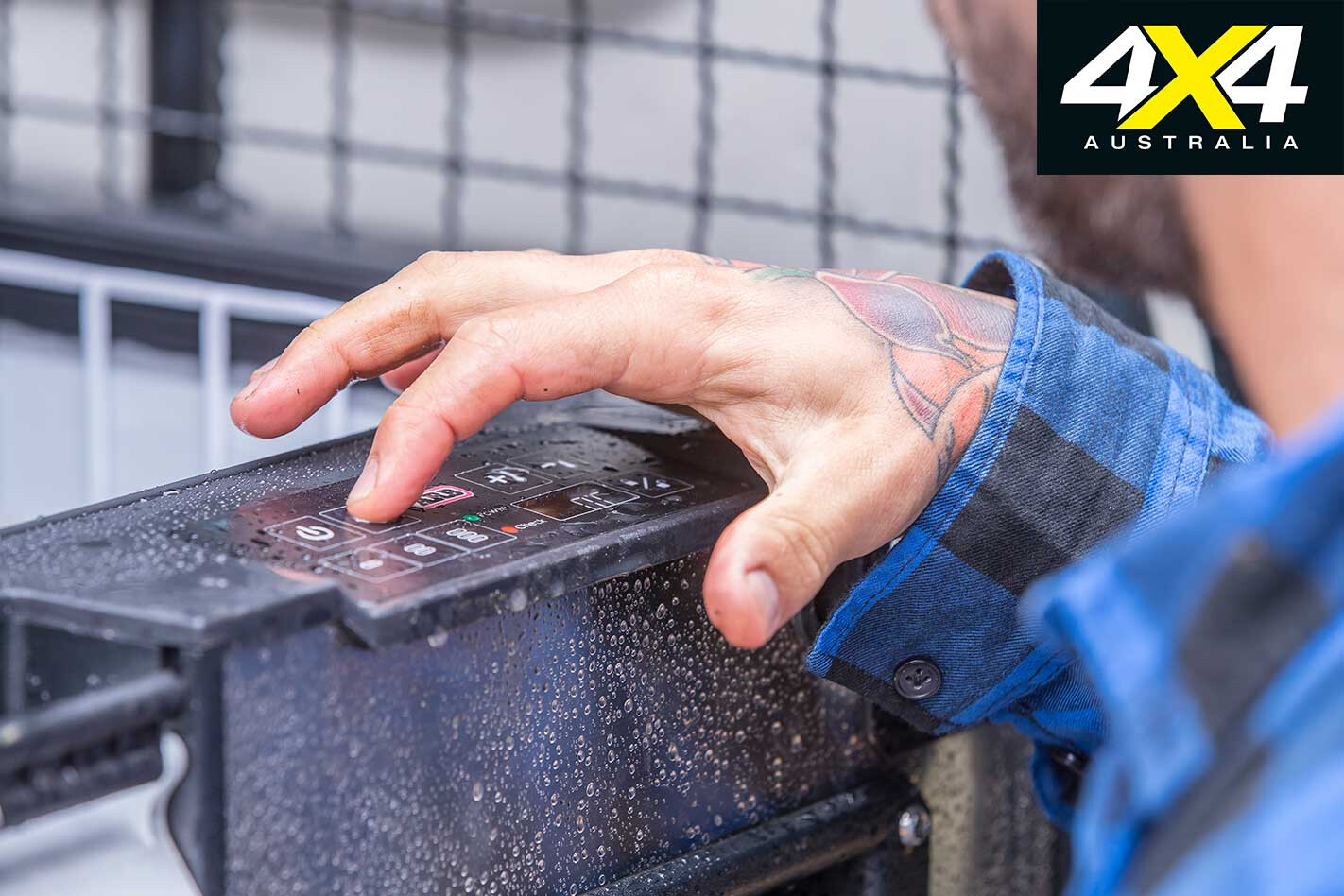
The front and rear handles are recessed, as are the AC and DC power sockets. Dimensions are 440mm (H), 820mm (D) and 490mm (W), and it weighs in at 31kg.
Website: www.arb.com.au
Reese tailgate pads
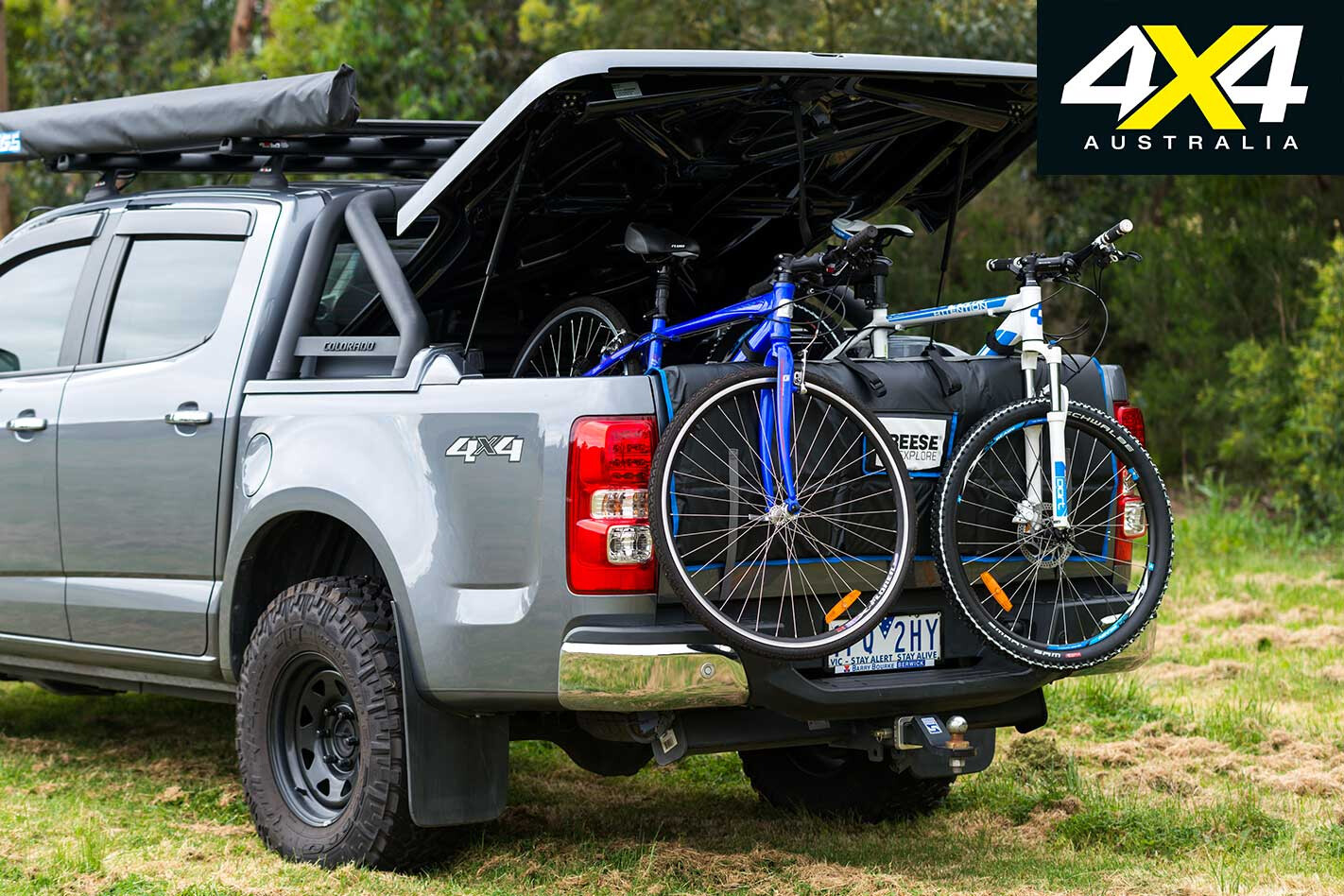
A ute tray is tailor-made for lugging long loads and bikes. Finding a way to eliminate the potential for scratching or damaging the top lip of the tailgate is a priority – and we don’t mean by using a stop-gap solution. Reese tailgate pads are designed to protect your tailgate (and the load sitting on top of it) from dents, scratches, etc., while also ensuring the load doesn’t slide from side to side.
The pads are secured using straightforward strap/buckle attachments and are super-tough; 600-denier, heavy-duty weather-resistant fabric is used, in conjunction with an internal soft foam core, resulting in a protective layer between tailgate and load. There are additional top attachment points to eliminate movement. The pads are available in two sizes from Repco outlets.
RRP: from $50 Website: www.reeseproducts.com.au
ROH Beadlock
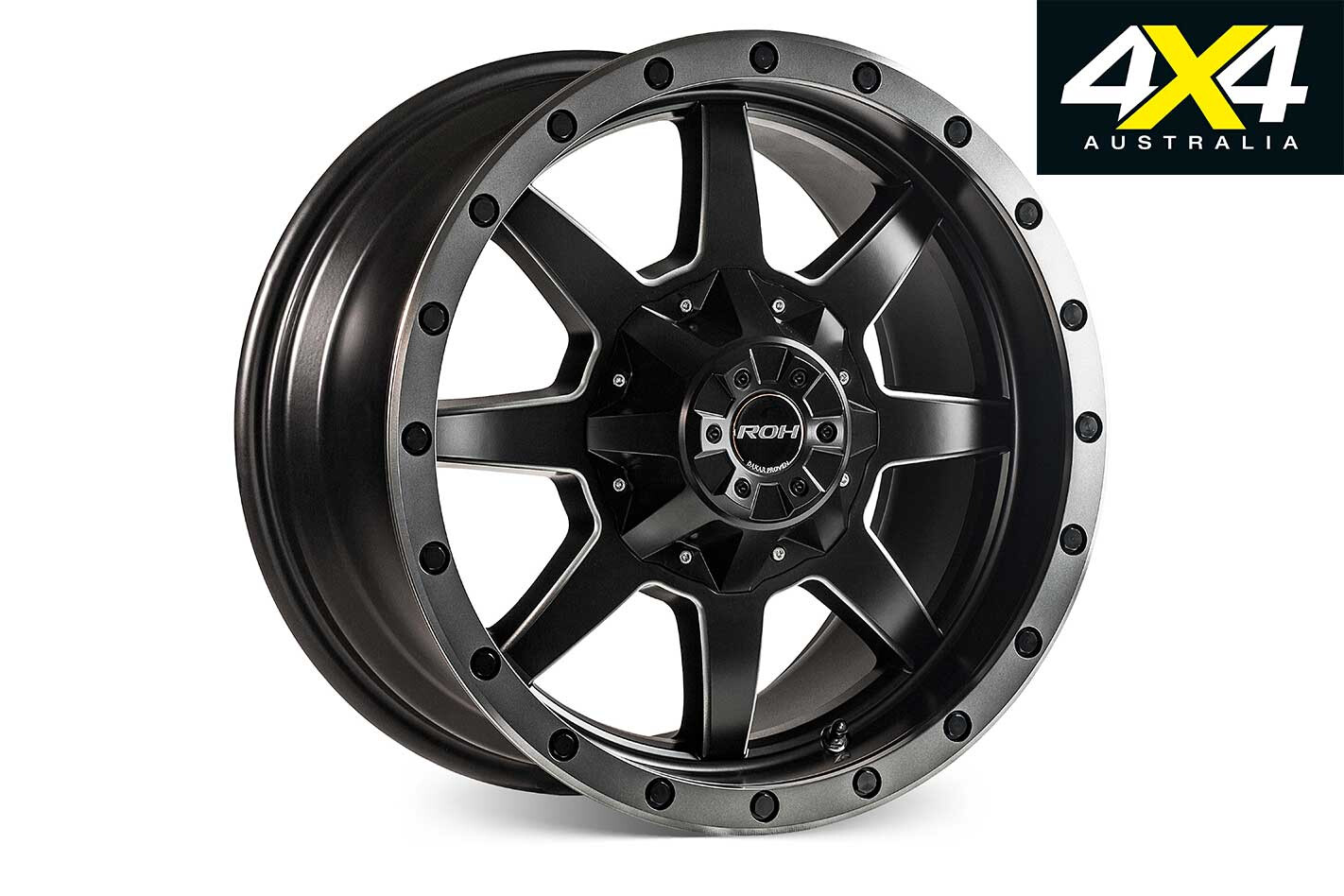
A new addition to ROH’s Dakar Proven wheel’s range, the Beadlock, is a deep-dish, eight-spoke design, with bright CNC-milled key lines on the beefy matte-black spokes. Other design highlights include the 20 black anodised aluminium bolts that run along the matte-graphite outer beadlock rim. Add in the stainless-steel centre cap screws and you’ve got a visually appealing wheelset.
The Beadlock is available in two wheel sizes – 16×8 and 17×9 – and is available for a number of popular 4x4s such as the Hilux, Ranger, Colorado, Navara, BT-50 and Triton.
The Beadlock is, as you’d expect from ROH, built tough, too; the wheel’s ROH Easyclean’s matte-black baked enamel finish offers excellent durability and resistance to weathering and salt-spray. The wheelset’s high load rating means it is also a great choice for those looking at a GVM upgrade.
Website: www.roh.com.au
Terrain Tamer/R.M. Williams Ute bag
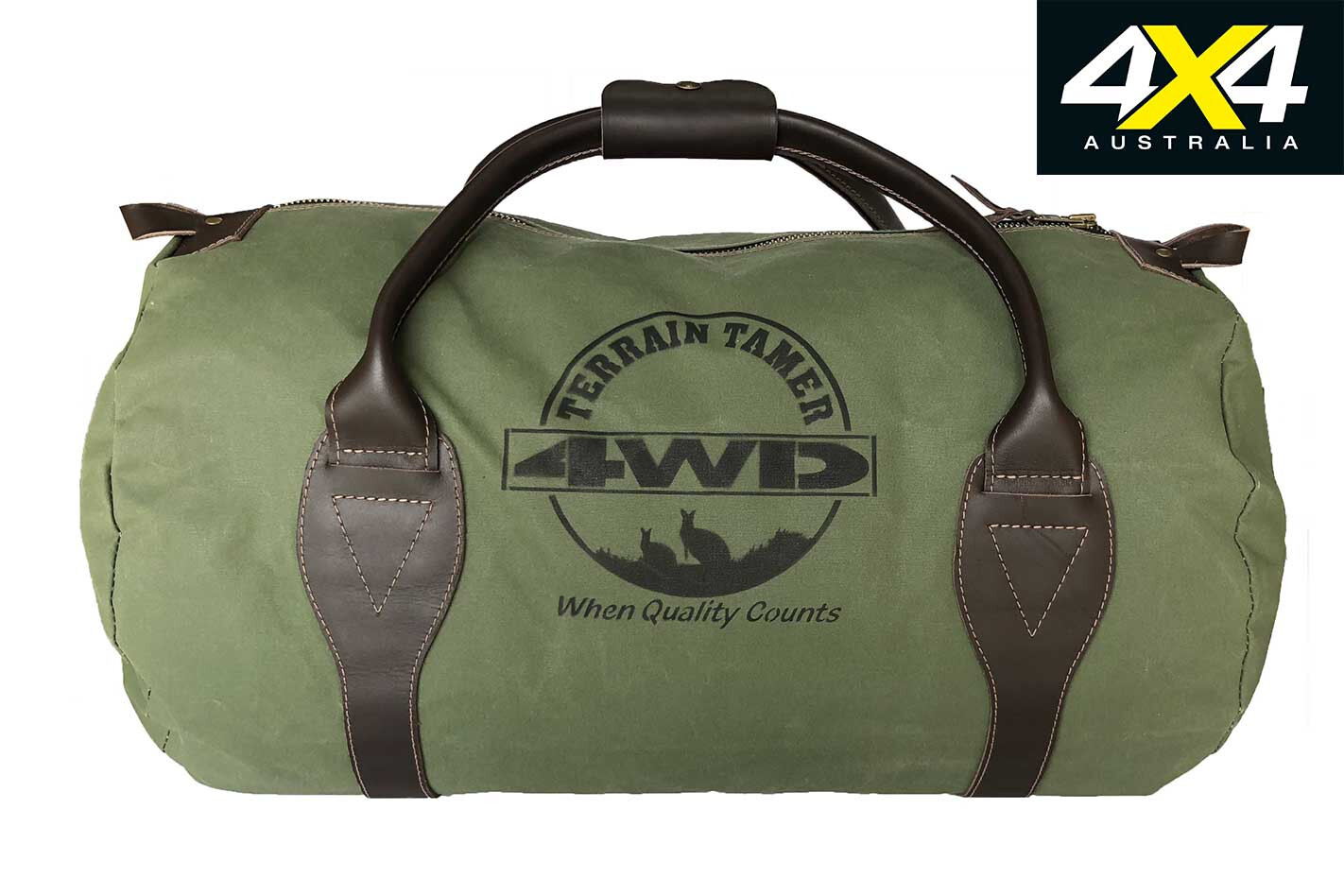
One of Australia’s highly regarded off-road companies has joined forces with this country’s premier outback clothing and apparel brand to produce this tough 60-litre ute bag.
The team at Terrain Tamer used its extensive knowledge of what works and doesn’t when it comes to outback travel and combined that with R.M. Williams’ apparel expertise to ensure this bag – featuring robust leather straps, rugged poly/cotton canvas material, heavy-duty zip and a bombproof design – will be up for being thrown in the back of your 4×4 ute.
Large enough for a week away, the ute bag’s design means there’s next to nothing that can go wrong with it, so you can expect many years of worry-free, gear-carrying service.
Website: www.terraintamer.com
MSA 4X4 Explorer Storage Drawer system – Amarok TDV6
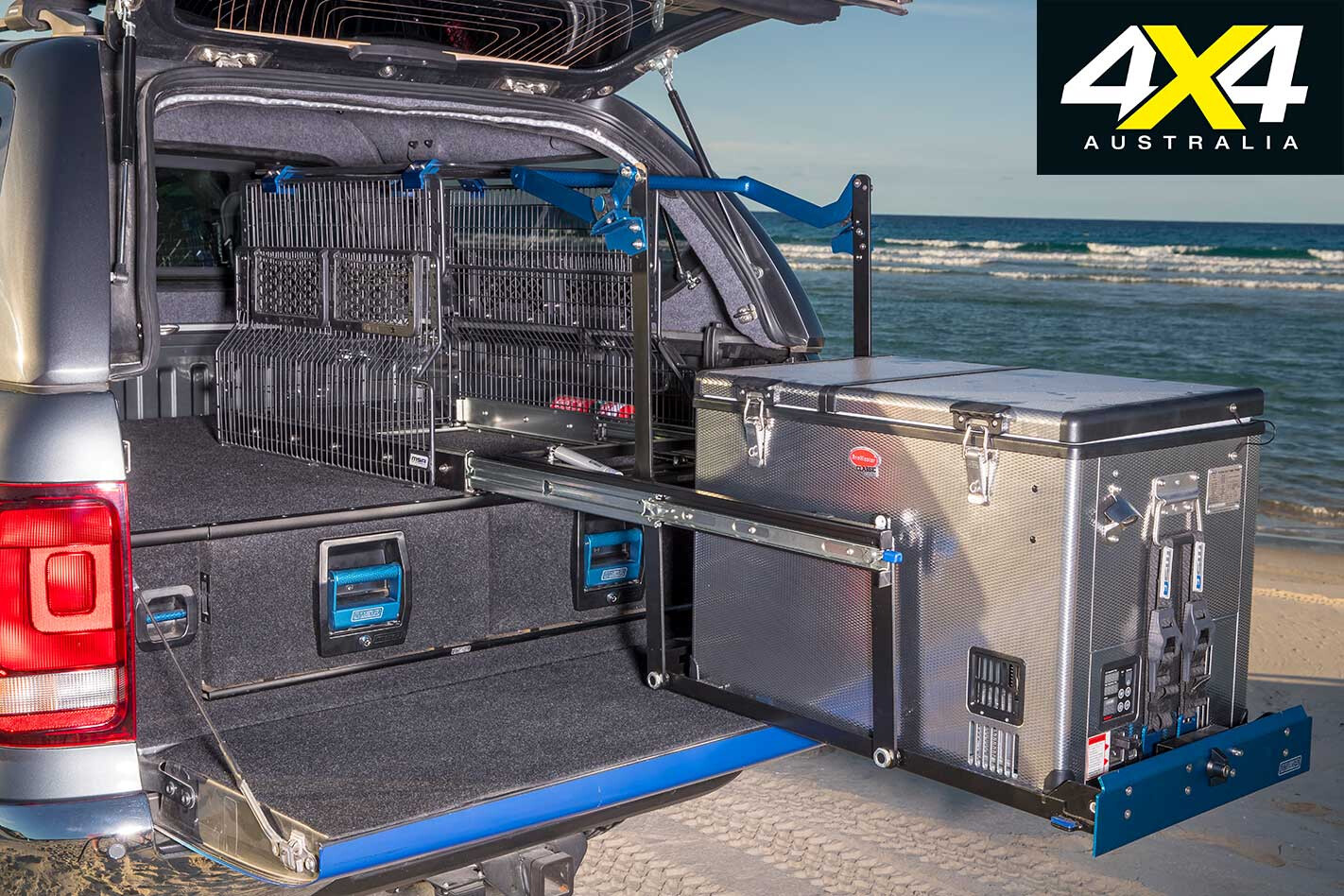
MSA 4X4 has released a new Explorer Aluminium Storage Drawer system to suit the 2017-plus Amarok TDV6 that runs AdBlue. Believe it or not, the AdBlue addition to the ’Rok necessitates a tweak to the design and build of the drawer system to ensure it meets ADR compliance regulations for that particular model.
The 1350 double drawer system includes left and right drawer modules, L/R wing and fit kits, the double drawer join kit, double trim and the floor extension and, as expected, is built to MSA 4X4’s exacting standards to ensure optimum storage capability without compromising vehicle/occupant safety.
The MSA Explorer storage drawer system is light and strong (capable of holding up to 250kg of gear per pair), thanks to its aluminium construction, and it comes with a lifetime guarantee.
Website: www.msa4x4.com.au
Opposite Lock rear step towbar
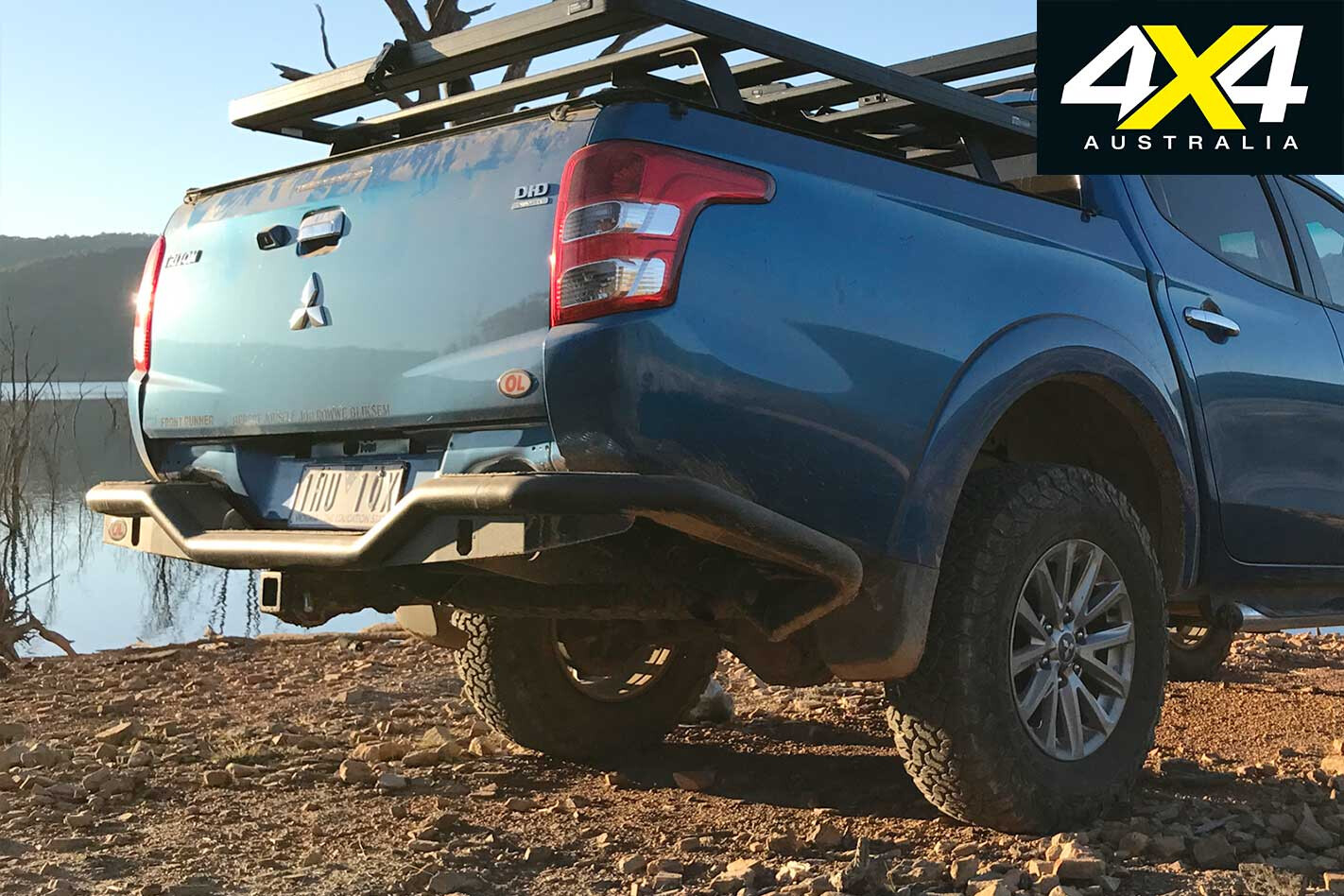
Oppy Lock’s premium steel rear step towbar range covers all the popular current-model 4×4 utes on the market – Ford Ranger, Holden Colorado, Isuzu D-Max, Mazda BT-50, Mitsubishi Triton, Nissan Navara, Toyota Hilux and VW Amarok.
The heavy-duty tow hitch is rated specifically to each model’s towing capacity, and the 63mm steel tube and plate guard, designed for optimum departure angle, means the bar is super tough. The mounting points for both Anderson and trailer plugs are up high as well.
The bar is phosphate-cleaned and powdercoated black and includes an aluminium checkerplate step, plus high-lift jack mount points. The loop tube design offers ample protection for your rig’s rear end. The full kit includes rear step, towball-mounting hitch, rego plate light and rear sensors (where applicable).
Website: www.oppositelock.com.au
Just near the Loddon River, in the heart of the Victorian goldfields, the Vaughan Springs camping area is surrounded by rolling green hills and a vast network of walking tracks. The huge slide is an all-time favourite with kids and adults, and free camping makes it a great place for budget-conscious travellers.
This feature was originally published in 4×4 Australia’s November 2012 issue
Vaughan Springs is part of the Castlemaine Diggings National Heritage Park, the largest non-indigenous protected cultural landscape in Australia. Added to the National Heritage List in 2005, it has outstanding value and importance in Australian history. The park is home to mineral springs and is a wonderful spot to discover gold relics.
Gold miner Jim Paull discovered the mineral springs in 1909 while clearing debris from a flooded sluicing plant. In those days it was a large township, called The Junction, popular with Chinese miners and market gardeners. Today, the strong Chinese presence is evidenced by the Chinese burial ground at the entrance to the park.
Gold was discovered here in July 1851. More than 20,000 people flocked to the area, but by 1852, the population had swollen to 40,000. For a period of three years, Castlemaine basked in glory as the world’s richest shallow alluvial goldfield, though the process turned once beautiful forested areas into barren wasteland.
A daytrip to Castlemaine via Vaughan-Chewton Road is a great way of visiting some of the historical sites. As you leave the camping area, turn right and follow the sealed road. On your left you will see the remains of the Duke of Cornwall engine house, erected in 1869 and is a prominent reminder of the mining activities that once took place.
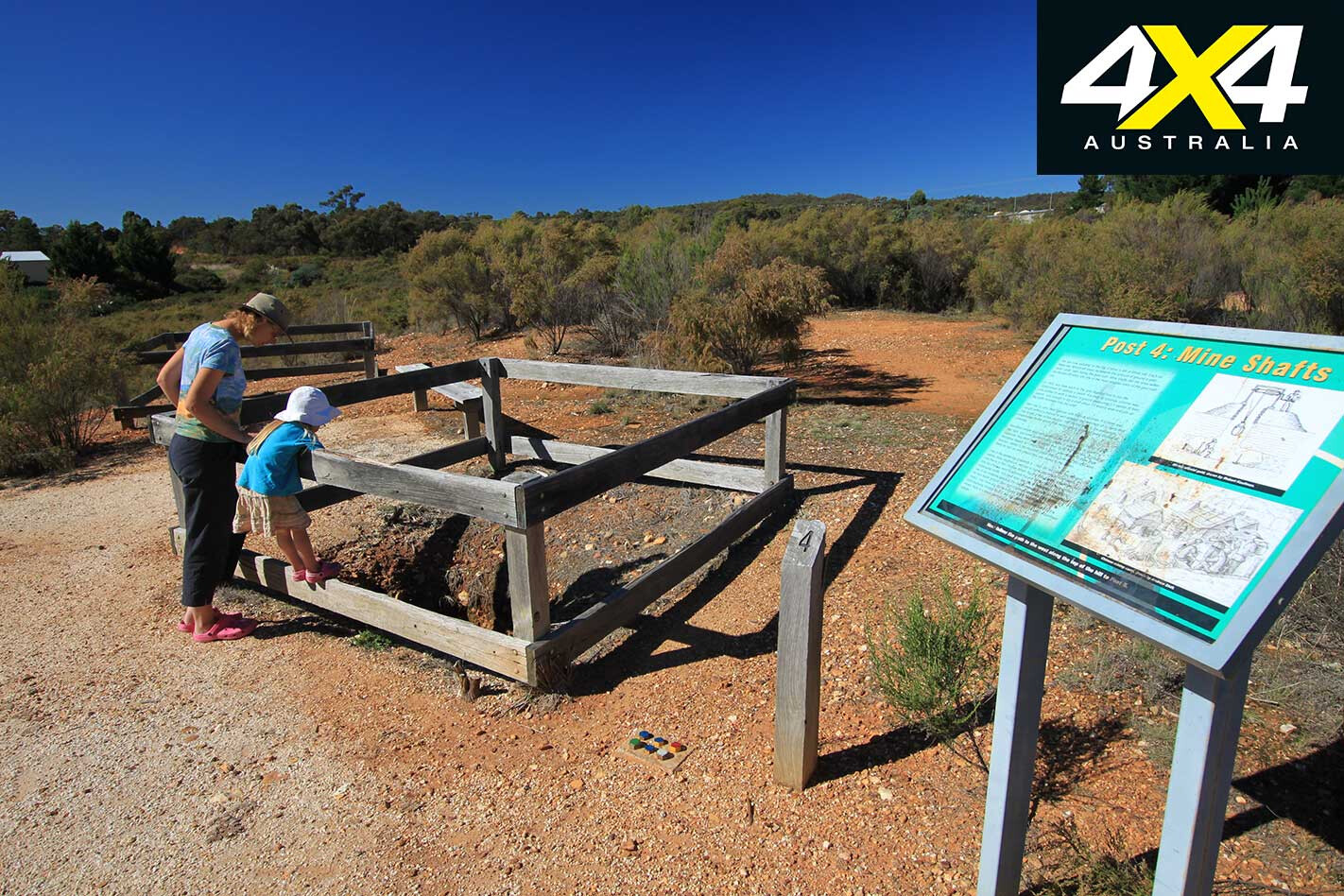
Continuing the drive, you pass through Irishtown and Fryerstown. Turn left when you spot the sign for the Wattle Gully Gold Mine. A short walk leads to a small area with an information sign. In the 1930s, the mine became Victoria’s premier producing mine for about 30 years, yielding 341,047 ounces of gold.
From here, the township of Chewton is a couple of kilometres down the road. Cross the Pyrenees Highway and follow the signs to the Garfield Waterwheel. The 22m diameter waterwheel, the largest in Victoria, was completed in 1887 and provided power to the stamp battery for extracting gold from ore produced by the Garfield Mine until 1903.
It had 220 wrought-iron buckets and a revolution took 45-55 seconds, driving a 15-head battery from 70-86 falls per minute.
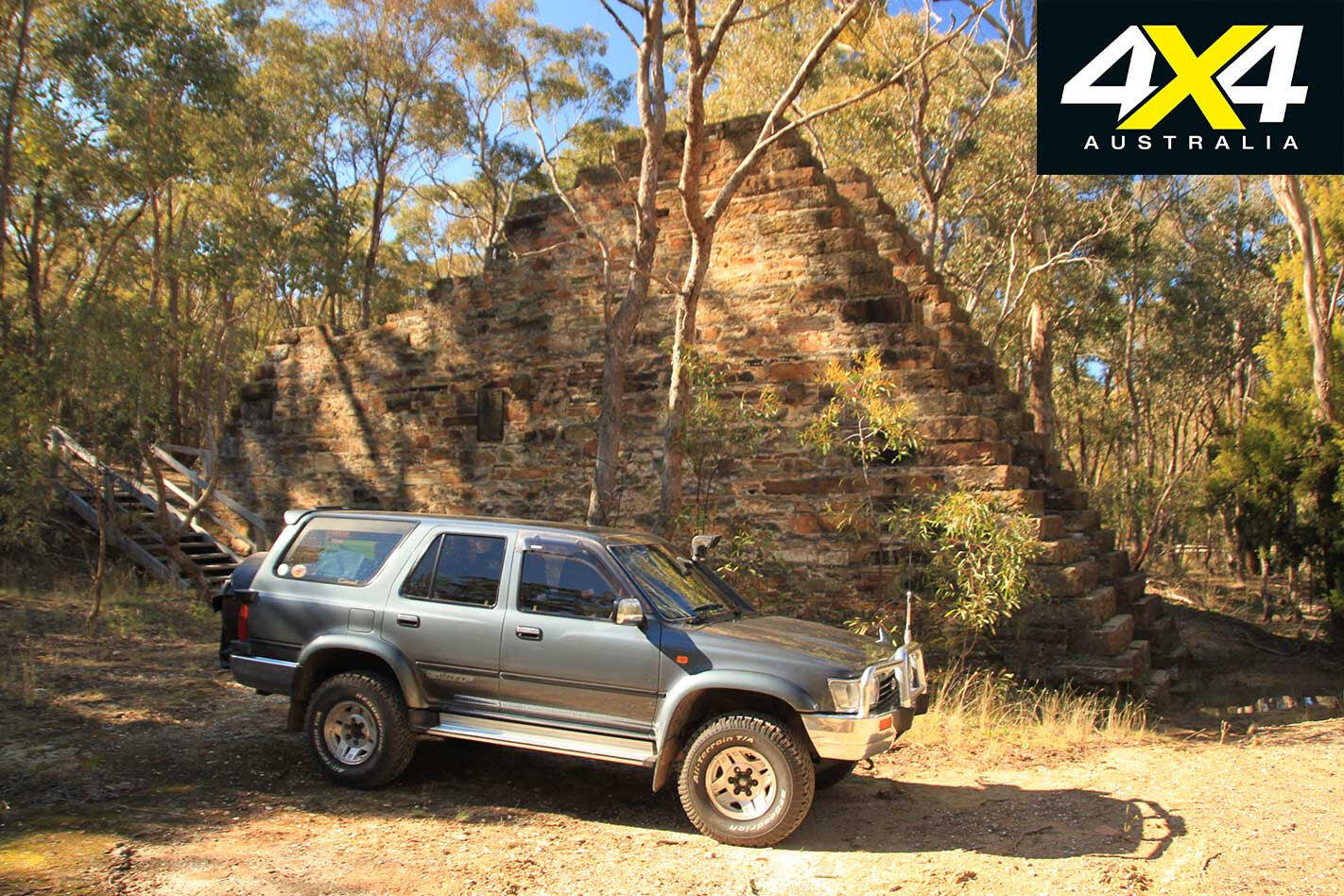
Returning to the Pyrenees Highway, turn right and head toward Castlemaine. The Forest Creek Gold Diggings are on your left and there is a large parking area. Once called ‘the bank till free to all’, this goldfield yielded great profits, with miners finding as many as 1000 ounces of gold, worth $500,000 at today’s prices.
Ten informative signs guide you through the area along Forest Creek and provide insight into the miners’ ingenuity, as well as the destructive consequences of their activities. One method, called hydraulic sluicing, involved directing a jet of water at the cliff face until it became saturated and collapsed.
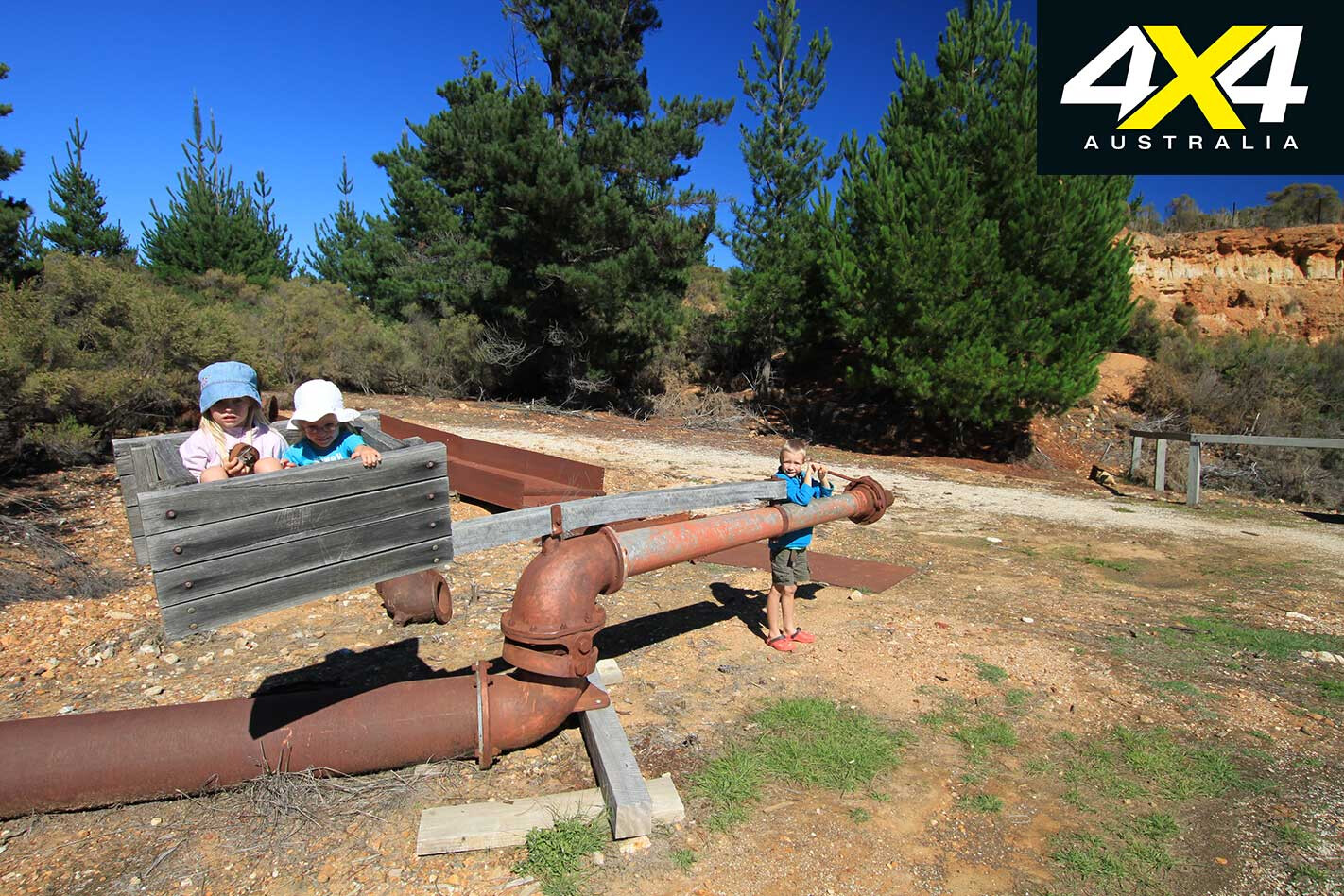
The water cannon pumped out about 10,000 litres of water a minute at tremendous pressure. It had a box of stones on the back that acted as a counterbalance to prevent the nozzle from bouncing around and injuring its operator.
Another short trip brings you into Castlemaine. The city centre is filled with heritage-listed buildings, mostly in Georgian style. It is a friendly town where people still greet you in the street.
In the 1800s, gold attracted miners to the region, hoping to strike it rich. These days, this National Heritage Park (Australia’s first) entices visitors to explore this beautiful area in the heart of the Victorian goldfields.
Travel Planner
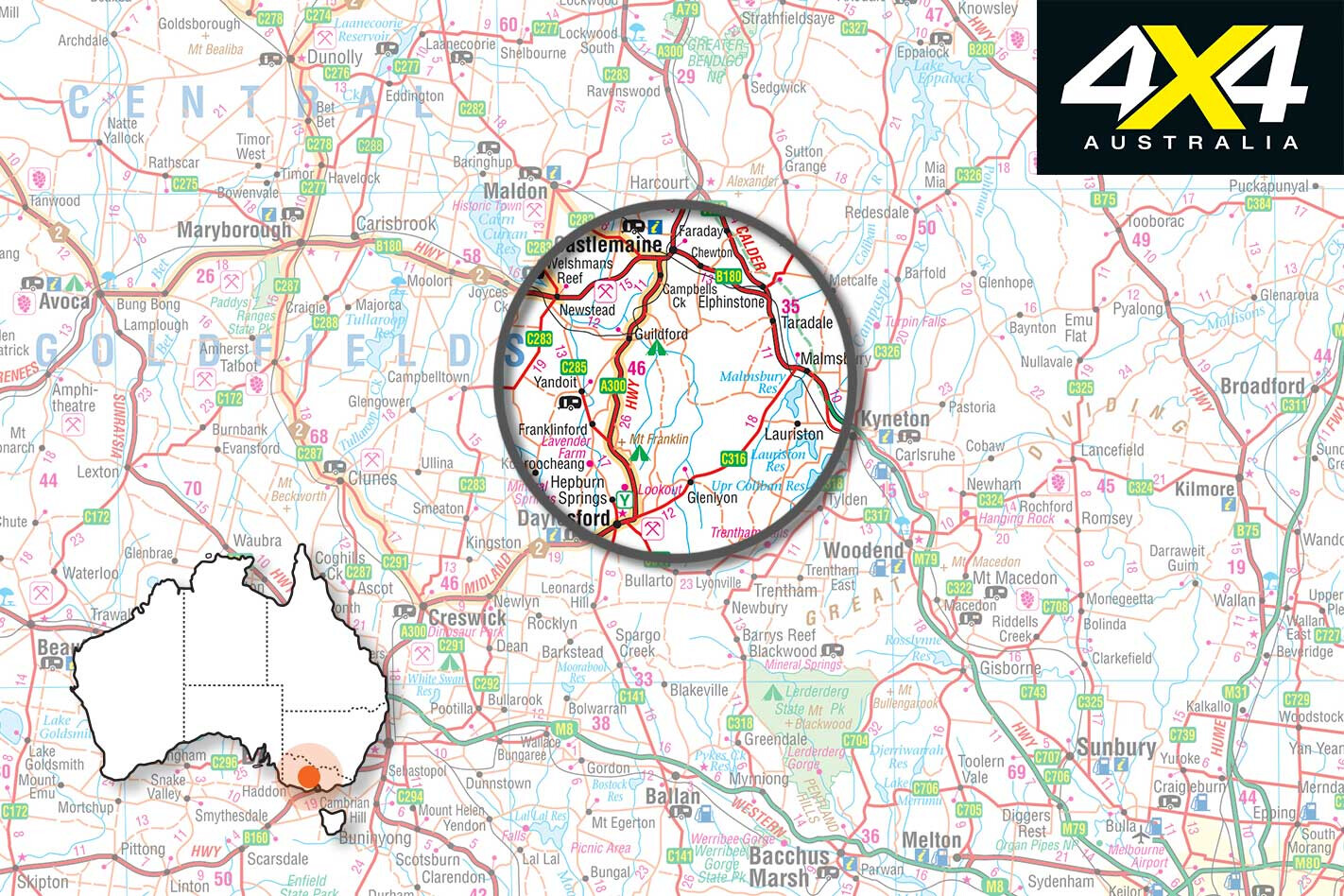
GETTING THERE Vaughan Springs is 120km north of Melbourne and 10km south of Castlemaine.
CAMPING The camping area has toilets, cold showers and a tap with creek water. No fees apply.
SUPPLIES Fuel and groceries are available in the township of Castlemaine.
MAPS AND GUIDES Castlemaine Diggings National Heritage Park Visitor Guide. Contact the Castlemaine visitors centre on 1800 171 888 or visit www.maldoncastlemaine.com.au. Alternatively, call Parks Victoria on 13 19 63 or visit www.parkweb.vic.gov.au.
A 4×4 trip to Vaughan Springs is a trip into the rich history of Victoria’s gold mining exploits – Whichcar is the online home of 4×4 Australia magazine.