
It’s a way for manufacturers to get more sales volume without having to design a new vehicle from the ground up, and it is a process that’s led to the Ford Everest being developed from the Ranger, Toyota Fortuner from the Hilux, Holden Trailblazer from the Colorado, Isuzu MU-X from the D-MAX, and the Mitsubishi Pajero Sport from the Triton.
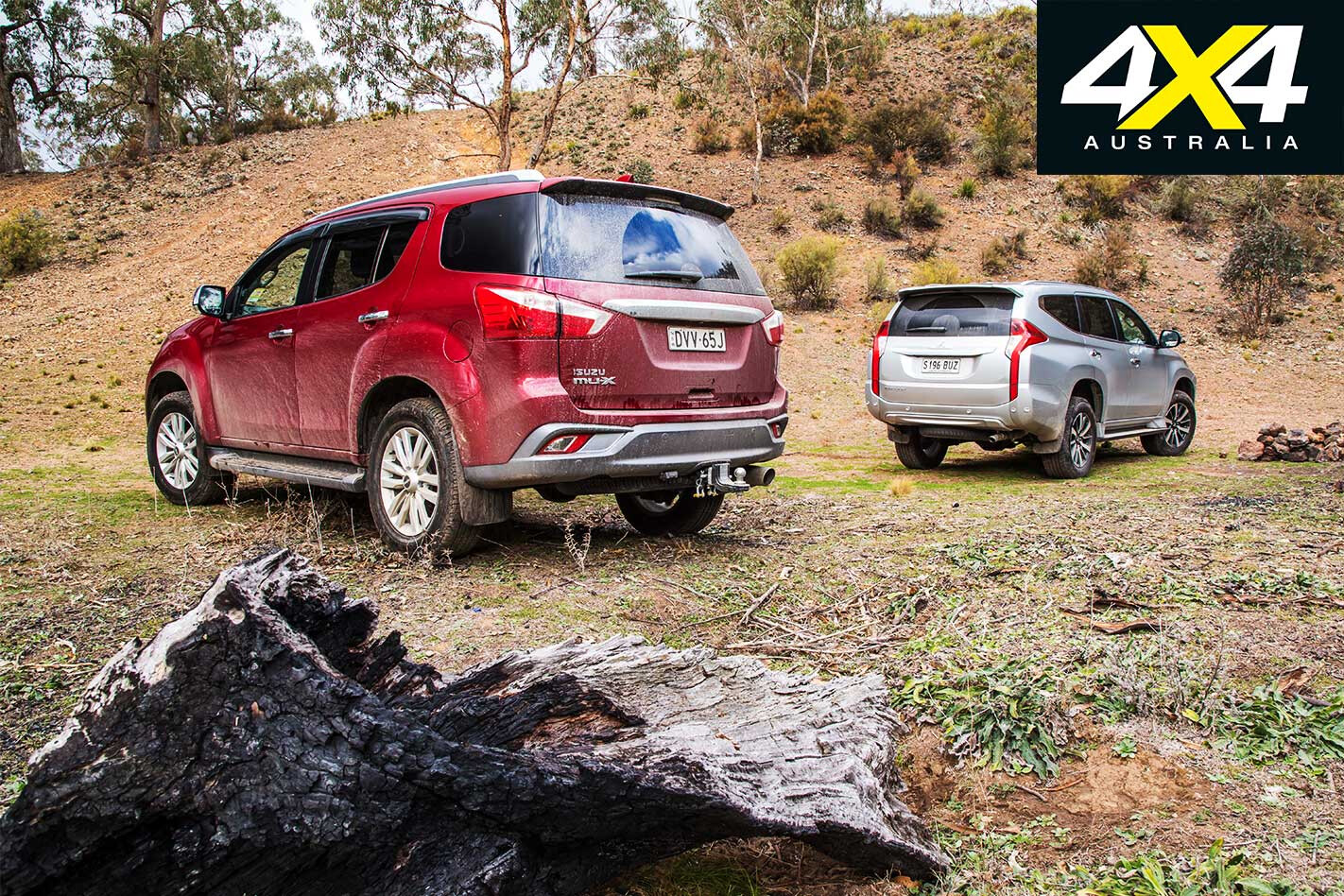
The build process is much the same: remove the ute body, shorten the wheelbase, swap the rear leaf springs for coils and the rear drum brakes for discs, and drop on the new wagon body.
In most cases the drivetrain remains untouched, save for the Everest gaining full-time 4×4 and the Pajero Sport an eight-speed automatic gearbox. It’s not only the manufacturer that wins here, as the relatively simple and robust design that is at the core of any ute lends itself well to an off-road vehicle, given robustness and simplicity are two desirable attributes of a 4×4.
Of these five wagons made from utes, the MU-X and the Pajero Sport are currently the best sellers and both have received a number of upgrades – most recently for the 2018 model year – since we tested them two years back, so it’s time to line them up again.
Isuzu MU-X – People’s Choice
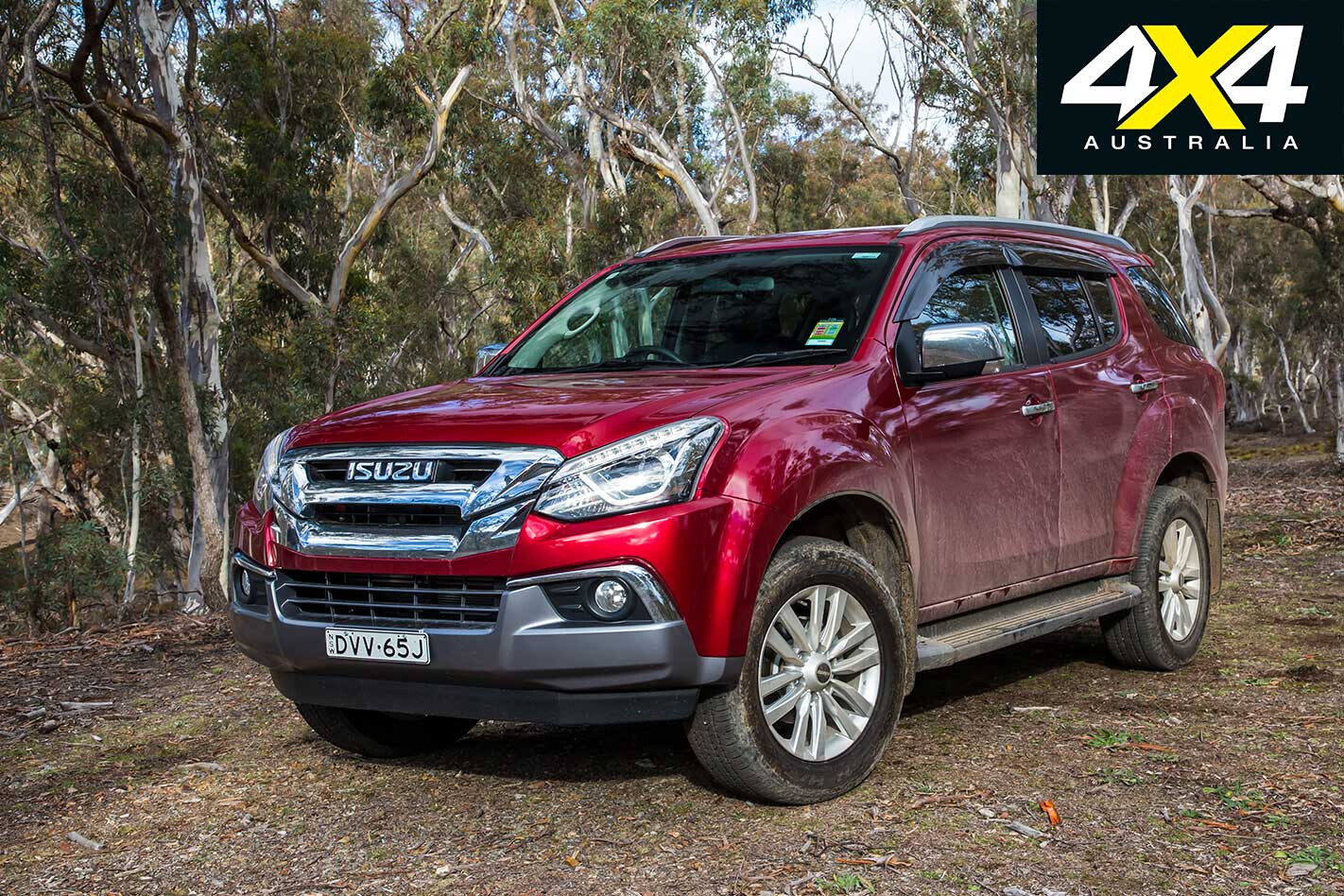
ISUZU has been building MU wagons based on utes since 1989, the first introduced in Australia in 1995 as the largely forgotten Holden Frontera.
This generation MU-X (effectively a fourth-generation wagon-from-ute model for Isuzu) arrived in Australia in late 2013 and remained largely unchanged for three years. In the early 2017 upgrade it gained a significantly updated engine (primarily to meet mandatory Euro 5 emission requirements), new six-speed automatic and manual gearboxes, NVH enhancements and additional equipment
A few months later the MY17 arrived with refreshed front-end styling, new dash, more NVH control measures and additional equipment. From there the MY18 MU-X gained trailer-sway control. This three-stage evolution has produced an MU-X that’s vastly different to what arrived in 2013.
POWERTRAIN AND PERFORMANCE
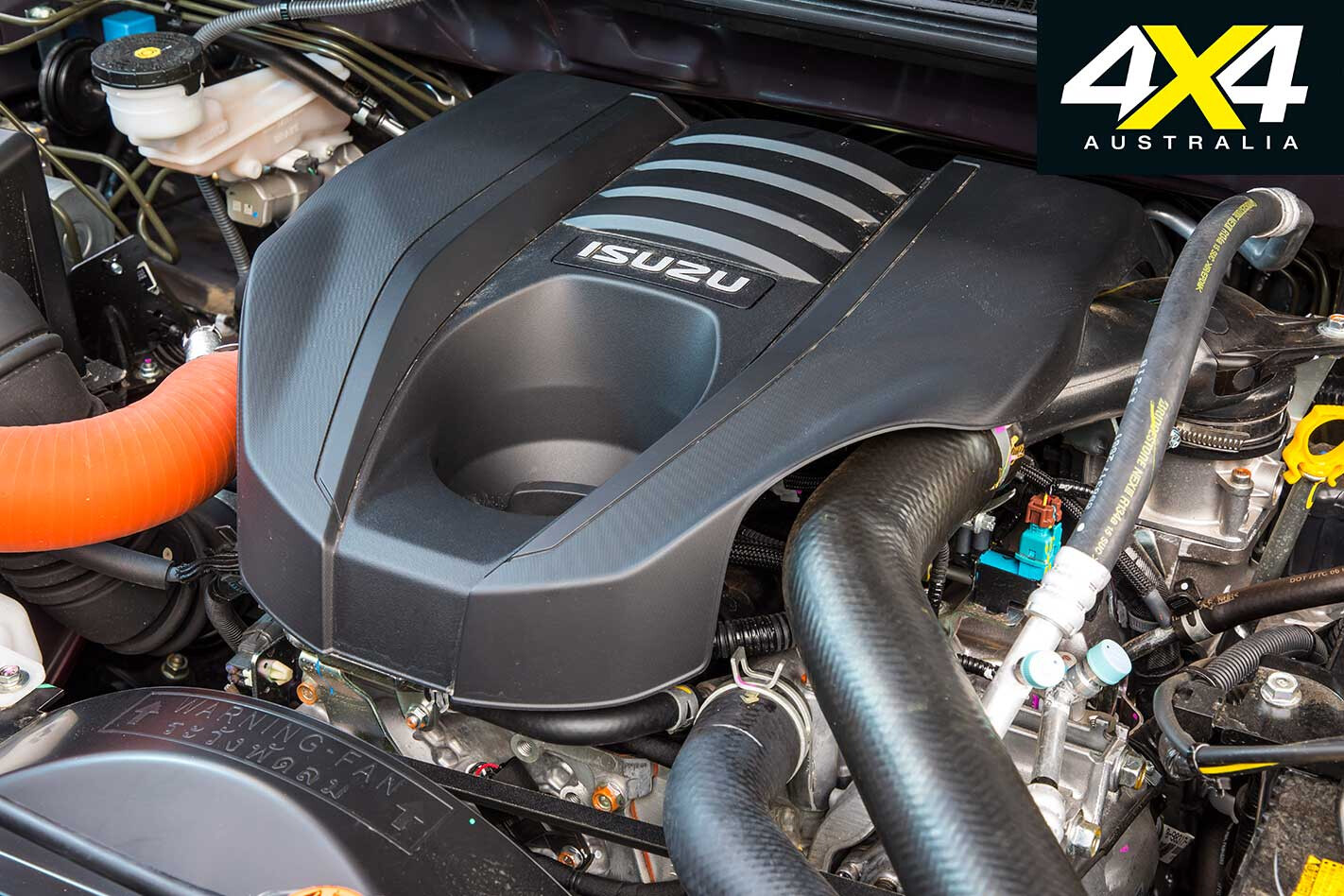
THE MU-X’s 3.0-litre four-cylinder diesel is the latest iteration of an engine that effectively dates back to 2005; the most recent upgrade has seen a raft of changes to comply with Euro 5 emission standards. Most notably it features a new variable-geometry turbocharger, higher pressure common rail injection, revised pistons and a diesel particulate filter.
While Isuzu had no choice in making the engine Euro 5 compliant, the good news is there’s more torque available over a wider rpm range. However, the max power remains at 130kW, so while the engine is now far more flexible in general driving, pedal-to-the-metal performance is much the same.
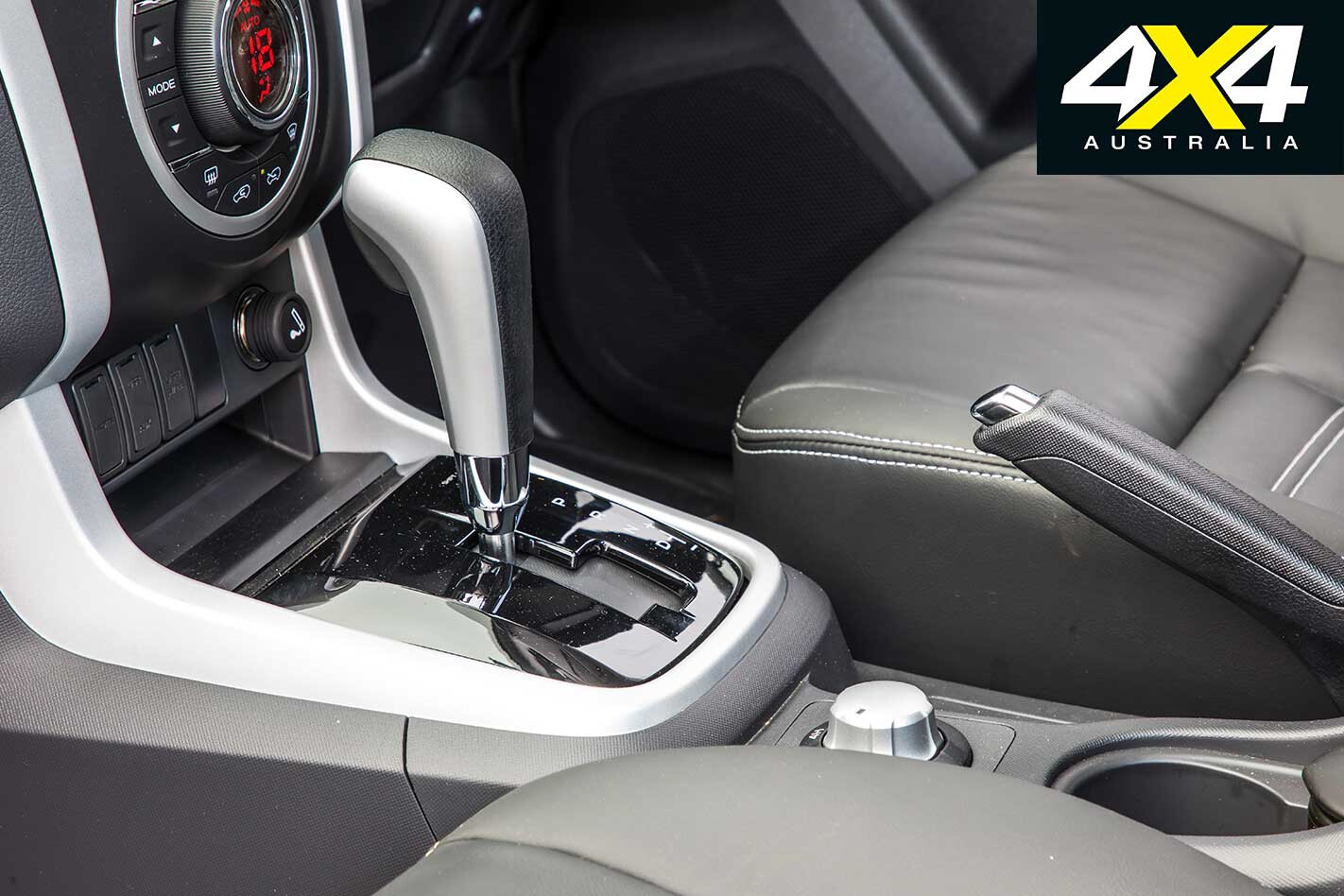
The upgrade from the five-speed auto to a six-speed auto doesn’t help performance, either, as it adds an extra (and very tall) overdrive ratio rather than tightening up the ratio spread, so it’s more a change in the interests of fuel efficiency. The gearbox is an Aisin design and essentially the same as the six-speed auto used in Toyota’s Hilux, Prado and Fortuner.
On the road the engine is relatively low revving, effortless and relaxed in general driving, but not notably strong when asked to give its all. Nor is it as responsive as the smaller engine in the Pajero Sport, which makes similar maximum power and torque numbers but benefits from lower overall gearing and its relatively close-ratio eight-speed gearbox. It’s also not as quiet or smooth as the smaller and lower-compression engine in the Pajero Sport.
For its part the MU-X’s six-speed automatic offers reasonably smooth and well-timed shifts and is far more proactive in its shift protocols than the five-speeder used previously; although, the extra-tall fifth and sixth ratios mean some shuffling back and forth between the two at highway speeds on undulating roads.
HANDLING AND RIDE
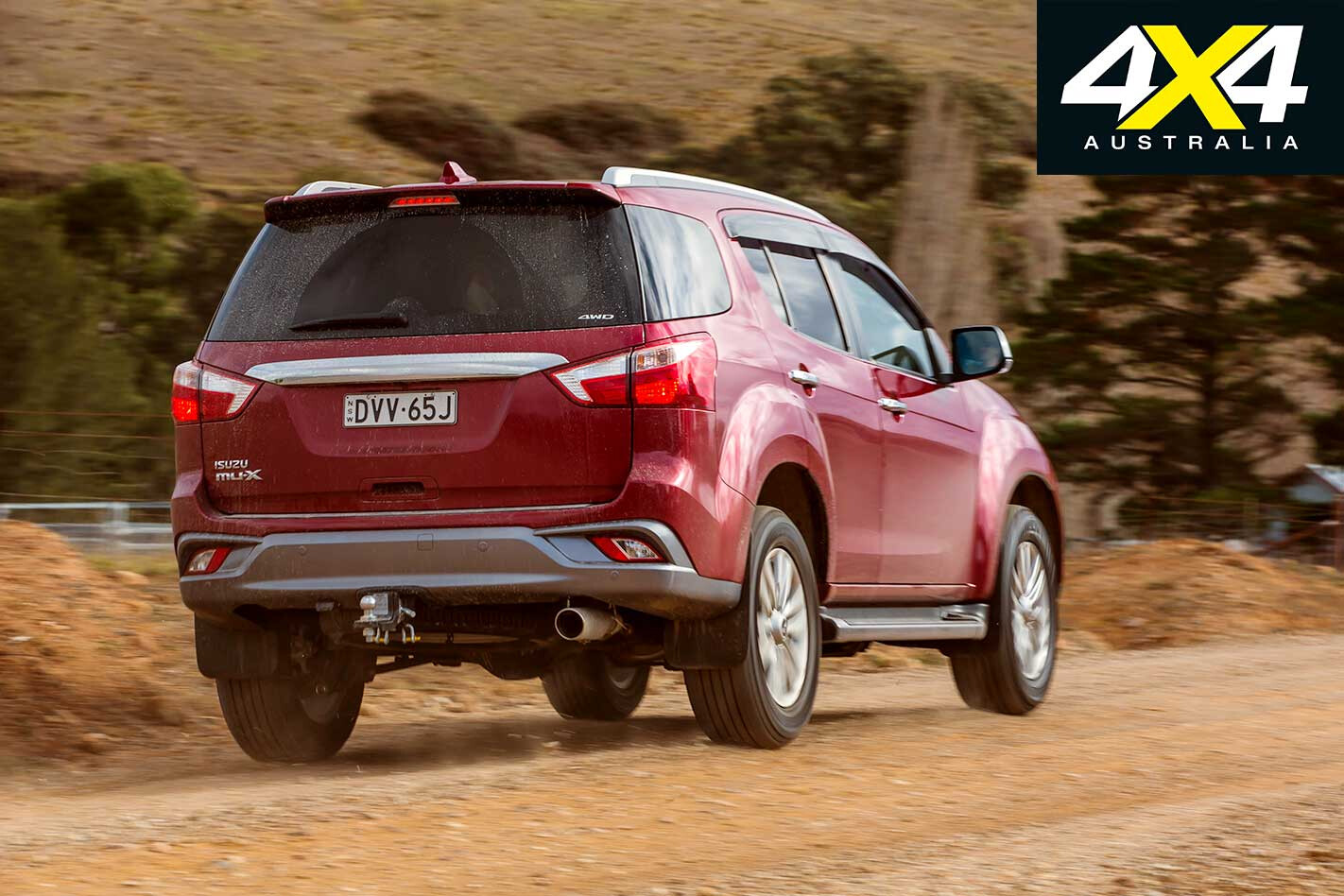
ISUZU has always managed to do a good job with suspension calibration for Australian conditions, and this latest iteration of the MU-X is no exception. The ride quality is compliant and comfortable, yet the bodyroll isn’t excessive and the overall suspension control is good. Road noise isolation is also better than it was with the earlier MU-X.
However, on bumpier roads at higher speeds you feel the live axle’s tendency to create some bump-steer. The notably light steering could also do with a bit more feel, while the MU-X also lacks the advantage of the Pajero Sport’s full-time 4×4. Compared to the Pajero Sport the MU-X feels bigger (which it is) and not as nimble or agile.
OFF-ROAD
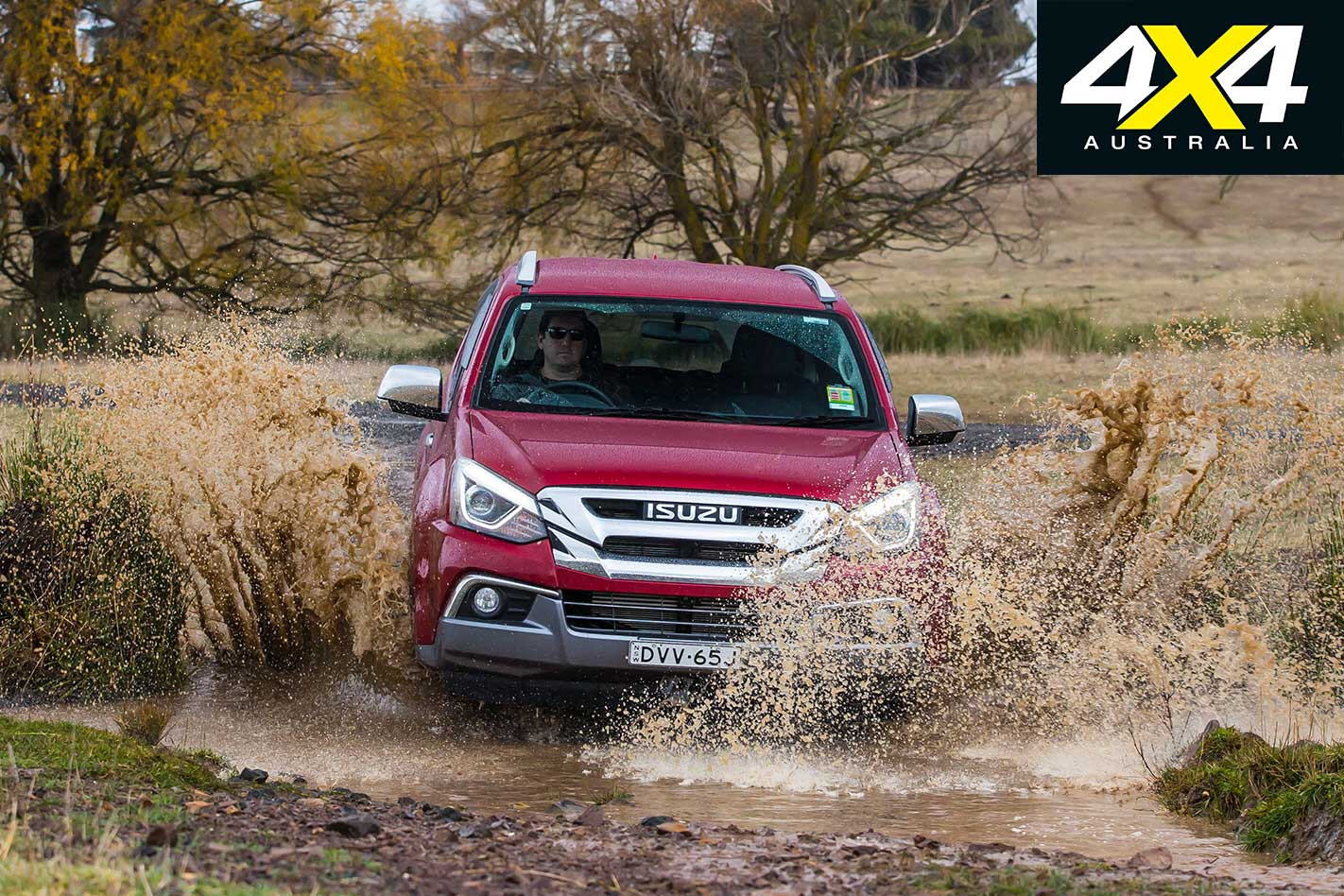
THE MU-X has decent clearance, a good driving position and it’s very well protected underneath; although, as with most current 4x4s, the light-duty side-steps are vulnerable. In gnarly conditions the MU-X’s modest wheel travel puts more emphasis on the performance of the electronic traction control, which unfortunately could be better.
The MU-X is still a very capable tourer, but in tough off-road conditions that wouldn’t faze an Everest or Fortuner it will struggle and could do with off-road specific calibration of its ETC – as Holden has done with the MU-X’s cousin the Trailblazer – to improve its hardcore ability.
In most other ways the MU-X ticks the off-road boxes: the part-time 4×4 system is straightforward to operate (via a rotary dial), it has a practical wheel and tyre spec and the ability to fit wheels down in size to 16-inch, and it draws its engine intake air from the inner ’guard for peace of mind when crossing deep water.
WHAT YOU GET
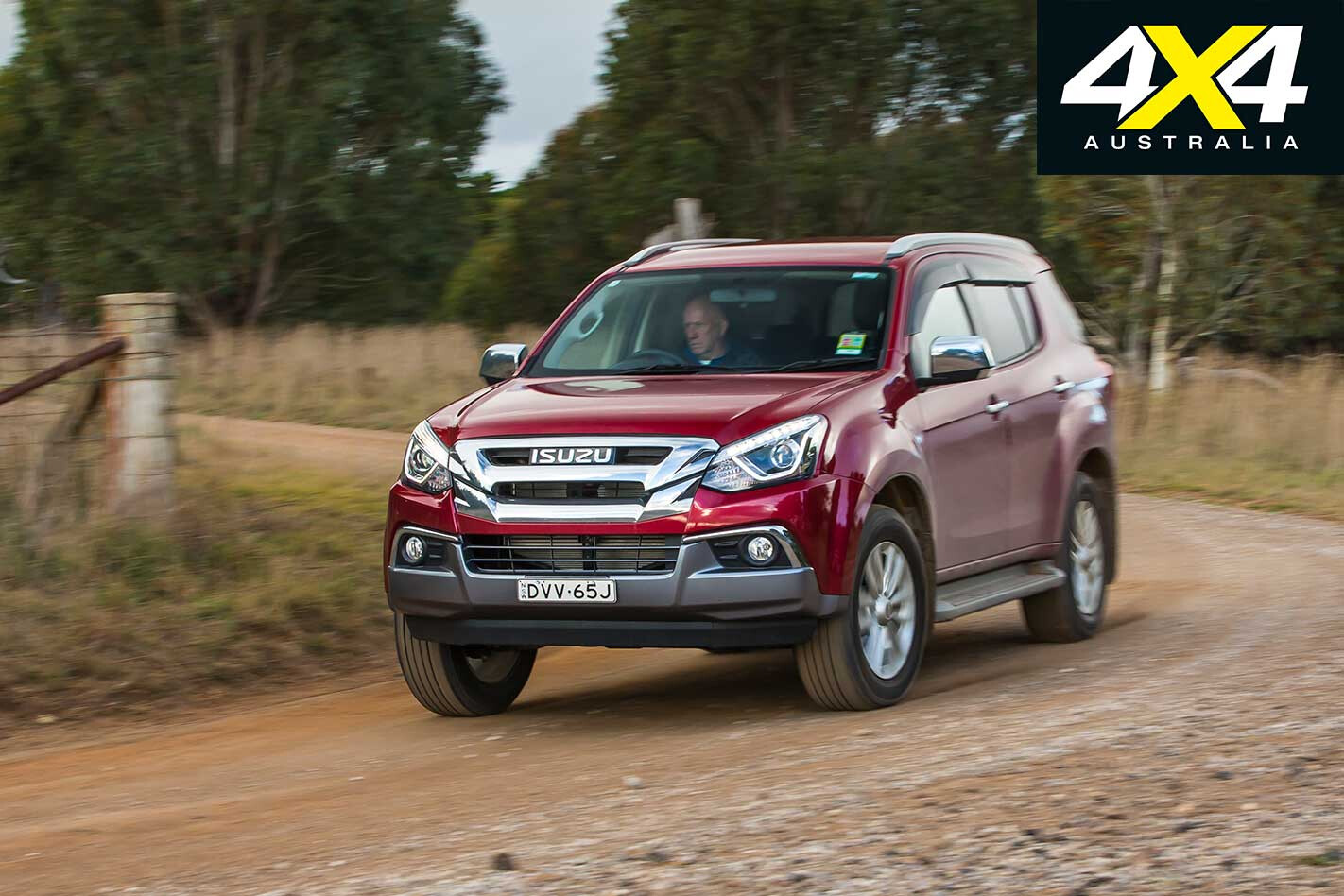
THE base-spec LS-M comes with an automatic gearbox and standard features including six airbags, 7-inch touchscreen, Bluetooth, USB input, reversing camera, LED DRLs and headlights, and trailer-sway control.
The LS-U adds an 8-inch touchscreen, sat-nav, climate control, air-con outlets for rear passengers, fog lights, side-steps, rear privacy glass, 18s in place of the LS-M’s 16s, and a six-speed manual is available. The auto-only LS-T then adds ‘smart-key’ entry and start, leather seats with electric-adjust for the driver, a rear DVD entertainment system with a 10-inch roof-mounted screen, roof rails, and a tailgate spoiler.
CABIN AND SAFETY
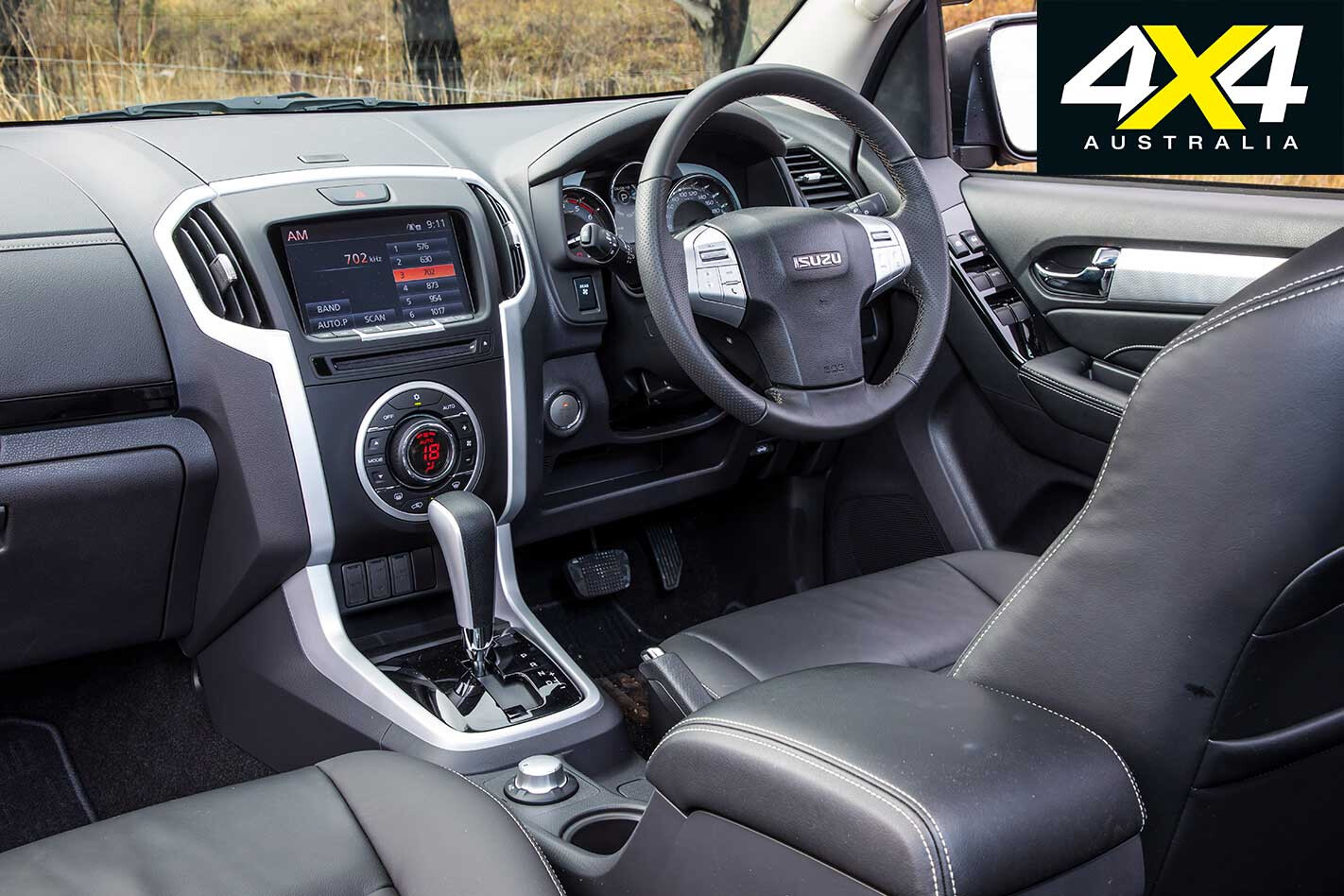
SMART-KEY entry (on this top-spec LS-T) and conveniently placed grab handles make it easy to climb aboard to the comfortable and spacious driving position. The MU-X’s fit and finish and general presentation is much better than before, and it has certainly lost the ‘cheap’ feel that let down the earlier models. There’s no reach adjustment for the steering wheel, though.
The back seat is a bit of a squeeze for three adults (two adults and a child is more ideal) but is more spacious than the Pajero Sport. The third-row seats are easy to deploy and can seat adults in reasonable comfort, but they come at the cost of reduced luggage space with the high floor they create.
Thanks in part to six airbags the MU-X offers five-star ANCAP safety, but it doesn’t come with any high-end safety features.
PRACTICALITIES
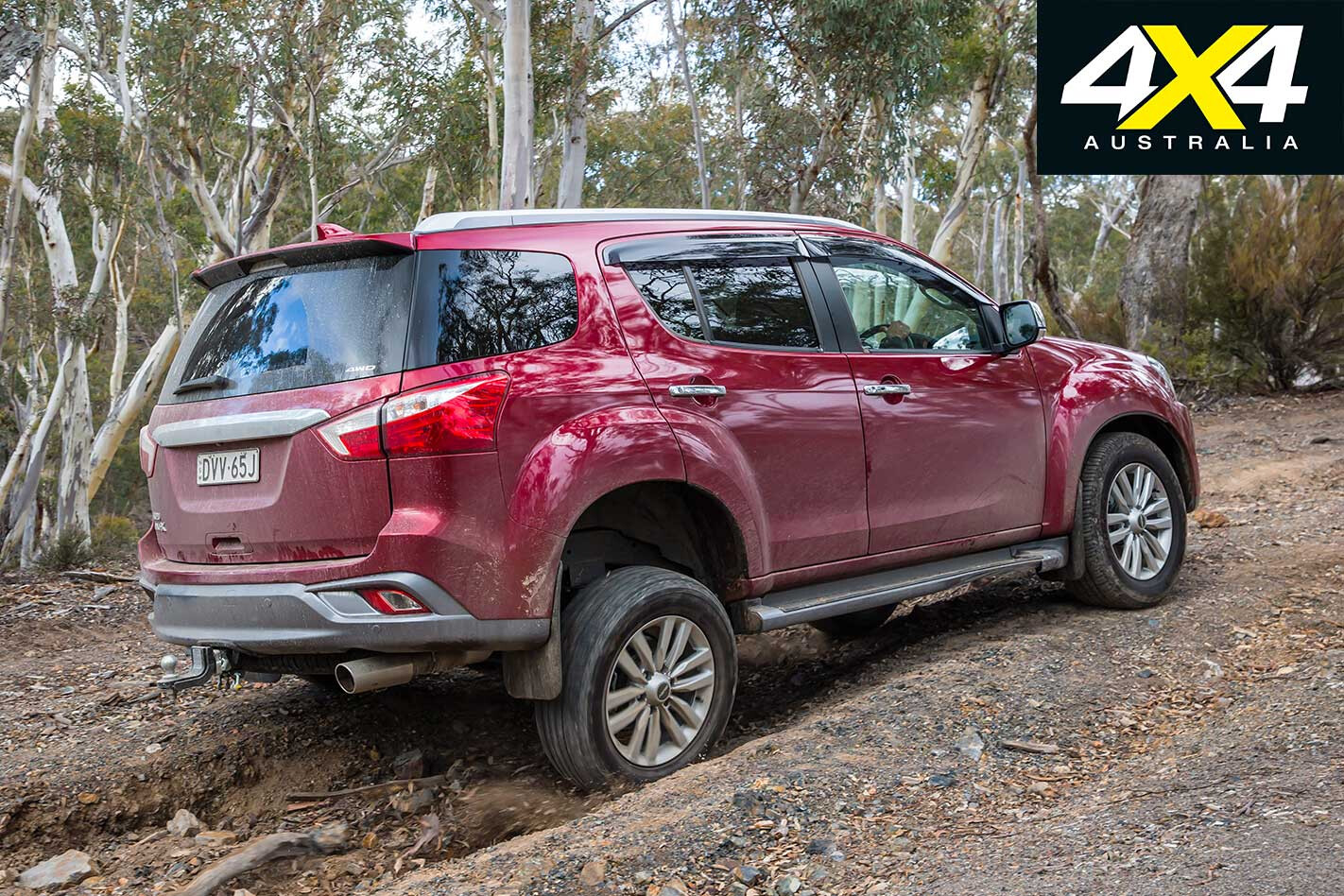
THE MU-X offers a five-year warranty, five-year roadside assistance and a five-year/75,000km fixed price servicing (every 15,000km or 12 months), all through some 120 Isuzu dealers nationwide.
Factory accessories include steel and aluminium-alloy bullbars and a snorkel, while the MU-X is increasingly well served by the 4×4 aftermarket. The MU-X’s tow rating of 3000kg and payload of around 600kg are typical in this class.
WHAT’S IN A NAME?
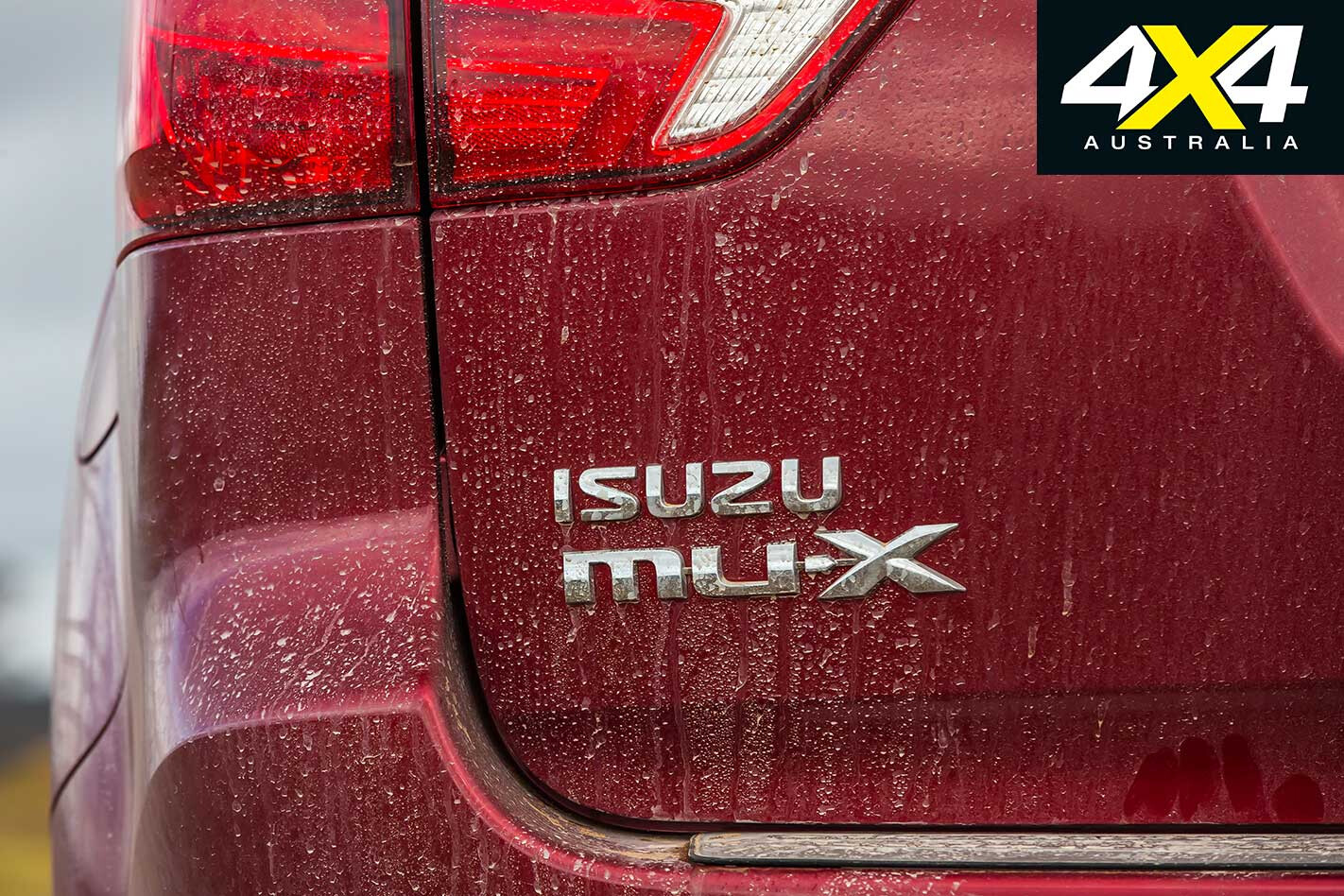
ISUZU Ute Australia only started selling the D-MAX and MU-X here in 2008, but Isuzu vehicles have been around much longer than that in Australia, with most of them sold wearing Holden badges.
These include the Gemini small car, every Rodeo ute (as well as the first Colorado), the Jackaroo 4×4 wagon and the Holden Frontera, which was sold elsewhere as the Isuzu MU and was the predecessor of the MU-X. In Isuzu-speak, MU originally stood for ‘Mysterious Utility’.
Mitsubishi Pajero Sport – Challenger Mark III?
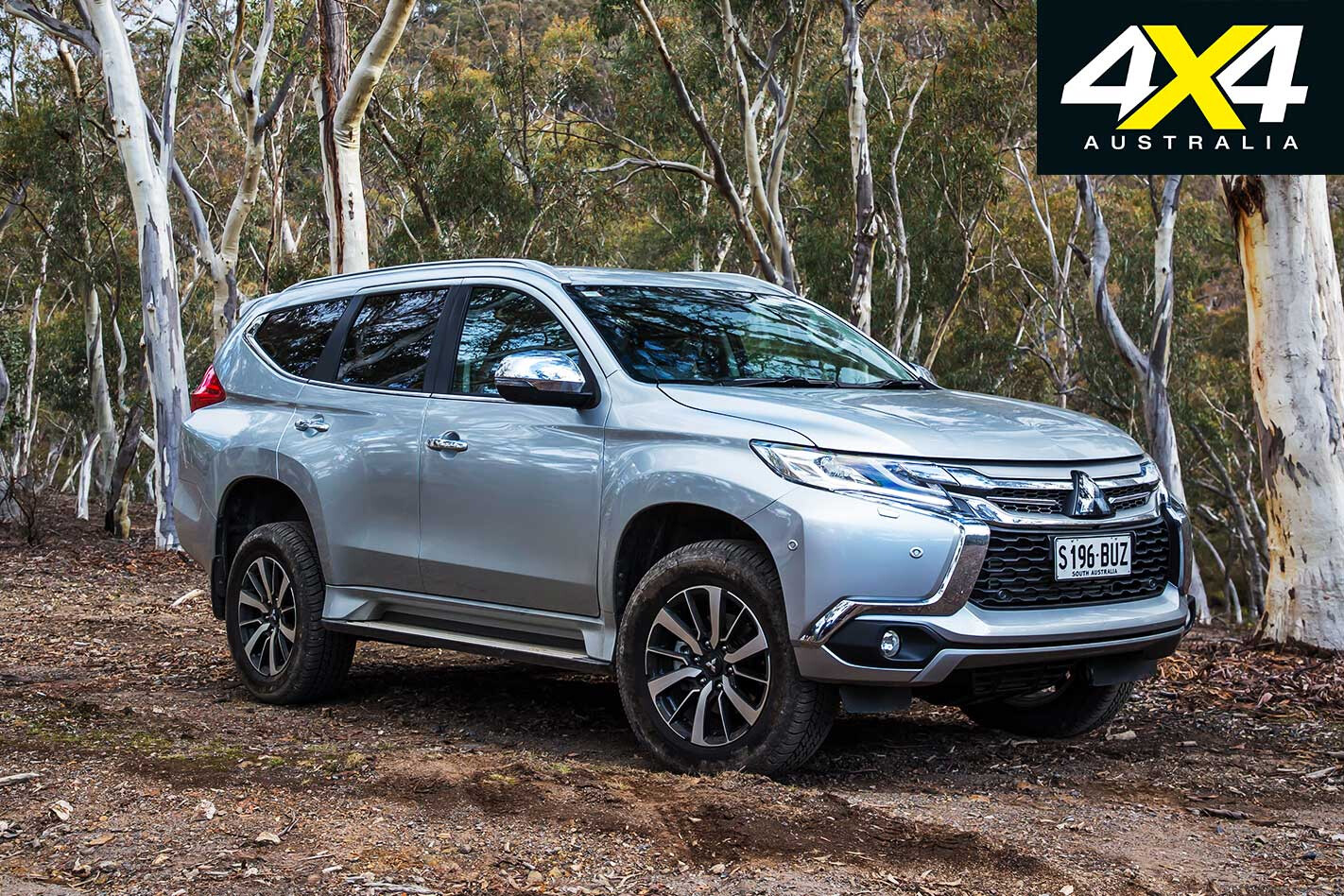
MITSUBISHI has being building a wagon based on the Triton ute since 1996, and in some parts of the world it was called a Pajero Sport right from the get-go. In Australia, however, it was called the Challenger through the first two generations, with the Pajero Sport name only adopted here for this latest model that arrived in late 2015 off the back of the then new-generation Triton.
Despite its name the Pajero Sport has little to do with the current Pajero and, in fact, any Pajero for nearly 20 years, as the Pajero is a monocoque with fully independent suspension whereas the Sport has an old-school separate chassis and live rear axle.
When it arrived in 2015 the Pajero Sport was only available as a five-seater, but third-row seats were introduced on mid- and top-spec models in mid-2016. The Pajero Sport’s latest update has seen automatic emergency braking and radar cruise control, features previously exclusive to the top-spec Exceed model, become standard across the range.
POWERTRAIN AND PERFORMANCE
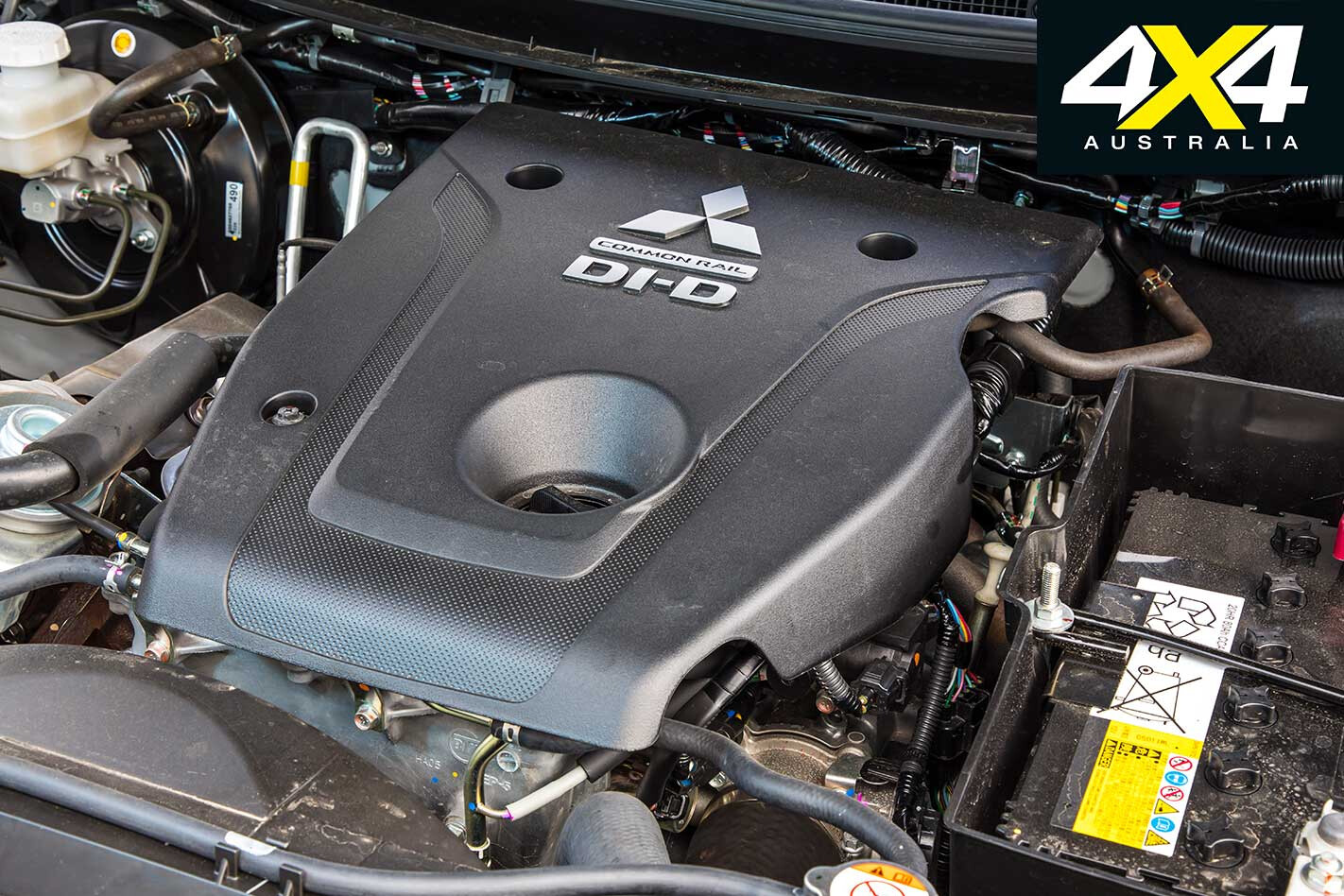
THE Pajero Sport shares the same 2.4-litre four-cylinder diesel as the Triton, an all-new engine in 2015. It boasts Euro 5 compliance and claims more power and torque than the older 2.5-litre diesel used in the Challenger and the previous generation Triton.
The 2.4 is a modern all-aluminium design with variable valve timing, a relatively low compression ratio (for refinement and lower NOx), high-pressure common rail injection and a low inertia variable geometry turbocharger. Surprisingly for a relatively small capacity four it also employs counter-rotating balance shafts for improved smoothness.
On the road the engine delivers on this promise of modernity and is quiet, smooth and refined. Despite its smaller capacity it claims the same maximum torque (430Nm) as the 3.0-litre in the MU-X but needs 500rpm more to get there; not achieving its maximum torque until 2500rpm, an unusually high figure for a modern diesel.
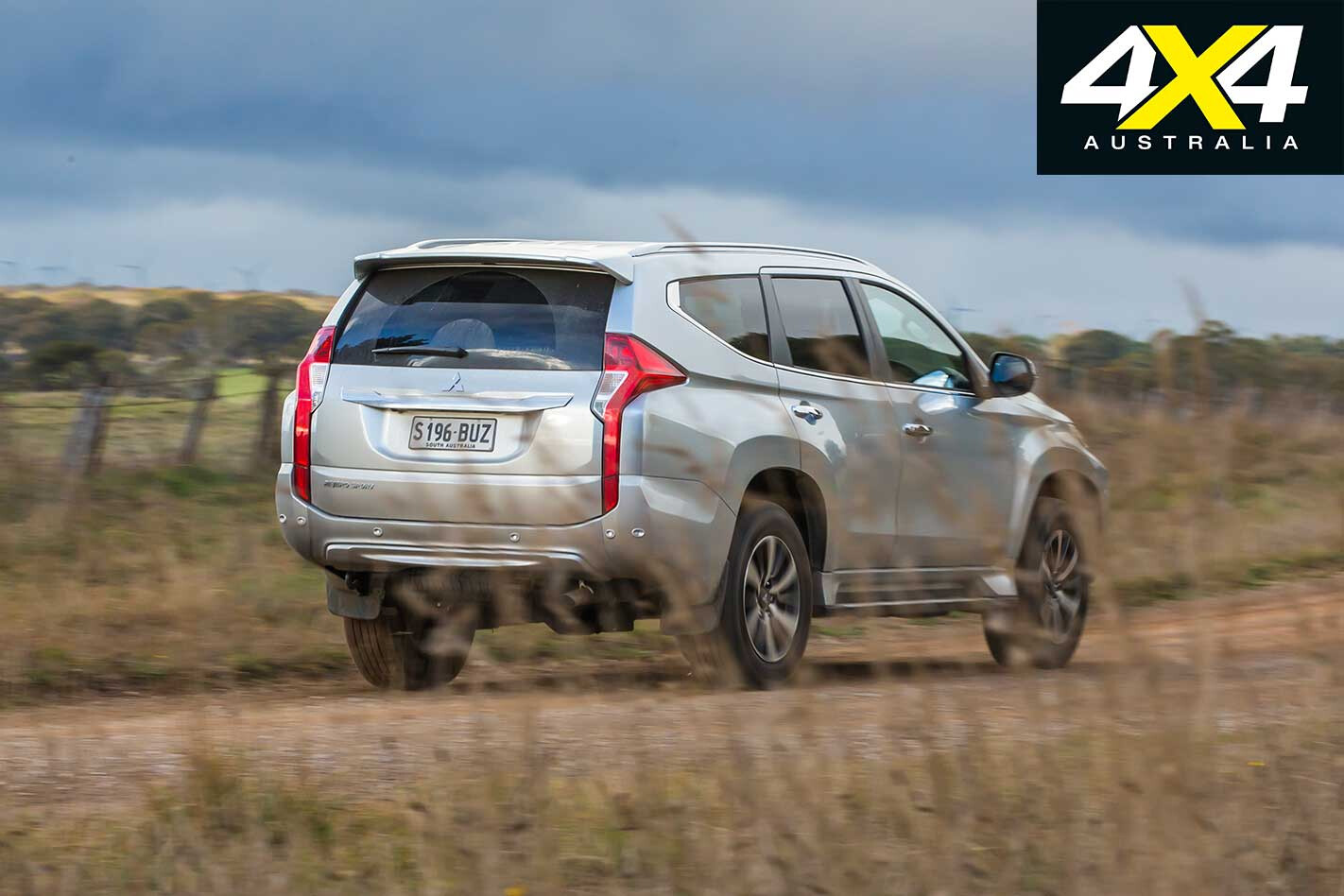
Surprisingly, however, it reaches its slightly stronger (133kW vs 130kW) maximum power figure at slightly lower revs (3500rpm vs 3600rpm) than the notably bigger engine in the MU-X. Given the similarity in the power and torque claims you would expect the two to offer similar get-up-and-go, but the Pajero Sport benefits from lower overall gearing and a tighter ratio spread from its eight-speed automatic. It’s also more responsive in give-and-take driving.
Unlike all other wagons made from utes the Pajero Sport doesn’t share the gearbox of its donor ute, in this case the Triton’s five-speed automatic. This is a good thing, as the eight-speed is a notably slicker and smoother shifting gearbox than the Triton’s now dated five-speeder.
The refinement of the Pajero Sport’s eight-speed auto also compliments the refinement of its engine, giving the powertrain a general feeling of sophistication the MU-X lacks.
HANDLING AND RIDE
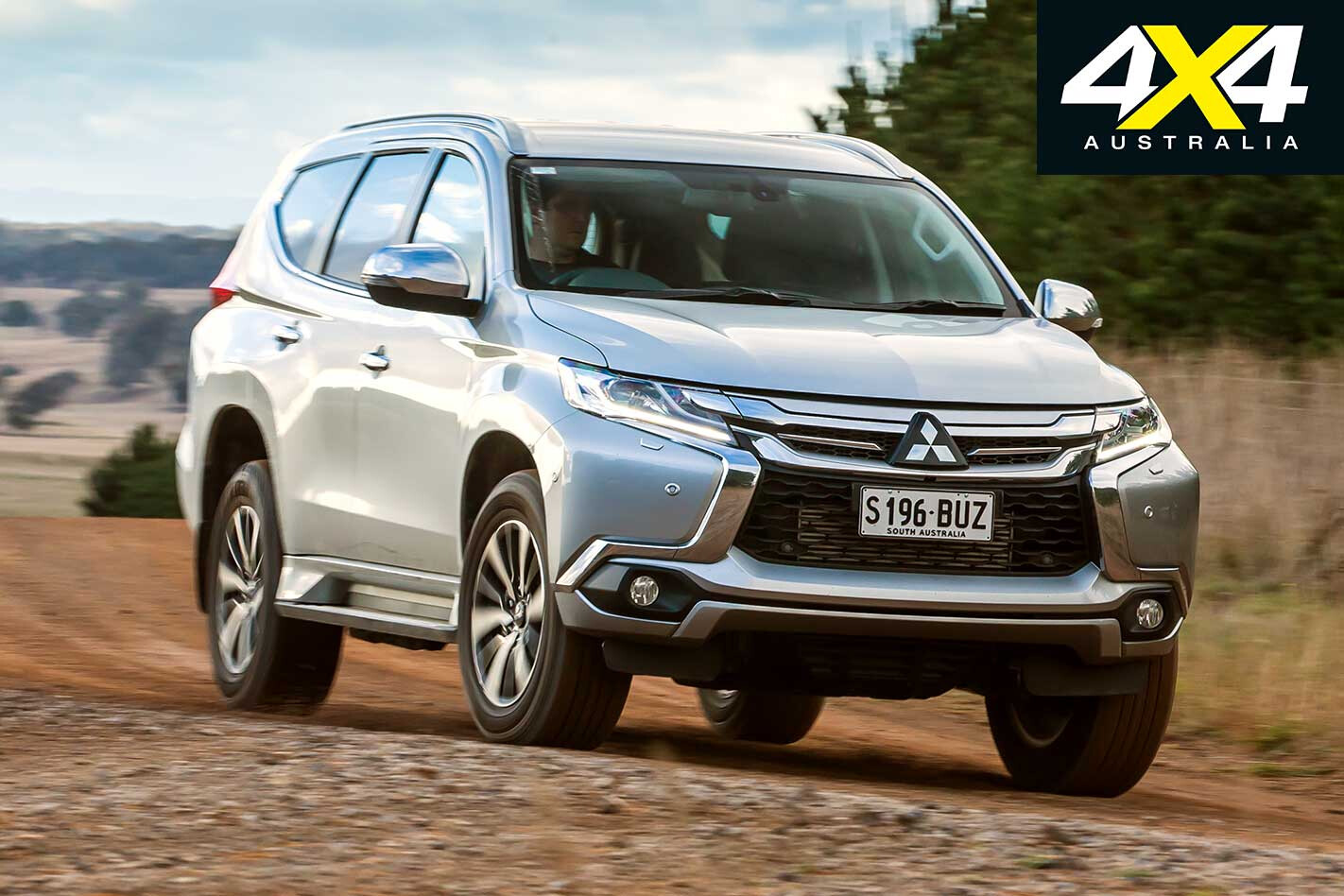
THE Pajero Sport’s full-time 4×4 is also more sophisticated, offering more confidence and grip on any wet or loose road surface, as well as the convenience of being able to drive on a variety of wet or dry, sealed or unsealed roads without having to think about whether to shift into ‘high four’ – as you need to do with a part-time 4×4 system like that of the MU-X.
The Pajero Sport feels smaller than the MU-X (namely because it is) and generally more agile in the way it handles and steers. A more connected steering feel than the MU-X also helps in making it a more sporting drive.
OFF-ROAD
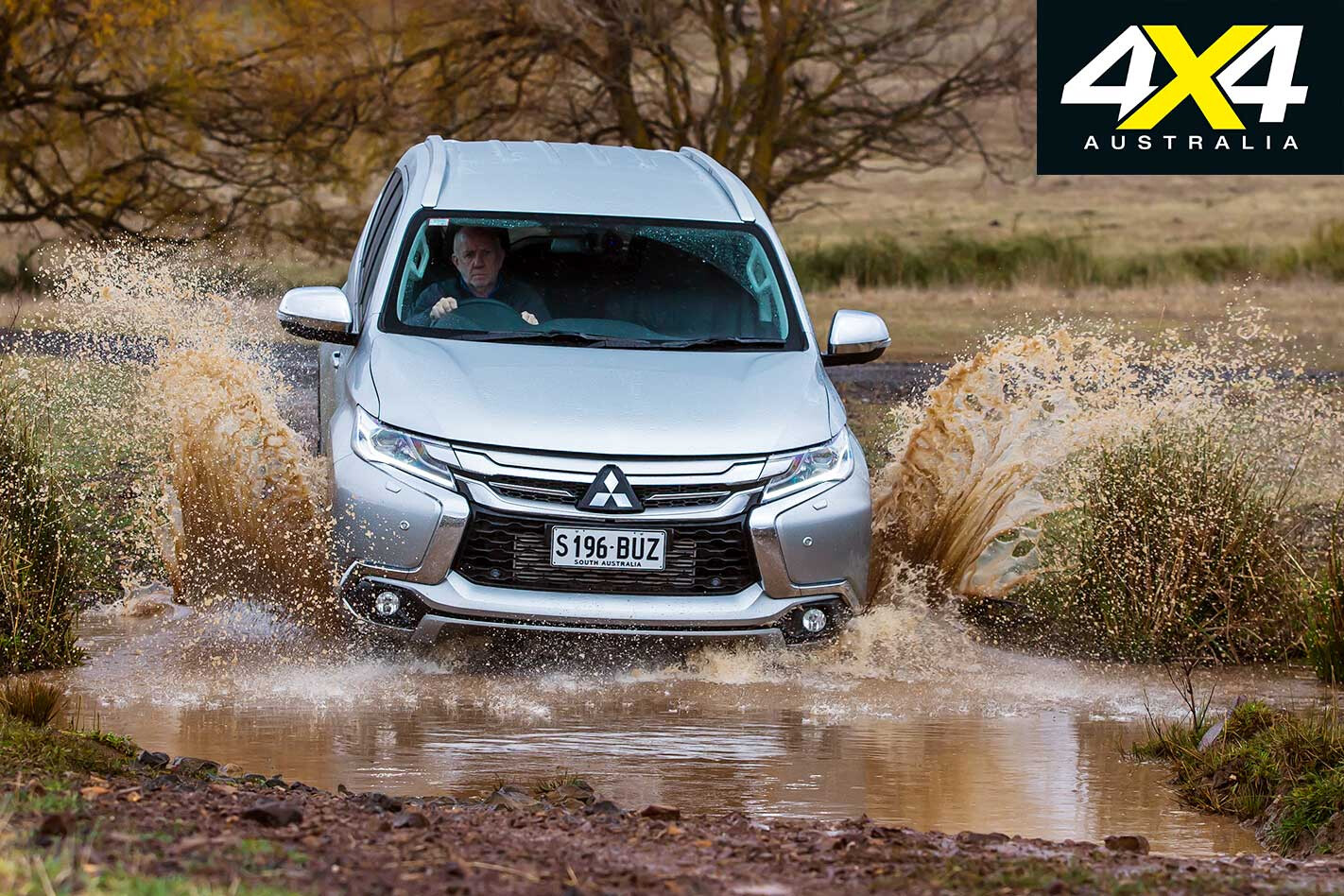
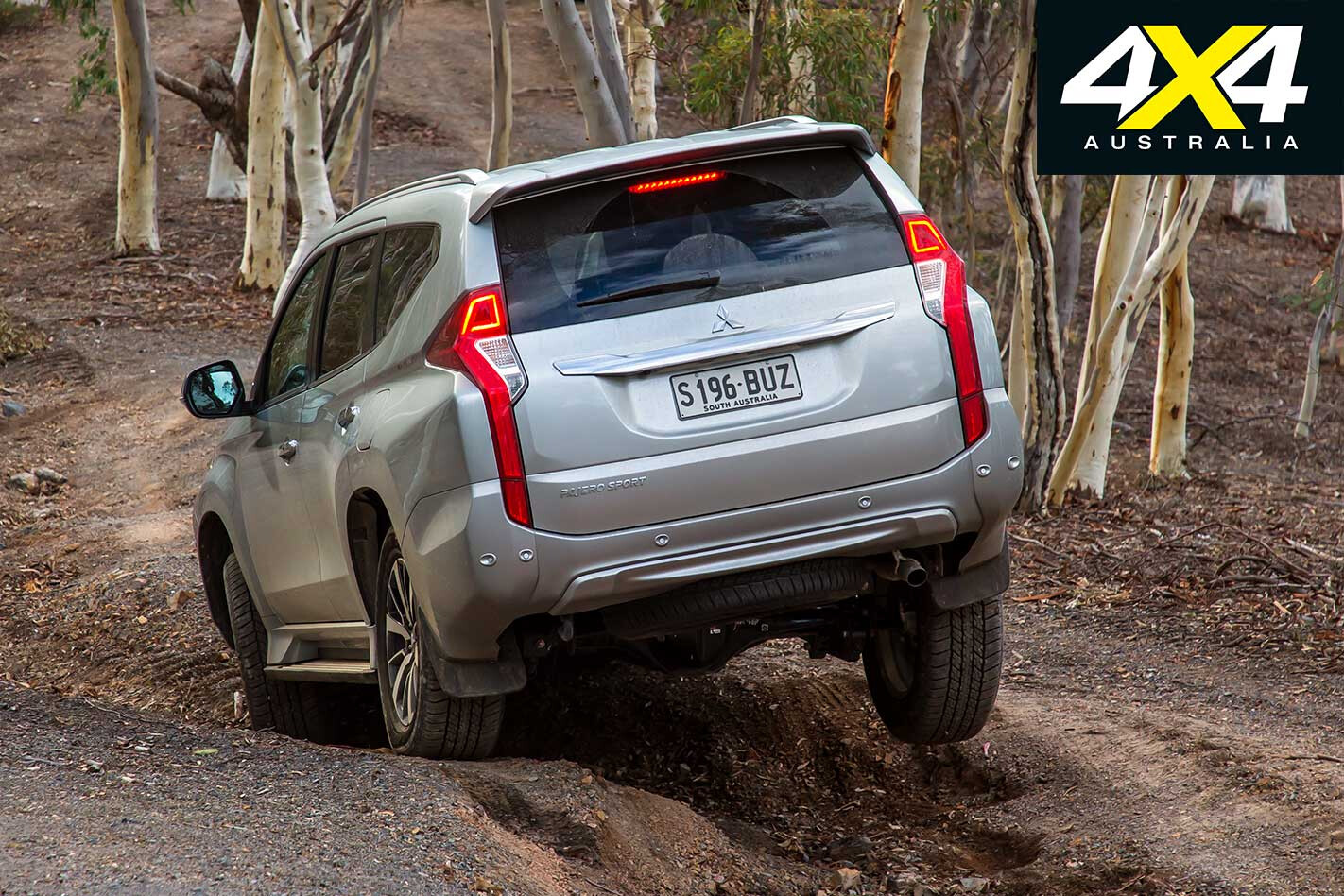
LIKE the MU-X, the Pajero Sport’s wheel travel, an all-important off-road attribute, is more modest than good; likewise the calibration of the electronic traction control, which could be more effective in difficult off-road conditions.
The Pajero Sport does, however, have a driver-switched rear diff lock, but the trouble is engaging the locker cancels the electronic traction control on both axles, so it’s not always beneficial.
The end result is off-road performance generally on a par with the MU-X; although, the Pajero Sport is a bit more manoeuvrable and handy in tight spots and has less front overhang. In a notable and most welcome departure from the Triton, the Pajero Sport’s engine air intake is via the inner mudguard rather than under the bonnet lip.
All Pajero Sport models come with 18s but will take 17s from the Triton, which opens up the options in terms of more off-road-orientated tyres than the standard items.
WHAT YOU GET
ALL Pajero Sport models have an eight-speed auto gearbox, 18-inch alloys, LED headlamps and DRLs, tilt and reach steering wheel adjustment, Smart entry and start, digital radio, hill-descent control, selectable ‘Off-Road’ mode, rear parking sensors, reversing camera, trailer sway control, automatic emergency braking and adaptive cruise control.
Over the GLX, the GLS has the option of seven seats, dual-zone climate, leather, electric seat adjust for driver and passenger, six speakers, auto headlights and wipers, and a rear locker. The top-spec Exceed adds heated front seats, headlight washers, two additional audio speakers, blindspot monitoring and a tailgate spoiler.
CABIN AND SAFETY
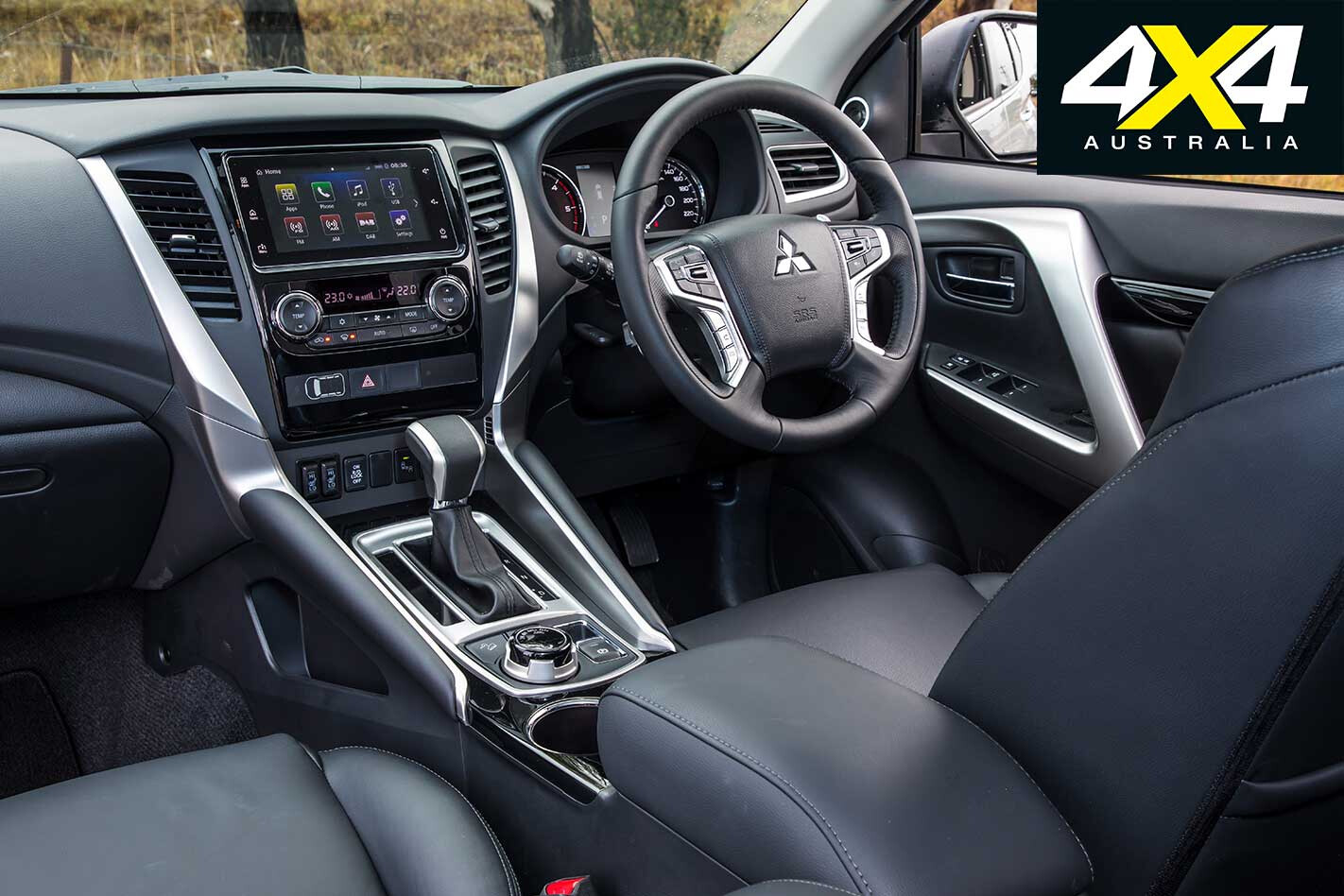
THE Pajero Sport’s cabin is noticeably smaller than the MU-X, something you notice in all three rows of seats. Thankfully Mitsubishi has addressed one problem with the driving position by adding soft trim on the side of the centre console, where previously the hard trim would press against the left leg of a tall driver. It does have tilt and reach steering wheel adjustment, though, something absent in the MU-X.
Put three adults across the rear seat of the Pajero Sport and you’ll also notice how much narrower the cabin is and that the third row isn’t adult-friendly as the MU-X’s.
Like the MU-X, the Sport has a five-star ANCAP safety rating. All models have automatic emergency braking and the Exceed gets blindspot monitoring, safety features not found on the MU-X.
SUPER SELECT
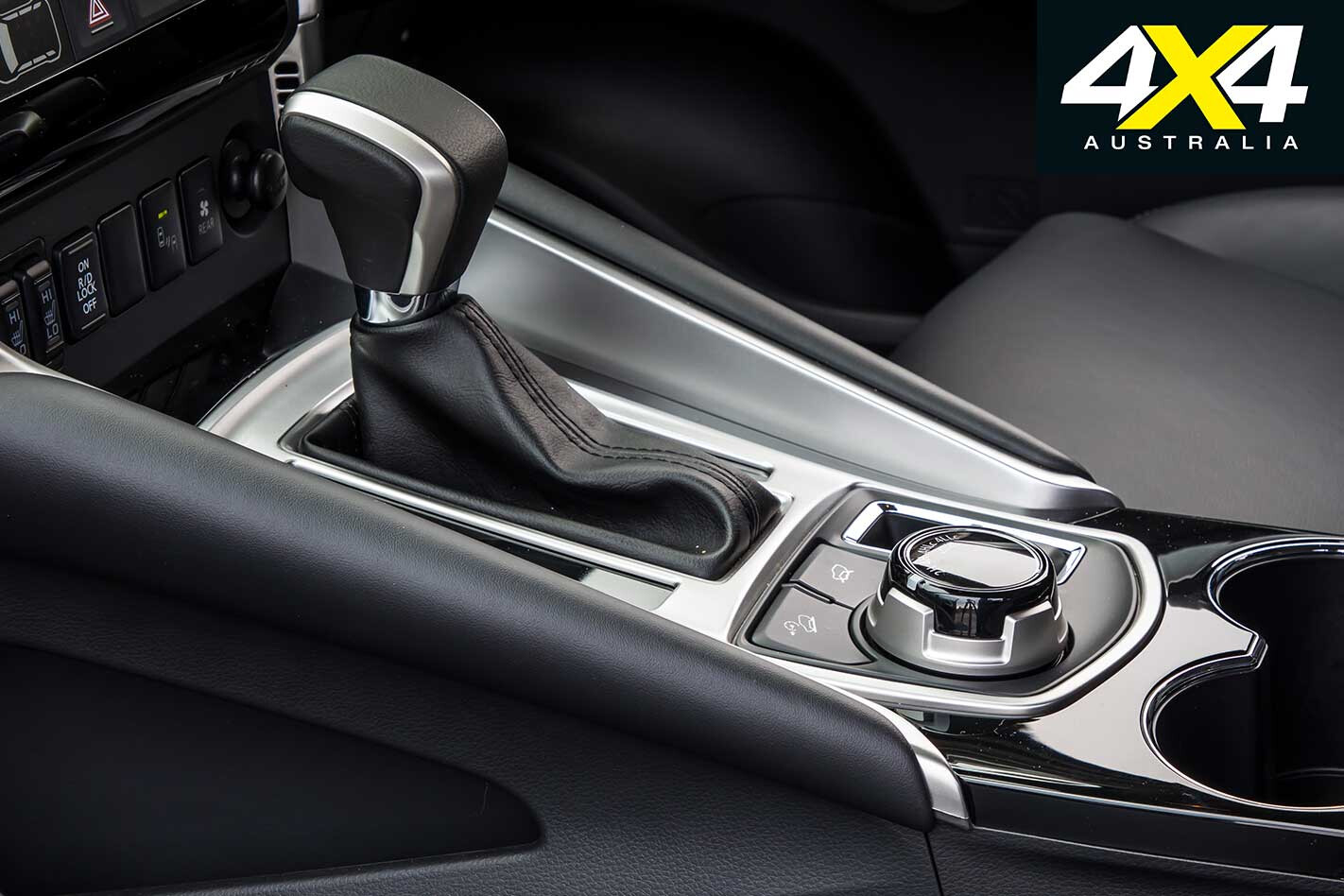
ALL Pajero Sport models feature Mitsubishi’s Super Select 4×4 system; also found on top-spec Tritons and the Pajero. In essence it combines full-time 4×4 and part-time 4×4 in one system in as much as the driver can select between rear-wheel drive and all-wheel drive on a high-traction surface such as dry bitumen.
The system is modelled on Jeep’s Selec-Trac system that debuted in 1983 on the Jeep Wagoneer. As with the Jeep system, Super Select allows the driver to select between rear-wheel drive, high-range four-wheel drive with the centre diff open, high-range four-wheel drive with the centre diff locked, and low-range four-wheel drive with the centre diff locked.
PRACTICALITIES
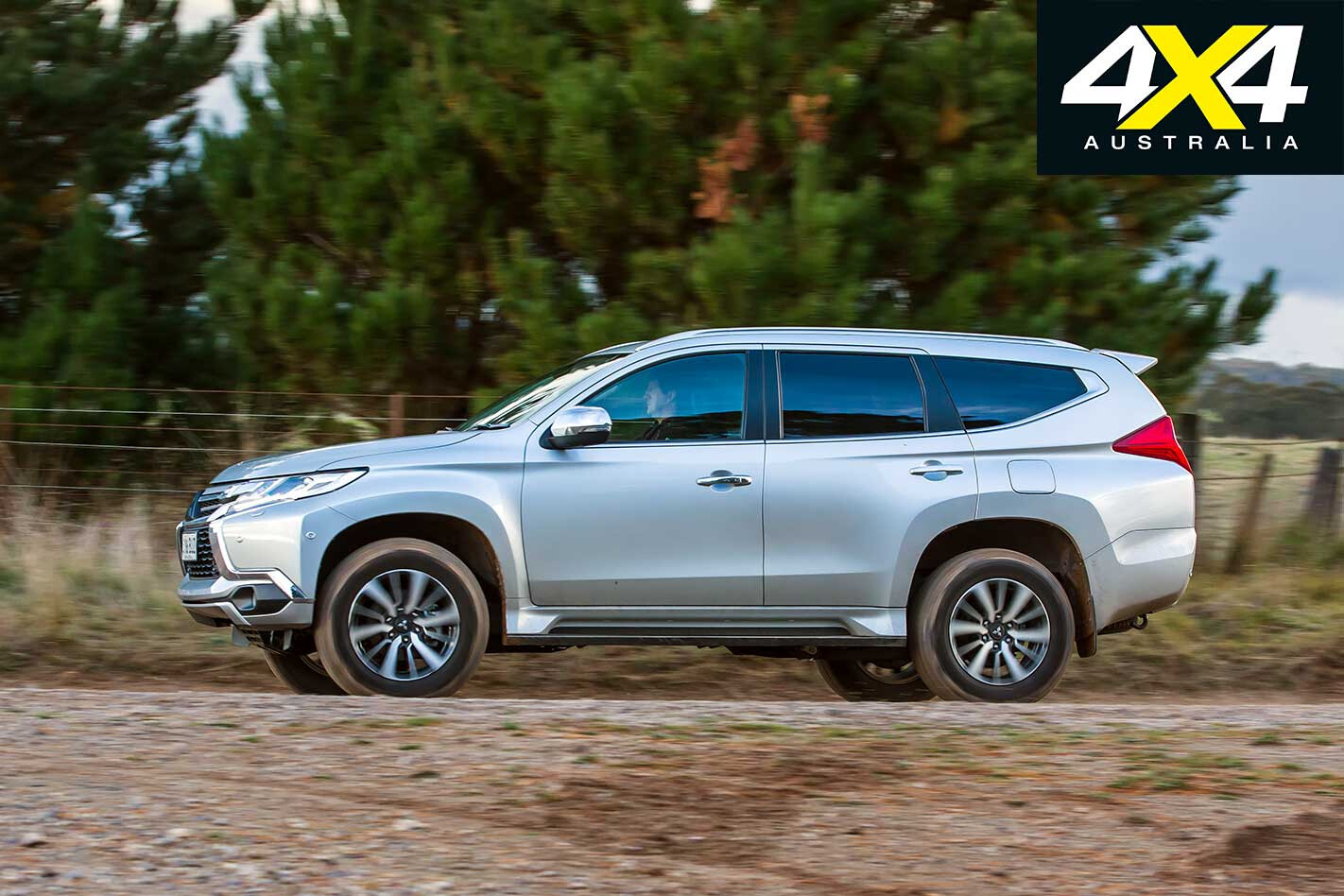
THE Pajero Sport offers a five-year warranty, four-year roadside assistance, three-year capped-price servicing and 15,000km/12-month service intervals.
The Pajero Sport has a smaller fuel tank than the MU-X (at 68 litres it’s the smallest in the class), which means the better part of 100km less touring range given both return similar fuel-consumption figures. However, the Pajero Sport has a nominally higher tow rating (3100kg vs 3000kg) and payload. Factory accessories include an aluminium bullbar and snorkel, with a broader range of 4×4 accessories available via the aftermarket.
The Verdict
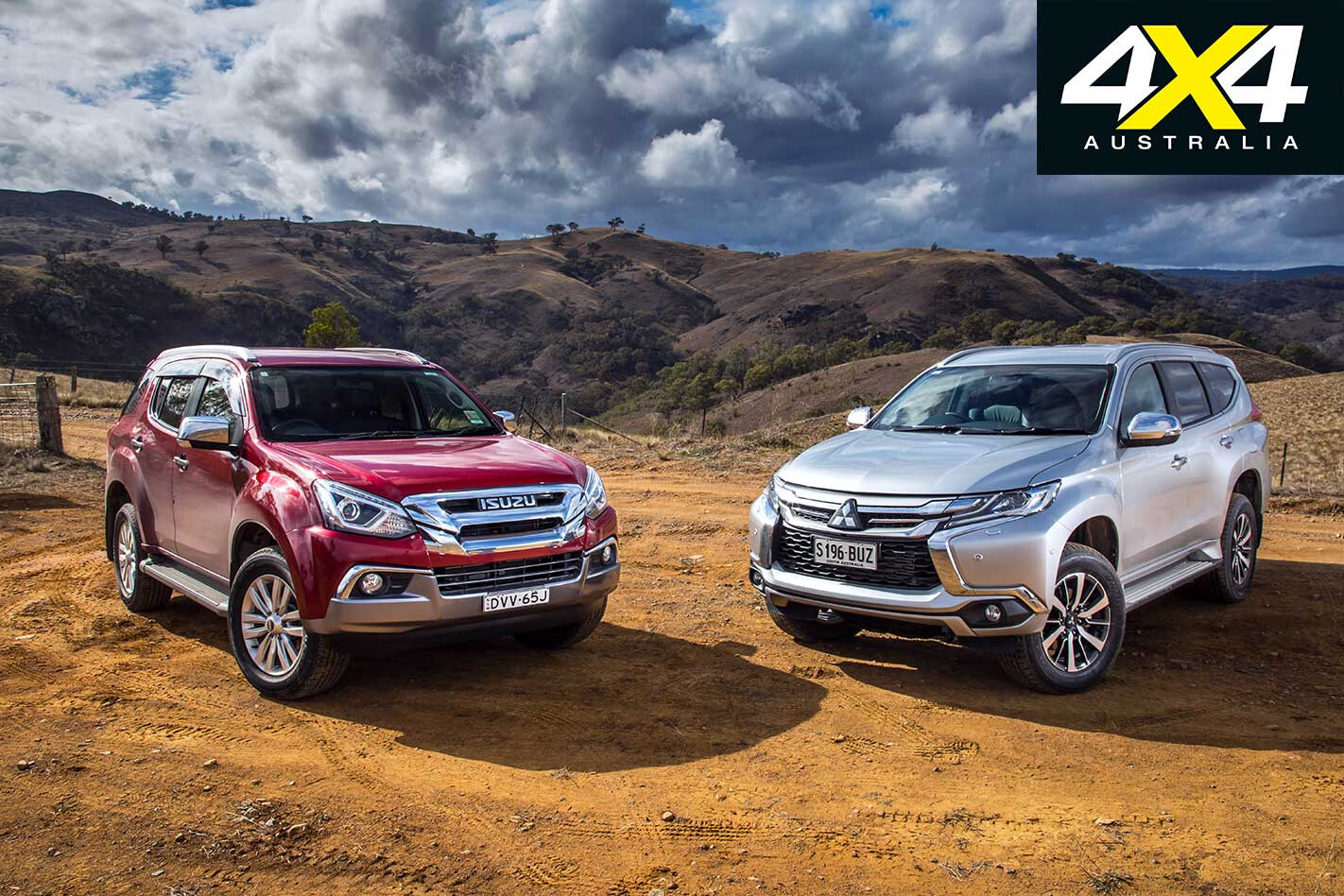
IF YOU’RE one of the few buyers today who prefers a manual rather than an automatic there’s only one choice, as only the MU-X is available as a manual, and then only in one of the three-equipment grades: the mid-spec LS-U.
After that, things become more complicated but still simple in a way. If interior space is your priority then it’s also the MU-X, as it’s a notably bigger wagon in all three rows of seats. Better for tall people up front, far more comfortable for three in the second row and it has a third row that can actually seat adults rather than just smaller children.
Conversely, if you prefer extra luggage space to third-row seats, or you simply don’t need seven seats, then the Pajero Sport is the only choice as all MU-Xs are seven-seaters.
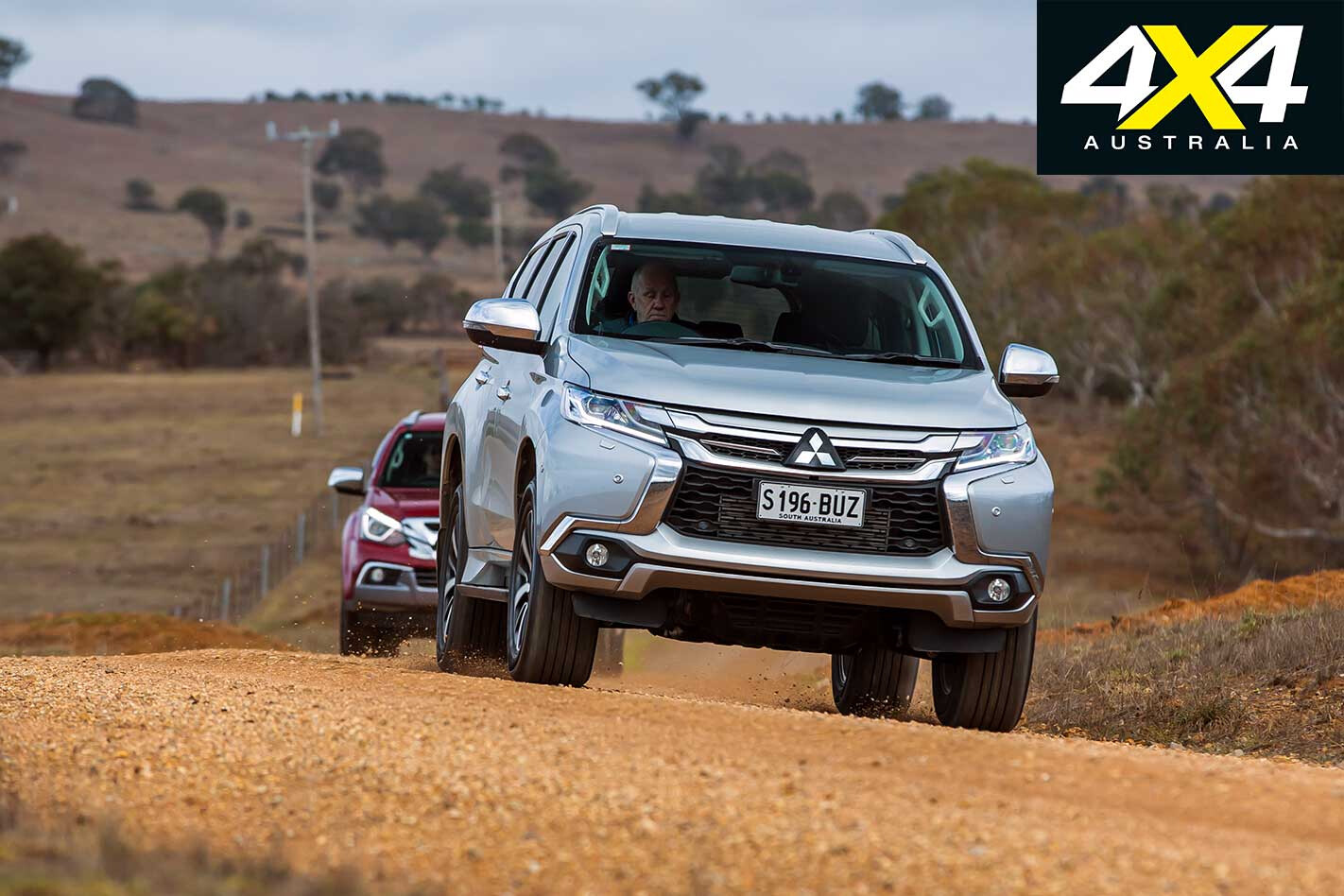
If driving enjoyment is your priority then the Pajero Sport is better choice. It feels smaller and more agile than the MU-X, and the engine is quieter, smoother and generally more responsive thanks to the shorter final drive gearing and the relatively close ratios of the eight-speed automatic. There’s also the undeniable safety and functionality benefit of full-time 4×4 for all-road, all-weather driving.
The MU-X counters this with a more relaxed touring feel thanks to the taller gearing and the fact the engine doesn’t need as many revs as the Pajero Sport to get the same job done.
If off-road ability is your utmost priority then you’re probably looking in the wrong spot, as the Fortuner, Trailblazer and Everest are all better off-road. That’s not to say the MU-X and the Pajero Sport aren’t up to recreational off-roading, just that others are better straight off the showroom floor.
| u00a0 | Mitsubishi Pajero Sport Exceed | Isuzu MU-X LS-T |
| Engine | 2.4 litre 4-cyl turbo diesel | 3.0-litre 4-cyl turbo diesel |
| Power | 133kW @ 3500rpm | 130kW @ 3600rpm |
| Torque | 430Nm @ 2500rpm | 430Nm @ 2000u20132200rpm |
| Gearbox | Eight-speed automatic | Six-speed automatic |
| 4×4 System | Dual-range full-time (+2WD) | Dual-range part-time |
| Crawl Ratio | 45.9:1 | 33.3:1 |
| Tyre Spec | 265/60R18 110H | 255/60R18 108S |
| Kerb Weight | 2105kg | 2157kg |
| GVM | 2710kg | 2750kg |
| Payload | 605kg | 593kg |
| Towing Capacity | 3100kg | 3000kg |
| Towball Download | 310kg | 300kg |
| Gross Vehicle Mass | 5400kg | 5750kg |
| Departure angle | 24.2u02da | 21.1u02da |
| Rampover angle | 23.1u02da | 19.5u02da |
| Approach angle | 30u02da | 24u02da |
| Wading Depth | 700mm | 600mm |
| Ground Clearance | 218mm | 230mm |
| Fuel Capacity | 68 litres | 76 litres |
| ADR Fuel Claim | 8.0L/100km | 7.9L/100km |
| Test Fuel Use | 11.4L/100km | 11.5L/100km |
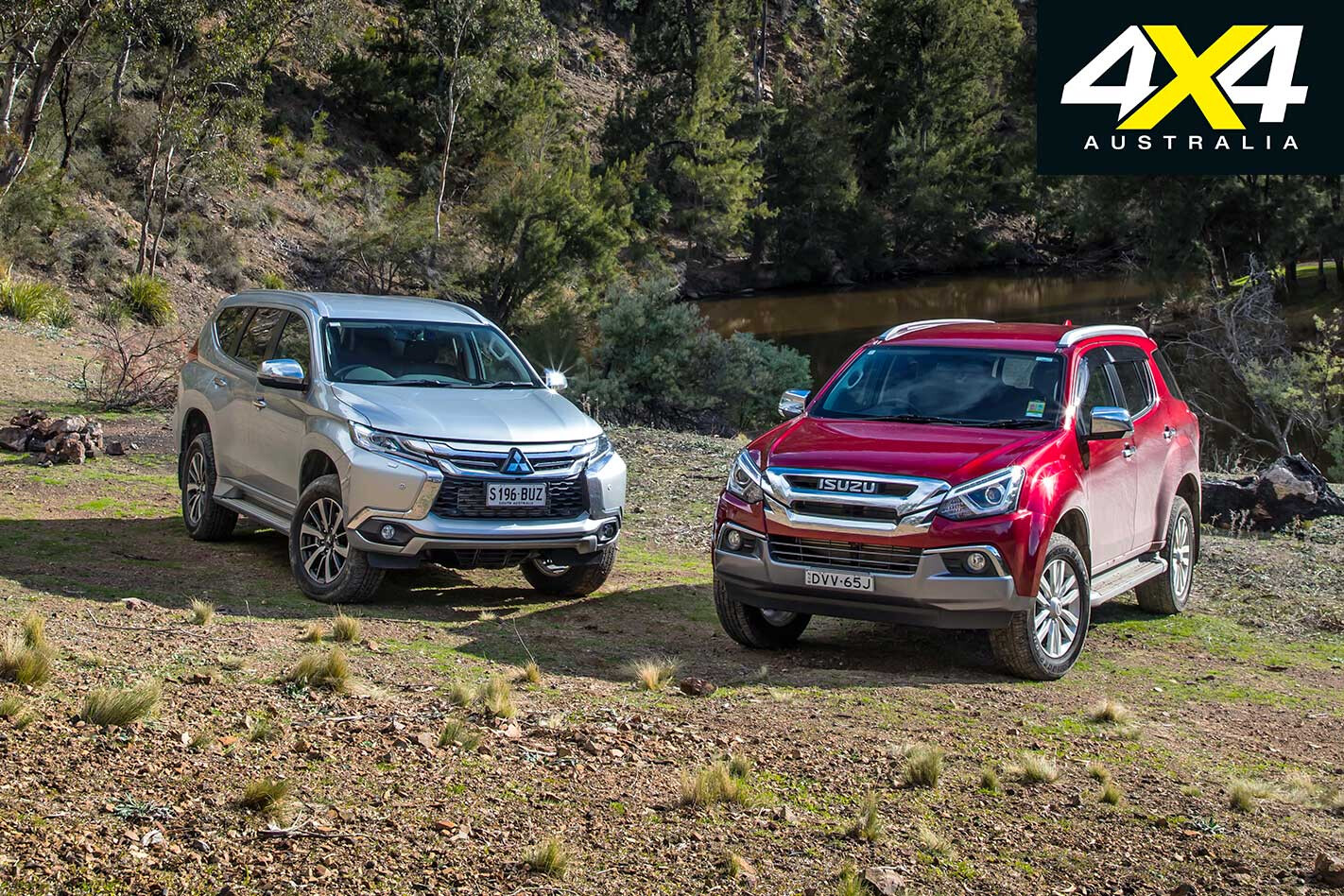
| Pajero Sport Prices* | Isuzu MU-X 4×4 Prices* |
| GLX (five seat): $45,000 | LS-M (auto): $50,200 |
| GLS (five seat): $48,500 | LS-U (manual): $50,400 |
| GLS (seven seat): $49,500 | LS-U (auto): $52,500 |
| Exceed (seven seat): $53,650 | LS-T (auto): $56,200 |
*Does not include on-road costs
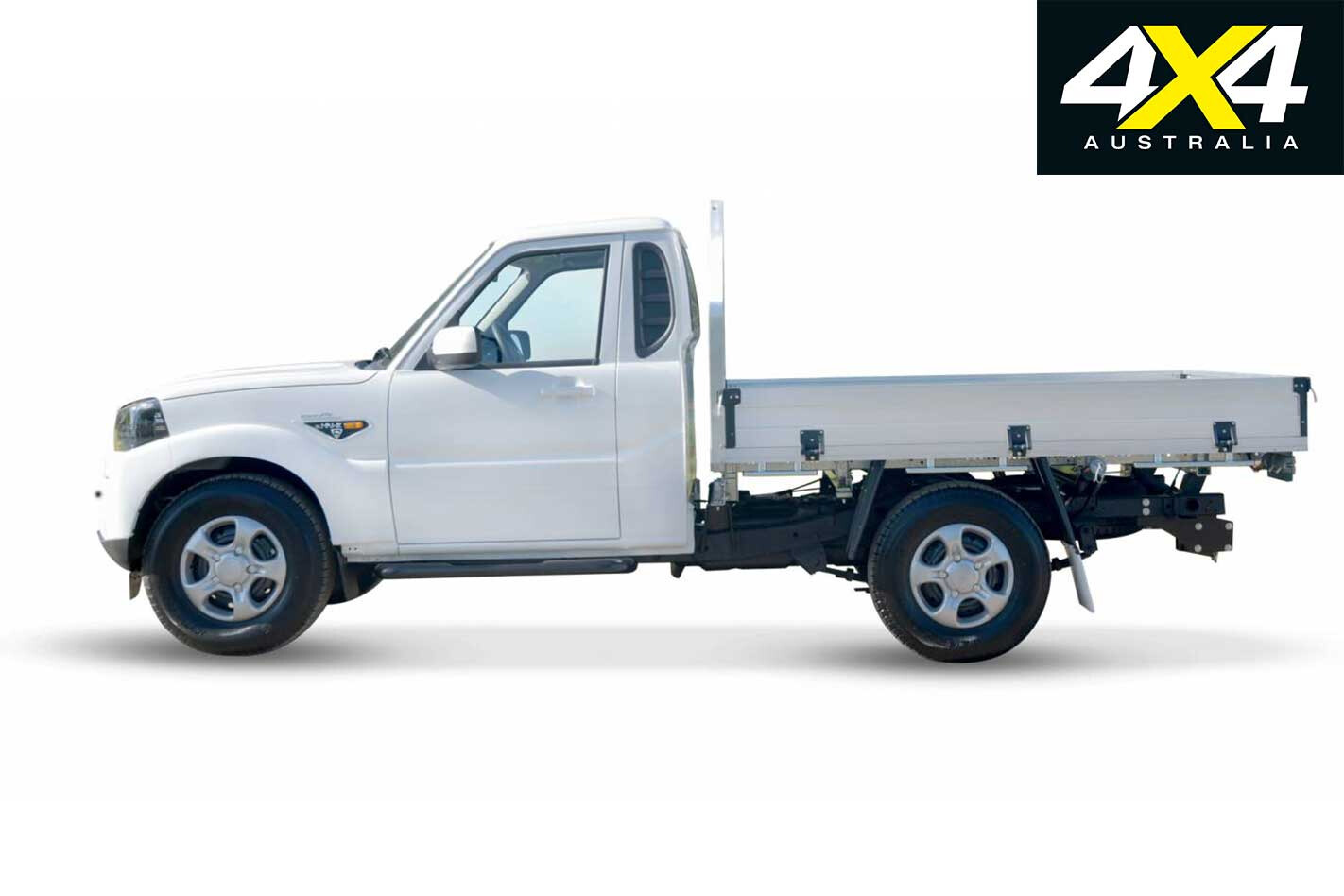
MAHINDRA has added a S10 Single Cab 4×4 Cab Chassis variant to its PikUp range.
The S10 Single Cab Chassis joins the existing 4×4 models in the company’s line-up: Single Cab S6 Cab Chassis, Dual Cab S6 Cab Chassis, Dual Cab S6 Cab (with tub), Dual Cab S10 Cab Chassis and Dual Cab S10 Cab (with tub).
“We have been chasing supply from the factory ever since launch of the new Mahindra PikUp. Sales have been great, and with new metro dealers in Geelong and Penrith about to be announced, momentum in the light commercial segment is with Mahindra.” Russell Thiele, Head of Automotive Business for MAAPL (Mahindra Automotive Australia), said.
“Many of our farm and trade customers like our S10 Dual Cab but have been wanting those specifications in Single Cab. Now with the introduction of S10 4×4 we are able to offer a truly competitive high spec ute in the light commercial market,” he said.
The top-spec S10 gets 16-inch alloys (replacing the S6’s steelies), a six-inch touchscreen with sat-nav, DRLs and side projection beams, and fully automatic climate control.
PIKUP 4X4 PRICING (DRIVEAWAY) – Single Cab S6 Cab Chassis: from $26,990 – Single Cab S10 Cab Chassis: from $28,990 – Dual Cab S6 Cab Chassis: from $29,490 – Dual Cab S6 Cab (with tub): from $29,990 – Dual Cab S10 Cab Chassis: from $31,500 – Dual Cab S10 Cab (with tub): from $31,990
Big is better, but small incremental changes often have their unappreciated merits, especially when it comes to the sort of 4×4 gear you choose.
A bullbar adds more than just mere style, but offers protection and serves as a platform to attach useful gear such as winches and driving lights, where as a rear step helps you gain better access to the rear cargo compartment, and a tailgate dampers aids in the raising and lowering of a tailgate. These new 4×4 gear brings those little improvements that make life with your ute so much better.
Ironman 4X4 Amarok TDV6 Bullbars
Ironman 4×4 has released two new bullbars for VW’s popular Amarok TDV6 (11/2016-onwards). The two bars – Commercial Deluxe and No Loop models – include all the expected goodies from the company, including full ADR compliance, airbag compatibility and the option(s) of a single or triple loop kit that includes replacement rubber over-riders and all fitting hardware.
The bars are created using premium-grade materials for optimum durability and maximum corrosion resistance. The designs feature triple folded edges, inset LED parking lights, fog lights, indicators, high-lift jack points, a winch mount, and provision for fitment of an aerial and spotties.
The Commercial bar offers increased protection for your vehicle’s grille and lights, etc., while the No Loop model provides great frontal protection with a more minimalist appearance.
Website: www.ironman4x4.com
ARB Summit Raw rear bar
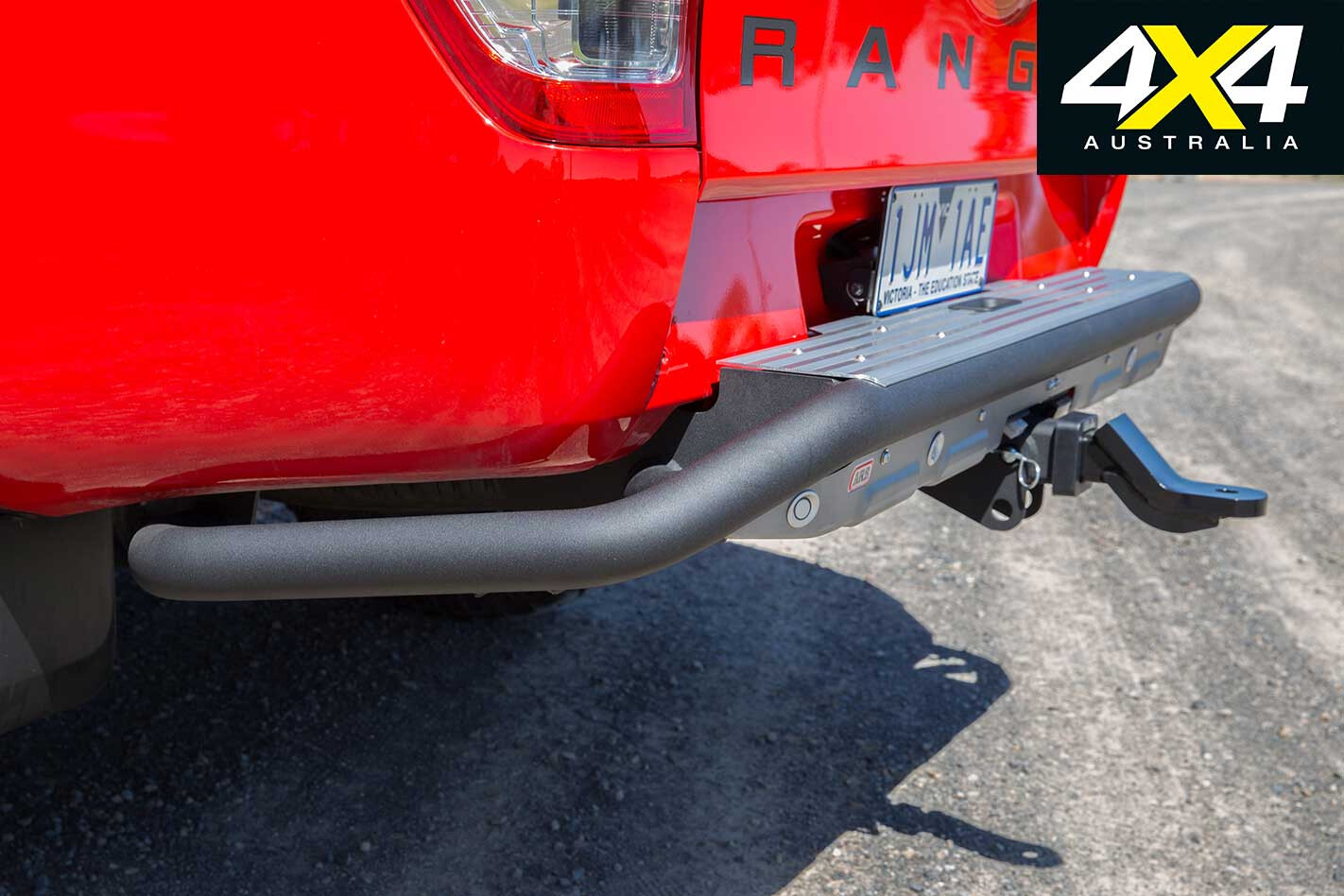
This new rear bar from ARB is a stripped-back, tough and protective accessory ideal for dual-cab utes destined for off-road work.
The Summit Raw features a 60.3mm black powdercoated tube and is situated lower down along the side of the tub than ARB’s Summit rear step tow bar. The Summit Raw is engineered to tow 3.5 tonnes and has provision for trailer plug wiring, compressor, trailer camera, 50amp Anderson plug and parking sensors.
The Summit Raw sits between a standard tow bar and the top-end Summit rear step tow bar, and is available for Ford Ranger PX and PXII, and Mazda BT-50. The ARB Summit Raw bar will also soon be available for the Toyota Hilux.
Website: www.arb.com.au
EZDown Reloaded
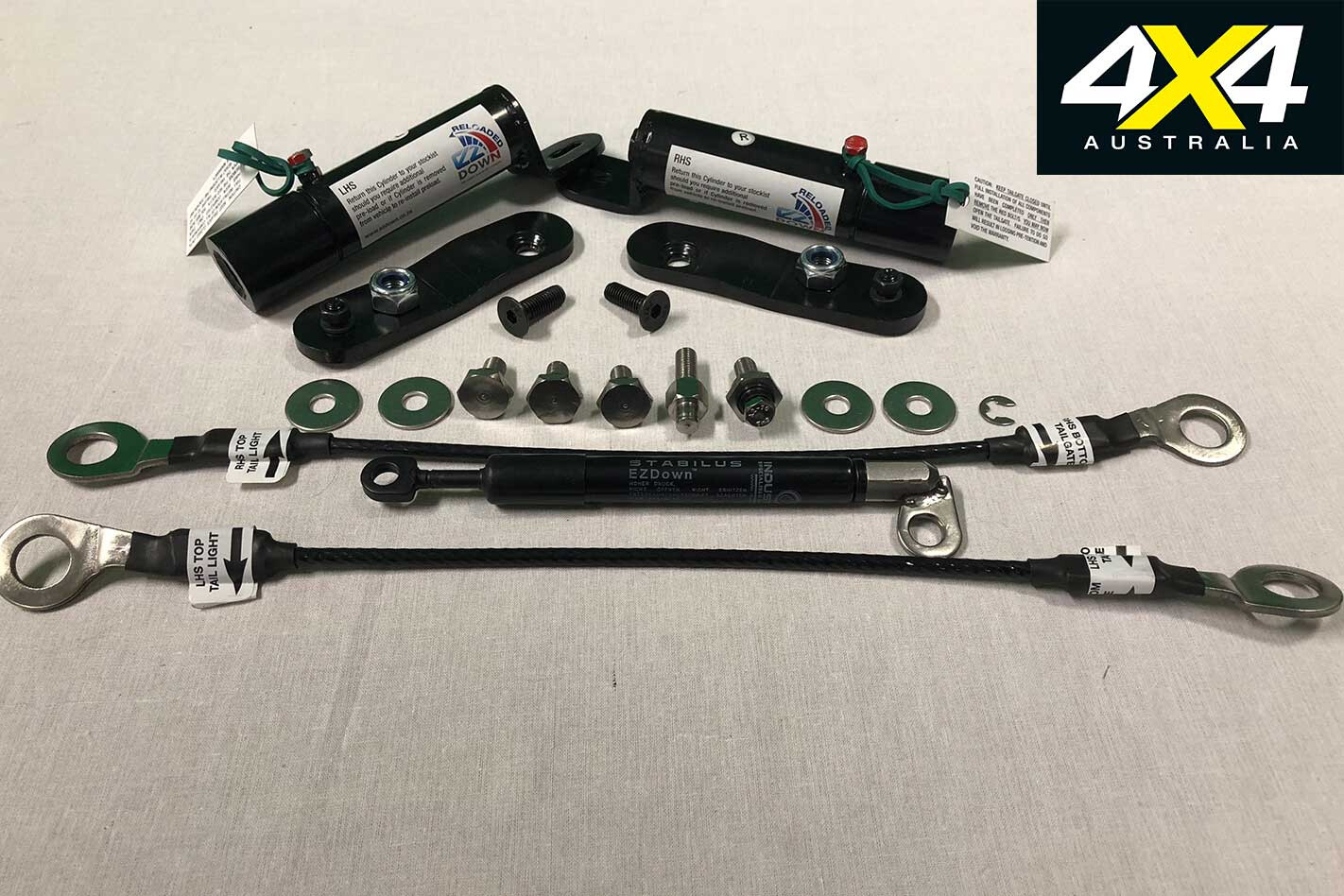
EZDown, the inventor of the original hydraulic tailgate damper, has released its solution for lowering and raising ute tailgates, allowing you to control both the opening of the tailgate and offering assistance during closure.
The patented Reloaded system uses a Stabilus hydraulic dynamic oil damper that slows the descent of the tailgate, while a torsion pod builds up tension during the process. This tension is then released on the 14-coil, highly sprung steel torsion rod during raising and closure of the tailgate, allowing you to barely use a single finger to close it.
This tailgate-assist solution from EZDown is highly regarded in the industry, with Volkswagen, Toyota and Mazda among the many manufacturers that use it.
RRP: from $300 Website: www.ezdown.com.au
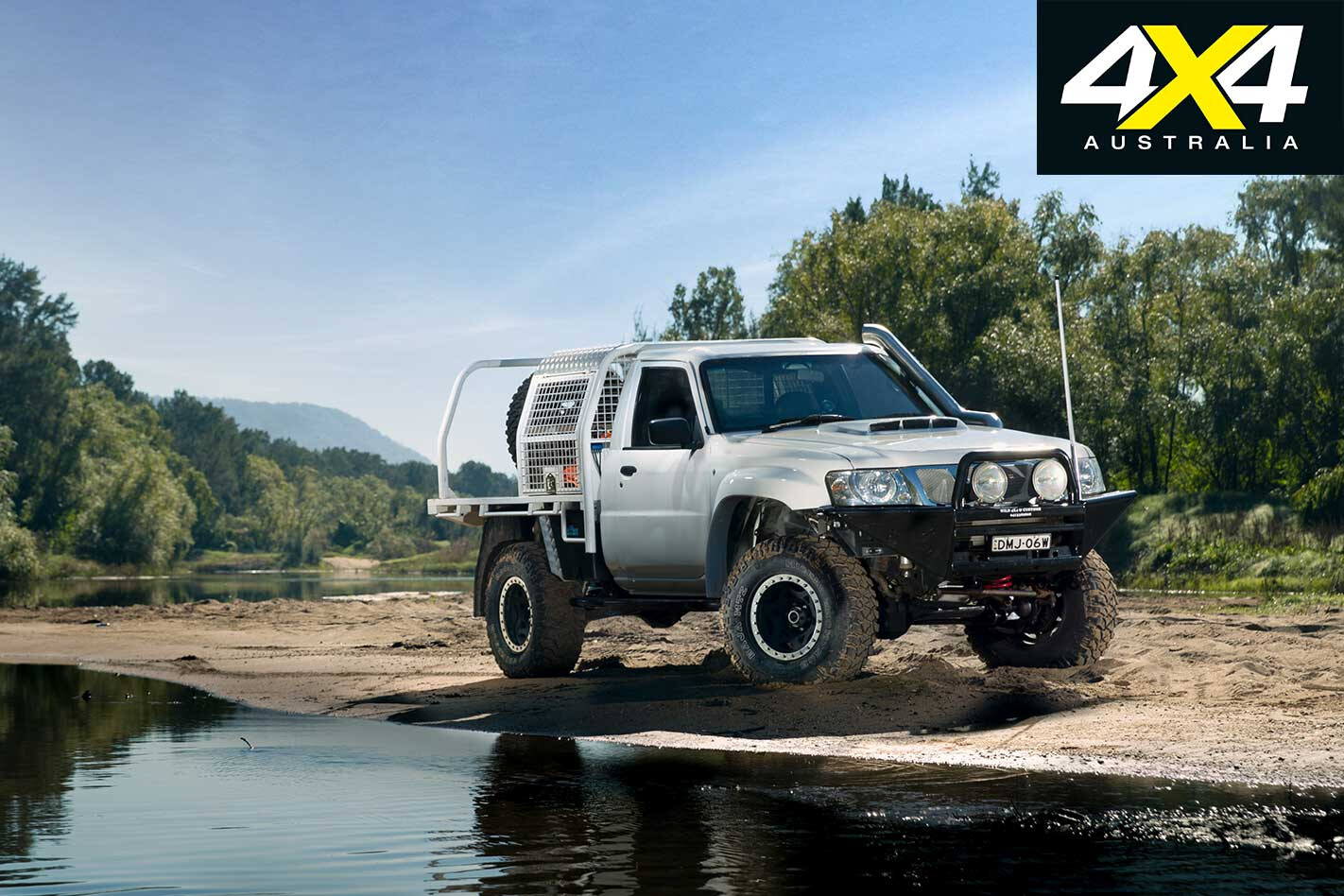
TWO monster custom builds – a stretched XLS PX1 Ford Ranger that proves bigger is often better, and a 6.6-litre Duramax TDV8-powered GU Patrol ute – headline an action-packed issue of 4X4 Australia this month.
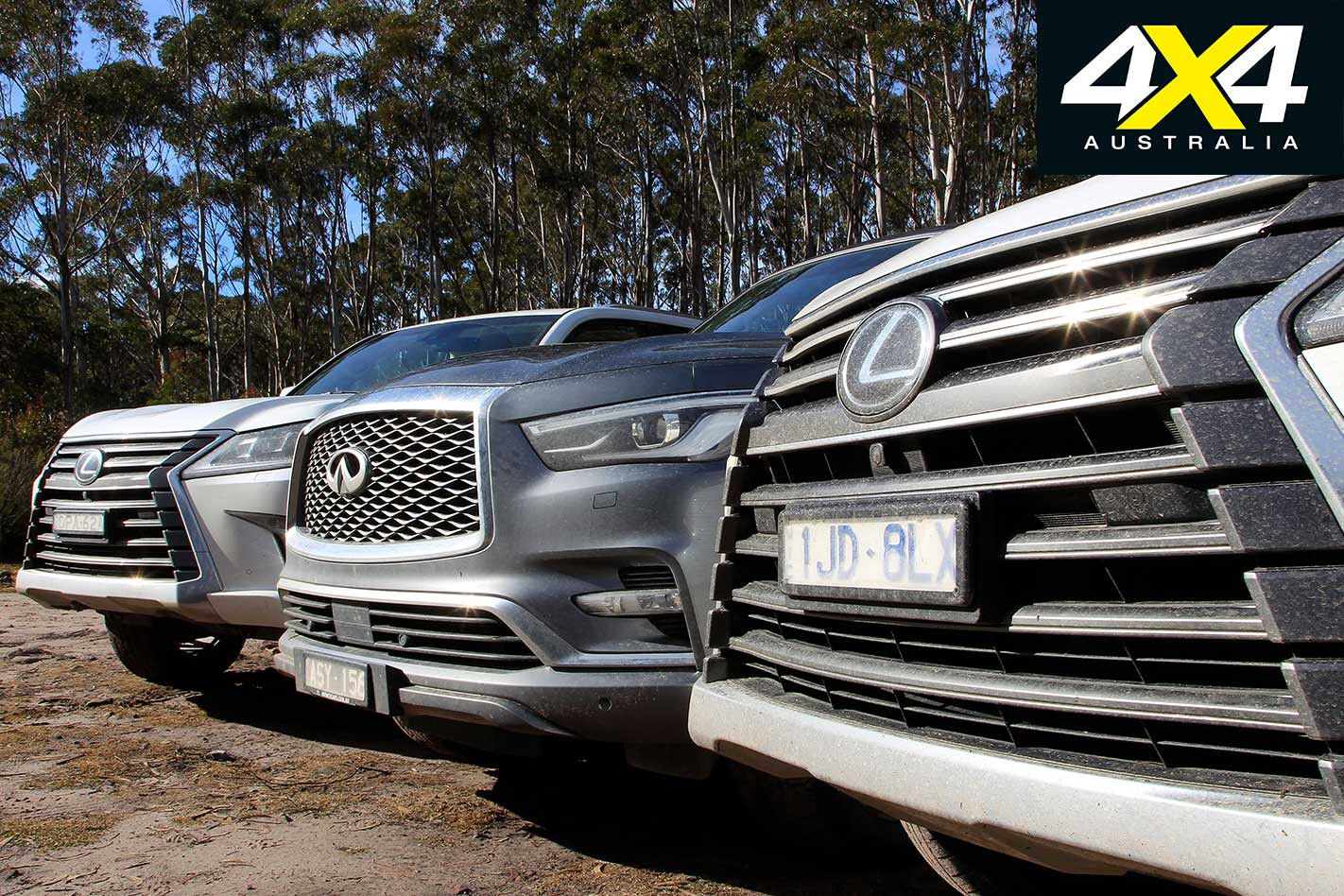
For those who like things a bit less ‘rough and tumble’ and a bit more luxurious, we’ve also assembled three prestigious off-roaders: Lexus’s LX570 and LX450D, and Infiniti’s QX80.
We also ran the ruler over the 10 best-selling 4x4s so far in 2018, putting each vehicle under the microscope for our annual ‘Report Card’ test.
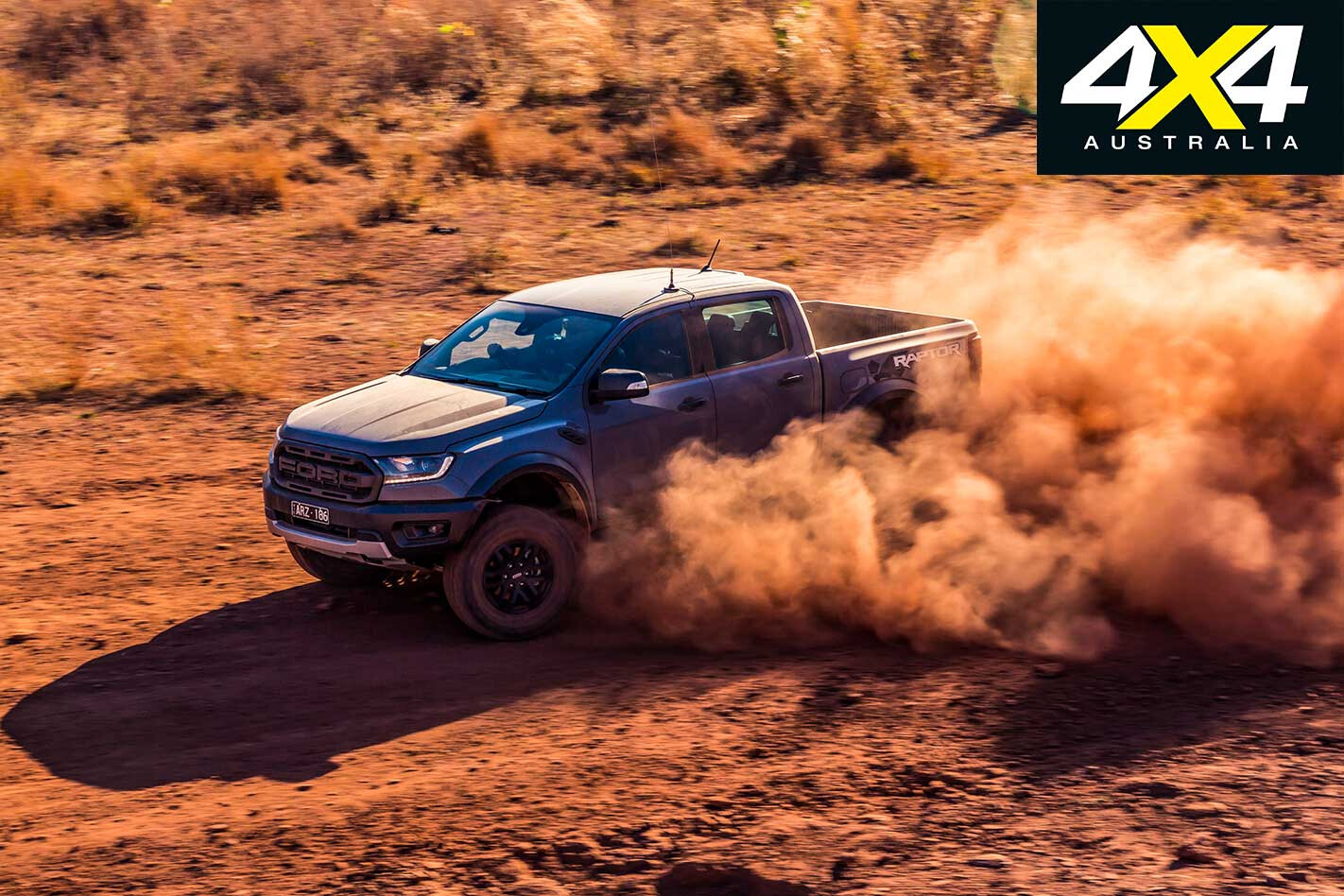
The Ranger Raptor experienced the NT’s open highways, sending the dry season’s dust skywards. It proved that, from the showroom floor, there’s no other 4×4 that handles bumps better.
Mercedes-Benz’s G-Class is nearing its 40th anniversary, so we took closer look at why the G 300 Professional (wagon and cab-chassis) remains one of the great off-roaders.
WHAT ELSE IS THERE?
- Trekking to Oxley Wild Rivers National Park, NSW.
- Dodging flies in Corner Country.
- Downing a beverage at the Cameron Corner Store, SA.
- Ironman 4×4 marks 60 years in Australia.
- Buyers’ guide to off-road wheels.
- Tested: Lightforce DL230 HTX spotties.
- Tested: Yakima Holdup & Holdup +2.
- Holden 1 Tonner: a few last-minute hiccups.
- Long-term Disco TD5 gets new kit.
- Day-to-day life with a Colorado LTZ.
- Colorado LTZ joins the 4X4 garage.
- Deano’s rant on multimedia interfaces.
- Expert View: Piranha Off Road’s Alan Johnson
Purchasing the September issue will give you a few extra entries into the draw to win an HSV SportsCat+, join the contest here.
The September issue will be available for purchase August 16 from magshop.
IT’S A TOWN of 18 at the northern end of the Flinders Ranges, but that doesn’t stop the people of Blinman taking an interest in the latest newcomer to the 4×4 ute class.
Parked outside the picturesque local pub on a crisp morning, the Mercedes-Benz X-Class has at least one keen admirer, eager to learn more about what is the undoubted darling of the dual-cab class, a category with its fair share of admirers these days.
Alongside the gleaming three-pointed star is the latest addition to the Hilux family, the Rugged X; but the stickers, snorkel and rock rails are simply not getting the attention of an all-new player.
It’s indicative of the shift that’s carving through the ute segment: in its 50 years on Australian roads, the Toyota Hilux hasn’t been under the pressure it’s experiencing now. New players, rejuvenated favourites and beefed-up old timers alike are lining up to take a piece of the turf dominated by the car that first arrived here in 1968.
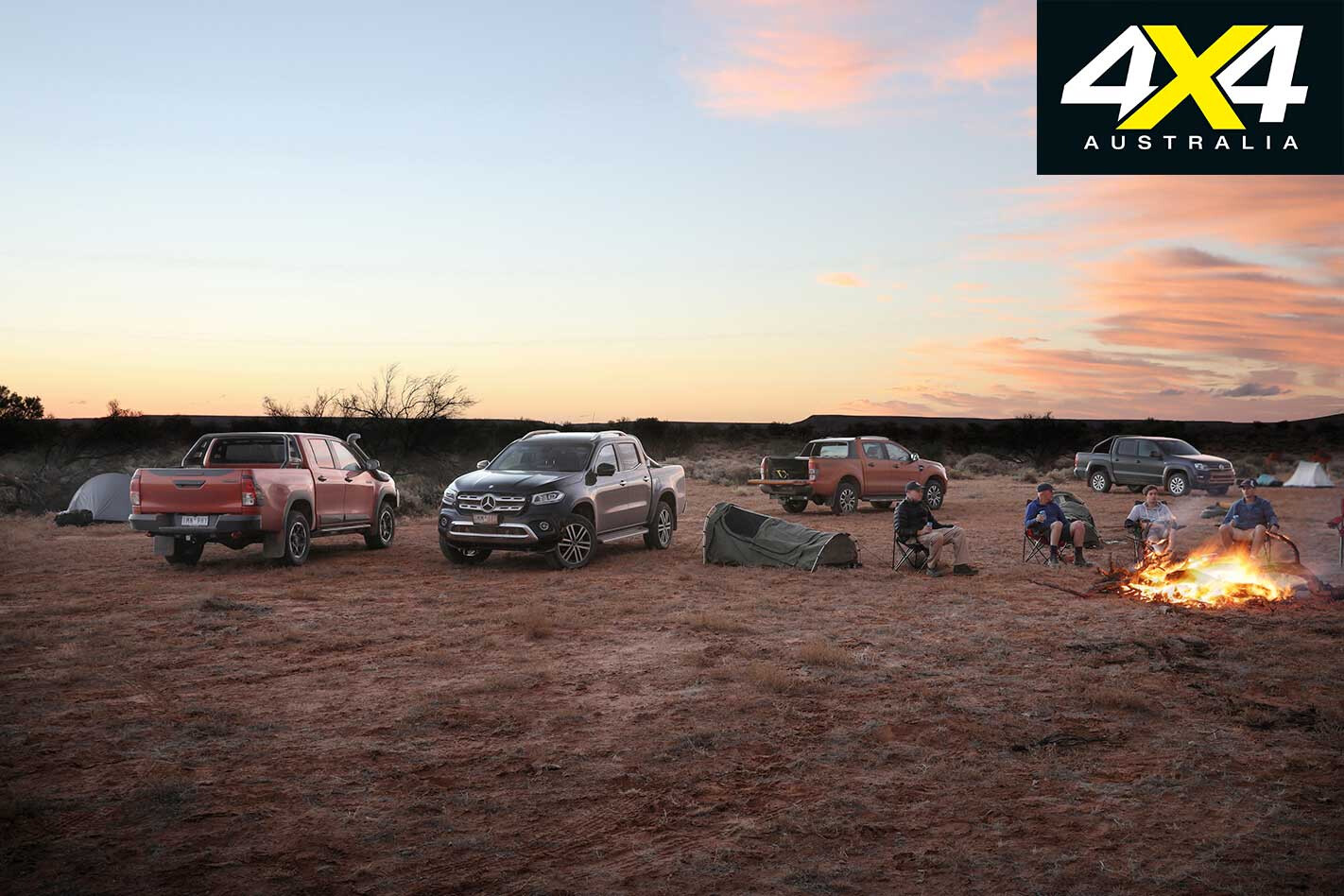
We’ve also enlisted two of our favourites – the Volkswagen Amarok and Ford Ranger – for the first outback back-to-back test of the latest Benz newcomer. We’ve put these utes through their paces on four-wheel drive test tracks and in the suburbs, and this is our first chance to see how they stand up to the punishment of the outback, from corrugations and washouts to rocks and creek crossings.
In each case we’ve opted for models with plenty of gear, reflective of the changing tastes within that 4×4 segment. Buyers, it seems, can’t get enough when it comes to dual-cab utes. But do they really want something as extravagant as a Mercedes-Benz?
Ford Ranger Wildtrak
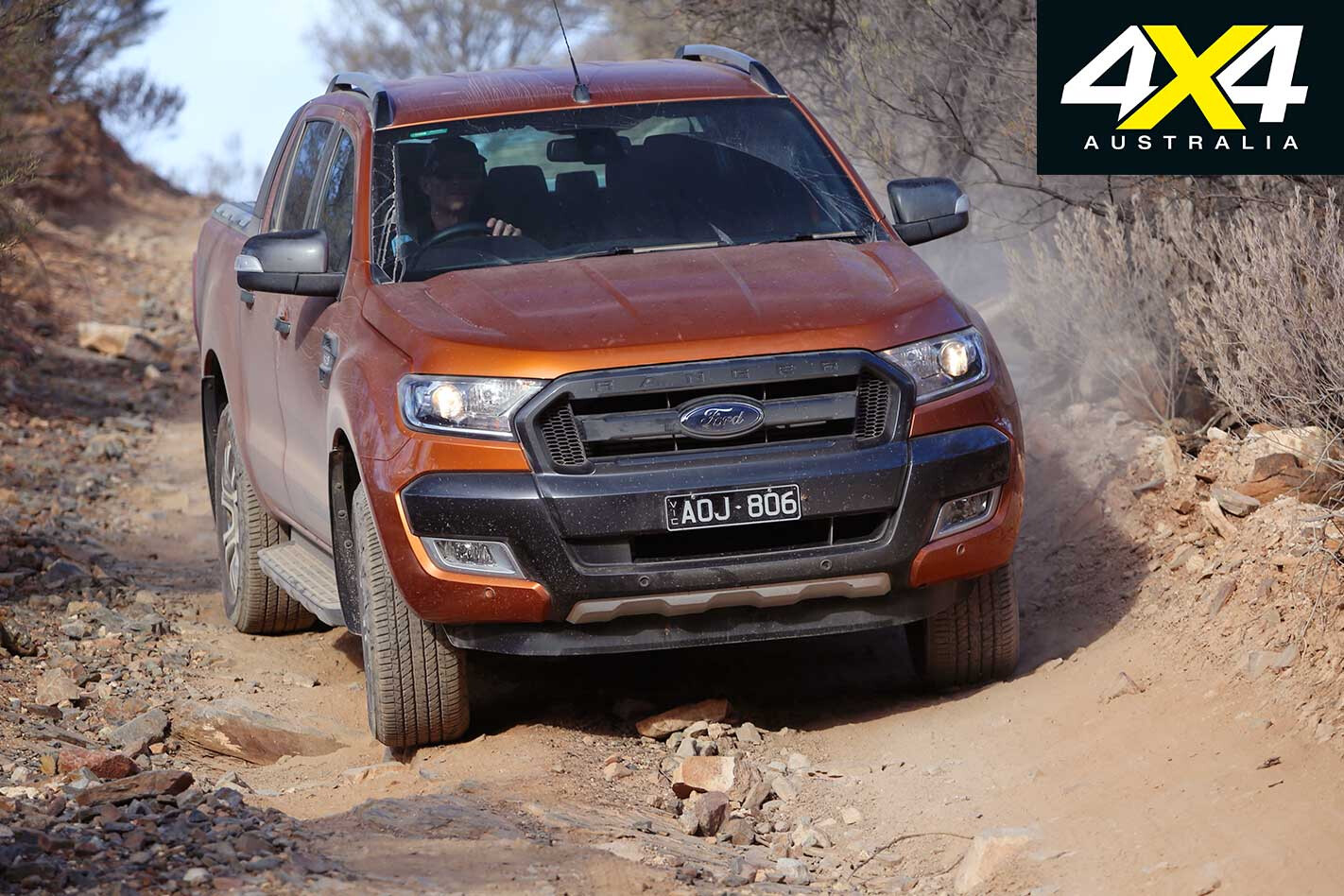
FORD’S clearly done something right with the Ranger. The sales figures reinforce that. What was once an also-ran is now a serious competitor to the Hilux, even outselling it on the 4×4 front in 2017.
On the trip north of Adelaide we’re seeing a stream of Rangers, from basically-equipped workhorses to Wildtraks that have spent more than a few days in the workshop being kitted out with all manner of accessories.
Of course, styling helps. The Ranger looks tough, something that’s important out here. It fits into a rugged landscape, our optional Pride Orange finish blending nicely with the red dirt that’s slowly accumulating in door crevices and wheel arches.
Inside, too, there’s a thoughtful mix of functionality and style, from the eight-inch touchscreen to the orange stitching. The seat trim is also an elegant and rugged mix of leather and technical cloth that suits the nature of the machine; so far it’s been a welcome change to the leather (and faux hide) common once you’re spending this sort of dough.
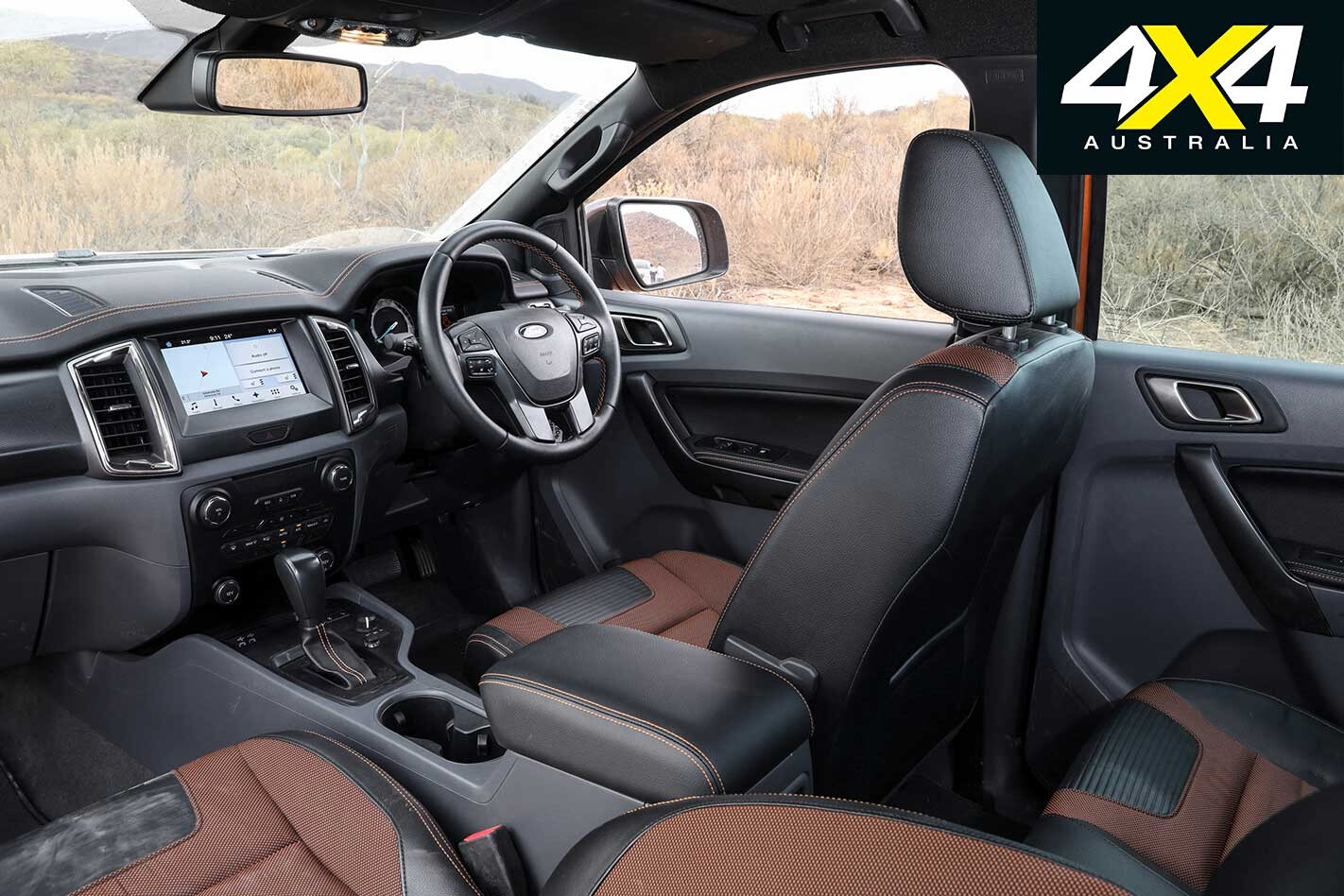
On the long 110km/h drive through the South Australian outback the Ranger’s easy-going nature shines. Comfortable front seats support in the right areas, and even those in the rear get a spacious, well-proportioned cabin; of this quartet it’s the best for backseat comfort, with decent legroom and enough headroom for taller folk. Much of that comes courtesy of the extra millimetres; the Ranger is longer and taller than its rivals, its front and rear wheels also spaced farther apart (only on width is it outdone by all bar the Hilux).
Major controls are also well-positioned and the dials employed for major audio and ventilation functions are a refreshing change from the push buttons (unnecessarily) infiltrating interiors. It’s a shame there’s no reach adjustment for the steering; although, somehow the seating position worked well enough on long expanses.
At $61,790 the Wildtrak is decent buying, especially considering the five-year warranty recently added to the Ford arsenal – it provides an extra two years’ coverage over its three outback rivals. For that you get a towbar (the braking controls to utilise the 3500kg capacity cost extra) as well as Apple CarPlay and Android Auto.
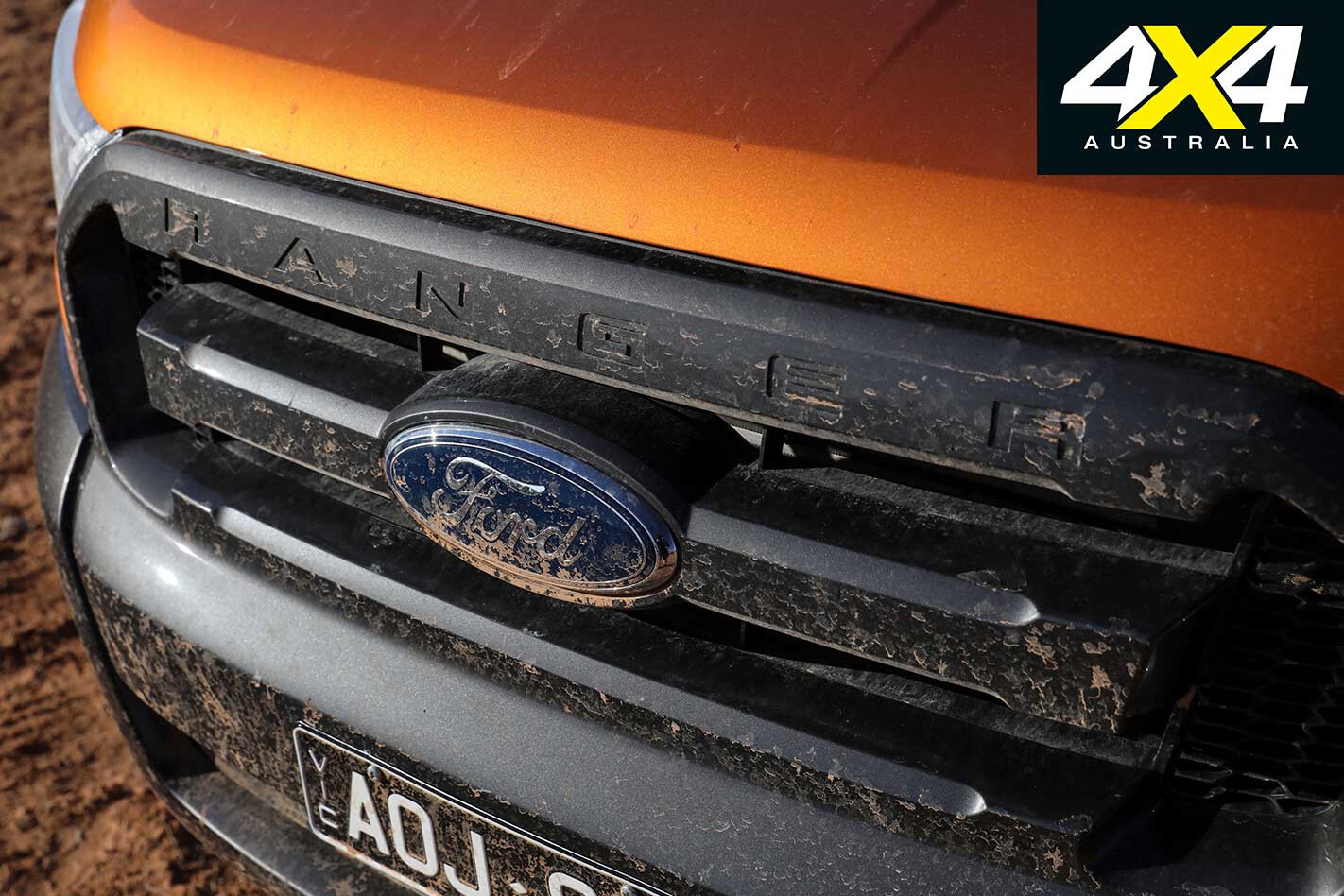
The Ranger is also unique in the class in getting adaptive cruise control. While it’s not as intuitive as a focused human for predicting traffic flow, it’s an easy way to lock onto other traffic for a relaxed ride. Less impressive is the lane departure warning; like every system we’ve tried it’s over-eager to warn of typical movements within a lane, prompting us to switch it off.
However, the farther you drive the Wildtrak the more impressive it becomes, whatever the surface. The standard roller shutter over the tray came in handy early, keeping swags a tad less dusty while allowing for larger loads without the removal of a tonneau. Those seriously loading up will likely remove it, but at least there are choices. The 12V outlet in the lined tub is a win for camping gear, too.
Of course, there’s an updated Ranger coming, one which adds active safety kit (including AEB) and the option of a new 2.0-litre four-cylinder diesel that outpunches the current engine, while also upping the number of ratios in the auto to 10.
That’s important, because with this model the main thing that breaks the ambience is engine noise. The familiar 3.2-litre five-cylinder is a grunty performer, but it lets you know it’s working, chugging away on even mild throttle inputs. After a few hundred kilometres it gets draining.
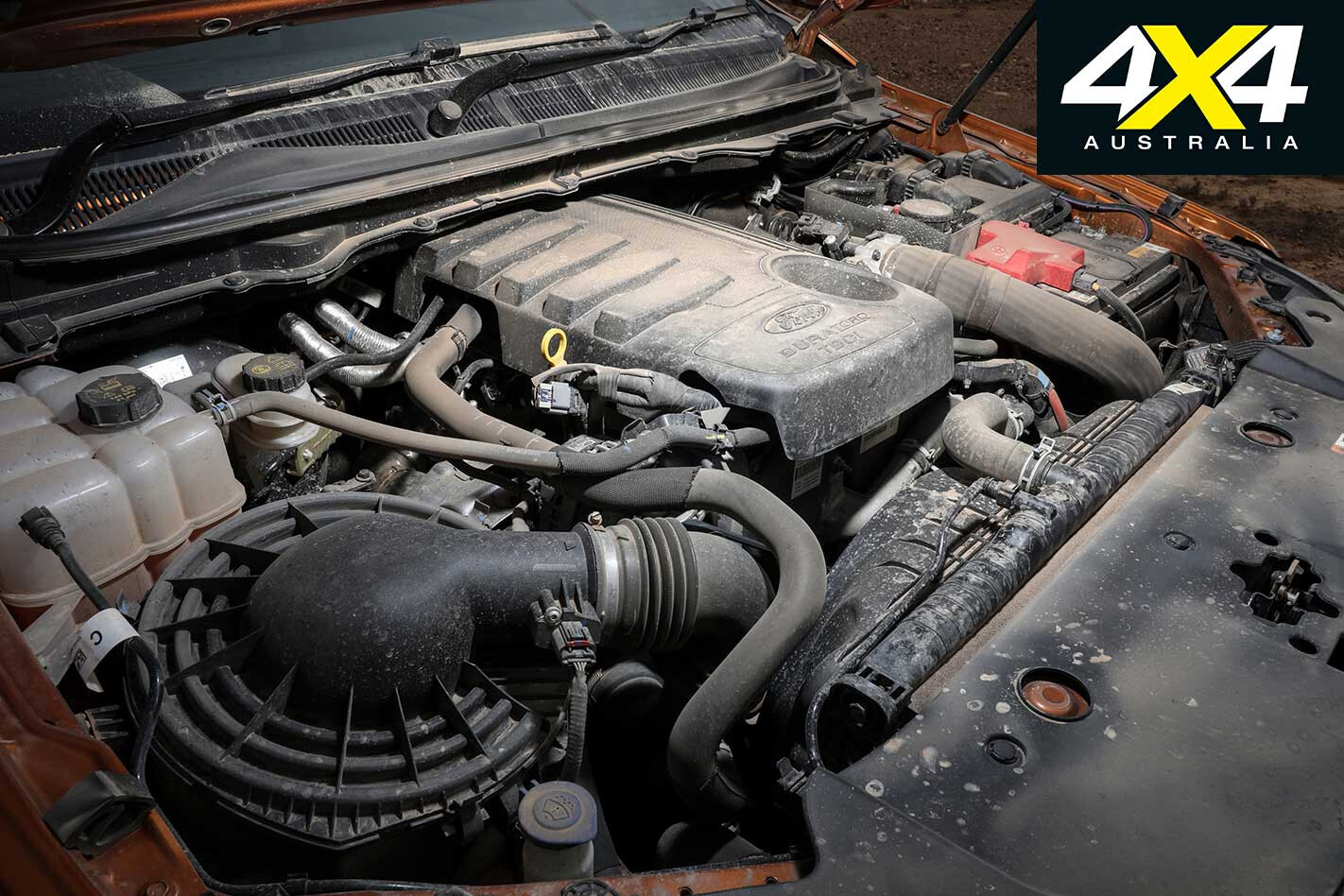
With 147kW and the most torque here – 470Nm – it’s not lacking for punch, helped by the quick response to throttle inputs. Overtaking with the speedo wound into triple figures is also easy, the five-pot ever willing.
That grunt comes at a price, though. Claimed fuel consumption of 8.9L/100km is higher than rivals; our mix of off-roading and cruising yielded figures of 12.2L/100km, which wasn’t bad. And, indeed, the Ranger’s real world fuel use was closest to its claim, suggesting the 80-litre fuel tank will comfortably get you close to 600km between outback fills.
Once the roads get rougher the Wildtrak reasserts itself as a terrific all-rounder. Developed and tuned in Australia, the suspension deals admirably with sharp creek crossings or washouts, quickly settling the body but allowing a degree of suppleness.
Predictable, nicely weighted steering also adds assurance. The 18-inch rubber is a sensible choice, too, allowing the big wheel style that helps set off the exterior but with a respectable 60-profile sidewall for some semblance of protection when off-roading.
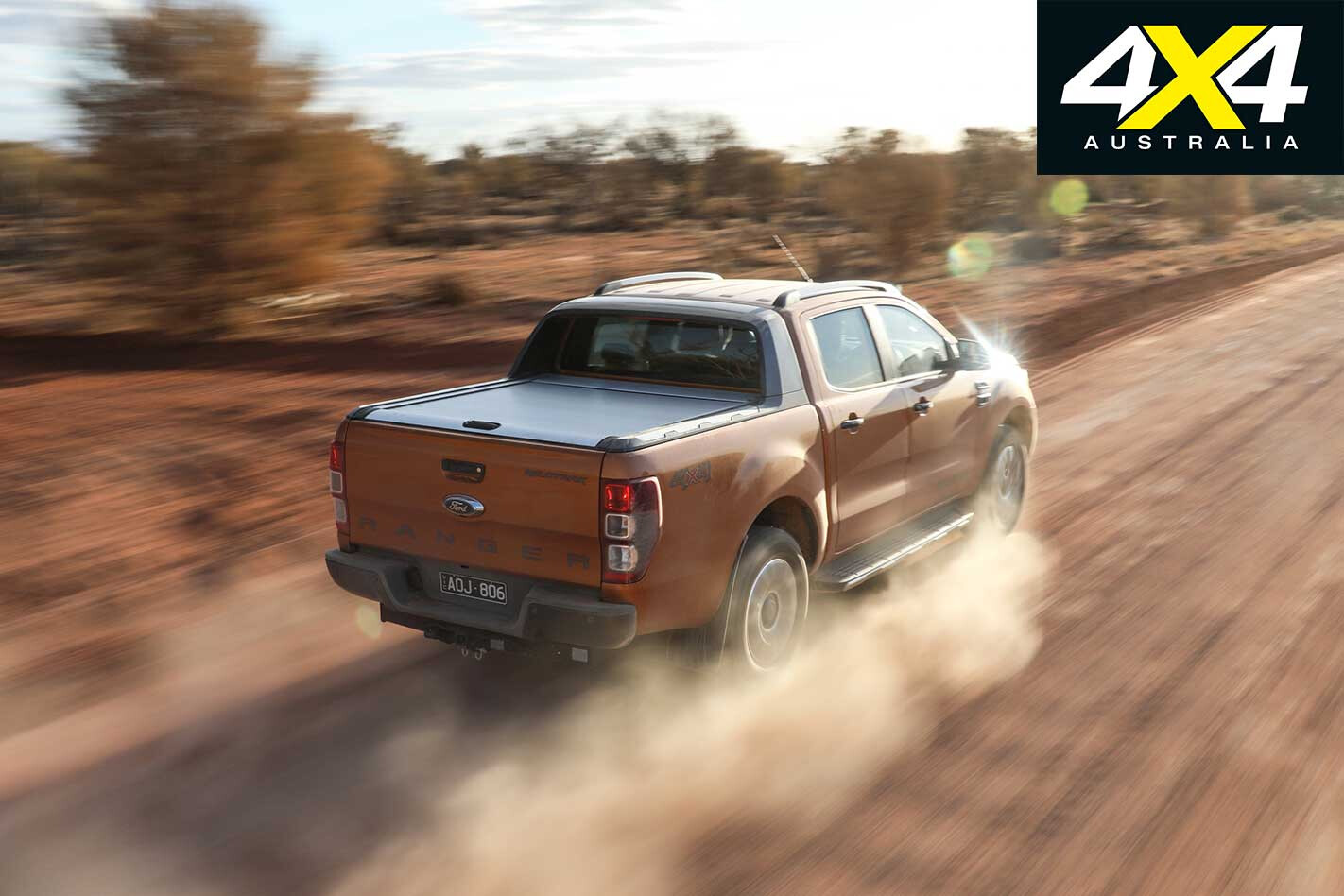
And with low range teaming up with a locking rear diff, as well as good articulation, the Ranger steadfastly resists attempts to cock a rear wheel. However, it’s the all-round nature of the Ranger that made it the car we were happy to slip back behind the wheel of, whatever the surface and whatever the challenge.
2018 Ford Ranger Wildtrak Specs: Price: $61,790 (as tested $62,340) Engine: 3.2L 5-cyl turbo-diesel Power: 147kW @ 3000rpm Torque: 470Nm @ 1750-2500rpm Departure Angle: 21° Rampover Angle: 25° Approach Angle: 29° Wading Depth: 800mm Ground Clearance: 237mm
Mercedes-Benz X250d
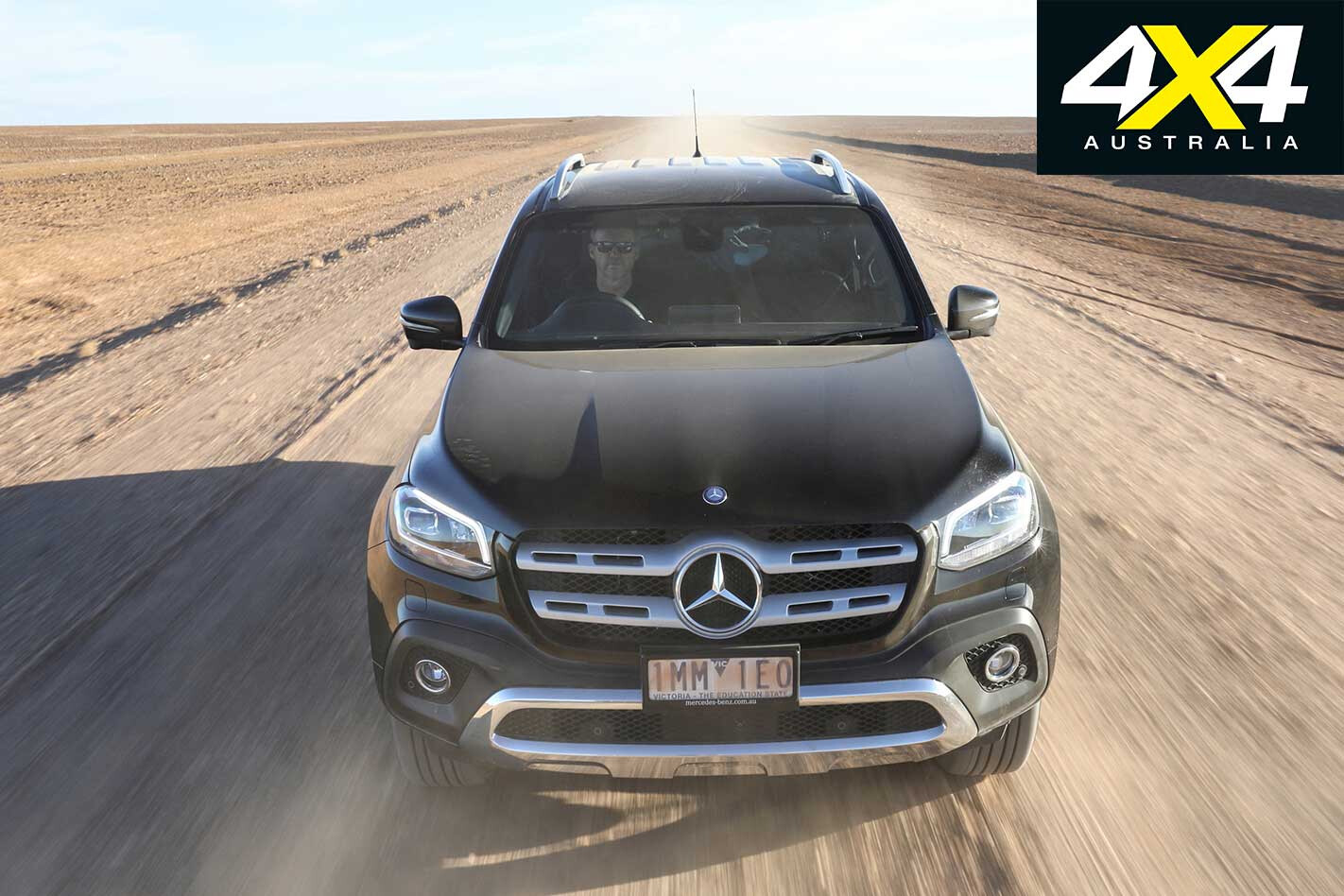
IT MAY have a luxury badge, but the X-Class comes with the same tough genes as other utes – ladder-frame chassis, one-tonne payload, 3.5-tonne towing capacity – which can make its entry price difficult to swallow.
The most affordable four-wheel drive with an auto transmission and the trayback tail will set you back $55,300, which is more than any four-cylinder Amarok. For that you get steel wheels, black bumpers and a vinyl floor.
By the time you stretch to the flagship Power we’re piloting it’s a $64,500 proposition. Even then, you can easily add thousands more; our car, for example, had a black roof lining, aluminium dash trim, a tray liner and a sports bar, things that pushed it well beyond $70K.
Fortunately, the X-Class fights back being the first ute to offer autonomous emergency braking, which uses a camera and radar to monitor vehicles ahead and automatically hits the brakes if you forget to. It’s more useful during our nose-to-tail grind from the southern capital, but it may still be handy on country roads. However, peeling on to the craggy Flinders roads it suddenly seems a lot less useful.
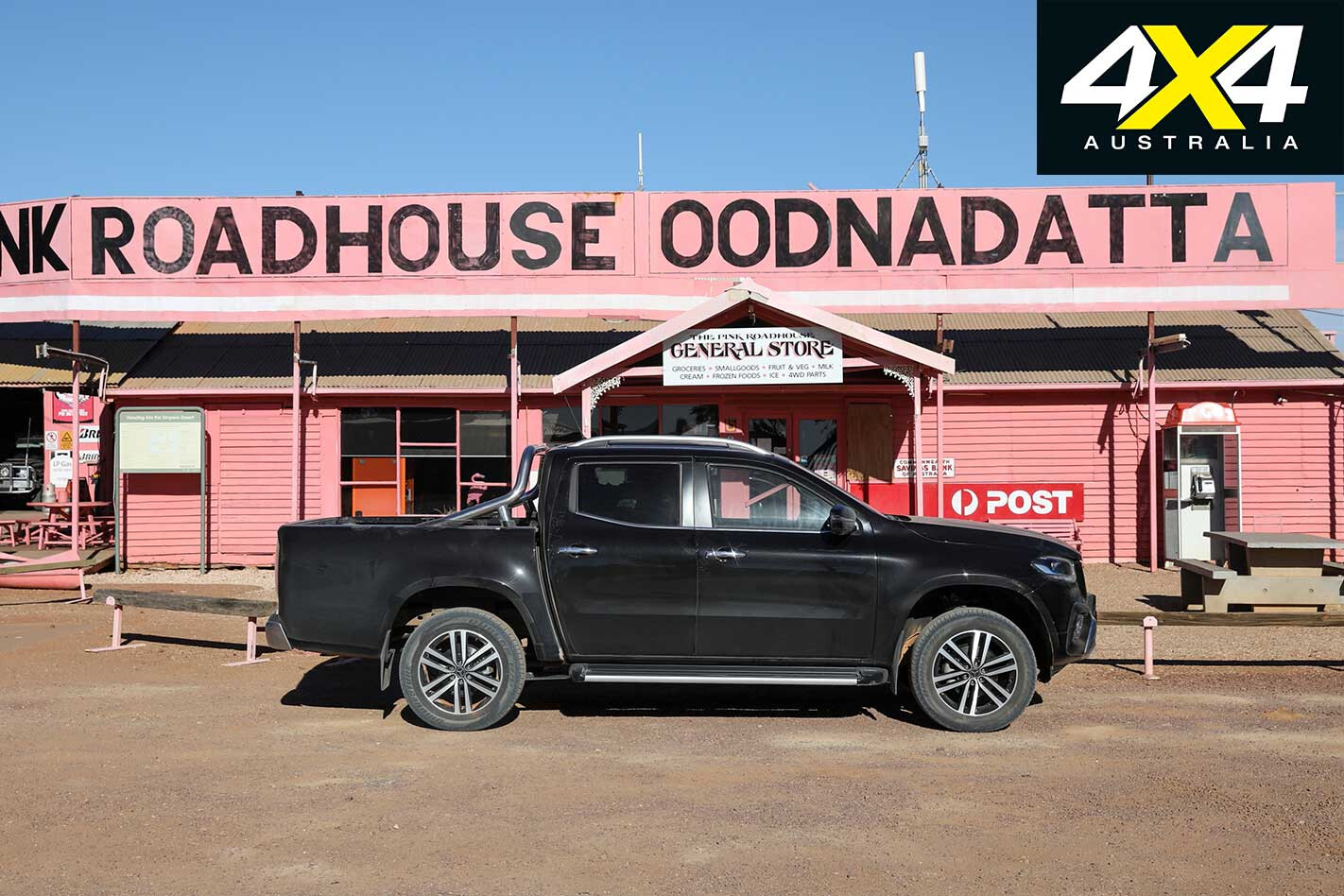
No major qualms with how it deals with rough roads, though. The X’s supple yet well controlled suspension contains things nicely, with decent control blended with comfort. That it’s also the quietest of our contenders adds to the ambience. In widening the cabin compared with the Navara it’s based on, Mercedes has also injected more sound-deadening, something that has paid genuine dividends.
On bitumen and dirt it’s noticeably quieter than its rivals, the only annoyance being some air rustling off the driver’s window.
It’s the optional 19-inch tyres on our car that took the gloss off the rough road ride. At 255mm wide, the tyres don’t add any more width to the 18s that come standard, but they lower the profile to 55, slightly reducing their off-road suitability. Their size also makes it trickier to find replacement rubber easily in remote areas.
Like the Navara it shares so much with, the X runs coil springs at either end, and it’s the rear-end that has question marks hovering over it. We trialled it with more than 900kg in the tray and it wasn’t pretty. The tail sags noticeably, pushing the body onto its bump stops at the limit.
The control it’s afforded with under light loads is suddenly not there, the rump lurching from side to side. For most of our running, though, the X-Class is lightly laden, so there wasn’t an issue.
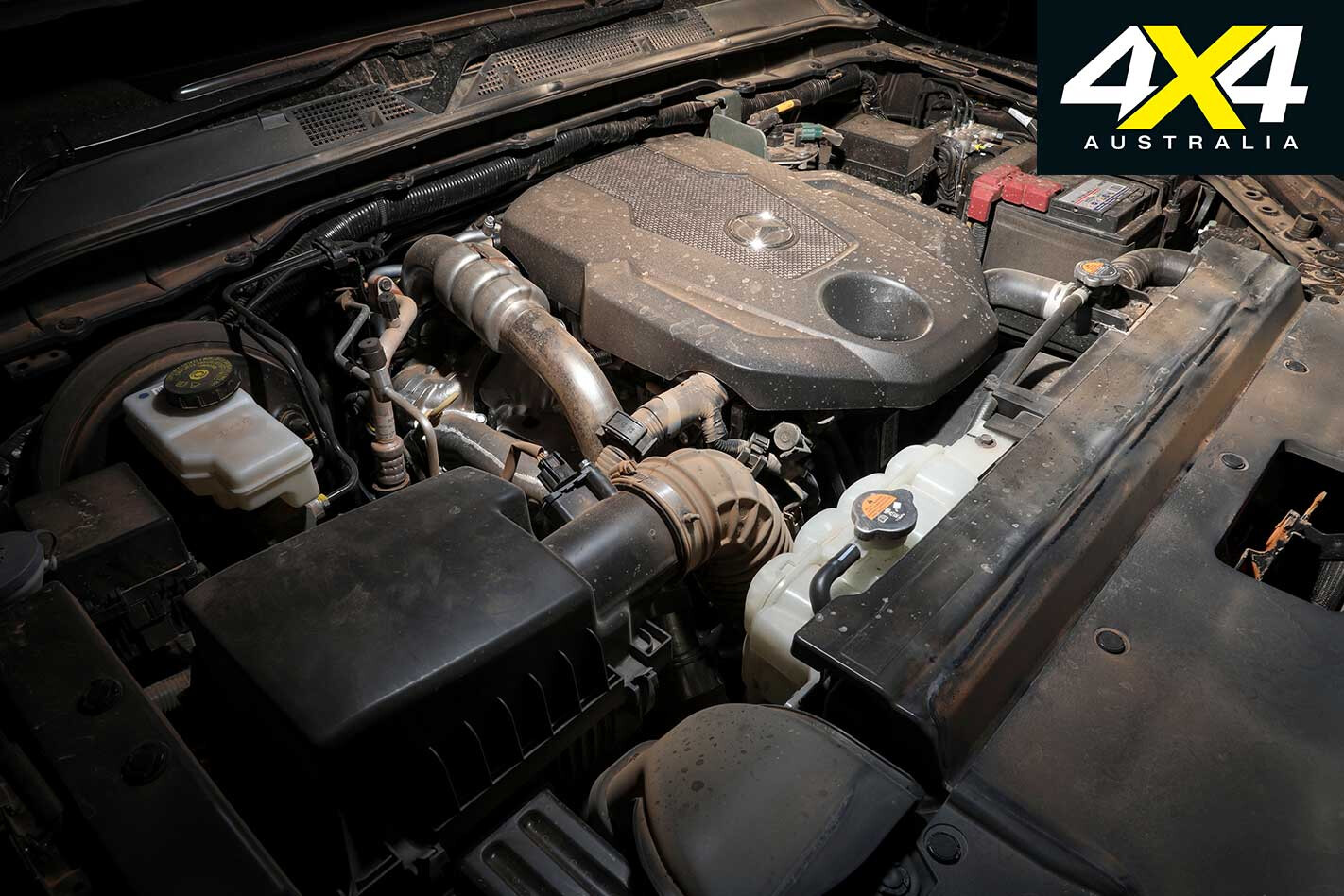
Under the bonnet the X-Class is pure Nissan; although, Mercedes has gone to reasonable efforts to disguise the fact. A plastic cover boldly displaying the three-pointed star greets those who pop the bonnet. Beneath it is a 2.3-litre twin-turbo four-pot diesel. Outputs are nothing special at 140kW and 450Nm, and they’re challenged by the weighty X-Class frame.
The smooth-shifting seven-speed auto helps, but the X250d never feels particularly punchy, instead relying on its torque for building pace faithfully, if not excitedly. At least it’s quiet in the way it goes about its business.
Plus, it soldiers on for many kilometres. As we learnt, the fuel light is super conservative; we’ve never had one blink on, with the trip computer predicting 180km until things come to a halt. At least it gives you time to plan.
Speaking of fuel use, the X-Class picks up the good part of the Navara genes with its claimed fuel use. The official 7.9L/100km figure is not as impressive as the Nissan (7L/100km), predominantly due to the additional 180-odd kilos it’s lugging. But the 12L/100km return we experienced outclassed its rivals and gave it a touring range approaching 700km.
A puncture late in the trip came at high speed on gravel, but it was quickly picked up courtesy of the standard tyre pressure monitors. Like the Ford, they’re standard, something guaranteed to save a tyre for anyone driving out here regularly.
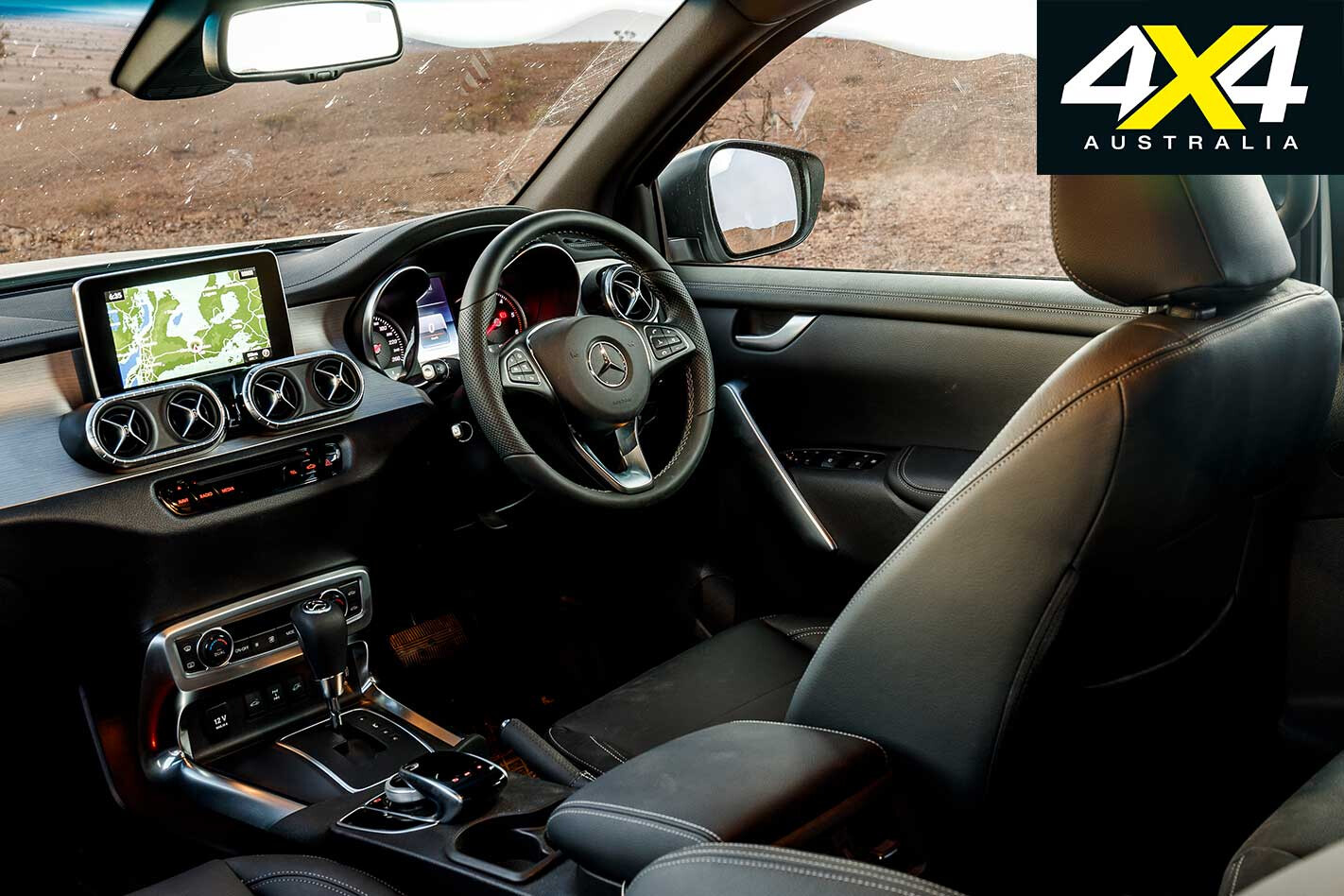
In other areas, the X feels off the pace. You don’t have to travel far to realise Mercedes-Benz may not have appreciated the intended use of its X-Class as well as some rivals. Cabin storage is light-on, with only a small centre console, cup holders and some door pockets.
By the time you’ve loaded up with a camera, some maps and a phone, you’ll be battling to find somewhere to house them. There are no clever nooks and bins that provide a perfect cubbyhole for anything from coins and cameras to maps or souvenirs plucked along the way. It’s a shame, because elsewhere the X-Class is ready for duty.
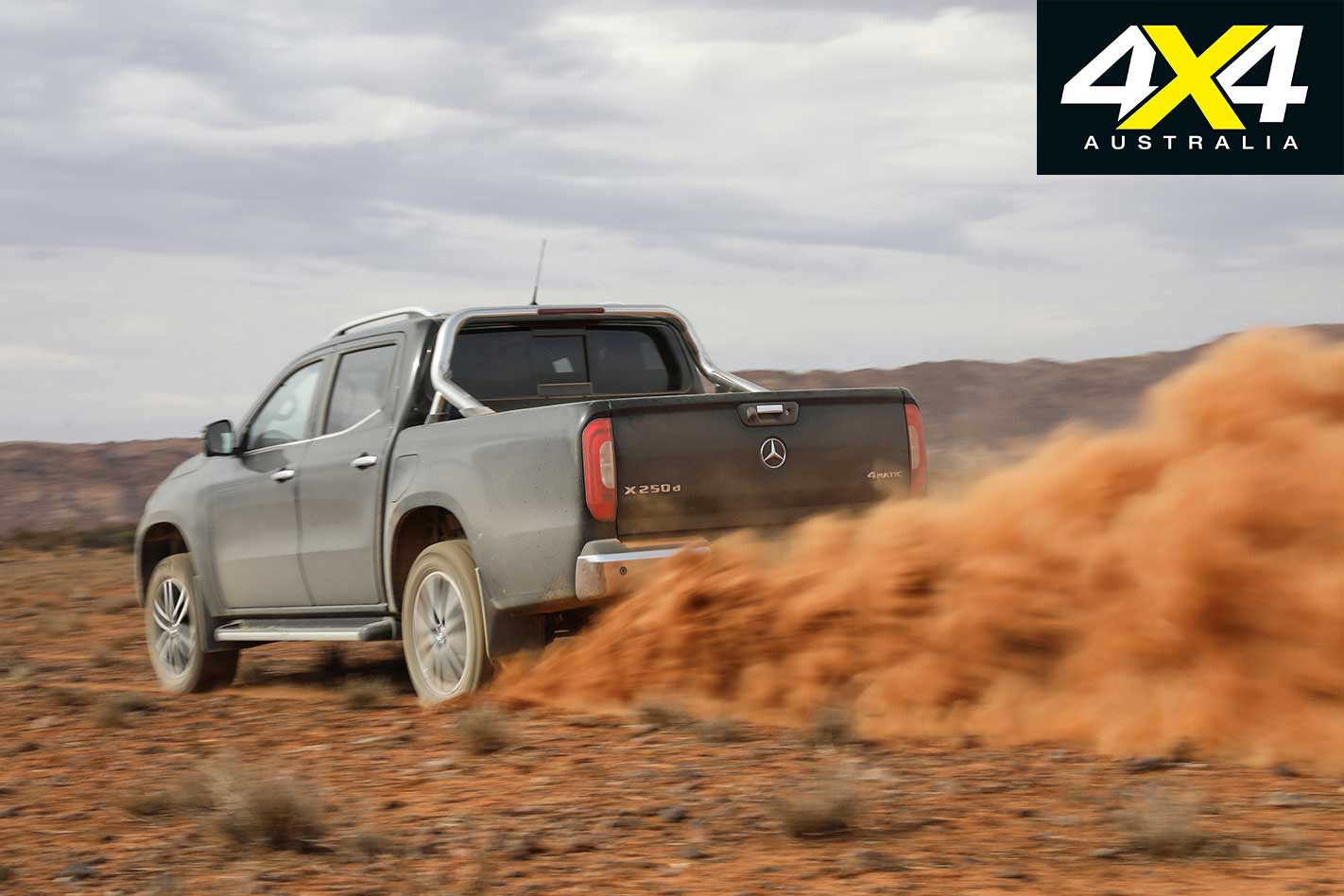
The front seats are terrific, with great lateral support and overall comfort. The lack of reach adjustment on the steering is a rare oversight to the otherwise good driving setup. A few hundred kilometres of dirt roads and the latch for the tailgate started to get sticky, as it was clogged with the fine dust that loves permeating every crevice of a car.
By the end of the trip it was almost impossible to open, with the handle flexing as we wrenched it to undo it. It’s indicative of a car that gets a lot right but trips in some key areas.
2018 Mercedes-Benz X250d Specs: Price: $64,500 (as tested $73,300) Engine: 2.3L 4-cyl twin-turbo diesel Power: 140kW @ 3750rpm Torque: 450Nm @ 1500-2500rpm Departure Angle: 25° Rampover Angle: 22° Approach Angle: 30° Wading Depth: 600mm Ground Clearance: 222mm
Toyota Hilux Rugged X
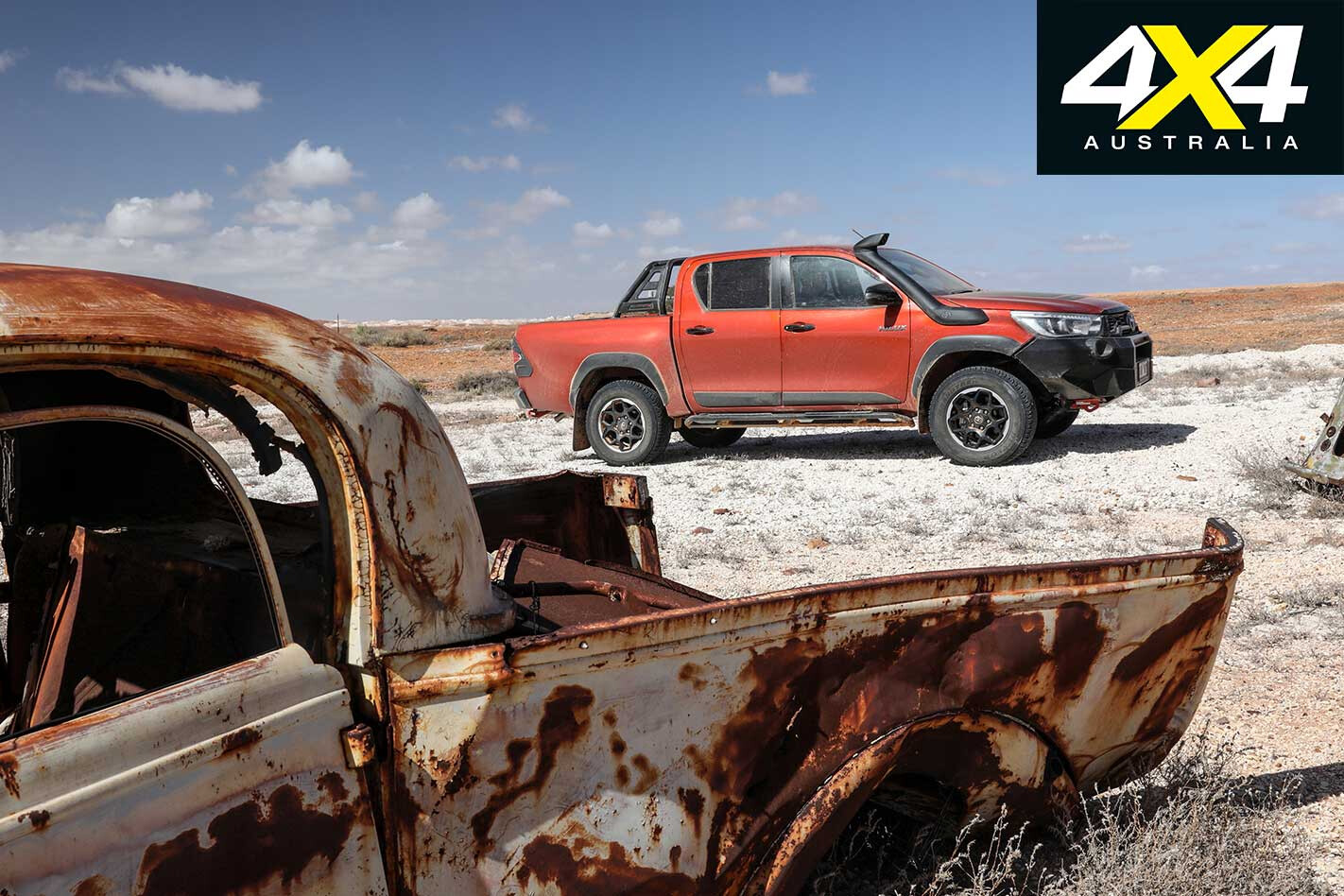
DIRECTNESS in marketing can be a good thing; although, we wonder whether Toyota is getting too literal with the Rugged X, the latest addition to the Hilux range. For the “unbreakable” ute it’s a big call, though it at least states its intentions clearly from the outset, contrasting bonnet stickers and all.
But the Rugged X is a lot more than a sticker pack. What is the pinnacle of the broadened line-up ramps up the ability with rock rails, a sturdier bash plate and a solid steel bumper that promises to fend off a kangaroo or two while housing one of the best standard lighting systems we’ve ever experienced. Between the circular LED spotlights and the broad central light bar, it makes for one heck of a long throw on the vast Stuart Highway.
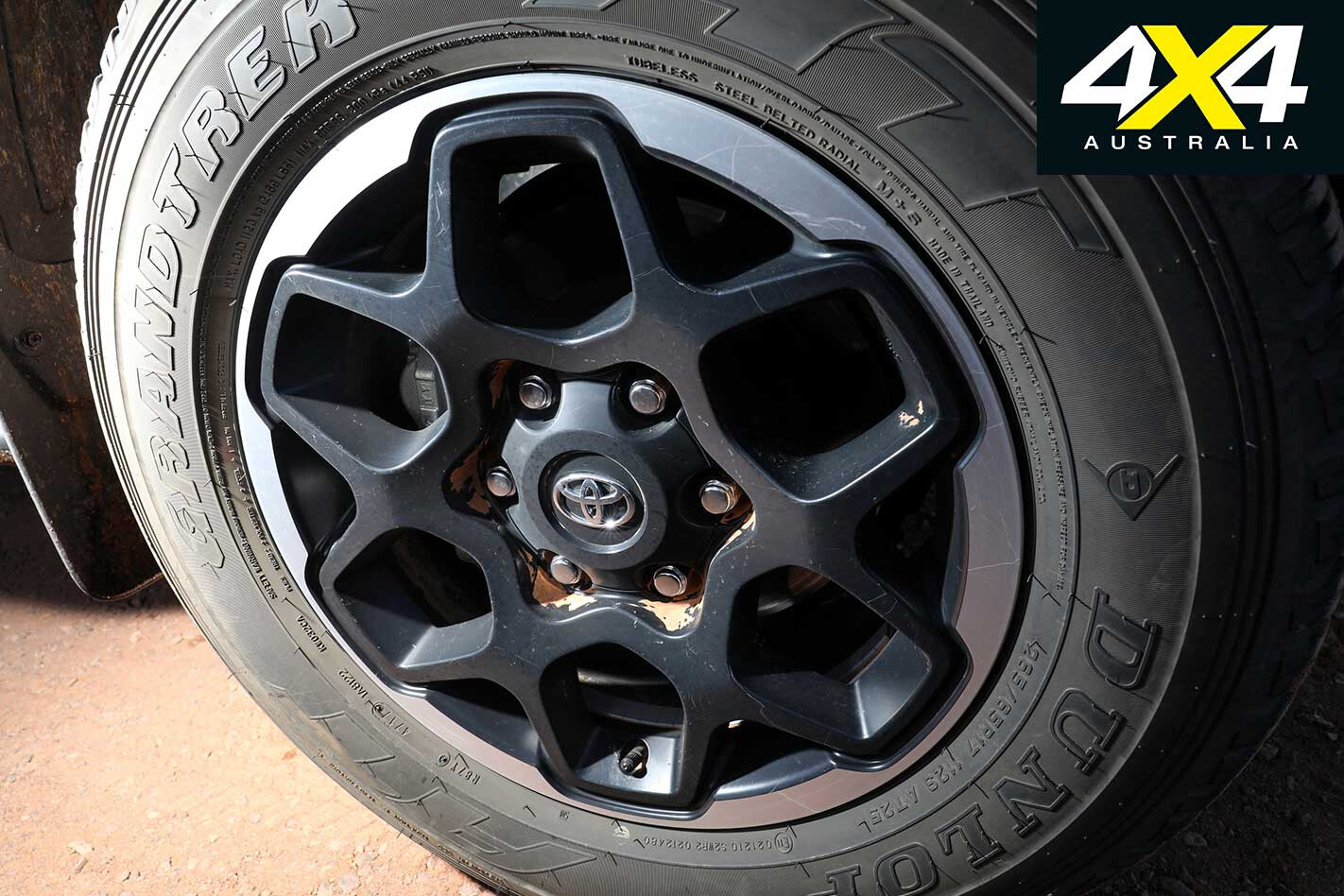
Elsewhere, the Rugged X is more regular Hilux, from the suspension tune to the engine. That said, the front coils have been beefed up to cope with the additional weight, most of it as a result of that steel bumper. Combined with 17-inch all-terrain tyres that allow more compliance, it makes for decent going pounding over the corrugations the outback does so well.
There’s solidity to the way the Hilux deals with thumps and bumps, its body still shimmying but everything performing as it should. It’s less convincing when riding alongside it and watching how things cope, the front bumper rollicking around within its mounts. It’s then you realise why engineers have left such big gaps between the front guards and the bumper – to allow it to shimmy and shake.
Load it up and the Rugged X is almost as good, the firm suspension losing little in the way of control as it continues to soak up all thrown at it. It’s an impressive bit of kit and one that gives the impression it’ll be doing its thing for many years to come.
That said, it doesn’t take much to hit the load limit for the Hilux. With a quartet of people, their luggage, supplies and camping gear, it’s easy to break the meagre 748kg payload, which is at least 240kg lower than its three bush rivals. While it feels solid approaching that weight limit, unless you turn to the aftermarket there would be issues in breaching it.
From the outset, too, there’s less space in the Hilux. Its cabin is narrower than its three rivals, which combined with the upright dash delivers a more hemmed-in feeling. Not all is rosy elsewhere, either.
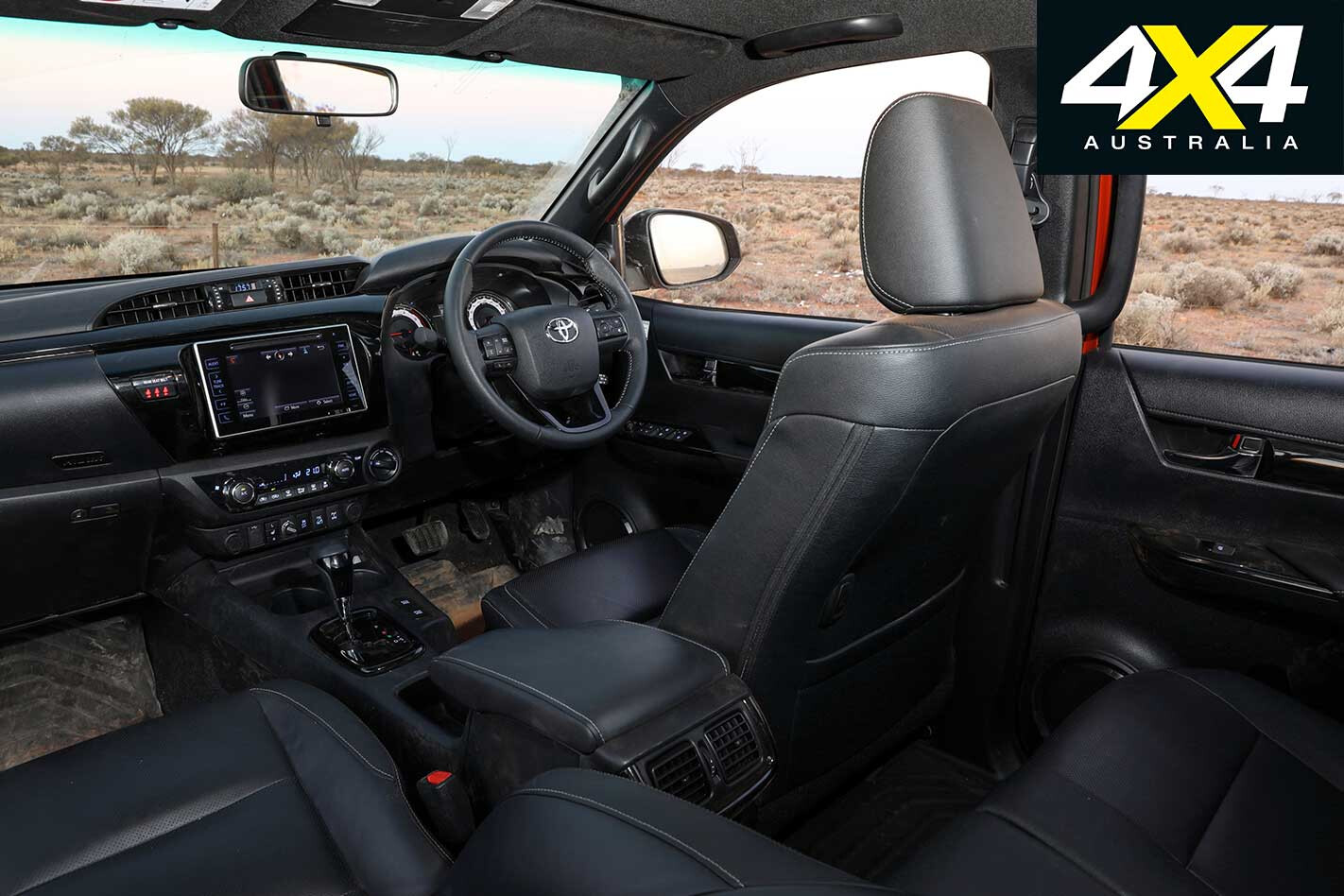
A foot pad from the driver’s side-step kept unclipping, requiring a heartily applied hoof to coax it back in place. And the instrument cluster somehow rattled loose, the cowling covering things such as the 4×4 and high-beam lights. We’ve done tens of thousands of kays with Toyotas out here and never experienced anything like this.
There was worse to come. Punting along an undulating gravel road, our Hilux suddenly flashed up warning lights, including from the stability control safety systems. It happened after bouncing into a dry creek bed, the textbook impact shrugged off by the other three contenders. It also warned of reduced power, the engine now revving higher to account for less turbo boost.
We’ve experienced an identical issue before with a Fortuner, with the same engine and chassis. Then and now, disconnecting the battery to reset the warning lights solved the problem, also returning the engine to its former 130kW/450Nm glory.
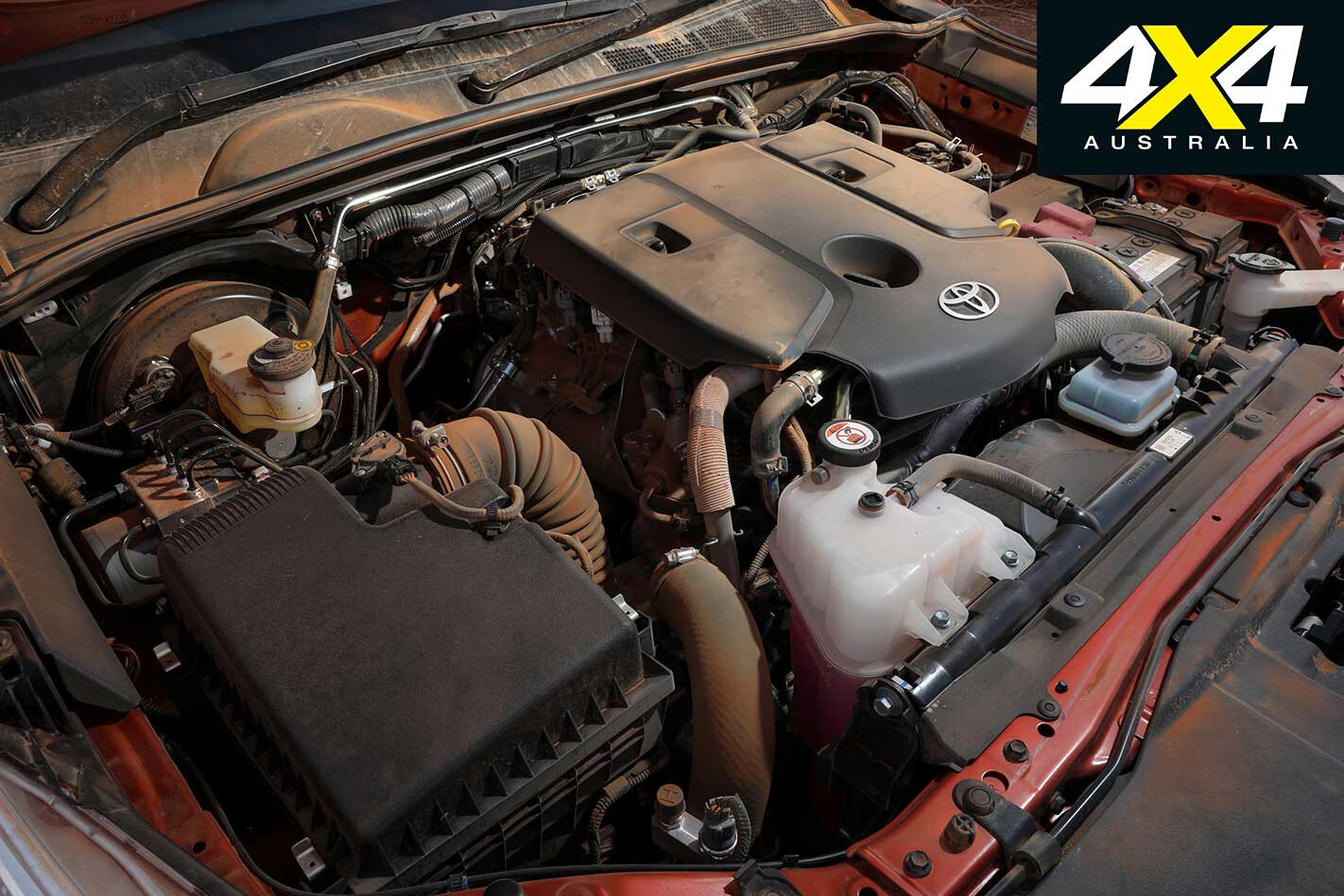
It’s an uninspiring engine, albeit one that gets the job done; its generous low-rev torque by far the hero. It’s a shame about fuel use, though. On paper it looks okay at 7.9L/100km, just four per cent more than an SR5; but the reality is a lot less impressive, with the extra weight of the Rugged X taking its toll.
It was the thirstiest of the lot, slurping 12.6L/100km, and its range reduced more at higher speeds – the Hilux consistently needed its 80L tank topped up first.
Over the next couple of thousand kays our electrical problem resurfaced another three times, all at more than 100km/h when overtaking. It’s disappointing stuff and was a big black mark against a car marketed as unbreakable. Throw in the frustratingly fiddly touchscreen and it was slowly making the Hilux less endearing.
Fortunately, the Hilux wins back points once low range is engaged. Clawing our way through a dry creek bed was a reminder of how intelligent the electronic traction control is, its brain sending drive to scrabbling wheels fighting for traction. The 17-inch all-terrain rubber is also a terrific choice; although, we still picked up a puncture.
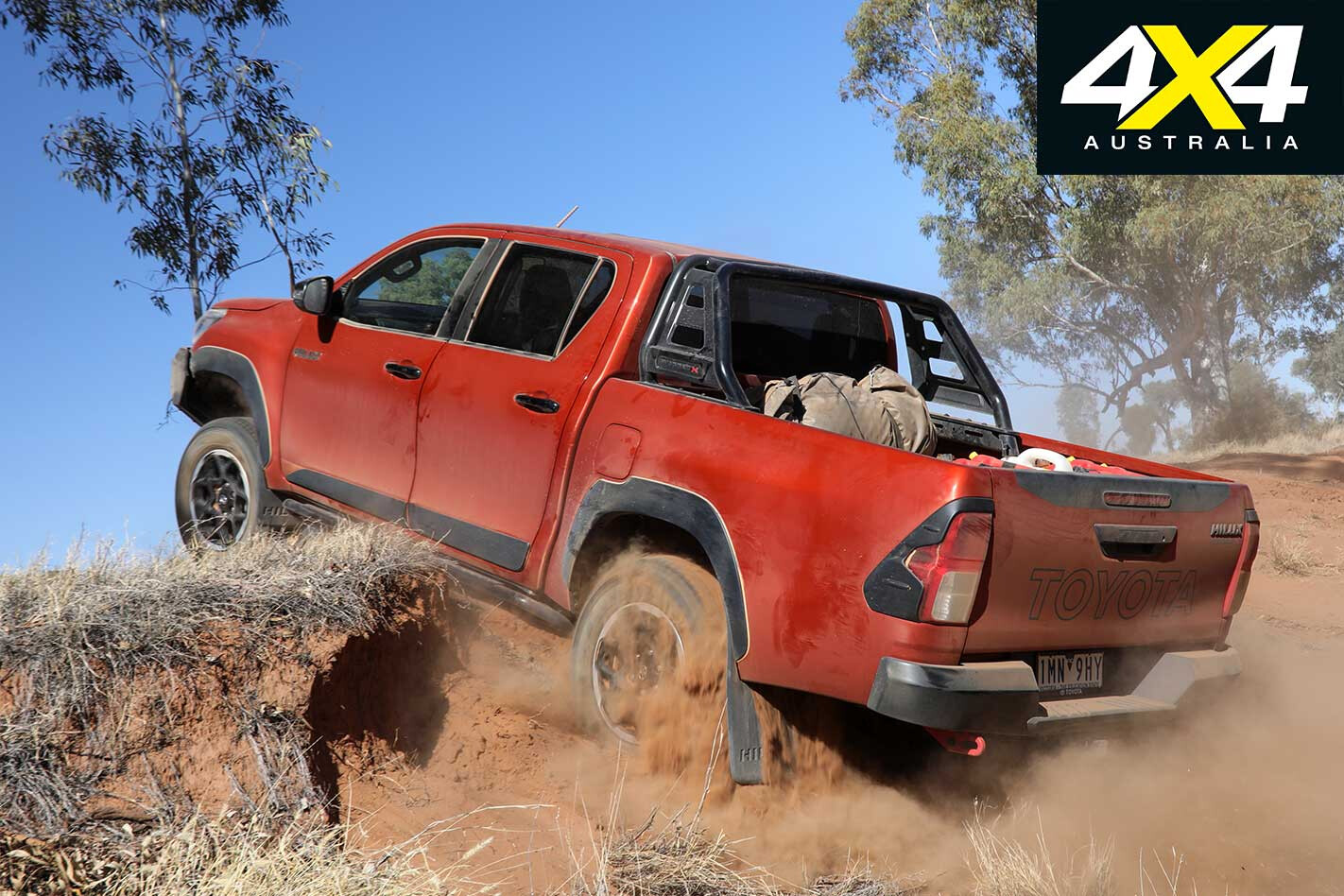
Only later did we need to activate the rear diff lock, a slippery ascent testing the limits and working better with identical drive being sent to the rear wheels.
Additional protection around and underneath provides reassurance when tackling gnarly approaches, with the angled corners on the front bumper allowing for aggressive approaches. It’s clear the Rugged X is ready to rumble in this sort of terrain, with four tow hooks easily accessible if things eventually grind to a halt.
At $63,690 the Hilux is no on-paper bargain; although, the standard snorkel, extra off-road kit and lights boost appeal. While there’s leather and a tow kit, there’s the occasional oversight such as no tyre pressure sensors, and its climate control has a single setting.
All of which led to some robust discussion. There’s so much to like with the Rugged X, but this example had some gremlins that can’t be ignored.
2018 Toyota Hilux Rugged X Specs: Price: $63,690 (as tested $64,240) Engine: 2.8L 4-cyl turbo-diesel Power: 130kW @ 3400rpm Torque: 450Nm @ 1600-2400rpm Departure Angle: 26° Rampover Angle: N/A Approach Angle: 31° Wading Depth: 700mm Ground Clearance: 279mm
Volkswagen Amarok Core Plus
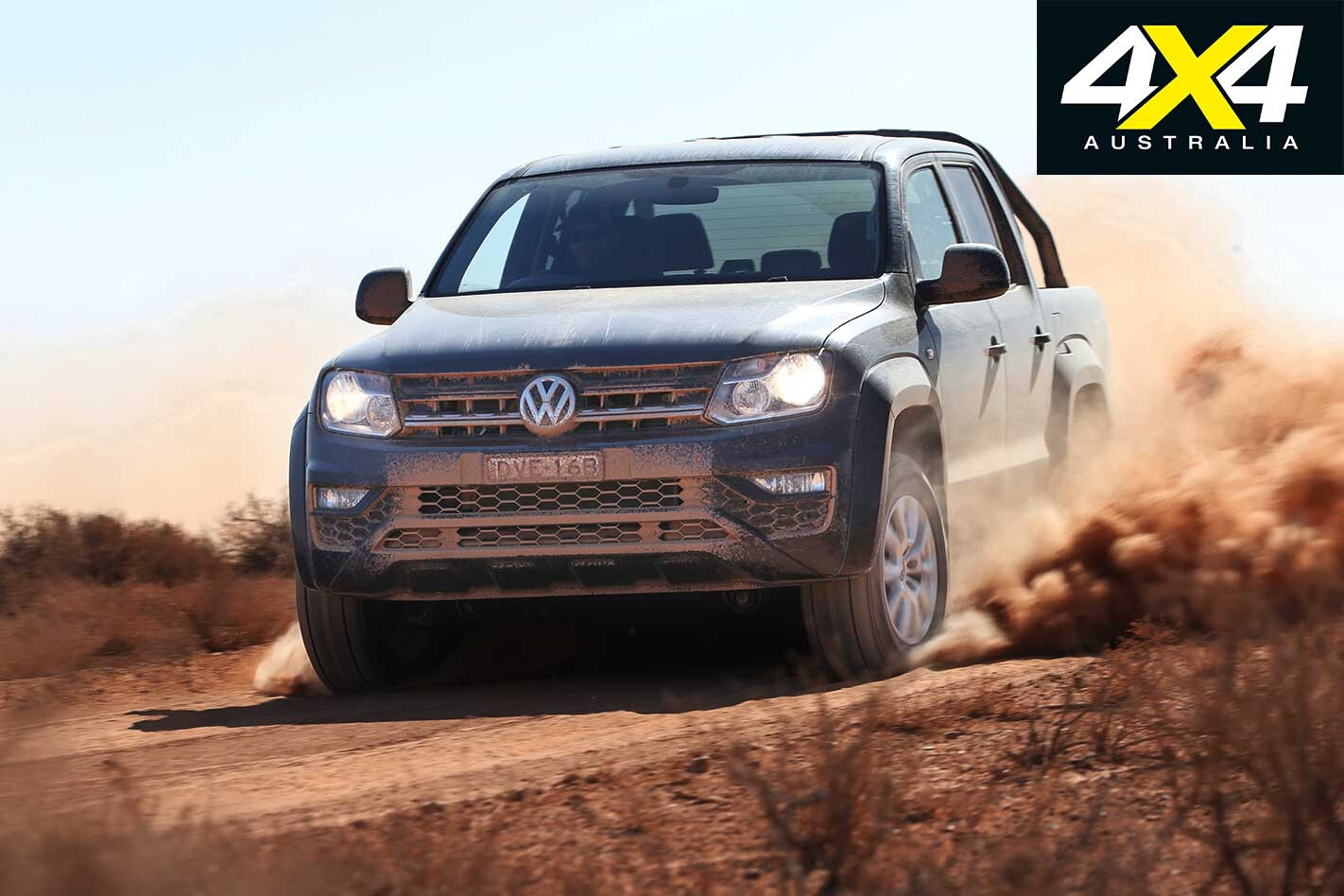
UNRAVELLING our swags for the first night reminded us of a few clever features in the Amarok. A 12V outlet in the tray gives options for camp lights or fridges, for example, and there’s a light integrated into the sports bar to illuminate the load area. It’s clever stuff and shows the thoughtfulness injected into Volkswagen’s inaugural ute.
It’s comfy, too. Slipping behind the wheel of the Amarok is like settling into your favourite chair; comfortable, familiar and ready for the long run. The supportive seats team with an excellent driving position to kick things off nicely.
And from the moment we jumped in it there was never an issue finding a hidey hole for our kit, with the dash-top binnacle a handy overflow, albeit one that reflects whatever it is you’ve put there into the driver’s field of view.
At $50,990 the Core Plus we’ve enlisted for our outback adventure is the most you can spend on a four-cylinder Amarok, but it’s a comparative bargain in this company. It comes with alloy wheels, a chunky black sports bar, and Apple CarPlay and Android Auto plumbed through a user-friendly 6.3-inch touchscreen.
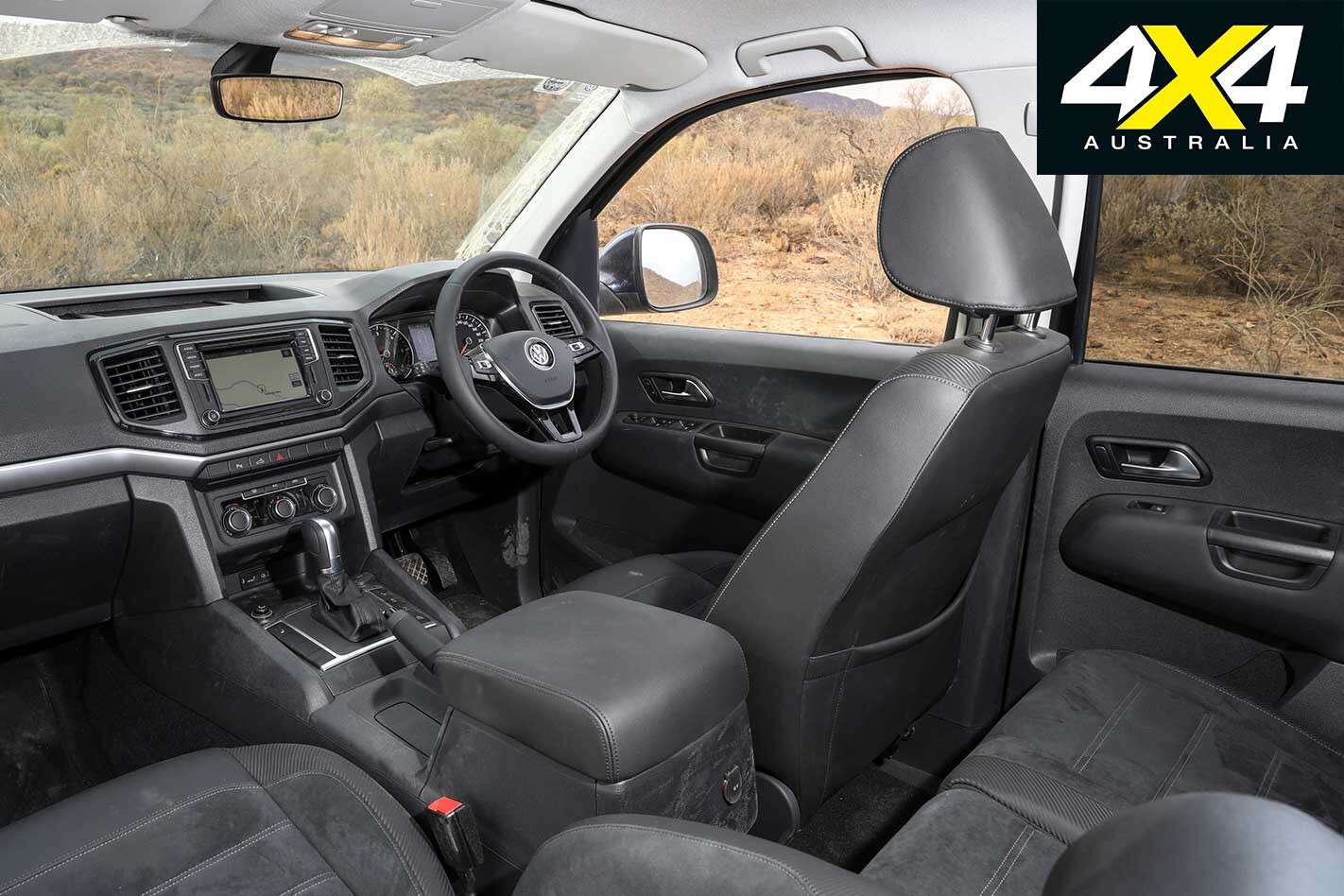
Ours also came with optional satellite-navigation as well as Alcantara trim, for a more elegant seat finish. Even then there are significant omissions, such as rear side airbags, commonplace on rivals. It also misses out on rear air vents and tyre pressure sensors.
If you want the full leather fruit with electric folding seats you’re pushed into the more powerful V6, which can take you to almost $70K. It’s indicative of a car that does things differently.
At two litres in capacity its four-cylinder diesel is by far the smallest here, assisted by one small and one larger turbocharger to provide more huff across its rev range. The 132kW power peak only just slips past the Hilux, while its 420Nm torque figure is outdone by its outback rivals.
However, the Amarok has additional assistance in the form of its eight-speed auto. With more ratios than its contenders it’s a better chance to keep the engine in its sweet spot, with the well-calibrated unit slicing expertly between ratios for elegant, if not astonishing, performance.
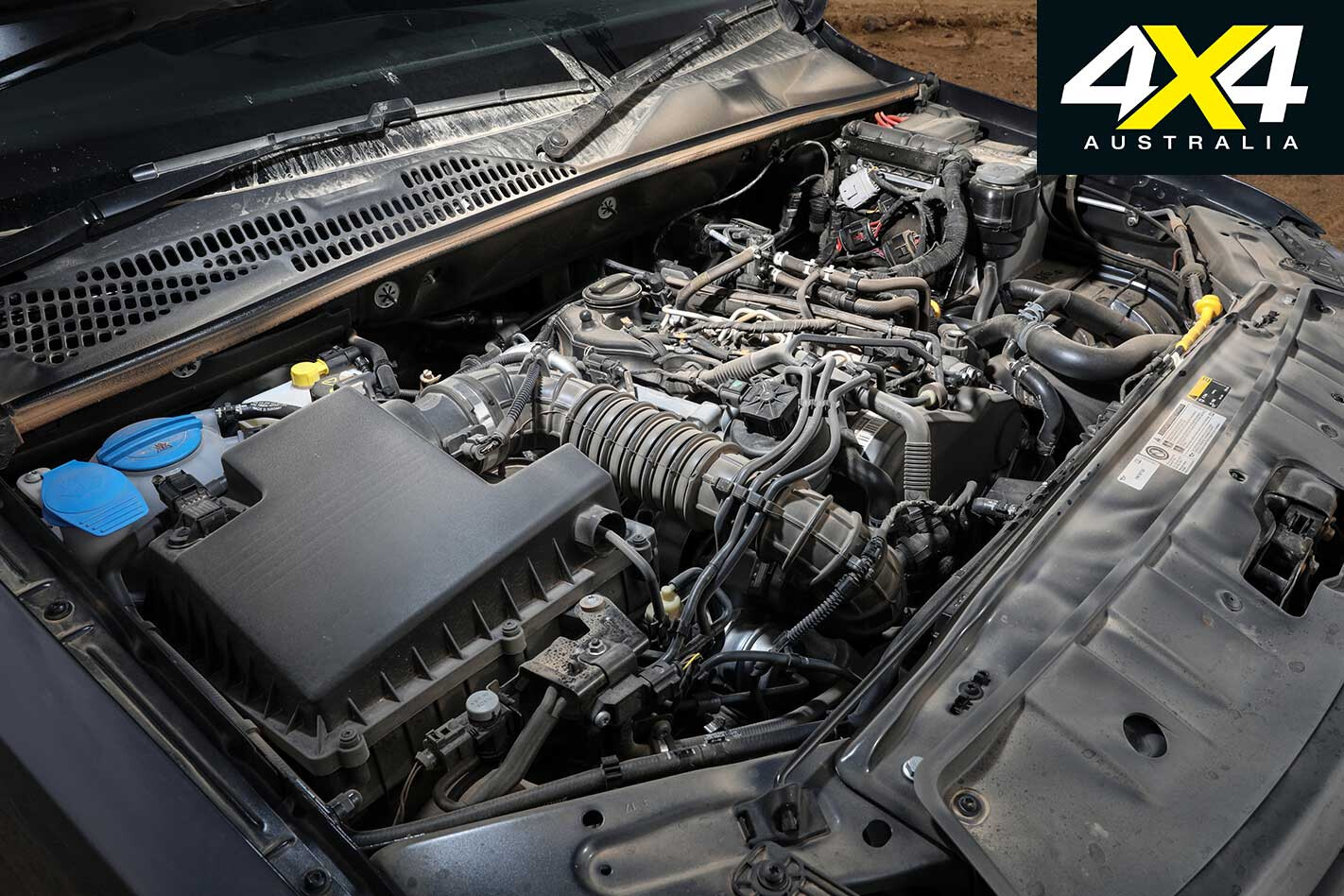
It makes for easy progress, either close to the 110km/h limit so common in the outback, or when carving through undulating canyons. There’s a maturity and accessible nature to its drivetrain.
However, it’s the Amarok’s manners that impress most. On country roads there’s a relaxed nature to it, the steering predictable and responsive and the unladen tail behaving close to an SUV in the way it fends off bumps. Throw a few kilos in that broad load area – it can accommodate a pallet between its wheel arches – and the equation is almost as convincing.
Rolling onto gravel roads for the first time also reinforces one of the advantages of the Amarok: its permanent all-wheel drive system. Rather than twirling dials to engage the front wheels, they’re always running, which is ideal for this sort of trip. It’s already set so the driver can forget.
However, as things got rockier up a dry creek bed, there was no option to select low range; the typical low range transfer case simply doesn’t exist on an auto-transmission-equipped Amarok. Fortunately, the torquey engine makes for easy progress in all but the slowest terrain.
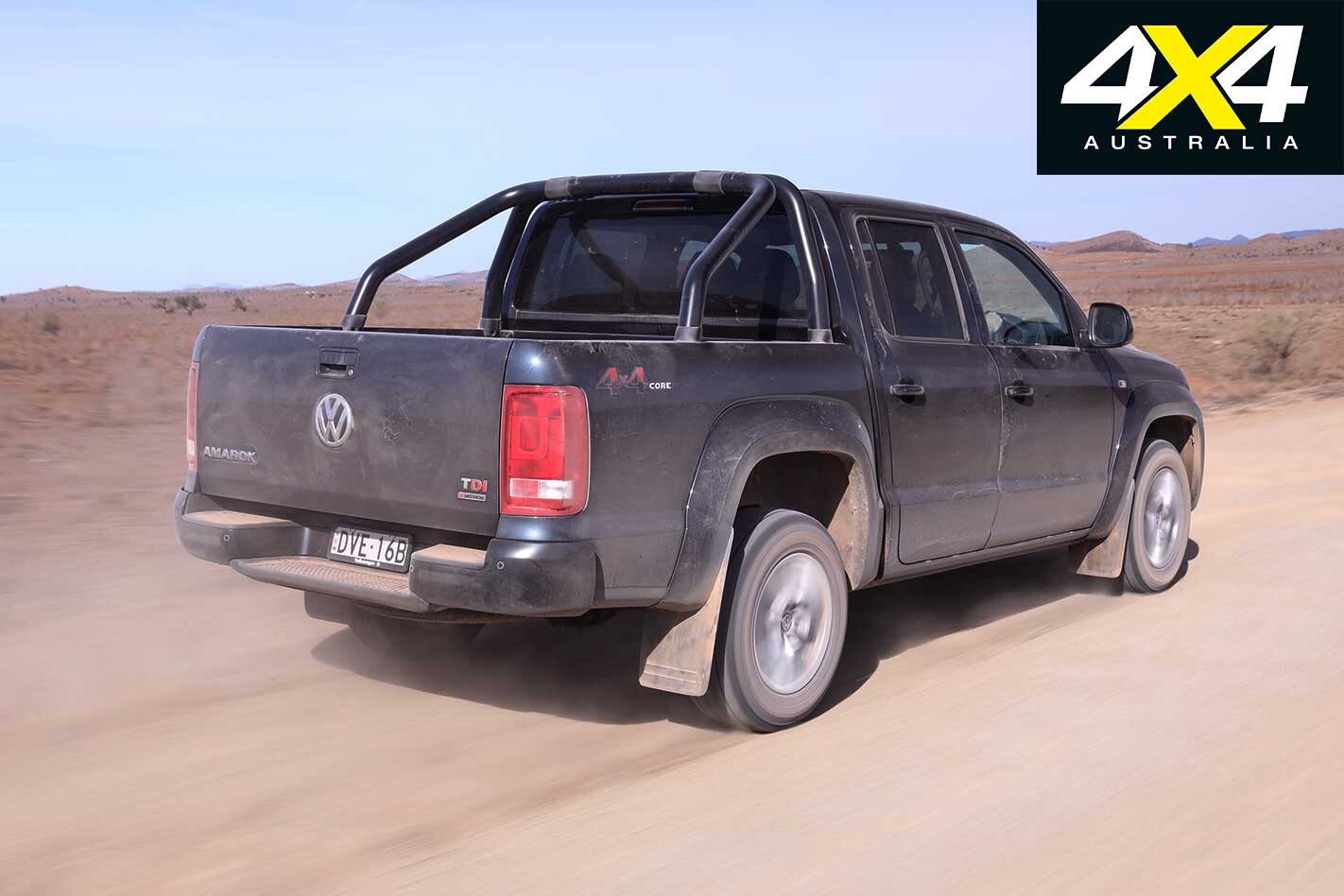
Even without what was once considered essential off-road hardware, the Amarok is mighty impressive in its ability. For our adventure there was nowhere the Amarok shied away from, its generous clearance and articulation teaming with its locking rear diff to shuffle things along with the sort of competency few would expect from high-range only.
We tried the off-road mode that sits alongside the gear selector, but its benefits are minimal and, in many cases on these touring roads, you’re better off leaving it disengaged, allowing slightly friendlier mapping of the transmission.
The Core Plus we tested here ups the wheel size to 17 inches, but they’re still very capable Pirelli Scorpion all-terrains, which worked beautifully on this trip. Keep it out of the really slow going, then, and the Amarok is a tough and capable companion. Its spacious cabin is welcoming and its broad driving demeanour a winner for big adventures.
For those wanting more, it’s comforting knowing there’s a V6 available for good measure too.
2018 Volkswagen Amarok Core Plus Specs: Price: $50,990 (as tested $54,510) Engine: 2.0L 4-cyl twin-turbo-diesel Power: 132kW at 4000rpm Torque: 420Nm at 1750rpm Departure Angle: 23.6° Rampover Angle: 23° Approach Angle: 28° Wading Depth: 500mm Ground Clearance: 192mm
Our Verdict
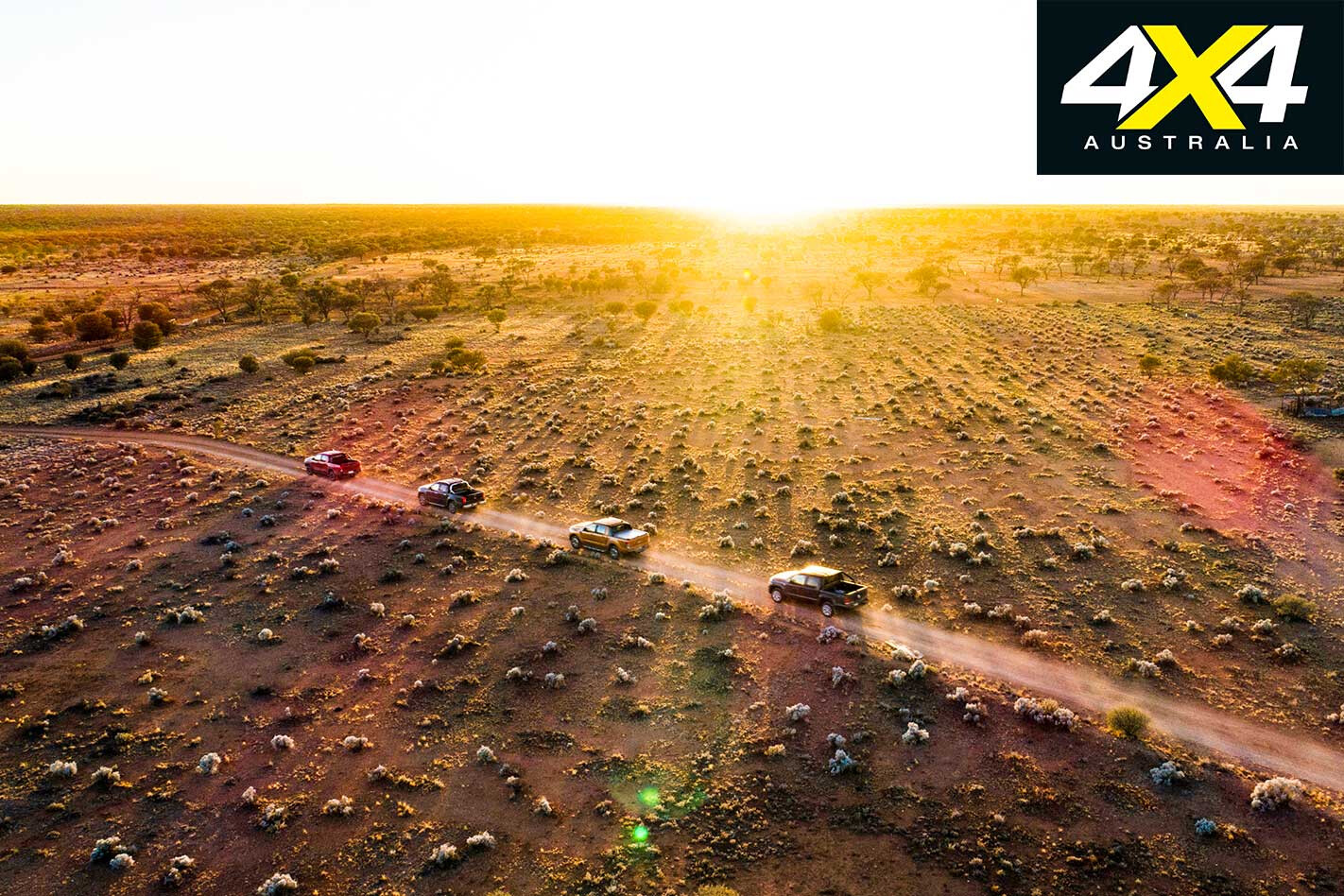
AFTER thousands of kilometres the four-car field was split into two halves – in one sits the Amarok and X-Class.
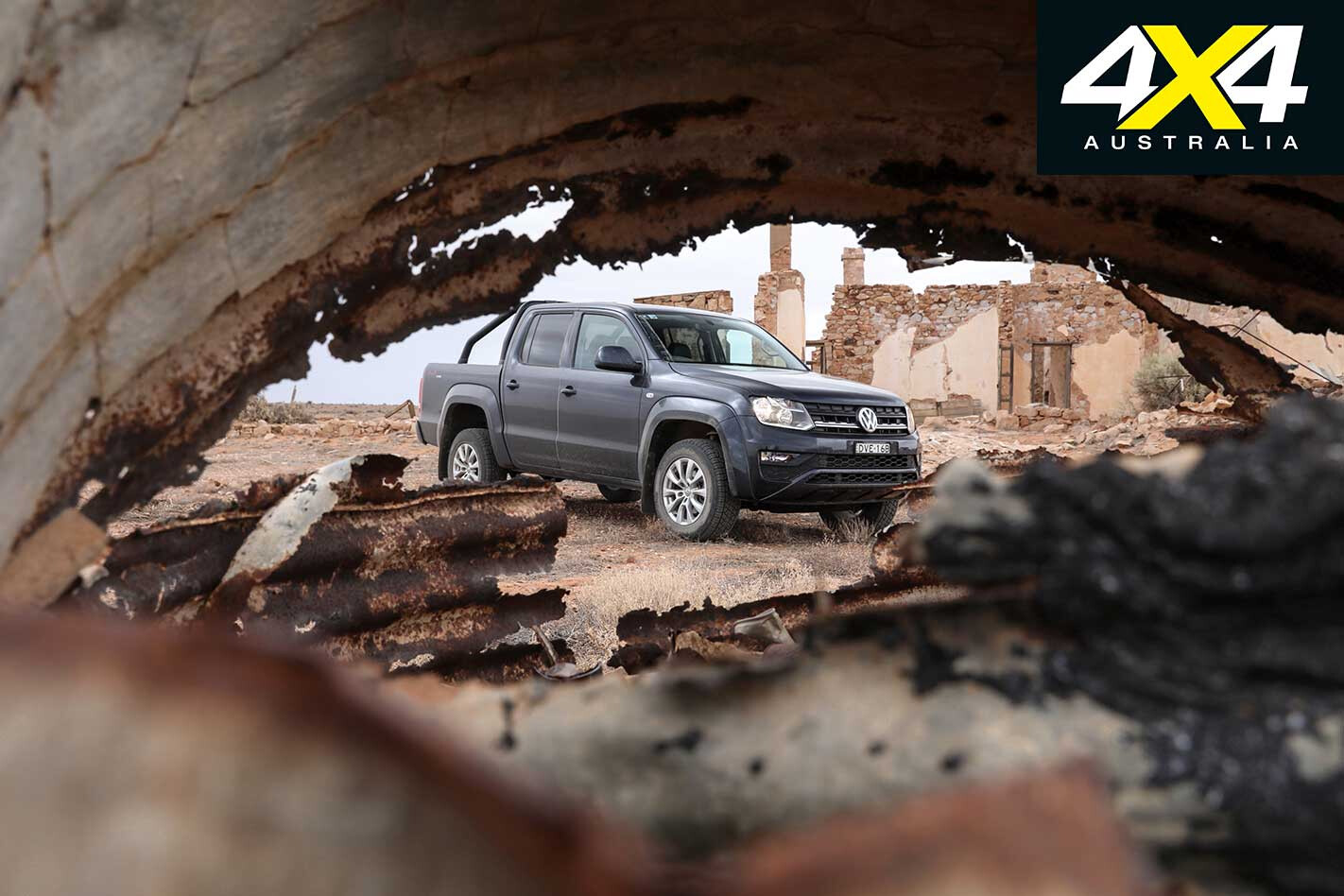
Sure, the Amarok brings value, space and refined manners to the equation, and the V6 recently took out our nine-ute test. Its combination of space and a brilliant blend of on- and off-road touring make it a terrific value pick, especially in four-cylinder form, but we can’t ignore the lack of rear airbags, which is a shame given the core mechanicals and competency are terrific, with a V6 on offer for those chasing more.
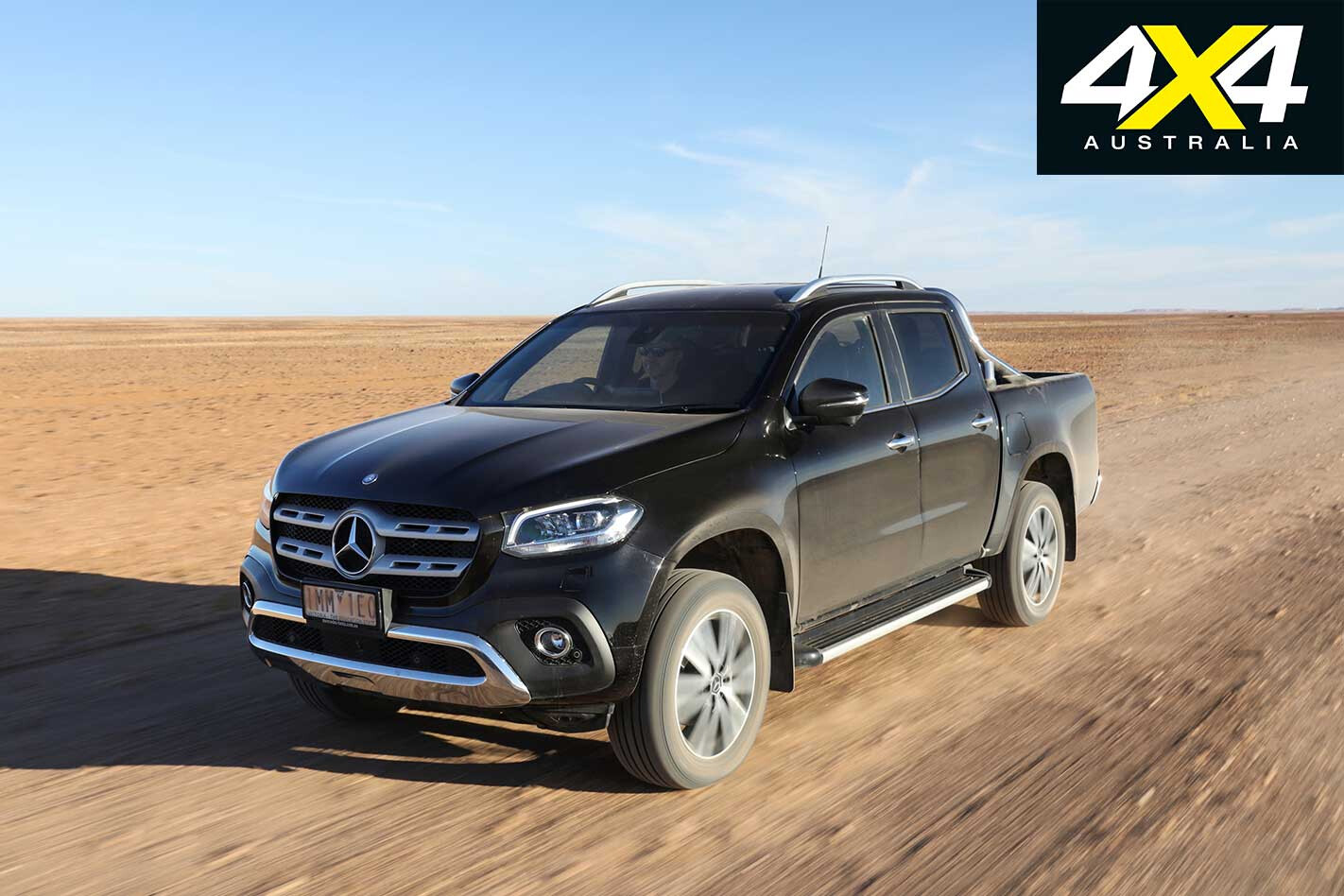
The X-Class brings genuine refinement to the mix and superb safety credentials. With light loads on board its all-coil suspension is also a handy setup, one that is impressively frugal, too, but the hefty price tag and sagging laden rear-end loses points for the X-Class. And if it were our X-Class, we would leave the 19s at home and be happy with smaller wheels and tyres.
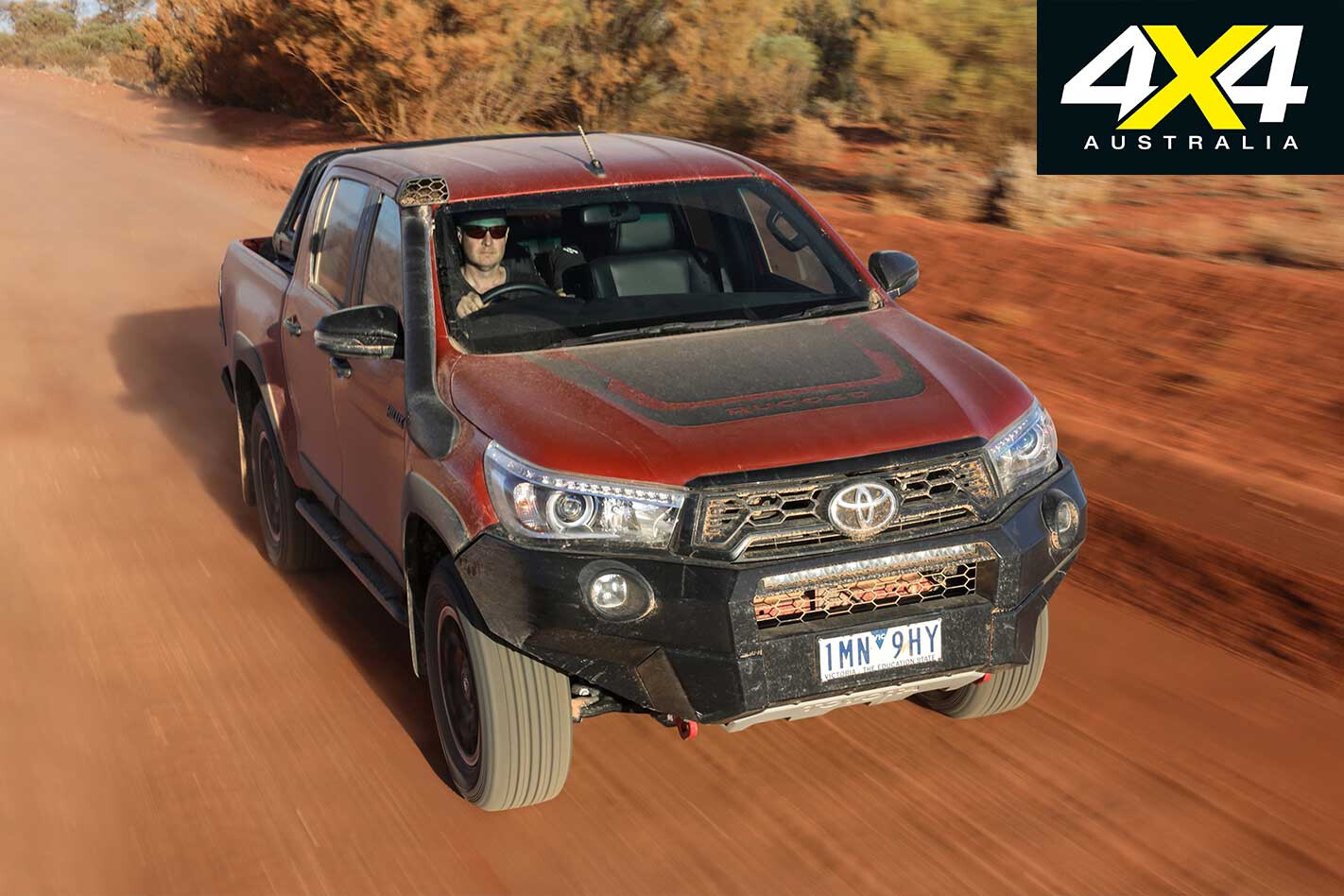
This leaves the Hilux and Ranger. There’s a lot to like about the Hilux Rugged X; its unique bumper and superb lighting making it a great machine off-road, teaming with beefed-up recovery points and underbody protection that add assurance out here. It’s a hugely capable ute and one that clearly copes with a pounding … most of the time.
Uncharacteristically, it was quality niggles that let the Hilux down. We’re so used to a Toyota going the distance unfazed, to the point where we expect it. The engine warning, in particular, was a concern, especially as it’s not the first time we’ve encountered it with this 2.8-litre.
While it seems random and intermittent, it had to be considered when crunching the numbers. Its fuel use and featherweight payload also let the Rugged X down, even if it copes admirably when loaded.
Enter the Ranger. There’s very little to argue against with Ford’s popular dual-cab. It’s great on-road and relaxed and competent off it. A spacious cabin with terrific rear seats also makes for a great family car.
Ultimately, the ageing engine lets it down with refinement, something that should be addressed come facelift time around September when the new 2.0-litre joins the Ranger fray. Even with the 3.2, though, you’re getting a hugely capable and well-balanced ute; one that stands proud and works as well in the outback as it does sauntering back into town.
| u00a0 | Ford Ranger Wildtrak | Mercedes-Benz X250d | Toyota Hilux Rugged X | VW Amarok Core Plus |
| Price | $61,790 (as tested $62,340) | $64,500 (as tested $73,300) | $63,690 (as tested $64,240) | $50,990 (as tested $54,510) |
| Engine | 3.2L 5-cyl turbo-diesel | 2.3L 4-cyl twin-turbo diesel | 2.8L 4-cyl turbo-diesel | 2.0L 4-cyl twin-turbo-diesel |
| Power | 147kW @ 3000rpm | 140kW @ 3750rpm | 130kW @ 3400rpm | 132kW @ 4000rpm |
| Torque | 470Nm @ 1750-2500rpm | 450Nm @ 1500-2500rpm | 450Nm @ 1600-2400rpm | 420Nm @ 1750rpm |
| Gearbox | 6-speed auto | 7-speed auto | 6-speed auto | 8-speed auto |
| 4×4 System | Part-time dual-range | Part-time dual-range | Part-time dual-range | Single-range full-time |
| Crawl Ratio | 42.3:1 | 44.3:1 | 36.1:1 | 17.4:1 |
| Tyre | 265/60 R18 | 255/55 R19 (optional) | 265/65 R17 | 245/65 R17 |
| Kerb Weight | 2250kg | 2161kg | 2252kg | 2052kg |
| GVM | 3200kg | 3250kg | 3000kg | 3040kg |
| Payload | 950kg | 1021kg | 748kg | 988kg |
| Towing Capacity | 3500kg | 3500kg | 3200kg | 3000kg |
| Fuel Capacity | 80 litres | 80 litres | 80 litres | 80 litres |
| ADR Fuel Claim | 8.9L/100km | 7.9L/100km | 7.9L/100km | 8.5L/100km |
| Test Fuel Usage | 12.2L/100km | 12.0L/100km | 12.6L/100km | 12.3L/100km |
| Touring Range | 605km | 616km | 585km | 600km |
SAFARI 4X4 Engineering is best known for its air-intake snorkels that improve the flow of clean, cool air to a 4×4’s engine and reduce the risk of water ingress when crossing creeks and rivers.
Over the years, Safari has also produced products to improve the breathing of the engine further downstream from the snorkel – turbocharger systems, intercoolers and exhausts have all been developed in-house at its Melbourne headquarters and continue to this day. However, times change and so do the products needed to improve and optimise the efficiency of an engine.
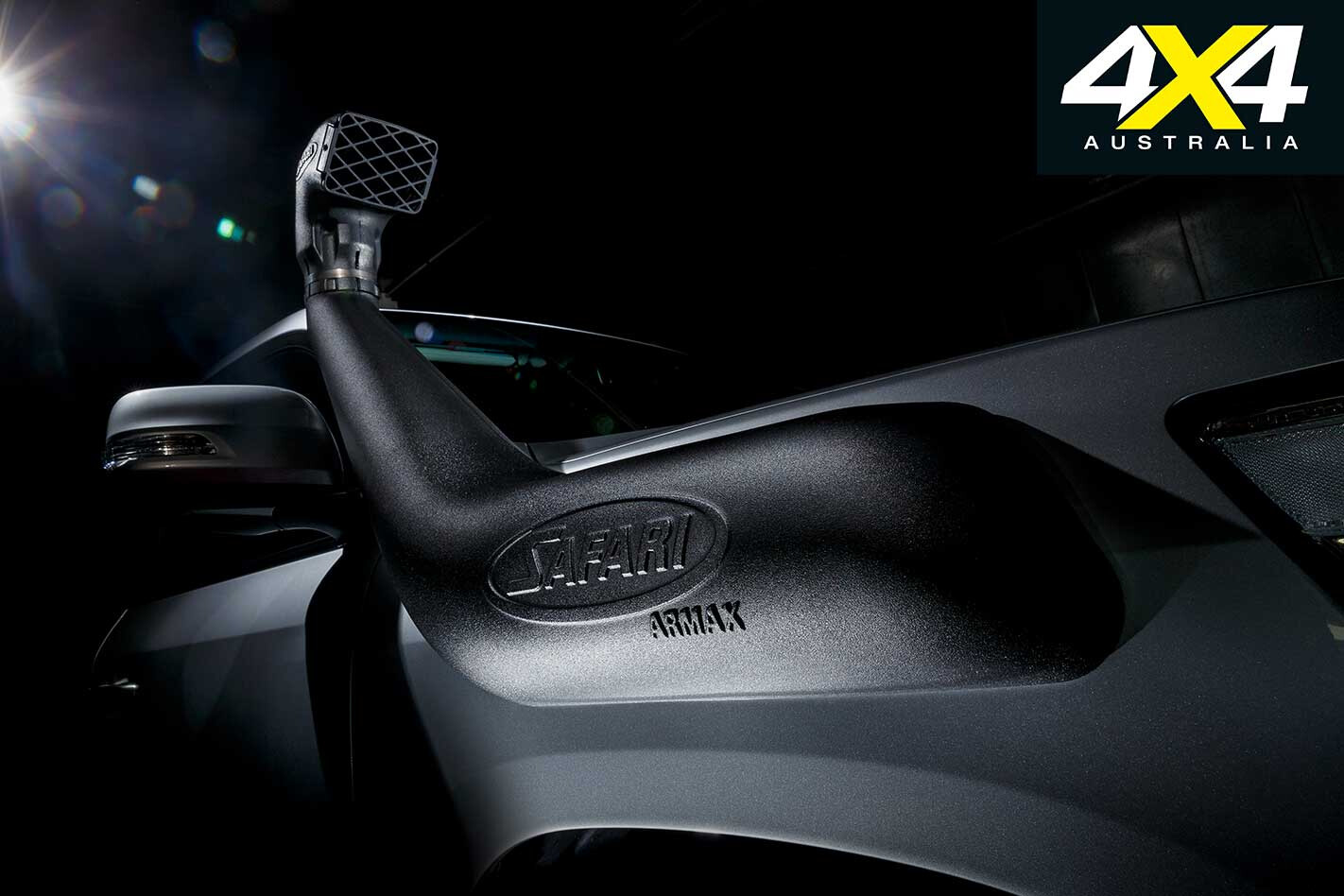
These days all new diesel engines are turbocharged, so there’s not the demand for aftermarket retrofit turbo kits there once was; and the engines are electronically controlled, so tuning them is done via a computer and not playing with injectors, pumps and turbo kits. A mechanic or qualified tuner can improve the efficiency of an engine using a laptop, without having to get his or her hands dirty.
We live in an age where engine tuning is done by recalibrating ECUs and fitting aftermarket ECUs or tuning ‘chips’ to improve performance and, as it has always done, Safari has entered this market cautiously to ensure it produces the best product for the consumer.
Enter the Safari ARMAX ECU, which is available to suit many popular modern diesel-powered vehicles, and with an increasing number of applications becoming available. So far, the ARMAX ECU is available for the Toyota Land Cruiser 200 Series, 70 Series, Prado, Hilux, and Fortuner models, with the new Ford Ranger, Everest and Mazda BT-50 applications due to be on sale by the time this is published.
The ARMAX ECU is not just another ‘tuning’ product. The years spent researching and developing the product has ensured it is the most sophisticated and safest ECU for your vehicle.
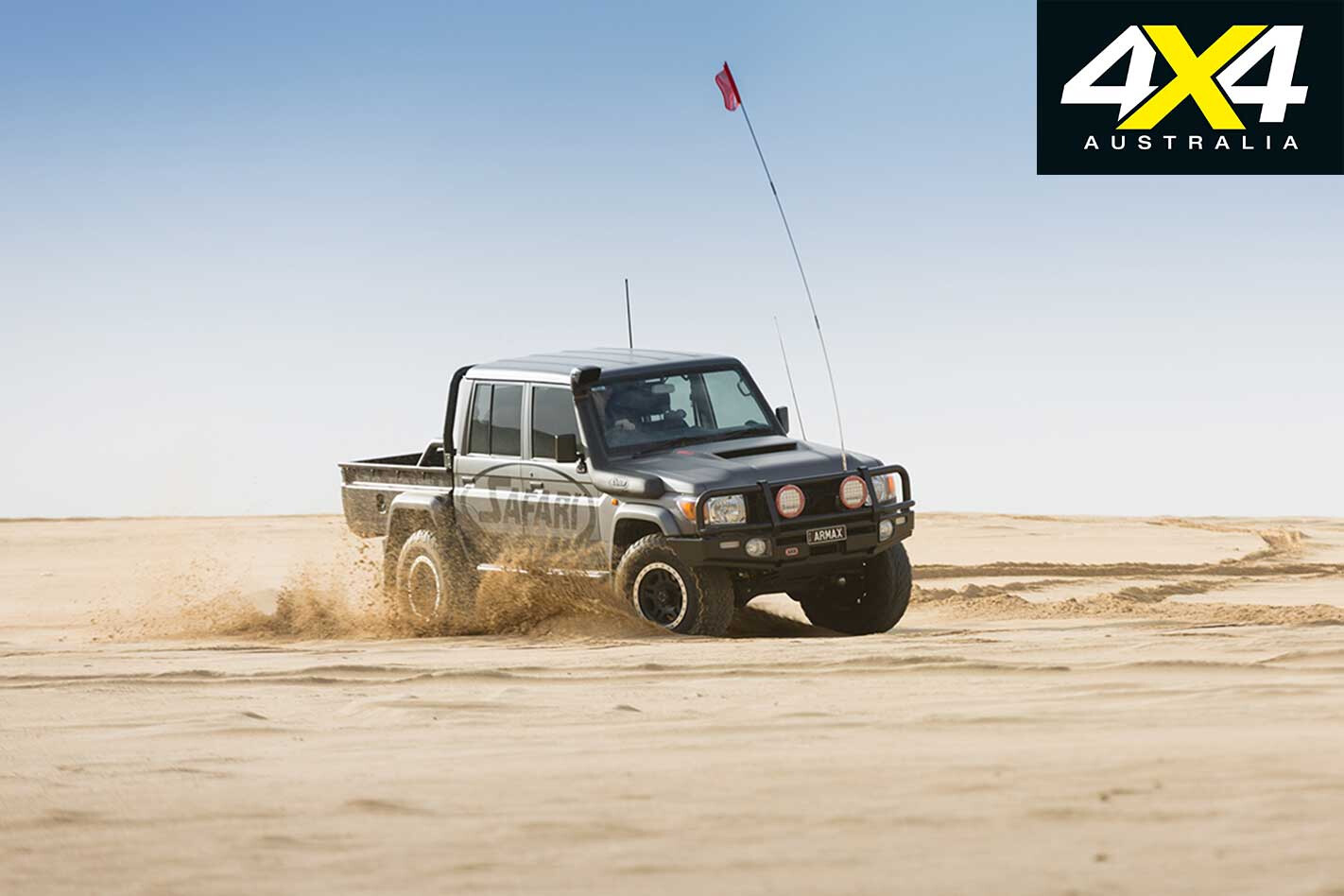
Safety is a key word here, as incorrectly playing with the tuning parameters on a modern diesel engine without protection systems can result in major, and very costly, engine damage. It’s not just a matter of dialling up the boost and wicking up the fuel anymore; there’s a lot more to it.
The ARMAX Performance ECU doesn’t replace a car’s original equipment (OE) ECU; instead, it works in conjunction with the OE unit to optimise efficiency and improve the performance, enhance the driving experience and fuel consumption of your vehicle, while still protecting it at all times.
NO COMPROMISE
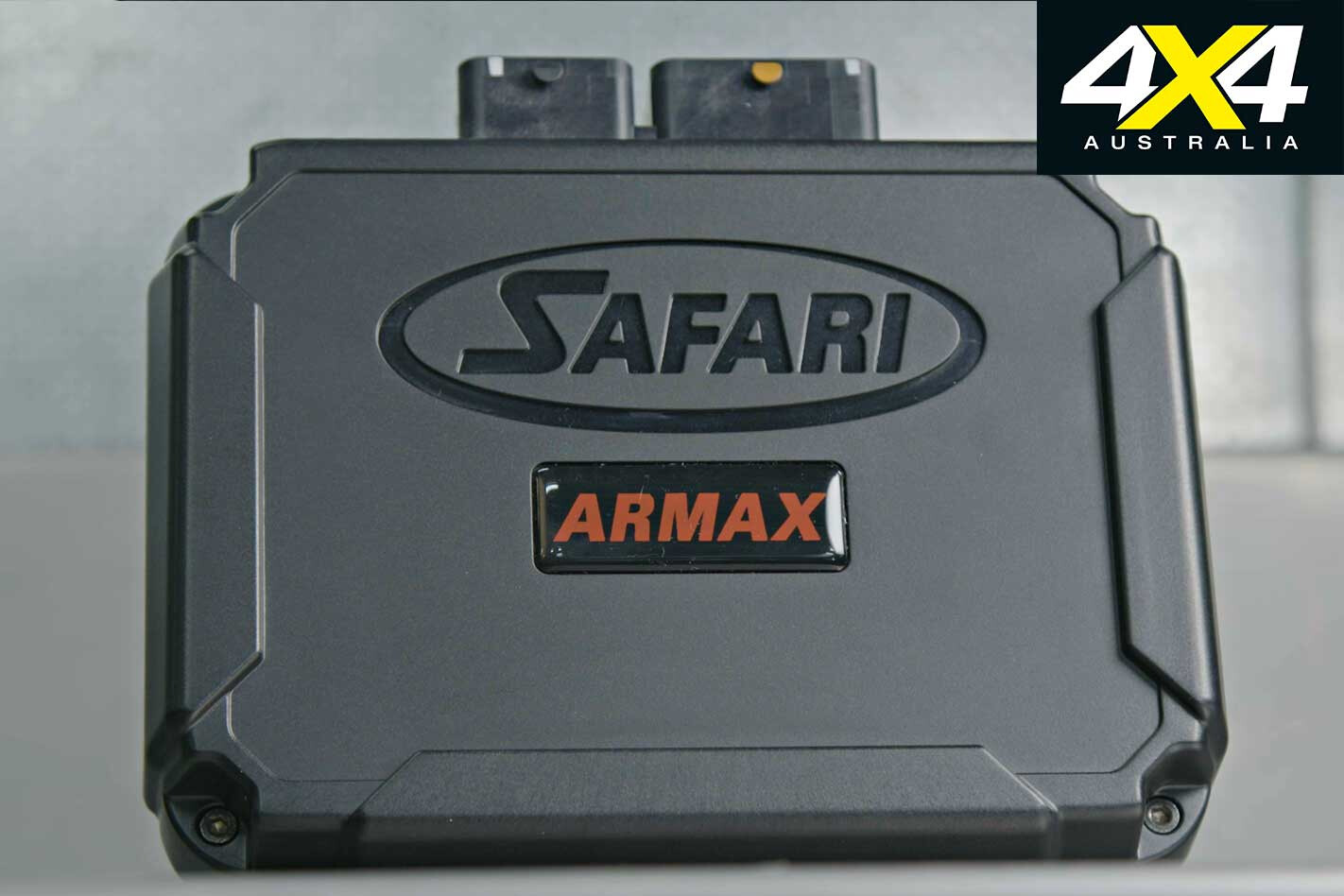
WE SPENT a day at Safari HQ with the company’s Engineering Director, Duane Evans, as he showed us the ARMAX ECU’s features. From the time you open the ECU’s reusable hard case and pick up the ECU, you can tell this is not like any other product.
It’s built on a billet aluminium base with a heavy duty reinforced plastic cover, so it’s solid and dependable, and like all the components of the ECU the main unit is IP68-rated for protection against dust and water ingress. In fact, the unit can be submerged in water and withstand massive temperature shifts without any influence to its operation.
The included wiring harness is similarly heavy duty and exceeds the quality of the OE wiring, and it uses all OE-style connectors and plugs that have gold-plated terminals. The harnesses and mounting brackets supplied are vehicle-specific, so they will neatly and conveniently plug straight in to your vehicle.
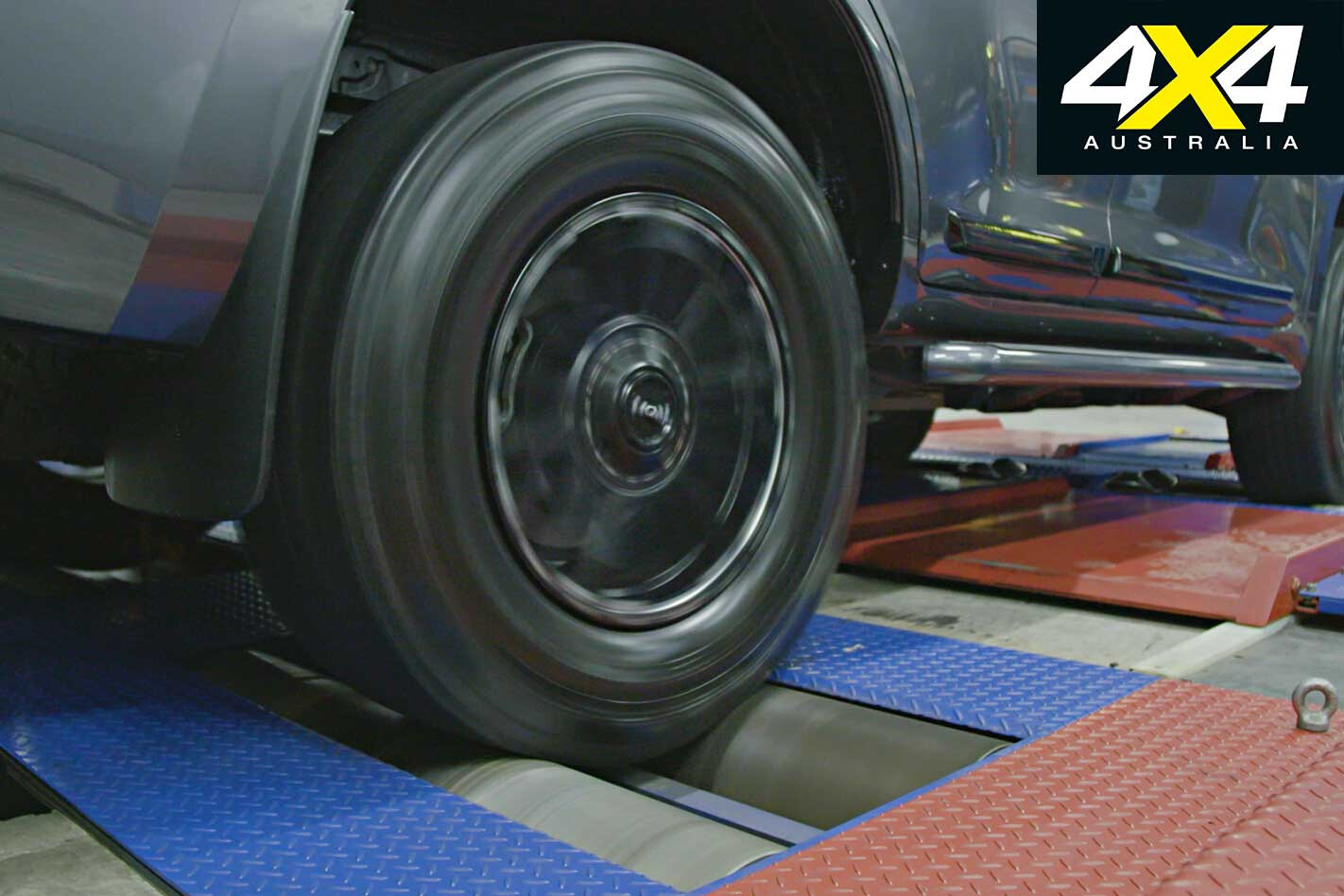
Duane showed us how the ARMAX ECU worked by hooking up the company’s Land Cruiser 200 to its in-house chassis dynamometer. Plugged into a laptop via the ECU’s ethernet port (USB was considered too slow) we were able to see what the unit was reading via its on-board telemetry displaying a variety of sensors including exhaust temperature, coolant temperature, throttle position, engine speed, injection information, manifold vacuum- and fuel pressure.
Winding the LC200 up on the dyno showed these readings changing under varying load conditions and then Duane showed how they changed in each of the ARMAX ECU’s five pre-set settings.
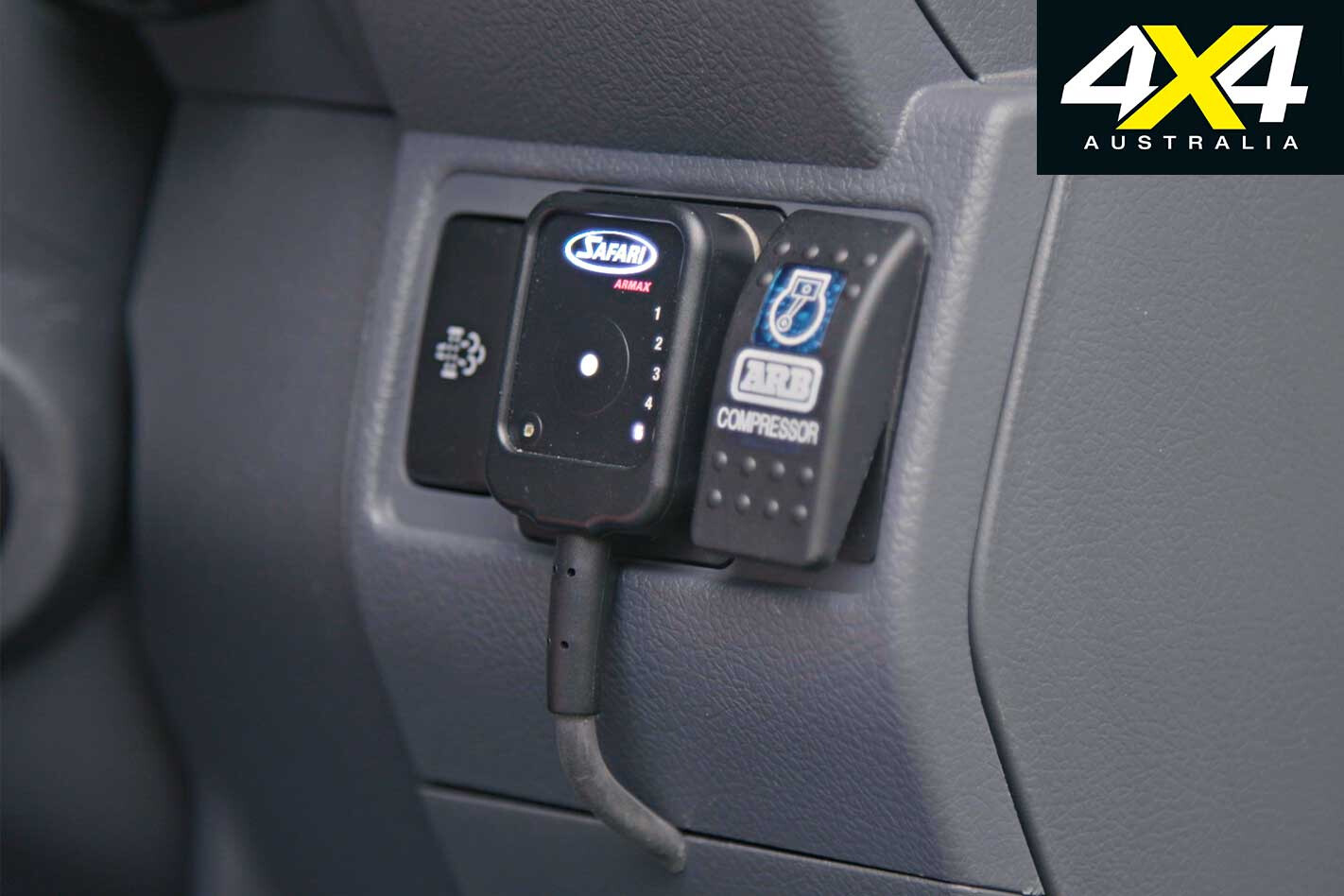
The five settings can be selected via an in-cabin button within easy reach of the driver. They are tailored to provide optimum settings for different driving conditions, be it off-road, towing, economy or performance.
The ARMAX ECU also operates as a throttle controller, optimising the actuation of the accelerator for each setting. Many owners use throttle controllers these days and many of them use them in addition to tuning chips or flash tunes.
With engine and throttle tuning integrated, the ARMAX ECU serves as an all-in-one unit to give you a perfect application of torque when driving off-road; or a more aggressive shove in the back when you need instant acceleration as soon as you mash the pedal.
Not only does the ARMAX ECU allows for the tuning of boost and fuel levels, but it can also tweak fuel timing and fuel pressure to give the best results. This also works toward sustaining injector life, as simply increasing the number of injector opening and closing cycles (as most aftermarket tunes do) can prematurely degrade the injectors; the ARMAX ECU simulates the same as the OE ECU to maintain fuel system life and ultimate durability.
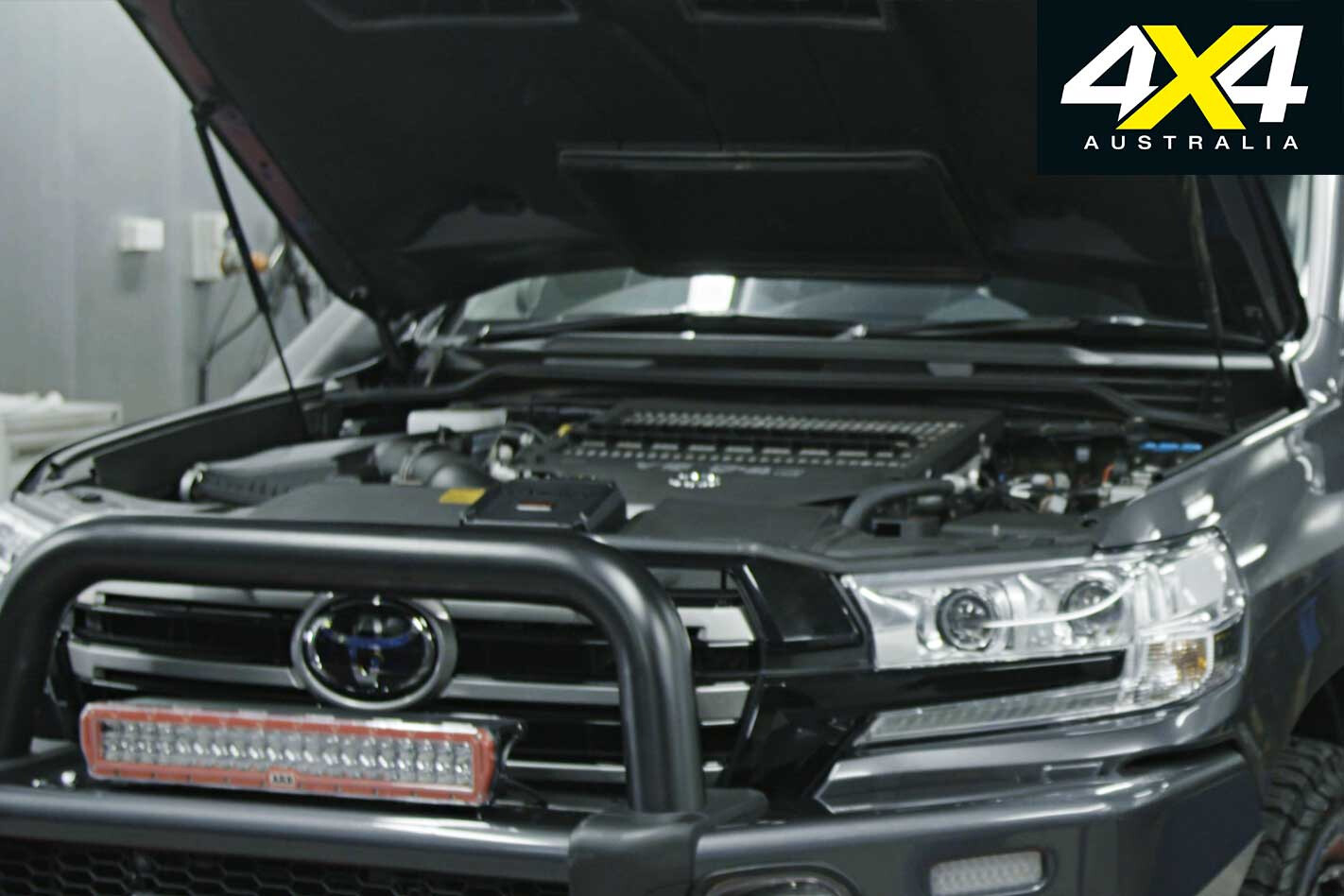
Maintaining durability and engine operation was paramount in the engineering of the ARMAX ECU. The unit closely monitors EGT to keep heat under control, and it will limit the amount of fuel and boost adjustment to keep everything within safe workable parameters for overall engine longevity.
We saw how it achieves this when the LC200 was loaded up on the dyno, and if anything should step outside safe operating parameters the ARMAX ECU will automatically adjust to look after the engine and drivetrain of the vehicle at all times.
In another clever failsafe, the unit can be remotely accessed by Safari headquarters anywhere in the world that has a phone/data signal. The engineers at Safari can access the data on the unit and diagnose any faults, in most cases which are not related to the ARMAX ECU system but are vehicle faults, such as faulty injectors or blocked fuel filters.
It could also pick up an injector that is on the way out, where an early diagnosis could prevent costly engine damage and repairs. Using this remote access function Safari can also update the tune of your engine to accommodate any changes to it such as the addition of aftermarket components.
Say, for example, you’re doing the big lap of Australia towing a caravan and you had the Safari ARMAX ECU fitted to the vehicle before you left home, but the car remained otherwise mechanically standard.
While travelling, a friendly campfire chat with someone convinces you to fit a bigger exhaust system or an ARMAX intake snorkel to your vehicle and you get it done on the other side of the country to where you had the ECU fitted. Safari can instantly send you an updated tune program via the ethernet port, to really make the most of the new modifications.
The programs and calibrations Safari provides are so precise that changing the exhaust without other updates can result in the ARMAX ECU system going into protection mode.
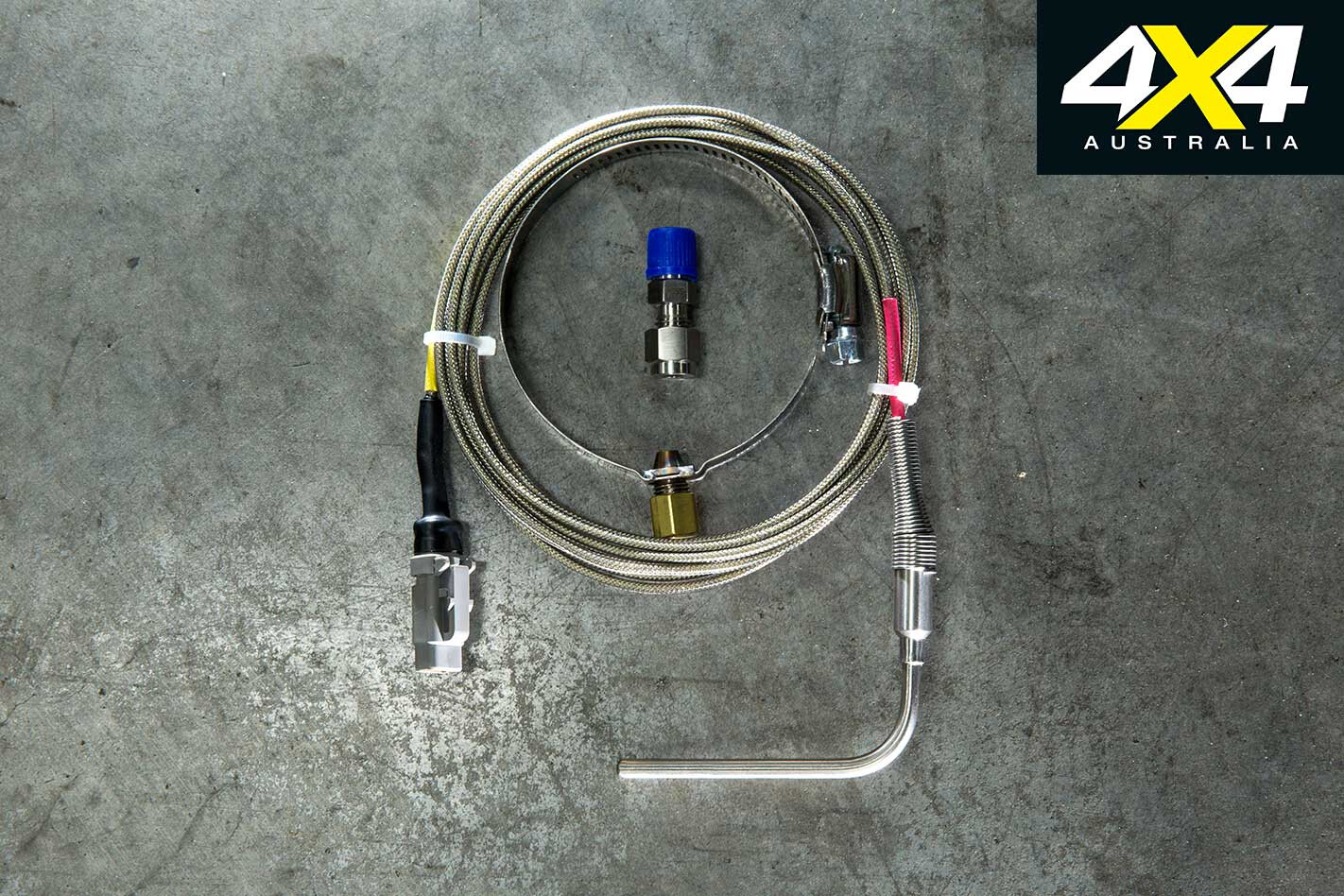
The pyrometer which measures the exhaust gas temperature needs to be precisely mounted within the exhaust system, and when you upsize the diameter of the exhaust tubing the positioning of the pyrometer also needs to be adjusted to get the best results. When you order an ARMAX ECU for your vehicle, Safari gives you a detailed questionnaire asking about any other mods to the vehicles, and it tunes the unit to suit.
It’s this precise level of detail that inspires Safari with the confidence to claim that the ARMAX ECU is the safest way to tune your modern diesel engine, and in-turn, that confidence in the product can be passed on to the consumer. It comes back to the no compromise attitude that underlies every aspect of the ARMAX ECU.
ON THE ROAD
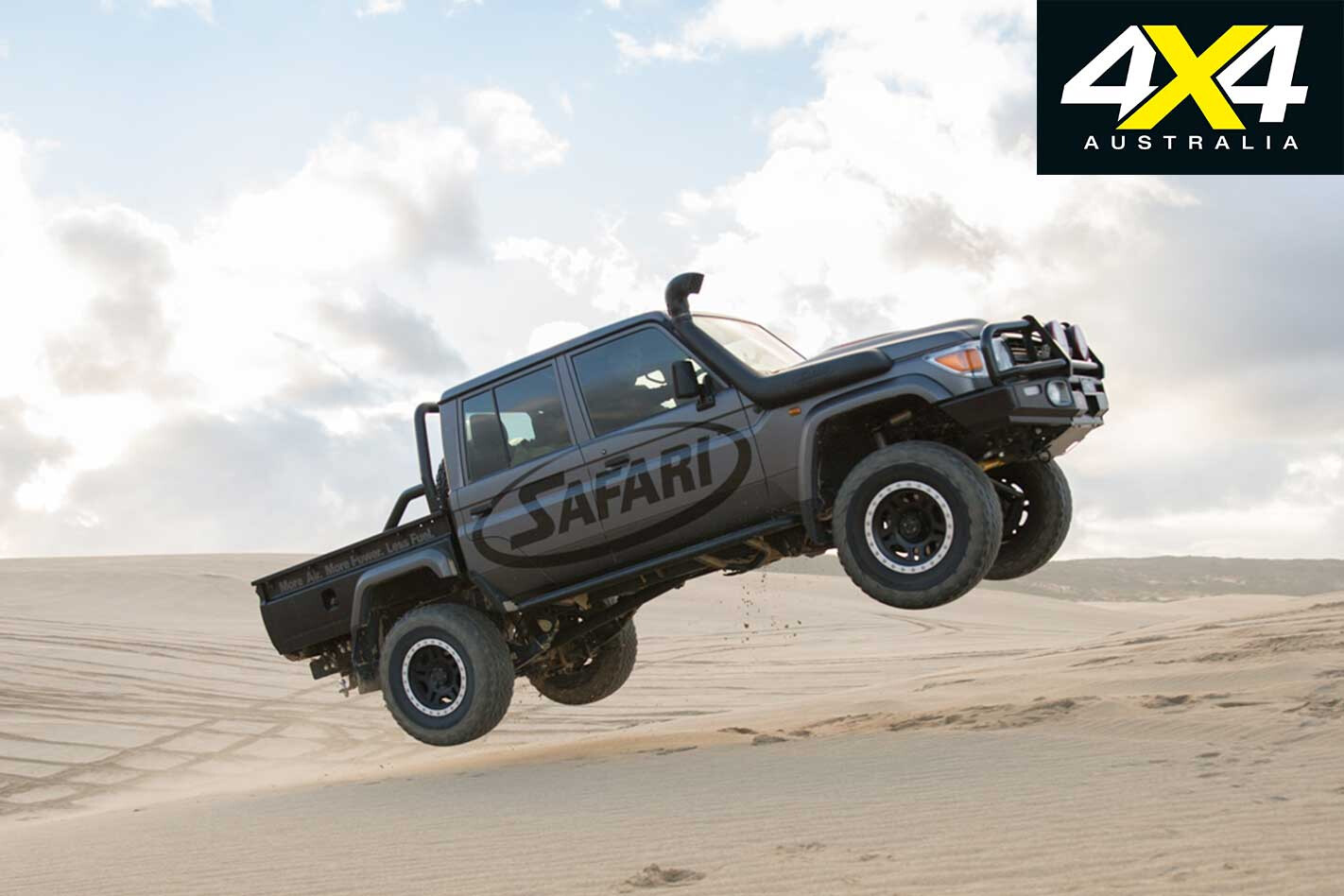
AFTER an enlightening time with Duane in the Safari workshop, we hit the road in the company’s LC79. We chose the 79 for the road test as, with its manual gearbox, it would be easier to feel the difference between each of the ARMAX ECU’s five settings while holding the car in a single gear. The 79 is also equipped with an ARMAX intake snorkel and a larger exhaust system.
Leaving the shop with the ARMAX ECU in its Comfort setting, it was instantly obvious that this was considerably more responsive than a regular VDJ Cruiser; but we wanted more, so with the engine and driveline up to temp we switched to Sport mode. Wow. The response is instantaneous and had us quickly shifting gears as it pulled up in to the hills. This thing rocks.
Switching between the different settings highlighted the throttle’s doughier feel when in Traction Assist mode and the reduced performance in the Standard setting. It’s not really reduced, but it’s vastly different to the rocket-ship performance in the Sport and Comfort modes.
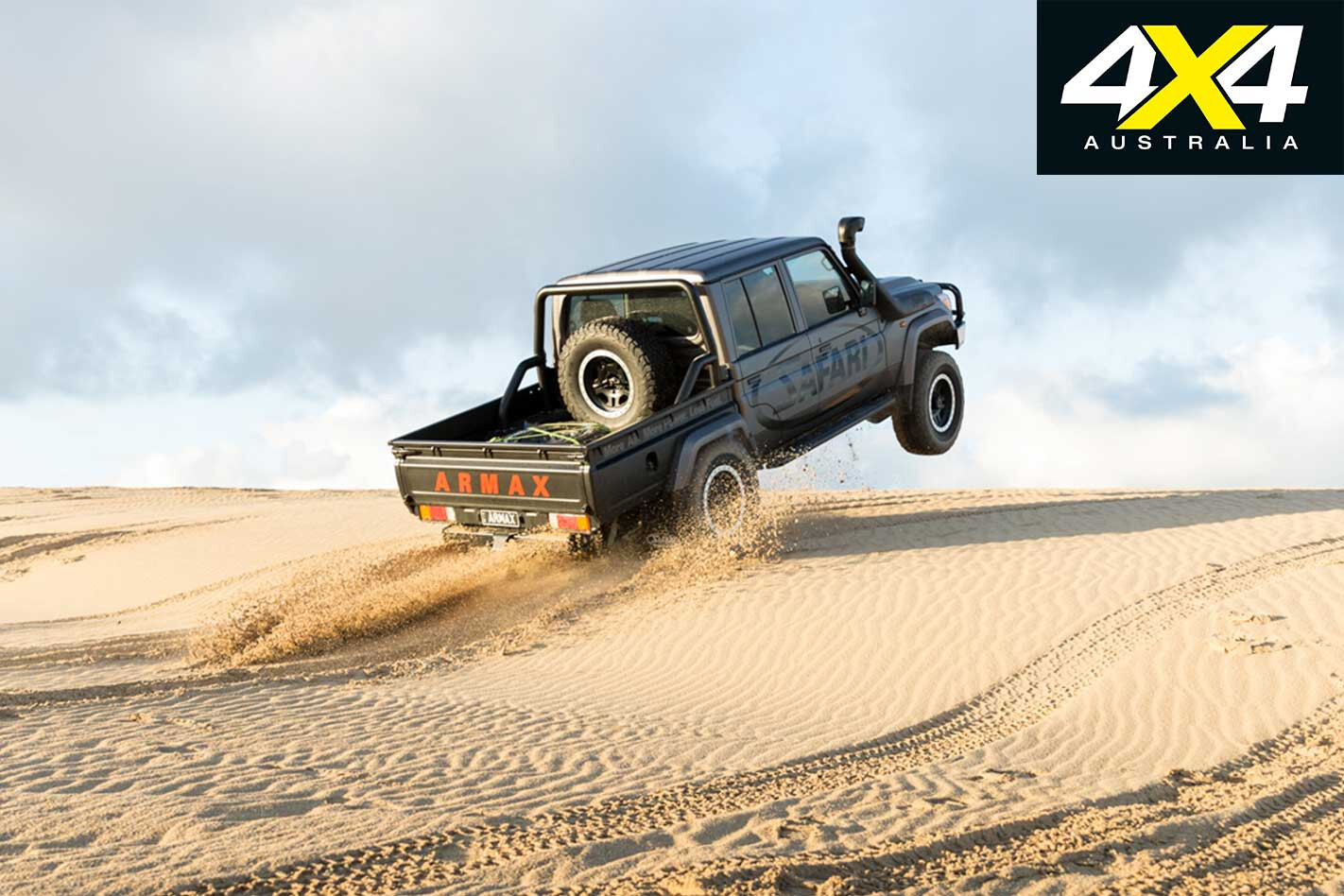
On mountain-road climbs the better-performing Sport and Comfort settings were worth a gear over the Standard OE settings when pulling out of corners. That is, you needed second gear to pull out of them in the Standard setting, while in the Sport mode it comfortably pulled hard out of the bends and up the hills in third. It’s always great to have that extra gear when you’re pulling a heavy trailer or load, and it’s better for fuel economy.
To say we were impressed with the ARMAX ECU would be an understatement. The difference in performance and driveability was mind-blowing, and knowing it could be had with the safety and security that Safari has built into the product is reassuring. Safari backs the product with a three-year/unlimited kilometre warranty, as well as a driveline warranty on the vehicle.
The ARMAX ECU is also interchangeable, so provided the unit is suitable for your model of car, it can be unplugged and swapped into your new or replacement vehicle. That’s the only reason we can think of to warrant removing it.
THE FIVE SETTINGS:
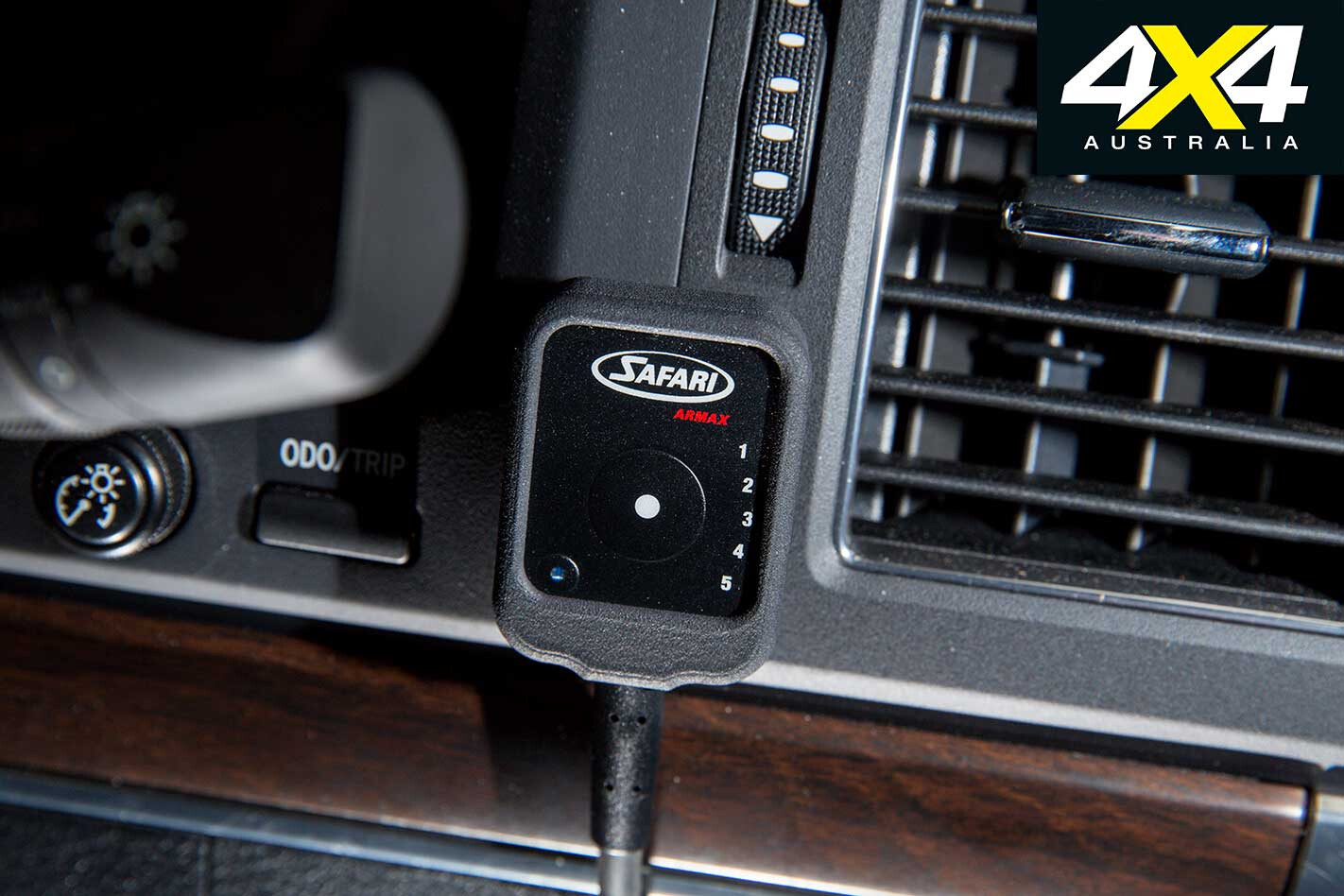
COMFORT Delivers smooth and progressive power and torque for everyday use.
SPORT Enhanced throttle response, with strong power and torque delivery.
TOWING Puts an emphasis on bottom-end torque, with reduced top-end power to protect your vehicle while towing.
TRACTION ASSIST Perfect for tricky off-road driving, it delivers slow and smooth throttle response whilst maintaining full power and torque.
STANDARD Restores the vehicle to OE power and torque settings.
RATED Available from: www.safari4x4.com.au RRP: POA
FOLLOWING our report last month, Toyota has officially announced the no-cost flat-tailgate option for the Prado range.
The new no-cost option allows customers to specify their GXL automatic, VX and Sahara variants to come with the spare wheel and tyre mounted beneath the rear floor, rather than on the tailgate.
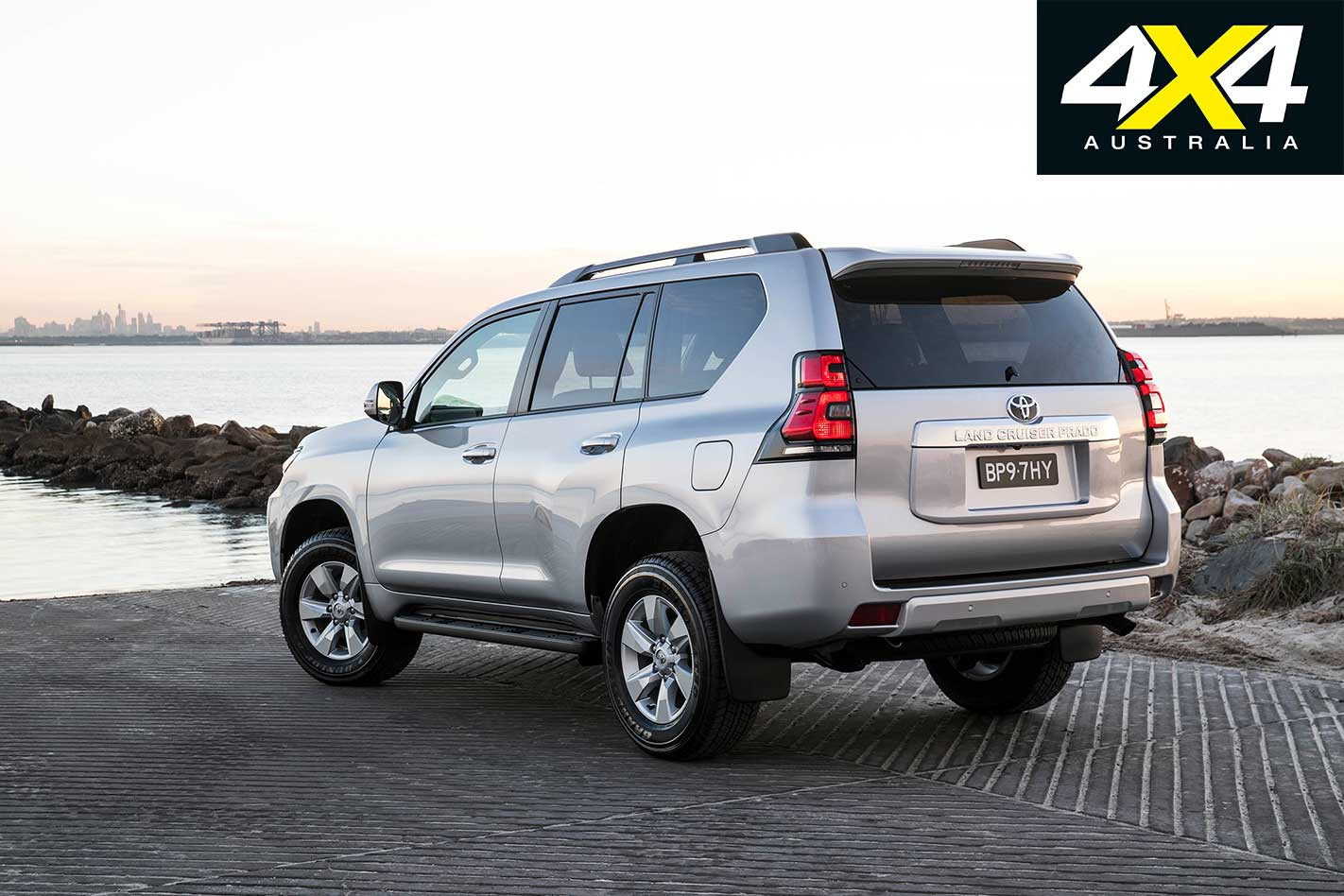
This option will give users a lighter tailgate that Toyota says is easier to open, along with a useful lifting glass hatch for quick access into the luggage compartment. However, the relocation of the spare tyre will come at the expense of the Prado’s standard 63-litre secondary sub-tank, reducing its total fuel capacity from 150 litres to 87 litres.
Buoyed by the success of Altitude special-edition variants that came specified with the flat-tailgate configuration in 2014, 2015 and 2017, the flat-tailgate option is generally aimed at urban users who won’t need the extra range offered from the Prado’s secondary sub-tank.
“The success of the special-edition models confirmed there was healthy demand for the relocated spare, particularly among buyers who don’t necessarily require the extended range offered by the extra fuel tank,” Toyota’s vice president of sales and marketing, Sean Hanley, said.
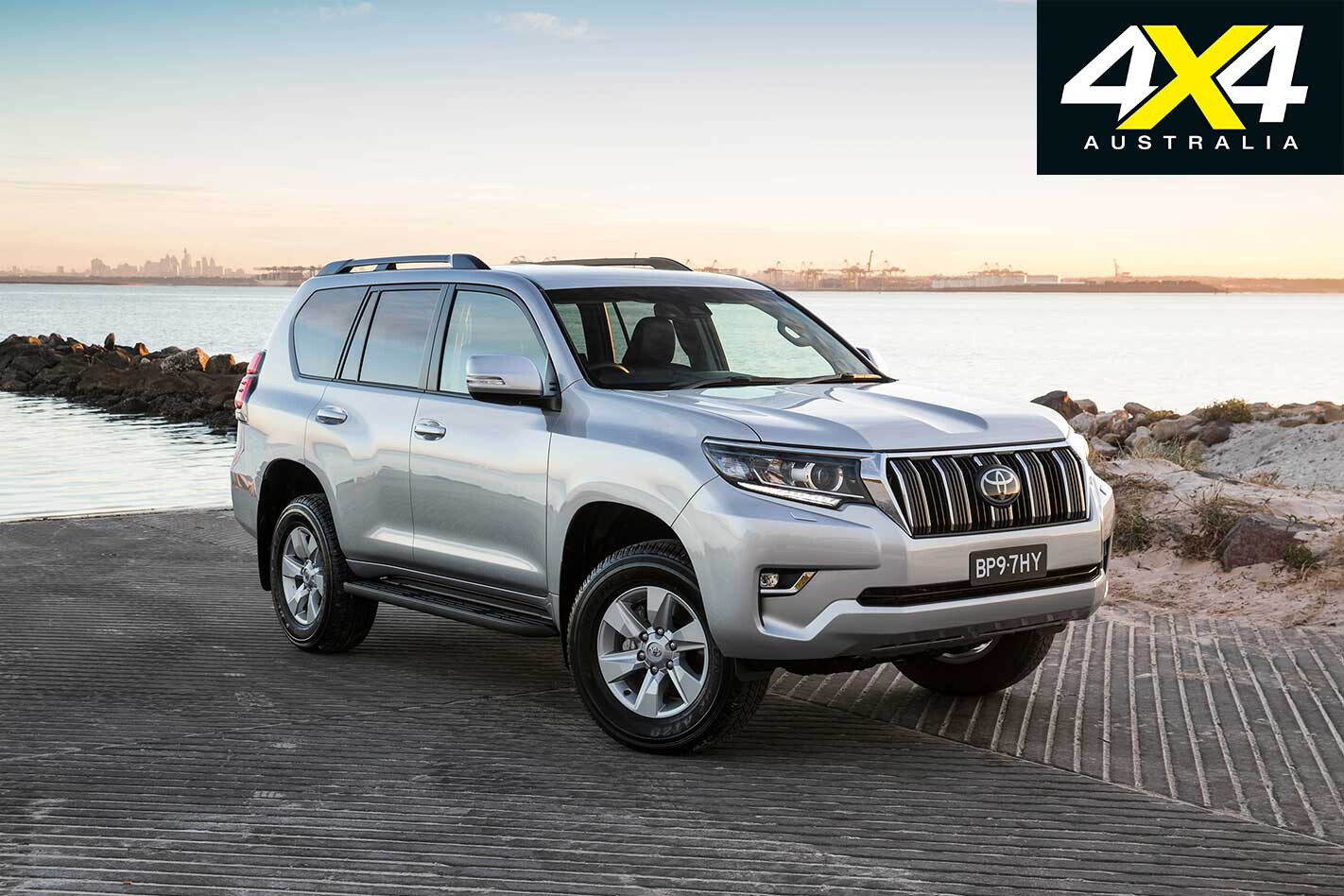
“Prado buyers, particularly those who drive mainly around town, will appreciate being able to open the tailgate wider in cramped situations such as when parked close to other vehicles or using a towing hitch,” he added.
In addition to the flat-tailgate option, the Prado range will now come fitted with a diesel particulate filter (DPF) “forced burn-off” switch for owners to clear the engine’s DPF on demand.
Toyota also added a $3500 option for the GXL automatic, which upgrades its interior with the fitment of the VX and Sahara’s leather-accented power-operated and ventilated front seats and seat heating for both first and second row.
LIBERTY WALK, a tuning company specialising in modifying performance cars (think: Lamborghinis and Nissan GT-Rs) with crazy tunes, body kits and aero kits, has ventured into new territory.
The Japanese tuner has turned its spanners toward to the venerable Jimny, with the launch of its first SUV in its history – as claimed by the company on its Facebook page. The company, with its headquarters in Nagoya, Japan, has been churning out insane supercar kits since the early 90s, and it now has distributors all around the world (check out Vogue Industries in Australia).

Information is scarce (pics only), but the post to Facebook of the Jimny – called OEP 222 or G-mini – dressed in a G Class-inspired body kit has tails wagging.
Changes to the front bumper and bonnet are most obvious at first glance, with the front-end modifications including a carbon hood with an aggressive bonnet bulge. Other changes include wheel-arch flares hiding bigger wheels, LB insignia and on-road tyres.
Liberty Walk also released the strikingly similar LB-Works Mercedes-Benz G-Class, which gets the same front-end treatment as the G-mini.
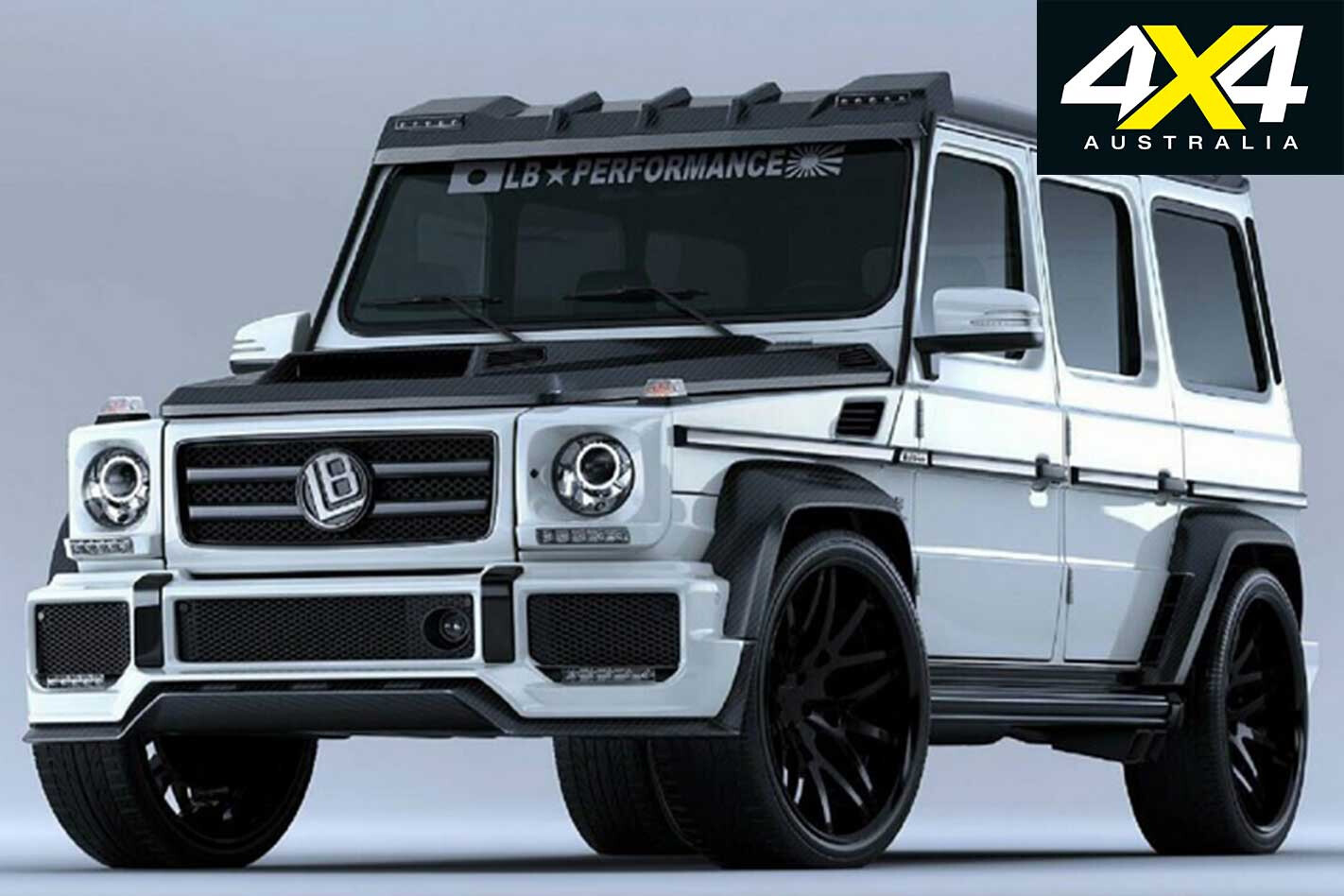
According to the Facebook post, Liberty Walk states the G-mini will be released this year and that pre-orders are currently being taken.
The fourth-gen Suzuki Jimny is due to land locally by year’s end and be on sale in January, 2019. It will retain a ladder-frame chassis, live axles (front and rear) and dual-range transmission. A 1.5-litre petrol four-cylinder engine will be backed by either a five-speed manual or four-speed auto, with part-time 4×4. A sub $30K price tag is expected.
WE DON’T often reflect on how much we outlay on 4×4 aftermarket accessories, but a recent review of insurance coverage for the Hilux showed us how much coin we’d spent.
Gravitating towards an insurance provider that promised coverage for both the rig and the things we’ve added to it over the past 10 years, we developed an inventory of exactly how much we’d spent on the bits we’ve bolted, sprayed, clicked and screwed onto it. The sum we ended up with was close to $25,000, and while this expenditure had been spread over 10 years it was still an eye-watering amount.
It made us think, how is a person starting out in the 4×4 world supposed to come up with that sort of coin on top of the original vehicle cost? The answer: slowly but surely. But is there another way? Enter the world of wrecking.
Not all write-offs are “complete” write-offs. After all, flood damage doesn’t affect bullbars, rear bars, side-steps or roof racks; rear-enders won’t damage a set of spotties or LED light bars; and an engine-bay fire won’t affect rear cameras, car seat covers or rear tray tubs and cargo racks.
On our last visit to our favourite wrecking yards we found fully serviceable snorkels displayed for between $110-$375, depending on make and model, which is less than half the price for these pieces of moulded plastic tubing.
We also found three models of Warn winches available for $600 or less, which is clearly 50 per cent and better than the RRP. Get a bit of kit like this serviced by someone who knows what they’re doing (like Hume Offroad, who previously operated as Hume Winches) and you’d be well on your way.
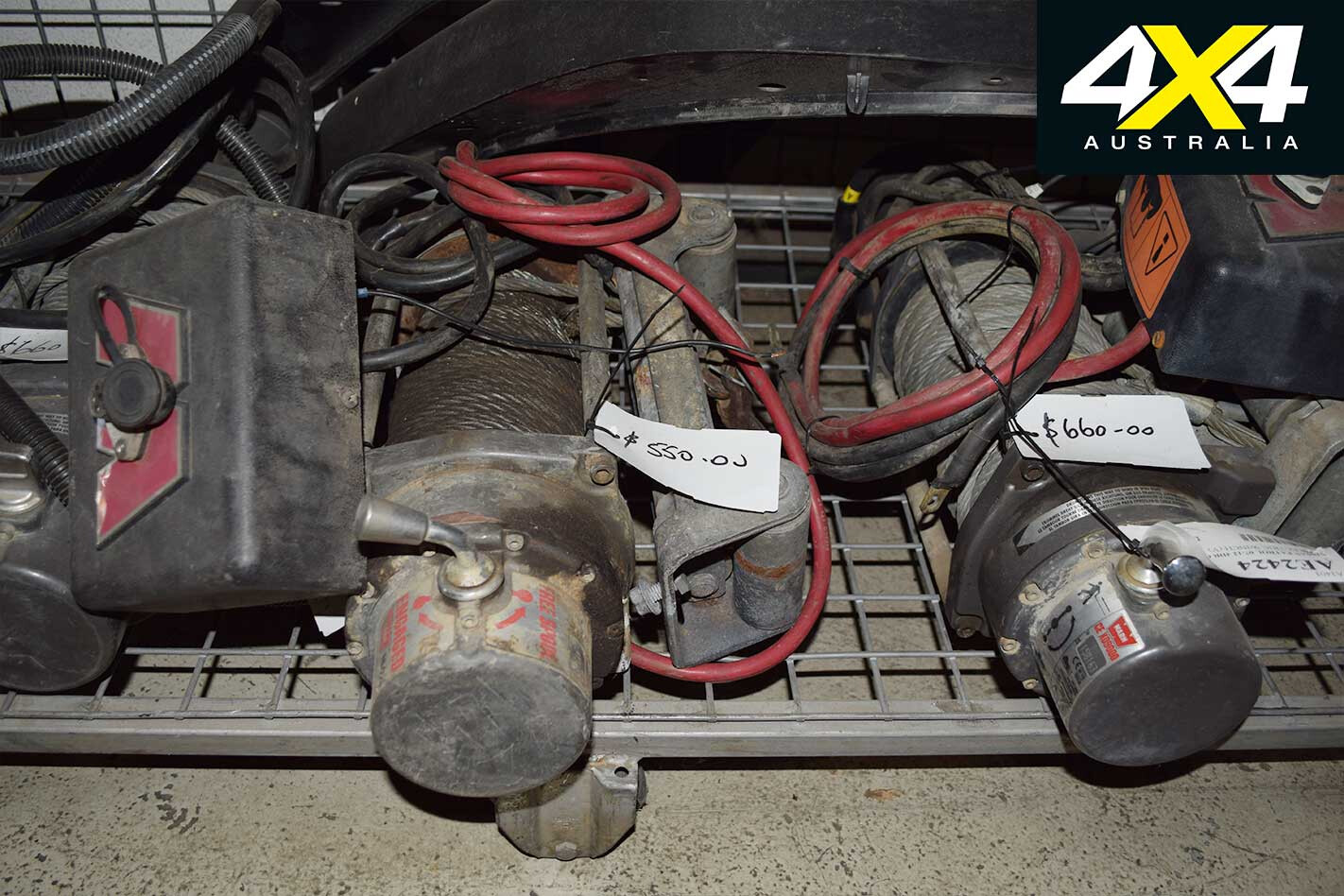
The availability of serviceable second-hand parts at consistently reduced rates is good news for any 4x4er, not just those doing it tough. After all, it can make a lot of sense to save a few hundred dollars by sourcing second-hand spares for the next trip. And, when we smash a headlight protector during a long weekender, is it really necessary to pay RRP for a replacement pair? Or perhaps the issue is that the part we need is no longer available via retail outlets.
Plus, in an era characterised by rampant consumerism, picking through a wrecking yard is a great way to bolster our commitment to recycling.
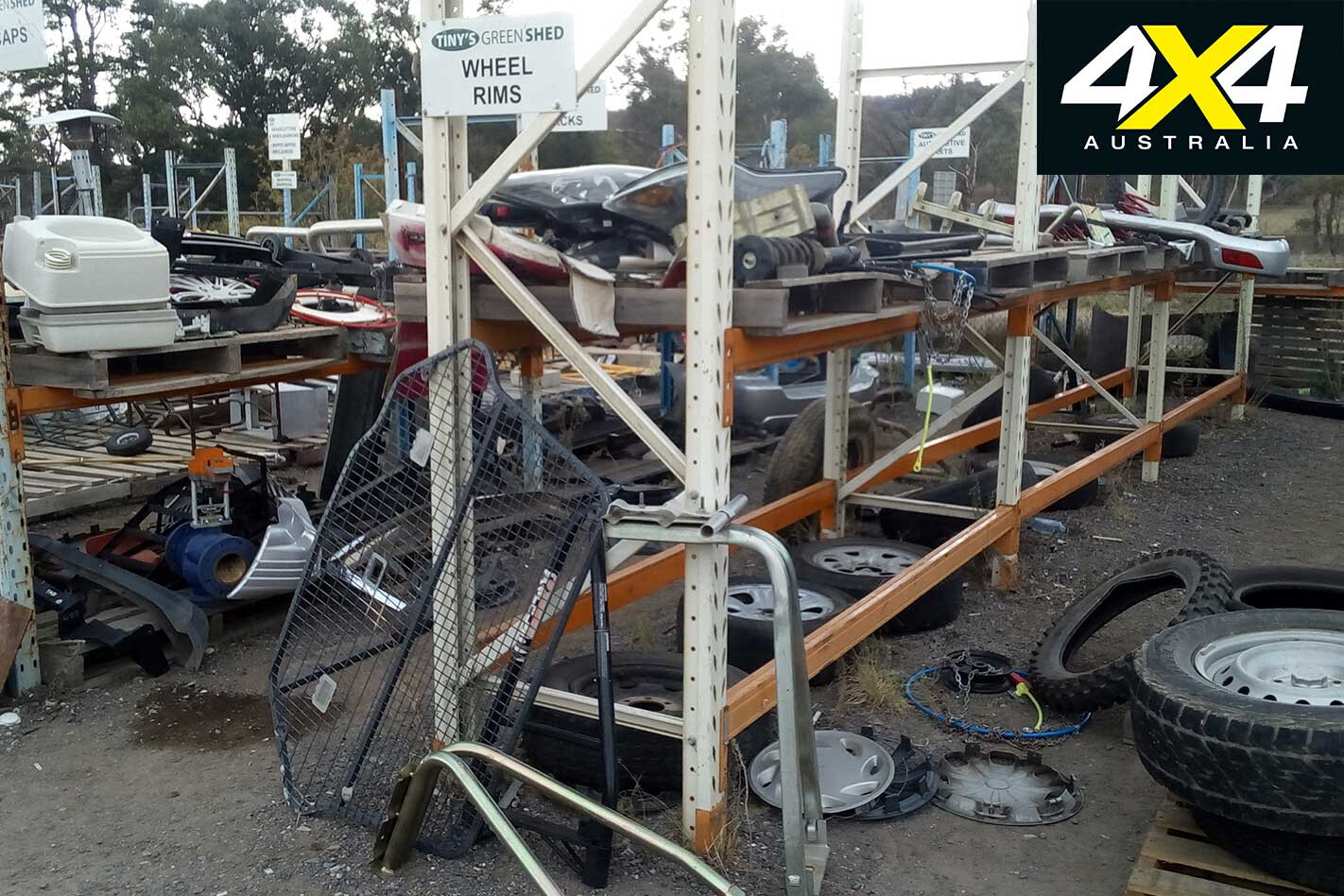
There are specialist 4×4 wreckers all over the country, including Glenn’s 4×4 Wreckers in Canberra and All Model 4WD Spares in Revesby, which is Sydney’s largest 4WD wrecking yard. In Victoria, Smart Parts claim the title of Australia’s leading 4WD and light commercial parts dismantler. And there’s Early Land Cruiser Spares in South Australia if great if you have an old Tojo.
Some outlets have parts neatly stacked on shelves and ready for inspection, while others invite you to turn up with a socket set and go treasure hunting. Some wreckers have an inventory of parts available online; some provide a request form; and others have Facebook pages listing the vehicles that are about to be stripped or reworked.
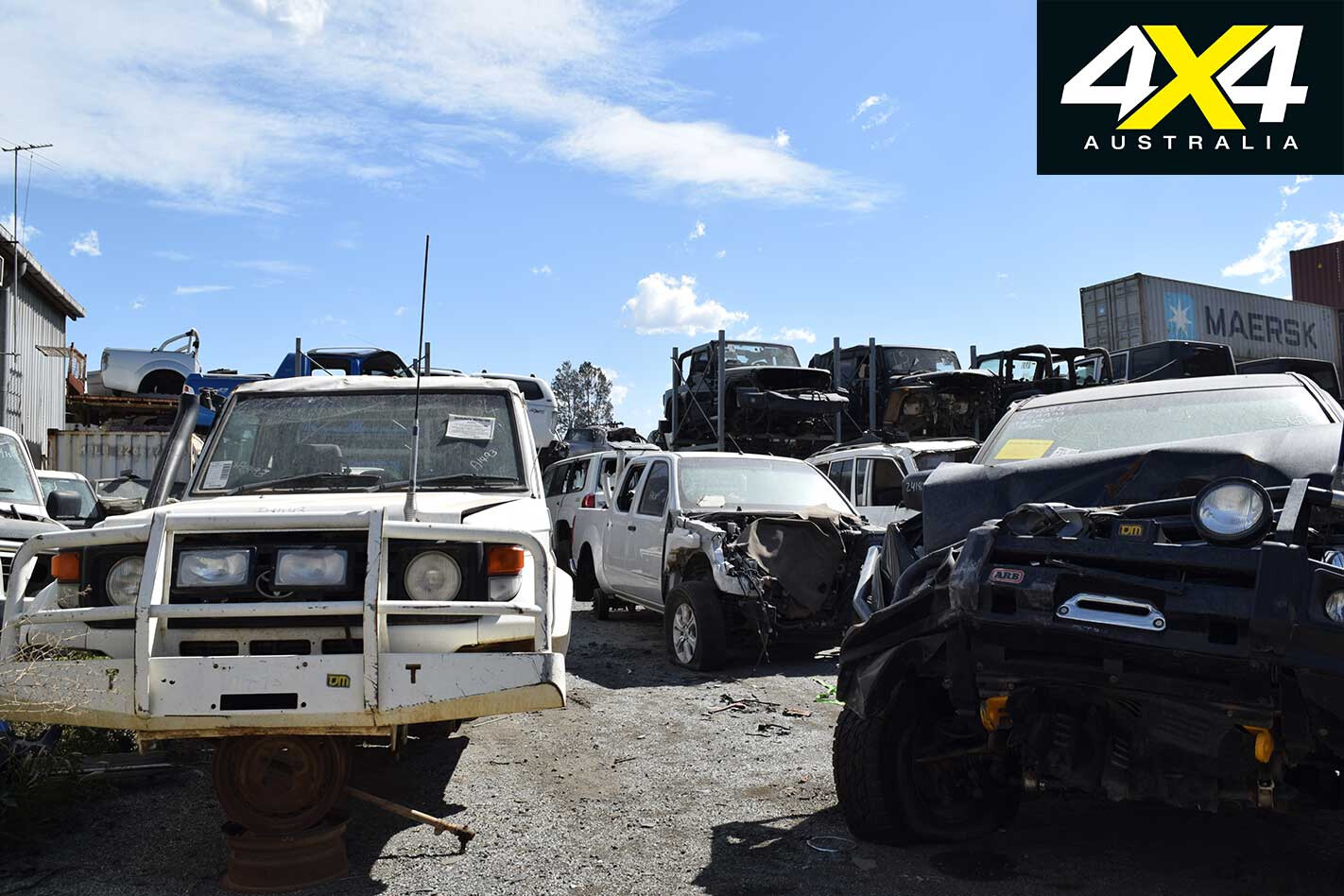
So the next time you get the itch for an auto accessory, perhaps you should let your fingers do the walking and call a couple of local wreckers to see if they can help sort you out.
Start making a habit of this, and you could save yourself a pretty penny.
First-Timer, Edwin Tang
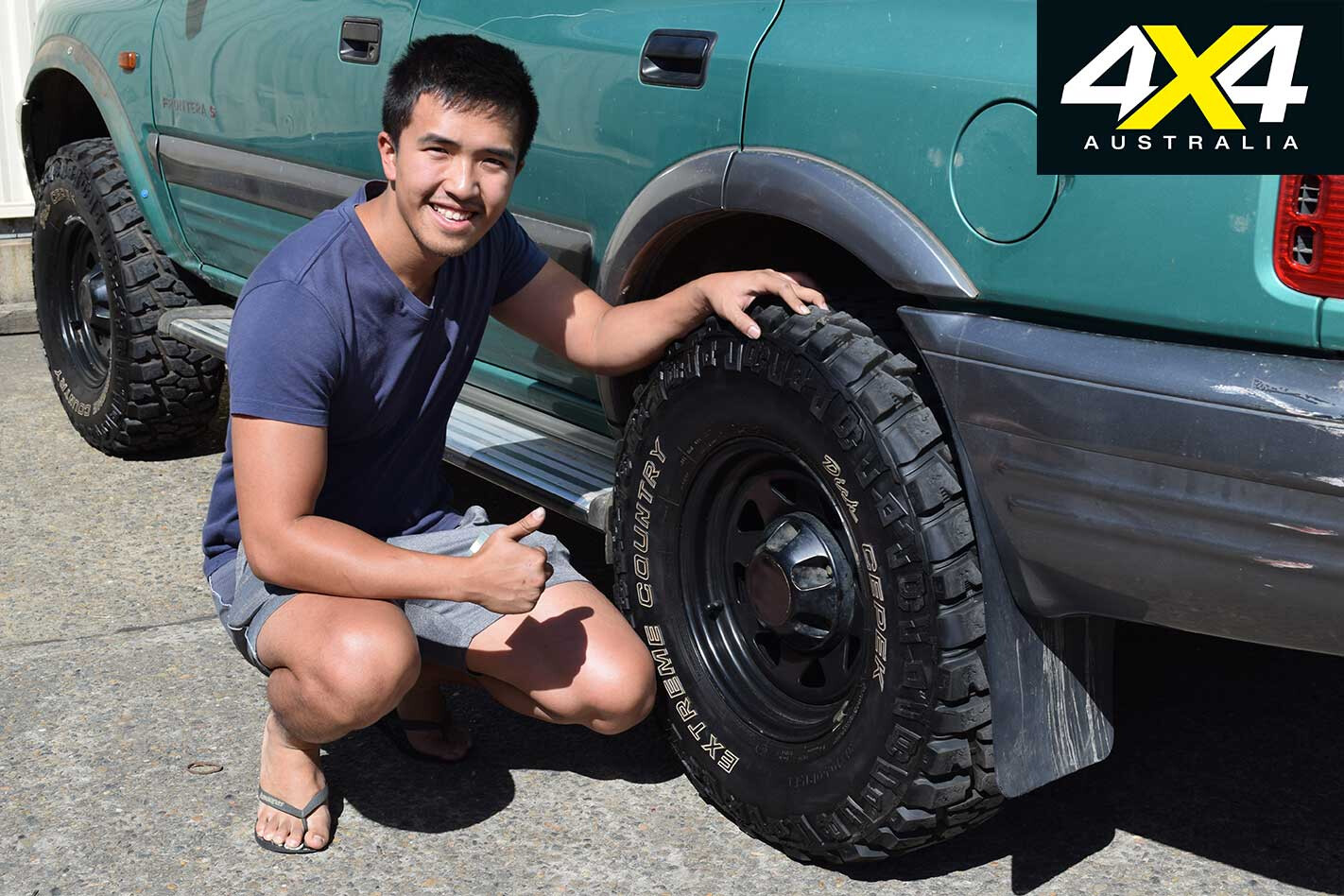
ON a trip to a wrecking yard we met 24-year-old Edwin Tang, who was loading an ARB bullbar into the back of a 2000 V6-powered Holden Frontera. Edwin and his partner had decided a 4×4 was required to support their habits, so they created a wish list to keep them on budget.
The rig had to be as cheap as possible; have reasonable mileage; have strong aftermarket support; reliable; only have issues they could fix or were confident in learning how to fix; a manual; and dual range. The Holden Frontera met their criteria.
It was less than $5000, had less than 120,000km on the clock, had 4WD and dual range; and it had a manual gearbox. They made an offer of $2000 that was accepted.
With the relatively low mileage and no glaring mechanical faults, the Frontera definitely had potential. The couple took the rig for its maiden voyage to the Blue Mountains to get a feel for whether this new toy deserved the love and attention Edwin planned to lavish on it.
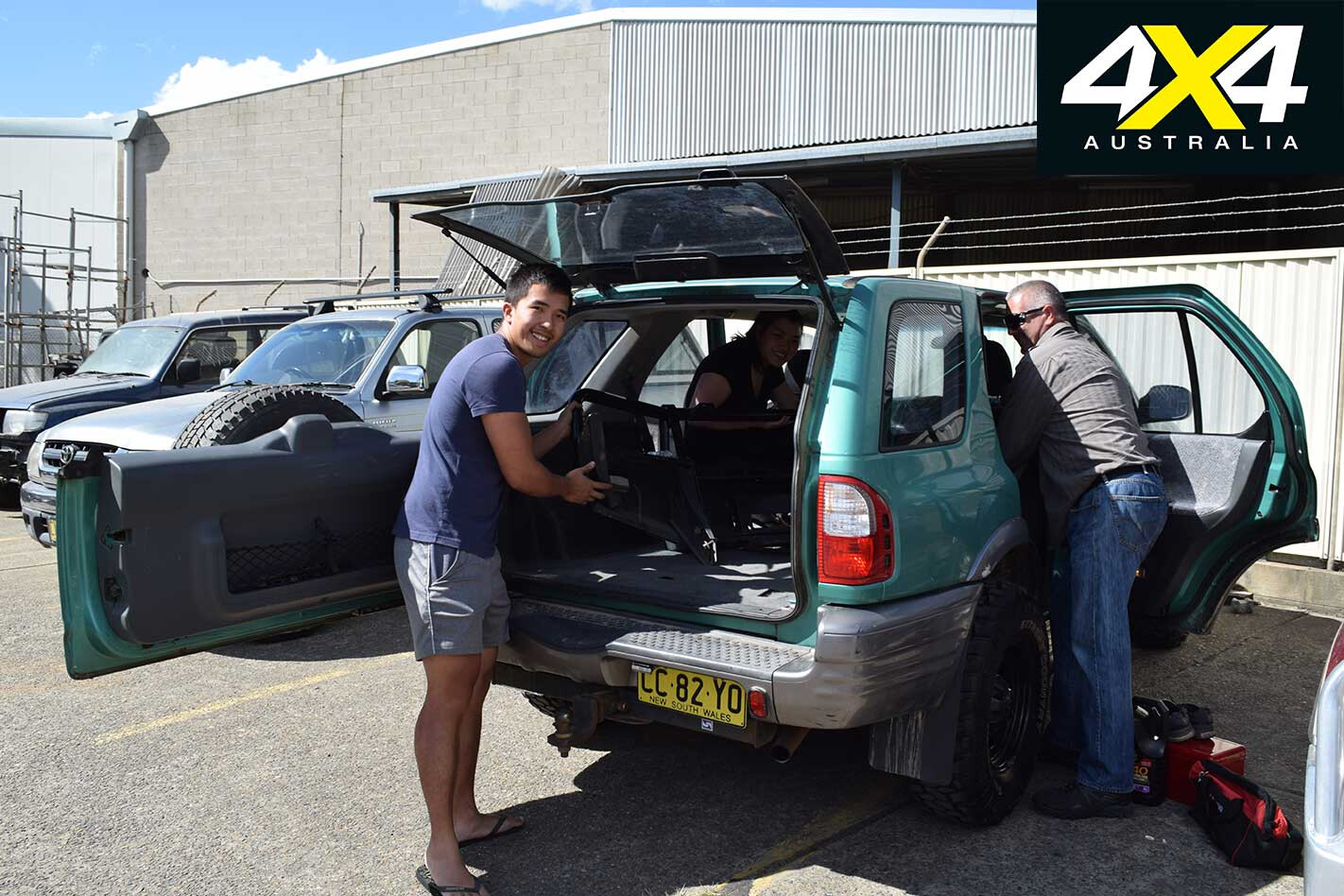
It was clear that some money needed to be spent to replace the balding tires and to deal with weary stock suspension. Via a Facebook forum, Edwin found a Frontera that was being privately wrecked, so the pair secured replacement panels, five 31×10.50 R15LT Dick Cepek tyres with rims, a two-inch lift kit (including the rear springs and shocks), and a snorkel – all for $1000.
When we met the duo at All Model 4×4 Spares, they had taken possession of their ‘new’ ARB bullbar for $600 (less than half the new price). Edwin told us he’d outlaid $3600 on the Frontera and its accessories – plus consumables – which was well under his original $5000 budget.
The savings had allowed them to buy a brand new UHF radio, a tyre compressor and lighting upgrades for $600 – with coin to spare.
“For the price of much less than a pair of return overseas flights, it looks like we’ve obtained a capable and reliable vehicle for what we would like to use it for,” Edwin said. “The next thing to do is to take it out for more drives, understand what needs improving and getting to work on that.”
Paddy’s Ranges State Park is a small gem tucked away in the heart of the Victorian Goldfields. The park owes its name to an Irish miner by the name of Paddy who lived in the area in the 1800s.
This feature was originally published in 4×4 Australia’s August 2012 issue
Today, it is a great place for a family getaway with plenty of walking tracks to explore and goldmining relics to discover.
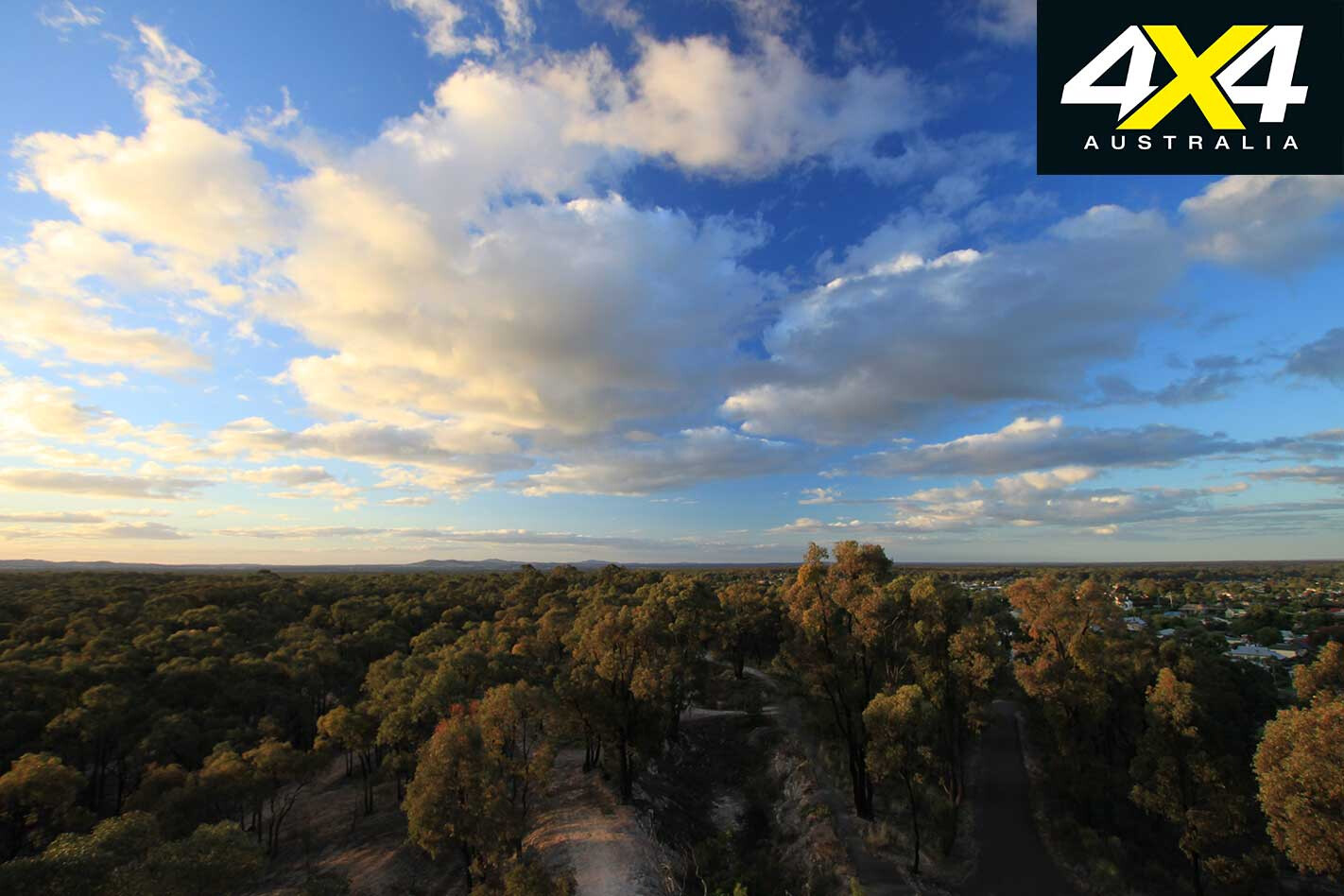
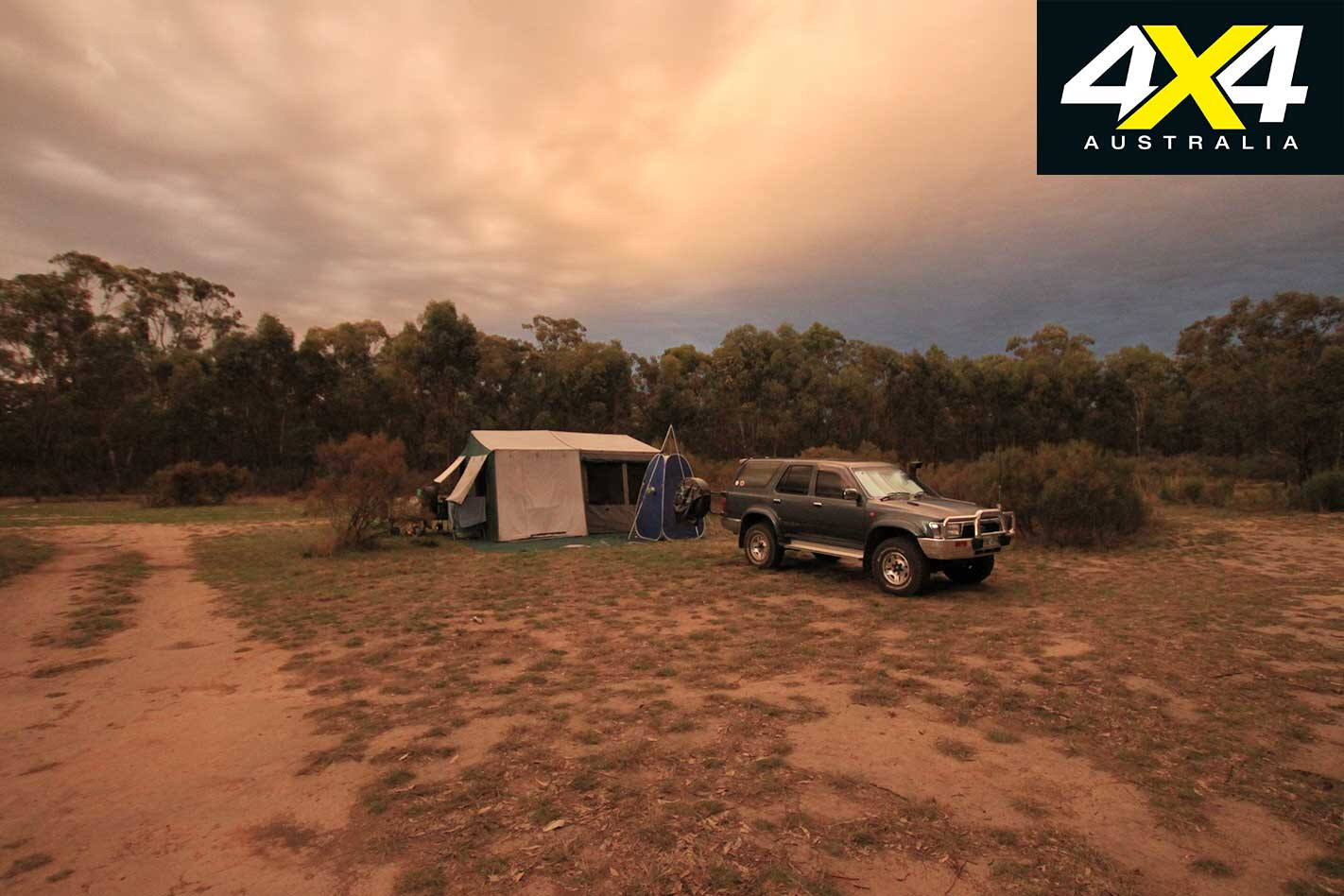
Bush camping is the only option for accommodation and the signs along the Karri Track make it easy to find the large campground. The flat, grassy area is a camper’s dream but beware the prodigious march flies and mosquitos which attacked us as soon as we stepped out of the 4X4. Five-year-old Chantelle was given the job of chasing the little critters away, with the $2 fly-swatter we’d brought coming in very handy.
Facilities are limited to a long-drop toilet and a small rainwater tank but camping is free. The site is ideal for kids as it has heaps of space to play or ride a bike without annoying your next-door neighbours.
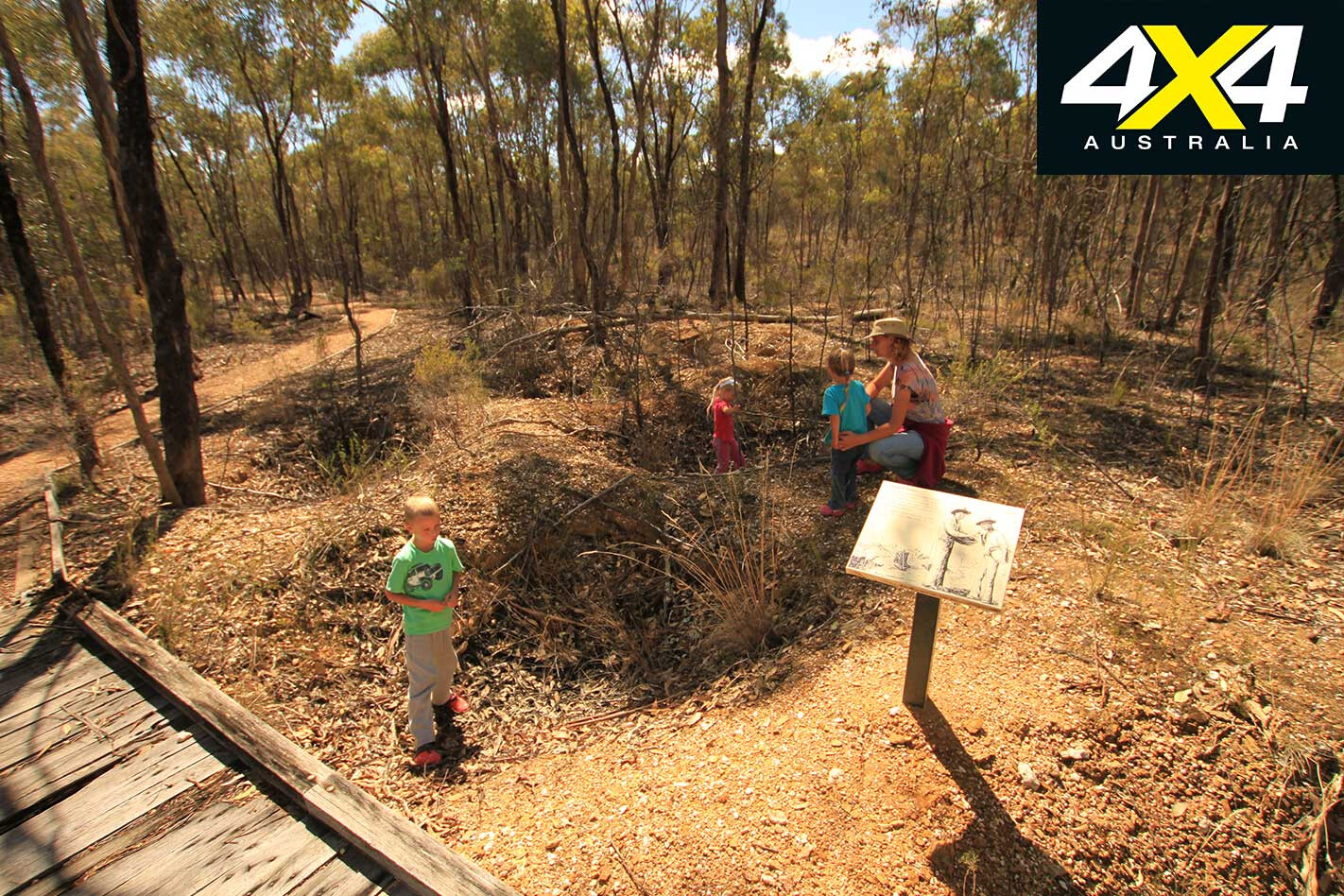
The short, well-signposted drive to the Settling Ponds picnic area is a must-do. Here you’ll find tables, a toilet and wood barbecues, although you must bring your own firewood. A walking track winds through the forest and information boards along the route provide interesting details about the history of the park.
The diggers’ holes tell of a long-gone era. Back in the 1800s, more than 25,000 people flocked to these goldfields to try their luck. In its heyday, the gold escort took out more than 8000 ounces of gold a week. The kids had a closer look at the holes but gold was nowhere to be found.
If you’re keen to fossick, there are designated areas within the park where you are allowed to prospect. You’ll need to buy a Miner’s Right and obtain a map at the Coiltek Gold Centre in Maryborough (www.coiltek.com.au).
At the end of the track, the old dam is a reminder of the eucalyptus oil distillery that worked here in the early 1900s. The oil was made by steaming the leaves in a large vat, then condensing the vapour and drawing the oil from the resultant liquid.
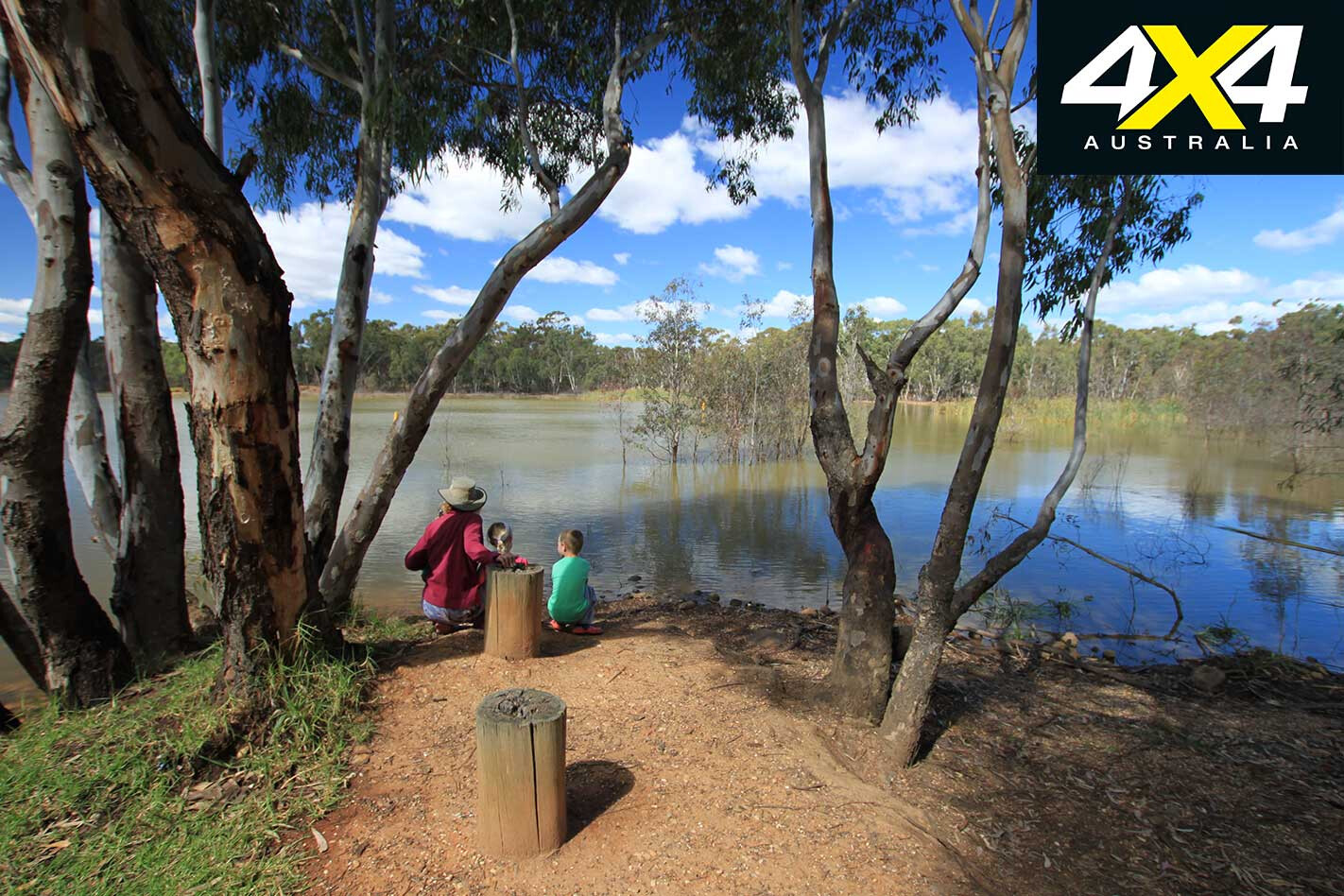
From the picnic area it is a quick trip to the Ballarat-Maryborough Road and the Goldfields Reservoir is just down the road on the right. The reservoir was built in 1862 as a water supply for Maryborough but today it is used for recreation. It is also a beautiful spot for a picnic lunch.
Maryborough’s heritage buildings are testament to the town’s rich past. The impressive post office was built in 1877 in typical Victorian style, while Maryborough railway station dates back to the 1890s and now houses the Antique Emporium.

Up on Bristol Hill, the Pioneer Memorial Tower stands 905m above sea level and is a fantastic place from which to watch a sunset. From here it’s an easy 5km drive back to the campground.
We enjoyed four wonderful days in Paddy’s Ranges. We were treated to beautiful weather, breathtaking sunrises and sunsets, and had lots of fun. We didn’t find any gold but the memories made are much more precious.
Travel Planner
GETTING THERE Paddy’s Ranges State Park is 170km north-west of Melbourne, just south of the town of Maryborough.
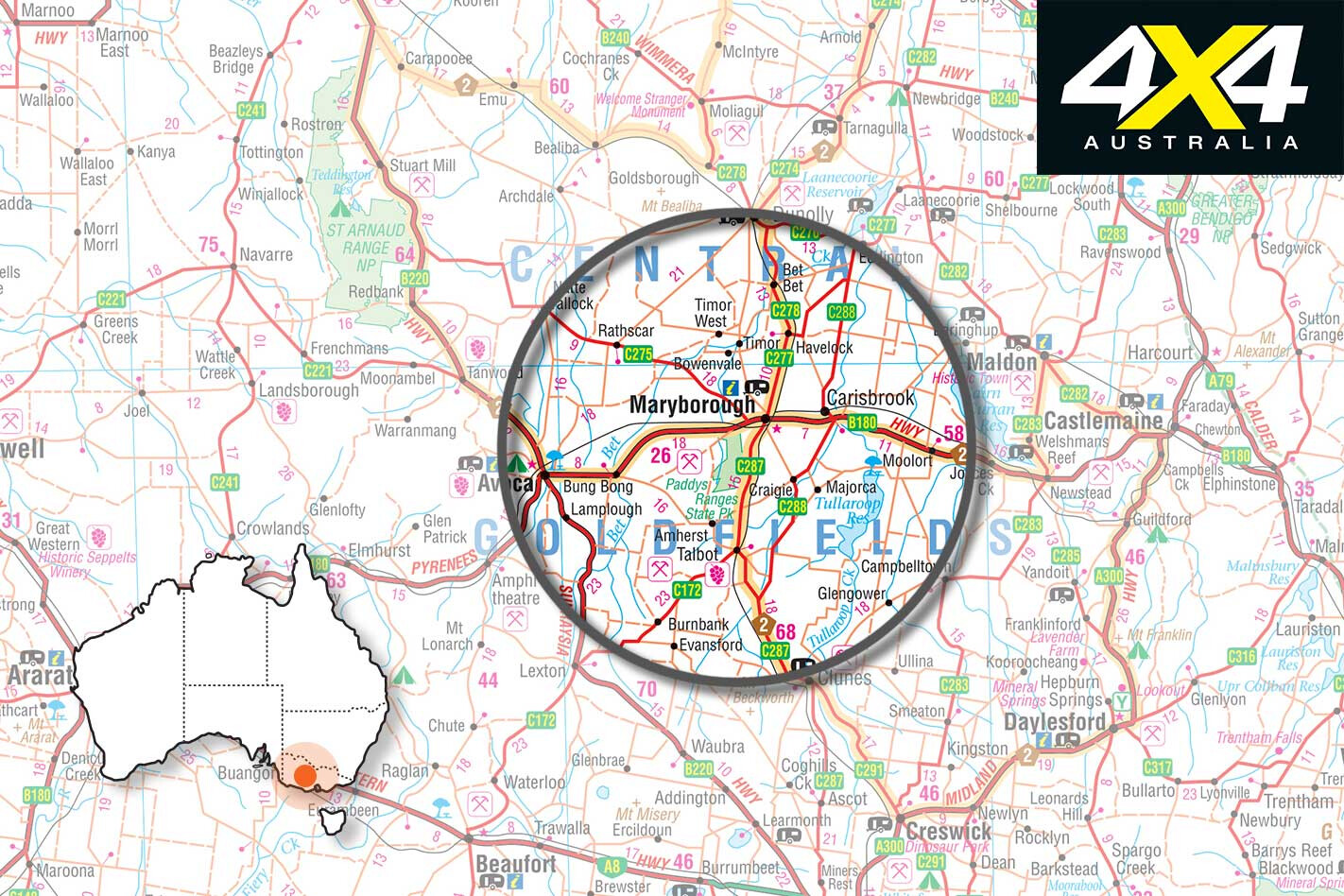
CAMPING Karri Track camping area has toilets and fireplaces. No fees apply.
WHAT TO BRING Take along your bush shower and bring drinking water. Fuel and groceries are available in Maryborough.
MAPS AND GUIDES Paddys Ranges State Park Visitor Guide. Contact Parks Victoria on 13 19 63 or visit www.parkweb.vic.gov.au.