
Any new tech that makes your vehicle more capable off-road and more comfortable on-road has got to be a win-win, right? Exactly, which is why you went out and bought the latest adjustable, bypass dampers that were once the preserve of the off-road racing crowd but are increasingly finding their way onto road-going 4x4s.
But now that you’ve fitted the shocks and had a fiddle with the various adjustments, the car has gone from a capable all-rounder to something that either wants to fall over or rides like a bed of nails. Not only is your vehicle now potentially less capable, but it’s cost you several grand to get here. Something’s wrong!
Yep, you bet it is, but according to the experts there are multiple causes, and, oddly, none of them really involves the end user messing around with something he or she doesn’t understand. Nope, the problems often start because these new shocks are not widely understood by everybody selling and fitting them.
Also, it’s not necessarily that your shiny, high-end new shocks have been set up incorrectly, but rather that they’ve never been set up at all. And finally, there’s our old friend the internet which is happy to sell you a set of shocks and then leave you high and dry when it comes to how to use them.
In fact, about the only factor the experts will rule out is operator error, because even though these shocks do have adjusters built into them, those same adjusters don’t make huge alterations. Michael Zacka, who runs Mike’s Shock Shop, reckons the only tuneable-on-the-trail aspect is a small part of the ride zone.
So if you’ve bought high-end bypass shocks with the aim of having a magic-carpet ride one day and leaping off sand dunes the next with the simple turn of an adjuster screw, you might just be disappointed.
According to Ben Napier of Solve Off Road, compromises can be involved way back when the product is being developed.
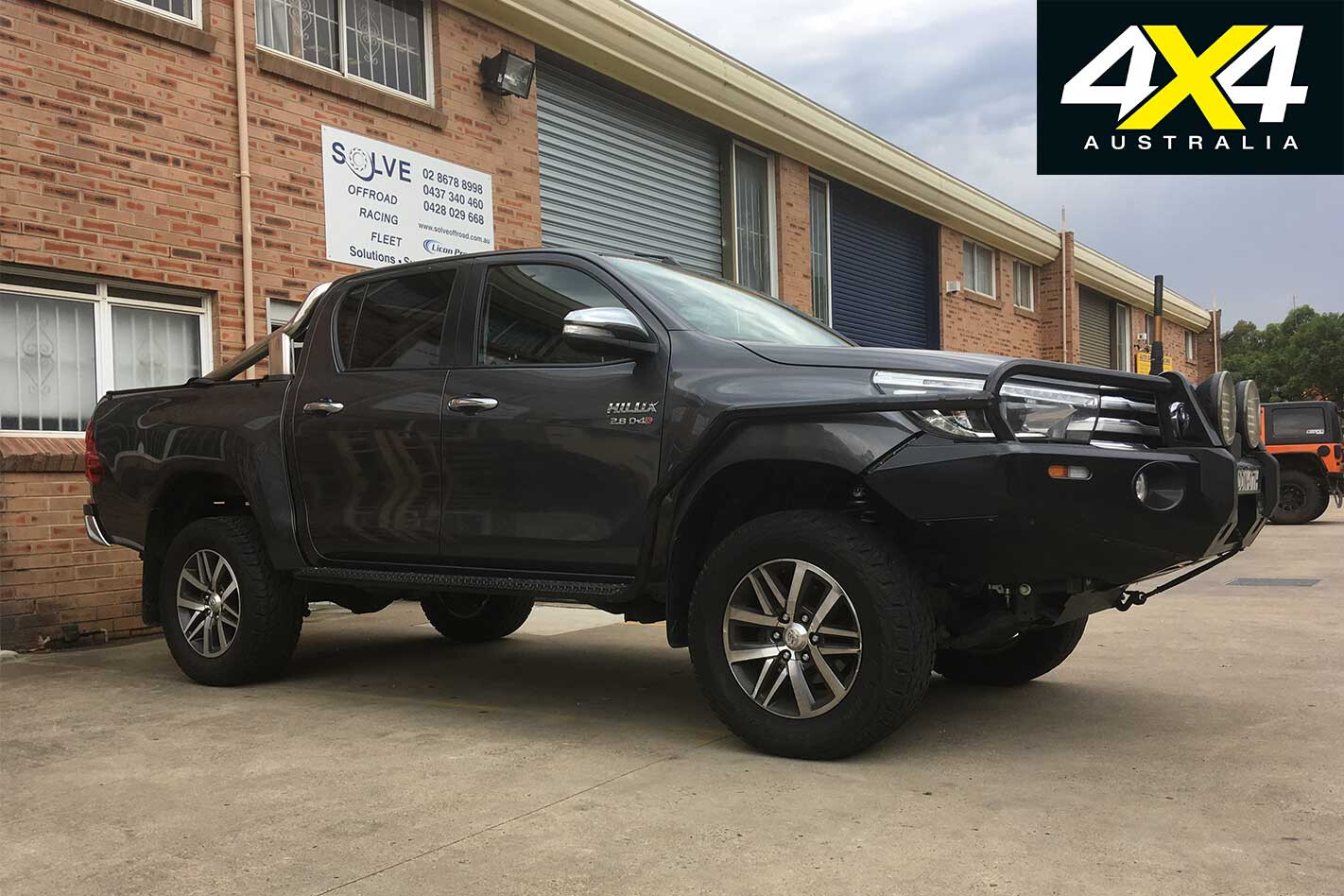
“Generally,” says Ben, “a shock manufacturer will get hold of the make and model vehicle they want to develop the product for. The problem with that is that the development vehicle will be a, say, Ford Ranger, but it’ll be a stock-standard, unmodified car with the OE plastic bumper.
Now, I don’t reckon there’s a single stock-standard Ford Ranger in this country. Certainly not one where the owner is prepared to spend up big on high-end shocks. We call that the Australian factor.
“With this high-end stuff, particularly the coil-over type, a lot of people need a stiffer spring component to carry the weight of a bullbar and winch. But when that stiffer spring becomes unloaded at speed, suddenly you have a horrible-riding vehicle. That calls for a completely tuneable shock, which these are, but we’re talking internal adjustments, not fiddling with the damping adjuster at home.”
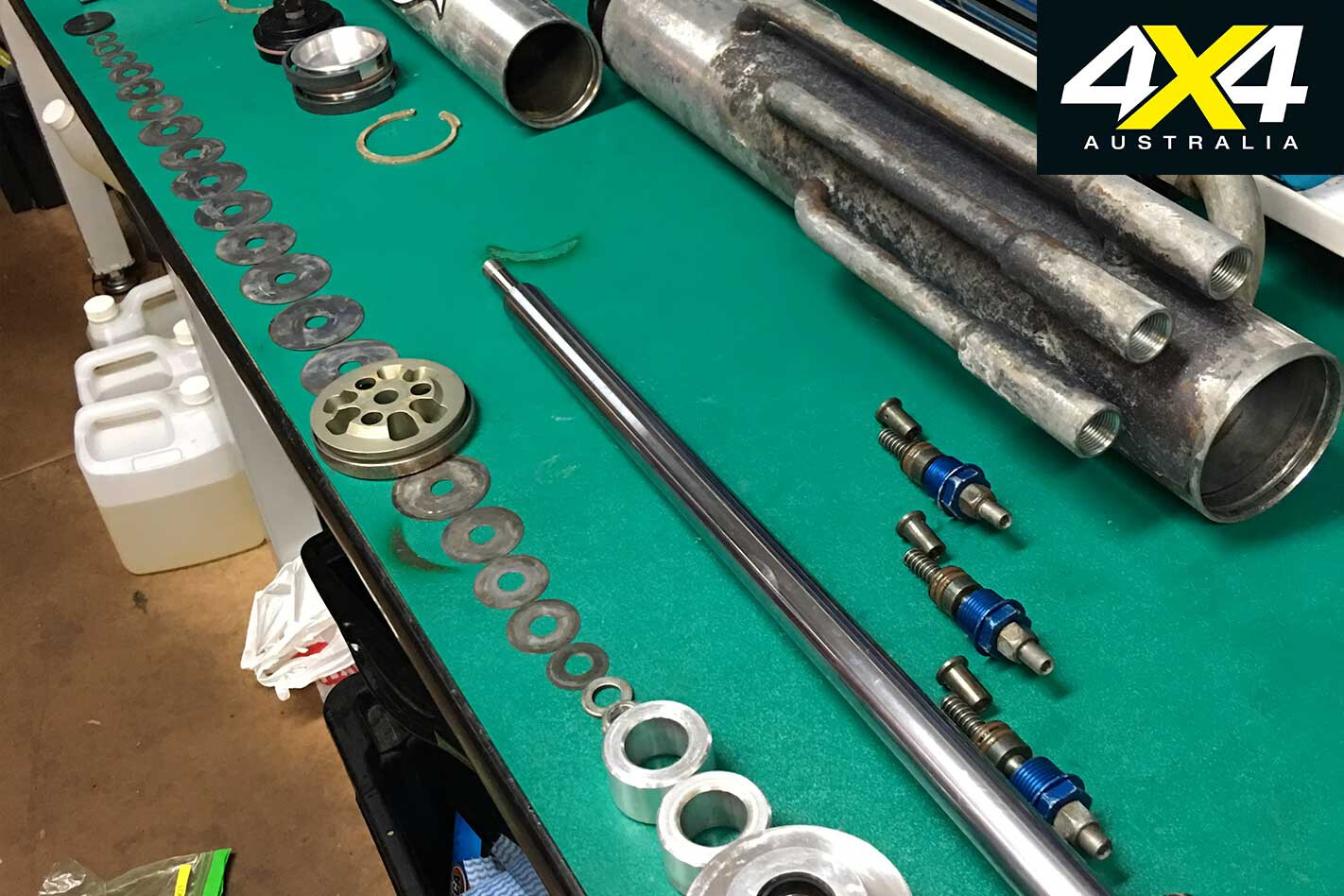
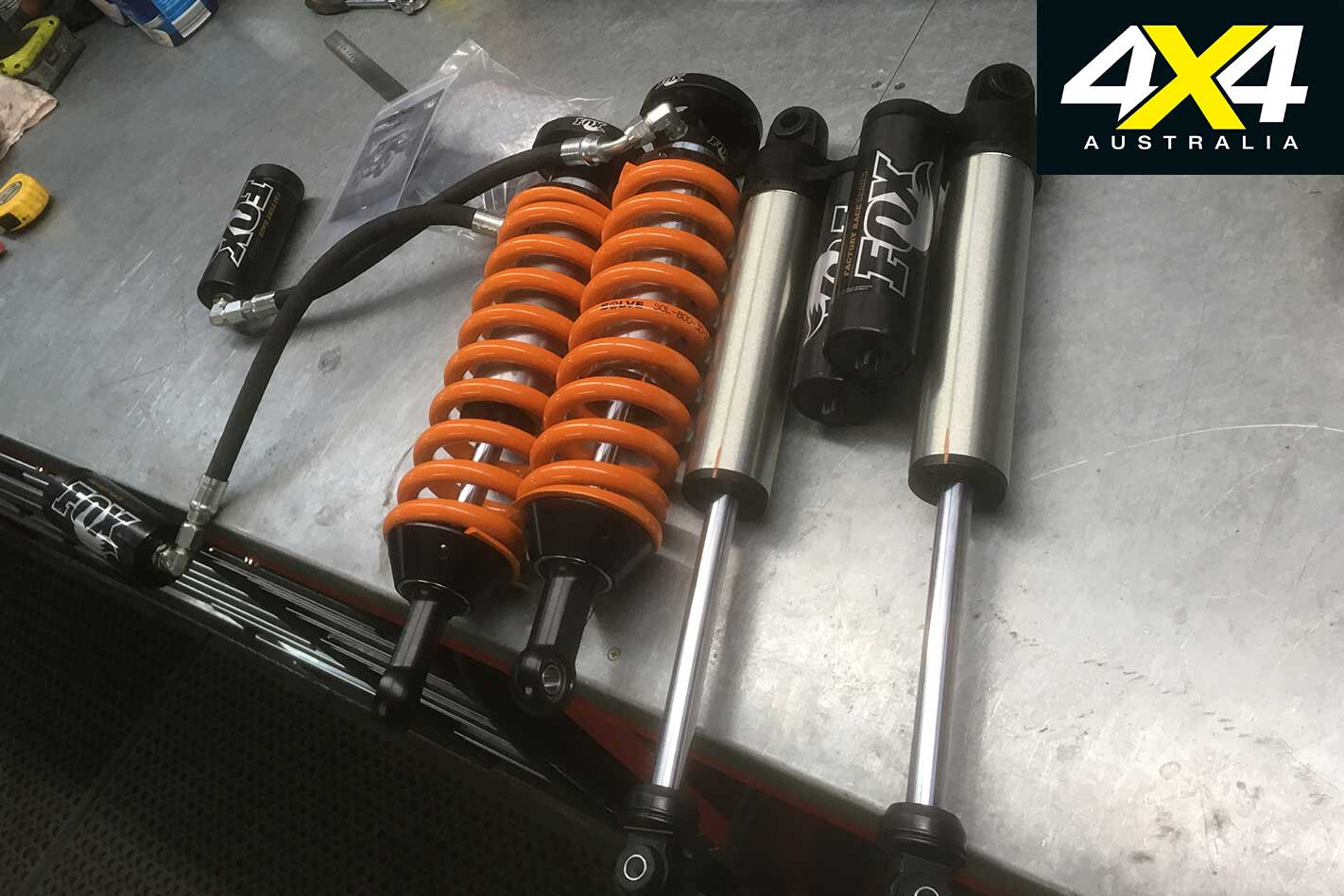
Ben reckons that even though plenty of research and development goes into these shocks, a coil-over kit for something like a dual-cab ute or a Toyota 200 Series will very rarely leave the Solve workshop without some kind of internal adjustment to make them fit for purpose and to optimise the owner’s spend. “Only then will you get the full benefit,” he says.
In the case of Mike’s Shock Shop, there’s a comprehensive spec sheet the owner needs to complete to get the new shocks set up properly, before a spanner has even been turned. There’s obvious stuff like whether there are long-range tanks or dual batteries fitted, but there’s also nth-degree details like whether the winch has a steel or synthetic cable.
Clearly, buying a set of shocks online, bolting them on at home and crossing your fingers isn’t the way forward here, and it kind of guarantees that you won’t get the best out of the technology.
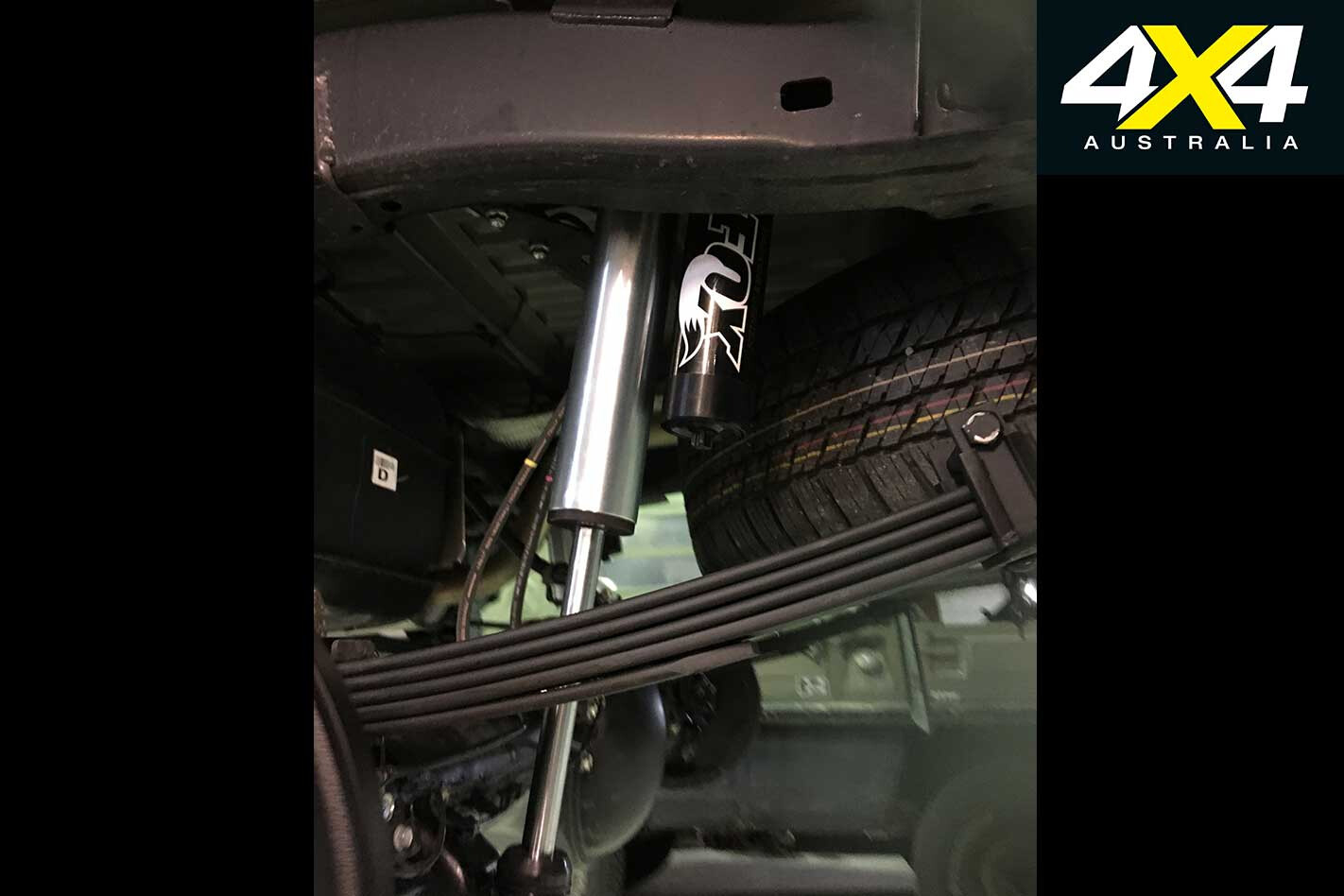
But don’t the adjusters built into the damper allow for this sort of stuff? Not really, and Ben’s view is similar to Michael Zacka’s in that the external adjusters that are part of the shock are really only for small-increment adjustments to the ride quality. “The adjusters only really amount to extreme fine-tuning of the damping valving,” he says. “If the fundamentals aren’t right in the first place, you can fiddle with those all you want and achieve very little. The fact is, there’s no such thing as a gun off-the-shelf setup.”
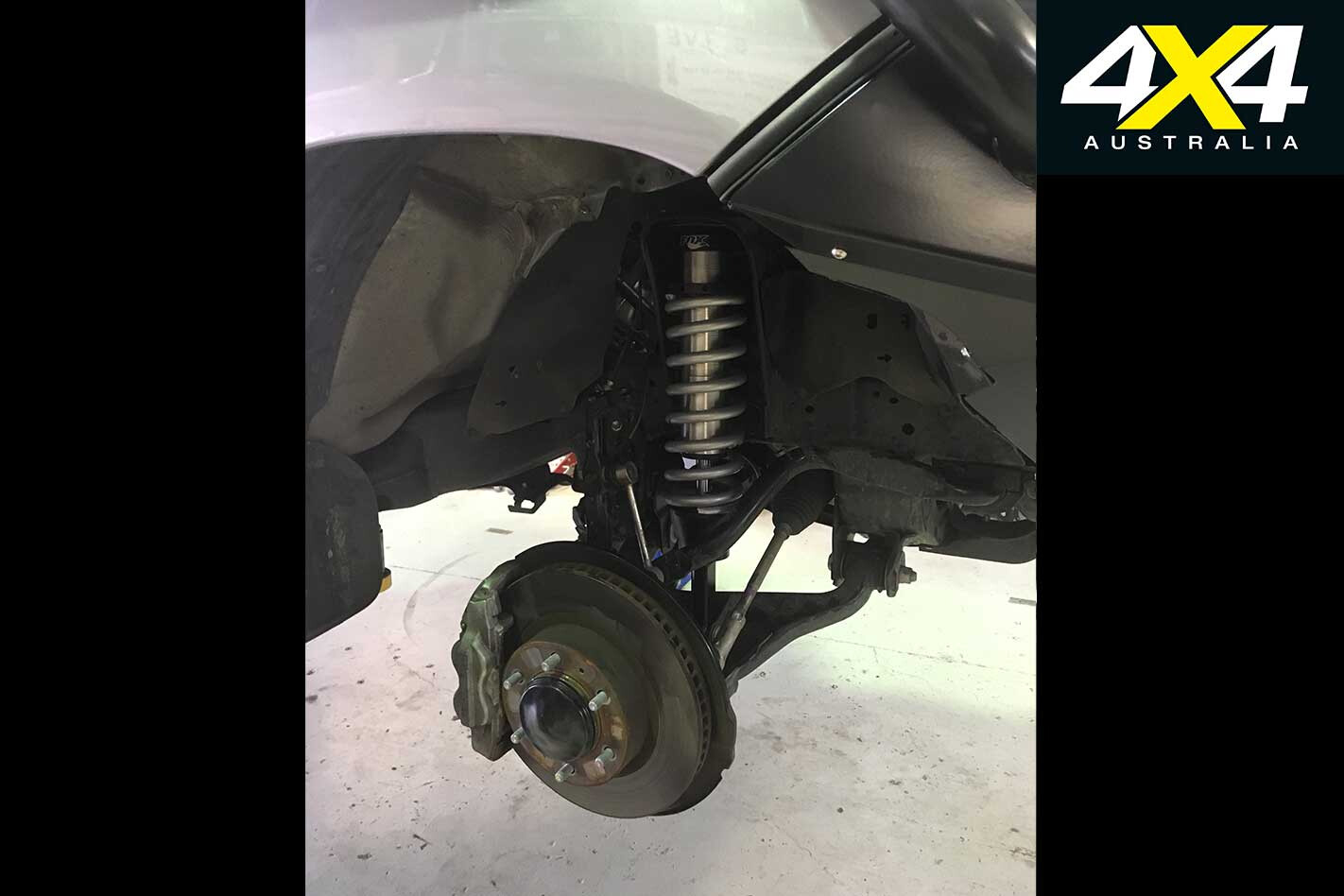
One area where the end user does come in for a bit of criticism is when they’ve fitted coil-overs with height adjustment (usually via a C-spanner). Ben Napier reckons that most of these shock kits are designed for vehicles already running, say, a 2.5-inch lift. But trying for a bit more by winding the spring up could be asking for trouble.
Michael Zacka agrees and reckons a large part of the dissatisfaction at consumer level occurs when people ask too much of the product. “People with IFS front ends trying to lift them beyond about 70mm is a real problem,” he says. “It leaves the vehicle with no droop.
Essentially, if that’s what you’re trying to do with factory geometry, you’ll need a dental plan.”
Okay, so that’s fine if you’re shopping at the very highest end of things, but a lot of four-wheel-drive owners are looking for something better than the stock replacement, but have neither the budget nor the requirement for the performance of those bespoke setups. For such owners the news is good, with a range of more wallet-friendly bypass shocks entering the market in recent times.
ARB’s Old Man Emu-branded BP-51 shocks are a great example and, according to ARB, are tailored to a particular make and model, while also incorporating bump and rebound damping for adjusting ride quality.
Spring preload is also adjustable on some models. Because they’re designed for a specific fitment, ARB says they don’t need internal adjustment before fitting, but that to maximise the effect of the shocks they should be considered part of an overall suspension upgrade rather than just in isolation.
ARB is quick to point out that while the whole bypass shock thing has its roots in motorsport, the Old Man Emu range is not a competition product. “This is not a race shock,” ARB’s tech-team told us. “It uses race technology, but we’ve adapted it for everyday vehicles. It’s fully adjustable on the car and it’s application-specific; you buy it and bolt it in. It comes with everything you need as well as full instructions.
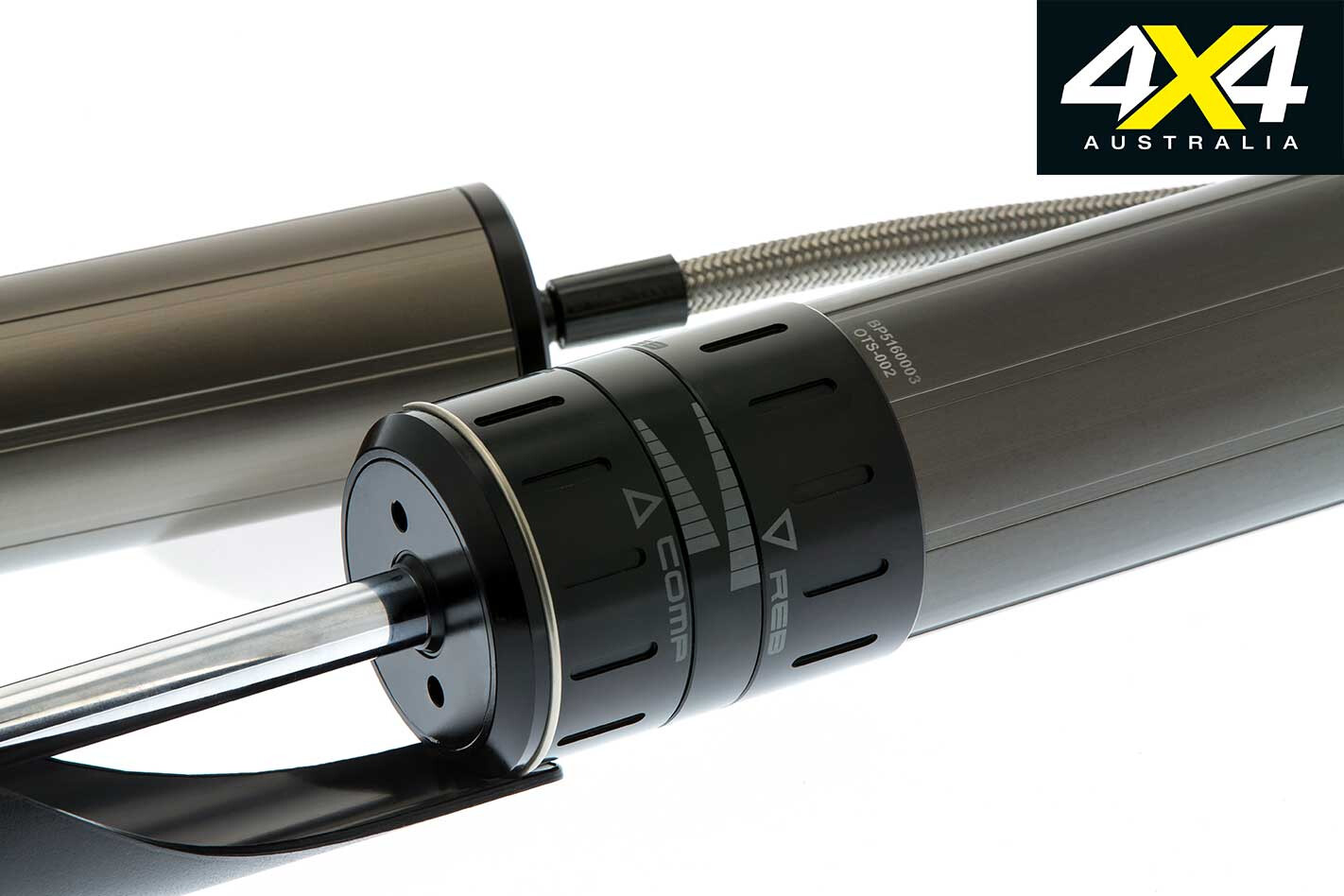
“We even include recommended adjustment settings depending on how you’re going to drive and what load you’re carrying.”
TJM’s new Pace shock absorbers are similarly set up for the vehicle at the factory and fine tuning for compression and rebound is done using the external eight-way adjuster.
Obviously, the more generic setup of the ARB, TJM and other mainstream product means you won’t get the absolute tailored performance of the real high-end stuff like King and Fox, but it’s still going to offer more performance than an OE replacement shock in the vast majority of cases.
Bump and rebound – what’s it all about
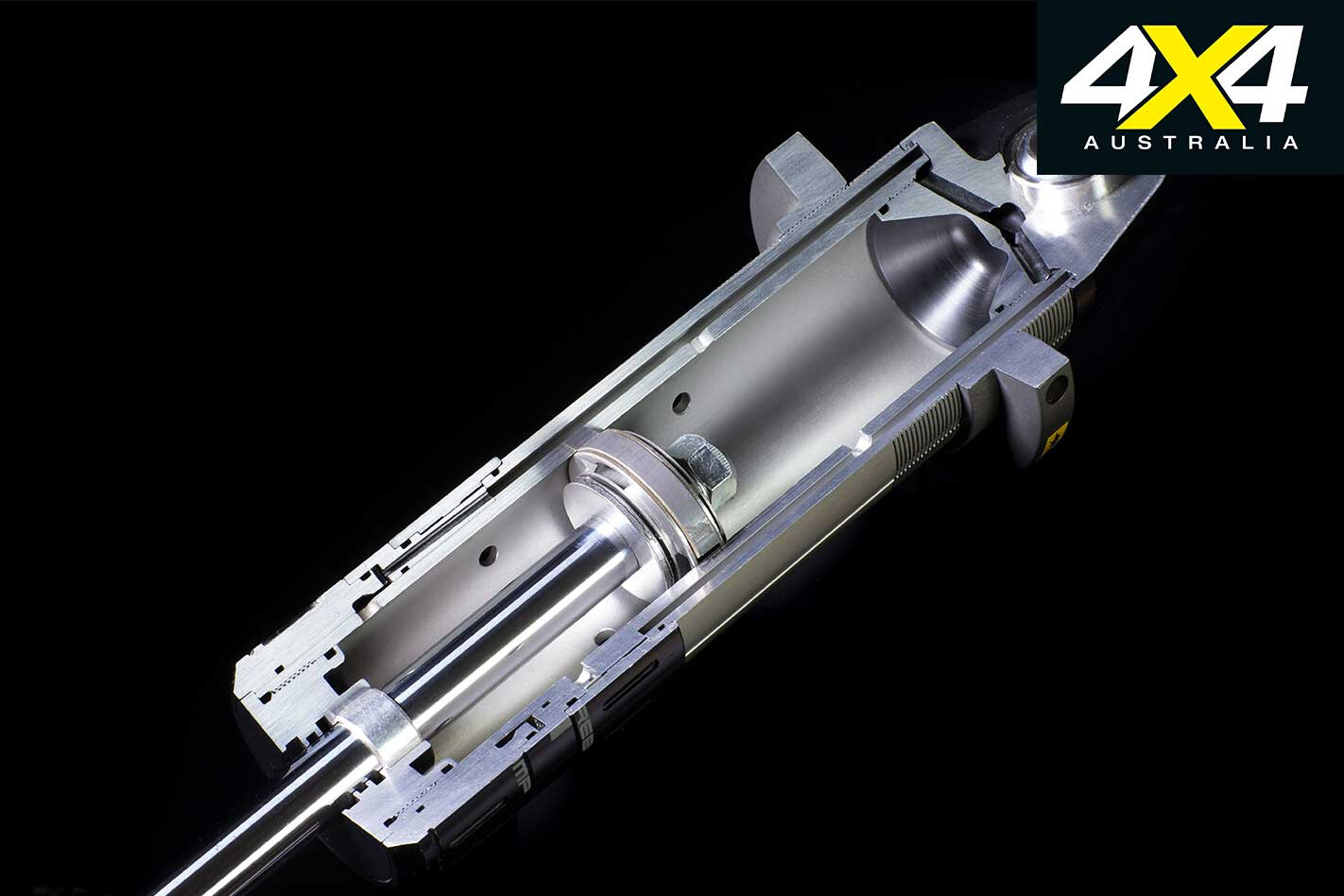
The external adjusters on bypass shocks vary the amount of bump and rebound control the shock itself provides, but what does that actually mean? Ask a bloke in the pub to define it and you could get all sorts of answers. So here’s the skinny from suspension guru Brett O’Brien of Shockworks on how it breaks down in the simplest of terms:
A shock absorber’s bump control is the force it applies to control the upward movement of the wheel and tyre. So, let’s say you’ve just clobbered a rock at speed, and that has started to compress the spring and sent the wheel heading for the upper limit of the suspension’s travel. The shock’s bump control is what stops the suspension arm (or axle) smashing into the bump-stop.
Rebound, then, is more or less the opposite and is the shock’s ability to control the movement of the wheel and tyre as it heads back down to its ‘normal’ position.
Generally speaking (and we mean very generally) more bump (it’s also called compression damping) damping will result in a firmer ride. Too much will make the ride too hard, while too much rebound damping can ruin ride as it allows the car to, as Brett puts it, “copy the road,” rather than iron out the bumps and lumps.
Not enough rebound is also a problem, particularly on off-roaders with big, heavy live axles, as it can allow for lots of body movement in response to the axles moving around without enough control.
Personality bypass
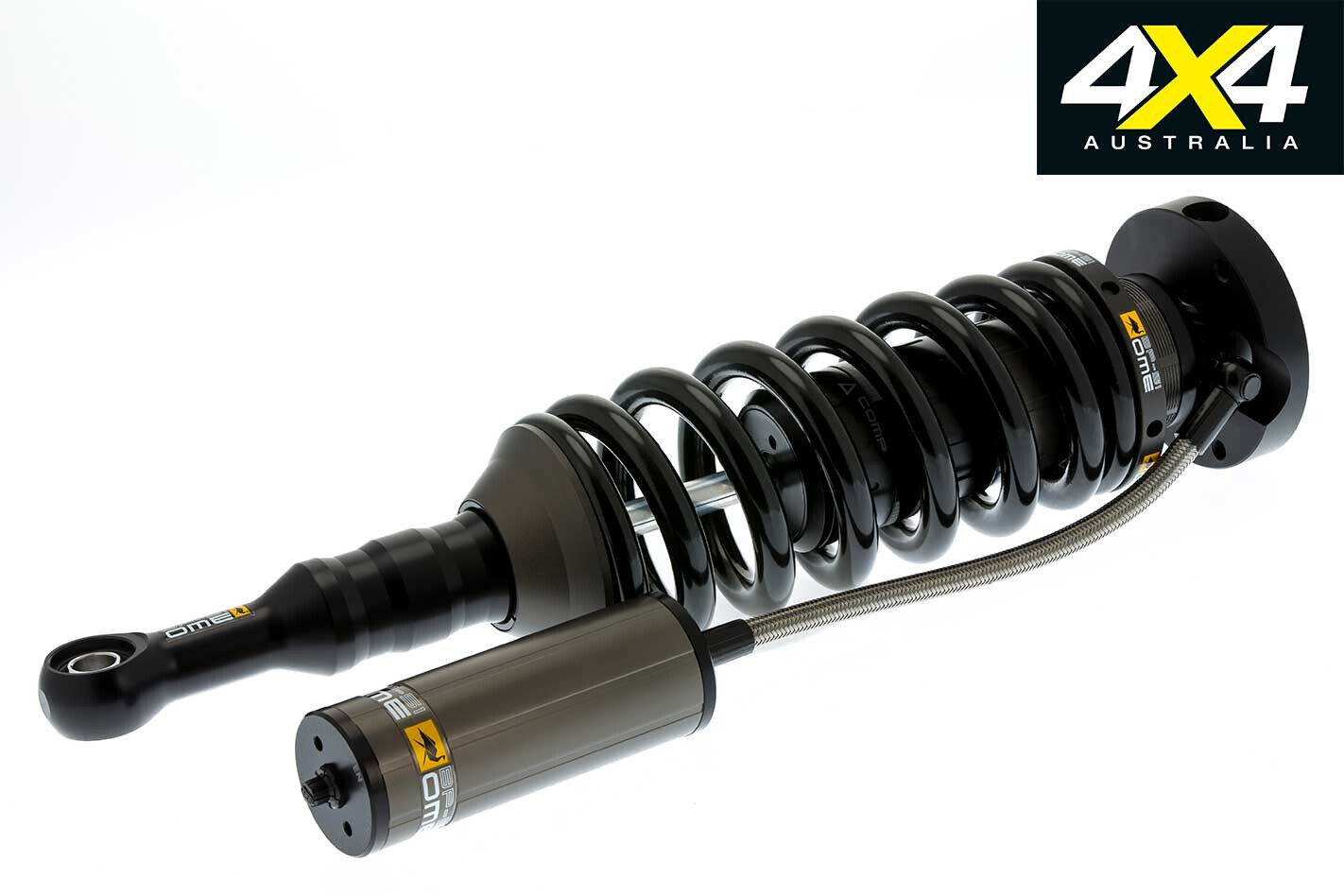
A conventional shock absorber’s behaviour is fundamentally a factor of the internal piston speed. But a bypass shock is constructed so that it also takes into account the position of the piston in the shock’s body (or tube). And that’s what gives the bypass shock the ability to behave like a vehicle with twin shocks on each corner.
Broadly speaking, there are two types of bypass shock, the external and internal bypass. Obviously, they’re constructed differently, but the aim is the same; that dual personality.
In the case of the internal bypass unit there are two main ways to arrive at the same result. In one type, there’s a conventional shim stack (which determines the bump and rebound damping characteristics) as well as a bypass stack. At low shock deflections some of the damping oil can travel through this bypass stack, allowing for a comfortable ride.
At larger deflections, however, a pin positioned internally at the top of the shock’s tube eventually mates with the shock piston and effectively closes the bypass stack, forcing all of the oil to pass through the shim stack, increasing the damping force.
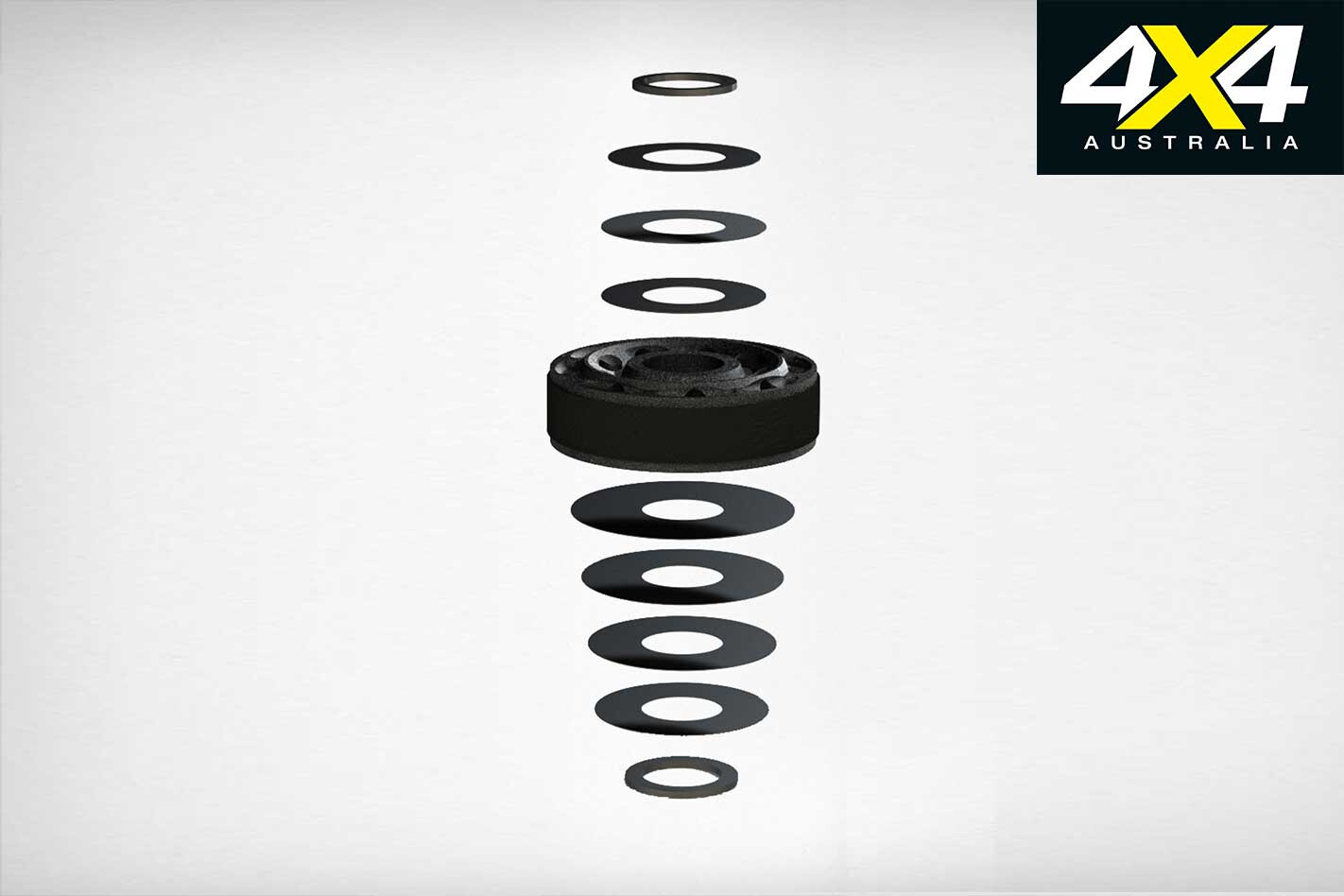
In the other type, the shock body is more or less a tube inside a tube with ports allowing some of the fluid to bypass the main shim stack at small deflections, while the piston blocks these ports at higher deflections, forcing the fluid the hard way around.
The external bypass shock uses the same principle, but allows the damping fluid to bypass the shim pack, by being forced out into a series of external bypass tubes that are plumbed into the main shock body.
These external tubes are opened and closed by the movement of the shock piston in much the same way as the inlet and exhaust ports are opened by the piston of a two-stroke internal combustion engine. Vernier adjusters (usually a screw and lock-nut) allow you to tailor the bump and rebound damping by varying the capacity of the bypass chambers.
In the end, whichever way you choose to go, the advantages amount to a better ride over normal terrain, better damping in the rough stuff and the effect of having two different shocks to handle different conditions. Greater stability at high speeds is the big bonus for competition vehicles using bypass technology.
Ultimately, the reality is that the bypass shock was the solution to the problem of having variable suspension spring rates and requiring a variable damping rate to cope with that.
WITH AN electric Jeep Wrangler due to arrive in 2020, Fiat Chrysler Automobiles (FCA US LLC) has ramped up pre-production with the announcement it has decided to produce the Power Electronics module for the PHEV W (plug-in hybrid electric vehicle) at its Toledo Machining Plant in Perrysburg, Ohio.
This facility is 54 years old, but don’t let that fool you into thinking it’s not up to this task; the Toledo plant has, in recent years, been the beneficiary of huge investment from the parent company (to the tune of around US$92million since 2011) to ensure it remains viable in regards to producing essential parts for the company’s various vehicle brands.

Some of the parts manufactured here include torque converters that do service in the eight-speed rear-wheel drive and nine-speed front-wheel drive transmissions, along with steering columns used in various brands’ products throughout North America and Mexico.
The Power Electronics (PE) module includes two essential powertrain components – an inverter module and an integrated dual-charger module (comprised of the vehicle’s on-board charger and a DC-DC converter).
As you’d expect for fitment to an off-road focused vehicle such as the Wrangler, to minimise the chance of damage when tackling rugged tracks, the PE module will be housed in a protective structure and tucked up well out of the way between the Wrangler’s prop shaft and exhaust.
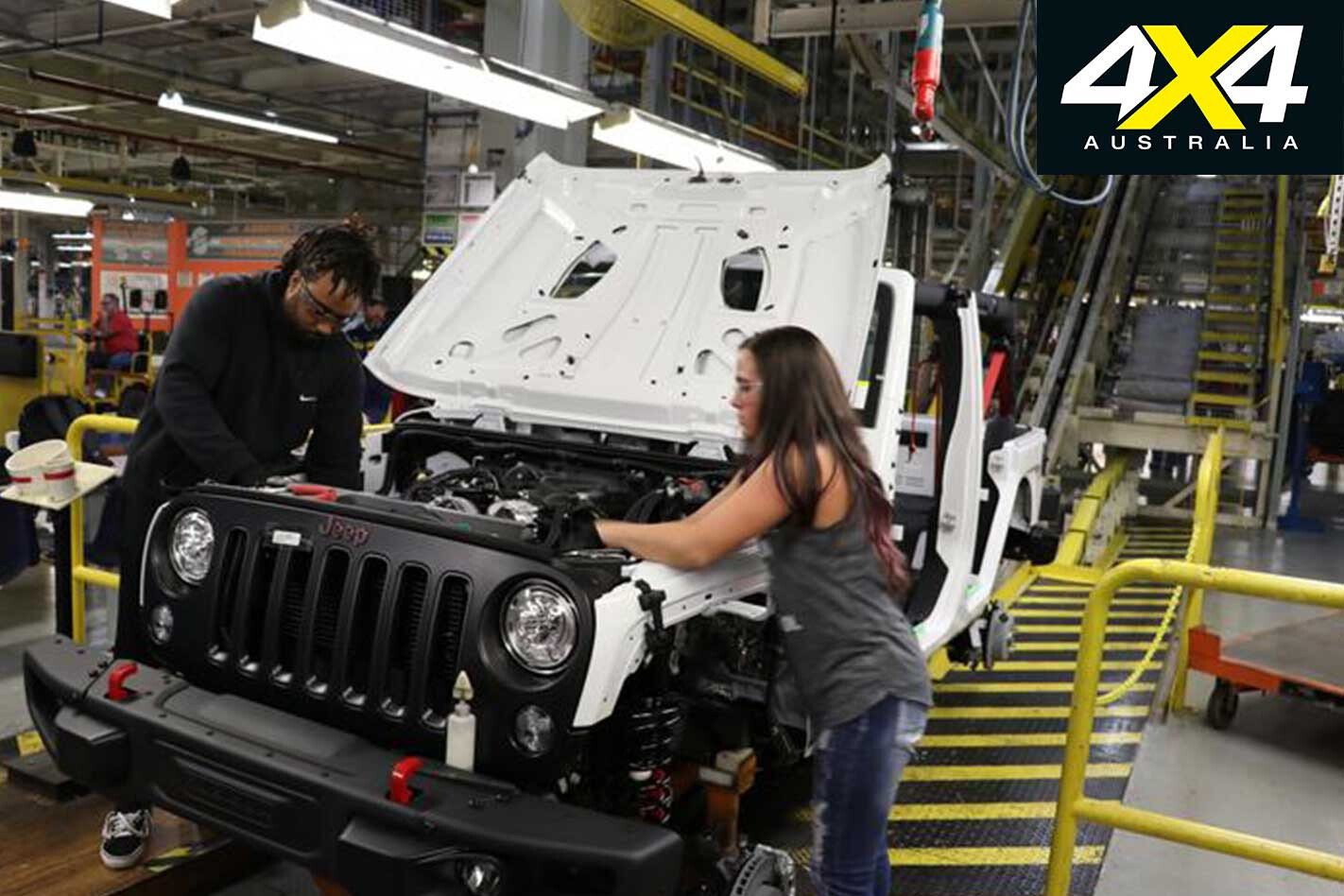
The Toledo facility will be responsible for assembling the PE module’s sub-systems, uploading the inverter’s software and then running comprehensive testing on both the electric and coolant systems of the vehicle. Once module construction is complete, it will then be sent to Chrysler’s Toledo Assembly Complex, where the Wrangler PHEV will be built.
It is an amazing leap for the Toledo facility in terms of what it actually produces, when you think of what would have been built there when it first opened in 1966. It is a positive – and applauded – move by FCA to continue to invest in these ‘older’ locations and keep them at the forefront of not only modern vehicle production but overall efficiency.
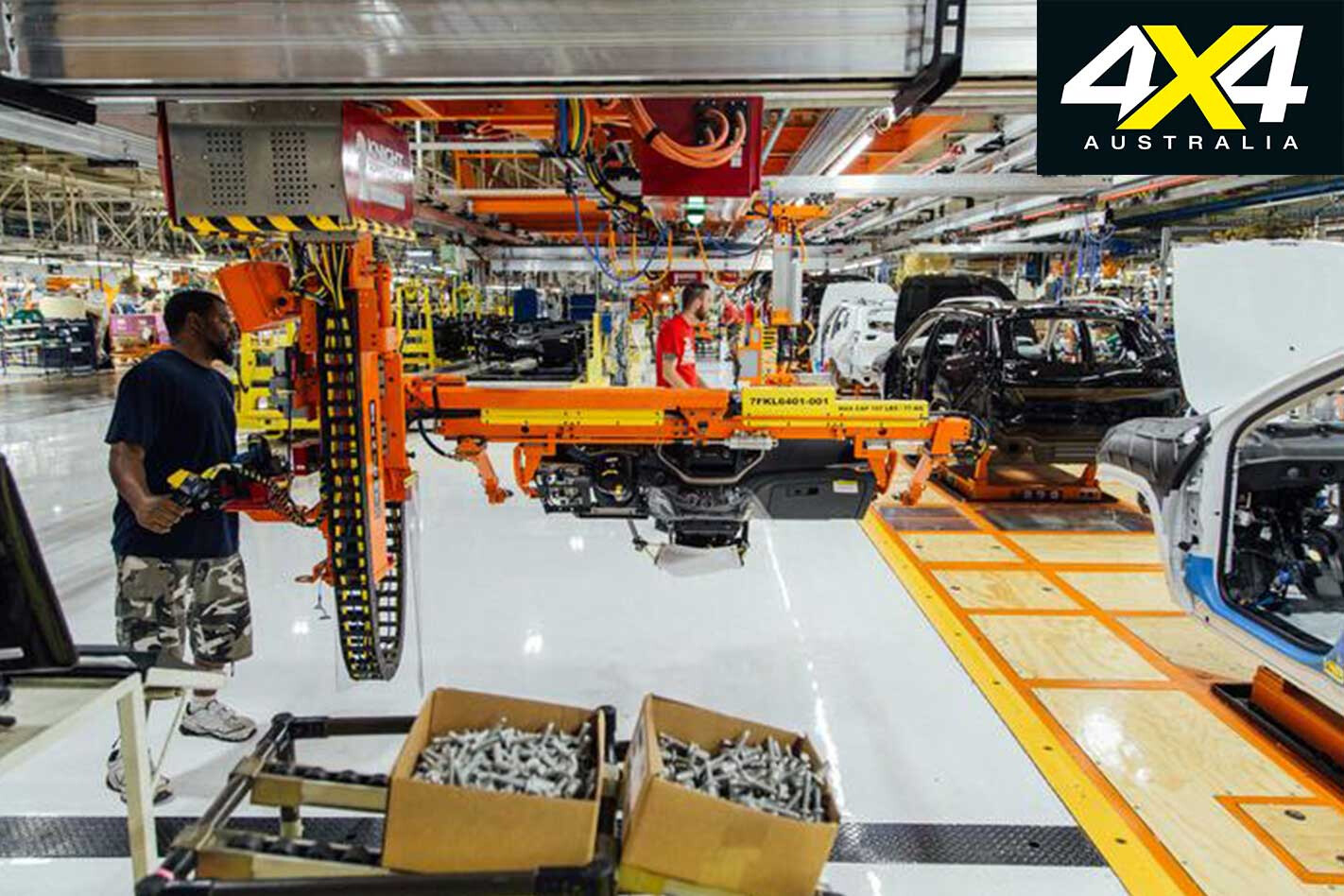
Toledo Machining’s Silver Status award in implementing World Class Manufacturing (WCM is focused on reducing waste, upping productivity while ensuring quality and safety aren’t impacted) in June this year proves there’s plenty of new-tech life in it for a few years yet.
As to the Wrangler FHEV and whether it will get to Australia? Even though FCA has committed to having more than 30 vehicle nameplates sporting “electrified solutions” by 2022, we think it will be a while longer than that before you have to worry about finding a charging point in the Simpson Desert for your electric/hybrid 4×4.
THE curtains have dropped on Team D-Max’s hotly anticipated Concept X; bigger, badder, pumped-up versions of the venerable D-Max and MU-X.
The two steroid-fed, supersized Isuzus you’re ogling right now are the work of EMG Pty Ltd and Team D-Max – the crew famous for its precision-driving party tricks.
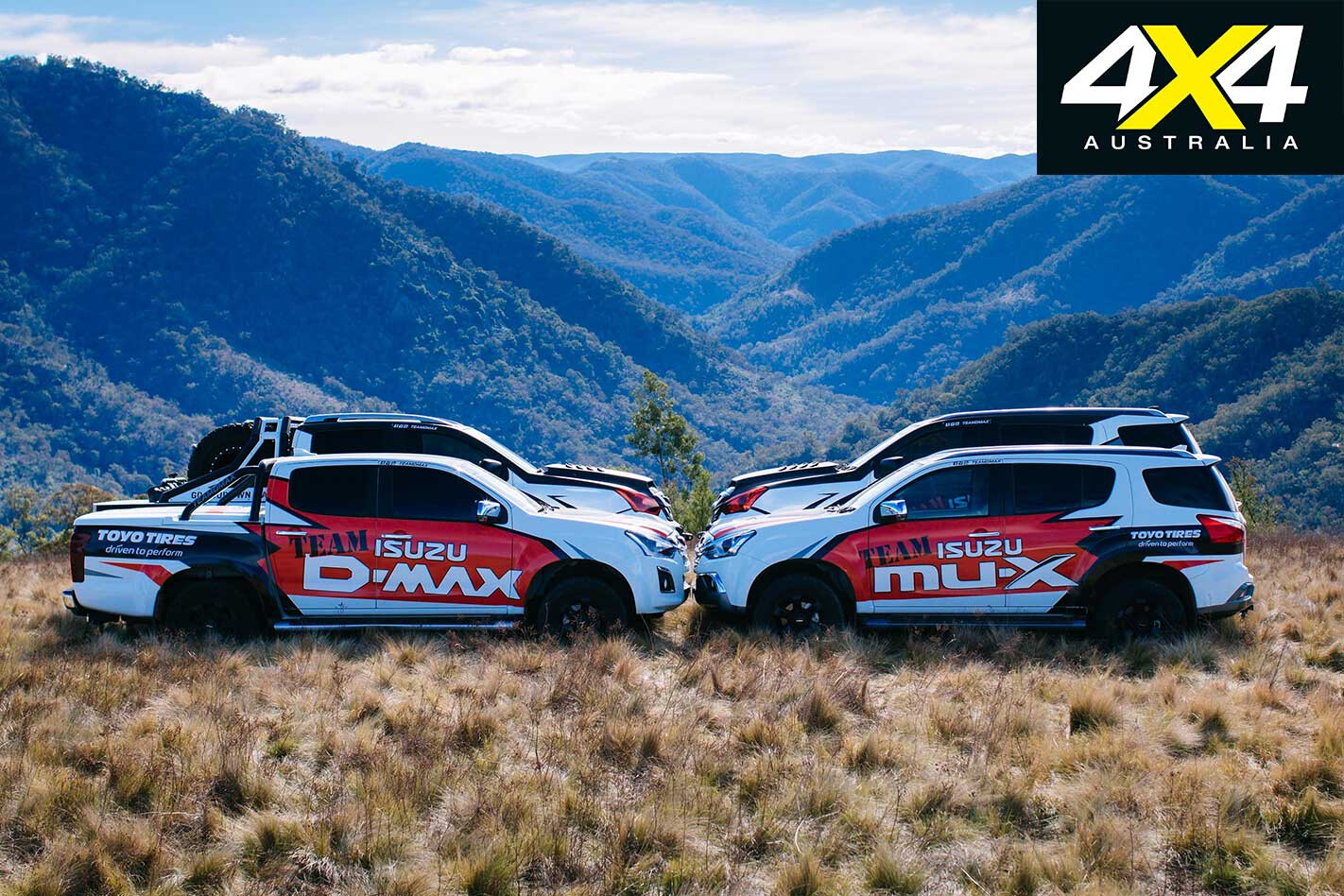
“It was the tyres that got the project started,” explained Jack Monkhouse, Team D-MAX’s lead driver. “We saw a set of gigantic tyres on the Toyo Tires stand and our boss, Wayne [Boatwright], joked about putting them on his company car.”
The tyres in question are 38-inch Toyo Open Country muddies (38×15.5R20s). To make these massive tyres – wrapped around Method MR610 Con6 20×12-inch wheels – fit beneath both the D-MAX and MU-X, plenty of custom-fabrication work ensued.
“It would have been easy to bolt on many accessories, but we wanted to go our own way,” explained Wayne Boatwright, Director of EMG Pty Ltd and Team D-MAX. “So most of the build – the guards, bullbars, bonnet, brakes, suspension and chassis modifications – are all in-house custom work.”
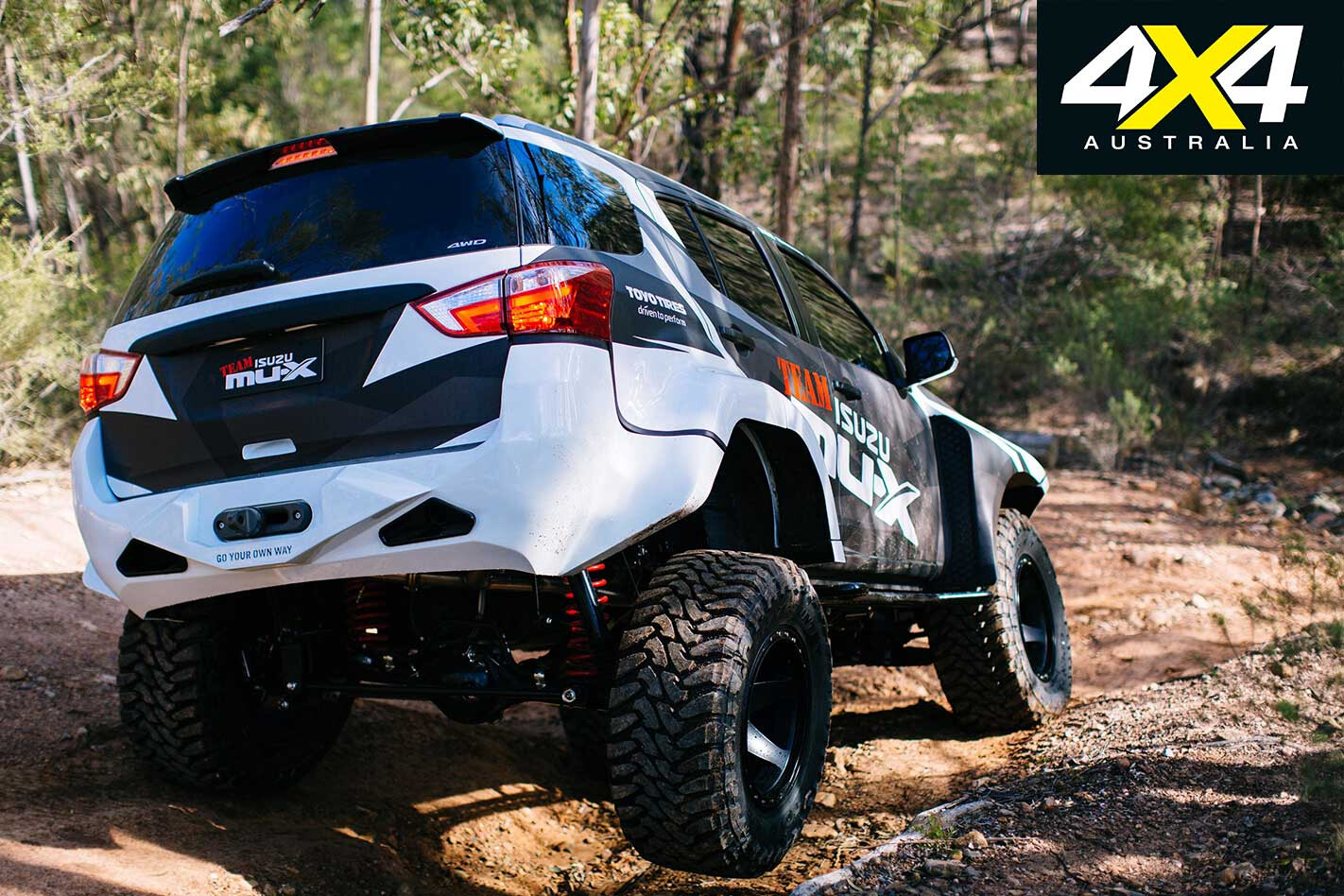
In tandem with the monster muddies, both vehicles copped custom 60mm remote reservoir shocks and a seven-inch suspension lift, with the D-MAX’s rear leaf set-up replaced with a custom MU-X-style five-link coil arrangement.
The bespoke suspension work provides the D-MAX with 370mm of ground clearance, a 49.7° approach angle and a 38.5° departure angle; while the MU-X gets 370mm of ground clearance, a 49.7° approach angle and a 37.3° departure angle.
Stopping power is afforded courtesy of custom TBS Racing six-piston calipers with 390mm full-floating discs (front) and custom TBS Racing four-piston calipers with 355mm full-floating discs (rear).
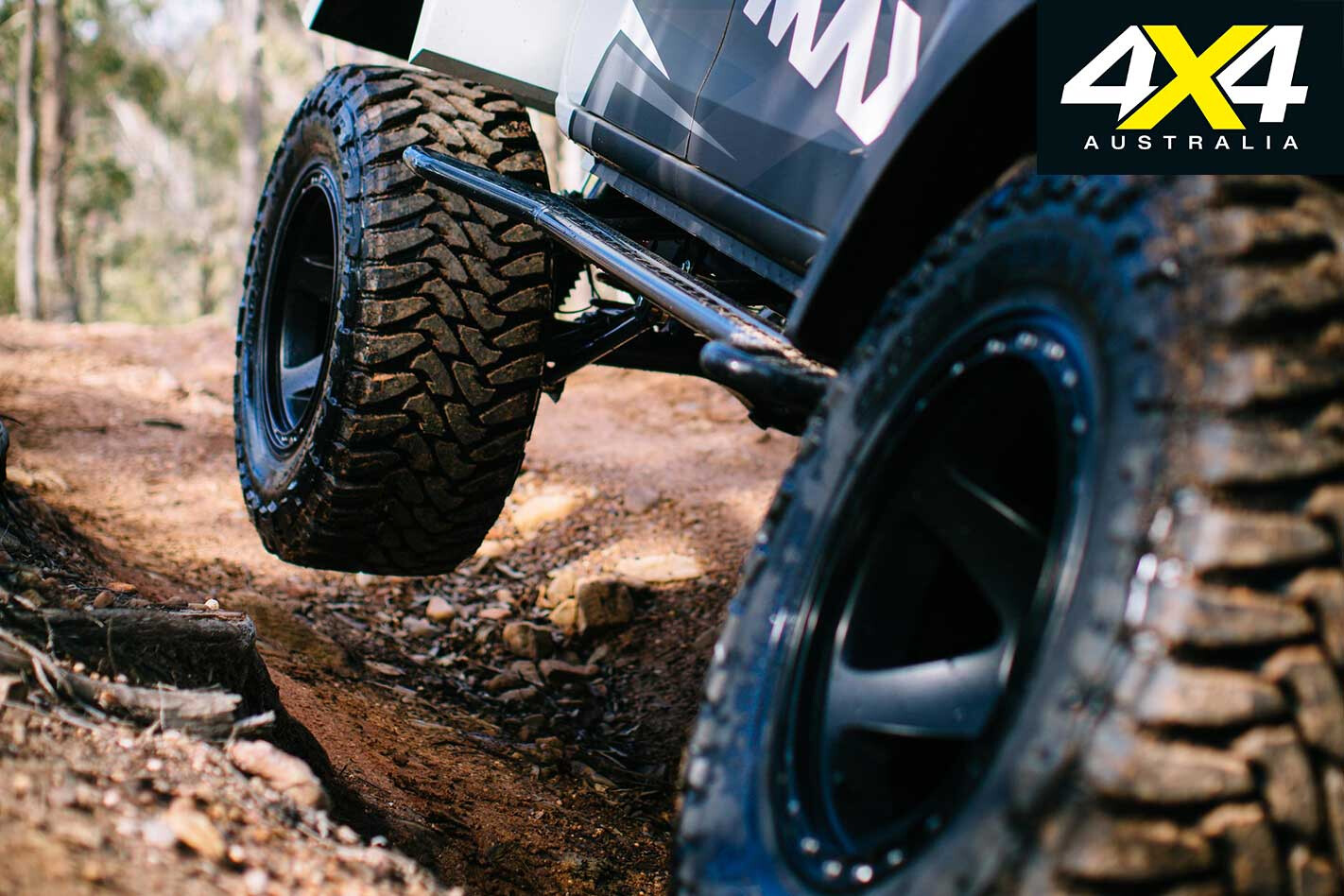
In addition to the custom fabrication work applied to the steel fenders, bonnet, alloy bullbar and alloy rear bar, both vehicles have had 10,000lb WARN Zeon 10-S Platinum winches plonked both fore and aft.
“The Concept X duo is a bit on the wild side – they’re a bit like the evil cousins of the family,” Boatwright added.
Isuzu’s 4JJ1 3.0-litre four-cylinder turbo-diesel – 130kW/430Nm – remains unchanged, and both vehicles get the six-gear automatic cog-swapper. Interior fit-out of both rigs mirrors the premium styling of the LS-T.
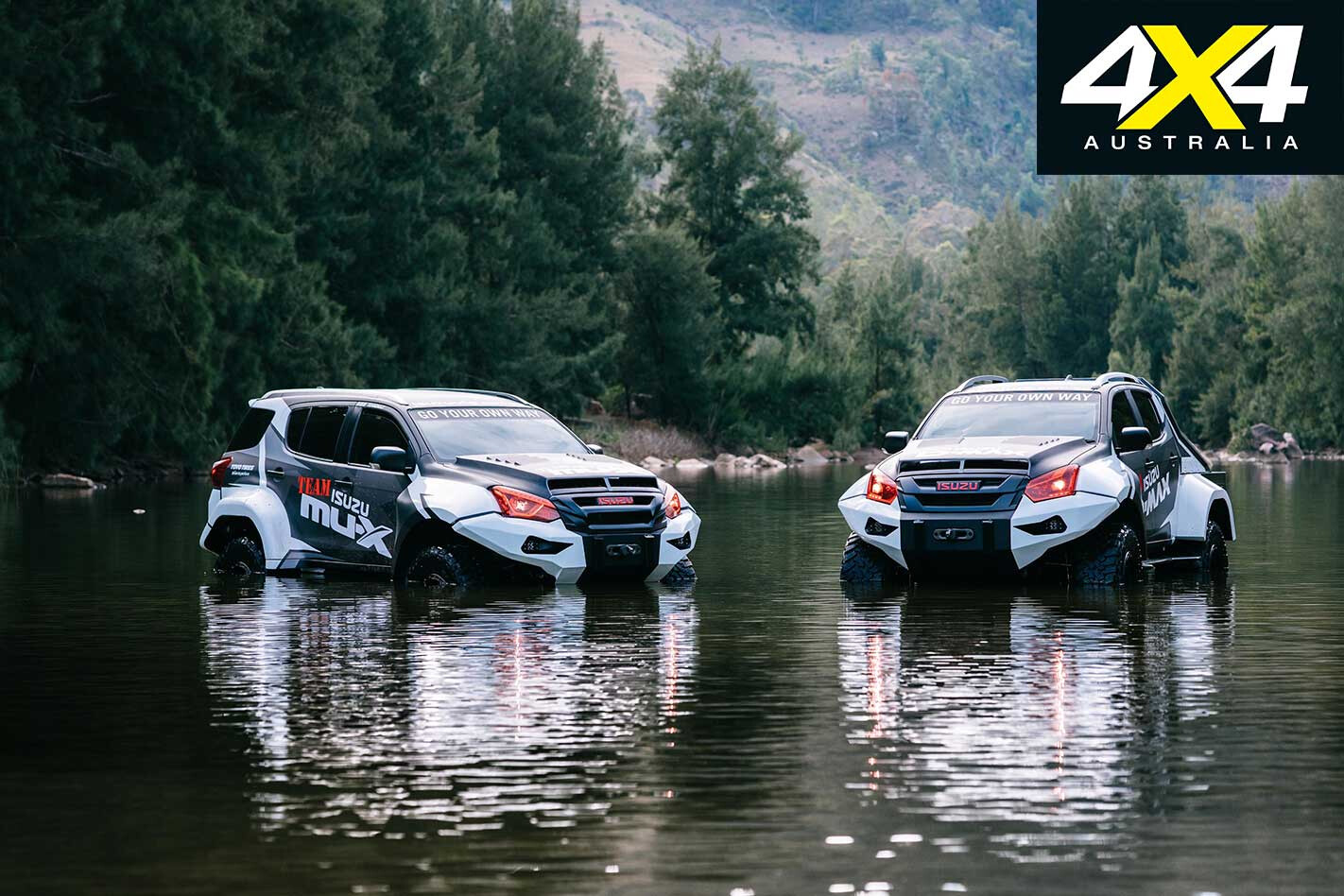
The Concept-X vehicles were revealed at the 2018 National 4×4 Outdoors Show, Fishing & Boating Expo, held at the Melbourne Showgrounds.
You won’t see them in showrooms, but they’ll be part of the Team D-MAX repertoire as they tour the country over the following year. Or, you’ve got until Sunday, August 19, to catch the monster rigs at the Melbourne Showgrounds.
There is no escape like getting on your 4×4, heading for the countryside and going off-grid for a while. Though, for some, that might be easier said than done.
For those who still need their modern electric-powered amenities or a secure roof over your head, these new 4×4 gear are a must-have.
EFS Vividmax Work Lights
EFS has released this great new work light range. The VividMax lights are built tough (as you’d expect) using extruded aluminium for strength and heat dissipation, plus they boast an IP67 water/dust ingress rating. Finishing off the rugged specs are stainless steel mounts and fittings, combined with a polycarbonate protective cover.
There are three models: the Oval Work Light (VMWL-OVAL18) includes an 18Watt spot beam and punches out 1000 Lumens thanks to its six 3W Cree LEDs; the Square Work Light (VMWL-424) is a four-inch-square unit that includes a 24W spread beam (1200 Lumens) via 16 high-intensity Osram LEDs; and the three-inch-square Work Light uses five 3W LEDs for a spread beam that produces 900 Lumens. All lights are backed by a two-year warranty.
RRP: $42 (VMWL-OVAL and VMWL-424); $35 (VMWL-315) Website: www.efs4wd.com.au
Goal Zero Lithium Yeti Power Packs
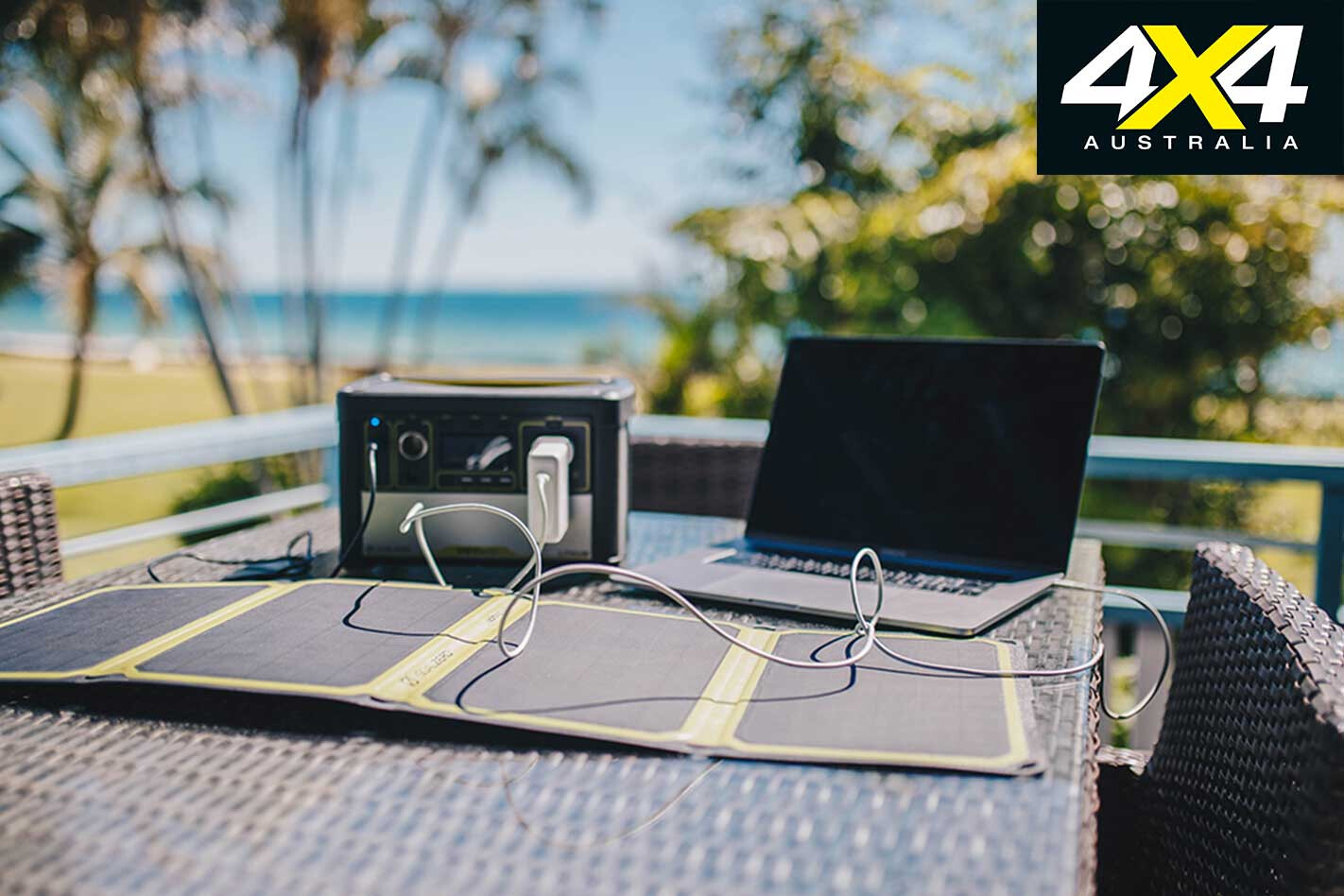
Goal Zero has released a three-model range of portable power packs.
The compact Lithium Yeti 400 includes an easy-to-read display, one AC output, three USB ports and two 12V outlets. The larger Lithium Yeti 1400 includes four USB ports, three 12V outlets, one 120V AC inverter and two 230V AC ports. Also included is multi-stage surge capability AC which allows you to charge more devices.
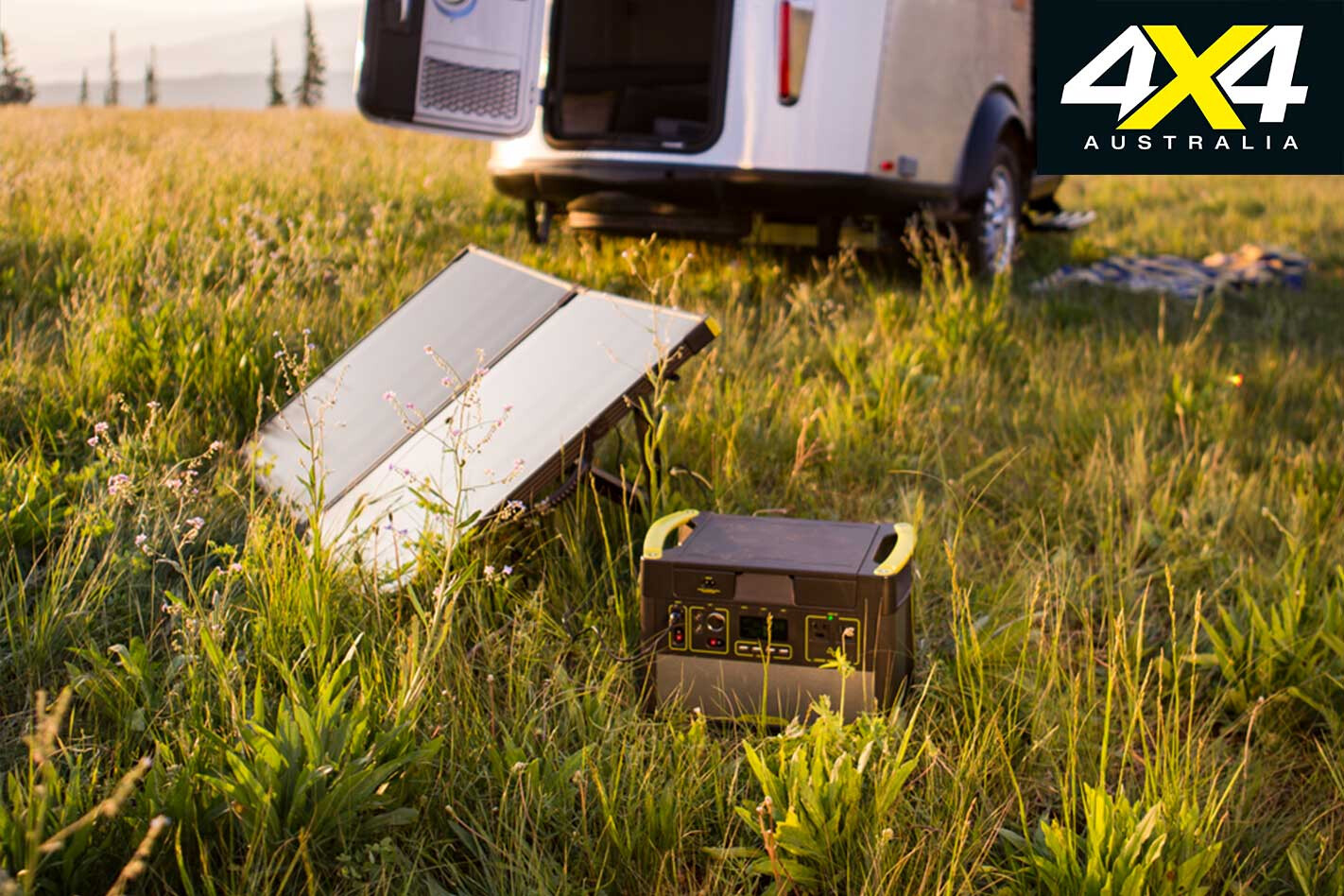
The largest model – the Lithium Yeti 3000 – includes inbuilt wheels and a handle for easy transportation. It can be recharged in 25 hours and has enough grunt to power a fridge for 50-plus hours. It has two USB-A ports, one USB-C and USB-PD, three 12V, a 120V AC inverter and two 230V AC ports.
RRP: $999.95 (Yeti 400); $2699.95 (Yeti 1400); $4999.95 (Yeti 3000) Website: www.goalzero.com.au
Oztent RX-5
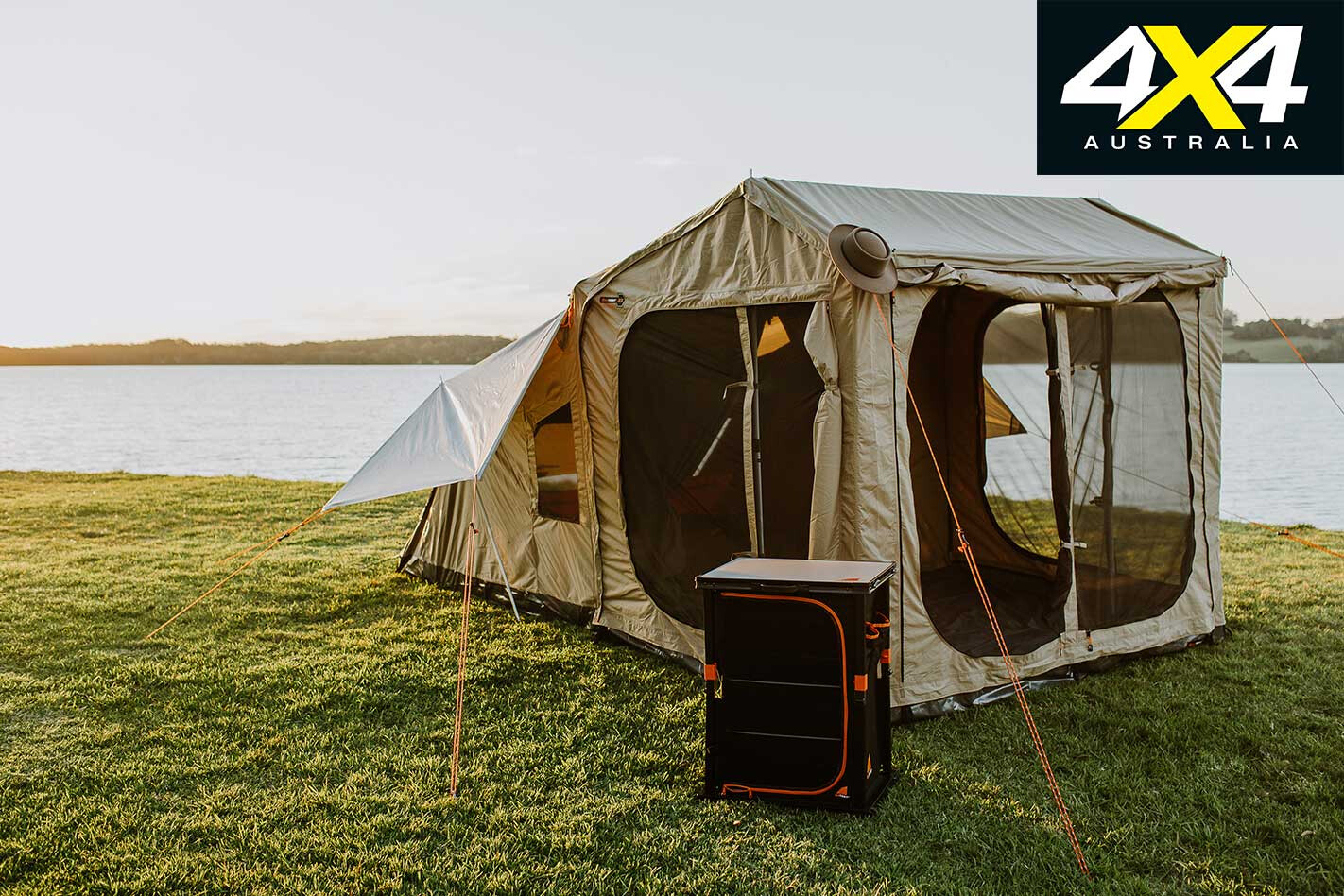
For the ultimate fast-setup tent that can cater for larger families, the Oztent RX-5 is a no-brainer. The RX-5 features two rooms, as well as an awesome zip-in entry floor that encloses the entry area and keeps everything out of the weather. The floor is a heavy-duty, heat-sealed PVC tub setup.
The RX-5 is made from Oztent’s new ModCan material, which is highly fire-retardant, waterproof, UV-resistant, super-strong and light in weight. The RX-5 comes with an included fly to minimise the condensation on the main tent and also keep the main tent interior cooler in hot weather.
The front entry section offers a height of up to two metres, and the entire floor space is 4600mm long x 2600mm wide by 2300mm at the tallest point. Weight is 25kg, which is pretty damn good considering the space on offer and the robust construction of the tent and its extruded aluminium frame.
Website: www.oztent.com
DREAMS rarely come true, unless you’ve got plenty of time, you plan properly and you’re prepared to put in the hard yards; which is precisely what Allan and Kathy Huxtable did. The end result after nearly six years is this tough-as-teak, fully kitted Toyota LC79 single-cab.
Their dream was one we all share, to escape the rat race and disappear over a dusty horizon on the Big Trip, exploring every remote campsite, rutted track and waterway in this awesome country of ours – and not worry about time. Yep, we’re already envious.
GOTTA START SOMEWHERE
ALLAN and Kathy initially built the Cruiser for shorter escapes: a few weeks across the Simpson Desert, a month doing Cape York, etc. The vehicle already had the schmick canopy (built by MFI Service Bodies in Warragul, Victoria, but designed by Allan), rooftop tent, kitchen, fridge and electrics.
Circumstances changed when Allan accepted a redundancy from his job, which led to a re-evaluation of what they wanted to do, and the couple sold up everything (yep, including the house) and hit the road on a more permanent basis, alternating between work periods (to fund travel) and heading out exploring more of Australia.
They just needed to add a few things to their touring kit first, such as a caravan and a tinny, which, in turn, meant more mods for the Cruiser – the perfect excuse for Allan, who takes any chance he gets to improve on what’s already a pretty awesome touring rig.
GETTING THE BASICS RIGHT
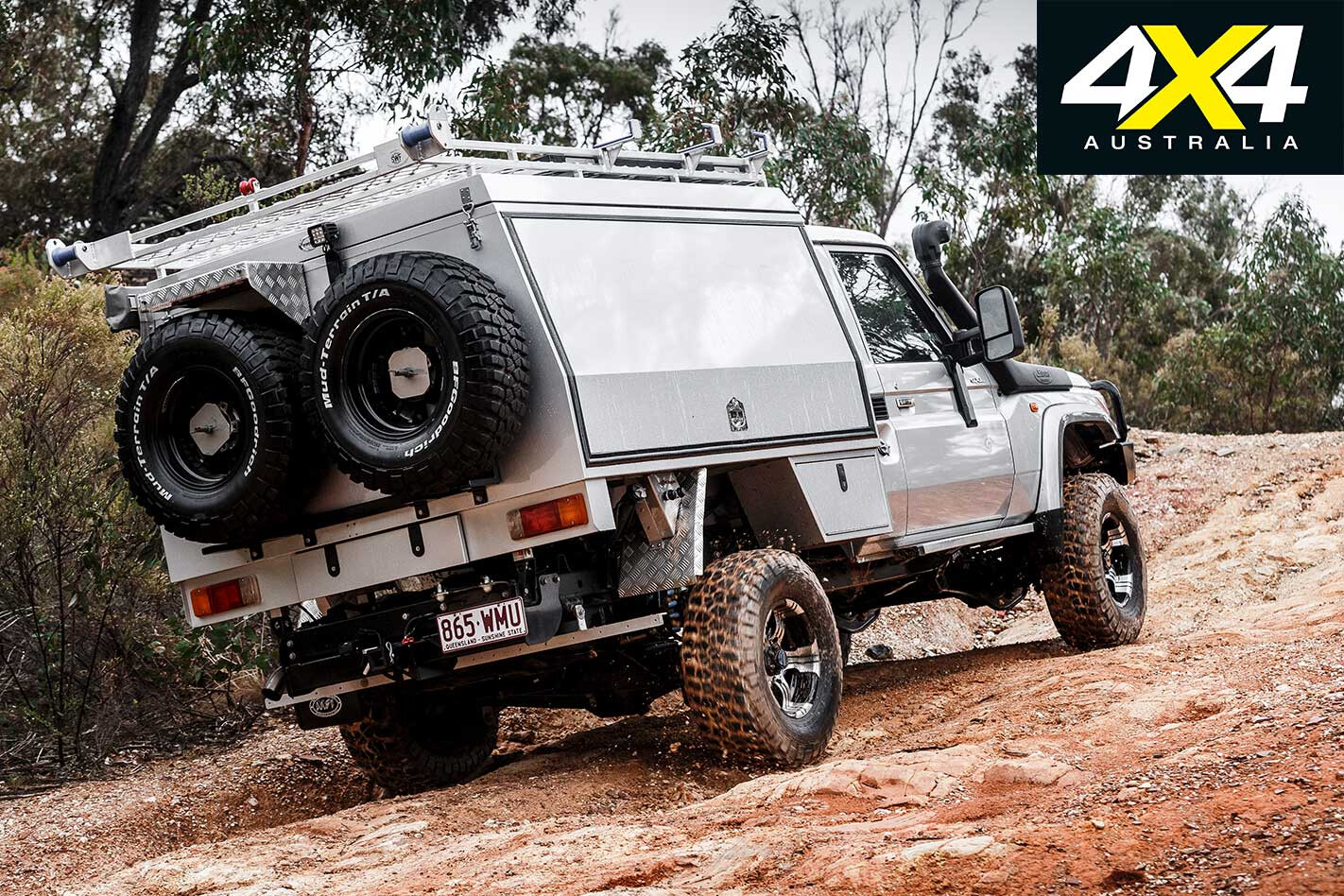
“THE Cruiser’s six years old, but it’s an ongoing transformation,” Allan said. “I wouldn’t say it’s finished yet, it’s still a work in progress.”
For a work in progress, the Cruiser is impressive. The canopy and its internal setup has been tweaked slightly over the years, but the setup (two side doors and one large rear slide-out tray underneath) retains all the essentials, with the kitchen, fridge, cooker, lights, food and all-important beers on one side, accessed via a large lift-up door.
The drawer setup on this side is excellent, with the larger items positioned lower down, and the lighter-weight plastic drawers capable of holding food, condiments and smaller utensils. Allan has also utilised one of MSA 4X4’s excellent drop-down fridge slides for the Waeco fridge, maximising cargo space on that side and ensuring everything’s close to hand.
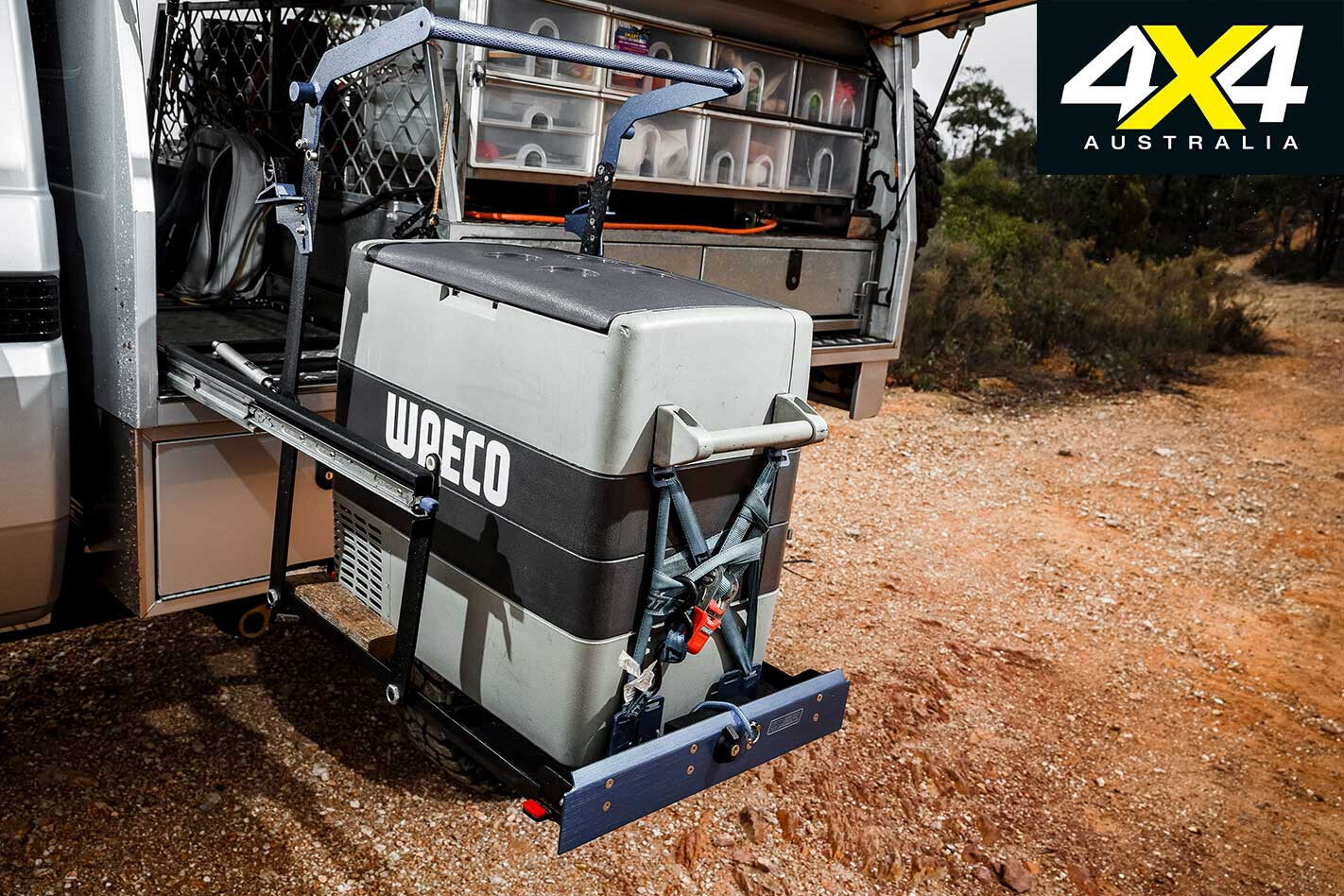
The opposite side of the canopy is where larger gear is stored, as well as tools, a gas bottle, a Coleman hot-water camp shower, and drawers loaded with recovery gear and other equipment. Also fitted inside the canopy is the power system, comprising two 120amp/h deep-cycle batteries, an ARB air compressor and a Redarc 1000-Watt inverter; while Redarc’s excellent Manager 30 battery management system keeps it all running smoothly. Hidden underneath is a 110L stainless steel water tank, accessed via a 12V pump.
A boon for the couple is that rooftop tent (also built by MFI Service Bodies) on top of the canopy, with Allan stoked that the unit can fit a double mattress inside it.
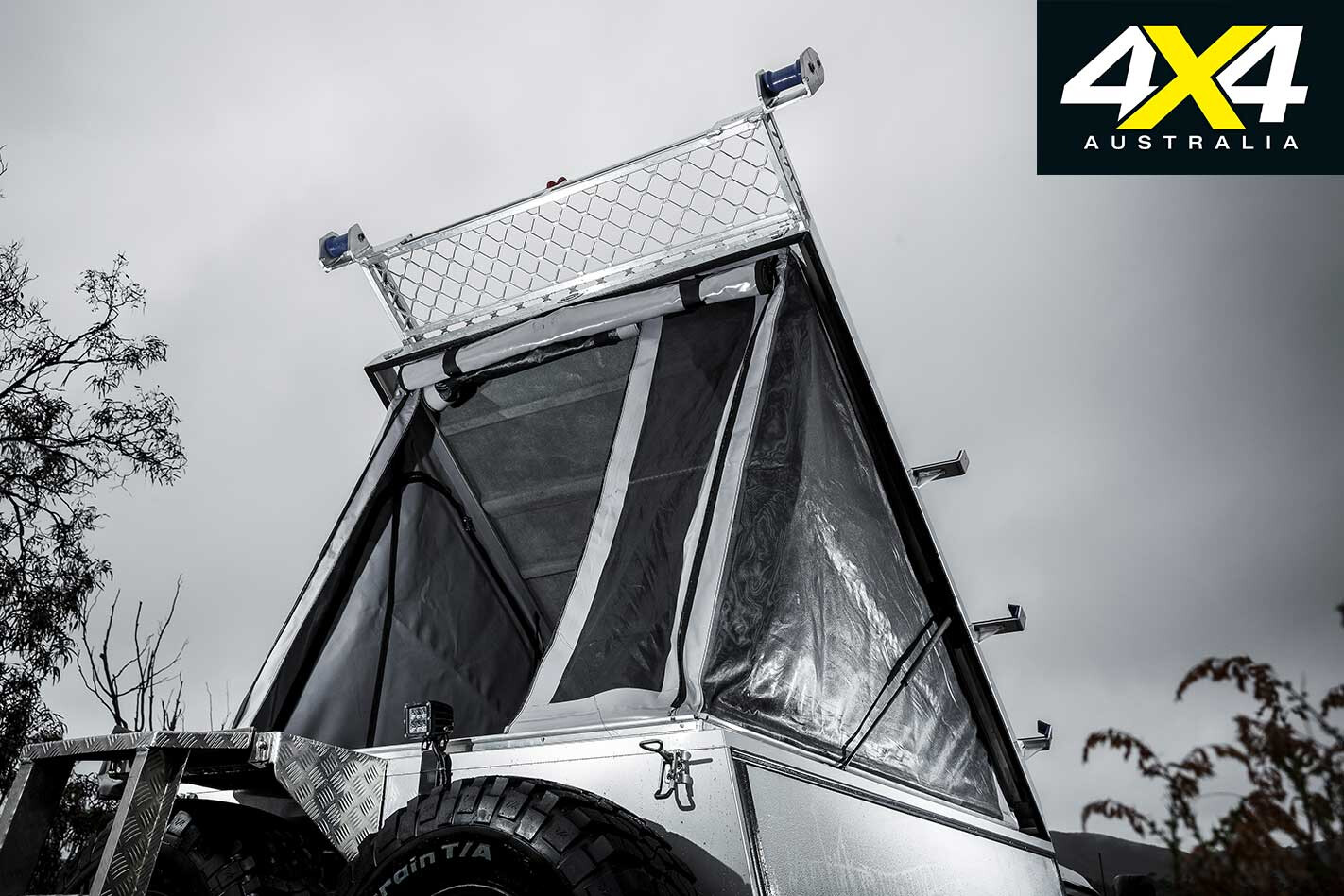
“The first time up in the Cape we (had) a tent and inflatable mattress,” he said ruefully. “Then across the Simpson we had stretchers, which didn’t really work, so we thought, ‘something had to change’.”
The rooftop tent features a heavy-duty PVC outer with a full-mesh inner, allowing use in any conditions, be it chasing additional crossflow ventilation on balmy Cape York nights, or when you’re zipped closed for chilly desert evenings.
The rooftop tent’s solid top incorporates a boat loader for the couple’s Sea Jay 3.9 Nomad tinny, along with a permanently affixed Redarc 200W solar panel. Cleverly, Allan has built a unique boat-loading system that uses the Cruiser’s Runva 11XP winch (a waterproof jobbie), which is housed in an ARB bullbar.
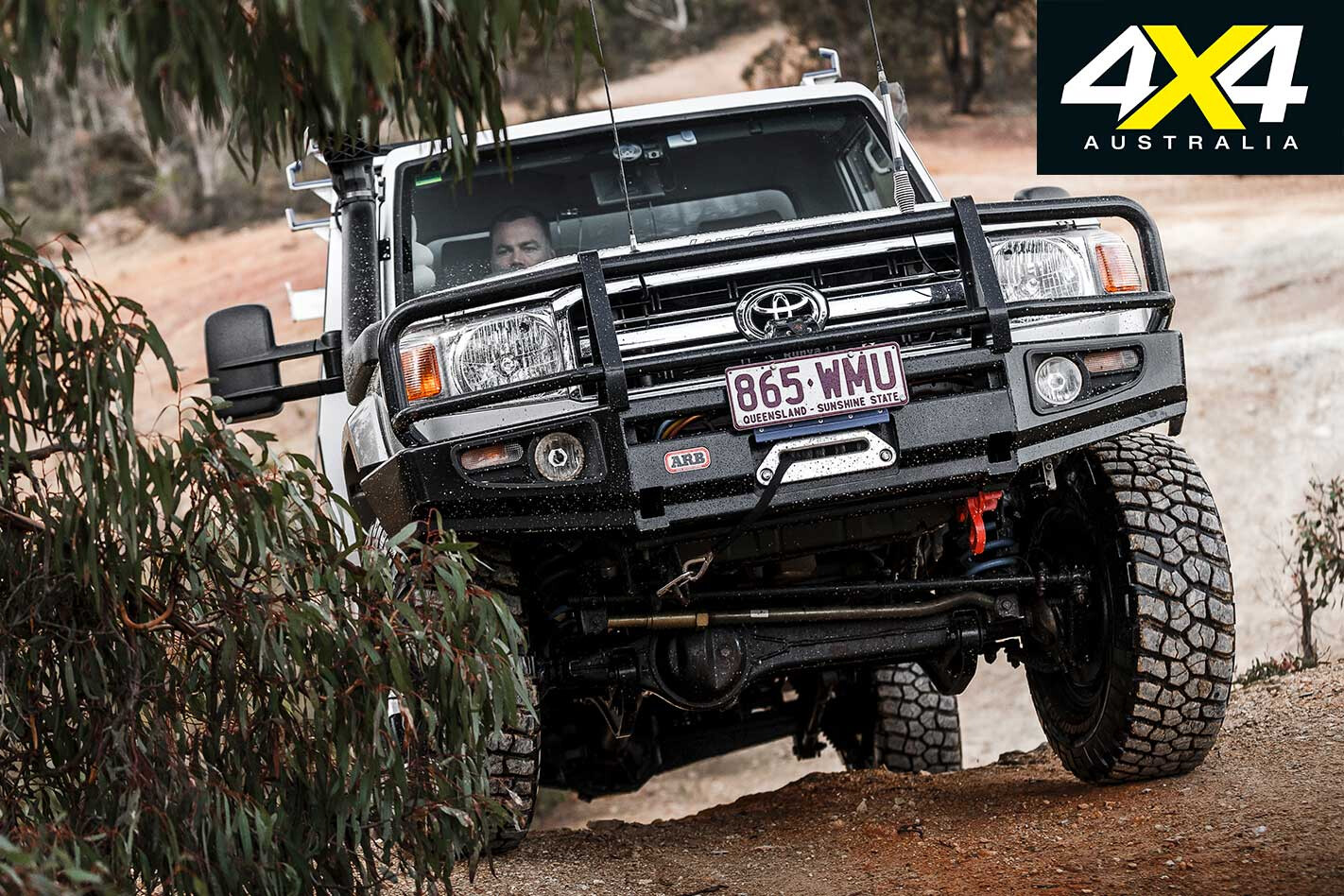
“I have a bracket that fits onto the bullbar, so the winch rope goes straight up onto this bracket that’s about a metre high,” Allan explained. The rope then goes across to the back to hook onto the boat. This way, the rope doesn’t get wrecked on the bullbar and doesn’t mark the bonnet.
“You only have one winch and they play up when you don’t use them, so putting the boat on and off means you know it works!”
LIFTED AND LOADED
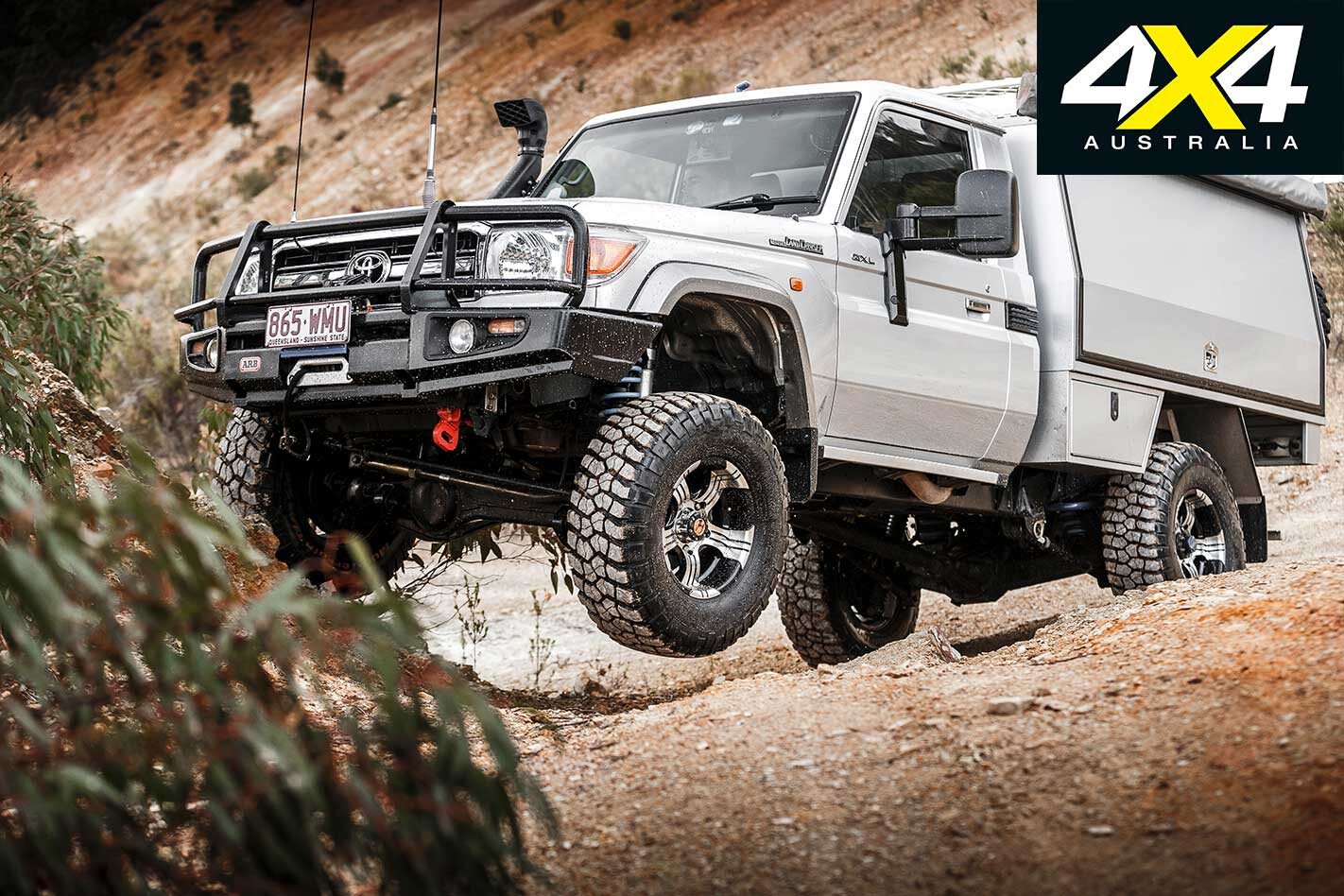
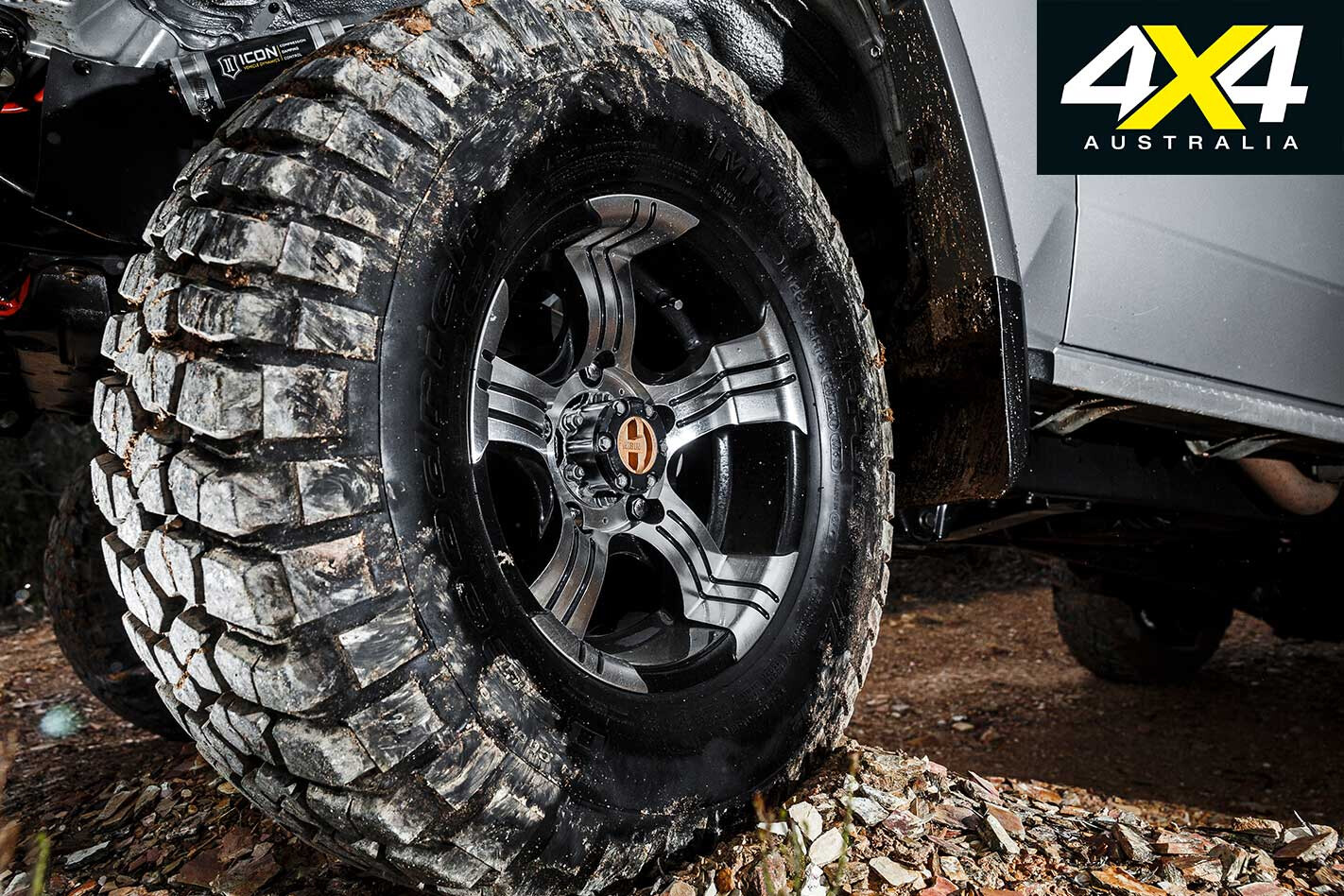
THE rooftop tent gets plenty of use, but Allan and Kathy also tow a caravan for when they’re staying in one place for longer periods or when they’re working. This saw Allan look to remove the LC79’s standard leaf-sprung rear suspension setup and replace it with a trick JMACX Offroad Solutions rear coil-spring conversion, while also upping the GVM to 3900kg. This kit offers a wider rear track to match the 79’s front end, hardened axles, Lovells coil springs, Icon remote-reservoir dampers, and airbags (controlled via an in-cabin setup) for towing.
The Cruiser sports a four-inch lift as a result, and rolls on beefy 16×8-inch Allied Wasp wheels shod with BFGoodrich LT285/75R16 rubber. Allan used to run even bigger 35s but they affected the gearing too much; although, he now says if he did it again he’d just keep the 35s and swap the diff gearing to something more suited to bigger rubber.
Keeping the big rig moving along is a subtly modified 4.5L TDV8 donk that now punches out 160kW and 603Nm. The turbo has been tweaked by Munro Turbochargers, a Unichip Q4 has been fitted, and there’s a two-inch cross-over pipe, with a three-inch stainless steel straight-through exhaust.
Allan wasn’t too keen on going crazy with the engine and has been more than happy with the performance delivered from the mods – and the fact the engine (and vehicle itself) is dead-easy to service, no matter where they end up.
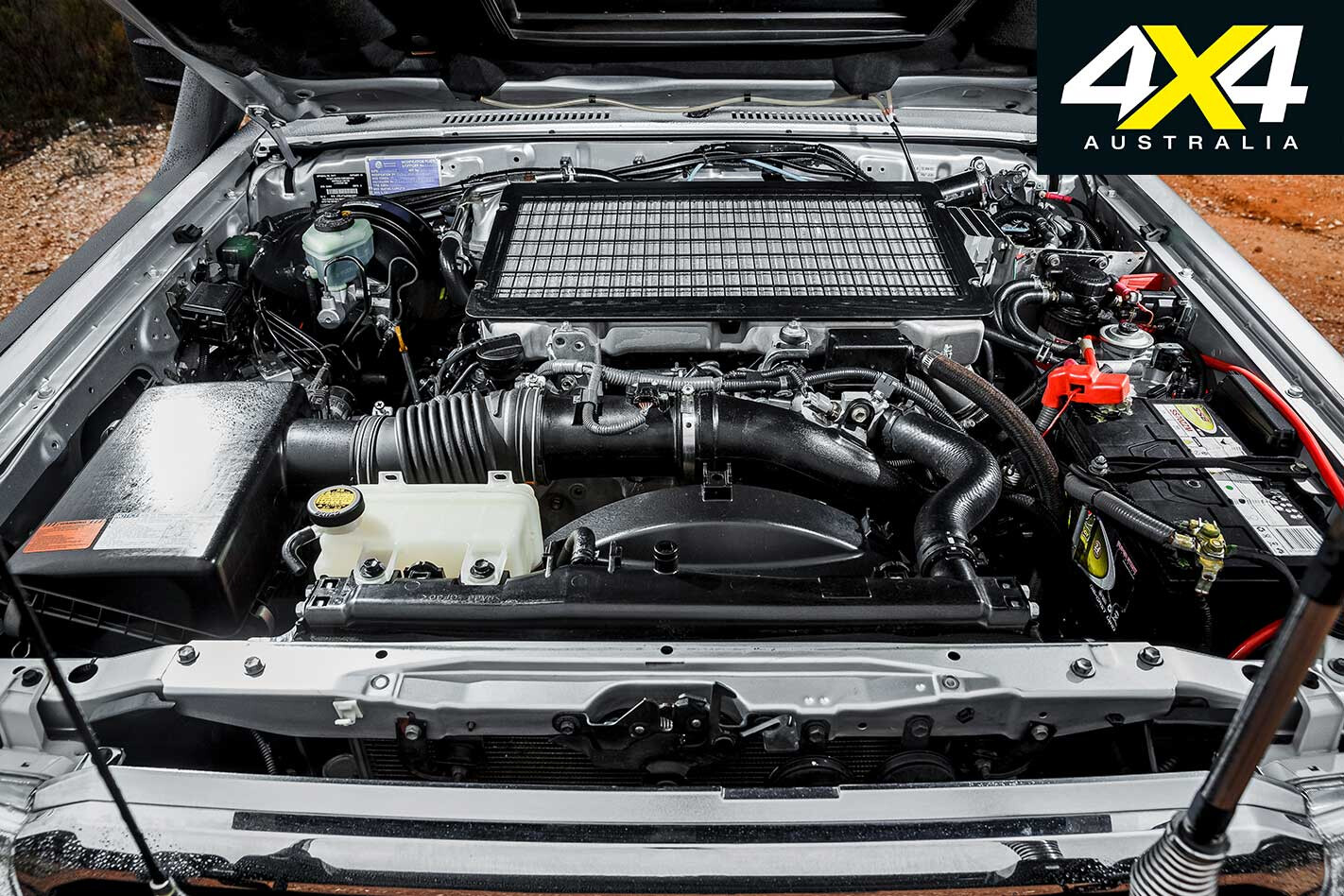
“The one thing I do like about having a Toyota is when you’re out in the bush, every mechanic has a Land Cruiser,” Allan said.
“They know them inside-out and back to front, so you just pull into any mechanic’s workshop if you have any issues and they’ll just say yeah, yeah, that’s one of those, I have got parts. We’ll have it sorted in half an hour. That’s the best thing with Land Cruisers: every mechanic out there knows what to do and how to do it to fix them quickly.”
Stopping the big rig is an upgraded brake booster with braided lines and slotted rotors up front.
LIVIN’ THE DREAM
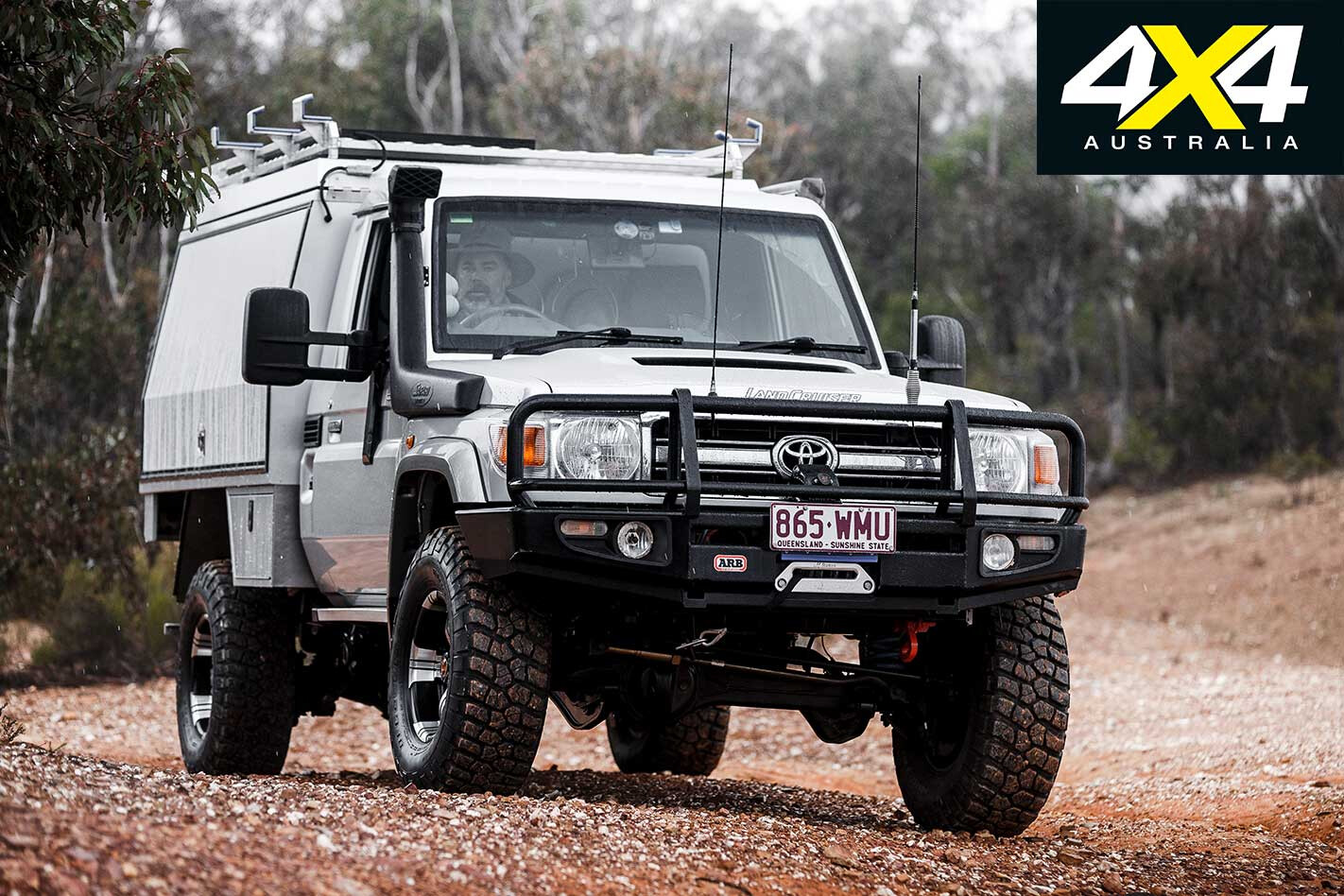
WHEN your vehicle is your home you need to make sure it has as many comforts as possible. The cabin has all the essential instrumentation – EGT exhaust gas temp gauge, boost gauge, airbag controls, gauges, etc. – to ensure everything ticks along.
Allan has also added a brilliant roof console, centre console and door pods (both from Cruiser Consoles, Qld), with the latter also housing the Alpine sound system’s speakers.
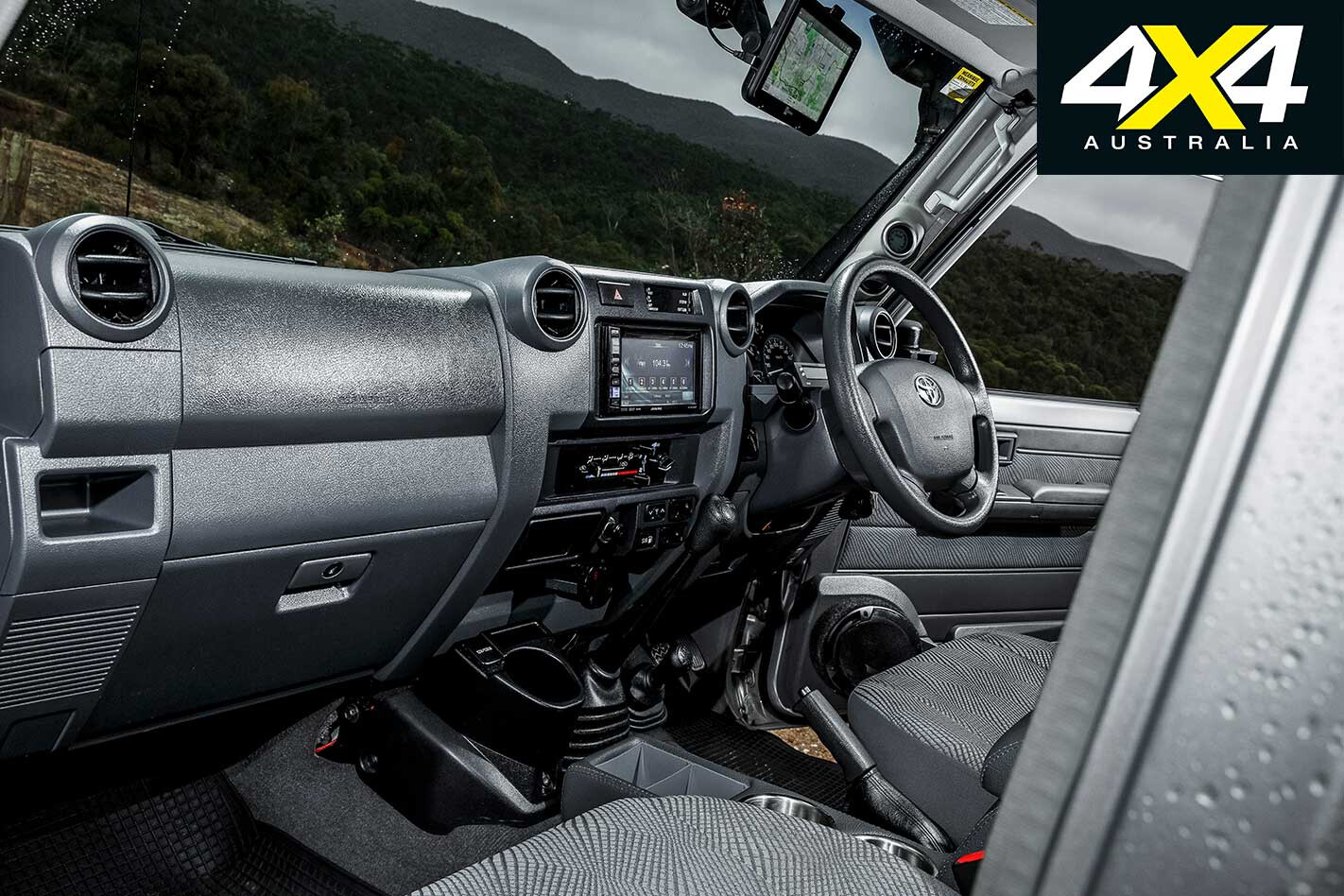
Anyone who’s tried to have a conversation inside a moving LC79 knows how noisy they are, so Allan and Kathy added Dynamat sound deadener throughout to up in-cabin liveability further. Proving Allan’s point that you never stop modifying or changing your tourer, the next tweak is a decent set of seats to replace what he describes as the ‘shit’ stock items.
It’s hard to argue with that: spending most of your life touring in a vehicle (and then spending weeks residing in/near it) means it needs to be a place you really like. A bit like Allan and Kathy’s life, we reckon, and best summed up by Allan when he described that tipping point that led this adventurous couple to their nomadic, Cruiser-borne life.
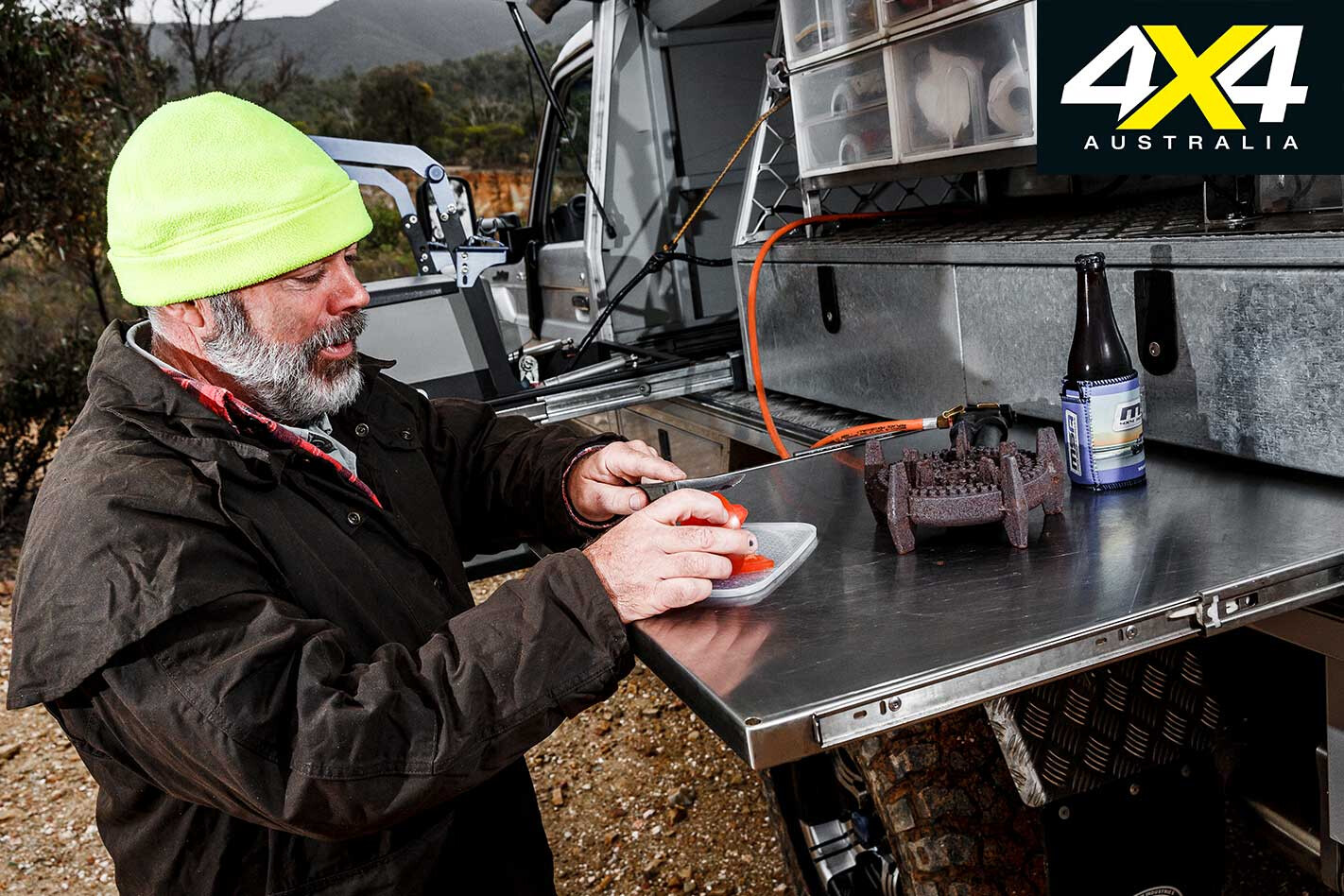
“Every time we’d go to a work conference and you’ve got to introduce yourself, people would eventually ask ‘what would you do if you won a million bucks?’, and they’d all answer ‘travel’,” he laughed. “And you sit there and think ‘why do we just say that and we don’t do it?’”
“You should make plans to do it,” he affirmed. “I actually suggested that to Kathy when we talked about the redundancy, and then I turned around and she wasn’t there – she was already packing the bags!”
After chatting to Allan and drooling over his well thought-out, tough-as LC79 tourer, it’s hard not to start packing the bags ourselves.
BOLLINGER Motors has given the front-end of its boxy B1 a nose job, to improve aerodynamic performance.
Take a glance at the B1’s simple lines and rugged design and you’d be forgiven for thinking aerodynamics wasn’t exactly a priority when the sketches turned into something tangible; but the boffins at Bollinger HQ have been hard at work, subtly tweaking the nose to give the B1 a new-look front fascia.
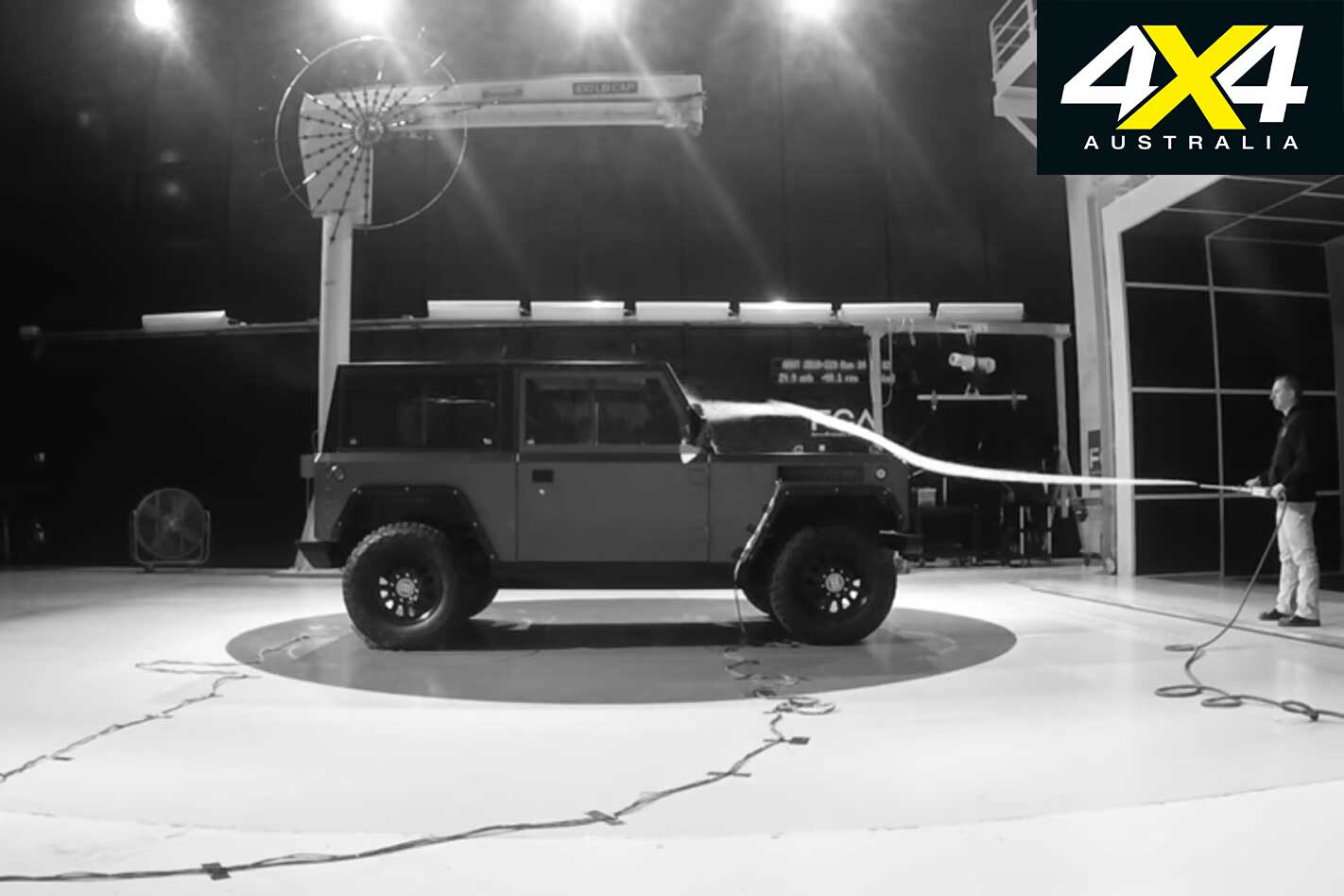
The video uploaded to YouTube shows the B1 undergoing thorough aerodynamic testing, with the major amendments made to the vents (exit vents are now positioned on the hood) and headlights (now positioned within the mesh grille).
The B1 was originally unveiled in July 2017, in New York. The full-time all-wheel drive system employs a dual-motor powertrain configuration, with front- and rear-mounted synchronous electric motors (capable of 270kW and 640Nm). Production models will be offered with two lithium-ion battery-pack options (60kWh and 100kWh), with ranges of either 120 (193km) or 200 miles (322km).
EMERGING from the forest on the track into Rover Park leads to a ridgetop, where in all directions the land stretches away in folds of green. You could be excused for thinking you’d taken a wrong turn, but you haven’t.
For 20 years this had been the domain of its founders, Hans and Heidi Hautle. They had welcomed untold numbers of 4WD enthusiasts to share it with them, but in December 2017 they stepped down in favour of new owners Matt and Meg Maloney. However, Matt and Meg want to continue where Hans and Heidi left off.
“We don’t intend to change anything much,” Meg said. “We want to continue keeping Rover Park as a family oriented place.”
One of the keynotes essential to the Rover Park way is that campsites aren’t organised. You may choose to camp in the main area not far from the kiosk where there is an amenities block, or you can joss down in a number of campsites scattered throughout the park.
The idea is for the visitor to get back to the feel of bush camping that was done before the advent of National Park-style signs and barriers. However, each of the remote campsites still offer the convenience of a long-drop dunny.
To reach one of these campsites you must negotiate the network of tracks within the park. Each track is graded according to its level of difficulty, with the toughest ones labelled Extreme. If you’ve come here to ride your trail bike then it’s a different matter, as bikes are restricted to a designated track system in the base area, for safety reasons.
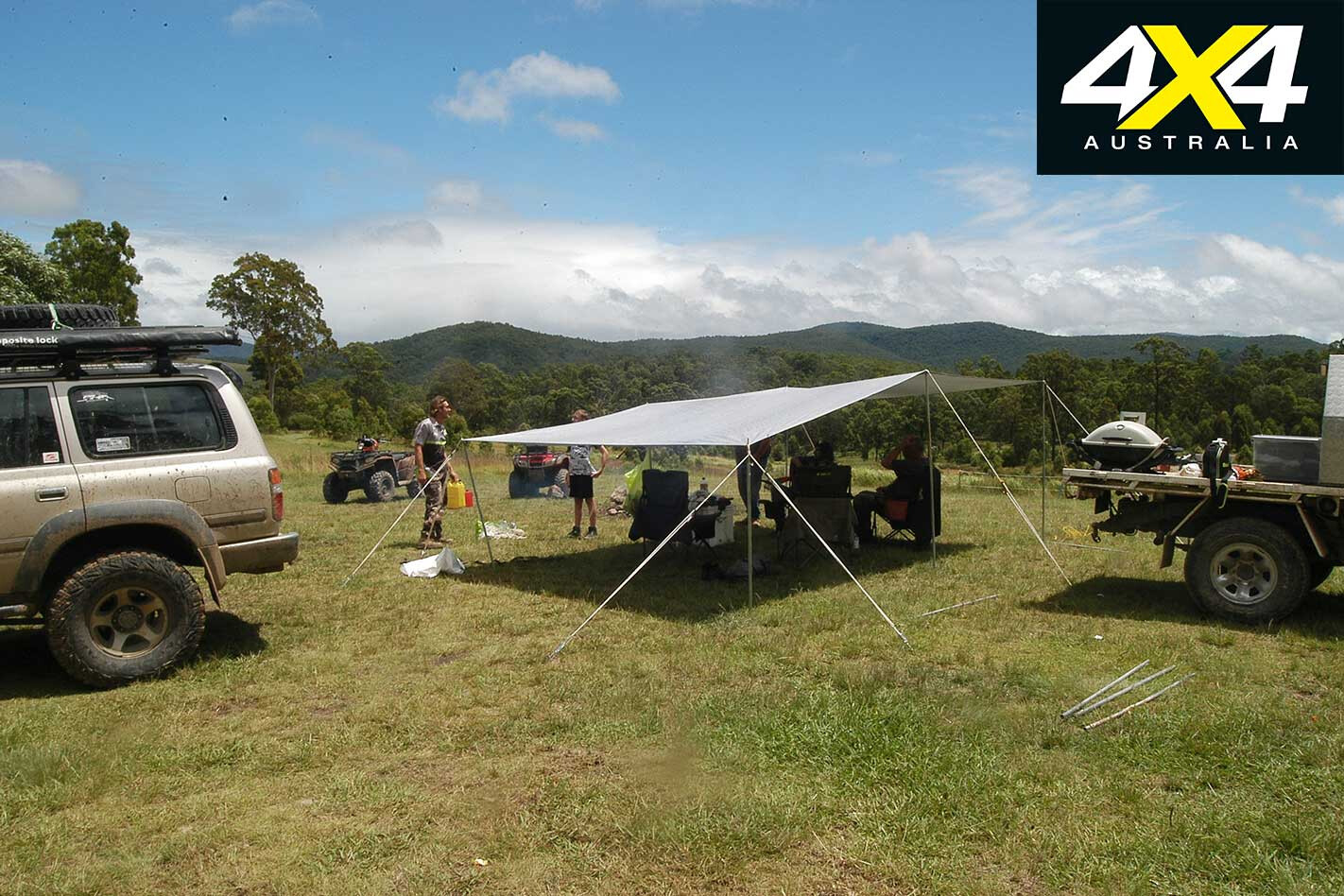
Other options include static accommodation built around on-site caravans that offer higher levels of comfort (electricity, and some even boast a fireplace). You still have the use of the amenities, though, with flushing toilets and showers.
Long-time Rover Park regular Tony Parry volunteered to be our guide for the day, so I climbed into his modified 80 Series Land Cruiser. The 80 Series took the tracks in its stride, and right behind us and along for the ride was a group from a Lismore-based 4WD club called the “Foot Flat”.
Tony is someone the Maloneys have come to rely on a fair bit, as Meg explained. “Some of our regulars, Tony in particular, do a lot to help out around here,” she said. “When it gets busy, like in holiday times and people get stuck on a track, it’s usually blokes like Tony who go out to recover them.”
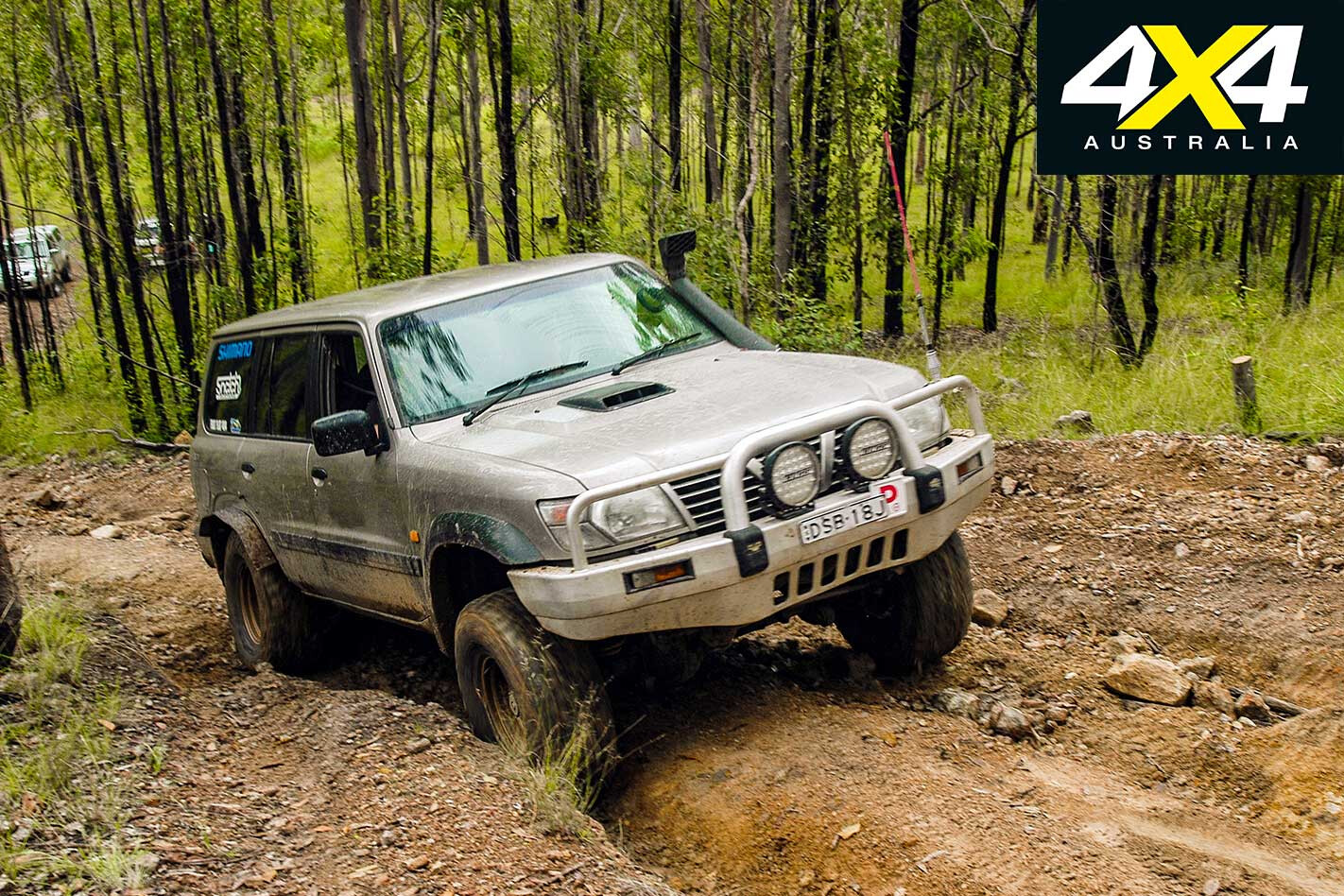
I asked Tony about this and he said it can get a bit “interesting” at times. “We usually take a team of up to three vehicles out on a recovery,” he said. “You never know what you’re going to be in for, and an extra vehicle or two can make all the difference if someone has slid half-off the track.”
The Cataract River, with about a four-kilometre frontage, is the back boundary of the park, and there are some great camping opportunities along here – I’m reliably informed there are bass and eastern cod in the river, however, fishing was far from the minds of those in our convoy as we came to the base of a pretty gnarly looking Mullet Mountain Track, which was labelled as Extreme. As Tony’s 80 Series is his daily driver, he decided not to go up. “I’ve got my other car in the shed at home for this sort of thing,” he said. A couple of others were not so restrained.
Ron Borton showed up in his little but extremely modified Suzuki LJ30. His son Chris was already busy trying to get his Patrol ute up there, and Ron sat none too patiently waiting for his young bloke to get out of the way.
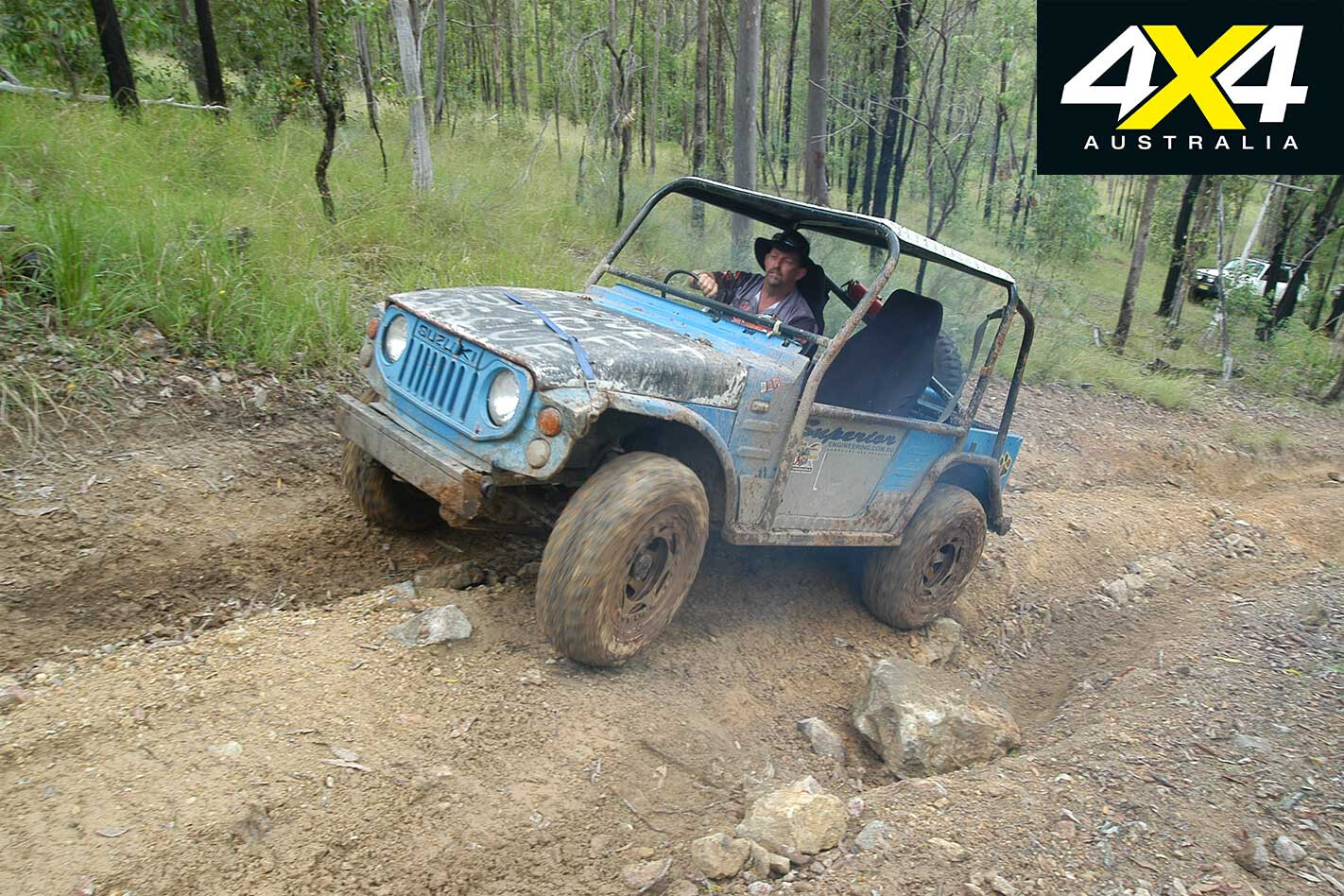
Chris decided it wasn’t going to happen and let Dad have a go. The little three-cylinder wheezed and belched out some blue smoke, then trailing more fumes it waddled its way to the top with barely a wheel spin. There was a trolley jack in the back of the Zuke and I asked Ron if it was some sort of recovery tool. “Nah, just keeps a bit of weight over the back wheels,” was his reply.
A mud map of all the tracks in the park is available, but Tony has plans to upgrade it. A big GPS unit sits on the top of the Land Cruiser’s dash and he aims to put all the tracks on a map, complete with ratings, nearby campsites and names. He believes this will not only help newcomers to find their way around, it will also help to keep them out of trouble.
The entire property covers about 16km², but the main area that contains the trail-bike track, a waterslide and a flying fox takes up about 7km². Once again it’s all about being family friendly, and there’s a pet llama and an alpaca keeping the weeds down in the stockyards. There are also some ponies, goats and donkeys to keep the kids amused.
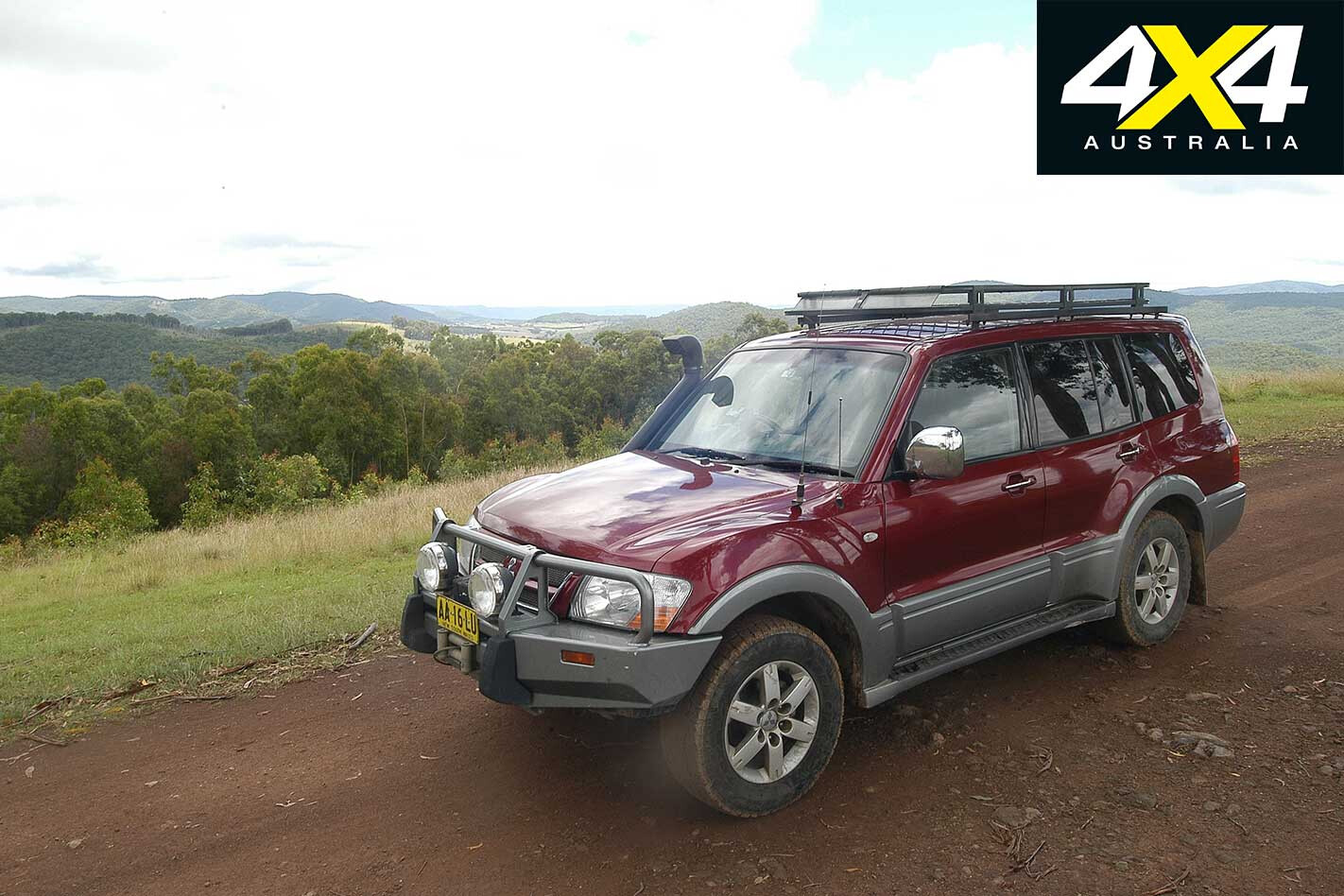
Speed is strictly controlled and any offenders will be asked to leave. This means no donuts in the camping areas; there’s a spot set aside for that sort of thing called a ‘play area’. Besides, burnouts and other stunts don’t do the nicely grassed camping areas any favours. For safety reasons, night driving is also not permitted.
The entire locality here was once a gold-mining area. Back in the late 1890s all sorts of fortune seekers came looking for that elusive metal. Today, you can still do a bit of gold panning, and Meg will be happy to help you out – or at least she’ll point you in the right direction. Just don’t count on getting rich, the old timers gave the place a pretty good seeing to.
Travel Planner
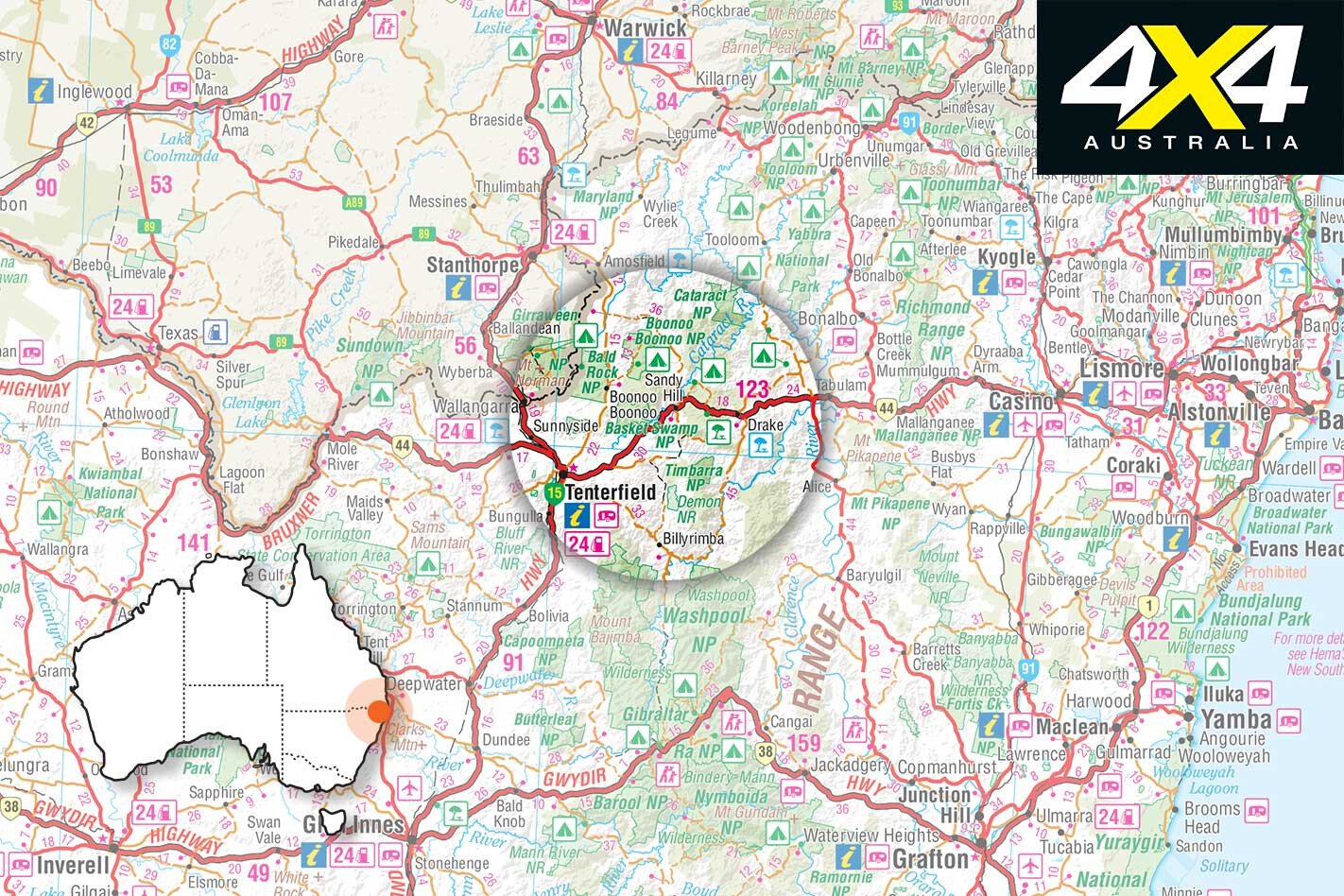
WHERE ROVER PARK is situated on the Bruxner Highway, roughly halfway between Tenterfield and Drake. Fuel is unavailable at Drake, but Tenterfield is more reliable and about 40km away.
Coming from Tenterfield you’ll see the sign on your left; if you come in via Casino you’ll turn right. If you come from Brisbane the best way would be to go to Warwick or Toowoomba and follow the New England Highway to Tenterfield, then take the Bruxner Highway east. From near Ballina on the coast it’s about a 400km round trip.
WHAT TO BRING COME fully provisioned and have sufficient fuel and water to explore. Some basics can be bought at the kiosk. Firewood can be gathered in the park and Meg or Matt will show you where, as they don’t want trees cut down. Alternatively, you can buy precut wood.
COMMS SORRY, but mobile phones won’t work here, and you’ll also be deprived of email. There is a pay phone at the kiosk, though. All comms are by UHF radio and channel 16 is monitored at all times.
RECOVERY IF YOU stuff up big time and need to get pulled out, you may find yourself making a donation to the recovery team. The fee will depend on how badly you blew it and how much gear it takes to get you out. Remember, vehicle recovery is potentially dangerous, and these blokes are using their gear and vehicles on their own time. It’s best not to put yourself in that position.
CONTACT CHECK out the Rover Park website at: roverpark.com.au Email: [email protected] Phone: (02) 6737 6862
THE MELBOURNE Showgrounds will come alive with four-wheelin’ action this weekend, as the National 4X4 Outdoor Show, Fishing and Boating Expo rolls into town.
The annual event will kick off to the public on Friday, August 17, and will run until Sunday, August 19. Punters will get the opportunity to drool over dozens of killer 4x4s and boats – Team Isuzu’s extensively modified CONCEPT X (think: 38-inch tyres) will be revealed on the Friday – as well as check out more than 200 exhibitors.
There’ll also be a massive contingency of celebrity guests, two stages, plenty of prizes to be won, and carnival rides for the kiddies.
A highlight of the show is the Amarok V6 4WD Proving Ground, where attendees will be taught how to manoeuvre through an off-road track under the expert guidance of 4WD Victoria – great for beginners, and a great refresher for hardcore four-wheelers.
The Melbourne Showgrounds is located seven kilometres from the CBD, right next to Flemington Racecourse. Parking is available on-site – $20 per day – via Flemington Drive. The train is probably easier for most people, with trains operating from Southern Cross Station every 30 minutes on the Saturday and Sunday, with free shuttle buses ferrying patrons from Flemington Station to the show.
Tickets are available now at: www.4x4show.com.au/melbourne.
DATA collected from 56 markets around the world has revealed the Ford F-Series has remained the best-selling vehicle on a global scale.
According to data collated by JATO Dynamics – a leading market analyst – Ford sold 534,827 F-Series in the first half of 2018, a 3.0 per cent growth compared to the first half of 2017, with the lion’s share obviously sold in the US of A.
The Toyota Corolla is next best with 56,705 fewer overall sales, followed by the VW Golf, a further 46,286 units behind – interestingly, the same top three sat on the podium at the midway point of 2017.
The world’s top 10 best-selling models (2018): 1 – Ford F-Series: 534,827 2 – Toyota Corolla: 478,122 3 – Volkswagen Golf: 431,836 4 – Honda Civic: 412,664 5 – Toyota RAV4: 395,816 6 – Nissan X-Trail: 392,489 7 – Volkswagen Passat: 356,566 8 – Honda CR-V: 339,081 9 – Honda HR-V: 334,917 10 – Chevrolet Silverado: 326,427
Due to its popularity Stateside, Chevrolet’s Silverado has enjoyed considerable sales growth so far in 2018 (up 10 per cent), which has seen it move from 15th in 2017 to 10th in 2018.
Other 4x4s in the top 50 global best-sellers include the RAM pick-up (290,125 sales, down 8.0 per cent) and – a bit closer to home – the Toyota Hilux (202,132 sales, up 11.0 per cent).
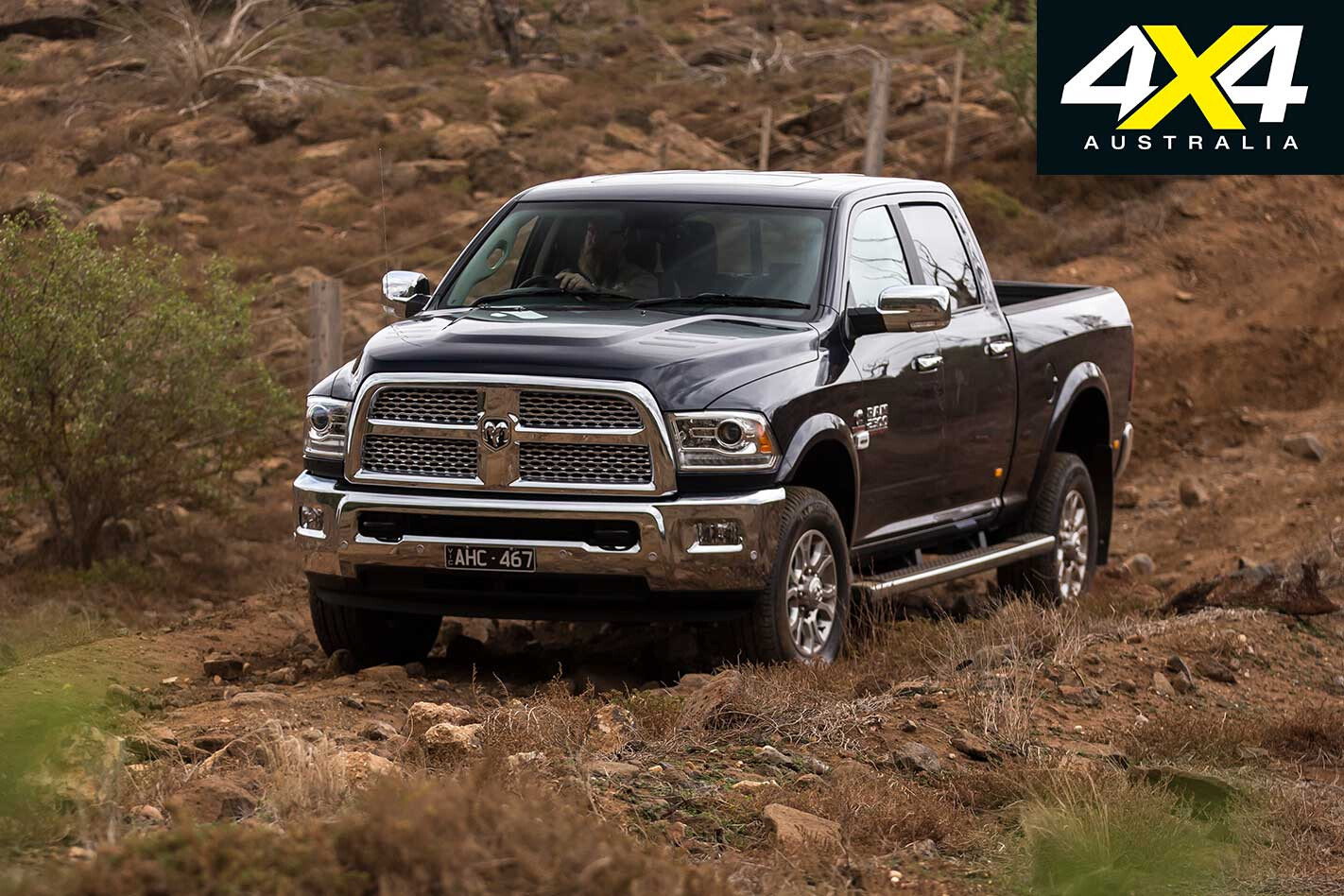
According to the July 2018 VFACTS report, the Hilux is Australia’s best-selling 4×4 in 2018, with 21,897 new units finding homes. This places it marginally ahead of the Ford Ranger (21,816 sales).
Total global vehicle sales during the first half of 2018 total 44.03 million units, a 3.6 per cent growth compared to the same period last year (42.49 million). The JATO report puts this growth down to three key triggers: good economic mood in America, improved indicators in Europe and the continuous expansion of the Chinese economy.

The growth of the Indian market is another key factor, with India (1,982,442 sales) outselling Germany (1,973,242) to become the world’s fourth largest market, trailing China (12,234,244), USA (8,624,189) and Japan (2,691,054).
As cooler days are beginning to wind down, the outback comes alive with horse racing, 4×4 motorsports, and concert events. However if a proper getaway is what you are looking for, there are a number of bush camping and country homestead stays to pique your interest.
DARWIN FESTIVAL (NT)
The Top End capital of Darwin will hold its annual Festival over 18 days, kicking off on August 9 and finishing on August 26.
The Festival is chokkas with events and attractions, including outdoor concerts with local and overseas entertainers, theatre, dance, live comedy, music, film, workshops and plenty more. Free performances will take place at Festival Park and various venues throughout Darwin.
Being able to pick and choose what events you go and see – and then spending any downtime exploring Darwin and surrounds – makes for a great experience.
For more information, visit: darwinfestival.org.au.
MOUNTAIN ESCAPE (NSW)
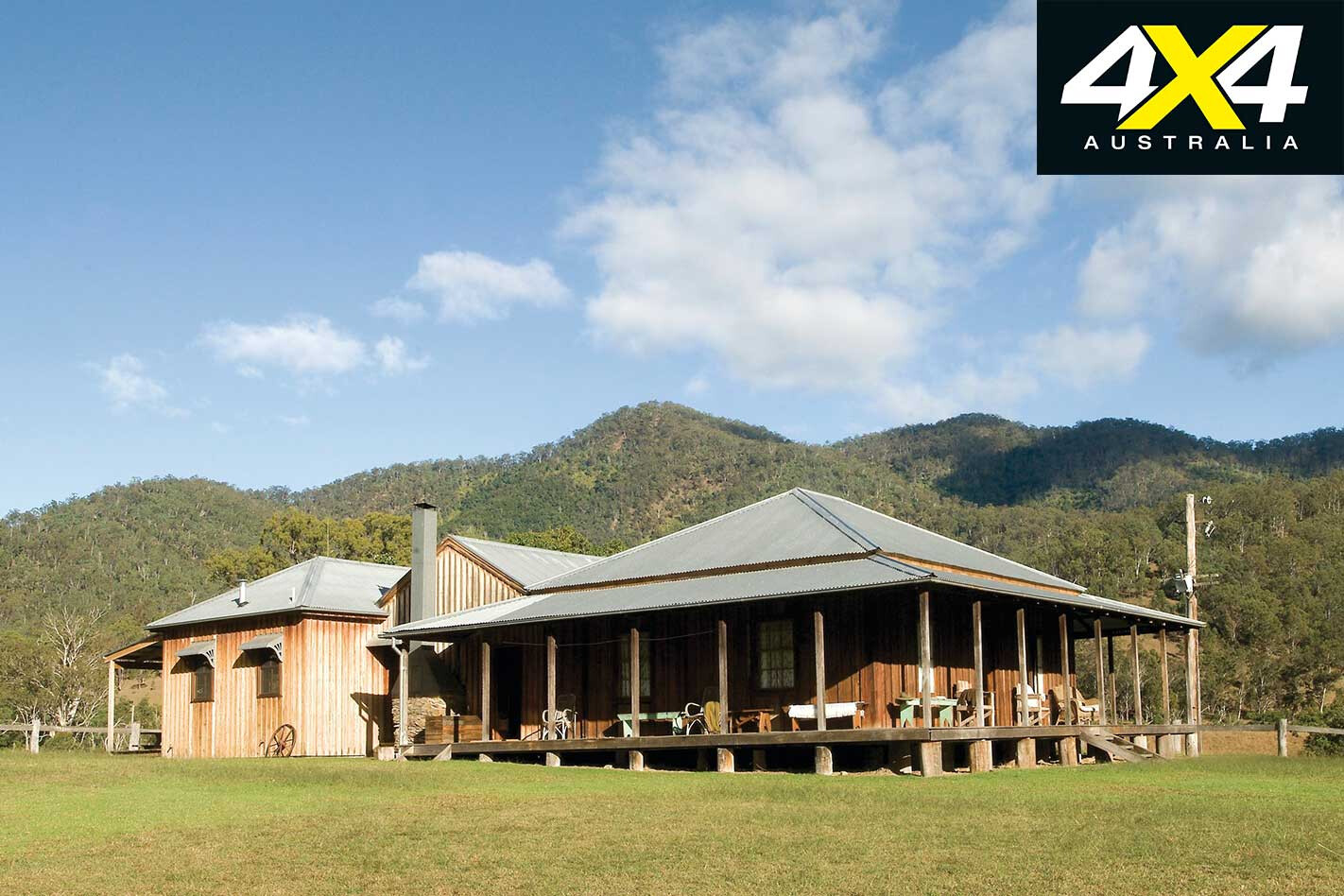
East Kunderang Homestead, built in the 1890s, is a brilliant home-away-from-home for off-road tourers keen to explore the Oxley Wild Rivers National Park. Since its restoration, NSW National Parks has offered the homestead as accommodation for families or larger groups.
To suss out booking information, visit: www.nationalparks.nsw.gov.au.
WINDORAH INTERNATIONAL YABBY RACES (QLD)
Do yourself a favour and catch this fun event in the town of Windorah, in western Queensland. The Yabby Races will be held on Wednesday, August 18.
As well as the fast-paced action of the races, including the Barcoo Bolt, Kyabra Kanter and the big one, the Cooper Cup, there’s a ton of entertainment. The event is also a fundraiser for the Royal Flying Doctors Service.
See www.outbackqueensland.com.au for more information.
BIRDSVILLE RACES (QLD)

One of Australia’s most famous outback experiences, the Birdsville Races, is on again from August 31 to September 1.
This is the 136th edition of the event and you can bet there’ll be plenty of fun to be had. Between watching the horses, indulging in food and alcohol, and then (if you’re game) checking out Fred Brophy’s boxing troupe, there is something for all. A two-day racing pass starts from $69.90.
Head to www.birdsvilleraces.com for more information.
KAKADU SECRETS (NT)
Kakadu National Park is a bloody big place, but it can still get crowded at some of the more easily-accessed campgrounds – especially this time of year. For those looking for a quintessential bush camping experience, however, there are still some out-of-the-way sites you can pitch a tent at.
Jarrangbarnmi (Koolpin Gorge) and Bilkbilkmi (Graveside Gorge) are both pristine and make for great overnight stays, but you need a permit to access these areas for camping. It’s not too hard, but be aware these areas can be closed for cultural purposes at certain times of year.
Go to www.environment.gov.au for more info.
OUTBACK CHALLENGE (NSW)
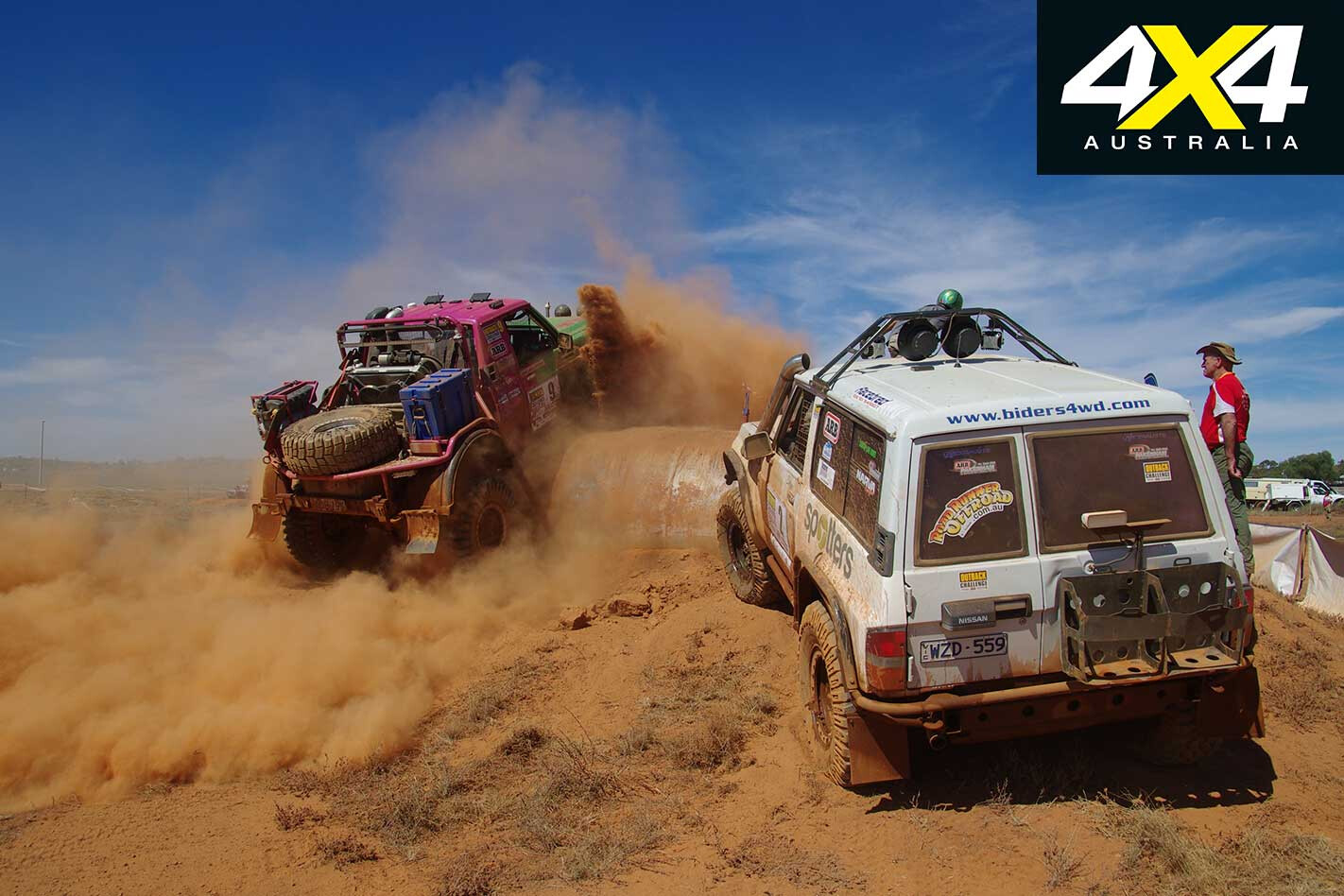
Based out of Broken Hill and running from September 26-29, the Outback Challenge is the ideal event for those keen to watch some of this country’s most skilled off-road drivers and navigators.
Navigating via GPS and chasing hundreds of virtual waypoints along each stage, teams also have to be self-sufficient (carrying their own food, spares and all other gear) with the event guaranteed to test the toughest rigs. The last stage – the 150km Mad Max – is a brutal but spectacular way to finish the competition. A combo of driving, navigation, endurance and strategy, this is a must-see.
Visit www.outbackchallenge.com.au for more info.