
Introduction: The Desert Warrior
Two days after scooping up the keys to our new Holden colorado, it was off to Alice Springs for the Finke Desert Race.
IF THERE was one big mover among the nine four-wheel drive double-cab utes we had in the big test last month, it was the Holden Colorado.
The revisions to the long-serving model back in 2017 have elevated it from a back-of-the-pack player to one worth serious consideration if you’re in the double-cab ute market. The improvements in refinement, equipment, styling and, most of all, off-road ability have seen it climb up the leaderboard of this ultra-competitive segment.
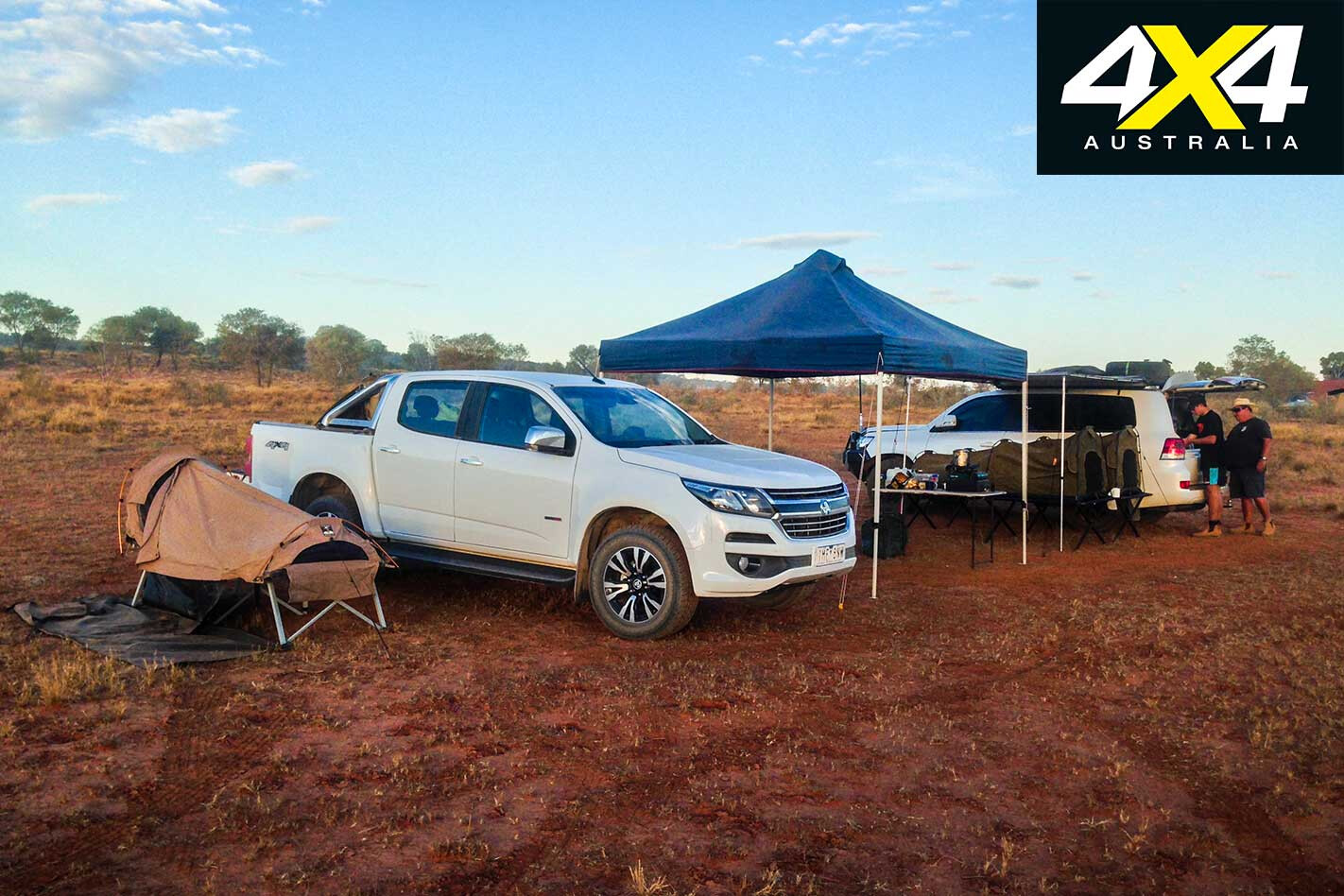
We thought the improvements were so significant that it warranted a closer look, so we secured this Colorado LTZ for the next three months. We picked it up from Holden on a Friday, I packed it Saturday and on Sunday took off on a drive to Alice Springs to watch the Finke Desert Race – a 5000km round trip covering highways, back roads and the Oodnadatta Track.
The Colorado doesn’t have a 12-volt power outlet in the cargo tub like many other utes these days, but travelling solo meant I had plenty of interior space. With the backseat folded up I was able to secure a 47-litre ARB fridge and a power pack behind the driver’s seat and power them via the 12-volt outlet at the rear of the console.
Other soft goods took up the rest of the backseat, while a swag, stretcher, barbecue hotplate, chairs, table, firewood, saw and a large Space Case that holds most of my camping gear went in the tub. It all fitted neatly under the factory tonneau cover, which protected the load from rain but not dust. The fine red outback dust sucks in from the tailgate, as it does on all utes without aftermarket seals fitted, and left its signature over everything.
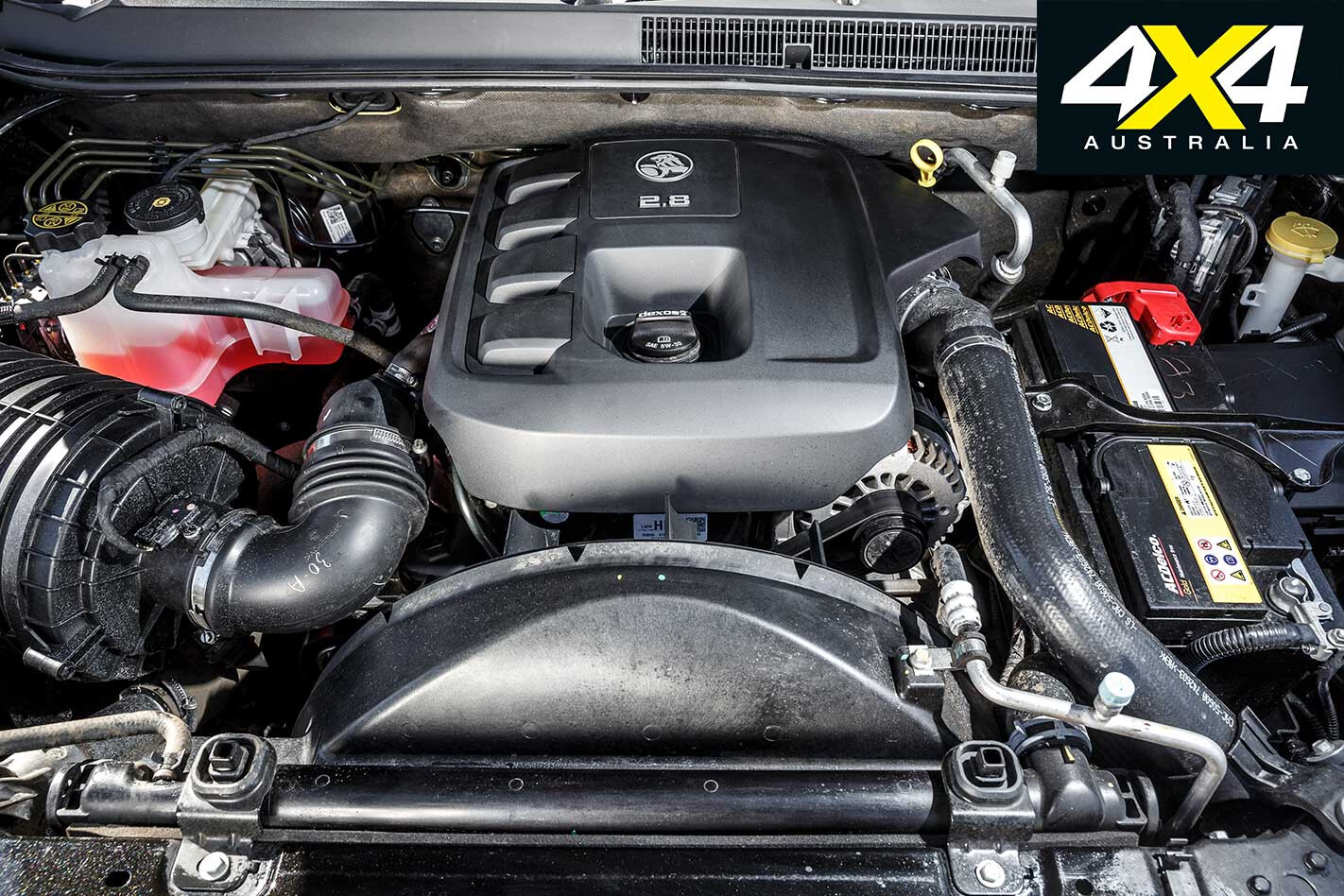
The Colorado LTZ’s 2.8-litre diesel engine is a grunty yet noisy little rattler that gets along well thanks to its abundance of torque and the quick-shifting six-speed automatic transmission. With 500Nm on tap, this Italian-made mill is the torquiest four-cylinder engine in its class, beaten only by V6 diesels … for now.
More impressive than the grunt of the engine is the fuel economy. After our previous two long-termers – Y62 Patrol and the G-Professional Mercedes-Benz – the Colorado is a fuel miser. Average fuel use for the trip was 9.83L/100km, with the worst fuel numbers of 10.94L/100km scored on the 130km/h sections of the NT highway. On the highway run from Adelaide to Melbourne, it averaged 8.2L/100km.
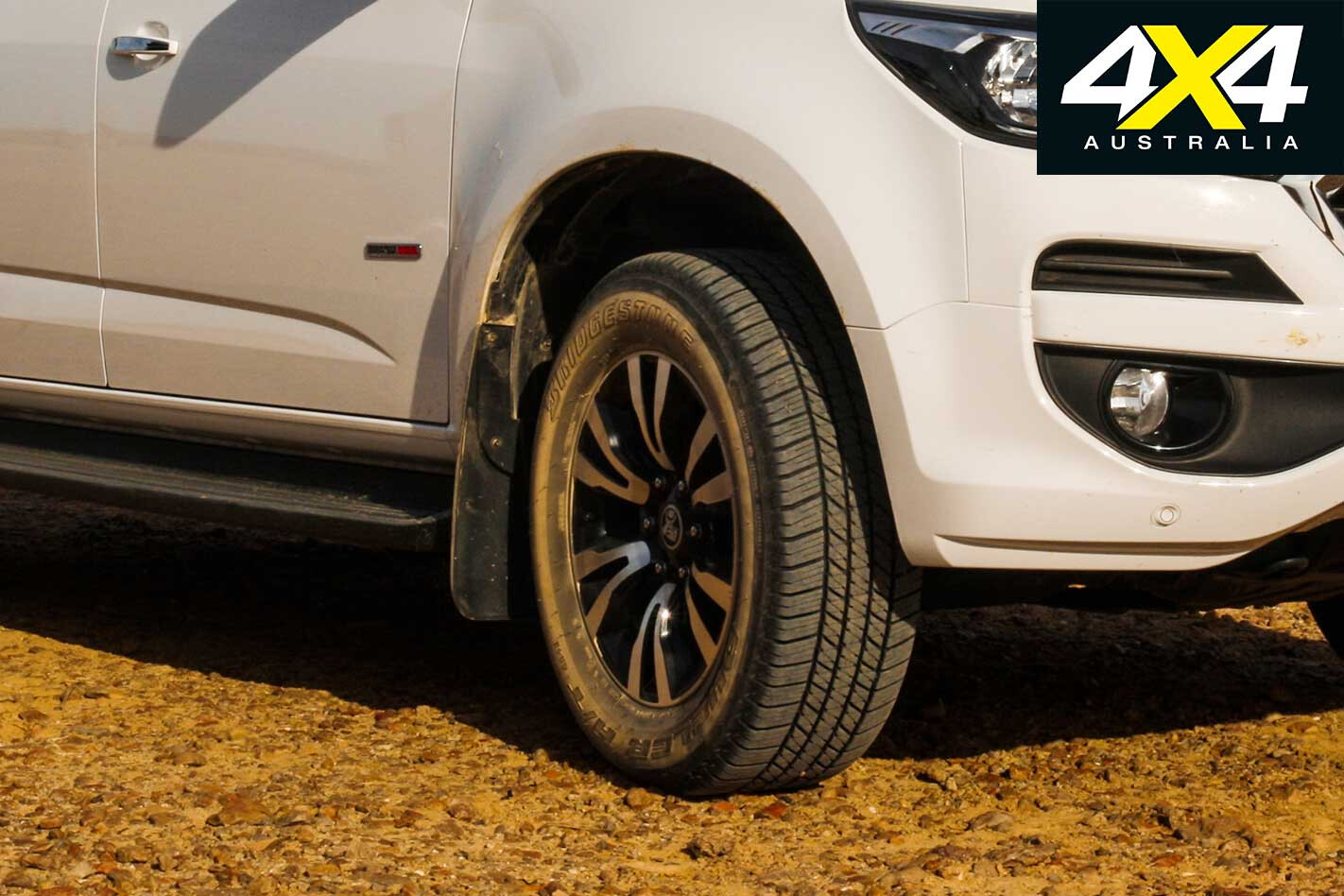
With no time to replace the OE tyres on the LTZ’s 18-inch alloys before we left, I was concerned about the durability of them on the rougher sections of the Oodnadatta Track, so I was very careful as we travelled its length.
Still, travelling at a fair clip I was constantly mindful of the tyres and the rocks on the track and checked them for damage each morning before leaving camp. It was with relief when we hit the highway at Marla not having to replace any of the tyres, which inspired confidence in the Bridgestone Dueler H/T 684s.
The OE suspension coped pretty well with the rough and tumble as well. Some sections of the track were pretty corrugated and had my Land Cruiser-driving mate complaining about the conditions. The Colorado wasn’t fazed by them; although, the leaf-sprung live rear end was prone to kick out a bit as you crossed over them, but you expect that of a mid-size truck.
The Colorado LTZ applied itself well as an outback tourer: it was comfortable, economical, carried the load well and didn’t let me down.
If I was going to be using it in this terrain more regularly I’d be fitting some tougher tyres for more confidence in their dependability, some frontal protection in the form of a bullbar, and a dual-battery system to keep the cans cold in the fridge. The weight of those accessories would probably warrant a suspension upgrade as well, but in stock-standard guise this Holden goes all right.
4×4 Shed Log 1: 2018 Holden Colorado LTZ Current mileage: 10,513km Date acquired: June 2018 Price: $50,490 + ORC Mileage this month: 5463km Average fuel consumption: 9.53L/100km
Update 1: Living’ the commuter life
Swapping outback dust for around-town duties
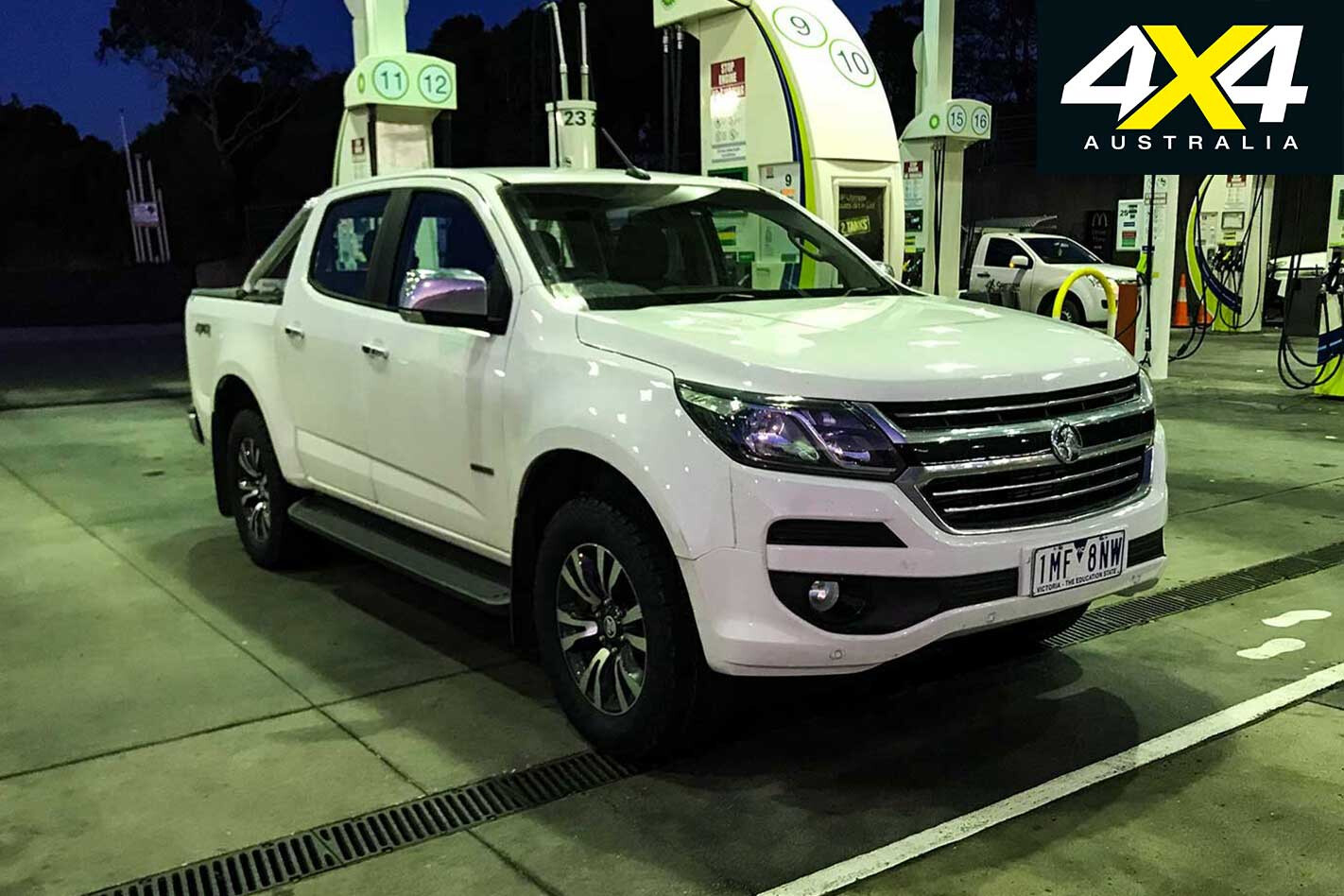
DOUBLE-CAB utes are the multi-tool of the four-wheel drive world. They are made to do everything from outback touring, family commuting, towing, hauling a load and heading off-road. We ticked off the outback touring part of the equation last month when we took the Colorado LTZ to Alice Springs and back via Oodnadatta and the Finke Desert Race, and it performed impeccably in those conditions.
This month it played the commuter: running around town, picking up crap and doing general ute stuff. As a load-lugger it has continued its excellent performance; we haven’t had anything heavy stored in the back, but the tie-down points are well-positioned and easy to use and the plastic bedliner protects the metal tray from scratches. We’re still getting the outback dust out of it, though.
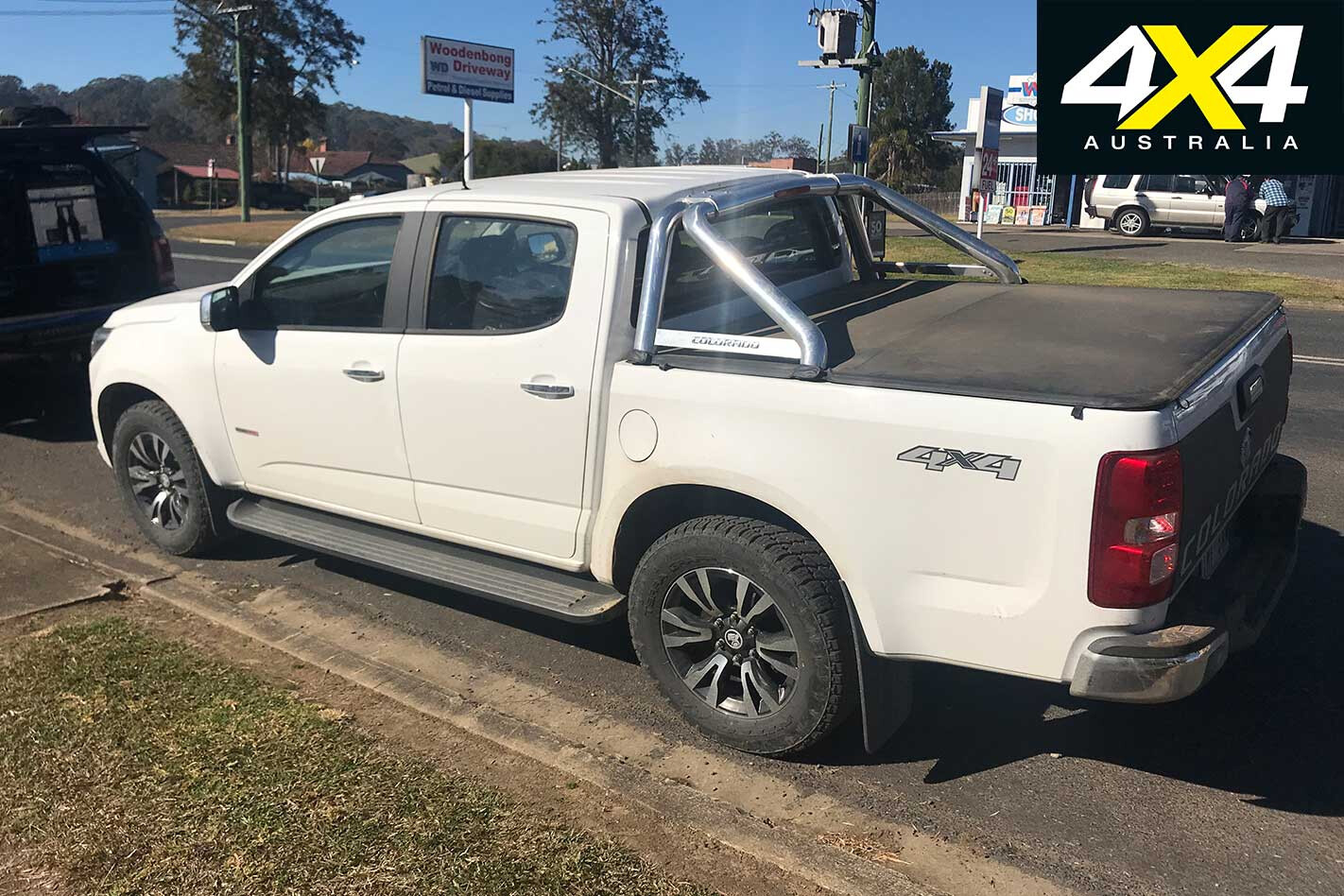
The Colorado is proving to be a convenient vehicle to get about town in, but any dual-cab is long – generally upwards of five metres – and the Holden is no exception. As such, it generally overhangs most city parking spaces. However, parking is made easier with the standard rear-view camera and sensors on the front to warn you when you’re getting too close.
General visibility from the driver’s seat isn’t great, but it’s on par with any of these late-model utes. The doors come up high and the A-pillars are thick and swept back; both these traits restrict vision around the car. The cabin is also average for the class, as most dual-cabs lack a big driver’s compartment.
I can’t sit up straight without my hair rubbing the roof (185cm), but there is plenty of elbow room, adequate leg room and the seat is comfortable and remained so on the long haul.
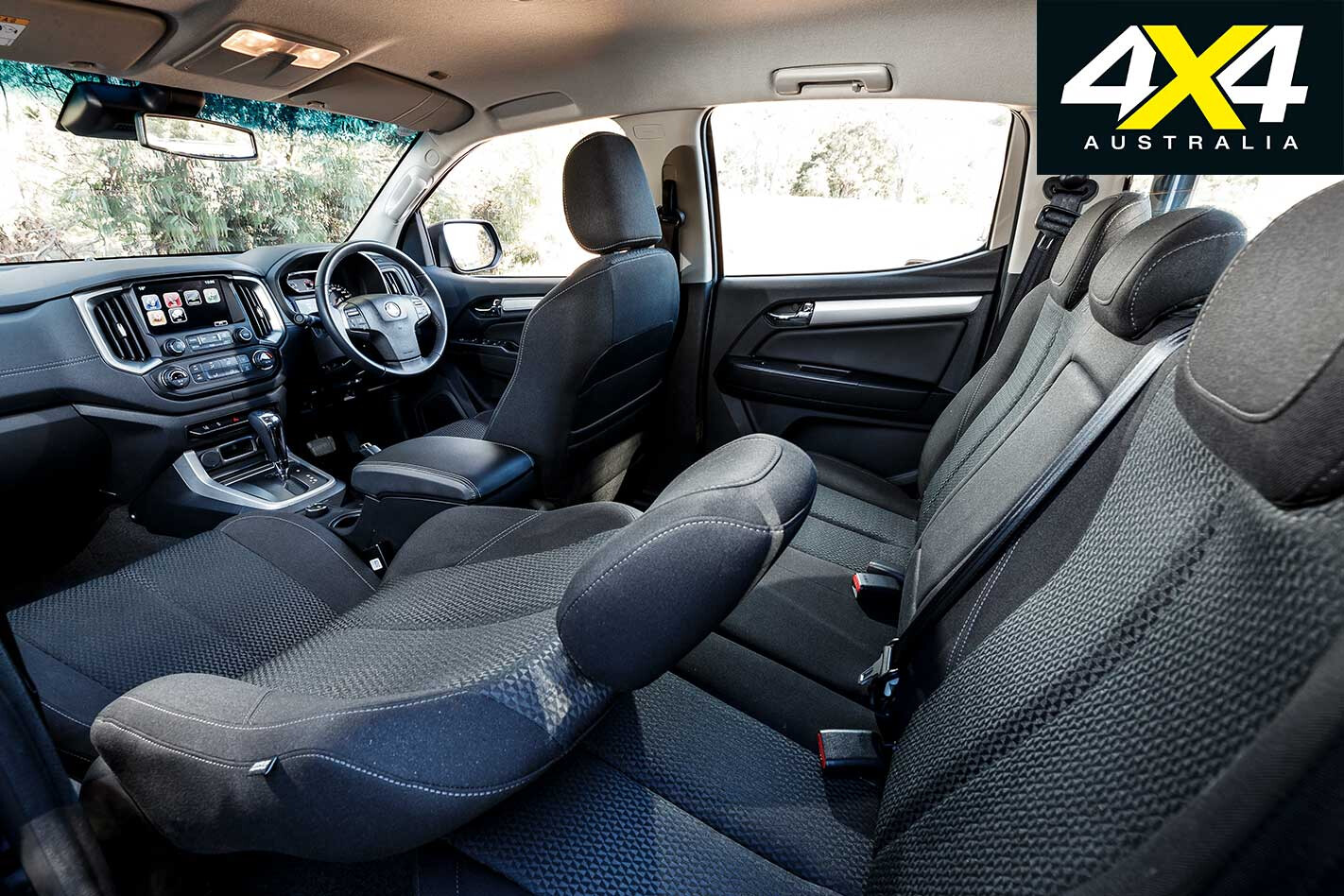
Standard sat-nav, Bluetooth and Apple CarPlay all make living with the Colorado easy, both on the highway and around town; although, another USB outlet in addition to the single one in the console would be appreciated.
Holden did a great job improving the refinement of the Colorado with the 2017 makeover, even making changes to the four-cylinder Duramax diesel engine, but it remains noisy and harsh. It has a niggling vibration at around the 1500rpm mark, which is where the engine cruises on at 80km/h – a small annoyance, not a deal breaker. All four-cylinder diesels are the same, so it comes back to how well the vehicle isolates it.
The Duramax’s 500Nm is really appreciated around town as it delivers snappy off-the-mark acceleration, which is great for pulling out of side streets and into moving traffic – this punchy performance more than makes up for the niggling NVH.
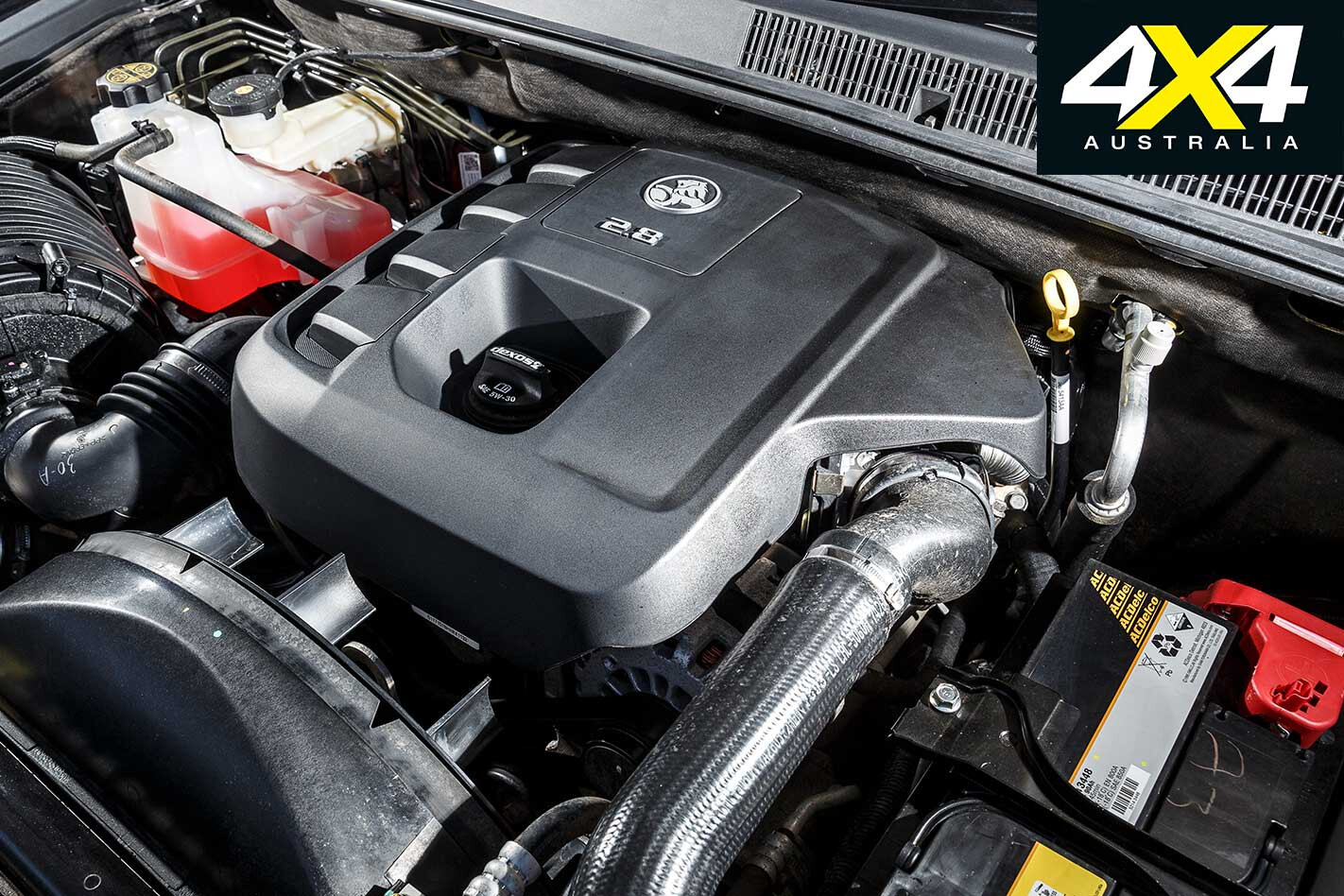
That 500Nm figure makes the Duramax the most powerful four-cylinder diesel in the class for now, until Ford’s bi-turbo 2.0-litre lands later this year; but the Duramax does it with a single turbocharger and more capacity. It’s somewhat economical, too, delivering 11.29L/100km around town over the past month.
4×4 Shed Log 2: 2018 Holden Colorado LTZ Current mileage: 11,472km Mileage this month: 959km Average fuel consumption: 11.29L/100km
Update 2: Conclusion
The time has come to give our Holden Colorado back, but we certainly made the most of our time with it.
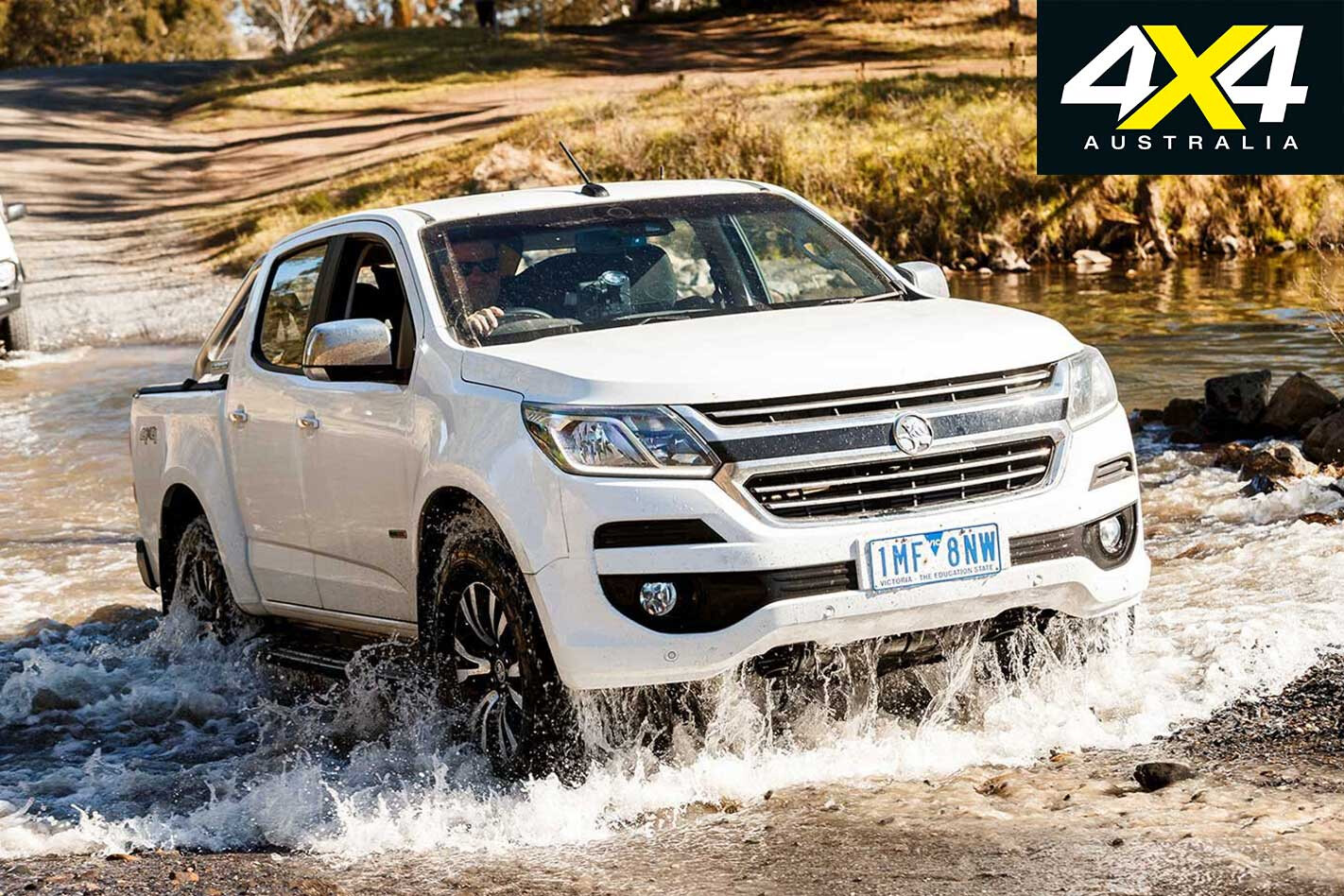
TIME flies when you’re racking up kays, and we sure racked ’em up over the three months we had the Colorado with us. That time is now done and, while I’m still not a huge fan of double-cab utes, the Holden did give me an appreciation of their versatility.
The Colorado showed its broad depth of uses: we took it up the Oodnadatta Track to Alice Springs as soon as we got it; it ferried people, bikes and gear around in Melbourne between trips; and then we took it up to Queensland for a bit of island-hopping between North Stradbroke and Fraser Island. More than 11,000km over all kinds of terrain in three months isn’t bad-going for any car.
The two most impressive things about the Colorado were its performance and fuel economy. The VM Motori-sourced 2.8-litre diesel engine which GM labels ‘Duramax’ remains a bit rattly and harsh despite extensive updates made to it in 2017, but it makes up for any NVH issues when you put your foot down and pull-up at the high-flow pump.
With 500Nm on tap the engine is the class-leader for four-cylinder diesels in utes, only recently matched by Ford’s new bi-turbo 2.0-litre mill. Yet we’ve sampled the new Ford engine in both the Ranger Raptor and Everest, and the GM product sure feels punchier than either Ford when you give it the berries.
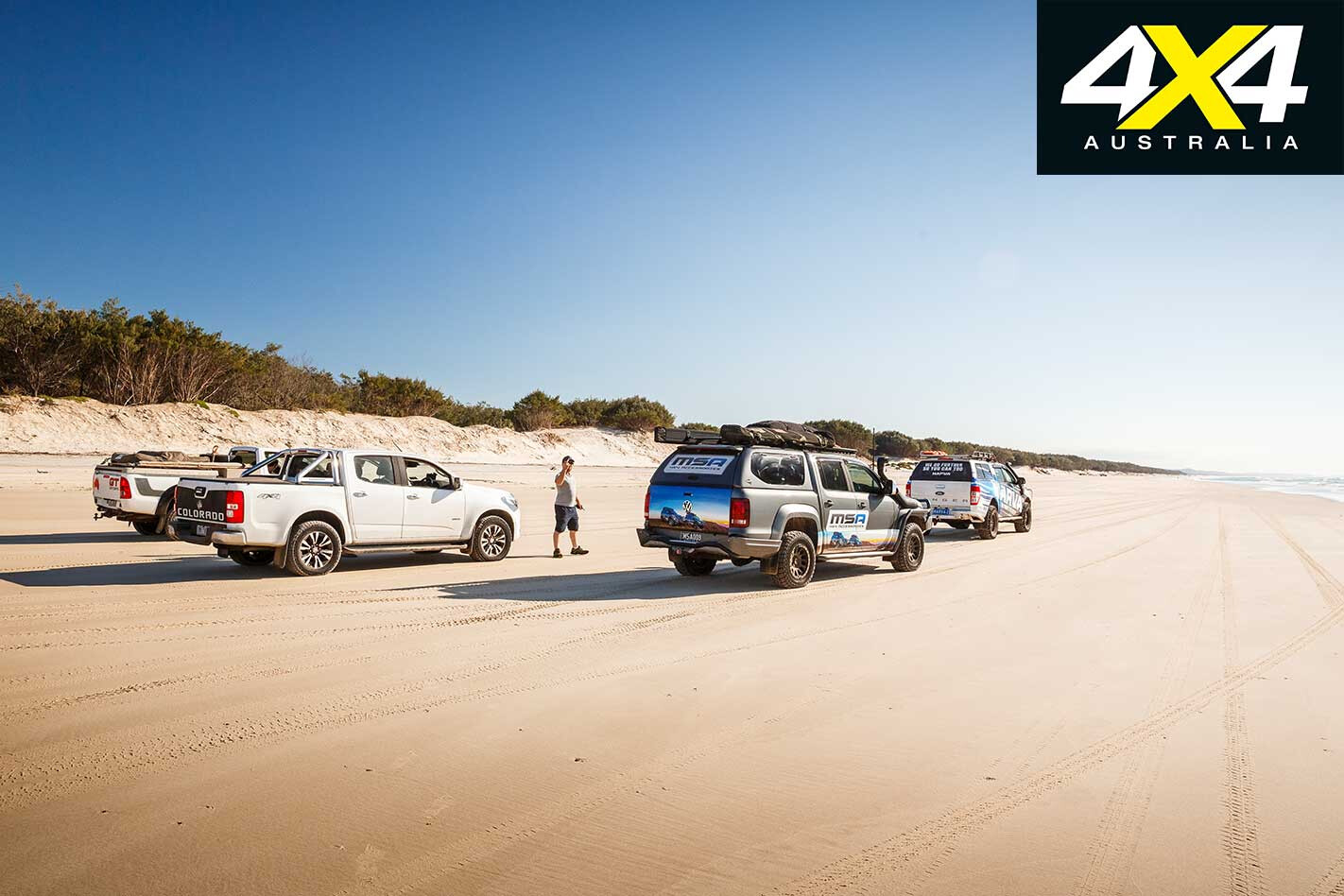
Be it shooting out of side streets around town, overtaking road trains on the highway, or charging through heavy sand with a load of firewood in the back, the Colorado never felt lacking.
The performance doesn’t come with a cost at the fuel pump, either. On the 100km/h highways the Colorado averaged in the high 8.0L/100km bracket, and that would edge up to the mid-9s on the 110 and 130km/h highways. Around town it was recording 11s, with an overall average of 10.3L/100km for its full stint with us.
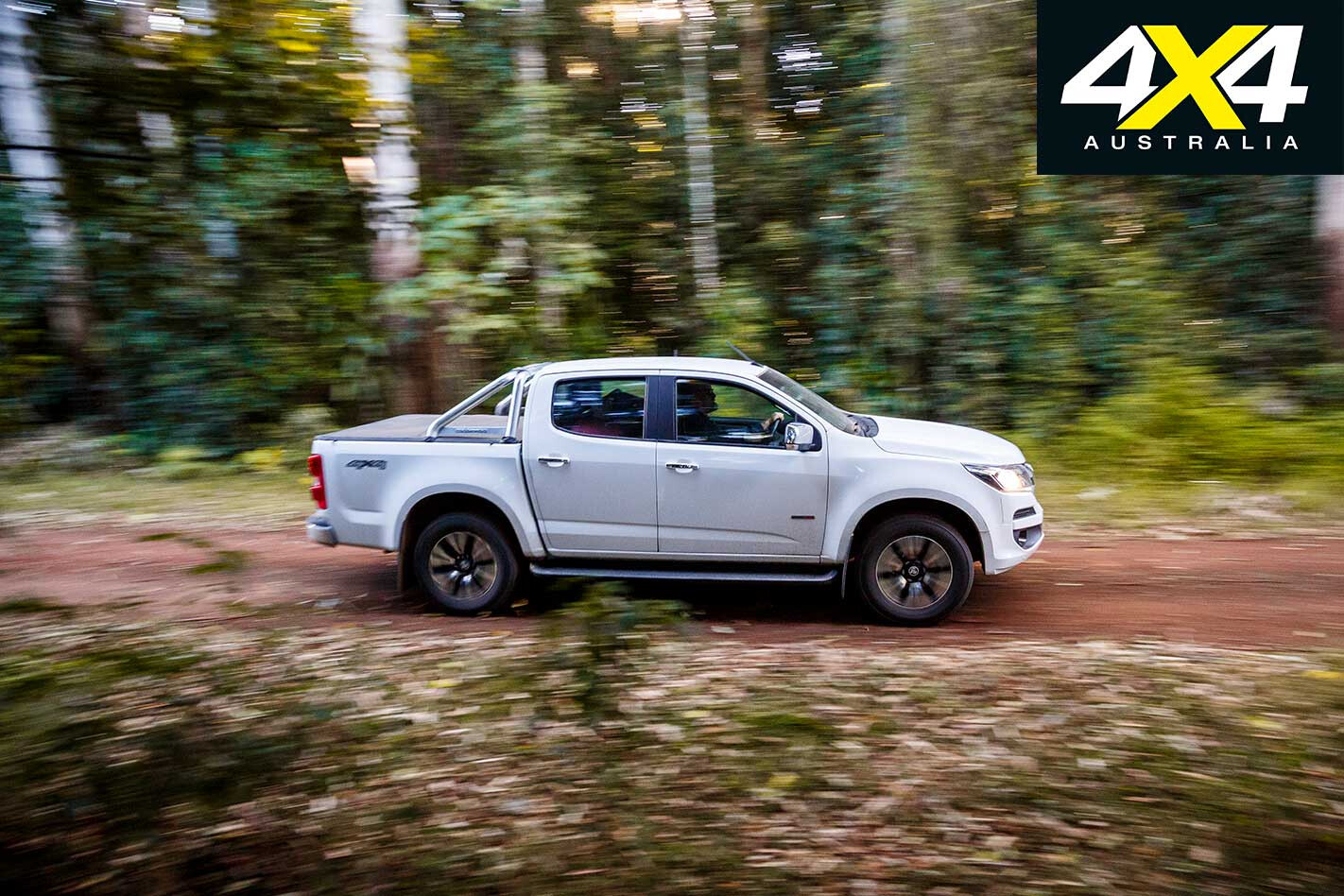
The LTZ-spec is reasonably comfortable and well-equipped for road trips. Apple CarPlay links your tunes and phone to the car; although, having just the single USB port was annoying at times – at least one more would be appreciated.
The cabin is still a bit small for my large frame (or a family with teenage kids), but with no full-size truck available here with factory RHD, these mid-size units will have to do. They are also half the price of imported and converted full-size trucks.
The Colorado is one of the few utes in its class that doesn’t have a factory-fitted rear diff lock as standard, and in the past this has severely limited its off-road ability on steep, rutted tracks. But the calibration changes made to the electronic traction control for the 2017 updates went a long way to negating the need for a locker and the ETC does a great job under most conditions.
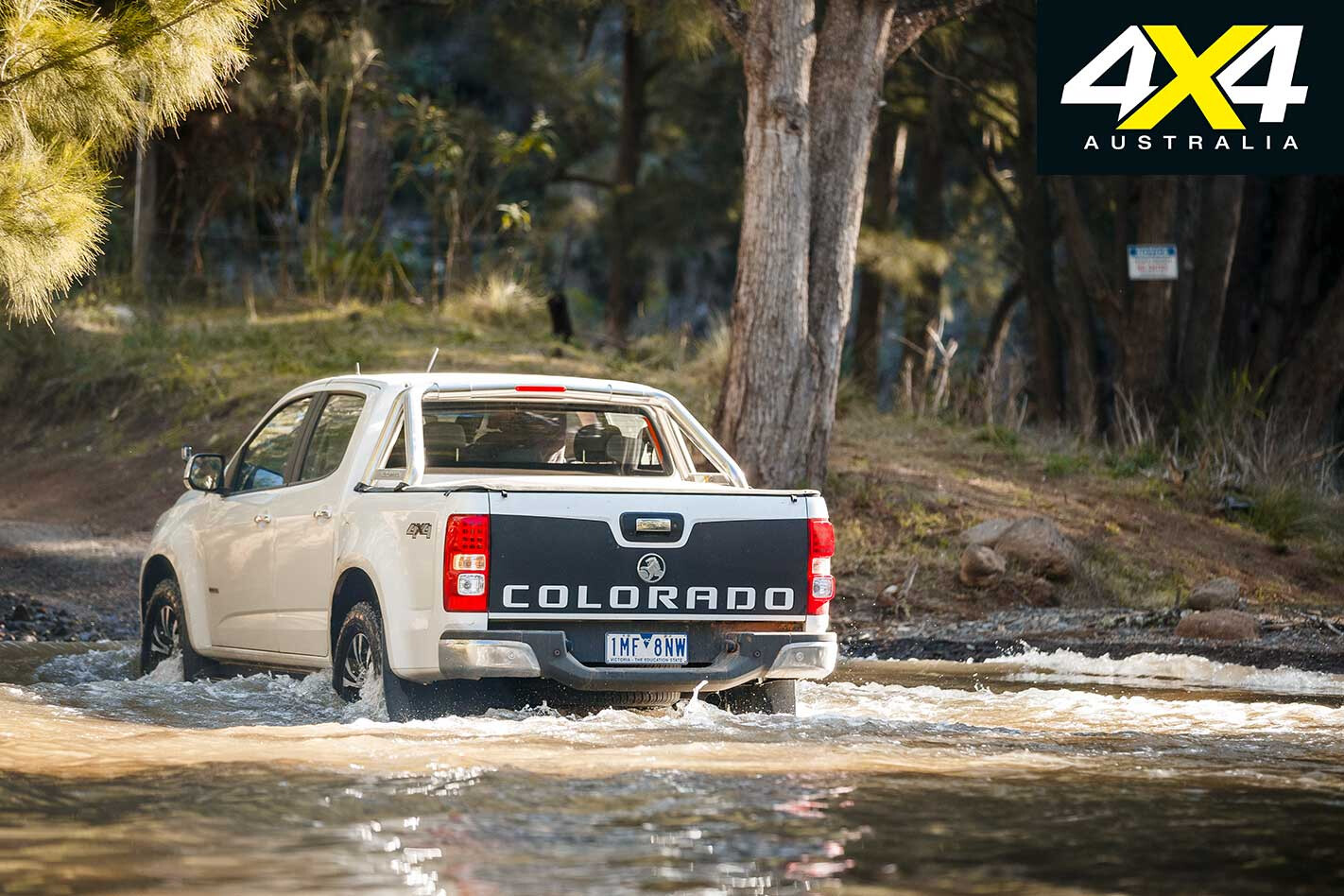
As seen in the recently released Colorado Z71 Extreme model, Holden has got its act together with factory accessories, which include five-star safety-approved protection bars, LED and HID lighting, underbody protection, a Warn winch offering, tow bars, styling kit, canvas seat covers, storage solutions and load coverings.
The only non-factory item we fitted to our LTZ was a set of Nitto Trail Grappler tyres for the Queensland trip, for some added dependability. For a standard vehicle on factory suspension, the Colorado coped very well, particularly on the rough Oodnadatta Track.
As a double-cab 4×4 ute, Holden’s Colorado does a fine job of it. Versatility, performance and economy are its strong points, with good factory and aftermarket support to kit it up to your likings. The current version jumped up the rankings in our most recent ute comparison test, and this long-termer verified our findings.
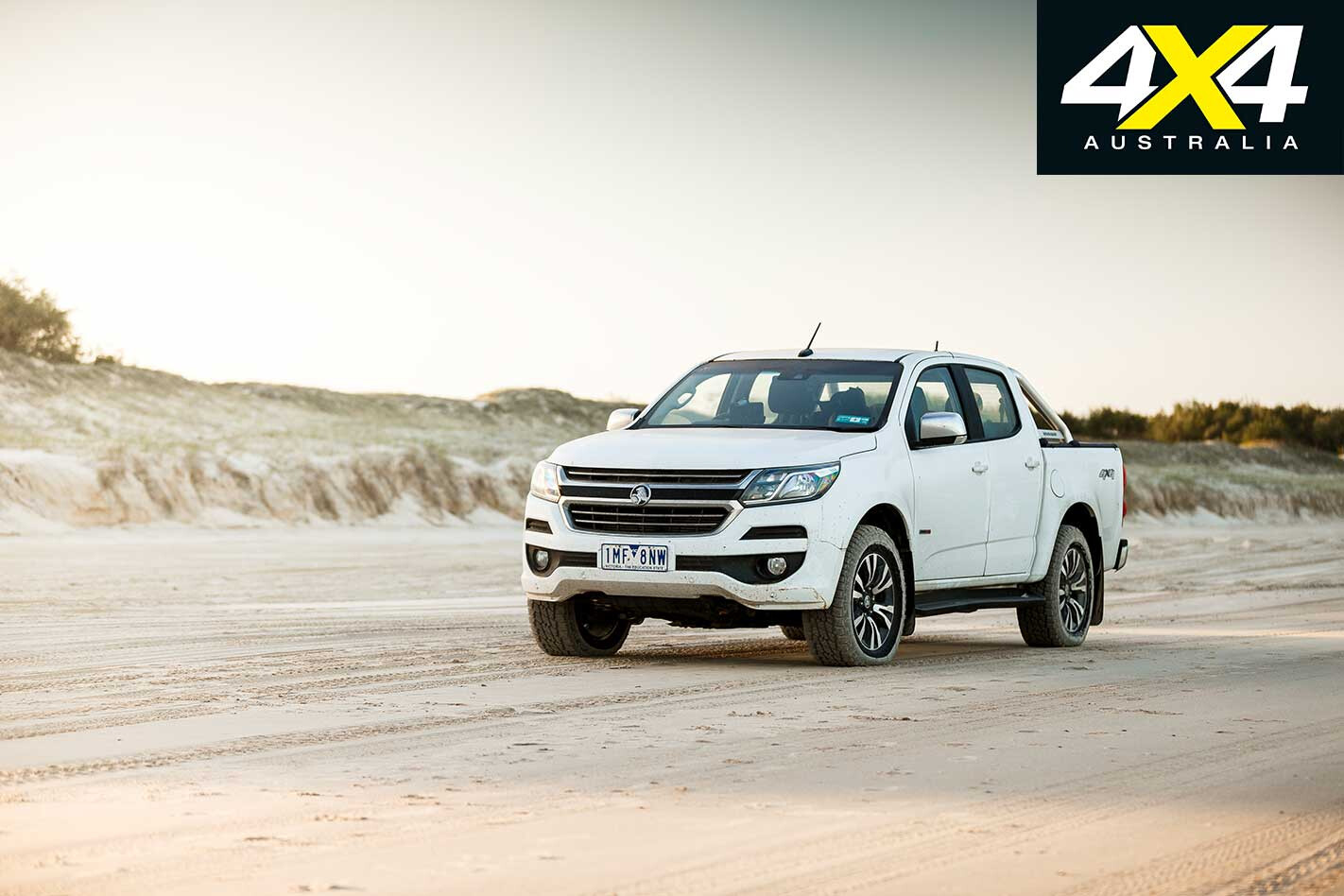
4×4 Shed Log 3: 2018 Holden Colorado LTZ Current mileage: 17,265km Mileage this month: 5793km Average fuel consumption: 9.8L/100km
OUR Holden Colorado isn’t quite the DeLorean, but it felt like it was flying as we navigated some of the most extreme tracks that at times left us airborne. “The trick is not to stop” we’d been advised.
We were in the middle of Big Desert National Park, having crossed Wyperfield National Park the day before. It was the Easter long weekend and our trip of highs and lows had seen us traverse sand dunes both in Victoria and South Australia. Now we were on the home stretch and we’d hit the mother of all dunes.
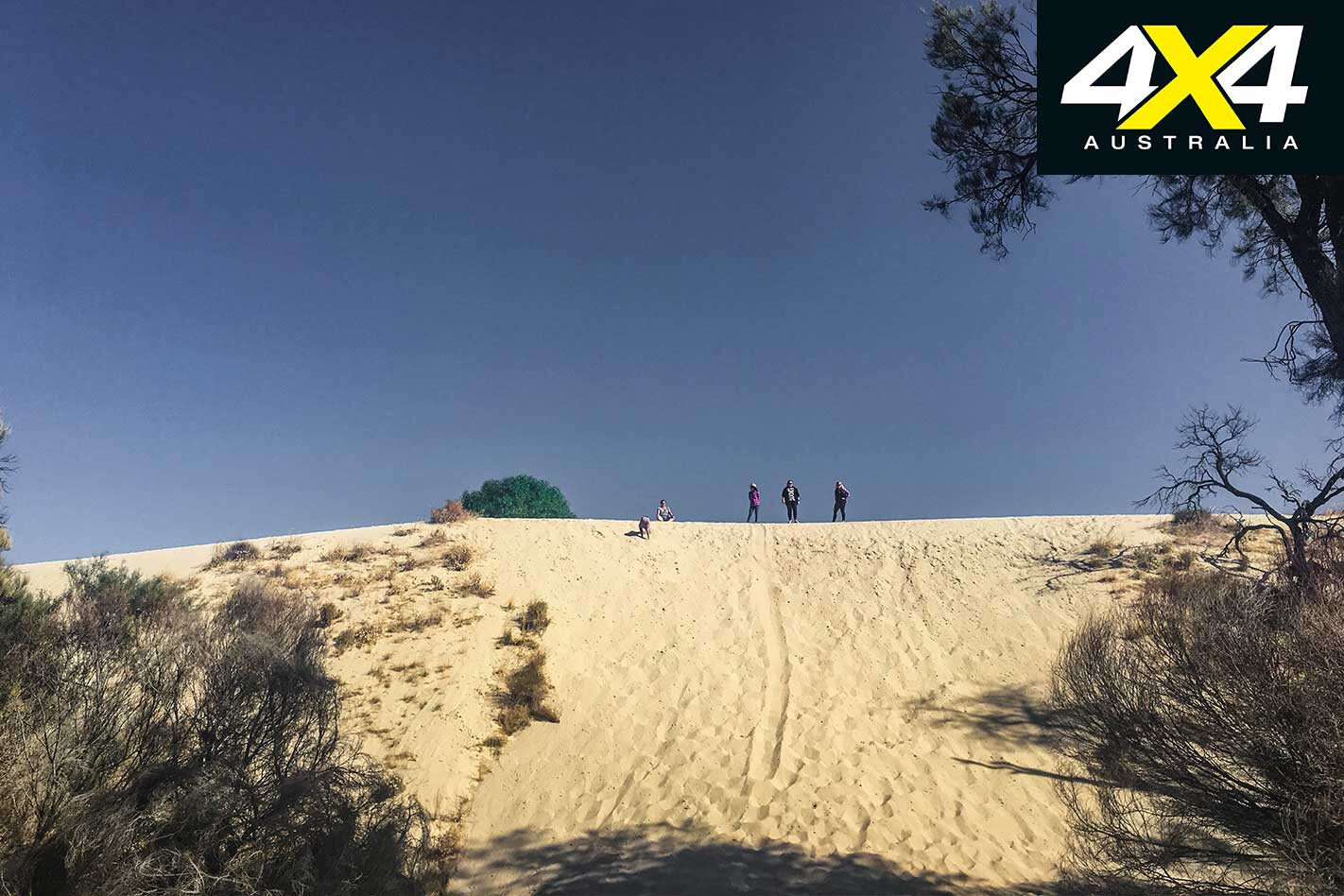
We’d tackled numerous sand dunes over the past two days, slow and steady, but this one appeared particularly challenging. With a sheer climb and no clue what was on the other side, we powered up in low range, but, at the very top, the track turned and converged into three directions. Hesitating for just a second in deciding which track to take was our mistake, as we lost momentum on the soft sand and the wheels stopped. The Colorado was stuck.
We’d left our Jayco Outback van at home for this trip and strapped a new deluxe Kings swag on top of the car. “No vans on this trip mate” we’d been adamantly told. Arriving at Green Lake in Ararat the day before, we became vehicle number 13 in the Werribee Four Wheel Drive tagalong convoy heading towards Wyperfield National Park, the Big Desert and ultimately the Border Track. As we were to find out, travelling in a group is the best way to tackle this wilderness area.
A further two-hour drive saw us at Lake Lascelles, the gateway into the Mallee country, where our swags were rolled out for the first time. With barbecues, toilets, a boat ramp, green lawn and free unpowered sites, it’s a hidden gem in the area. That night our group enjoyed a leisurely dinner at the nearby Hopetoun Pub, a good thing as the following night it wouldn’t be so clean and easy.
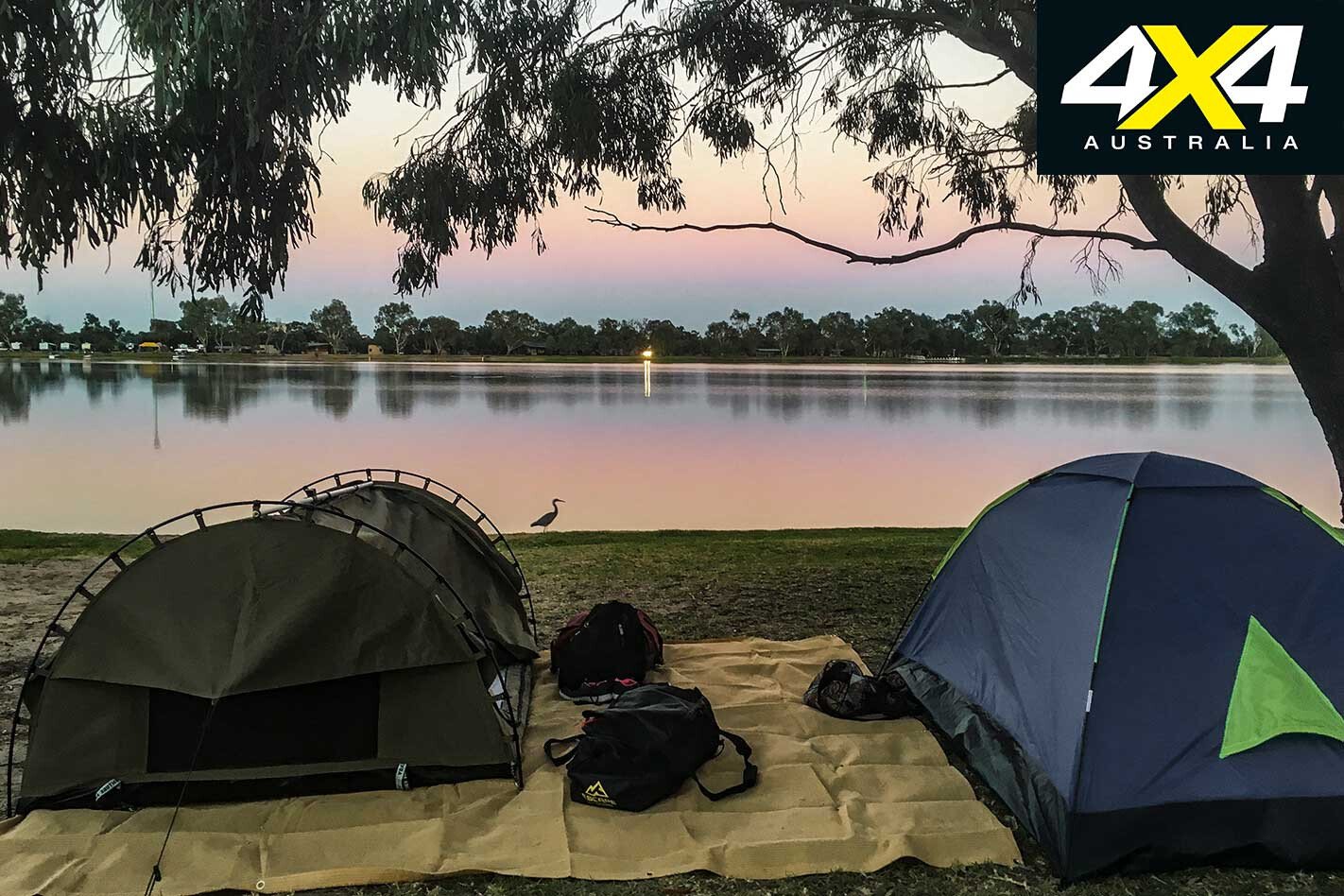
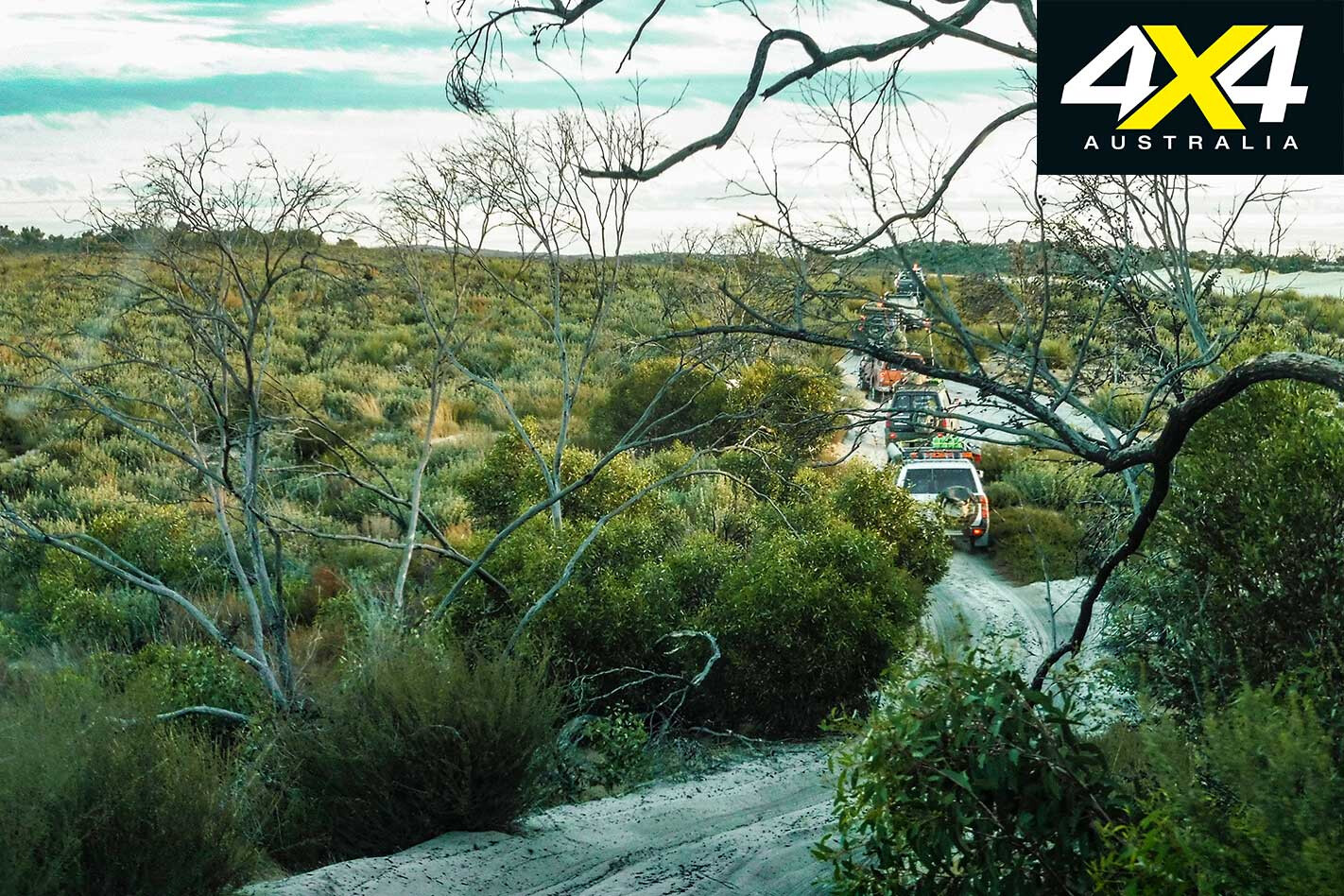
The next morning it was time to set off for two days of playing tagalong, crossing sandhills and marking corners. This is vast territory and, with so many vehicles, it was important to have radio contact so no one got left behind.
Wyperfield National Park has a fascinating geological history. It’s incredible to think that 25 million years ago this area was a shallow sea; today it contains a series of lakes linked by Outlet Creek, which are usually dry and fill up only when the Wimmera River floods.
After heavy rain this arid region is transformed, with tiny desert plants sprouting to cover the ground with clusters of bright native flowers. When we visited it was warm and dry and tyre pressures were promptly reduced in readiness for the sandy terrain.
Our first stop was Snowdrift Camping area at the end of Snowdrift Track, a popular spot for day-trippers. Snowdrift is home to one of the largest sand dunes in the area and a natural playground for those who want to climb it. From there we continued into the park, with our goal to reach the Billy Bore Campground before nightfall.
Milmed Road Track is graded as ‘medium’ and provided moments of exhilaration tinged with more sedate sections. While many in the group had little difficulty navigating the dunes, some drivers needed repeated attempts. We discovered it was often a matter of reversing and giving it a bit more momentum – the unspoken motto of the weekend was “if at first you don’t succeed try and try again”.
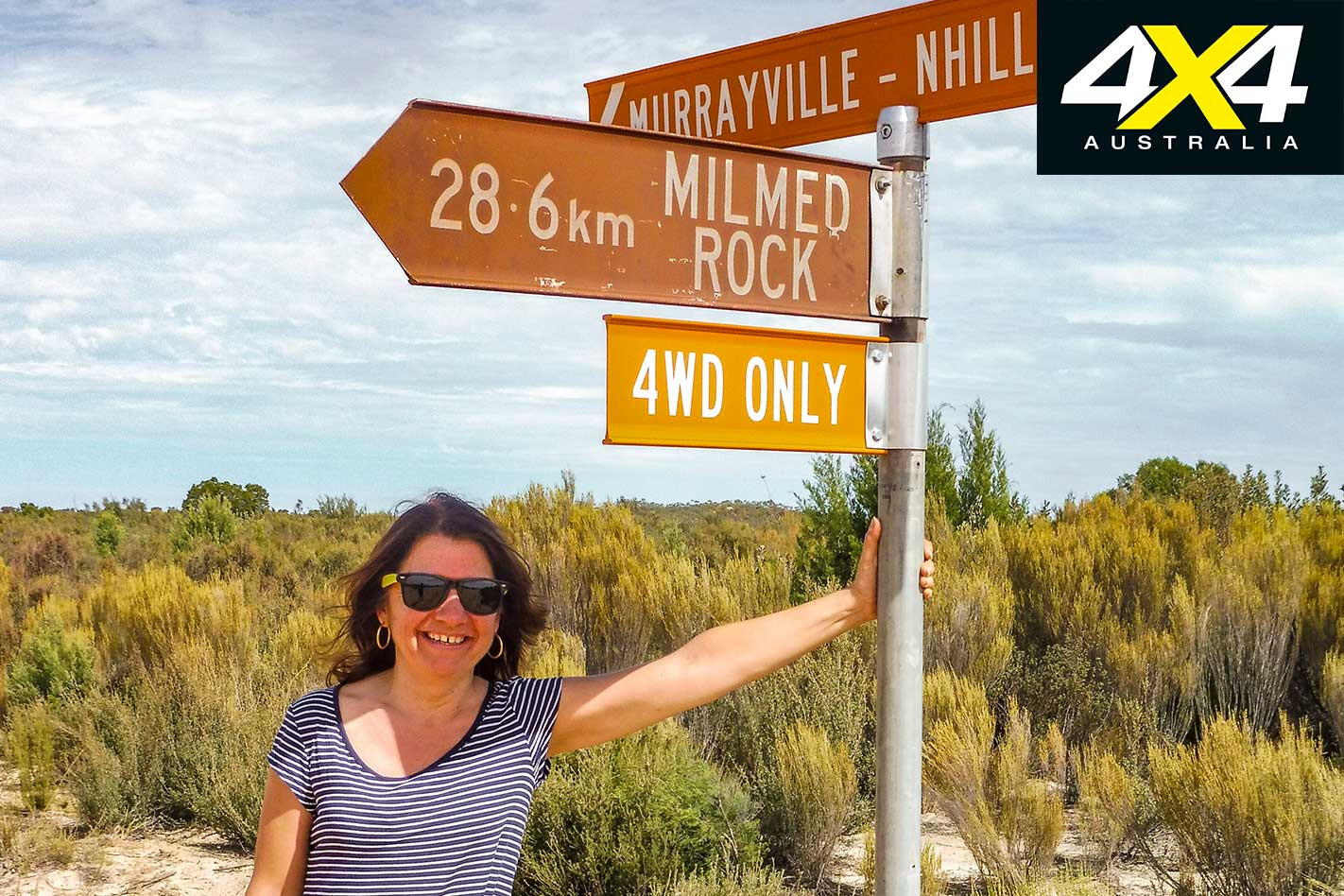
The track is 80km long and very remote; in the middle of summer there are few cars travelling the track and the soft sand can be deep, so if you break down out here and you’re on your own, you could be in for a long wait. Alternatively, in winter and after rain, the clay track can be impassable.
We were in low range for much of the Milmed Track, and it was a slow-going but easy pace. It felt a long way from anywhere and that sense of peace and isolation was palpable, as it was at Wonga Campground, our stop for lunch on the second day.
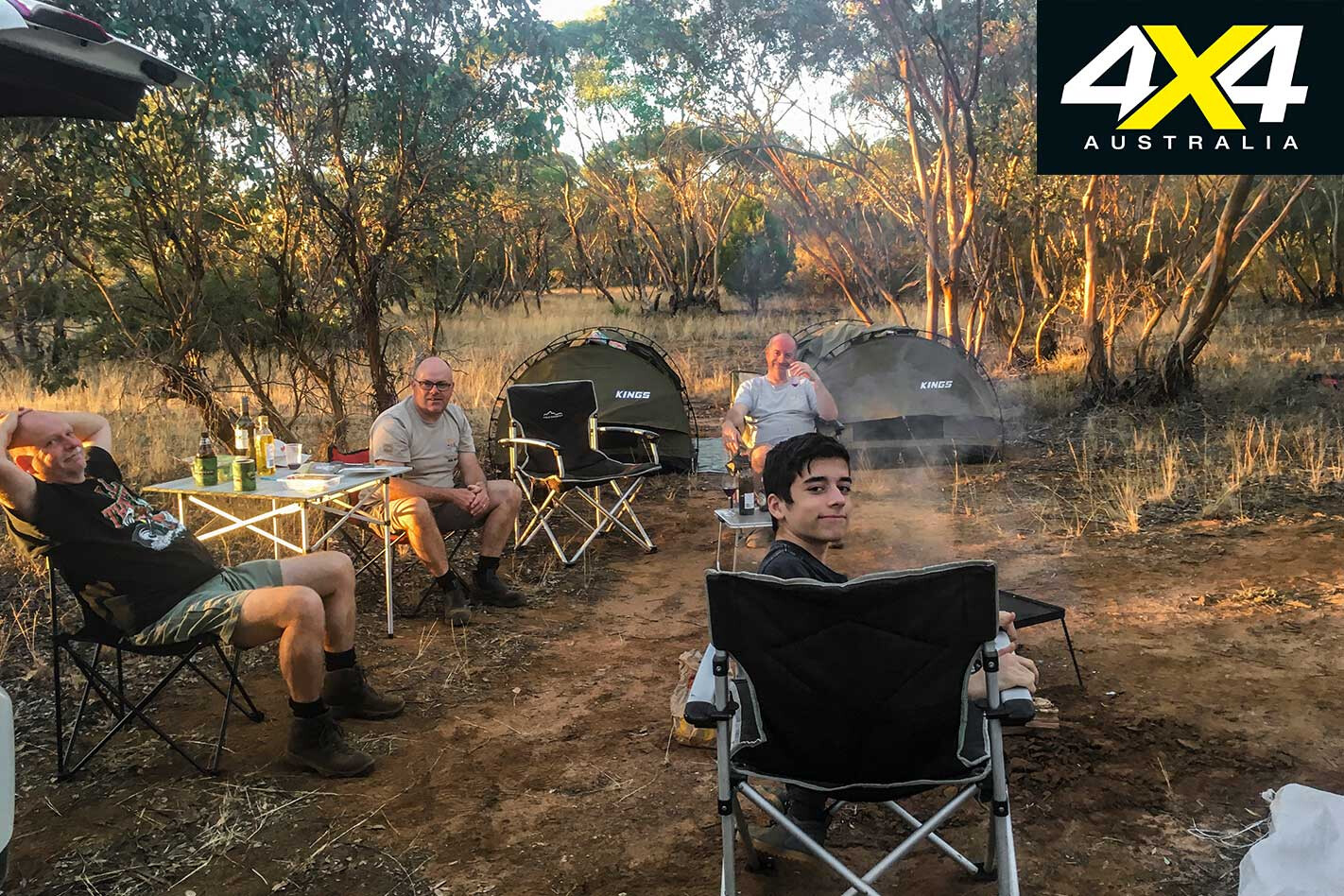
With a few stops during the afternoon it looked as though we wouldn’t reach Billy Bore before nightfall. Driving conditions were slow, and in such a vast wilderness it’s always advisable to pitch camp early, so I was relieved when we reached our changed destination of Round Swamp Campground before dark.
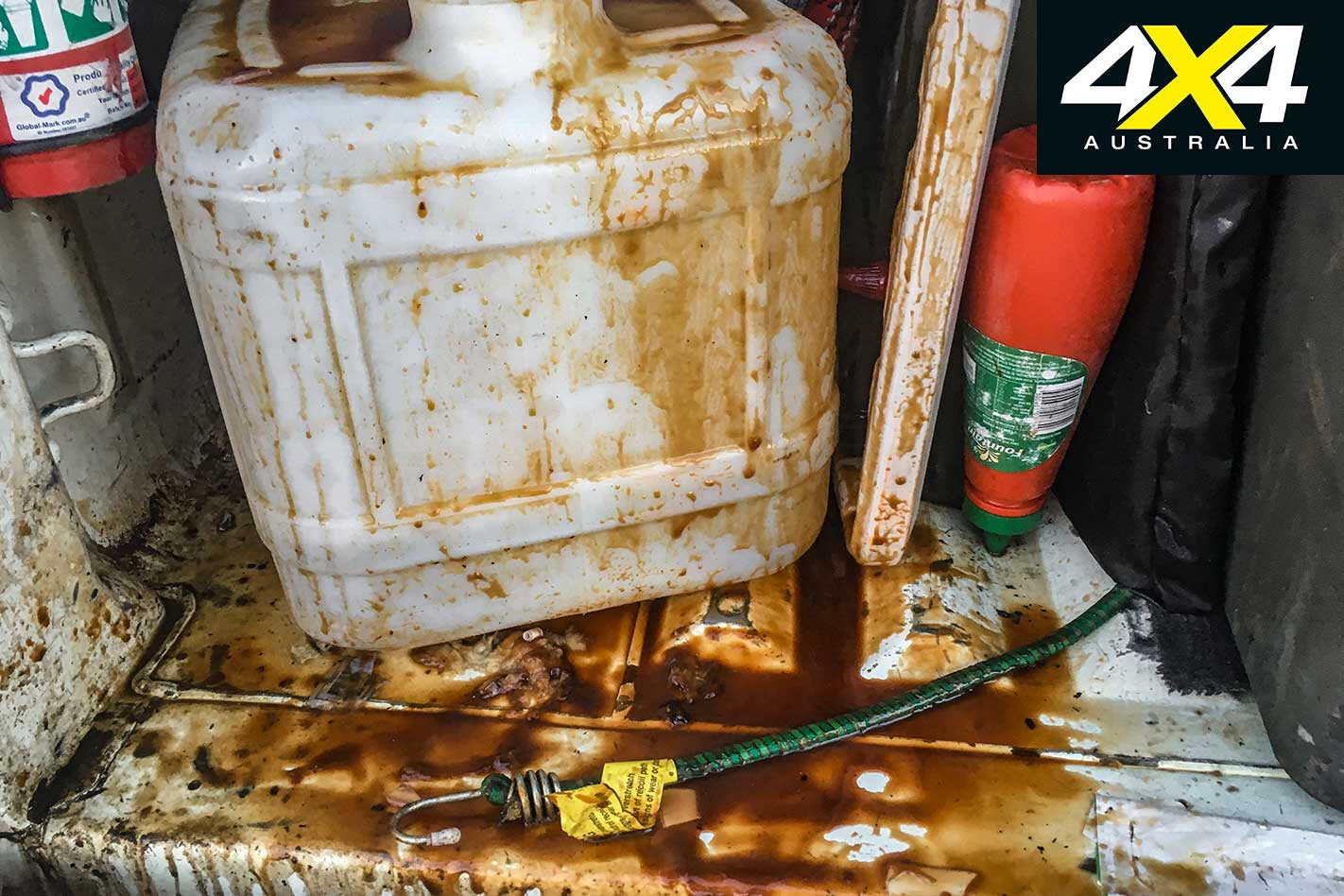
We chose our patch of turf and, despite the presence of bees, all was going well. That was until I opened the fridge in the back of the Colorado and was greeted with the most unappetising mixture of ingredients imaginable. Raspberry jam had slopped in with the sweet potato dip and spread through everything in our fridge. Combined with a rogue upturned bottle of barbecue sauce, the concoction looked like the regurgitated after-effects from a hard night on the booze.
The bees thought the succulent spills was their dinner, and dozens of the buggers buzzed around me. Still, after a clean-up, dinner cooked over the fire and a few well-earned drinks, all was well. It taught us a lesson: thoroughly secure food contents and leave the jam at home.
The next day saw us reach the end of Milmed Track, turn onto the Murrayville-Nhill Road and head back into Underbool. Here, we were able to check into civilisation with a spot of service and a refuel before once again hitting the dirt. Finally, we were on the Border Track.
As its name suggests, the Border Track follows more than 50km of the fence line marking the boundary between Victoria and South Australia. While this track is comparatively short compared to other tracks around Australia, it presents a helluva challenge for those who like to test their off-road skills.
We began the track entering the South Australian Ngarkat Conservation Park, which covers 270,000 pristine hectares of flat, sandy landscape, covered with a cloak of olive-green scrub. This track has been described as ‘legendary’ with its beautiful landscape and challenging driving conditions and, as we were to discover, with many dunes still to traverse, it would more than live up to expectations.
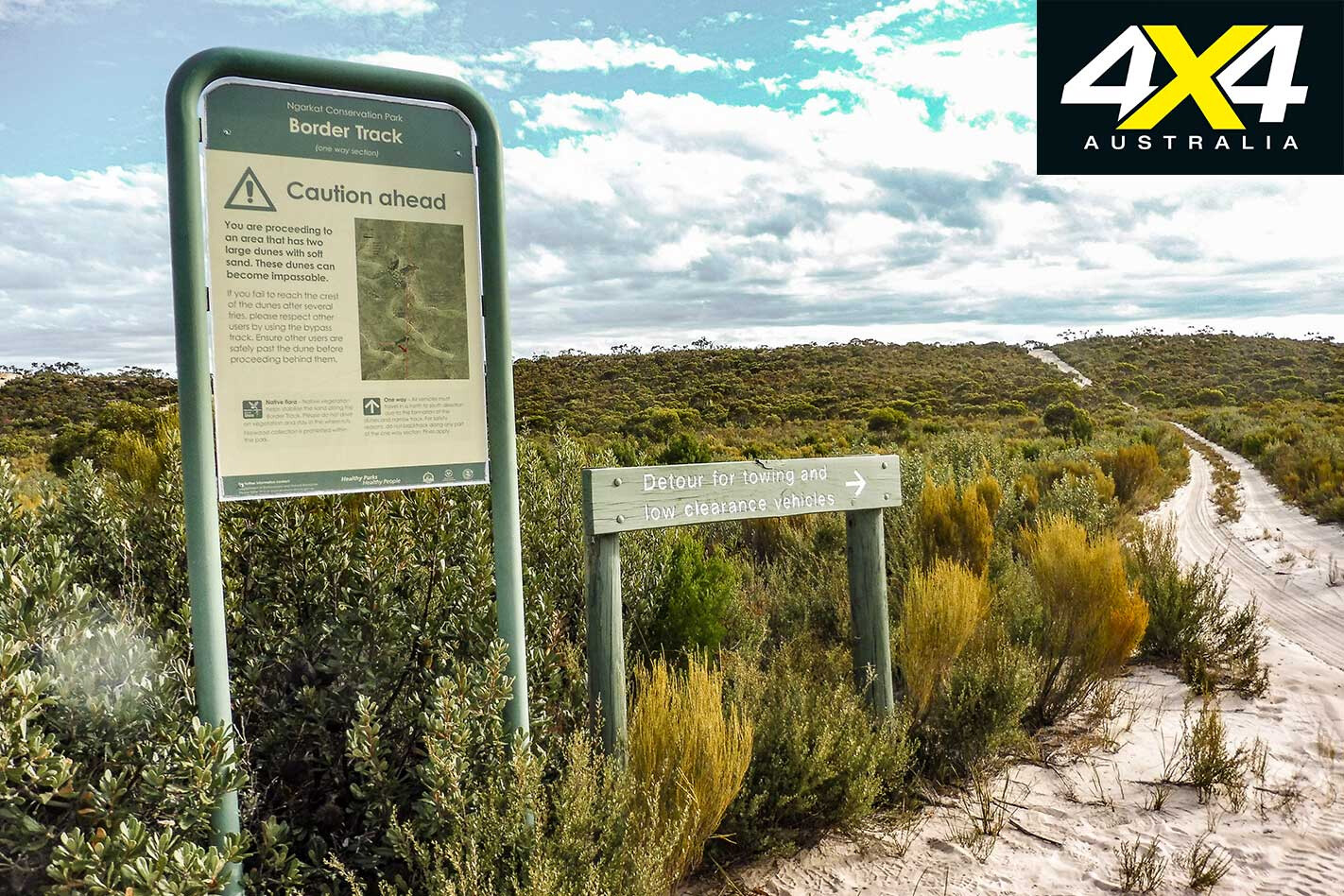
With a track classification of ‘difficult’, it felt comforting to be part of a convoy. Twenty-nine kilometres of the track from the south to the north is one-way only, partly to protect the sand dunes, track surface and vegetation and, quite likely, to avoid the possibility of collision between oncoming vehicles.
There are sections where the track is narrow, so don’t expect to go much faster than 20km/h, as it twists and turns through sand hills and blind corners. It’s bumpy going and slow, but incredibly peaceful.
Along the way the imposing Hensley Trig, the highest point in the park, provides a challenging hill climb. After a couple of unsuccessful attempts, we ended up taking the “chicken track”. Pride was no longer a factor at this point and, standing at the top after we’d made it up, we were treated to expansive views. There’s even a spot of patchy phone coverage there.
Hours later, right on dusk, we reached Red Bluff Campground; a dusty, dirty and motley crew, relieved to finally pitch camp. Swags and tents were set up amid a spectacular sunset and a backdrop of cliffs that glowed red in the last golden rays of the sun. Drinks and dinner were enjoyed around the fire before a night of music and doing the Nutbush had us falling into our swags with tiredness.
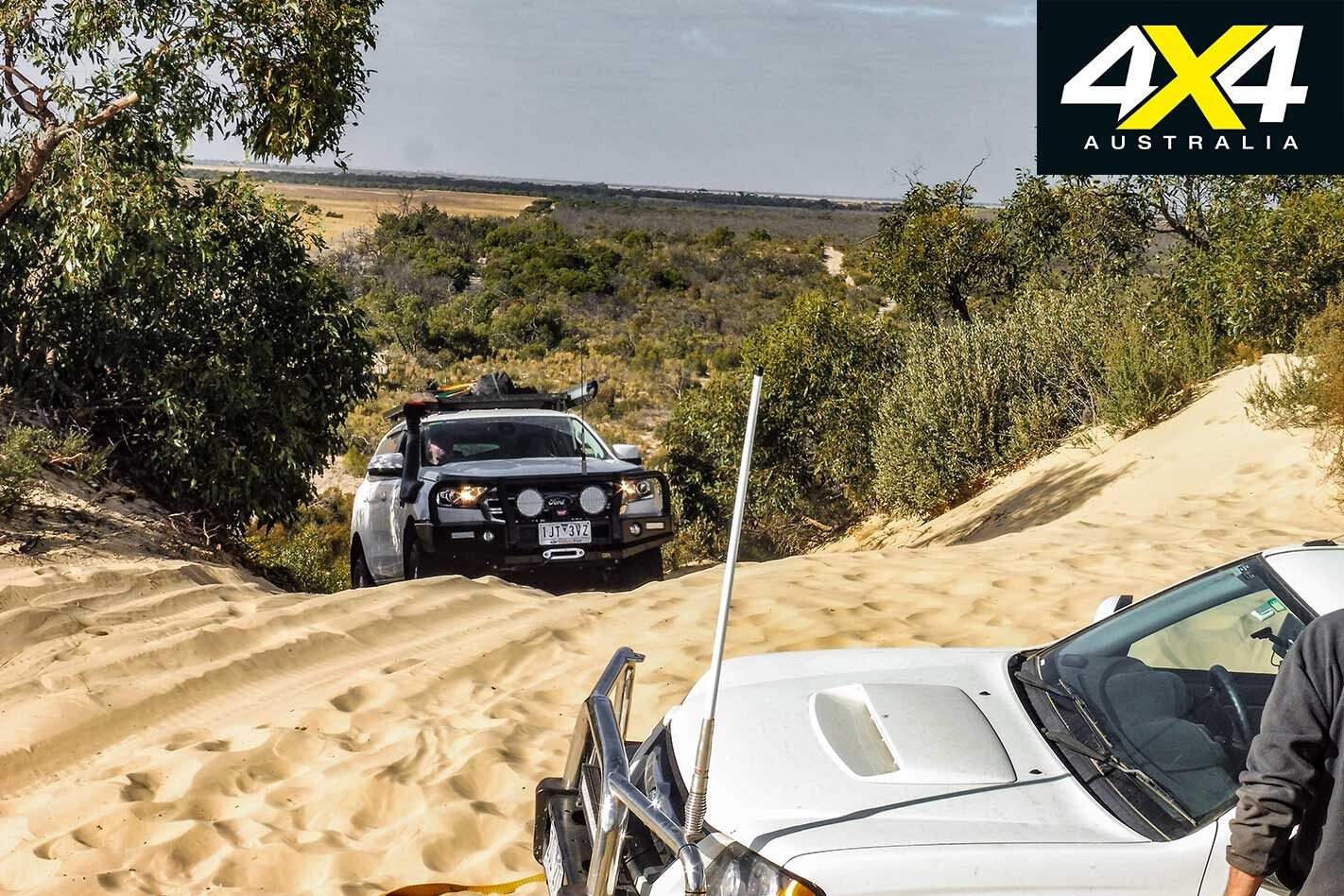
We woke to a crisp morning and the welcome thought of a homecoming shower that night, thinking the most challenging driving was behind us. However, just 20 minutes from Red Bluff campground we came to the mother of all sand dunes. With two tracks to choose from we decided on the right-hand one; however, at the top the track turned and multiple tracks converged.
Hesitating, unsure which direction we should take we lost momentum. It was only for a second, but that was all it took. There was no going backwards or forwards. Our rig was stuck. Fortunately, even though most of the convoy had dispersed, we still had two vehicles with us and, finally, after securing the snatch strap correctly, we were hauled out.
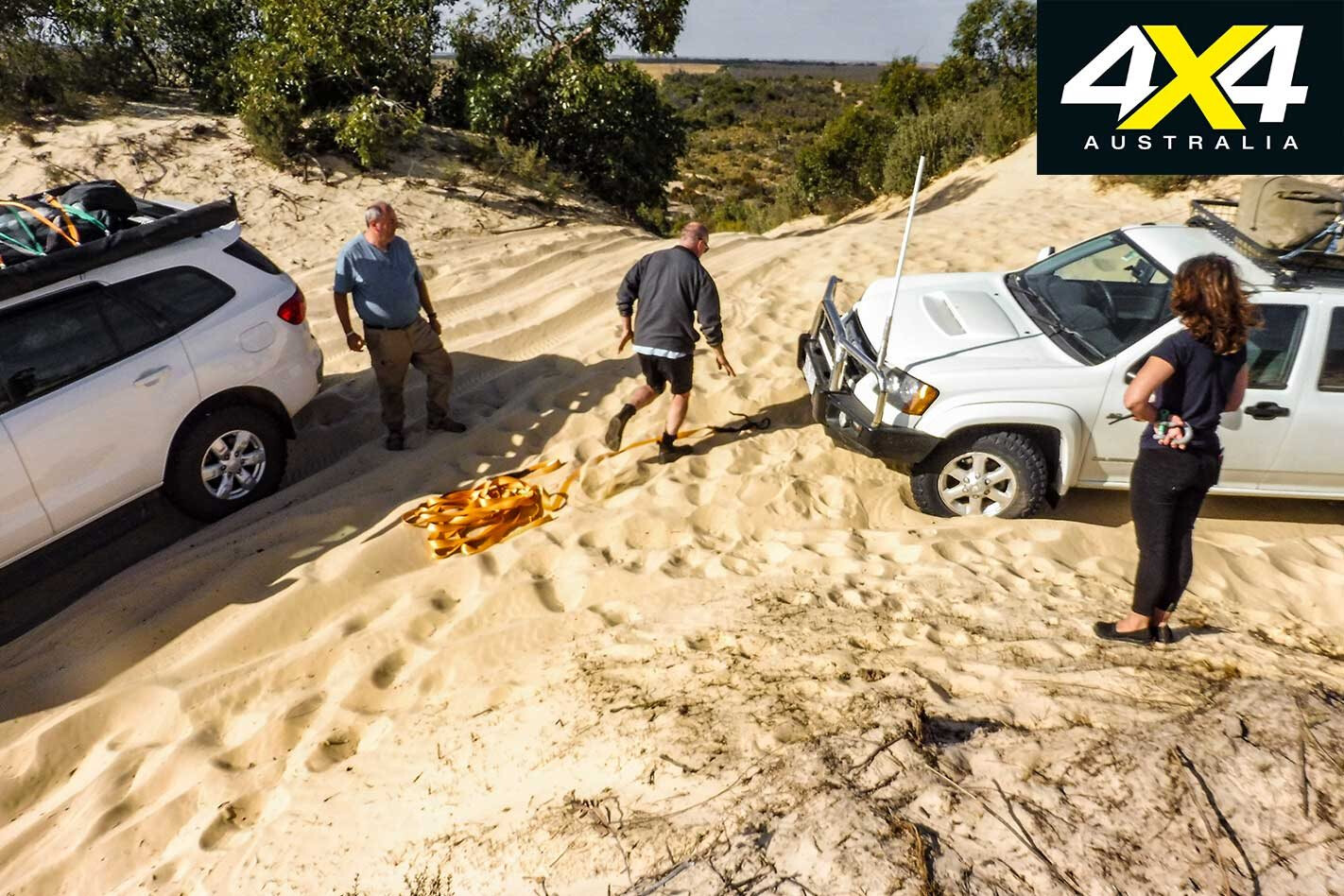
Getting bogged wasn’t the only heart-stopping moment. The day before I thought I’d lost my husband’s phone deep in the sand dunes – they were the longest five minutes of the trip. Then, through all the turbulent bouncing on the tracks, our mate Greg had the roof rack, complete with two swags, unceremoniously tumble from the top of his MU-X. It was all-hands-on-deck as tools came out and we helped him secure the rack back on top.
Thrills, spills and mishaps are part of any off-road adventure, but being part of a large convoy means there’ll always be someone behind you to help. Going outback and tackling the Border Track will undoubtedly test your driving skills, but it will also leave you with indelible memories.
Travel Planner
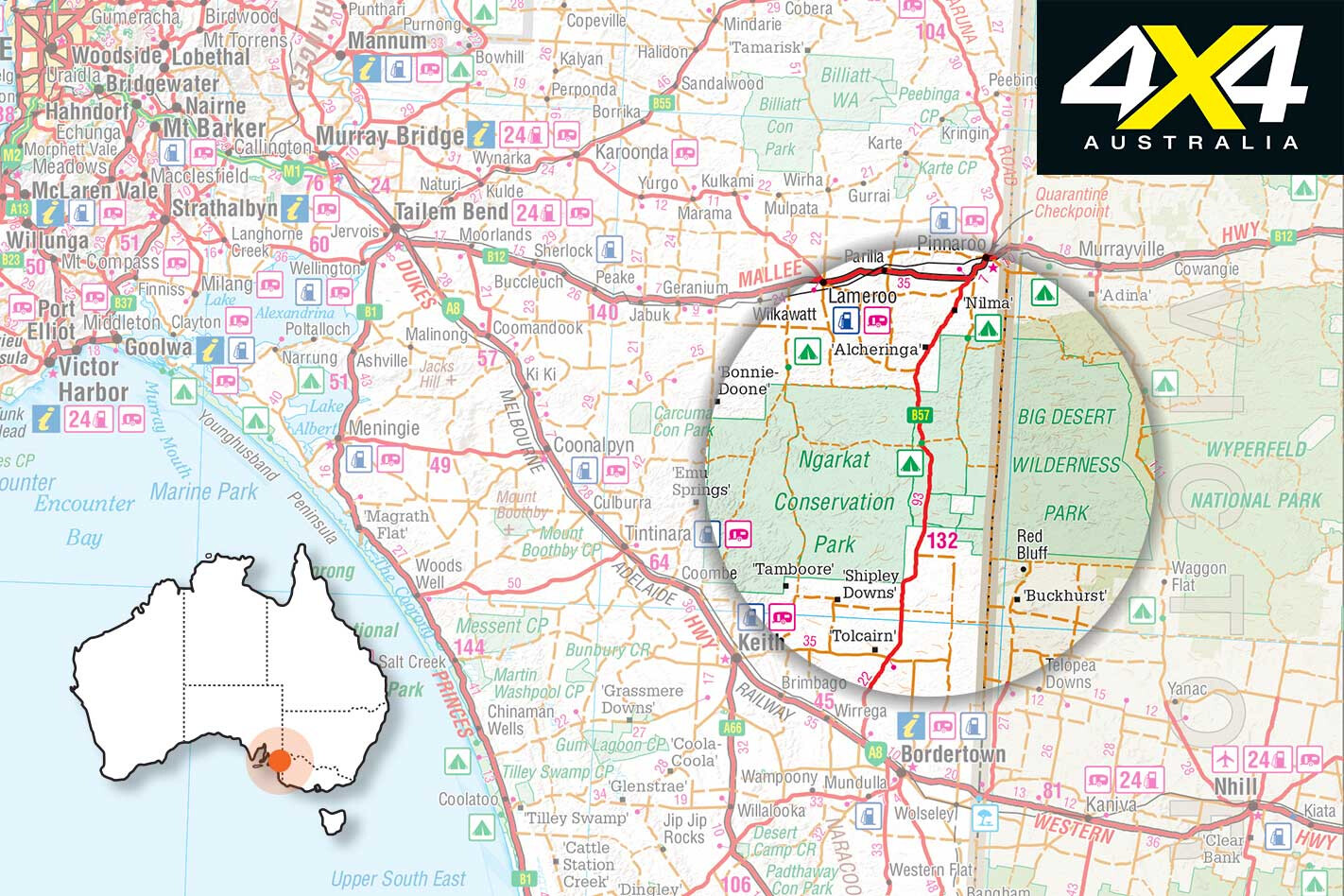
WHERE Wyperfield National Park is approximately 450km north-west of Melbourne reached via the Western Highway at Dimboola, via Sunraysia Highway through Patchewollock to Pine Plains. It can be also reached by Hopetoun on the Henty Highway or via Underbool on the Mallee Highway.
CAMPING Lake Lascelles: Hopetoun, Victoria. Free camping, amenities block, barbecue, fixed fireplaces, pet-friendly and water taps.
Wyperfield National Park has free camping at Casuarina, Round Swamp, Milmed Swamp and the Snowdrift, each with pit toilets, tables and fire pits.
There are five campsites located just outside Big Desert Wilderness Area, all accessed along the Murrayville-Nhill Track: Big Billy Camping Area, The Springs Camping Area, Moonlight Tank Camping Area, Broken Bucket Camping Area and Red Bluff Camping area, accessed via Border Track or Bluff Track, 4WD only.
SUPPLIES It is strongly advised to carry your own recovery gear, rated straps, shackles, long-handled shovel, tyre deflator and compressor. Bring enough food and water to be self-sufficient for the duration of your stay. Campgrounds have long-drop toilets. Firewood can be hard to come by in this region, so it’s advised to bring a bag of wood.
WHEN TO TRAVEL The best time to visit is the cooler months of April through to October. Summer is not recommended because of sandy tracks, high temperatures and risk of fire.
CONTACTS SA Department for Environment and Heritage, Lameroo, SA Phone: (08) 8576 3690 Web: environment.sa.gov.au
4WHEEL driving is a game of individualism. As pragmatic as we like to think of ourselves, the reality is we’re the black sheep, the ones who rock up to a barbecue with half a pig instead of a bottle of wine.
We’re the ones who dream of spending our hard-earned holidays in the middle of a desert, 1000km from the nearest internet connection with nothing but the stars and a campfire as company. It’s something that sneaks through with our vehicles, too.
Even the most practical in our midst still throw a little flair in: different tyres than our mates, different driving lights, trick bar work; all signs that we were never meant to blend in with the crowd. It’s this uniqueness that first drew us to Josh Farmer’s one-of-a-kind Mitsubishi Challenger, a 4WD as uncommon as it is practical.
Josh first laid eyes on the mid-sized Mitsi a little over two years ago. With a history in the triple diamond brand and an inkling at the untapped potential hiding underneath, Josh knew he had to have it.
Based on the Triton platform, the Challenger has a heritage dating back to the ’70s. They’re adorned with first-place wins from some of the most remote countries in the world and, like most ute-based wagons, only make a good thing better. Of course, all of that is completely pointless if it can’t hold its own on Aussie tracks and, for that, Josh had his work cut out for him.
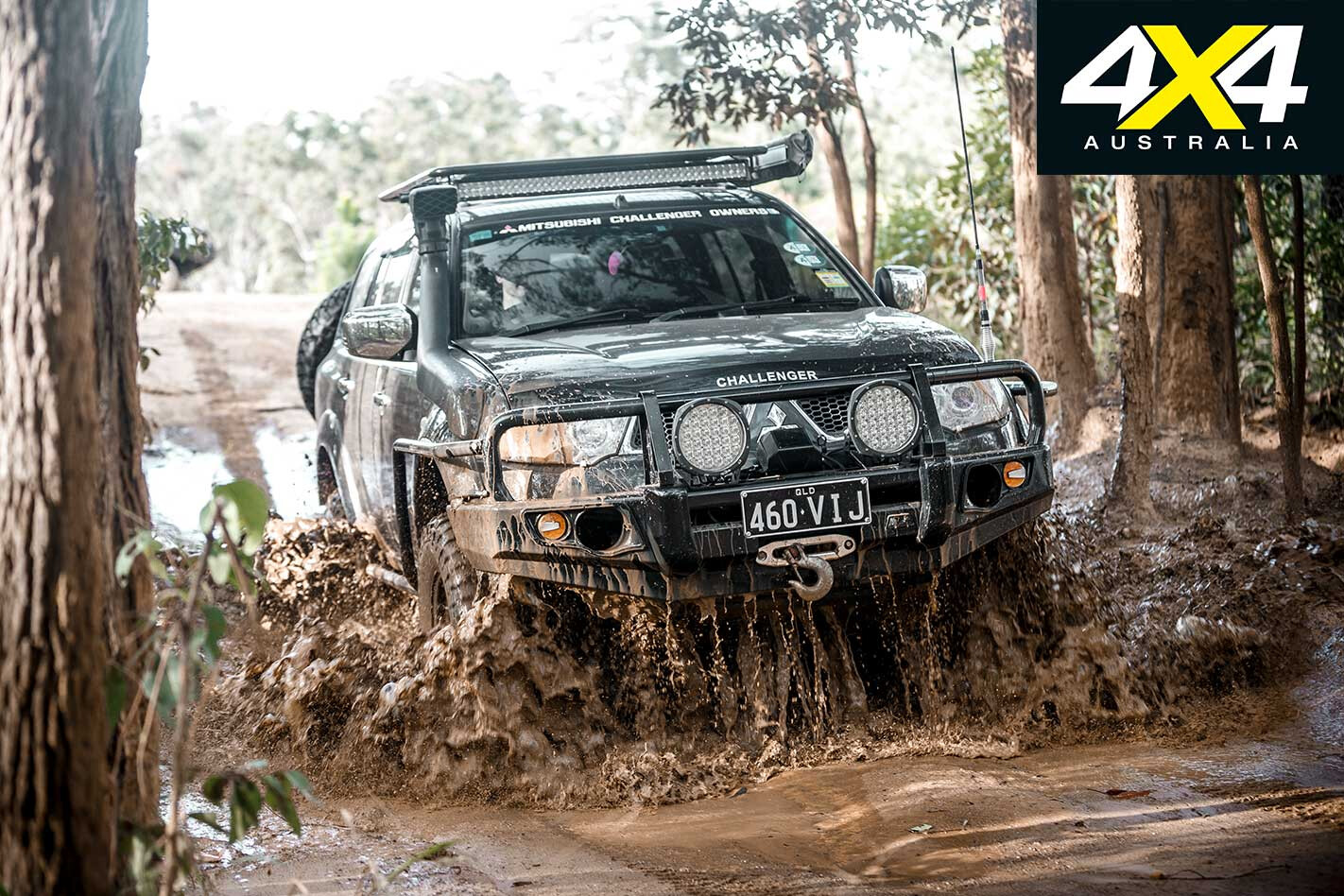
The first step was providing some serious frontal protection. With kangaroos in plague proportions and droughts driving them closer and closer to main roads, an MCC Falcon bar seemed like the obvious choice; the steel construction and integrated uprights fortify the Challenger’s front-end and vitals.
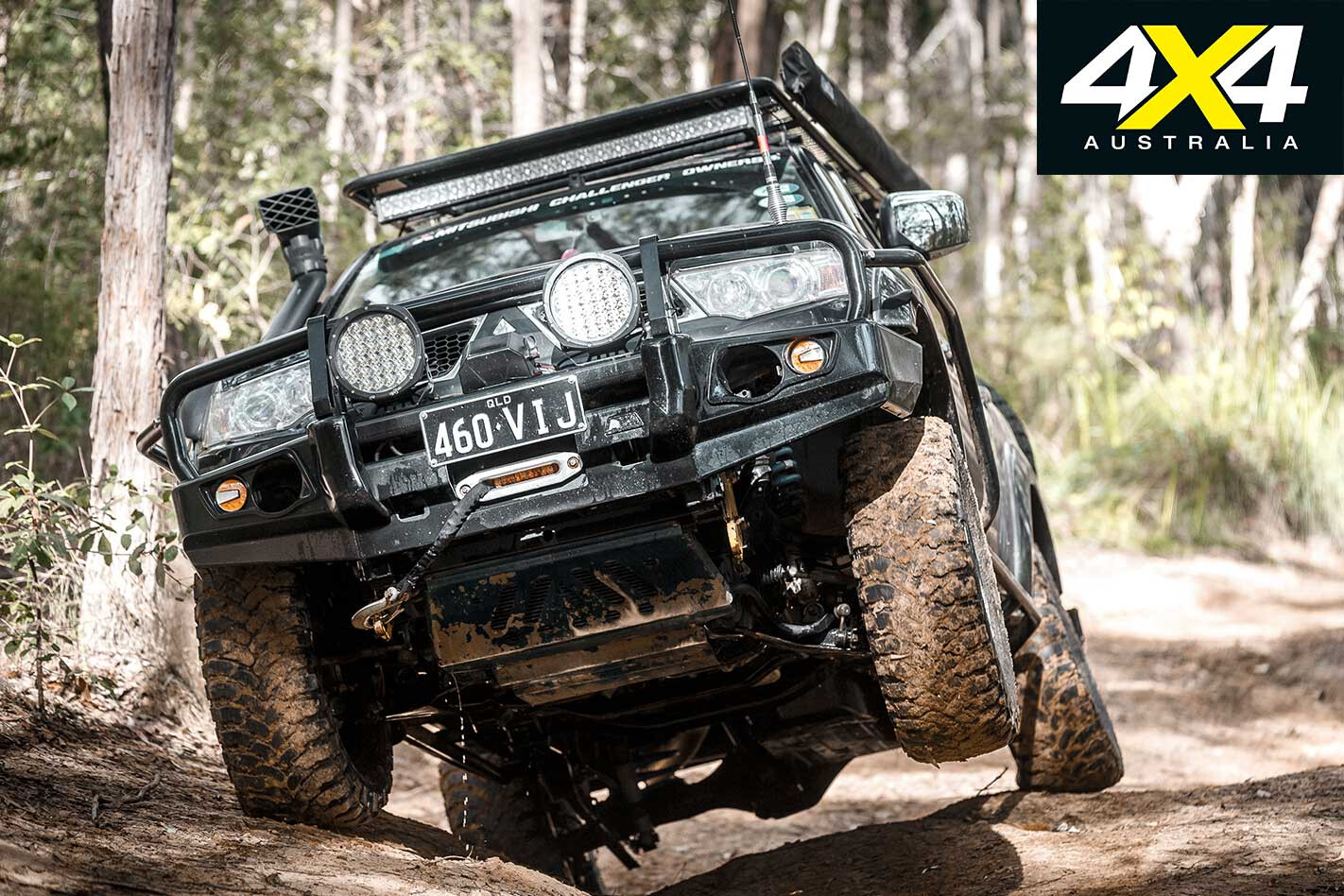
Hidden deep within its steel embrace is a 12,000lb 12V winch for when ambition outweighs ability. Josh has specced-up custom-rated recovery points straight to the frame when double line pulls are a must.
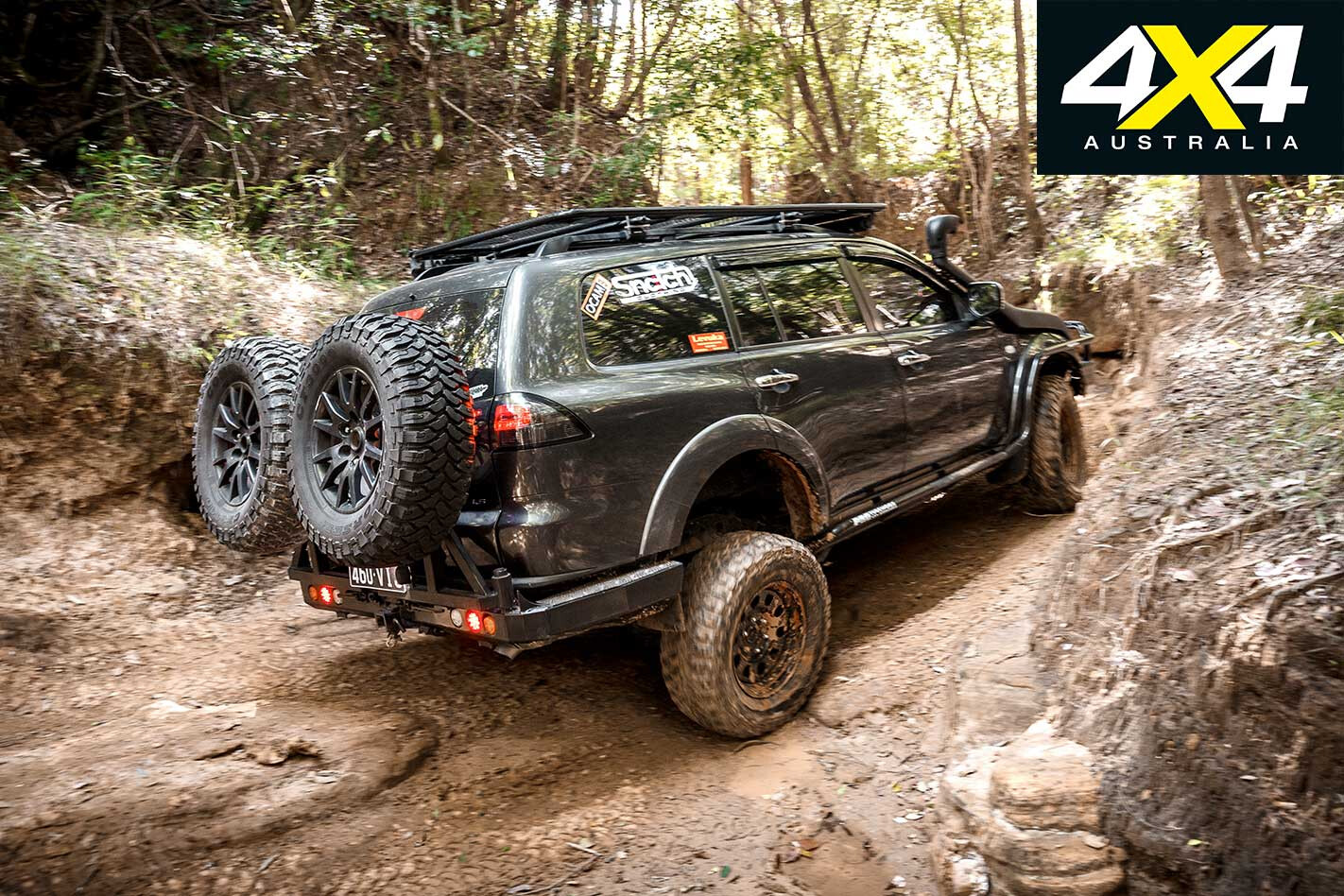
Moving farther into the bush – and further down the flanks – Josh’s up-armoured the Mitsi’s sills and front guards with a set of intricately bent tube from Queensland-based Pro Tubeworx.
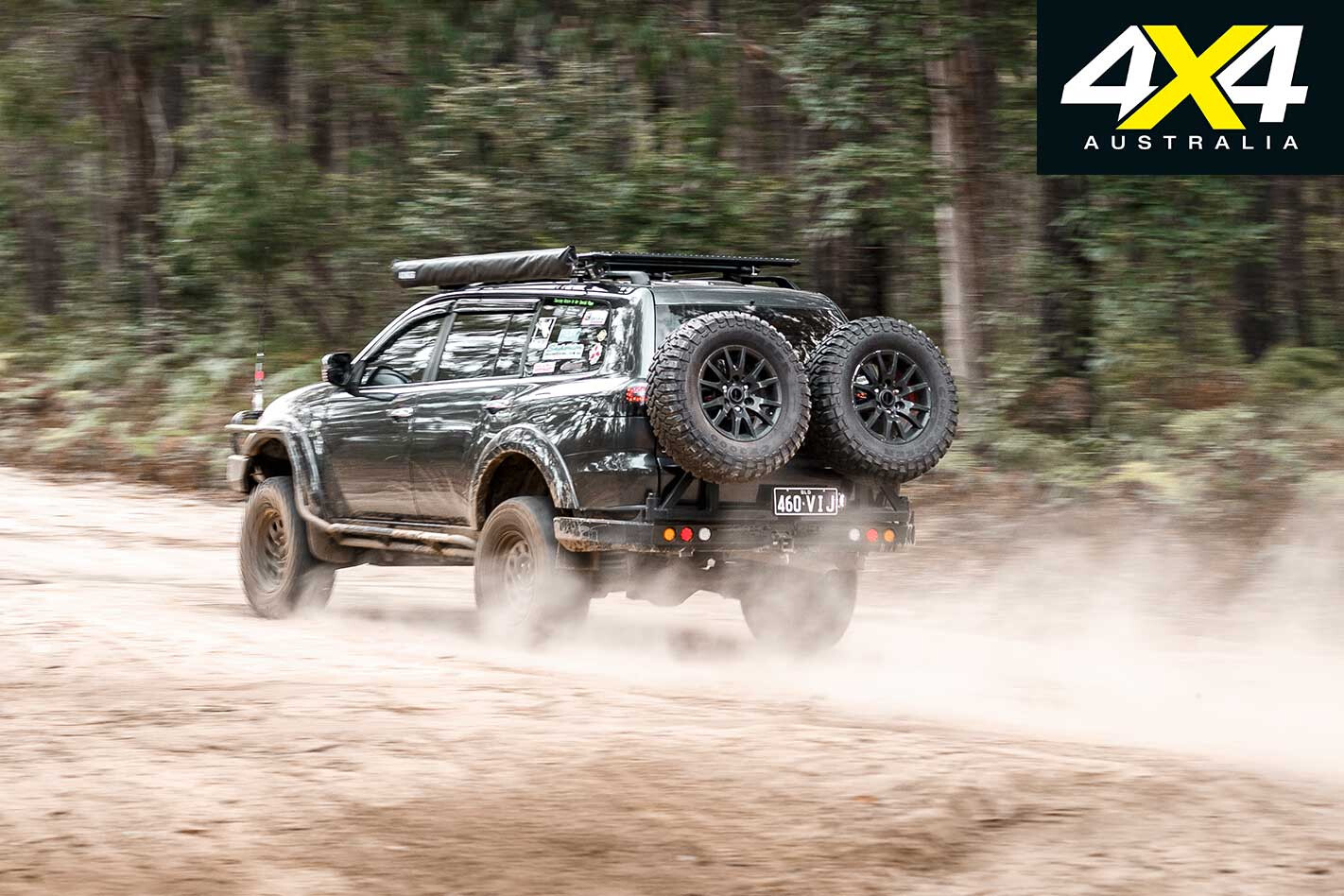
Giving the Challenger its distinct bush-ready appearance is the one-off rear bar from Jack Diesel Custom & Fabrications. The staunch, heavy-duty steel offering sits high, with a bumper cut protecting the rear-end sheetmetal while simultaneously giving Josh options for mounting two full-size spare tyres. Both carriers swing out with simple over-centre latches, while a Hayman Reese towbar keeps Mr Plod happy when the trailer’s hitched.
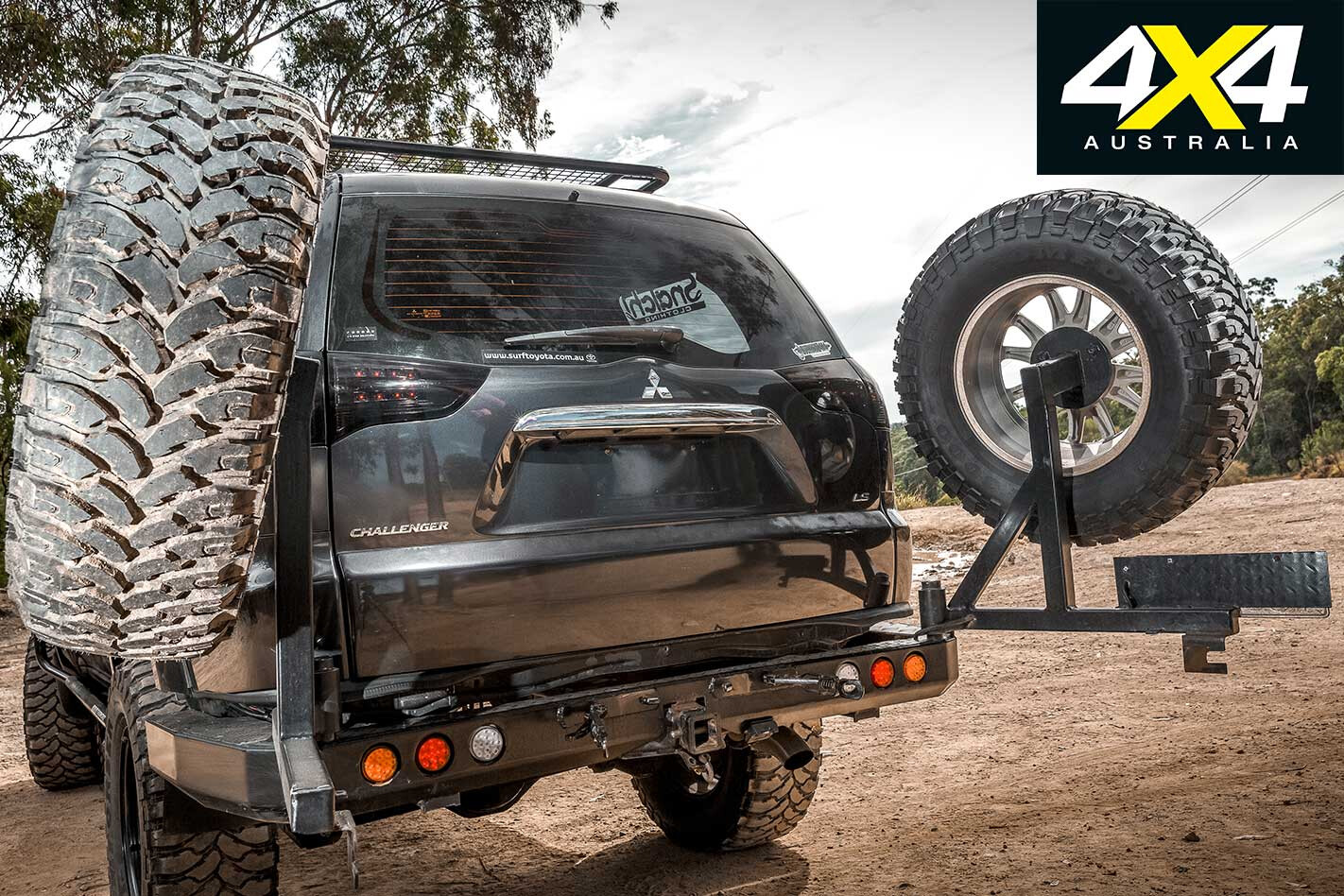
The external overhaul is completed with a 120 Series Prado roof rack bolted down to a set of Rhino-Rack crossbars on the stock sports rails running the length of the roof. This plays host to a roll-out awning for quick and easy camp setups, while the 42-inch LED light bar and matching nine-inch LED driving lights up front provide plenty of daylight when the sun dips below the horizon.
A secret Mitsubishi owners don’t want you to know is they’re actually incredibly easy to fit super-size shoes to; almost too easy. With monster wheel arches and factory flares, Josh has been able to easily slot in a set of 285/70R17 mud tyres (that’s a hair under a 33-inch tyre) front and rear.
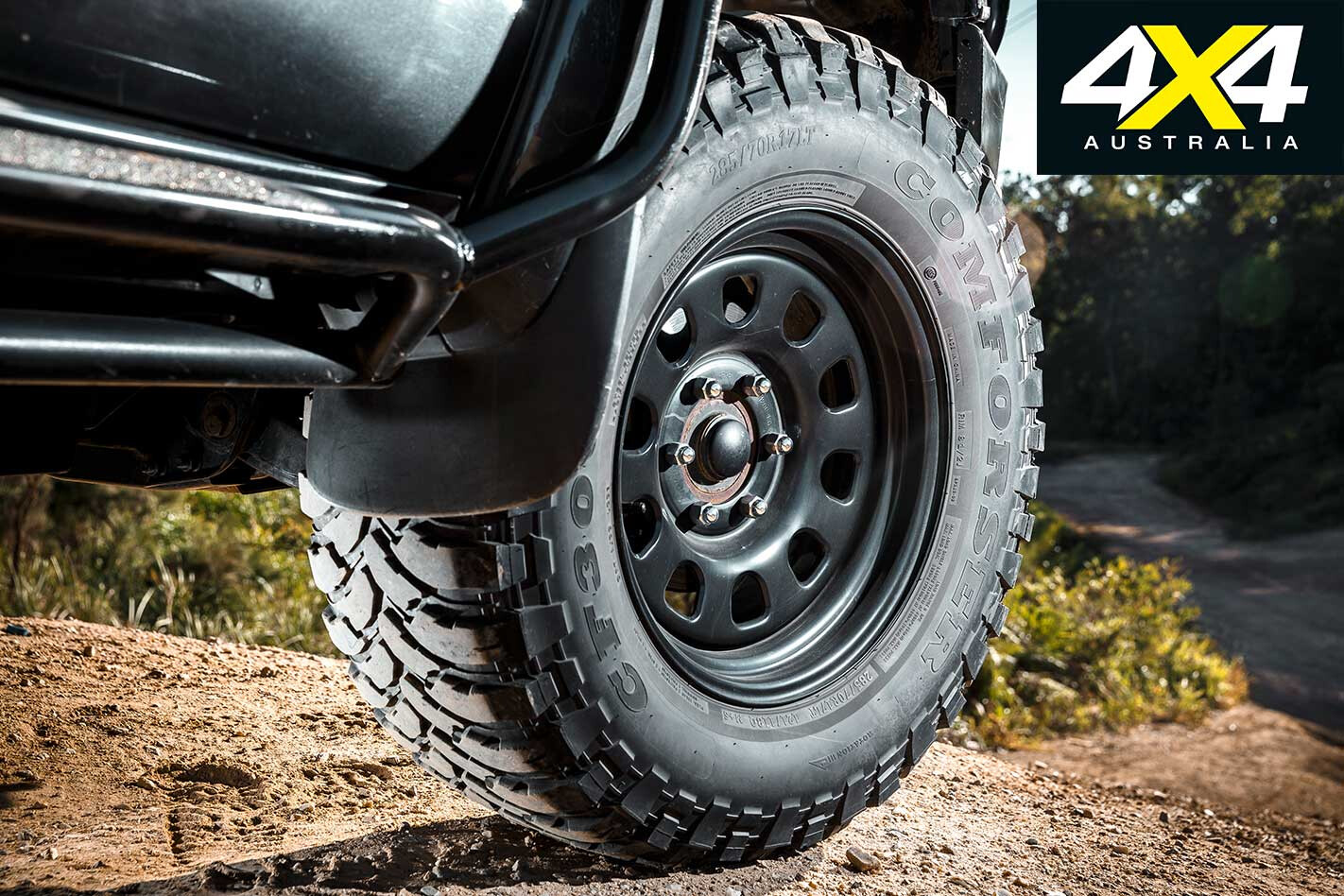
His tyre of choice is an upcomer in the tyre market: the Comforser CF3000. Originally wrapped around the stock 17-inch alloys, Josh has since squeezed them over a set of 17×8-inch Dynamic D Hole steel wheels; the +10 offset helping to push the Challenger’s stance wider to provide side stability in off-camber situations. The modifications to make those fit? A 50mm bodylift. That’s all.
As good as extra clearance for tyres is, it doesn’t always equal extra suspension travel – wheels on the ground is what keeps 4WDs four-wheel driving. To make the Triton’s strut front end and coil rear end work to its full potential, Josh reached out to the guys from Ultimate Suspension.
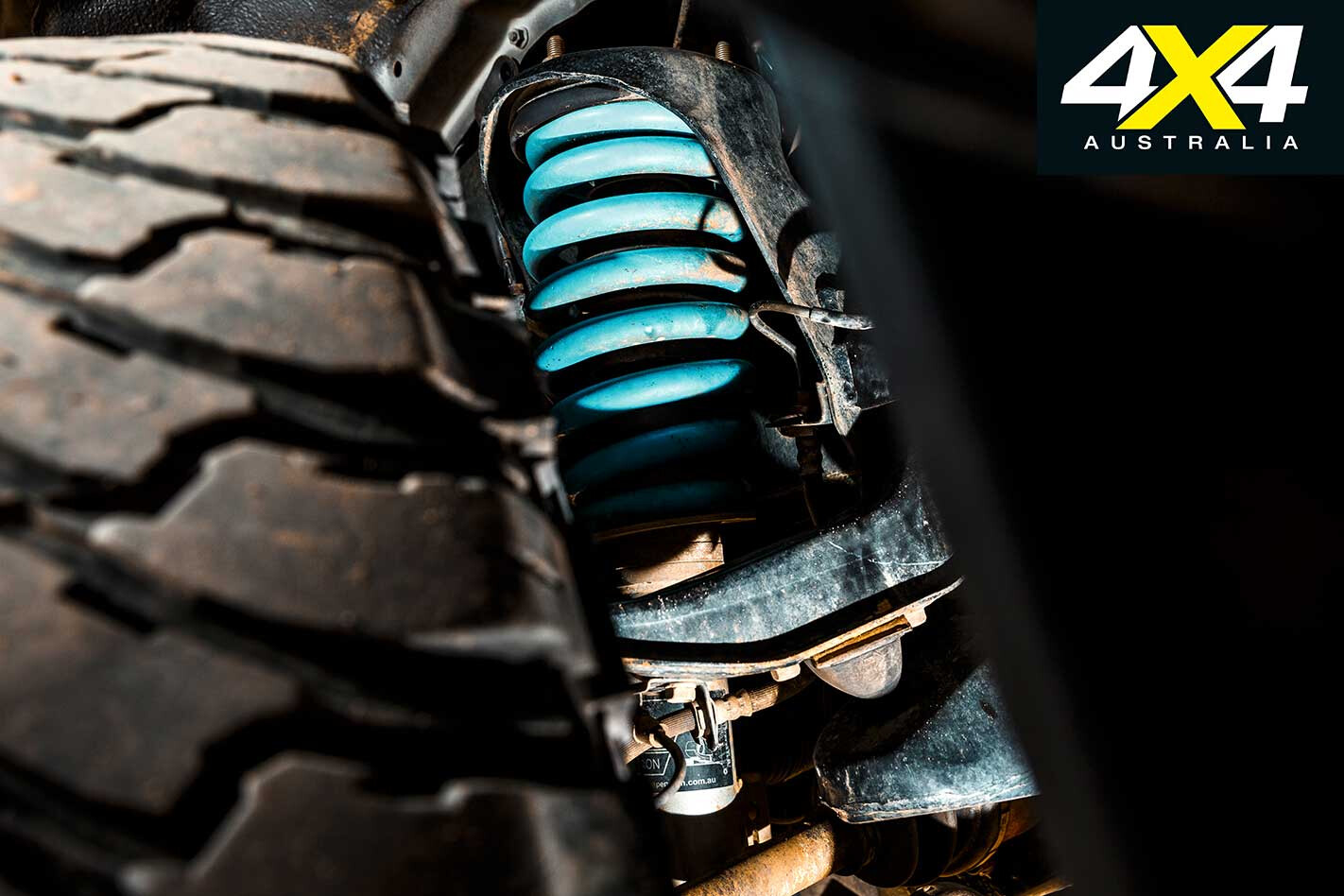
The battle wagon is running its progressive rate heavy-duty springs for an additional 50mm lift, giving a ride height increase of 100mm over stock. The rear suspension has been tweaked to promote more flex when the tracks call for articulation, and the whole lot is kept in line with a full set of nitro-charged twin-tube Ultimate Suspension shocks and struts.
While the modifications to make the tyres fit may be simple, the modifications to put a smile on Josh’s face when he hits the loud pedal are anything but.
Starting from the loud end, the 2.5-litre four-cylinder turbo-diesel huffs clean air through the snorkel running down the A pillar. The air is compressed through the factory turbo before being squeezed into a full set of stainless steel intercooler pipes from Forefront Industries, addressing one of the only chinks in the Challenger’s armour, split factory intercooler hoses.
Josh has given the throttle response a hurry-up, too, with a Windbooster throttle controller knocking out some of the throttle lag, before the spent gases bark their way out the rear through a full 3-inch exhaust system courtesy of Scott’s Rods.
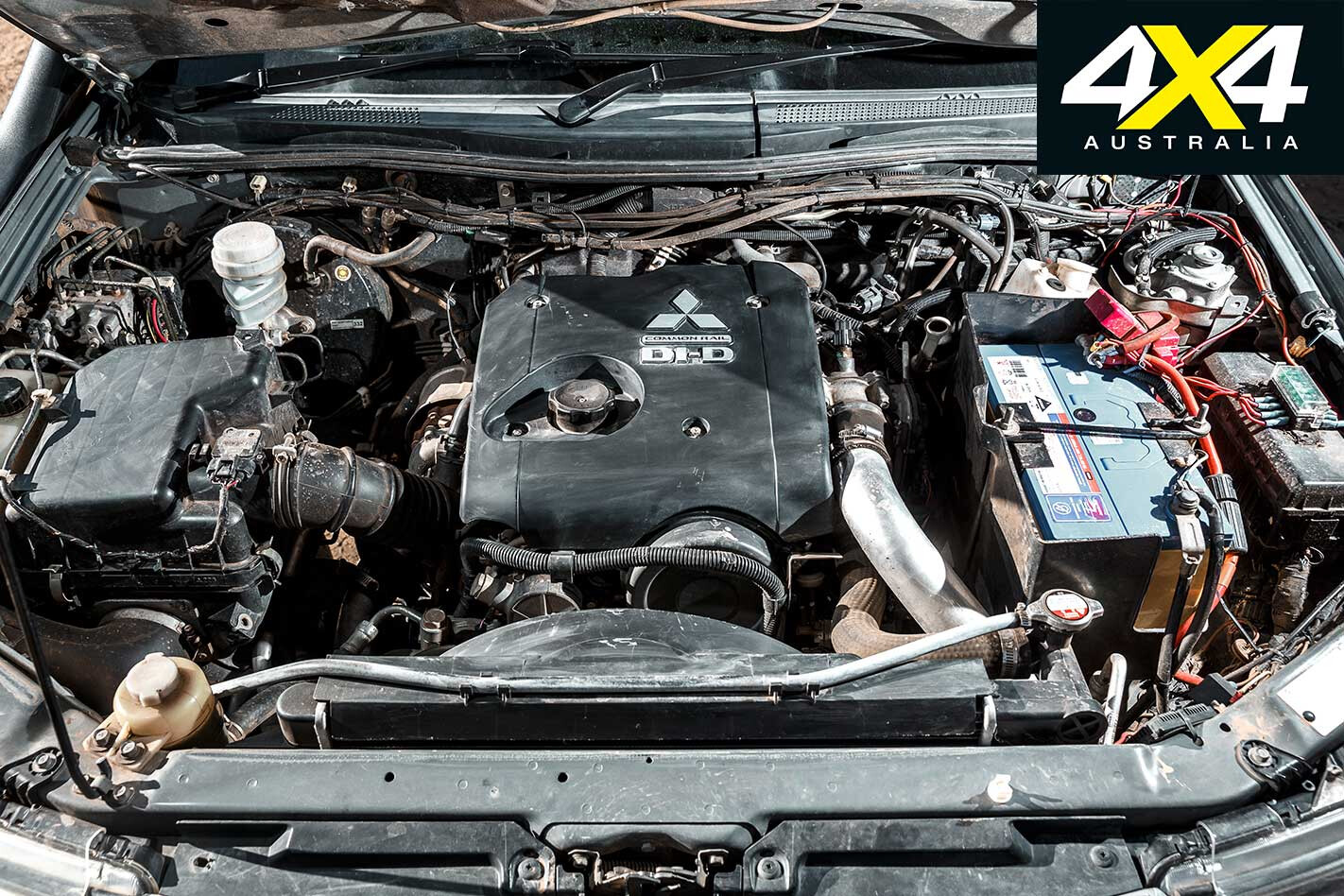
From here, power is sent through the five-speed factory auto tranny, before Mitsubishi’s Super Select 4WD system fires power off to the front open diff and locked rear diff. To ensure the oily bits stay inside the engine, Josh fitted a set of 4mm-thick BushSkinz bash plates to protect the intercooler and engine sump, with a Boo’s plate protecting the auto trans.
Much like the driveline and suspension, the Mitsubishi’s interior is so close to the mark from stock there’s very little needed in the modification front to make it a capable tourer. The first chip off the block was upgraded monitoring systems to ensure the engine stays in one piece.
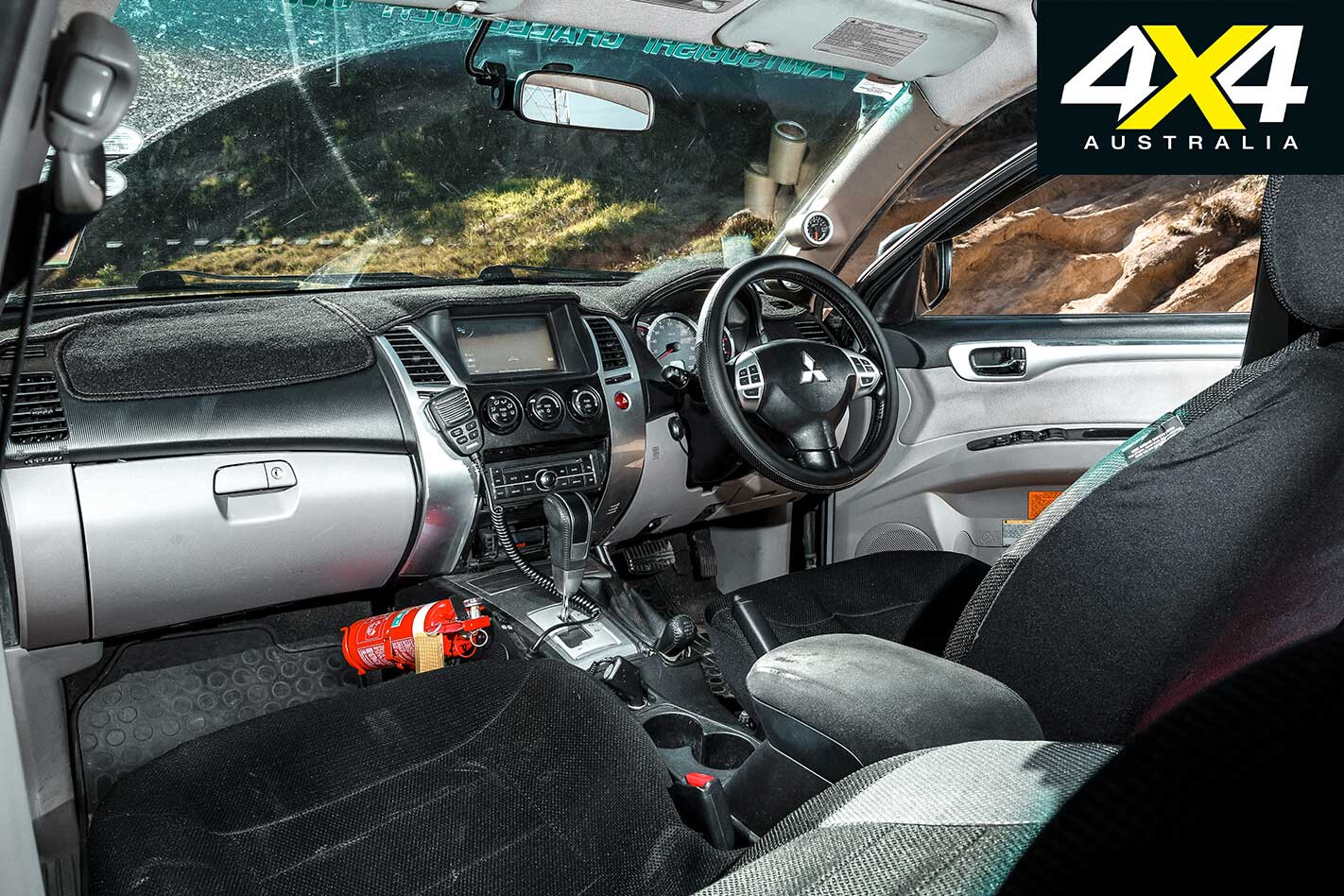
A twin-gauge pillar pod has been tweaked for the Challenger’s unique pillar profile before being filled with SAAS boost and EGT gauges. An Engine Data Scan system also got the nod to keep an eye on the diesel’s vitals on remote trips. A Uniden UHF got optioned up for inter-convoy comms, with an extensive Sony stereo replacing the Challenger’s factory offering.
Rounding out the touring setup was pretty basic. A set of removable tubs store Josh’s camping gear, helping keep weight down in the rear; the stock seats have been tweaked to improve lumbar support, and he’s added a few bits of interior protection here and there to keep it in one piece for years to come.
In fact, the only question really hanging over Josh’s head is if he’ll bolt the rooftop tent down for long trips or throw a swag in the back for hardcore weekenders. One thing is for sure, though, Australian 4WDs are getting more unique, and that’s a win in anyone’s book.
Superman!
IN A WORLD of sticker-pack special editions, it’s easy to dismiss anything like “Super-Select” as just another gimmick, but the reality is far different. Mitsubishi’s ace in the hole is its intelligent 4WD system in use for the better part of three decades.
Rather than forcing customers to choose between full-time 4WD (similar to late model Land Cruisers) and part-time (as found in cheaper options like Hiluxes and Rangers), Mitsubishi gives drivers the choice at the flick of a switch.
2H sends drive just to the rear axle, disconnecting the front to save on fuel usage, while 4H allows the Challenger to function like an AWD, perfect for dirt-road touring, snowy or icy conditions.
A centre diff allows the 4WD system to be used on high traction surfaces without destroying itself like a typical part-time system would. From here, the centre diff can be locked to give a typical 4H setup like most of its competitors, then down into 4L when lower gearing and more control is required. If viscous hubs and diff oil were cake, we’d be making a joke about eating them right now.
OUR VIC High Country escapade earlier this year was an extreme test, but it was well suited to the set of Toyo muddies I’d fitted to the 79 Series Cruiser.
After a bit of procrastination on my part, the crew at Reservoir Tyrepower fitted the Cruiser with a set of 285/75R16 tyres on 16×8-inch Patriot matte-black alloy rims from ROH.
These rims are available in 16-, 17-, 18- and 20-inch variants. The 285 tyres are load-rated ‘P’, which equates to a max load (at the highest recommended pressure of 80psi) of 1650kg per tyre. The speed rating of ‘P’ corresponds to 150km/h, and that’s plenty for the Cruiser.
The Toyo Open Country M/T tyre is designed to provide full-size pick-ups and wagons with greater off-road capability and extra ground clearance. With aggressive block-type tread pattern – the tread blocks extend to the shoulder and upper sidewall – they offer high levels of traction and excellent self-cleaning in mud and other loose surfaces. Deep siping in the tread blocks helps maintain grip on wet surfaces.
The three-ply polyester carcass, which includes the sidewall, two steel belts and two nylon cap plies in the tread area, makes it highly resistant to sidewall bruising and punctures. This construction also strengthens the tyre to provide good handling and durability, while maintaining its load-carrying capacity.
However, it makes the sidewalls stiff and, while we never drove these tyres in sand, many people have commented that you need to lower the tyre pressures more than normal to get the tyre to bag effectively in such conditions.
The tyres handled well on the bitumen, reacting and turning positively no matter the amount of input. Noise levels were impressively quiet, but don’t expect them to be as quiet as a set of A/T or H/T tyres. Expect the noise level to increase as the tyres wear, as all M/T tyres tend to do.
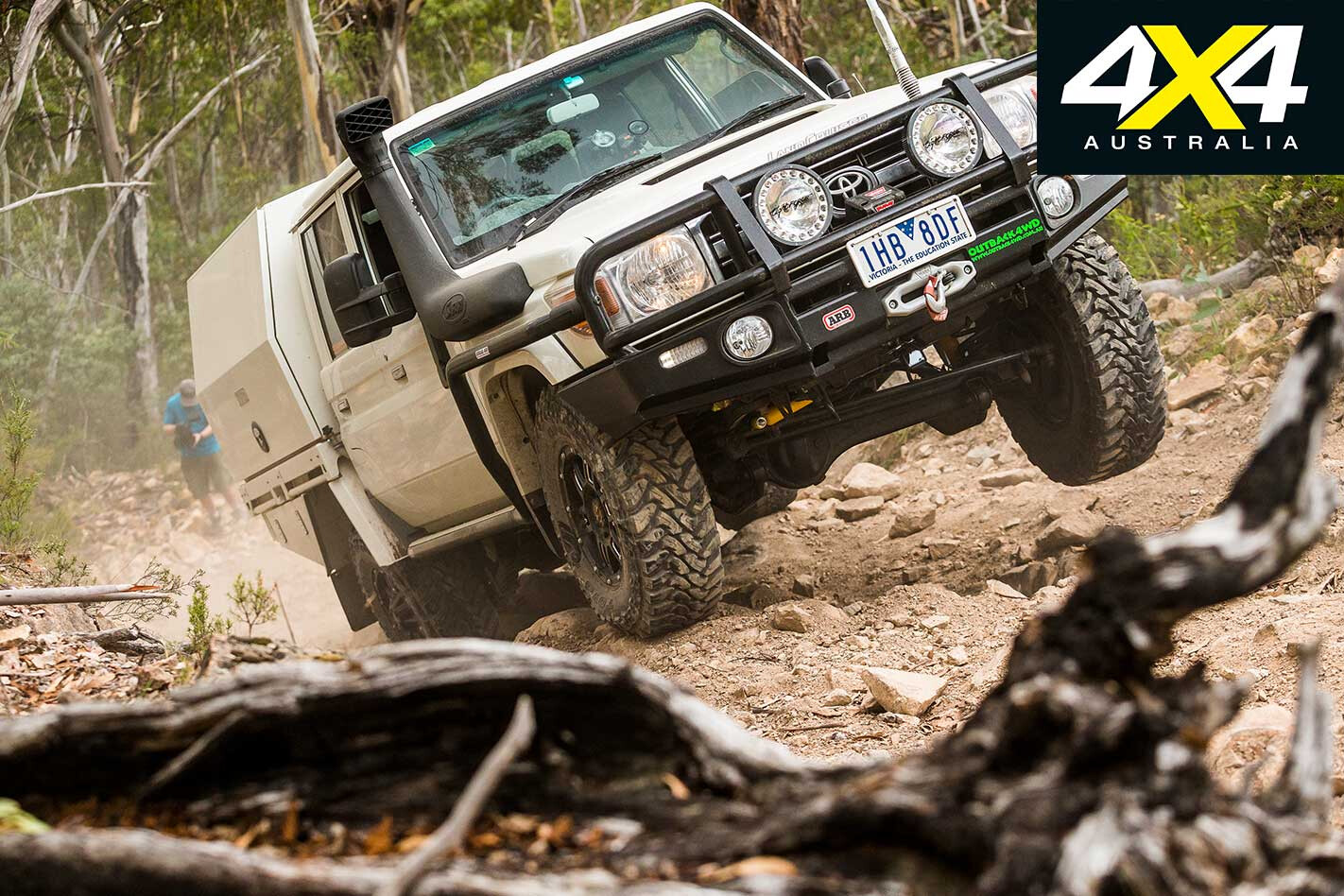
These tyres performed extremely well off-road, exhibiting great traction in the shaly conditions and rocky steps. They withstood the abuse very well, with little tearing or chipping of blocks; even though the rear locker was used on a number of gruelling occasions. On one muddy section the tyres exhibited good grip and plenty of control, with the tread clearing easily and quickly.
Given we’ve only done 5000km on the tyres – and most of that on dirt roads or rugged trails – tyre wear was down by around 1.5mm from the new tyres’ tread depth of 15mm. This suggests they will be good for 40,000 to 45,000km; although, I have heard of much longer distances being covered by this make and model of rubber.
With a RRP of $380 each – you should be able to get them cheaper – these tyres represent great value for the off-roader looking for a tough tyre that’ll perform in the scrub. For those who may not want such an aggressive tyre, check the comparison table at: www.toyotires.com.au
RATED Available from: toyotires.com.au; tyrepowerreservoir.com.au RRP: $380 each WE SAY: Tough and durable; good value.
In our review of the Holden Colorado Z71 Xtreme we noted that it was remiss of Holden to not include rated recovery points at the front of a vehicle that it is marketing for off road use and fitted with a bullbar and recovery winch.
The official word from Holden was that you could use the two standard tow points at the front, which are each rated to 1500kg. 1500kg might be okay for a light winch recovery when bridled across the two of them but certainly insufficient for a safe snatch recovery, which generates much more force.
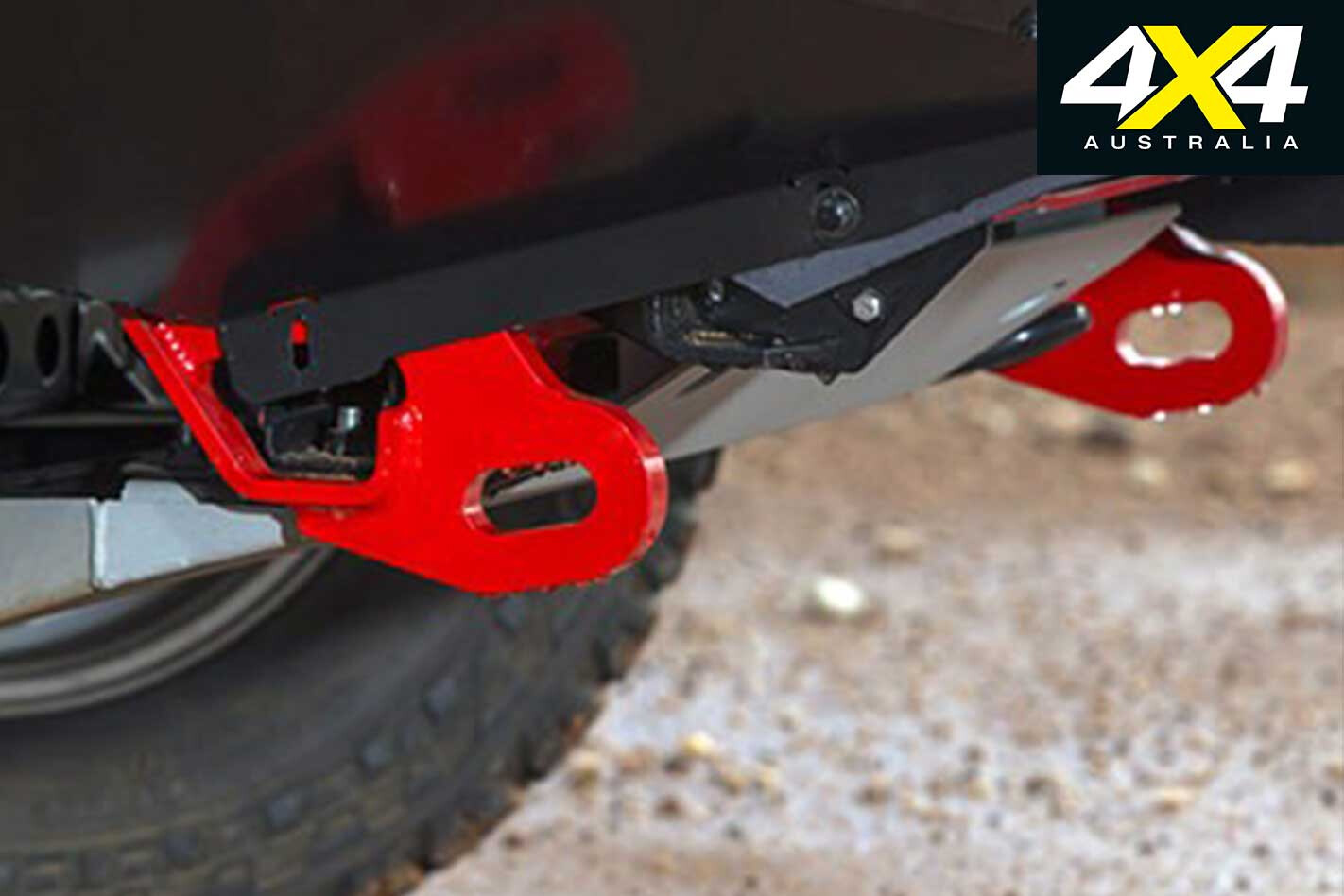
Enter the HSV Sportscat with its pair of big bright red painted recovery hooks up front, which we thought might be an alternative. HSV says these are rated to 3500kg which is far more appropriate for vehicle recoveries, but they are designed to pass through the Sportscat’s bespoke front fascia and will not fit a standard Colorado front bumper.
The HSV engineered recovery points bolt to the Colorado chassis at the same point that the factory Holden bull bar does, so they are not compatible there either.
The factory tow hook or tie down hooks on the front of vehicles are not made for, nor are they rated for vehicle recoveries. Pulling a loaded 4×4 out of a sticky situation such as deep sucking mud, generates forces far in excess of the vehicle weight and using inadequate attachment points for your winch line or strap can result in failure and possible injury – or worse – to people nearby. There are plenty of examples around of damage done and injuries caused by the shackles and other equipment that can fly loose when the attachment point fails. This can be deadly.
Thankfully aftermarket 4×4 accessories companies such as ARB, Ironman and Road Safe have rated recovery points available to suit a range of popular vehicles including the Holden Colorado but best check with them first to see if the recovery points are compatible with your bull bar, underbody protection and other modifications.
From the company that brought you the off-the-Richter-scale VelociRaptor 6×6 and countless force-fed supercars, comes another wild pick up for those for who thinks too much is never enough.
Hennessey Performance has taken to the new 2019 Chevrolet Silverado and given it a makeover that is designed to break necks when it is cruising The Strip in Vegas or blasting across the claypans of Death Valley.
Hennessey starts with an off the showroom stock Silverado that is equipped with the Trail Boss Z71 off road pack. The most obvious addition to the Chevy truck is the additional length and bespoke third axle to turn it into a leviathan 6×6, though there’s more to it underneath.
Standard engine on the Z71 is the 6.2-lter LS V8 petrol mill and Hennessey adds its HPE700 pack, comprised of a 2.9-liter supercharger breathing 7psi of boost in to the V8 to make 705-horsepower (525kW). If that’s not enough there’s always the 800HP stroker engine option to really blow your mind (and budget).
Other standard equipment on the Goliath 6×6 includes an eight-inch suspension lift to clear 37-inch BFG muddies on 20-inch HPE wheels, LED lights, Hennessey front and rear bumpers and roll bar. Other options add a Brembo brake upgrade and custom interior packages.
If you have a US$375,000-sized wad of cash burning a hole in your Swiss bank account then you’ll need to get in quick to secure your 6×6 Goliath. Hennessey only plans to build 24 of them and they are expected to be snapped up.
THE NEW G-Class from Mercedes-Benz hasn’t even hit Australian showrooms, but already the Euro tuning houses are having fun with it.
With its bigger body, new chassis and independent front suspension, the new G represents the biggest change to the iconic off-roader in almost 40 years. However, it retains the traditional boxy styling and underneath there’s still a live axle at the back and all three differentials can be manually locked for supreme off-road ability.
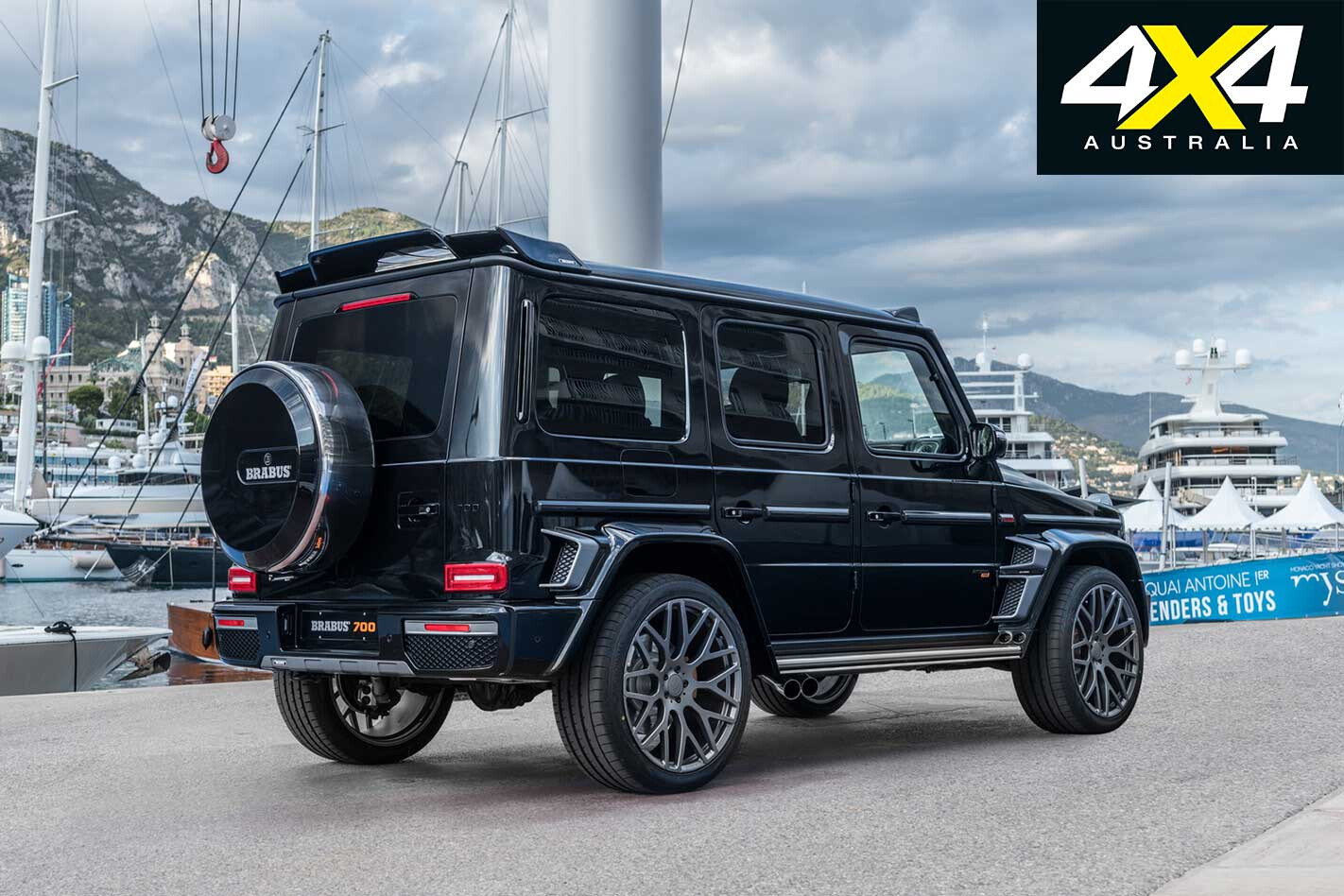
When it does get here later this year the AMG-tweaked G63 will be the first model on the block with others to arrive later in 2019. Brabus has waved its tuning wand over the G63 taking the already stonking power from the twin-turbo V8 petrol engine from 430kW to a blistering 515kW at 6100rpm. Torque pounds up from 850Nm to 950Nm, which is all available between 2500 to 3500rpm.
Brabus does this with its own plug-and-play engine controller, which works in-line with the factory ECU and adjusts fuel injection timing and boost levels to attain maximum performance. It is helped along with a free-flowing active exhaust that gives the system a variable exhaust note ranging from a subtle “Coming Home” mode to a ballsy V8 bellow.
Brabus calls its G-banger the 700 Widestar, which indicates the wider stance of the vehicle. The monstrous 11.0 x 23.0-inch forged alloy wheels clad in 305/35 R 23 sticky tyres widen the track and they are covered under oversized wheel arch flares. New front and rear bumpers stretch out to the wider flares and give the Widestar a flatter stance. Bespoke LED lights and a custom interior complete the package.
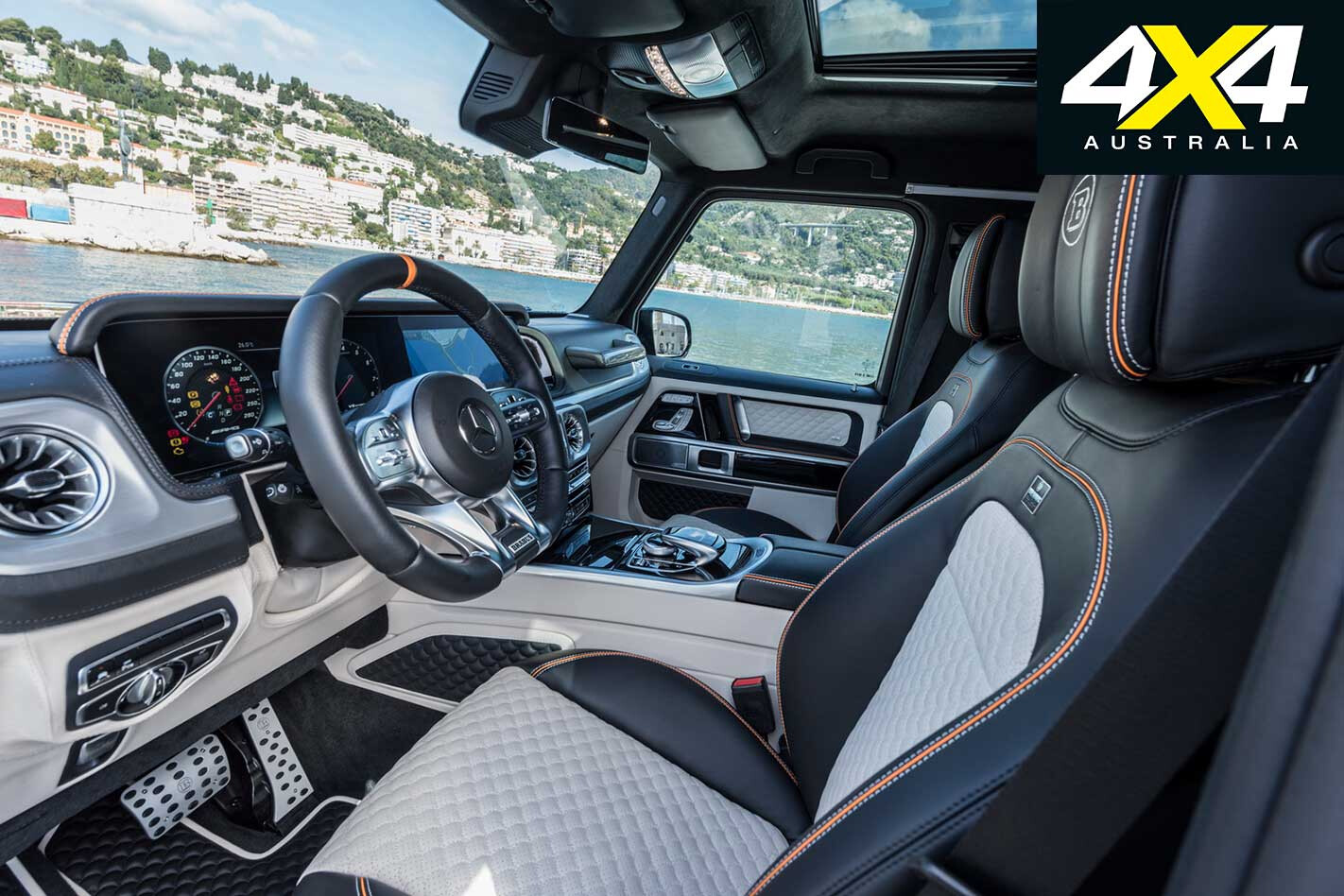
Like any Brabus-tweaked special, if you need to ask the price then you probably can’t afford it. We doubt the Widestar could maintain the G-Wagen’s legendary off-road ability on those massive low-profile tyres anyway, so we’ll just have to wait for the regular Gs from Mercedes-Benz next year.
VOLKSWAGEN is ensuring it covers the entire – and always expanding – limits of the 4X4 dual-cab ute market, with the release of the Volkswagen Amarok Ultimate 580 (on sale now).
The German marquee also announced the bush tourer-focused Amarok Core TDV6 is on the way, later in the same month – and at a very competitive price. Both models are backed by a ZF eight-speed auto; for those waiting for a manual TDV6, you will need a little more patience. VW won’t confirm timing, but it will be at least another six-to-nine months before the manual version arrives.
The Ultimate 580 is the new hero in the German marque’s 4×4 dual-cab ute model range and is slightly skewed to the more on-road biased owner, thanks to its massive 20-inch wheels and low-profile tyres. There’s no upsize in the brakes on the 580 so there’s no reason you couldn’t fit the 17- or 18-inch wheels for better off-road-rubber options.
As the name so obviously hints, the Ultimate produces 190kW of power (200kW on overboost) and a mighty 580Nm of torque, backed by an eight-speed automatic transmission. These figures eclipse the previous TDV6 model (165kW/550Nm) and ensure the Volkswagen Amarok continues to reign as the most powerful 4×4 dual-cab ute on the market.
Along with all that grunt, VW is claiming a slight reduction in fuel consumption (albeit by 0.1L/100km) down to 8.9L/100km. Win, win, we hear you say?
The Core TDV6 does not get the new uber-engine; instead, it retains the still more-than-ample 165kW/550Nm 3.0TDV6 (backed by an eight-speed auto). The Amarok Core TDV6 comes with more bush-friendly 17-inch alloys, shod with 245/65R17 rubber.
The Core interior will include cloth seating (manual-adjust driver and passenger seats) and an easy-clean/wash-out rubber floor. Rear parking sensors and a rear-view camera are standard, as are DRLs and fog lights.
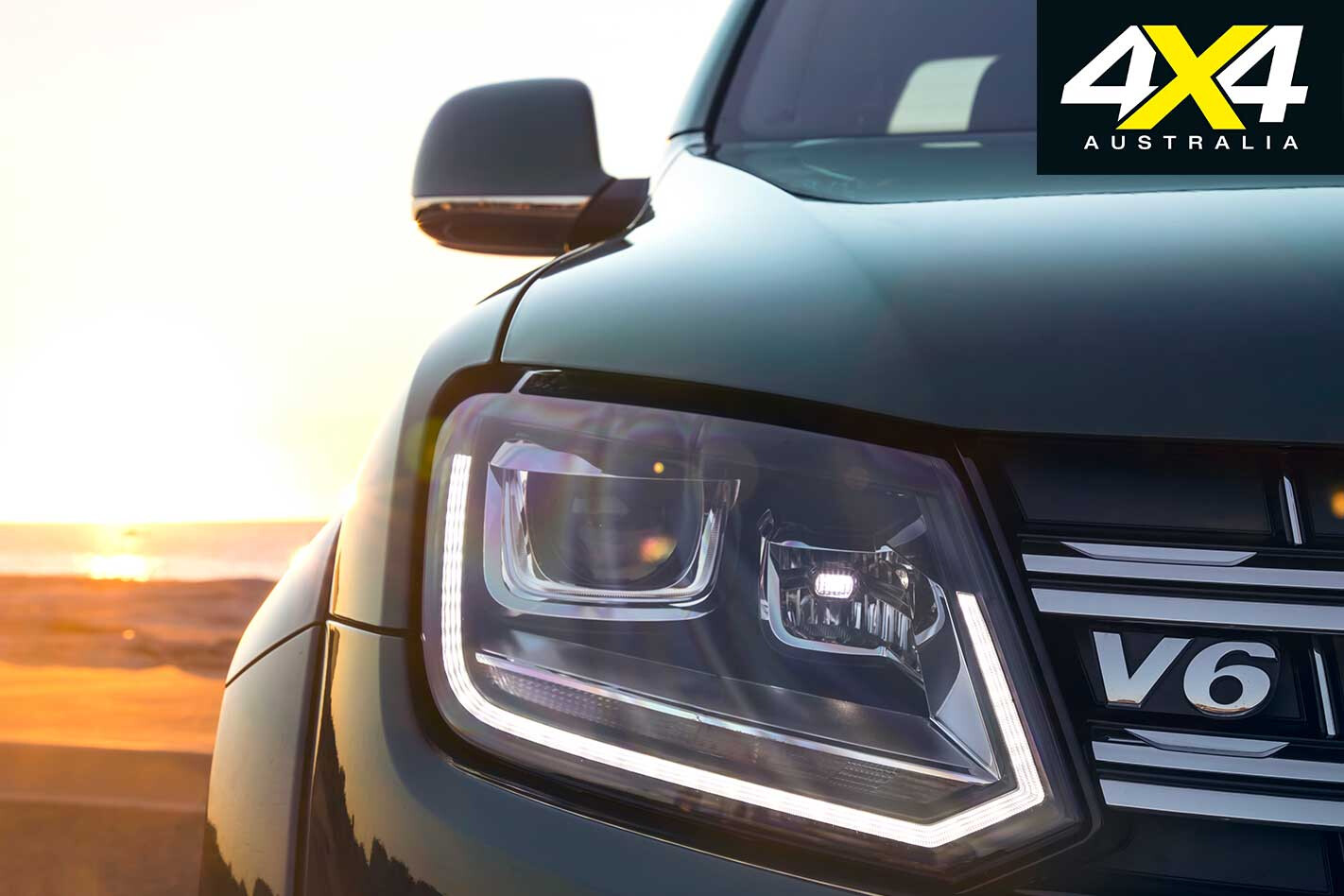
More specs and details are yet to be announced by Volkswagen, but you can expect pricing to be just on, or just below, $50,000. That’s plenty of touring bang for your bucks from a dual-cab ute that we already know packs plenty of punch off-road as well as on it.
With an asking price of $71,990 the Amarok Ultimate 580 is in direct competition with other brands’ top-tier dual-cab utes, including the Ford Ranger Raptor ($74,990), Toyota HiLux Rugged X (auto: $63,690), the just-released Holden Colorado Xtreme ($69,990 driveaway) and the incoming Mercedes-Benz X-Class X350d (from $73,270).
As with the rest of the Amarok range, the Ultimate 580 offers constant four-wheel drive for optimum traction, rather than a part-time 4×4 system found on its competitors (barring the Super-Select-equipped Mitsubishi Triton).
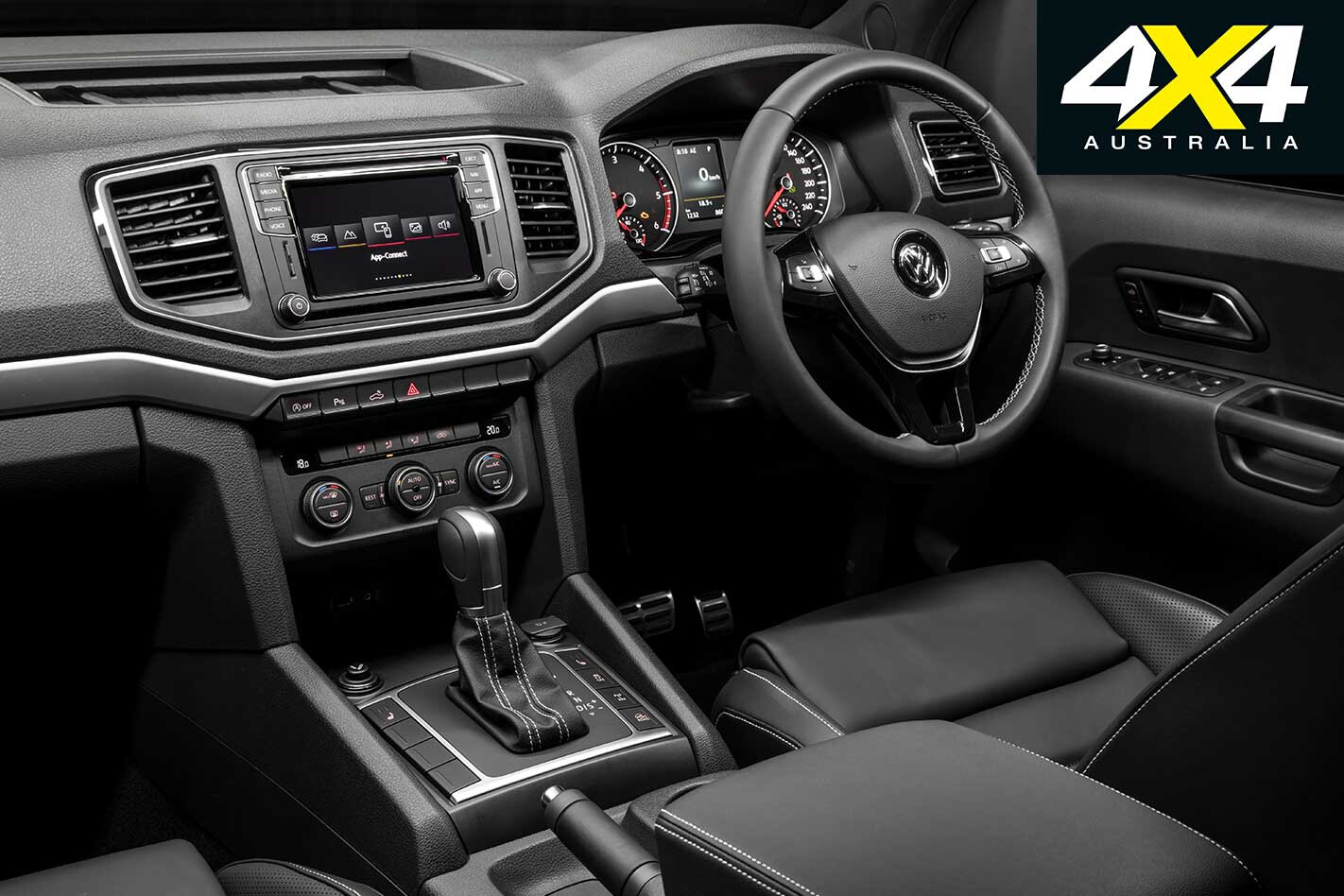
At the time of writing, the Amarok is still the only dual-cab ute with a V6 diesel powerplant, providing the Amarok with a distinct advantage in a market that still adheres to the old adage of “capacity is king” in regards to engine size.
On top of its capacity advantage is the Amarok’s unique (in this market) ‘overboost’ mode that – in Layman’s terms – offers around a 10-second lift in power output when the accelerator pedal goes past 70 per cent of its extension – just in case you do need a wee bit more grunt for overtaking.
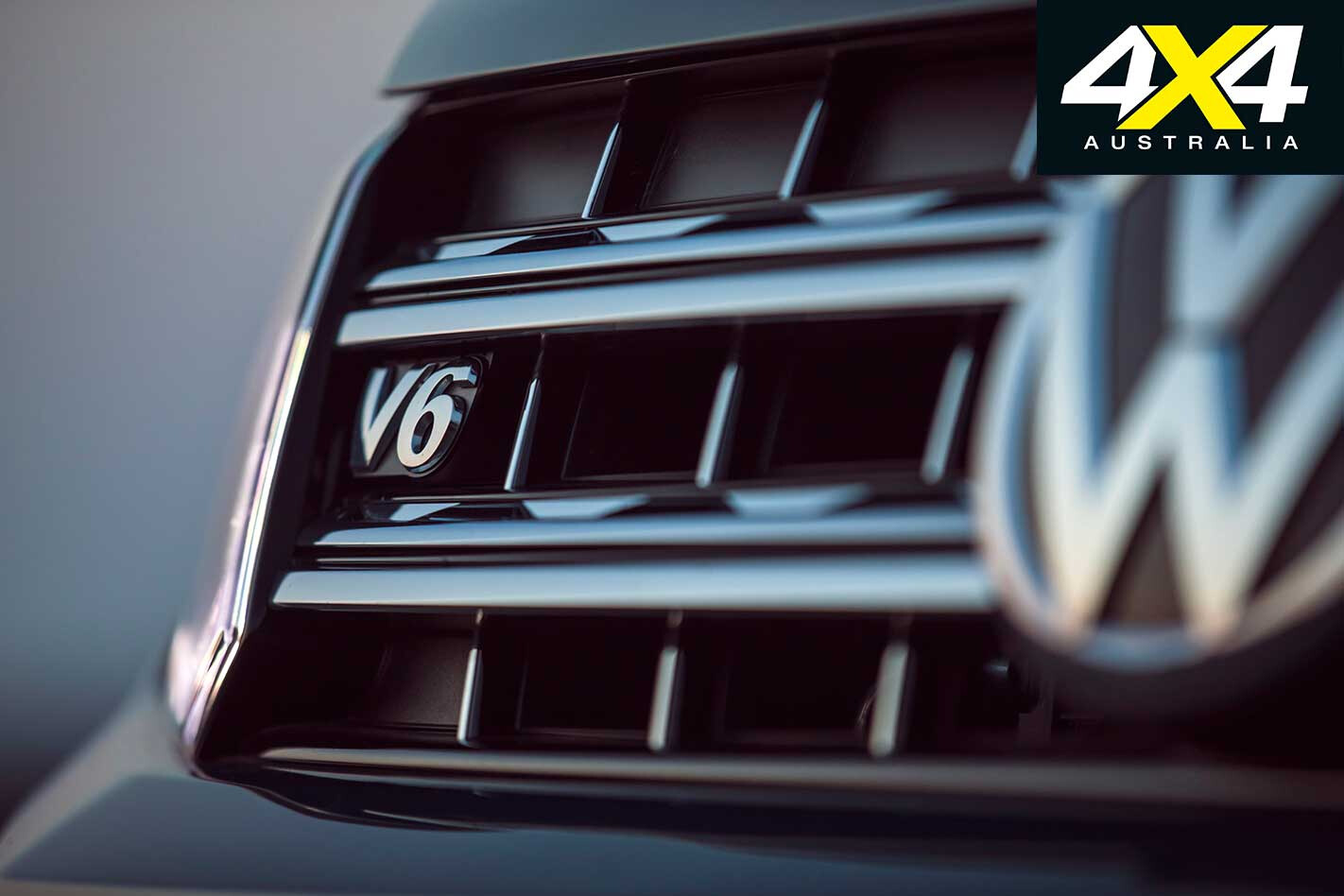
The Amarok Ultimate 580’s styling features include 20-inch ‘Talca’ alloy wheels, 14-way electric adjust seats wrapped in black Nappa leather, black roof lining and a different front grille treatment. LED daylight-run lights and powerful bi-Xenon headlights round it out. Metallic paint is an additional $610.
Standard safety kit is as per the rest of the Amarok range, and includes all the expected electronic driving and braking aids, as well as driver and passenger front and side airbags. Unfortunately, as with the rest of the Amarok range, there are no passenger side airbags in the Ultimate 580 – a negative for Amarok compared to its class competitors. It does, however, still carry a five-star ANCAP safety rating.
IT’S BLOODY hot. Even in the shade of the Cameron Corner Store’s veranda area, this February day’s heat is hard to escape.
This short respite for lunch interrupts what has been a rugged four days of punishment for not only drivers and vehicles but, most importantly, for the all-new Cooper Tires AT3 tyre. In fact, that should be plural. Responding to consumer demand – and in a claimed market first – Cooper Tires is releasing three variants of the AT3. Yep, off-road tourers are seriously over-indulged by the US tyre giant.
“Research has revealed that consumer preferences for all-terrain tyres vary with the size of the tyre,” says Andrew Collings, Exclusive Tyres’ marketing manager (Exclusive is Cooper Tires’ Australian distributor). “After extensive research and testing, Cooper decided to offer the AT3 in a lighter duty P-metric and heavier duty Light Truck configuration, depending on the consumer’s need.
“The new AT3 line includes three distinct all-season, all-terrain configurations; for SUVs (AT34S), utes and heavy-duty 4WDs (AT3 LT and AT3 XLT).”
The AT3 LT offers what Cooper Tires dubs Durable-Tread Technology, where its new coupled silica tread compound – designed to optimise resistance to cuts and chips, as well as increase traction and extend the life of the tyre’s tread – is combined with the tyre’s particular tread pattern.
The AT3 XLT adds “rugged traction shoulders” (read: sidebiters) in some larger sizes for extra grip in extreme off-road terrain such as mud-filled ruts, as well as extra puncture and staking resistance.
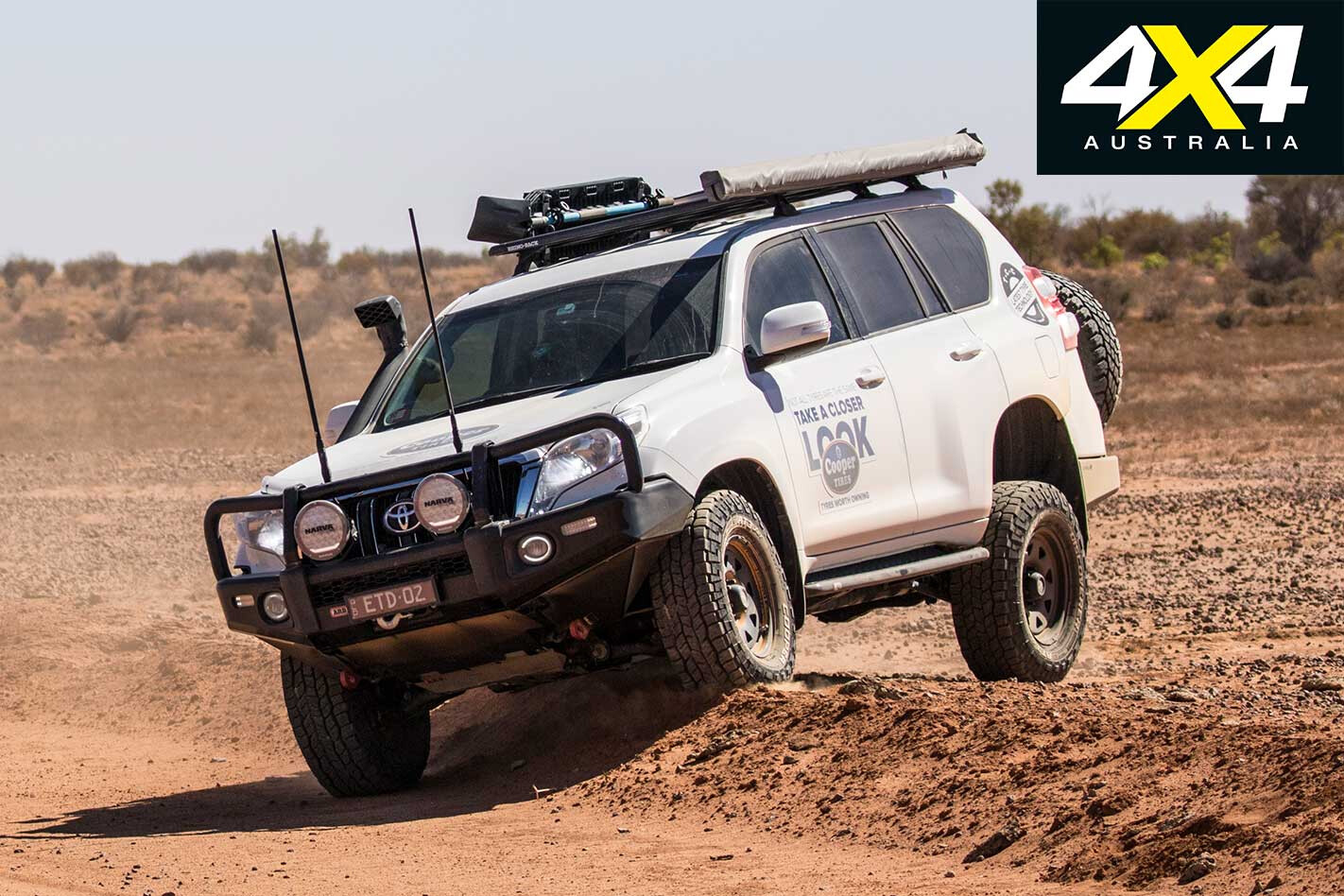
Brisbane-based Exclusive Tyres has brought a big team out here that includes two Cooper Tire & Rubber Company’s US engineers – Ken Reuille, a regular visitor to Oz, and first-timer Martin Kaufman – to see if this latest incarnation of one of the company’s most popular hoops is a step up from the previous-gen AT3.
The route encompasses a 985km sealed road run to Thargomindah, then looping through Innamincka, Cameron Corner, Bulloo Downs and Tibooburra – and will, by week’s end, have totalled just over 4000km. It means the tyres cop a stern test in country they’ll be used in.
The Reasons Why
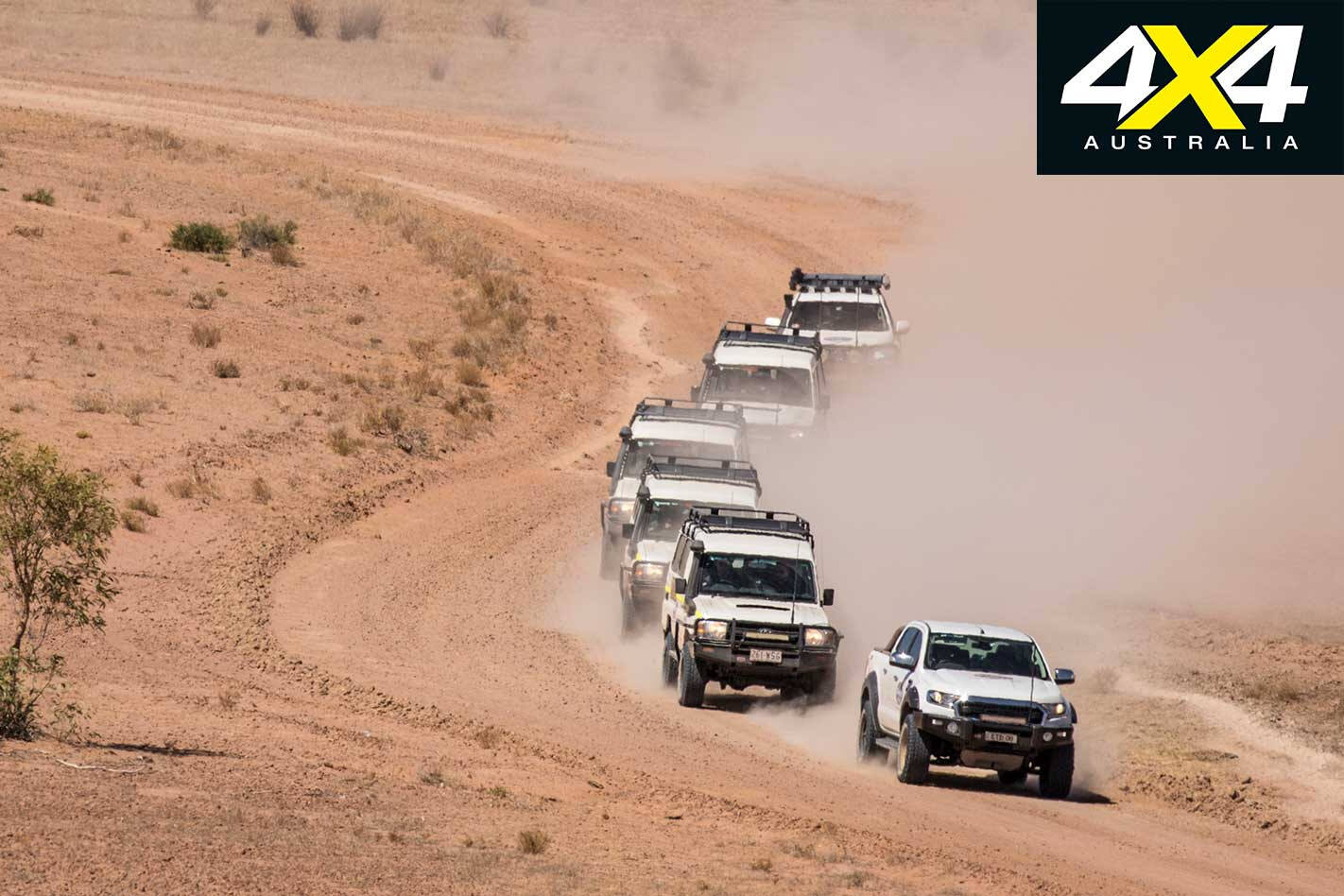
ACCORDING to Cooper Tires’ Ken Reuille, these outback test trips are highly valued by the US company and have been so for many years.
“Cooper Tire Rubber Company has been testing tread designs, carcass constructions and compounds on RLT products in the outback for about 15 years now,” Ken says. “Starting with the development of the original Discoverer ST, followed by the S/T Maxx, the STT Pro, and most recently the new AT3 available this year.”
The tyres are developed and then tested extensively at Cooper Tires’ US HQ, both in-lab and out on test tracks, but it is the product validation testing – a final tick of approval, if you will – that takes place in Australia, and on these tracks with their unique (read: rough, rugged and uncompromising) surfaces that offers the final shakedown of the product.
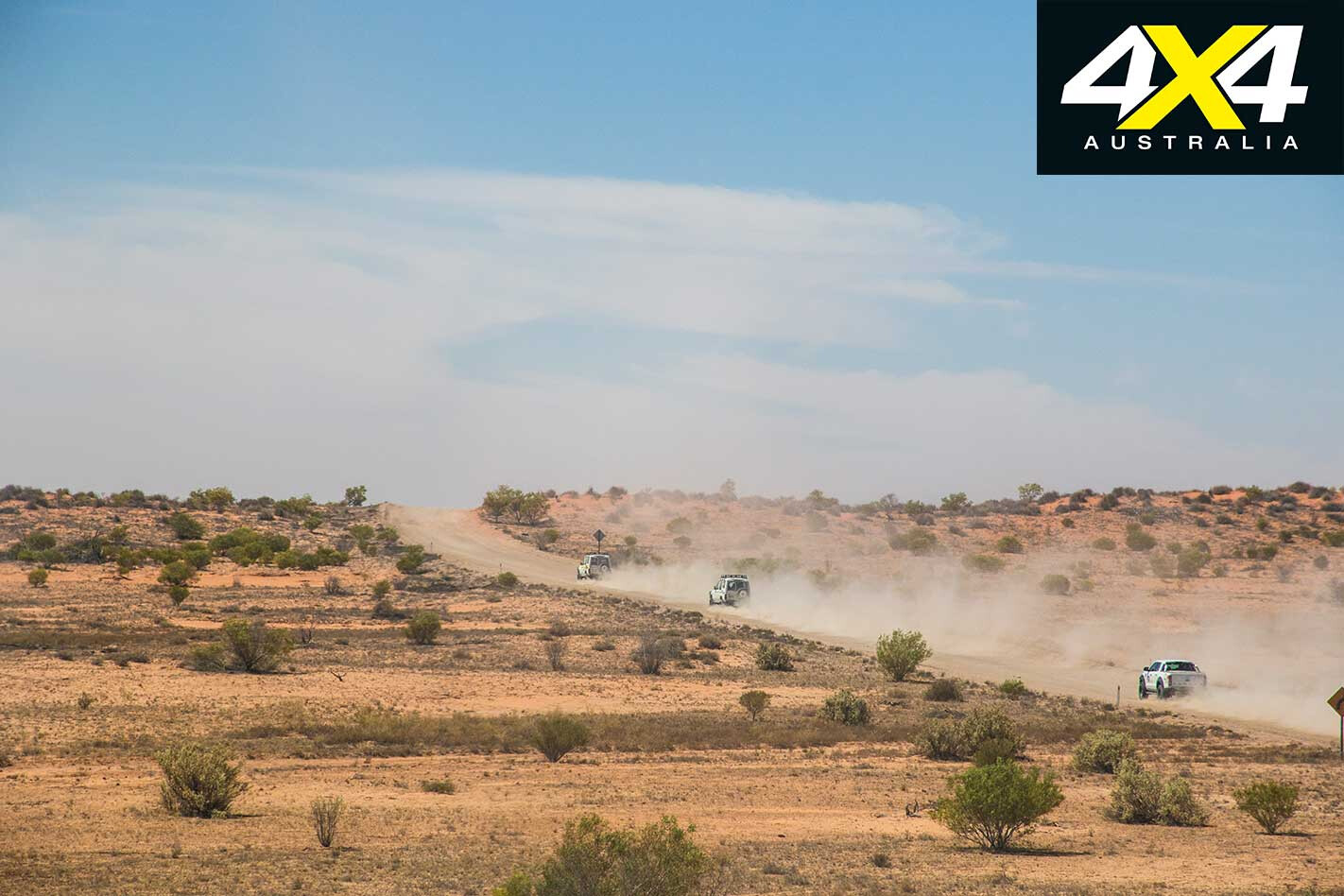
“It would be extremely difficult to replicate in the US, the climate, varied terrain, and diverse road surfaces present in the outback,” Ken says. “Testing in the outback has provided us with meaningful information that has allowed us to optimise the tyre’s tread pattern.
“For example, we added a raised rubber pad in the tread design of the STT Pro to aid in dislodging stones, and made changes to the shoulder siping of the new AT3 to minimise chipping, as a direct result of our outback testing.”
This validation of a tyre’s strength and durability, in regards to seeking all advantages in a competitive retail market, is something that is invaluable. And it works both ways, in terms of the opposing markets for the US tyre giant.
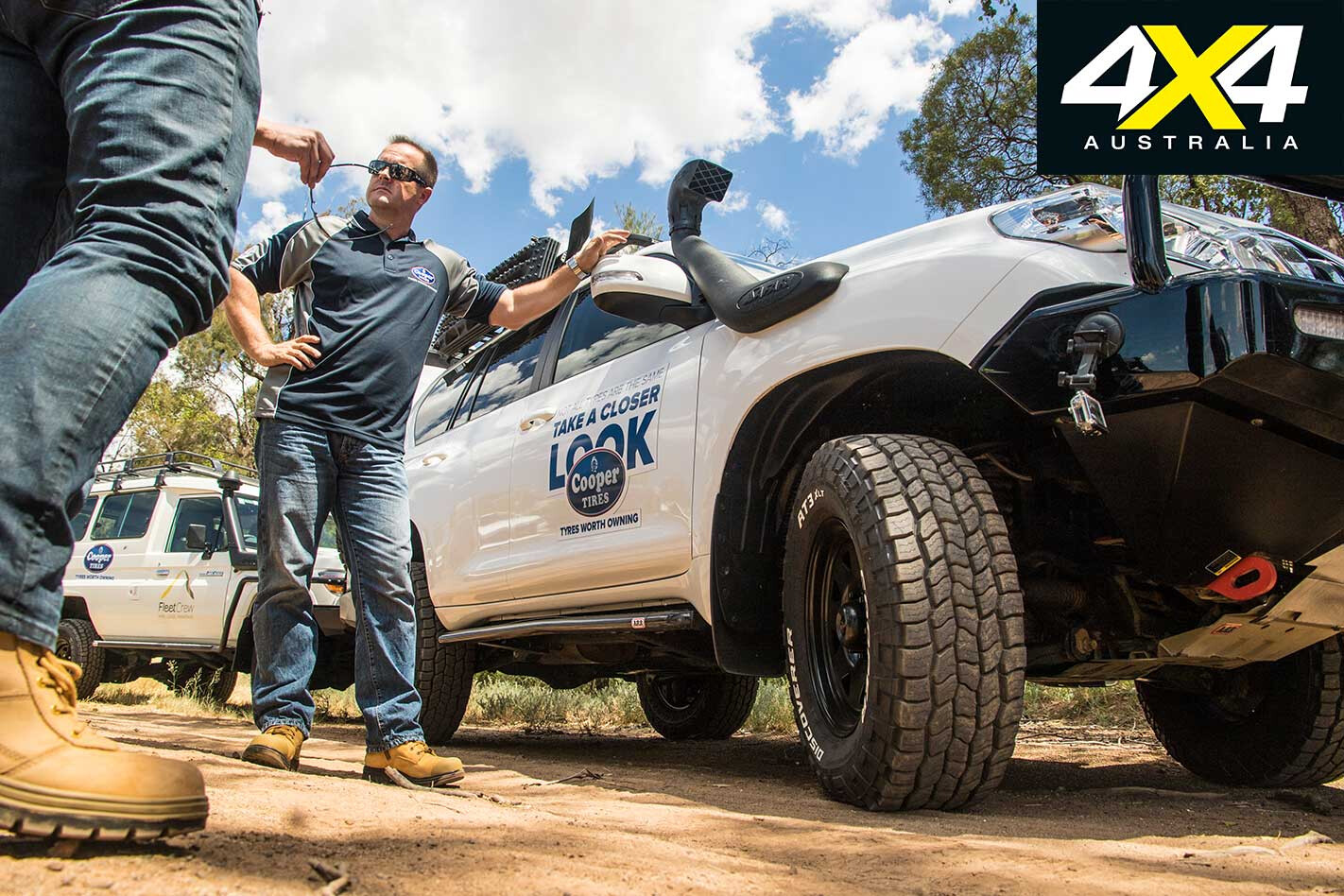
“Australian customers of our products can have confidence that they have been tested and proven in the outback,” Ken affirms. “While our US customers know that if our products have been vetted in the outback, they will perform well when exposed to likely much less severe service conditions in the US.”
Hard Work Behind the Scenes
BY THE TIME the glossy brochures are printed and on display – and tyres have landed in the retail outlets – all the hard work has been done, with this development trip the perfect example.
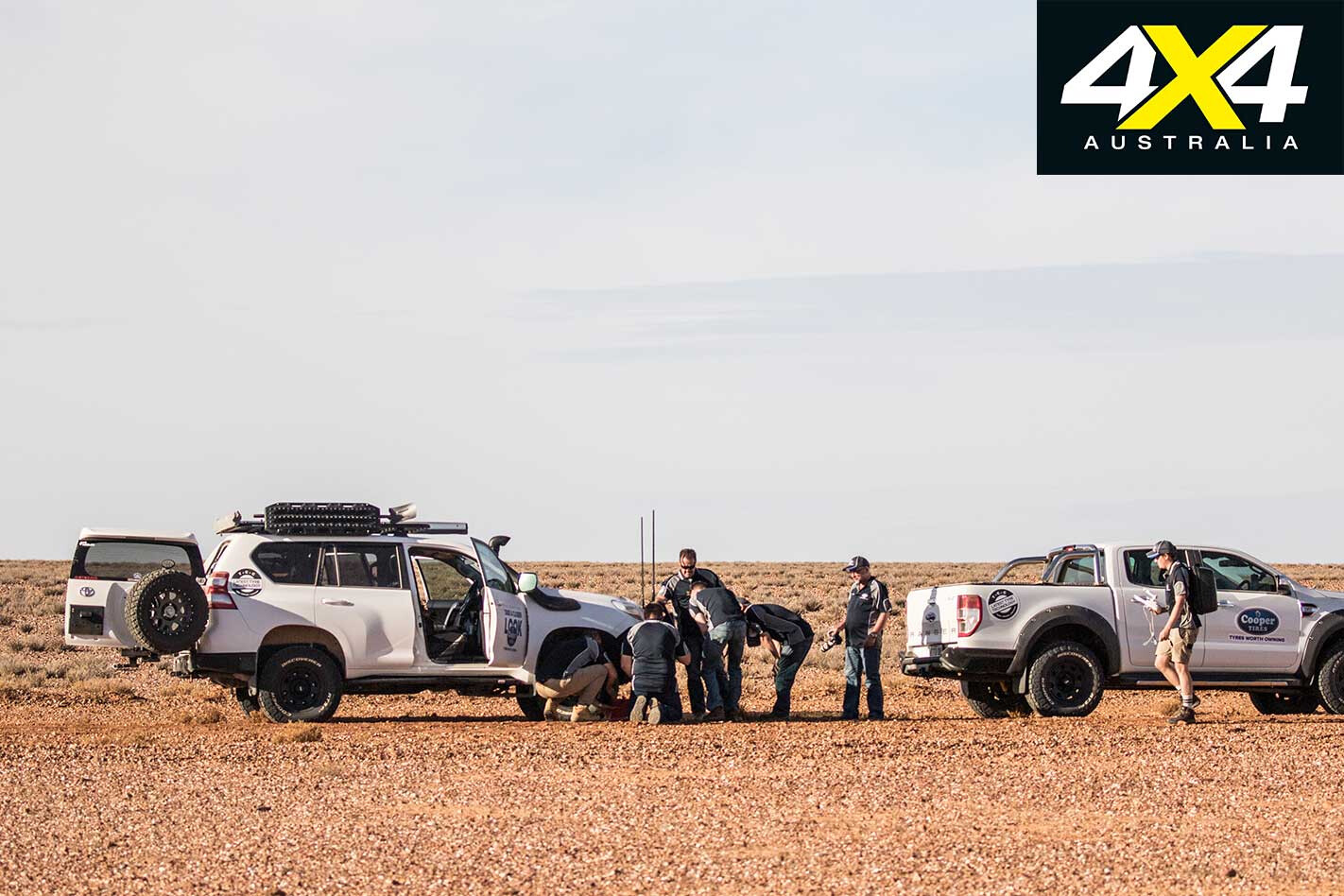
By spending many hours in testing, the brand can be confident the product will be more than up to the task after being hammered through the outback. This doesn’t mean this trip is just about punishing tyres and seeing if they ‘survive’, there’s a little bit more to it than that.
For this week of Corner Country testing, the team at Exclusive Tyres has set-up a straightforward and very effective testing protocol: one Toyota Land Cruiser LC 79 Troopy will be fitted with the prototype AT3 LT, another with the previous-gen AT3, and there will be two ‘control’ Troopies, each fitted with a competitor’s equivalent-spec tyre.
As well, the new AT3 XLT (a slightly chunkier style of AT3 with beefier traction shoulders down the sides) is fitted to the Cooper Tires Ranger and Prado. The drivers will be swapping vehicles each day – and swapping notes – to help determine the extent of the improvements designed into the new tyre.
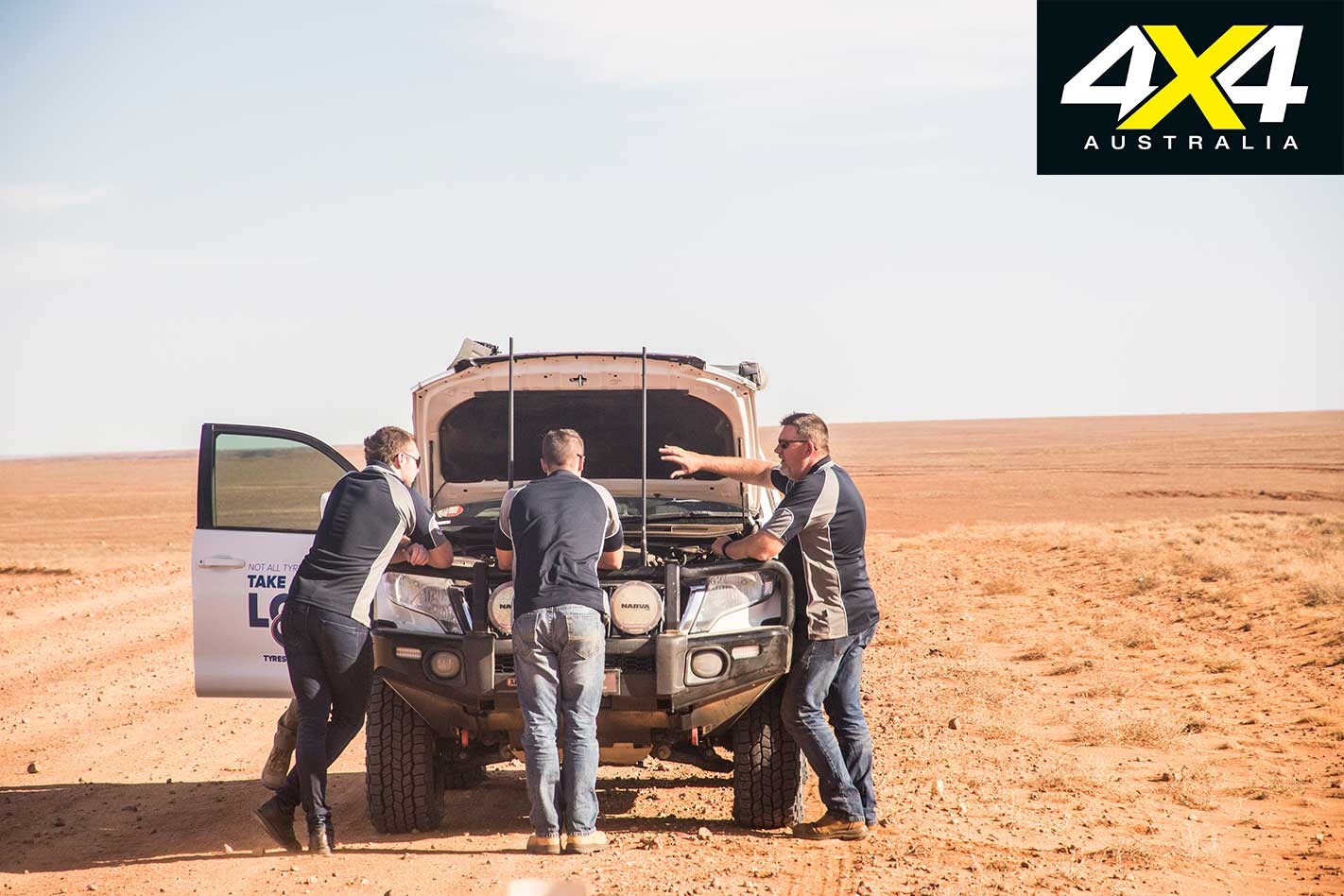
Things like ride, handling, how the steering is affected, how the tyre reacts (and drives) over different terrain, how/if the tyres are chipping (one of the main things addressed with this latest incarnation of the AT3 design); the week will see us cover everything from smooth, graded dirt to tracks covered in stones the size of a large avocado. All of the drivers on this trip are experienced off-road tourers, and the combined notes and observations will help form a firm view on the new tyres’ performance.
For those who are after a little more science to back-up the opinions, there are regular tread checks (for tears, slices, etc.), tyre temperature checks, and tyre air pressure observations throughout each day.
“The most important part about tyre evaluation is consistency,” says Andrew Collings, also one of the drivers on this trip. “We need to ensure all tyres – Cooper and the competitors’ products – remain at evaluation pressures for the whole trip.
“By doing this, the variables are more focused on what we intend to evaluate. We also watch temperature to ensure the pressures we have set-up in all tyres are not increasing by more than four to five psi from cold. We would see this increase as normal and outside this psi increase it may indicate that the tyre sidewall-flex is building heat in the tyre, and therefore the load or speed needs to be adjusted so the tyre performance is not affected.”
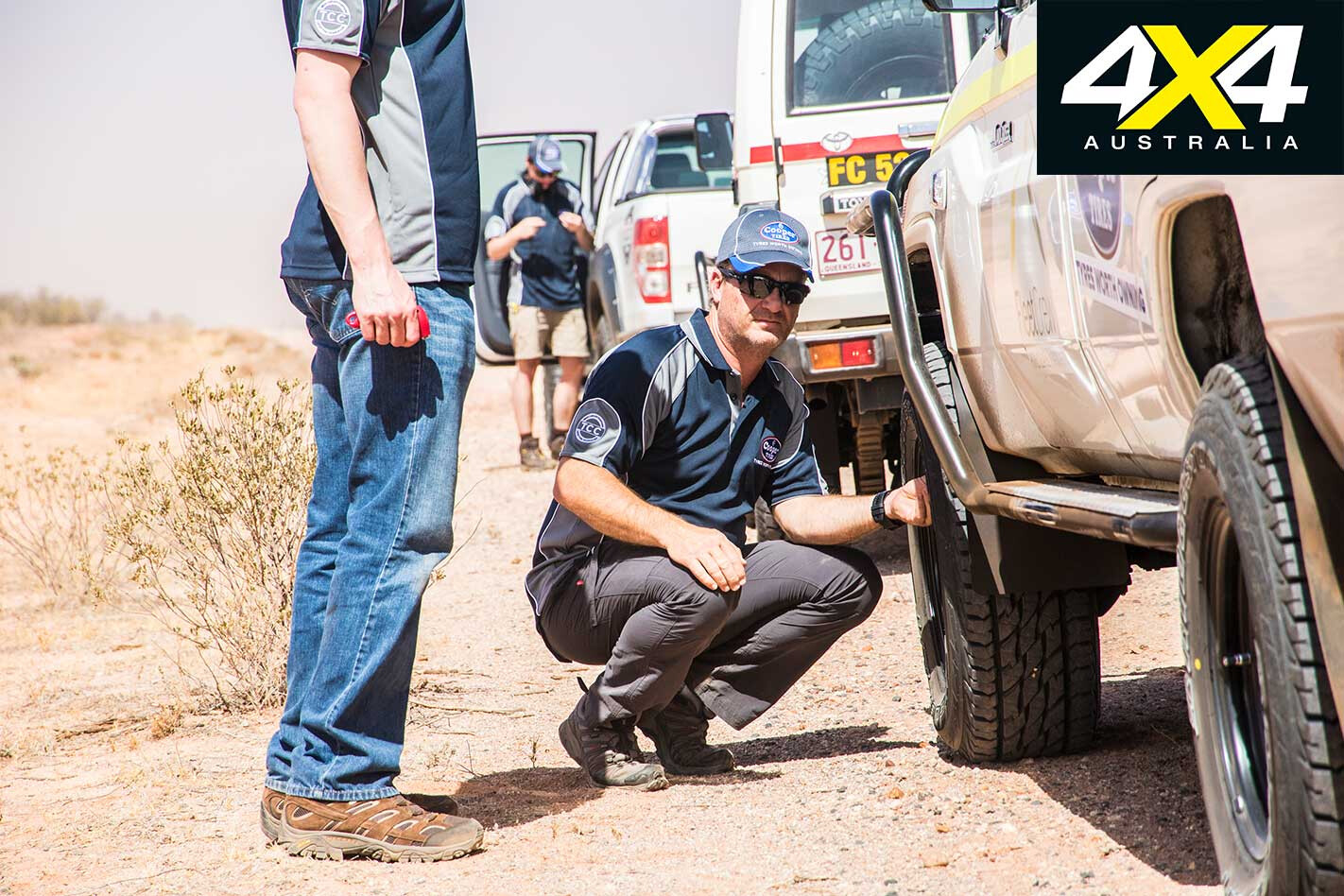
The testers keep an eye out for an over-average temperature spike; increasing the tyre’s pressure alleviates the heat build-up, thus ensuring the tyre will stay within the testing protocols. A hot tyre can also cause deterioration in the carcass and lead to failure, which is the last thing you want when travelling through remote areas.
What Goes on Tour
FOR EXCLUSIVE Tyres, local tyre testing is a boon. Exclusive promotes this Australian testing heavily in its marketing and retail outlets and backs it up with first-hand experience during these weeks away, so Aussie customers know they’re paying their hard-earned for a tyre that is outback-proven. This confidence is reflected in mileage warranties of 80,000km for the heavy-duty, light truck tyre and 70,000km for the light-duty P-metric tyre.
Of course, this isn’t the only test of the tyres; by the time they lob Down Under, they’ve already undergone many hours and been driven on many different terrain types, as Andrew Collings explains.
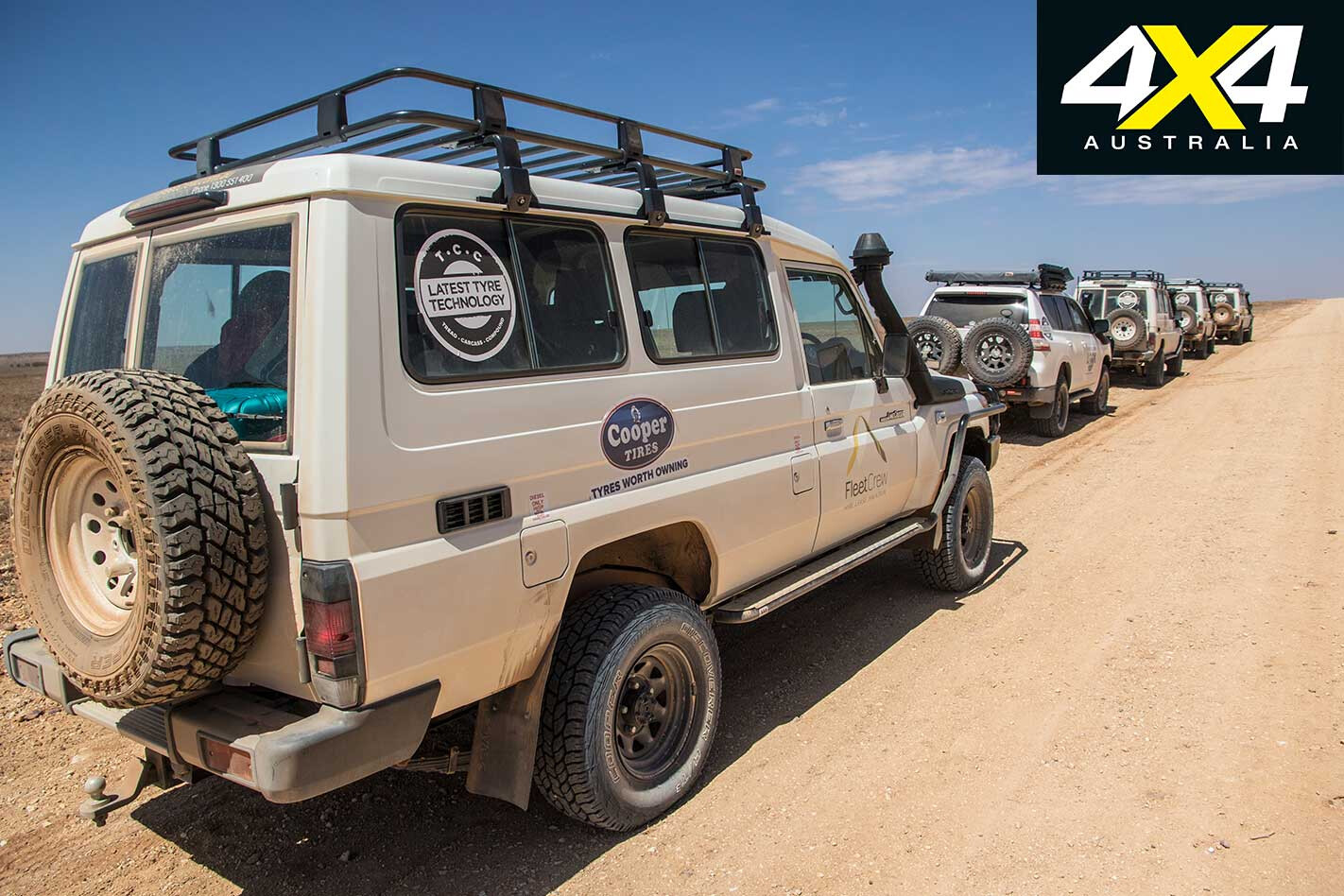
“When we get the tyres to test,” he says. “We know they have already gone through a variety of rigorous tests looking at tread designs, the carcass and compounds, as well as extreme real-life testing at their purpose-built 1000-acre tyre and vehicle test track in Pearsall, Texas, offering both on- and off-road testing facilities.”
It’s a bloody busy week out here; as much as where we are is spectacular in terms of a destination, it’s all business each day, with plenty of driving over varied terrain, accompanied by numerous stops to check the aforementioned pressures, temperatures and the tyres’ overall condition in terms of chipping, slices, etc.
It is not until the fourth day I get in a Troopy shod with the all-new AT3 LT. Driving the two control Troopys with the competitor rubber onboard was followed by a spin in the vehicle with the previous-gen AT3. In other words, the perfect scenario in regards to seeing how much improvement there has been between the two tyres.
Of course, it’s easy to think something newer simply has to be better, but that was never the case here. Over the course of the week, as I had progressed through different vehicles (with their different tyres) I noticed the previous-gen AT3 had been a step up from the two competitor tyres (one of these was, in fact, seriously scary on rock-strewn tracks) and this new model offered even more ‘track feel’.
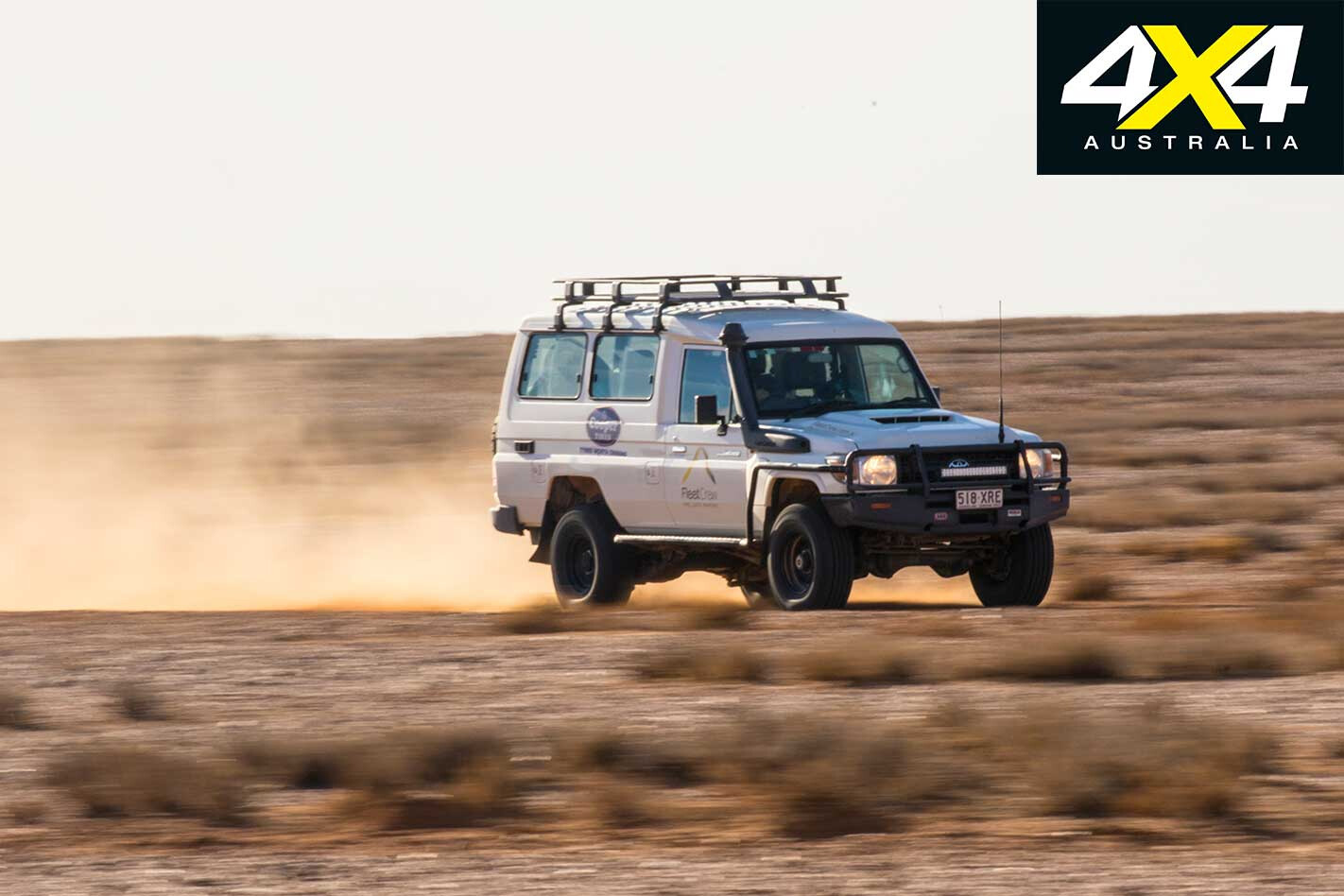
With a lot of the tracks we drove being the classic loose-over-hard (i.e. small/large rocks or sand/dirt over a solid base) surface, allowing for plenty of intended (and unintended) ‘drifting’ in and out of corners.
The new AT3 LT was brilliant at cutting through that loose and unstable top layer and biting into the solid and more tractive base, with the result a more direct and confident feel when steering, as well as all-round stability.
A part of this could be the addition of ‘stone-ejector ledges’, located at the bottom of the tyre groove channels, to the new AT3. These are designed to shift rocks/pebbles, etc., out of the tread and away from the tyre, keeping the tread open/clear and thus getting maximum tread surface to bite into the track surface.
The tyres were checked daily for chipping to see if the new chip-resistant compound was doing its job, and even by this late stage – and after plenty of serious punishment – the new rubber was holding up well.
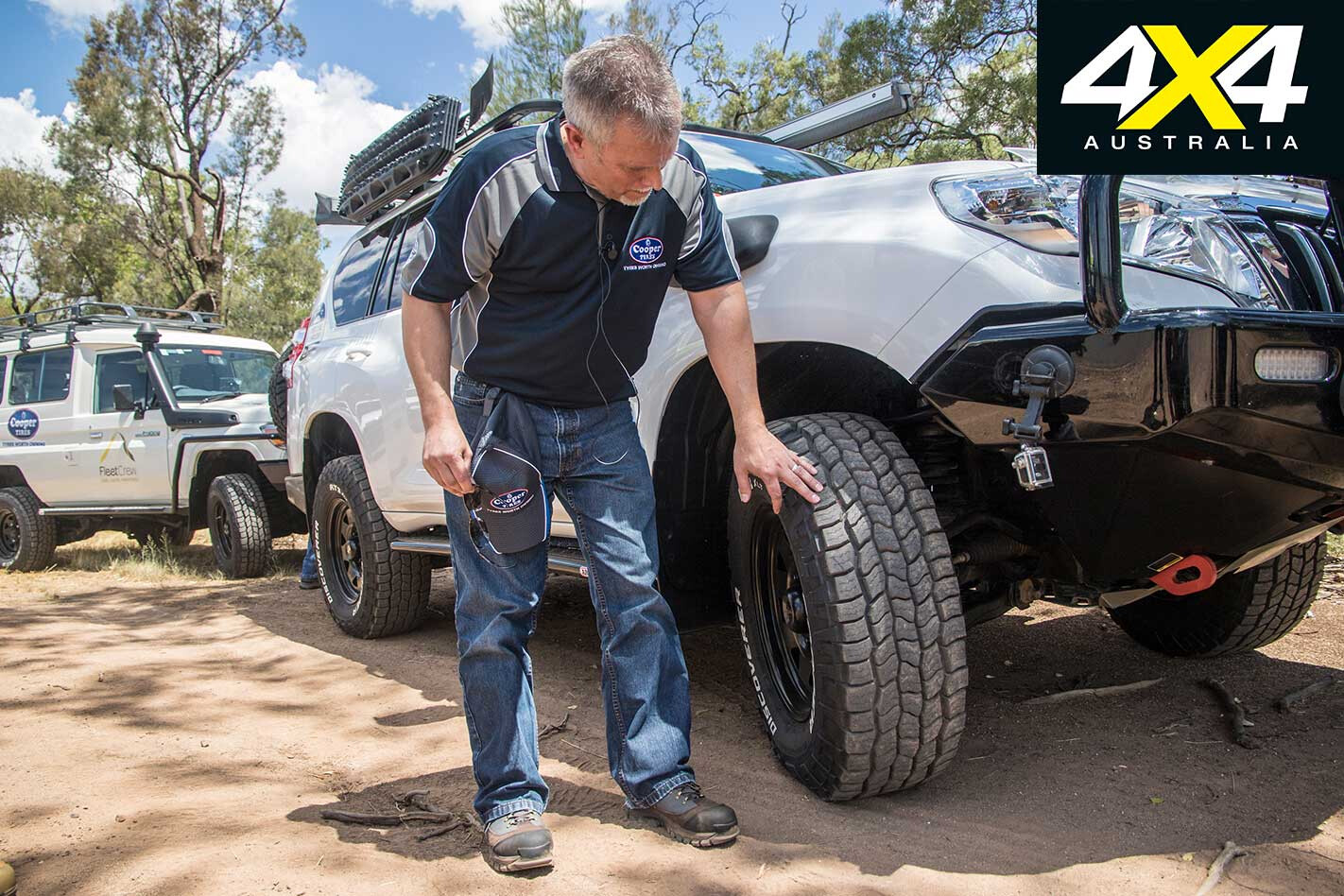
One of the other things Ken mentioned was Cooper Tires endeavouring to reduce tyre noise in the new AT3, with the introduction of what the company calls Whisper Grooves, with the result being a claimed 20 per cent reduction in tyre noise.
Again swapping between the two generations of AT3 – and taking into account the varying ‘quality’ and type of road-seal used – the new model seemed slightly quieter. I wouldn’t bet my life on it being hugely different in regards to the volume of tyre-noise transferred in-cabin (we were in Troopys, remember, which ain’t the quietest rigs), but it seemed quieter, just the same.
Cooper AT3 LT 265/70R17: First Impressions
BACK in the day, it was cross-ply Bridgestone “Jeep Service” in 750×16 that adorned many serious 4x4s. And on 40 Series Land Cruisers, they were often fitted to stock safety rims that had been split and widened (some would say made unsafe) by welding in a two-inch band. However, tyres and wheels have progressed a wee bit since then.
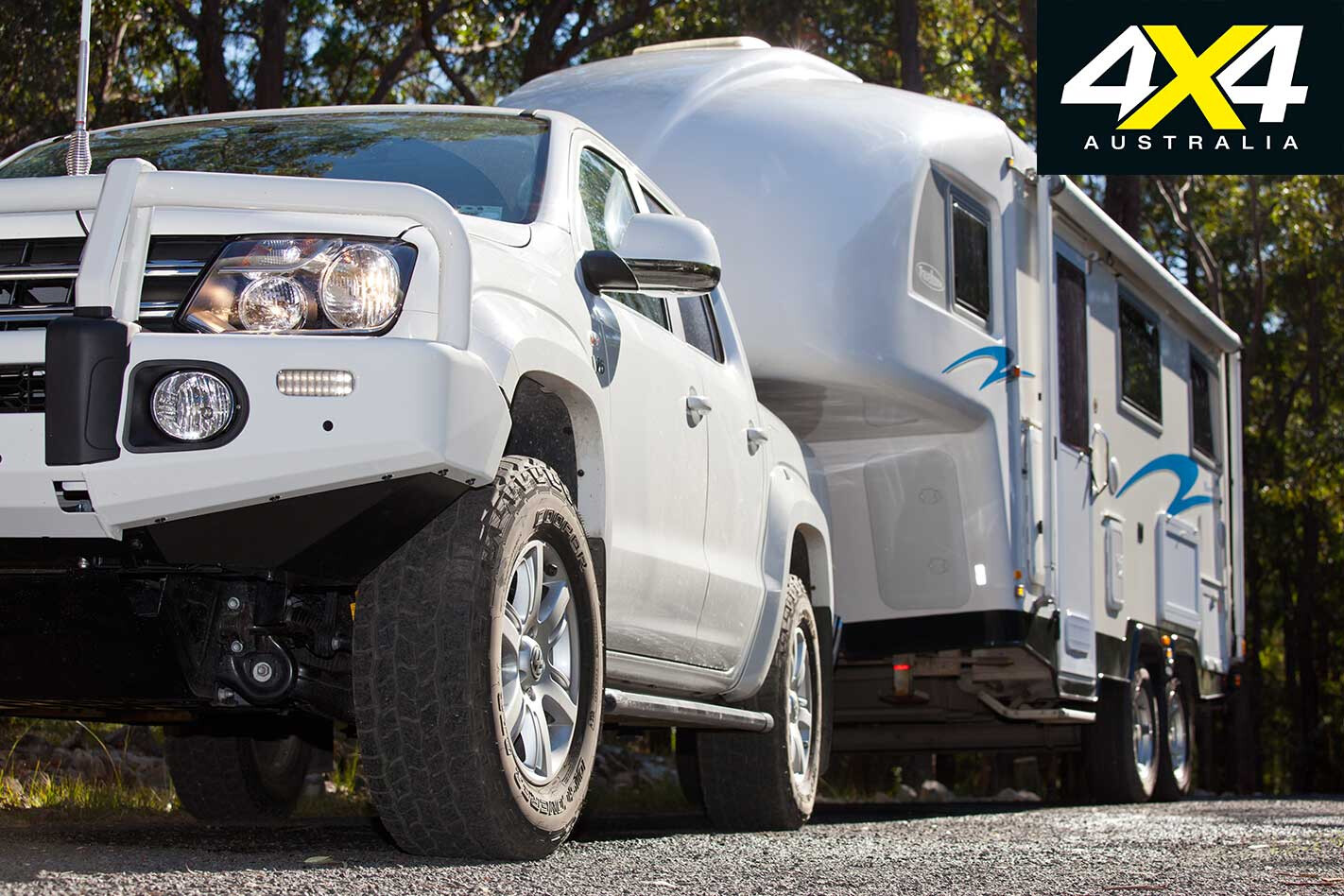
Having worn out many different types and brands of tyres, I was happy to fit and try the new Cooper AT3 LT. The current vehicle is a TDV6 Amarok but fitted with earlier VW OE 17-inch rims in place of the original 18-inch. The Cooper AT3 tyres are 265/70 in Light Truck (LT) construction.
At a glance, the first noticeable visual feature of the new Cooper AT3 LT is the chunkier tread edge, with every other tread block staggered, and the patterned sidewall treatment. They look like they’ll bite.
The first noticeable performance feature is the on-road quietness. After several thousand kilometres dragging a 2.5-tonne trailer on mostly black top, there is no heel and towing, and they remain quiet. Off-road forays thus far include plenty of beach driving and some easy tracks in the Myall Coast hinterland.
The chunkier edge and slightly squarer profile should (theoretically) take the edge off the AT3’s performance in sand compared to its predecessor, but at 18psi it floated confidently over the soft sand of Bennetts Beach. The 550Nm of the Amarok might help there, of course.
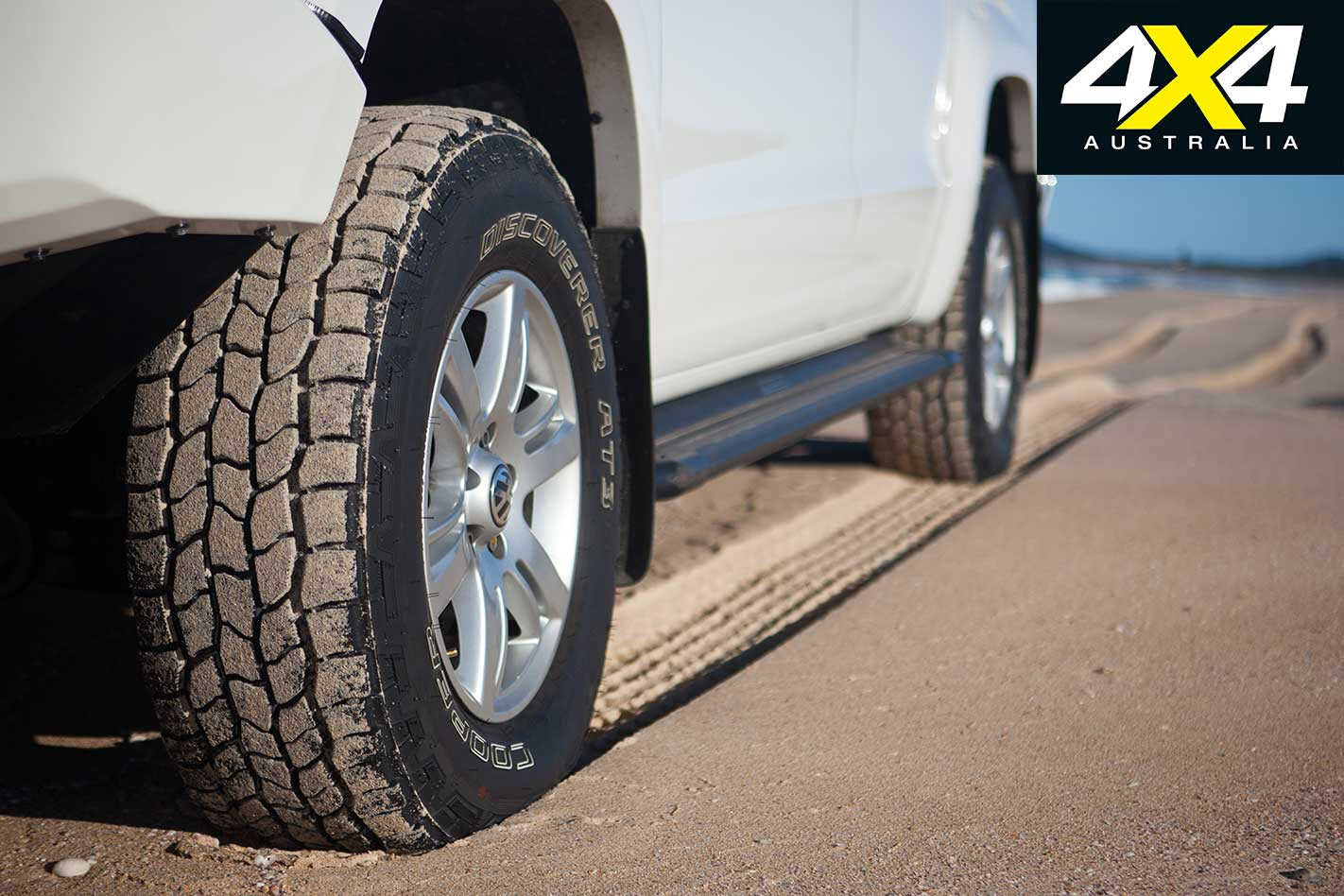
A “toughness” test will come in late September when the Amarok will suffer the brutal rocks of the Barrier Ranges as a support vehicle for press coverage of the Outback Challenge. Standby for that report.
When unladen, experimenting with pressures – about 32psi for dirt roads and 35psi on sealed surfaces – seems the best compromise, with pressure increased closer to 40psi with a load and the trailer attached.
There is a need to note that any judgement of 4×4 tyre performance in rough, uneven terrain has to be affected by vehicle dynamics. Whereas older 4x4s without traction aids rely almost solely on tyres being in firm contact with the ground and having good traction characteristics, current generations of 4×4 vehicle traction and stability control might mask any tyre traction shortcomings. –Norm Needham
The End Game
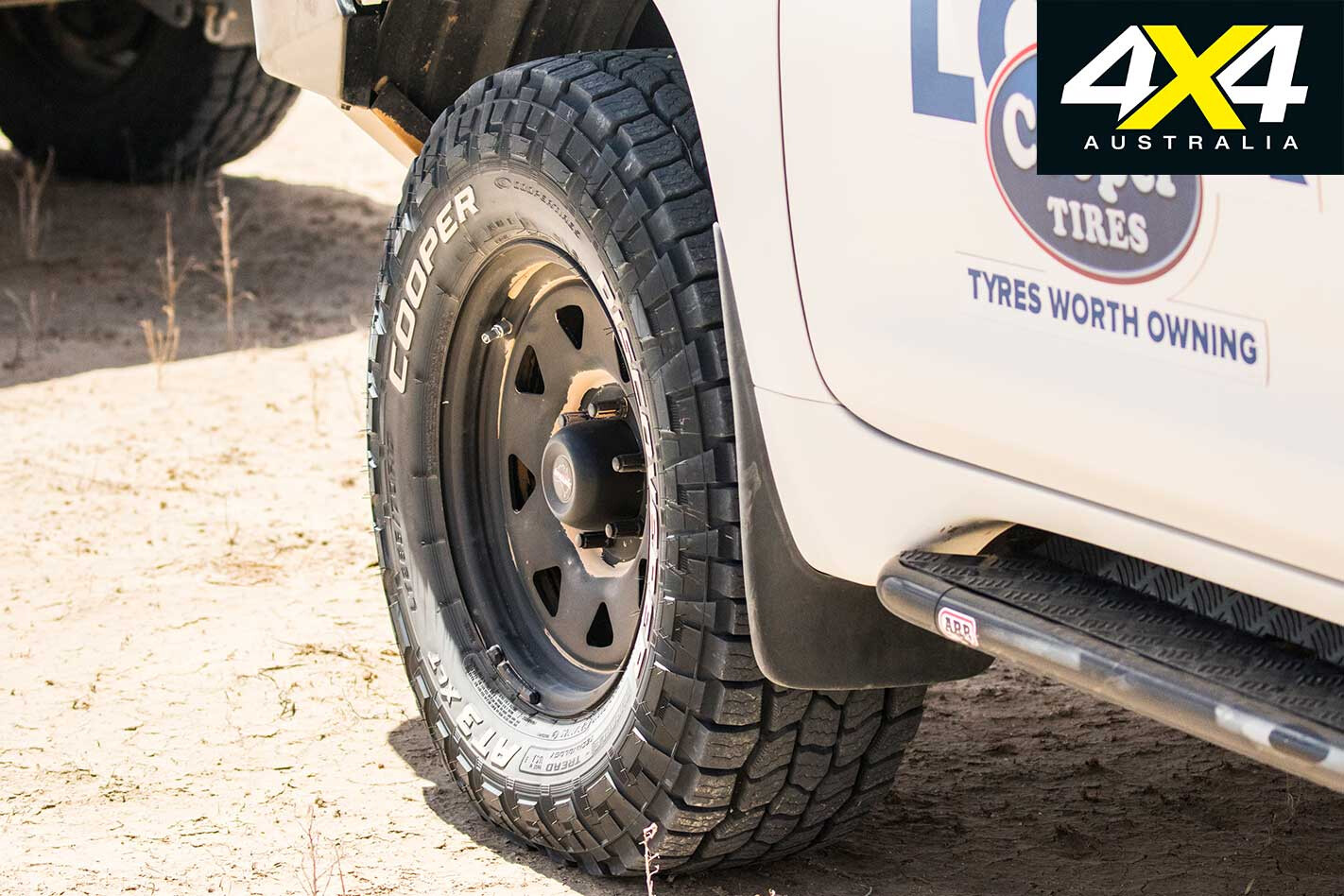
BEING able to go behind the scenes and see just how much work Cooper Tires and Exclusive Tyres put into ensuring the product performs how it was designed to – and witnessing the passion all members of the team have for the minutia of tyre design and performance – was an eye-opener.
It really did make me, as an example of their core buyer market, appreciate just how much is involved in a piece of essential equipment that every off-road tourer puts their faith – and family’s safety – in when they head out bush.
Of course, there’s no perfect test that can prove 100 per cent how capable an off-road tyre is. There will always be the variant of individual drivers and their skills, as well as where they drive, but this week in the Corner Country, punishing the Cooper Tires AT3 without fear nor favour, offered a near-ultimate endorsement of the US brand’s dedication to continuing to improve on what is already regarded as top-notch off-road rubber.
“SIT down son and I’ll tell you a story,” the old fella requested from the gloom of the dilapidated verandah of the worn-down hut overlooking the trickling mountain stream in the Victorian High Country.
“You know, there’s been more gold washed down the river since the mining stopped here than what was ever recovered.”

Over the next hour I sat with this old timer, Cecil Cooper, and I learnt a lot about gold and gold mining as it was done back in the ‘old days’. Old Cec was the caretaker of the Maude and Yellow Girl mine back when I first met him and his face showed the wear and tear of a lifetime spent in the mountains looking for and mining gold.
Born at Glen Wills in 1898, he passed away in the 1990s still living a rough, tough life in a tin shanty on the edge of Swifts Creek, just downstream from the ruins of the King Cassilis mine.
Now I was back again at what remained of the Maude and Yellow Girl mines and their processing plants, two of the most important mines in the Victorian Alps and now located in the Mt Wills Historic Area north of Omeo. The track to the site can be easily missed, but it is just a couple of kilometres north of the Big River Bridge camping area on the Omeo Highway.
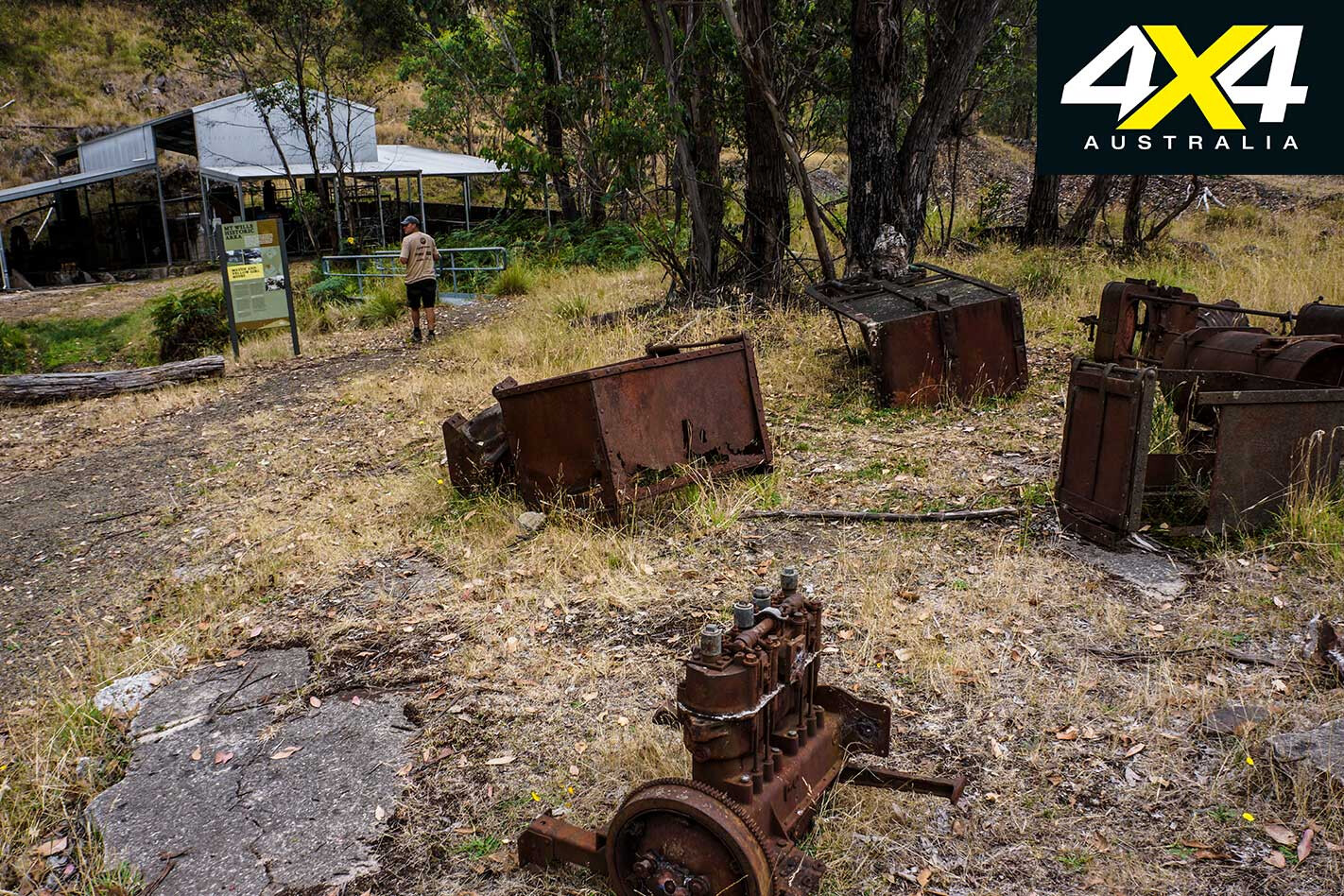
However, instead of taking the torturous bitumen road north from Omeo, head along the Omeo Valley Road to Hinnomunjie, where you’ll cross the Mitta Mitta River with a spacious and top camping spot just downstream. For engineering buffs the Hinnomunjie Bridge, built in 1910, is one of a very few timber truss bridges still in existence and the only one constructed using hand-hewn timbers.
Then, just north of the Mitta, take the Knocker Track – the historic stage and wagon route from Omeo to Sunnyside/Glen Valley, where all the heavy equipment for the many mines in the area was hauled by hardworking bullock teams. Today, the route is often used by logging trucks, so take care.
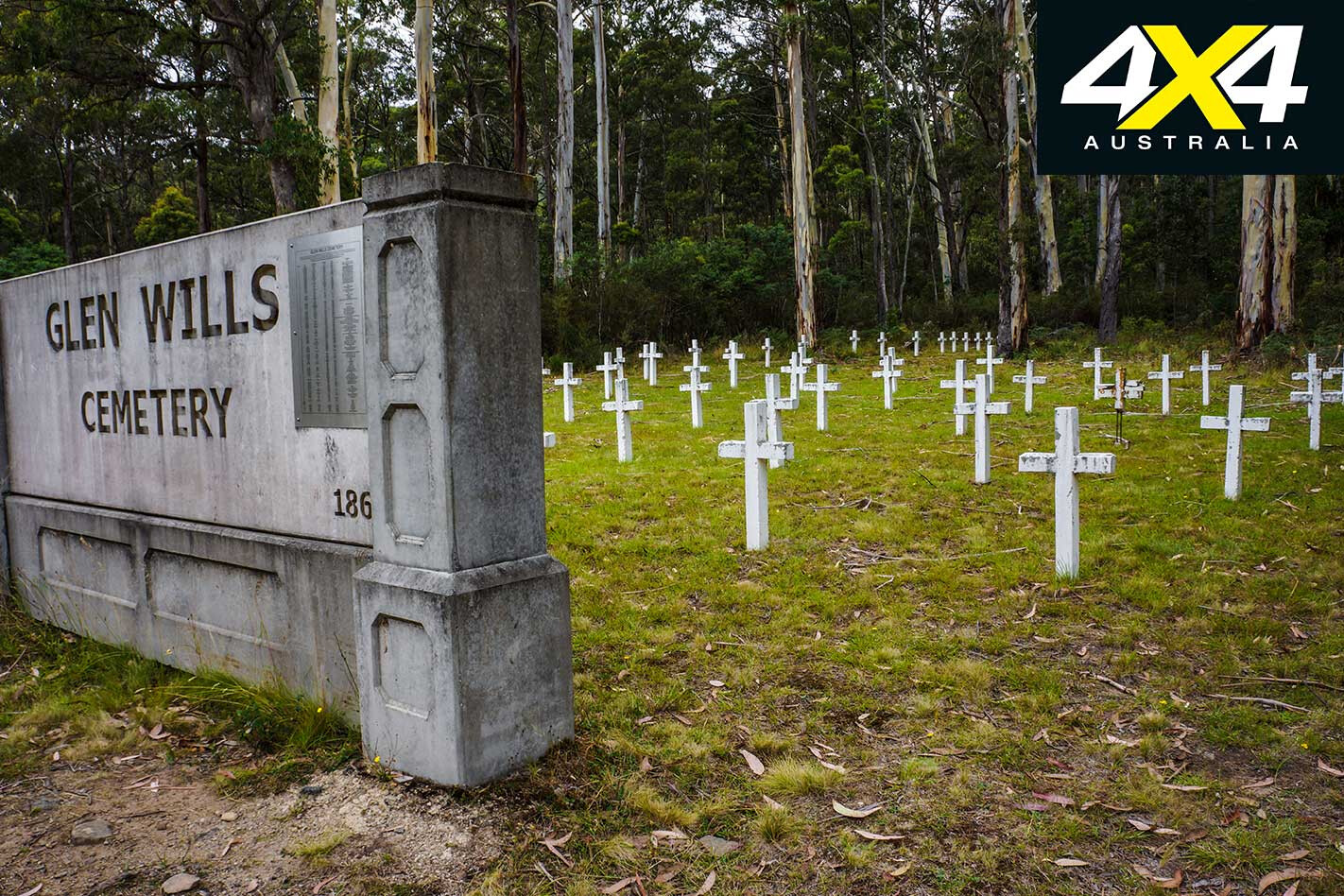
Once on the Omeo Highway, turn south and stop at the notable Glen Wills Cemetery with its lines of white crosses, many belonging to young kids who died in what was then a pretty remote place in the High Country. You’ll pass through the scattered hamlet of Glen Valley and then arrive at the turn-off to the Maude and Yellow Girl.
A bumpy track across the paddock to the creek will bring you to the parking area for the short walk to the Yellow Girl, while a longer walk down the creek will bring you to the battery and large processing shed of the Maude mine.
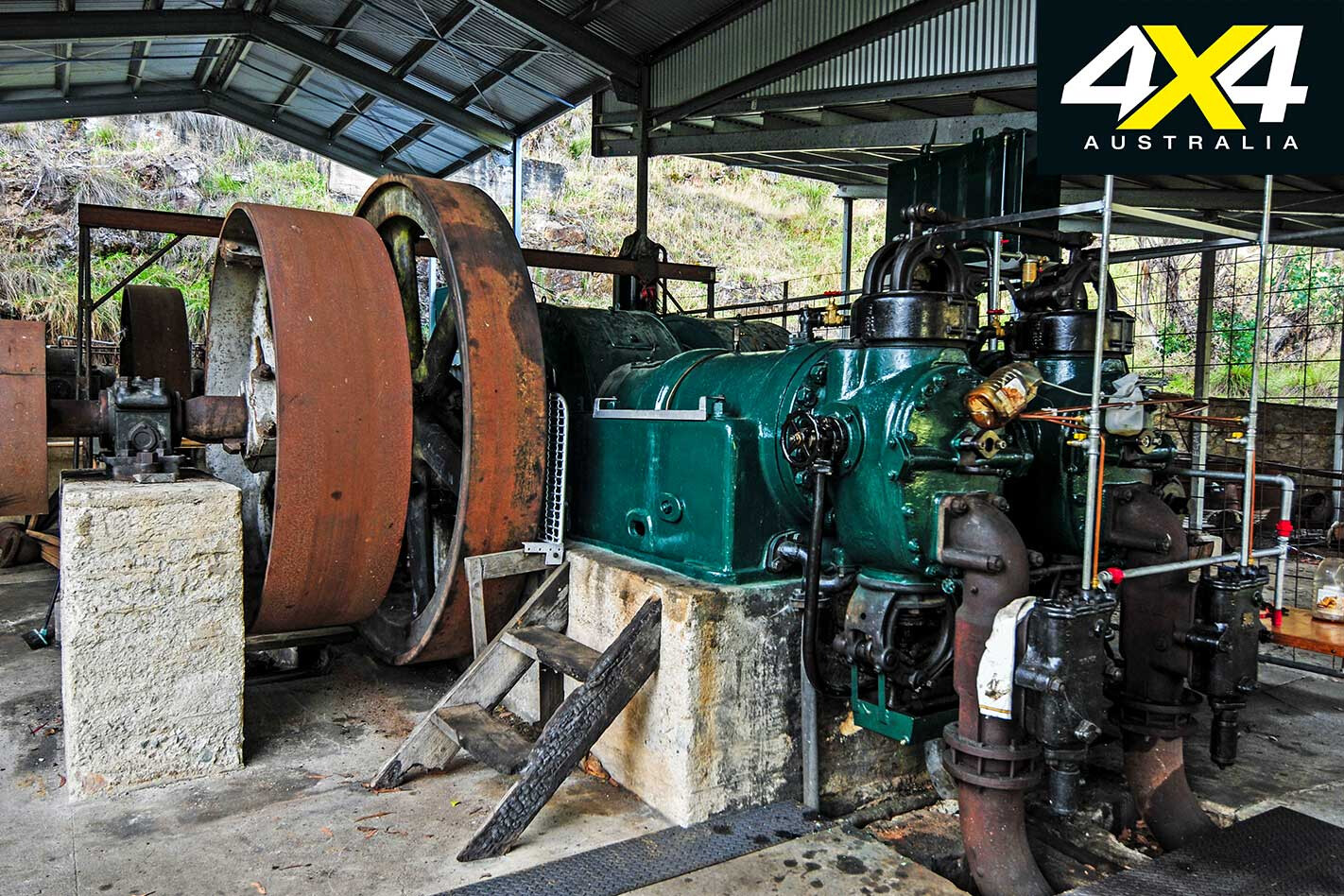
Severely damaged in the 2003 fires, the old shed over the historic Ruston Engine at the Yellow Girl has been replaced by a modern galvanised structure which takes away a little from the historic context, but the work being done on the old engine is nothing short of marvellous. Now back in running condition due to the work of a small group of enthusiasts led by mining engineer, Ted Giliam, the 200hp engine is the only one in running condition in Australia.
Just downstream, the original large shed still stands over the Maude battery site. While much of the equipment has been stripped and stolen (which is why the vehicle access track has been closed) and the 20-head stamper is a tumbled mess after the fires, it is still an impressive mining site to visit.
From here we headed to Omeo, once the centre of a booming alluvial goldfield which today has a rich heritage of gold mining and mountain cattlemen to admire and remember. It’s a top little mountain town with a very pleasant campground spread along the picturesque Livingstone Creek, while the local museum and outdoor display in the heart of the town is not to be missed. We threw down our swags behind the Top Pub where you can enjoy free camping, along with a cold beer and a great meal in the hotel.
Just south of the town along Livingstone Creek is the Oriental Claims Historic Area, an alluvial field that was worked for more than 50 years, starting in 1851.
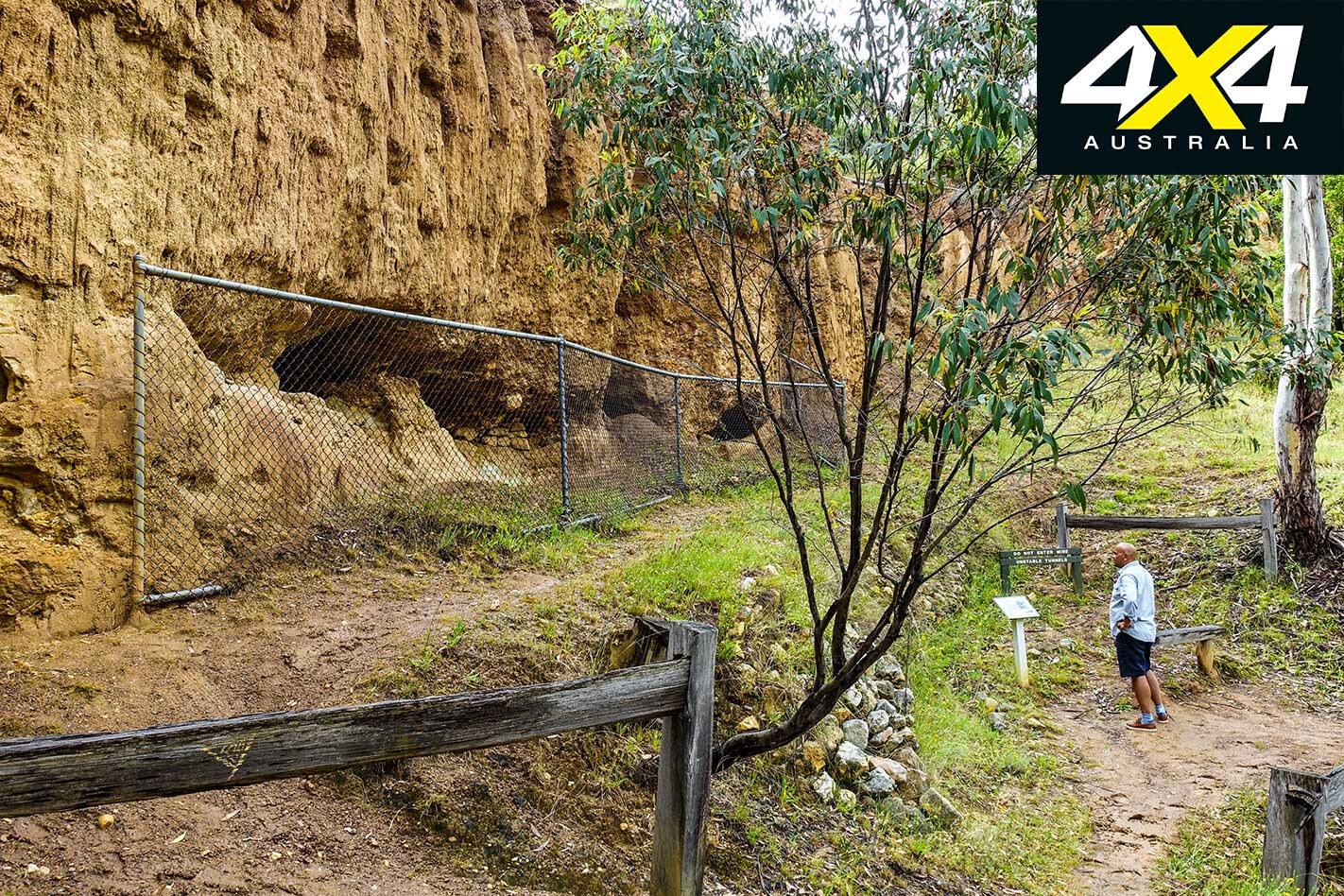
Walking trails wander along the creek below high bluffs, the result of the hydraulic sluicing that was used in the mad scramble to flush gold out of the soil. Nearly 60,000oz of gold was recovered, but the creek ran (or oozed) with so much sludge and the pollution was so bad that the Sludge Abatement Board was formed, and in 1904 it banned all sluicing along the creek.
Our travels continued, taking the back road from Omeo to Swifts Creek which takes you through the hamlet of Cassilis and to the turnoff to Powers Gully and the King Cassilis Mine. The mines here reached their peak in the 1890s, but by World War I most had closed and the town rapidly declined.
Spasmodic mining operations in the 1980s found little gold but, sadly, destroyed much of the integrity of the old mine site. There is still a host of old mining equipment scattered around the site, while the main audit to the mine can be found farther up the hill. In Power’s Gully, a very large expanse of mine tailings can be seen.
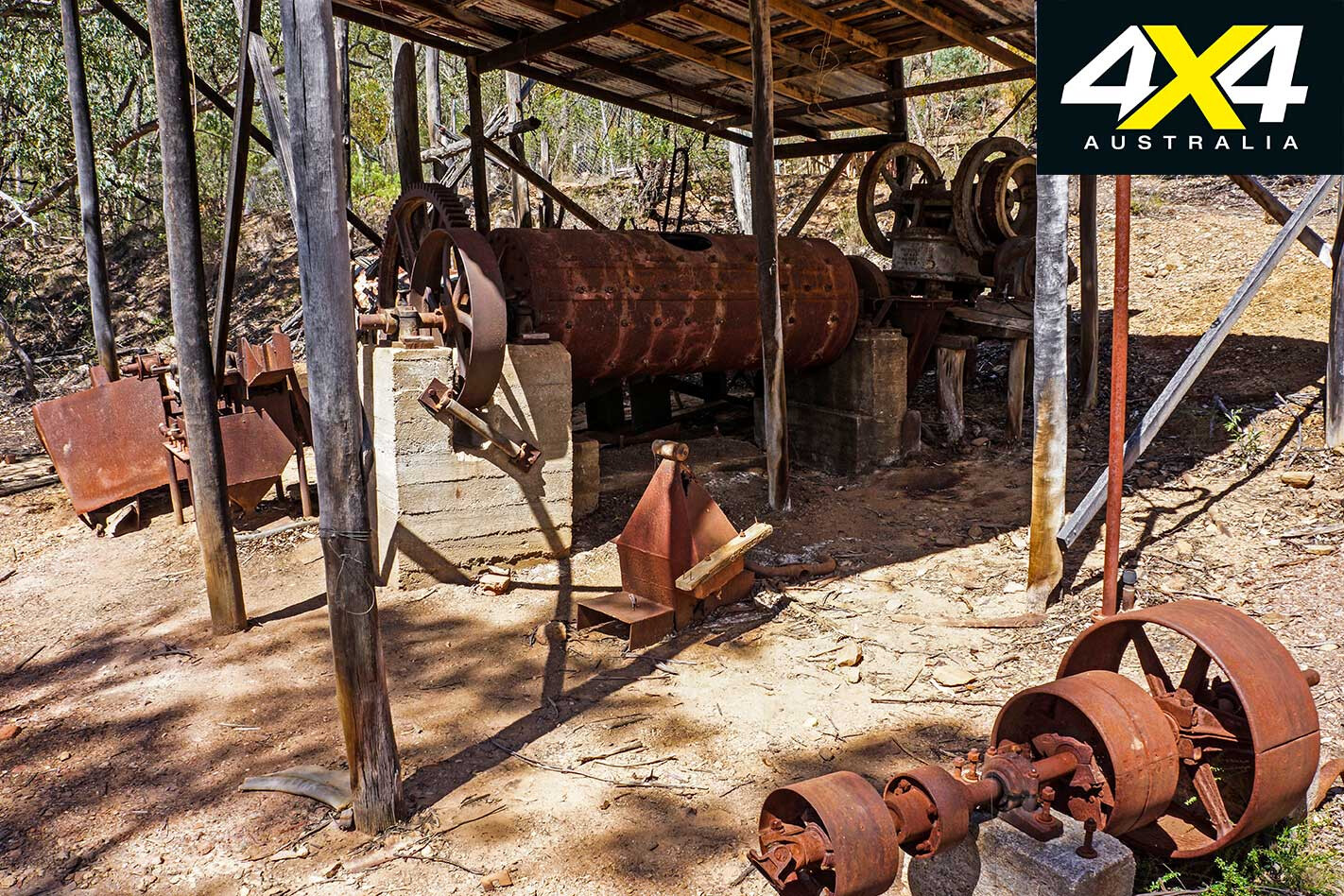
From here, a great little 4WD track heads up the surrounding hills; in fact, there are quite a few tracks through these steep hills, but this time we took the Charlotte Spur Track. This old wagon byway passes through part of the historic area before climbing a ridge and sneaking past a nearby farmhouse. From here it deteriorates, climbing steeply up through box gum woodland and along the steep edge of a hill, where sections of packed-rock retaining walls can be seen.
It’s a steep, rocky scramble in places where anything bwedgeut a ‘real’ 4WD would have extreme difficulty in getting through. Once on top of the ridge we found our way onto the Bayliss Spur Road and then onto the better Mt Delusion Road, finally arriving on the major dirt throughway of the Upper Livingstone Road.
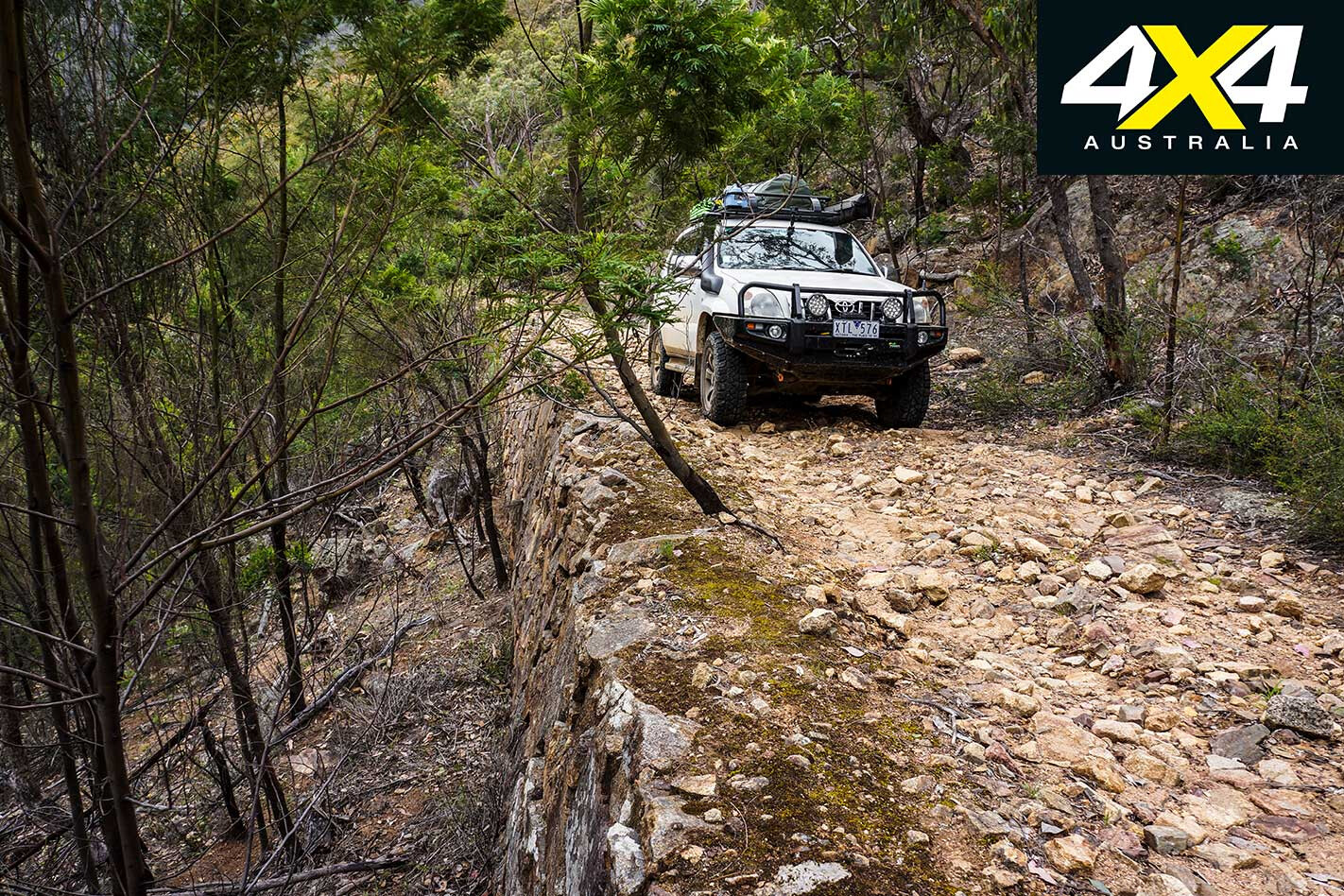
Just before that latter junction, the road crosses a section of the old, now-disused, Jernkee Water Race, which took water from the headwaters of the Wentworth River to the Cassilis mines, some 77km away. The longest hand-dug water race in the southern hemisphere, it was a complete disaster and soon fell into disuse.
Turning west we took Birregun Road and paid a visit to the Dog’s Grave, the best monument you’ll find to ‘man’s best friend’, before cresting Mt Birregun, with its helicopter pad and tall communication tower, for an extensive view over East Gippsland.
An hour or so later we cruised into the mountain township of Dargo, a hugely popular 4WD destination whether you are into touring, fishing, hunting, bushwalking, panning for gold or doing sweet bugger-all in an idyllic setting.
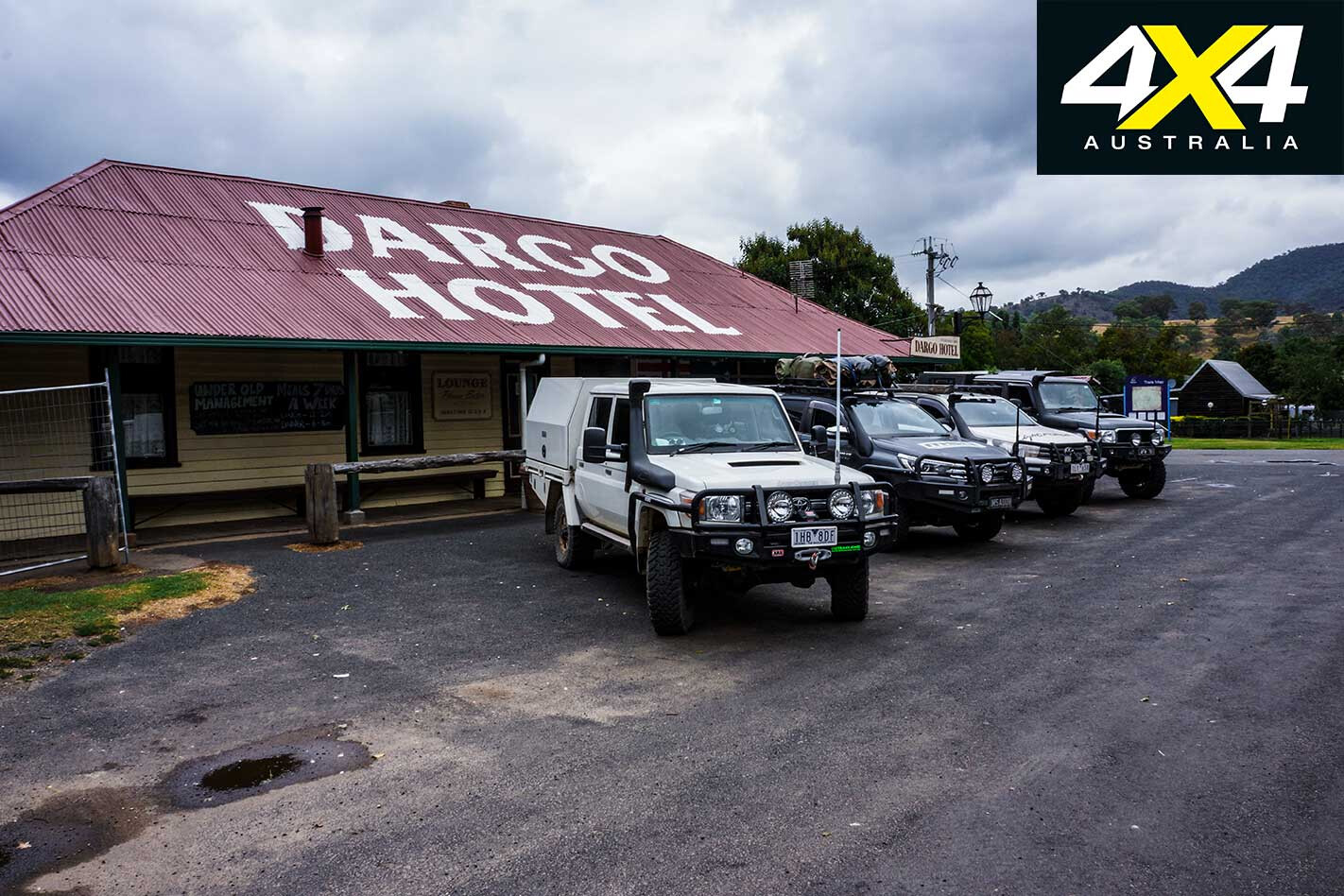
Dargo was never a gold-mining town as such, but rather a wayside stop and supply point for pioneer miners and cattlemen finding their way to the goldfields of Grant and Crooked River, or across the mountains through the Wonnangatta Valley to the Howqua Hills and Mansfield.
It still does much the same today; although, most of the people passing through are recreational travellers looking for a High Country adventure and an escape from the city life. With the attraction of the pub and a meal, along with the fact it was raining, it was quickly decided to bunk at the hotel and enjoy its warm hospitality.
Our route took us north to the once rich and busy settlement of Grant, now completely deserted and near lost in the rich regrowth of the forest. Still, you can visit the old cemetery or, with a bit more diligence, find your way to some of the mines that made this town such a busy one back in the 1890s.
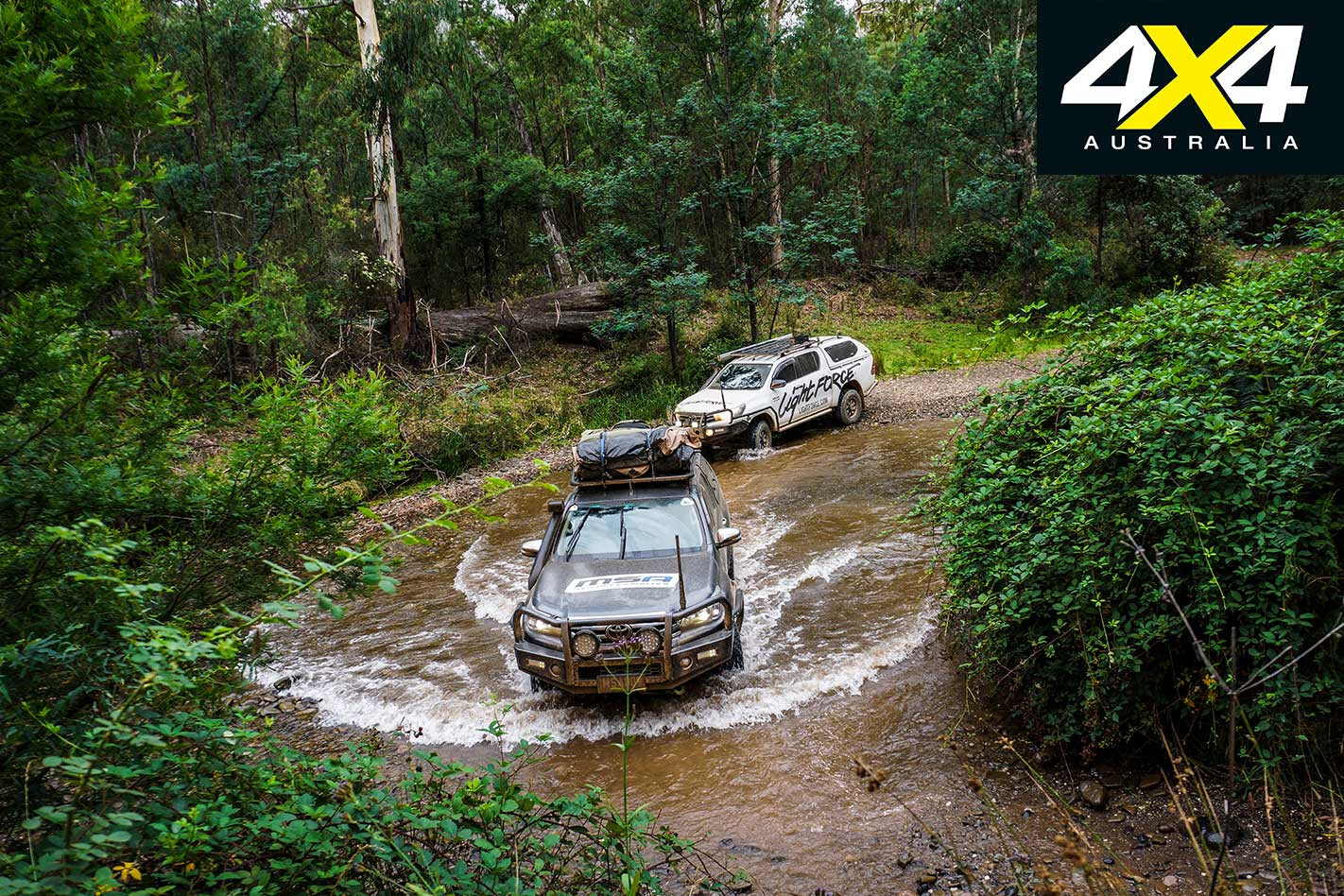
We descended Bulltown Spur, which is always an interesting pitch down to the Crooked River – low-range first-gear is always good here – and its many water crossings, before arriving at the cleared area that was once the site of the township of Talbotville.
Along the way you’ll pass a track that climbs steeply to a rough carpark, where a walking track meant for mountain goats leads upwards to the ruins of the Good Hope Goldmine and its steam engine and stamper. The walk is strenuous, but worth it.
At Talbotville the large, cleared area along the edge of the Crooked River plays host to a lot of campers, but I’ve yet to see it full; most times there are only a couple of camps spread across the grass.
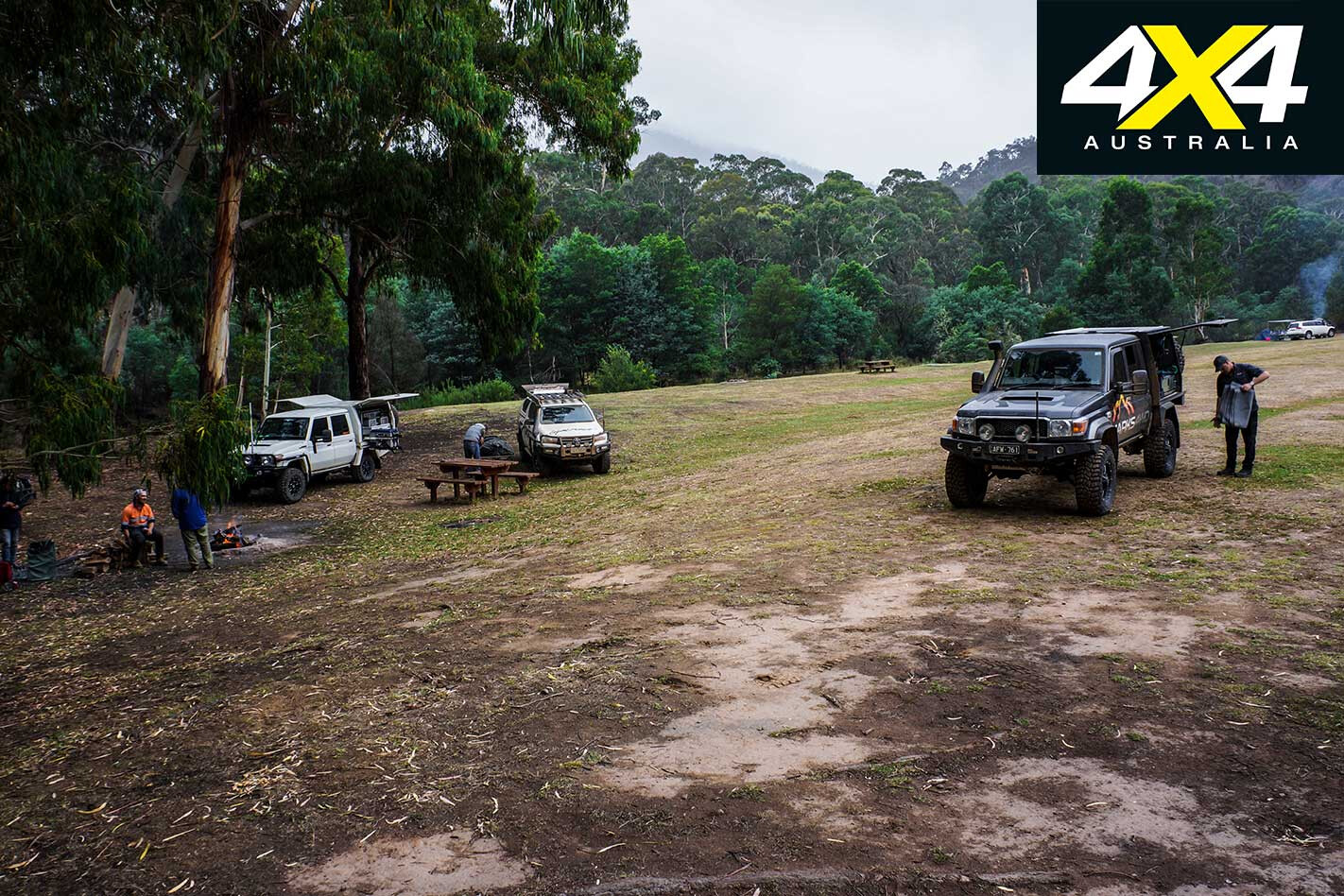
For the early miners and the pioneer cattlemen the trek from here across the mountains to the Howqua River and its goldfields was a long and tough one. Most headed to Eaglevale on the Wonnangatta River and then climbed the range over the top of Mt Cynthia to follow the Wombat Spur, before dropping down into the ‘Hidden valley of the Alps’ at the remote Wonnangatta Station.
As it was dry, we did much the same, taking the very steep Herne Spur track into the valley. We wouldn’t recommend this route if it is wet, as the clay surface and the steepness of the route can be a dangerous combination.
Our stay in Wonnangatta was short and uneventful, as we took the long, sinuous Zeka Spur Track up to the Howitt High Plains and on to historic Howitt Hut. This hut was built in the early 1900s by the Bryce Family who owned Wonnangatta at the time and ran their cattle across these high plains during summer. We didn’t stay in the hut, preferring the grass beneath the nearby snow gums.
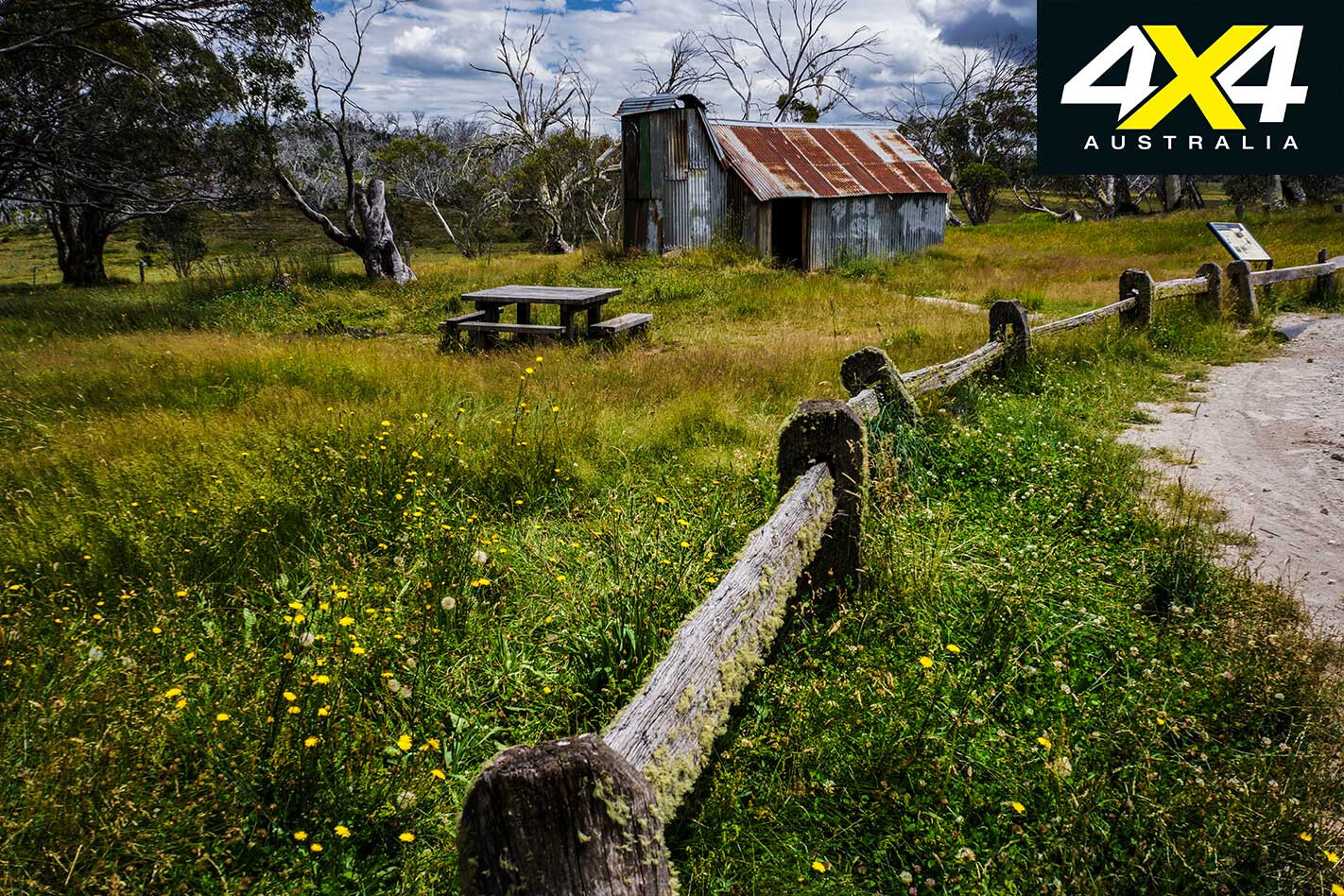
The next day we headed north on the gravel of Howitt Plains Road, which soon became a track and then a rough, rocky thoroughfare as it descended into the Macalister River valley and its headwaters. This is a delightful stream, but the amount of timber down, which inhibits any form of access to the water, is totally unbelievable. Annual track clearing by Parks and 4WD Victoria keeps the route open most of the time, but, if you’re planning to go through here, a chainsaw may be a good investment.
The climb up the other side is no less rough, and there’ll be relief when you reach the snow gum-surrounded grassy meadow at the saddle of King Billy. From here our route swung along the ridge – the track much improved after a lot of work by Parks Victoria – passing through a virtual tunnel of snow gums before coming to the King Billy Tree, recognised as one of the 50 most significant trees in Victoria.
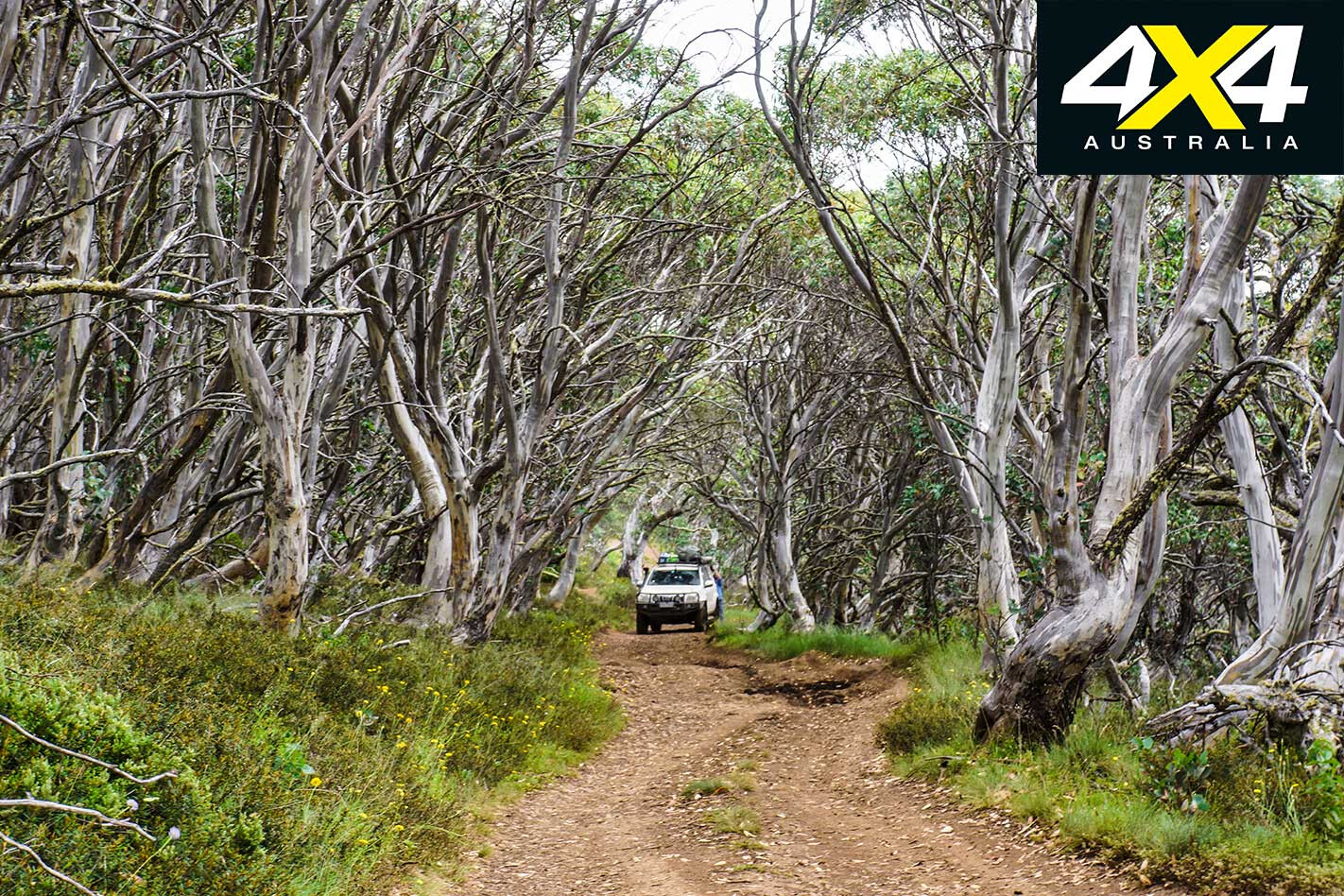
Estimated to be between 400 and 600 years old, this tangled, stunted giant could tell a story or two. From there the track passes Picture Point, made famous in The Man from Snowy River films, before descending to Lovicks Hut and then Bluff Hut, where we met up with two iconic mountain cattlemen, Charlie Lovick and Graeme Stoney. We had a great night around the fire that night.
The next day we dropped down off the range to the Howqua River, meeting up with another mountain cattlemen family, Bruce McCormack and his daughter, Cassie, who were out taking a group of riders through some of the most spectacular parts of the High Country. It’s a fabulous way to experience the mountains and get a taste of what the pioneers saw and lived every day of their lives.
Downstream, the Howqua runs through gold-bearing country, and, down near Tunnel Bend and the small river flats that are so popular with campers, it enters the Howqua Hills Historic Area. Little remains of those heady days of gold; although, the brick chimney and smelting furnace dating from 1884 can still be seen along the walking track between Sheepyard Flat and Frys Flat.
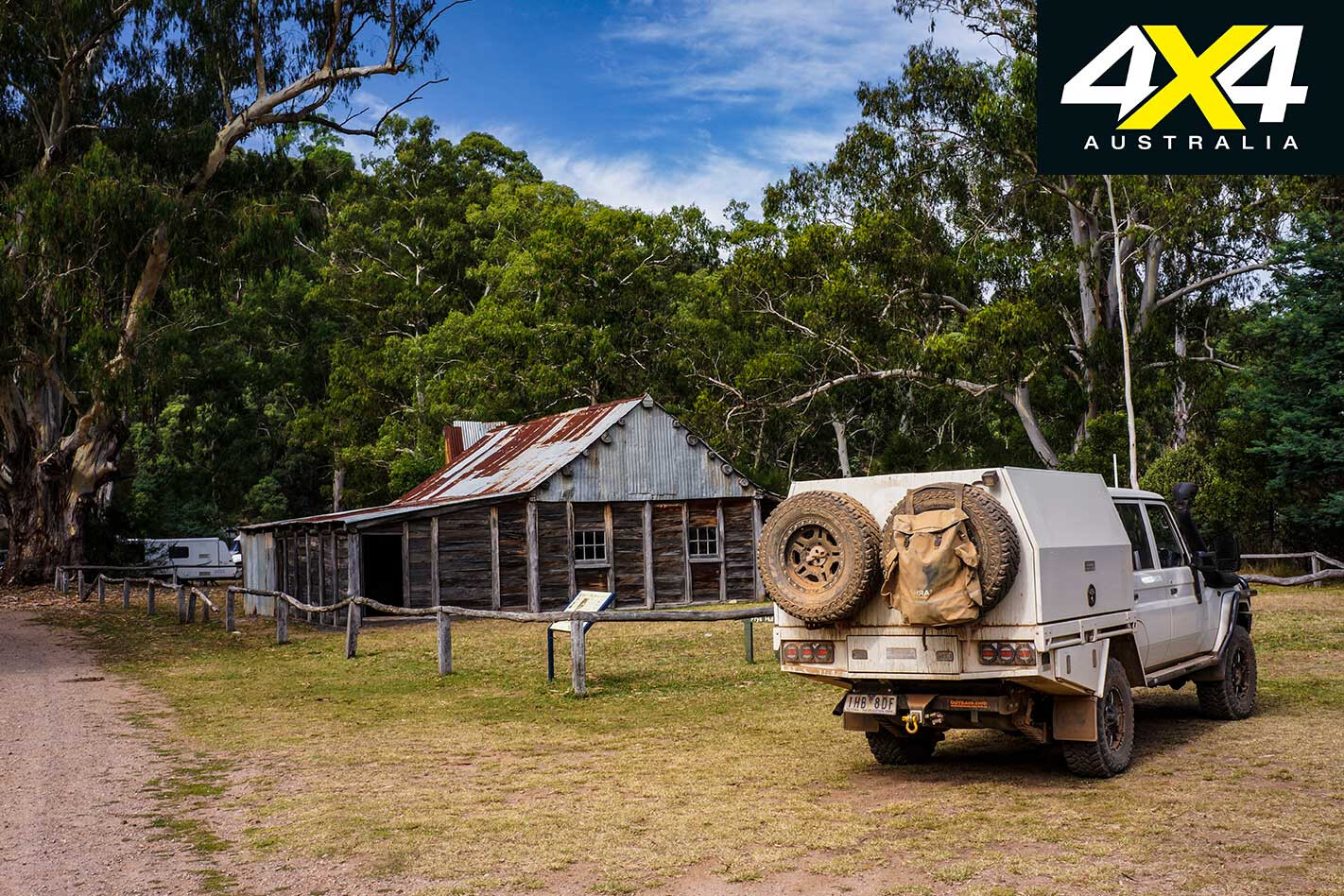
We headed to Frys Hut and the flat of the same name; the hut dates back to the times of Fred Fry, a master bushman and hut builder who lived here until his death in 1971.
It was a fitting end to our trip following the footsteps of gold seekers, and, like most people, we’ll return to relive it all again and have more adventures in the Victorian High Country.
Travel Planner
Omeo: www.omeoregion.com.au
For info on the parks and the historic areas, visit: http://parkweb.vic.gov.au/
For info on the Ruston engine, phone the Omeo office of Parks Victoria: (03) 5159 0600
Dargo township: www.visitgippsland.com.au/destinations/central-gippsland