
The telcos tell us that they have so much of Australia covered with cellular phone coverage, but they’re usually talking about population coverage, not geographical coverage.
As travellers we know only too well that once you break free of the capital cities and regional centres, mobile phone coverage can be sketchy at best, and non-existent in most places. For many of us, that is what we want, while others go blindly into the bush thinking that their mobile phone will give them security and safety when they are off the grid.
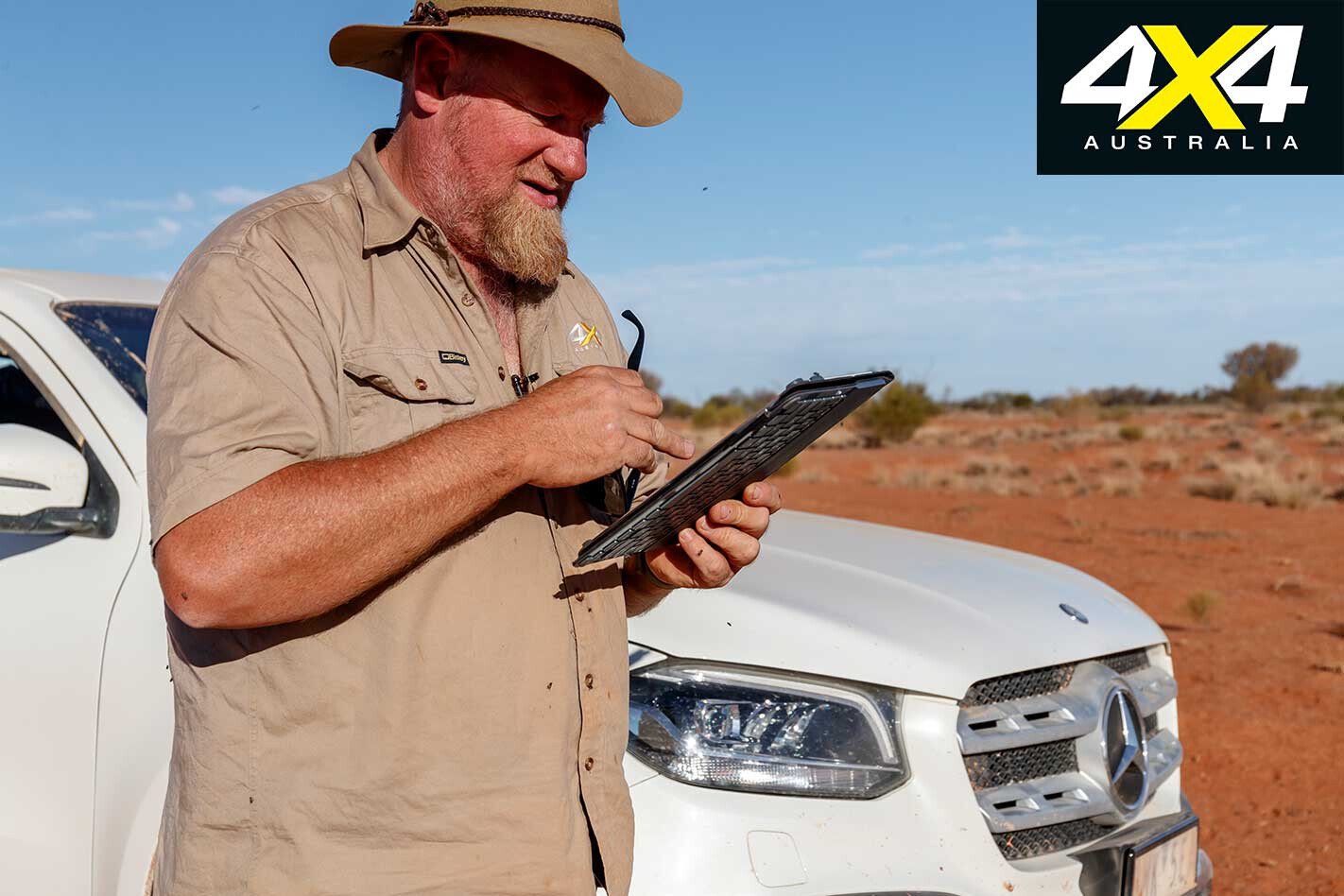
We’ve all had times where the phone shows a flickering bar of signal yet it is too weak and unable to make calls. If you’re lucky and your car is still operable, you might be able to move to a stronger signal, but if you’re in an emergency situation you could be in trouble.
A product we’ve used on a few trips now is the Cel-Fi mobile repeater from Powertec. The Cel-Fi unit acts like a funnel for phone signal and picks up on the weakest signal and boosts it so that you phone is operational for both calls and data transmission.
Example #1; We often head out to Eldee Station near Silverton in Western NSW to do vehicle testing. It’s a big property about 55km west of Broken Hill and the mobile coverage there is sketchy at best. The Silverton Hotel uses a boosting repeater to give you signal in the beer garden and further out on Eldee property owners Steve and Naomi use a Cel-Fi stationary unit to get signal at their homestead.
Get away from the hotel or the homestead and you’re phone signal disappears. Even on the road between the two repeaters there is no signal.
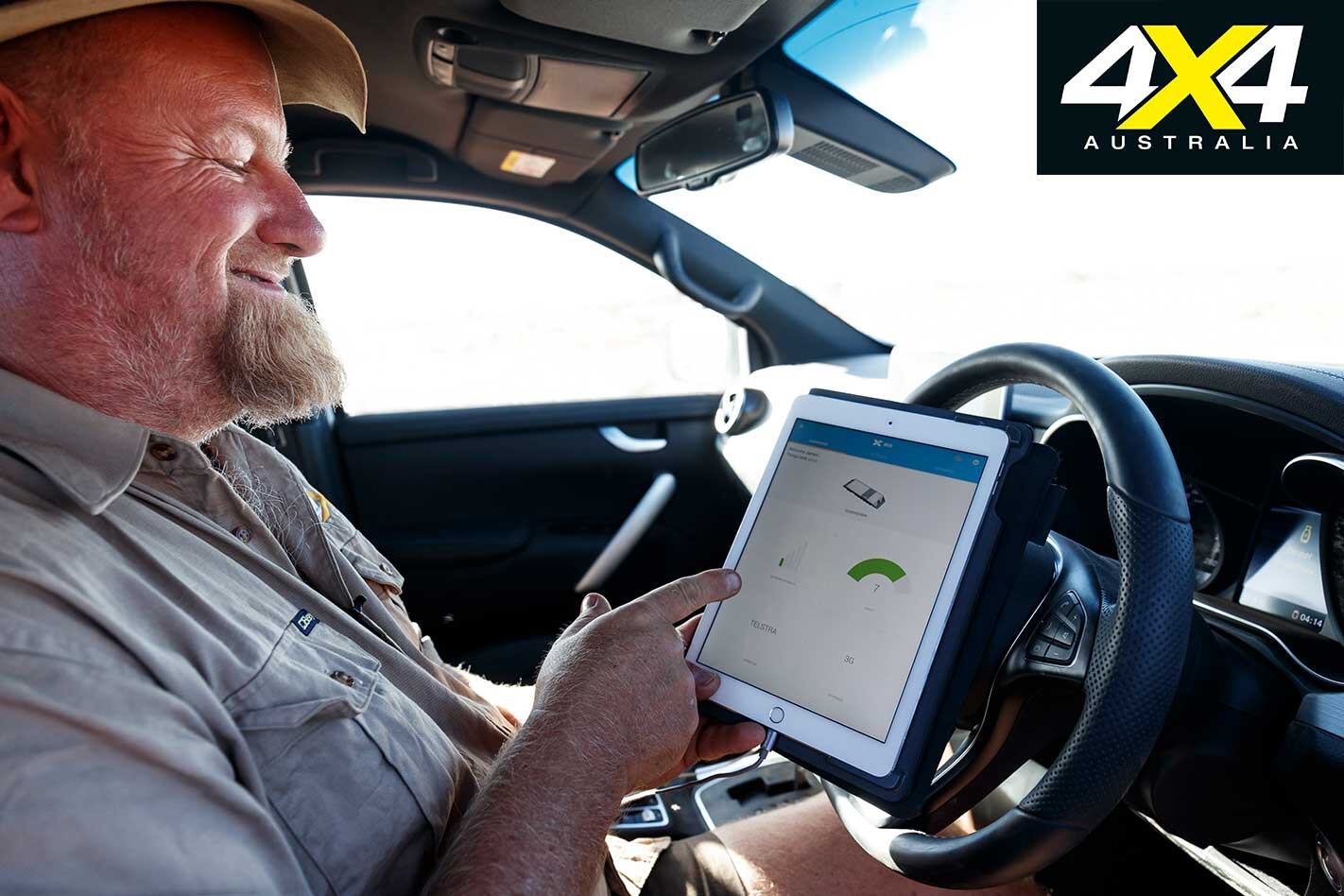
We stopped in at ARB Broken Hill where Jonathon Oliver told us he sells and fits around half a dozen Cel-Fi units to locals’ cars every week. He reckons they work well out of town where the signal is weak and in some small town the signal is now stronger in the car than in the satellite-fed houses.
Jonno fitted a temporary install to one of the cars on our 4×4 Of The Year test last year and it powered our Telstra phones all over the district. The Cel-Fi Unit is available to suit Telstra, Optus, Vodafone and most other popular providers on 3G and 4G.
Example #2; We fitted a mobile Cel-Fi unit to one of the X-Class utes on our Corner Country adventure and there were places that no other car in the convoy had phone reception, but the phones in the X-Class were showing four to five bars of signal. We were even able to steam music via Spotify. Brilliant!
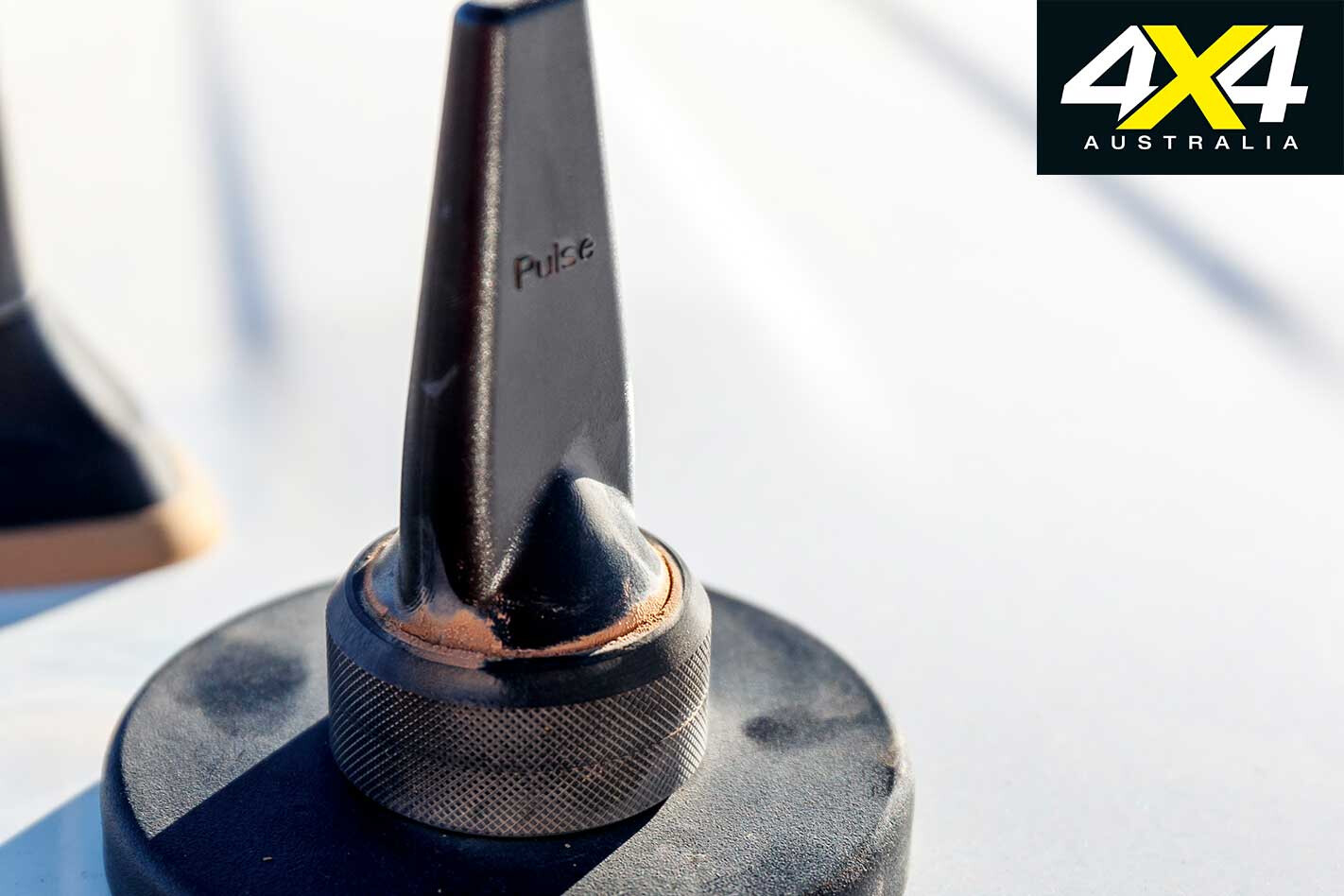
Parked up near Mutawingi National Park the X-Class had strong signal while no one else did. Stand beside the car and you could receive and send emails, but walk 10 meters away from it and you couldn’t make a call or receive a text.
This is amazing technology that works. It will not give you phone service where there is no signal, but where there is the weakest of signal, it will boost that signal to get you chatting and downloading in the most remote places.
RATED Available from: www.powertec.com.au www.arb.com.au/stores/arb-broken-hill/ RRP: Around $1000 WE SAY: Great to improve your phone usage in the bush.
THE ANCESTORS of the Native Americans were a deeply resourceful, passionately territorial and highly intelligent bunch, especially in their ability to live and thrive in harmony with the environment. But here’s a little-known fact: they were rubbish at road-building.
I figure this because I’m staring through the screen of the new JL Wrangler at a collection of boulders the size of garbage cans blocking our passage just a few kilometres along the eastern entry to the Rubicon Trail.
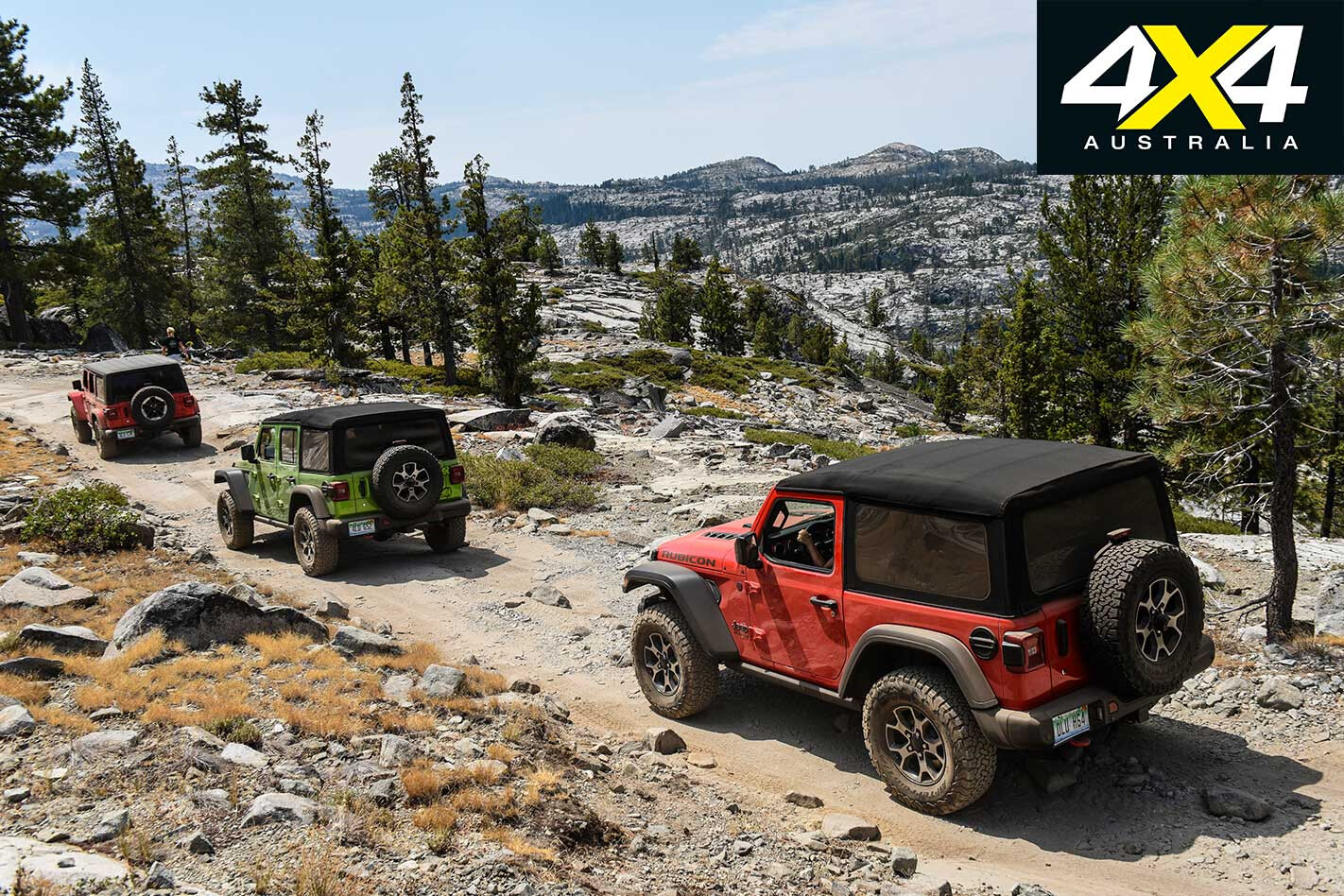
I’m told it was first cleared by the Paiute and Mono tribes as a means to access the fertile hunting and fishing grounds of the Eldorado forest in California’s Sierra high country. This lot clearly didn’t care about making life easy; or perhaps impersonating a mountain goat was considered a tribal rite of passage, because the terrain here is brutal.
That’s the whole point of this trip: very few showroom-stock vehicles have the off-road chops to make the full 35km distance from McKinney Rubicon Springs, near Lake Tahoe, out to Wentworth Springs in the west. The Jeep Wrangler is one of them, but the model you really want is the one that takes its name from the trail.
The Wrangler Rubicon is the true rock-hopper of the range, but before we get to that we need to cover what differentiates the new JL Wrangler from the outgoing JK. Apart from the 3.6-litre petrol V6, which carries over with a few tweaks that improve torque and efficiency by tiny amounts, pretty much everything is new.
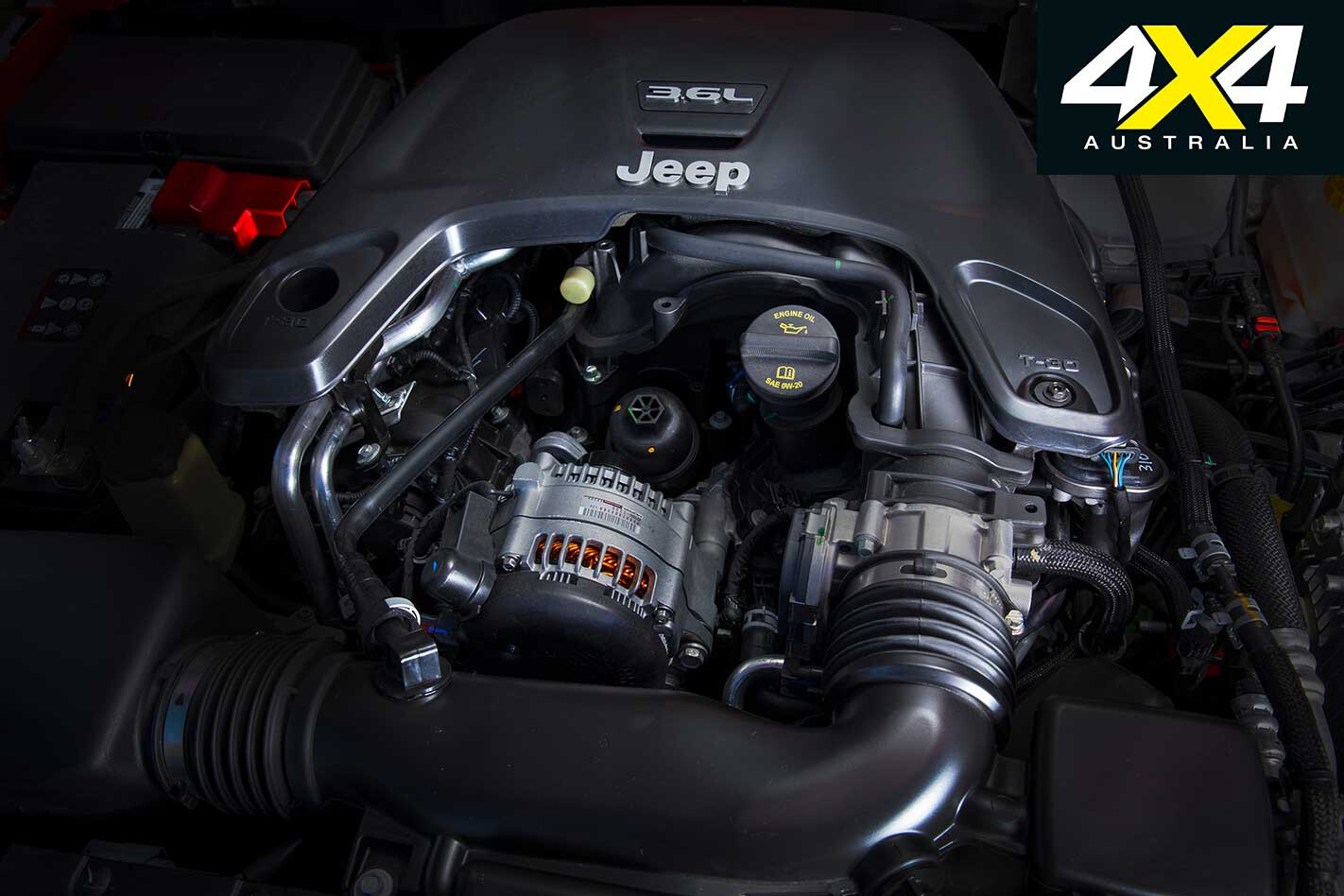
Of course, the fundamentals remain – body-on-frame design, live axles at each end, the choice of two doors or four, and an exterior design that doesn’t deviate too far from the boxy, iconic lines owners love – but the four-door’s wheelbase has been stretched by 61mm (35mm for the two-door), and packaging improvements bring a small but noticeable gain in rear-seat room.
An eight-speed auto replaces the five-speeder. Weight has taken a slight trim with the use of aluminium for doors, bonnet, ’guards and windscreen frame, and magnesium for the tailgate. All the crucial off-roading parameters – approach angle (44 degrees), ramp-over (28 degrees) and departure angle (37 degrees) – are improvements by a few per cent over the JK.
To reach the eastern trail-head, we have to drive around the glassy-smooth roads that fringe Lake Tahoe. Wake boats and flash jetskis bob alongside private wharfs, as the lubricated laughter of the seriously cashed-up bounces off the azure water.
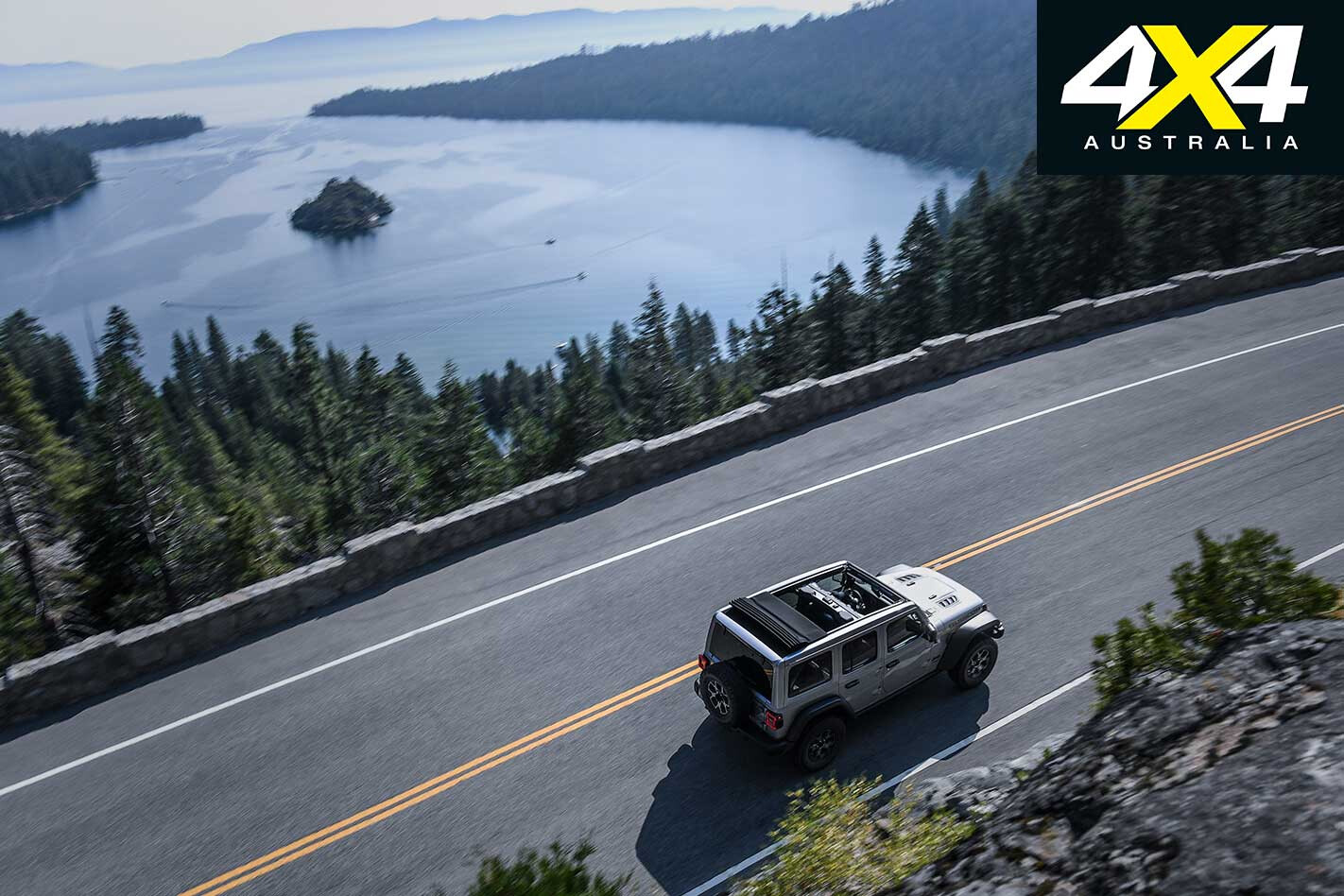
This brief on-road transport stage provides a chance to feel how the JL moves the game on from the lumbering, remote-feeling JK. Mercifully, it’s significant.
On smooth roads the JL now feels semi-civilised for a vehicle with a live front axle. Drive it like the rest of the law-abiding public and it doesn’t feel a whole lot less composed than most of the 4×4 utes that dominate the Aussie sales charts.
Sure, the Rubicon’s off-road-biased tyres let you know you’re not in SUV-land, and bumps send a few discombobulating shimmies through the bits where body meets chassis. But it’s vastly improved.
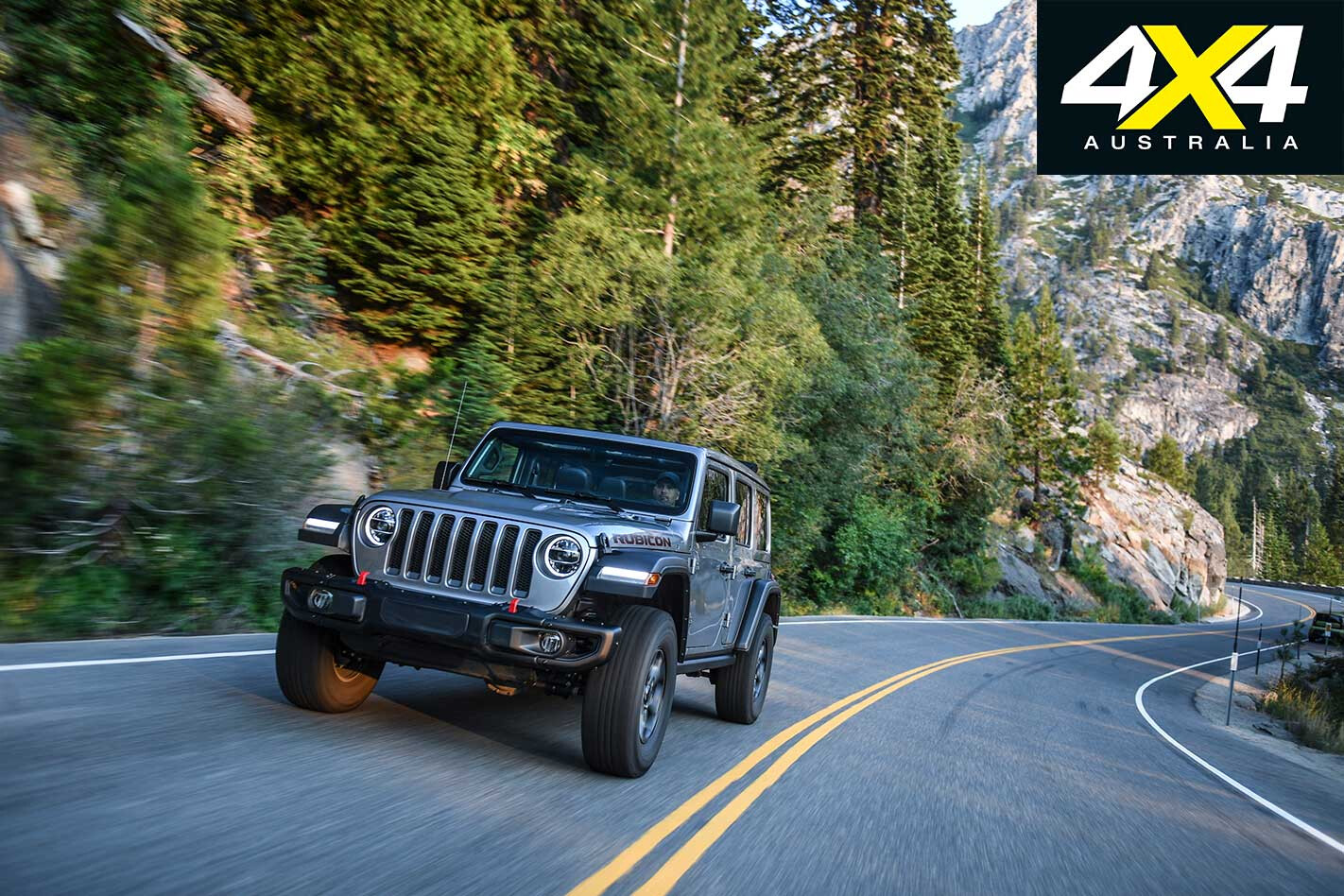
The steering is less slow-geared (now 3.2 turns lock-to-lock on the four-door; 3.6 on the shortie) and feels connected to the front wheels when lock is first applied. There are nautical levels of roll if you get ambitious, but the bottom line is there’s now a far more planted sense of stability to the Wrangler’s on-road manners, along with reduced wind and road noise.
The Pentastar V6 is not the most charismatic lump, but it does feel willing and energetic given the weight it shoulders, and it doesn’t become stressed when asked to rev. Adding three extra transmission ratios and much-improved shift quality also contributes to the sense of new-found powertrain polish.
Then there’s the interior, which, on the JK, felt as if it was hastily thrown together after someone yelled tools down. The JL flips that by delivering a cabin that manages to feel both well-crafted and ultra-functional.
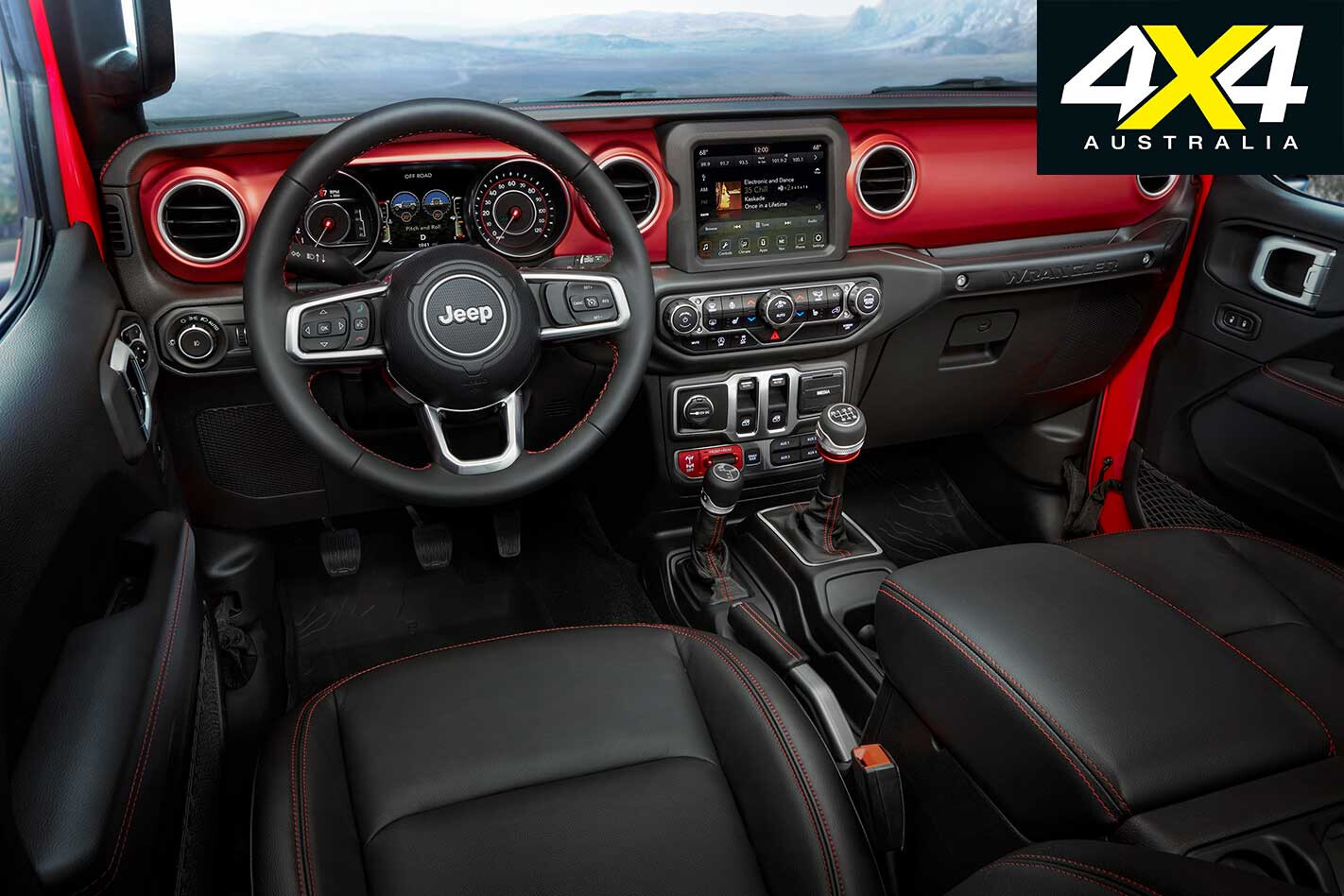
The seat feels good the moment you slide in, the wheel adjusts for both rake and reach, and the pedals are positioned where your feet naturally fall. The fourth-gen Uconnect infotainment system is fast and intuitive. Glance down at the centre stack and you notice how key fascia components are secured with Allen head bolts; while the bits that control the off-road functions are in red anodised aluminium.
TRAIL TIME THE trail entrance is a chance to stick the transfer case’s meaty-feeling lever into 4×4 Low and hit the button that disconnects the front anti-roll bar for maximum axle articulation. There are switchable diff locks, but that’s it. No modes for Rock, Snow, Sand, or any of that frippery.
Tell this thing you’re heading off-road and it cares little for the details, it just gets on with getting you through.
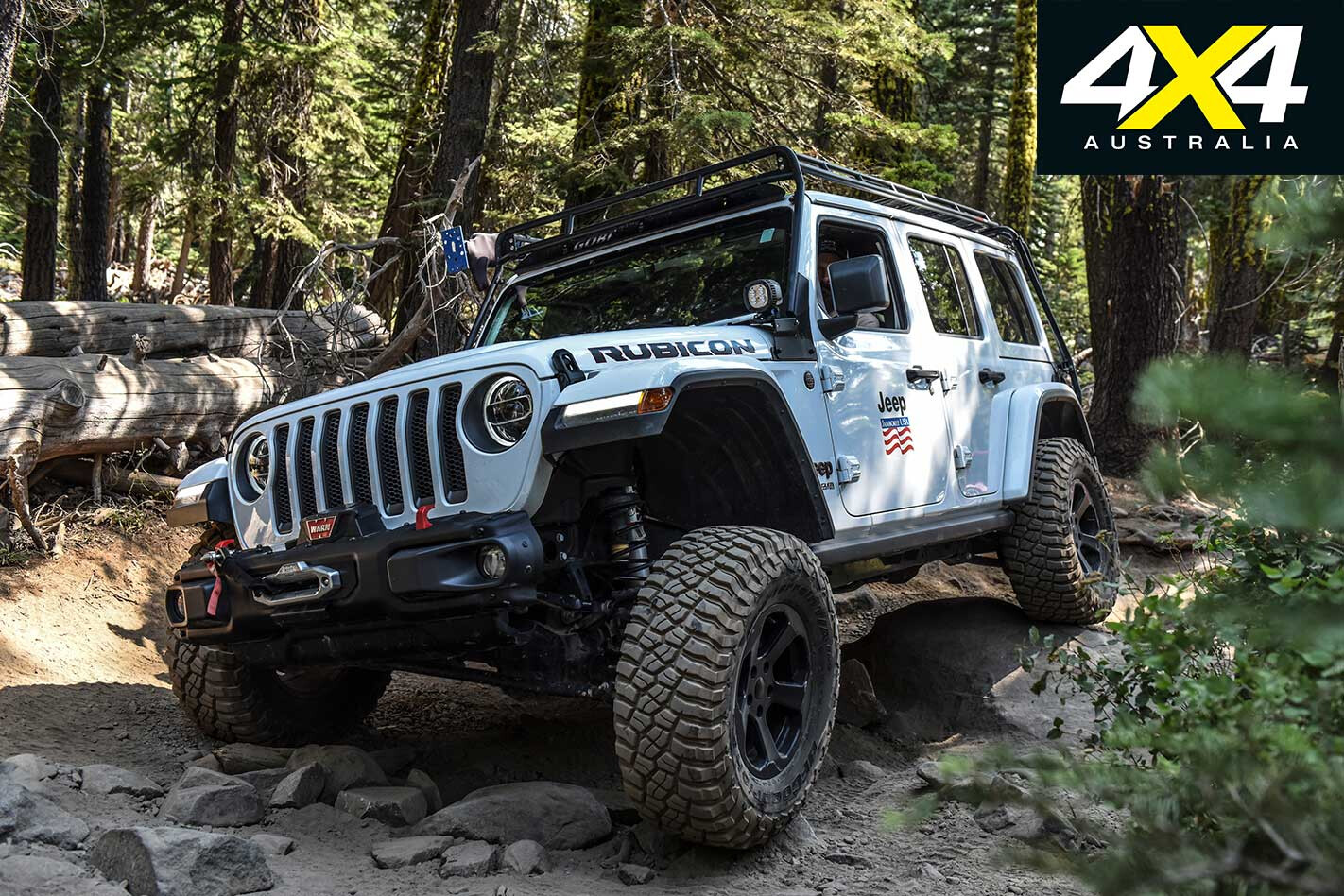
Only a few hundred metres in, we spot a Subaru Forester parked off to the side of the trail. He knows his limitations; from here it’s clearly an SUV-free zone, as the rocks quickly become the size of microwave ovens and the gradient ramps up to around 10 per cent.
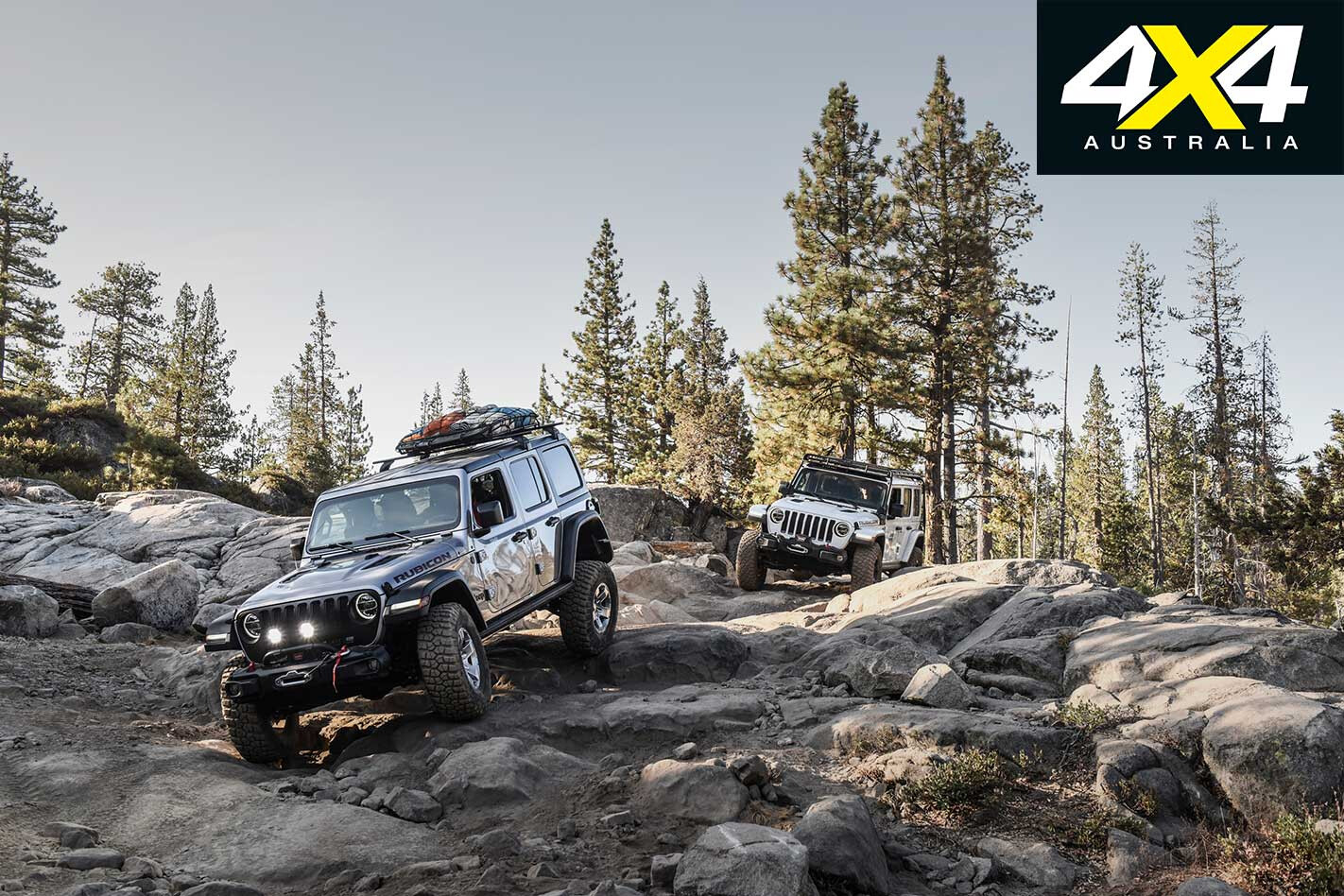
The Jeep Rubicon’s revised gearing sees a 4:1 low-range deliver a shorter 77:1 overall ratio, meaning this thing is built to crawl. Out of curiosity, I flick the lever over to the manual gate, only to see we’re in second of the new auto’s eight ratios.
We crawl past Lily Lake, its mirror surface broken only briefly as Canada geese scramble for take-off. The trail is so relentlessly rough that continual head-toss is a non-negotiable reality and your mid-section is subject to infomercial-levels of ‘core engagement’, but it can’t distract from the natural beauty of the place.
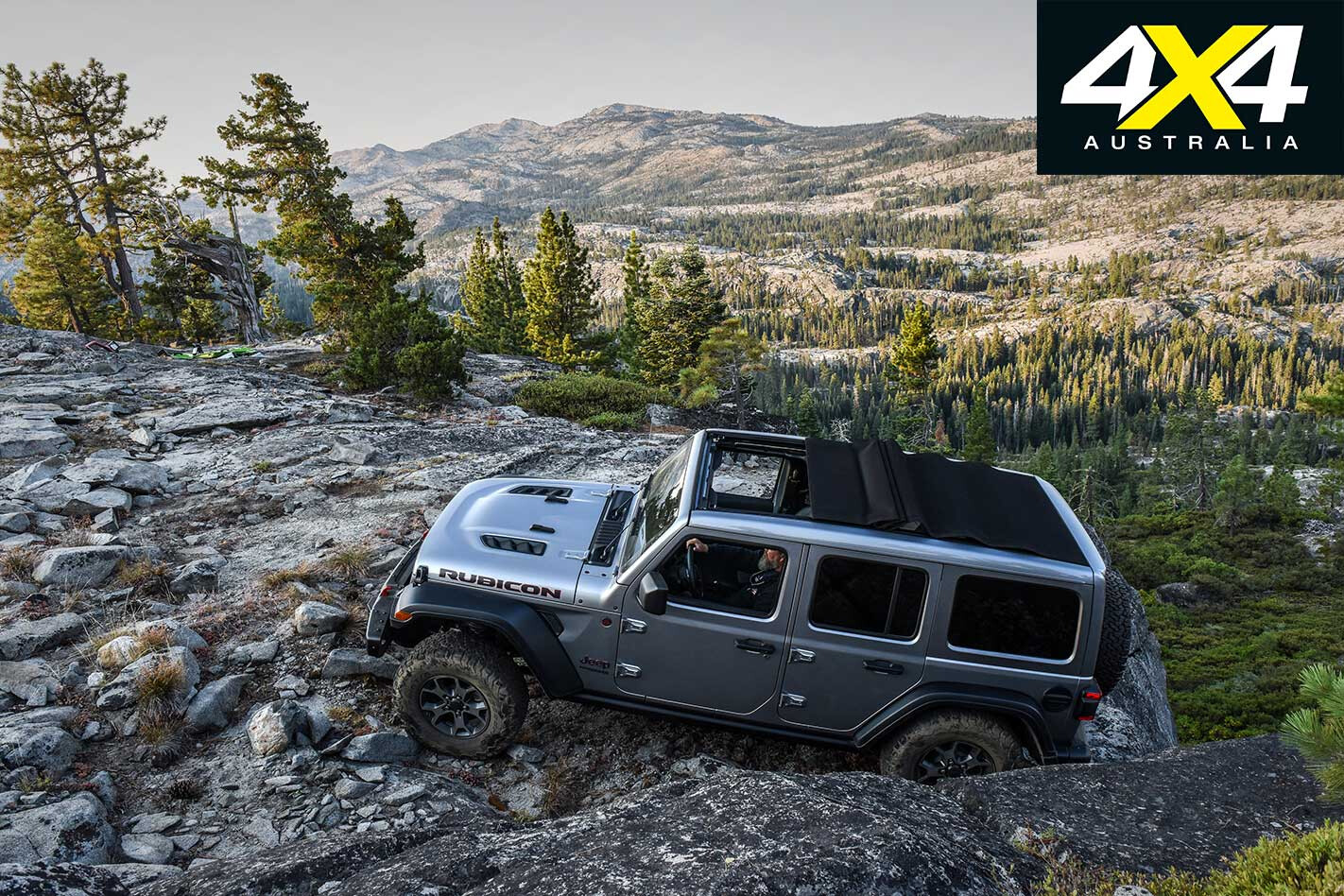
Vast stands of ponderosa and sugar pines stretch up to a crystal-blue sky, clustered so tightly in places that they force the sunlight into diffused shards that barely make it to the mossy forest floor. I put the window down and breathe deeply. The place smells like a Norsca commercial.
Later, the constant tumble of rocks gives way to a brief respite of loose loam, and a chance to boot it. The auto quickly flicks through about five ratios as our trail speed soars from around 5km/h to a heady 17. Woo-hoo! The thrill of ‘high’ speed lasts all of a couple of hundred metres, as another rock garden forces us back down to a crawl. It’s true you could walk the trail faster than you can drive it.
A helicopter has delivered our lunches to Observation Point, about 11km in, which, according to the guides, is the point “where shit gets way more serious.” Observation Point is hemmed in by vast granite cliffs, the base of which form a repository for the huge pinnacles that have fractured and sheared off over millennia.
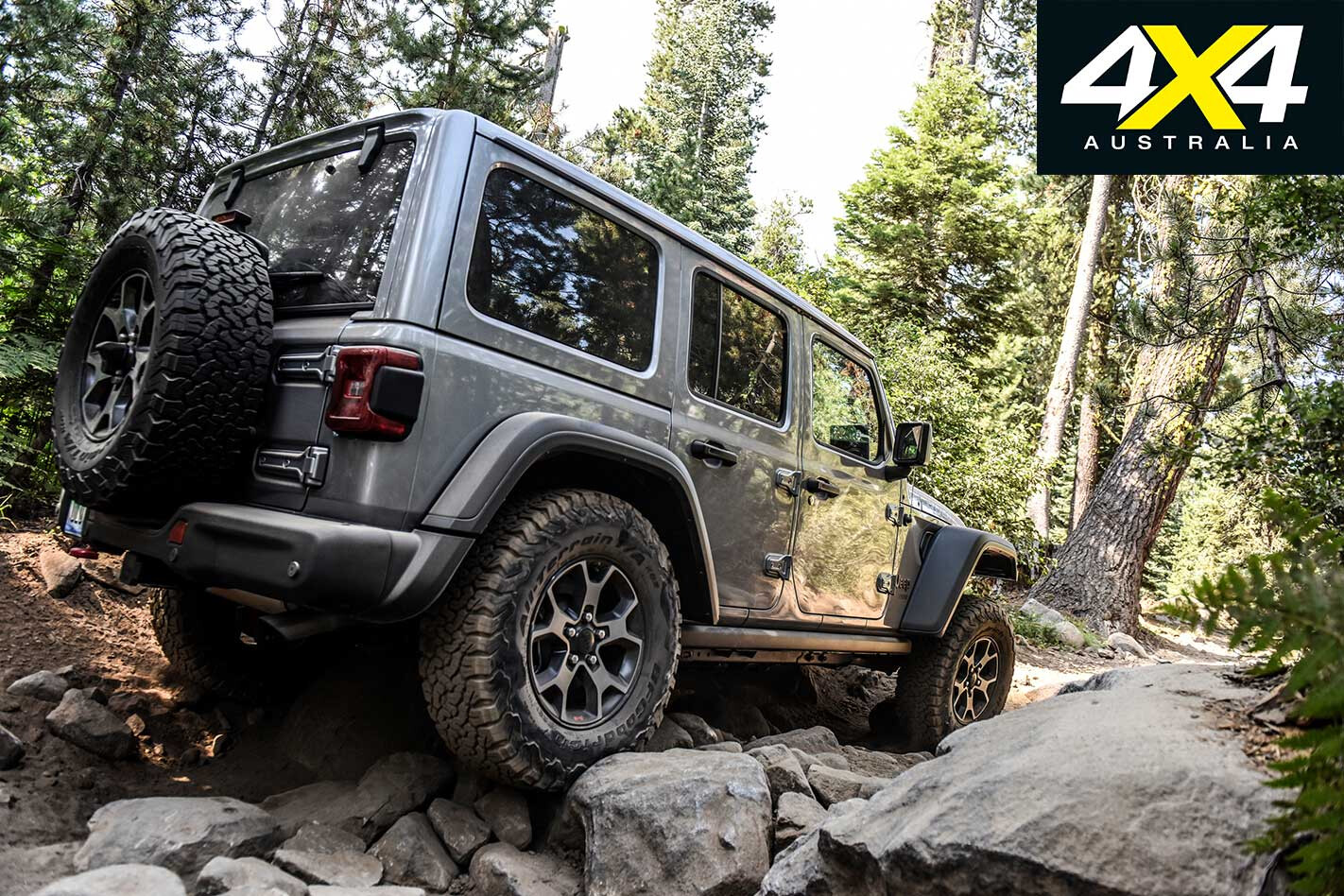
It’s also the stepping-off point, if that’s not a poorly chosen expression, for the crazy plunge of Cadillac Hill. The steepest part of the trail is named after the ’30s Cadillac that went over edge and lies wedged below as a rusty reminder of how poor line choice can really spoil your day.
The descent down Cadillac Hill is like trying to enter Mother Nature’s war zone, and she’s determined to repel you. My air-drumming driving partner cranks up The Cult’s Fire Woman on the very punchy-sounding standard-fit audio as I stare wide-eyed at the vast granite outcrops, and wonder if one of the 22 songs by AC/DC with ‘rock’ in the title would’ve been a better choice.
It’s wickedly steep, and littered with near-impasses with names like the Notch, the Steps and V-Rock. It kinks left then right in the space of the Wrangler four-door’s wheelbase; the two-door shortie definitely has an advantage in this terrain.
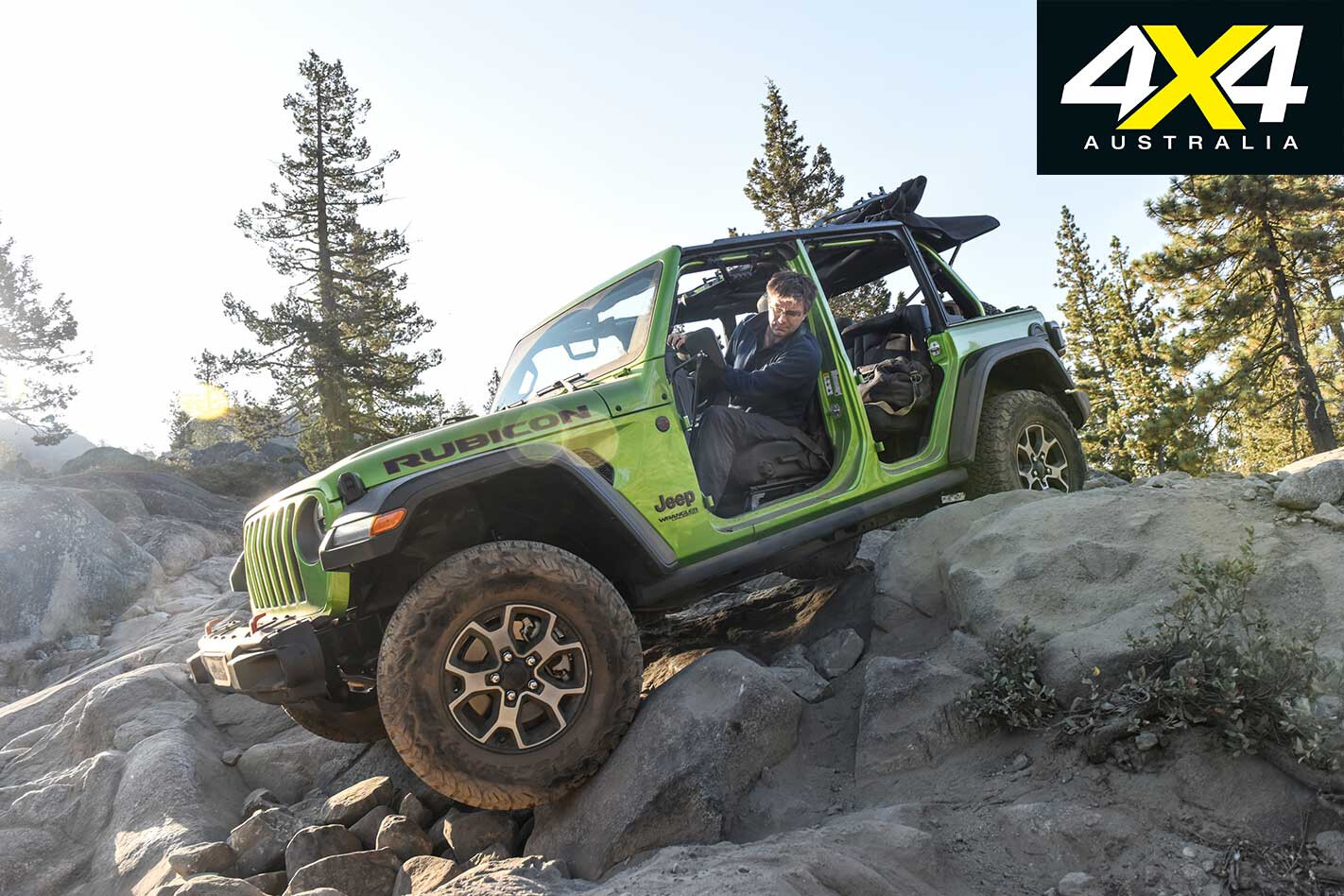
But it’s the granite boulders the size of wheelie bins – some embedded deep in the ground, some unstable, but all knitted together like the mad teeth of a vehicle-eating predator – that really make you focus. Not for the first time, the rational part of my brain will be in conflict with the part that processes risk versus reward.
We have trail guides outside the car assisting with crucial line choice and steering angle; without them, and their assurance that death (or worse, humiliation) is unlikely, I would have admitted defeat and nursed my shrinking testicles out of there.
The fact is, if you can follow hand signals and suppress mechanical sympathy, the Wrangler does reduce the highly technical and occasionally unnerving to the quite doable. The throttle tip-in for the V6 is near-perfect, as is the weighting and travel of the brake pedal, allowing you to ‘walk’ the thing up and over outcrops that make you wince as they extract an ugly graunch from the underbody protection.
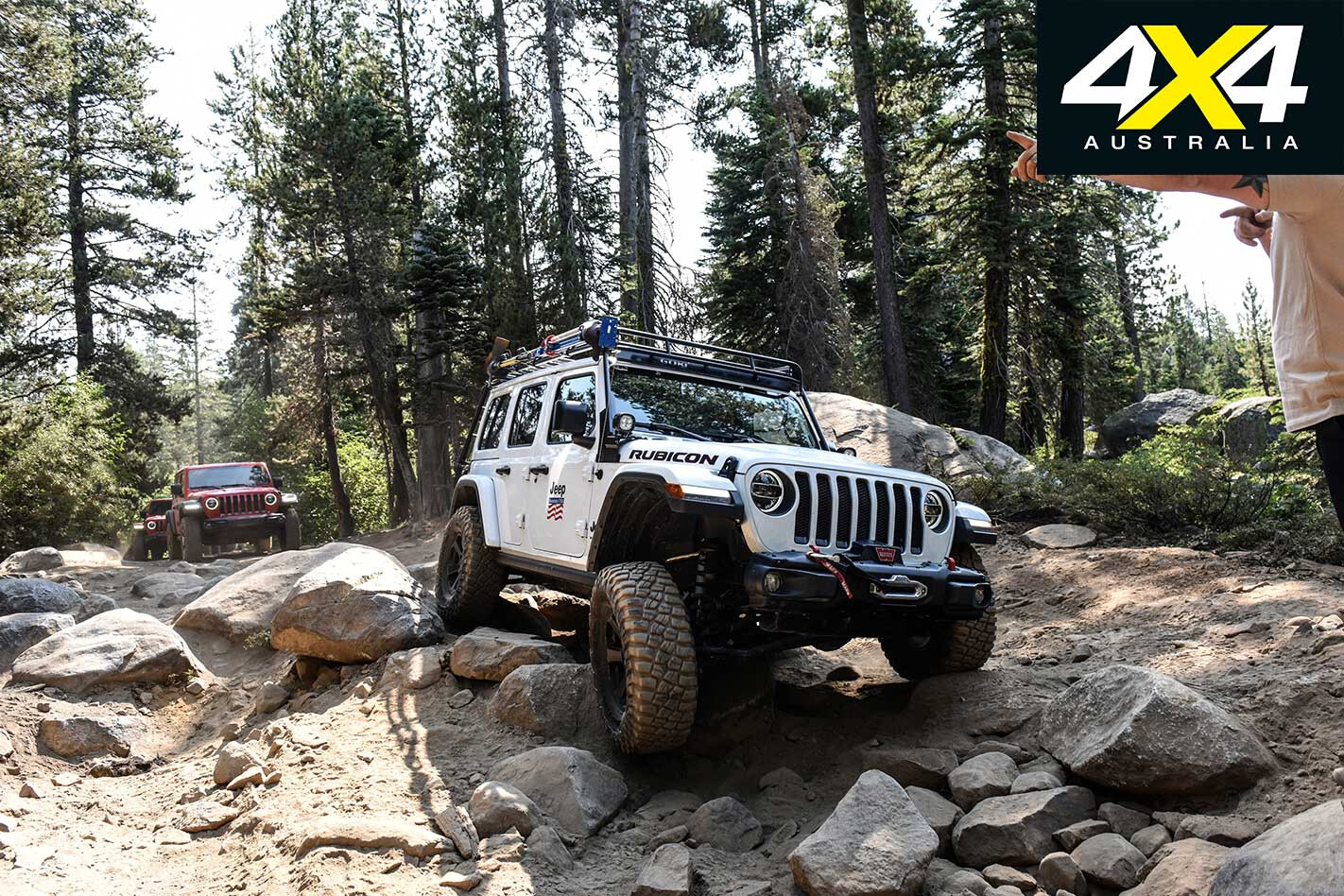
That’s where the real satisfaction lies in driving over terrain like this: get the line exactly right, maintain ultra-precise control of vehicle speed and weight transfer, and you’re rewarded by avoiding a noise that’s the off-roading equivalent of fingernails down a blackboard.
Several times we crack up laughing at the slightly absurd angles into which the Wrangler ahead is forced, with maximum wheel articulation folding it into some freaky kind of mechanical contortionist.
It is late afternoon by the time we crawl into Rubicon Springs, the sun starting to nudge the soaring escarpment that overlooks the lush camping ground. Every convenience an outdoorsy type could require appears present, along with a few from the obscure options list. Like Michael, the leathery, grinning piano player, who welcomes us in with a rousing version of Waltzing Matilda.
The first frosty Sierra Nevada pale ale cuts through the dust caked on the back of my throat; a swim in the tranquil waterhole next to our tents takes care of the rest.
The solitude is broken by the arrival into the water of Sacramento couple Tim and Amanda, who are on their third visit here in their modified JK Wrangler four-door. Tim wants to know about the new JL; I want to know why they keep coming back. Tim gives that open-palmed thing as he glances around, an unspoken “have a look at the place”.
“But it’s also the trail itself,” he tells me, “the way it changes each year. It’s almost an organic thing; the spring thaw throws up new obstacles and washes away others; it’s never exactly the same thing twice.”
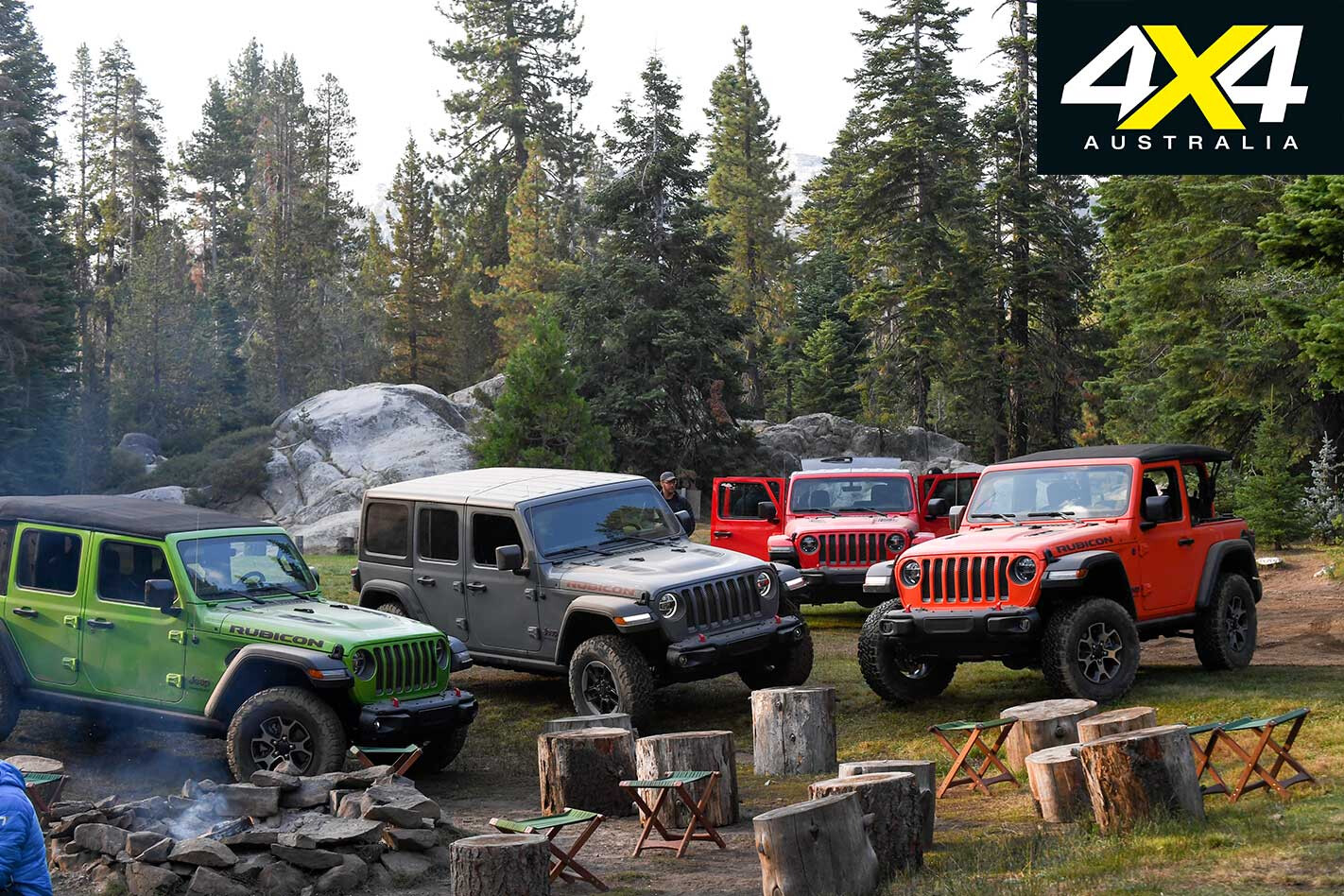
Tim confesses he has a tattoo of the Jeep seven-slot grille. I decline the offer to view it, but clearly I’m talking to a man of the faith. He explains what they love about their Wrangler; that thing common to anyone who owns a 4×4 and uses it in the way its maker intended:
“It’s our escape pod from the city,” he says. “It’s that freedom to be self-sufficient; away from crowds and traffic, to get back to an environment we feel we actually belong in.”
The more rugged the environment, the stronger the bond that forms between man and machine. “For sure,” he says. “Out here, where it’s remote, virtually impossible to be towed out, no cell phones; your rig is also your life raft. Man, when it keeps delivering epic experiences, you can’t help but love it.”
I grasp his point. I may be floating in a pristine forest spring, but it’s also possible I’m starting to drink the Wrangler bathwater.
MORE THAN JUST NAMING RIGHTS WHAT sets the Wrangler Rubicon apart from the Sport and Overland models? Most notable are driveline changes aimed at toughness and crawling ability. Its axles are beefier Dana 44s and its low-range transfer case (called Rock-Trac) provides a shorter ratio at 4:1, while its final-drive ratio is also shorter (4.10 versus 3.45).
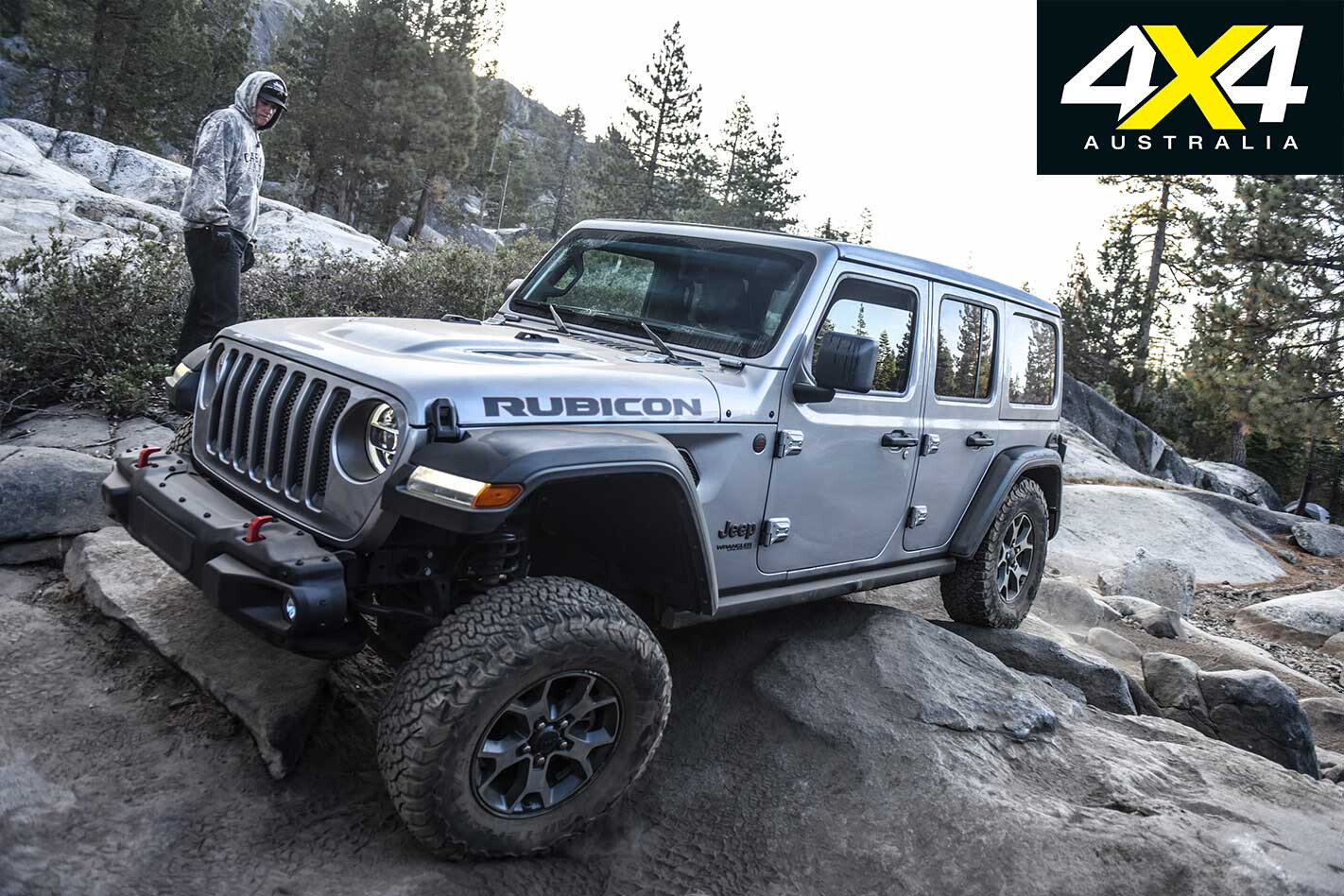
Rubicon also gets Tru-Lock electronic locking differentials to help it find traction in really extreme conditions, and it runs mono-tube dampers, along with a slightly higher ride height for better ground clearance. Finally, it gets an electronic disconnect for the front anti-roll bar to increase axle articulation, allowing it to find traction where lesser rigs would be hopelessly spinning a hung wheel.
GIVE IT A CRACK FANCY a bit of rock-hopping on one of the world’s greatest 4×4 trails? Barlow Guided Tours (barlows.us) run a three-day/two-night trip out of Georgetown CA that provides a kitted-out vehicle, guide and food for two people (max 10 per tour) for $US3950.
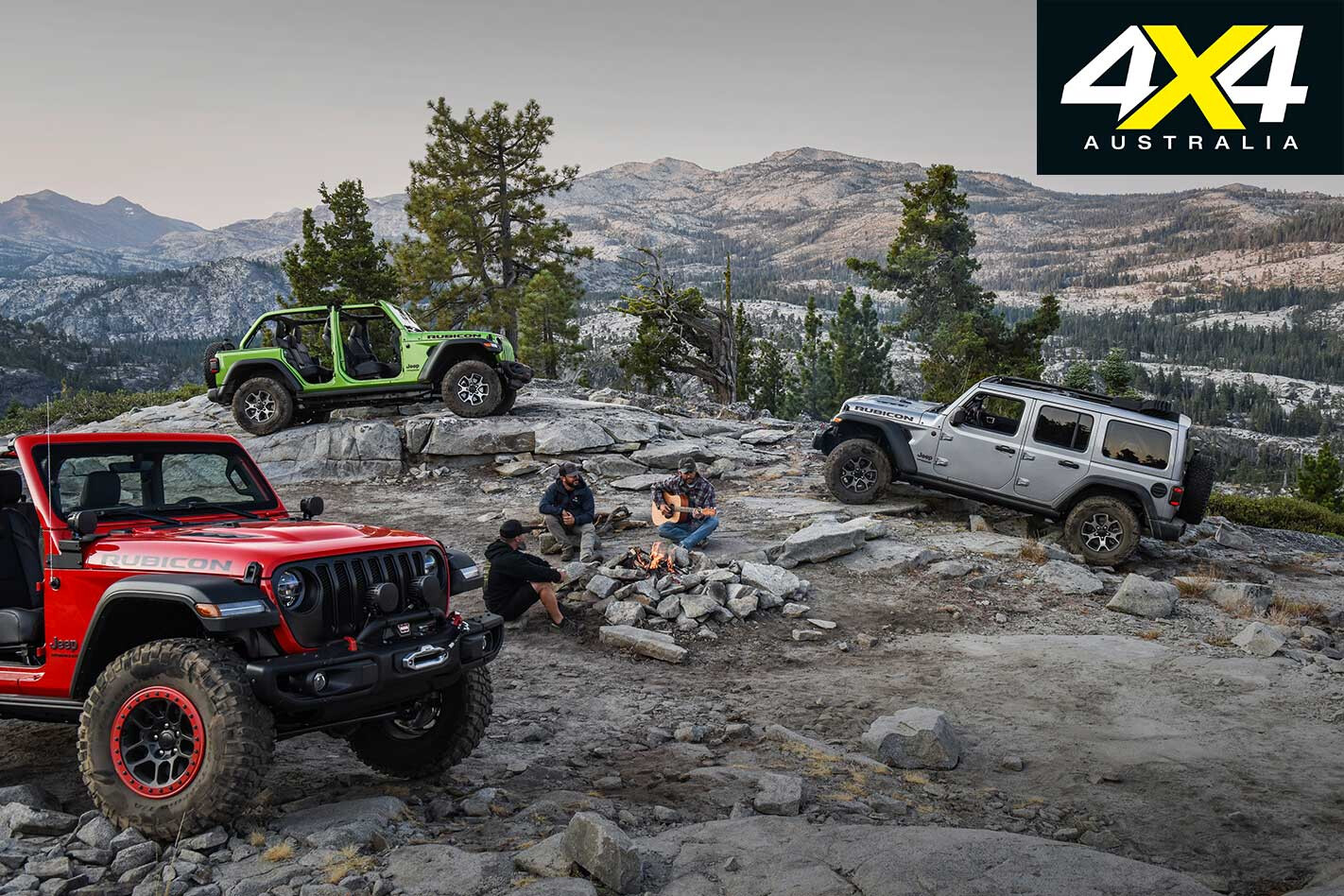
Then there’s jeepersjamboree.com, which runs two large guided trips each year, one on the last weekend in July; one on the first weekend in August. They provide food, bar, entertainment, mechanical support and logistics.
Or, for the most affordable way to experience the trail, laketahoeadventures.com offer a six-hour tour to Rubicon Springs on ATVs for $US395 per person, lunch included.
2019 JEEP JL WRANGLER RUBICON (FOUR-DOOR) Engine: 3604cc V6 (60°), DOHC, 24v Max power: 209kW at 6400rpm Max torque: 353Nm at 4800rpm Gearbox: 8-speed automatic L/W/h: 4785/1875/1868mm Wheelbase: 3008mm Weight: 2021kg 0-100km/h: 8.5sec (est) Fuel economy: 11.8L/100km Price: $55,000 (est) On sale: Q1, 2019
MITSUBISHI will officially pull the wraps off its new Triton pick-up on November 9, and we’ll be in Thailand to drive it fresh off the factory floor.
Not a lot is known about the new model other than what you can see in the teaser images, which indicate the front end will adopt the very Asian-design queues from other current Mitsubishi SUVs, while the main body structure appears to be carried over. No word either on driveline packages, but expect it to remain a diesel-only offering here in Australia.
The new Triton will arrive in Australia in the first quarter of 2019.
The Triton has ridden the double-cab 4×4 ute wave in Australia well and remains a solid number three in the sales race behind the segment-leading Toyota Hilux and Ford Ranger.
It has achieved this despite being a smaller vehicle than others in the category, with a strong value-for-money offering and heavy discounting from the factory and dealers. Don’t expect such discounts to continue once the new model lands, but, unless the new Triton has some unexpected surprises up its sleeve, they will return.
Look for our first drive impression of the new Triton on November 10.
MORE: Mitsubishi Triton Range Review MORE: Mitsubishi Triton Specs, Range & Price
From a distance it looks like Toyota, with its Prado and Fortuner, has two distinct models selling in the same class; effectively competing against one another. Get a little closer, though, and differences emerge.
For a start, the Prado is more expensive, and while there’s a minor overlap in pricing, Prado prices effectively start where the Fortuner’s leave off – especially after Toyota lopped around $5000 off Fortuner prices in November last year.
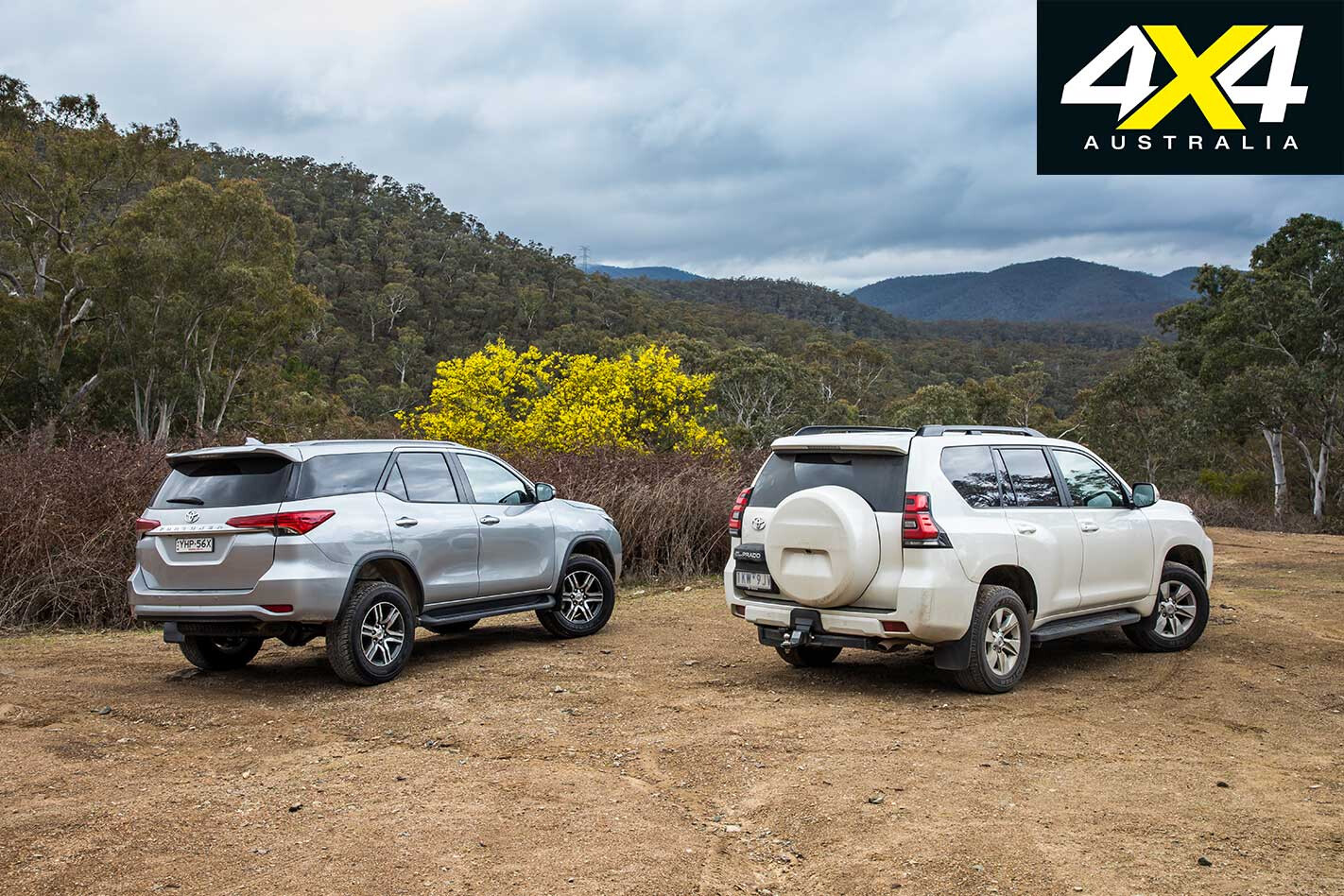
Side-by-side the Prado is also a little bigger than the Hilux-derived Fortuner, although they both seat seven. Both also have dual-range gearing, a separate chassis and a live axle at the back, so can be classed as fair-dinkum 4×4 wagons.
Toyota arrived at this position (with the Fortuner partly competing against the Prado) because it needed to, effectively, shield Prado from competitor ute-based 4×4 wagons. That rival is primarily the Ford Everest, but also the Mitsubishi Pajero Sport and the Isuzu MU-X and Holden Trailblazer (formerly Colorado7).
Having both the Fortuner and the Prado in the same class allowed Toyota a broader price spread, and to counter Everest undercutting Prado pricing, Fortuner undercut Everest while generally matching the other three.
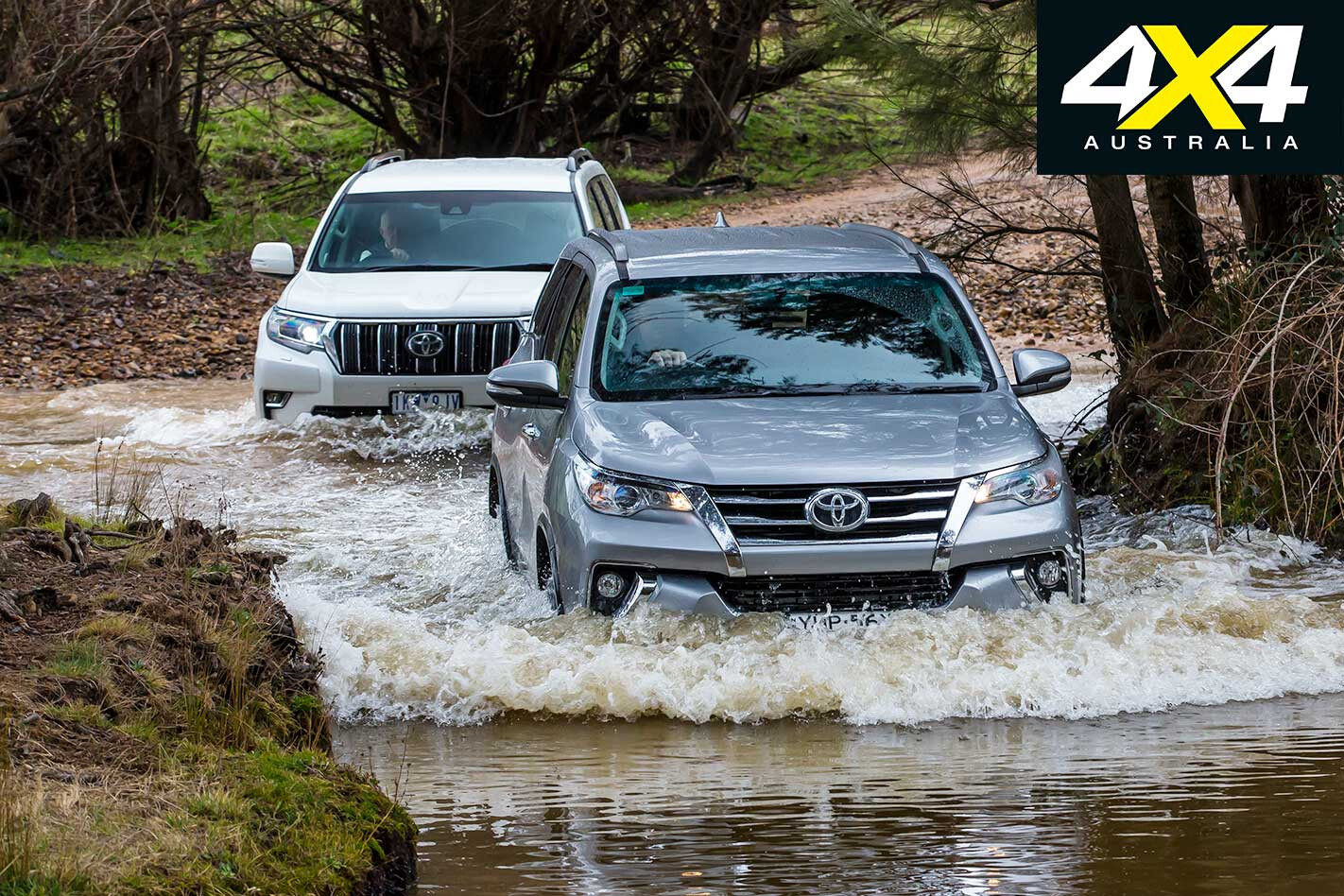
So what do buyers say about all this? Year-to-date Prado leads with 12,721 sales, well ahead of the MU-X (5819) and the Pajero-Sport (4404). Everest (3627), Fortuner (2321) and Trailblazer (1753) make up the numbers from there.
Given the Fortuner shares a Toyota badge with the Prado, and its basic powertrain, does it deserve to sell better? We take them bush to find out…
Toyota Prado
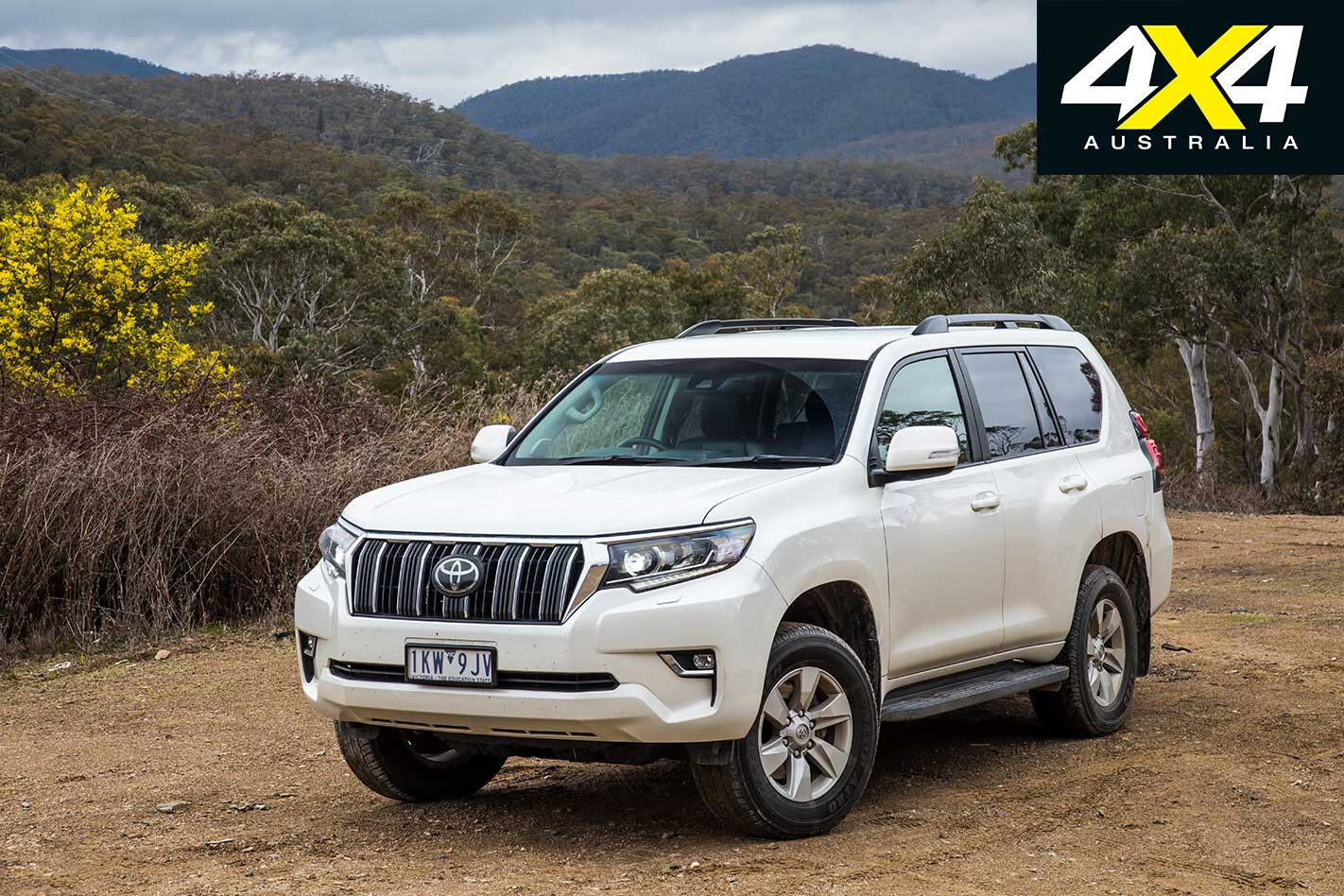
The 150 Series Prado may be near 10 years old, but it’s been Australia’s best-selling 4×4 wagon for most of that time, only slipping briefly to second spot in 2014 as Jeep’s Grand Cherokee sales soared then fizzed.
Part of that success is no doubt due to regular upgrades, which are now becoming more significant and more frequent than they were in the first five years of the 150’s life.
The most recent of those upgrades (2018 model) sees all automatic models from the base GX fitted with significant safety kit, which is led by autonomous braking, but also includes radar cruise control, lane-departure warning and automatic high-beam.
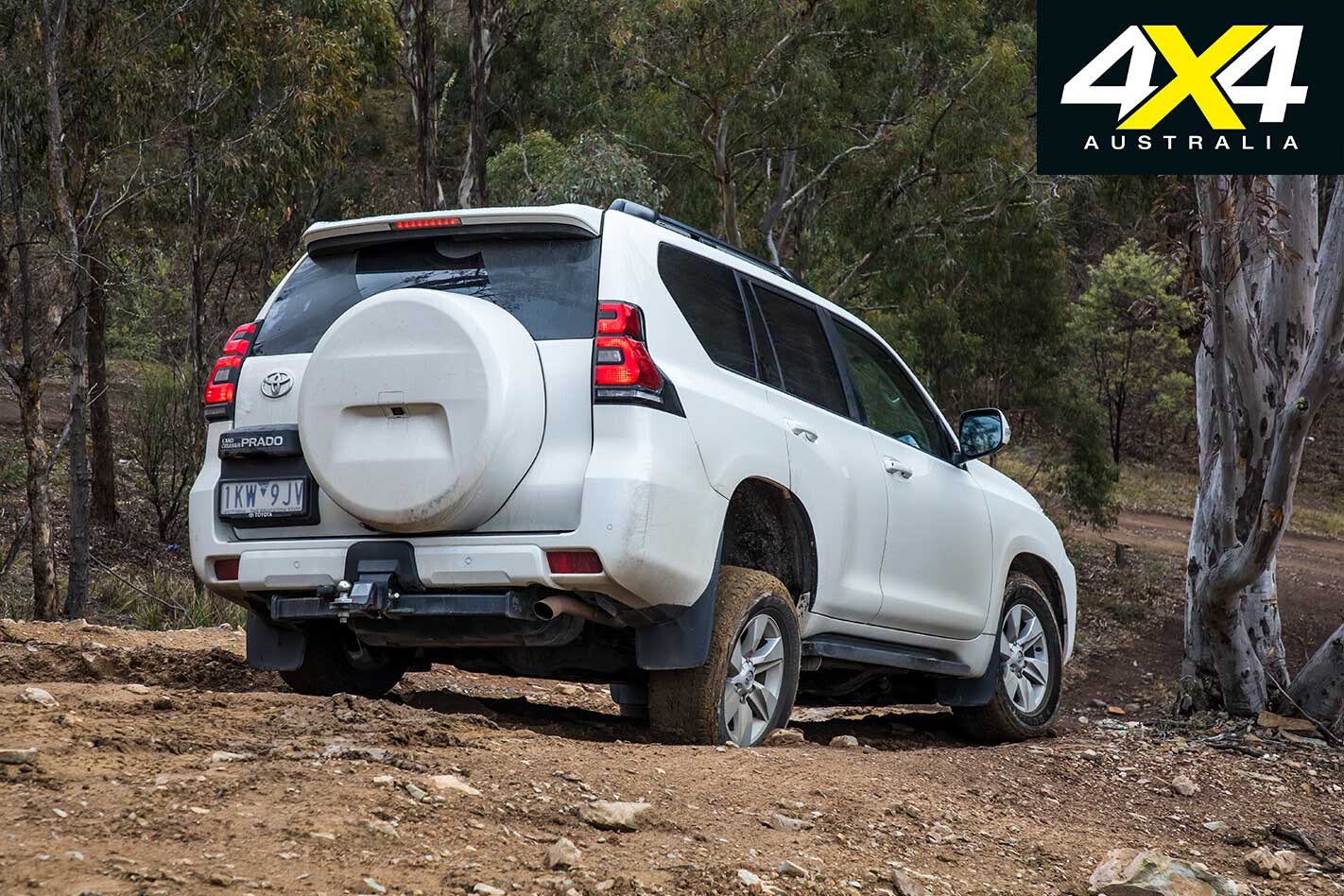
The popular-selling GXL auto model also gained the option of a premium interior, meaning buyers don’t have to step up to the considerably more expensive VX for features such as heated and ventilated front seats. The tow rating of automatic models was also increased from 2500kg to 3000kg (via a higher GCM) for the MY18 model.
These upgrades to automatic models will no doubt further limit sales of the already slow-selling manual Prado (GX and GXL only) to the point where the manual gearbox might well be discontinued.
Powertrain and Performance
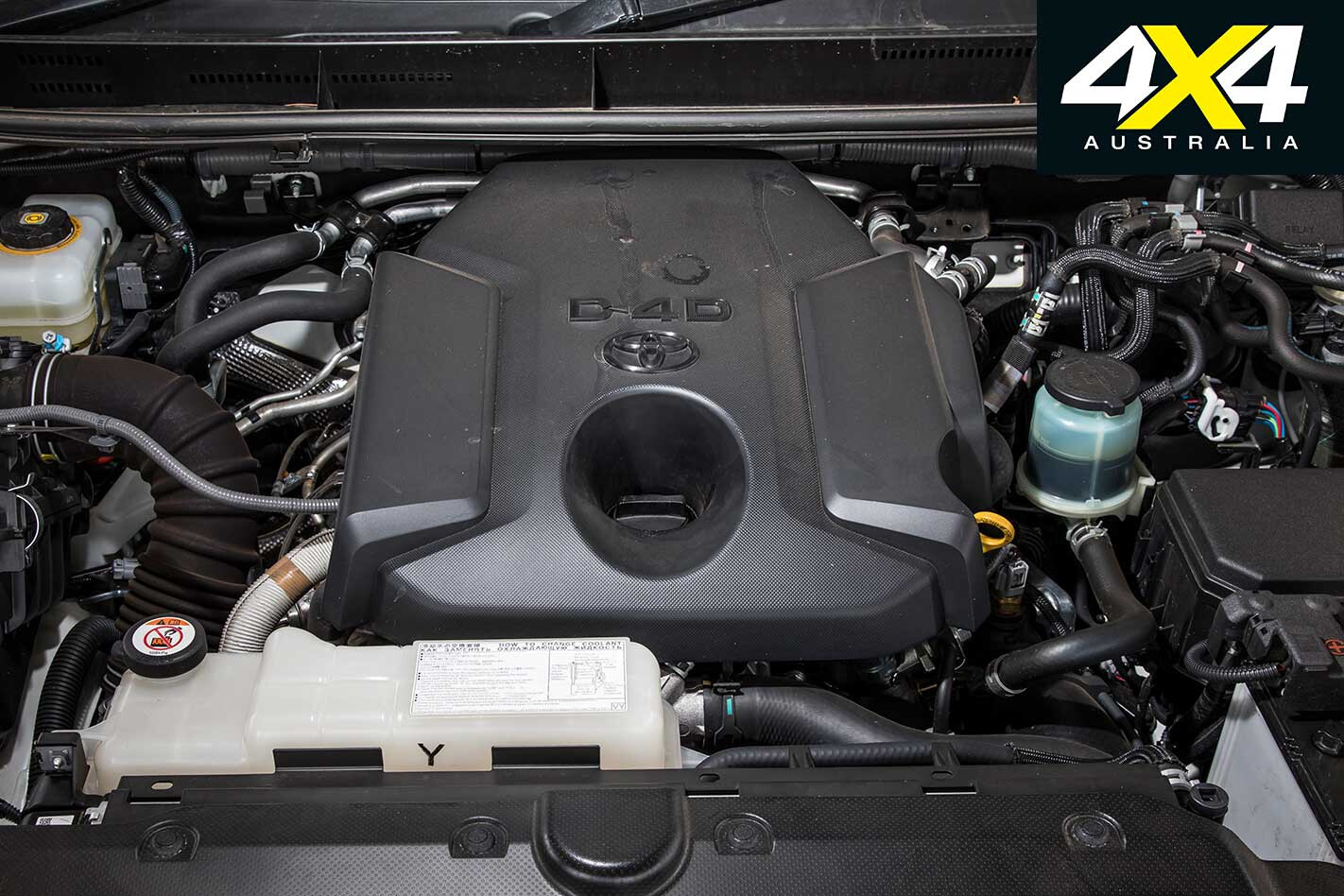
IN THE Prado’s most significant upgrade in its near 10-year life, the 150 gained an all-new 2.8-litre diesel from 2016-on when the 3.0-litre diesel – first introduced 10 years earlier in the Prado 120 – was retired due to tighter Euro 5 emission standards.
The previous five-speed automatic also went, replaced by a new six-speed automatic, also from Aisin. The Prado didn’t, however, adopt the new six-speed manual that appeared at the time in the then-new Hilux, perhaps another sign that the days are numbered for the Prado manual.
Compared to the 3.0-litre, the 2.8’s appeal lies in its refinement and civility and not in any significant performance difference. The 2.8 is still more flexible than the 3.0 and is happy to grunt it out at low revs while still spinning happily in the higher reaches, but it doesn’t really go much harder when the pedal is to the metal.
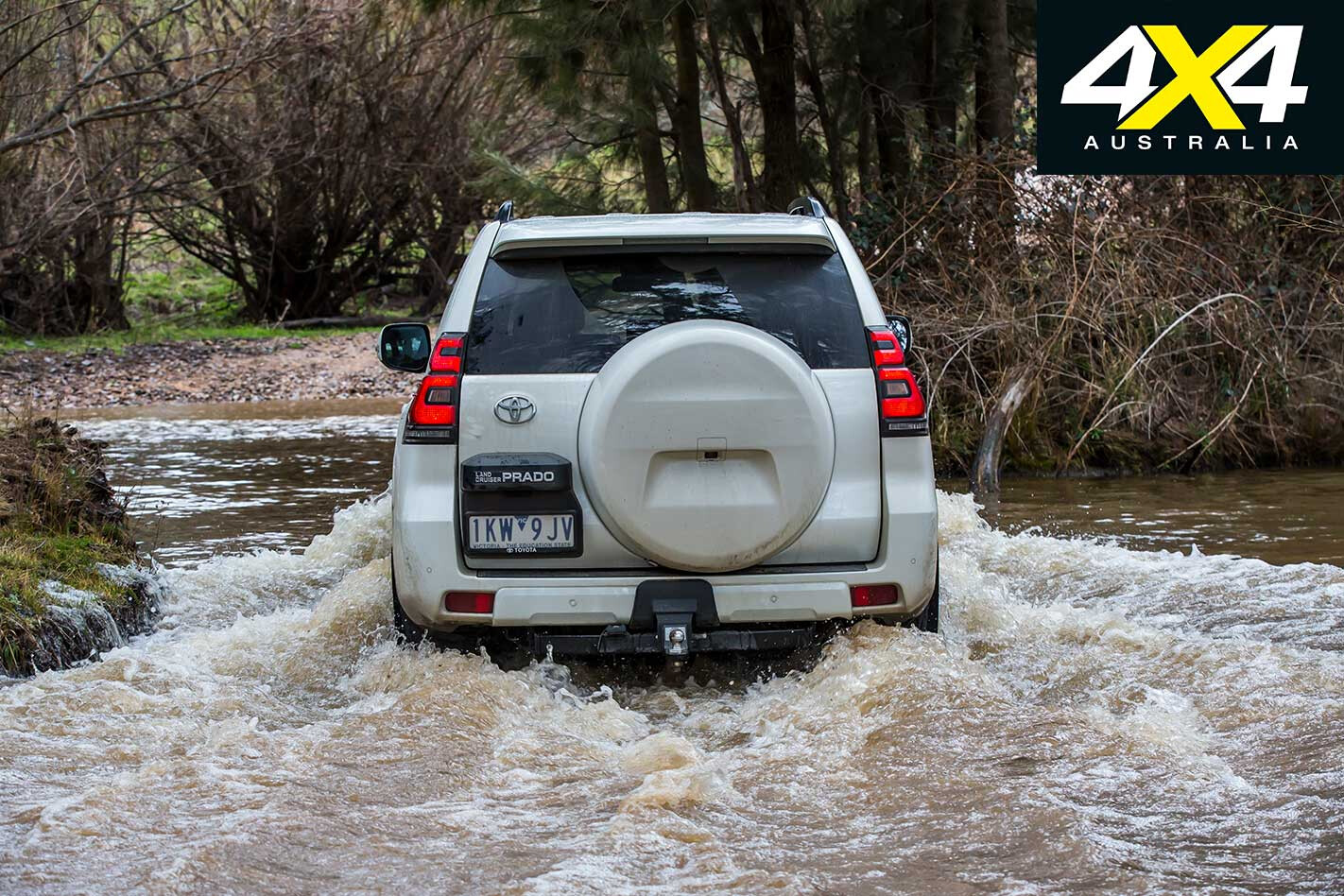
With the Prado weighing more than 2300kg and with its reasonably big profile, 130kW doesn’t go that far and the resulting performance is more adequate than exciting. It’s a little less than what’s on offer with the lighter and smaller Fortuner.
The six-speed automatic doesn’t help in performance either compared to the five-speed as it just adds an extra overdrive ratio rather than tightening up the ratio spread. Fifth is actually a little taller than it was and then there’s the extra gear on top of that, all of which leads to some shuffling between fifth and sixth at typical highway speeds on undulating country roads.
However, like the engine, the six-speeder does bring refinement with smoother and sharper shifts.
All in a Spin
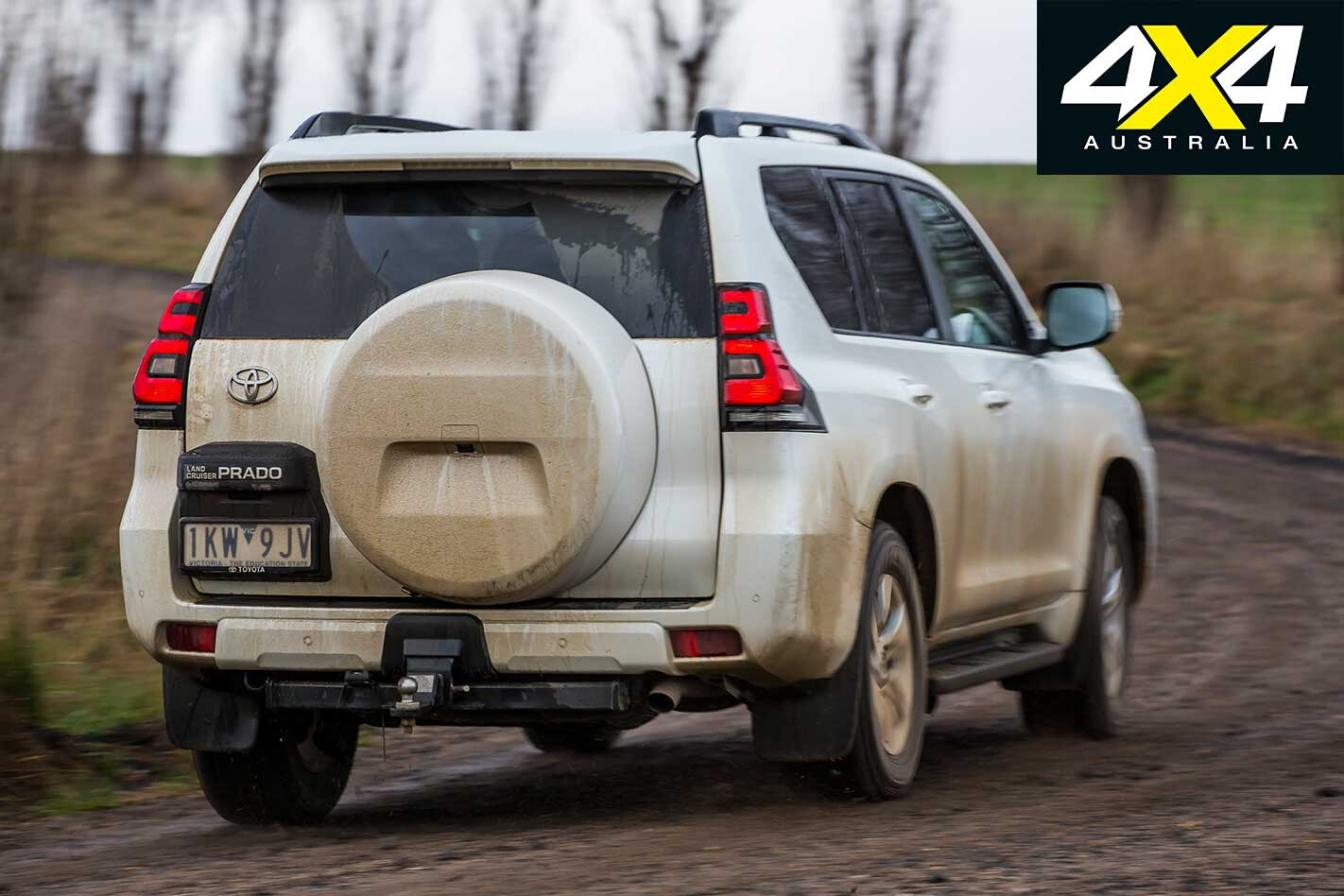
If you think the engine in the Prado is identical to the one in the Fortuner, you’d be wrong. The Prado’s has two counter-rotating balance shafts located just under the crankshaft, a feature missing in the Fortuner, even if the two engines are otherwise identical.
The balance shafts are there to smooth out a twice-engine-speed vibration that’s inherent in all inline fours. The Fortuner gets away without the balance shafts as the 2.8-litre four in question was specifically designed for the new Hilux and derived Fortuner, and the inherent vibration can be largely nullified in the design of the co-developed chassis and body structure.
In the case of the Prado, the new 2.8 engine was retrofitted into an existing chassis/body structure so the vibration would have been more evident and not acceptable given Toyota’s pursuit of refinement.
On-Road Ride and Handling
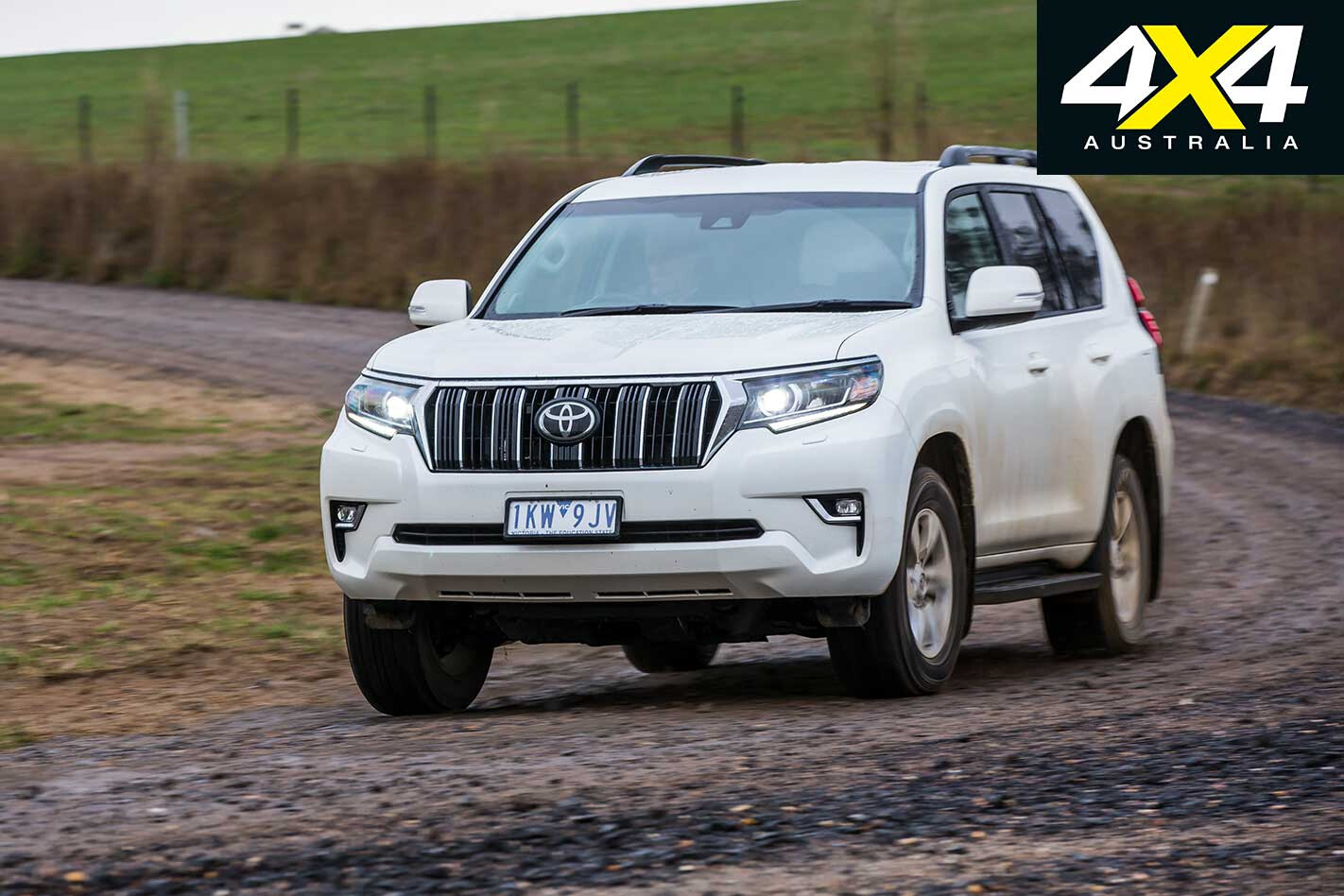
THE PRADO is a refined, quiet and comfortable-riding wagon with a chassis that offers more in terms of stability than it does in agility. On tight winding roads it’s quick to body-roll and understeer if pushed hard and at the test car’s GXL spec level, there’s no Kinetic Dynamic Suspension System (KDSS) to help – even as an option. KDSS provides notably flatter handling and less understeer via auto tensioning swaybars but is only fitted to VX and Kakadu models.
As is, the GXL isn’t a bad handling wagon, but it’s not as sharp as the light and nippier-feeling Fortuner on tight roads. The Prado’s general highway-speed stability is better than Fortuner, even if there’s still some bump-steer from the rear live axle on potholed roads and the like, especially at higher speeds.
One of the defining differences between these two Toyotas is that the Prado has full-time 4×4 whereas the Fortuner has basic part-time 4×4 shared with Hilux. The Prado’s full-time 4×4, with its mechanical limited-slip centre diff, offers ease of use and safety benefits over the Fortuner on variable road surfaces and on wet gravel and wet bitumen. It also means you can use low-range without locking the centre diff, which can be handy for general manoeuvring when towing and on steep boat ramps and the like.
Off-road
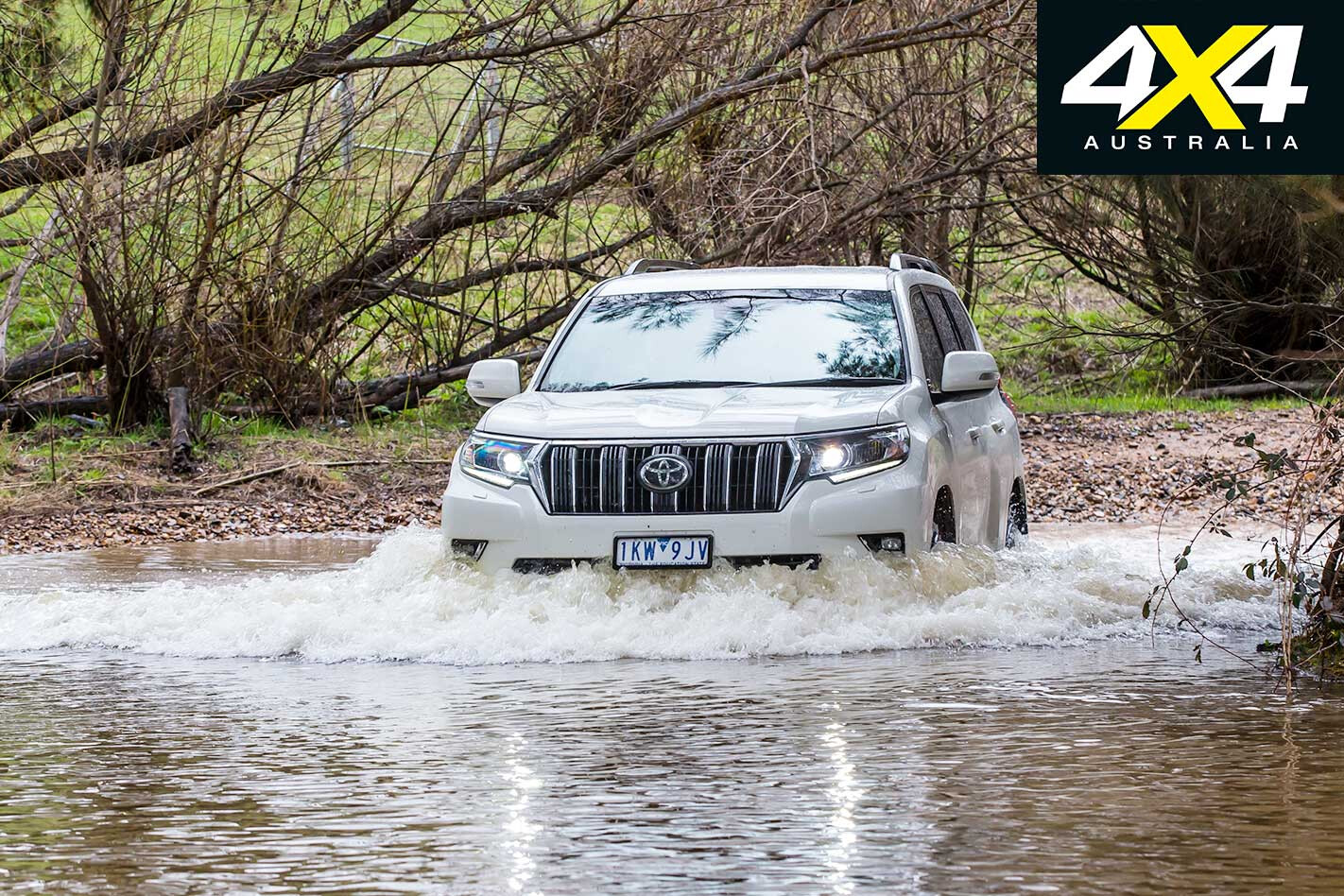
AS EVER, wheel travel is one of the defining elements of off-road ability and a strong point of the Prado. With KDSS the travel would be better than it is (an extra 100mm at the rear axle) but, as mentioned, that’s not fitted to the GXL.
Even so the Prado has more travel than the Fortuner and does things generally easier on broken ground as a result, even if the Fortuner has slightly more clearance and feels smaller and easier to place in a tight track, thanks in part to better vision from the driver’s seat.
Prado GXL also now gets a driver-operated rear diff lock as standard, but when you engage the locker the electronic traction control (ETC) is cancelled on both axles so it’s not necessarily of benefit. As it is the Prado’s ETC works really nicely off-road, even if it’s very noisy.
Cabin and Accommodation
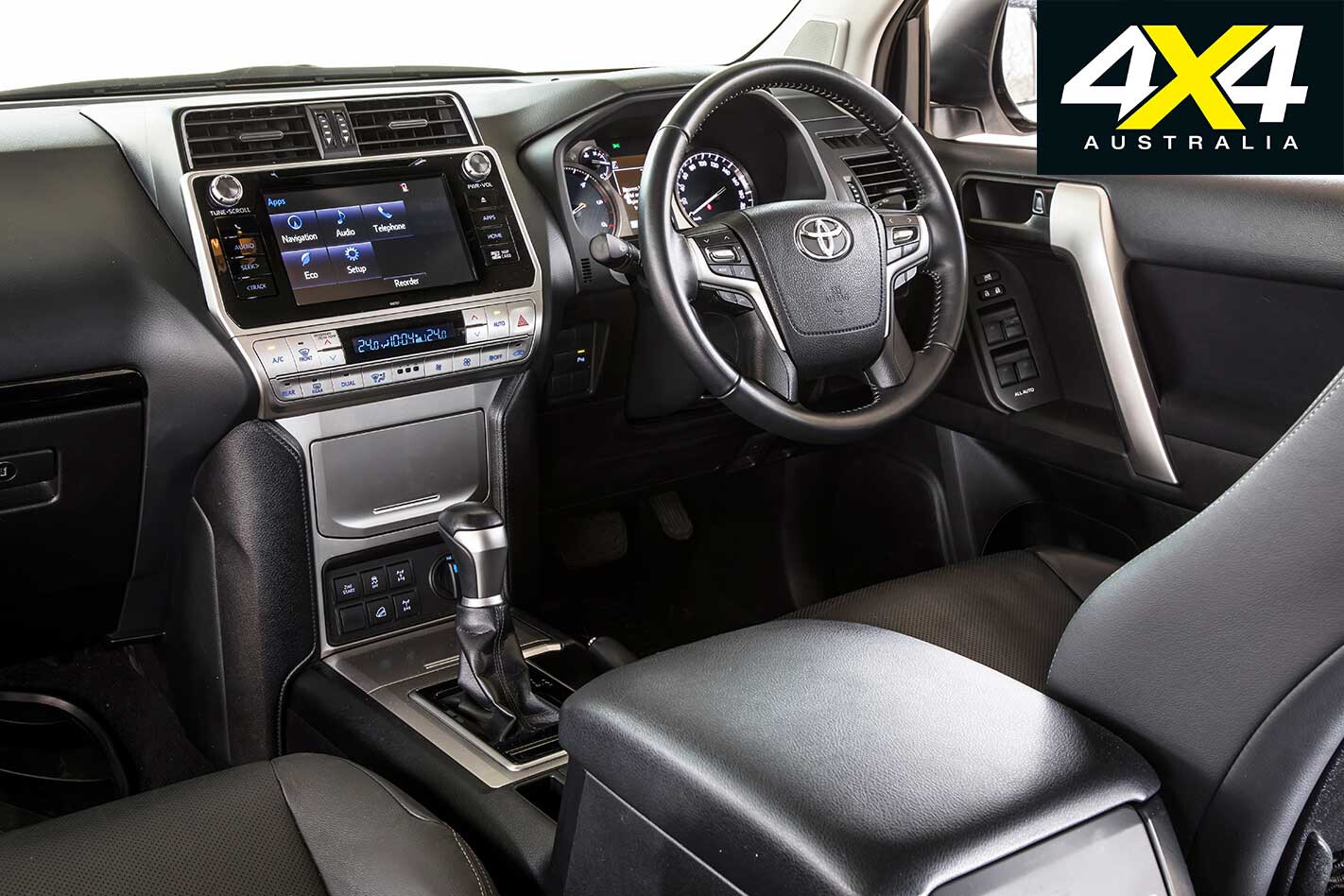
THE PRADO offers a taller and wider cabin than the Fortuner and the driving position feels more upright. Heated and cooled front seats are a nice touch as a GXL option and something you can’t get on any Fortuner – even if the Crusade does have heated front seats.
The Prado beats the Fortuner for rear-seat space for three adults, but isn’t particularly comfortable in the middle for an adult while the Prado’s generally bigger cabin helps with more space for bigger kids or even adults in the third row seat.
Prado’s luggage space height is compromised by having the third row fold into the floor, but is still handy enough with the seats folded. This of course is not a problem in the five-seat GX Prado.
What you get
ALL PRADO models from the $53,490 GX manual up come with seven airbags, smart-key entry and stop/start, sat-nav, rear-view camera, and cruise control. All autos (+ $3000 for GX and GXL) models have autonomous braking, radar cruise control, lane-departure warning and auto high-beam.
Over the GX, the GXL ($55,990 for manual) adds third-row seats (an option on the GX auto), side-steps, dual-zone climate and LED headlights and DRLs. Auto GXL can be optioned with a ‘premium’ interior (leather, heated/cooled front seats, heated second-row and electric adjust for front seats for an extra $3500).
The auto-only $73,619 VX has the premium interior as standard and adds power-folding third row, 18s instead of 17s, KDSS (see text), auto headlights and wipers, blind-spot monitoring, rear cross-traffic alert and a ‘panoramic-view’ monitor.
The $84,119 top-spec Kakadu adds memory seats, cool box, rear DVD, Crawl Control, Multi-Terrain select, and adjustable dampers and height-adjustable rear suspension operated via the new ‘Drive Mode Select’ system.
Practicalities
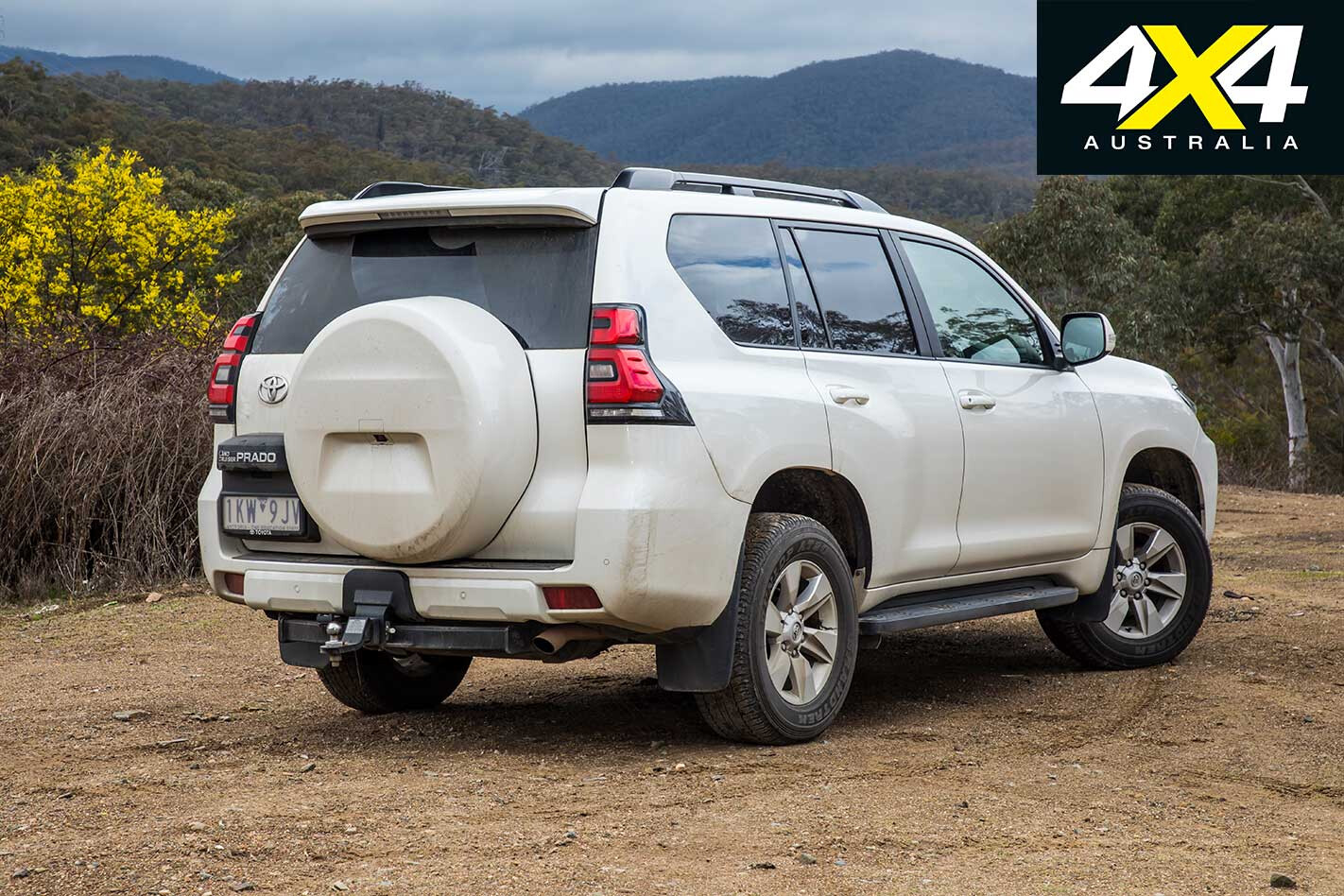
NOTHING much is more practical than a Prado, even one straight out of the showroom given the 150-litre fuel capacity and functional 17-inch wheel and tyre spec. Even the stock S-rated Dunlop Grandtreks are reasonably robust for an OEM tyre. There’s plenty of room under the gas-strut bonnet for a second battery as well, plus the usual inner-guard engine-air intake.
And if you’re unhappy with any of this, tyres included, there’s no shortage of aftermarket enhancements available for the Prado.
Toyota Fortuner
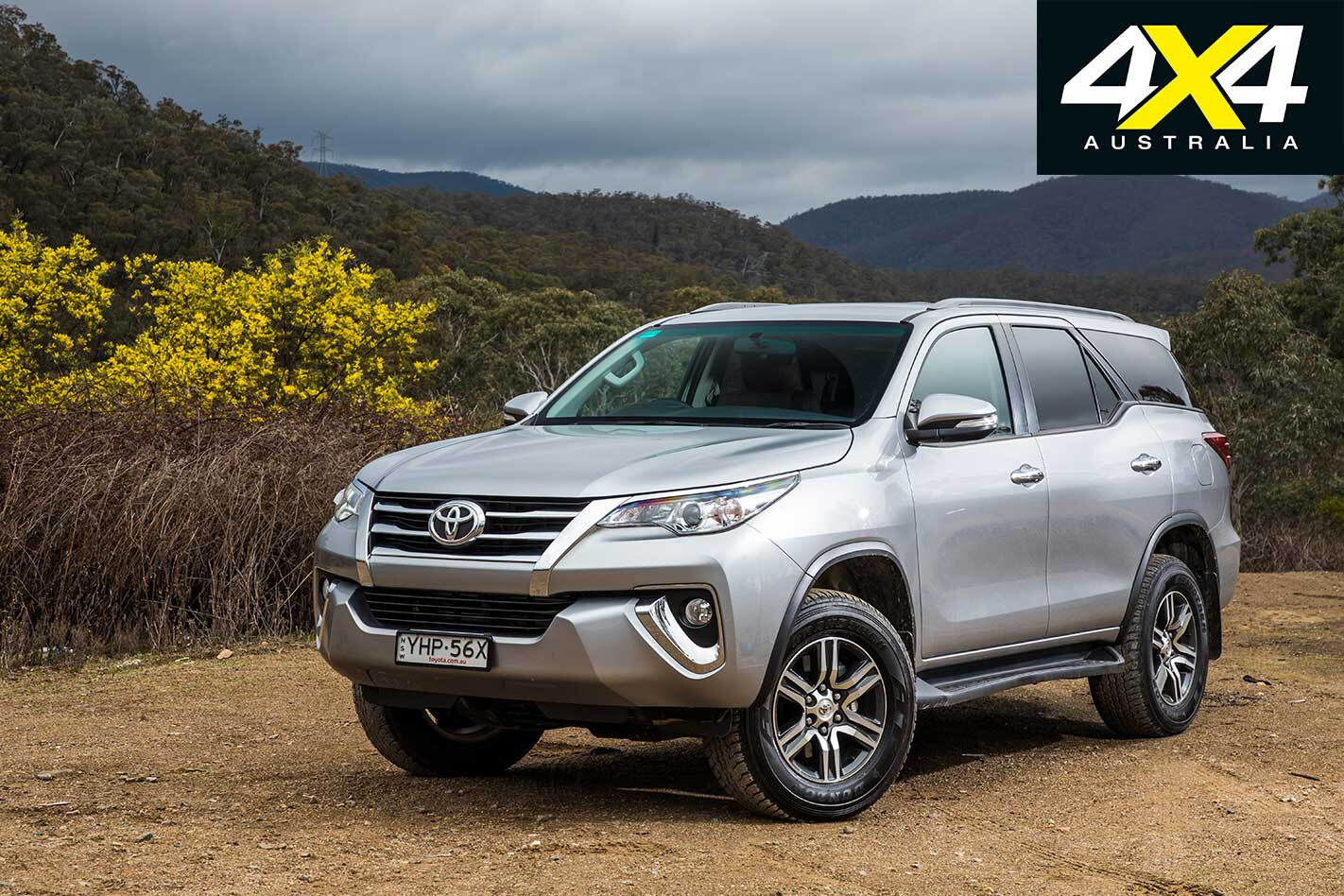
THE FORTUNER arrived in Australia in late 2015 literally off the back of the then all-new eighth-generation Hilux. See, the Fortuner is effectively a Hilux with a wagon body and coils rather than leaf springs at the rear.
The engine, gearbox(s), 4×4 system, front suspension and all, but the tail end of the ladder-frame chassis, are all straight Hilux. This saves development costs in designing and building a 4×4 wagon and is a common ploy used by manufactures in gaining an incremental benefit from their strong-selling utes.
If Ford didn’t do Everest off Ranger, Toyota may not have bothered with the Fortuner. But it felt Everest could trouble Prado sales-wise as Ranger has troubled Hilux, so the Fortuner for Australia became a goer. And it was an easy decision to make given this new Fortuner had undergone development in Australia and was already slated for south-east Asian markets and elsewhere.
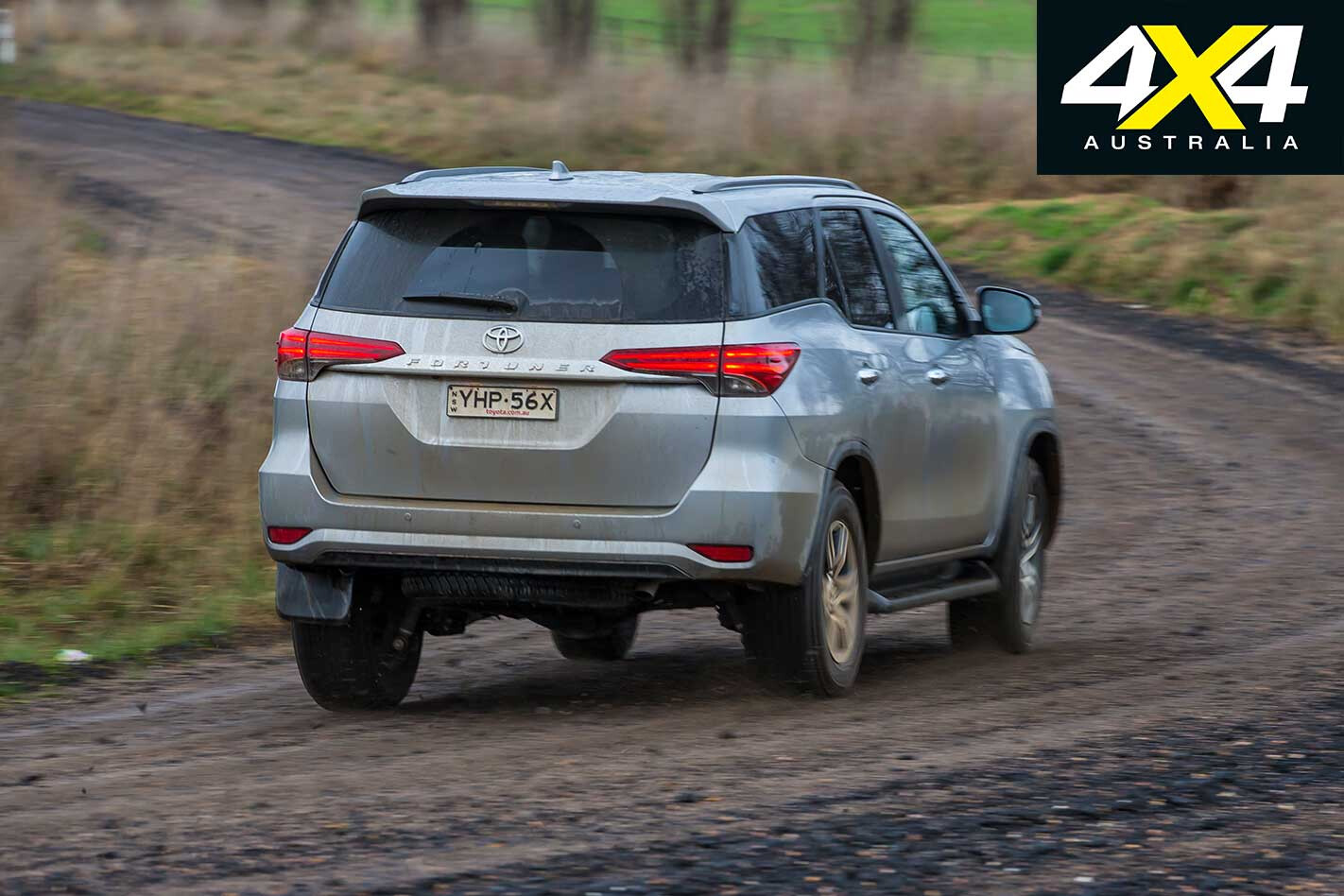
Deciding on what name to use was probably more of an issue given Toyota could have revived the well-regarded 4Runner badge as used on Hilux-based wagons sold here from 1984 to 1996.
Following indifferent sales for the first two years, the 2018 Fortuner range saw the prices slashed by at least $5000 and equipment added. Most notably the base GX model gained alloy wheels in place of the black steel wheels shared with Hilux, the mid-spec GXL gained sat-nav, while the top-spec Crusade gained heated front seats and an 11-speaker premium audio system.
Powertrain and Performance
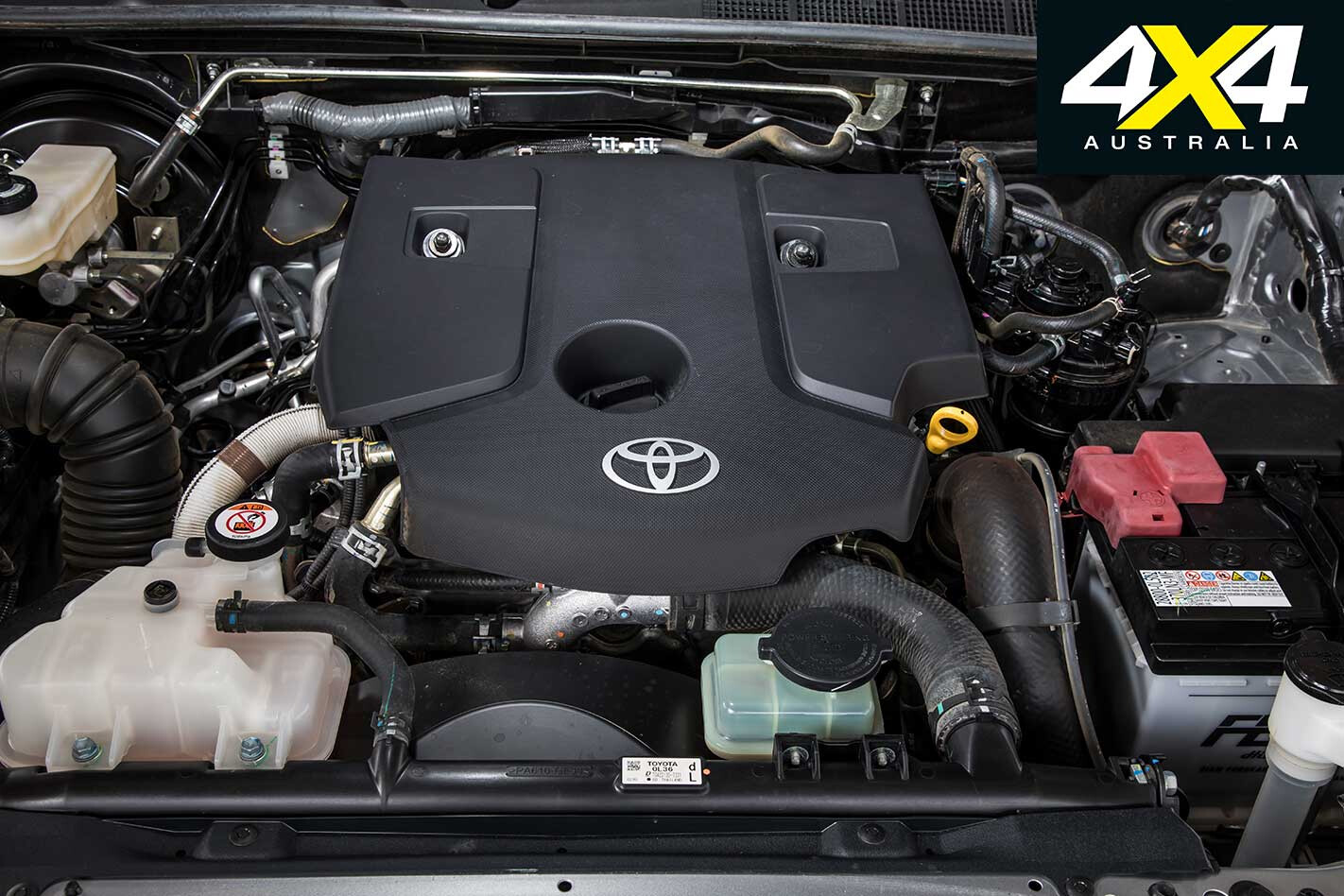
THE FORTUNER shares its 2.8-litre diesel, or at least most of it, with the Prado. Unlike the variant of this engine in Prado there are no balance shafts to help smooth out the typical four-cylinder vibration.
Not that it needs it as the engine is almost as smooth in the Fortuner as it is in the Prado. It’s also generally more enthusiastic, given it powers a smaller and 200kg lighter vehicle. A shorter action throttle also makes the Fortuner feel lively compared to the comparatively lazy Prado. Also, there’s more engine noise in the Fortuner compared to the better insulated Prado.
If the Prado’s performance is adequate, then the Fortuner is adequate, plus a tiny bit. That’s even despite the fact it shares the same flexible and willing character of the Prado’s version of this engine.
On-Road Ride and Handling
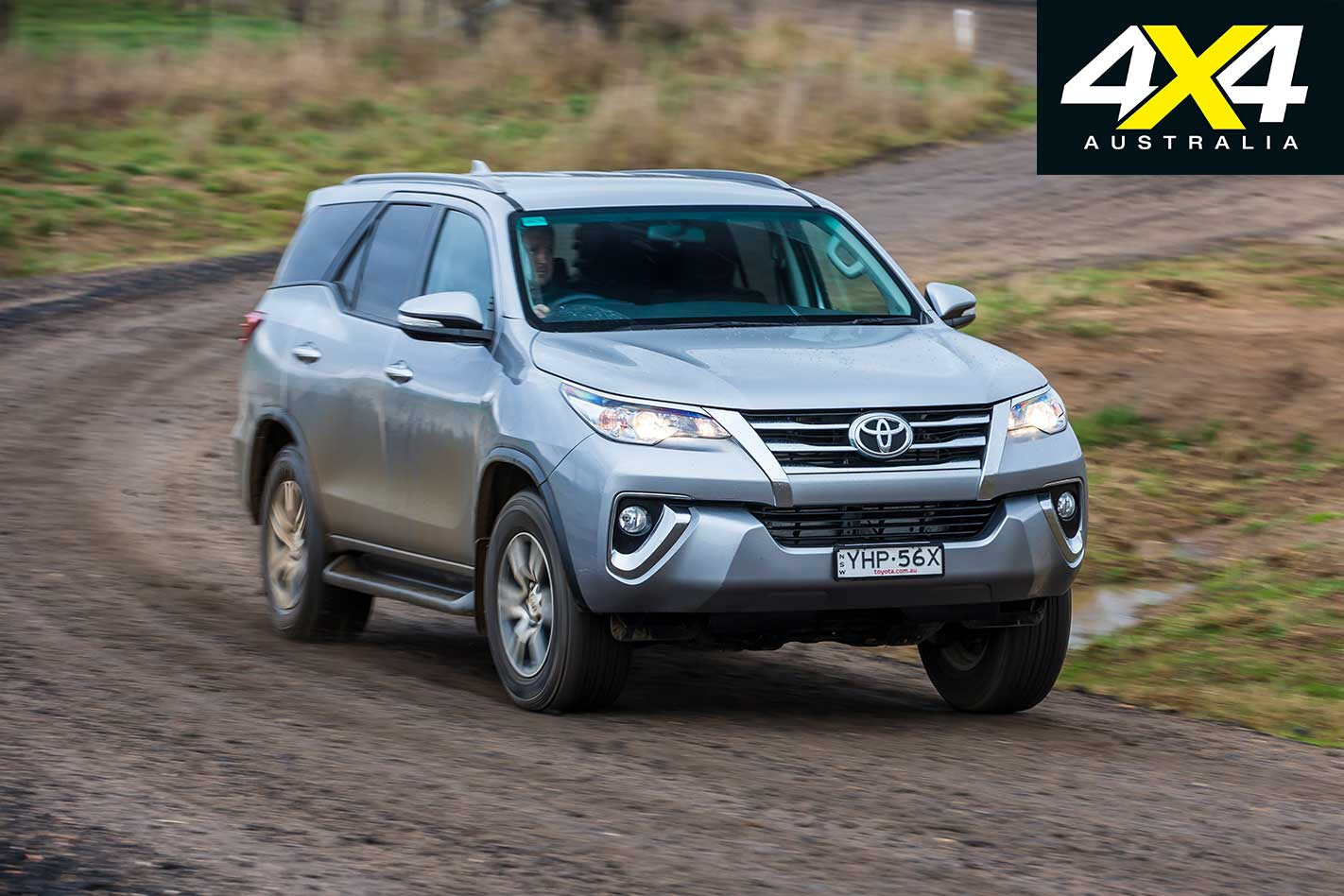
THE FORTUNER doesn’t ride as smoothly or as quietly as the Prado, but it’s still not as bad given that the latter does ride-quality refinement very well indeed. If you’re used to a dual-cab ute, however, or at least an unladen one, the Fortuner will feel like heaven in terms of ride quality.
Compared to the Prado, the Fortuner also feels smaller, more nimble and it has better steering feel when pressed hard. On tight roads it definitely feels the sportier of the two, if that is what you want in your 4×4 wagon.
On the downside, the Fortuner is a little more twitchy and unsettled on bumpy roads at higher speeds than the Prado with more noticeable bump steer from the rear live axle. On some roads you can actually feel the Fortuner’s commercial DNA come through where the Prado feels more polished and passenger-vehicle like.
Off-road
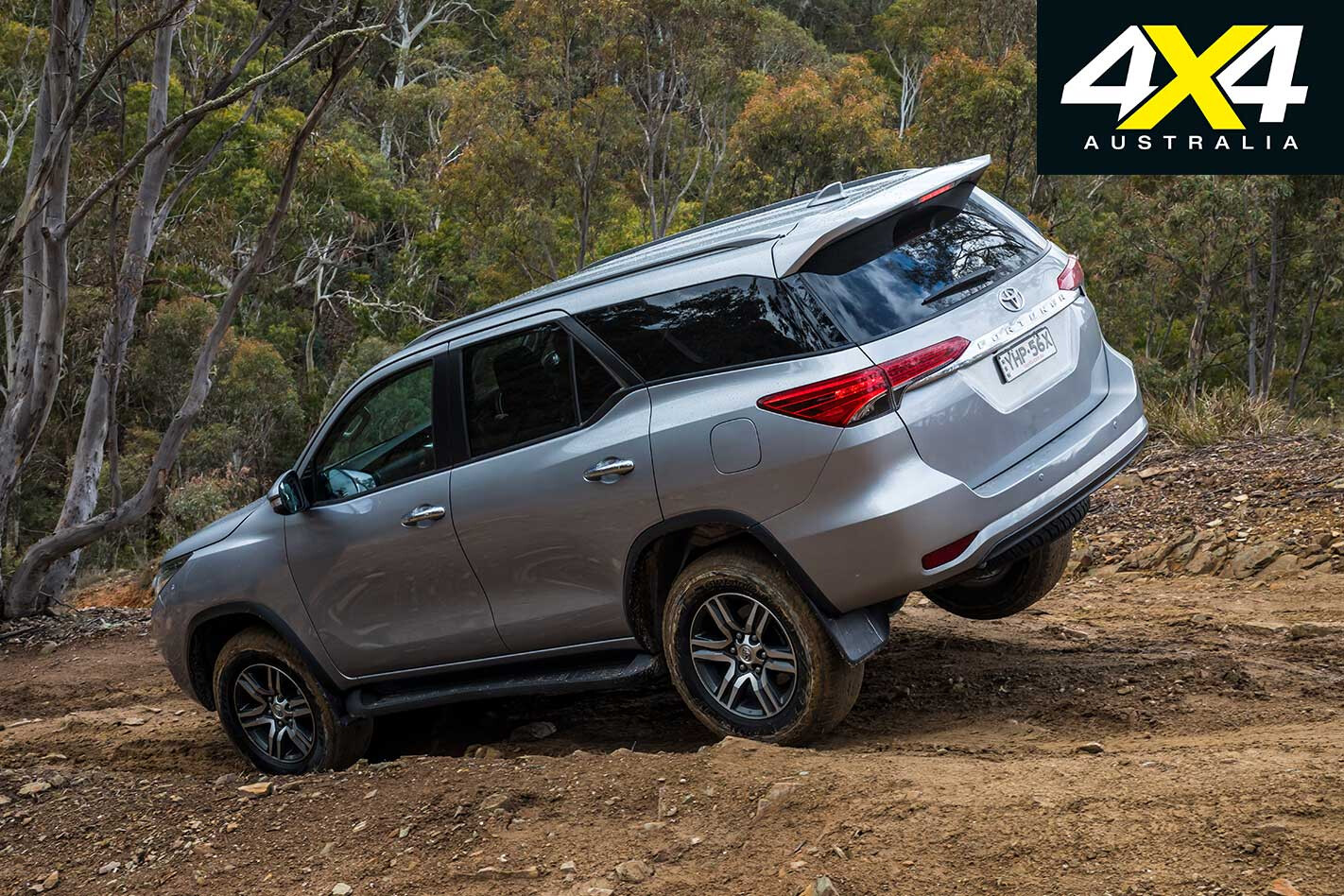
Surprisingly the coil-sprung Fortuner has less rear-wheel travel than the leaf-sprung Hilux from which it is derived. Where the Hilux boasts a class-leading 520mm the Fortuner has 440mm, which is 25mm less than a Prado even without KDSS. There’s less wheel travel at the front of the Fortuner, too, compared to the very supple Prado.
In most situations the Fortuner can do what the Prado does, even if it works a little harder to get the same job done. However, it does come with a little more clearance and better vision from the driver’s seat, so there’s really not much in it in difficult off-road conditions.
All Fortuner models come with a driver-switched rear diff lock, but like the rear locker on the Prado, this cancels the electronic traction control on both axles. Thankfully the Fortuner’s traction control has a specific off-road tune and is noticeably quieter than the relatively clunky-sounding system in the Prado… a case of the Fortuner’s ETC being a generation newer?
Cabin and Accommodation
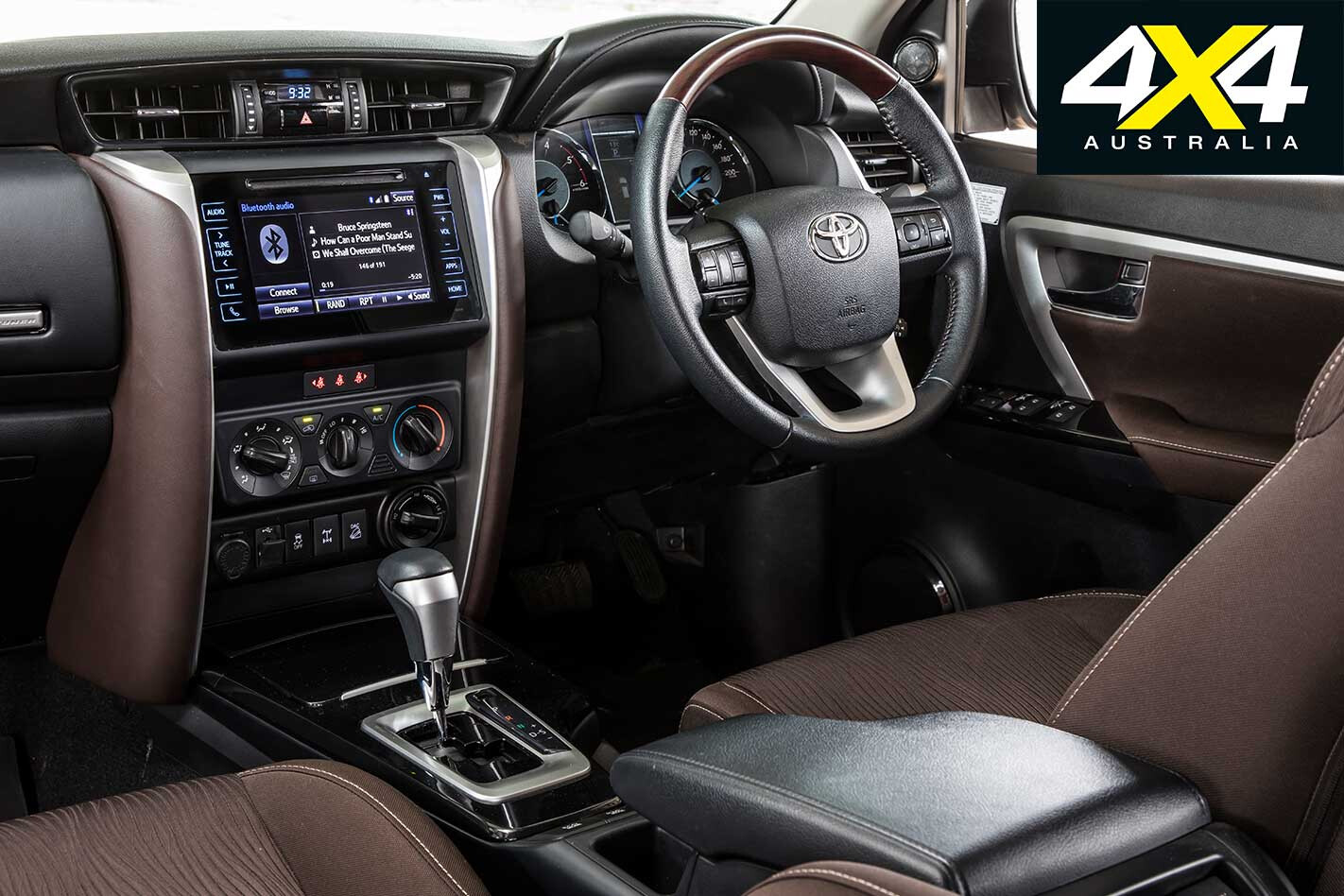
CLIMB into the Fortuner’s cabin and it feels narrower and lower than the spacious Prado. Still, it’s easy enough to get comfortable thanks in part to the Fortuner having tilt-and-reach steering wheel adjustment, which is something missing from most ute-based wagons, Everest included.
The Fortuner’s third row is tighter for shoulder and headroom than the Prado, but is similar in legroom and has a more comfortable middle position. There’s easier third-row entry and exit than the Prado, but once in place the Fortuner’s third-row seat isn’t as well suited to bigger kids or adults.
Unlike the Prado whose third row folds into the floor, the Fortuner’s third-row folds up against the side windows, which gives a deeper, but narrower load space. No tie-down rings in the luggage space of the Fortuner is an annoying negative compared to Prado.
What You Get
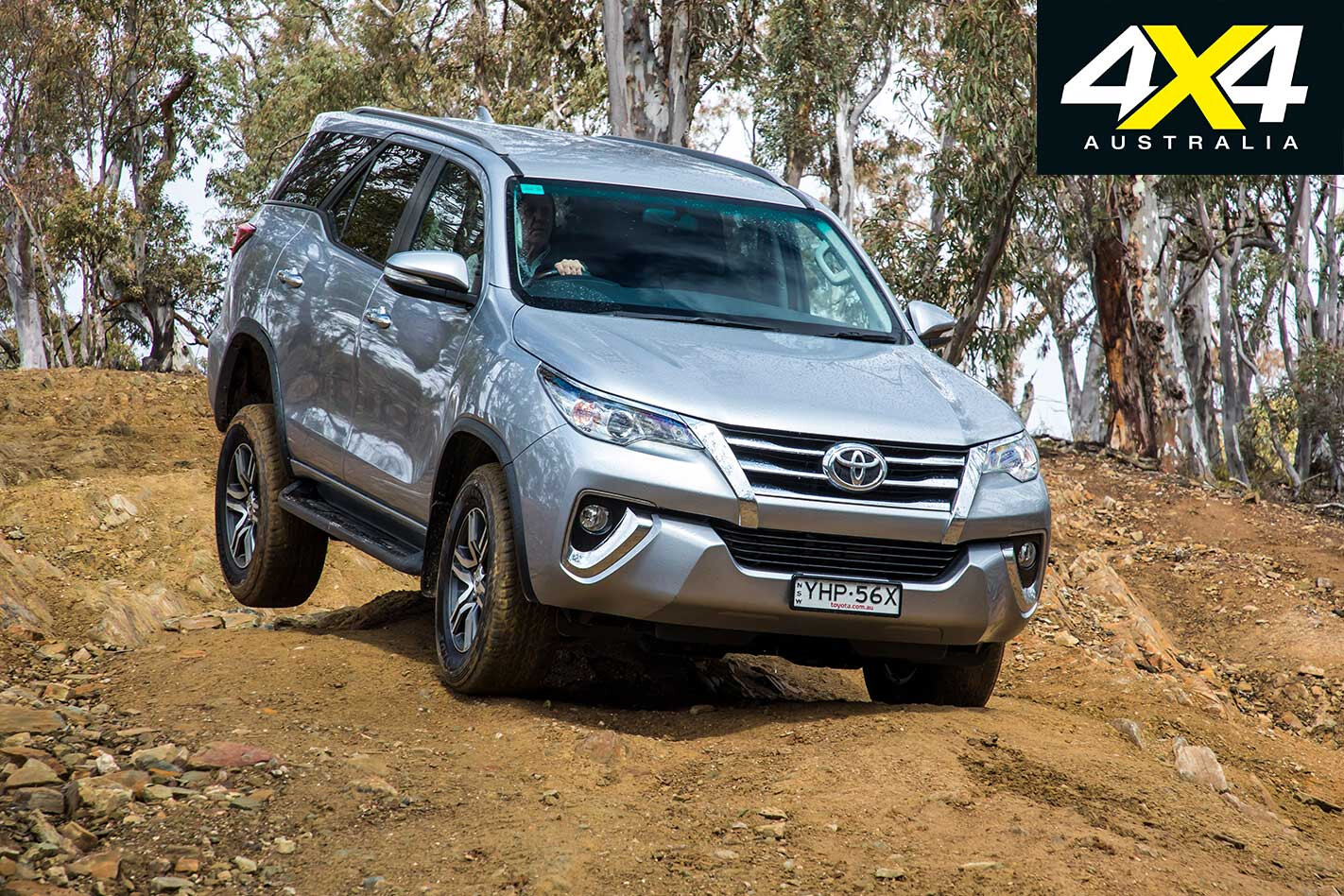
All Fortuner models come with seven seats, tilt-and-reach steering wheel adjustment, a cool box, auto headlights, reversing camera, rear parking sensors and a rear diff-lock. Over and above the GX, the GXL adds ‘smart key’ entry, push-button start, sat-nav, a seven-inch touchscreen, roof rails, front fog lights and rear parking sensors. Leather and electric adjust driver and passenger seats are available as an option on the automatic GXL.
The Crusade has leather and electric-adjust/heated front seats as standard and adds a premium JBL audio system, climate control, power tailgate, 220-Volt socket, 18s, LED headlights and DRLs. Prices start at $42,590 for the GX manual, $47,490 for the GLX manual and top out at $56,990 for the Crusade. GX and GXL models come with the option of an automatic gearbox (adds $2000) while the Crusade is auto only.
Practicalities
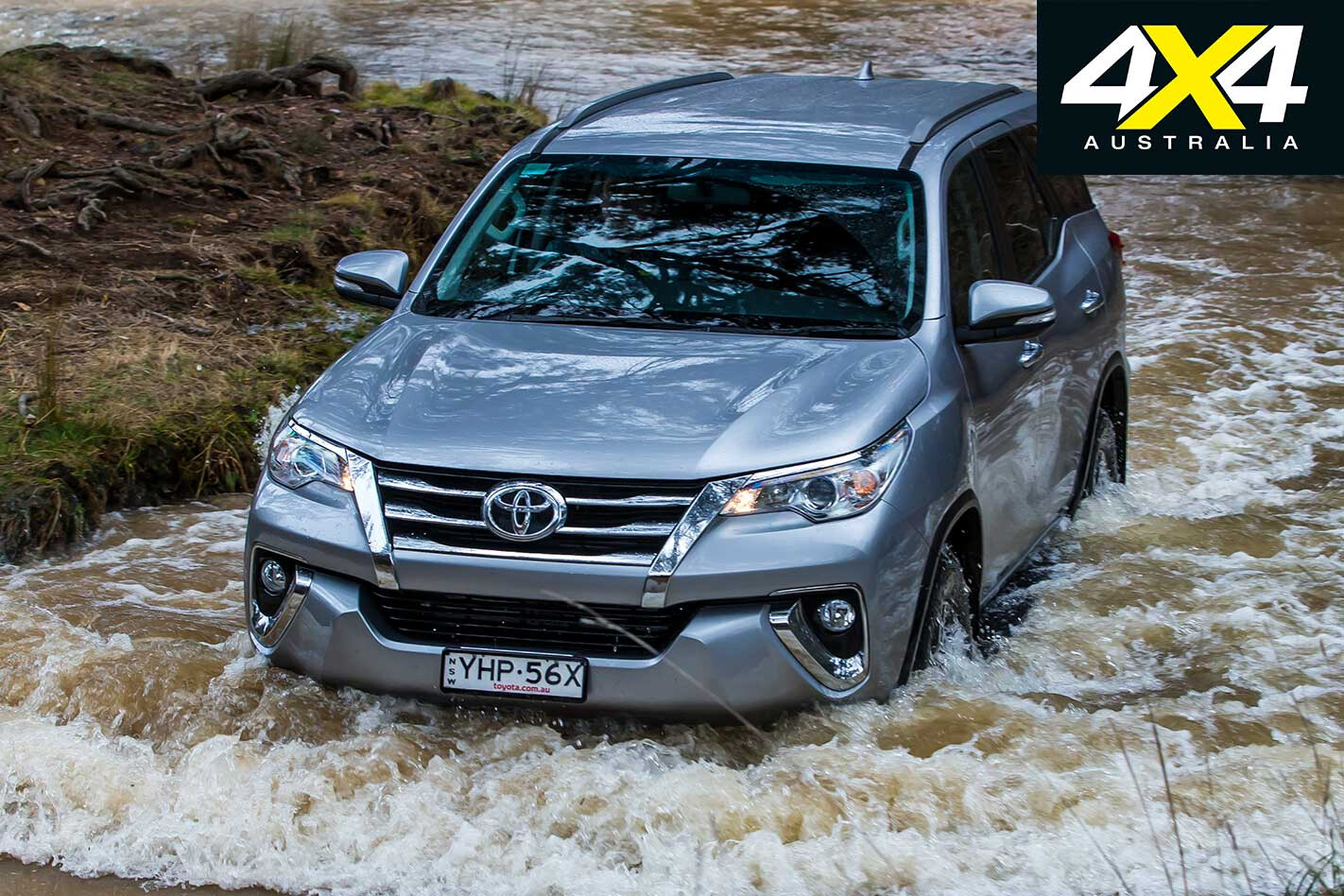
THE FORTUNER matches the Prado for practicality for the most part, but has a much smaller fuel tank (80 litres v 150 litres) than the ‘standard’ Prado models. New Prado variants (now in GXL, VX and Kakadu) with the spare wheel under the vehicle and a separately opening tailgate glass have an 87-litre fuel capacity.
As an automatic, the Fortuner has a 2800kg towing capacity, which is 200kg less than Prado automatic. As a manual, however, the Fortuner matches the Prado’s 3000kg and betters the Prado manual by 500kg.
Fortuner has the same practical wheel and tyre spec as Prado, a similar air-intake for the engine and there’s also room for a second battery in the engine bay, even if the available space isn’t as much as it is with Prado.
What’s in a Name?
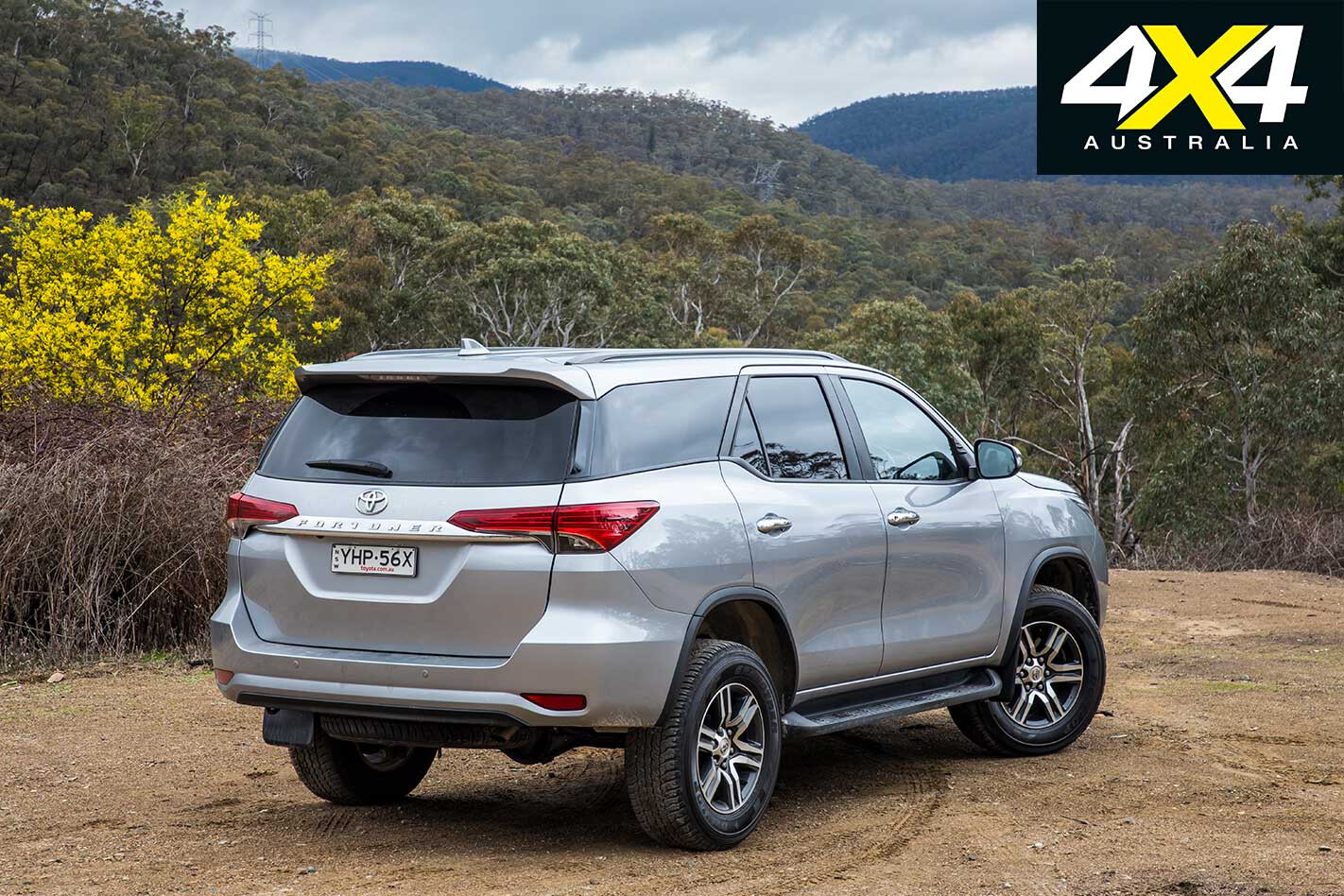
Fortuner as a Toyota model name only arrived in Australia in October 2015, but the Fortuner’s predecessors were here as early as 1984 badged as 4Runners. Like the Fortuner, the 4Runner was a wagon made from a Hilux ute, initially by doing not much more than slicing off the rear of the ute’s cabin and adding a fibre-reinforced plastic canopy on the tray. Even the rear leaf springs were retained.
The second-generation 4Runner, introduced in 1989, moved much closer to what we have now in the Fortuner with the introduction of an all-metal body and coil springs at the rear.
The Verdict
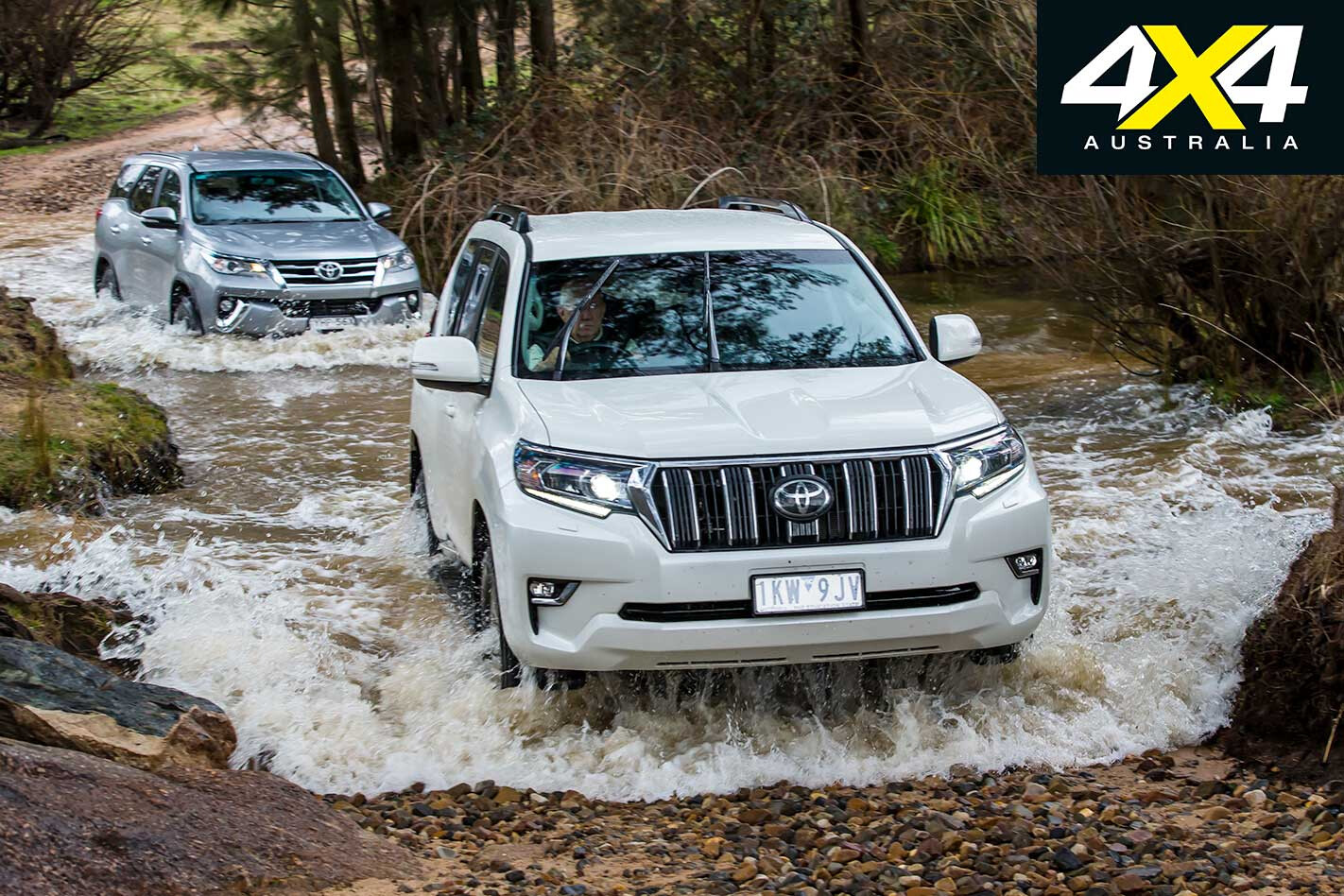
BEFORE its significant 2018 price reduction, the Fortuner made a less convincing ‘buy-me’ argument against the Prado than it does now. And how you judge the two against one another is dependent on whether you’re a features-driven buyer or one more concerned with a vehicle’s inherent core value.
No doubt the Fortuner makes its best case as the entry-level GX, especially now Toyota has ditched the very ordinary looking black-painted steel wheels. The Fortuner GX manual undercuts the Prado GX manual by $10K and comes with third-row seating as standard, something not available with the Prado GX manual at all.
If you want a GX Prado with seven seats you first have to opt for the automatic gearbox (+$3000) and then the third row is an additional $2550. All of which means you can have a Fortuner with seven seats for $15K less than a seven-seat Prado.
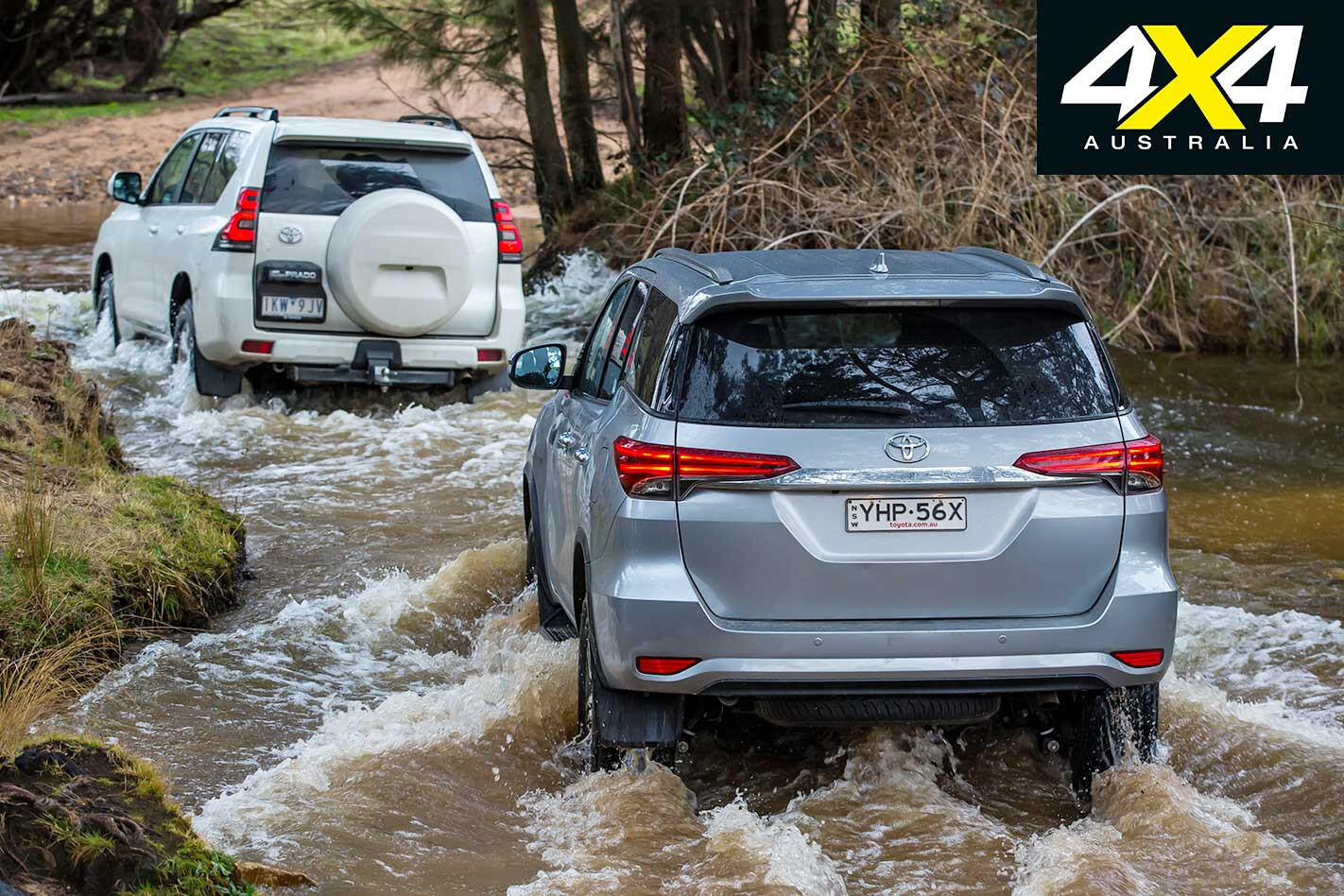
The auto option on Fortuner ($2000) is also cheaper than the Prado, although the auto box in the Prado brings with it a raft of additional safety features and a higher 3000kg tow rating.
The higher-grade Fortuner models also make a good argument features-wise against the Prado given a Fortuner Crusade is a similar price to a five-seat Prado GX automatic. What the Fortuner can’t match, however, is the fact that the Prado is inherently a better vehicle.
It’s bigger, quieter, more refined, more composed at higher speeds on bad roads, marginally better off-road, has near twice the fuel capacity and it offers the considerable benefit of full-time 4×4.
The choice is yours…
Specifications
| u00a0 | Toyota Prado GXL | Toyota Fortuner GXL | |
| Engine | 2.8-litre 4-cyl turbo diesel | ||
| Power | 130kW at 3400rpm | ||
| Torque | 450Nm at 1600-2400rpm | ||
| Gearbox | Six-speed automatic | ||
| 4×4 System | Dual-range full-time | ||
| Crawl Ratio | 36.1:1 | ||
| Construction | Separate-chassis | ||
| Suspension (f) | Independent/coil springs | ||
| Suspension (r) | Live axle/coil springs | ||
| Kerb Weight | 2325kg | 2122kg | |
| GVM | 2990kg | 2750kg | |
| Payload | 665kg | 628kg | |
| Towing Capacity | 3000kg | 2800kg | |
| GCM | 5990kg | 5545kg | |
| Departure angle | 25u02da | 25u02da | |
| Rampover angle | 22u02da | 23.5u02da | |
| Approach angle | 32u02da | 30u02da | |
| Wading Depth | 700mm | 700mm | |
| Ground Clearance | 220mm | 225mm | |
| Fuel Capacity | 150 litres | 80 litres | |
| ADR Fuel Claim | 8.0L/100km | 8.6L/100km | |
| Test Fuel Use | 11.7L/100km | 10.8L/100km | |
LIGHTFORCE, the major supporter of the 4X4 Adventure Series’ Vic High Country trip, has brought to market its Striker LED driving lights.
The Striker uses the latest Luxeon Lumileds LEDS, which provide a colour temperature of 5000 kelvin and feature an extremely high colour rendering.
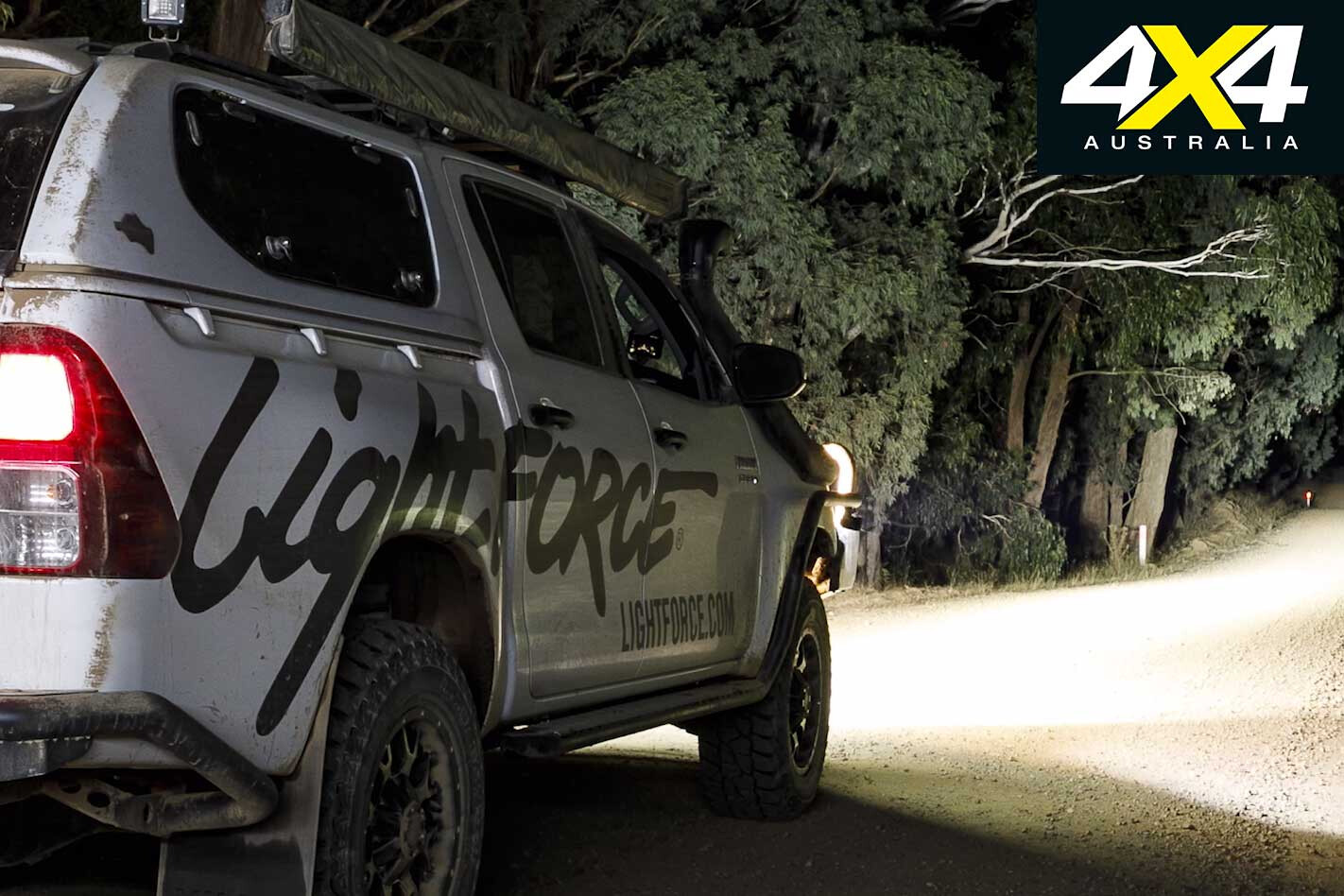
The Australian-made Striker LED is not only small and compact, but it’s affordable for something that packs such a whopping punch.
“One thing we pride ourselves on his having the best-performing technology in the market,” Lightforce’s Craig Brumby said, as he joined us on our travels through the High Country. “This little Striker LED will get you out to 754 metres at 1 lux. It is the ideal driving light for someone who doesn’t want to spend the big dollars.”
The Striker LED retails for $329 (single) and $599 (pair). Visit: www.lightforce.com
I AM a Lead Light Truck and SUV Tire Development Engineer for Cooper Tires. I have worked there for 30 years, holding various technical positions in the product development area throughout my career.
Primarily, my focus has been radial light truck products such as the previously available Cooper Discoverer A/T as well as the Discoverer S/T, Discoverer S/T Maxx, Discoverer STT PRO, the ‘original’ Discoverer A/T3 and the recently released Discoverer AT3 4S, Discoverer AT3 LT, and Discoverer AT3 XLT lines.
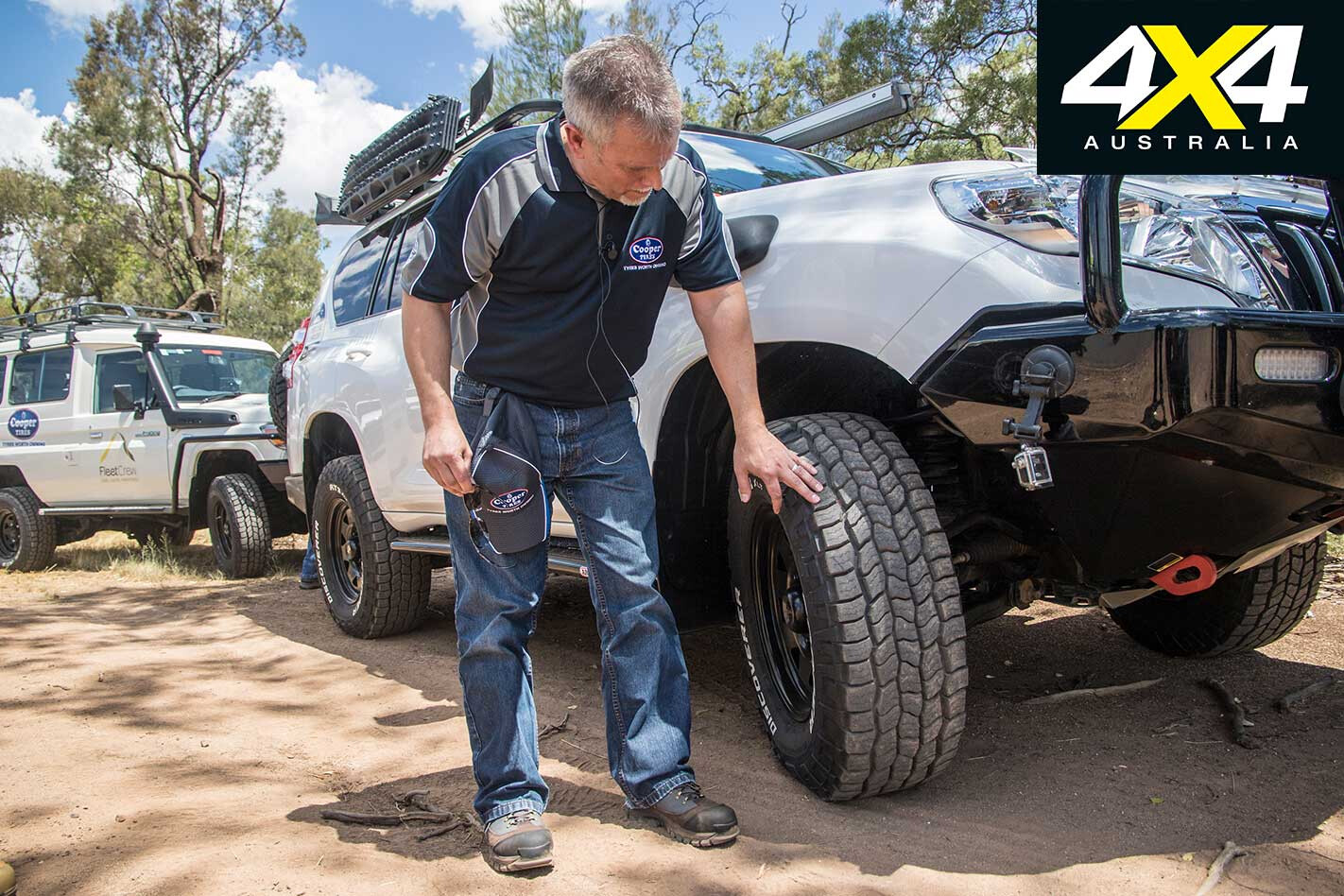
Some of my best work-related memories have been during our trips to the Australian Outback, the Anza-Borrego Desert State Park or Big Bear Lake in California, Yellowstone National Park, Moab Utah, or the numerous other locations we have used for product validation testing of our light truck tyres.
These firsthand experiences give me the understanding of the diverse terrains and applications our tyres may encounter, and have allowed me to meet consumers who are using our products, understand their performance needs, and hear their direct, positive feedback regarding Cooper tyres.
Use of computer modelling to evaluate tyre performance characteristics through Finite Element Analysis (FEA) to speed product changes will continue to grow. Use of unique, lighter-weight, stronger materials to reduce tyre weight to improve tyre performance and vehicle economy will be needed.
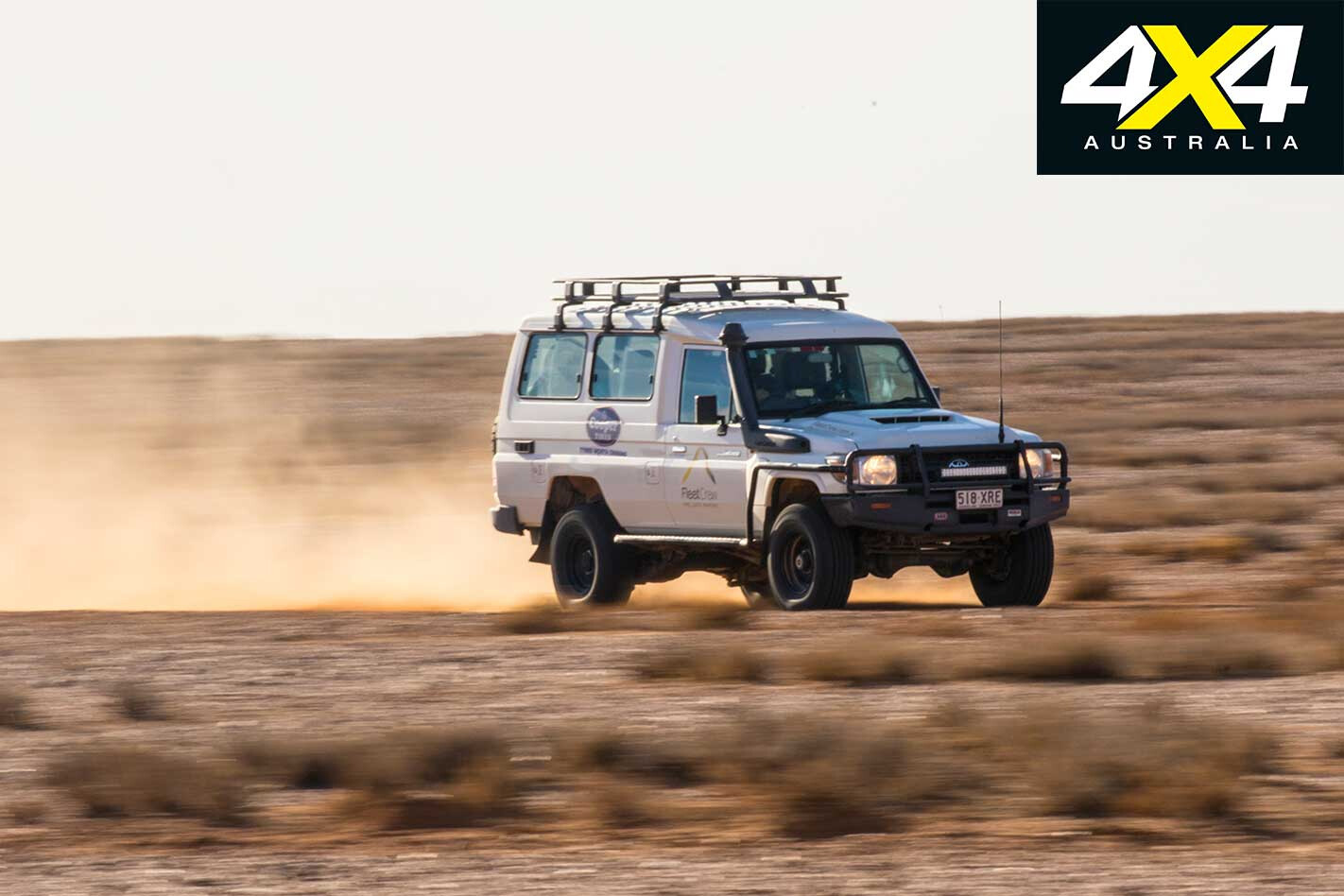
Obtaining feedback on the traction levels of a vehicle’s tyres under varying surface conditions in real-time to maximise safety will become increasingly important with the growth of autonomous vehicles. And lastly, continued emphasis on eco-friendly production and methods for recycling worn tyres will be some of the challenges moving forward for the tyre industry.
Tyres are a critical component to the performance of any vehicle and its overall safety. It’s the only link between the vehicle and whatever surface you are driving on, and directly impacts a vehicle’s ability to accelerate, decelerate, turn, and carry loads. Tyres are one of the most highly engineered components of a vehicle, and yet, one of the least understood or appreciated.
A tyre may be comprised of steel, nylon, polyester, aramid, or other reinforcing materials, bonded together by numerous different types of rubber compounds which are formulated to address the local stress, strain, heat build-up, and other factors specific to their location in the tyre.
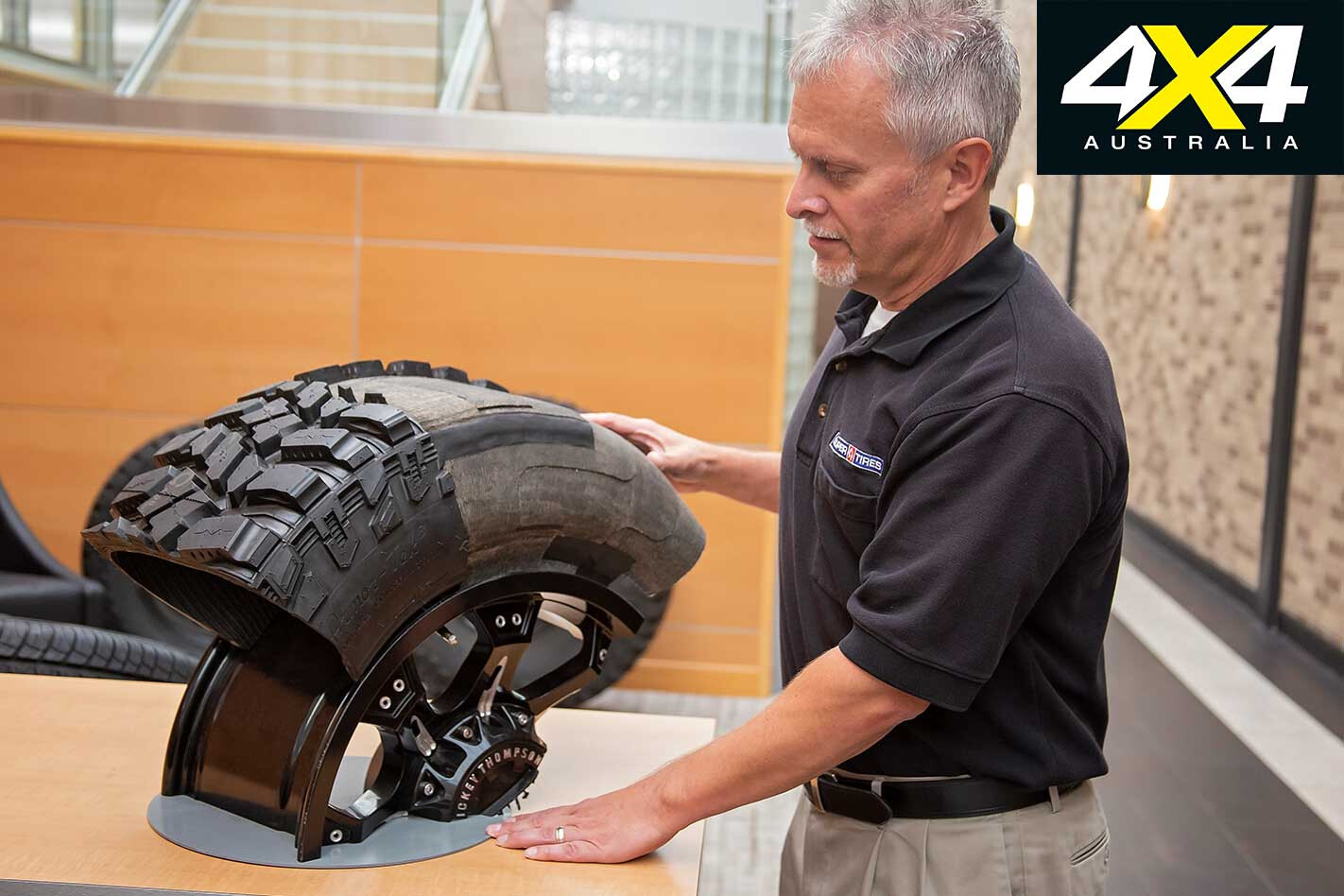
Take a look at the tyres on your own vehicle, and the level of deformation that occurs in the tread and sidewall area where the tread contacts the road surface. For the average-sized tyre, this level of deformation will occur at every location around the circumference of the tyre about 350 times every kilometre it is driven, or about 28 million times throughout the tyre’s average life.
Consider now that level of deformation you are observing is static, and does not take into account dynamic tyre deformation due to tyre speed or impacts with potholes, rocks, road surface irregularities, cornering, etc., under highly varying ambient temperatures, while being exposed to UV/ozone/gravel/salt/snow/rain/sand/kerbing, and other types of degradation throughout the tyre’s lifespan.
Ensuring proper inflation pressure is one of the most important things you can do to maintain your tyres and minimise these stresses and strains.
Meet the Expert Name: Ken Reuille Role: Lead Light Truck and SUV Tire Development Engineer for Cooper Tire & Rubber Company Experience: 30 years
When you own a 4X4 store you can be excused for having a vehicle that has all the fruit on it. But a lot of the time there is more bling than zing as far as setting up a good looking vehicle.
This feature was originally published in 4×4 Australia’s May 2009 issue
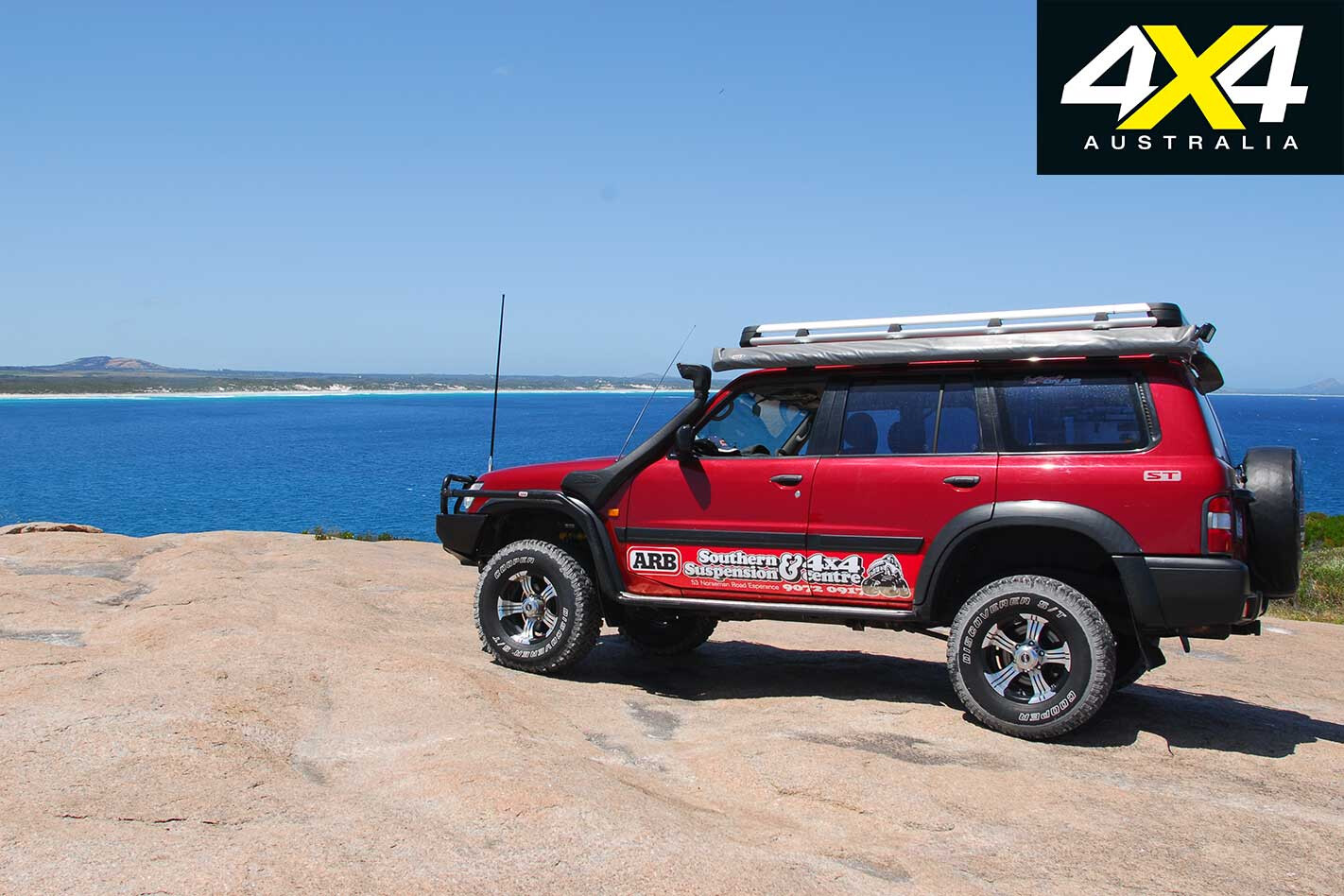
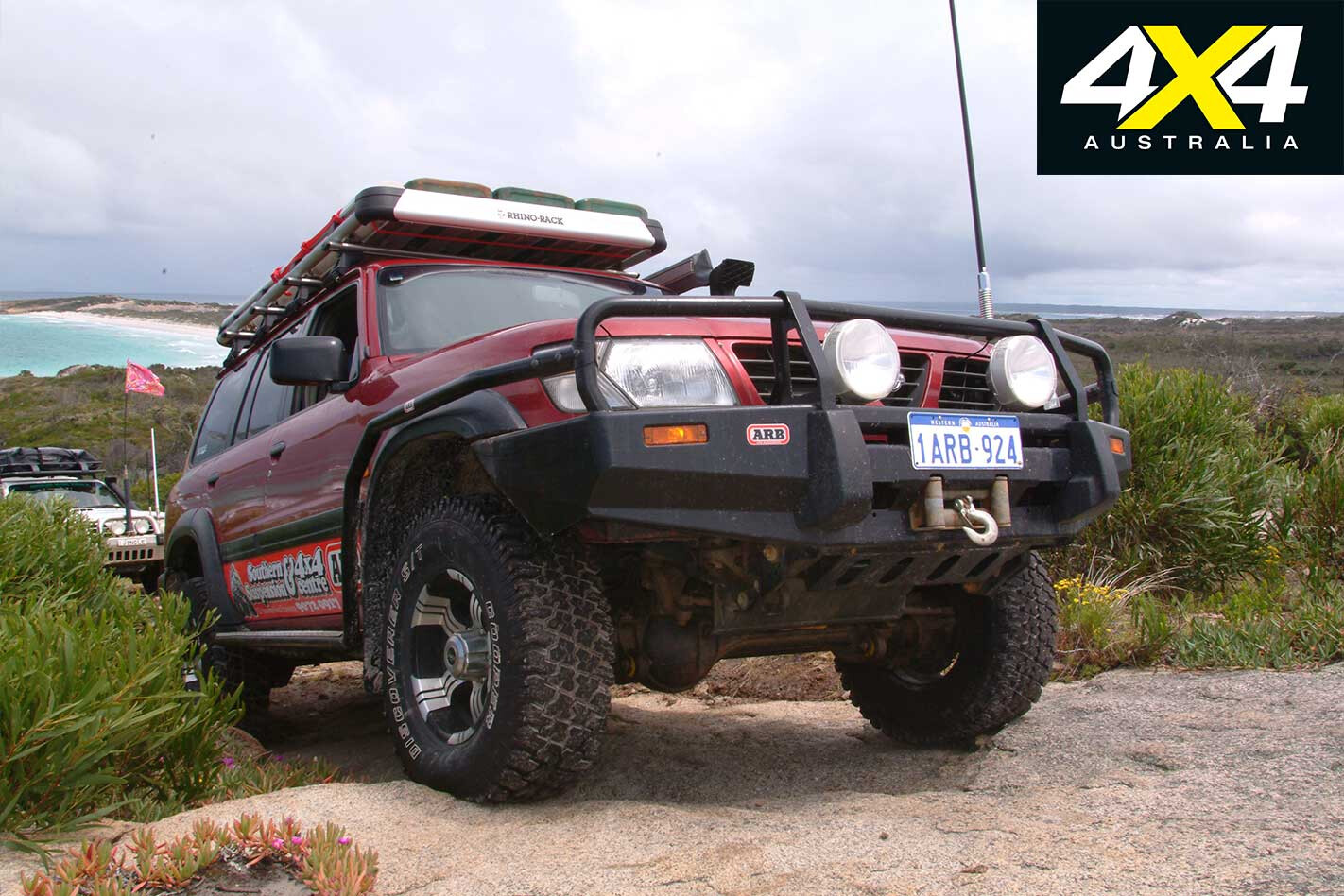
Nothing could be further from the truth when it comes to this well set-up and practical 4.2-litre diesel Patrol that Todd Shearer of Southern Suspension and 4X4 Centre in Esperance, WA, has built. While there’s a story or two in the list of engine mods and good-looking additions, what really caught my attention was that this rig is completely suspended on air.
Now, you can easily add air bags to a leaf-spring or coil-spring vehicle to help carry the load and there are a number of variants available.
In the past we’ve tested a set of Firestone airbags on a heavily loaded LandCruiser cab-chassis and were very impressed. But, with a coil-spring vehicle you can do more than that, as you have the choice of removing the coils completely and replacing them with air springs. That’s what Todd has done.
Firestone produces a wide range of bellows capable of carrying loads of anything between 40 and 40,000kg. Air springs dominate the heavy vehicle industry and are now becoming much more popular in lighter vehicles, 4X4s, caravans and mobile homes.
For the uninitiated, air springs are, at their simplest, a heavy-duty bag (or bellows) manufactured from a tough rubber and fabric material. Carefully designed, these bellows, in the case of Firestone airbags, come as a ‘convoluted’ or a ‘sleeve-style’ bag, both of which contain a column of compressed air. The rubber bellows themselves do not support the load – the column of air does this when the air bag is inflated according to the load that is being carried.
The airbag or bellow itself is the heart of the air spring. It includes at least four layers of material incorporating an inner layer, two plies of cord-reinforced fabric and an outer layer.
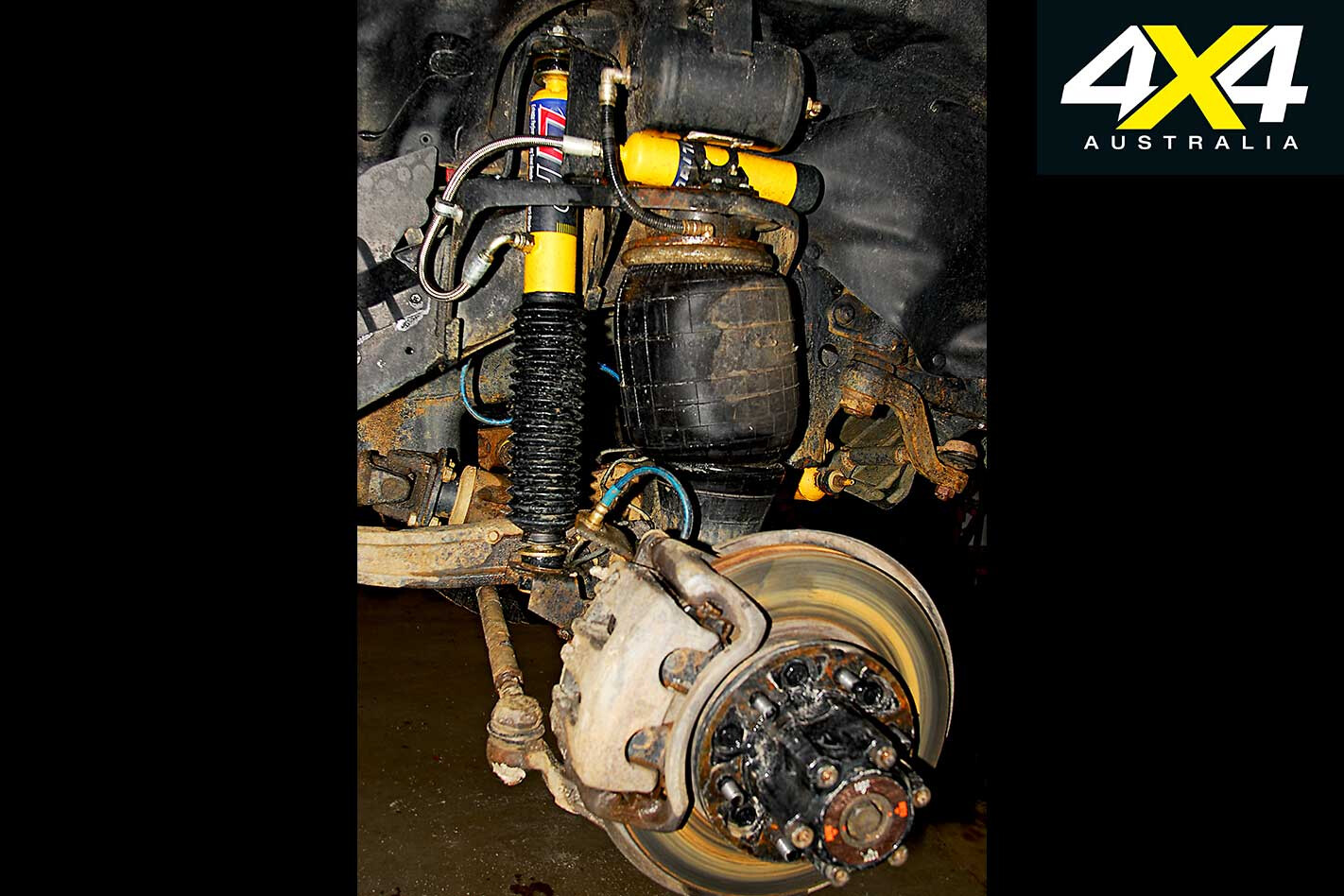
At the top of the airbag is a bead plate, which is permanently crimped onto the bellows at the factory, thereby allowing the complete assembly to be leak tested prior to shipment. Two studs on the bead plate allow the unit to be mounted to the vehicle while one of the studs doubles as an air-hose fitting.
Attached to the base of the airbag is an aluminium, steel or fibre reinforced plastic piston assembly which also provides the lower mounting arrangement for the spring to the vehicle axle.
Inside the bellows, and connected directly to the piston of the air spring, is a solid moulded rubber, fail-safe bump stop to prevent excessive damage to the vehicle or the suspension in the case of a sudden air-pressure loss.
When used to replace metal springs, the big advantages are that air springs offer a softer ride and they isolate the vehicle from much of the shock, harshness and vibration from the road or track surface.
In addition, the air springs can provide variable height adjustment. The vehicle can be lifted or lowered for easier entry or exit when stationary, a lower ride height can be selected for fast bitumen roads, or a higher ride selected for driving on rough bush tracks. In the case of Todd’s Patrol, a set of Firestone airbags were supplied by WA Air Springs in Welshpool, Perth.
There are dozens of different kits available for anything from Musso Sports to Jeep Wranglers and Land Rovers to all models of LandCruisers, Ford F-Series trucks and smaller Japanese one-tonne utes. In the case of the Patrol, the kit provides a lift of 25-50mm above standard.
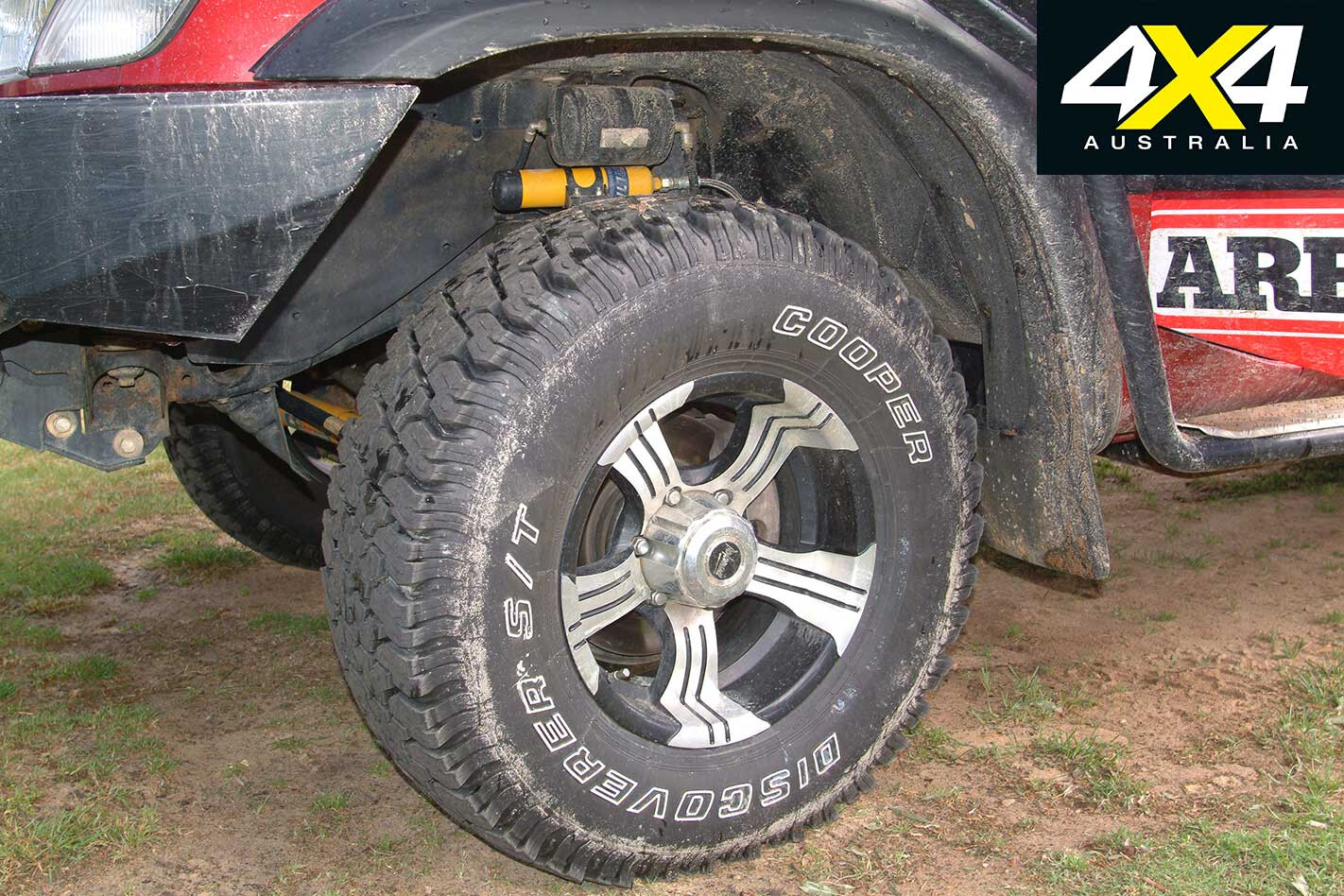
On Todd’s Patrol, the air supply hoses were initially routed to a handy spot on the rear bumper and front bullbar, so he had to stop and set up the air compressor to adjust the pressure before continuing. Some aftermarket shock absorbers were fitted but the ride and the flexibility of the system left a bit to be desired.
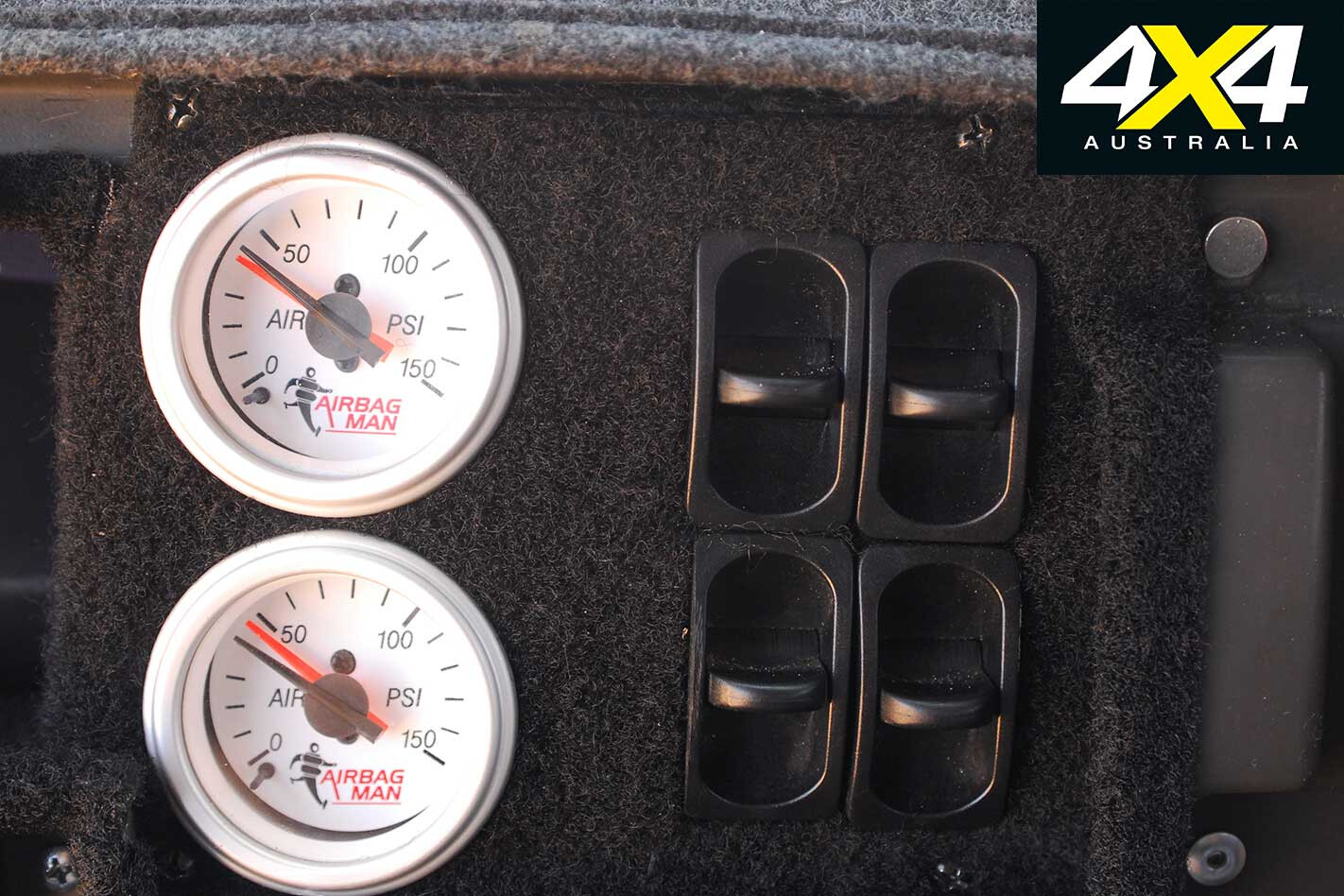
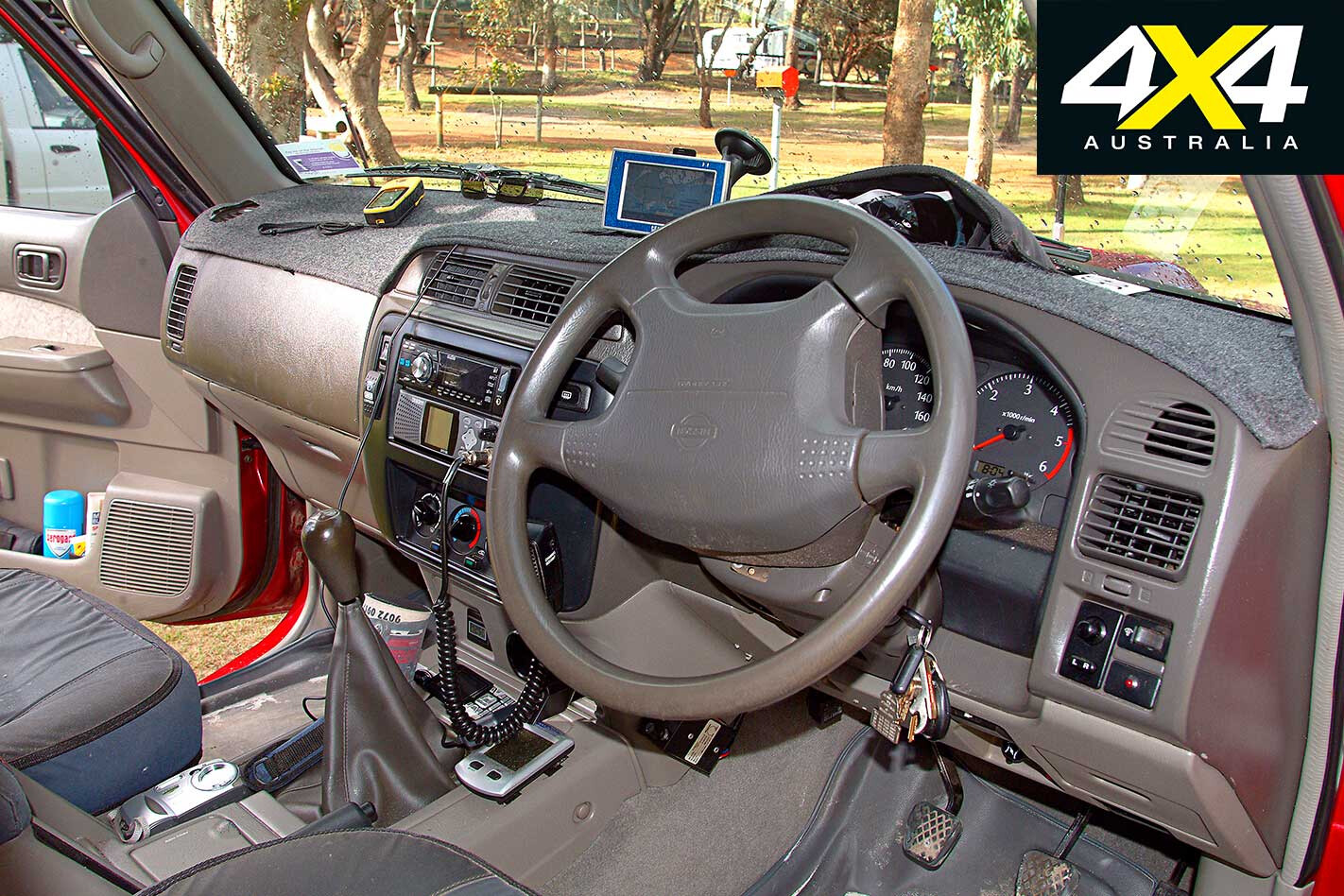
An in-car control system was fitted with four paddle switches and two dual-needle gauges. It’s mounted behind the extra glovebox area that hides behind the dash of Patrols not fitted with SRS passenger airbags – but you can mount them wherever you want.
This in-car control system allows the air pressure and ride height to be separately adjusted at each corner of the vehicle while on the move. It also allows the vehicle to be levelled when standing still, which is handy if you have a rooftop tent and the ground is uneven. There are a multitude of available air control system options but all the brackets required were custom made for Todd’s Patrol.
The front air springs have a smaller volume airbag than the rears and the ride seemed a bit harsh to Todd, so he fitted a quarter-gallon (1.14 litres) accumulator tank for each front spring, allowing him to run the same pressure for any given height.
And as this means there’s a greater volume of air, it gives the vehicle a softer ride. When lightly loaded Todd runs the air springs at 45psi up front and 50psi at the back. He ups the rears to 60psi with a big load on board.
ARB’s new Hi-Output compressor provides the air without a back-up air reservoir. To improve the shockers, which always need to be A1 when air suspension is used, Todd upgraded to a set of Old Man Emu LTR’s on each corner. These are run at 80psi all round for all situations.
So how does it perform? As you’d expect from a system that costs in the vicinity of four grand or more, the Patrol rides bloody well. Across corrugations there is a smoothness not apparent with a normal coil-spring vehicle.
You can drive this Patrol across severe single bumps at a much greater pace, with a lot less harshness, thumping and crashing, than a standard Patrol. The amount of suspension travel is phenomenal. Basically it’s adjustable all the way from the bump stops – effectively below standard height – to four inches (100mm) above standard height.
In reality, the amount of suspension travel is only restricted by the amount of shock absorber travel. That means heaps in the rough stuff or with a load. After spending some time behind the wheel of Todd’s awesome air-spring Patrol, I now find myself trying to figure out how I can afford to fit this system to my stretched Patrol.
The Cost Factor Front Air Spring Kit (OA4513): $1385 Rear Air Spring kit (OA4512): $1385 Accumulators: $150 each approx In-car control kit: $680 *Prices do not include fitting
For more information on the system and your vehicle, whatever it may be, you can contact Todd on 08 9072 0917; WA Air Springs on 08 9350 6811; or check out airbagman.com.au.
Glamour & Punch
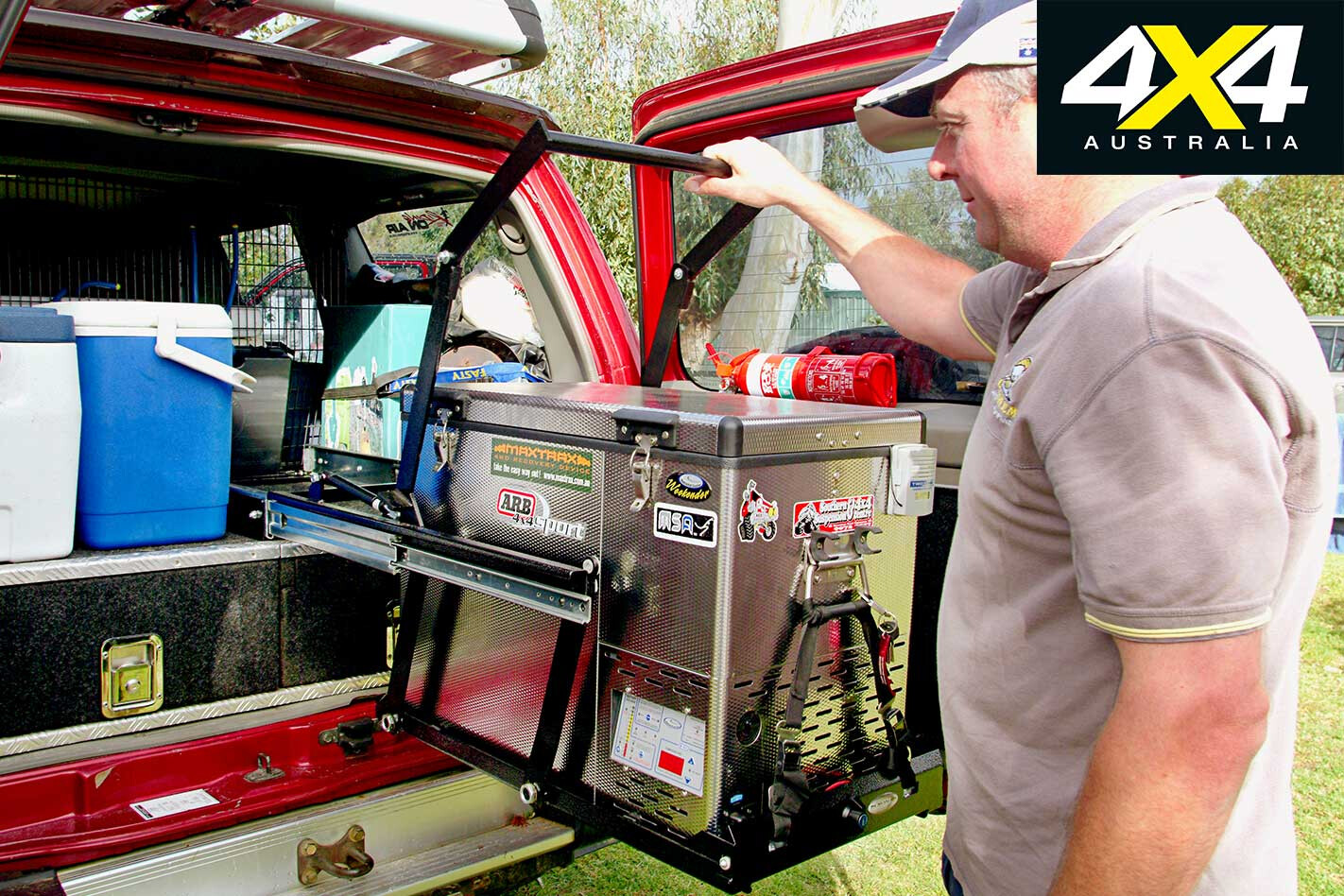
A list of aftermarket goodies on this Patrol makes it a stand-out. – ARB bullbar and side rails – Warn XD9000 winch – IPF HID Super Rally driving lights – HID headlight inserts – Cooper ST tyres – Safari snorkel – United Fuel Injection (Perth) turbo upgrade with 12.5lb of boost and minor pump work – Taipan three-inch mandrel bent exhaust system – Coolfour (Repco) Intercooler custom modified to suit Patrol – at least twice the size of factory-fitted intercooler – Extra small radiator to cool coolant straight from turbo – Delphi adaptor for fuel cartridge – Uni Filter air cleaner element – MSA seat covers – Black Widow drawer system, cargo barrier and drop-down table on rear door – QMCC moulded ‘Sand Grabber’ floor mats – Platinum drop-down fridge slide – National Lunar Weekender 52L fridge – ARB air compressor – Uniden GPS 105 UHF radio with external GPS antenna – Hema Navigator GPS – Couplertec (4 anodes) rust protection system – Red Arc Brake Trailer controller – Red Arc dual battery system – Rhino full-length roof-rack – Bushranger Wheelie Bin tyre bag
MSA 4×4 Accessories is famous for its high quality and durable interior 4×4 products. The Australian company is meticulous about producing kit that’ll survive the harsh treatment an outback expedition typically serves up, and the crew at MSA tagged along on our recent 4X4 Adventure series trip to the Victorian High Country.
We ran the microscope over some of the brand’s well-designed storage solutions – in particular, fridge slides, drop-down fridge slides and the relatively new roller drawer system and storage drawers – and Matt took a closer look at some of the neat design touches and demonstrated how easy it is to use the gear.
The gear has been crash-tested by an independent company, for added peace of mind.
MSA 4×4 fridge drop slides start from $775* MSA 4×4 storage drawer systems start from $1249* MSA 4×4 fridge straight slides start from $425* *Prices exclude freight.
To view MSA 4×4’s complete catalogue of gear, visit: msa4x4.com.au
It’s no secret that I’m a fan of old Land Rovers. My first Landy was a 1971 Series IIA shorty that I bought off an old bloke in Tumut who had a council contract to spray all the weeds on the side of the road. The Landy had a truck-cab on it and a big drum full of weed killer mounted in the tub.
The tub was removed prior to me picking it up and over the next few years I used the IIA as a daily driver and for weekend camping trips with my wife Renata. In summer I’d unbolt the cab, whip off the window frames and drive around topless … so to speak.
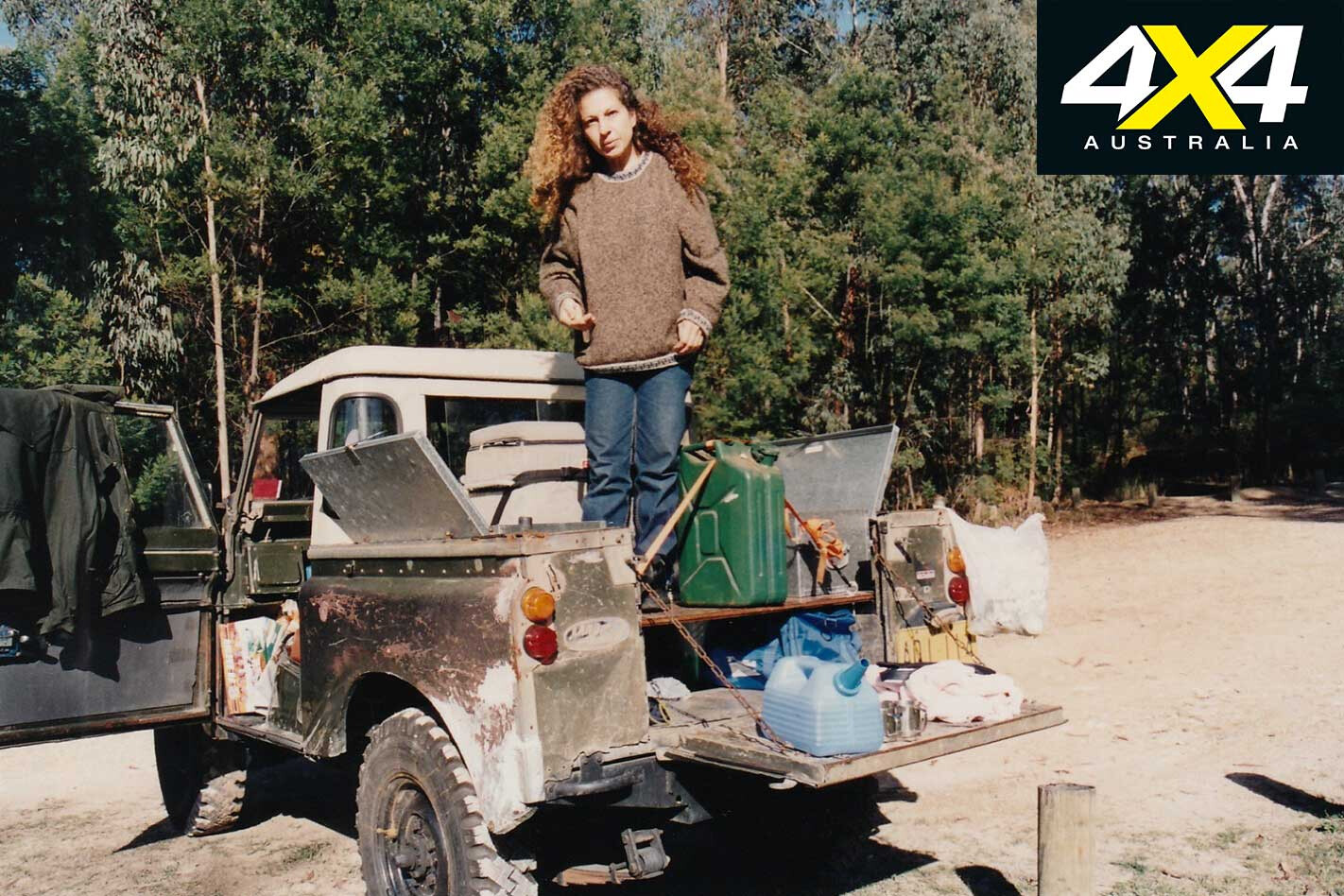
Then the gearbox crapped itself and spilt its oily contents all over the garage floor. At the time I didn’t have the funds to repair it, so I sold the Landy to some bloke who hauled it away behind an old Range Rover and no doubt used it for parts. After all, it was a pretty rough unit with not a straight panel on it.
My second Landy was an ex-army Series III. This one had the atrocious 2.6-litre petrol six and, despite drinking like a sailor, it offered no discernible performance improvement over the SIIA’s 2.25-litre petrol four.
Nevertheless, it was a hell of a lot of fun to drive, both on the road and off it. It had a canvas roof that I whipped off at every opportunity, and for longer trips away I occasionally fitted a spare truck-cab I had lying around in my shed.
In the three or so years I owned the ex-army SIII, it never let me down, and I eventually sold it for a decent profit. I then managed to go for about seven years sans Landy, but then I interviewed a bloke about his modified Defender 90 for a story in 4X4 Australia.
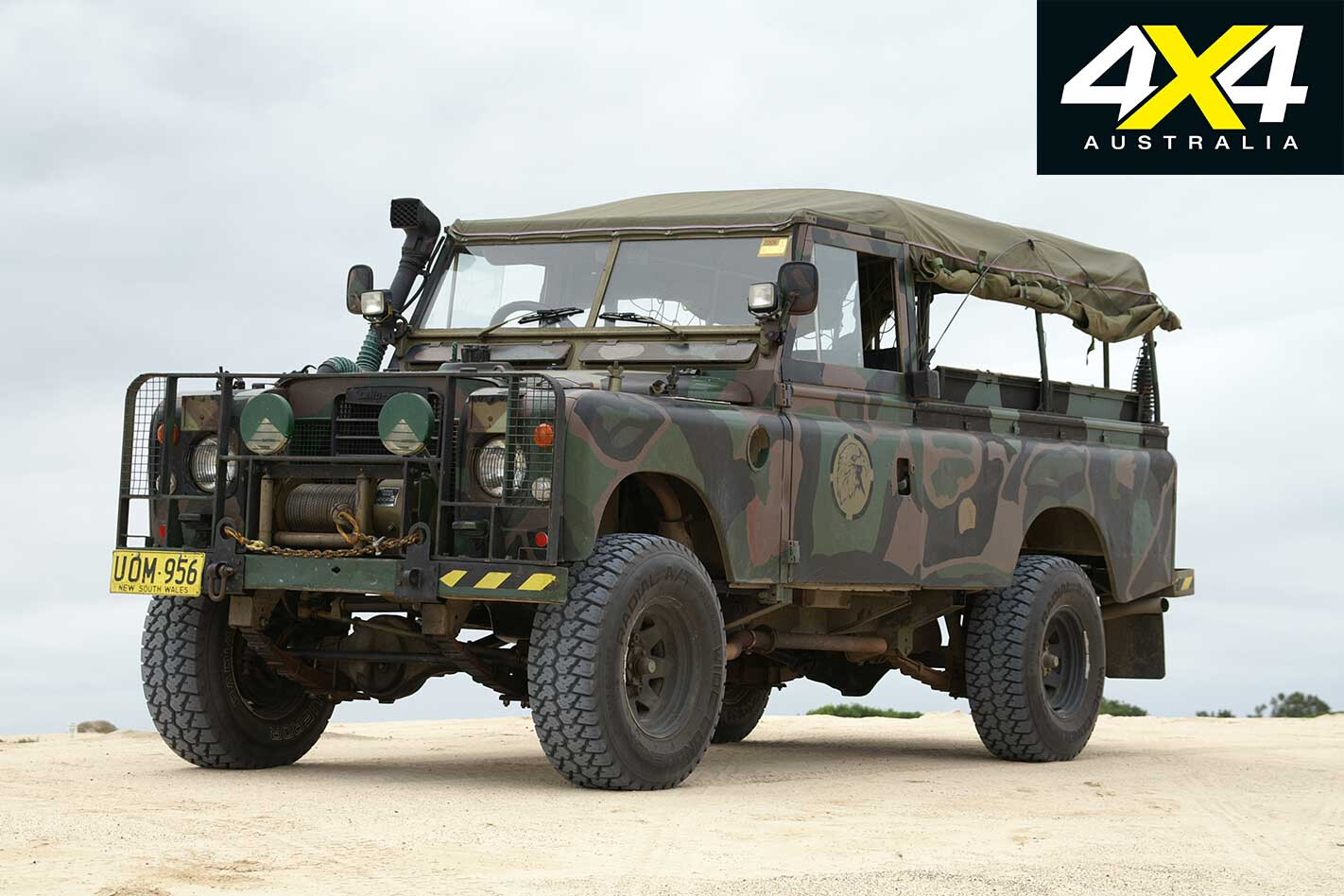
He explained to me how obsessed he’d become about all things Land Rover, and how he spent most of his time trawling through websites looking for the next modification he could make to his pride and joy. He sounded so enthusiastic, in fact, that I again caught the Landy bug.
The next day I found myself searching for Land Rovers on sites like eBay and Gumtree, and it wasn’t long before I was driving around looking for my next rig. As it turned out, it appeared just a couple of months later in the form of a 1994 Defender 300Tdi, and I’ve been slowly fixing and modifying it ever since.
But I still couldn’t shake a desire to revisit my roots, and I have always kept a look out for another Series IIA shorty. Like my first one, I wanted it to be a late model with the headlights on the outer guards, but after a few months of searching I started to think I might have to compromise by settling on a Series III.
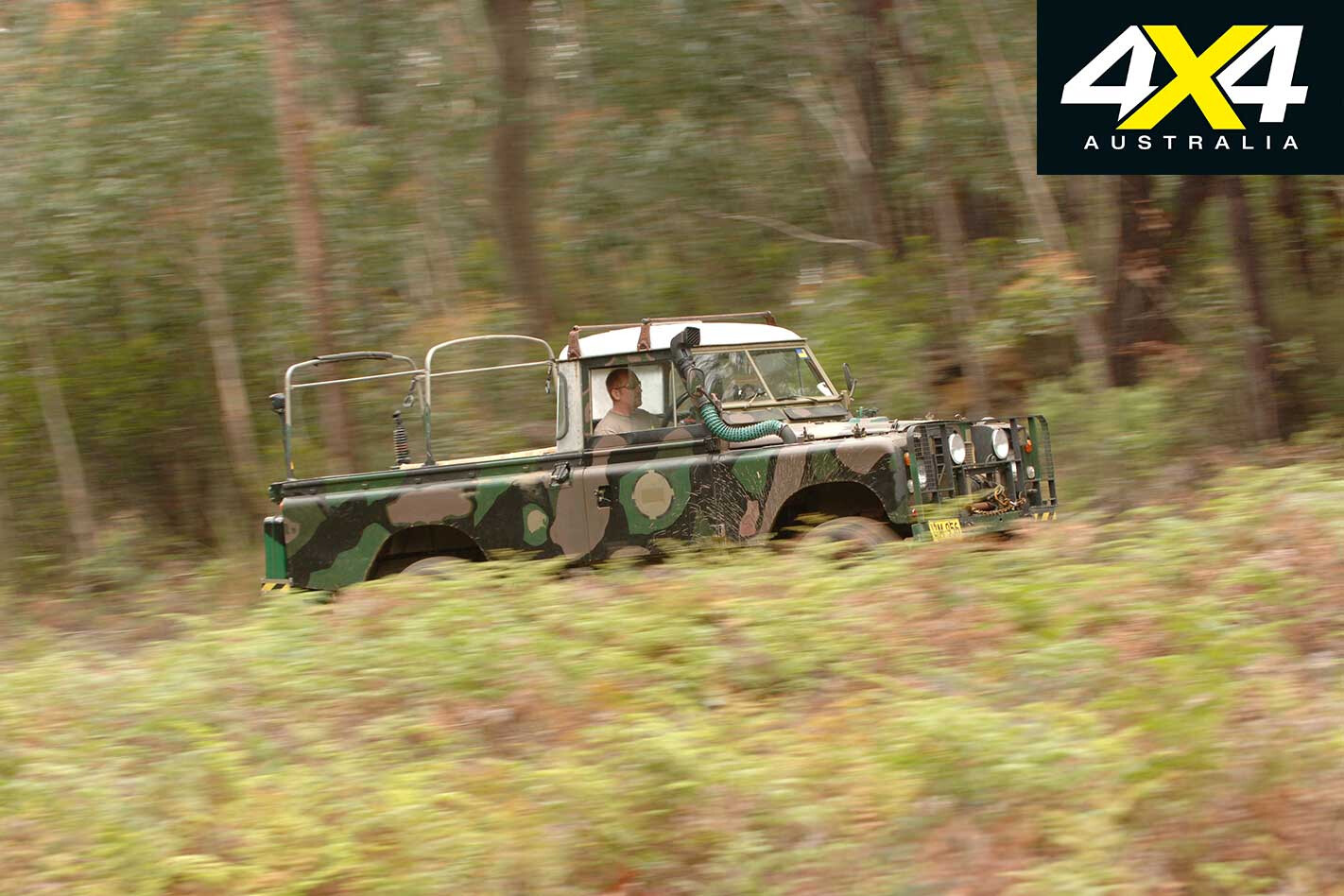
An SIII shorty that popped up on Gumtree one day appeared to tick all the boxes: it was a nice light green, it had a 2.25L petrol engine and it had recently won a prize at a Land Rover show. I drove to Sydney to look at it, but it was too expensive and the bloke selling wasn’t keen on negotiating a lower price.
Then I found an SIIA in Perth and I asked a mate to have a gander at it for me. His summation was not a good one and he reckoned I’d probably go broke trying to get the thing back on the road.
A couple of months later I saw another SIII shorty about a half-a-day’s drive down the coast. Reading the description, I thought I’d found ‘the one’, but when I saw it in the metal I was disappointed to discover the chassis and bulkhead were both covered in rust.
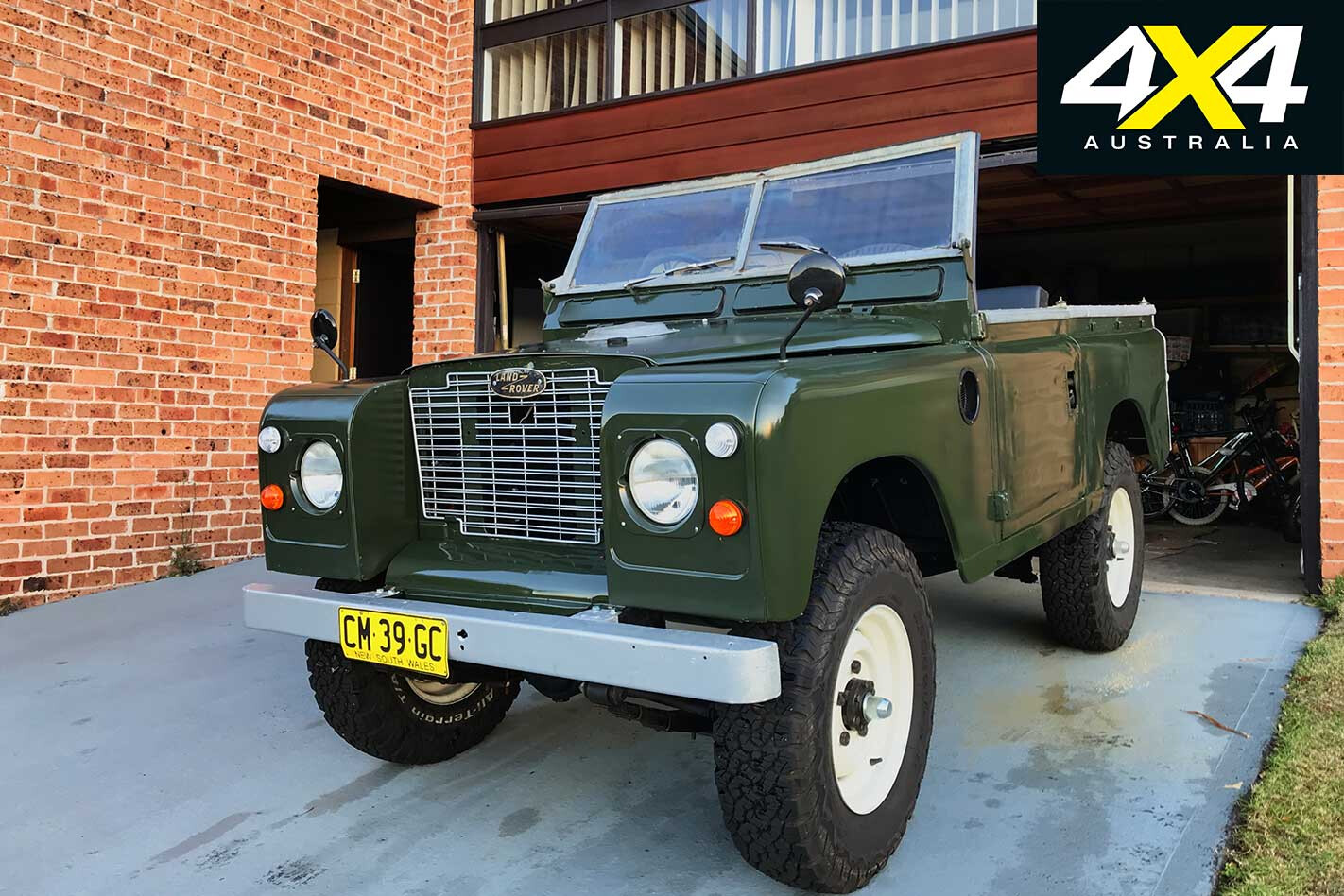
The following day I saw another late-model SIIA shorty online. This one looked superb, was registered and was the same colour as my original Landy. And best of all it was located just five minutes away! Again, I thought the seller was asking a bit much, even though he’d completely restored the old girl. I made an offer but left empty handed once again.
Then, a couple of days later, he called me back to negotiate. We settled on a price and now I own two Land Rovers. How lucky can a bloke get?!
My ‘new’ SIIA looks just like my original Landy, except it has straight panels, fresh paint, new BF Goodrich All-Terrains and is (thus far) mechanically sound. Sure, it leaks oil over the garage floor, but I’d be worried if it didn’t.
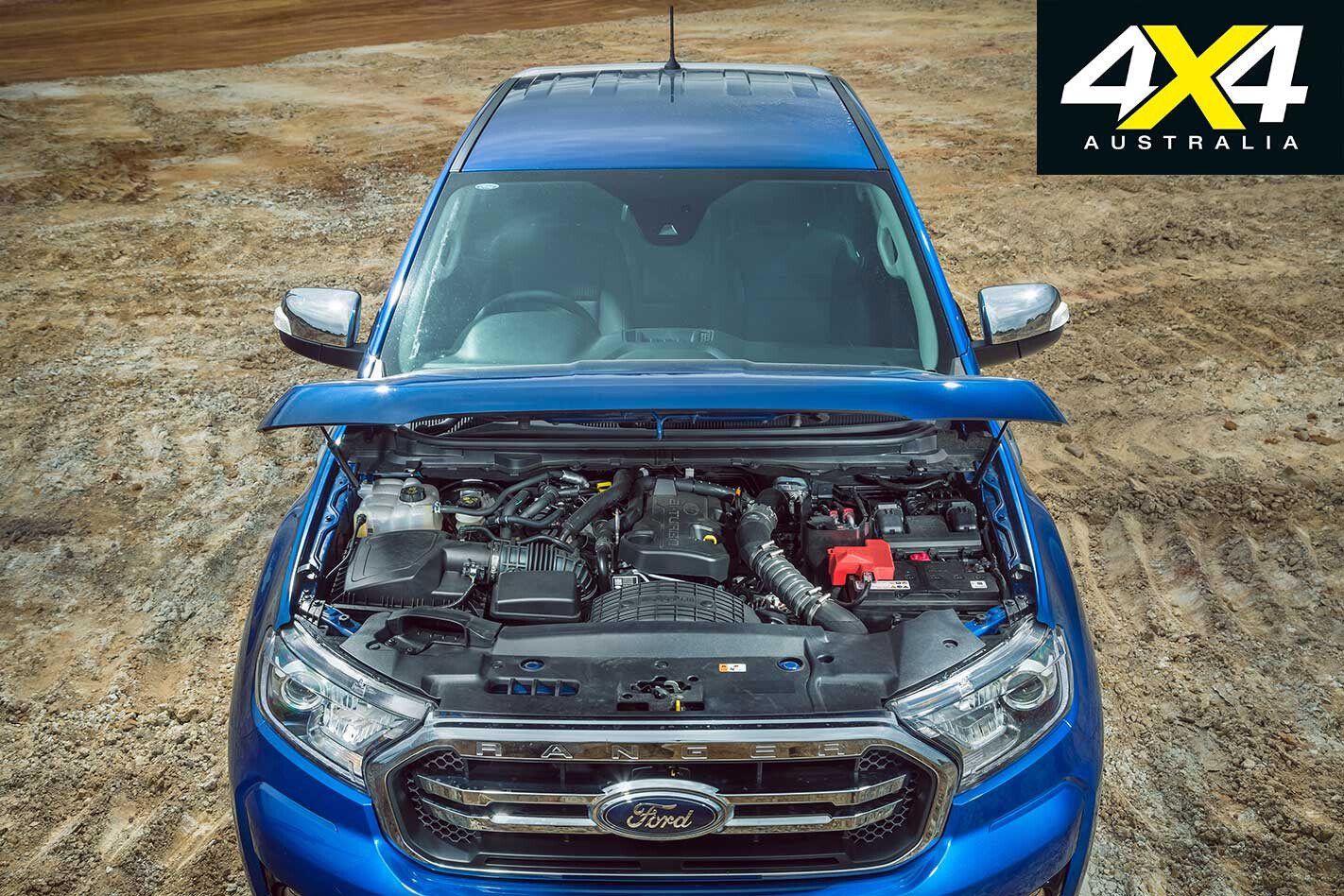
THE MY19 Ranger has the same engine options as the MY19 Everest, with the workhorse now sharing the Raptor’s 157kW/500Nm 2.0-litre bi-turbo diesel (BTD) engine, backed by a 10-speed auto, as a $1200 option on XLT and WildTrak. The 3.2TD/six-speed auto/manual combo carries over across the range, as does the venerable 2.2TD (six-speed auto only in 4×4 spec) in the base-model XL.
On top of the new engine option, the Ranger has copped some suspension tweaks and a raft of new safety features including Inter-Urban Autonomous Emergency Braking (IUAEB) with Pedestrian Detection (at up to 60km/h) and Vehicle Detection (standard on Wildtrak, optional on XLT), and Semi Auto Active Park Assist – a first for a dual-cab ute. Improved NVH levels, a nifty lift-assist tailgate, and smart-key entry (XLT and Wildtrak) are other notable features.
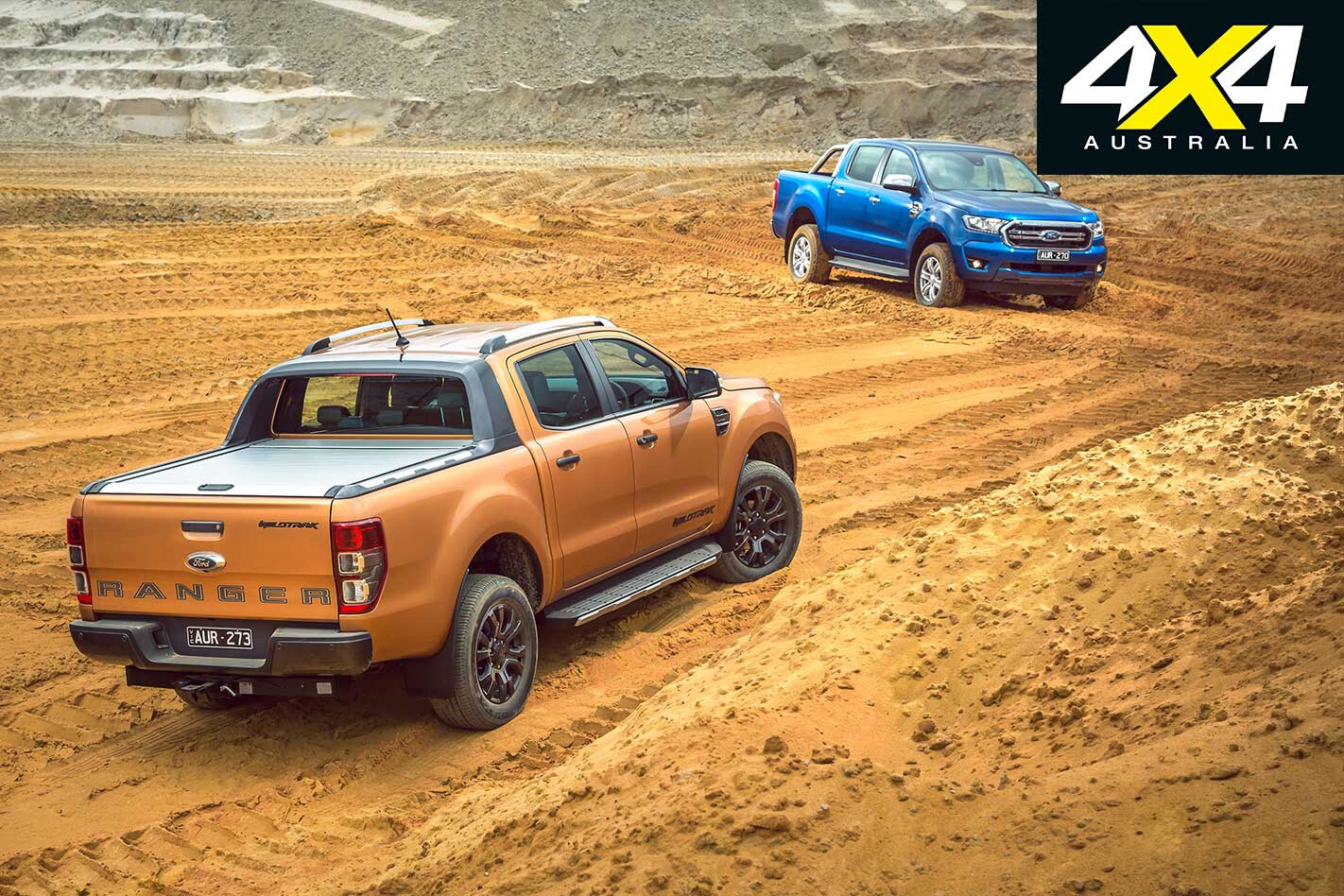
Dual-cab 4×4 Ranger pricing starts at $47,890 for the XL dual-cab 3.2TD with six-speed manual, and tops out at $63,990 for the 2.0BTD WildTrak. All Rangers come with a five-year unlimited kilometre warranty.
Going to Market
THE Ranger’s bluff styling, excellent (in its class) on- and off-road performance, large dealer network and robust drivetrain have all contributed to its success. With more and more buyers looking at the Ranger as the family wagon solution, its all-rounder capabilities are the big selling point – Ford’s latest enhancements to the Ranger are aimed squarely at keeping it front and centre for new vehicle buyers.
The new 2.0BTD offers more power and torque, along with a smoother, more linear delivery of both through the 10-speed auto. The inclusion of AEB with Pedestrian Detection (using a combo of cameras and sensors to detect pedestrians, cyclists, etc.), along with SAAPA, to an already impressive Driver Assist Technology (DAT) package on the top models (standard on Wildtrak; a $1700 Tech Pack option on XLT) enhances appeal to safety-focused buyers.
Ford expects the two ‘main’ diesel powerplants to share equal take-up from buyers at this stage, so, by keeping the 3.2TD, those who are averse to a ‘smaller’ engine still have the option of a larger capacity powerplant, and one that’s well proven. However, Ford is quietly confident the new donk will win over buyers but won’t say if there’s an end-date for the 3.2TD. The four-tier range – XL, XLS, XLT and Wildtrak – all offer it as the standard powerplant.
Besides the new donk/auto combination, the other driving-oriented change is the across-the-range revision of the Ranger’s suspension; Ford engineers changed the position of the anti-roll bar, while upping its stiffness.
This effectively reduces body roll and thus allows fitment of re-rated, thinner springs for a ‘softer’ ride, moving the Ranger further away from any preconceptions of a hard-riding load-lugger and toward a definite wagon alternative.
Styled up
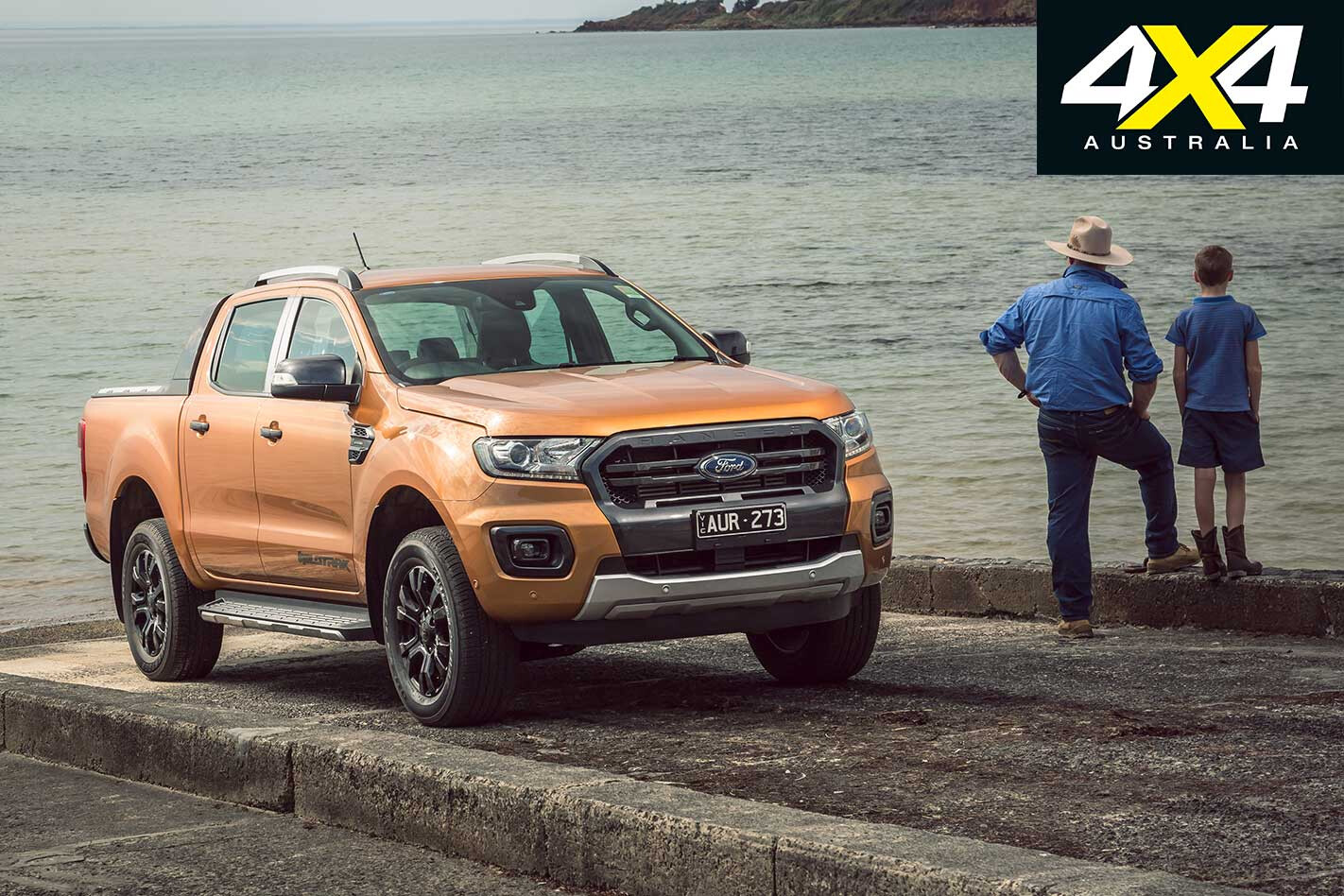
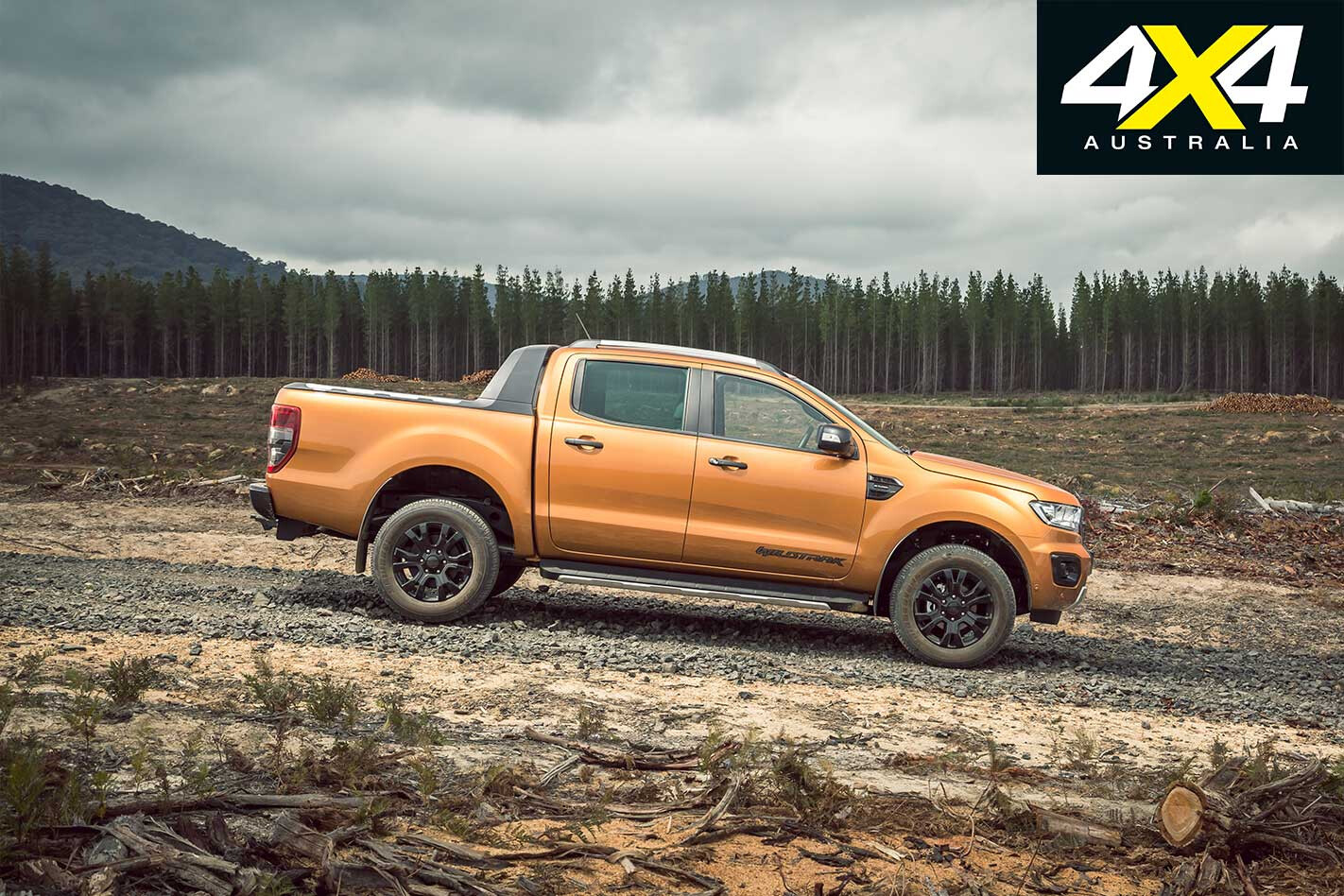
RUN your eyes over the exterior of this mid-life update and there aren’t many differences. Each model gets a slightly revised front end, with the Wildtrak’s the most obvious, courtesy of its exclusively styled front bumper. The XLT and Wildtrak both get HID headlights and LED Daylight Running Lights (DRLs), with the Wildtrak also running LED fog lights as standard.
The base spec XL’s 16-inch steelies aside, the remaining models all run alloy wheels; the XLS running on 16-inch hoops, the XLT 17s (with 18s an option) and the Wildtrak on 18s. An all-black 18-inch alloy is an option on both XLT ($750) and Wildtrak ($4500) models.
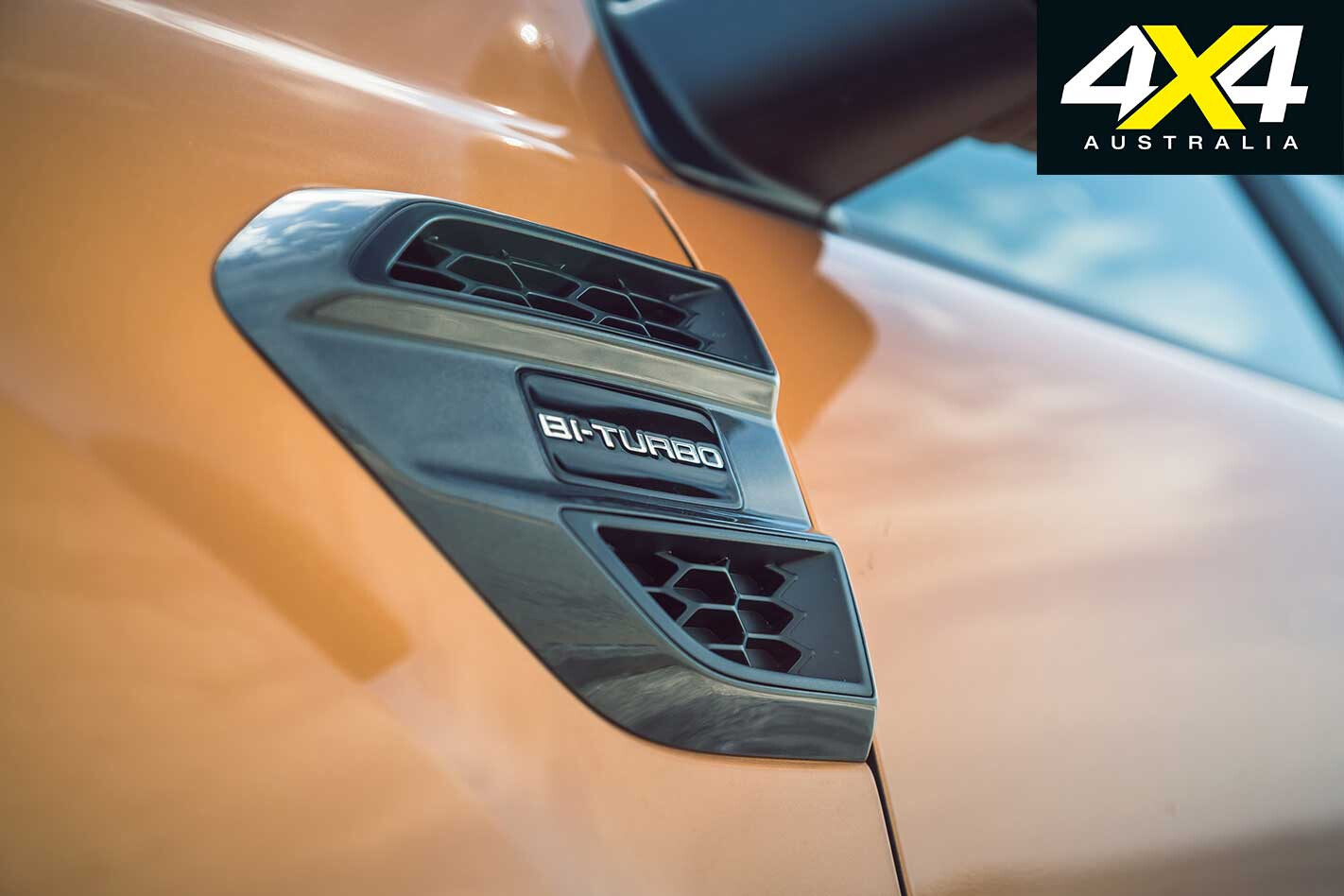
For those who pay the additional $1200 for the 2.0BTD, you get a subtle “BI-TURBO” badge on the front quarter air intake. The Wildtrak also gets an exclusive new ‘Sabre’ colour.
The Ranger interior has always been a decent place to spend time, with subtle restyling comprising of roof lining (it’s now darker) and stitching colour changes. The Wildtrak gets heated partial-leather seats (a $1650 option on XLT) but, bizarrely for a top-spec model, only the driver’s is power-adjust.
The SYNC 3 infotainment system features an eight-inch touchscreen and is standard on XLT and Wildtrak ($1950 option on XLS; XL makes do with a SYNC 1 system). The cabin is also now quieter, with acoustic glass used for the side windows and front windscreen.
A New Motivation
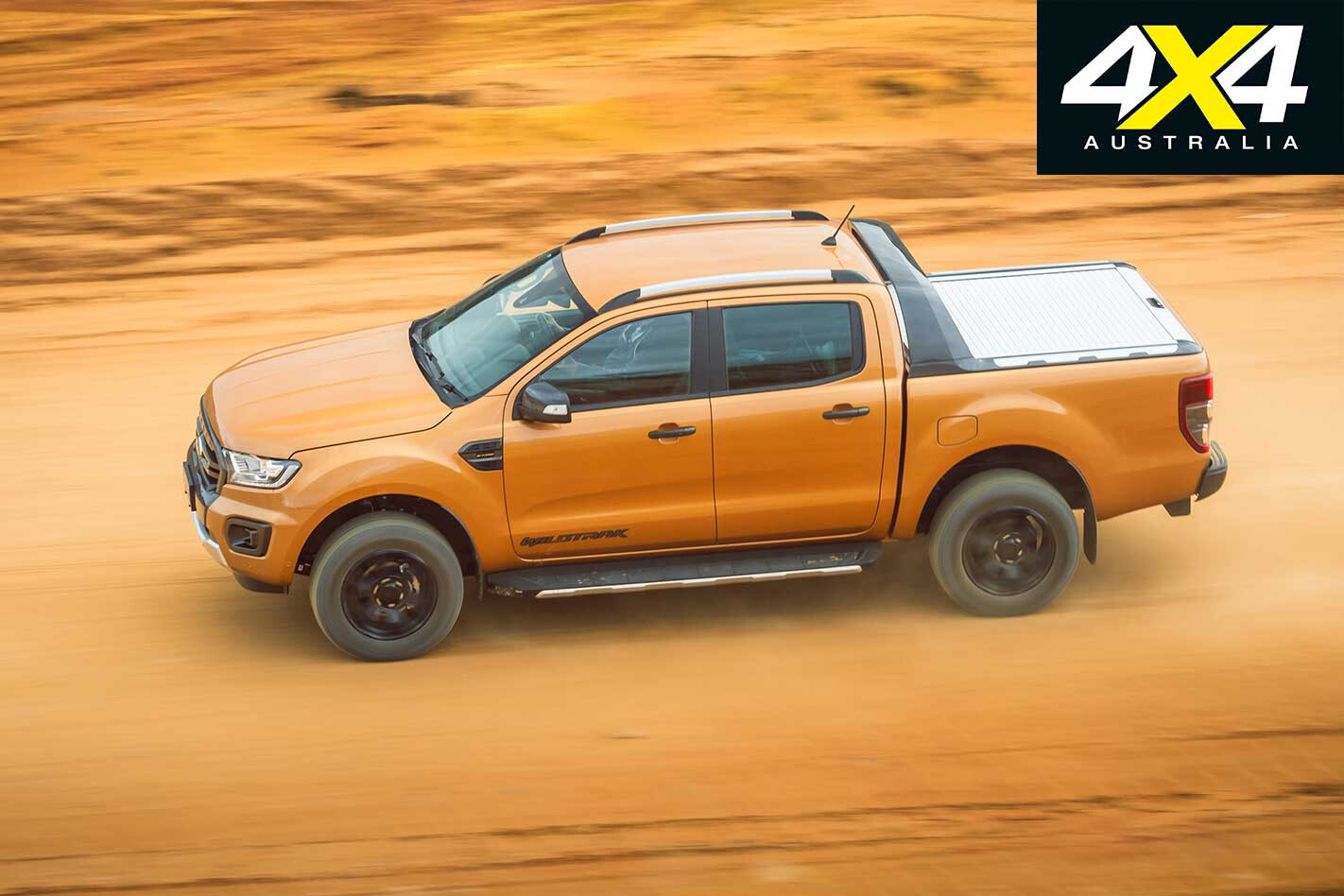
AT $1200, the optional 2.0BT engine represents brilliant value thanks to its more linear delivery of power and torque compared to the lumpier 3.2TD, helped no doubt by the seamless shifting of the 10-speed auto. It’s a far more modern powerplant than the 3.2TD, and this is reflected in its improved driveability, both on- and off-road. Plus, the Ranger with this engine retains its 3500kg towing capacity, and all models with the new donk offer a slightly higher payload figure.
To ensure the ‘regular’ (and roughly 150-200kg lighter) Ranger running the 2.0BTD doesn’t upstage the Raptor in terms of performance, Ford is running a taller final drive ratio in the rear diff of 3.31:1 compared to the Raptor’s shorter 3.73:1.
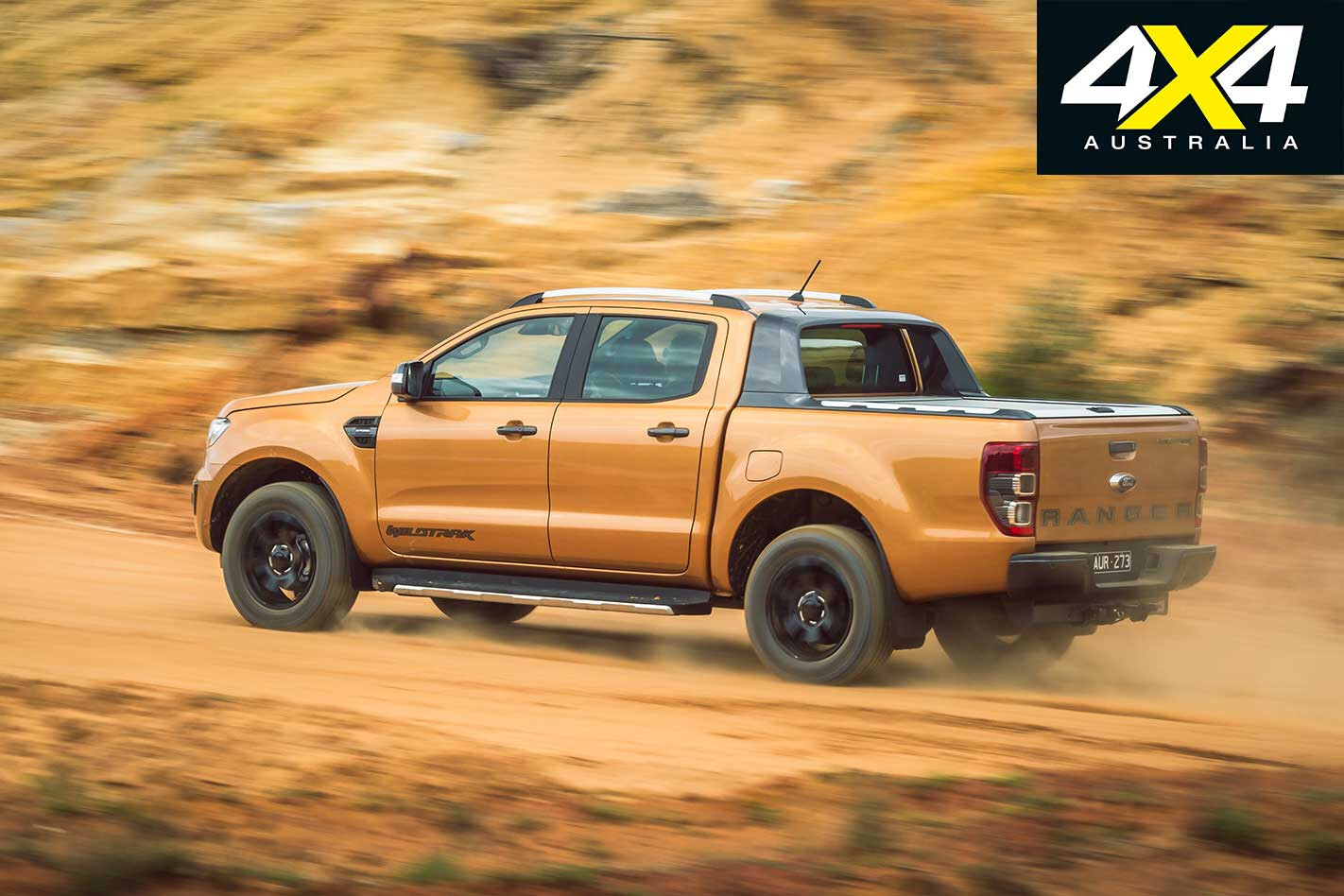
As a result, the 2.0BTD lopes along on back roads and freeways; but you’d better not be in too much of a hurry, as planting the foot for an overtaking manoeuvre doesn’t engender excitement or a rapid response, and it is here that this engine – and the 3.2TD for that matter – lets down the vehicle’s improved chassis dynamics.
The vehicle is no slouch, but more mid-range grunt would be welcome in these circumstances – as it would be in the Raptor. The 10-speed does its best to minimise lag and keep the 2.0BTD in its narrow (1750-2000rpm) optimum torque band, but is not as quick as some in its class.
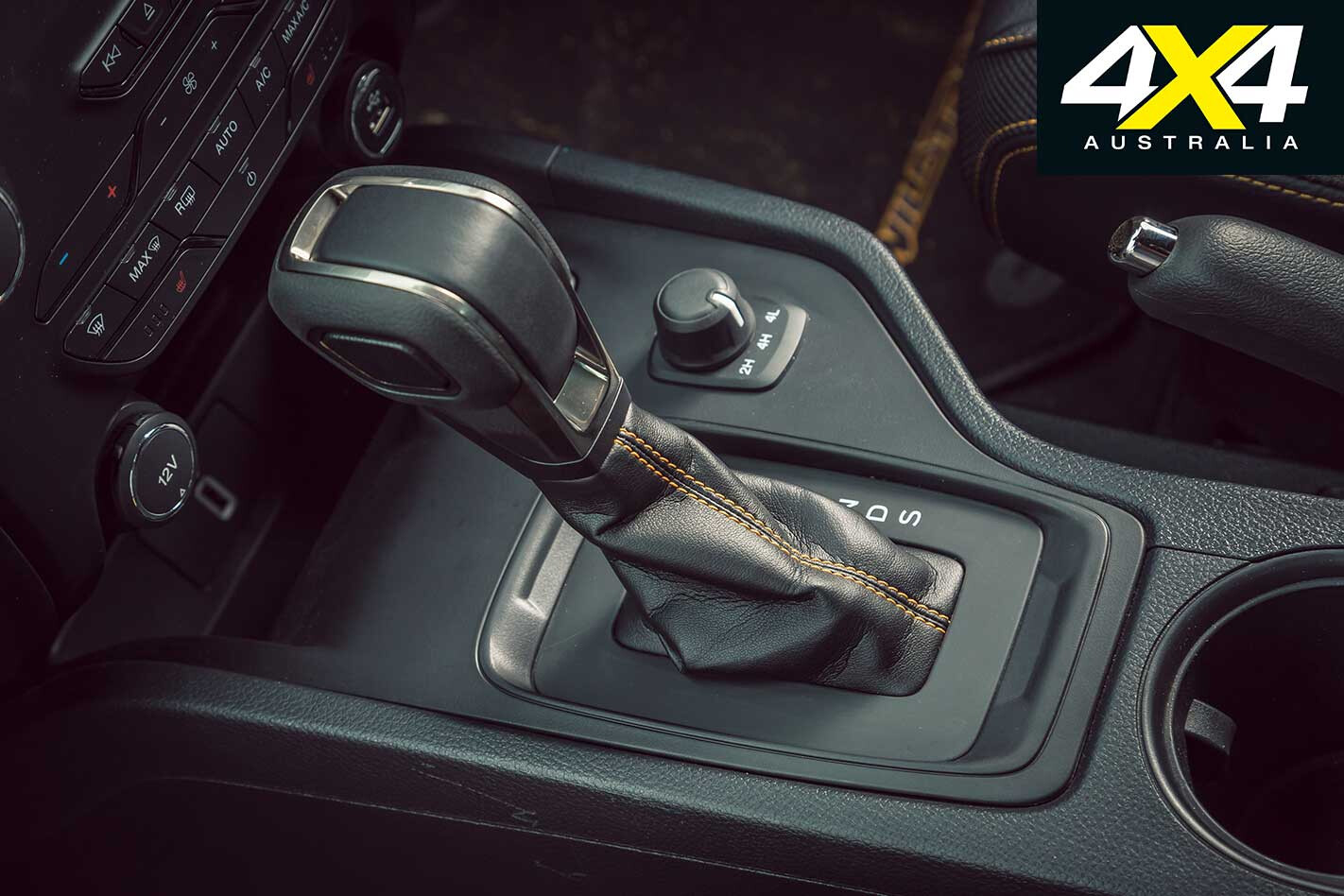
It is, however, decidedly quieter than the 3.2TD, with a muted growl from the ‘small’ engine the only aural intrusion into the cabin; jumping out of a bi-turbo-equipped Ranger into one sporting the inline five you can really notice the difference, with the 3.2TD decidedly tractor-like in terms of sound.
Performance-wise, the 3.2TD still gets along okay, albeit with a slightly more peaky delivery of grunt. If it was possible, it would be interesting to slap the new 10-speed auto behind the five-cylinder just to see what a difference those tightly clustered ratios would make.
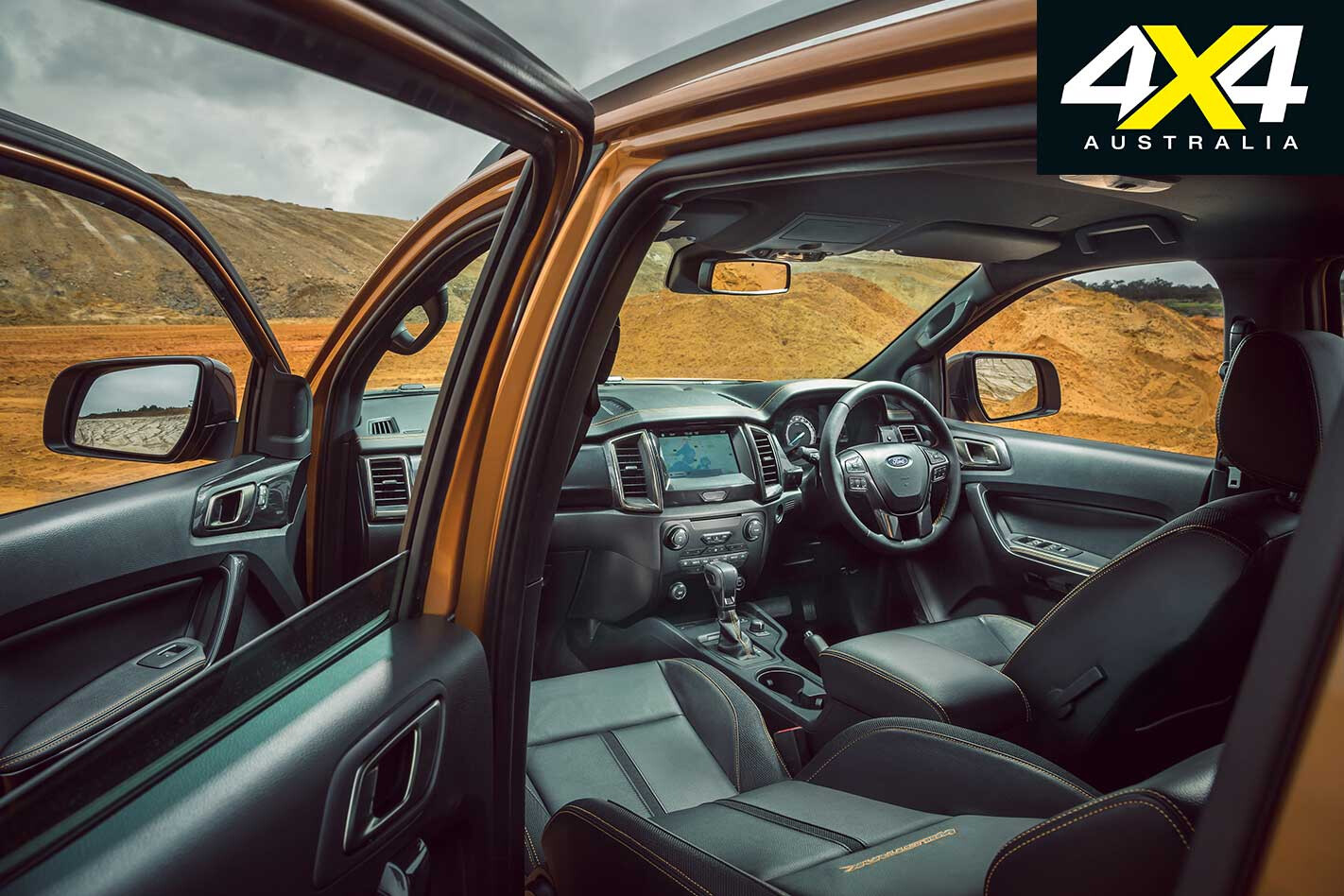
The revised suspension sees the front end feeling more planted and offering a flatter stance when cornering. Sadly, the leaf-sprung rear end cannot keep up, with noticeable bump steer (as you’d expect with an unladen tray), but once you adjust accordingly it is still quite easy to shove the Ranger around aggressively on winding roads.
Off-road, the revised Ranger, regardless of powerplant, is still one of the most capable 4×4 dual-cabs on the market; the combo of rear diff lock and still-active traction control when the locker is activated sees it clamber up and down seriously rugged terrain with aplomb.
The Task Ahead
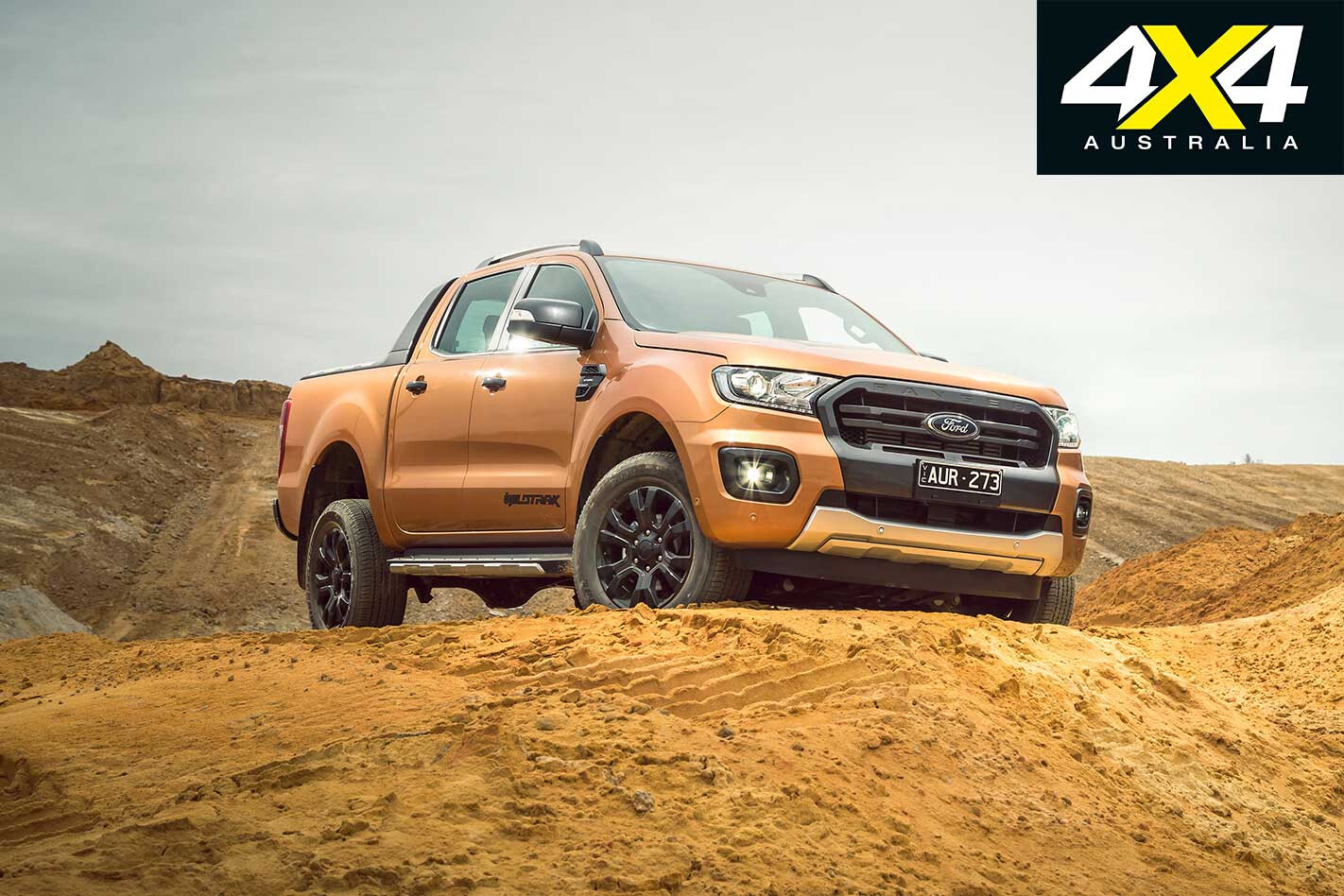
IT WILL be interesting to see how Ford goes about convincing potential buyers of the merits of the 2.0BTD powerplant option. We say this because, as much as they’d like to sell off the additional (and impressive) safety features that are now standard, along with that improved ride and handling, it will still come down to what propels the revised workhorse.
There will, of course, be the invariable comments on ‘small capacity’ and, really, the 3.2TD is still a bloody decent donk and will no doubt remain popular, but with that sweet 10-speed auto and reduced fuel consumption – at a relatively small premium – this ‘little’ engine might end up being the one that could.
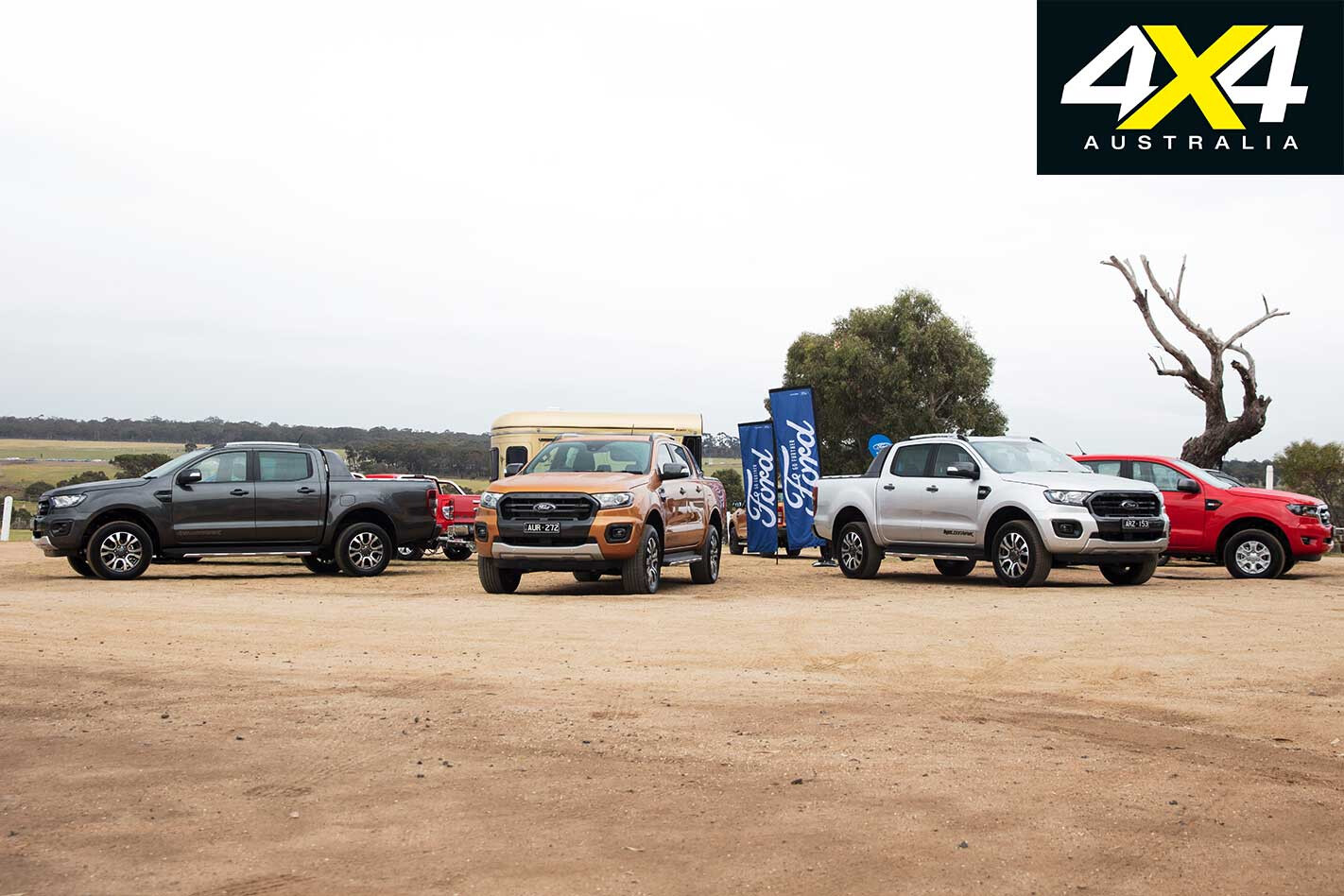
2019 FORD RANGER PRICES – XL 3.2L (manual): $47,890** – XL 3.2L (auto): $50,090** – XLS 3.2L (manual): $49,190** – XLS 3.2L (auto): $51,390** – XLT 3.2L (manual): $55,990** – XLT 3.2L (auto): $58,190** – XLT 2.0L (auto): $59,390** – Wildtrak 3.2L (manual): $60,590** – Wildtrak 3.2L (auto): $62,790** – Wildtrak 2.0L (auto): $63,990**
The Perfect Park
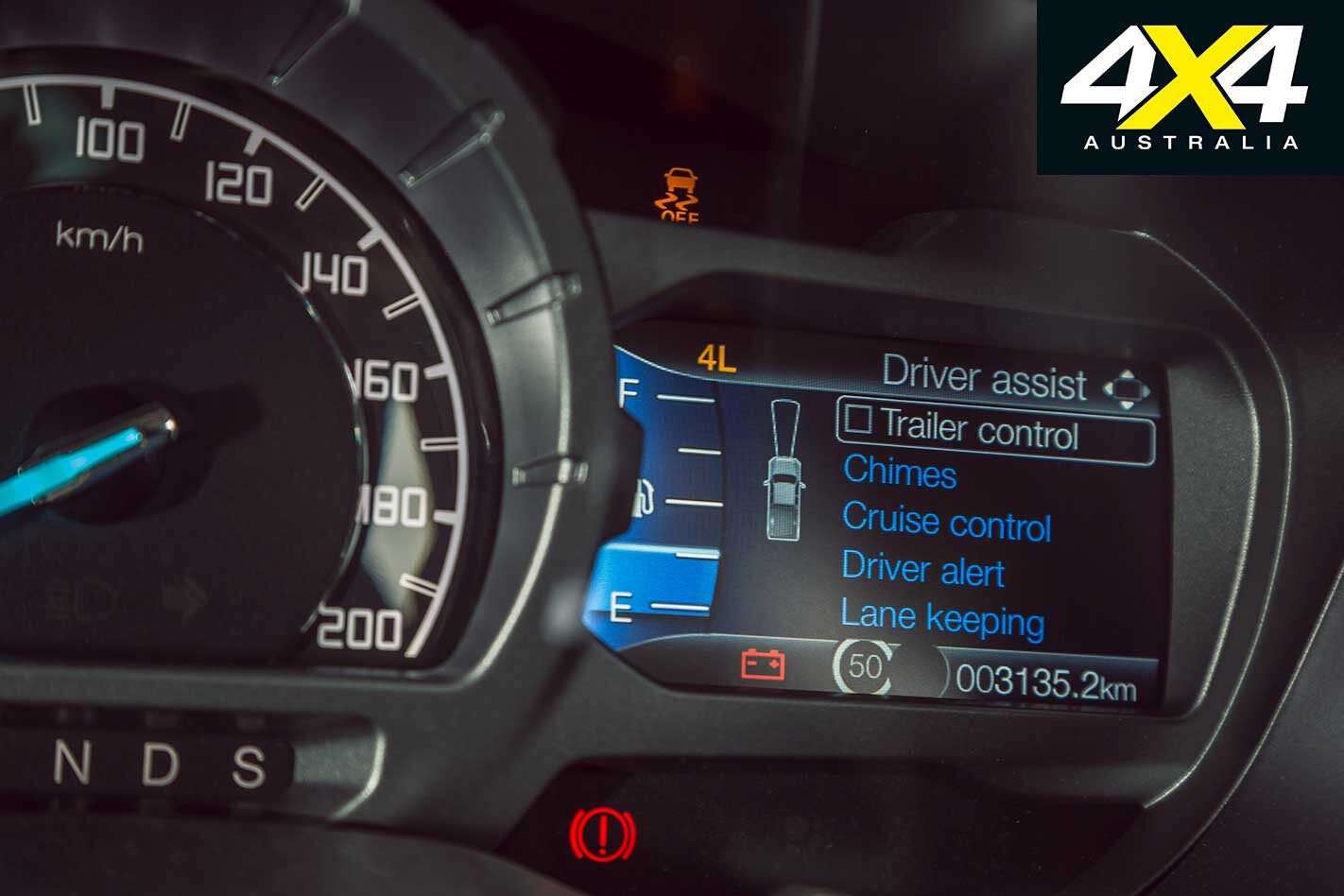
FORD Australia demonstrated the Semi Auto Active Park Assist setup during the 2019 Ranger launch, and it is pretty cool. The Ranger can identify a suitable parking spot while travelling at a speed of up to 35km/h.
Once the vehicle has identified a large enough space (at a minimum, it needs to be 20 per cent longer than the Ranger itself, leaving approximately 550mm front and rear of clear space), you simply indicate, select reverse and apply the necessary throttle, gears and brakes when needed while the SAAPA system does all the elbow work. And yes, it is slightly off-putting watching the steering wheel move by itself while you sit there.
MORE: Ford Ranger Range Review MORE: Ford Ranger Specs, Range & Price