
WE’VE handpicked 10 of the best modified 4WDs that have featured in the magazine over the past 12 months, and now it’s your turn to vote for the 2018 Custom 4×4 of the Year. By voting, you could win a Maxxis voucher valued at up to $2000.
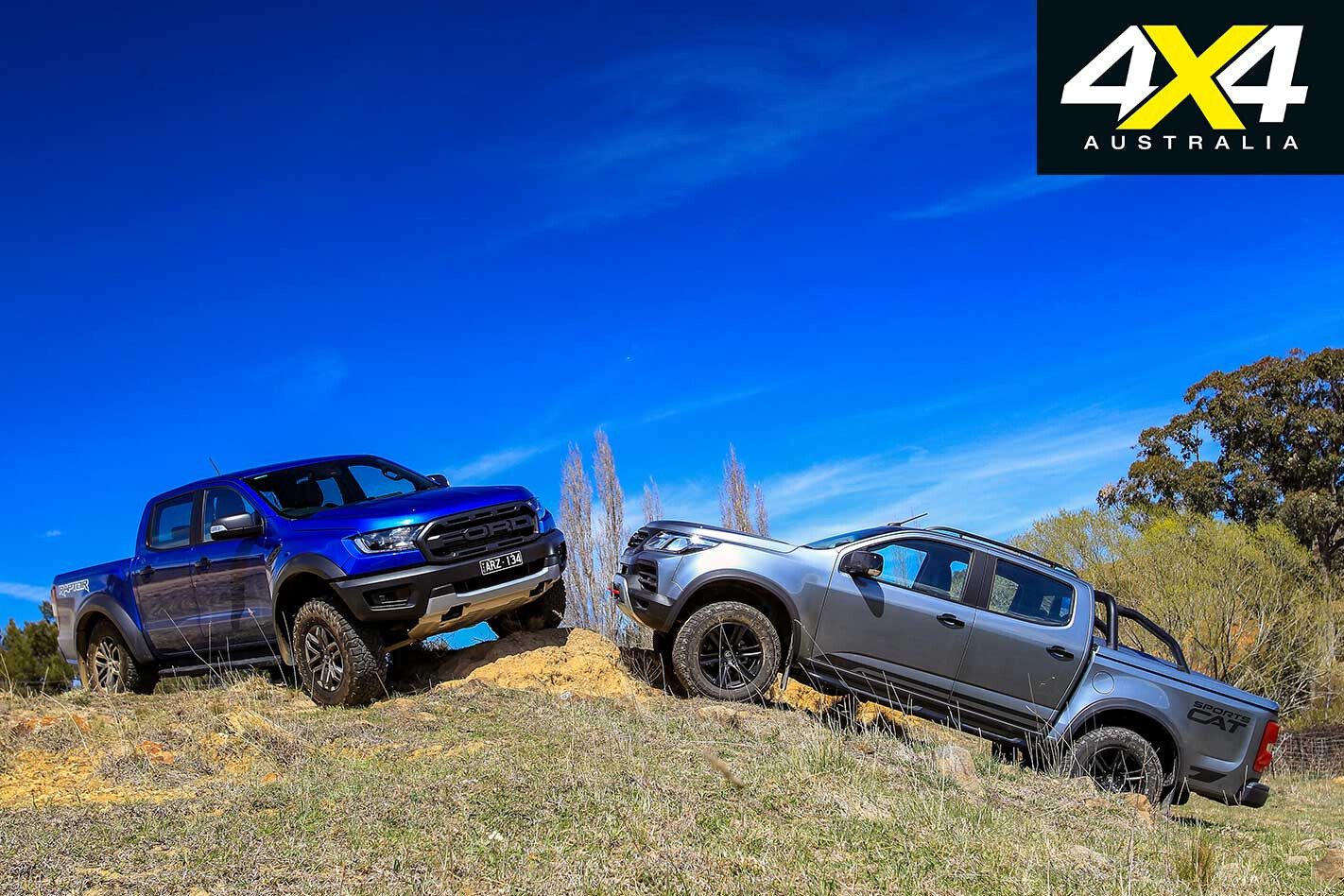
We also dirtied the tyres of a couple of brand-spanking new vehicles this month: Chevrolet’s massive, 1234Nm Silverado 2500HD WT and Volkswagen’s Ultimate 580. Plus, the claws were out as the Ranger Raptor battled the HSV SportsCat, and we follow Red and Ted as they take a CJ-5 to the mighty Rubicon.
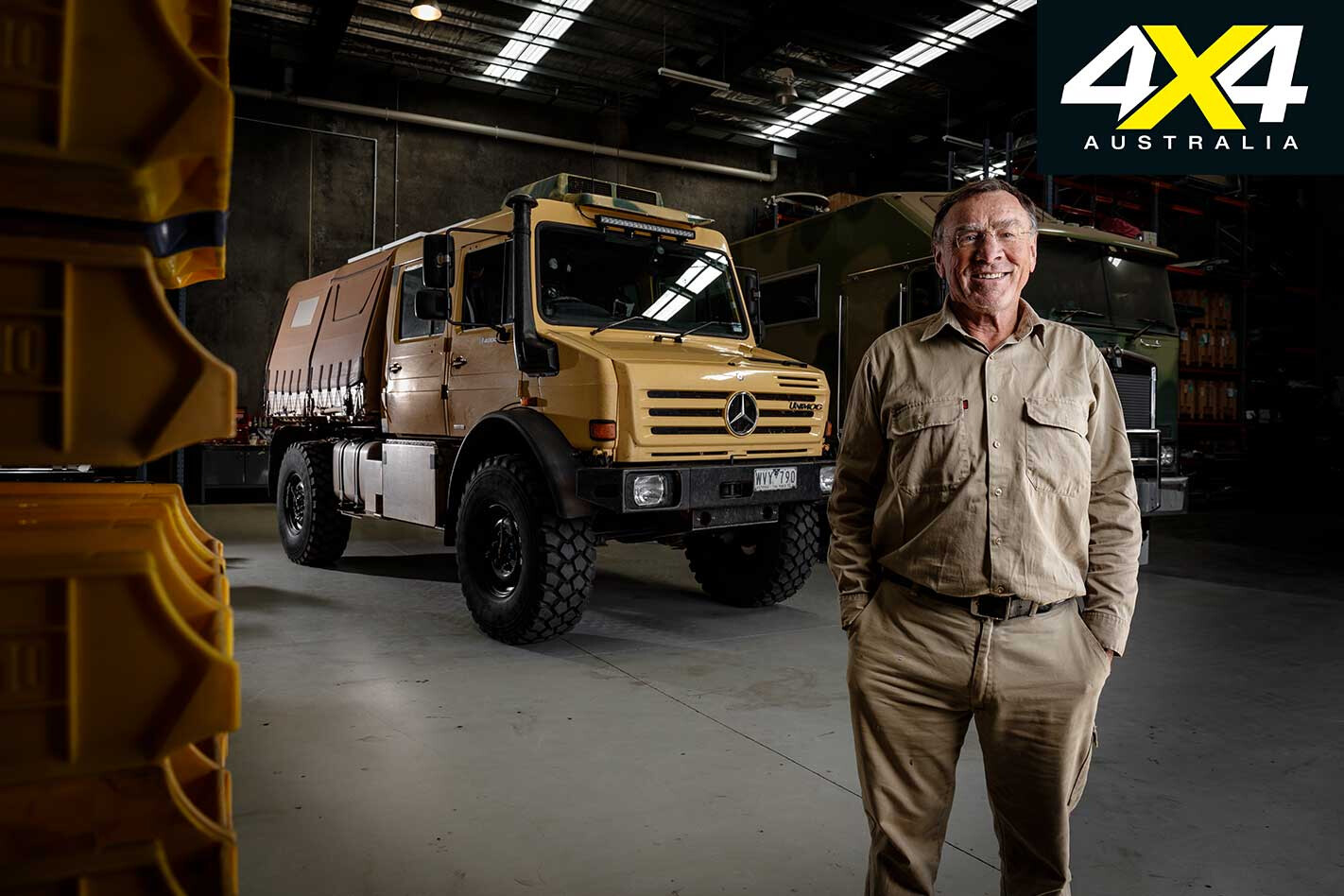
Remember Bathurst champ, Larry Perkins? Well, he owns the V8 Supercar of off-road trucks; a desert-eating Unimog U4000. We drool over it in this issue.
Speaking of droolworthy trucks, we also admire a Land Rover FC101 capable of going off the grid for weeks – if not months – at a time.
WHAT ELSE IS THERE?
- 4X4 Adventure Series to South-East Queensland (part one).
- Advertisers’ Trip to the Vic High Country.
- All the action from the 2018 Outback Challenge.
- Christmas Gear Guide to help you fill your Santa sack.
- In the shed: Perentie 110 and Land Rover Series IIA
- New gear tried and tested
- Columns by Ron and Fraser
- Plenty more…
The December issue is out November 8 in stores and on the magshop.
THE partnership between the Ford Motor Company and Volkswagen looks set to strengthen, if stories coming out of the US are anything to go by.
The two auto manufacturing giants are already in bed on plans for light commercial vehicles that are set to include a range of vans, but, ever since that deal was announced, rumours have circulated on a possible mid-size ute tie-up as well.
Volkswagen’s Amarok ute is one of the oldest platforms still selling in the segment, yet it remains a class leader in many ways. Still, its moderate sales around the globe raise questions as to whether the company could justify the massive costs of developing a second generation of the South American-made vehicle.
Ford on the other hand is riding a tsunami on the back of its Ranger’s success, as it is one of the best-selling mid-size utes in the countries where it is available. It has also just been launched in the US, where it is keenly anticipated to fare well against the Like of the Chevrolet Colorado, GMC Canyon and Toyota Tacoma.
Volkswagen CEO Herbert Diess told US publication Automotive News earlier this year that, “If the Ford relationship works out well, we would have an Amarok successor, which would be then appropriate for sales worldwide”.
The Amarok’s strong points have always been class-leading ride, comfort and dynamics, as well as the quality feel of a German car; while the less-refined Ranger has won over buyers with its big-truck looks and feel.
Hopefully any pairing of the utes would be limited to the basic architecture of the platform, with a VW-styled body on top, European-tuned suspension and a potent V6 diesel engine. It would be a real shame if the Amarok were to lose the uniqueness that still makes it our favourite contender in the one-tonne 4×4 ute class.
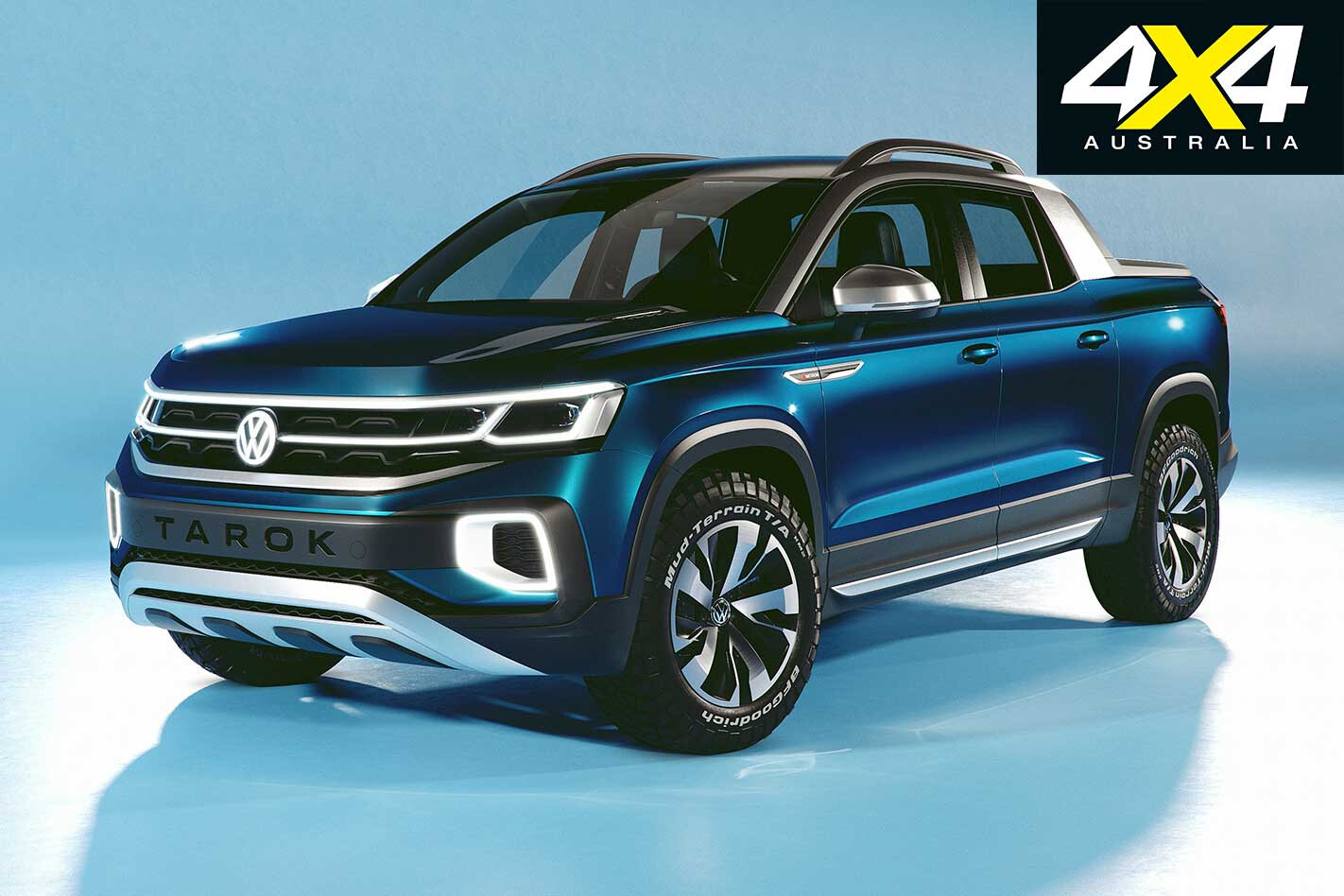
Volkswagen looks set to bring to production its Tarok concept, which it wheeled out at the San Paulo Auto Show this week. The VW Atlas wagon-based, monocoque-platform vehicle is set to become a light-duty pick-up in South American countries like Brazil where such vehicles are popular. It will be offered as all-wheel drive and 2WD, but it’s not intended to be serious off-roader or carry loads like the ladder-framed vehicles such as Ranger and Amarok.
LAND ROVER continues the trickling tease of its upcoming all-new Defender, with these new spy shots offering us the best glimpse yet as to what the short-wheelbase variant will look like.
Besides its abruptly short rear end, this SWB prototype bears no real discernible changes from the four-door prototype that was ‘leaked’ to the world last month.
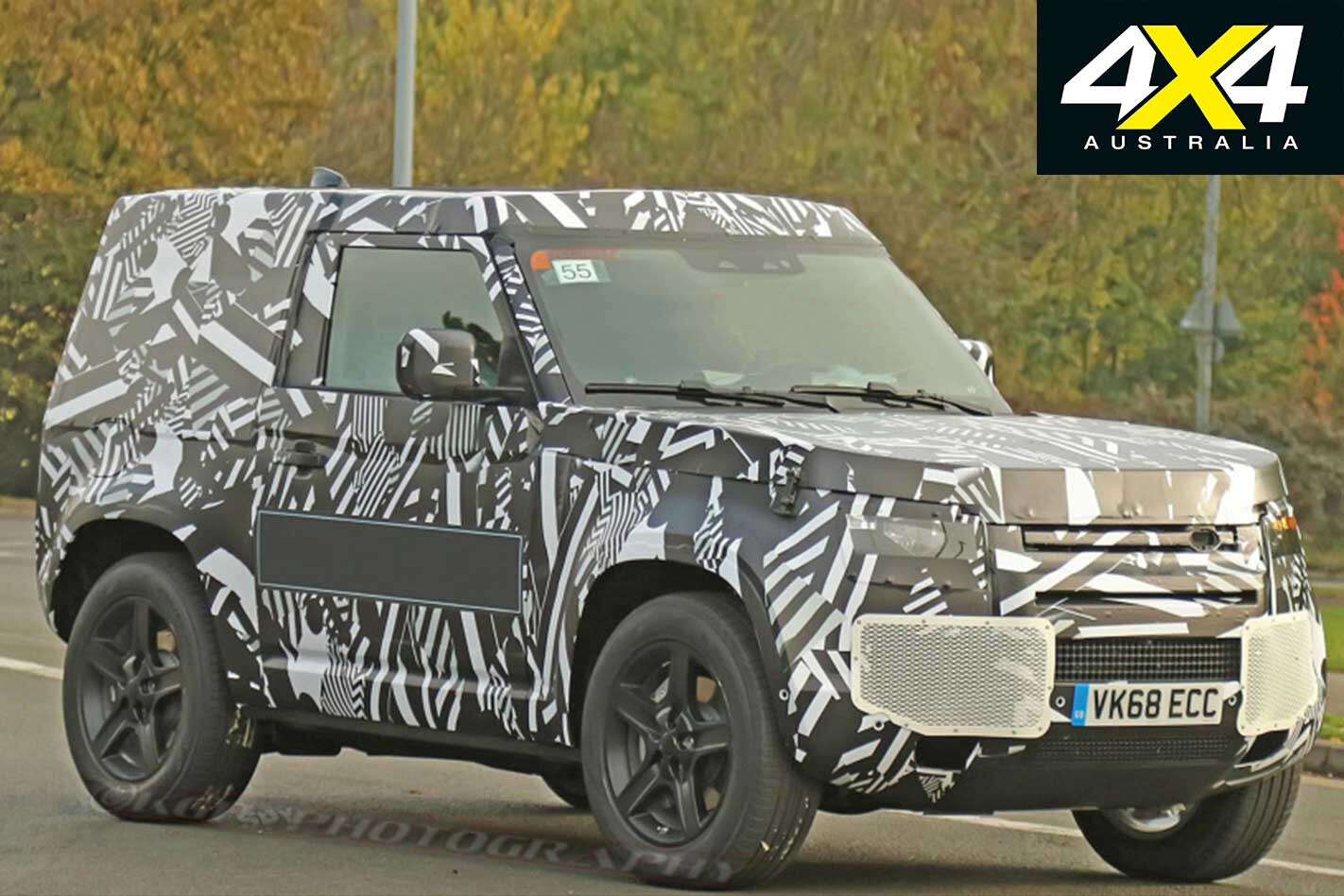
The front end is identical and reinforces the design’s nod to the Discovery 3 and 4 in terms of the styling, with the grille looking like a straight swap from this model, which, indeed, it could be in terms of simply being used to disguise the actual front-end styling. Interestingly, these pics also show a Jeep Wrangler-esque bonnet latch keeping the clamshell bonnet down.
The boxy rear, with its squared-off profile, shows LR has ensured it maximises storage space for the shorty (as with the four-door). Following on from the bonnet latch, the prototype’s rear door also looks distinctly Jeep; the low rear-door handle and visible window split hint at twin access to the rear, with a side-opening door and the ability to lift the window section only.
Again, the ‘door’ pictured here could just be camouflage, aimed at misleading us poor journos, with LR instead going with a full-size rear door that swings up or, more likely, a split rear door, aka D3/4. If, however, it does go for a swing-away door, that may allude to a rear-mounted spare wheel. Time will tell, as it will in terms of a ute version, of which nothing has been seen … yet.
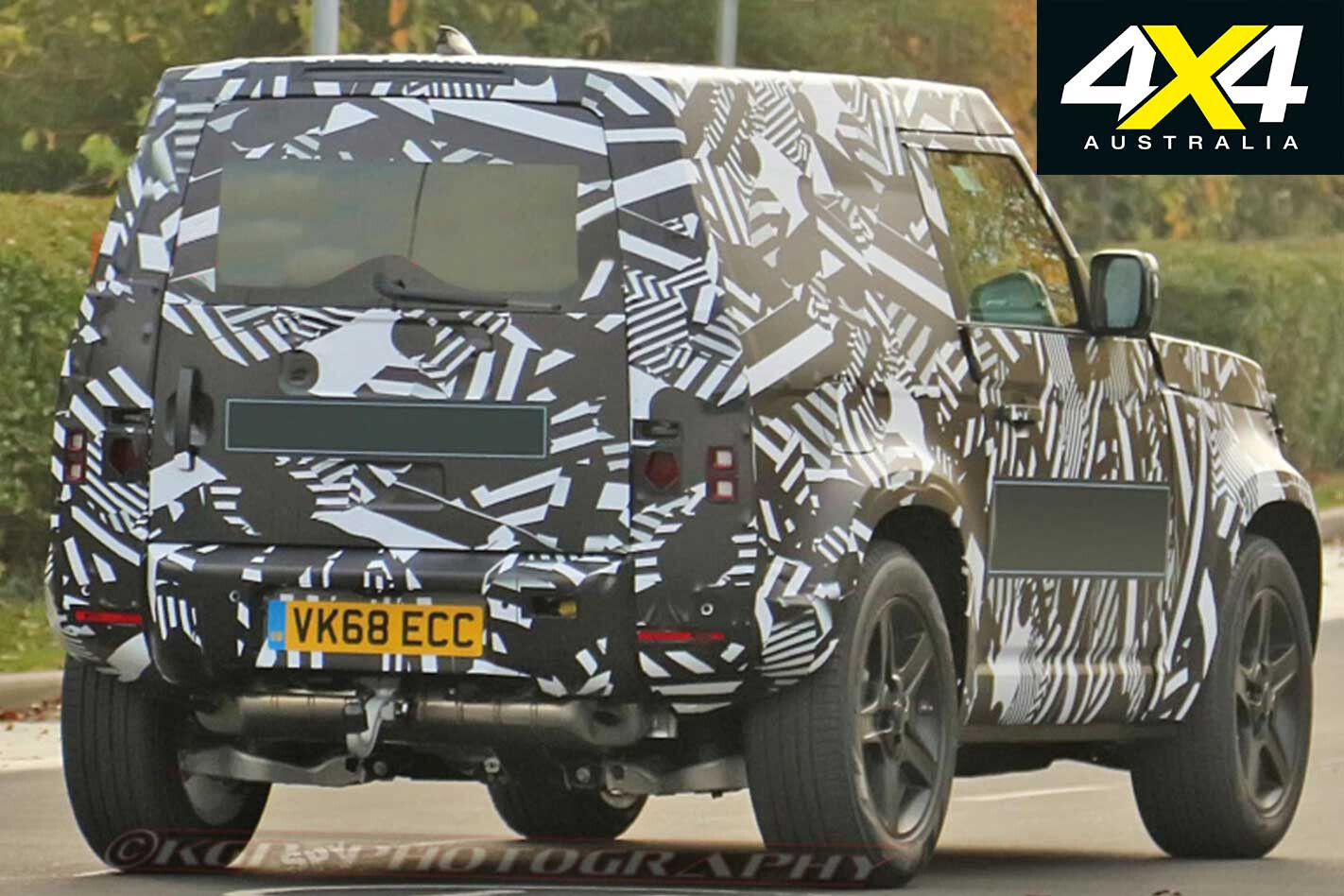
The low-slung body of the prototype indicates the new Defender will most likely run air suspension; although, fingers crossed Land Rover sees merit in offering a more ‘traditional’ coil-spring variant as well … it’s enough heartache for Landy-philes already to know that the new Defender won’t run live axles.
Running air suspension along with LR’s myriad electronic traction aids will mean superior on-road ride and handling, without much sacrifice in terms of off-road capability (the last few generations of all-independent Discos argue that point rather well).
There is also potential for more on-road, performance-oriented Defenders in line with LR’s Special Vehicles’ go-fast Rangie versions. Here’s hoping we instead get a full-blown off-road-biased ‘special’ akin to the Discovery SVX.
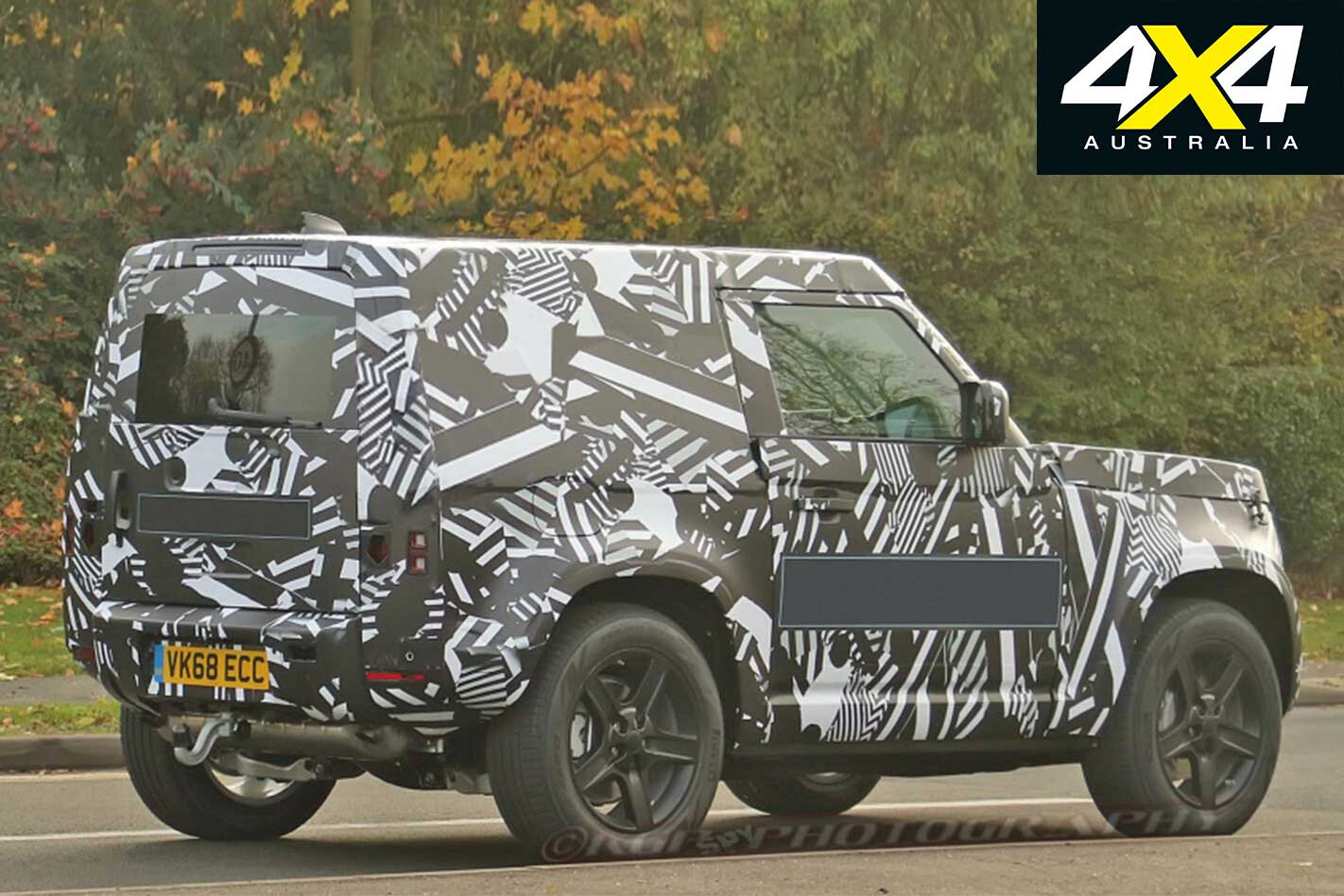
There’s no word yet on potential powerplants for the new Defender, but we’d expect LR to use the Ingenium 2.0-litre four-cylinder turbo-diesel as the ‘base’ donk, with the potential to offer the rumoured Ingenium 3.0-litre inline six-cylinder as a top-spec engine if/when it becomes available. We will also see a hybrid engine, and there may well be a petrol-powered variant.
The Defender isn’t expected here until 2020, but we can expect to see plenty more of these purported ‘leaks’ of photos and information as LR builds up to the vehicle’s launch. What we won’t see – or know – until the actual launch is what market(s) LR sees Defender positioned for.
The vehicle has potential to be sold across the ‘lifestyle’ market, as well as appeal to the more traditional off-road market and buyers who are attracted by the versatility of dual-cab 4×4 utes. It will have to do all of this and then some to be the success that LR needs it to be.
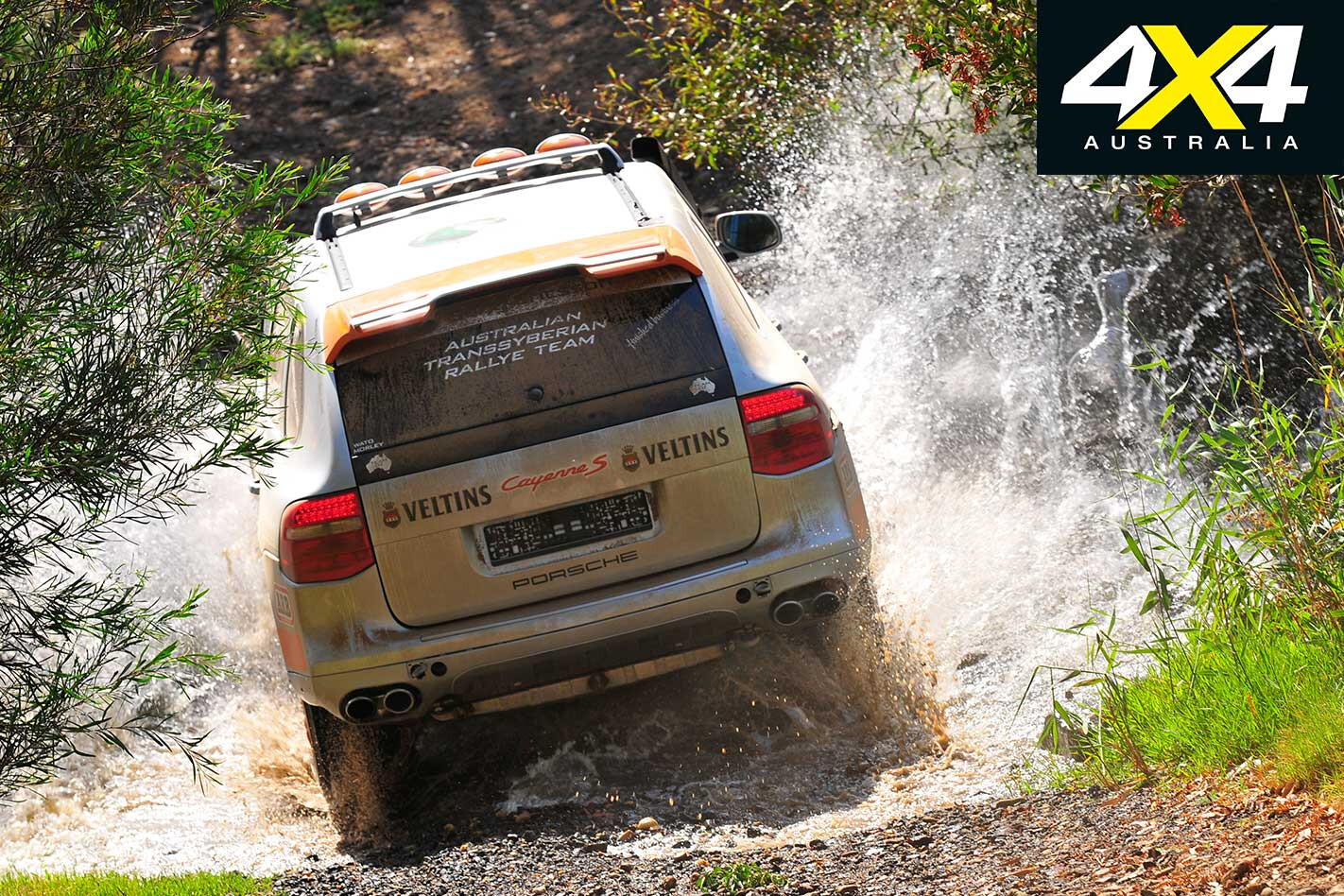
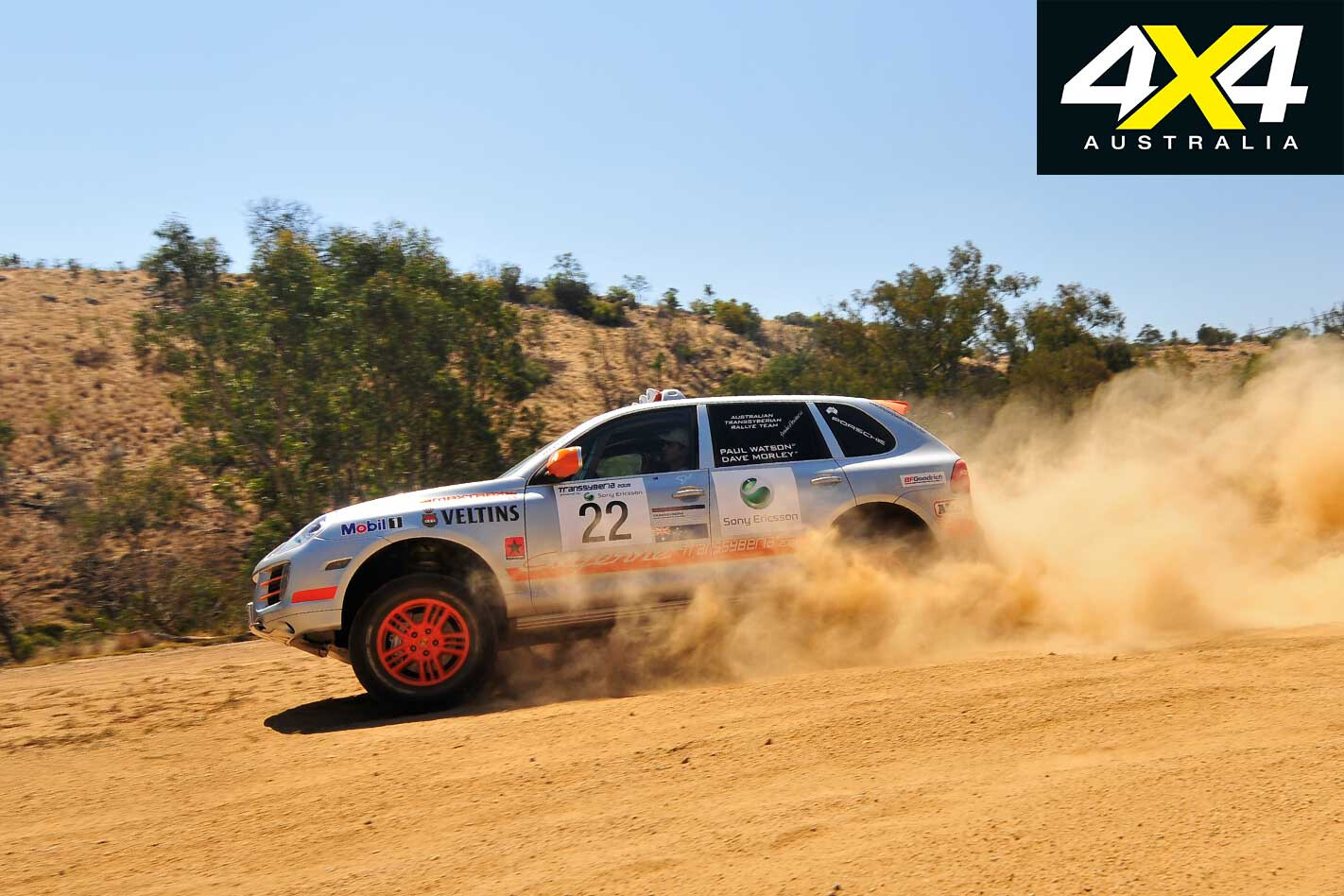
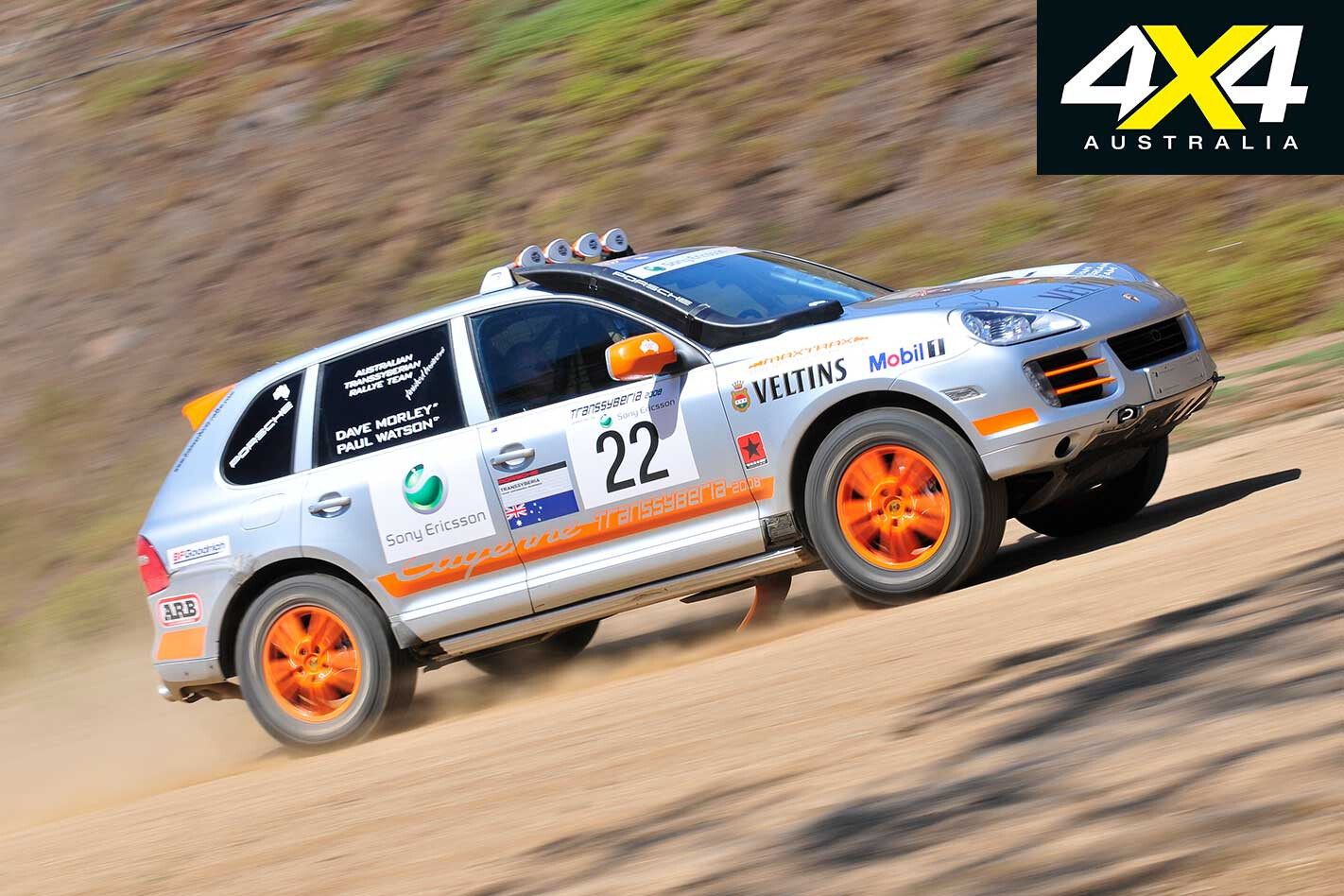
I was sitting on the wrong side of a vehicle that had the potential to launch me into orbit. A standard V8 Porsche Cayenne S has loads of grunt. This one, prepped by Porsche for the 2008 Transsyberia Rallye, is impressive.
This feature was originally published in 4×4 Australia’s May 2009 issue
Roll cages; race seats and harnesses; minimal (read: no) sound-deadening; and plenty of ‘extras’ added for the event mean stepping inside this vehicle is serious business. Being my first foray in a left-hand drive vehicle, nerves were jangling – and I hadn’t even started the thing.
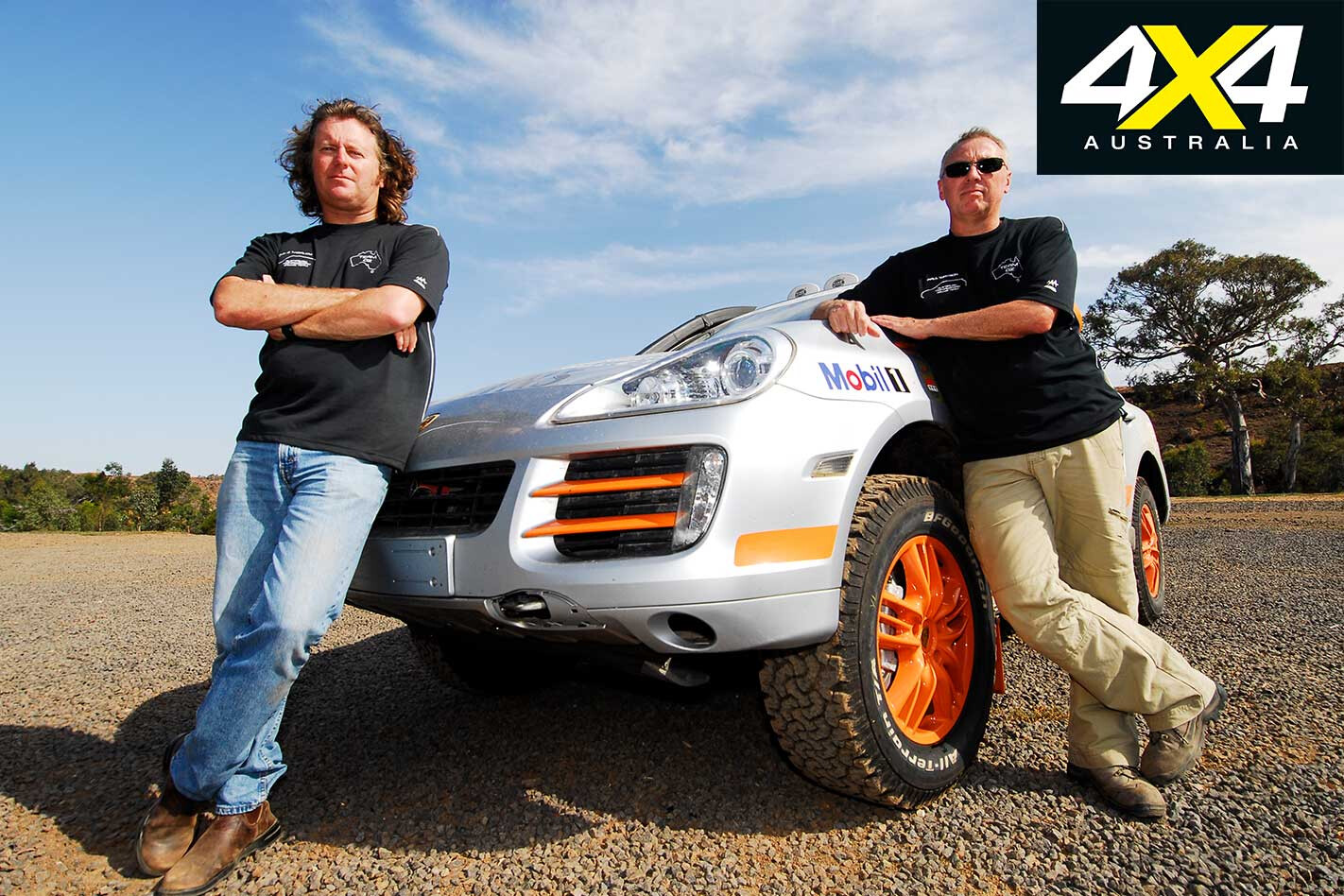
I was at the Melbourne 4X4 Training and Proving Ground with Paul Watson and journo Dave Morley, known collectively as Team Oz, that participated in the 2007 and 2008 event.
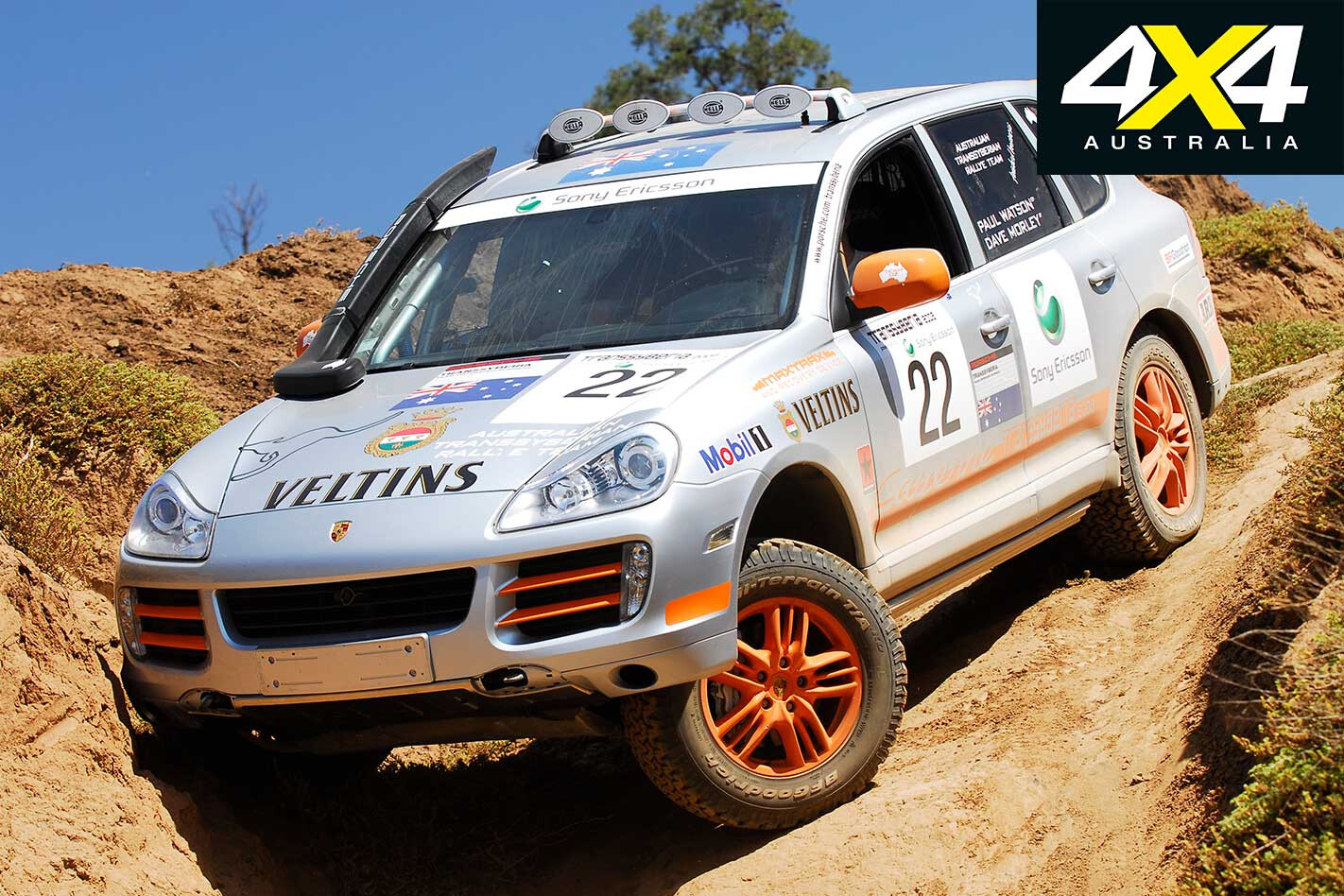
Preparation is the key to success and it was clear, sitting inside this Cayenne – and walking around it – that Porsche didn’t leave any stone unturned to get each of its 26 entries in the two-week adventure into fighting trim.
Mind you, the vehicle hadn’t been ‘cleaned up’ since the lads’ 2008 foray, dubbed ‘Unfinished Business’, so it still had that post-war appearance, with dust, a distinct aroma (Watson and Morley call it ‘Yak Burger’) and minimal aircon. This I found out after travelling from the airport to our driving destination.
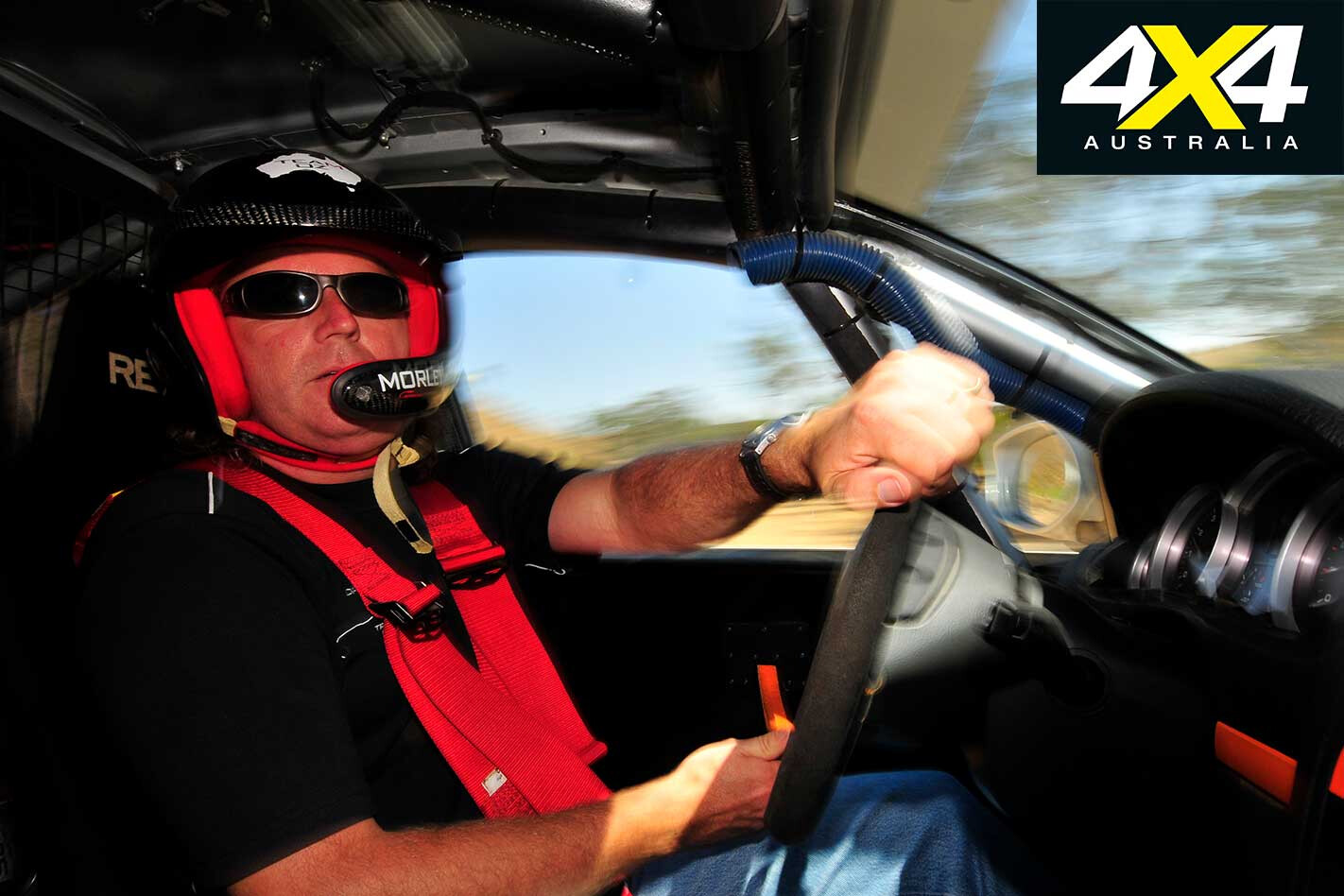
The team had to wear helmets during the special stages so the small, blue hoses that at least offer some added air, were a godsend, while still offering a very small taste of what would have been the team’s daily (12 hours-plus) discomfort levels.
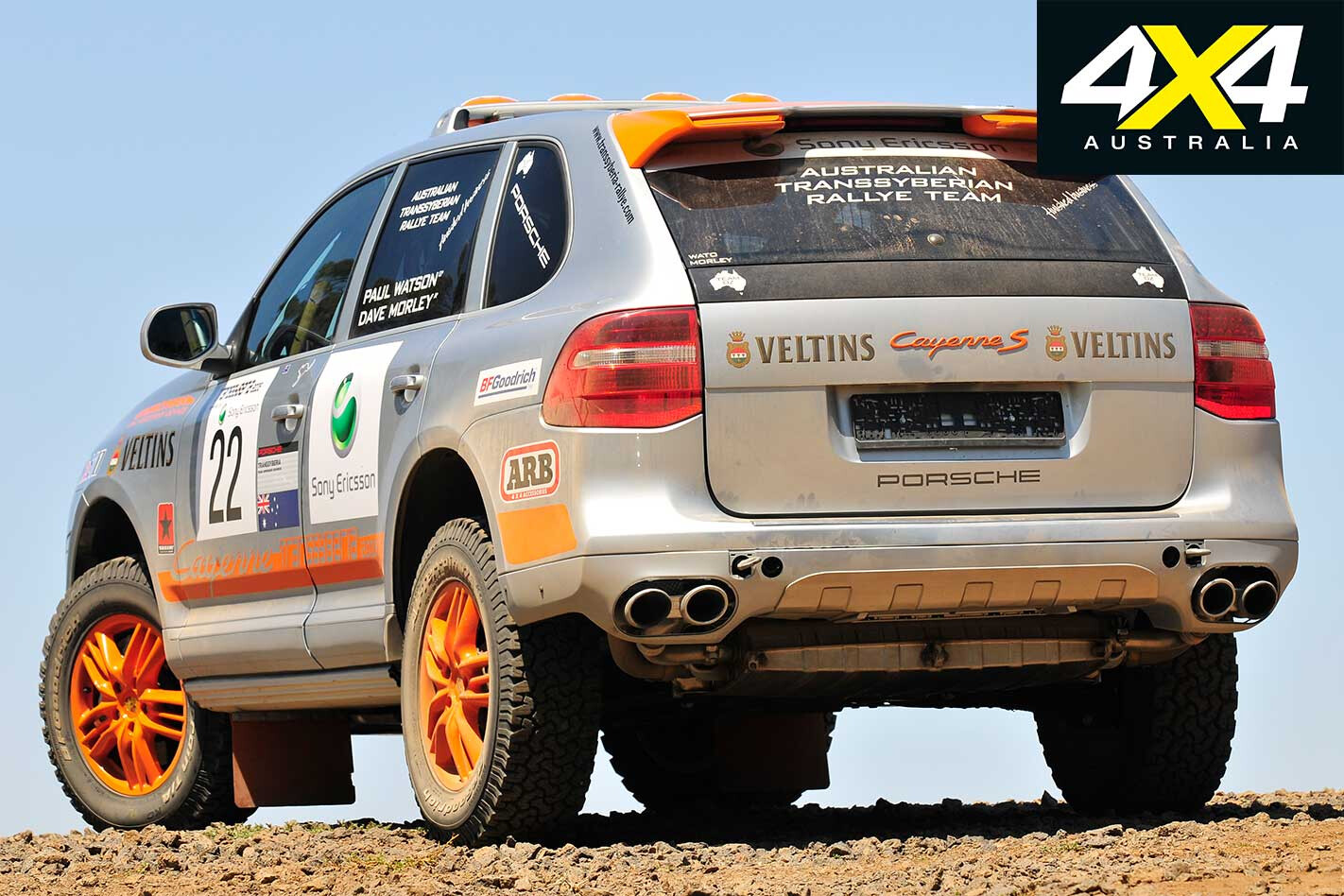
The moniker Unfinished Business came about through the duo’s conclusion to the 2007 event. This was the culmination of a series of unfortunate circumstances that started with Dave Morley suffering food poisoning so severe that, in Paul’s words, ‘he couldn’t get more than two metres from a dug hole and toilet paper!’
This resulted in Paul teaming up with one of the English entrants for the next day’s stage. Driving over a crest during this leg, the Cayenne pitched head-first, at fast touring pace, into a ditch. The outcome was Paul suffering a fracture to his L3 and crushing the T12 in his spine.
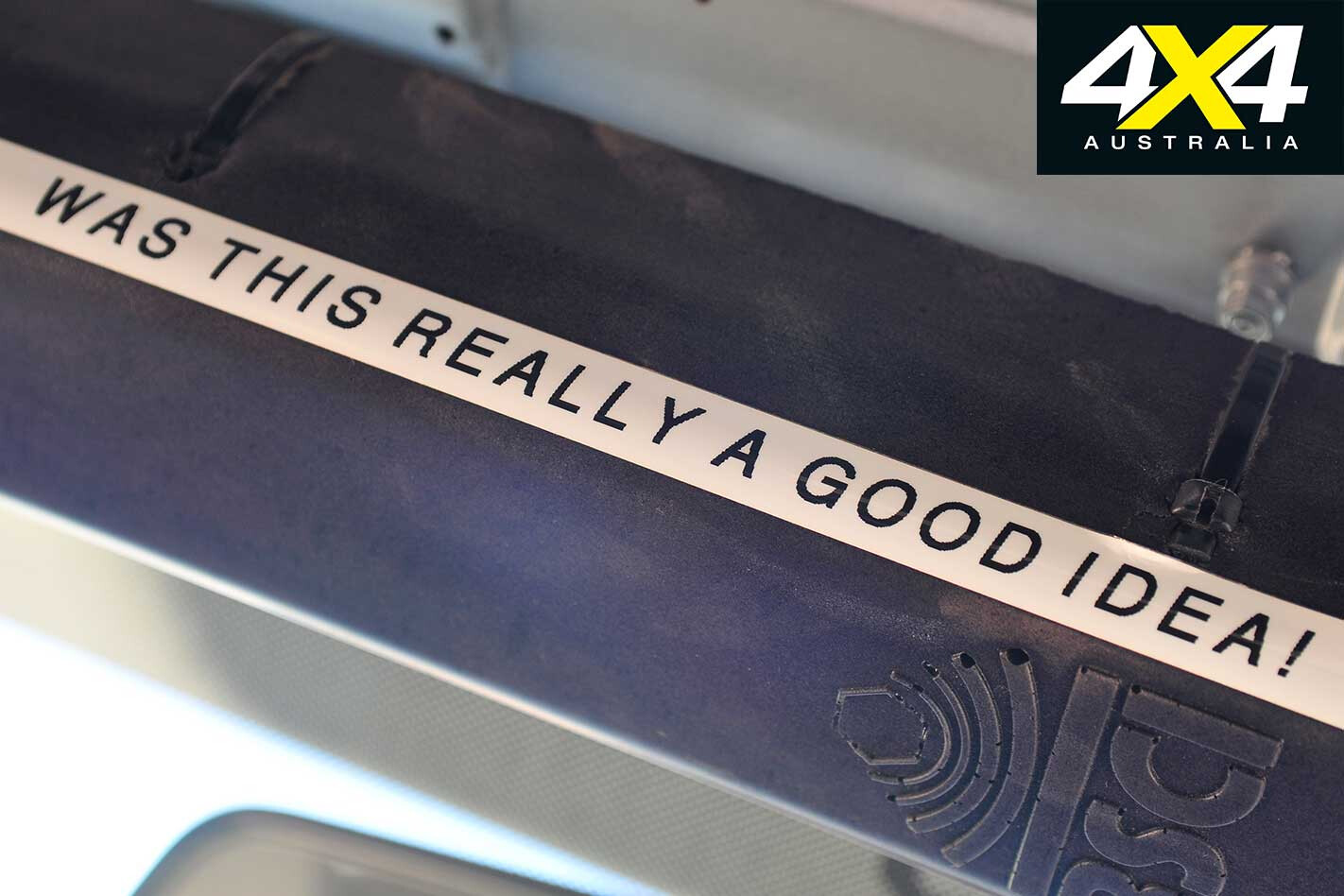
As we walked around the Cayenne, Paul pointed out a highly motivational accessory: a sticker stating ‘Was this really a good idea!’ It took a great deal of mental strength for Paul to get back in the Cayenne for the 2008 event.
When fitting out the vehicle, Paul and Dave were very specific in what accessories they wanted, and where they wanted each one to be fitted. Experience gained in the ’07 event helped here.
For off-road rubber, Porsche went for BFG All-Terrain T/A 265/65R18 tyres, on high-strength rims. The BFGs, according to Paul, performed extremely well in the ultra-tough conditions.
“The kevlar sidewalls were great. We used two sets and the terrain was rough enough to actually rip chunks out of it and cut up the sidewalls, but we only lost one tyre. We came through a tight section with a quick left and right, spotted a Russian team changing a tyre and hit the same thing they did!”
Re-inflating tyres was left to a portable high-output ARB compressor. It performed faultlessly, according to Paul.
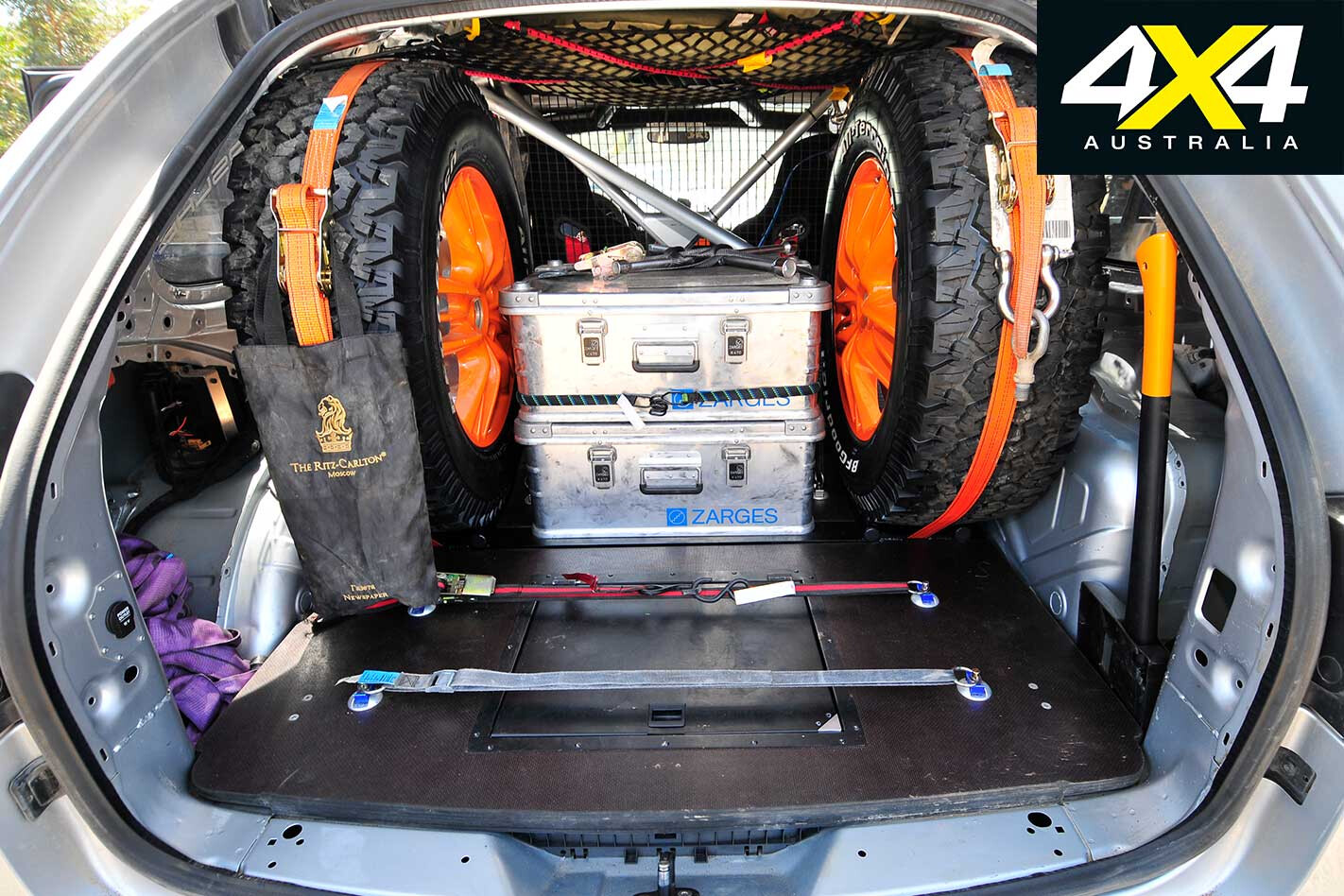
“The Cayenne’s standard air suspension has thermal cut-out. So, if you’re in 45-degree temperatures and bringing the suspension up and down a lot using the standard compressor – as well as having to pump four tyres up constantly – it’s loading a lot of work onto it,” Paul says.
“If it gets too hot it ‘thermals open’ and you lose your air suspension; it will stay at the height its at at that time, so I just didn’t take the chance, fitting the ARB compressor behind the driver’s seat and cable-tying it there.”
Think of all the essentials you would fit to an off-road Rallye vehicle and cable ties are probably well down the list but, for Team Oz, they were a must-have.
“We had cable ties littered all around the car because you need to cable-tie things down for security. And, if something goes wrong and we need to get at something you just cut the cable tie, do whatever you have to do, throw another cable tie on it quickly and you’re gone, rather than stuffing around with straps,” Paul says.
The Cayenne’s snorkel is also unique; it is attached to the vehicle with velcro straps for easy removal when the team needed to work underbonnet.
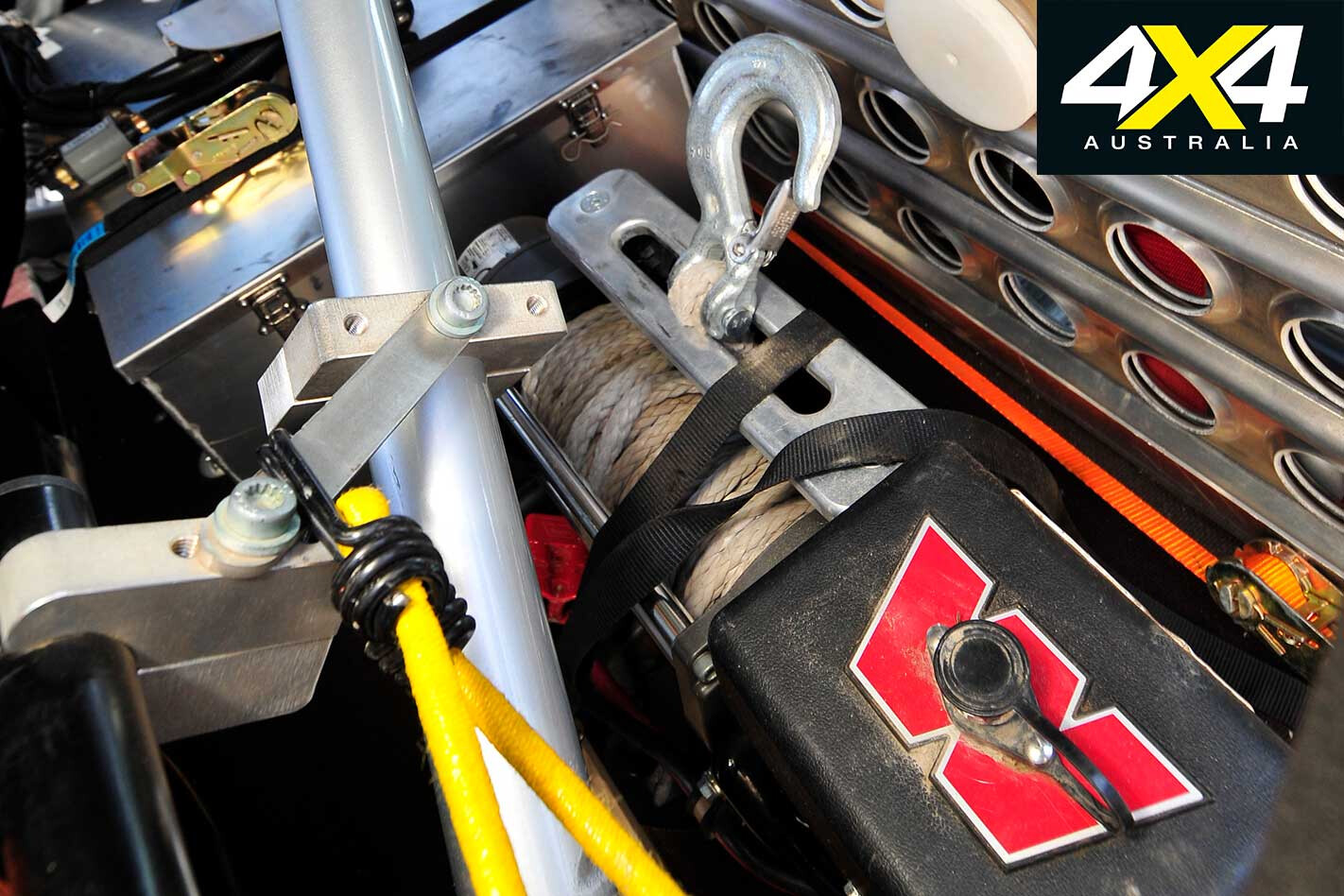
Recovery gear includes sand ladders, stored in the rear, a Warn winch that can be fitted front or rear, a set of heavy-duty ARB recovery straps and shackles, and a high-lift jack, which the team utilised via a small adaptor.
The terrain during the Rallye was extreme, brought home when Paul showed me a piece of winch plasma rope, torn in half. “That’s how stuck we were,” he said.
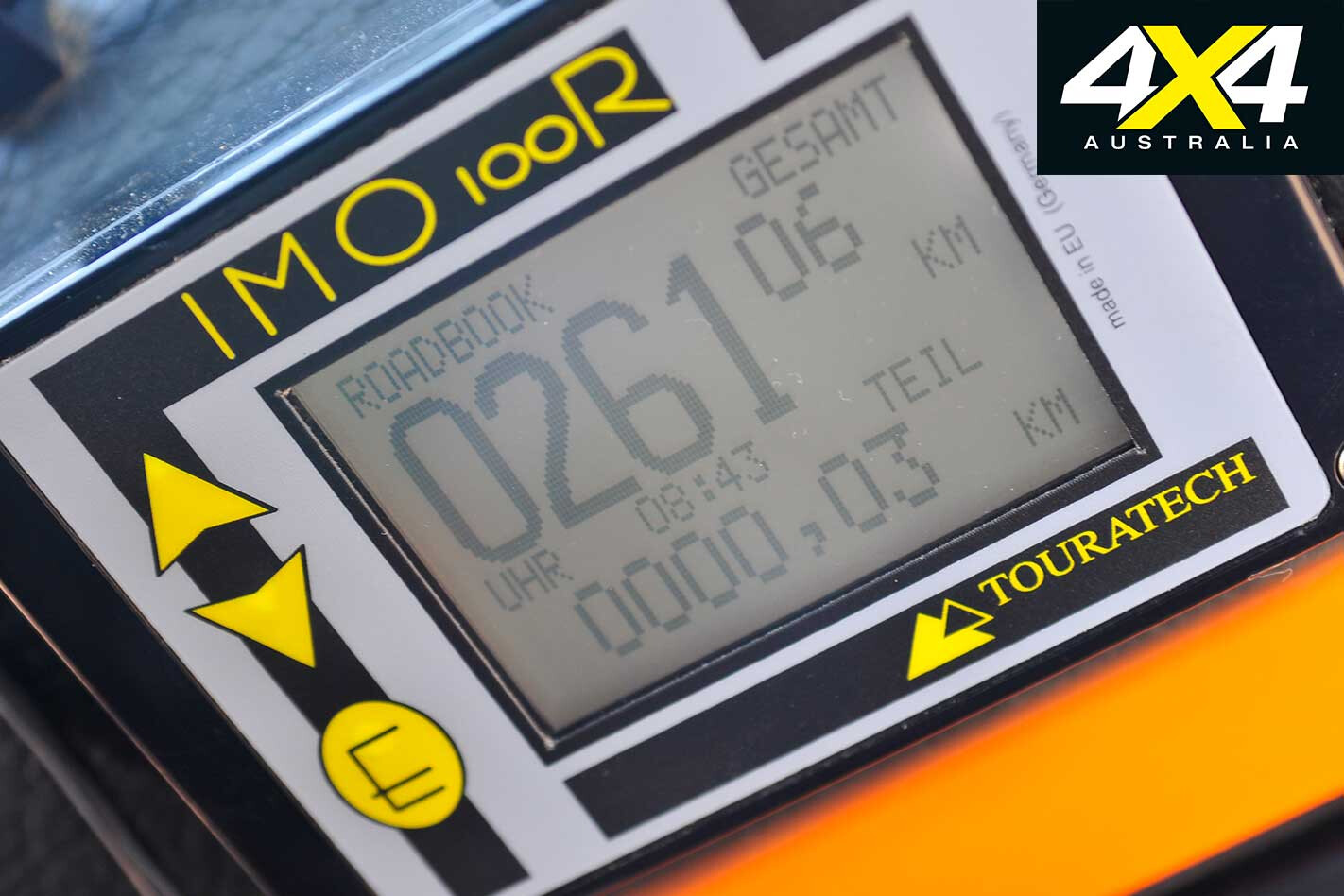
Economy and fuel availability (as well as quality!) were big factors in the Transsyberia so an auxiliary tank was fitted to the Cayenne, with a toggle switch up front to activate it when needed. Combined with the team keeping an average fuel economy figure, and checking distance to the next stop against the Touratech IMO 100R Rallye computer, they managed to avoid having to fill up at many of the more suspect fuelling stations.
The Touratech unit can display total distance covered by the vehicle, partial distance and time of day. Its countdown feature meant the guys could accurately calculate how much distance to the next stop; how much fuel had been used and whether they needed to activate the auxiliary tank or not.
The Cayenne’s suspension and ride controls were modified slightly for the Rallye with the ABS able to be disabled and the whole suspension system to be reset when needed.
So, how does it drive? It’s a genuine Rallye vehicle experience – minimal sound-deadening means there’s plenty of engine roar. The 4.8-litre V8 has oodles of low-end grunt and, combined with the direct steering, makes this thing highly ‘chuckable’.
The air shocks showed the rough treatment they copped (more than 15,000km of testing terrain), although they still deliver ample performance, accompanied by a noticeable thumping sound. Turning stability control off allows for more direct driver input (more sideways in my case) but the vehicle still feels nice and ‘tight’.
Next up, it’s Dave Morley’s turn behind the wheel. He shows his familiarity with the Cayenne and, after commenting on the still-present smell that brings back event memories, declares it is still one of his favourite drives.
Besides the fast stuff, the Cayenne belies its luxury leanings by impressing in more rugged terrain. Utilising the diff locks and disconnecting swaybar allows it to clamber over some challenging terrain. And, it makes it easy – all I have to do is press the diff-lock button three times to lock the centre, rear and then front diffs, punch the swaybar disconnect switch and off it goes. My only job is to steer.
This rams home the standard Cayenne’s impressive off-road ability and how this shiny, posh, rig transformed itself into a Rallye beast that left the Team Oz duo so impressed.
All too soon it was over and I was sitting, still slightly unsettled, on the wrong side of the vehicle as Paul drove me back to the airport. The day had been a quick blast in what is a unique vehicle – and it had given me a taste of what an event such as this would be like. And it explained the extra-wide grins from both Team Oz members whenever they talked about the experience.
Porsche hasn’t mentioned being involved in any more of these events but, after whispered words to Paul Watson about Morley’s advancing age, I fully intend to be right at the front of the driver applicant queue!
Repeat performers
After crashing out of the 2007 Transsyberia Rallye after just a couple of Mongolian stages, I was a bit surprised when Paul Watson phoned me about March last year and asked if I wanted another crack at the event.
I had my bag packed before the phone had hit the cradle.
Right from the word go, we became Team Unfinished Business – Watto was pretty much obsessed with getting to the end of the rally. To be honest, that suited me fine, because getting busted up and landing in a Mongolian hospital didn’t exactly float my boat.
So we swore a pact that if either thought the other was driving too quick, he’d say so. It never happened, though, because we both tackled our driving stints at what I’d call `fast touring’ pace (an approach taught to me by a bloke who’d raced motorbikes at the Isle of Man and lived to tell the tale).
Throw in our much improved navigation form over the year before, and suddenly we were looking okay, despite a disastrous first stage where we copped a 10-hour time penalty even though we were winching out other cars and generally lending a hand.
But from there, we clawed our way back and I swear, when we rolled over the finish line in Ulan Bataar in 13th outright, it felt like we’d won the damn thing.
The rally wasn’t without its testing times. Our biggest blunder was to try a risky short-cut that left us doorhandle-deep in a Mongolian river with nothing to winch off.
So, we dug a big hole, buried the spare tyre and winched off that. We made it out – but not before drowning the car and breaking the winch cable – and finished the 300km stage with three minutes to spare.
Our only real mechanical glitch was a result of busting a hydraulic hose on the active stabilisers somewhere in Mongolia. We soon learnt the hard way that the stabiliser set-up’s fluid also drives (and lubricates) the power-steering pump.
Two days later, that let go, seizing on its shaft and spitting the drive belt into the Mongolian mulga. And since that belt also drives the water pump, we were stuck, 12km from the end of a special stage in which we’d been running about third. I could’ve cried.
We figured that if we could drive the water pump, we could finish the stage. We liberated an occy strap from our luggage, cut off the metal hooks, joined the ends with zip-ties and spun the water pump straight off the crank. And it worked. That occy strap still lives on Watto’s desk.
Beyond that, it was the usual fatigue, stomach bugs, monster mozzies and stopwatch anxiety that makes up a large part of any long distance, trans-continental rally. And this won’t come as any surprise, but I wouldn’t have missed it for anything.
Would I do it again? My bags are already packed. Just in case. – David Morley
Running a media service for the recent 2008 Red Centre to Gold Coast Trial posed a serious cost/benefit question.
This feature was originally published in 4×4 Australia’s January 2009 issue
I wanted it all – a 4X4 capable of getting into remote outback stages of the 7600km event – and an RV that would be quick to set up, serve as a mobile home and media centre, yet wouldn’t break the bank when diesel was costing more than $2.30 per litre in some centres.
I set my sights on a compact turbo-diesel 4X4 with bush cred, rather than a soft-roader, which I knew would be out of its depth in some of the terrain the Trial would encounter.
Most of these vehicles are rated to tow braked trailers weighing two tonnes or more and there’s a plethora of lightweight caravans and pop-tops on the market capable of sitting on their tow bars.
A standout on the spec sheets was Land Rover’s Freelander 2 TD4, which weighs in at just 1780kg, but whose 2.2-litre four-cylinder diesel pumps out an impressive 400Nm at 2000rpm. Plus its claimed combined cycle fuel consumption is a miserly 8.5L/100km.
From earlier experience we also knew it was tough; Land Rover claims the Freelander’s monocoque shell is the third toughest on the market, behind the Range Rover and Porsche Cayenne.
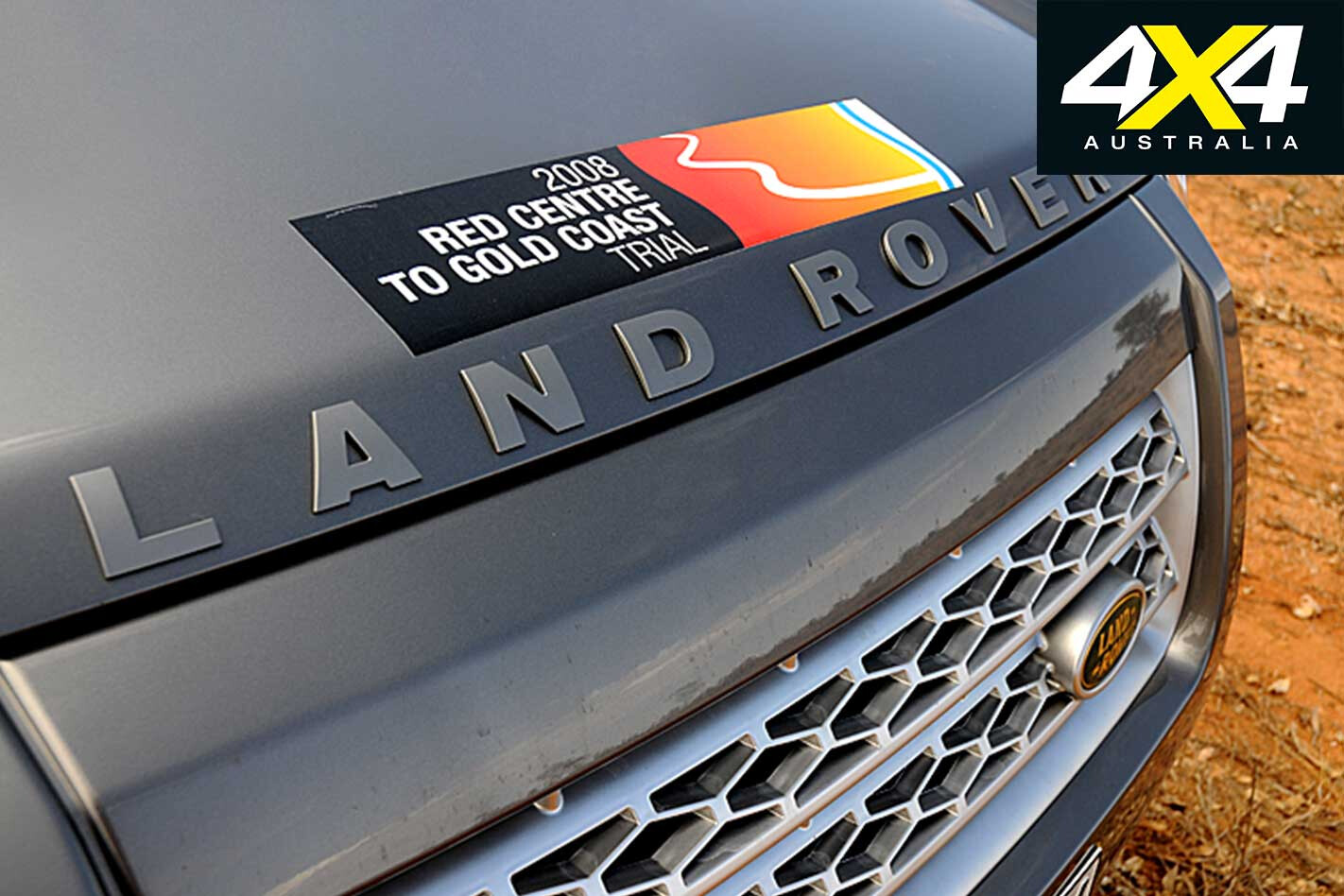
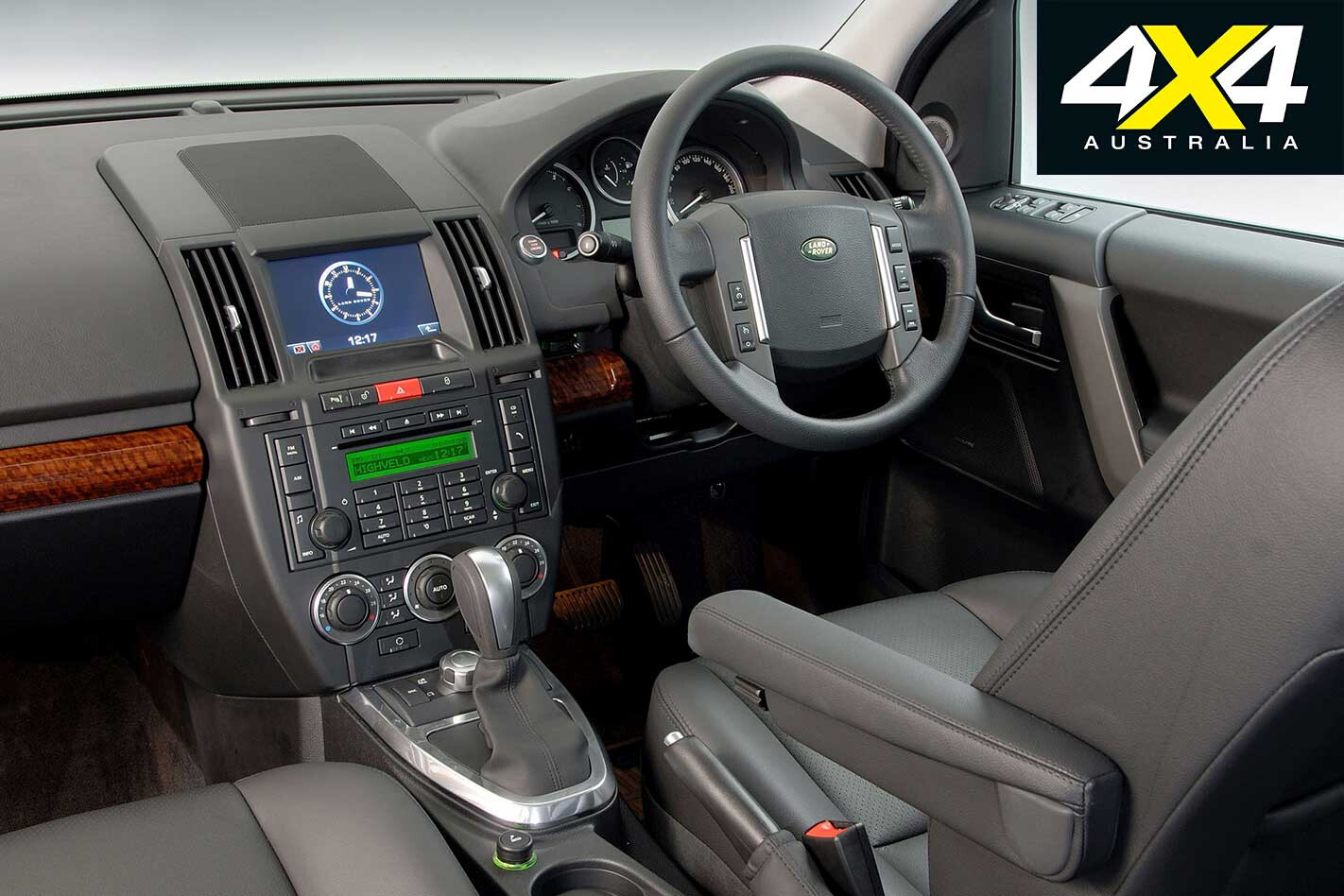
Moreover it has Land Rover’s Terrain Response 4X4 system and a claimed 210mm ground clearance, which we figured would be more than adequate for covering an event designed for two-wheel drive historic rally cars.
Now the RV. Under her recently issued ‘terms of travel’, my wife insisted on an internal en-suite shower/toilet if we were planning extended accommodation. And I insisted that the towed vehicle must have an off-road spec chassis so it could keep pace with the Freelander and hold together over rough, corrugated roads.
But when you start looking around for an off-road caravan or pop-top, with a full en-suite and all-up weight well under two tonnes, the field narrows markedly.
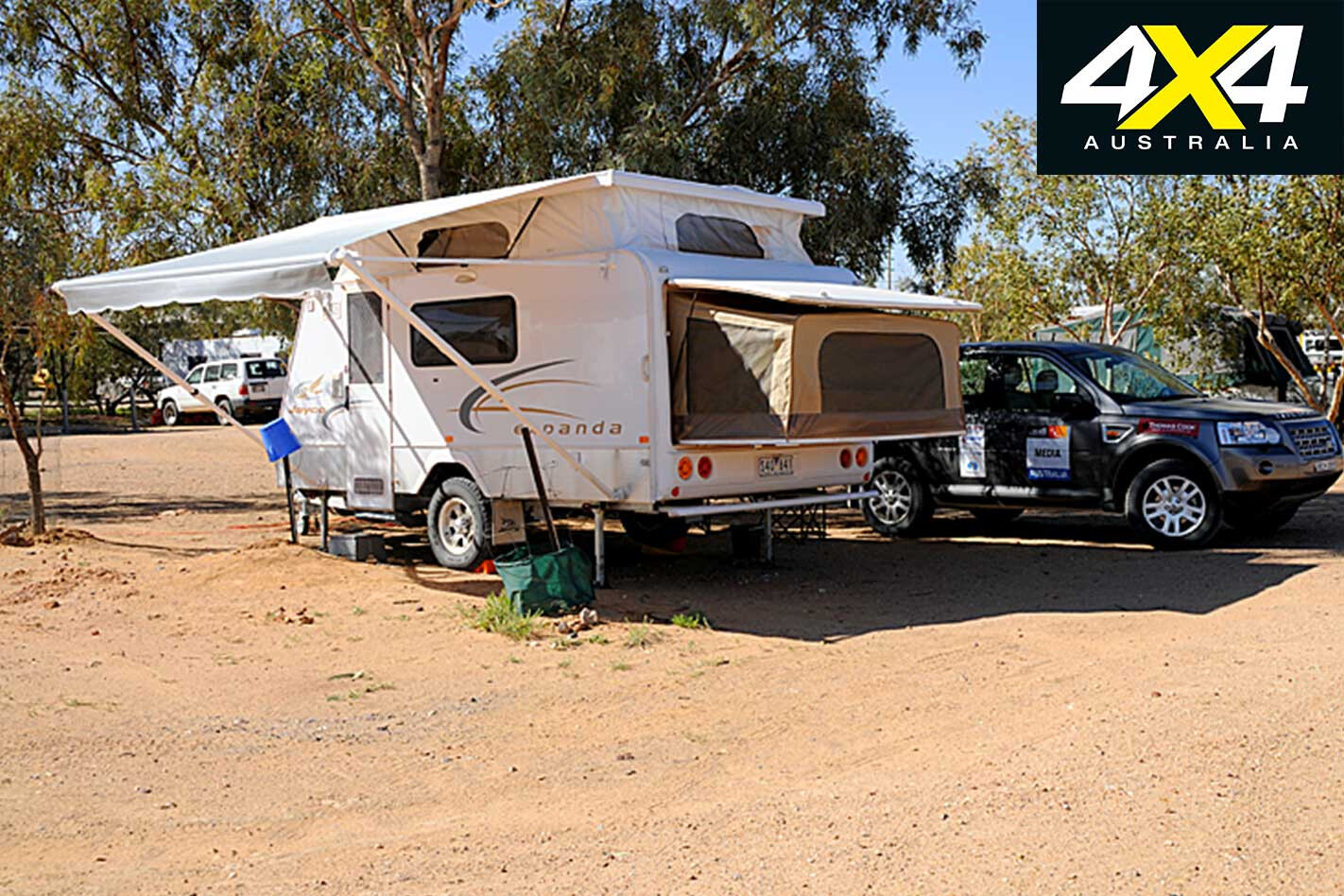
Jayco’s latest Expanda pop-top ‘Hard Lid’ range was a logical starting point. The entry level en-suite model with single drop-down double bed weighed in at just over 1500kg in basic ‘Outback’ spec. In Outback trim, it comes with strengthened chassis, heavy duty leaf-spring suspension, more ground clearance and some extra stone shielding.
Even with its dual 90-litre water tanks topped up, two full 9kg gas bottles, a full jerry can of fuel on the drawbar and all the usual home and kitchen comforts on board, it was still comfortably under the Freelander’s two-tonne towing limit.
I had initial misgivings when I arrived at Jayco’s impressive new Melbourne head office and factory. While 4.5m long and more than 2.0m wide, the Freelander’s footprint is not that much smaller than a Discovery 3, but the Outback Expanda towered over it on the tow bar. However, it only took the first kilometre or so to be convinced that the TD4 was more than up to the job of towing what was effectively its own weight.
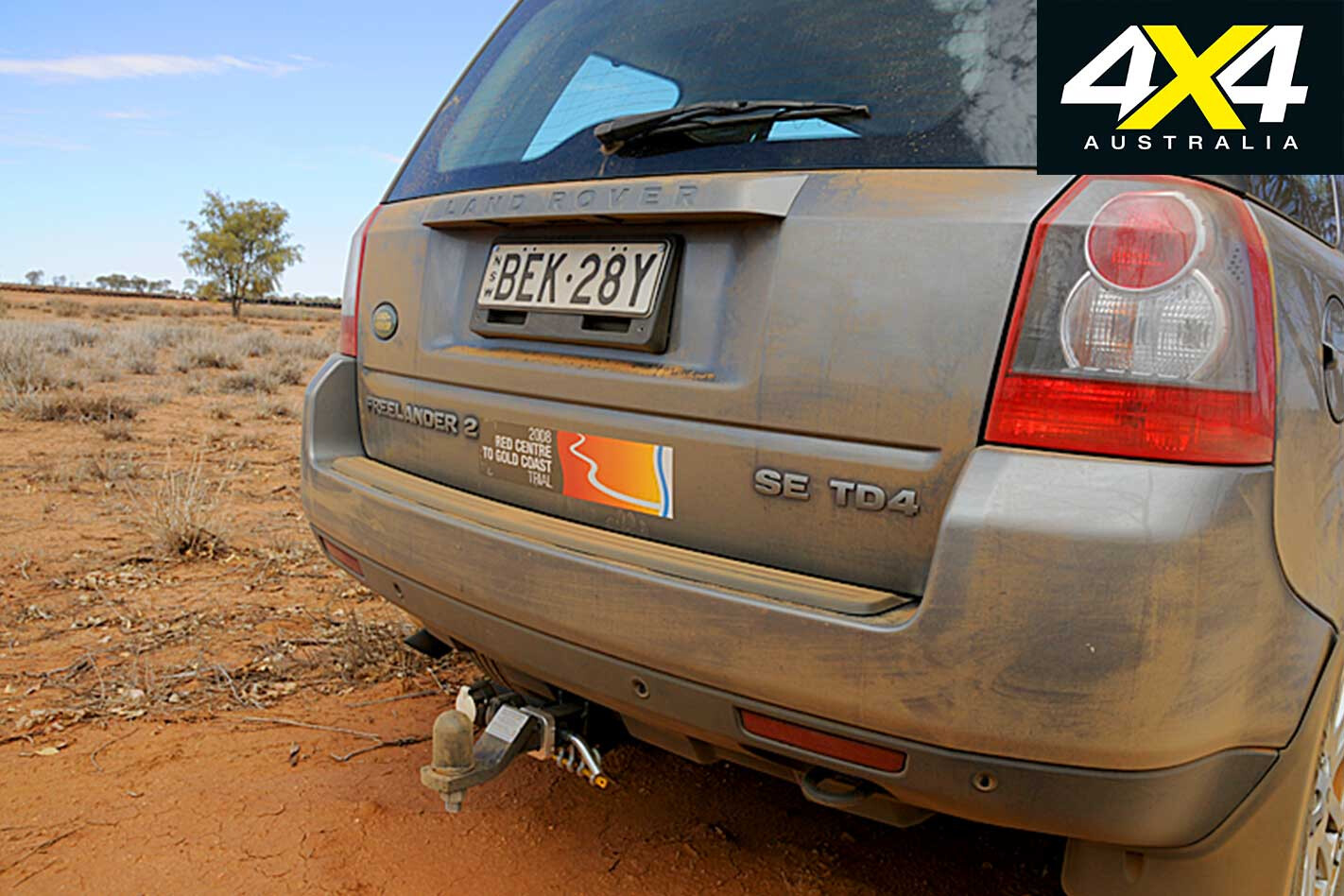
It was also interesting to see how the Expanda’s 150kg tow ball load made very little difference to the Freelander’s ride height, despite the absence of any load-sharing device, as Land Rover officially disapproves of these.
Like most compact 4X4s, the TD4 has an on-demand 4X4 system, which means that it drives the front wheels most of the time, but dials in torque to the rear wheels when additional traction is required. Starting off, particularly on a slope or with some steering lock on, there’s a brief steering tug from the front wheels as the torque kicks in; there’s around 250Nm on tap from just 1200rpm and torque peaks at 400Nm just 800rpm higher.
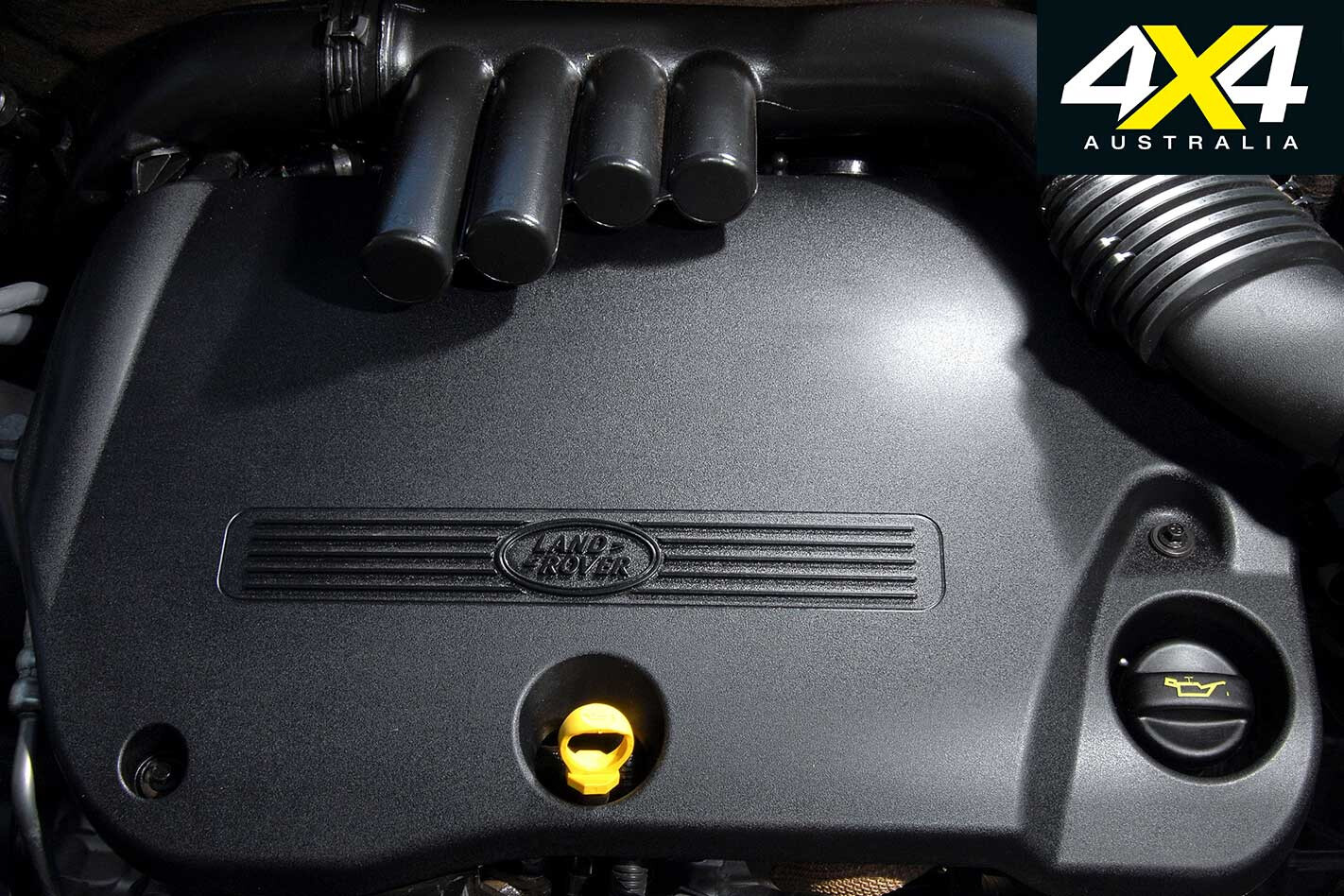
This instant power-up means the TD4 is never an embarrassment when towing in traffic, even with the fully laden Expanda behind. Likewise, performance on the highway and steep hills is good.
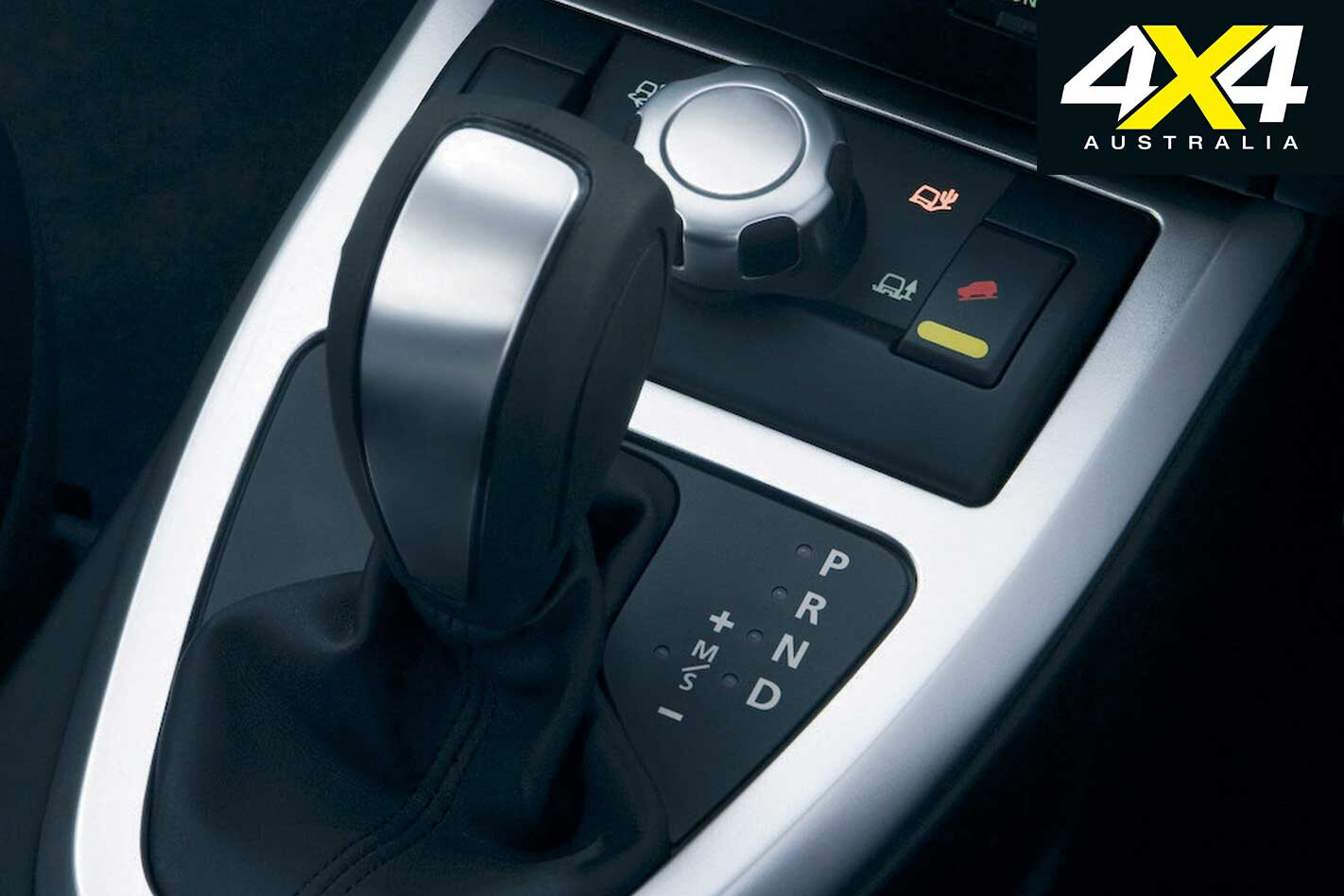
A lot of credit must go to the excellent six-speed ‘Command Shift’ automatic transmission. The nicely-spaced ratios complement the meaty torque curve, always keeping the engine on the boil in the 1750-2250 rev range.
However, when we were travelling into constant head winds north of Port Augusta, the transmission was reluctant to hold sixth gear at speeds above 100km/h, preferring to run at around 2200-2300rpm in fifth.
We tried the manual mode to force it to hold sixth, down to as low as 1500rpm, but the power train clearly wasn’t happy and fuel consumption rose. This is not recommended because of its potential to overheat the transmission.
There was never any question of keeping up with the Trial, as competitors were being asked to average more than 750km a day over often-rough and always unmade outback roads.
Our game plan was to shortcut the route and intersect the event in various locations – Longreach, Birdsville, Bourke and Goondiwindi, while pacing it to the Broadbeach finish. So, as the field left Alice for Mt Isa, Normanton and Cairns, we headed for Longreach, via the East MacDonnell Ranges and Boulia.
We also did a day trip without the Expanda into the beautiful Ruby Gap Nature Park in company with a current model Jeep Grand Cherokee. While the Jeep crew reported a few ‘touches’ as we scrambled through some rocky river beds, the Freelander TD4 came through unscathed.
The Freelander’s long 2660mm wheelbase and generous 1.6-metre track make it a stable towing platform. And the long-travel suspension results in a comfortable ride on crook surfaces.
Heading to Birdsville, we chose a short cut to the Plenty Highway via the little-used Cattlewater Pass, to save ourselves around 50km compared to the route via Gemtree. But when the road gradually reduced to two rocky wheeltracks that dropped in and out of the adjacent riverbed, we sensed we were in trouble.
While the Freelander would have done the track solo, it was far from ideal towing the wide Expanda, which was rubbing both shoulders with the scenery and being asked to perform articulations well beyond its ‘outback base-station’ role.
The many humps on the track caused the low-slung spare wheel (mounted under the front A-frame) to act as a grader and one unseen protruding rock dispatched the flimsy side step.
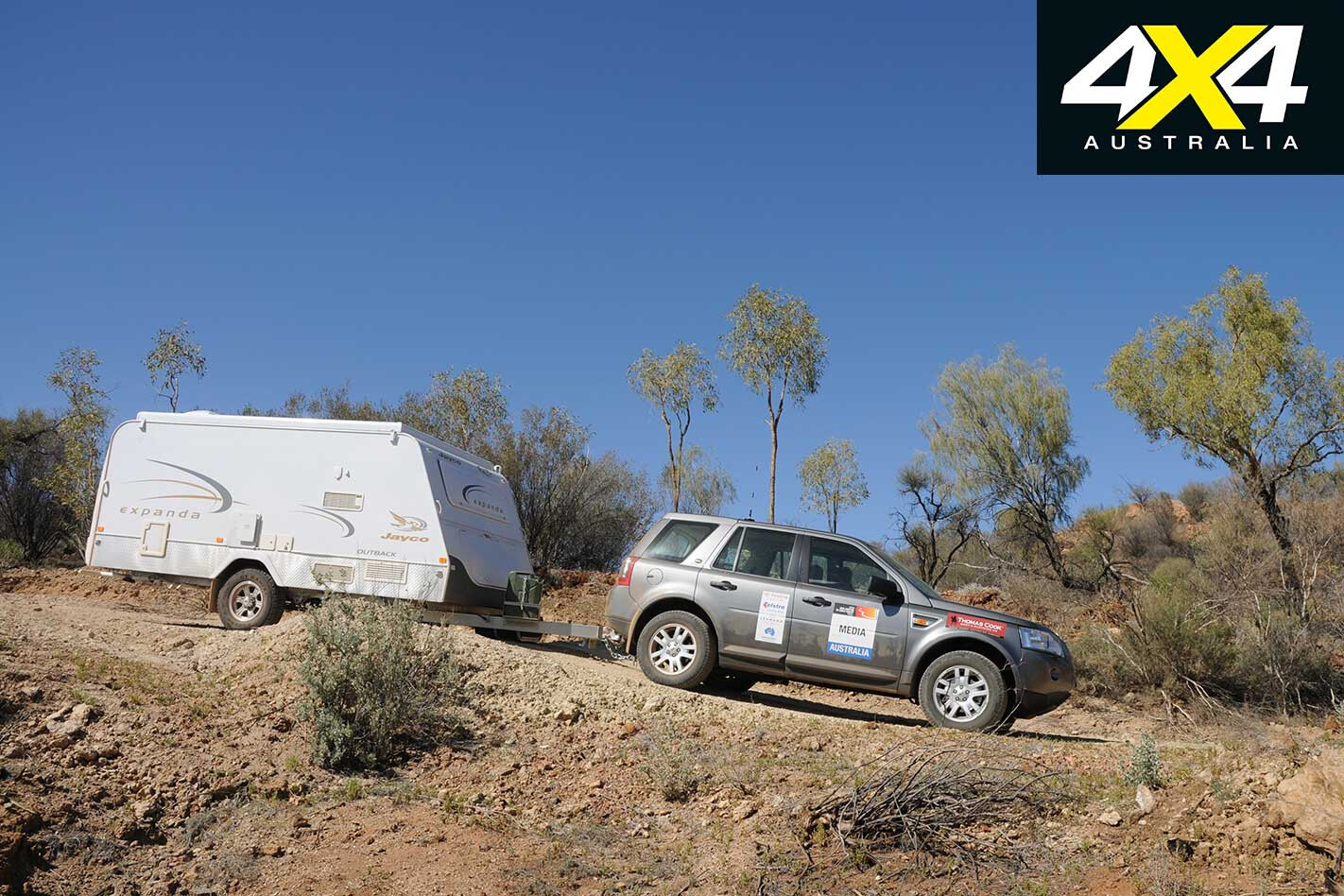
What really impressed us through was how the Freelander coped without low-range gearing and with highway-spec 235/60R18 rubber. At one stage, after crawling through a rocky river bed, we were faced with a substantial climb up a rutted section of the track.
We had serious doubts about half way up, as all four wheels started scrabbling, but the Freelander found enough grip and lugged its way up, dropping down to 1000rpm at times in first gear.
Getting down the other slippery side with the equally-weighty Expanda pushing us really tested the Freelander’s Hill Descent Control, which came into its own, steadying the car while the electric trailer brakes acted as a land anchor. It took us three hours to cover 71km, so the Plenty Highway was a welcome sight.
Over the Queensland border, conditions deteriorated on the Donohue Highway, with large bulldust holes requiring a keen eye and careful progress. But at no stage did the Freelander’s front end bottom-out, despite some heavy hits. Dust sealing proved good, too.
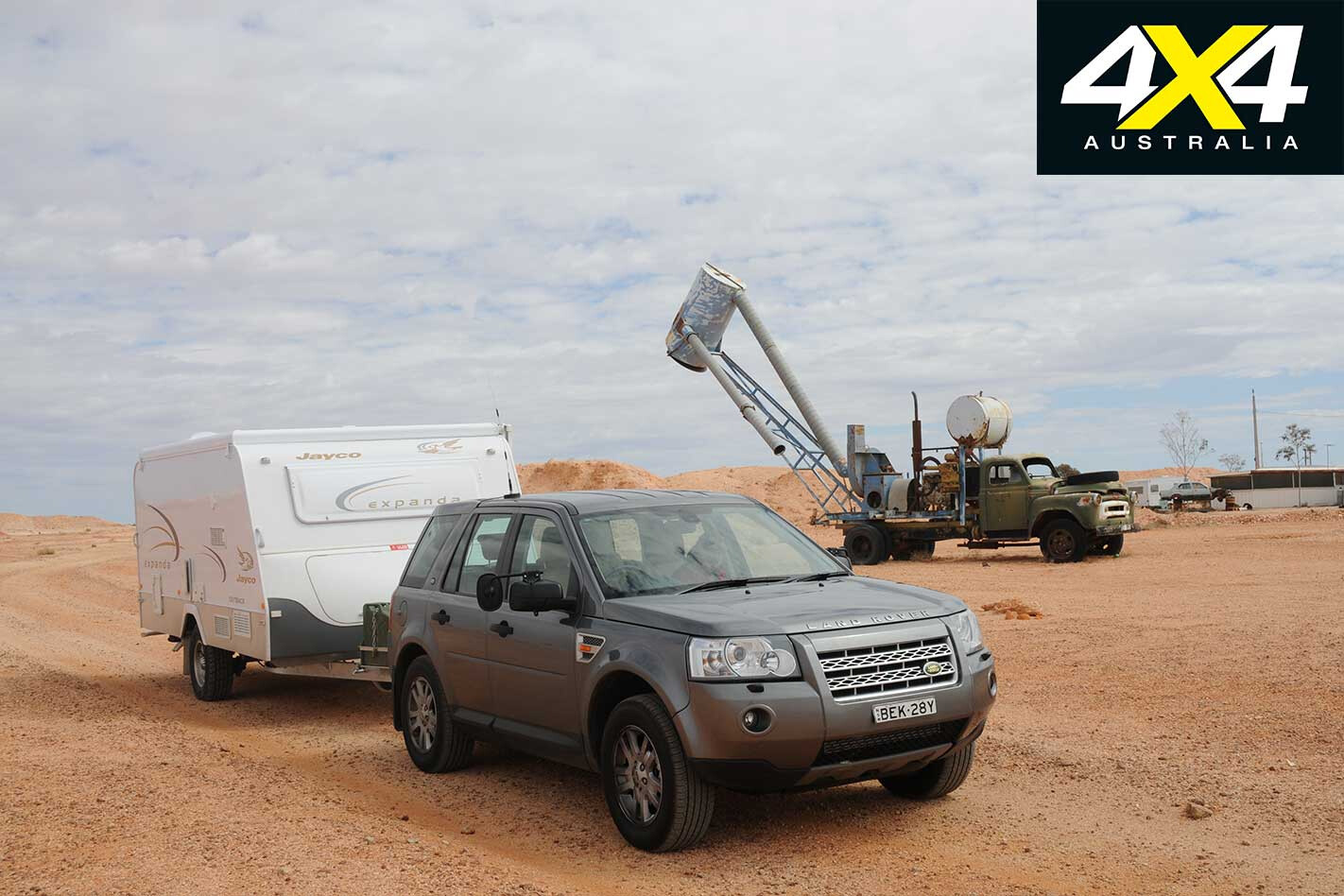
The run into Birdsville via the Channel Country is no longer a fearsome trip, with long strips of bitumen covering the frequently-flooded parts. The final unmade section looks like it was retained for tourist credibility to this former outpost, rather than a lack of funding.
After catching up with the Trial again, we dashed south-east for Bourke, eschewing the rougher route south via Tibooburra taken by Trial competitors. After 277km on the Birdsville Development Road, we hit the Diamantina Highway and bade farewell to the gravel for the rest of the run to Broadbeach.
The journey home was then straightforward, with the only drama being the loss of electric trailer braking for several hundred kilometres, after the plug became dislodged. But it says something for the Land Rover’s brakes that we hardly noticed.
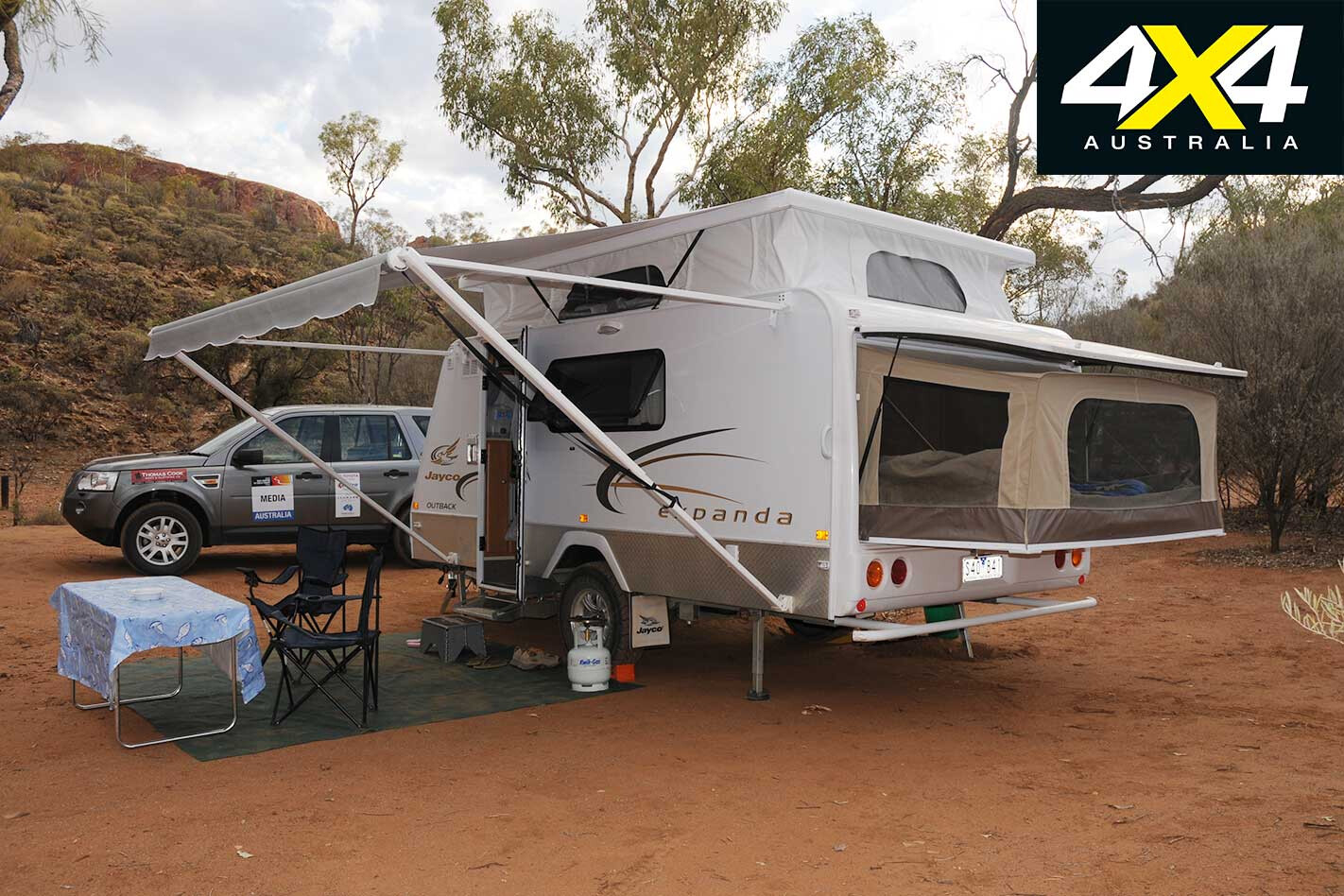
The verdict: if you are planning some serious outback slogging with a full-size, fully-equipped caravan in tow, then bite the bullet, buy a LandCruiser, Patrol or Discovery 3, make easy work of it and be prepared to pay the big fuel bills.
But if you simply want a rig that can take you on to some of the most fascinating parts of Australia, then you could always consider a combo like the Freelander and the Expanda… and pocket the considerable savings.
Doing the sums
The total RRP package cost of our rig was $52,490 for the Freelander TD4 SE and $36,900 for the Expanda 14.44-3, with pull-out awning, reverse cycle airconditioning and deep-cycle battery.
We covered 8485km for a total diesel fuel bill of $2314 – an average fuel cost of 27 cents per kilometre travelled, of which less than 250km was without the Jayco Expanda in tow. This worked out at 15L/100km at an average fuel cost of $1.80/litre.
Between Port Augusta and Alice Springs, travelling mostly into a head wind, the Freelander consumed an average of 16.5L/100km while sitting on 100km/h for the 1000km journey.
On flat bitumen, while cruising at a steady 80-90km/h, our towing consumption dropped to 14.5L/100km, however, undulating unmade roads in good condition saw this climb to 16L/100km.
Travelling solo into Ruby Gap Nature Park, at an average speed of 28.2km/h, the Freelander returned 14.3L/100km.
We off-roaders are a lucky bunch when it comes down to our bush accommodation choices. There are pluses and minuses for most: we’ve all slept in a tent or swag; real back-to-basics stuff that appeals to most of us, but not all.
This feature was originally published in 4×4 Australia’s February 2009 issue
A step up in sophistication is a roof-top tent – you’re above the creepy crawlies, able to catch a cooling summer breeze and, with quicker pack-up, getting on the road again is somewhat easier than a tent. But your bed is at the top of a ladder, you need to remove your bedding to pack up and, as with smaller tents, you can’t really set-up a deckchair if it’s raining.
Camper-trailers – especially the hard-floored ones – are terrific accommodation for many travellers, offering a comfortable night’s sleep above ground level and – often – cooking under cover. But, like tents, the smaller ones offer varying degrees of claustrophobia for the 16 hours of the day you’re not asleep.
Some can take ages to set up and they cover two vehicles’ worth of ground. Plus, of course, they’re swinging from your towbar, which can make life interesting in difficult terrain.
So what about grabbing the best of these bush-freedom ideas and sticking ’em all in one big box on the back of your ute? That’s the thinking behind the Active Camper, a strong flip-lidded box for sleeping, cooking and living in while travelling.
Tough in the rough
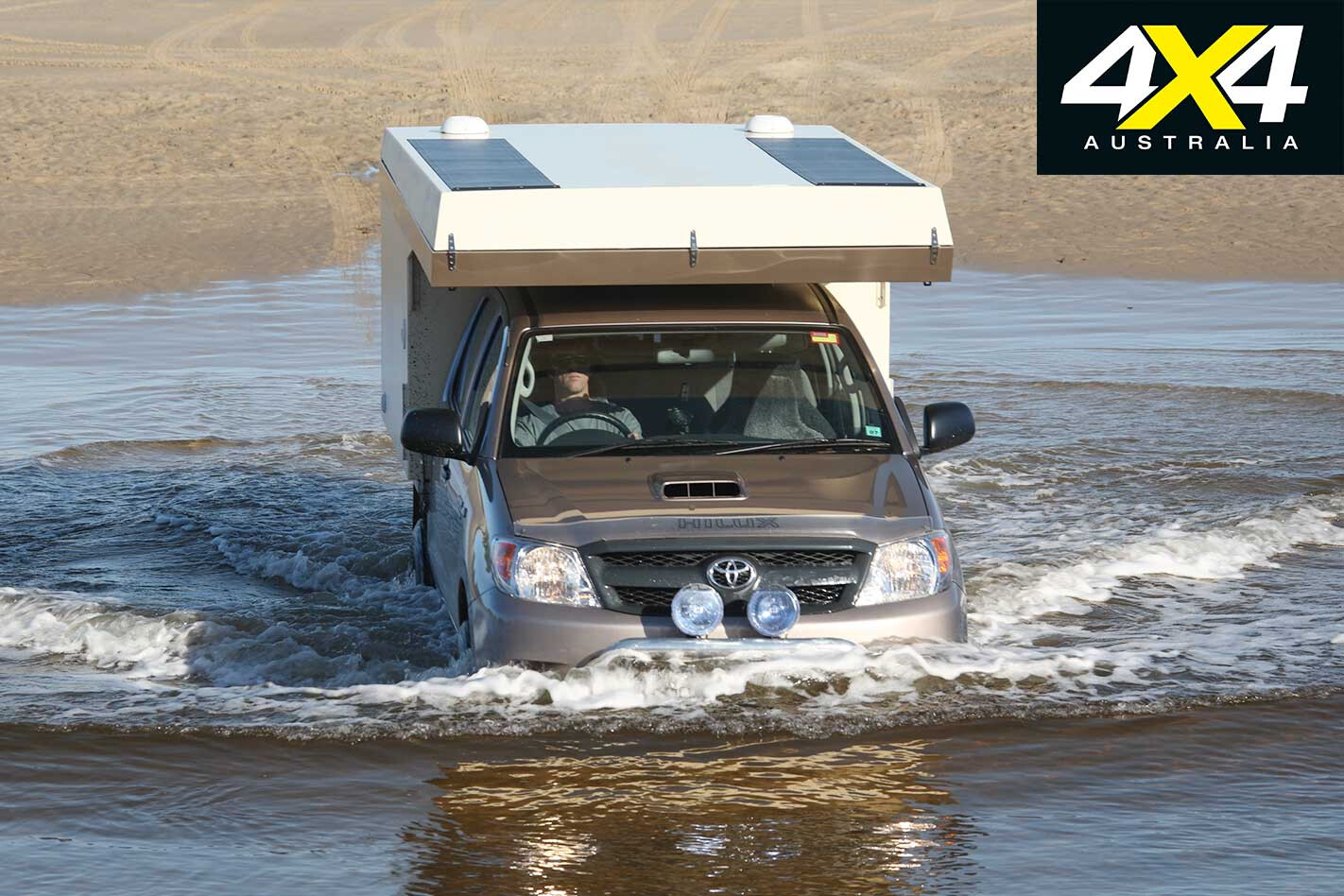
The Active has been built on the NSW North Coast for 25 years with very few changes to the fundamental design. Weighing 450kg, the Active is easily shouldered by the popular Australian dual-cabs: Rodeo/Colorado/D-Max, HiLux, Navara and BT-50/Ranger, which are all bush-capable.
The Active is built from marine-spec timber ply, edged and framed with extruded, welded aluminium between the roof and walls. Rails stretch forward over the vehicle cab to support the bed area. Where alloy isn’t, stainless steel is used for fittings and fasteners.
The exterior is skinned in dimpled fibreglass providing scratch-resistance and waterproofing. Active claims its units are just about dustproof and the neutral tone of the fibreglass looks right at home on just about any ute’s colour.
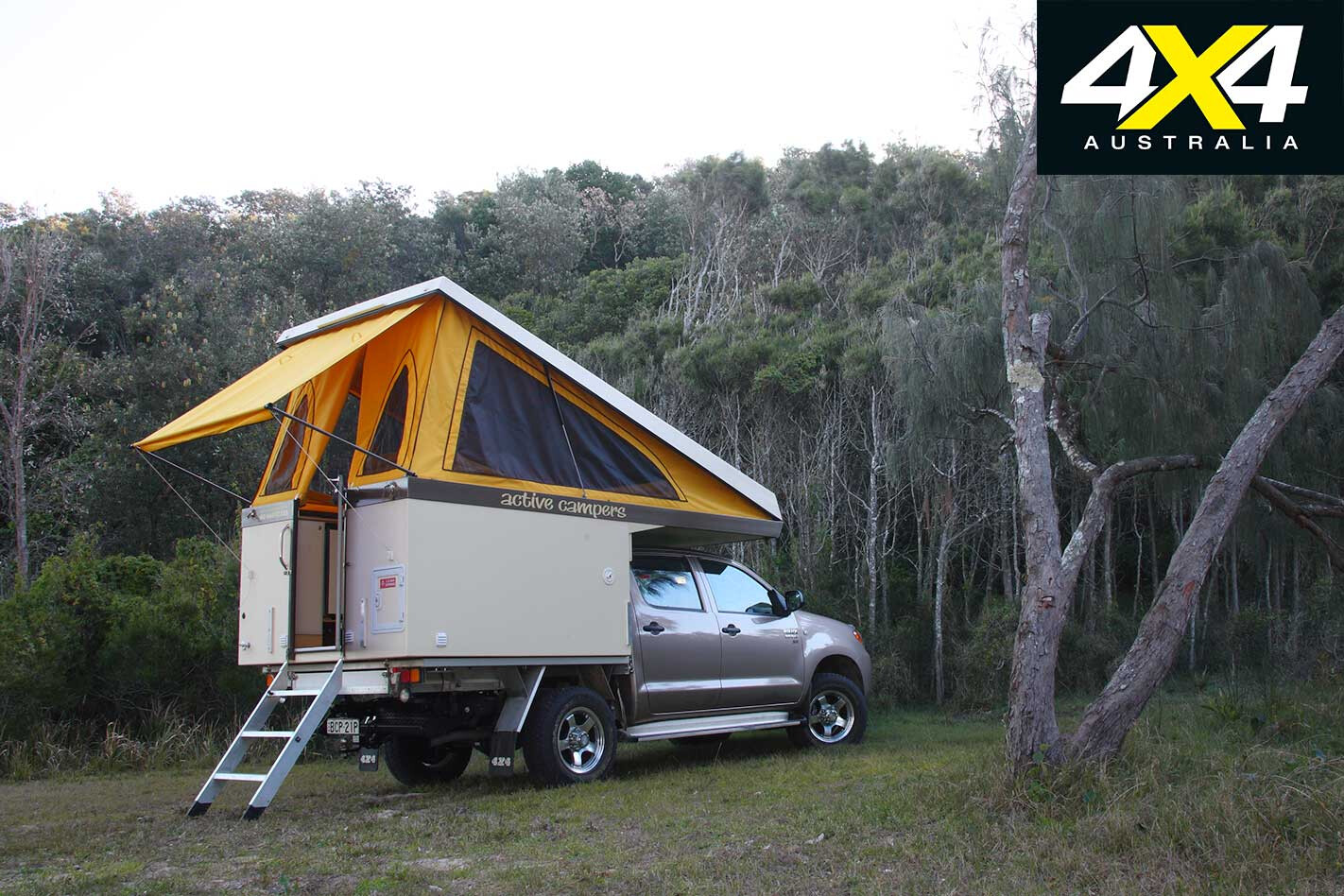
A one-piece foam-cored fibreglass roof rises easily on two gas struts and the canopy is stitched from acrylic-backed canvas. Used on boats, this material is 100 percent waterproof and can be packed wet without risk of water ingress. When set-up, ventilation and vision is through midge-proof screens behind zip-down panels on all sides of the canopy.
One 120AH AGM battery (with 240V charger) provides power. There’s room for a second battery without having to install a battery in the vehicle’s engine bay. There’s room for two spare wheels, too, as long as they’re not too large. Solar is optional and Active provides an external 12V socket for powering fluoro or LED lead lights in the annexe area.
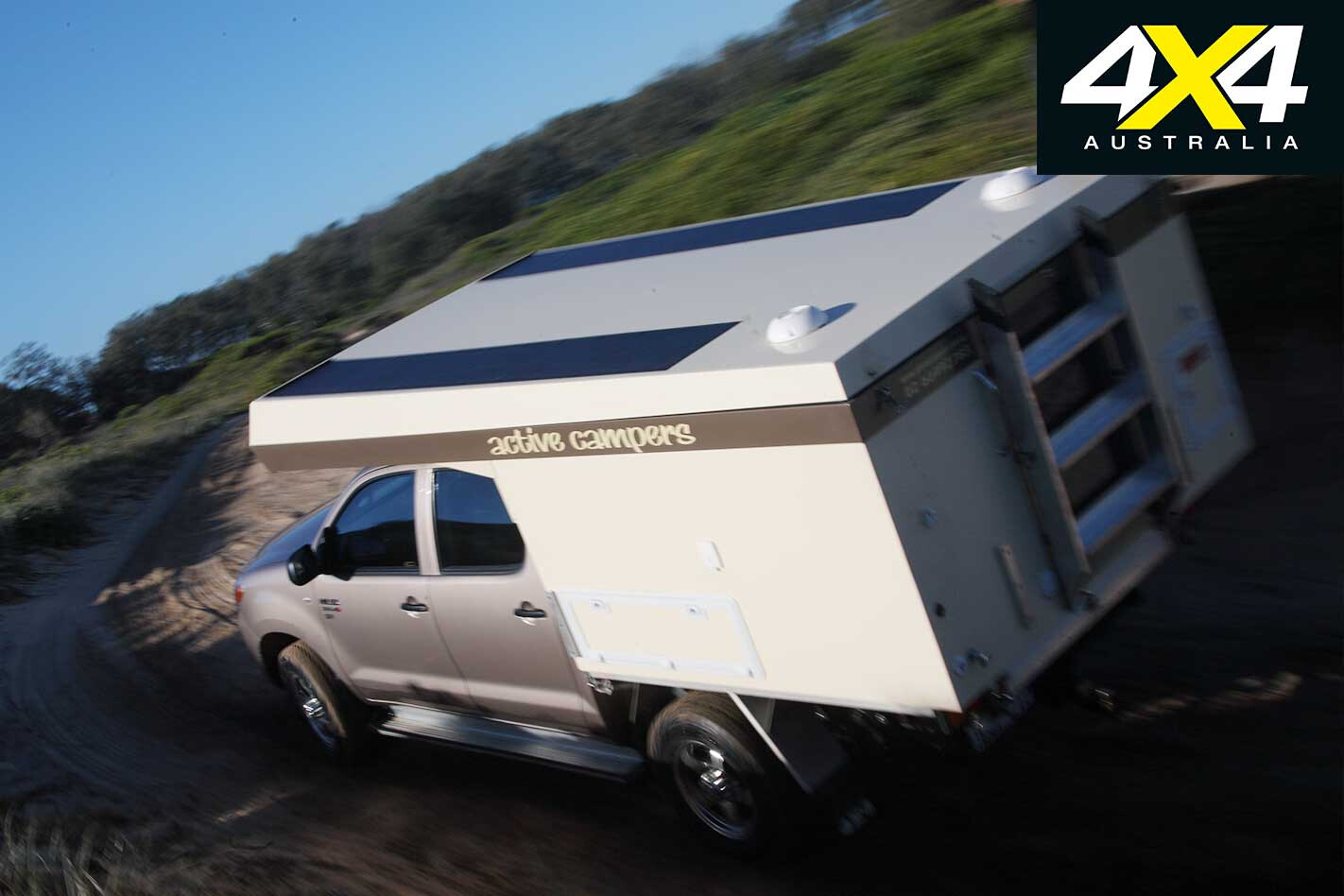
We didn’t try, but installing the four jacks and removing the unit takes 20 minutes, according to Active, making it useful for weekend treks. Active builds units suitable for standard tub-style bodies, as well as tray backs.
Ready for travel, the Active sits 1.3m above the vehicle tray and, depending on vehicle specs, it’s typically 2.25m high. Active offers an optional awning that can be pegged out on both sides of the vehicle. Good idea, that. In fact, the whole Active design is big on simplicity and bushability.
Getting away
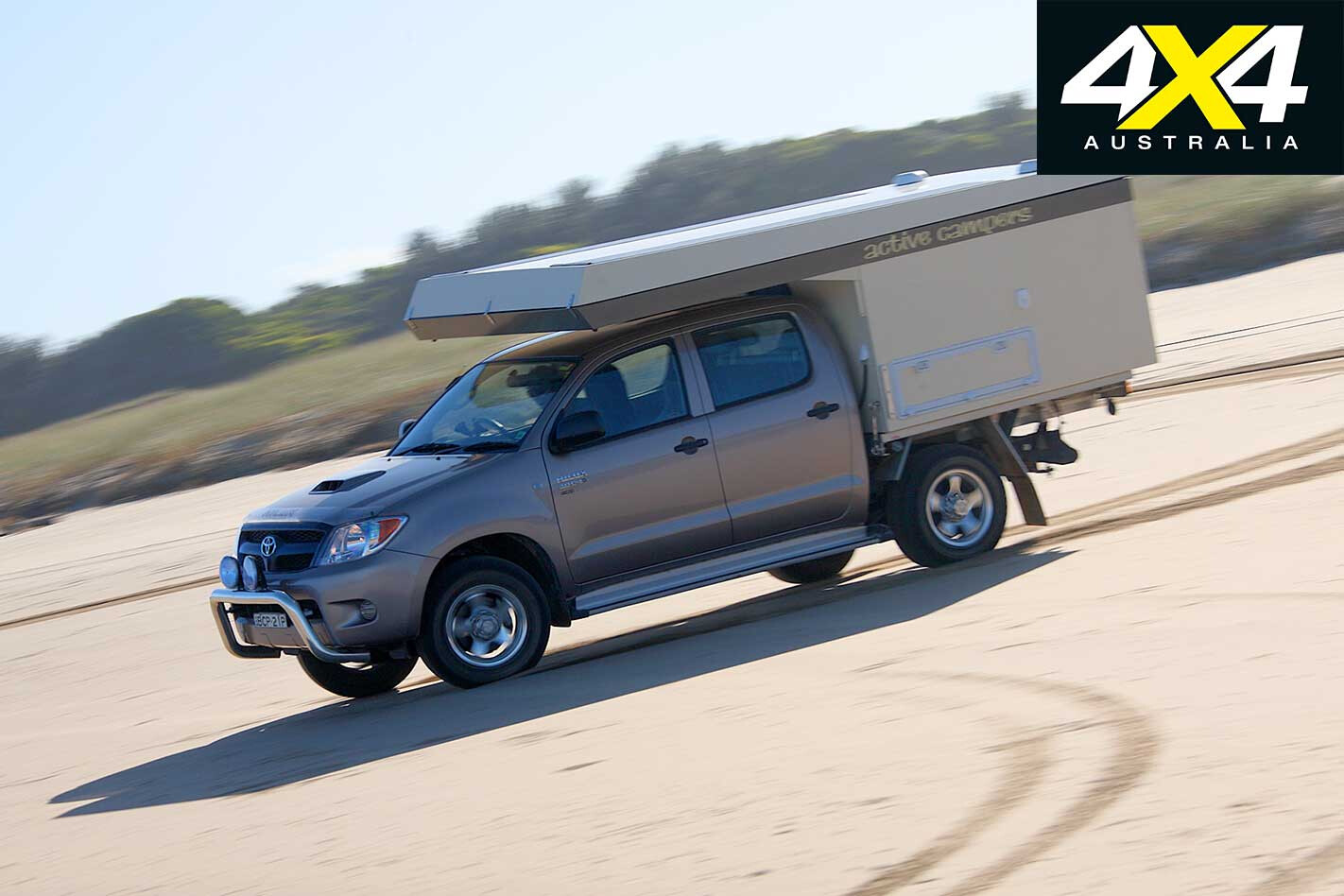
We grabbed an Active for a short but revealing overnight run to the NSW North Coast. Once you have the knack, popping up the roof takes around 40 seconds so you can be quickly enjoying a cold can or chardy at the end of a long day.
Packing up takes around three minutes – the difference being the need to ensure the canopy is settled/poked into place – so with those numbers, even on a big-kay day you can use the Active for a proper sit-down lunch break rather than stand around baking in the sun.
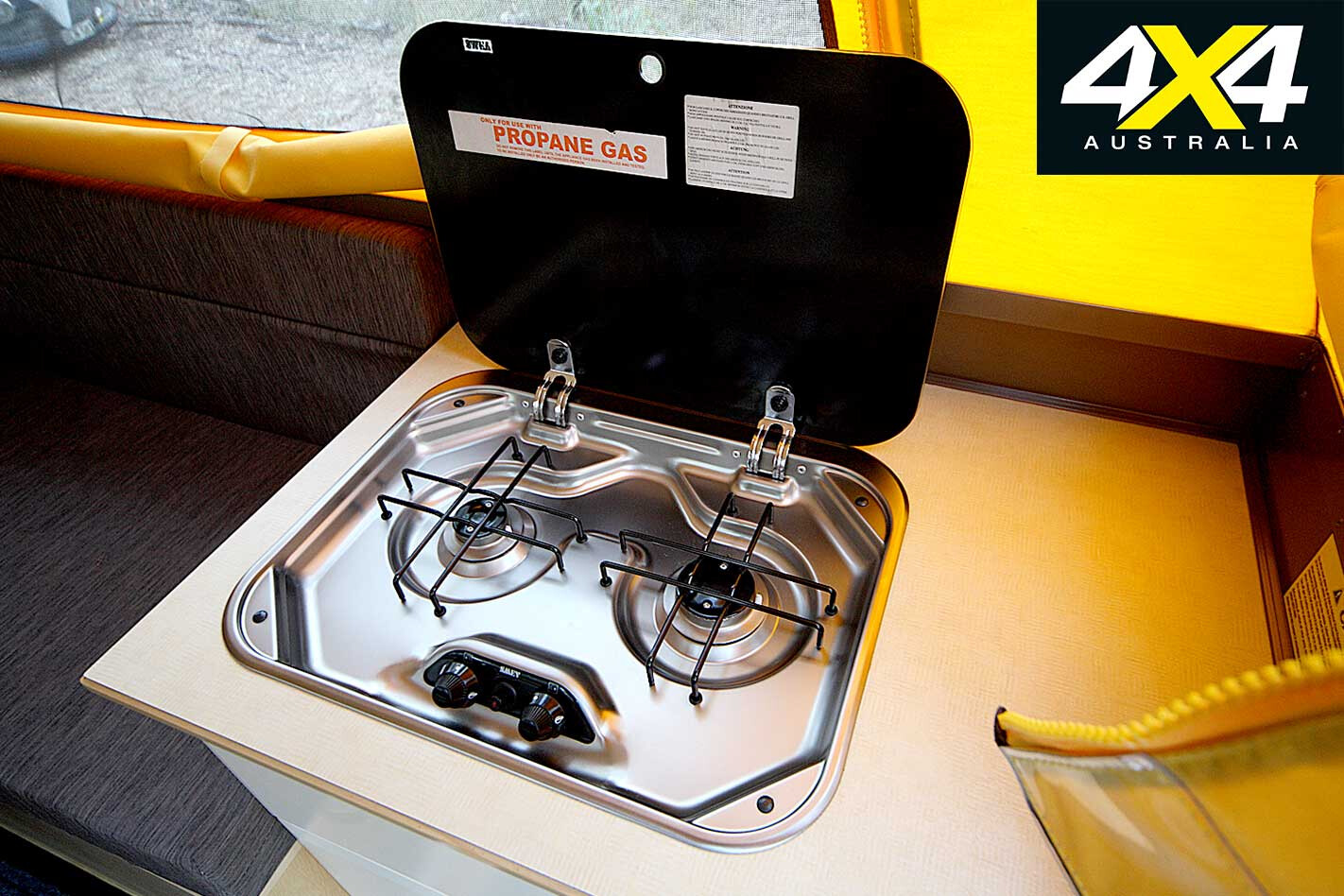
With all the windows open, being inside the Active is like relaxing on a great big veranda. The kitchen area is at the rear of the unit and features a two-burner Smev stove on the right and a small sink on the left as you enter.
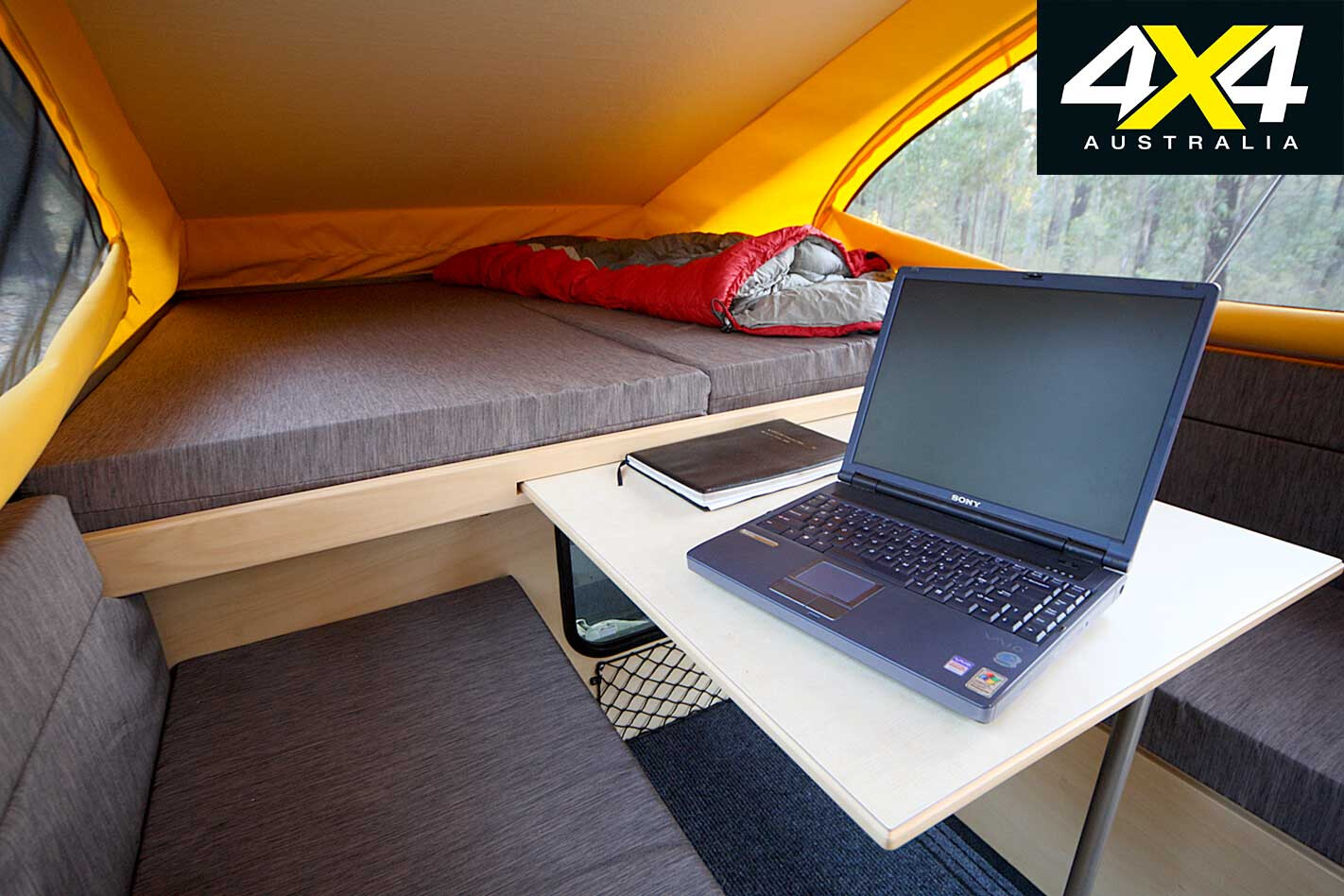
The small fridge (an Italian Isotherm) is installed under the sink. Bench space – in fact storage areas in general – is tight, but a pull-out table is mounted dead ahead, with seating for four.
The mattress is a queen-sized 100mm foam with zip-off covers and there’s room for bedding to be left in place when the roof comes down. Two reading lights are installed and it’s still possible to sit upright on the edge of the bed to pull on your boots.
On-road, the unit is tight and rattle-free. The higher centre of gravity was noticeable but never a concern over the bitumen and mild-to-middling off-road conditions (beach; dunes; trails) we tested on. Thanks to windows in the front wall and the door of the Active, rear vision is no problem.
The Active covers the necessities of bush touring in a comfortable package that’s easy to manoeuvre. The workmanship is terrific and trekking with an Active is good fun.
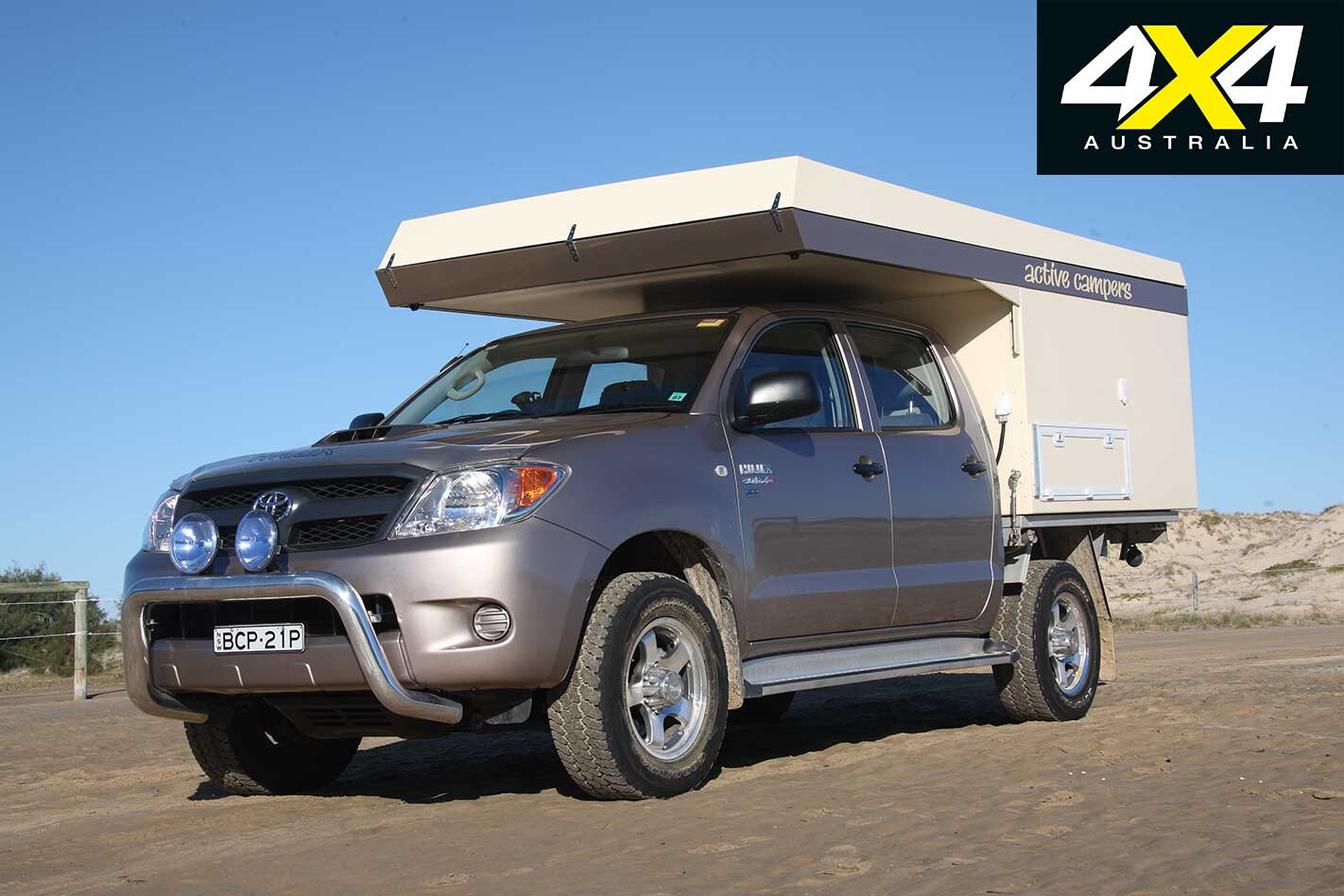
RATED Available from: activecampers.com.au L/W/h: 3800/1900/1310mm (closed) Tare weight: 450kg RRP: from $22,800
Though big in size, the dimensions of today’s utes and 4×4 wagons doesn’t necessarily equate to having the luxury of space. It is all about how you pack that counts and this is where storage solutions can vastly expand the carrying capacity of any ute and 4×4 wagon.
MSA 4×4 has expanded their Explorer drawer system range to now includes a variant for the popular 100 Series Toyota LandCruiser, whereas Shimano has released a new luggage range to carry your tackle, and Eagle Creek has introduced a swank new Cargo Hauler duffel bag.
MSA 4X4 Explorer drawer system: Toyota LandCruiser 100 Series
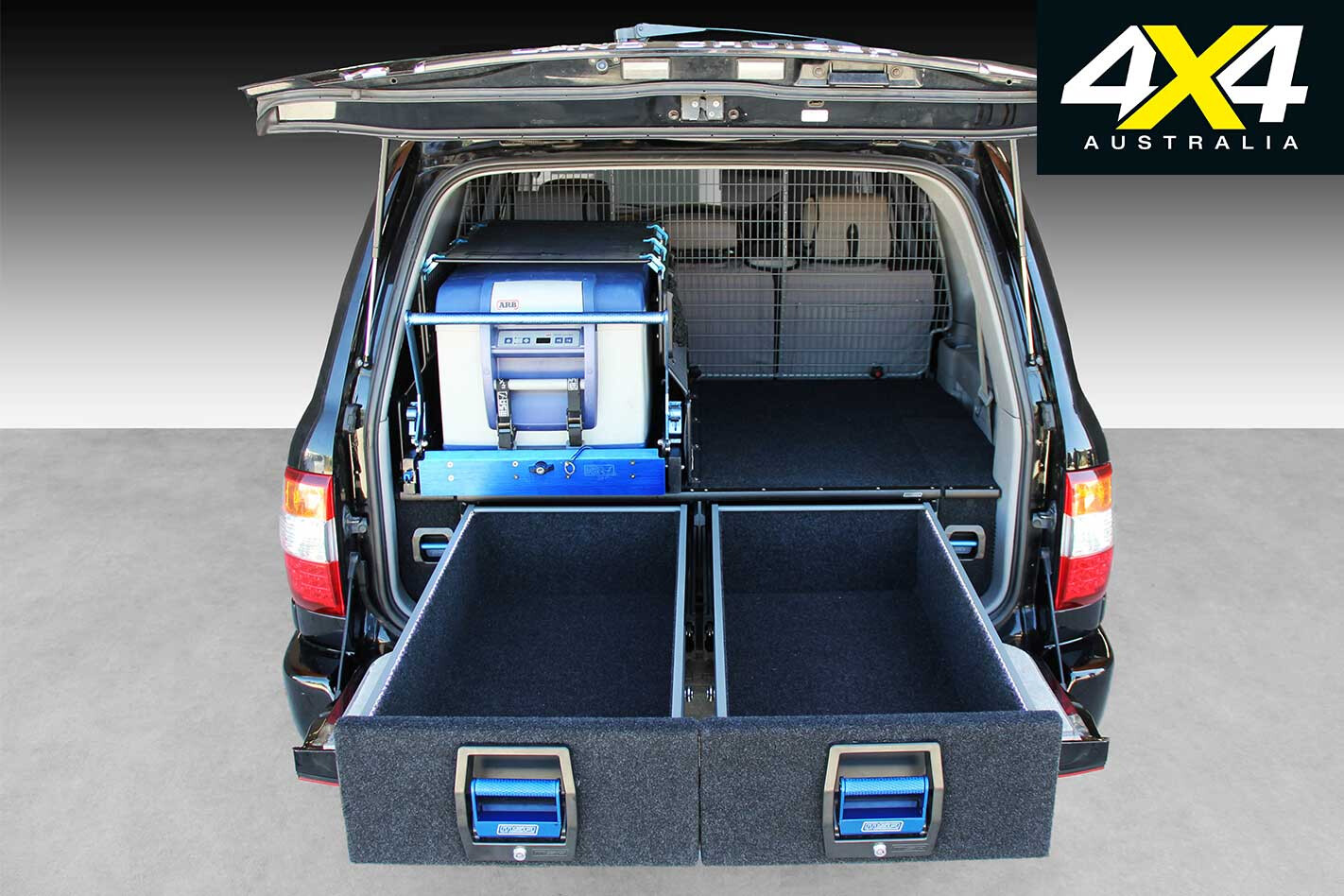
The just released Explorer Aluminium storage drawer system for Toyota’s (still) popular 100 Series Cruiser is fully ADR crash-tested and compliant to all relevant ADRs.
Cargo barrier mount points – and the child seat restraint points – are incorporated into the rear of the drawer frame. Patented features include the stay-open block that stops a heavy, loaded drawer from accidentally shutting and it also acts as twin electrical contact when the drawer is open, thus creating a circuit that powers the unit’s LED strip lighting.
The ‘Pro Glide’ system ensures the sides of the drawers aren’t wasted space – they are part of the actual slide unit, so no need for side-mount slide runners. Custom-sealed bearings are utilised in the over-extension, eliminating the need for extra slide components, and it’s all backed by a lifetime warranty.
Website: www.msa4x4.com.au
Shimano tackle luggage
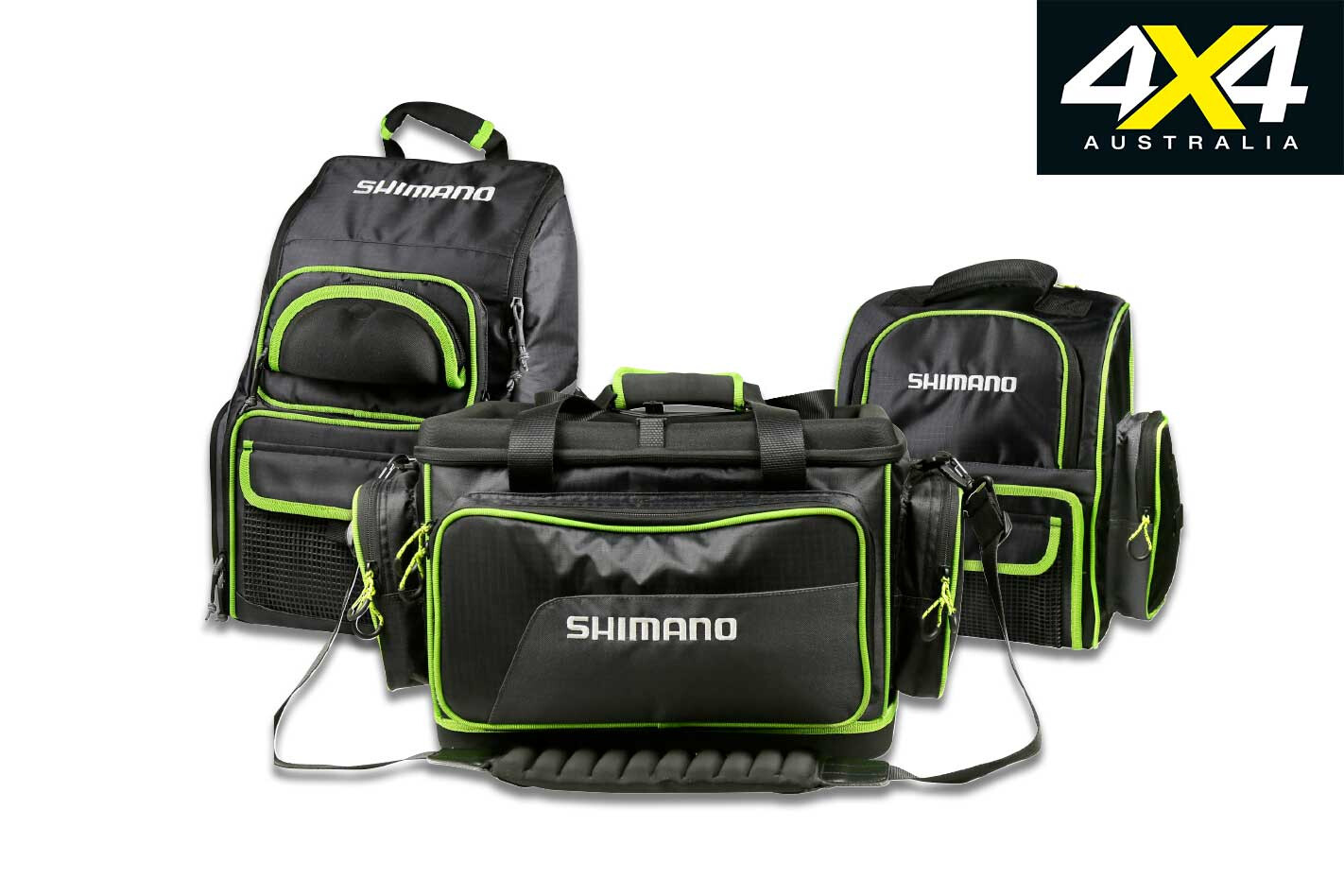
Shimano has released a new tackle luggage range, with five products that cover all your fishing-gear storage needs.
The Travel Wrap includes a 10-compartment tackle tray and a mesh pocket for storage of tools.The Game Lure Wrap is designed to eliminate the potential for tangled lures. It includes six large Velcro-sealed sleeves and the ability to store XL lures. Soft plastic lures are a pain to keep organised, but the Soft Plastic Wallet, with its 10 Velcro removable sleeve and eight internal mesh pockets, takes care of them perfectly.
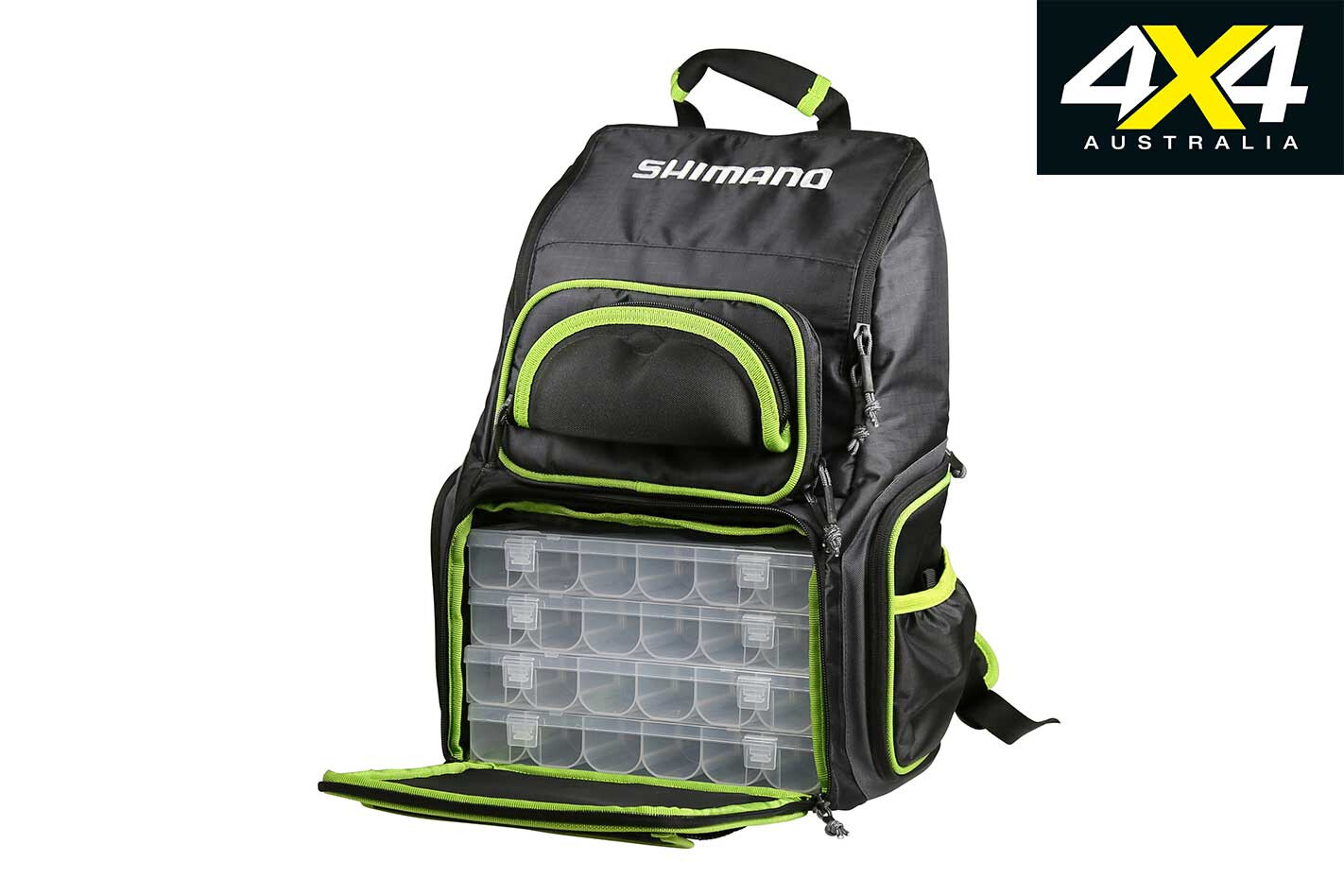
The XL Hardtop Tackle Bag is water-resistant with a reinforced base and tie-down point. Three large pockets are also included. The Soft Tackle Back Pack includes a hard sunglass case, four tackle tracks and more.
RRP: $149.95 (XL Hardtop); $99.95 (Soft Tackle BP); $39.95 (Soft Plastic Wallet); $39.95 (Game Lure Wrap); $29.95 (Travel Wrap) Website: www.shimanofish.com.au
Eagle Creek Cargo Hauler duffel
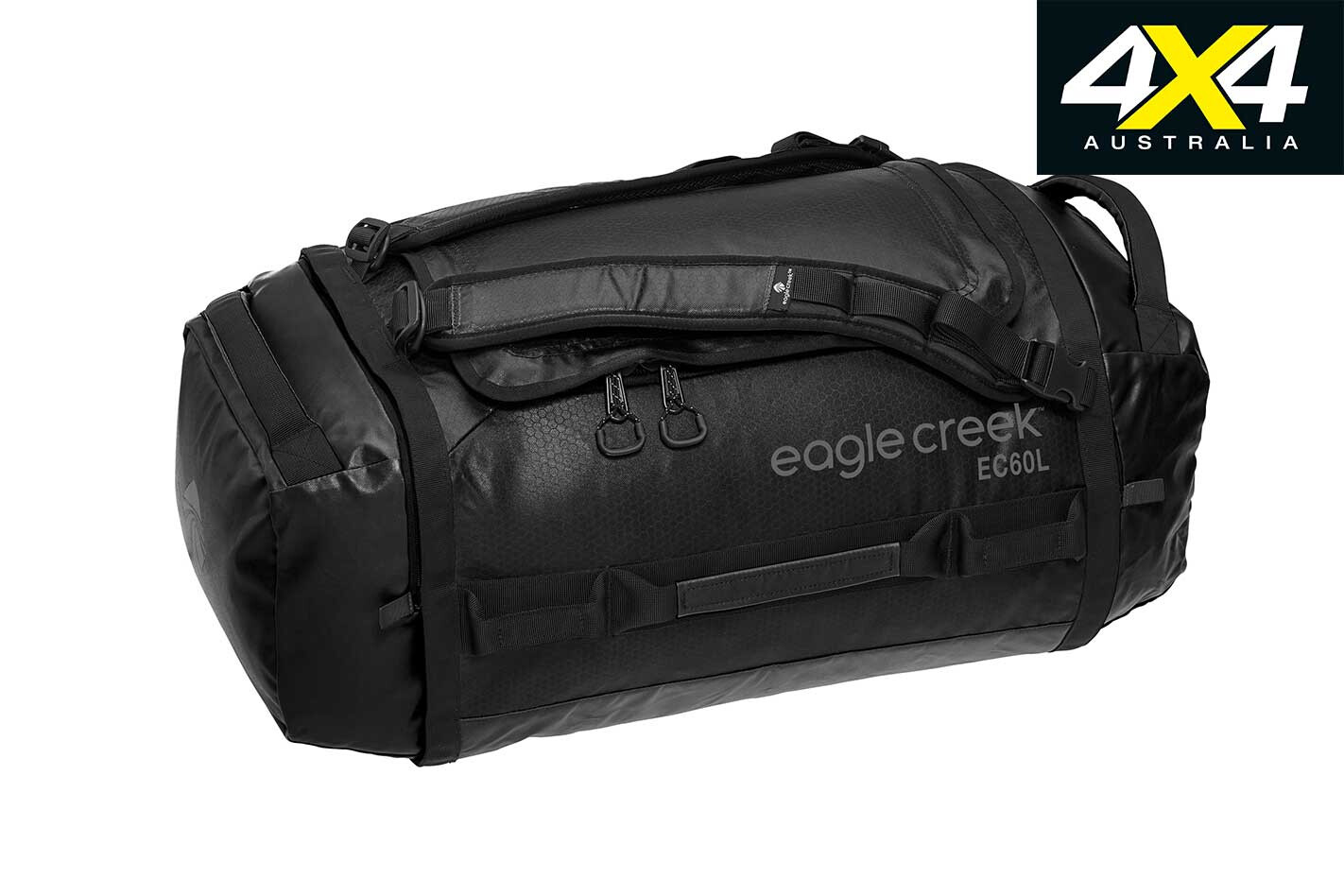
Duffel bags are tough and easy to pack with heaps of gear, making them a permanent item on our packing list for big trips. Eagle Creek has tweaked what we expect in a duffel, using lightweight robust materials in the construction of its new Cargo Hauler range.
These duffels are made with water-repellent-coated Bi-Tech Armor Lite fabric, and include bar-tack reinforcement to all high-stress points and six heavy-duty tie-down points to ensure they’re able to be taken – and loaded – anywhere, inside or outside your rig.
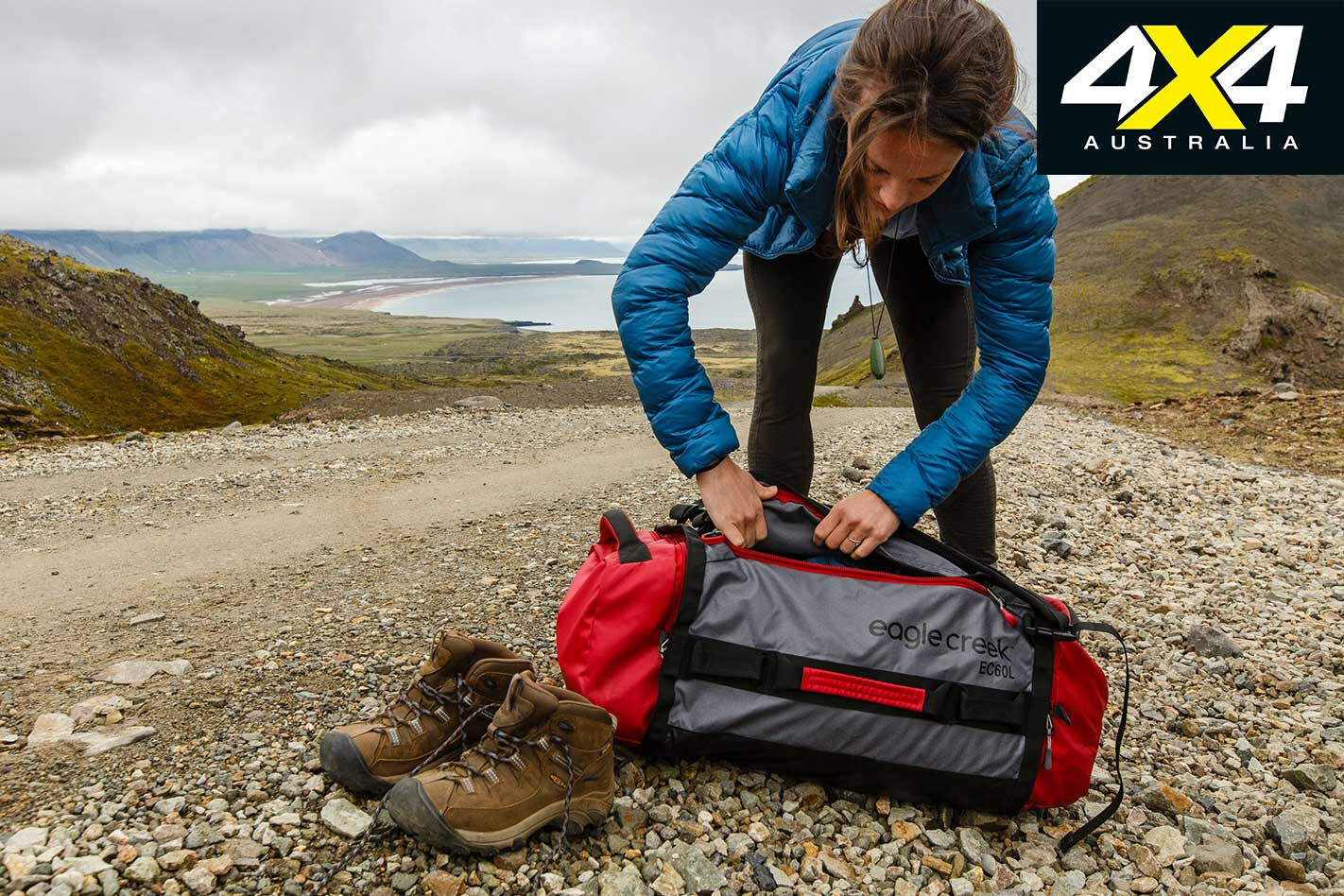
They also include numerous carry options via the removable backpack straps, loop handles and side handles. The zips are lockable, and it can be packed into its own compartment when not in use. It is partially reflective for easy location at night. The Cargo Hauler is available in four sizes: 45L, 60L, 90L and 120L.
RRP: $140 (45L); $150 (60L); $170 (90L); $180 (120L)
“STEP ONTO the platform and then across to the ladder,” tour guide Dick Wagner informed us as we looked at the small hole we were about to descend into. “It’s only about 40 feet to the bottom,” he continued. “And there is a light down there,” he said as he disappeared into the earth while I was still trying to placate my fears of small dark confined places.
Underground, I found myself on the small jack hammer used to break up the soft clay at the head of the mine and where the mouth of what looked like a giant vacuum cleaner lay waiting, whistling and sucking the clay debris to the top of the mine where it was dumped straight into the back of an old truck.
“I pulled some good opal out of here a few weeks back,” Dick informed us above the noise of the vacuum cleaner, but whether he was just saying that for my benefit or it was the truth, I wasn’t sure and never found out.
Like gold prospectors, opal miners rarely tell the whole truth, fearing either a swarm of miners descending on their plot, or worse, the tax commissioner asking tough questions on treasures unearthed and monies earnt.
Certainly, Dick had shown us some magnificent specimens taken from his mine and his son’s next door, and his shop, the Stubbie House, is full of quantities and qualities of opal.
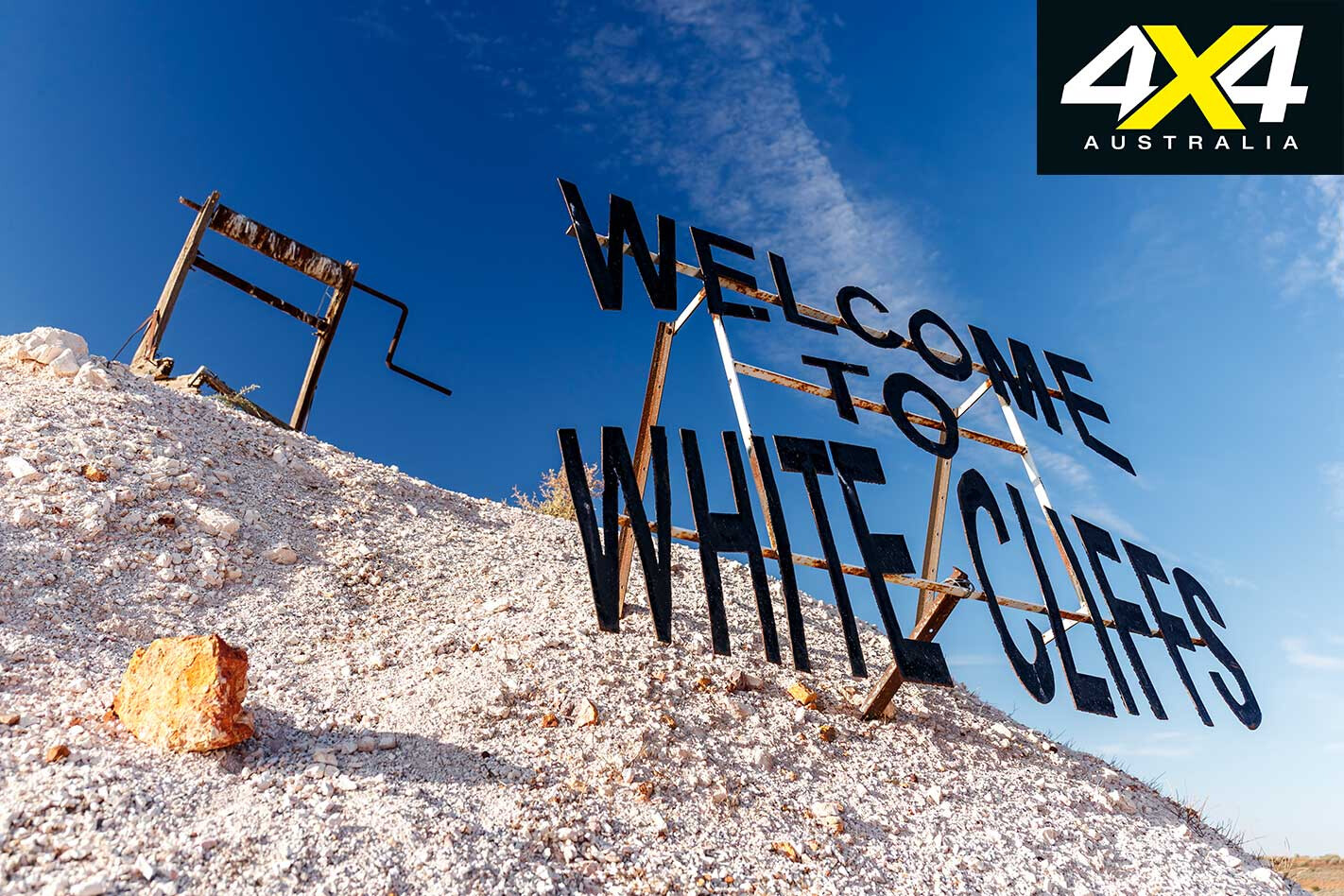
We were at White Cliffs, the opal mining town in the far west of NSW, where the latest census counted 103 people living and working there. After a few days in this isolated settlement, though, we reckoned absolutely everybody must have been home when they did the count; certainly it was not done in summer when the population drops to near single figures.
Opal was first discovered here in the 1880s, and soon men were chiselling soft clay and burying themselves into the low cliffs of the hills to not only find the gemstone, but escape the area’s blistering heat.
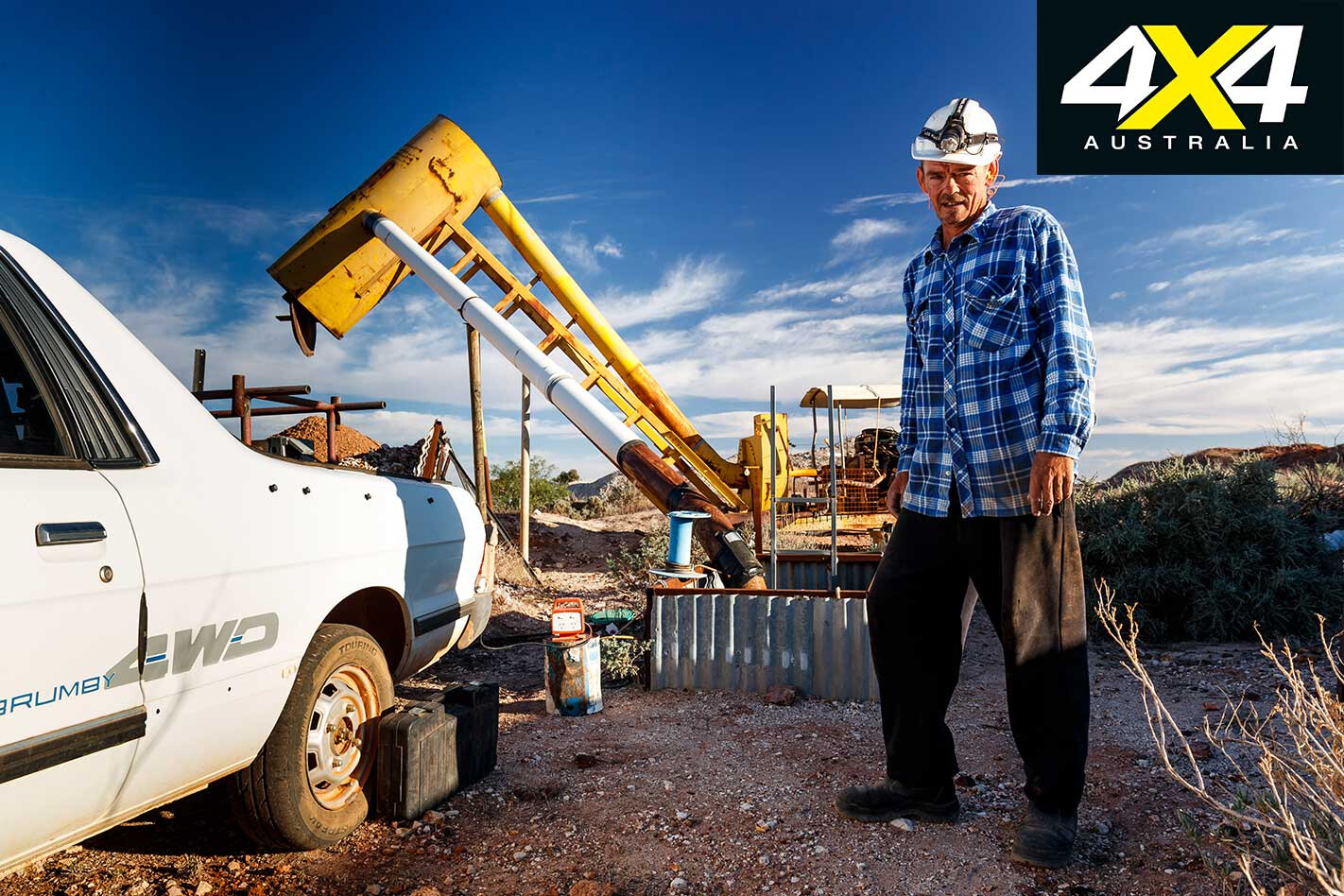
Within the first three years there were 700 hardy souls living on the field, eating stolen sheep and drinking putrid water from wherever they could find it. No wonder the small cemetery just outside town has so many gravestones.
Since those early days hundreds of holes have been dug (some say 50,000, but I’m not sure if anyone has counted them) in the quest for the coloured stone, so much so that from the air it looks like a strange moonscape or the work of giant gophers.
Our trip had started a week or so earlier as we headed north from Broken Hill to Innamincka and then onto the famous ‘Dig Tree’ of Burke and Wills. From there we had travelled across the gibber plains heading east, crossing the wide braided floodplain of the Cooper Creek again, between the modern aberrations of the Ballera and the Naccowlah gas fields and associated processing plants.
Our camp on the Wilson River at Noccundra with its long, near permanent waterhole (has it ever dried up?) is a magic spot to spend a few days as the travellers’ camps dotted along the water’s edge testify. Adding to the charm of the place is the old hotel that lazes away time under the shade of a few tall gums while dispensing cooling fluids to weary travellers.
Leichhardt possibly passed this way in 1848 before he vanished into the depths of the Outback, never to be heard of again. While the Burke and Wills party, heading for what we know as the ‘Dig Tree’ on Cooper Creek, crossed the braided channels of the Wilson River, south of today’s pub in 1860. Later that decade pastoral settlement had reached out this far with the surrounding Nockatunga Station originally being taken up by the Drynan brothers in 1868.
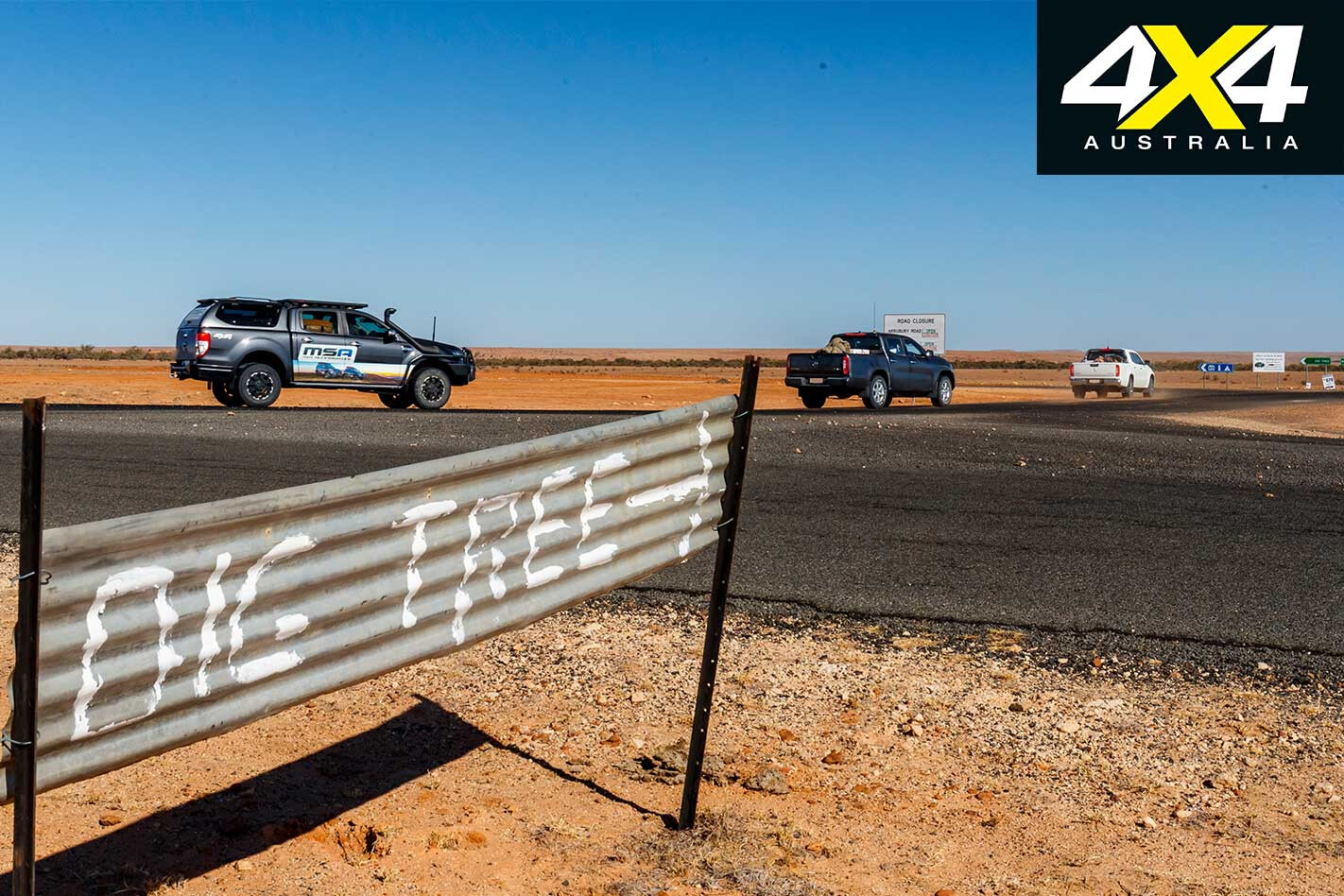
In 1874, the little known Andrew Hume-led expedition, while out searching for Leichhardt’s lost expedition, itself went missing with most of the party perishing somewhere west of the waterhole; only the piano tuner survived!
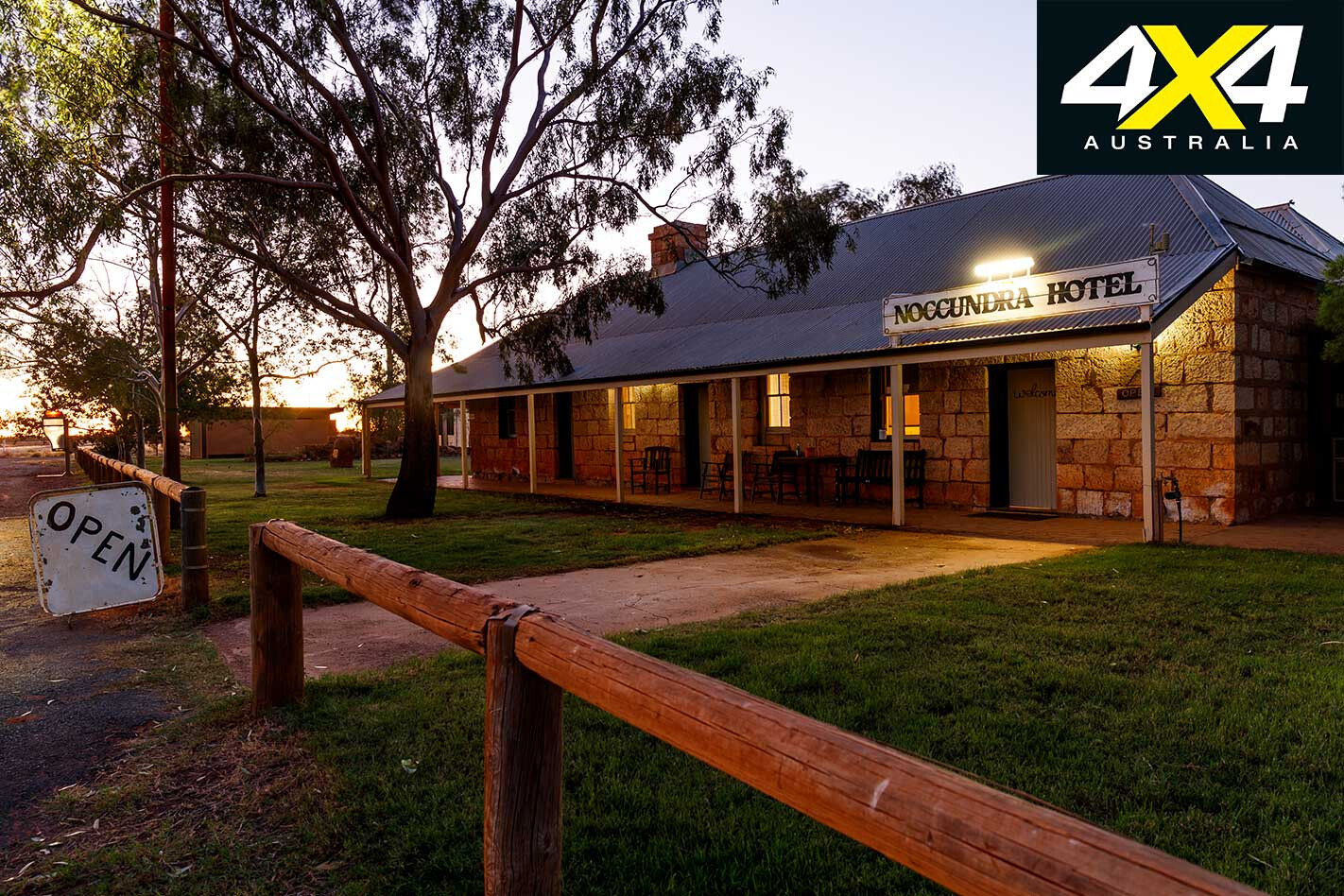
The Noccundra Hotel was built in 1882 with sandstone mined at Mt Poole, south of Tibooburra, and transported the long distance here by camel train. It was a hell of an undertaking, which the owners must have thought was worthwhile.
Today the pub remains much as it was, low roofed (to stop the stockmen riding their horses into the bar!) and with wired-up roof supports on the veranda as the gidgee trees used in its construction is too tough to nail. The pub, as you probably guessed, is heritage listed.
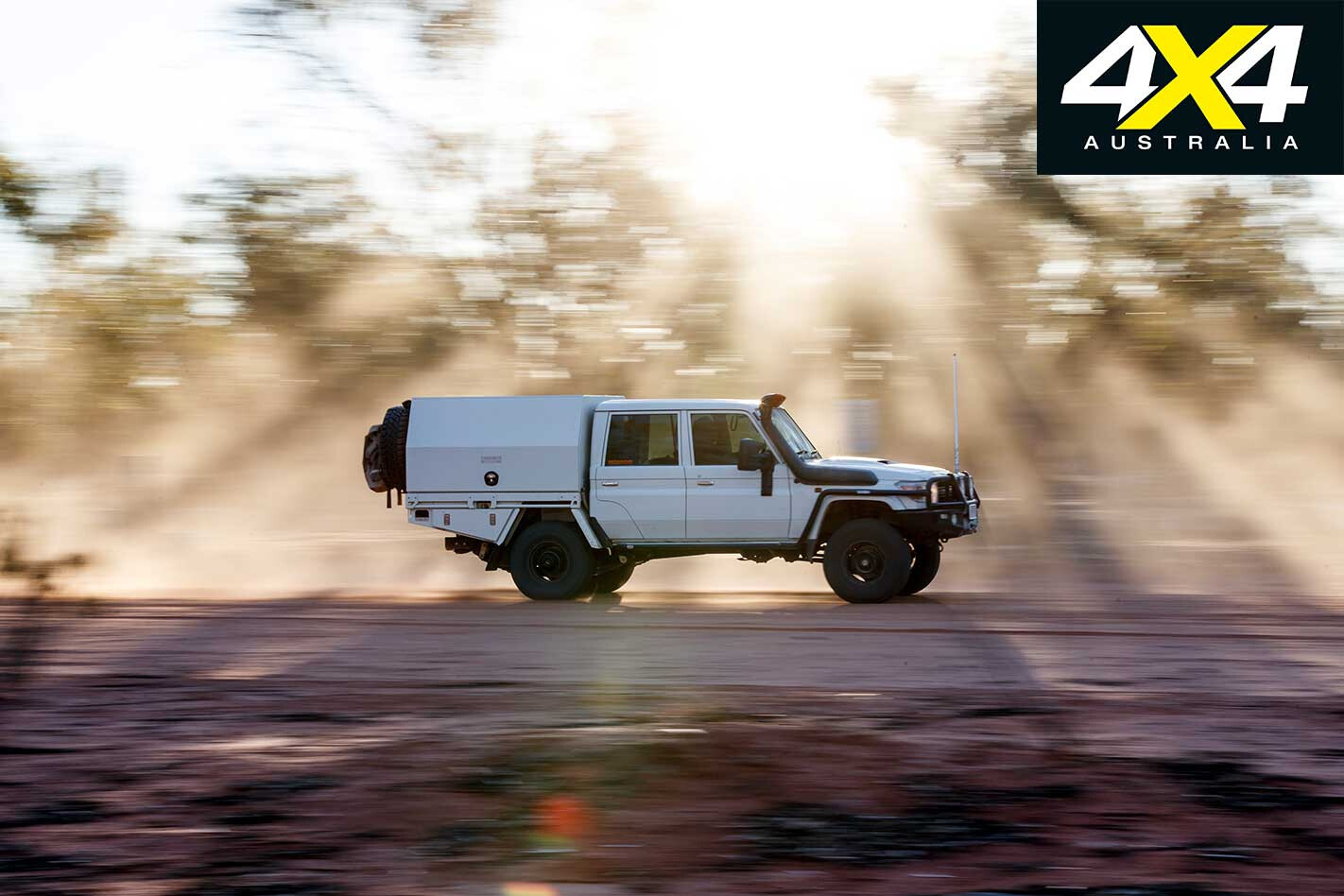
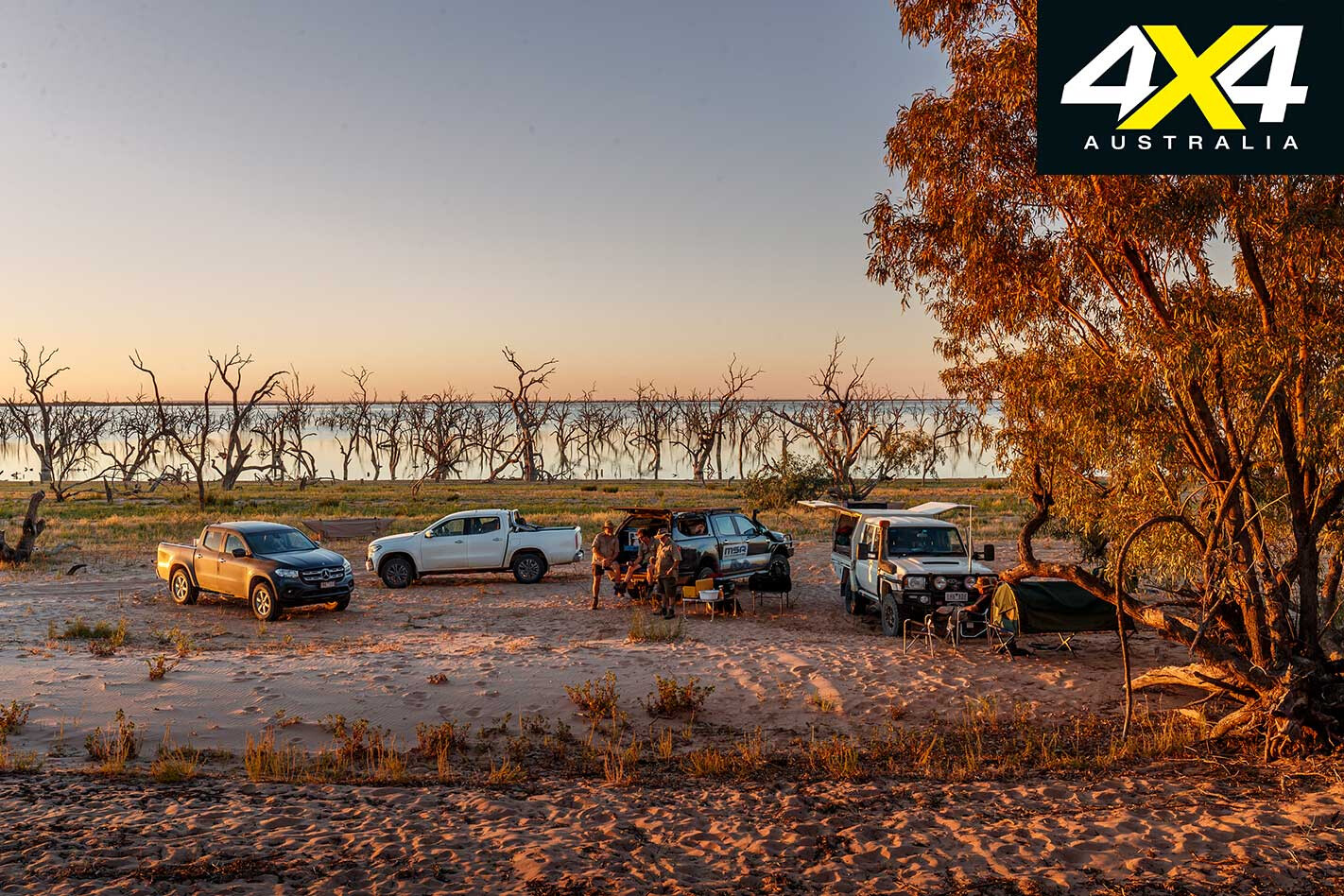
We headed east along the blacktop passing quickly through Thargomindah – although it has a lot of history with the town being established at a crossing point of the Bulloo River. Time didn’t permit us to dally, however, and after a coffee and pie at the bakery we cruised onto Eulo, the X-Class Mercedes utes eating up the kilometres effortlessly and surprisingly quietly in what is a very refined cabin for a dual-cab workhorse.
Crossing the ephemeral, muddy, sluggish waters of the Paroo River we stopped for a cold beer at the famous Eulo Queen Hotel in the heart of the small town of Eulo. Established in the early 1870s, the town once had three pubs servicing travellers heading for the nearby opal fields of Yowah.
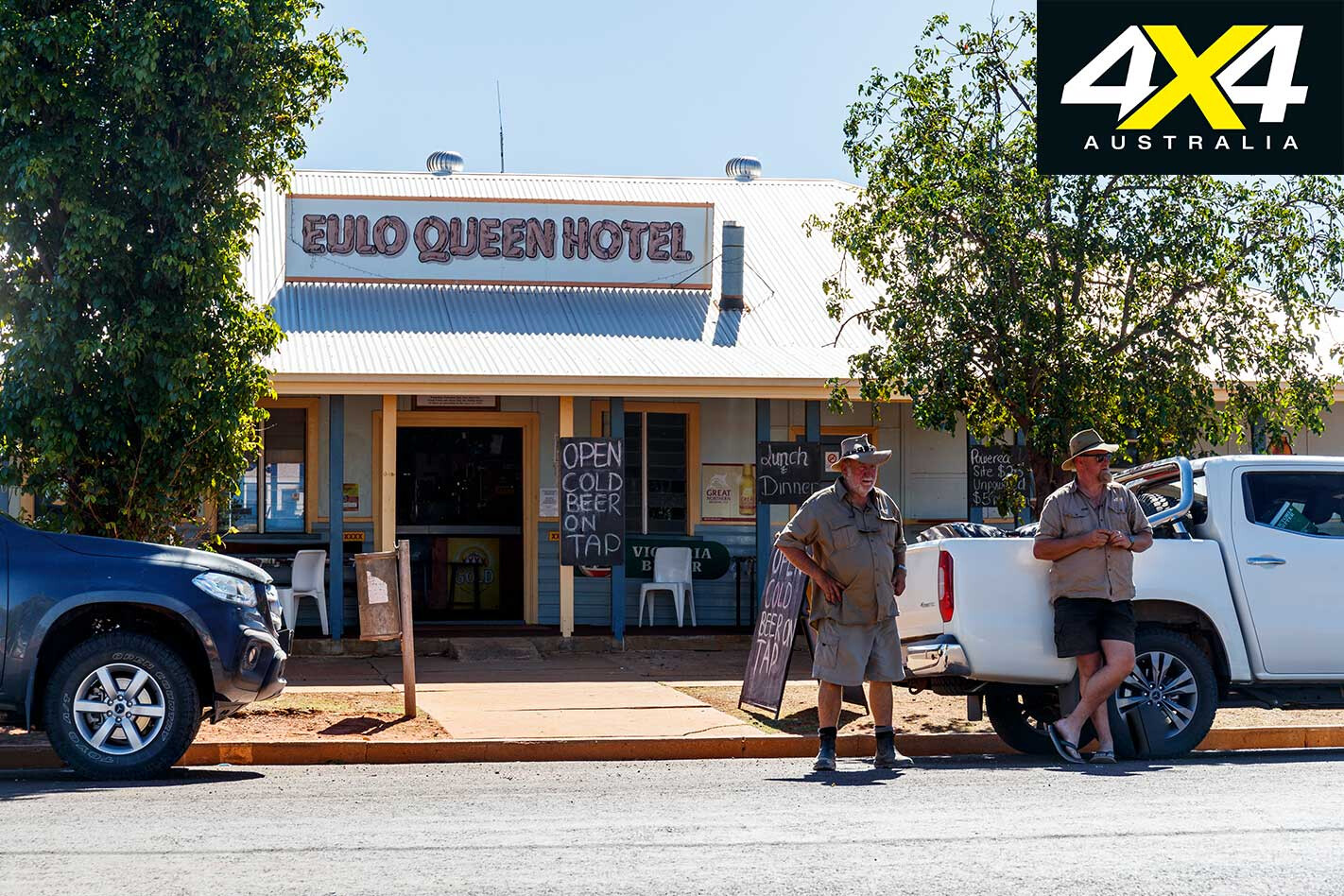
The ‘Eulo Queen’ was one Isabel Gray, who ran pubs, grog shops and more intimate rooms during the 1880s and ’90s, as well as finding time to be married three times. As Eulo’s importance faded, Isabel’s lavish lifestyle went west and she died in 1929 in poverty, but her legend remains.
In scientific circles though, the area around Eulo is well-known for the discovery in 2011 of one of the highest concentrations of ancient megafauna to be found in Australia. Celebrated by a life-size statue of a giant wombat, or diprotodon, that is just across the road from the pub, the site also revealed fossils of five-to-six-metre long meat-eating lizards, giant forest wallabies, an extinct monster kangaroo and a five-to-seven-metre long freshwater crocodile. Maybe we’re lucky that the Paroo is such a transitory stream these days?
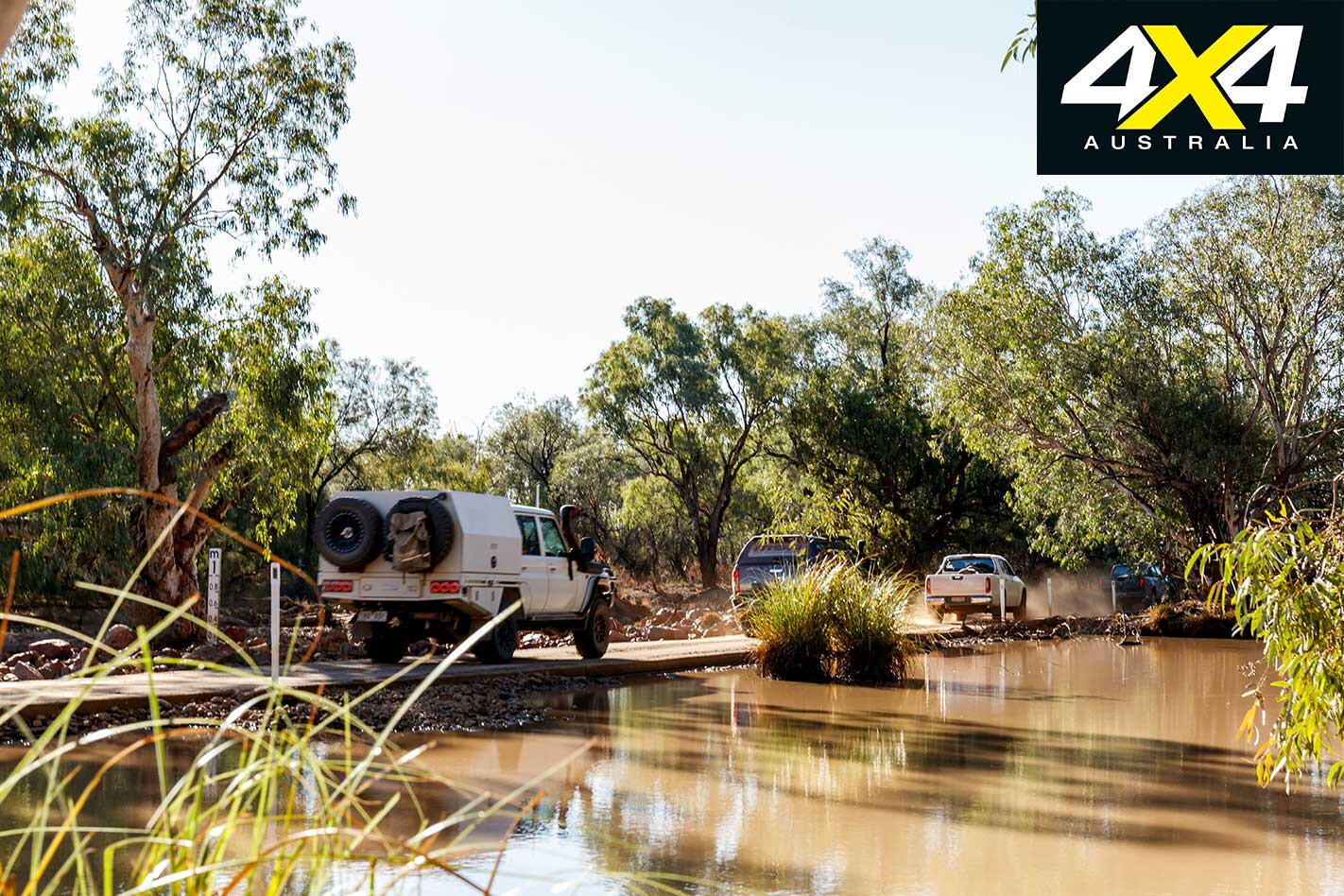
We turned south heading along the lesser used dirt road on the east side of the Paroo River, which happens to be the last free-flowing river in the whole of the Murray-Darling basin – that’s when it is flowing!
We entered Currawinya NP, one of the larger parks in Queensland covering 344,000ha and considered to be one of the most important wetland bird habitats in all of Australia. Salty Lake Wyara in the far west of the park and nearby Lake Numalla, which is fresh, can be a birdwatcher’s paradise, while the famed bilby enclosure, designed to protect these delightful and reintroduced animals, is out of bounds for travellers.
We crossed the stream on a dry causeway, a few puddles of water surrounded by gnarled red gums and thickish bush showing the whereabouts of the main channel, near the deserted ruins of the old Caiwarro homestead. As we cruised through the park on what are pretty good dirt roads, the occasional ’roo hopped across the road, but the drought has hit hard here and wildlife was not as abundant as it could be.
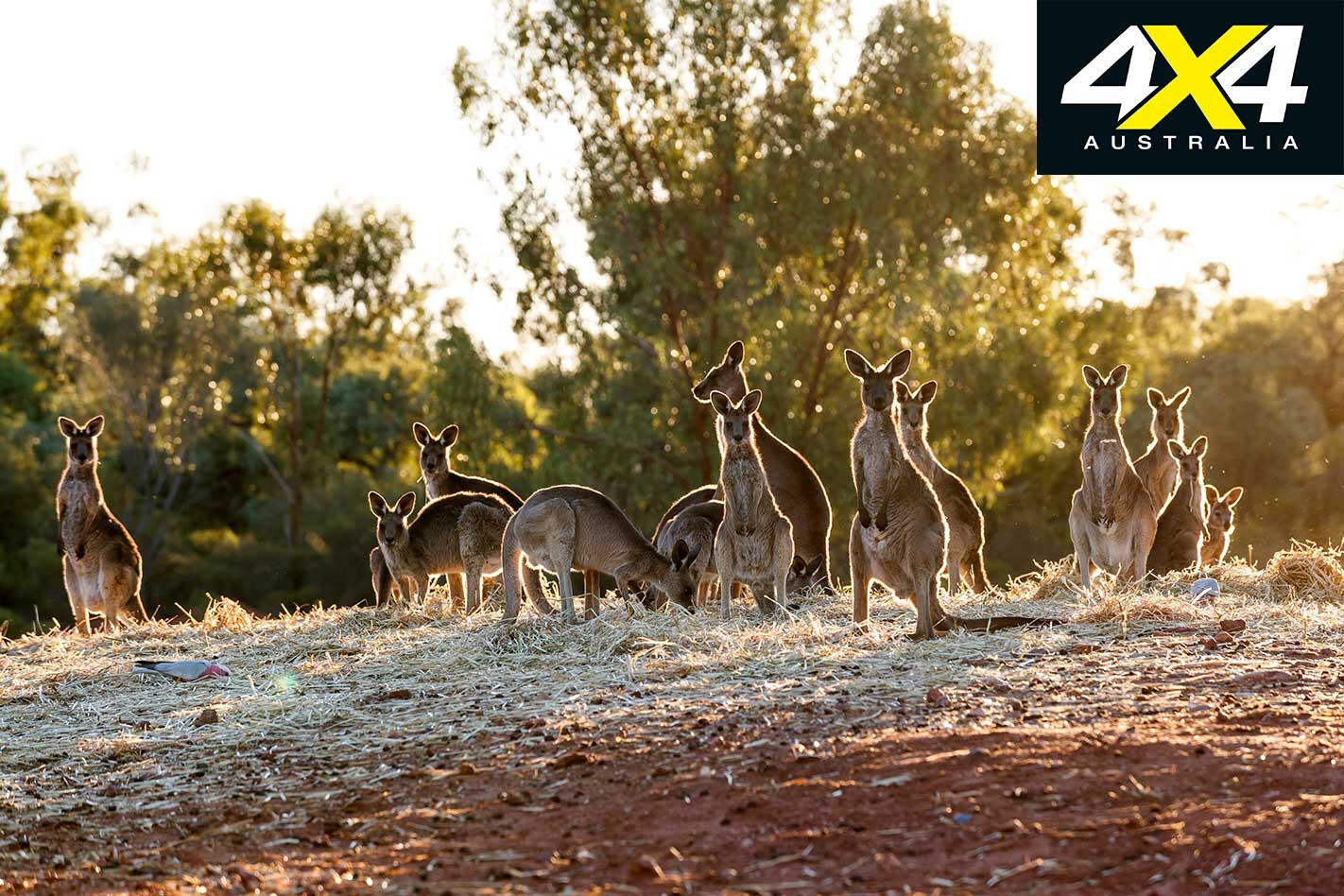
As we pulled into the tiny hamlet of Hungerford, a small group of kangaroos were feeding on a scattered pile of hay, opposite the cop shop, put out for their survival. It’s tough times when locals have to do that!
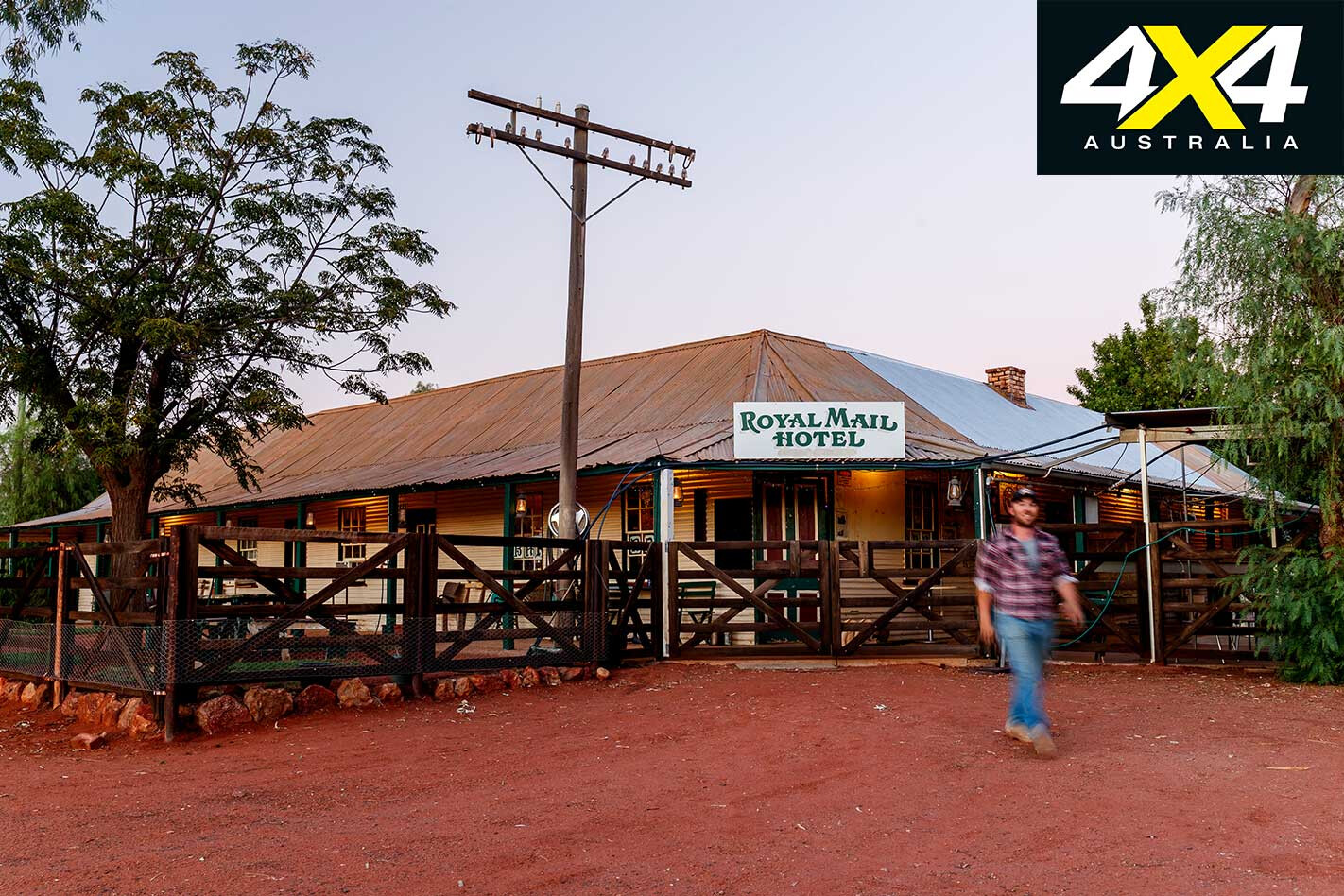
In a unique experience and certainly a first for us, we camped that night in the local campground and enjoyed a couple of beers in the unforgettable, rustic and historic Royal Mail Hotel – although we have done the latter a few times before.
Henry Lawson walked the road from Bourke to Hungerford in 1892 and would rate as the town’s most important visitor, I’d reckon. His poem, The City Bushman, a scathing rebuttal of ‘Banjo’ Patterson’s literal images of the bush, was written after Lawson had carried his swag though the west of NSW and his evocative words on the drought, which were just as bad then, as now, still ring true.
Next morning we passed through the Dog Fence at the border, the signs hanging from the gate indicating that we’d be severely dealt with if we left the wire portal open. Later that day after passing through Wanaaring, stopping at the King Charlie Waterhole on the Paroo where the river looks more like a regular stream, and then passing through the Paroo-Darling NP (there was no water visible at Peery Lake, the only accessible spot off the main road in the park), we pulled up to camp on the edge of a dry watercourse just outside White Cliffs.
Next day we had our meeting with Dick and headed underground, and then after checking out his incredible opal displays our photographer Ellen and I headed off to visit the ‘White House’.
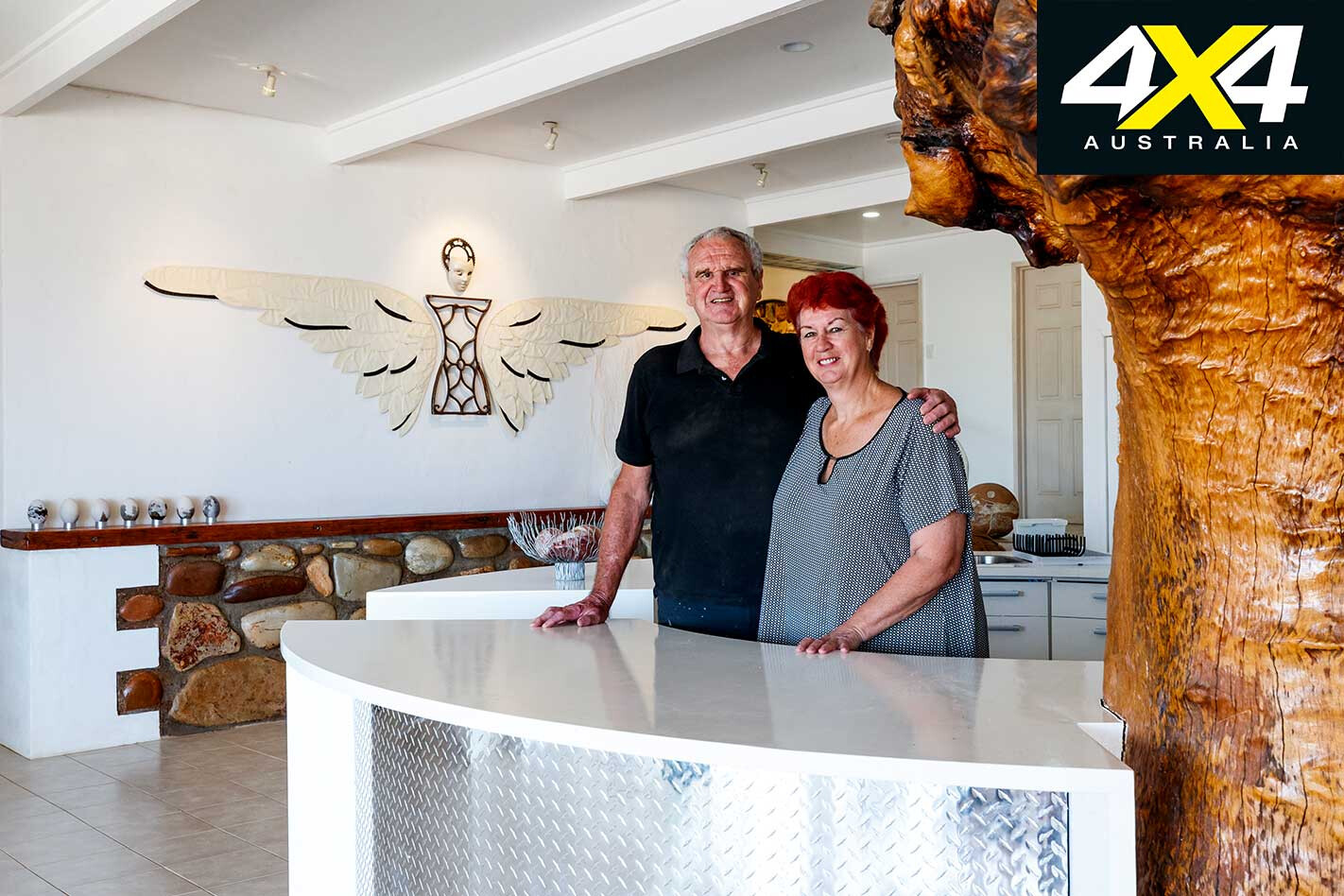
Now, I’m not into walking around houses for the pure sake of it, but I gotta tell you the 22-room underground home of one-time shearer, part-time copper, roustabout, rabbit shooter and opal miner, Lindsay White, and his artistic partner Cree Marshall, is something that will blow your mind. It is exceptional, and just goes to show some of the jewels that lie underground at White Cliffs are not opal at all!
That evening, after an easy run, we threw down our swags in Mutawintji NP, one of the best places to visit in western NSW and a real oasis set in the Byngano Range, which has long been held as sacred by the local Aboriginal people.
There’s a very pleasant camping area located here on the edge of Homestead Creek, while a 4X4 track along part of the Old Coach Road takes you into a more northerly part of the park which has some great rock formations and is best viewed in the early morning or late afternoon.
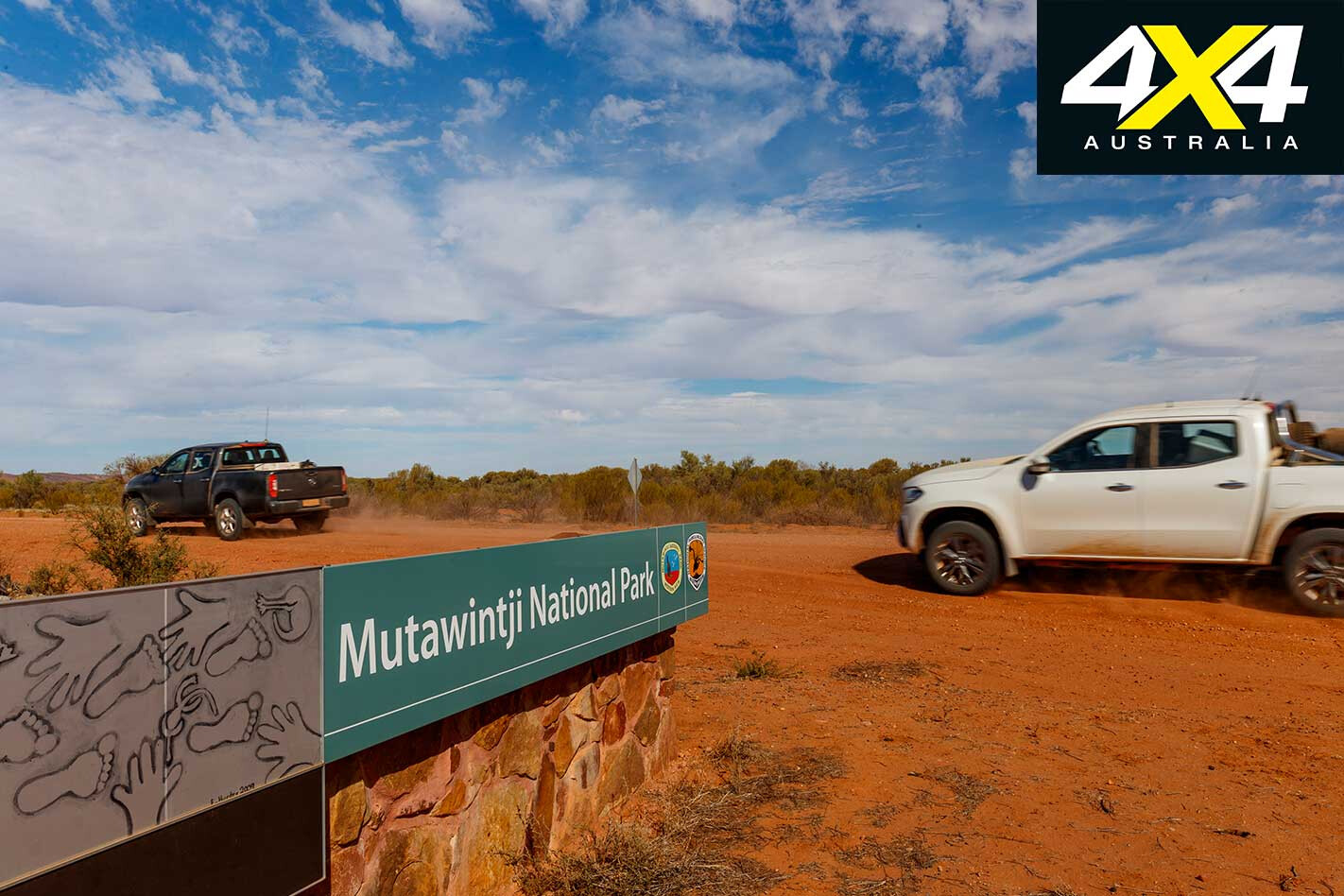
Walking tracks radiate from the camping area; the easiest one being to Wrights Cave, where William Wright, who guided the ill-fated Burke and Wills expedition for some time, made his mark amongst a range of more ancient Aboriginal paintings and engravings.
The Mutawintji Historical Site, which includes some of the most spectacular gorge country and Aboriginal art in the area, is only accessible via an organised tour with accredited guides. As we’ve found, it’s best to go with Tri-State Safaris which operates out of Broken Hill, but you can join them at the campground for a very reasonable price.
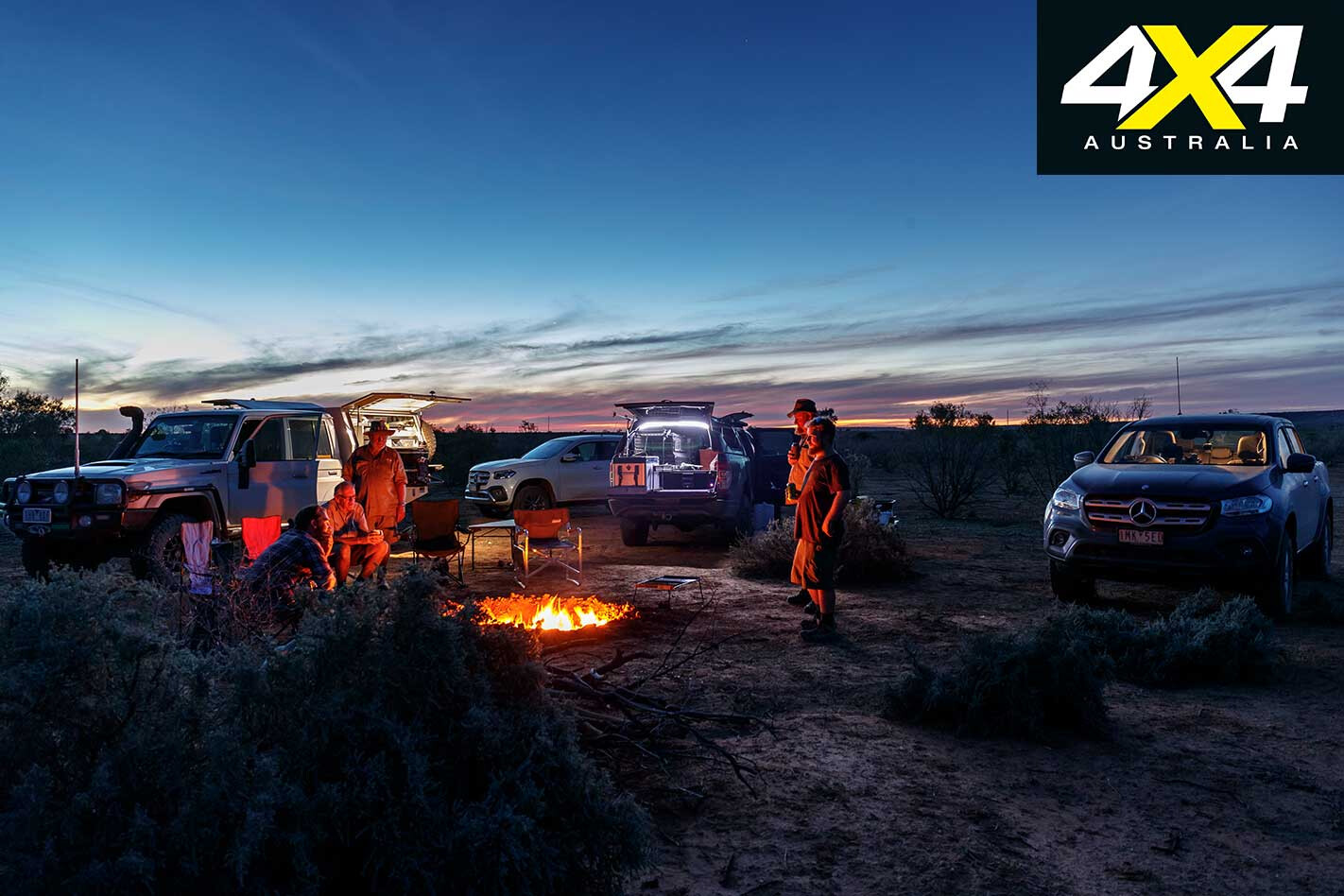
Heading south we took the often sandy Waterbag Road, passing some great old farming ruins along the way, including some aged wooden beam pumps, boilers and tattered wrecks of cars scattered around the remains of a few station outbuildings. Of course, we had to stop to explore the ruins and the battered remains of this one-time extensive endeavour to settle this harsh region.
Next stop was Wilcannia where the once mighty Darling River was a sad sight, the pool of water below the bridge seemingly more algae than anything else. No wonder so many people are upset about how much water is being pulled out of the river farther upstream.
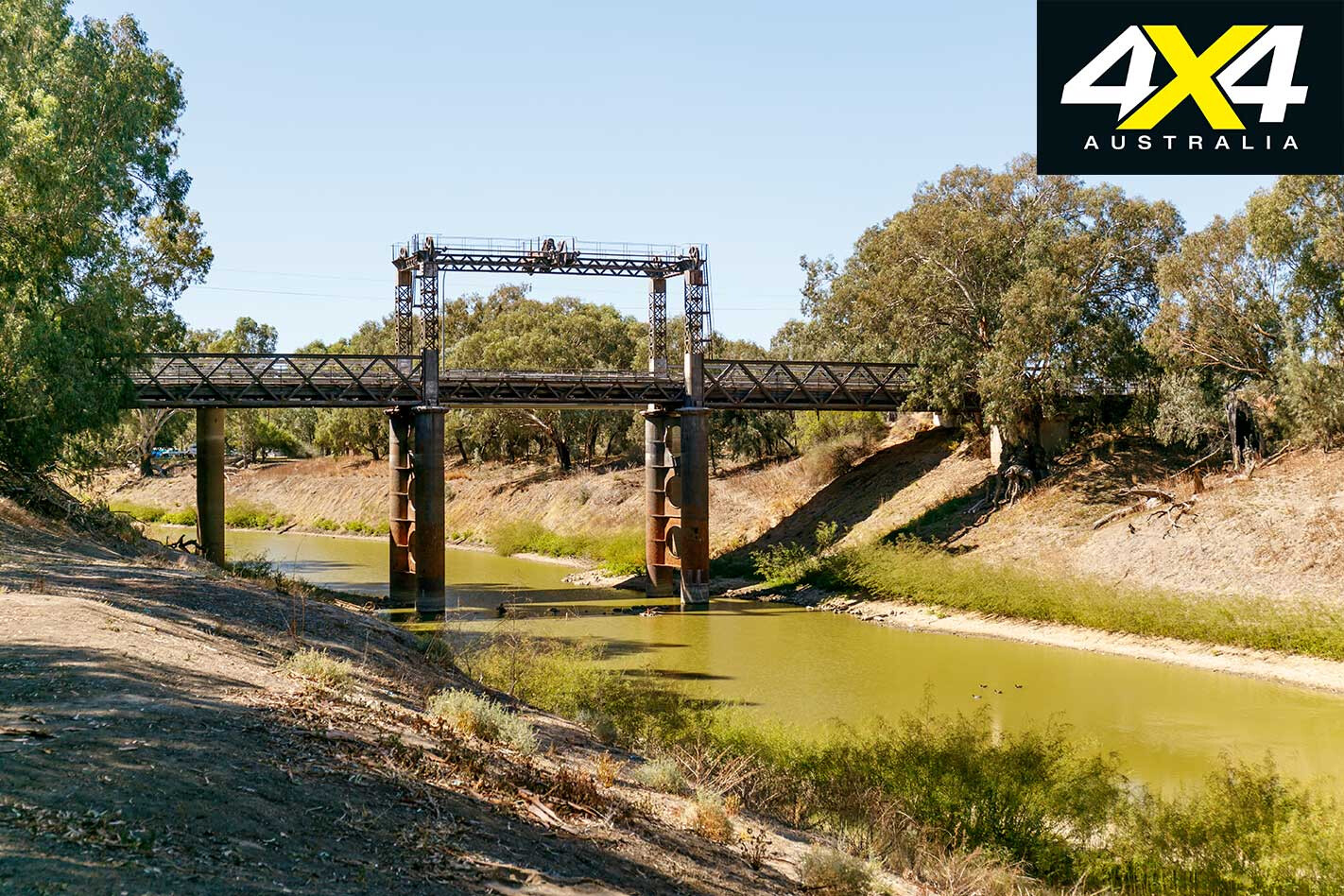
Taking the River Road – on the west side of the Darling (there’s another road on the east side) – we headed to Menindee and camped on the edge of Lake Pamamaro, which was about two-thirds full of water; the wide stretch of aqua making a delightful sight after our days wandering through the bleached outback of drought-ridden NSW.
A few things you need to do while here is to have a beer (or a meal) in the historic Maiden Hotel (where ol’ Burke ensconced himself for a few days), visit the site where the Burke and Wills expedition camped for some time close to the Darling and Lake Pamamaro (while Burke was at the pub) and to visit the great woolshed on Kinchega Station, now included in the surrounding Kinchega NP. We’ve done all three before and we did them again this time around, and it was just as enjoyable as it was then.
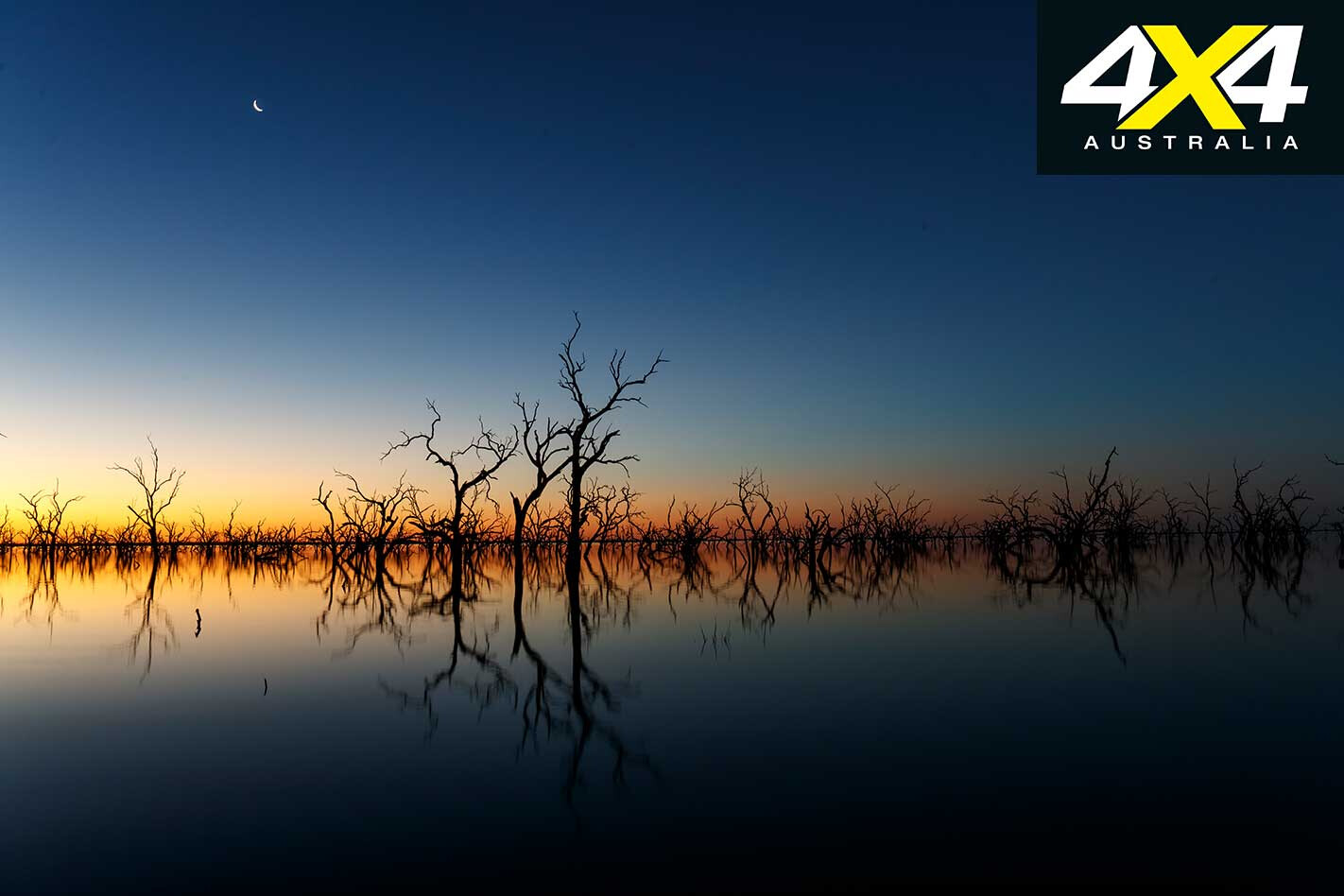
After a day of taking in the history of the region we headed through the park before passing Tandou Station, which sold its water rights rather controversially last year to the Federal government, for a cool $78 million – nice if you can get it!
Our stopping spot that evening was the historic Bindara Station homestead located on the banks of the Darling, this time the river having a modicum of water flowing past as it was fed by the man-made storage system built around the Menindee Lakes. I hadn’t stopped here before and it is a great place to throw down the swag or pull the camper up under a shady tree for a night or three.
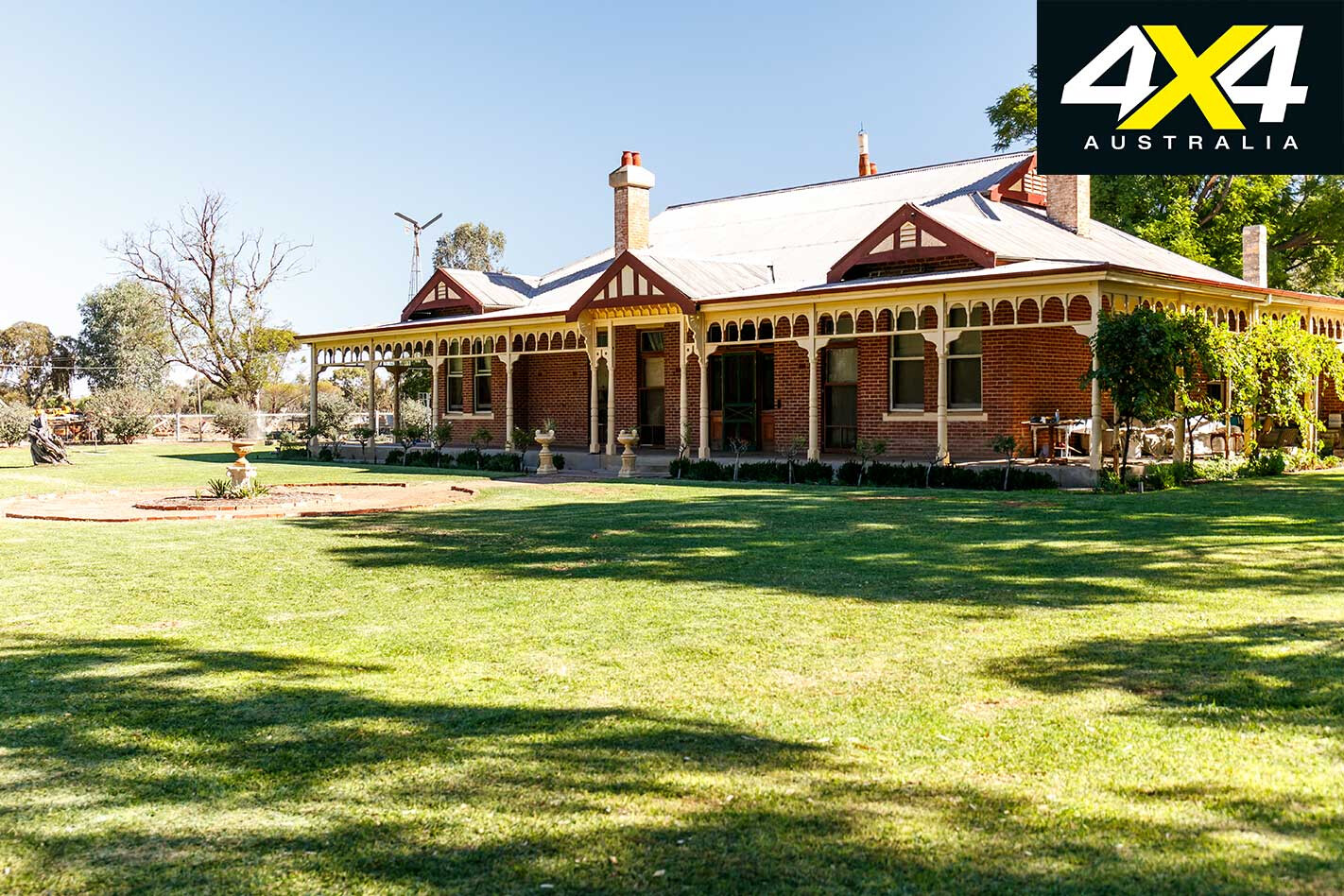
With the river having a pretty permanent supply of water downstream from the lakes, there’s always plenty of wildlife and birds around, there’s fishing and yabbying to be enjoyed, canoeing on the stream, while walking through the bush along the edge of the river will take you to many points of historic interest.
The backroad we followed south the next day parallels the river. In the early morning there was a heap of wildlife wandering to and from the water while corellas squawked relentlessly from the trees overhead, ducks glided on the stream and emus, running faster than a kangaroo, belted through the sparse scrub.
The small hamlet of Pooncarie, my favourite town on the Darling, came and went as we continued south to where the muddy, sluggish Darling meets with the more energetic and clearer waters of the mighty Murray River.
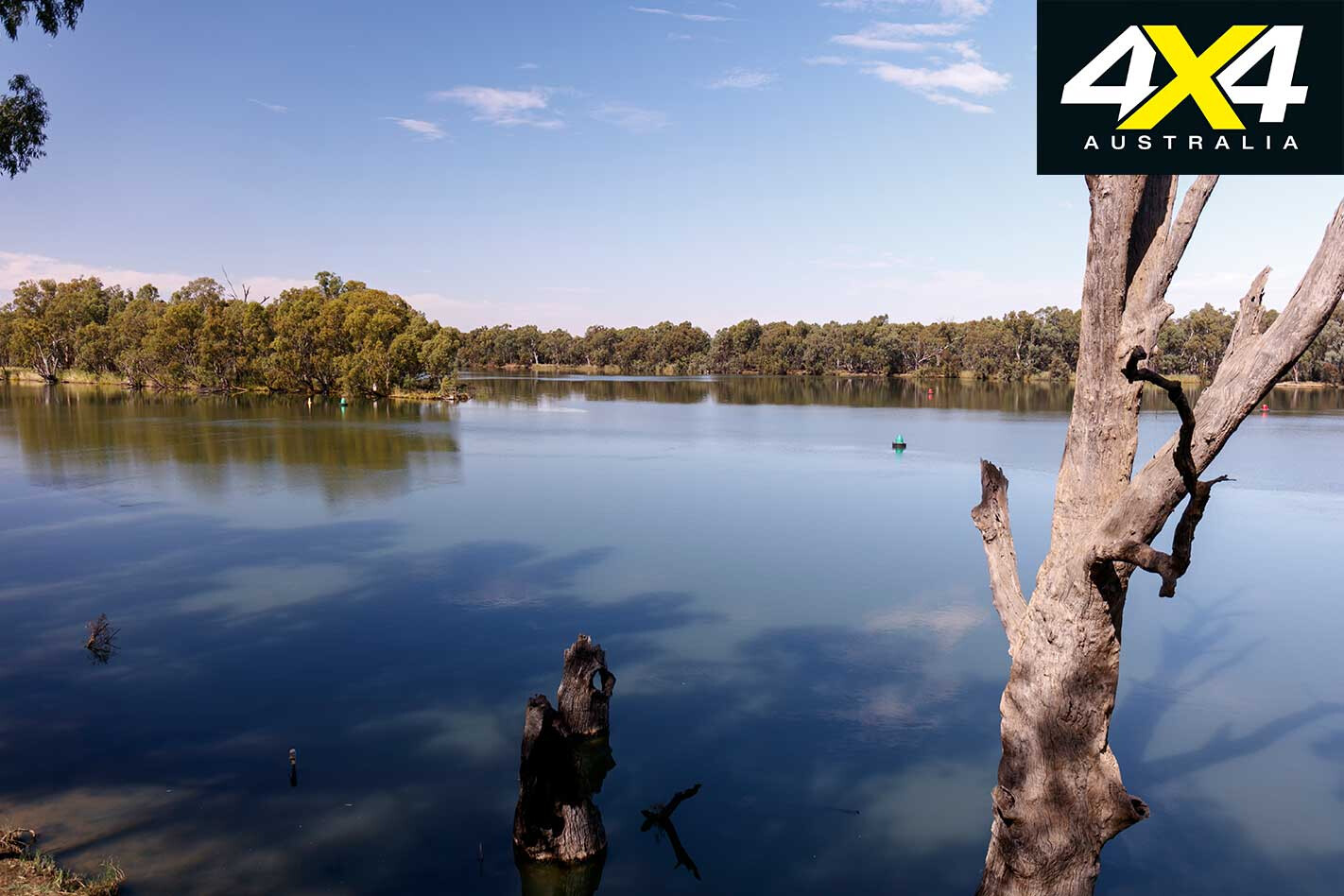
You get a great view of the junction of these two streams from Junction Park on the south side of Wentworth, the historic town which has played such an important part in the paddle steamer trade on both streams and which was a linchpin for the settlement of Outback NSW and Corner Country.
It made a fitting end to our travels through that very region and one we are sure to visit again in the future.
No other 4X4 marques can claim the long heritage of Jeep and Land Rover.
This feature was originally published in 4×4 Australia’s March 2009 issue
From before World War II the ‘square-rigged’ pair of the Wrangler and Defender started their development journey and have pioneered many innovations adopted by the rest of the 4X4 world. More than sixty years later, these two bush icons are still fulfilling their utilitarian role.
Hidden progress
Although the squared off, four-door bodywork and broad specifications of the Wrangler Unlimited and the Defender are similar – separate ladder-frame chassis, live beam axles front and rear, coil spring suspension and turbo-diesel power – the design rationales and target markets for these vehicles are quite different.
The Jeep Wrangler Unlimited four-door is a more spacious version of the two-door, but its basic ‘fun’ purpose is unchanged. It has a light, half-tonne payload and is aimed principally at the young, urban dweller, who wants daily transport easily transformed into an ‘escape’ machine.
The Land Rover Defender carries on its workhorse tradition. It’s a utilitarian vehicle with more than double the Jeep’s payload and 1.5 times its towing ability and civilian versions are aimed at the no-frills bush traveller market.
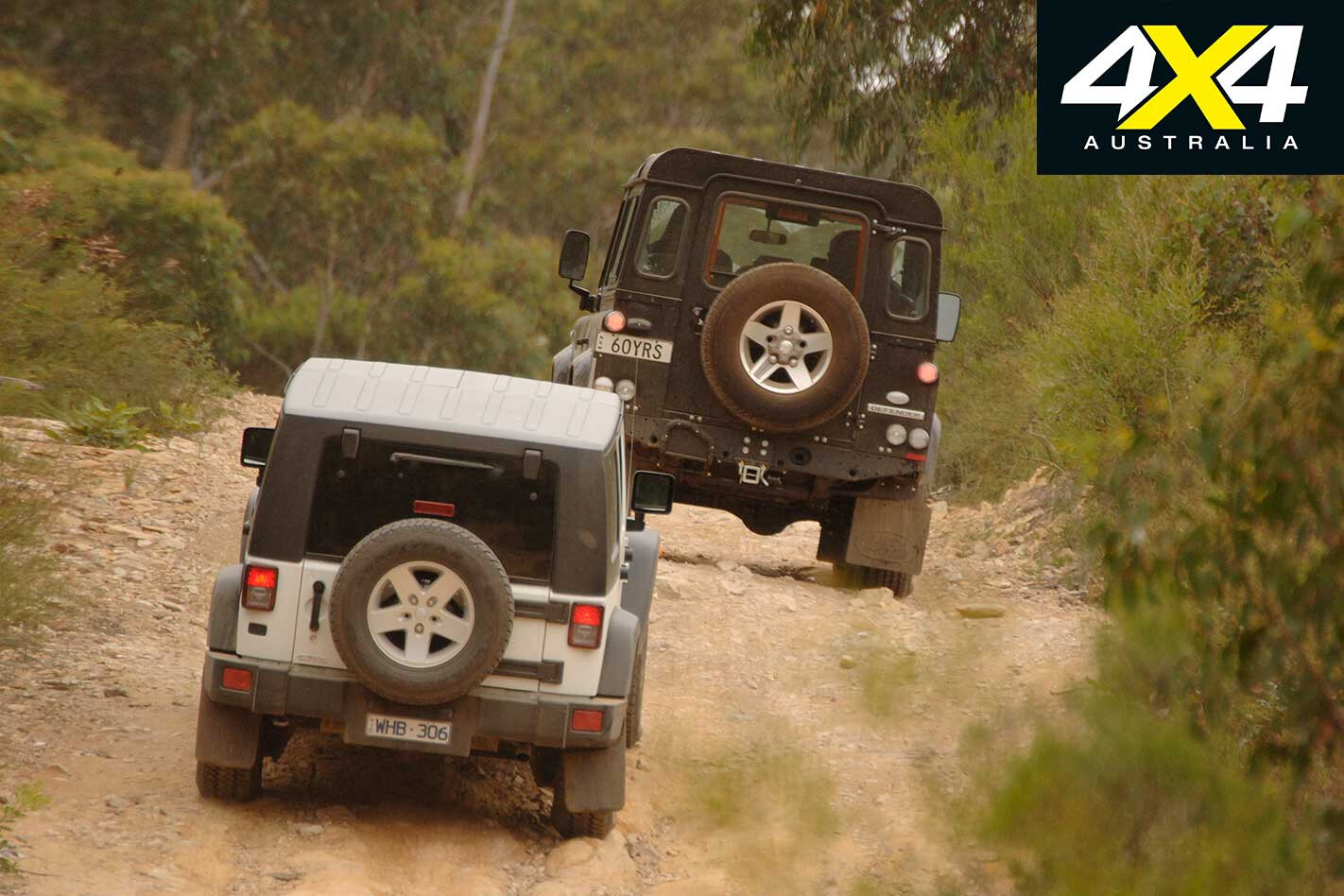
The Wrangler and Defender’s traditional appearances belie the fact that these machines incorporate modern technology: their engines are state of the art turbo-intercooled, electronically injected diesels; they have ABS brakes and electronic traction control; modern sound systems; and airconditioning.
The Jeep adds two front airbags, an automatic transmission option, electronic compass, trip computer, electronic stability control and cruise control.
The test pair
The Jeep Wrangler Sport Unlimited scored some significant upgrades for 2008. Peak torque from the 2.8-litre VM four-cylinder CRD diesel went up to 460Nm in the auto-transmission models, allowing fitment of a 3.73:1 final drive ratio instead of the manual’s 4.10:1 diffs. This taller-ratio final drive drops cruising revs and should enhance economy. Unlimited fuel tank capacity is now 85 litres (up from 79.5).
Wheel size was upgraded to 17-inch and a tyre pressure warning system fitted. The tyres are Goodyear Silent Armor 255/75R17s with a 113T load and speed rating.
We tested a Sport Unlimited auto, fitted with the $3k-option ‘Renegade Pack’: a removable, plastic ‘dual-top’ Targa-style roof section over the front seats, removable rear hard-top; padded sports bars front/rear; seven-speaker CD/DVD MP3 sound system; and tubular side bars.
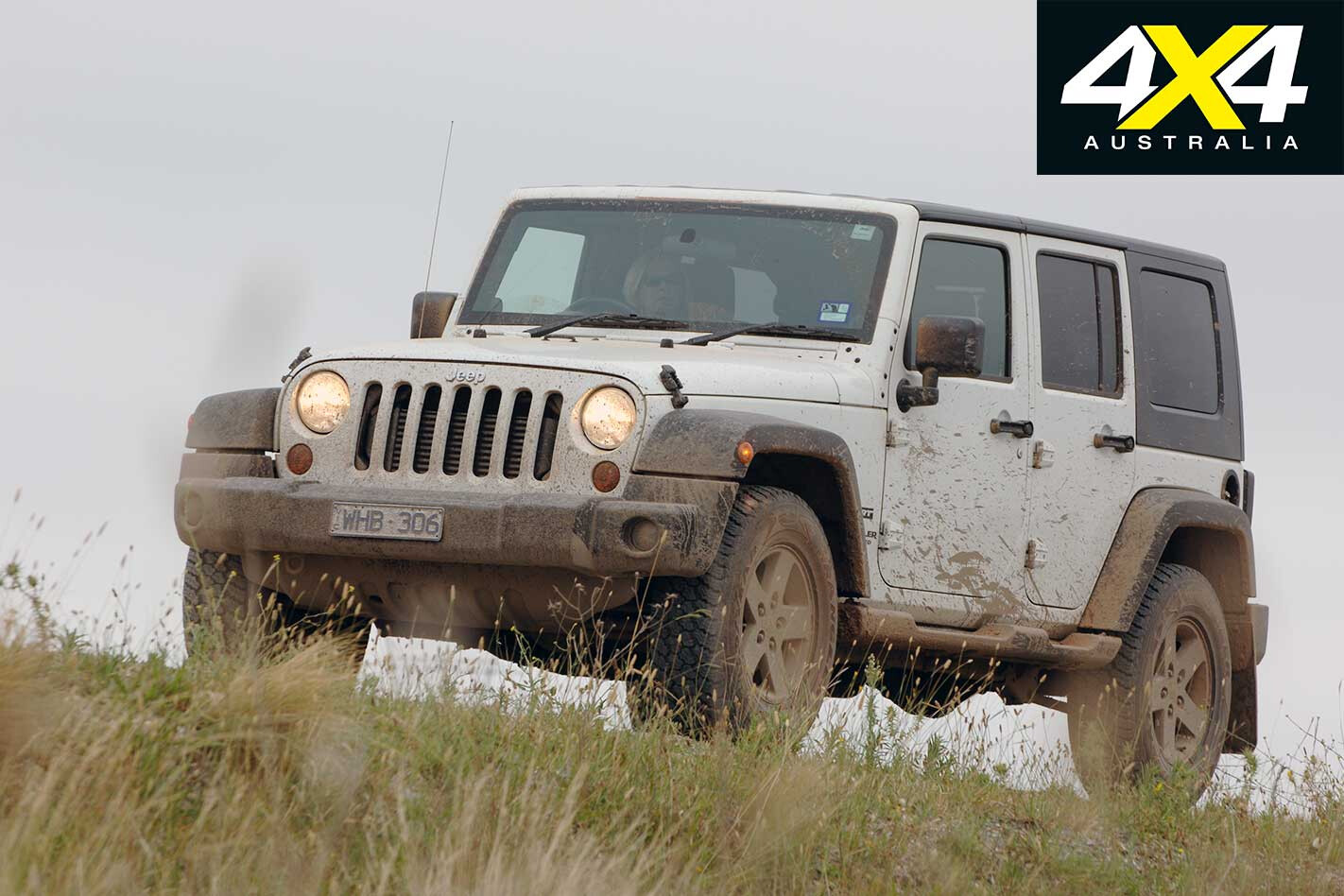
The Jeep also had the $3000-option CRD Off Road Group: electronic front sway bar disconnection and a driver controlled rear-axle differential lock. These options took its RRP to $47,490.
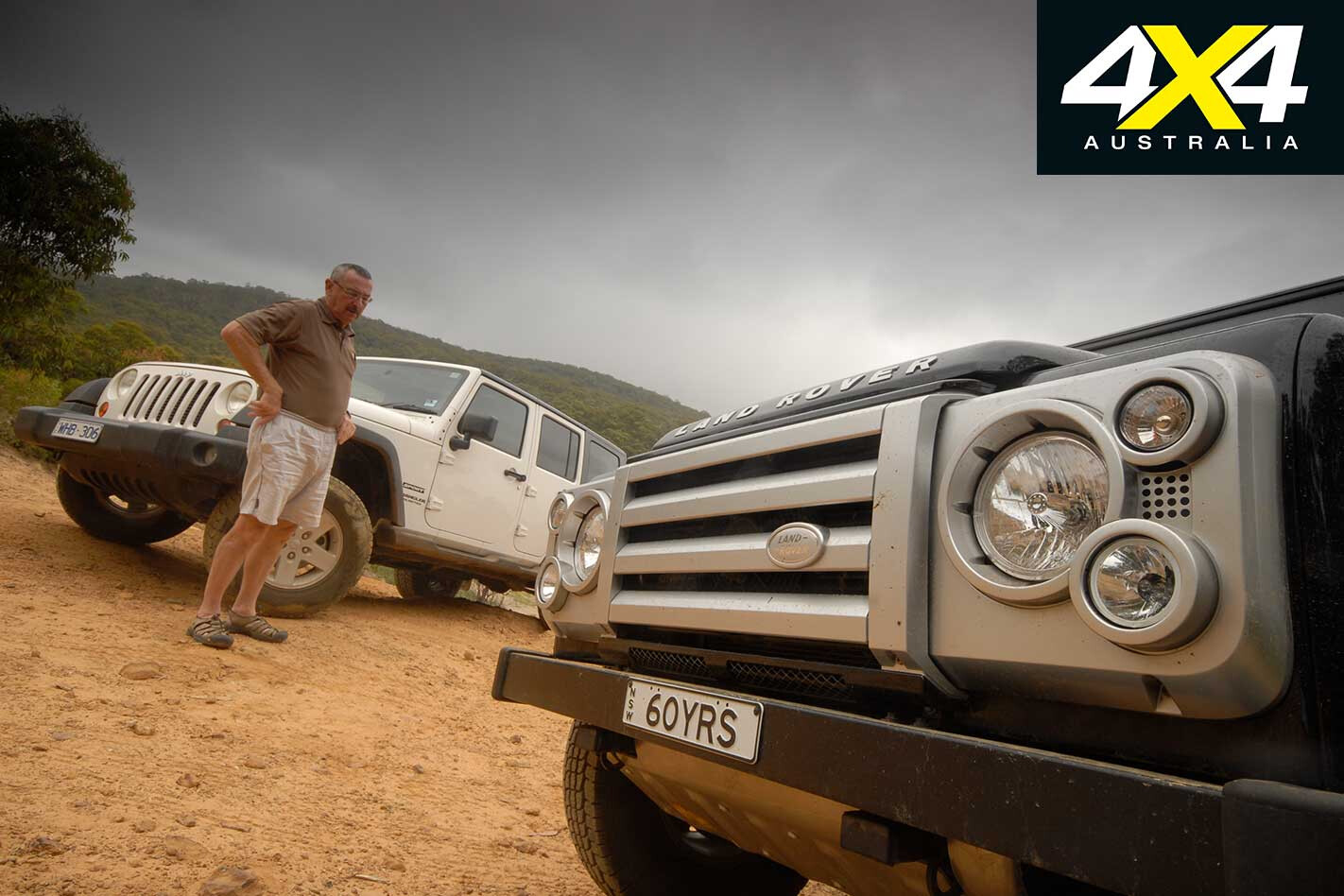
The Land Rover Defender SVX was released to commemorate Land Rover’s 60th anniversary in 2008. Out of 1800 SVX models Australia received 82.
The SVX is available only in black metallic paint, with satin black highlights. There’s a silver-finished SVX grille, 16-inch aluminium wheels, bush-ready 235/85R16 120Q-rated General Grabber tyres, front bash plate, silver SVX and LR badging, LED tail lights and side-steps. The SVX exterior also sports a manual sunroof, heated wash/wipe rear window, heated windscreen and four mudflaps.
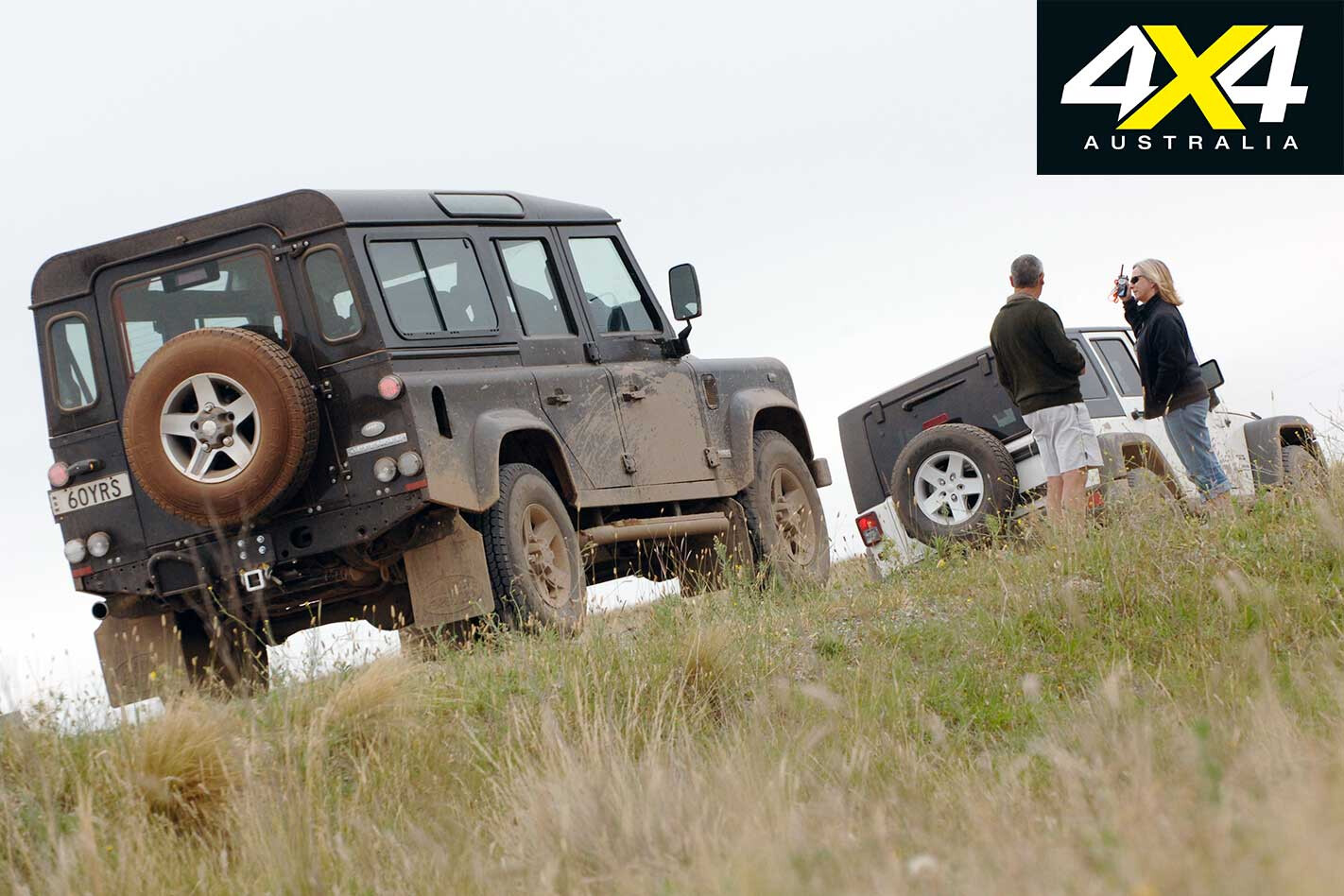
Inside is a pair of leather trimmed, heated Recaro front seats and leather second- and third-row seats. A resized console with interior lighting sits between the front seats and slip-out carpet covers the rubber floor mats.
The dashboard sports SVX silver finish and houses a Clarion High Ice sound system with iPOD interface and Garmin satnav. The steering wheel is leather-wrapped and the gear knobs are silver finished with aluminium caps.
The SVX is an addition to a specification that includes full-time 4X4 with a mechanically operated centre diff-lock and six-speed manual main transmission. The standard Defender has a heady RRP of $48,990 and the SVX kit takes that figure up to $62,990.
On-road
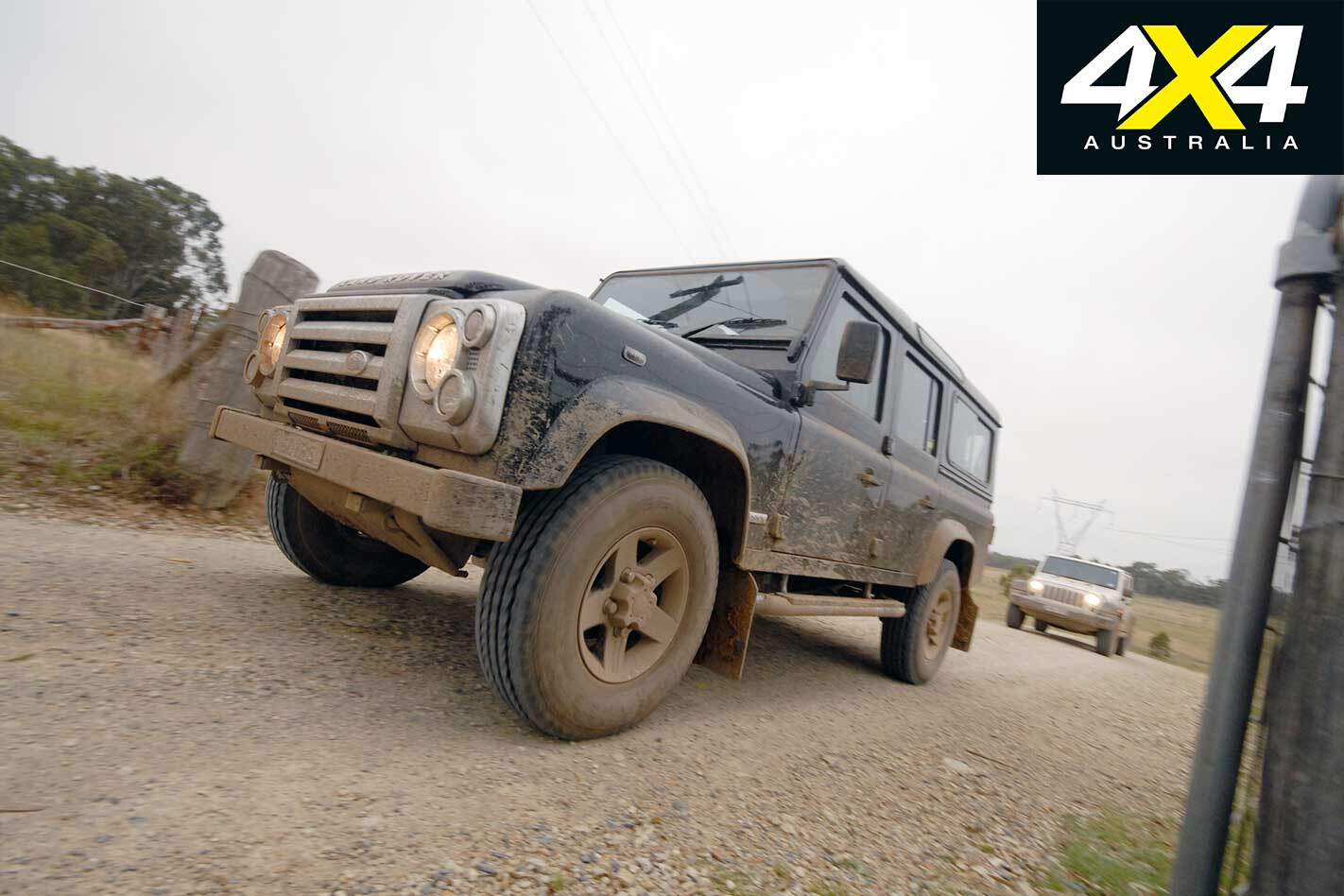
A two- up, two-day bush jaunt with a modest amount of touring kit in each vehicle meant the test conditions favoured the Jeep. Our experience with Defenders is that they come into their own on long trips, when more heavily laden.
A light load in the Defender meant its springing was a tad harsh, but it still had better rough-road ride quality than the softly-sprung and under-damped Wrangler Unlimited. We don’t know what’s happened at Jeep but all recent releases have inadequate shock absorbers that fail to control axle movements properly. Aftermarket shocks – budget a grand for quality monotubes – are must-fits to any new Jeep.
That said, the longer wheelbase Unlimited has much better directional stability than its shorter stablemates. Although limited in dirt road traction by its part-time 4X4 driveline the Unlimited’s longer wheelbase and stability control system combines to keep the four-door Wrangler going where it is aimed.
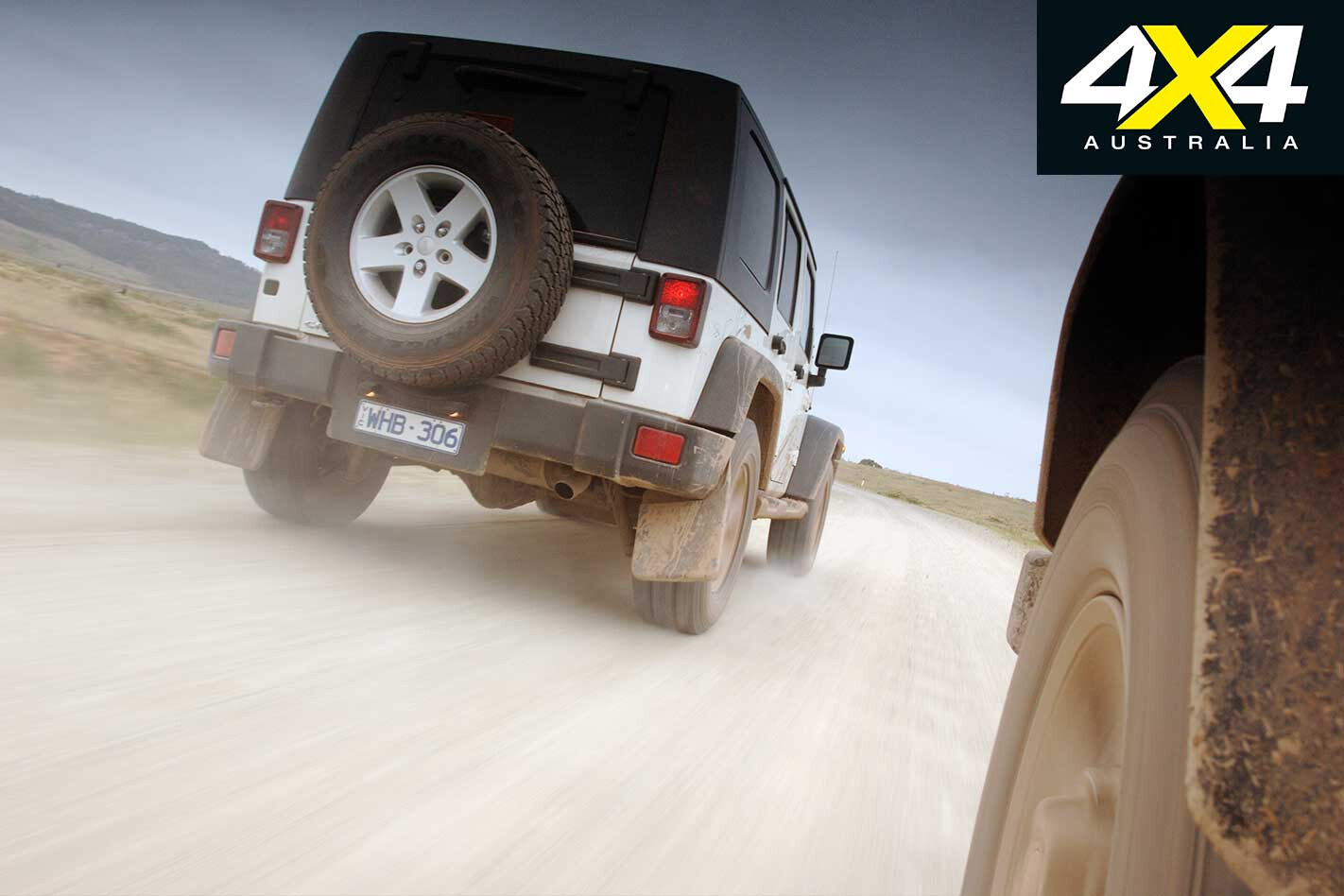
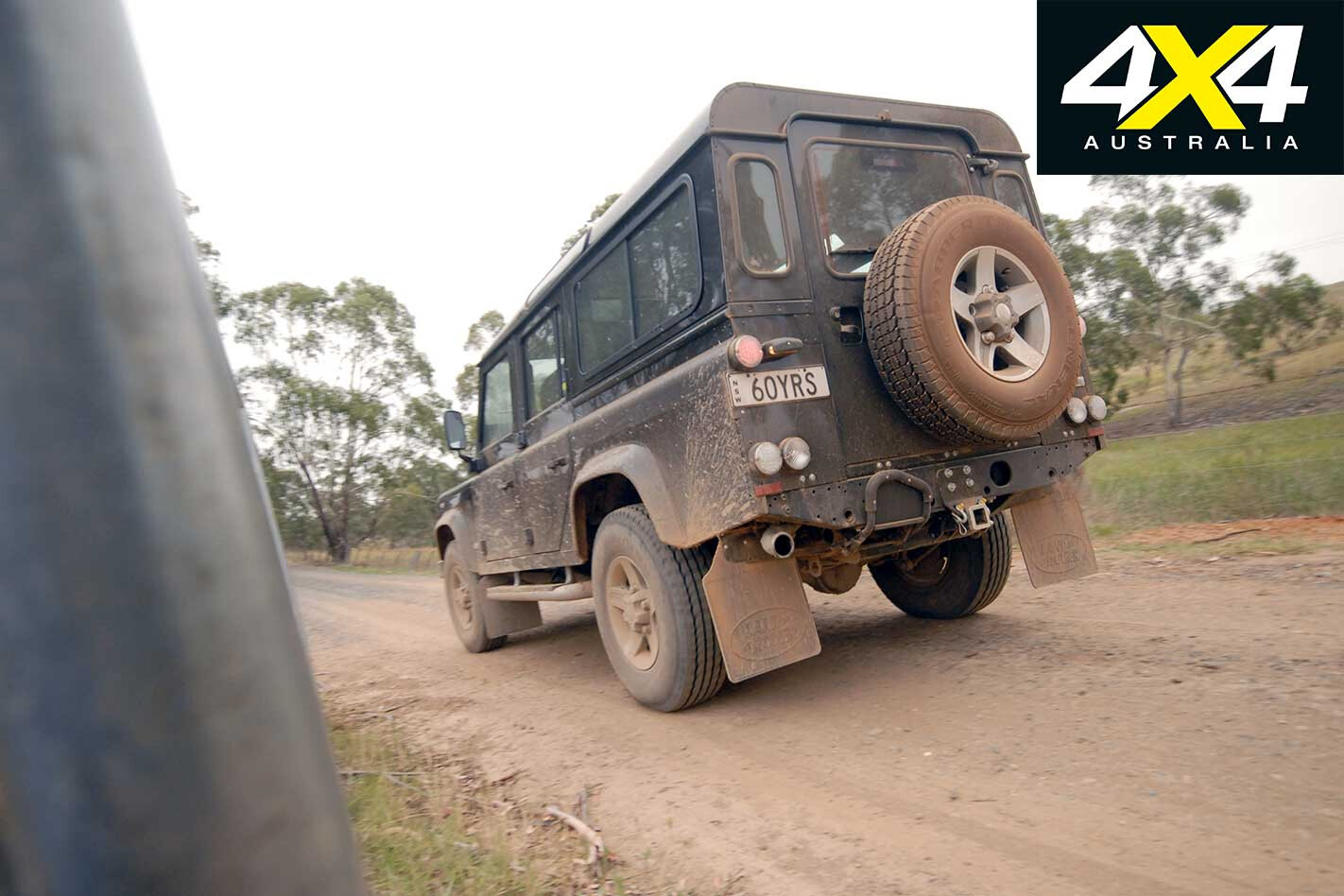
In contrast, the Defender’s firm ride is well damped, giving its full-time 4X4 driveline good grip on rough surfaces. Both vehicles steer accurately, but have wide steering arcs that limit manoeuvrability in tight spaces.
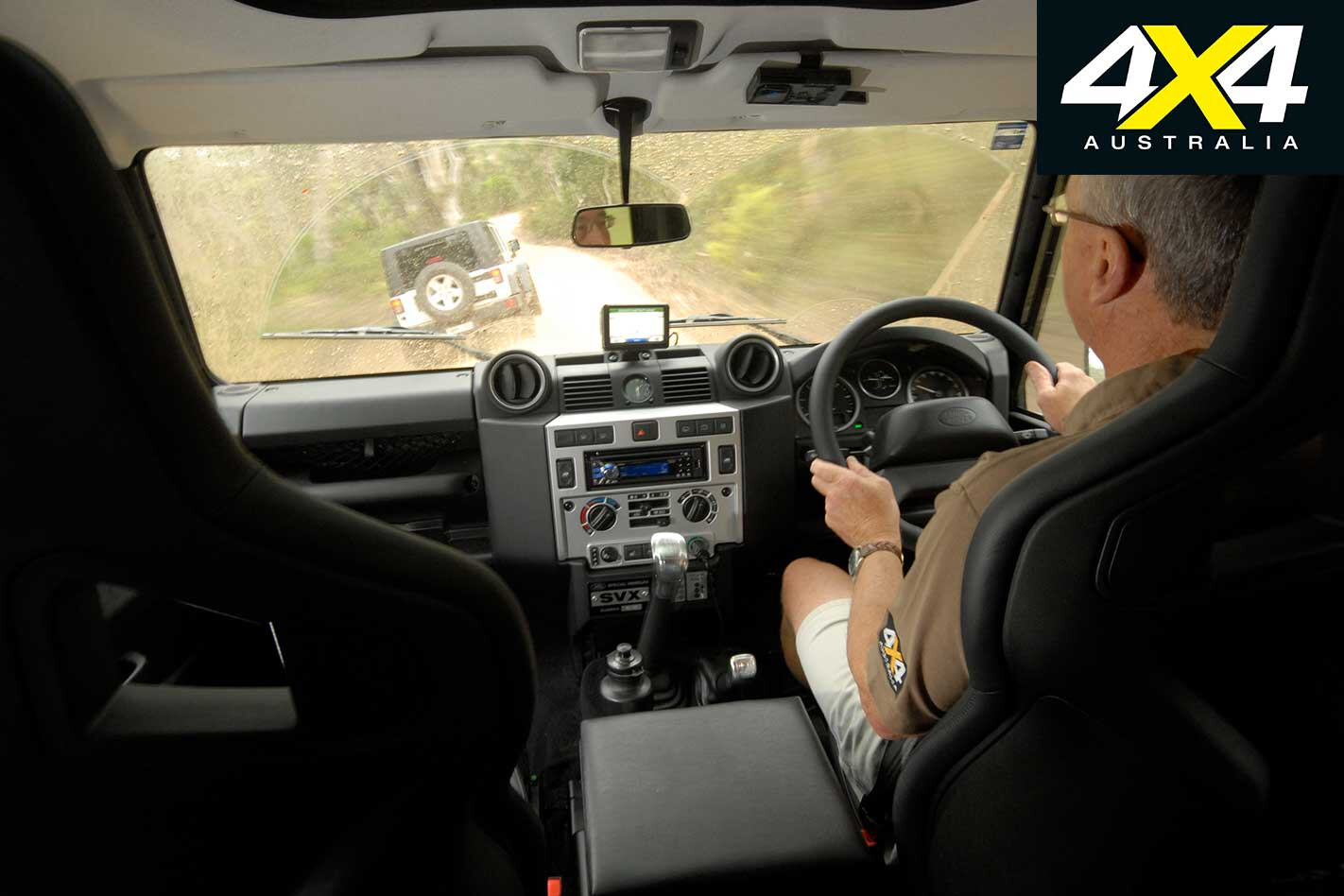
We’ve been asking Land Rover for many years to fit better seats to the Defender and it’s finally happened, albeit only in this high-priced SVX model. The Recaros make a huge difference and our test drivers alighted without the usual post-Defender driving symptoms: the need for neck and back traction and/or a massage. The driver’s Recaro doesn’t fit precisely, being offset to the left of the steering column, but nobody complained about the misalignment.
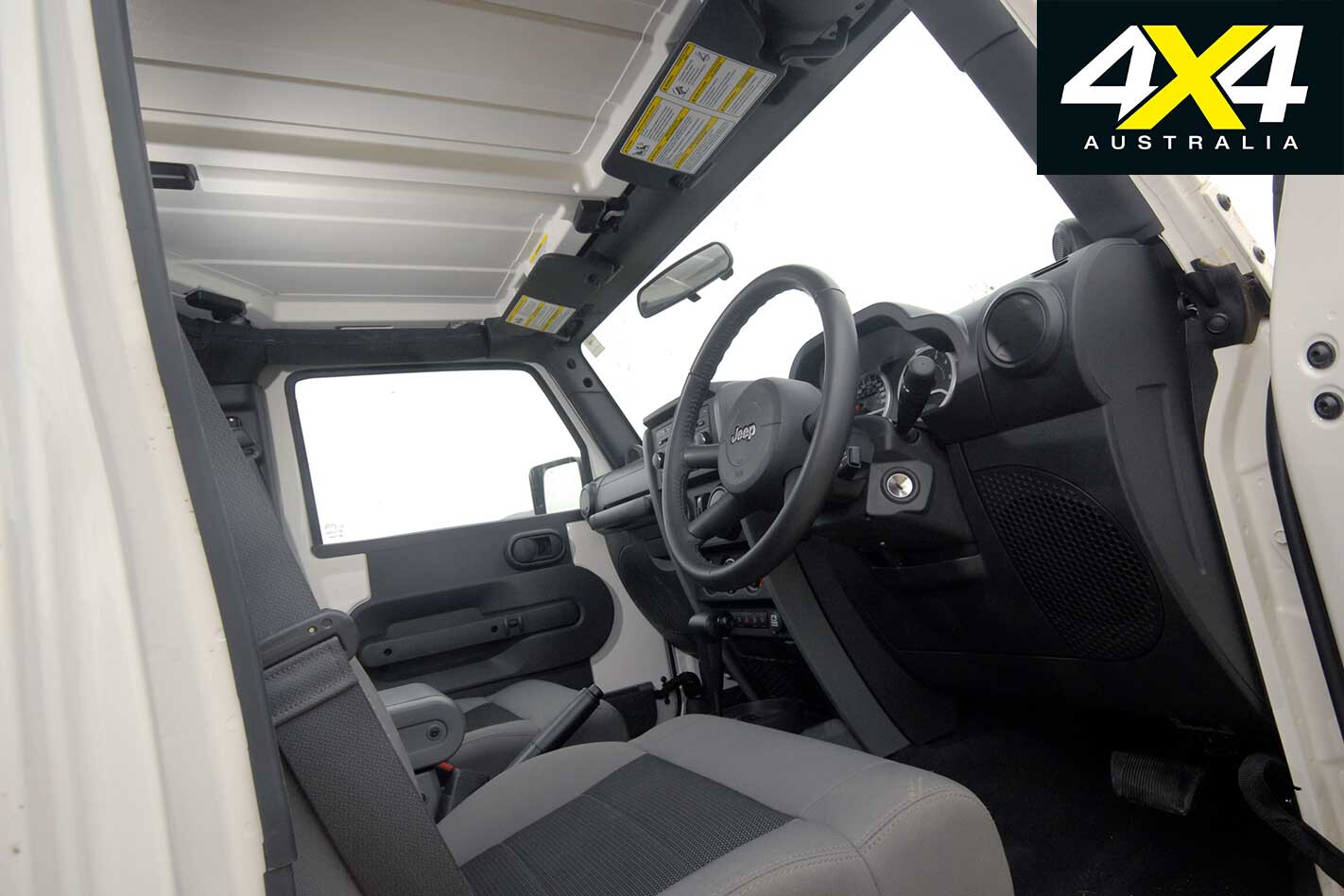
The Jeep seats are as featureless as in previous models but by far the biggest ergonomic problem is the discrepancy in accelerator and brake pedal heights. If you set up the seat reach for accelerator location you have to lift your leg to transfer your right foot to the brake; set up the seat for the brake pedal and you can’t depress the accelerator.
We’ve been nagging Jeep about its ridiculous pedal layout for as long as we’ve been nagging Land Rover about its Defender seats, but so far without results. The Jeep’s saving grace is cruise control, giving the driver’s elastic right leg some respite.
Forward vision in both is good, but the Wrangler wins the wiper/washer points, for its generous spray pattern. The Defender’s tiny wipers are shockers.
Rear vision isn’t brilliant out of either vehicle, thanks to small rear windows. Neither has power mirrors, but the Jeep has an excuse – removable front doors and windscreen. There’s no excuse for the Defender’s tiny, vibrating glasses.
Both machines have good sound systems but the Defender’s tiny button controls frustrate and there’s too much road, wind and mechanical noise for the Clarion call to overcome. The Jeep’s far lower interior noise level means you can appreciate the Renegade Pack’s top system.
Performance-wise, the Jeep’s 50 percent better power output and 25 percent higher torque peak is obvious. Hills that see the Defender back a gear or two and losing speed don’t cause the Jeep auto box to drop out of overdrive lock-up.
During the test both vehicles returned fuel economy figures of 12.5L/100km.
Off-road
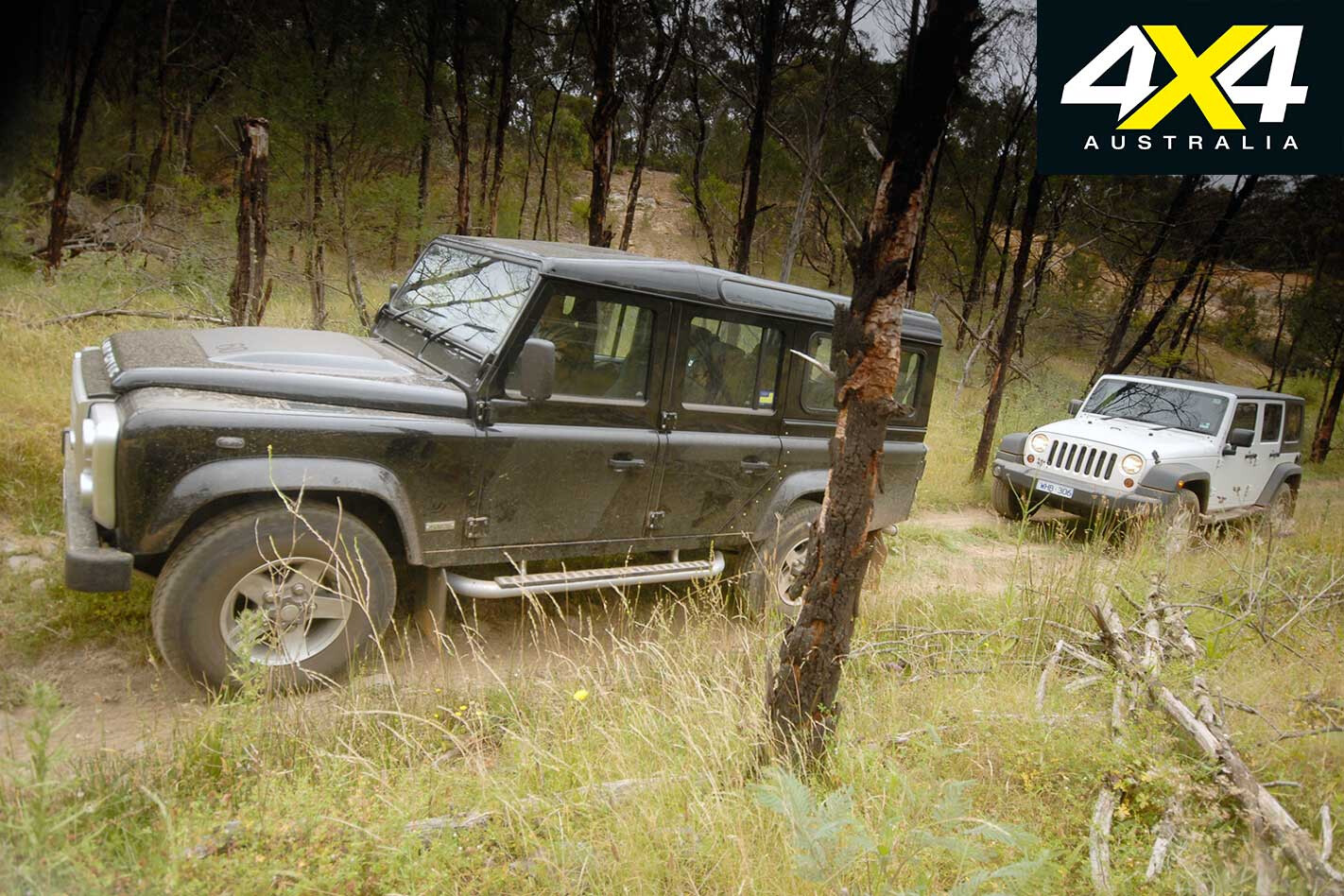
We confined off-road testing to trails, because the previous Wrangler outpaced the Defender in sand and the latest Jeep has more grunt. However, it needs a better engine air intake than the current water-splash vulnerable one, plus stone-strike protection for an intercooler that sits behind an unmeshed grille. A plus is its high performance Ultima battery.
With its truck-engine’s low-speed torque, deep reduction gearing, long-travel suspension, lockable centre differential and traction control the Defender is a class act on trails. Very few vehicles can go where the Defender can but, as we discovered, the Wrangler Unlimited with the Off Road Group option fitted is one of them. In fact, the Jeep outclassed the Land Rover, using less traction control action and with almost no wheel spin.
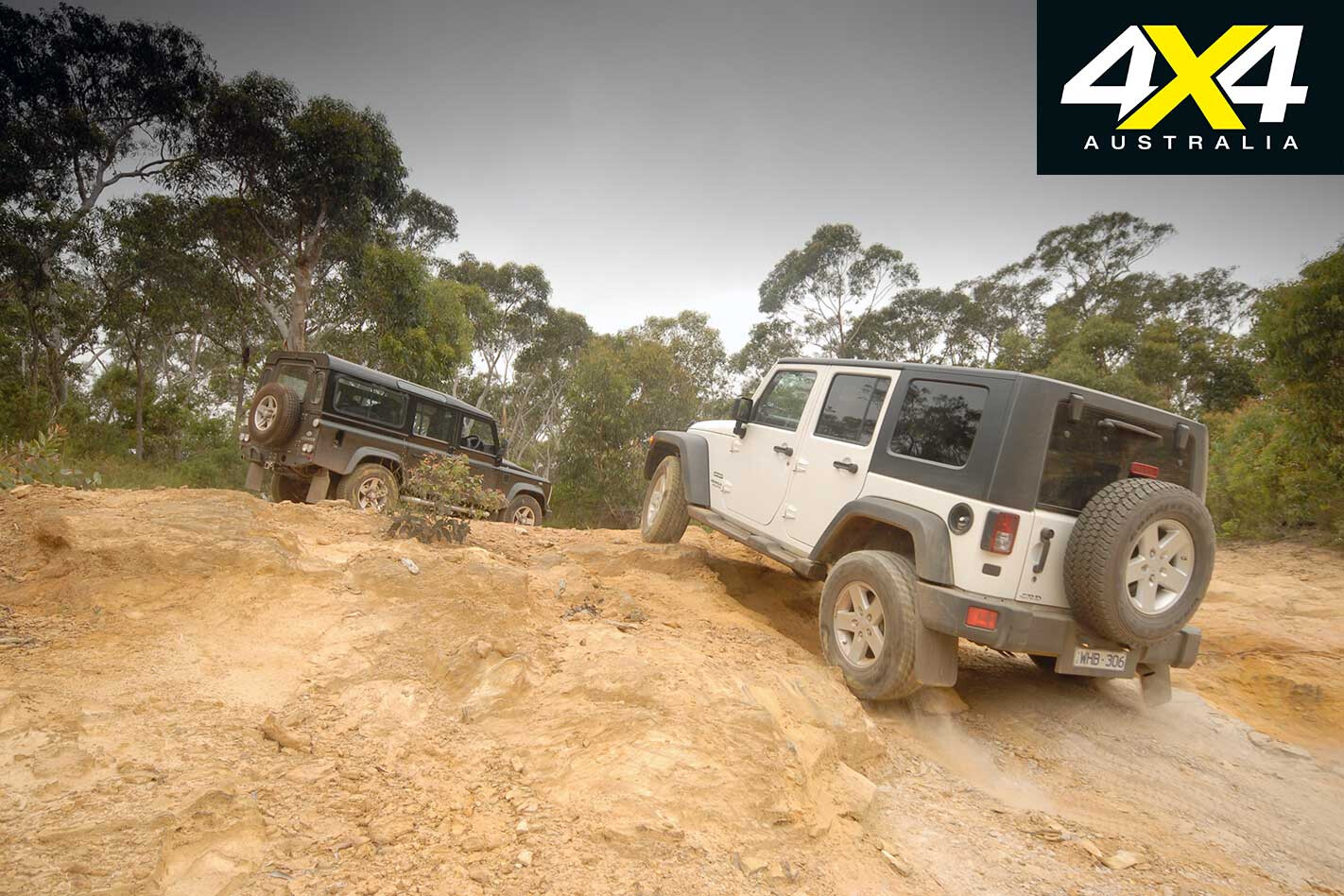
For steep, rocky climbs we locked the Defender’s centre diff and let it amble over rock shelves with its ample torque, while the TC system controls wheel spin. The Jeep needs a little more pre-climb preparation: a push on the front anti-sway bar disconnection switch and a push on the rear diff-lock switch. (In low range the Jeep’s ESP system is automatically disengaged, except for the across-axle traction control function.) Thus set up the Wrangler walks over everything its approach angle allows, with almost no traction control input. Front axle oscillation is noticeably better than Defender.
We’ve been pleading with Jeep to produce a diesel-powered Rubicon, but having driven this optioned Sport we think a Rubicon version may be overkill.
Horses for courses
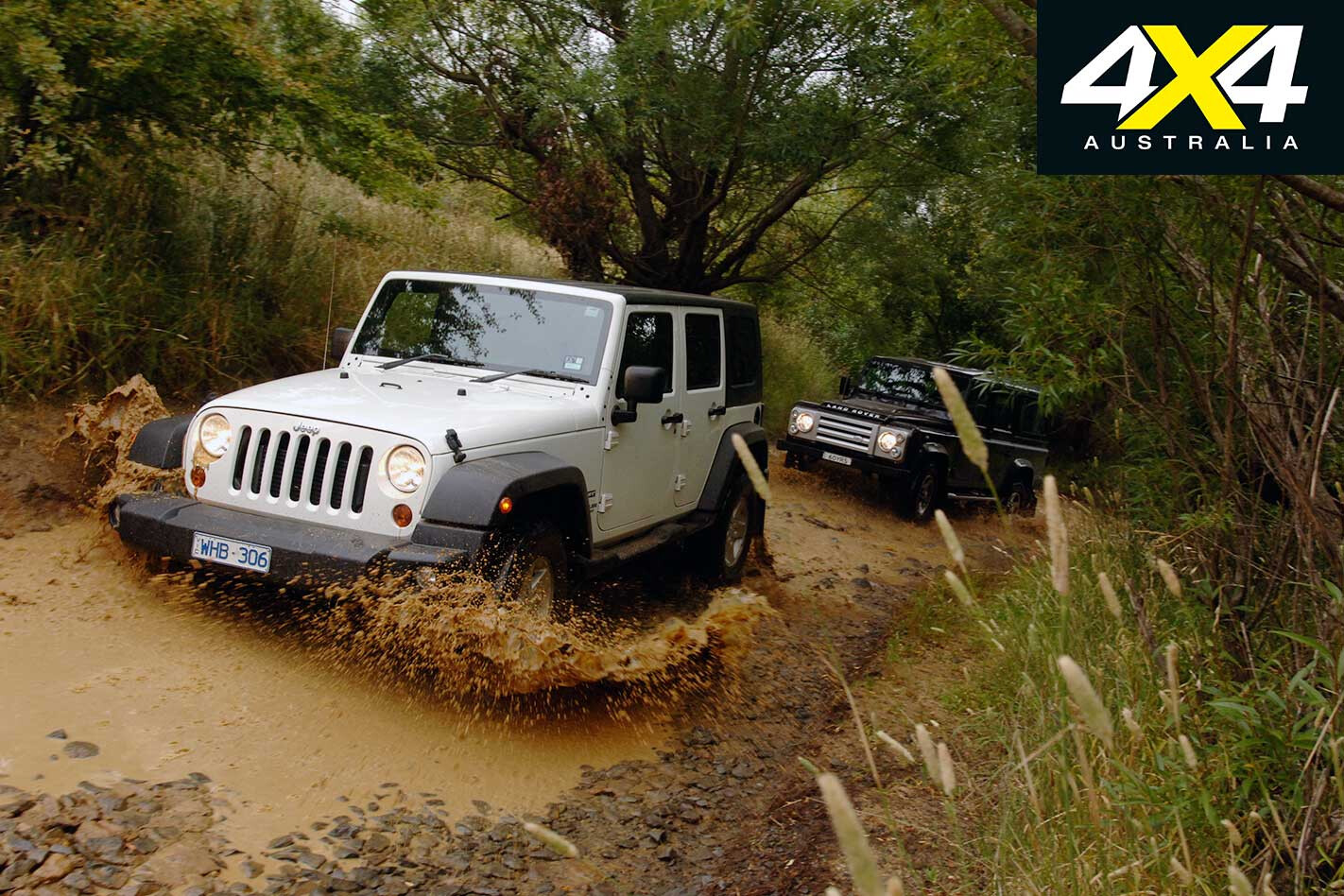
The design rationales and target markets for these two vehicles are quite different. The Defender has the inherent strength to be packed with a family’s bush necessities and haul 3.5 tonnes as well. With a trailer it can gross up to seven tonnes. The Jeep is smaller, with a 2.3-tonne towing capacity. The Wrangler Unlimited grosses out under five tonnes with trailer.
The Defender can comfortably seat seven adults, where the Wrangler is comfy for four and a squeeze for five. However, if it came to having an accident in either vehicle, we’d rather be in the Jeep.
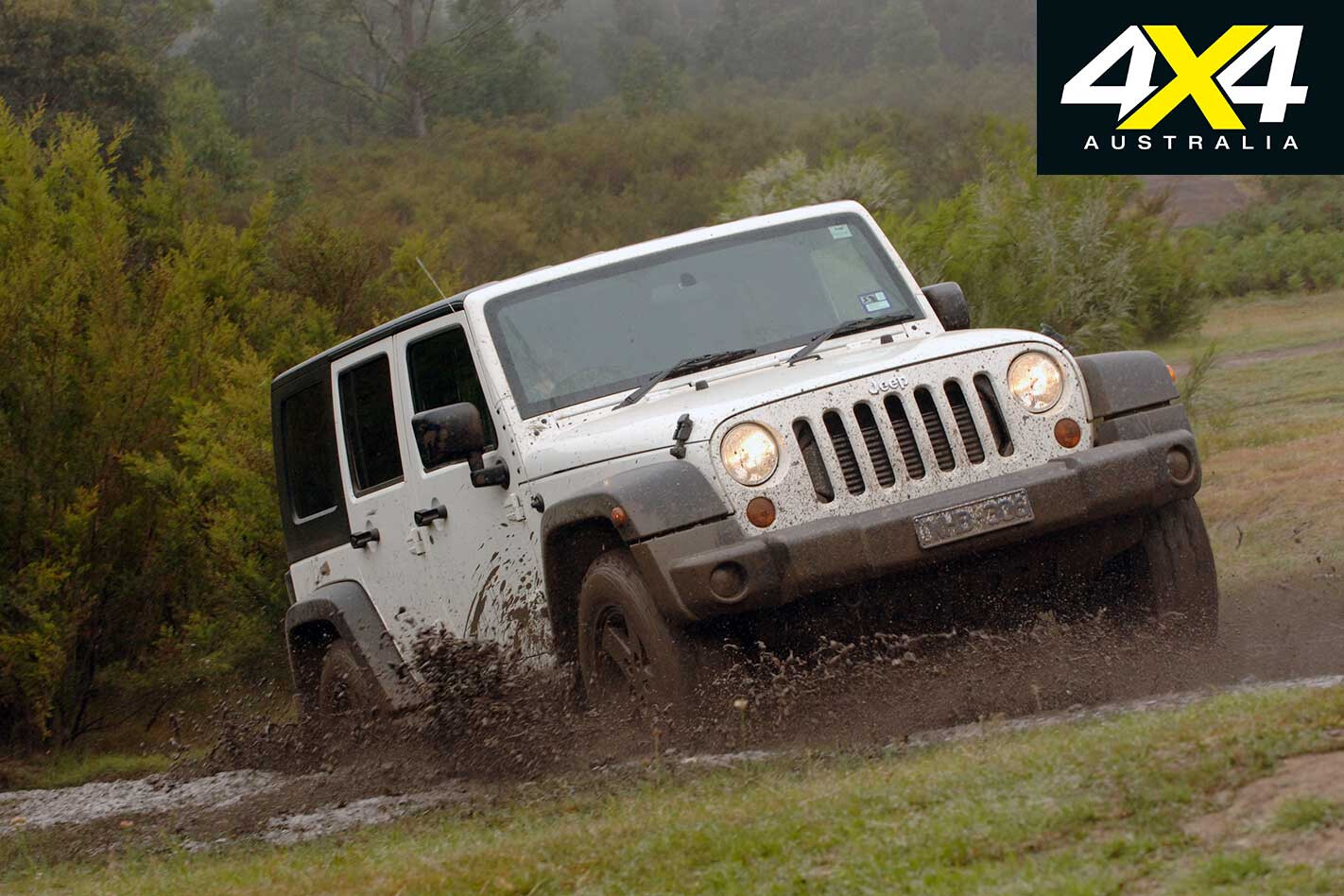
The Defender is out of place in town: it’s too tall for many underground car parks and its giant turning circle further restricts city ability. The engine needs stick-stirring and that’s hampered by a heavy clutch action. Getting in and out is a pain for the vertically disadvantaged. You can almost hear a sigh of relief from the Defender when it leaves the urban sprawl behind and its stubby noise points towards the wide open spaces.
However, when Land Rover was planning the 60th anniversary version it had the opportunity to make more than cosmetic changes to the Defender. True users would rather have larger, powered rear vision mirrors, cruise control and better safety than ‘SVX bling’.
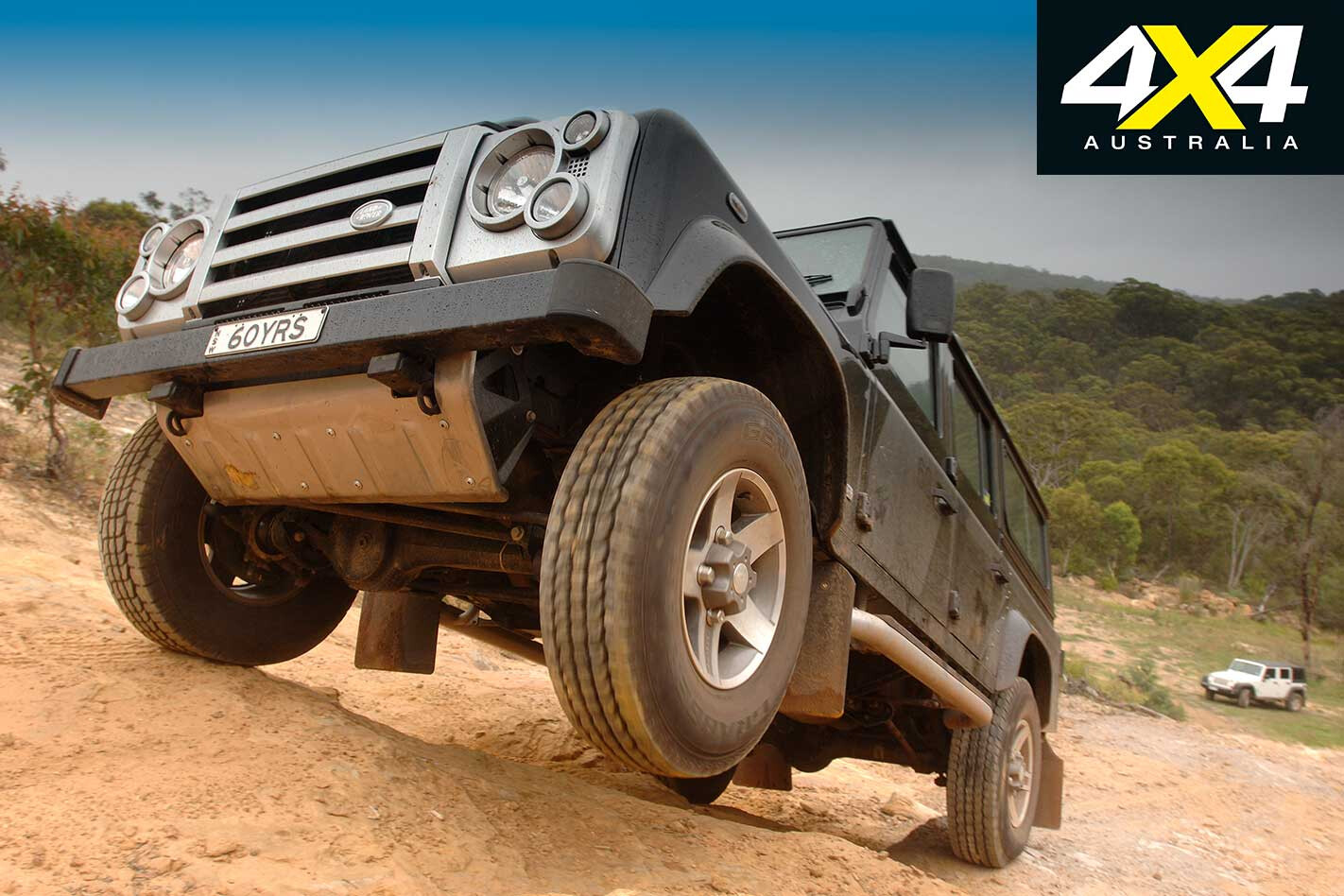
The Wrangler is different, although, like the Defender, its turning circle is vast. The Jeep feels at home in town yet take it off-road (beach or bush) and you have a doorless, screenless fun machine.
In value for money terms the optioned-up Jeep Wrangler Unlimited is a clear winner over the expensive Defender SVX. Defender fans would be better off buying a stocker and fitting Recaros.
Specifications
| u00a0 | Jeep Wrangler Unlimited | Land Rover Defender SVX |
| Priceu00a0 | $47,990 | $62,990 |
| Engine | ||
| Type | 2768cc four-cylinder DOHC, common-rail intercooled turbo-diesel | 2402cc four-cylinder DOHC, common-rail intercooled turbo-diesel |
| Bore/Stroke | 94.0 x 100.0mm | 89.9 x 94.6mm |
| Compression | 17.5:1 | 17.5:1 |
| Power | u00a0130kW @ 3800rpm | u00a090kW at 3500rpm |
| Torque | u00a0460Nm @ 2000rpm | u00a0360Nm at 2000rpm |
| Transmission | ||
| Type | 5-speed auto | u00a06-speed manual |
| Ratios (overall) | ||
| 1st | 3.000 (11.190/30.437)u00a0 | u00a05.443 (23.334/62.988) |
| 2nd | u00a01.670 (6.229/16.943) | u00a02.839 (12.171/32.854) |
| 3rd | 1.000 (3.730/10.146)u00a0 | u00a01.721 (7.378/19.916) |
| 4th | u00a00.750 (2.797/7.609) | u00a01.223 (5.243/14.153) |
| 5th | u00a00.670 (2.499/6.797) | u00a01.000 (4.287/11.572) |
| 6th | – | u00a00.742 (3.181/8.587) |
| Reverse | u00a03.000 (11.190/30.437) | 4.935 (21.156/57.109)u00a0 |
| Final drive | u00a03.73:1 | 3.540u00a0 |
| High ratio | u00a01.000 | u00a01.211 |
| Low ratio | u00a02.72:1 | u00a03.269 |
| Suspension | ||
| Front | u00a0Live axle, leading arms, coil springs,u00a0gas/oil dampers, stabiliser bar | u00a0Live axle, leading arms, Panhard rod, coil springs, gas/oil dampers |
| Rear | u00a0Live axle, trailing arms, coil springs,u00a0gas/oil dampers,u00a0stabiliser bar | u00a0Live axle, A-arm, coil springs, gas/oil dampers |
| Steering | ||
| Type | u00a0Power-assisted recirculating ball and nut | u00a0Power-assisted worm and roller |
| Brakes | ||
| Front | 332mm ventilated discs, ABS, brake assistu00a0 | 298mm ventilated discs, ABSu00a0 |
| Rear | u00a0316mm solid discs, ABS, brake assist | u00a0298mm solid discs, ABS |
| Wheels | ||
| Material | u00a0Alloy | Alloyu00a0 |
| Size | u00a017x7.5J | 16×7.0Ju00a0 |
| Tyres | ||
| Type | u00a0Goodyear Silent Armor | General Grabberu00a0 |
| Size | 255/75R17 113Tu00a0 | u00a0235/85R16 V |
| Dimensions | ||
| L/W/h | u00a04751/1877/1840mm | u00a04639/1790/2021mm |
| Wheelbase | u00a02947mm | 2794mmu00a0 |
| Track (f/r) | u00a01572mm/1572mm | u00a01486mm/1486mm |
| Turning circle | u00a012.25m | u00a012.8m |
| Clearance | 255mmu00a0 | u00a0314mm |
| App/Dep/Ramp | 38.4u00ba/20.8u00ba/31.4u00bau00a0 | u00a049u00ba/34.6u00ba/30.3u00ba |
| Kerb Weight | u00a02145kg | u00a02041kg |
| GVM | 2540kgu00a0 | u00a03050kg |
| Payload | u00a0395kg | u00a01010kg |
| Fuel Tank | u00a085 litres, diesel | u00a075 litres, dieselu00a0 |
| Towing Capacity | ||
| Braked | u00a02300kg | u00a03500kg |
| Unbraked | u00a0750kg | u00a0750kg |
History of the Jeep
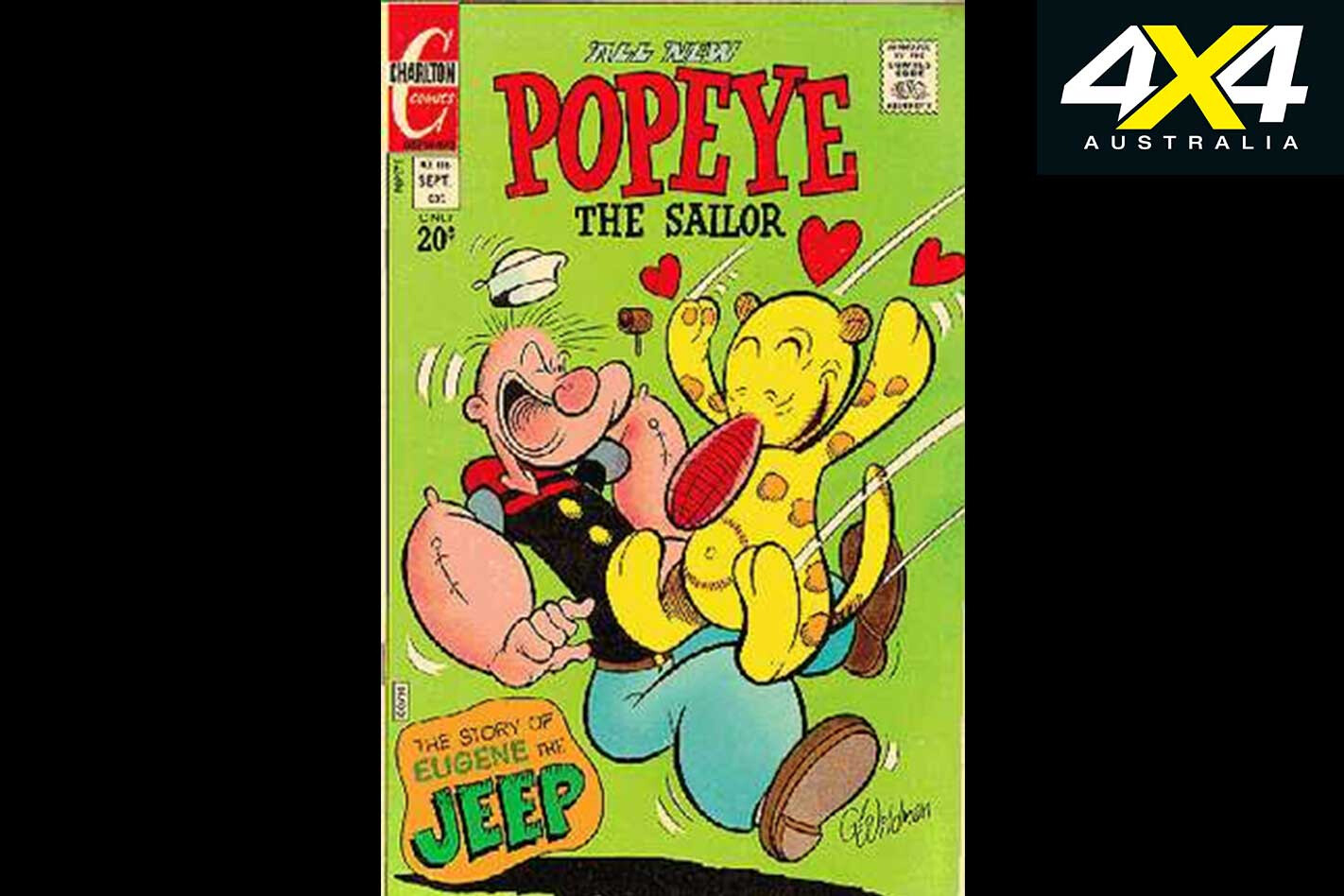
It started with the World War II ‘Jeep’ – a name derived from a 1930s comic strip character in E C Segar’s ‘Popeye’ series. It was a puppy-like creature, able to travel anywhere rapidly and solve myriad problems. These abilities saw the name ‘Jeep’ applied to several prototype 4X4s and, eventually, to the US Army’s General Purpose, quarter-ton machine.
The first Land Rover was an unashamed copy of the Jeep, but with the farmer in mind, not the soldier. Aluminium panels were adopted because there was post-war surplus aircraft material, but no automotive sheet steel.
Today, when you look at the Wrangler and the Defender, the 1940s heritage remains the chief appeal of these icons.
Most 4×4 utes are built to be workhorses, but it doesn’t have to be all work and no play. All it takes are little tweaks to turn in into an all-round tourer and it starts with the bits and bobs beneath.
Modern All-Terrain tyres such as Bridgestone’s new Supercat and Cooper Tires’ new AT3s are now designed to to be quieter and deliver more on-road comfort while having better traction off-road, whereas Ironman 4×4 has released a suspension upgrade that improves the LDV T60 ute’s ride characteristics with a more controlled ride.
Bridgestone Supercat All Terrain
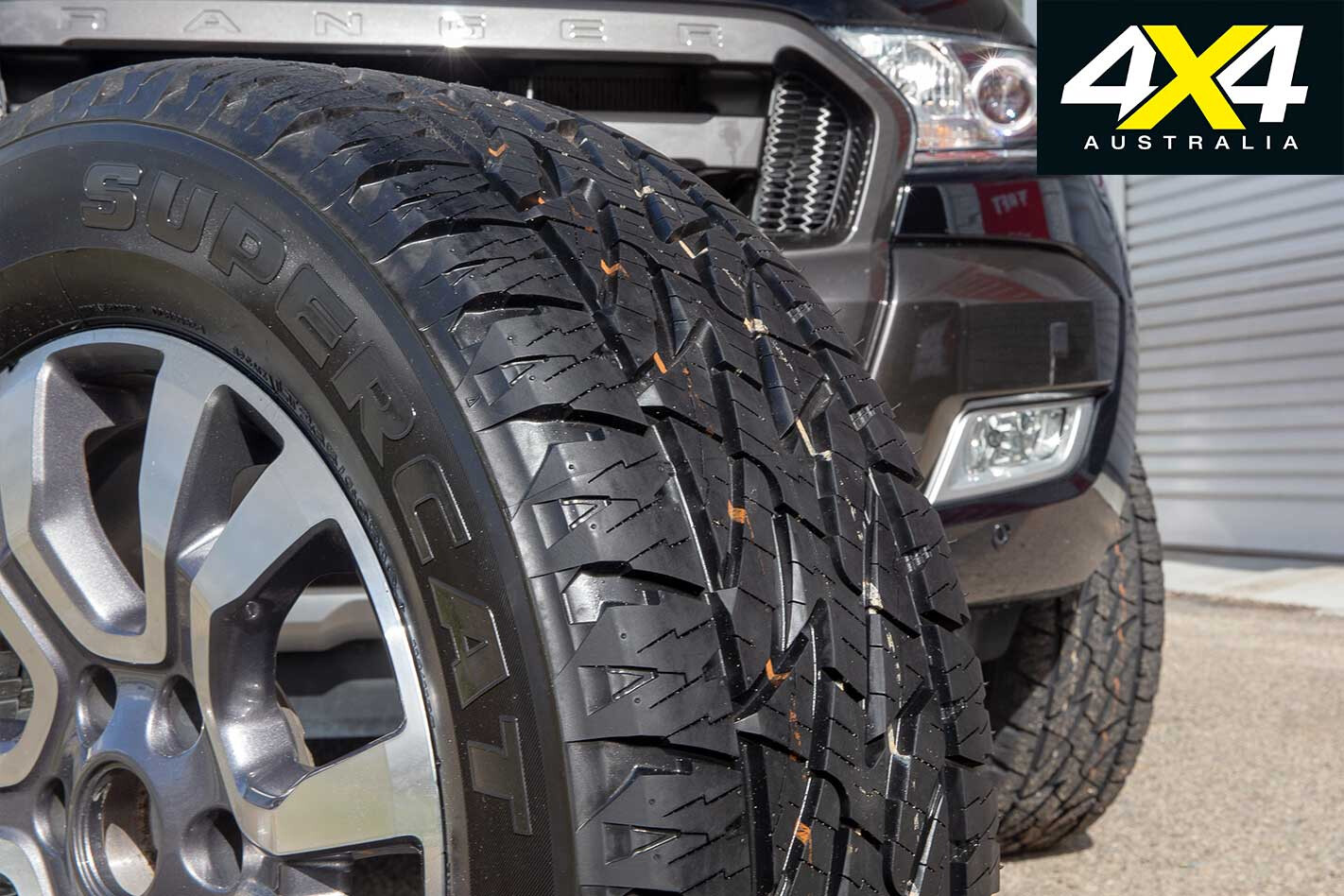
Bridgestone has developed its new Supercat All Terrain (AT) for the Aus/NZ market, with the aim of supplying a value-for-money 4×4/SUV tyre for vehicles five or more years old. The thinking behind this decision is that owners of older vehicles may not want to fit premium rubber to their older rigs, but will still want a tyre that offers top safety, durability and versatility.
The Supercat AT comes in 13 sizes – from 16- to 18-inch – with models available for most of the popular 4×4 wagons and utes. The Supercat is of Light Truck construction across the entire range, with load ratings from 1030kg (109 index), so they’re more than up to the task of towing or coping with fully laden off-road vehicles.
Website: www.bridgestonetyres.com.au
Cooper Tires AT3
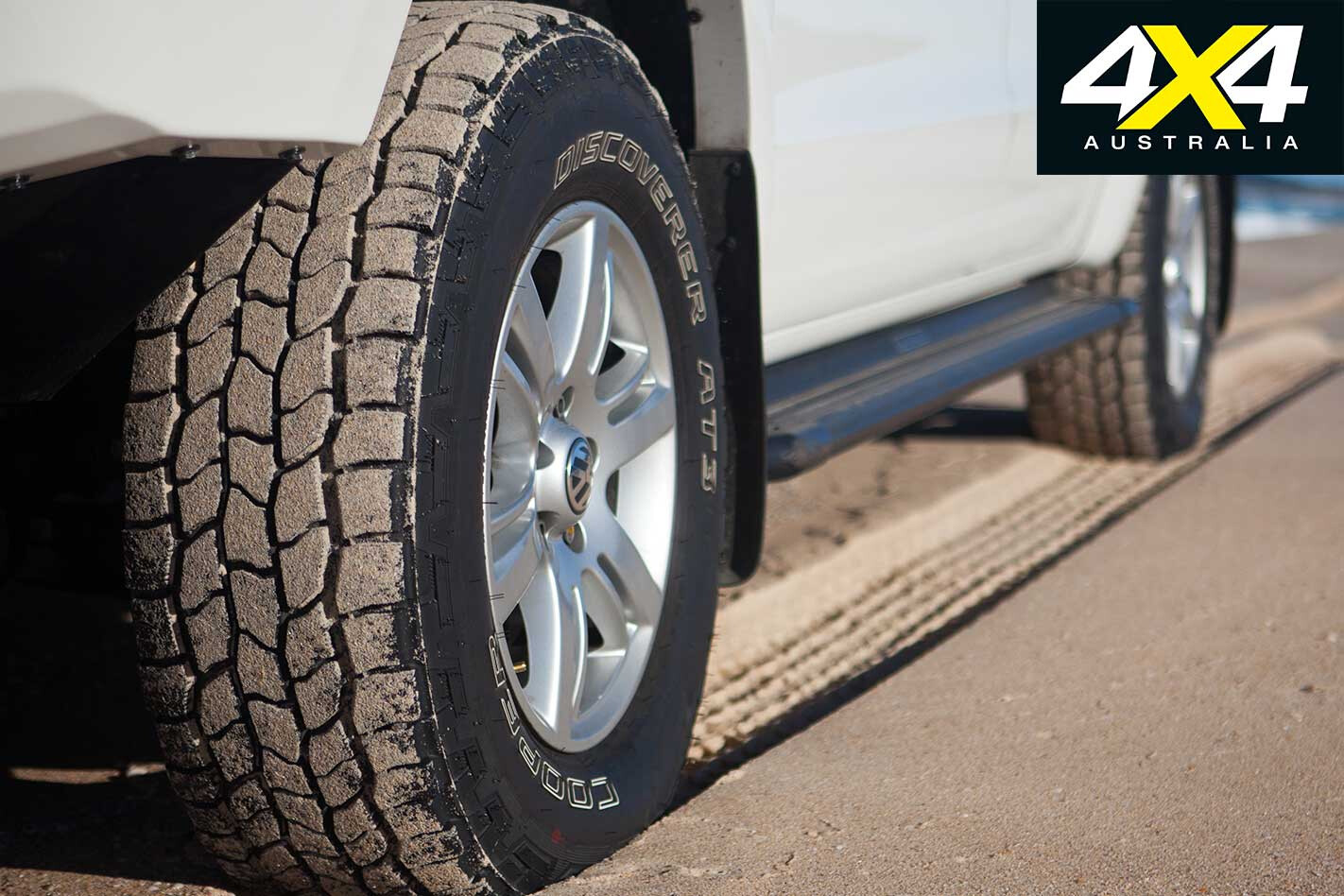
The US tyre giant has released a new version – or should we say, three separate versions – of its super-popular AT3. The AT3’s three variants include one aimed at soft-roaders, with the other two – AT3 LT and AT3 XLT – for 4×4 vehicles. The tyre will come in a wide range of sizes, with the LT and XLT covering all popular off-roaders sold here in Oz.
The new tread design includes stone ledges to eject stones from within the tread void, Whisper Groove Shields (claimed to reduce on-road noise by 20 per cent) and Scalloped Shoulders for additional soft-surface traction.
The carcass is tough, with high-tensile body plys for robustness and super-tensile steel belts (LT and XLT) across the full tread area (edge to edge), while the new compound uses high-content coupled silica for enhanced cut-and-chip resistance. No wonder Cooper Tires is confident it can offer an 80,000km warranty.
Website: www.coopertires.com.au
Ironman 4X4 suspension upgrades: LDV T60
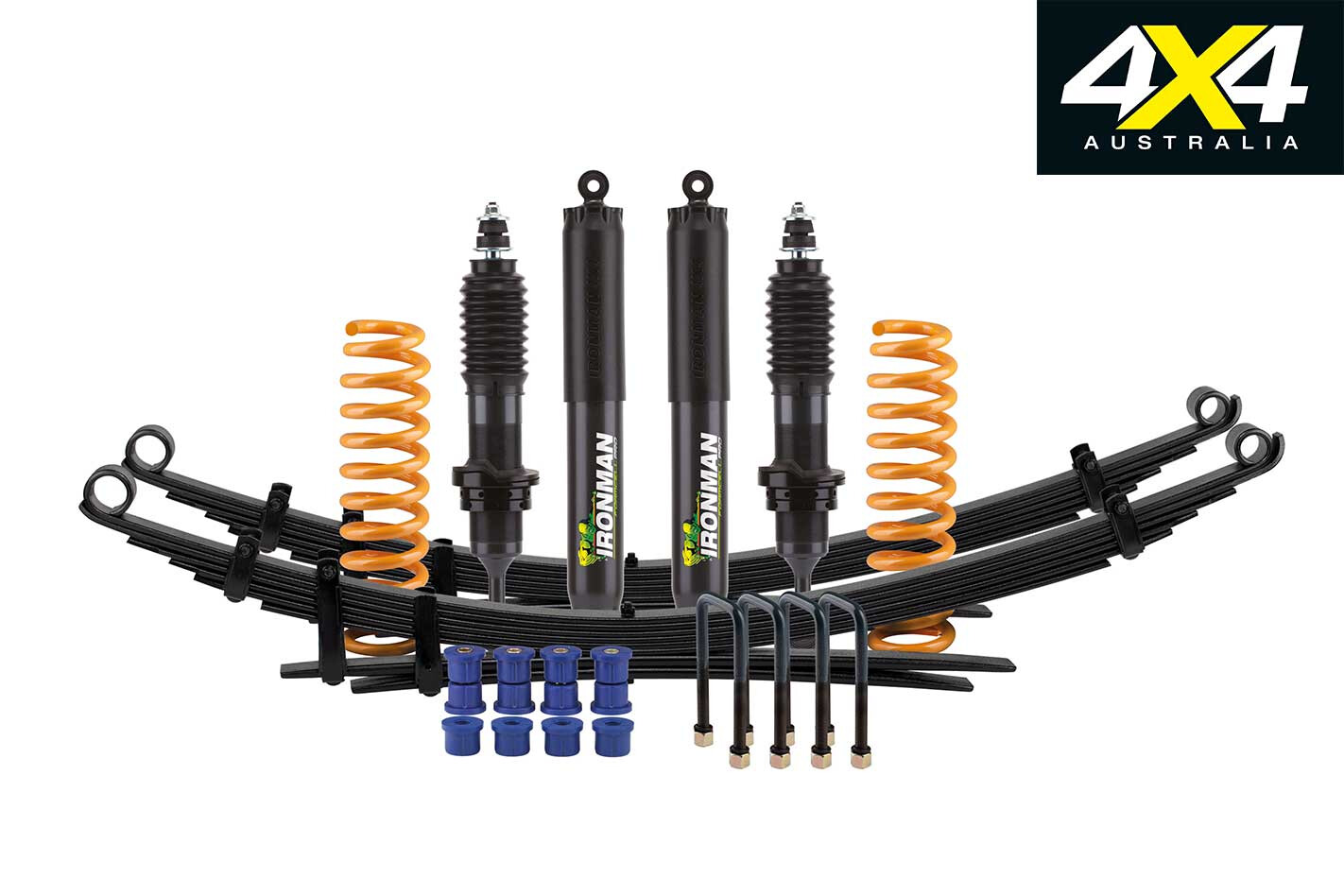
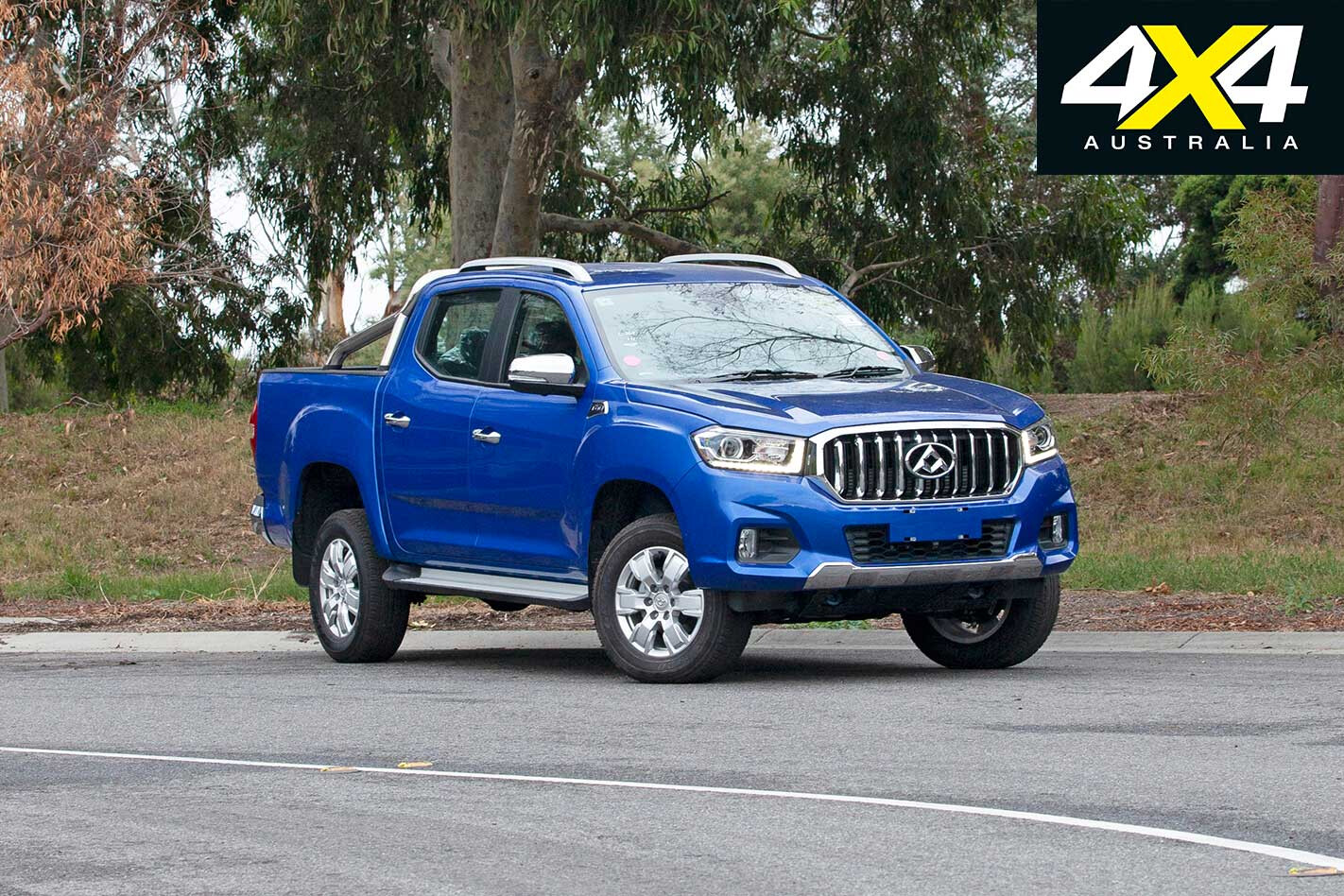
Ironman 4×4 has released a suspension upgrade for LDV’s T60 ute that features four variants. The Performance Load kit offers a 45mm lift and is rated for loads 0-200kg, so for vehicles with a few accessories fitted and that may carry an occasional load.
The Constant Load kit (45mm lift, 200-400kg) is ideal for a rig with permanent heavy accessories and promotes a firmer, more controlled ride. The Extra Constant Load kit (45mm, 400-800kg) is for heavily kitted-out vehicles, while the Extra Heavy Constant Load kit (45mm, 800kg-GVM) offers maximum support and is perfect for commercial vehicles.
Each kit offers a choice of Nitro Gas, Foam Cell or Foam Cell Pro shock absorbers, and includes the shocks, leaf springs, U-bolts, coil springs and polyurethane spring bushes. (Greasable shackles and pins are optional.)
Website: www.ironman4x4.com