
CREATING the ultimate adventure rig means different things to different people; just take a look at the list of custom 4x4s we have chosen to be in contention for this year’s Custom 4×4 of the Year.
They’re all different and are made to do different things in line with what owners want and need. They may not be to your liking or fit your needs, but there’s probably something on each of them you’ll appreciate and could apply to your own vehicles. Vote for your favourite from the list of finalists on our website for your chance to win $2000 worth of Maxxis tyres.
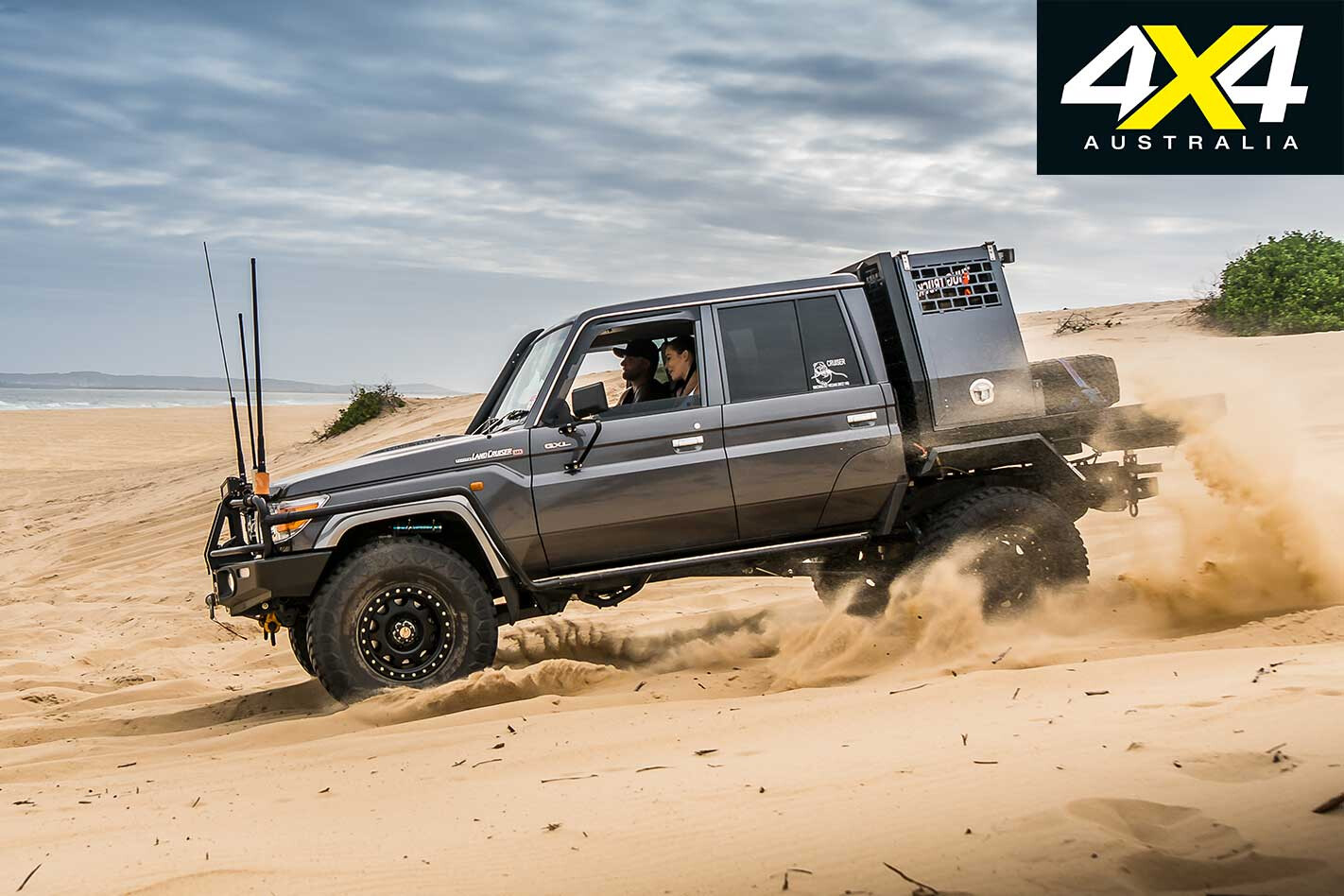
A few interesting travel rigs in this issue illustrate the extremes people will go to when building their 4x4s. Australian motor racing legend Larry Perkins is better known for conquering The Mountain than for exploring deserts, but when he built his expedition truck he started with a Mercedes-Benz Unimog and re-engineered the drivetrain, cabin and load space to suit his specific needs. Larry knew how to build a winning racecar, and in the December 2018 issue, he shows how to create the ultimate overlander.
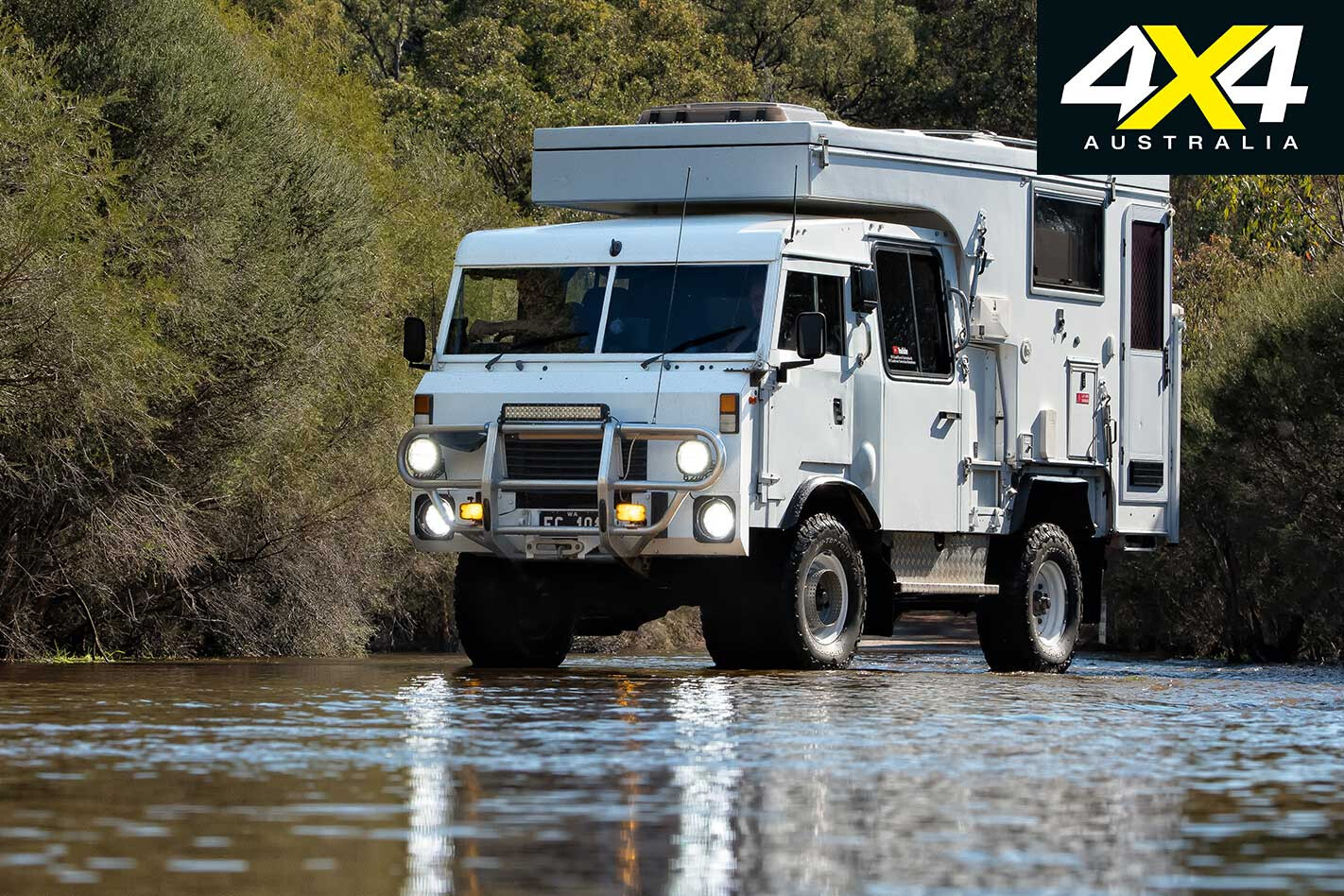
Dave and Tina Moore may not have done all of the hard work on their FC101 Land Rover, as they were lucky enough to score it already built, but it follows a similar line to Larry’s Mog, in that it uses a box-camper on the back of an off-road-capable cab-over truck. Only this time it was a classic Land Rover fitted with a Toyota diesel engine.
Certainly unique and built for purpose and, like the Mog, it carries everything on its back including the kitchen sink.
At the other end of the off-road spectrum is Fred ‘Dirt Every Day’ Williams’ CJ5 Jeep, which we follow along California’s imfamous Rubicon Trail. It’s a barebones basic, no-frills, stripped-out classic 4×4 with none of the comforts of home on board. Sleeping, eating and anything else is all done outside of the Jeep, but it is a vehicle that will get you anywhere.
The Jeep is as pure as they get and brings a back-to-basics vibe to off-road travel. Open air, analogue motoring at its best.
While none of this trio might suit you, they’re what their owners wanted and needed. Show us your 4×4 via our Readers Rigs, which we feature in every 4×4 Australia issue and tell us what features make it individually yours.
WHILE Jordan’s immaculate Isuzu D-Max might be a one of a kind, its story is one that we are all familiar with. As an apprentice chippy Jordan spent years longing for a 4×4, a key to unlocking the countless adventures to be had far beyond city lights, and one he always felt out of reach of his modest earnings. Fast forward a few years and Jordan finished his trade and shifted his focus to building the 4×4 he’d been lusting for.
It’s fitting then that he chose Isuzu’s D-Max as the foundation, a history of hard work forged directly into an adventure machine, much like Jordan himself. The facelifted D-Max sports Isuzu’s venerable 4JJ1 under the bonnet, a 3.0L turbo-charged diesel engine, which Jordan has kept relatively stock; a DPU performance module courtesy of Down Under Diesel Tuning tweaks the engine for more grunt. It howls through a Safari snorkel, while an HPD catch can and Munji solid intercooler pipes add ticks to the reliability column.
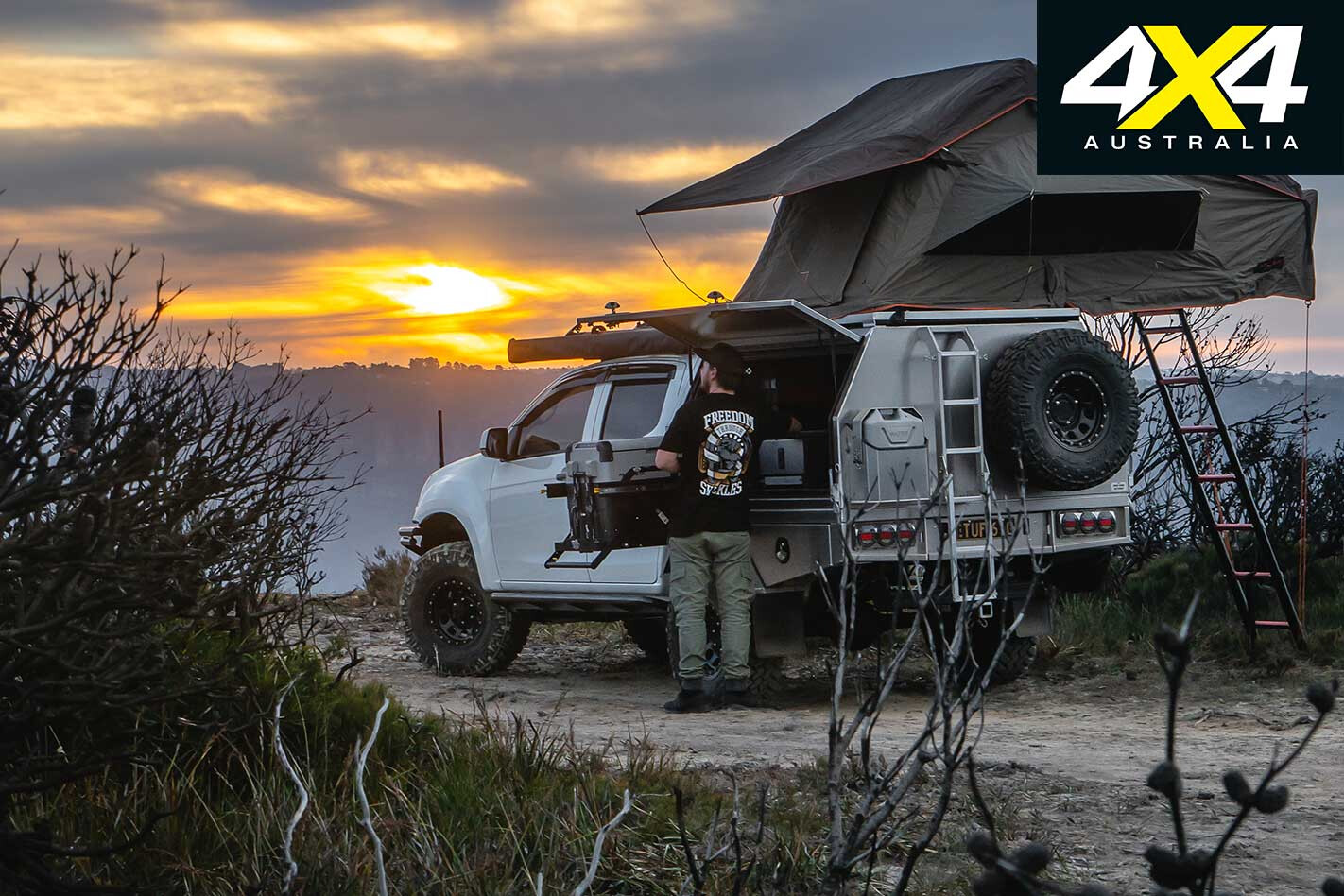
The smooth canopy is a trick unit zapped together by the crew at Tough Tinnies. While it looks heavier built than a Russian babushka, the whole unit is easily removed with the unfortunately named Jackoff system. A few clasps popped and a set of legs slid in, and the D-Max is free to roam the tracks while his home on the road is safe and sound back at camp.
Jordan’s been through a few tray setups and canopy fitouts, so he knew exactly what he was after with the Tough Tinnies setup, and he also settled on a Darche Hi-View rooftop tent for a comfy kip. He’s paired it with an Eclipse roll-out awning to give plenty of shelter against inclement weather.
Opening up the canopy doors is like letting a kid loose in a candy store, if the kid is a 4WDer, and the candy store is the best electronics gear on the market. The legs of the setup is a Betta Batteries lead-crystal battery, but the brains is a comprehensive Redarc system headed up with a Manager30.
This setup handles anything Jordan can throw its way, coping with a combination of 240V, 12V and solar inputs, then optimally charging whatever batteries Jordan’s running at the time. It feeds a bank of Narva products and power outlets, but the ‘pride of the fleet’ for Jordan is the huge Redarc 1500W Pure Sine Wave invertor.
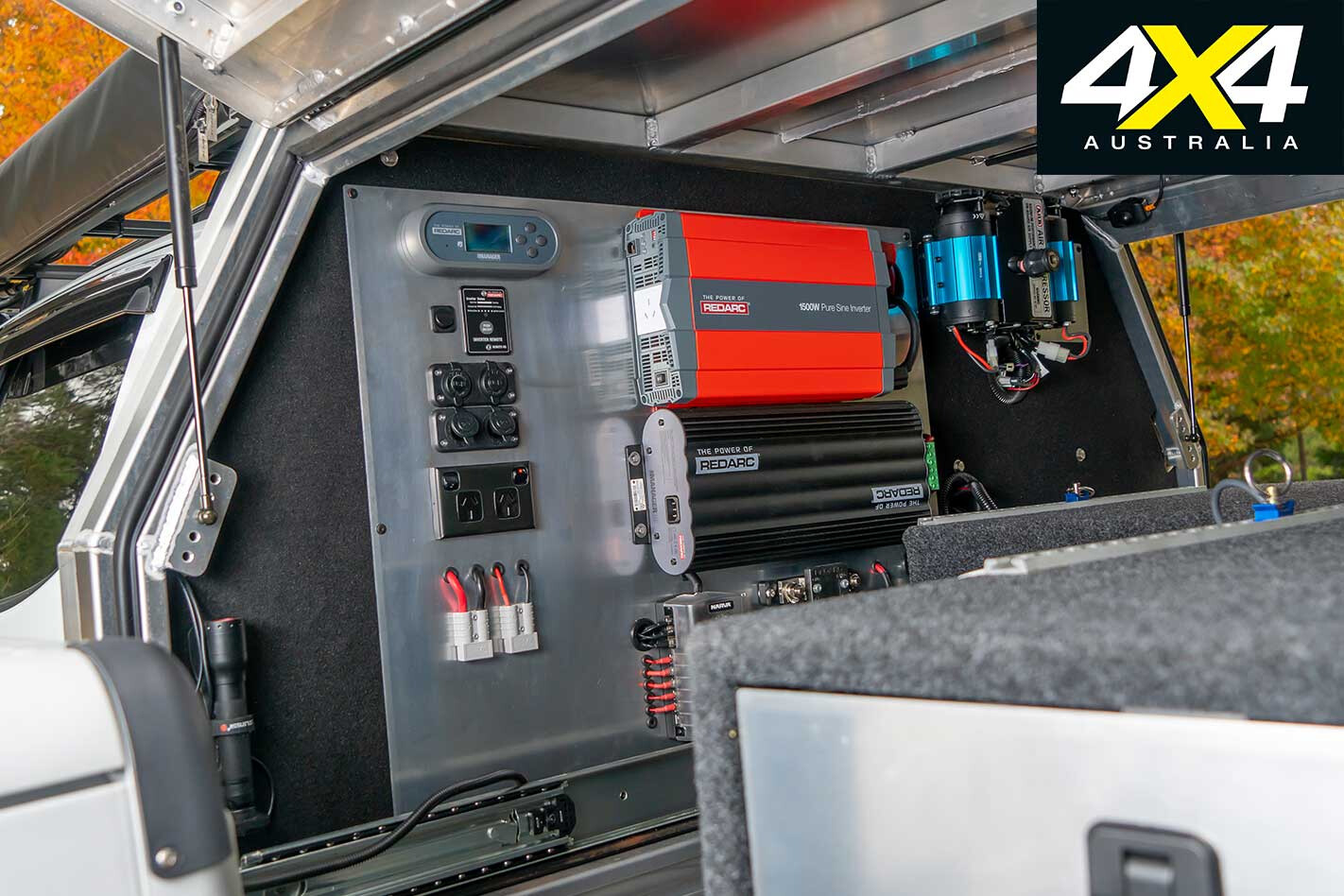
The rest of the canopy is a perfect mesh of form and function. Three individual drawers inside the main body provide plenty of room, while the passenger’s side houses a hidden prep bench under the drawer and a Dometic fridge on a Clearview drop-slide. There are LEDs throughout, with additional storage along both flanks and a handy trundle drawer in the rear.
While the rear of Jordan’s D-Max is a no-holds-barred kind of affair, up front things are a little more understated. Two huge screens dominate the cockpit. Up-top a Hema HN7 keeps him on the right path, while a Kenwood double DIN unit adds a little Xzibit style pimpin’.
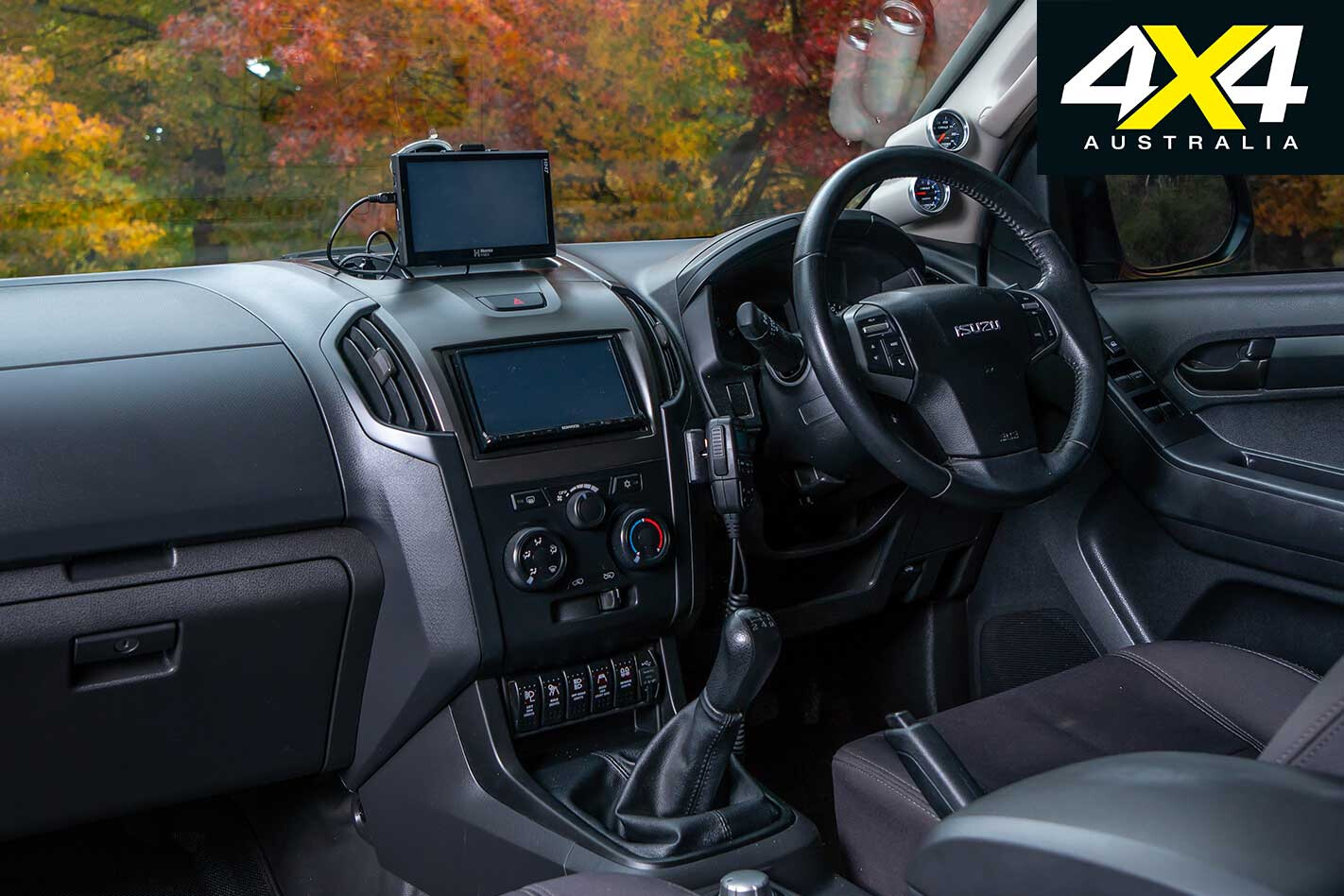
On the practical front are twin AutoMeter gauges keeping a watchful eye on boost levels and exhaust gas temperatures, with a plethora of rocker switches to activate everything from the canopy lights to North Korea’s guided missile program.
On the outside Jordan struck gold somewhere between a hardcore weekender and a kilometre-proven tourer, never scared to lift a wheel or pull-up to camp. The Xrox bar leads the way, with a Warn winch slotting in behind the Factor 55 fairlead and flat link.
Bushskinz bash plates protect the radiator, front diff and engine sump, while South Cross Fabrication rock sliders keep wayward rocks from stoving in both flanks. Up top a Rhino-Rack platform mounts the LED light bar and MaxTrax, as well as providing additional storage.
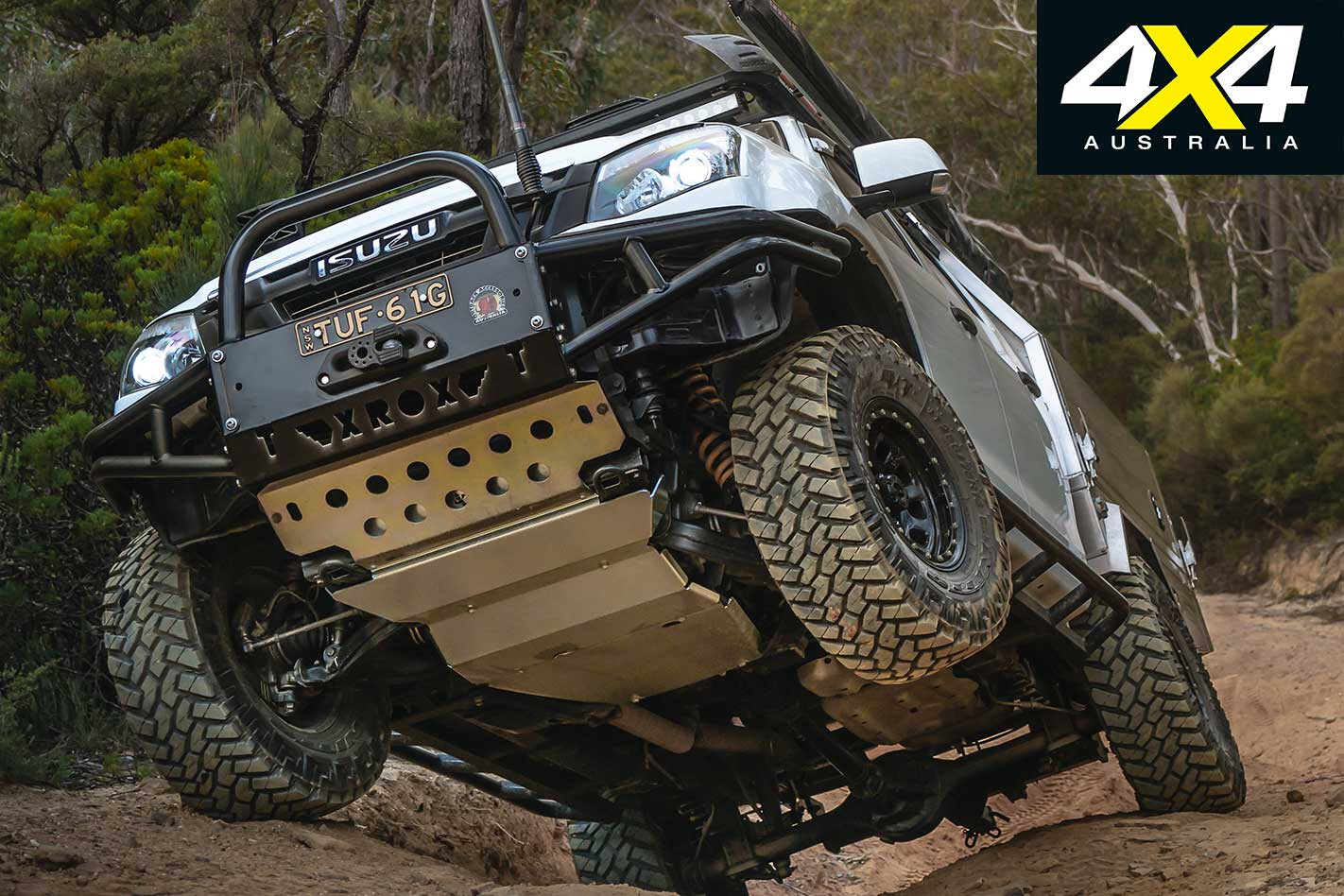
The suspension is a mix and match of DIY components to get the required clearance for the 285/75R16 Nitto Trail Grapplers, but a set of King 2.5 shocks is going in shortly to make things ride a whole lot smoother.
Drive is put to the ground at both ends through a set of Harrop eLockers, sending drive to every wheel, while the front hubs are a direct bolt-on from a 1992 Jackaroo and help stop the CVs spinning when not in 4×4.
In an age of instant gratification, it’s refreshing to see not only the drive required to build something right, but the finished product itself.
Check out the Top ten finalists of the 2018 Custom 4×4 of the Year, cast your vote and be in the running to win a Maxxis voucher valued at up to $2000!
JUST outside Silverton and not far from Broken Hill lies the gateway to the outback, and that’s where the Corner Country adventure begins.
Led by off-road legend Ron Moon, the convoy leaves the mining colossus of Broken Hill and kicks up red dust all the way to Cameron Corner, stopping at iconic locations along the undulating trails.
From Eldee Station to the Silverton Mine, famous for its rich source of … ahem … silver, to the iconic Silverton Hotel, the guys embrace the true outback and chat to some of the region’s locals. They trace the Dog Fence, pop into Milparinka for a beverage, and pay tribute to Charles Sturt and his men at Sturt’s Cairn, which provides a fine vista of the surrounding rock-strewn country.
Battling the hot, dry temperatures and the onslaught of flies, the crew passes from Tibooburra through Sturt National Park, before pulling the handbrake on this first part of the adventure at Cameron Corner, the gateway to the west and north.
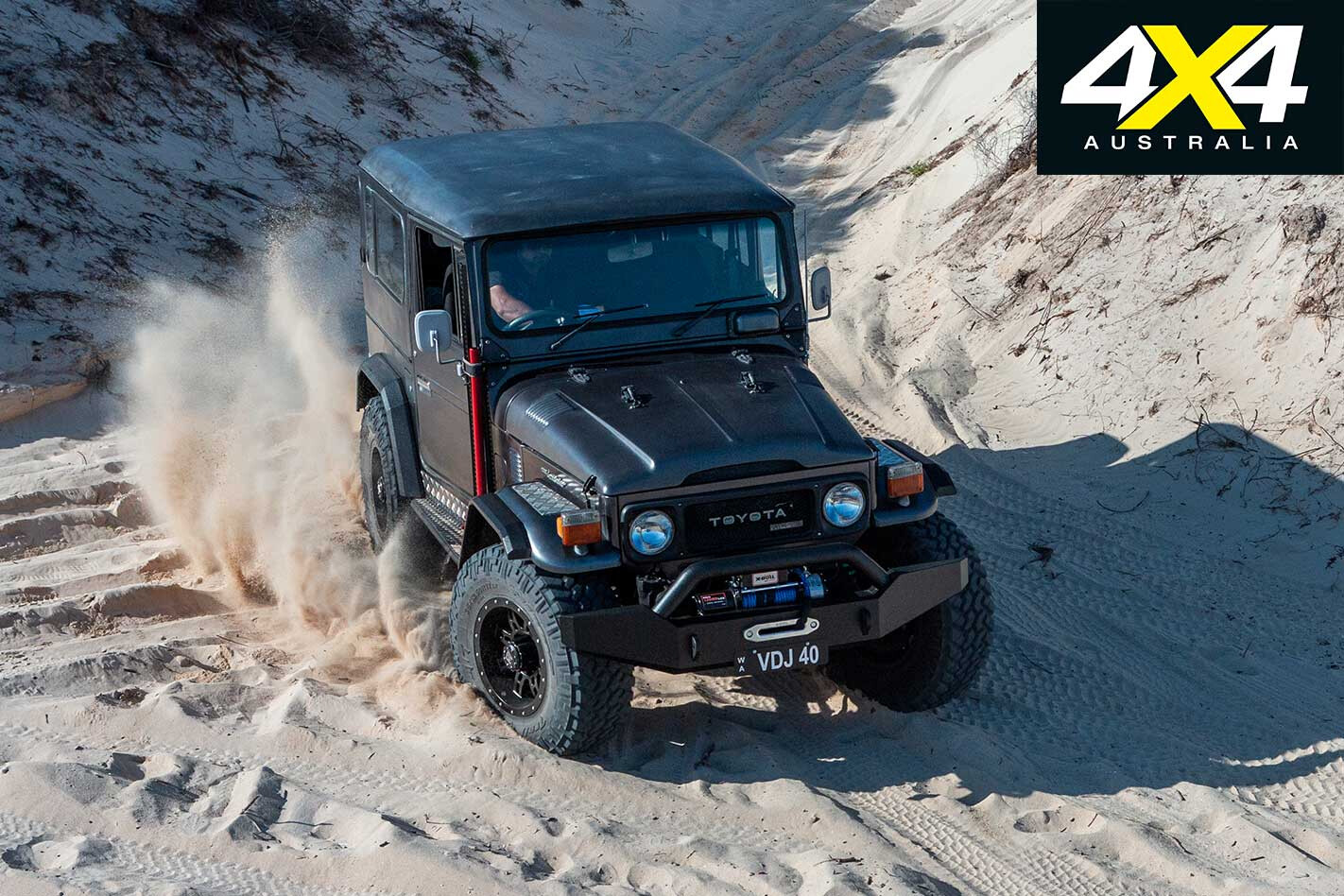
TAKE one 4×4 that is regarded worldwide as one of the true 4×4 icons and update it for off-road touring and daily driving. And when we say update, we mean it: shoehorning a 4.5-litre TDV8 from a 79 Series into the engine bay and then building a fully custom suspension system – highlighted by the trick four-link rear with Nolathane bushing – makes this 1979 BJ40 a one-of-a-kind bruiser.
The combined skillsets of owners, Perth-based brothers Harpaal (Harry) and Sarpal Gill, include metal fabrication, metal machinist, draftsman, mechanic and hydraulic fitter. They also own their own automotive repair and tyre outlet, allowing them to keep the build all in-house.
The idea of transplanting a modern 4×4’s gearbox, drivetrain and engine into what is a distinctly shorter and much older rig sounds like a headache, starting with how to make that beefy 4.5TDV8 fit into the BJ’s engine bay without too much cutting of original BJ sheet metal.
“We started with the engine first and tried to ensure we didn’t cut anything on the body,” Harry says. “We had to place it in a couple of times in the chassis to get it where we wanted it, then started from there.”
“From there” meant also fabricating all engine mounts, the mounts (and brackets) for the five-speed manual gearbox, as well as modifying the transmission tunnel to fit said gearbox, all while making sure each mod would pass engineering regulations for registration.
The result, after more than a few chassis cuts and mods, is an engine bay that looks very factory in appearance, with only the custom air filter box and piping hinting to the transplant.
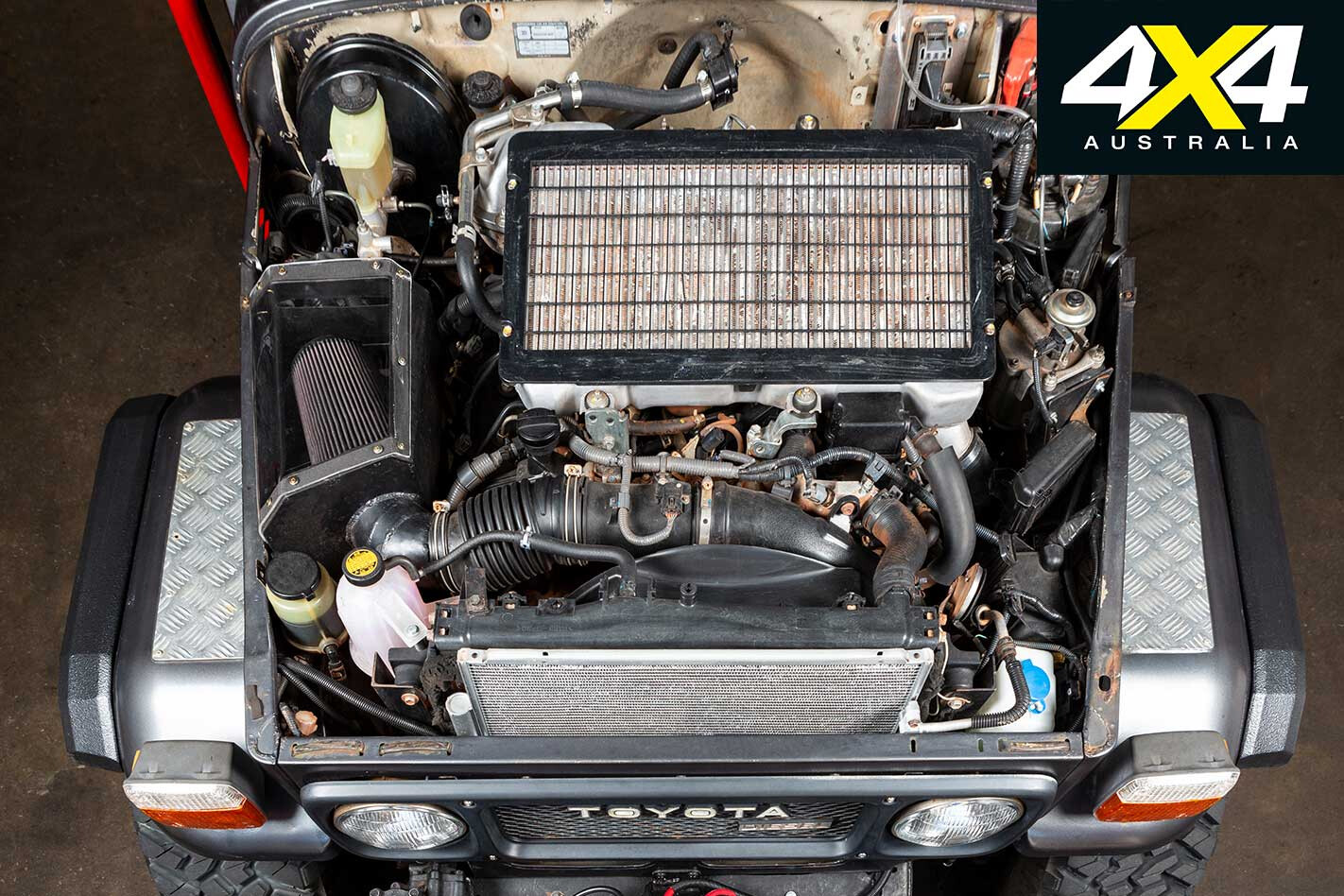
“We designed everything on AutoCAD,” Harry says. “So everything was designed on the computer and then we got everything laser-cut and fabricated it in the shop.”
One of the biggest parts of the project was the build and fitment of the trick four-link rear suspension setup, but it didn’t take as long as you’d think, thanks again to the wonders of computer design.
As well as the rear suspension and engine/gearbox mounts, the brothers also designed, cut and built the front winch bar (the winch is an X-Bull 12,000lb) and rear custom bars, side-steps and flares, with only the custom-sized driveshaft and tailshaft built by one of their suppliers (the front and rear axles are actually stock LC79 jobbies).
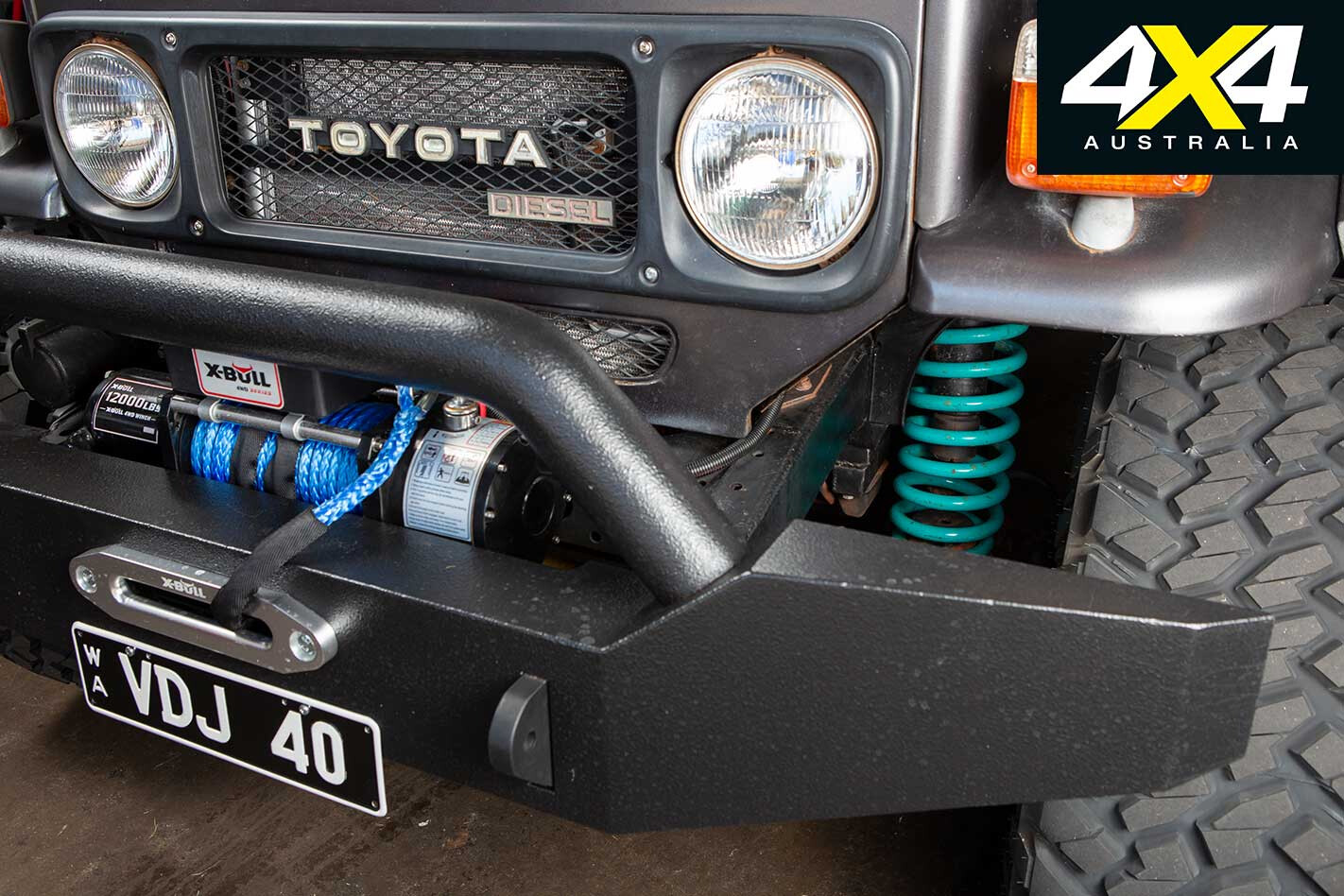
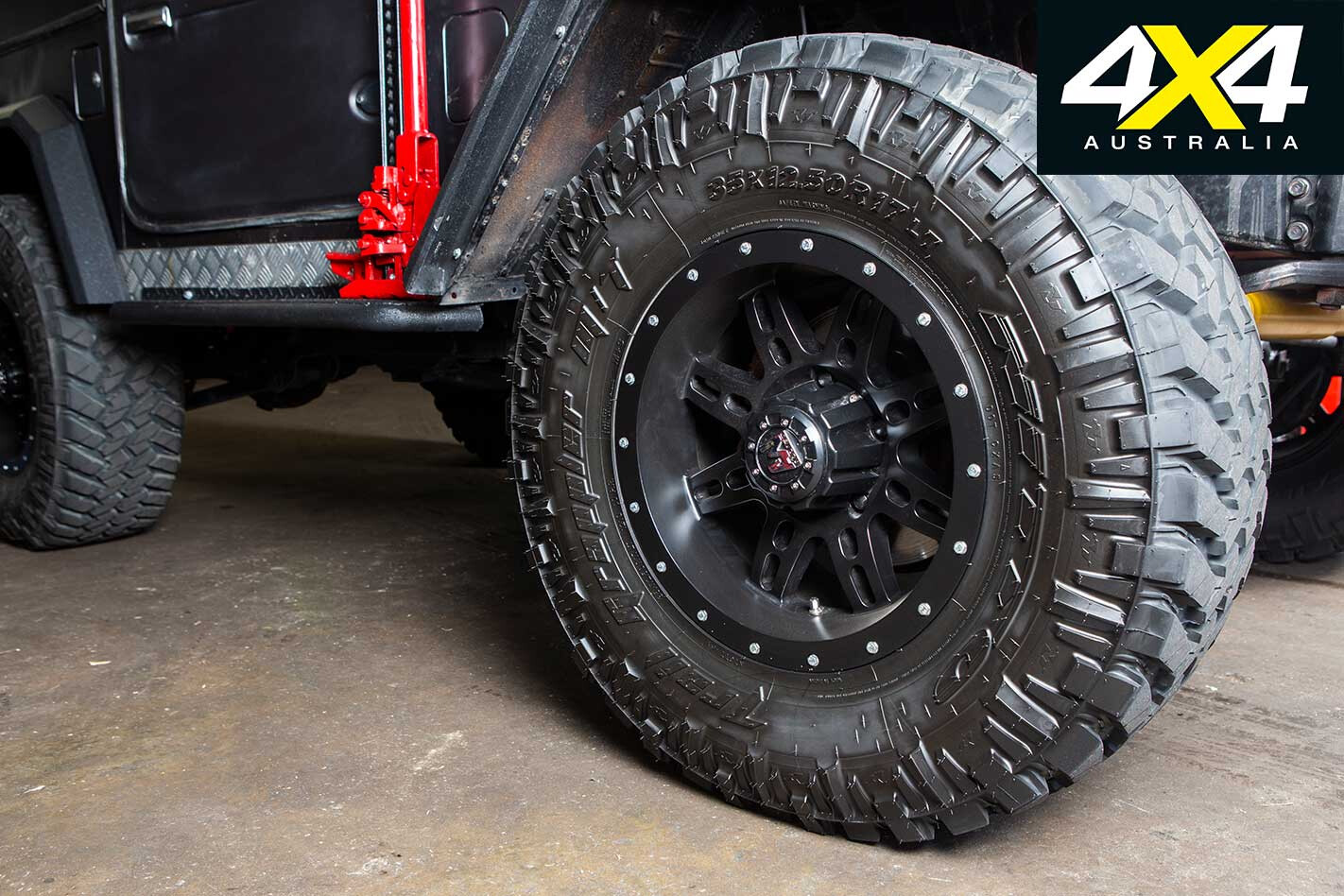
The track width of the BJ isn’t that different to the LC79, and Harry and Sarpal accounted for the difference by fitting Allied Goanna 17×9-inch alloys (with a 38mm spacer in the rear wheel) shod with chunky 35×12.5R17 Nitto Trail Grapplers. This meant the stock 79 axles (and brakes) were a straightforward fit. The Dobinsons dampers and springs give the BJ a 50mm lift and are a direct carry over from the donor vehicle.
The exhaust system is a combo of factory (the headers are stock) and a three-inch custom-made mandrel-bent system, with a five-inch Hot Dog resonator, finished off with a glorious-sounding side dump pipe. As you can imagine, space for a big-bore custom exhaust system to do justice to the TDV8 was at a premium with this shorty.
“It’s a V8, so we wanted it to sound like one,” Harry says. “We bought a few different hot dogs, a few different resonators, and a few other bits and pieces to try and see which ones sound better, which was the easy part. Then we had to modify all the bits and pieces to make it fit, but, again, it was good fun.”
Harry and Sarpal have plans to continue driving it for a few months before it is returned to their workshop for a complete disassemble and rebuild, with the currently as-stock interior (bar the custom-made gauge fascia that fits the LC79 instrument cluster) one of the many things on the to-do list, along with new suspension, a paint job and no doubt more tweaks.
CAST YOUR VOTE FOR THE GILL BROTHERS’ BJ40 HERE
Check out the Top ten finalists of the 2018 Custom 4×4 of the Year, cast your vote and be in the running to win a Maxxis voucher valued at up to $2000!
MORE than 800 Ram 2500 and 3500 pick-ups – MY 2015-2018 – have been issued with a recall notice, due to an insecurely mounted heater hose.
“The heater hose may not be securely mounted, which will address a possible friction point, causing wear to the brake pipe assembly,” the ACCC report reads.
The affected trucks, supplied by American Special Vehicles, were sold between January 1, 2016 and October 1, 2018. To see the complete VIN list of affected vehicles, click here: https://www.productsafety.gov.au/system/files/VIN%20List_40.xlsx
According to the report, the issue could lead to a leak in the braking system and cause a loss of brake-pedal performance, posing an accident risk for vehicle occupants.
In March this year, RAM 2500/3500 pick-ups (MY 2014-2017) supplied by American Special Vehicles were subject to another recall, this time for a faulty water pump, which posed the risk of causing an engine compartment fire.
All owners of affected vehicles have been notified by mail and will be advised to contact their closest RAM dealer for inspection and free reparation.
THE CREW at Clayton has pulled the wraps off a limited edition version of the SportsCat Colorado, which it has called the SportsCat R.
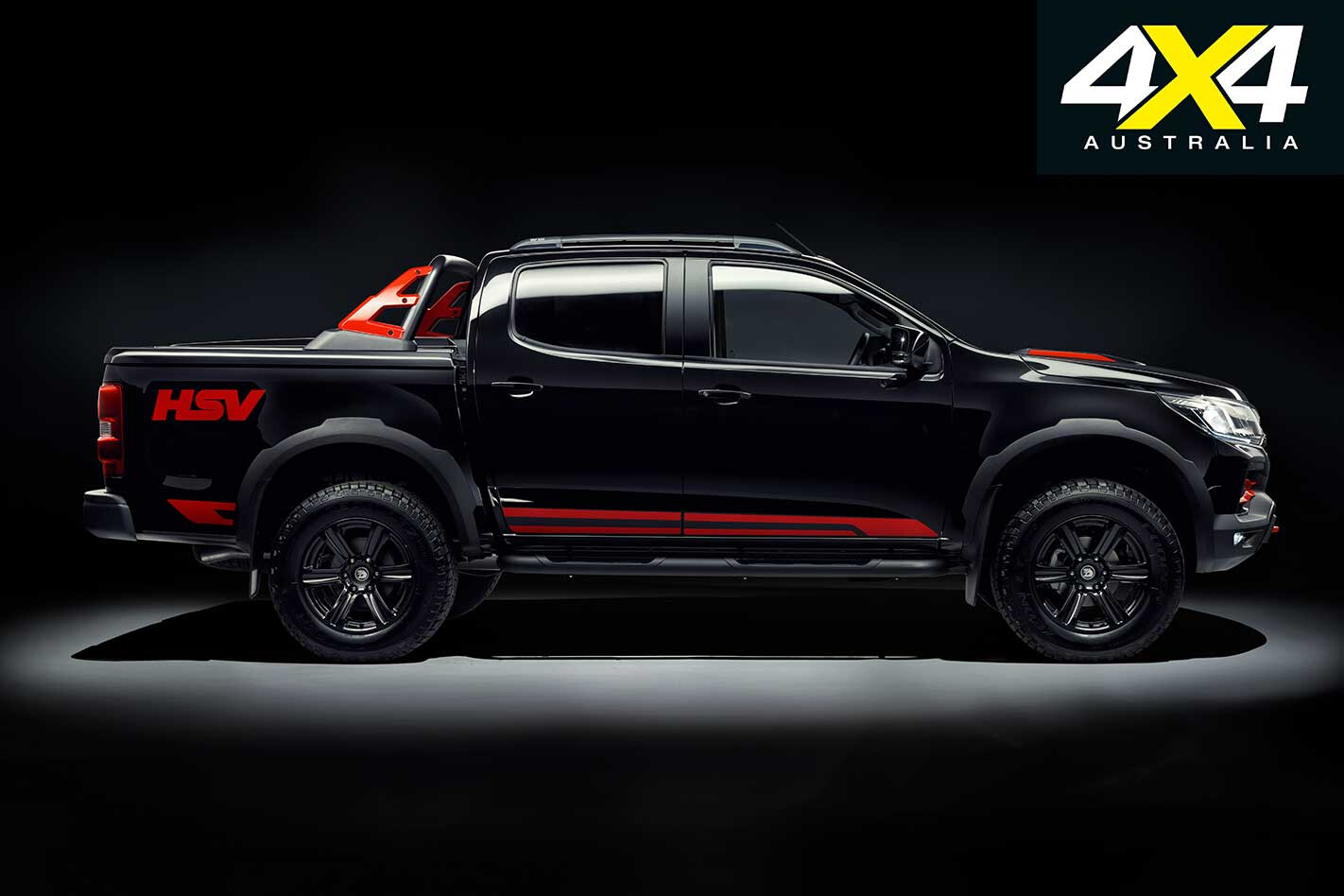
Based on the styling package of the SportsCat+ the R is distinguished by its gloss black paint and bold red accents. More significantly the 98 SportsCat R automatics being sold in Australia (two are going to New Zealand) will sell for $65,990, $3000 below the regular price of the SportsCat+.
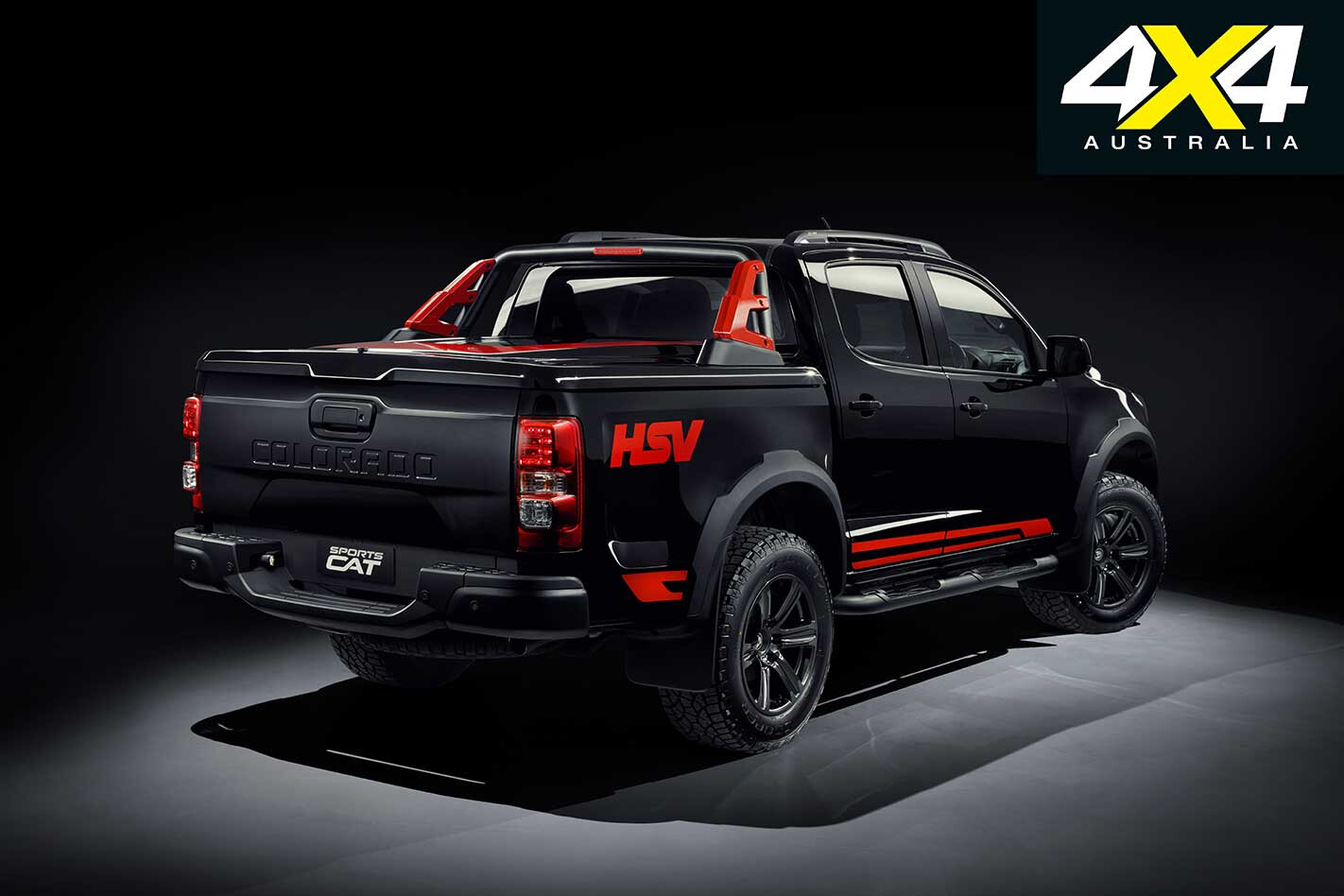
For that skrilla you’re getting a Colorado LTZ with HSV’s unique ESC and MTV damper tune (designed to improve the standard car’s handling characteristics), a 30mm widened wheel track and 45mm increased front ride height on HSV suspension, and 18×10-inch forged alloy wheels wrapped in Cooper all-terrain tyres.
What SportsCat R buyers miss out on (over the SportsCat+) is the premium AP Racing brake package, with its four-piston forged brake callipers and 362mm x 32mm diameter rotors on the front, and the decoupling rear sway bar which increases rear axle articulation when off-road. The brake package is available as a $1995 option, while the rear sway bar remains HSV SportsCat+ only. The rear axle retains it OE drum brakes on all SportsCat variants.
Likewise the OE-supplied 2.8-litre diesel engine and six-speed automatic are retained and, while not tuned or enhanced by HSV, the engine’s standard 500Nm is nothing to be sneezed at.
The SportsCat R’s sports seats are covered in leather and suede, with black hide on the dash and steering wheel stitched in red to match the exterior. Bespoke floor mats complete the interior make-over.
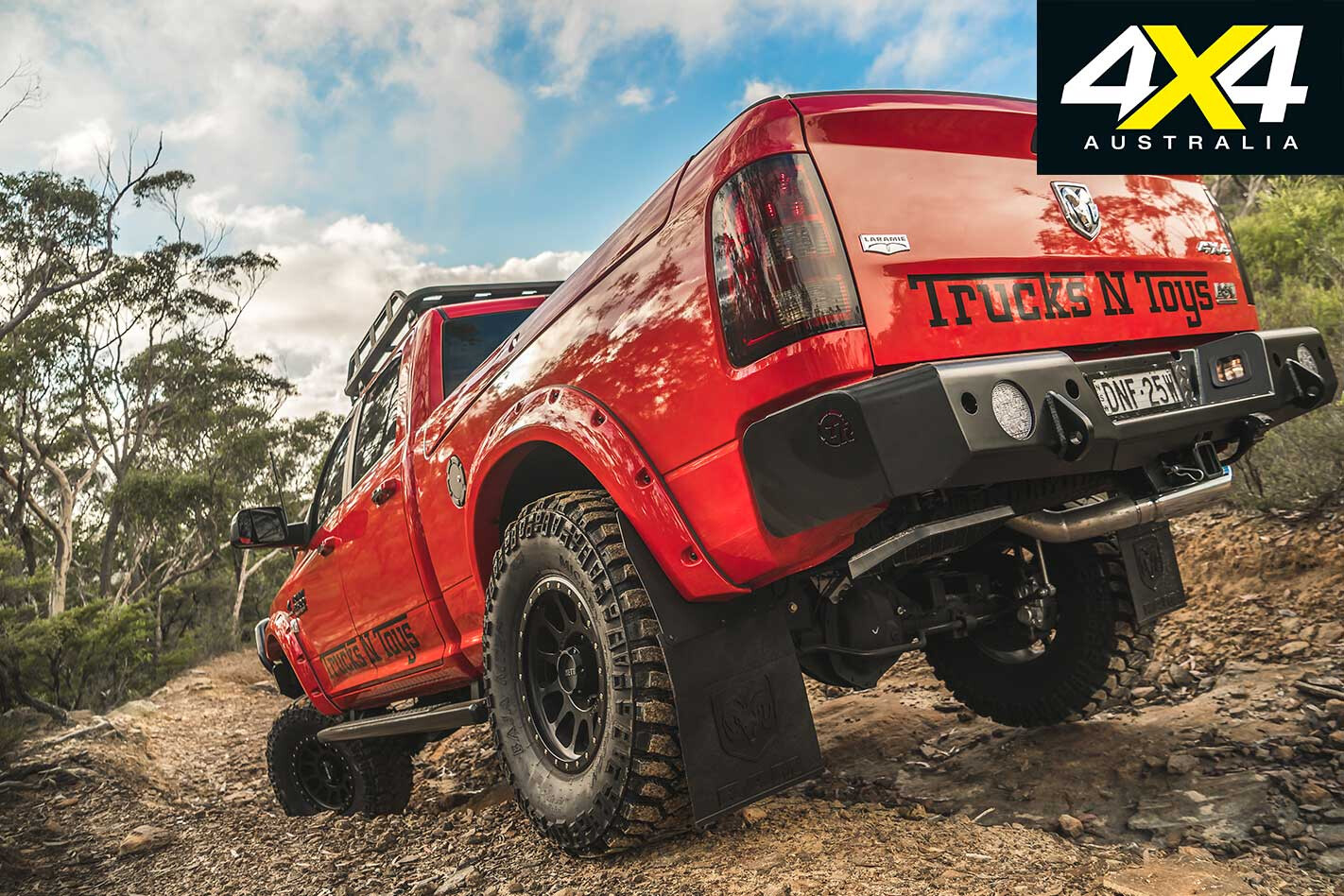
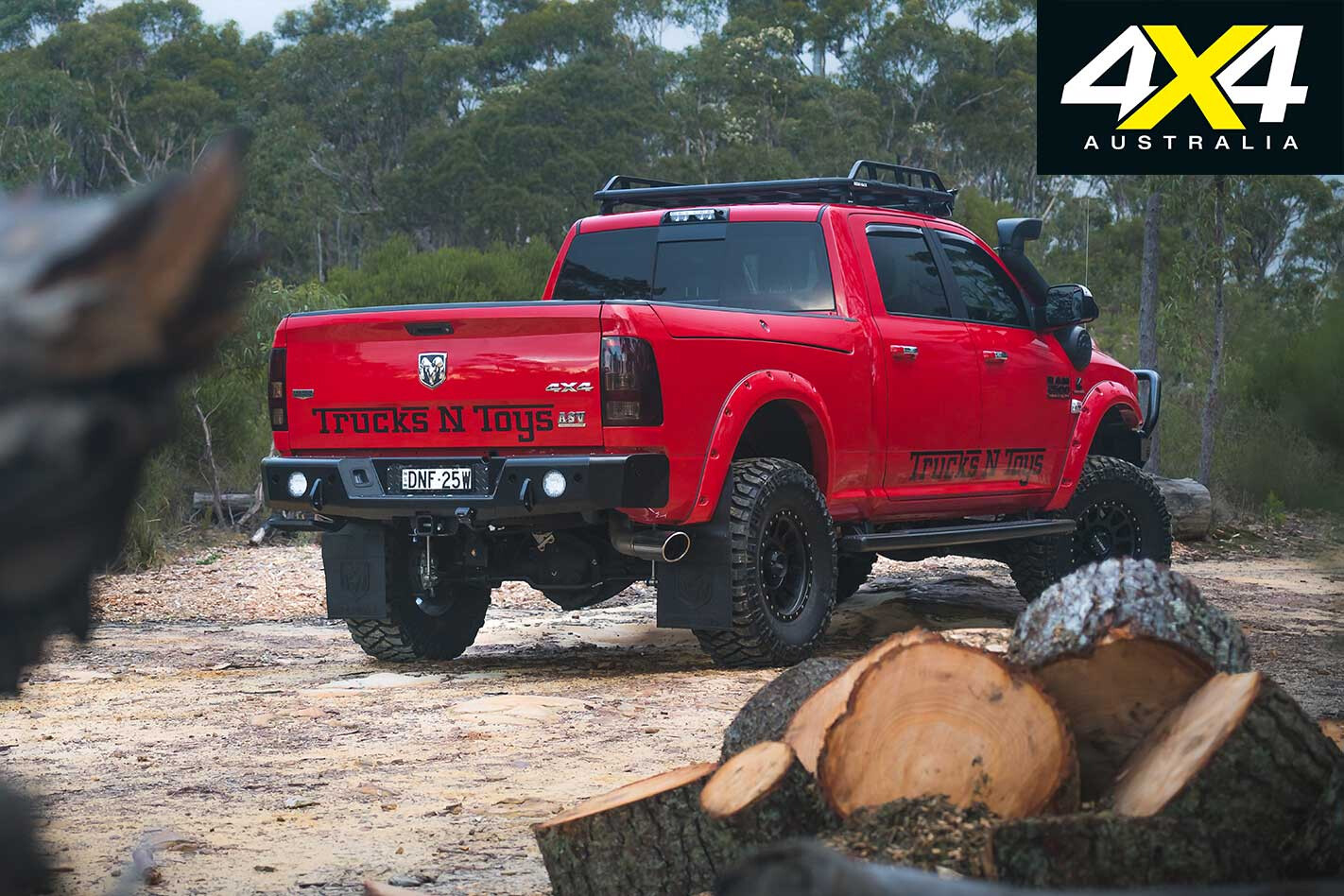
WHILE the Ram 2500 you’re ogling has an American heart inside, it has been meticulously pieced together with Australia in mind. If you haven’t heard the name John Davis before, he’s the brains behind the original Bush Ranger vehicles. In more recent years he has penned the name Trucks N Toys (TNT) with his son Ben, where they piece together American full-size trucks from mild to wild.
To stop suicidal ’roos diving through the radiator, John fitted a Full Guard bullbar from Washington-based TrailReady. The behemoth sports four uprights with headlight and radiator protection, and it’s zapped together with 6mm mild-steel mounts and 5mm mild-steel wings.
TNT equipped the TRX37 package with a Warn 12,000lb Tabor winch wrapped in 25 metres of steel cable. Keeping the winch company are five LED lights pounding out eye-watering amounts of lumens. The wings of the bar sport a pair of six-inch and four-inch round LED lights, while a 30-inch E-Series Pro bar from Rigid Industries carries out the bulk of the work.
The aggressive front end is rounded out with a UHF aerial whip which feeds back into the hidden unit inside, while the Ram AmeriHood is a trick fibreglass component.
TNT added five inches of freedom down the flanks, with a set of pocket-style Bushwacker flares bolting to the front and rear guards. The badges, handles, side-steps and mirrors are all colour-coded black, with the latter flipping out into a tow-position. A Rhino Pioneer roof rack holds a second LED light bar for good measure.
The ‘cool shit’ box was ticked when ordering from the factory, with the optional ‘Ram boxes’ offering additional storage along both flanks on the tub. But, like most builds, the coolest part is still sourced from the aftermarket: the full-length Pace Edwards roller rack covering the monster-sized tub, which electronically opens and closes with the push of a button.
The 5mm-plate steel rear bar ensures anything short of a Mack Truck rear-ending you will barely register a blip, and the quick foldout steps protect the tub off-road and allow for easy access to the tub.
From the factory, Rams come with a super-sized version of the suspension systems found in 105 Series and GQ/GUs: live axles with radius arms up front, and a live axle with coil springs at the back. While the front radius arm system might do a stout job of holding the front axle in place, it starts causing issues when lifted.
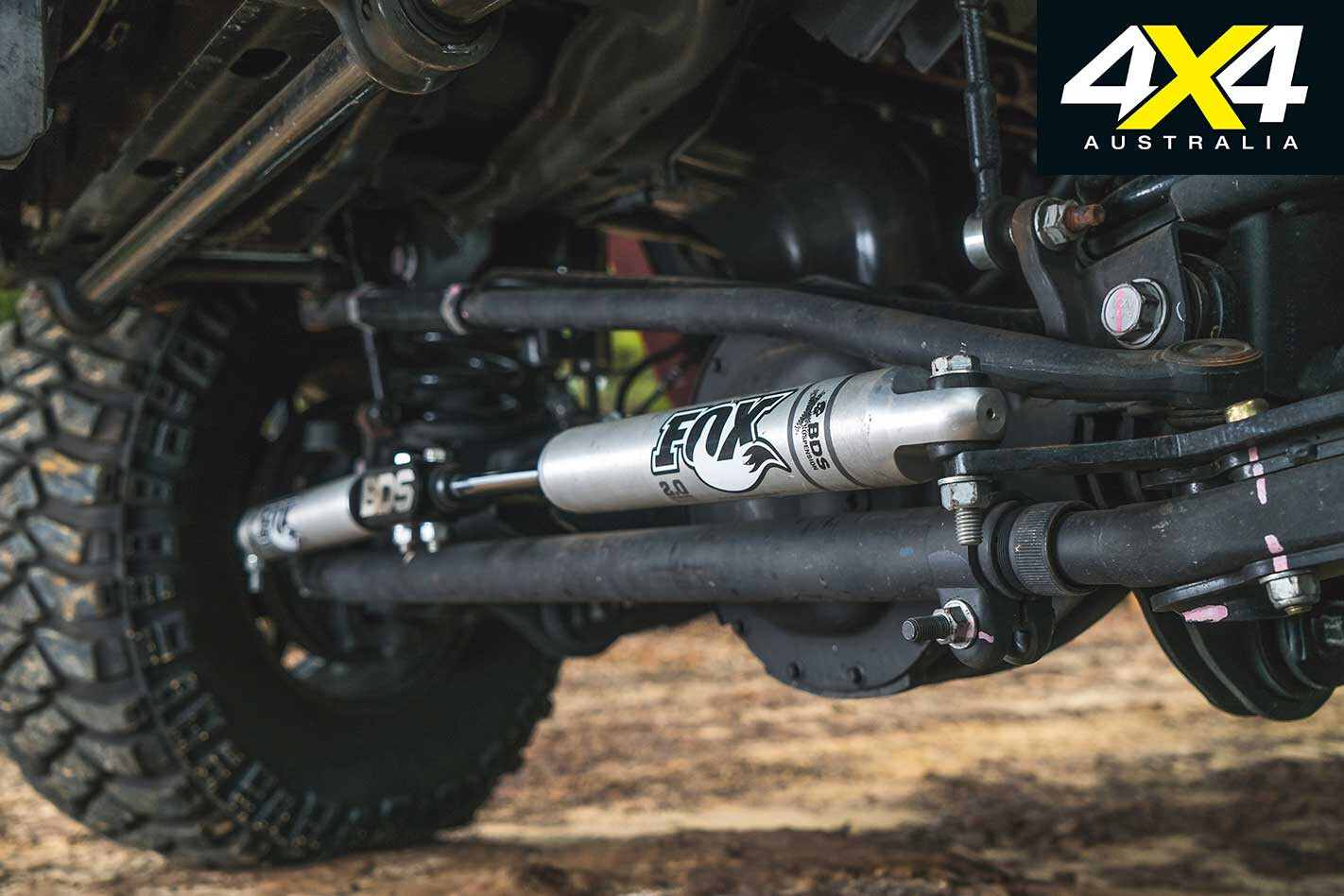
Rather than opt for offset bushes or replacement arms, TNT went with a full replacement 4-link arrangement from BDS suspension. It picks up the original mounts on the diff end, but replaces the single-radius arm with two separate links going to a new drop-style mount on the chassis. The heavy-duty offering picks up the factory mounts for strength then corrects caster for big lifts and provides less caster change as the suspension cycles on- and off-road.
The front end is completed with a set of four-inch lifted coils and six individual Fox shock absorbers; two are mounted to the factory tie rod giving huge steering dampening, while twin shocks on either corner mount to the BDS bracketry and control the weight of the 6.7L diesel-six. The rear is levelled out with a set of 2.5-inch lifted coil springs, with matching 2.0 Fox Shock absorbers on either corner.
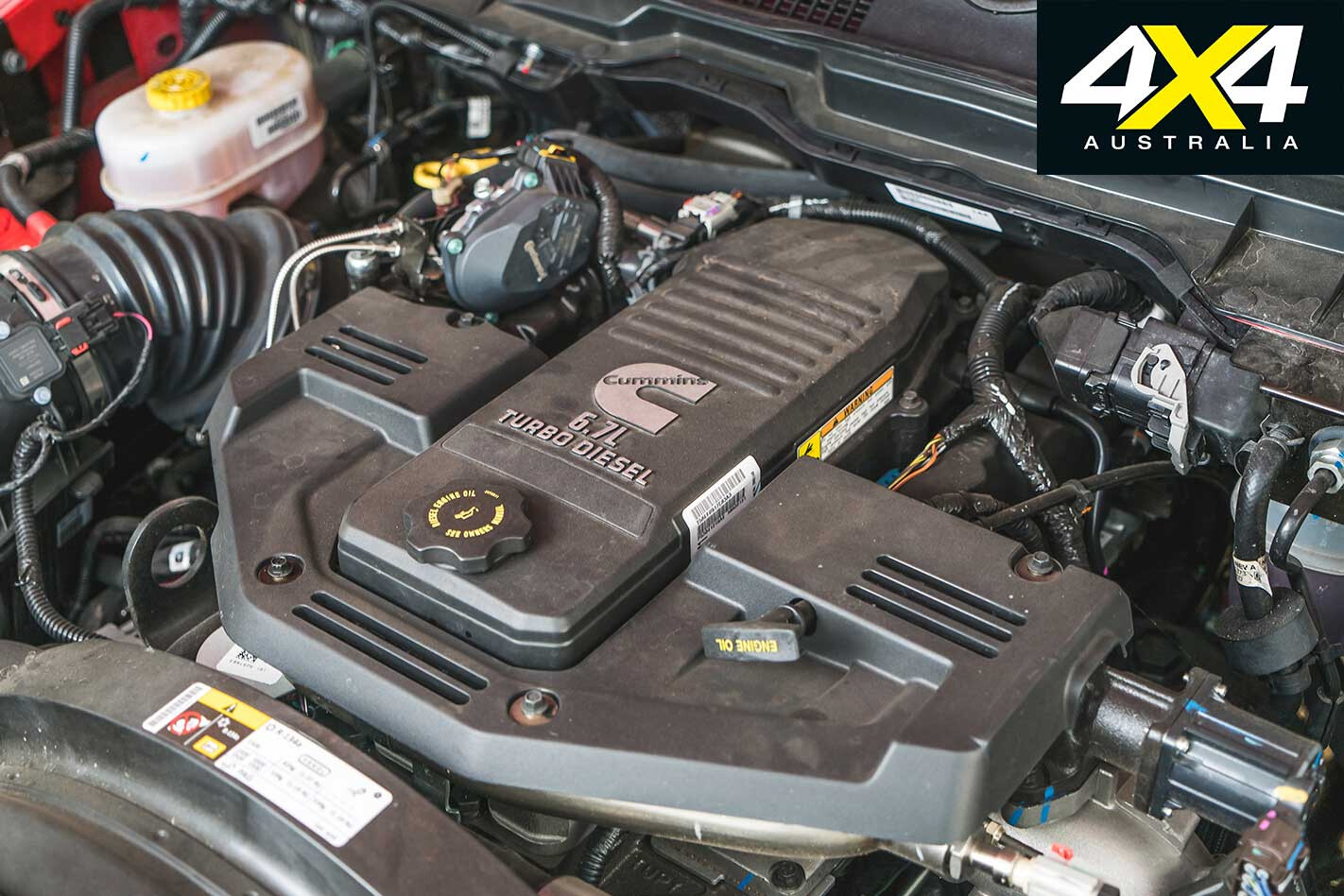
TNT tuned the kit for improved performance on- and off-road for Aussie conditions and to pass a swerve and brake test to be fully road legal. That testing also ticked the box for the 18-inch Method Race Wheels and 37-inch muddies, for massive ground clearance.
The Ram is a near-on perfect setup for serious travel and towing. You might not want to punt one down rock steps, but when you’re coasting down the Vic High Country with the exhaust brake keeping your off-road van in check, it’s hard to imagine a better 4×4.
Check out the Top ten finalists of the 2018 Custom 4×4 of the Year, cast your vote and be in the running to win a Maxxis voucher valued at up to $2000!
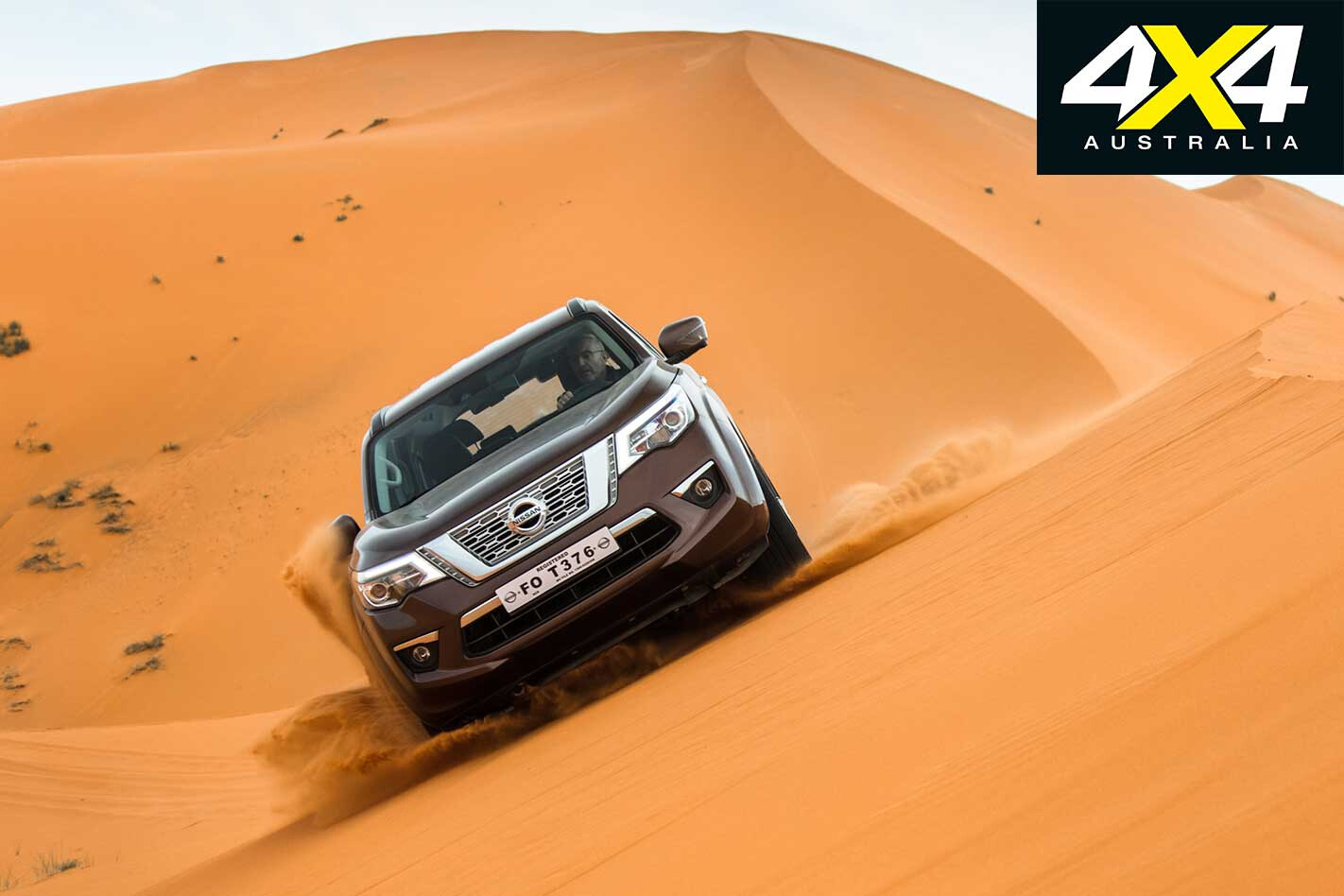
IT’S DAUNTING looking up at the vast mass of reddened Sahara sand that swoops and swirls towards the vibrant blue backdrop, but the car we’re driving, a newcomer called the Terra, doesn’t seem to be sharing the same trepidation.
While its old-school 2.5-litre diesel engine is grunting hard with all 450Nm banding together to trudge through the shifting granules, there’s little to suggest the Terra is struggling.
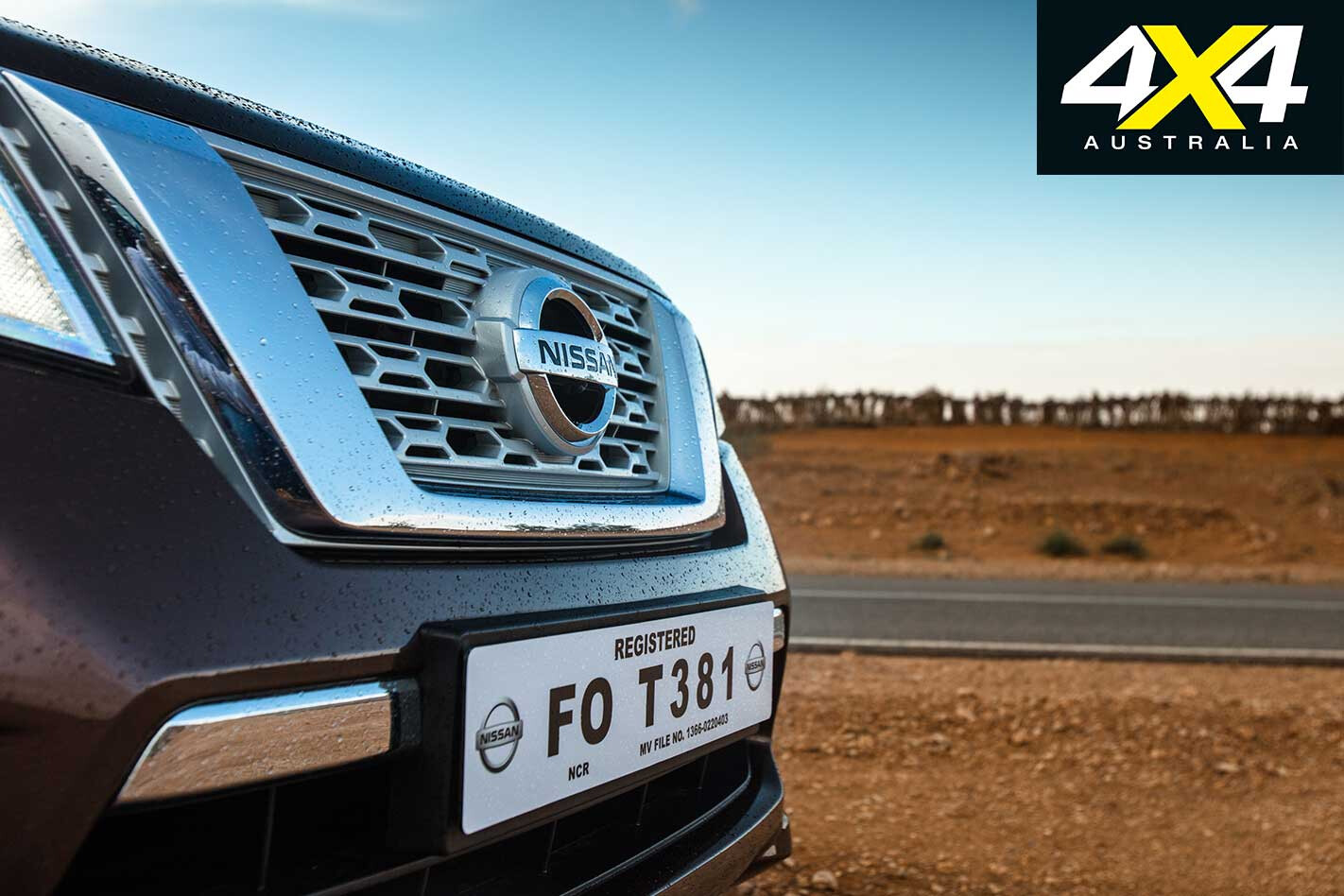
The standard 18-inch highway Bridgestone Duelers have been lowered to 18psi, but otherwise our Terra is stock standard, its flashy chrome highlights indicative that this one we’re in is top of the range, leather and all. Our target for this drive is somewhere higher than we are now, the seemingly endless expanse of barren sand a stunning backdrop for lovers of off-roading.
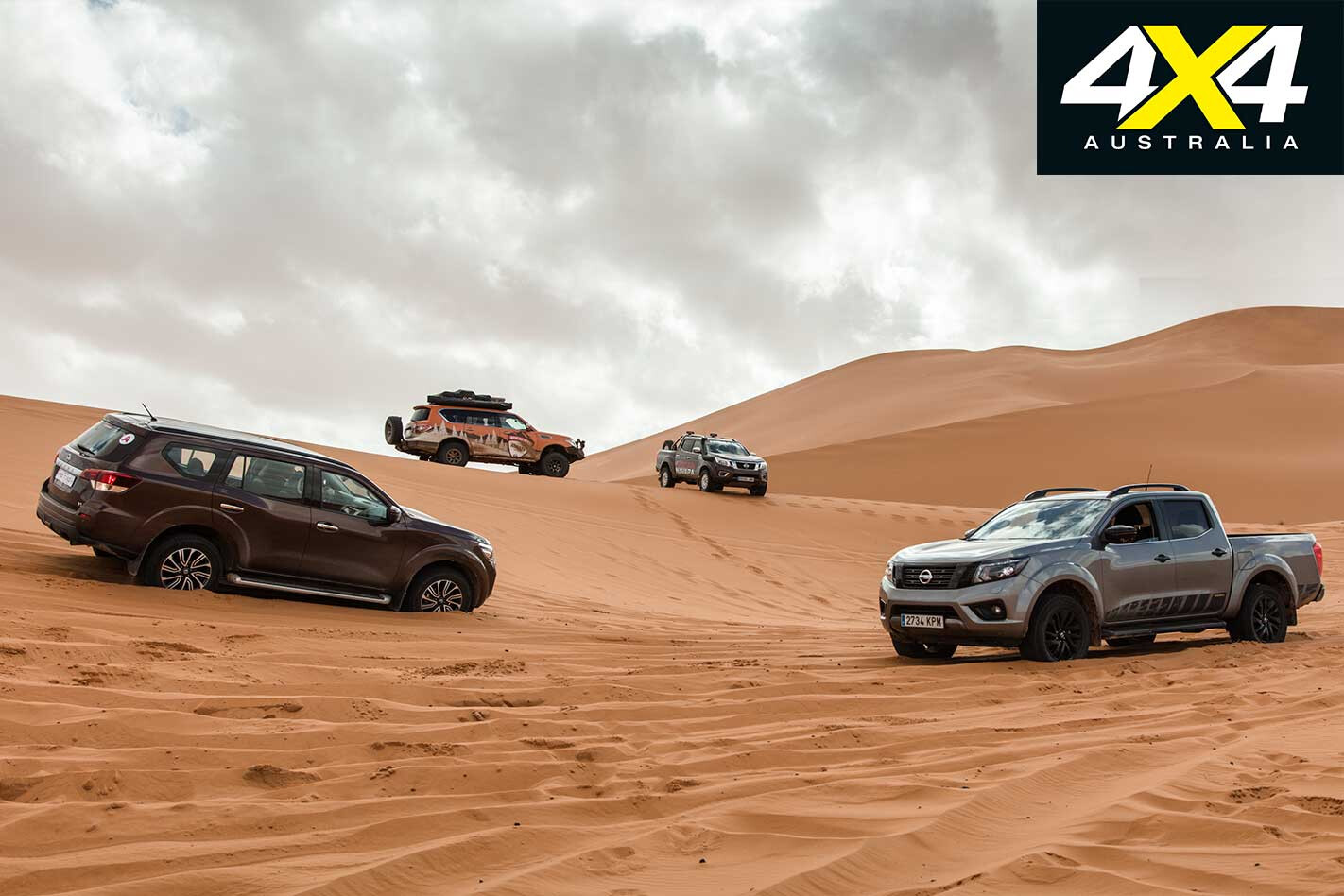
Our convoy includes a quartet of Nissans including the AT32 variant of the Navara, the familiar Y62 Patrol and the America-only Titan; but it’s the Terra we’re most interested in, the seven-seat SUV high on Nissan Australia’s hit list.
Since 2017, when the Y61 Patrol took its last dusty gasp, Nissan has been without a diesel SUV designed to tackle the tough stuff. Considering the near-60-year history of Nissan off-roaders in Australia – most of them Patrols – it’s a sad state, the Nissan faithful keen to see a return to form.
Sure, the 5.6-litre V8 of the Y62 Patrol is a terrific off-road alternative – and one making light work of the Sahara Desert dunes alongside us – but its 140-litre fuel tank and sharp pricing simply isn’t enough to tempt the LandCruiser faithful from their diesels. This leaves the Terra with some big expectations.
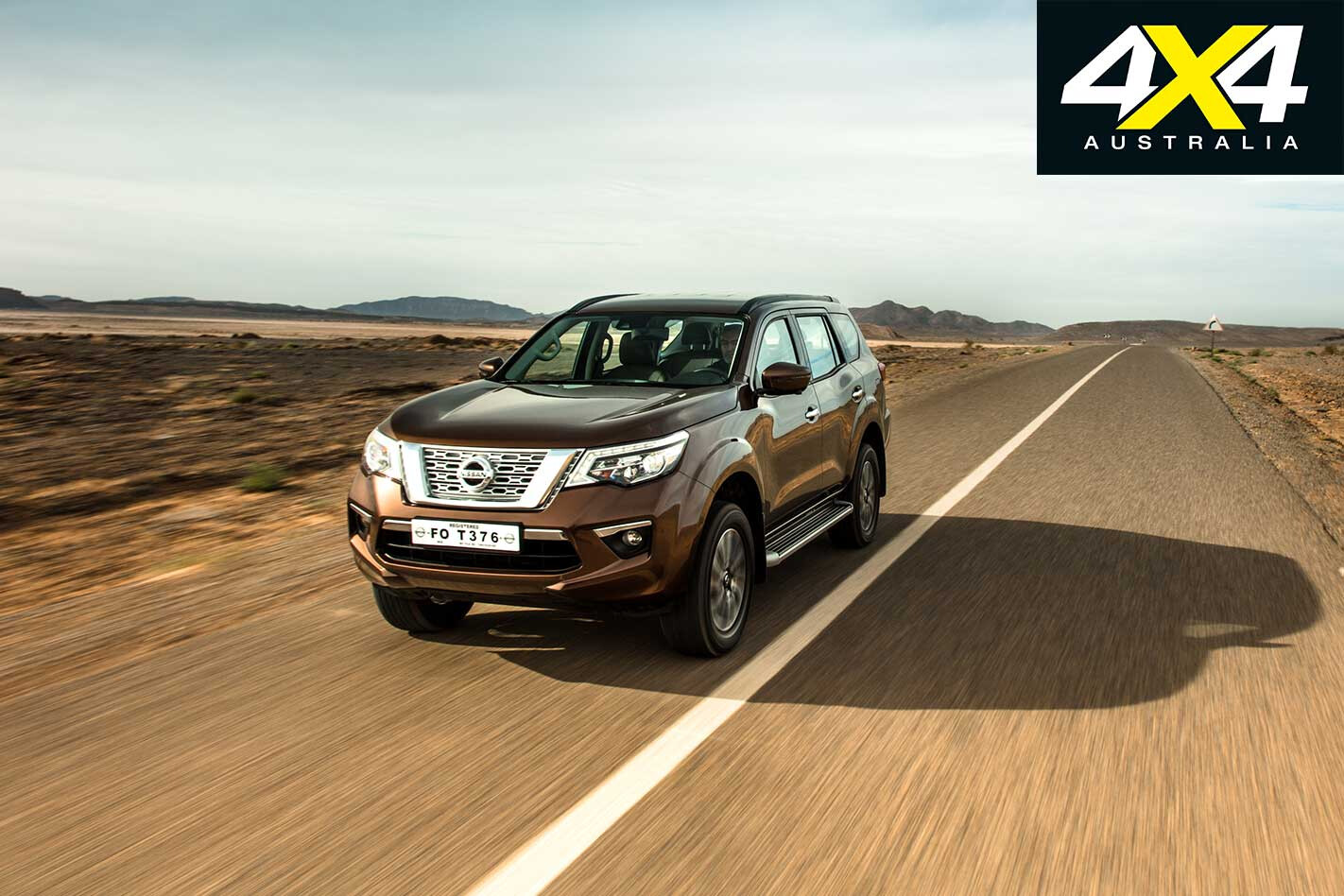
Sharing its underpinnings and most of its front styling with the Navara ute, the Terra in many ways fills the wheel tracks of previous generation Pathfinders, a car softened for the masses. The modern Pathy is more city streets and school runs courtesy of its car-based architecture – little surprise Nissan Australia is keen on the Terra. The prospect of a seven-seat diesel riding on a ladder frame chassis clearly holds big appeal.
“Terra is a vehicle that we think would work well in Australia,” said Nissan in a prepared statement. “However, a launch in Australia is still under investigation.”
That language is already a retreat from the early prospects of the Terra heading down under, when it was revealed early in 2018 it was pegged as a car for Asian markets. Australia was not on the radar, at least until execs from Nissan Australia started pleading their case. Now it seems more a matter of when, not if – even if the ‘when’ is likely to be 2020 or beyond.
That said, the chief product specialist for Nissan off-roaders and utes, Pedro Deanda, acknowledges there are challenges and higher customer requirements in Australia, something the company learnt in sending the original (undercooked) Navara D23 down under in 2015.
“Australia is not the biggest market in terms of volume; in terms of customer demands, it’s clearly a leading market,” Deanda said.
Perched on top of one of the myriad dunes provides a chance to explore the interior of the Terra, something that highlights some of those challenges. There’s some clever thinking with things such as the rear-vision camera which adopts the latest Patrol’s camera and screen, providing an uninterrupted view of whatever is behind.
That the camera (the second rear-facing camera; there’s a second one lower in the tailgate) sits in the sweep of the rear windscreen wiper means mud, water or dust won’t get in the way of that rear view.
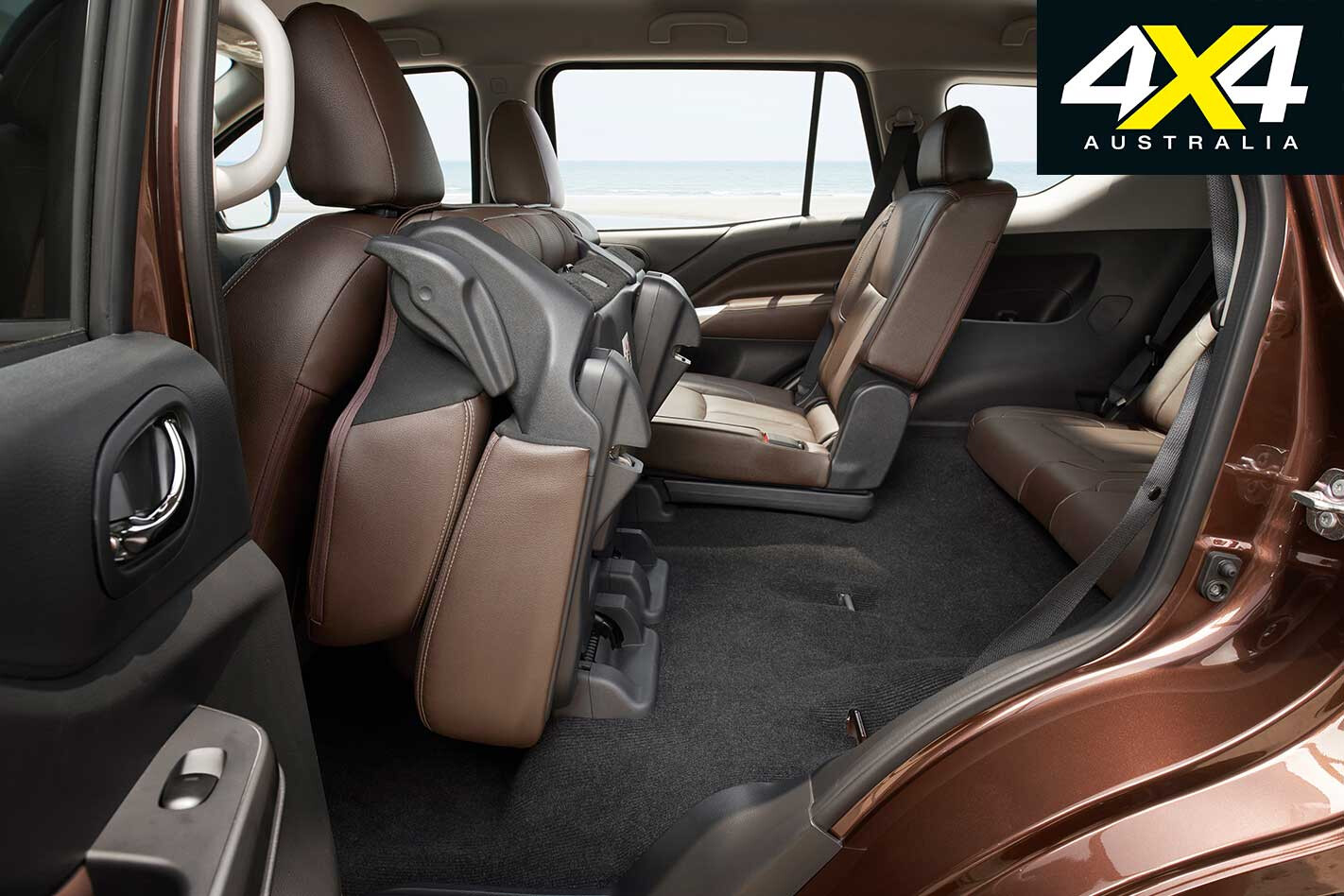
The middle-row seats that can be flipped at the press of a button is also a neat touch for families. However, the seatbelts would need updating before they came to Australia; there is a lap-only belt in the centre and not enough child-seat tether points. They’re minor things, common production issues faced by many cars sold in Australia, the Toyota Hilux included.
The omission of autonomous emergency braking – now required for a modern five-star ANCAP rating – is also something easily fixed and on Nissan’s radar.
Then there’s the engine. The 2.5 doesn’t meet current Australian emissions standard or the customer expectations in this class, with refinement falling short. Deanda says the Navara’s 2.3 can easily be adopted, something that would get the benefits of our higher quality diesel. That’s a relief, because the 2.5 is a vocal engine that rumbles away beneath the bonnet and increases in intensity as throttle is fed.
Still, it gives a very good idea of performance, its 140kW/450Nm outputs identical to those of the Navara’s twin-turbo 2.3. While it works fine during our sandy adventures, you wouldn’t want any less.
Away from the dunes the engine is more relaxed, its generous torque doing the hard work and ensuring easy progress hooked up to a seven-speed auto, one that shifts cleanly and decisively, albeit without some of the thinking-ahead smarts of more advanced self-shifters. As with the Navara there are coil springs all around, an inherent firmness to the tuning that endows confidence crunching into creeks and crevices.
It’s a surprisingly suitable test track. Vast chunks of eastern Morocco aren’t dissimilar to the Australian outback, some of the rocky plains reminiscent of the Oodnadatta or Strzelecki tracks, the creek crossings and muddy splurges commensurate with what you may encounter in the bush.
With speeds hovering around 60km/h or higher the Terra comfortably trudges along, its dampers capably controlling the never-ending bumps and jolts. It’s no magic carpet ride, but it’s well controlled and in keeping with expectations.
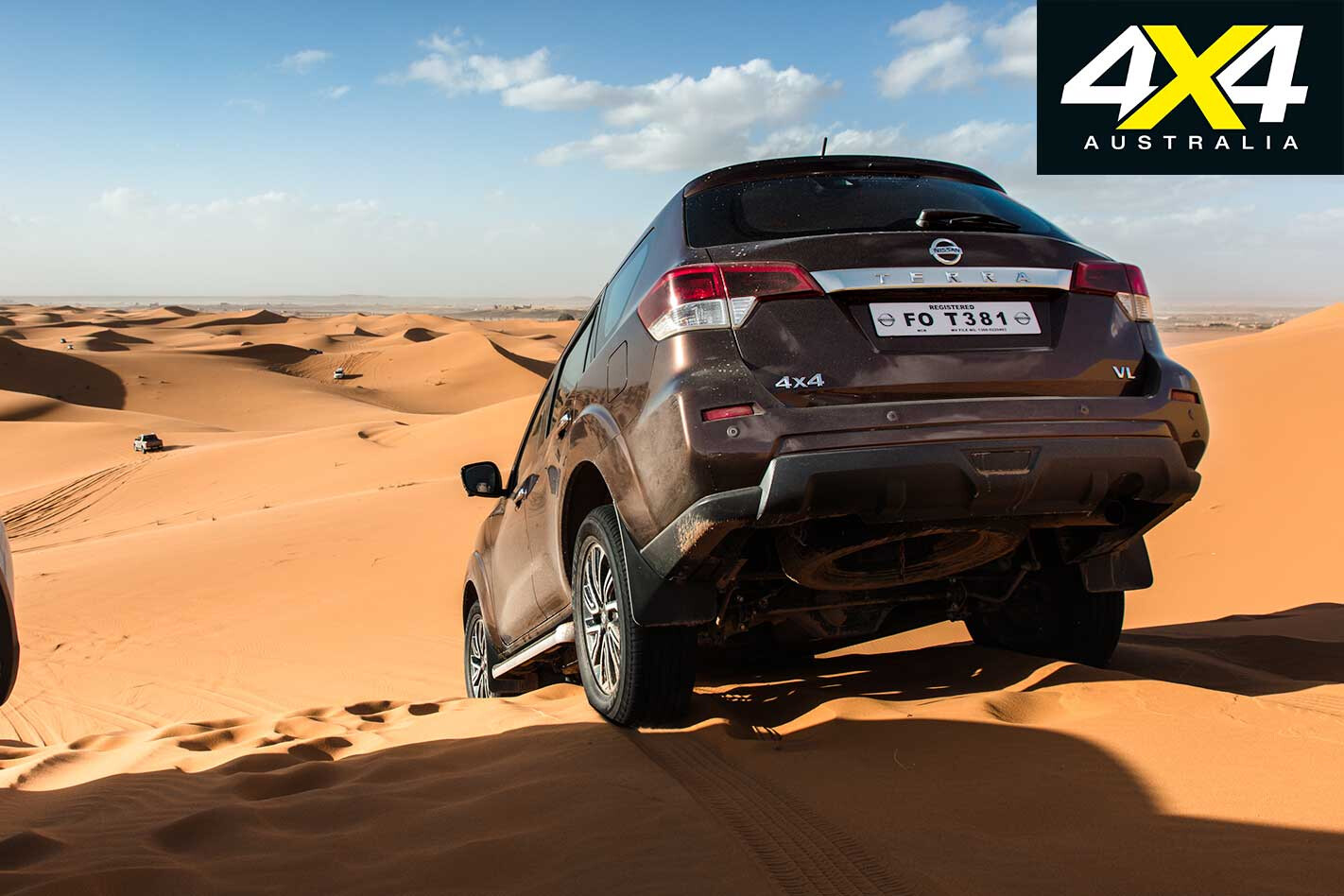
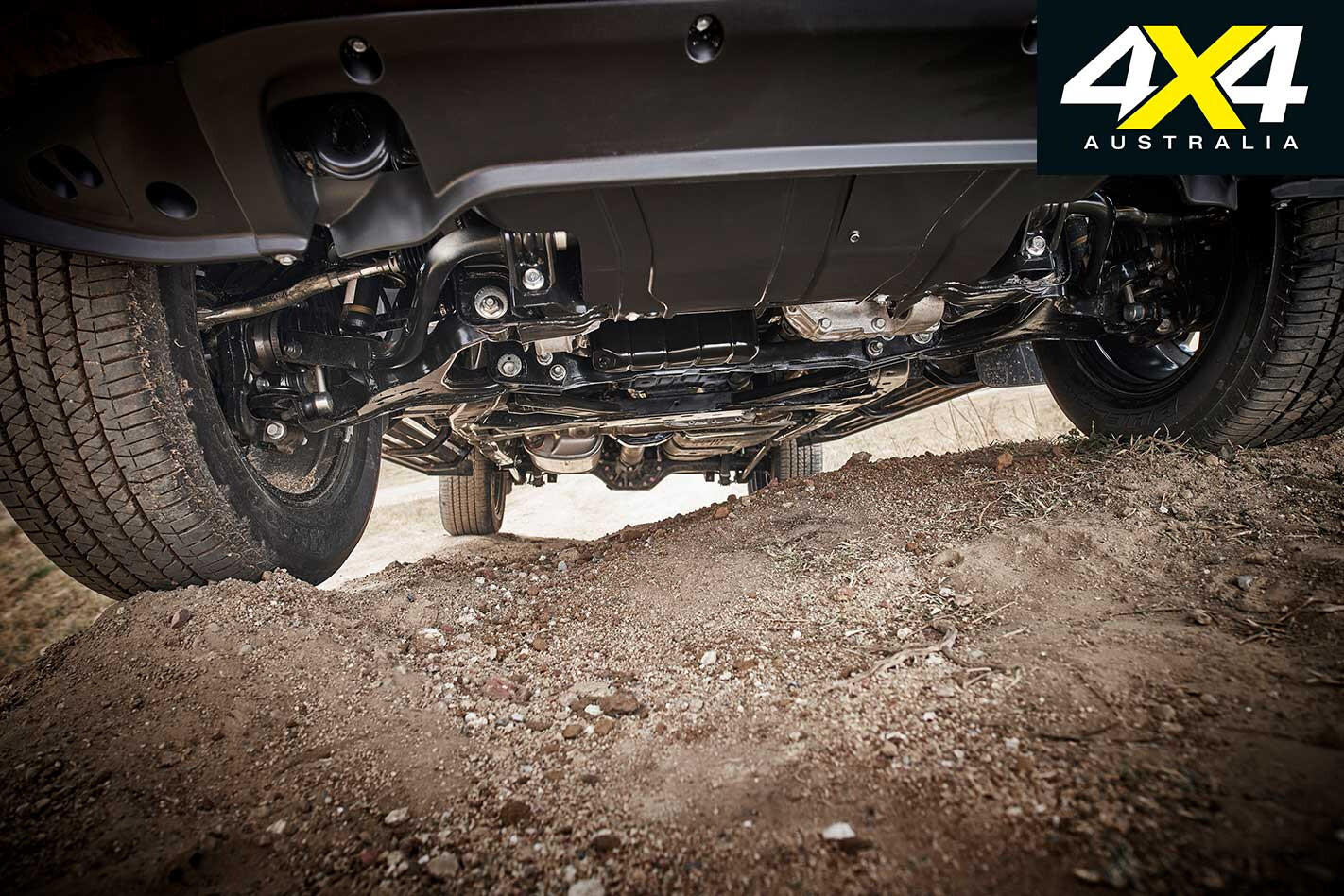
There are also no qualms with getting serious, some steel underbody protection and 225mm of clearance making for easy progress. A rear diff lock helps with traction in more serious off-roading; although, the traction control also helped in the slippery patches we encountered. There’s a full-sized spare tucked under the tail.
The Terra borrows the part-time low-range 4WD system from the Navara, its rotary selector making easy on-the-fly shifts to 4H. While full-time 4WD would be handy, its simpler setup at least gives an idea of where the Terra would most likely slot into the market, the Toyota Fortuner and Mitsubishi Pajero Sport obvious rivals.
An educated guess would have pricing starting around $45K. For that you’d be getting a wagon that is more focused on where it can go than how it pampers.
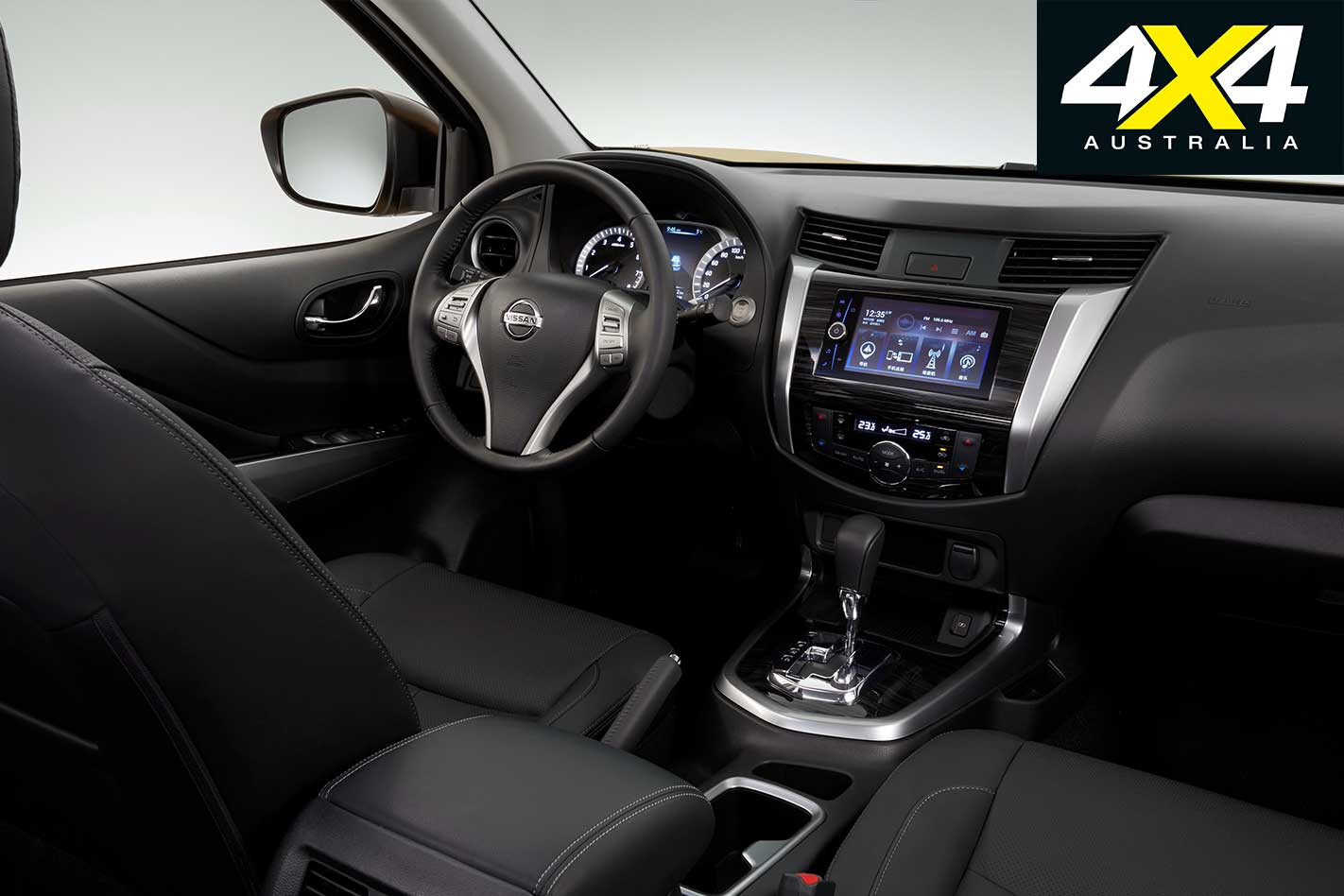
Inside, the roof lining has a cheap mouse hair-like material, the plastics atop the dash hard and unwelcoming. However, the basics are there, including the Navara’s dash-top binnacle complete with 12V power; and it’s all functional, with good storage areas and a central touchscreen incorporating Apple CarPlay and Android Auto.
Vents in the roof feed air to the back two rows, a separate AC controller allowing settings from the rear. Those in the middle row can slide the 60/40 split-fold seats forward and back, and legroom is generous.
At 4885mm long and 1865mm wide, the Terra is 90mm longer and 10mm wider than a Fortuner. Despite its truncated and generic rump, it’s closer in exterior dimensions to a Ford Everest which helps with that interior space. Those in the third row won’t be stretching out, the tight legroom best left to kids who may not appreciate the rising rear window that impedes side vision.
Ultimately, though, it’s the ability to run it as a five-seater and load it up for the big adventure that makes the Terra more 4×4 appealing – and within reach. The prospects of it helping grow Nissan’s off-road attack in Australia are certainly firming, which all bodes well for returning a competent and capable frame-based diesel seven-seater to the Nissan stables.
THE NEW TJM Chaser Series Bull Bar is a bold addition to TJM’s array of vehicle protection products. Combining an aggressive style and off-road features with premium-quality design and manufacturing standards, the Chaser is built for 4×4 adventurers who want to make a statement.
“It doesn’t matter if you’re in a carpark or off-road, the Chaser is a head-turner,” says Chris Mayo, TJM’s group marketing manager. “From its innovative new design through to its extensive off-road capabilities, the TJM Chaser Series Bull Bar is undeniably rugged.”
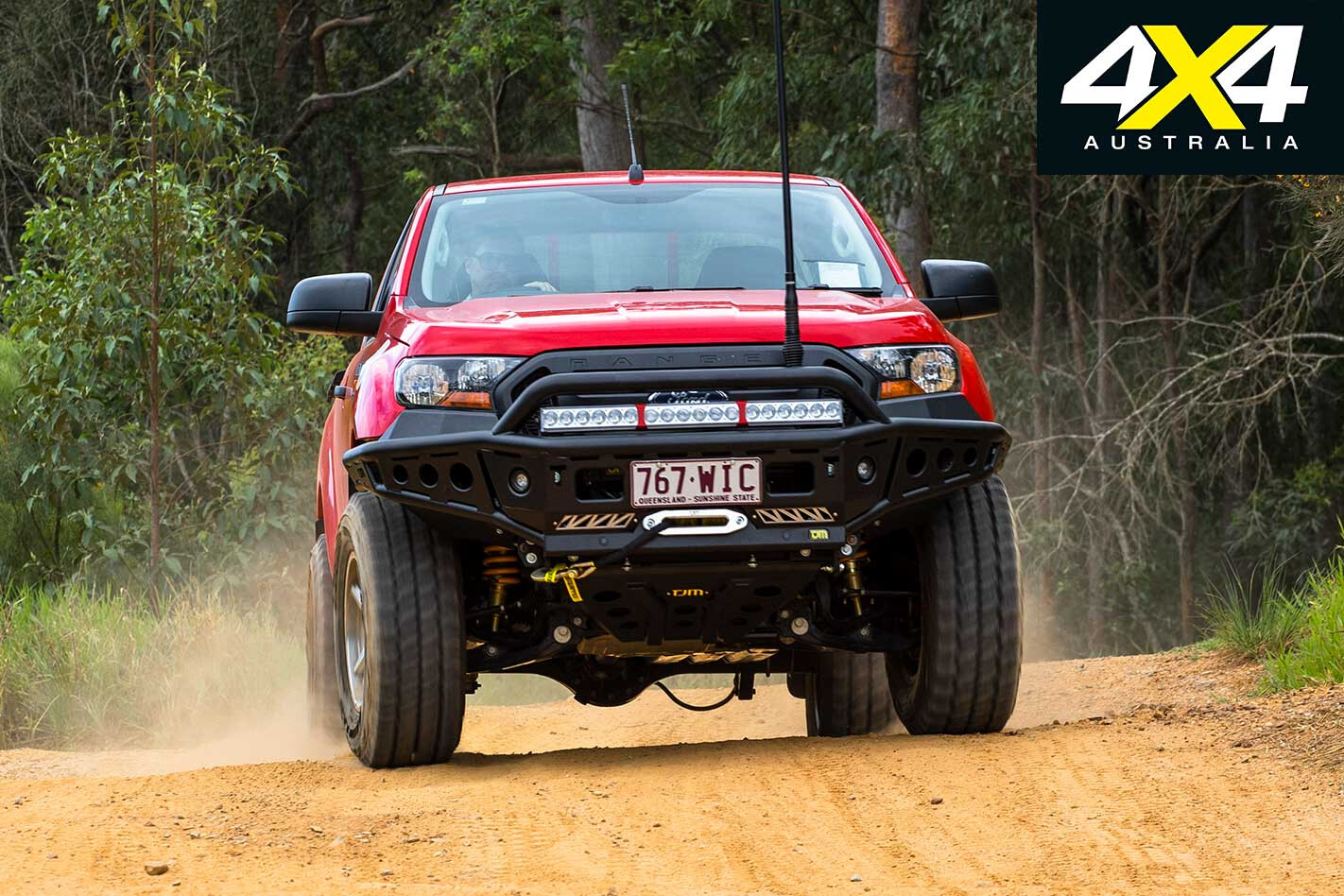
The Chaser features a hefty 63mm upper tube and 50mm lower tube, which is angled for optimal off-road clearance when you’re out on the track. The Chaser’s winch frame is mounted to your vehicle’s chassis to ensure supreme strength in tough Australian conditions.
To make sure you’re prepared for anything off the beaten track, the Chaser is 4×4-equipped with a steel winch frame (to suit up to a 9500lb synthetic winch), integrated 8000kg rated recovery points, reinforced T-slots for Hi-lift jacking, as well as capacity to fit dual aerials, light bars up to 900mm long, and LED driving and off-road work lights, through integrated mounting options.
While it is both light and strong – the full kit weighs 68kg (the bar weighs 30kg) – the Chaser is truly the full package. Every Chaser bull bar comes with a 3mm steel underbody guard, dual steel wing guards and an integrated winch frame to enhance its protective capabilities, functionality and looks.
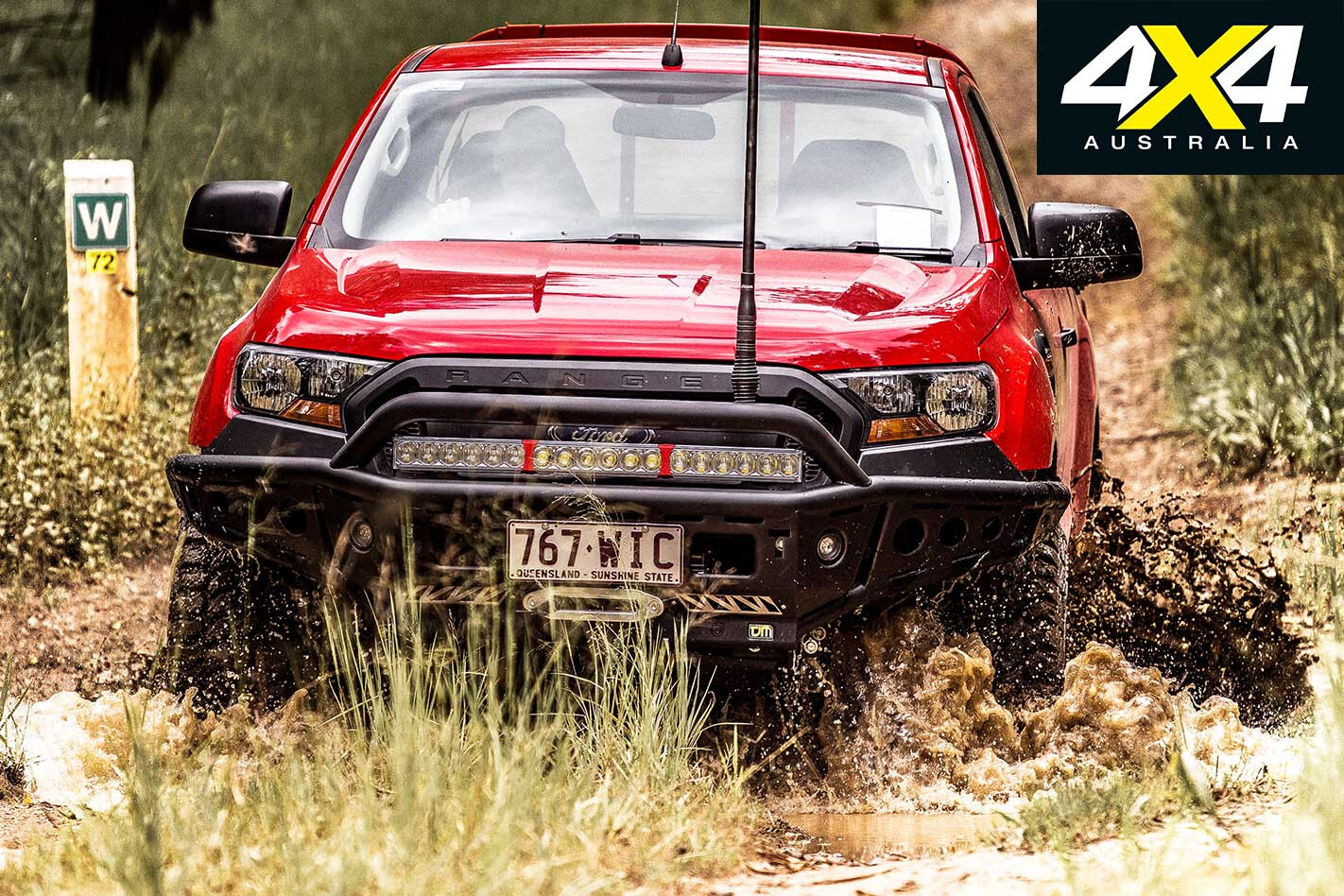
Designed and engineered in Australia by TJM to handle tough local conditions, the Chaser is backed by a three-year warranty. It’s also Australian Design Rule-compliant, parking sensor-compatible and it won’t void your new car warranty when fitted.
The Chaser is available for pre-order for the Ford Ranger – PX, PXII and PXIII (non-tech pack) –through your local TJM store. Bull bars for the following models are in development for 2019: Holden Colorado RG 2012+ Dual Cab, Toyota Hilux SR5 2015+ Dual Cab, Isuzu D-Max 2017 Dual Cab, Mazda BT-50 2011+ Dual Cab, Nissan Navara NP300 2014+ Dual Cab and Mitsubishi Triton MQ 2015+ Dual Cab.
So, what are you waiting for? It’s time to chase a new adventure with a TJM Chaser Series Bull Bar.
Yesterday we ran the story on the prospect of Nissan producing its Titan in right-hand drive from the factory, for small markets such as ours here in Australia.
It’s a familiar tale as it’s one we’ve been hearing for decades from US auto reps who, at every North American Auto show, assure us that the model “will be considered for right-hand drive production at the next generational upgrade.”
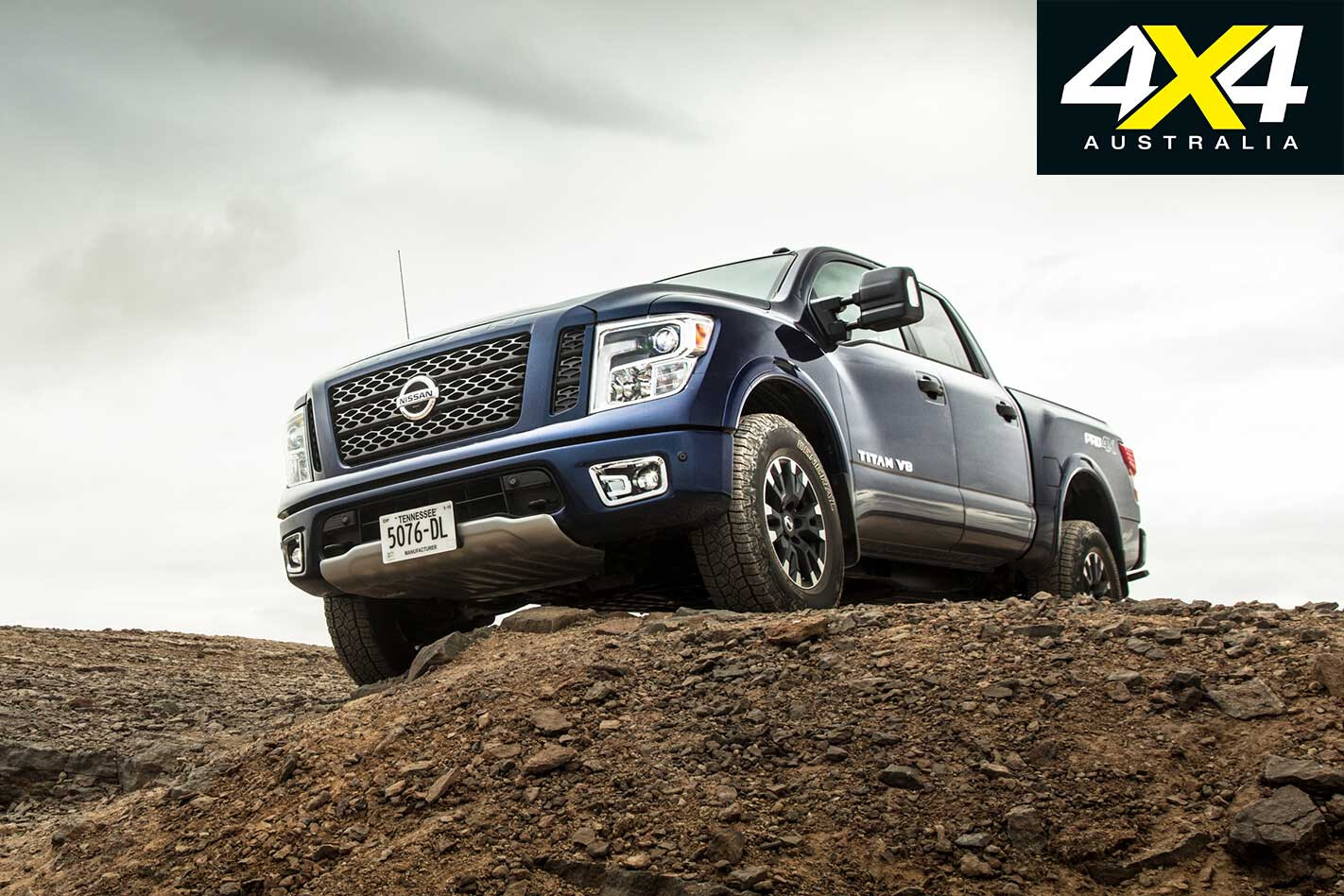
Australian automotive media inevitably ask the same questions of the US execs at every opportunity, and it’s always the same old answer: “It’s under consideration”.
Over the many years we’ve heard this response we’ve seen generations of Ford F-Trucks come and go, likewise for Ram and Chevy trucks and the muscle cars we’ve all drooled over. Always the same answer.
The one exception to the norm was the Ford Mustang, which has proven to be a success in right-hand drive markets, especially in Australia. The ‘new’ Mustang offering was a huge hit here, and delays in local deliveries forced FoMoCo to up production of RHD models. Luckily for us, this also came at the time of a sales slump in the US, so the execs simply swapped production to fill the hole Down Under.
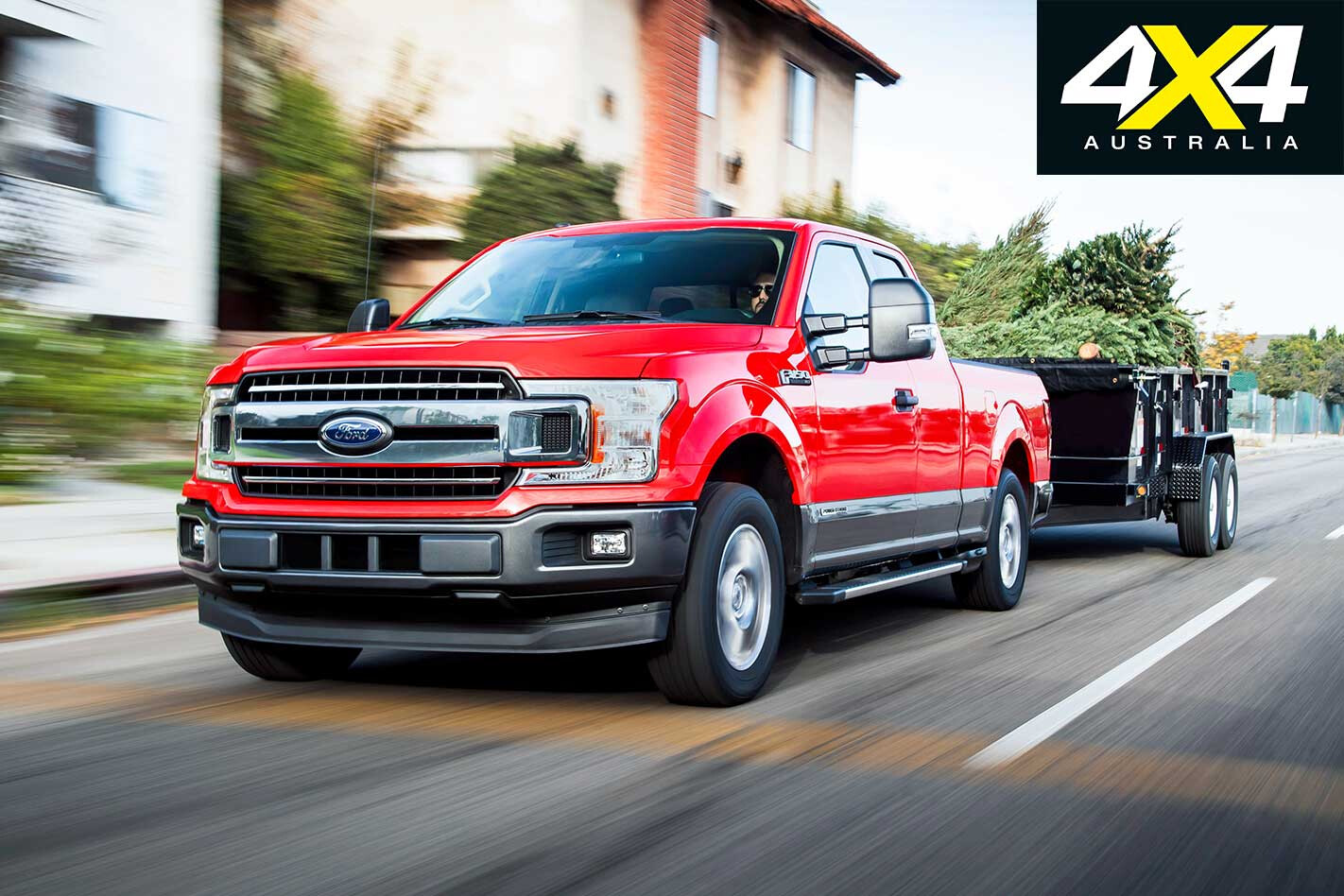
The relative success of the Mustang has pushed those in Detroit to look closer at right-hook variants of other American models and how they might sell here and elsewhere. For many of these cars, and certainly the full-size pick-up trucks, Australia will be the biggest market for them, so the numbers are relatively small.
Japan and the UK certainly don’t want them leaving South Africa, and some Asian countries such as Thailand are the only other potential markets, but, still, the numbers don’t add up.
When you consider that the cost of the left- to right-hand drive conversion adds around $20K to the price of the average car or truck, you would have to think a factory RHD full-size truck should sell here for less than $100,000. That’s considering that the one-tonne HD trucks are currently selling for $120K and upwards here; the RAM 1500 half-tonne pick-up being the exception.
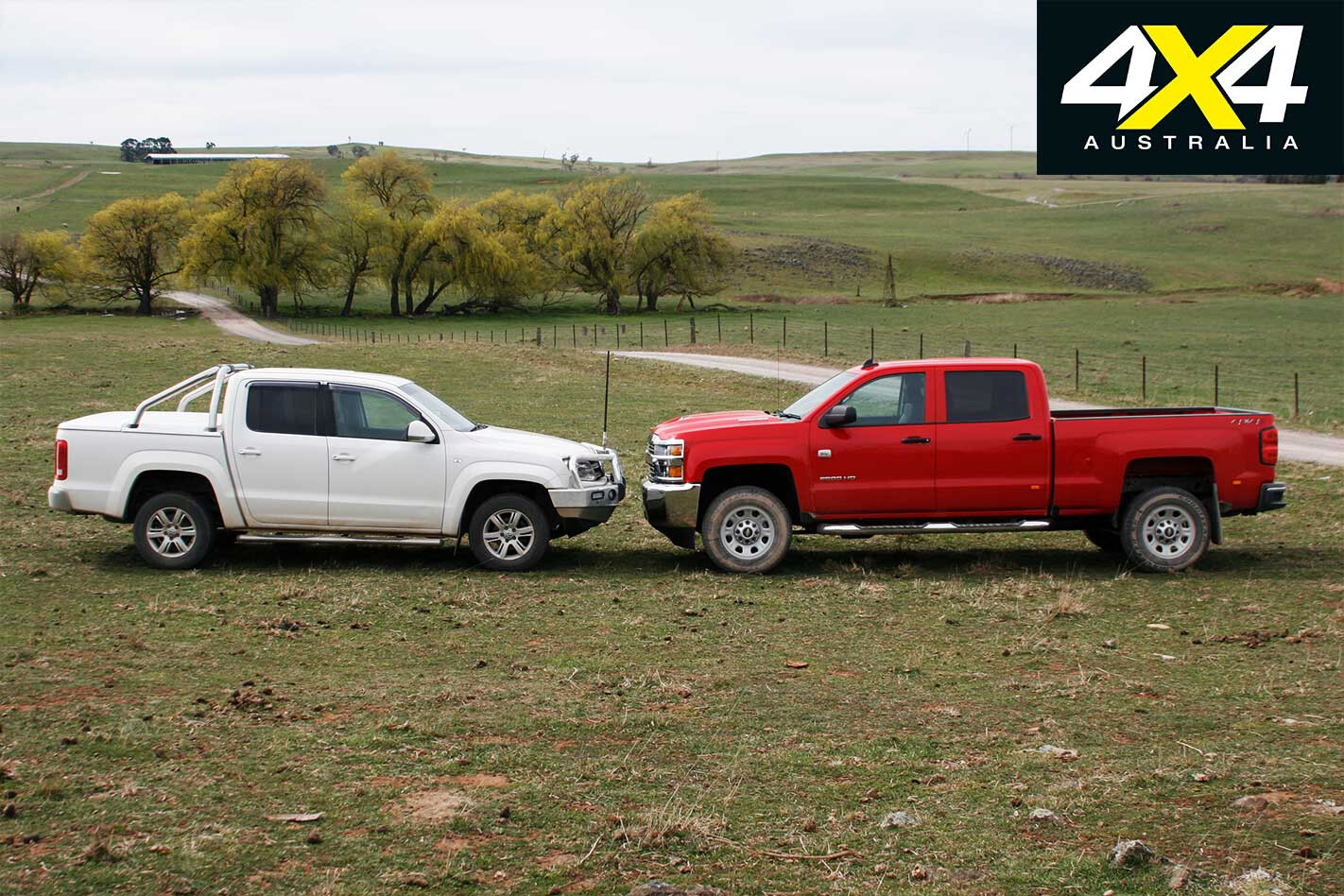
So a company, be it Chevrolet, Ford, Nissan, Toyota or RAM, that can market a factory-built RHD full-size truck here for less than the $100K mark should be on a winner. But is the market for those larger trucks big enough to justify the millions of dollars required to engineer a new vehicle for both left- and right-hand drive?
There’s no doubt Australians are in love with double cab pick-ups, as the sales of the Toyota Hilux, Ford Ranger and Mitsubishi Triton attest, but many buyers, and certainly those with a family to carry, find the interiors of the locally available utes to be too cramped and uncomfortable. They want something bigger and are prepared to pay for it.
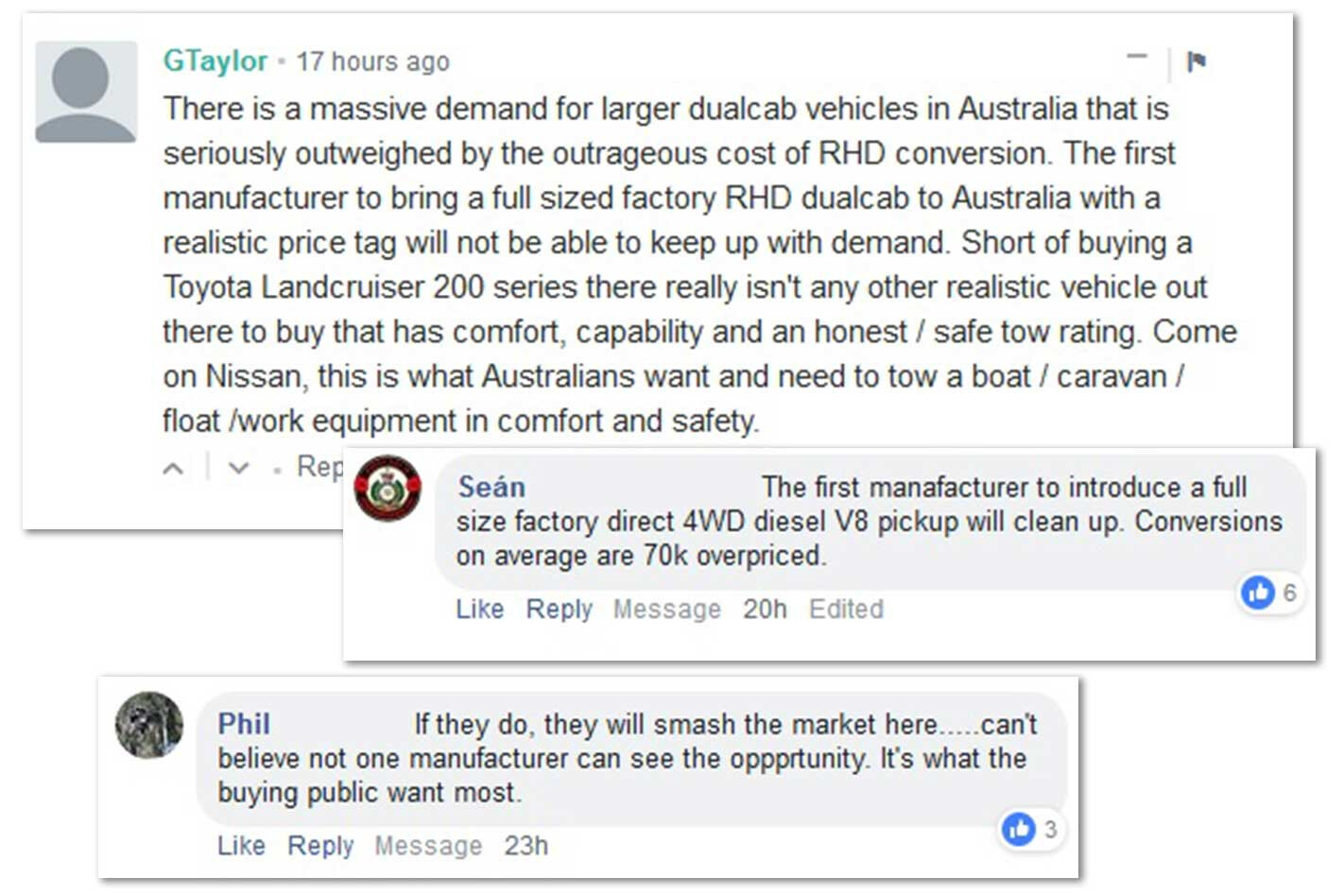
Aftermarket companies around Australia are making a motza chopping up wagons such as LandCruisers, stretching the wheelbase of them and creating full-size utes with large comfortable interiors capable of travelling the rough roads of this big country.
At the same time, other companies are flat-out doing the left- to right-hand drive conversions on trucks and muscle cars for Aussie buyers. Whether there are enough of those buyers here to push the car companies to build the cars RHD from the start remains to be seen. So will we see a right-hook Titan here from Nissan anytime soon? I’d love to be proven wrong, but I doubt it.
Tell us your thoughts below: Are full-size factory-direct RHD 4x4s a viable option for manufacturers?