
There are a few things that make working for this magazine bearable; driving cool cars and visiting some awesome places are two of the obvious ones.
But what makes it most interesting is working within an incredible industry that makes amazing off-road products considered the best in the world. Top gear with great people behind it is certainly a highlight of this game and, while most of the time it’s a business relationship, sometimes we like to get away for a bit of fun on the side. And fun for us means four-wheel driving.
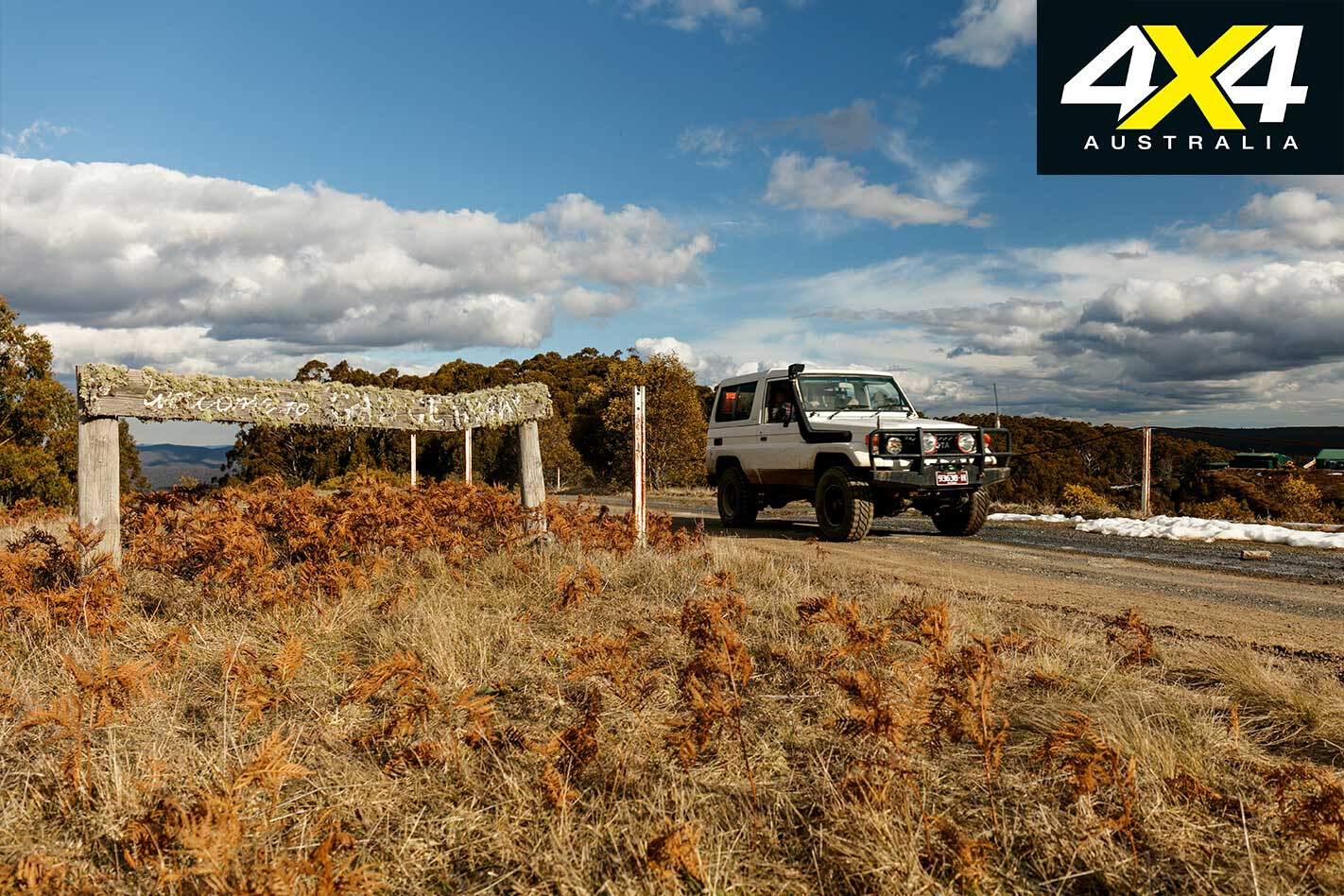
With spring upon us we took one last chance to experience the Victorian High Country in the colder months, and we invited a few of our friends in the industry along for a few days of off-roading. Alan and Michael from Piranha Off Road, Mark and Shannon from ARB 4×4, Jake from Narva, Adam, Kirstin and Samuel from Ironman 4×4, and Hayley and Ben from Hayman Reese joined us for a mid-week adventure.
With The Gap Getaway at McAdams Gap near Matlock as home base, we explored a few steep tracks as our little convoy wound its way up into the hills. The Getaway is a rustic pub atop the range above Woods Point. It has accommodation, a cosy bar and serves hearty home-style meals to groups that book there. It’s not a public hotel but is ideal for four-wheel drive or dirt-biking groups.
After a big feed and a few beverages at the pub – followed by a warm night’s sleep – we ventured towards Mount Skene which, at 1500 metres, is one of the highest places you can drive in the High Country during winter.
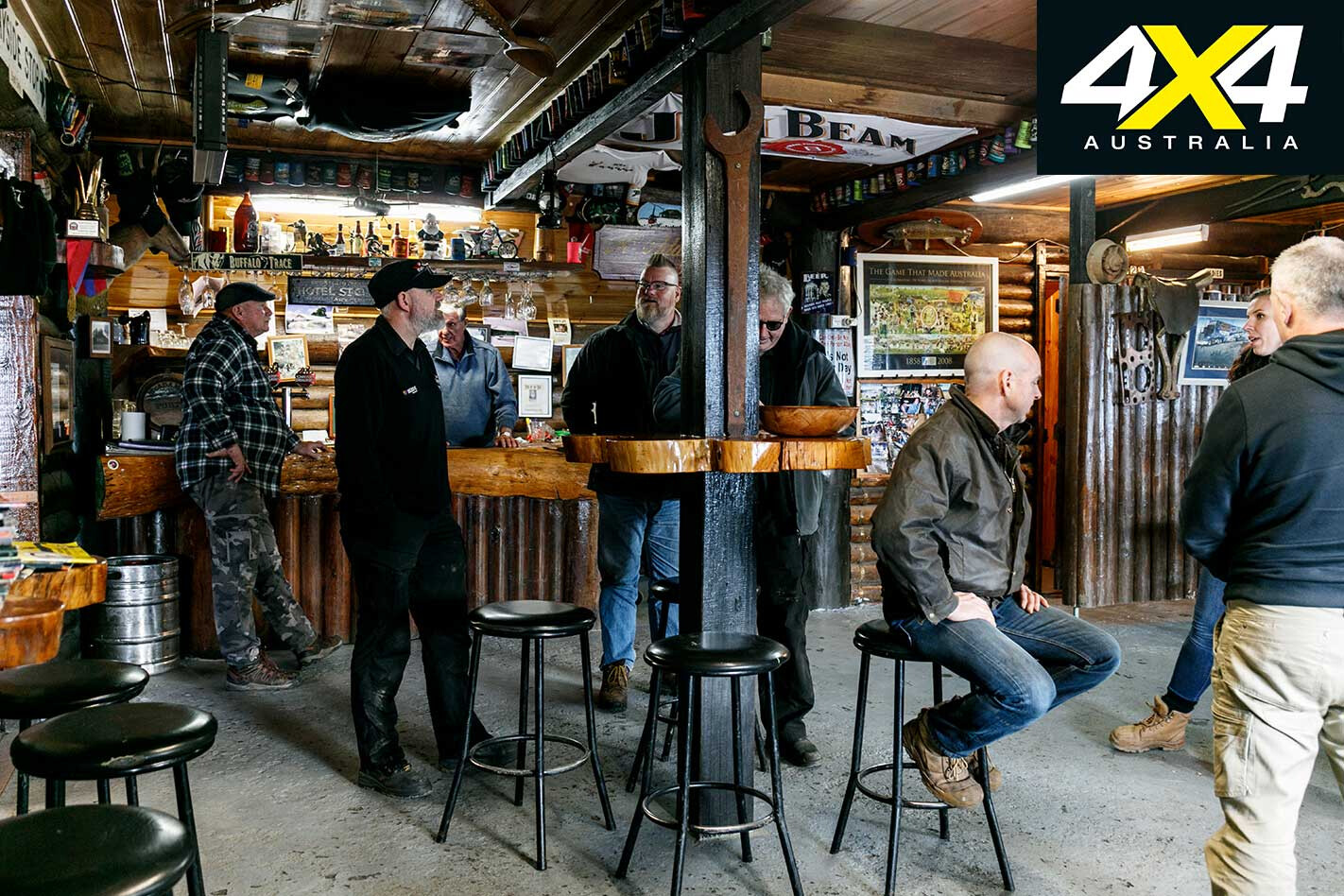
The road is officially closed through the cold season, but you can get access permits via your 4WD club or association. It had been a bumper winter for snowfalls and we were told the top of Skene was near impassable, but figured we’d take a look anyway.
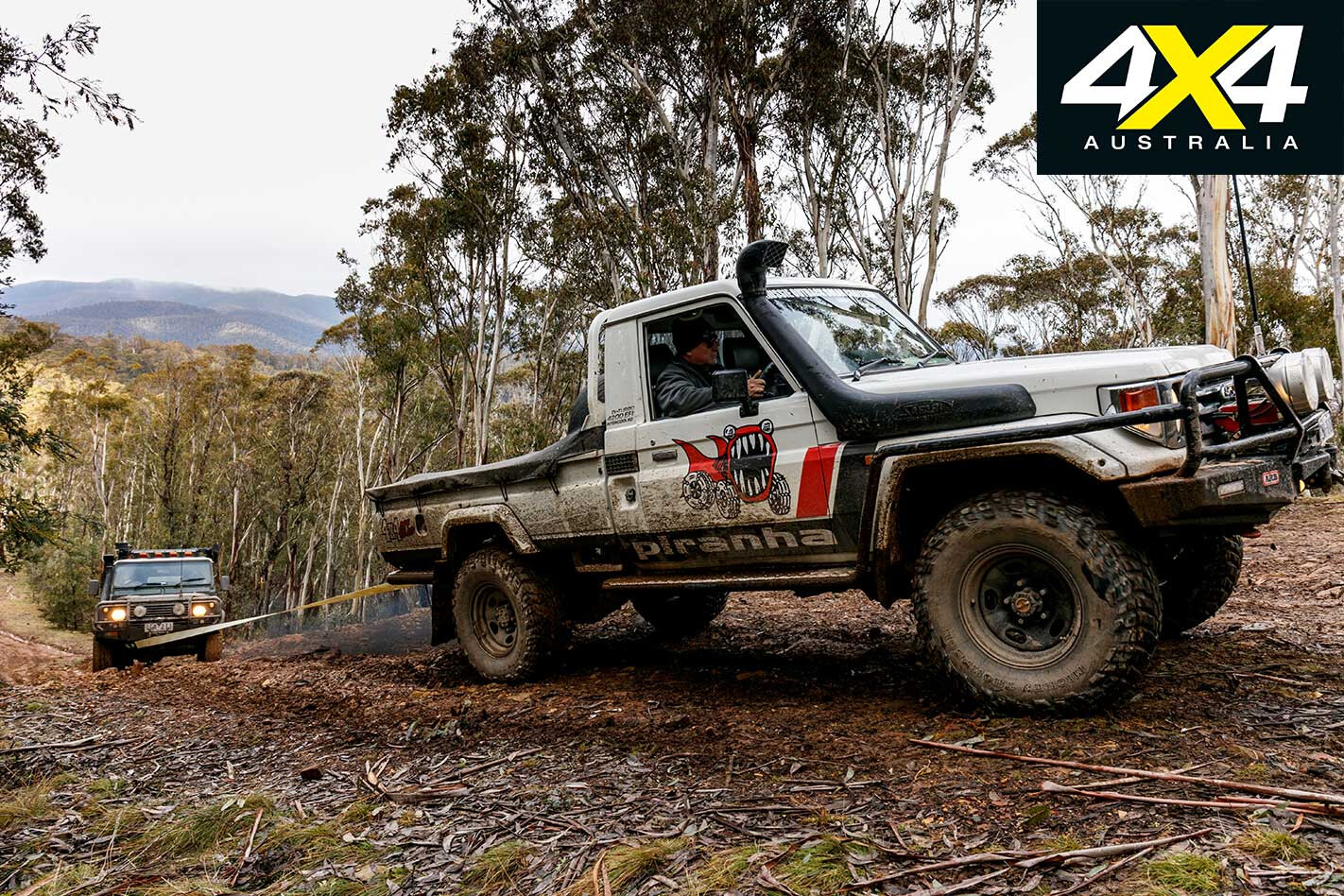
With enough drizzle falling to make the tracks wet – and some vehicles had all terrain tyres and no lockers, no less – we took a circuitous route to avoid some of the more challenging tracks. However, these still included steep climbs, river crossings and, when you could see through the clouds, great views. Eventually a steep, wet clay track brought the convoy to a standstill as most of the vehicles couldn’t drive up the slippery slope.
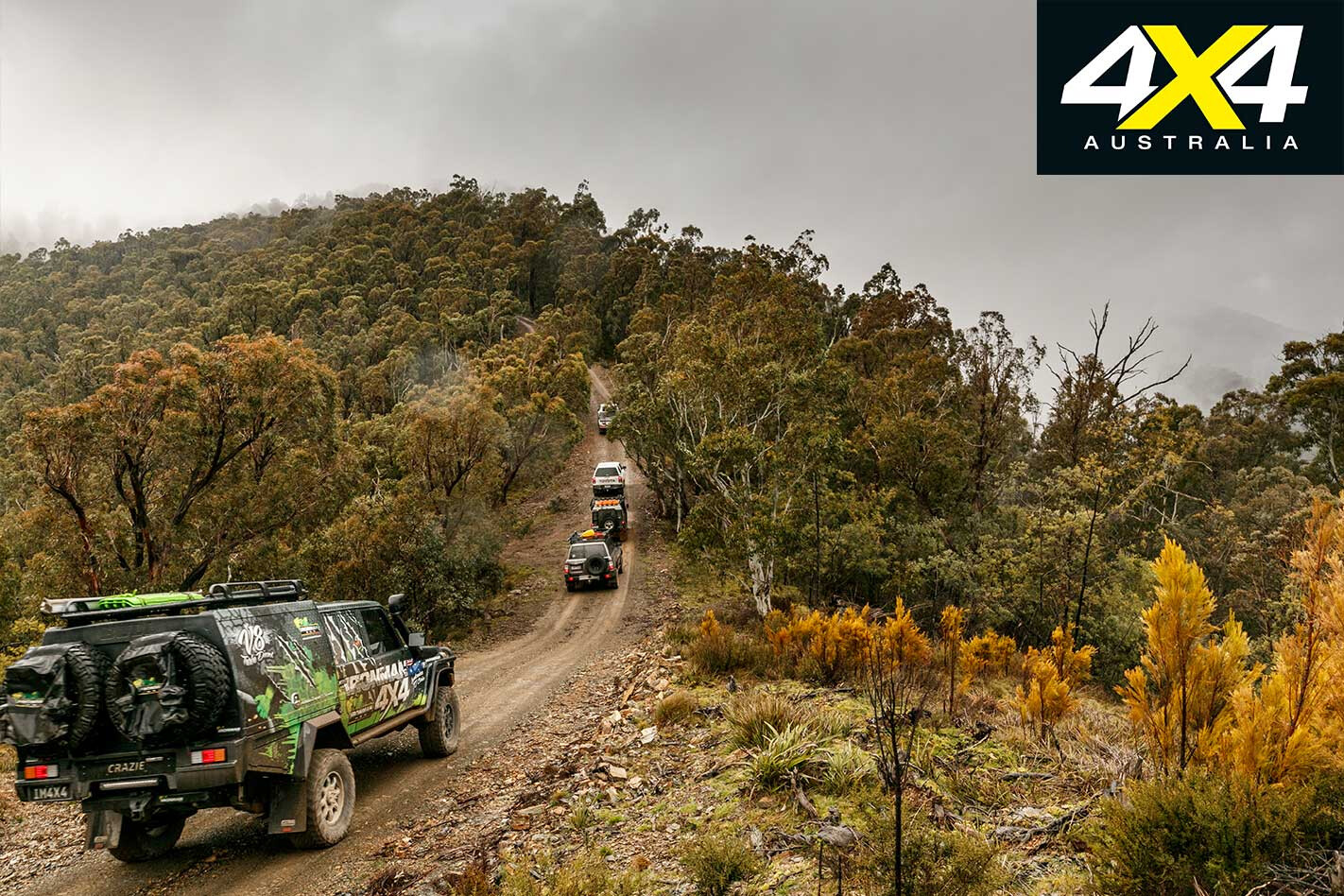
Alan had made it up in his double-locked HDJ79 on 35-inch muddies and he set-up at the top to winch the other vehicles through; his twin-motor Gigglepin winch making light work of the hauling. Adam’s portal axle-equipped VDJ79 was the only other truck to climb that hill.
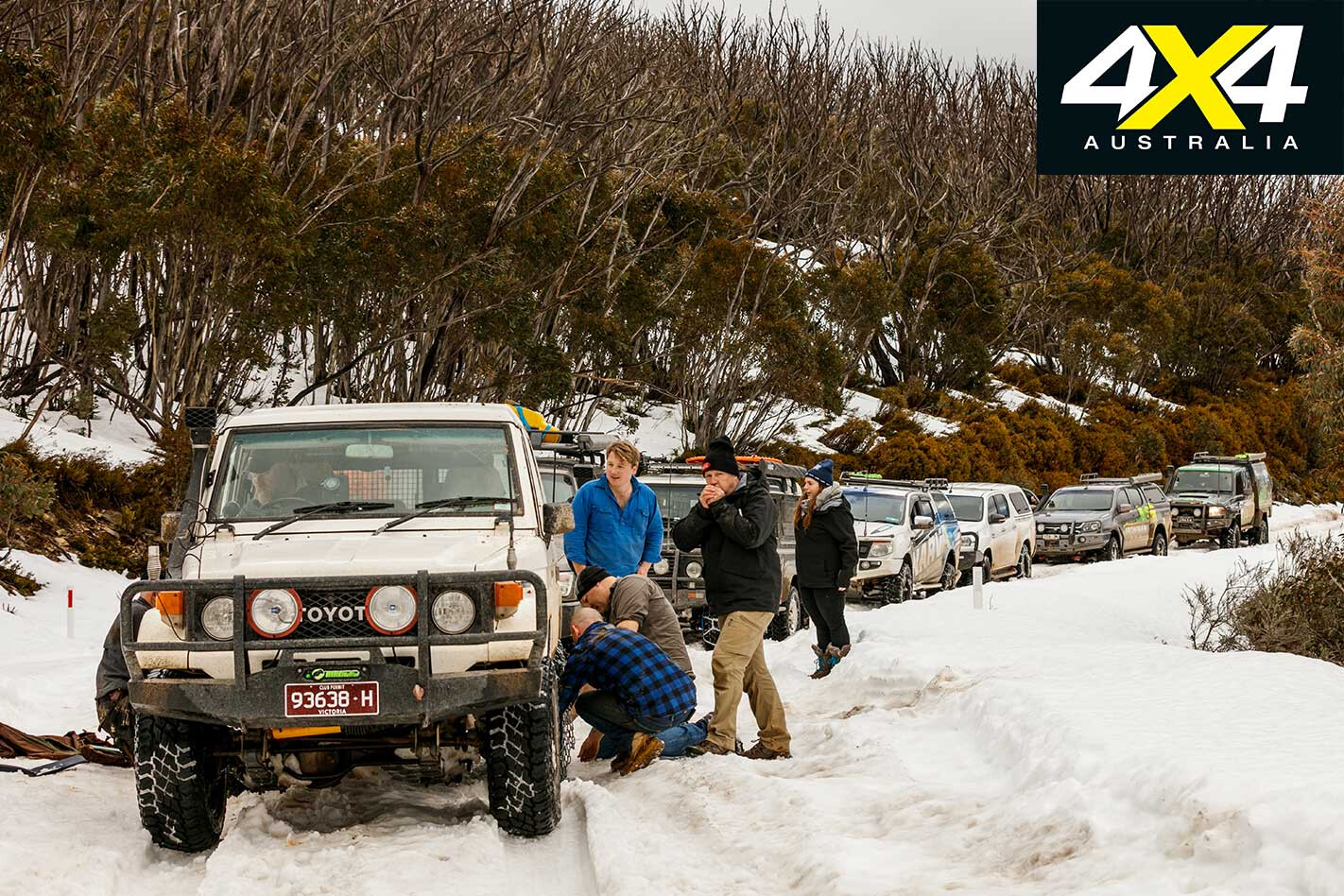
As our altitude increased the mud was replaced by snow on the tracks and, as we ventured up the Licola-Jamieson Road, it became heavier. Even the rigs on mud terrains and lockers were struggling, and it wasn’t long before we were pulling up to fit tyre chains.
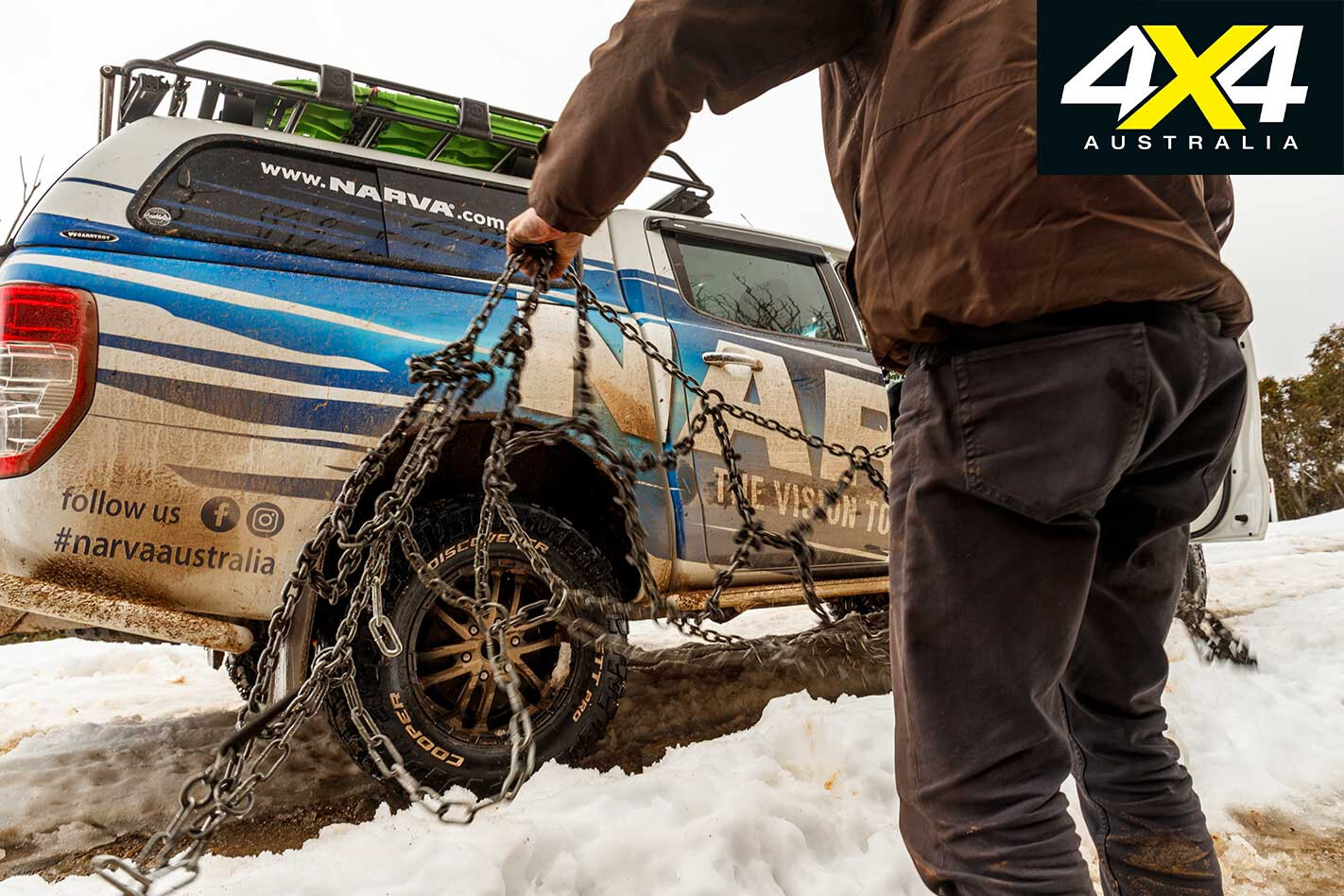
Piranha Off Road is one of Australia’s leading suppliers of snow chains and the only one that still custom-makes them to suit specific applications like 4x4s. Knowing where we were heading, Piranha was kind enough to loan chains to us and help fit them for those who hadn’t done it before. They certainly made a difference in this crunchy snow that was more ice than soft snow, but it was still deep and slippery.
It was a slow process of two steps forward and one step back, as each vehicle pushed ahead only to bog down and need dragging back over its own tracks. Even Alan’s Cruiser with chains on all four of his 35s was struggling.
We were approaching Mount Skene from the Licola end of the road and knew that once we reached the summit, it would be a relatively short drive back down the mountain to Jamieson. But it was tough going as we winched and pulled the vehicles through, and the navigator said we were still at least a kilometre from the top.
Michael donned a set of snow shoes and a heavy jacket and slogged on ahead to see how far it was and check the conditions while the rest of us continued to winch the vehicles. The afternoon was getting late and we soon got a call on the radio from Michael saying, “It doesn’t get any easier and if you guys are still struggling down there, it’s going to be a long night.”
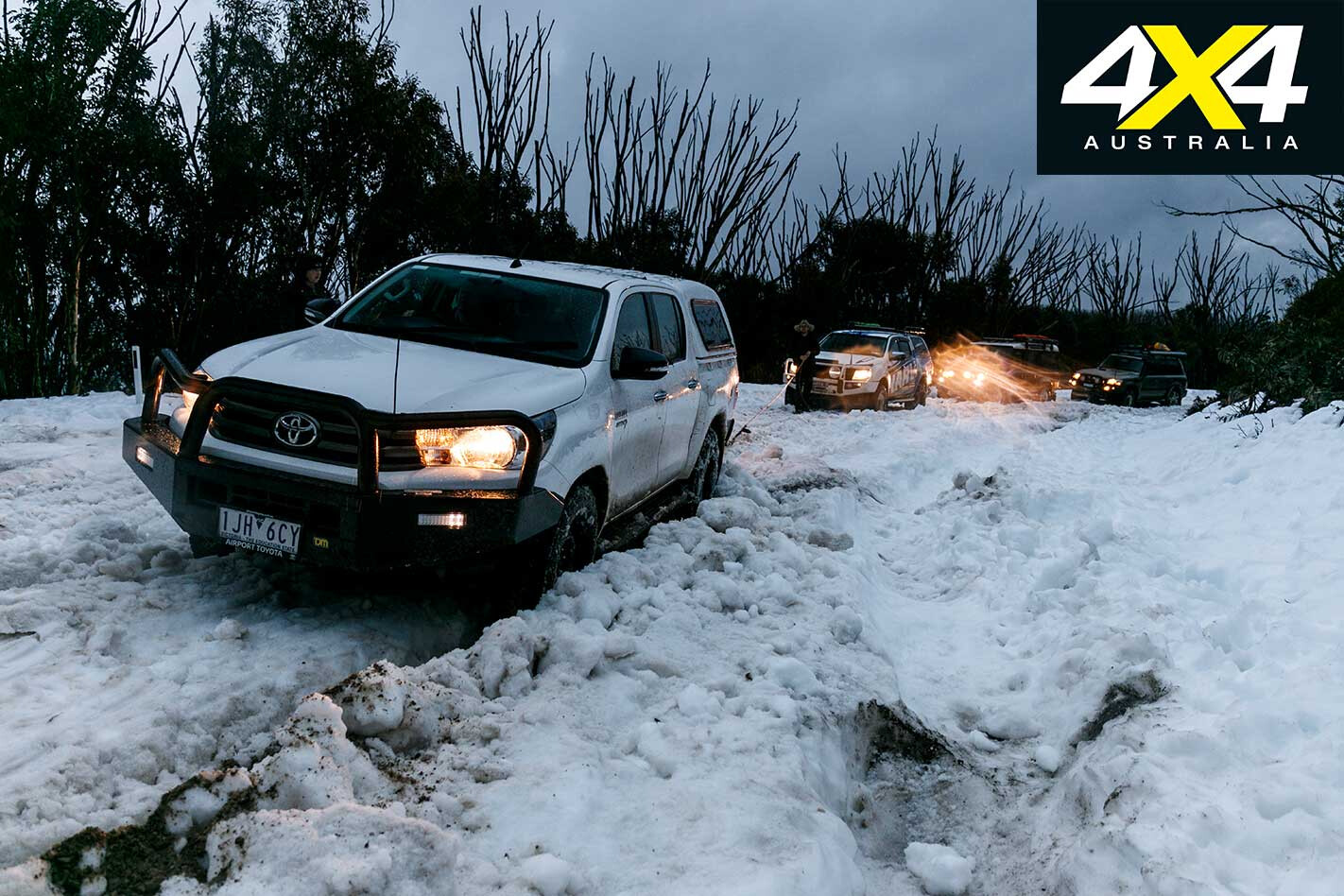
With the warm bar at McAdams Gap on our minds we admitted defeat and turned tail for the long run back. It was after midnight when we reached The Gap, yet Brian and Heather had kept the fire stoked and had dinner waiting for us. It had been a 14-hour day of driving and it only took a few drinks before the cabins called.
A more leisurely drive back to Melbourne via Mount Terrible still held more mud, snow and steep terrain for us all. There was even one instance when Ben’s Defender had to be helped over a hill on the end of a line.
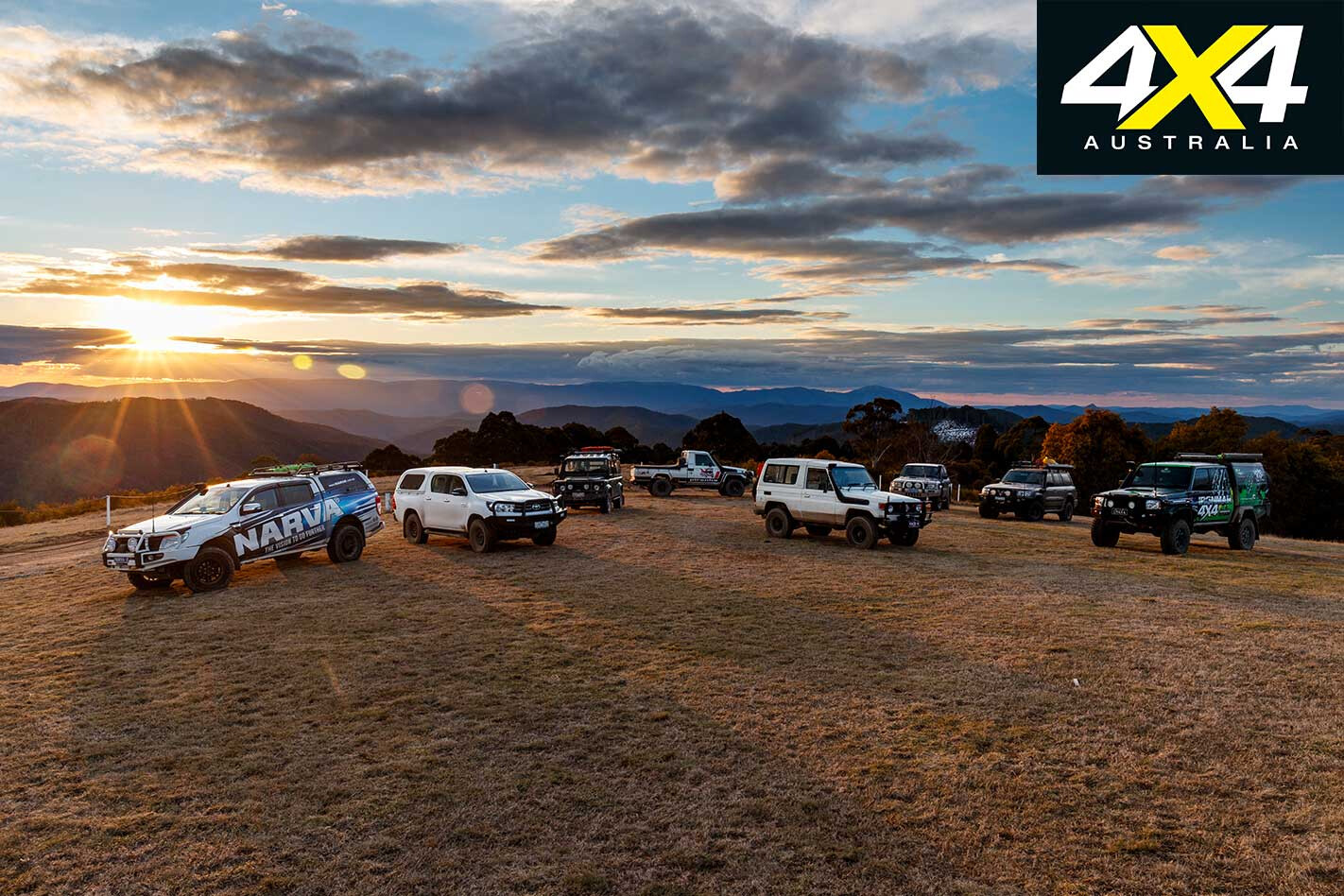
The old saying goes that any day in the bush is better than a day in the office, and our three days in the mountains when we’d otherwise be at work were certainly fantastic. Incredible country, brilliant people, great accommodation and hosts, competent 4x4s and the best accessories all made for a memorable occasion.
We had folks from a handful of companies with us, some of them competing brands, yet we were all mates when out on the tracks, with everyone pitching in to help each other out in the tough conditions. It’s trips like this that really make working in the four-wheel drive industry the best gig in the world.
DUAL-CAB 4×4 utes are designed for a wide variety of potential roles including as a work truck, farm vehicle, family transport, tow rig or recreational 4×4.
The fact today’s dual-cab utes can fulfil so many roles is the key reason why they are the top sellers in today’s new-car market. At the same time, this ‘all-things-to-all people’ approach means there’s always compromise in dual-cab design as manufacturers try to build one ute that can do everything.
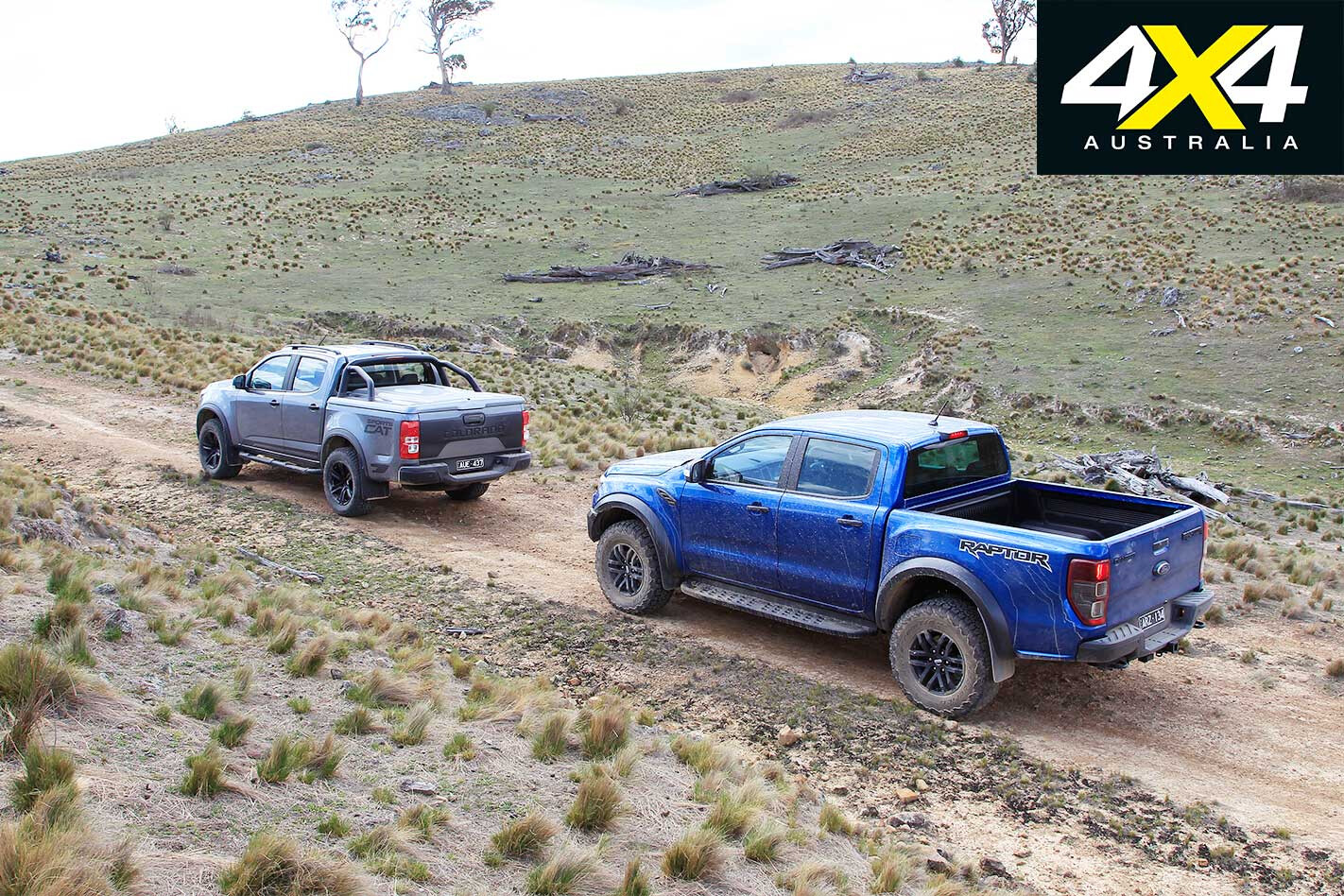
Many ute buyers address this multipurpose, compromised approach by adding accessories or modifying their vehicle so it’s better at what they want it to do. This is what Ford Performance and Holden Special Vehicles (HSV) have done here, namely built a ute that’s more specialised in its design intent.
Both of these utes can loosely be called ‘sports’ utes, but the sporty bit is nothing to do with engine performance, rather chassis enhancement. Ford’s Raptor is unashamedly designed for superior off-road performance, while HSV’s SportsCat is all about improving off-road performance and on-road dynamics.
In many ways they are quite different, but at the same time similar, so how do they compare? Or is it a matter of contrast? We line them up to find out.
HSV Colorado SportsCat – More than meets the eye
In creating the SportsCat, HSV’s engineers have done much more than just add new wheels, bigger tyres and a suspension lift.
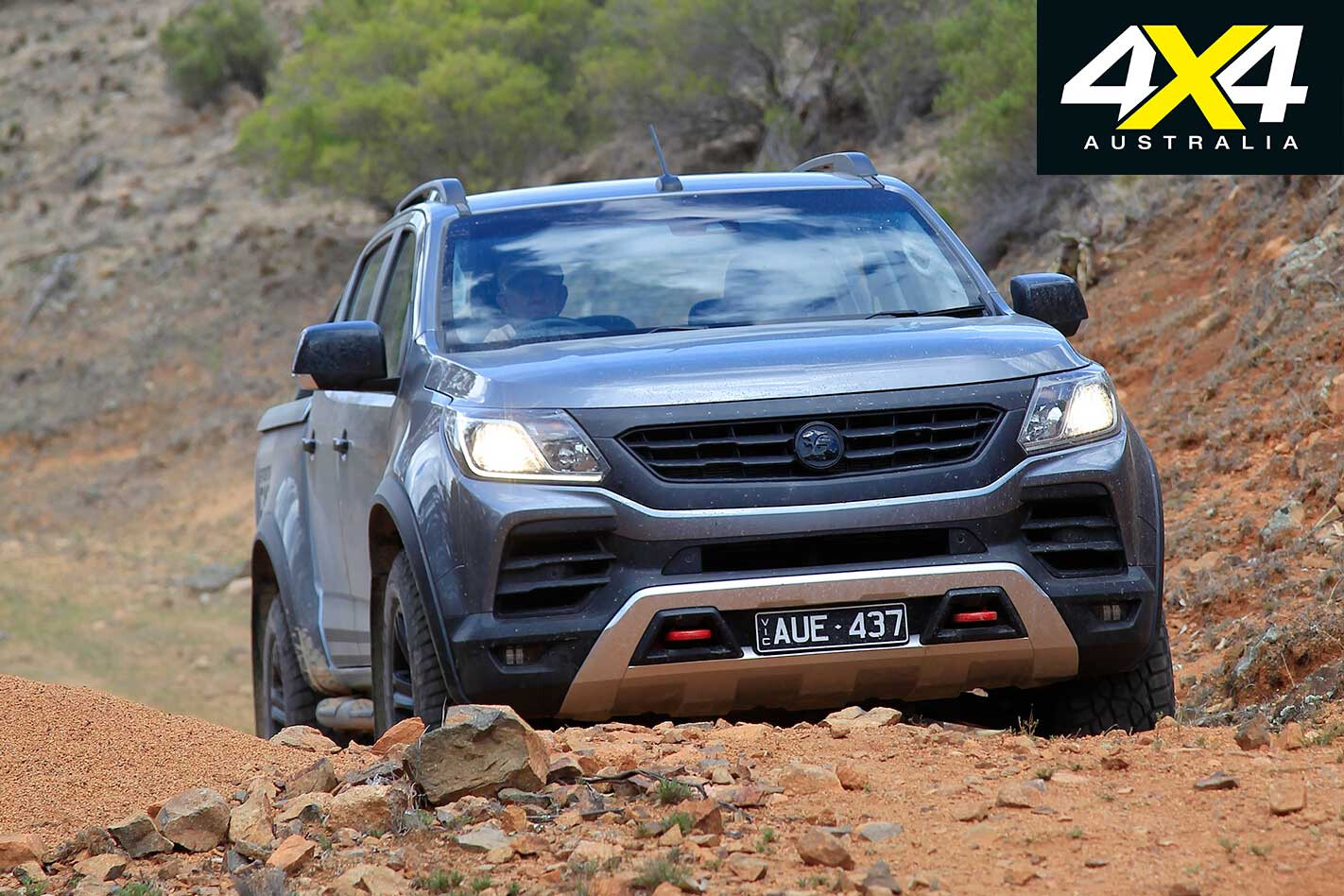
WHAT you see here is the HSV Colorado SportsCat, which in some ways is unfortunate. What we would have liked for this comparison is the more expensive and more enhanced SportsCat+, but that wasn’t to be; through no fault of HSV, mind you.
Still, the SportsCat has the core engineering of the SportsCat+, which adds more kit, the best being race-spec front brakes. Plus, we have previously tested a SportsCat+, so we have that experience to call on.
Powertrain & Performance
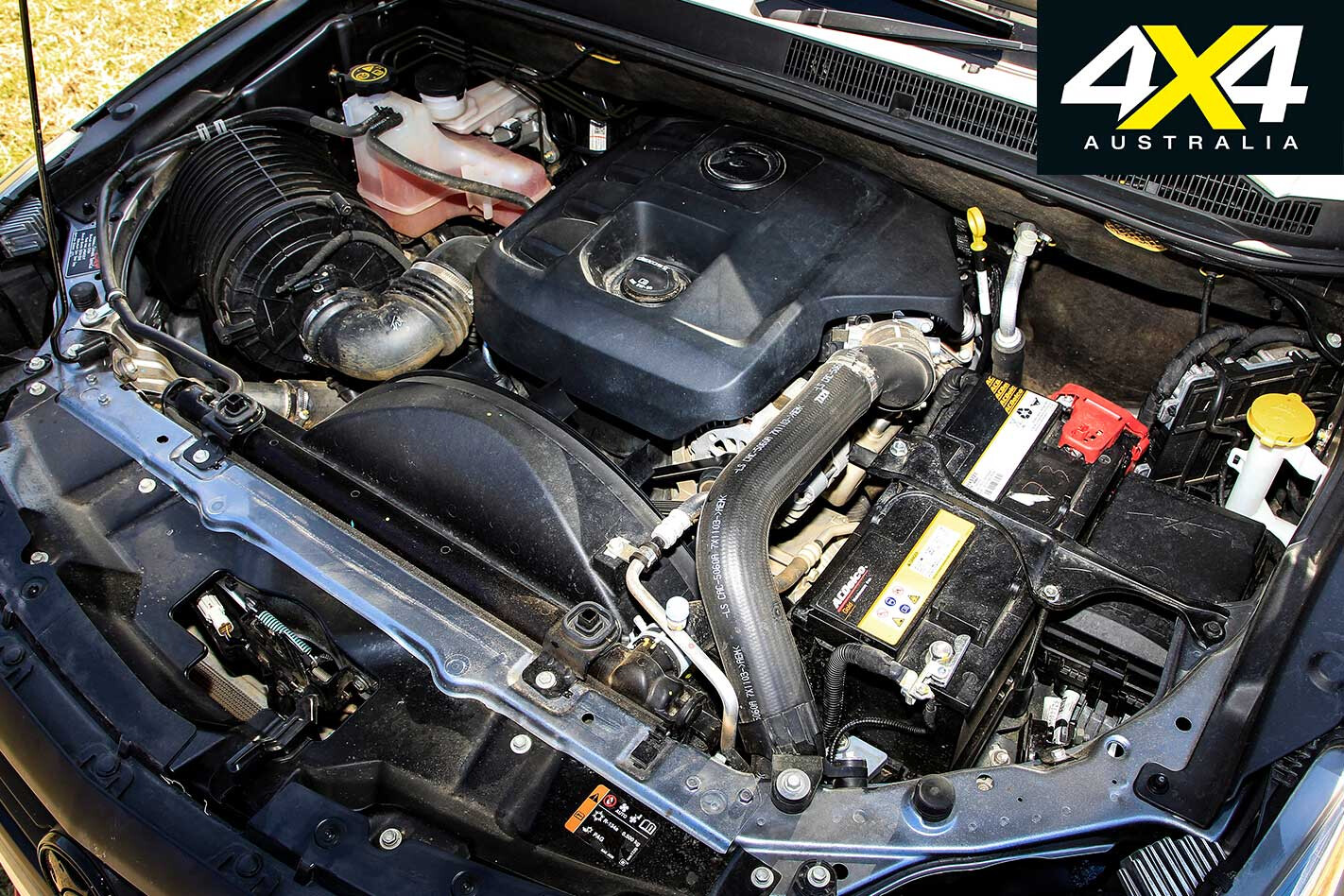
BOTH SportsCat models feature a standard Colorado powertrain, namely a VM-Motori 2.8-litre four-cylinder diesel backed by a GM six-speed automatic. Buyers also have the option of a six-speed manual in both models.
If the standard powertrain sounds underwhelming then you’re probably mistaken, as the 500Nm-strong engine gets on with the job nicely and is helped in its cause by a very proactive and sporty automatic gearbox.
The taller overall gearing, brought about by the SportsCat’s bigger tyres and the marginal increase in aero drag from what is a wider and taller vehicle, knocks a little off the performance compared to a stock Colorado. Even so, the SportsCat is an even match for the Raptor in straight-line speed, despite the latter’s 10-speed automatic and marginally more powerful engine.
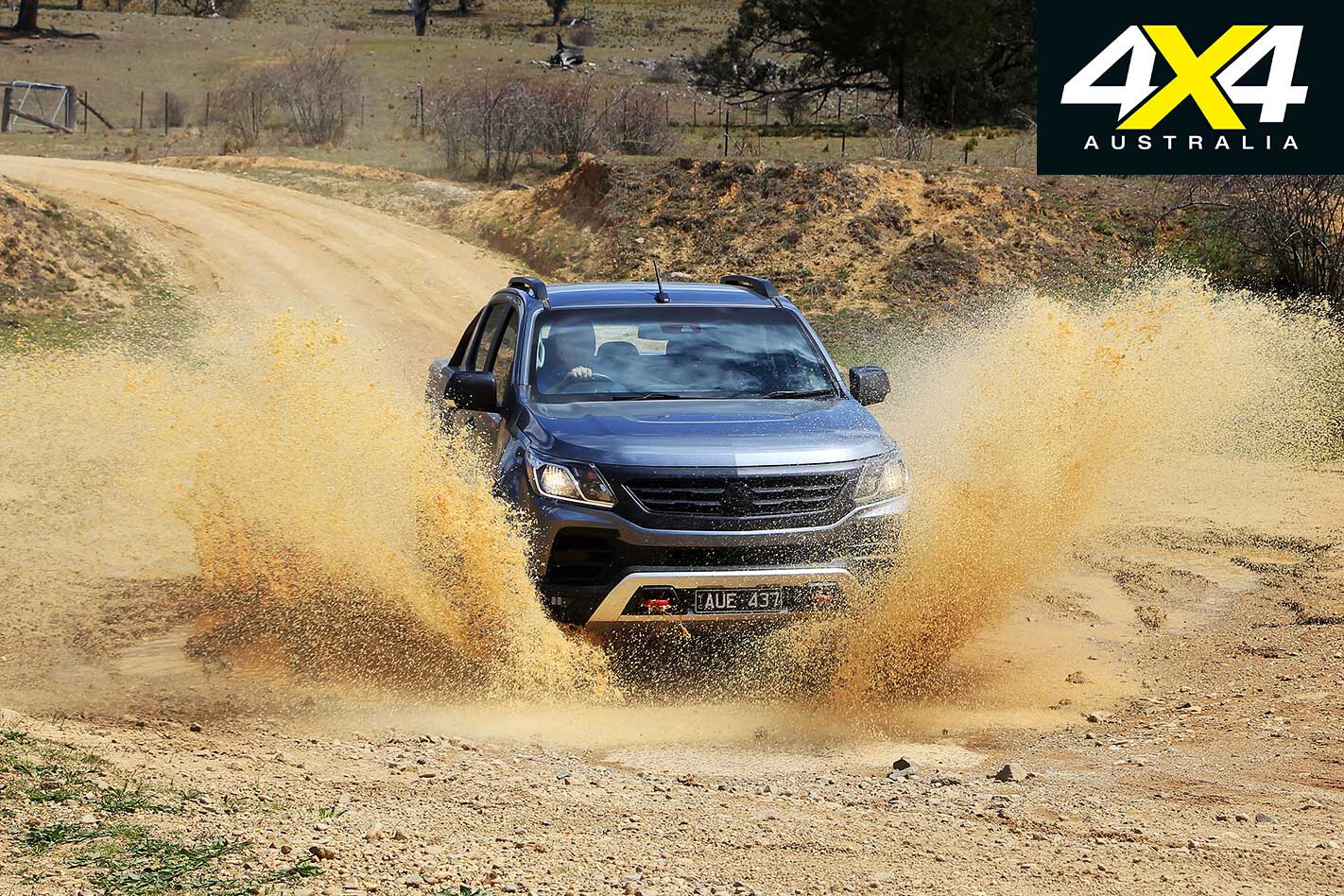
For its mid-life 2017 revamp, the Colorado’s powertrain gained newfound refinement: the engine is smoother and quieter, and the gearbox is slicker shifting than in its original iteration. While this refinement upgrade is also evident with the SportsCat, the powertrain of the Raptor takes refinement to another level.
Drive the SportsCat in isolation and it feels fine, but drive it after getting out of the Raptor and it sounds and feels somewhat gruff.
On-road ride & Handling
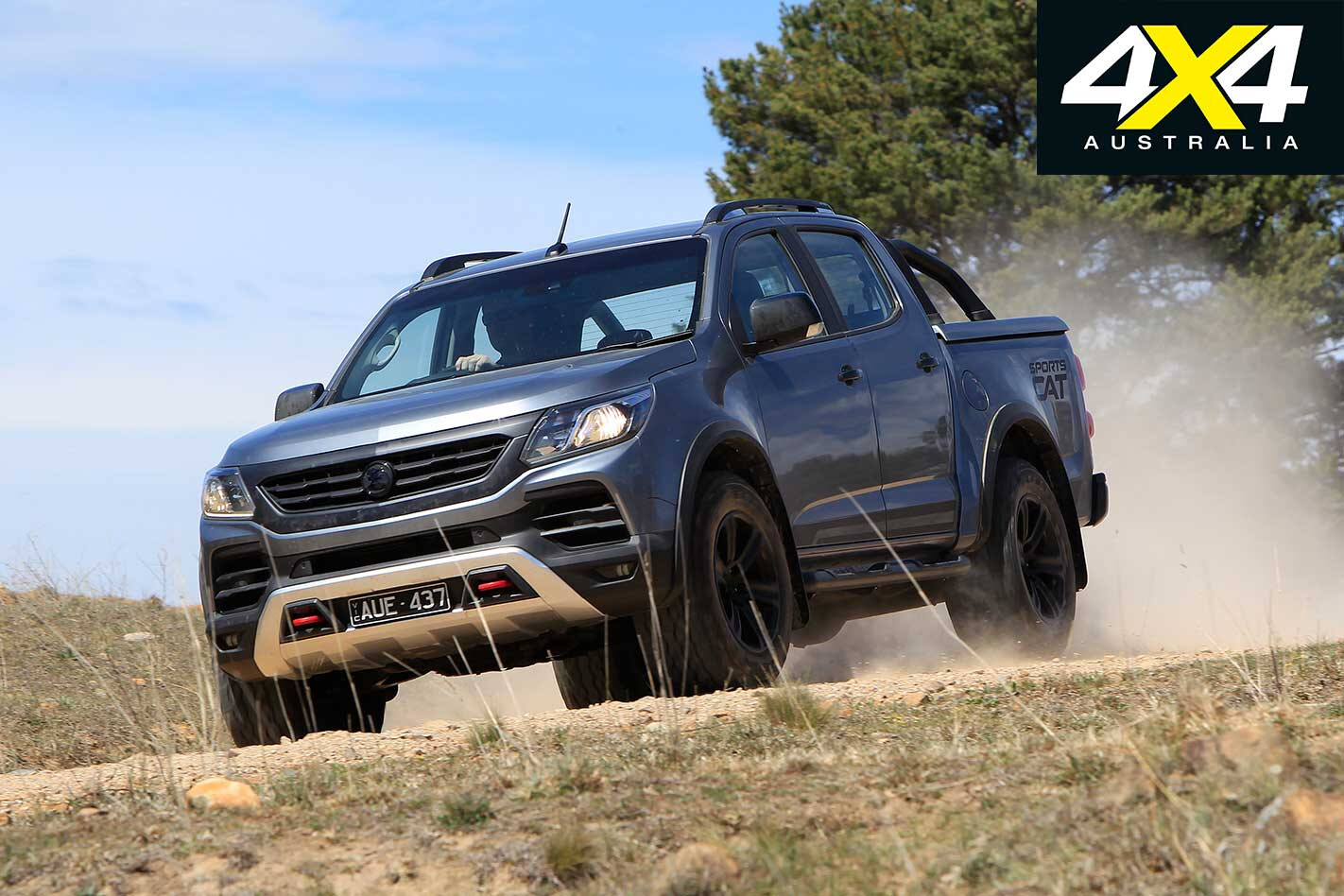
IN CREATING the SportsCat, HSV’s engineers carried out significant modifications to the chassis of a standard Colorado, the most obvious of which – the taller and wider tyres and front ride-height increase – were aimed at improving the SportsCat off-road.
Less obvious are the changes that make the SportsCat better on-road, which start with a 30mm wider track (via wheel offset), firmer front springs and MTV dampers all ’round. HSV engineers also braced the top mounts for the front springs and dampers.
The standard pressed-steel top mounts for the front ‘struts’ are welded to the chassis rails behind the struts, but they’re effectively open at the front. This can introduce some flex, especially given the increased loads induced by the wider track and firmer springs and dampers.
What HSV has done is brace the front of the strut top-mount back to the chassis via a steel tube looped up and around the strut, which helps eliminate flex in this critical area and thus achieve better suspension control.
Given the changes to the ride height, the track, and the wheel and tyre package, HSV engineers have also retuned the Electronic Stability Control. The end result of all this is that, despite the extra ride height, the SportsCat is more dynamically engaging on-road – the faster you drive it the better it feels.
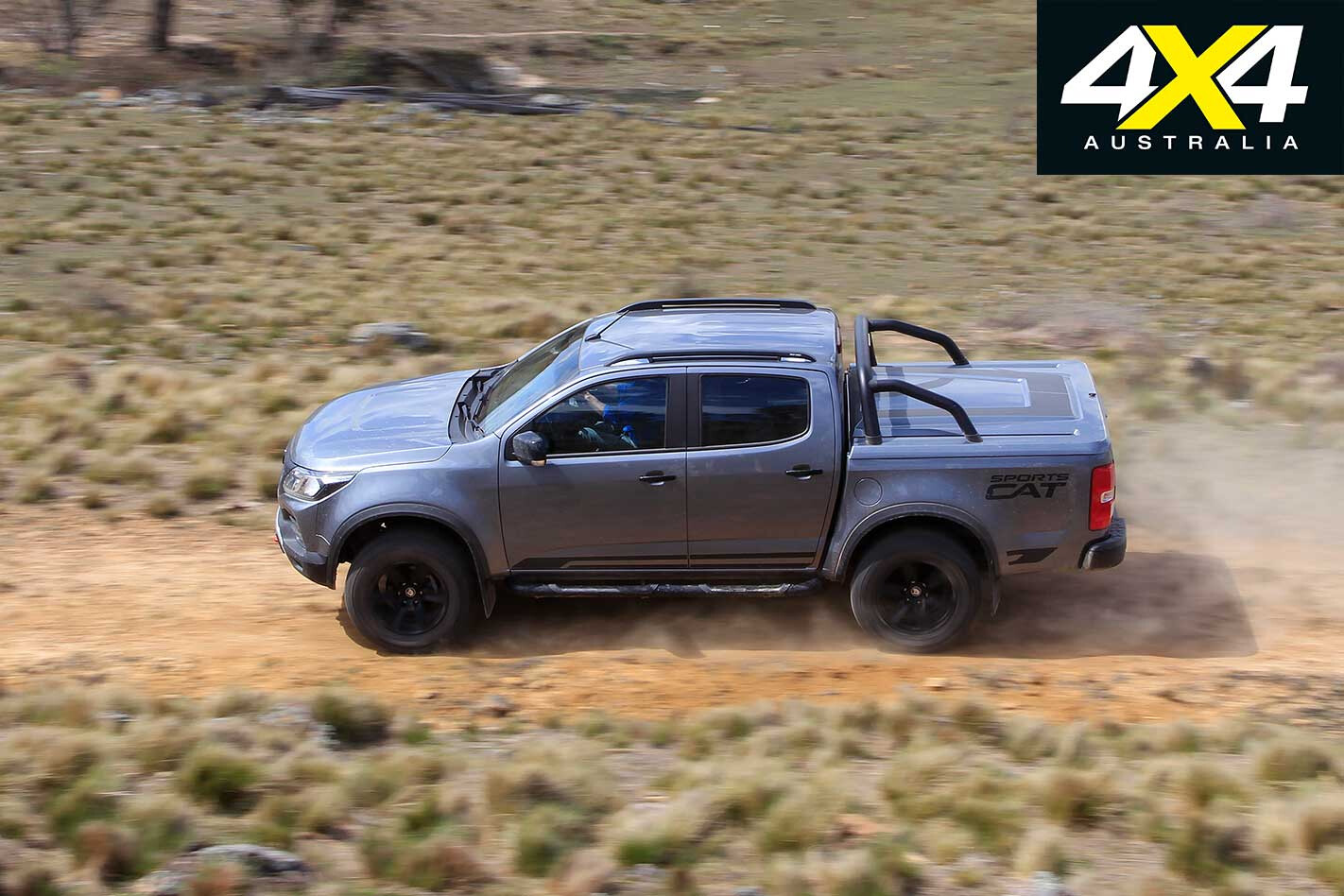
Point the SportsCat down a winding road and it certainly provides sharper and more secure handling than the comparatively soft and less precise Raptor. Excellent feel, too, from the SportsCat’s electric power steering, which makes low-speed manoeuvring effortless, but firms up the weighting nicely at highway speeds.
Off-road
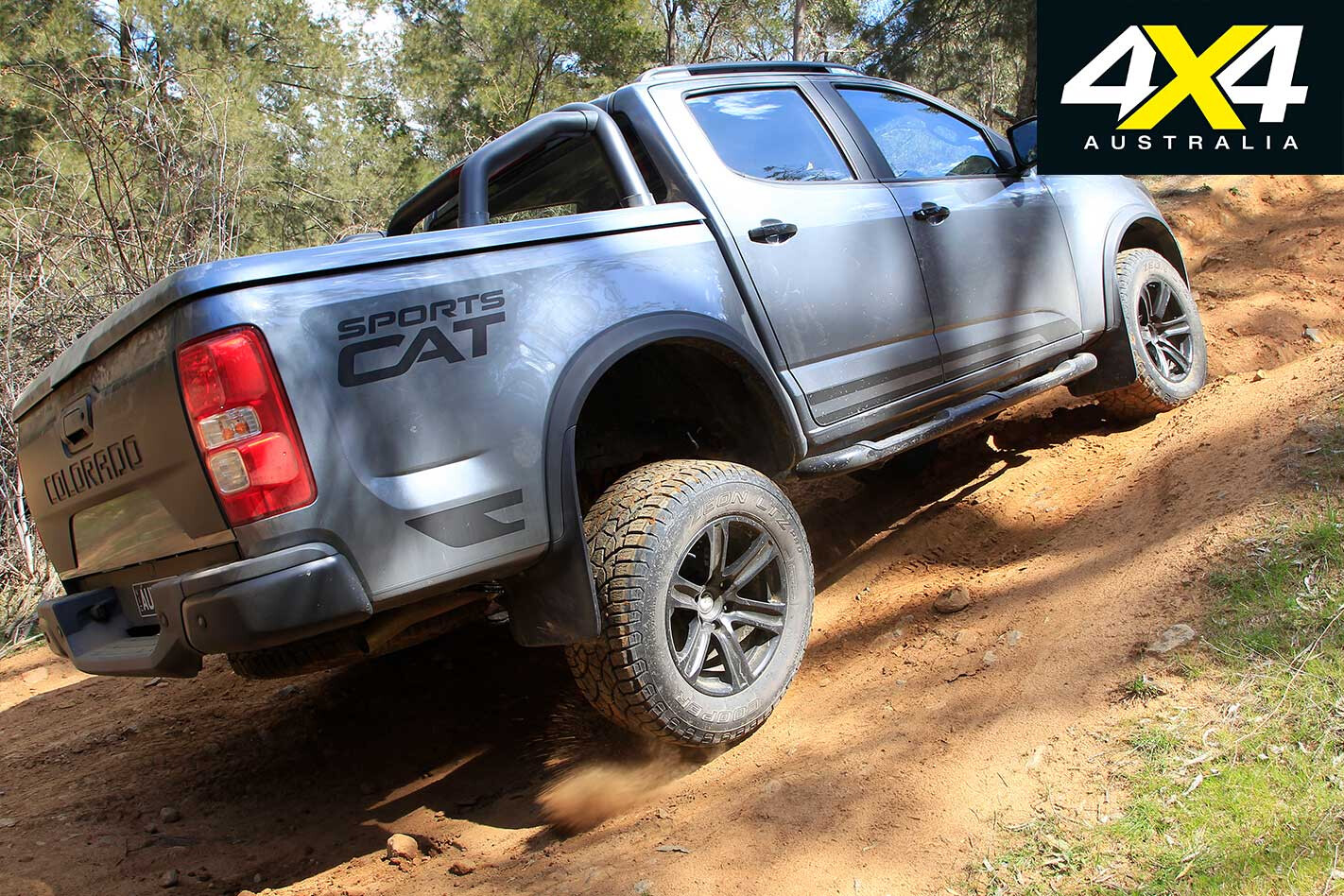
MOST of the SportsCat’s superior off-road prowess compared to a standard Colorado comes from its bigger tyres (285/60R18s versus 265/60R18s), which give a nominal 12mm increase in ride height – but more like 20mm due to the fact that actual tyre sizes don’t necessarily correlate exactly to theoretic tyre size. In addition, the new springs provide an additional 25mm of lift at the front end for even more much needed ground clearance.
Unfortunately the SportsCat’s wheel travel (like the Colorado) isn’t anything special, and the stiffer front springs reduce travel further. Like the standard Colorado there’s no rear locker, but electronic traction control is very effective; something we have noted previously with the Colorado’s MY17 upgrade. As a result of this the HSV SportsCat will comfortably go places off-road that a stock Colorado won’t, but in overall off-road ability the Raptor takes things to a new level.
Cabin & Accommodation
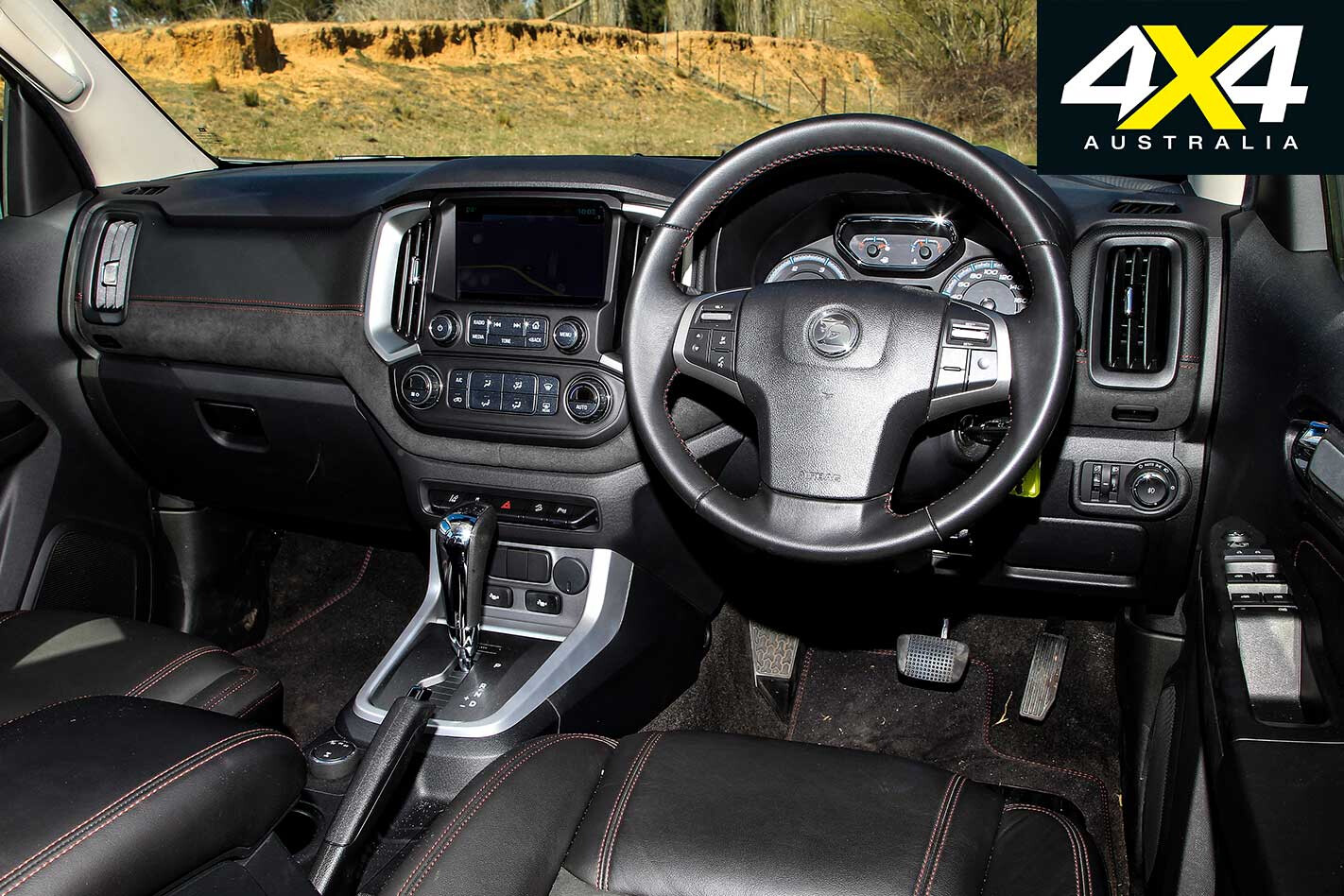
CLIMB aboard the SportsCat and you’re greeted by a flash interior that includes leather- and suede-trimmed seats complete with distinctive red stitching. The sports-style front seats are heated, comfortable and supportive, but there’s no steering wheel reach adjustment for the driver. Rear-seat passengers do well in the SportsCat, but, like the standard models they’re derived from, there isn’t quite as much legroom as there is in the back of the Raptor.
What you get
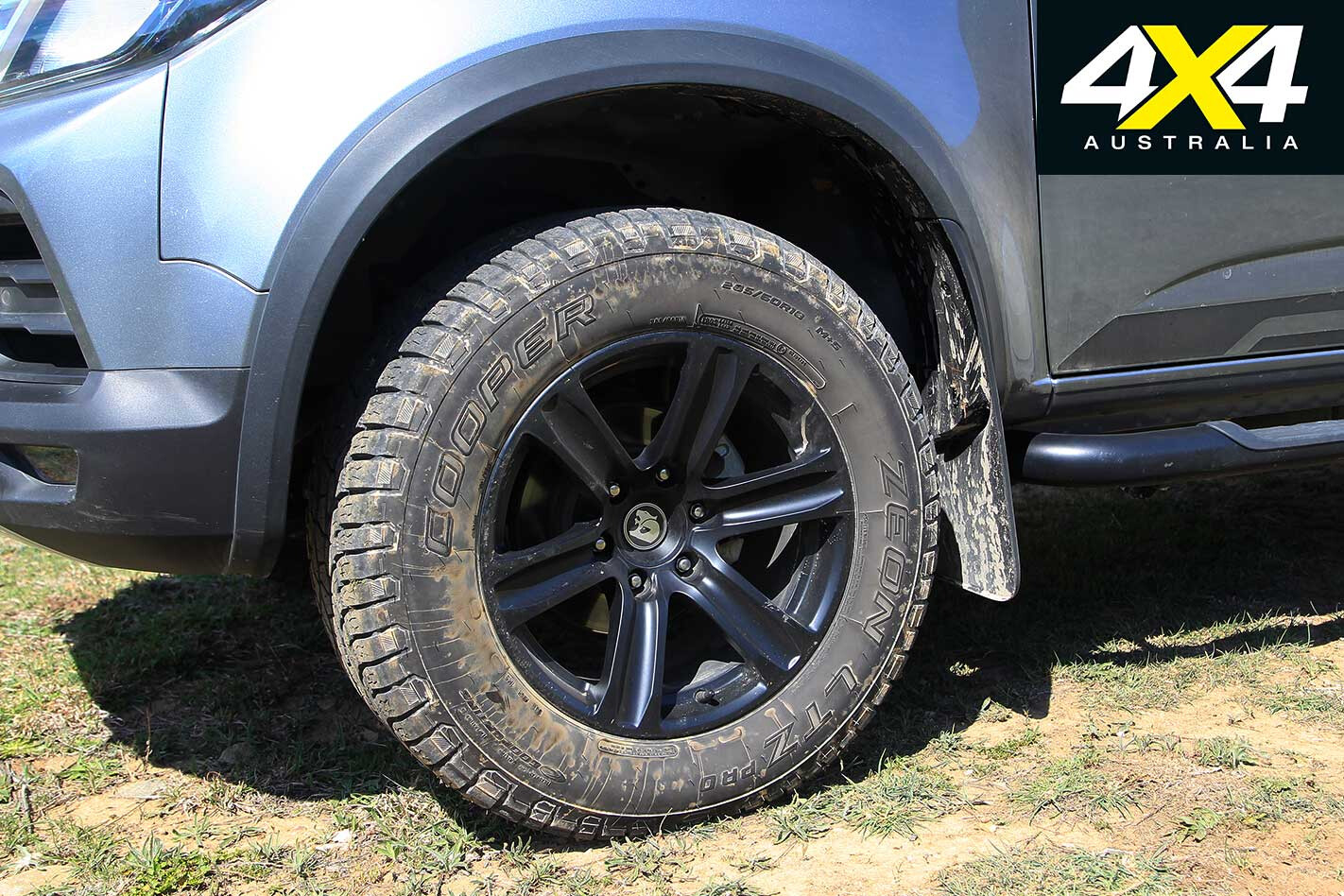
THE SPORTSCAT and SportsCat+ come with either a six-speed manual or a six-speed automatic. Standard equipment on both includes leather/suede trim, heated front sports seats (with electric adjust for the driver), sat-nav, auto headlights and wipers, Apple CarPlay and Android Auto, and a rear-view camera. Safety kit runs to seven airbags, tyre pressure monitoring, lane-departure warning and forward-collision alert. Other equipment includes LED DRLs and tail-lights, two heavy-duty front recovery hooks, soft-open tailgate, and a lockable hard tonneau.
The SportsCat is listed at $62,990 (automatic) while an additional $6K will get you into the SportsCat+, which adds bigger front brake rotors, four-piston AP Racing calipers, and a rear swaybar that automatically decouples when you engage low range. The SportsCat+ also comes with the optional SupaShock remote-reservoir dampers for a further $3600.
Practicalities
DUE TO the high proportion of off-road driving in this test the SportsCat returned a reasonably thirsty 14.5L/100km, which was a little better than the Raptor. When we tested a SportsCat+ it managed 12.2L/100 (with lower proportion of off-road driving).
The SportsCat comes with a hard tonneau complete with a quick-release system for easy removal; although, this requires at least two people. The soft-open tailgate is also a nice touch, while a load-restraint system and tub liner are both handy options. Finally, the SportsCat is rated at 3500kg (braked trailer), a full 1000kg more than the Raptor. It has a higher payload, too, than the Raptor.
HSV background
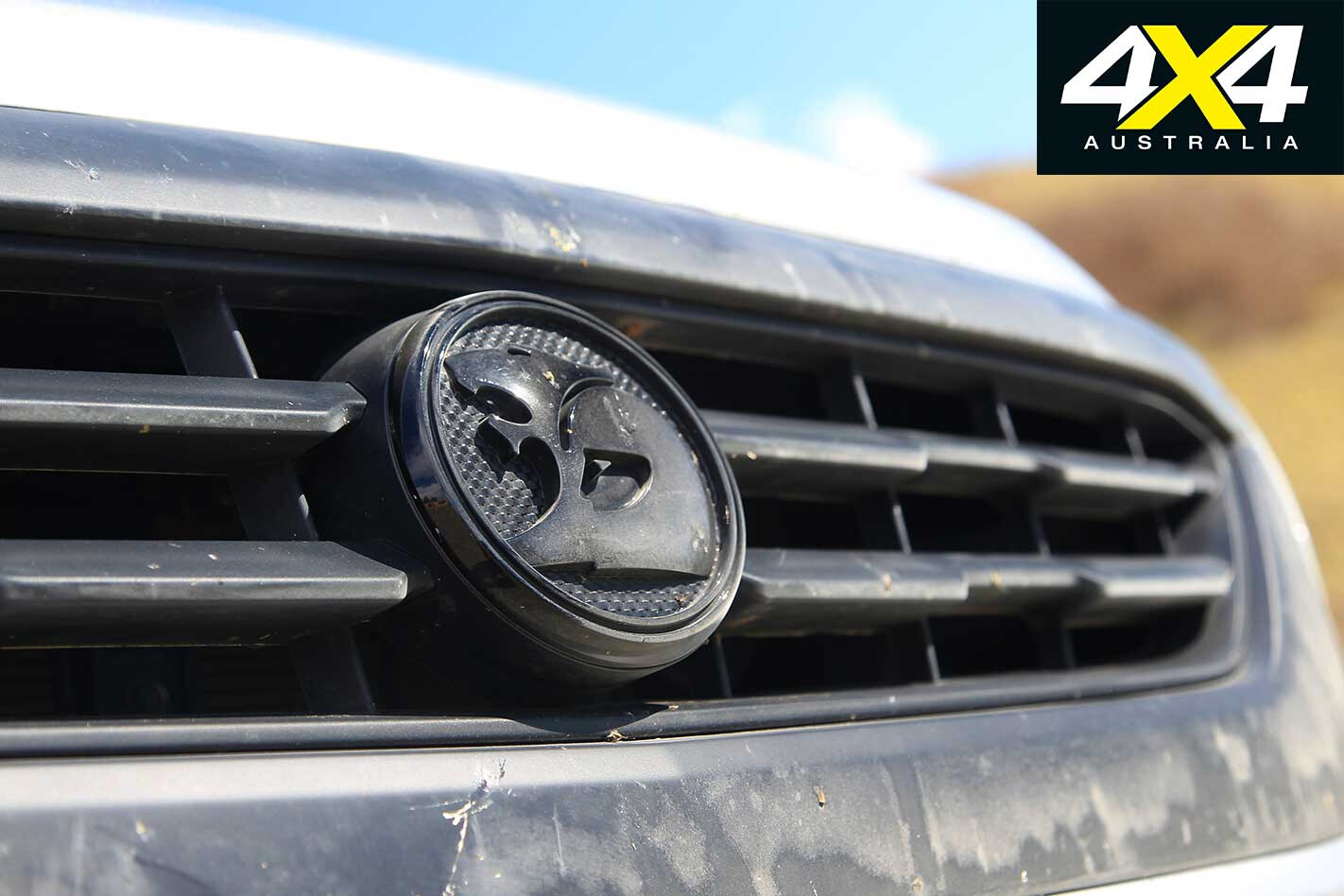
HOLDEN Special Vehicles (HSV) was founded in 1987 as a joint venture between Holden and Scottish racing driver, team owner and entrepreneur, the late Tom Walkinshaw, and remains today a partnership between Holden and Walkinshaw Performance.
HSV is best known for its expertise in tweaking Commodore V8s, but over the years has produced a wide range of models sold here under both HSV and Holden.
Export models have also been sold as a Vauxhall in the UK and elsewhere. HSV even produced its version of the Jackaroo 4×4. HSV also imports and sells the Chevrolet Silverado, with the right-hand conversion done at its Melbourne factory.
Ford Ranger Raptor – Ready to strike
Thanks to comprehensive re-engineering, Ford’s Raptor is a completely different beast than the standard Ranger.
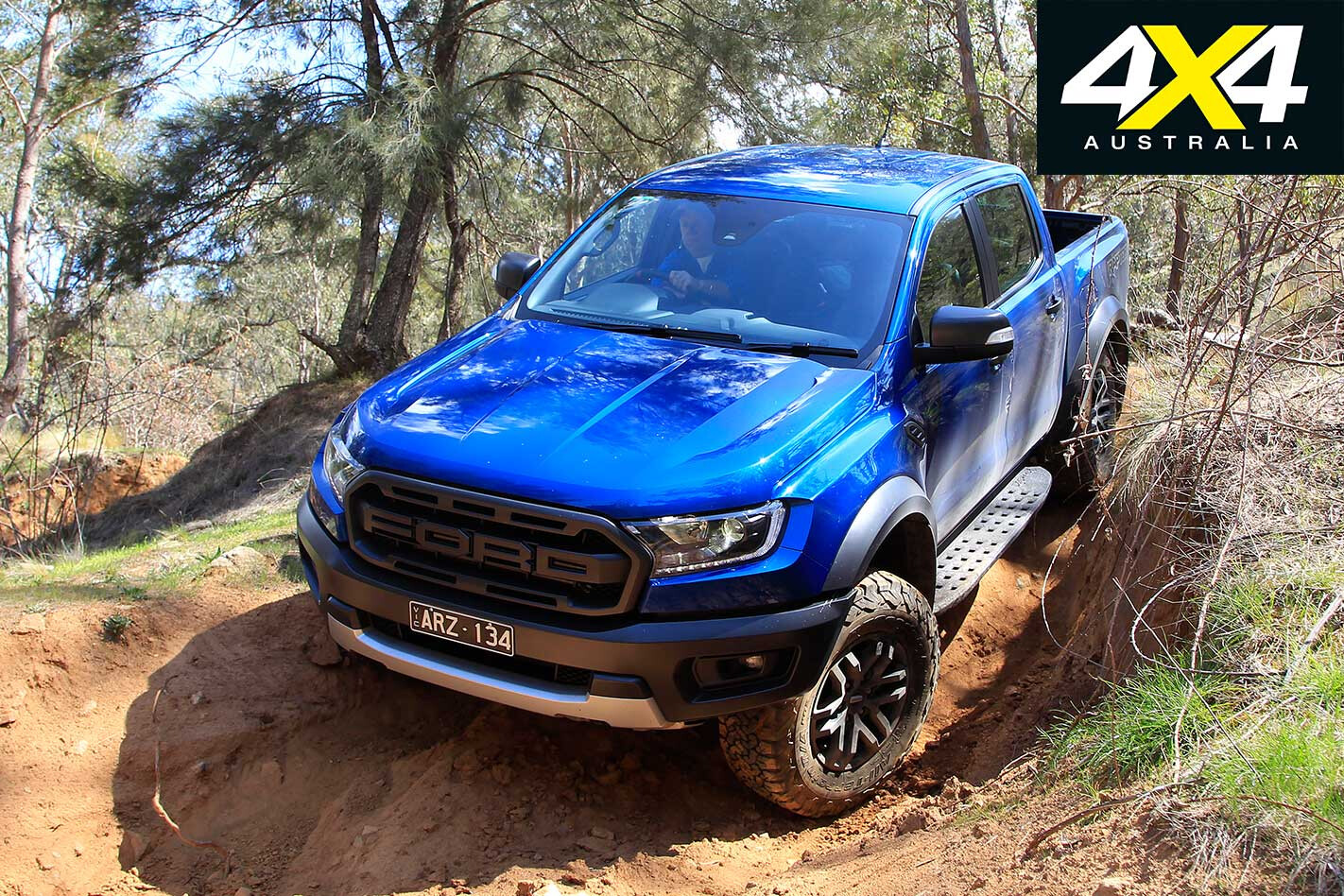
THE Ranger Raptor mightn’t be designed for off-road racing, but if you wanted to line up in an off road event like the Finke Desert Race or Australian Safari in a dead-stock vehicle, it’s hard to think of anything better on the market. It would certainly be a better bet than a stock Ranger or any standard 4×4 dual-cab thanks to its bespoke chassis engineering.
Chassis engineering is what the Raptor is all about, as the powertrain (aside from final drive gearing) is the same as what’s now available as an option in Ranger XLT and WildTrak 4×4 dual-cabs and in mid- and high-spec Everest models.
The powertrain in question comprises a 2.0-litre four-cylinder bi-turbo-diesel backed by a 10-speed automatic, the only gearbox on offer with this new engine.
Powertrain & Performance
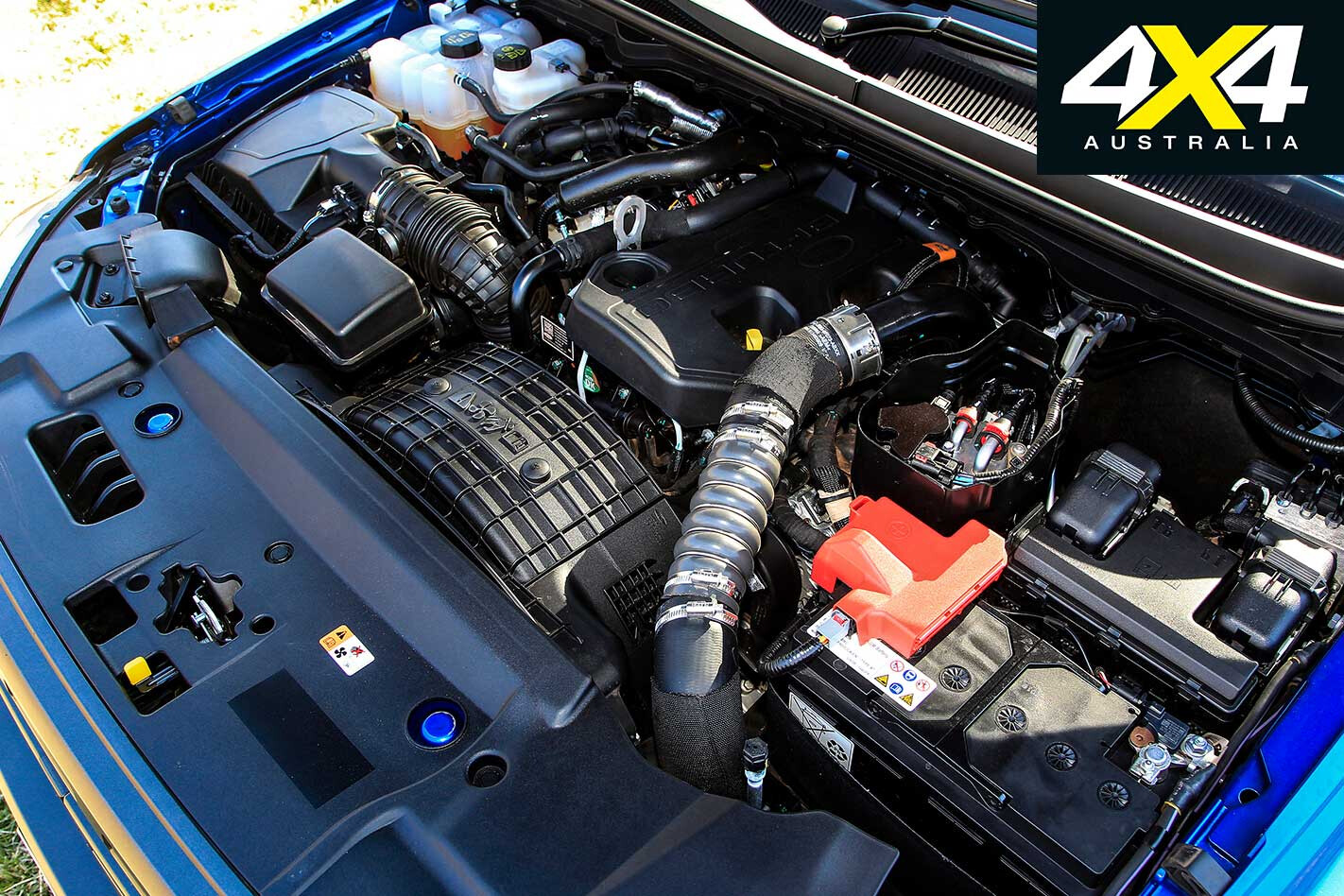
IF YOU think it’s a fair leap of faith from a 3.2-litre five-cylinder to a 2.0-litre four-cylinder, you’d be right.
The 3.2-litre engine is the biggest engine in any the mainstream utes, while the 2.0-litre four is the equal smallest. However, small in this case doesn’t mean less power, as the new 2.0-litre ups the ante on the 3.2-litre by 10kW and 30Nm to produce 157kW and 500Nm.
Much of the 2.0-litre’s ability to produce more power and torque than a 60-per-cent-bigger engine in the 3.2 can be put down to its sophisticated bi-turbo arrangement and equally sophisticated high-pressure fuel injection system. Both help generate far higher effective cylinder pressures, a fact borne out by the 2.0-litre’s 500Nm maximum torque being available from just 1750rpm, the same relatively low rpm as the 3.2 to achieve its 470Nm max.
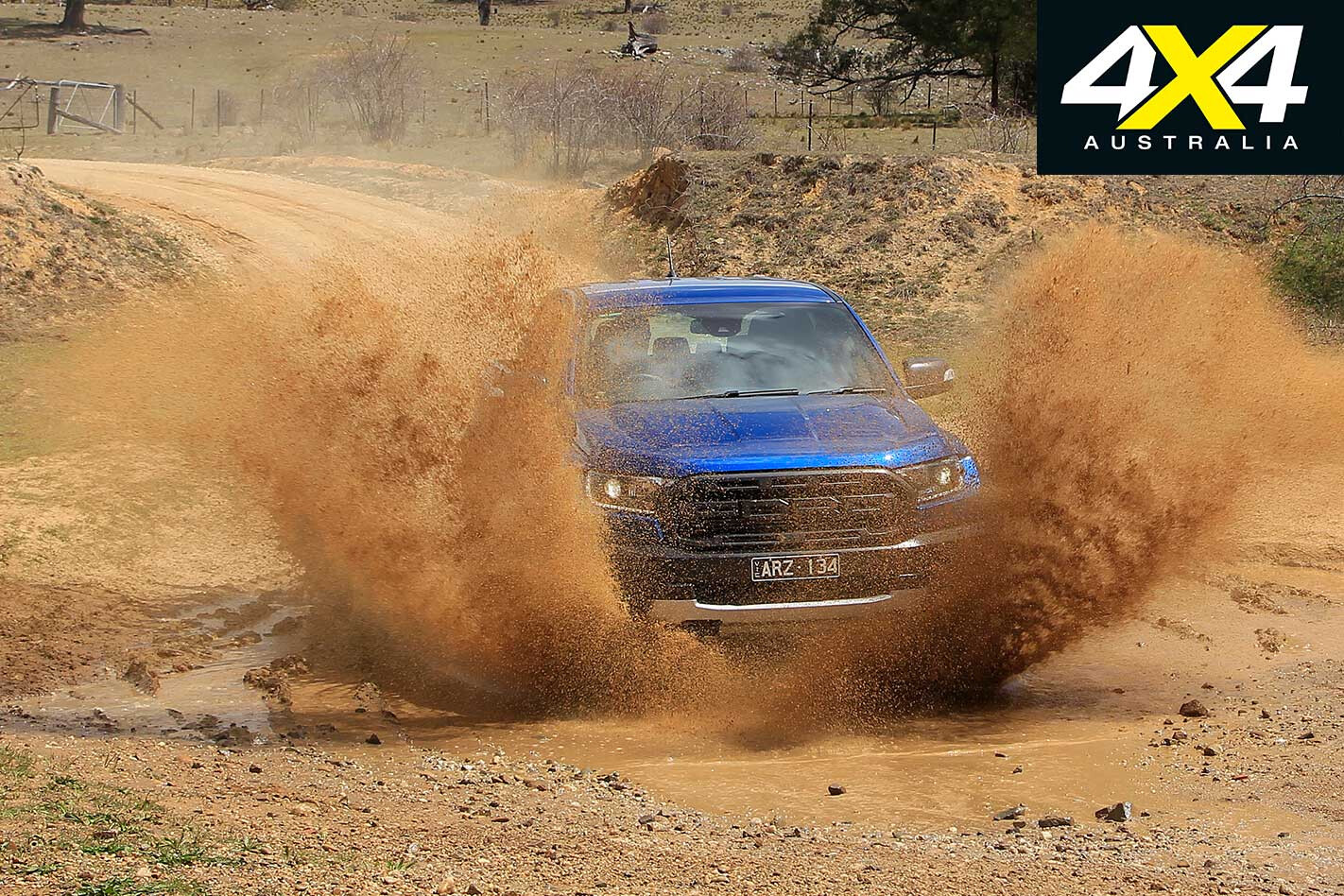
Not that the 2.0-litre in the Raptor produces tearaway performance, but it’s quicker than it feels thanks in part to the close ratios and seamlessly quick shifts of its 10-speed auto. Even though the Raptor is heavier than a 3.2-litre Ranger, it’s quicker to 100km/h by half a second.
On the highway the Raptor offers the same roll-on and overtaking performance as the SportsCat and, again, much of that can be put down to the 10-speed auto overcoming the fact the Raptor is heavier, wider and taller than the SportsCat.
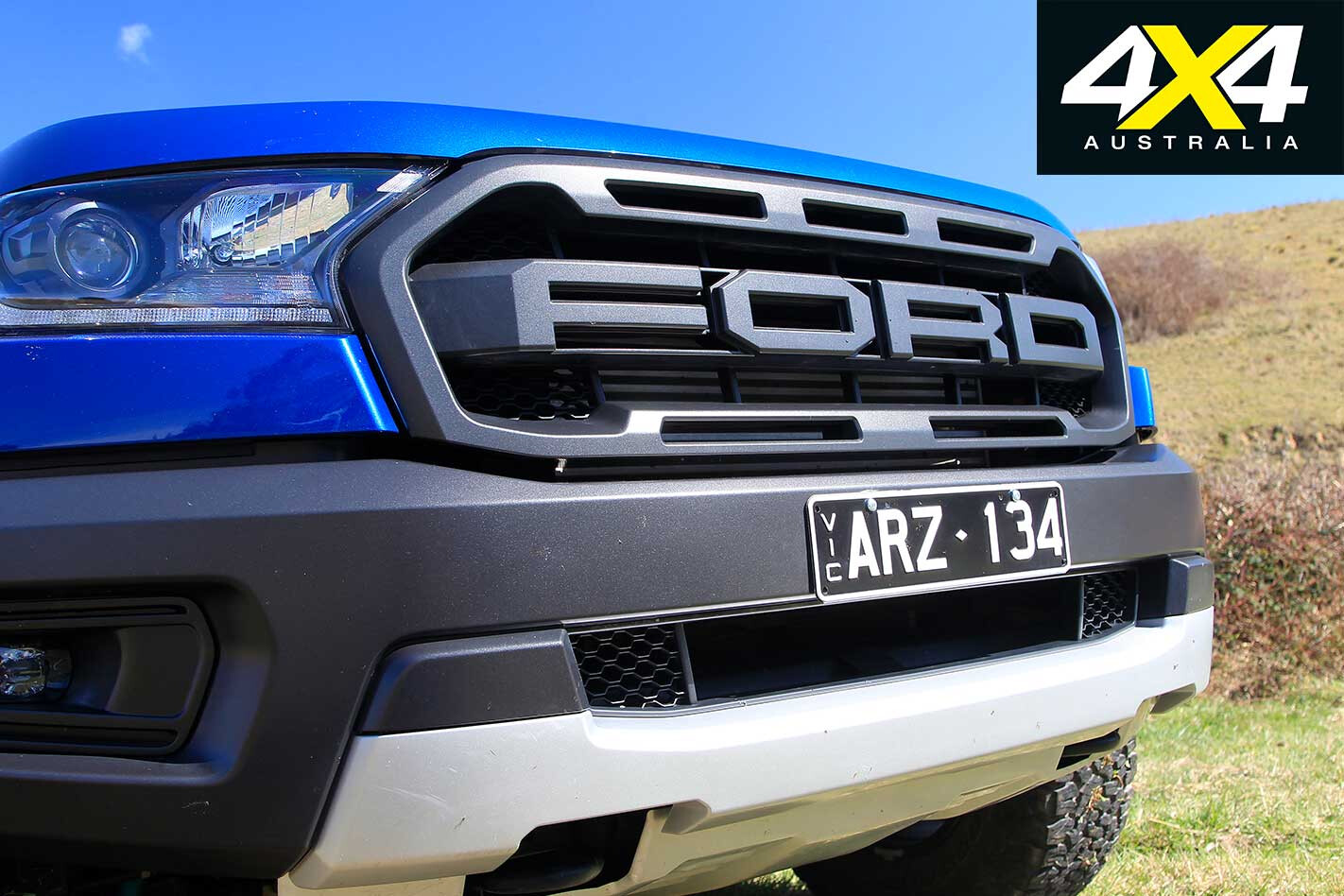
Interestingly, the effective top-gear ratios (taking into account top-gear, final-drive ratios, and tyre rolling circumference) of the Raptor and SportsCat are almost identical, which means the Raptor has 10 gears squeezed into the same ‘space’ as the six gears of the SportsCat.
However, the far more telling difference between the Raptor and SportsCat is the refinement of both the engine and gearbox: the Raptor is smoother, quieter and far more seamless in the way it delivers power.
On-road ride & Handling
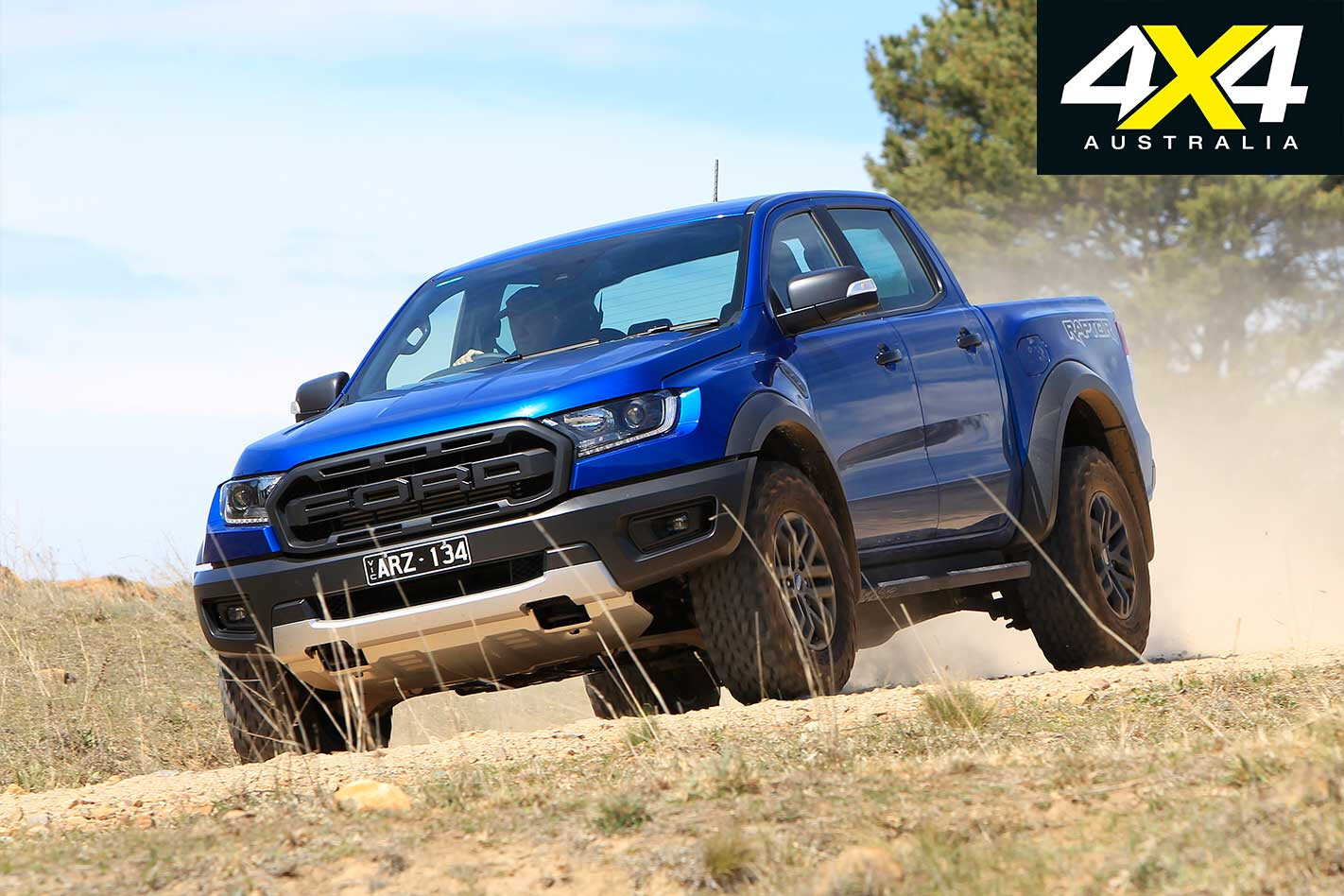
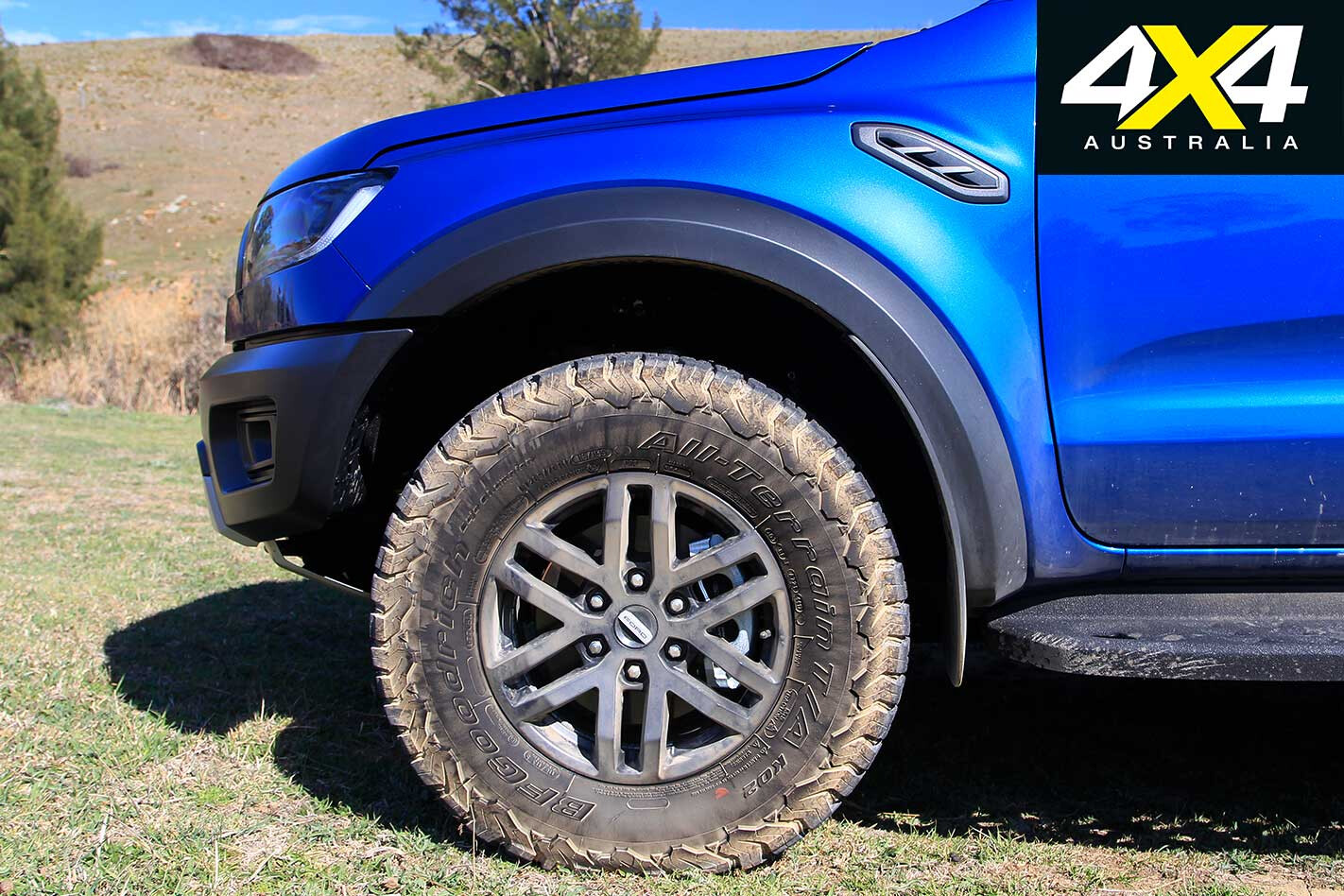
THE RAPTOR’S chassis has been significantly altered from the standard Ranger’s; the key changes being 150mm-wider front and rear tracks, 46mm more ground clearance, 30 per cent more suspension travel at both ends, coil springs at the rear, twin-tube Fox dampers (the rears have ‘piggy-back’ reservoirs), four-wheel disc brakes and 285/70 R17 BFGoodrich All Terrain tyres.
On the road the first thing you notice is how compliant and comfortable the Raptor’s ride is compared to either the SportsCat or a standard Ranger, due in part to the fact the Raptor’s rear suspension isn’t designed for heavy-duty towing so it can be more softly sprung.
The extra suspension travel, the taller tyre sidewalls and the fact the dampers are softer in the middle of their stroke than they are at the extremes of their travel all contribute to the supple ride.
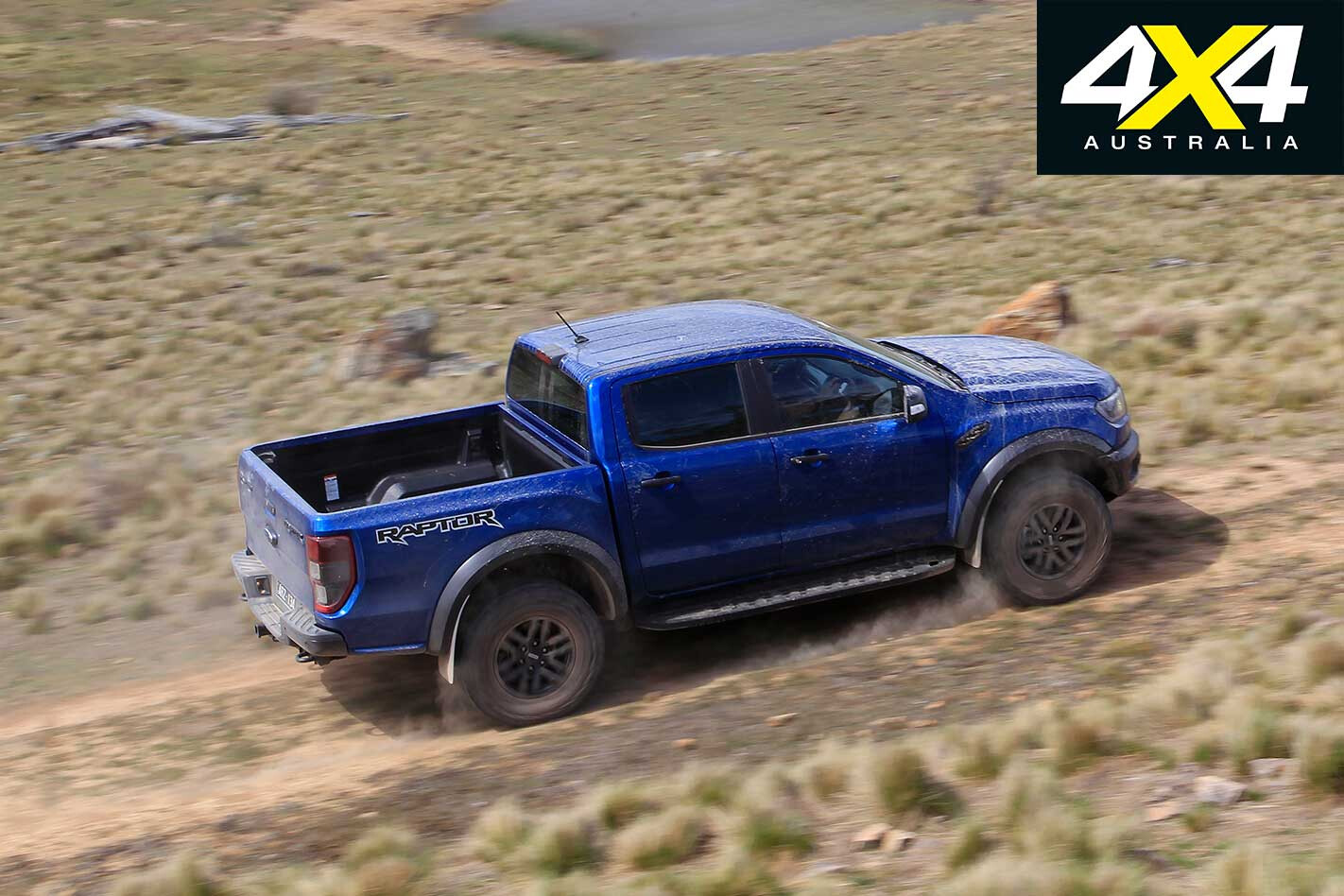
On tight, winding bitumen roads the Raptor feels a little soft and imprecise compared to the SportsCat, but on fast, open roads, especially bumpy unsealed roads, it really starts to come into its own and is far more reassuring to drive than the SportsCat, which is still pretty handy in its own right.
The Raptor also offers various ‘Terrain Management’ settings that tweak the throttle mapping, the gearbox shifts protocols and the calibration of the stability and traction-control systems. It also has paddle shifters when the gearbox’s manual mode is selected.
Off-road
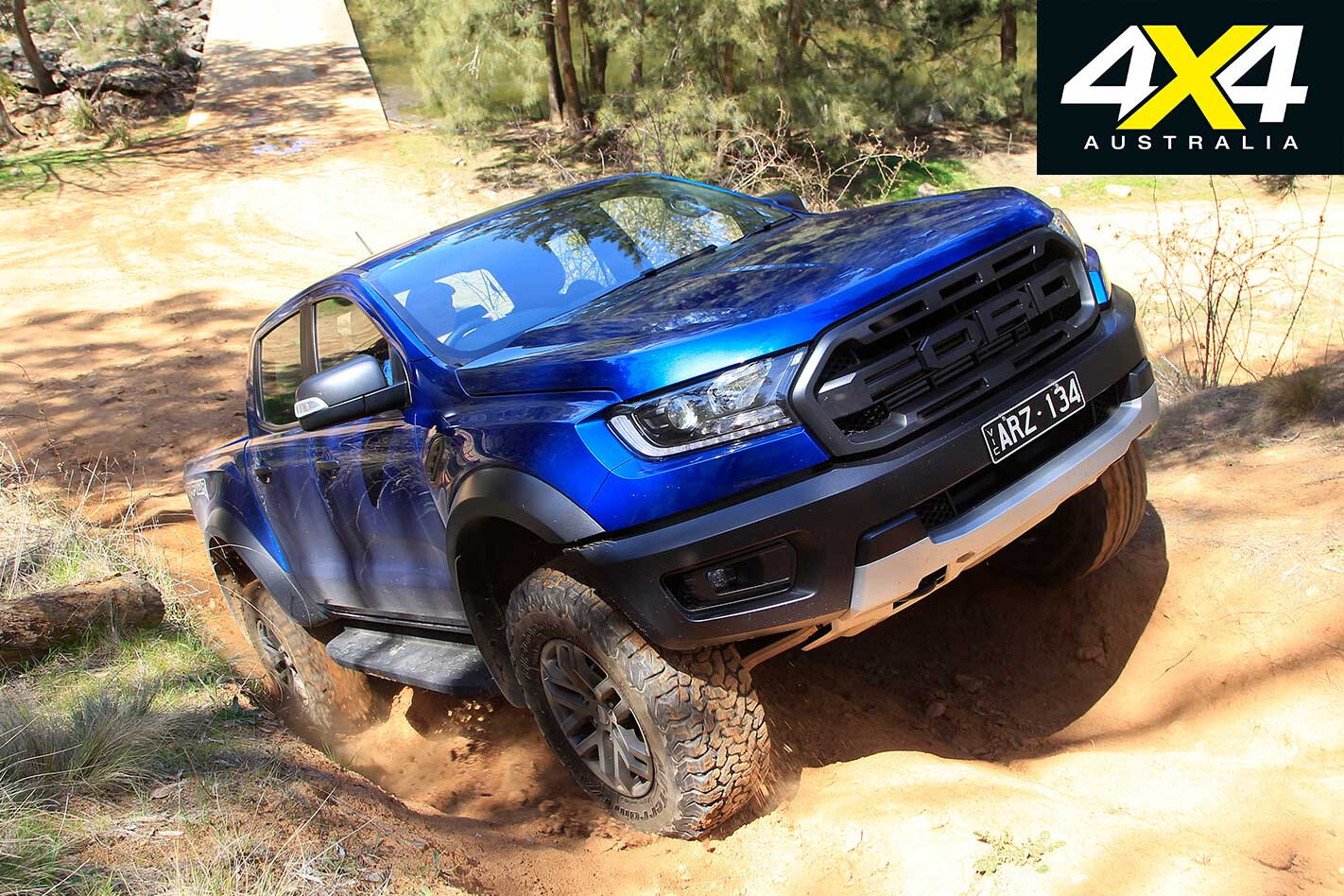
IF YOU think the Raptor is well-suited to high-speed, bumpy roads then you’ll really love it in gnarly off-road conditions. It’s here the extra clearance, generous wheel travel and big tyres start to work and combine to place the Raptor well ahead of the SportsCat, even if the latter is significantly better off-road than a stock Colorado.
If all that isn’t enough of an advantage for the Raptor, it also comes with a driver-switched rear locker that doesn’t negate the brake-force traction control across the front axle when engaged.
In terms of a stock, showroom-standard 4×4 ute, the Raptor is about as good as it gets in terms of hardcore off-road ability. Its off-road functionality is enhanced by heavy-duty recovery hooks front and rear, extra underbody protection and an impressive 850mm wading depth claim, some 250mm more than the SportsCat. That’s despite the engine’s air intake being under the bonnet lip, whereas the SportsCat’s intake is via the inner guard.
What’s Watt?
THE RAPTOR’S rear suspension arrangement is often described as a Watt’s linkage, but that’s a little misleading. The basic suspension arrangement is in fact a coil-sprung live axle, and the Watt’s linkage is just one element of the design.
Unlike the leaf springs of a standard Ranger that hold the rear axle in place (as well as providing springing), the Raptor’s coils only provide springing and can’t ‘locate’ the axle. To counter this, the fore-and-aft (or longitudinal) location is provided by four trailing arms, while the side-to-side (or lateral) location is provided by a Watt’s linkage.
With most coil-sprung live axles, the lateral location is provided by a Panhard rod and, while a Watt’s linkage and a Panhard rod do the basic same job, the Watt’s linkage allows vertical movement of the axle without the Panhard rod’s unwanted tendency to want to push the axle sideways as it moves up and down. T
he Watt’s linkage is named after James Watt, the 18th century Scottish engineer who lends his name to metric unit of power (the Watt) and is also regarded as the ‘father’ of the steam engine, even if he didn’t invent it.
Cabin & Accommodation
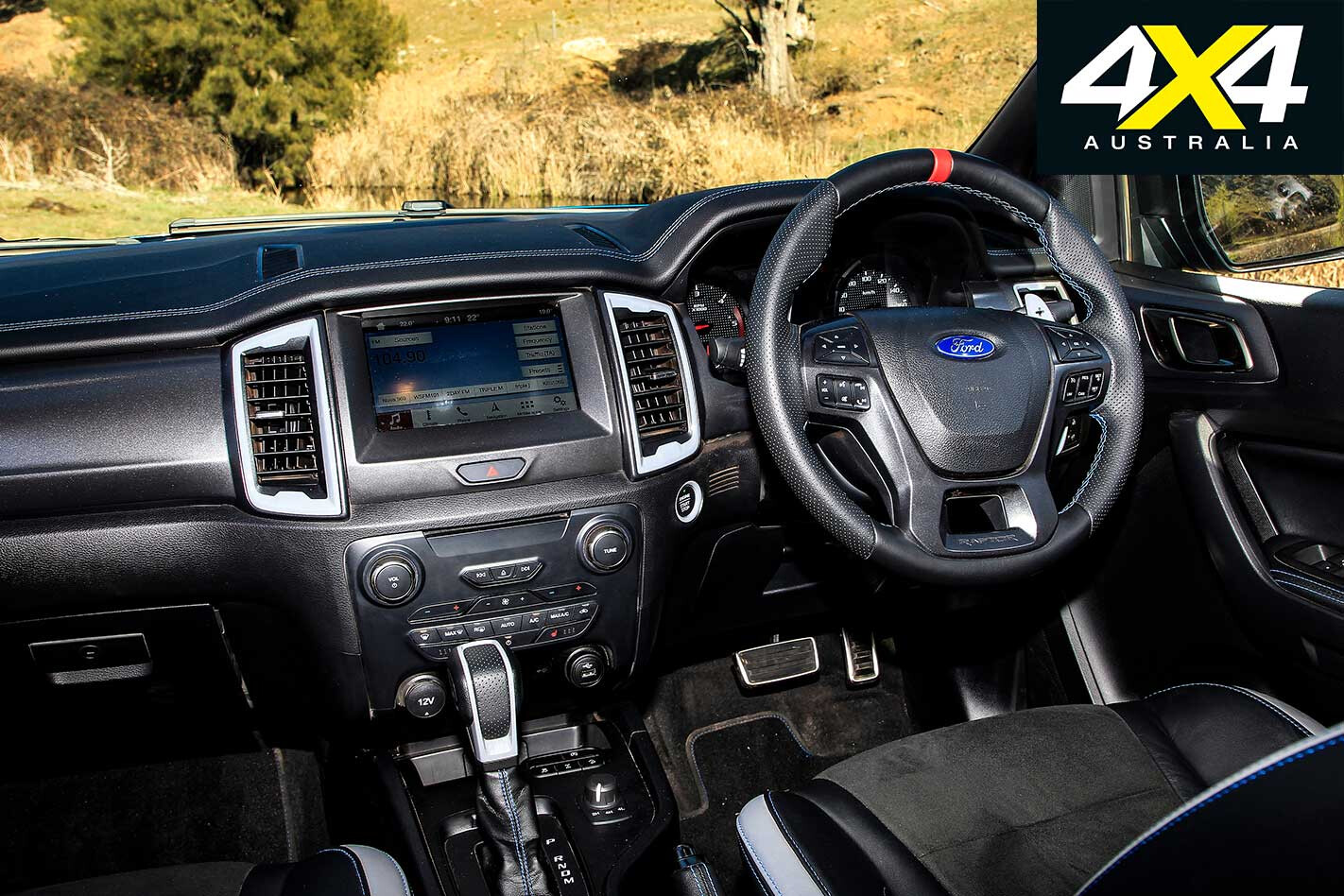
THE RAPTOR offers keyless entry and start, and it comes with leather and a nicely finished cabin; even though the symbols on many of the various buttons and switches could be easier to read. No steering-wheel reach for the driver, but the Raptor’s front sports-style seats are extra comfortable and, as always with a Ranger, the rear seat space is about as good as it gets with a dual-cab.
What you get
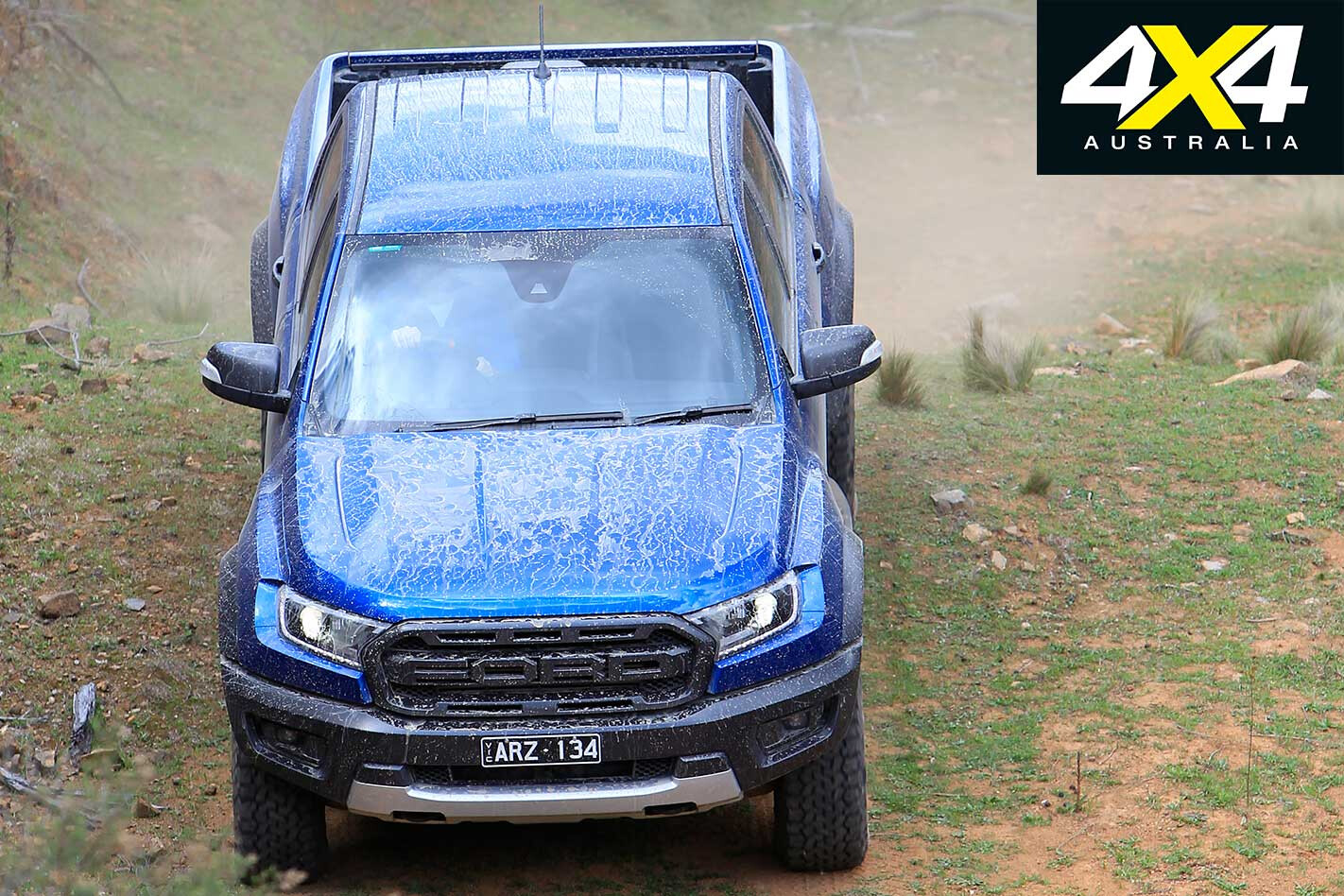
THE RAPTOR comes in one model and only as an automatic. Its long list of standard equipment includes keyless entry and start; six airbags; leather, heated front sports seats; electric seat adjust for the driver; paddle shifters; an 8.0-inch touchscreen; sat-nav; Apple CarPlay and Android Auto; a rear-view camera; auto headlights/wipers; auto stop-start fuel saving; dual-zone climate control; and a six-speaker audio system complete with a digital radio.
HID headlights, LED DRLs, LED foglights, a driver-switched rear locker, six-mode ‘Terrain Management’, lane-keep assist and warning, a 230-Volt outlet in rear of the centre console, and a towbar are also standard fare. The Raptor rides on 17-inch wheels with 33-inch BFGoodrich ATs and is priced from $74,990.
Practicalities
THE RAPTOR has 80 litres of fuel capacity (the SportsCat has 76 litres), but it proved to be a little thirstier on test (14.7L versus 14.5L/100km for the HSV), which pulls back some of its range advantage due to the bigger tank.
As mentioned, the Raptor isn’t designed for heavy-duty towing and drops 1000kg in rating over a standard Ranger and the SportsCat due to a lower GCM. It’s still rated to tow 2500kg and comes with a very neat integrated towbar as standard. Its 758kg payload, due to its lower GVM than a standard Ranger, is also down on most dual-cabs; although, like the 2500kg tow rating, is still pretty handy.
The Raptor’s rear tub has a 12-Volt outlet and a work light, and it’s the same dimensions as a stock Ranger so will take the same accessory hard tonneau covers, canopies or tub liners.
The Verdict – Showroom Stunners
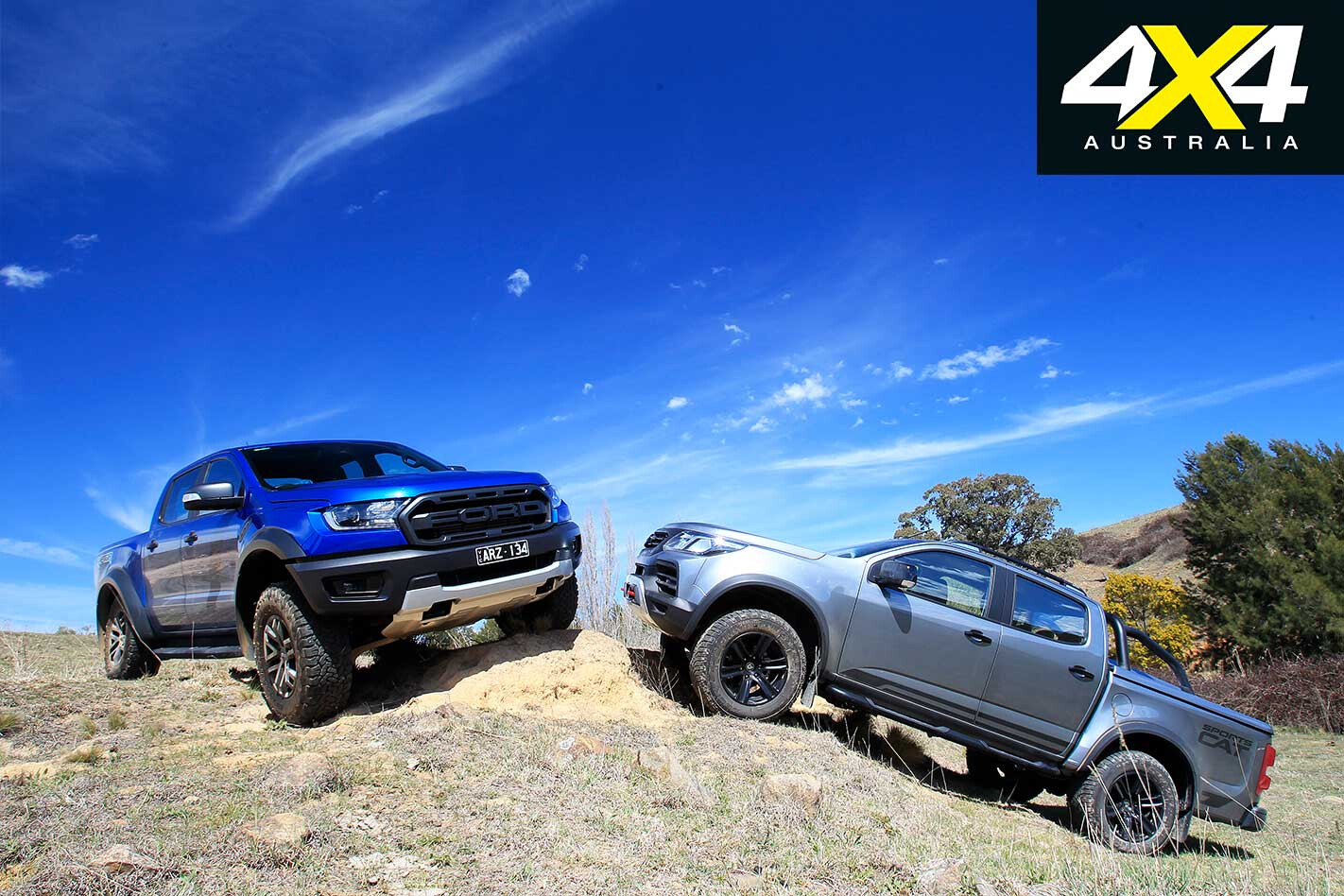
IF YOU’RE a diehard Holden or a diehard Ford fan you don’t have to read any further … you already know which of these utes takes your fancy. For the rest of us, there are convincing arguments for both.
Why would you buy a SportsCat? If you want a manual rather than an automatic, it’s the only choice. If you need to tow up to 3500kg, it’s also the only choice. If your idea of fun is hard driving on tight bitumen roads, then it’s the best choice.
If you don’t want to splash much cash you can get into a SportsCat auto for $12K less than a Raptor; if you want a manual you can save an additional $1200. Even the SportsCat+ which brings race-spec front brakes and an auto-decoupling rear sway bar – and optional SupaShock dampers – is $2400 less than a Raptor.
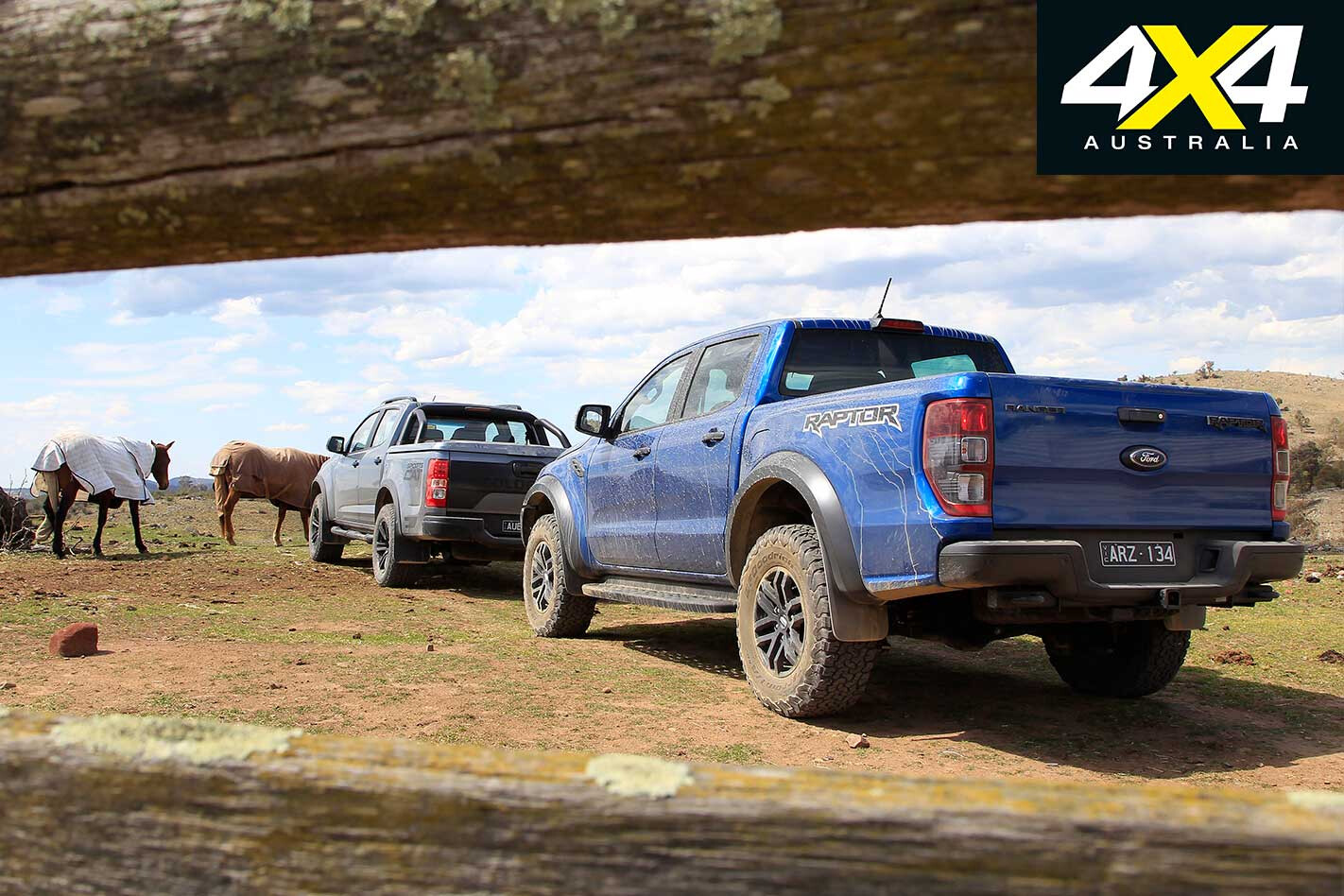
Why would you buy the Raptor? If off-road prowess is your priority, it’s clearly superior to the SportsCat. If you want a more comfortable ride at all times and superior composure at high speeds on rough roads, then the Raptor’s also the better choice.
Put simply, the Raptor’s breadth of on- and off-road performance is wider than that of the SportsCat, as it should be given the engineering changes are more significant when either are compared to their stock counterparts.
Finally, the Raptor’s powertrain and general running refinement is also superior to the SportsCat, which makes it nicer to drive on an everyday basis and not just when you’re going hard.
Specifications
| u00a0 | Ford Ranger Raptor | HSV Colorado SportsCat | |
| Engine | 2.0-litre 4-cyl bi-turbo diesel | 2.8-litre 4-cyl turbo-diesel | |
| Power | 157kW @ 3750rpm | 147kW @ 3500rpm | |
| Torque | 500Nm @ 1750-2000rpm | 500Nm @ 2000rpm | |
| Gearbox | 10-speed automatic | 6-speed automatic | |
| 4×4 System | Dual-range part-time | ||
| Crawl Ratio | 47.6:1 | 36.4:1 | |
| Construction | Separate-chassis | ||
| Suspension (f) | Independent/coil springs | ||
| Suspension (r) | Live axle/coil springs | Live axle/leaf springs | |
| Wheel/Tyre Spec | LT285/70R17 (113/116 S) | 285/60R18 (120 S) | |
| Kerb Weight | 2332kg | 2250kg | |
| GVM | 3090kg | 3150kg | |
| Payload | 758kg | 900kg | |
| Towing Capacity | 2500kg | 3500kg | |
| GCM | 5350kg | 6300kg | |
| Departure angle | 24u02da | 24u02da | |
| Rampover angle | 24u02da | 27u02da | |
| Approach angle | 32.5u02da | 32u02da | |
| Wading Depth | 850mm | 600mm | |
| Ground Clearance | 283mm | 251mm | |
| Fuel Capacity | 80 litres | 76 litres | |
| ADR Fuel Claim | 8.2L/100km | 8.7L/100km | |
| Test Fuel Use | 14.7L/100km | 14.5L/100km | |
HERE’S are five reader-submitted 4x4s picks that was recently featured on the December issue of 4×4 Australia.
To get involved post a pic and a description of your rig on our special site here or post it to our Facebook page.
We feature a bunch of readers’ rigs in the magazine each month, where we award one lucky punter with a $200 voucher to spend at Piranha Off Road.
LAND ROVER DISCOVERY: MARK TWEEDIE (4×4 Australia Readers’ Rigs Winner of the Month)
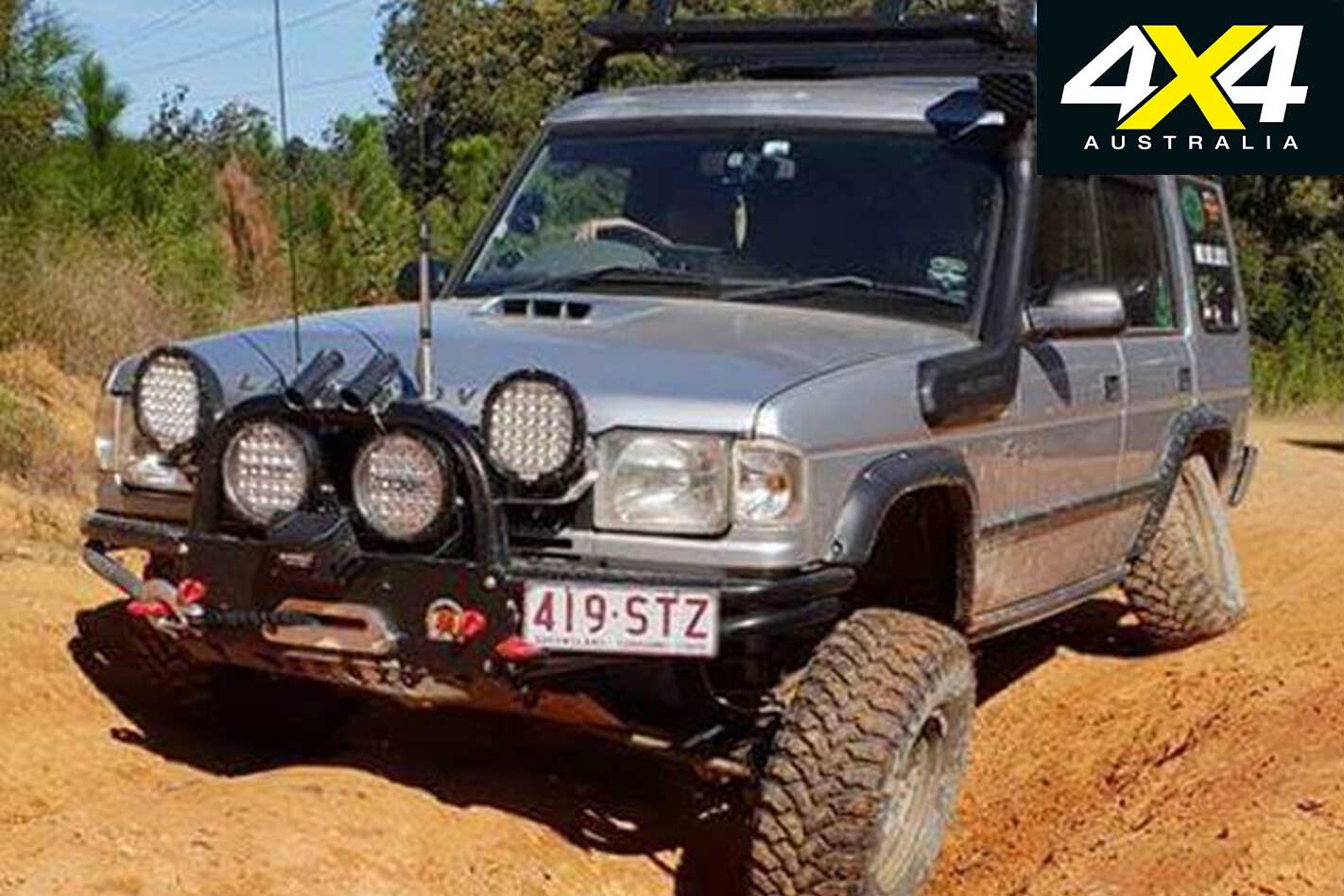
I have had it for five years. I set it up for touring originally with a two-inch lift, but got a little more adventurous. The car now has a four-inch lift, two-inch springs, two-inch spacers, five-inch Terrafirma long-travel shocks, HD steering arms, and an adjustable Panhard rod (Terrafirma).
Other features include an XROX bullbar with four nine-inch LED spotlights; AM/FM and UHF aerials (GME); twin batteries; a rooftop tent rack with LEDs on passenger side, underneath the 2.5m awning; a four-inch LED on the back; two more LEDs mounted on the rear tow bar; and a snorkel and bonnet vent off a GU patrol, for underbonnet cooling.
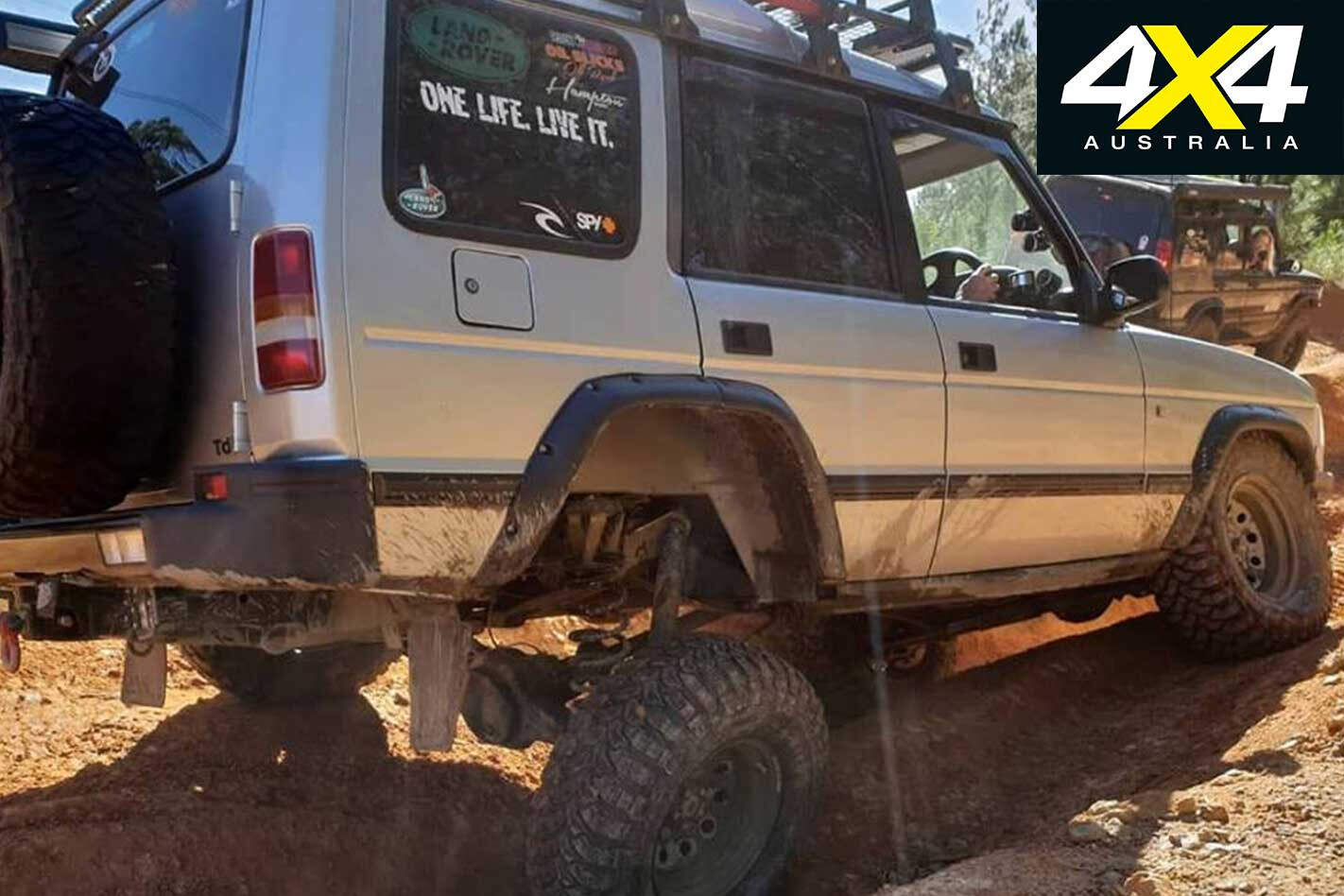
I mainly go to Glass House Mountains, Landcruiser Mountain Park and Double Island Point, but we’re going to Cape York soon.
1996 TOYOTA LAND CRUISER FZJ80: STEPHEN YEATMAN
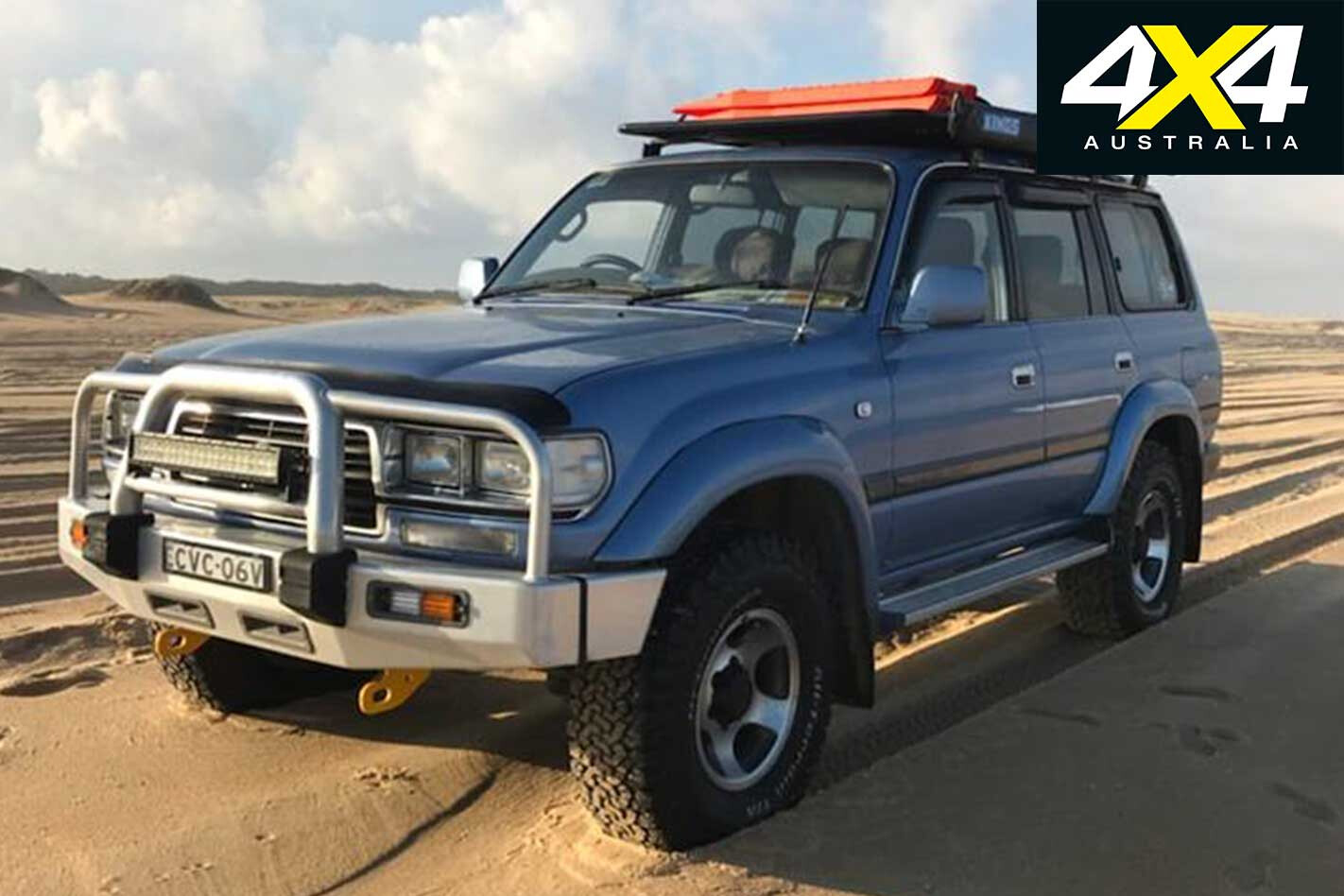
I have owned it for about four years; there was one previous owner, I believe. It was stock and only had 140,000km on it at the time. I fitted a Tough Dog one-inch lift, 285/75 16 KO2s, and upgraded the stereo and a few other bits. It probably owes me $16K.
It has taken our family of four up and down the coast, including to the Victorian High Country. It’s set-up for touring, and the next big trip is to Fraser Island and Airlie Beach. Our previous Cruiser was an FJ62, which we still have, so I guess l’m a bit of a Cruiser head.
2013 JEEP JK WRANGLER: TEAGAN HART
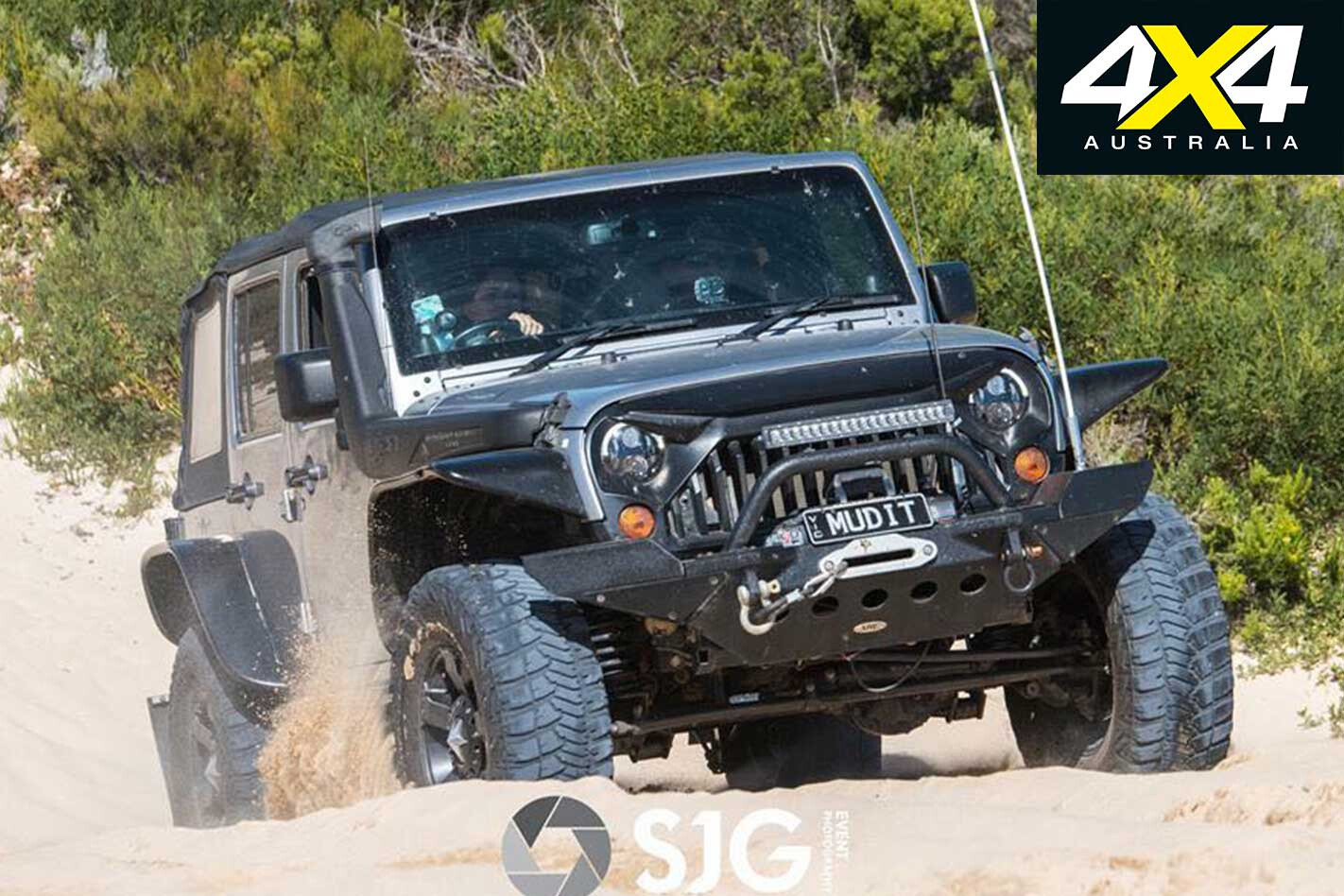
It’s my first 4WD, and I bought it stock two years ago. Features include a two-inch lift with FOX shocks, Gladiator 35-inch tyres and Rockstar rims. I replaced the front and rear bar with Smittybilt. It also has a Smittybilt 12,000lb winch, Injen snorkel, aftermarket exhaust and wheel flares, rear drawers that my dad built, and a second battery in the back.
The most challenging and fun tracks have been at Mount Disappointment and Labertouche.
2011 TOYOTA FJ CRUISER: TIM WATSON
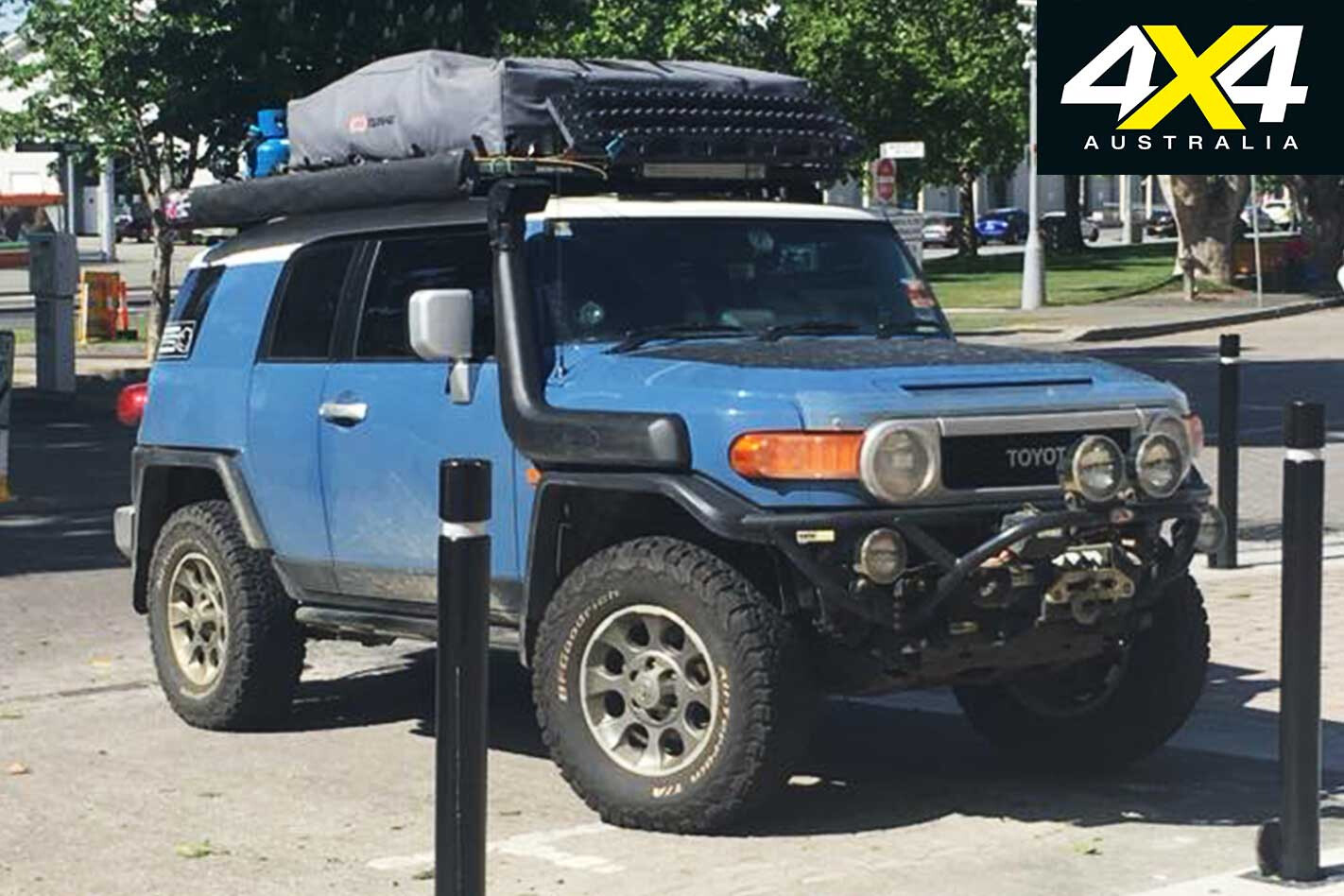
I have had my FJ from new (2011). The modifications list is extensive and it’s fully fitted out for off-grid touring.
I’ve been to the Vic High Country, Fraser Island and last year we did the Simpson Desert and most of Central Australia. We live in Tasmania, so we’ve done all corners of Tassie.
2011 JEEP JKU WRANGLER DIESEL: HAMISH McDONALD
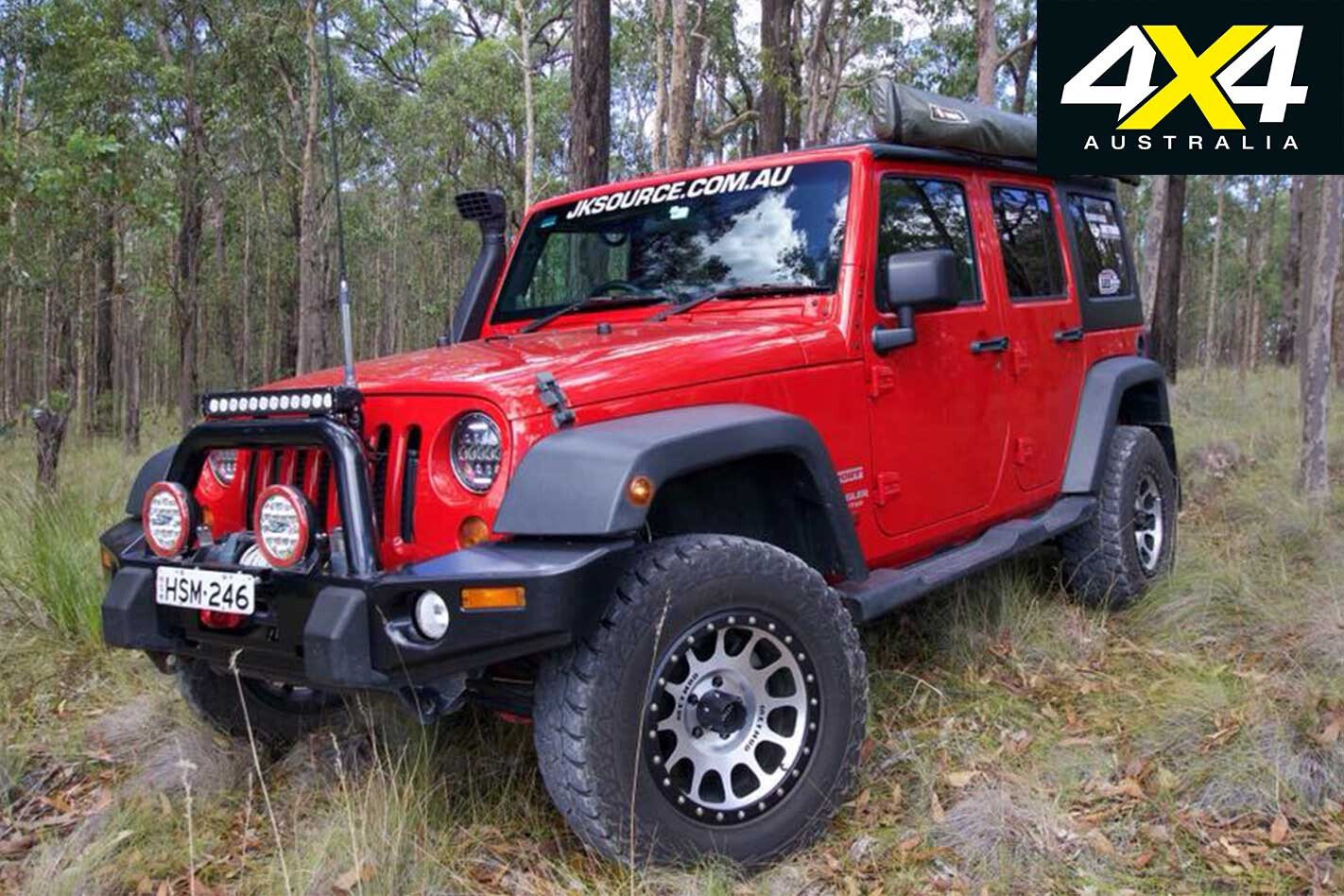
We’ve had it since new. Plenty of mods including ARB bars front and rear, with tyre carrier; GME UHF; Rhino backbone system with platform rack; Foxwing awning, and Ultra Vision lighting on the front (both spotties and LEDs).
We crossed the Simpson Desert, been to the Victorian High Country four or five times, and to the NSW High Country – as well as weekends away with friends. It’s a Jeep life.
The Great Wall Steed dual cab you see here currently sells for just $24,990 drive-away no-more-to-pay, yet it offers the safety and convenience of on-demand 4WD where even the most expensive Toyota Hilux or Ford Ranger has to make do with relatively primitive part-time 4×4.
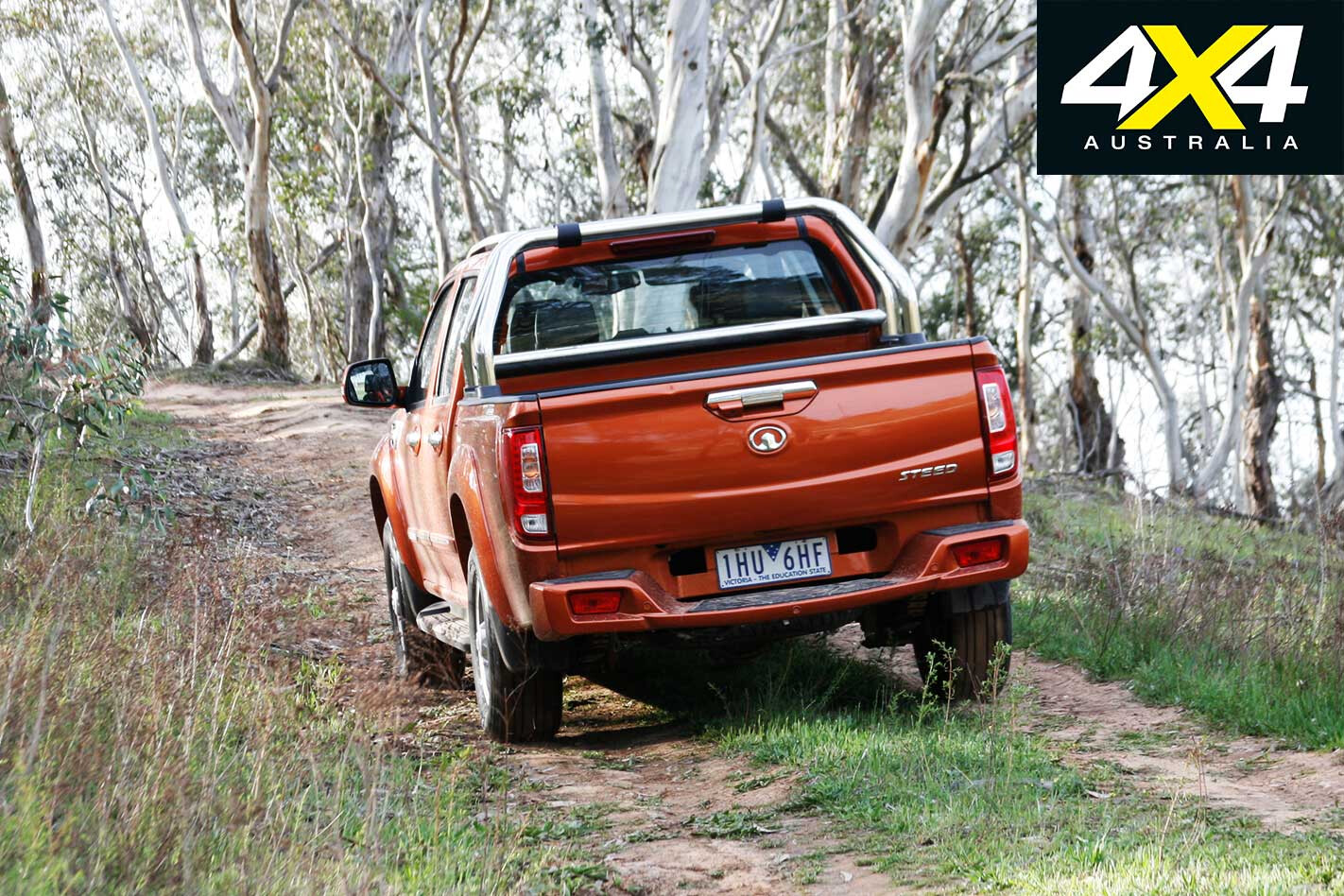
The Steed also comes with rear disc brakes, a feature only found on the most expensive Ranger, the $80K Raptor, and VW Amarok V6 models, the least expensive of which is twice the price of the Steed. Inside the Steed you’ll find leather, heated front seats and a whole host of other upmarket equipment.
Sound too good to be true? Let’s find out.
Powertrain and Performance
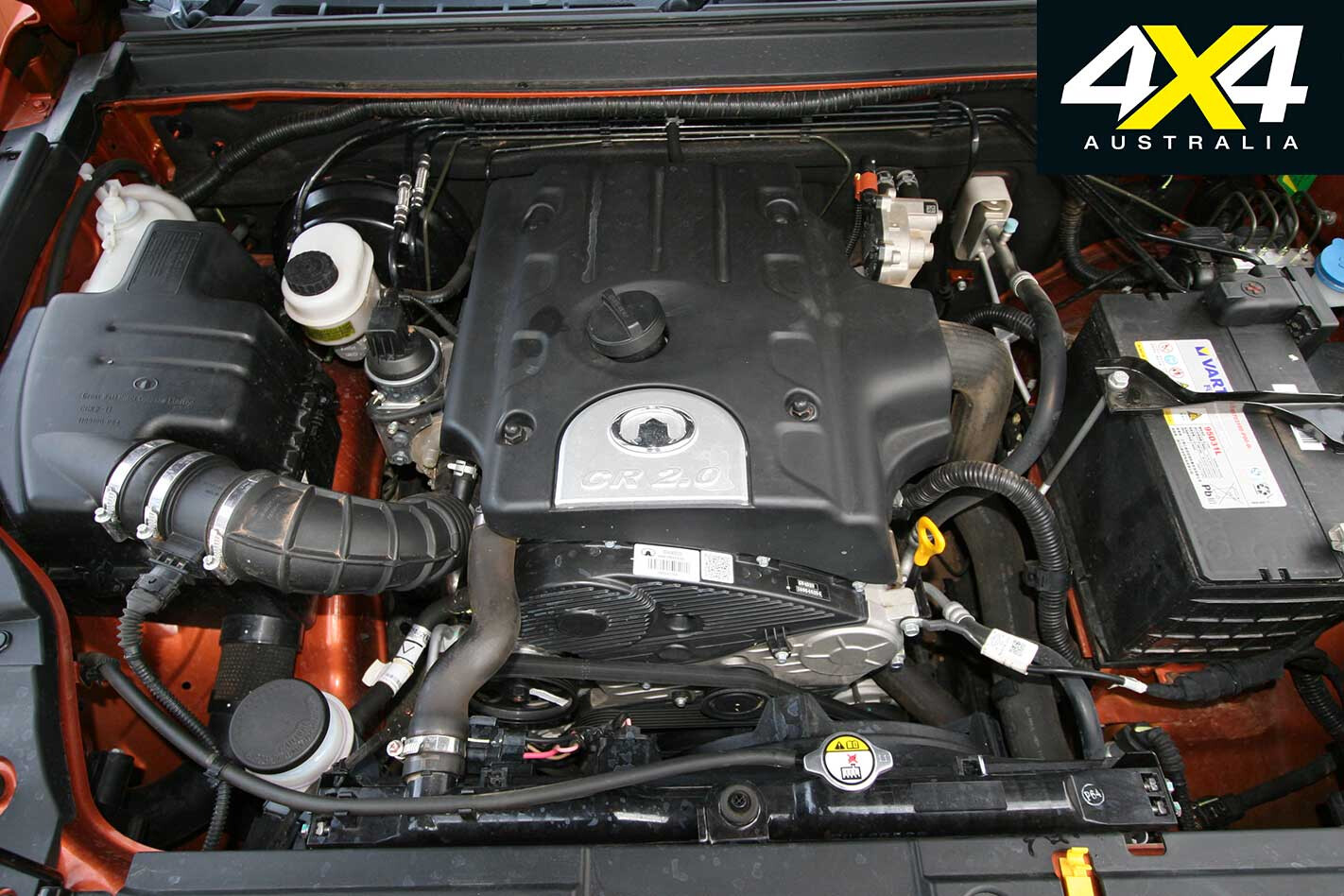
The Steed’s 2.0-litre four-cylinder diesel claims a modest 110kW and 310Nm but benefits from the fact that the Steed isn’t a particularly heavy or big ute – being more the size of an older generation ute like the Nissan Navara D22 or the last of the Holden Rodeos – so the performance is a little better than you may expect, even if its highway overtaking performance is limited.
The engine is mated to a six-speed manual (there’s no auto option) and off-idle is a bit soft, but it becomes energetic enough with a few revs on-board, helped by the fact maximum torque is on tap over a 1000rpm-wide band that stretches from 1800 to 2800rpm.
The gearing isn’t overly tall, either (50km/h/1000rpm), so once up to highway speeds it holds the taller gears on hills without much fuss. The engine is quiet, smooth and surprisingly refined, while the gearbox offers light shifts but not a notably precise shift gate.
On-Road Ride and Handling
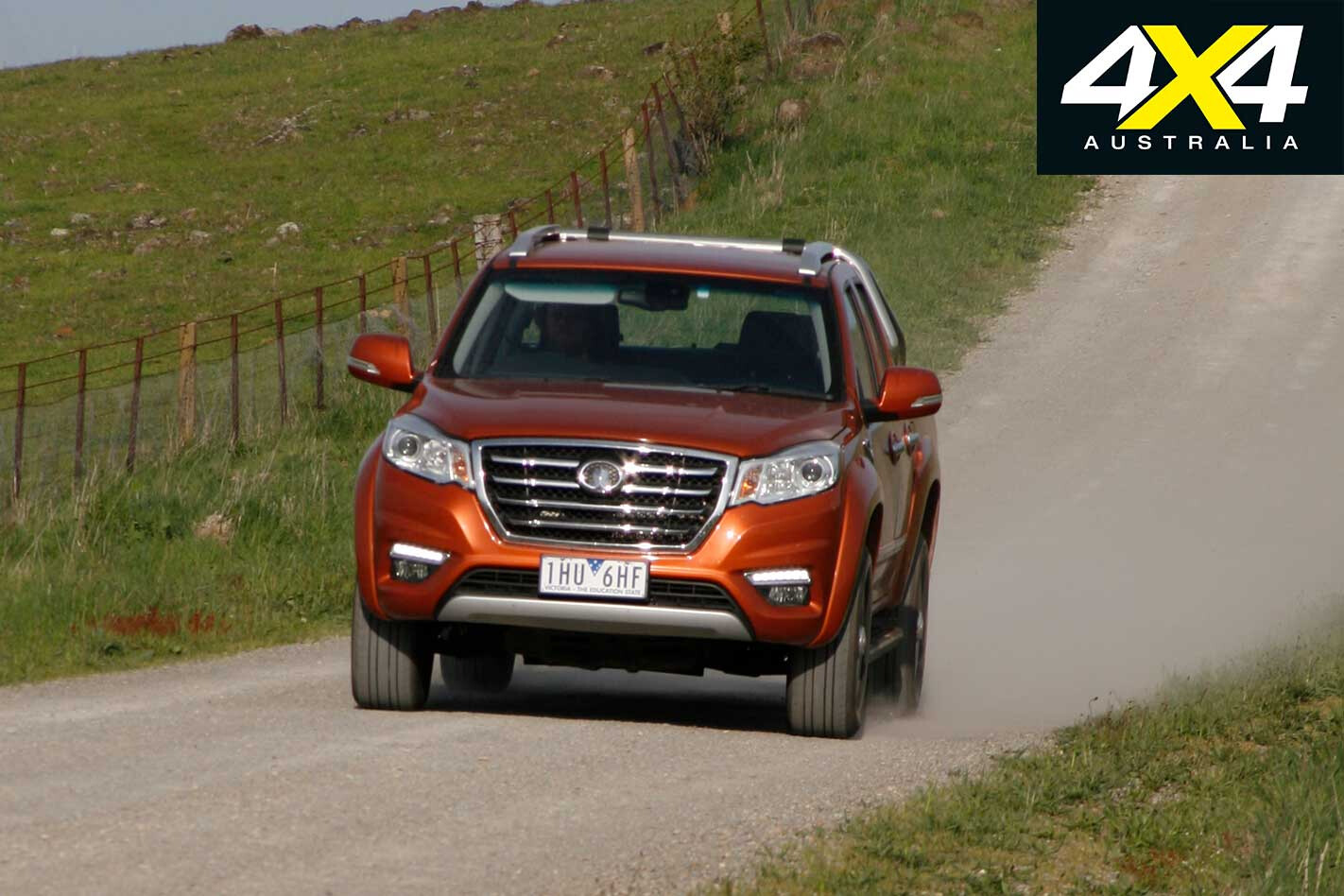
Light but not particularly precise is also the best way to describe the Steed’s steering, especially in the light of the excellent steering feel and precision of the best of the current mainstream dual cabs.
Still, you get used to the Steed just in the same way you got used to many older popular utes that didn’t steer all that well, either… think Navara D22. Our 20,000km-old test vehicle’s suspension also felt underdamped at the front, which did the on-road dynamics no favours.
On a more positive note the ride quality is reasonable, even unladen. Better still is the auto-engaging 4×4 system, which has, at its core, a Borg Warner torque-on-demand transfer case, similar to that used in the Ford Everest.
There’s still a 2WD mode if you wish to use that, but by switching to the ‘AWD’ mode, which you can use on any road surface, the system engages 4WD if and when needed. In effect it’s like having full-time 4×4 and brings convenience and safety benefits on wet bitumen and variable (sealed to unsealed and wet to dry) road surfaces.
Off-Road
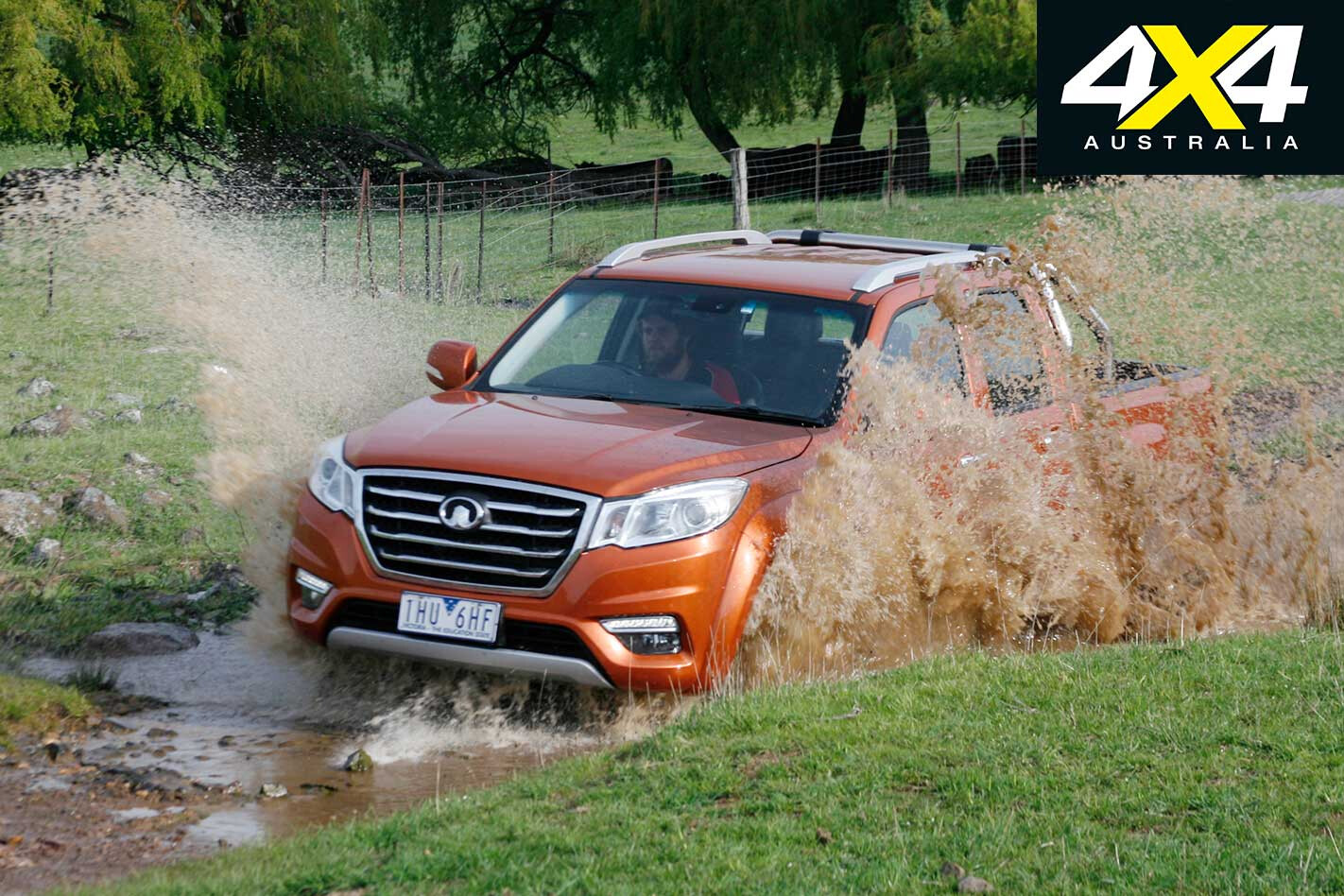
The same transfer case, operated by buttons on the dash, offers low-range 4WD with a handy 2.48:1 reduction. Helping the Steed’s cause off-road is decent wheel travel at the rear and effective electronic traction control. Not so good is the fact the Steed is a little low slung and the wheel travel offered by the independent torsion-bar front suspension isn’t anything special.
The upshot of all this is the Steed is useful in easy to moderate off-road conditions, but baulks at the more serious off-road terrain in much the same way as a current Mitsubishi Triton does.
Tall, relatively narrow (235/70) tyres on 16s are positive from an off-road practicality point of view, even if the standard ‘highway’ tread pattern isn’t what you want off-road. There’s no heavy-duty recovery hooks, either, only lighter-duty tie-down hooks.
Cabin and Safety
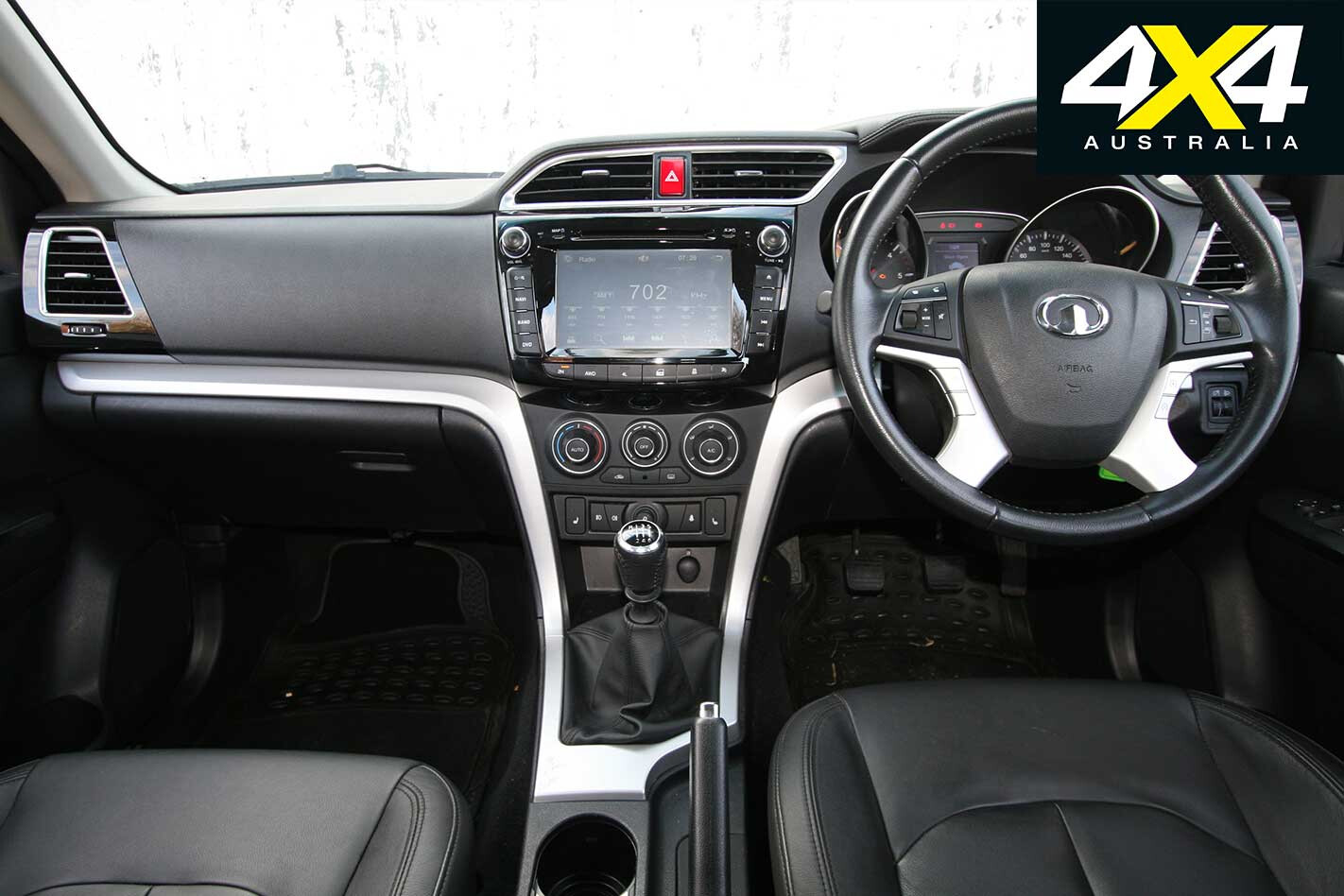
The Steed’s cabin is surprisingly well-finished for a budget ute and very well-equipped. The cabin is more the size of the smaller (Triton and Navara) mainstream utes, something you notice more in the rear seat than up front. The driver’s seat offers plenty of adjustment, but the steering wheel is only adjustable for tilt, as is the case with many of the more expensive dual cabs.
This particular Steed variant hasn’t been ANCAP safety tested, but it does come with front, side and side-curtain airbags, as well as the now mandatory electronic stability control, the system in question reassuringly supplied by Bosch.
What You Get
The Steed only comes in one 4×4 dual-cab model ($24,990 drive-away) but the equipment runs to leather, electric adjustment for the driver’s seat, two-stage heating for both front seats, a six-speaker audio system, auto wipers, auto headlights, tyre-pressure monitoring system, and steering wheel controls for the cruise control, audio and Bluetooth phone connectivity.
Our test vehicle also had sat-nav, which is a $990 option. There’s also 4WD single-cab diesel for $20,990 (drive-away), which includes an aluminium drop-side tray. Two-wheel drive models are available in diesel and petrol, and single and double cab.
Practicalities
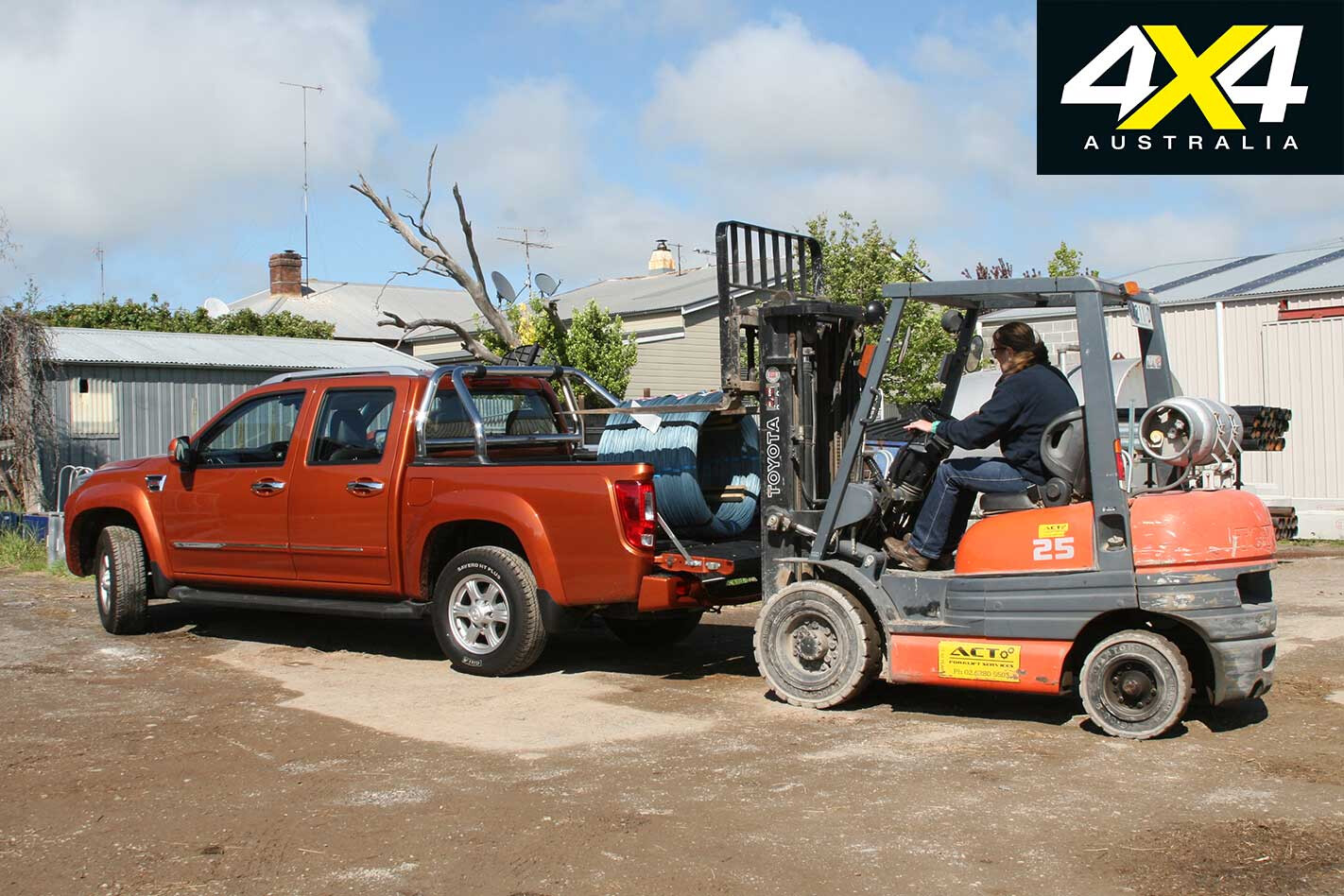
The Steed is only rated to tow 2000kg but offers a class-competitive payload of just over 1000kg. Using bundled rolls of fencing wire we loaded the Steed up to 750kg payload to test its carrying ability and it carried this with surprising ease, both from a chassis point of view and even more surprisingly in terms of engine performance. Certainly, the way it felt with that load on board gave the impression it could cope with the full 1000kg payload.
Currently there are 34 Great Wall dealers in Australia, and the Steed comes with a three-year/100,000km warranty. Since mid-2016 the distribution of Great Wall utes is through a fully-owned factory rather than a third-party distributor, which should bode well for Great Wall’s future here.
A lot of ute
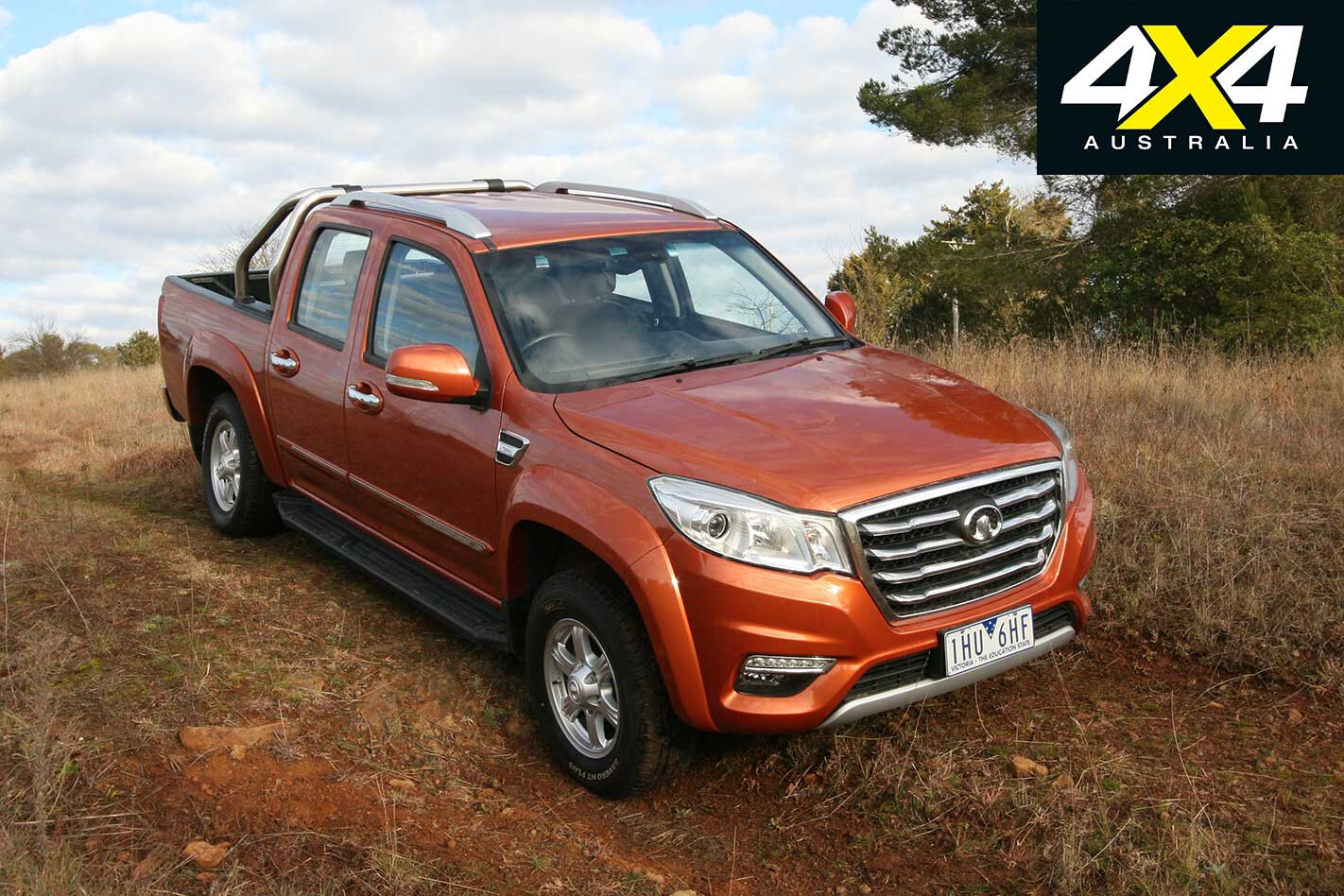
There’s no denying the Great Wall Steed is a lot of ute for the money, especially in terms of its features and equipment. While it may not perform as well on- or off-road as the more expensive mainstream dual cabs, it’s still more than reasonable to drive.
Spend some money on decent dampers and better tyres, and perhaps a reset of the front torsion bars and new rear springs for a bit of off-road lift, and it could be much better.
2019 GREAT WALL STEED 4×4 DUAL-CAB SPECS: Engine: 2.0-litre 4cyl turbo-diesel Max power: 110kW @ 4000rpm Max torque: 310Nm @ 1800-2800rpm Transmission: 6-speed manual 4×4 system: Dual-range on-demand Suspension (front): Independent/torsion bars Suspension (rear): Live axle/leaf springs Tyre/Wheel spec: 235/70R16 106T Unladen weight: 1900kg GVM: 2920kg Payload: 1020kg Towing capacity: 2000kg GCM: N/A Ground clearance: 171mm Fuel tank capacity: 75L ADR fuel consumption: 9.0L/100km Test fuel consumption: 10.1L/100km
Heading for the great outdoors doesn’t necessarily mean trading the comforts of a room for the noble effort of roughing it out. Not when you have the wonders of 21st century technology and engineering.
With modern engineering and materials, these new camping gear from Ironman 4×4, Ledlenser and Sea to Summit removes the hassle and makes camping a breeze.
Ironman 4X4 awning quick-release bracket
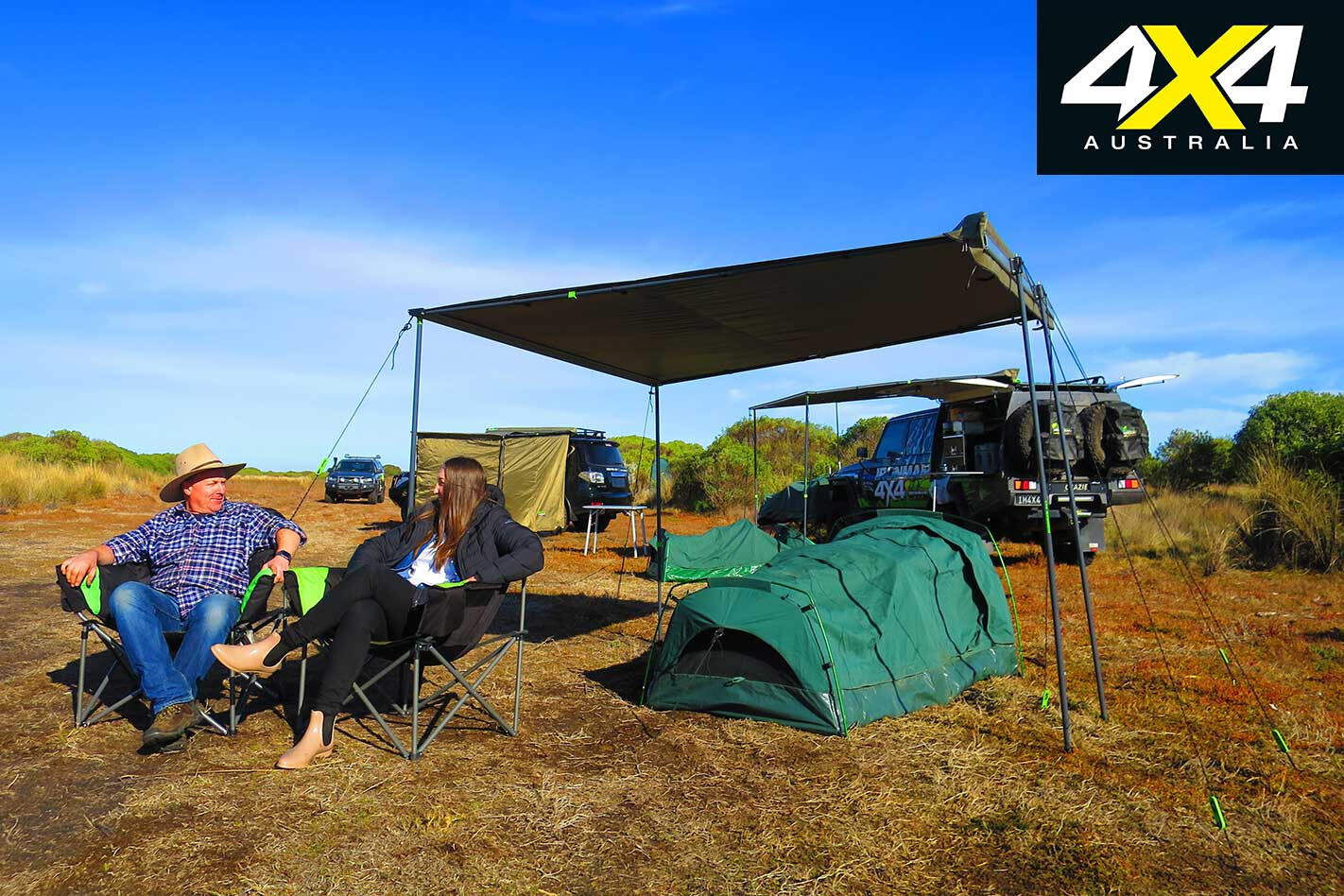
The team at Ironman 4×4 has come up with yet another innovative piece of touring kit. The awning quick-release bracket allows you to leave your awning freestanding at camp if you decide to head off on a quick drive.
The Aussie -designed and manufactured bracket allows you to easily reposition the awning from one side of your rig to the other and can also be quickly affixed to another vehicle. It also means you can store the awning off your vehicle once you’ve returned home. The bracket can be used to mount other accessories as well.
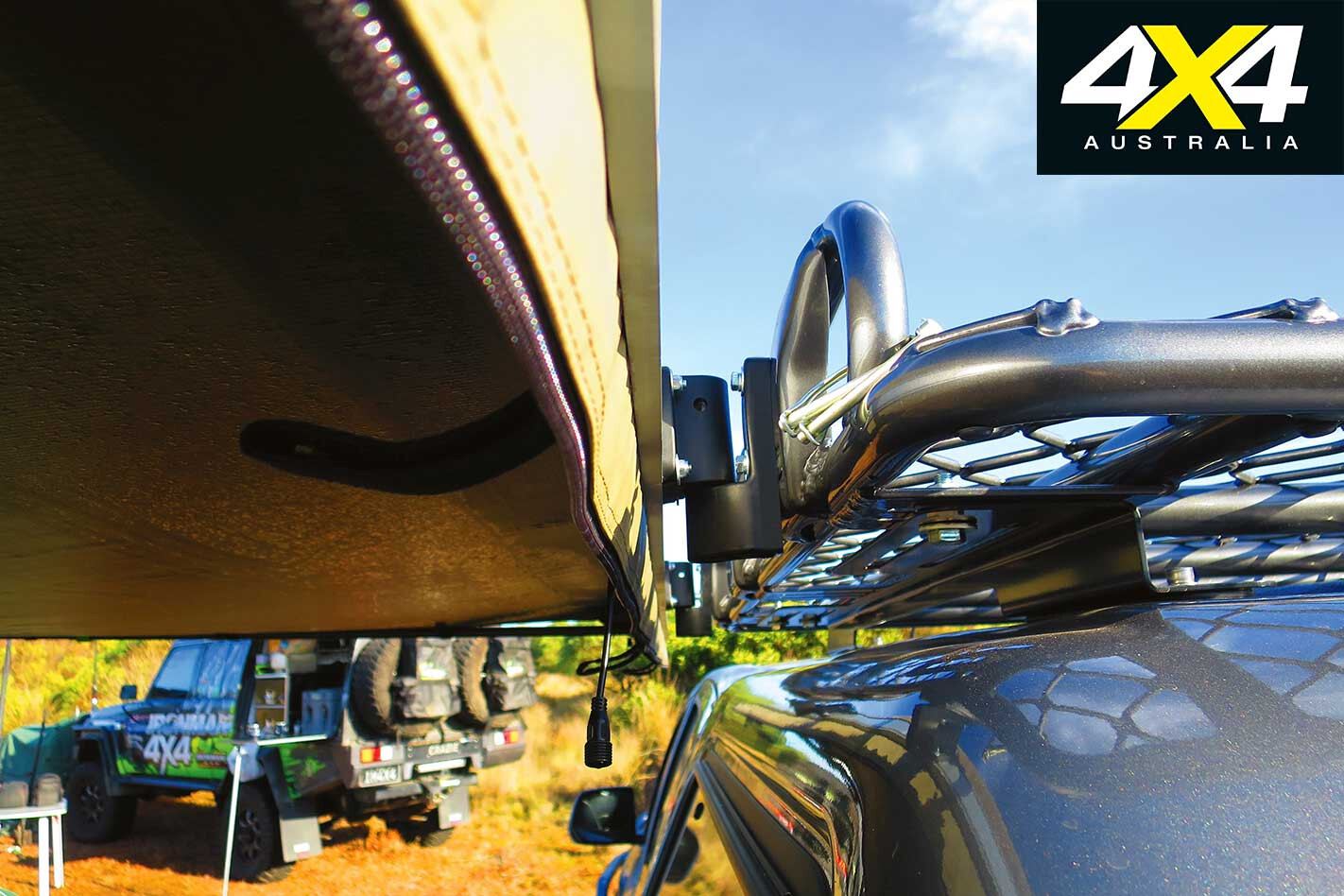
In addition, there is an extra hook kit available, which makes it easy to set-up your awning at home for the barbie or as a backyard shade area.
Website: www.ironman4x4.com
LedLenser ML6
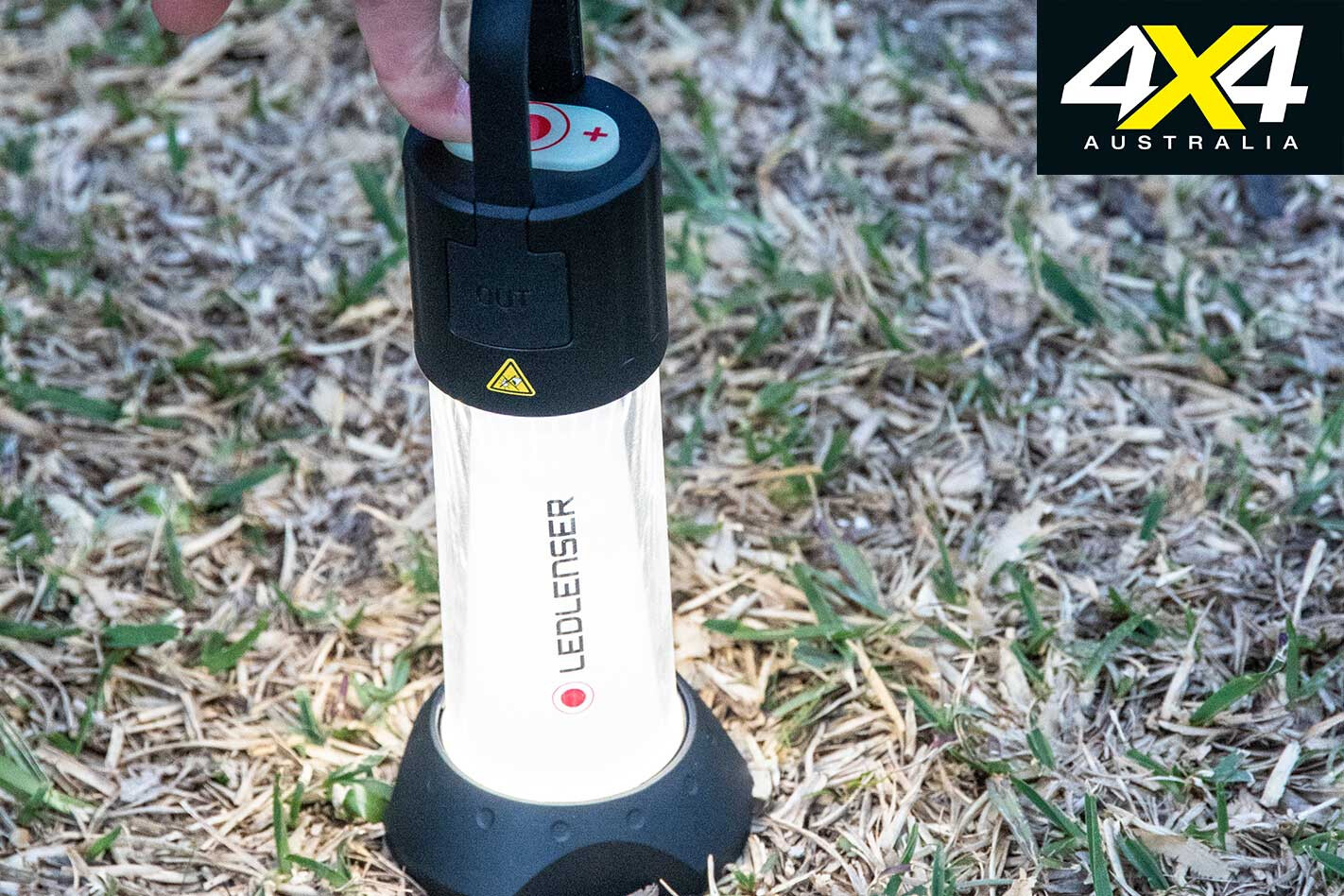
You can never have too much camp lighting, but you can also do with said lighting being versatile, and thus eliminating the need to pack three different lights in your vehicle.
The Ledlenser ML6 lantern provides a versatile light source, with ample output (max of 750 lumens and battery life of four to 70 hours), and in a compact size (length 178mm; weight 280g). The light output is via 18 Power LEDs, powered by a 115.2W/h battery, and there’s even an inbuilt power bank, perfect for recharging mobile phones.
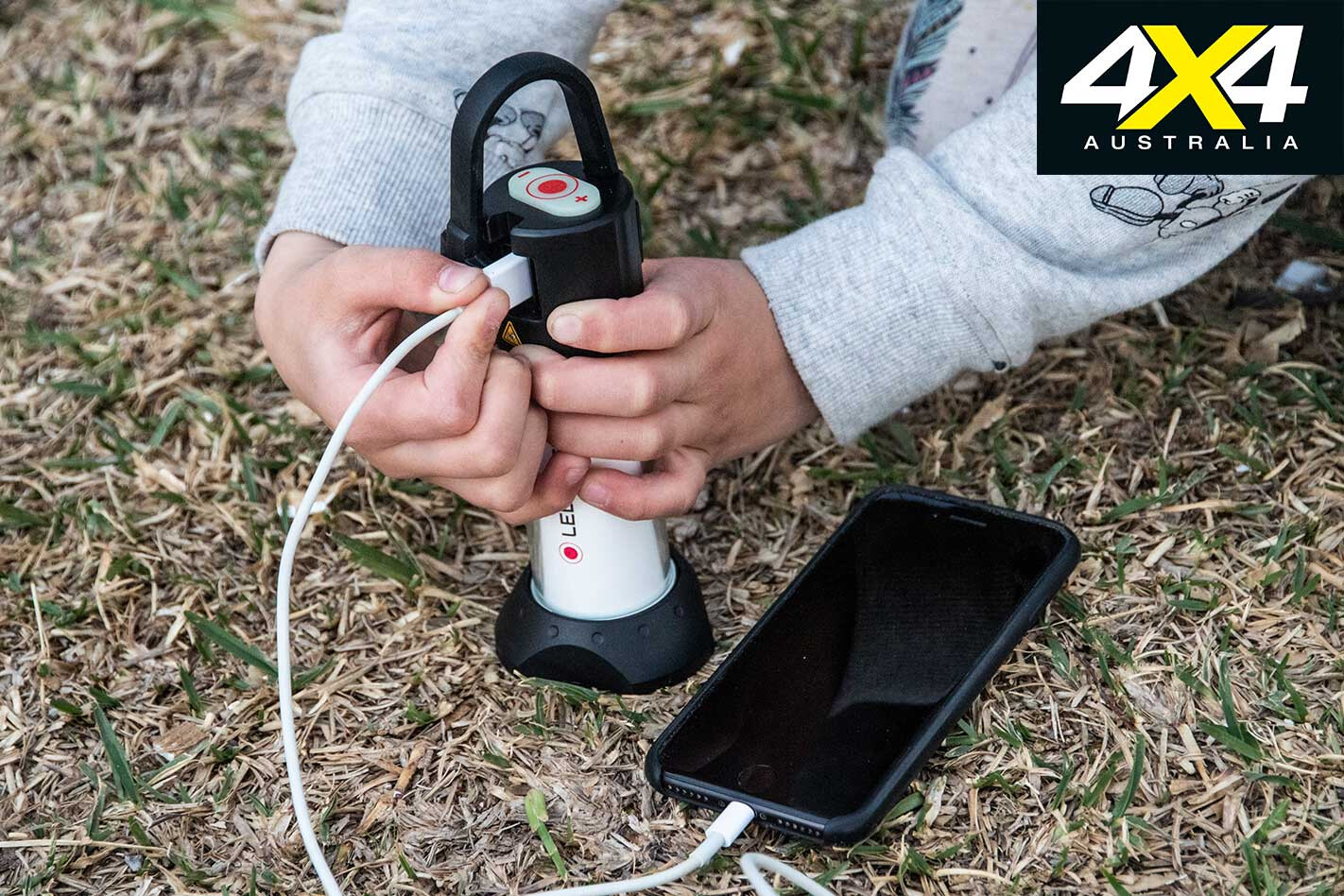
The ML6 is built for rugged use, including sealed USB ports and silicon sealing throughout, while gold-plated power contacts ensure reliable light delivery.
RRP: $149.95 Website: www.ledlenser.com.au
Sea To Summit Basecamp BT3
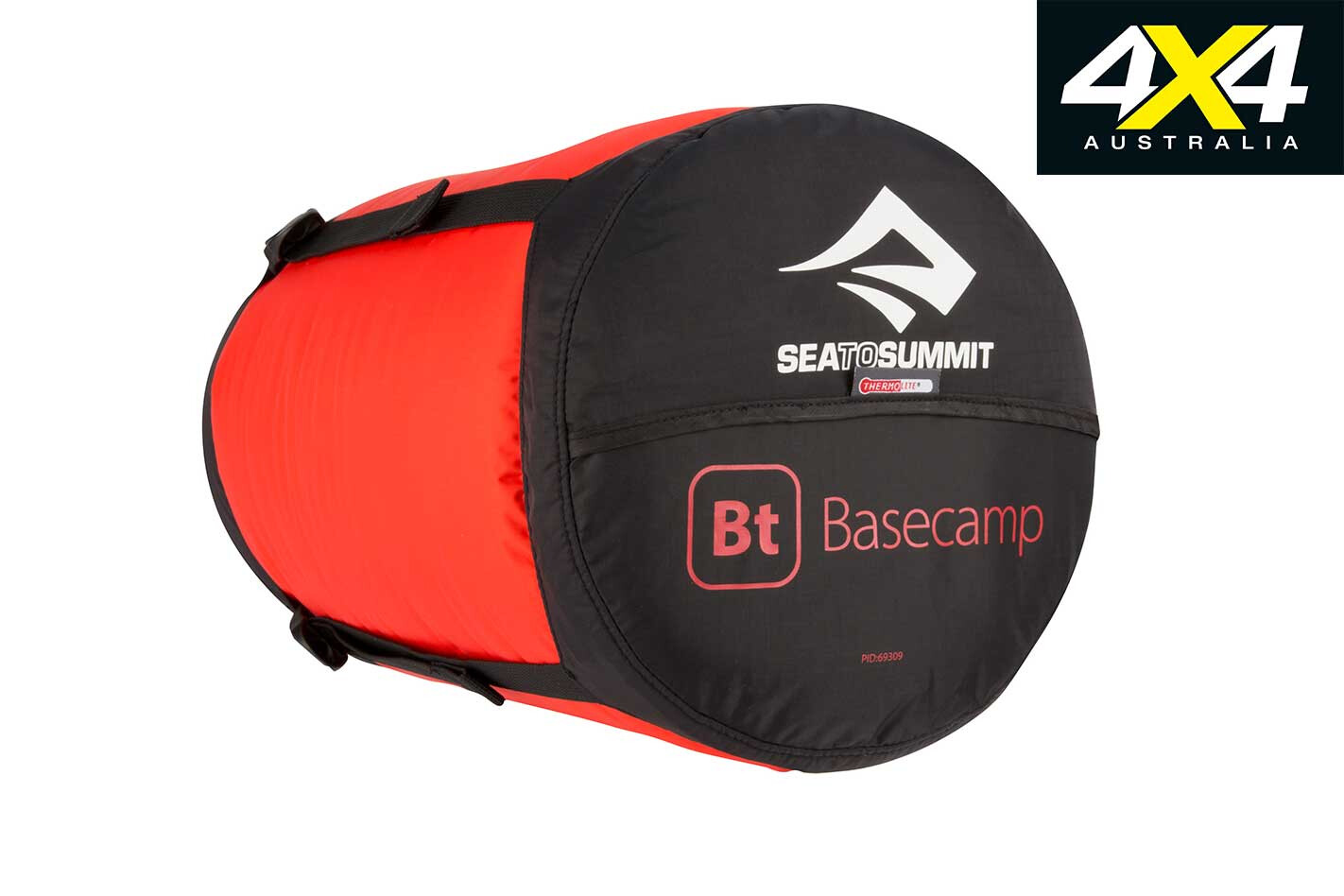
The Basecamp BT3 offers a roomy yet warm sleep thanks to its contoured rectangular design. The BT3 (and its BT4 sibling) uses Thermolite synthetic fill to provide plenty of warmth. The bag is versatile, too; the dual zips (one down each side) allow you to open up one or both sides to create a quilt for warmer nights. You can unzip the foot box for ventilation if need be.
The Basecamp is designed to work with STS’s sleeping mats, with a sleeve at the base of the bag where you slide the mat in, and then you can further secure it using the loops on the bag’s upper section so there’s no chance of sliding off the mat during the night. There’s a separate strap for the pillow, too.
STS is an Australian company that is globally renowned for making tough gear, so rest assured that this bag will last years.
Website: www.seatosummit.com.au
IT DOESN’T matter how you slice it, the Rubicon isn’t an easy place to get to, but, if you make the effort, it is totally worth it. And, if you make it there with Jeep Jamboree USA, you’ll be welcomed into Rubicon Springs with someone tickling the ivories of a grand piano.
Mark A. Smith founded the Jeep Jamboree USA on the Rubicon Trail. In 2012, my sister Brittany and I made the trek to Georgetown, California, to meet Mark and his wife Irene, hear their stories, visit their home and see their Jeep collection.
Over the last three years of Mark’s life, we became friends; he would give me leads on unique Jeeps in the country and he continued inspiring our treasure hunt to seek out other like-minded adventure enthusiasts across the globe. Brittany and I attended his last Jeep Jamboree USA trip with him on the Rubicon, and the following year we connected with Fred Williams to attend Mark’s memorial.
Every year since Mark’s passing, Fred and I try to participate in one of the Jeep Jamboree USA programs. Every one of their events is well organised, well thought-out, family friendly, and always an adventure.
When Fred mentioned he was going to take a stock Jeep across the Rubicon, just like Mark A. Smith would have done, I wanted to be there for it. So, Fred dug out his 1973 CJ-5 named “Lemon Pie”, which was built the same month and year as Fred.
As long as I’ve known him, it’s been a super-cool CJ-5 hanging in the corner of his shop. Seven years ago he got it out of a junk yard, drove it across America and back for his epic ‘CA to PA in a CJ’ adventure, and then he parked it.
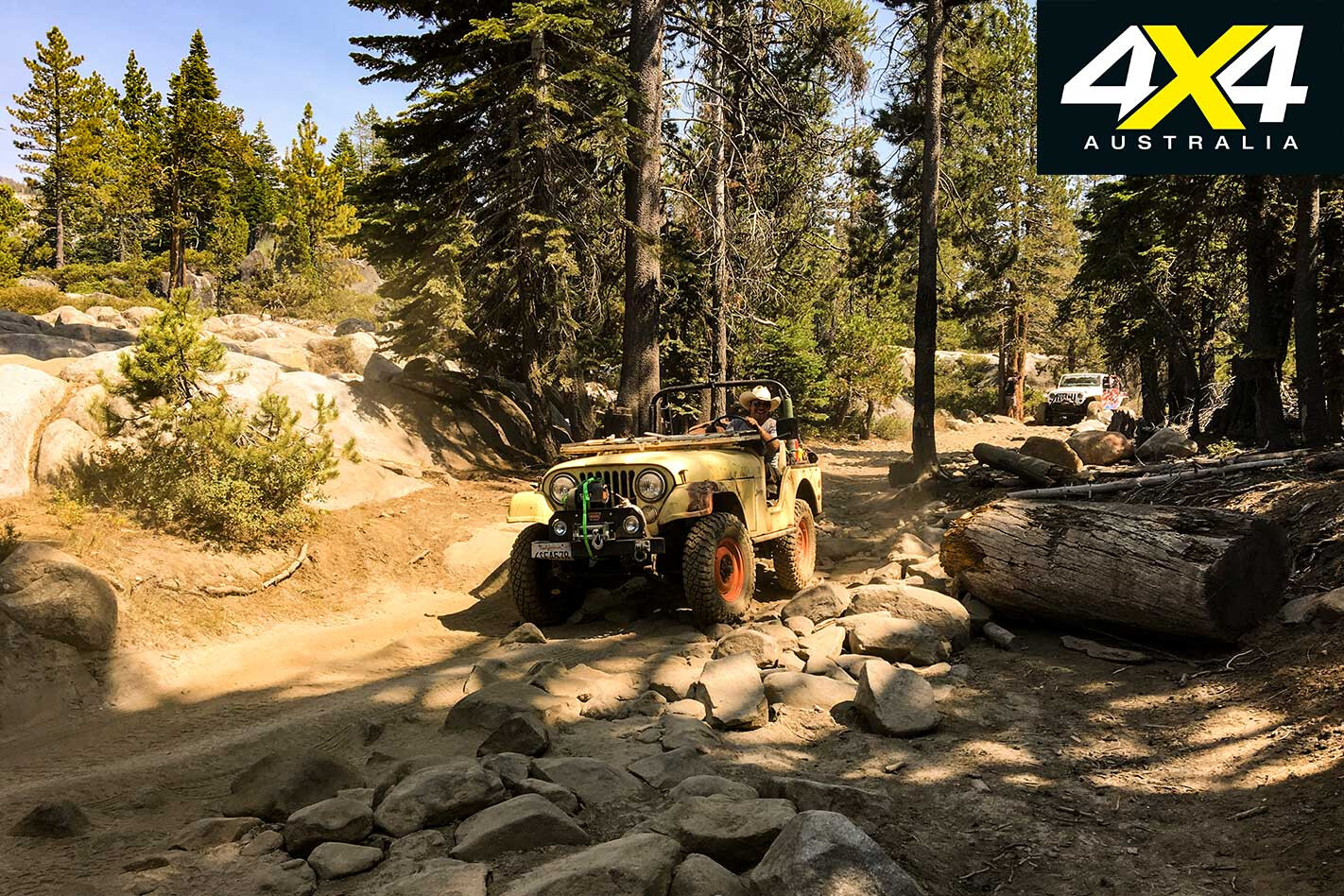
With time running out before the epic Rubicon adventure he added rock sliders, built a skid plate, and put on new BFGoodrich KM3 tyres, and off he went. We had made plans to meet at the Rubicon Springs.
While I was en route from Chicago, I received a text midflight that said: “Our first day was rough; we only made it three miles. I’m not sure if we are going to go any more today.” I was still on my way to the trail, and without phone service on the trail I was hoping they’d arrive at the Rubicon Springs.
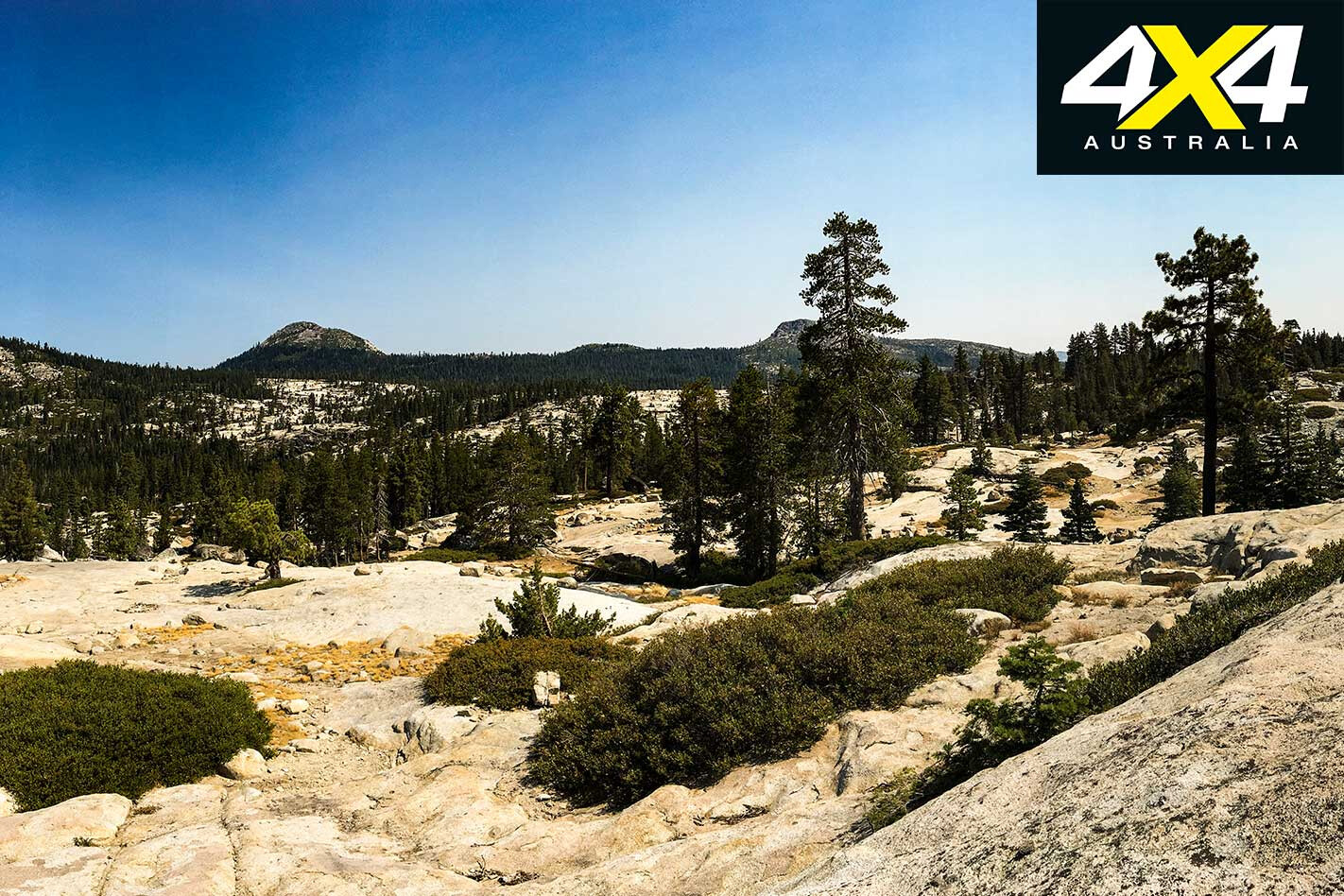
Apparently, right before they hit The Rubicon for their latest episode of Dirt Every Day, their director had surprised their team with a 1973 Chevy pick-up on highway tyres – the guys aptly called the trek “Stock on Rocks”. Fred’s co-host Dave drove the Chevy and, because it didn’t have lockers, Fred never engaged his lockers.
As soon as Jeep Jamboree USA participants started to arrive at the Springs I went to the end of the trail to see if anyone had seen them. Within minutes, I started walking up the trail and saw Fred dressed in a white cowboy hat – just like Mark would have worn – bouncing over the rocks in Lemon Pie. I hopped in and we bounced along all the way to our campsite in the Springs in the fun, little Jeep.
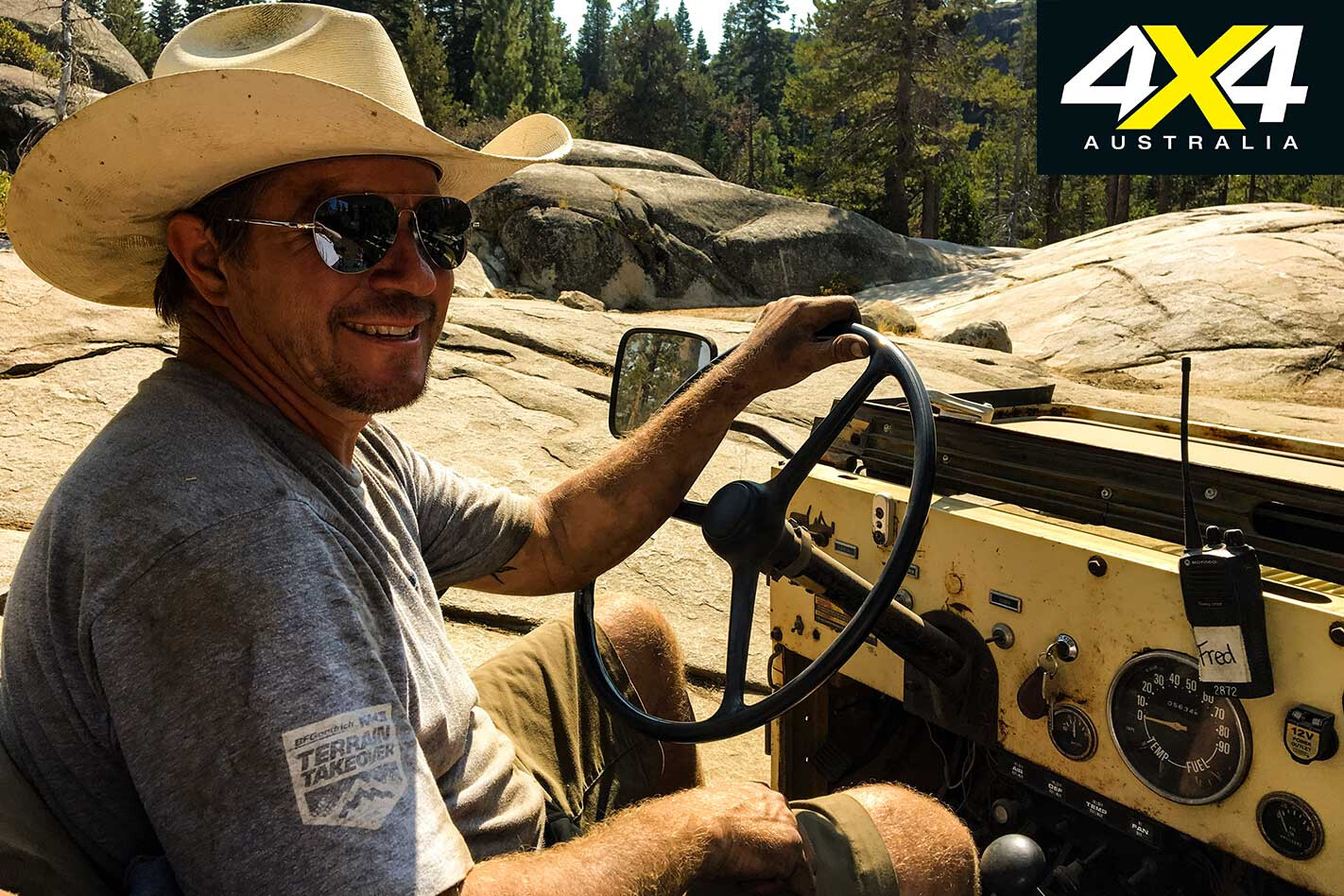
What typically takes a half a day in a JK or a TJ took these guys three days in their nearly stock vehicles. They winched like crazy, but they made it to the Rubicon Springs in one piece, despite a few concerns.
Fred mentioned the knob on the radiator hit the fan and made a hole in the radiator, and he was worried about finishing the rest of the trail through Cadillac Hill. And, right before we arrived at our campsite in the Rubicon Springs, Dave’s truck caught on fire. No-one freaked out; they all laughed and said, “We’re used to it! It happens once a day, but only once.”
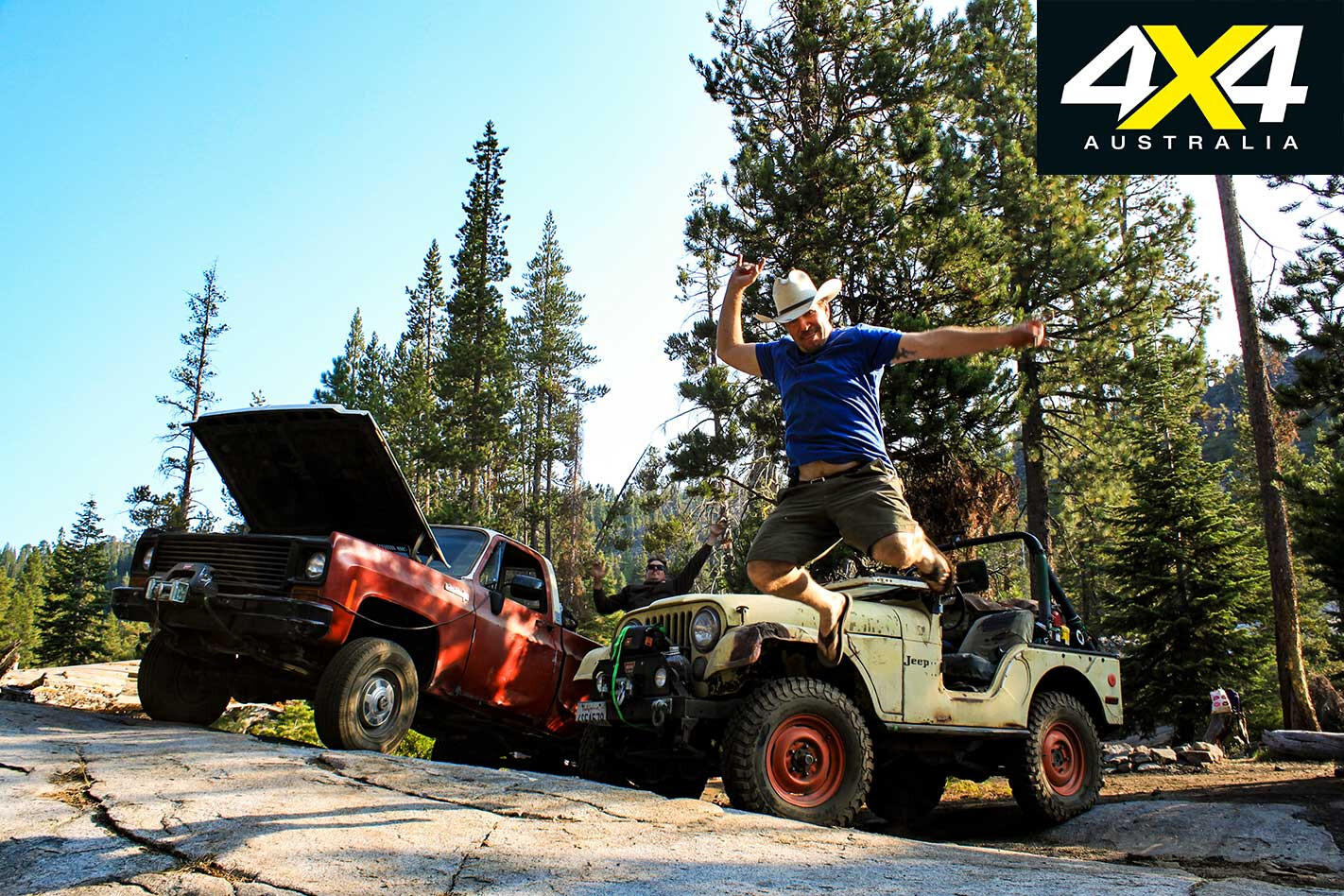
These guys work late on their vehicles, cook dinner with their crew, have a good time, clean up, and do it all again. It’s amazing because they are driven by their passion. When something breaks, they figure out how to fix it with whatever they can find. When something doesn’t go right, they try something else. At the end of the day, they are just two guys who want to inspire other people to try new things and have a fun time doing it.
Mark Smith would have been very proud of them conquering the mighty Rubicon. They won’t be the first ones to tell you that it was no easy feat without lockers, and it’s not recommended.
Right now, Lemon Pie is getting tuned up for its next big adventure. I’m excited to see where it will go next. Until next time, remember to have fun and try something new.
No matter what the marketing blurb says, off the dealer forecourt 4x4s aren’t what we might deem bush-ready, especially if you have plans on heading off the beaten path in mind.
The good news however is that you don’t have to have a degree in engineering to turn it into a proper adventure rig, instead here are a few new 4×4 products that can be easily installed and are useful out in the bush.
Redarc BCDC1250D in-vehicle battery charger
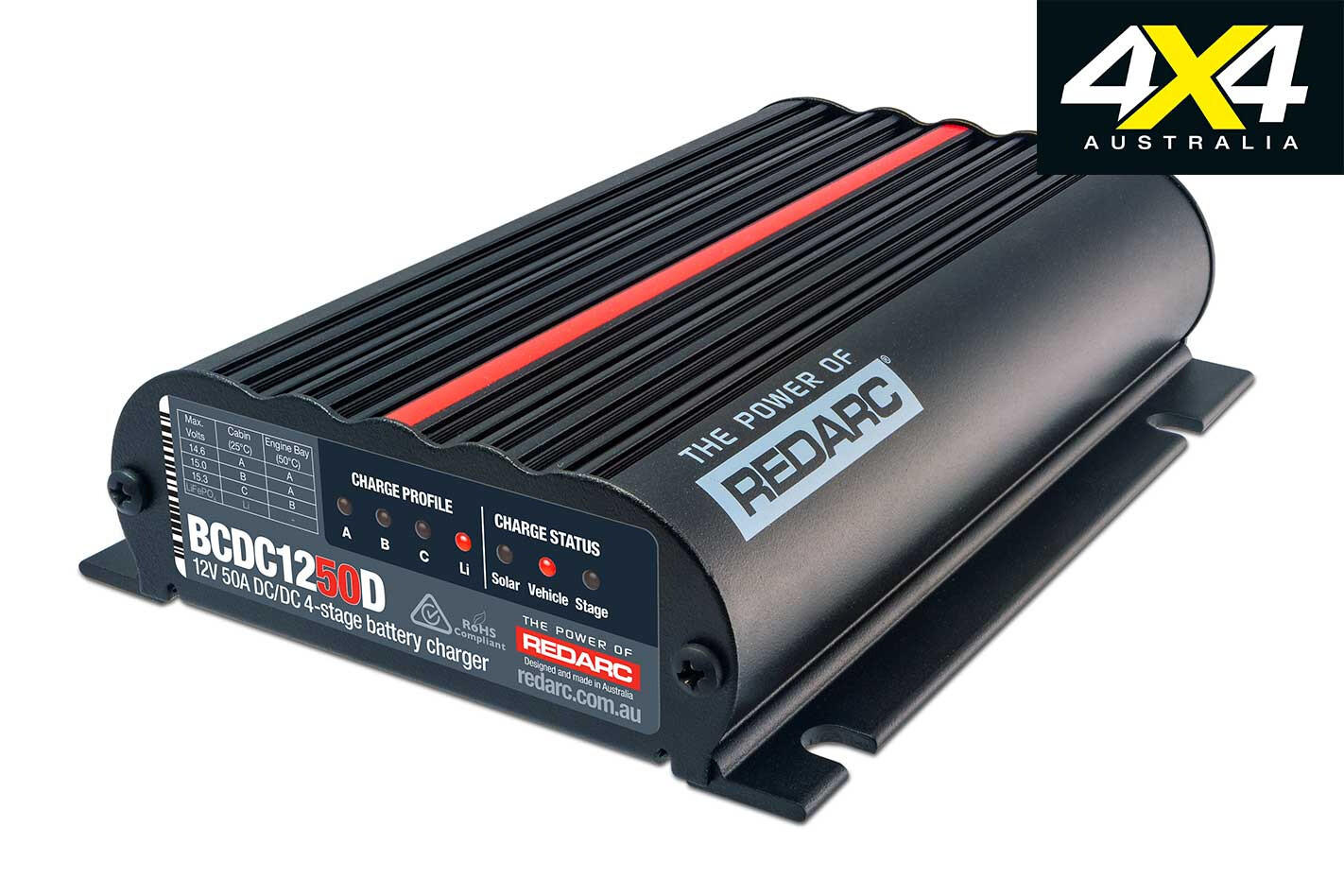
Redarc has upped the grunt for this new, more powerful 12V dual-input 50amp battery charger. The 50amp charging output means this latest unit is Redarc’s most powerful BCDC charger. It is designed to charge lead-acid batteries and also includes a lithium charging profile.
As it has been developed to provide a higher current output, the BCDC1250D includes an additional charging stage (Soft Start) for more demanding charge applications. The unit also includes separate vehicle DC and solar inputs and can charge from the vehicle alternator and a solar panel at the same time.
The BCDC1250D is compatible with variable voltage (smart) alternators and standard ones, plus it can be used in 24V and 12V systems.
Website: www.redarc.com.au
MSA 4×4 Explorer Power Panels
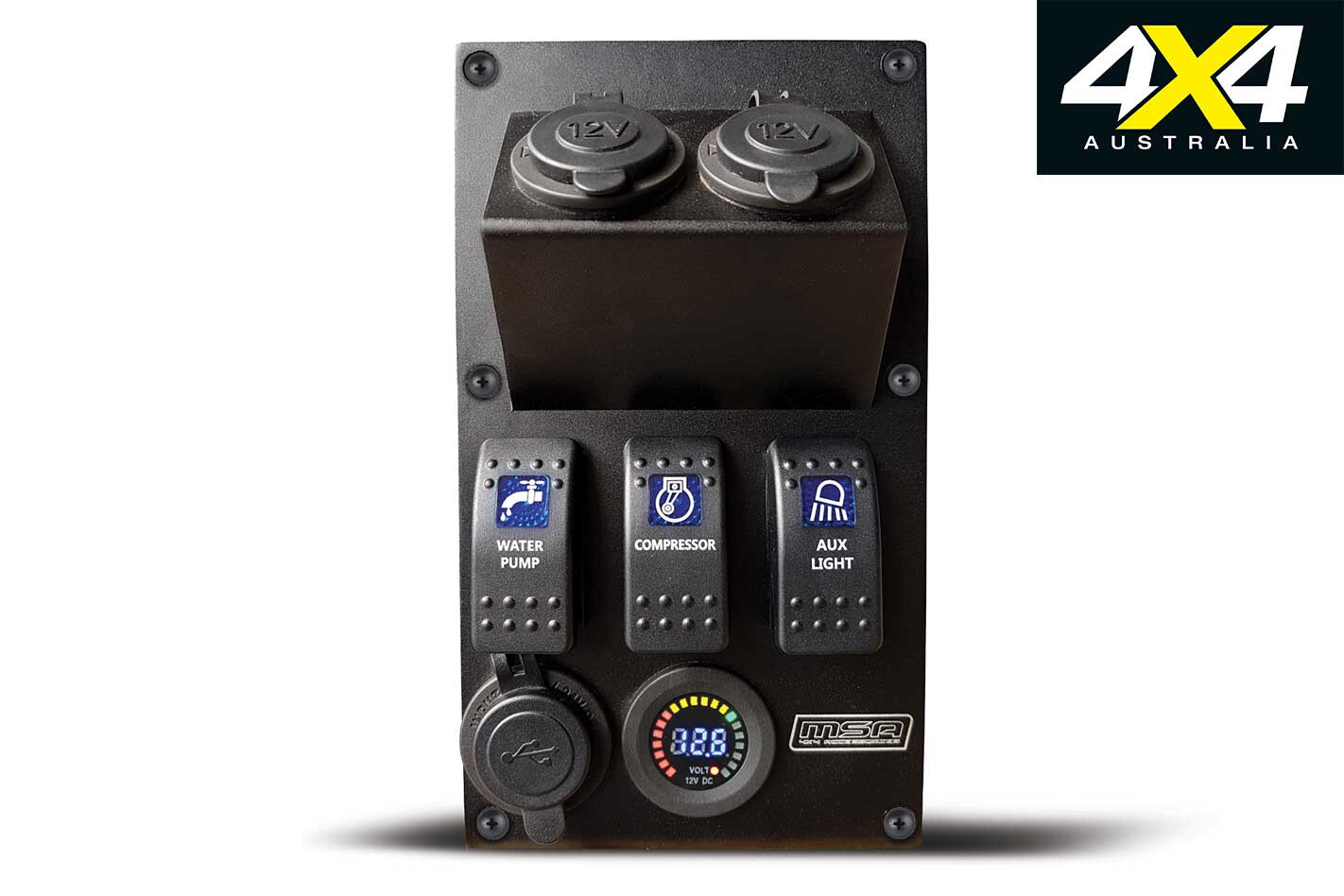
MSA continues to refine what is possible with a cargo drawer storage system, with the release of these anodised aluminium power panels for use with the company’s excellent drawer systems.
The power panels are prewired for easy fitment and feature angled sockets to make installation to the front of drawers straightforward, plus this also means when accessories are plugged in, the plug won’t hit the tailgate. The backing cover is injection-moulded to protect the rear of the switches and the wiring.
The kit includes three labelled, illuminated rocker switches, two spare switch covers, two (combined) USB outlets and two cigarette-lighter sockets. Plus there’s an illuminated voltage gauge display.
RRP: $225 Website: www.msa4x4.com.au
Dobinsons Internal Reservoir Shock Absorber (IMS)
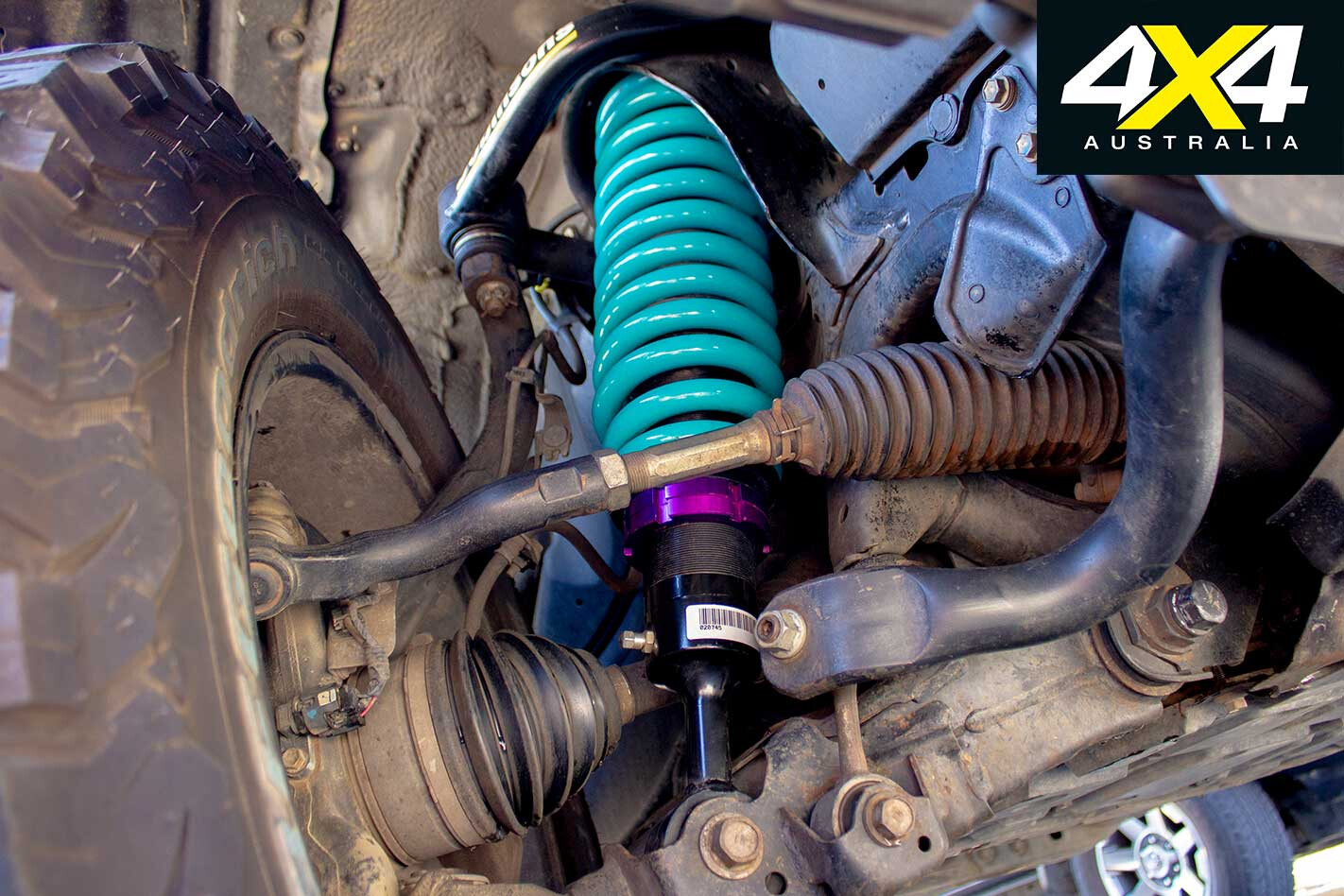
The team at Dobinsons Spring & Suspension have spent four years developing and extensively testing this new monotube internal reservoir shock absorber (IMS). That length of time is reflected in the top-notch design and features necessary to ensure optimum durability and performance.
The 50mm and 60mm extra-large bores mean there’s huge oil capacity, surface area and air flow to resist fade no matter how trying the terrain. The shock is of a direct bolt-on design and includes a triple-lip oil seal, vehicle-specific valving, natural rubber bushings, internal floating piston and a robust 3mm-thick wall on the outer body. Nice!
RRP: From $250 Website: www.dobinsonsprings.com
THOSE in the market for Chevrolet’s burley Silverado HD pick-up will have a smorgasbord of options to choose from when it launches, with the High Country variant to join the Work Truck, Custom, LT and LTZ models in the Silverado shed.
Much like the eight options in the 1500 model line-up, the five HD models will all differ in design, features and technology, to meet the specific demands of individual owners. The High Country also ditches the divisive front-end look that’ll be planted on its stablemates.
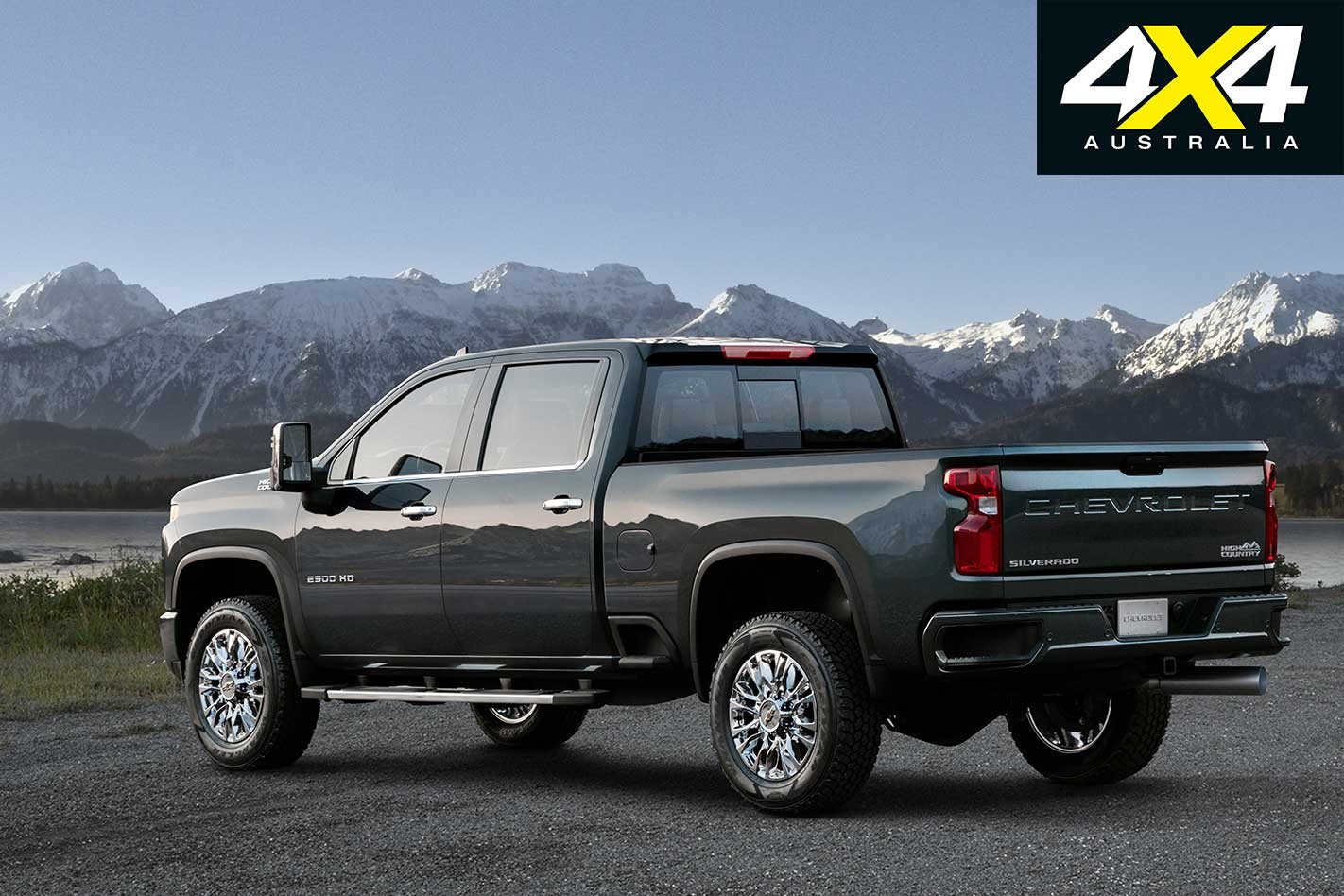
Mike Simcoe, vice president, Global Design, General Motors, said that personalisation options are important, as a one-size-fits-all approach doesn’t satisfy Chev customers.
“Truck customers are very clear: they want the perfect truck for them and not a ‘one size fits most’ truck compromised for the masses,” he said. “That insight shaped our strategy for the next-generation Silverado franchise, providing customers more differentiation between the Silverado 1500 and the Silverado HD, as well as more personalisation and differentiation between individual trim levels.”
Each of the Silverado HD models will feature unique exterior design details – for example, either a Chevrolet-stamped bar or the Chev bowtie – and a combination of colours and chrome. A two-tone metallic trim is exclusive to the High Country.
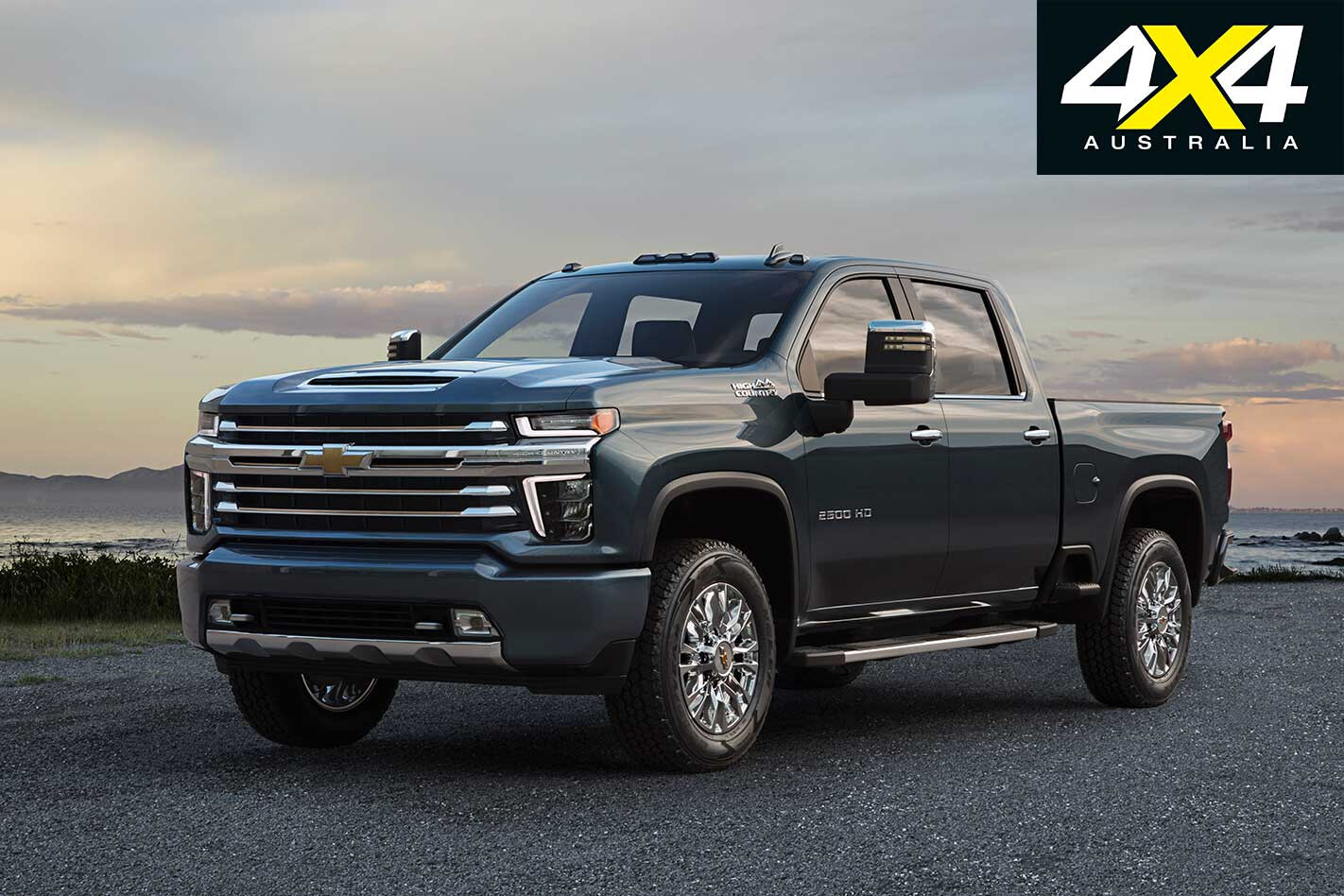
“We took into account every detail of what customers expect, and how they will use their truck,” Simcoe said. “The results are unique versions of the Silverado HD equally at home working on a construction site or pulling a camping trailer.”
The Silverado HD goes on sale in the USA in mid-2019, but information on Australian conversions at this stage is scarce. Expect none to be available locally until early in 2020.
EACH year 4X4 Australia is invited to the SEMA Show to be a part of the Global Media Award judging panel. Exhibitors at the show are invited to submit products to the SEMA New Products Showcase, and the 30 GMA judges, who in 2018 came from 19 countries, chose the 10 products which they like and think would work well in their markets.
With close to 3000 products in the showcase, it’s a long task; but here’s our selection for 2018.
Factor 55 Extreme Duty 20 soft shackle
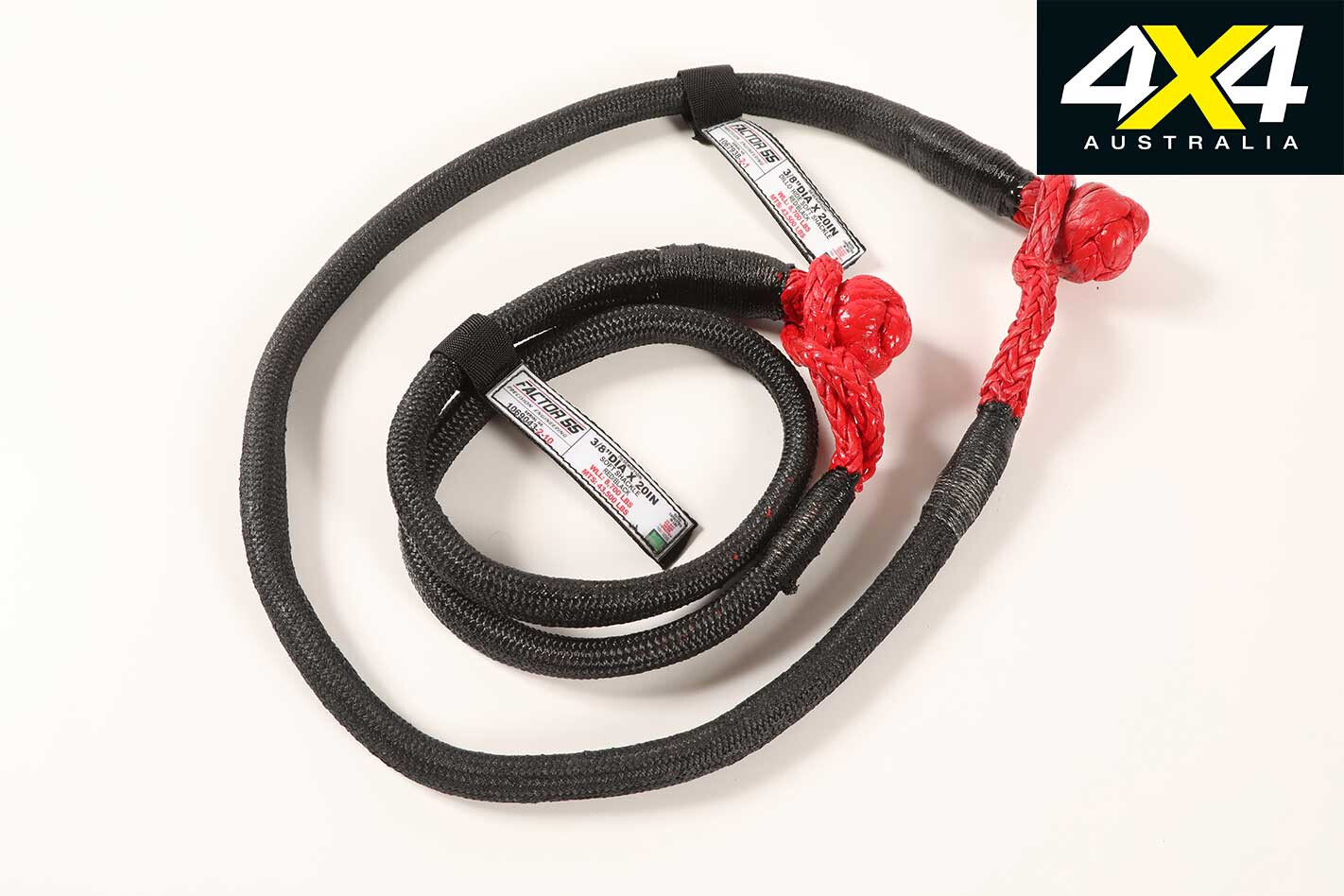
We’ve all drooled over the Factor 55 links shining on the front of winch fairleads, but here’s something simple and clever from the recovery equipment company. The extra-long 20-inch-diameter Extreme Duty soft shackle can be double-looped for increased breaking strength.
Made from HMPE Plasma rope with a woven polyester jacket whipped and Fiberlock-coated for protection against abrasion and damaging UV light, the shackle has greater than 418 tonnes breaking strength.
Website: www.factor55.com
Monster Zeus rope
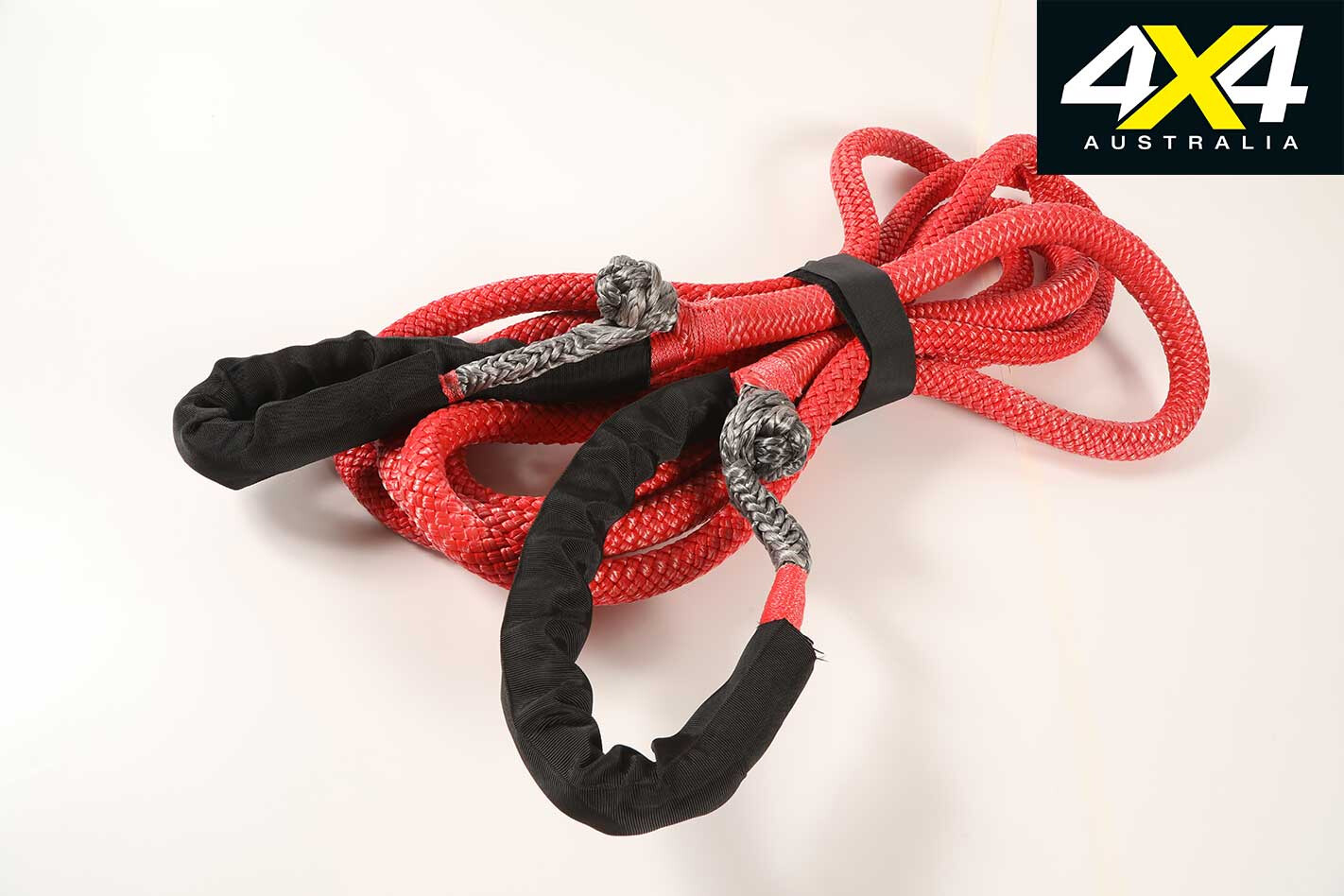
Another synthetic rope recovery product, the Monster Hooks Zeus recovery rope is unlike any other rope. Zeus rope has soft-shackle technology spliced into both ends. Replacing standard eyes, this allows for safe, strong and simple connections by eliminating the use of heavy shackles, making recovery much safer. Made of 100 per cent Nylon-coated rope; the ends are made of Spectra fibre.
Website: www.monsterhooksinc.com
MaxTrax hitch and winch ring
Aussie company MaxTrax has branched out from its well-known recovery boards to create other recovery items for use with synth ropes and soft shackles.
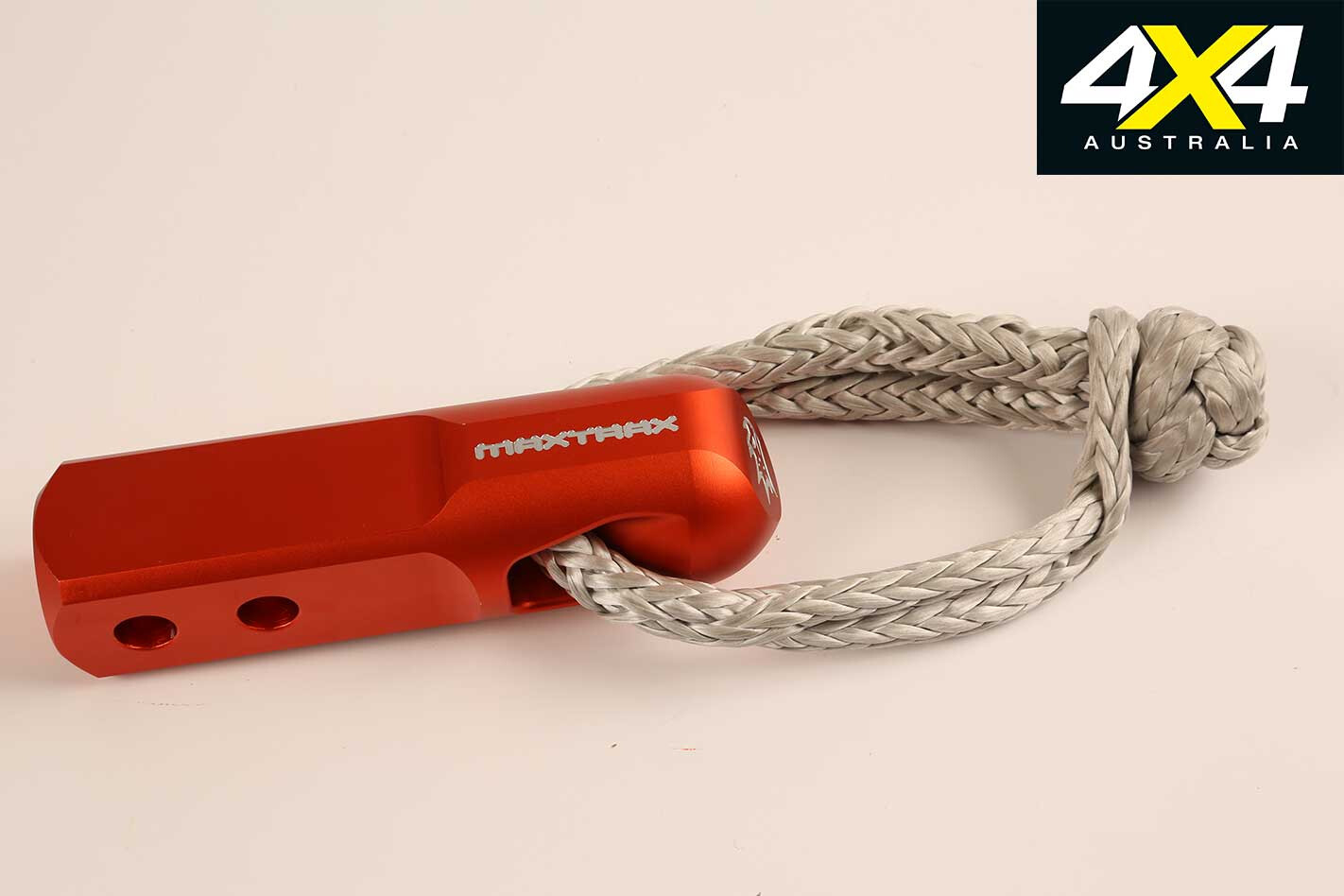
The MaxTrax 50mm Hitch is a tow hitch receiver specifically designed for use with soft shackles and will not accept the fitment of steel shackles. It is CNC-machined from 6061 billet aluminium, featuring smooth curves and no sharp edges to protect the soft shackles; and it’s anodised for protection. With a WLL of 8000kg and tested to total destruction at 40,000kg, it is up to any 4×4 recovery.
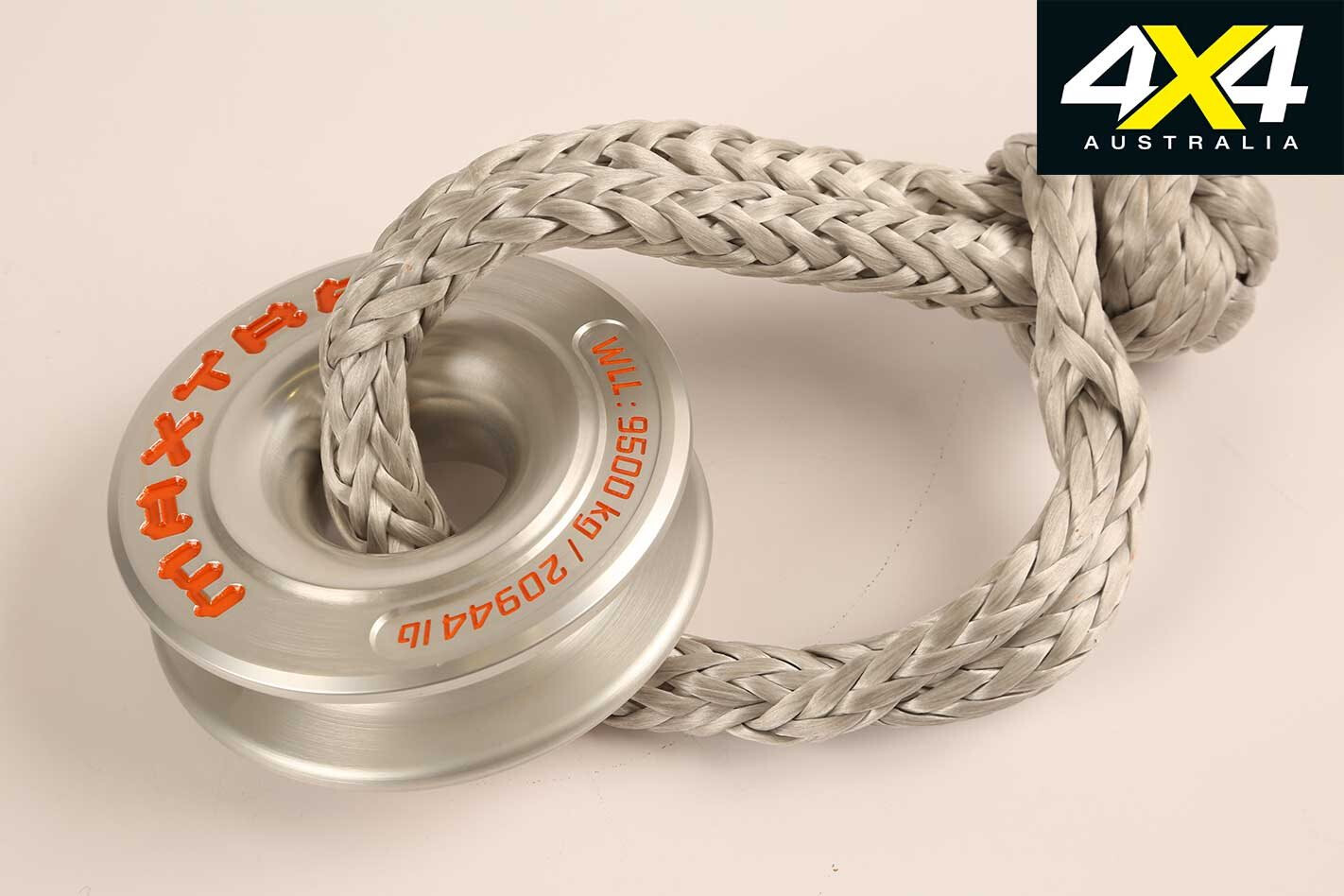
The MaxTrax Winch Ring takes more heavy metal out of your recovery rig by replacing the traditional snatch block with a simple 120mm-diameter polished aluminium ring, which your synth rope slides around. Again it is designed for use with soft shackles and synthetic winch rope to make vehicle recoveries as safe as possible
Website: www.maxtrax.com.au
Fox Factory Race Series 3.0 internal bypass piggyback DSC
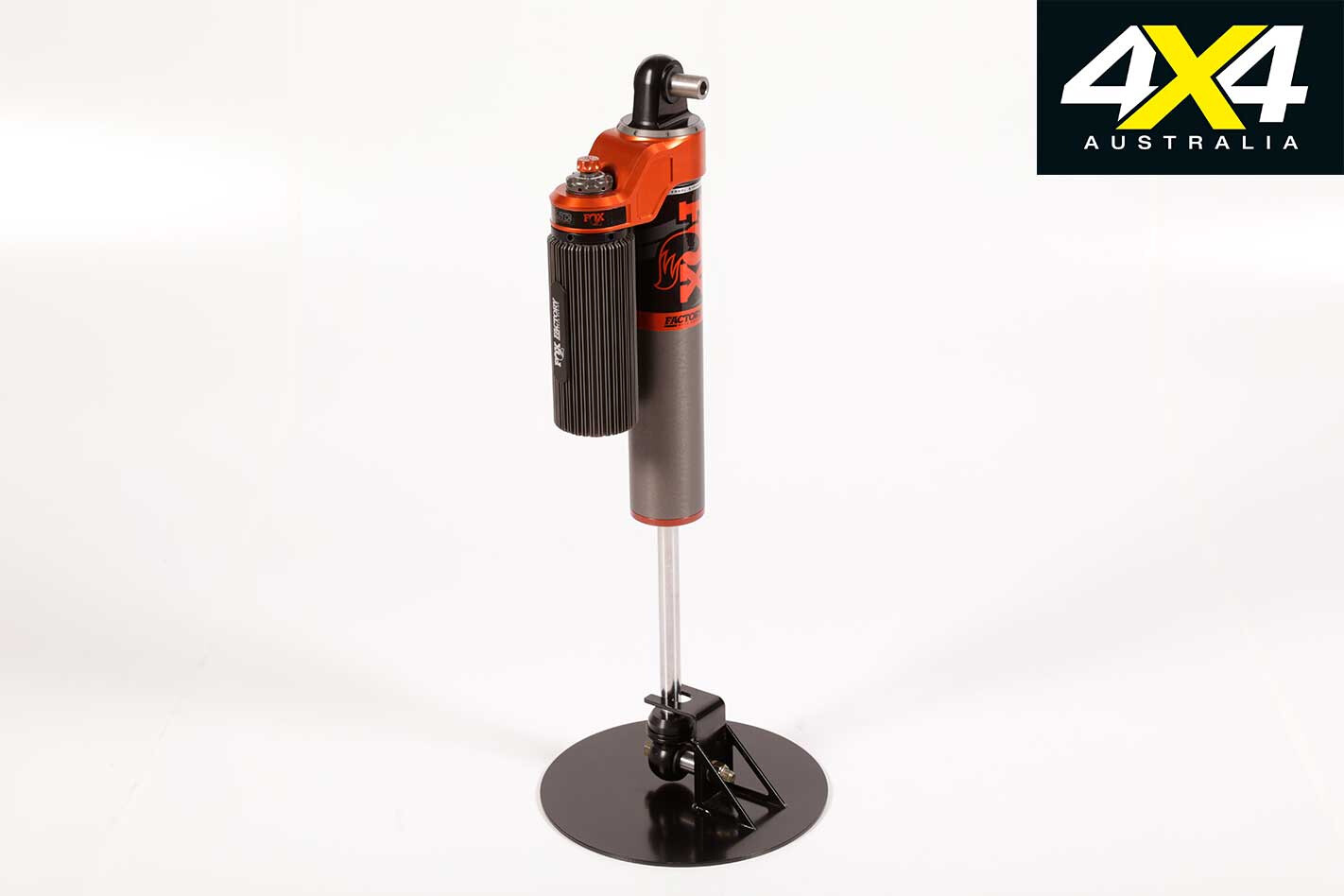
JL Wranglers were everywhere you looked at SEMA, with all manner of products for them. Premium shock absorber manufacturer FOX has stepped up the game for Jeep JL Wrangler suspension with the all-new Factory Race Series 3.0 Internal Bypass shocks.
These bolt-in rear shocks deliver extreme off-road performance without sacrificing everyday comfort, thanks to position-sensitive Internal Bypass technology, DSC adjusters, 3.0-inch aluminium bodies and finned piggyback reservoirs. Match them with the Fox shocks up front for the ultimate JL set-up.
Website: www.ridefox.com
ProCharger Jeep Wrangler JL 3.6L supercharger system
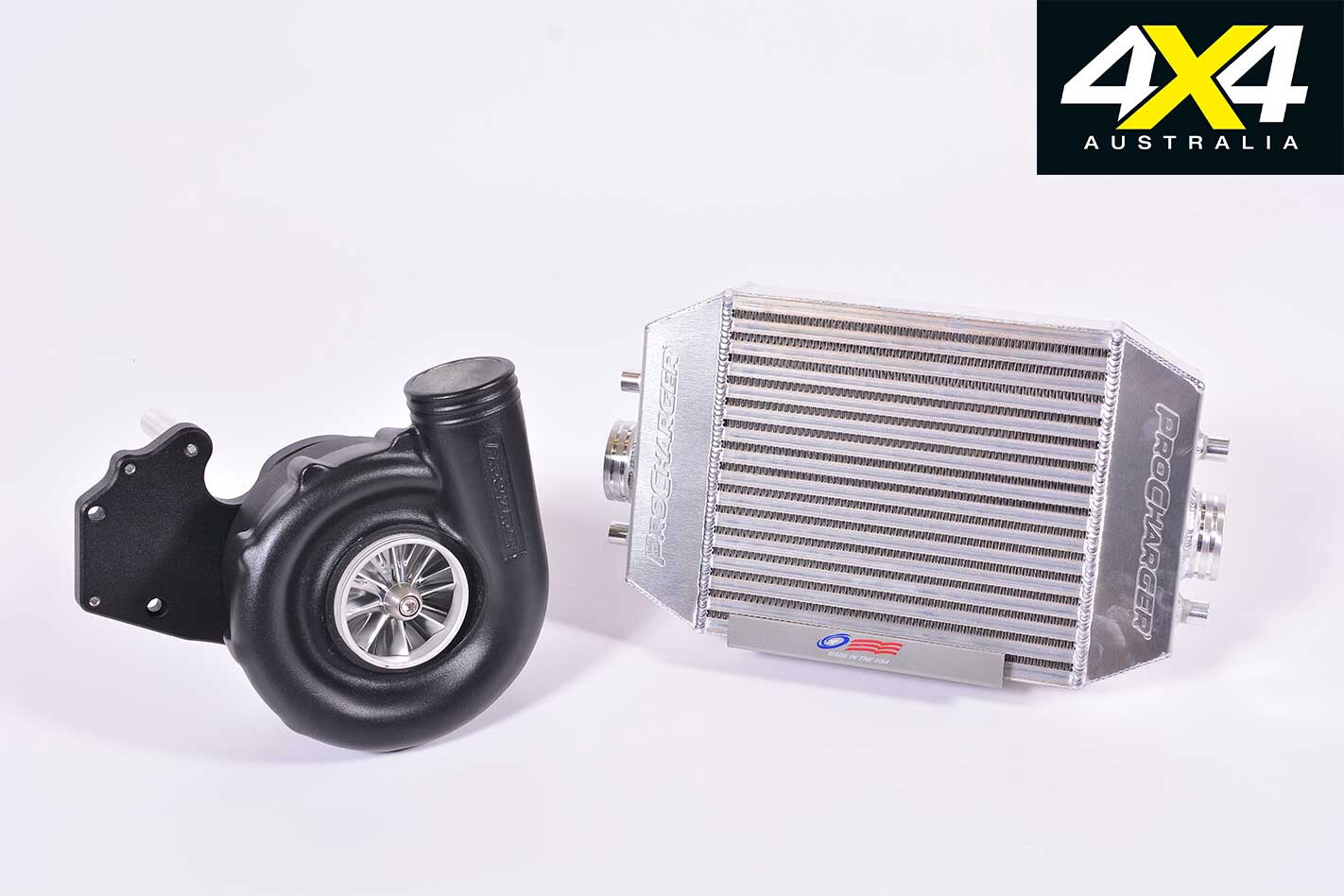
Another quality product to improve the performance of the JL Wrangler, ProCharger has produced a complete air-to-air intercooled supercharger system for the 2018 Jeep Wrangler JL’s 3.6L V6 engine. These new systems produce a reliable 50 per cent + horsepower gain with just 7psi on otherwise stock JLs running premium pump fuel.
Website: www.ProCharger.com
Chevrolet Colorado ZR2 suspension upgrades
We were driving Chevrolet’s Colorado ZR2 on our SEMA trip and were super impressed by its suspension. Chevrolet Performance now offers the components of the suspension as individual products.
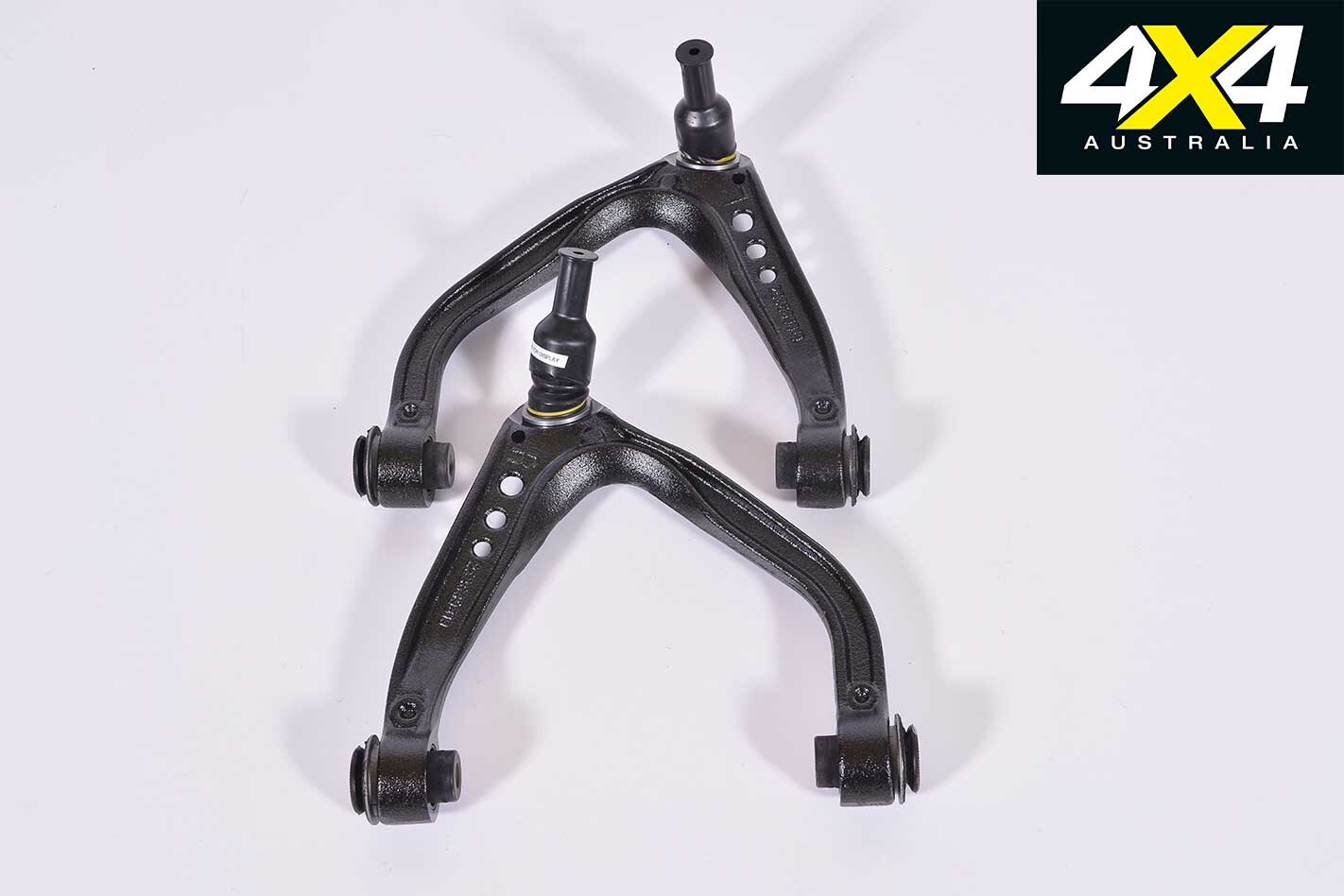
The ZR2 High Angle Upper Control Arm enables increased upper ball joint articulation and increased front suspension travel. It increases cross car articulation by up to 18 per cent and features a sealed ball-joint design and boot design, providing protection from off-road elements.
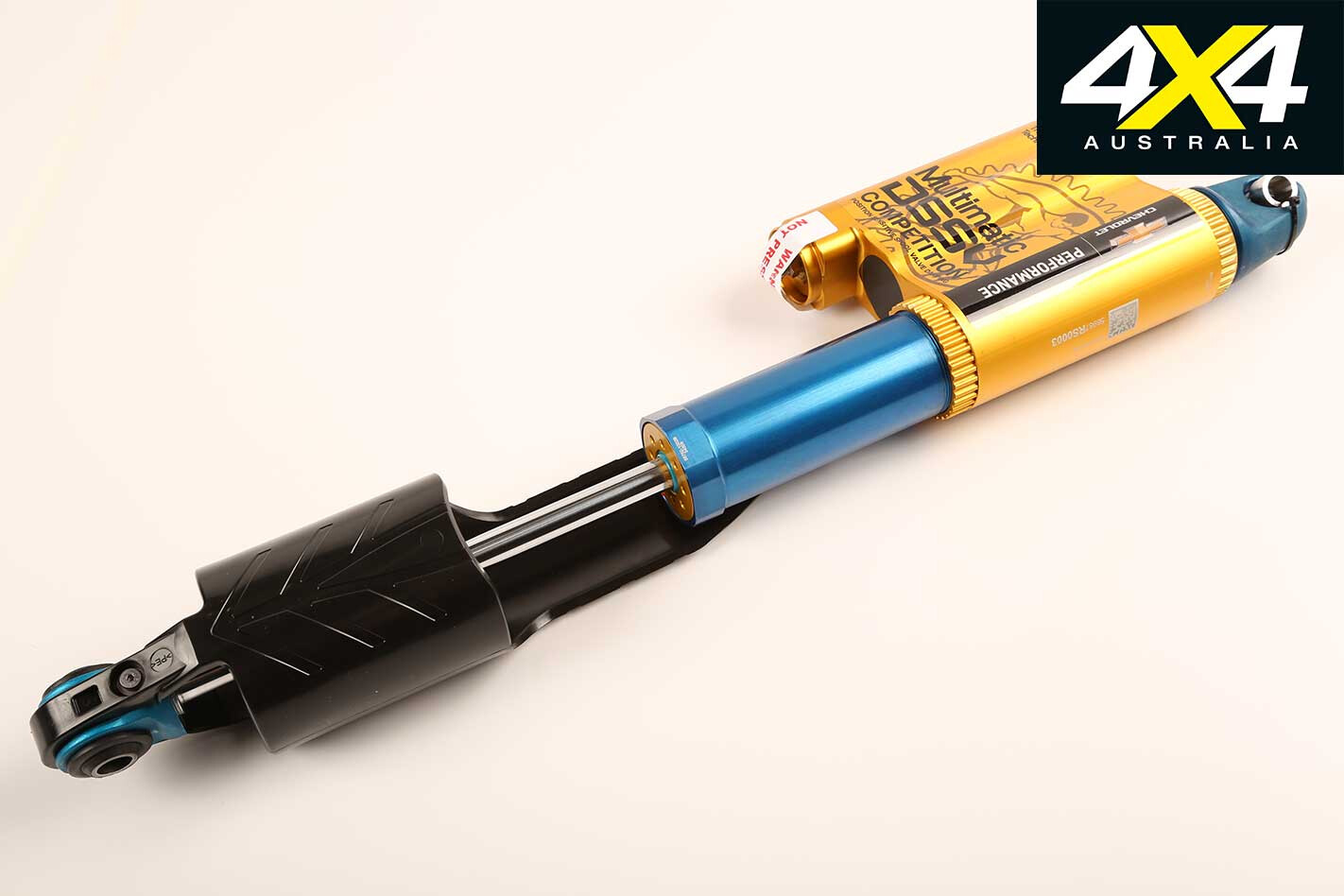
The ZR2’s Multimatic shocks have been retuned by Chevrolet Performance for off-road racing, and these replacement Long Travel Dynamic Suspension Spool Valve (DSSV) Shocks provide up to a 10 per cent increase in overall rear suspension travel on 2017+ Colorado ZR2 models. Intended exclusively for off-road use, we wonder if they’d bolt into our local Holden Colorado.
Website: www.Chevrolet.com/Performance
Patriot Campers X1GT
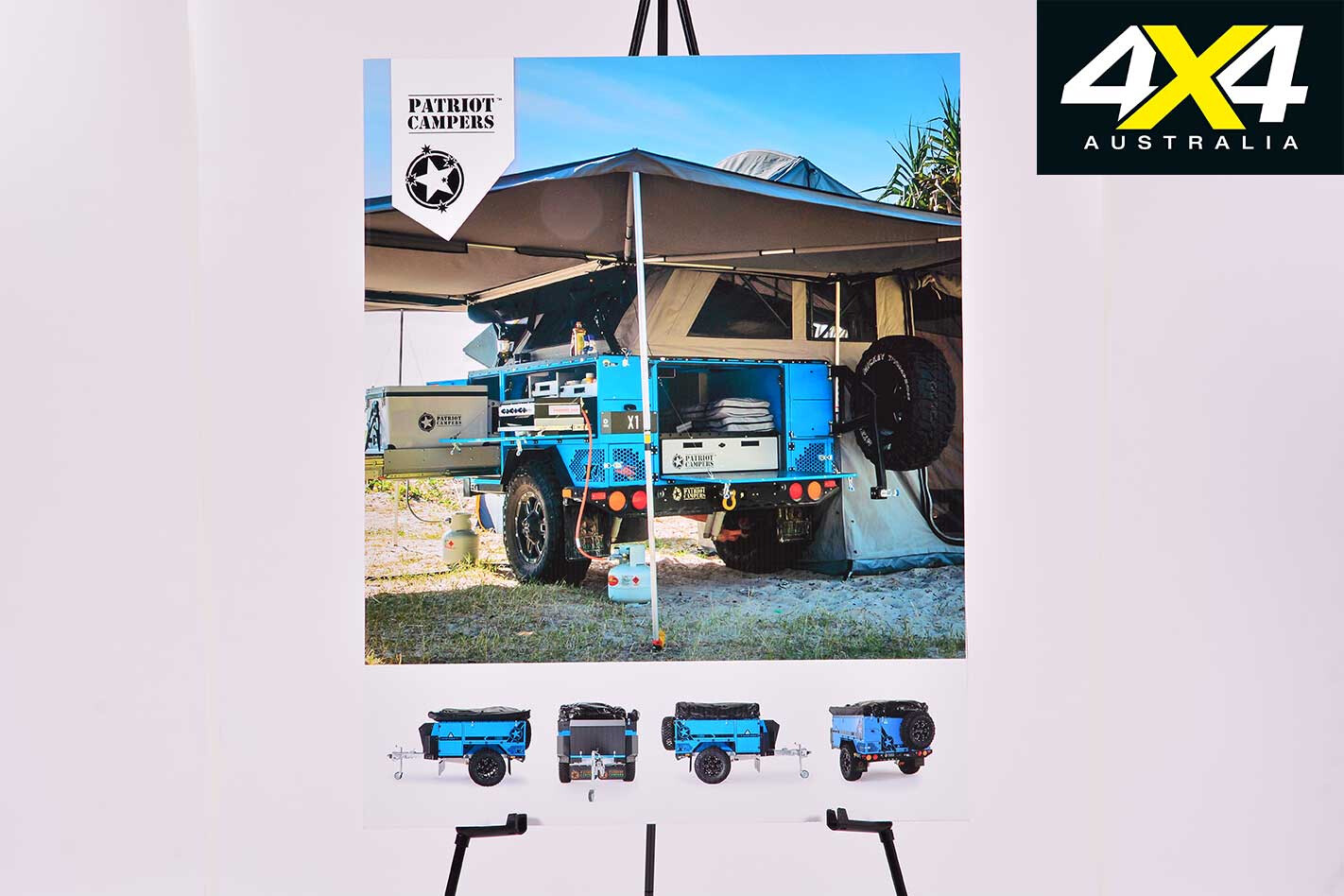
Just like JLs were everywhere at SEMA, it seems you can’t turn around without seeing Patriot Campers and Supertourers in Australia. Its line of X1 and X2 camper trailers are super popular at home and are starting to make an impression on the burgeoning US market.
The X1 camper uses innovative features and patented designs to make overlanding easier no matter what side of the Pacific you are on. The integrated tent sets up in three minutes, a folding staircase ascends to a pocket-spring mattress, and independent suspension and an off-road hitch make the X1 one of the most capable trailers on the market.
Website: www.patriotcampers.com.au
Morryde trail kitchen
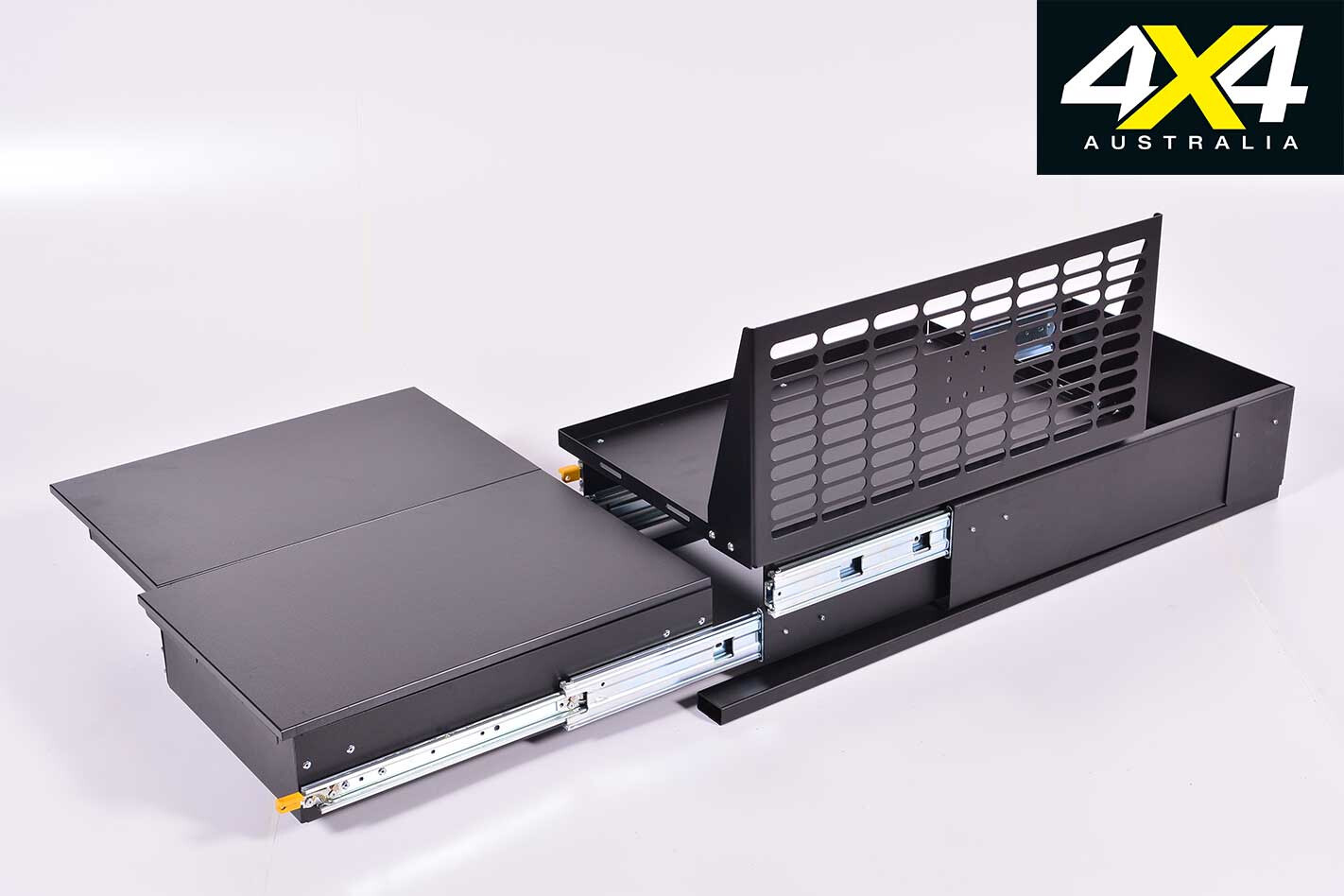
Another product designed for the JL Wrangler but one that could be useful in the back of any 4×4, or even a trailer. The Trail Kitchen from MorRyde is a compact, modular bolt-in kitchen system that attaches to any solid, flat surface.
Offering more than 5.5ft² of counter space, 300 cubic inches of storage space, and room to accommodate the most popular 12-volt fridge/freezers in use today, it is perfect for any off-road vehicle.
Website: www.MORryde.com
JEEP Wrangler’s one-star Euro NCAP rating which came in yesterday will be a hard pill to swallow for FCA as it launches its 2019 JL Wrangler with many new features designed to make it more appealing to a broader cross-section of buyers, not just off-road enthusiasts.
The JL Wrangler has more fuel-efficient drivetrains, more functionality, improved usability and more safety equipment, all while retaining that legendary off-road ability and iconic design. However, many buyers considering ownership of a cool-looking family 4×4 will be deterred by this safety rating.
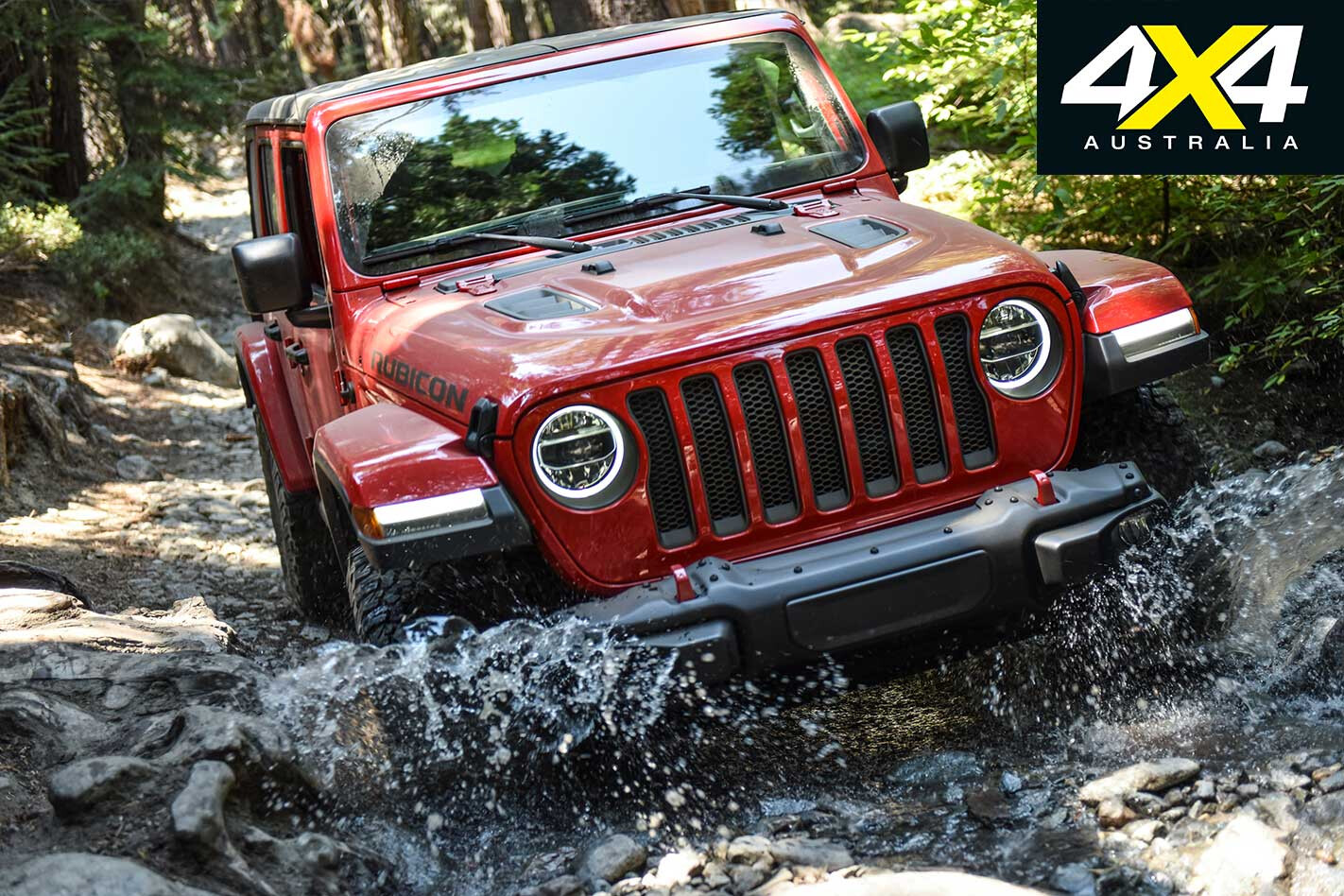
As four-wheel drive enthusiasts we may not consider safety as high a factor in vehicle choice as other buyers. The fact that the Wrangler still has unrivalled off-road ability and the biggest range of aftermarket accessories and modifications in the world might weigh-in with far more importance than safety ratings to an off-roader.
But would you want to put your kids and family in one and hit the highways? The Wrangler is a very specialised vehicle. It’s a ladder-framed vehicle built for purpose, and its number one priority is off-road performance. Jeep finds itself in a similar situation to Land Rover, where part of the reason it stopped making the traditional Defender was that it wouldn’t meet safety regulations in many countries … and those regulations are only getting stricter.
Until this result for Jeep, the new Suzuki Jimny, another ladder-frame, live-axle off-roader, had the unfortunate mantle of being awarded the worst Euro NCAP result since the new, stricter 2018 regulations were introduced. It tallied three stars, including 73 per cent for adult occupants, 84 per cent for child occupants, 52 per cent for protecting vulnerable road users, and 50 per cent for safety assistance systems.
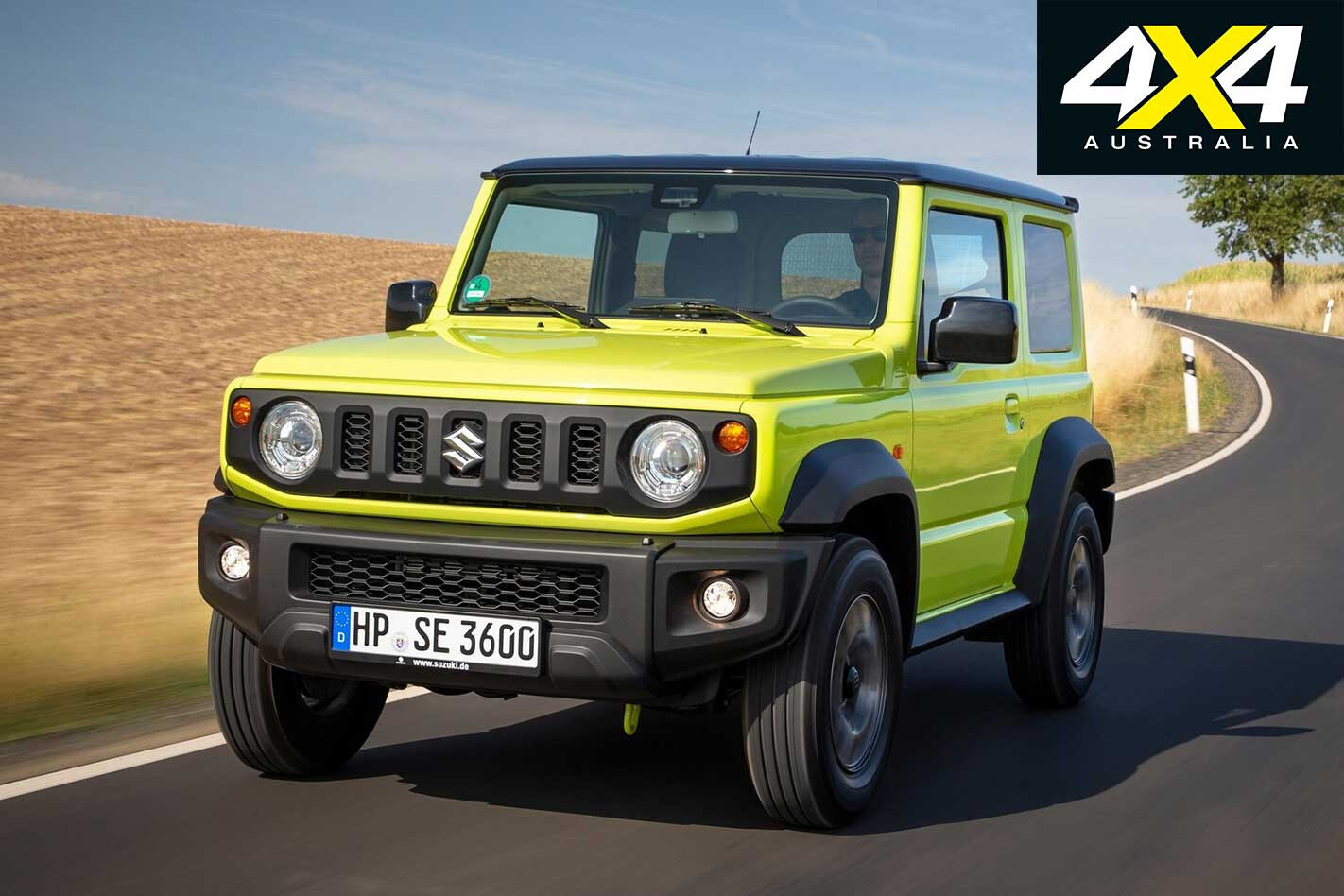
The JL Wrangler scored just 32 per cent in safety assistance, because it was a 2018 model not equipped with Automatic Emergency Braking (AEB). Jeep Australia was quick to point out that when the JL finally reaches our shores in March, the vehicles will be 2019 models equipped with an advanced AEB system using both camera and radar technologies as standard.
Of more concern for users is the low 50 per cent score for adult occupant protection, with the test revealing some deformity of the A-pillar and the deformation of the footwell area on the driver’s side. The A-pillar isn’t much a surprise, as it’s still a fold-down part of the vehicle structure designed to allow a more open-air feel to users.
The fold-down windscreen was redesigned for the JL to make it easier for users to operate, but is it time for this feature to be deleted in the name of safety? There’s no excuse for the footwell deformation, though, and this should be a concern for any buyer.
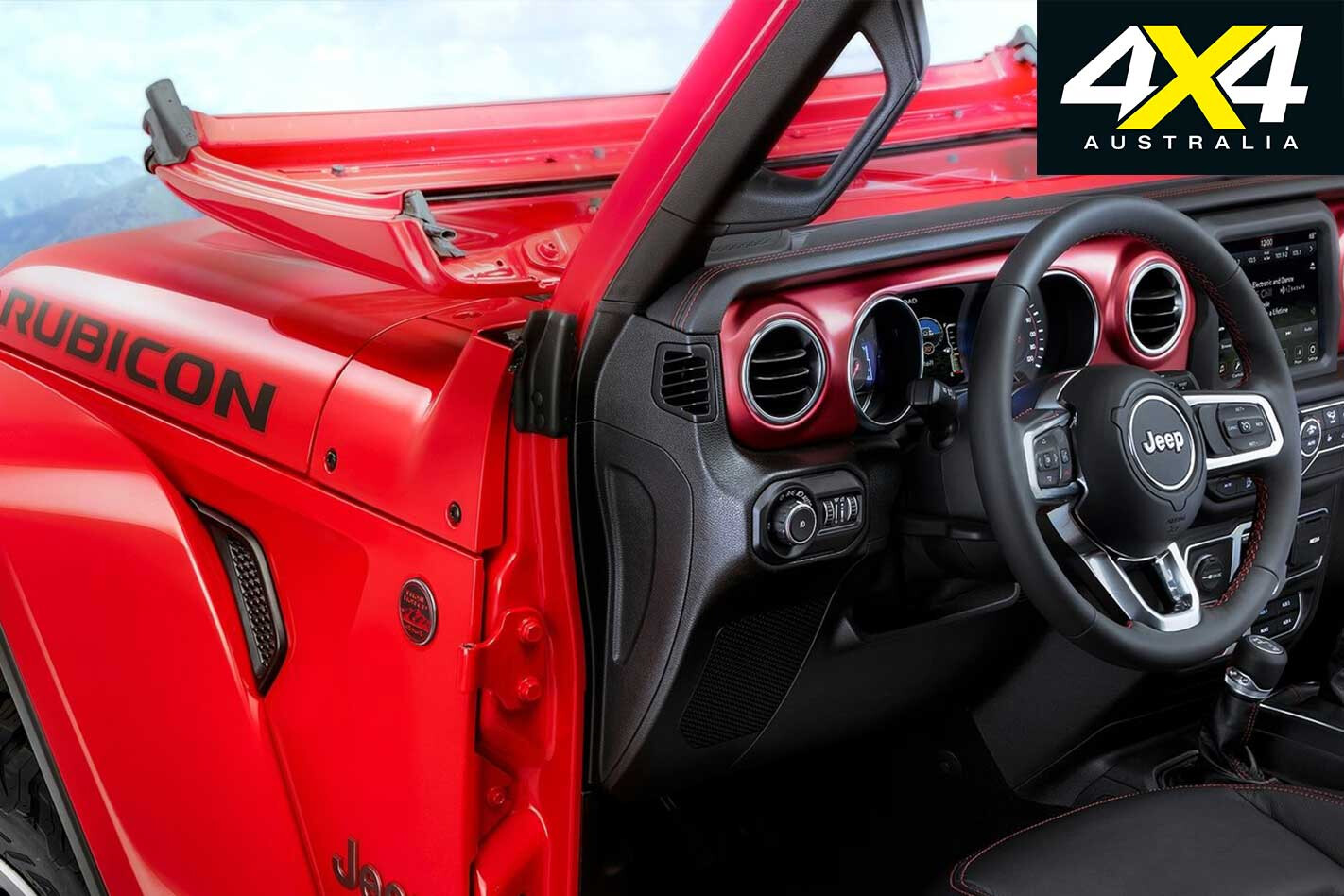
How far are we prepared to compromise safety for traditional feel and look, as well as off-road ability? And don’t the bigger, aggressive tyres, raised suspension and modified barwork that we fit negate many of the OE safety systems anyway?
Reputable manufacturers of quality aftermarket equipment go to a lot of expense and R&D time to ensure their products don’t adversely affect safety. In the case of Jeep, its in-house MOPAR brand of accessories produces some of the most extreme kit you can buy and fit, and it’s all OE approved.
Getting rid of the fold-down screen is one thing, but could you imagine a Wrangler without a separate chassis and live axles? Early reports during the gestation of JL hinted that the new Wrangler would do away with live axles, but thankfully the stories were either false or FCA scrapped those plans.
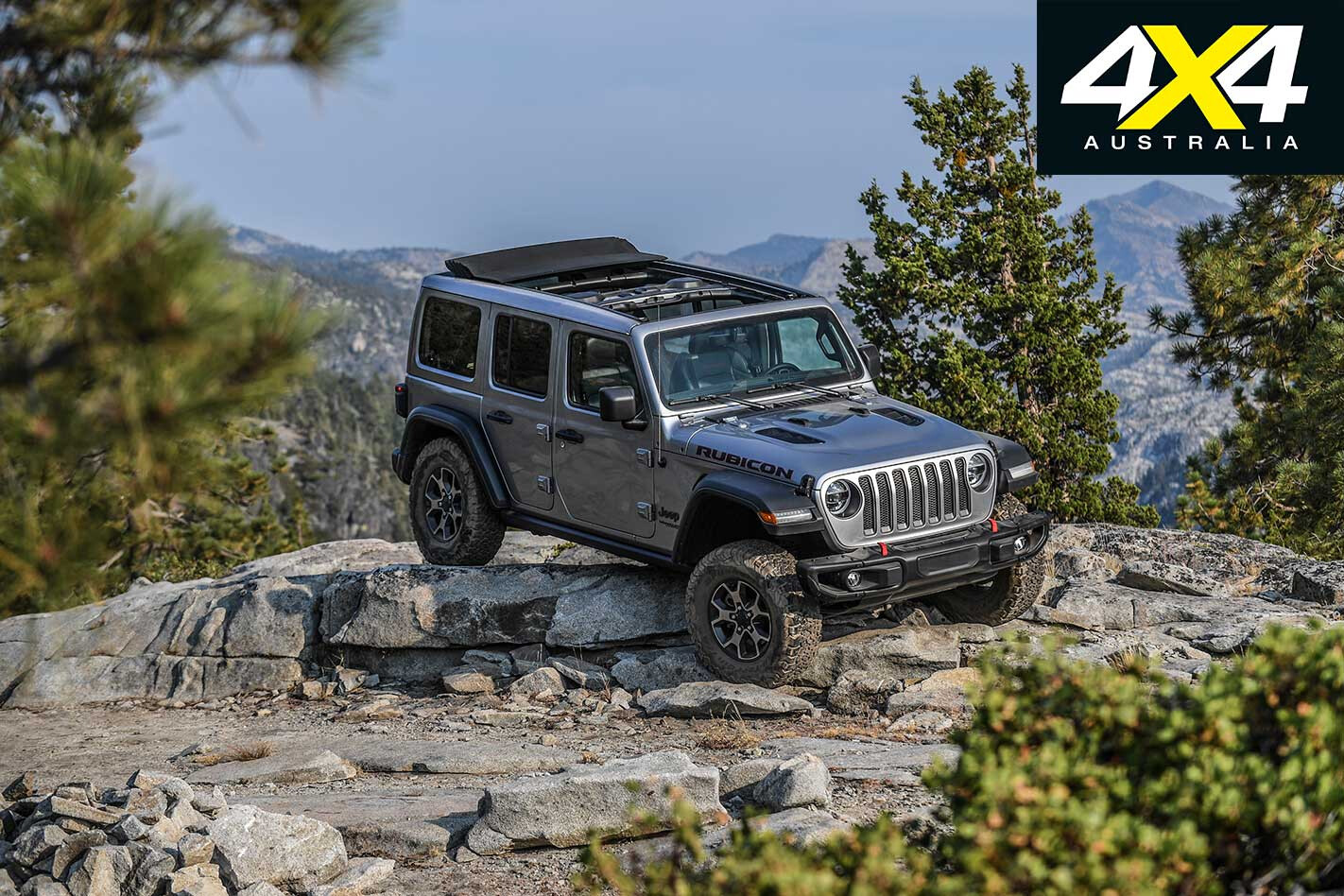
We’d hate to see vehicles like the Wrangler, Jimny and Land Cruiser 70 Series go the way of the Defender, but their numbers are dwindling and it’s getting harder for manufacturers to meet the more stringent standards.
Will they be able to retain their place in the modern world?