
THE final leg our Corner Country travels sees us track the scenic Paroo River from Eulo in outback Queensland all the way south to Wentworth, where the famous Murray and Darling Rivers meet.
Along the way we cut through the small town of Hungerford on our way to Wanaaring, the Nocoleche Nature Reserve – a famous spot in our Australian heritage – and the Paroo-Darling National Park, before pulling the handbrake on the X-Class convoy at the opal-mining town of White Cliffs. Here we chat to a local expert to learn about the town’s prosperous mining history – we also go underground to try our luck at finding some valuable stones.
Back on the region’s smooth, red outback dust, the next stop is the magical Mutawintji National Park, where we stretch our legs on the park’s famous walking tracks. We then pop into Wilcannia, find a place to set-up camp along the scenic Menindee Lakes, visit the Woolshed in Kinchega National Park, and catch some zees at the majestic Bindara Station; before our Corner Country endeavours wrap up at a water-soaked Wentworth.
With destinations suited for hiking, fishing, and hitting the tracks, make the most out of your summer with these 4×4 activities and events that are set to take place all over Australia and run all the way through to autumn.
Million Dollar Barra (NT)
Another heads-up folks: there are still (at the time of writing) five barramundi kicking around Top End waterways that carry a catch-tag signalling they are worth one million dollars. This is the fourth season of Million Dollar Fish, with organisers spreading the odds by tagging five barra with the “Million Dollar Fish” tag.
The first of those five will be the winning fish. There are also 100 barra tagged with $10,000 prizes and 20 with $5000 tags. There’s never really any need for an excuse to head to the Top End, but this one should do the trick.
Please check out www.milliondollarfish.com.au for more information.
Australian Wooden Boat Festival (TAS)
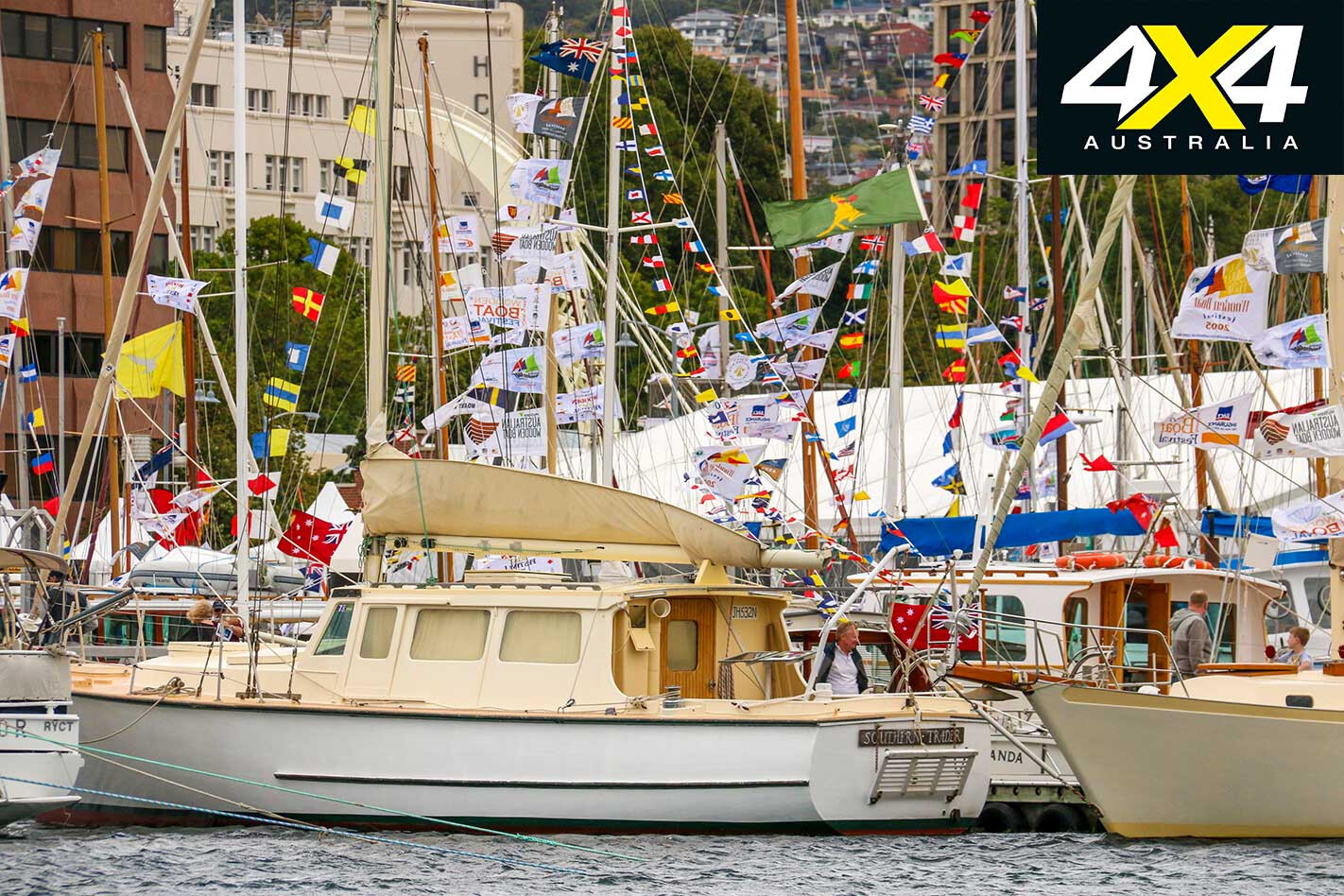
For lovers of old, new and historical wooden ships of all shapes, sizes and methods of power, the biennial Australian Wooden Boat Festival, held February 8 to 11, will take place in Hobart, both on the water and ashore.
As well as the chance to see beautifully built watercraft, the festival also hosts the international Wooden Boat Symposium (at the Uni of Tassie’s Dechaineux Theatre), with a line-up of expert speakers on subjects ranging from advanced nautical design and history, to boat restoration and traditional boat-building skills australianwoodenboatfestival.com.au for more info.
Bright Adventure Travel Film Festival (VIC)
If you’re looking for inspiration for that next off-road or outdoor trip, the Victorian alpine village of Bright is hosting its annual Adventure Travel Film Festival from February 15-17. The festival is showing great films including Pan American by Postie, which follows Chantelle and Todd Powell on two postie motorbikes as they traverse 17 countries.
Another cracker is Once More – the story of VIN903847, which recounts Paul Loofs’ triple circumnavigation of the world in a VW Beetle. The Powells and Paul will be guest speakers at the festival.
For more information: adventuretravelfilmfestival.com
Silverton Sunsets Music Festival (NSW)
After the raging success of the inaugural music bash at one of Australia’s iconic outback pubs, this event is back again for its second year and will run from March 1 to 3. Reflecting that initial success, the 2019 event will be bigger and better. Troy Cassar-Daley, Tania Kernaghan, Sara Storer, Amber Lawrence, The Bushwackers and Rob Imeson are some of the artists performing.
See www.silvertonsunsetmusifestival.com for more info.
Drive 4 Life (VIC)
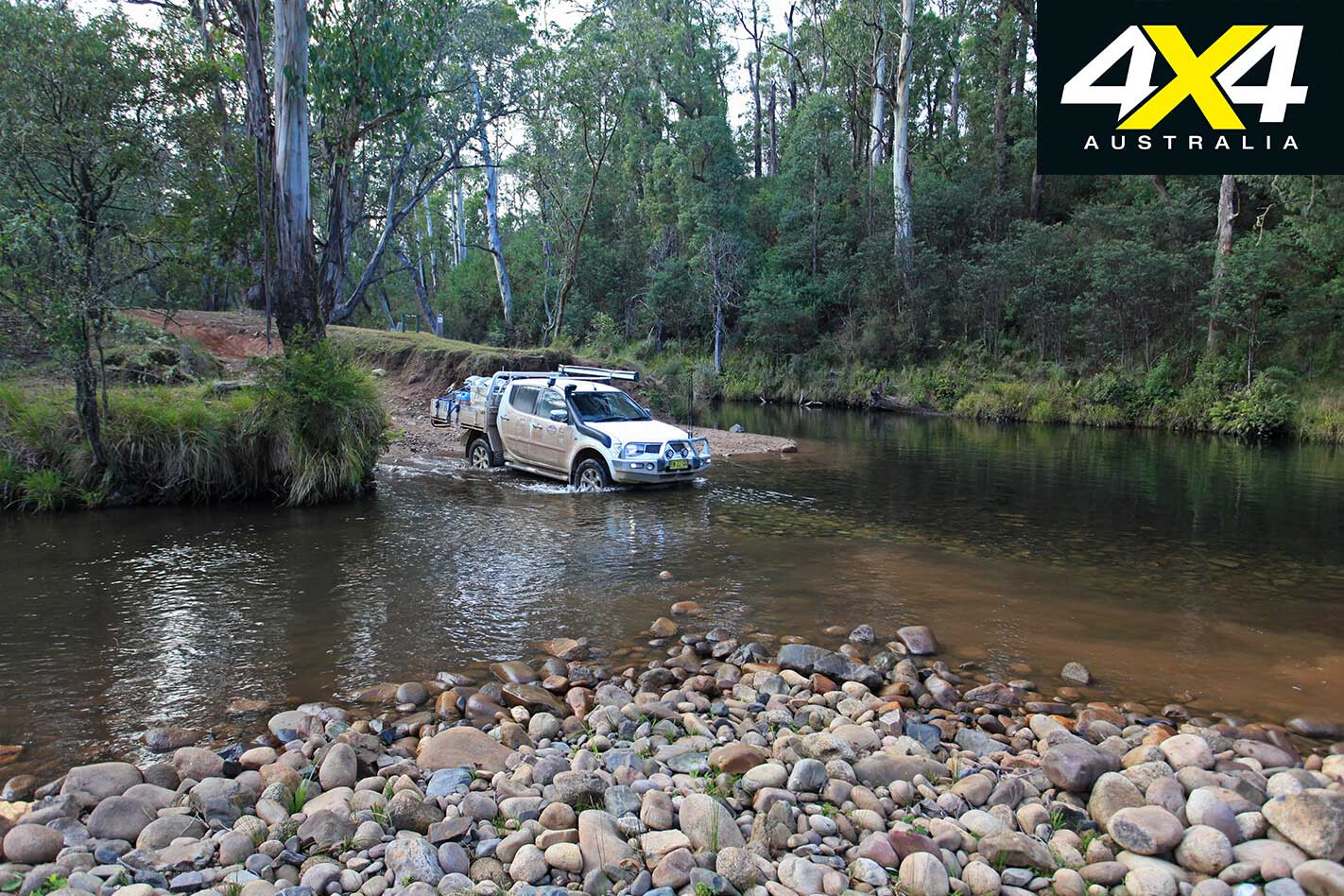
Drive 4 Life will be running two tours in 2019. One will journey through the Vic High Country from April 28 to May 3, on a loop starting and finishing in Harrietville. The second is set for September 8 to 15 and tours the outback NSW town of Broken Hill and SA’s Flinders Ranges. The tours raise money for the Northcott foundation, and a $1000 tax deductible donation per vehicle ensures participation.
Visit www.drive4life.com.au for more information.
Go West (WA)
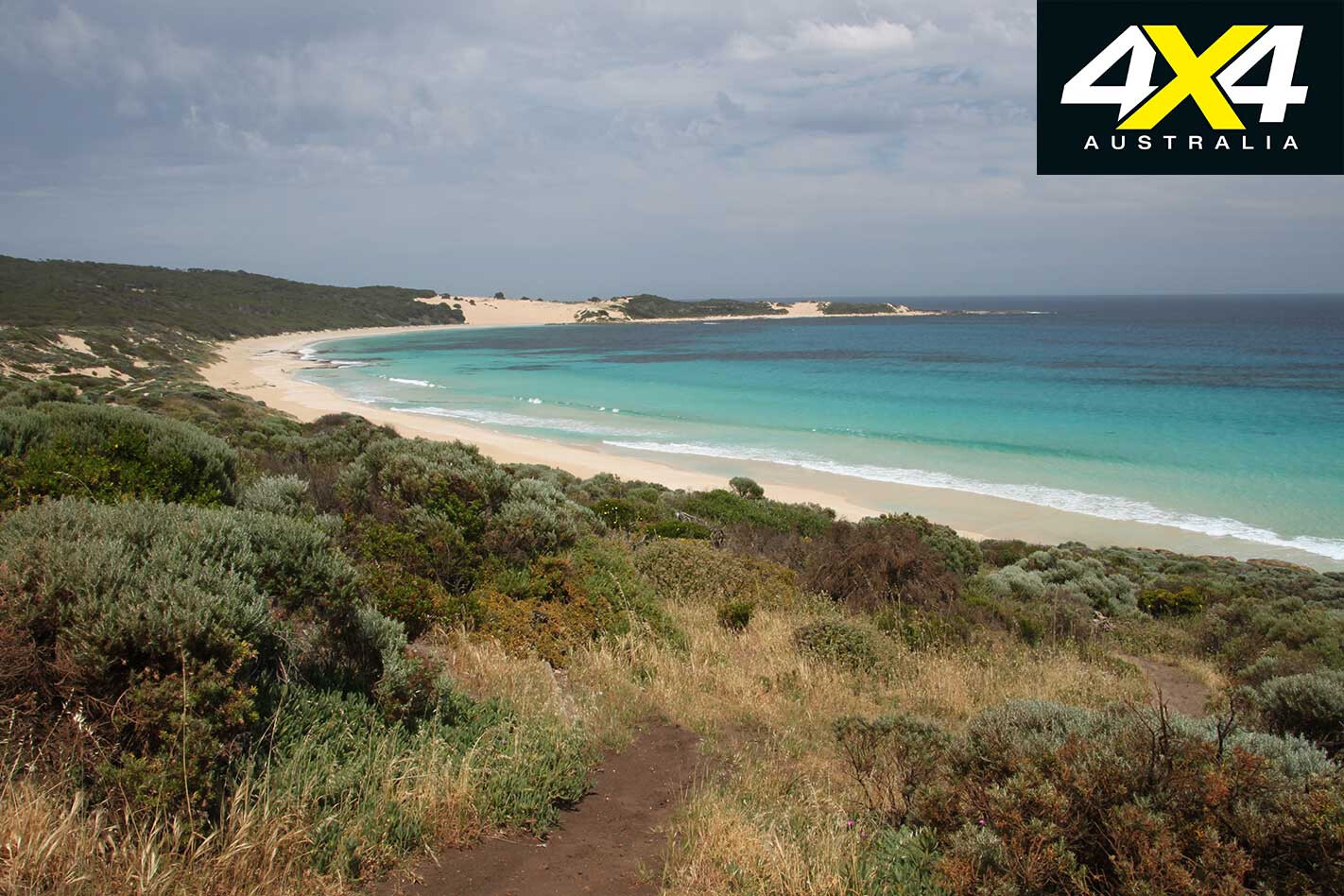
The southwest of WA comes into its own in the summer. The sweeping beaches, national parks, hiking and mountain biking trails, and sublime beach and forest camping makes the summer holidays the perfect time to experience it.
Some hotspots include Leeuwin-Naturaliste NP with its awesome beaches and hinterland, Warren NP with its riverside camping and cracking paddling opportunities, and Boranup Karri Forest for a chance to check out these gigantic trees. It may seem a long way for eastern-seaboard residents, but the trip across the Nullarbor is an adventure in itself.
For info, check out: https://parks.dpaw.wa.gov.au
Head to the Hills (NSW)
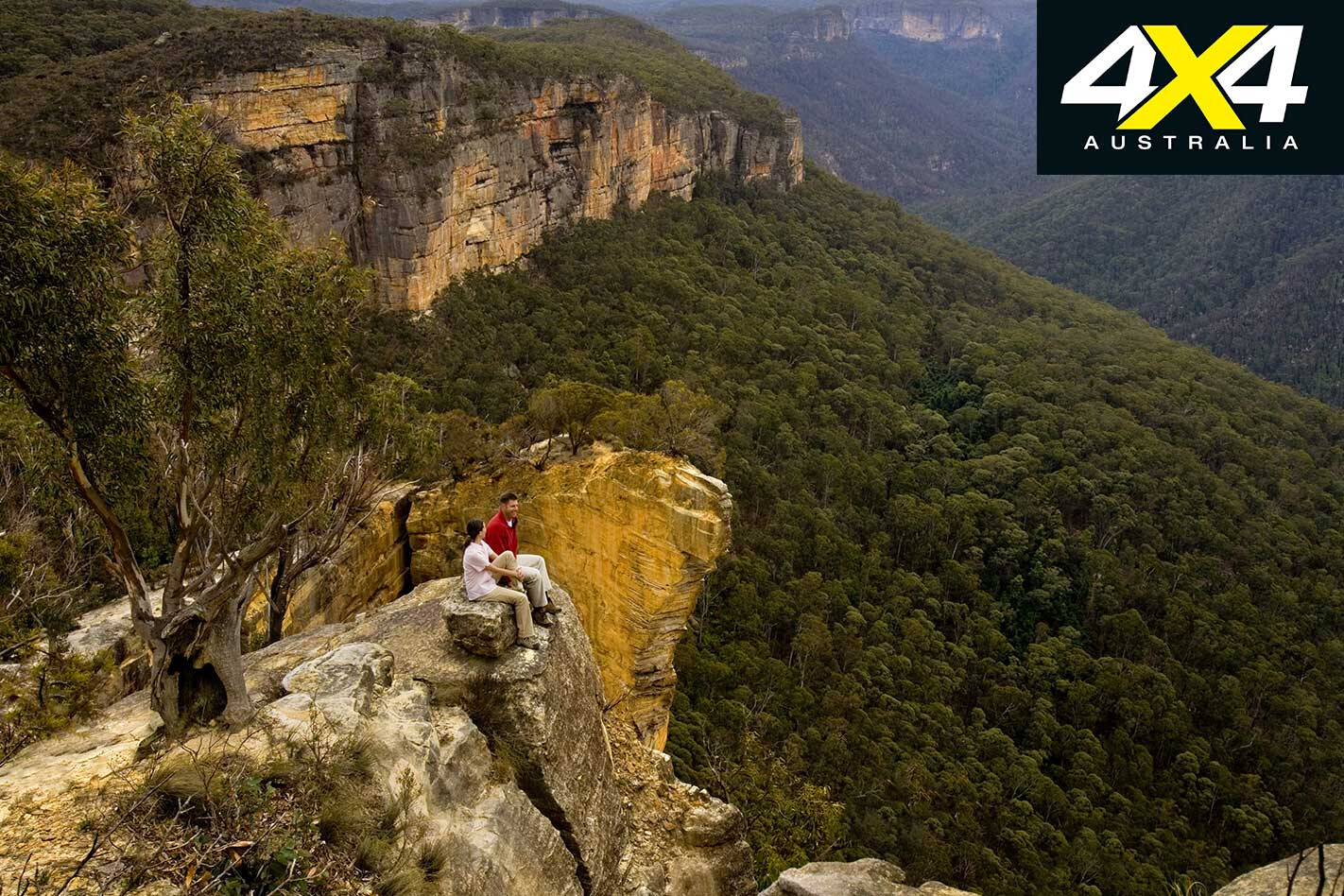
Blue Mountains National Park offers a world of adventure. Whether you’re keen on tackling tracks, hiking, paddling, rock-climbing, abseiling, mountain biking, or just dossing down for a night at a secluded campsite, the ‘Blueys’ has plenty to offer. The best part is being so close to the city you don’t need to leave at the crack of dawn to beat the rush back.
For more information, see www.nationalparks.nsw.gov.au
THE 2019 Consumer Electronics Show is wowing tech-heads the world over with its weird and wonderful gadgets, with some incredible technology unveiled.
Hell, a lamp that changes colour to suit your mood was revealed, Audi unveiled VR tech for the back seats of its vehicles, and there’s a toothbrush that does the job in 10 seconds.
The off-road community hasn’t been forgotten either, with a bunch of cool and not-so-cool stuff surfacing over the past couple of days.
Hyundai launched its “Elevate” Ultimate Mobility Vehicle, a walking car concept designed as a search-and-rescue vehicle for natural disaster recovery (yes, in real life).
The Elevate, based on a modular electric vehicle platform, features robotic legs with five degrees of movement, as well as in-wheel propulsion, and it’s capable of climbing a five-foot vertical wall or stepping over a five-foot gap. It has the ability to walk in “mammalian and reptilian-style gaits” for omnidirectional motion.
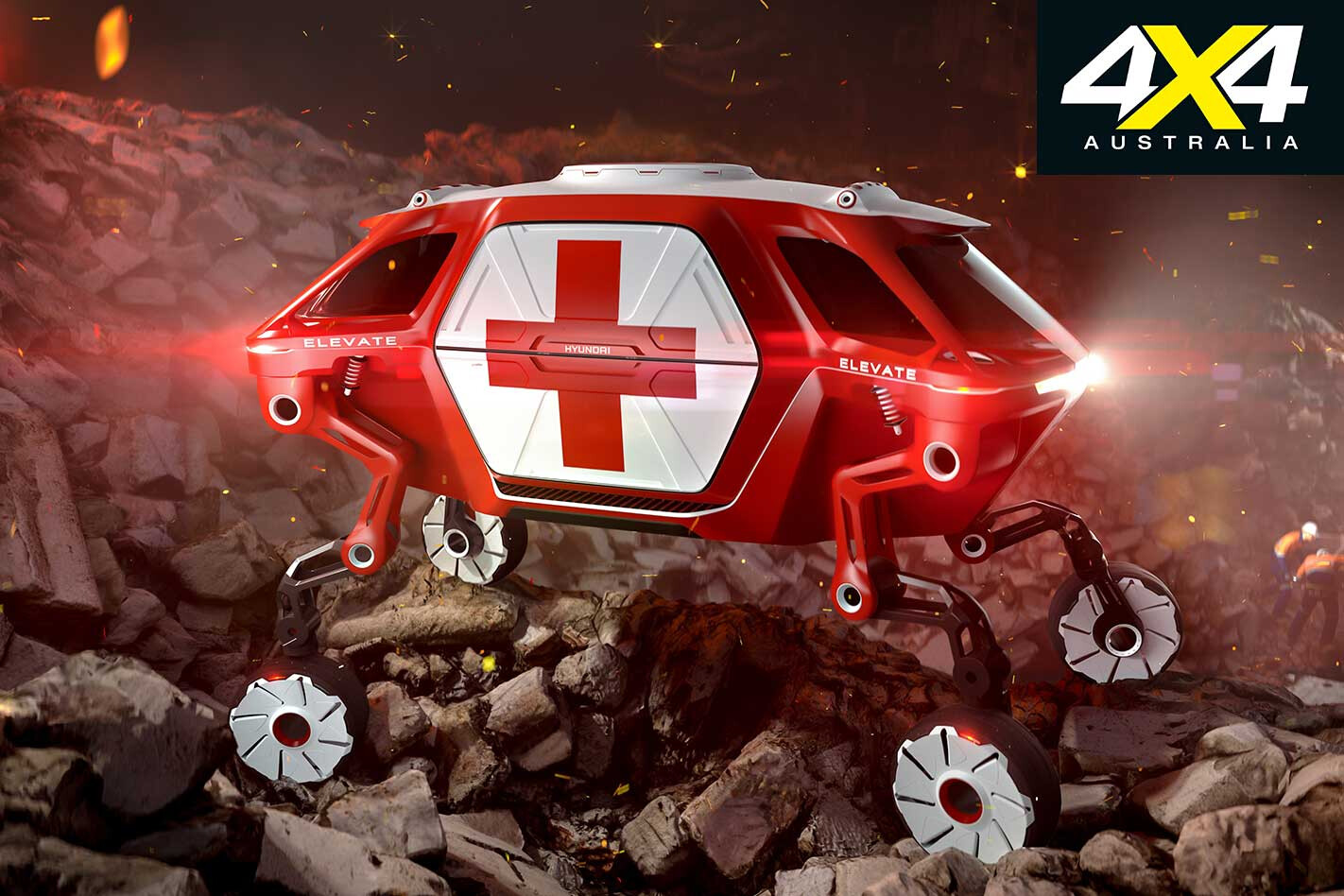
“When a tsunami or earthquake hits, current rescue vehicles can only deliver first responders to the edge of the debris field. They have to go the rest of the way by foot,” said John Suh, Hyundai vice president and head of Hyundai CRADLE. “Elevate can drive to the scene and climb right over flood debris or crumbled concrete.”
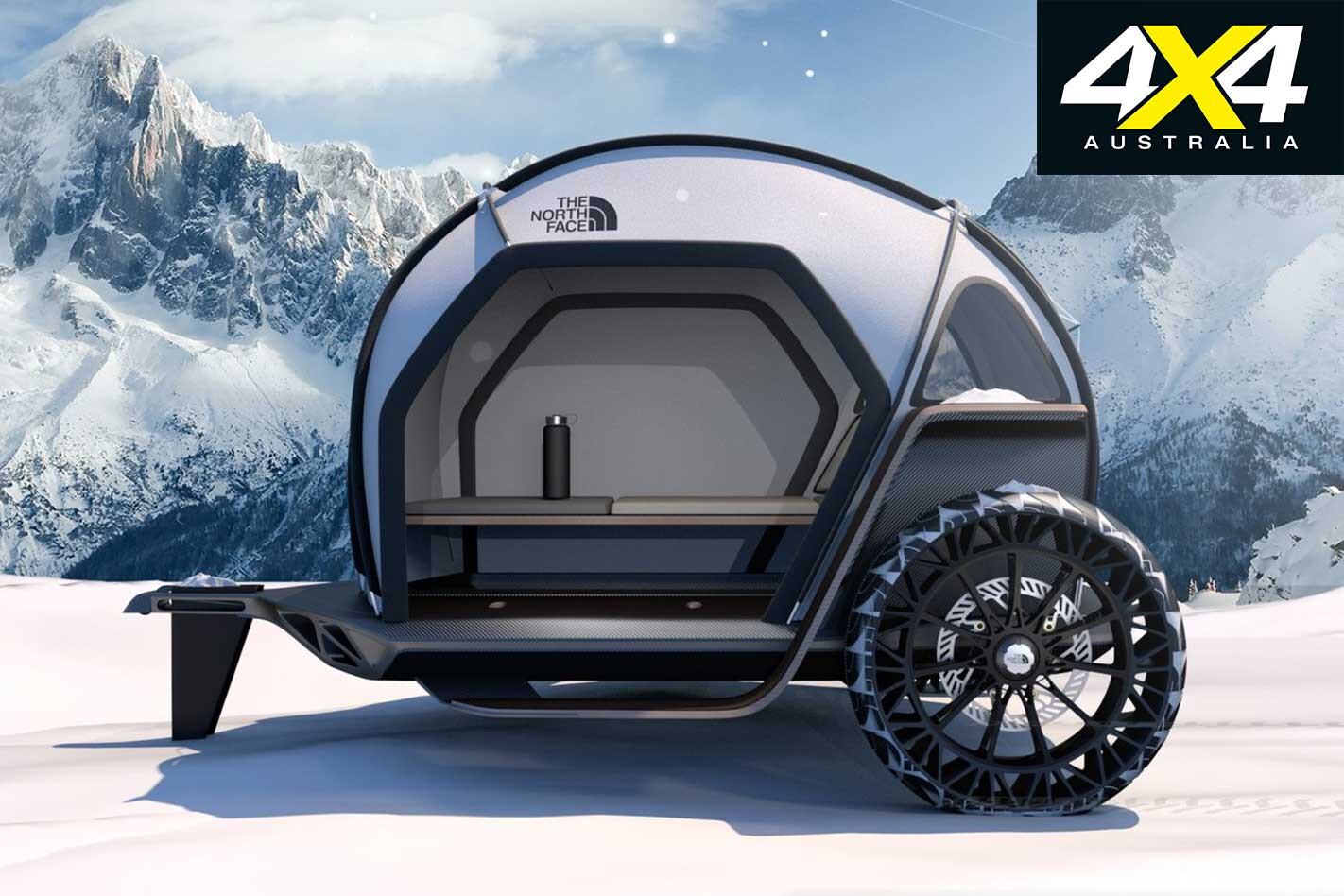
Designworks, a subsidiary of BMW, has joined forces with Northface to create a camper concept dubbed Futurelight. Expect to spend a small fortune if the concept ever enters production (not likely, especially in the near future), with the camper using Nanospinning tech to create the “most advanced, breathable, waterproof material” and a geodesic-dome frame made from carbon fibre.
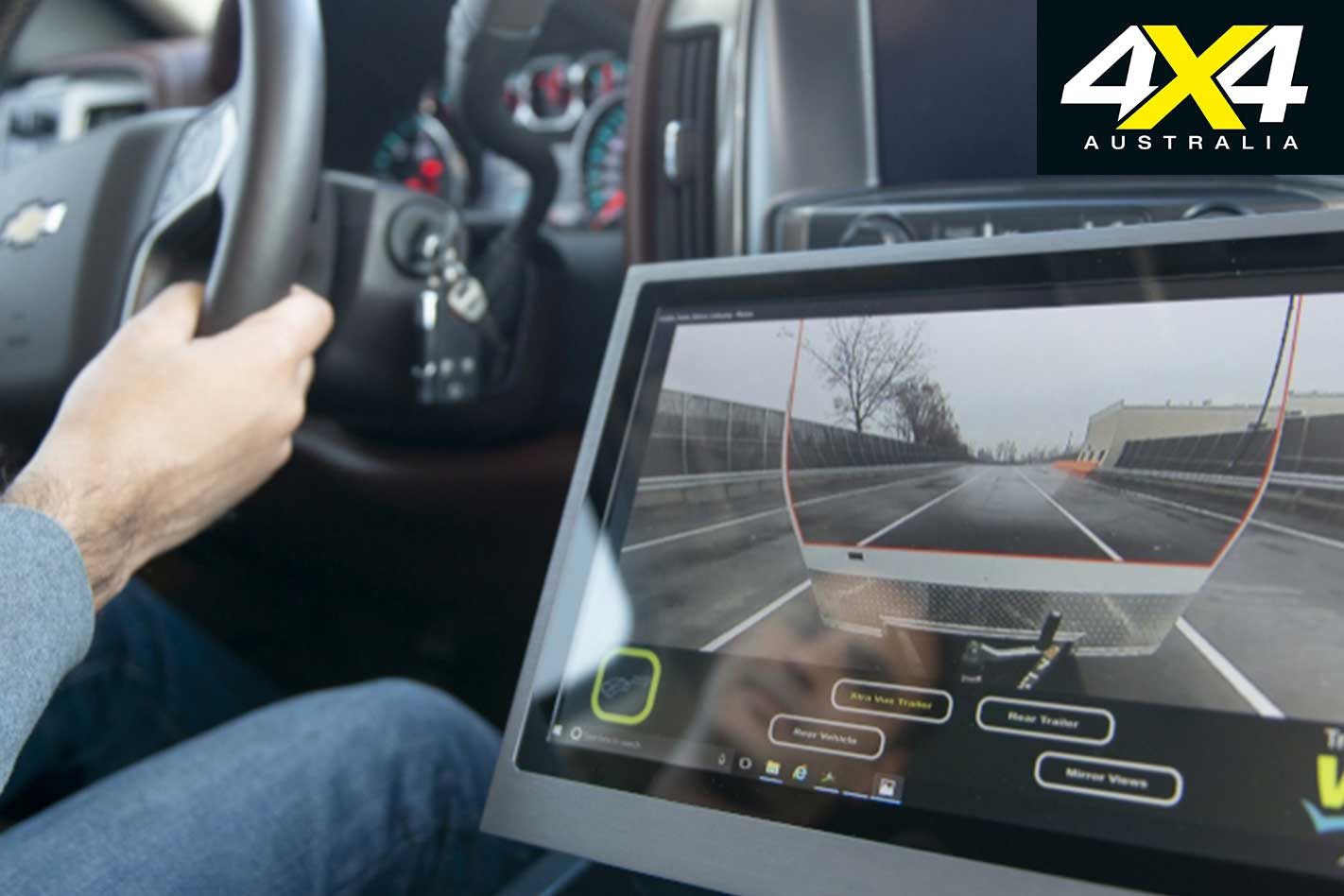
The final product turning heads at Vegas is a variation on a technology we’ve seen before; in particular, Land Rover’s invisible bonnet. The Valeo XtraVue Trailer system utilises images captured from cameras attached to the rear of both the vehicle and the caravan/trailer and then combines the footage to make the trailer ‘invisible’ on an in-cabin screen. This way, the grey nomad brigade can see what’s trailing behind them.
The Consumer Electronics Show is held in Las Vegas, USA.
INTRODUCED in the Ranger Raptor and now available in mainstream Ranger models, Ford’s new 2.0-litre four-cylinder diesel and accompanying 10-speed automatic is also now available in the Everest wagon. It’s offered alongside the existing 3.2-litre five-cylinder diesel; no surprise, really, as the Everest is Ranger-based anyway and everything new in Ranger generally finds its way into the Everest.
Astonishingly, the new 2.0-litre four gives away nearly 40 per cent in capacity to the 3.2-litre five, but it claims more power and – even more surprisingly – more torque, given that increased engine capacity generally equates to greater torque output.
Ford claims 500Nm for the 2.0-litre, or 30Nm more than the 3.2-litre, while the 2.0-litre’s 157kW is 14kW more than the 3.2 makes in the Everest; so this ‘little’ engine is punching well above its weight.
Keeping the 2.0-litre Everest honest in this contest is a Holden Trailblazer, which also claims 500Nm; although, from a considerably larger 2.8-litre four-cylinder diesel. Like the Everest the Trailblazer is also a ute-based, seven-seat wagon, in this case being built off the back of Holden’s Colorado.
Holden Trailblazer LTZ – Take Two
The Colorado 7 became the Trailblazer in 2017, but the difference is much more than a name change.
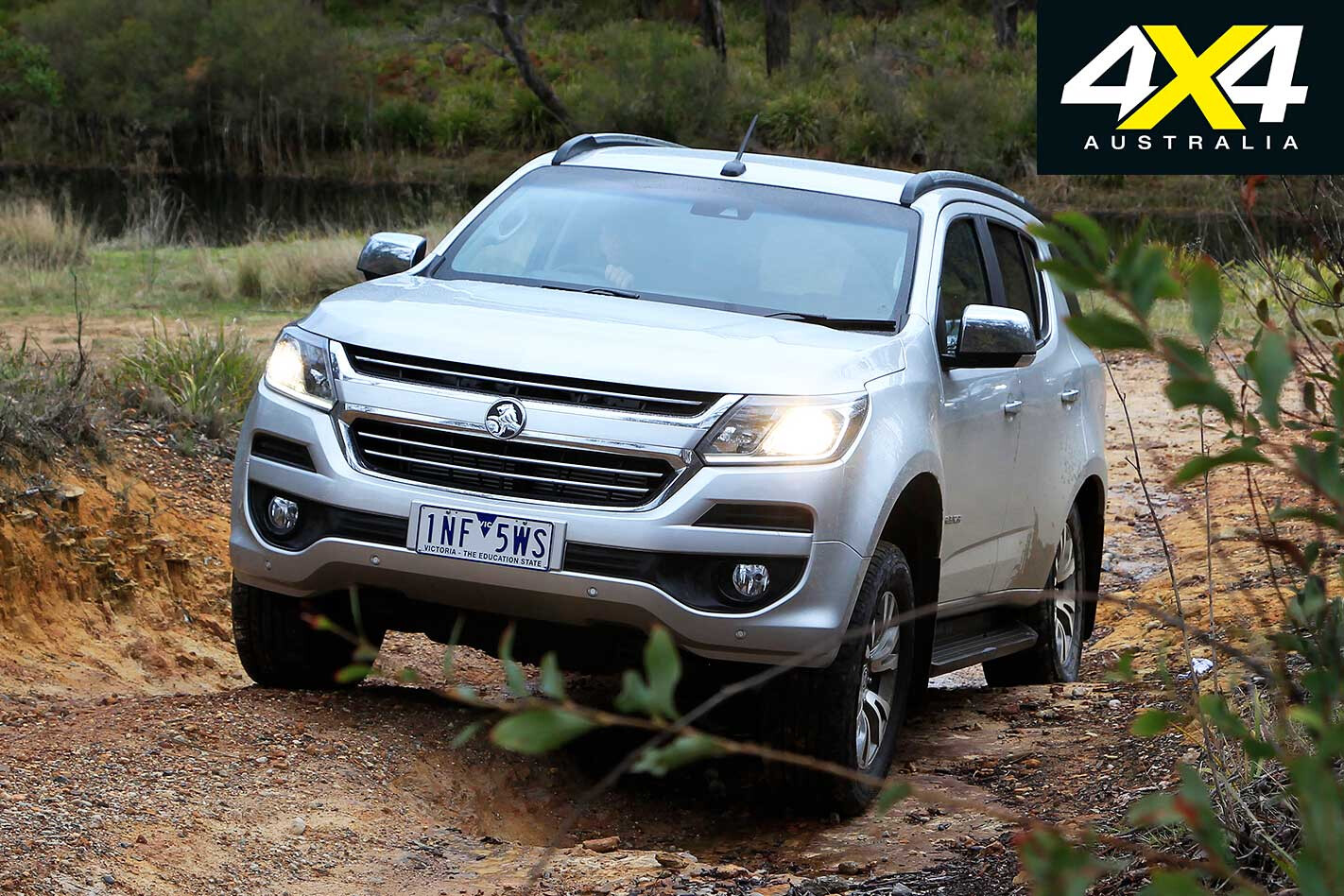
IN LATE 2012 Holden launched the Colorado 7, a 4×4 wagon based on its then-new Colorado ute. Unlike the first Holden ute to bear the Colorado name (and every Rodeo before that), the new Colorado was a 100 per cent General Motors design and not merely a rebadged Isuzu.
The new Colorado arrived in mid-2012, with the Colorado 7 wagon following a few months later and joining Mitsubishi’s Triton-based Challenger in what was soon to become a booming ute-based wagon market.
Following a lukewarm reception the Colorado 7 was tweaked just 12 months later and then again in 2014, before being reborn as the Trailblazer for 2017, thanks largely to the efforts of Holden’s Australian engineering team.
While many of the 2017 changes were applied to the Trailblazer globally, many were also specific to Australian models, making ‘our’ Trailblazer the pick of this globally available model.
What’s in a name?
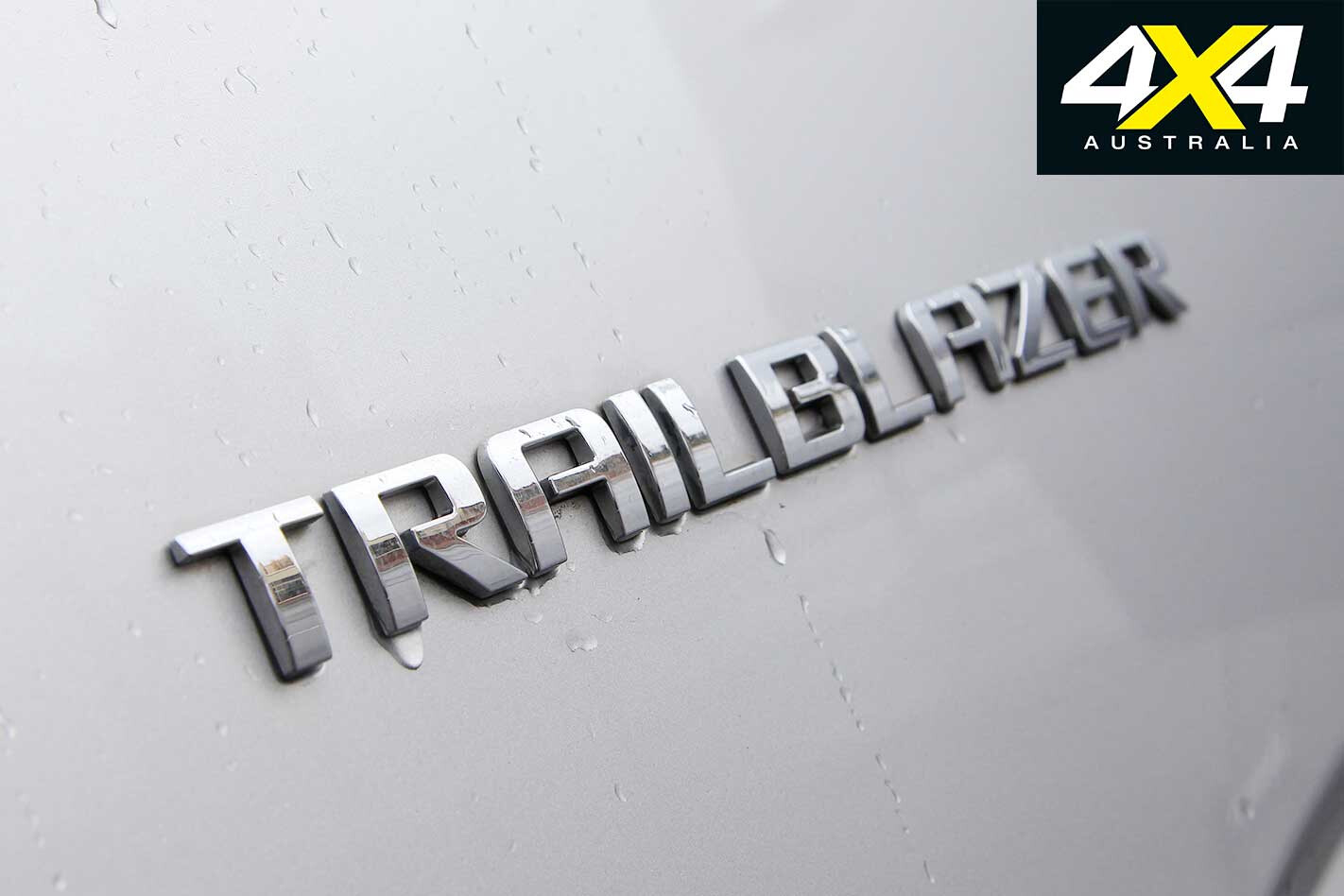
MORE than just a new name for an existing model, the Trailblazer was born of a Colorado 7 that was stripped right down to its component parts and put back together again with a large number of new and revised parts.
The key changes include repositioned engine balance shafts, more sophisticated fuel injection with additional injector sound proofing, a new torque convertor, revised shift protocols for the six-speed auto gearbox, retuned suspension, and new engine, transmission and body mounts.
Body tweaks ran to new roof mouldings, exterior mirror mounts, door seals, sliding glass channels, B-pillar inserts and a thicker windscreen, and all generally in the interest of quieter and smoother running. Electric power steering replaced the hydraulic power steering.
Powertrain & Performance
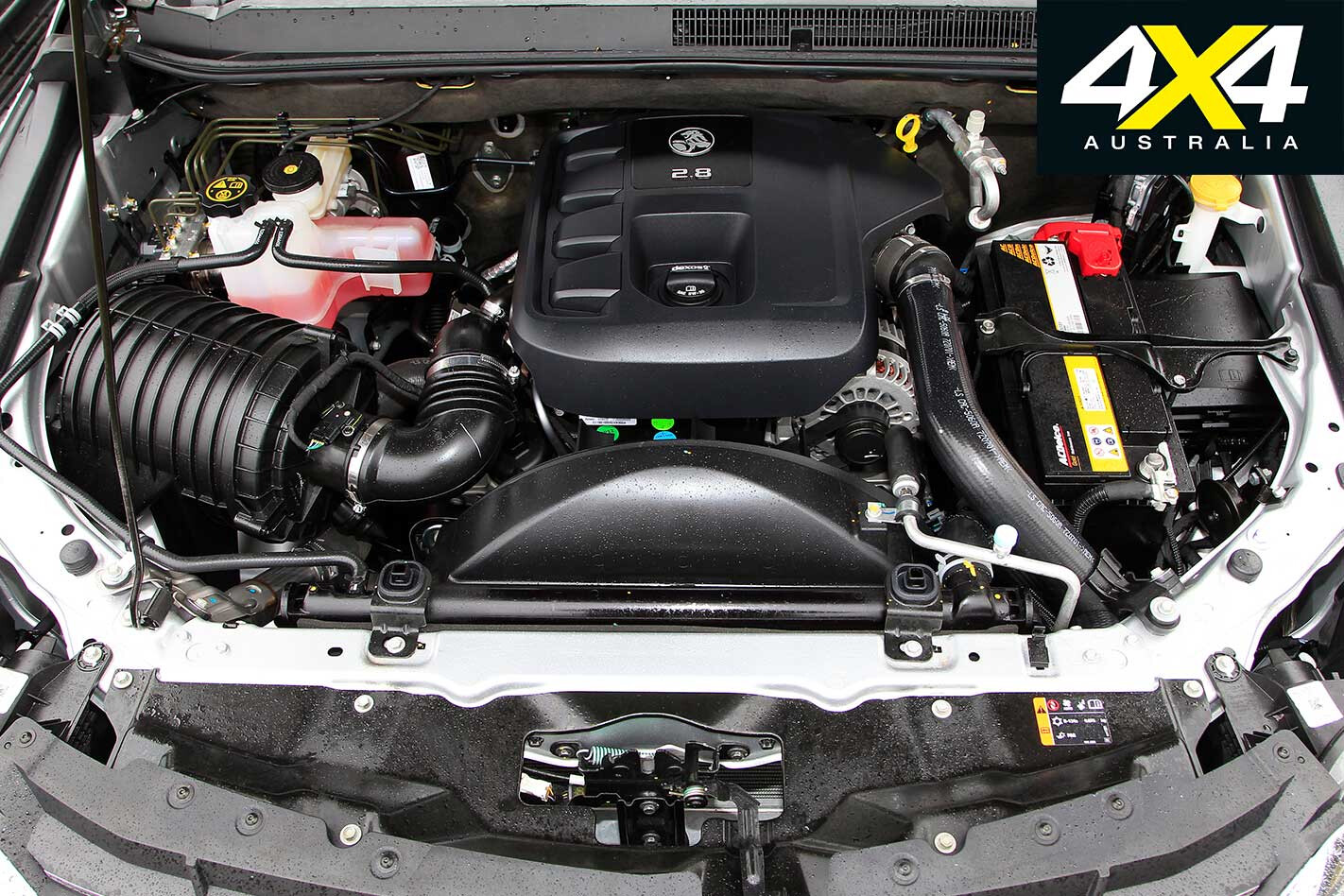
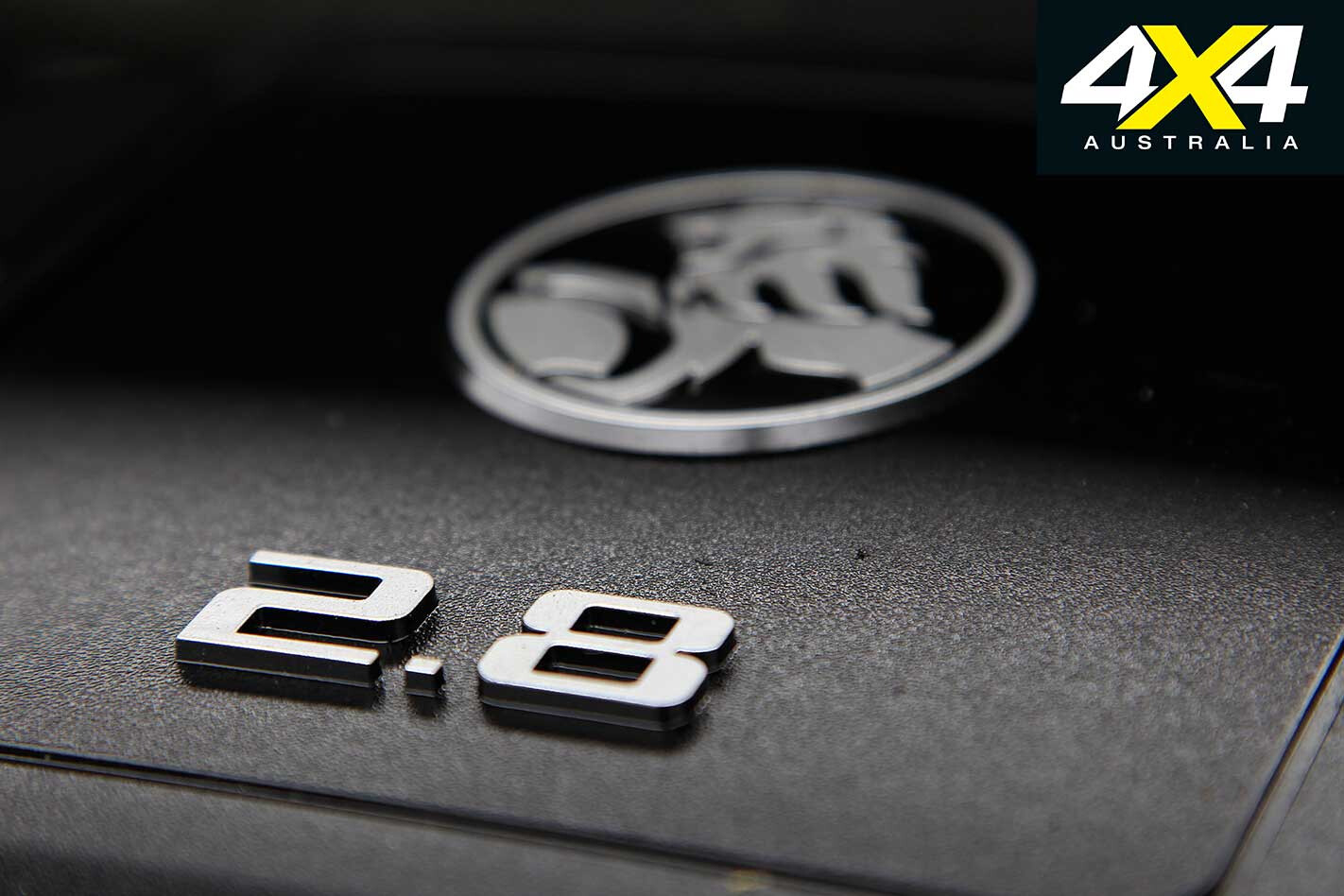
THE Trailblazer’s 2.8-litre four-cylinder diesel is essentially a VM Motori design from a time when the Italian diesel-engine specialist was part-owned by General Motors. However, there’s more GM design in the engine now, most notably the 2017 (Colorado 7 to Trailblazer) upgrades that fattened out the power delivery but more importantly brought newfound refinement in terms of smoother and quieter running.
This is an energetic and willing engine that lives up to its solid 147kW/500Nm promise, with plenty of highway performance. It’s quite revvy for a diesel but well-served by the six-speed GM automatic, with sporty shift protocols keeping the engine ticking along nicely in varying conditions under loads, and it provides well-timed auto downshifts on hill descent, even without brake prompt.
Good refinement, too, from the engine and the gearbox; although, jumping from the Trailblazer to the Everest puts this into perspective – driven in isolation you’ll like the Trailblazer’s powertrain, but drive it after the Everest 2.0L and it’s just a little noisy and gruff.
On-road Ride & Handling
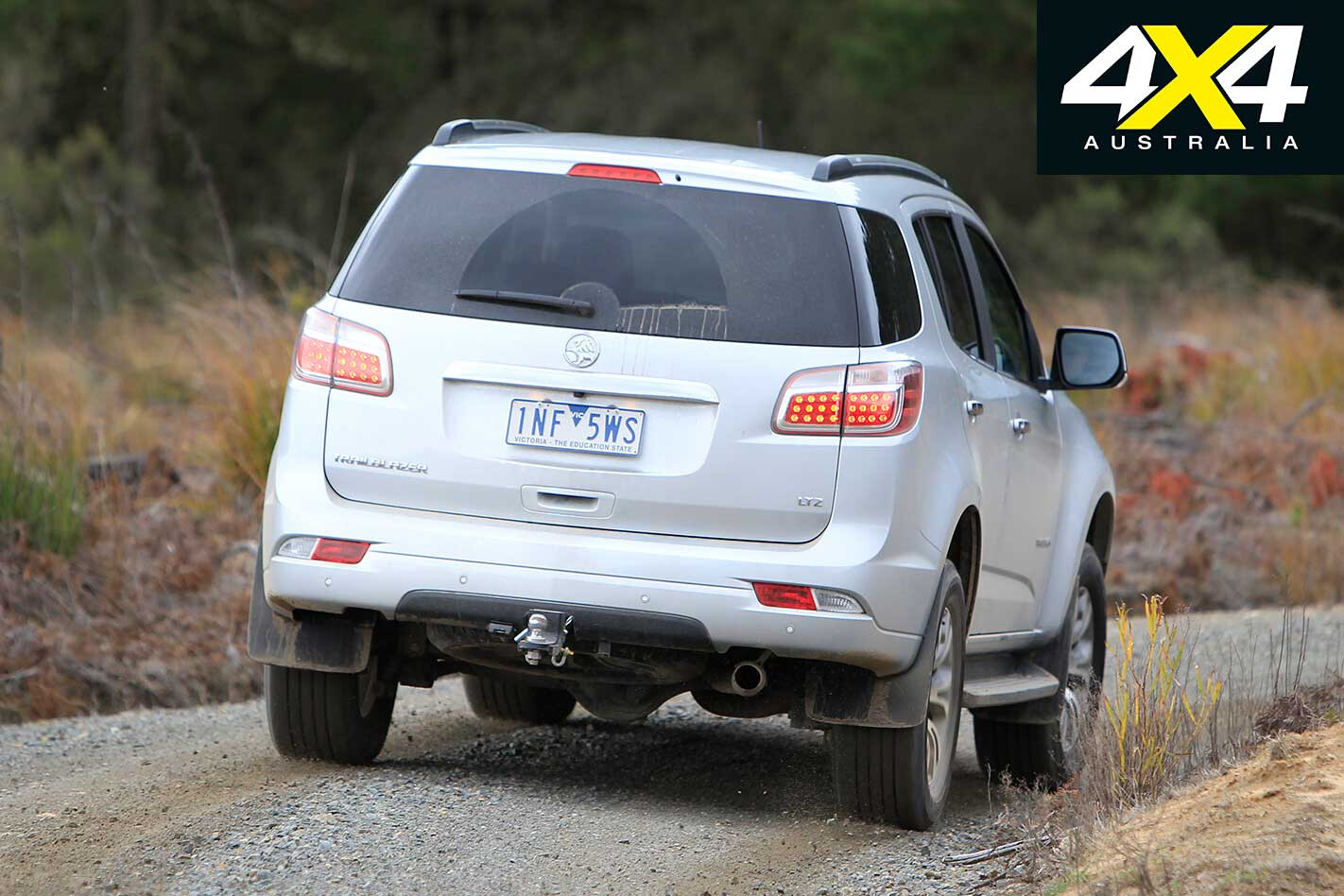
GET BEHIND the wheel of the Trailblazer and you can’t help but notice the extra-light steering effort at parking speeds provided by the electric power steering, one of the notable changes from the Colorado 7. At the same time you’ll appreciate the positive and connected feel the steering has at highway speed thanks to efforts of the local engineers.
It has tidy handling, too, and a generally smooth, quiet and compliant ride on most roads; another improvement over the Colorado 7. However, drive it back-to-back with the Everest and it’s not quite as smooth riding, nor as quiet, and it feels the bad bumps and potholes more.
Crucially the Trailblazer has a part-time 4×4 system whereas the Everest has full-time 4×4, which is a significant safety advantage on wet roads and adds general driving convenience in mixed conditions. Unusually, the Trailblazer has a mechanical rear limited-slip differential in addition to its electronic traction control, a feature that is, in part, designed to provide more security on wet roads.
Off-road
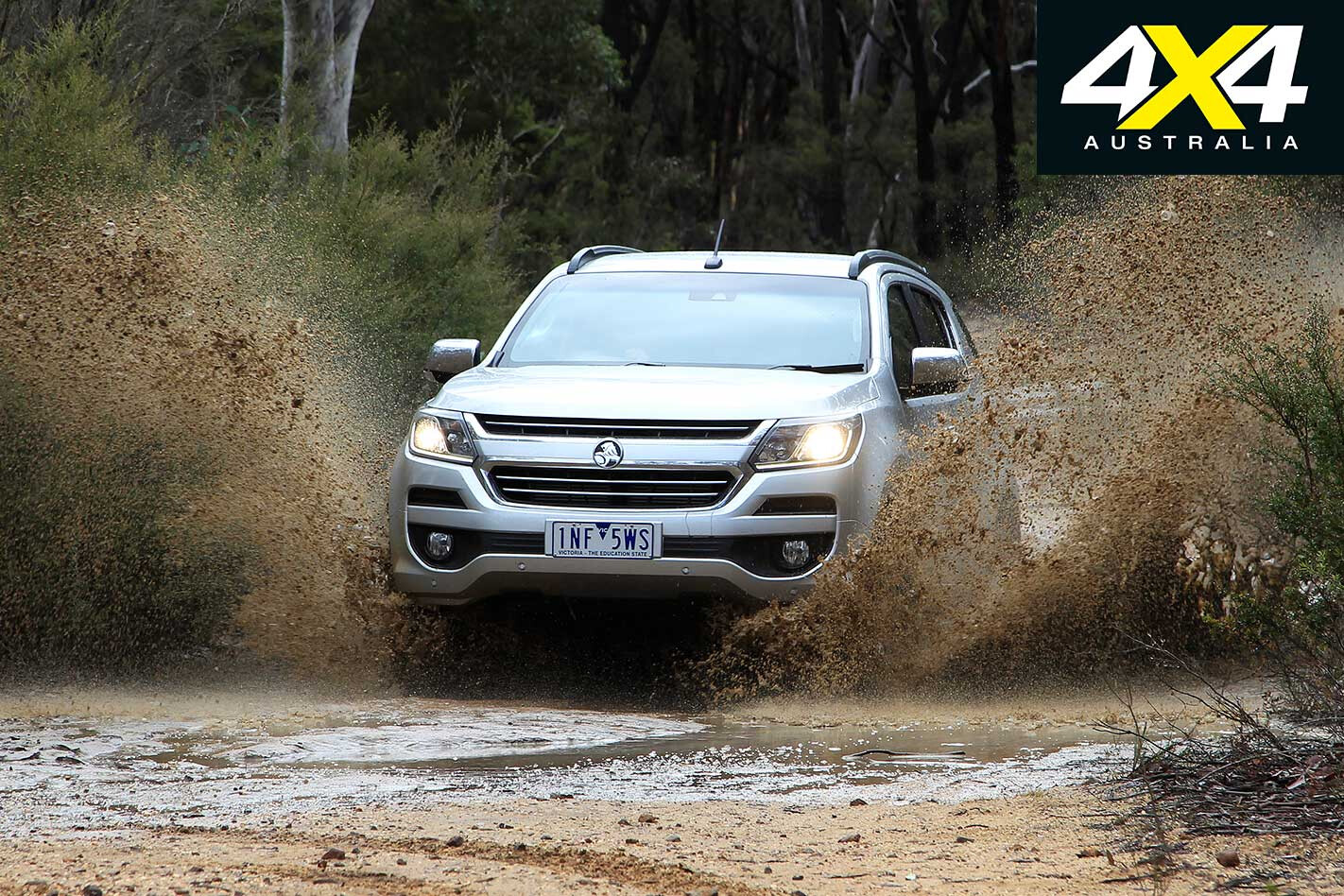
JUST AS the Trailblazer’s on-road demeanour is much improved upon the Colorado 7’s, so too is its off-road ability, thanks to an off-road-specific recalibration of the electronic traction control.
The Trailblazer isn’t over-endowed with suspension travel, nor does it have a rear locker, so the revised traction control is most welcome and will see the Trailblazer edge forward in conditions that could strand a Colorado 7.
Is the Trailblazer a gun off-road wagon? No, but it will still do all most buyers would ever ask and betters the two most popular sellers in the ute-based-wagon class (MU-X and Pajero Sport) in difficult off-road conditions. Still, the Everest has more tractive ability in difficult off-road going, thanks to its longer suspension travel and a rear locker.
Bonus points, though, for the Trailblazer’s engine air-intake via the inner mudguard and the fact it has two tie-downs (rated at 1500kg each) as standard.
Cabin, Accommodation & Safety
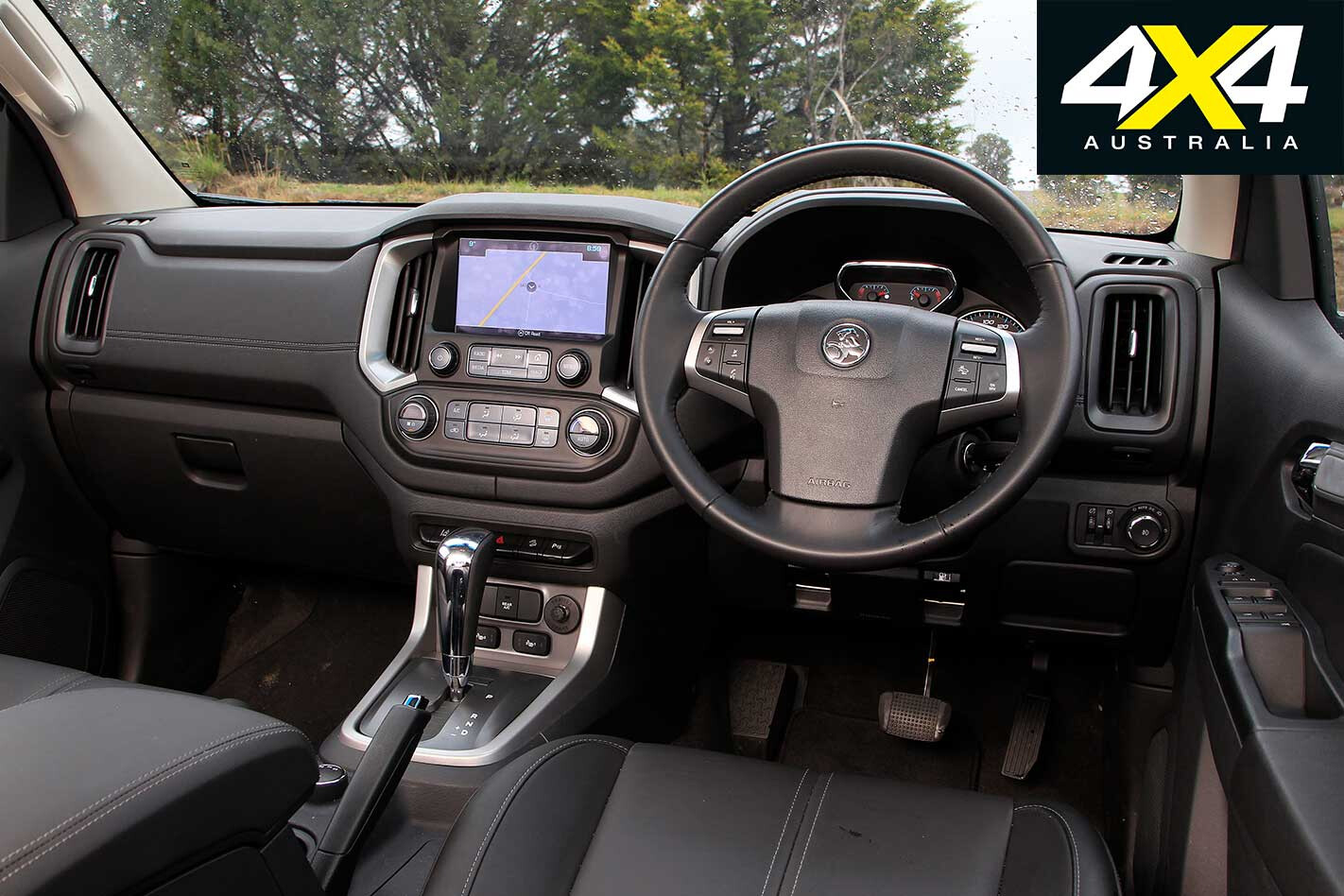
BEING an LTZ variant our test vehicle had the luxury of leather and heated front seats with electric adjustment for the driver. Plenty of safety kit, too, with seven airbags, which help contribute to the five-star ANCAP safety rating.
The Trailblazer is spacious and comfortable up front, but there’s no steering wheel reach adjustment for the driver. A good-sized second row, too, with a little more hip and shoulder room than the Everest’s, even if the Everest has more legroom and the benefit of fore and aft adjustment.
Access to the third row is easy enough, and there’s some room for adults, even if the seating position is very legs-up and there’s not much adult-sized footroom.
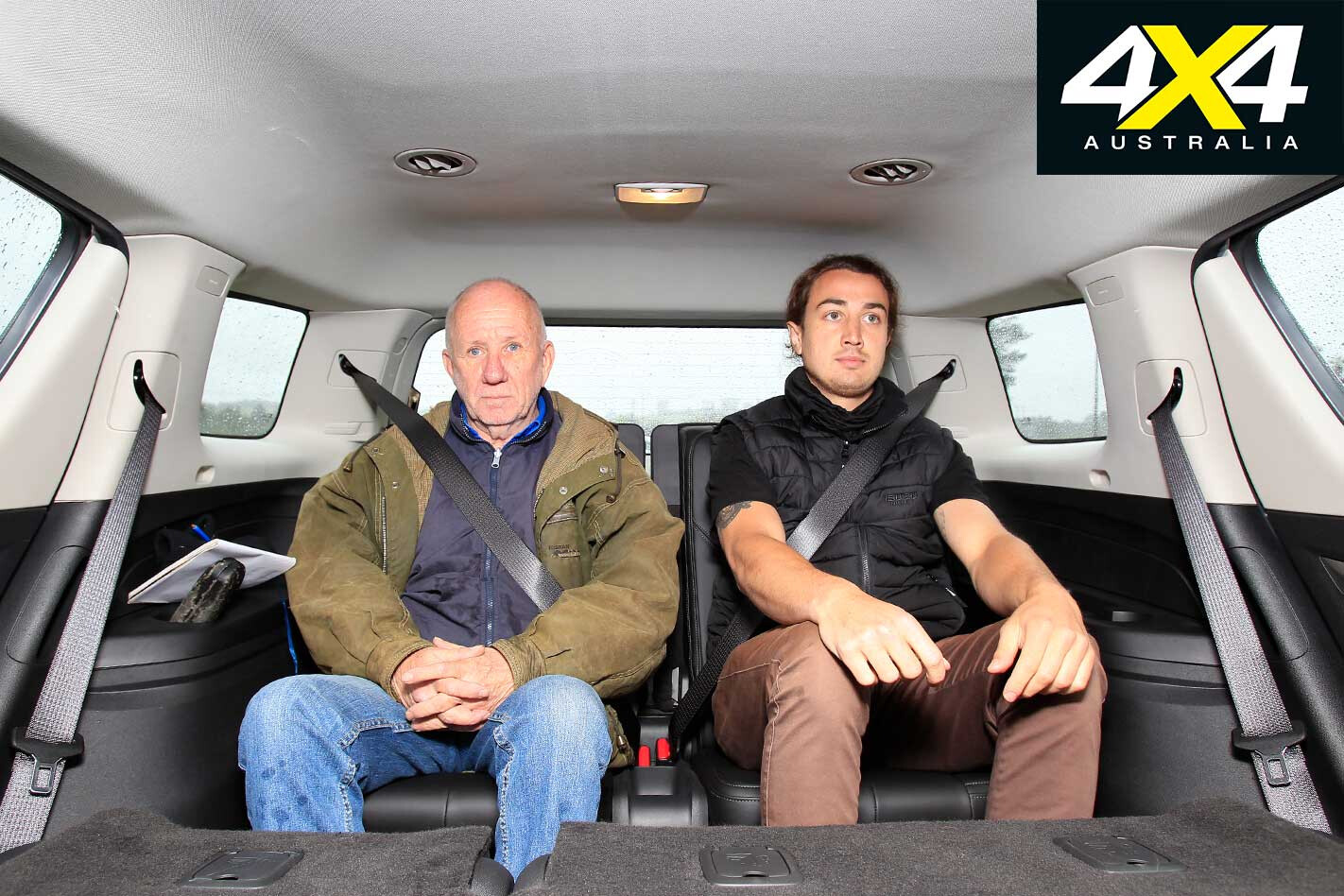
The way the Trailblazer’s third-row seats fold makes for a high cargo floor and, annoyingly, there are only two cargo hooks at the rear of the luggage space and none at the front. When the third-row seat is in place, there’s very little luggage space left.
What you get
THE Trailblazer comes in three equipment levels: LT, LTZ and Z71. Standard LT kit includes front, side, curtain and driver’s knee airbags, LED DRLs, reversing camera, rear-parking sensors, seven-inch touchscreen, Apple CarPlay and Android Auto.
The LTZ adds leather, sat-nav, front parking sensors, climate control A/C, rain-sensing wipers, tyre-pressure monitoring, and safety features including forward collision alert, blindspot monitoring, lane-departure warning and rear cross-traffic alert. It also adds an eight-inch touchscreen and 18s. The Z71 brings largely cosmetic enhancements including black-finished wheels, body mouldings, mirrors and door handles.
Practicalities
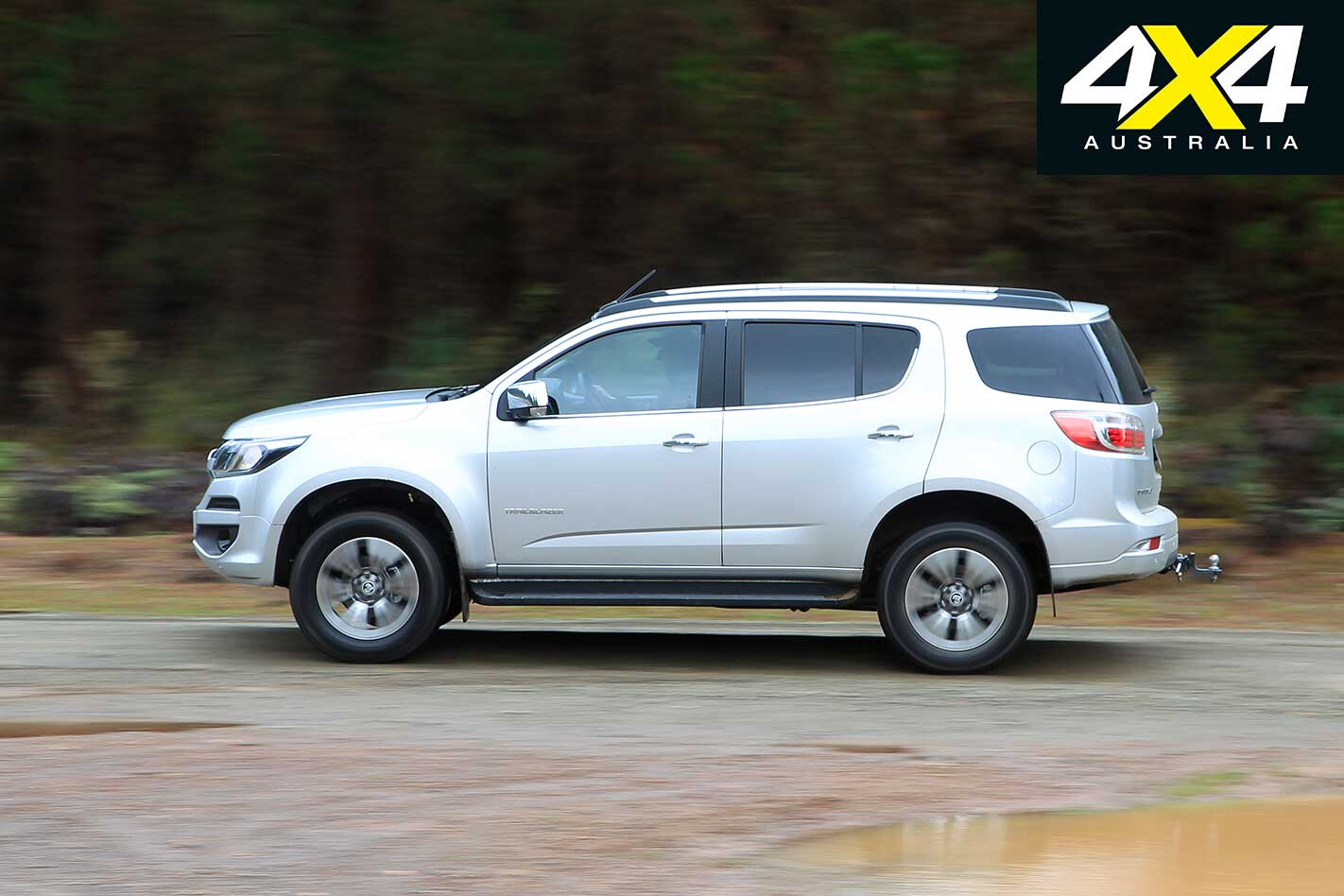
HOLDEN’S wide spread of dealers, especially in rural and regional areas, is an ownership plus, as is the capped-price servicing and the fact there’s a good range of aftermarket kit available for specific vehicle enhancement.
The standard 265/65R18 wheel and tyre package is also common to pleny of new 4x4s so there’s a wide aftermarket tyre choice. You can also fit the 17s off the LT for an even wider and more off-road-practical tyre choice.
Ford Everest Trend – Peak Performance
A 2.0-litre, four-cylinder engine in a 2.5-tonne 4×4 wagon… how could that work?
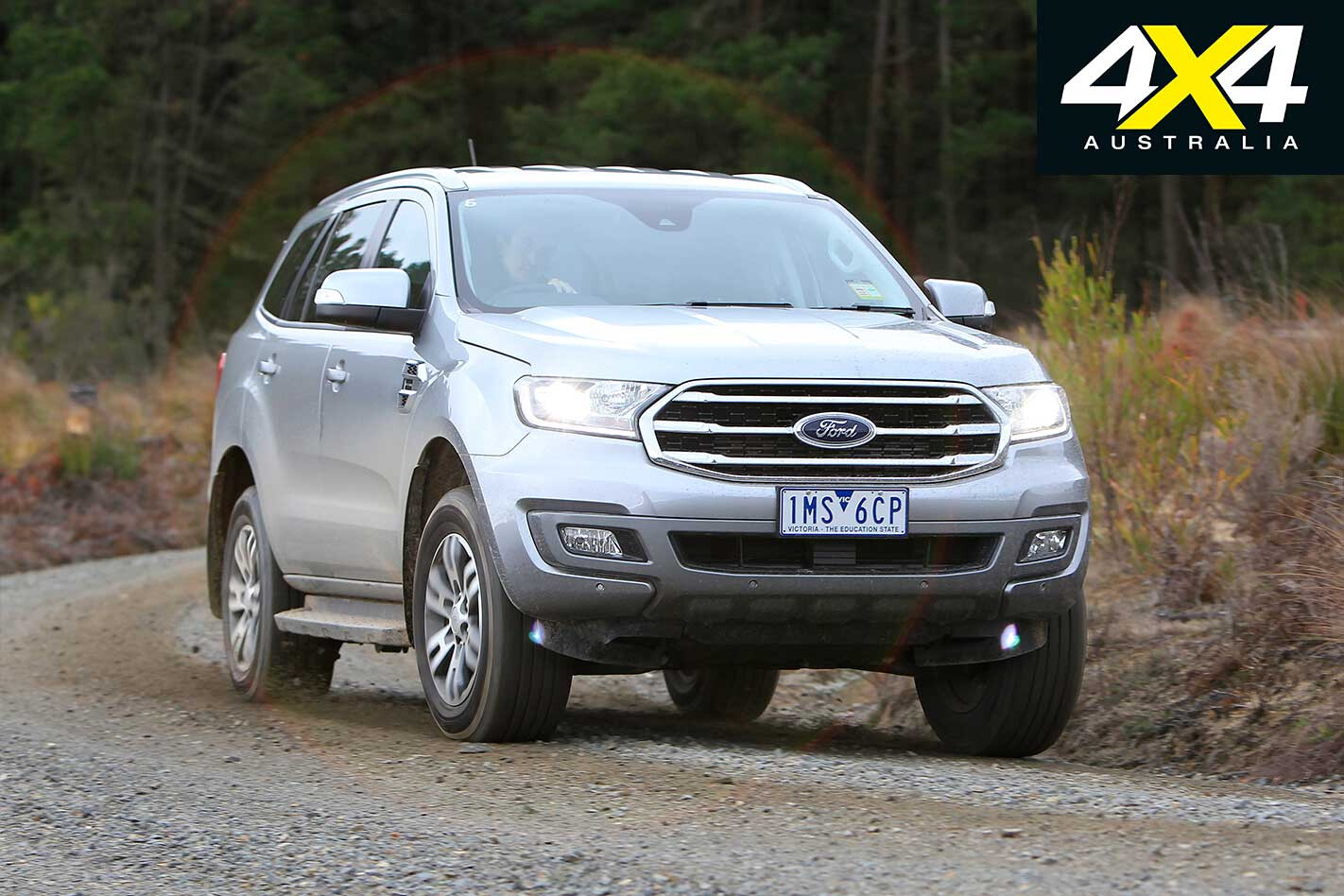
FORD’S new 2.0-litre bi-turbo diesel and accompanying 10-speed auto is tomorrow’s powertrain here today.
Already available in Ranger as an option to the existing 3.2-litre inline five-cylinder, and the only powertrain available in Ford’s new hero model, the Ranger Raptor, it’s the sort of diesel technology that will become more common over the next decade – and typical of the diesel’s swansong, as emission regulations become tighter and so-called ‘diesel bans’ come into play sometime after that.
Ford is hedging its bets by offering both new and existing powertrains in the Everest and Ranger, given the swap from 3.2-litre five to 2.0-litre four means going from offering the biggest engine in the respective classes in which the Everest and Ranger compete to offering the smallest engine. In the case of the Ranger, the 3.2 also leaves open the availability of a manual gearbox, as the new 2.0-litre four is only available with an automatic.
Powertrain & Performance
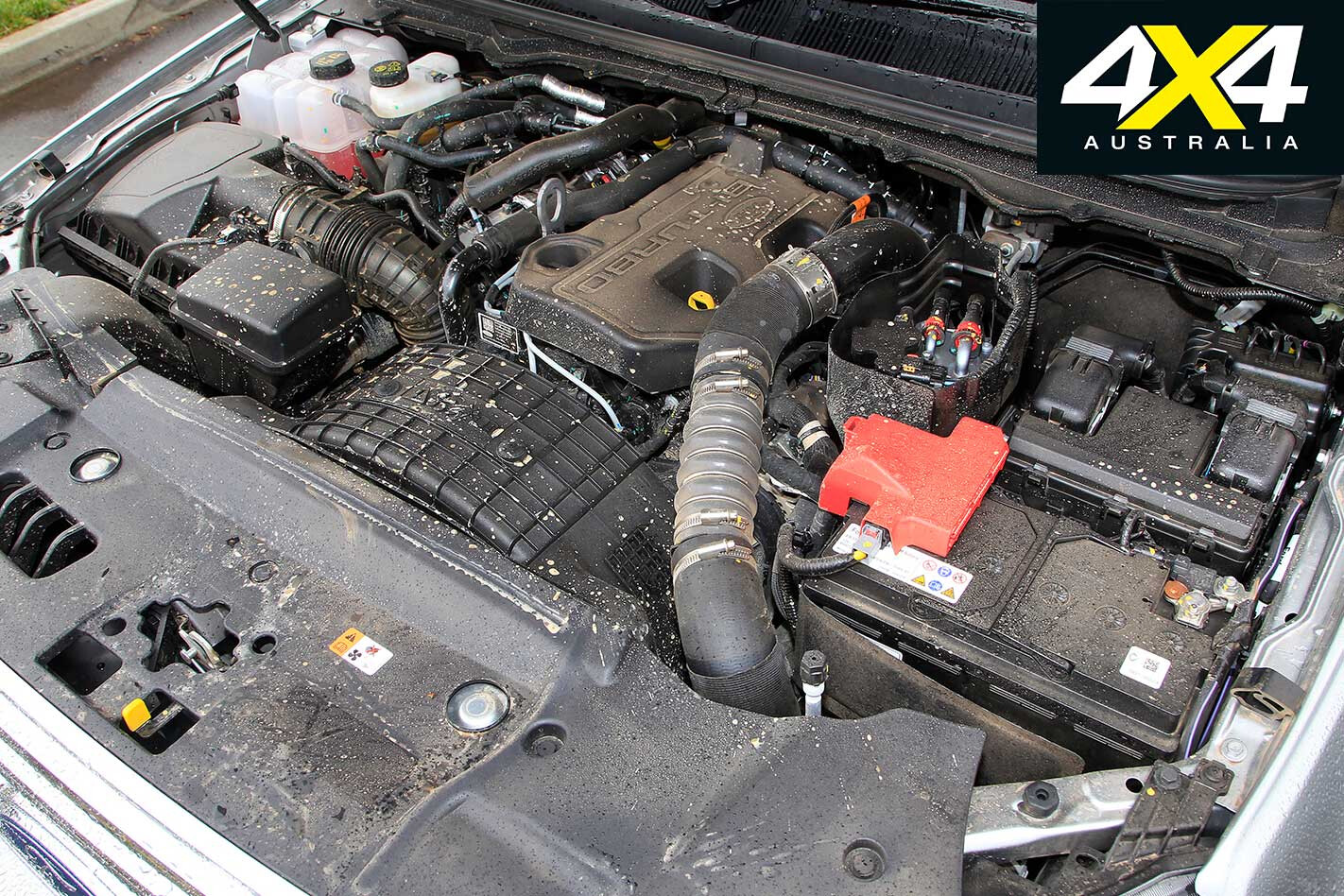
FIRE up Everest’s four-cylinder bi-turbo diesel and the first surprise is how quiet and smooth it is. The next surprise is how lively it feels once underway – this is no small engine struggling to push a big and heavy 4×4; this is a small engine that feels like a big engine. Drive it back-to-back with a 3.2 and it’s the bigger engine that feels like the smaller engine.
The 2.0-litre achieves its maximum torque of 500Nm by 1750rpm, the same engine speed that the 3.2 achieves its 470Nm maximum output. The 2.0-litre then goes on to make more power than the 3.2 largely due to the fact it can rev a little harder. That’s the benefit of the 2.0-litre’s bi-turbo system: there’s a small fast-spooling turbo to get the engine up and running strongly at low engine speeds, and then a big turbo to take over and pump the big volume of intake air needed to produce good power at higher engine speeds.
Adding to the 2.0-litre’s power advantage is the close ratios and near instant shifts of the 10-speed auto. The first eight gears of the ten-speed are all effectively lower than top gear in the six-speed, even when you take into account the taller final-drive gearing of the 10-speed. And the shifts between all these gears are as good as instantaneous, so time isn’t lost there.
The 10-speed also offers manual gear selection via a rocker-style switch on the side of the shifter, but, such is the ‘smarts’ of this gearbox, manual shifting is as good as redundant.
Compared to the Trailblazer the Everest’s engine is more refined, quieter and smoother, and the gearbox slicker and more seamless. But there’s not much performance difference between the two thanks largely to the fact the Everest is 200kg heavier than the Trailblazer. The Trailblazer is equally strong on torque, even if it needs a few more revs to get there, and it’s not very short on power: 147kW versus 157kW.
On-road Ride & Handling
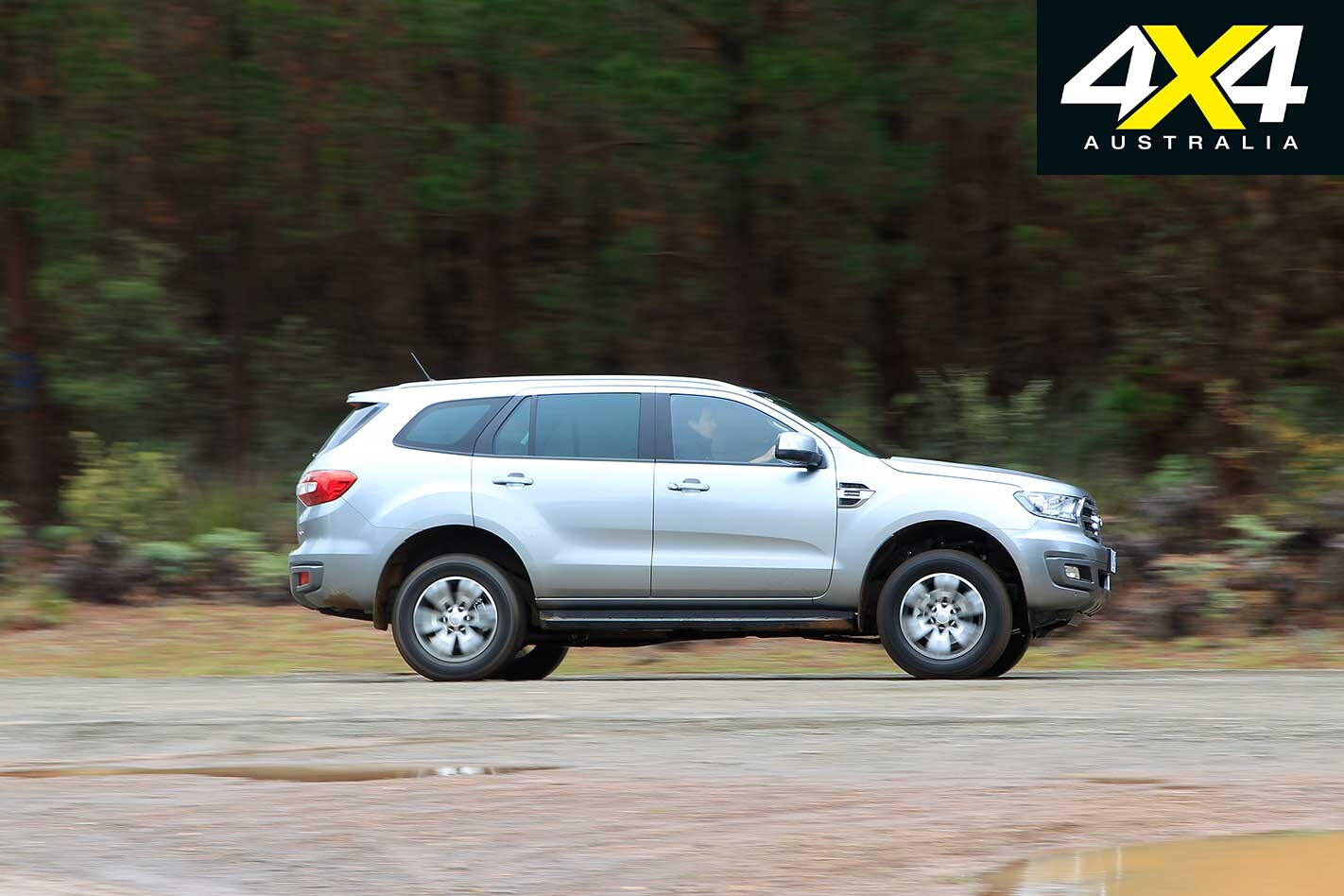
SUPERIOR on-road ride and handling refinement defines the Everest over the Trailblazer, as there’s less road noise and the ride is more supple and compliant. Generally tidier handling, too, on faster, bumpier roads, perhaps due in part to the Everest having a sophisticated ‘engineer’s solution’ in a Watt’s Link rather than a cruder ‘production-cost solution’ Panhard rod to laterally locate the live axle, which does heaps to reduce the rear bump-steer. Or it may be just the Everest’s generally more compliant suspension.
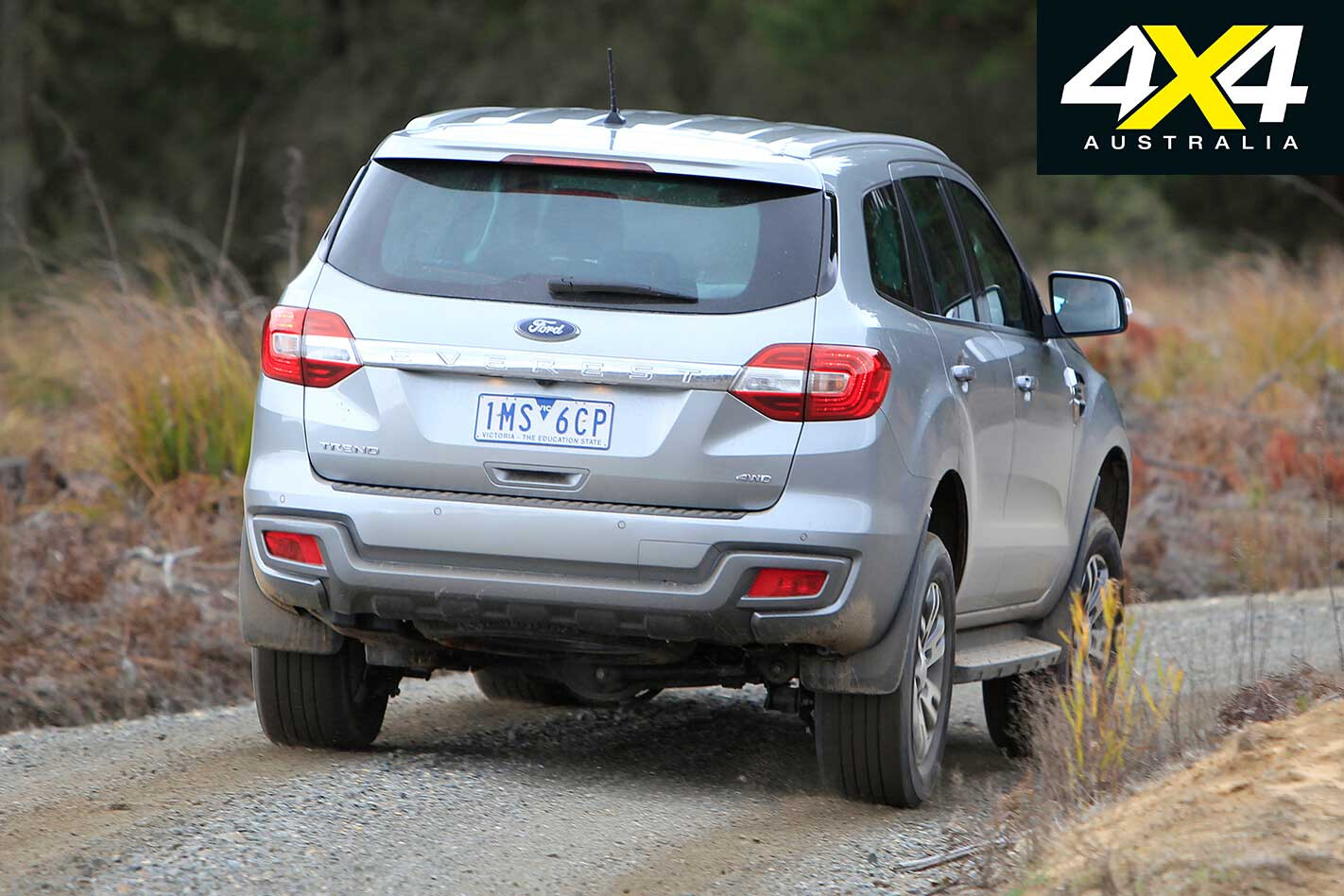
However, there’s no doubt the Everest’s full-time 4×4 system, which apportions drive 40/60 front-to-rear on a high-traction surface but can direct the power to either axle when needed, is a major safety and convenience benefit over the Trailblazer’s part-time 4×4 system, particularly on slippery roads and especially for less skilled and experienced drivers – these are family wagons after all.
Like the Trailblazer, the Everest has electric power steering for much-reduced effort at parking speeds and, like the Trailblazer, the steering weighting firms up nicely at highway speeds, even if it never quite feels as connected as the Holden’s.
Off-road
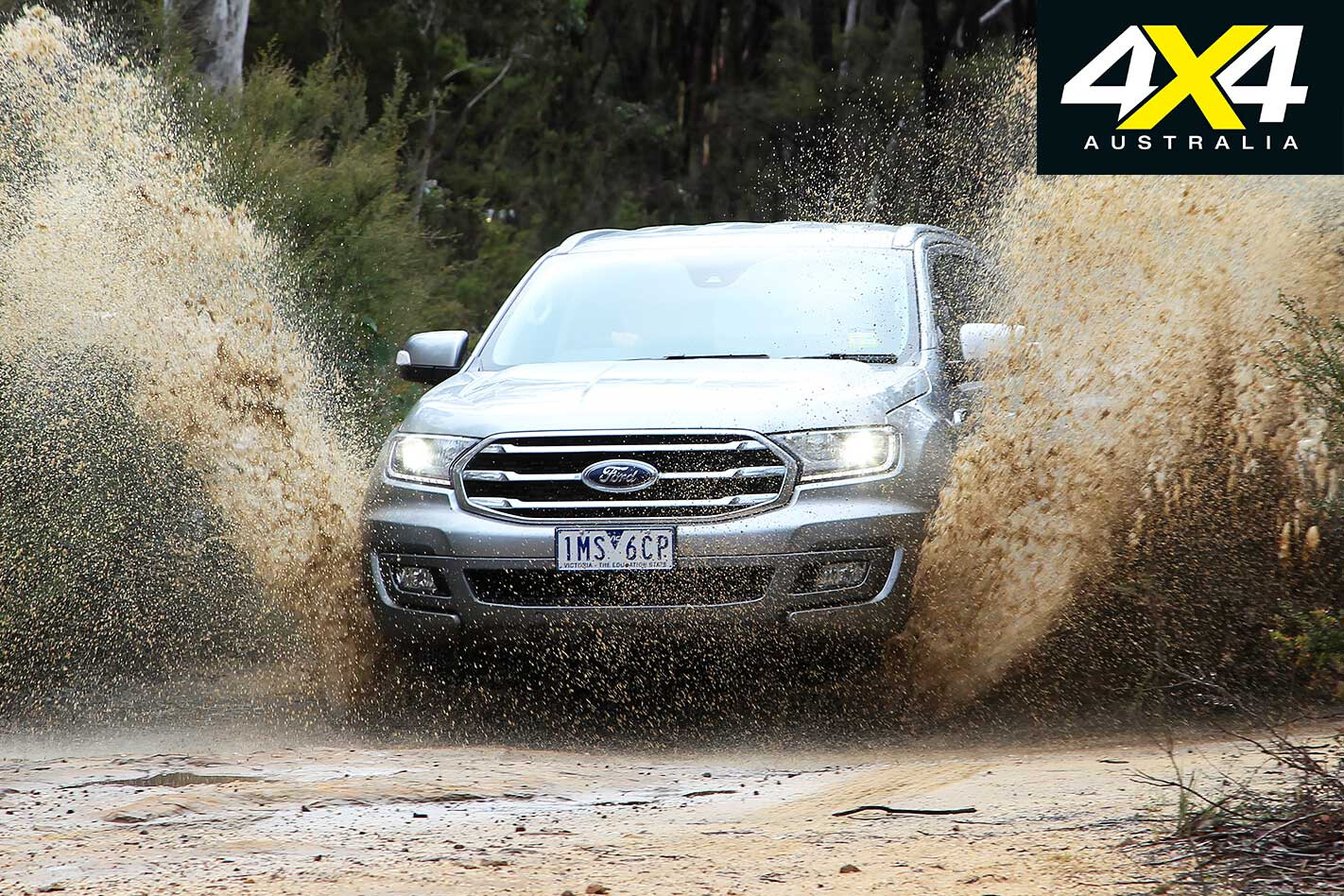
THE Everest wins the off-road arm-wrestle thanks largely to its superior wheel travel. If keeping the wheels on the ground more often isn’t enough, then the Everest has a rear locker the driver can engage, which is something missing on the Trailblazer. Making it a win-win-win situation, when the Everest’s rear locker is engaged the electronic traction control stays active on the front axle, which is often not the case with the current crop of driver-switched rear lockers.
The Everest’s electronically controlled 4×4 system also comes with Terrain Management, with a setting for Snow/Mud/Grass, Sand, and Rock Crawl, which tweaks engine mapping, gearbox shift protocols and the chassis electronics to optimise off-road performance.
Otherwise, the Everest and Trailblazer have similar ground and body clearance, and while the Everest claims 200mm more wading depth, the engine air-intake is more exposed.
Cabin, Accommodation & Safety
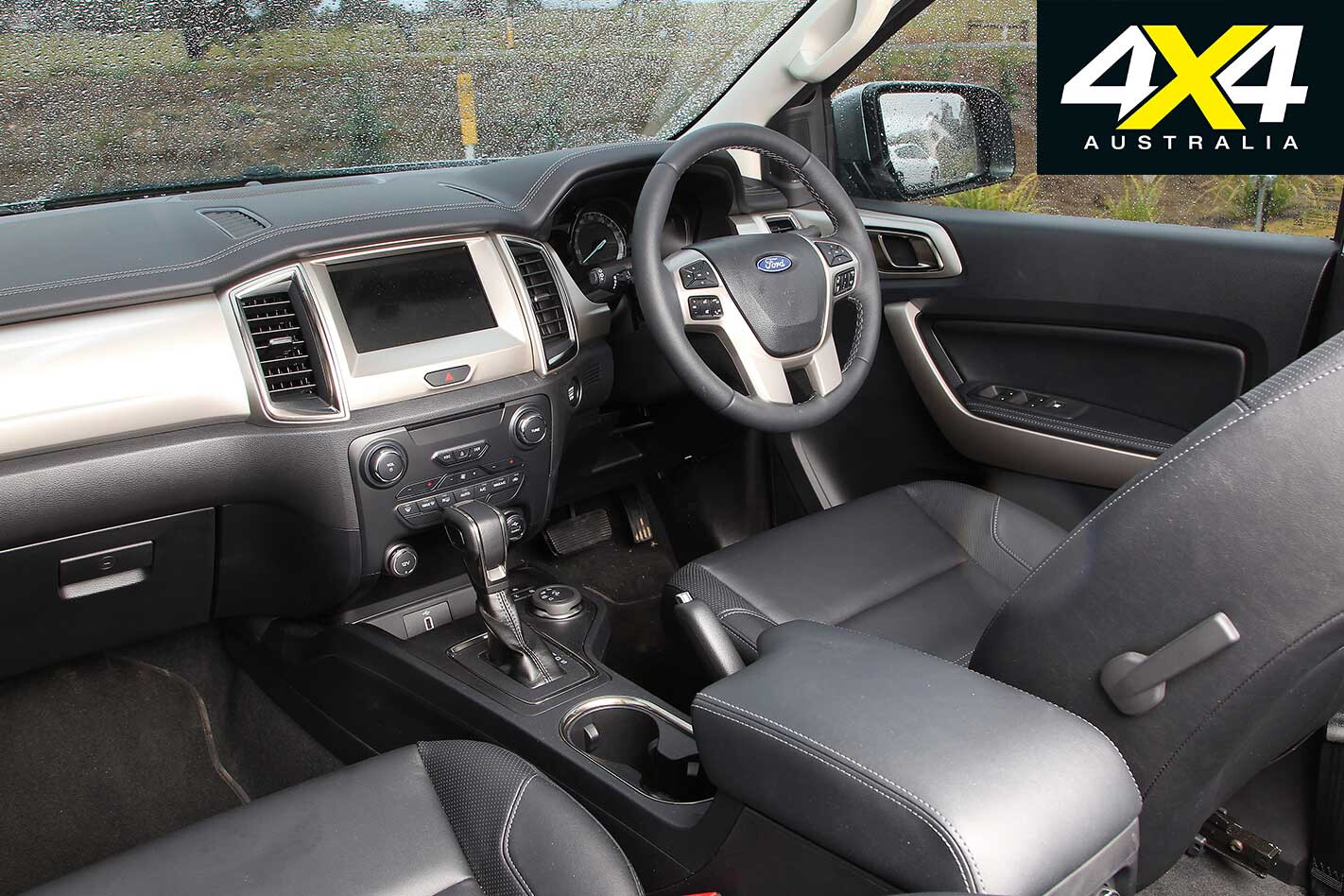
NEW to the Everest is smart-key entry and push-button start, a feature that’s now standard across all 2019 models. The Everest’s cabin is nicely detailed and finished – better so than the Trailblazer – even if some of the switchgear can be quite fiddly and difficult to use.
The Trend, as tested here, comes with leather and electric adjust for the driver but no heating for the front seats. For that you need to splash some $13K extra on the Everest Titanium.
Up front the Everest is spacious and comfortable, even if there’s still no steering-wheel reach adjustment. The middle- and third-row seat space is similar to the Trailblazer, but the fact the Everest’s middle-seat can be adjusted fore and aft lets you balance the legroom between the second and third rows.
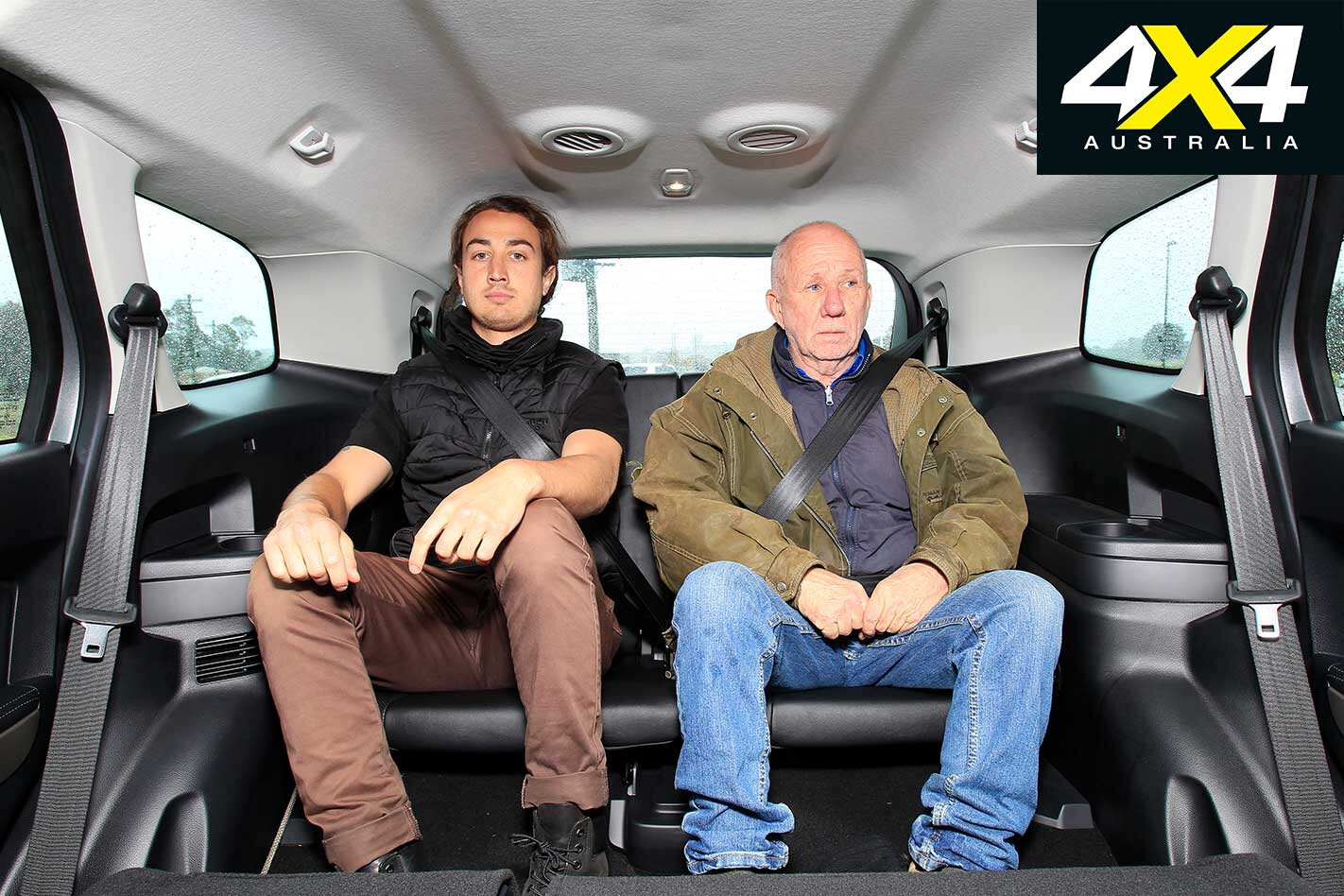
There’s also more luggage room behind the third-row seat in the Everest when the seat is up. Four rather than two tie-down hooks in the luggage area is another handy Everest bonus, given the two hooks in the Trailblazer don’t really work.
Seven airbags and autonomous braking leads the safety kit (see What You Get breakout) to a five-star ANCAP rating.
Everest for everyone
UNLIKE the three mechanically identical Trailblazer models that vary only in equipment, the Everest’s six models span two different powertrains and include RWD models. The entry-level Ambiente only comes with the established 3.2-litre five-cylinder diesel and six-speed automatic, but it’s offered in both 4×4 and 4×2 (for a $5K saving).
The mid-spec Trend retains the 3.2 in 4×4 models but adds the new 2.0-litre 10-speed powertrain in both 4×4 and 4×2. Again, the 4×2 model saves $5K over the 4×4 model while the 2.0-litre four comes at a $1200 premium over the 3.2-litre five. The top-spec Titanium is 2.0-litre and 4×4 only.
What you get
THE Everest’s 2.0-litre 10-speed powertrain is available in Trend and Titanium only. Trend kit extends to smart-key entry and start, leather, power-adjust driver’s seat, dual-zone climate control, eight-inch touchscreen, sat-nav, 10-speaker audio with digital radio and single CD player, two USB ports, three 12V outlets, a 230V outlet, rain-sensing wipers, auto headlights, third row seats, LED DRLs, 18s and a rear locker.
Safety kit includes autonomous braking, radar cruise, lane-keeping assist and front, side, curtain and driver’s knee airbags. Titanium adds heated front seats, power-adjust passenger seat, power folding third-row seats, park-assist, a sunroof, tyre-pressure monitoring, blindspot and cross-traffic alert, a towbar, sidesteps and 20s.
Practicalities
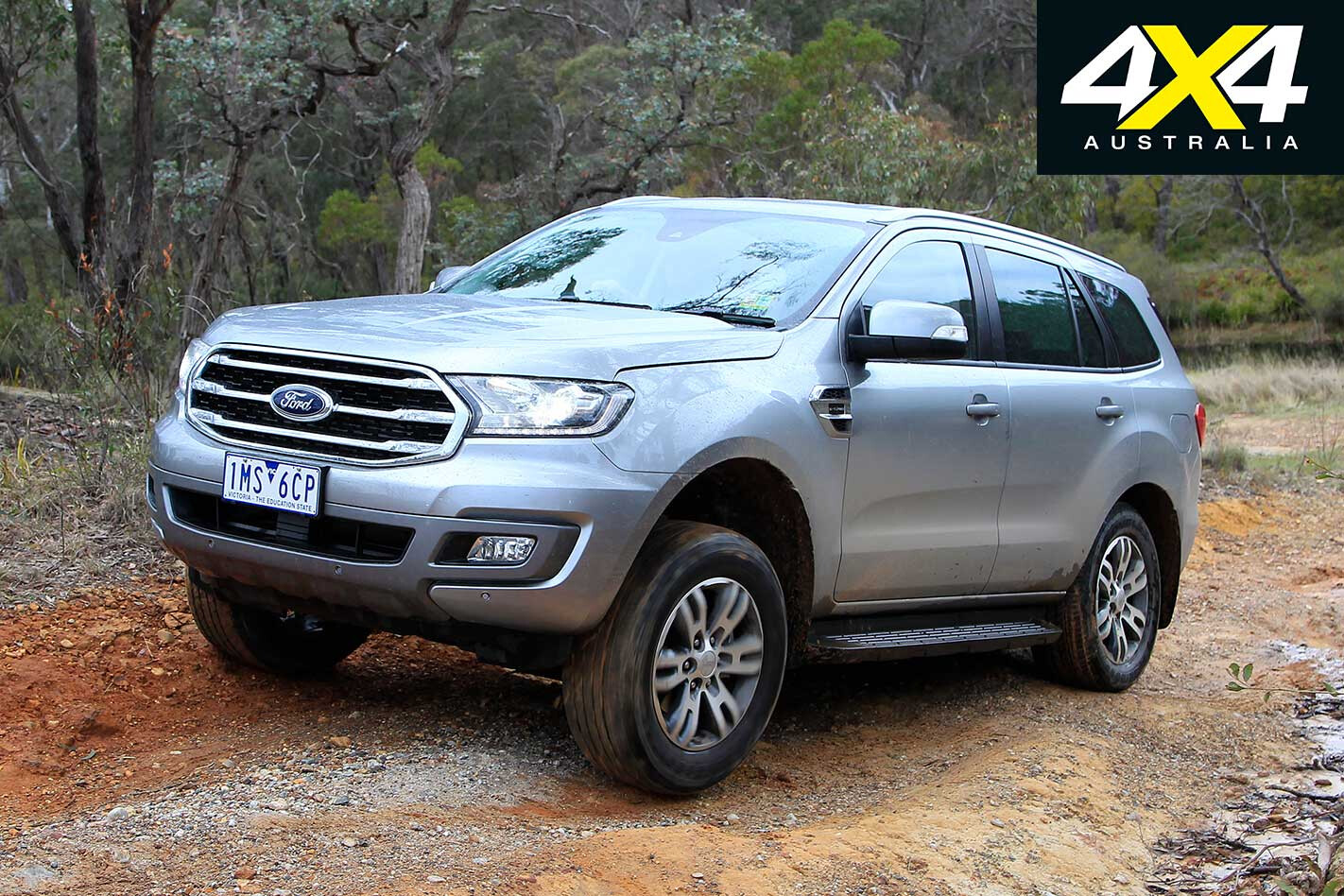
THE Everest proved a little more economical than the Trailblazer on test and has a slightly bigger tank, so it has close to 100km extra range on our fuel figures; even if both could do with long-range tanks.
The Everest also edges out the Trailblazer in towing capacity (by 100kg) and payload (by 70kg). The Everest Trend has an 18-inch wheel and tyre package that mirrors the popular Ranger XLT (and Hilux for that matter), and it can be swapped to 17s for even more aftermarket tyre options.
The Verdict – Bang for your Bucks
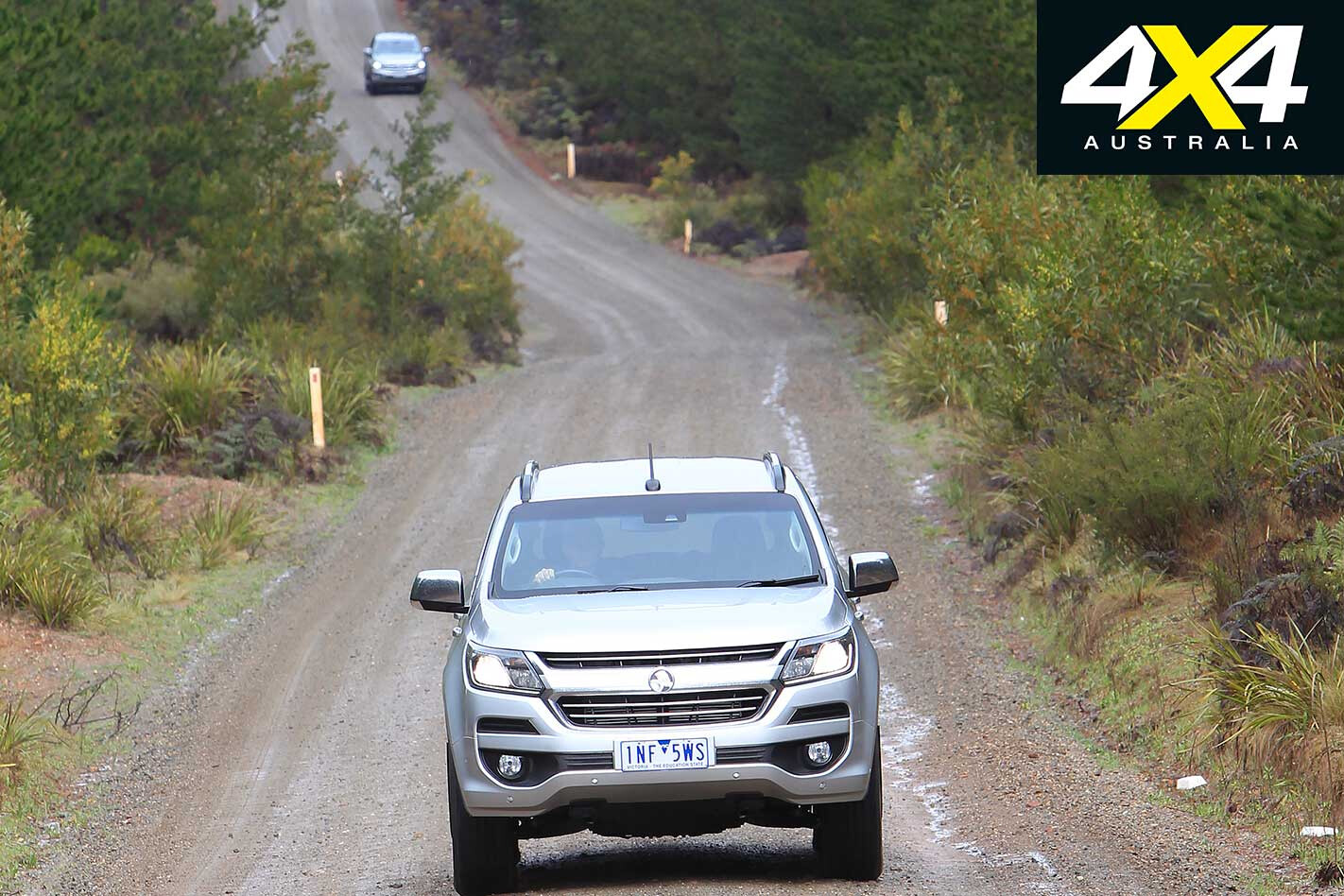
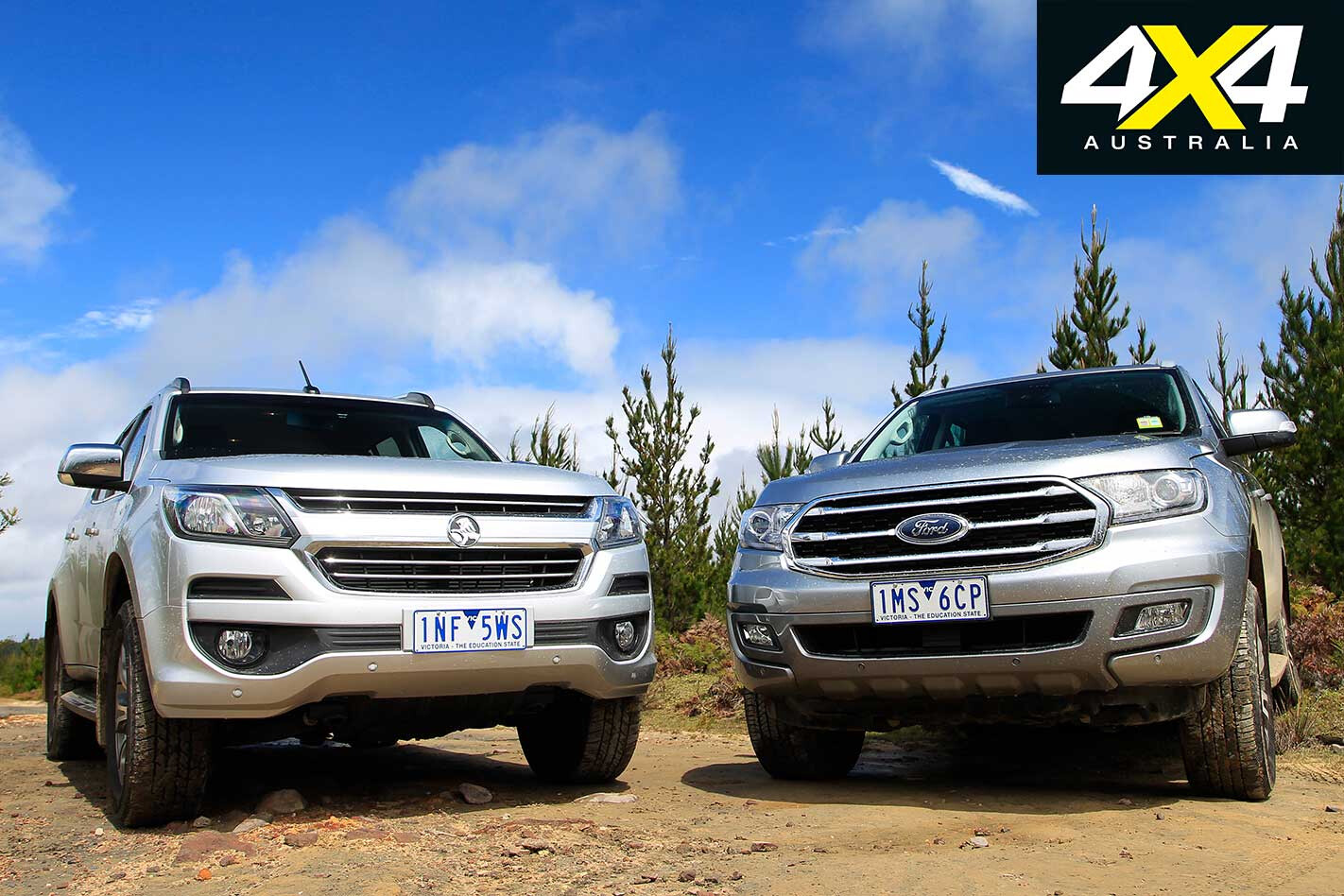
THE basic equation is this: the Everest 2.0-litre is nearly $10K more expensive than the Trailblazer LTZ, but that $10K buys a fundamentally better 4×4 wagon in terms of powertrain refinement, on-road comfort and off-road ability. It also brings with it the safety and convenience of full-time 4×4.
However, while you can’t get a less expensive Everest with the new 2.0-litre/10-speed powertrain (only one with the 3.2-litre/six-speed powertrain) you can save another $5K on the Trailblazer by opting for the LT, which is mechanically identical to the LTZ. For budget-conscious buyers this means a significant $15K saving, which could tilt the equation back towards the Trailblazer.
Driven in isolation the Trailblazer is pleasing enough and does everything you want. Just don’t drive it back-to-back with an Everest with the slick new 2.0-litre/10-speed combo, as you’ll realise things have moved on.
Specifications
| u00a0 | Holden Trailblazer LTZ | Ford Everest Trend |
| Engine | 2.8-litre 4-cyl turbo-diesel | 2.0-litre 4-cyl bi-turbo diesel |
| Power | 147kW @ 3500rpm | 157kW @ 3750rpm |
| Torque | 500Nm @ 2000rpm | 500Nm @ 1750-2000rpm |
| Gearbox | 6-speed automatic | 10-speed automatic |
| 4×4 System | Dual-range part-time | |
| Crawl Ratio | 36.4:1 | 47.6:1 |
| Construction | Separate-chassis | |
| Suspension (f) | Independent/coil springs | |
| Suspension (r) | Live axle/coil springs | |
| Wheel/Tyre Spec | 265/60R18 110T | |
| Kerb Weight | 2203kg | 2413kg |
| GVM | 2820kg | 3100kg |
| Payload | 617kg | 687kg |
| Departure angle | 25u02da | 25u02da |
| Rampover angle | 22u02da | 21.5u02da |
| Approach angle | 26u02da | 29.5u02da |
| Wading Depth | 600mm | 800mm |
| Ground Clearance | 218mm | 227mm |
Prices
| Holden Trailblazer | Ford Everest |
| LT: $47,990 | 3.2 Ambiente: $54,190 |
| LTZ: $52,490 | 3.2 Trend: $59,990 |
| Z71: $53,490 | 2.0 Trend: $61,190 |
| u00a0 | 2.0 Titanium: $73,990 |
| *Prices do not include goverment or dealer charges | |
IMAGINE just for one moment there was no such thing as a defect: no engineering. no mod plates, no perilous drives on long weekends waiting for the local constabulary to light up your mirrors with their blue and red party lights.
What would you build? A big block beast? A touring rig with a GVM rivalling a Mack Truck? Maybe you’d gut a late model dual cab and turn it into a street-driven rock crawler to end all rock crawlers. Now imagine you’re Ford America, or axle gurus Dana, or Dirt Cinema, and that the chequebook is blank.
It’s this very position a tightknit group of marketing gurus and gear heads found themselves in as they rolled a righ-hand drive PXII Ford Ranger out of a container on the California dock, intent on building a show rig that’d not only show their capabilities but turn heads all around the world. A special order put in from the Southern Hemisphere to show off the soon-to-be-released Ranger to the USA market.
Ideas flowed, concepts bounced back and forth, and all of it irrelevant because the end product is so wild, so unfathomably modified for Australia that it sets its own benchmark and then completely shatters it.
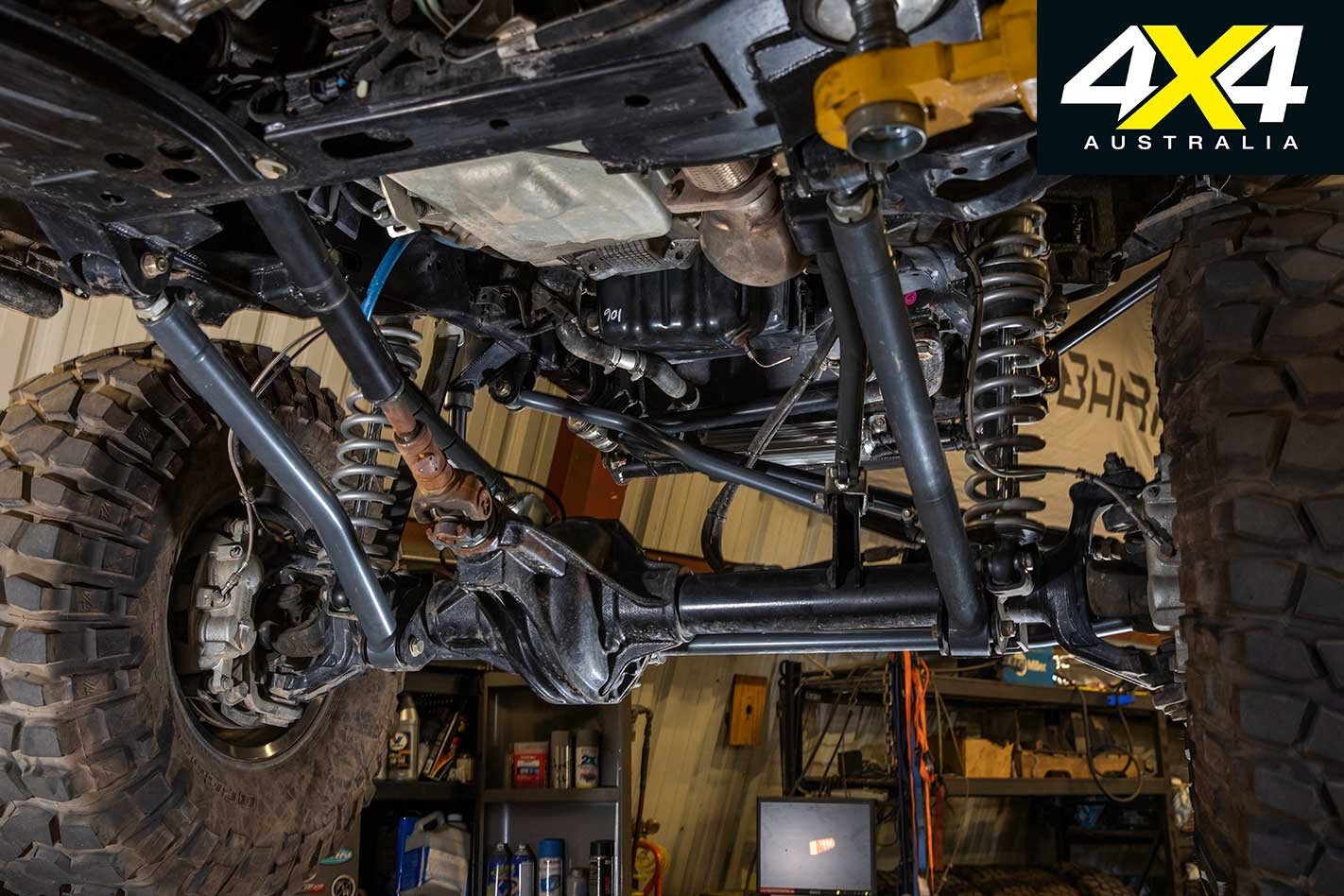
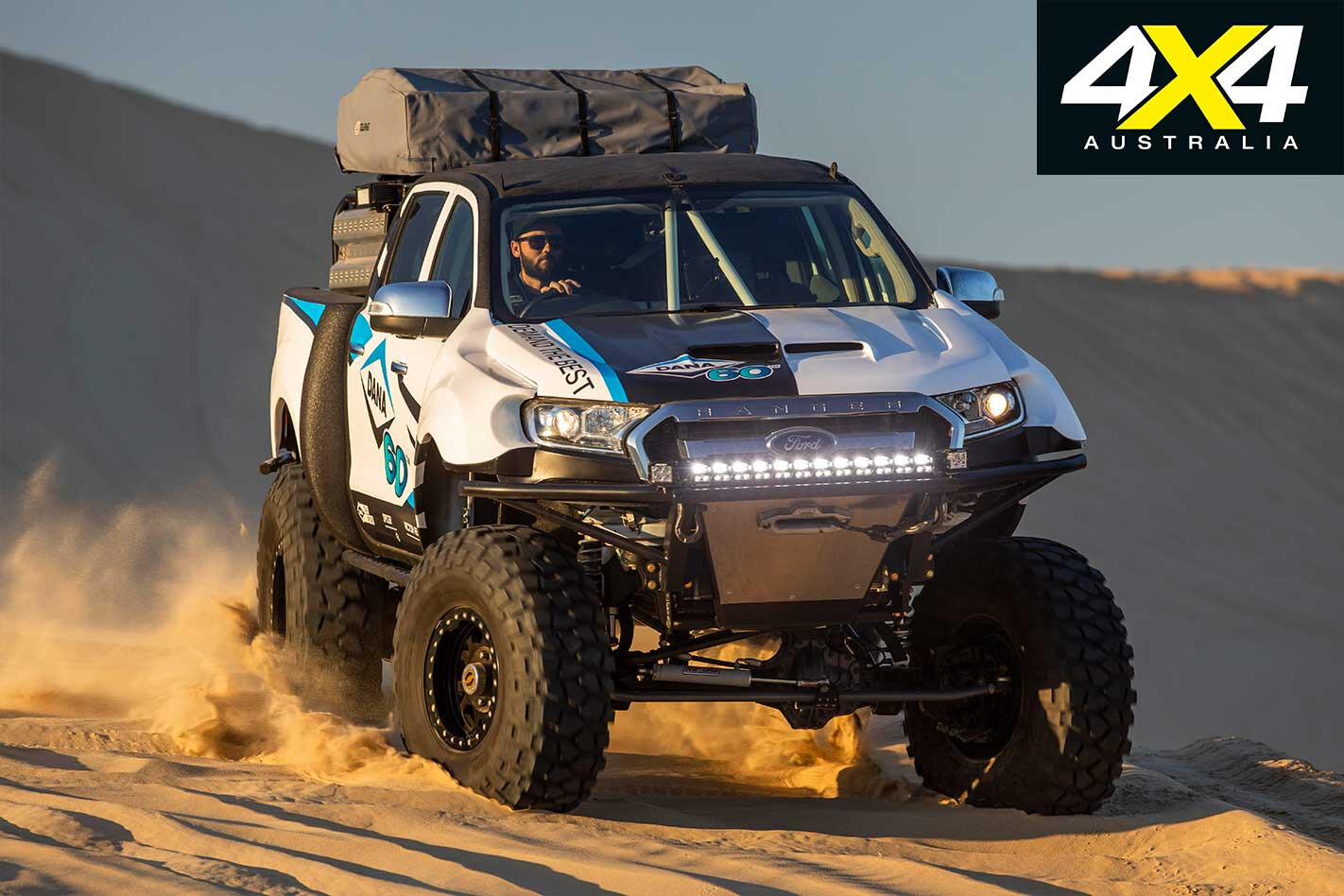
Let’s cut right to the chase. Underneath this Ranger you won’t find leaf springs, a factory rear locker, or an inkling of an independent front suspension arrangement. Instead, the rails have been sliced and diced back to bare steel before some of the strongest axles on the planet have been slotted into place: Ultimate Dana 60s. They’re a sexy version of the huge diffs found in an F-250 pick-up.

The beefy disc-brake rear end is held in place with a custom 4-link and Panhard bar arrangement. Fully adjustable at both ends, it works in conjunction with huge 2.5-inch body, 14-inch travel Fox coilover shocks to hold the Ranger’s rear end in the air and give it insane amounts of articulation. They’re kept reigned in by a huge torsion bar-style Antirock Sway Bar from Currie Enterprises.
Up front there’s a matching Ultimate Dana 60 stuffed full of ARB Air Locker and held in place with a second set of 12-inch-travel 2.5-inch body Fox coilovers. A set of limit straps stop the big-dollar shocks from overextending, while Fox 2.0-inch hydraulic bump stops help smooth out hard hits in those Pismo dune runs.
The factory electric steering rack was thrown in the bin, simply not up to the task of muscling around tyres any larger than 35 inches, especially when the terrain turns from sandy beaches to granite boulders.
In its place now sits an hydraulic PSC steering box leading down to a cross-over steering arrangement. A PSC hydraulic ram was added to the tie-rod as an hydraulic assist setup, helping muscle the big shoes around the rocks with minimal effort; the extra volume and an additional steering cooler help keep oil temps in check.
Now let’s be real for a second: You don’t stuff rock crawler-spec suspension into something late model then fit a set of 32-inch all-terrains. For this build a set of massive 39-inch BFGoodrich Krawler tyres were optioned up.
Only available through motorsport retailers in Australia, the tyre has legitimate racing pedigree, being a front runner in the notorious King of The Hammers. They’re stretched around 17-inch 103 Xtreme alloys from Ultra Wheel. The beadlock design means pressures can be safely dropped to single digits without risking a bead coming off, and they look oh-so-cool in the process.
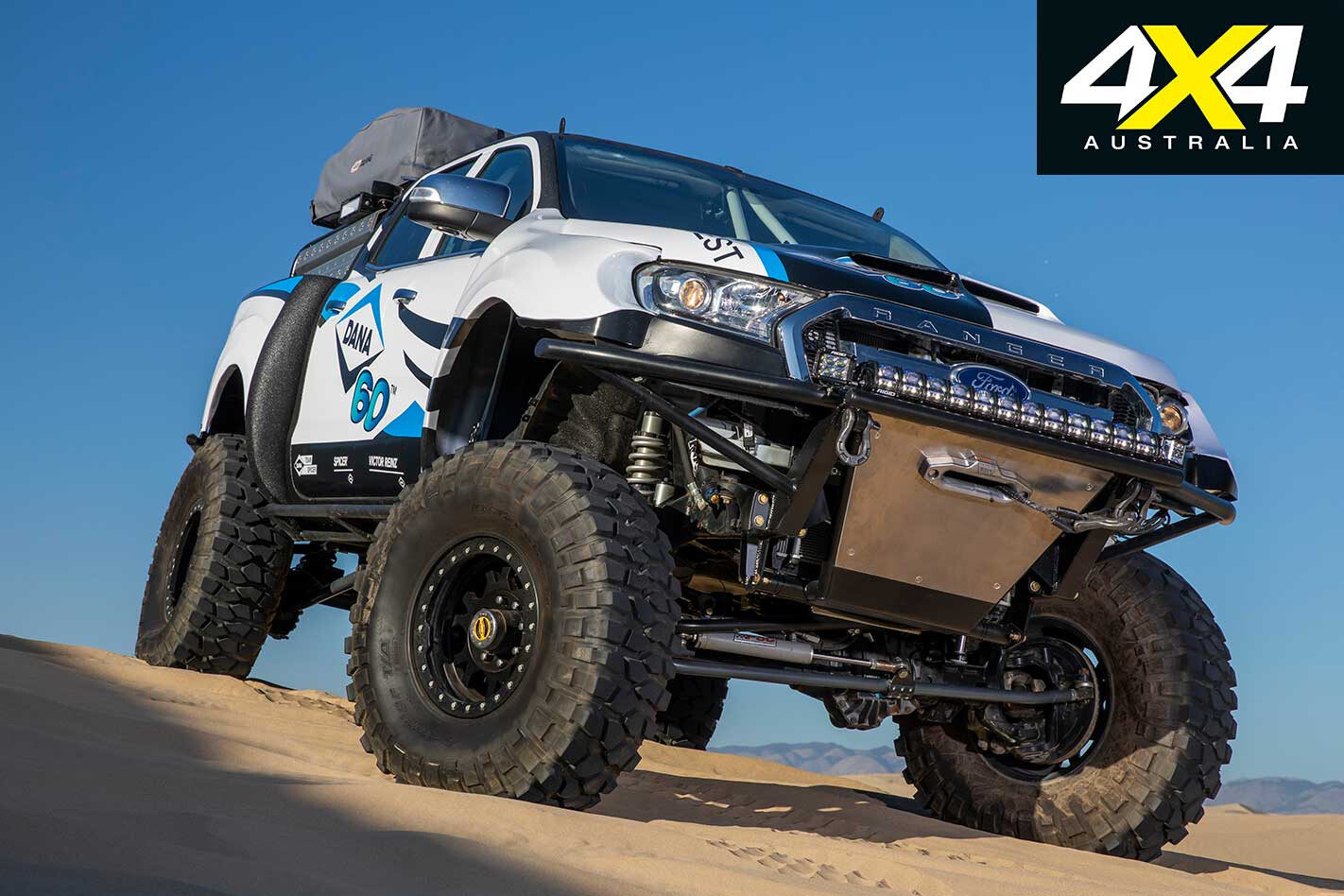
Those monster axles and even bigger tyres mean the Ranger dwarfs a showroom-fresh model. Up front a pre-runner-style bar sets the new width of the Ranger a full 14 inches wider than stock, that’s seven inches wider again than the new Ranger Raptor.
The front bar not only gives the Ranger its aggressive profile, but also hides a Warn Zeon winch behind its alloy skid plate. Tucked above the bar is one of the most high-tech light bars on the market, the 30-inch Rigid Industries Adapt – as the Ranger picks up speed the LEDs transitions from wide pattern to a spot beam, with eight selectable patterns through the in-car controller.
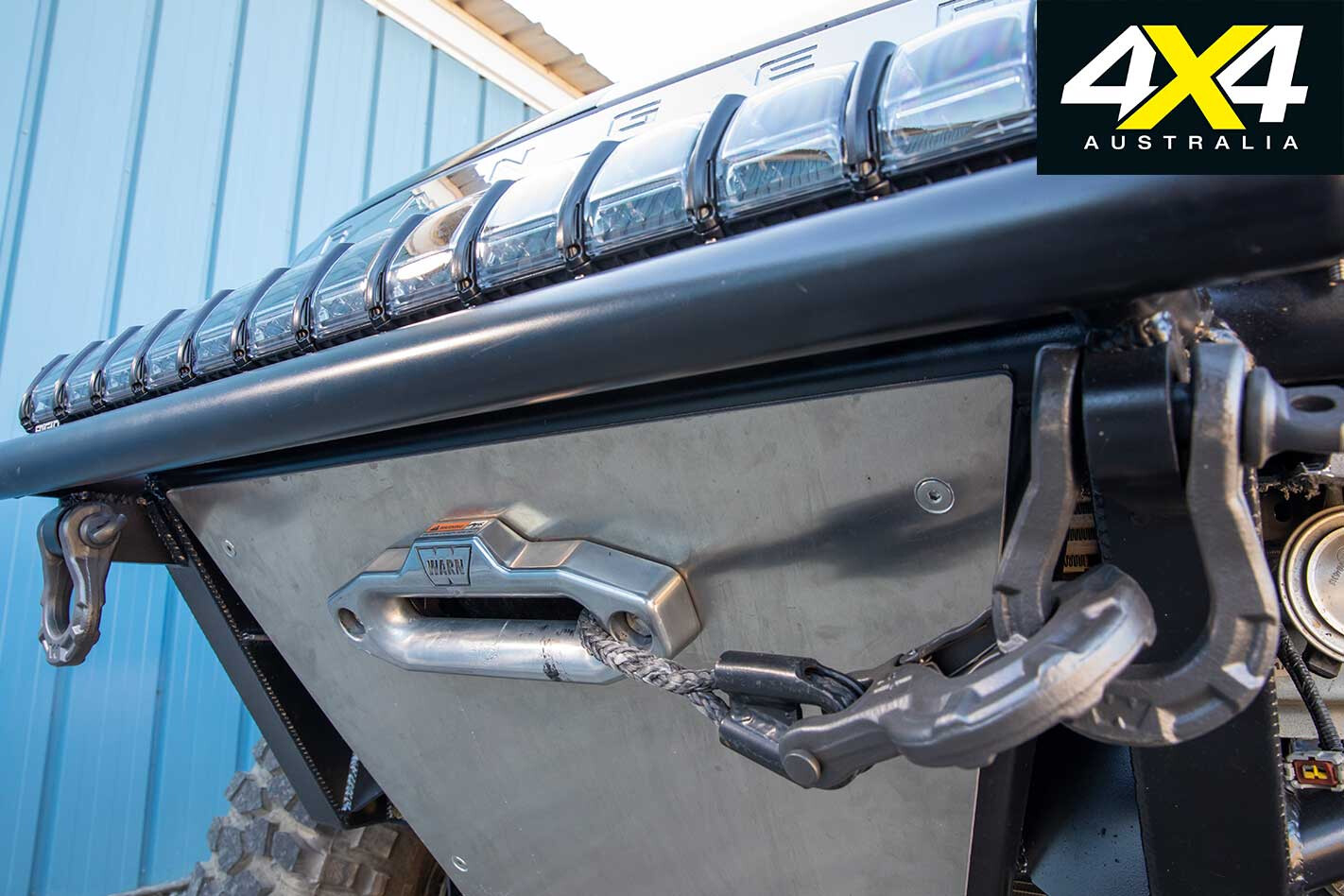
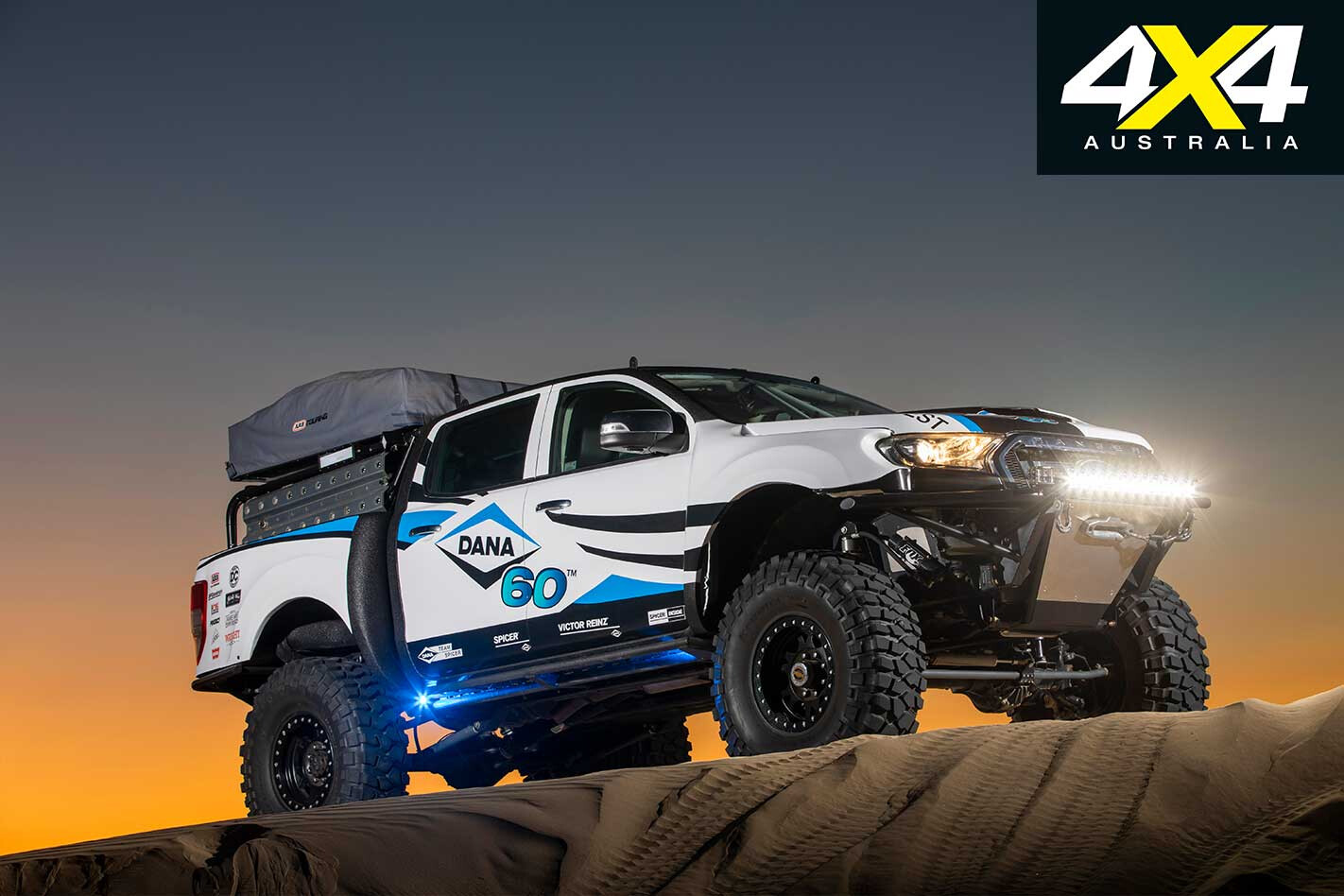
Moving down the flanks is where the party really gets started. The stock flares have been binned, in their place lie a set of one-off fibreglass guards to give that So-Cal pre-runner stance. They’re paired up in the rear with bumped-out-fibreglass tub sides, requiring a reskin of the factory tub. The rear quarter panels have also been sliced and diced to make way for the custom high-clearance tube rear bar. Running along the sills are the always necessary rock sliders.
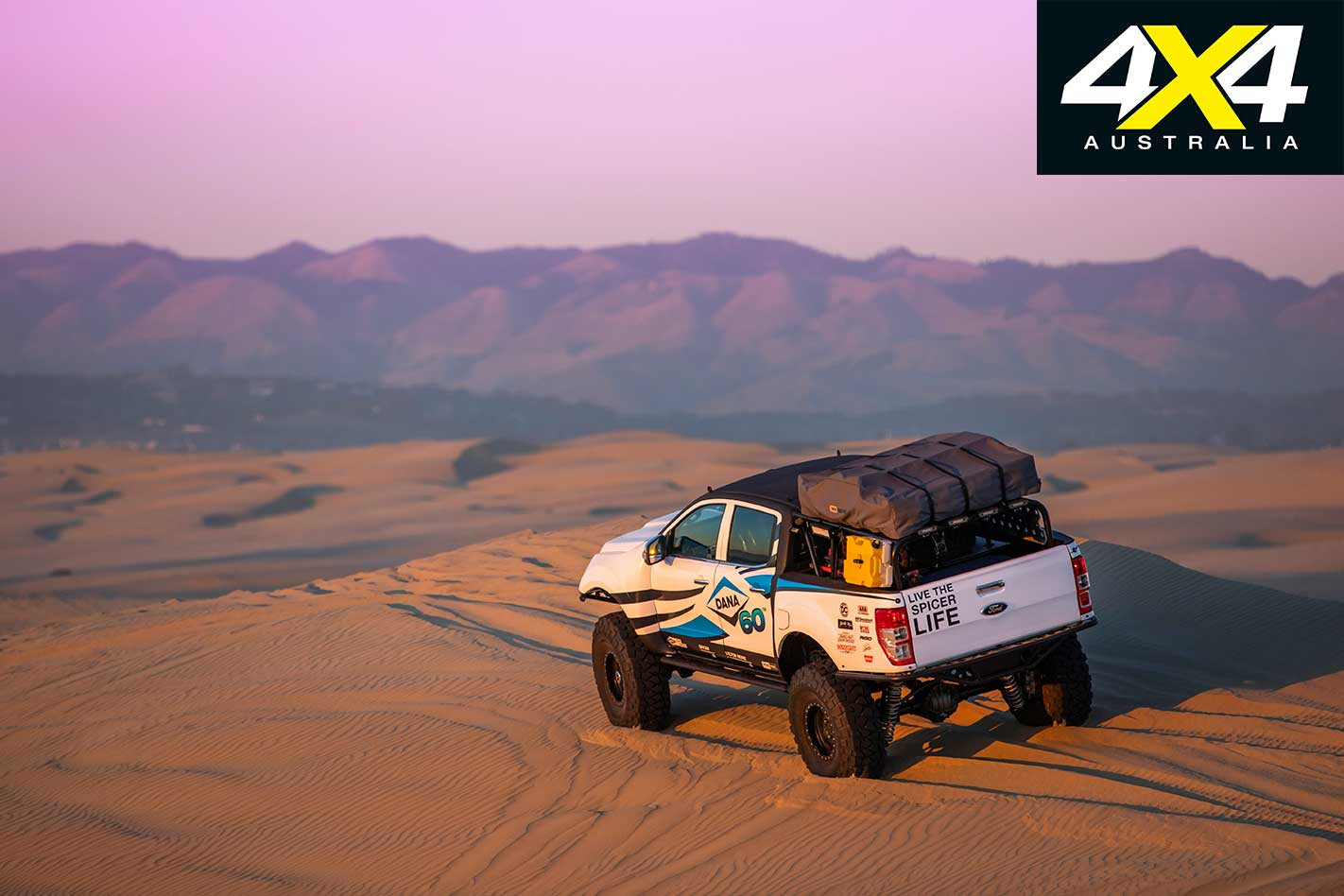
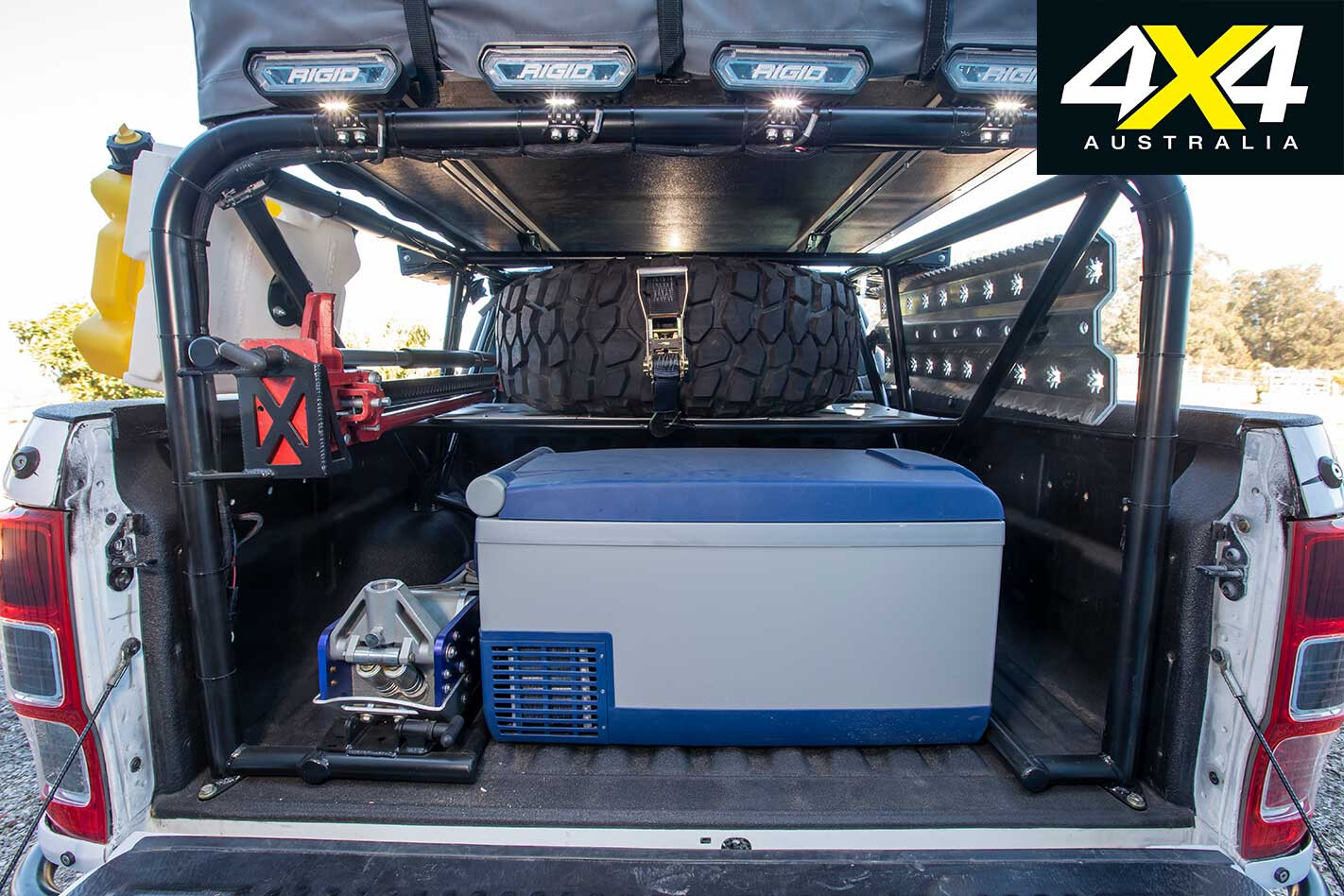
That masterpiece of metal and fibreglass in the rear isn’t just for hardcore wheeling, either; it’s been decked head to toe with some of the best touring gear on the market. You’d have better luck threading a camel through the eye of a needle than fitting a 39-inch tyre in the stock location, so the crew fired up the MIG welder and pieced together a bed cage to tuck it behind the rear window.
The frame also holds the ARB 12V fridge as well as a pair of quick-release mounts for the Hi-Lift Jack and James Way Off-Road floor jack. There’s an ARB rooftop tent up top, with one side of the rack holding AlumiTrack recovery boards and the other housing the modular RotopaX fuel storage.
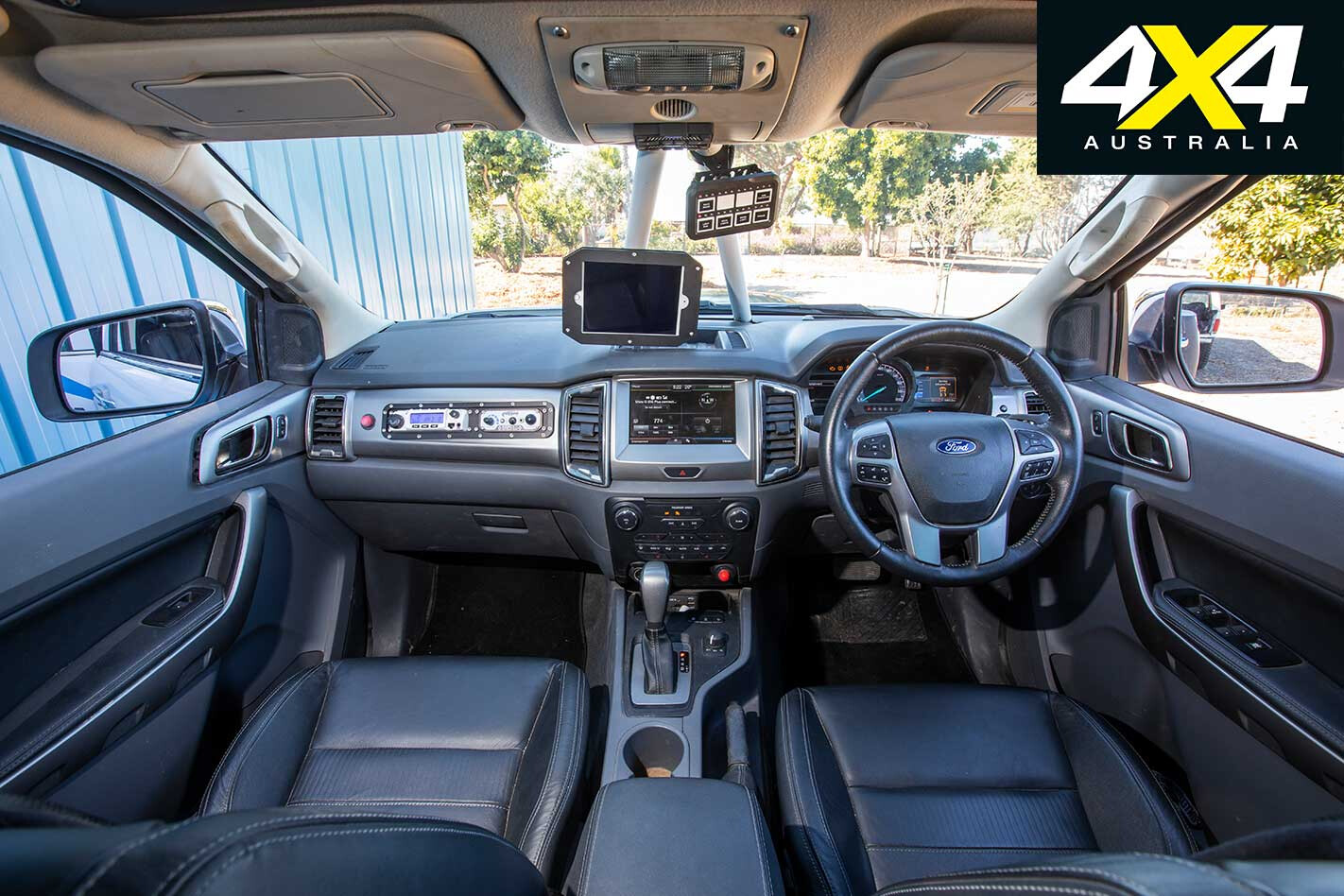
Moving inside and things kick up a gear, well around 100 gears. See those white bars behind the front windscreen? Well, they’re just a hint at the extensive six-point roll cage hidden inside the Ranger, letting the crew open it up in the dunes without turning into pancakes if it all goes south.
There’s a full five-seats inside, so great care was done to keep as much interior room as possible – running the B pillar bars down through the existing B pillar, the halo above the roof liner, and the A pillar bars in behind the OEM trims.
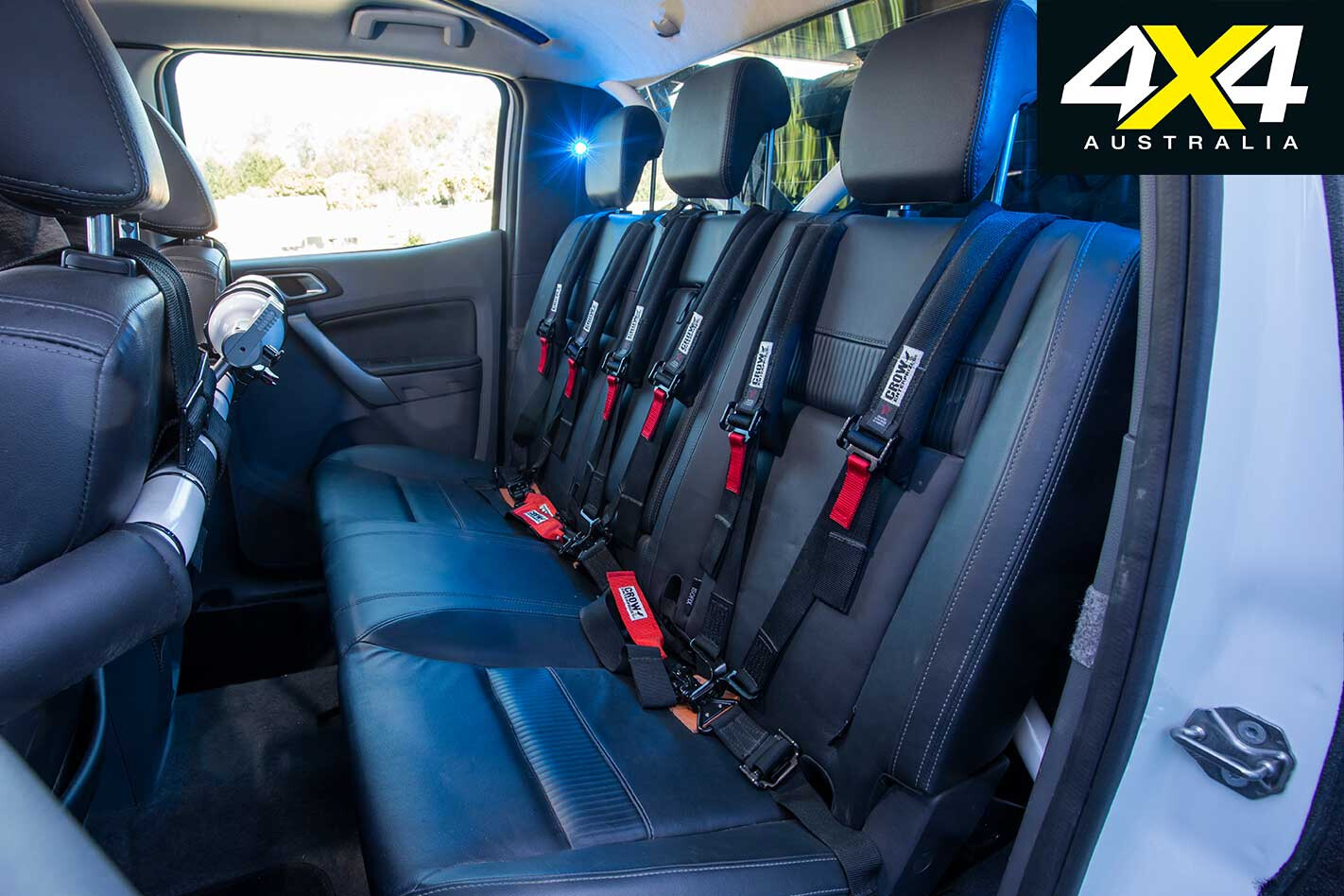
Stock leather-clad seats team up with four-point harnesses to strap everyone in tight. The cage then ties through the back of the cab into the tub rack, and then down through the floor into the rock sliders. There’s a few familiar sights inside, too, including the UHF system (and intercom), dash-mounted GPS and switches to control the extensive lighting and lockers.
While most of the 4x4s we feature focus on how far you can travel with your 4×4, the Dana Ranger focuses on how far you can metaphorically push one. A tight-rope walk between an outlaw rock-crawling build and a capable tourer – attitude to spare, and practicality to boot. There’s no moderation or gentle steps, just the best Ranger you can possibly screw together with some of the best parts in the world.
What does it mean for us?
THE JEEP Wrangler is without a doubt the most easily modified 4×4 on the planet, bar none. Right off the shelf there’s everything available for it from replacement axles, wider guards, bolt-in cages and 400 different storage systems. It’s like Lego for grown-ups, and all because of a huge aftermarket support in the USA. That’s why this Ranger is one of the most important 4x4s we’ve featured in a long time.
As manufacturers move to global platforms, the aftermarket industry will begin booming. From desert-racing suspension from the States through to overlanding setups from the remote regions of Eastern Europe, there’s never been a more exciting time to build or use a 4×4. Dana hinted at a full suite of upgrades available for the Ford Ranger as of next year, so it seems dual-cab utes are about to get a whole lot more exciting.
HERE are six reader-submitted 4x4s that were recently featured in the Summer 2018 issue of 4X4 Australia.
To get involved, post a pic and a description of your rig on our special site here or post it to our Facebook page.
We feature a bunch of readers’ rigs in the magazine each month, where we award one lucky punter with a $200 voucher to spend at Piranha Off Road.
Show us what you got on Readers’ Rigs
1997 MITSUBISHI PAJERO: BRETT GREEN (4×4 Australia Readers’ Rigs Winner of the Month)
It has all you could want: bullbar, winch, custom sliders, dual lockers, long-range tank, dual batteries, custom drawer system, ARB fridge, inverter, water tank, RTT and awning, KM2s, and more.
Best place? I’m not even sure to be honest. Paji went many places in his long life including the Cape, Vic and NSW High Country, Fraser, Moreton Island, as well as all over Queensland and the NT.
2013 TOYOTA LANDCRUISER 200: RICHARD DIXON
GEAR includes a bullbar, rear dual-tyre carrier, drawers, a long-range fuel tank, RTT, dual batteries, winch, two fridges, and more. Best place is Desert Queen Baths in the Pilbara. Done the Simpson Desert, and Kimberley anywhere is just as good.
4×4 Explore: A trip through the Simpson Desert
2008 JEEP JK WRANGLER CRD: MATT THEW
KIT includes front and rear air lockers, OME lift, Fox shocks, front swaybar disconnects, BFG KM3s, Uneek rock sliders, and obviously way too much more to list. Favourite spot? In terms of fun, the Watagans or around Killingworth.
TOYOTA LANDCRUISER 105: WAYNE CHAPMAN
A 105 Series and ‘half an 80 Series’ trailer, and Tucker the Samoyed relaxing in his crate. The 105 has an ARB bullbar, LED lights, lockers (front and rear), drawers and a 180-litre second tank. The trailer has a bed deck with drawers underneath, and a Bundutec Australia three-sided awning.
2013 TOYOTA HILUX SR5: PRINCE DOG
Gear includes ARB barwork (front and rear), canopy, OME lift, BFG A/Ts, Safari Snorkel and some old Lightforce XGTs. Best spot? Most recently the NSW Snowy Mountains, but also Barrington Tops, the Watagans and family day trips to Stockton and Redhead Beaches.
NISSAN NAVARA D40: JAMES BROWN
My stock as a rock D40. Best spot? Cheynes Beach, 70km east of Albany, West Australia; the odd drive into West Cape Howe; and mainly day trips or overnighters from Albany, as that’s where we live.
WITH THE booming popularity of 4×4 utes and their high-performance offspring such as the Ford Raptor, HSV SportsCat and Colorado ZR2, it now seems that every time a new ute is launched the media jumps on to the possibility of hi-po variants.
Ralliart Tritons from Mitsubishi, Nismo Navaras from Nissan and TRD Hiluxes from Toyota have all been touted, but rarely do these equate to anything more than sticker and accessory packs with no real high-performance upgrades.
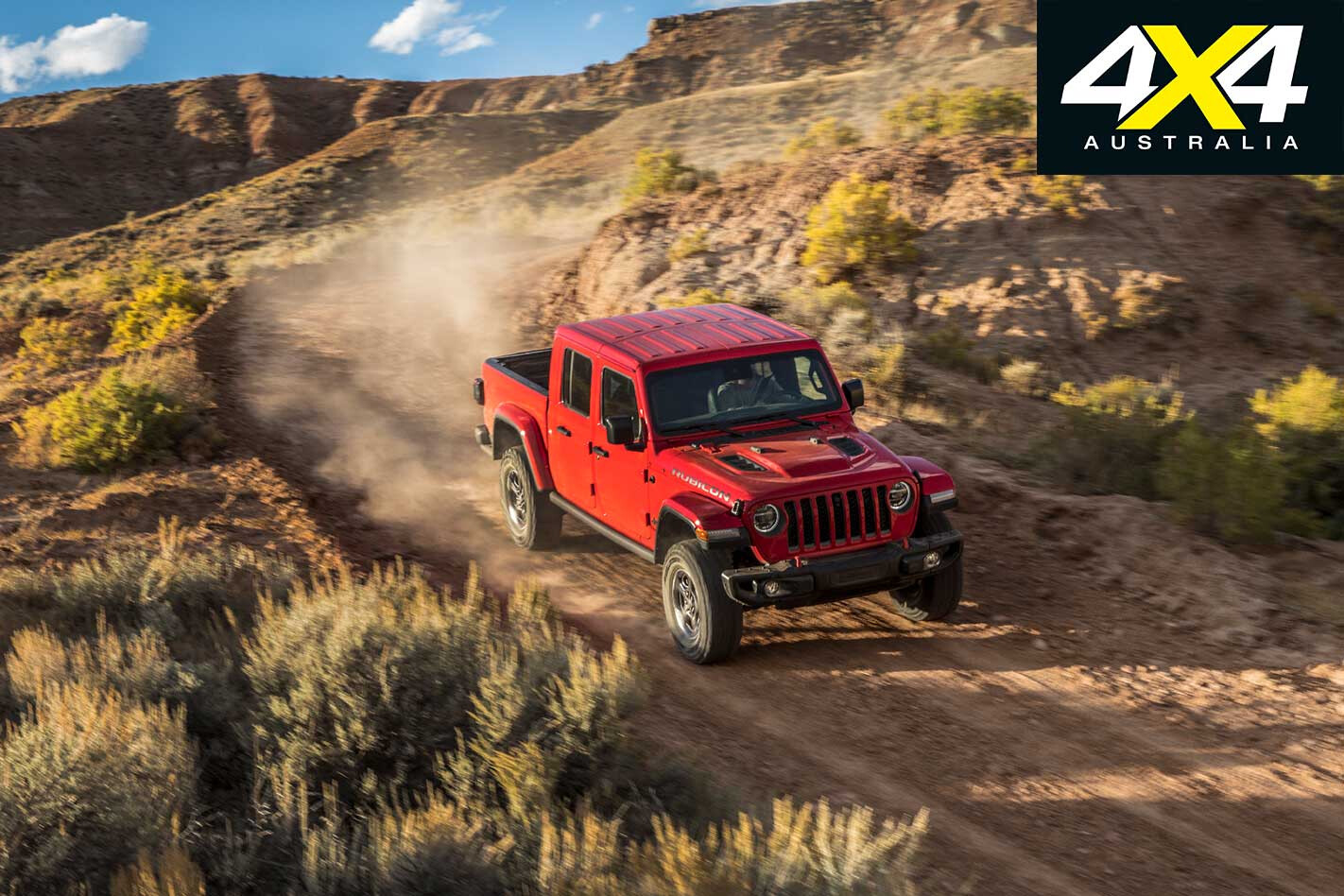
The latest ute off the blocks and the current crowd favourite is the Jeep Gladiator, and the crew over at jlwranglerforums.com are spruiking a hotted-up version of Jeep’s new pick-up. We heard whispers of such a truck at the SEMA Show last year but put them down to pipe dreams.
The Gladiator is already confirmed to have a Rubicon variant equipped with bigger off-road tyres, lower gearing, increased ground clearance, locking front and rear differentials and a disconnecting swaybar, all of which should make it the most off-road capable double-cab ute available straight off the showroom floor. The Rubicon’s ground clearance and live axles alone should ensure it’ll out-rockhop any of the one-tonne 4×4 utes popular in Australia.
Where the Gladiator would fall behind the likes of a Raptor, be it the F150 or Ranger, is high-speed off-road driving that is popular in the USA and to a lesser extent here. But that’s easily fixed. Ford partners with off-road-racing shock absorber specialists Fox Racing for the suspension on its Raptor models and there’s no reason Jeep couldn’t do the same with Fox or another company like King Off Road or Bilstein.
The heavier live front axle will be harder to tame than the IFS on most utes, but that’s something off-road racers have been overcoming for decades. There’s nothing stopping Jeep or any of the specialist suspension brands developing a desert-dashing package for the Gladiator.
The biggest engine offered with the Gladiator and Wrangler is the 3.6-litre Pentastar petrol V6, but we already know a V8 easily fits within the rails of the JL Wrangler. Again, there’s nothing stopping Jeep from factory-fitting a Hemi V8 or even the supercharged ‘Hellcat’ Hemi into a high performance Wrangler or Gladiator.
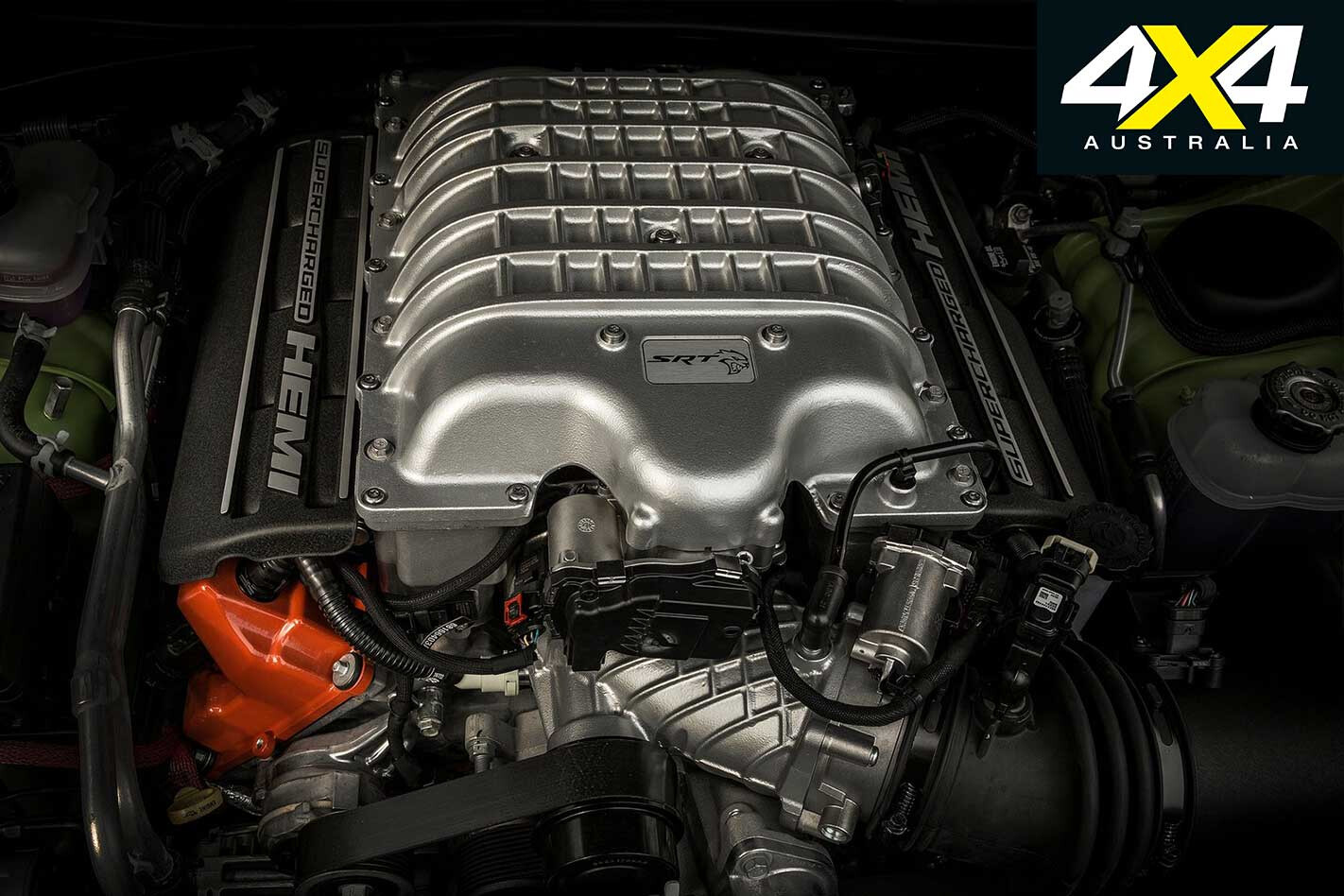
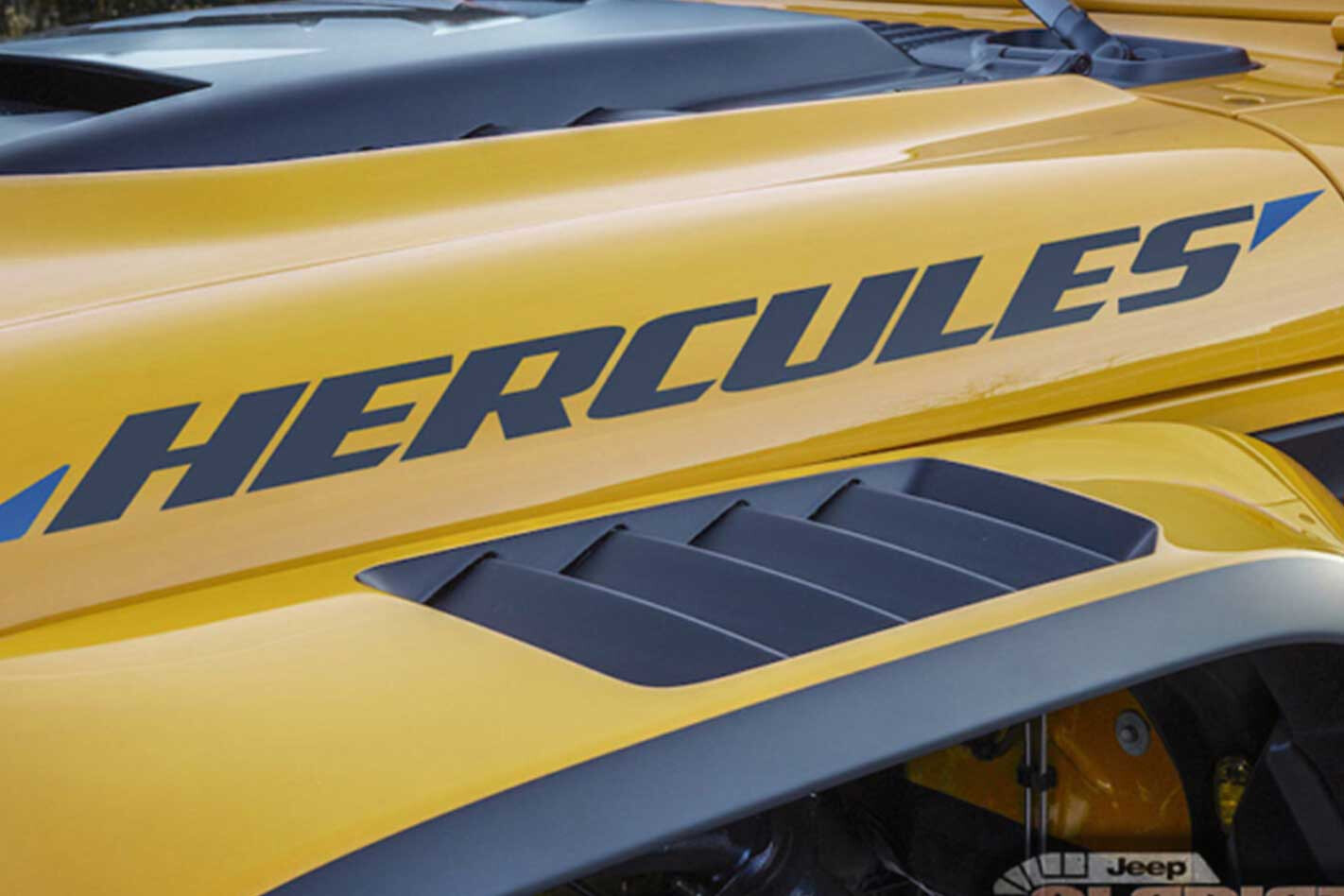
Hell, why not just bolt MOPAR’s latest 1000hp ‘Hellephant’ 426 crate engine in there for truly Herculean performance. Add on some fancy bodywork, wheel and tyres and the sky’s the limit for a high-performance Jeep.
The Jeep forums quote unnamed FCA insiders as saying prototypes of such a vehicle are currently in testing by Jeep, but it remains unconfirmed for production. They even went as far as computer-rendering what it might look like using a swag of currently available MOPAR accessories, as shown on the yellow mock-up pictured here.
JUST AS the popularity of double cab 4×4 utes in Australia has grown, so has the size of some of the more popular models. When Volkswagen launched its Amarok it was wider and roomier than the established players, and, subsequently, the Ford PX Ranger/Mazda BT-50 siblings, the Holden Colorado and, more recently, the LDV utes have all grown in size.
However, these are still only mid-size utes and are completely overshadowed by the full-size pick-up trucks from America. Unfortunately for Aussies, none of the full-size trucks are made in right-hand drive by the OE manufacturers, yet this has spawned an industry of small businesses importing, converting and marketing the trucks to those who want them and can afford to pay for the costly conversions.
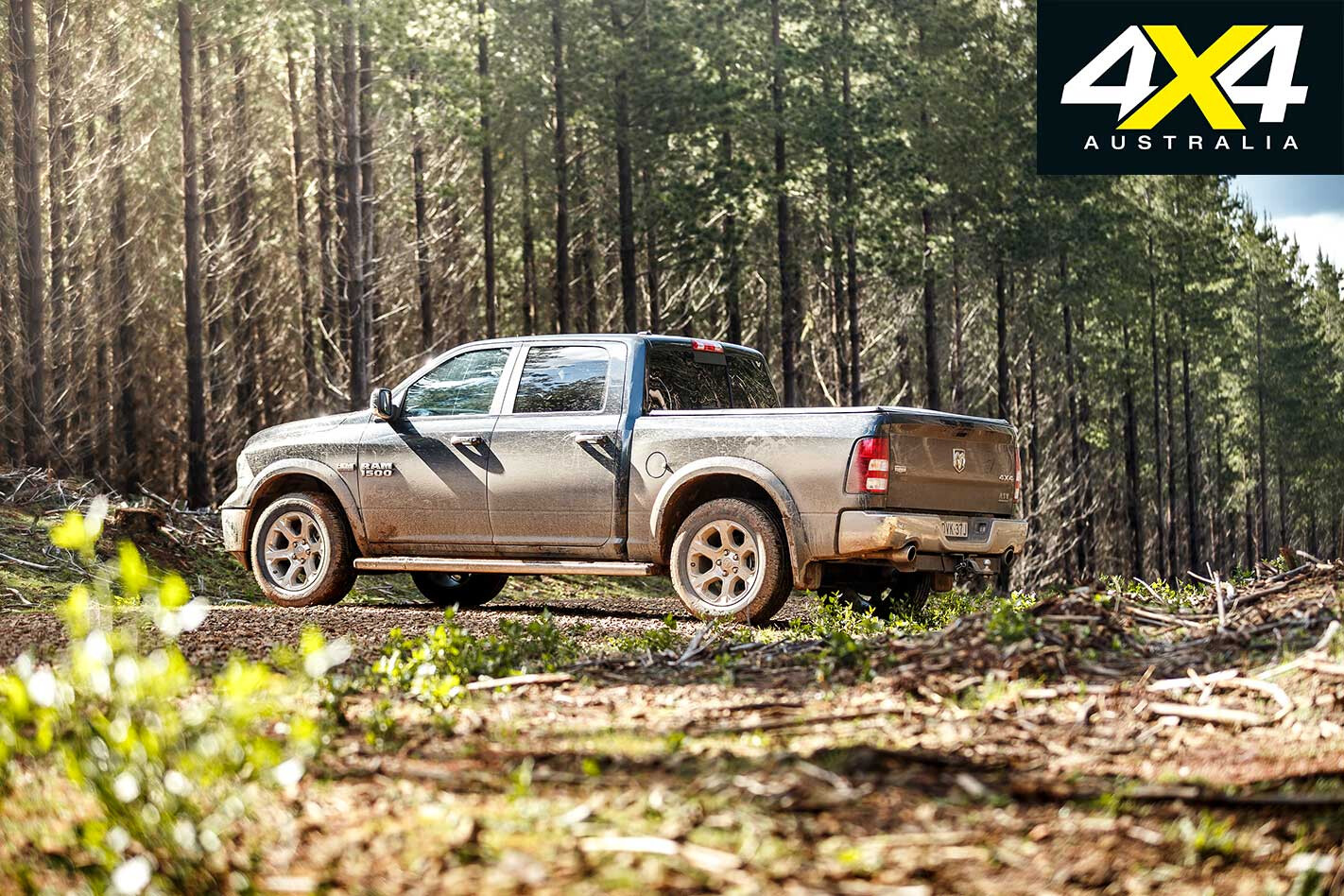
The import and conversion industry has picked up its game in recent times since importer/distributor Ateco Automotive struck a semi factory-backed deal to import RAM trucks and commissioned the Walkinshaw Group to do the conversions in a partnership it calls American Special Vehicles (ASV). Of note, Walkinshaw also imports and converts Chevrolet Silverado and Camaro vehicles under its own brand, HSV.
ASV started with the heavy-duty RAM 2500 and 3500 models as Ram Trucks Australia, and the latest addition to its local line-up is the lighter-duty RAM 1500. The 1500 is the same size as the 2500 and 3500 trucks, but it has different front sheetmetal and a different chassis and suspension setup, opting for independent front suspension (IFS) rather than the live axle found under the front of the HD models.
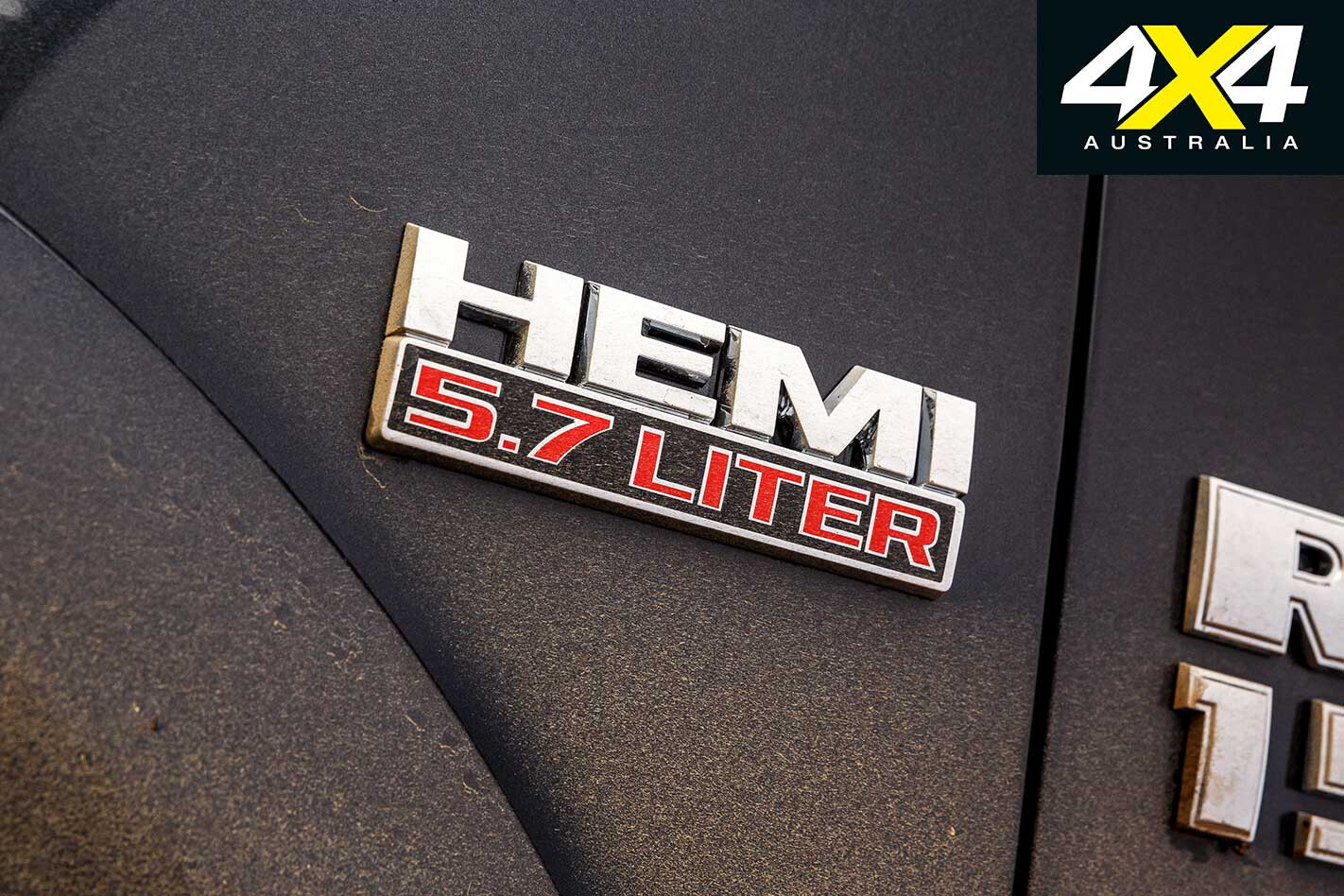
Another big difference between the RAM 1500 and the HD models is that, while the 2500 and 3500s are powered exclusively by a sublime 6.7-litre inline six diesel engine from Cummins, the 1500 is only offered with a 5.7-litre petrol Hemi V8 mill… for now at least. The VM Motori V6 diesel engine we are familiar with from the Jeep Grand Cherokee will join the Ram Trucks Australia line-up early in 2019.
There’s another big difference between the RAM models, and that’s cost. Imported and converted American pick-ups have always been priced on the wrong side of $100K in Australia, and the 2500 and 3500 are up there in cost.
The RAM 1500 on the other hand can be had for as little as $79,950 in base-spec Express trim, while the upper-spec 1500 Laramie as tested here will set you back $99,950 – when bought through RAM Trucks Australia. There are other companies selling them here, but only the ASV RAMS are re-engineered by Walkinshaw to exacting OEM standards.
Powertrain & Performance
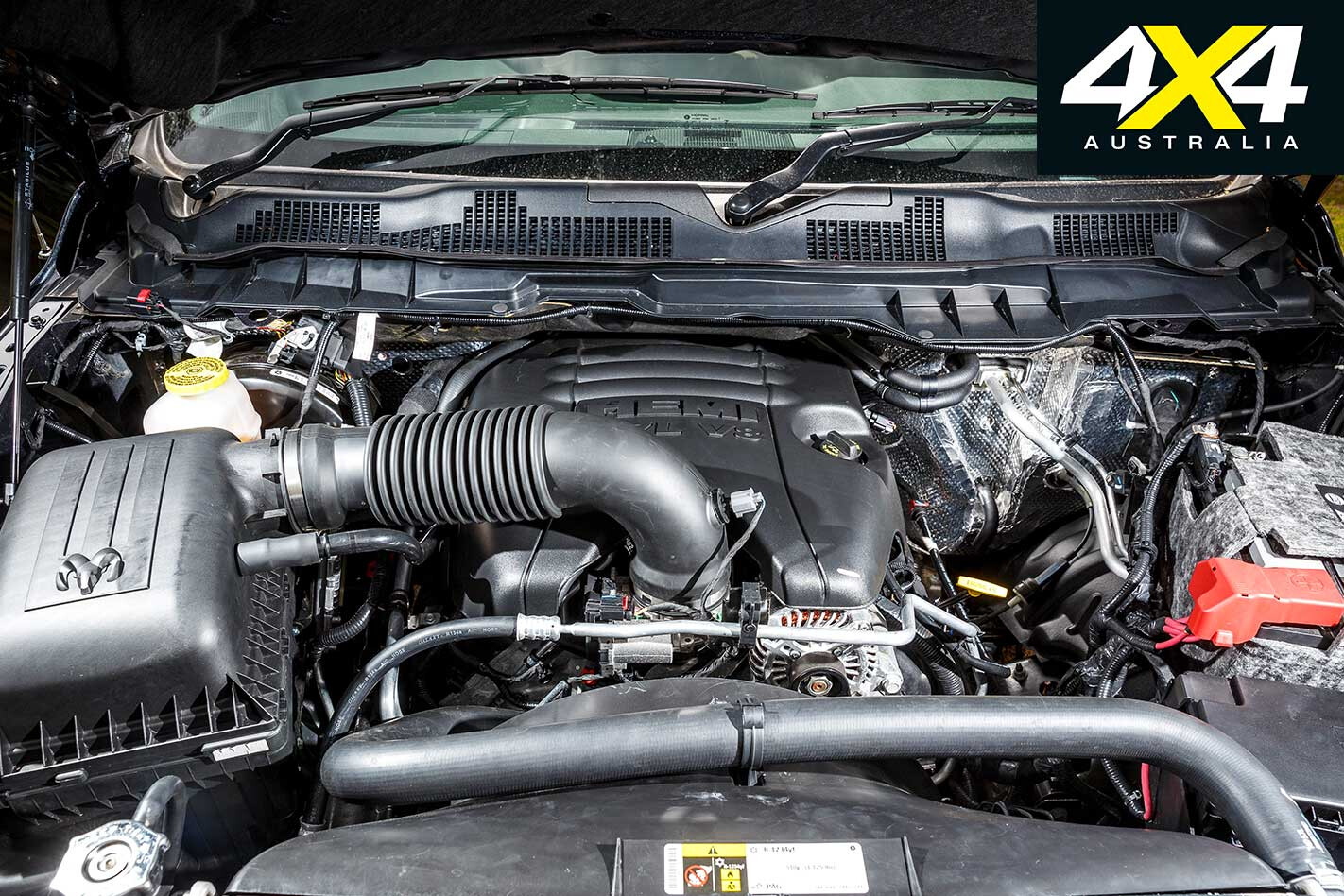
YOU MIGHT think a petrol V8 engine propelling a great lump of American pick-up is going to burn through fuel like dunny paper in an Indian diner, but the 1500 isn’t as bad as you’d imagine. ASV claims 12.2L/100km and we recorded 17.6 in a week of commuting, on- and off-road, all while unladen.
That’s about the same as we’d get out of a VDJ79 Land Cruiser over similar conditions, possibly even better, and the Hemi V8 goes and sounds a lot better than the Toyota diesel V8, plus it is a lot smoother and more refined.
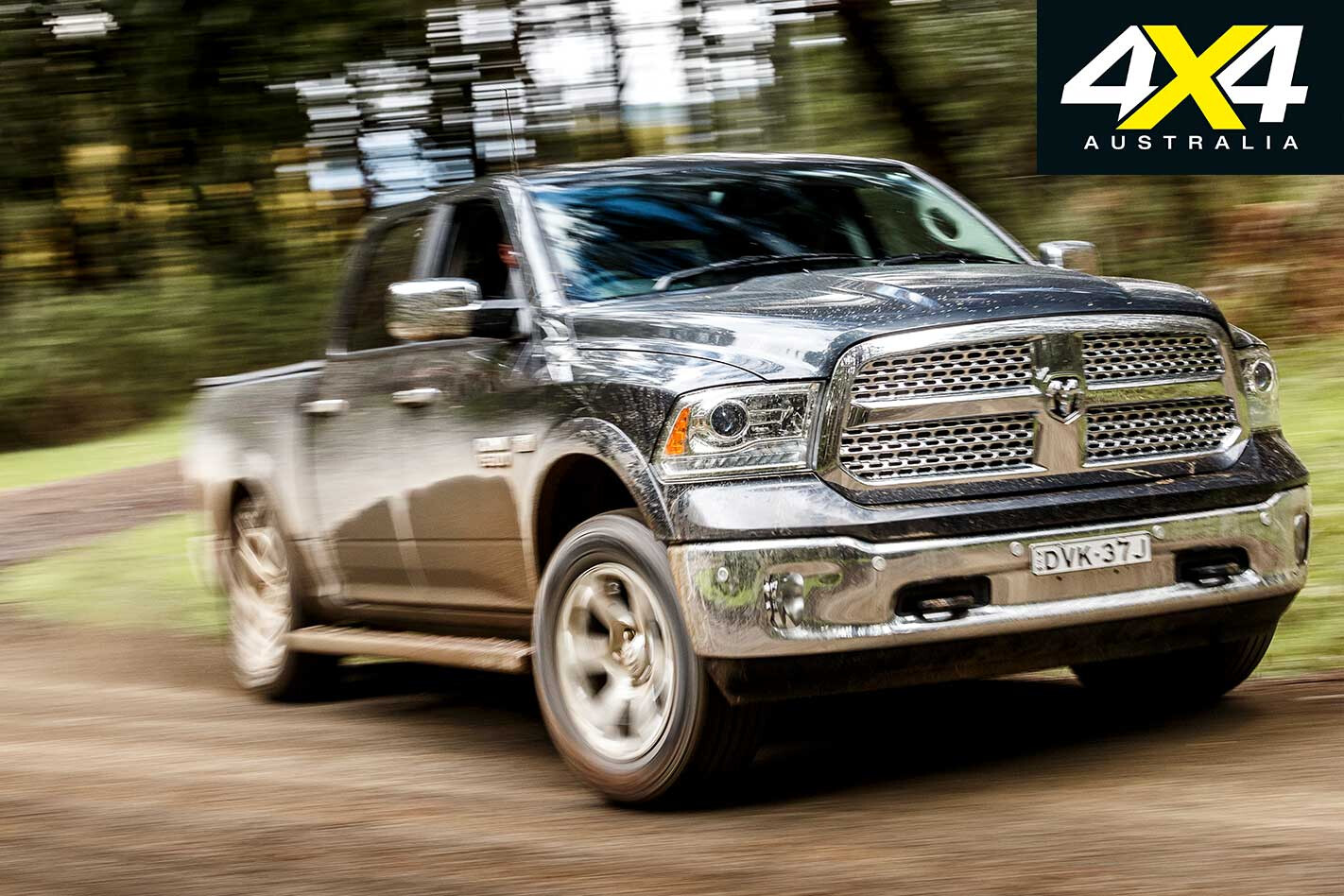
The 1500 we tested was fitted with a shorter 3.92:1 final drive ratio to give it a heavier 4500kg towing capacity. Standard is a 3.21:1 gear-set which limits towing to 3500kg but improves fuel usage to a claimed 9.9L/100km. Even with the shorter gearing, the V8 engine always felt relaxed and never busy at highway speeds.
The eight-speed auto is equally smooth and refined; though, its operation via a dash-mounted dial is less than ideal and downright annoying when doing multi-point turns on tight tracks.
On Road Ride & Handling
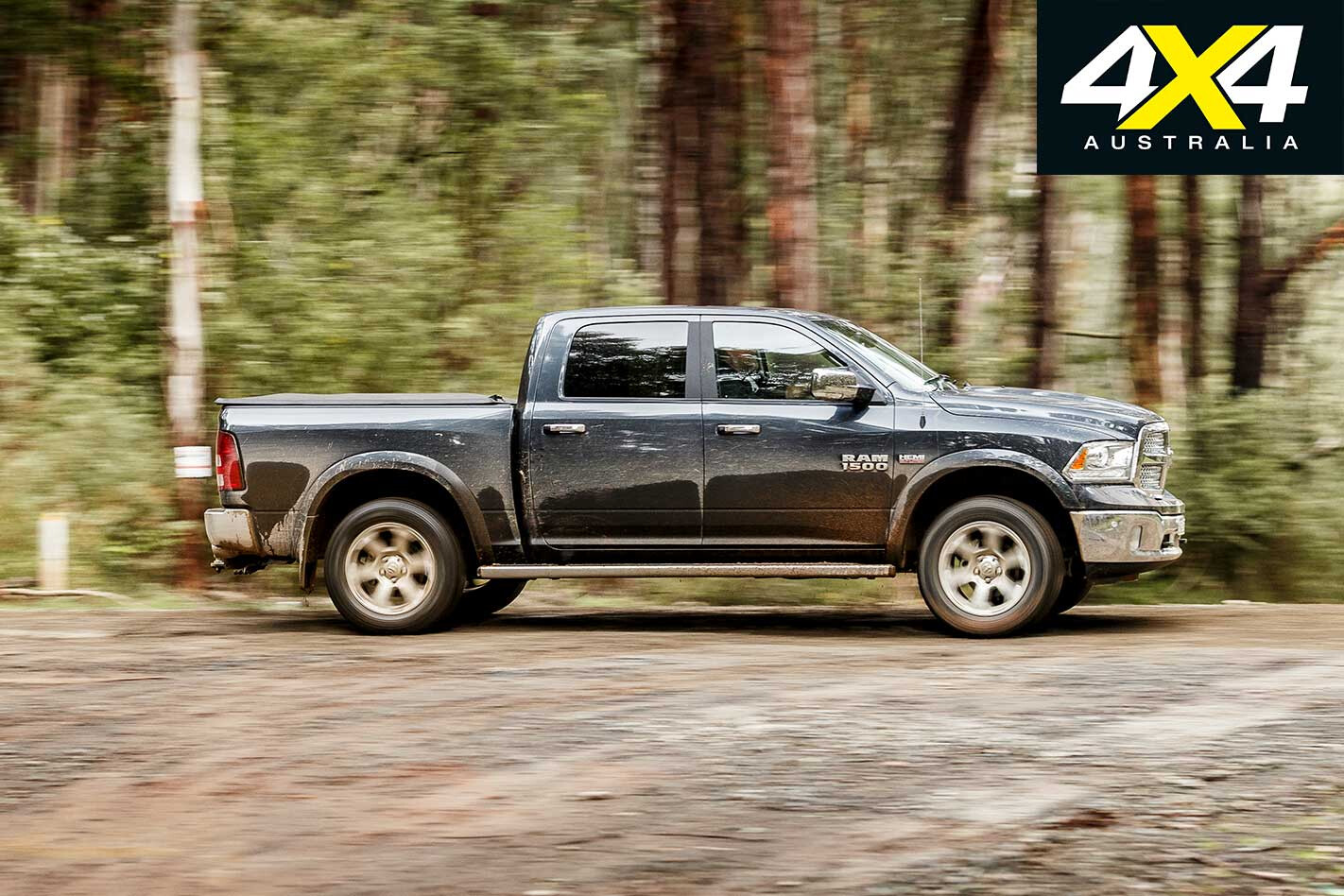
THE large, long wheelbase truck gives the RAM a plush ride that is neither too soft nor too hard – this is without towing or without a load in the bed. The RAM doesn’t feel as big to drive as the Silverado or F-Truck despite its similar size, and looking over the big bonnet it’s more like an LC200 than anything else.
The visibility is good and the RAM is easy to place on the road or track. The IFS of the 1500 helps here and when parking; it’s not always the easiest to get into the supermarket carpark, but it’s not impossible.
The RAM feels its best on the wide, open road where it tours in comfort and would easily eat up long kilometres. It’s not a truck you want to throw around in the twisties, but it doesn’t suck here either.
Off Road
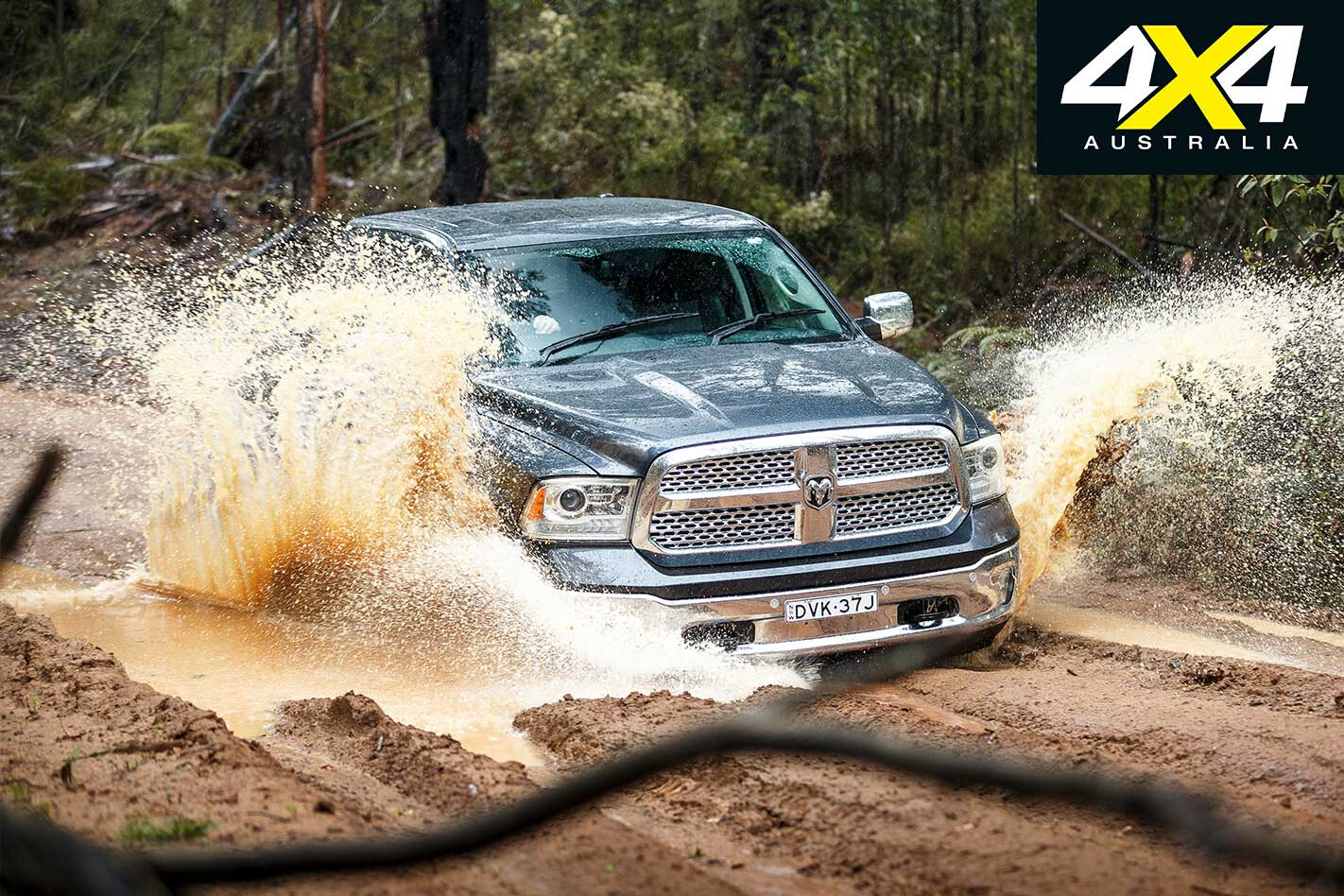
FULL-SIZE pick-ups are never great off-road, purely because of their size and turning circle. However, the 1500 with its IFS turns better than most and manoeuvred around the High Country tracks without too much trouble. It is low, though, and rampover clearance isn’t great, with the side steps touching down a few times on our trek. There were no such problems with the approach and departure angles.
With a locking centre diff providing locked high and low range the RAM tackles most terrain with relative ease. The on-demand transfer case offers 2WD, 4WD auto (on-demand), 4WD high (locked) and 4WD low (locked).
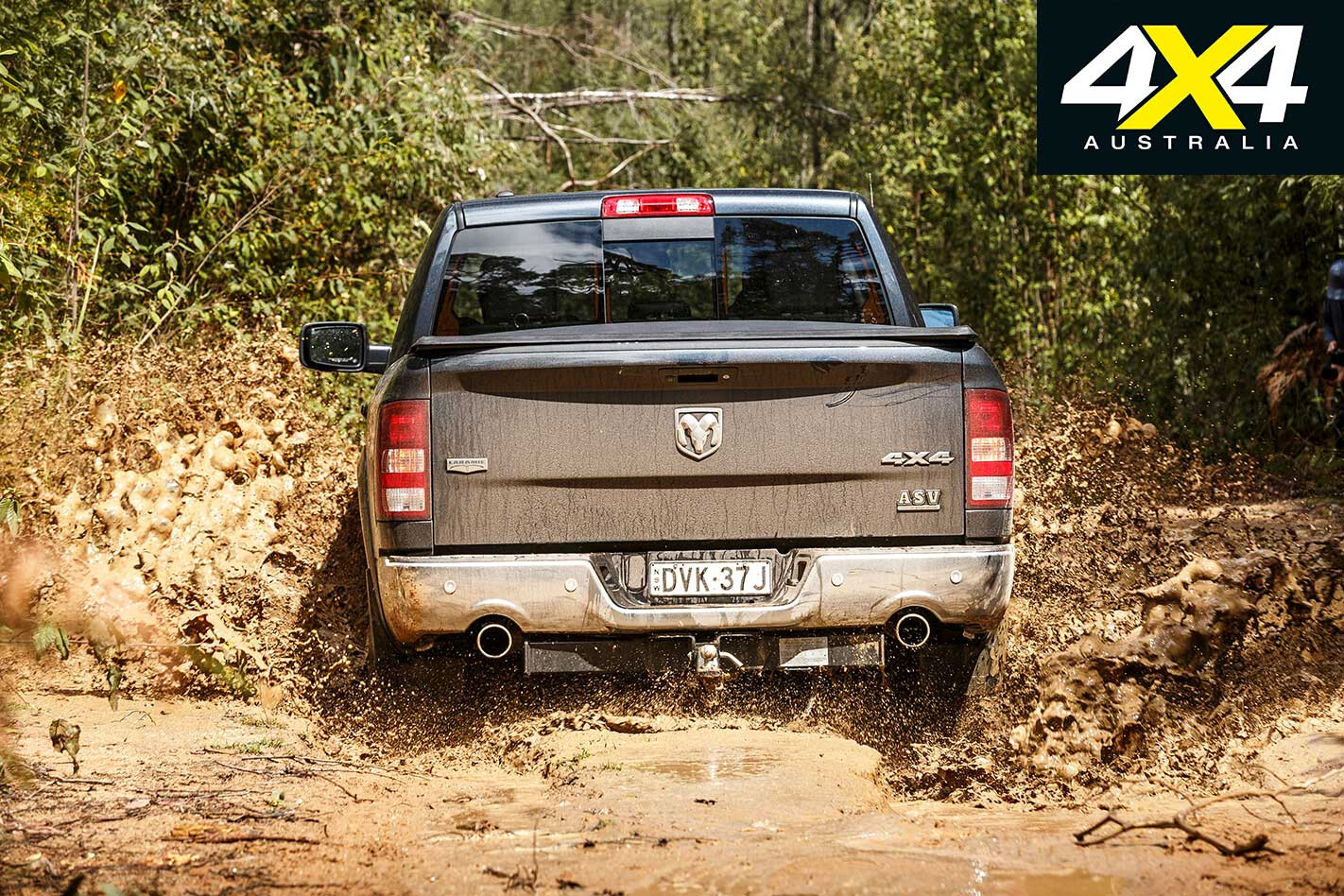
The auto setting worked well when touring on wet gravel roads, but when traction became marginal it was a bit slow and the RAM was better off in 4WD high (locked). The electronic traction control works fine, which is just as well as there are no additional traction aids such as locking rear or front diffs. The highway-biased tyres didn’t do it any favours and we slid down one particularly greasy, wet, clay slope.
Being so popular in the USA ensures there’s more aftermarket off-road kit available than you could ever use, so it should be relatively easy to tailer a RAM for specific off-road adventures.
Cabin & Accommodation
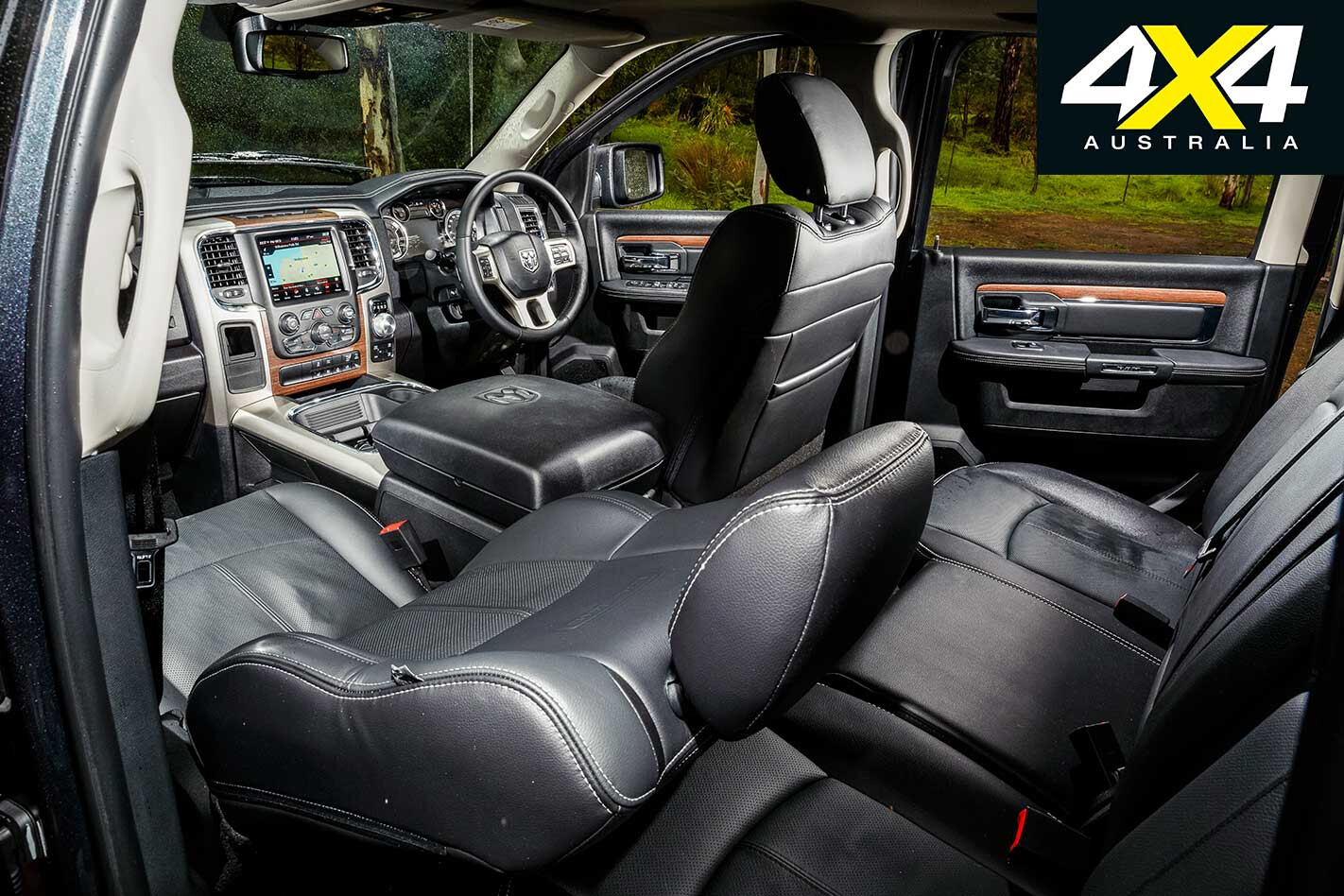
THE RAM’s cabin is big, comfortable and accommodating; although, it’s not as big as you might expect, and not as big as say a Silverado or F-Series.
Despite its multi-way electric adjustable seat, the driver’s position is quite snug, with my head rubbing on the roof lining (the electric sunroof doesn’t help here) and my boots cramped in the footwell. It’s like the Jeeps of the past where the transmission tunnel squeezes your boots to the right, and this may have a lot to do with the right-hand-drive conversion.
Across the cabin are acres of shoulder room, plenty of space for the passenger, and a console you could house a small family in. Likewise in the rear seat, where passengers are treated to space that no one-tonne ute offers.
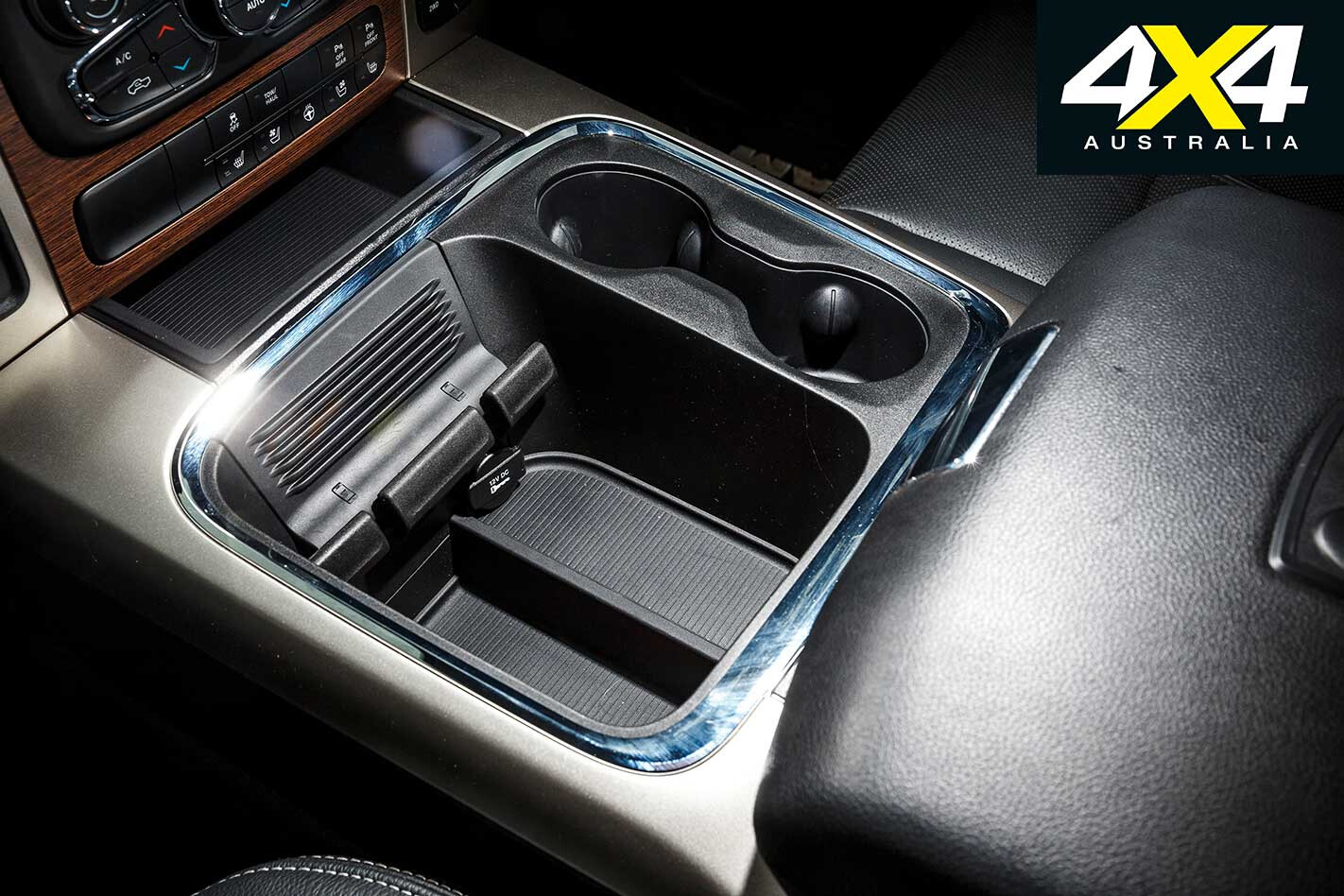
There are myriad clever storage spaces under the seat that are accessible when it’s folded up. Cleverly, when folded, there’s a flat platform that unfolds to provide a better surface to carry cargo.
The Laramie’s cabin is well-equipped and the seats are soft, leather-trimmed, and heated and cooled in the front (just heated in the back). The large centre screen uses the familiar Uconnect interface with factory navigation, Apple CarPlay and Android Auto integration. It all adds up to a great place to ride and perfect for long trips.
Practicalities
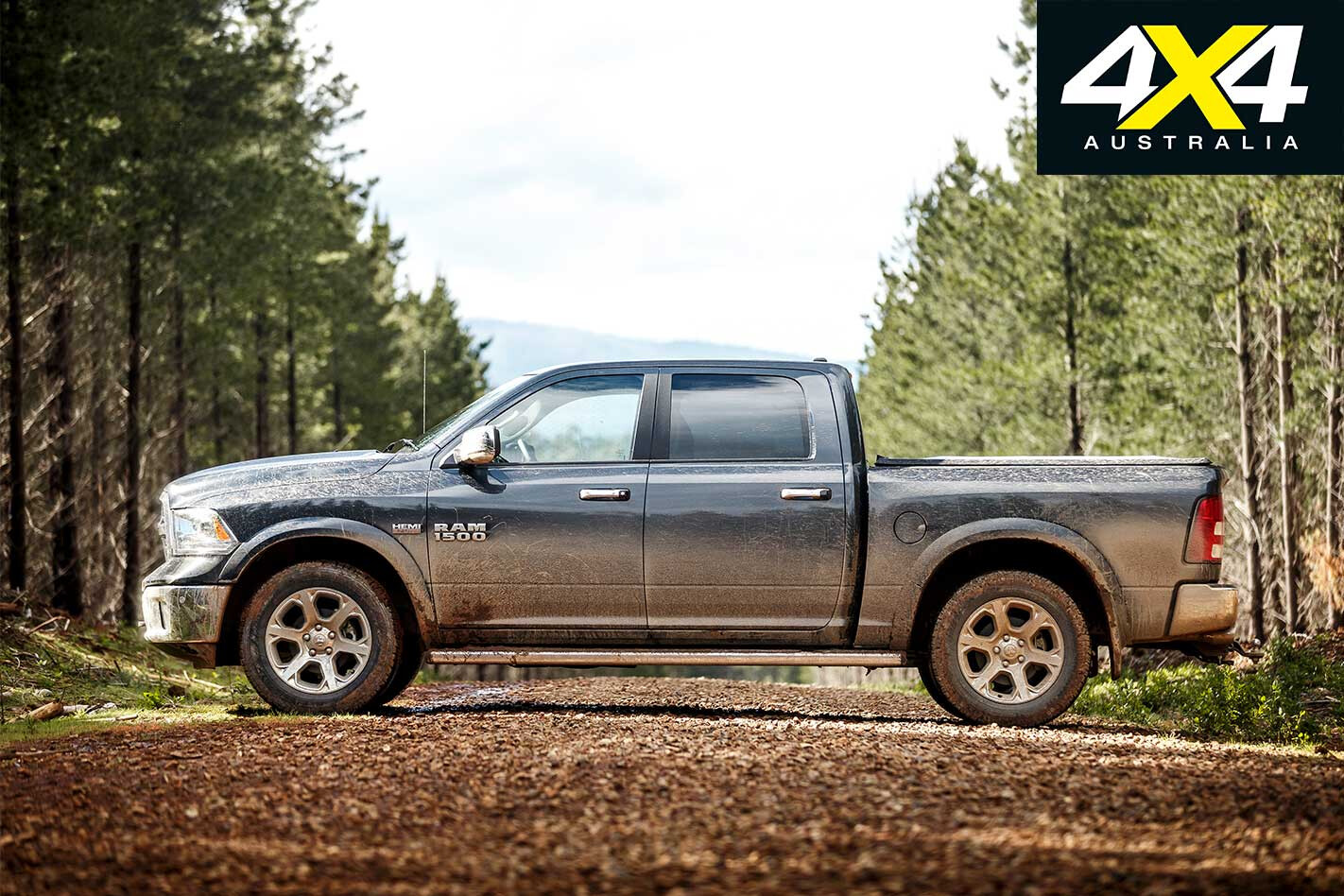
THE RAM’s size and capacities make it a very usable weapon, and the massive range of aftermarket accessories available for it means you can customise it to suit your purposes. A snorkel is one of those aftermarket products, while the standard air-intake is behind the headlight. There’s not much room in the engine bay for a second battery, so it will have to live elsewhere if you plan to fit one.
The 20-inch wheels might be big by regular car standards, but this is a common size for trucks in the USA, so there are plenty of options there. For recovery, there’s a pair of large tow hooks in the front bumper and a tow hitch at the back – the 4500kg towing capacity makes it very usable.
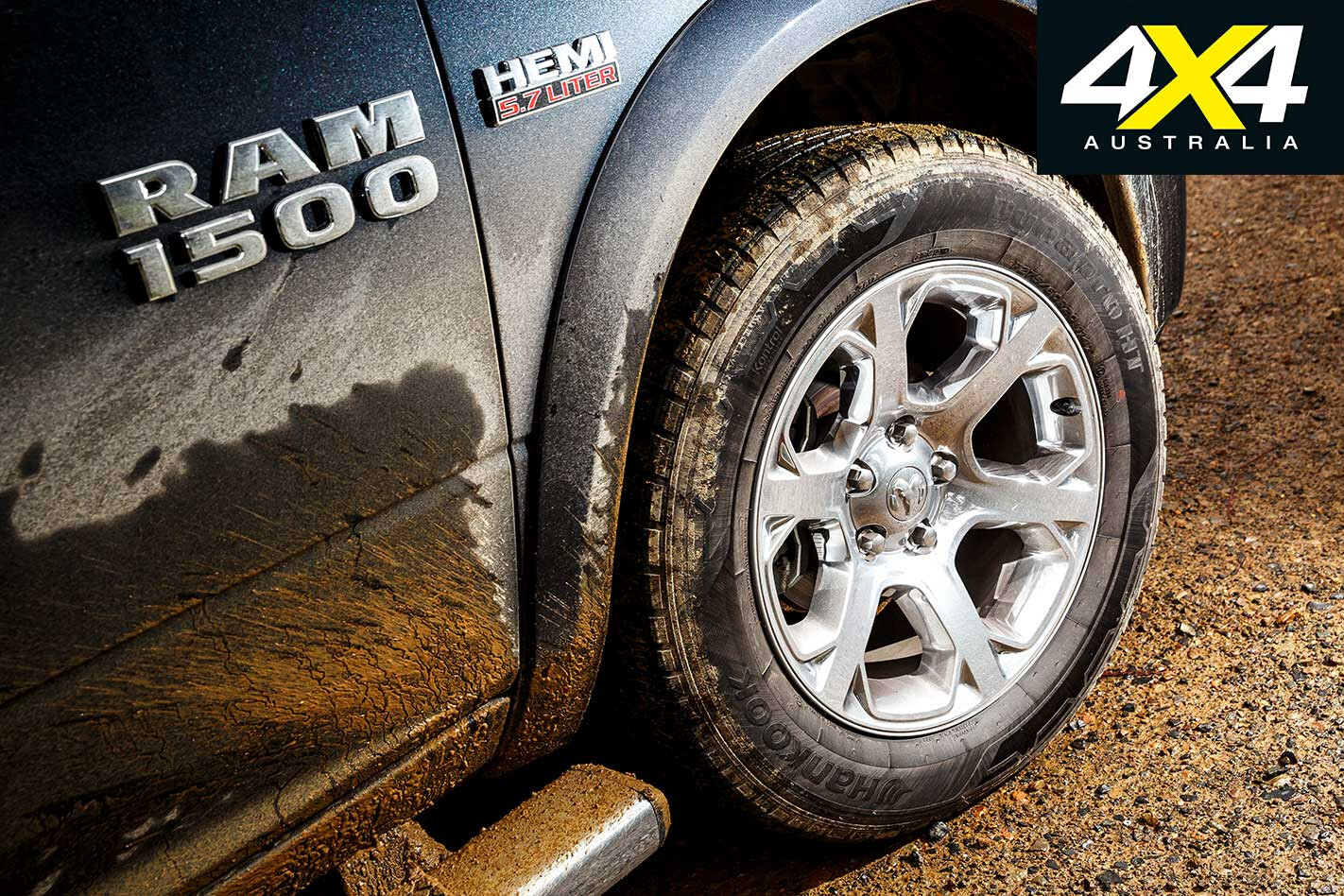
The only load we carried in the 1500 was a 400kg hay bale, which we ferried around on a farm, and the RAM didn’t even feel its weight. In the tub is a heavy-duty spray-on liner to protect the metal and tie-down loops, plus the Laramie we drove had an optional folding soft tonneau cover.
There are heaps of storage options in the cabin for all manner of items, and for even more storage there’s the clever RamBox option which opens up the sides of the load tub.
Summary
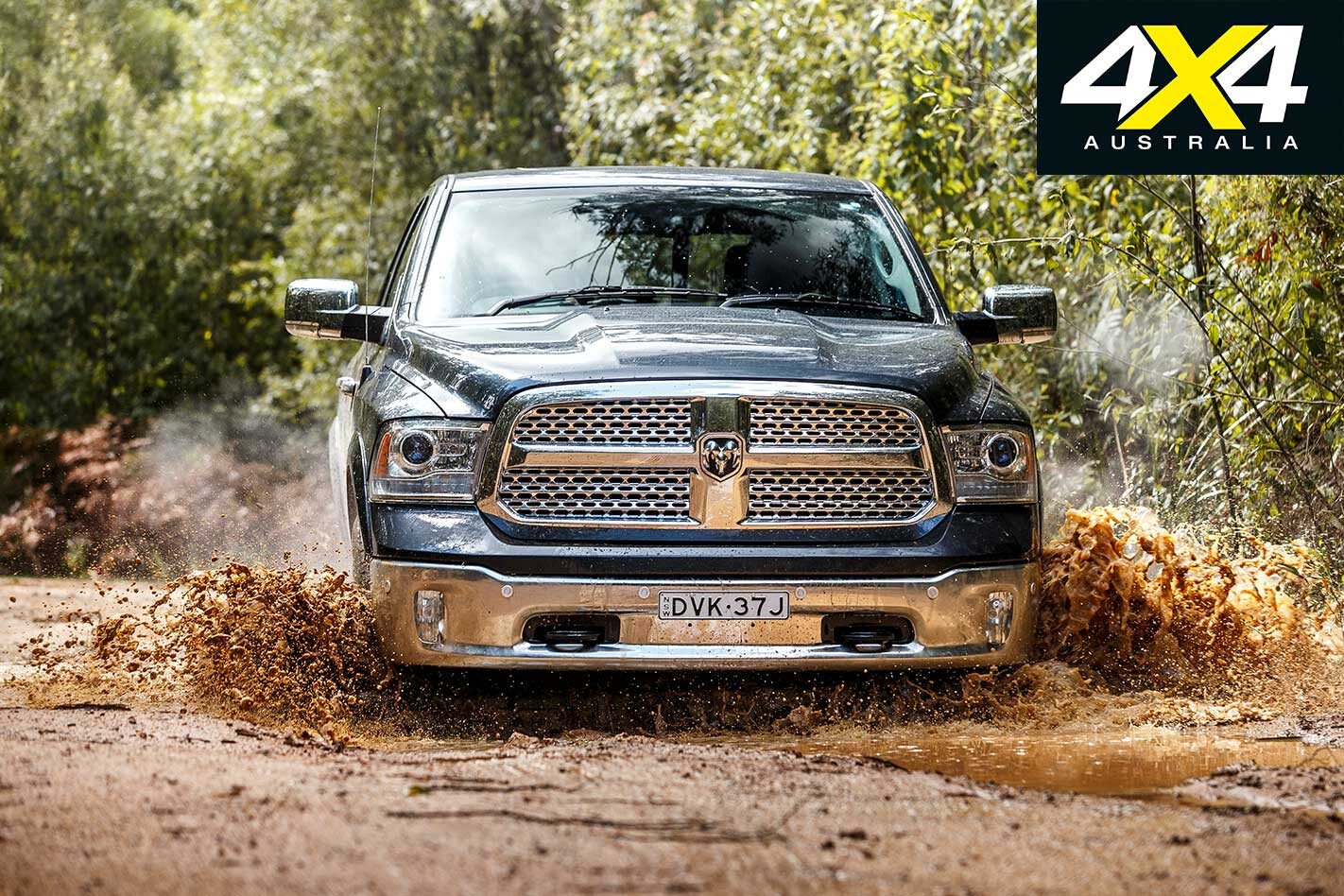
THE RAM 1500 is an easy and practical truck to live with, and for less than $100K there’s nothing else that can match its capacity, ability and presence on the road. Whether in town or out on the land, the 1500 makes a great workhorse, but it’s an even better touring vehicle that eats up road miles regardless of the road surface.
Fuel usage from the Hemi V8 is not as bad as some would expect, but there’s no doubt the availability of the V6 diesel will make the RAM a lot more appealing to more buyers when it gets here next year.
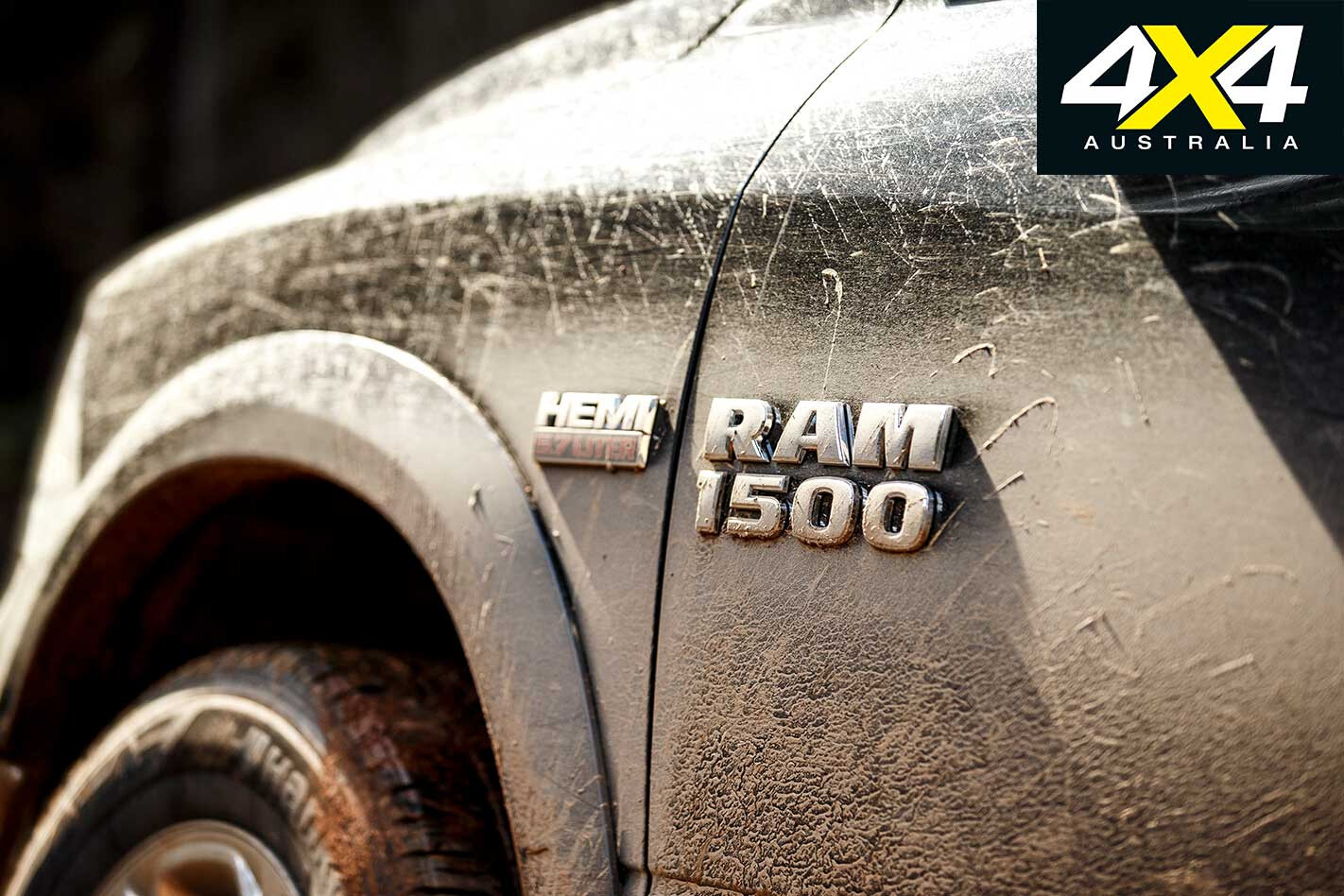
2018 RAM 1500 LARAMIE SPECS: Engine: 5654cc OHV petrol V8 16-valve Max power: 291kW at 5600rpm Max torque: 556Nm at 3950rpm Transmission: 8-speed automatic Crawl ratio: 48.74:1 4×4 system: On-demand 4WD with low range Construction: 4-door cab and tub on ladder chassis Front suspension: IFS with wishbones + coil springs Rear suspension: Live axle with coil springs + 5-link Wheel and tyre: 20-inch alloys with 275/60R20 HT tyres Kerb weight: 2650kg GVM: 3450kg Payload: 800kg Towing capacity: 4500kg (with 3.92:1 final drive) Departure angle: 24.4° Rampover angle: N/A Approach angle: 17.8° Wading depth: N/A Ground clearance: 219.5mm Seating capacity: 5 Fuel tank capacity: 98L ADR fuel consumption*: 12.2L/100km On-test fuel consumption: 17.6L/100km
*Australian Design Rule ‘Combined-Cycle’ claim
THE TRACK isn’t a natural habitat for a 6×6 rig, but that didn’t stop the creative minds behind Polish-based vehicle customiser Carlex Design from applying some artistic license to its latest iteration of the Mercedes-Benz X-Class EXY 6×6 Concept.
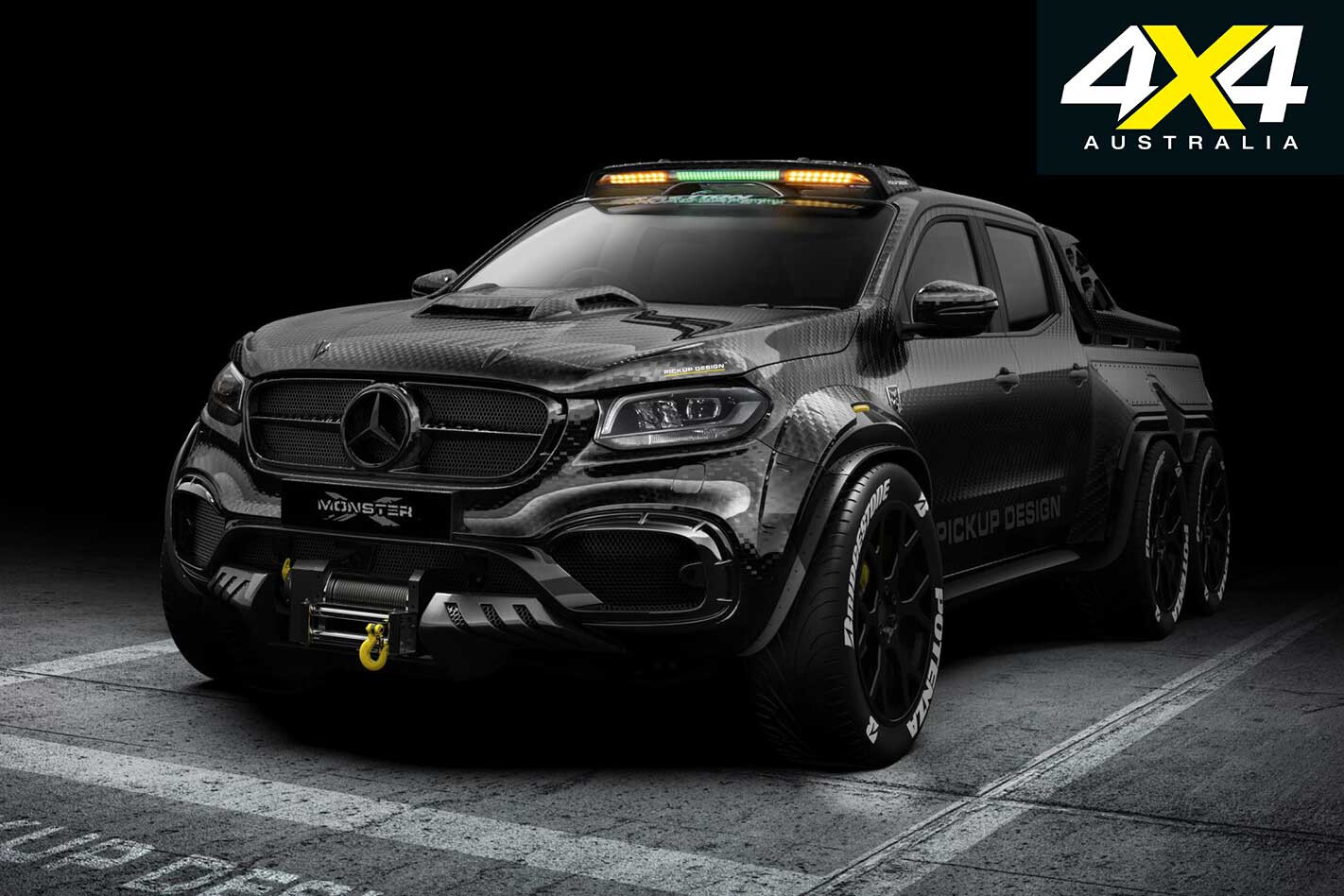
Called the EXY Monster X Concept, Carlex Design envisions a three-axle X-Class with a gratuitously wide body made from carbon fibre, while its chassis sits on a lowered suspension setup, track widened and its standard brakes swapped out with a set of carbon-ceramic items.
Round the back the all-black EXY Monster X’s massive cargo bed is given a striking yellow paint job with a rear winch fitted to the back of the cab.
Complementing its motorsports intent, the EXY Monster X cops a bank of external hazard lights on its roof, and comes fitted with road-oriented tyres finished with huge motorsports-inspired tyre sidewall letterings.
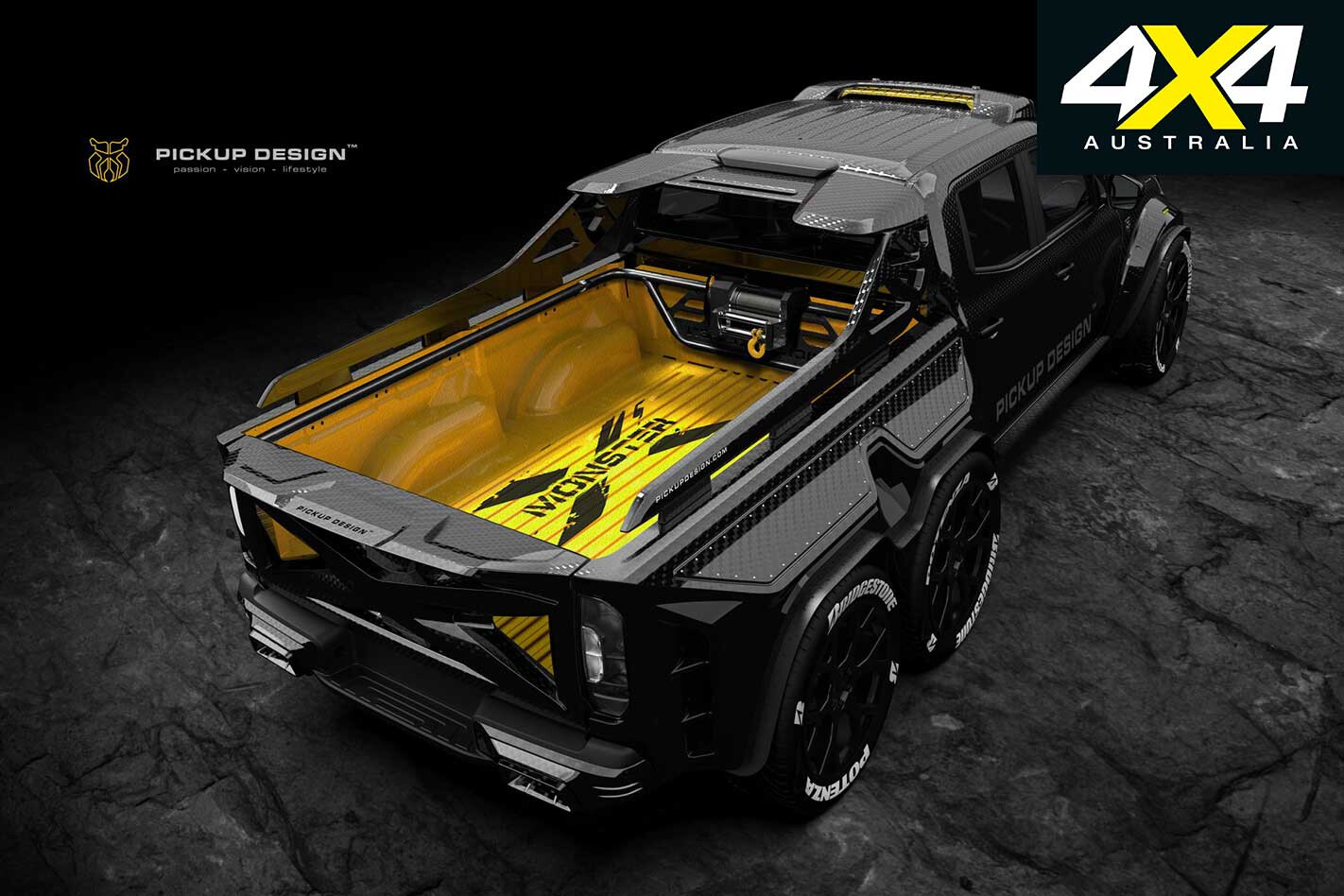
Like the X-Class EXY 6×6 Concept, Carlex Design didn’t reveal any technical details of the EXY Monster X Concept, or if they have any solid plans on building one, though according to their Facebook page, the company claims it has “left the design studio to soon become the king of highways and global tracks” under Carlex’s Pickup Design brand.
FORD Australia, with help from Ford Performance, launched its hotly anticipated Ranger Raptor to market late in 2018.
The performance model ditched the brand’s higher capacity engines and instead opted for a 2.0-litre bi-turbo-diesel engine capable of generating 157kW and 500Nm, which is mated to a swift-shifting 10-speed automatic transmission.
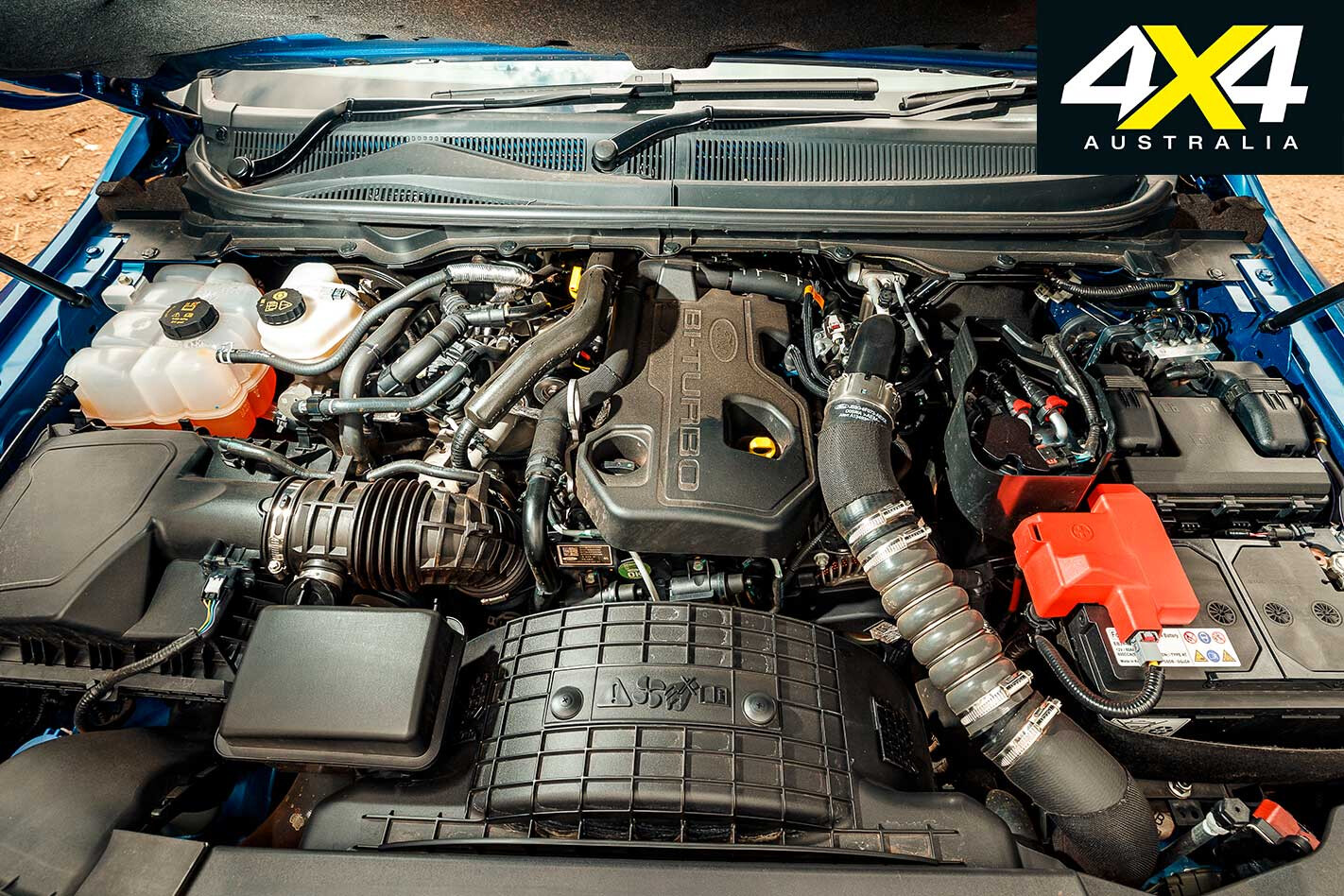
Where the Raptor changes the game, however, is with the tweaks to its chassis and suspension set-up: the front and rear tracks are 150mm wider, there’s 46mm more ground clearance, and there’s 30 per cent more suspension travel fore and aft.
The Ranger Raptor runs Fox bypass dampers, coil springs and Watt’s Link at the rear, and 285/70 R17 BF Goodrich All Terrains, which means it’ll float over outback undulations.
The Raptor has a dual-range part-time 4×4 system, a towing capacity of only 2500kg and a payload limit of 758kg.
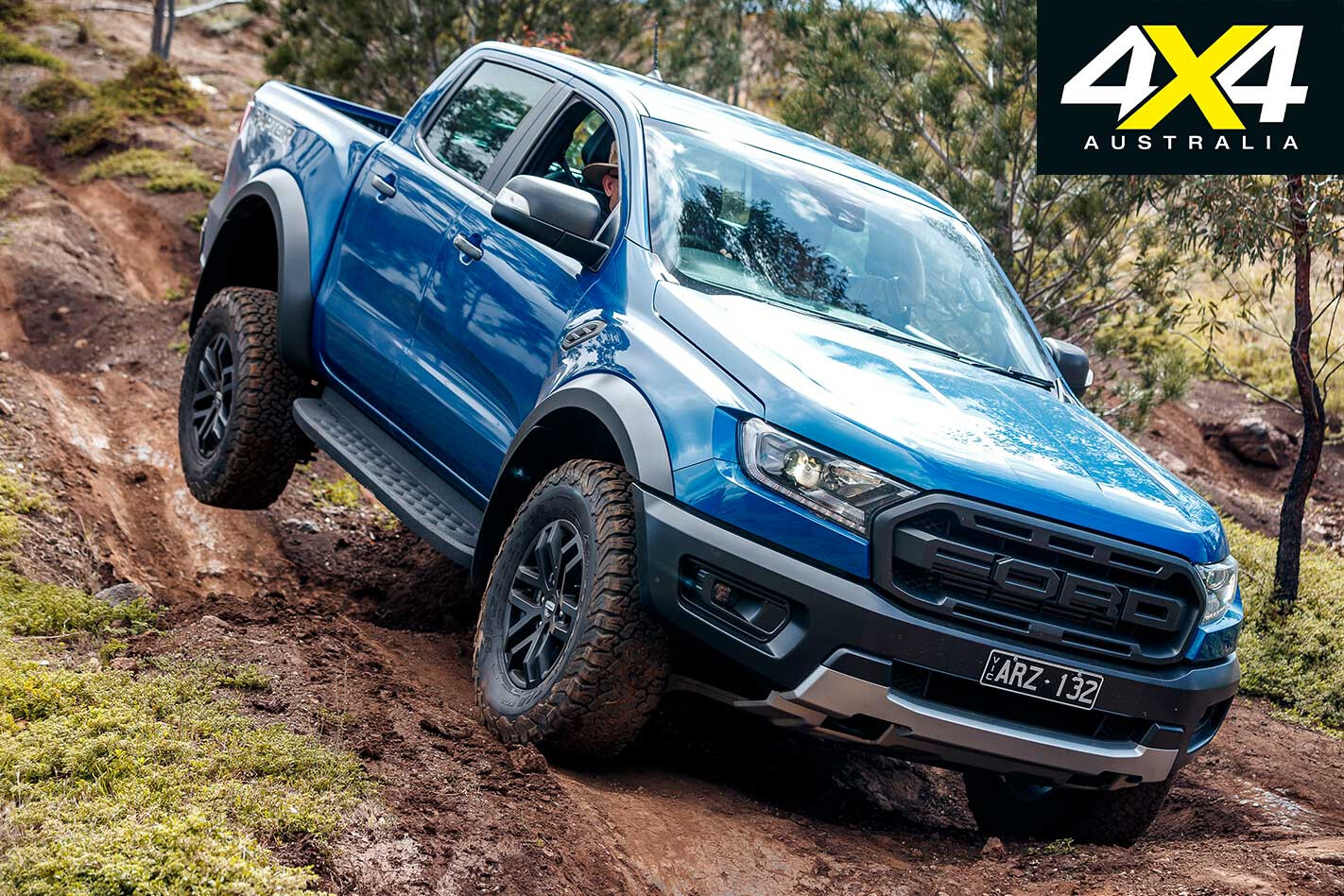
At $74,990 it’s the most expensive rig at 4X4OTY, but is it worth the extra coin?