
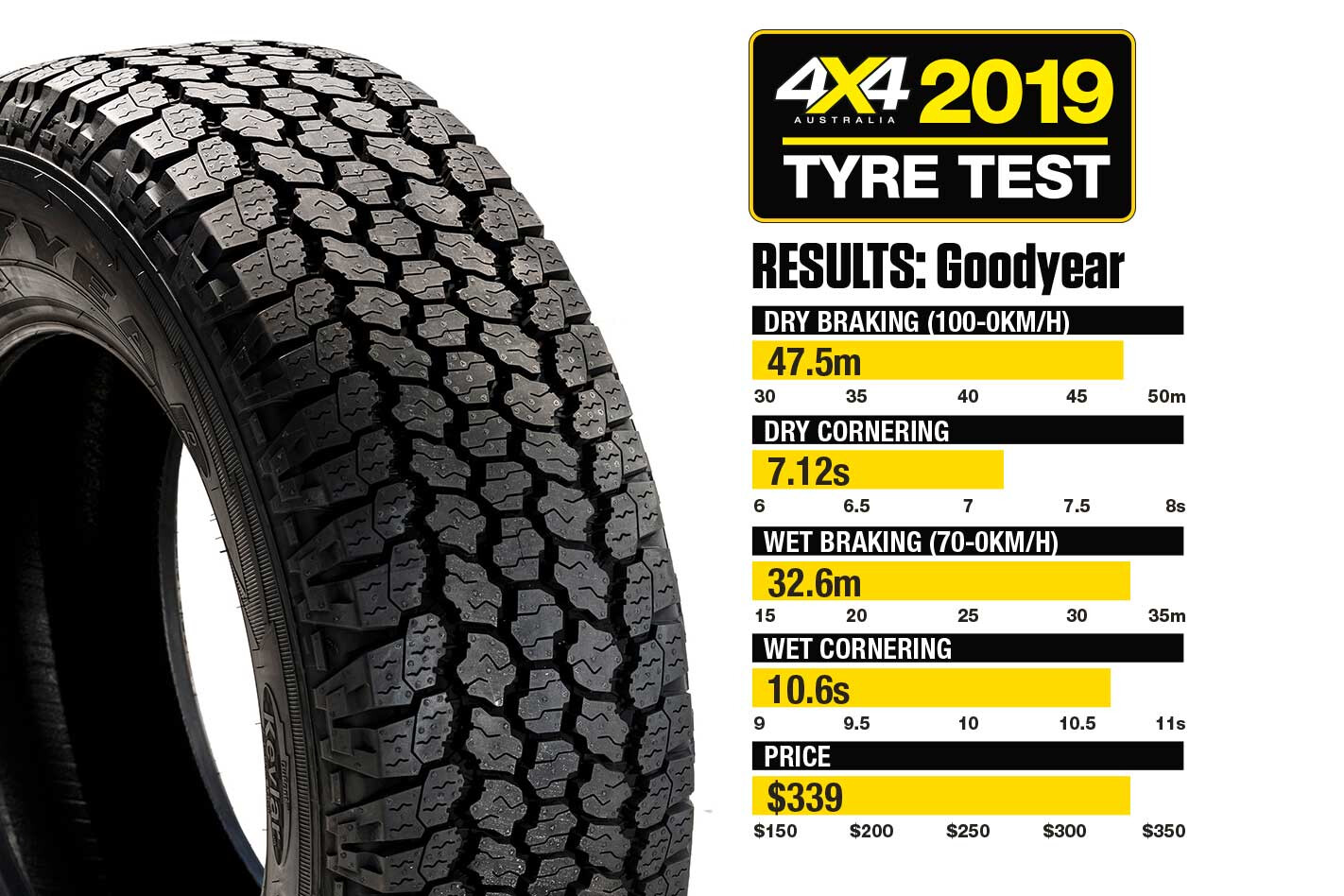
GOODYEAR is a name synonymous with off-road tyres, and Wrangler as a brand conjures images of go-anywhere ability. Just to ram the whole adventurous theme home, Goodyear has added “All Terrain Adventure” to the moniker of the rubber tested here. Perhaps that helps Goodyear justify the hefty $339 RRP that deducts some early points from the brand’s latest all-terrain.
Sourced from China, Goodyear clearly wants to infuse some European credibility into the sales pitch, stating on the sidewall: “Engineered by Goodyear in Europe, manufactured by Goodyear in China.” (For the record, the rest of our tyres were sourced from Thailand and Korea).
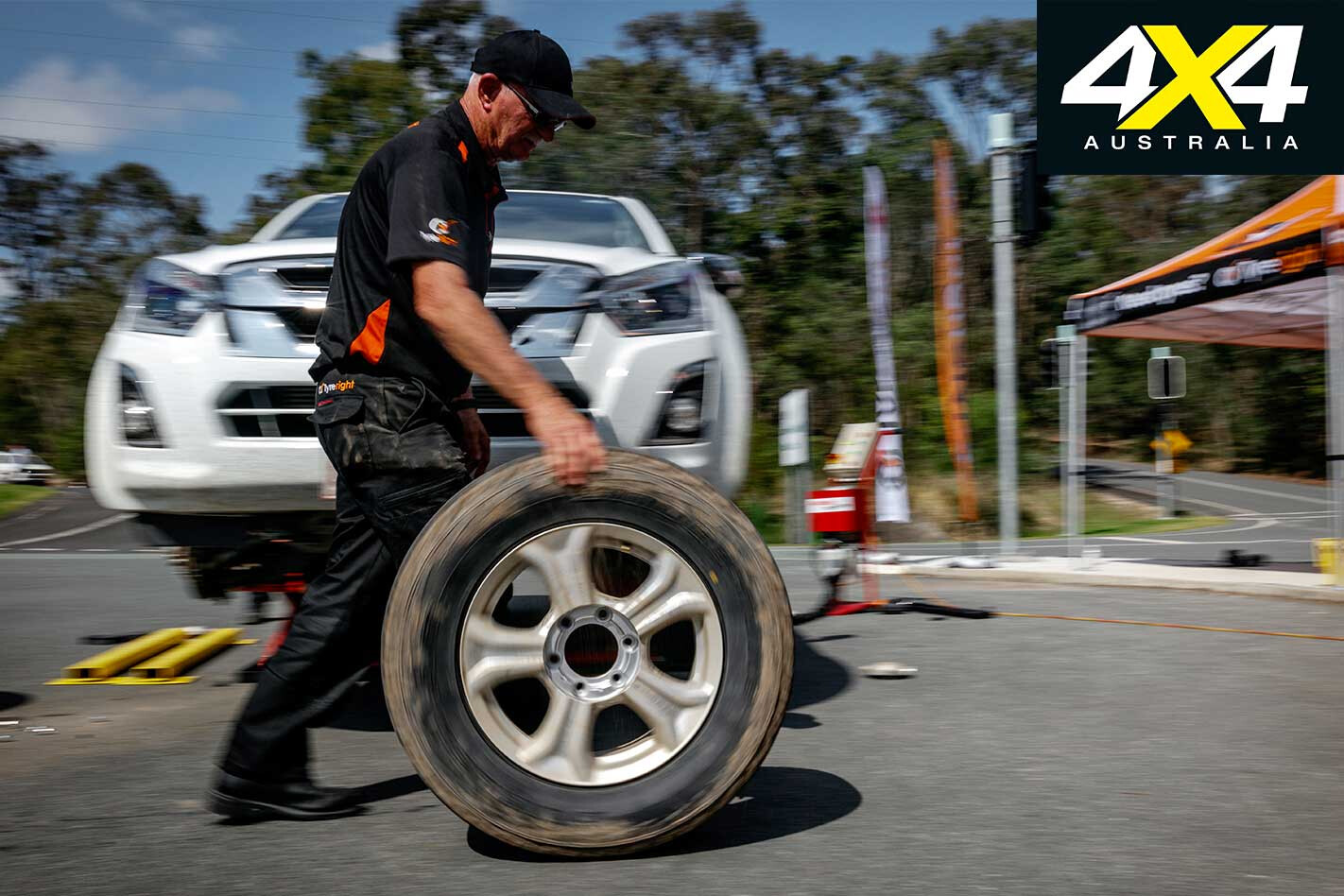
Like the name there’s a retro wisp to the tread pattern, with spacious openings separating the relatively small blocks. Less impressive is how the Wrangler performs on-road.
Stokell picked the poor grip from the outset, noting their “skatiness” in the wet.
“Wet braking was poor,” he said, frankly. “They didn’t want to stop in a straight line … it took quite noticeably longer to pull up.”
The sentiments were backed by raw data, which showed the Wranglers required 32.6m to stop in the wet from 70km/h, at least 2.2m longer than the next worst.
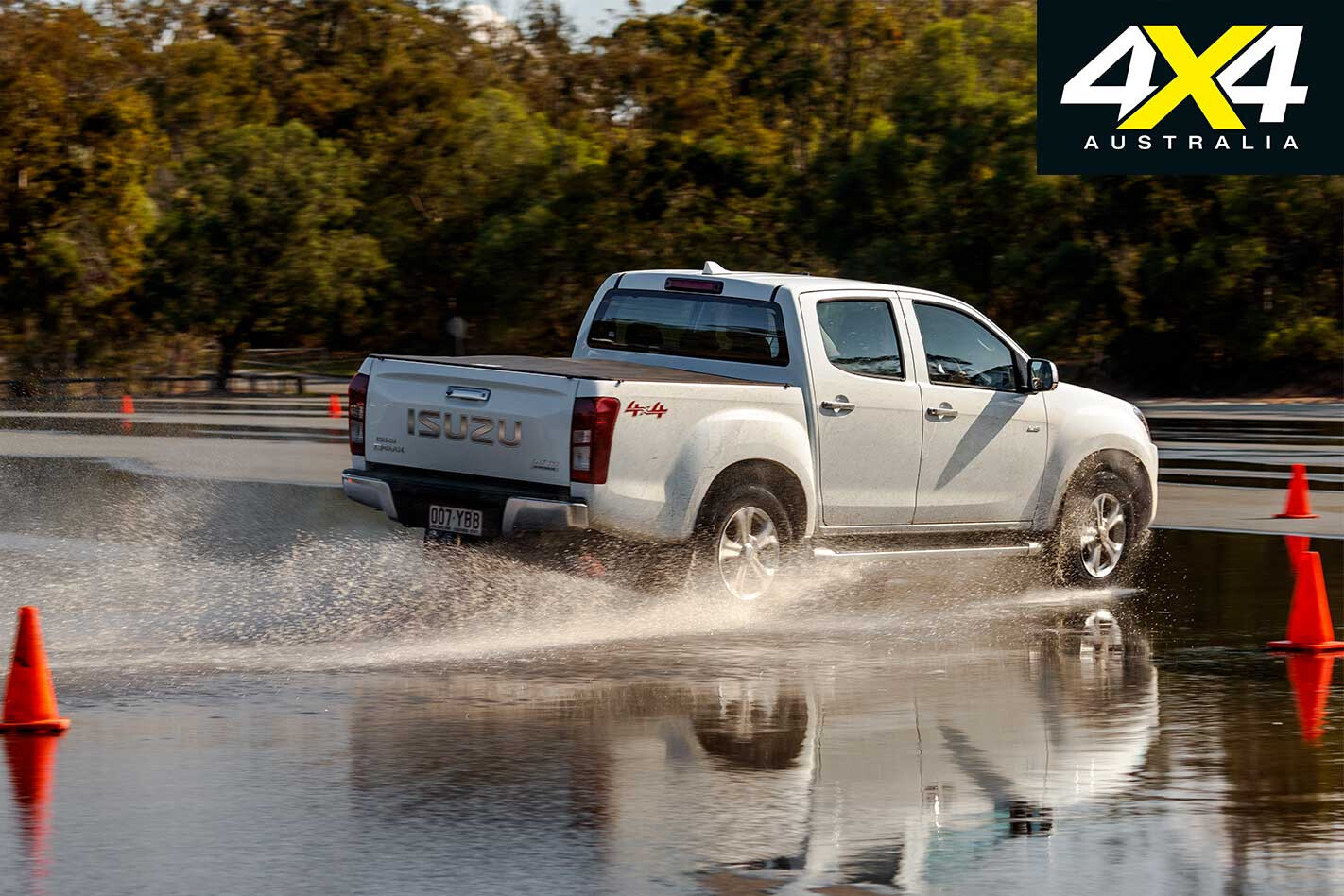
Wet cornering was no better, the Goodyears slipping and sliding for the longest time through our two bends. The low grip levels also had the tail willing to wag, something that would keep the stability control busy through roundabouts or tight corners if you get too enthusiastic.
The Goodyears were also less than average when dry braking, albeit only just behind the bulk of the pack. There was a surprise result in dry cornering, though, the tyres slotting towards the top of the finishing order courtesy of some respectable grip. “In the dry cornering, it wasn’t too bad,” said Stokell.
Perhaps some of that less-than-stellar performance can be explained by the off-road focus of the Wranglers. Goodyear adds a layer of Kevlar in the construction, something claimed to better resist punctures. That wasn’t something we got to test this time around, but it adds a level of interest for those looking to punish their rubber. It also performed well on the off-road course, Walker noticing there was “plenty of grip on the rocks” and above average traction through mud and gravel.
Even with that five per cent boost, though, the sub-standard on-road performance made life tough for the Goodyears.
RAM has added a multi-function tailgate feature to its range of 1500 pick-ups, giving consumers more storage practicality.
As can be seen in the brief video above, the tailgate features a unique 60-40 split with four configurations: open flat, open left door only, open right door only, and open both doors.
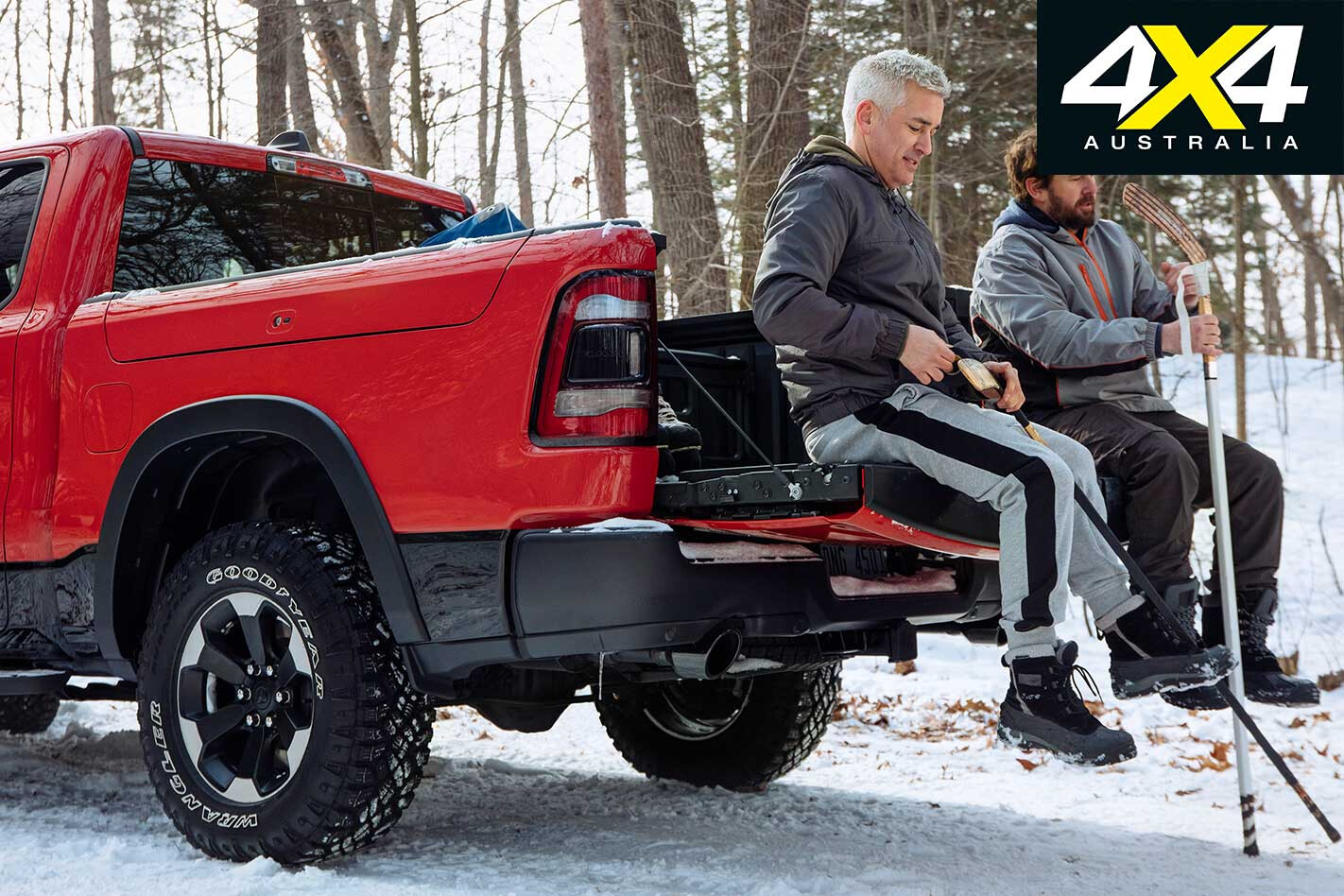
Dual side-hinged doors – each door swings open 88 degrees – eases access to the tray, as does an optional centre-mounted step.
“The Ram multifunction tailgate is intuitive to operate and owners will find it immediately useful,” Reid Bigland, Head of Ram Brand, FCA, said. “Combined with Ram’s class-exclusive RamBox feature and new tailgate step, we’re taking Ram’s cargo management and storage to the next level.”
The tailgate, which remains fully dampened, features remote release options and has a 2000lb (907kg) load rating, shares the storage solutions with the innovative RamBox cargo management system. And, unlike similar variations on the market, the multi-function tailgate doesn’t require the user to detach their trailer and hitch before use.
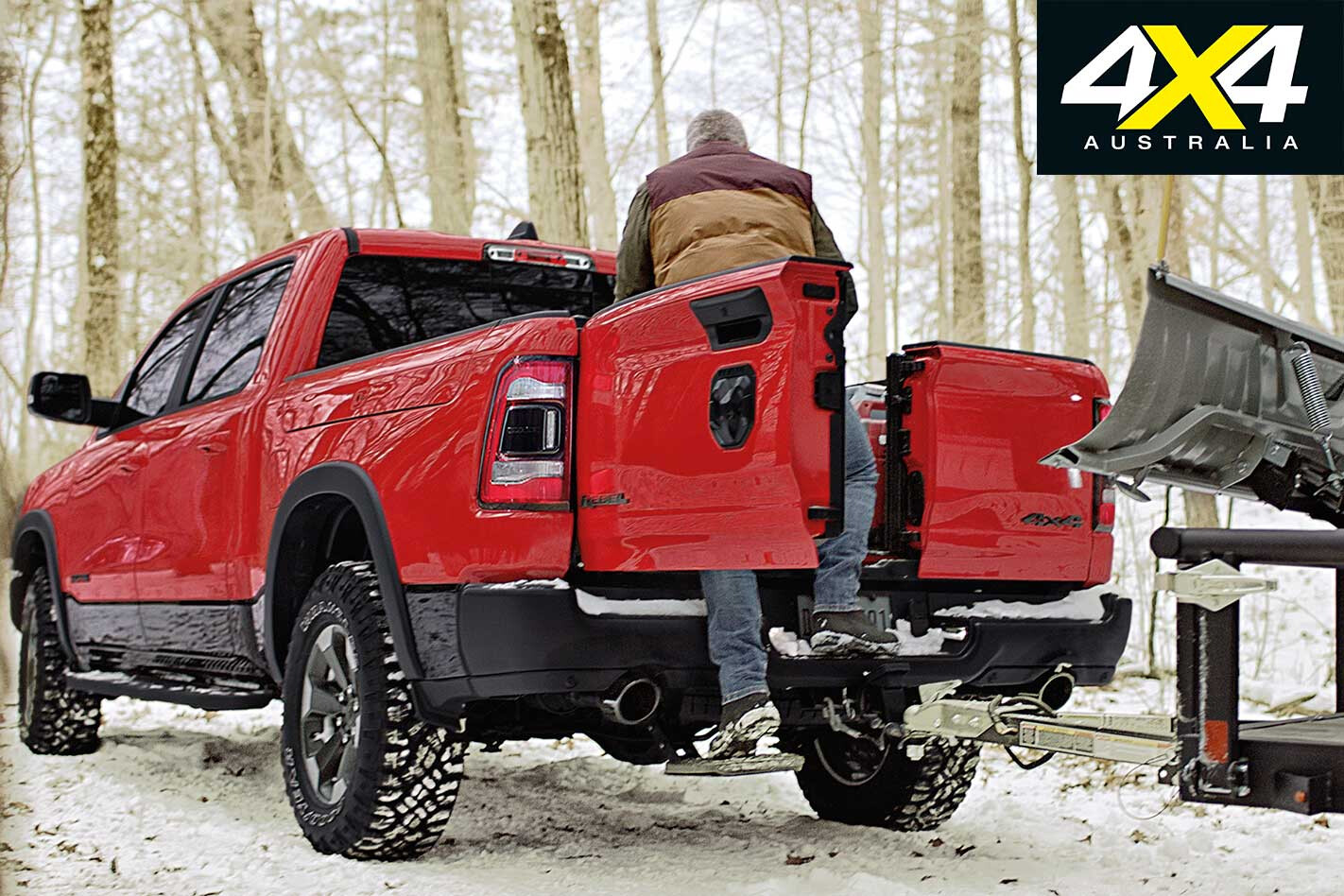
The new tailgate has been added to the RAM 1500 DT, not the 1500 DS currently sold in Australia. “So I am afraid it is not a possibility until the DT arrives next year,” Edward Rowe, Ateco’s media and public relations consultant, told 4X4 Australia. Ateco is the official factory appointed importer and distributor of RAM Products for Australia and New Zealand.
The manufacturer’s suggested retail price for the tailgate is US$995; the optional centre step is US$295.
I HAVE LONG been a fan of the Leatherman range of products, and an all-time favourite that is rarely off my hip is the Leatherman Wave; it’s no surprise that it’s Leatherman’s best-selling model.
Leatherman has just released the Leatherman Wave +, which is essentially the same tool with the addition of replaceable wire cutters. I’ve had the older version for 10 years (the wire cutters are showing hardly any sign of wear), using it for everything including cutting fencing wire, gutting rabbits, snipping paper, tightening loose screws and filing a damaged locking pin. To say it has got me out of trouble on numerous occasions is understating it a bit.
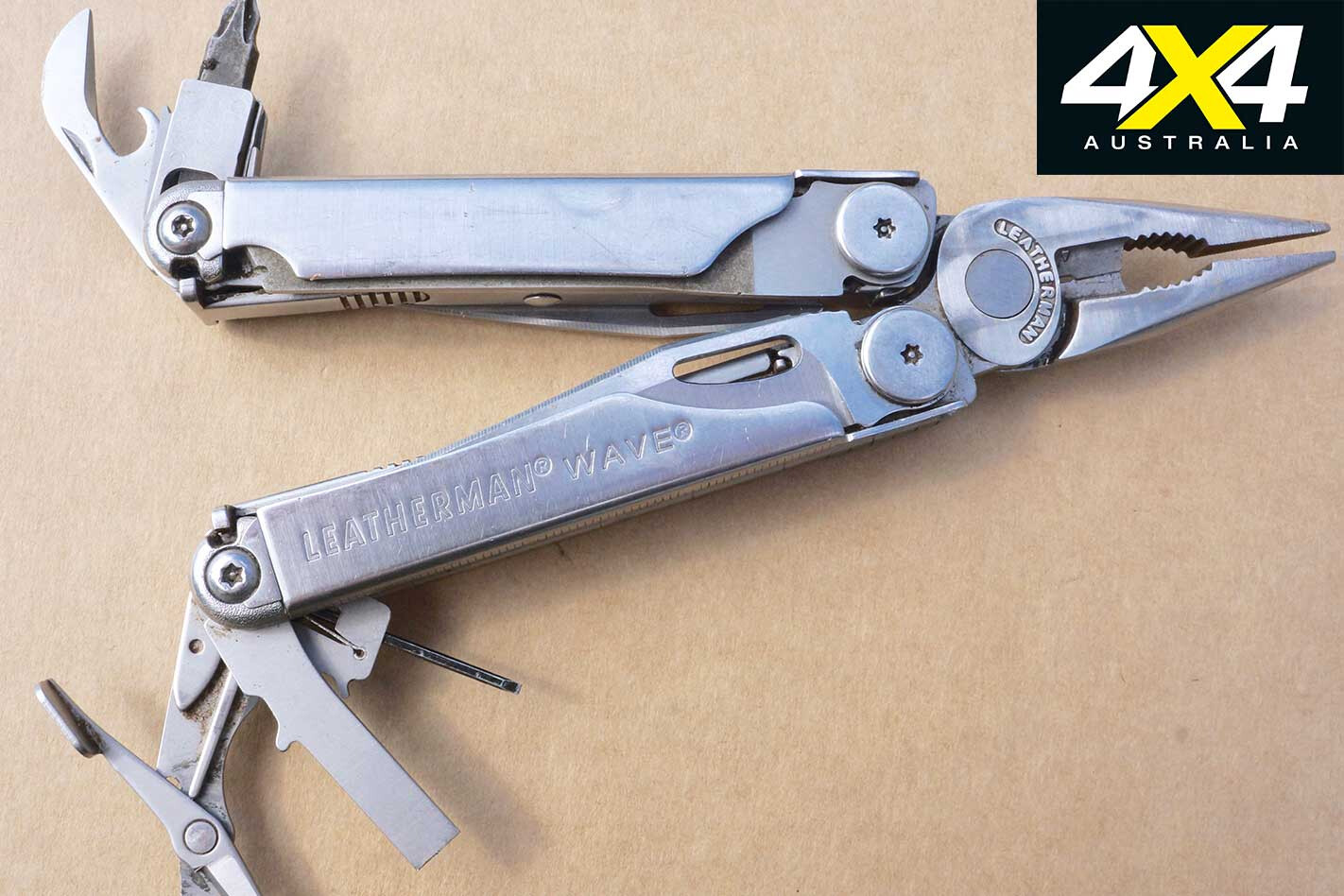
I’m always amazed at the design, engineering and manufacturing involved, as well as how well the product functions, even after 10 years of solid use. One of the nicest features of the Wave is how comfortably it fits into your hands, even for the most strenuous cutting or hacking job.
So what happened to cause me to test their warranty claims? Well, it’s a long story, but I recently lost the primary knife blade to a police captain in China. Once back in Australia I contacted Zen Imports, the distributor of Leatherman in Australia, and told them of my defrocked Leatherman.
Without a blink of the eye or any questions asked regarding how old, or when and what, they told us to send it to them and it would be repaired free of charge. I’ve just got it back and it is as good as new – how’s that for service!
I was impressed, and you will be too with this incredible multi-tool.
IF YOU want some attitude in your all-terrains then look no farther than the Falken Wildpeak. These are tyres clearly designed for the aggressive ‘I’m-an-adventurer’ look. Chunky, organically-shaped blocks cover the face, with a square edge delineating the sidewall, itself dappled with more of that ‘blockiness’.
The Wildpeak would certainly fit in nicely for anyone throwing accessories at their ride, and they’re helped by a load rating 120kg higher than all but the Bridgestone Duelers. However, looks aren’t everything, especially when it comes to tyres, where round and black is as interesting as it gets for most people.
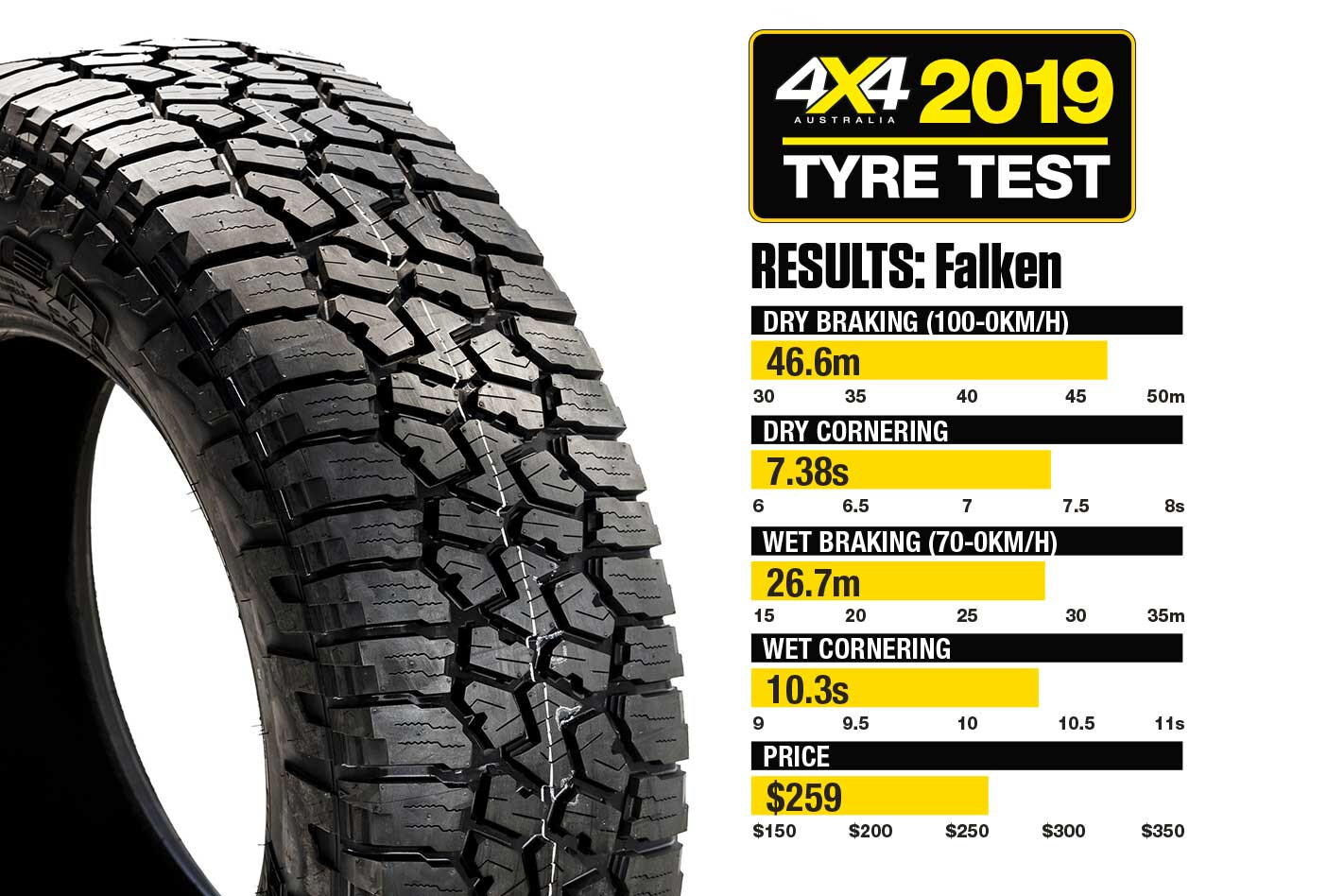
Despite the clear focus on off-road attitude, the Wildpeak performed admirably in our on-road disciplines. Braking, in particular, was above average, with the Wildpeak within half a metre of the Maxxis 700 in the dry and matching them in the wet. For such an aggressive-looking tyre, they stop succinctly.
Stokell was complementary about the bite and feel during heavy braking, suggesting there was a healthy reassurance to the way they pulled up. Cornering performance was not as convincing, no doubt in part due to movement of those chunky tread blocks. Stokell also commented on the rumbling noise of those sidewall tread blocks when pushing harder though bends. “It’s definitely noisy on its edges around a corner,” he said.
However, the Falkens still played in the middle of the field with respectable results.
Off-road, it’s perhaps no surprise the Falkens ticked plenty of boxes through our short, concise course; that aggressive tread paid dividends in the mud and on loose gravel.
Walker relayed that there was little effort required on varied surfaces, adding that over rocks it was very capable and performed the final challenging jump-up very easily. If there was one negative it’s that the manoeuvrability in tighter terrain was compromised, with steering adding weight and a bit more effort was required in tight bends.
Still, as a decent performing all-terrain that brings serious credibility to the bush, the Wildpeak makes for a surprisingly well-rounded tyre, albeit with some unwanted noise as a consequence. That they retail for $259 is a plus for those looking for a solid off-road tyre.
FORD has taken the wraps off a stonking 7.3-litre petrol-powered V8 engine at the unveiling of its US-built 2020 F-Series Super Duty pick-up.
Technical specifications are yet to be released for the bent eight, but what we do know is that the big bruiser, based on the company’s commercial-grade donks, uses an all-new cam-in-block, overhead valve architecture with a cast iron block and forged steel crankshaft. To optimise performance the engine utilises port injection with variable-valve timing, while oil jets cool the pistons under heavy loads.
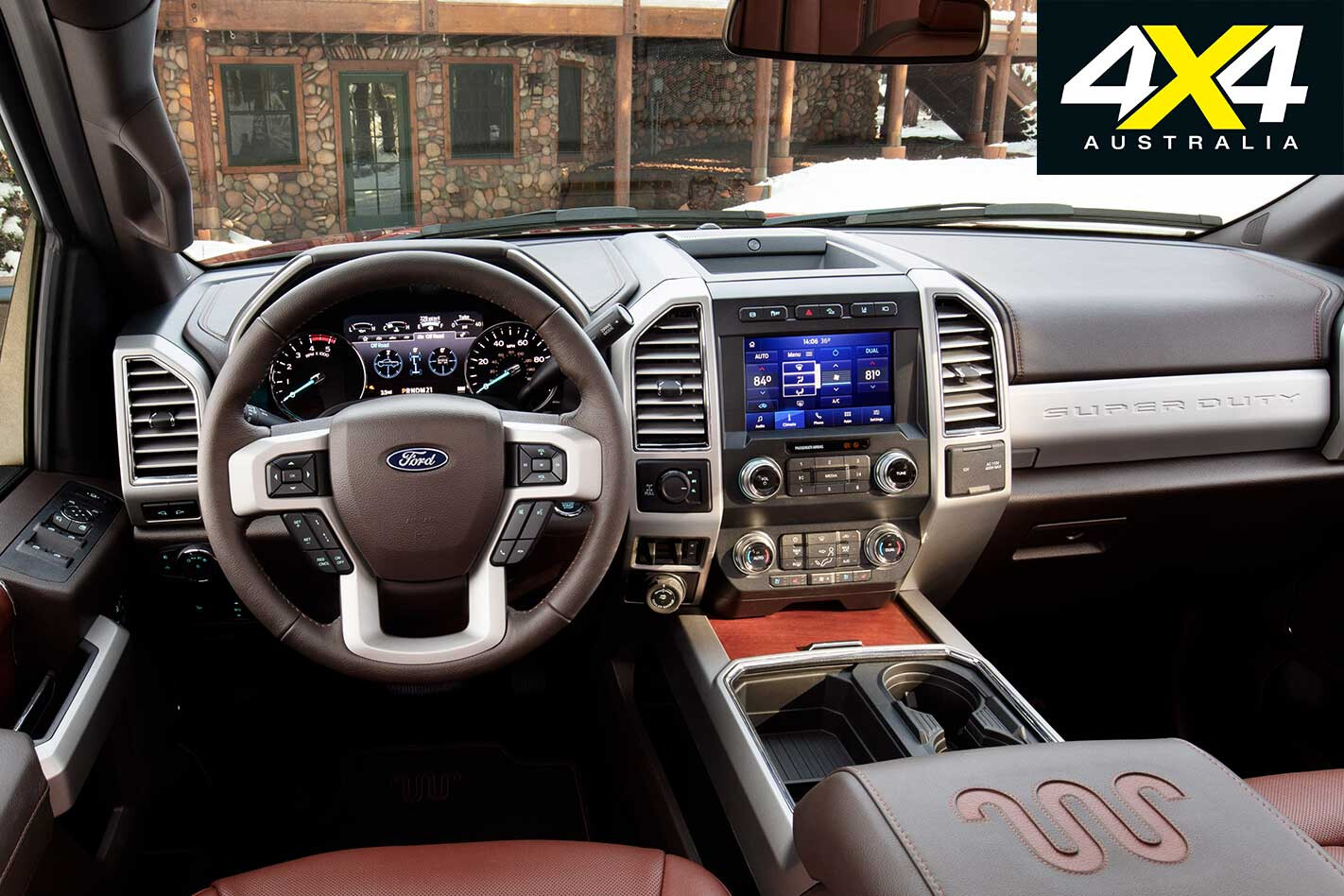
The 7.3-litre V8 is joined by the familiar 6.2-litre petrol-powered V8 and a third-gen 6.7-litre Power Stroke diesel V8. That diesel engine features a new 36,000psi fuel injection system, a redesigned electronic-actuated variable-geometry turbocharger, structural enhancements to the cylinder head, block, connecting rods and bearings, and new steel pistons.
All three engines can be mated to a new 10-speed TorqShift automatic transmission, built with a wider gear ratio span than the six-speeder. With selectable drive modes – normal, tow/haul, eco, slippery, and deep sand and snow – the heavy-duty transmission is designed to haul the heavy loads the F-Truck is known for.
“With the addition of the 7.3-litre V8, upgrades to our 6.7-litre and the debut of an all-new 10-speed transmission, we are delivering the strongest, most capable Super Duty powertrain offerings yet,” said Mike Pruitt, chief engineer, Ford Super Duty.
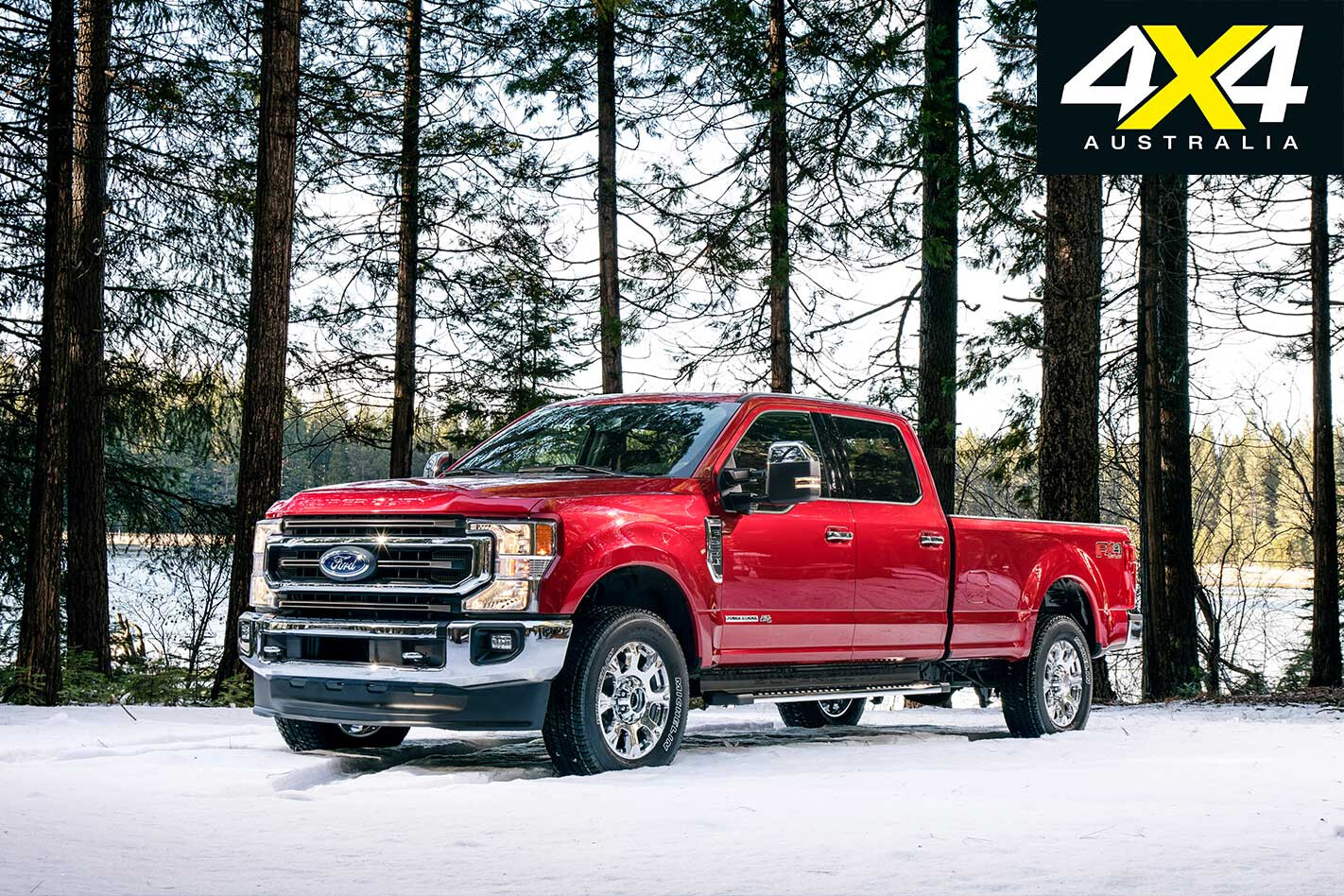
The 2020 F-Series Super Duty also runs a smorgasbord of active safety kit: blind-spot information, lane-keeping assist, and pre-collision assist with automatic emergency braking among them. Backing the yacht into the bay is now also easier than ever, thanks to Pro Trailer Backup Assist and Trailer Reverse Guidance.
The front-end has been revamped to optimise powertrain cooling, while other changes include new-look LED headlamps, a new tailgate design, revised tail-lamps and a bolder rear bumper.
“Super Duty customers have demanding and diverse needs, from towing heavy trailers to repairing critical infrastructure,” said Kumar Galhotra, Ford president, North America. “Productivity is their lifeblood and their truck is their biggest tool. Our new Super Duty has more power, more payload and towing capability and better technology than ever to help these customers build a better world.”
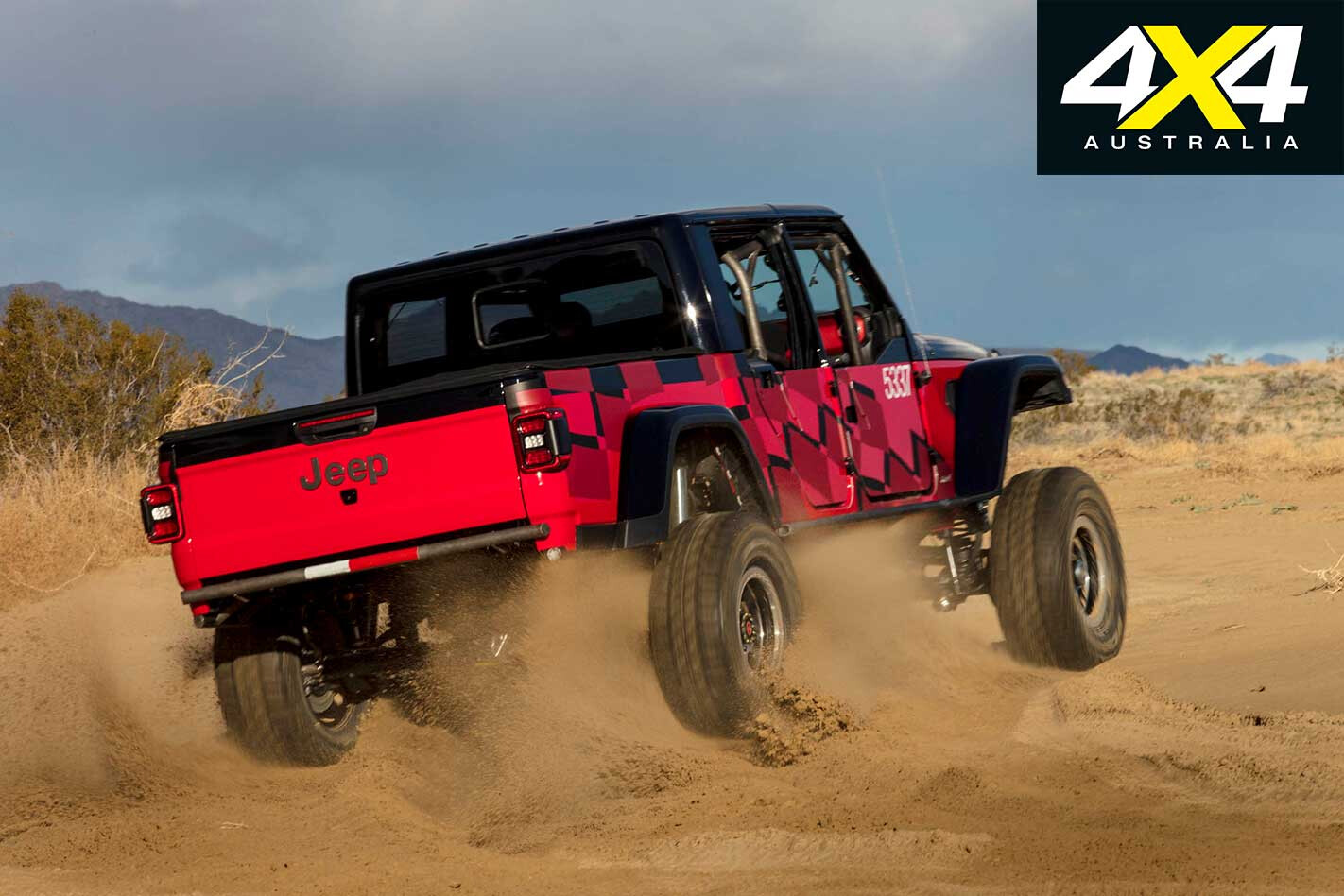
A 2020 Jeep Gladiator with a customised suspension set-up will take on, arguably, one of the world’s toughest off-road events, the Every Man Challenge at the 2019 King of the Hammers.
The Gladiator, piloted by Robby Gordon and Hammers champion Erik Miller, will compete in the Spidertrax 4600 Stock Class event, a division which requires vehicles to run a factory engine, stock frame and body, a single shock at each wheel and 35-inch tyres.
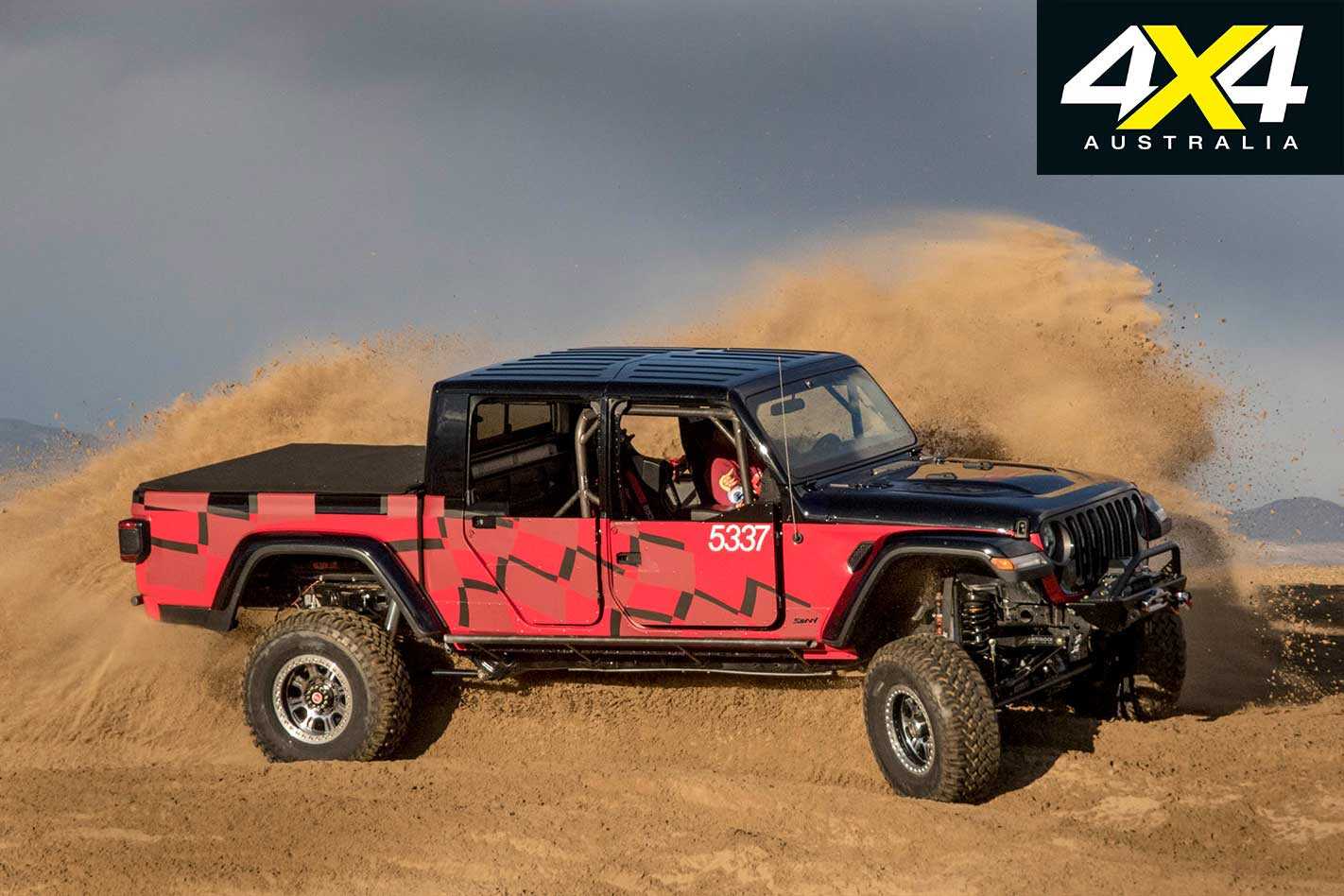
Expectations are high, with the Gladiator recording the fastest time in qualifying after it finished more than 10 seconds faster than its competition on the two-mile (3.2km) course.
The Gladiator has had a tickle to a few integral parts, with Savvy Off-Road, a Californian aftermarket shop – with a King of the Hammers pedigree that has seen it bring home the overall win six times – fabbing and adding go-fast off-road parts.
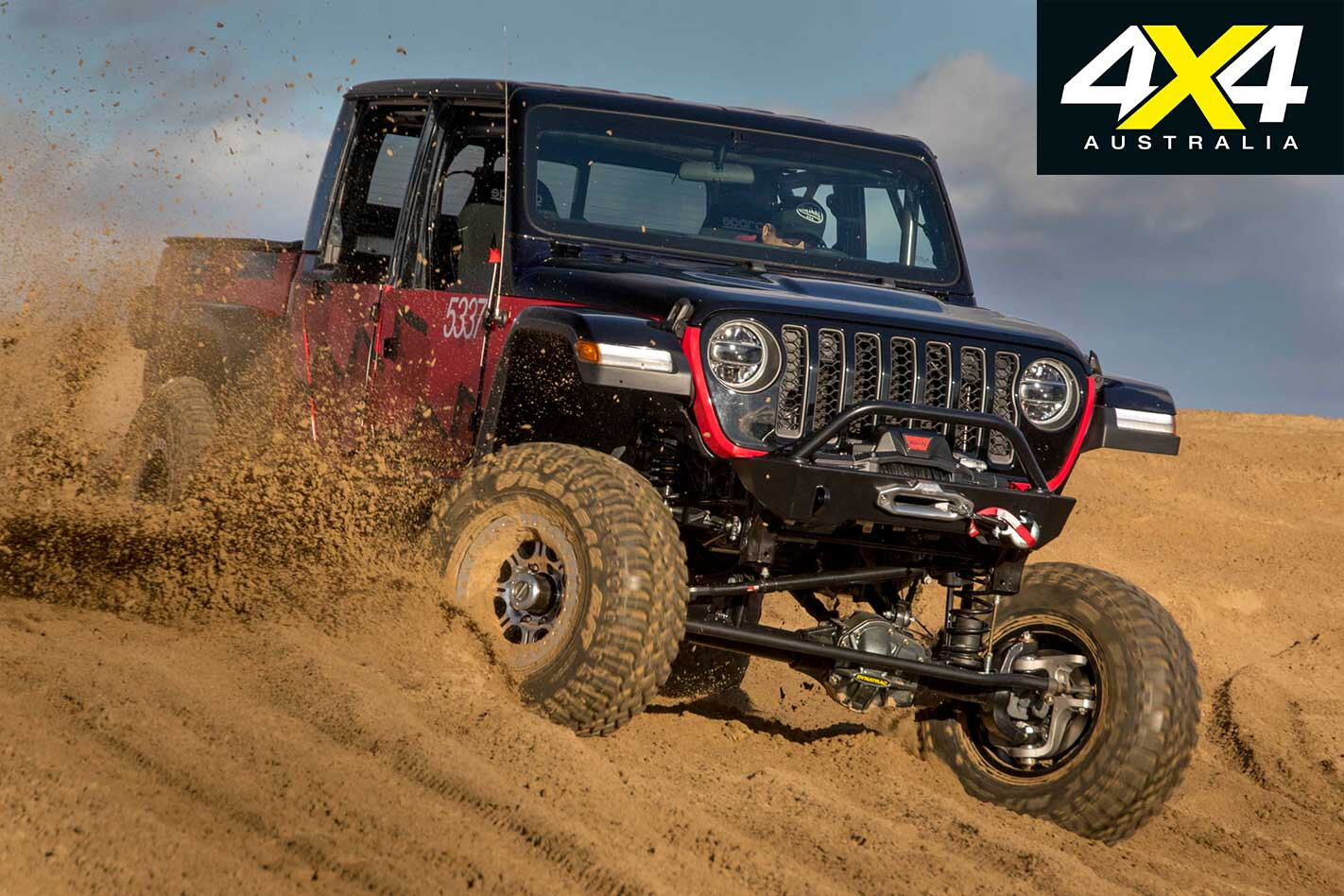
The Californian mob added Dynatrac 60 front and rear axles, beadlock wheels with 35-inch Falken Wildpeak M/Ts, a winch, a safety cage and Sparco racing seats. Savvy Off-Road also crafted a custom link-and-coil suspension with Fox remote-reservoir shocks.
The body-on-frame Gladiator runs the 3.6-litre Pentastar V6 (213kW and 353Nm), which comes with a six-speed manual as standard – an eight-speed auto is an option. The mid-size pick-up will be available in Sport, Sport S, Overland and Rubicon configurations when it arrives later in 2019.
“Jeep has been attending King of the Hammers for many years, listening to, observing and engaging the group of hardcore off-road enthusiasts who gather there,” said Tim Kuniskis, Head of Jeep Brand – North America.
“The all-new Jeep Gladiator’s high-speed locker protocol is a direct outcome of their input. So we figured even though we haven’t built the first customer unit yet, why not bring it out and put it to the test at this ultimate proving ground – the toughest one-day off-road race in the world?”
The Spidertrax 4600 Stock Class of the King of the Hammers Every Man Challenge will take place on Wednesday, February 6 at 8.00am PST (that’s 3.00am AEDT on Thursday morning).
BY ALL-TERRAIN standards the Dunlop Grandtreks are as tame as they come, in looks at least.
At a quick glance the ballooning tyre is wrapped in a tread pattern that looks like it would be at home on a Toyota Camry, and it’s clear the Grandtreks are more focused on the city and suburbs than the bush – in design at least. So expectations were high that the on-road bias would translate to excellent performance in the conditions most people will use them. They didn’t disappoint, at least initially.
The Grandtrek trounced its rivals for braking performance, both in the wet and dry. Its 42.4m stopping distance was almost four metres better than the next best; that’s about the length of a small hatchback, something that could mean the difference between filling out insurance forms and stopping just in time.
That dominance was repeated in the wet, the 25.1 metres required at least 1.6m better than the nearest rivals. Stokell felt it from the driver’s seat, too, describing the stopping power as awesome and noticeably better than the rest of the field.
Curiously, that dominance didn’t flow through to all the cornering exercises; while the Dunlops performed very well during one of our wet corners, it was mid-pack in the other. Perhaps more pertinently the Grandtreks maintained excellent consistency throughout the corners, especially in the wet, with Stokell able to maintain an above-average speed throughout the corner. His seat-of-the-pants comments listed it as the best in overall wet cornering feel, with the on-road focus again shining through.
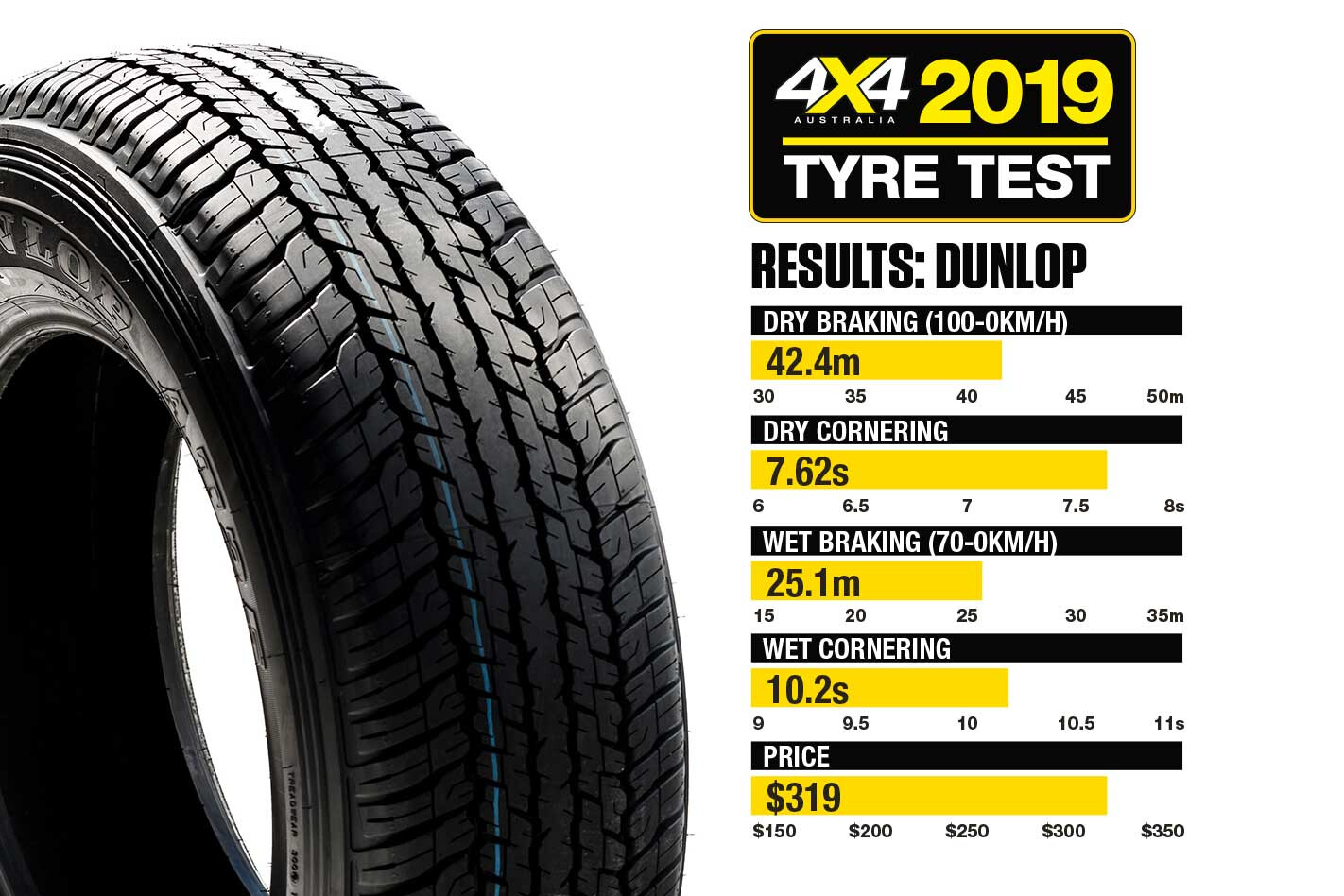
During dry cornering the Dunlops maintained that predictability and consistency, but lacked outright pace. Good, but not as convincing as the stopping performance.
Where the Dunlops’ fairy tale performance started to unravel was with our final two assessments. At $319 they’re the third most expensive tyre here. Plus, the off-road performance is lacking against the rivals – Walker noted they were more inclined to spin over slippery surfaces, with the lack of tread bite likely to blame. This is a shame, because before they got dirty the Grandtreks were among the best performers.
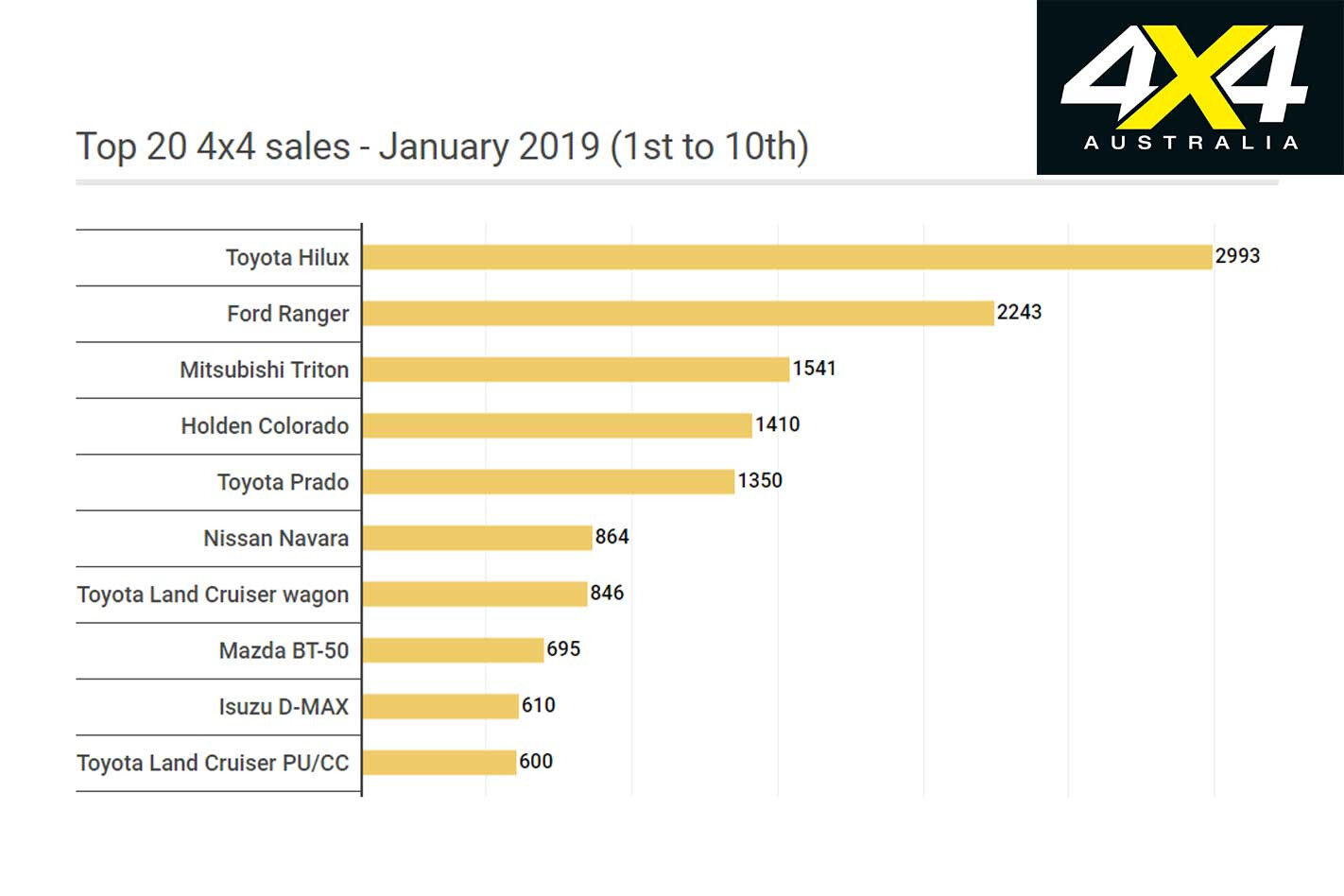
TOYOTA has started 2019 where it ended 2018; atop the 4×4 sales charts. The Japanese marque shifted 2993 Hilux 4x4s last month, outselling the Ford Ranger 4×4 by 750 units.
The Hilux 4×4 also bucked the widespread trend seen across the industry to register a sales growth of 3.9 per cent (compared to January 2018). Conversely, Ford dipped in sales by 22.4 per cent month-to-month.
That widespread trend – a total of 81,994 vehicles were sold last month, 6557 less than in January 2018 (88,551) – can be attributed to low levels of consumer confidence, according to the Federal Chamber of Automotive Industries (FCAI) CEO, Tony Weber.
“The current economic environment is a challenging one, with an imminent federal election, a declining real estate market and tighter lending practices,” he said. “However, Australia’s love affair with SUVs continues. January was a solid sales period for these vehicles, with the segment claiming 43.8 per of total market sales.
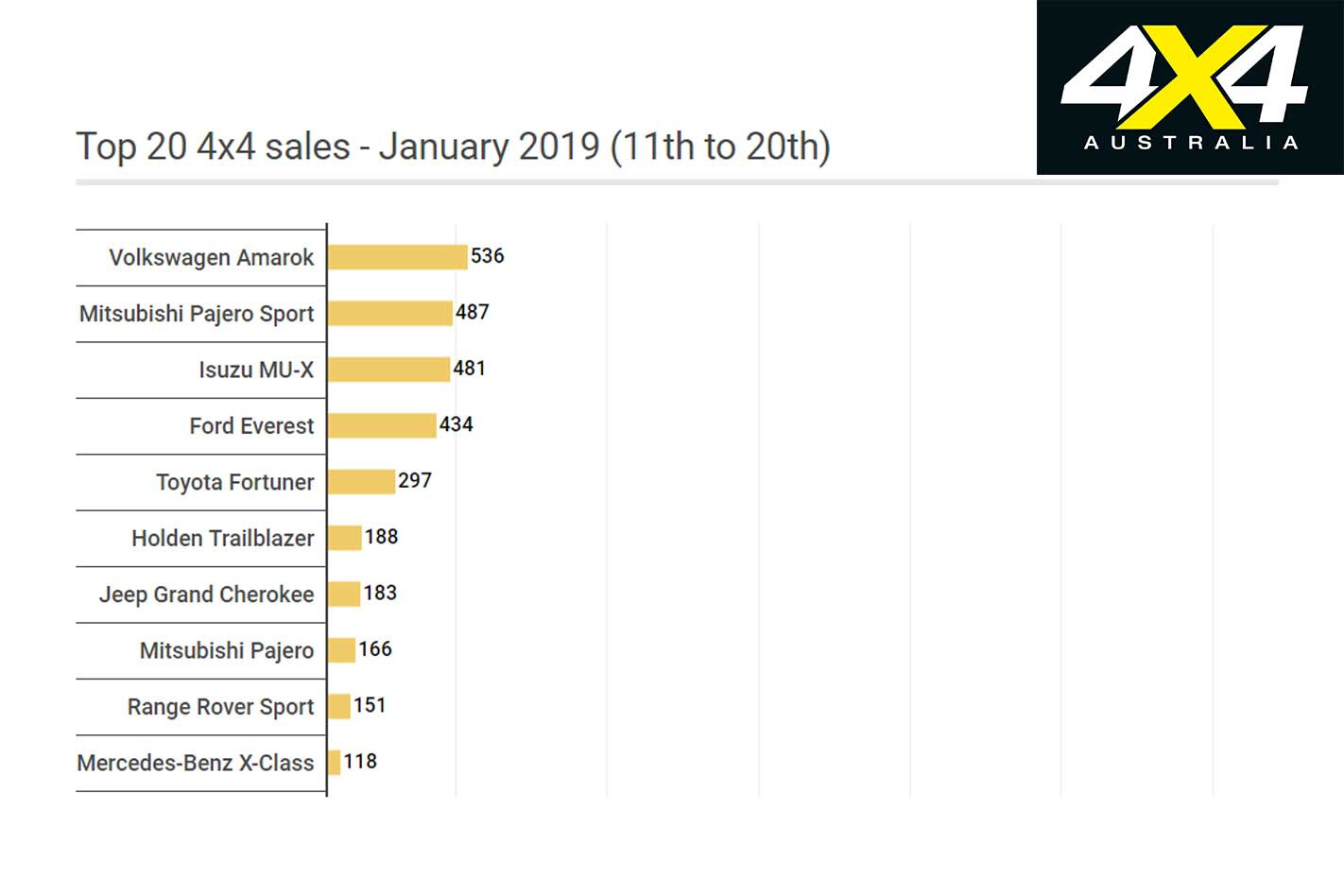
Sales in the Light Commercial Vehicle (LCV) segment dropped by 5.8 per cent when comparing month-to-month, with 15,809 new LCVs selling compared to 16,776 in the same month last year. The PU/CC 4×4 segment also registered a dip in sales, with 11,853 recorded compared to 12,196 last year.
The Hilux (4×4/4×2) was – yet again – the best-selling overall vehicle in the Australian market, with the Mazda3 and Ford Ranger (4×4/4×2) joining it on the podium.
TENTERFIELD, located 20km south of the New South Wales/Queensland border in the New England region, is well-known for its history, the surrounding stunning national parks, and the songs sung about it by Peter Allen. A great way to explore this area is to ‘get a feel’ for its local history with a walk around town, locating the old stone buildings that have stood for more than 100 years.
The first known European to pass through the Tenterfield area was Allan Cunningham during his 1827 investigation of the Darling Downs, and white settlers began to arrive in the late 1830s to begin grazing operations on the fertile land. However, the fortunes of the town were boosted when gold was discovered in the district in 1858, in areas that included the Rocky River, Morgans Gully, Ropers Gully and the Timbarra Plateau.
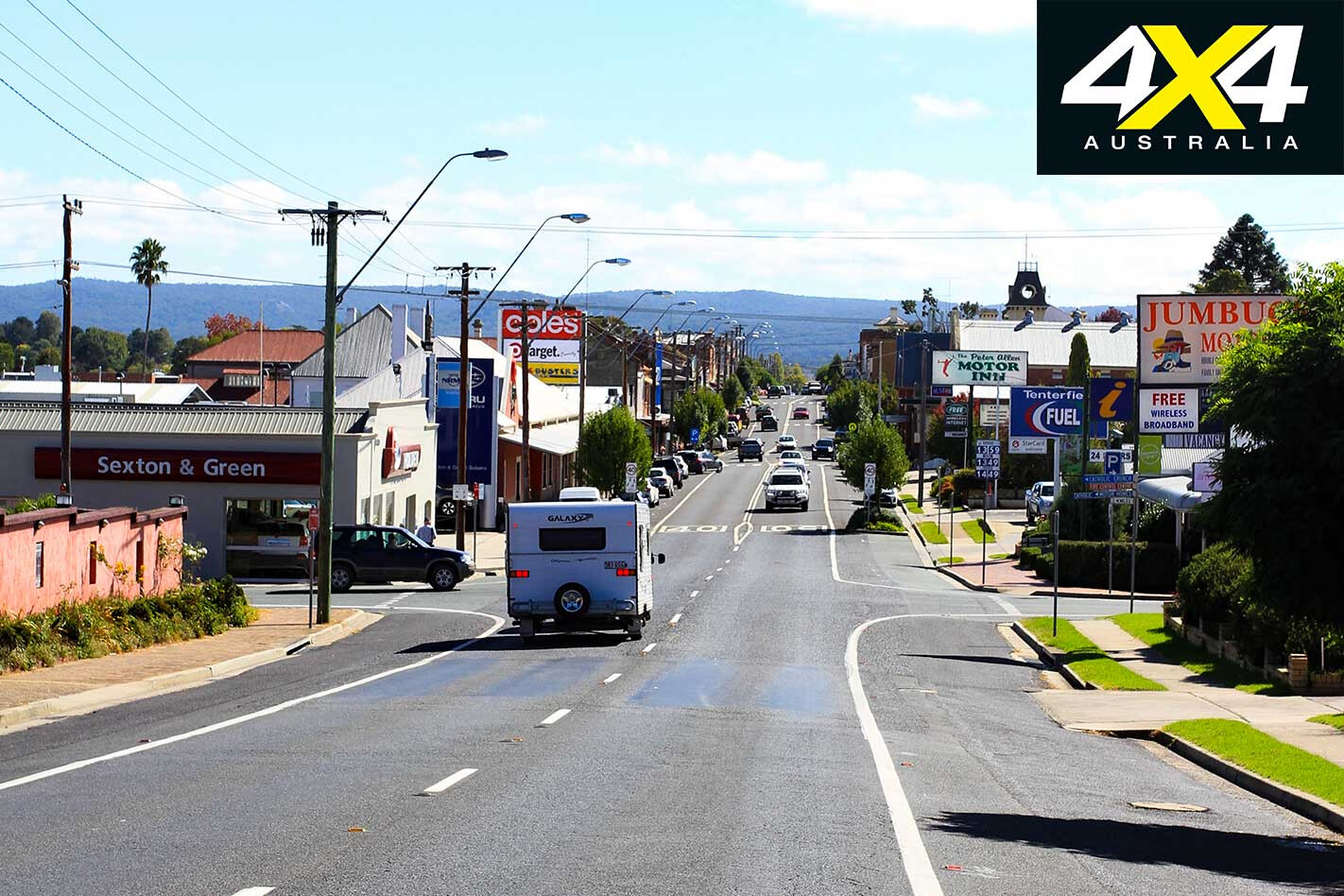
In the ensuing years Tenterfield developed with a bank, an Anglican church, a flour mill, school, blacksmith and other significant buildings. By 1879, 1500 people called Tenterfield home, and in these years a police station, gaol and courthouse were erected.
Then the bushrangers came. In 1868, Captain Thunderbolt (aka Frederick Ward) made an appearance around Tenterfield and called the surrounding hills his home; you can still explore the caves where he supposedly hid. Tenterfield is located in an area now primarily devoted to sheep and cattle grazing; although, timber, mixed farming and tourism provide other local industries, and the town is home to more than 4000 people.
The trip to Rocky River starts just south of the heart of town, by wandering down the aptly named Scrub Road and onto Billirimba Road. Keep an eye out for abandoned farm and transport machinery which sit quietly in the paddocks, and, with long, straight, tree-lined sections of dirt, you can gaze across the paddocks with views to die for in every direction.
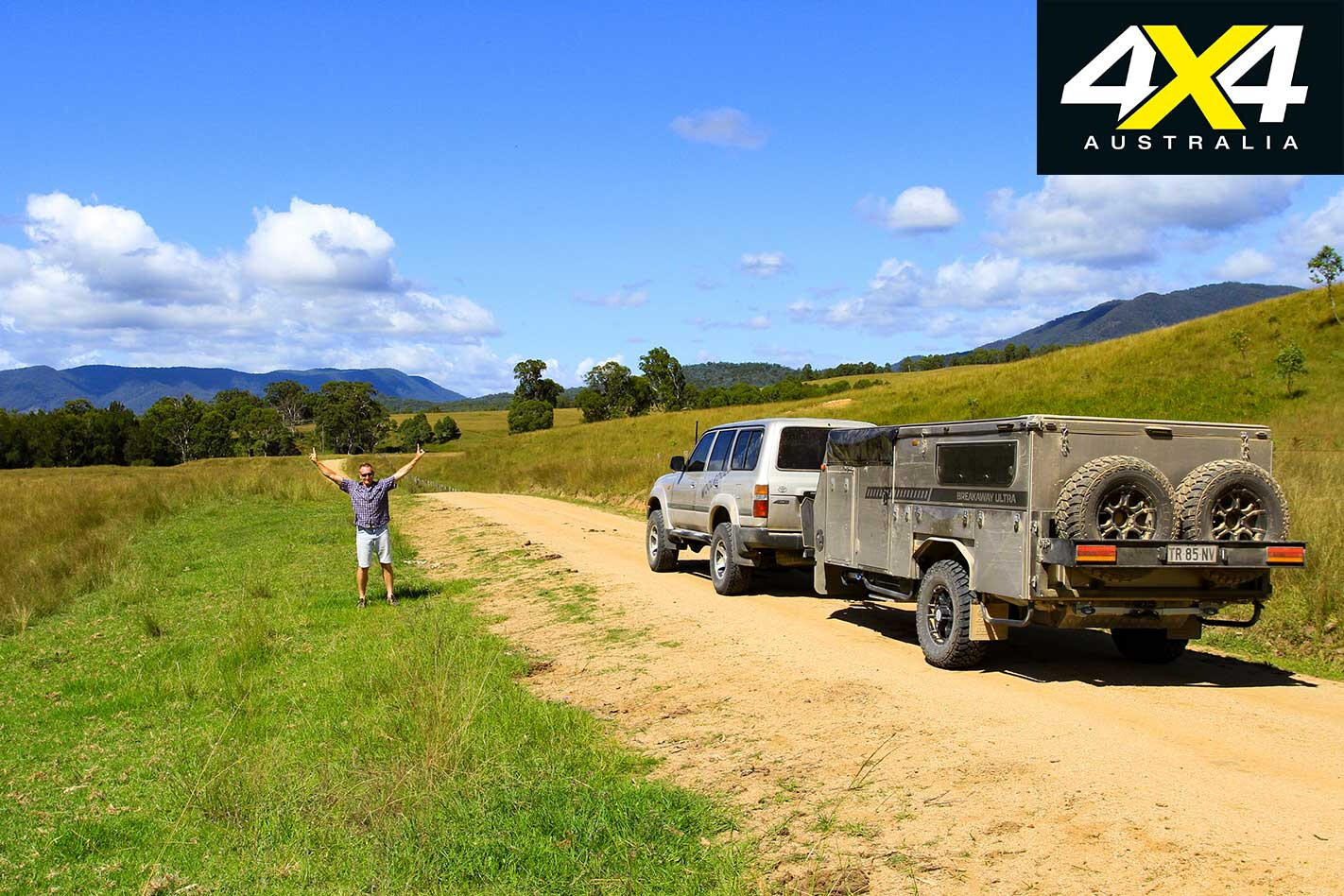
With Quilgeran Pinnacle to your right and Black Mountain to your left, the road snakes through – and soon passes by – the locality of Steinbrook, which is basically home to an old hall and not much else.
The road then passes through private cattle-breeding stations in the valleys, old sheds and massive trees. After travelling a further 35km Billirimba Road winds its way down to the Timbarra River and the intersection of Upper Rocky River Road.
It may only take an hour to get this far, but, if you’re looking for one of the best camping options, head another 3km to Wunglebung Station. Camping at Wunglebung is by appointment only and campsites are limited along the Timbarra to keep the place private, clean and manageable.
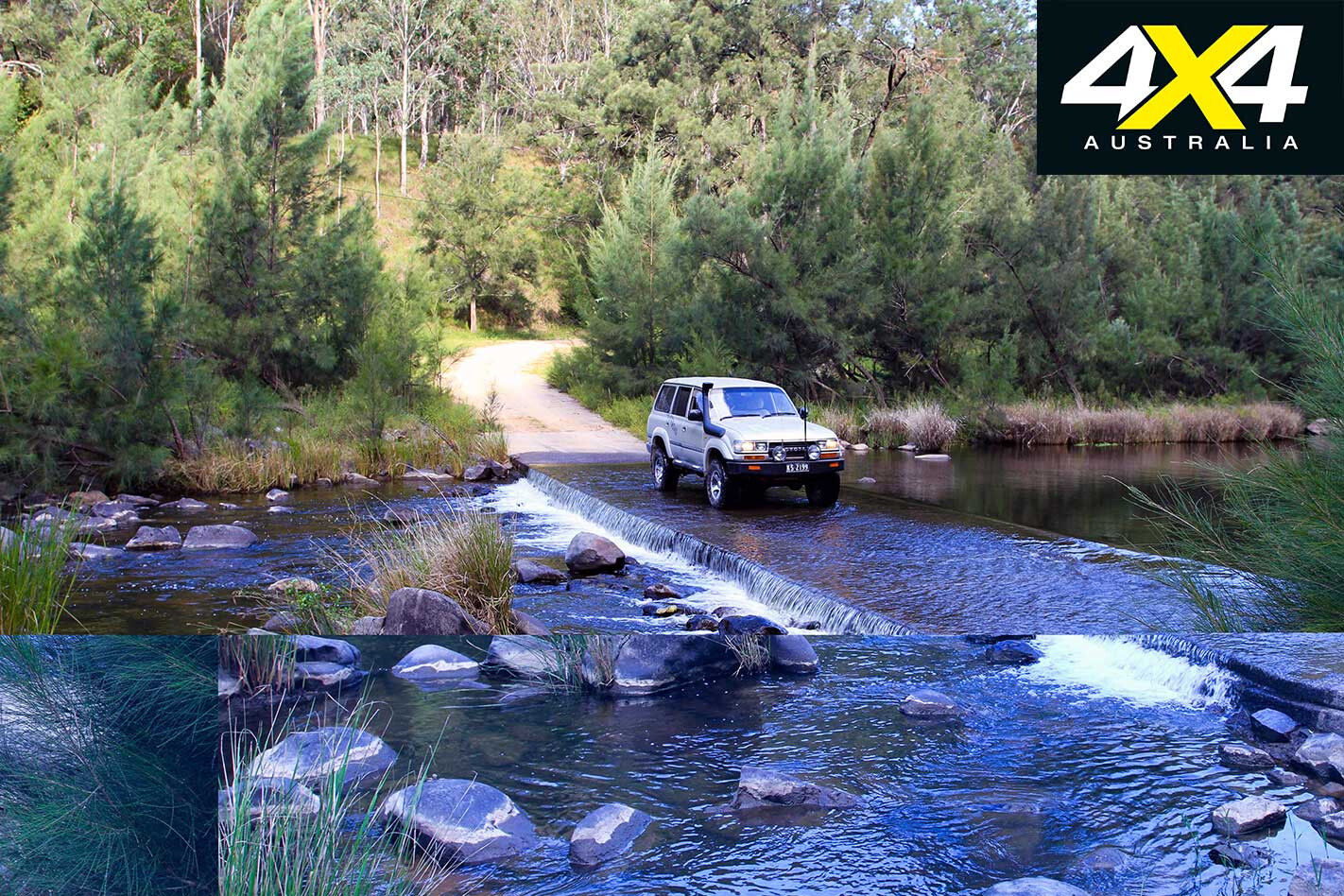
After you’re shown to your exclusive camp by owners Katrina and Stu you can relax, kayak on the supplied units, or explore the hills. Kat is happy to give you a rundown on the history of the station, advice on the drive up the valley, or a heads-up on the 4X4 tracks in the hills. The 8.1km² working cattle station has a serene feel to it and that’s the way they want it kept; there’s no hooning, mad off-road scrabbling, shooting, motorbikes or quads.
It’s hard to relax though, when you can swim, kayak, go platypus stalking and explore the old yards, relics and remains of the original homestead.
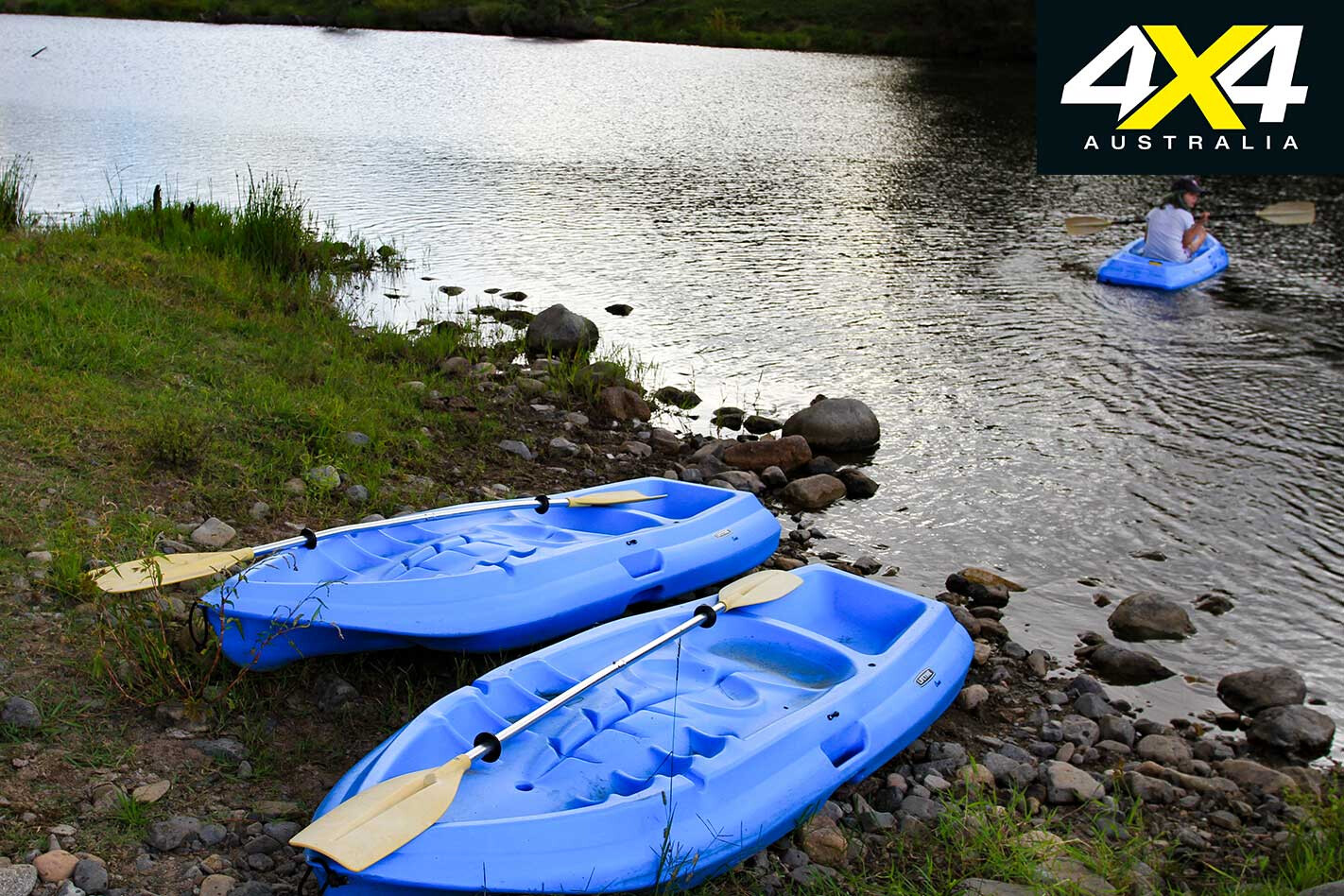
Four-wheel driving is possible up the valley towards Washpool NP, where easy station roads lead into gorge country and cross the upper reaches of the Timbarra River into more timbered areas and eventually to a gate where the Bicentennial Trail continues south.
If you’re keen on a more serious challenge, Kat and Stu can point you into the hills toward the Billirimba Trail in the nearby NP. Billirimba is suited to high-clearance 4X4s as it twists and winds its way up nearly 700 metres – midway along there are a handful of mines and some mining gear from the past, and the views from here are to die for.
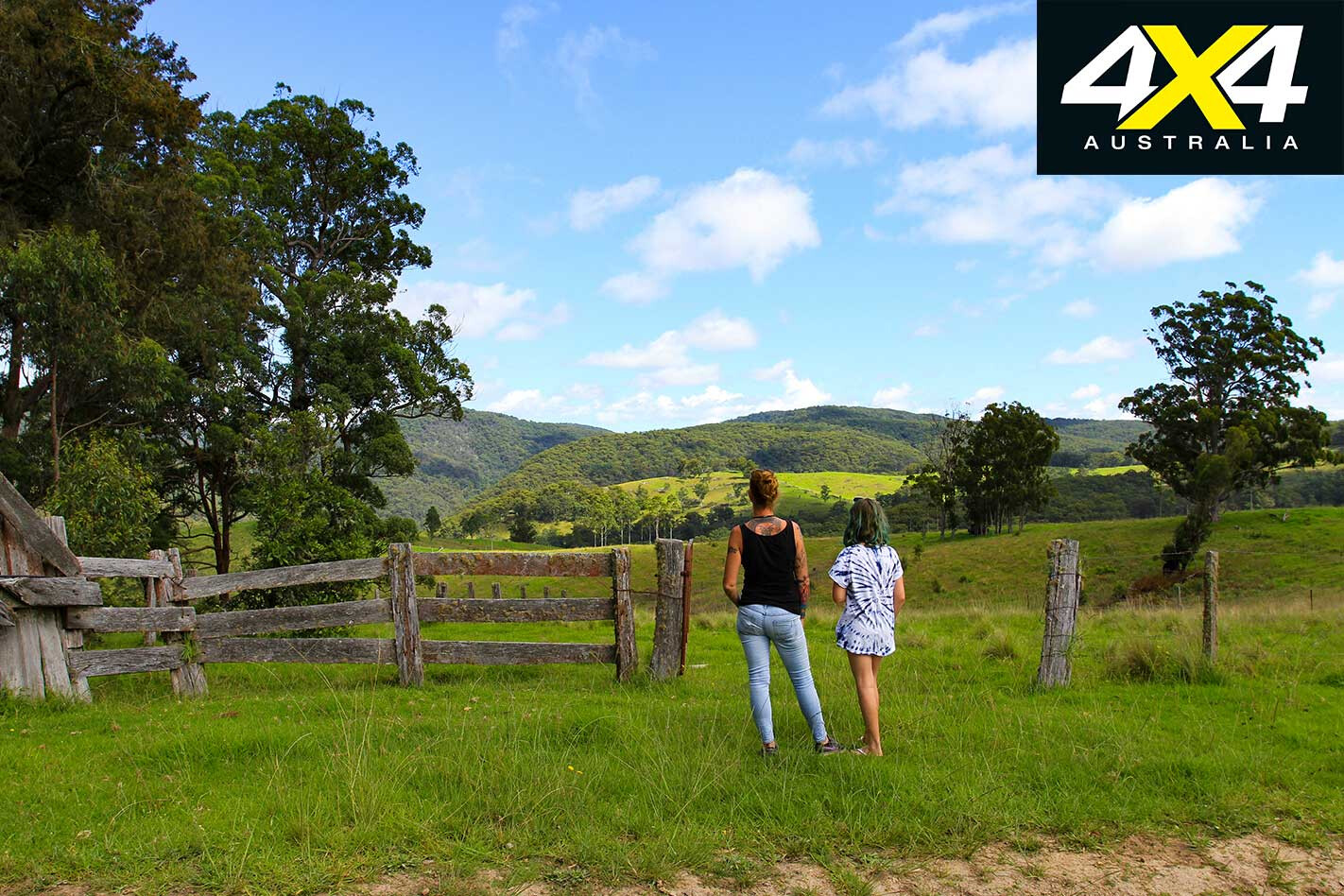
Once you’re done ogling the views, retreat to Rocky River Road and swing right towards Drake (53km away). One hundred years ago this route was the main thoroughfare between Tenterfield, Drake and Grafton, and the road workers at the time couldn’t move these granite boulders so they simply built the road around them.
As the road follows the Timbarra River the drop-offs become steep and you’ll pass pockets of dry rainforest, old sheds in the hills, and acres of tree-felled paddocks where cattle freely roam along the road. Farmhouses will soon appear roadside, so slow up to keep dust down and keep a look out for dogs that may shoot out onto the road.
There are areas beside the river where camping isn’t permitted, but at the 25km mark there’s a huge grassed area with tracks leading down to the Timbarra, and all are welcome. Stopping under the old casuarina trees is pretty special as the water flows past, and don’t forget to throw a rod in for a chance to snag a freshwater yabby or a fork-tail catfish.
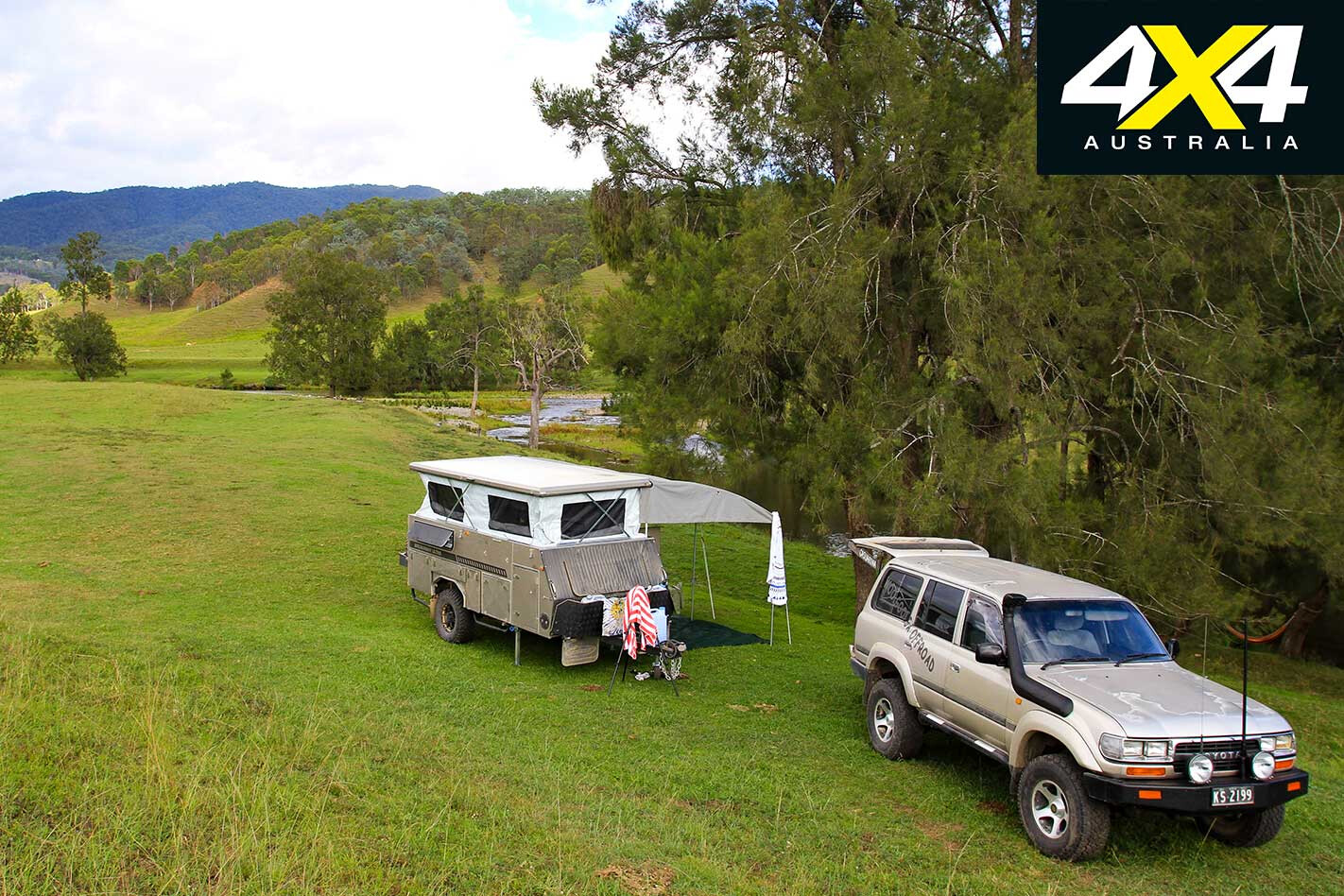
If the weather is right swimming in the Timbarra River is pure bliss, as the fresh water, which has been filtered through granite particles, leaves you feeling relaxed and clean. Whether staying for an hour or a night, remember to take any rubbish with you to keep the area pristine and the land owners happy.
Once you’ve left camp and veered away from the river and into the hills, the country farmlands turn into a thick scrub and the road soon changes from dirt to tar. The road steepens as it enters Girard State Forest, and the terrain gets more serious as you climb to almost 1000 metres above sea level in just a few kilometres.
On the southern side of the range the stunning rainforest is generally a bit cooler than the flats below. With tall cool-climate ferns and long-trunked bangalow palms and coachwood trees, it’s a totally different eco system to what you have just left behind. Even the wildlife changes to the sounds of whipbirds, pademelon wallabies and lyrebirds.
Reaching the summit is obvious, as large stands of scrubby timber – ironbark, blackbutt, scribbly gum and grass trees – seem to dance in the wind as you zoom past. Girard State Forest soon gives way to farms and dodgy looking houses and eventually leads to the Bruxner Highway, which runs between the coast and back up to the tablelands past Tenterfield.
Travel Planner
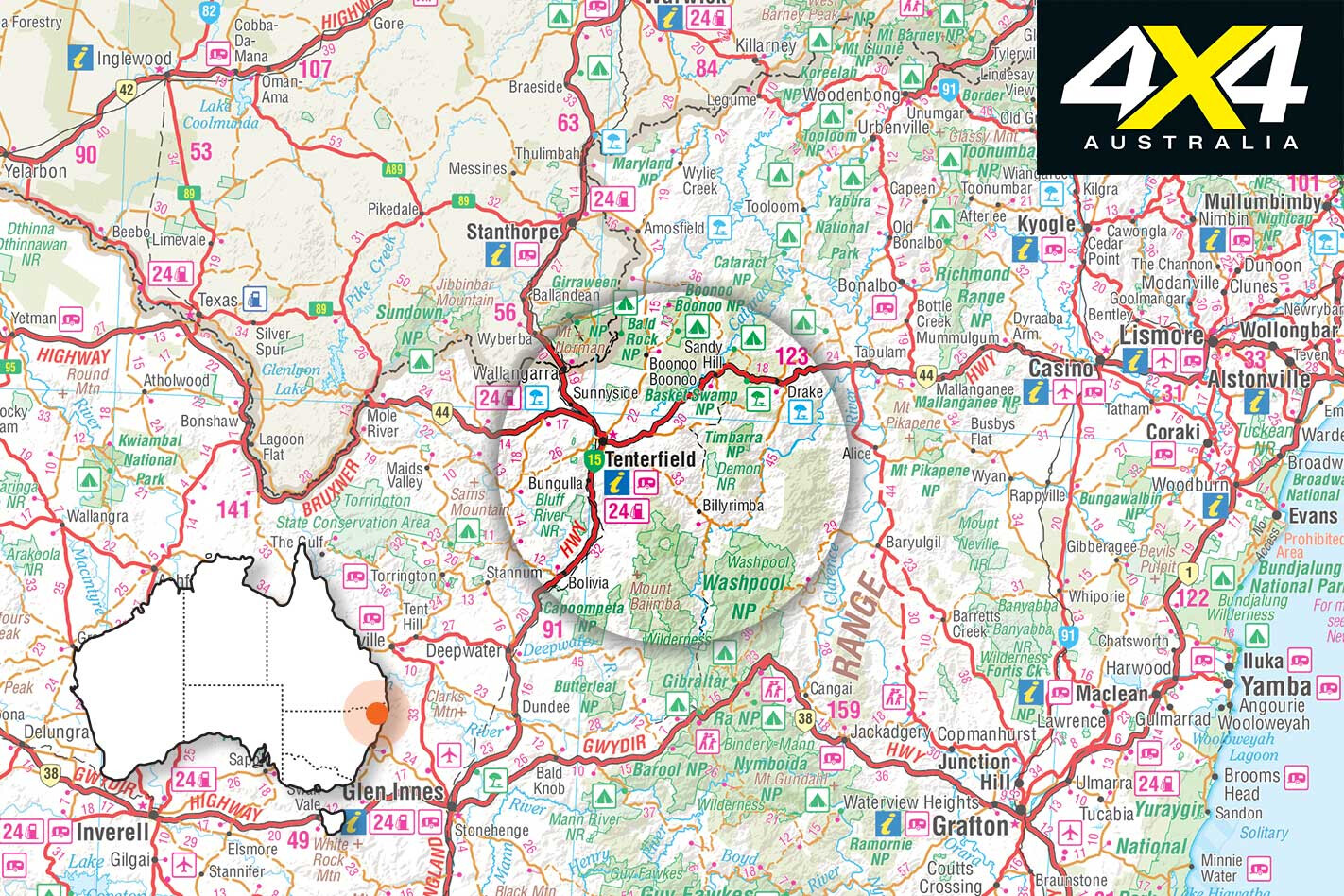
WHERE TENTERFIELD is the gateway to both the New England and Northern Rivers regions, and is surrounded by 10 national parks. The Rocky River drive begins a few kilometres out of Tenterfield, and the whole trip is around 100km – depending on any 4WDing – eventually ending at the small town of Drake.
CAMPING, FACILITIES & AMENITIES Wunglebung has 8.1km² to explore, with camping along the Timbarra River. Sites are grassy and private, and all have river views and access. There are clean drop toilets and hot showers nearby, but no phone service – there is an emergency phone on the property.
BEST TIME TO TRAVEL Being in granite country, the summers are stifling hot yet the winters are bitterly cold. The ideal time to travel is either mid-spring or autumn, when the nights start to cool yet the days are great for swimming.
FUEL & SUPPLIES Tenterfield is a fairly large town with fuel depots, a large shopping centre and plenty of mechanical service centres. This whole trip is around 100km, so filling up in town will definitely get you to Drake.
THINGS TO SEE ON THE WAY One of the great things about this trip is passing by working cattle stations. From farmers herding cattle on horseback to cattle taking over the road, the kids can get nice and close. This area holds eight different types of wallabies and kangaroos, several types of eagles, and skinks basking on the warm granite. The waters here are alive with eels, cod, yabbies and platypus.
CONTACTS Tenterfield Tourism: (02) 6736 1082 Tenterfield Council (for current road conditions): (02) 6736 6000 Wunglebung Station: 0427 002 732
MAPS Several topo maps can be used – Malara, Bulldog Rock and Drake – but a great overall map is the Hema North East NSW.
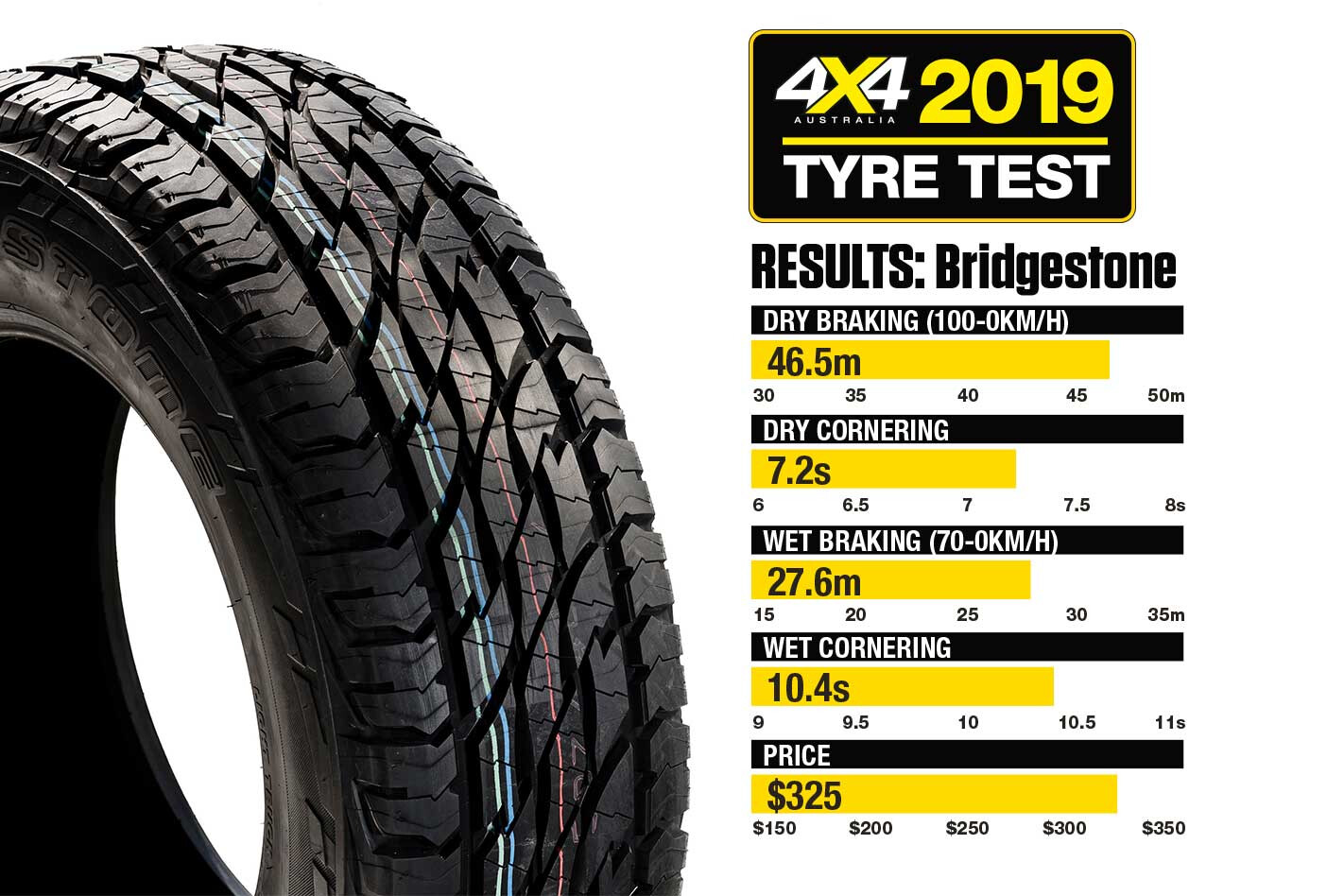
THE ONLY light-truck construction of our test, the Bridgestone Dueler brings a more rugged construction to the table. For that you pay a premium, too, with the $325 retail price towards the pointy end of our seven-strong field.
There are on-paper advantages, most notably with its 1180kg load rating, matching the Falkens in being 120kg ahead of the others; great for people looking to accessorise or modify their truck.
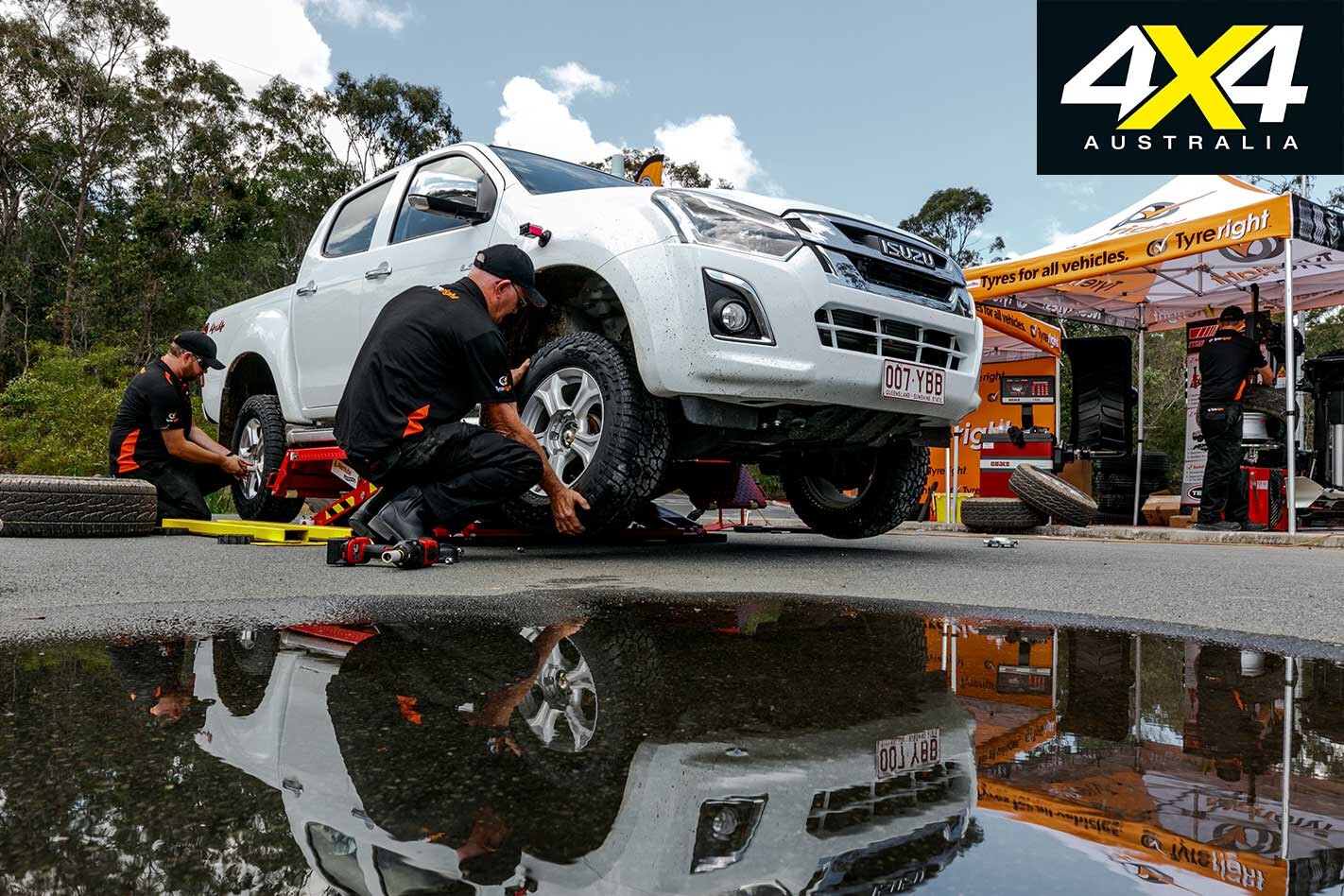
That the Bridgestones performed admirably on-road was a plus, with the dry-road performance outdoing the wet. In both dry cornering and braking the Dueler was only outdone by Maxxis and Dunlop. Even then, the deficit to the Maxxis under brakes was limited to half a metre.
Stokell was less complementary about what the Bridgestones did to the behaviour of the car, with the rigid light truck construction taking the edge off driver feel. However, he said there was a consistency when the tyres let go, with the modest limits allowing more confident pushing near the threshold. Throw water into the mix and the Bridgestones lost some of their sheen, especially around corners, and they trailed all but the Goodyears in how long it took to cover our two wet bends.
Stokell also noticed that winding on steering lock challenged the Bridgestones, the relatively low grip levels and tougher sidewall conspiring to make things less athletic and less responsive. None of which hurt the Dueler’s all-round on-road ability, its final tally edging the Hankook by the slimmest of margins.
Off-road, the aggressive tread pattern earned respect from Walker, who noted the ease with which it traversed mud and rocks. “There was heaps of grip up the pinch at the end,” he said, cementing its five per cent off-road factor boost.
Add it all up and the off-road performance helped the Dueler’s cause.