
THE INTERNET has changed the way we build 4x4s. Even 10 years ago your entire outlook on what 4x4ing meant as an activity was defined by your close circle of friends, or the friendly folk behind the counter at your local 4×4 store. These days, it’s a little different.
The internet, and social media, have extended our circle of friends far and wide. It’s nothing to glance briefly at your phone or laptop and get up-to-the-minute updates from friends deep in the frozen tundras of Russia, a roof-top tent setup in the jungles of Guatemala, or a slick desert racer sliding its way through the wide expanses of America’s west.
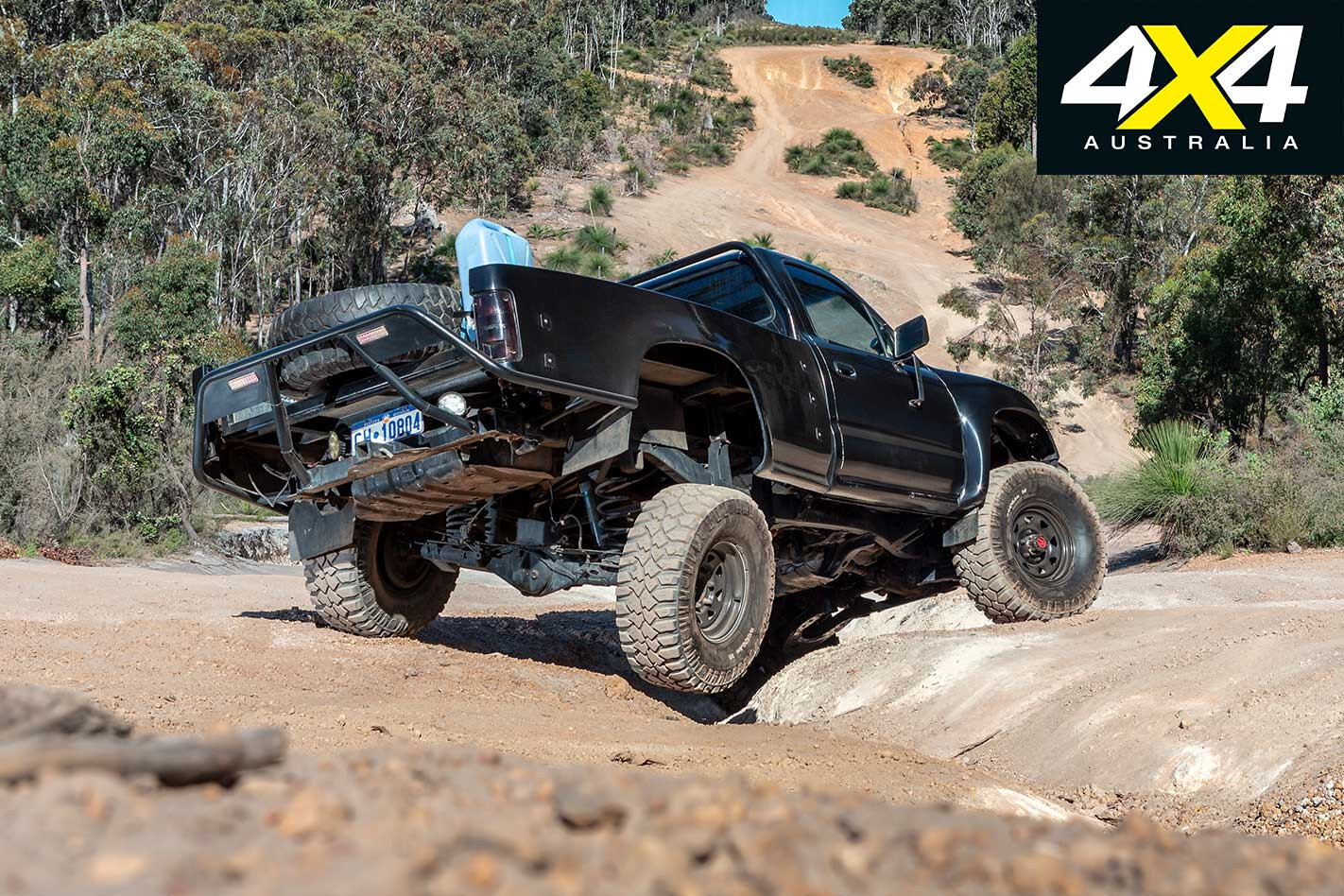
It’s this uniquely American breed of 10/10ths off-roading that first caught Tyler’s attention. The idea of a 4×4 being something to satiate the need for high-octane shenanigans was so far removed from anything he’d seen on Australian shores he just knew he needed to have it.
From the outset the plan was simple, and would involve a lot of wrenching, and a bog-stock 1999 Hilux.
Kicking the party off in the right way Tyler ripped the independent front suspension down to its bare components, then ripped it down some more. Based off the famous ‘Blazeland’ kit, Tyler’s sliced open the factory lower control arms before adding in more than three inches of new material, drastically pumping out the wheel track.
The upper balljoint is pushed out a matching amount with an off-set balljoint spacer keeping the front end in alignment. From here the stock CVs were binned and replaced with longer offerings from a T100, although more on that later.
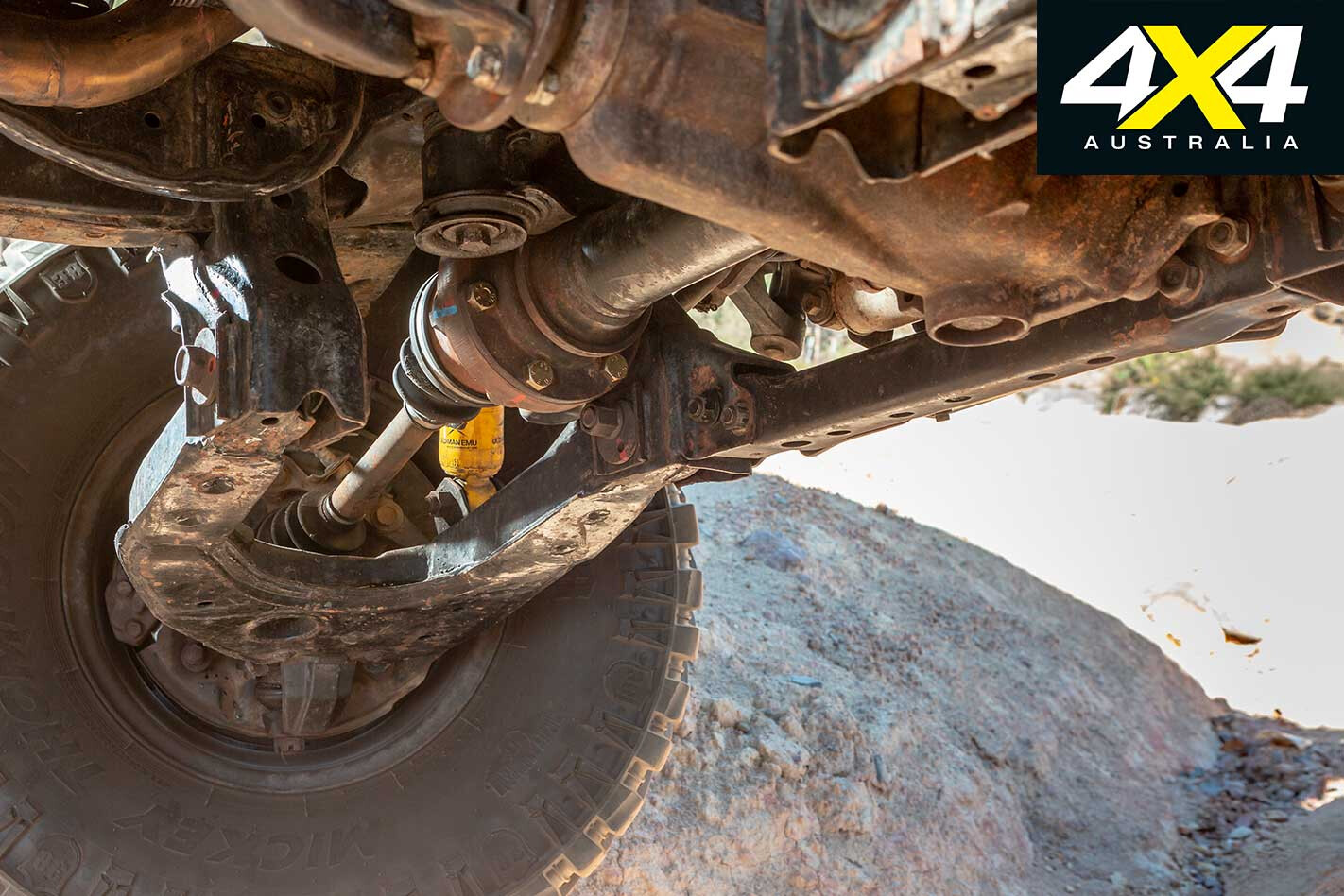
The arrangement rides on factory torsion bars and Old Man Emu shocks, with the added leverage from the longer arms providing that oh-so-smooth ride and articulation PreRunners are known for.
Of course, with an off-road ready suspension setup up front a set of janky old leaf springs were never going to cut the mustard. Tyler fired up the MIG welder again and set to work piecing together something far more suitable with a one-off triangulated 4-link.
Eagle-eyed readers may notice a few Patrol parts thrown into the mix. The shocks are off-the-shelf Patrol offerings, while the upper arms are standard Patrol lowers. The coils? Literally found in the backyard with a bang-on ride height and spring rate, while the new lower arms are hand-built by Tyler and rest in brackets he fabricated himself.
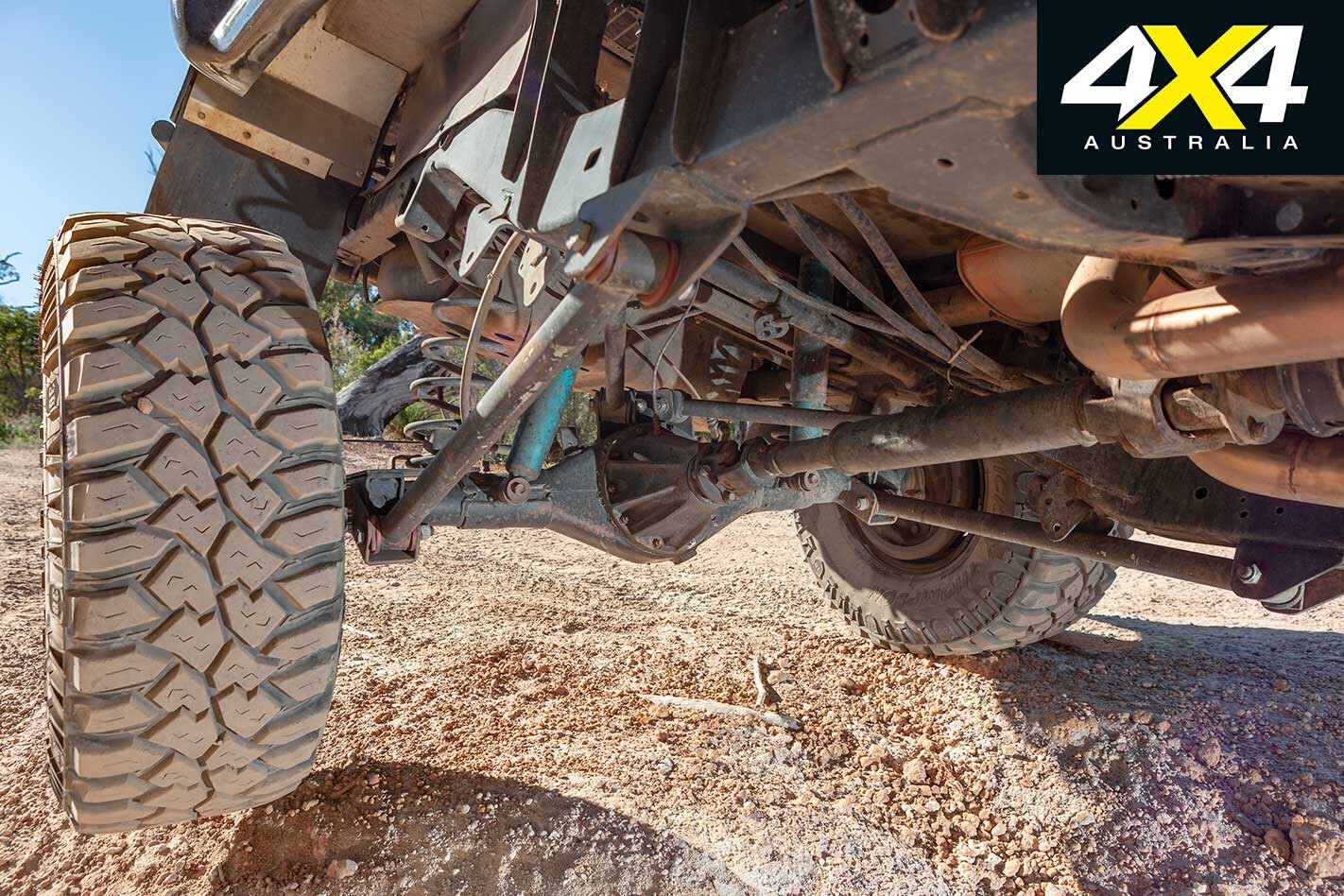
Those expecting a mall-crawler will be sorely disappointed on the wheel and tyre front. Tyler’s optioned up a strong-as-guts 15-inch steel wheel combo. The rears punch in at eight inches wide, while the fronts a hair narrower at seven inches. They’re wrapped inside one of the most appropriate tyres on the market, 33-inch Deegan 38s from Mickey Thompson, the only tyres sporting the names of two bona-fide off-road racers.
With the huge track increase the factory guards were never going to keep things under cover. For that he reached out to Queensland-based Prerunner Industries. They’ve decked the ’Lux out front to rear with a full-suite of their 4.5-inch wider fibreglass guards. They’re a near bolt-on replacement up front with just a few holes needing to be drilled, while the rear are free-floating bedsides.
“I’m not actually running a tub” Tyler tells us with a laugh. “I knocked together a steel frame to hold the bed-sides on, then lined the inside with alloy sheets on the floor and walls.” Tyler tells us the fit and finish was so good they’re not painted, they’re still the black gel-coating they came out of the box with.
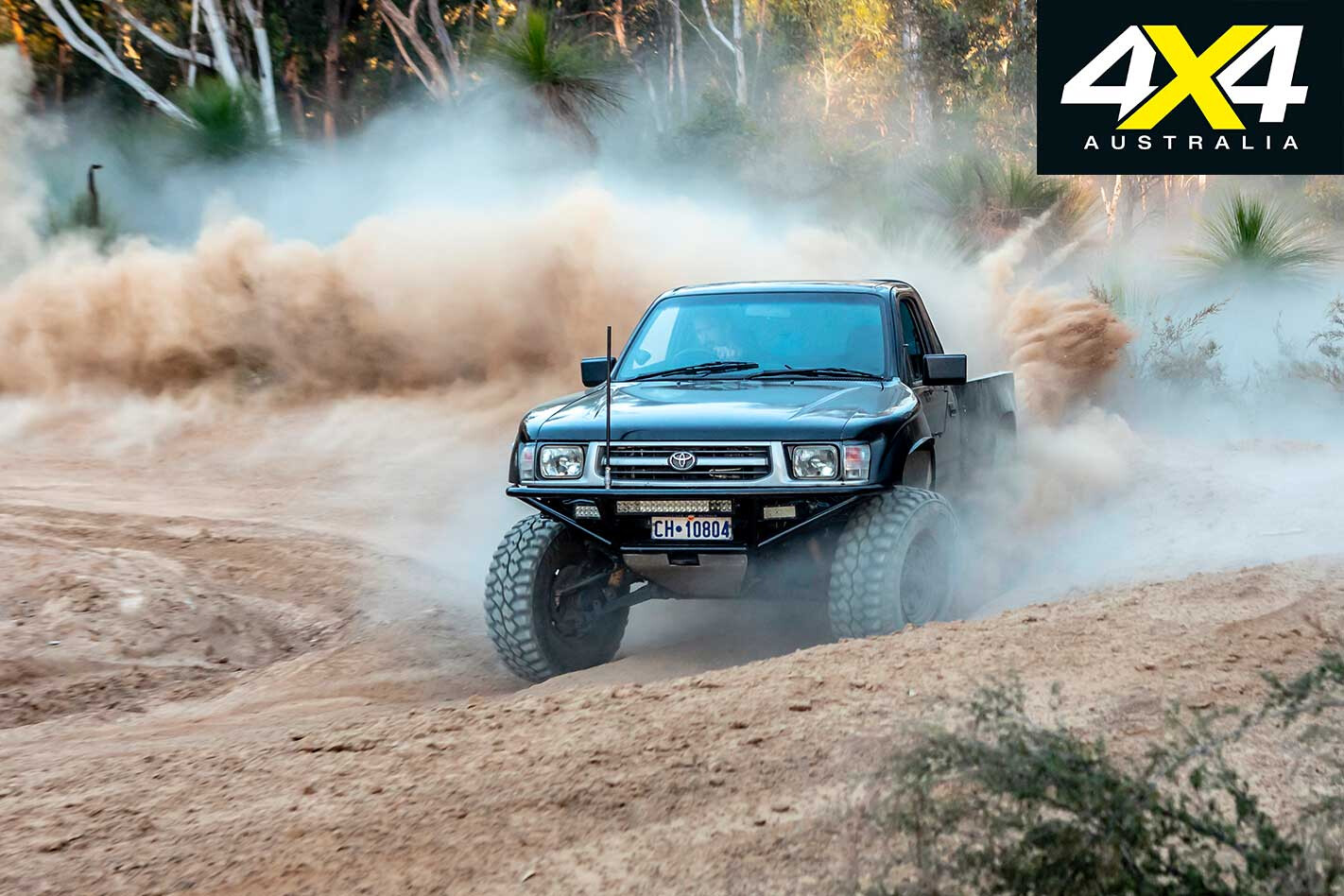
Completing the styling upgrades for the ’Lux is a bunch more custom fab from Tyler, although you already knew that didn’t you? Up front the slimline tube bar gives maximum approach angle, but also provides a smooth skid plate for if (when) Tyler gets a little too rowdy in those West Aussie sand dunes.
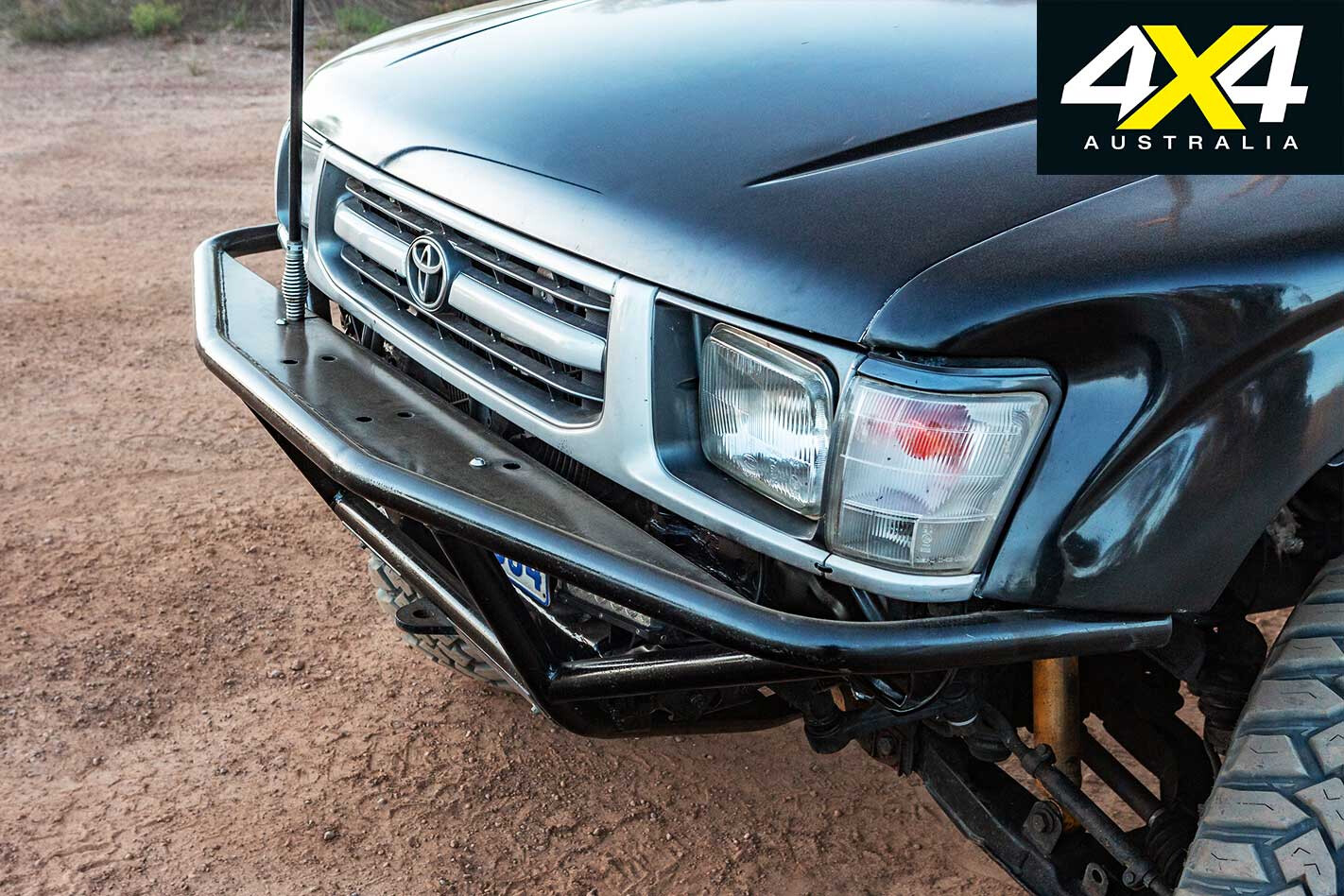
While the rear is a similar tube offering, it’s a little more functional than your typical rear bar. The spare tyre is sent all the way to the rear in an effort to counterweight the typical nose-heavy weight bias. Combined with a rear mounted GQ fuel tank the pair let the ’Lux sail smoothly through the sky with a gentle rear-biased landing.
Racing with a stock engine falls into the same category as watching paint dry and listening to Scott Morrison talk. Hence the engine bay has received a significant overhaul to suit. Where once sat a paltry 2.7L four-cylinder, Tyler’s shoe-horned in a fire-breathing double-overhead-cam 4.0L V8 Lexus motor.
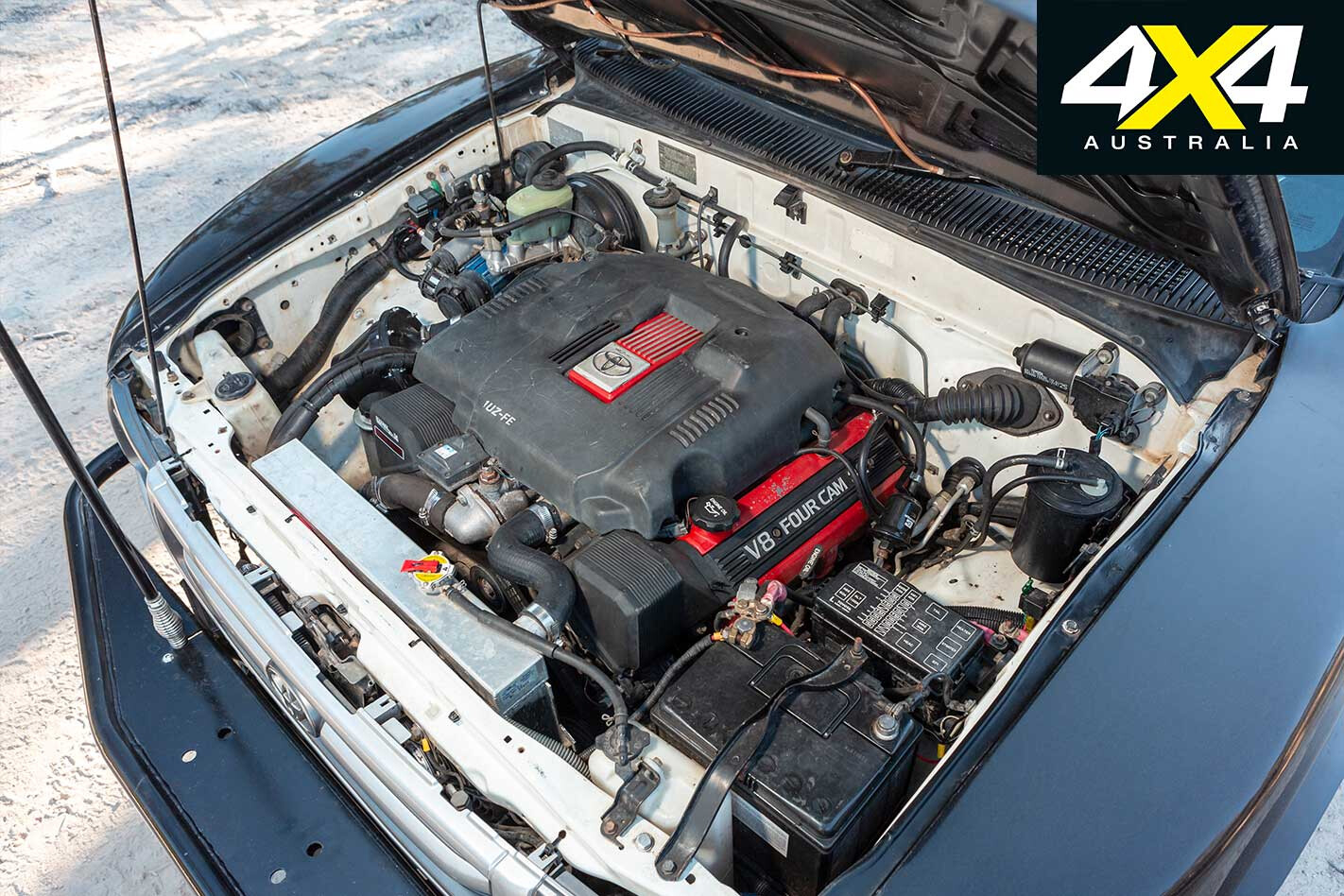
Commonly found in luxo-Japanese sedans, the 250hp V8 provides plenty of free-revving power in a near-on bulletproof design (Toyota even ran them in Le Mans). It’s teamed up with an aftermarket bell-housing mating it to Toyota’s stout R151F five-speed manual before sending final drive through an ARB Air Locker in the rear diff.
Exhaust is sent rearwards through twin 2.5-inch pipes leading into a single three-inch outlet; although, Tyler’s still juggling packaging with aural porn. The whole setup is kept cool with a one-off alloy radiator up front, while the still-working AC needed the heat exchanger mounted underneath with twin thermo fans due to space constraints.
Moving inside and it’s clear this is one purpose-built off-road performer. Strapping both driver and navigator in for the ride is a pair of hip-hugging bucket seats Tyler sourced from a Honda Prelude.
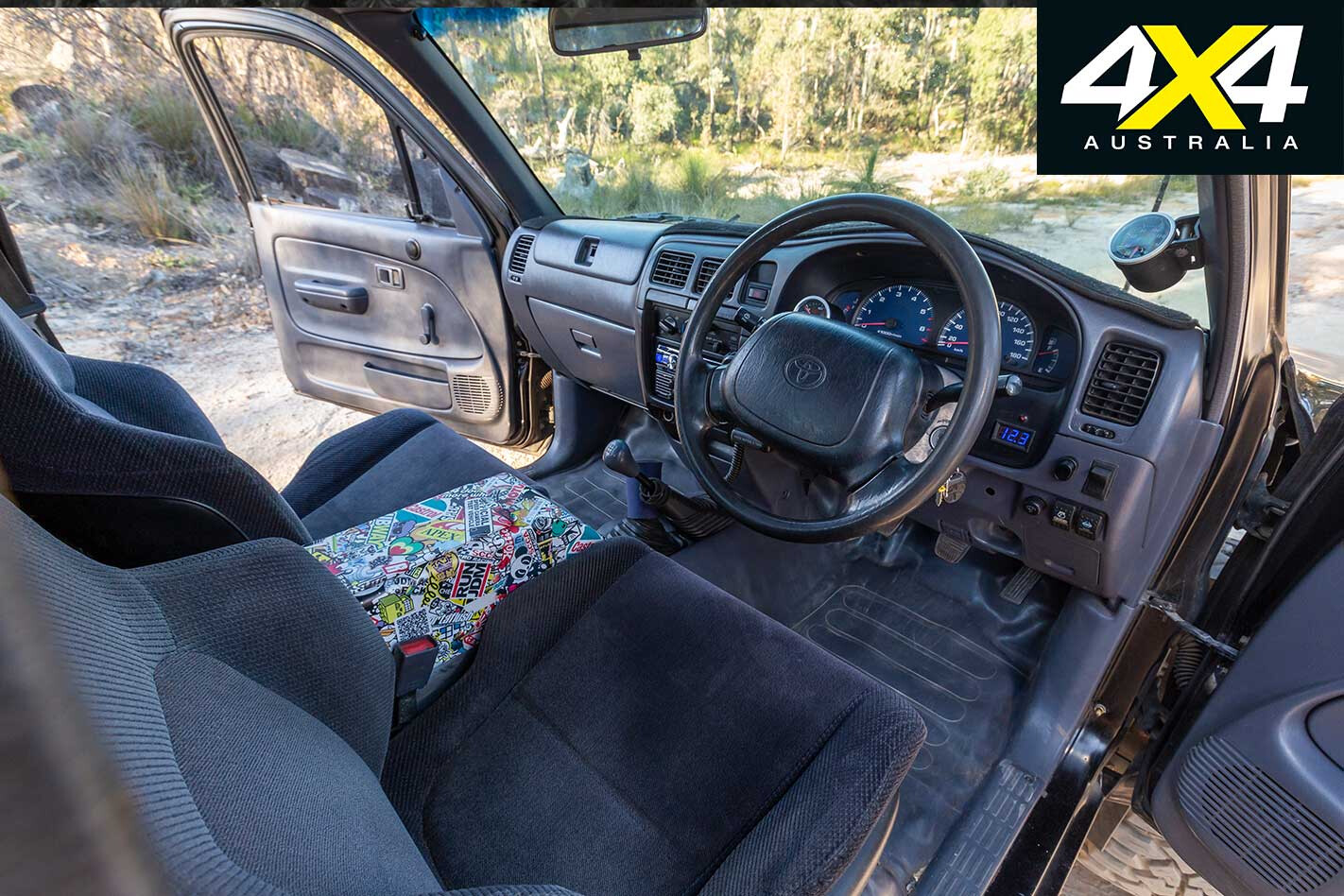
They’ve not only ditched the stock bench seat arrangement, but also freed up space for a home-brew alloy centre console that houses rocker switches for the LED driving lights up front, and secures Tyler’s loose items when he hucks the ’Lux skyward. The rest of the interior is equipped with the ubiquitous UHF radi and a plethora of gauges watching hawk-eyed over the V8 engines vitals.
Sure, a US-based PreRunner might not be the first thing you think of when you imagine an Australian 4×4, but does it really matter? The places we go, the tracks we drive, they’re all for nothing more than the enjoyment of experiencing the outdoors. Some people just like enjoying the outdoors with a foot of air between the ground and their tyres. And that’s okay by us.
I’ll be back
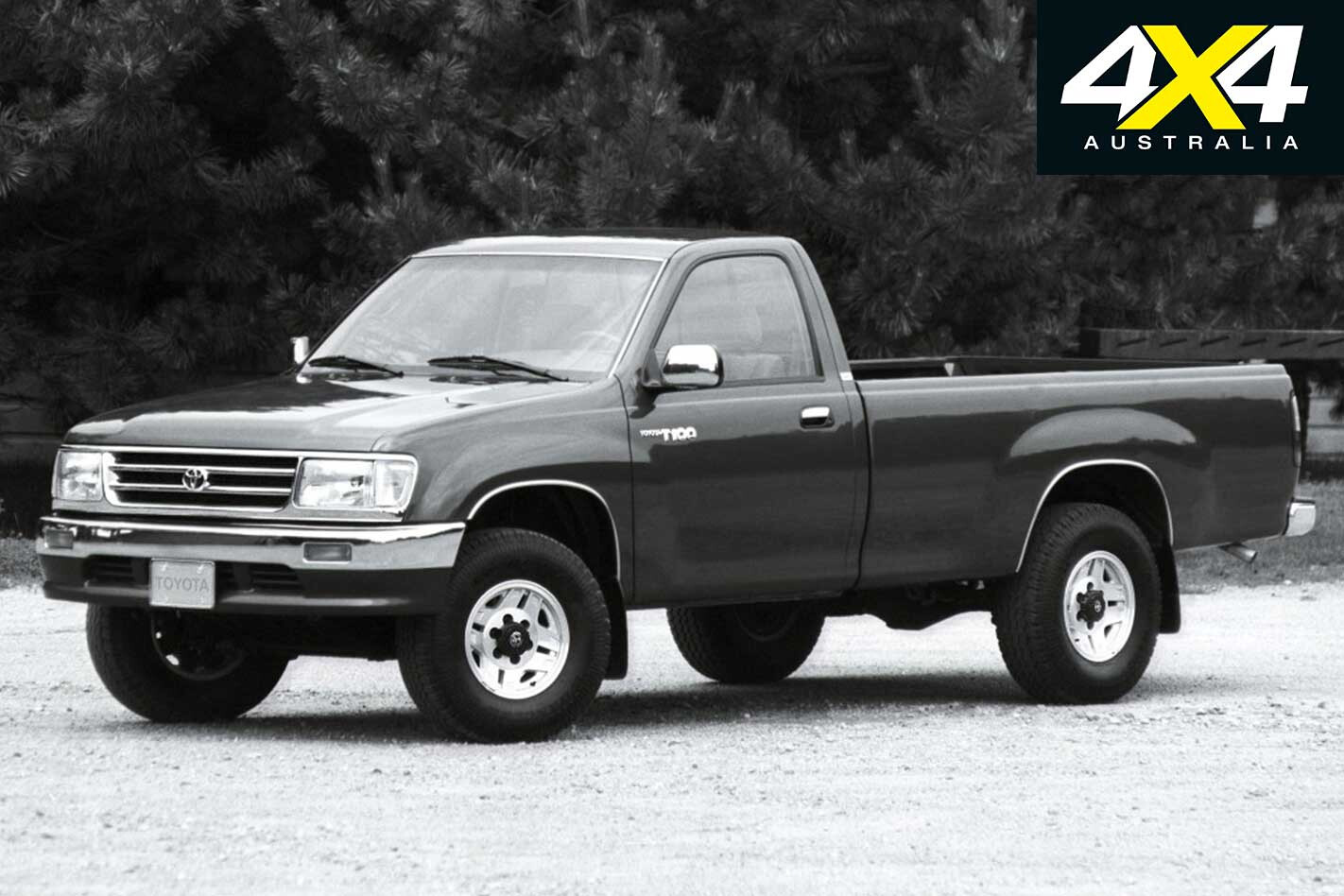
Fret not faithful readers, while Tyler’s sliced and diced a T100 to make his magical off-road mayhem work, it’s not a cobbled together contraption using retired Terminator parts. The T100 is a ute by Toyota, and an odd one at that.
While most American pick-ups fall into the full-size (think F150 etc.) or compact categories (Tacoma, Ranger etc.) the T100 was a bit of a bastard child with a parts bin build list and a future as bright as the DeLorean Motor Company.
It hit the US market in the early ’90s with near full-size dimensions, and hobbled together drivetrain from the smaller “Toyota Pickup Truck”. It died as quickly as it arrived, but the benefit to off-roaders was the super long CV shafts used to make the compact drivetrain pump out to the mid-size body length. It has given home-brew PreRunner guys an off-the-shelf CV option, making long travel IFS affordable to the masses.
While you sure were ugly T100, we appreciate the sacrifice you made in the name of automotive hooliganism.
RAM recently unveiled its Mopar-enhanced 2019 2500 Heavy Duty, which samples Mopar’s extensive selection of customisation products including lights, a sports bar, beadlock wheels and more.
The new RAM is based on the 2019 2500 Big Horn and remains powered by a 6.4-litre Hemi V8 motor. Fitted standard to the Mopar RAM is a powder-coated RAM Bar (or sports bar), along with five five-inch LED off-road lights mounted to the top of it. All the guards come with new black wheel flares, while rock rails keep both sides protected while you’re out on the trails.
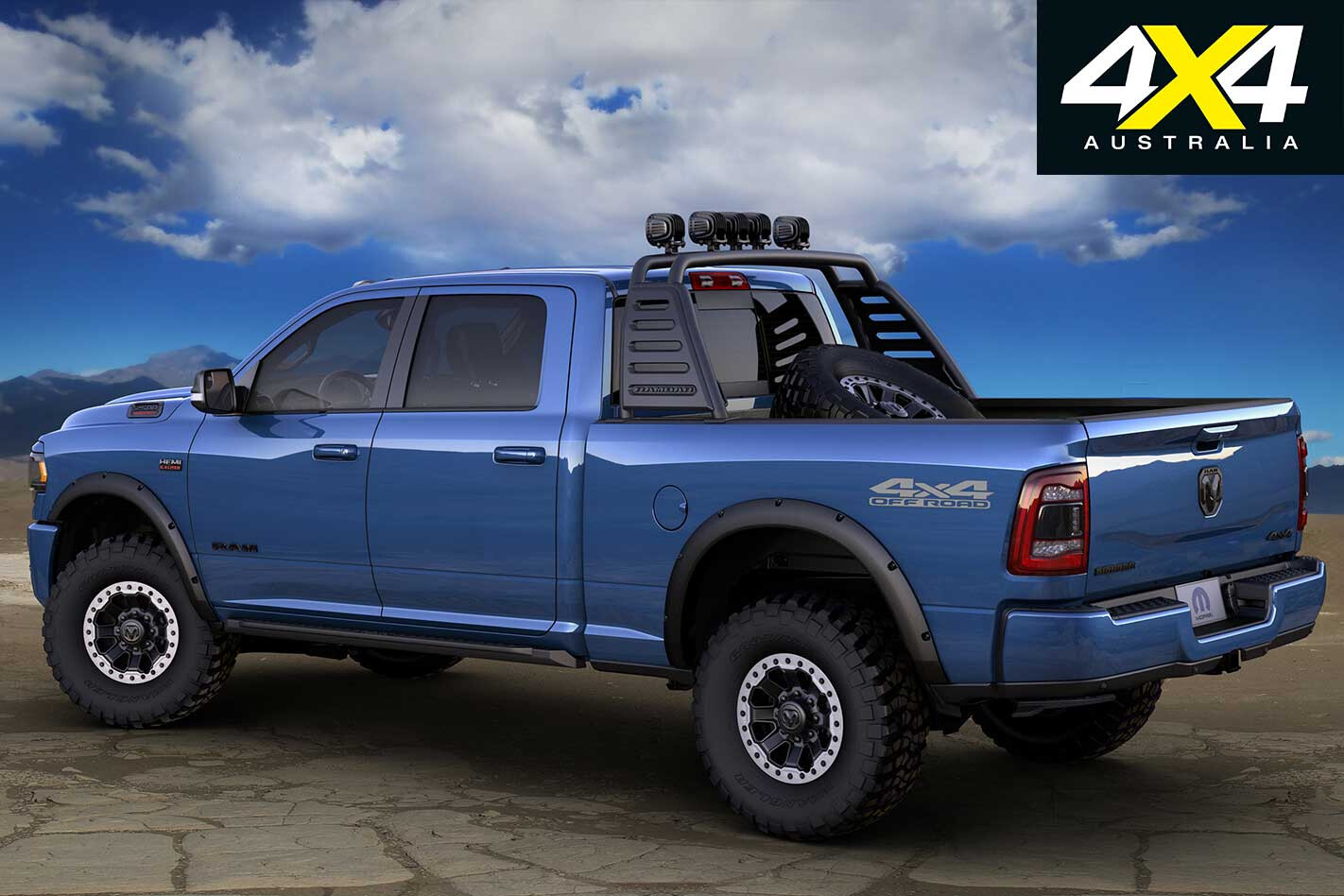
The beadlock wheels are custom-milled 17-inch alloys wrapped in Goodyear off-road tyres, and the Mopar truck also has the new rear-bed step tailgate which lowers the tailgate for easy access.
Other options available include a trailer camera that lets you see behind what you’re towing, a fifth-wheel hitch, gooseneck ball kit, bed/tub extender that extends the bed with the tailgate down, heavy duty bed liners, a cargo ramp, toolboxes, splash guards, wireless phone charging, Katzkin seats, a variety of tonneau covers, and side steps.
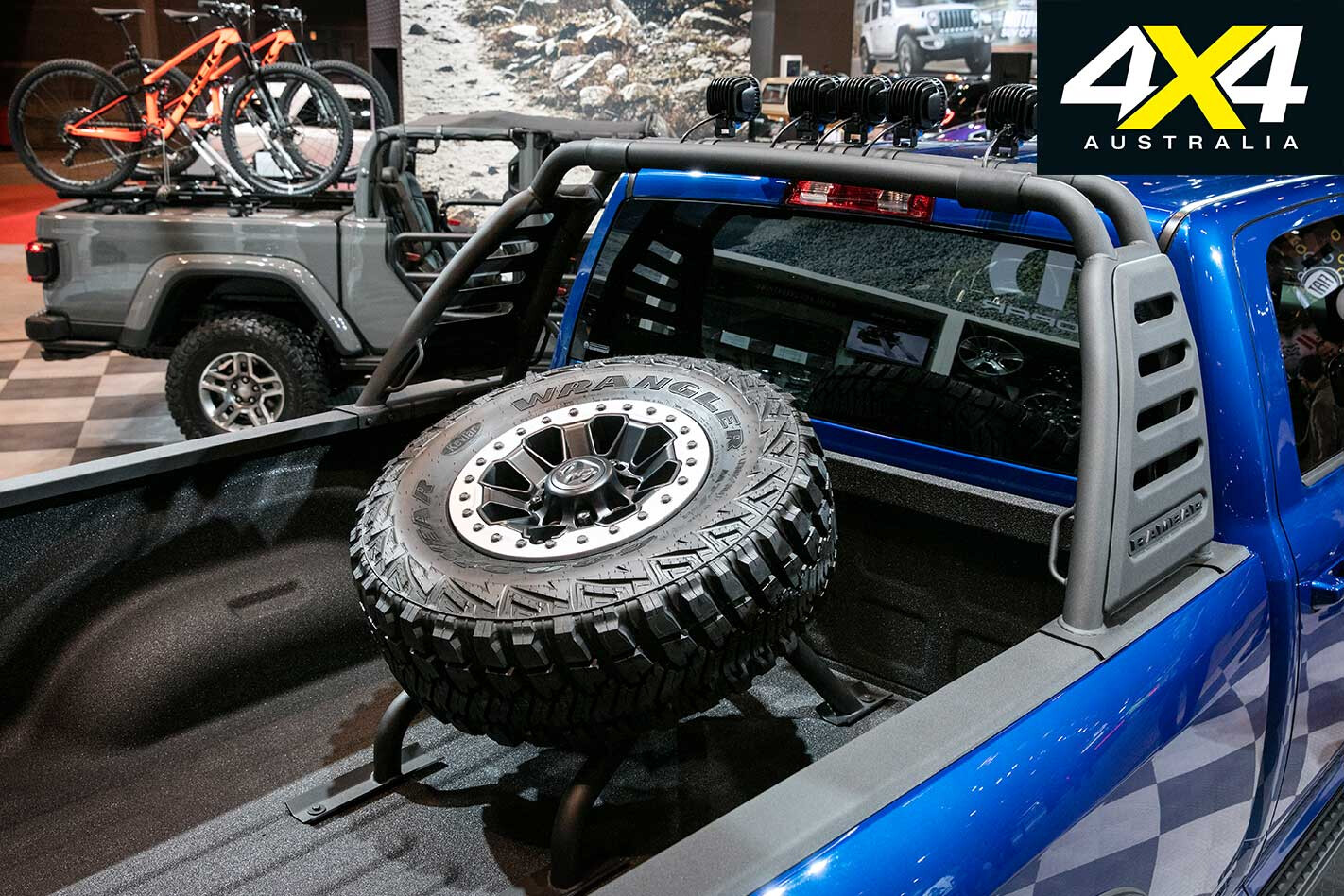
Powertrain and suspension componentry remains unchanged. “The Mopar-modified RAM 2500 Heavy Duty is the latest example of our commitment to offering owners a full product line to choose from right at launch of FCA US LLC vehicles,” Steve Beahm, head of parts and service at Mopar, and passenger car brands, FCA – North America, said.
“Whether it’s for the trail, the street or the worksite, Mopar will have more than 170 parts and accessories that provide a path to enhanced capability for the new 2019 RAM Heavy Duty.”
GOOD or excellent performance over a broad range of disciplines made the Maxxis 700 a winner in this test. The relative newcomer to the local off-road scene delivers a tyre that lives up to the 4×4 expectations without overly compromising on-road performance.
Indeed, in many cases the Maxxis performed above average, cementing them as an excellent multipurpose tyre, one that will get you to your off-road playground confidently and allow some exploration once there. That it is competitively priced is a bonus for those looking for a great all-rounder.
Second was the Falken, a tyre that didn’t excel in any one discipline but managed competent performance across all. That it’s priced towards the lower end added to its appeal.
Rounding out the podium is the Bridgestone Dueler. What it lacks in wet-weather grip it partially makes up for in dry-weather performance, with the chunky tread also performing on our rough track. The promise of a tough light truck construction is a win that helps justify its price premium.
The Hankook only missed out on a minor placing by a fraction of a point, its solid performance in wet cornering helping its overall ranking. Those not as interested in regular off-roading or the look of their tyre could do a lot worse than the Dunlop Grandtrek. It trounced its rivals for braking performance and stood up well in wet cornering. However, the less aggressive tread pattern let its performance down in off-road terrain.
While the Nexen Roadian was outclassed in most on-road disciplines, its low $209 price tag won back crucial points.
This leaves the Goodyear Wrangler, a poor performer in our wet disciplines and an expensive tyre. While it claims other benefits off-road, for this test they didn’t come into play, leaving the Goodyear to round out the all-terrain field.
The Data
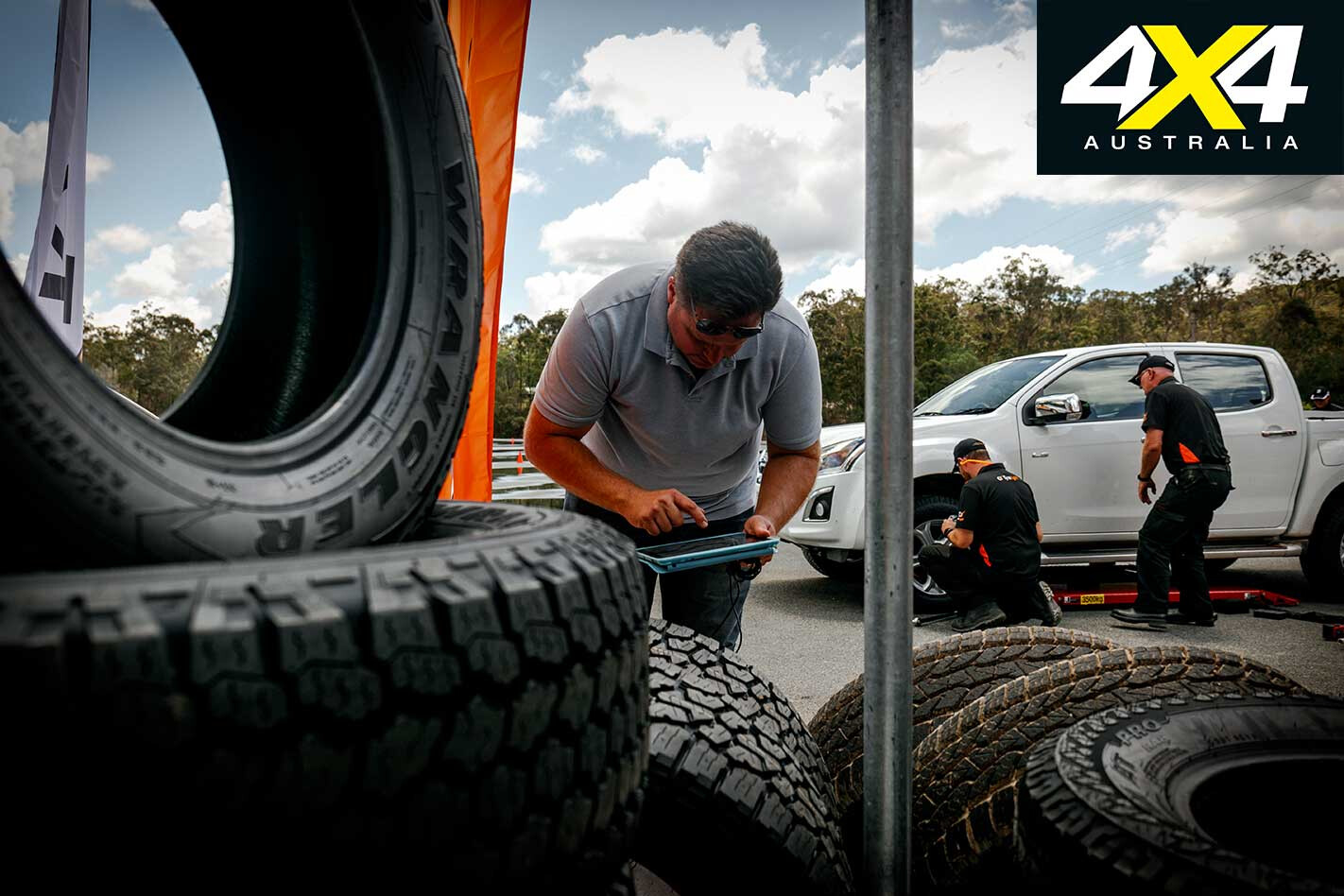
Dry Braking (100-0km/h)
| 1 | Dunlop | 100 (42.4m) |
| 2 | Maxxis | 91.2 (46.1m) |
| 3 | Bridgestone | 90.3 (46.5m) |
| 4 | Falken | 90.0 (46.6m) |
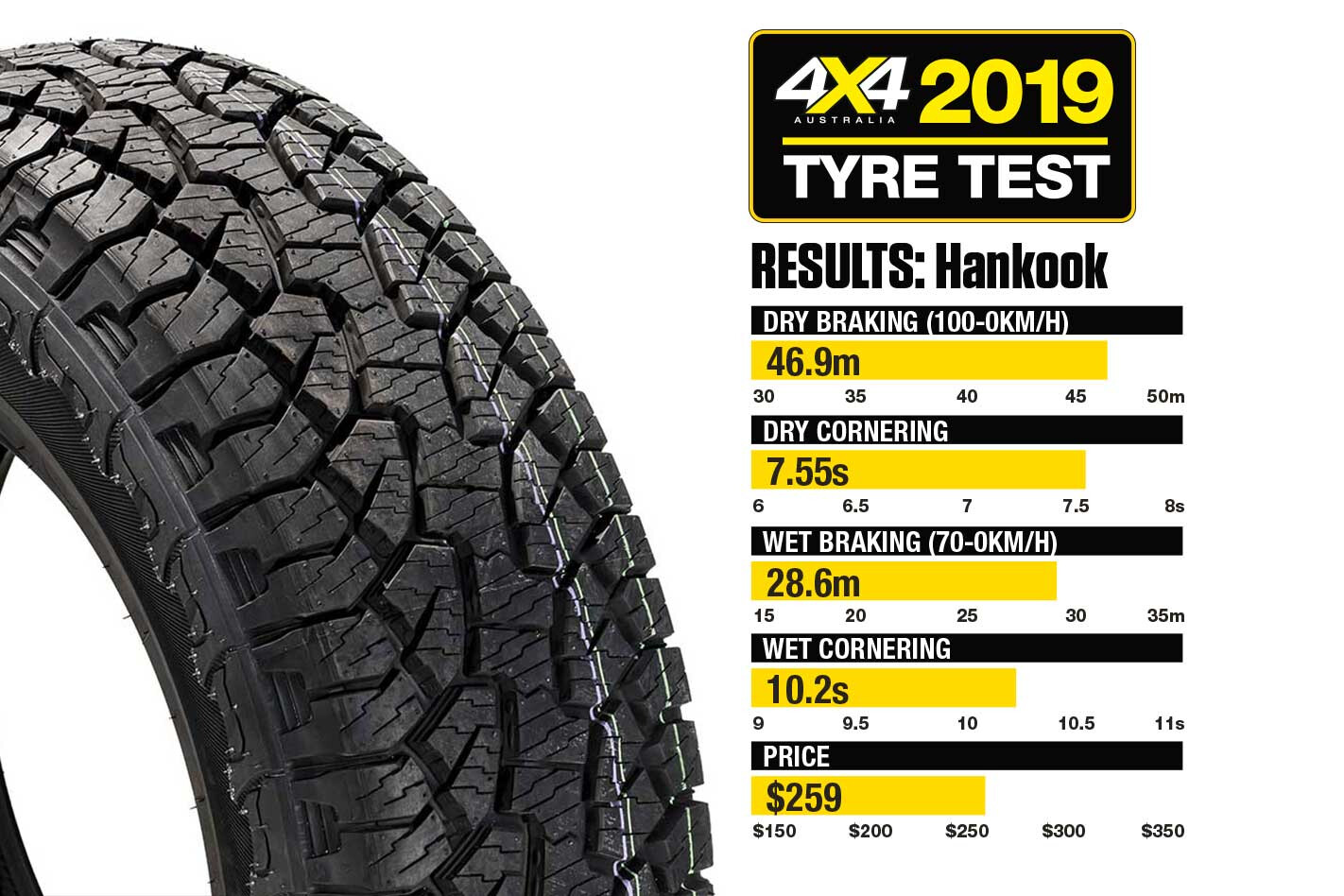
| 5 | Hankook | 89.4 (46.9m) |
| 6 | Nexen | 88.3 (47.4m) |
| 7 | Goodyear | 88.1 (47.5m) |
Dry Cornering (sec)
| 1 | Maxxis | 100 (7.05sec) |
| 2 | Goodyear | 99.0 (7.12sec) |
| 3 | Bridgestone | 97.9 (7.20sec) |
| 4 | Falken | 95.3 (7.38sec) |
| 5 | Hankook | 92.9 (7.55sec) |
| 6 | Dunlop | 91.9 (7.62sec) |
| 7 | Nexen | 90.8 (7.70sec) |
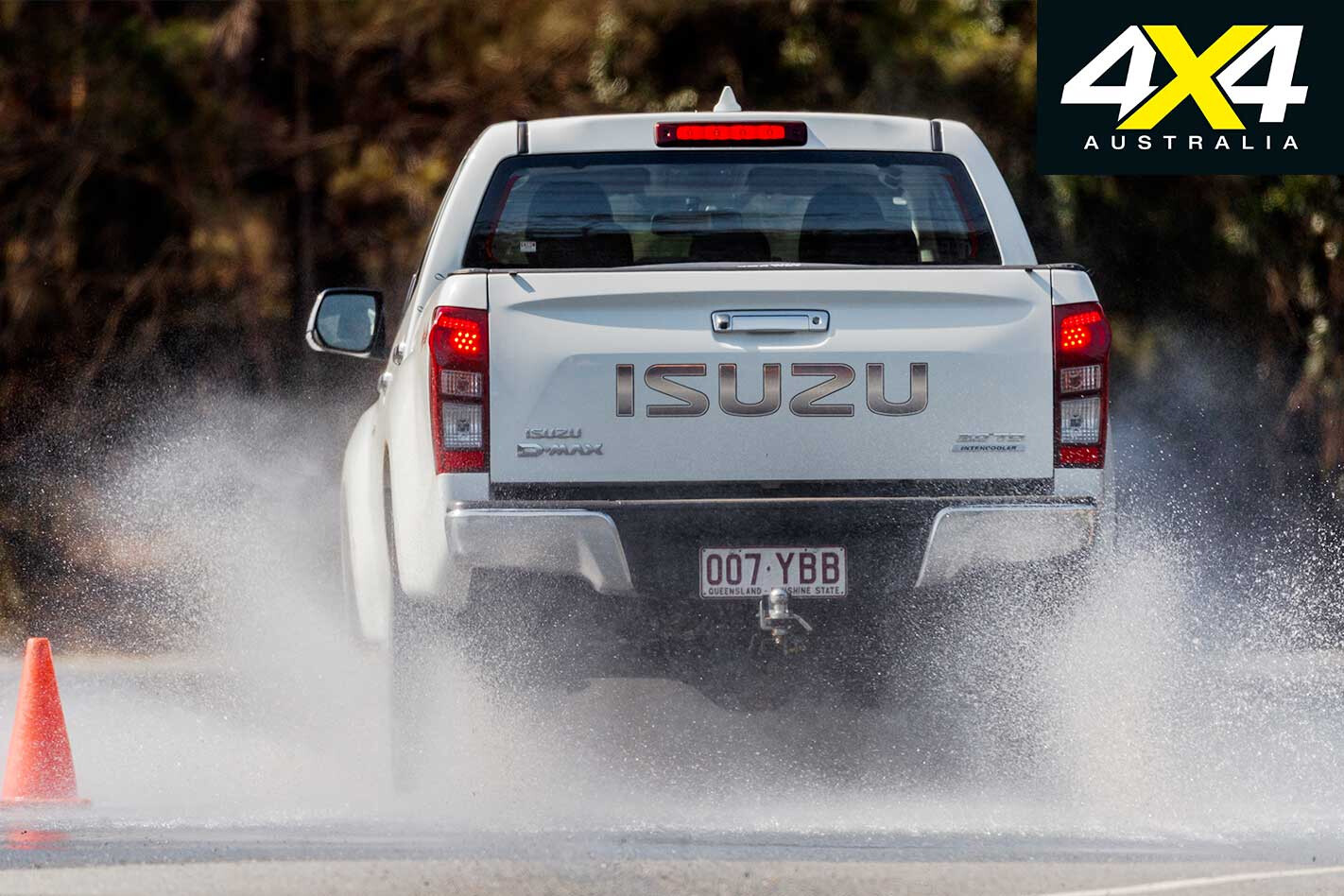
Wet Braking (70-0km/h)
| 1 | Dunlop | 100 (25.1m) |
| =2 | Maxxis | 93.5 (26.7m) |
| =2 | Falken | 93.5 (26.7m) |
| 4 | Bridgestone | 90.1 (27.6m) |
| 5 | Hankook | 85.8 (28.6m) |
| 6 | Nexen | 78.9 (30.4m) |
| 7 | Goodyear | 70.1 (32.6m) |
Wet Cornering (sec)
| 1 | Maxxis | 100 (10.1sec) |
| 2 | Dunlop | 99.3 (10.2sec) |
| 3 | Hankook | 98.4 (10.2sec) |
| 4 | Falken | 97.5 (10.3sec) |
| 5 | Nexen | 96.6 (10.4sec) |
| 6 | Bridgestone | 96.4 (10.4sec) |
| 7 | Goodyear | 94.5 (10.6sec) |
Price ($)
| 1 | Nexen | 25 ($209) |
| =2 | Maxxis | 19 ($259) |
| =2 | Falken | 19 ($259) |
| =2 | Hankook | 19 ($259) |
| 5 | Dunlop | 11.8 ($319) |
| 6 | Bridgestone | 11.1 ($325) |
| 7 | Goodyear | 9.4 ($339) |
*Published cornering times were rounded to the nearest tenth of a second for brevity. But for point scoring we used the raw data that was accurate to one-hundredth of a second. This accounts for occasionally different scores for tyres posting the same rounded time.
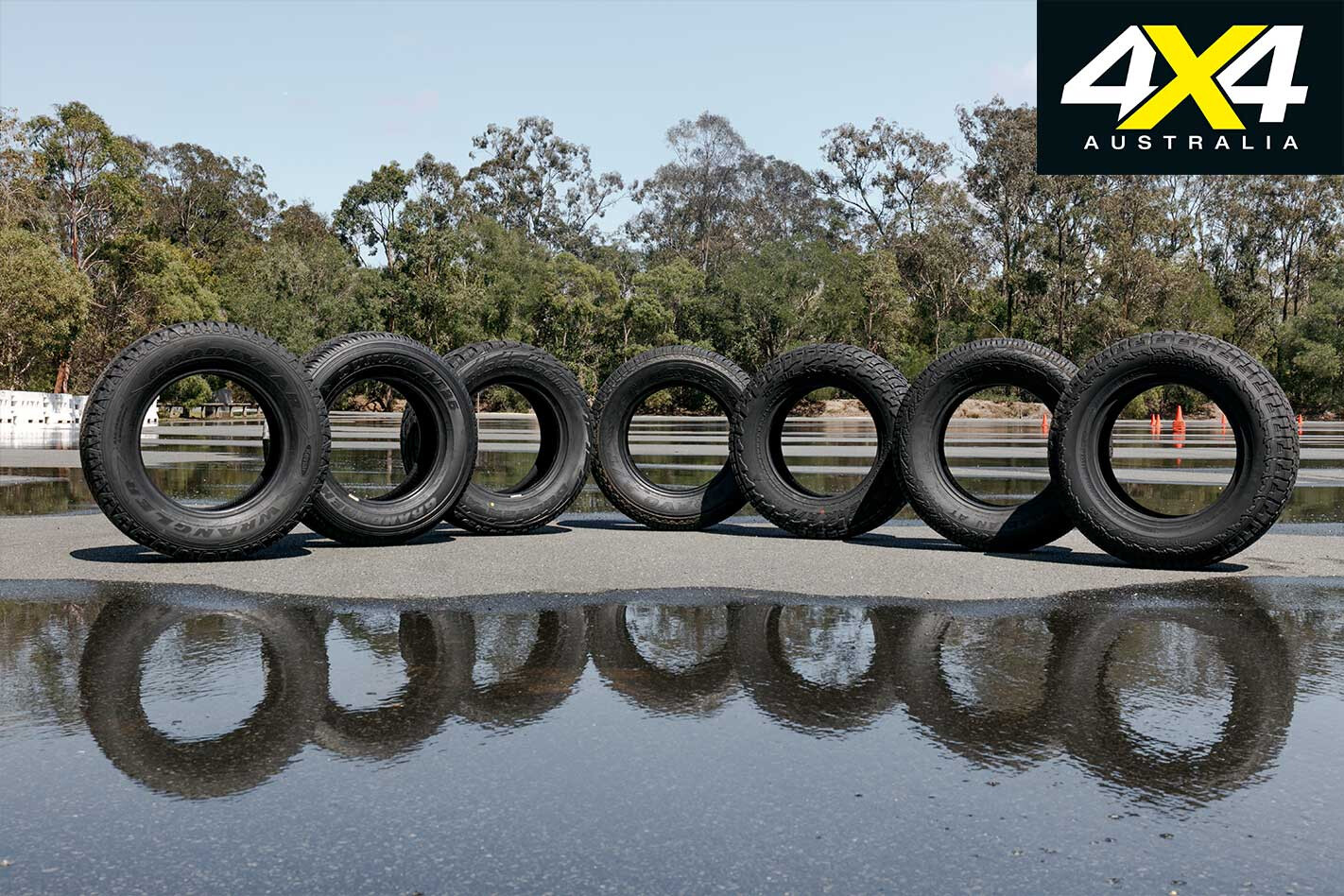
Final Scoring
| u00a0 | Sub-total | Off-road factor | Final score | |
| 1 | Maxxis | 404 | 1.05 | 424 |
| 2 | Falken | 395 | 1.05 | 415 |
| =3 | Bridgestone | 386 | 1.05 | 405 |
| =3 | Hankook | 386 | 1.05 | 405 |
| 5 | Dunlop | 403 | 0.95 | 383 |
| 6 | Nexen | 380 | 1.00 | 380 |
| 7 | Goodyear | 361 | 1.05 | 379 |
THANKS to the magic of magazine deadlines this is being written in our first week back in the office for 2019. And it’s already shaping up to be a great year for new 4×4 launches, with a few new vehicles confirmed … and then there are the ones we’re speculating will happen this year.
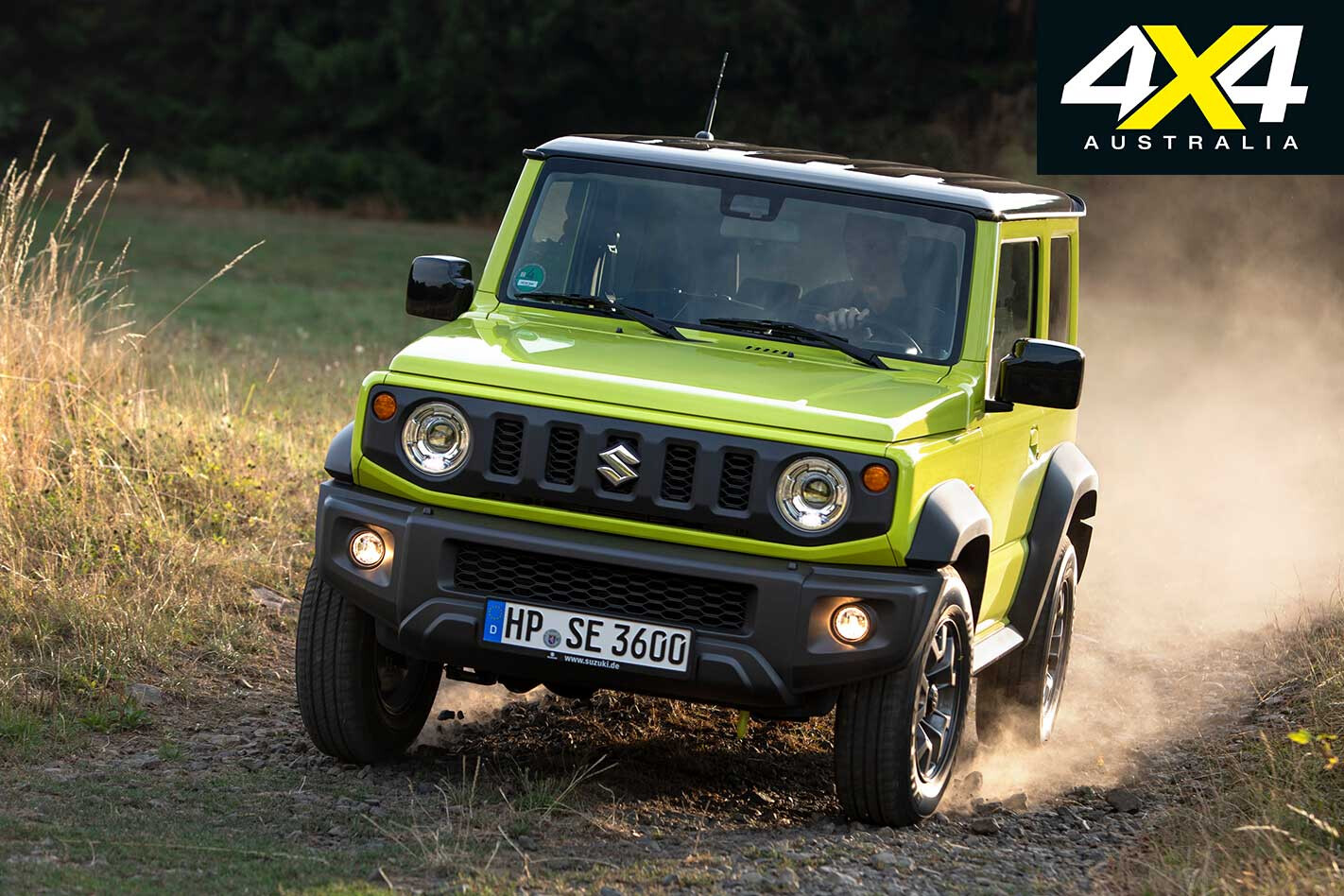
The first new 4×4 for the year will have landed by the time you’re reading this. The new Jimny from Suzuki has been one of the most anticipated, as it continues the tradition of a great little 4×4 that knows how to leave behind much bigger and more expensive fourbies. It should be a lot of fun and we can’t wait to get behind the wheel of it.
One we were lucky enough to get a sneaky drive of late last year is the V6-powered X350d from Mercedes-Benz. It goes on sale at the end of January, but we took one to the bush with a VW Amarok 580 to see which is the power-ute king.
Also on sale at the end of January will be the new Mitsubishi Triton. We had a brief drive of it in Thailand last year, but there’s nothing like putting them to the test on home soil. We’ll be lining it up with some of the other popular utes available soon.
Jeep dealers are saying they’ll have the JL Wrangler in stock in February, so we’re expecting a launch very soon. Like the Jimny, the JL continues the tradition of a purpose-built off-road vehicle with very little compromise to modern comfort and convenience features. That’s two new vehicles with live axles front and rear, and we’re not even out of Q1.
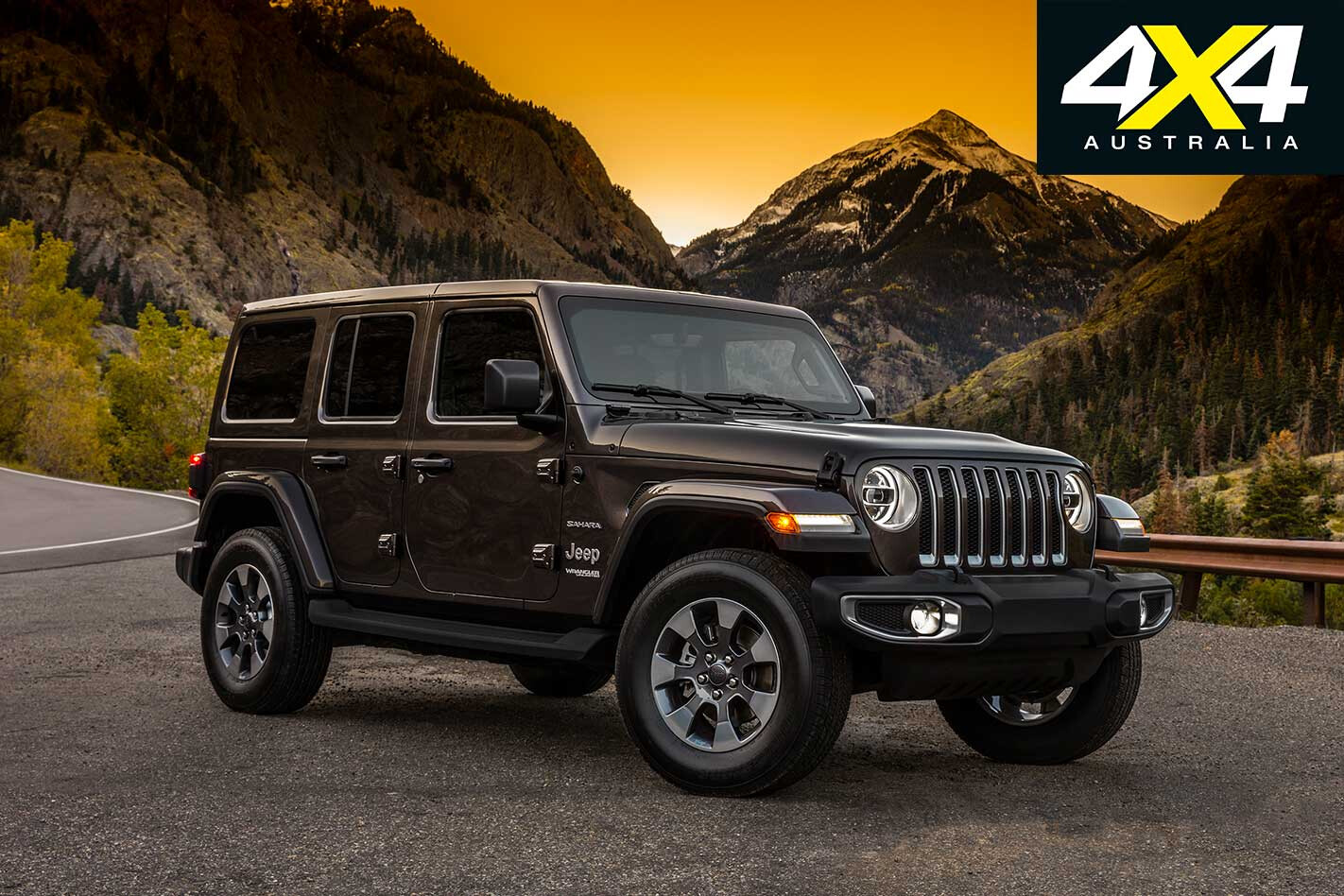
With the JL taking this long to get here we doubt we’ll see the Jeep Gladiator here in 2019, but fingers are crossed for 2020. Land Rover has confirmed the new Defender will be available in some markets in 2020, but there’s no word on when it will be available in Australia.
At least we’ll get a look at it in 2019 and have a better idea of what it will be; and, more importantly, whether it’ll be worthy of the Land Rover Defender nameplate.
Then there’s Toyota. It’s been all quiet on the new 4×4 front from the Big T, while both the Prado and Land Cruiser models are getting very long in the tooth. There are plenty of rumours around about what a replacement for the 200 Series might look like and when it will be released, but there’s nothing official or factual at this point.
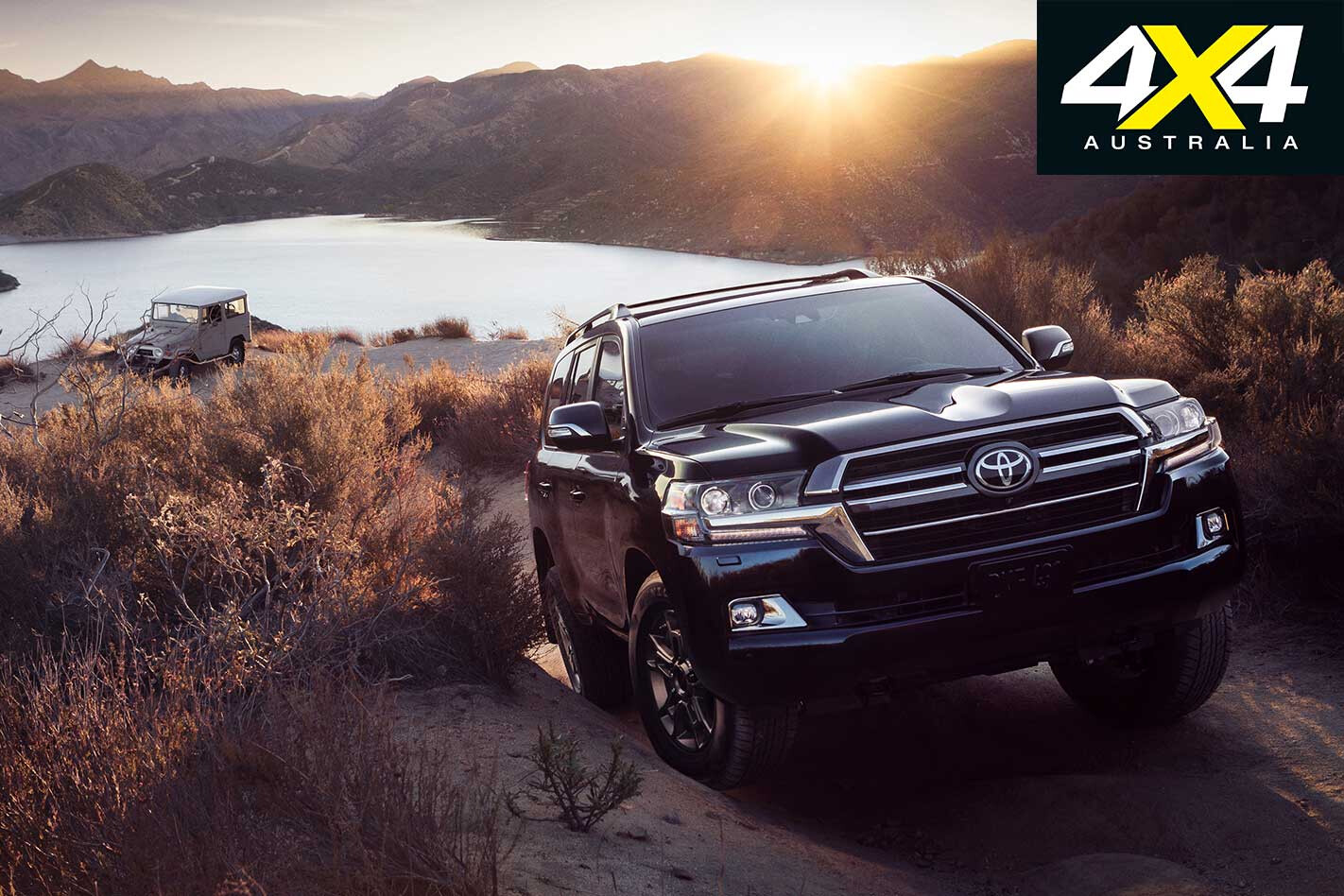
The 200 feels old against the Y62 Patrol and Land Rover Discovery, so we’re tipping Toyota has something new for us this year. Well we hope there is, anyway.
Right now there’s a shiny new AMG G63 sitting out in the car park just calling to be taken up some mountain roads. More on that, the Jimny and the Triton in the March 2019 issue.
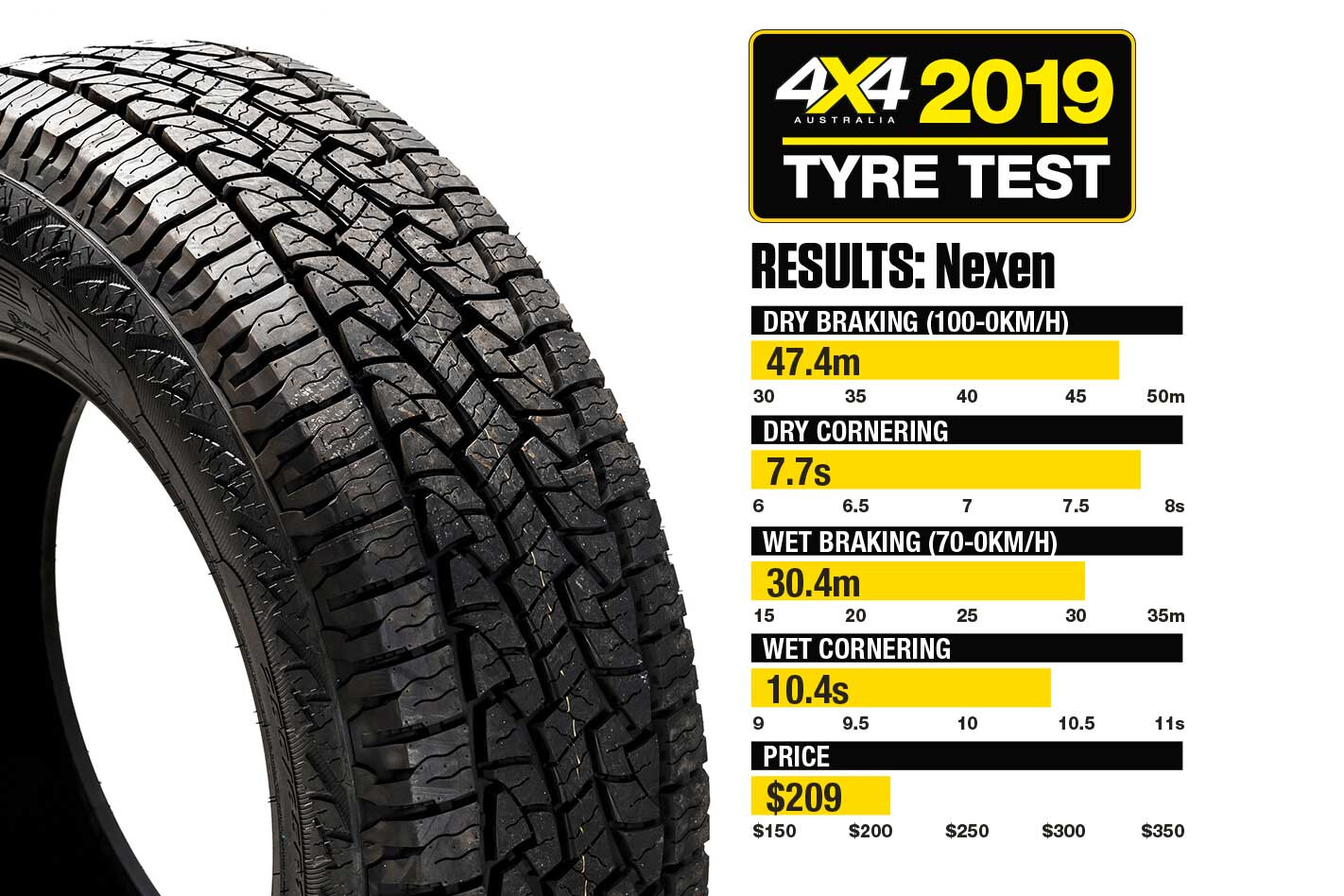
IF ROLLING away on a new set of all-terrains for the lowest price is important, the Nexen Roadian mounts a solid argument – on paper, at least. At $209 per corner they’re by far the most affordable of our contenders, set to leave you with at least $200 extra in your bank account once you’ve fitted a set of four. That’s early points to Nexen, then.
But the data quickly showed that you get what you pay for. In our dry disciplines it was among the worst performers, taking the longest time to negotiate dry corners and taking a full 47.4m to come to a halt from 100km/h on a dry surface. That’s a Land Cruiser longer to pull up than the best-performing Dunlops.
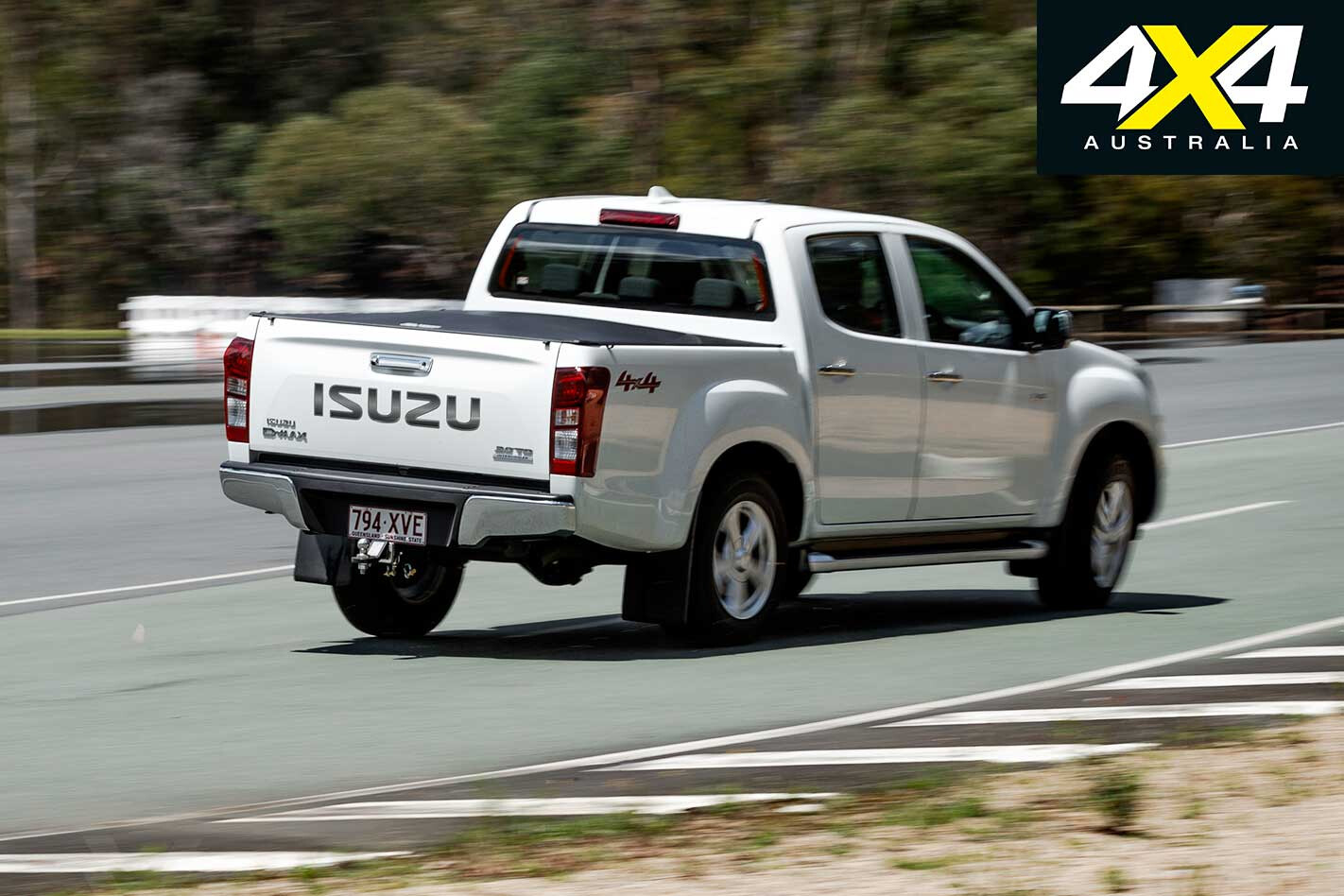
Our 70km/h wet braking showed it to be relatively skittish, taking 30.4m to stop. Again, it was towards the bottom of the pack and means you’ll need to account for longer stopping distances in the real world.
Wet cornering performance was also towards the bottom of the group; although, there was a consistency throughout the corners, something that Stokell said makes it easier to access the breadth of the (relatively low) grip threshold.
Reaching the threshold sooner made it easier to judge what was going on so you could adjust your driving style accordingly. Stokell also noted road noise was nicely subdued, with the road bias of the construction also shining.
Off-road, though, the Roadian continued its mediocre performance. Walker felt they didn’t bite as hard as others up the rocks. They weren’t as bad in dirt, but the ride was jittery and less flex in the sidewall affected ride comfort. As such, the Roadian was the only one of our tyres not to be rewarded or penalised due to off-road performance. Their middle of the road behaviour meant the final on-road scores stuck, with no weighting either way for rough-road performance.
HERE are six reader-submitted 4x4s that were recently featured in the January 2019 issue of 4X4 Australia.
To get involved, post a pic and a description of your rig on our special site here or post it to our Facebook page.
We feature a bunch of readers’ rigs in the magazine each month, where we award one lucky punter with a $200 voucher to spend at Piranha Off Road.
Show us what you got on Readers’ Rigs
TOYOTA LAND CRUISER 105 SERIES: BEN HIGGINS (4×4 Australia Readers’ Rigs Winner of the Month)
I WAS lucky enough to inherit the wagon from my work of 18 years, after this wagon served for over a decade as the work runabout. Stock standard at the time and slightly abused, it’s been a work in progress.
I’ve since added an Ironman front bar and Runva 11xp winch. Ironman two-inch lift and caster correction bushes, Ironman snorkel, and STEDI light bars. Extractors and 2.5-inch exhaust, Fyrlyt 9-inch Nemesis driving lights, 33-inch BFG KM2 mud terrains on steel rims, full roof basket with Kings side awning, and a Uniden UHF. My favourite mod has to be the front and rear Elockers, which completely change the vehicle’s performance.
There are more than 450,000km on the clock and it’s never let me down. It’s taken us through Bunyip, Walhalla, Coopers Creek, all around Swifts Creek and Omeo, and a few hunting trips into NSW. Not the fanciest rig, but I’m happy with the old girl.
4×4 Adventure Series: Victorian High Country
2017 JEEP WRANGLER: MICHAEL WILKIE
Mods include: 4.5-inch lift, Hurricane fenders, Alpine 9-inch stereo with reversing camera, Alpine X speakers, 2 x Rigid Radiance spotlights, Jeep leather upgrade, 5 x KMC Rockstar rims (9×20), 37-inch Nitto Grapplers, Rigid Radiance light bar, Smittybilt X20 10K winch, XRC MOD front bar, XRC Gen 2 rear bar, XRC Stinger, TMD bonnet, 4.88 gearing, rear diff lock, ProCal Module, Magnaflow twin-tip exhaust, DV8 fastback, angry grille look, red LED Concepts projector angel-eye headlights, LED tail-lights, ARB diff cover, swaybar disconnects, TeraFlex suspension fitted with Fox 2.0 shocks, 3m satin wrap, iDRIVE throttle control, Uniden UHF radio and aerial fitted, and an ARB twin compressor. New diffs hopefully in the New Year.
1984 TOYOTA BJ40: MASAUD GONDAL
THIS photo of ‘Devil’s Love’ was taken just after Naran at the bank of the Kunhar River, Pakistan. We started this project in March 2016 and it’s almost 95 per cent done. We did this project in Dunyapur near Multan. For a full list of mods, check it out on Facebook: @devilslovepk
LAND ROVER DEFENDER 110: AMANDA CORDERY
Photo taken on Frenchmans Track, Cape York. Mods include XGS shock absorbers, XGS steering damper, XGS spring coils, and XGS lift kit. It has been to Fraser, Cape York (from Brissie) and the Queensland outback (Winton, Longreach and surrounding areas). Bring on the next adventure!
TOYOTA LAND CRUISER PRADO: FRANZ NIEUWENHUIZEN
Photo taken near Tenterfield, on our way home after a Cape York trip. Mods include 2-inch lift, dual batteries, winch, ARB bullbar and rooftop tent, TJM side-steps and brush bars, snorkel, Cooper ST Maxx tyres, Engel fridge and homemade drawer system. Oh, I forgot Ironman shocks, and it’s the six-speed 3.0L turbo-diesel… of course.
TOYOTA LAND CRUISER PRADO: LACH DOWN
I picked up the Prado a couple of weeks ago. Was a one-owner vehicle and in epic condition. It will be a perfect base for me to kit-out for touring. The snorkel is on its way and then suspension, bar work/winch and accessories. It’s awesome!
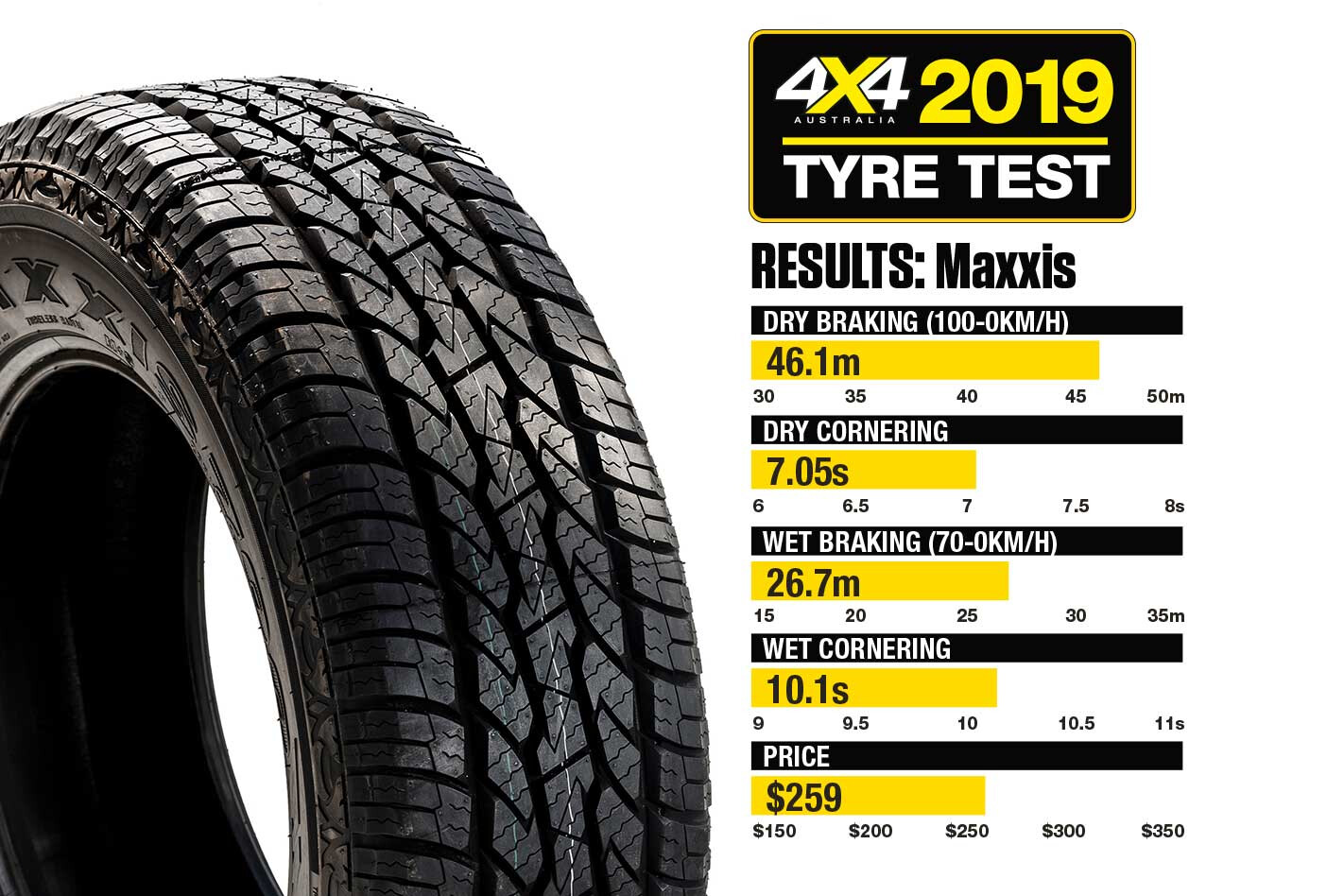
FROM the first ABS stop the Maxxis 700 Bravo all-terrains demonstrated decent grip that had the D-Max pulling up in a smidge over 46 metres. While they were nowhere near the Dunlops for succinctness when it came to stopping, the Maxxis led the rest of the field. That sentiment was backed during wet braking, with the rubber and tread pattern leading to consistently good stops during our 70km/h test.
That the Maxxis managed relatively short stopping distances was good, but its cornering performance was better. In both wet and dry it scrabbled around our quartet of corners in the quickest time. Okay, so we’re only talking fractions of a second, but small increments is the nature of tyre testing – and the reality is the Maxxis were quicker.
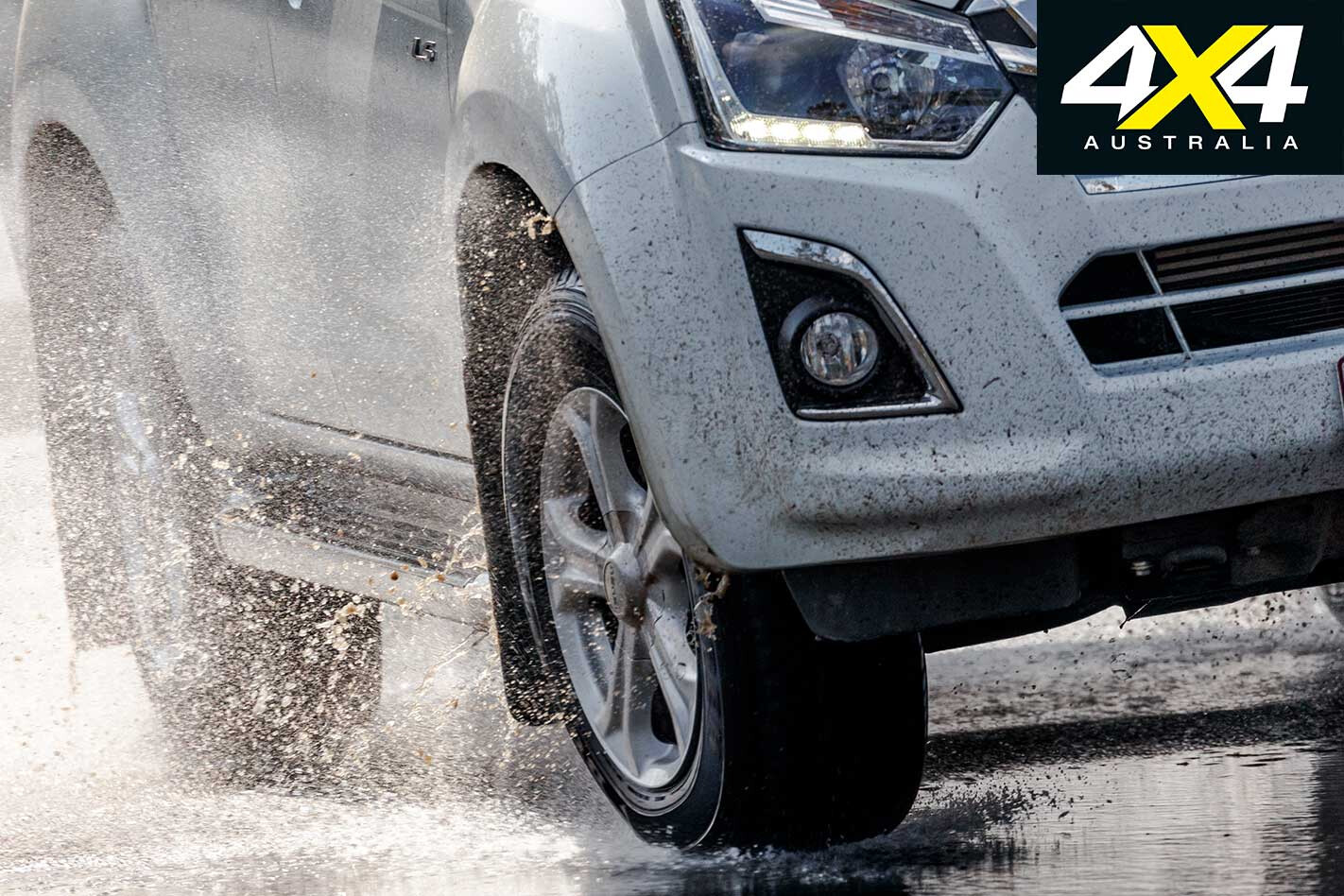
As the data attests, the Maxxis performed very well across a broad range of on-road disciplines, something that helped bolster its overall score. However, that grip up to the limit came with a minor drawback: as the nose bites and faithfully holds its own through a corner, the tail doesn’t maintain the same poise and the rear tyres slide around.
In the real world the stability control will halt any such antics, but it’s indicative of the challenges with a high-riding off-roader; sure, grip is one thing, but how the car behaves throughout the range of driving conditions is just as important.
Off-road, the Bravos performed solidly, the mild side-bite paying off in both loose and hard-packed dirt. Walker noted there was less throttle input needed in some situations as grip eased things through, something that earned them a five per cent bonus for the off-road factor.
If there was one blemish, it was when rock hopping. Walker noted that while there was good bite through mud and gravel, the tyres were prone to some occasional slipping on rock climbs.
The final piece of the Maxxis Bravo 700 equation is a keen $259 RRP. It’s not bargain basement, but it undercuts many more recognised brands.
It goes without saying that it isn’t how much you have, but what you have that matters – you don’t need to pack the kitchen sink for every 4×4 trip.
Most of the time, all you need for your getaway is well-packaged, multi-use gear like this.
ARB Pureview 800 flashlight
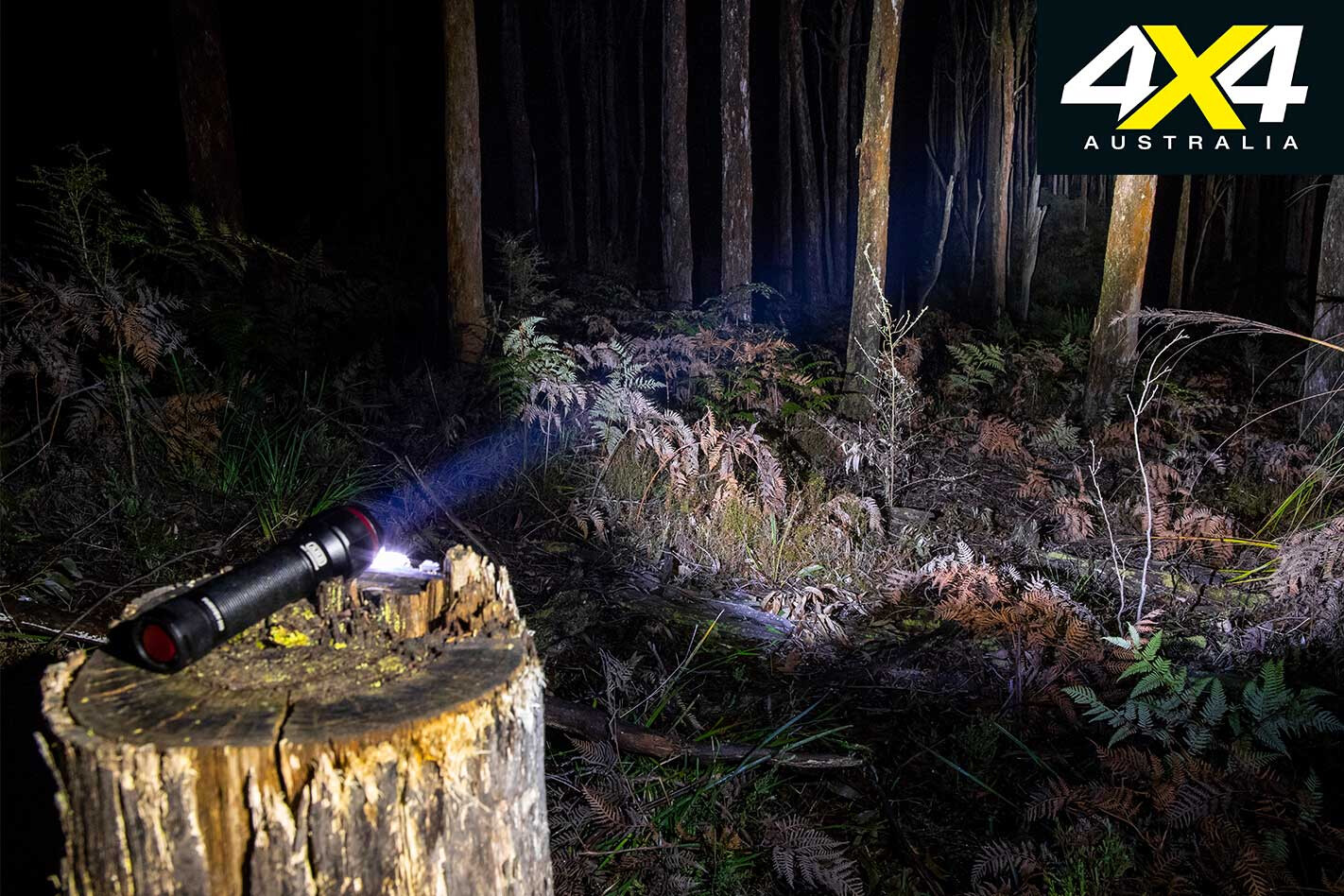
Let there be light! ARB’s new Pureview 800 punches out a massive 800 lumens and throws it up to 300m.
The flashlight has four modes (high, low, medium and strobe) and is IP5 dust-, mud- and water-resistant, all in a tough casing. There is a hidden micro-USB charge port and a charge indicator, along with a lanyard and magnetic belt pouch. The Pureview weighs 400g (515g with pouch) and measures 150mm long, 40mm wide and 35mm deep.
The flashlight runs on a 2600amp/h Li-ion battery, with a seven-hour run-time on Low (four hours on medium; 1.5 hours on high) and takes up to four hours to be fully recharged. With its compact size and that much lighting grunt, it’s a must-have.
Website: www.arb.com.au
Redarc Smartcharge 240V AC charger
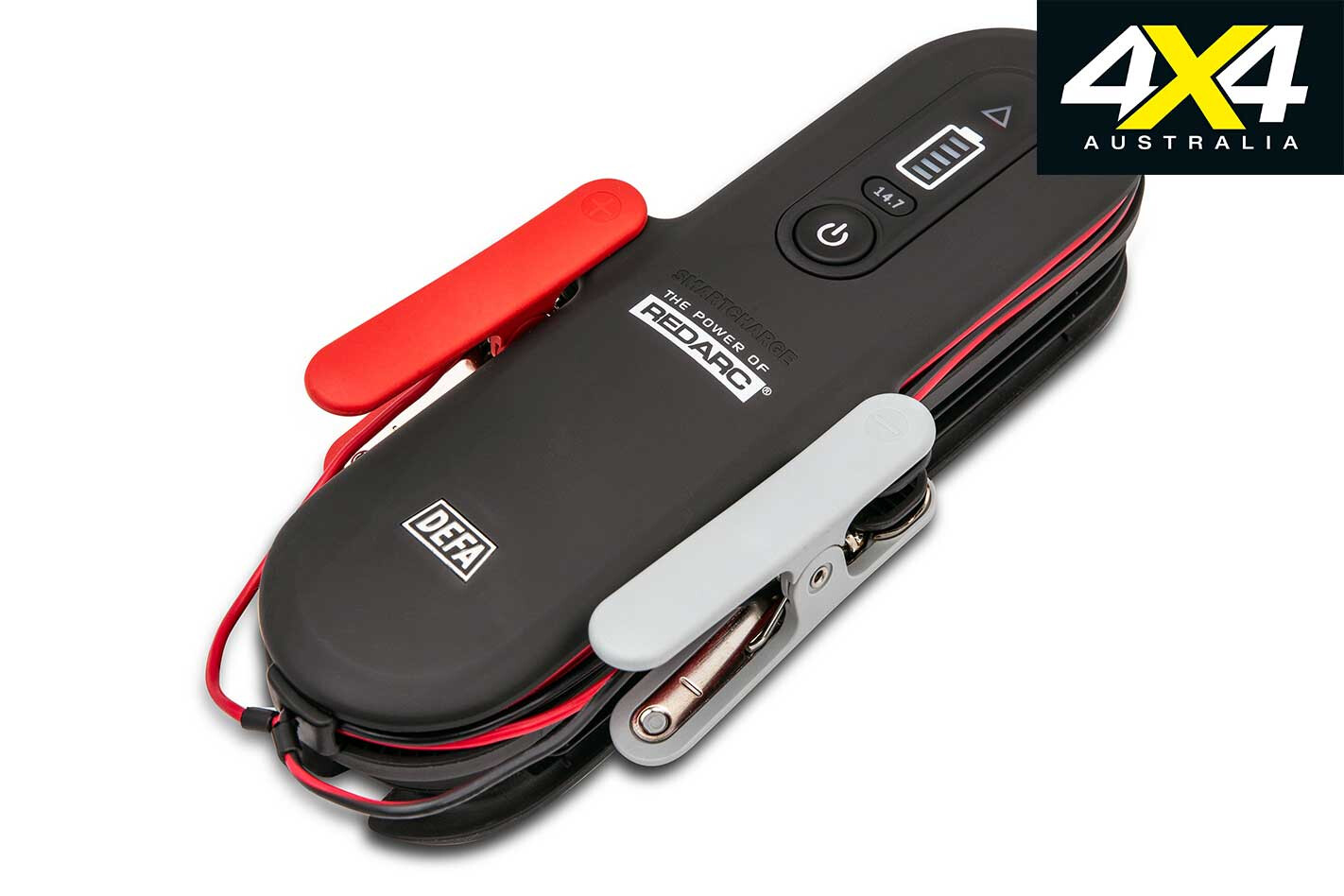
The new SmartCharge from Redarc is an AC to DC battery charger designed to charge most 12V auto starter and auxiliary batteries (including lithium). The SmartCharge is available in four variants – 4, 6, 8 and 10A – for the charging of vehicle, bike and boat batteries, as well as power sources used in caravans and camper trailers.
The SmartCharge recognises the battery type it is connected to and tweaks its own charging process to suit that battery’s charge status, ambient temp and size. The SmartCharge range is shock- and spark-proof, and it is reverse-polarity protected.
There’s only one on/off switch, making it super easy to use, and there’s an integrated cable storage solution so you don’t have cables messily piled up when not in use. The SmartCharge range is IP65-rated for use in damp and outdoor environments, and it comes with a five-year warranty.
Website: www.redarc.com.au
The Squatters

Barry Stone gives us a cracking read about the early settlers who decided to establish the first livestock properties in Australia. These pioneers turned inland to realise their dreams of creating a life for themselves and, in the process, created Australia’s powerful pastoral industry that put ‘the lucky country’ on the international trading map.
The author has used diaries, old newspapers and personal journals to create this book, revealing the stories – the sad, the tragic and the triumphant – behind those old windmills, tumbled-down stonewall fences and sand-filled old homesteads we see as we tour through this country. A great read about a sometimes forgotten part of Australia’s colonial history.
RRP: $30 Website: www.allenandunwin.com
HANKOOK is a brand that has made big leaps with on-road tyres, with the Korean maker keen to repeat that performance off-road.
To look at the Dynapro doesn’t break any A/T boundaries, with mild aggression in their design but sensibilities for regular on-road running. There’s restraint to the tread pattern with some of the tread flowing over into the sidewall, but there’s enough chunkiness there to let the person next to you know you value off-road performance.
That middle-of-the-road thinking played out with our data, with the Hankooks consistently hanging around the middle of the pack. Wet road performance was marginally better than its rivals, and wet cornering was a highlight. The Hankooks also displayed consistency across the on-road disciplines, never performing poorly but never standing tread blocks above the others.
Despite the respectable figures, Stokell found the Hankooks slightly lazier on direction changes and that dry cornering grip wasn’t as pronounced. It seems the stresses of cornering had the chunky tread struggling to maintain its shape.
That flowed through to the hard braking, too, where in the dry they lacked some lateral stability. While it doesn’t necessarily show up in the data, it’s worth keeping in mind the wriggling going on at ground level.
The Dynapro earned back points off-road, with the purposeful pattern giving it some additional bite through sloppy terrain. Over the rocks, in particular, it eased along nicely, enough to earn it the full five per cent off-road bonus.
Walker noted there was decent compliance, with the tyres seemingly moulding around the rocks and ridges subtly better than most others. Again, it points to a tyre that’s squidgy but still manages to hang on nicely.
It’s no surprise that the $259 price tag sits in the middle of the road, capping off the performance of a tyre that neither stands out nor disappoints.
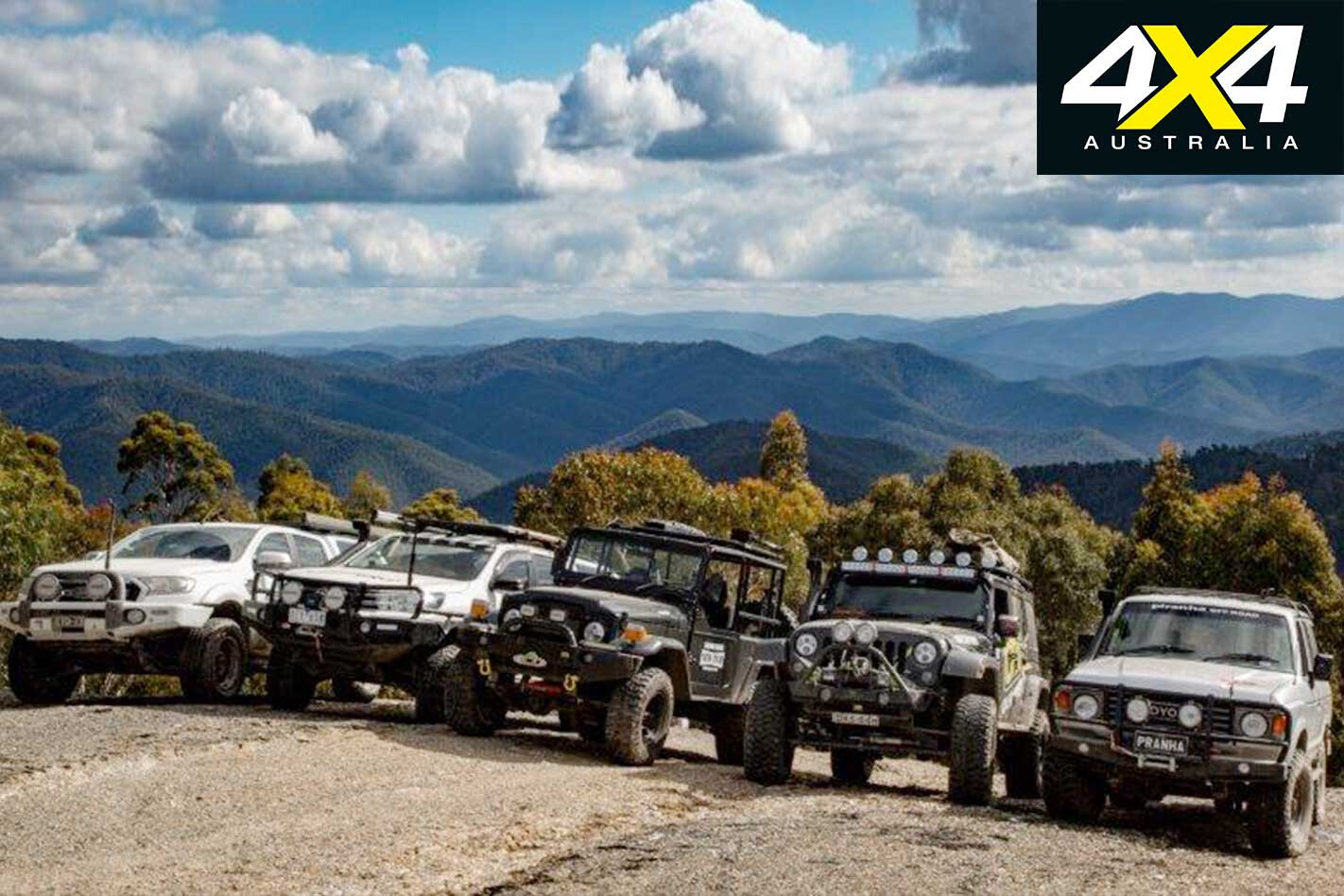
A 40th BIRTHDAY is always a big occasion, so it’s only fitting that Aussie long-range fuel tank manufacturer, Brown Davis, made sure it celebrated its own four decades of business in true off-road style, with a High Country weekend away.
Cameron Brown and his dad (and founder) David didn’t want to keep it a private affair, though, inviting a slew of industry mates to the party. Piranha Off Road’s Al Johnson drew on his decades of Victorian High Country touring experience to lead the convoy of vehicles including Piranha Off Road, Lightforce, TJM and more.
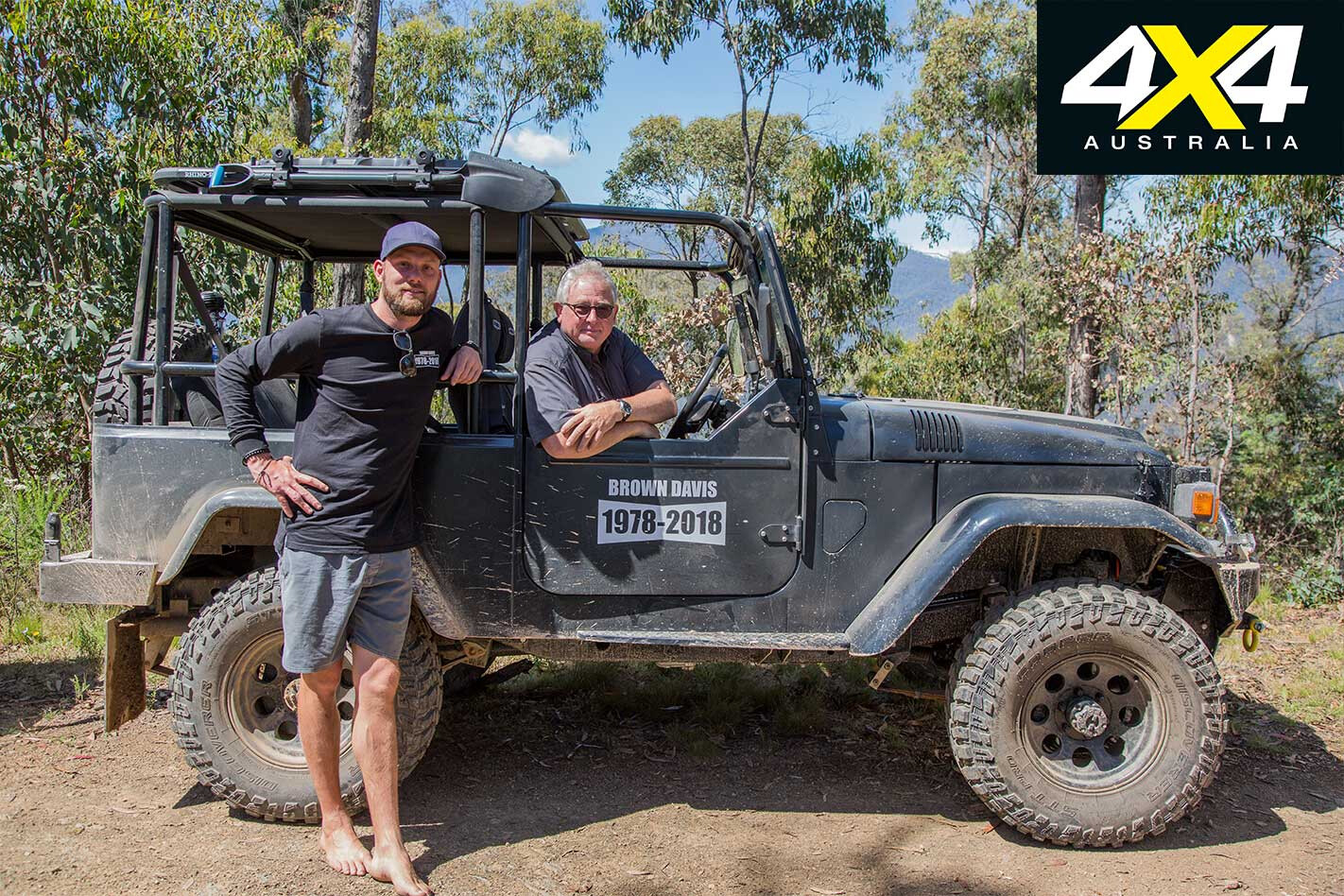
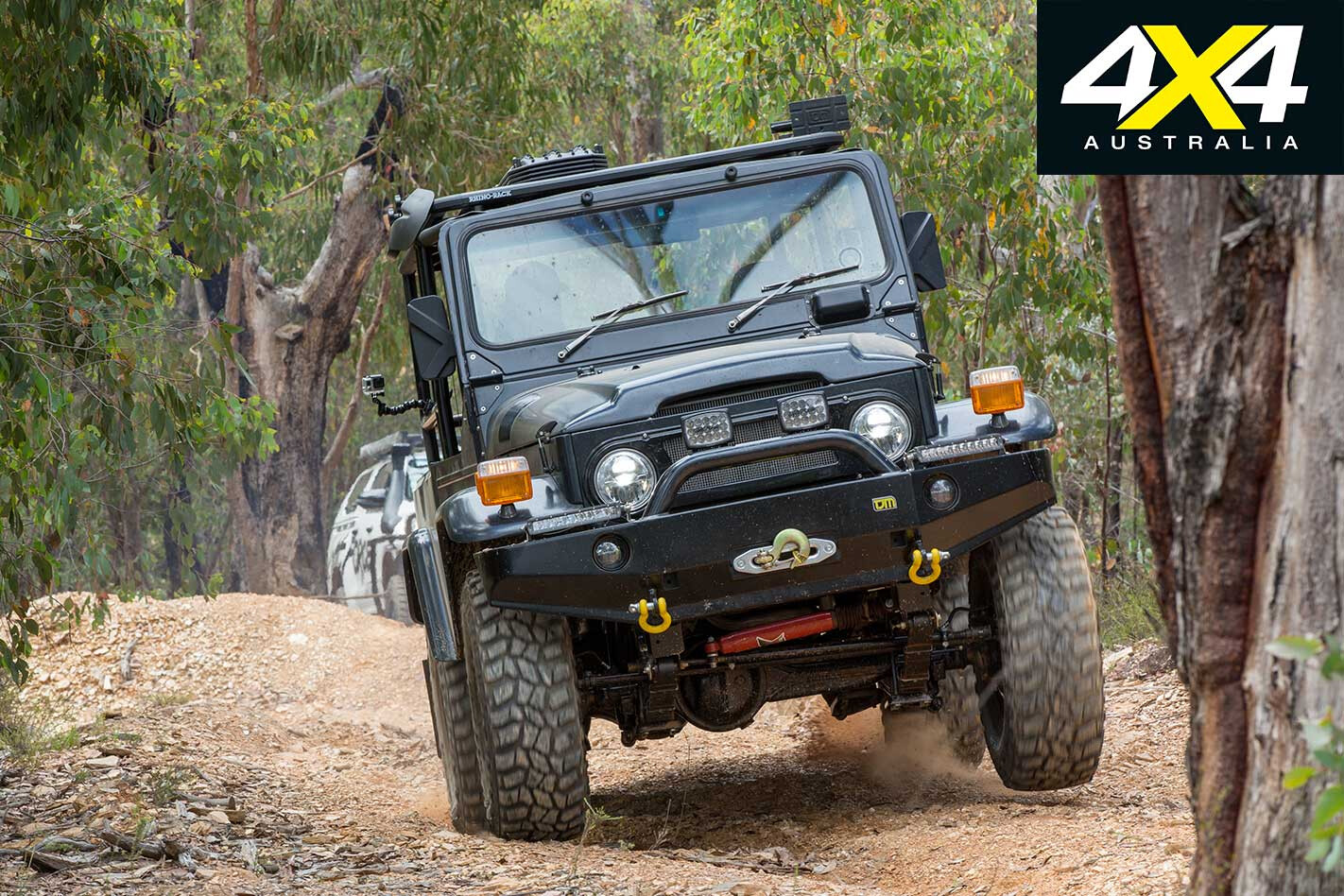
The vehicles on the trip were a mix of new and old, with the old represented by Al’s 60 Series Land Cruiser and the Brown Davis 1978 FJ40 Land Cruiser short-wheelbase rig. A heavily modified Cruiser that, like the company, was celebrating its 40th birthday as well.
An icon’s take on an icon
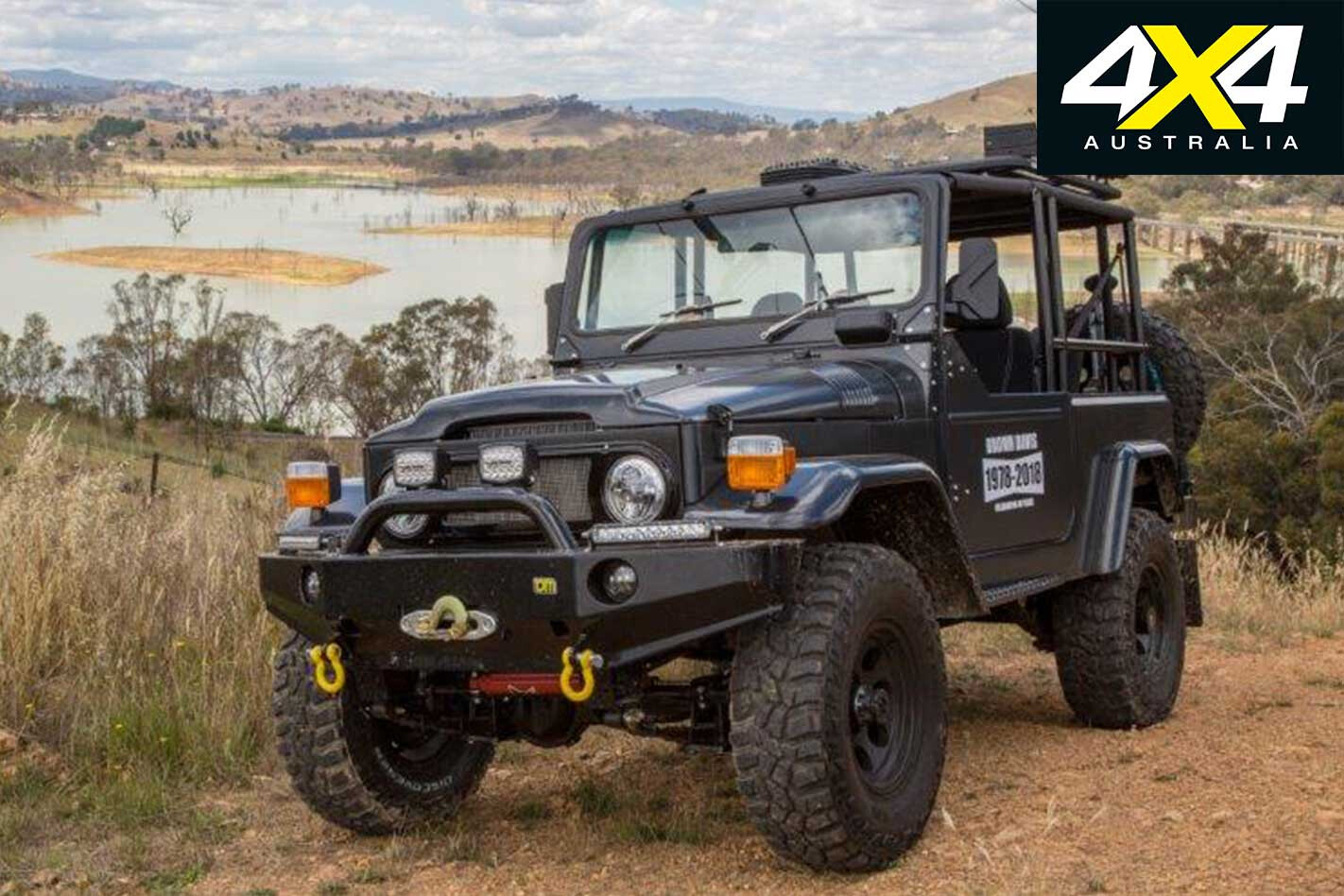
THE IDEA behind the reborn SWB FJ40 was to bring the old days back to life, according to Cameron, and it also worked as a great synergy in terms of two 40-year-olds celebrating a shared birthday, as Cameron explains.
“The old man started in 1978,” he says. “I like the vehicles, the Cruiser is 40 years old, we’re 40 years old – it just made sense.”
The FJ40 is slightly less of a ‘shorty’ than in its original form – the wheelbase has been extended by 200mm – while lurking underneath the bonnet is a Chevy 350 V8 petrol donk. Harnessing all this grunt and getting it to the ground is a 75 Series Cruiser five-speed gearbox (with custom cross-member), mated to the engine via a Marks Adaptors kit. Also included is a heavy-duty clutch and a 60 Series master cylinder.
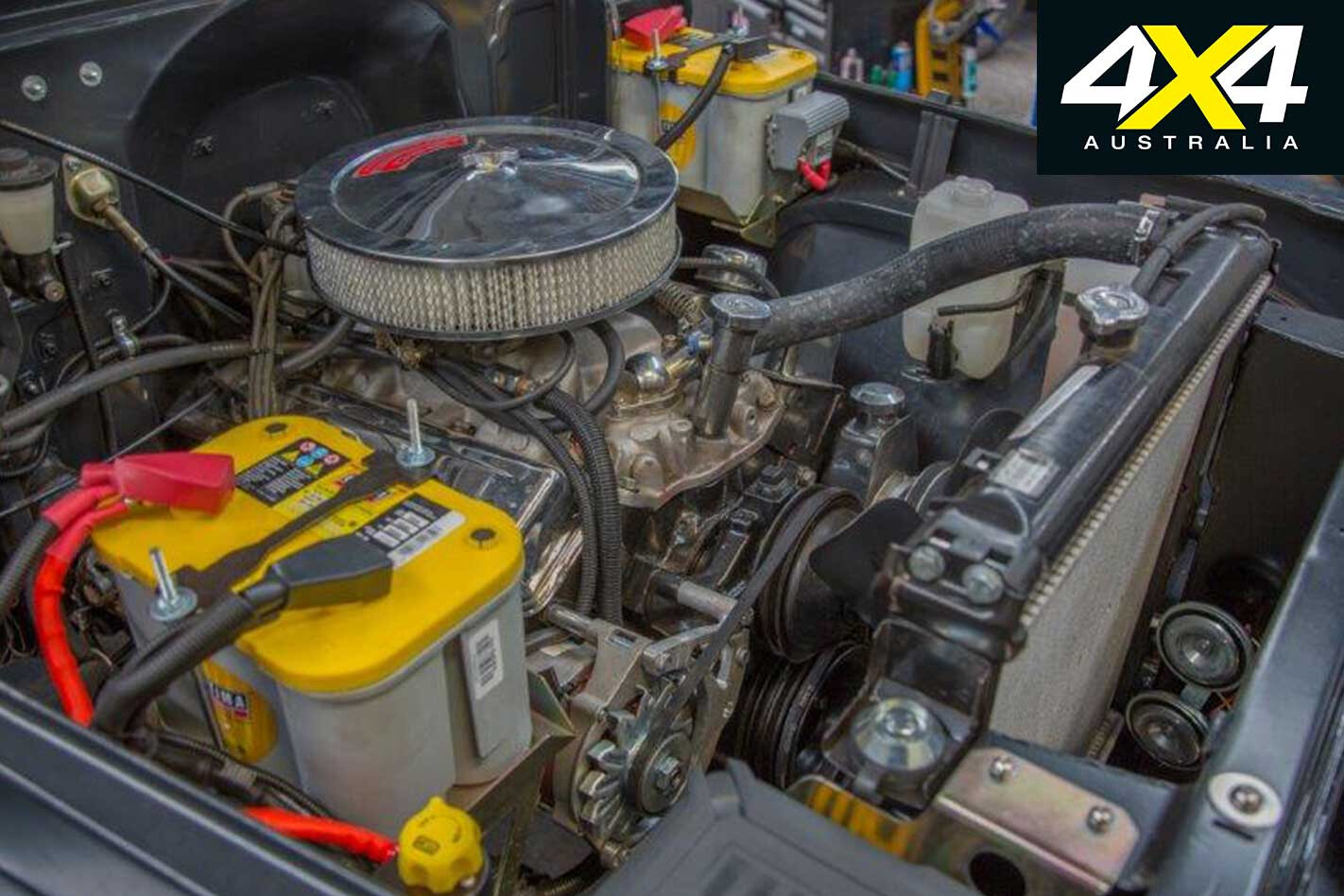
Ensuring the oomph doesn’t cause any dramas throughout, the FJ40 runs 60 Series axles front and rear, which not only widened the track slightly but allowed fitment of larger, more effective brakes at both ends. Even the chassis was beefed up, with new brackets and cross-members added. A TJM bar up front adorned with Lightforce spotties combines well with the custom bar-work and Rhino-Rack roof rack (with MaxTrax attached), to provide a no-nonsense appearance.
Keeping it all riding smoothly the suspension received plenty of attention; the front leaf springs were re-fitted in reverse to minimise bump-steer, with the front axle also moved forward 50mm. A 3.5-degree positive caster angle (for more effective steering) was achieved via a change to the diff pinion angle which, in turn, helped align the tailshaft for a reduction in vibration. The rear springs also copped a re-shuffle, moving back 150mm. Custom shock mounts keep the long-travel 60 Series dampers in place and working perfectly.
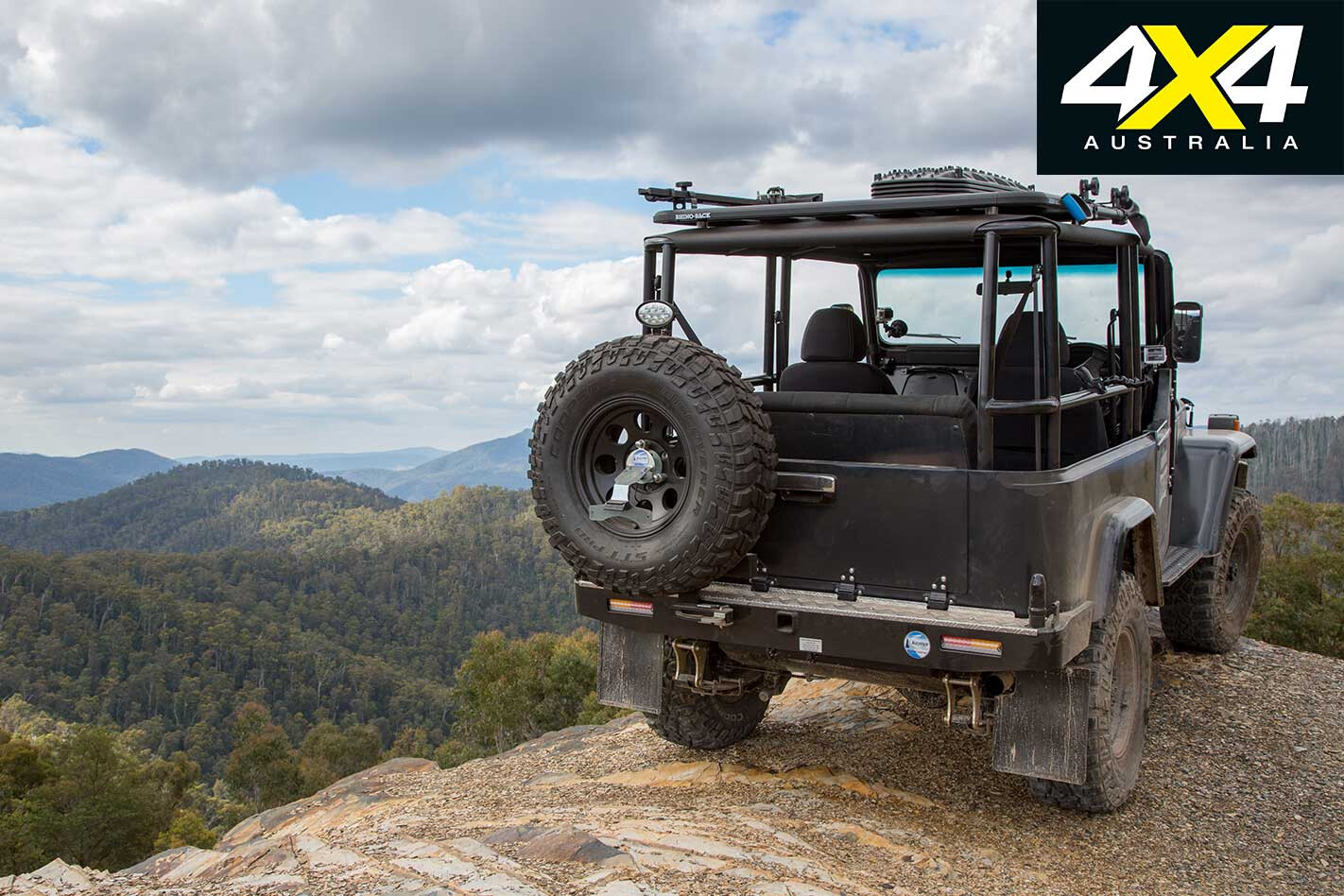
Looking at the FJ40 side on, you can see how the body panel-work has also been ‘stretched’ to cater for the longer wheelbase and tweaked position of both axles. The front guards were also pushed out to cater for the wider track. New wheels and Cooper Tires rubber followed, with the Kaymar rear bar sitting further back – and higher – than the former stock jobbie.
Cameron is justifiably proud of the work, although he’s not adverse to the sound and power of the big Chev, he also hinted at this one being rebuilt, with a ‘proper’ Toyota diesel donk under the bonnet; a 12HT his preferred option, citing it as “Toyota’s best engine”.
With a little help from their friends
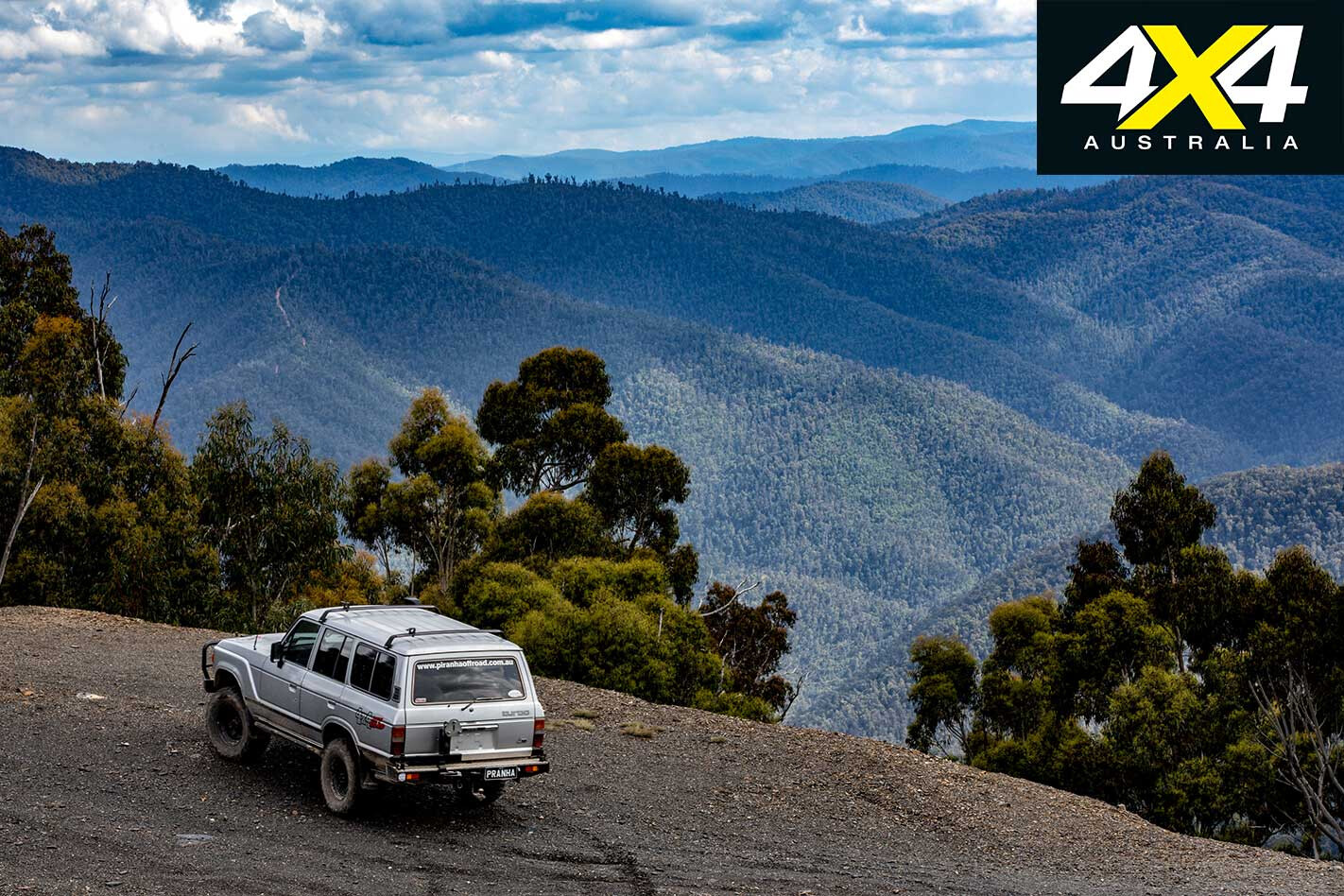
THE 4X4 aftermarket industry in Australia is an incredibly strong one, filled with passionate people who live and breathe the lifestyle. Cameron was keen for this trip to be a celebration of not only Brown Davis’s 40-year milestone, but also the strength in community that the industry has, hence the invitation out to the companies involved in the FJ40 build – and who he and his father have had long-standing relationships with over the 40 years.
It was a short and sweet trip up around the Jamieson area for a couple of nights, tackling a few tracks in that area and circling back to camp which was a convenient 10 minutes’ drive to the Jamieson pub – the perfect end-stop for each day and a chance to catch up with mates, and the odd beer with dinner.
“There are a lot of good friendships that come with a lot of the old-school iconic four-wheel drive companies… The trip was a great excuse to get away and see everyone. “The trip was not just about Brown Davis, it was about celebrating all these people involved and the hard work they put in.”
Demands and rewards
OVER the four decades, Brown Davis has produced tens of thousands of long-range fuel tanks for everything from Aussie touring cars, to fulfilling a massive 30,000-tank order from the US Army. It was this huge job that saw the company flat-stick just producing this one tank, but it was a huge coup for an Aussie company, with the Brown Davis team rightly proud of that achievement.
Since that epic, all-consuming order was fulfilled Brown Davis has turned its attention back to producing its highly regarded 4×4 long-range fuel tanks. Cameron makes particular note of how much of an impact 4×4 dual-cab utes have had on the market (and Brown Davis sales) since these workhorses became the do-it-all vehicle for buyers.
“One of the best things for our fuel tanks is that now, the 4×4 of choice is a dual-cab ute,” he says. “They can be used as a run-around in town and then you can head off on a 4×4 trip on the weekend; 60 to 70 per cent of our sales are for current model dual-cab utes.
“…With the [ute] fuel tank, they all come out with around 70 to 80 litres as standard. And for around $1200-1300, we can double the capacity and you can drive away. And that, to me, is why long-range fuel tanks are just a tick-the-box item for 4×4 owners these days.”
Cameron also mentions the fact that the vehicle’s ground clearance remains unaffected and there’s nothing inside your vehicle. Plus, compared to the ‘old days’ of auxiliary tanks and associated feeder pipes, pumps and switches, the new tanks are one unit, built extremely tough (thick metal, better baffling than standard and a drain plug to get rid of contaminated fuel) and it takes only a couple of hours to fit.
It’s hard to argue with Cameron’s reasoning; a few hours in the shop, a reasonable investment (compared to other accessories) and the immediate benefit of twice the touring range.
Here’s to another 40 years
WITH Brown Davis tanks now more in demand than ever, it’s a busy time for Cameron and his folks (his mum and dad still run the business, with Cam). However, as Cameron stated earlier, it’s also very rewarding, not only in terms of business growth but also in the fact that all this hard toil is recognised by others in the same industry, forging a strong community feel that us off-road tourers are bloody lucky to be a part of.
Oh, and before you ask, no, that FJ40 won’t be the last modified Cruiser to emerge from the Brown Davis workshop; we hear whispers that a Troopy body sitting on a tough 80 Series chassis may be on the way – fuelled by a Brown Davis long-range tank, of course!