
I HAVE OWNED two solar blankets over the years. One so long ago it would be considered near useless by today’s standards; the second is a little beauty (one of the first amorphous blankets to hit the market in Australia) and I remember raving about it to anyone who cared to listen.
As with all things in life, time and technology has moved on massively and the latest solar blankets from Redarc are not only class-leading but there is a range of four blankets to choose from, featuring two different types of solar cell. These include one amorphous blanket rated at 112W and three SunPower blankets rated from 115W to 190W. Prices range from $1230 to $2026 for the monocrystalline blankets, while the amorphous blanket hits the wallet for $2354.
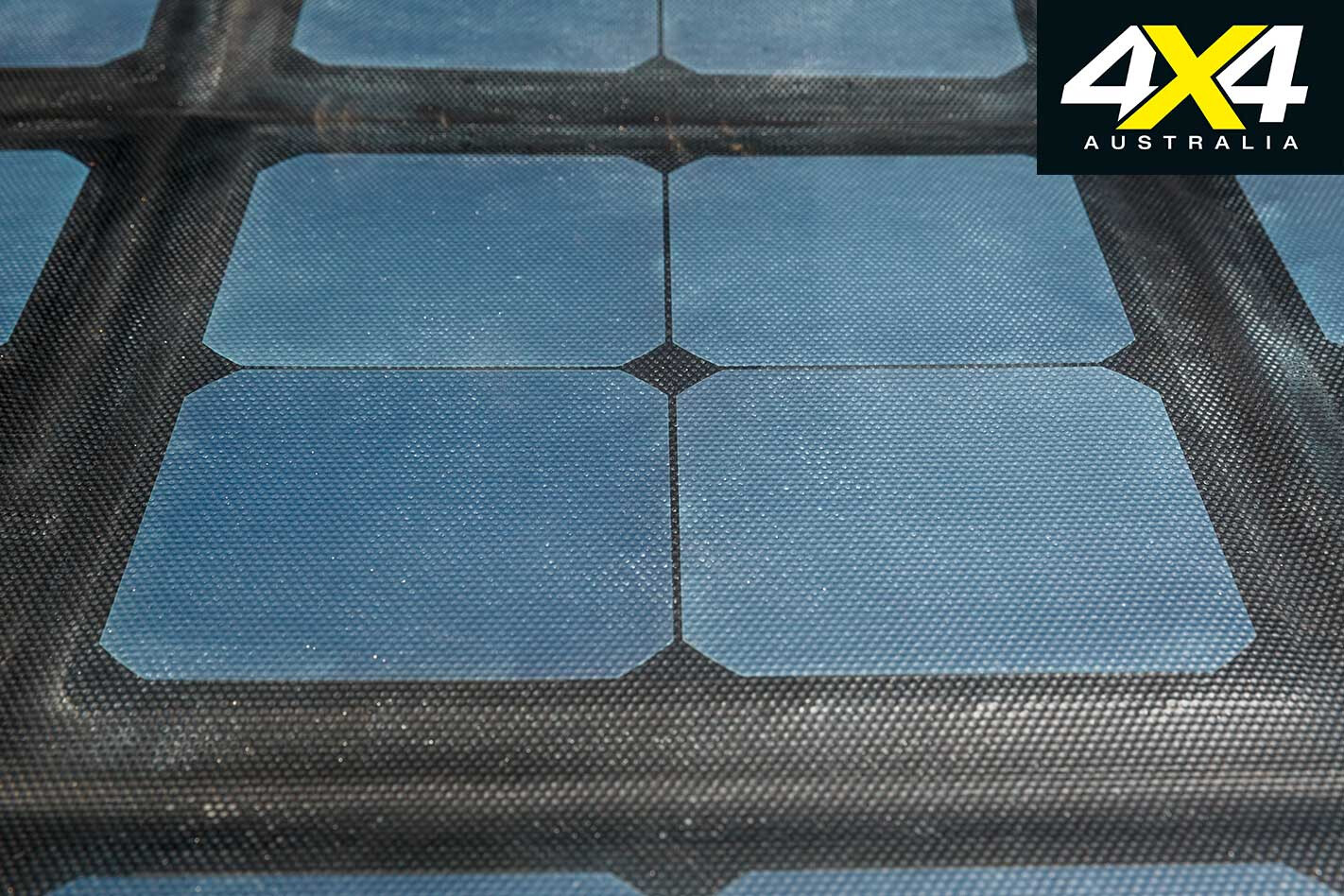
The SunPower blankets are monocrystalline, so they’re more ridged and heavier than an amorphous blanket of similar output. However, rated watt-for-watt, monocrystalline blankets are much cheaper than amorphous blankets, to the tune of a thousand bucks or so. And while a monocrystalline blanket mightn’t be able to withstand a gunshot (as the amorphous blankets were designed for the military to do), the unique design of the SunPower cell reduces failure from corrosion and breakage.
These blankets feature a solid copper backing with thick connectors for higher efficiency, while the face has an anti-reflective, scratch-resistant ETFE coating that has a high melting temperature, is non-stick, self-cleaning, and UV and chemical resistant.
These blankets may be a little heavier than the equivalent amorphous blankets, but they still weigh less when compared to a glass/aluminium crystalline panel which produce around 10 watts of power for every kilogram you have to carry.
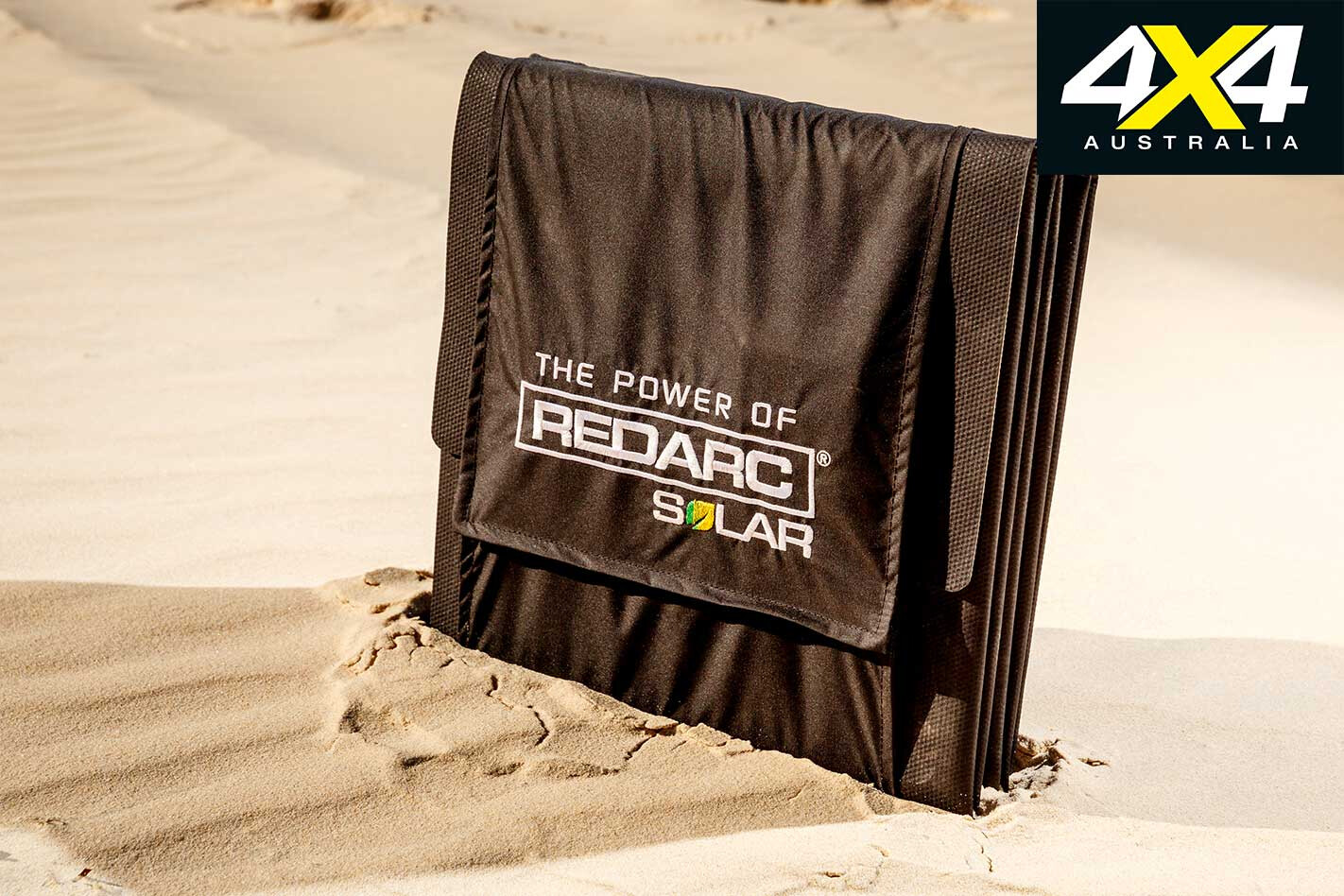
A monocrystalline blanket produces approximately 25 watts per kilogram. However, with price being a big factor for this black duck, and the weight difference compared to the more expensive unit being deemed insignificant, we opted for the super grunty 190W unit.
Redarc recommends this panel be used in conjunction with – at a minimum – a 20amp solar charger. This will ensure the correct charge is supplied to the batteries safely and efficiently, and it will protect the batteries from overcharging.
A standard ‘Anderson’ SB-50 connector on the blanket allows you to connect the blanket, via a similarly setup cable, to your vehicle via a regulator. We opted for a Redarc five-metre cable, but in hindsight would have preferred a 10-metre cable. Still, these Redarc cables are as good as you can get, with good weatherproof cable connections into the plugs.
Before we get into measuring current and the like from the panel we had on test, I’d like to clear up something which has always puzzled me… up until now. A panel will be claimed to put out so many watts at a certain voltage, but I’ve always found in our testing that a panel will never reach that stated wattage or current in practice.
Then I discovered the maximum current capability of a panel is measured under short-circuit conditions (whilst disconnected from any form of regulator or charger), something you don’t want to see in any practical situation.
However, Redarc does make the distinction between short-circuit amps and max-power amps, the difference being only slight in this case. Other manufacturers aren’t so forthcoming.
The type of regulator you use will also affect the outcome. To get the most power from the panel over any given time period, an MPPT-type solar regulator is recommended. These include the Redarc BCDC1225D, BCDC1240D, BMS1230S2 and similar Redarc regulators, as well as the ones we often see in dual-battery systems.
To see a peak current reading (which doesn’t necessarily mean the most power over a given period of time) a PWM Regulator connected to a relatively flat battery will generally show the highest reading. The Redarc products suitable for the 190W blanket and using this technology are the SRPA0240 and SRPA0360 regulators.
Of course, added to those variables is how much sunlight is available and the varying angle of the sun, both of which will affect the amount of current produced. It’s no wonder I’ve had so much trouble getting a reasonably accurate reading that equates to the manufacturer’s specs.
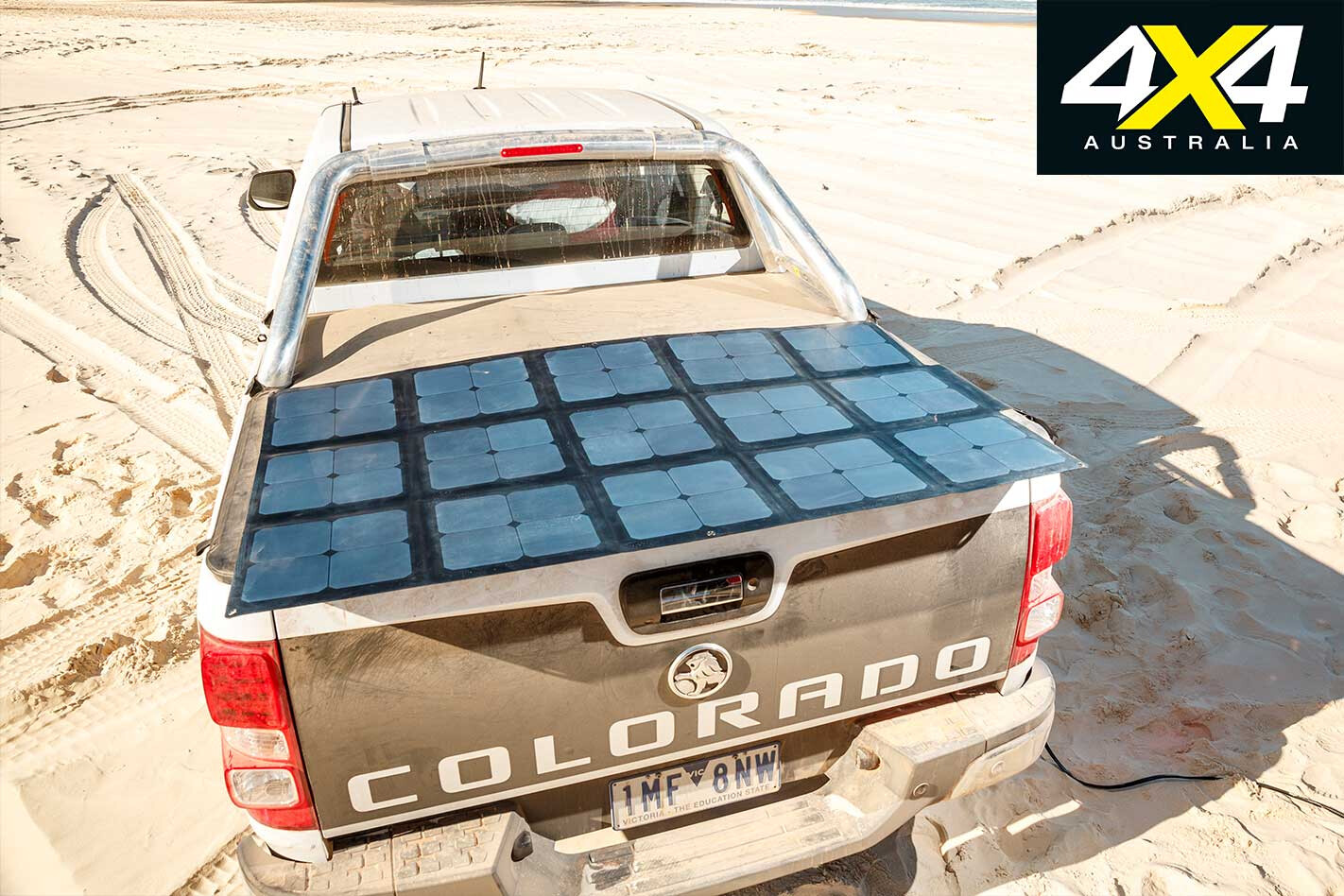
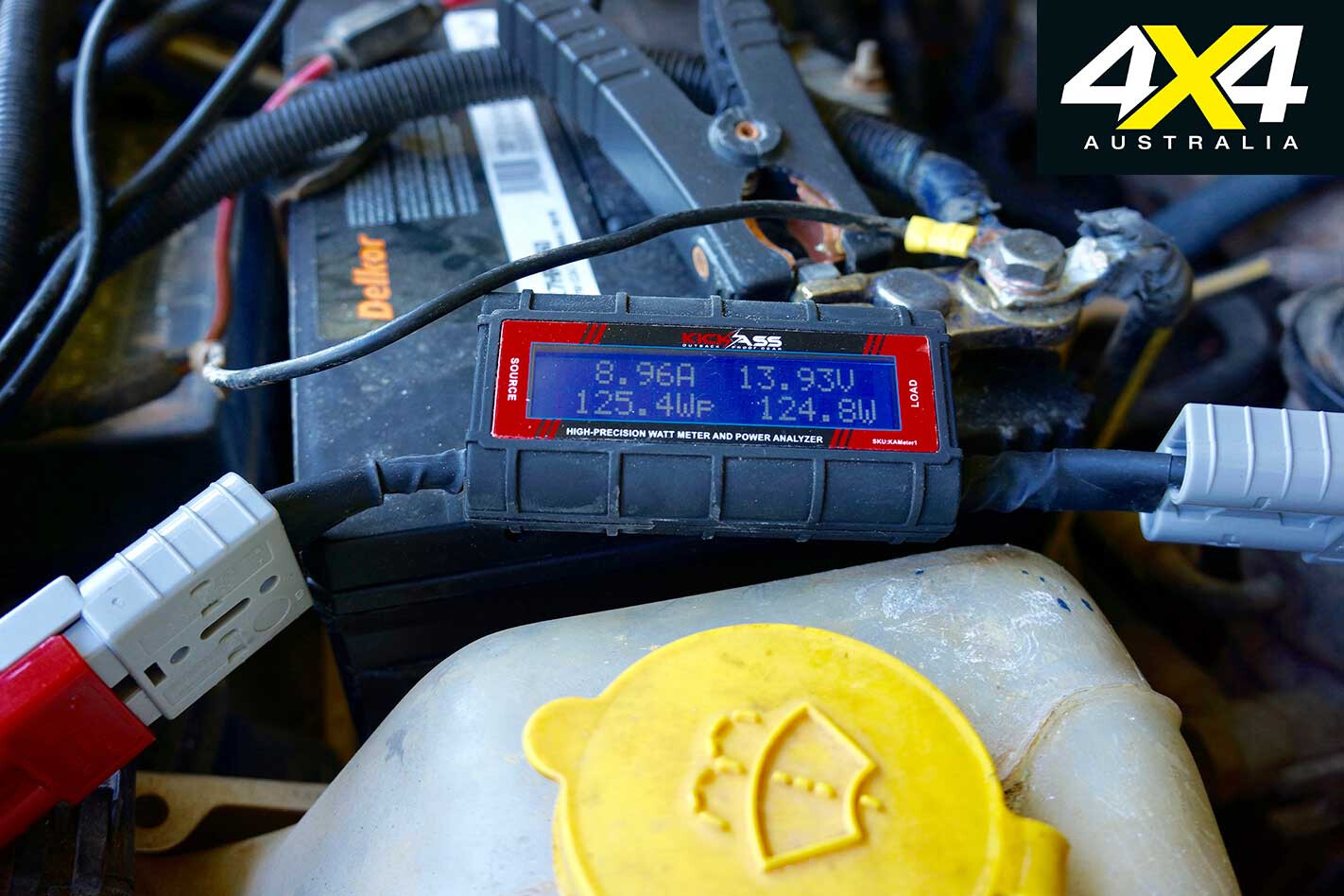
How flat the battery is will also depend on the power output of a panel. We tested the output under mid-summer (Melbourne), midday sun (11am to 1pm), feeding into a partially flat battery which was running two fridges – an Engel and an ARB unit – both set to minimal temperature; i.e. maximum current demand. Current, voltage and watts were measured by an in-line electronic gauge.
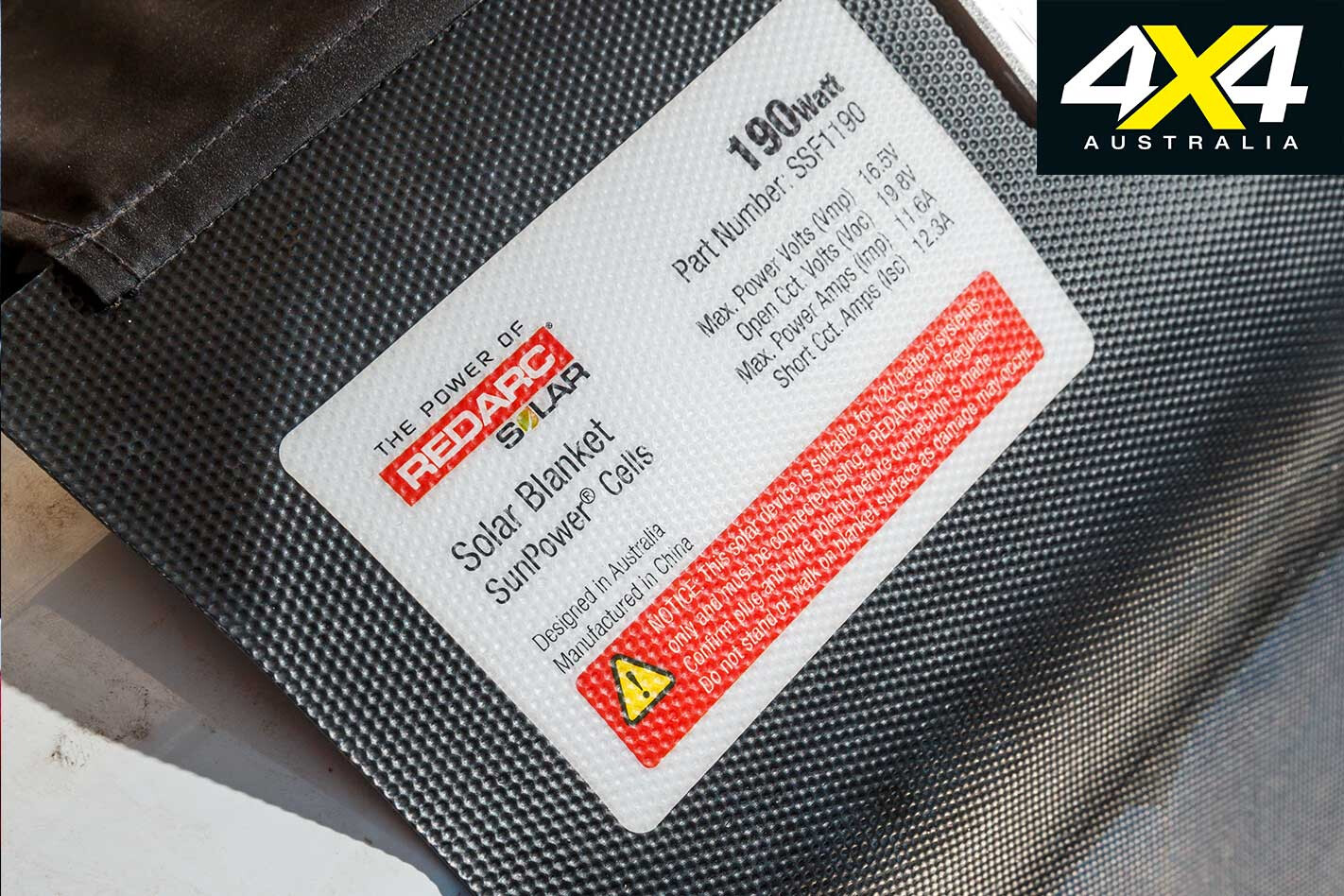
This Redarc blanket is rated at a maximum of 16.5 volts and 11.6 amps, which works out at a tad over 190 watts. As you can see by the readings, during our test our panel had an output of over 13.9 volts and 8.96 amps, giving 124.8 watts of power.
As previously indicated, that difference has more to do with the state of the battery, the regulator in use and the power demand of the fridges. Under the right conditions I reckon I could get this panel to deliver what is stated on the spec sheet.
I’ve been very impressed with this Redarc solar blanket; its toughness, ease of use and electrical output.
The wilderness is an unforgiving place and the last thing you want is your equipment failing in the middle of nowhere. Which is why these new gear pieces from ARB, Ironman 4×4, and Carbon Offroad are built to weather all elements.
ARB Intensity V2
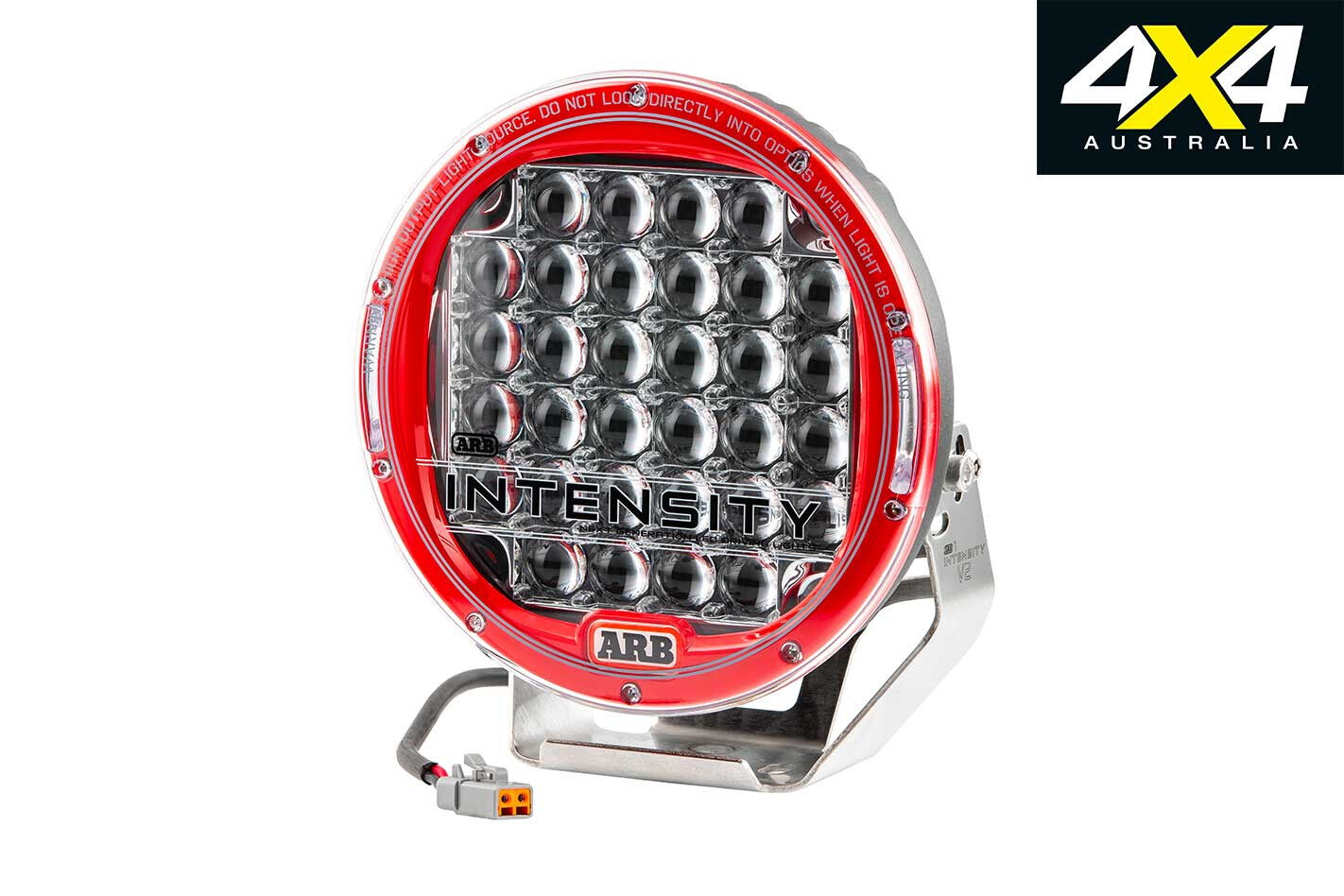
ARB has released a new incarnation of its Intensity light, dubbed the V2, and it comes with a raft of improvements over the previous-gen light.
The single 32 spot now pushes out a beam to 795m (up 35 per cent on the previous model); the single 32 flood to 677m; the single 21 spot now reaches 693m (a 35 per cent increase); and the single 21 flood – like its 32 spot sibling – has up to 18m spread on each side. The Intensity V2 light temp is now warmer – at 5700 Kelvin colour temp – which helps reduce eye strain.
Construction is high-pressure cast aluminium body, with a polycarbonate lens and polycarbonate protective cover. The Intensity V2 is submersible up to a depth of three metres and is rated to IP68 for dust and water ingress. ARB claims a 50,000-hour lifespan.
Website: www.arb.com.au
Ironman 4×4 Hilux bullbar (2018-onwards)
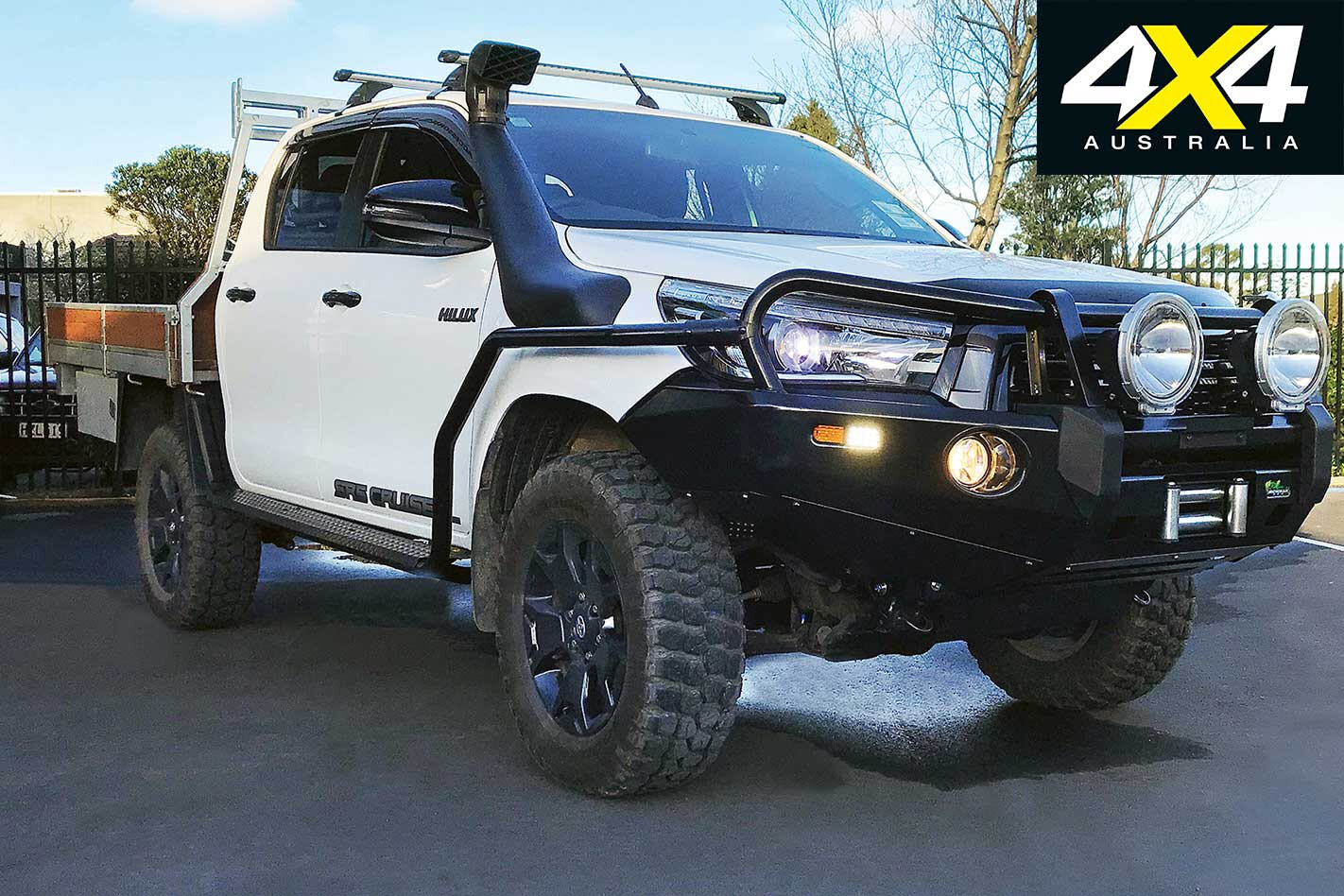
Ironman 4×4 has released a new bullbar for the recently facelifted Toyota Hilux (2018-onwards). The bar is built using premium-grade material such as SPHC oil and pickled steel (not mild steel), all joined via 360-degree robotic welds to ensure this piece of frontal protection equipment is up for anything. Using these materials also makes it highly rust-resistant.
The bar was scanned using 3D technology to ensure a correct fit to the front of the Hilux, and it’s ADR compliant and airbag compatible. You can fit a winch via the bar’s unique mounting cradle that has been designed to remove unwanted weight from the bar.
The bar’s black powder-coating is AkzoNobel for a more robust and smoother finish. There are spot and light-bar mount points, recessed LED parker and indicator lights, provision for an aerial, and an integrated high-lift jack point.
Website: www.ironman4x4.com
Carbon Offroad kinetic recovery rope
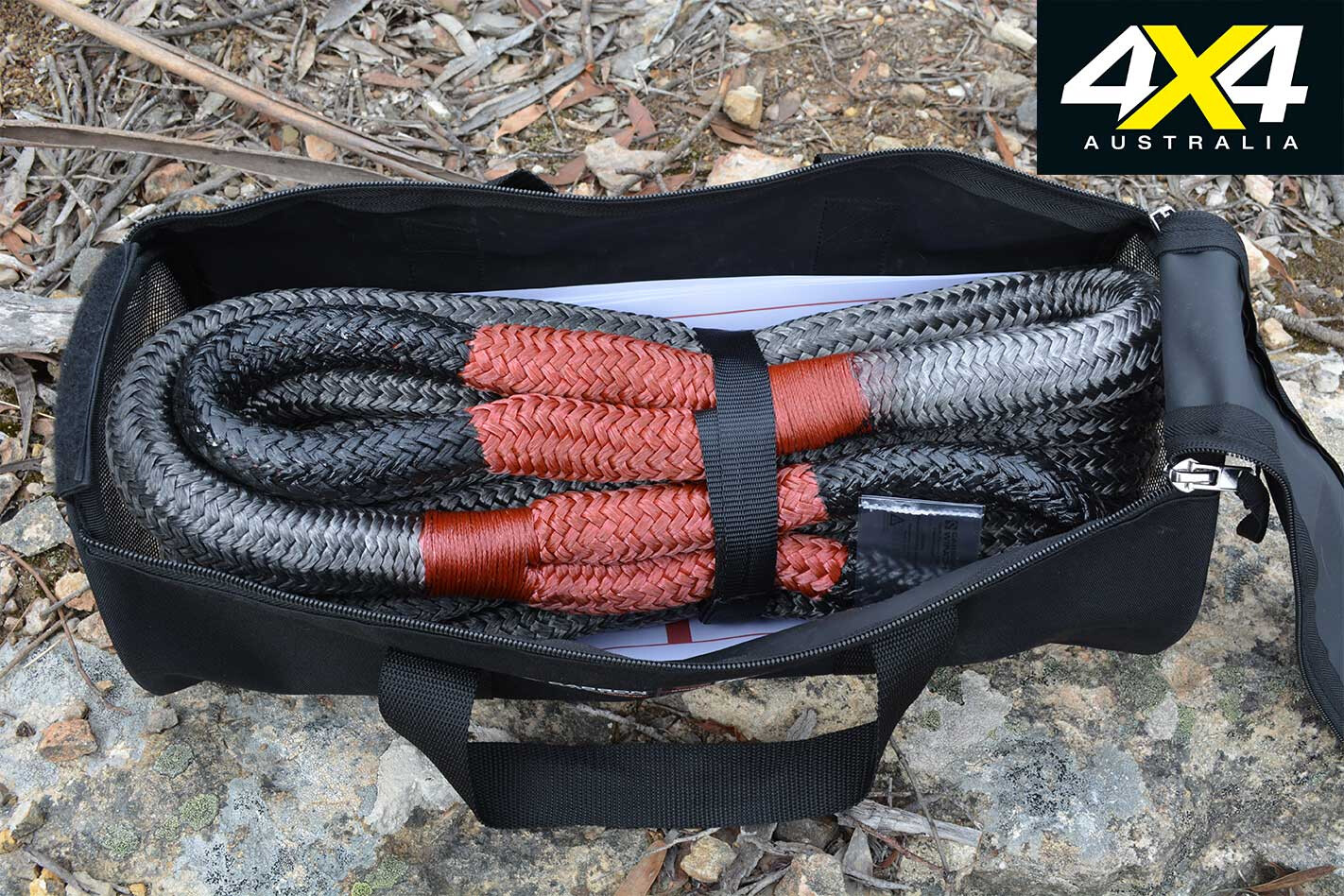
This kinetic recovery rope from the team at Carbon Offroad is a nylon (polyamide) double-braided core and sheath rope that is treated with a coating of the core and sheath fibre to produce a claimed 15 per cent increase in abrasion resistance over rope without that coating.
The rope has an average diameter of 24mm, a breaking strain in excess of 12,000kg, and a weight of 378g per metre. In short (excuse the pun) it’s lightweight but super strong. Braiding a dynamic fibre, such as nylon, into a rope means the more load you place on the rope, the more stretch you will get – ideal for those rope-based recoveries – but without the vehicle copping too much shock-loading during the process. Carry bag is included.
IT’S WAR in the bush, at least when it comes to dual-cab utes, and the latest weapon of choice is the V6 turbo-diesel. Ending an era dominated by four cylinders – and a rampant five-pot – Volkswagen unleashed its V6 Amarok on the emerging top-end dual-cab market in 2016. It’s something newcomer Mercedes-Benz couldn’t let slide, with a new arrival – the X350d – that sets up the ultimate German duel.
In decades of taking to the bush, Australians have largely relied on Japanese vehicles to get them out and back again. Even utes – once the domain of local manufacturers – are these days largely the domain of the Japanese. But Europe is fighting back, and big power is the artillery.
Those spending big on the Amarok Ultimate now get a performance upgrade in the form of a more potent tune from the 3.0-litre V6 turbo-diesel, something that brings a 580 badge. From traditional luxury fare comes the hotly anticipated V6 version of the Mercedes-Benz X-Class, known as the X350d. Each will drain close to $80K from your bank account and each can hold its head high against luxury machinery.
But what are they like where it counts – in the Aussie bush?
Mercedes-Benz X350d
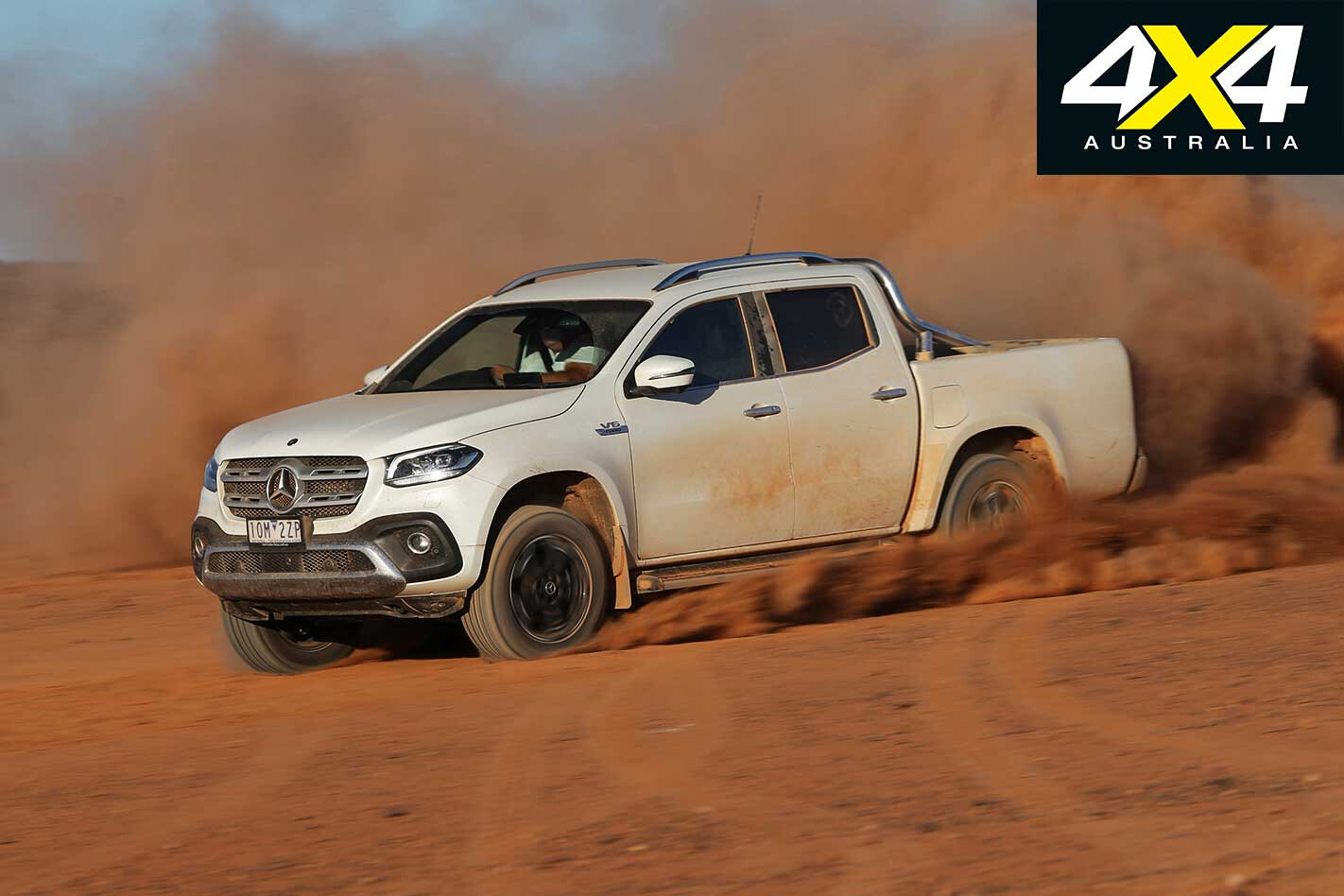
IT’S NOT even a year on the market and already the X-Class family has expanded to include the vehicle many have been anticipating, the one with a V6 engine. While the X250d uses a proven Nissan/Renault four-cylinder powertrain, the X350d keeps things in-house, utilising a 3.0-litre all-Benz V6 also used in various other Mercs.
It’s an engine with pedigree, then, and one planned to broaden the appeal of a vehicle that’s got off to a slow start in the sales race, the price premium no doubt deterring the ute faithful; for every X sold Toyota shifts about 20 Hiluxes. But the V6 injects some much needed German flavour.
It’s only available as a Progressive or Power specification, leaving the base model with only four-cylinder propulsion. Spec levels for the 350d are almost identical to the 250d, with the emphasis instead on the drivetrain.
Powertrain and Performance
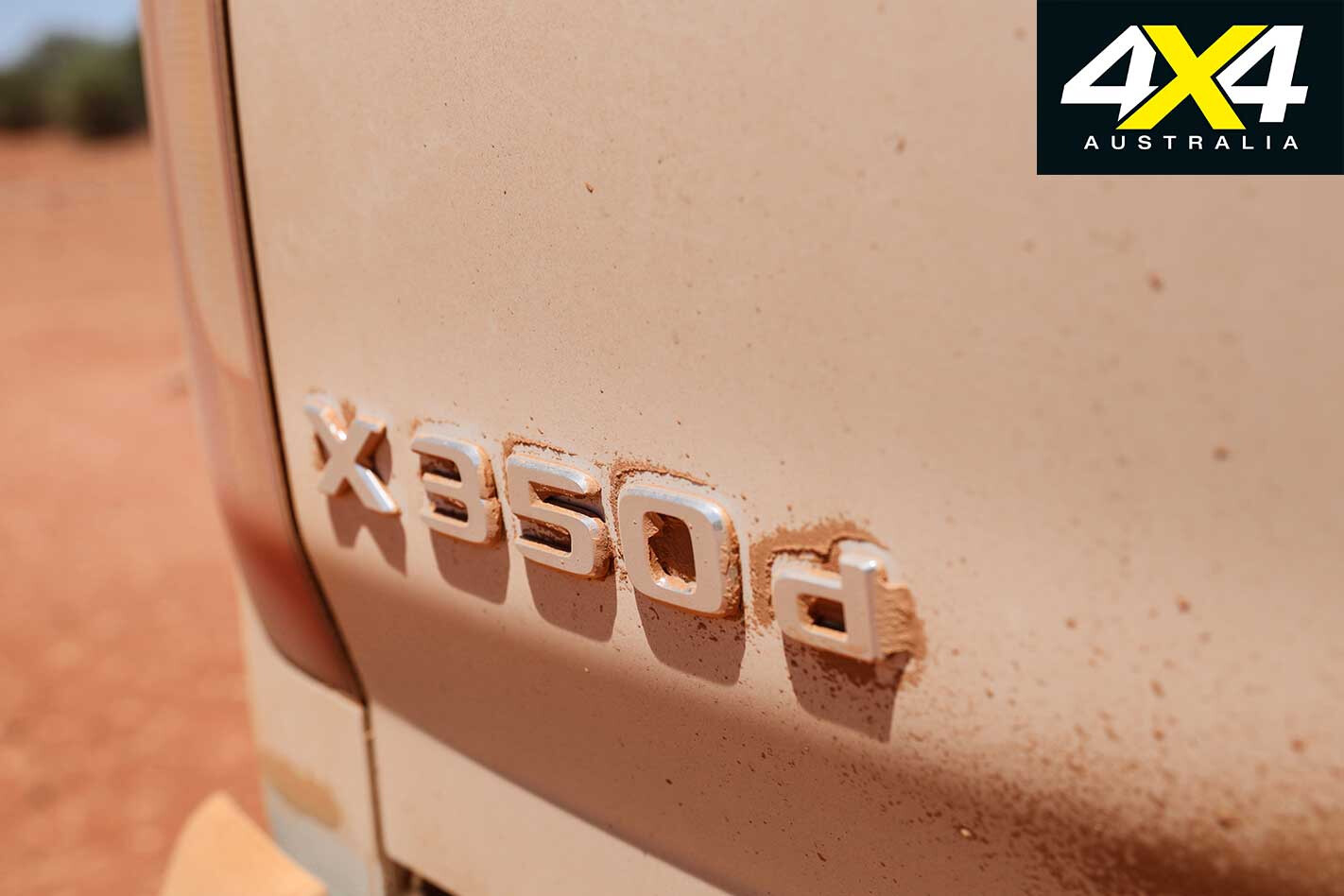
OTHER than the badge, there’s not much to pick the X350d from the X250d from the outside, but pop the bonnet and those numbers add up to big changes. All of which injects more three-pointed-star flavour into a car known for its Nissan genes.
The 3.0-litre V6 diesel is thoroughly Mercedes-Benz, also appearing in more fancied luxury kit including limousines and luxury SUVs. It also drives through a unique seven-speed transmission matched to a full-time 4×4 system.
It’s mostly good news on paper, the Benz’s 3.0-litre V6 good for 190kW and 550Nm. Not that much of it counts here. Sucking in outback dust is a reminder that durability and ruggedness are mandatory in these conditions. During our few thousand kays there was no hint of a stutter, the big Benz soldiering on stoically.
But it’s not perfect, the engine feeling flat when you first press the accelerator. It thinks, pauses, thinks some more then (finally) goes. Okay, so we’re exaggerating, but there’s pronounced lag that requires an adjustment of driving style in stop-start conditions.
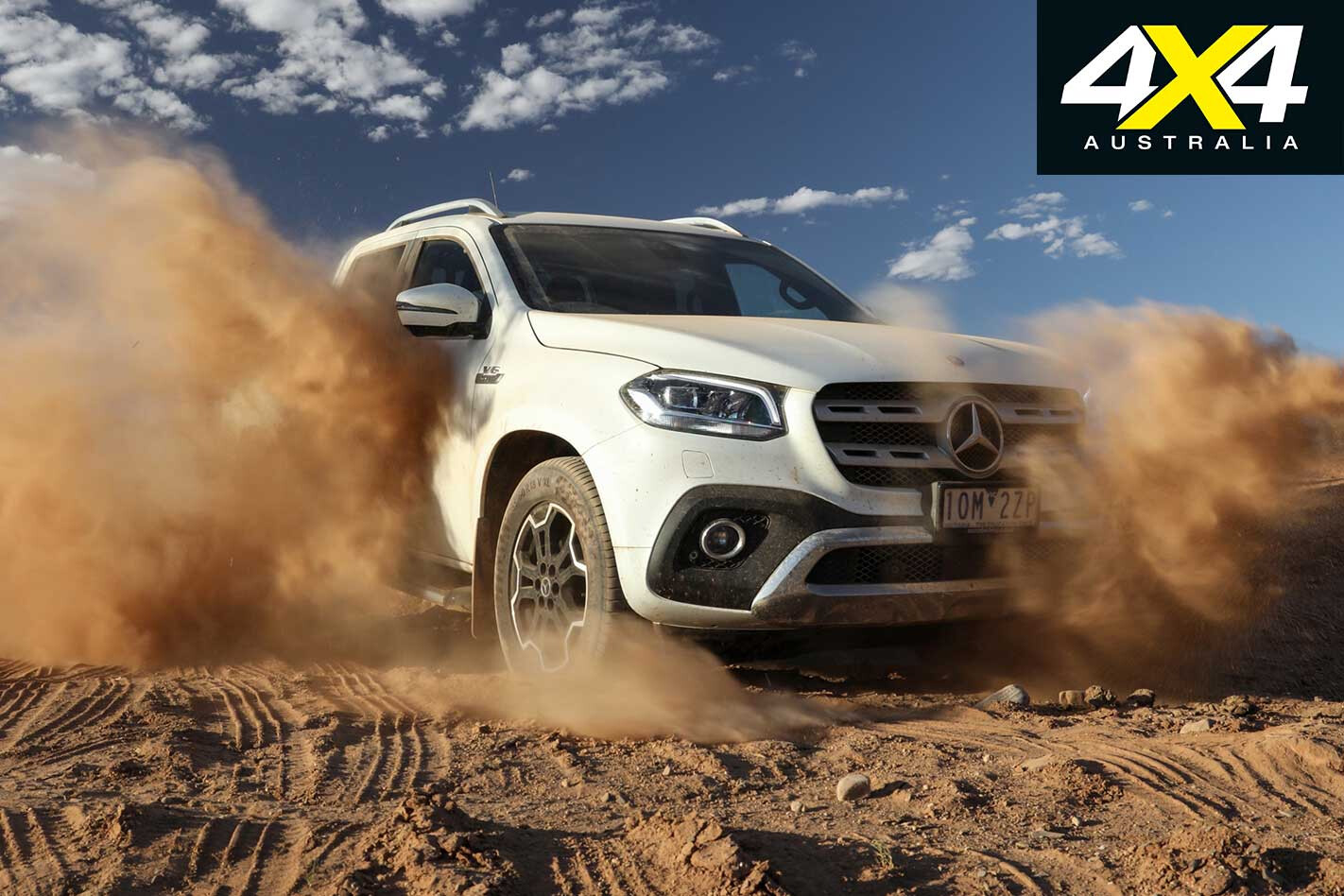
When it goes, it goes – big time – the 550Nm rush of energy launching towards the horizon with intent. Benz claims it’ll hit 100km/h in 7.9 seconds, which is 0.6 seconds slower than the Volkswagen. Our own testing suggested the gap wasn’t quite that large, but there’s no question the Amarok is brisker initially. On the run the lag is less of an issue, the broad bulge of torque always ready to react and the free-revving nature making building pace a snip.
That it does it so effortlessly and with the sort of refinement befitting a luxury car is a bonus. Things get better with speed, the X350 clearly content with some additional pace. While the likes of Australia and Africa were key development grounds for the X-Class, it’s clear an autobahn thrash (or two) was somewhere in the development mix. It was tempting to head north into the Territory to stretch the X-Class’s legs on the 130km/h open roads.
Whereas the Benz trails the Volksy on its initial take-off, it claws it back as speed increases, its ratios more closely spaced to keep the engine in its sweet spot. For overtaking the Merc feels the brisker machine, its lighter frame adding to a sense that you’ll never be lacking for punch. That sentiment is confirmed with some performance testing, the Benz shaving three-tenths off the Amarok for the 80-120km/h dash. That it does it with refinement and poise adds to its talent.
On-road
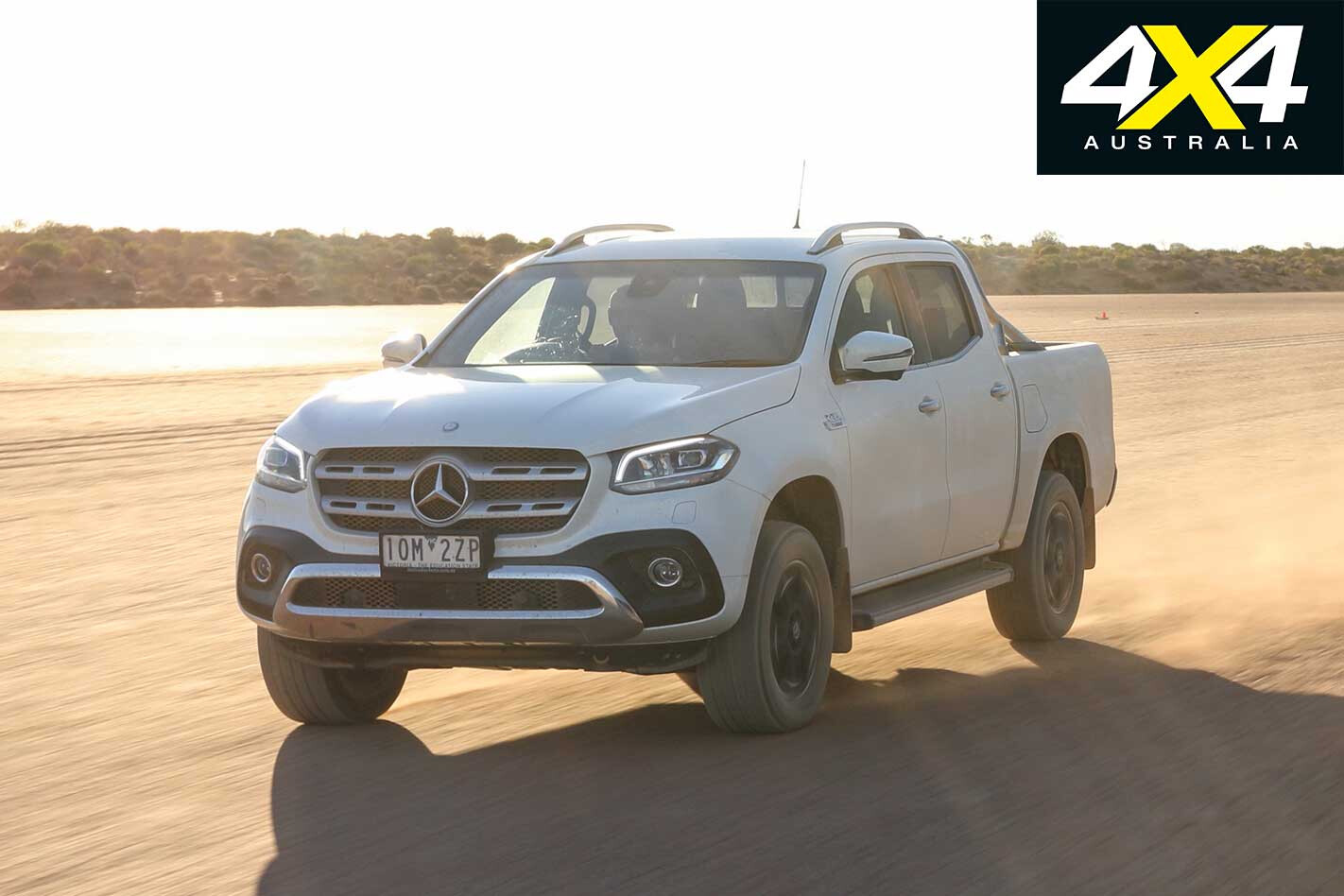
IF IT’S comfortable touring you yearn for then the Benz mounts a solid early case. Refinement is class leading, the X-Class eating up country roads and making light work of high-speed touring. This is a car that comfortably gets you there – in style. Its coil spring rear-end is also well behaved, the control in the suspension shunning washouts and large bumps while recovering quickly. Hit too hard and it’ll buck, but for the most part it deals well with the worst Australia can muster.
It’s no passenger car and there’s still a propensity to shudder over repeated imperfections, but it’s towards the pointy end of the ute paddock. The steering isn’t as convincing, although some weight mid-turn adds confidence. Brakes, too, could do with better progression, but with discs all around it stops confidently, even after repeated hard hits.
Ultimately, though, it’s the refinement and quietness that define the X-Class, setting a new class benchmark.
Off-road
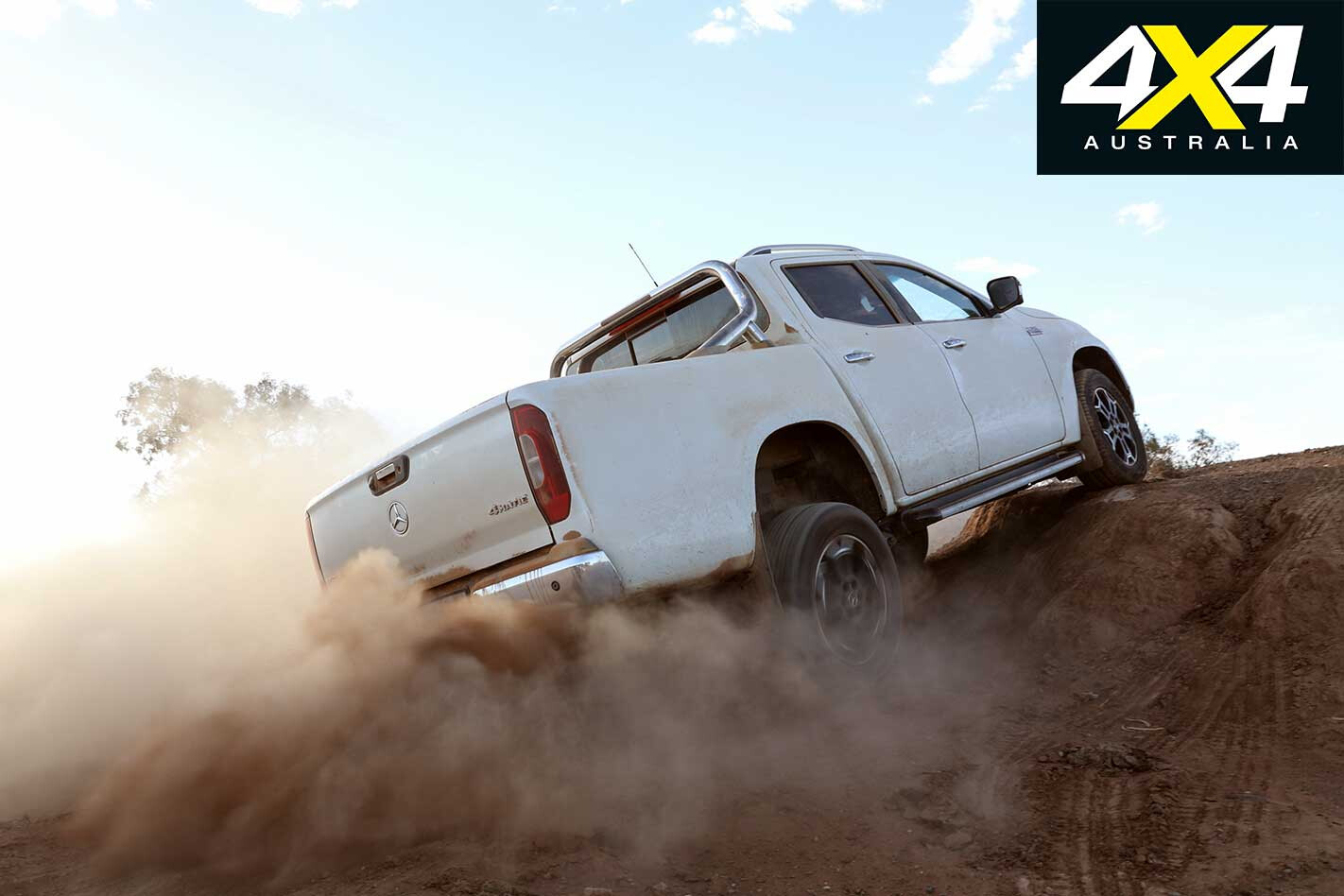
WHILE it may have hints of city slicker to its image, the X-Class comes with the hardware to get down and dirty. For starters, there’s a proper low-range transfer case; the additional crawler ratios allowing for easier slow-speed going.
Everyday driving splits 60 per cent of the drive to the rear. Locking the centre diff in high or low range evenly apportions drive front-to-rear and readies the car for more serious terrain. With wheels hanging in the air it swiftly sorts out where to send drive, the traction control chiming in when needed.
Yet it is engine response that remains an issue, no matter which 4×4 mode you’ve chosen. Blame it on throttle response, with the fast-swelling torque delivery making slow speed stuff hard work. There’s an Off-Road mode as part of the Dynamic Select system, unique to the X350d, which is designed to smooth the torque delivery, but you’ll still need to be gentle with the right foot.
Crawling along the craggy Mount Samuel track through Alpana Station highlighted the issues, the jump to 550Nm often too severe to give the rocky surface the respect it deserves.
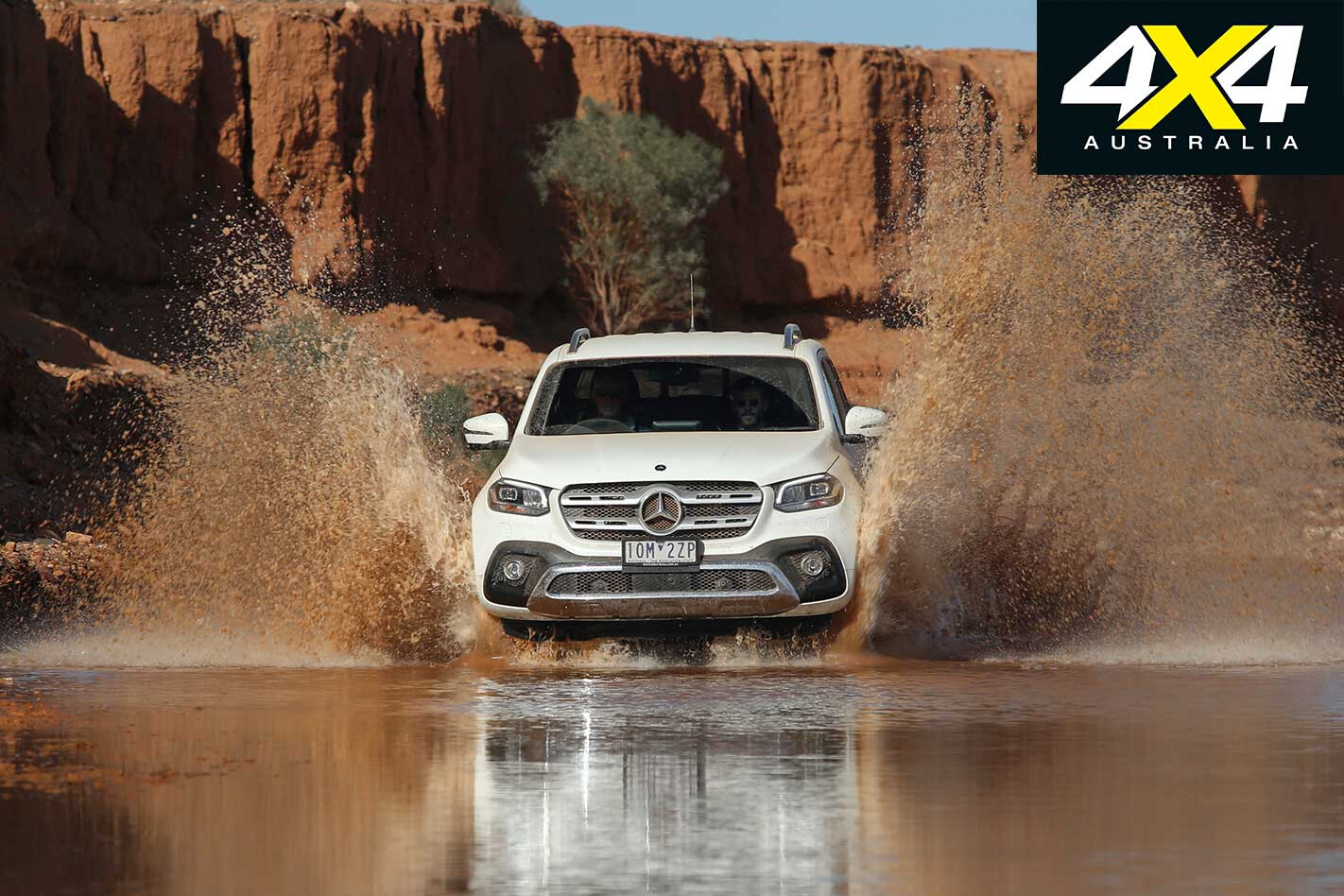
That laggy throttle response is no fun in the steep, go-slow terrain, where the all-or-nothing torque delivery makes delicate manoeuvres all the more delicate. It’s subdued somewhat in low range, but more work needs to be done to turn a luxury diesel into a competent off-roader.
Which is a shame, because the X-Class comes primed for the challenge. Its clean snout allows for more serious attacks than the Amarok, albeit with care to ensure that chrome-infused bumper doesn’t end up a casualty. While the tail is susceptible to scraping, it’s less exposed than the Amarok. Similarly, while the optional side-steps are exposed, there’s a full 222mm of ground clearance.
Cabin and Accommodation
THERE’S no hiding the Nissan roots inside the X-Class. While Mercedes has tried to inject plenty of its own DNA – the COMAND controller and instrument cluster among the highlights, as well as the badge on the steering wheel – the mainstream giveaways are there, from some of the plastics to the electric seat adjustments hidden out of sight beside the cushion rather than standing proud on the door.
Those front seats are comfortable but could do with more lateral support, and the steering wheel cannot be moved in and out, reducing adjustability to the driving position. They’re little things, but things likely to be noticed by those with a full-blooded Benz parked alongside in the garage.
Thankfully the broad themes scream Merc elsewhere and there’s an upmarket flavour from materials to the finishes. The X-Class certainly has a more premium look and feel to its cabin. And, while the aluminium trim across the dash can catch the glare of the sun occasionally, it otherwise teams with the circular air vents to create a dash with more visual flair than its German rival.
It’s a shame the dash is more looks than substance. Other than door pockets and a small space ahead of the gear selector, there’s almost nowhere to stash odds and ends. That the world’s oldest carmaker, responsible for some of history’s most impressive machines, can unleash a car with so little storage is gobsmacking. The X’s cabin storage is not just below par, it’s downright poor.
Rear-seat space is also compromised, mainly because of the high seat base that makes headroom a challenge for tall folk. At least there are rear air vents to better circulate coolness throughout.
What you get
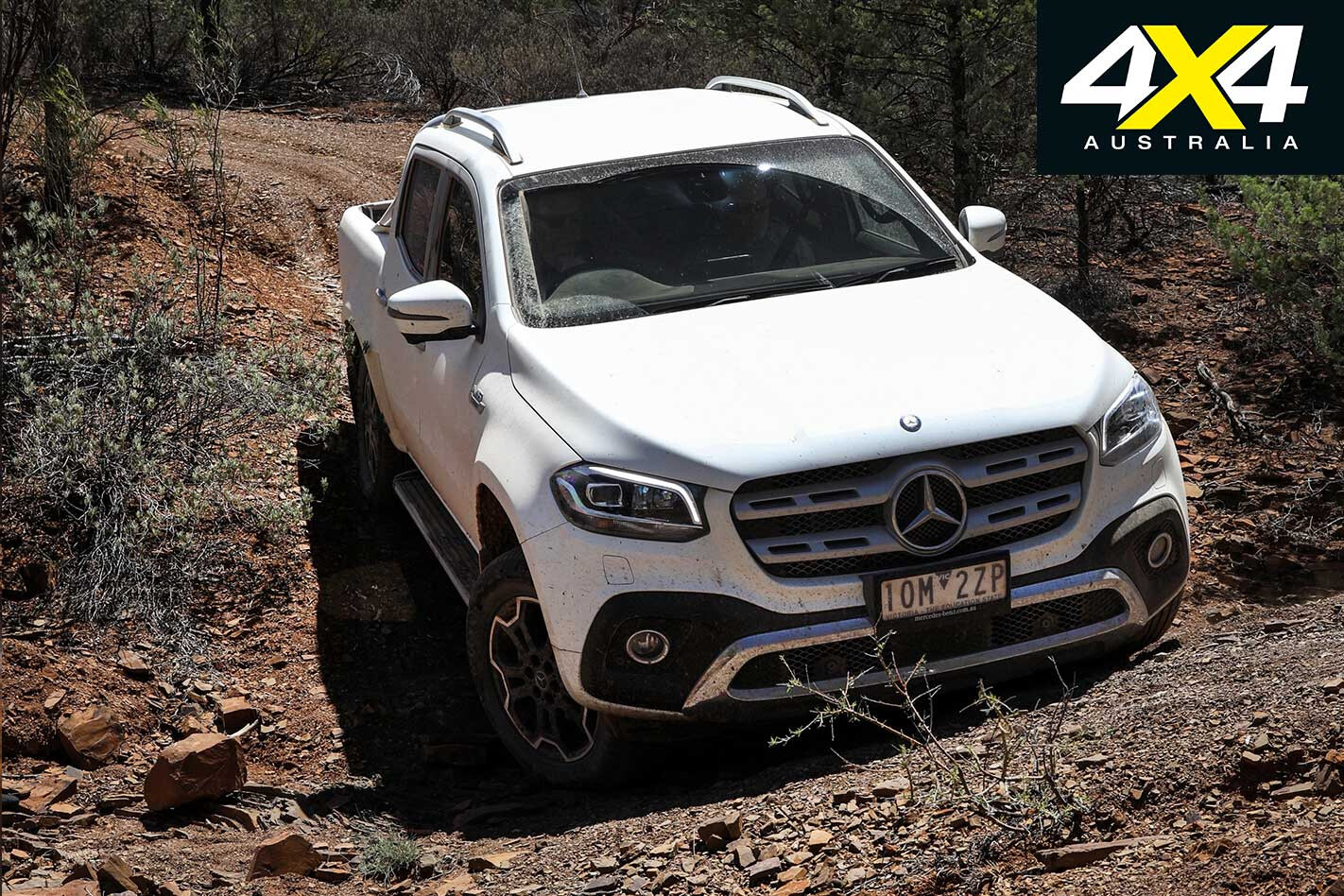
MERCEDES-BENZ may be playing in the mainstream workhorse space, but it’s arrived with a price premium befitting the three-pointed badge with the X-Class. Even the four-cylinder costs thousands more than rivals, and the auto-only V6 is a hefty $15K leap over the four-cylinder. For the flagship Power model tested here, that amounts to $79,415, prior to on-road costs. Ouch!
For that, you get the superior drivetrain with a permanent 4WD system and locking diffs.
Generally, though, the X is well appointed, although fake leather is standard, the real stuff adding $1750 to the price and heated seats $590. Other items left to the options list include a sports bar, side-steps and tow bar, all things buyers of Fords and Toyotas expect at much less money than this.
It seems Benz realised it had a value problem. So, until the end of March, all V6 buyers have a choice of $5000 of accessories.
That the warranty protection expires after three years is a disappointment, too, but on the safety front it’s class leading, with seven airbags contributing to excellent occupant protection.
Practicalities
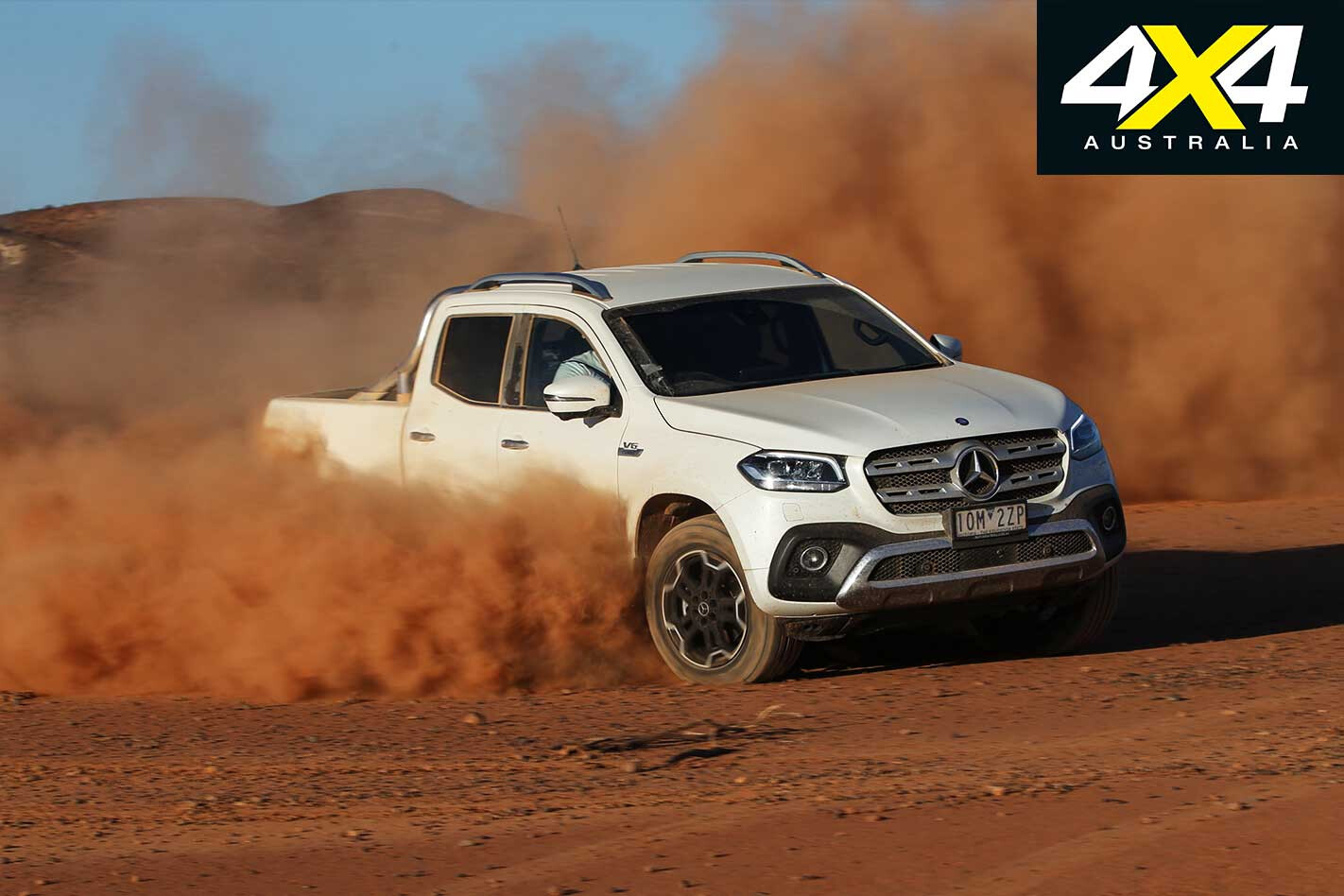
THE X-CLASS is around 60mm wider than the Navara it’s based on, but 34mm narrower than the Amarok. So, while the tray is wide, capable of carrying a pallet between its wheel arches, the Amarok’s is slightly wider. Not that you’ll be disappointed with the space on offer; and there’s a few extra millimetres to the length, making it easier to sneak large items in.
It appears Mercedes was inspired by some of the Amarok’s thoughtfulness, including the LED light that illuminates the tray. It’s a handy extra for campers, as is the 12V power outlet in the tray. But the X is rated to carry more than a tonne, its 1010kg payload a clear leader.
That its coil spring rear-end sags sadly suggests no one would want to be carrying such loads for too long. Besides, any people and their luggage in the cabin detract from that carrying capacity. A superior GCM of 6180kg – 180kg more than the Amarok – makes it easier to explore the claimed 3.5-tonne tow capacity.
Even so, once you’ve got that much out back the payload is reduced to 490kg. Account for a towball download of around 300kg and you’re limited to a driver and some well-packed luggage.
Volkswagen Amarok Ultimate 580
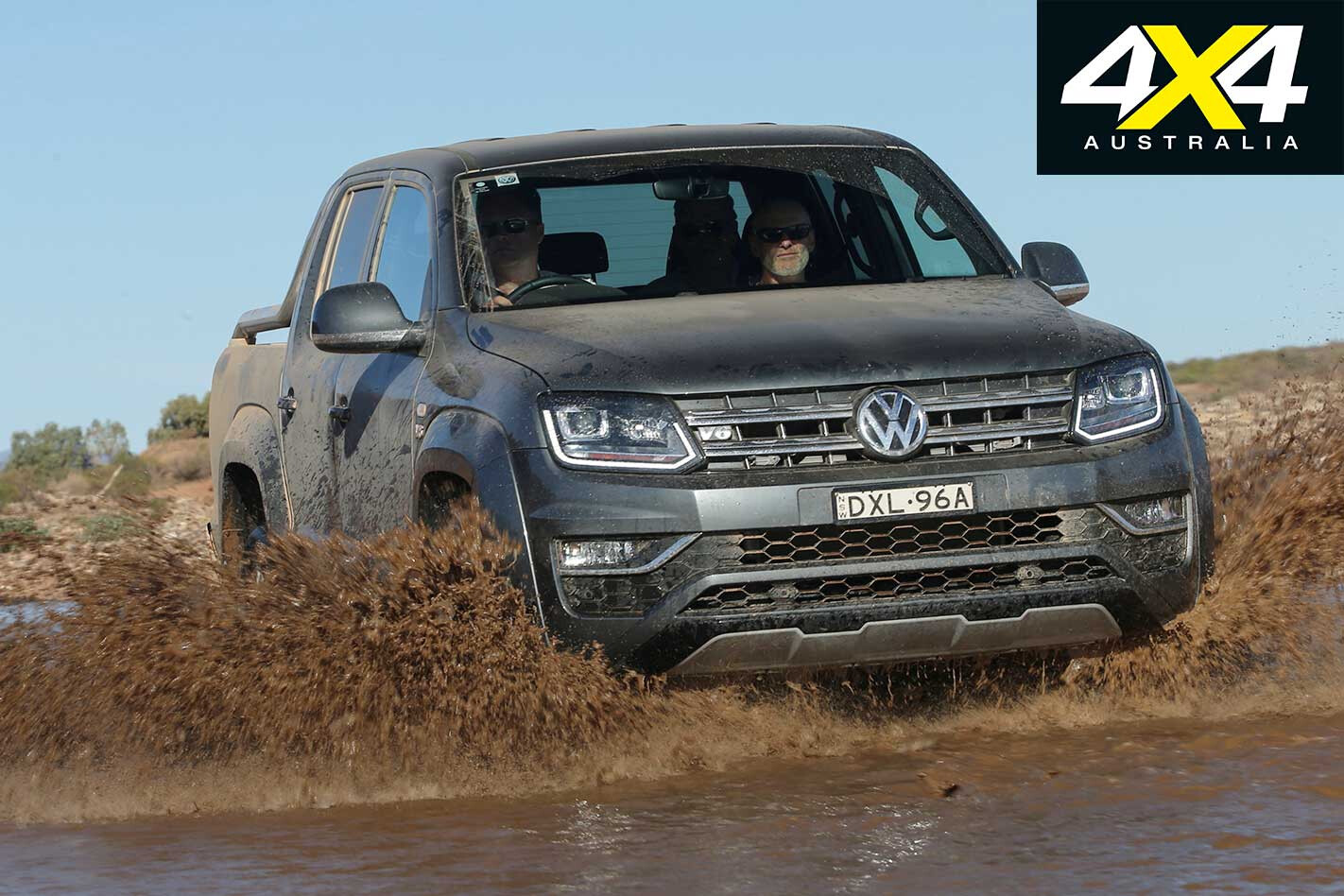
THE AMAROK has long been a favourite at the 4X4 Australia office for its all-round ability and value. It’s great on-road and surprising off it. While it’s a relative newcomer to the dual-cab fight, from day one the Amarok has been a serious and well-regarded contender.
Enter the 580, another tempter for the top-end Ultimate trim level. As well as trinkets and gadgets, the 580 badge denotes more grunt from the tweaked 3.0-litre V6 turbo-diesel. It makes the 580 the most powerful ute in its class, perfectly timed to leap-frog the X350d before it even arrived.
Powertrain and Performance
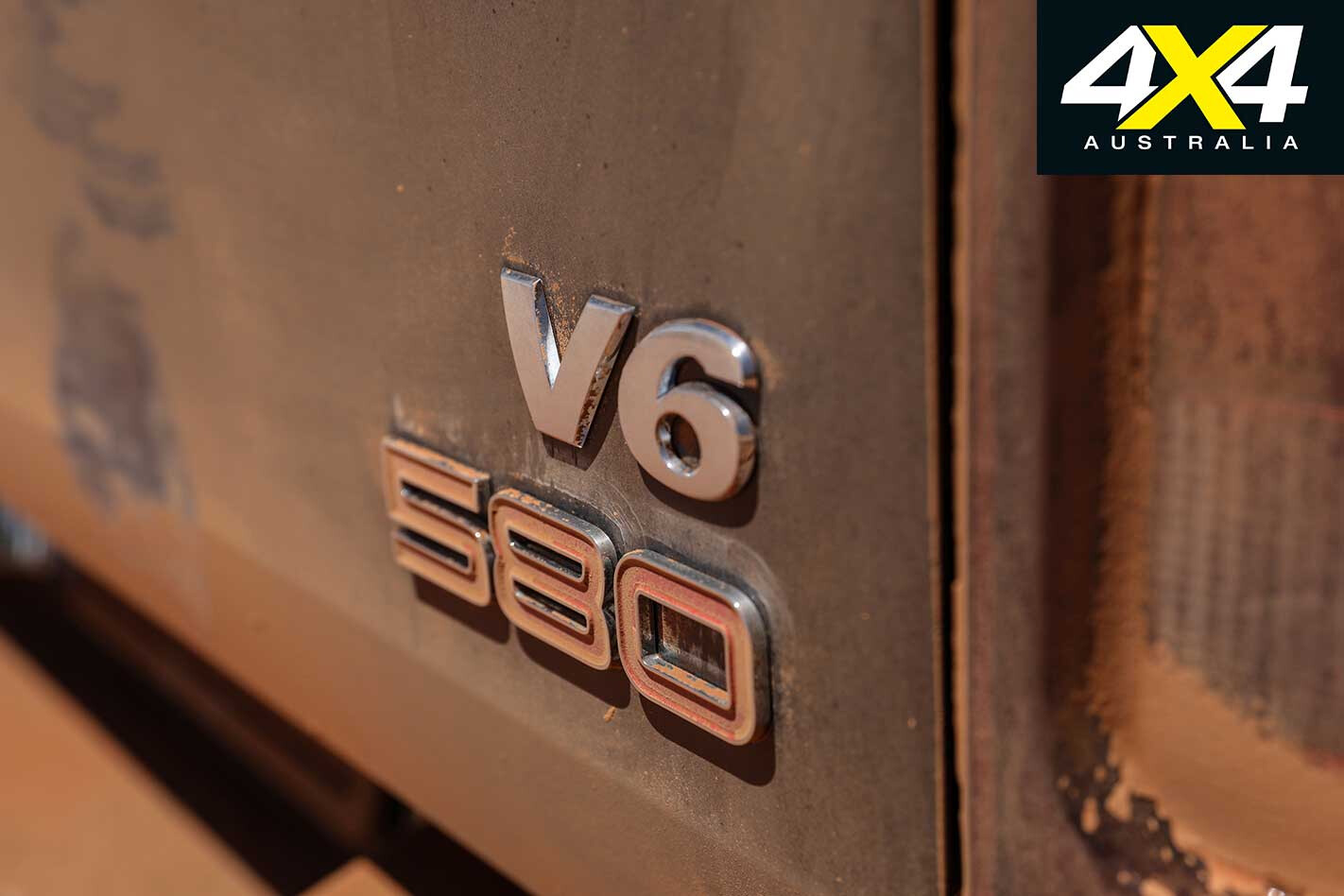
THE V6 has been a winner for the Amarok, accounting for 70 per cent of sales. Those prepared to stump up the big bucks for the Ultimate are now rewarded with a higher tune, badged 580. That power tempter is expected to up the V6 sales split even further. The three numbers refer to the peak torque output, a 30Nm bump on the regular V6, and the same jump over the X350d. Like the Benz, that peak arrives down at 1400rpm.
Combined with a short first gear the Amarok is a sweeter thing jumping from a standstill. Compared with the Benz’s wait-for-it take-off, the Amarok feels poised to pounce, any right leg movement rewarded sooner.
Power is rated at 190kW, matching the Merc to the kilowatt. But the 580 has a 10-15kW trump card in the form of an overboost function that operates for up to 10 seconds, upping power to 200kW – or, in some instances, 205kW. It’s designed to work predominantly in third and fourth gears, between 50 and 120km/h.
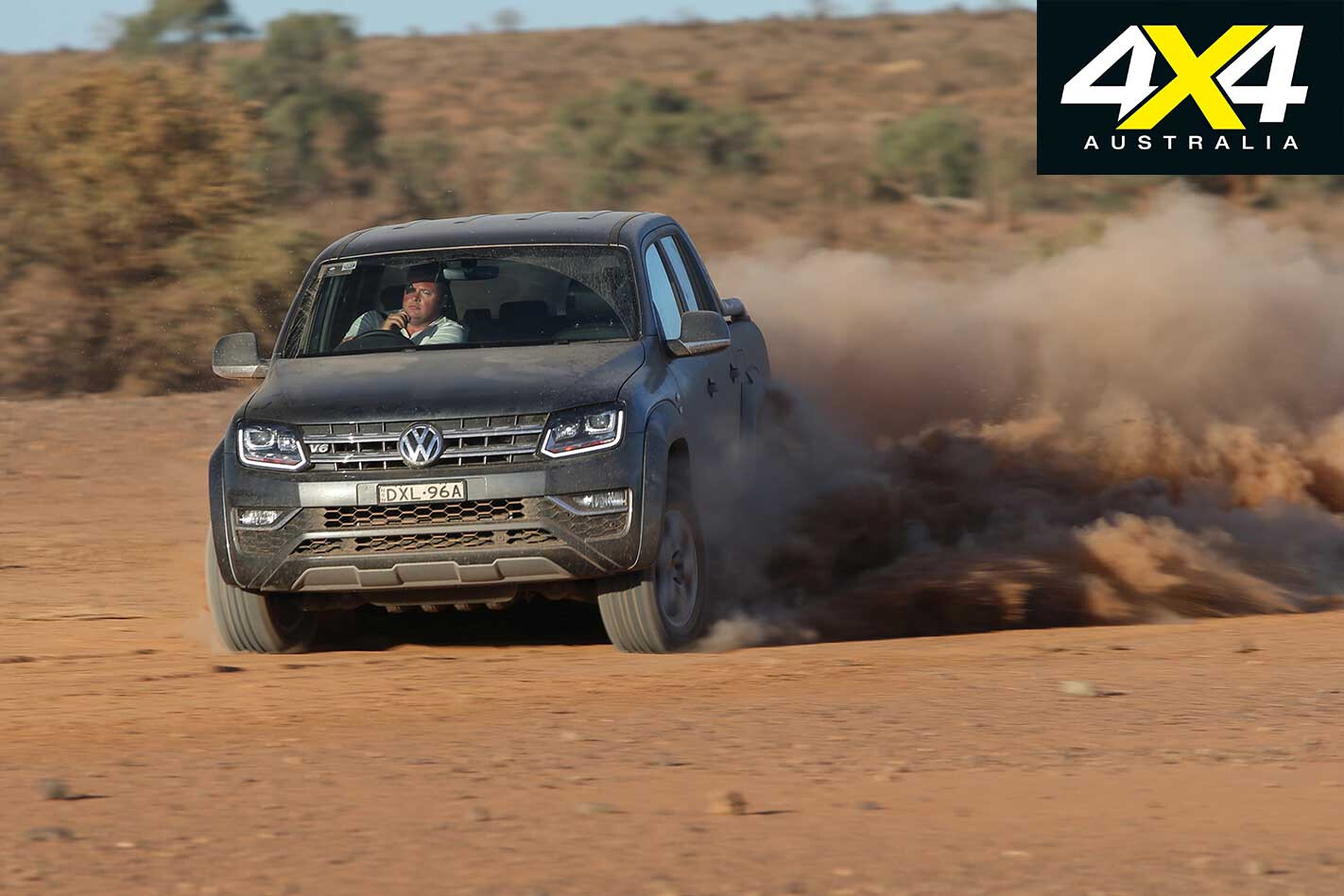
Fortunately third and fourth gears are in the sweet spot of usability. Given the closeness of the eight ratios, third tops out about 85km/h and fourth is done by 110km/h. So, for overtaking, you’re pretty much guaranteed the full 200kW muscle. There’s no discernible difference to the output of the engine, although it pulls strongly when you need it most.
That said, we were driving regularly in 40-plus-degree heat, which would all but guarantee intake temperatures above 55˚C, at which point the overboost functionality is automatically cancelled. Still, it’s a strong engine, and one that never feels lacking in power.
Its upper ratios are all tuned predominantly for fuel economy, something that gives the Amarok an advantage when cruising around 100km/h. The official figure is 8.5L/100km and it’s easy enough to hit that.
On-road
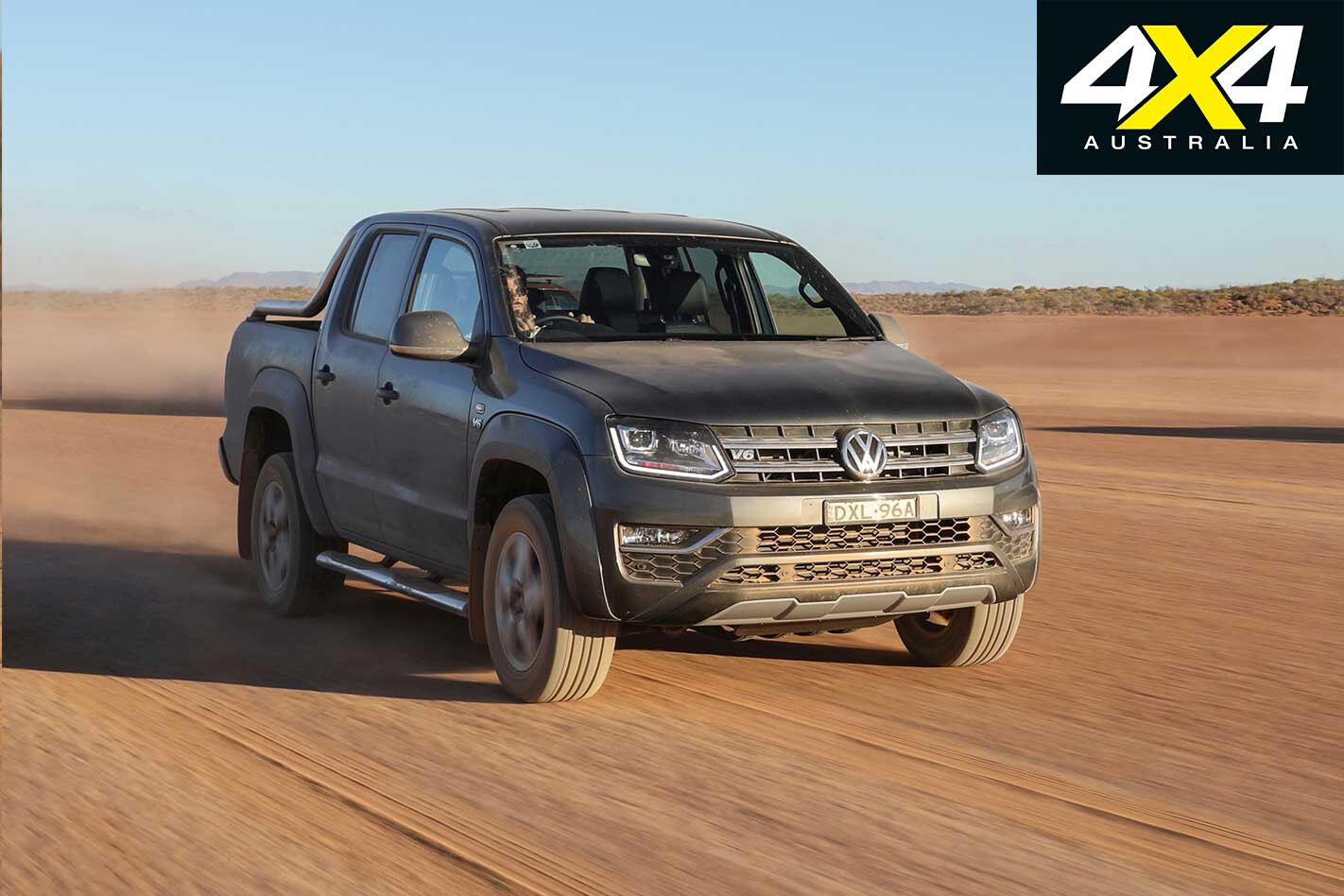
THE AMAROK does play with a proven dual-cab formula: live axle, leaf-sprung rear-end, independent coils up front sitting on a separate chassis. But from a company that had never produced a ute prior to 2010 (yep, the Amarok is well past middle age!), the Amarok showed the big boys how to do it better.
Nothing’s changed in 2019, except the Amarok is now up against a luxury rival that replaces those rear leafs with coils. Yet the Amarok holds its own beautifully, competently dealing with 100km/h bitumen and behaving predictably in the bends. It effortlessly flushes deep dips and recovers neatly, its tail not fluttering over repeated bumps, either.
The biggest deficit the Amarok gives away is in refinement, the general mechanical noises and tyre roar not at the low levels managed by the Mercedes. Less of an issue on gravel and low-speed dirt, but noticeable on those coarse-chip country roads Australian councils do so well. It makes up points with precise, predictable steering that’s nicely weighted. The brakes, too, are progressive and powerful, the rear discs contributing to consistent stopping power.
Off-road
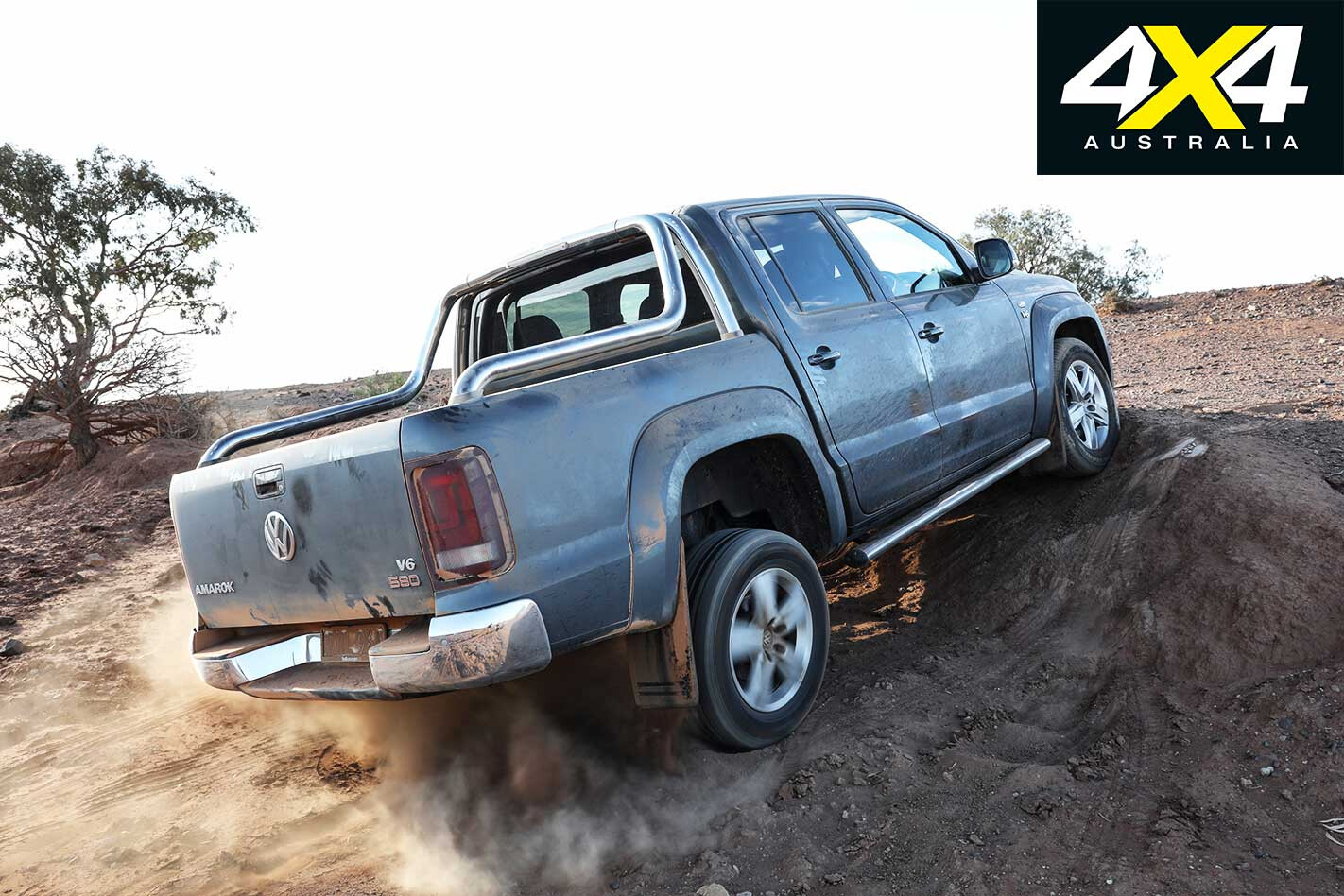
OFF-ROADERS have long argued a transfer case is a prerequisite for rough-road driving, but the Amarok has done a top job of dispelling that. The 580’s high range-only ratios do little to slow progress in 99.9 per cent of what the average Aussie adventurer will encounter. It’s helped by its suitably low first gear and an off-road mode that adjusts the throttle sensitivity to make it easier to feed on torque, something achieved without panic.
While there would have been times low range would have been appreciated during our journey, nothing we tackled stopped the Amarok from ascending with relative ease. It’s helped by decent traction control and the backup of a locking rear diff, all of which ensures some short-term scrabbling is followed by forward progress.
Side-steps are never a good mix and it didn’t take long for the Amarok’s to hit the dirt. They’re uselessly low and prone to bending once they come into contact with anything but a foot.
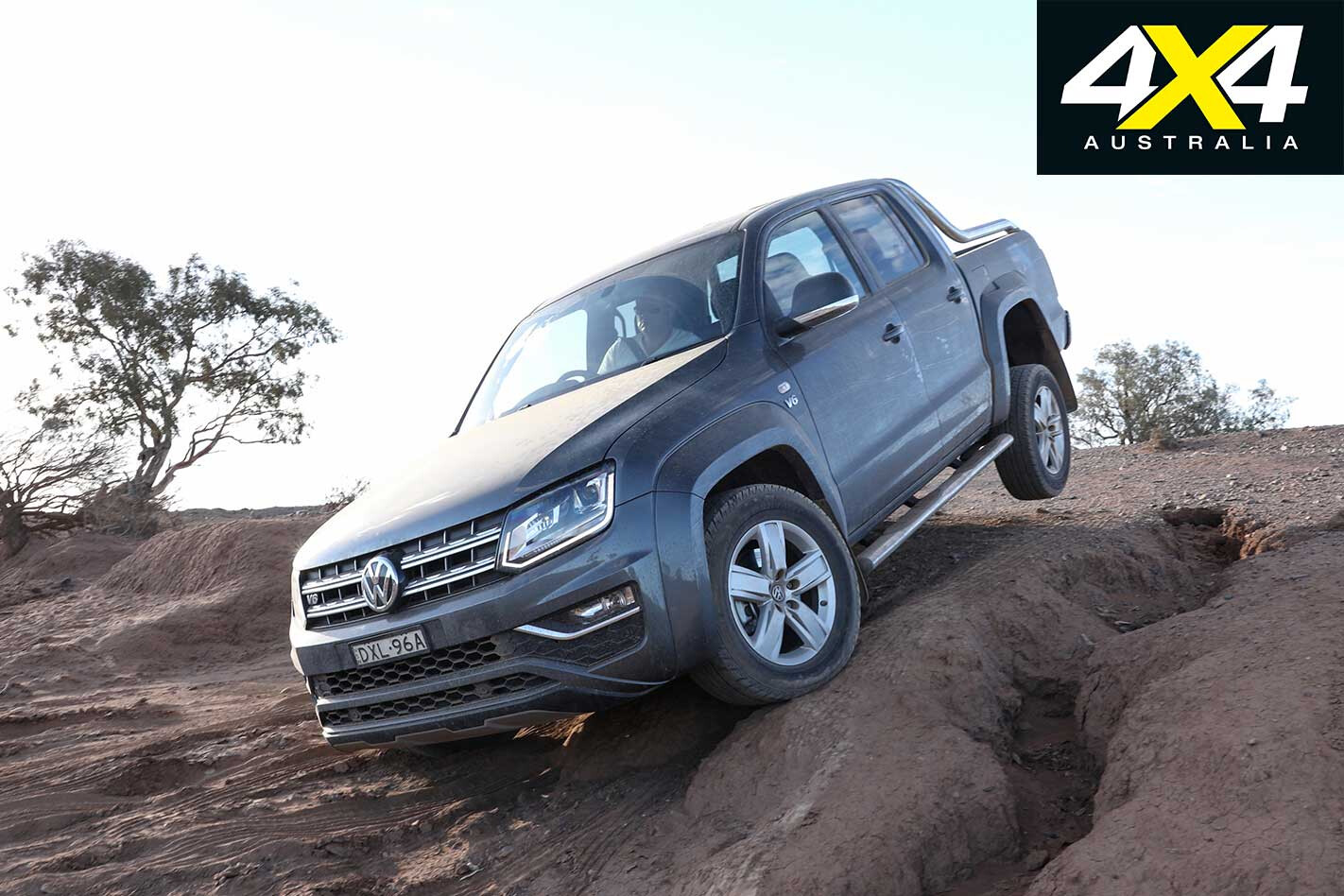
Best to assume they’ll be a casualty on the first trip and budget for some decent rock rails as a replacement. Also, those side-steps reduce the claimed clearance from 226mm to 192mm; so the on-paper benefit of the X350d is not as high once you factor in its optional side-steps.
Where the Amarok does shed points is in hilly or rocky terrain, its overhangs slightly loftier than the Merc’s, ever keen to scrape and tickle the underside. The departure angle, in particular, made for some bum-scraping moments out of sharp crevices.
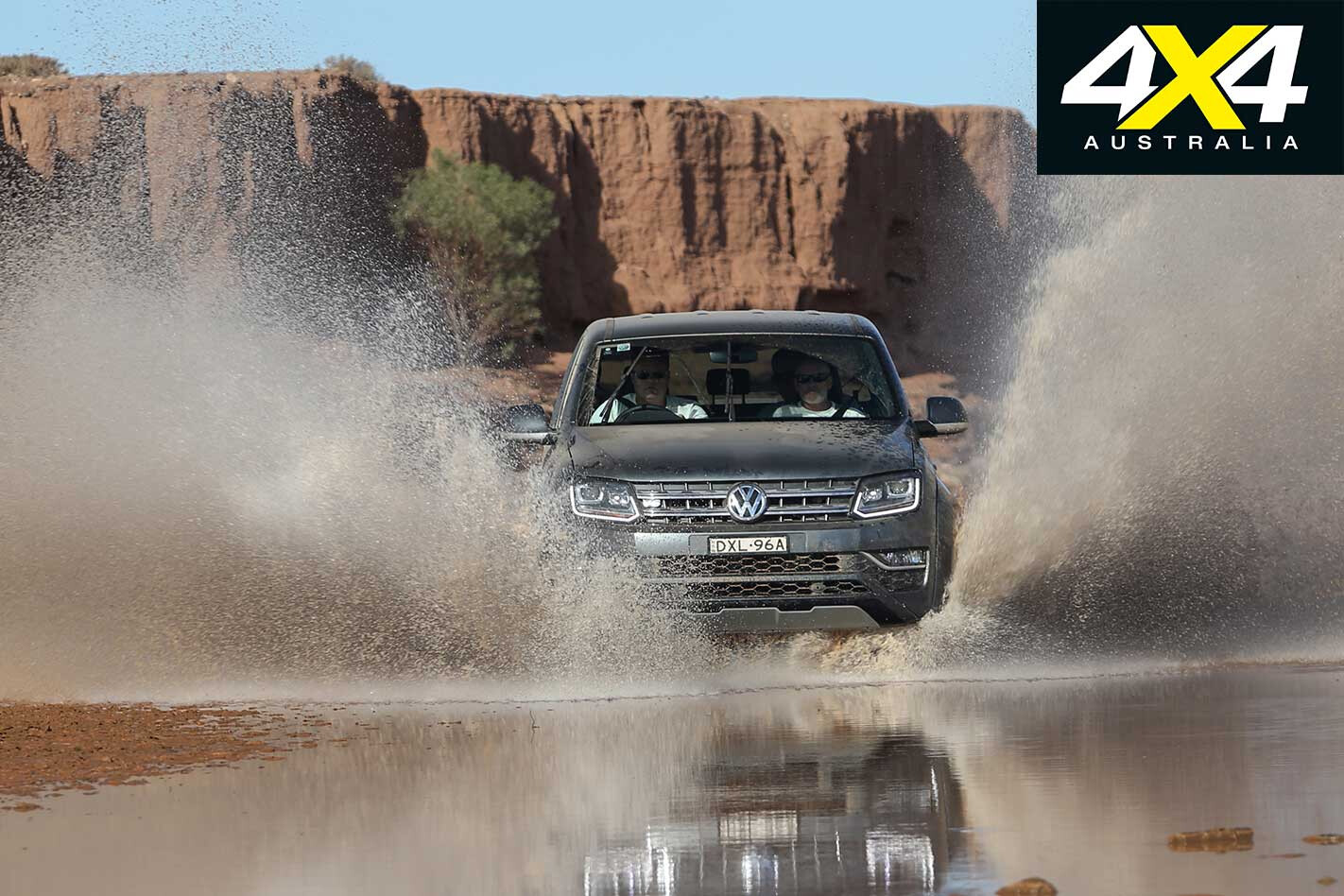
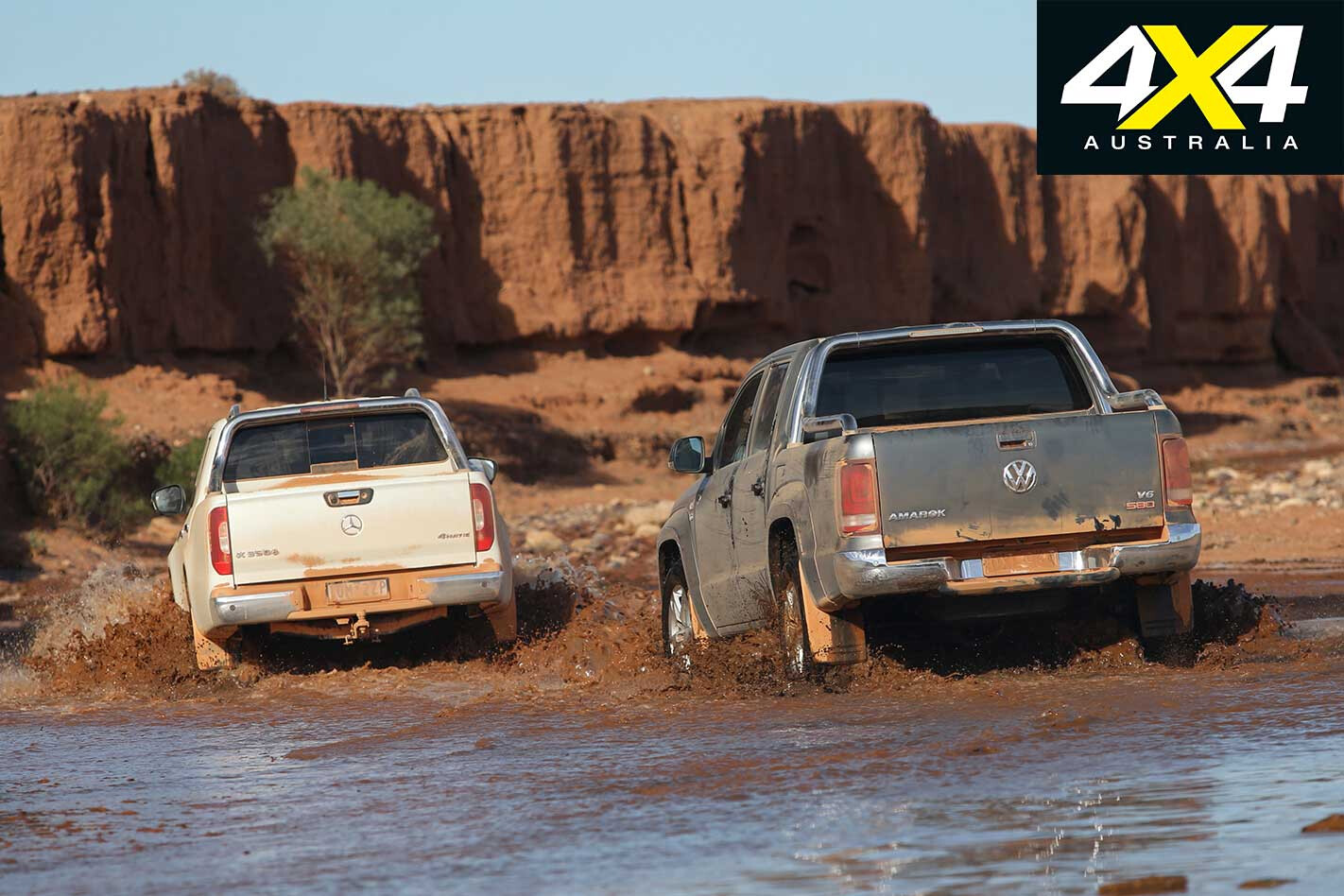
Get into deep water, and the 500mm wading depth is 100mm shy of the Benz.
Cabin and Accommodation
GETTING comfortable in the driver’s seat is easy in the Amarok. Terrific front seats make for great support and comfort, a step ahead of the Merc for lateral support. No matter how far you’re travelling, the pews aren’t likely to be an issue.
The relationship between pedals, seat and wheel is also more car than truck, adding to that sense of control and comfort. The controls are more logically presented than its cross-country rival, too, with a trio of ventilation dials positioned closely to the audio controls surrounding the central screen.
Then there’s the thoughtfulness elsewhere, particularly with storage. Where you struggle to find anywhere for a phone in the X-Class, in the Amarok there’s a smorgasbord of hidey holes and binnacles for everything from gadgets to maps. Even chronic over-packers will be well catered for in an Amarok.
Where the cabin falls down is in its presentation. The dash plastics are aesthetically pleasing from a distance, but have a hard scratchiness to the surfaces that diminishes the appeal. It’s way off the high bar set elsewhere in a VW dealership and even falls flat against many cheaper ute rivals.
Sure, there are felt linings to the door pockets, among other touches, but some extra effort on plastics and finishes would transform the Amarok. There are also some omissions, such as air vents to the rear.
Everywhere else, though, the Amarok’s rear space is a more welcoming place, the extra cabin width making it easier to accommodate three derrieres. Legroom isn’t as forthcoming, though.
What you get
At $71,990 the Ultimate 580 tops the Amarok lineup. No wonder, then, that it’s lavished with gear, adding things such as alloy pedals, electric front seats, shift paddles, an extended sports bar and steel side-steps with LED lights incorporated to illuminate the ground. A mix of real and faux leather also coats the seats, which are heated up front.
Air-con temps can be split on either side of the car and the windows have been tinted. There’s also a reversing camera, auto windscreen wipers, sat-nav, parking sensors front and rear, and tyre pressure monitors. Infotainment is taken care of with a 6.3-inch touchscreen incorporating Apple CarPlay and Android Auto. Plus, there are 20-inch alloys, although you can downsize to 18s or 19s.
But not everything is included. To pay that much and still have to put a key in the ignition is something of a kick, especially as rivals serve up smart keys at a much lower price point. Then there’s the safety systems, which drag the Amarok down. It’s the only ute without rear airbags, for example, something that can mean the difference between life and death in a side impact crash. And, whereas auto emergency braking is filtering into other utes, including the X-Class (and all Volkswagen passenger cars), it’s not yet offered in the Amarok.
While they may not be deal-breakers, they expose the Amarok as undernourished in this company. At least the price partially reflects that.
Still, despite the on-paper advantage, value is not a word that really comes into the equation with the Ultimate. This is expensive dual cab motoring, with gaping holes. At least the Amarok is backed by a five-year warranty, outdoing the Mercedes by two years.
Practicalities
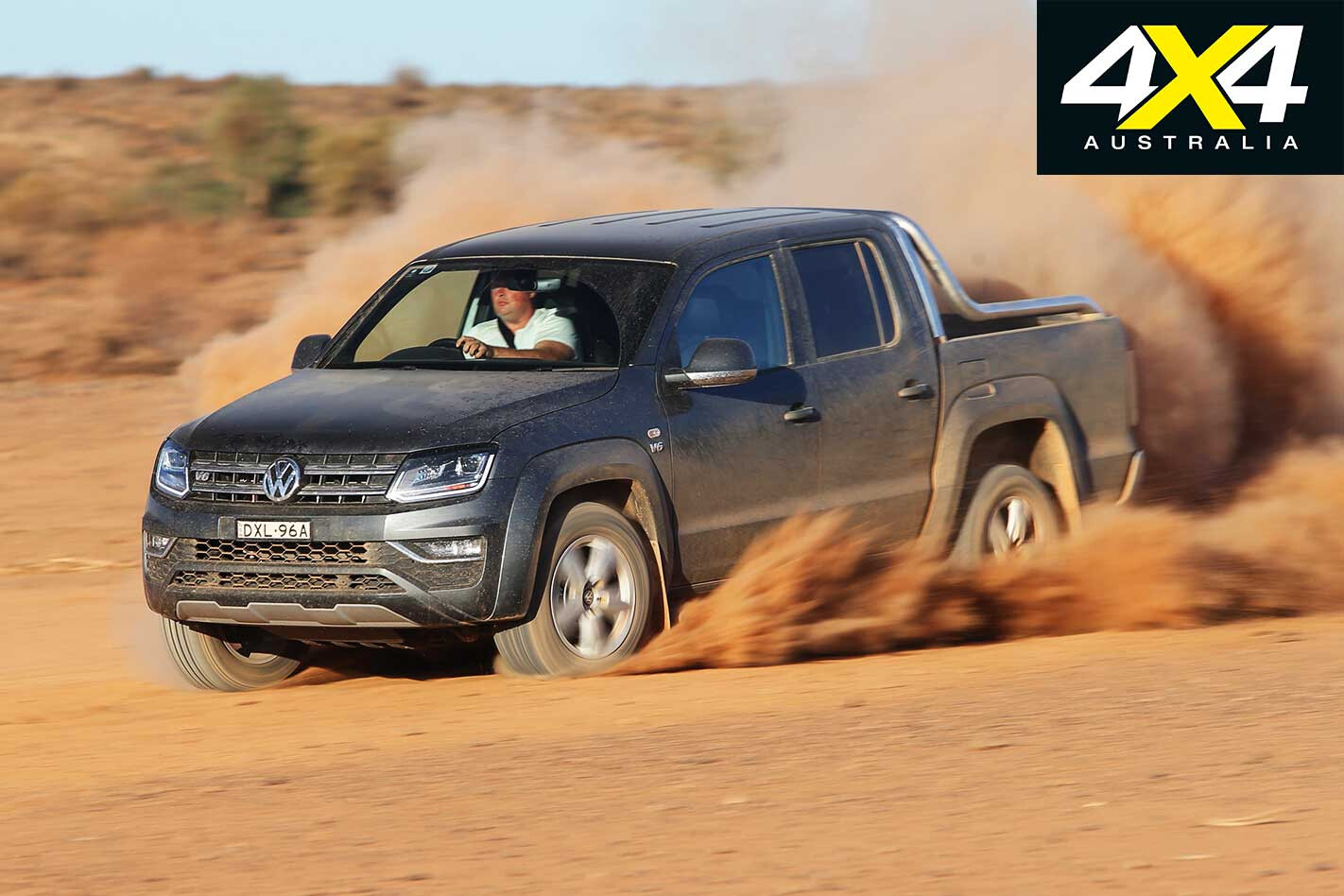
IT’S A BIG car with a big tray, and that’s one area the Amarok wins out. The extra width of the cabin also flows through to the tray, which can take a pallet between its wheel arches. While it doesn’t stretch as long as the X350, the additional width makes it a thoroughly useful ute; plus there’s a 12V outlet.
The Amarok’s 836kg payload may be almost 150kg down on the X’s, but we’d have far more confidence in its leaf springs being loaded to that limit. While we didn’t try it, experience suggests an Amarok does a better job with big loads on board.
Towing is a different story. While the Amarok V6 is rated to tow 3500kg, the 6000kg GCM reduces the payload to 256kg if you’ve maxxed things out. Considering the towball download will be at least that and you soon won’t even be able to legally drive it once you take a seat. Limit the tow capacity to 3000kg and the equation is more realistic, although payload will again become an issue.
Conclusion
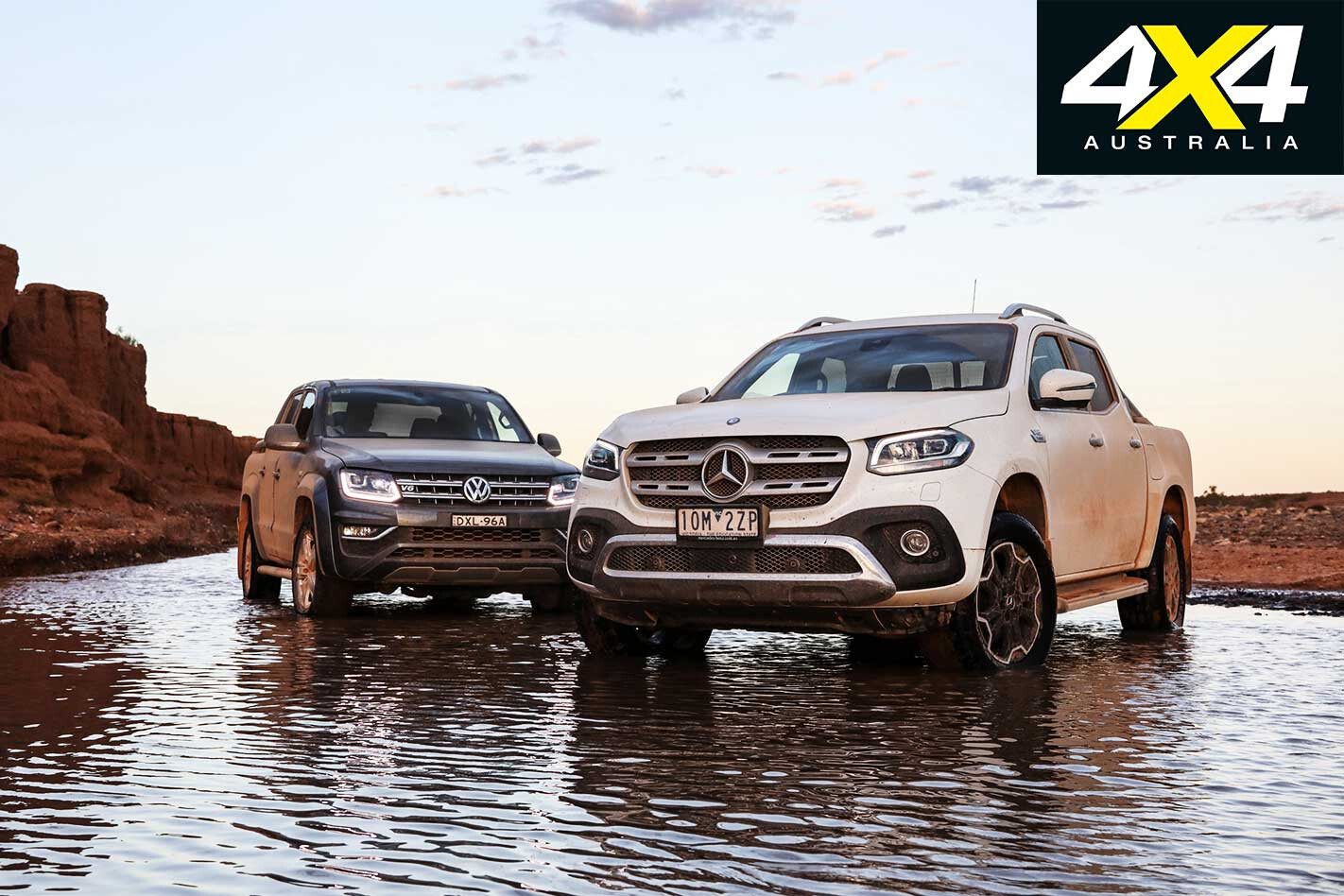
THEY’RE top-end price tags with brawny V6 pull. After a couple of thousand kays it’s apparent neither the Amarok Ultimate 580 nor X350d is a true top-end ute. The only area they’ve moved the ute game on is in building speed. In other areas – particularly value – this duo falls flat. There are better off-roaders and more spacious utes, and both miss out on equipment that is standard on utes $20K cheaper.
Still, here we are, staring at a decent run back into town tasked with choosing a winner.
Some will struggle to overlook the noticeable safety deficit of the Amarok. The lack of curtain airbags and auto braking is tough at this price, especially when Volkswagen stuffs that same tech into $20K city hatchbacks. If you’re one who values safety as mandatory, then look no farther than the X-Class. It’s a fine truck and one that leads on refinement.
With the backing of a low-range transfer case and better raw ability, the X350d is also more convincing in very rough terrain. But the Amarok matches off-road pace in most situations – and in other areas it kicks back – hard. Its drivetrain is sweeter and more flexible, the extra ratio and lower first gear providing more consistent drive across the rev range and picking up sooner when you plant your foot.
Throw in sharper value – and more features – and the Amarok is an easy match for the X. It’s not perfect, but in the V6 power war the Amarok Ultimate 580 has taken an early victory.
Specifications
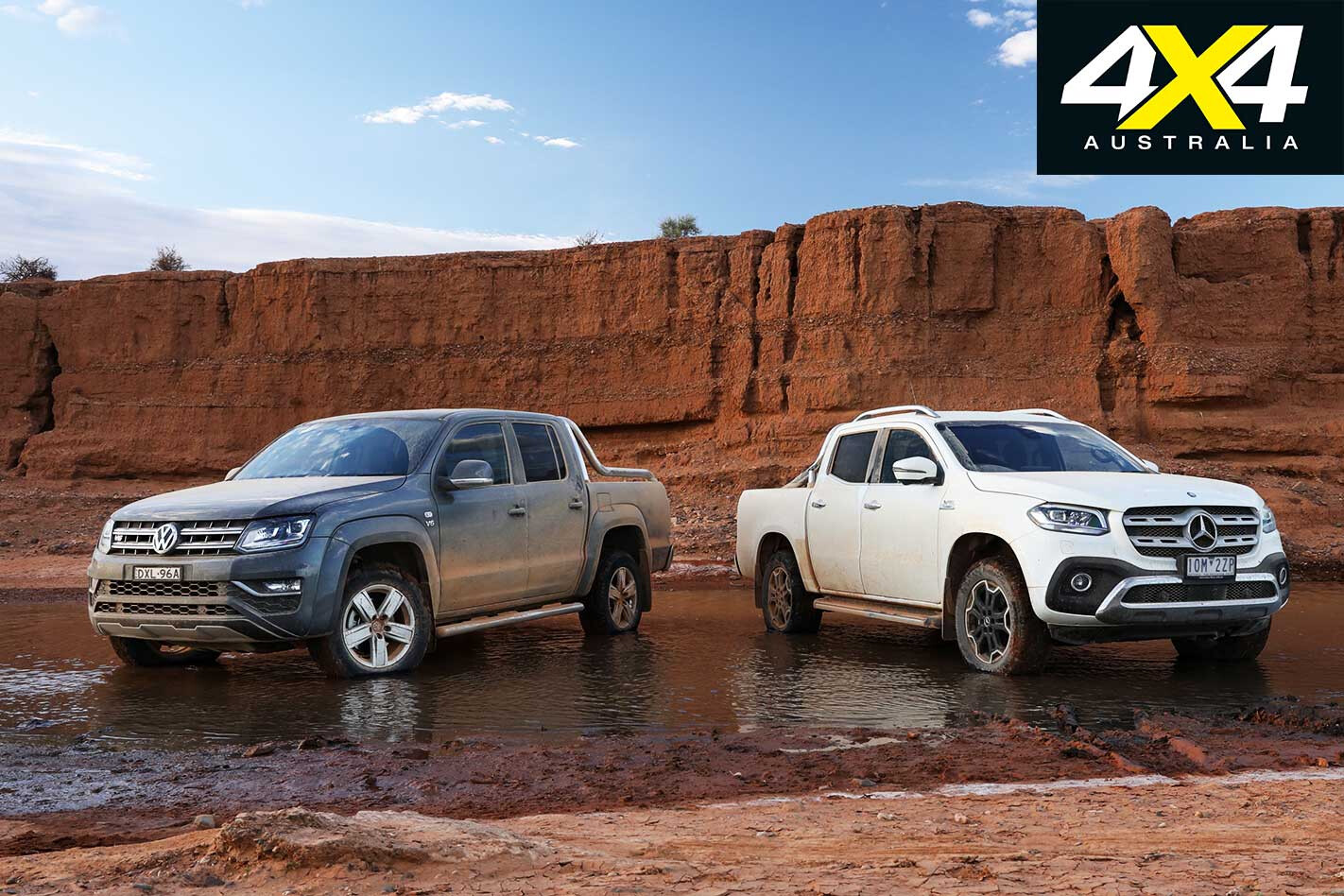
| u00a0 | Volkswagen Amarok Ultimate 580 | Mercedes-Benz X350d |
| Engine | 3.0-litre V6 turbo-diesel | |
| Power | 190kW @ 3250-4500rpm | 190Kw @ 3400rpm |
| Torque | 580Nm @ 1400-3000rpm | 550Nm @ 1400-3200rpm |
| Gearbox | 8-speed automatic | 7-speed automatic |
| 4×4 System | High-range full-time 4WD | Dual-range full-time 4WD |
| Crawl Ratio | 15.44:1 | 42.61:1 |
| Construction | Separate-chassis | |
| Suspension (f) | Independent double wishbones, coil springs | |
| Suspension (r) | Live axle, leaf springs | |
| Kerb Weight | 2244kg | 2190kg |
| GVM | 3080kg | 3250kg |
| Payload | 836kg | 1010kg |
| Towing capacity | 3500kg | |
| GCM | 6000kg | 6180kg |
| Fuel capacity | 80 litres | |
| ADR fuel claim | 8.5L/100km | 8.8L/100km |
| L/W/h | 5254/1954/1834mm | 5340/1920/1839mm |
| Wheelbase | 3095mm | 3150mm |
| Price | $71,990 | $79,415 |
Glaring omissions
DESPITE their big ticket price tags, neither car stands out for its feature set, missing out on key items in more affordable rivals. A sunroof, for example, is not available in either and a tow bar is extra cost. Each then has big holes in its features – the Amarok’s lack of auto braking, for example, and the X’s lack of standard leather and heated seats.
THE synthetic rope has fast become the go-to option in an off-roader’s recovery arsenal. Stronger, lighter and more versatile than old-school steel ropes, synthetic rope now holds a permanent position on the winch drum of countless tourers around the world.
“The introduction of synthetic rope a few years ago was a game changer in the winch industry,” Ironman 4×4’s director of 4×4 products, Adam Craze, explained. “The rope had been around for a long time, previously used for other industries including marine. It made a progression into 4×4 winches and hasn’t looked back.”
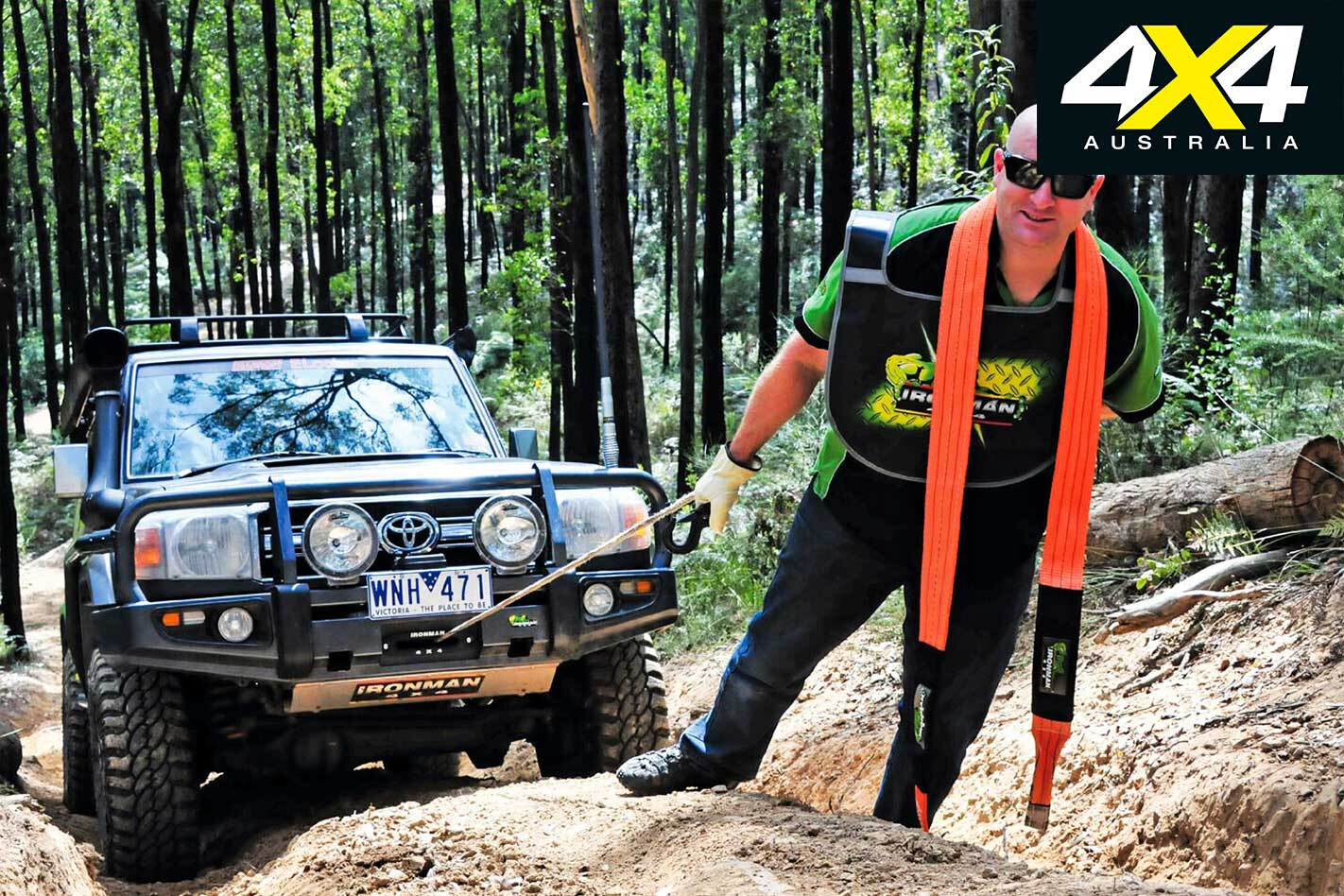
In fact, synthetic rope sales now far exceed those of steel cables. “Synthetic rope sales have far surpassed steel cable sales in the last 10 years I have been involved in the industry,” said Daniel Kozaris, the owner of Carbon Winches Australia. “The market is generally well-attuned to the benefits of synthetic rope for 4×4 recovery.”
Adam Craze added that Ironman 4×4 currently sells 70 per cent rope versus 30 per cent steel; while Jim Markham, the owner of JM Rigging Supply, told us he currently sells about 50 Dyneema synthetic lines to one steel line for off-road use. “I take steel winch lines off winches and replace them with Dyneema on a regular basis,” Jim said. “I have never replaced a Dyneema line with steel.”
Synthetic ropes are made using polyethylene, with Carbon Winches Australia using Dyneema SK75 fibre for its ropes used for electric winch recovery. Dyneema fibres are made from Ultra High Molecular Weight Polyethylene (UHMWPE), which is claimed to be up to 15 times stronger than steel on a weight-for-weight basis.
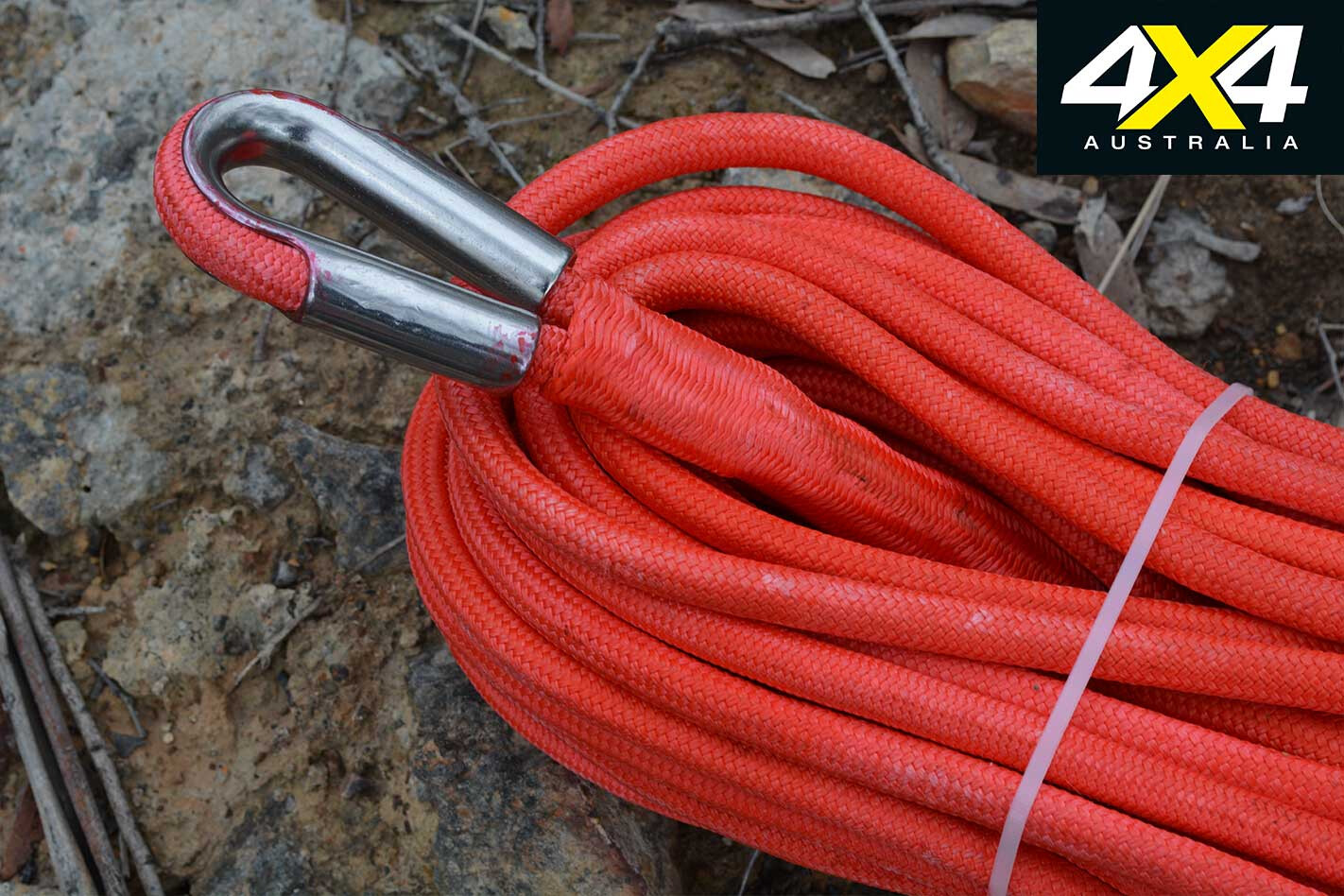
“Dyneema is produced in a patented gel-spinning process in which the fibres are drawn, heated, elongated, and cooled,” the Dyneema statement reads. “Stretching and spinning leads to molecular alignment, high crystallisation, and low density. Dyneema has extremely long molecular chains that transfer load more effectively to the polymer backbone.”
Jim Markham, from JM Rigging Supply based out of Utah, USA, has been in the rigging industry for more than 30 years, and he told us he also uses Dyneema fibre manufactured by DSM in the Netherlands.
“Dyneema rope is supplied basically in what we call a 12-strand single braid,” Jim said. “The common grade of Dyneema is an SK75 and the common size used is 3/8-inch diameter. Depending on the manufacture and the steps it goes through will determine the breaking strength, which can range from 17,000lb to 20,000lb.”
Dyneema rope isn’t just a recovery tool for a 4x4er, you’ll also find it’s used on sailing ropes, trawl ropes, anchor ropes, mooring ropes, climbing ropes and even paragliding lines.
Steel vs Synthetic
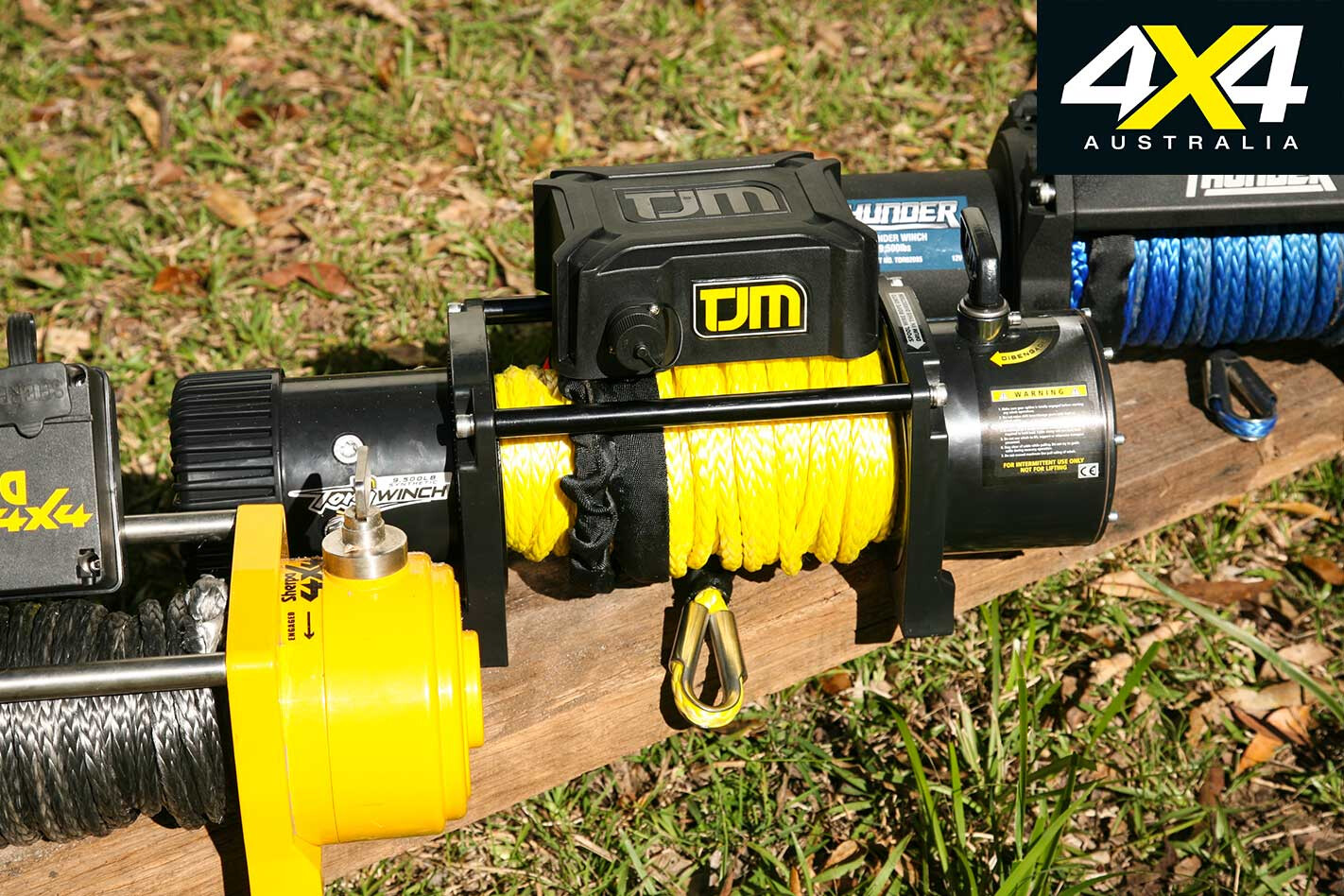
SYNTHETIC rope may lead steel cables as the popular choice, but that doesn’t make steel redundant for an off-roader.
“Steel cable is still relevant for certain applications, mainly outside of 4×4 recovery use. The logging industry, tow trucks and similar industries still find that steel cable provides a longer lifespan and lower cost in situations where the added risks and disadvantages can be managed and the overall benefits still allow steel cable to be the choice on their winches,” Dan Kozaris told us.
Still, steel is heavier than synthetic rope, which means it adds more weight to the front-end of vehicle – taking 10-15kg off the winch will greatly reduce the impact to the front suspension.
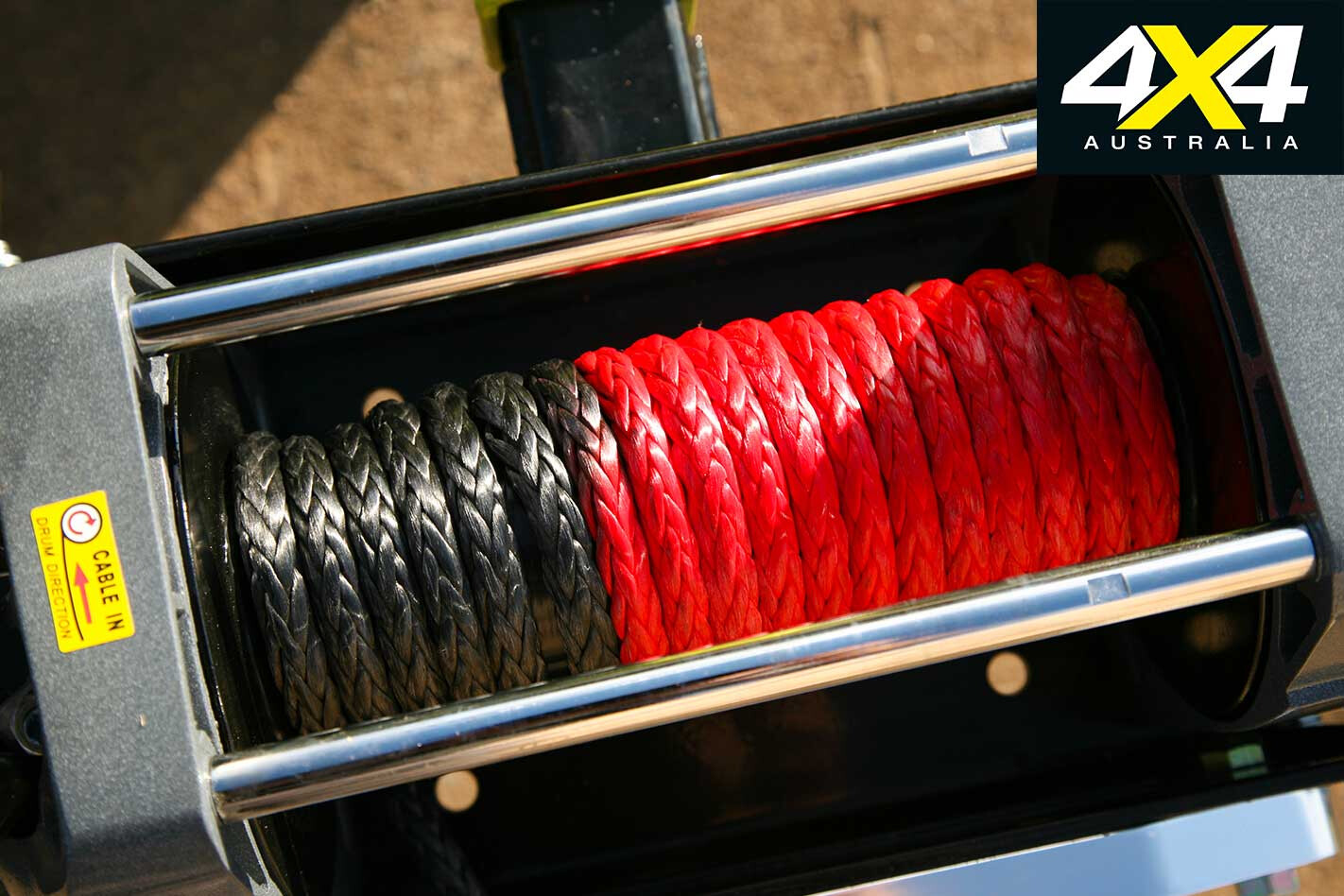
Synthetic rope is also safer to handle, stronger than the equivalent-diameter steel cable (as mentioned, up to 15 times stronger on a weight-for-weight basis), can float on water (ideal for water-logged recoveries), doesn’t go mouldy, can be handled without gloves (no risk of metal strands embedding in your skin), and, as Dan from Carbon Winches Australia told us, comes in a bunch of pretty colours. Dyneema rope also requires a minimum bend radius of three inches, which is much more favourable for off-road use.
ARB’s Shannon Diedrich explained that another benefit of synthetic rope is that it can be respliced – joining two ends of a rope without using a knot – so if it breaks it can be rejoined and remain strong. She also confirmed that a synthetic rope doesn’t bind on the winch drum.
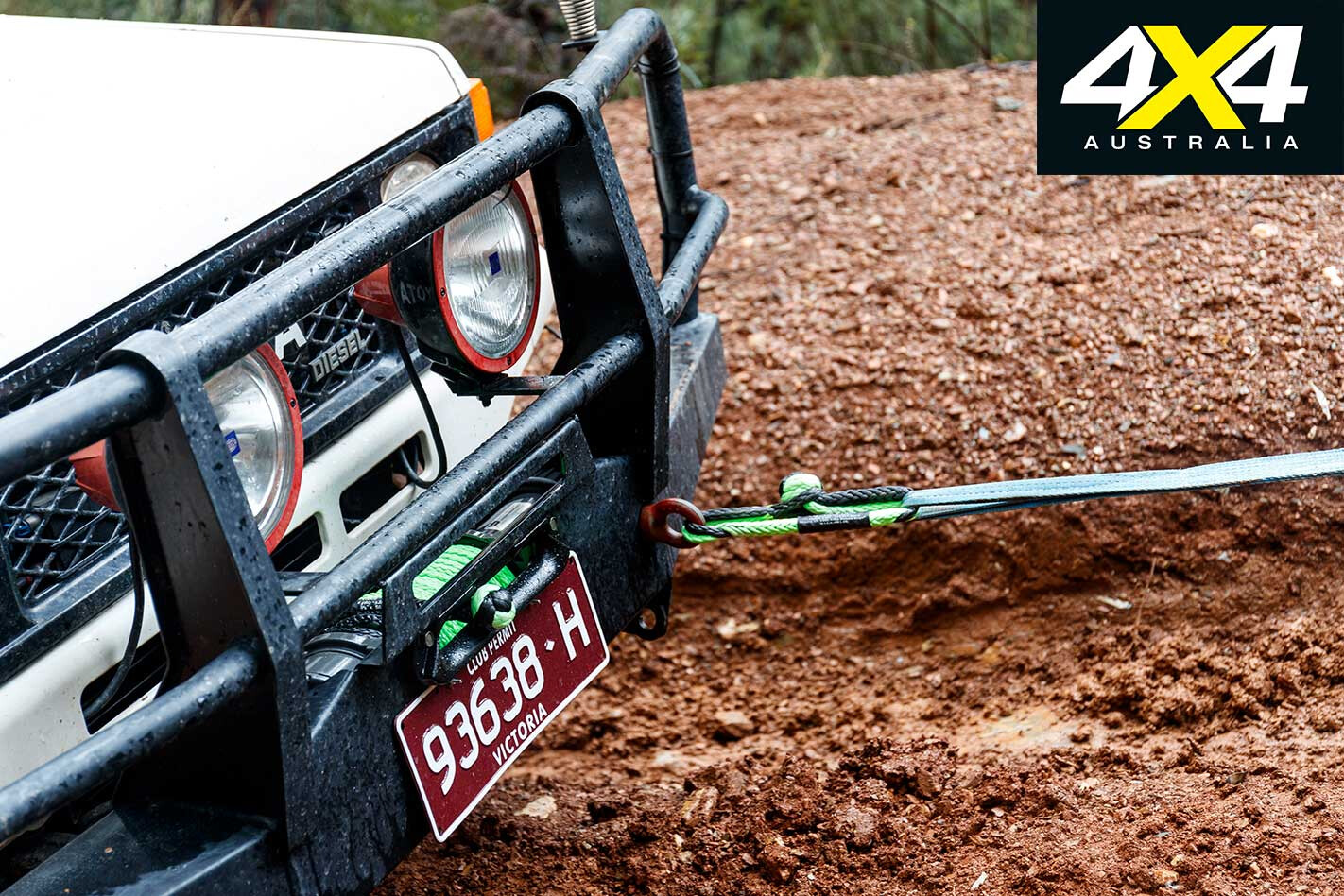
Jim Markham reiterated that point: “The biggest advantage to Dyneema rope is that if you break it out on the trail you can simply tie it back together in a knot. Yes you will lose about 40 per cent brake of the rope at the knot, but have you ever tried tying cable in a knot? A broken steel cable on the trail generally means no more winch.”
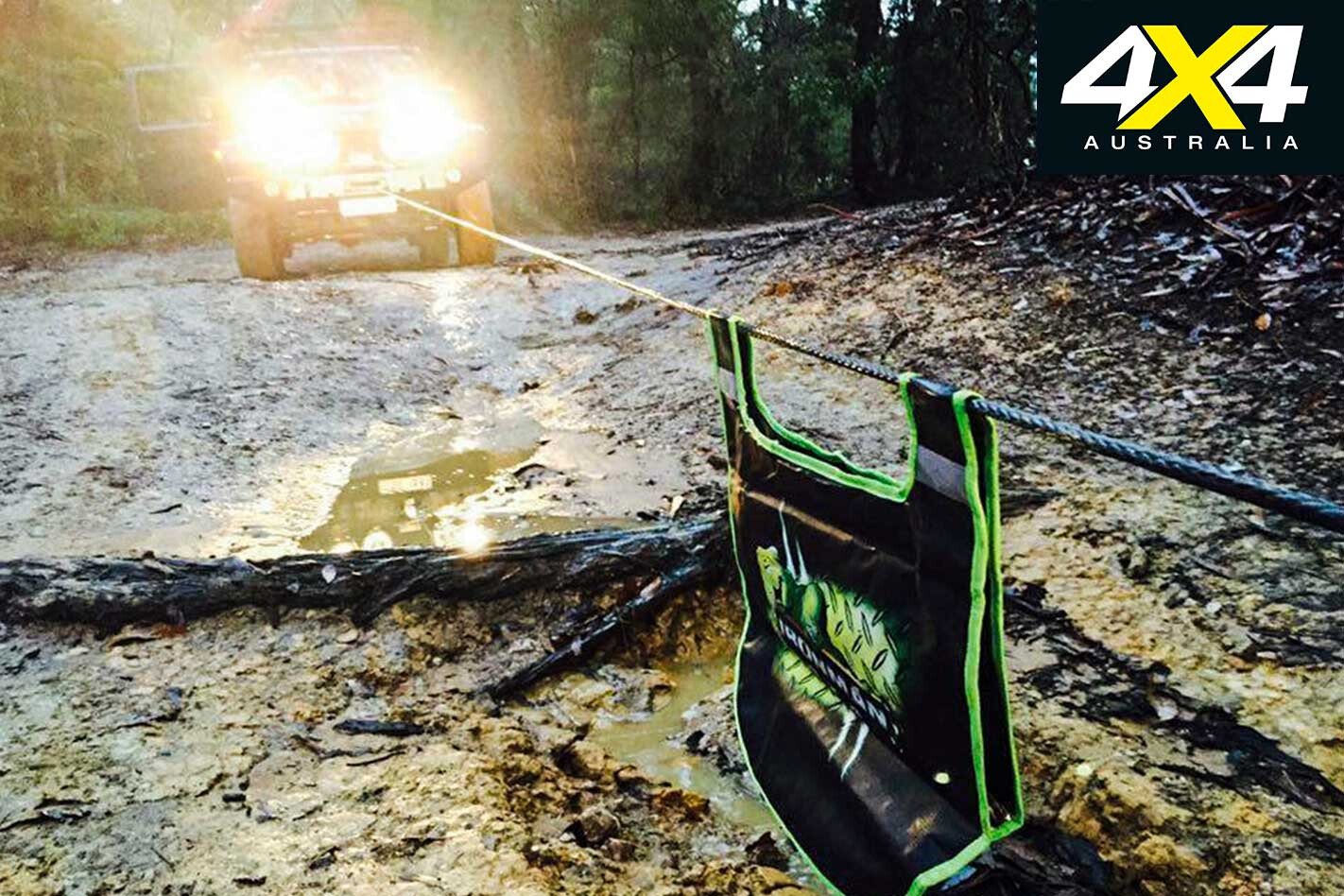
Making synthetic rope even more lucrative to the hardcore off-roader is the fact it doesn’t store energy and therefore won’t ‘whip back’ like a steel cable. The rope’s lower elasticity means there’s less chance of it flying back, but Dan Kozaris advises that a “winch damper blanket should still be used for safe recovery practice”.
“By design synthetic rope doesn’t store nearly as much potential energy, so if the rope should snap it won’t be nearly as dangerous,” Craze added. “Synthetic also doesn’t suffer from filings and burrs the same way steel cable does, meaning it’s a lot safer to handle.
“It also has built-in tension within it as it’s not nearly as malleable as rope, so it has a lot more spring to it. There is no questioning it, synthetic rope is safer,” he said.
A steel cable on the other hand holds and builds up kinetic energy stored through the length of the winch line. “Bends, kinks, splinters and broken wires all contribute to premature failure of a steel winch line,” Jim said. “Use and bend fatigue also contribute to early failure. When a steel cable fails or breaks it is pretty violent. Broken steel winch lines have been known to break windows, go through radiators and worst yet, hurt and even kill people.”
Steely Resolve
THE MOST common stranding of steel cable used for winching is a 7×19-inch strand. “This means seven strands of 19 wires wrapped around a core,” Jim added. “The 7×19 strand is a common low-grade ‘commercial’ or basic-use cable and is mass produced with little or no quality control.”
The breaking strength on a basic 3/8-inch 7×19 cable is 14,400lb, so Jim recommends punters opt for 3/8-inch 6×36 or 6×37 for winching. “This cable is made for winching, is more flexible and carries a higher breaking strength of 15,100lb,” he said.
Bend Fatigue
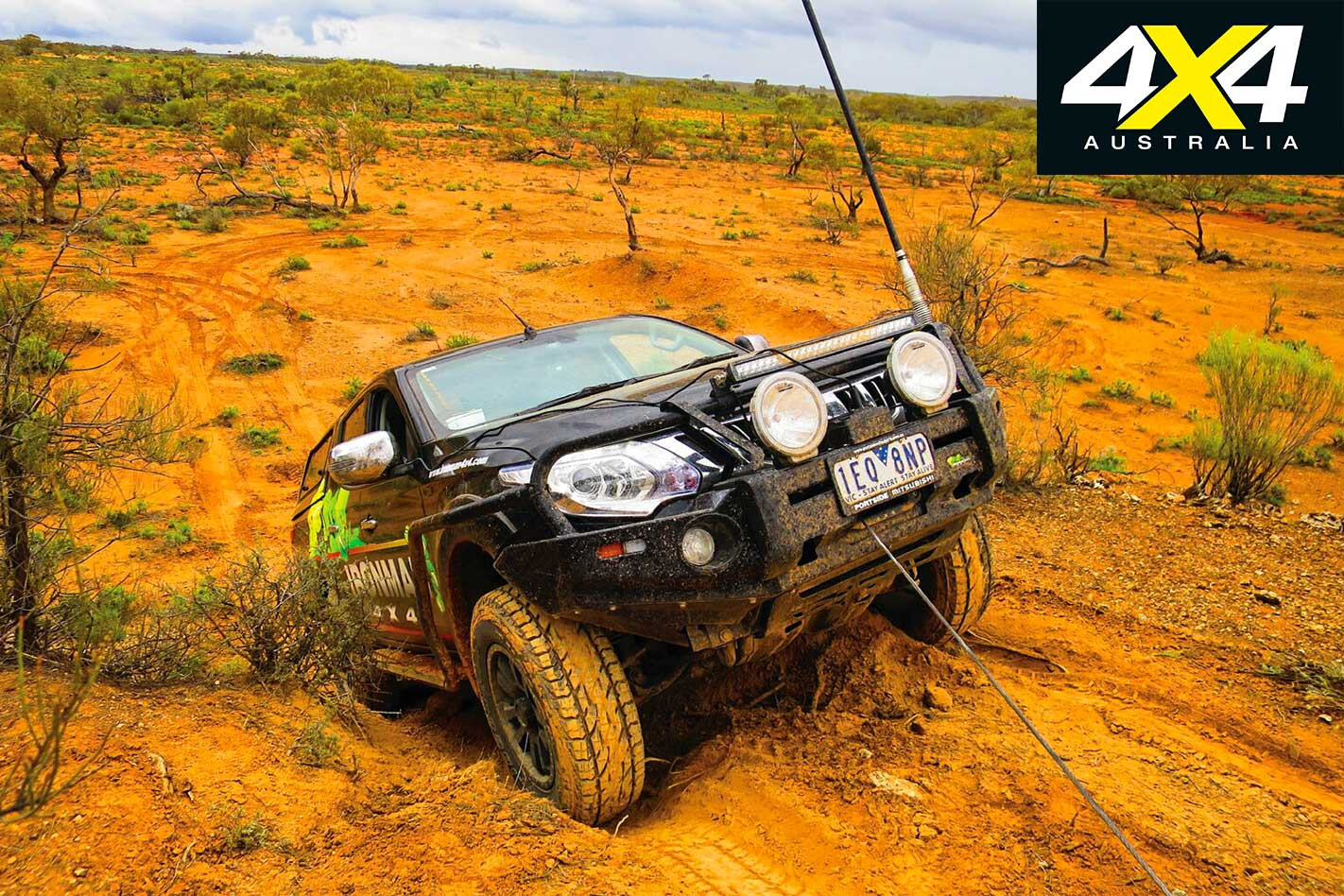
FORCING a steel cable to conform to a small-diameter winch is a common issue and it even has a name – bend fatigue – and it’s what causes broken wires on the cable’s outer strands.
“Steel cable in 3/8-inch diameter has a minimum bend radius of about six inches,” Jim Markham explained. “This [3/8-inch] diameter is the most common size installed on off-road winches. Most off-road recovery winches are a lot less than a six-inch drum diameter.”
Pulling a load with a withering cable causes the wire to splinter even more, this weakening it further before it’ll eventually snap.
“Ever notice how the wire curls like a pig’s tail when you pull it off the drum? It does this because you have forced the wire to bend way below the minimum bend radius, kind of like running ribbon over scissors to get it to curl,” Jim said. “This makes the wire winch line harder to pull out and much more difficult to use. These curls can also cause kinking in the cable which severely weakens the strength.”
Cons
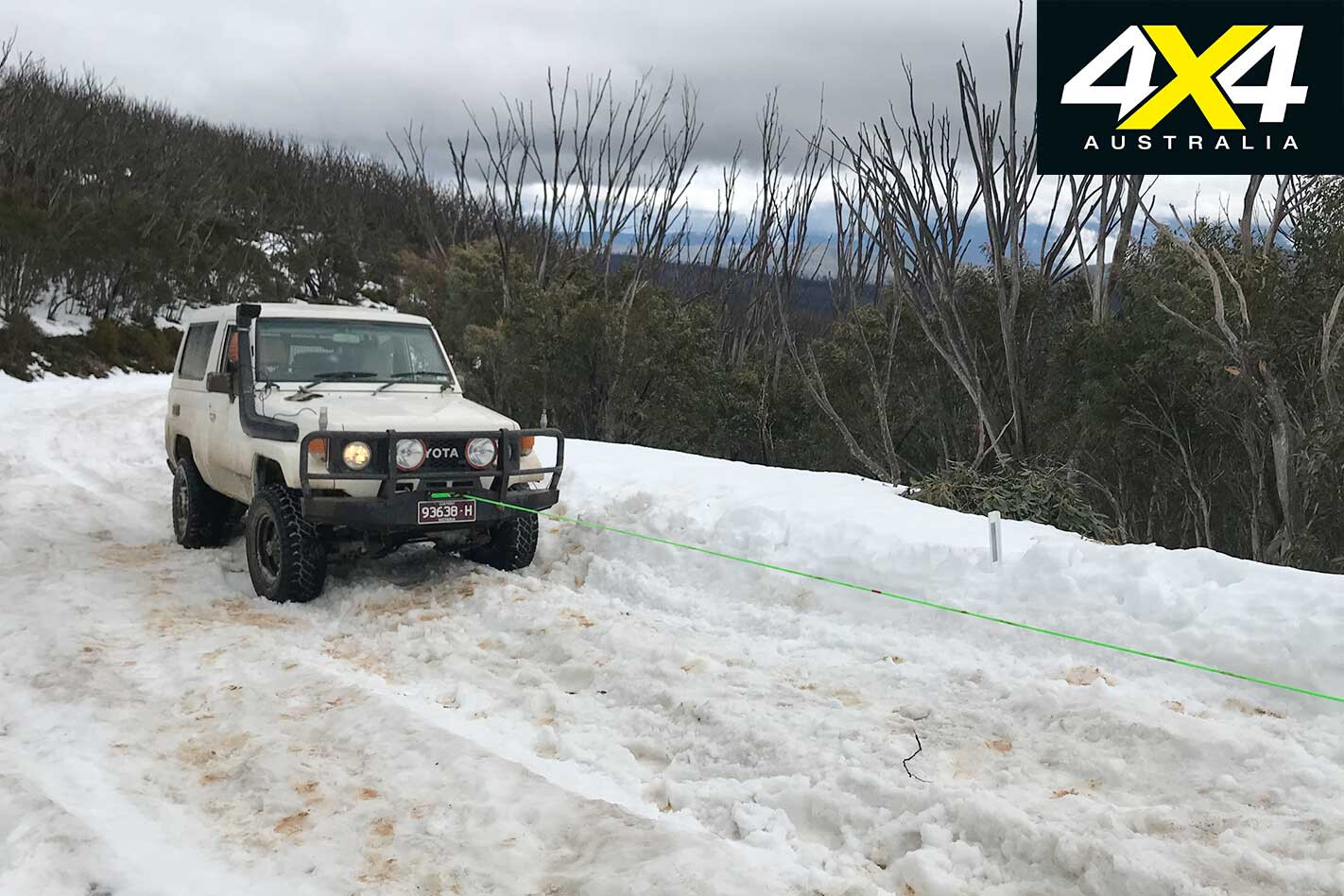
DESPITE its many advantages, there are a few drawbacks when using synthetic rope as a recovery tool. A key concern agreed to by the experts is that they’re more at risk of abrasion damage, as the rope is susceptible when it rubs against surfaces.
“Abrasion damage is more of a risk, so you need to be much more vigilant in protecting the rope during recoveries to minimise breakage due to sharp edges on rocks or trees,” Kozaris explained.
“Users should ideally set up the winch recovery so that the rope is not in contact with any surface between the vehicle and the anchor point,” he said. “If it is impossible, then protect the rope prior to loading it up from abrasion against any surface. You can use a jumper, an old hessian bag, a car floor mat; whatever is available to stop it rubbing on abrasive surfaces.”
Craze added that something like a sleeve over the rope or tarp beneath it will limit abrasion damage.
It’s also important to keep in mind that synthetic rope won’t last as long as a steel cable, and it will need to be replaced a lot more frequently. “It degrades under UV exposure and can lose up to half its strength in six months of sunlight exposure,” Diedrich explained. “Warn recommends replacing its synthetic ropes every 12 months.”
Steel cables are more durable when working in rough, rocky areas, and they will handle more punishment. Synthetic ropes, on the other hand, require more maintenance. “Synthetic rope needs more care and attention, especially when it is brand new,” Craze said. “You will need to spool it on under tension, otherwise during a recovery the rope will slice through the layers on the drum and sometimes get stuck.”
ARB’s Diedrich added that other disadvantages are susceptibility to damage from shock loads, susceptibility to breakage due to wear and rubbing on ground surfaces, susceptibility to heat damage, and loss of strength due to winch drum temperatures.
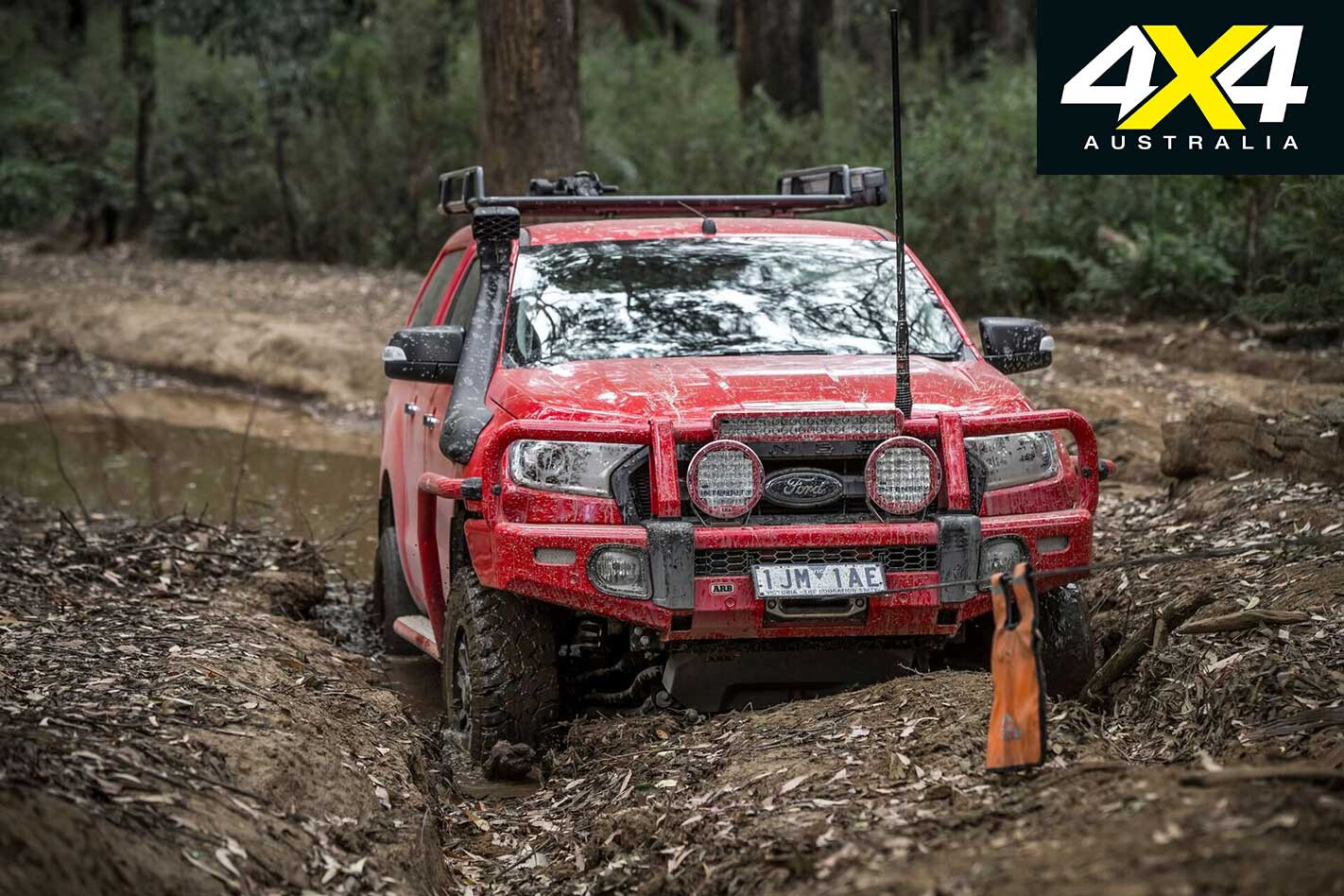
A synthetic rope will cost more to purchase and maintain than a steel cable, but Adam Craze insists that it’s a much better option: “There’s less weight on suspension, less weight on the bullbar, it’s safer and easier to use. The extra cost at the start will soon be forgotten.”
Be Careful
SYNTHETIC ropes aren’t all created equal, so it’s important to research and buy from reputable brands, as Jim Markham from JM Rigging Supply explained.
“The raw Dyneema fibre is made by DSM in the Netherlands. The manufacturer then strands the rope,” he said. “This rope is mass produced with very little quality control in China and throughout Asia. Be aware of blended ropes, as pure Dyneema has been deemed the best for off-road recovery. I only sell quality Dyneema rope manufactured in the United States under strict quality control.”
Synthetic rope offerings on the market
ARB
ARB STOCKS a Warn Spydura Synthetic rope (30.48m x 9.5mm) as well as a range of Dynamica ropes: 8mm x 30m, 8mm x 35m, 8mm x 40m, 8mm x 45m,10mm x 30m, 10mm x 35m, 10mm x 40m, 10mm x 45m, 11mm x 40m, and 11mm x 45m.
Head online for specs, pricing and more information.
Website: www.arb.com.au
Carbon Winches Australia
Carbon Winches Australia stocks 10mm x 24m Dyneema winch rope replacements, which are good for winches up to 13,000lb. It also stocks 12mm x 24m Dyneema winch rope, good for winches up to 17,000lb.
The Australian company also stocks Monkey Fist Dyneema soft shackles and will soon release a new rope option that has far greater abrasion resistance properties than the standard Dyneema. Stay tuned.
Ironman 4×4
IRONMAN 4×4 offers two winches with 8mm and 9.5mm cable. It also sells synthetic rope separately from its winches for those wishing to upgrade, offering two different sizes based off the size of your winch and their respective ratings.
Website: www.ironman4x4.com
JM Rigging Supplies
THE US-based company stock 1/4”, 5/16”, 3/8”, 7/16” and 1/2” Dyneema rope, with different colour options available depending on size and stock availability.
“These diameters are for winch lines as well as soft shackles,” Jim said. “Being that I make all my lines and soft shackles in-house, I can make any length desired in winch lines and soft shackles. We also make the lines per the specs on your winch so connection and installation are generally pretty easy and user-friendly. I have the ability to make and control exactly what you want.”
Website: www.jmrigging.com
Soft Shackles
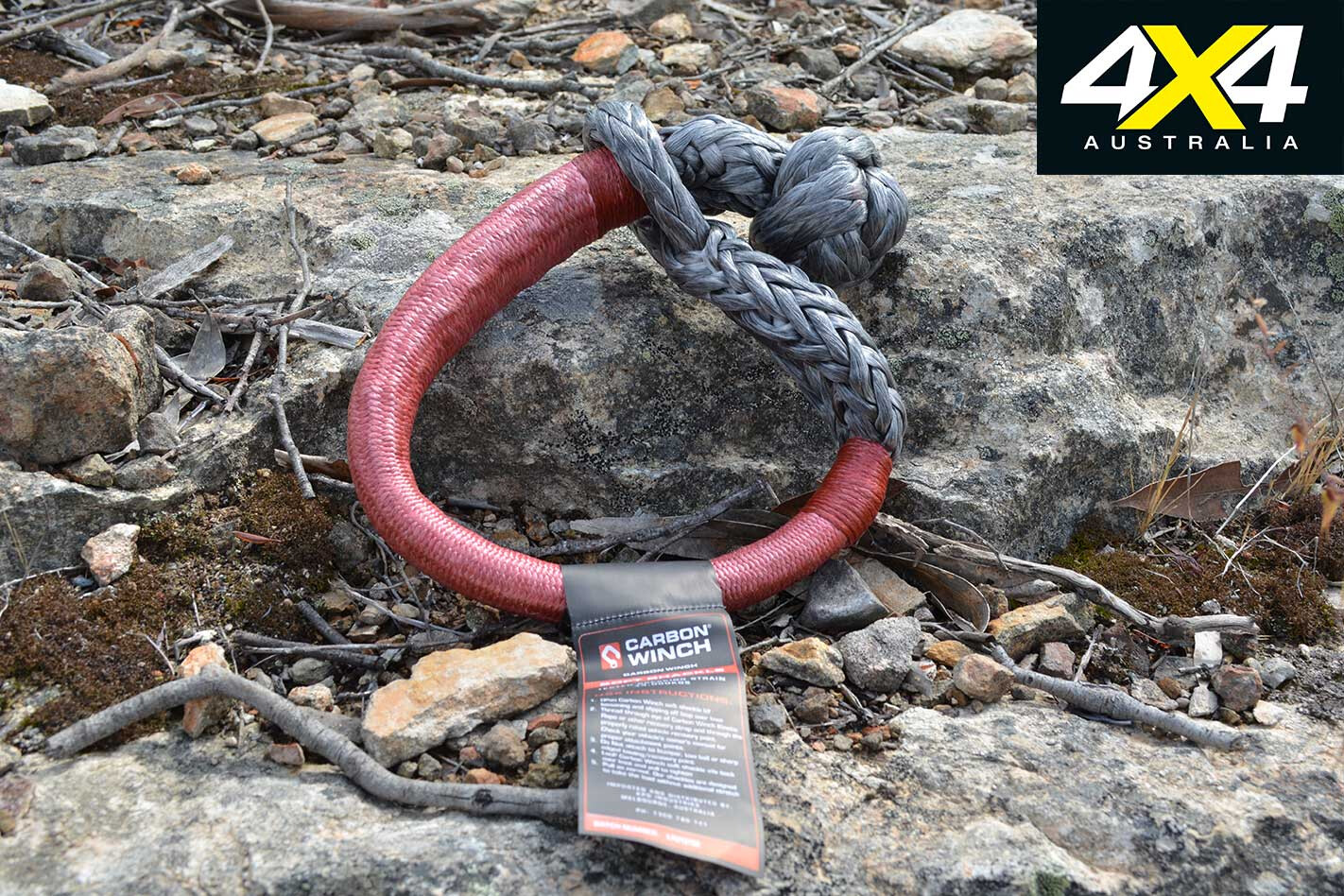
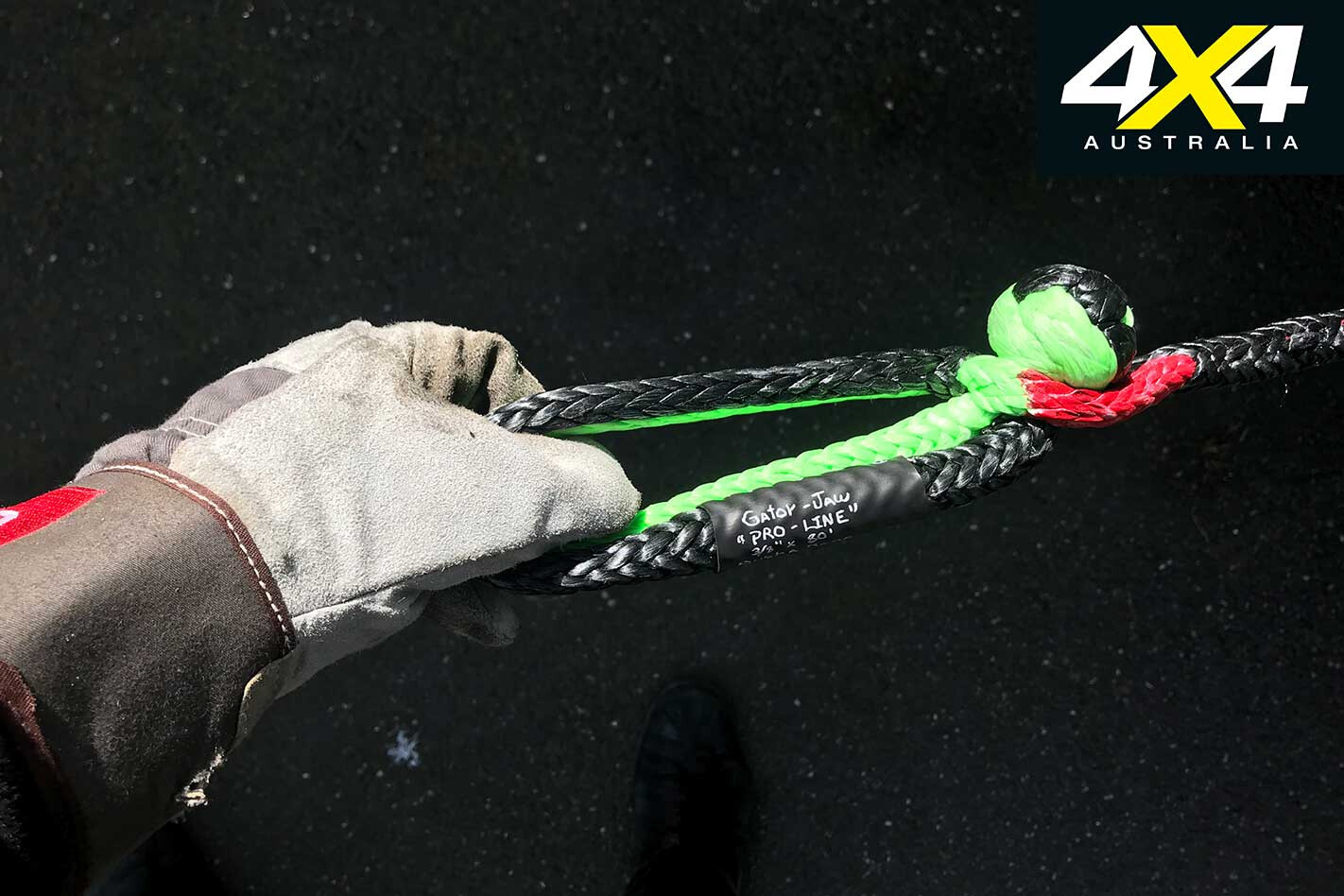
SOFT shackles are a lightweight alternative to the traditional steel bow shackle, made using Dyneema and equivalent fibres, and they are said to be easier and safer to use (no more metal projectiles hurtling toward your windscreen).
“Replacing a commonly used metal shackle with a rope substitute is always a good option in a recovery situation,” Craze said. “The chance of an injury or death is significantly reduced by removing metal objects that are commonly used during any recovery.”
Steel shackles are limited by their size, whereas soft shackles are more user-friendly, better and quicker for gathering bulky recovery straps. “They are also light so they float in water, mud and snow and require no tools to use,” Jim said. “Also in a rollover situation, steel shackles fly around the rig hitting people and breaking things; plus how many times have you lost the pin?”
Dan Kozaris added that synthetic rope has had such a positive impact on the off-roading community that soft shackles should have no problem cracking the market. “People already have had a great experience with synthetic rope in winches, so this confidence should allow the end user to adopt the use of soft shackles for recovery as a no-brainer option compared to a steel bow shackle,” he said.
We were stymied! We were looking to get to the Boxhole Meteorite Crater, but we only had a rough idea of where it was, what it looked like and how big it was supposed to be … and there was nobody at the station homestead to ask or get permission to visit it.
The crater, by all accounts, is not far from the Dnieper Station homestead, about 40km north of the Plenty Highway along what is part of the Binns Track. It was discovered by a shearer who took the acclaimed geologist and explorer, Cecil Madigan, to it in 1937. Madigan, after finding nickel and iron fragments, confirmed that it was a meteorite crater – and a young one at that.
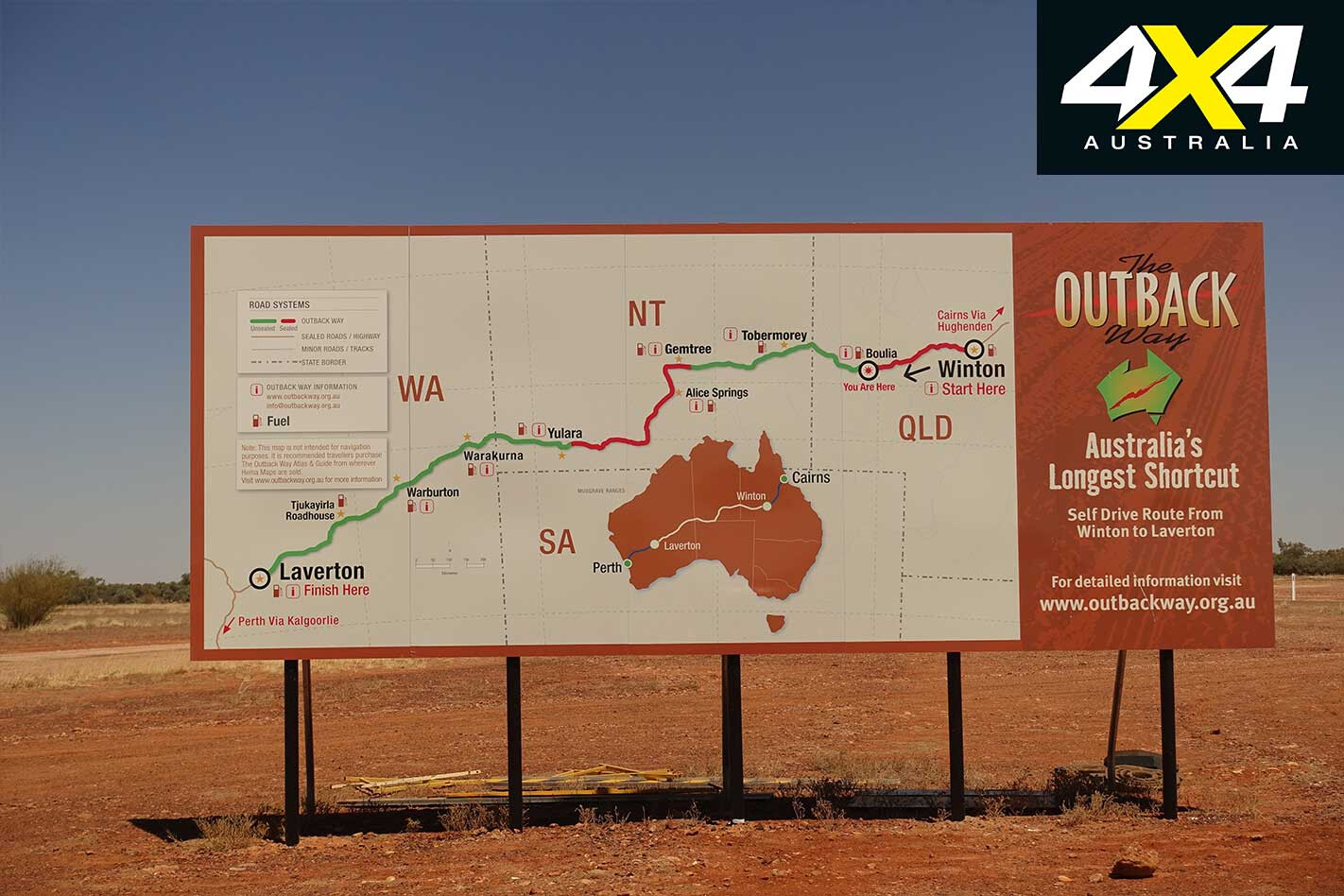
Later, a mass of iron mixed with other meteorite minerals weighing more than 80kg was discovered; sadly that sample of high-speed intergalactic rock is in the British Natural History Museum, far from where it can be enjoyed by Aussie travellers.
At 170 metres in diameter the crater isn’t huge, but it is one of the youngest in Australia at around 5500 years old and I expected to find, somewhere, Aboriginal stories or legends pertaining to its spectacular, fiery formation, but such was not the case. In fact, that very absence of stories about this crater, when other older ones have rich stories about them, still mystifies researches (check out: https://bit.ly/2VYbaaS).
Disappointed, we turned away from the homestead and headed deeper into more remote country, our travels along the Plenty Highway having started a few days previously when we had arrived in the outback town of Boulia, an oasis I always enjoy visiting for one reason or another.
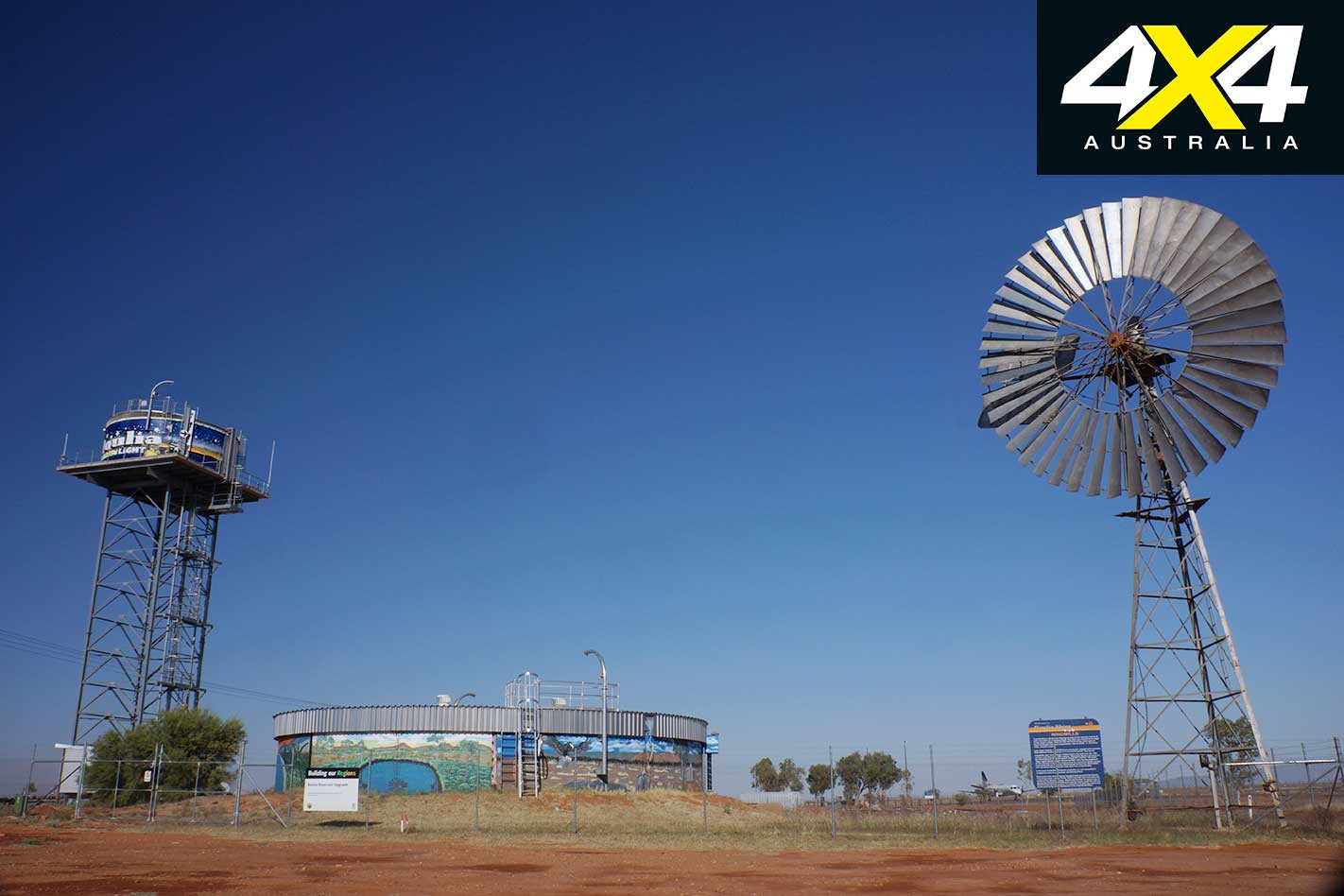
The town located on the banks of the Burke River was officially founded in 1879. Earlier, Burke and Wills had passed through here on their march to the Gulf and their stagger back to their camp on the Cooper in 1861/62. Pioneer graziers came out this way in 1877 taking up land along the great rivers, but already there was a native mounted police post located on the Burke River some 25km north of the soon-to-be proclaimed town of Boulia, the town taking its name from the local waterhole.
This latest visit we parked the camper in the local van park and went off to experience the town, including the Min Min Centre, which celebrates the area’s Min Min Lights, which were first reported at an isolated Cobb & Co staging post back in the 1880s. Myth or legend, true or false? Nobody is betting one way or another, but nobody can explain them either, although I know we haven’t seen any!
Then, for a dose of history, there is the well set-up heritage complex centred around ‘the Stonehouse’ built in the late 1880s. Being a bit of a dinosaur nut we checked out the very well preserved plesiosaur fossil found here, which is one of the most complete and fine examples ever discovered.
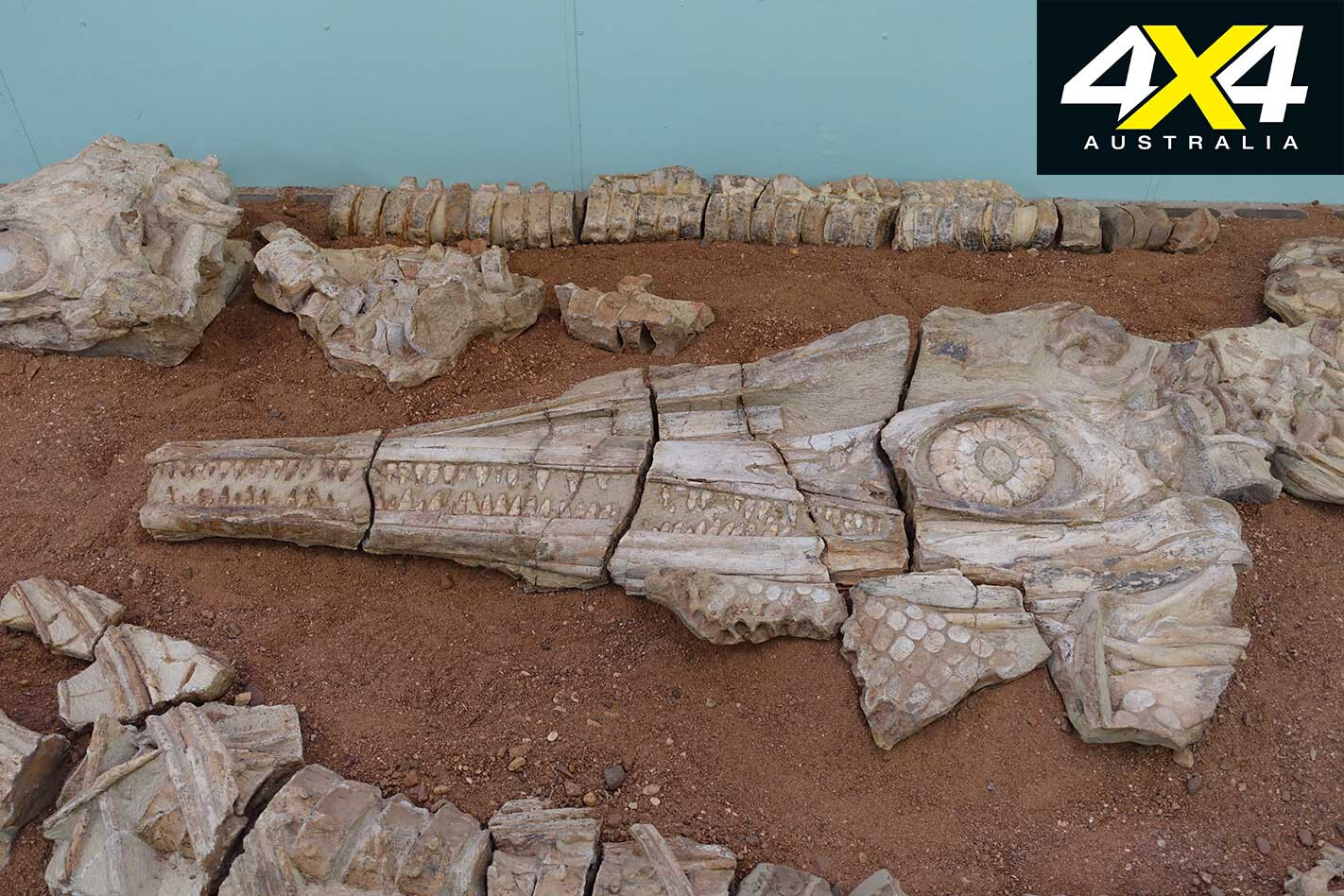
Next morning we headed out of town along the tar of the Diamantina Developmental Road before turning onto the Donohue Highway and striking more directly west. The blacktop continued for some way before degenerating into gravel interspersed with short sections of blacktop. After about 125km the road crosses the braided channels of the Georgina River and there is a free camping site located here that is often popular with travellers.
The Georgina is one of the three great rivers of outback Queensland and the Channel Country, and it’s the most western one. It begins gathering water farther north on the Barkly Tableland near Camooweal, and its catchment of 230,000km² even includes the northern slopes of the MacDonnell Ranges. It meets with the Burke River just south of Boulia before flowing south to form Eyre Creek, and, ultimately, in times of big floods, making its way to Lake Eyre.
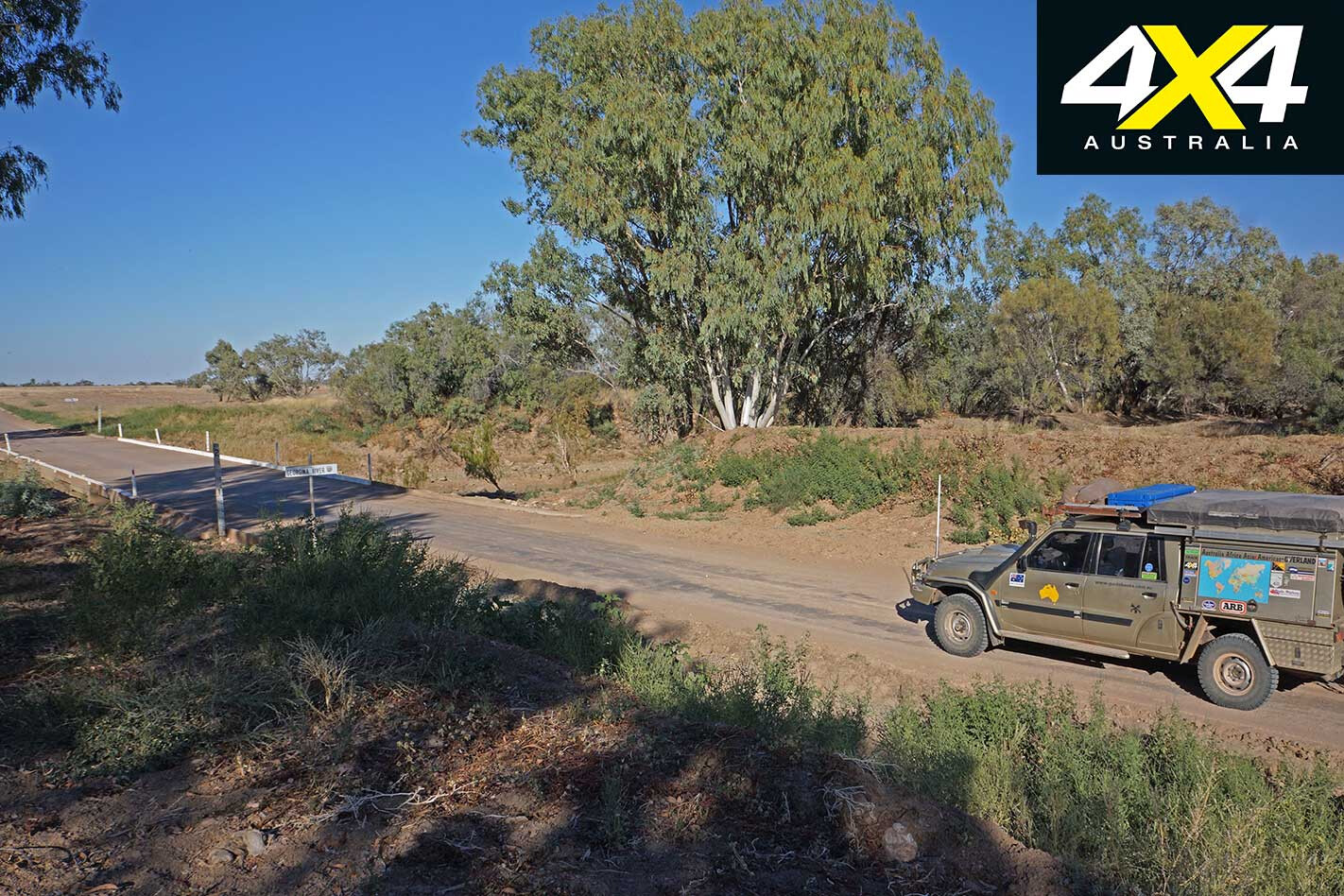
On the west side of the river is a marked white post showing the record flood levels at this point over the past 80 years. 1974 was the great year of the ‘Green Centre’ when Lake Eyre filled for the only time in European history, while the river was up to 30km wide in places. Can you imagine that much water?
At times like that nobody moves by road. In fact, even after just a shower of rain the roads and tracks crossing these black soil plains quickly become impassable, so it pays to keep a check on the road conditions and obey any road-closed signs.
Glenormiston Station, which takes in much of the surrounding country, covers nearly 700,000ha (1.7 million acres), 159,000ha of which is a self-proclaimed nature reserve, while running about 12,000 head of cattle in good seasons. But the country is having a hard time of late, with drought being far more common than rain and green grass.
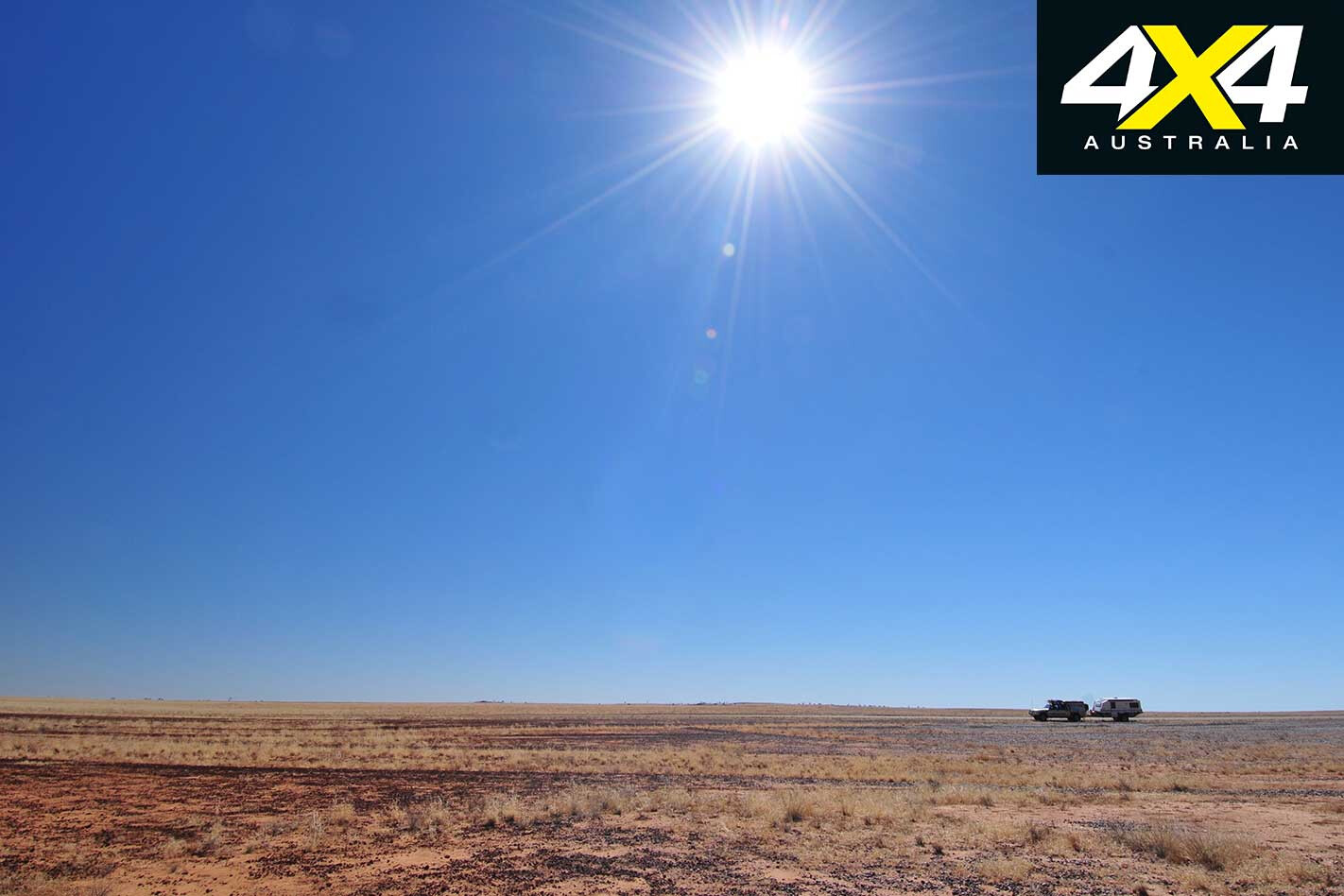
We had driven through here in 2014, the country then not looking too bad, with small flocks of budgies and cockatiels flitting this way and that, stately brolgas feeding across the drying grasslands and lots of wedge-tailed eagles feeding on any roadkill along the way.
As we headed west the road continued to be pretty good gravel, through flat Mitchell grass plains with man-made turkey-nest dams looking more like hills in this level expanse. As the route gets closer to the NT border the vast, seemingly endless grassy plains give way to patches of mulga scrub dotted with a few hills and breakaway country.
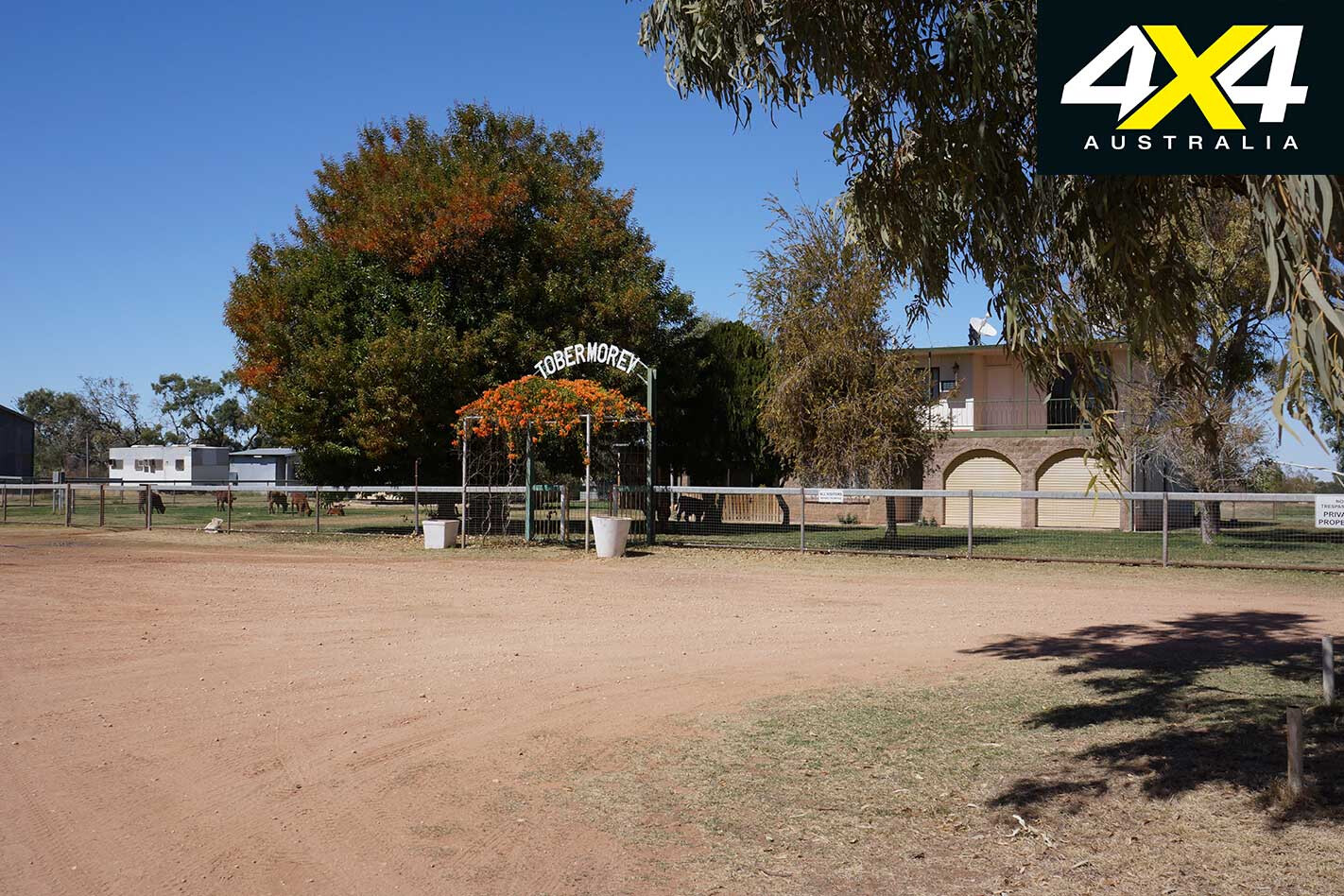
We crossed into NT and took the short diversion to Tobermorey homestead which offers basic supplies, fuel and tyre repairs, along with camping and accommodation. Like all the properties in this part of the world it is huge, covering nearly 600,000ha with its southern boundary, the Simpson Desert. When we were there dozens of zebra finches were enjoying the sprinkler and green grass of the camping area’s lawn.
With a change of name at the border, the Plenty Highway took us westwards, the road continuing to be improved gravel. We passed Heartbreak Bore with the low smudge of the Umberumbera Hills to our south before passing the turnoff to Tarlton Downs Station and coming to the Arthur Creek crossing. We pulled up here for the evening, camping on the edge of the dry stream about 200 metres south of the road.
Many of the names of the creeks, rivers and prominent hills, west of the Queensland border, were bestowed upon them by the first European into the area, Henry Verce Barclay. Barclay explored much of the area north of the Harts Range in 1878 and named not only the Plenty River but also the Marshall and Hale Rivers, Arthur Creek, as well as Mt Riddoch and the Talton Range, among others.
Charles Winnecke (later famous for his leadership of the Horn Expedition) followed and pushed the edge of exploration farther north to the Sandover River, meeting up with the earlier explorations of Landsborough’s 1861-62 route in search of the doomed Burke and Wills party.
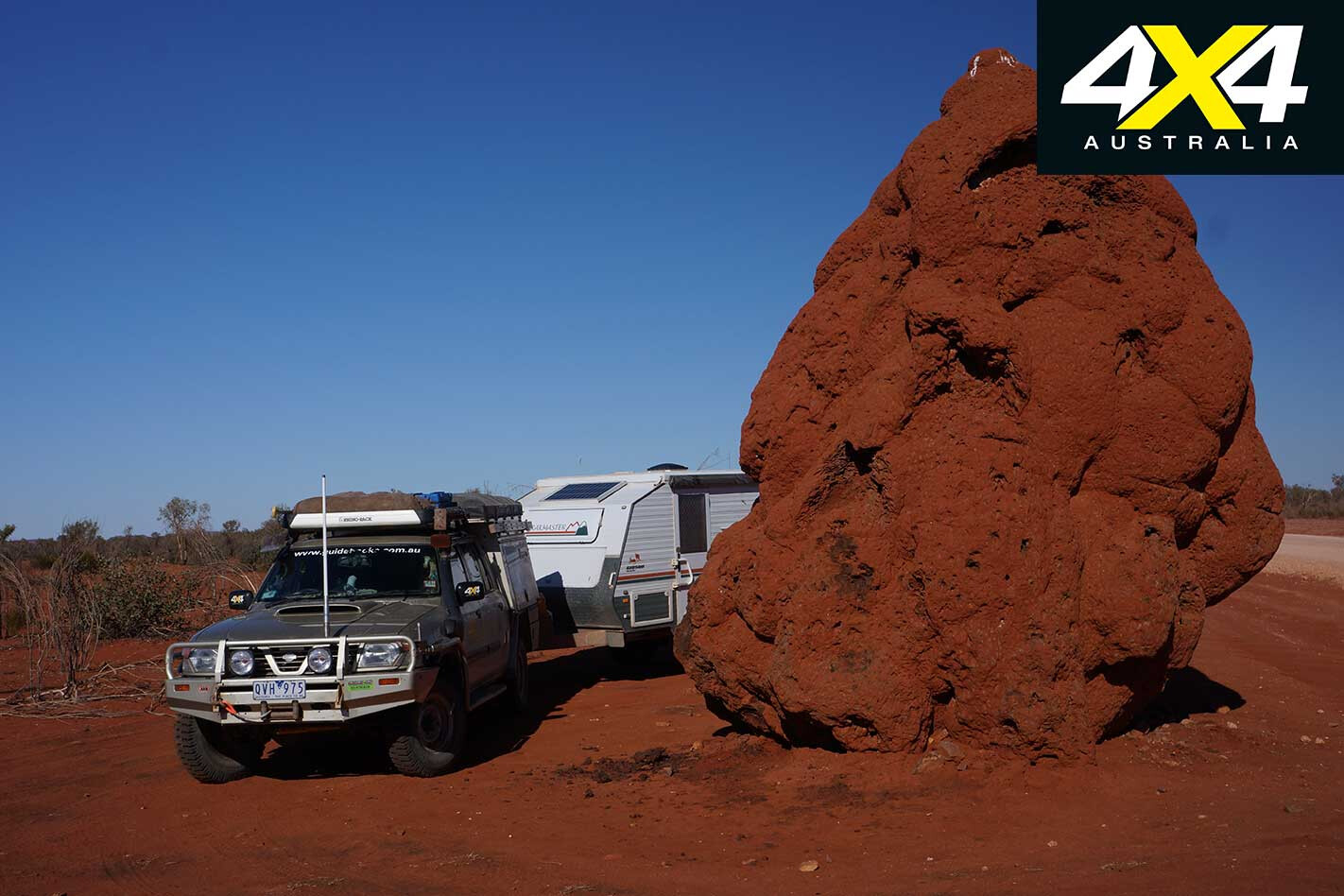
The Plenty Highway continued much the same as before as we crossed the dry Marshall River before arriving at the oasis of Jervois homestead which offers camping, a few basic supplies and fuel. Just south of the homestead is the access track to Batton Hills Camp (a great spot to spend a couple of days) and the Hay River Track which leads south into the Simpson Desert, joining the main east-west route across the desert just north of Poeppel Corner and about 150km west of Birdsville.
Another 105km west on the Plenty we met with the Binns Track heading north, so we turned that way for our unsuccessful search for the Boxhole Crater. On previous trips we had headed for and explored the little known Dulcie Range NP, which is another 60km north-east of Dnieper Station.
The park offers no facilities but a very pleasant remote camping experience near the ruins of the old Huckitta homestead and a nearby small gorge where water can always be found. There’s some good birdlife here, and in the surrounding ranges a rich treasure trove of ancient Aboriginal rock art can be found after some diligent searching.

This time around though we headed to Tower Rock in the Mac & Rose Chambers Conservation Reserve, about 20km north of the Mt Swan homestead, where a small store can offer up some basic supplies and fuel.
We’ve been to the small camping area at Tower Rock (very basic facilities, so bring your own water and firewood) before and we enjoy the camping, the solitude and the striking rock formations that literarily glow in the light of the setting sun.
After settling in we wandered among the boulders in the cool of the evening, disturbing a few ’roos, while we climbed to the crest of the tallest rock tower. The next day we enjoyed the area and cooked a great camp-oven meal.
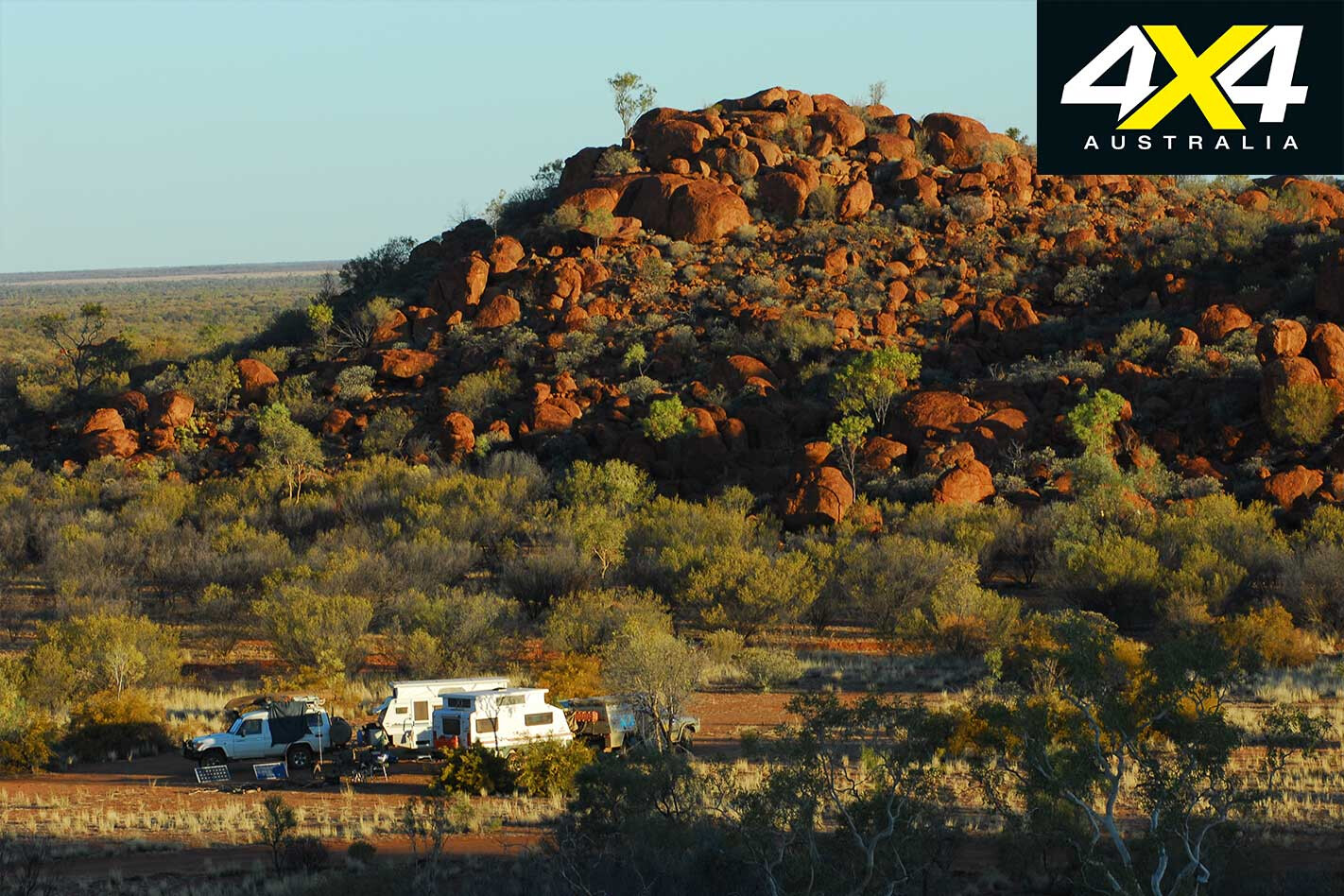
Back on the Plenty we continued our westward march, stopping at the Atitjere Community, often referred to as Harts Range, the nearby local police station still going by that moniker. The community, lying in the shadow of the rugged Harts Range, is now home to about 450 people and is most famous these days for its Harts Range Races weekend held on the first weekend in August each year (see: www.hartsrangeraces.org.au) that includes a rodeo, novelty events, a ball and, of course, the famous races.
Not far from the community one of the world’s biggest garnet mines came into production in 2016, adding yet another chapter to the area’s mining heritage which began in the 1890s. First it was mica that was mined and the area supplied nearly all of Australia’s mica needs until the 1960s, while earlier, during WWII, the Harts Range area supported the largest mica mine in the world.
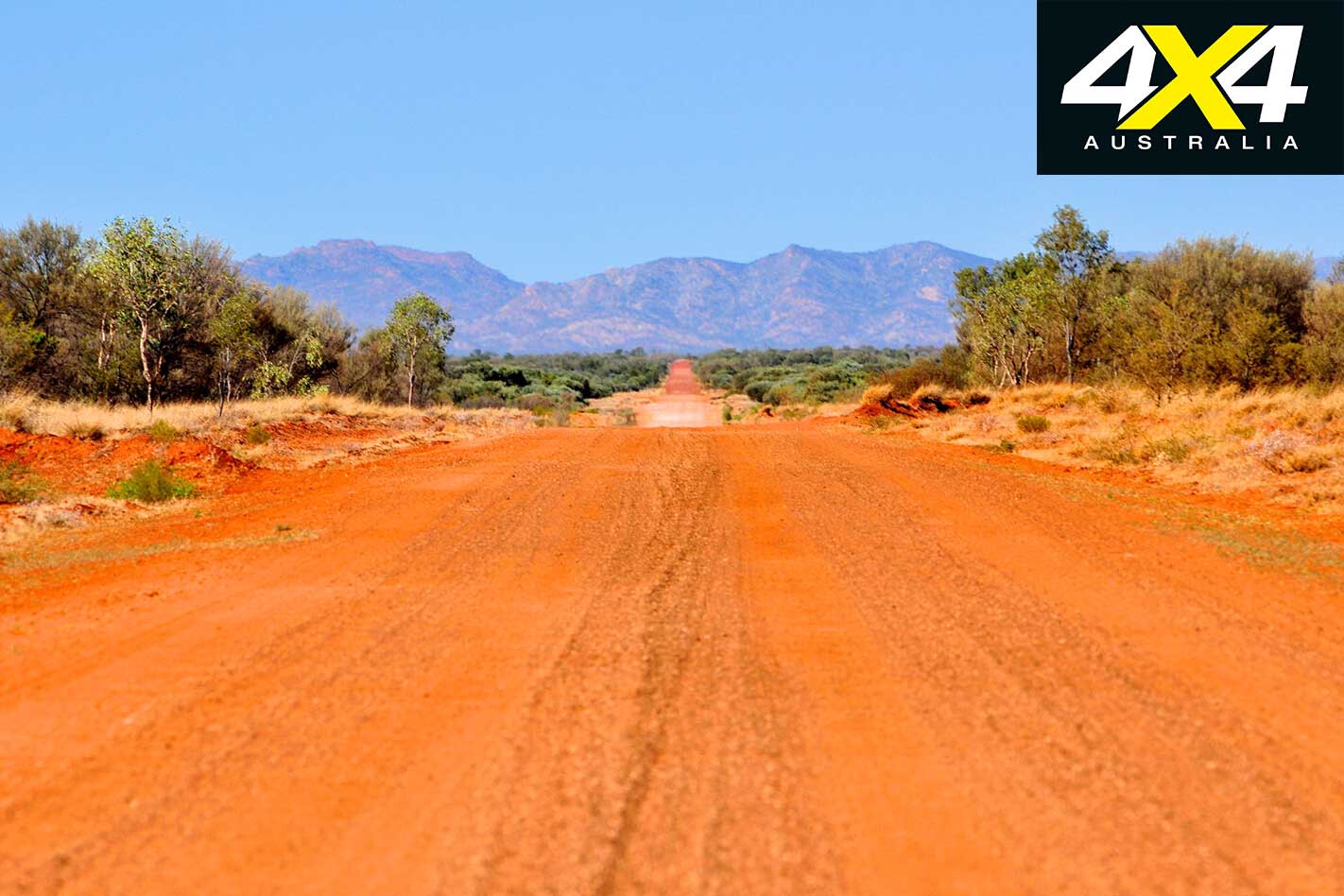
The region is now also popular with fossickers looking for zircons and garnets in three recognised and designated areas south of the Plenty Highway that people can go to, bush camp and fossick for the stones. Remember, all fossicking in the Harts Range area requires a permit, which are available from the NT Department of Mines and Energy website, where you’ll also find maps and other info.
Continuing westward from Harts Range you come to the blacktop and then the turnoff onto the Pinnacles Road before arriving at the Gemtree Bush Resort. It’s a great spot to stop and one we never bypass.
The well-established resort, owned and run by fifth-generation Territorian, Kate, and her husband Aaron, are a wealth of information on the region, with Kate having been born and bred in the area with many of her family still owning cattle properties in the surrounding district. Gemtree offers supplies, meals, fuel, campsites (powered and unpowered), accommodation and evening meals – the roasts on a Wednesday and Saturday night are not to be missed).
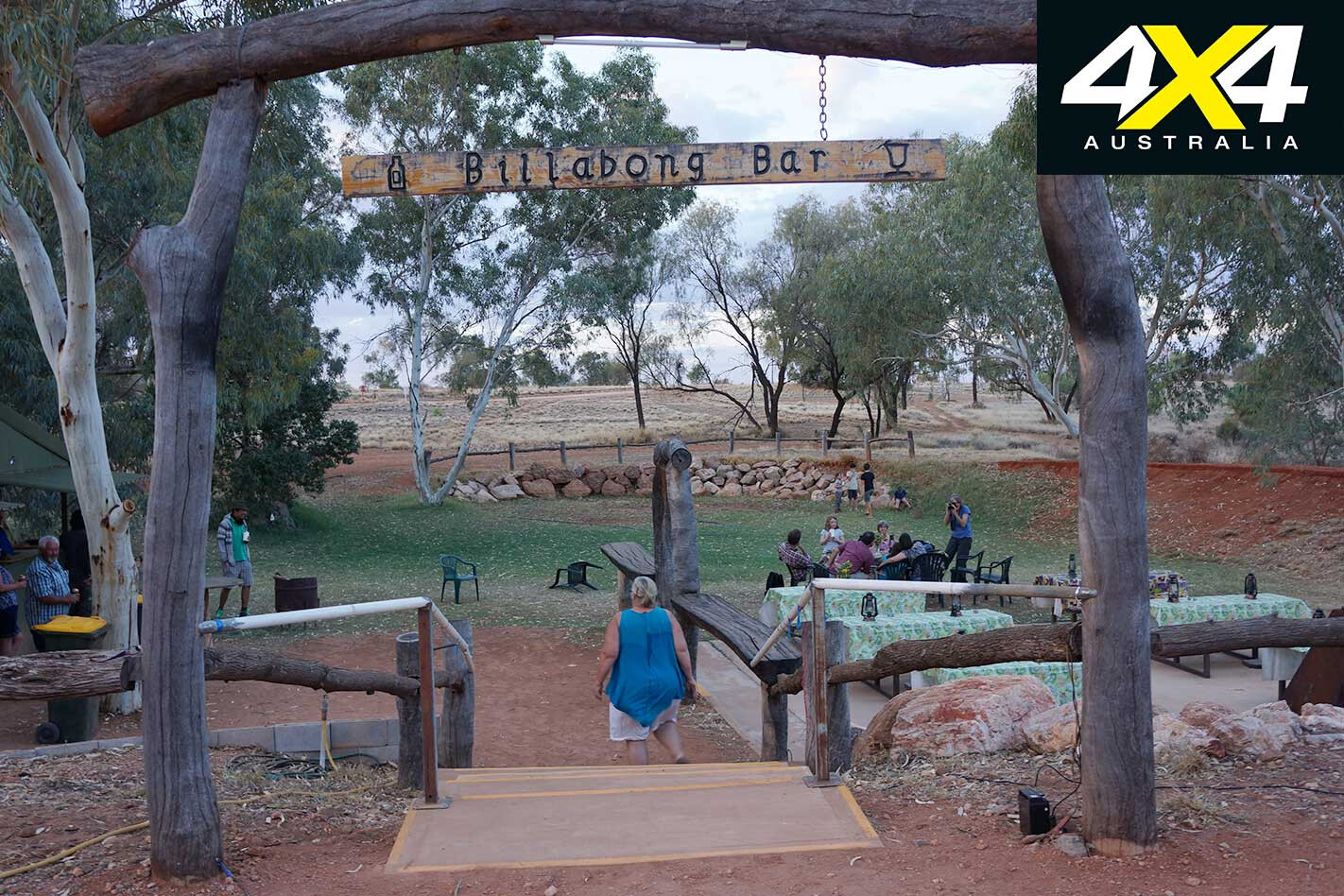
There are a host of things to do here, not the least of which are zircon and garnet fossicking tours (no permit required when on a tour), where a guide will give you the good oil on where to fossick, what to look for and whether the stone you have dug up is worth a fortune. Then you can take your prizes back to the park and have them cut and polished by the local expert.
From Gemtree it is just 135km, all on blacktop, to Alice Springs, but we prefer to backtrack the short distance to the Pinnacle Road and head south through the ranges to Arltunga, Ruby Gap and the eastern MacDonnells, before heading to Alice. That’s what we did this time around as well.
And that bloody Boxhole Meteorite Crater? It’s on the to-do list for our next Central Australia trip!
Travel Planner
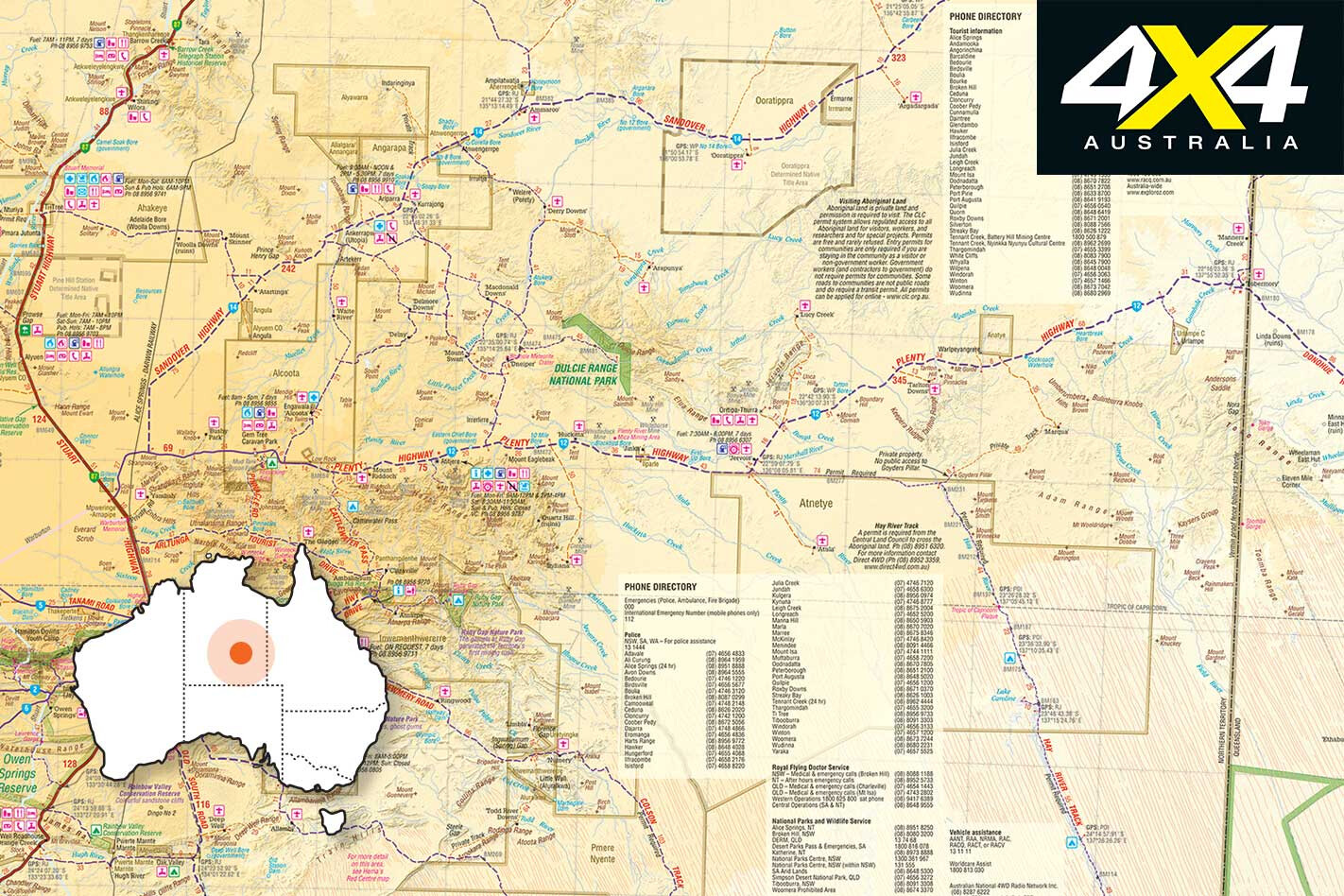
WHERE It is about 820km from Boulia to Alice Springs via the Plenty/Donoghue highways. The route is mainly improved gravel with patches of bulldust and corrugations. More and more of the road is being bituminised each year.
SUPPLIES Boulia: www.boulia.qld.gov.au/tourism Tobermorey Roadhouse: http://tobermorey-roadhouse.com.au Jervois Station roadhouse: phone: (08) 8956 6307 Batton Hill Camp/Hay River Tk: For permits and info, contact Jol Fleming’s Direct 4WD, phone: (08) 8952 3359; www.direct4wd.com.au Dulcie Range NP: http://traveloutbackaustralia.com/dulcie-ranges-national-park.html Mac & Rose Chambers CR: https://nt.gov.au/leisure/parks-reserves/find-a-park-to-visit/mac-rose-chalmers-conservation-reserve
CONTACTS Mt Swan HS & store: (08) 8956 9097 Atitjere Store (Harts Range): (08) 8956 9773 Harts Range Police: (08) 8956 9772 Binns Track: https://northernterritory.com/drive/binns-track Gemtree Bush Resort: (08) 8956 9855, or visit: www.gemtree.com.au Fossicking in Harts Range: https://fossicking.nt.gov.au/declared-fossicking-areas Alice Springs: www.discovercentralaustralia.com NT road conditions: 1800 246 199 Qld road conditions: 1300 130 595
BEST MAP Hema Great Desert Tracks Atlas and Guide.
DODGE tragics will remember the Warlock pick-up, replete with bucket seats, fat tyres and real oak sideboards, which was first produced back in 1976.
Well, Ram has paid homage to this factory-custom icon by unveiling the 2019 Ram 1500 Classic Warlock for the American market.
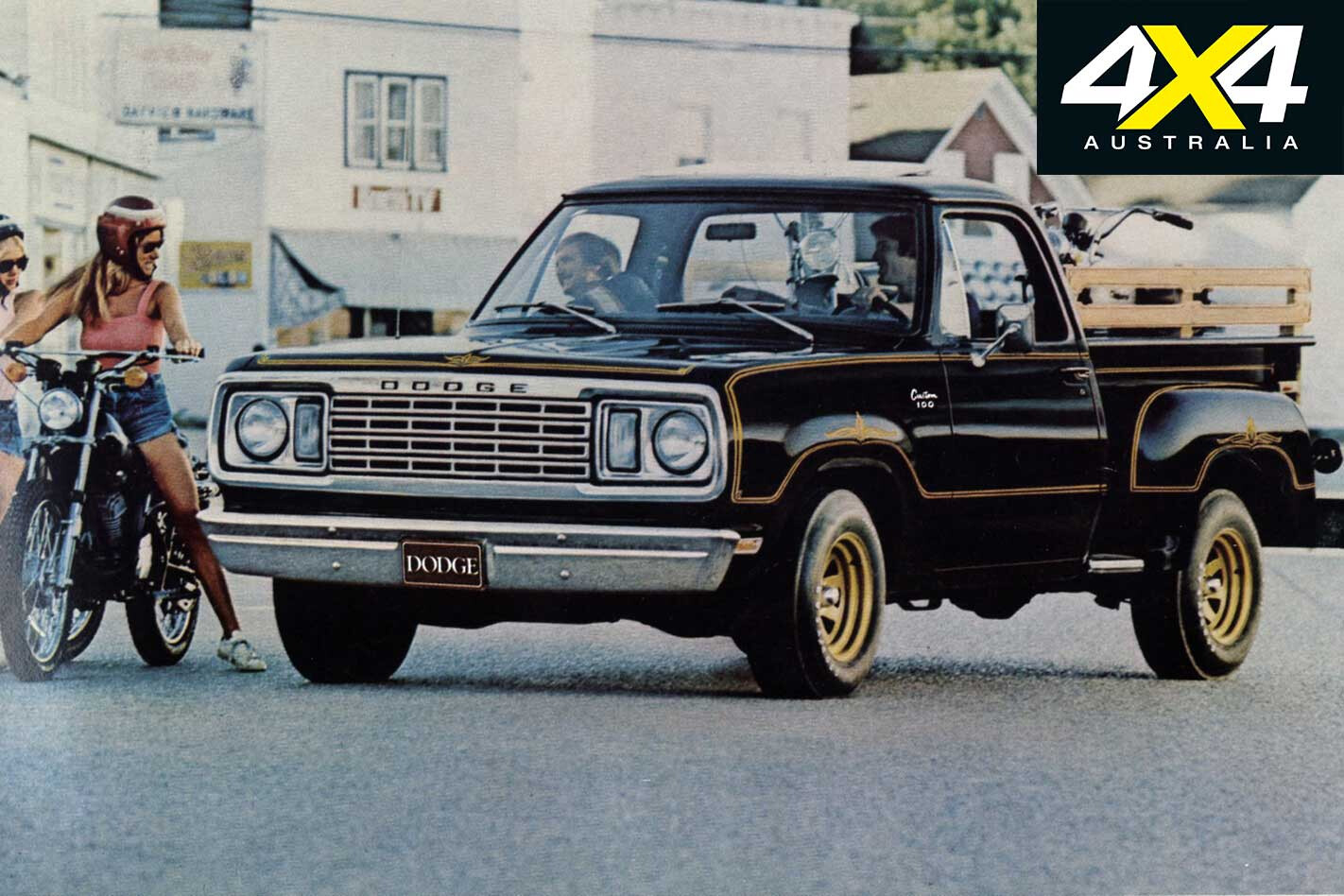
With a name that wouldn’t be out of place in a fantasy novel, the Warlock’s two engine options – the 3.6-litre Pentastar V6 or the 5.7-litre HEMI V8 – will both run through a TorqueFlite eight-speed automatic.
The Warlock – available in 4×2 or 4×4 and in Quad Cab or Crew Cab configurations – will start at US$35,345 and features RAM lettering plastered across the black grille, 20-inch wheels, power-coated bumpers (front and rear), a one-inch factory lift, black wheel flares, LED fogs, LED rear tail-lights, tow hooks and custom decals. A Sport hood is an option.
Standard kit also includes ParkSense rear park assist, a leather-wrapped steering wheel, an auto-dimming rear-view mirror, an overhead console, 7.0-inch cluster display, LED bed lighting and power foldaway mirrors.
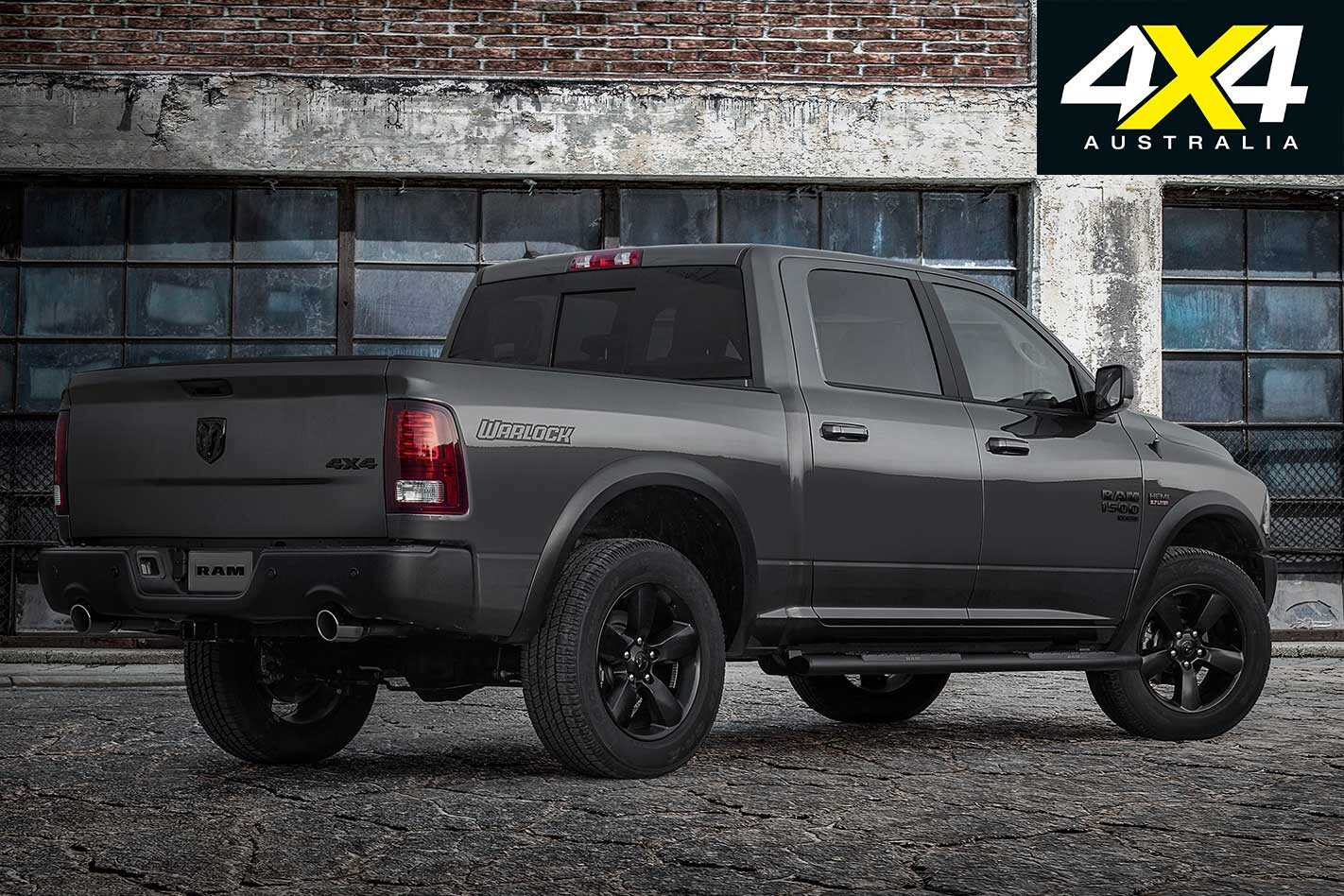
Ticking an options list can net buyers heated bench/bucket seats, an 8.4-inch Uconnect touchscreen, black side steps and a spray-in bedliner.
“The Ram 1500 Classic Warlock is proof that value never goes out of style,” said Reid Bigland, Head of Ram Brand, FCA. “With its sinister monochromatic exterior, award-winning interior and great price, this mean machine is certain to resonate positively with consumers.”
The Warlock will be on sales in the States toward the end of Q1, 2019.
COUNTRY music fans have laid their denim pockets bare at the 2019 Toyota Country Music Festival.
The event, which ran over 10 days and featured 700 artists and more than 2800 events, took place in Tamworth, NSW, with festival goers donating a total of $32,465 for Rural Aid. The charity, founded in 2015, raises money to support drought-affected farmers doing it tough across Australia.
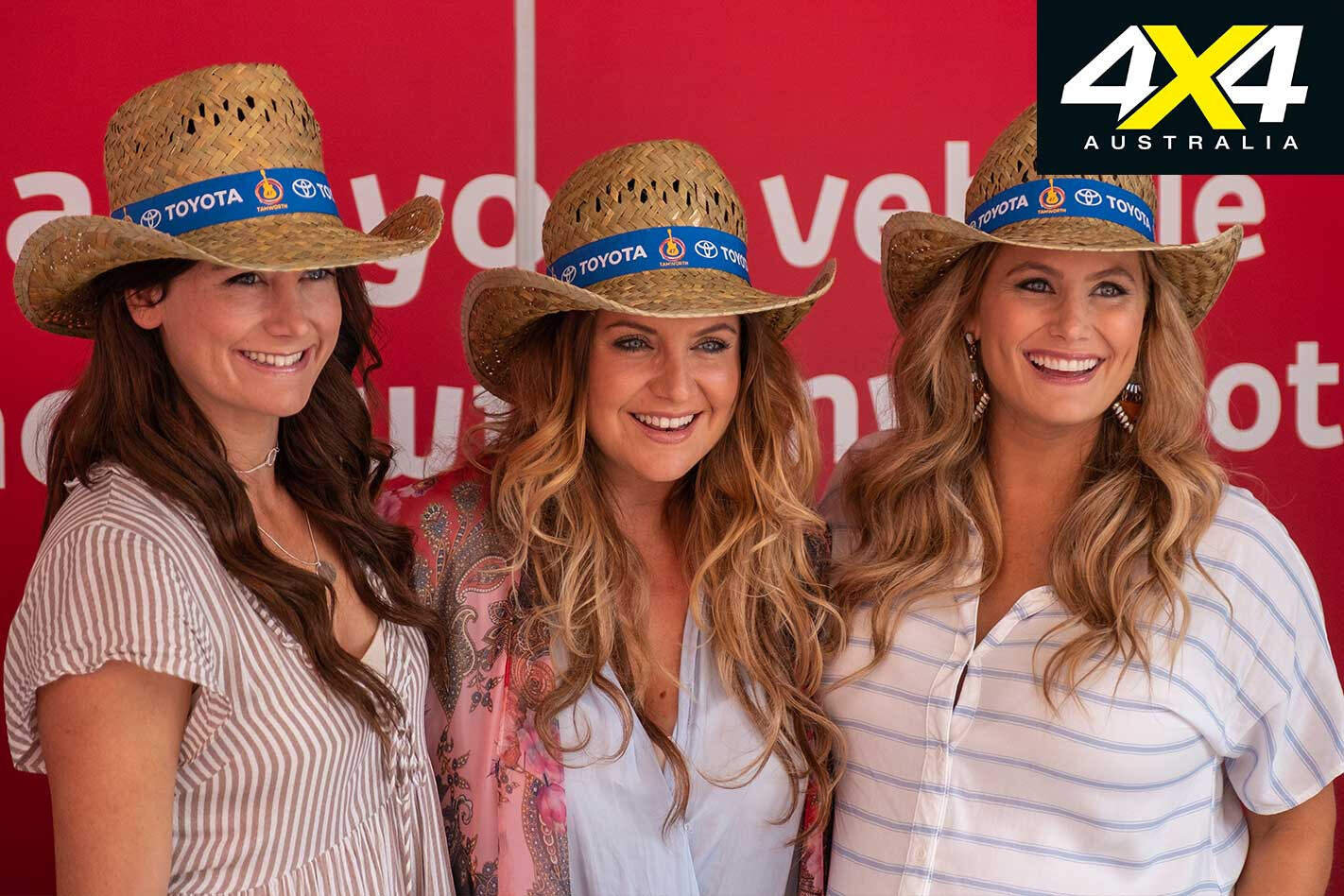
“We spent the 10 days of the festival listening to stories of those who have been struggling through this drought,” Rural Aid CEO, Charles Alder, said. “The support that we’ve had from Toyota Australia and those attending the festival goes a long way to help out.”
Toyota Australia Chief Marketing Officer, Wayne Gabriel, was also heart-warmed by the generosity of the Akubra-wearing public.
“The drought is affecting many Australians, so it’s great to see festival-goers dig deep to help out,” he said. “We have a long history of supporting rural and regional communities in Australia, and we’re looking forward to partnering with Rural Aid again for the 2020 Toyota Country Music Festival.”
A raffle – the Raffle for Resilience – was also launched at the festival, with the top prize being a one-of-a-kind Toyota Land Cruiser 200 Sahara. That raffle won’t wrap up until early March, so to be in it to win it, grab a $10 ticket from: www.raffletix.com.au/ruralaid
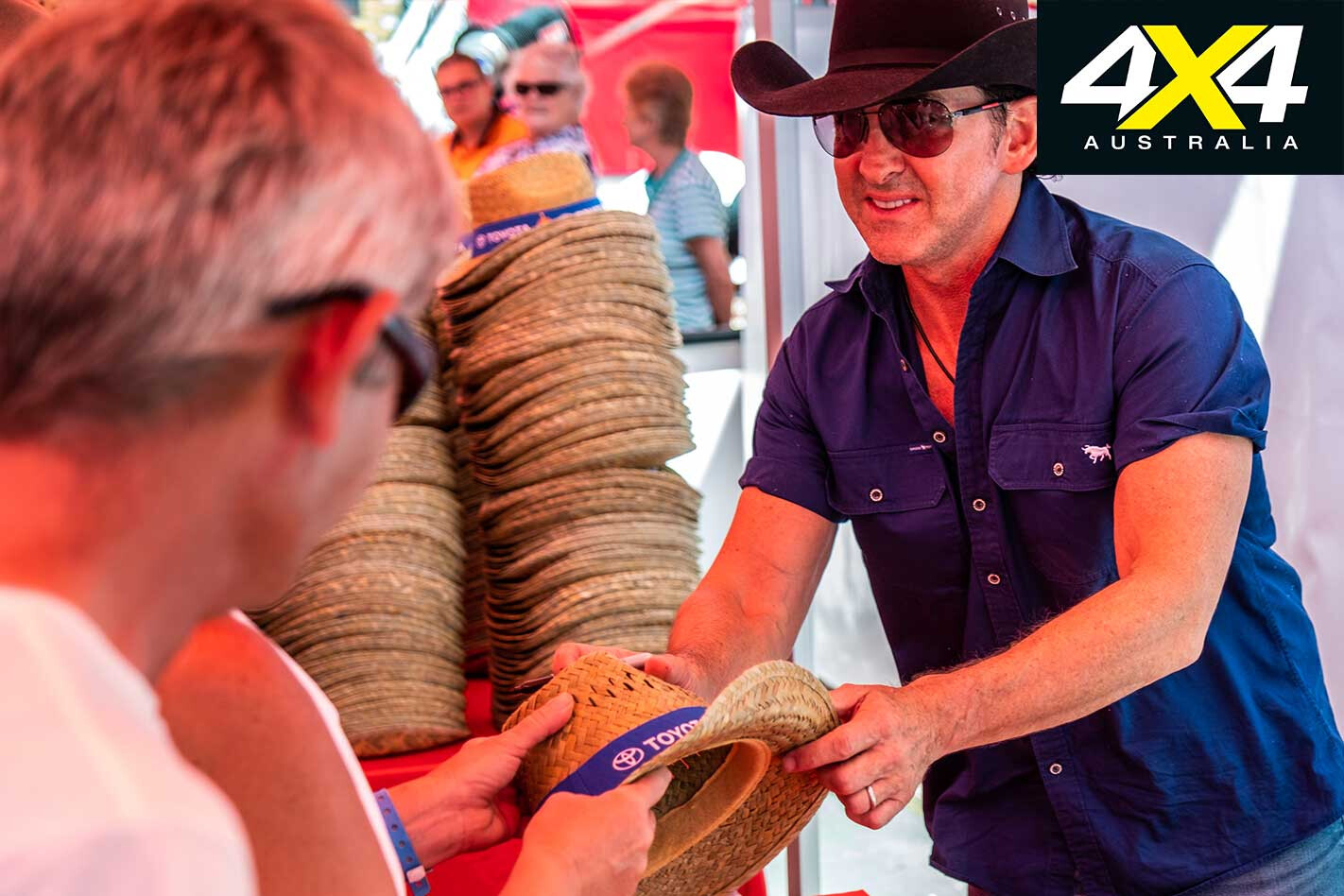
If you don’t snare the top prize, there are a few decent runner-up prizes (if you’re into sport, that is): meet cricket legend Glenn McGrath, a trip for two to the 2019 AFL Grand Final, a cricket bat signed by the 2018 Australian cricket team, and a football signed by players selected in the All-Australian team.
WE’RE STATING the bleeding obvious when we say 4×4 dual-cab utes present a fairly formidable case when it comes to touring.
A ute’s inherent high load capacity combines with a spacious rear tray to allow you to customise a loading system that will perfectly suit your type of touring. In among all the facts and figures such as tray length, tray width, tray height and overall volume (without canopy), a lesser-known component that plays an important role are the anchor points in the tray. They’re simple, but some ute manufacturers seem to have forgotten the simple role they play.
Forget those flimsy nylon/plastic anchor points you see in the back of SUVs, wagons and, scarily, even some 4x4s, as they will hold minimal tension and struggle to restrain a load in the instance of an accident, resulting in potential passenger injury and a loss of load/gear.
Interestingly, 4×4 ute manufacturers can’t seem to reach general consensus on the best location for an anchor point. This is odd considering a ute’s DNA; that is, a commercial vehicle designed for lugging a load safely.
Every trucky, transport driver or courier knows that the best way to secure a load is to anchor the restraining strap/rope down as low as possible, thus ensuring any vertical movement of the load is minimised, no matter how hard the force applied. The other reason behind the seemingly haphazard fitment of anchor points is that perhaps manufacturers know the majority of ute owners will fit their own.
On a recent multiple-vehicle 4×4 ute towing comparison, 4X4 Australia took another peek into various ute trays and found a number of interpretations of what, to manufacturers, constitutes a suitable load anchor point.
Mercedes-Benz’s new X-Class borrows heavily from its Nissan Navara donor vehicle and, as a result, includes Nissan’s oft-lauded Utili-Track system, where the anchor points are up high on the tray’s long sides and can slide horizontally along this plane according to what size the item is that needs securing.
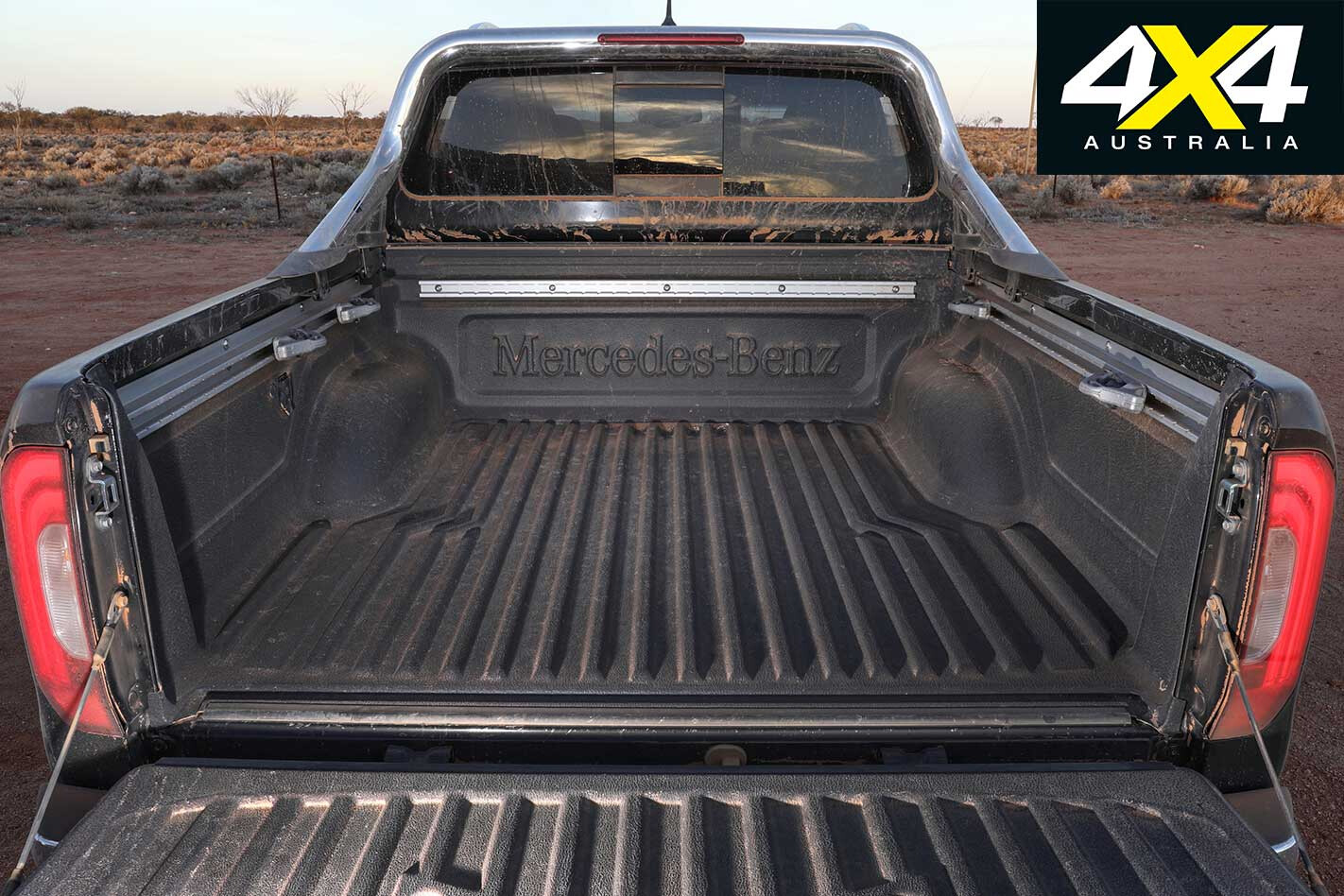
That’s nifty ’n’ all, but the anchor point is a bit high for items such as fridge/freezers, bags, hard cases, jerry cans, etc., meaning there is potential for the load to shift around and potentially work its way loose as the bottom/base of it is not effectively ‘tied down’ to the tray floor. You can, of course, still secure gear relatively effectively with higher-positioned anchor points, but it may mean a more complex arrangement with the straps – and it still might not work with certain items.
Ford’s Ranger has four small anchor points, with two set vertically at the back-end of the tray in the space between the tailgate and the side. The hooks are about a quarter of the way up the tray side, so still too high for an effective tie-down. As the other two hooks are located at the front of the tray, they are miles away from the ones at the rear.
Plus, they’re halfway up the cab wall and facing each other, making them less effective due to the resultant ‘pulling’ of the tightened ratchet strap having the potential to make the secured item top-heavy and at risk of tilting forward.
The Holden Colorado and Isuzu D-Max share the same anchor point design and location as the Ford Ranger and its Mazda BT-50 twin. The anchor point eyelets aren’t particularly sizeable on this quartet, making it very difficult, if not impossible, for those who use wider ratchet straps – they simply may not be able to push the webbing through without folding it in half and thus impeding effective function of the ratchet strap.
The Volkswagen Amarok Ultimate 580 was the only ute that possessed tie-down anchor points in our (and most others’) preferred location: the tray floor. Again, the Amarok only had four, but all four anchor rings were larger and beefier in construction and bolted through, firstly, a metal plate and then the tray liner into the tray itself.
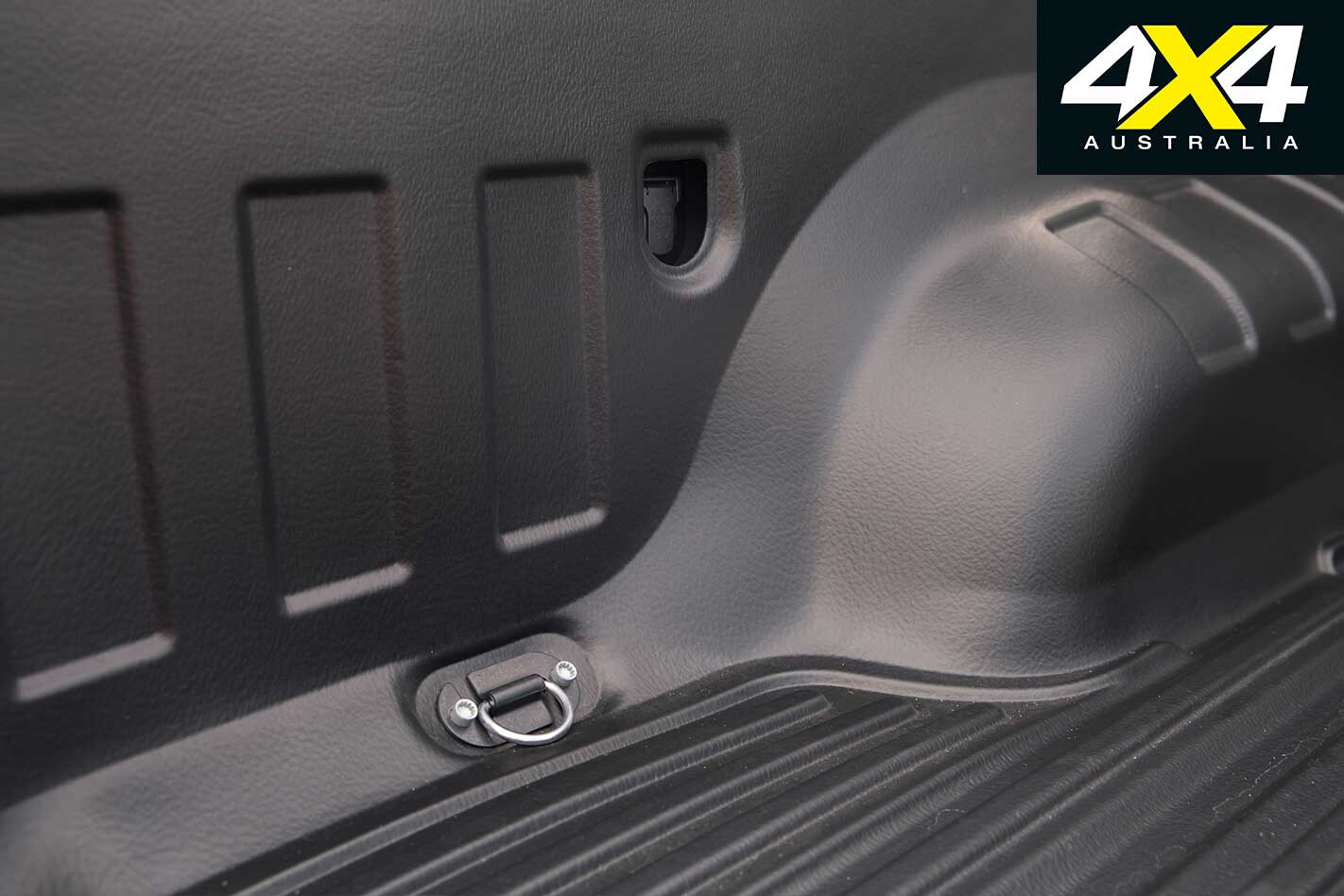
The larger rings mean you can use nearly any popular heavy-duty ratchet strap without having to fold it, thus keeping its working load rating at optimum levels. It also means you can actually tie ‘downwards’, which is itself easier while offering better load security.
Of course, for the serious 4×4 ute-based tourer the best option is to simply forget about the factory-supplied anchor points and fit rated anchor points that have a ‘lashing rating’ as well as a ‘break rating’.
This allows for full personalisation of your ute tray as you can affix them where they are most effective in relation to how you carry gear. As we know, every ute-based tourer’s needs are different; some prefer to keep gear up top, others fit a canopy and drawer system, while others may use two or three hard cases on the tray floor, with a rack system above that can be easily removed when not needed so you can still use the full tray-space if needed.
We reckon these are nearly a must-fit for 4×4 utes – for minimal cost. If you want to make it even cheaper, charge those mates of yours who are always borrowing your ute to move furniture or trail bikes a small fee and you’ll cover the cost of fitting properly rated anchor points in no time.
JAGUAR Land Rover (JLR) has revealed the final piece of the Ingenium engine puzzle, announcing the expansion of that engine family to include an all-new, supercharged/turbocharged 3.0-litre inline six-cylinder petrol engine, with the new donk expected to debut in 2020.
The new donk that uses a unique mash-up of an electric supercharger and twin-scroll turbocharger – along with continuous variable valve lift, variable cam timing and Mild Hybrid Electric Vehicle (MHEV) tech (the 48V MHEV system uses an integrated electric motor to harvest lost energy during deceleration and feeds it back into the engine). JLR is claiming the Ingenium straight-six offers a 20 per cent improvement in fuel consumption over the current supercharged V6 petrol (available in Oz in the Range Rover Sport).
The 3.0-litre engine will be available in two output versions – 265kW/495Nm and 294kW/550Nm – and is fitted with a gasoline particulate filter, reducing petrol particulate emissions by up to a claimed 75 per cent. Nick Rogers, Executive Director of Product Engineering elaborates.
“From the outset we always intended Ingenium to be a full family,” he says. “ This second wave of engines, with a Mild Hybrid 48V system and performance-boosting technologies, is engineered to be cleaner and more efficient than ever before.”
The Ingenium engine family is of a modular design, allowing petrol and diesel variants to share a number of common components. It also means the architecture is seriously configurable, i.e., JLR has, in the past, mentioned the possibility of a three-cylinder Ingenium engine, and this is possible due to the shared components making for optimum manufacturing efficiency. This engine, like its four-cylinder Ingenium stablemates, has been designed and engineered at JLR’s Wolverhampton Engine Manufacturing centre.
More intriguing for off-road oriented Landy fans (yes, there are still some LR owners who don’t just meander around Toorak or Mosman) is where this engine will first become available in Australia. The new straight-six engine will first appear in the 2019 Range Rover Sport HST – a model not available in Australia. James Scrimshaw, PR manager Jaguar Land Rover Australia (JLRA) further confirms the RR Sport HST won’t be offered Down Under in 2019 and is keeping JLRA’s cards close to his chest in regards to the future.
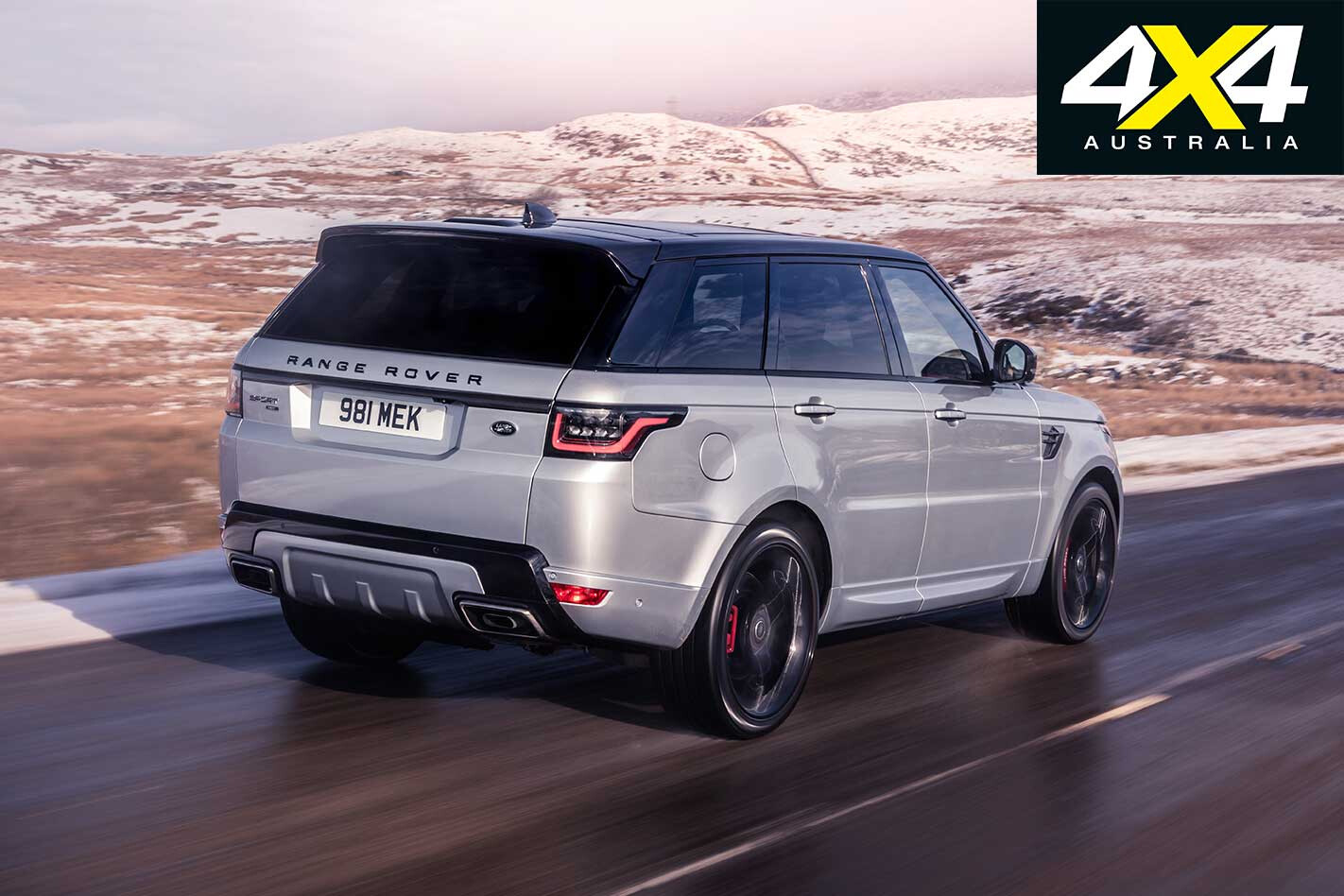
“We will have this engine available in some of our vehicles in 2020,” he says. But, I cannot confirm at this stage what vehicles you will see it in first. ”
It would be interesting to see JLRA may revisit offering this new petrol donk in the Discovery if and when it became available in that vehicle. 4×4 Australia drove a current-model overseas-spec supercharged V6 Discovery on a Land Rover expedition in Peru and was impressed with both grunt and economy. Plus, with the public’s perceived aversion to diesel powerplants, this petrol option may entice more buyers to the Disco.
What we’d really like, though, is to see this engine (in either output) sitting under the bonnet of the new Land Rover Defender when it lobs in 2020. A new Defender SVX powered by a grunty straight-six? Yes please!
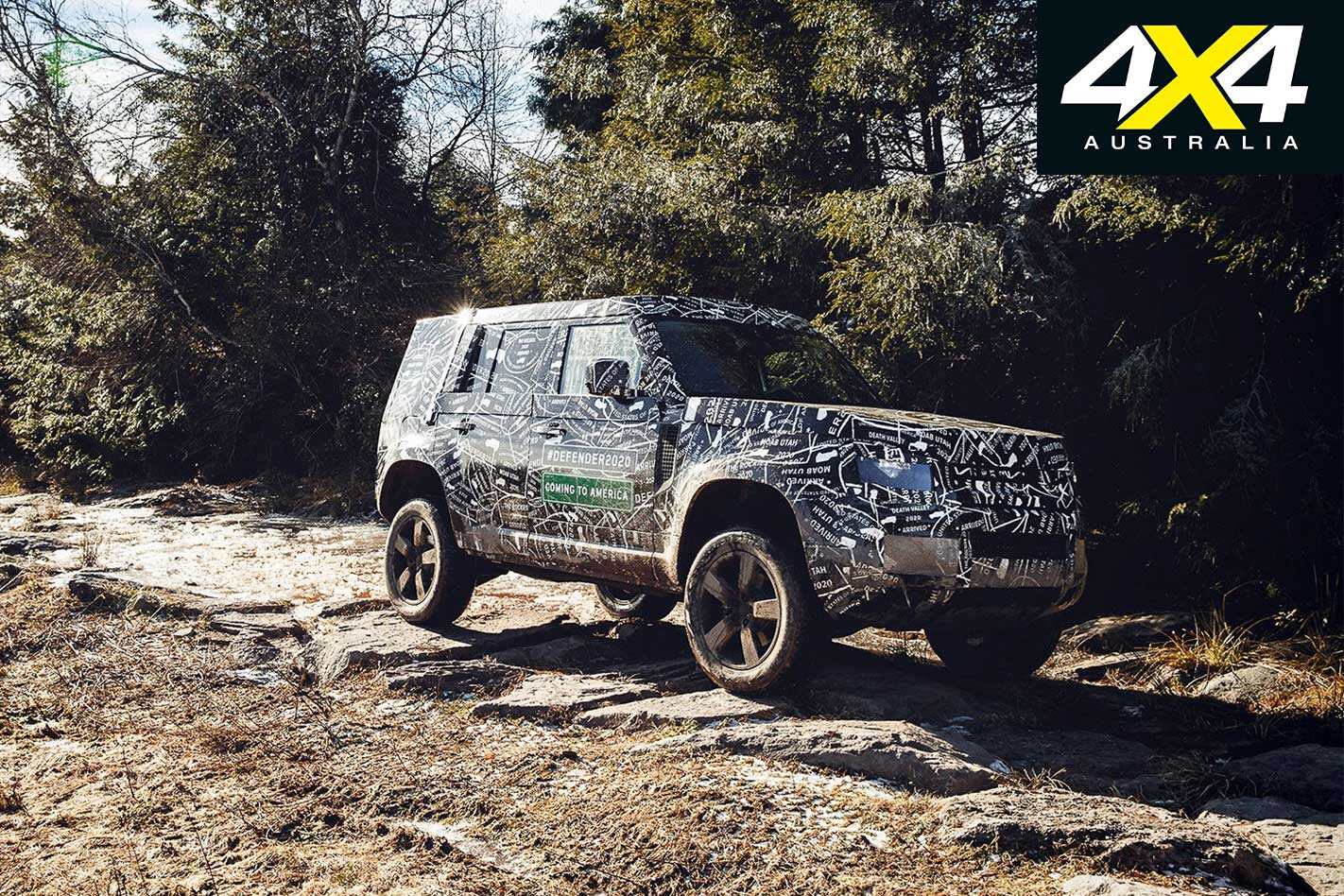
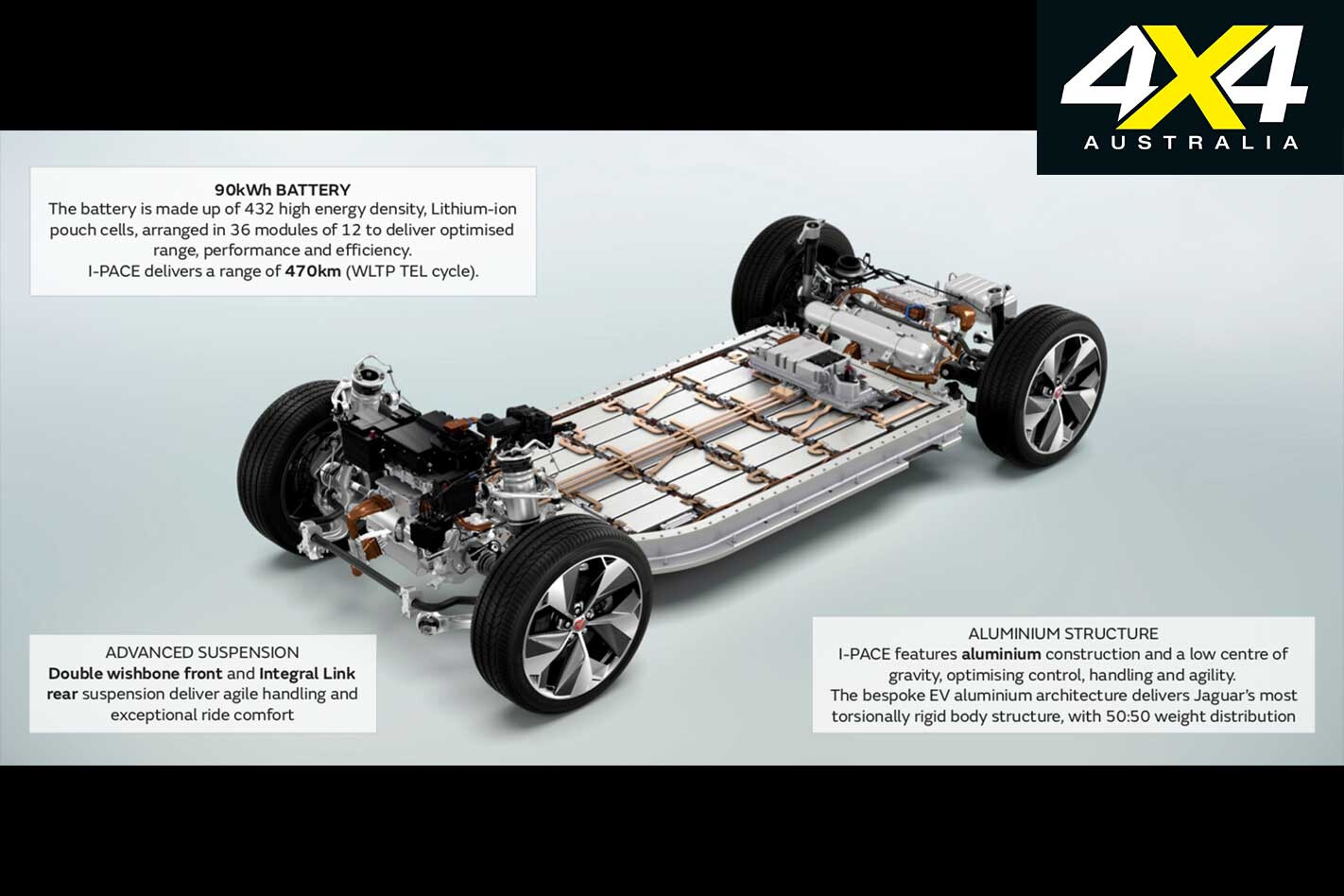
I drove the future the other day. Well, at least one company’s vision of it. The vehicle was Jaguar’s all-new, all-electric I-Pace, a five-seat all-wheel drive SUV with a whopping great big 90kWh battery that powers two permanent magnetic electric motors claimed to produce a combined 294kW and 696Nm.
According to the worldwide harmonized (sic) light vehicles test procedure (WLTP), which is the global harmonised standard for determining electric range from light-duty vehicles (passenger cars), the I-Pace has a handy 480km range before it needs recharging.
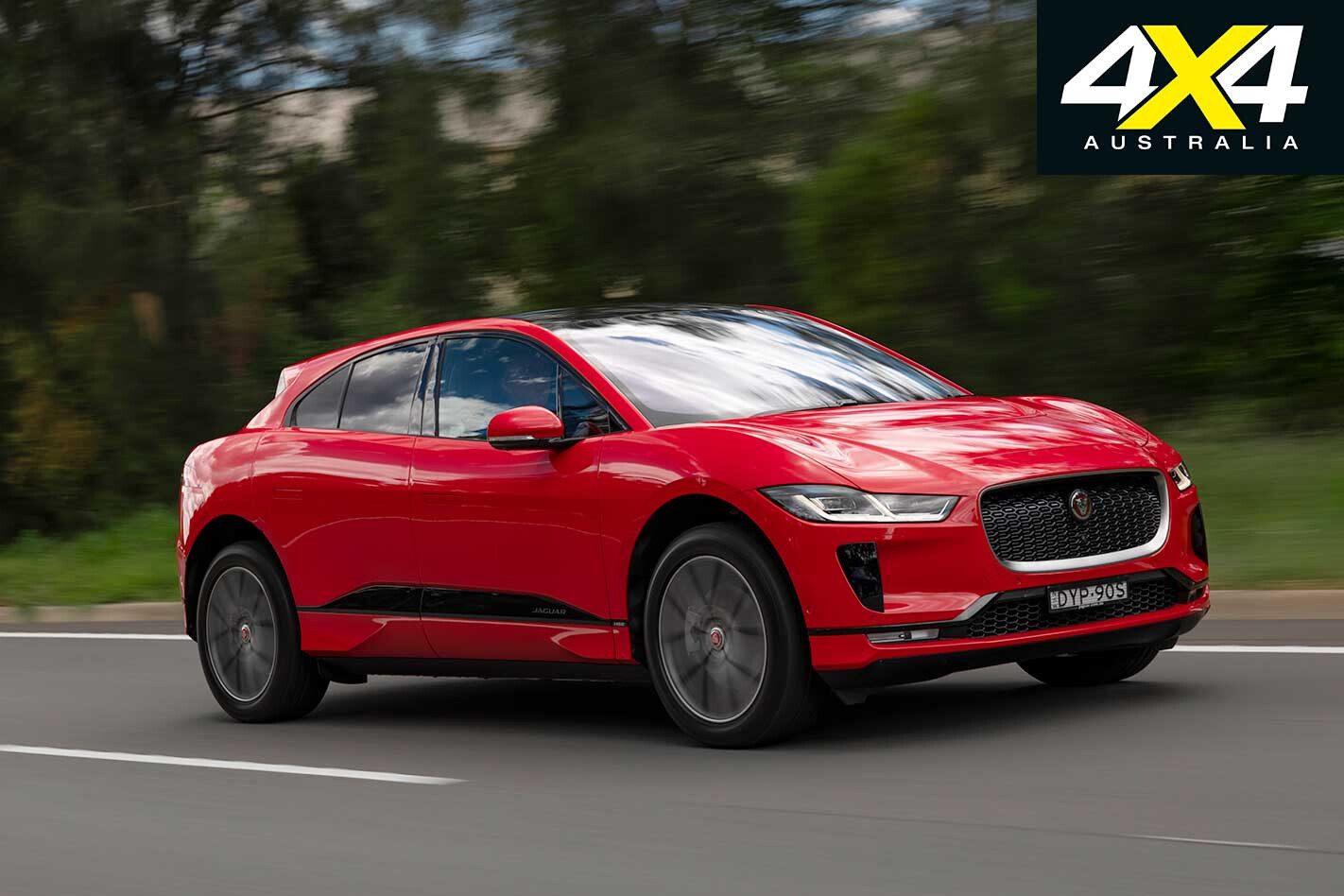
While 480km mightn’t seem like a lot, remember, this is the first electric vehicle from a mainstream vehicle manufacturer with the performance to take on the offerings from Tesla. And when I say performance, I mean performance: with all its torque available from zero revs, the I-Pace accelerates from 0-100km/h in 4.8 seconds. Not bad for a wagon weighing 2133kg.
But what do you do when the battery needs a top-up? Well, there are several charging options, the quickest of which is a 0 to 80 per cent charging time of 40 minutes with a DC 100kW fast charger.
Of course, this is significantly longer than it takes to top up a 4×4 with 200 litres of diesel, but electric-vehicle technology is still in its infancy; and as battery and charging systems improve, not only will vehicle range increase but charging times will also come down.
For those with a bit more time on their side and who mainly use their vehicle for commuting rather than big trips away, the I-Pace can be charged from 0 to 80 per cent in 10 hours using an AC 7kW charger, which is three times faster than using a domestic power outlet.
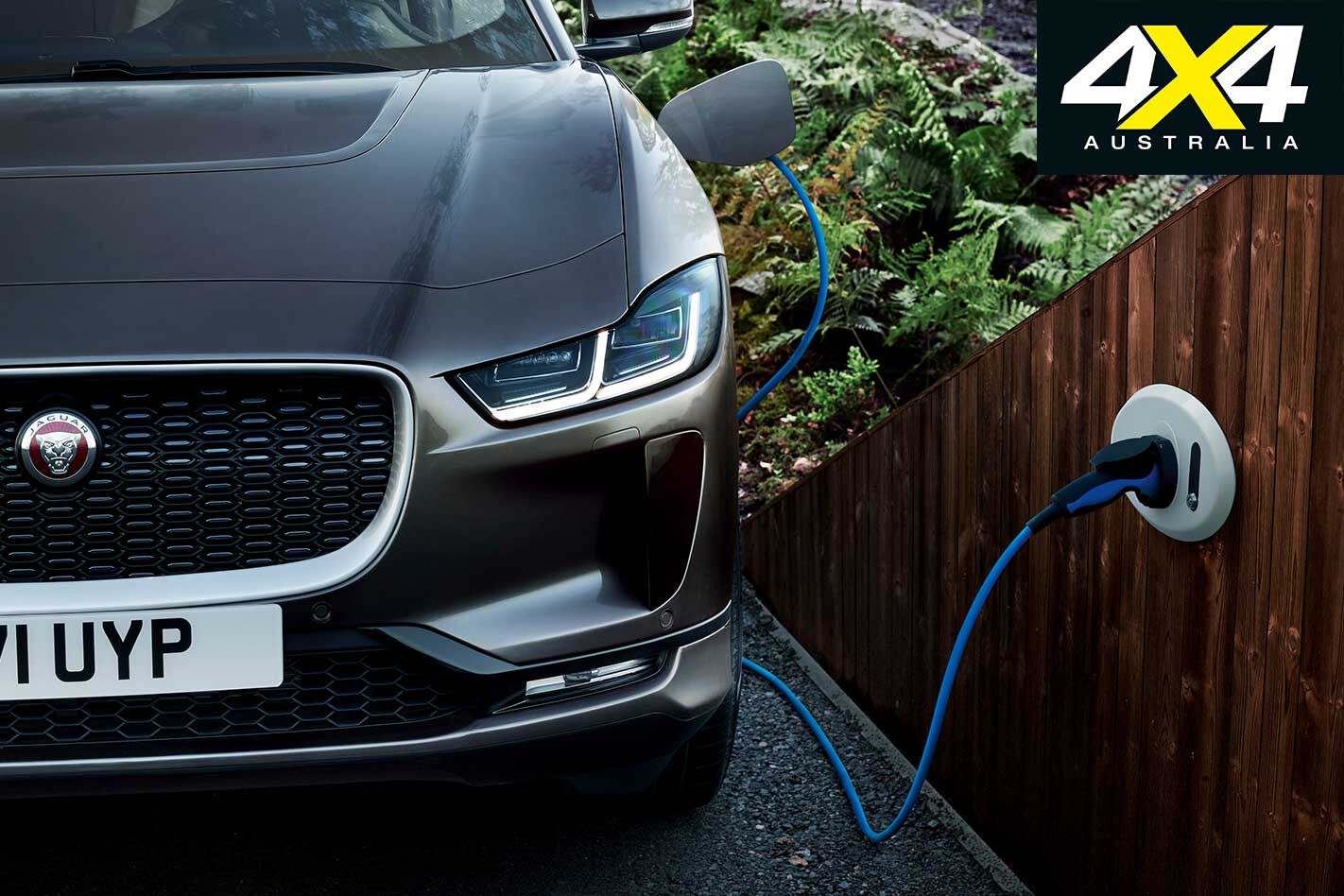
To make this charging option a reality, Jaguar has teamed up with JET Charge to offer a 7kW Delta AC Mini Plus single outlet wall box, installed in an off-street parking area, from $2280.
As for running costs, charging an I-Pace at a rate of $0.30c per kWh will cost $5.70 for every 100km driven which, according to Jaguar, will result in a saving of up to a $1500 per year compared to a conventional ICE-powered SUV of the same size.
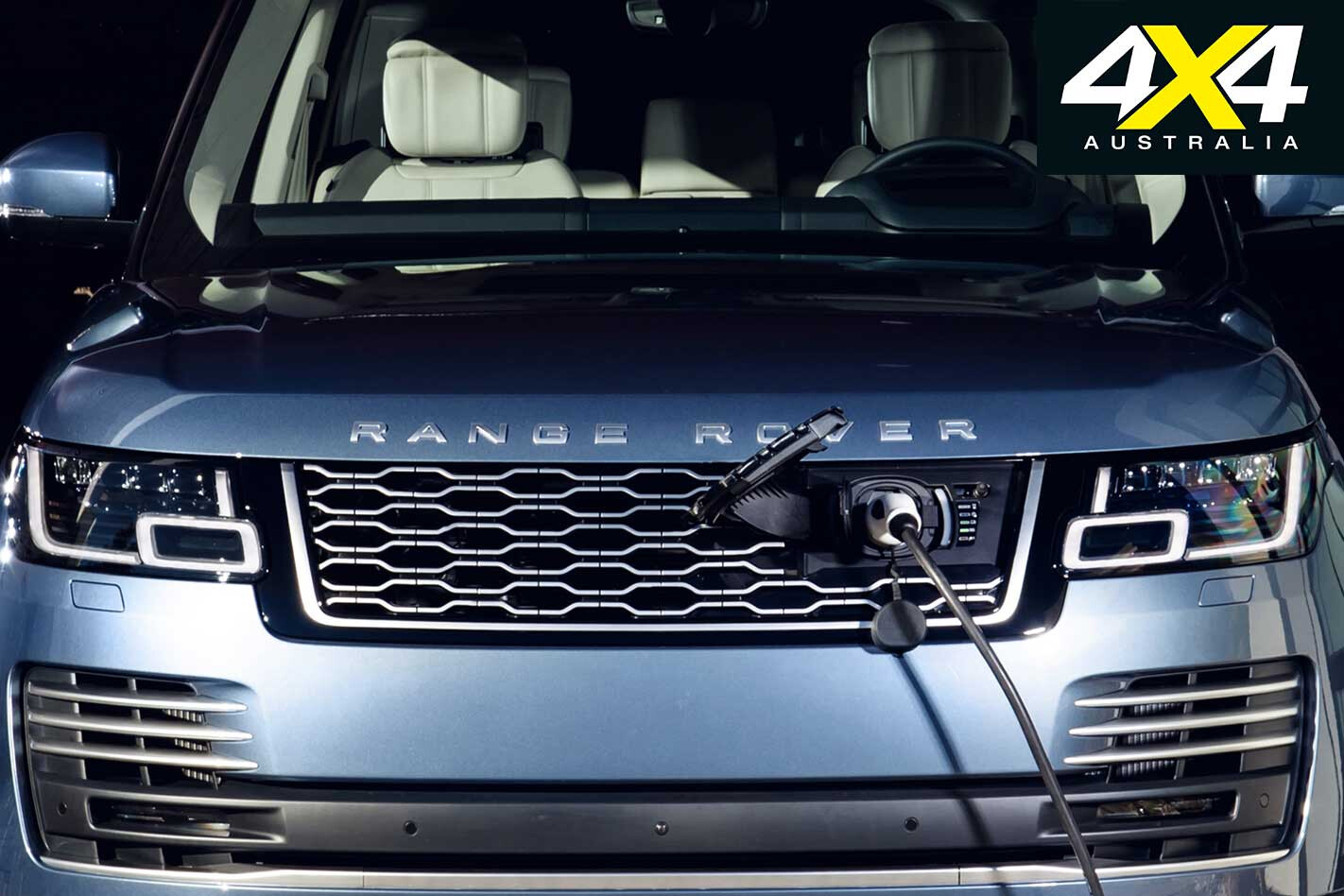
Unless you’ve been living under a rock, you’ll know Jaguar falls under the Jaguar Land Rover Limited umbrella, owned by Indian automotive company Tata Motors, so the technology packed into the I-Pace will no doubt soon appear in a vehicle wearing a Range Rover badge, and will then likely filter down the range into various Land Rover models.
And thanks to the clever design of the I-Pace, this should present very few challenges for JLR; think of a flat aluminium structure housing a battery pack with the wheels located at each corner that looks similar to a skateboard, on top of which sits the I-Pace’s sleek body.
As well as being able to easily adapt this platform to various bodies (a bit like an old-school separate chassis 4×4), there are several packaging advantages by having the wheels at the far extremities of the vehicle and no engine up front, including a cab-forward design allowing for a large interior, and a flat floor thanks to the lack of gearbox, transfer case or longitudinal driveshafts.
And with the battery pack accounting for 60 per cent of the vehicle’s overall weight, the centre of gravity is very low, which aids on-road handling no end and would, in the case of a 4×4, be beneficial off-road.
The big challenge for JLR, and any other 4×4 manufacturer that heads down the all-electric route, is charging in remote areas. The I-Pace has a Type 2 AC and CCS Combo Type 2 DC charging input, which makes it compatible with public charging networks including Chargefox’s ultra-rapid network, Queensland Electric Highway and NRMA’s destination chargers, of which there are currently only around 150 charging locations nationwide. This network will undoubtedly grow quite rapidly, but you’ll still never find a fast charger in the middle of the Simpson Desert. Lucky there’s plenty of sun then, eh?
Just over a year ago, Mark and Denny French completed the first ever solar-powered vehicle crossing of the Simpson Desert, in just four days and 21 hours. They were closely followed by Alan and Barb Johnson.
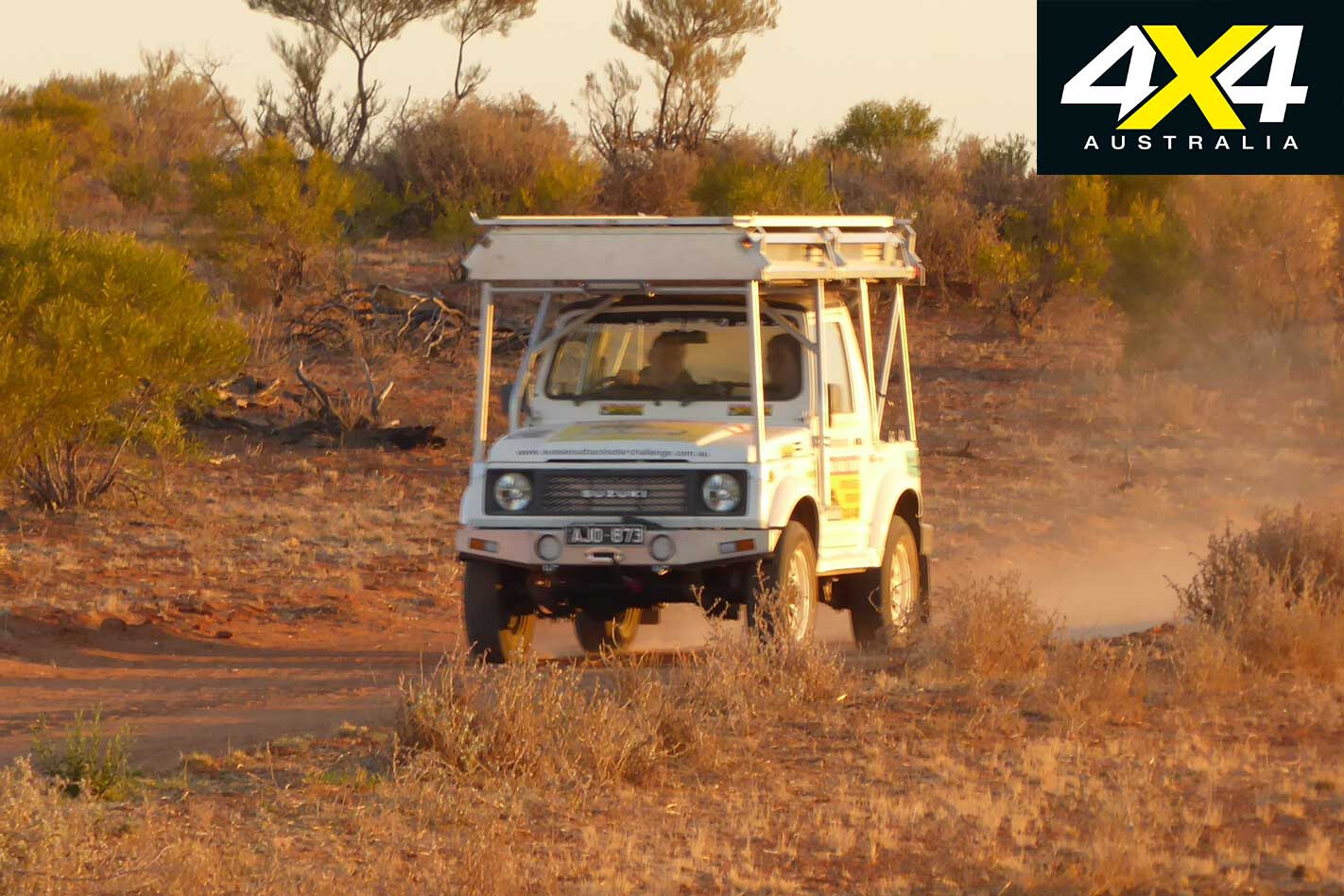
Both teams set-up huge solar arrays to recharge the batteries in their lightweight Suzuki Sierras, and they essentially proved remote-area travel using only power from the sun is possible, albeit a long way from being convenient or commercially viable.
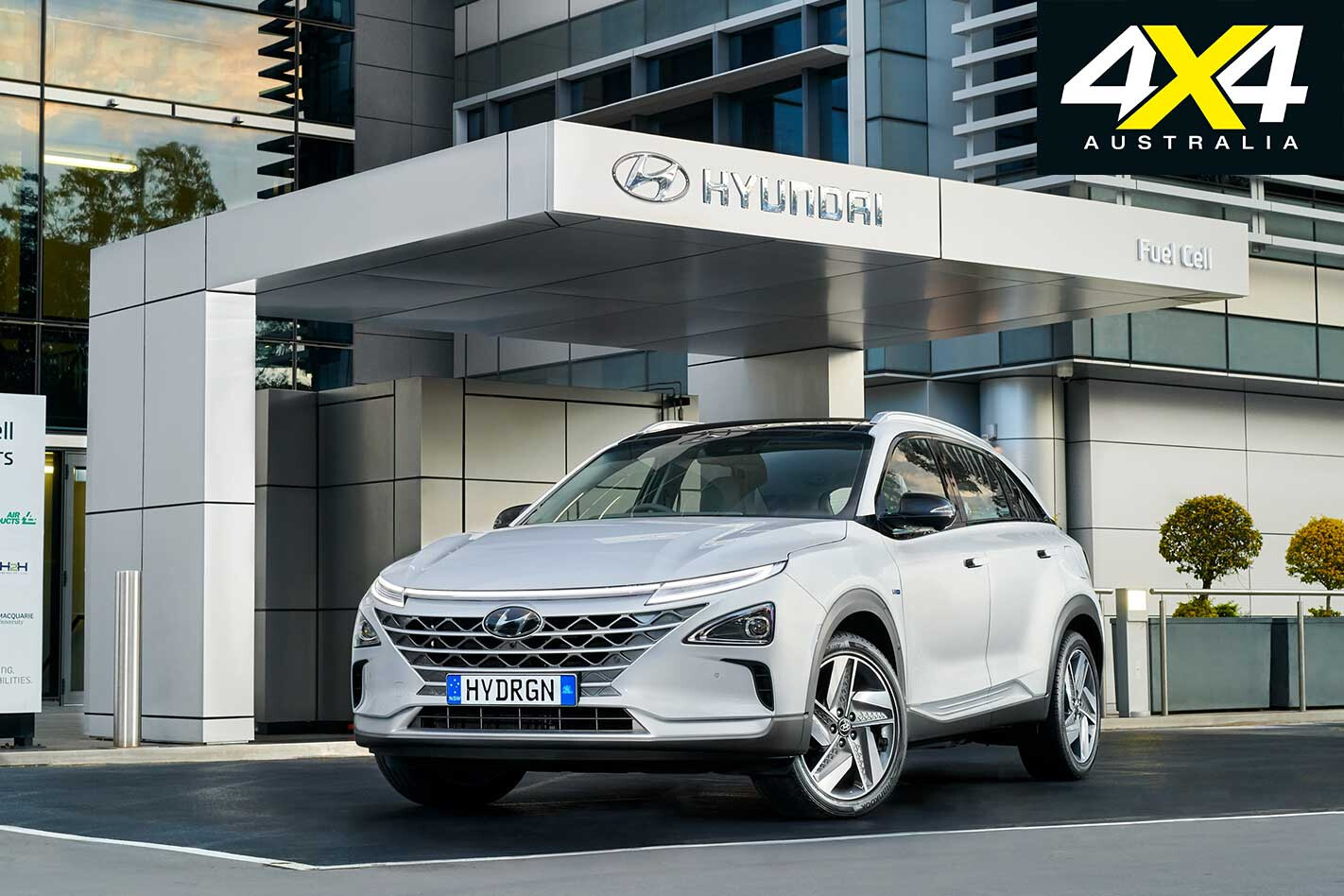
Another possible future vehicle technology, which has been under development for quite some time, is the hydrogen fuel cell, which converts hydrogen into electricity and emits nothing but water from the exhaust pipe.
I drove an experimental Nissan X-Trail equipped this technology about 15 years ago, and Hyundai has recently commercialised this technology with a vehicle called the Nexo, with a claimed 800km range. Of course, this tech requires the development of a hydrogen refuelling network, but, hey, when Henry Ford introduced the Model T in 1908 there weren’t a lot of service stations around.
Whatever ends up powering 4x4s of the future, after driving the impressive Jaguar I-Pace, I reckon we’re in for a treat.