
THE Toyota Hilux, Ford Ranger and Mitsubishi Triton were the three best-selling vehicles overall in February, helping the Light Commercial Vehicle (LCV) market record an upswing of 6 per cent in sales versus February 2019.
In fact, the LCV market was the only segment to record a monthly sales increase; the passenger car market was down a whopping 21.3 per cent and the SUV segment dropped 6.3 per cent. A total of 87,102 sales were recorded for the month, a dip of 9.3 per cent; while 169,096 vehicles have been sold so far this year, 8.4 per cent down on last year.
“Given the current challenging economic conditions, including a downturn in the housing market, the automotive industry is not surprised by the slower start to the year,” chief executive of the FCAI, Tony Weber, said.
When combining 4×2 and 4×4 variants, a total of 4431 Toyota Hiluxes, 3377 Ford Rangers and 3155 Mitsubishi Tritons found new owners.
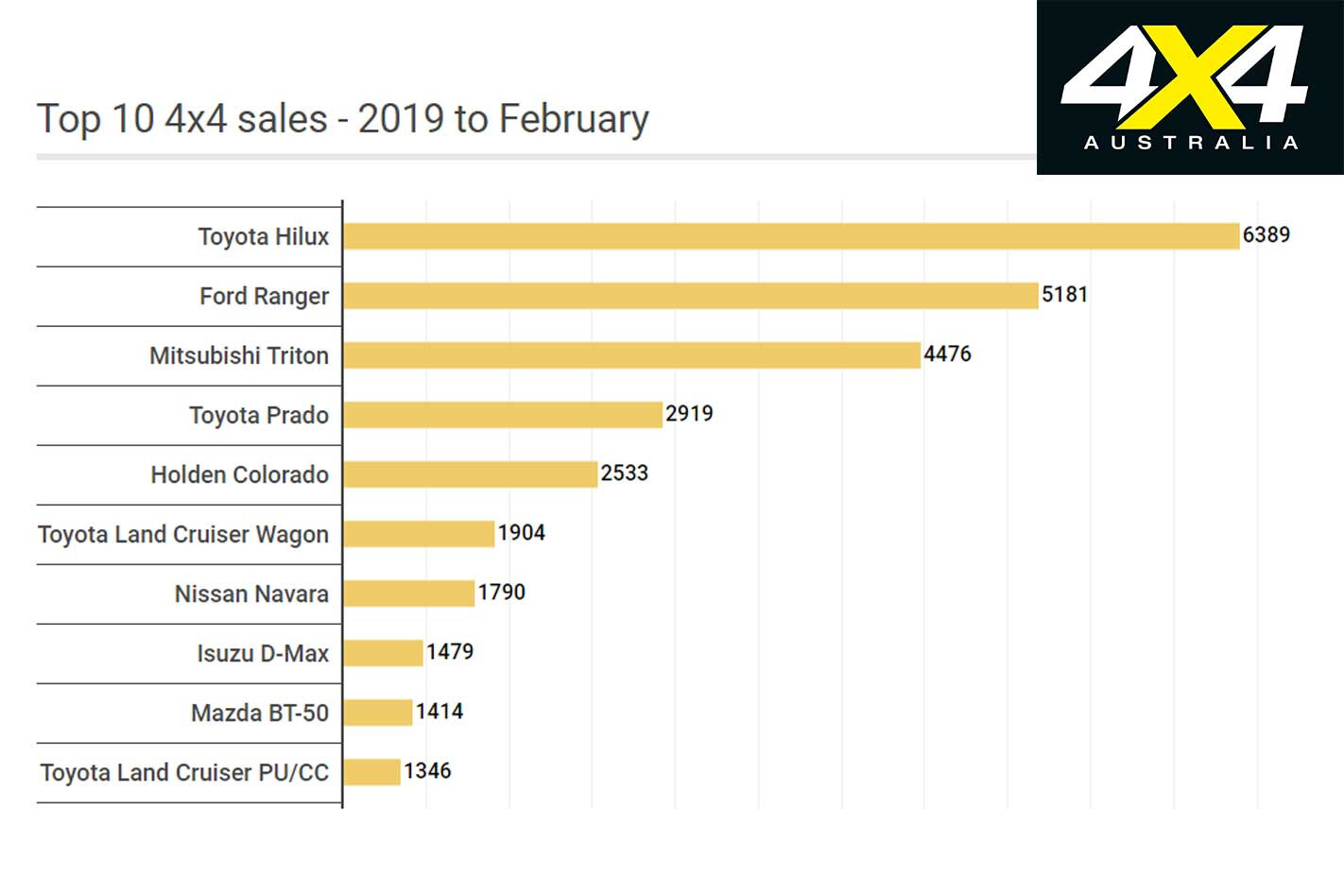
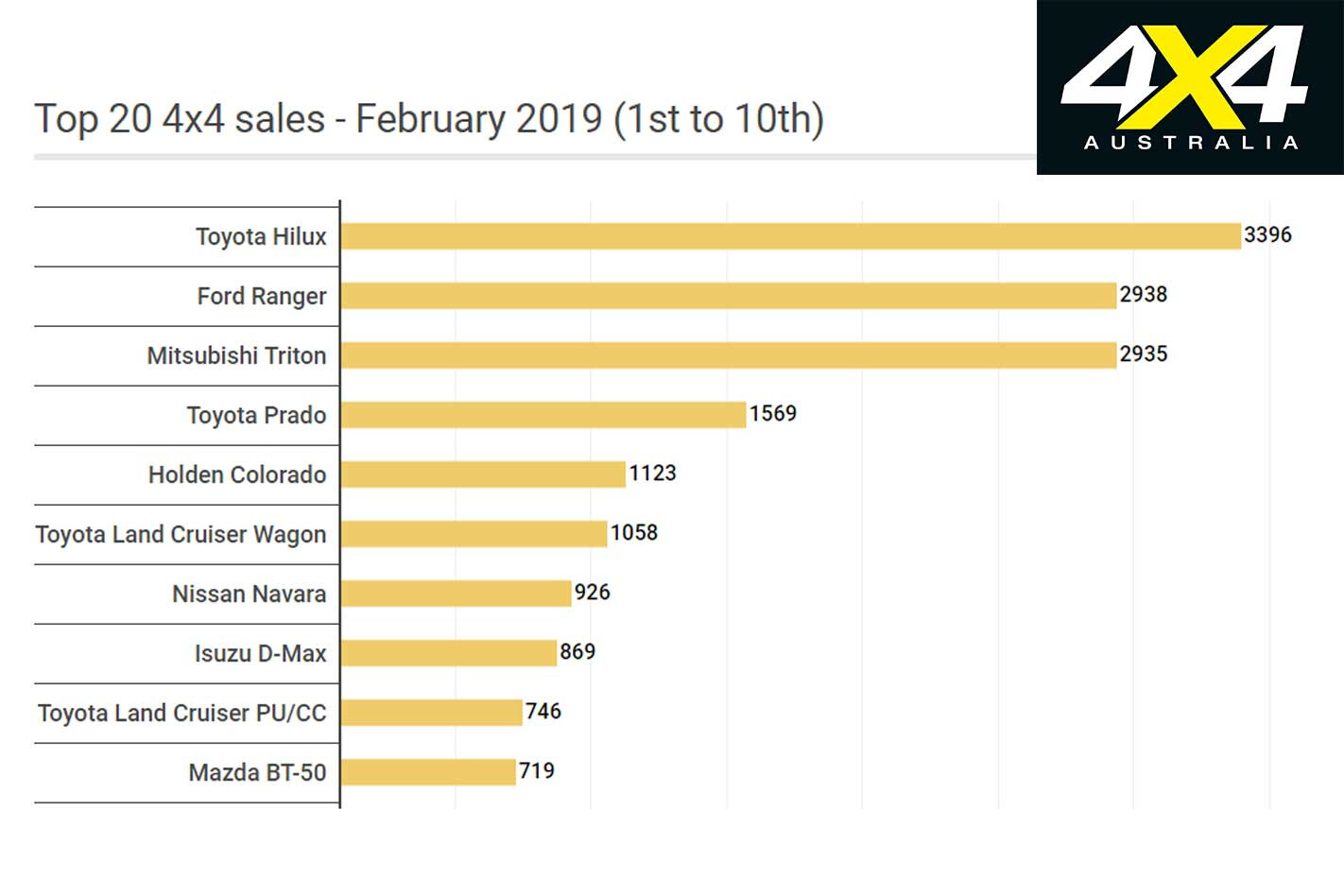
Here are the top 4×4 sales of February 2019:
10 Best-Selling 4x4s of 2019 so far
20 Best-Selling 4x4s in February, 2019
THE status quo may remain atop the 4×4 sales charts, but the February 2019 VFACTS report shows that RAM Trucks has experienced dramatic year-on-year sales growth thanks to the mid-2018 release of the RAM 1500.
At the start of 2018 RAM had just the 2500 and 3500 Heavy Duty models in its showroom, and in February 2018 shifted only 14 units. The V8-powered 291kW RAM 1500 arrived in Australia in the middle of last year – where they’re remanufactured from LHD to RHD in a factory-approved process – and sales have since boomed.
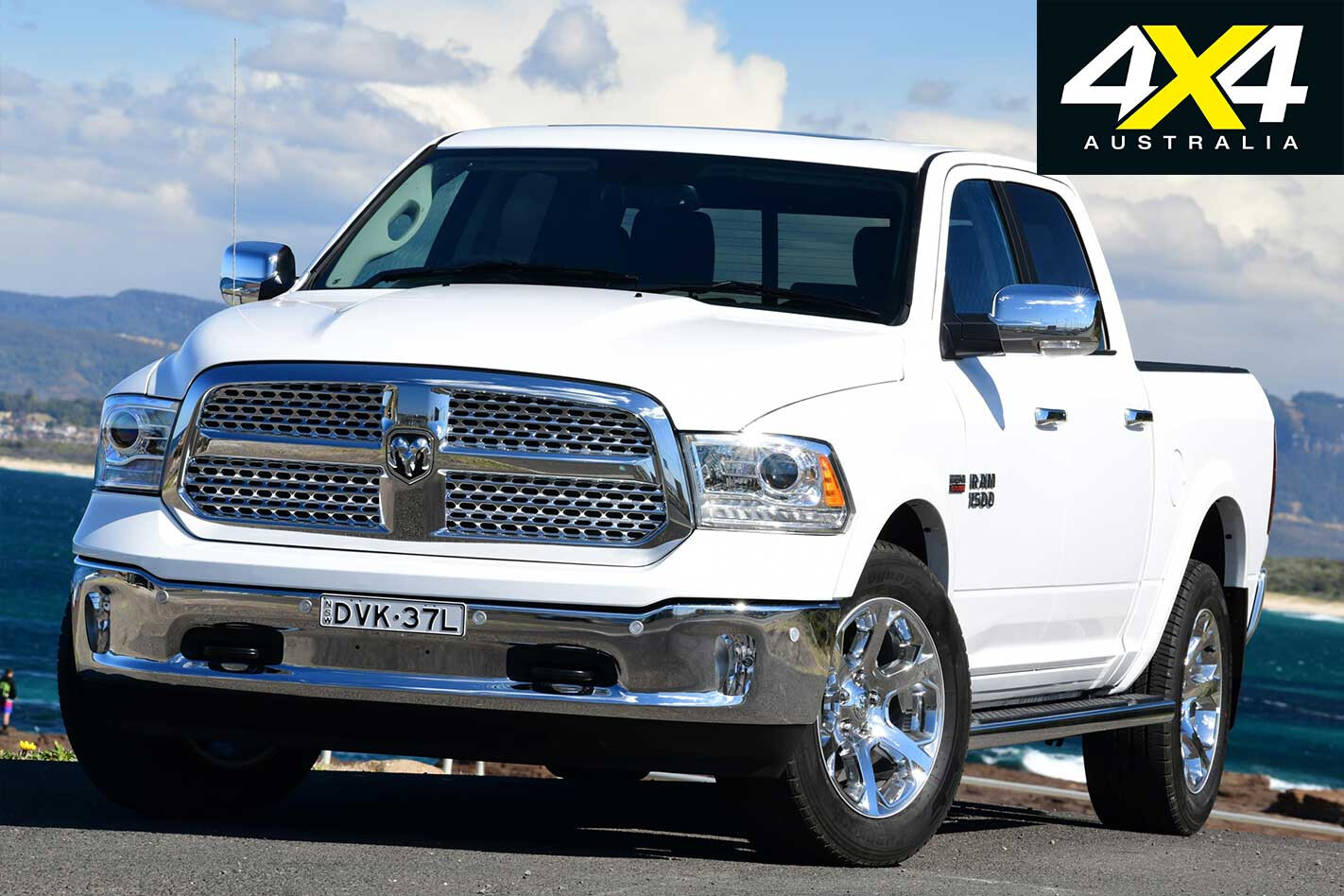
In February 2019, RAM shifted 172 units (81 1500 Express; 55 1500 Laramies; and 36 2500/3500 Laramies); providing a year-to-year increase of more than 1000 per cent. Due to this, RAM’s Melbourne factory churned out more than 200 units in February, a first for the brand.
“RAM remanufactured more trucks in a month than ever before in February, but we are still chasing demand from across Australia and New Zealand for the RAM range and, in particular, for the Hemi V8-powered RAM 1500,” General Manager of RAM Trucks Australia, Alex Stewart, said.
“Given that demand is running well ahead of supply and we are responding by continuing to ramp up production in our Melbourne factory, February will be just the first of record-busting production months this year.”
“While our February production figure is an outstanding performance from everyone involved, it is another stepping stone towards RAM becoming a major player in the Australian automotive market,” Stewart said.
HENNESSEY Performance, a US tuning powerhouse, has spent the best part of 10 years transforming Ford Raptor trucks into brutish off-roaders called VelociRaptors. And now the Texas-based mob has honed its attention to the US-bound 2019 Ford Ranger.
The Hennessey-tuned Ranger stands nearly six inches taller than stock, courtesy of the brand’s Stage 1 off-road suspension upgrade (four-inch lift) and tyre/wheel combination which includes 17-inch Hennessey alloys and BFG A/T 285/70 R17 rubber.
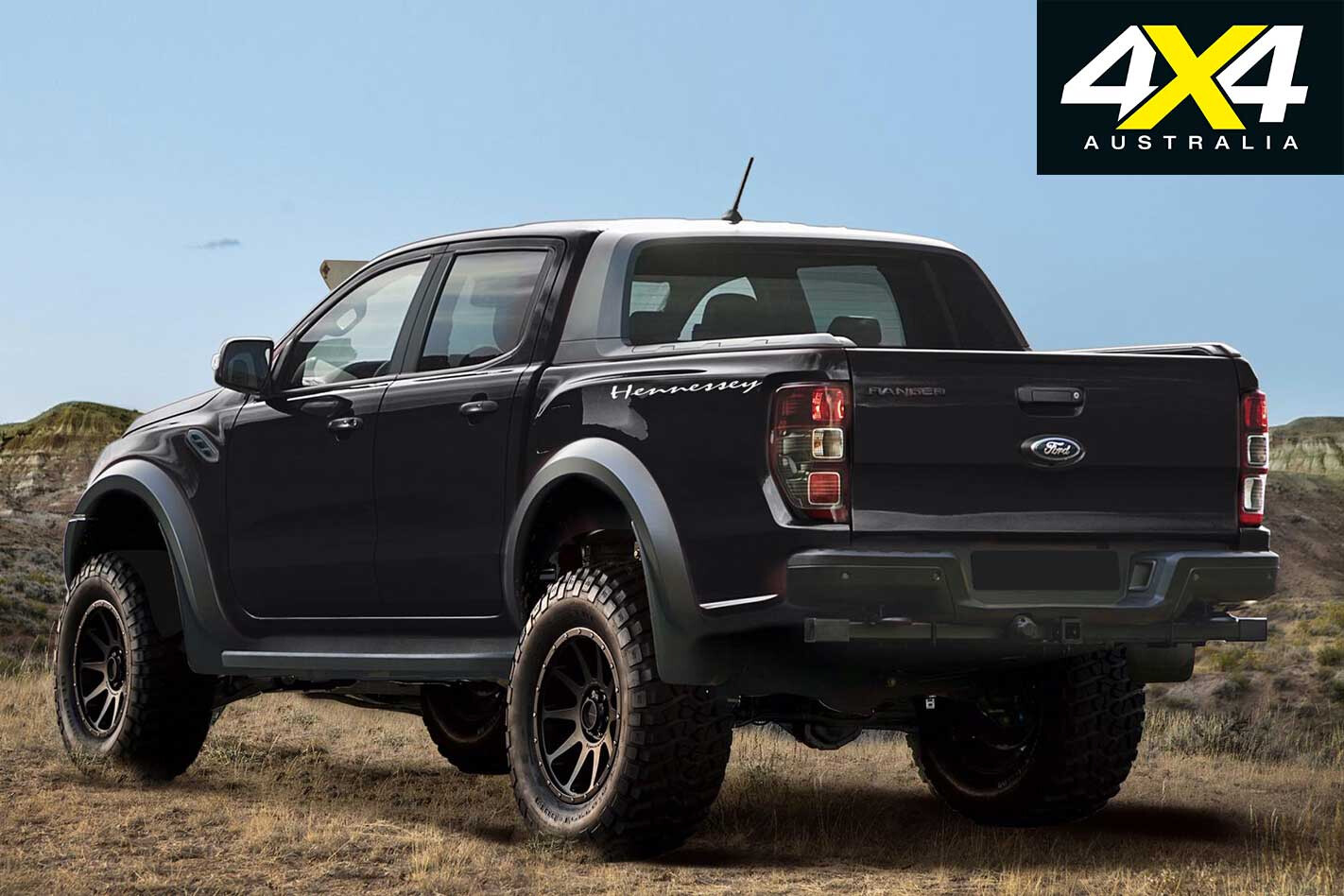
While the US-spec 2.3-litre EcoBoost petrol engine remains, Hennessey has boosted the stock outputs (201kW and 420Nm) to 260kW at 6000rpm and 521Nm at 3800rpm. This boost is made possible by tuning the ECU, hiking air flow via a new high-flow air induction system, and by utilising a steel catback exhaust system. These changes see the VelociRaptor sprint to 100km/h 1.3 seconds quicker than the stock Ranger.
“We are so excited to introduce our 2019 Hennessey VelociRaptor upgrades for the 2019 Ford Ranger truck,” company founder and CEO, John Hennessey, said. “The demand for our VelociRaptor upgrades for the Ford Raptor truck has been incredible over the past 10 years. We are thrilled to be able to offer increased power, performance on- and off-road, all packed in our exclusively branded VelociRaptor package.”
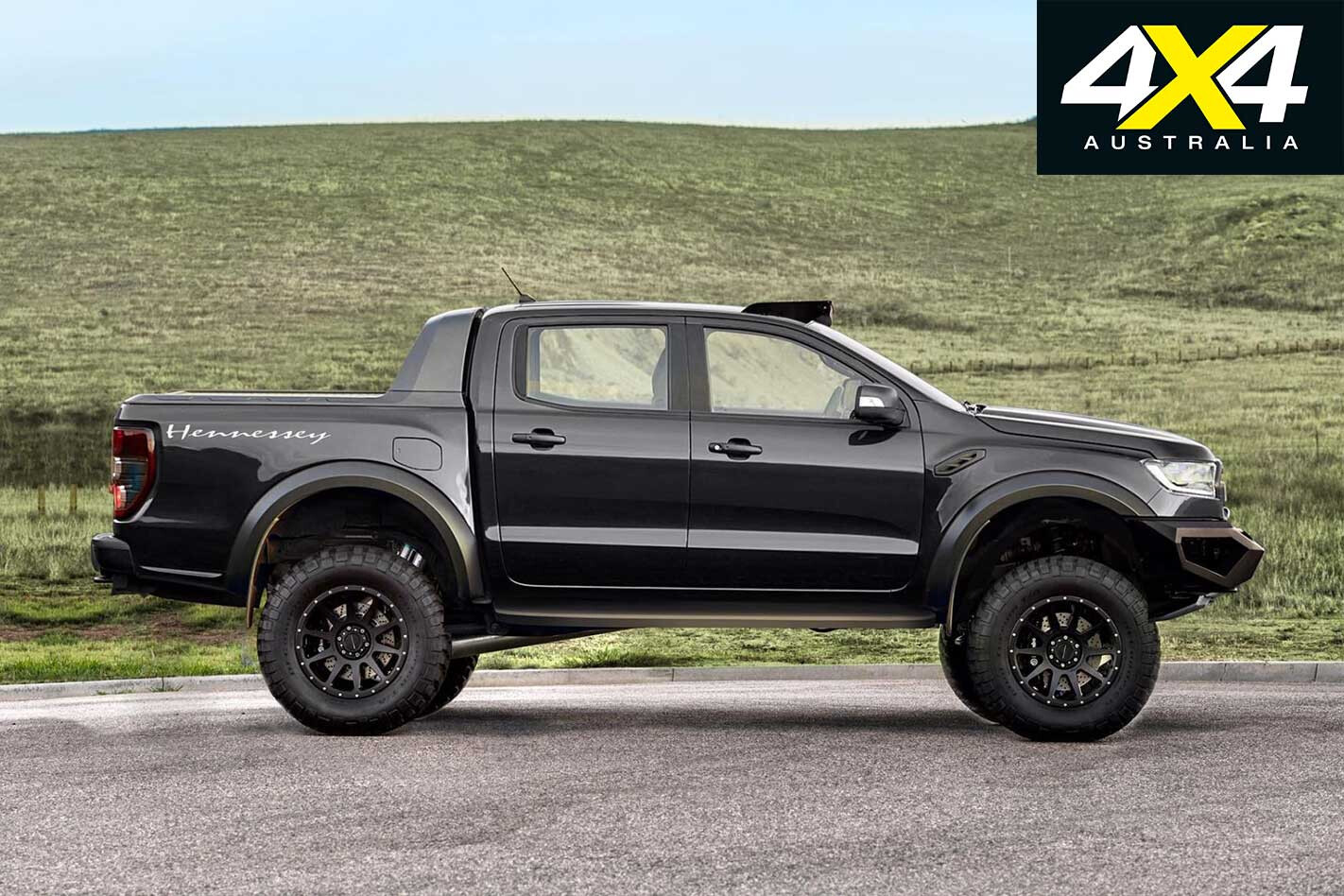
Other changes include aesthetic tweaks and the addition of LEDs to the front-end, a roof-mounted LED light bar, fender flairs, and a sprinkling of Hennessey and VelociRaptor badges.
This run of VelociRaptor Ford Rangers is limited to 500 units, with each vehicle featuring serial-numbered plaques in the engine compartment and interior.
THE MARCH issue of 4X4 Australia is on shelves March 7 and it’s loaded with a first drive of a pint-sized cult classic, as well as a killer custom fabbed by an American mob. We’ve also thrown in a bonus 4x4OTY DVD.
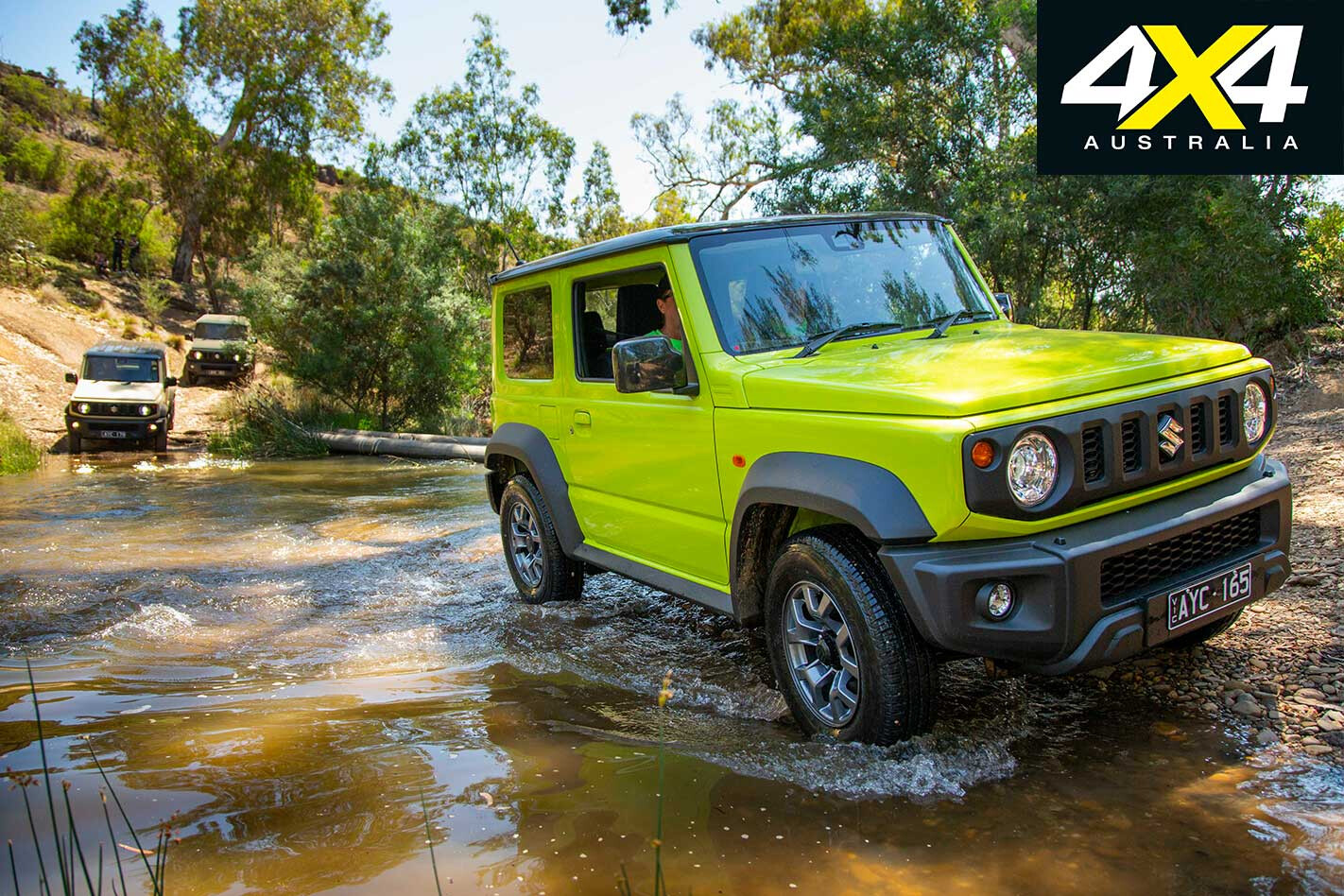
Joining the Suzuki Jimny on the ‘first drive’ pages is Range Rover’s new 2.0-litre, four-cylinder, petrol-powered Si4 and Mercedes-AMG’s brutish G63 – taken to some mild off-road tracks due its $250K+ price tag.
We were also thrown the keys to Jeep’s JL Wrangler Rubicon eTorque – the one with a 2.0-litre, four-cylinder, turbocharged petrol engine – on a recent Stateside venture. Plus we spent some more time in the 4X4OTY-winning Ford Ranger Raptor, taking the 2.0-litre-powered off-roader out of its comfort zone (high-speed trails) and up some slippery, steep hills. Is it just as stunning on trickly ascents as it is on open desert tracks?
The X250d struggled at 4X4OTY, finishing seventh in a field of eight. Is the V6 the fix the German marque desperately needs? We fang the X350d to find out.
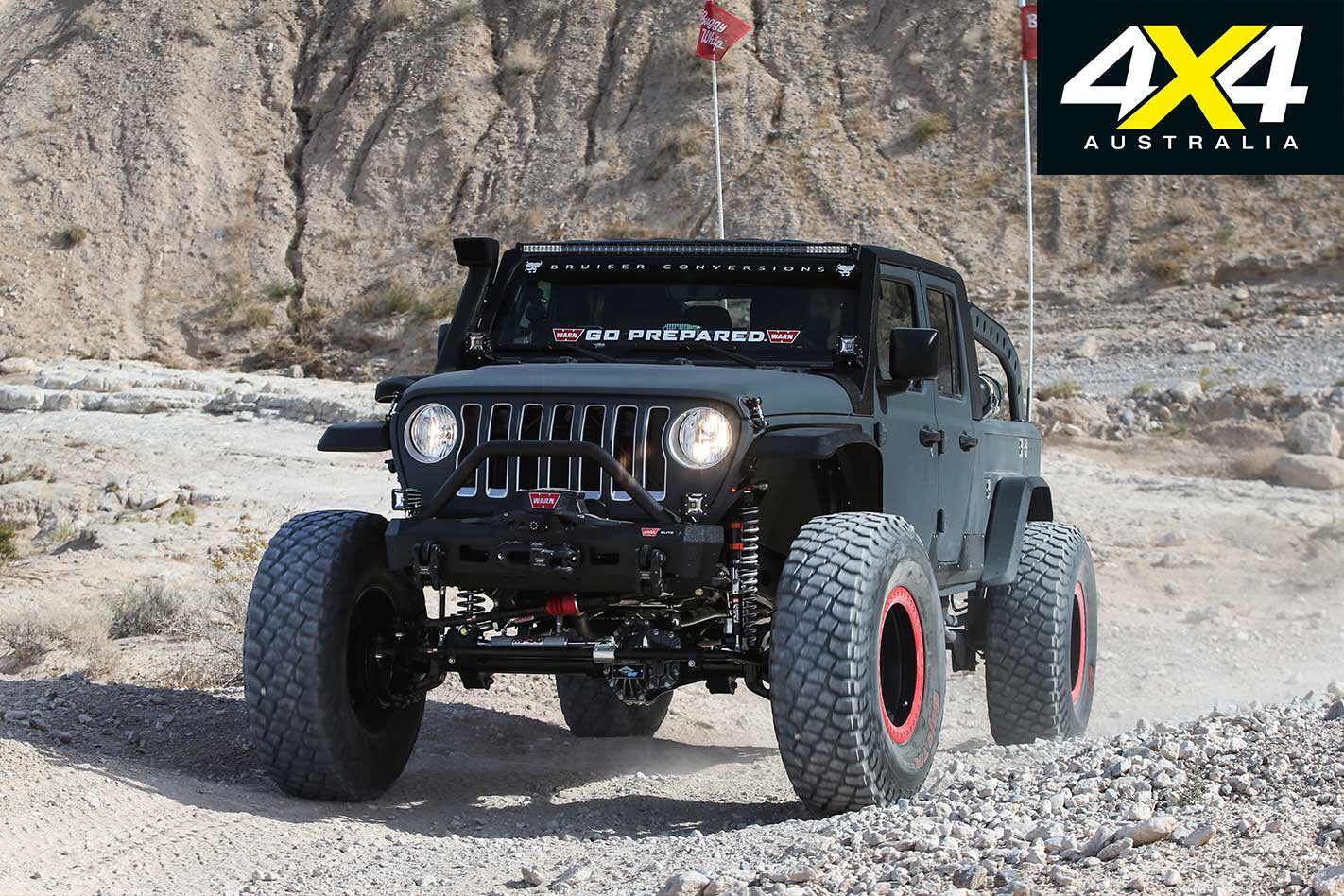
That killer custom from the US of A is a chopped-and-stretched JL Wrangler with an LS3 V8 heart transplant, courtesy of Bruiser Conversions. We walk you through the build from go-to-whoa.
New to off-road touring? We’ve got you covered with a list of the top touring essentials required to set-up your 4×4 for adventure (tyres, suspension and comms … to name a few).
Plus, 2019 marks the 40th anniversary of this very magazine; so we celebrate by trawling through the archives to find you the best yarns we’ve spun over the years.
WHAT ELSE IS THERE? – Long-term Discovery heads from Melbourne to Brisbane, and back again. – DIY Narva Ultima 175 installation. – Exploring Curtis Island in Queensland and the Oombulgurri Track in WA. – Products reviews, Readers’ Rigs, columns, and heaps more.
The March 2019 issue of 4X4 Australia will be in stores on March 7.
HEAD off-road to a remote spot without a digital or print map, or the necessary communications equipment, and you’re setting yourself up for disaster. It always pays to play is safe when touring and to pack gear that’ll get you there and back again (think UHF radios, sat-nav, paper maps and power packs).
Here’s some new kit on the market that’ll help when planning a trip, and to get you of a pickle should the occasion arise.
Hema Maps 4WD Adventures
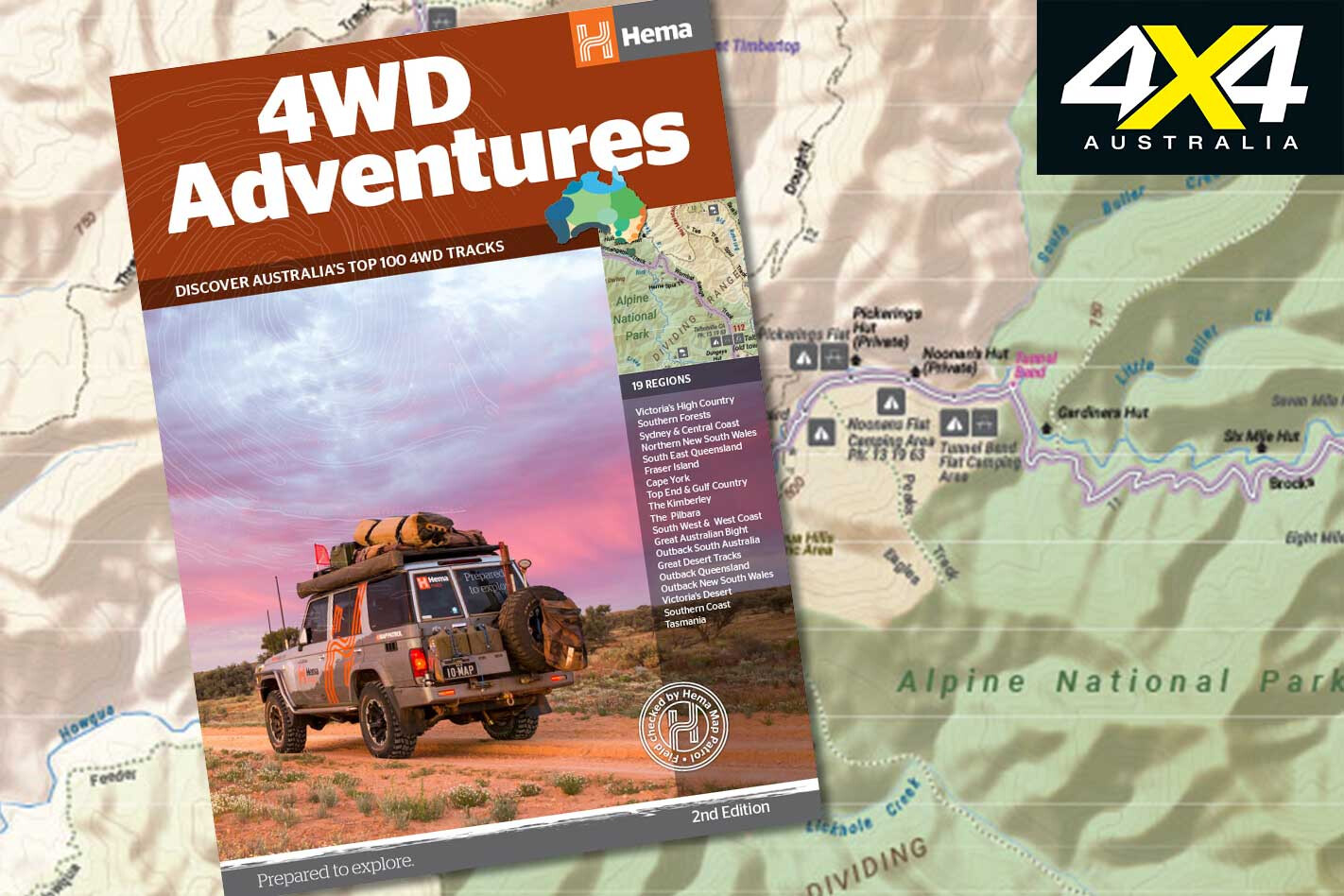
This second edition of Hema’s guidebook to 100 of Australia’s best off-road journeys features all-new cartographic map specs, elevation profiles of tracks, an easier-to-read layout and design, detailed inset maps, and edge-to-edge mapping.
The hefty tome measures 215mm x 297mm and is spiral bound. Australia is a bloody big country, so it’s a bloody big book, clocking in at 420 pages. This guide is nothing if not thorough in its coverage of the 100 adventures included.
Some of the other handy features include the colour-coding of tracks to vehicle types, and all the latest info on the nearest supply points and camping areas. There are also a number of insets dealing with the particular track’s history, making this guidebook essential for any off-road explorer.
RRP: $69.95 Website: www.hemamaps.com
Thunder 5W 80-channel UHF
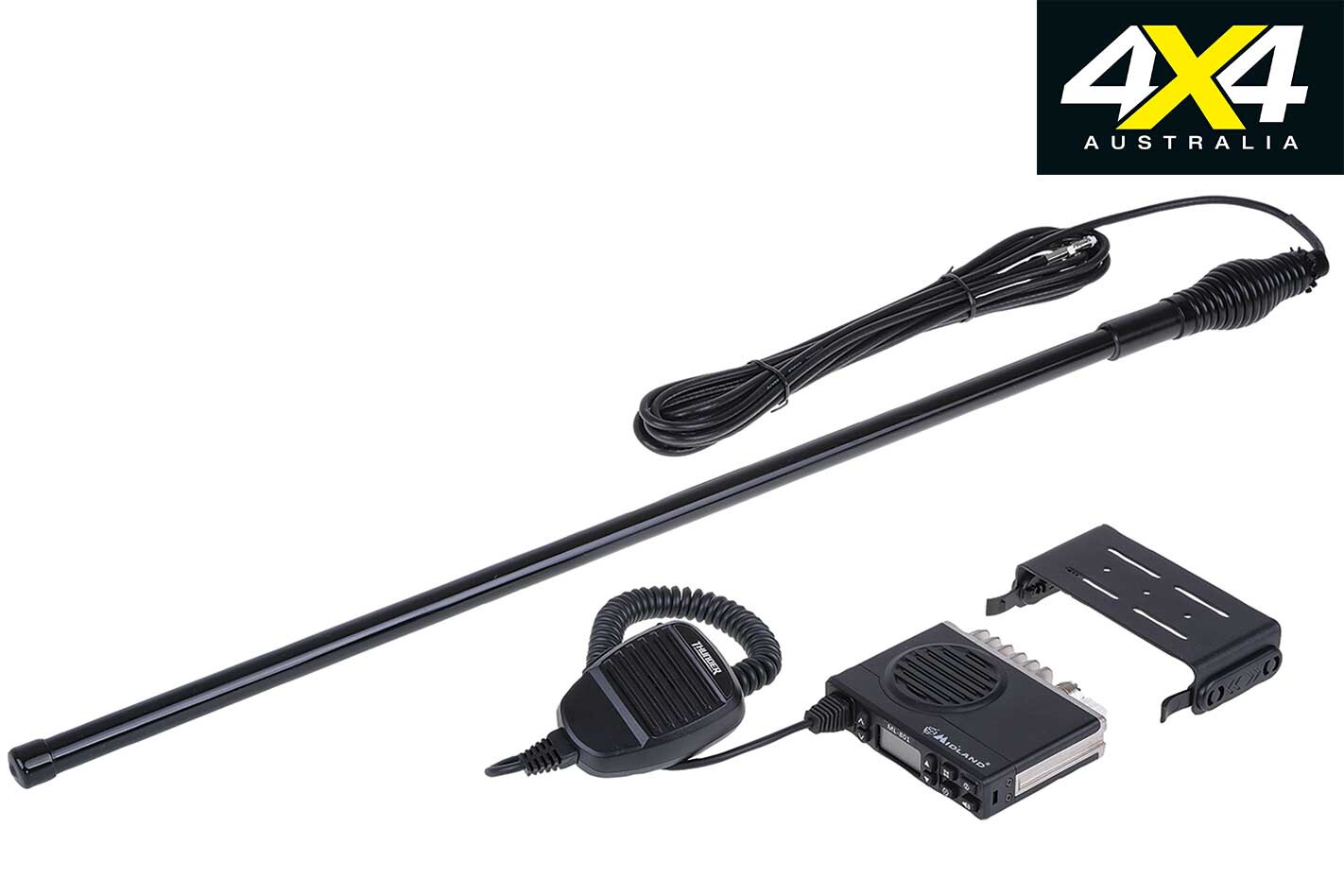
This compact and tough UHF features 80-channel scanning capability and a backlit LED display and keypad for ease of use. The Thunder 5W features digital selective calling, an external speaker jack (for when you want to boost the already impressive volume capacity), and a robust 75cm 5dB antenna that includes a 35mm black stainless steel barrel spring.
Outstanding performance with a massive 18km range combined with a sleek, unobtrusive mount for modern vehicles is ideal for the adventurer. For what it lacks in size, the radio packs a punch with a built-in loud speaker housed by a durable case.
The compact size makes the radio very easy to mount, and that 18km range means there’s no need to constantly worry about how close you are to your fellow travellers’ vehicle when you’re on the way to your campsite. There is digital selective calling and a quick-release cradle as well.
RRP: $588 Website: thunderauto.com.au
Powertraveller Mini-G
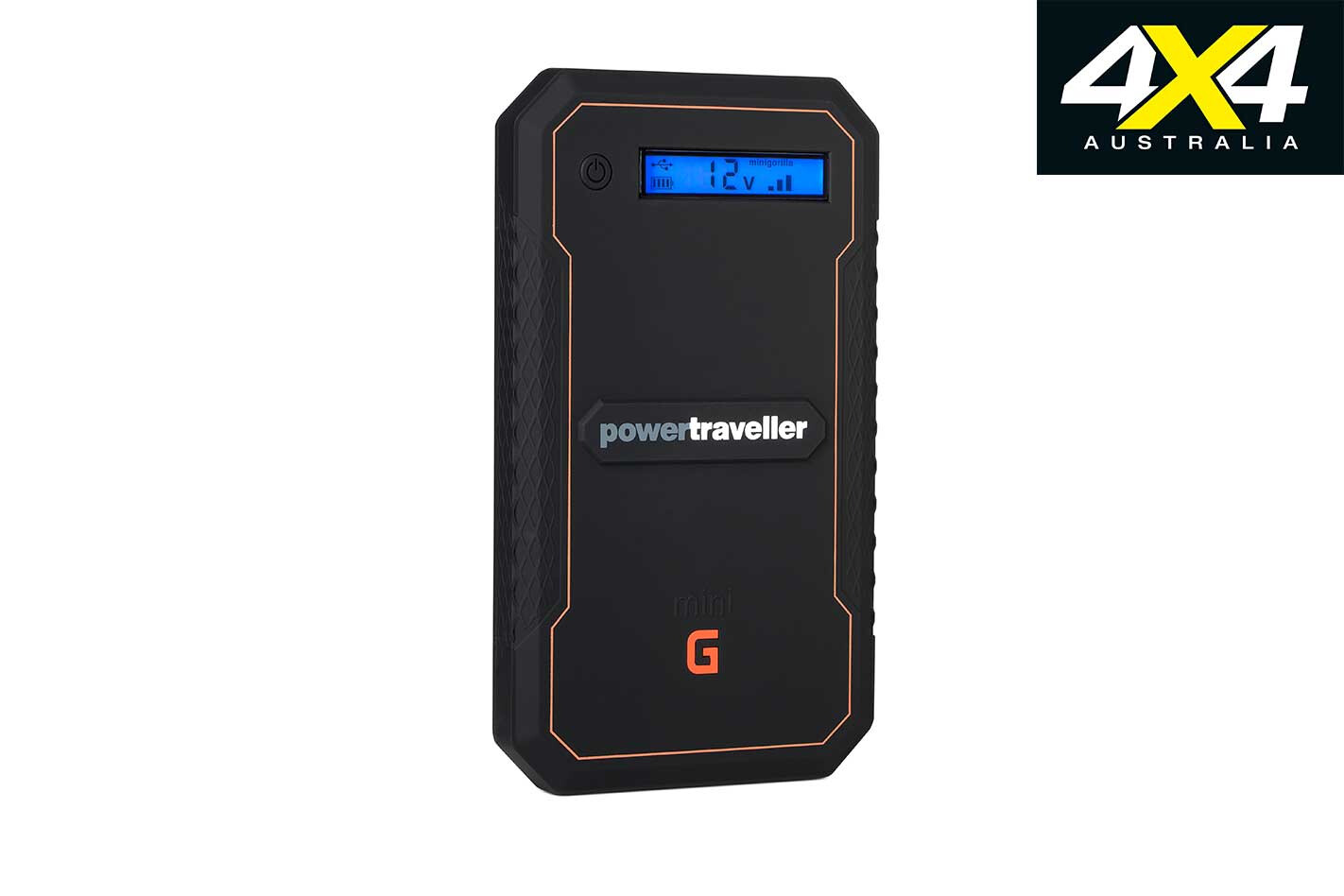
This multi-voltage power pack is ideal for charging DSLR cameras, laptops, smartphones and other devices that run off 5V to 19V power. The Mini-G’s prodigious grunt comes via an inbuilt 12,000mAh lithium battery.
The Mini-G includes one DC input, one DC output (12V, 16V and 19V), a dual-USB output (5V 2A/1A), an easy-to-read LCD screen, one international 19V AC mains charger and one-touch button technology. You can also daisy-chain it with other Mini-Gs. Its case is dust- and waterproof and measures 158mm x 237mm x 80mm and weighs just 323g.
Use is intuitive; once you select the correct voltage requirement for your device the LCD displays the chosen voltage, then you just plug it in and power up.
Website: www.gearsupply.com.au
THE RAIN was pelting down, the dirt road quickly turning to mud, while any semblance of traction as we crossed the black soil and the occasional low lying claypan, east of the Darling River, was quickly going out of the window. That was especially true of the four-wheel drives with road-orientated tyres – and that was most of the vehicles we had in our group for this year’s annual 4X4 Of The Year test.
Only the Ford Raptor had rubber that was really suitable for these conditions, while the HSV SportsCat+, with its relatively good off-road tyre combo, wasn’t as well set-up for these slick muddy conditions. The other vehicles were worse off.
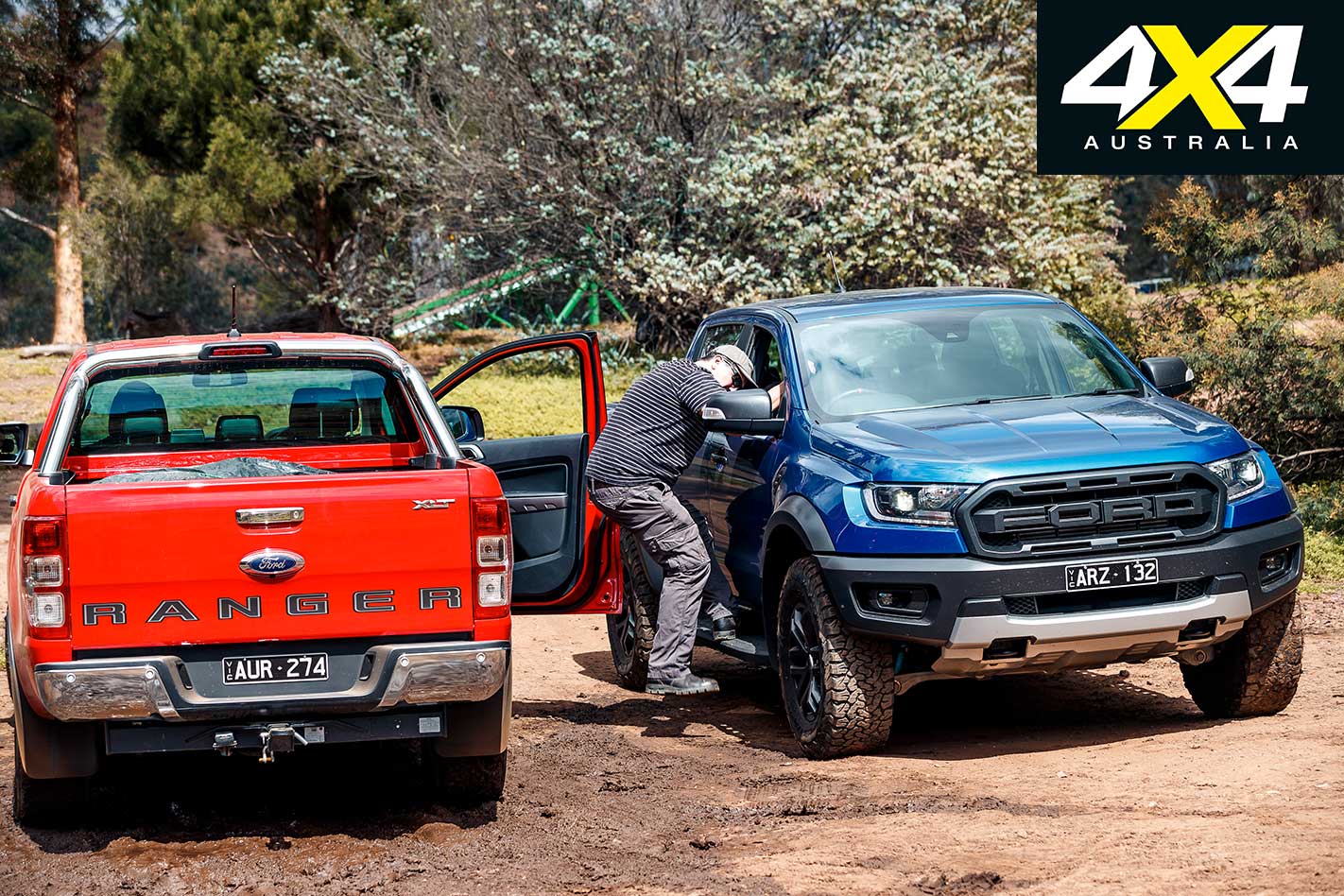
Then, just as quickly as we had hit the wild weather, the rain stopped and we were back on tracks that first sprayed drying clumps of mud everywhere and then became as dry as a chip, with a dust cloud billowing behind each and every one of us.
Our testing, though, had begun when we had met a day earlier at the Melbourne 4WD Training & Proving Ground out at Werribee. The morning started off raining, but then abated to a cool, windy day, so the tracks were damp and a little slippery. With our time limited to a day at this location we kept to just a couple of the hill climbs to see which vehicle performed the best in these conditions.
There is nothing quite like a man-made set track to test the capabilities of a range of vehicles. It’s no surprise, then, that it is the main reason we come to this proving ground where there are a variety of tracks and obstacles to test a vehicle’s prowess and to compare it with others in exactly the same situation.
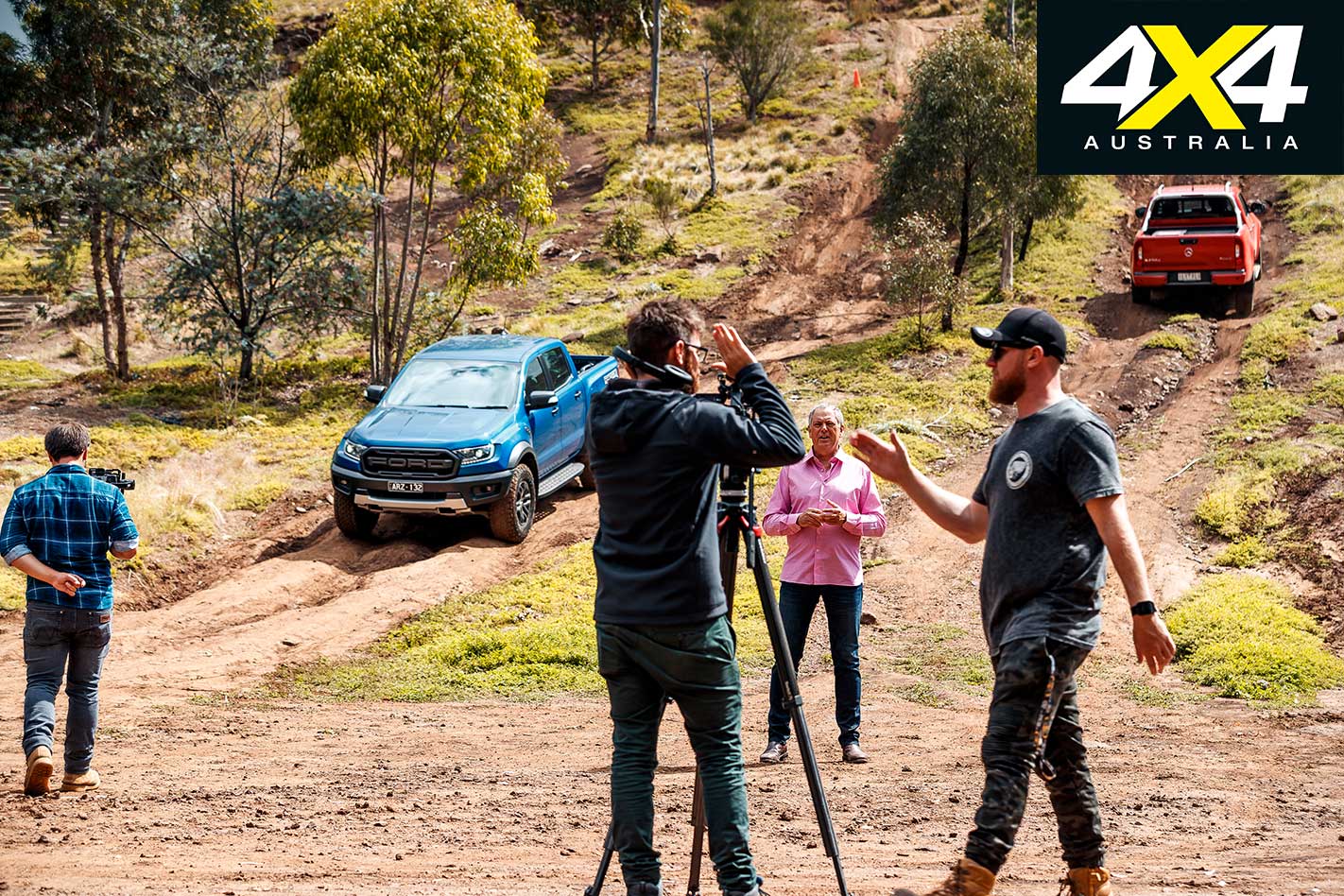
All the vehicles climbed the hills, but some did it a lot easier than others, with the SsangYong Rexton struggling the most. Again, the VW Amarok proved you don’t need low range to climb a steep and rutted hill – just good low gearing, while a well-calibrated traction control and a rear diff lock both help.
We played in the river, too, but the water was pretty low which meant that even the low air intake of the VW wasn’t an issue. On the other side of the equation the tall Mahindra – which would have got a prize for the most improved – hardly got the rims wet and the optional snorkel fitted to our test truck was not required.
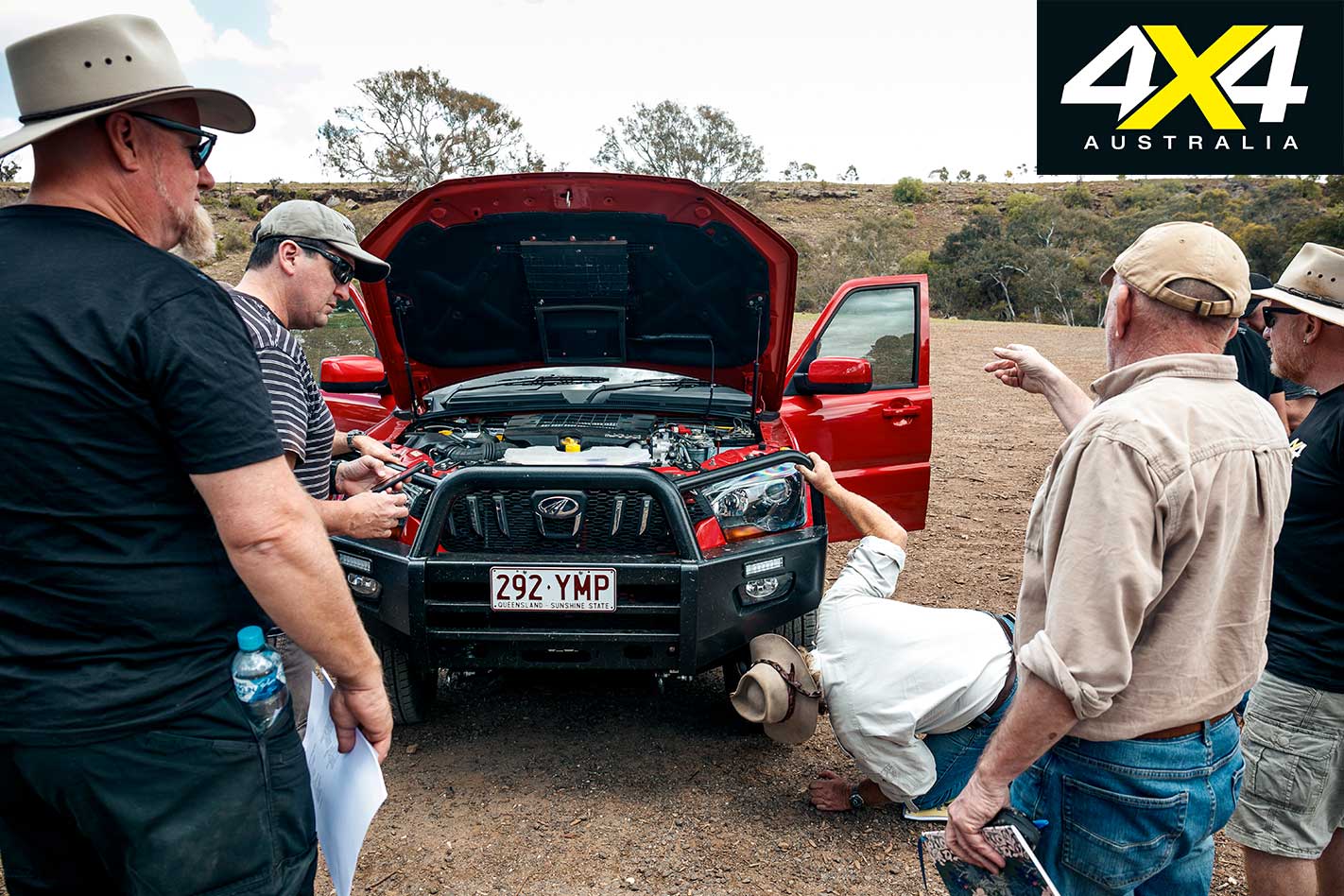
The next day saw us on a road trip through Victoria, crossing the border at Echuca and passing through Deniliquin before heading to Hay and Ivanhoe before taking to the dirt for the run across to the Darling River. It was along this section of road that dark clouds, thunder and lightning danced around us and water bucketed down, turning the route into a slippery, muddy passage.
After 12 hours behind the wheel we slipped through Menindee to camp on the edge of a drying Lake Pamamaroo, the water level much lower and further out from the shore than just a few months ago when we were last here. But it was still an enjoyable bush camp, where the next morning the video crew and the photographer were busy playing with the morning light and the mud-covered vehicles.
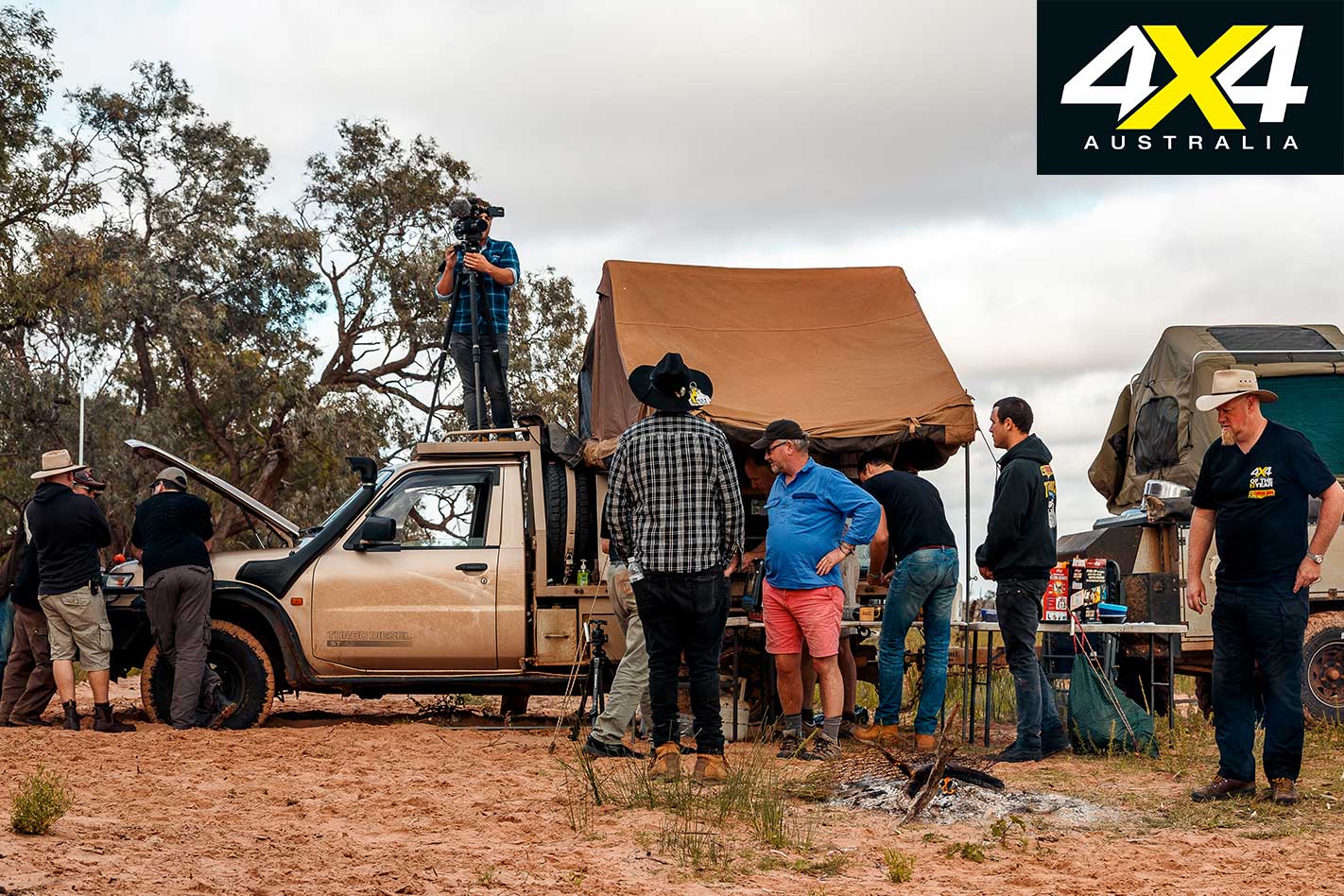
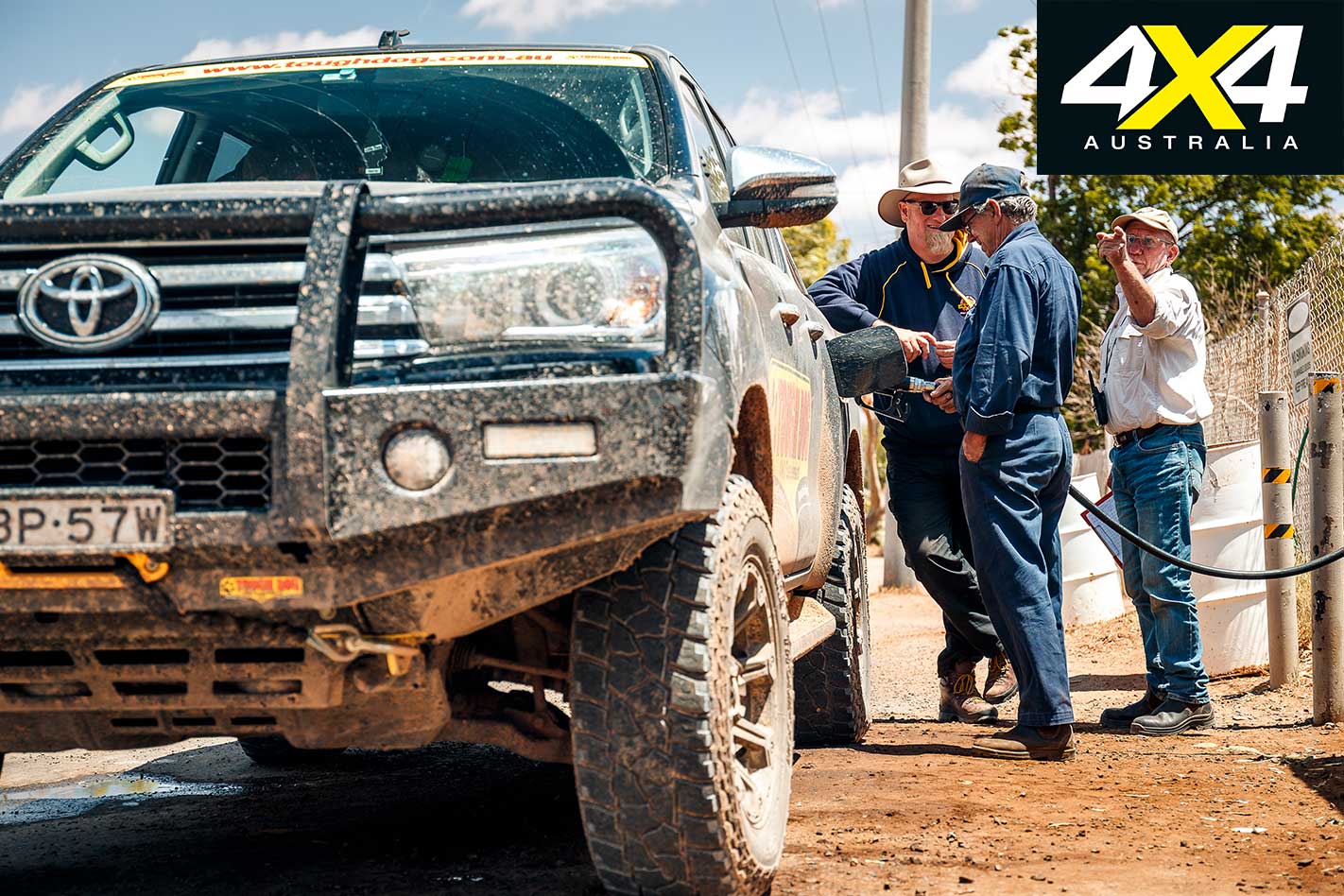
Backtracking towards Menindee we then took the Western River Road north to Wilcannia, the heavily loaded Hilux from Tough Dog Suspension and its non-aerodynamic load chewing fuel more than usual, to the point where we slowed the group and cruised quietly into the fuel stop; the Toyota making it on a sniff of diesel.
With full tanks we headed down the bitumen and then took station tracks. The vehicles flung clumps of mud everywhere; the noise of it testing the NVH of the vehicles, with the X-Class exuding a quiet ambience, whether on chunky mud or on blacktop.
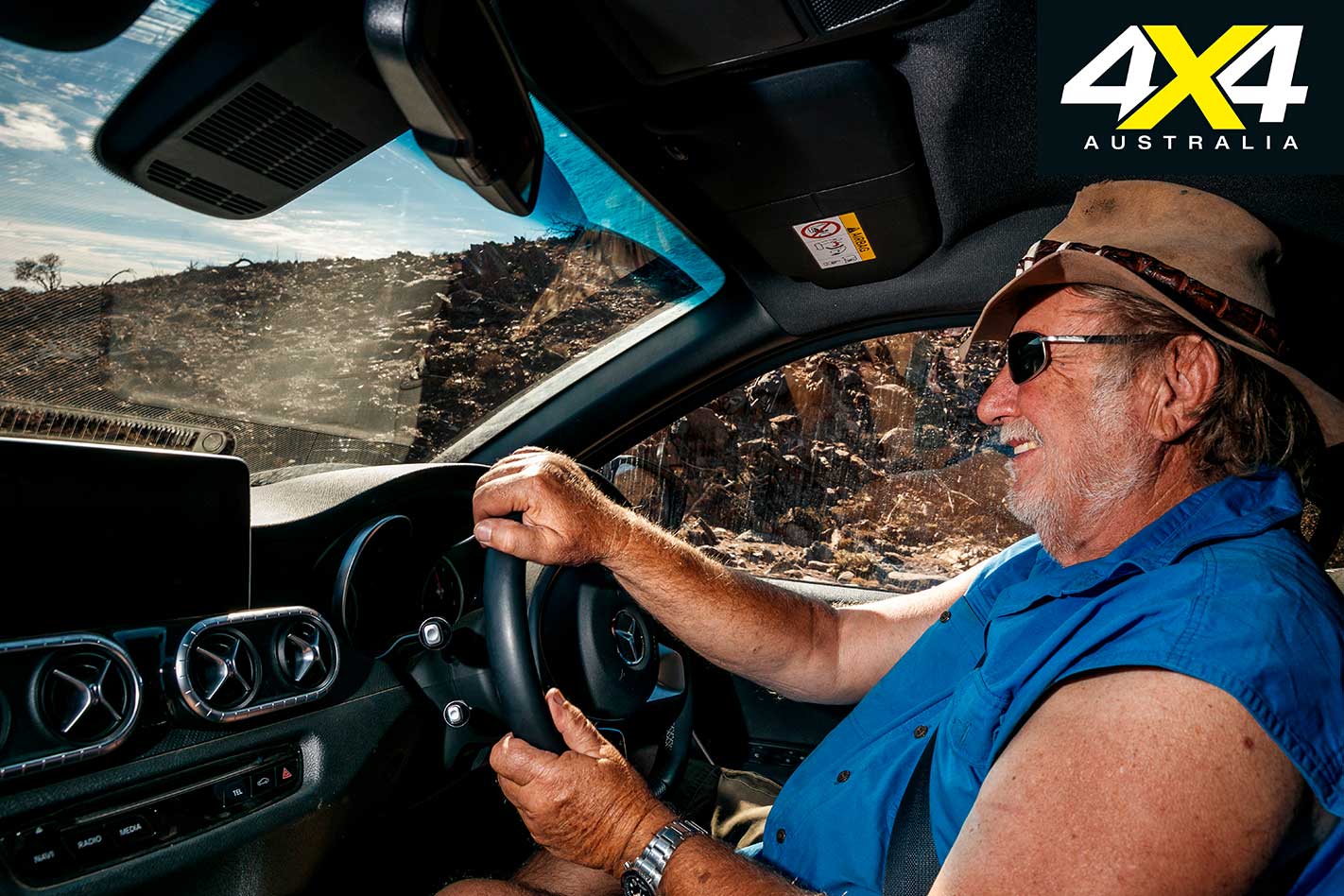
It wasn’t long before we had made it to a private property we had access to and found a stretch of cochineal-coloured sand hills we called the Little Red Sahara. We played in the sand and then let the photographic crew set up some shots in amongst the vibrant red dunes, which positively glowed as the sun was setting.
Driving away from here we had permission to cross a couple of properties on back tracks that varied from freshly graded dirt roads to near nonexistent wheel marks; our route taking us across an area of lush green, the result of recent rain.
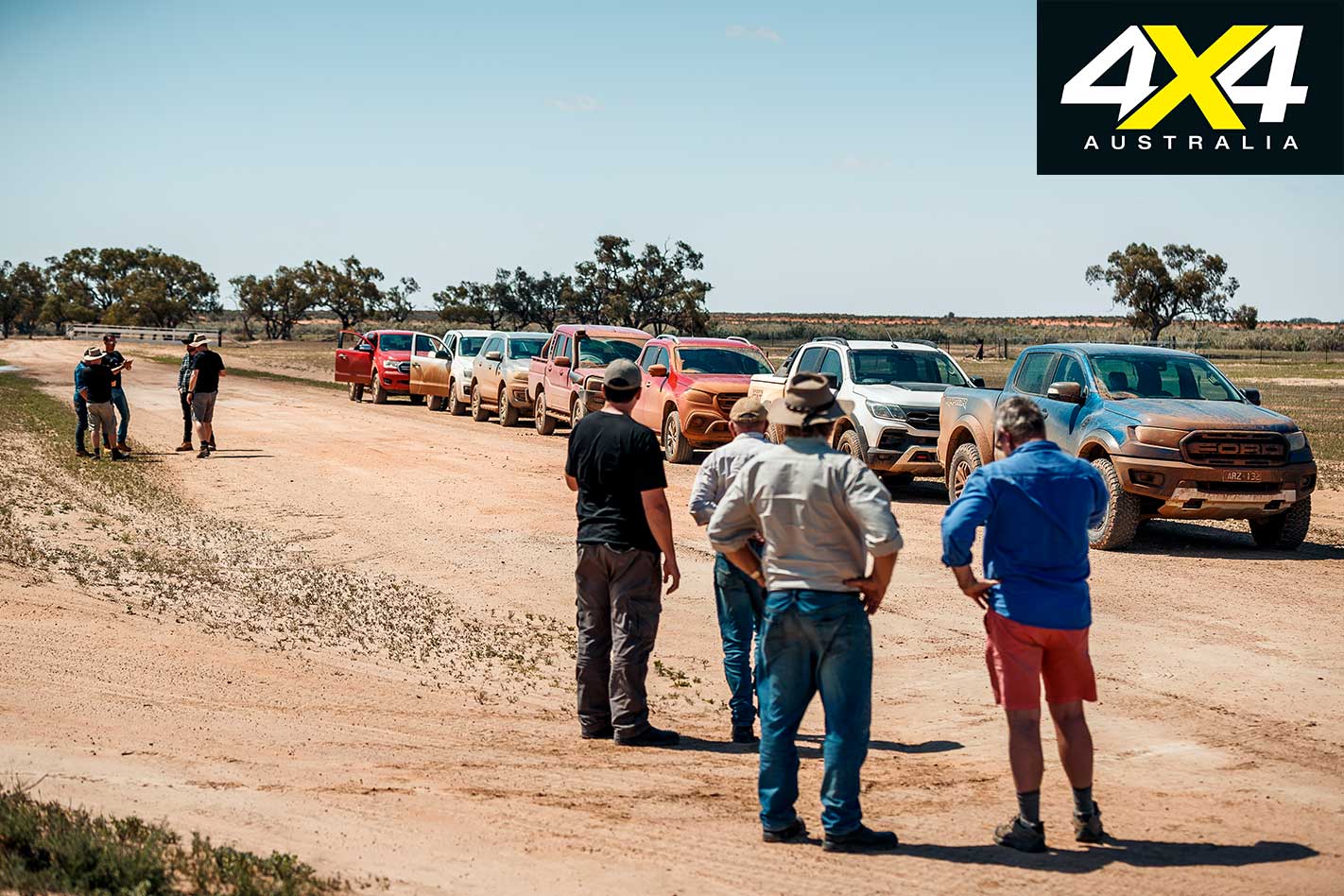
By the time we hit the Eastern River Road we were back in country that hadn’t received rain for ages. As we pushed north through Wilcannia once more and then took the Tilpa Road the country seemed to get drier.
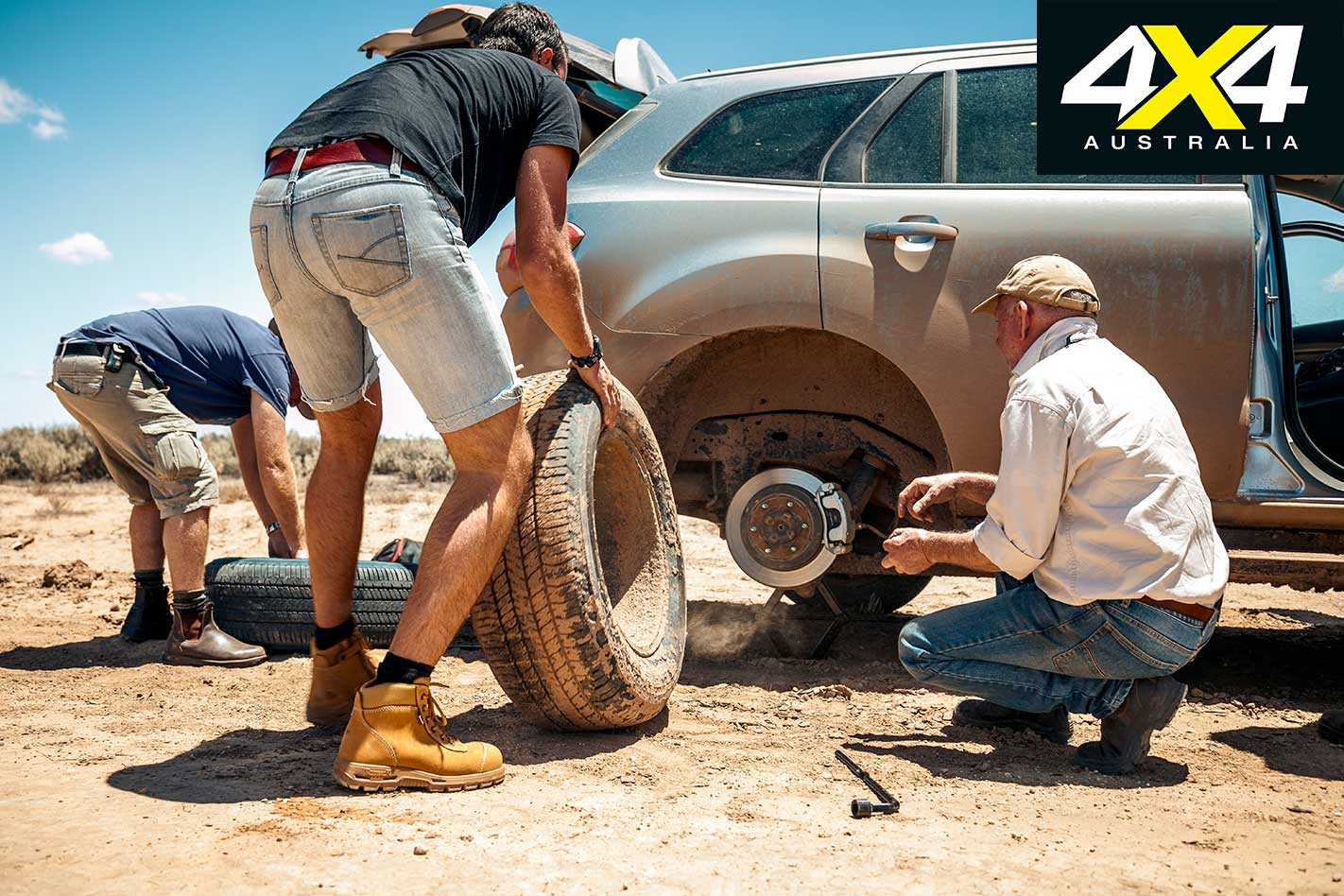
Along the way the Everest had a puncture, the second vehicle to succumb to the outback roads and an indication that most tyres fitted to modern 4x4s aren’t really suitable for the outback or even good dirt roads.
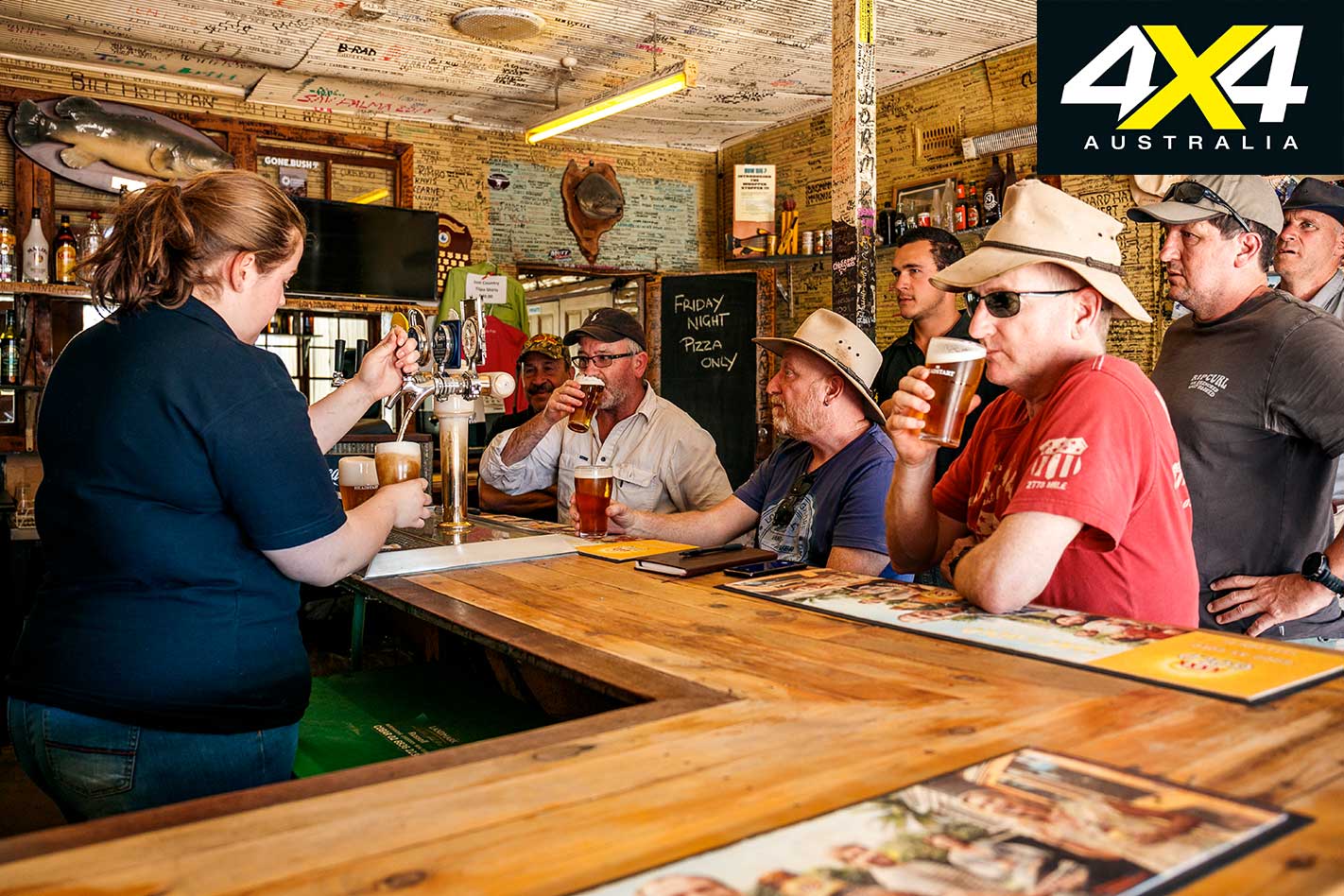
After an evening enjoying the hospitality of the Tilpa Hotel and yarning to a few locals, we again turned south to Wilcannia (we were beginning to like the place after the third visit in as many days) then took the blacktop to Broken Hill, where we fuelled up and washed the worst of the mud off the vehicles.
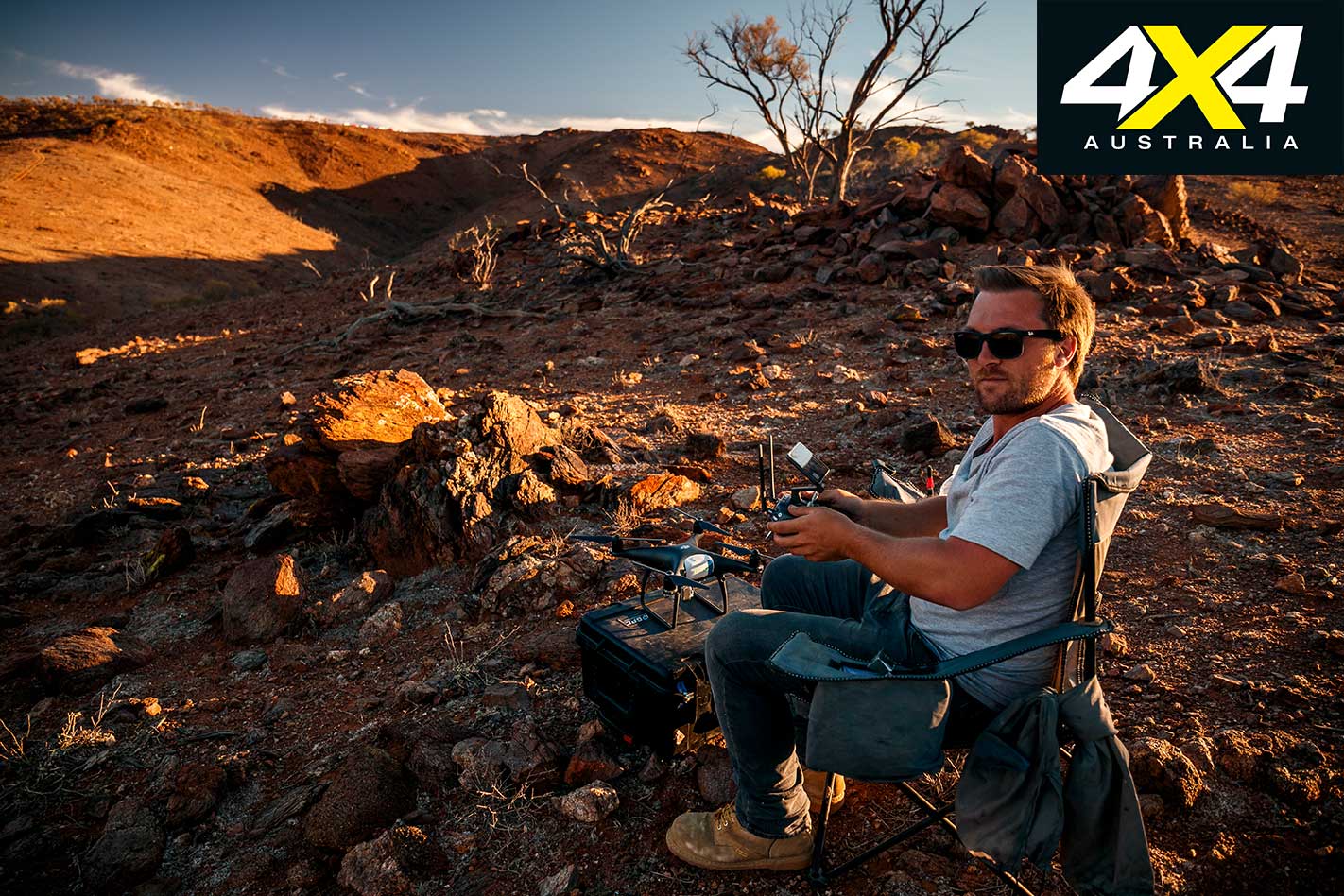
With the heat climbing we headed to Silverton for lunch at the pub, and then Eldee Station tucked up close to the rocky Barrier Range with the Mundi Mundi Plains stretching away to the west. For the next day and a half we drove a variety of tracks on the property from sandy creek beds to fast, flat dirt routes to rock strewn pathways.
We expected the Raptor to go well here, and it did, and its less flamboyant sibling, the Ranger XLT, didn’t disappoint. With a better payload and towing capacity than either of the other Fords, it would be, in my eyes, a better touring tow vehicle than either of the other two.
With heat, wind and dust storms blowing over us, followed by spits of rain, all the gang, especially the hard-working camera teams, were feeling the hot spell, so it was with some relief that the last evening was spent enjoying a few cold ales, a plate of prawns and some fish to celebrate the week.
On the last morning our crew split up, some heading for Melbourne, others to Sydney and Adelaide. Another 4X4 of the Year was done and dusted – apart from the writing, the sorting of pics, the editing of video and the adding up of the all-important scores to find the eventual winner. Who will that be?
All eight vehicles completed the 2000km test without major incident or problems, with tyre punctures and loose mudflaps being the only casualties.
Once the dust settled and the judges’ scores were in and tallied, the finishing order from the bottom up looked like this…
8th Place – SsangYong Rexton ELX
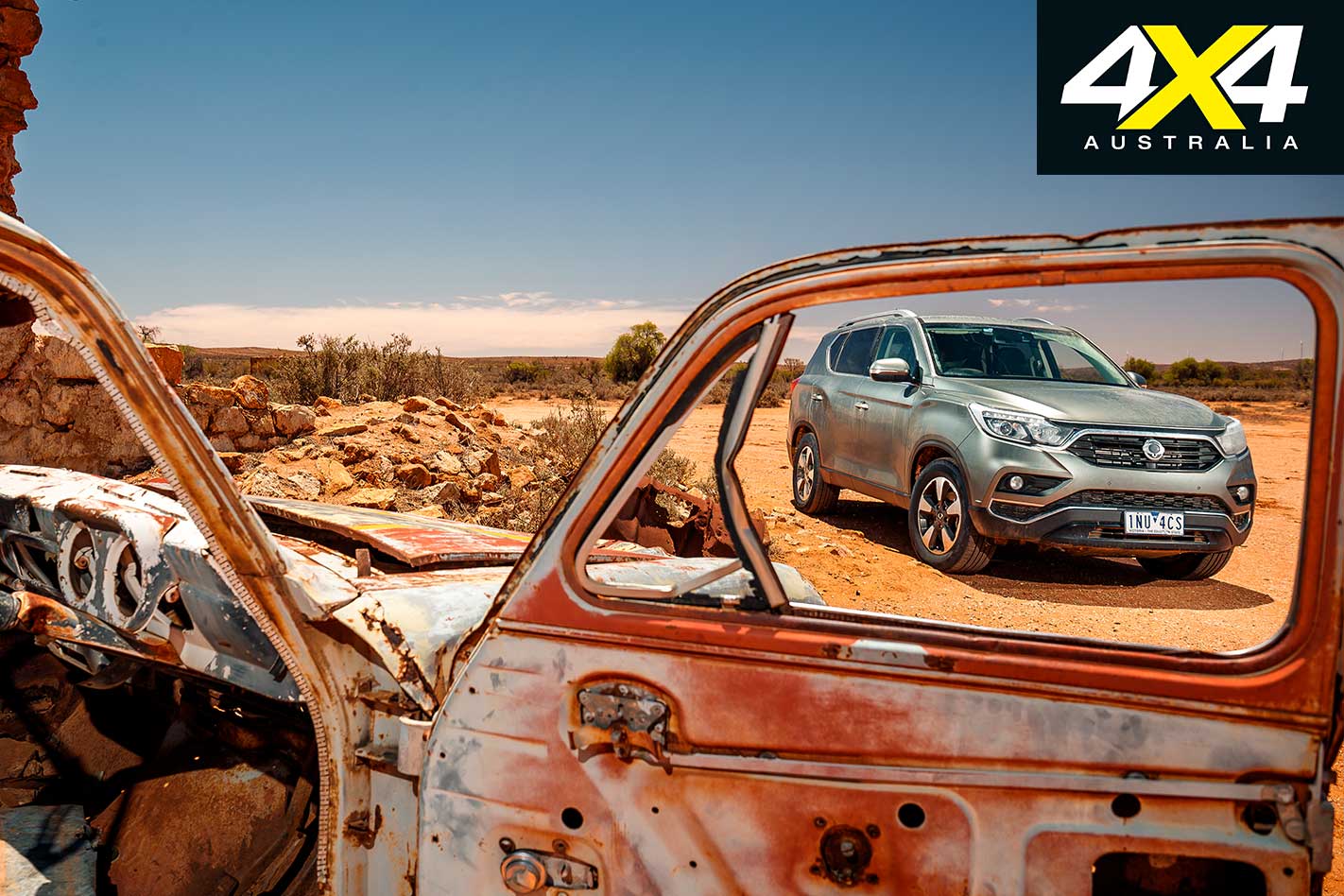
A well-put-together 4×4 family wagon with an excellent powertrain that would benefit greatly from a small lift and firmer springs and dampers, something not difficult to do. An off-road specific calibration of the electronic traction control is needed to make it a serious 4×4 contender, while a better thought-out third-row seat is needed for family duties.
7th Place – Mercedes-Benz X250d Progressive
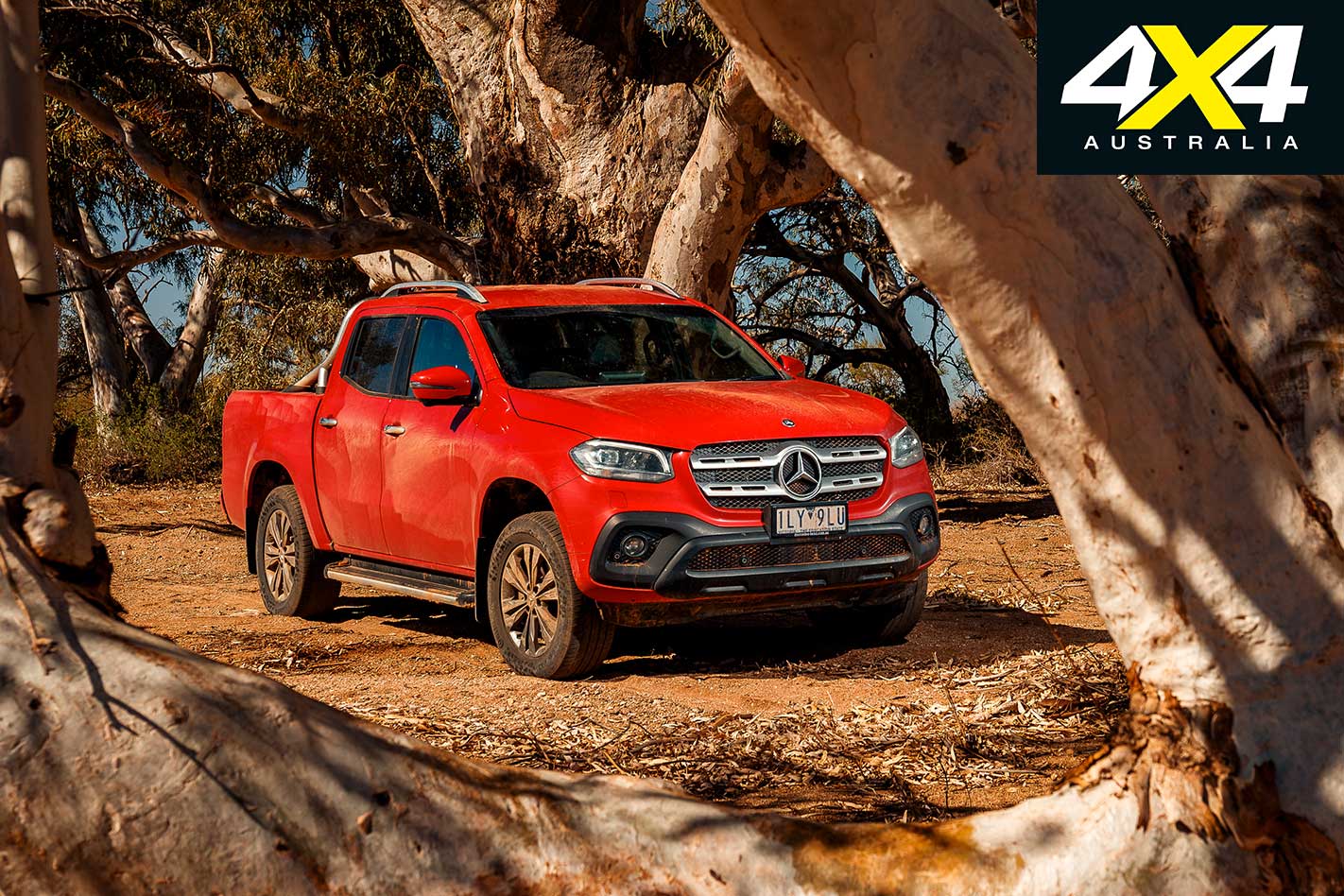
Starting with what’s never been the best of the current utes, namely the Nissan Navara D23, Mercedes has done exceptionally well but still hasn’t produced a top-tier ute considering the asking price. It may be priced like a Mercedes-Benz, but it doesn’t perform like one. Hopefully the X-Class V6 will be better.
6th Place – HSV Colorado SportsCat+
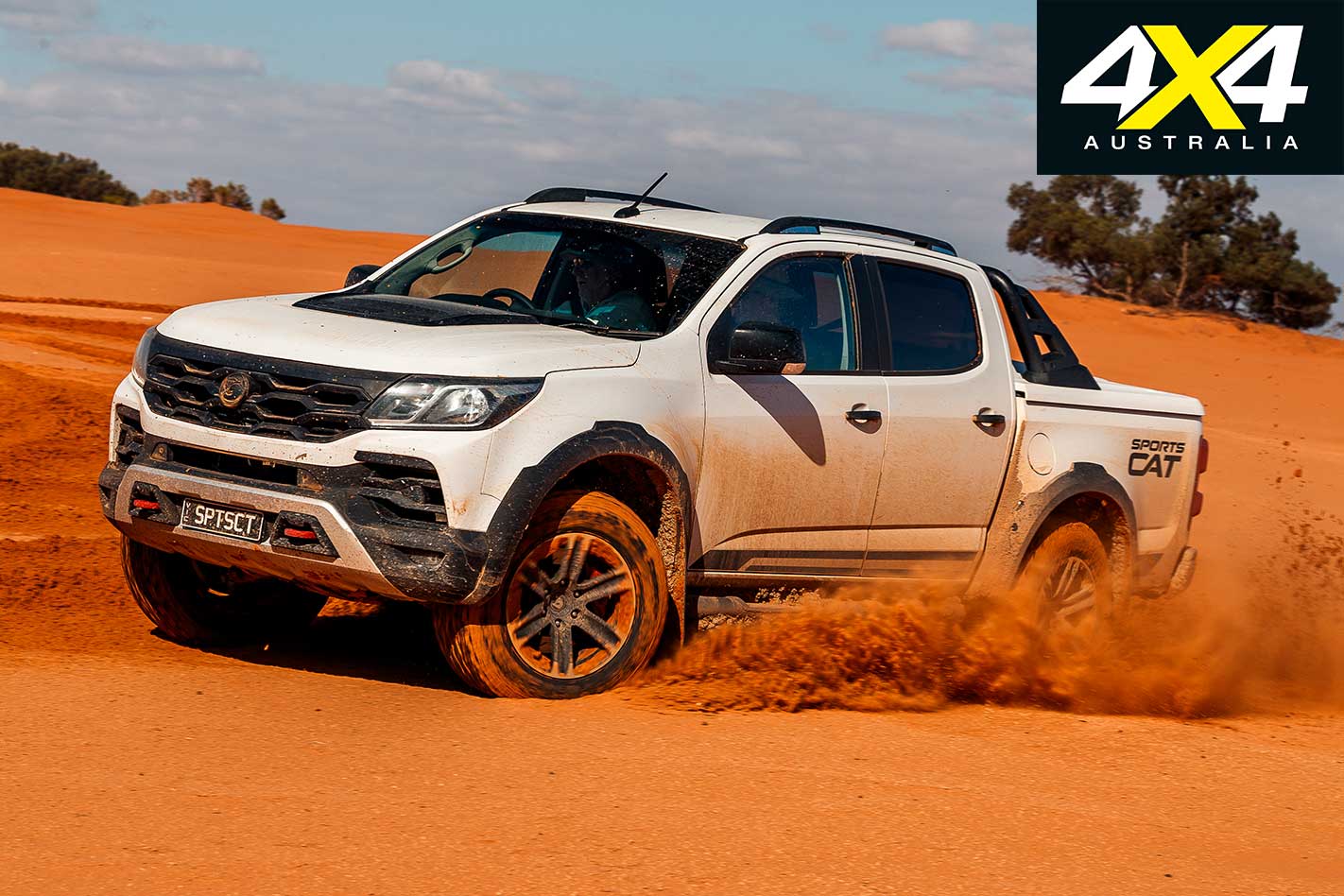
The wheel/tyre package and suspension lift helps the SportsCat+ off-road, but HSV has concentrated on tightening the chassis for more of an on-road focus. A coarse powertrain, too, in this company.
5th Place – Mahindra Pik-Up S10
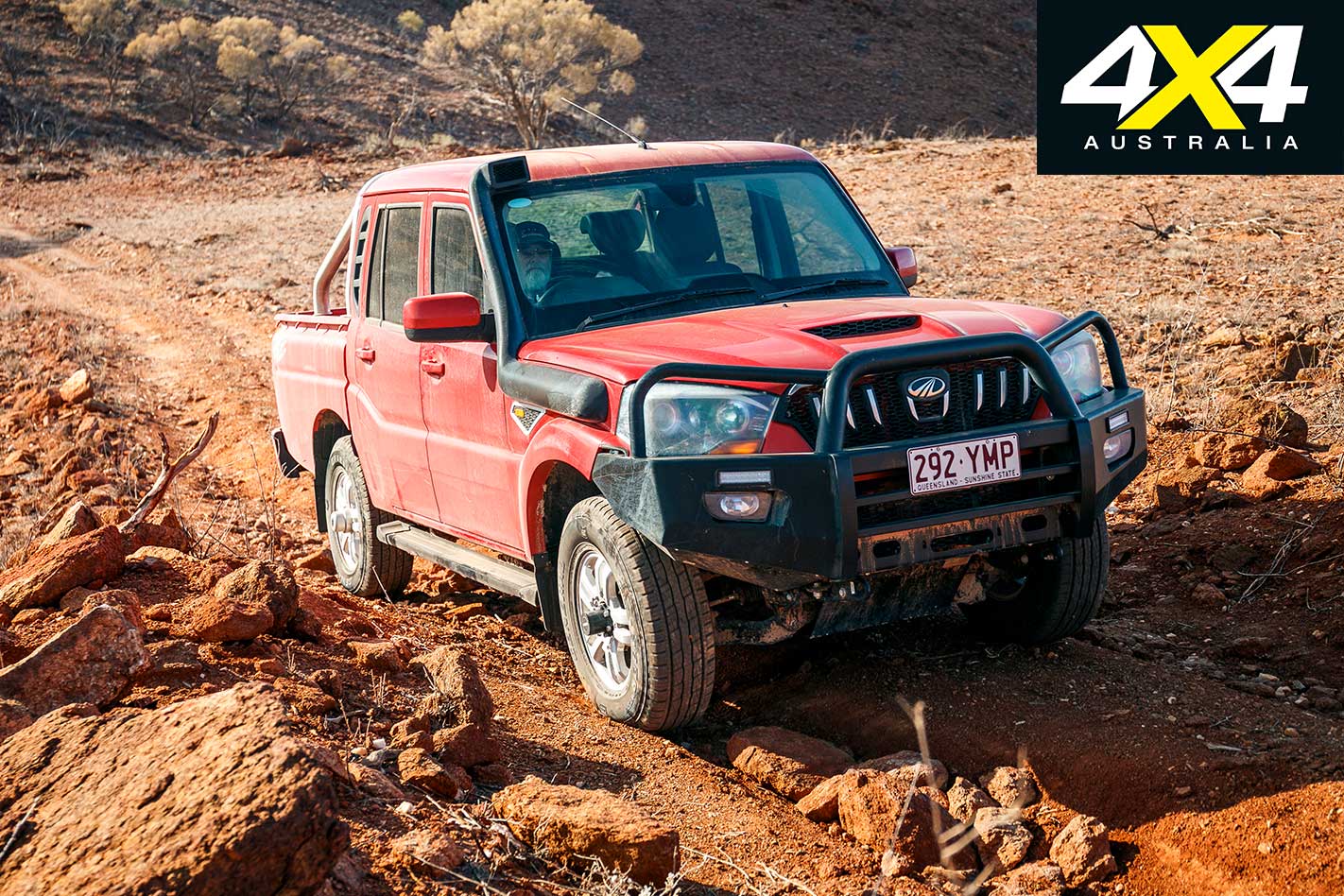
Despite the Pik-Up being the better-equipped S10 model, it’s still more crew-cab work truck than dual-cab 4×4 designed for recreational use. Nevertheless, it impressed everywhere and everyone. The single-cab version would be just the ticket as a budget farm ute.
4th Place – Ford Everest Trend
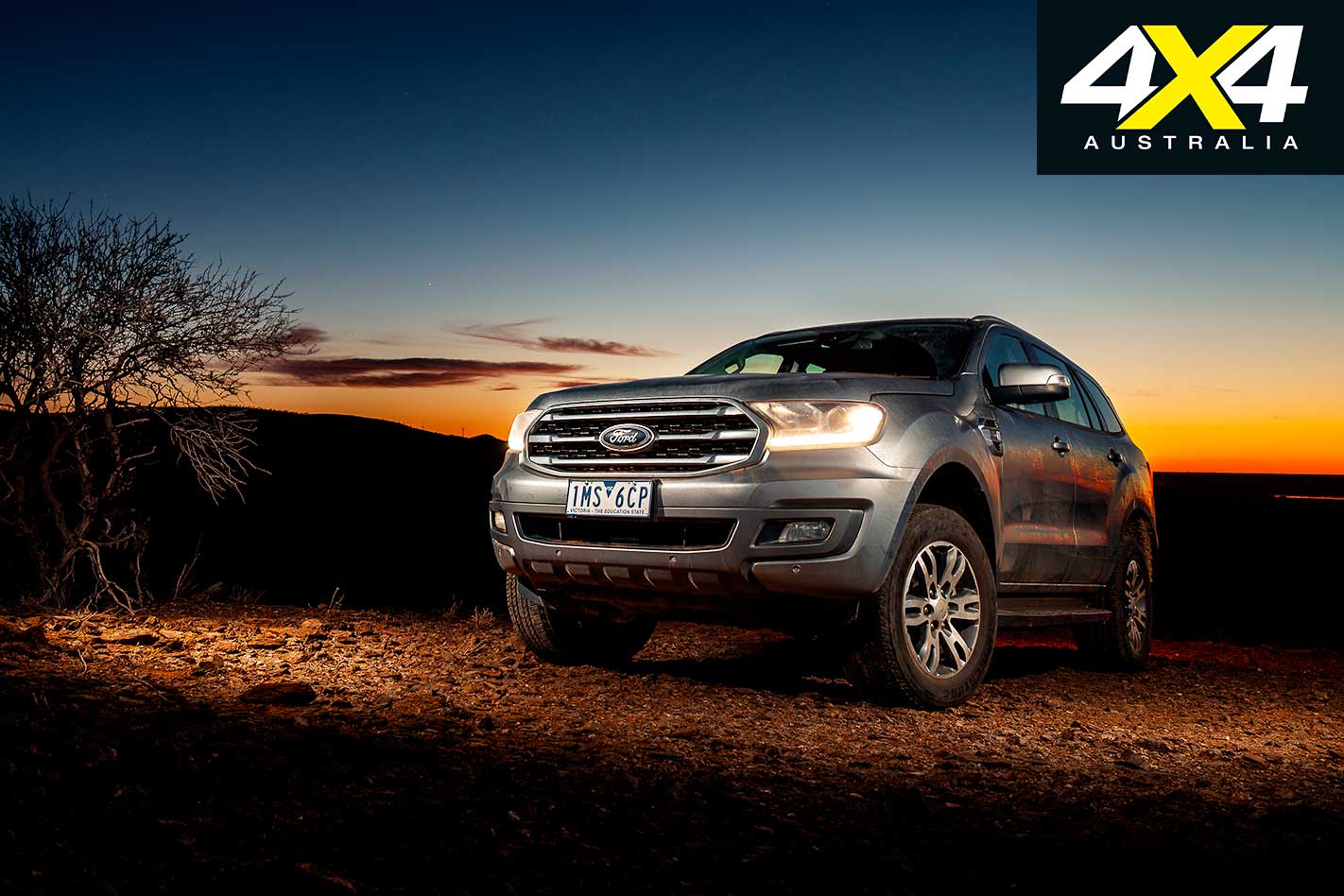
Wagons aren’t as functional as dual-cabs when you need to carry camping gear, recovery gear and fuel, which may have worked against the Everest in this company. Nevertheless, it offers impressive refinement, off-road capability, on-road dynamics and ride in a family-friendly package.
3rd Place – Volkswagen Amarok V6 Core
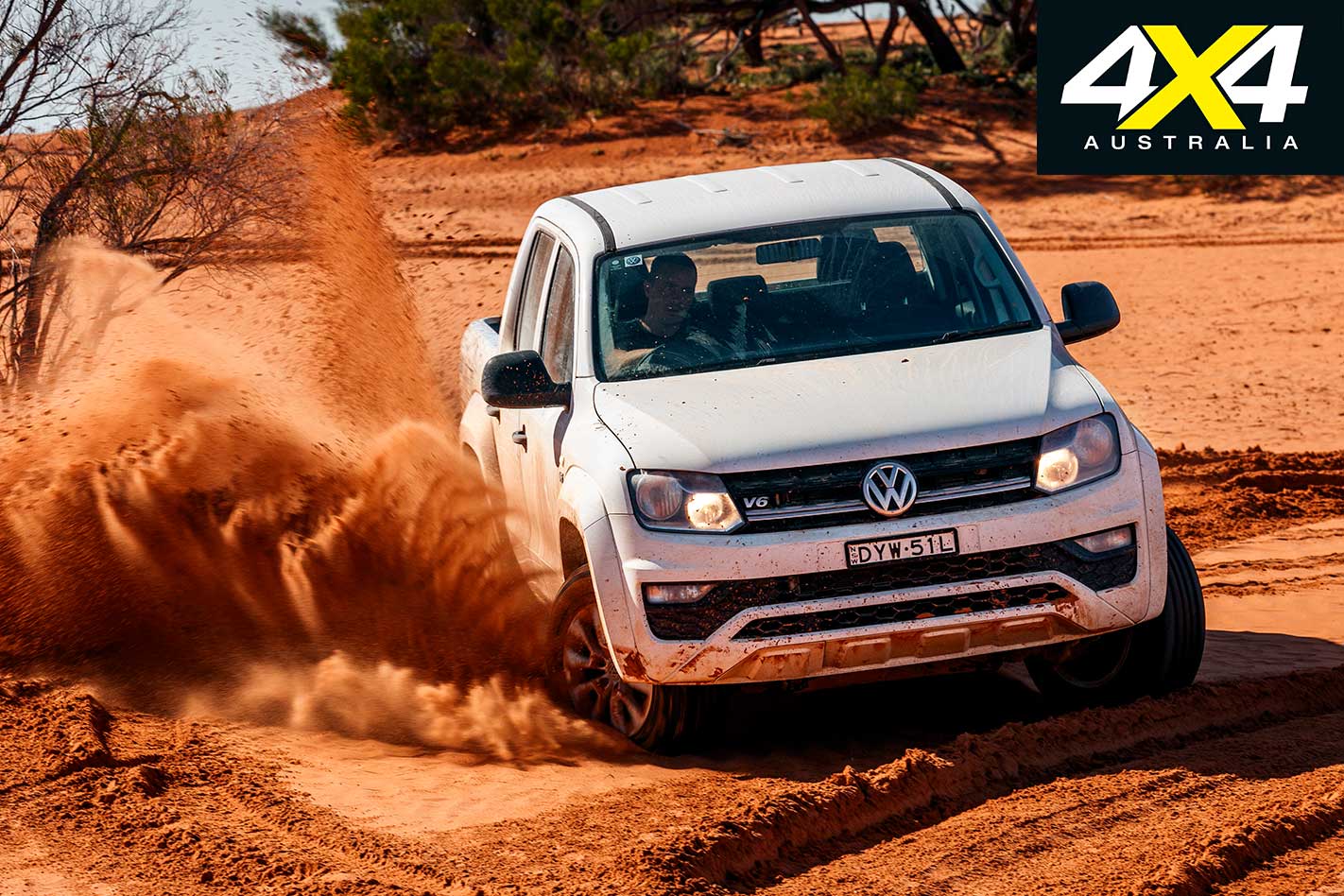
This is the driver’s car of this lot. Terrific performance, polished on-road dynamics, unsurpassed ease of operation and very capable off-road despite not having low range. Lots of performance potential with the engine, too, as even the factory tune (in other applications) is as strong as 220kW and 600Nm. Just not the thing if you want to tow a heavy camper trailer in the High Country.
2nd Place – Ford Ranger XLT
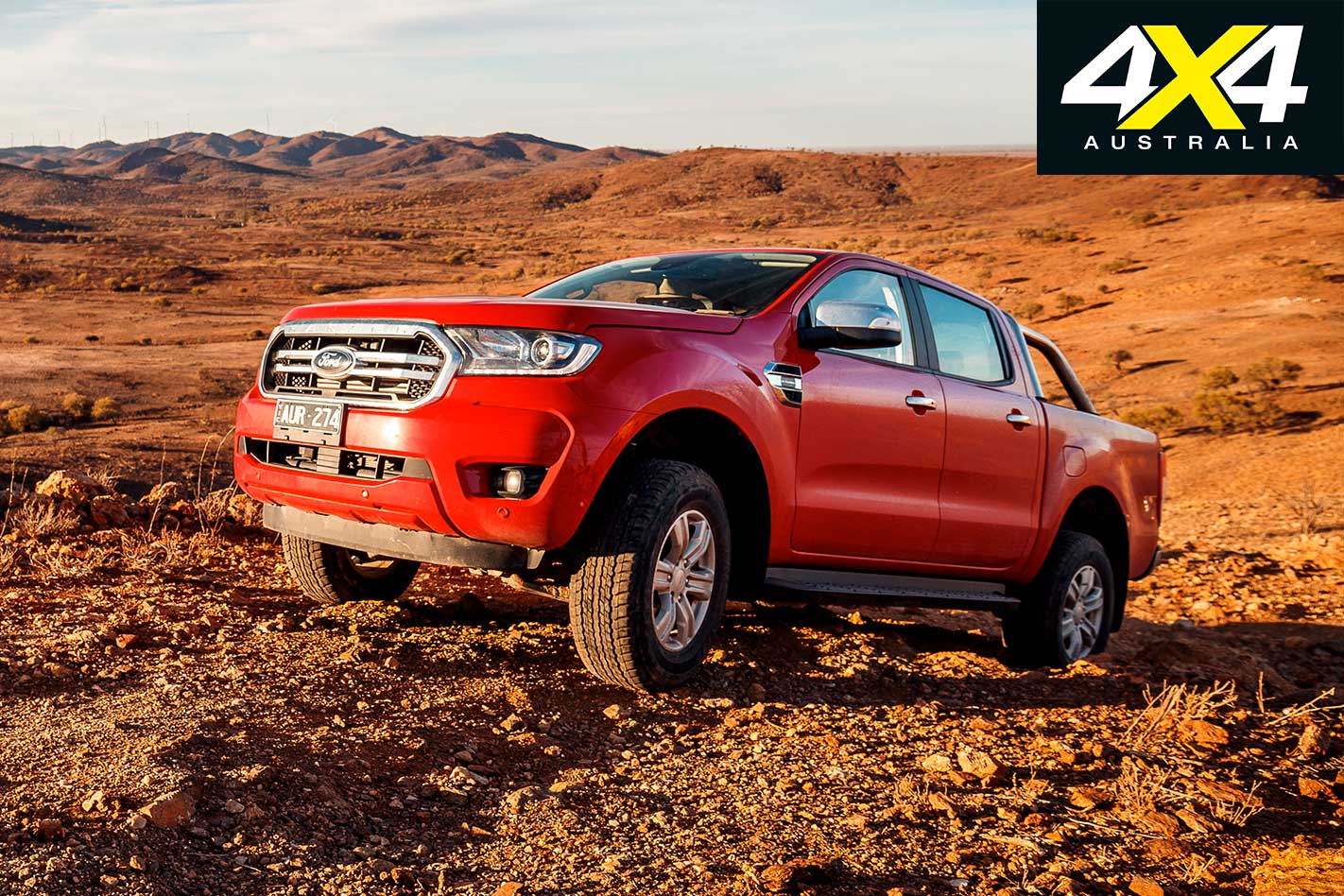
The Ranger’s new engine and gearbox is very impressive and brings new-found refinement, better fuel efficiency and a tad more performance than the 3.2; although, it can’t match the lazy 3.2-litre five-cylinder for charm or character. Suspension revisions that bring a more supple ride complement the refinement of the powertrain and make this a far more polished Ranger than its predecessor.
4×4 of the Year Winner – Ford Ranger Raptor
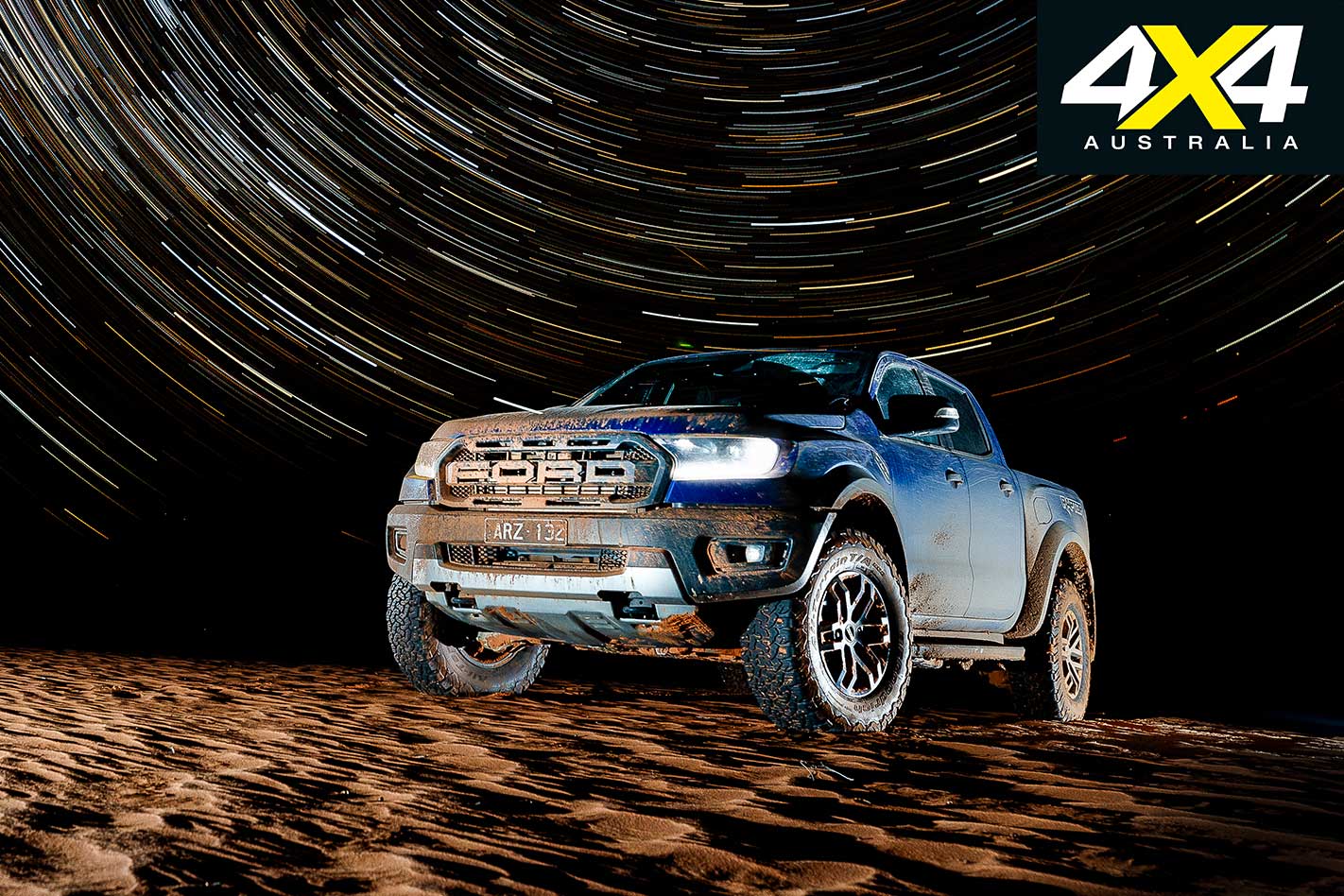
By not trying to be all things to all men, as all other dual-cabs try to be, the Raptor has come up with a winning formula based on a supple, well-controlled and sophisticated suspension. On any back road – the rougher the better – or any 4×4 track it works brilliantly and helps to make the Raptor an enormously fun-to-drive, competent and capable recreational 4×4 dual-cab.
It’s also proof that in the automotive world it’s always better to have more ‘chassis’ than ‘engine’. And while it’s not built for off-road racing, if there was a proper ‘production class’ (where you can only change tyres and brake linings beyond the mandatory safety mods) in something like the Finke Desert Race it would infinitely be better than any other showroom-stock 4×4.
More than anything else it’s a bold step into the world of task-specific factory customs, which is hopefully something we will see more of.
Judges’ Total Scores
| Contender | Total score* |
| Ford Ranger Raptor | 308 |
| Ford Ranger XLT | 300 |
| Volkswagen Amarok V6 Core | 291 |
| Ford Everest Trend | 278 |
| Mahindra Pik-Up S10 | 274 |
| HSV Colorado SportsCat+ | 267 |
| Mercedes-Benz X250d Progressive | 255 |
| SsangYong Rexton ELX | 224 |
*out of a possible total of 400
A 4X4 dual-cab ute is, in the ideal world, viewed as the ultimate off-road multi-tool A real jack-of-all-trades when it comes to offering the versatility needed by a large number of tourers.
Being able to lug your – or your mate’s – furniture to a new abode, carrying bikes, watercraft, camping gear, the family pan-licker or just the shopping are, along with improvements in ride, handling and safety, some of the reasons behind the explosion in dual-cab sales over the past five years.
But the truth is, a dual-cab is still a compromise. A balancing act, if you will, and one that owners strive to get right, in no more important area than being able to take advantage of that load-carrying capacity, while minimising any sacrifice in ride comfort and overall handling when their four-wheel workhorse is trundling around with no load out back.
Keeping it balanced
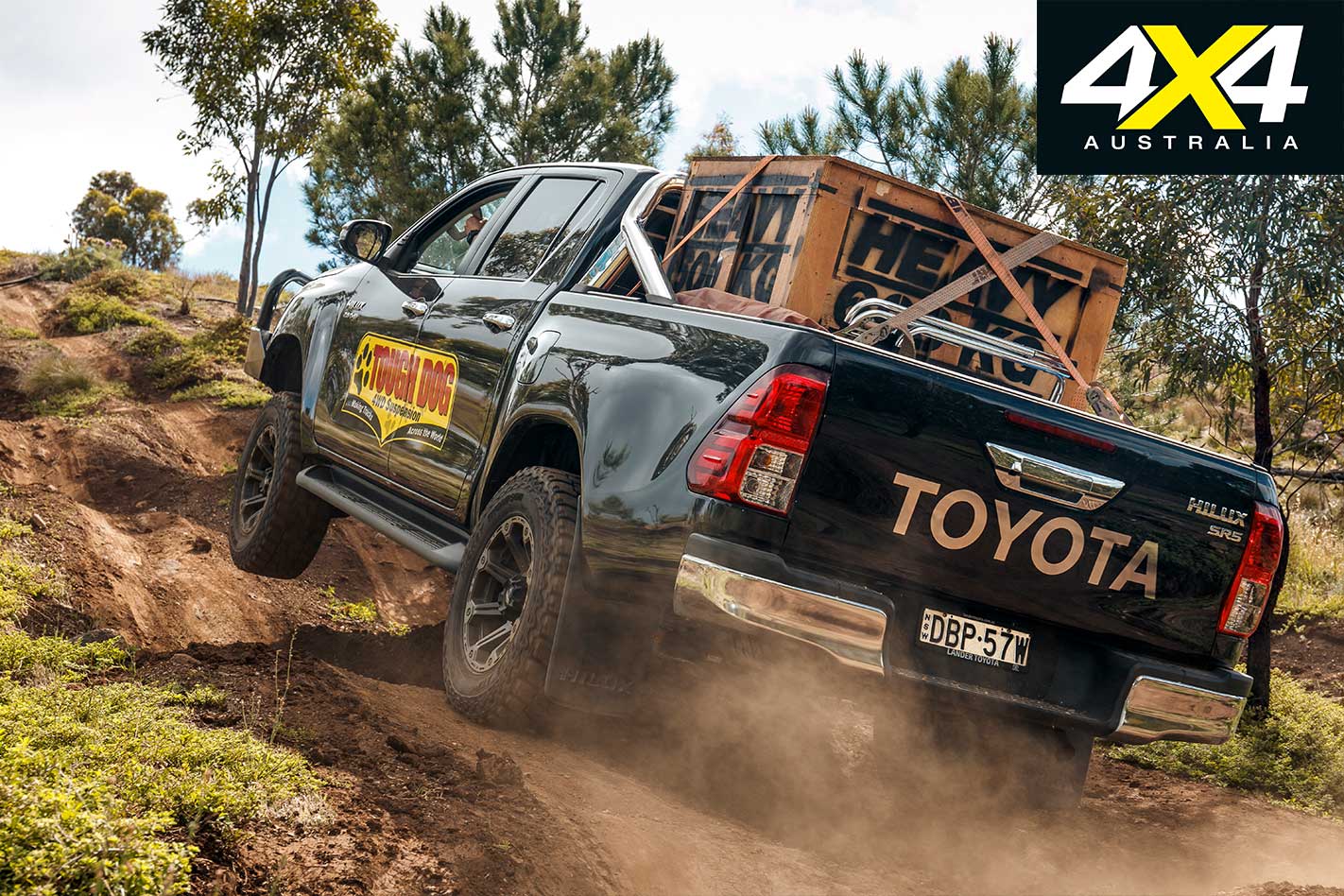
SUSPENSION is key to ensuring the best middle-ground in terms of balancing the demands of load-lugging with unladen driving. Go too heavy-duty underneath and you and yours will be bounced and bumped all over the place when tootling around town with no load; go too light and, when the time does come to load up, the vehicle’s rear will drop low, impeding ride and handling, with the roll-on effect being a potential compromise to occupant safety.
Tough Dog has come up with a neat solution in the form of its Tough Dog Air Assist Bellows (for leaf springs) and Air Assist High Pressure Bags (coil insert bags) kits. We were lucky enough at 4X4 Of The Year to have Tough Dog boss John Agostino and son Michael accompanying us on the week away, with the father-and-son combo driving a Toyota Hilux fitted with Tough Dog’s new airbag-based kit.
Along with the airbag assist rear-end, the black Tough Dog Hilux sported the best suspension setup the company has to offer: a 40mm lift, via springs and a Tough Dog foam cell strut (40mm internal diameter bore/60mm outer diameter casing and 18mm rod) up front, combined with a set of Tough Dog adjustable rear shocks (with, again, a 40mm ID and 60mm OD casing and 18mm rod) that features nine externally adjustable valve settings, married to a set of Comfort leaf springs and the new airbags (inflated via a valve underneath the towbar).
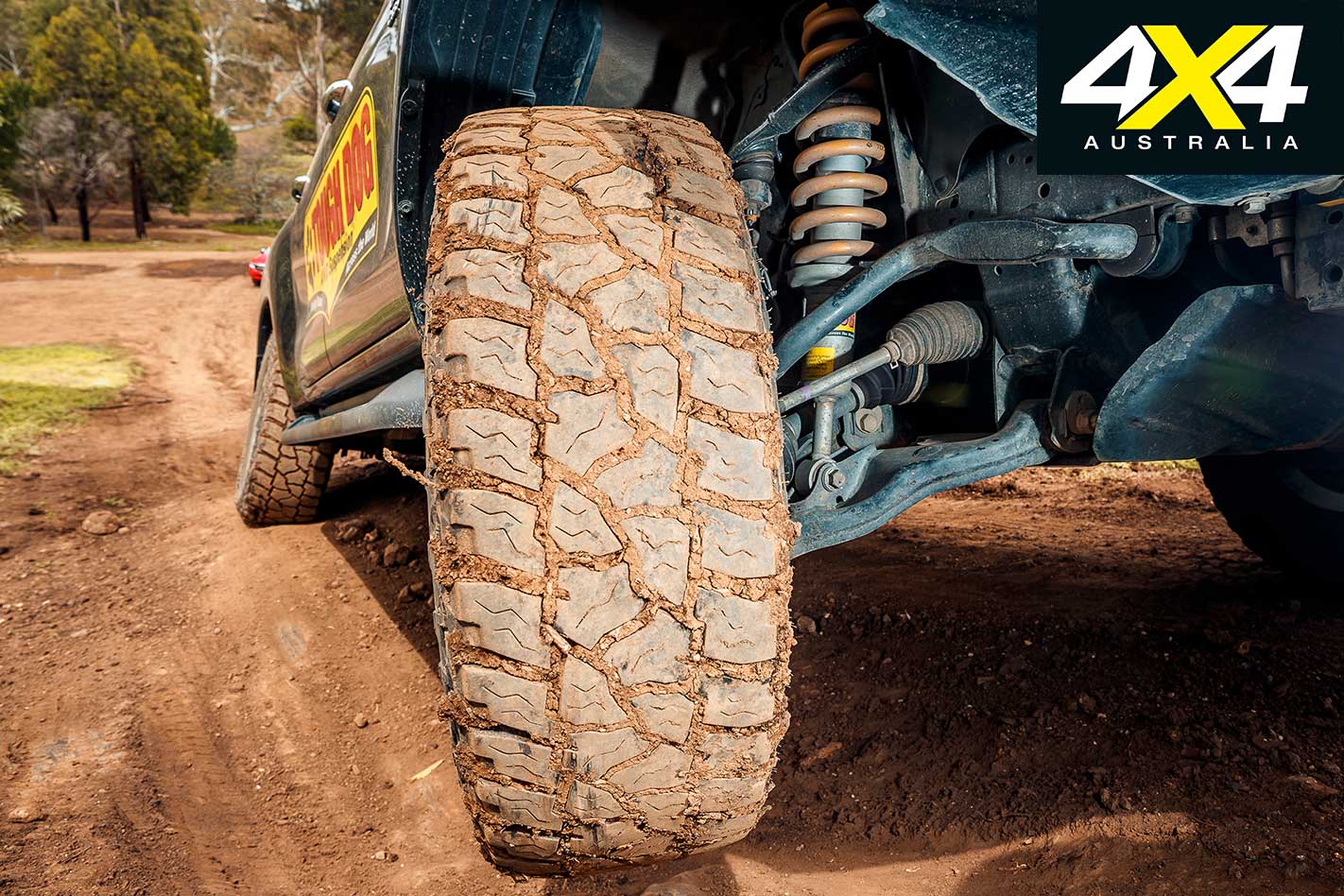
This airbag-assist setup has been in development for a while, kicking off as a result of many customer enquiries as to Tough Dog stepping into the airbag market, as Simon Vella, Tough Dog/4Way Suspension product development manager, explains.
“We’d been receiving calls forever and a day, with people asking ‘why don’t you do airbags?’” Simon explains. “And it was perfectly understandable; if you sell a Comfort spring and the customer wants to put something heavy in there – which is something inconsistent to what they would normally do in the day-to-day – the airbag is obviously a good substitute. So you can put around 30psi in it, as an example, and carry an extra 400kg.”
Airing up the idea
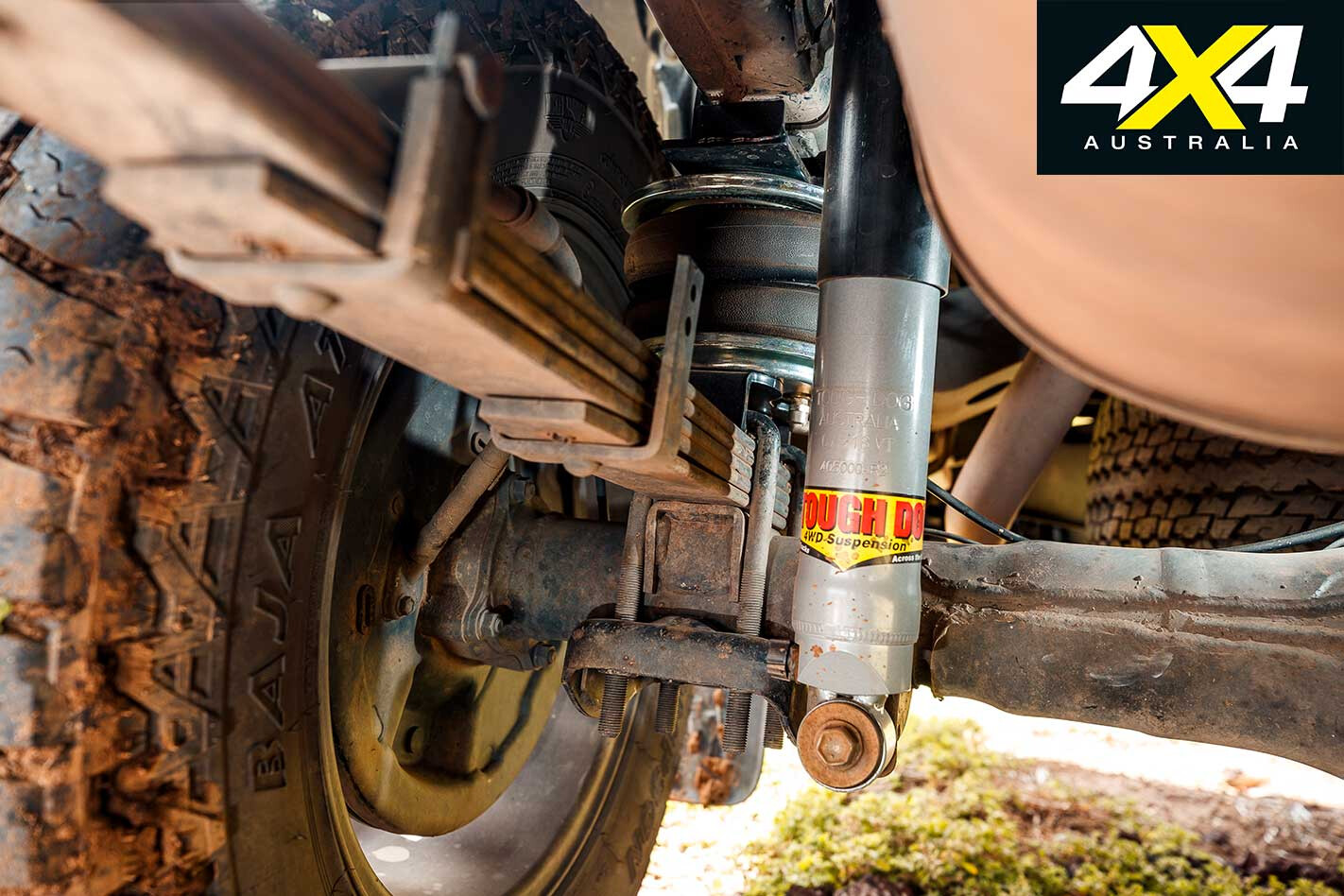
OTHER tweaks for the 4×4-specific airbags included adding plastic conduit over the air lines to protect them, and making sure placement of things like the bag’s Schrader valve was suited to off-road touring use.
Another key modification Tough Dog insisted on was the beefing-up of the airbag bracketry so it, too, would be up to the rougher treatment consistent with an off-road touring scenario. This included additional welds and more gussets to minimise the effect of the increased twisting and vertical movement of an off-road vehicle’s axle.
Also included were positional changes; moving the bracketry in-board ensured any owners who fitted wider than standard rolling stock (wheels/tyres) did not foul the wheel/tyre combo and airbag. Some vehicles only required one bracket tweak, others were a bit more involved, but the Tough Dog crew took their time to ensure that each vehicle-specific application was spot-on before approving production.
Proving a point
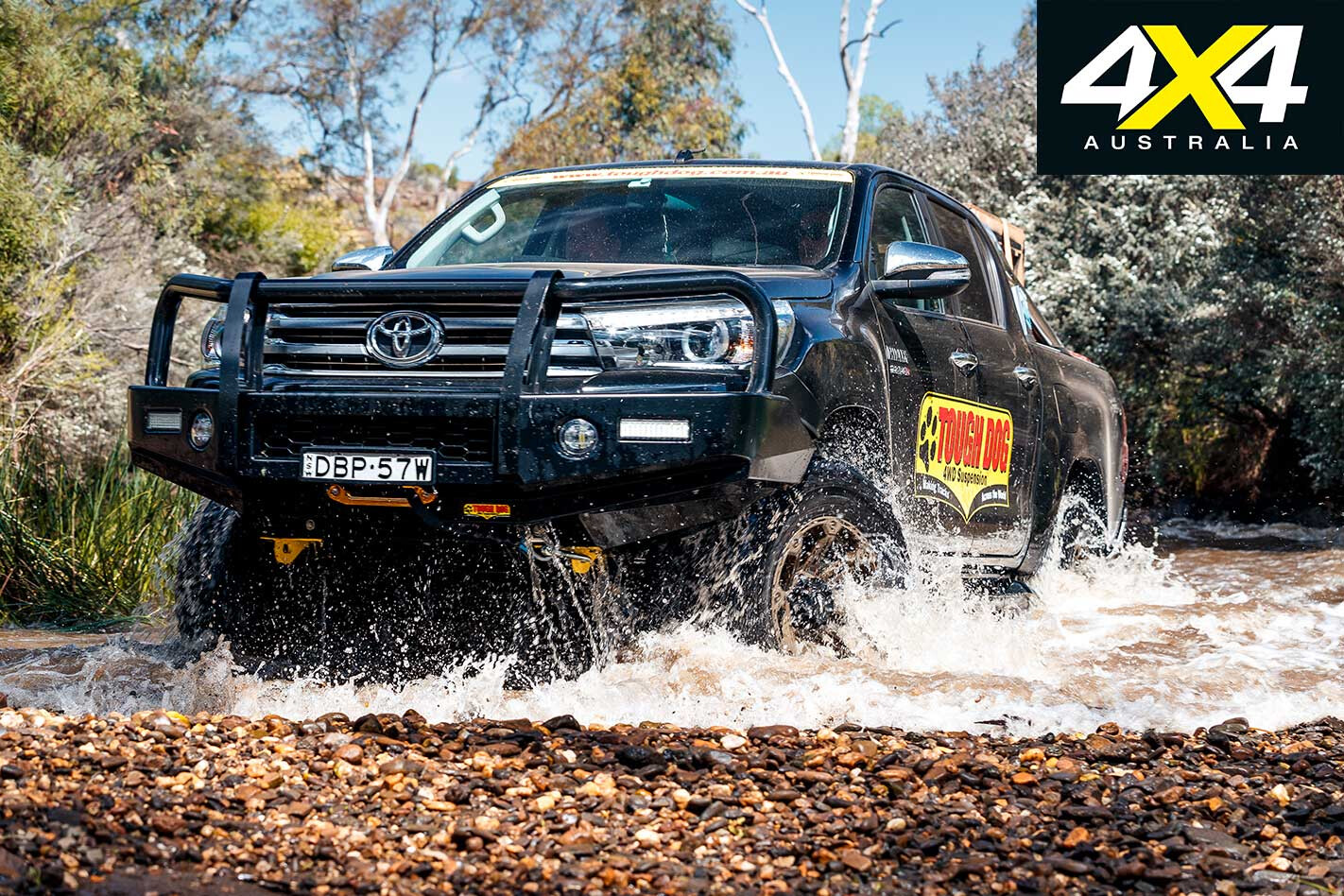
IF YOU’RE going to test out your new suspension kit offering, it’s hard to beat the route taken during this year’s 4X4 Of The Year test week. From the controlled – and super challenging – environment found at the Melbourne 4×4 Training and Proving Ground, in Werribee, Victoria, through to the varying terrain found through outback Victoria and NSW and then, finally, at Eldee Station, west of Broken Hill, there was plenty of opportunity to find any potential fault in a vehicle’s suspension setup.
Befitting the Tough Dog air-assist kits’ focus, John had loaded the Hilux with 600kg of cargo weight in the ute’s tray. This, along with all his and Michael’s gear (plus themselves), meant the Toyota was lugging around 800kg each day, over widely varying terrain.
The Hilux tackled every type of terrain comfortably; the hill climb used on 4X4OTY is something most tourers would look at when out on the tracks and then try and avoid. The Hilux trundled up it without any trouble, with the rear end staying sufficiently above the deep holes to avoid any dragging of the towbar.
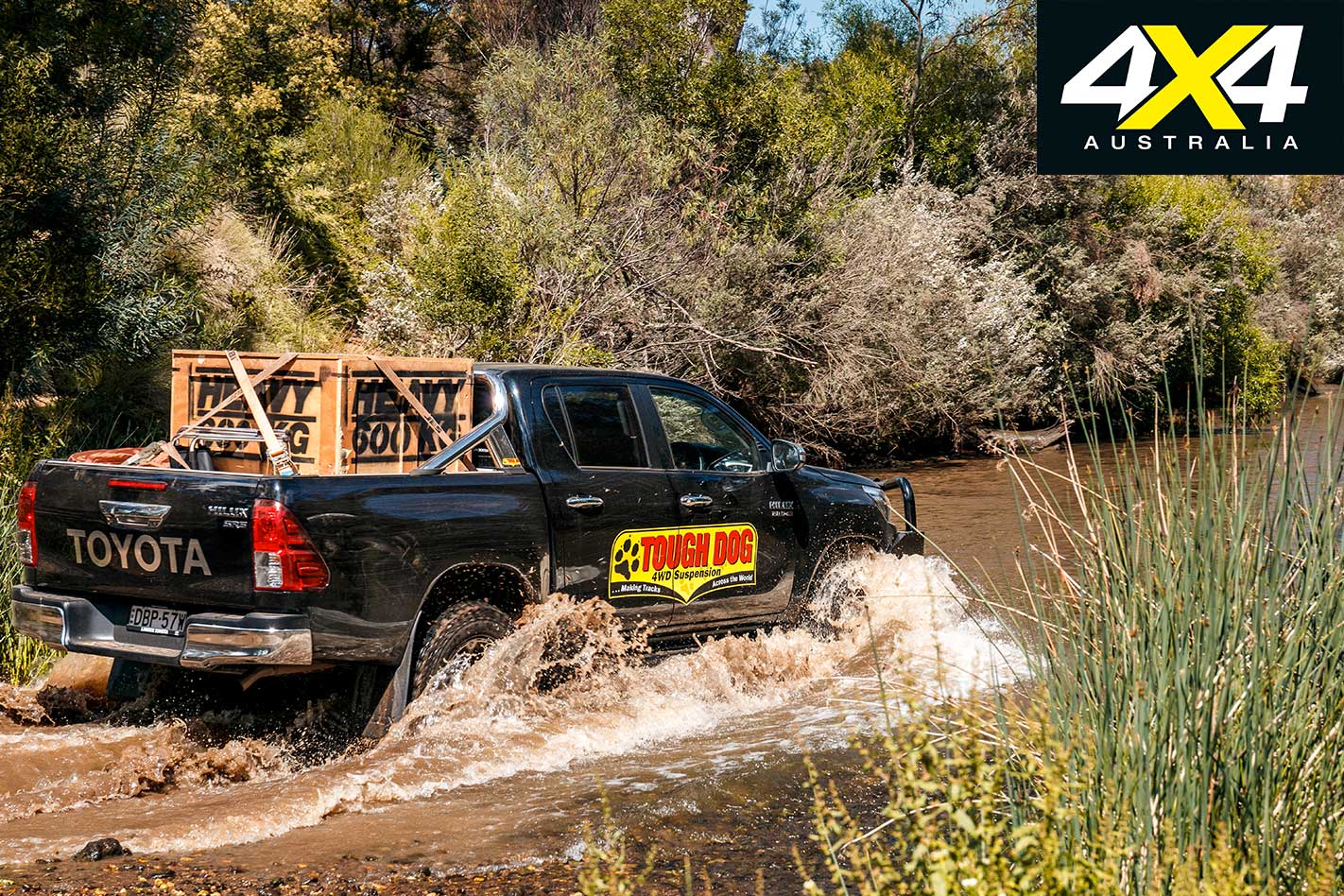
It repeated this controlled performance on soft, wet sand dunes; the rear end maintaining its standard ride height – and offering less body roll, even with a load on board – saw it negotiate some particularly boggy section of sand with aplomb.
On faster, flatter corrugated dirt tracks, the Toyota workhorse was also well controlled, with the load in the tray having little effect on any bump steer from the sharp-edged holes found all along these surfaces. In fact, the Hilux sat quite ‘flat’ even when cornering, a direct result of the airbag fitment out back, and what Simon Vella refers to as ‘trapped air’ inside the bag.
“The one thing you will notice is, because that air is trapped in the bag, it is like you have fitted a heavy-duty swaybar to the vehicle, so it sits flat … very flat,” Simon says. And it did.
A personal choice
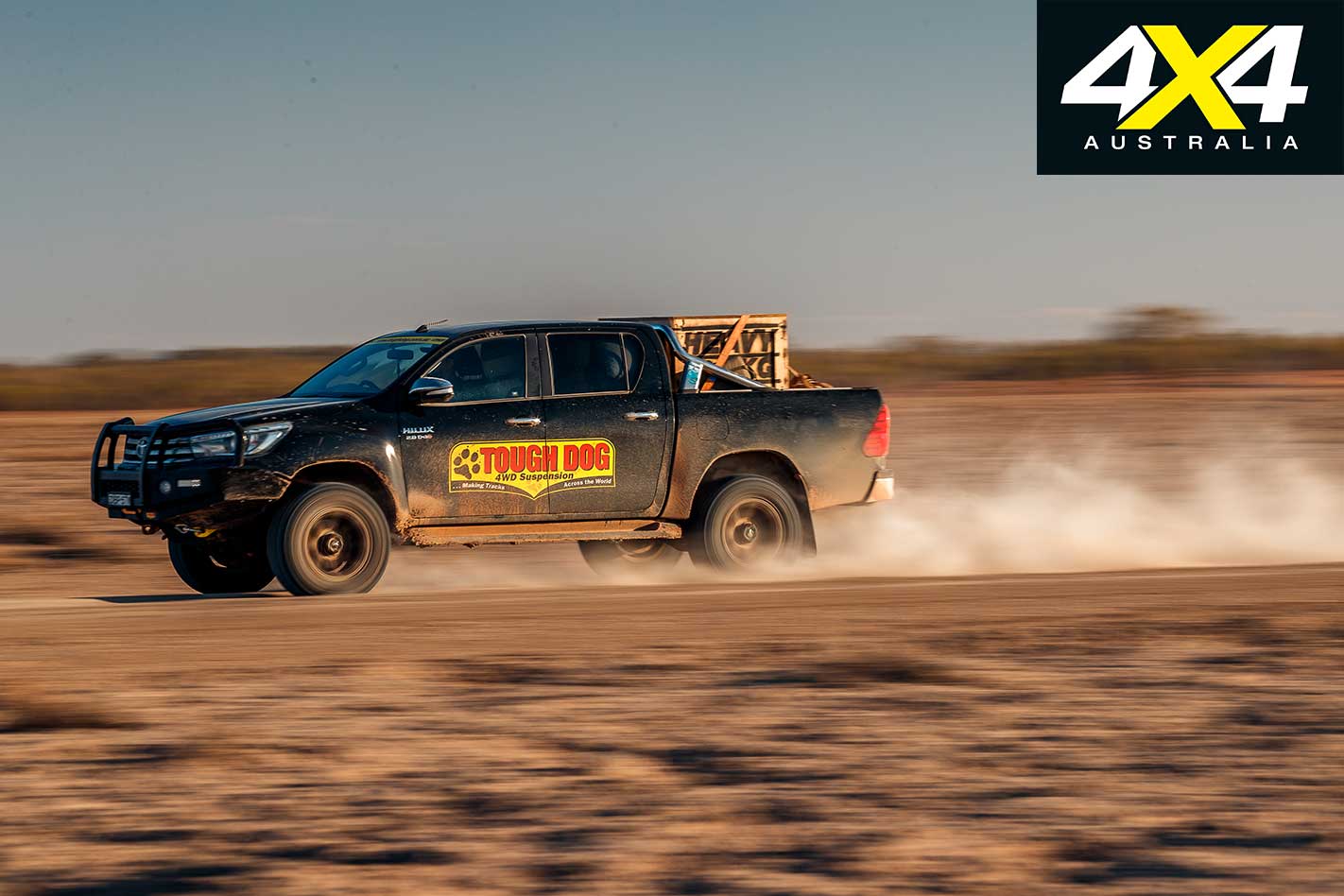
ONE THING he mentions does resonate with this kit (and all/any other airbag-assist setups) and that is the consumer needs to know they are going to use it to its optimum benefit. “When you put air in an airbag the air is trapped in basically a rubber bag and cannot go anywhere,” Simon says. “It is stuck in there and you’ve got to run minimal air pressure to retain it as a bump stop, as you are removing the bump stop to put an airbag in there.”
This translates to an unladen vehicle running the equivalent of a quite firm bump stop, something that may not appeal to those whose majority of driving hours are taken up in urban areas, as there is a slight trade-off in ride comfort when it comes to rolling over sharp-edged sections of road (Simon recommends opting for Tough Dog’s adjustable shocks to negate this effect; being able to tweak rebound and compression to account for no load or a full load is worth the extra cost, we reckon).
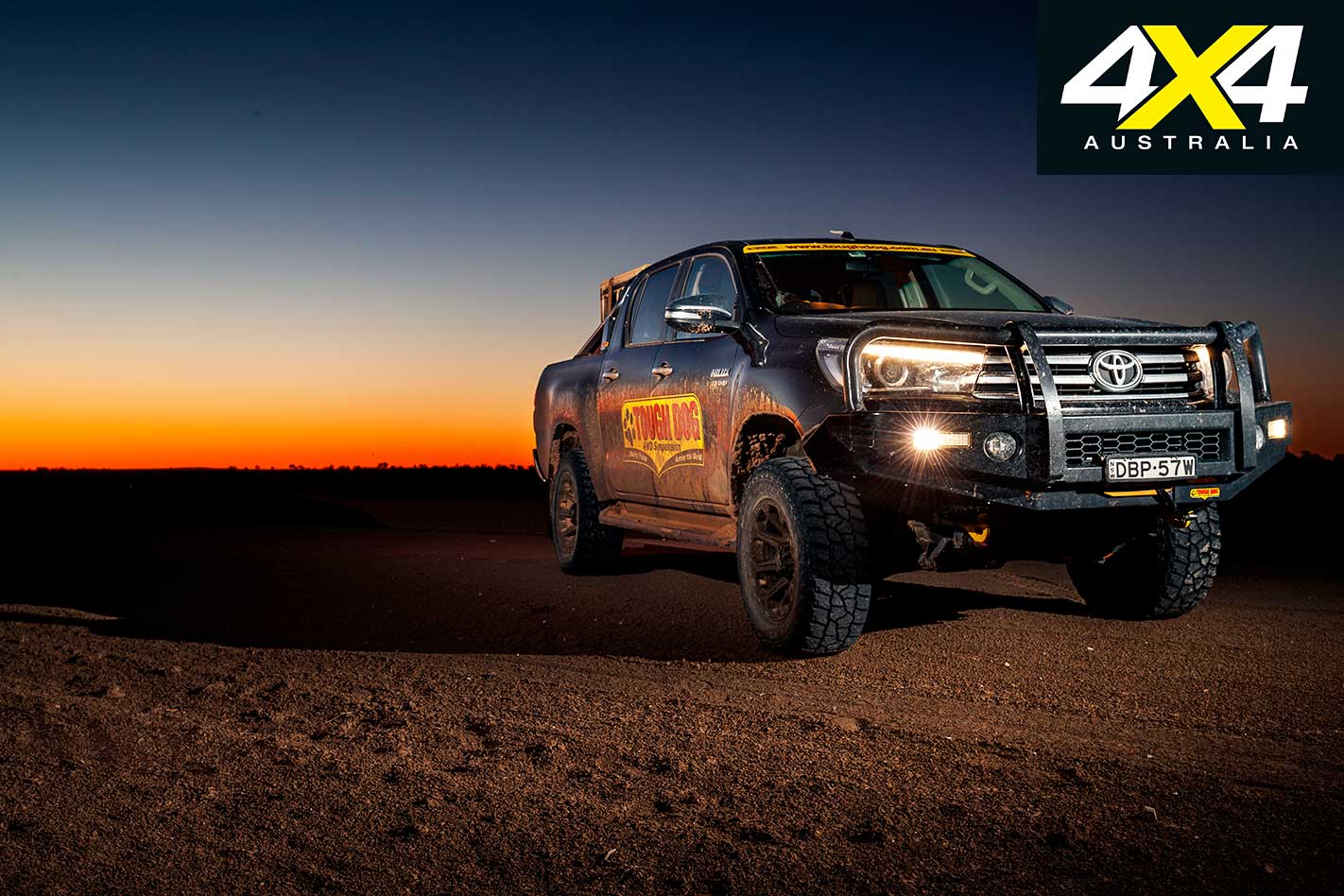
For the general off-road tourer, though, who spends a fair chunk of time off the bitumen, driving a rig loaded with camping gear, canopy, drawers, etc., the ability to obtain similar ride and handling regardless of load-weight, the Tough Dog air-assist kits are a real boon.
As Simon Vella says, Tough Dog is not reinventing the wheel with these kits, but being able to buy well-matched components as a complete kit, rather than cobbling together shocks/springs and a perhaps not-so-well-matched airbag, makes for an appealing option for the ute-borne tourer. Who said a 4×4 dual-cab ute was a compromise?
For more info on the Tough Dog Air Assist Bellows (for leaf springs) and Air Assist High Pressure Bags (coil insert bags) kits, see www.toughdog.com.au
Created by Ford Australia with help from Ford Performance, formerly known as Ford Racing and now the high performance division of the Ford Motor Company globally, the Ranger Raptor is what you might call a ‘factory custom’. That’s because it’s both a standard factory model and a customised model at the same time.
As Ford Performance was involved in the development of the Raptor you may be thinking it has a more powerful engine, but that’s not the case, as the Raptor uses the same 157kW/500Nm 2.0-litre bi-turbo diesel you’ll find in the Ranger XLT and the Everest.
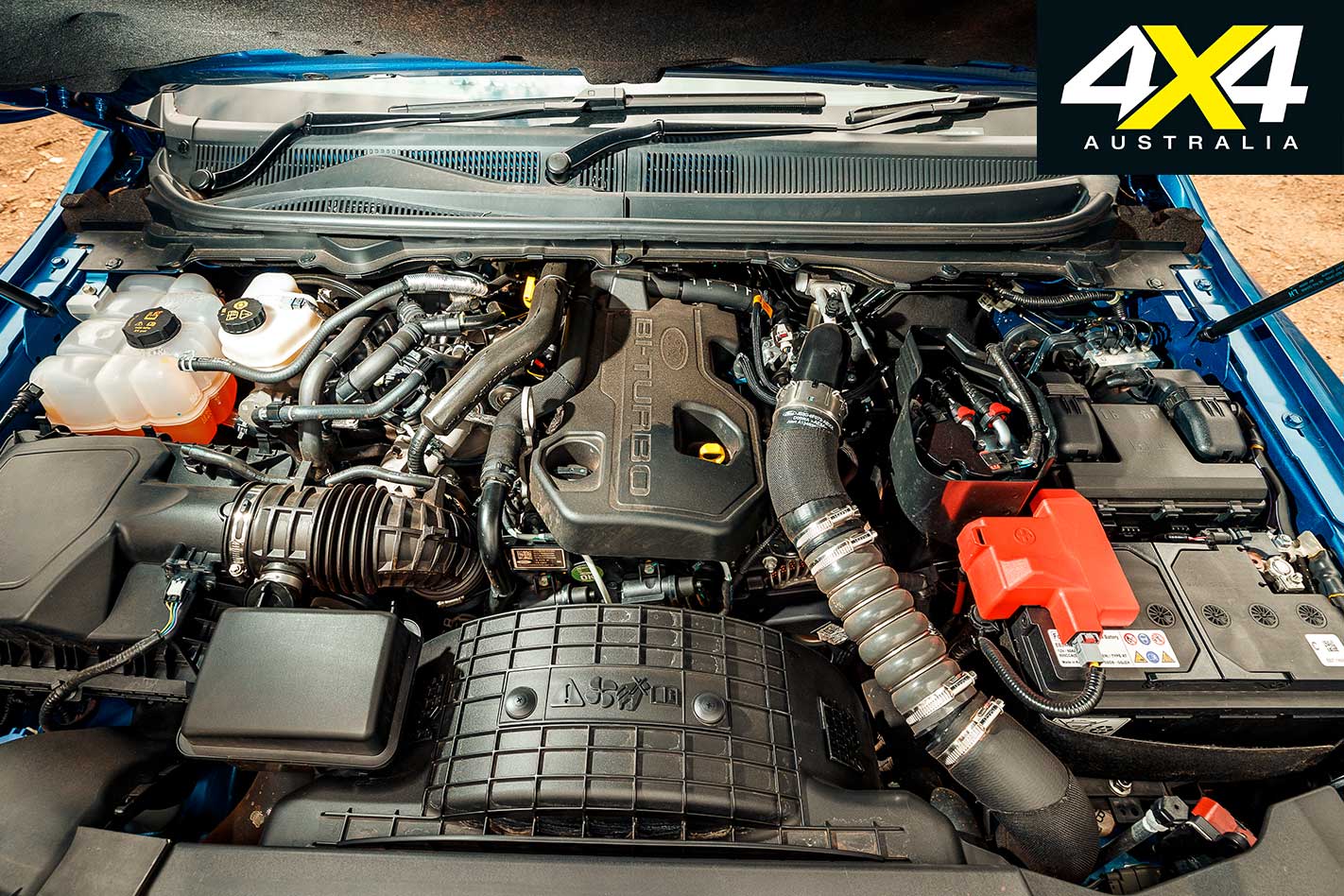
That’s not to say that the Raptor doesn’t offer high performance it’s just that it offers performance of another kind, namely chassis performance.
The Raptor’s chassis has been significantly altered from a standard Ranger, with key changes being 150mm wider front and rear tracks via different front A-arms and a different rear axle housing, 46mm more ground clearance, 30 per cent more suspension travel at both ends, bespoke Fox-brand racing-technology bypass dampers (the rears have ‘piggy-back’ reservoirs), coil springs and Watt’s Link at the rear, four-wheel disc brakes, and 285/70 R17 BFGoodrich All Terrains.
The Raptor is the most expensive of the eight shortlisted vehicles, at $74,990 plus on-road costs.
Touring
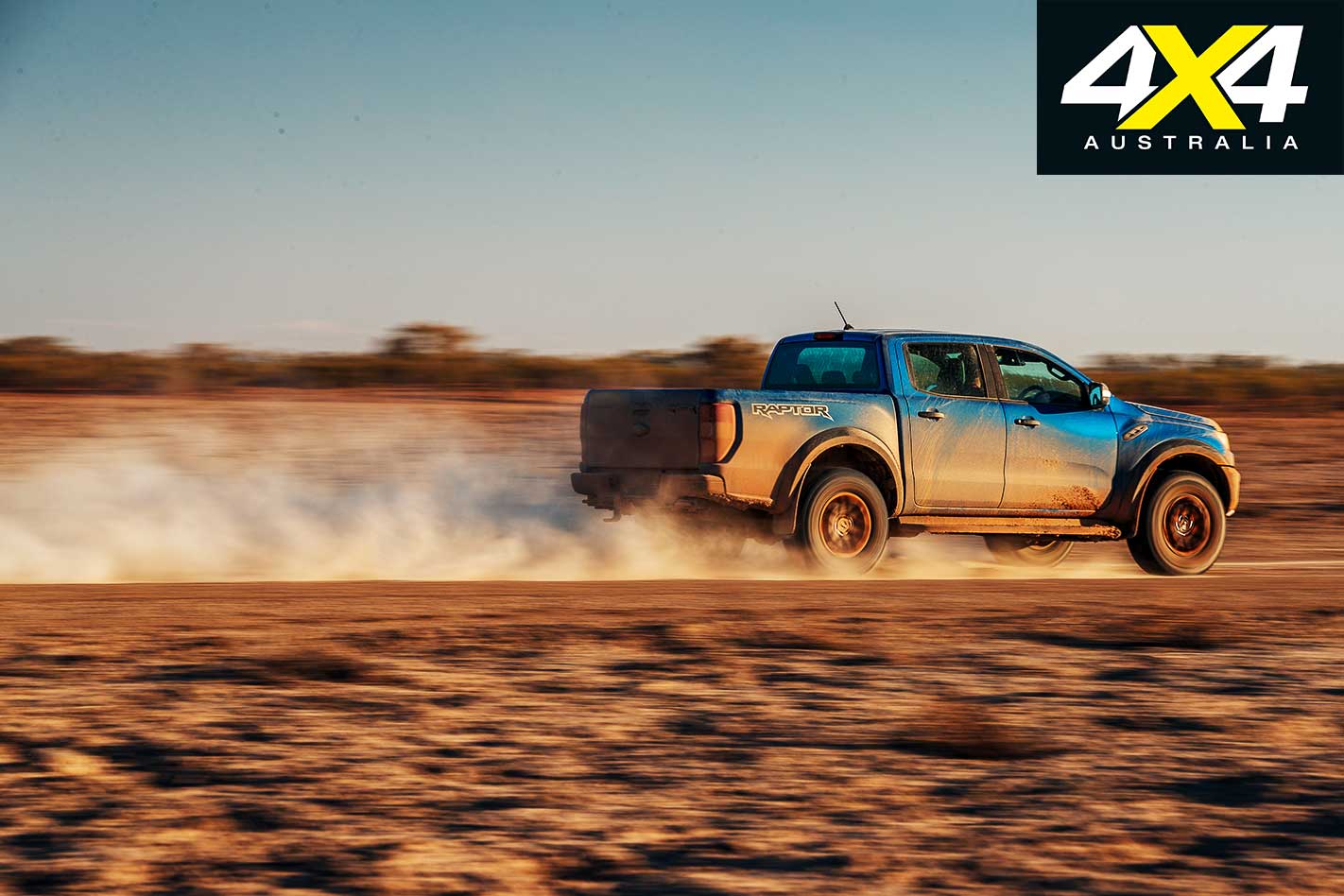
To compensate for the taller gearing from the Raptor’s bigger wheel and tyre package the final drive gearing has been shortened by 11 per cent, which is the only drivetrain difference between a standard 2.0-litre Ranger and the Raptor. Just as well, as the Raptor’s engine also has extra rolling resistance, increased weight and a bigger frontal area to cope; so this sharpening up of the gearing is most welcome.
This shorter gearing still doesn’t bring sprightly highway performance, but the Raptor gets along well enough even if the above mentioned performance impediments are felt with the Raptor’s increased fuel use, the heaviest of the eight shortlisted vehicles on test. All the while the Raptor’s engine is smooth, quiet and refined and the gearbox provides seamless changes.
Much more impressive from a touring perspective is the wonderfully supple and compliant ride and the extraordinary stability at speed on even the poorest roads.
Trail Driving
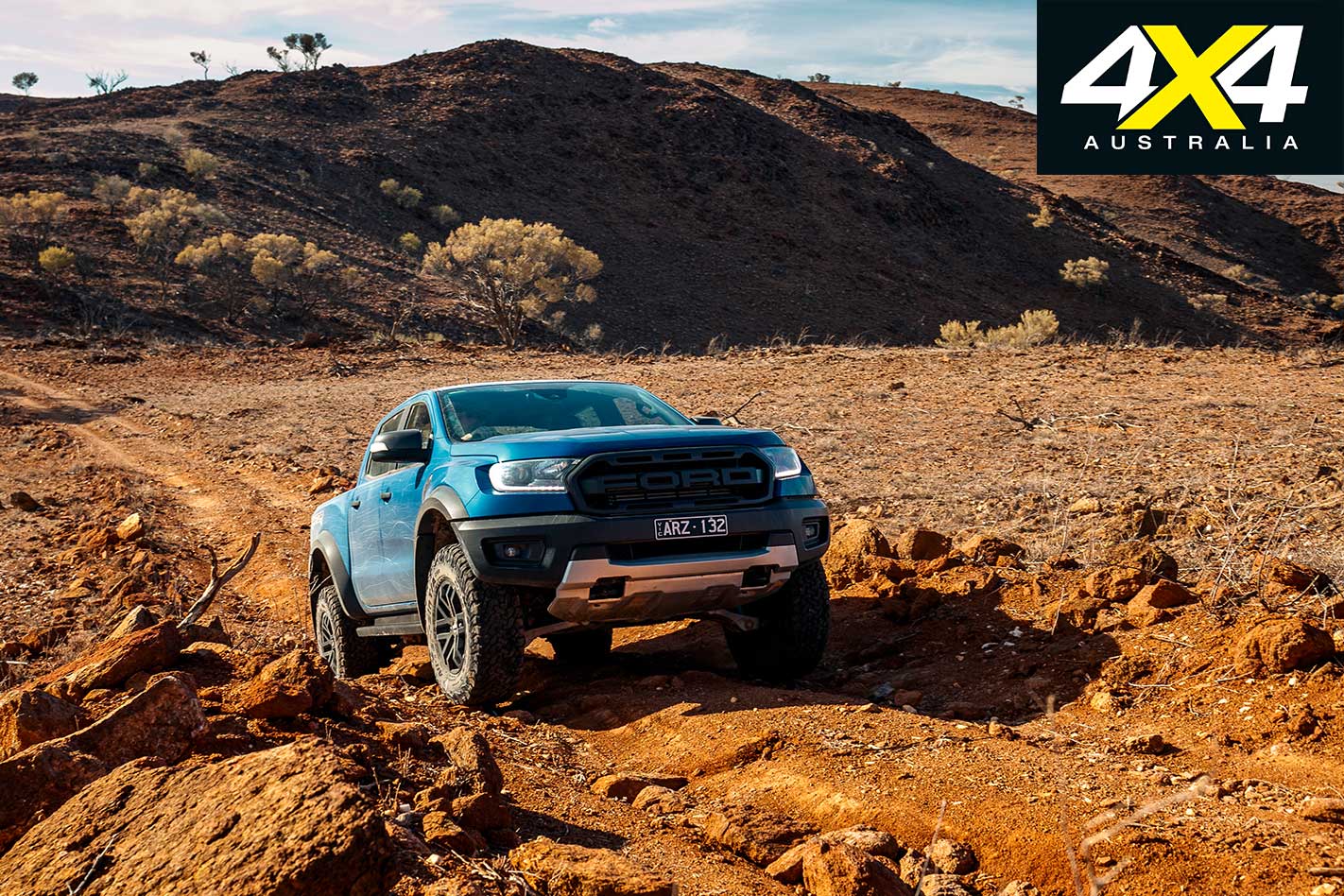
If the Raptor makes for an excellent tourer on poor quality roads, it’s even better on the trails. In the company of the other shortlisted vehicles it’s Raptor first and daylight second on rough tracks, especially in terms of comfort and in the ease that it negotiates the rougher sections of any track. The extra clearance and robust BFGoodrich KO2 light-truck all-terrain tyres also afford a high level of off-road driving confidence.
The Raptor differs from a standard Ranger with its paddle shifters for manual gear selection, as well as its Terrain Management system which has Normal, Sport, Grass/Gravel/Snow, Mud/Sand, Baja and Rock modes.
All modes bar Rock are available in high range while all modes bar Sport and Grass/Gravel/Snow are available in low range, which is a far better arrangement than the Everest’s Terrain Management system.
Set-Piece Hill Climb
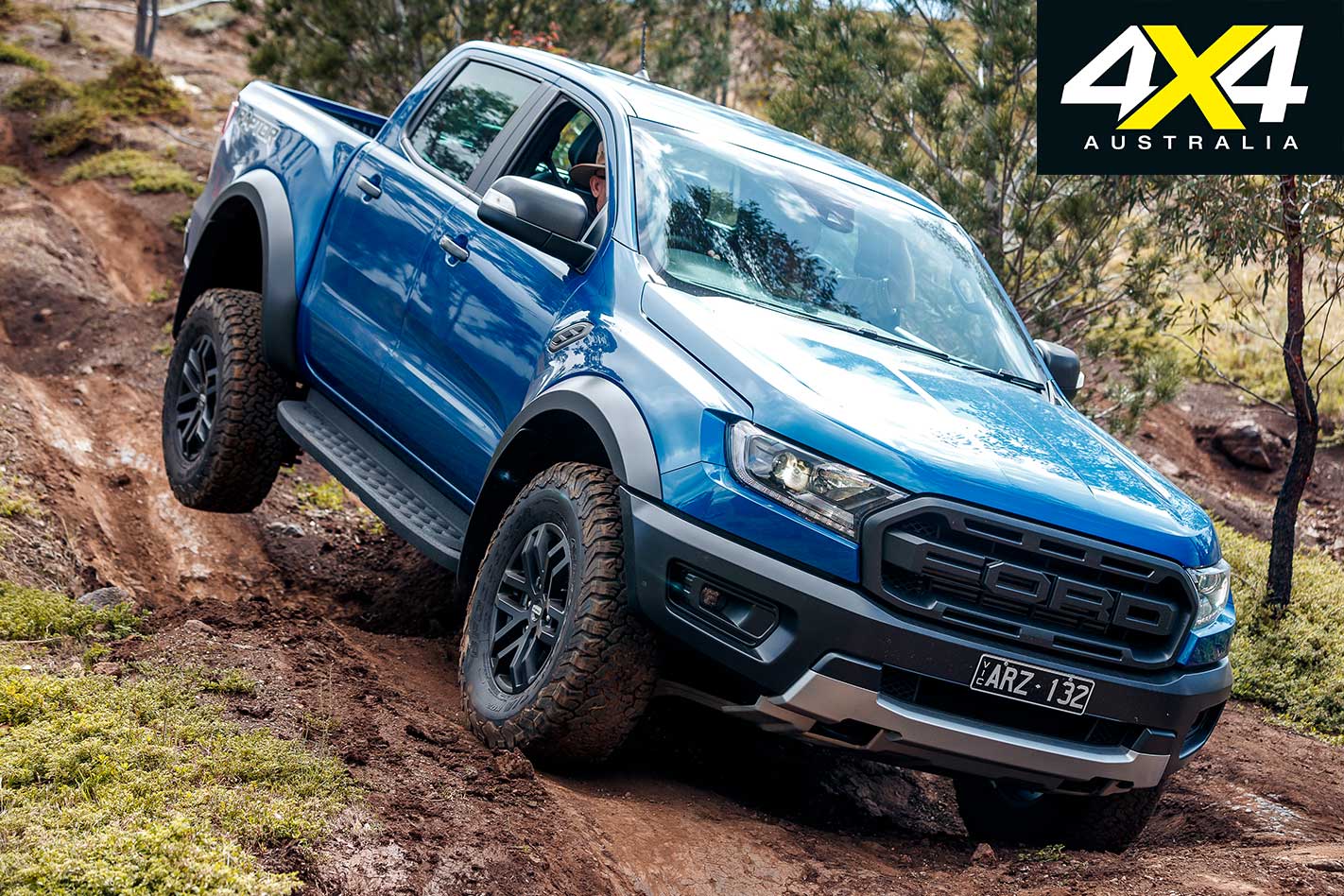
Surprisingly, the Raptor should have been the weapon for our set-piece hill climb, but it wasn’t as good as expected. It got up the hill but needed the driver-switched rear locker to do it comfortably. Why it wasn’t better is hard to say; although, this one particular climb isn’t a universal yardstick and we would still rate the Raptor’s ability to scale a gnarly hill as exceptional for a showroom stock vehicle.
Cabin, Equipment and Safety
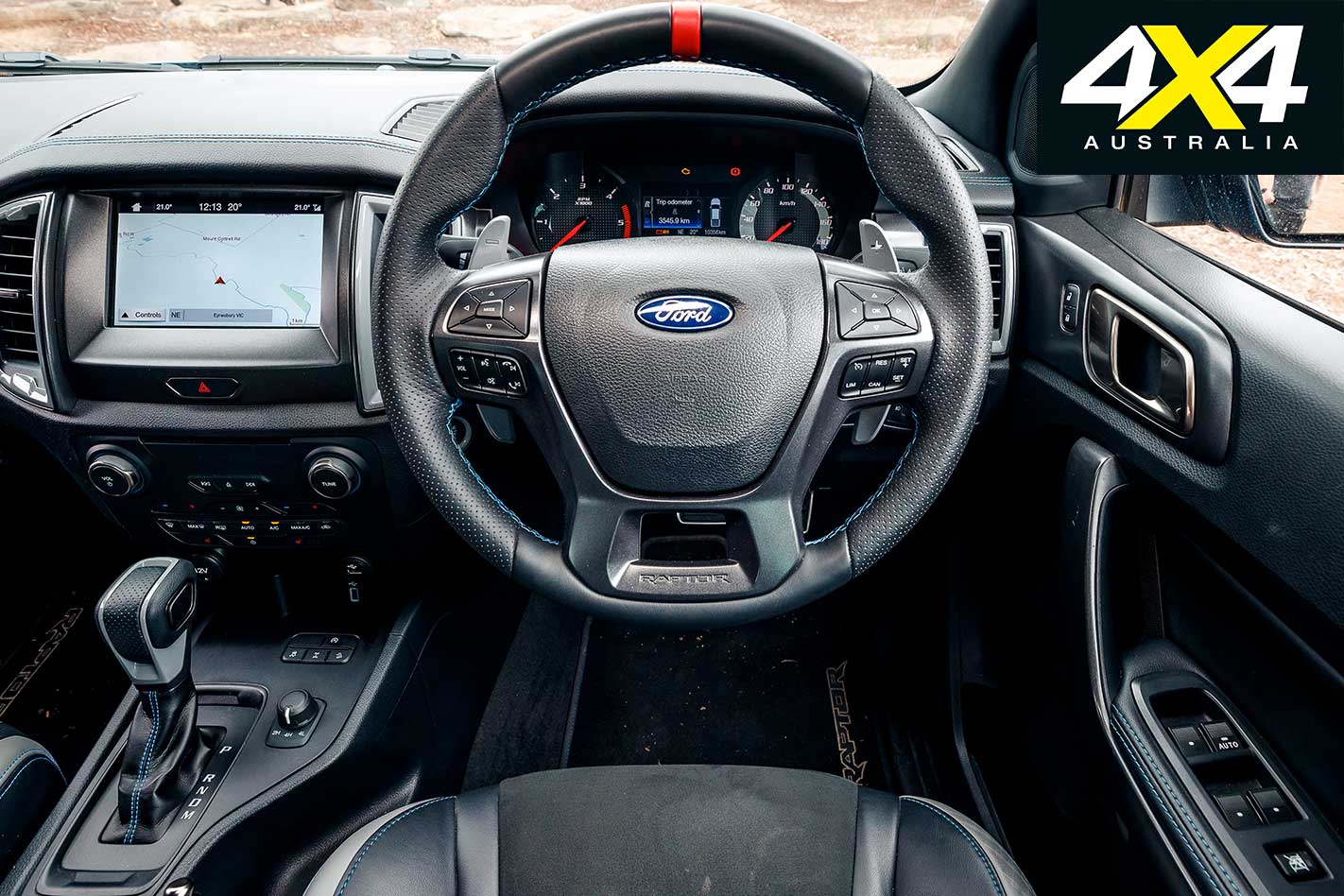
The Raptor offers a long list of standard features including keyless entry and start, six airbags, leather, heated front sports seats, electric seat adjust for the driver, an eight-inch touchscreen, sat-nav, Apple CarPlay, Android Auto, a rear-view camera, auto headlights/wipers, dual-zone climate control, a six-speaker audio system with digital radio, and a 230-volt outlet in the rear of the centre console.
The cabin is nicely finished and the dash layout better than the Ranger, while the driver’s seat is particularly comfortable. As with all Rangers the rear seat offers good leg-room (even behind a tall driver or tall front passenger) and reasonable shoulder and hip-room for three adults.
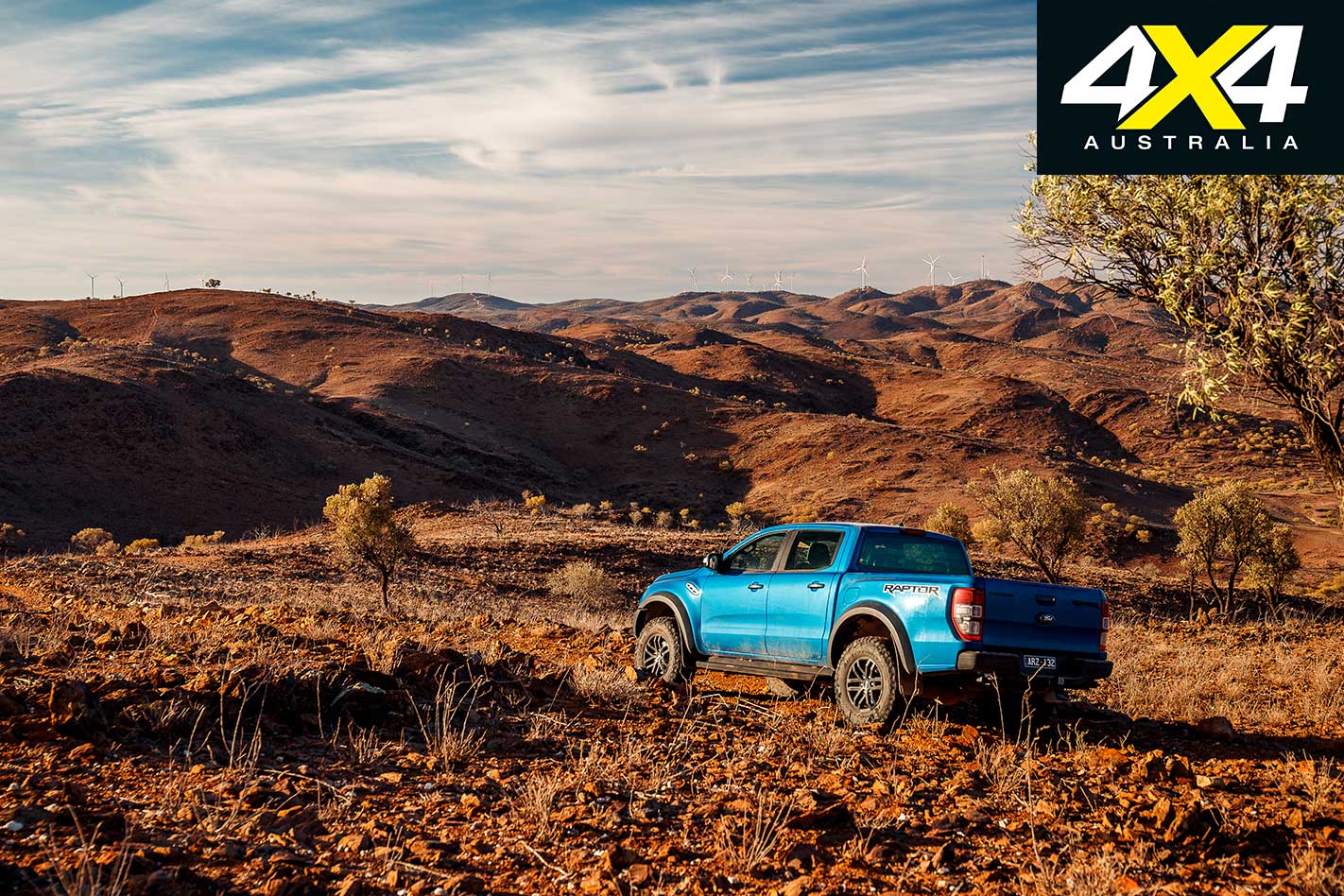
The Raptor doesn’t have the Ranger’s radar cruise control or autonomous braking; although, these features are apparently on the way. The Raptor also doesn’t have an ANCAP test result; although, there’s seemingly no reason why it wouldn’t achieve the five-star rating a standard Ranger gained back in 2015.
Practicalities
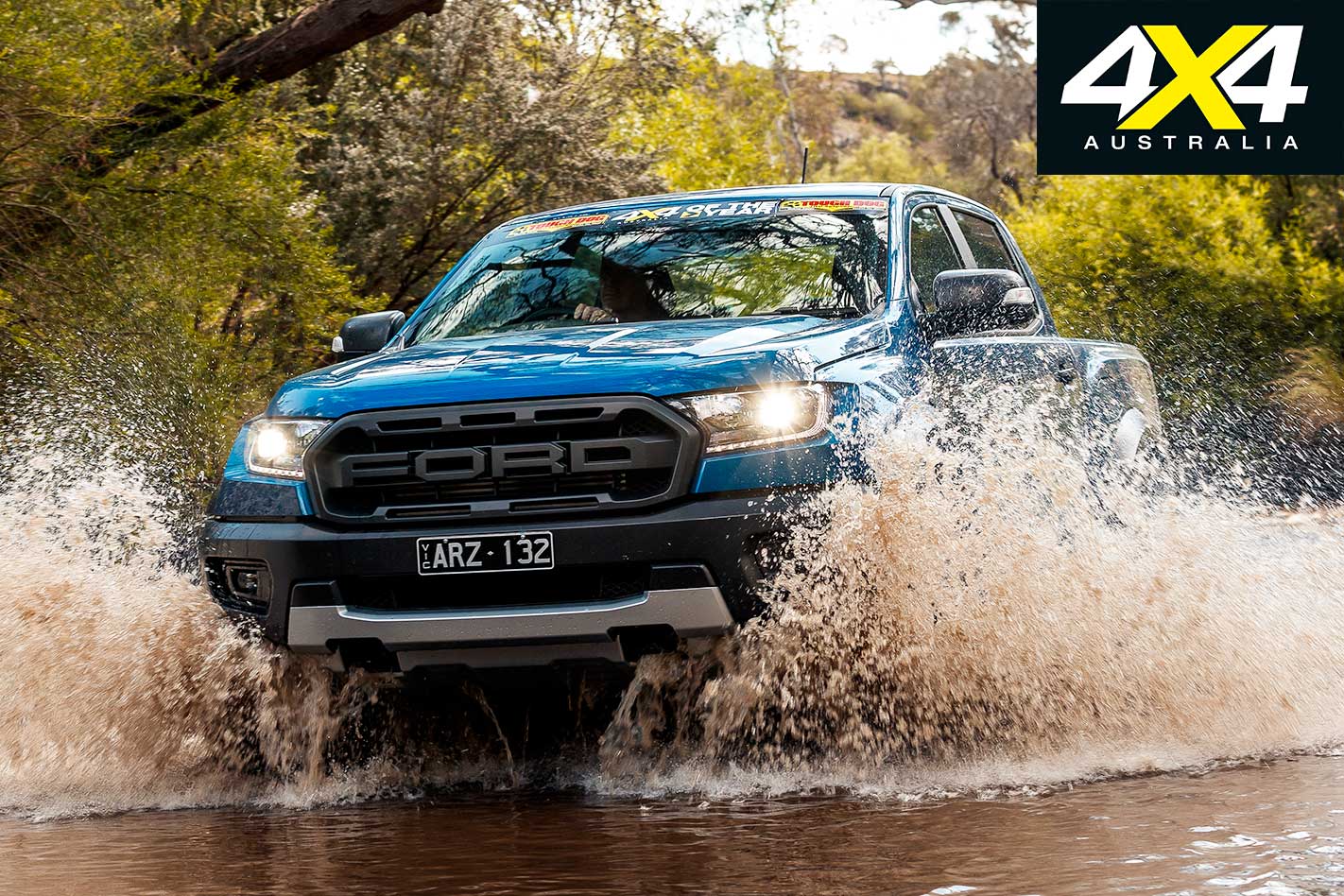
Heavy-duty front recovery points and heavy-duty rear recovery points integrated into the standard towbar are all welcome touches. Underneath, the rear of the chassis has also been modified to carry a matching 285/70R17 spare, again a nice touch.
No need to go chasing much in the way of aftermarket enhancement, but if you do want bullbar it would have to be purpose-made for the Raptor. Some may also like a snorkel; although, the claimed wading depth is an impressive 850mm, despite the fact that the engine air intake is under the bonnet lip.
However, the tow rating has been dropped to 2500kg and the payload has been reduced by around 250kg, both a result of the more compliant rear suspension.
Summary
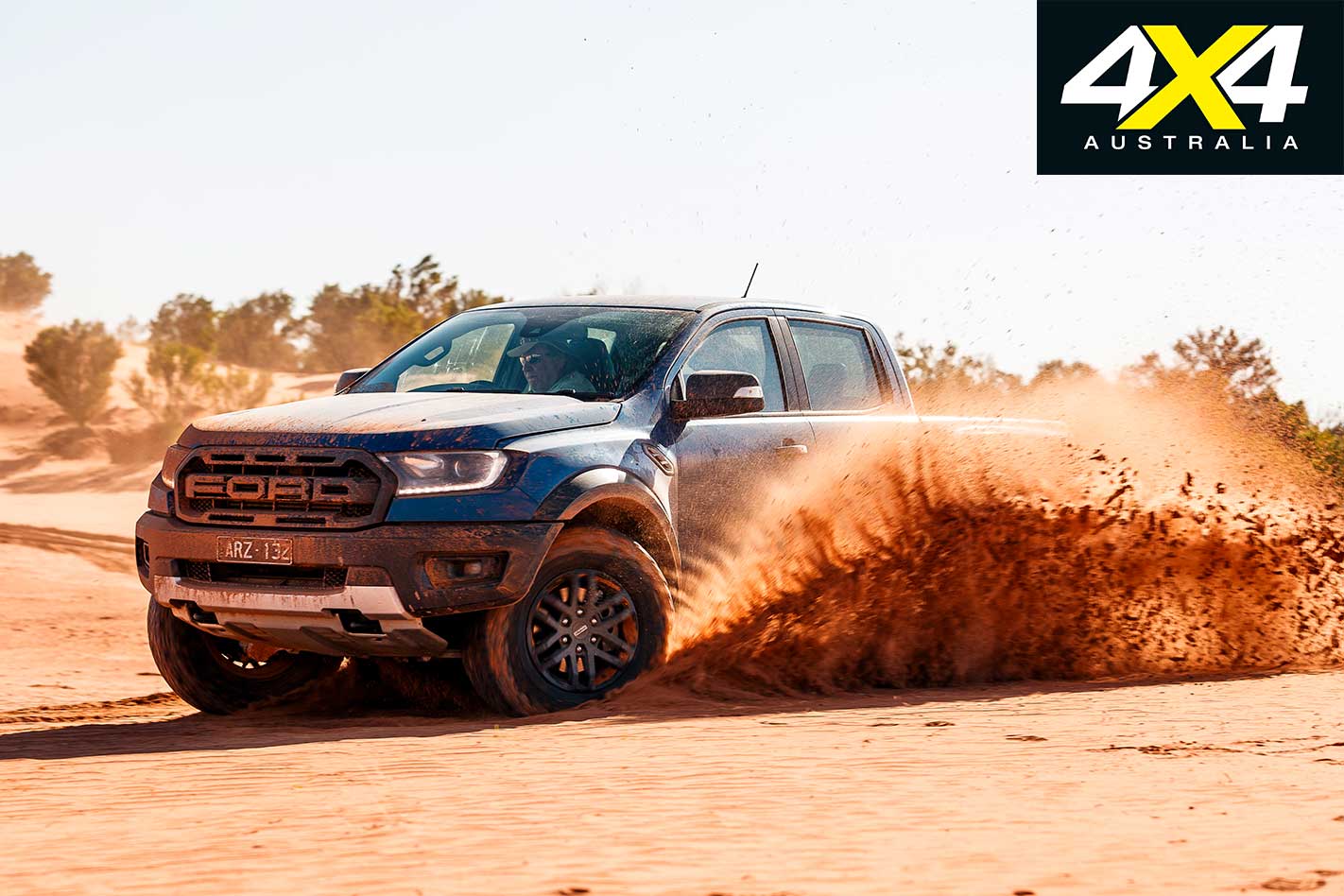
Some people may want a more powerful engine in the Raptor, while others may say the Raptor would be better with a full-time 4×4 system like the Everest’s, but there’s no denying that Ford has built a very impressive recreationally focussed 4×4 ute.
2019 FORD RANGER RAPTOR SPECS: Engine: 2.0-litre inline-4 bi-turbo diesel Max power: 157kW at 3750rpm Max torque: 500Nm at 1750-2000rpm Transmission: 10-speed automatic 4×4 system: Dual-range part-time Kerb weight: 2332kg GVM: 3090kg Payload: 758kg Towing capacity: 2500kg GCM: 5350kg Tyres: 285/70R17 116/113S Fuel tank capacity: 80L ADR fuel consumption claim: 8.2L/100km On-test fuel consumption: 12.7L/100km Base price: $74,990 (plus ORC) As tested: $74,990 (plus ORC)
SPY SHOTS of a 2020 Ford Bronco surfaced overnight, or did they?
This cobbled together Ford that’s got you scratching your head is – most likely – a prototype of the new 2020 Ford Bronco undergoing testing, but the Frankenstein Ford is wearing a mismatch of body parts plucked from the Blue Oval garages.
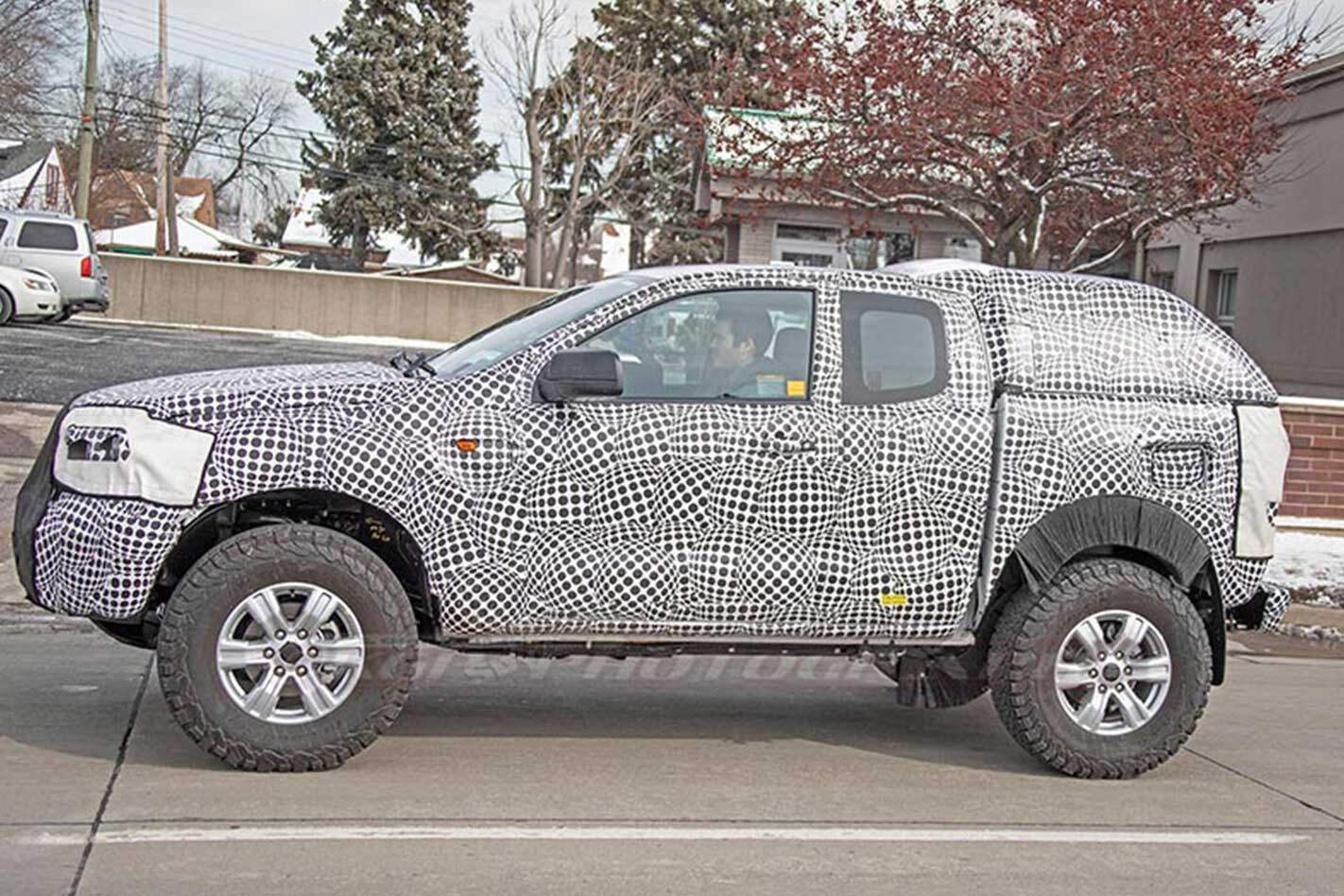
Snapped on the streets of Detroit, USA, it seems a Ranger extra cab body with a shortened cargo tub has been plonked on an Everest chassis – note it has a shorter wheelbase than the Ranger – and it’s wearing the Ranger Raptor’s BFG rubber.
What the images do reveal are impressive approach and departure angles, giving the test mule plenty of off-road credence.
The return of the Bronco was announced back at the 2017 North American International Auto Show in Detroit, but no details, specs or photos accompanied the announcement.
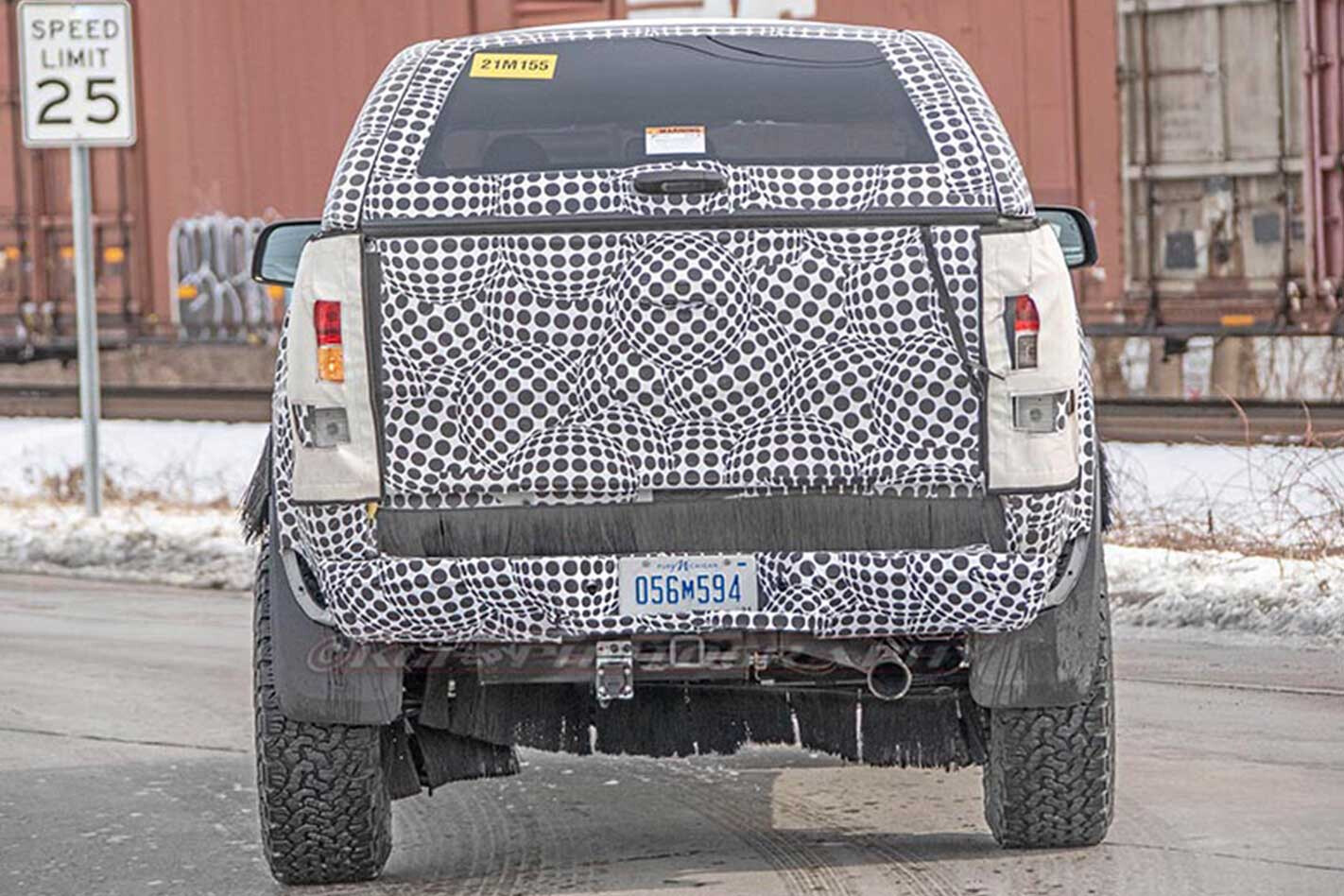
Ford has since said the Bronco – to share a platform with the Australian-developed MY19 Ranger – wouldn’t be a rebadged Everest but an entirely unique vehicle.
Speculation is also rife the 2020 Bronco will also share the Ranger’s 2.3-litre/10-speed auto drivetrain, while whispers of a seven-speed manual have also surfaced. A hybrid version of the Bronco is also said to be in the works.
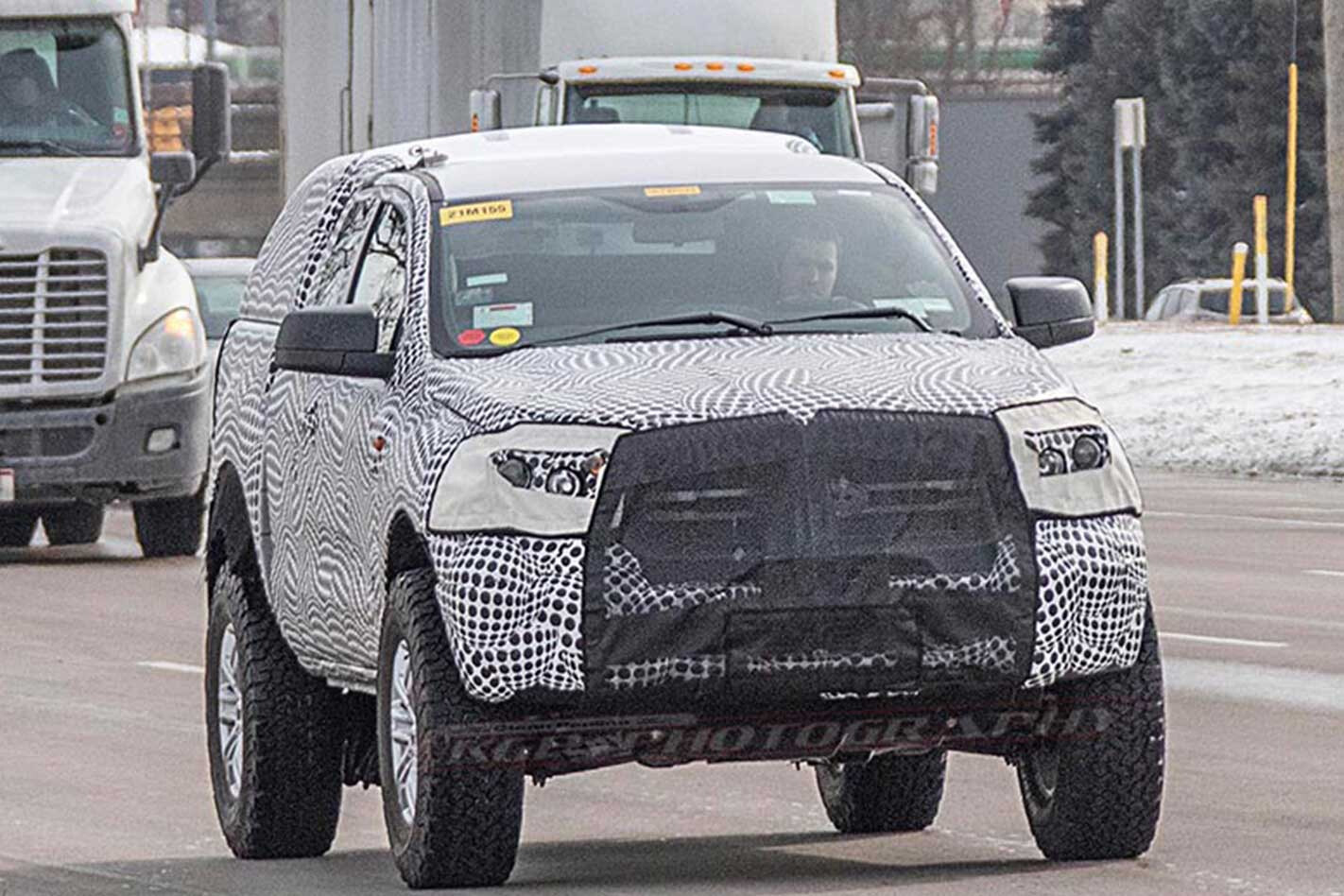
The Ford Bronco was last seen at Ford dealerships in 1996, so it’s been quite a long wait for enthusiasts for the return of the iconic nameplate.
Should Ford Australia bring it here? Comment below.