
ARB is giving one customer the chance to win an amazing prize valued at more than $75,000.
To go into the draw, all the lucky tourer needs to do is purchase an Old Man Emu suspension kit for their fourbie; the winner will then get to choose from four incredible off-road prizes on offer.
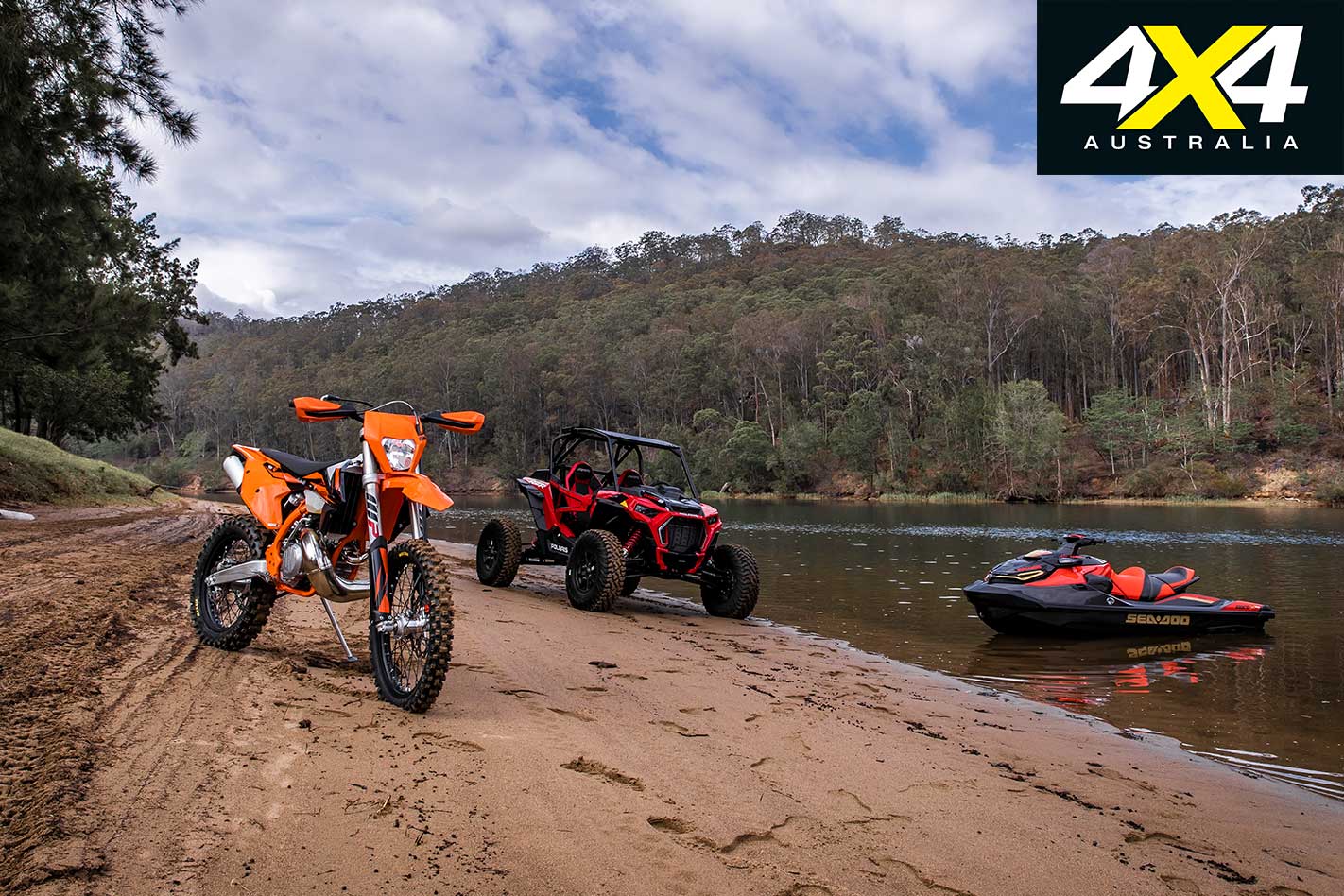
Choices rarely come better than this, with ARB offering the choice of an Extreme Powersports Pack (Action); a New Age Caravan (Family); a Sniper X Camper Trailer (Adventure); and a Formosa Sea-Rod Boat (Fishing).
The Action prize, tailor-made for adrenalin seekers, comprises a KTM 250 EXC dirt bike, a Polaris RZR XP Turbo buggy and a supercharged Sea-Doo RXT-300.
Opting for the ‘Family’ prize will net you a New Age Desert Rose 18-foot caravan equipped with a fridge, microwave, TV, oven, stove, and plenty of creature comforts.
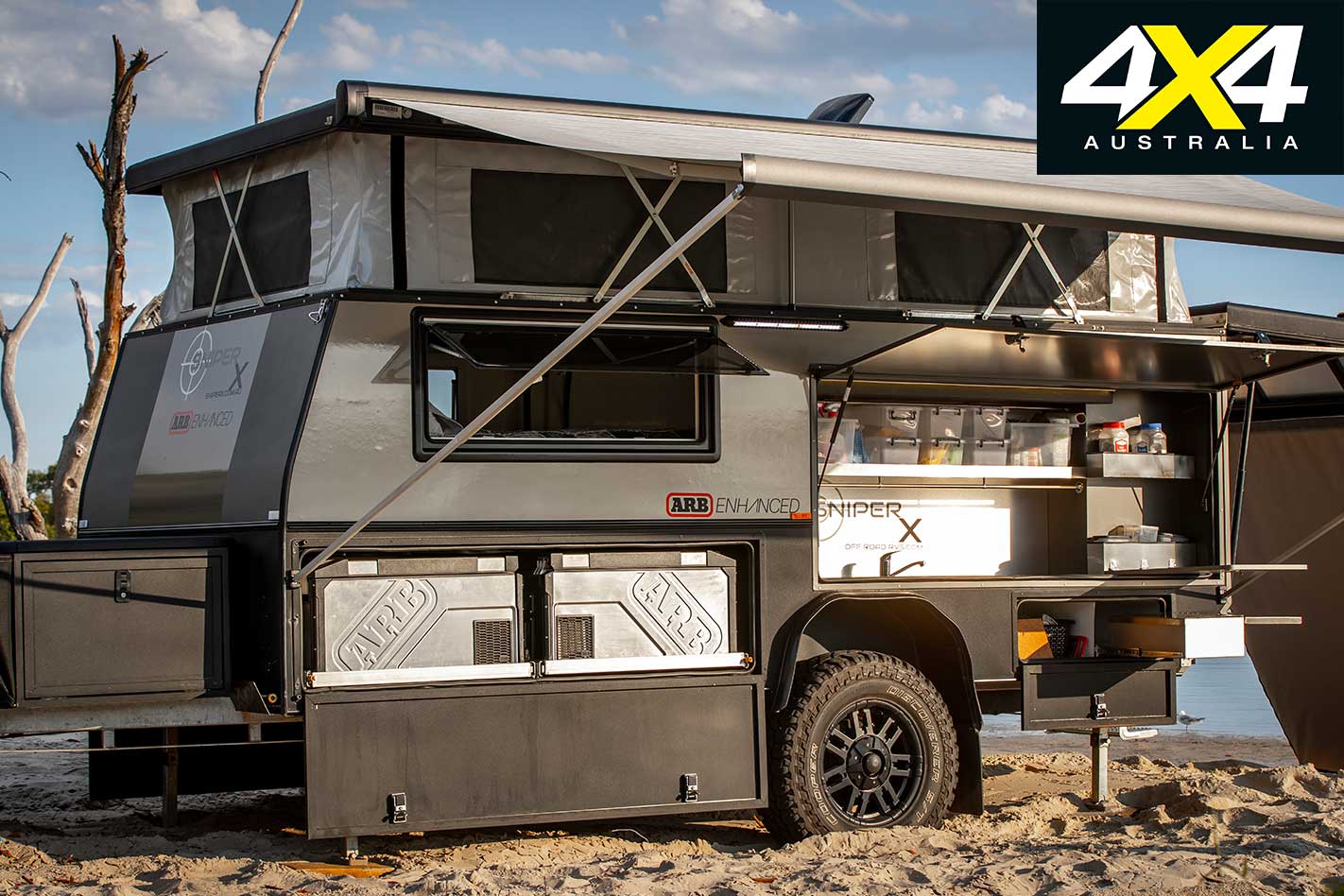
Prefer more remote campsites? The ARB-enhanced Sniper X camper trailer is built to reach hard-to-access locations, and it’s fitted with OME off-road shocks, two 60-litre ARB fridge/freezers, a Redarc 12V power management system, and plenty more.
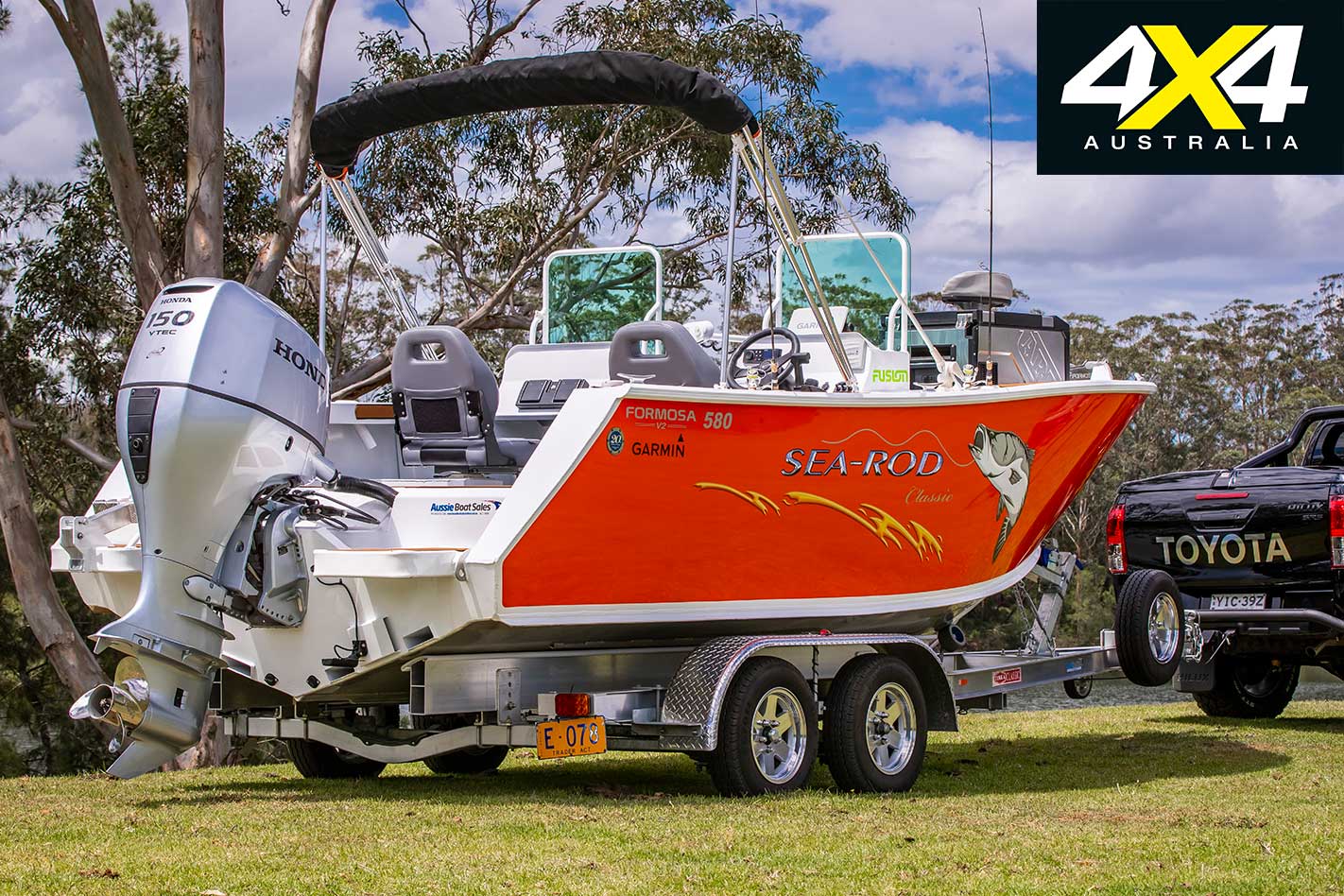
Or, perhaps you’re a keen fisher. If that’s the case, hunt down barramundi in your very own Formosa Sea-Rod Classic. The boat is powered by a Honda 150 outboard motor and features a full plate 4mm aluminium hull and a Minn Kota Ulterra self-deploy electric motor.
You’ve got until May 5 to buy an OME suspension kit and enter the draw; then the hard part of deciding which prize you want begins!
For more information, and for terms and conditions, visit: www.arb.com.au/win
AMONG AN ocean of same-same compact SUVs with little or no appeal or individuality and even less off-road ability, Suzuki’s venerable Jimny is a welcome addition. Putting function to the fore but with boxy styling that wins on the cool and cute scales, the Jimny has no real competition in its class.
As a three-door small 4×4, the closest vehicles you will get to the Jimny are the short wheelbase Jeep Wrangler or the no-longer-in-production Land Rover Defender 90, but even those are bigger vehicles.
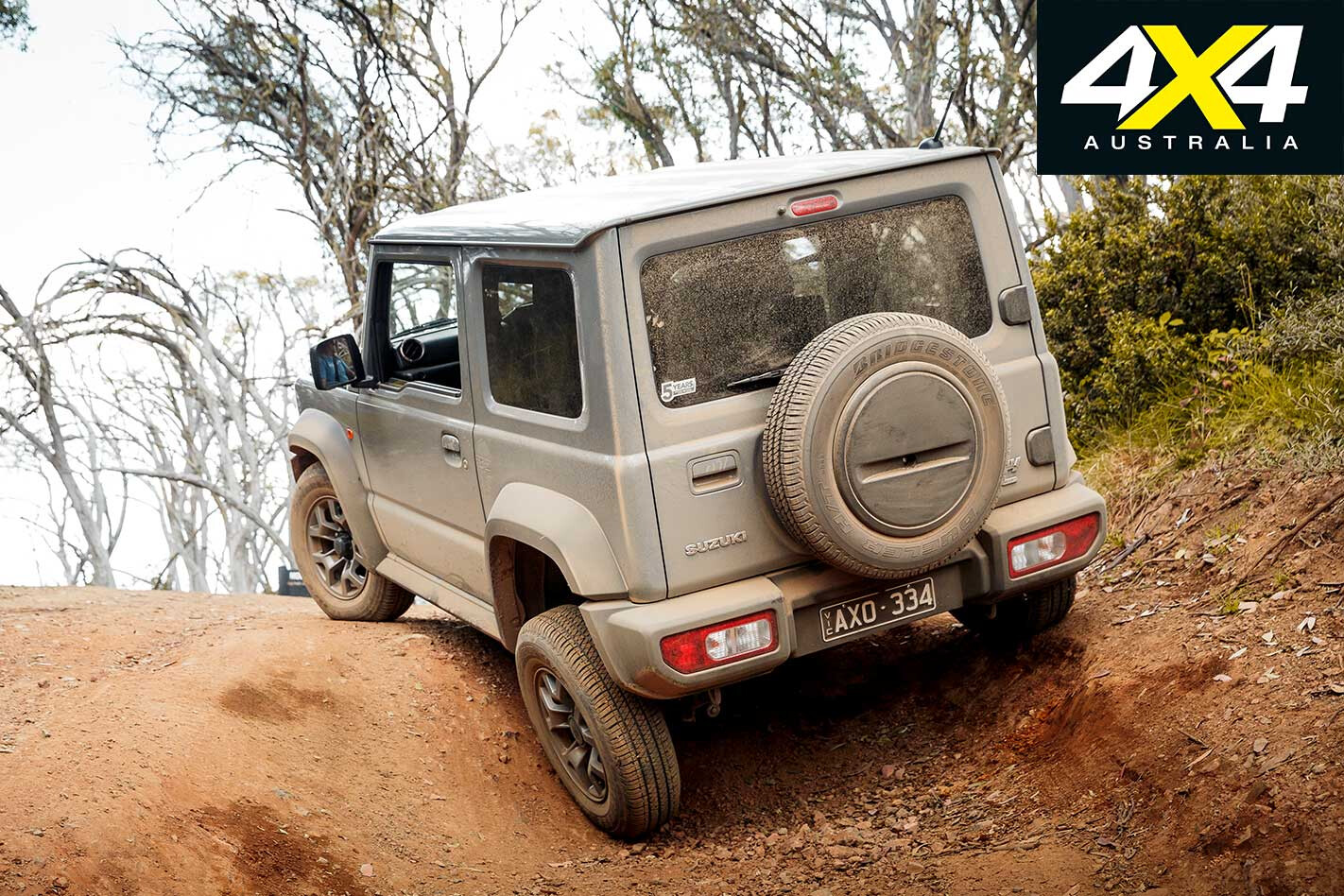
Suzuki’s small 4×4 harks back to the original LJ10 released in 1970, and the 2019 iteration of that vehicle retains many of the hallmarks that made the original such a success. Most importantly, it’s a no-frills, lightweight vehicle, constructed on a ladder-frame chassis with live axles at both the front and rear for better off-road performance and durability.
However, it’s now 2019, and the new Suzuki 4×4 – now called the Jimny after progressing though LJ10, LJ20, LJ50, LJ80, Sierra and Stockman models – has to meet the extra demands and regulations of the modern era. The Jimny can’t match the roughly 600kg weight of its ancestors, but, at 1095kg for the manual version, it’s still the lightest true 4×4 you can buy.
The original soft-top Suzuki 4×4 was even more diminutive than the Jimny, and the closest thing they had to any form of safety was seat belts … if you were lucky. The modern Jimny features ABS brakes, autonomous emergency braking (AEB), electronic traction and stability control, and front, side and curtain airbags. Even so, it only scored a three-star ANCAP safety rating because it misses out on things like pedestrian and cyclist avoidance.
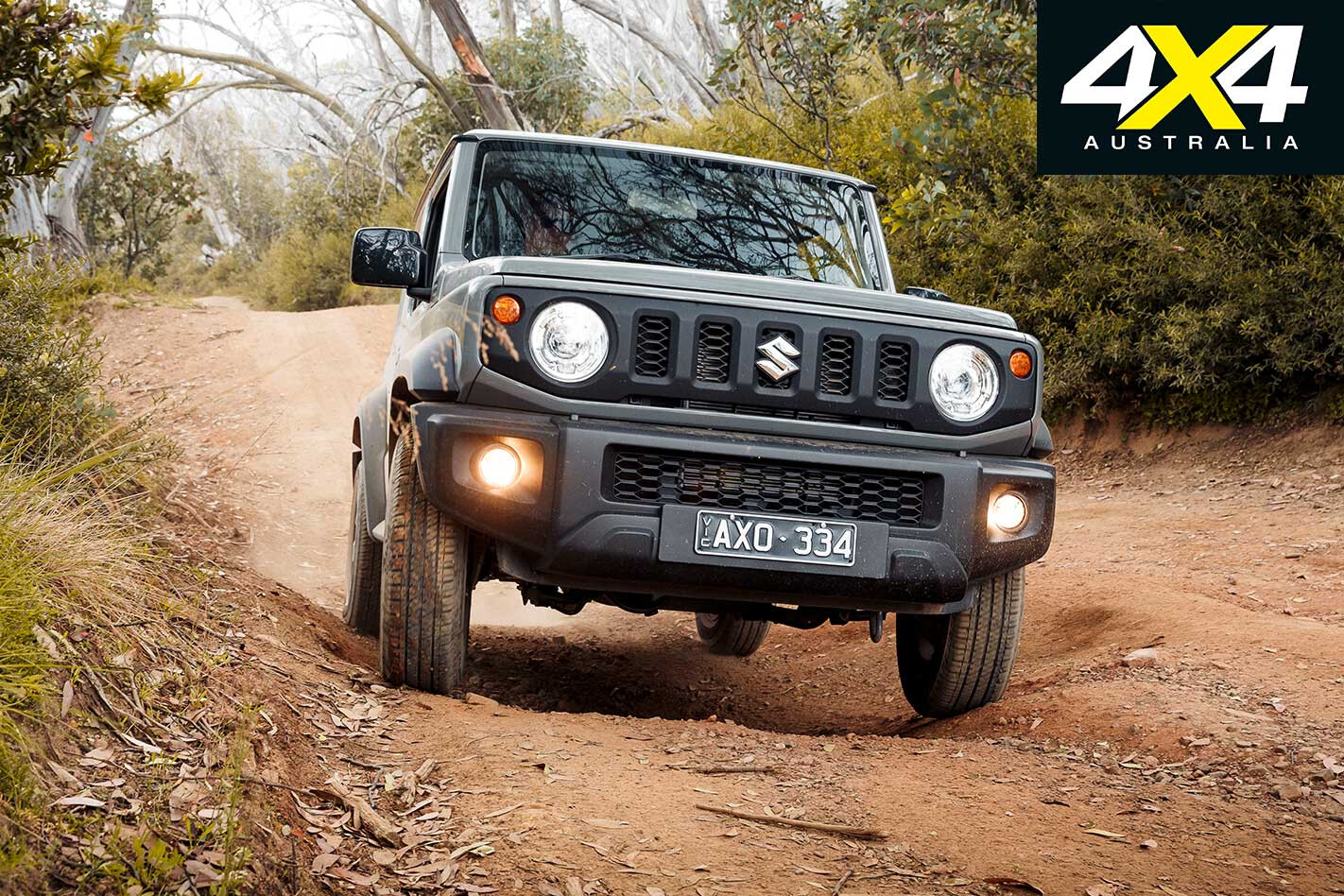
The small, lightweight construction of the vehicle also exhibited less than acceptable structural deformation in crash testing. These negatives will do little to reduce the appeal of the Jimny to buyers who love the cute look of it, while enthusiasts appreciate the fact it’s a solid base on which to create a great, affordable off-roader.
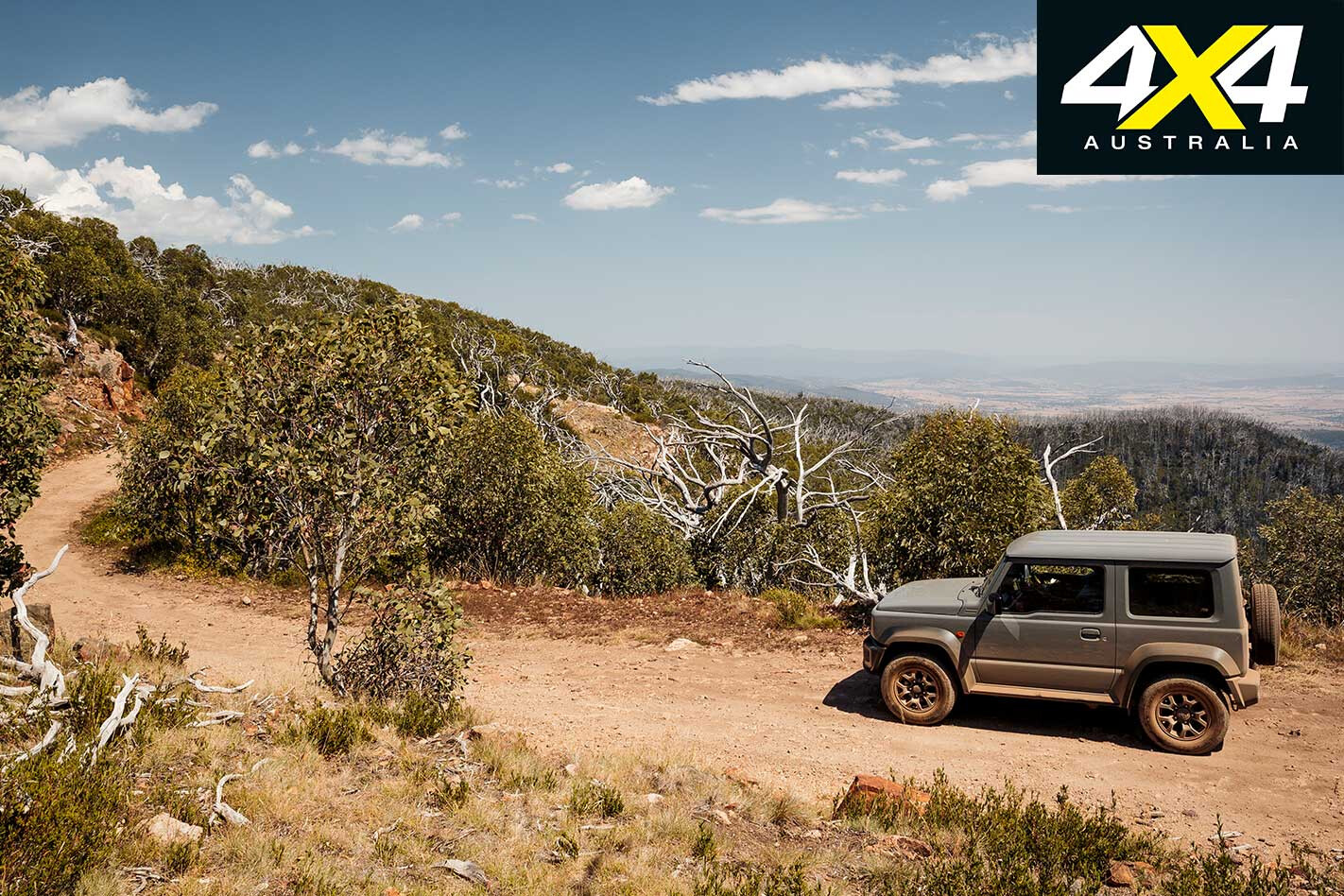
The Jimny is only available in one specification, with a selection of colours and with either a five-speed manual or four-speed automatic transmission. We chose the $23,990 (+ORC) manual Jimny – the auto is $25,990 (+ORC) – and set out to see just how well it goes off-road in standard trim with a trip up some of our favourite High Country tracks.
Powertrain & Performance
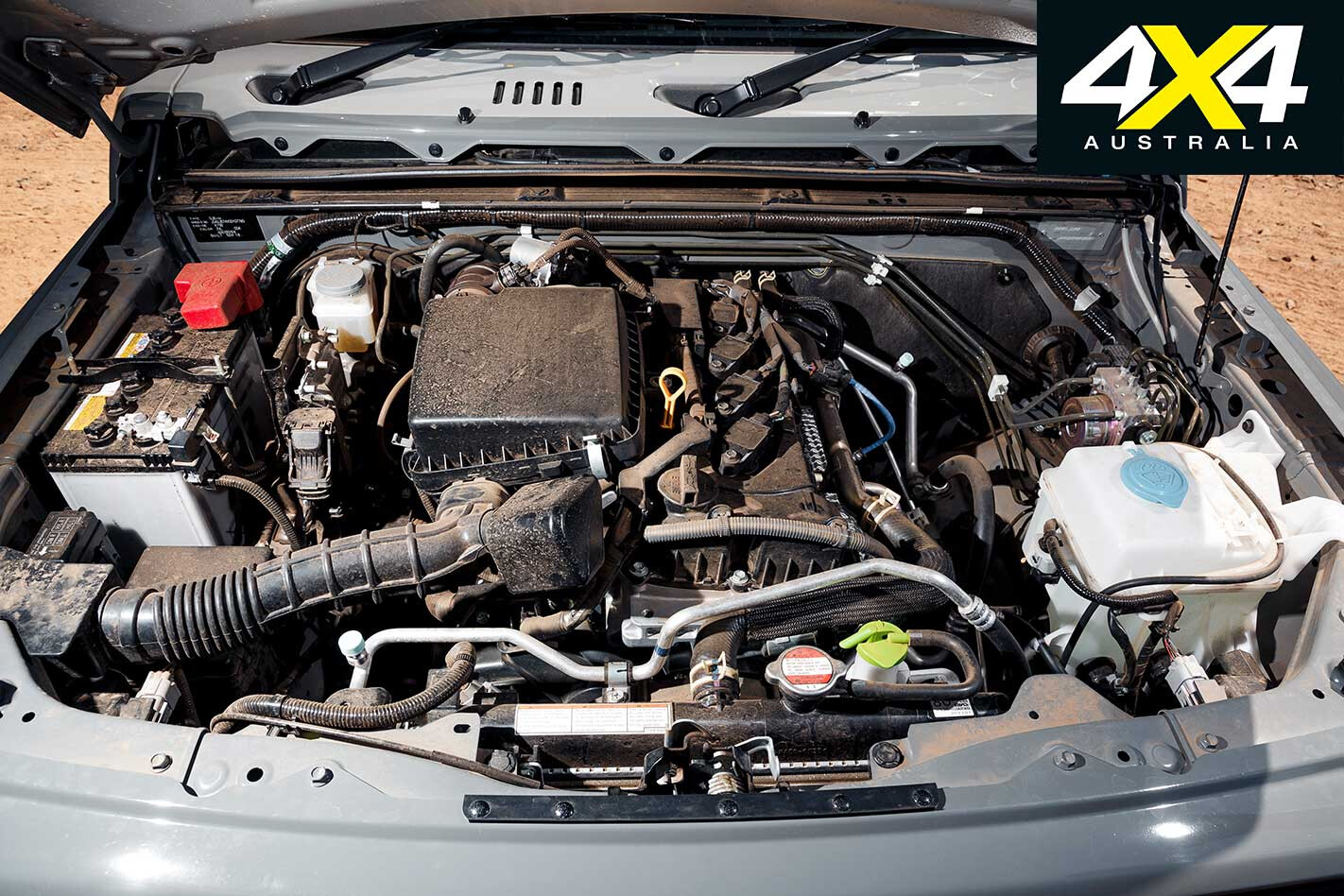
WITH ITS small size and low weight the Jimny doesn’t need a big, powerful engine to get it going. The only engine offered in Australia is a 1.5-litre, petrol-fuelled four-cylinder, which makes just 75kW and 130Nm. While that doesn’t sound like much, it’s enough to comfortably get the one-tonne Jimny up to highway speeds.
Ratios in the five-speed manual are ideal as they’re close and low for moderate acceleration and great off-road drivability. They fall short on the highway, where a taller overdrive gear is needed to drop the revs down.
As it stands fifth gear is one-to-one with no overdrive and has the engine spinning at 3000rpm at 100km/h, making it buzzy and noisy – an overdrive sixth gear would be a godsend for regular highway driving.
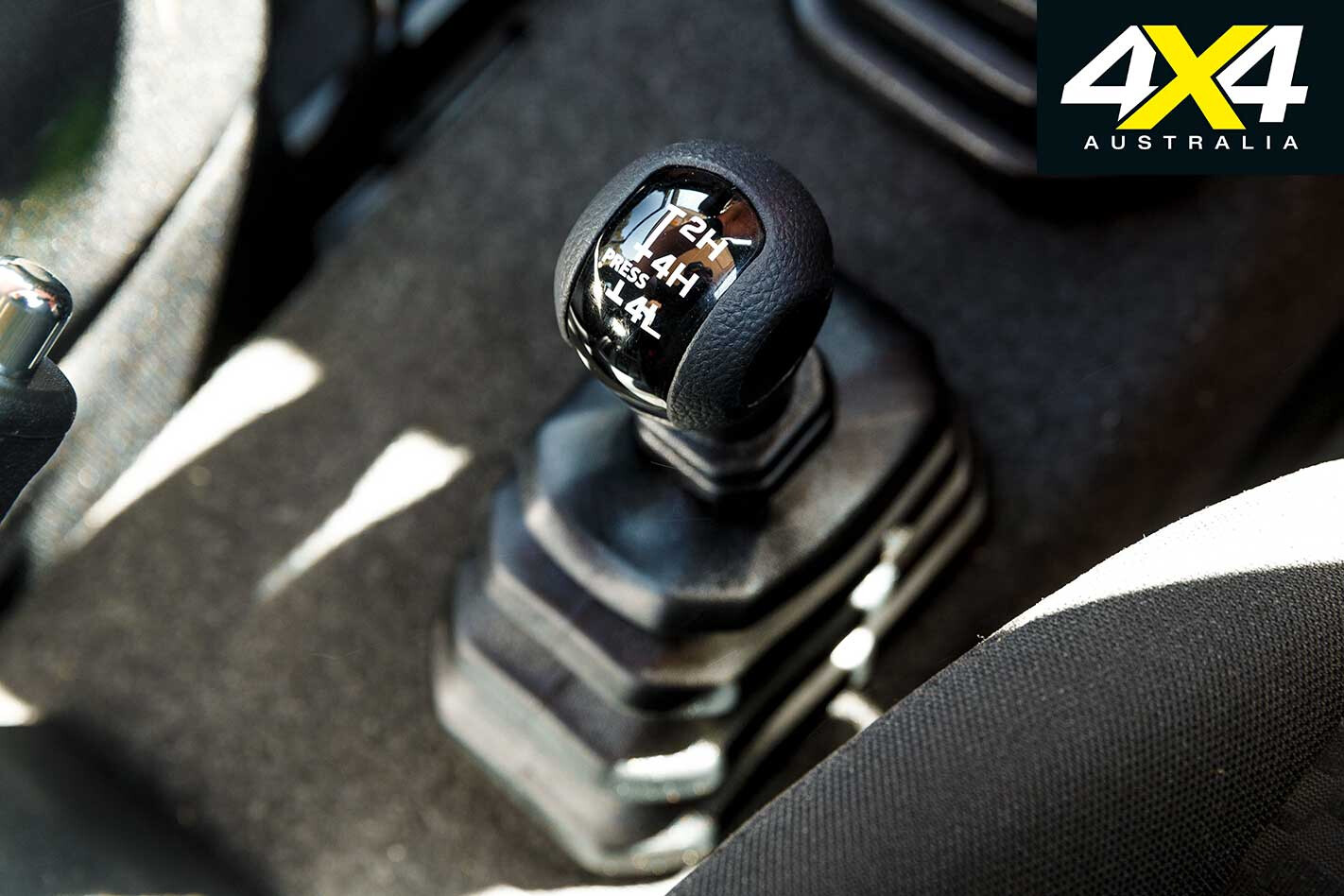
The 4×4 system is a traditional part-time set-up offering 2WD (rear), locked 4×4 high range and locked 4×4 low range, all via a good, old shift lever mounted to the floor. No messing around with buttons or dials to use this transfer case; it’s a direct and simple lever action. Even the convoluted rubber boot around the gear shifter is gloriously retro in its look and feel.
The low range crawl ratio of 36:23:1 is more than enough to amplify those 75 buzzing kilowatts to propel the Jimny up steep mountain climbs and provide controlled descents. There are no diff locks as standard, but the Suzi didn’t struggle for traction on the dry, rocky tracks when wearing cookie-cutter 195/80-15 highway tyres.
On-road ride & Handling
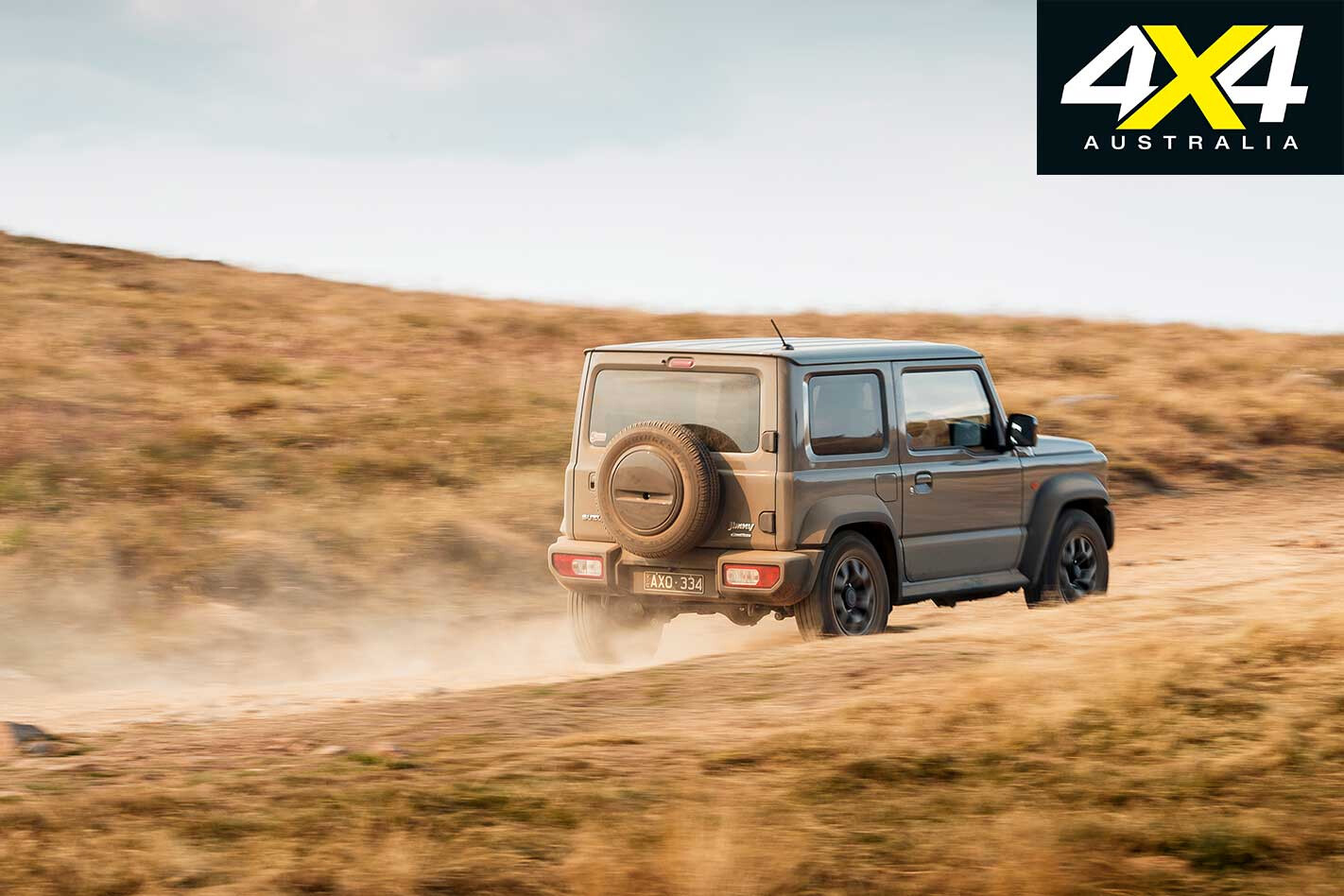
WITH ITS short wheelbase, relatively tall ride height, 80-aspect tyres and live axles you could be excused for thinking the Jimny would be a nightmare on the road, but that’s not the case. The coil-sprung three-link suspension is soft, providing a comfortable ride without the fore-to-aft pitching you might expect of it.
It’s no corner-carving sports car and the dampeners struggle to control the wallowing if you try to push it hard through corners; they also thump hard over familiar suburban speed bumps that many compact crossovers float over, which was concerning before we hit the rough off-road tracks.
Off-road
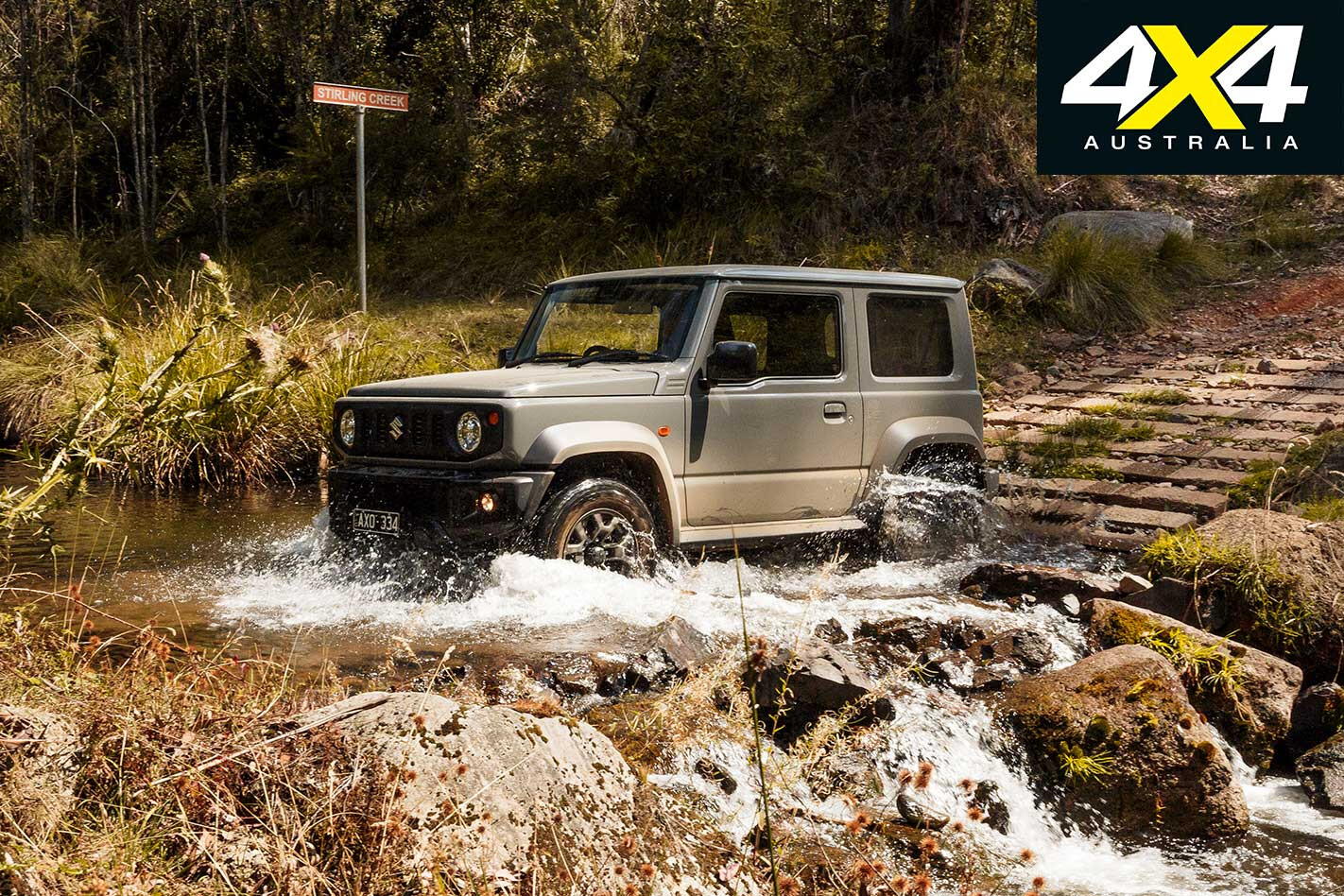
THOSE concerns were warranted, as the Jimny hammered and slammed up a rocky track that we know from experience – in bigger cars with bigger tyres – isn’t all that tough. The small tyres fell into holes and climbed over rocks that a modest 285 rolls over, and the suspension thumped and bumped more than it should. A slower approach meant the Jimny did them with ease; although, a quality suspension upgrade with some larger tyres would transform the Zook’s off-road performance.
The low gearing of the Jimny’s manual box was ideal for climbing and descending steep hills, and the traction control was more than up to any challenge. Likewise, clearance was never an issue, with the short wheelbase keeping the Jimny’s belly high; while stubby overhangs offered protection fore and aft.
A tight turning circle, compact dimensions and great visibility from the deep windows all contribute to making the Suzi easy to manoeuvre on the tracks.
Cabin & Accommodation
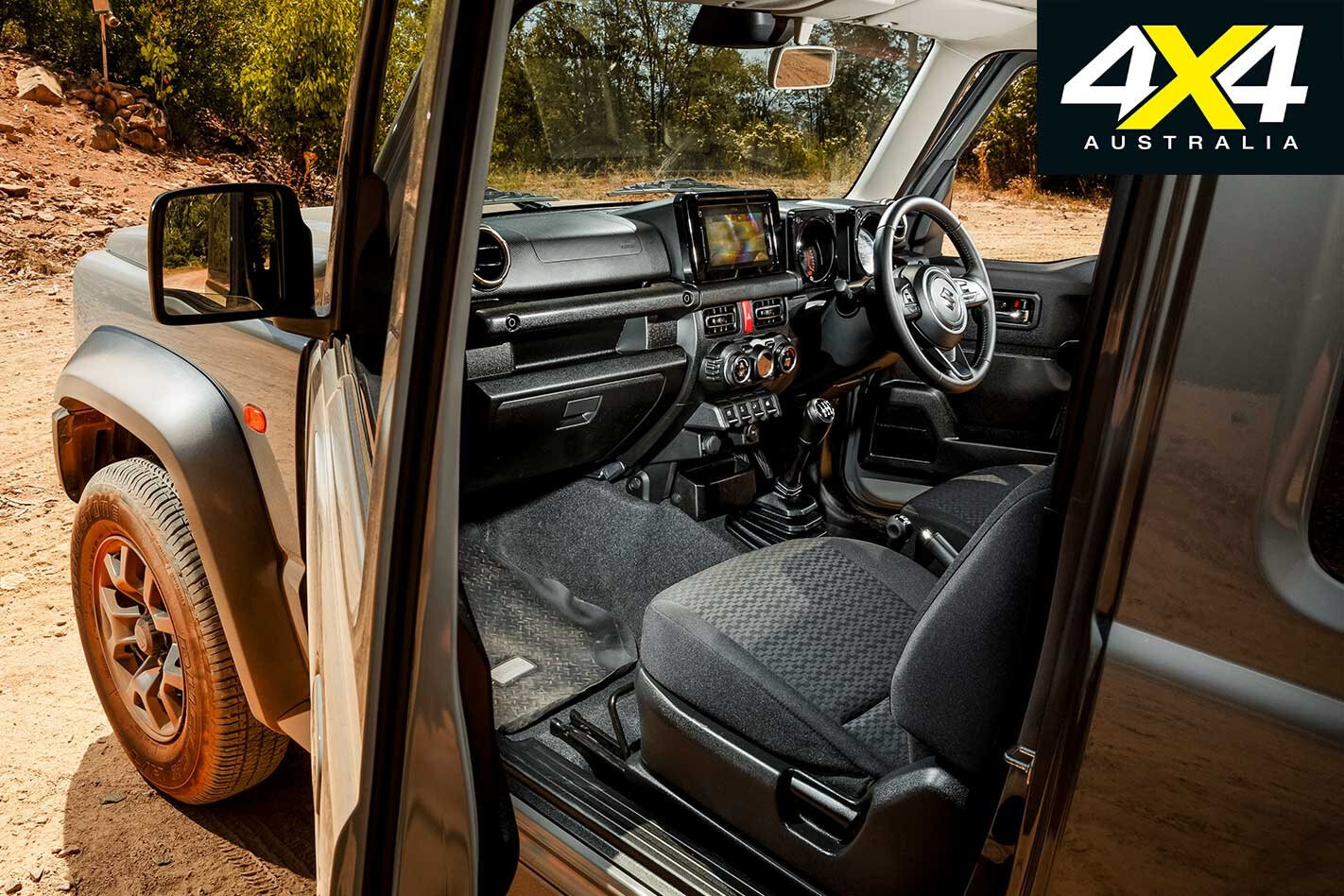
THE JIMNY is a veritable ‘Tardis’. Approaching it from the outside it looks tiny – it’s one of the only 4x4s where I can wash the entire roof without having to step up on anything – and its compact size only takes up half a parking space.
However, the door openings are big, so you don’t need to be a contortionist to get in and out, and there’s plenty of space in the front seats and the Jimny has more headroom than any of the popular one-tonne 4×4 utes.
Sure, if both driver and passenger attempt to put on their seat belts at the same time they are bound to touch hands, but there’s still ample space. There’s not a lot of substance to the front seats and they lack any lateral support for big blokes; they’re comfortable enough for short trips, but they were testing by the end of a long day.
Rear-seat passengers aren’t as well accommodated, as it’s a squeeze to get past the front seats and there’s just enough space for small kids – we doubt many buyers would be choosing a Jimny for family transport. Doing away with the 50:50 split would create more cargo space, which is lacking when the rear seats are upright.
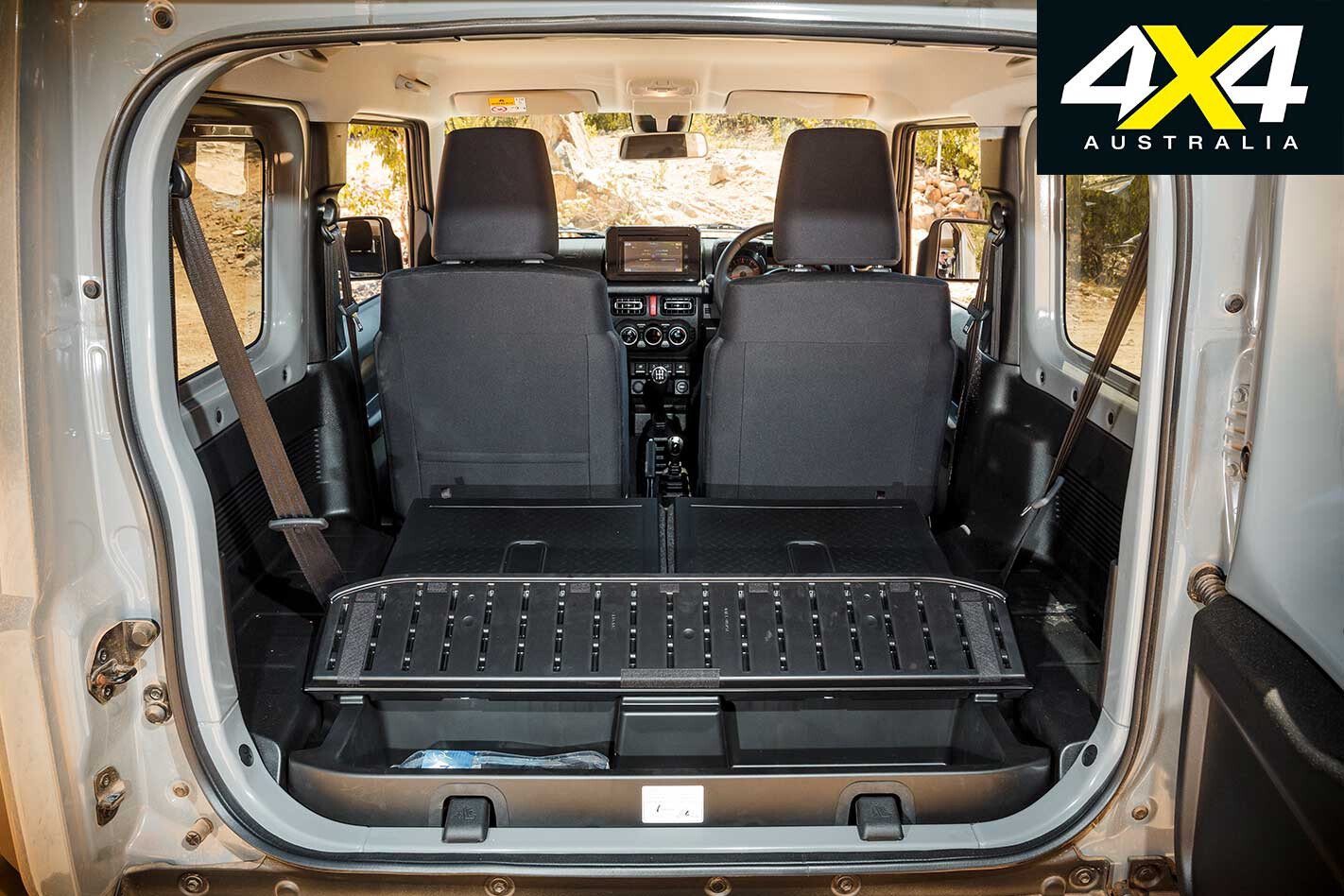
With the rear seat folded flat the luggage space is usable; enough for a 40-litre fridge, a swag and a small bag for a weekend of camping, but not much more. Do away with the rear seat and fit a solid cargo barrier behind the front seats and that space becomes a lot more usable.
The cockpit has climate-control air-conditioning; powered door locks, windows and mirrors; a large(ish) colour screen for the standard sat-nav; Bluetooth and audio systems; and a tiny console with two cup holders.
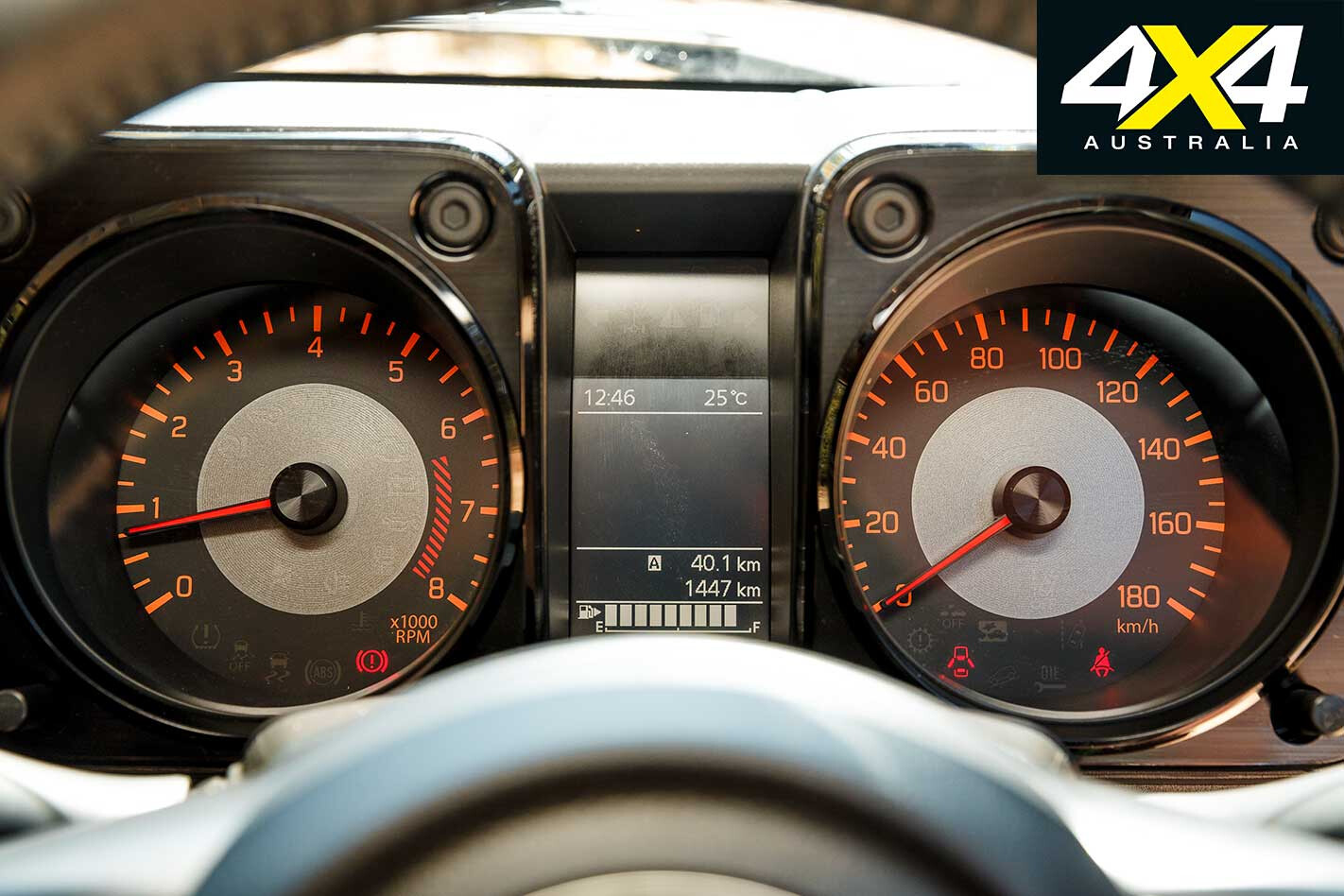
Unfortunately the screen takes on a trippy look when viewed through polarised glasses, and the sound system comes with two front speakers only – a better quality sound system would be appreciated in such a funky looking car that is sure to appeal to younger buyers; even for old blokes like me. The gauge cluster has a cool, retro look, but the cover over the main gauges can be hard to read at times due to the reflection, and there’s no digital speedometer readout.
Practicalities
THE JIMNY isn’t going to be everyone’s choice for a long-distance touring vehicle, and you can forget about it if you’re after a family car or want to tow a large trailer. Taken at face value, though, and there’s plenty you can do with the little Suzi.
It’s a sweet city runabout and perfect for a couple on a weekend getaway, particularly if you make the most of that rear seat/cargo area. It’s rated to tow a 1300kg braked trailer; although, that’s more than 1.2 times the weight of the car.
The 40-litre fuel tank might sound tiny by 4×4 standards but this is a pretty economical car. We got 8.74L/100km during our week of testing, which included a day in low range, highway driving and city commuting. The tiny tank should be good for a range of around 400km.
Suzuki Australia realises the Jimny will be an enthusiasts’ car and that enthusiasts will want to accessorise them, so it’s offering a range of factory accessories such as metal diff guards, luggage tie-down hooks and roof racks.
More significantly, Suzuki worked with ARB to develop a range of gear and kitted up its own ‘JBOX’ Jimny with a heap of cool-looking gear including the improved suspension and bigger tyres we reckon it needs. Other 4×4 aftermarket companies are working feverishly on their own range of gear for the Jimny, so there will be no shortage of kit to equip for your needs.
2019 SUZUKI JIMNY SPECS Engine: 1462cc OHC inline 4-cylinder, 16-valve, petrol Max Power: 75kW @ 6000rpm Max Torque: 130Nm @ 4000rpm Gearbox: Five-speed manual Crawl ratio: 36.23:1 4×4 System: Part-time with 2WD (rear); locked 4×4 high and low range Construction: 3-door body on separate frame chassis Front suspension: 3-link leading with coil springs Rear suspension: 3-link trailing with coil springs Wheel/Tyre: Alloy / 195/80-R15 Kerb Weight: 1095kg GVM: 1435kg Payload: 460kg Towing capacity: 350/1300kg Ground clearance: 210mm Approach angle: 37° Rampover: 28° Departure: 49° Seating capacity: Four Fuel tank capacity: 40L ADR fuel consumption*: 6.4L/100km On-test fuel consumption: 8.74L/100km
*Australian Design Rule ‘Combined-Cycle’ claim
THE JAPANESE Aerospace Exploration Agency (JAXA) is creating a wheeled vehicle to traverse the surface of the moon in 2029, and it has gone to automotive giant Toyota to come up with the vehicle.
Toyota is an off-road specialist brand that manufactures and sells more 4×4 vehicles globally than any other car company, so it was the logical choice for the new moon rover, or should we say ‘Moon Cruiser’.
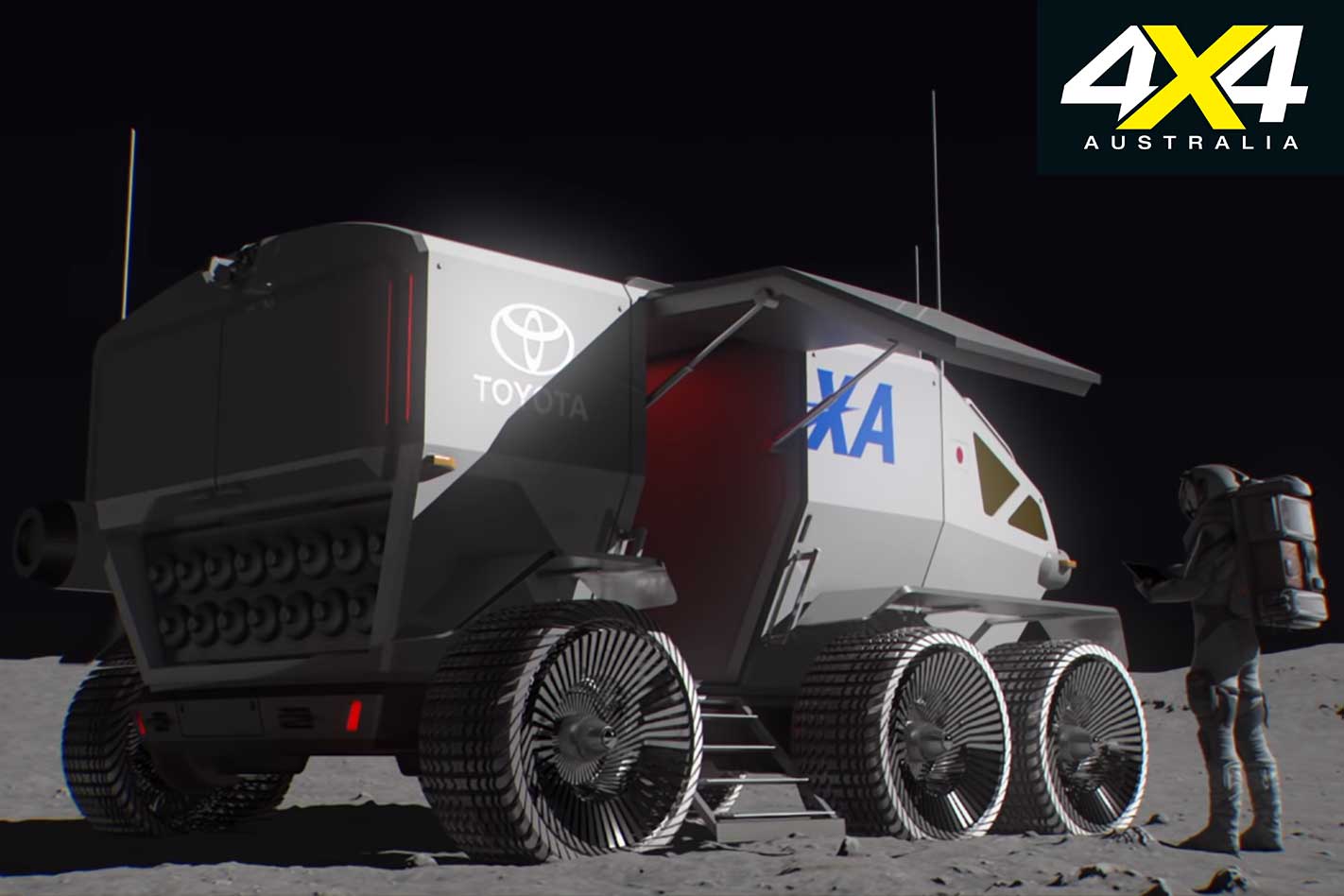
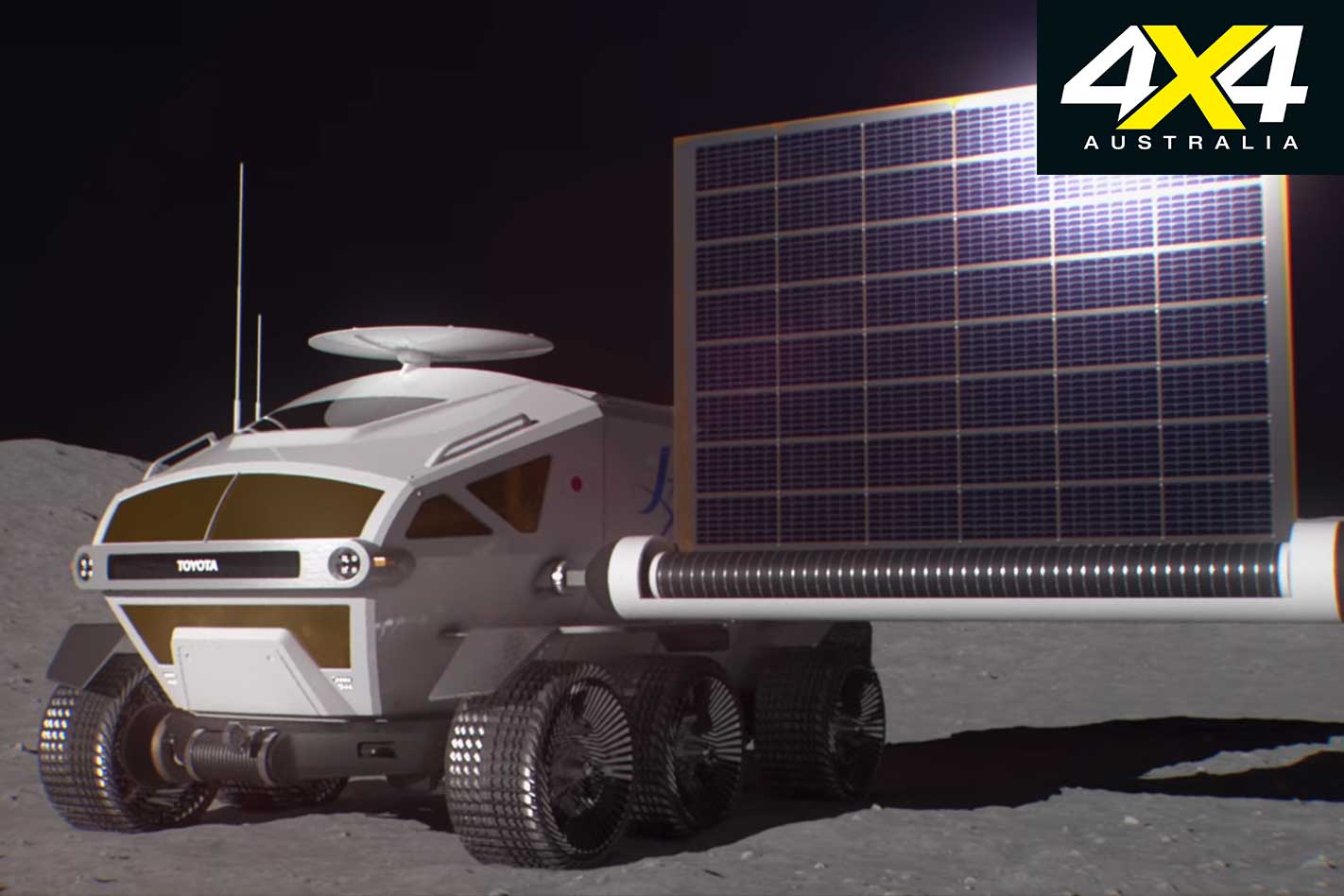
The concept in the above video shows a six-wheeled vehicle that pays tribute to Toyota’s Land Cruiser heritage, with a pair of round headlights at the front which are surrounded by an elongated version of the old Land Cruiser’s grille bezel with TOYOTA lettering.
The moon rover is said to be pressurised to allow the astronauts on-board to live and work without having to constantly wear their space suits. The 13m² cabin will house two astronauts, and the solar-fuel-cell vehicle is designed to have a range of 10,000km. No common rail diesel engine and DPFs to throw faults on this Cruiser!
Toyota is a leader in fuel cell development back on earth, with many vehicles in testing – while its hydrogen fuel cell-powered Mirai compact car has been on sale in the USA, Japan and Europe since 2014.
With recent space exploration from China and developments for SpaceX in the USA, the space race is again hotting up with nations striving to explore further and spend extended times in space and on the surface of the moon.
Land Cruisers have explored every continent on Earth; will we see one on the Moon in 2019 thanks to JAXA and Toyota?
The original manned moon rover was the Boeing LRV (Lunar Roving Vehicle), which was used during the Apollo space missions in the early 1970s. Three LRVs went to the moon on separate Apollo missions (15, 16 and 17) and each of them was driven on the moon surface three times, one per day during the time the astronauts were there. The LRV’s range was limited to within walking distance of the lunar landing module, in case the vehicles failed and the astronauts could walk back to the module.
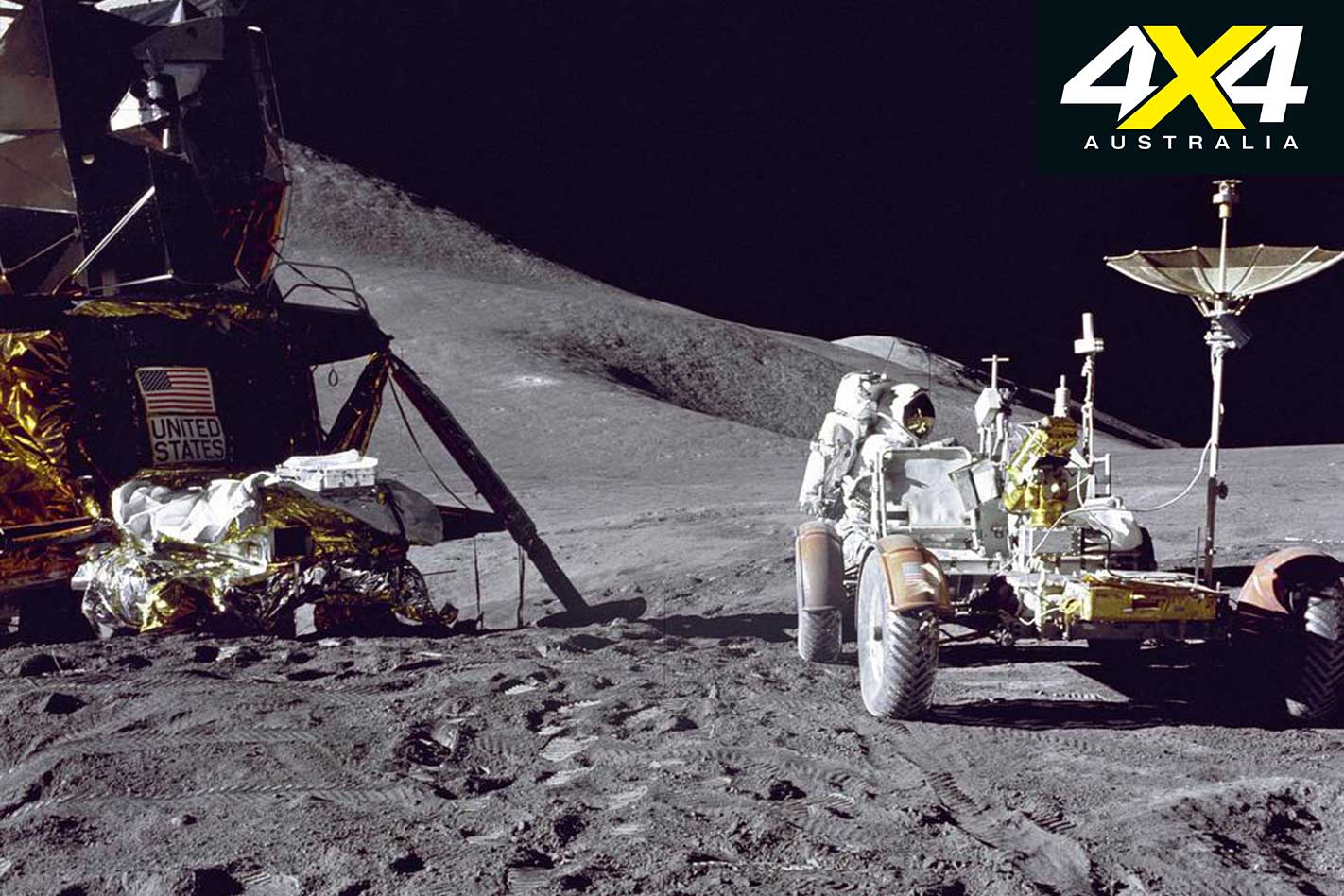
The first instance of bush (space) mechanics occurred on the Apollo 17 mission when a fender on the LRV broke and astronauts Harrison Schmitt and Eugene Cernan taped it back together, but the tape didn’t stick in the dusty conditions and the pair was covered in moon dust. For the next outing they bush-fixed a replacement fender out of maps, more tape and light clamps from inside the module. The LRVs remain on the surface of the moon, along with unmanned rovers from Russia and China.
BEFORE your tyres hit red dirt on the hunt for a remote campsite, ensure your vehicle is adequately prepped to get you there – and back again –safely.
To this end, proper battery support should be high on the checklist. Two companies – Thunder Auto and NOCO – recently released lithium battery jump starters to market; while Piranha Off Road has brought out an in-cabin battery tray for the Ford Ranger. Let’s take a closer look.
Thunder lithium jump starter
This compact power pack does far more than just help jump-start your rig. The grunty 18,000mAh power pack (it can hold that charge for up to six months and has a four- to five-hour charge time) is perfect as the go-to solution for a power source on any camping or 4WD adventure.
Its compact size belies its wide-ranging applications; besides jump-starting your 4×4 (it features intelligent jump cables to avoid damage if you connect to the wrong terminal), it can be used for charging your DSLR, tablet or mobile phone. It includes a vehicle charger, home charger, torch, a three-in-one mobile phone cable and a cigarette socket cable.
The Thunder is seriously compact; measuring 225mm long, 30mm high and 89mm wide, it takes up minimal space, plus it only weighs 630g.
RRP: $419 Website: www.thunderauto.com.au
NOCO GB50 lithium jump starter
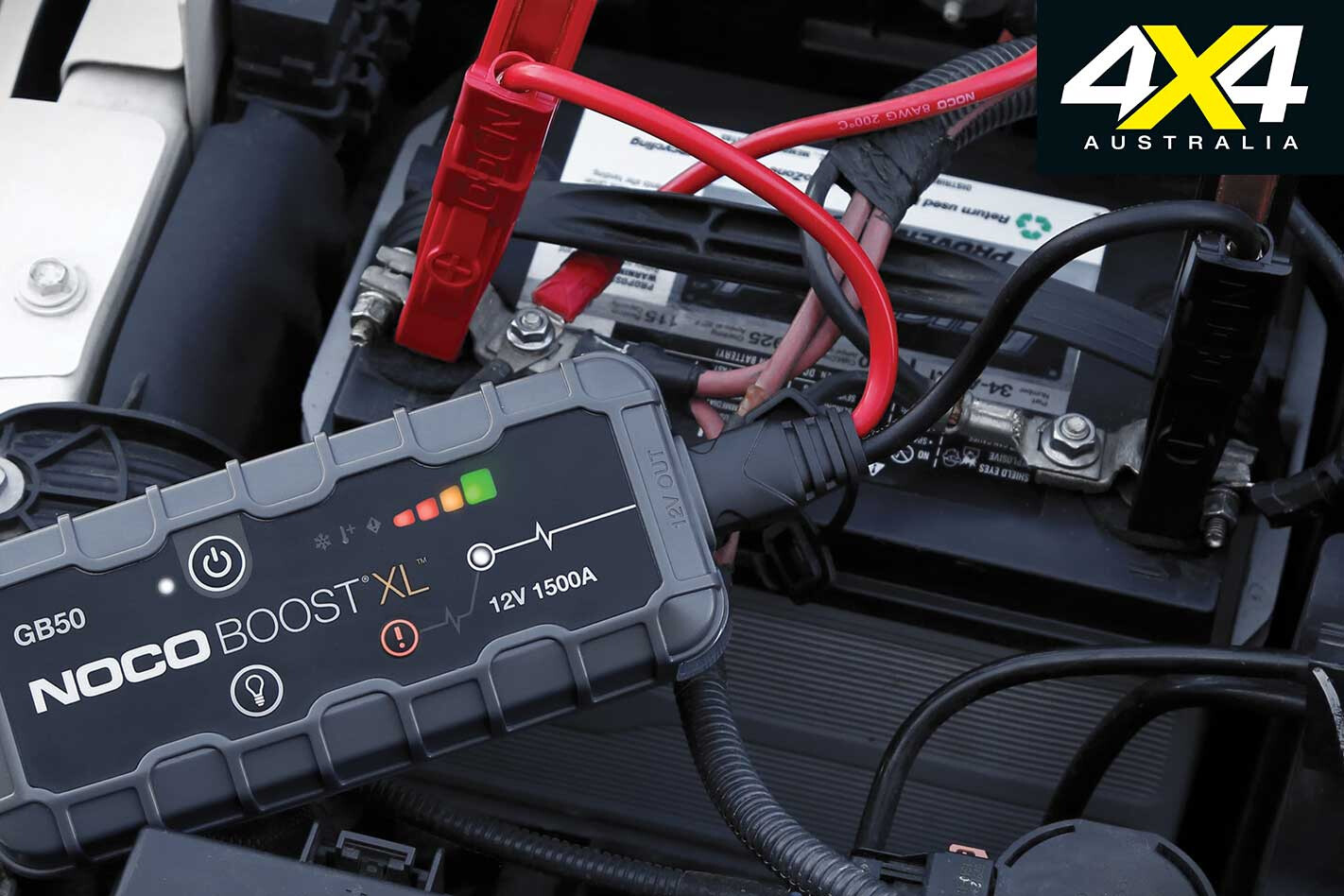
The GB50 is a portable, lightweight and compact 1500amp lithium-ion jump starter for 12-Volt batteries. The GB50 can jump-start a dead battery up to 30 times on a single charge. The GB50 features spark-proof technology, as well as reverse polarity protection and a 200-lumen LED light (with seven modes).
The unit can hold its charge for up to 12 months and includes a USB battery pack for recharging of devices such as mobile phones and tablets. The GB50 includes hot/cold LED indicators reflecting the internal battery’s operating temps to ensure that boost is only used when it is safe to do so for the battery being charged, as well as devices. The jump starter can be used on engines of up to 7.0-litre capacities (petrol) and 4.5-litre diesel donks.
Website: www.no.co
Piranha off-road in-cabin battery tray: Ford Ranger
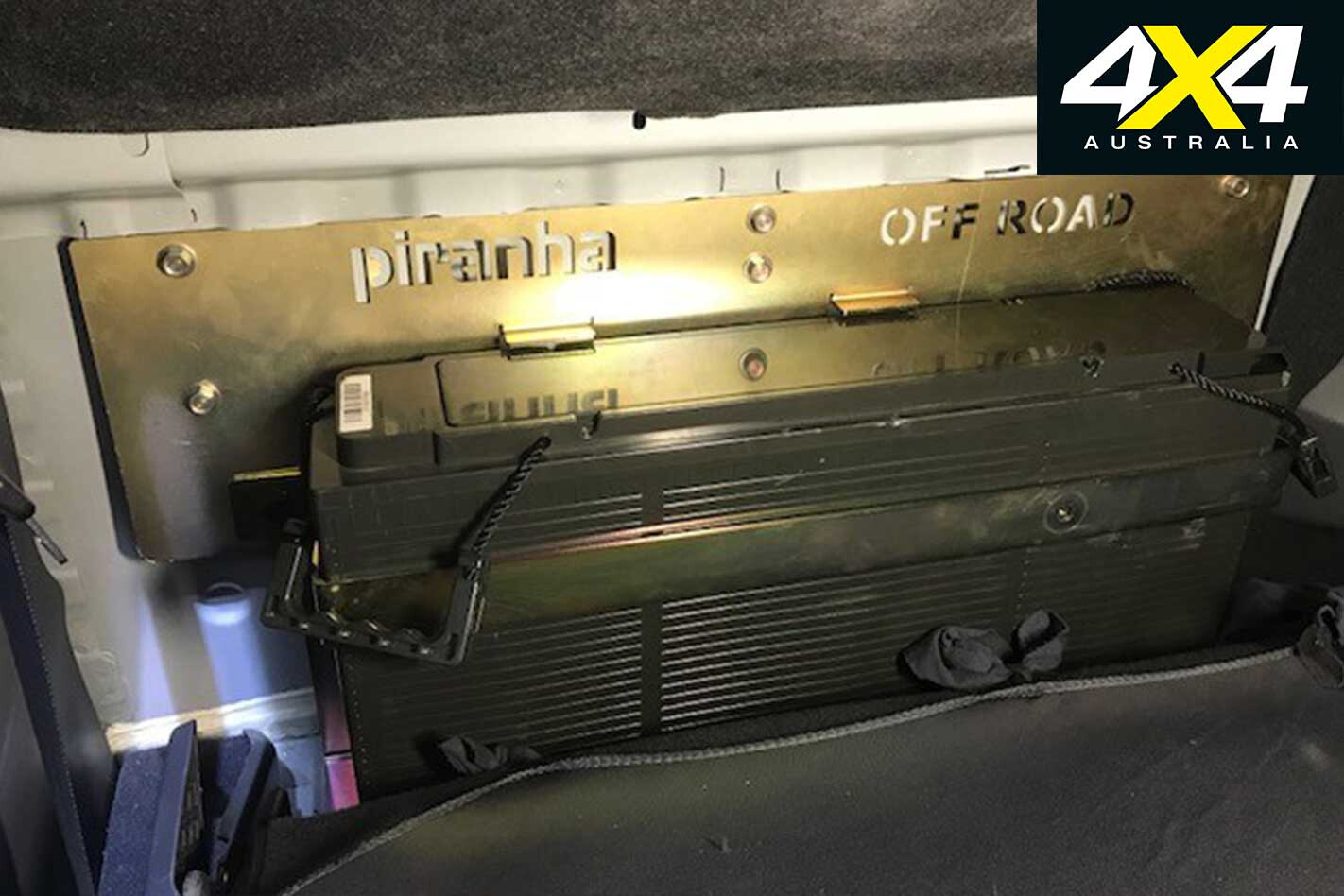
Piranha Off Road has shown once again why they’re highly regarded in the Aussie off-road scene, with the release of this clever in-cabin battery tray for the Ford Ranger. Piranha already produces two tray options for the popular Ford workhorse – an under-body version that fits a 75Ah Optima sealed battery, and a tub-mount version that can take a 105Ah sealed battery.
The company has now responded to Ranger owners who have either fitted a long-range fuel tank or a full drawer system (fitment of these meant the tub- or tray-mount trays would no longer fit) and who are looking for an alternative fitment location. The in-cabin design is totally secure and can hold a battery ranging in capacity from 100Ah to 190Ah, and it fits in the space behind the seats in the rear.
Fitment allows installation of BMS, fuse boxes and cables for a neat solution. The battery is a ‘Slimline’ variant and is available – fully approved and warranted for this fitment – from R&J Batteries, Australian Batteries Direct, Battery Power and Kickass.
Website: www.piranhaoffroad.com.au
AL-KO has jumped into the off-road pin-hitch market by attempting to roll all the market-leading features into one fast, easy, safe and affordable off-road hitch, and after a few spanner spins I was ready to test it out.
The four-holed bolt pattern is industry standard, making for an easy retrofit. There are a couple of different handbrake systems, of which I stuck with the old-style ratchet lever instead of the newer push-button style. Everything lined up, with little to do other than redo the four bolts and reattach the handbrake.
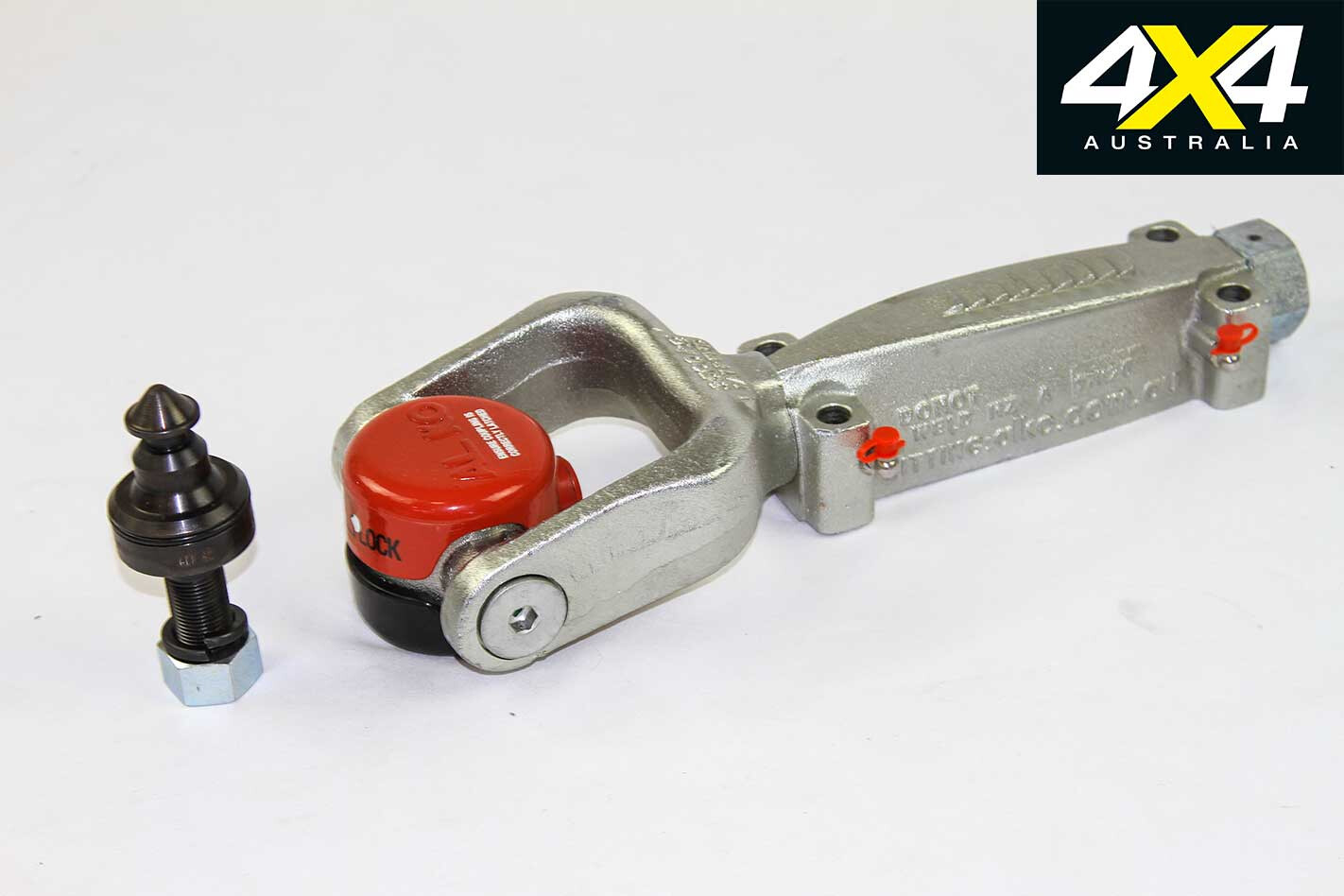
Apart from an initial few pumps of grease into the main shaft, the integrated maintenance-free dust seals ensure there is no ongoing maintenance.
While some other hitches need locking pins, latches and fiddly levers to aid in hitching and unhitching, AL-KO has removed all those nuances to deliver a hands-free hitching experience. Unhitching only requires the depression of the top cap and the positive latching indicator (after which you can remove your hands) to allow easy winding of the jockey wheel to unhitch from the pin.
Once lowered onto the pin, the integrated positive-latching indicator automatically pops out to show a green-coloured band amid the surrounding red. This ADR-compliant system double locks and prevents accidental dislodging of the hitch.
The definitive signalling of the hitch locking into position is a winner for me; anyone who manages to get that wrong and have their trailer part ways while on the road should be filling out an application for the Darwin Awards.
Provided the hitch is within cooee of the pin prior to lowering, it will pivot and self-centre. I pushed the boundaries of the system to see how far out I could be to start with. If you’re beyond the scope of working, the AL-KO Click Lock system will not engage the pin and the green band won’t pop out – it’s easy to recognise that the system hasn’t engaged properly.
Overall articulation? If you can test to the maximum angles of this hitch, you’ll end up with gravel rash on your roof. While I’m not that gung-ho, I am happy in the knowledge that, with this AL-KO Offroad Pin Hitch installed, I can tow my camper (almost) anywhere my 4×4 will go.
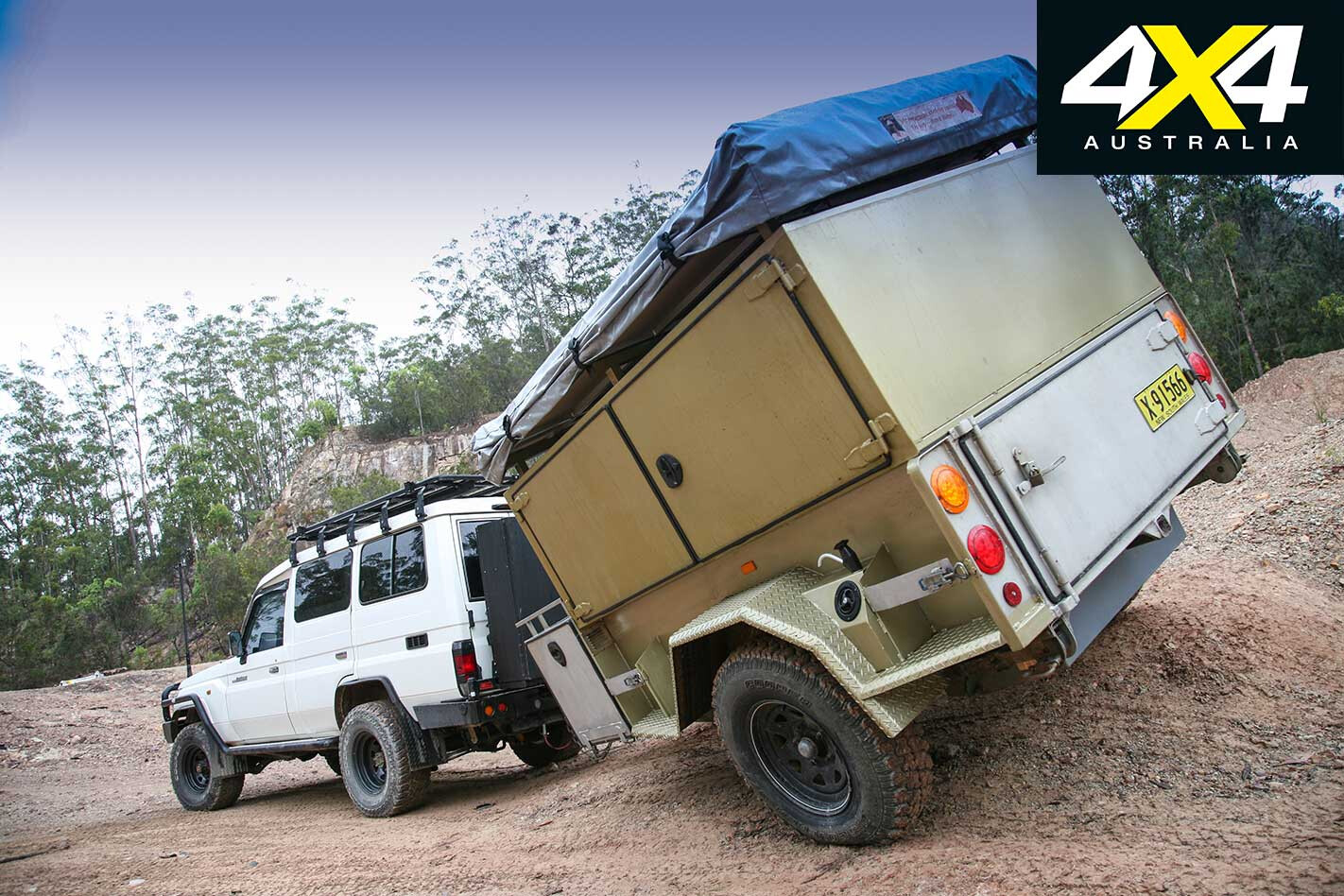
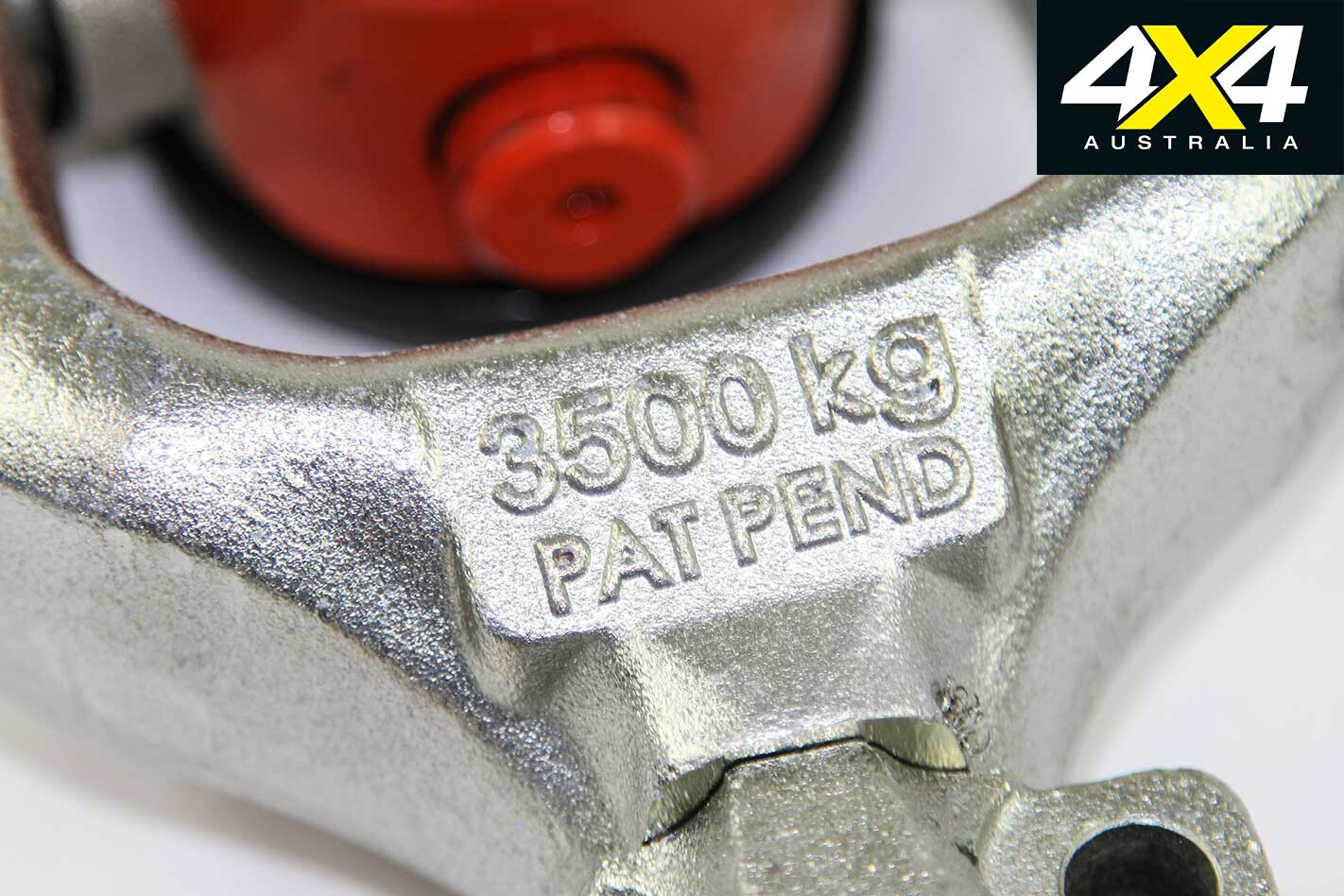
Given I have barn-door rear doors on my Troop Carrier, having a low 83mm height of the hitch allowed for non-denting door openings – another big tick. Not that I need such a high rating on my camper trailer, but the 3500kg ATM rating allows use on larger caravans, too.
Long-term reliability and its ability to keep dust and water from within the main hitch body (via the integrated seals) is something I’ll keep an eye on. To date, the seals have worked well.
Given my initial experiences, this AL-KO hitch is a pearler and is going to stay put on my drawbar.
RATED Available from: www.alko.com.au and all good trailer-part outlets RRP: $478 We Say: Great off-road hitch is both safe and easy to use
HERE are six reader-submitted 4x4s that were recently featured in the February 2019 issue of 4X4 Australia.
To get involved, post a pic and a description of your rig on our special site here or post it to our Facebook page.
FORD RANGER WILDTRAK: BRAD MILLER (4×4 Australia Readers’ Rigs Winner of the Month)
MODS include a GMF front bar, three-inch Bilstein lift, BushSkinz bash plates, ARB long-range tank, 33-inch BFG KO2s on 16-inch rims, Rhino-Rack platform roof rack, lift-up cage over tub with Yakima FrontLoader bike racks, EziReach pullout slide, Fabulous Fabrications snorkel, 120amp second battery running Bushman fridge, and tinted windows.
I’ve taken on a few little drives in Queensland, Brindabella Ranges, south coast and Mt Buller.
2009 LAND ROVER DISCOVERY 3: LEE MERRILEES
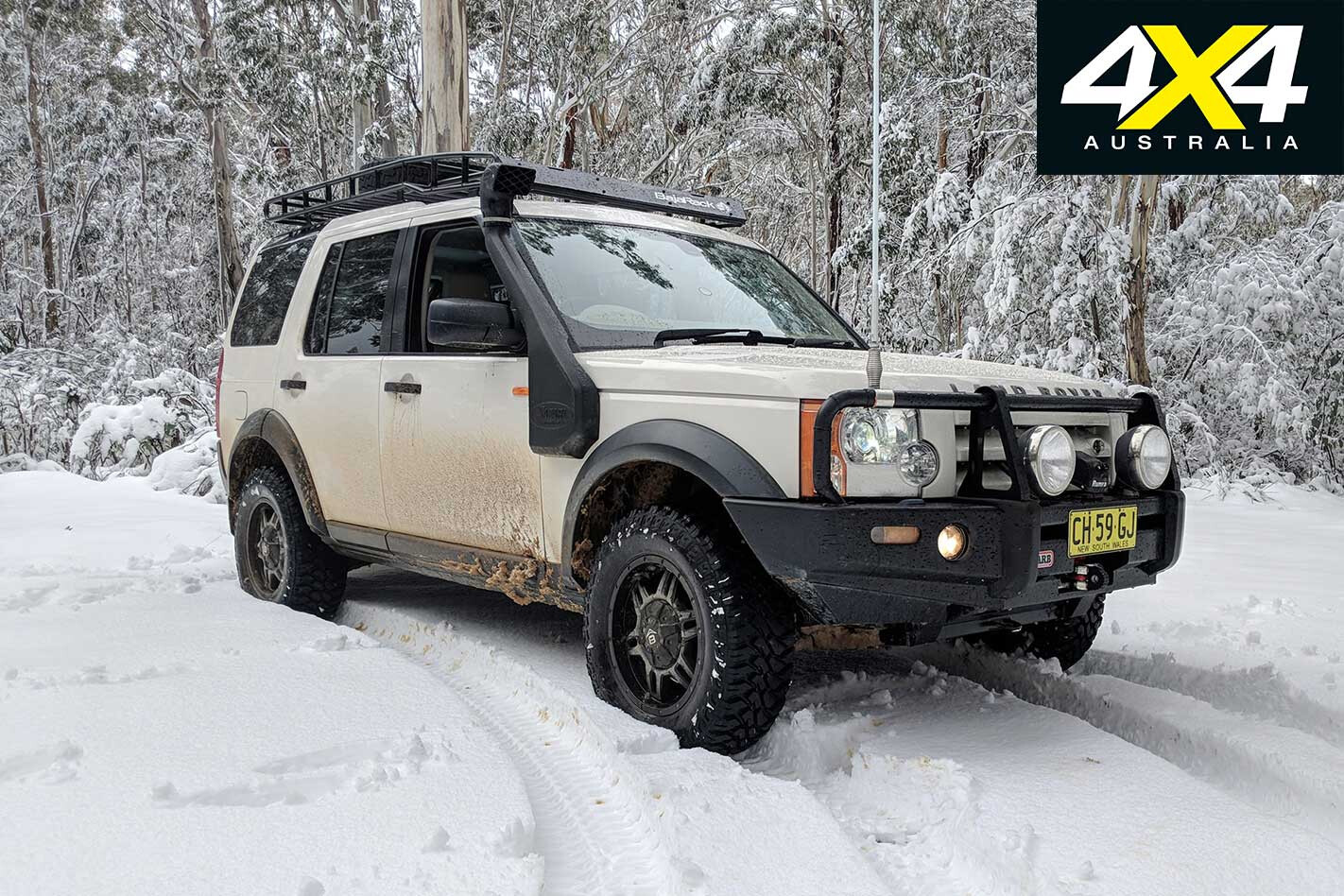
GEAR includes air suspension with Llams height controller, a Bajarack expedition rack and ladder, long-range fuel tank, ARB bar, and a Runva 11xp Premium winch.
I live in the Vic High Country and spend most trips fairly close by. I love chasing the old cattlemen’s huts.
2007 MITSUBISHI TRITON GLX: JEREME LINDSELL
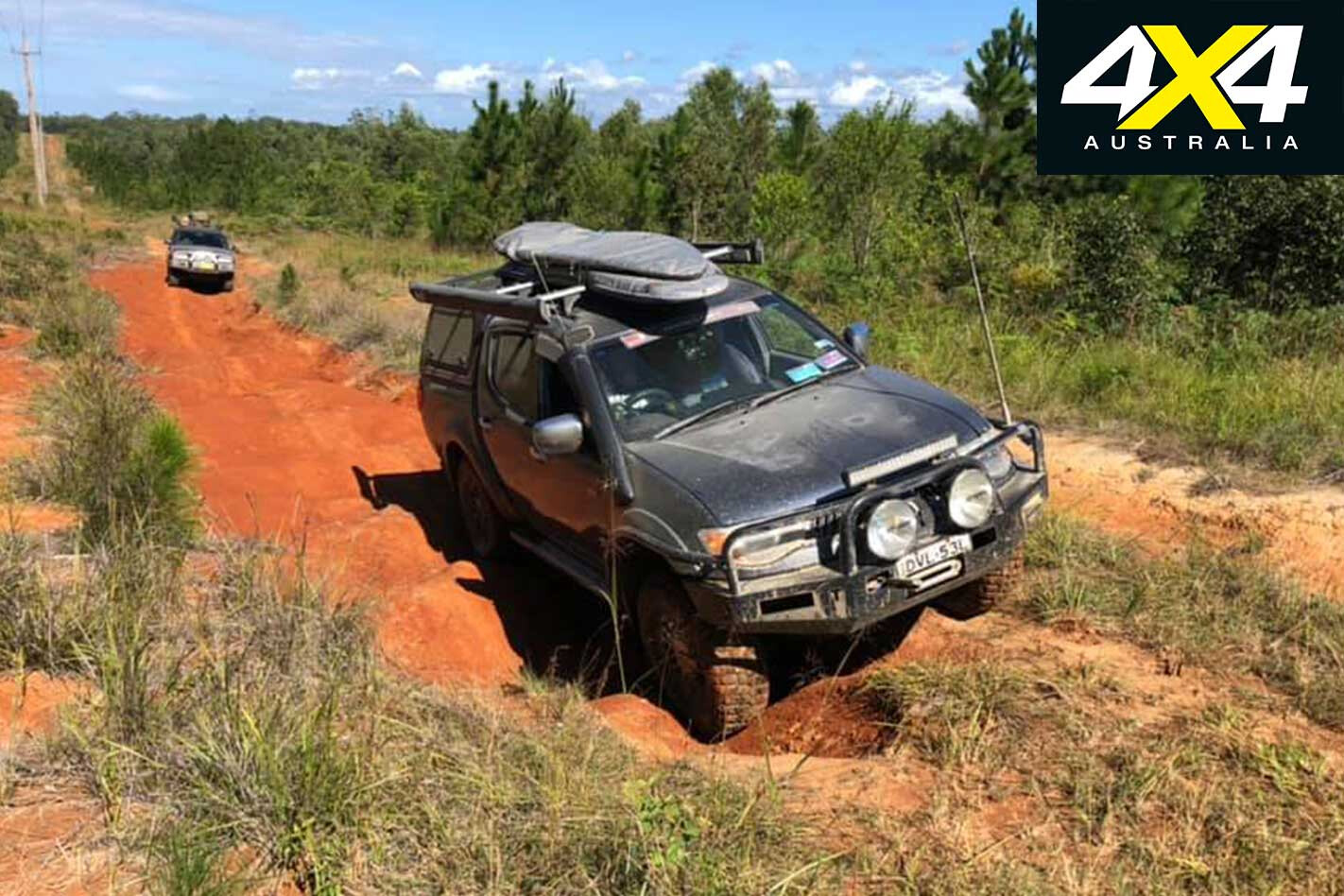
Bought it new in 2007 and it has just clocked over 320,000km on the 3.2DiD. It’s got a two-inch Ultimate Suspension lift, H3 hummer rims with 285/75R16 BFG muddies, factory rear locker, Scott’s Rodz three-inch exhaust, it’s chipped, and it has homemade drawers.
Best trip was from Coffs to Birdsville … the long way.
2012 NISSAN NAVARA D22: LUCY EATON
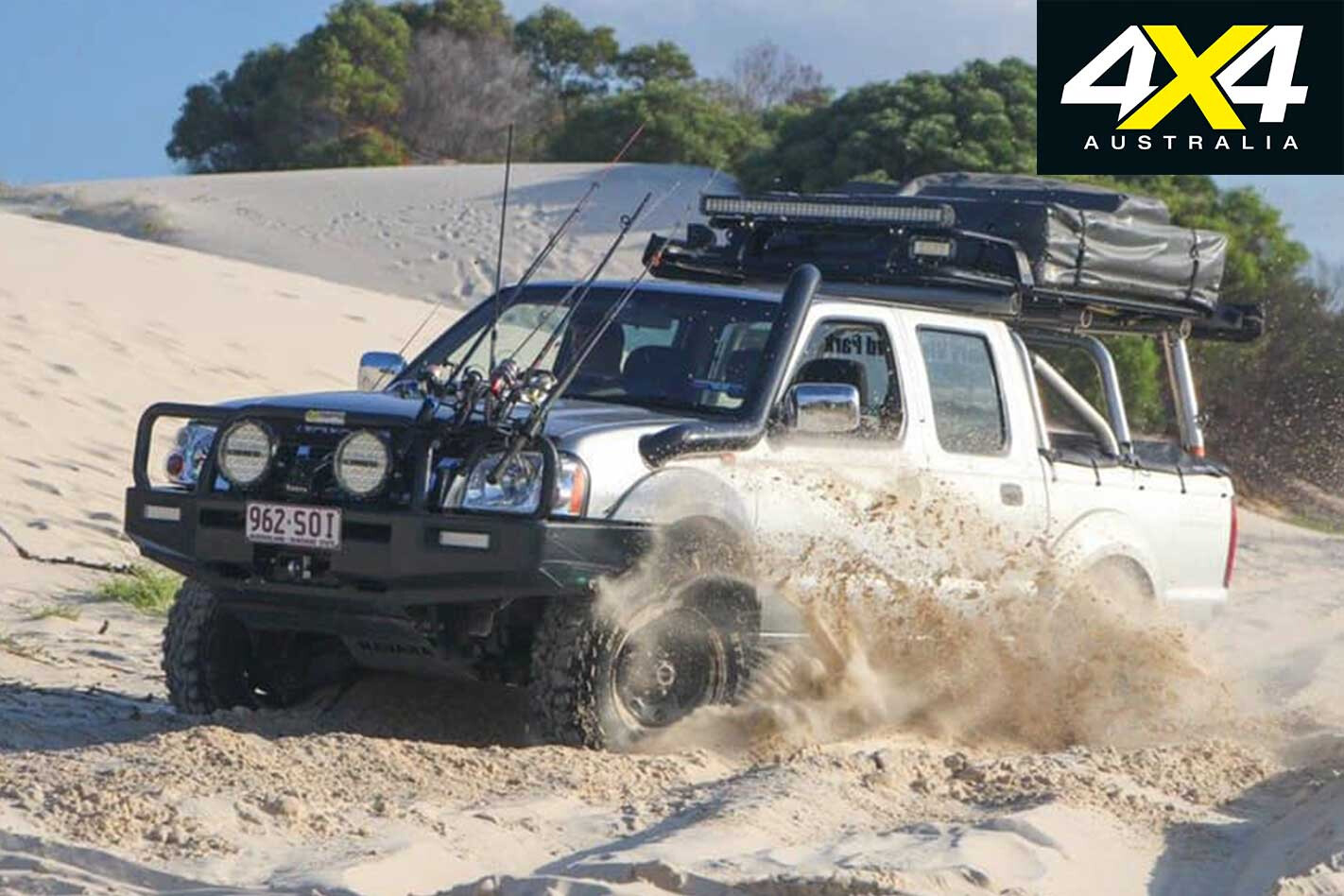
IT’S HAD a three-inch lift and gear includes 32-inch Cooper STT Pros, an In-house Fabrication snorkel and airbox, inbuilt air compressor, and sliders.
The best trip: Moreton Island. The longest trip: Carnarvon Gorge. The next trips: Fraser Island in April and Cape York in August.
TOYOTA HILUX: BILL YOUNG
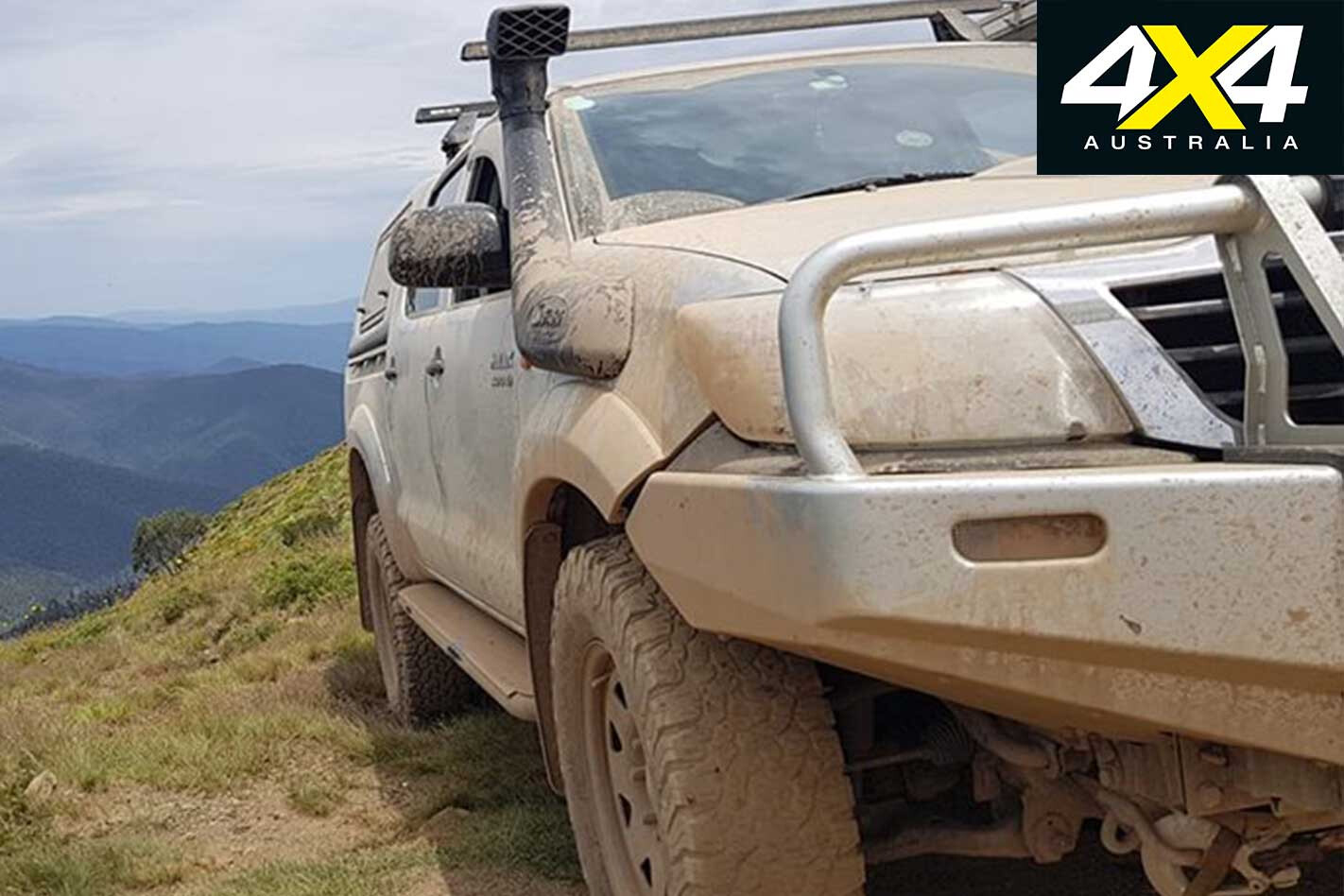
FAIR few mods that include an EFS two-inch lift, 32-inch KO2s, Safari snorkel, ARB front bar, Rock Armor rear bar and rock sliders, Outback roof console, ARB canopy, custom rear drawer system, and dual batteries with a Redarc system. Plus heaps more!
It’s the family car as the wife drives it more than me. Best trips are to the Vic High Country and Western Australia.
1987 TOYOTA LAND CRUISER TROOPCARRIER: JULIE MADDEN
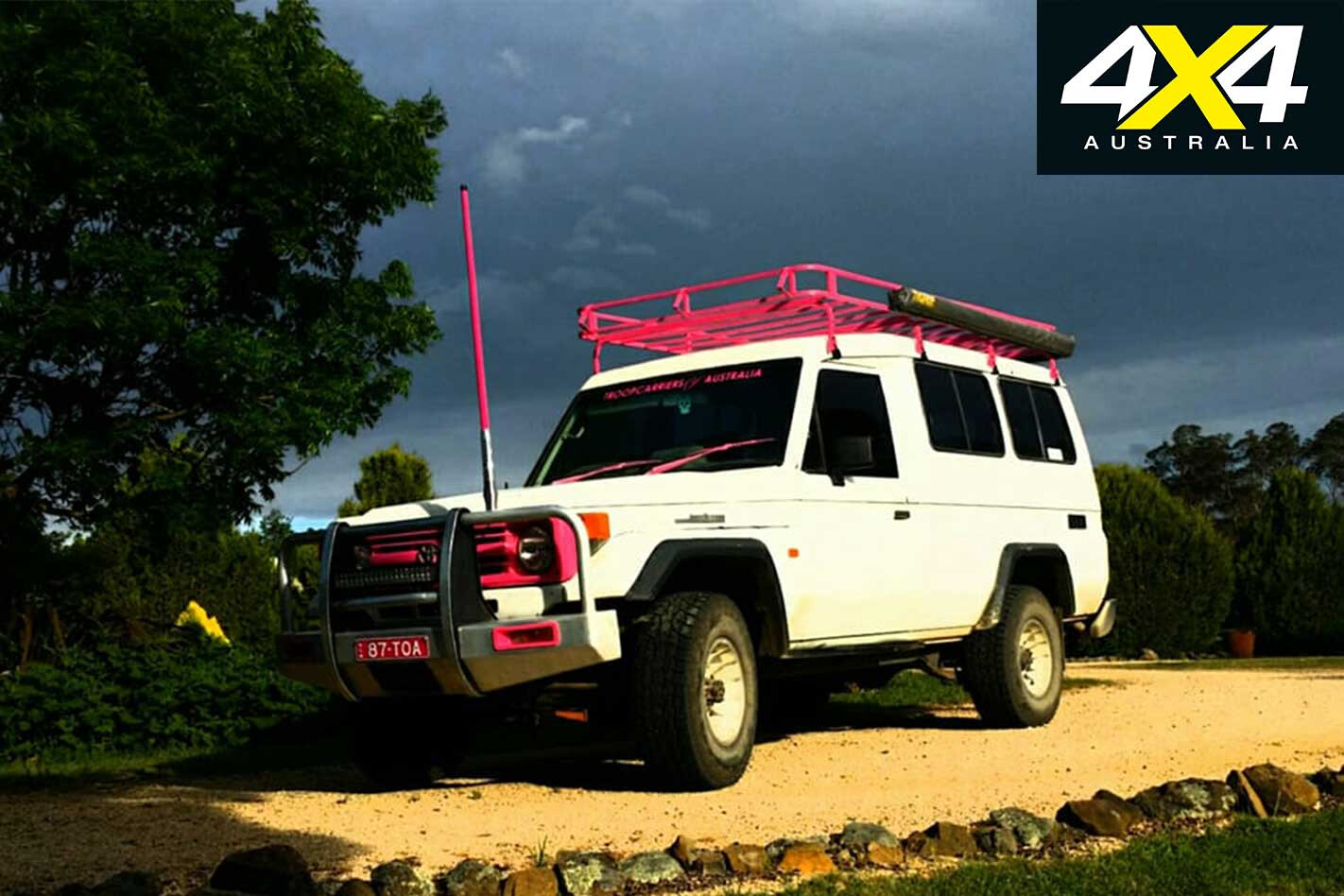
IT’S pretty well stock and I just did my first solo trip from Northern NSW to Lake Bonney in SA to surprise some friends for New Year’s, so that’s probably my favourite spot at the moment. She is my daily driver, but I can just pack it up and go wherever I would like to.
IT HASN’T been a full year since Mercedes-Benz Vans introduced its entry into the Australian one-tonne 4×4 ute market. Arriving as the X250d, in double cab ute configuration and with a choice of three specification levels, the X-Class hardly set the market on fire.
The premium price of the X-Class is part of the reason for this, but many buyers also see the Benz ute as a rebadged Nissan D23 Navara. While it is more than that, the X250d’s four-cylinder diesel powertrain is shared with the Nissan, so, in many ways, it is only the added comfort, convenience and safety features that truly set it apart from the donor platform.
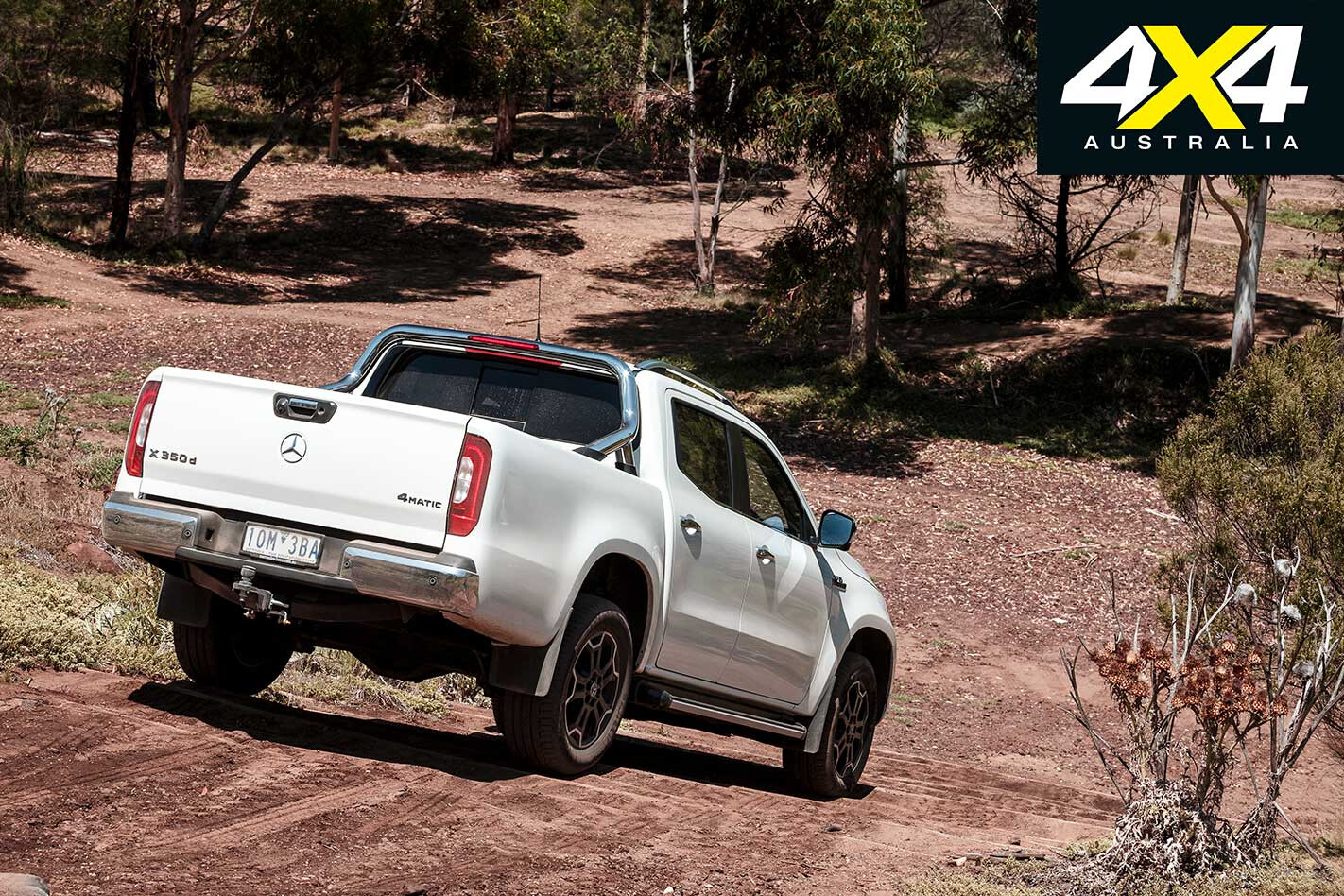
The model many buyers were waiting for was the V6 diesel-powered X350d, and that wait is over. The 350’s V6 engine, seven-speed automatic transmission and full-time 4×4 system are all Mercedes-Benz hardware and take the X-Class to the top tier of one-tonne ute performance and price.
With 190kW and 550Nm the X350d equals the only other V6 ute on the market, the Volkswagen Amarok, for torque, and it betters the Vee-dub for power. However, VW retaliated, releasing a higher specification Amarok with 200kW and 580Nm; but the numbers aren’t enough to tell the full story.
While both the German utes follow the formula set by Japanese manufacturers with a ladder chassis riding on IFS and a live rear axle, the V6 Amarok differs in that it is offered only with a single-range transfer case (for now) while the Benz strays from the recipe with a coil-spring suspended rear axle. That comes as a result of platform-sharing with the Navara, which also has coils under the back.
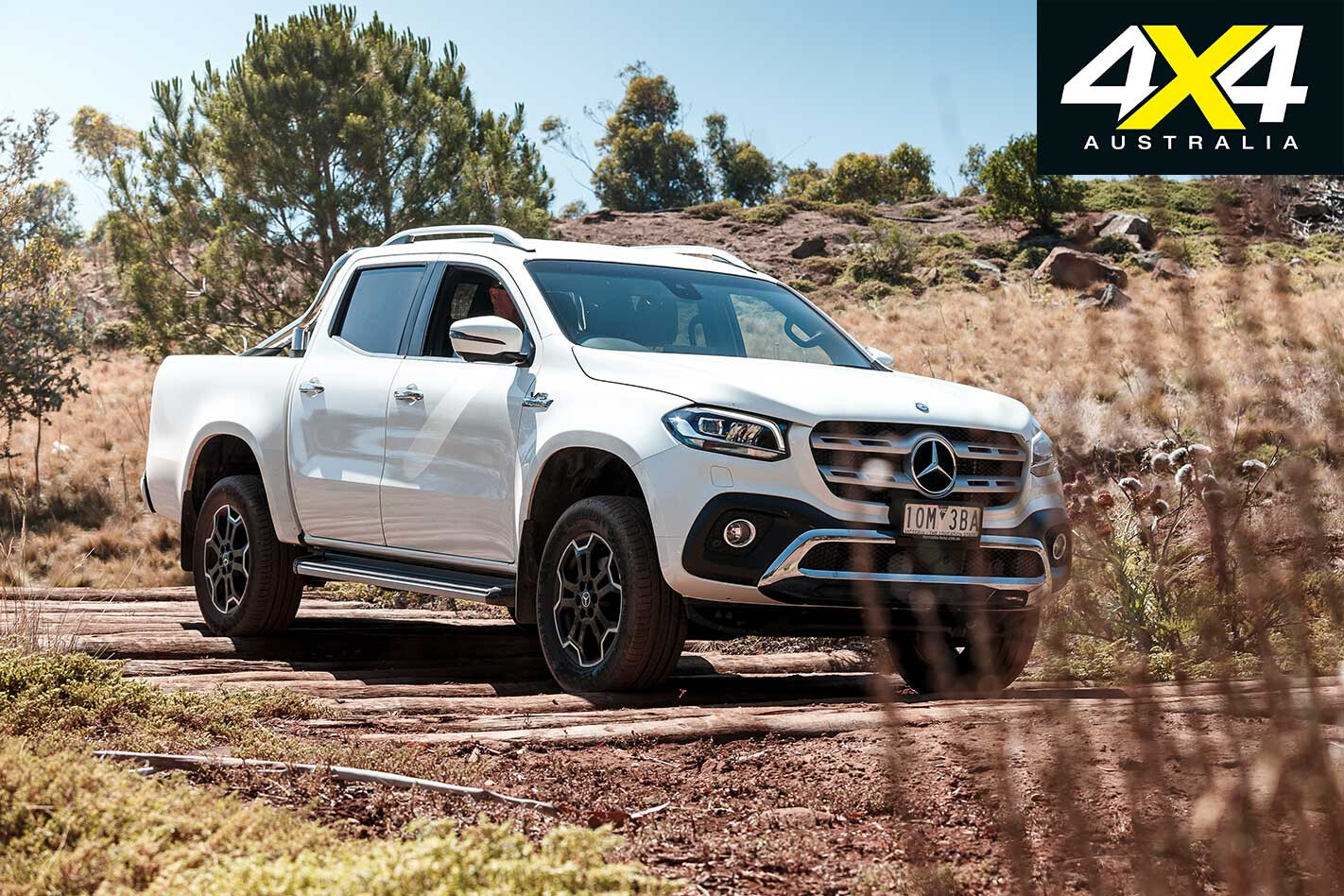
The V6 is only offered in the top two X-Class specifications, Progressive and Power, and it’s the top-spec X350d Power we’re driving here. The specs and equipment closely mirror those of the X250d, with a few extras exclusive to the V6.
Eighteen-inch alloy wheels, dual-zone climate control and keyless start button are standard on the X350d Progressive, where they are optional on the X250d Progressive; while the X350d Power rides on 19-inch wheels. Active lane-keeping assist is also standard on the X350d, adding to an already class-leading safety suite. This feature is unavailable on the X250d.
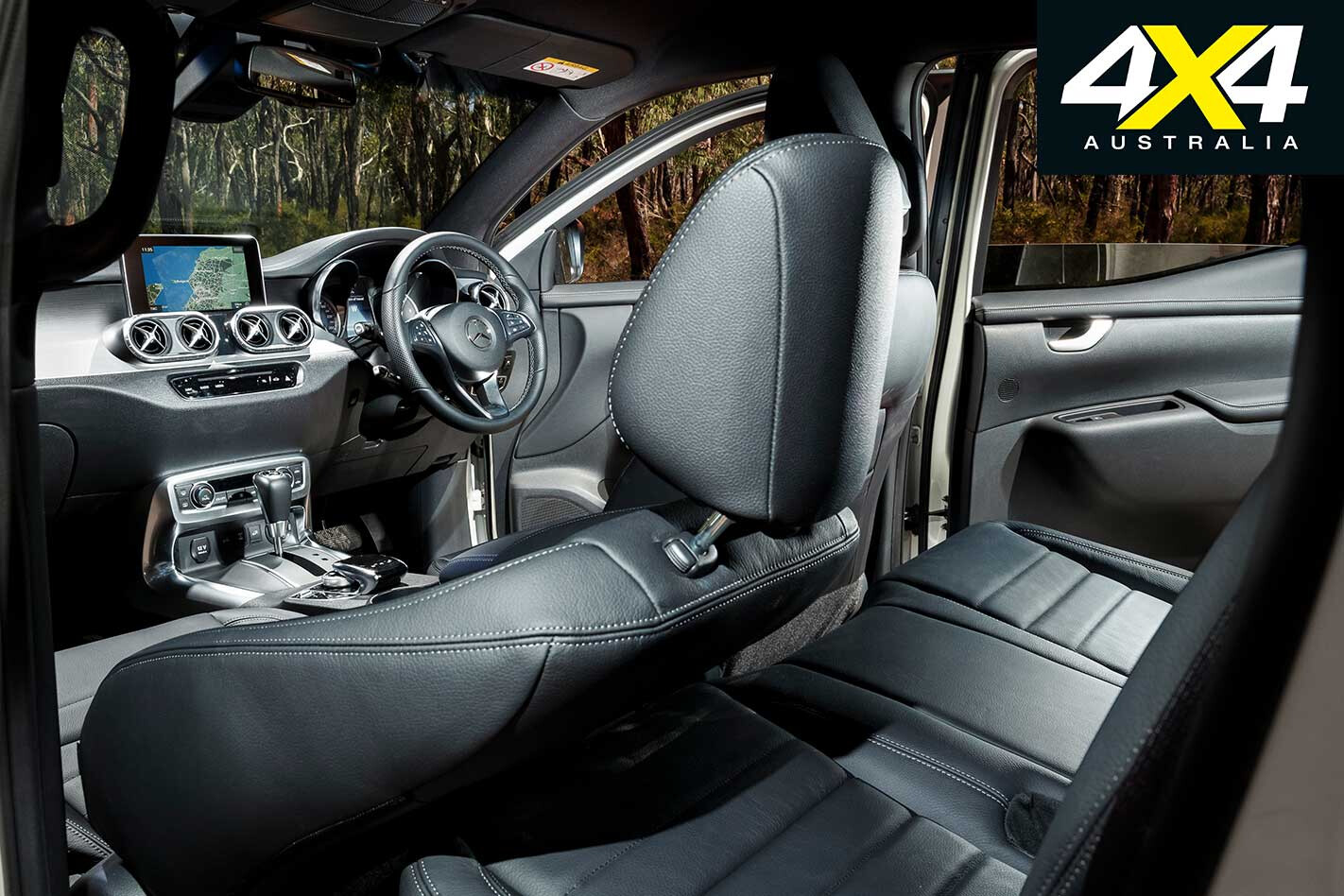
Driving the X350d is a familiar experience to anyone who has spent time in the X-Class. The interior features many Mercedes-Benz signatures such as the round dash vents, Artico faux leather trim (real leather is an option), the A/V sat-nav screen that stands proudly above the leather-covered dash, the busy controller dial and touch pad in the console, and a M-B multifunction steering wheel.
Some Nissan interior compromises remain, such as no reach adjustment for the steering wheel, the controls for adjusting the power front seats are mounted on the side of the seat instead of the usual Benz positioning on the door panel, and there’s a distinct lack of cabin storage for things like mobile phone, keys or more than one coffee cup. This alone is probably the most annoying feature of living with an X-Class.
The V6 engine idles smoother and quieter than the four-cylinder, and there’s no comparison in power once you mash the throttle. We say mash, as that’s what you need to do, as easing it on provides little reward; even when you floor it there’s a distinct lag before any action.
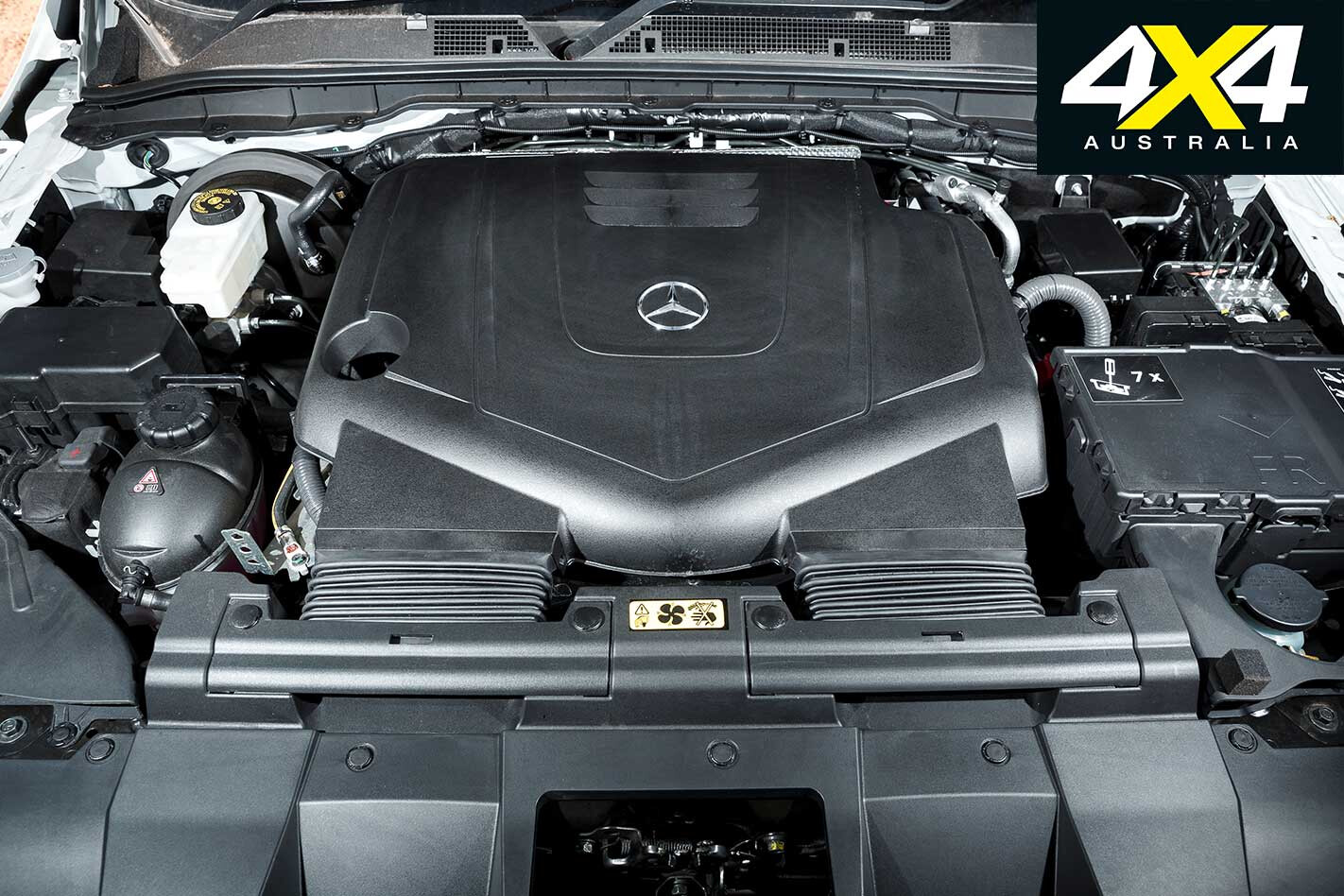
This feels more like throttle lag than engine or turbo lag and could perhaps be a characteristic that can be tuned out of the car. We did try using some of the other driving modes unique to the X350d (such as Sport), but they tended to affect the transmission more than the throttle response, holding the gears longer.
However, when that 190kW and 550Nm does come on it is strong and propels the ute hard, giving the Benz a strong advantage over all of its four- and five-cylinder competitors. That initial lag is soon forgotten as the Benz powers through to redline; it likes to rev, and if you’re driving it hard this is where the action is at.
The Benz seven-speed auto shifts sweetly when it’s left to its own devices or when using the column-mounted paddles, which are another V6 exclusive in the X-Class range. The X350d is full-time 4×4, so it’s nice not having to engage four-wheel drive when leaving sealed roads for gravel.
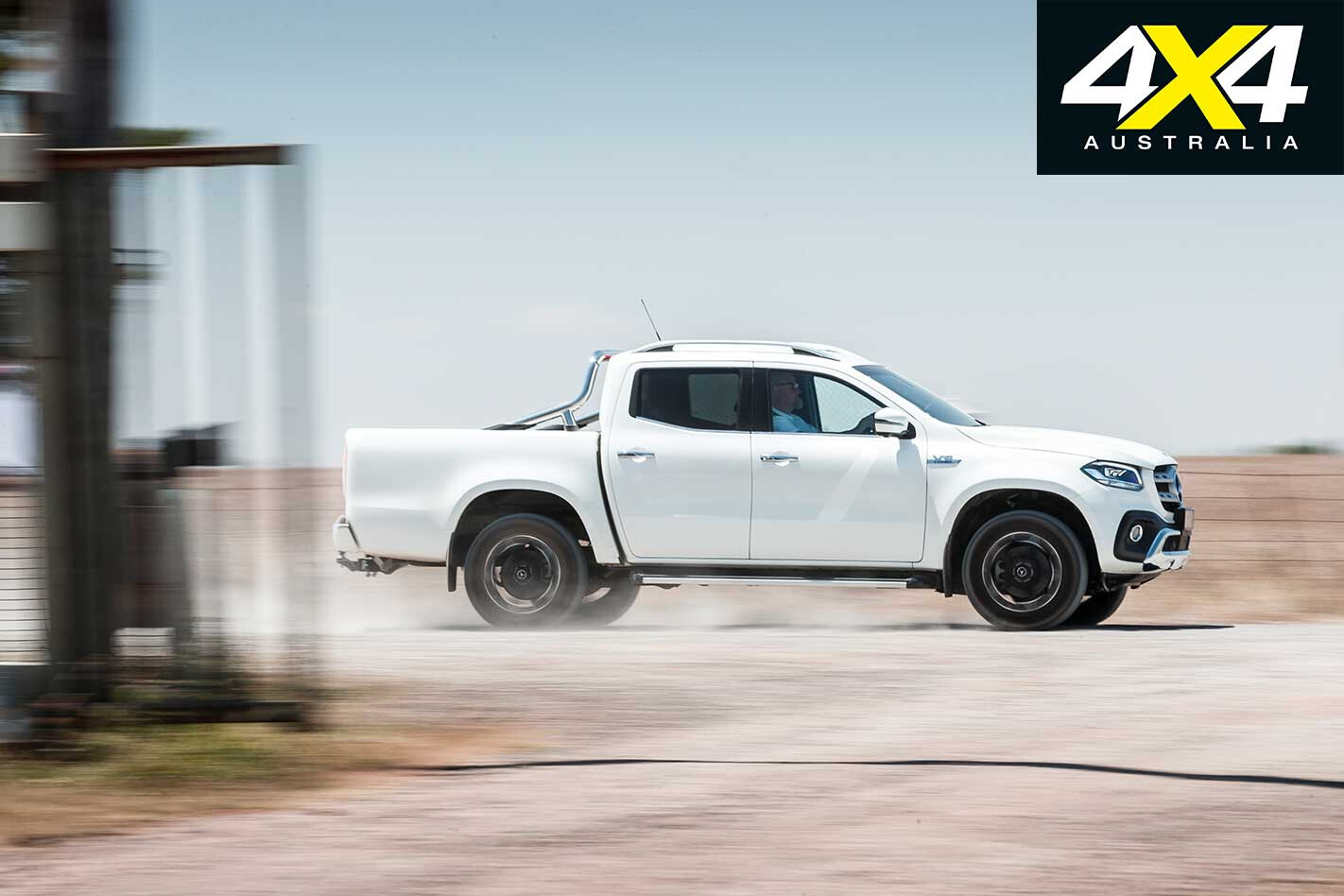
For tight, low-speed manoeuvres, that low throttle position lag is again annoying. Throttle control could also be better when crawling in low range or when doing three-point turns on a tight track. That said the X350d walked up our regular rutted hill climb with its factory rear diff-lock engaged, without a hint of trouble or struggle.
The V6 adds needed performance and refinement to the X-Class, but it also adds price. The fact Volkswagen offers the V6 engine in lower specifications of the Amarok at lower prices might be enough to steer buyers that way, but for a one-tonne 4×4 ute with the lot, the X350d can’t be bettered.
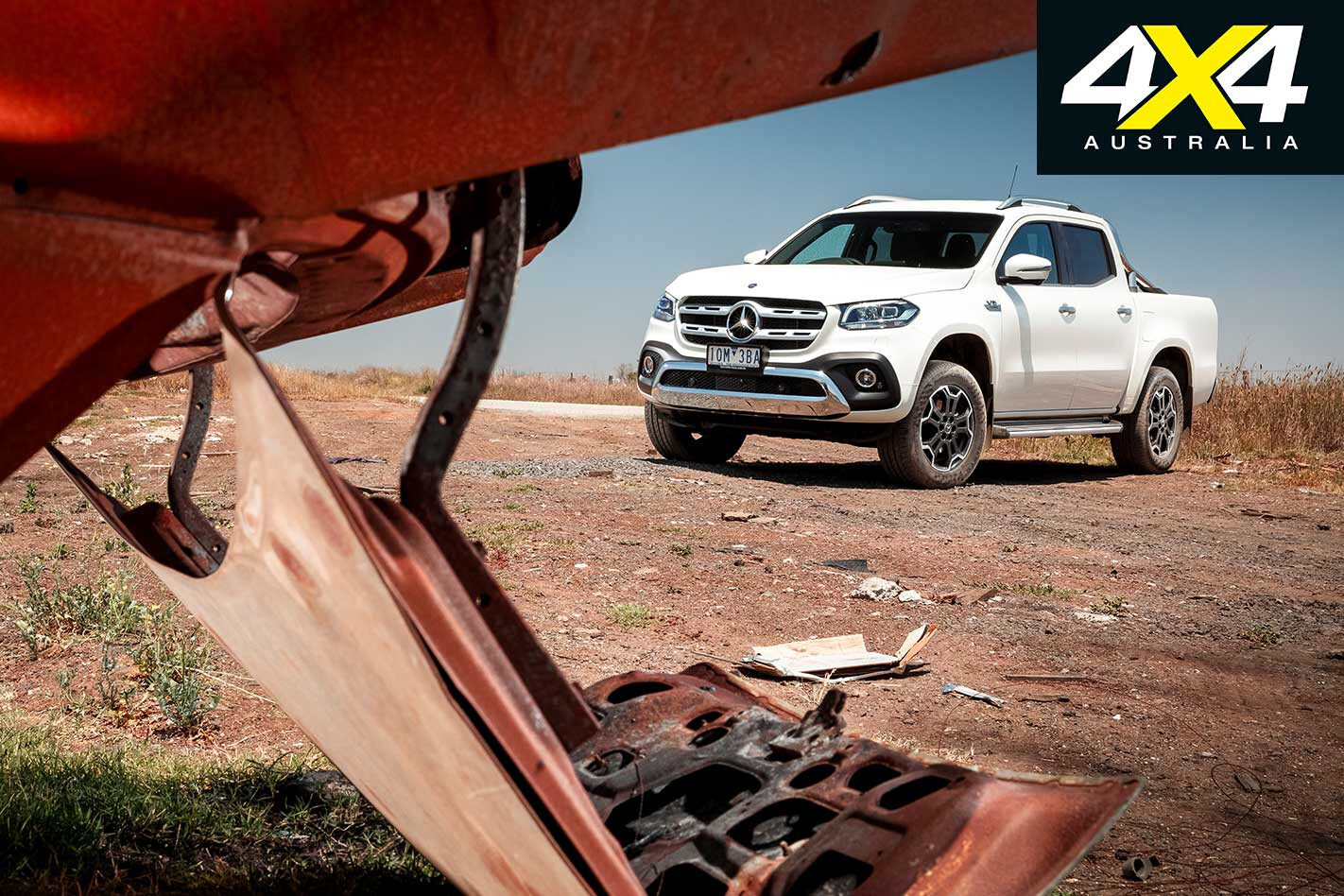
2019 MERCEDES-BENZ X305d POWER SPECS: Engine: 3.0-litre V6 turbo-diesel Max power: 190kW at 3400rpm Max torque: 550Nm at 1400-3200rpm Transmission: 7-speed auto Crawl ratio: 42.61:1 4×4 system: Dual-range full-time 4WD Chassis construction: Separate chassis Front suspension: Independent double wishbones/coil springs Rear suspension: Live axle/coil springs Kerb weight: 2190kg GVM: 3250kg Payload: 1010kg Towing capacity: 3500kg GCM: 6180kg L/W/h: 5340/1920/1839mm Wheelbase: 3150mm Fuel tank capacity: 80 litres ADR fuel consumption: 8.8L/100km Price: $79,415
4X4 AUSTRALIA colleague Justin Walker and I recently lunched with Land Rover’s James Scrimshaw at Jaguar Land Rover Australia’s brand-spanking new head office in Mascot, Sydney. From the outside the building looks like a typical modern multi-storied office block, but it’s what goes on inside that’s of interest.
Land Rover’s building is not just an office; it’s an electric-vehicle charging station. All up it has 14 electric-vehicle chargers located in the basement car park and in the tech training facility in the same building.
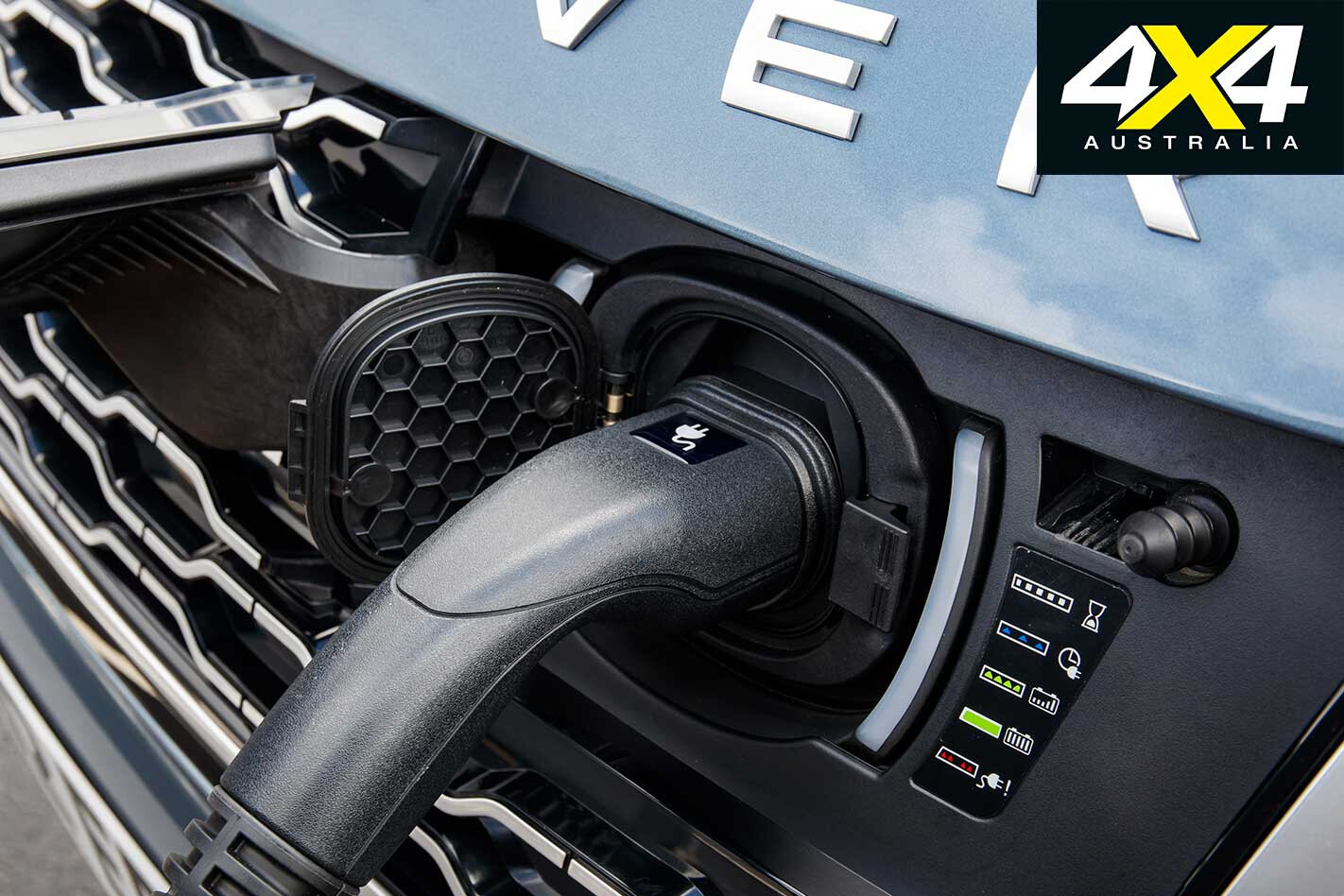
In the car park are nine chargers that range from 7kW to 25kW alternating current (AC) units to a fast 50kW direct-current charger. There’s a further five 7kW and 25kW AC chargers in the training area. Upon its recent completion this was the largest such electric-vehicle charging installation in a commercial building in Australia, and more chargers can be readily added if needs be.
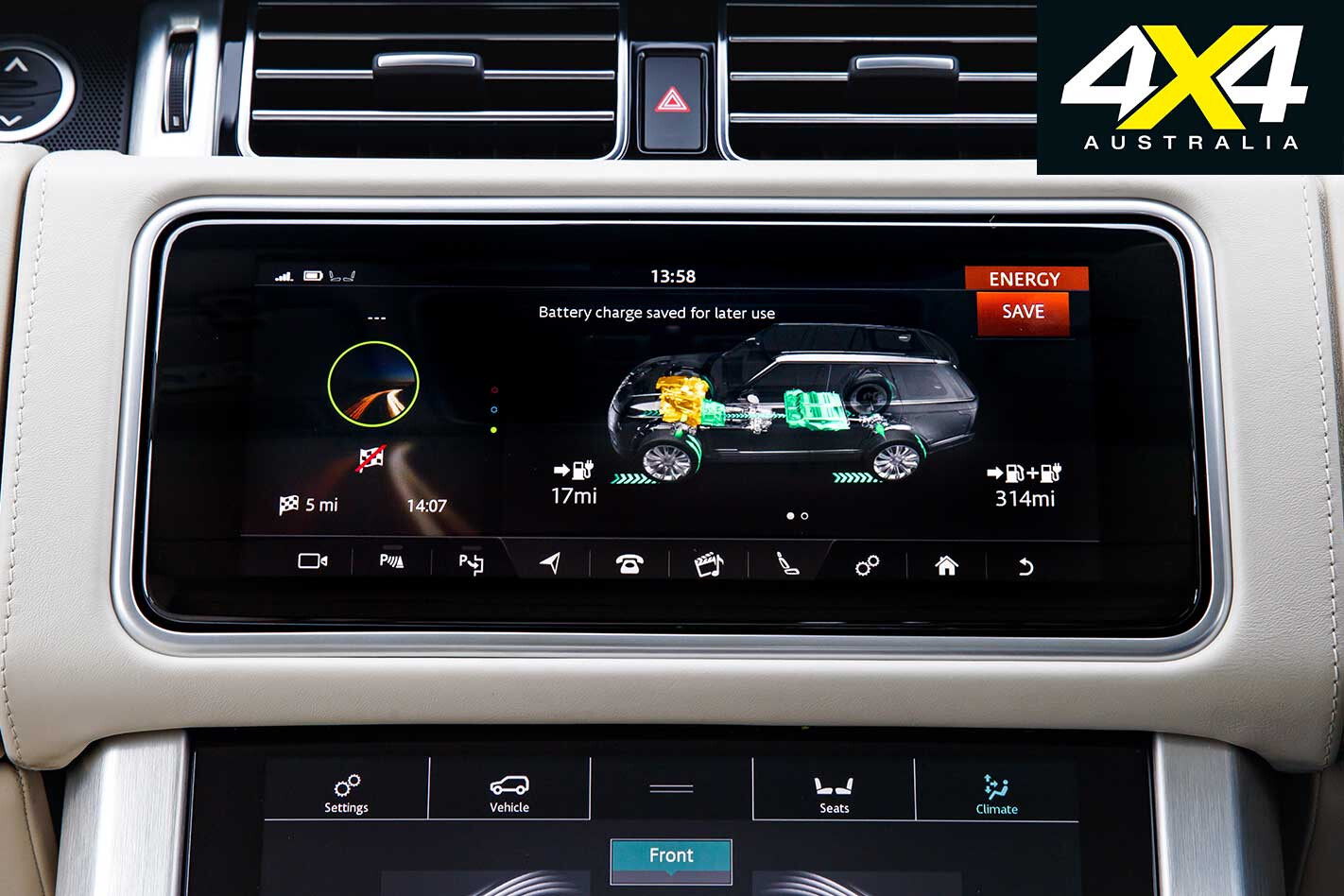
Land Rover doesn’t have full-electric vehicles in its line-up at this stage, but Jaguar does, and Land Rover has an expanding range of Plug-in Hybrid Electric Vehicles (PHEVs). PHEVs of all makes are bound to become more common in the short term, even if the uptake of full-electric vehicles is more long-term.
PHEVs offer a ‘bet each way’ as they can operate as full electric vehicles for urban commuting – with all of the associated benefits – yet still have the go-anywhere functionality of an internal combustion engine.
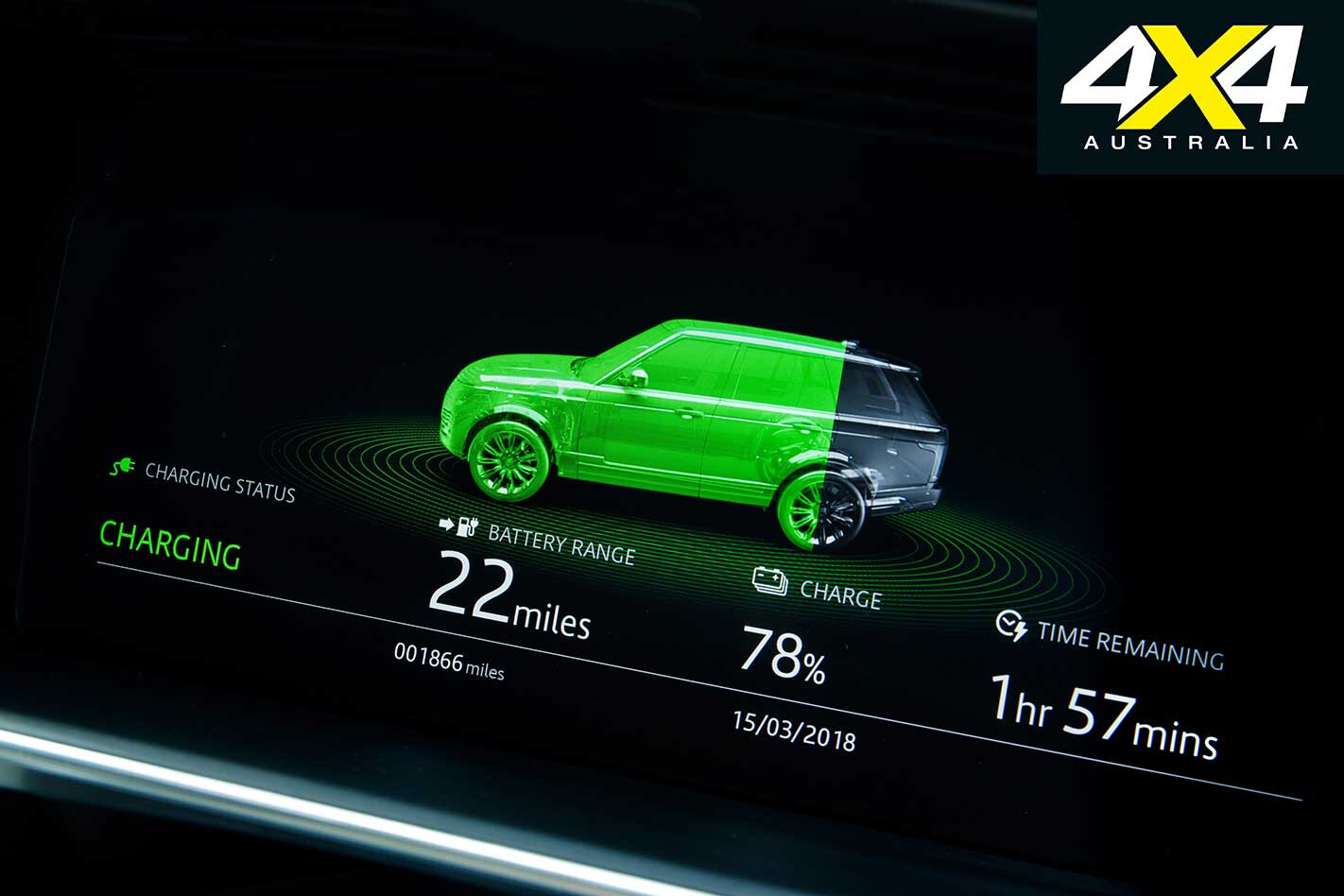
Land Rover’s new building is significant as it highlights the ‘future thinking’ that’s needed to expedite the transition to electric vehicles, namely the infrastructure to address the problem that battery-powered electric vehicles can’t be recharged nearly as quickly as you can refill a petrol or diesel car.
The fact service-station pumps can deliver a litre or more of petrol or diesel a second means that refilling a typical ‘fossil-fuel’ car can be accomplished in a minute or so. In contrast, even the fastest so-called ‘superchargers’ take around an hour to fully recharge an electric car, and other more common chargers are much slower again.
That’s not a problem, though, if you rethink the whole process of just how and when you recharge your car. With fossil-fuel cars we refill on the run, as it’s so quick. With electric vehicles the logical thing to do is recharge when the car is sitting still, as it does in an office-building carpark during the day (as per Land Rover’s facility) or at home overnight. Likewise car parks at shopping centres, train stations, beaches, and recreational and sporting centres.
If Australian governments at all levels (local, state and federal) were genuinely interested in facilitating the adoption of electric vehicles, as they claim to be, legislation should be put in place where any new car park, be that in an office building, home unit, shopping centre or wherever, should have a certain number of electric-vehicle charging stations or, at the very least, be pre-wired for the same.
Legislation to standardise charging couplings wouldn’t hurt either, as would legislation to stop brand-specific charging stations as per the current ridiculous Tesla arrangement.
On-the-run roadside charging stations will still be part of the mix, but unless there is some tectonic shift in battery technology, charging will be best done in a car park like that at Land Rover’s new HQ. In the meantime, I’ll keep driving my petrol V8.
WE MIGHT all be buying and driving diesel 4x4s these days, but the diesel’s days are seemingly numbered. Not in the next few years – not even in five years – but in ten years it might be too hard to buy a new diesel-powered vehicle.
At many levels there are forces at work to hasten the diesel’s demise; especially in Europe, once the champion of the diesel engine and the reason why diesels are so popular today.
Upcoming emission standards in North America and Europe look impossibly tough for diesels, while many major European cities and local governments plan to restrict the entry of diesel vehicles. Volkswagen’s ‘Dieselgate’ hasn’t helped the diesel’s image, while diesels also seem to be copping the blame for ‘climate change’, which is unfair given diesels do better than petrol engines in terms of greenhouse gas production.
While this might seem like bad news for anyone not quite ready for electric cars, the good news is that the future of the petrol engine looks far brighter, especially in light of recent advances in petrol-engine technology.
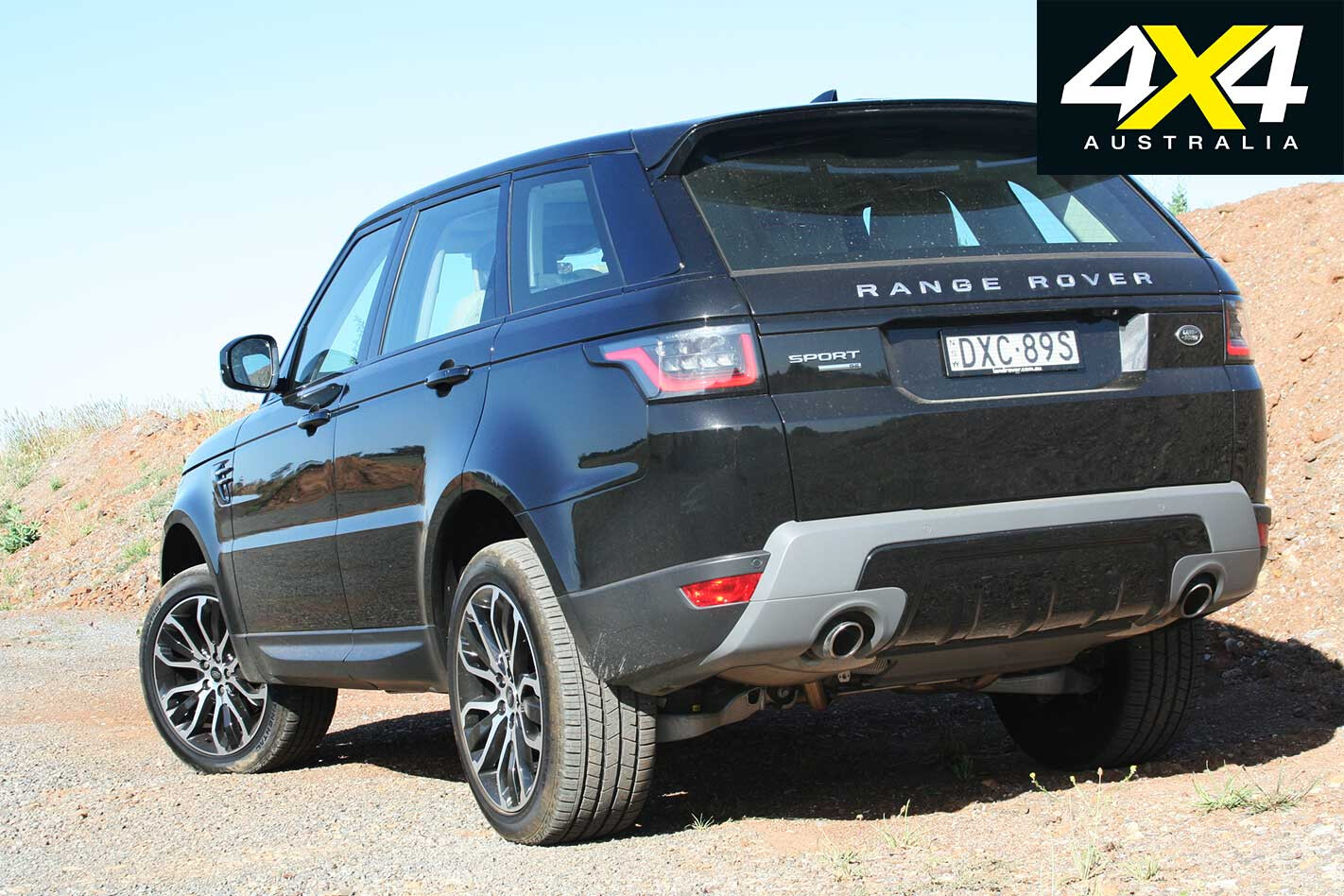
Evidence of this is the Range Rover Sport, complete with its Ingenium 2.0-litre four-cylinder petrol engine. Yes, you read it right: it has a four-cylinder petrol engine with just two litres of capacity, the sort of engine capacity and cylinder count more commonly associated with a small to medium passenger car and not a substantially sized 4×4.
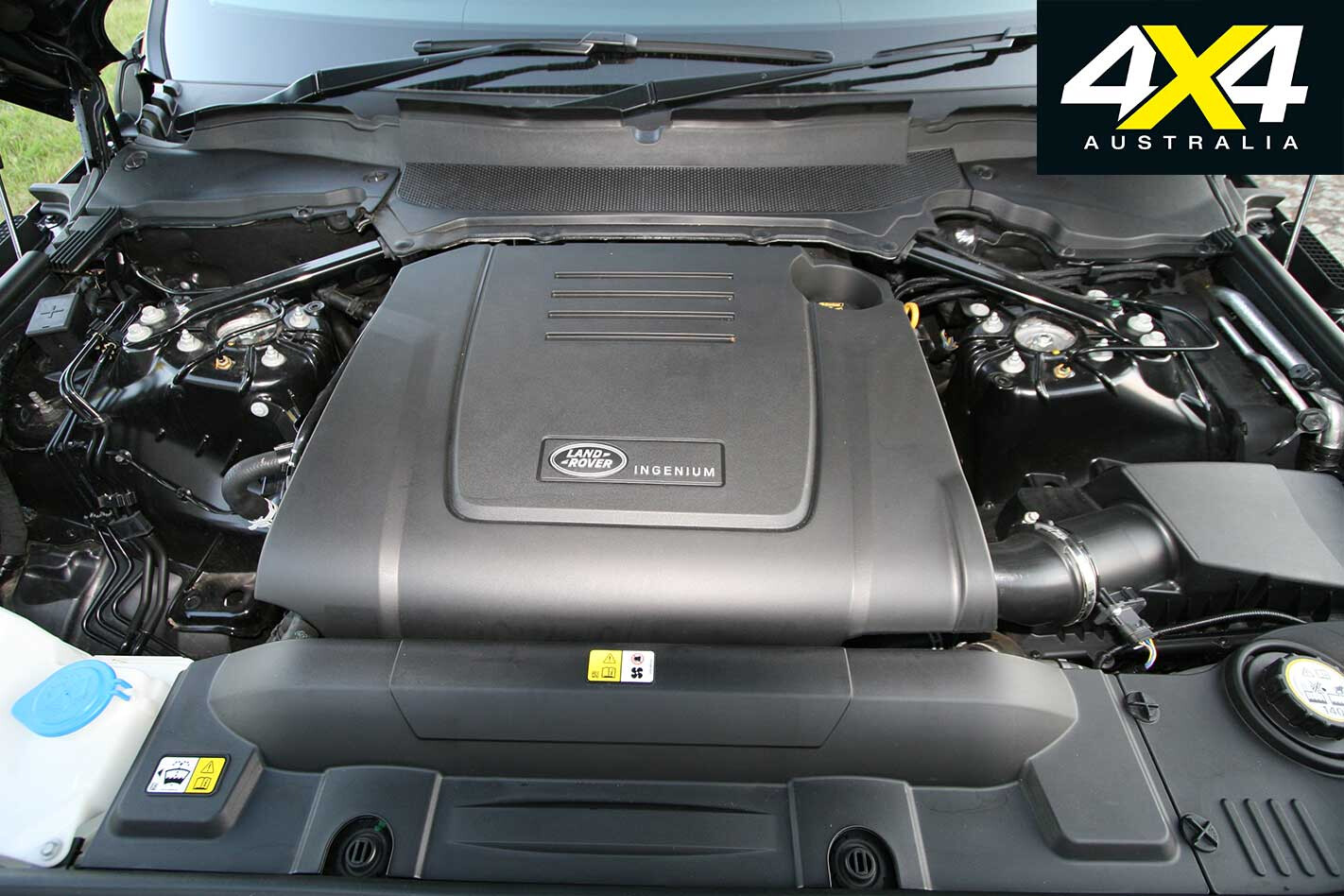
The difference here is that this engine produces the on-paper numbers (221kW and 400Nm) and the real-world performance you might expect from a petrol-powered V8 of twice the size, all thanks to a raft of high-tech features.
Not surprisingly it’s turbocharged and uses a low inertia (ball-bearing) twin-scroll turbo, but it also has direct fuel injection, variable valve timing on both cams, and variable valve lift on the inlet cam via electro-hydraulic control. The variable valve lift on the intake side effectively works as the engine’s throttle and does away with the need for a throttle plate in the air intake.
Despite the Range Rover Sport being a relatively big 4×4 that weighs around 2100kg, this ‘little’ petrol engine has sufficient low-rpm torque to carry freeway speeds with just 1700rpm on the tacho, just like a grunty diesel. Yet it’s also revvy and willing to spin out to high engine speeds, just as you’d expect of a turbo petrol four.
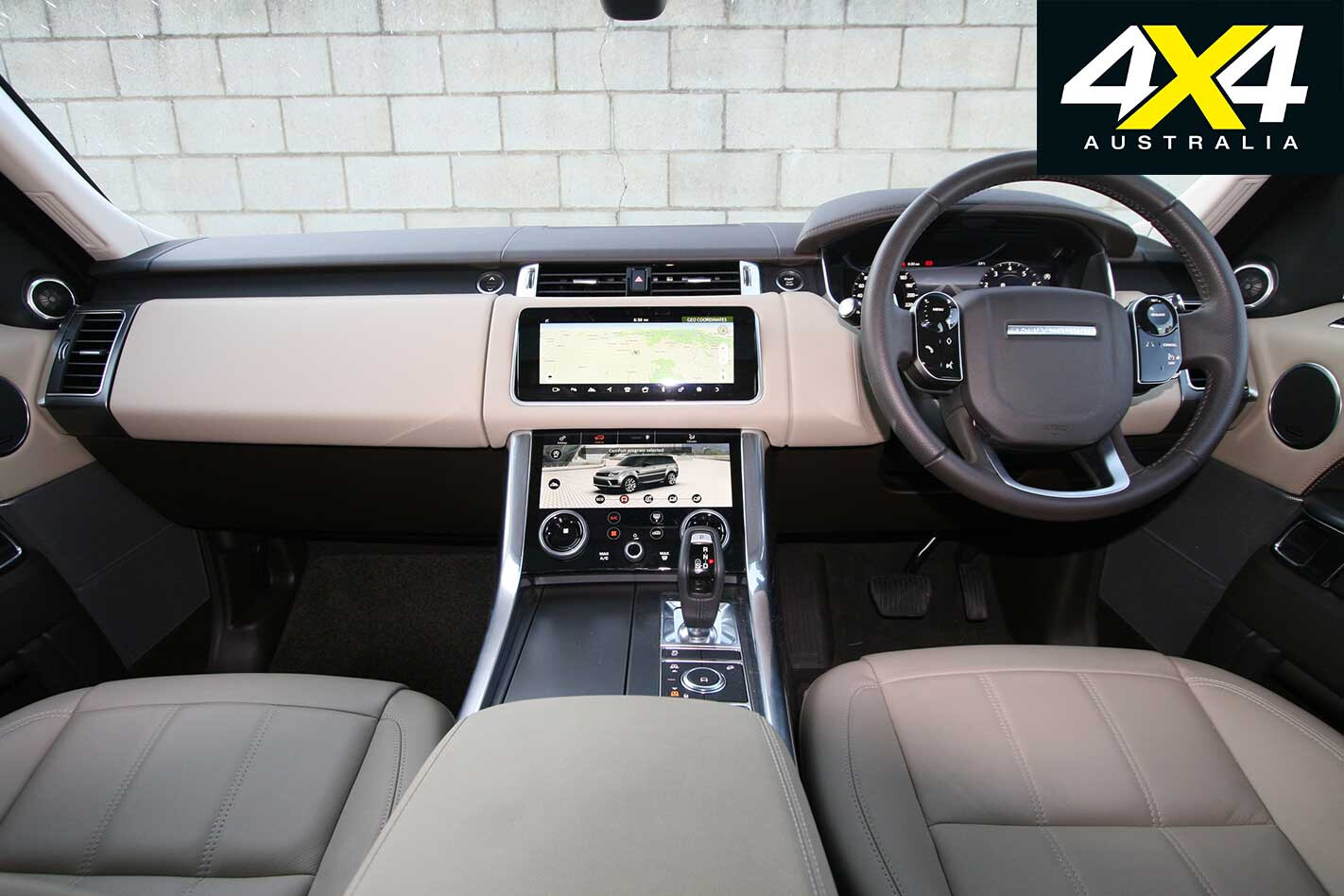
What’s the secret? Its 400Nm is produced from a diesel-like 1500rpm all the way to 4000rpm, and this flat torque curve produces a perfectly linear power delivery. All of which is helped by the peerless ZF eight-speed automatic that offers a wide spread of ratios from top to bottom but still relatively small ratio gaps. Good news too in terms of fuel use, which isn’t too far north of what you would expect of a four-cylinder diesel-powered Range Rover Sport.
Otherwise this RRS is like every RRS in as much as it provides a dynamic and engaging on-road drive combined with plenty of off-road competence, thanks largely to its long-travel, height-adjustable suspension; even if this particular model doesn’t get a dual-range transfer case.
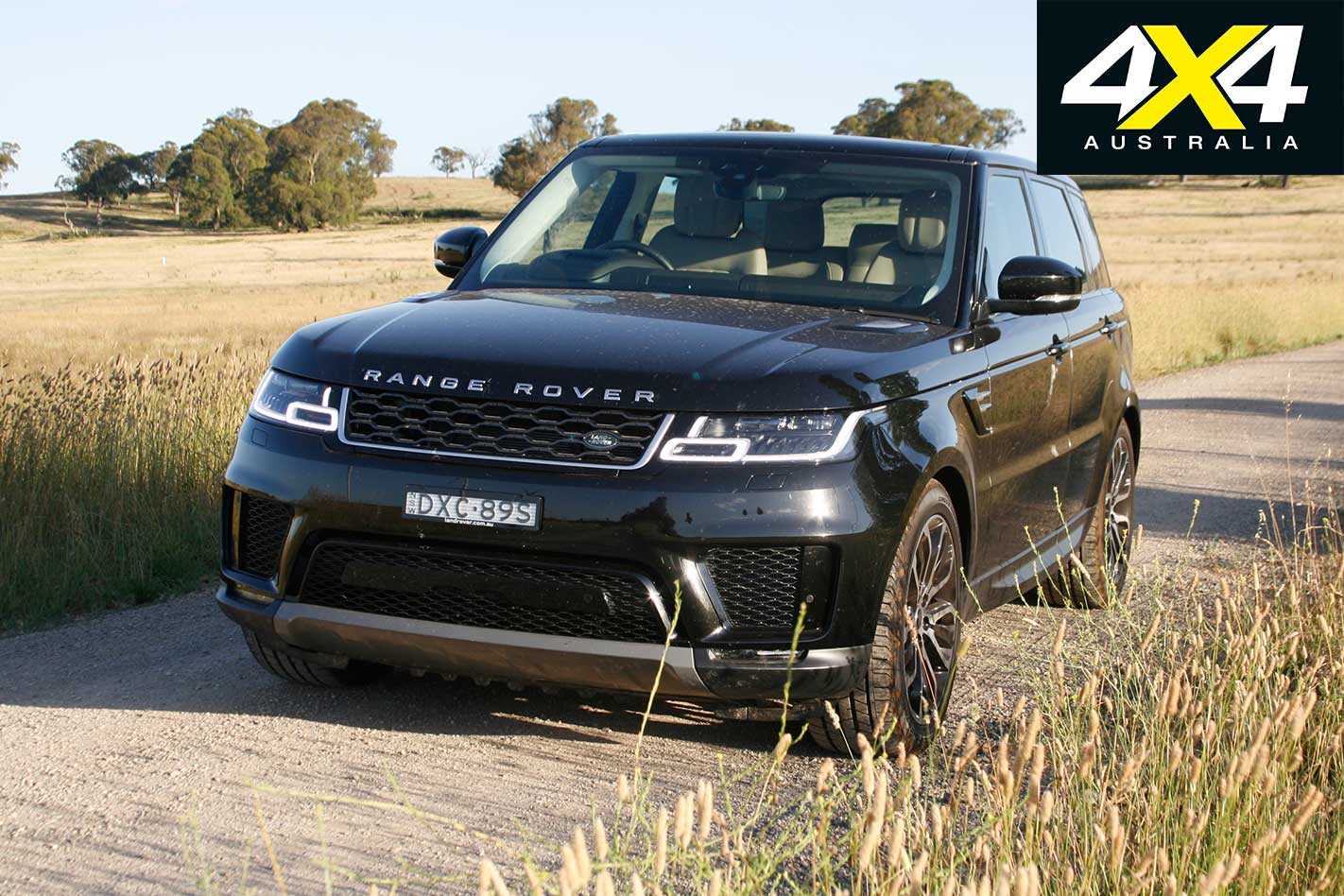
2019 RANGE ROVER SPORT Si4 SPECS: Engine: 2.0-litre 4-cyl turbo petrol Max power: 221kW at 5500rpm Max torque: 400Nm at 1500-4000rpm Transmission: 8-speed auto 4×4 system: Single-range full-time Kerb weight: 2083kg Payload: 817kg Towing capacity: 3000kg Fuel tank capacity: 104.3 litres ADR fuel consumption: 9.2L/100km Test fuel consumption: 10.3L/100km Price: $100,400 ($122,180 as tested with ORC)
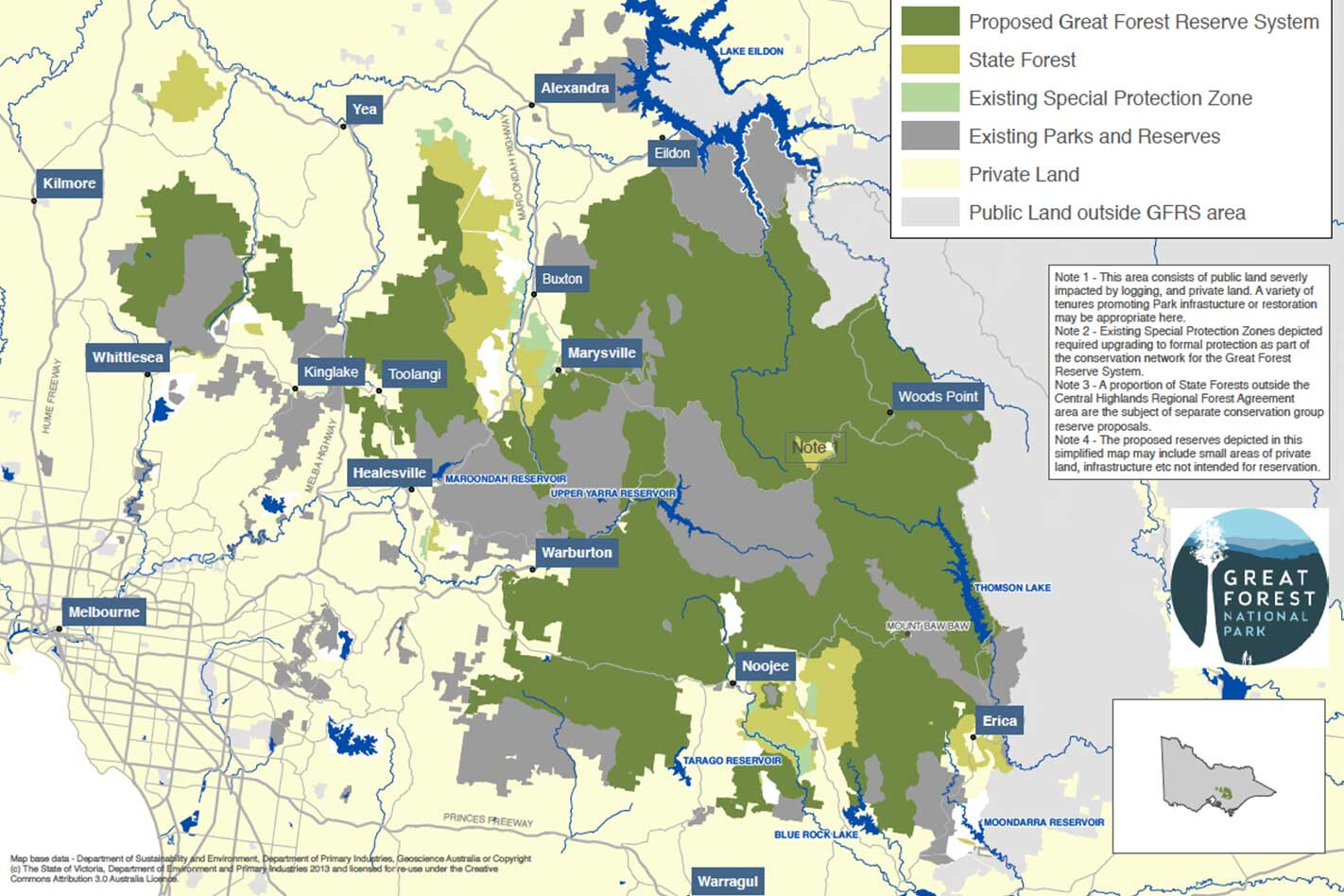
You may have heard of the proposed Great Forest National Park, which the Victorian National Parks Association (VNPA) and the Greens has been pushing for, for a few years now.
Stretching from Erica and Noojee (south-east) to Woods Point and Eildon (north-east) to Toolangi and Kinglake (north) to north of Whittlesea (west), the park will include some of the state’s most used and visited areas by 4WDers, campers, motorbike riders, hunters and anglers. History dictates you can expect increased camping fees and plenty more restrictions if the region becomes a national park.
But wait, there’s more!
I recently became aware of the VNPA push for a vast park in Eastern Victoria, called the Emerald Link NP. Not content to have the parks that are already in existence there − the Snowy, Errinundra, Coopracambra, Croajingalong and Alfred National Parks − the VNPA and other Green mobs want all the remaining forest land to be proclaimed a park.
They spruik on about how all of the proposed parks will add employment to these regions, but, once a park is proclaimed, all I’ve ever seen is a loss of jobs. The Otways is a prime example, where the town of Colac lost most of its timber mills, logging contractors, truck drivers and all those who depend on them: tradies, food and coffee sellers, and more. For years you couldn’t sell a house in Colac, as people moved out and headed elsewhere for work.
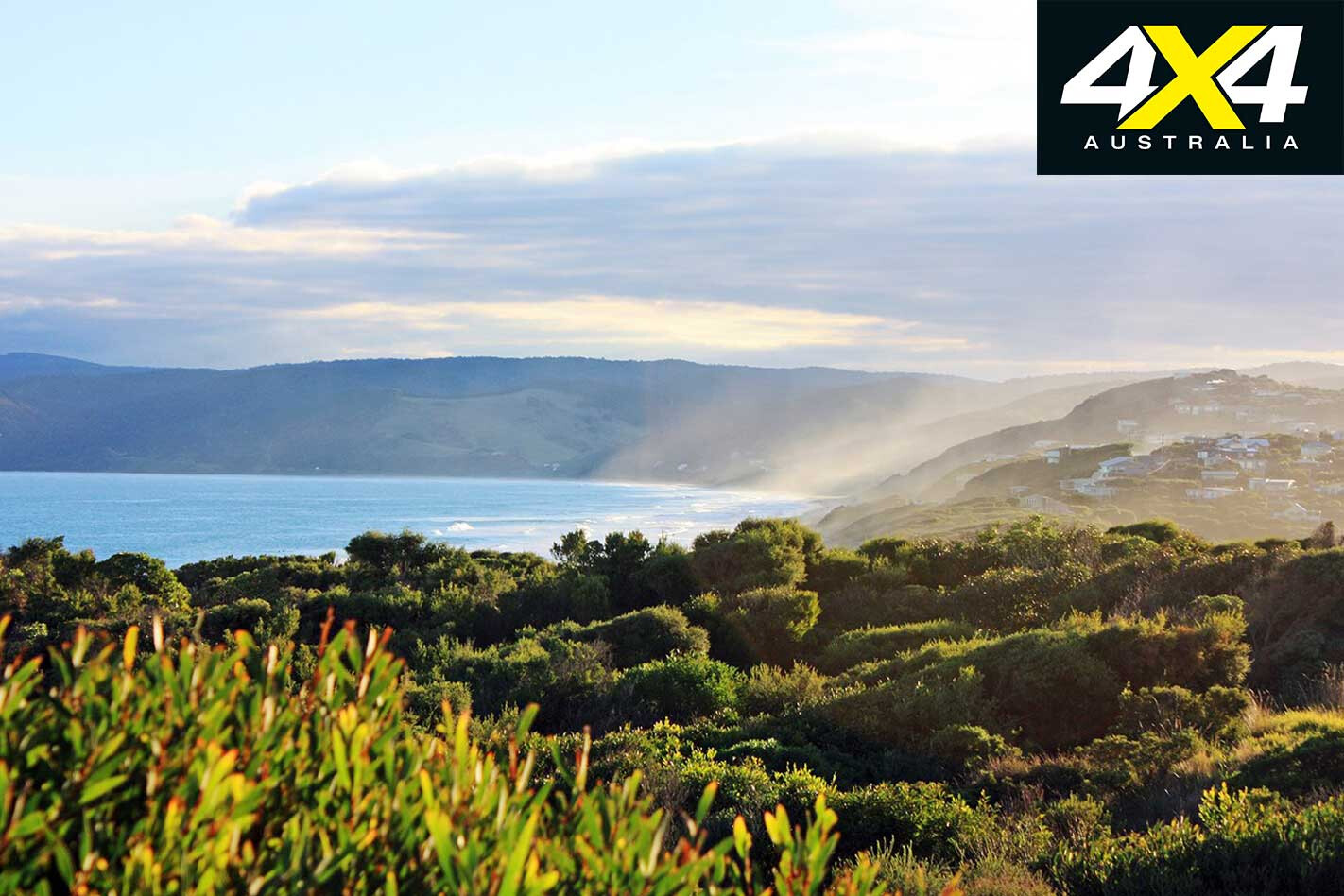
These campaigns only ensure the jobs of people sitting in the VNPA and Green offices. They’re a bit like unions − a good idea when they start out, but once the original fight has been won they need to generate another campaign to keep themselves, their well-paid executives and their cohorts in business. It goes without saying that many of the small communities in East Gippsland will be badly affected by the Emerald Link National Park if it gets up, and many people will be out of work.
Another question is, where will the timber we need to build houses and the like come from?
From the latest Forest Australia stats, the value of our exports are up, but so too are the value of our imports; with our import bill far exceeding our export income as far as timber, paper and timber products are concerned. It’s bloody disgusting, that with a country as big as ours – and with a population that is relatively small – we have to import much of our timber (an incredible $5.6 billion worth in 2017-18).
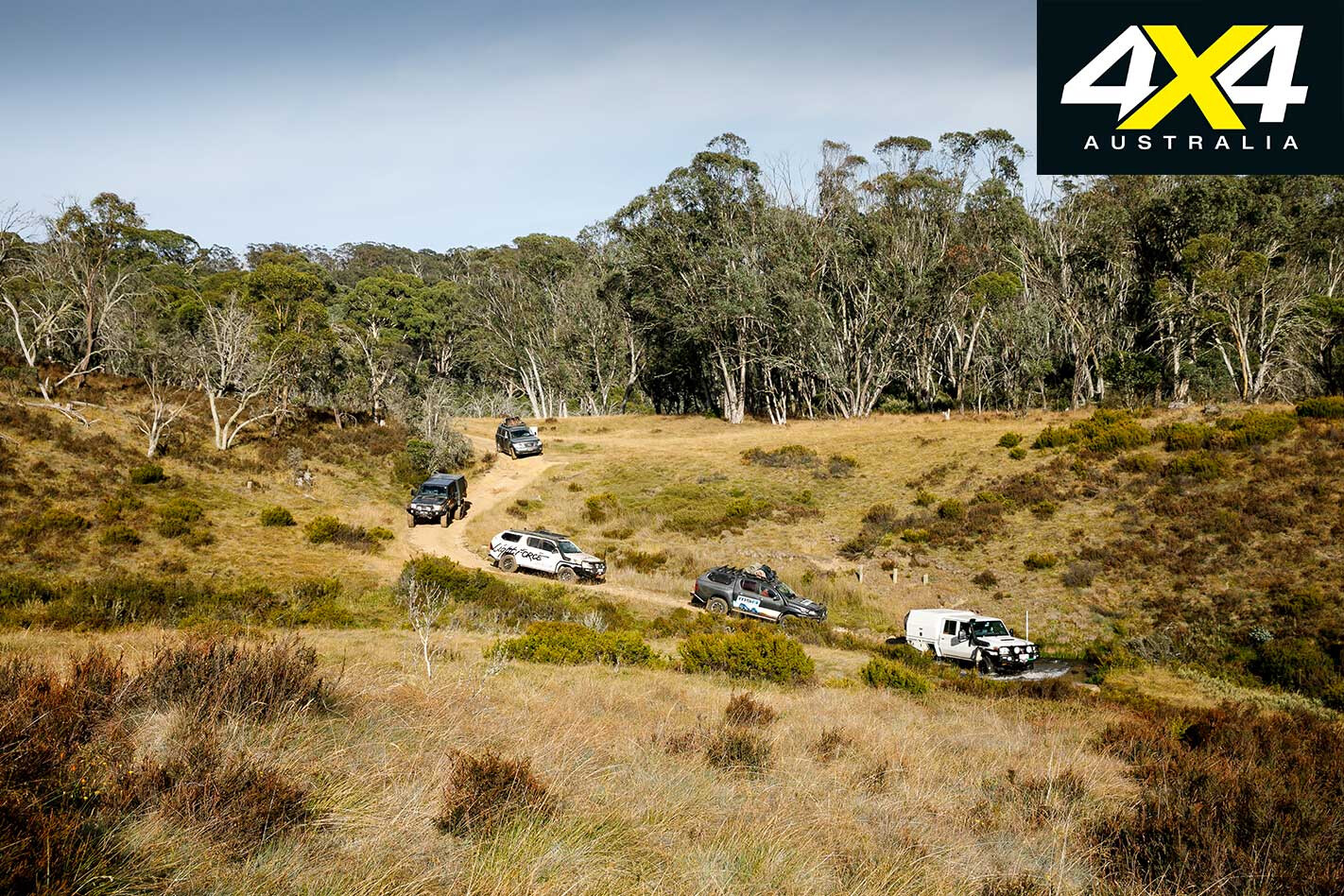
Locking up more forested country will only make matters worse, with further imports of wood and wood products increasing the pressure on the native forests and plantations that are allowed to exist here in this country.
But wait … there’s more!
The VNPA are now pushing for a range of new national parks and extended parks and reserves in the central west of the state. This includes extensions to the Mt Cole/Mt Buangor parks, and new parks in the Wombat, Wellsford and Pyrenees forests, while other smaller additional conservation parks and reserves are also planned.
It wouldn’t be so bad if Parks Victoria had the manpower, resources and money to manage the areas they already have. They fail on all counts!