
REPORTS OUT of the USA suggest that the Ford F150 Raptor pick-up with again be fitted with V8 power before the all-new F150 is released in two to three years’ time.
Many buyers of the second-generation F150 Raptor were put off when the Baja-inspired model was only offered with a twin-turbo V6 engine in lieu of the V8 powerplant that was in the first gen. This was despite the V6 making more power and torque and being a quicker vehicle all around than the earlier V8.
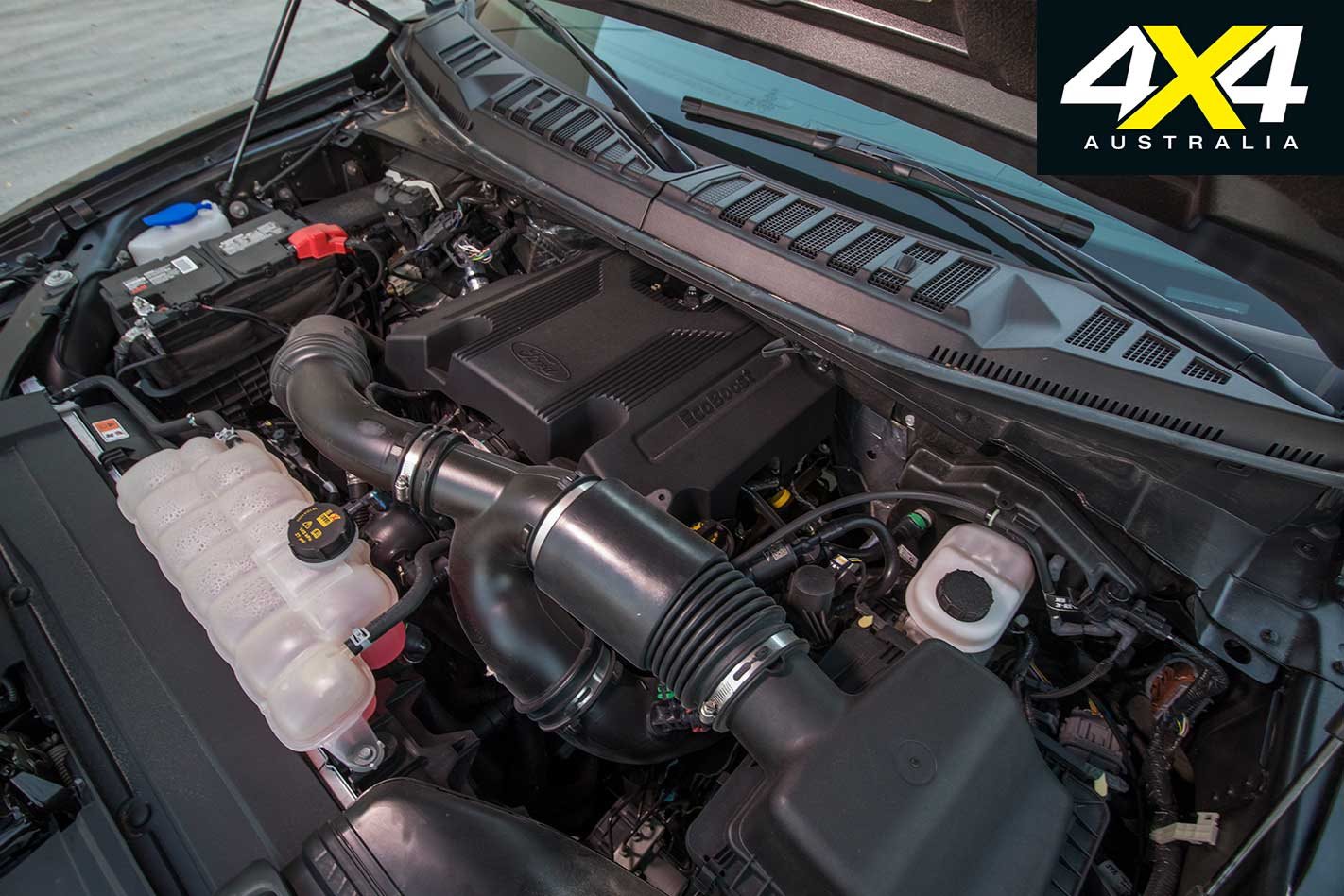
Up until 2016 the F150 Raptor was powered by a 302kW 6.2-litre V8 engine, but when the current model came out in 2017 the V8 was gone and it its place sat a 335kW/691Nm EcoBoost V6 engine backed by a new 10-speed automatic transmission.
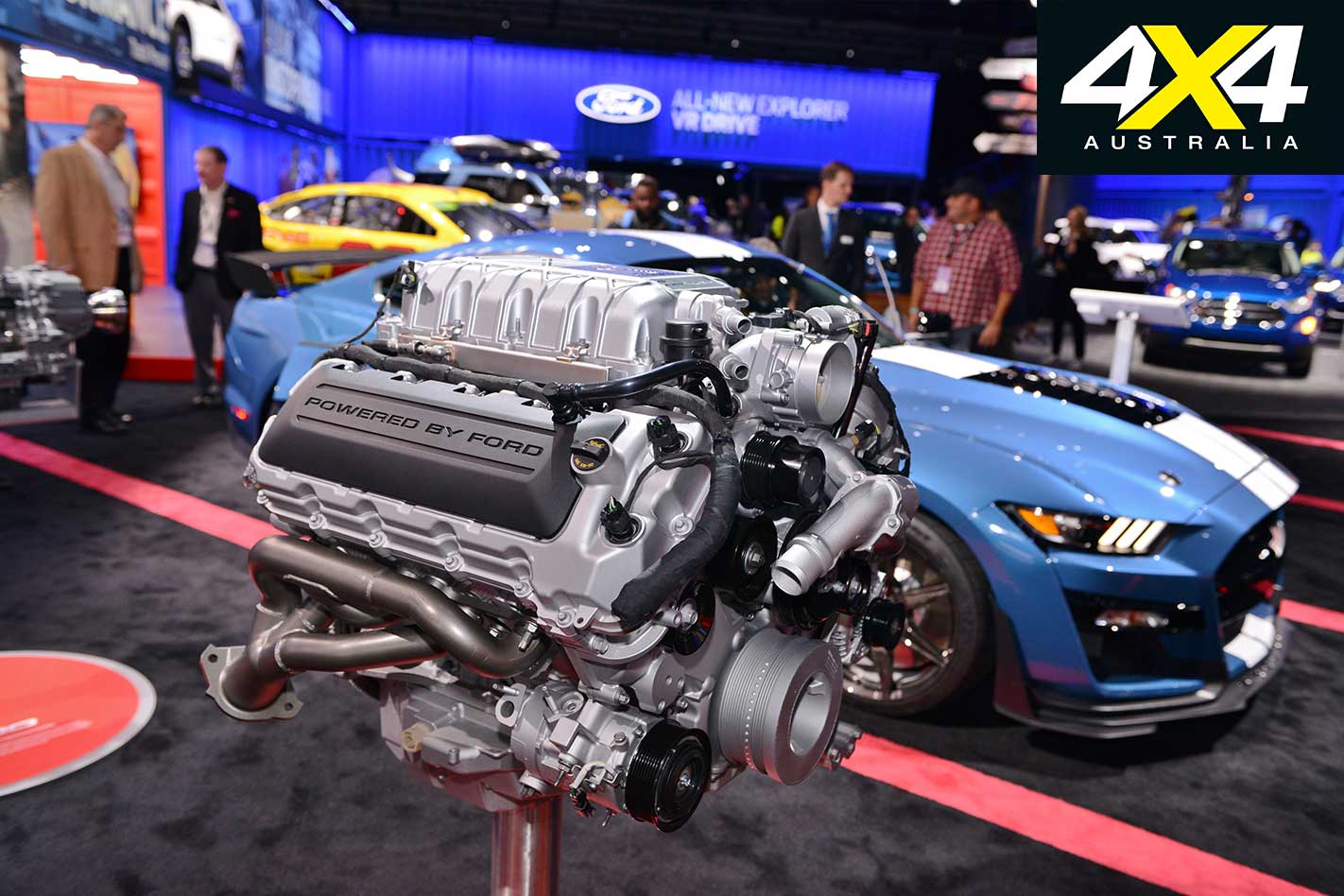
Now, as sightings of a supposedly Raptor-fighting RAM Rebel TRX – said to be sporting the whine of supercharged V8 engine – have become more common, Ford is fighting back with a limited edition model that will see out the second-gen F150. The engine rumoured to be going into this special Raptor is none other than the stonking supercharged 5.2-litre V8 as fitted to the Shelby GT500 Mustang.
The 2019 GT500 is said to be the most powerful Ford ever sold and, while the exact power and torque figures are yet to be released, it is expected to make more than 522kW, or 700hp in the old money. Those figures could change as the engine is tuned to best suit the Raptor truck.
RAM’s Rebel TRXdraws its inspiration from the 2016 concept truck of the same name, and it’s tipped to be launched in the USA next year as a 2021 model. Those that have seen and heard prototypes of the TRX prowling around Michigan have said that it has the distinct sound of a supercharged engine, leading most to believe it will be powered by a version of the Hellcat supercharged V8 that makes upwards of 700hp in its various guises in muscle cars.
Needless to say is that if and when these two hyper pick-ups hit the streets and off-road tracks of the USA, there’s sure to be some dust thrown up. We don’t expect either of the two trucks to reach Australia via the official manufacturer channels, but they will most likely come via specialist importers at a hefty price.
Meanwhile, our Australian 4×4 of the Year winning Ford Ranger Raptor makes do with a four-cylinder turbo-diesel engine.
SET UP camp at a remote site, surround yourself with peace and quiet, and open up a good book … sounds like a good time to us.
These two books covering significant events in Australian history are both great reads, so pour yourself a glass of your favourite tipple and enjoy!
The Last Snake Man
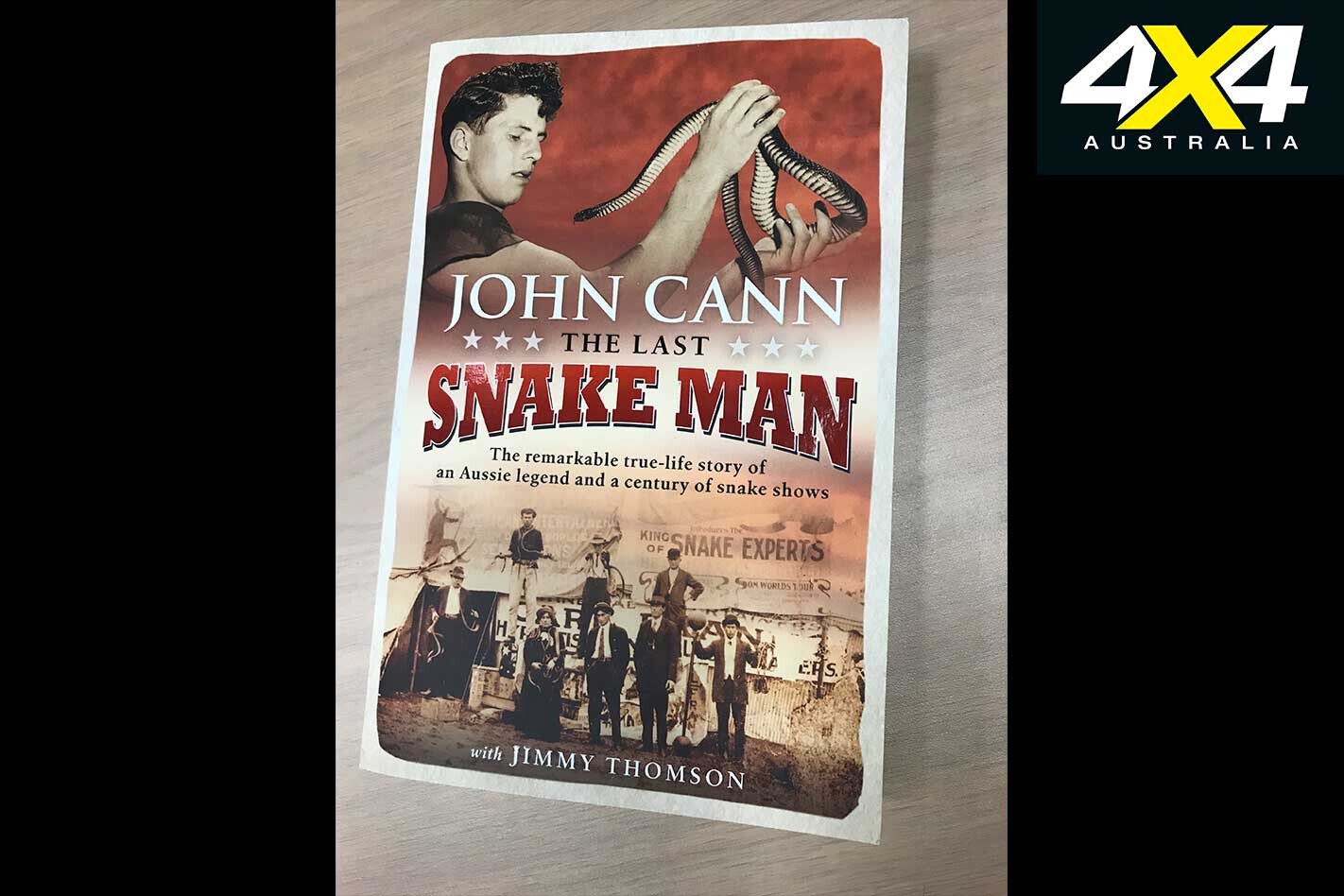
For nearly a century, John Cann’s family ran a famous snake show at La Perouse, in Sydney. This book, co-written with journo Jimmy Thomson, details Cann’s amazing upbringing and includes the 45 years he and his brother George ran his parents’ snake show. By the time he’d retired in 2010, Cann had survived five venomous snake bites.
Besides wrangling some of the world’s most poisonous reptiles, Cann was also an Olympic athlete, state representative rugby league player and also state boxer, as well as a world authority on turtles (the Cann’s snake-necked turtle is named after him). He was even awarded an OAM in 1992 in recognition of his community and conservation work.
The book is a brilliant read, following Cann on his many adventures in Oz and through the PNG jungle.
RRP: $33 Website: www.allenandunwin.com
Women to the Front

When World War I started, 129 women were registered as medical practitioners in Australia, with many of them keen to contribute their skills and expertise to the war effort. The leaders at Australian military HQ thought that the concept of women on the battlefront was unthinkable but that didn’t stop around 24 Aussie female doctors from heading to the front regardless.
This book from Heather Sheard and Ruth Lee recounts the many stories of Aussie women serving as surgeons, medical officers and anaesthetists during the years of 1914-19. Ridiculously, despite saving hundreds of lives, there is very little mention of this in official military records both here in Oz and in the UK.
From the Eastern to Western Fronts, to Malta, and to London, the often horrific conditions (and injuries that needed dealing with) are revealed, along with the heroism of all of those involved. A great read.
RRP: $35 Website: www.penguin.com.au
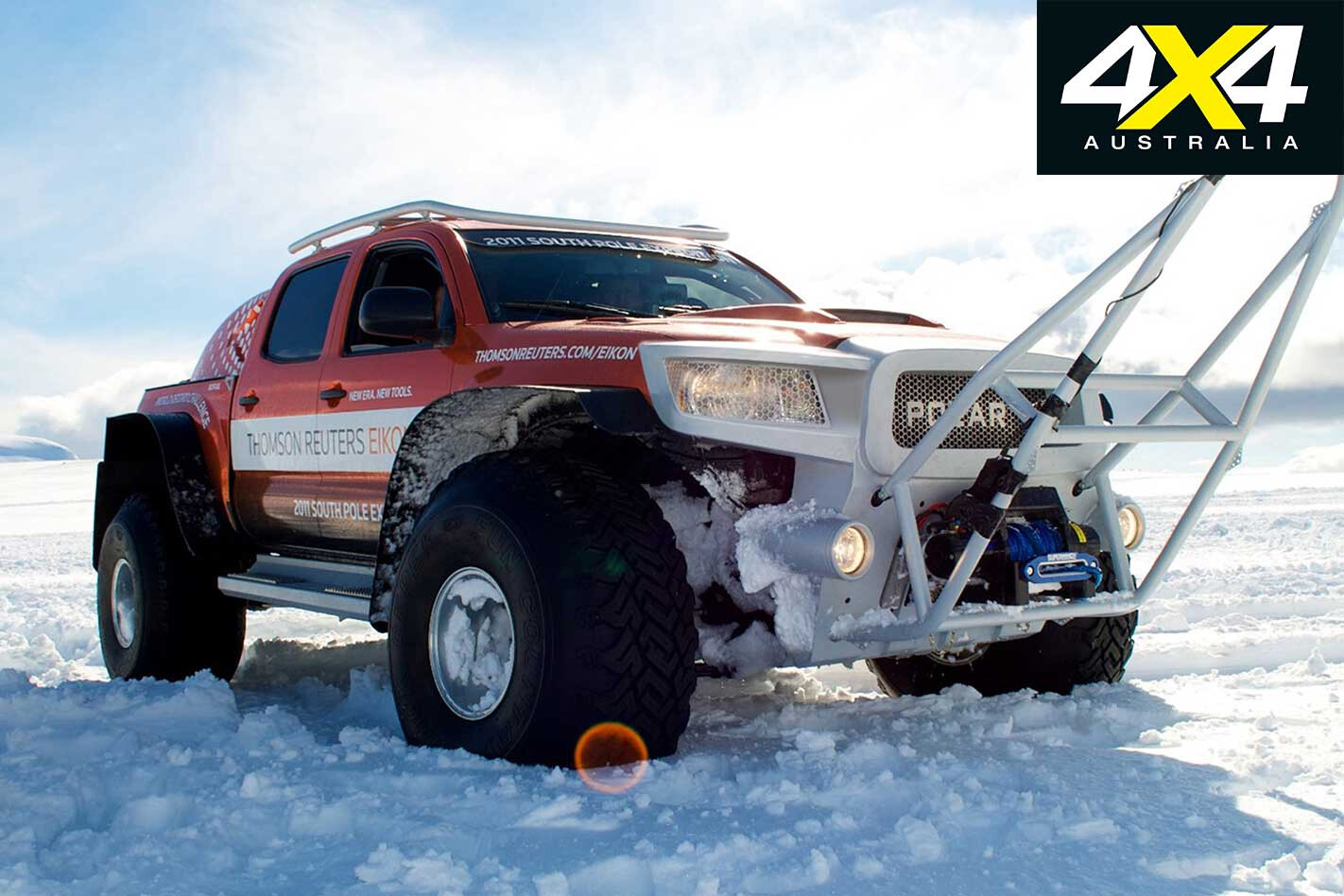
Invincible; that’s how you feel. With the supercharged V6 engine growling each time you flex your right foot, and the Dick Cepek tyres crawling through the mud and ruts of the test track, you feel this vehicle could take you anywhere; which is just as well, since it’s built to drive, unsupported, to the South Pole, where it aims to beat the world record.
This feature was originally published in 4×4 Australia’s March 2012 issue
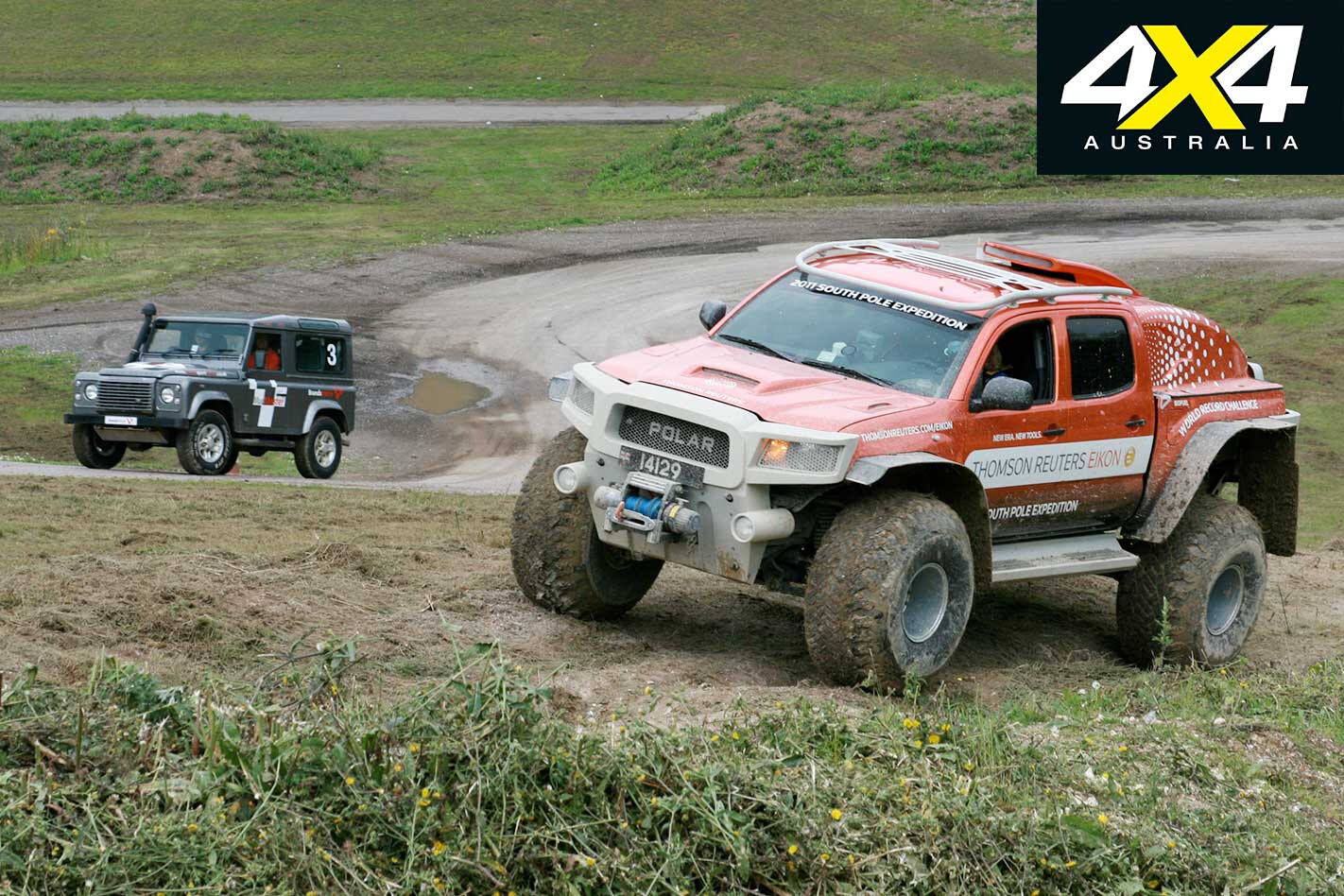
The South Pole seems a long way from this test track, set in the wooded grounds of the Brands Hatch race circuit in England where recent rain has provided a generous covering of sticky mud. These are familiar conditions when off-roading in England, and no problem for the Polar TRV, but they are nothing to what the man next to me has experienced.
Driver and expedition leader Jason De Carteret is remarkably relaxed. He seems perhaps a little distracted at times, but then he has a lot on his mind, and the humps and bumps we are so enjoying seem insignificant to him. His life story reads like an action hero character in a pulp-fiction thriller.
De Carteret has skied to the South Pole four times; leading expeditions there for Special Forces troops. Previously there were expeditions to the North Pole, endurance dog-sled racing in Alaska, career cave-diving in the Bahamas and five years as a helicopter pilot in southern Africa relocating wild animals under threat from poachers.
It all started when he drove a Land Rover from the UK across the Sahara, through central Africa and down the east coast, some 23,000km, to Zimbabwe. On arrival, he donated the Land Rover to the Rhino anti-poaching unit and then went to work with them. He’s run both team and solo expeditions in over 92 countries and he’s a popular motivational speaker. Point taken: no need for heroics with his vehicle, then.
The project began when he was approached by Thomson Reuters to provide a ‘money-cannot-buy’ prize for a global competition the company was running. Thomson Reuters claims to be “the world’s leading source of intelligent information for businesses and professionals”.
Down on planet earth, it’s difficult to comprehend what that actually means, but the company employs over 55,000 people in 100 countries, and in 2010 reported revenues of US$13.1billion. These guys deal with financial information on an unfathomable scale.
They approached De Carteret and his suggestion was for the winner to be part of an expedition to actually drive to the South Pole and beat the existing world record for an unsupported motorised vehicle. A record held by Jason De Carteret.
Back in 2004, when he returned from one ski trip to the South Pole, De Carteret came across a group of Land Rovers about to embark on the journey. He was somewhat dismayed to see the minimal modifications. In his words “all they’d done was fit a set of sand tyres.” They travelled nine kilometres before they were rescued and towed back.
Their failure was Jason’s stimulus to build his own vehicle to do the journey and, perhaps bizarrely to those of us with no understanding of the conditions, led to him building a six-wheeled Chevrolet minibus run on biofuel. This unlikely vehicle smashed the existing 24-day record for a motorised trip to the South Pole, to two days, 21 hours and 21 minutes.
That is now the target for the Polar TRV, and the knowledge and experience from this first success has done much to decide the specification of the vehicle for this trip. Equally important is timing.
December would mark 100 years since Norwegian polar explorer Roald Admunsen became the first person to reach the South Pole – beating in the process the ultimately tragic expedition of Britain’s Captain Robert Falcon Scott. The aim for the Polar TRV, therefore, was to leave the base at midday on Sunday December 11, 2011, to arrive at the South Pole exactly 100 years after Admunsen.
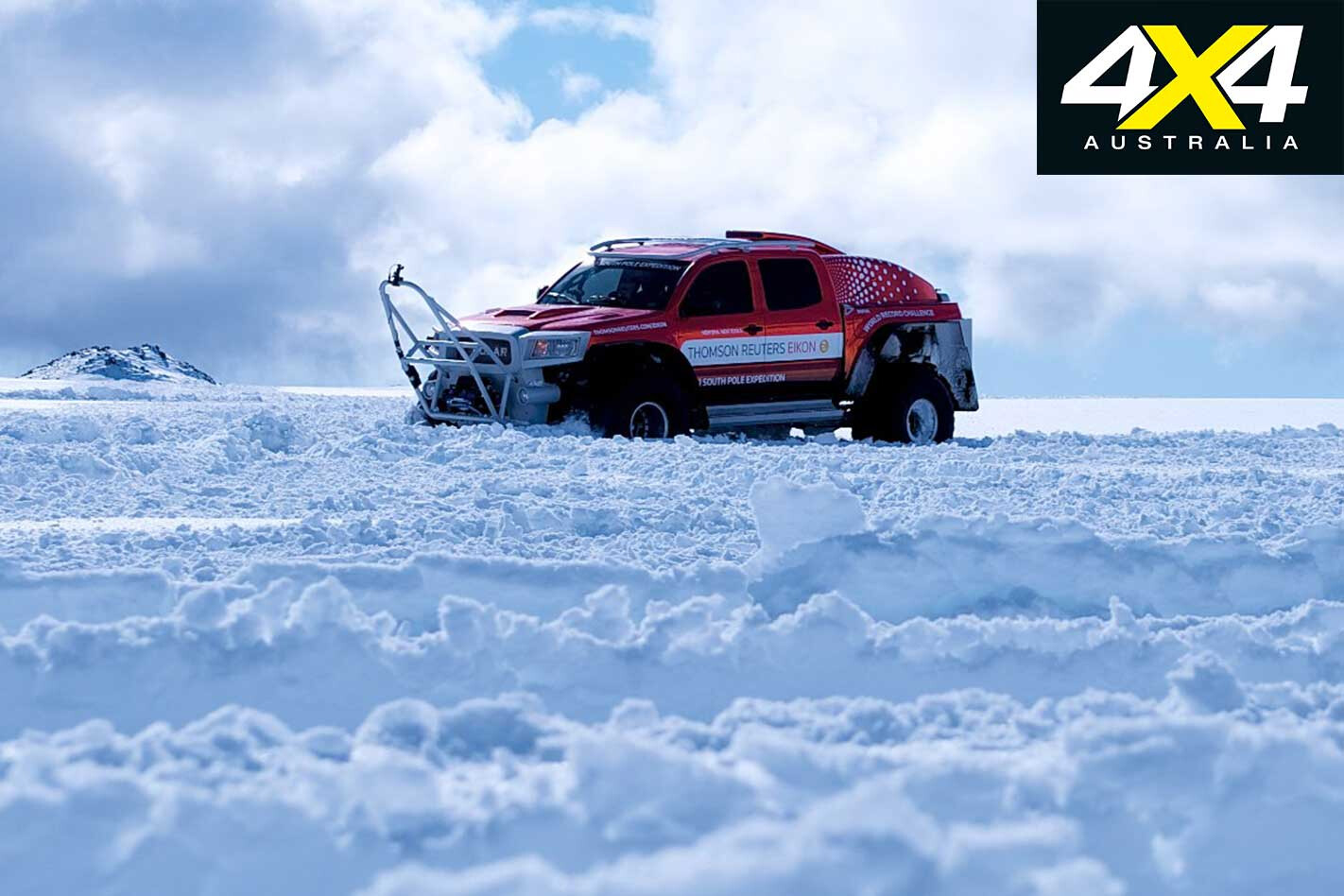
Originally, after seeing the failure of the Land Rovers in Antarctica, De Carteret considered a six-wheel drive necessary. But this meant a very heavy vehicle with high fuel consumption. The size of the vehicle also meant a huge underbody area to clog with snow and ice; restricting movement, adding weight, and increasing fuel consumption. This led to a significant shift in his plans, and the result is the vehicle you see here.
The base vehicle is a US-spec Toyota Tacoma. Otherwise, this is a very British expedition. Driven by Jason and funded completely by Thomson Reuters, the vehicle is without the massive corporate branding one might expect from such a project. Succeed, or fail, Polar TRV is the result of a small talented team of Brits, and Thomson Reuters must be given credit for supporting this.
The original-spec Tacoma comes with a 4.0-litre V6 quad-cam engine that delivers 176kW. Pretty good for US dirt roads, but not for Antarctica. De Carteret decided to add the tried-and-tested supercharger package produced by Toyota’s performance and motorsport division, TRD. This is a popular and successful conversion in the US, using an Eaton Roots-type supercharger, which is compact and doesn’t require any bodywork modifications.
The one-piece supercharger plenum/manifold casting has the heat exchanger core for the intercooler located inside the plenum section of the manifold. TRD claims that by using the intercooler, the inlet temperature to the engine is reduced allowing use of a more aggressive ignition timing map with the relatively high 10:1 compression ratio for the V6 engine.
This results in better engine response (something we can vouch for) and improved power output. It also provides better resistance to detonation and a greater safety margin under severe use. For the Polar TRV the plan to use biofuel meant TRD had to re-map the ECU, and change the injectors so they could ‘double pulse’ when the engine needed full power – now around 300kW – and a lot more (undisclosed) torque!
Next stop for the now fully-tuned Tacoma was Iceland, and the workshop of Arctic Trucks. These guys are known for building specialised vehicles for both the North and South Poles.
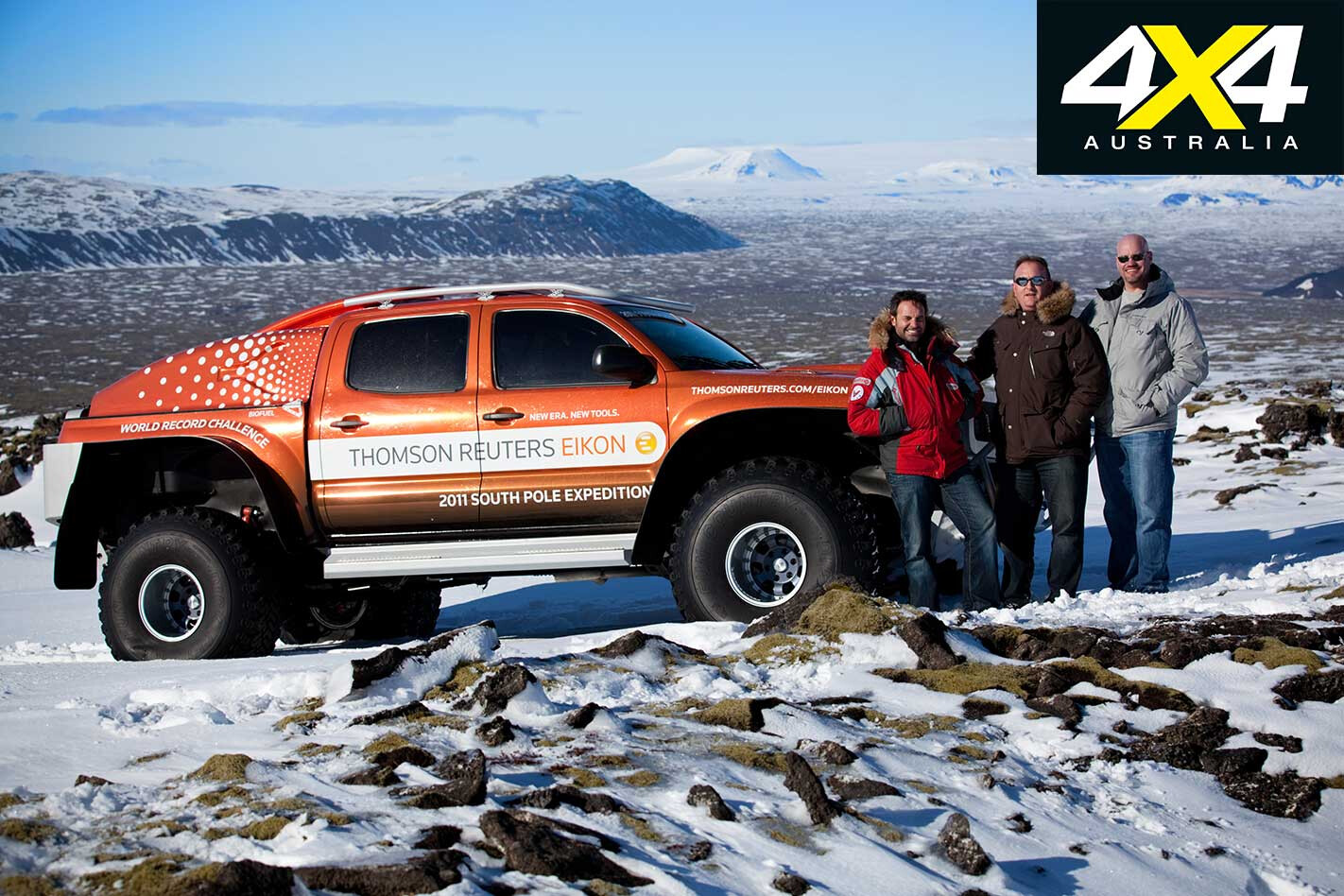
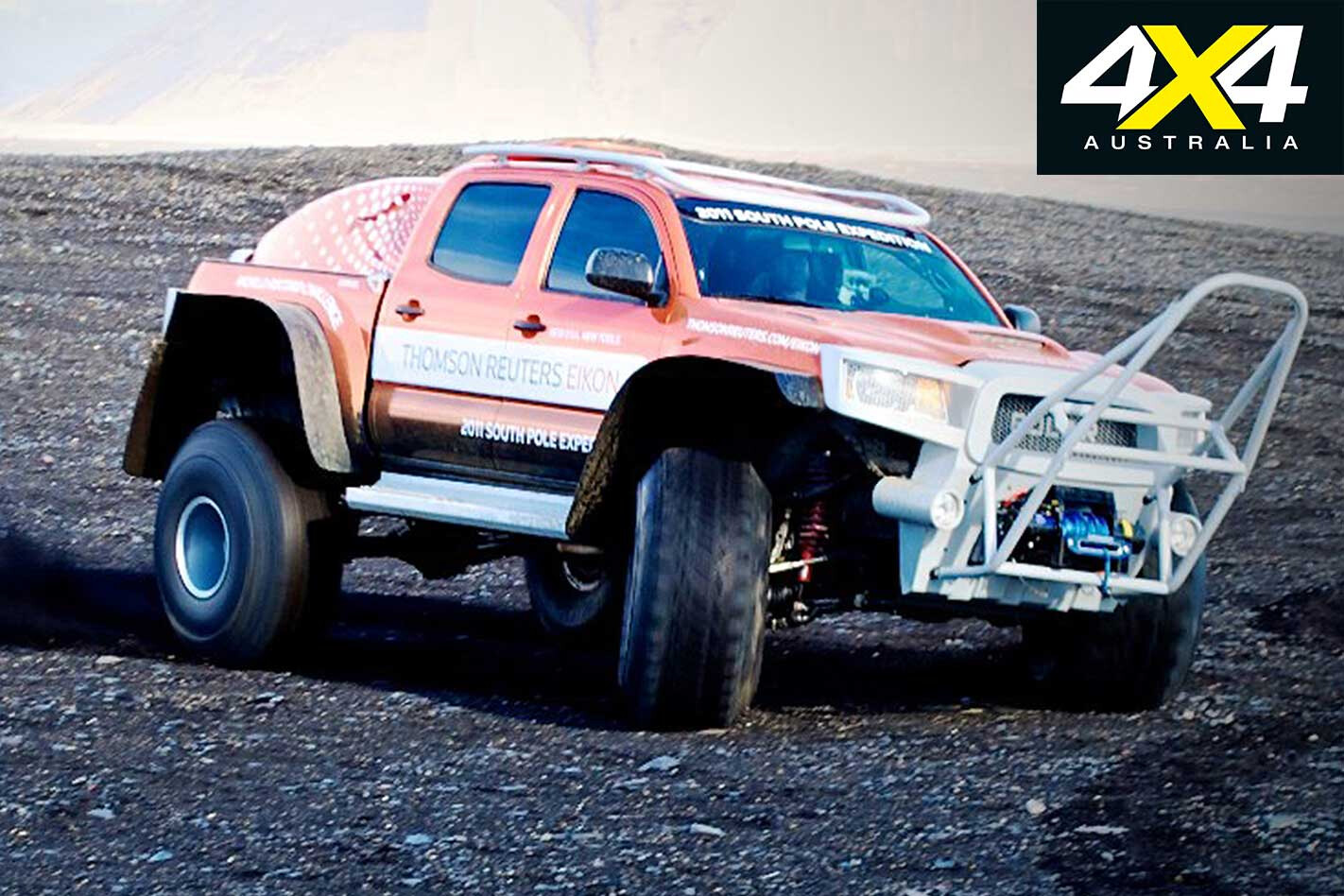
The Tacoma’s front axle was moved forward, and the rear back, to improve approach and departure angles. The drivetrain was strengthened, with the propshafts replaced by heavy-duty custom-made units. Front and rear axles have ARB Air Lockers fitted. The rear suspension was changed from the standard leaf spring live axle to a five-link (four trailing arms plus panhard road) coil-sprung live axle, thus providing coil-spring suspension all round. Dick Cepek wheels and 44-inch Fun Country tyres complete the set-up, with the Tacoma’s shell receiving a full internal and external roll cage and other structural strengthening.
The vehicle then returned to the UK to get the specialised attention De Carteret demanded. For this he turned to Kieran Bradley, an engineer at British sports car manufacturer, Lotus. Lotus has supported De Carteret’s previous projects and so, before he had bought the Tacoma, he asked the company to design a vehicle to break the world record. However, the proposed cost and build time saw De Carteret change tack and contact Ian Nisbett Design.
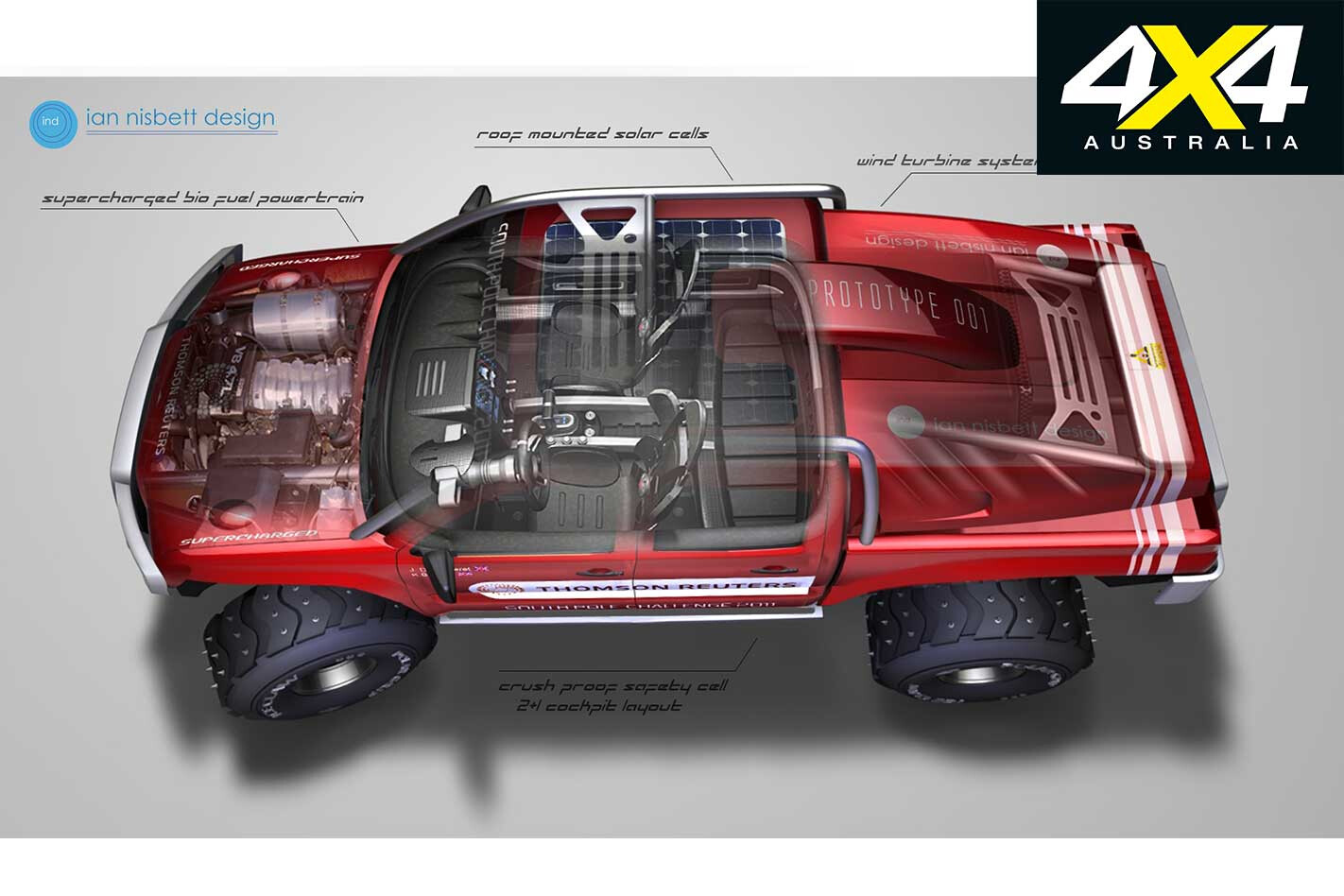
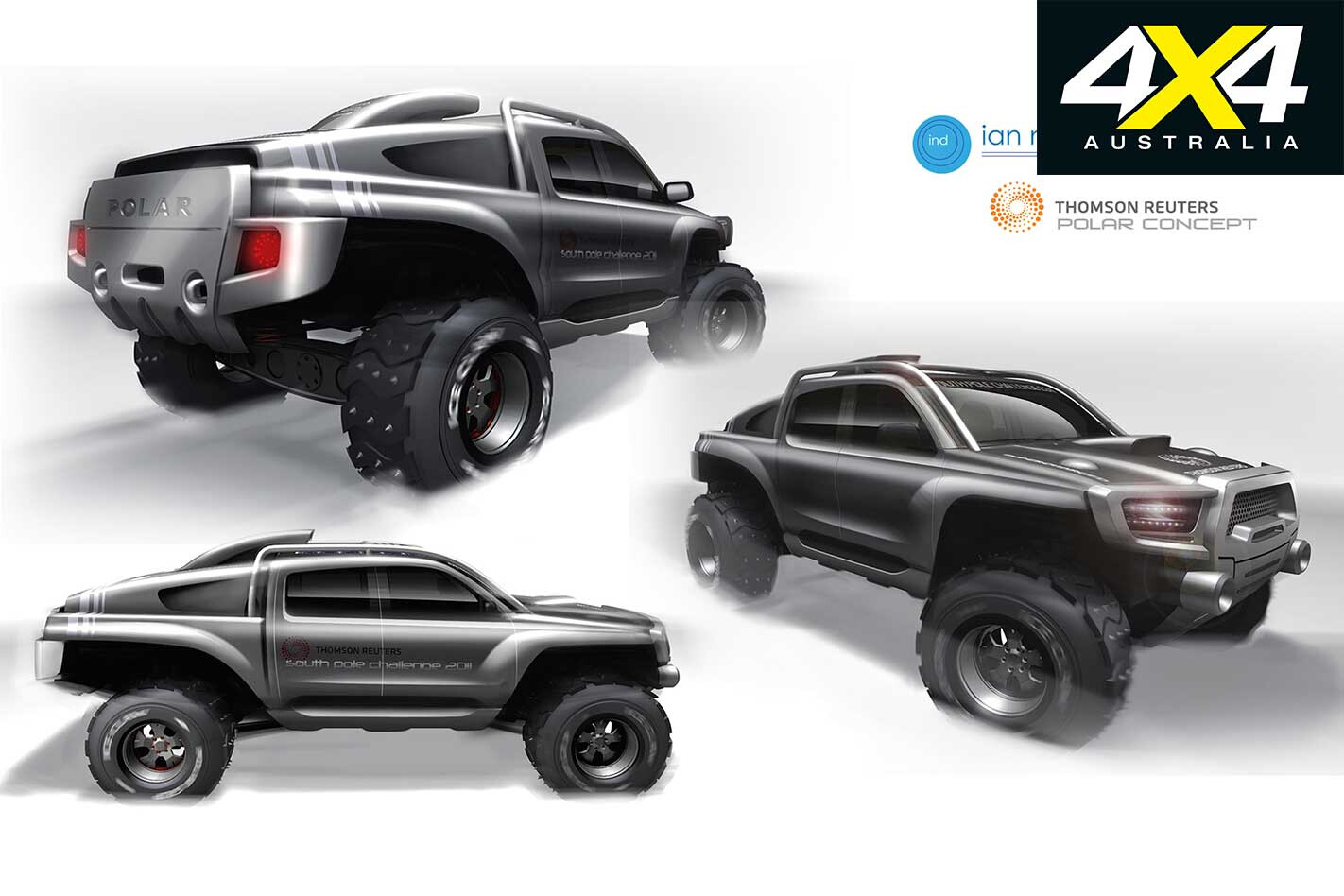
Ian’s design knowledge and off-road experience from the sand dunes of North Africa saw him take the Tacoma and Jason’s brief, and produce this stunning vehicle. The large, cutaway wheel arches should allow much of the snow and ice to fall away.
The external roll cage will also carry solar panels for additional power and even the rear cover has a small roof scoop at the top, which will include wind power generators. When we drove the vehicle, much of the interior remained standard – including the Toyota steering wheel and the nasty US-plastic facia and heater controls. The latter was superfluous as heat from the engine would dissipate long before it made it into the cabin. The cab would remain a ‘toasty’ -20C, heated only by the body warmth of the occupants.
The front and rear panels of the Polar TRV have been designed by Ian Nisbett, and fabricated by Kieran Bradley. The Lotus engineer also hand-built and TIG-welded the two additional 400-litre baffled fuel tanks that fit under that rear cover.
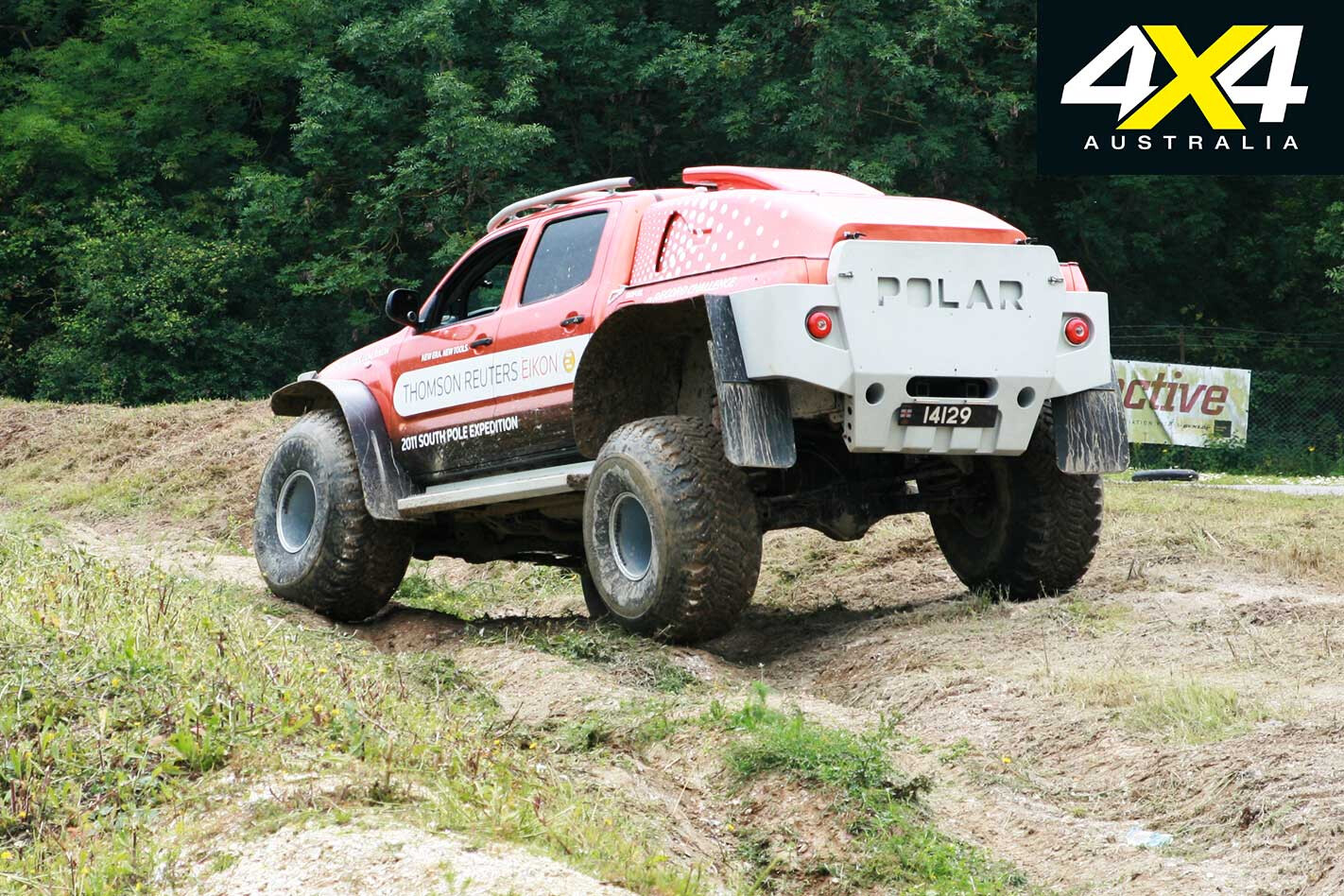
Bradley will be joining De Carteret on the trip to the Pole, along with the winner of the Thomson Reuters competition – a Canadian who goes by the name of JT. JT’s a big guy and has been told to lose no less than 22kg of weight by De Carteret otherwise he’s not getting in the vehicle.
The final weight of the vehicle, according to De Carteret, should be around 2600kg. No-one was prepared to comment on the overall budget for this project, but it is estimated the cost of the vehicle alone is probably around US$200,000.
Getting into the vehicle is not easy. Grabbing the A-frame post of the internal roll cage, you haul yourself into the high-up, tight fitting carbonfibre race seats. You then thread both feet between the seat and roll cage. Large competition three-point belts hold the occupants firmly in place and it all seems remarkably comfortable and civilised.
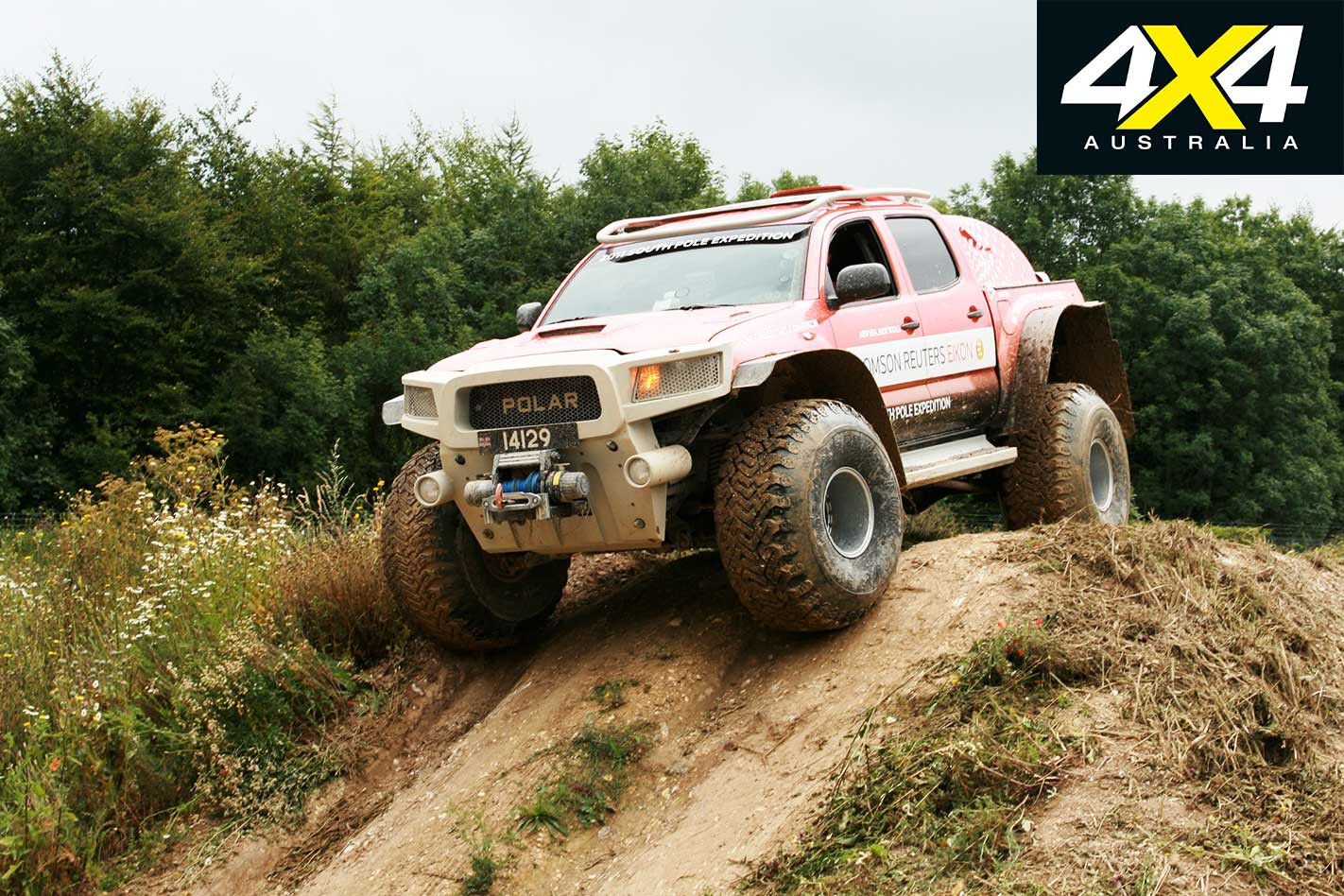
Besides the standard steering wheel and plastic facia, there’s also a large GPS plotter, and a smaller digital computerised fuel gauge for the driver. Fuel being a vital ingredient to the success of the trip, this is no simple gauge but a complex recording of exactly what is being consumed, right down to the performance of individual injectors.
The supercharged V6 has a bespoke side-exit exhaust system designed and fabricated by Kieran Bradley. Whether the aural nature of the design was part of the brief is unclear, but boy does it sound great.
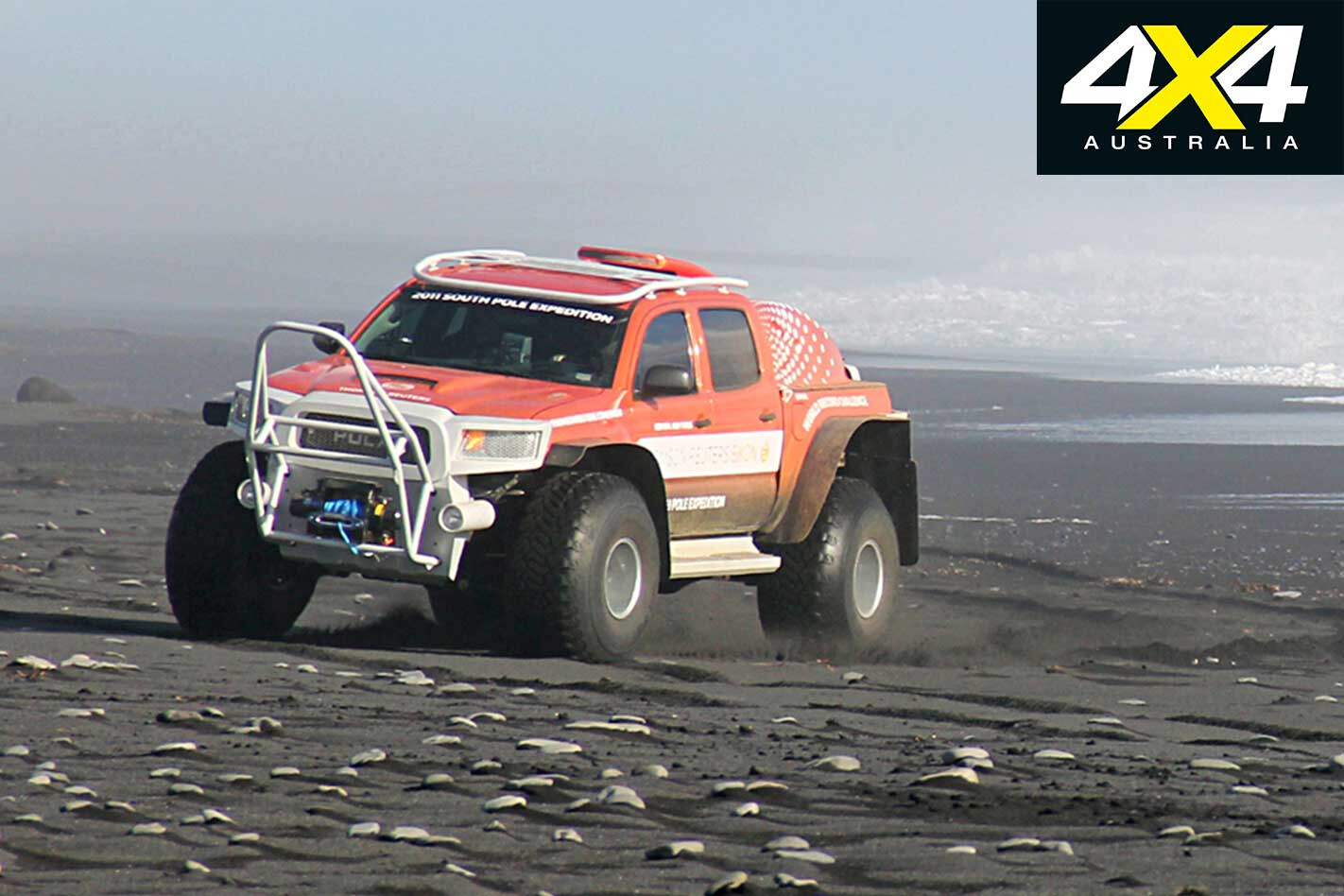
What is more surprising is that, despite the lion-like roar, the Polar TRV can be driven in a more gentle kitten-type fashion. Throttle control is amazing, the response instant and the power delivery oh-so-smooth. That in itself bodes well for a brilliant off-roader, and the Polar TRV doesn’t disappoint – it thrills. Axle articulation is so good, and the vehicle’s ride so unexpected that the ruts and ravines of the Brands Hatch off-road course are irrelevant.
We complete the whole course in high-range (the vehicle still has the standard Tacoma automatic four-speed box, but with different ratios) with only the rear diff locked. Locking the front would have restricted the vehicle’s turning circle even further, and to be honest it is difficult at times to thread the beast along tracks normally covered by diminutive Land Rovers!
Cross-track ruts could be taken at speed, but we have to curtail our enthusiasm – remembering who is in the cab with us, and where this vehicle is going! The steep downhill section necessitated a dab on the brakes – which may not have been needed in low-range – and the balloon-like tyres are perhaps not ideal for the mud.
Overall, there is an ease to driving the Polar TRV which is no coincidence. To beat the record, they will travel constantly for two days and 20-something hours, continually changing drivers, continually jumping in and out of the vehicle to alter tyre pressures and check the conditions ahead. Having a vehicle that is reasonably easy to manhandle across the snow and rock-hard ice is essential.
One hundred years ago, Scott reached the South Pole only to find a Norwegian flag and a letter from Roald Admunsen. After all they had endured, to finish second must have been soul-shattering. The experience ultimately cost them their lives.
Admundsen had made it to the Pole using dogs, while Scott’s team made it without support. Carteret, Bradley and JT will be alone in the high-tech, tough and capable Polar TRV. Nevertheless, the dangers remain, as Jason De Carteret explained: “We know this vehicle works, we know these tyres will work, but whether we get there… there are no guarantees. In Antarctica, as Scott proved, you can pay the ultimate price. When we are out there, we are on our own. Going to Antarctica, you have got to be prepared not to come back.”
Since this story was written, De Carteret’s team smashed the record to an amazing one day, 15 hours and 54 seconds.
HIT an off-road track without a bullbar and pretty soon you’ll be calling to the nearest tow truck to escort you home.
A good-quality bullbar will lead the way through dense outback scrub and protect the front-end of your vehicle. Installing one is a no-brainer.
Two new bullbars landed in aftermarket catalogues in recent months: the Ironman 4×4 Commercial Deluxe bullbar, and the TJM Chaser bullbar for the Ford Ranger. Let’s take a closer look.
Ironman 4×4 Commercial Deluxe Bullbar: Ford Ranger
Ironman 4×4 continues to churn out top-end accessories for all popular 4x4s, with this new Commercial Deluxe Bullbar for Ford’s latest Ranger the latest example. The bar has been built using 3D scanning tech to ensure the correct, accurate fit to the front-end of the Ford workhorse. Plus, designing the bar this way has allowed the engineers to produce something that is as equally stylish as it is functional.
The bar is made from premium grade materials, such as SPHC oil and pickled steel (not mild steel) to ensure optimum strength and rust resistance. The bar also features 360-degree robotic welds, Ford Tech Pack compatibility, and provision for OE parking sensors. The bar is airbag compatible and ADR compliant and includes a unique winch mounting cradle.
Website:www.ironman4x4.com
TJM Chaser
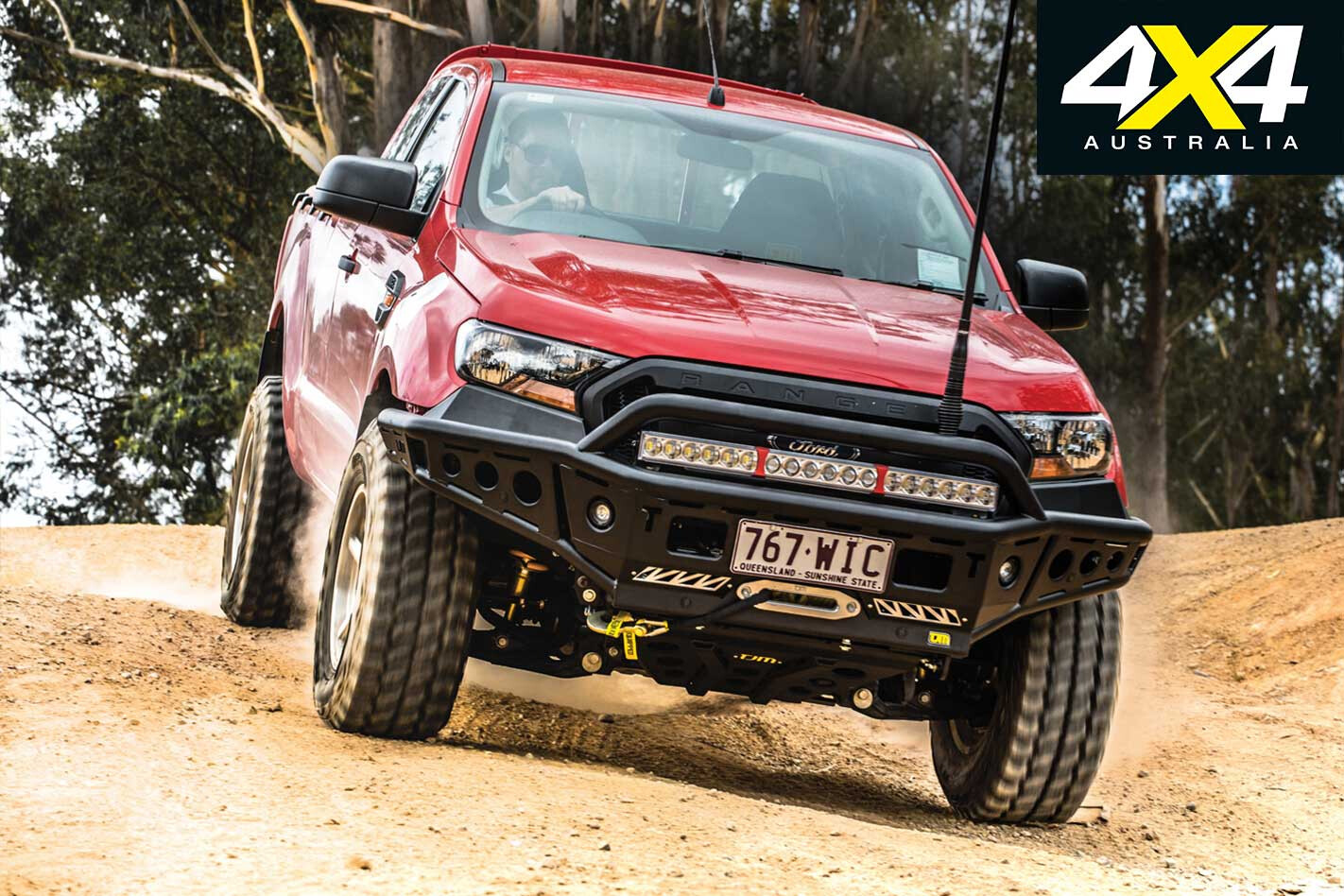
The new Chaser bullbar has been built to the usual very high standards. Construction features a beefy 63mm upper tube and a 50mm lower tube, angled to maintain the optimum approach angle. The steel winch frame (fitted with a 9500lb synthetic-rope winch) mounts directly to the rig’s chassis.
The bar includes integrated 8000kg-rated recovery points, reinforced T-slots for a Hi-lift jack and can be fitted with dual radio aerials, light bars up to 900mm in length and spotties, all via integrated mounts. It comes with a 3mm steel underbody guard, dual steel wing guards and an integrated winch frame.
Designed and engineered in Australia, it includes a three-year warranty and is ADR compliant and parking-sensor compatible. Available for the Ranger PX-onwards (PXIII non-tech pack), with the range expanding to include numerous other popular dual cab utes.
Website:www.tjm.com.au
THE WORDS of writer Patrick Rothfuss are accurate when he said “a long stretch of road can teach you more about yourself than a hundred years of quiet”. A long stretch of road is just a minor characteristic of the Oombulgurri Track in the north-eastern section of Western Australia. Make no mistake, this is final frontier country.
You can begin your journey in the little town of Wyndham, visiting the ‘Prison Tree’ and the mighty Five Rivers Look Out, home to the legendary Blood Drain Crocodile. Travelling a further 116km south-west will bring you to Home Valley Station, the starting point of the Oombi Track.
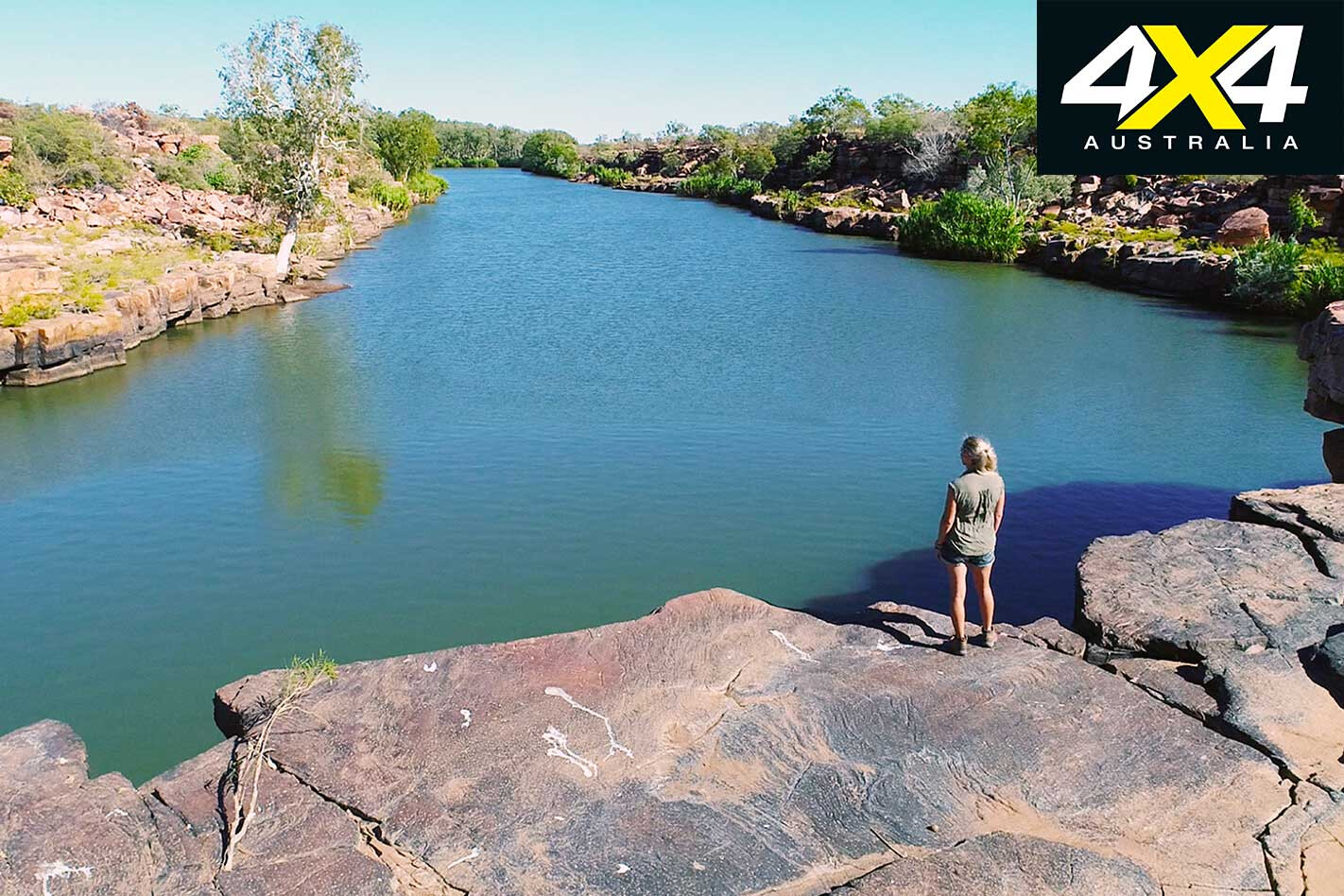
If you would like to sample a few creature comforts before embarking on the Oombi Track, then this is the place to do it, with accommodation ranging from campsites to the luxurious ‘Grass Castle’ rooms on the banks of Bindoola Creek. It’s both a working cattle station and a tourist operation owned by the Indigenous Land Corporation.
More importantly it is the meeting place for our guide, Ronald Morgan from Just Over The Hills tagalong tours. With a deep affinity for this country, the Morgan family as traditional owners have the experience and permission to share cultural stories, traditional hunting, survival skills, locate barramundi, and guide you through this 400km of mind-blowing low-range track.
Take a look at Ronald’s website here for the list of recommendations for your vehicle, and it will start to give you an idea of how serious this track is.
Leaving Home Valley Station and not even having enough time to finish my espresso coffee, I’m out of the 4×4 staring down at the Bindoola Creek crossing. It’s a rocky crossing with murky water flowing through its course.
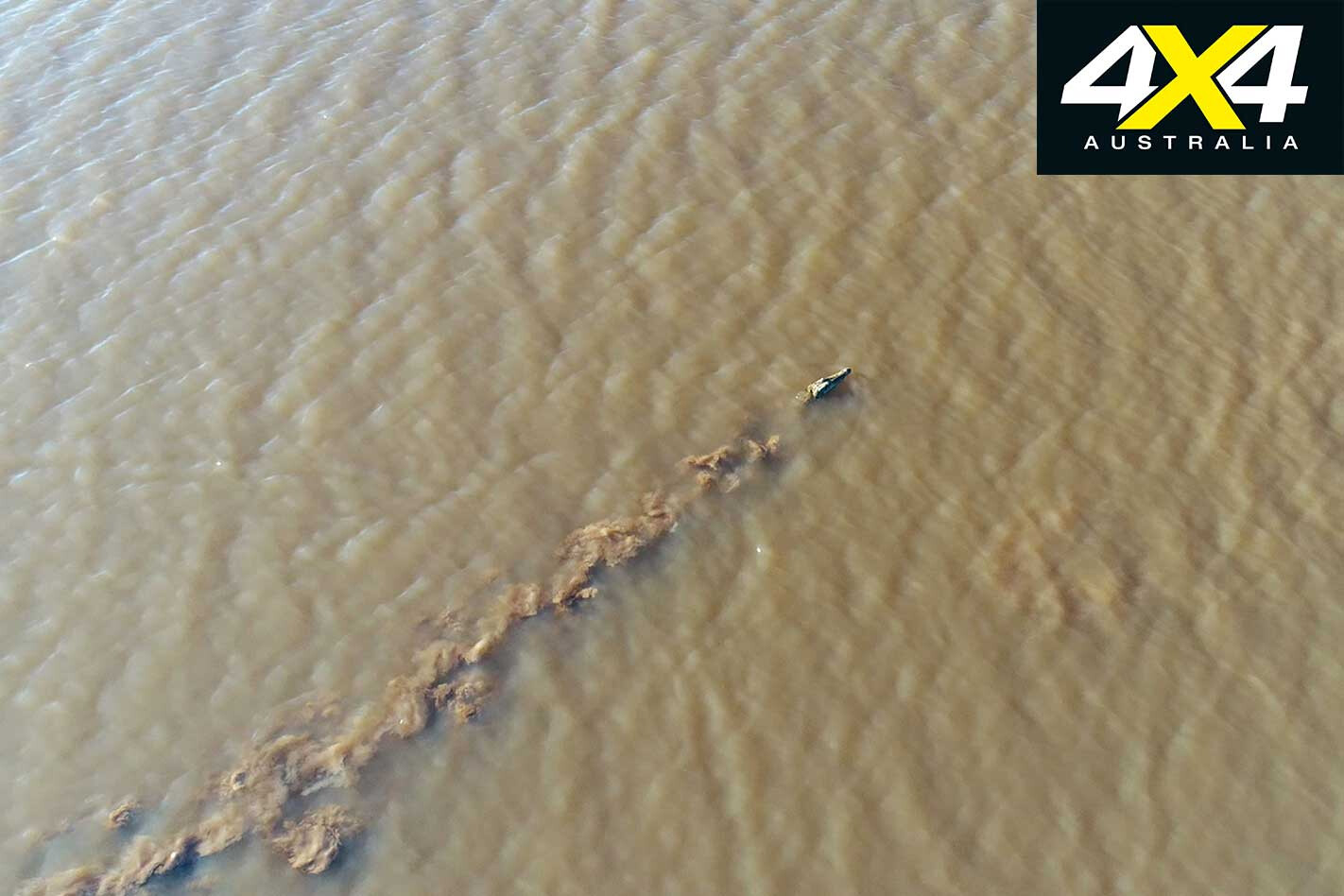
Not keen on walking downstream and meeting the four-metre croc that lives there, I lock the hubs and follow Ronny in his dual-cab Cruiser across. As Ronny chattered on the CB, sharing some local knowledge, he became unusually quiet.
Skirting the edge of the Cockburn Ranges, he had in sight the low lying salt pans that have snavelled up unsuspecting vehicles in the past. Not one to be shy in feeding the Cruiser the mangoes, Ronny pedaled it and launched through the muddy creek and onto the other side of the salt pan. I was shaking in my boots, partly because I didn’t want to get them muddy, but more the fact that I was towing a camper trailer.
Time to put my new Toyo tyres to the test. Low range, first gear with double diff locks were my weapons of choice. With mud flying and my Cruiser roaring, I landed on the other side.
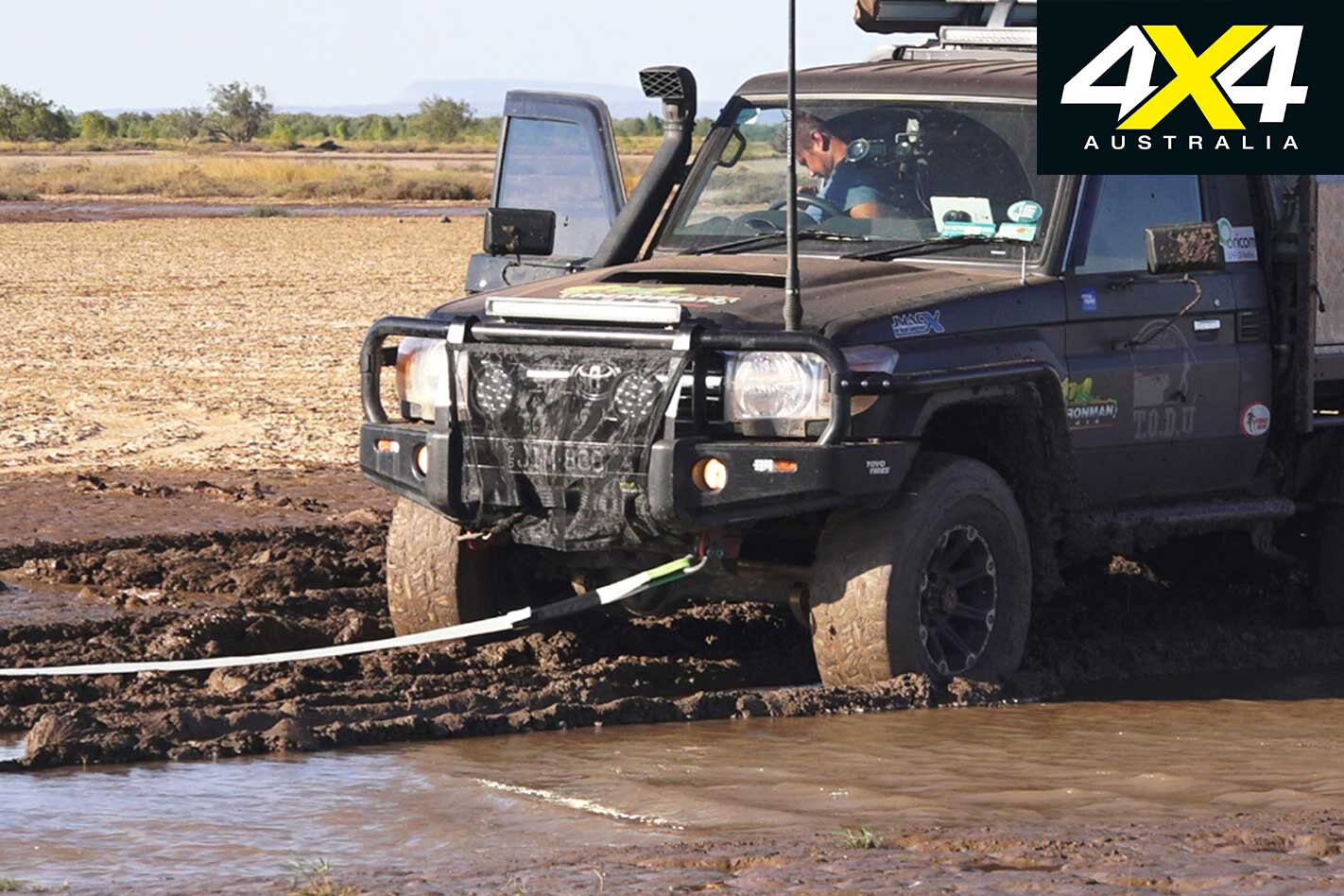
Passing through some spectacular country that is constantly changing, we arrived at the Durack River. Consisting purely of rocks, this 330m-wide crossing is extremely bumpy. Towards the northern side, the rocks become incredibly slippery and it’s hard to hold the line you have mapped out.
Watched by many sets of croc eyes, we climbed up the escarpment to a campsite with breathtaking views of the Durack, which eventually merges with the Cambridge Gulf. It was named back in 1882 after explorer and Kimberley pioneer Michael Durack during his expedition with John Pentecost, and is at its fiercest during the wet season.
With the dingoes howling the next morning, we departed camp and nosed the vehicles to the edge of a rocky descent leading to Wilson’s Crossing. These tracks haven’t seen a bulldozer in 30 years, and this was a prime example of erosion from the Kimberley rains.
With layers of shale rock shifting with the weight of the vehicle, it made it extremely hard to navigate the deep channels, causing that uneasy feeling of side angle in the cab.
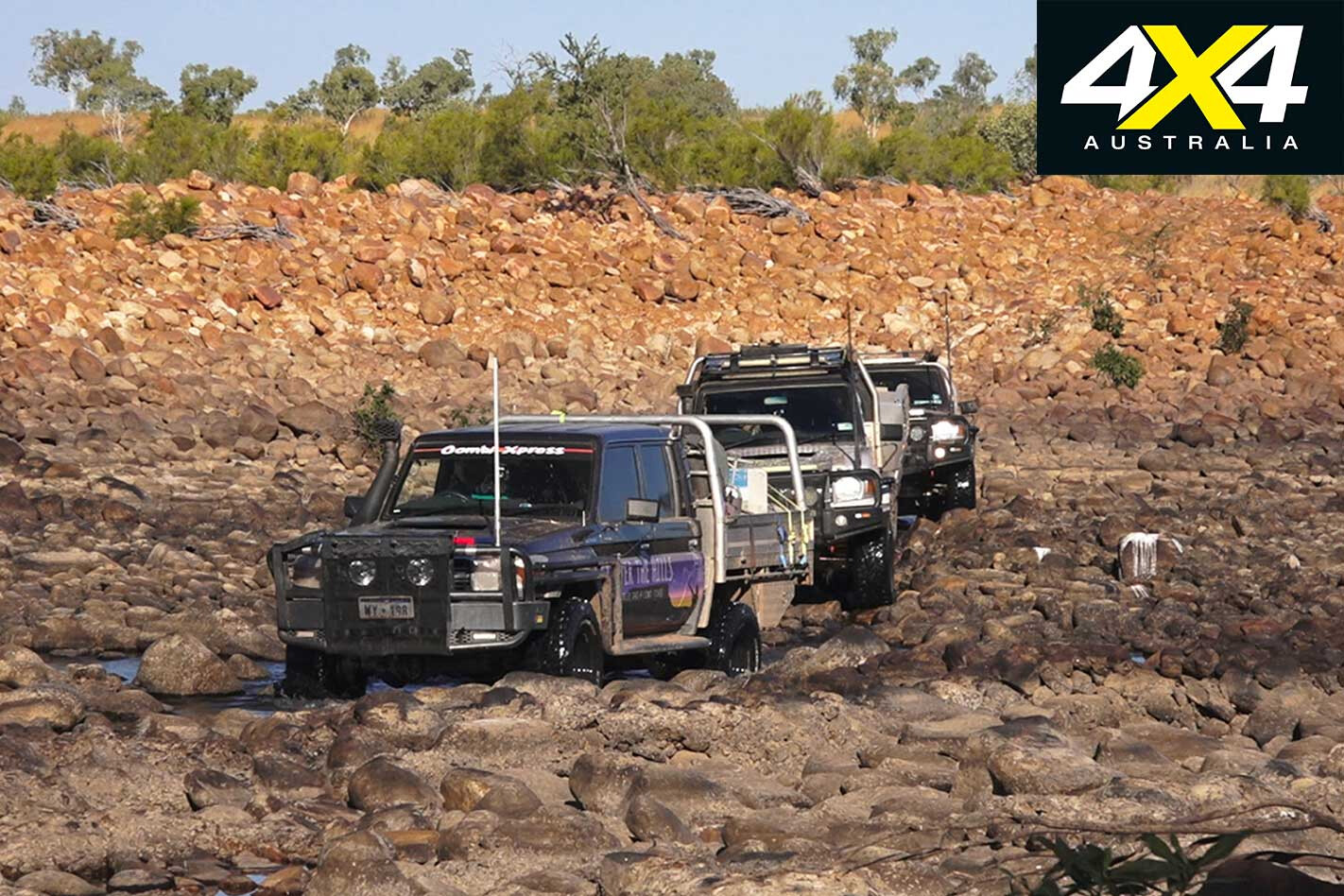
As we were only averaging slightly less than 50km a day, it was time to pull up for camp again. Heading upstream from Wilson’s Crossing, we found a campsite down on the sandy riverbed. This was all well and good until I drove down the 5m bank and, weighing in at five tonnes [with camper], my Cruiser was devoured by the soft river sand. I lost count of how many recovery tracks recoveries I did just to get close to where I wanted to camp.
With the Western Australian sun shining down on us, we crossed Warambur Creek, Moon Creek and Jilla Crossing, all presenting various 4×4 complications such as steep exits on the creeks. There was also soft sand and tracks dotted with gum trees in the most inconvenient spots, where you’d have to weave around them and lose all momentum.
The next campsite was on top of a plateau with good clearing from a recent bushfire. After setting up camp, I jumped on the quad bike and trekked 10km to a stunning piece of landscape called Camera Pools, appropriately named as the emerald green waters sparkle against towering red sandstone cliffs.
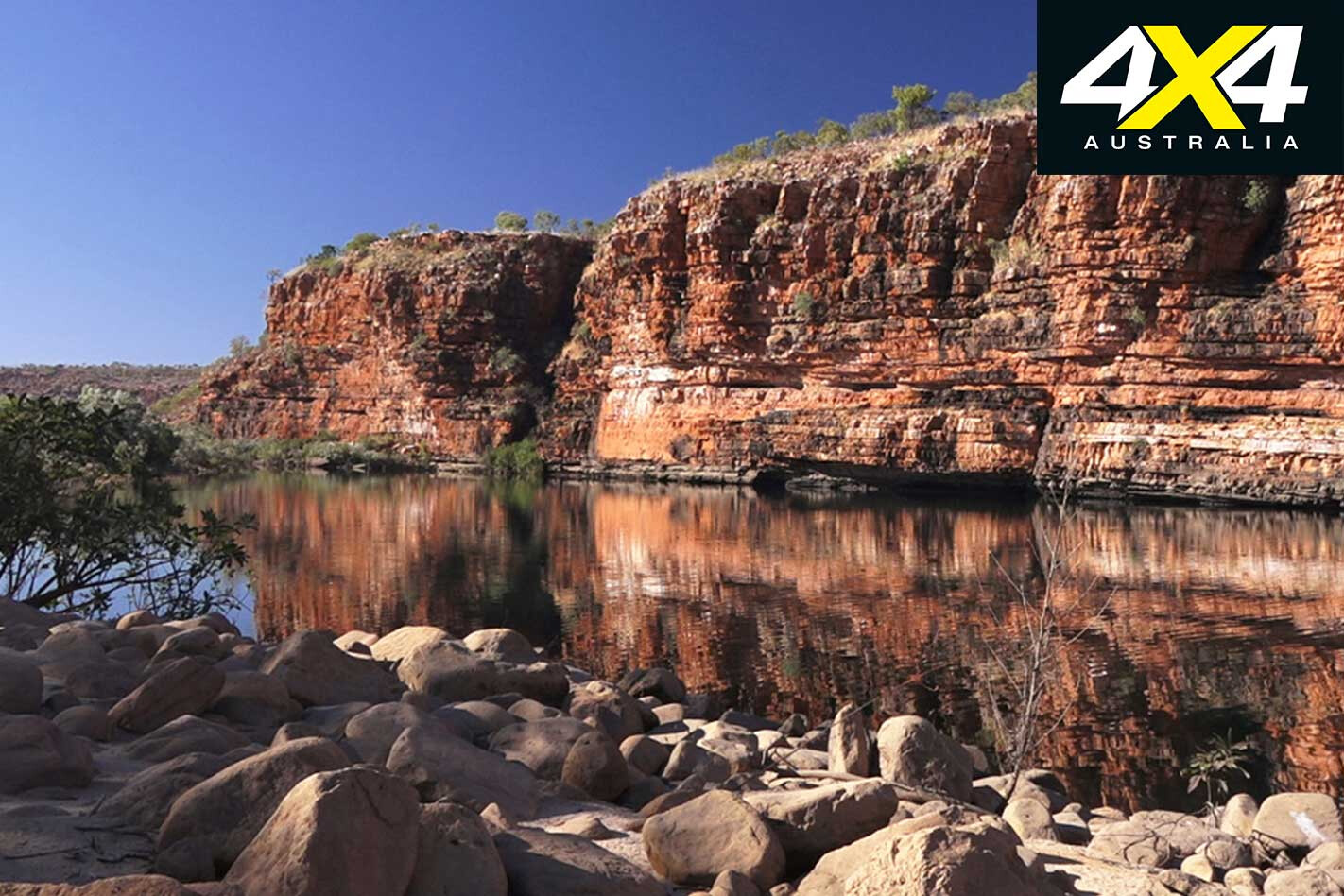
This is a special place to Ronny’s people. They would often spend time fishing here whilst avoiding the saltwater crocodiles. It was also the water source for the now-deserted indigenous town of Oombulgurri, on the fringes of the Forrest River. This community is now a ghost town and has a highly debated history.
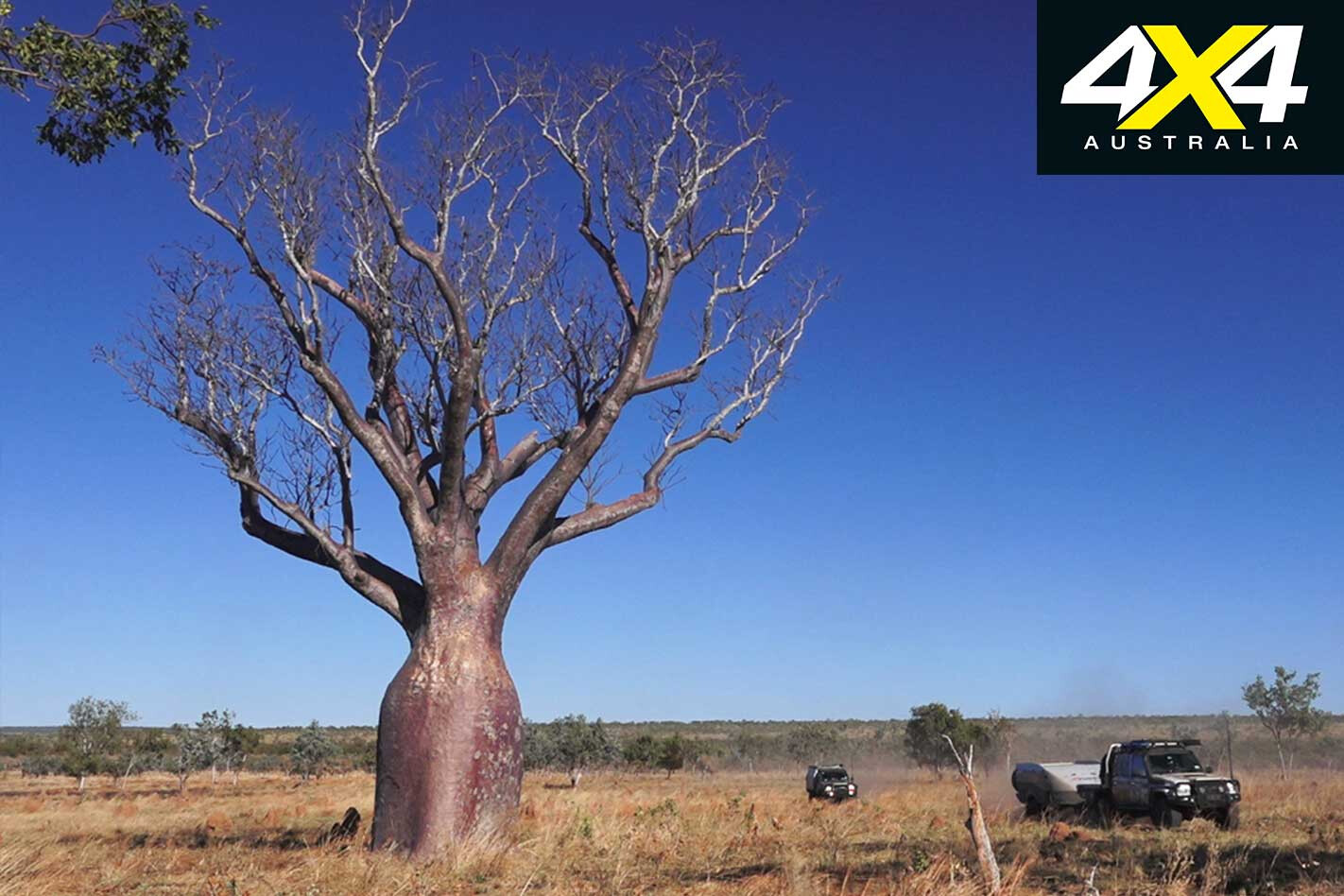
Even with a sombre past there is nothing forlorn about the landscape that embraces this ghost town. Walking down the main street of town you are in awe of the massive time-worn boab trees that line both sides.
It’s a beautiful little town even in its vacant state, with vegetation reclaiming the remaining buildings. It’s somewhat eerie and quiet, but you are able to walk through the doors of the once residential homes. In some there are still TVs, lounges and personal belongings, like they have simply walked out the door and left everything behind. It makes you wonder what actually happened here, to a town that in its heyday was home to 200 people.
The state premier at the time advised that the town was not viable and had some serious social problems. Hence it was closed down in 2011, to the immense disappointment of the people that called Oombulgurri home. Ronny paints a contrasting firsthand story of misrepresentation, and has fond memories of a childhood spent hunting and enjoying the traditional Balanggarra Homelands.
The country spanning 170km as the crow flies from Oombulgurri to Kalumburu is wild and untouched. The open grassland plains departing north from Oombi allow the Land Cruiser V8s to breathe as we stretch their gearing from low range first gear to high-range fourth gear. For a short time we follow a tributary of the Forrest River that provides refuge to powerhouse barra that you can do battle with on a reel.
Our time in high-range fourth gear was limited, and we took off as fast as a bale of turtles as we began to ford many creeks, forcing us back into low-range. Every creek is unique. With so many soft crossings ahead, I dropped my tyres to 15psi in an effort to get enough traction in this bottomless coarse sand.
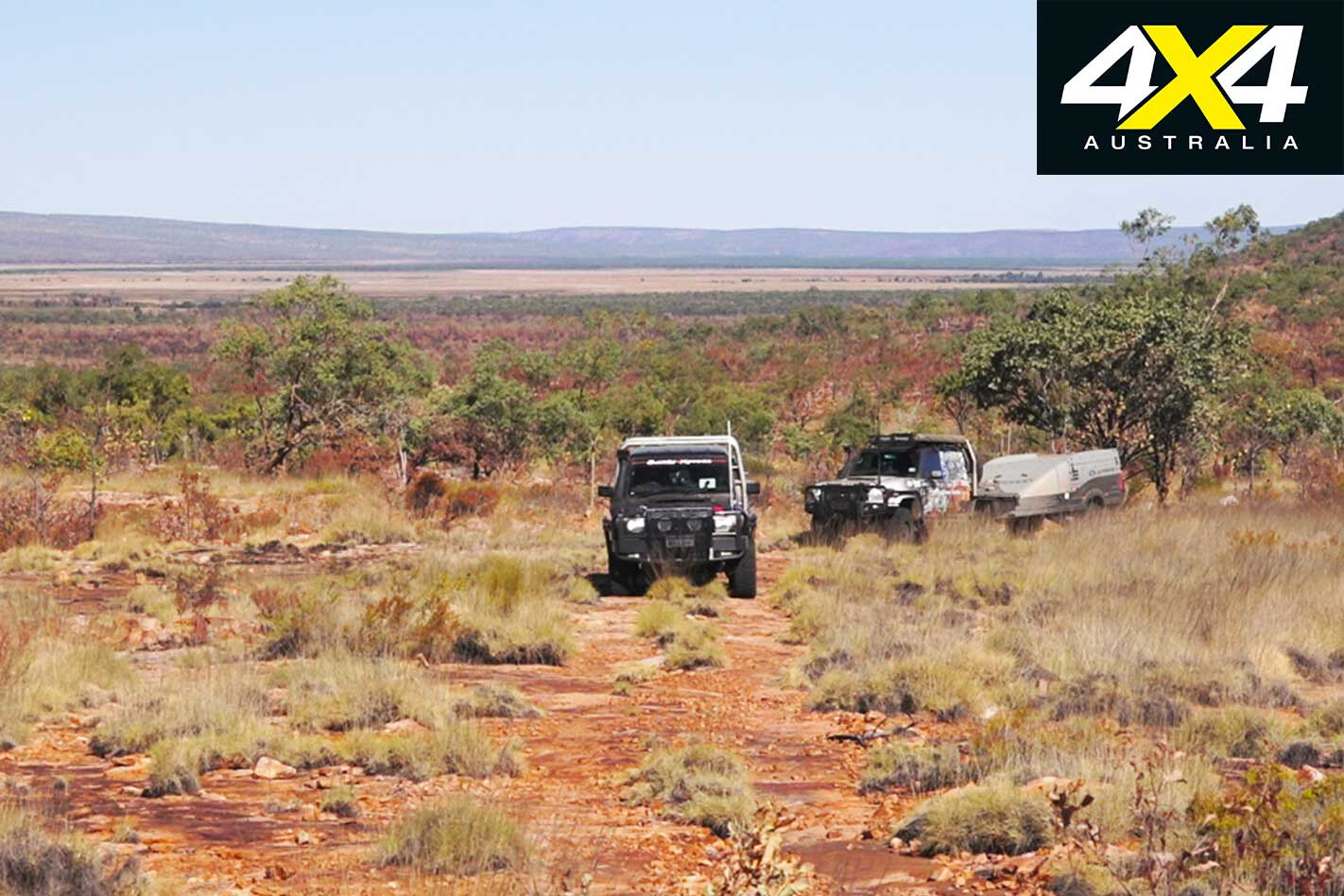
This next crossing was a double whammy, with two sand banks to breach to access the other side. Dropping down into the first creek holding about 300mm of water, I made it three-quarters of the way up the middle bank, approaching it on an angle to try and dissolve some of its steepness.
Suddenly, down I went to the road of 4×4 hell. Even reversing and having another crack proved ineffective. Unleashing the recovery tracks, I placed a set at the front and back wheels of the Cruiser and used my trusty long-handled shovel to chisel out the camper tyres.
I only needed to move forward another four metres to the crest of the sand bank. Jumping back in the cab, locking in first gear low-range to get moving, I changed to second gear, which is the most useful for low-speed gnarly stuff in a V8-powered Land Cruiser.
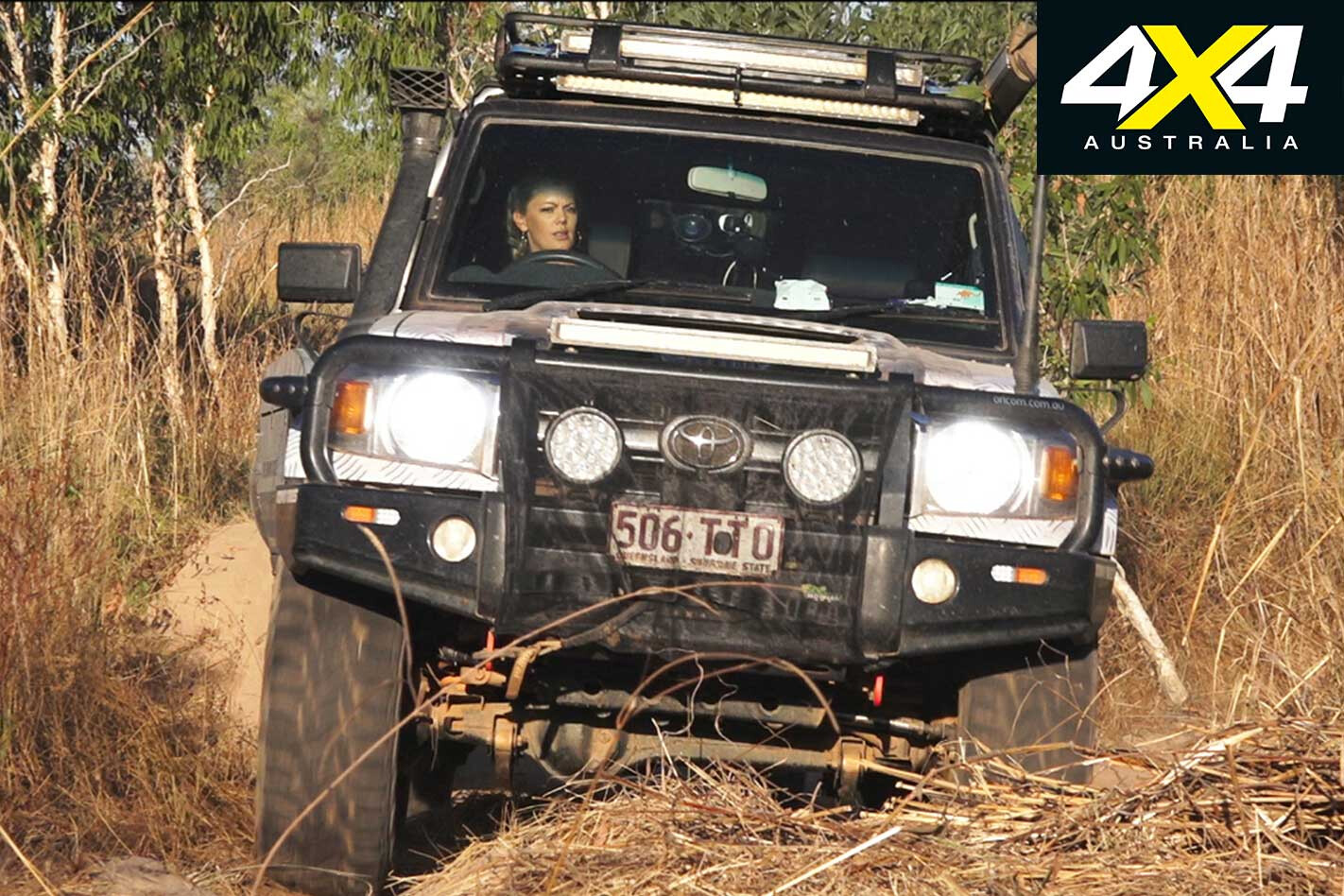
Since the start of the trip, I had been having a few issues with my factory electric lockers, not knowing if they were engaging when I wanted them to. This all created the perfect storm; a massive bang from the back of the Cruiser ricocheted through the paperbark trees. It was devastating as I was under no illusions that help was close by. We were on possibly one of Australia’s toughest tracks, days from help, and we still had a long way to go. This was a serious problem.
Ronny came to my rescue and we used a combination of winching and snatching to get me out of the creek. Further investigations showed I had grenaded my rear diff lock, damaging my axle in the process. The crew consoled me with a stiff cup of tea and removed my tailshaft and axle. They had essentially converted me into a front-wheel drive Toyota Camry.
It now became a survival mission, as I spent the next three days completing this gruelling track in front-wheel drive only. Even in these circumstances, though, the track was as breathtaking and spectacular as it was at the beginning.
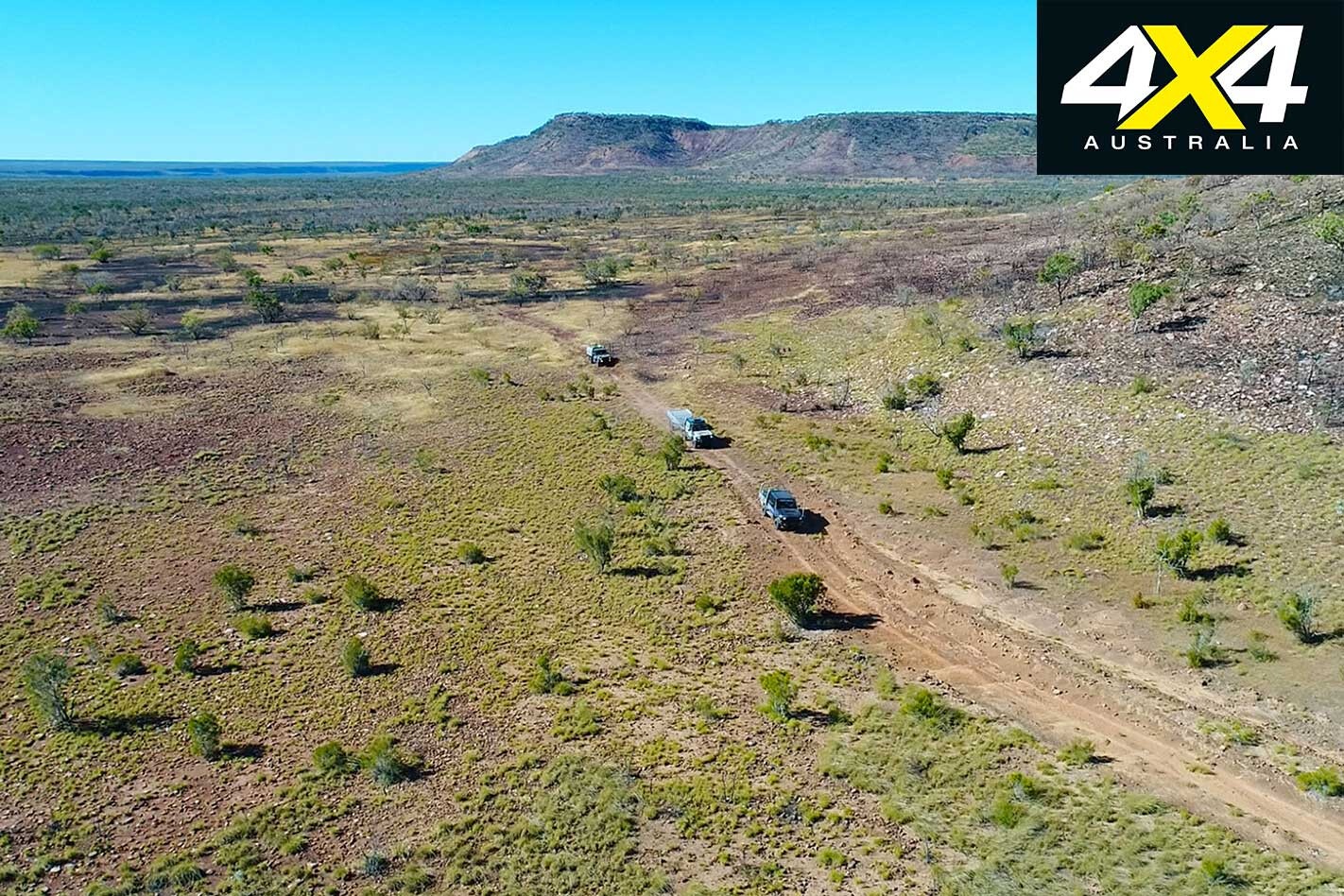
With Ronny’s guidance you too can experience the Oombi Track for yourself. Be sure to secure a spot, as the tours are very popular and can book out in the short time that you can actually access this country in the dry season.
One of the leading travel industry’s reports for this year predicts that the next 12 months will be a time when travellers will be wanting to discover less-visited destinations, with a desire for unspoiled natural beauty. The Oombi Track is all of the above, plus much more!
Travel Planner
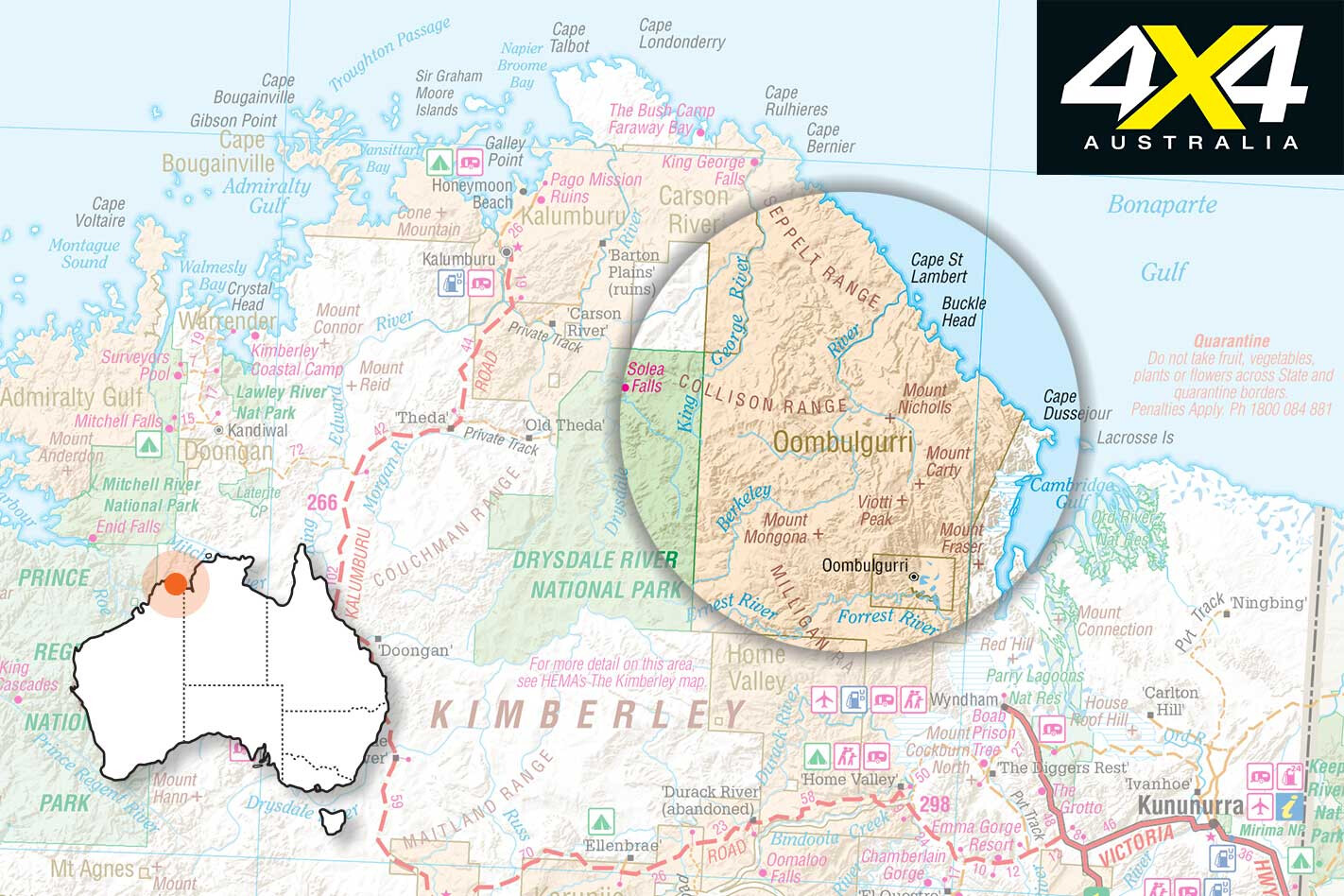
WHERE Just Over The Hills tours depart from Home Valley Station – located on the Gibb River Road, 114km west of Kununurra, WA – and end south of Kalumburu.
MAPS Hema’s Australia Road and 4WD Atlas.
ACCOMMODATION Camping or cabin-style rooms are available at Home Valley Station if you would like to stay a few nights before embarking on the tour. Ph: (08) 9161 4322 Accommodation on the tour is completely self-sufficient, with enough food, fuel and water for up to 10 days.
FUEL AND SUPPLIES No fuel is available at Home Valley Station. It would be advisable to fill up in Kununurra or Wyndham. At the completion of the tour, fuel is available at Kalumburu or Drysdale Station. Allow enough fuel to complete 400km of the Oombi Track and enough to arrive at your fill-up location at the end of the tour, depending on what route you take.
RESTRICTIONS AND PERMITS Just Over the Hills tagalong tours are the only group with the sole permissions to enter this indigenous country. It is no longer available through a permit-based system and is a private track. Please call Ronny for tour details. Ph: 0473 950 686 or visit www.justoverthehills.com
VEHICLE SETUP This is a serious 4WD track best suited to experienced off-roaders. Vehicles must meet a minimum standard, based on Just Over The Hills guidelines. A decent lift kit with tyres in near-new condition, winch and extensive recovery equipment are essential. It is not recommended to tow a camper trailer through this country.
*THE Simpson Desert was supposed to open in full on Saturday March 23, but recent rains have again cut off access from Birdsville. And with more floodwaters heading south from the cyclones, it could be a while before access from the east is available. You can still get into the Simpson from the west via Mt Dare or the north via the Hay River Track, but you can’t cross it east-west. Always check road conditions when planning any outback trip, and stay out of flood waters when possible and off wet outback roads that have been closed. – This article was amended on 28 March 2019
AFTER a late start, the Simpson Desert is now open for the 2019 desert-touring season.
Flood waters heading down the Diamantina from farther north in Queensland were blocking the road from Birdsville to Big Red, but they have now subsided and moved on down to Lake Eyre. The Munga-Thirri National Park (Queensland side) and Munga-Thirri – Simpson Desert Conservation Park (South Australia) are open for travellers.
The Simpson Desert is bucket-list trip for many 4×4 enthusiasts, but it’s not to be taken lightly. The desert is a remote place and the conditions can be harsh on both travellers and their vehicles, so there are a few things to consider when planning your trip to the Simpson.
The most common way across the Simpson is via the French and QAA lines, which will take you between Mount Dare in the west, to Birdsville in the east, and vice-versa. These are the only two places you can get fuel and supplies within cooee of the desert, so ensure you have what you need before you leave.
It’s around 500km of travel between Birdsville and Mount Dare, and you’ll cross more than 1000 sand dunes if following the French Line. Just because your 4×4 will do 500km on a single tank of fuel on the highway, don’t expect it to make it across the desert on the same amount of fuel; the sand can be soft and heavy going and you should plan to use up to three times as much fuel through the desert as you would on the highway. This also allows for a small detour or two to be taken, as well as cover any minor problems that may pop up.
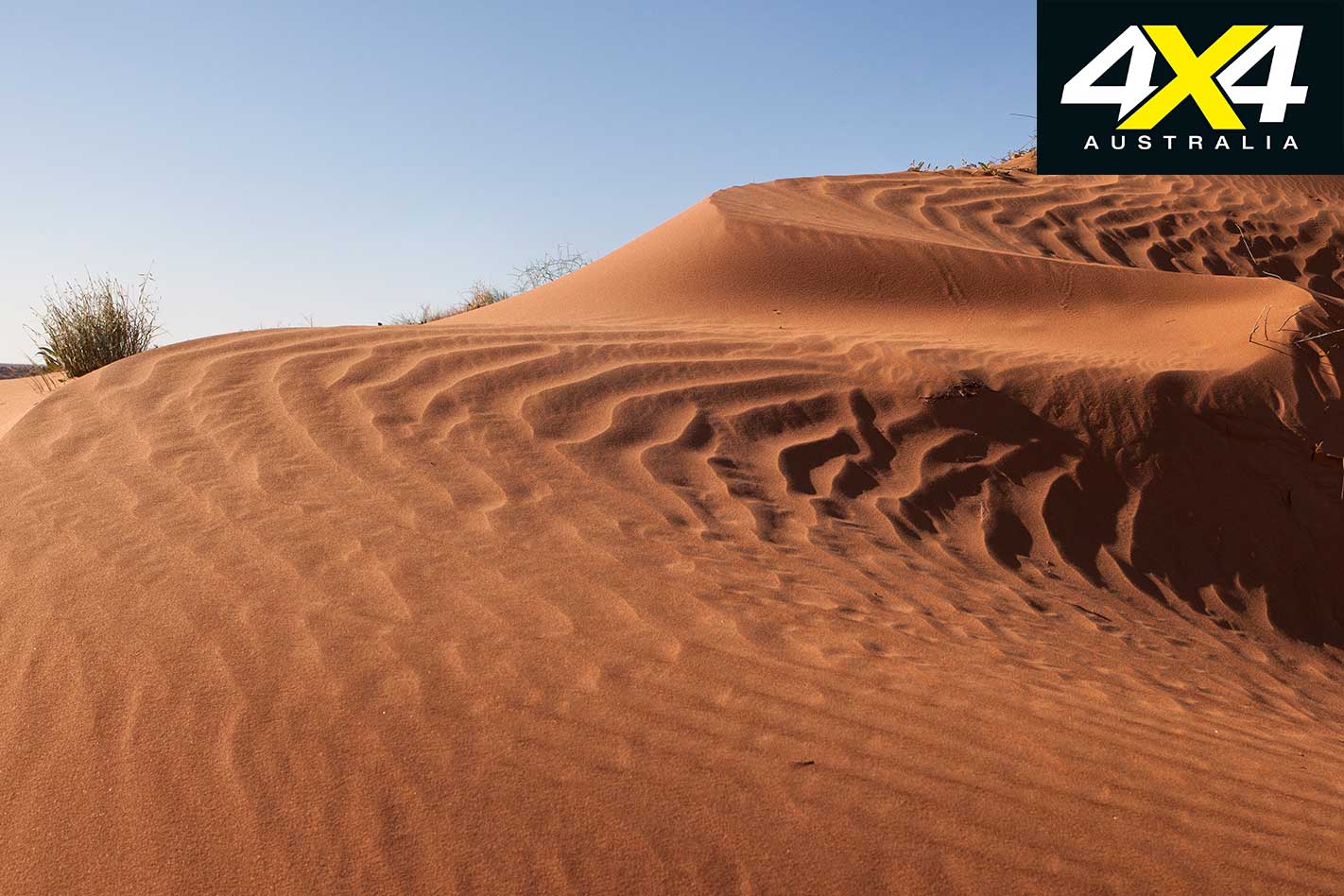
The French Line is generally well-defined and becomes more so as the season goes on, and the dune faces also become more chopped up and can be difficult to climb as more and more vehicles mount them.
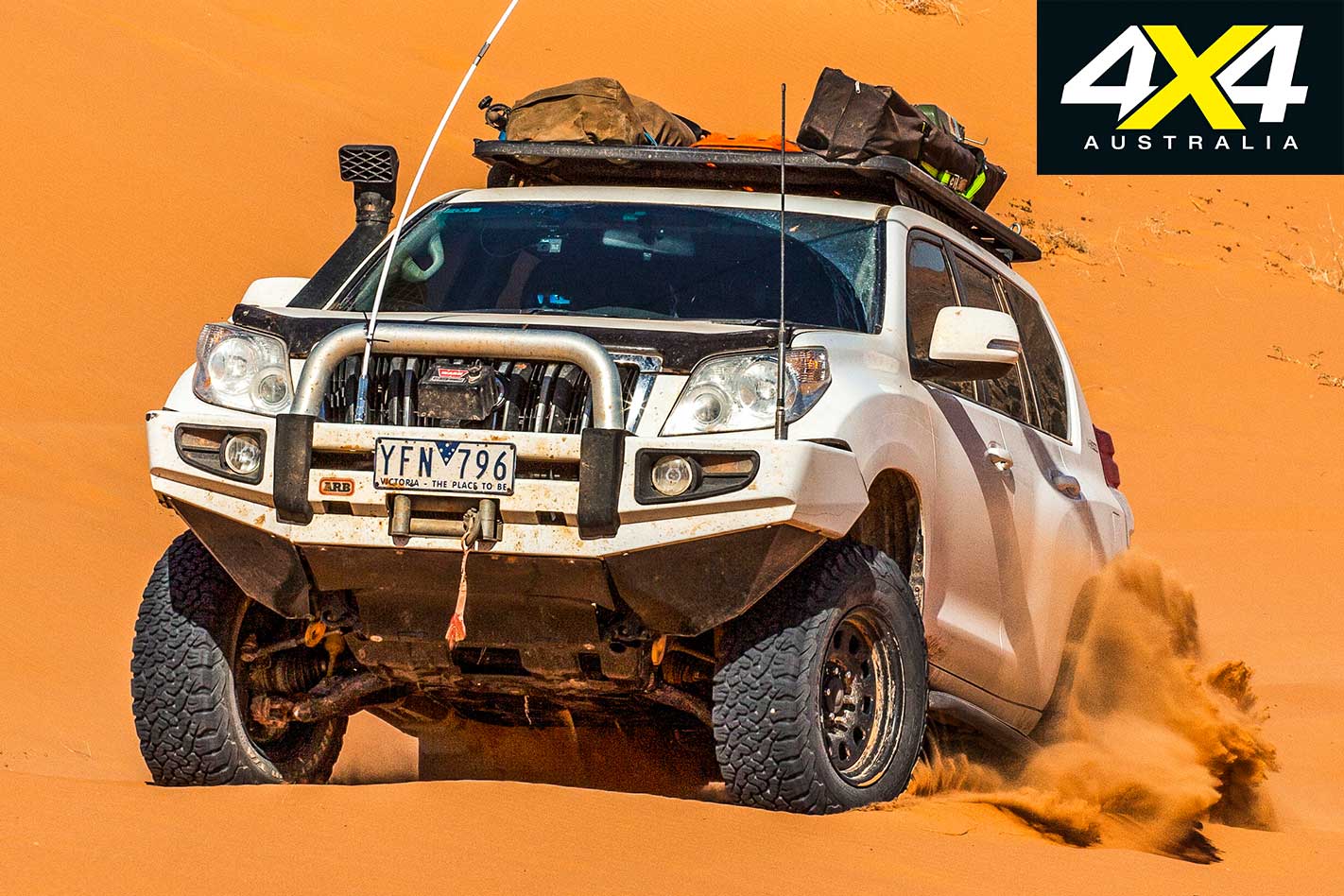
Your vehicle needs to be in tip-top condition before you head across the desert. If you breakdown out here help could be a long way away, and getting recovered from the desert is very costly experience.
Ensure your 4×4 is well-maintained and have it checked over by your regular 4×4 mechanic before you set off. It’s always handy to carry a range of spare parts such as fan belts, hoses, fuses, electrical wire and the tools to carry out any minor repairs to keep you going. This is a trip for high-clearance 4×4 vehicles with low range, not soft roaders or SUVs.
Sturdy all terrain type tyres should be fitted to your car as a minimum, with a matching spare. Drop your tyre pressures to around 18-22psi to aid travel over soft sand and be prepared to drop them further to escape trouble.
A shovel is essential and a set of MaxTrax is highly recommended. Raised off-road suspension will also help with ground clearance in soft sand and improve the ride over corrugations and sandy tracks. It’s compulsory for every vehicle to be fitted with a sand flag, which must be of high-vis material and be at least 3.5 metres high when mounted to the front of the vehicle.
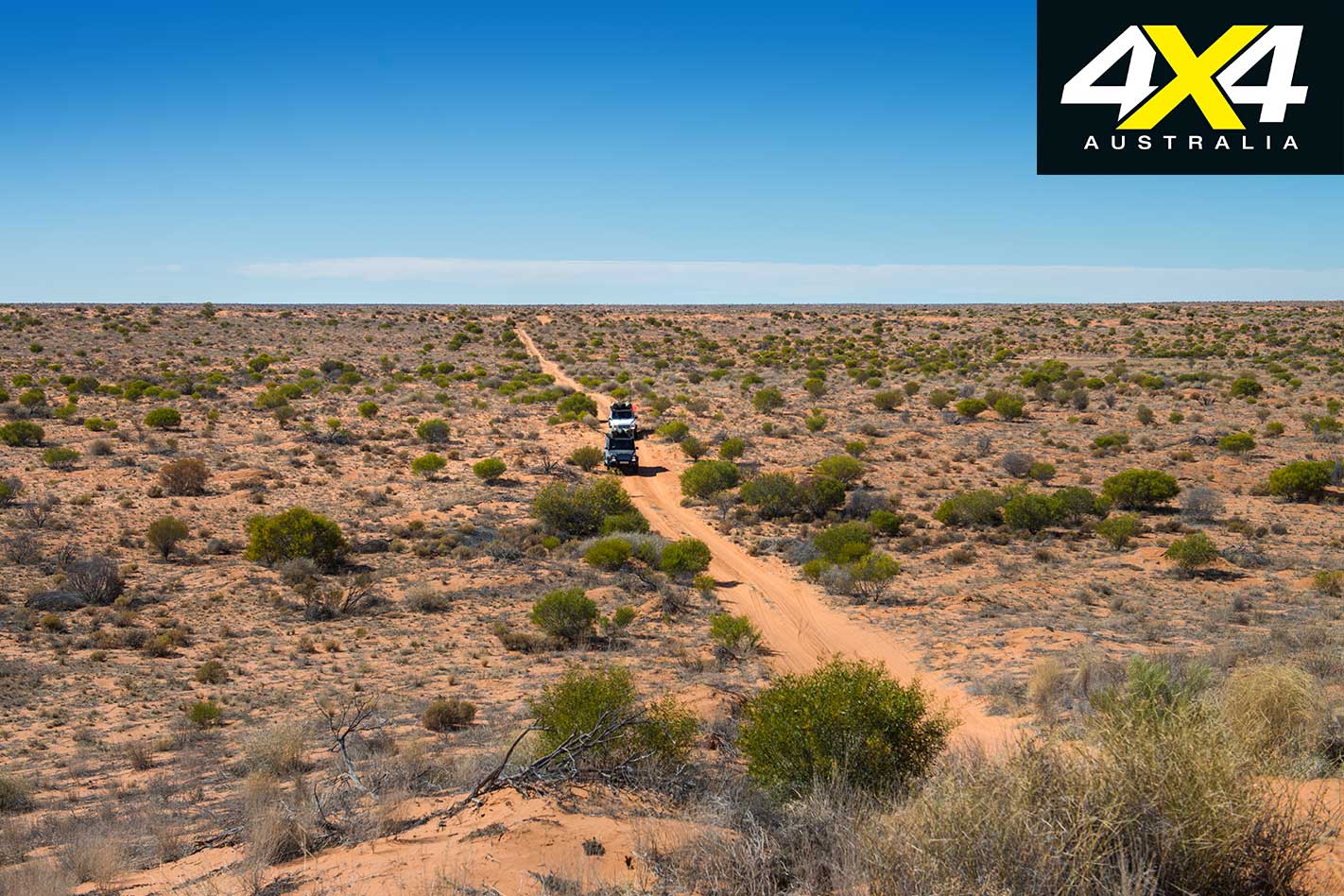
UHF radios are essential for car-to-car communications and a great way to get an idea of oncoming traffic you might meet on the crest of a sand dune. There is no cellular phone reception in the desert, so a satellite phone should be carried for emergency communication. If traveling solo an EPIRB or similar locating device should also be considered.
Depending on the time of year it might be days before you see another traveller to help you out, so always carry emergency supplies and plenty of water for the number of passengers you have on-board.
It might be a desert, but there’s plenty to see out in the Simpson so don’t plan to tear across it in just a day or two. Allow four days travel as a minimum. Take your time to enjoy the place and your desert crossing will be memorable for all the right reasons, not the wrong ones.
If you’re heading out to the Red Centre early this season, it’ll be worth checking out Lake Eyre as the flood waters have moved south to fill the lake with water. Also, be aware that at the time of writing, The Birdsville Track remains closed due to those flood waters so access to the lake will be from the south or western side. Again, check the road conditions to see when the track is open again.
The best way to see the lake full of water is on a flight with Wrightsair out of William Creek.
Simpson Desert Touring permits & links
– You’ll need a Desert Parks Pass, which can be purchased online, at Mount Dare, or at the Wirrarri Visitor Information Centre in Birdsville. – Traveling the Hay River Track into the North Simpson requires special permits which can be arranged in advance from Direct 4WD in Alice Springs or at: www.direct4wd.com.au/ – For a great guide on crossing the Simpson Desert, take a look at Hema Maps’ Great Desert Tracks: www.hema.com.au – Mount Dare Homestead: www.mtdare.com.au – Queensland National Park: parks.des.qld.gov.au – Birdsville Roadhouse and vehicle recovery: birdsvilleroadhouse.com.au – Wrightsair: www.wrightsair.com.au/
THE very first 2020 Jeep Gladiator has rolled off the production line at the FCA’s Toledo facility.
Photos and videos circulating overnight (our time) on social media stamped the momentous occasion into the history books, with the folks from the Jeep Gladiator Forum getting the scoop.
https://www.instagram.com/p/BvM4kvEFd9N/?utm_source=ig_embed&utm_medium=loading
An eagle-eyed Jeep Gladiator Forum member noticed the Silver Gladiator was fitted with the Trail Rail system and tonneau cover, indicating that these options won’t delay shipment.
The 2020 Gladiator officially debuted at the 2018 LA Auto Show and will arrive in US showrooms in the second quarter of 2019 – Aussies will have to wait a bit longer, as it will land locally sometime in 2020.
The pick-up, to be available in Sport, Sport S, Overland and Rubicon configurations, will leave the Toledo, Ohio, plant with the well-known 3.6-litre Pentastar V6 engine that generates 213kW and 353Nm. A six-speed manual transmission is standard, but an eight-speed auto will be an option. From 2020, however, a 3.0-litre EcoDiesel V6 will be available, mated to an eight-speed auto.
Sports and Overland models come packed with the Command-Trac system as standard; while the Rubicon models get the Rock-Trac 4×4 system.
We’ll be heading to the United States in April for the launch, so stay tuned for specs and pricing.
2020 JEEP GLADIATOR OFF-ROAD SPECS Approach angle: 43.6 degrees Rampover angle: of 20.3 degrees Departure angle: 26 degrees Ground clearance: 282mm Water fording: 762mm Towing capacity: 3500kg Payload capacity: 725kg
https://www.whichcar.com.au/reviews/road-tests/2019-jeep-gladiator-off-road-review
SUSPENSION upgrades are essential for off-roaders who prefer the rough and tumble of the Outback or High Country.
Shocks improve ride quality, making the 4×4 more capable and more comfortable. Here we’ve listed adjustable shocks that’ll soon hit Dobinsons catalogues, as well as new TrakRyder Extreme adjustable coilovers from Pedders.
Dobinsons Springs & Suspension MRR Adjustable Shock Absorbers
The team at Dobinsons Springs & Suspension will soon release a new adjustable shock (coming April/May). The shock features a huge 50mm and 60mm bore (56mm and 66mm outer body) with a robust 3mm wall thickness.
The aluminium piston is a CNC-machined high-flow billet jobbie. The shock has high- and low-speed compression dials, a rebound adjustment dial and an upgraded three-stage sealing system. The bushings are natural rubber and the hoses are Parker stainless steel braided. The external remote oil reservoir is also built tough and the shocks themselves of a fully rebuildable, direct bolt-on design, making the fitment process straightforward.
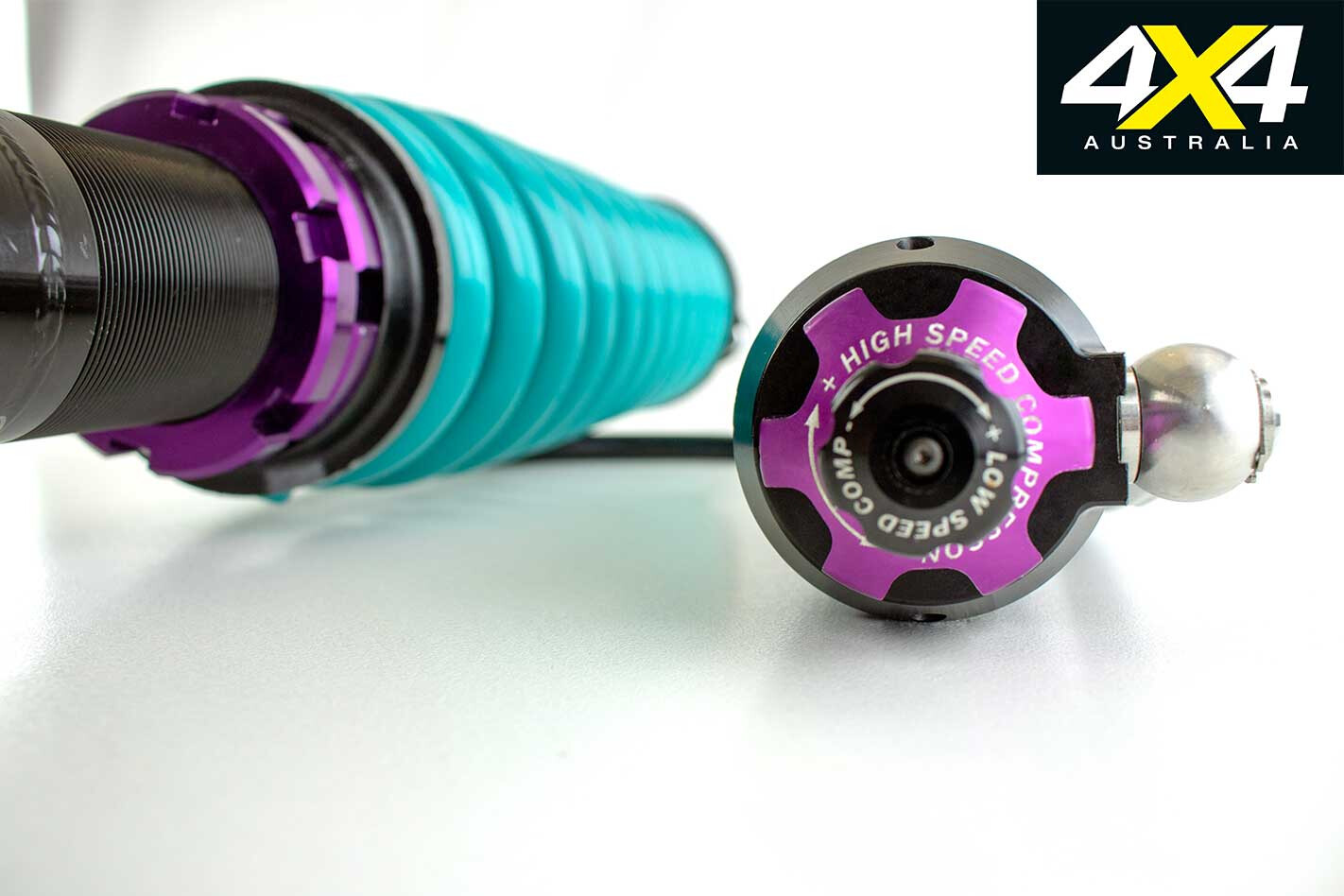
Some versions of the shock (vehicle-dependent) will feature a height adjustable spring seat and a single-piece lower leg. There’ll be limited vehicle model versions upon release, with more to come.
Website: www.dobinsonsprings.com
Pedders Trakryder Extreme Adjustable Coilovers
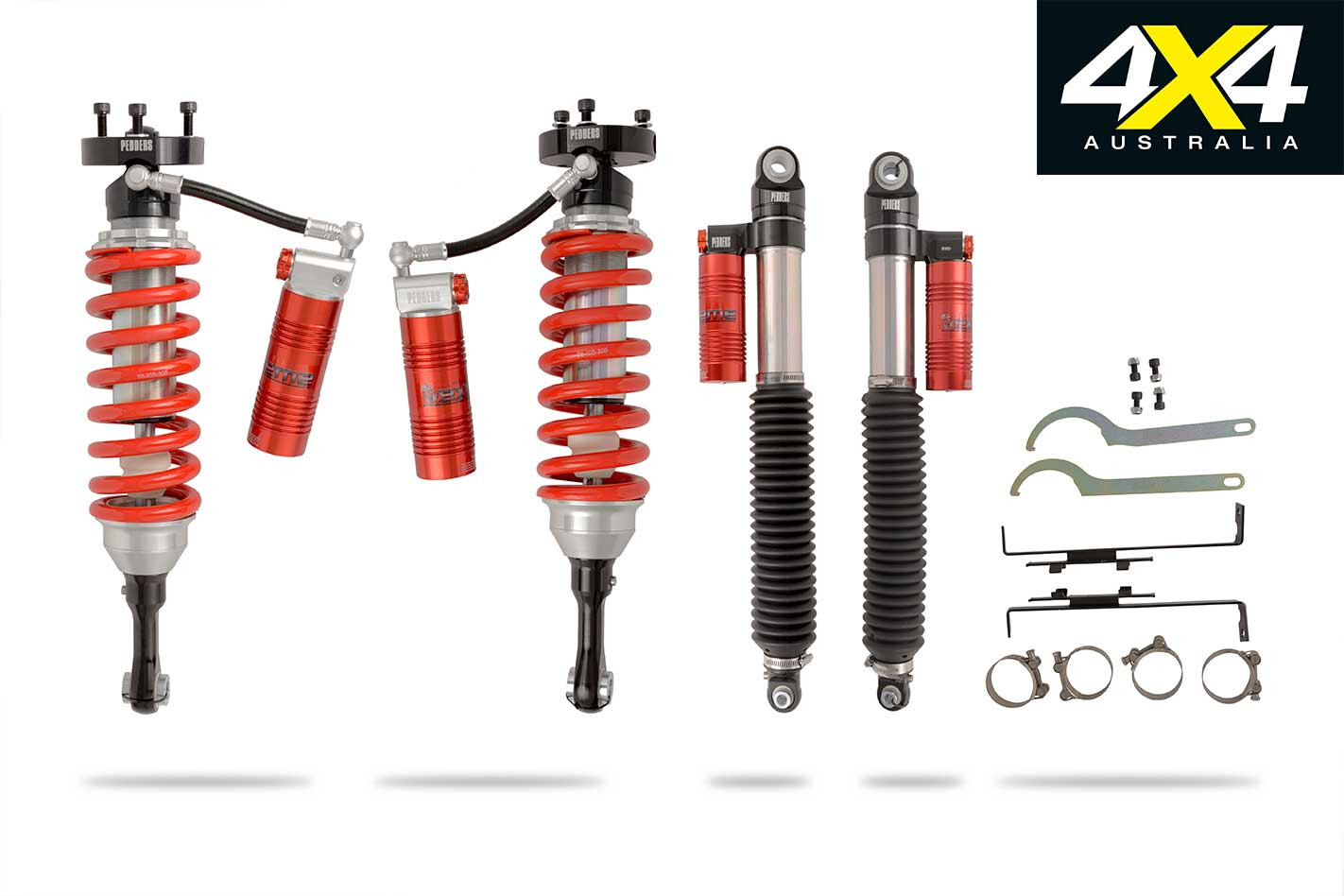
The suspension gurus at Pedders have produced a new range of adjustable coilover shocks for a number of the most popular 4×4 dual-cab utes, including the Ford Ranger (PX onwards), Mazda BT-50 (2011+), Isuzu D-Max (2012+), Holden Colorado (2012+) and Toyota Hilux (2016+).
The coilover includes high-grade spherical bearing mounts and seals, adjustable rebound damping, 54mm-bore inverted monotube, height-adjustable front assembly, a remote canister for optimum oil capacity and cooling, 20mm hard-chrome piston rod, and top-notch alloy steel coil springs (on the front only).
The kit includes two front adjustable coilovers, two rear adjustable shock absorbers (with remote canister and the same beefy 54mm-bore inverted monotube design as the front), a fitting kit and adjustment spanners.
Website: www.pedders.com.au
THE eight vehicles fighting for the honour of being named 4×4 of the Year are here for one reason: they are the best new 4x4s of 2018.
To qualify for contention, a contender must be new or significantly revised for 2018. Some in the line-up this year are new from the ground up, while others are a revision of an existing model. That’s the reason why there are no Toyotas in the mix.
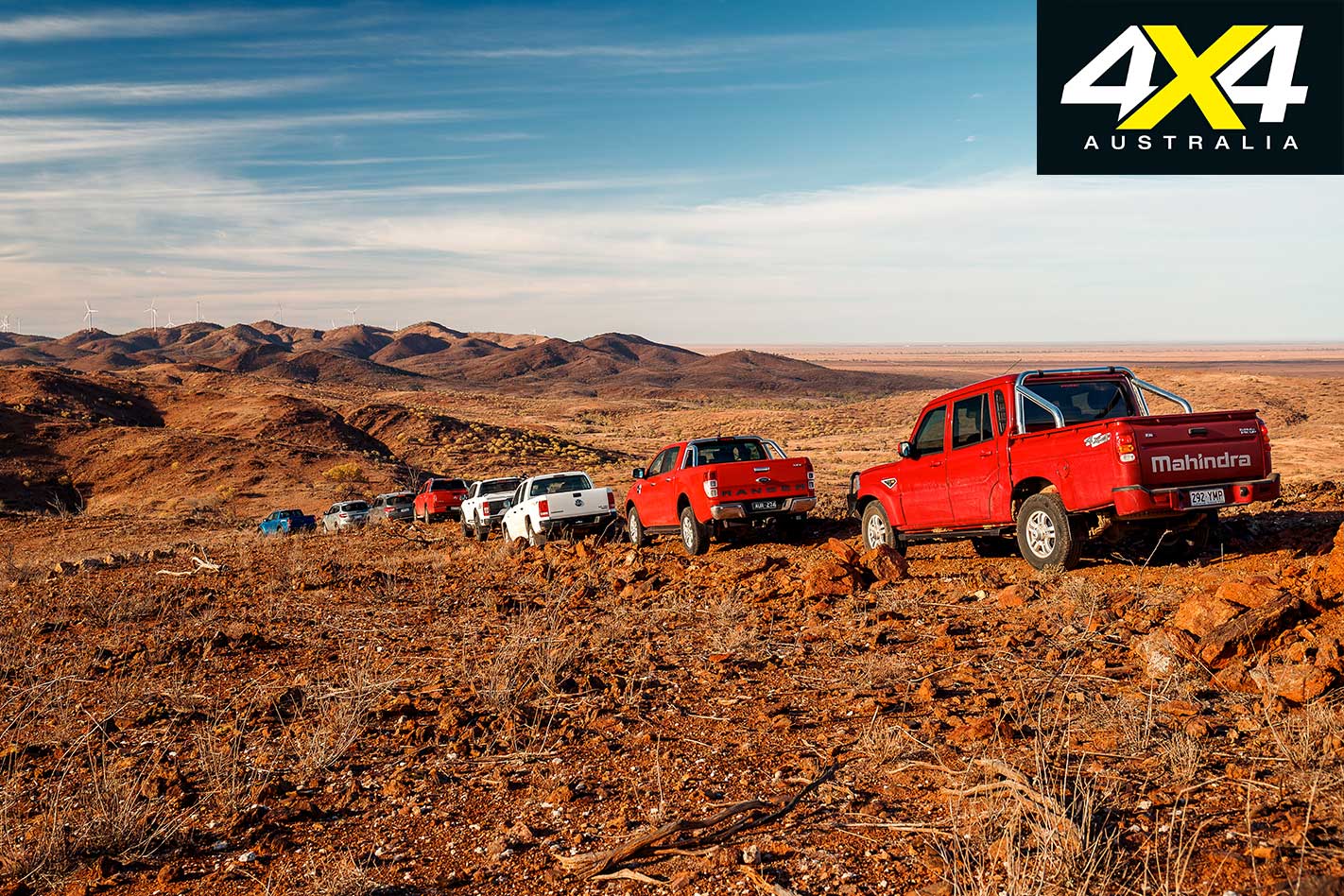
The 4X4OTY finalists, in no particular order, were the Mahindra Pik-Up, SsangYong Rexton, Volkswagen Amarok V6 Core, Ford Ranger 2.0L, Ford Everest 2.0L, HSV Colorado SportsCat+, Mercedes-Benz X250d and Ford Ranger Raptor.
The vehicles were tested over a full week of driving on a variety of sealed and unsealed roads, outback tracks and off-road trails on private properties. The judges also looked at cabin seating, luggage areas and peaked underneath the bonnet. It’s an exhaustive process, with each car intensely scrutinised with a fine-tooth comb.
The vehicles were then scored against the established 4×4 of the Year criteria: Value for money, breaking new ground, how well it’s built, how suitable it is for 4×4 touring, and how well the vehicle does the job it was designed to do.
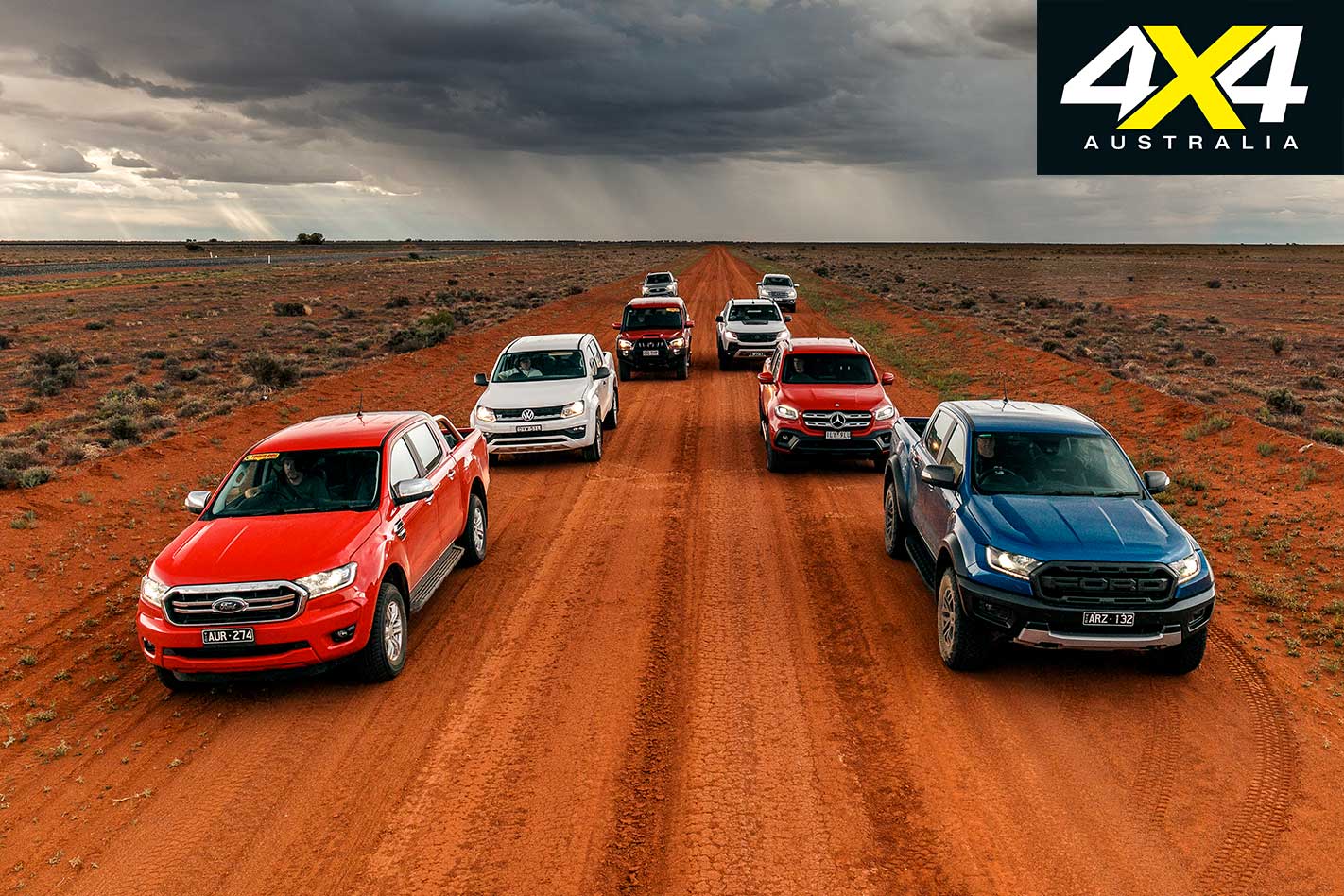
The judges then send in their individual scores for each vehicle, and the one with the highest overall score wins the acclaimed 4x4OTY title.
There have been plenty of worthy winners throughout the years, ever since the inaugural award in 1984. Here are the past winners of the 1980s, 1990s, 2000s and 2010s.
Ride along with us for a behind-the-scenes look at what goes into testing the best 4×4 vehicles of 2018.
RAM’s design team has tweaked the front and back ends of the RAM 1500 Laramie to herald in the 2019 model range.
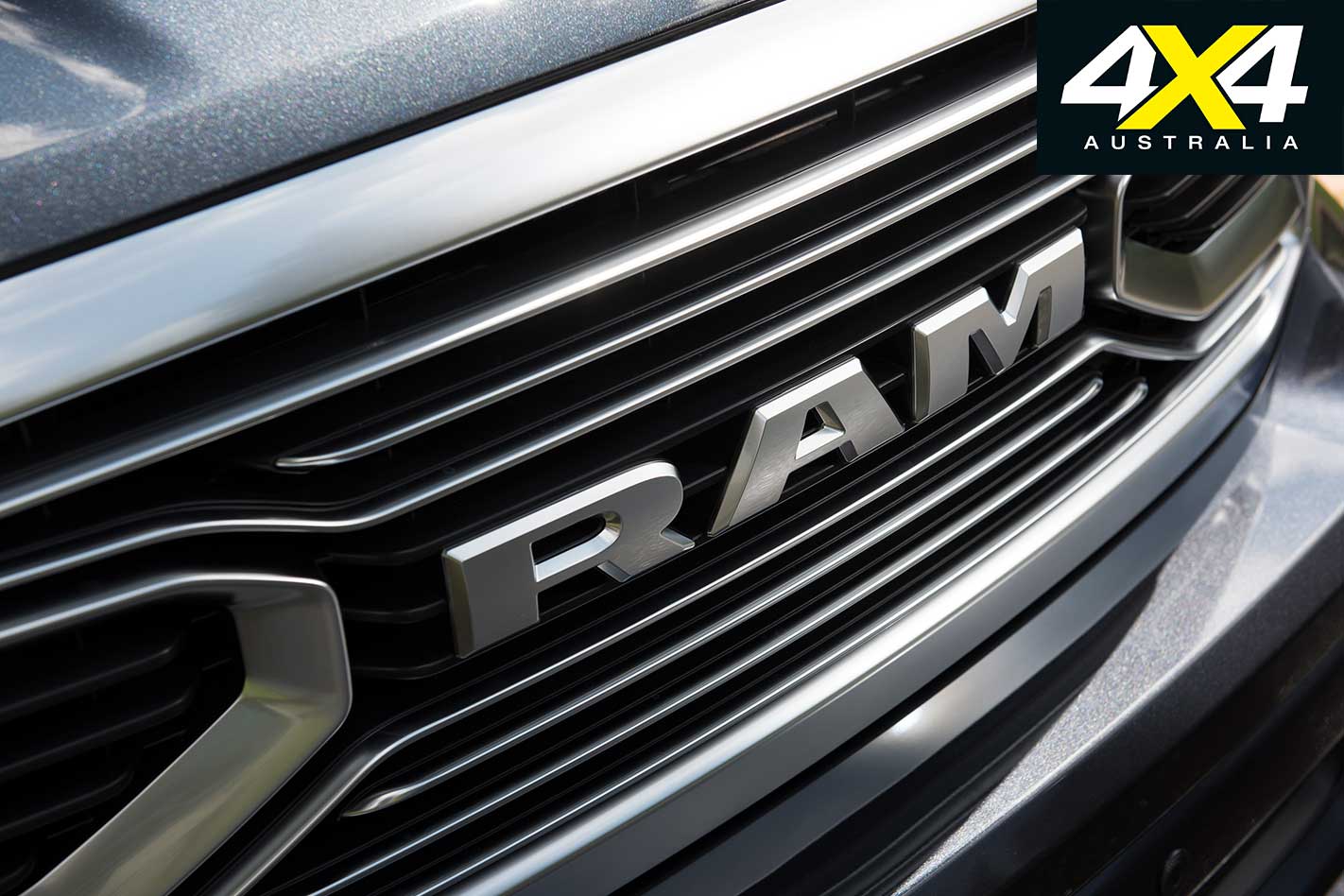
The updated 1500 Laramie has arrived sans crosshair grille, with a new chrome grille with RAM lettering in its place. At the opposite end of the rig the design boffins have added 30cm-high raised chrome badging on the tailgate.
“Since its launch last year the RAM 1500 has proven to be the outstanding success for RAM in Australia that we expected, a point proven in February by the Australian production line achieving more than 200 vehicles re-manufactured in a month for the first time,” Alex Stewart, General Manager of RAM Trucks Australia, said.
“In response to this demand we have moved from the tradition RAM ‘crosshair’ grille to the chrome grille with the word RAM emblazoned across its front … [and] it now has RAM adorning the tailgate in 30cm-high raised chrome lettering.”
In other changes, the 1500 Express now features a reversing camera and Trailer Brake Control. The new look has also been implemented on the 2500 Laramie.
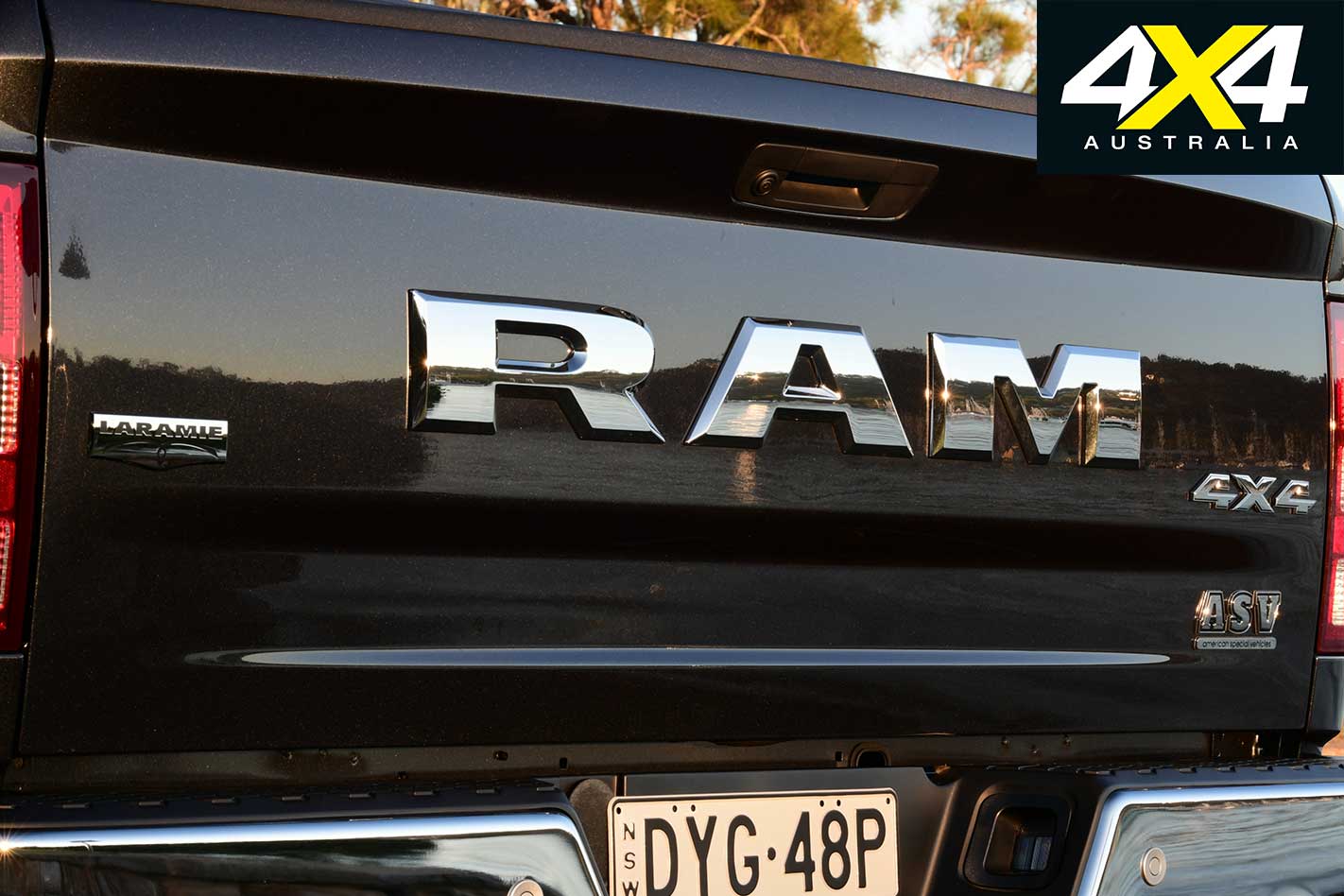
RAM pick-ups are remanufactured from LHD to RHD for the Australian and New Zealand markets, at its purpose-built Melbourne facility. The vehicles are fully factory-supported and backed by 37 RAM dealers Australia-wide.
However, punters keen on the diesel-powered versions will have to remain patient, as diesel 1500s have been delayed until May this year.
RAM 2019 range and prices
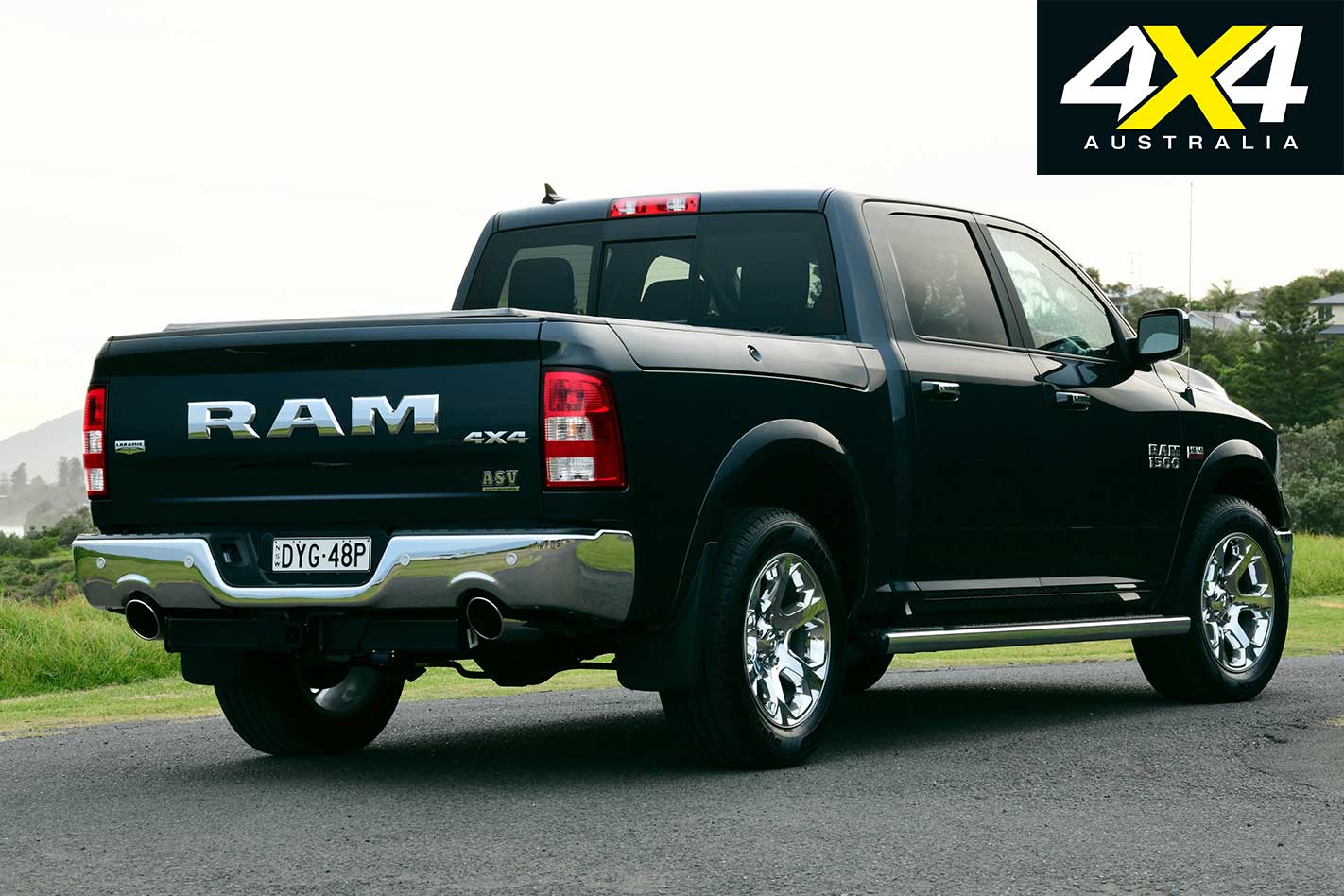
RAM 1500 EXPRESS (3.92 AXLE RATIO) RAM 1500 Express Quad Cab 4×4 6’4” Tub: $79,950 RAM 1500 Express Quad Cab 4×4 6’4” Tub (with RamBoxes): $84,450 RAM 1500 Express Quad Cab 4×4 6’4” Tub (Black Pack): $84,950 RAM 1500 Express Quad Cab 4×4 6’4” Tub (Black Pack with RamBoxes): $89,450
RAM 1500 LARAMIE (3.92 OR 3.21 AXLE RATIO) RAM 1500 Laramie Crew Cab 4×4 5’7” Tub: $99,950 RAM 1500 Laramie Crew Cab 4×4 5’7” Tub (with RamBoxes): $104,450
RAM 2500 LARAMIE RAM 2500 Laramie Crew Cab 4×4 6’4” Tub: $139,950 RAM 2500 Laramie Crew Cab 4×4 6’4” Tub (Sport Appearance Pack): $146,550 RAM 2500 Laramie Crew Cab 4×4 6’4” Tub (with RamBoxes): $144,350 RAM 2500 Laramie Crew Cab 4×4 6’4” Tub (Sport Appearance Pack with RamBoxes): $150,950