WHAT YOU see here is Mitsubishi’s new 2019 MR Triton. It’s not so much of an all-new model but more a mid-life refresh of the fifth-generation MQ that arrived in Australia four years ago.
Most obviously the MR brings distinctive new stying, but there’s also new active safety kit and, the most significant mechanical change, the adoption of a new six-speed automatic that replaces the previous five-speeder.
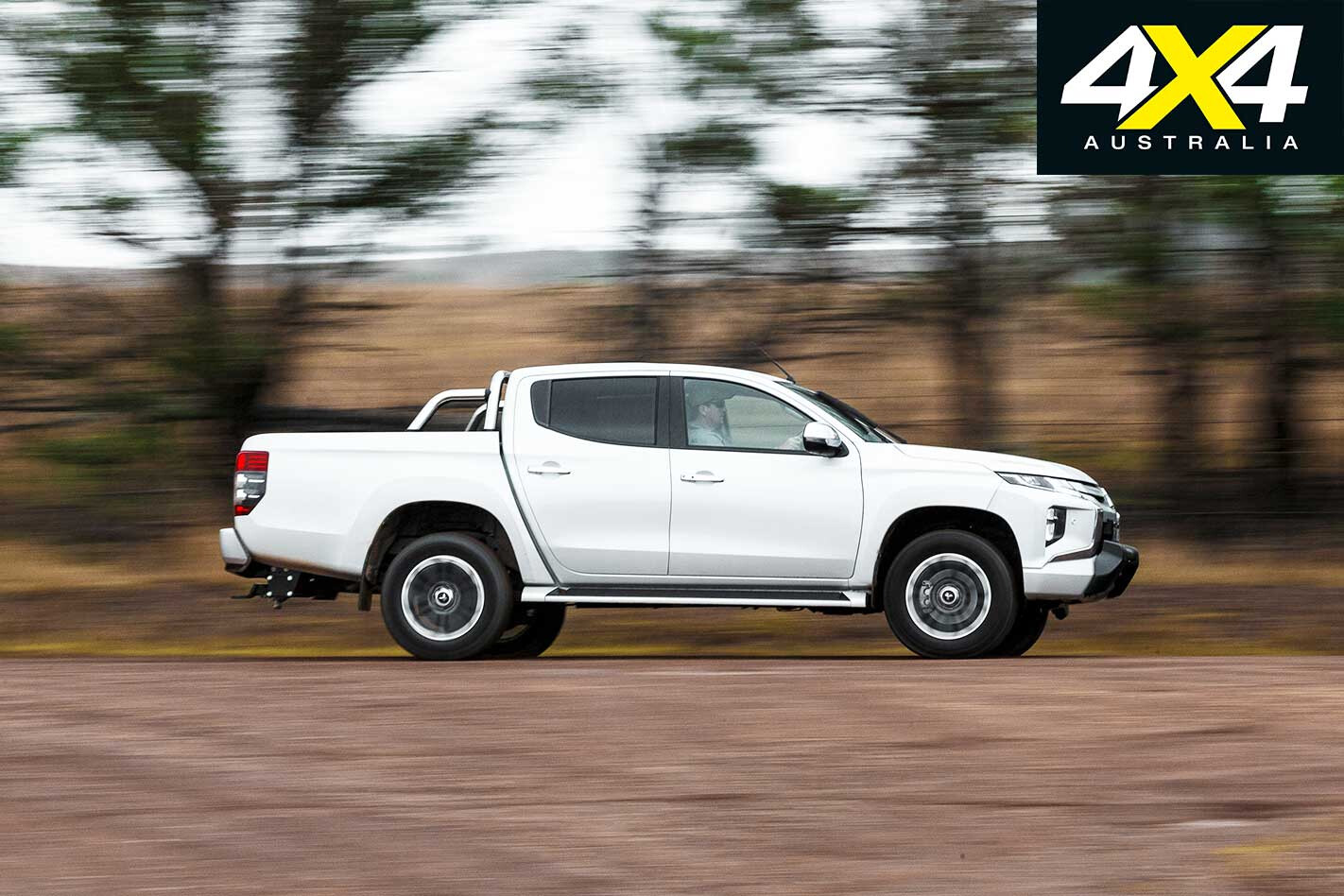
This evolution rather than revolution approach is very much Mitsubishi’s way when it comes to the Triton, as this new model can trace its roots back to the ML of 2006, the first of the Tritons where the rear of the cabin has the distinctive rounded-off styling.
In between then and now new engines have been the most notable changes, with a 3.2 diesel making way for a 2.5 diesel and most recently a 2.4 diesel, all the while offering more power and lower emissions. Meanwhile extra ratios have been added to both the manual and automatic gearboxes.
In a very crowded and very competitive dual-cab market the Triton is outsold only by the Hilux and Ranger, thanks largely to pricing only bettered by Chinese, Indian and now Korean utes. And while this new Triton is a little more expensive than the outgoing model it’s still the least expensive of the mainstream dual-cabs, with prices starting below $40K for a dual-cab 4×4. However, what we have here isn’t the least expensive Triton but the top-spec GLS Premium, which is $52K plus on-road costs.
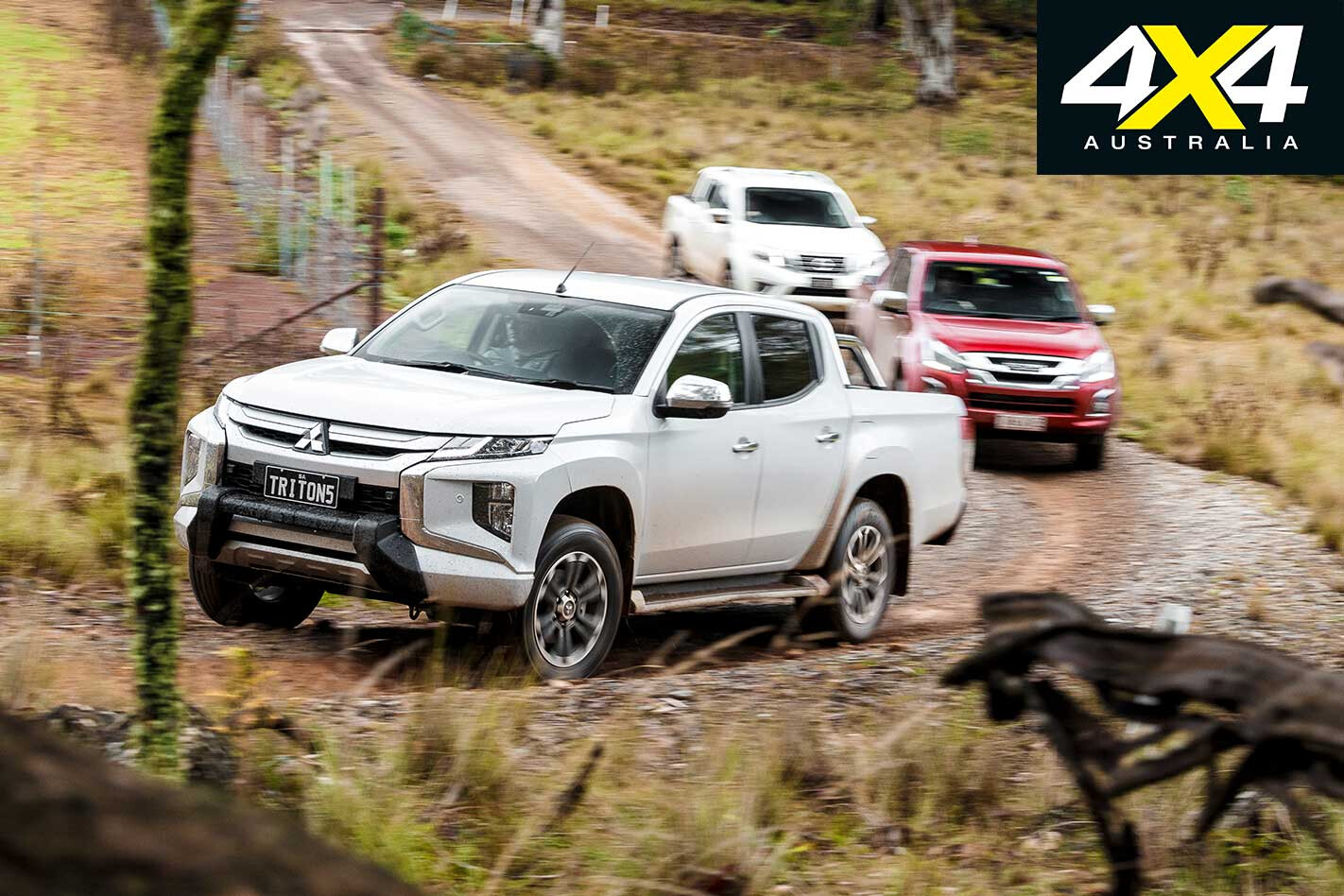
To keep the Triton honest we have two of the other less expensive mainstream utes in the form of Nissan’s Navara D23 and Isuzu’s D-Max. Like the predecessor of this new Triton the Navara D23 first appeared in 2015 but has been updated twice in quick succession, the last time early in 2018. What we have here is a top-spec Navara ST-X, which is $54K plus on-roads.
The D-Max effectively dates back to 2012; although, it received a significant powertrain upgrade in 2017 and some chassis tweaks a year later. Our mid-spec LS-U test vehicle is $51K plus on-roads.
ISUZU D-MAX LS-U – Working Man
While not the flashiest or most sophisticated ute on the market, the D-Max has slowly gained in popularity thanks largely to its robust and reliable powertrain.
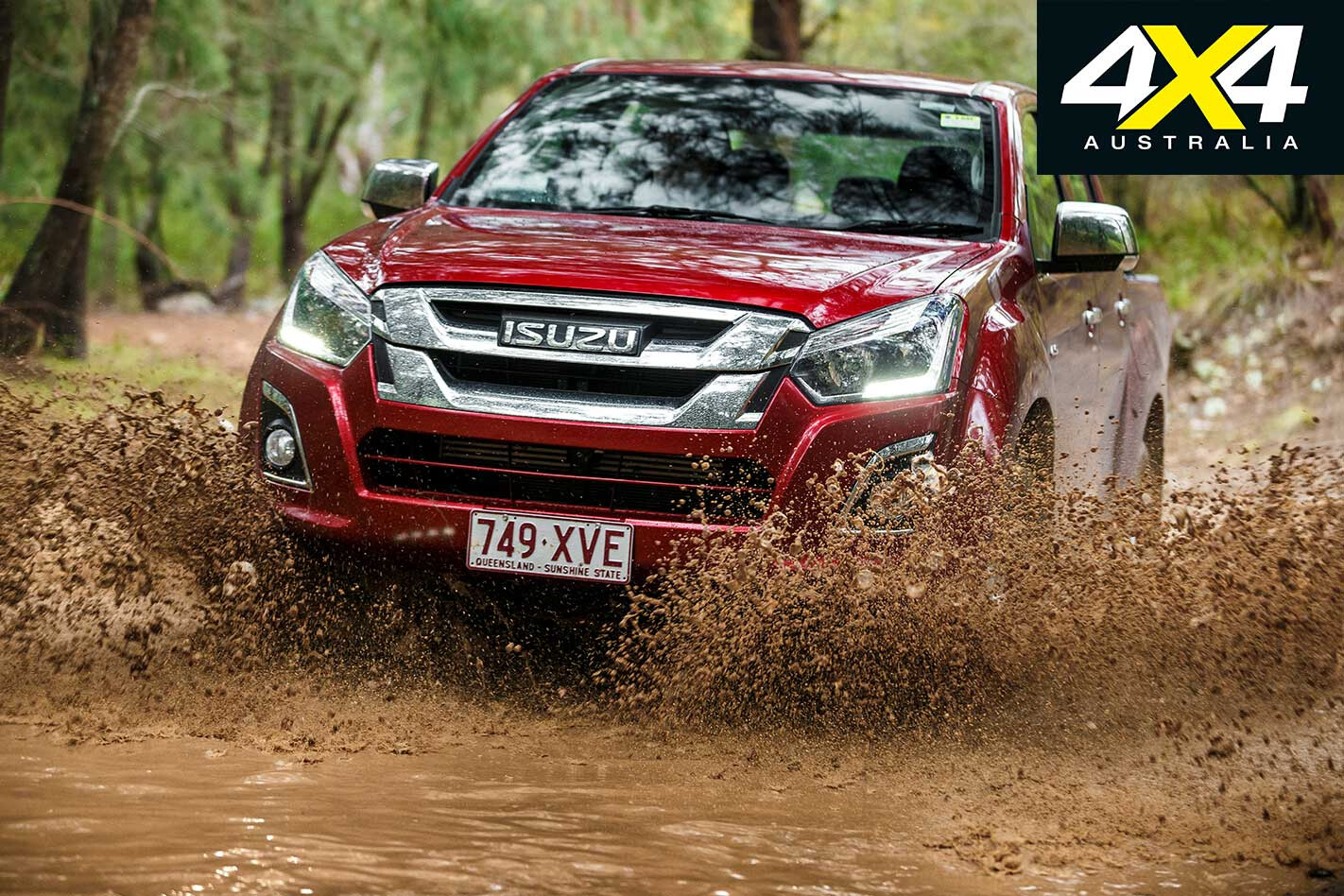
THIS generation D-Max arrived in Australia in 2012 and unlike every other ute that Isuzu had produced up until that time – familiar here as the Holden Rodeo – this D-Max isn’t a 100-per-cent Isuzu product from the ground up.
The chassis and body shell actually owe more to General Motors; although, the engine, gearbox, transfer case, rear axle, suspension springs and dampers, interior fit-out and exterior body parts are all very different to what GM sells here as the Holden Colorado.
Unlike Holden, which initiated an ongoing revision program with its Colorado right from the get-go – no doubt to help bridge the gap to Ford’s superior Ranger – Isuzu left the D-Max alone until 2017 when mandatory compliance to tougher (Euro 5) emission regulations brought a significantly revised engine along with new six-speed manual and automatic gearboxes (replacing the previous five-speeders), additional NVH control measures and equipment upgrades.
The most recent changes for the 2018 model see all SX, LS-U and LS-T dual-cabs with more compliant three-leaf rear springs designed to improve the unladen ride. LS-M models retain the five-leaf springs.
Powertrain and Performance
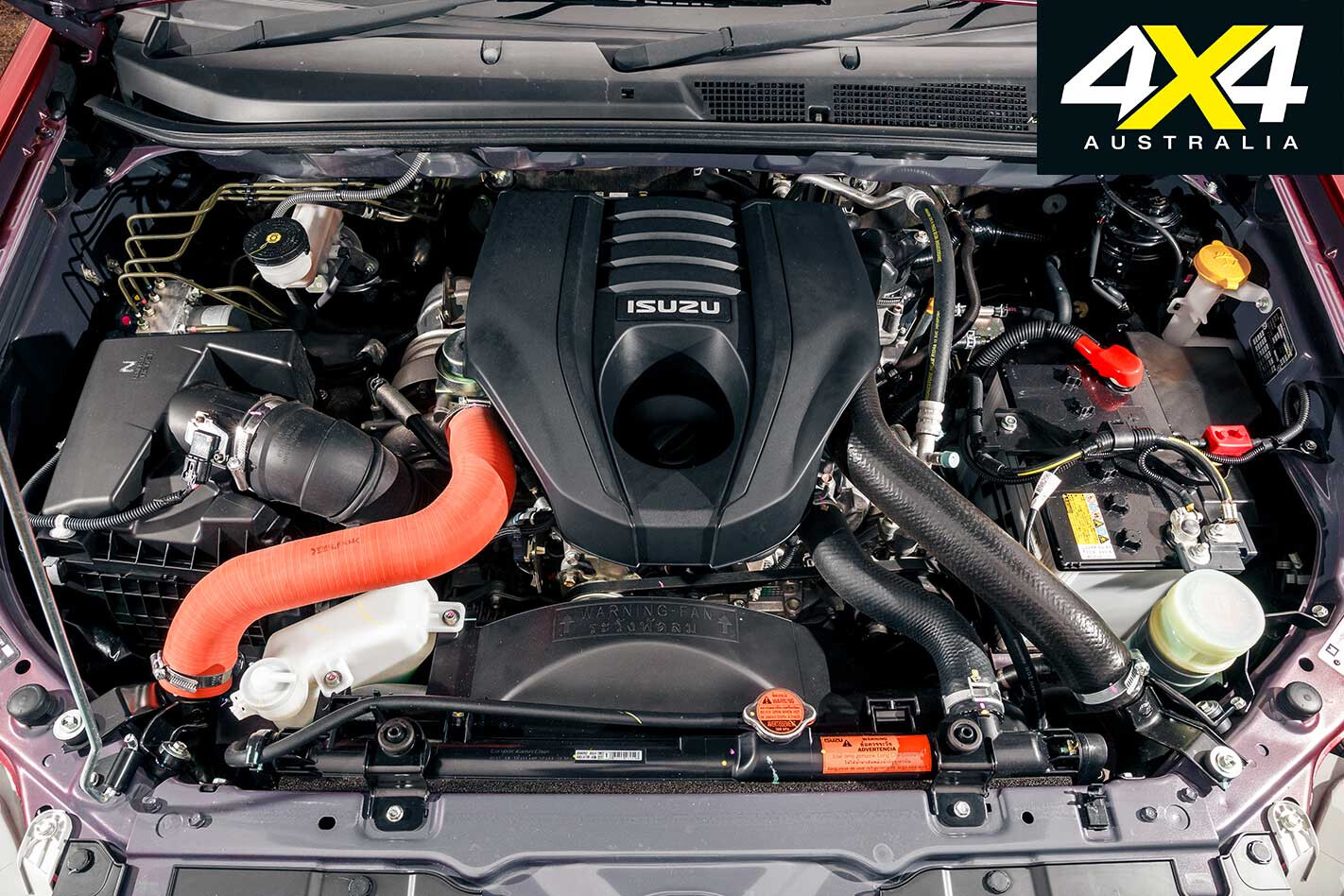
THE D-Max’s 3.0-litre four-cylinder diesel, now a big capacity engine in its class, traces back to 2006 when it first appeared here in the Holden Rodeo. Since that time there have been a number of updates, the most recent of which has brought higher-pressure common-rail injection, a new variable-geometry low-inertia turbo and new pistons. A diesel particulate filter (DPF) is the key Euro 5 technology that is found on all three engines here.
Despite all these MY17 engine changes maximum power remains at a modest 130kW (the lowest here) and, while maximum torque is now 430Nm (up from the previous 380Nm), it’s an equal-low figure here.
On the road there’s not much between these three utes with pedals to the medal, even if the D-Max tails the field. In general give-and-take driving, though, it does better with strong response from low engine speeds.
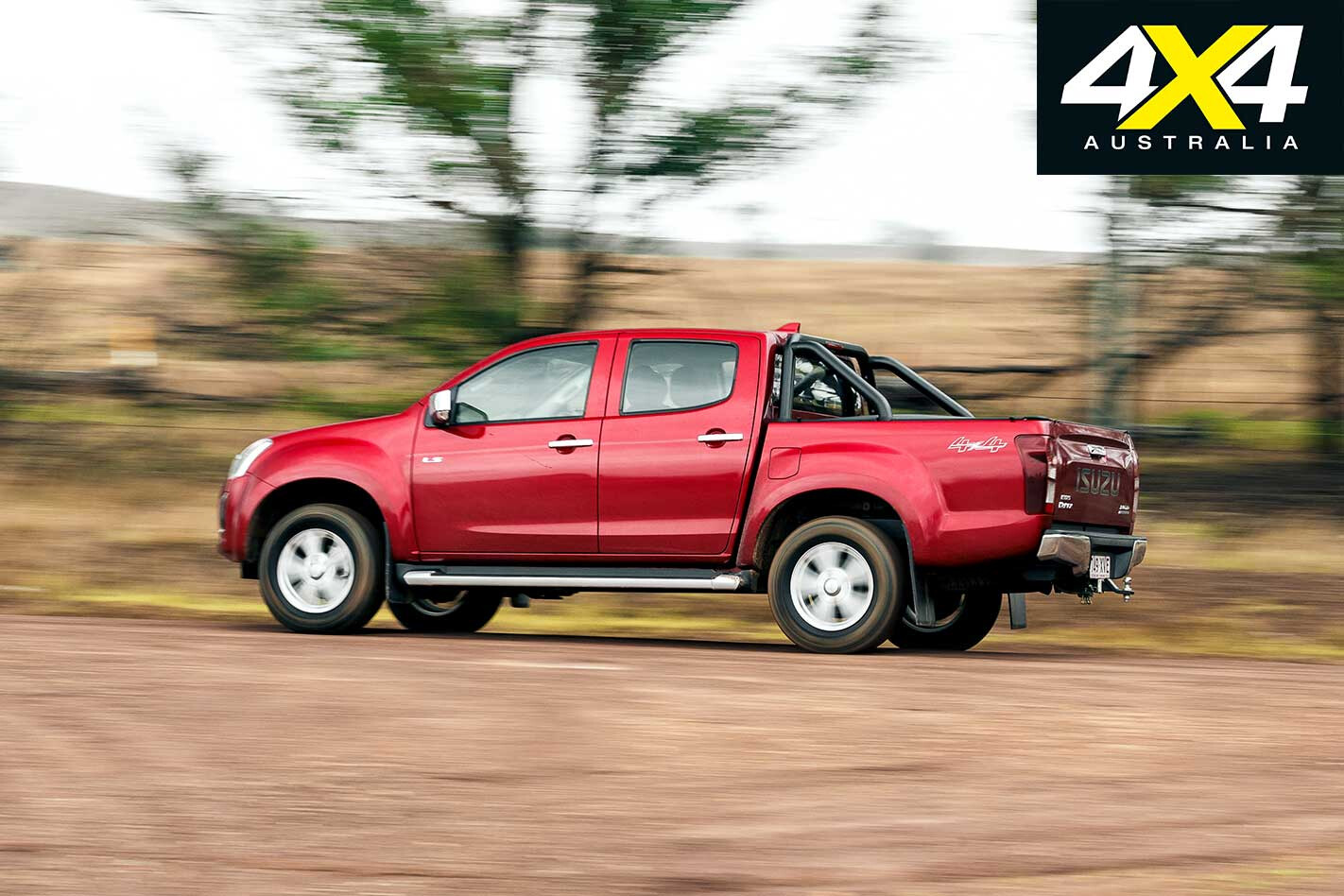
With its latest changes the D-Max is quieter than before, especially on light throttle running as you reach highway speeds on level roads. In this sort of environment it’s quieter than the Navara and a match for the generally more refined Triton. When asked to work on steeper hills or when overtaking it becomes noisy and the most agricultural-sounding of these three, which could be attributed to it being the largest capacity engine here.
The six-speed automatic (an Aisin, essentially the same unit in the Hilux, Fortuner and Prado) offers smooth and generally well-timed shifts and is notably proactive in the way it downshifts on off-throttle descents without brake prompts from the driver. The two very tall overdrive ratios (again like the Hilux) still means the gearbox is more about economy than performance, and the D-Max can shuffle back and forth between fifth and sixth on undulating country roads.
On-road ride and Handling
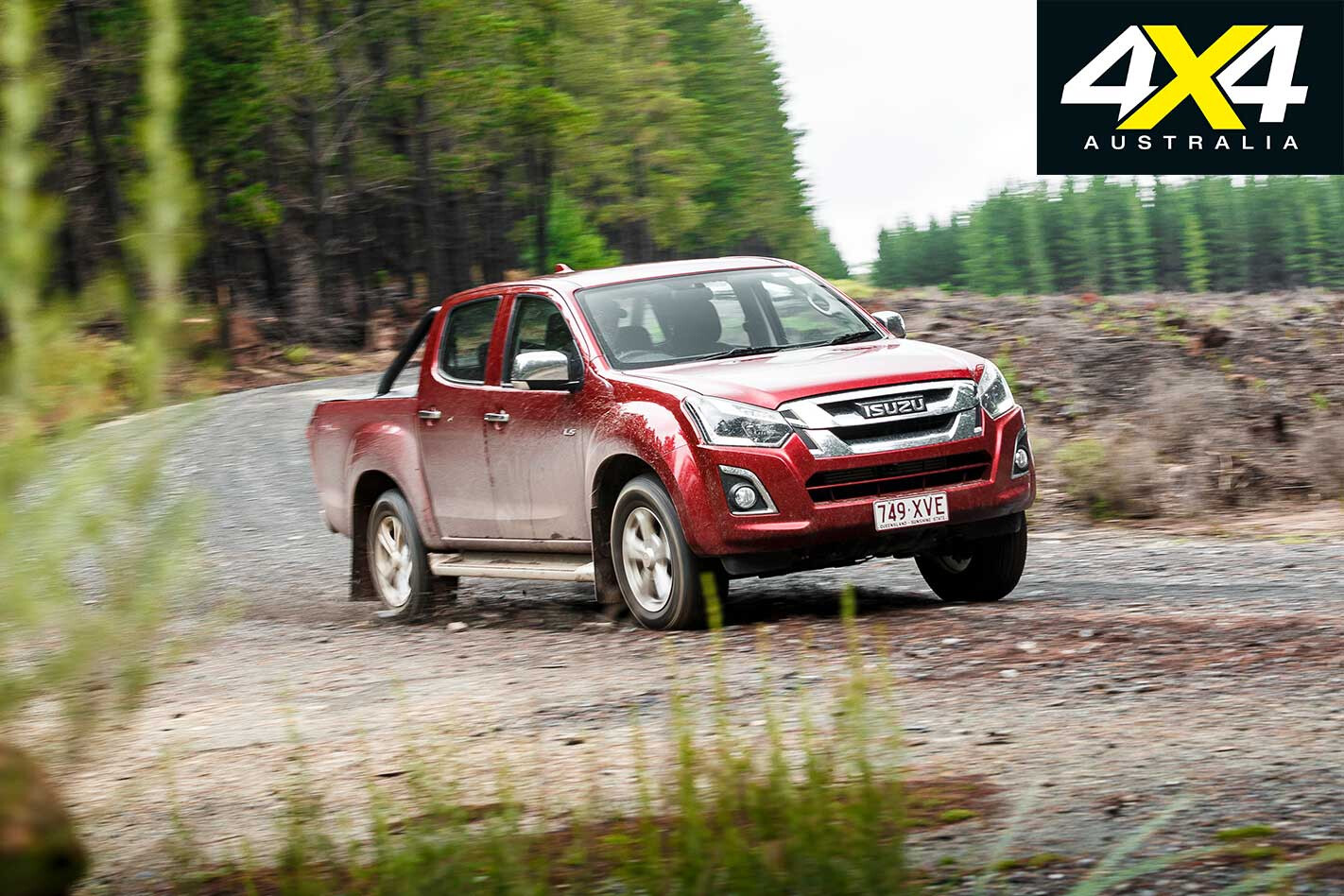
THE D-Max’s more compliant and slightly softer rear suspension makes for a generally agreeable unladen ride, and on most rough surfaces the D-Max has the best ride of three utes. It rides better than the Triton all the time and better than the Navara most of the time, even if there’s not much between it and the much-improved Nissan. Of the three the D-Max has the heaviest steering and one that lacks the feel of the sportier Triton.
Unlike its Colorado cousin, with its low-effort-yet-communicative electric power steering, the D-Max relies on conventional hydraulically assisted steering. The D-Max still handles well, but the bar isn’t set all that high in the company. VW’s Amarok almost feels like a sports car against this lot, and Ford’s Ranger and Holden’s Colorado are also well ahead in terms of on-road steering and dynamics.
Off-road
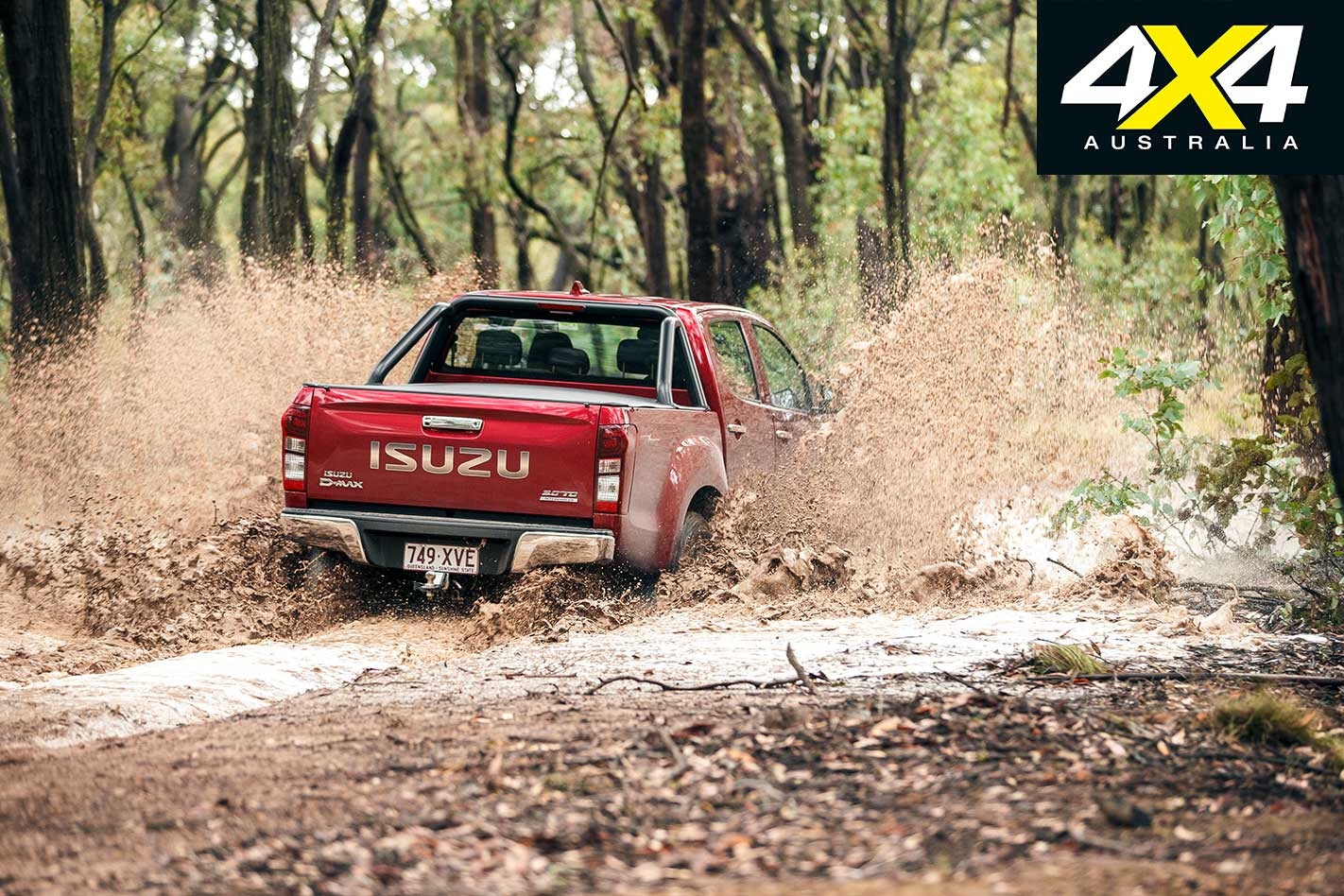
THE bar’s also not set particularly high amongst this trio in terms of off-road prowess as all three sit at the bottom of wider class of dual cab 4x4s when it comes to getting dirty.
From this lot to the best in class (Hilux, Ranger and Amarok, not necessarily in that order) there’s a fair gap in off-road prowess but at least the D-Max is still arguably the best here.
It could be a lot better if Isuzu would do what Holden did to the Colorado in 2016, namely add off-road specific calibration to the electronic traction control.
As it is, the D-Max’s modest wheel travel, lack of a rear locker and road-tune traction control are all limitations but in this company it has the best ground clearance and the added benefit of a solid bashplate, two decent front recovery points and inner-mudguard engine air intake. In terms of going off-road without modification of any type, the D-Max is the most ready of this trio even if it’s not technically the most capable.
Cabin and Safety
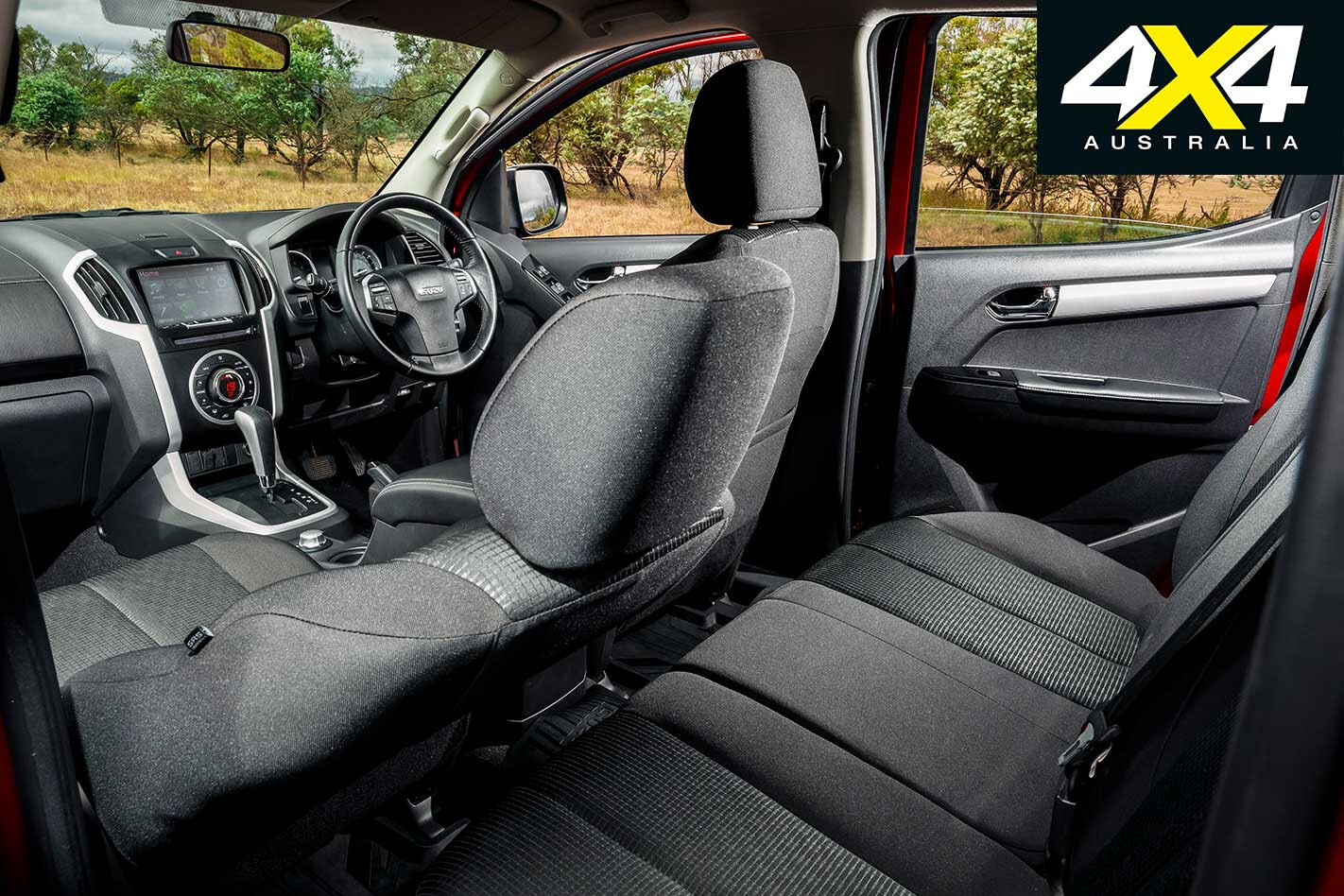
THE recent D-Max upgrades have brought a noticeably better-finished cabin than before and more equipment (such as sat-nav on this mid-spec model), but the general dash and cabin presentation is still the poorest here.
The D-Max has a marginally bigger cabin and good driver comfort, even if the steering wheel doesn’t adjust for reach. At the rear it’s also the best for three adults with more legroom, even if it’s no wider than the Navara. None of these three are all that good for three adults in the back – two adults and a child at best.
Six cabin airbags help contribute to a five-star ANCAP safety rating, but at this stage the D-Max doesn’t offer active safety features such as autonomous braking.
Practicalities
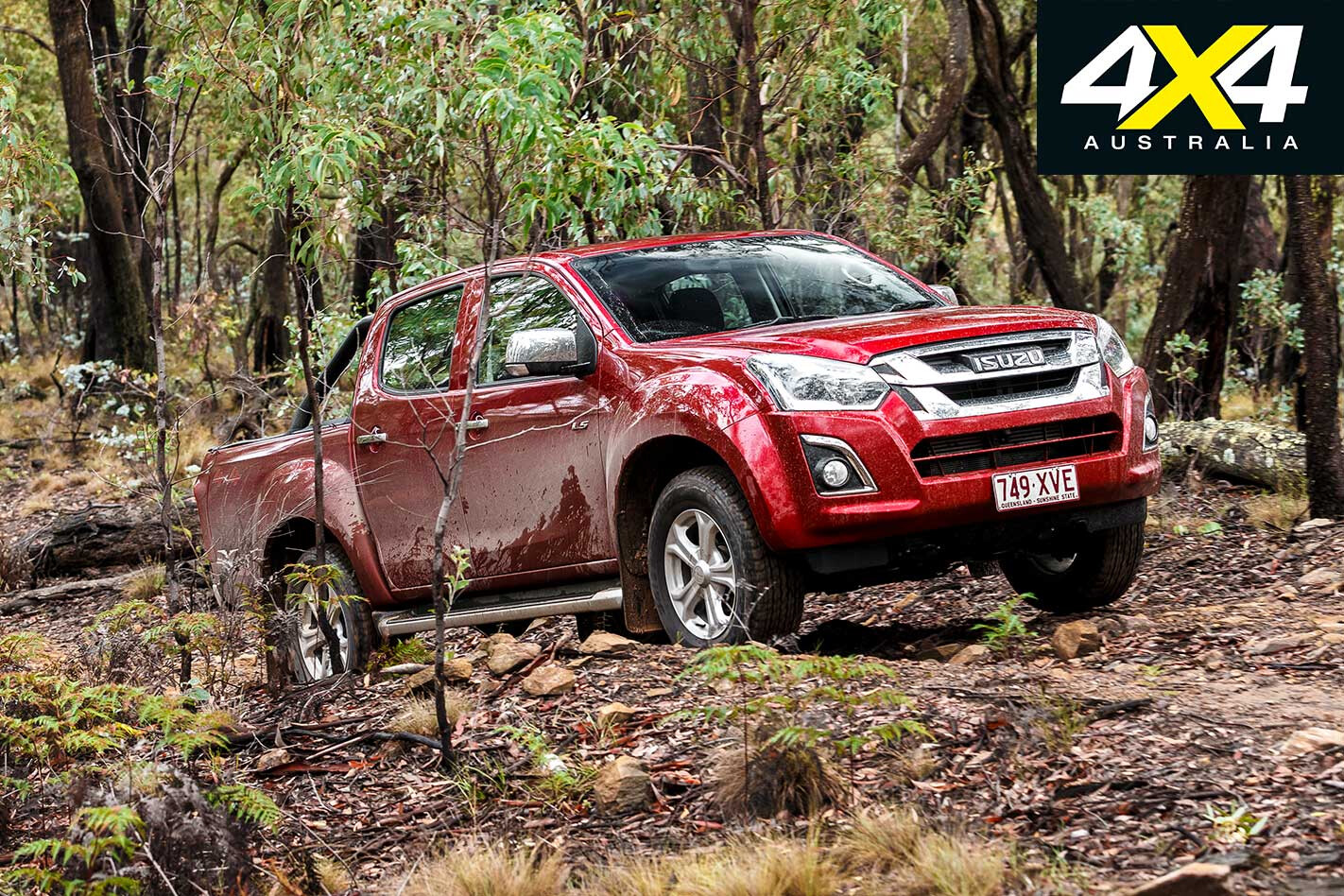
DESPITE the D-Max getting more compliant rear springs for most models in the MY18 upgrade the GVM of 4×4 models increased by 100kg to 3050kg, which is a welcome upgrade for fitting accessories or carrying a load.
The D-Max offers class-competitive payloads and a class-equal-best 3500kg tow rating and, while we tested neither here, when put to the test previously with a big load the D-Max has performed honestly without being a front-runner.
In more general practical terms the D-Max offers a surprisingly wide dealer network (142 dealers nationally at last count) despite Isuzu Ute only setting up shop in Australia in 2008. In the meantime the D-Max has earned a good reputation for reliability, simplicity of service and low service costs. Plenty of aftermarket support off the back of its strong sales, too.
ISUZU D-MAX LS-U SPECS: Engine: 3.0-litre 4-cyl turbo-diesel Max Power: 130kW @ 3600rpm Max Torque: 430Nm @ 2000rpm Gearbox: Six-speed automatic 4×4 System: Dual-range part-time Crawl Ratio: 33.3:1 Construction: Separate-chassis Front Suspension: Independent/coil springs Rear Suspension: Live axle/leaf springs Wheel/Tyre: 255/65R17 110S Kerb Weight: 2021kg GVM: 3050kg Payload: 1029kg Towing Capacity: 3500kg Towball Download (max): 350kg GCM: 5950kg Ground Clearance (claim): 235mm Approach Angle: 30.0° Ramp-over Angle: 22.7° Departure Angle: 22.4° Wading Depth: 600mm Fuel Tank Capacity: 76 litres ADR Fuel Claim: 7.9L/100km Test Fuel Use: 10.2L/100km
ISUZU D-MAX 4X4 PRICES* SX dual-cab ute (auto): $46,600 LS-M dual-cab ute (auto): $48,900 LS-U dual-cab ute (auto): $50,800 LS-T dual-cab ute (auto): $54,700 *Prices do not include on-road costs.
What you get?
ALL D-Max dual-cab 4×4 utes have six airbags, a reversing camera, an eight-speaker audio with a CD slot and USB and iPod inputs, a seven-inch or bigger touchscreen, cruise control, and trailer-sway control as part of the chassis electronics package.
There are four spec levels, topping out with the LS-T (auto only) which has leather, electric adjustment for the driver’s seat, smart-key entry and start, an eight-inch touchscreen, sat-nav, side steps, projector headlights with DRLs, and 18-inch alloys. Our test vehicle is a mid-spec LS-U.
MITSUBISHI TRITON GLS PREMIUM – Mixed Message
A new six-speed automatic gearbox and extra safety kit are the headline changes to the Triton, but not the only things Mitsubishi has changed.
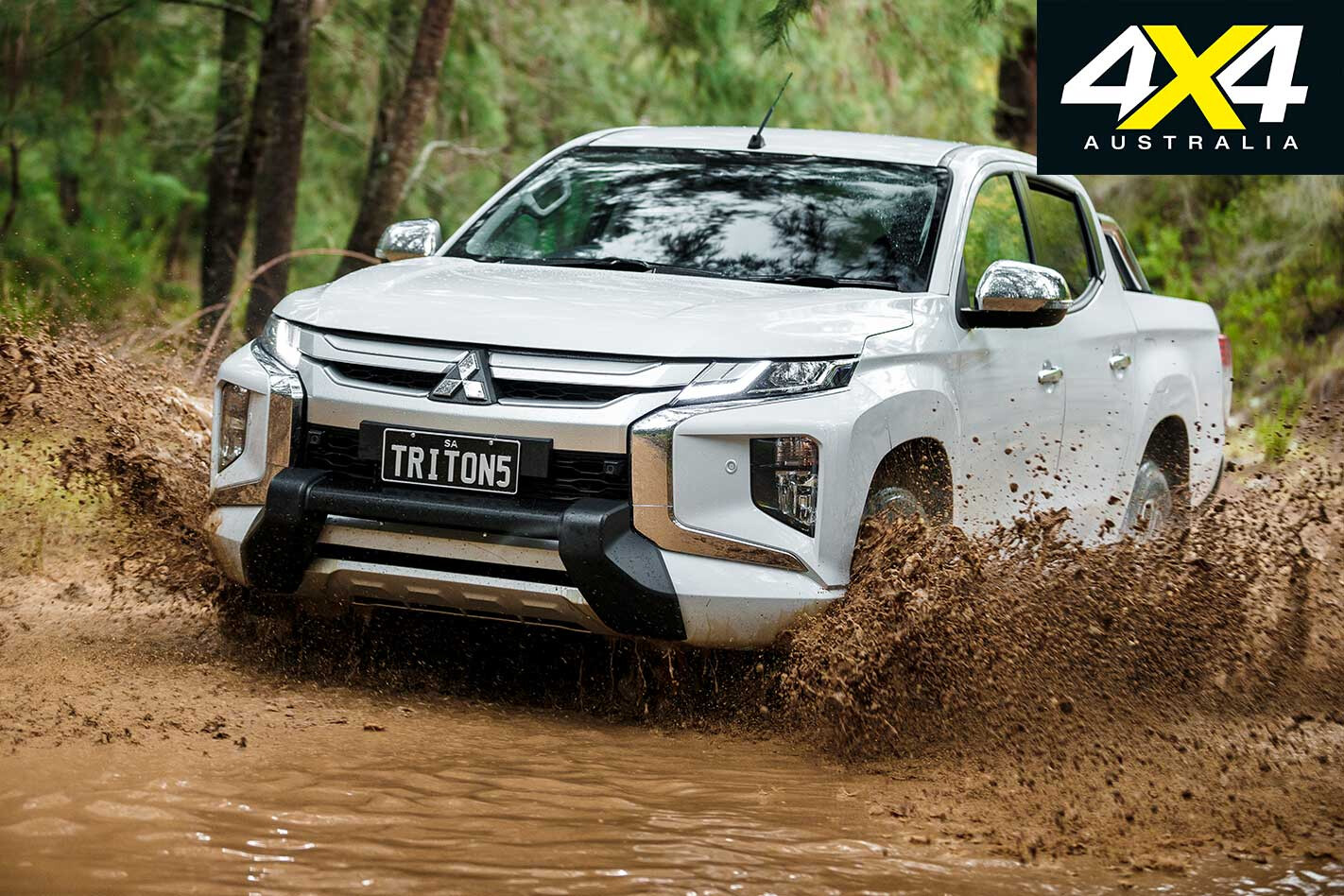
YOU can’t help but notice the new MR Triton given its radical re-style from the previous MQ Triton that’s been around since late 2015. However, behind the new face is more familiar, with the engine, chassis and sophisticated 4×4 system largely carried over from the MQ.
Where the MQ was more a generational change from the 2009 MN, bringing a new engine and significant chassis changes, this is largely a mid-generation facelift. Leading the changes is a new six-speed automatic that replaces the previous five-speeder; while a new six-speed manual arrived with the MQ, so that’s carried over to the MR.
Changes to the rear suspension means that low-spec GLX and GLX+ models get an extra leaf in the rear springs to improve load-carrying compared to the GLS and GLS Premium, which also get new rear springs. Larger diameter dampers are also fitted at the rear.
Non-mechanical changes include the introduction of terrain-specific modes to the 4×4 system and safety features such as blind-spot warning, rear cross-traffic alert and partial autonomous braking.
Powertrain and Performance
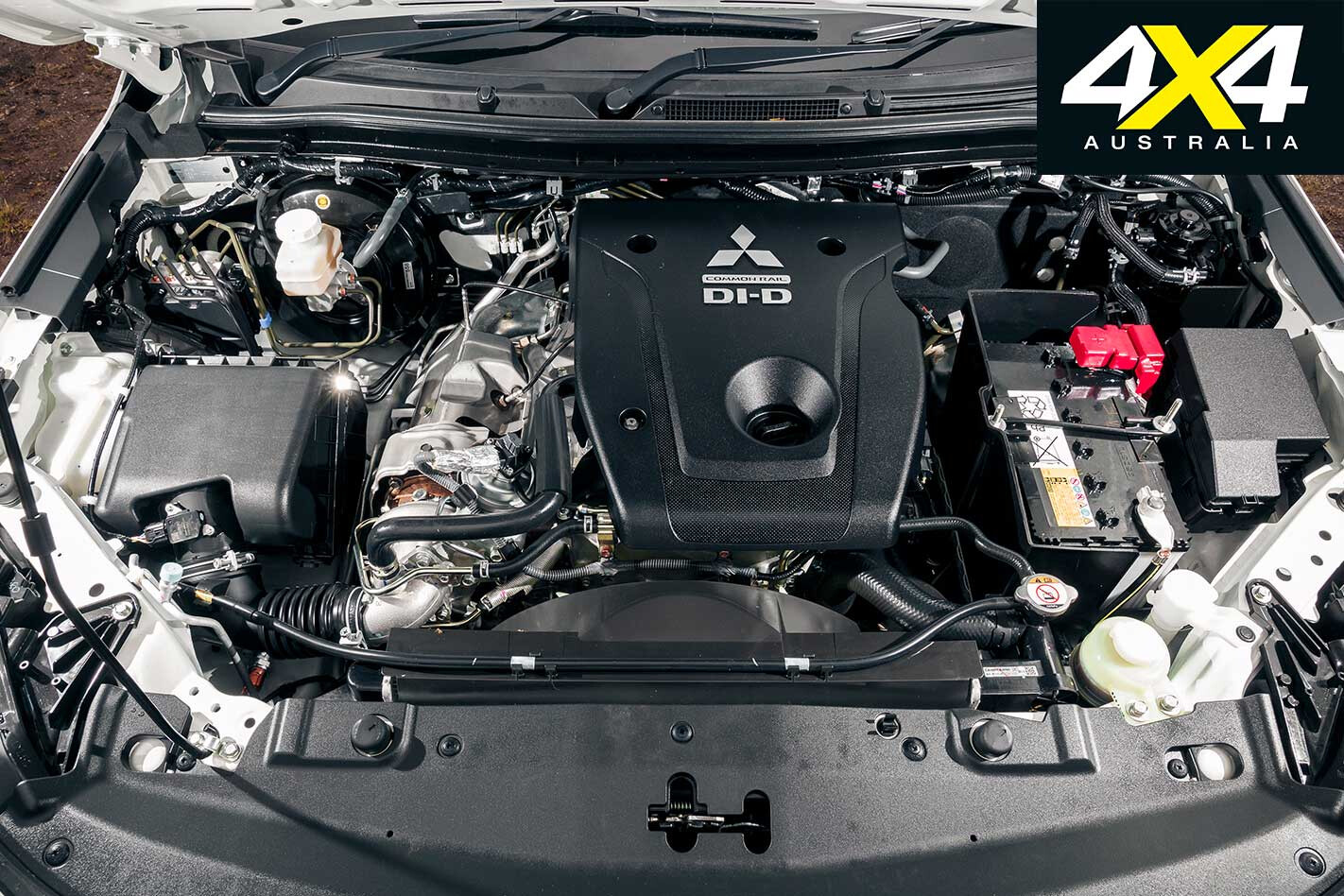
IN THIS company the Triton’s 2.4-litre diesel doesn’t have the benefit of size (as does the D-Max) or an extra turbo (as does the Navara) to get the job done. On paper it’s still competitive, effectively falling between the other two in power output and matching the bigger D-Max for torque, even if it needs more revs to make the claimed 430Nm.
On the road things played out even better and the Triton proved the zippiest of the three, perhaps helped by the closer ratios of its new six-speed automatic. Last time we tested these utes together the Navara edged the Triton in acceleration, but this time the tables were reversed.
More noticeable and significant is the superior refinement of the Triton’s engine compared to the other two. It’s especially quieter when all three are working hard, and even under light load it’s noticeably quieter than the Navara. It’s generally smooth, even if it needs more revs than the other two engines to get the job done, and the new and long overdue six-speed automatic is nicely refined.
On-road ride and Handling
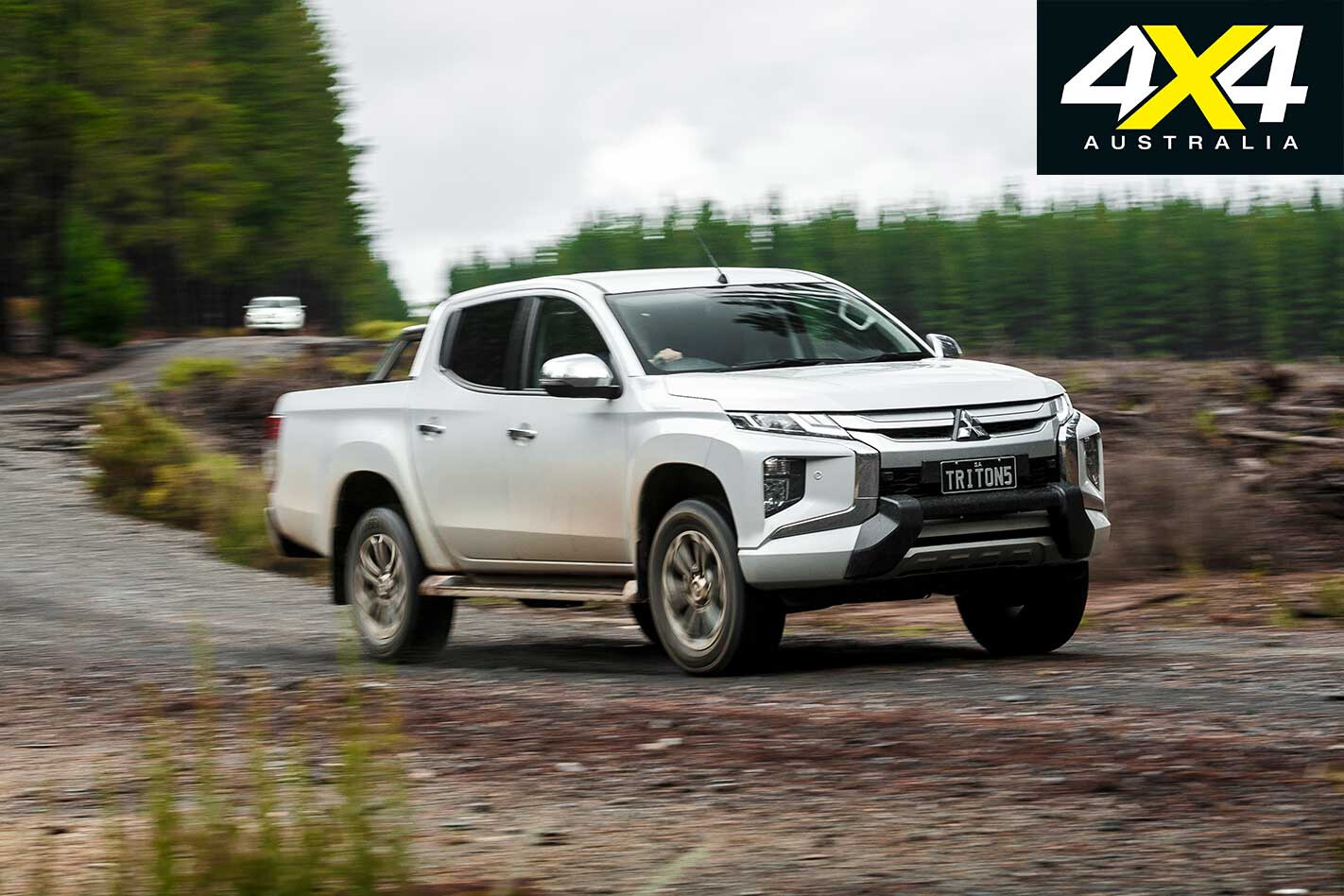
THE Triton Super Select 4×4 system sets it apart in this company, as it does generally across the dual-cab ute class where part-time 4×4 is the norm. Super Select’s special trick is its full-time 4×4 mode, which can be used on any surface – wet or dry, sealed or unsealed – and is most useful for mixed road and mixed weather touring where road conditions constantly change.
Unlike other full-time 4×4 systems (such as VW Amarok and Mercedes Benz X-Class V6) Super Select allows the driver to select two-wheel drive, as you may do for highway cruising on dry, sealed roads.
With the benefit of Super Select’s full-time 4×4 included the new Triton continues where the old one left off, in as much as it feels generally smaller and nimbler in the wider dual-cab market. However, the changes to the rear suspension, even on this GLS Premium with the theoretically lighter-duty rear springs, have brought a noticeable deterioration in the unladen ride quality and less harmonious relationship between the front suspension and rear suspension than there was before. On smooth roads the Triton is fine, but on bumpy roads the unladen ride and stability has taken a backwards step.
Off-road
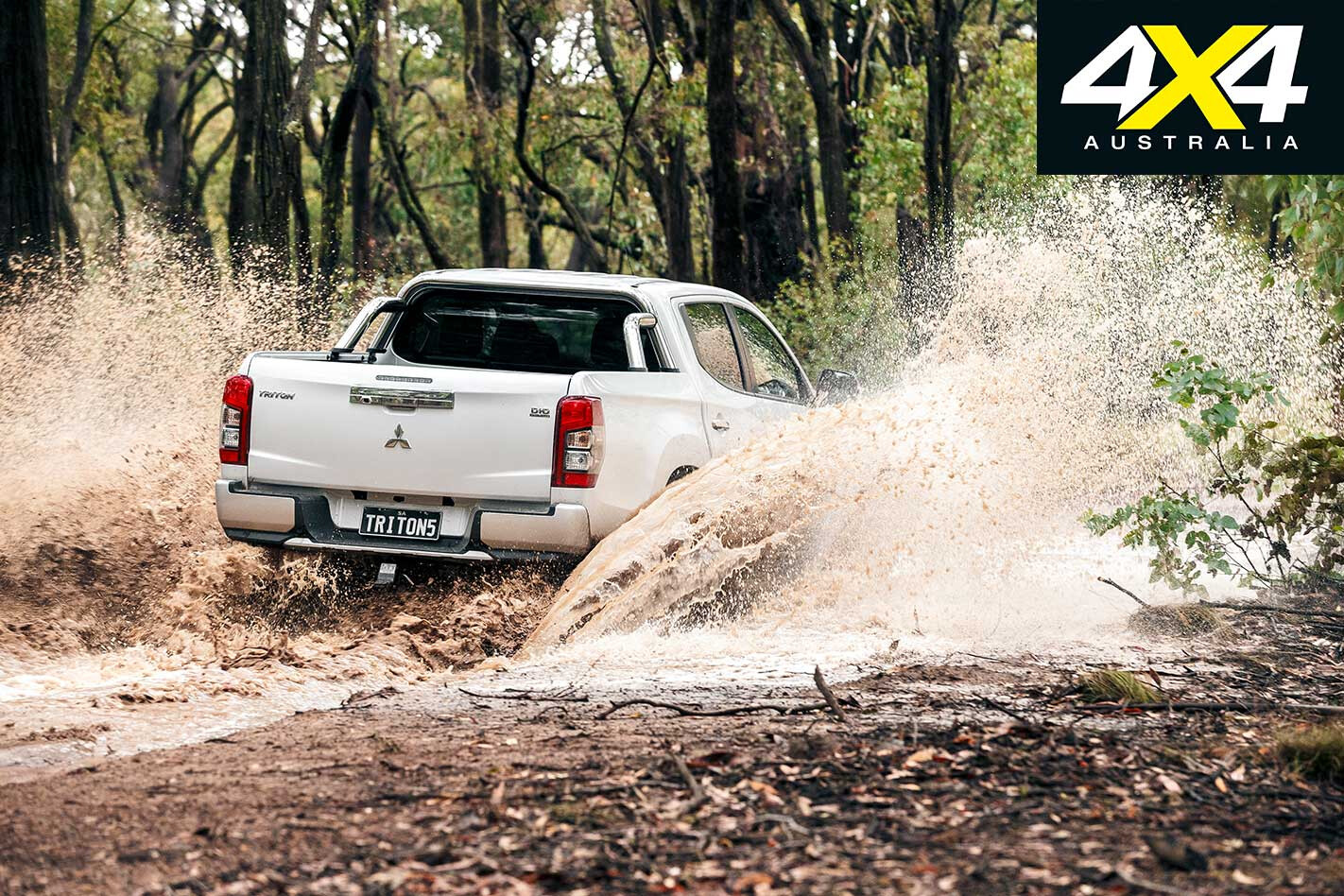
THE Triton’s new ‘Off-Road Mode’ system with terrain-specific settings becomes available when the Super Select system is in ‘Low Four’ or ‘High-Four Locked Centre’, so, in other words, when the mechanical centre diff is locked. The modes cover Mud/Snow, Sand, Rock and Gravel.
Otherwise the Triton is as it was before when off-road, which isn’t special due largely to its modest wheel travel. This top-spec model gets a rear diff lock, but it’s not always of benefit as engaging it cancels the traction control across both axles. Wading depth has risen from 500mm to 600mm and ground clearance from 205mm to 220mm, both welcome changes.
While more time in different off-road conditions is needed to fully test the effectiveness of the Triton’s new Off-Road Mode system, there’s only so much it can do given the Triton’s diffs are all mechanical and beyond any electronic control.
In this company the Triton is competitive enough off-road, but the off-road bar hasn’t been set too high in the company.
Cabin and Safety
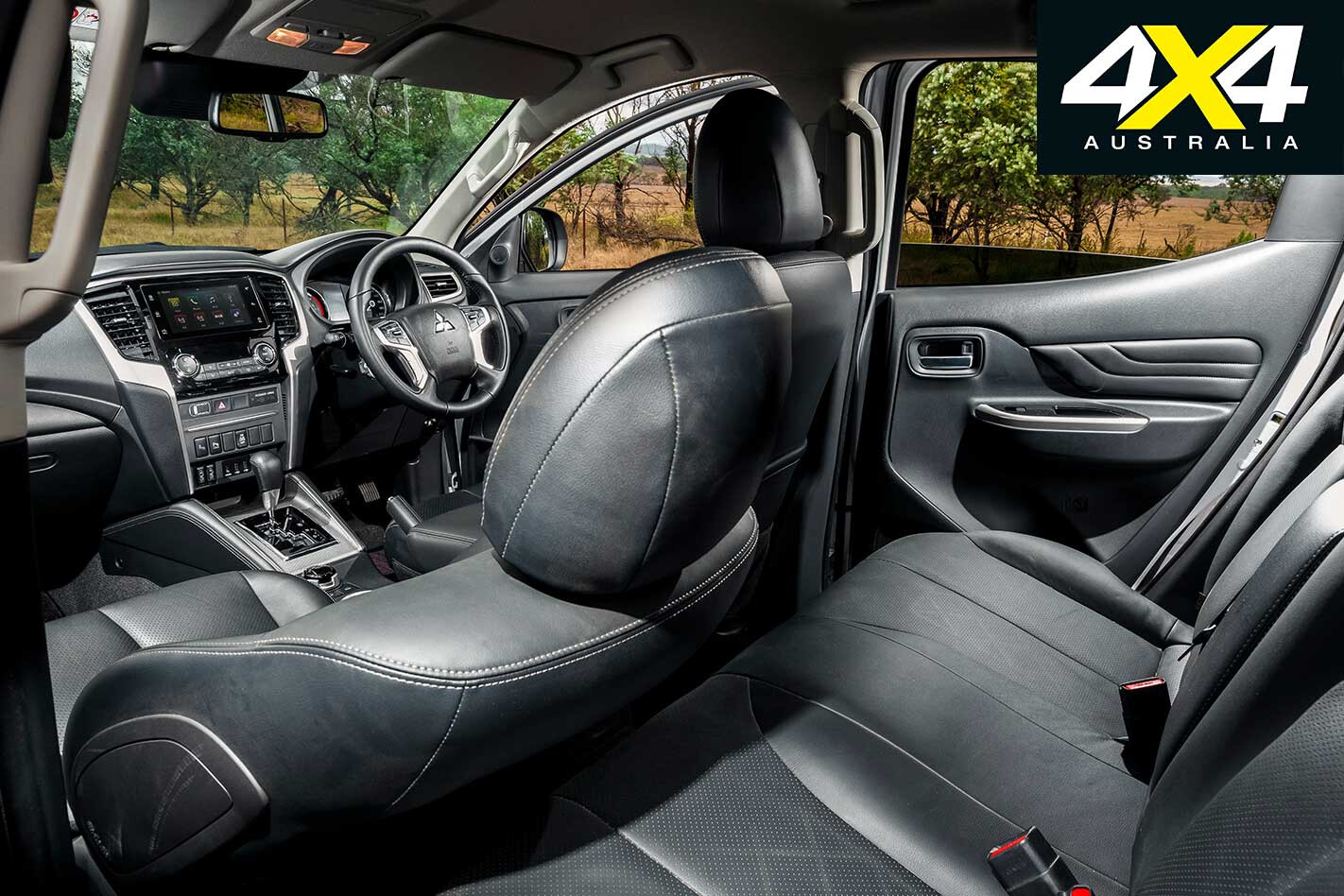
THE Triton’s cabin is the smallest here, but it’s the best finished and best presented. It’s also the only one of the three that offers tilt-and-reach steering wheel adjustment for the driver. The cabin’s relative small size is most noticeable if you wish to seat three adults across the back seat, as the D-Max and Navara both do a slightly better job.
Only the top-spec GLS Premium model gets smart key entry and start-and-heated front seats, but the Triton’s top-spec is also less expensive than the top-spec D-Max or Navara. Seven airbags, as per the Navara, help contribute to a five-star ANCAP rating; while Triton is the only ute here with blindspot warning and rear-cross traffic alert, which is a very useful feature for nose-to-kerb angle parking found in many country towns.
The new Triton has ‘Forward Collision Mitigation’ which warns the driver of a possible collision and will automatically apply the brakes if a collision is imminent, but the system apparently only works at urban rather than open-road speeds.
Practicalities
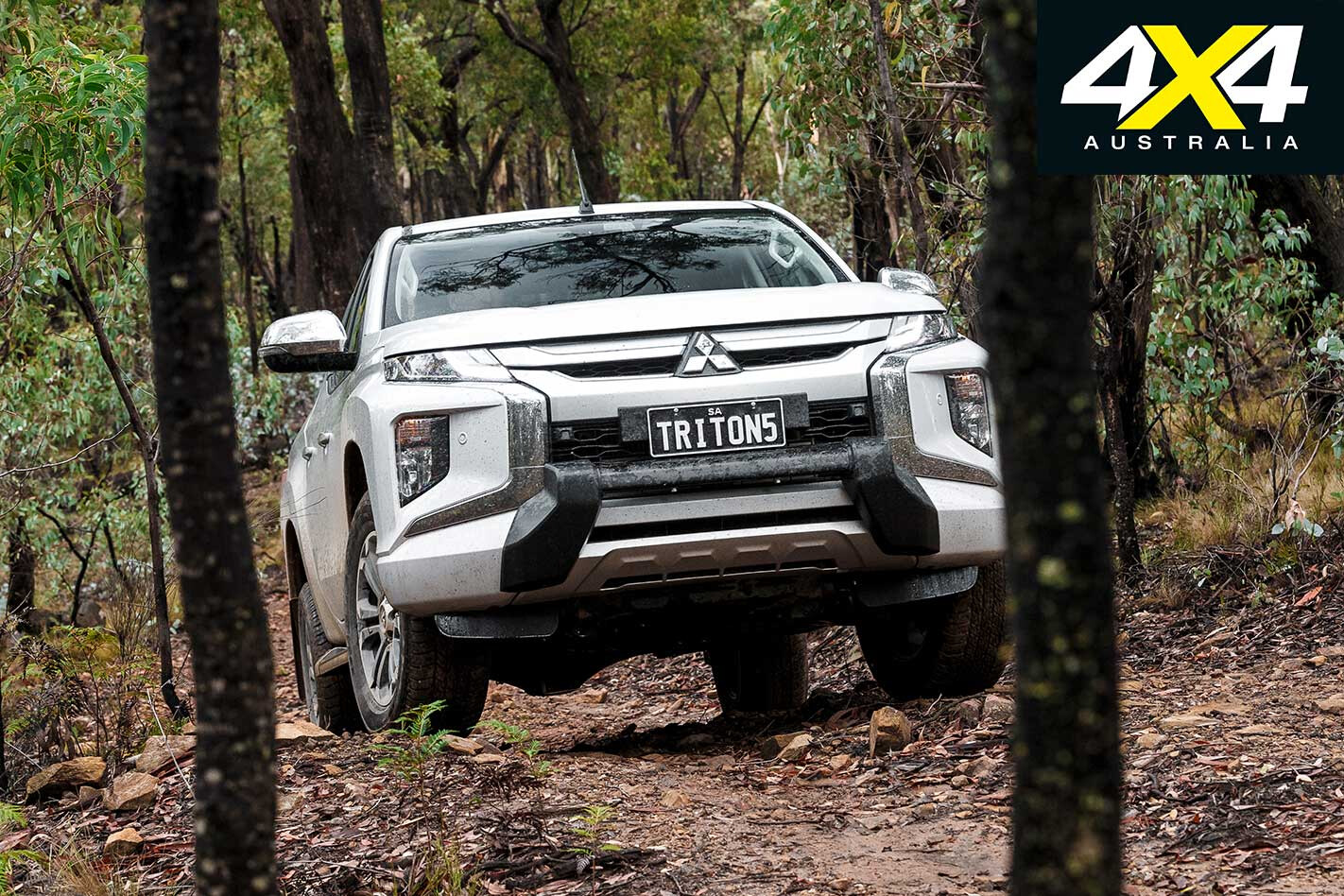
THE Triton has the lowest payload and tow rating here. The fact that its short wheelbase means just about all of the tray overhangs the rear axle doesn’t help either when heavily loaded. Surprisingly the Gross Vehicle Mass is the same for both iterations of the rear suspension system, and at 2900kg is unchanged from the previous model.
When the previous model was tested with a heavy load on-board or being towed behind, the engine did a good enough job but the chassis became very nose-up, tail-down. With the changes to the rear suspension it will be interesting to see if this has improved when put to the test with a decent payload or towload.
MITSUBISHI TRITON GLS PREMIUM SPECS: Engine: 2.4-litre 4-cyl turbo-diesel Max Power: 133kW @ 3500rpm Max Torque: 430Nm @ 2500rpm Gearbox: Six-speed automatic 4×4 System: Dual-range full-time (+2WD) Crawl Ratio: 39.5:1 Construction: Separate-chassis Front Suspension: Independent/coil springs Rear Suspension: Live axle/leaf springs Wheel/Tyre: 265/60R18 110H Kerb Weight: 2042kg GVM: 2900kg Payload: 848kg Towing Capacity: 3100kg Towball Download (max): 310kg GCM: 5885kg Ground Clearance (claim): 220mm Approach Angle: 27.5° Ramp-over Angle: 25.0° Departure Angle: 23.0° Wading Depth: 600mm Fuel Tank Capacity: 75 litres ADR Fuel Claim: 8.6L/100km Test Fuel Use: 10.5L/100km
MITSUBISHI TRITON 4X4 PRICES* GXL dual-cab ute (auto): $39,990 GXL ADAS dual-cab ute (auto): $40,790 GXL+ dual-cab ute (auto): $42,490 GLS dual-cab ute (auto): $46,990 GLS Premium dual-cab ute (auto): $51,990 *Prices do not include on-road costs
What you get?
ALL Triton dual-cab 4x4s get seven airbags, tilt-and-reach steering wheel adjustment, cruise, voice-controlled Bluetooth, a touchcreen, USB port, two ISO-FIX child seat anchors, trailer sway control, and the usual electronic chassis controls.
Through no less than five equipment grades the Triton tops out with the GLS Premium, which gets smart-key entry and start, leather, heated front seats, power-adjustment for the driver’s seat, smartphone connectivity apps, auto wipers, auto LED headlights, and a suite of safety features including forward-crash mitigation, lane-departure waning, blind-spot monitoring and rear cross-traffic alert. GLS and GLS Premium models also get selectable full-time 4×4 instead of part-time 4×4. The Premium gets a rear locker.
NISSAN NAVARA ST-X – Take Three
With its coil-spring rear suspension, Nissan’s D23 Navara has been controversial from the get-go.
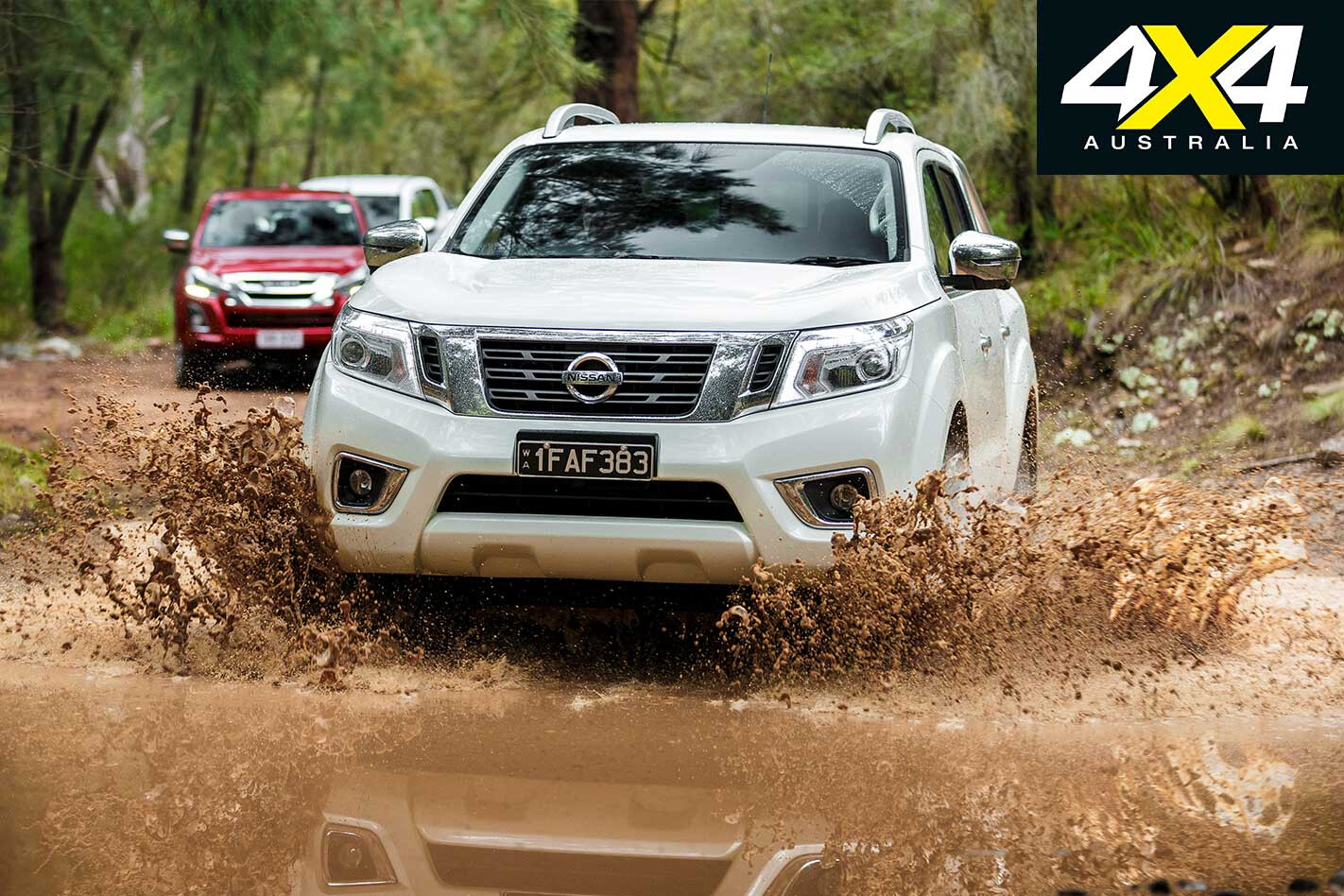
THE Navara D23, tagged at the time as the NP300, arrived here in mid 2015 and was a significant departure from the outgoing Navara D40, which was second only to the Hilux in sales for a good part of its near decade-long run. All but one dual-cab D23 featured a coil-sprung live axle at the rear, a feature unique among all the popular dual-cabs.
In what Nissan said was response to “feedback from customers and dealers” changes were announced a little over a year later in October 2016 and implemented for the 2017 model year. This included the dropping of the NP300 tag (replaced by Series II), the introduction a new work-spec model and, critically, new coil springs at the rear and new dampers front and rear. Then in early 2018 the rear suspension was revised again with new coils and new dampers, the steering ratio and weighting were changed and the equipment adjusted.
Powertrain and Performance
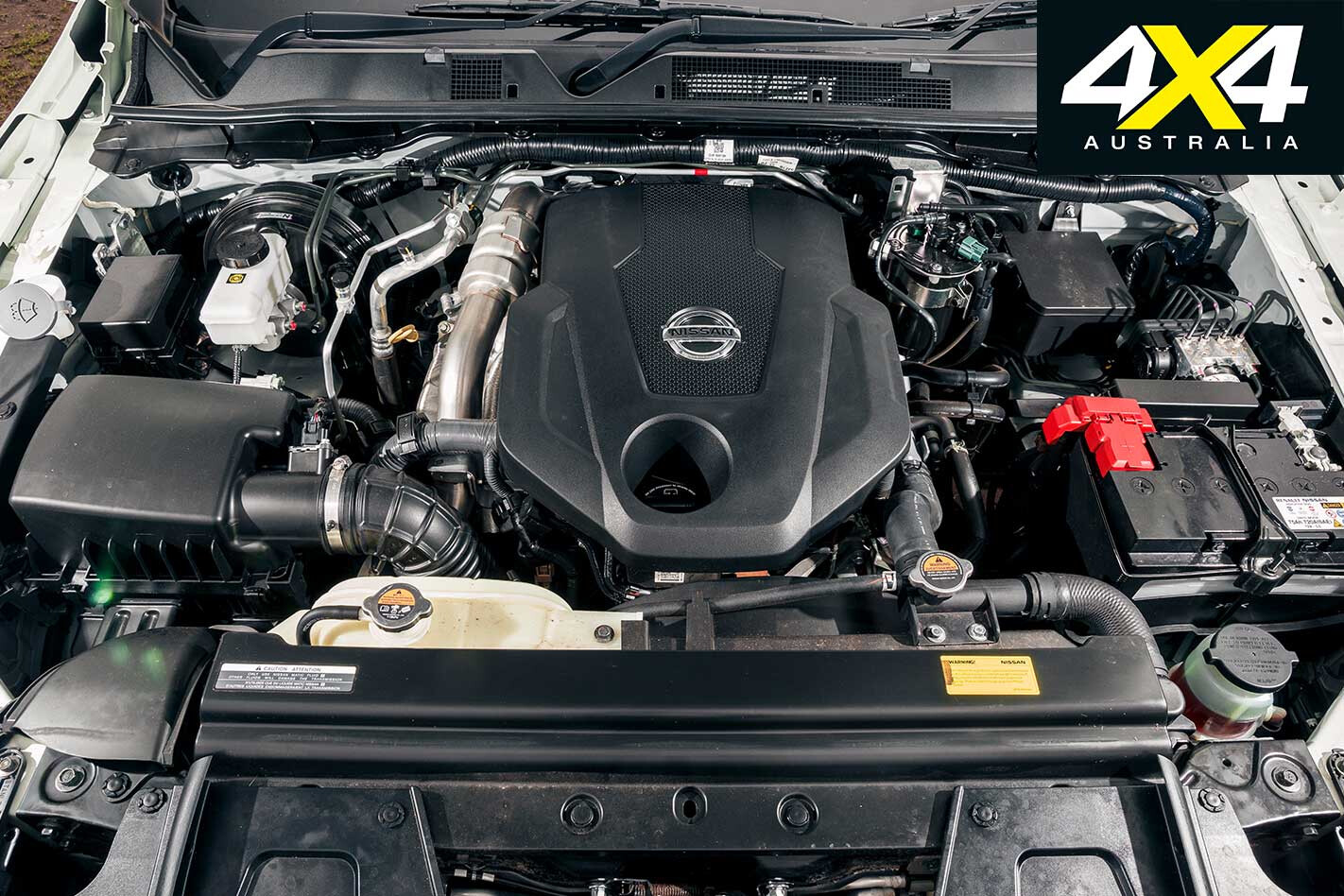
THE Navara’s Renault-sourced engine is the smallest here and is unique in as much as it has two turbos rather than one, so it’s both more sophisticated and more complex. Similar bi-turbo systems are not uncommon on other small capacity European diesels.
At 140kW and 450Nm it claims the most power and torque of the three engines here while also reaching its 450Nm maximum torque output at just 1500rpm, 500rpm before the D-Max and a full 1000rpm before the Triton reach their respective 430Nm best.
All this is the benefit of having two turbos, where the small, quick-spooling one is there specifically to enhance off-idle performance, leaving the main turbo to get on with the job at higher engine speeds and under higher engine loads.
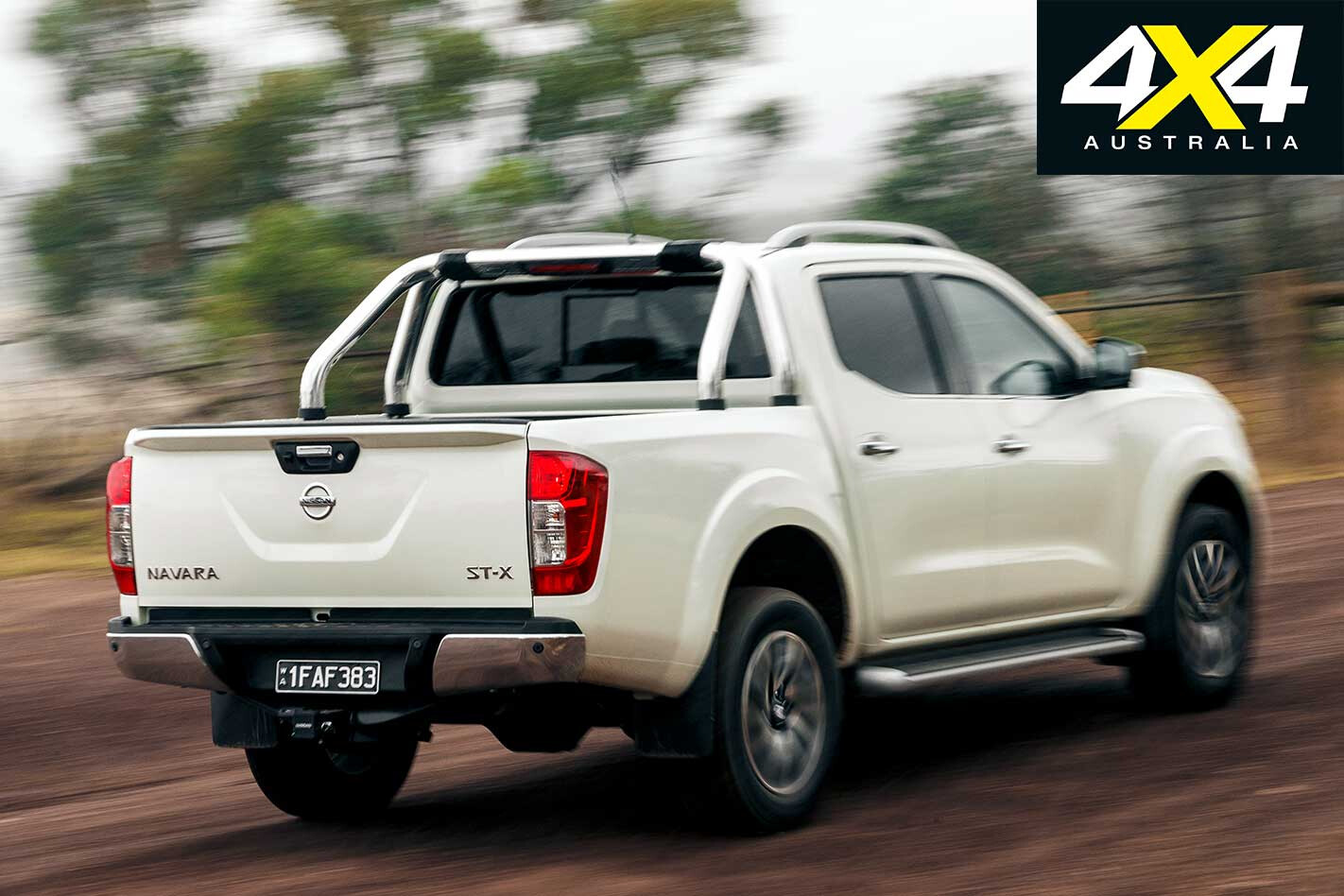
On the road the Navara proved stronger in acceleration than the D-Max, as it always has done, but was outdone by the Triton which despite the new six-speed auto still looked the slower on paper. After all, the Navara has a seven-speed automatic, is fractionally lighter than the Triton and has slightly shorter overall gearing.
The Navara’s engine is still effortless enough in general driving, but it gets noisy and more fussed when worked hard. Its overall refinement is behind that of the Triton, and even the usually gruff D-Max engine beats it for refinement under light engine loads such as level-road highway cruising.
On-road ride and Handling
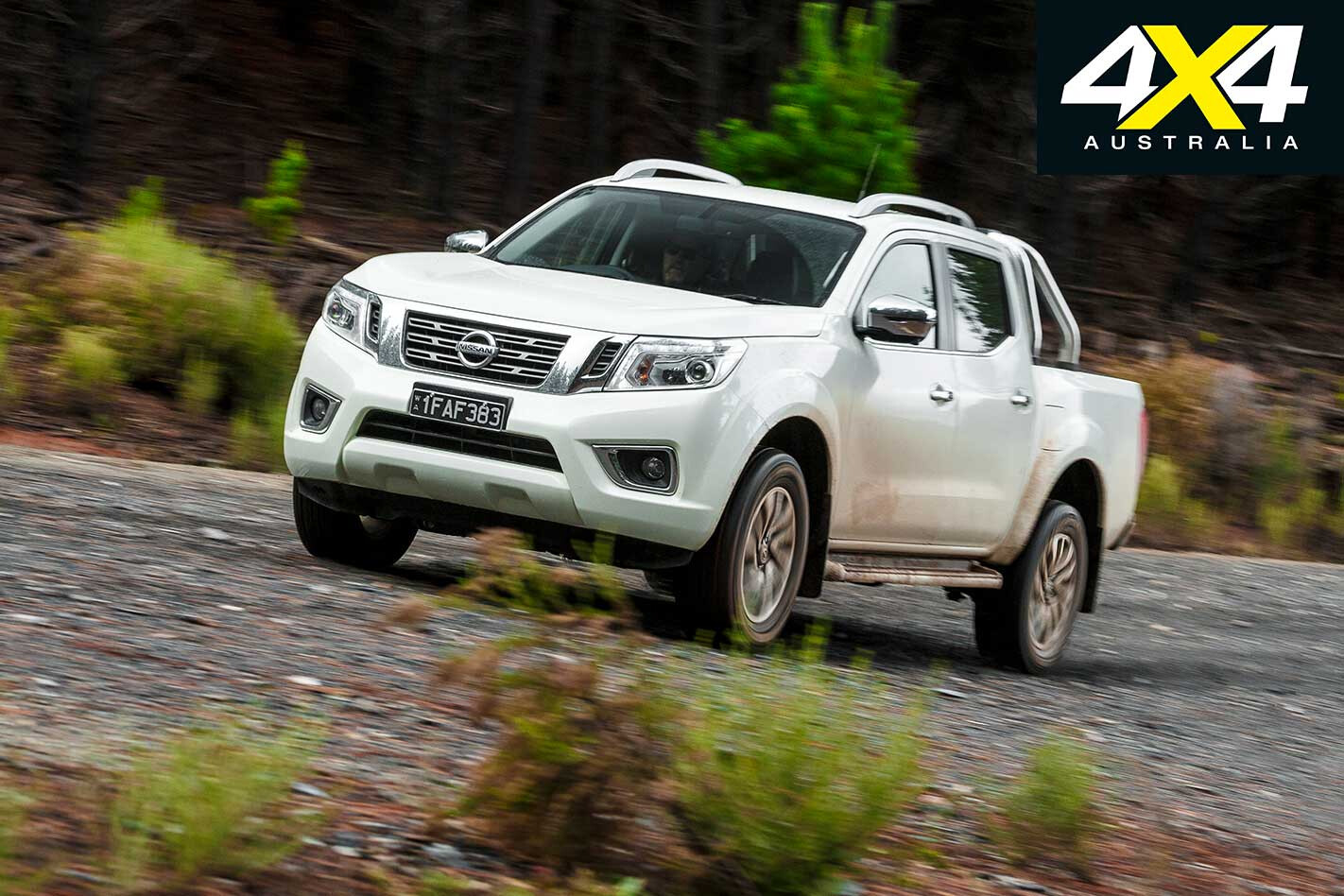
THANKS to the significant work Nissan put into the Navara’s suspension and steering in the 2017 and 2018 upgrades, the on-road driving experience is vastly improved from what it was. In its original iteration, the D32’s unladen ride didn’t live up to the promise of its coil-sprung rear end, the steering was heavy and slow, and the 3500kg towing claim (or indeed the 800kg+ payload claim) was more marketing hype than anything the Navara could do with any sort of conviction in the real world.
Now the Navara feels much better In terms of its unladen ride and handing. On poor quality roads in this company it’s generally better than the Triton in both ride and stability and, while it’s still not quite as compliant as the D-Max, its handling is as good. Still, it’s nothing special as the ride-and-handling bar isn’t set very high amongst this trio.
Off-road
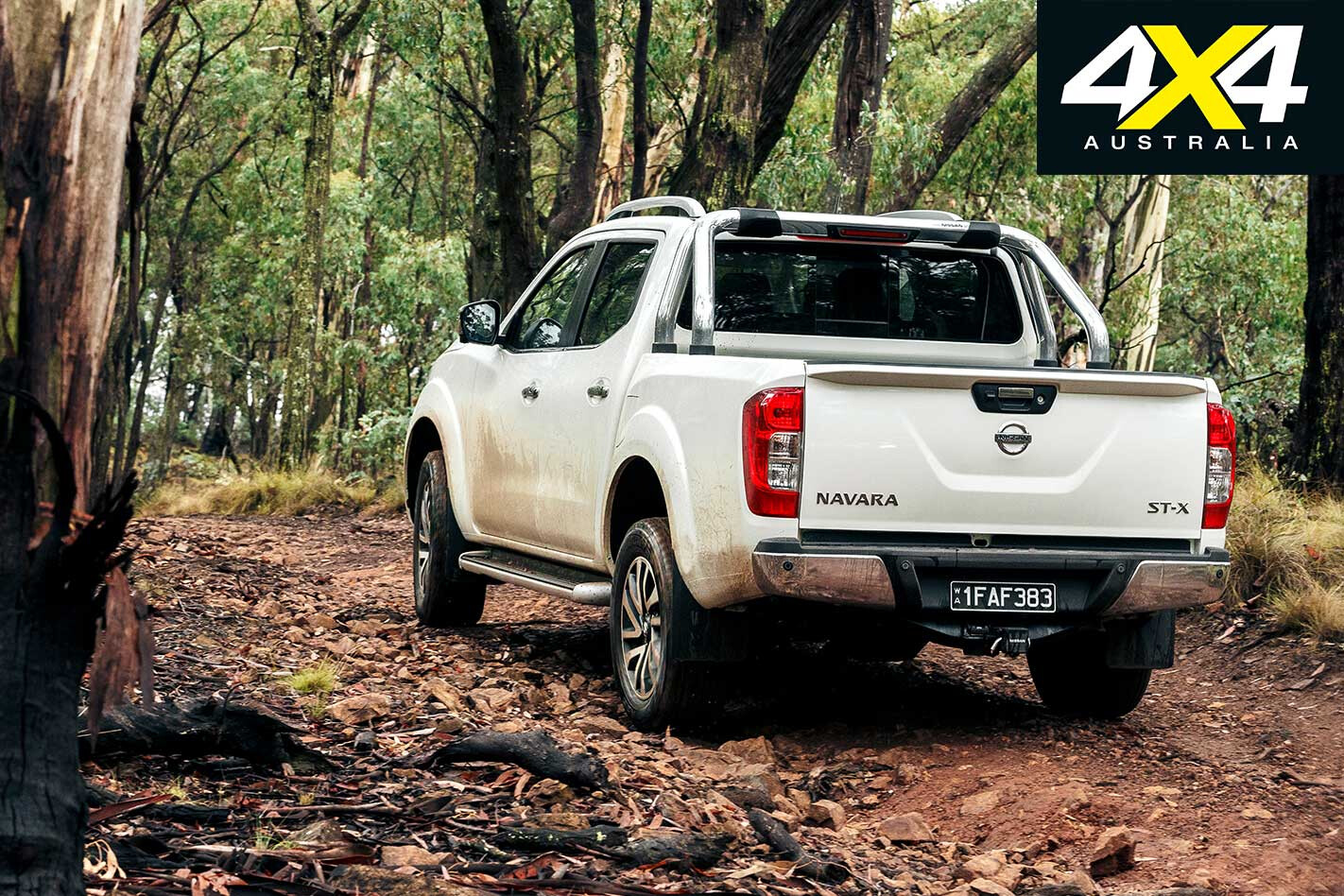
THE Navara has never been particularly capable off-road as it’s not overly endowed with suspension travel and is relatively low slung. Compared to every other popular dual-cab it’s always the first to run out of clearance off-road.
The lack of suspension travel is in part overcome by the fact the ST and ST-X models have a rear locker and, just as importantly, when the locker is engaged the electronic traction control remains active on the front axle.
On tractive ability alone that puts the Navara in front of the D-Max and the Triton, but the lack of ground clearance and low recommended maximum wading depth (just 450mm), due to the engine air intake being located under the bonnet lip, are notable negatives in this company. The Navara’s raised bonnet edges are also annoying off-road as they restrict the driver’s vision.
Cabin and Safety
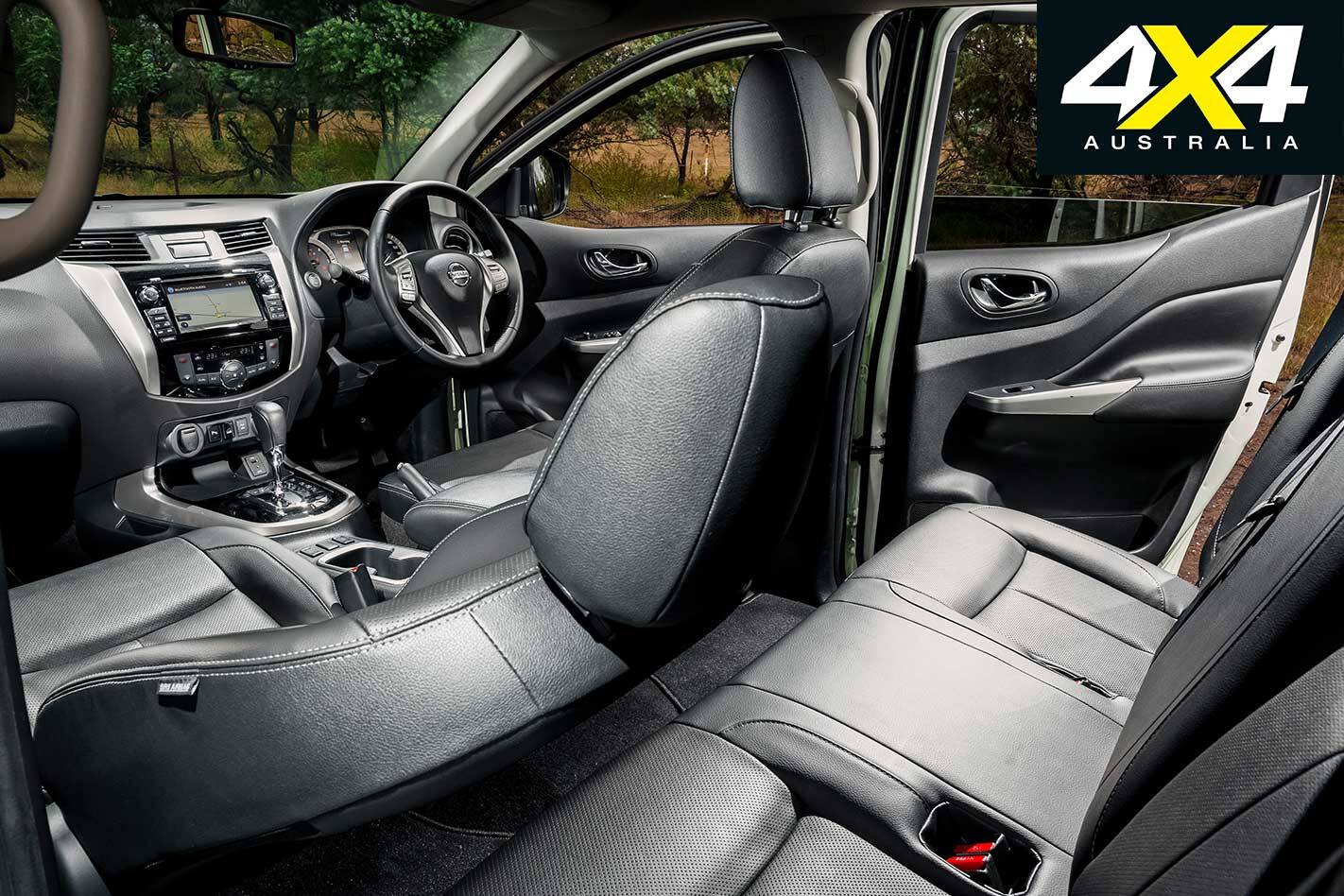
THE Navara’s cabin is a little bigger than the Triton’s, but not quite as big as the D-Max. It’s also mid-field in terms of its finish and presentation; smarter than the D-Max but not as polished as the Triton. The seats up front are comfortable, but there’s no steering wheel reach for the driver. In the rear seat the shoulder room is as good as it gets, but there’s not as much legroom as the D-Max and there’s no centre headrest.
The top-spec ST-X has plenty of kit, especially for the price, with leather, heated front seats and lumbar adjustment for the driver. There’s also the option of a sunroof, something unique in this class – before the last equipment adjustment, the sunroof was standard on the ST-X.
A sliding section in the centre of the rear window is another feature unique to the Navara, while no fewer than seven airbags help contribute to the five-star ANCAP safety rating.
Practicalities
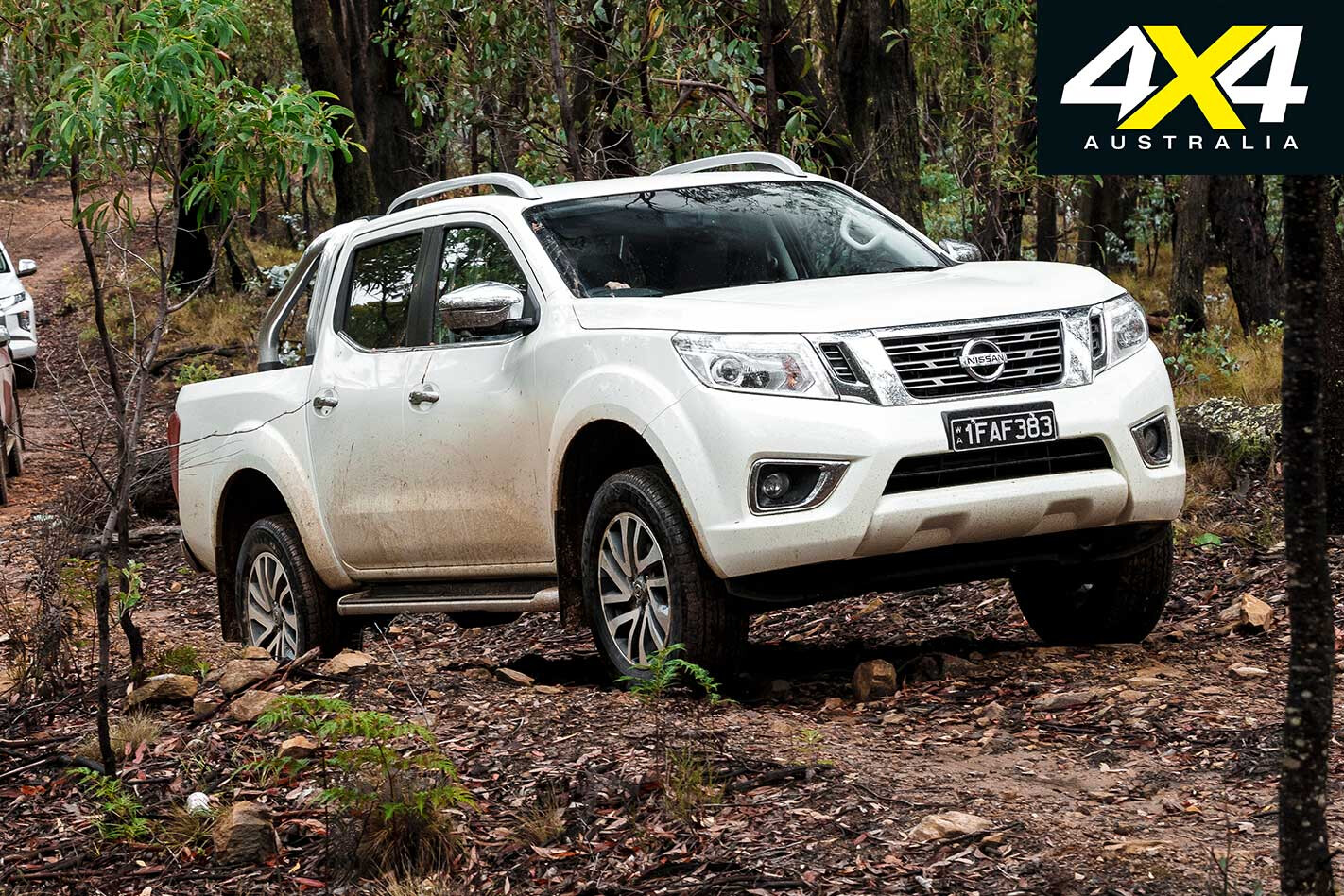
THE Navara claims a 3500kg tow rating. At 300kg, though, its maximum towball download is the lowest here. The Navara’s GVM (and therefore payload) and GCM figures, like those of the Triton, are quite low by overall class standards.
Since its run of chassis revisions we haven’t tested the Navara with a 3500kg tow load hooked on behind, but we have tested it with 650kg in the tub and three people on board – effectively maximum payload – and while it was acceptable it wasn’t as good as a D-Max when subjected to the same test, or most of the other utes tested at the time. The bottom line is that if you want a heavy-duty tow and load ute the Navara is certainly well down the list.
NISSAN NAVARA ST-X SPECS: Engine: 2.3-litre 4-cyl bi-turbo diesel Max Power: 140kW @ 3750rpm Max Torque: 450Nm @ 1500-2500rpm Gearbox: Seven-speed automatic 4×4 System: Dual-range part-time Crawl Ratio: 44.6:1 Construction: Separate-chassis Front Suspension: Independent/coil springs Rear Suspension: Live axle/coil springs Wheel/Tyre: 255/60R18 108H Kerb Weight: 1980kg GVM: 2910kg Payload: 930kg Towing Capacity: 3500kg Towball Download (max): 300kg GCM: 5910kg Ground Clearance (claim): 228mm Approach Angle: 32.4° Ramp-over Angle: 23.8° Departure Angle: 26.7° Wading Depth: 450mm Fuel Tank Capacity: 80 litres ADR Fuel Claim: 7.0L/100km Test Fuel Use: 10.4L/100km
NISSAN NAVARA 4X4 PRICES* SL dual-cab ute (auto): $46,400 ST dual-cab ute (auto): $49,690 ST-X dual-cab ute (auto): $54,490 *Prices do not include on-road costs.
What you get
ALL Navara dual-cab 4x4s have seven airbags, a rear-view camera and a 12-volt outlet in the rear tub. The SL then adds LED headlights with DRLs, while the ST gains 16-inch alloys, seven-inch touchscreen, sat-nav, fogs, side steps, a chrome ‘sports bar’ and a rear locker.
The top specification ST-X model then gains leather seats (heated up front), electric adjustment for driver’s seat, a slide-opening in the rear window and fore-and-aft adjustable tub tie-downs unfortunately mounted too high in the tub to be useful for anything but tall loads.
THE SCORECARD – Across the Line
There can only be two winners.
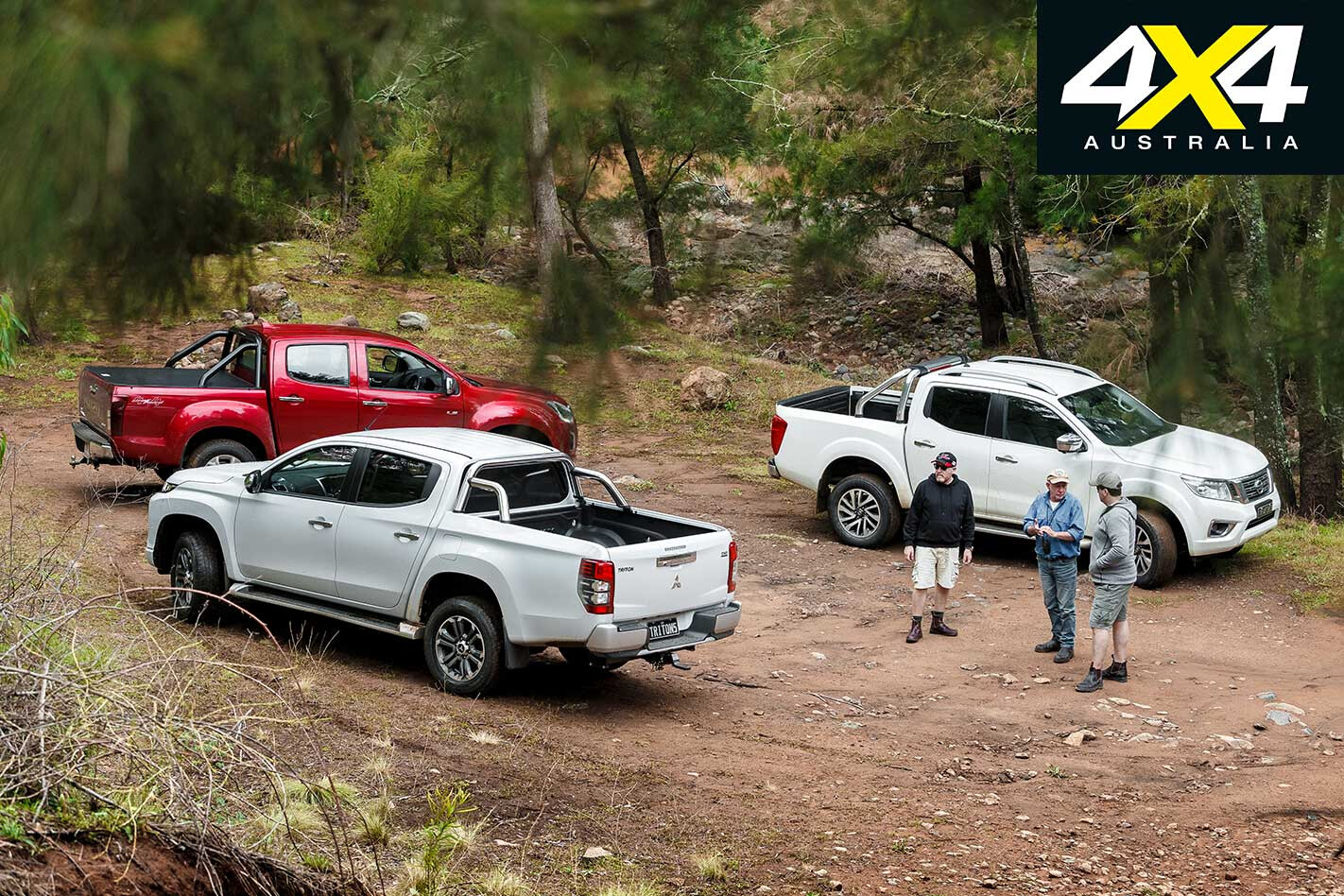
PICKING a winner from any group of dual-cab 4x4s is difficult as they perform so many diverse roles: they can be weekday family transport, weekend off-road escape machines, tow-tugs for caravaners, or work, trade or farm vehicles, or some combination of that lot. That’s why they are so popular and lead the sales charts in the overall new car market.
In many ways the three here are similar. All of them sit at the more affordable end of the dual-cab market, and they can all do the all of the roles asked of a dual-cab 4×4 with varying degrees of success.
The least convincing of the three is the Navara, despite the fact it’s a far better ute than it was when it first appeared in 2015. At that time it didn’t feel like any great advance from the D40 it superseded and, in terms of performance, was a big step back given the V6 diesel that appeared in the D40’s latter years. For off-road duties it’s the least suitable of these three straight out of the showroom, as its various updates have only addressed tow and load performance and on-road dynamics.
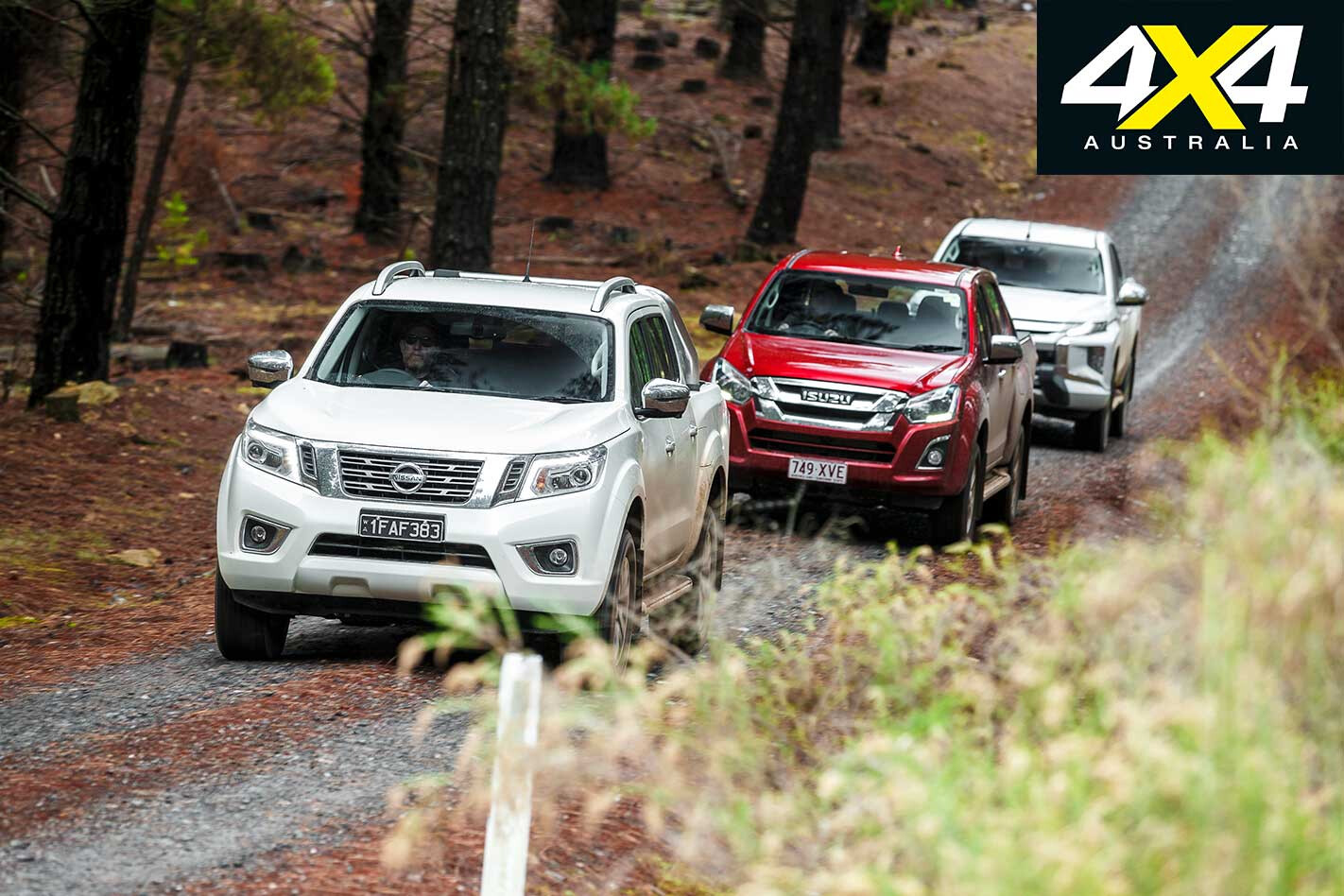
Separating the other two comes down to intended role. As a general duty ute the Triton is the pick. It’s both smaller and more manoeuvrable, thanks to its shorter wheelbase, so it can be handier in confined surrounds.
It’s also more refined, sportier to drive, and nippier performance-wise than the D-Max. Its clever Super Select 4×4 system, particularly the full-time 4×4 mode, brings a significant advantage in terms of day-to-day functionality and primary safety. It’s also more sharply priced, better equipped (new active safety features included) and better finished inside.
It’s just a pity that with the new suspension tune the unladen ride and handling on bumpy roads is poorer than it was before. Perhaps with this new rear suspension calibration it will carry or tow heavy loads better, but it would have to carry and tow significantly better to make up for the deterioration of its unladen performance. Still, this should be a relatively easy fix via an aftermarket suspension specialist.
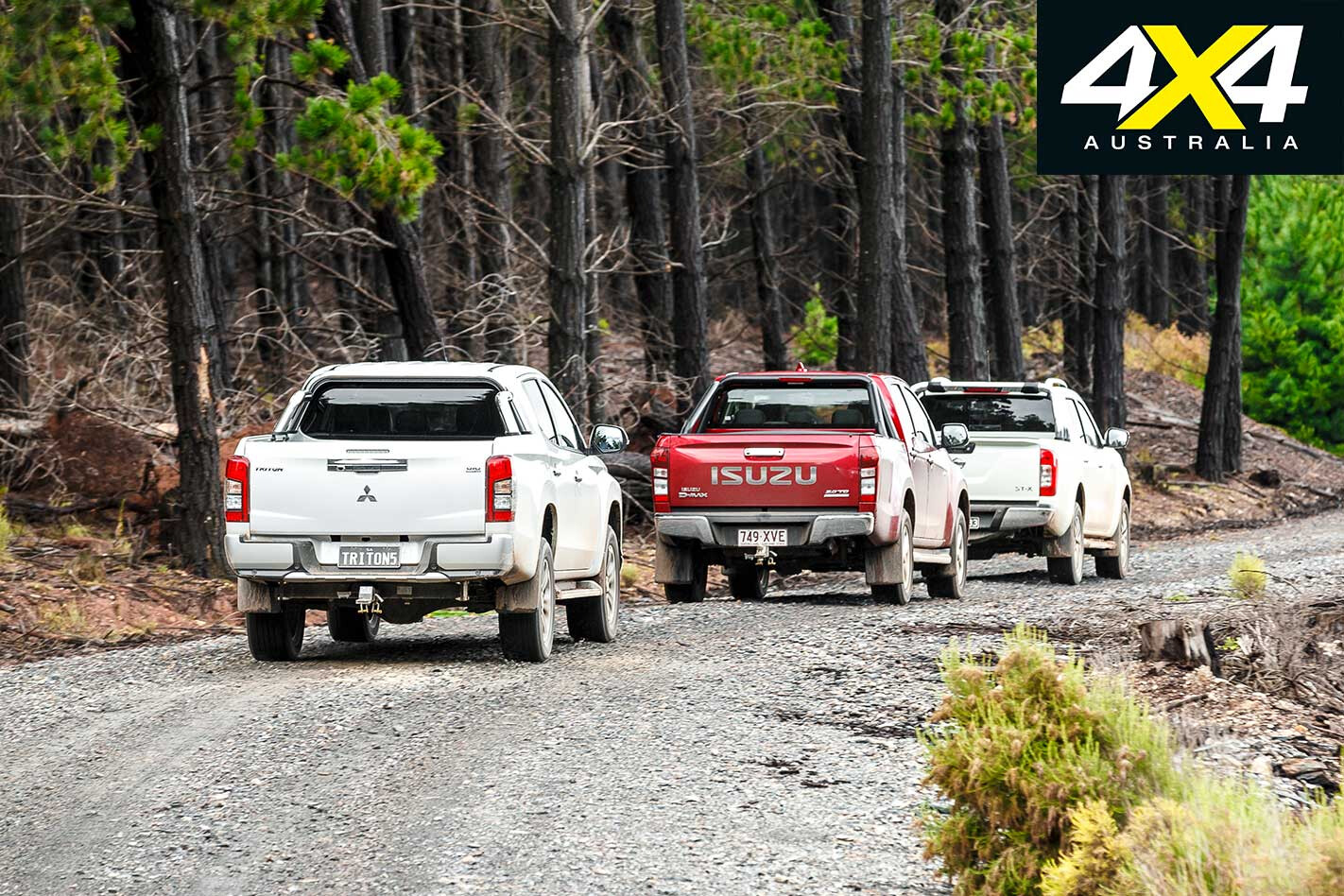
The D-Max is the winner for heavy load carrying and towing thanks to its chassis and relatively large capacity engine. It has a bigger and more useful tray, too, and more payload and tow capacity than the Triton.
In this company it’s the easy winner for any significant tow and load duties; even in our recent six-way heavy duty combined load and tow test, which included all the heavy hitters including Ranger 3.2 and the V6s from VW and Mercedes-Benz, the D-Max performed well. It may have gone into that heavy duty load and tow test as the backmarker, but it came out more as a mid-fielder.
In more general day-to-day driving its general refinement and performance is also much better than it was. At times it can be quite pleasant to drive, something that would have been a stretch before the recent upgrades. A well-proven, reliable and relatively easy and cheap to service powertrain is also a significant ownership bonus.
AUSTRALIAN battery manufacturer, Century Batteries, has launched a brilliantly simple solution to figuring out the power needs of off-road tourers, releasing the first online interactive Deep Cycle Battery Power Calculator.
It’s a bad feeling when the camp lights are glowing, the fridge/freezer is delivering cold beers and the kids are happy watching their devices, and then suddenly it all goes dark and silent. Somehow you haven’t calculated your power needs against the battery that came with your caravan, camper or in your dual-battery system, and you’ve been left powerless.
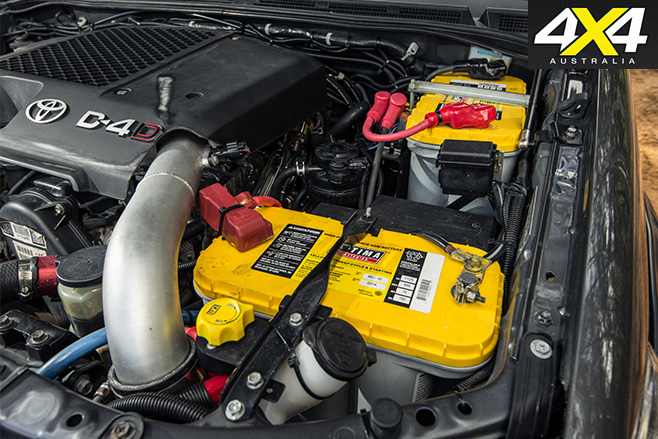
The calculator allows you to accurately calculate the exact battery capacity you will need, depending on your own personal usage. This is something that, until now, hasn’t always been easy to figure out, as Andrew Bottoms, Century Yuasa’s National Marketing Manager, explains.
“The existing process involved working through a six-step calculation to determine power usage in watts, total the figure and add a safety net, then convert their power consumption into ampere hours,” he says. “The user then had to manually find and select a battery which satisfies that figure.”
We agree, that does sound too complicated. The new online calculator, thankfully, pares it down to a very straightforward process whereby you simply enter your equipment details into the app, and include things like the manufacturer-supplied power consumption figures for that equipment and how long you envisage using them for (in hours).
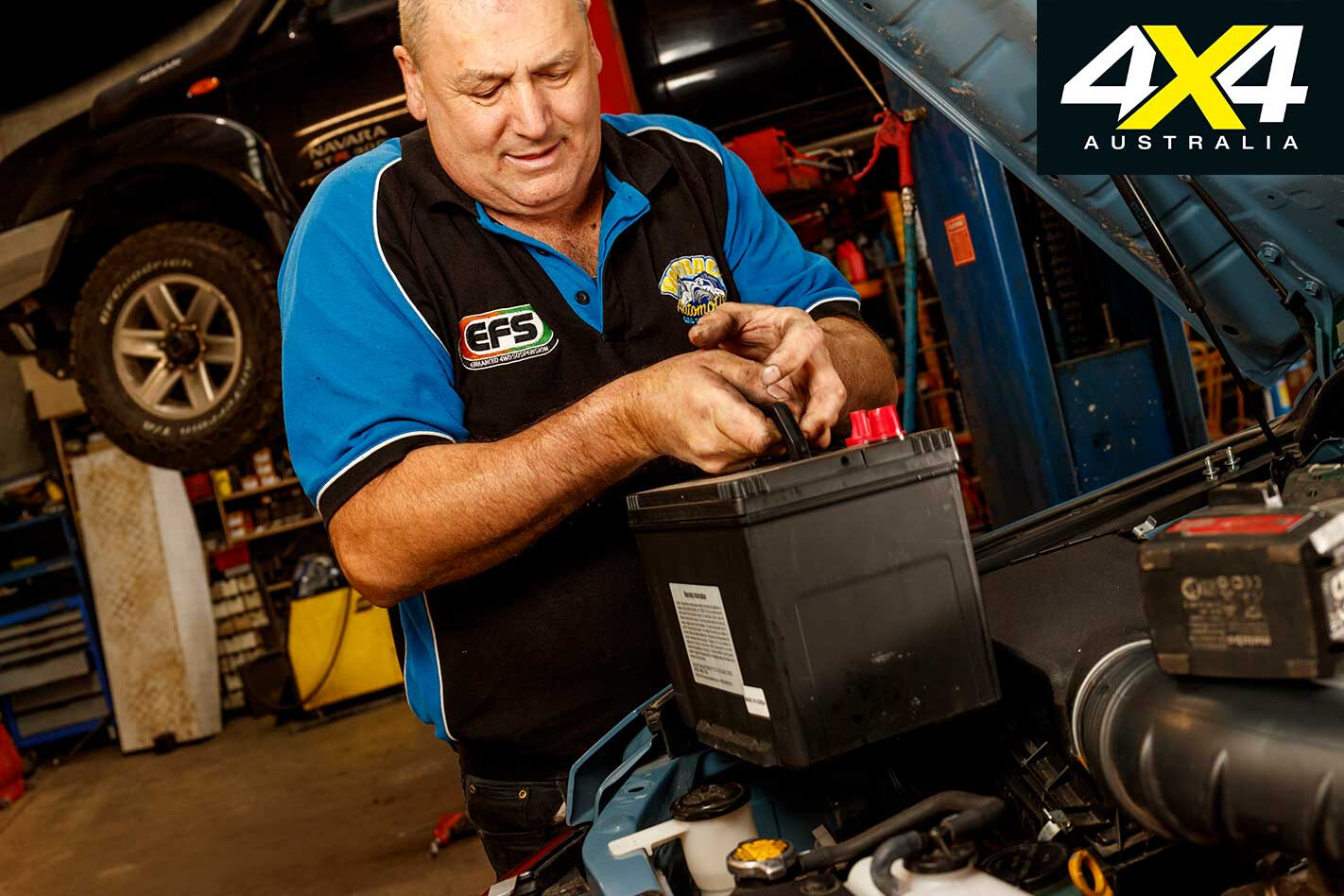
The Deep Cycle Calculator then adds up the usage times and consumption figures before adding a further 50 per cent to the final required figure that is calculated in Ampere hours (Ah). It then lists deep cycle batteries that match or exceed that requirement. This also allows those who already have an auxiliary battery to easily check to see if it definitely meets their campsite requirements.
It’s brilliant, and it’s perfect timing with the Easter break only weeks away.
“Easter is officially Australia’s busiest time for camping and caravanning,” Andrew says. “Not everyone wants to ‘plug in’ and be restricted to ’van parks, so alternate power gives you the confidence to stop where you like knowing you have the power to run essential appliances when emergencies arise like recharging phones; or run shortwave radios, televisions and lights.”
Website: www.centurybatteries.com.au/products/deep-cycle/deep-cycle-power-calculator
FORMER Formula 1 World Champion Jenson Button competed in the Mint 400 desert race earlier this year, driving a spec Trophy Truck; while the ranks of Dakar racers are littered with former WRC Champions such as Carlos Sainz and Sebastien Loeb, who are regulars of the event.
F1, IndyCar and WEC racer Fernando Alonso could be the next motorsport champion to turn to off-road racing, after he recently tested a Team Gazoo Toyota Hilux in South Africa. The South African-based team is the current champion of the Dakar rally, after Nasser Al-Attiyah and Mathieu Baumel claimed victory for the squad in the 2019 edition of the rally held in Peru.
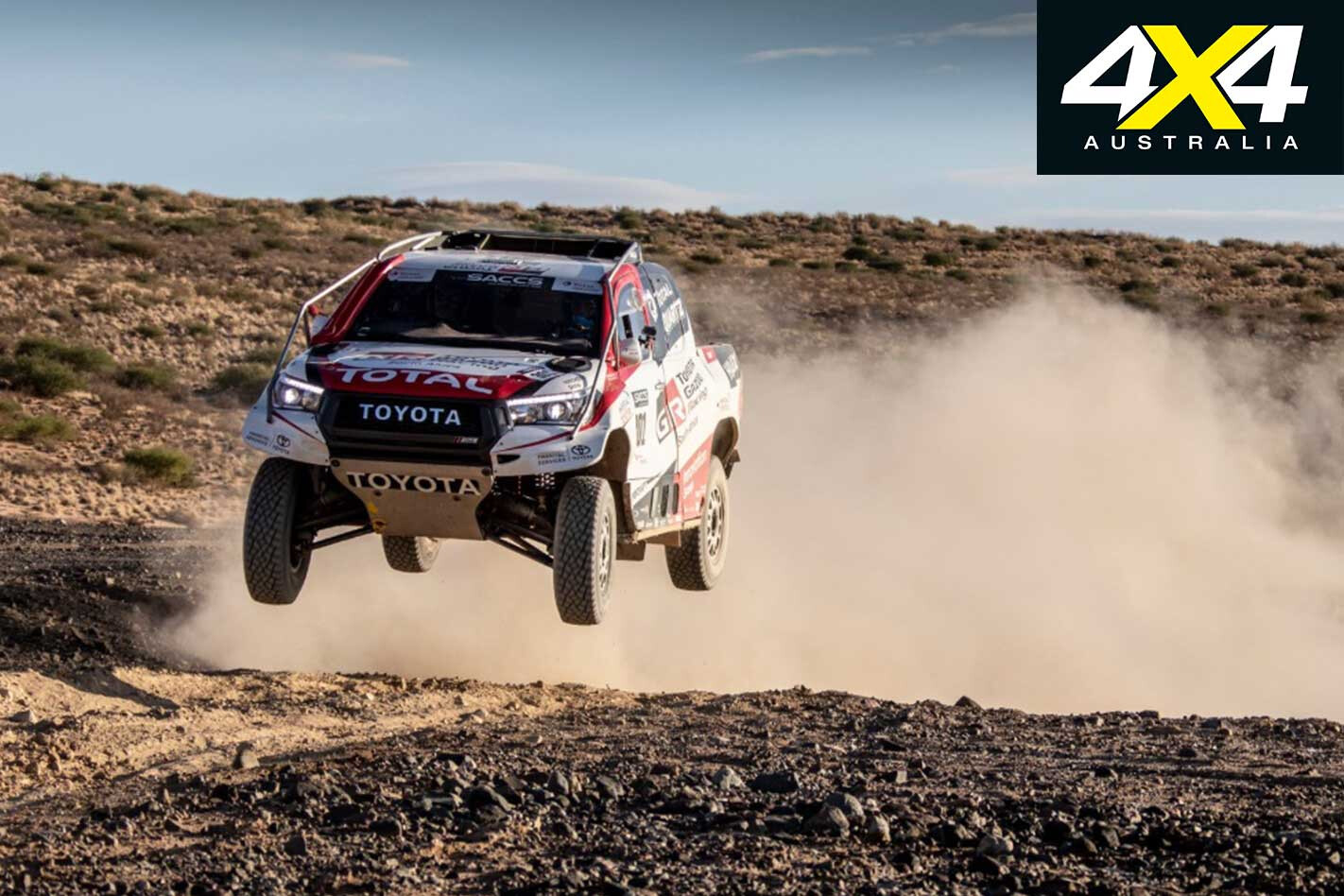
Alonso had a quick blast in the V8-powered Hilux racer and sounded impressed with the vehicle as he built up speed and gained a feel for the varied off-road terrain.
The two-time F1 World Champion retired from Formula 1 in 2018 and now drives for Toyota/Gazoo Racing World Endurance Championship outfit, competing at iconic race tracks such as Le Mans, Spa and Sebring. This year Alonso will also complete his second attempt at the Indy 500 with the Honda-Andretti team.
Alonso’s racing schedule remains busy, but we’re sure Gazoo would find a place for him within its 2020 team if the off-road bug truly bites and he elects to take the racing further.
4X4 AUSTRALIA magazine’s 4×4 of the Year award-winning Ford Ranger Raptor now comes standard with life-saving Autonomous Emergency Braking (AEB), as do all variants in the extensive Ranger range.
When the 2018 updates to the Ford Ranger were released, including the introduction of the Raptor model and the option of the 2.0-litre bi-turbo-diesel engine and 10-speed automatic transmission, some but not all variants within the range were fitted with AEB as part of their safety equipment. This included the top-of-the-line Ranger Raptor.
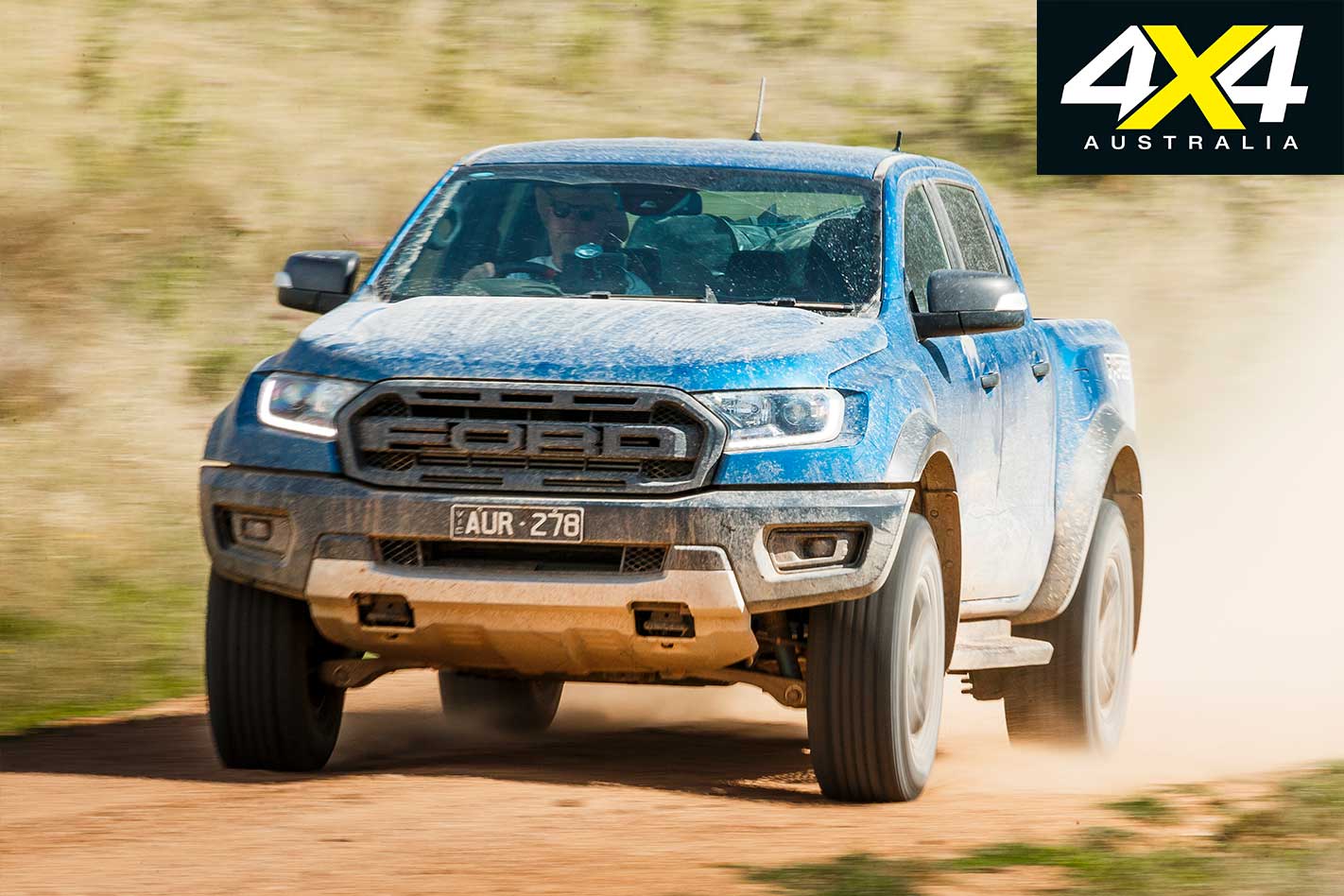
At the time, Ford Australia executives told us the technology was being developed for all Ranger derivatives and would soon be available across the range. As of June 2019 all Rangers – from the $28,340 Ranger XL cab-chassis 4×2 right up to the $75,990 Ranger Raptor, encompassing some 31 variants of the popular ute – will have the safety tech as standard.
“Ranger has a tradition of leading technology, which includes being the first pick-up to achieve a five-star ANCAP safety rating, and in 2018 we added more powertrain choices and significant Driver Assist Technology coupled with a five-year, unlimited kilometre warranty,” said Ford Australia and New Zealand President and CEO, Kay Hart. “Now, AEB with Pedestrian Detection, Lane Keeping Aid, Traffic Sign Recognition and Automatic High Beam is standard on every Ranger, from the entry-level Ranger XL cab-chassis all the way through to the Ford Performance Ranger Raptor.”
The 2018 Ranger still achieved a five-star ANCAP rating even without AEB and Pedestrian Detection technology. Pedestrian Detection, Lane Keeping Aid with driver alert, Traffic Sign Recognition and Automatic High Beam are now a part of the safety technology that is standard on all Rangers.
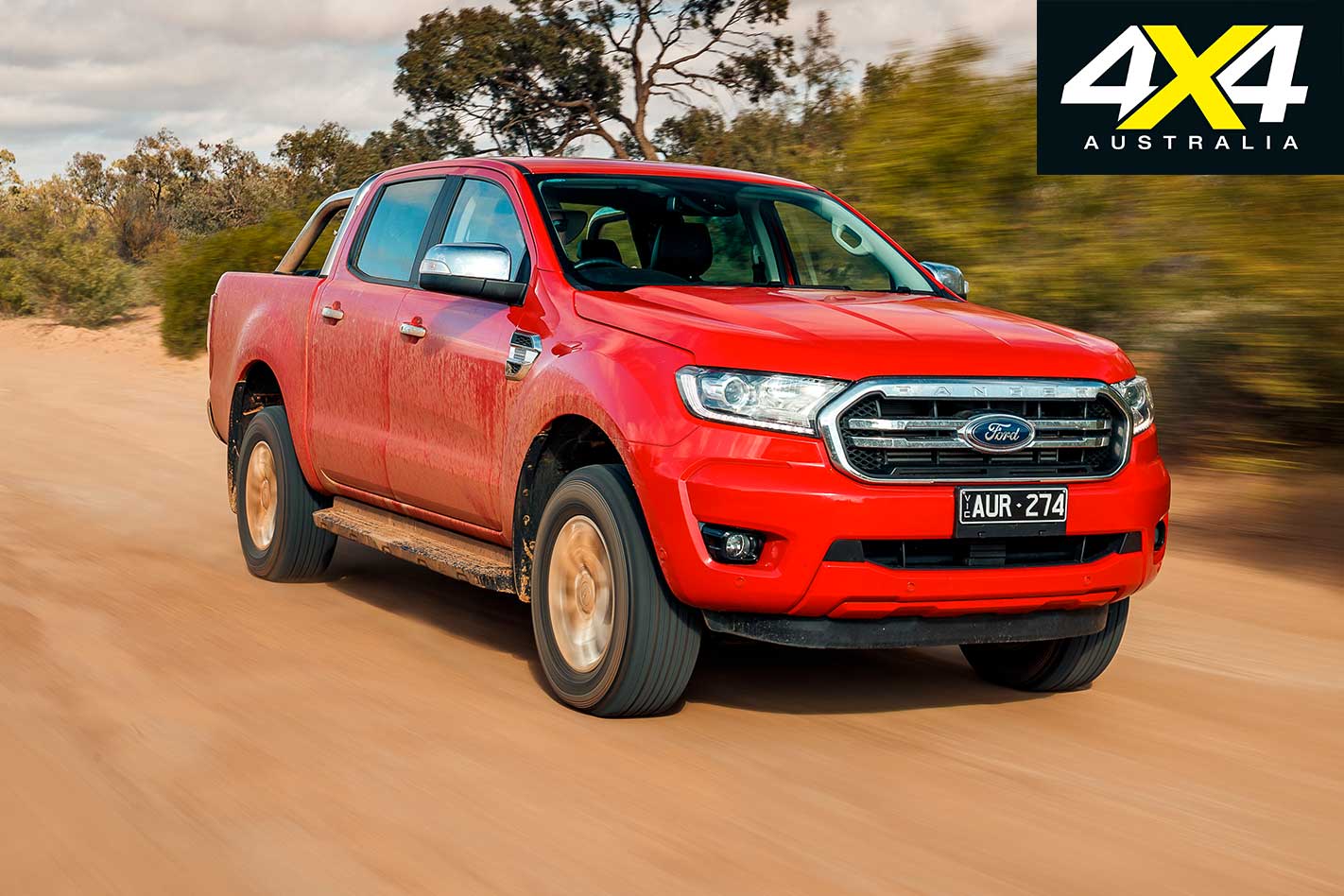
The one item missing from the Ranger’s safety arsenal is Rear Cross-Traffic Detection warning, a most useful function that warns the driver of side approaching traffic and pedestrians when reversing – only Mitsubishi’s new Triton offers this in the ute segment.
Another addition to the upgraded Ranger Range includes the availability of a reversing camera on cab-chassis models, with a heavy duty wiring harness and camera housing that can be mounted to a wide variety of trays.
The Ranger Raptor now has eight-way power adjustment bespoke Ford Performance seats, for both the driver and passenger. Ranger XL and XLS models get an acoustic windscreen for a quieter cabin.
The updated Ranger line-up is on sale from June 2019.
MORE: Ford Ranger Range Review MORE: Ford Ranger Specs, Range & Price
GREAT WALL MOTORS has confirmed that Australia and New Zealand will get the Chinese brand’s next-gen ute, which has been developed on a new platform shared with the burly, family-focused Haval H9.
The exact variants that’ll be shipped to our shores are yet to be confirmed, however, Great Wall has revealed that an off-road adventure model has been specifically designed for Australia and NZ.
That adventure model will join three other variants on its initial release in China: a SWB dual-cab, a LWB dual-cab and a single-cab model.
Information is sparse, but what we do know is that the next-gen ute will run a turbo-diesel engine mated to an eight-speed automatic transmission. Great Wall also ensures the new platform will maintain “superior 4WD and load-carrying capabilities”.
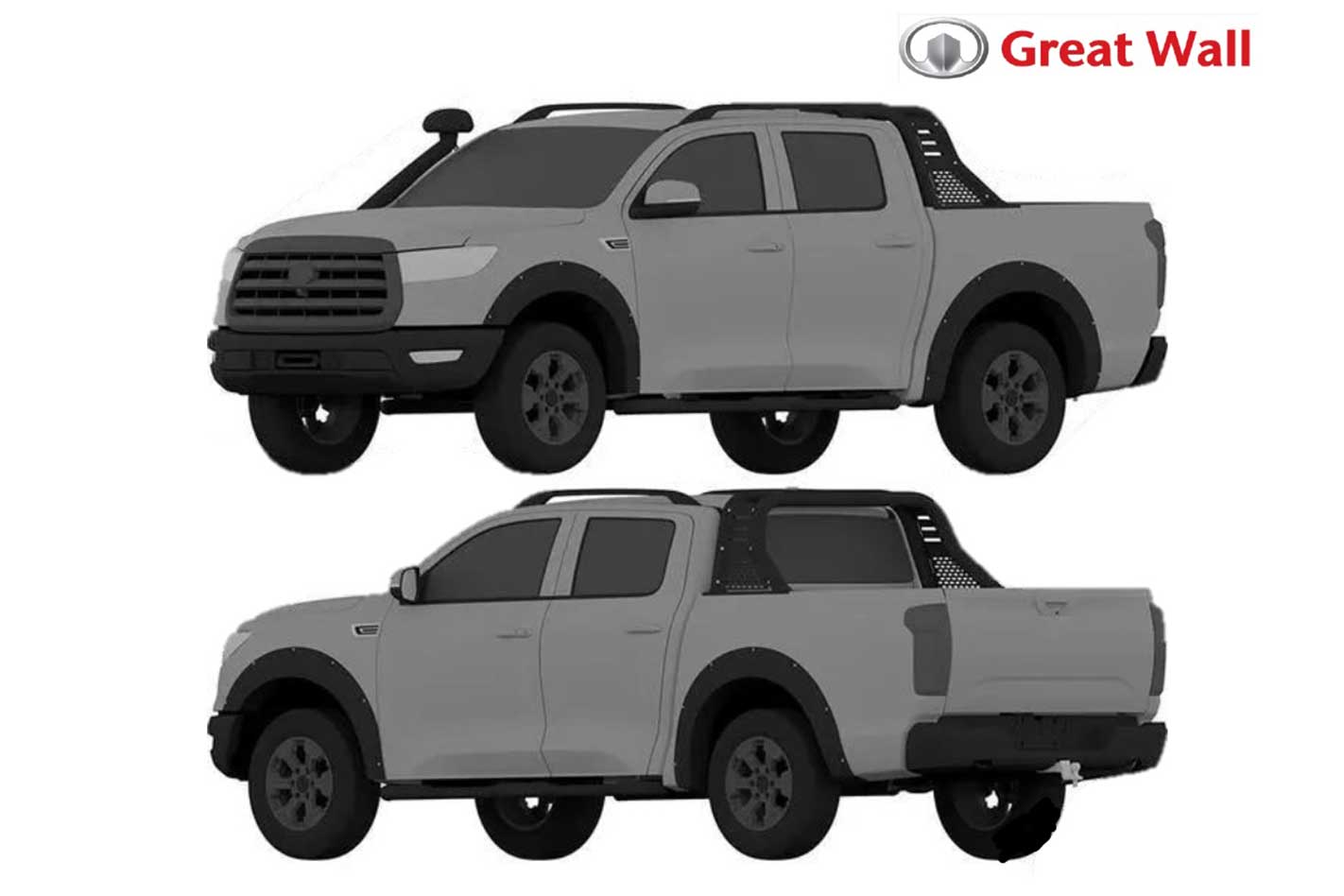
All we have to go by at the moment is this ‘eye-brow-raising’ design patent (pictured), which provides more questions than answers – namely, who etched it?
Great Wall has confirmed that, as well as the revelation of its next-gen ute, it will also unveil “other strategic models destined for global deployment, including electric and hybrid vehicles”.
Local specs and Australian release dates are yet to be confirmed, but we’ll be on the ground to bring you all the up-to-date news at its debut at the Auto Shanghai Motor Show, which begins April 16.
THE NEW Jeep Gladiator pick-up is being launched in the USA this month and we’re led to believe it will arrive in Australia in around 12 months’ time.
In the US the Gladiator is classed as a mid-size pick-up along with the likes of the Chevrolet Colorado, Ford Ranger and Toyota Tacoma, the equivalents to the Holden Colorado, Ford Ranger and Toyota Hilux mid-size trucks here. So it’s inevitable that it will be classed alongside those popular utes when it gets to Australia, despite being a very different truck.
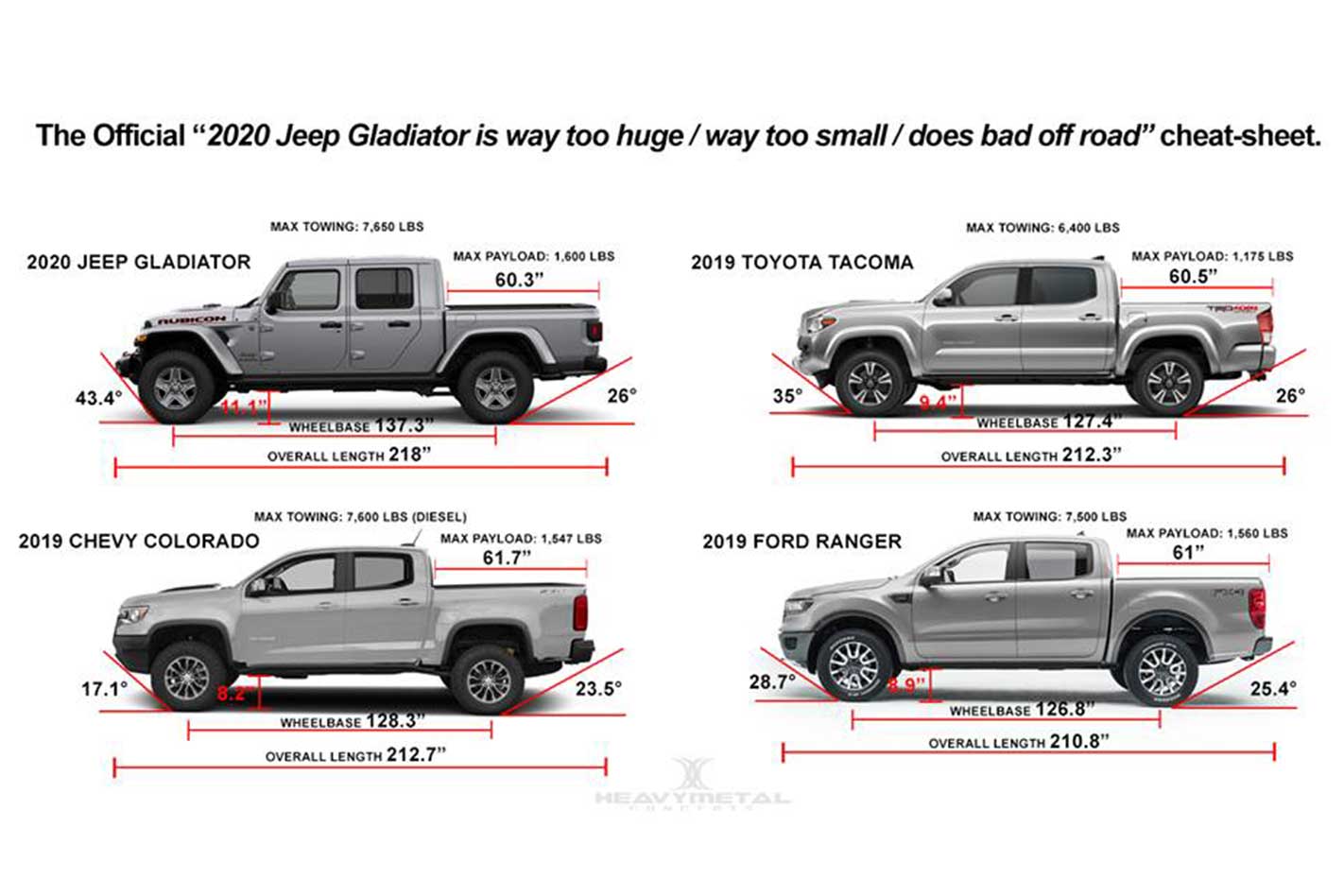
The attached diagram shows the size and load capacity differences between the Gladiator and its US counterparts, and you can clearly see it is bigger and heavier duty than any of them. Even the off-road specs of approach and departure angles eclipse anything the other trucks offer. The US-market Tacoma and Colorado are both slightly bigger than the Hilux and Colorado we get here.
The Gladiator, being a Jeep, is more of an off-road vehicle than any of these others. It is based on the Wrangler after all and comparing it to these utes is like comparing a Jeep Wrangler to a Ford Everest or Toyota Fortuner. They are very different vehicles, with the Jeeps more utilitarian, less family friendly, built-for-purpose off-roaders.
The Jeeps have live axles front and rear and not IFS that the others are all compromised by. They also have heavy duty Rubicon models that offer lower gearing, locking front and rear axles, bigger all terrain tyres and disconnecting front sway bars; all equipment to make them superior off-road vehicles. And there are rumours of a more hardcore Gladiator variant to take on the F150 Raptor in high-speed off-road use.
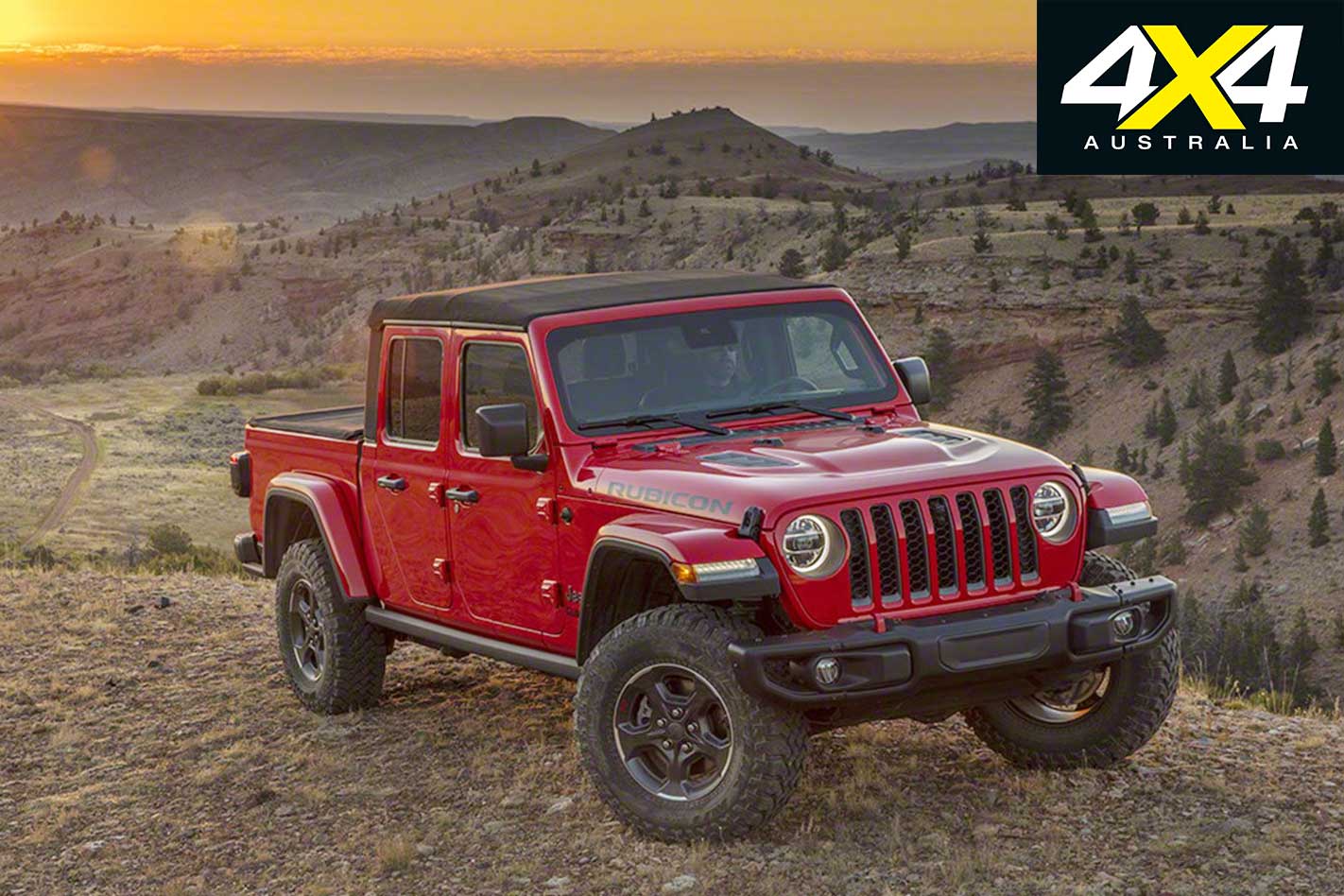
The Gladiator is bigger, heavier duty and more off-road capable than the common mid-size utes, but it’s still no Land Cruiser 79 Series. It might be closer to the Cruiser in its live axle design, but it falls short in size and capacity. The Jeep will sit somewhere in between the LC79 and the Hilux/Ranger/Colorado/Amarok/DMAX regulars.
We should know more about the Gladiator by the end of this week, but we can’t wait to get behind the wheel of one. It’s not every year a new off-road-capable truck arrives to play with.
MITSUBISHI has created the Triton Absolute for its stand at the Bangkok Auto Show this week, to gauge customer interest in a special edition loaded with extras.
Mechanically, the show car gets uprated suspension that raises the Triton 50mm over standard and allows the fitment of larger, off-road-oriented wheels and tyres which in turn have widened the wheel track. There is no mention of any changes to the drivetrain.
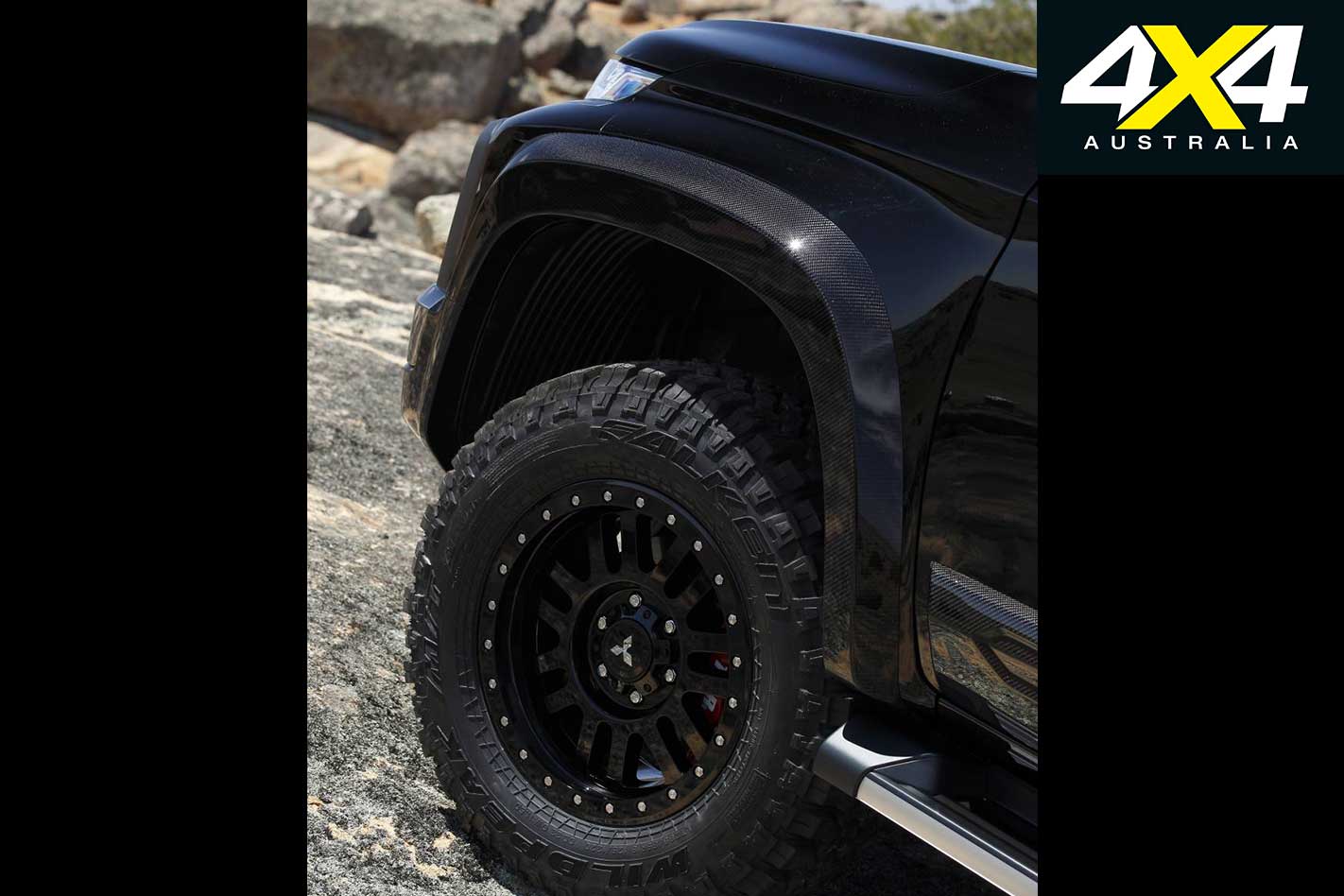
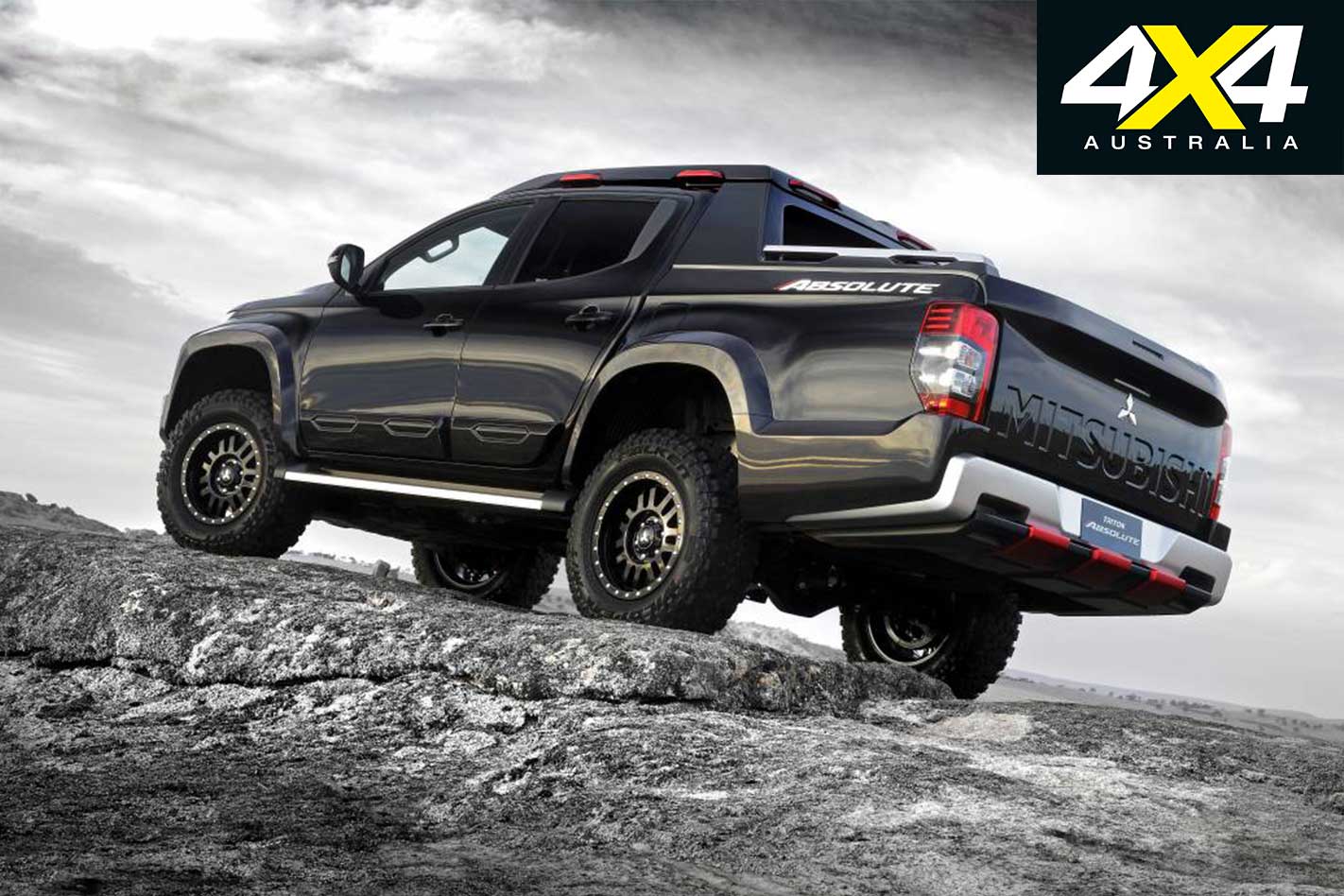
More striking is the body work, with additional cladding for protection, body blackouts, underbody protection and LED lighting on a custom roof rack.
“The Triton Absolute concept is more robust, dynamic and powerful. It demonstrates our commitment to exploring a vision of the future Triton that will deliver on our ‘engineered beyond tough’ commitment to the Triton series – bold enough to be taken on even more adventurous treks to explore Australia’s rugged outback, which is one of Mitsubishi’s defining strengths.” said Mitsubishi Motors Australia CEO, John Signoriello.
Factory kitted-out utes have been popular with buyers, with special editions from Nissan, Isuzu, Toyota and Ford all bringing extra customers to the respective brands and boosting sales in the highly competitive one-tonne 4×4 market. Mitsubishi wants a slice of that action, too, and you can bet we’ll see something akin to the Absolute at some time in the future.
The Triton has long held third place in the 4×4 ute sales race and in February it came close to catching the Ford Ranger in sales for the first time. This shows there’s interest in the new Triton model which arrived on our shores in January.
“While only a concept at this stage, we will assess the feedback from customers in Australia and overseas towards a more aggressive Triton which will guide the brand’s future product development,” concluded Signoriello.
LOOKING forward to that weekend away but dreading the fact you have to pack? Well, packing doesn’t have to be an ordeal if your 4×4 has smart storage solutions.
Here we’ve got all you need for a weekend away: a 4×4 drawer system, a heavy duty duffle bag, and a nifty bike rack.
ARB mid-height drawer
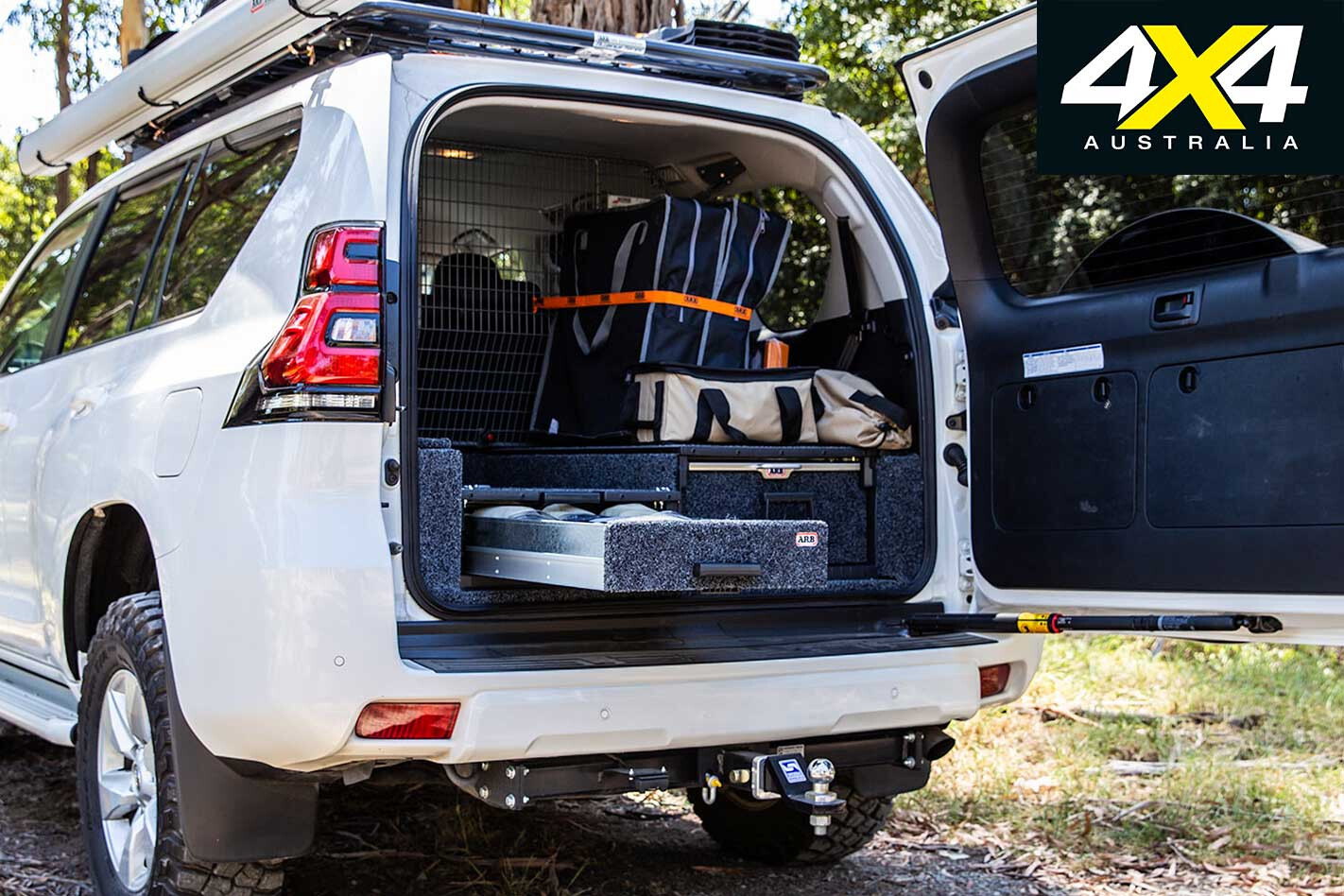
ARB has come up with a great solution to cater for the myriad ways in which off-road tourers set their vehicle’s cargo area up for storage. This mid-height drawer covers those who cannot fit a full-height drawer in their rig, but are after more storage height than low-height drawers. With 105mm of in-draw height, the new ARB mid-height drawer is the perfect solution.
It is available in three lengths – 945mm, 1045mm, 1355mm – so accommodate the full range of vehicles ARB builds drawers for. The drawers bolt in quickly and easily and include a roller floor that allows for fast access to anything stored on top of the drawer. Both the drawer itself and the roller floor feature aluminium drawer runners for optimum durability.
Website:www.arb.com.au
Otter Yampa 105 dry duffle
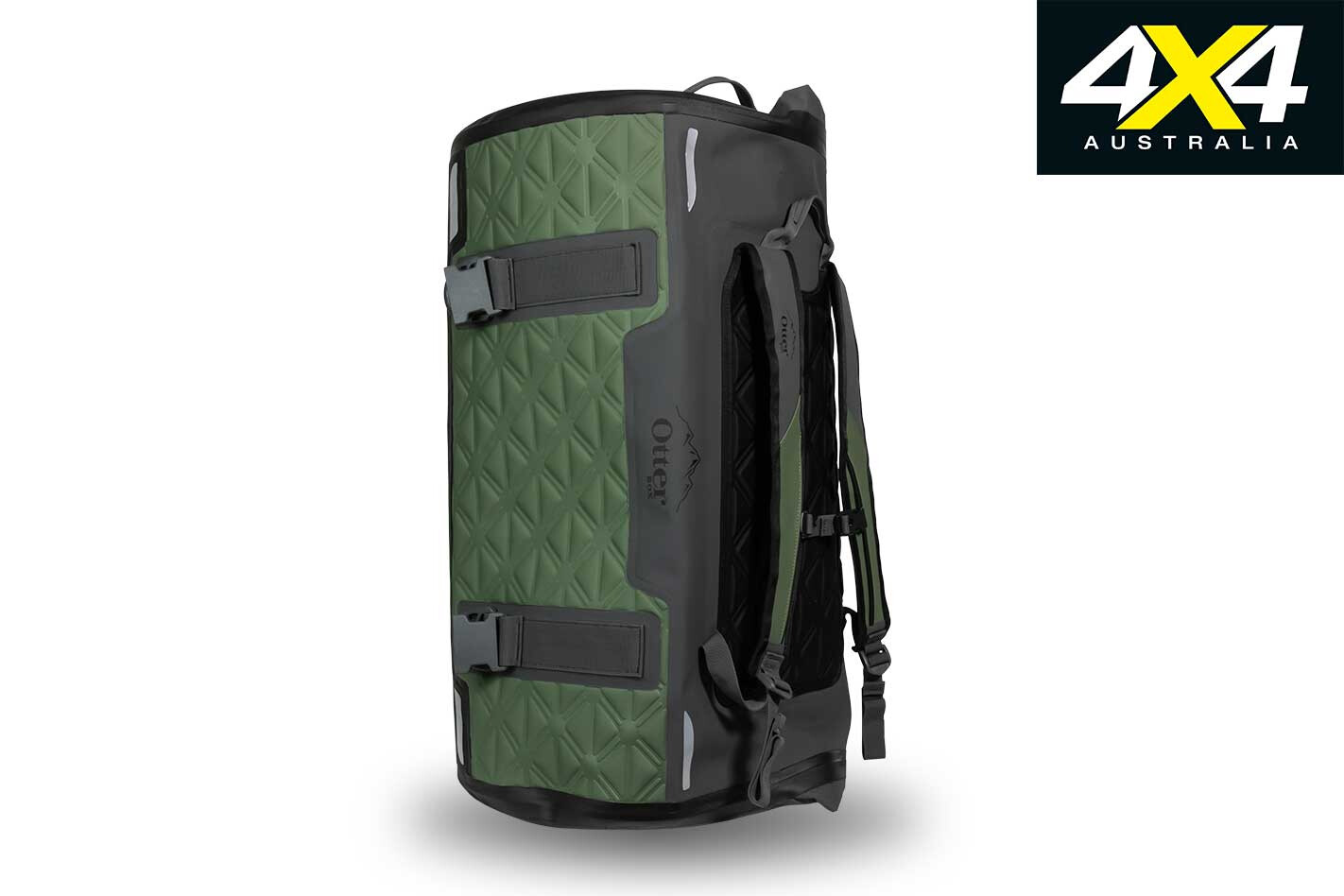
The Yampa 105 (also available in 35L and 70L variants) is the ideal go-anywhere, take-any-punishment bag for off-road tourers and those who get out on the water. The Yampa has waterproof sealed seams and waterproof zips to ensure no dust or moisture ingress, while the waterproof TPU-coated nylon material is super robust.
There’s a heavy-duty base for increased resistance against dragging, sharp surfaces and other impacts and the duffle also has an inbuilt backpack harness (with neoprene shoulder pads and an airflow back pad) that makes for convenient carrying. The nylon buckles are equally tough, while the reflector strips help spot it during nights at camp when you’re searching for gear.
Another handy feature is the bright interior – perfect for being able to see what’s inside. Also included are a number of different handles, some interior pocket sections and tough tie-down points for securing the bag up on the roof-rack.
RRP: $499.95 Website: www.otterbox.com.au
Yakima HoldUp EVO
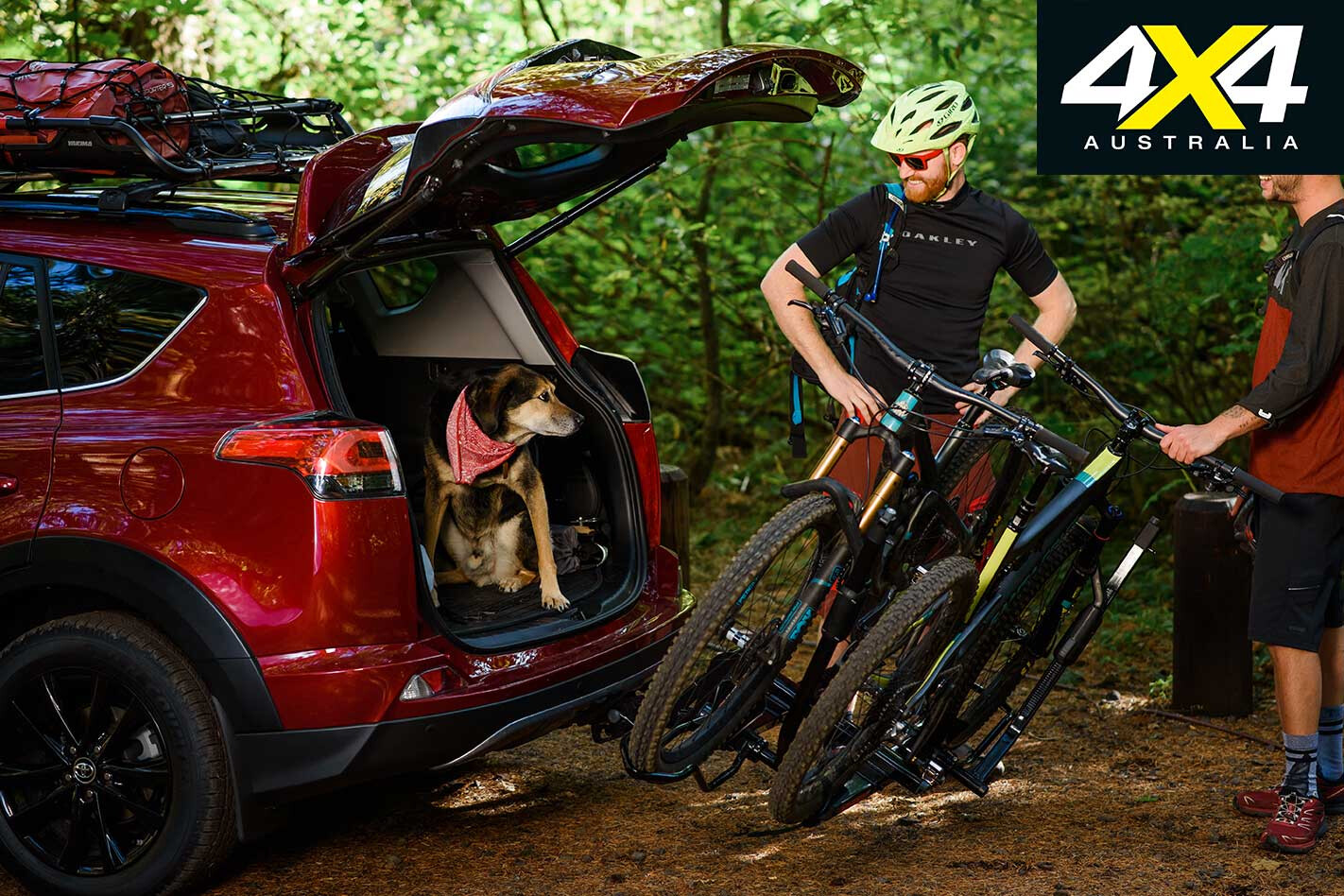
Yakima’s new HoldUp EVO is an update to the Yank icon’s HoldUp, a huge favourite with cyclists keen to transport their rides securely and without damage.
The HoldUp EVO has been designed to accommodate the latest-gen bikes, whether it is a new fat bike or an e-bike (under 23kg), along with the myriad wheel sizes and suspension setups now on offer – all of which can make carrying a bike a painful experience if the bike carrier is not designed for them. The EVO is compatible with a 50mm hitch and fits bikes with a wheelbase up to 1220mm. The HoldUp EVO can handle wheels ranging in size from 20-inch to 29ers, and can fit fat-bike tyres up to 4.8-inch in width.
The HoldUp’s party trick is its StrongArm hooks that secure a bike via its wheels, so there is no potentially damaging contact with the frame itself. You can tilt the rack away from the rear of your rig via its KickStart foot pedal.
RRP: $669 Website: www.yakima.com.au
IT SEEMS Ford is genuinely going after Jeep with its 2020 Ford Bronco, revealing to dealers that the reborn nameplate will include a family of vehicles: three-door short wheelbase and five-door long wheelbase body-on-frame models targeting the Jeep Wrangler; a ‘baby’ Bronco aimed squarely at the Jeep Renegade; and a light duty ute tipped to come off the same monocoque platform as the baby Bronco.
At a dealer conference in Palm Beach, Florida, last month, Ford showed a prototype of the two-door Bronco and told those gathered that there would also be a four-door variant available.
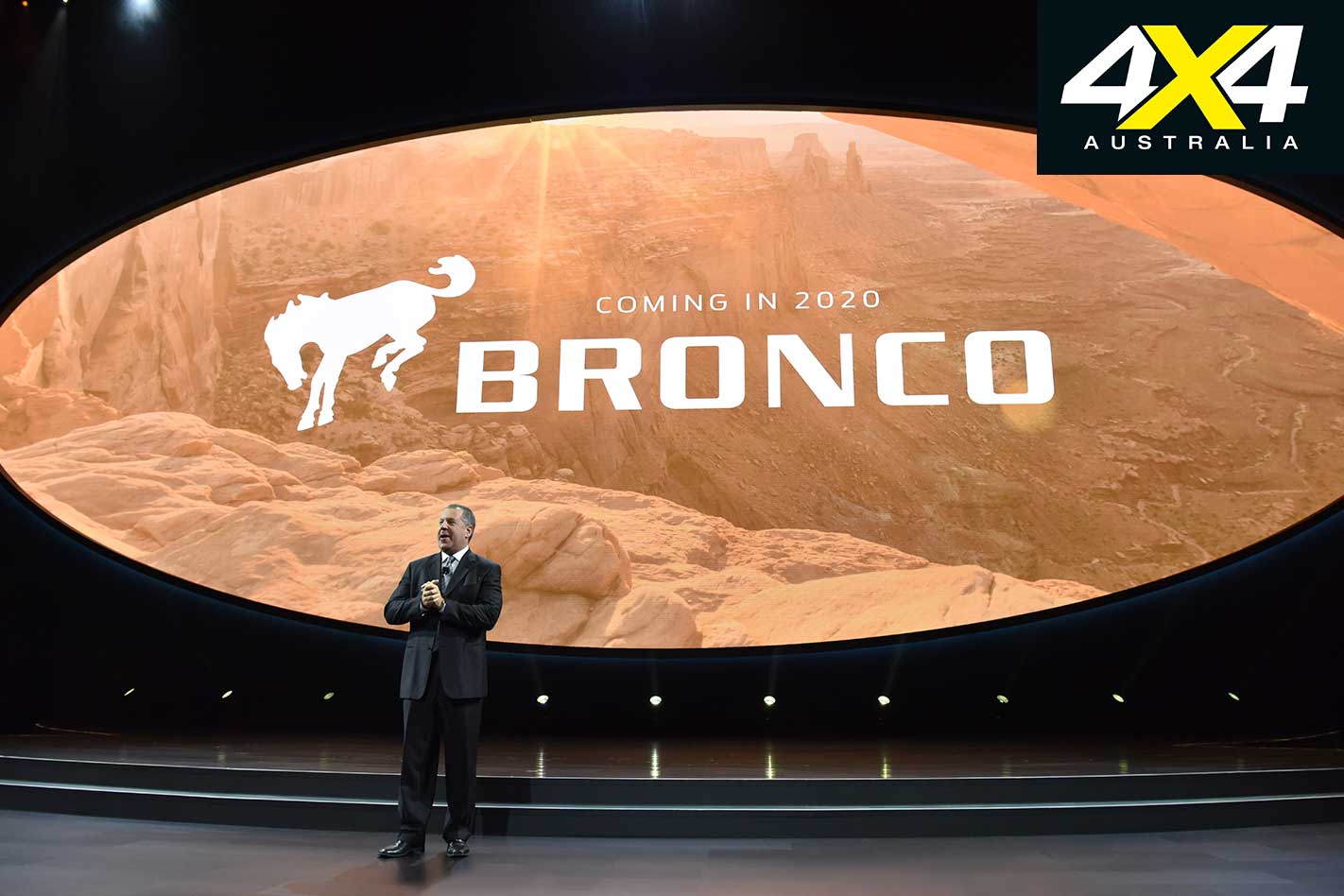
Officials also said the SUV will be heavily customisable, with removable roof and doors that can be stowed in the vehicle’s cargo space. The wing mirrors are mounted on the A-pillar to allow the doors to be removed in much the same way as the Wrangler’s.
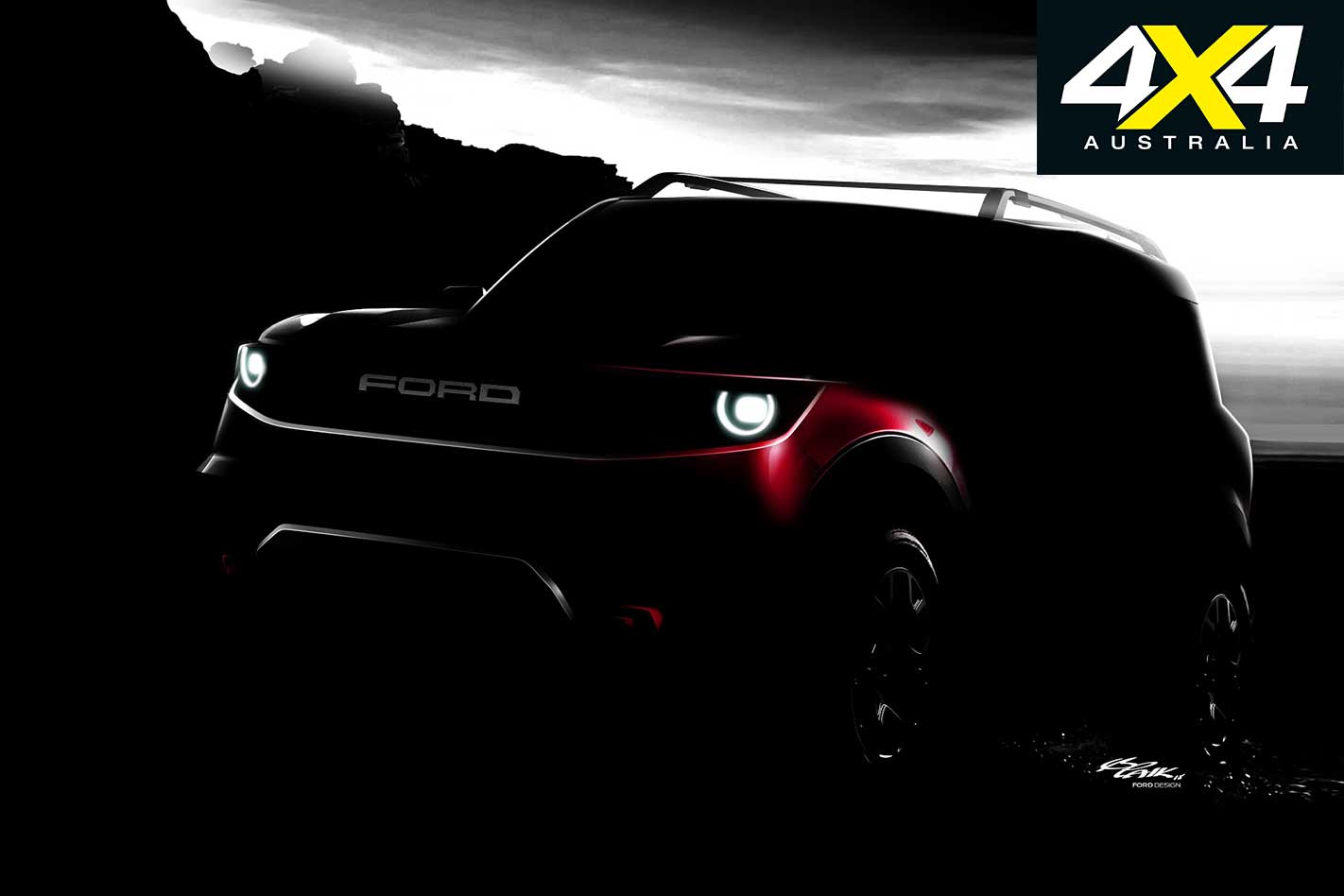
Those in the audience, who had to give up their mobile phones before entering the room, said the prototype vehicle had a boxy appearance which is in keeping with a teaser image Ford USA showed last year. That image was simply a covered vehicle, the dimensions and shape of which hinted at the three-door Bronco and gave fans of the model hope for a traditional off-road vehicle.
Automotive News quoted one dealer who was at the conference as saying that the Bronco “was twice as cool as I thought it would be”.
It is widely expected that the new Bronco will be built on the Australian-designed T6 architecture which also underpins the Ranger ute and Everest wagons here, and it will be built at Ford’s Michigan Assembly Plant, where the US version of the Ranger is made for the domestic market.
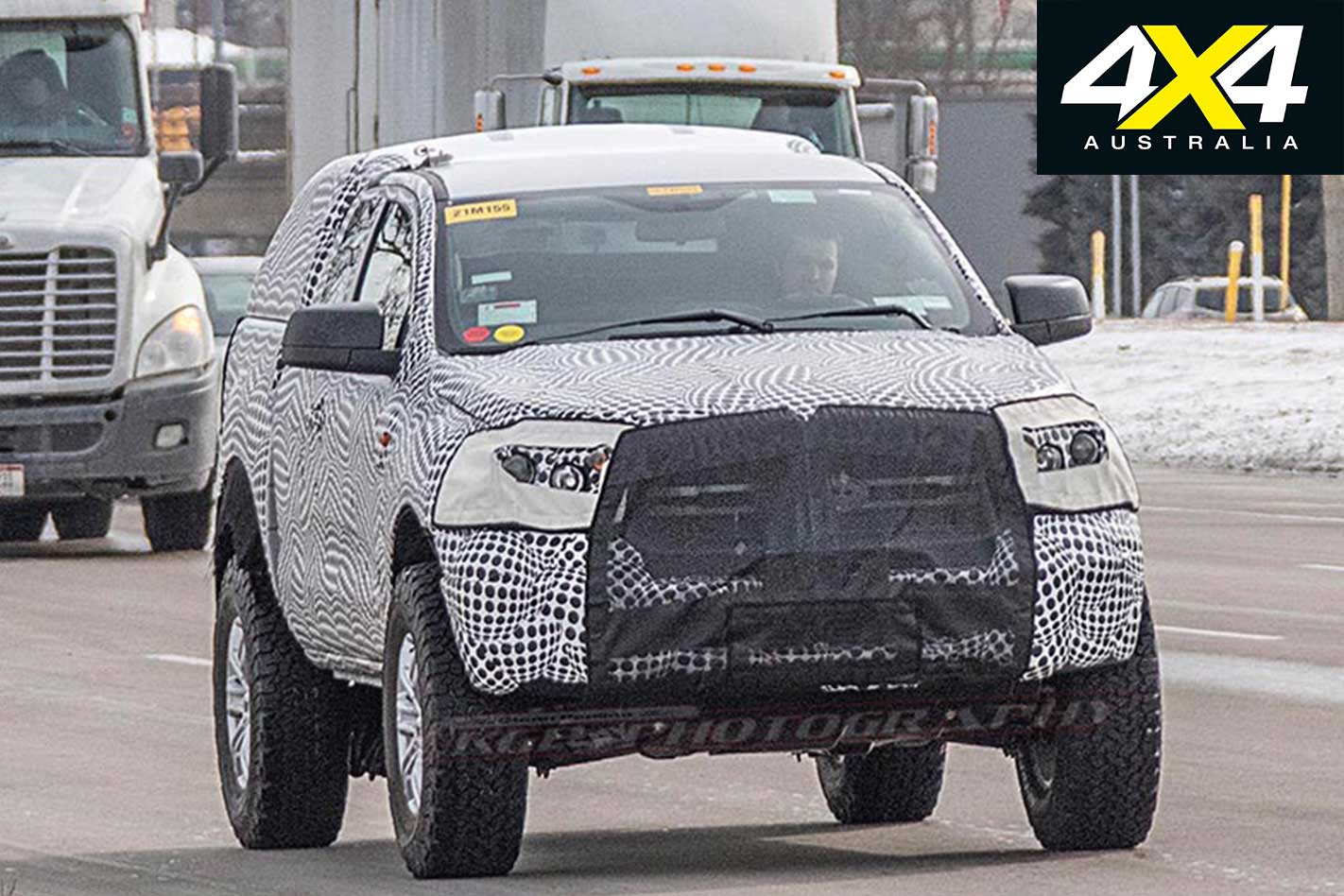
Thoughts that the new Bronco would simply be a rebadged Everest were quashed when that covered image appeared, and Ford execs have since confirmed that the Bronco will have its own unique styling.
Recent spy photographs out of the USA have shown a mule vehicle using a Ranger extra-cab body with a shortened bed on a chassis with a shorter wheelbase than a Ranger. The camouflaged mutant had its suspension hidden by fringed brushes in much the same way that Ford Australia hid the coil spring rear suspension on Everest prototypes in the lead-up to the launch of that vehicle here. This vehicle is tipped to be a development mule for the Bronco.
Despite the links to the Australian chassis platforms, Aussie Ford fans shouldn’t get excited about the Bronco being on sale here anytime soon. Ford Australia chief Kay Hart told local media last year there was no decision on the Bronco coming to Australia as the Ranger and Everest were doing well here already. The Ranger ute remains Ford Australia’s best-selling model.
There were also unconfirmed reports of Ford engineers from US and Australia recently seen driving a pair of left-hand-drive Wranglers ‘extremely hard’ in the bush near Melbourne. When local off-roaders quizzed the drivers they said they were benchmarking the Jeeps off-road ability for a future Ford product. With the ongoing development of the T6 platform by Ford Australia, this testing, if true, could only be construed as being for the upcoming Bronco.
The Bronco should appear in the USA before the end of this year as a 2020 model, while the light-duty baby Bronco isn’t expected until 2021.
QUALITY recovery gear is worth its weight in gold when you’re stuck is an isolated part of the Aussie scrub.
It’s essential to have suitable gear that’ll get you of a pickle, and it’s important to remember to buy high-quality kit from reputable brands. Here are some products new to the 4×4 market.
Sherpa 4×4 Brumby winch
The team at Sherpa 4×4 has done it again with the Brumby winch, a 10,000lb-rated high-speed jobbie that offers a line speed of over 15 metres per minute.
The grunty electric motor pumps out an impressive 8.9hp and, when combined with a new gearbox ratio, is ideal for those fast recoveries, heavy-duty use and also for off-road competition work. The winch features Albright International electrics, so it’s reliable (reflected in the excellent five-year warranty).
The Sherpa 4×4 team performs rigorous testing of all its winches (including high-current tests, water permeation tests, load-testing of the gearbox, etc.) and have carved an excellent reputation in the off-road scene.
RRP: $1199 Website: www.sherpa4x4.com.au
Ironman 4×4 kinetic snatch rope
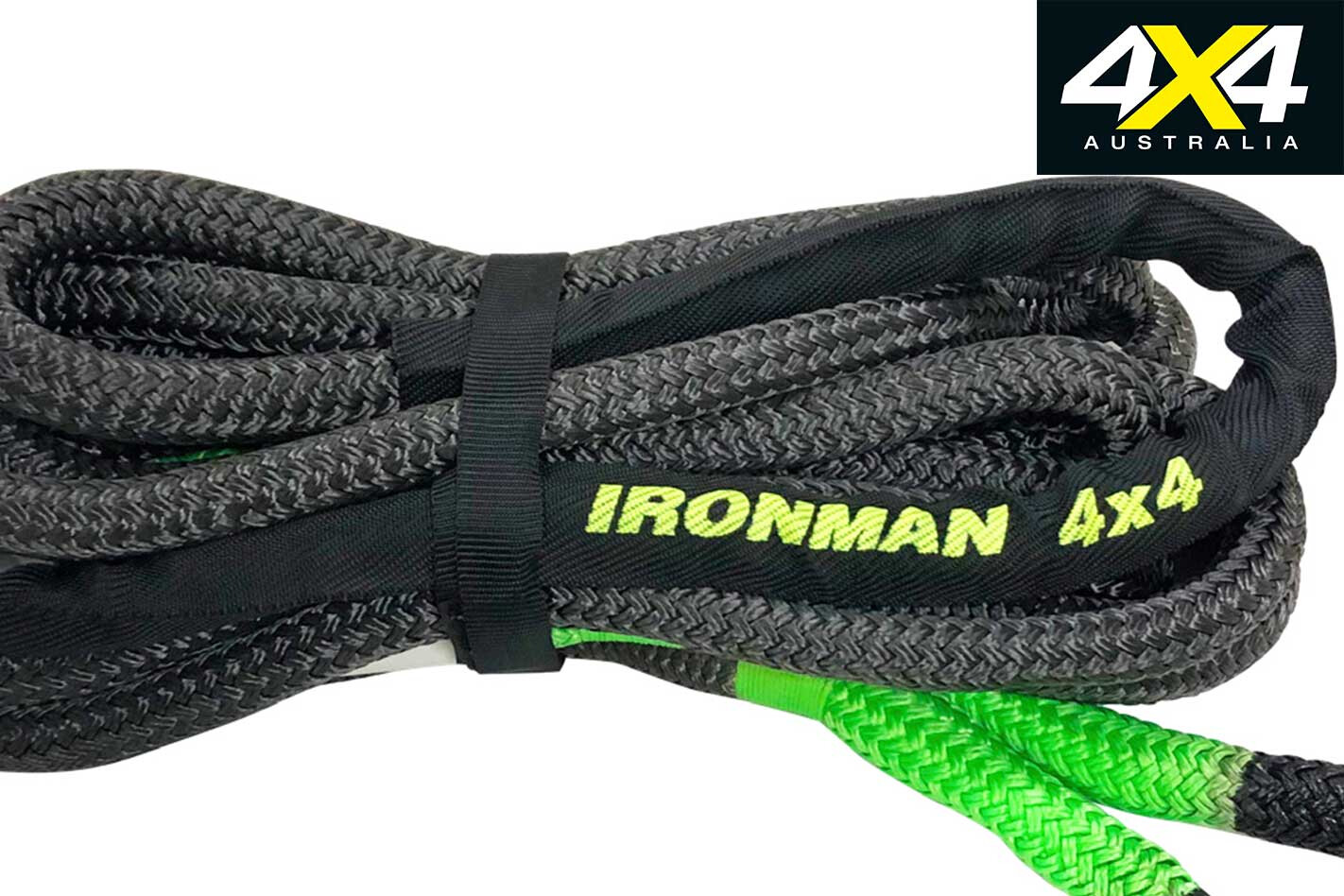
Ironman 4×4’s new kinetic snatch rope measures 9 metres in length and is 22mm thick. The use of kinetic rope means there is a smoother, more gradual build-up and release of kinetic energy during a recovery situation, making it more effective than conventional webbing recovery straps. The rope is designed to stretch up to 30 per cent (most traditional webbing recovery straps only stretch up to 20 per cent) and has a rated 9500kg minimum breaking strength.
The rope is manufactured with high-strength nylon 66 (polyamide) double braid cover with an abrasion-resistant core. The eyelets are coated reinforced polyurethane for ultimate strength and durability and there’s also a polyester protective sleeve. The rope comes in a handy carry bag, too.
Website: www.ironman4x4.com
Fulton XLT Winch range
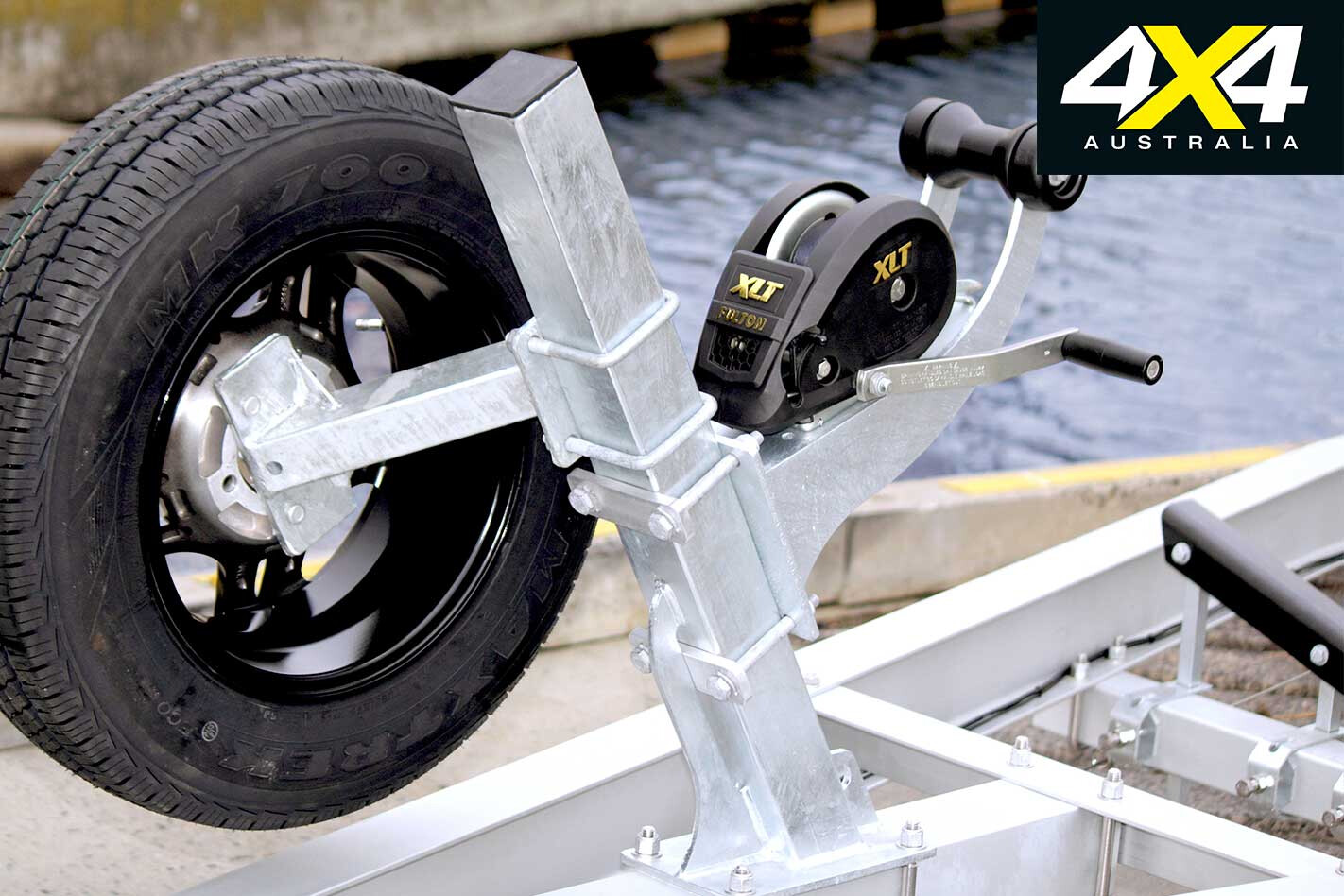
The all-new Fulton XLT Winch range provides premium performance for marine and recreational trailers at an affordable price. Available in four sizes from single speed through to two-speed, and rated from 680 kg to 1450 kg, there is an XLT Winch to suit most boat trailers. The winch features a stamped carbon steel frame and the internals have a Z-Max 600 zinc coating for corrosion resistance.
The single speed XLT Winch features an efficient gear ratio, full-length drum bearings, oil-impregnated shaft bushings, and an eight-inch “comfort grip” handle for ease of cranking. The two-speed winch has a special shift lock design which lets you change gears without having to move the handle. Includes a five-year warranty.
RRP: From $149 Phone contact: 1800 812 017