
THE Dometic CFX 50W fridge/freezer used on our most recent trips around Australia has really impressed – and that is saying something, as I’d learnt some years ago to leave anything with a Waeco brand at home. In what is a smart move, Dometic, after taking over the Waeco brand a couple of years back, is dropping the Waeco name completely.
Dometic has eight fridges in its CFX range, varying in size from a 28-litre unit to a dual-zone 95-litre unit. Our test unit was the 50-litre version, which would suit many people’s fridge and/or freezer requirements. Dometic says it can hold 72 cans, but I’m guessing that is without the interior basket which, with its slightly uneven base, makes the cans fall over unless they’re packed tight.
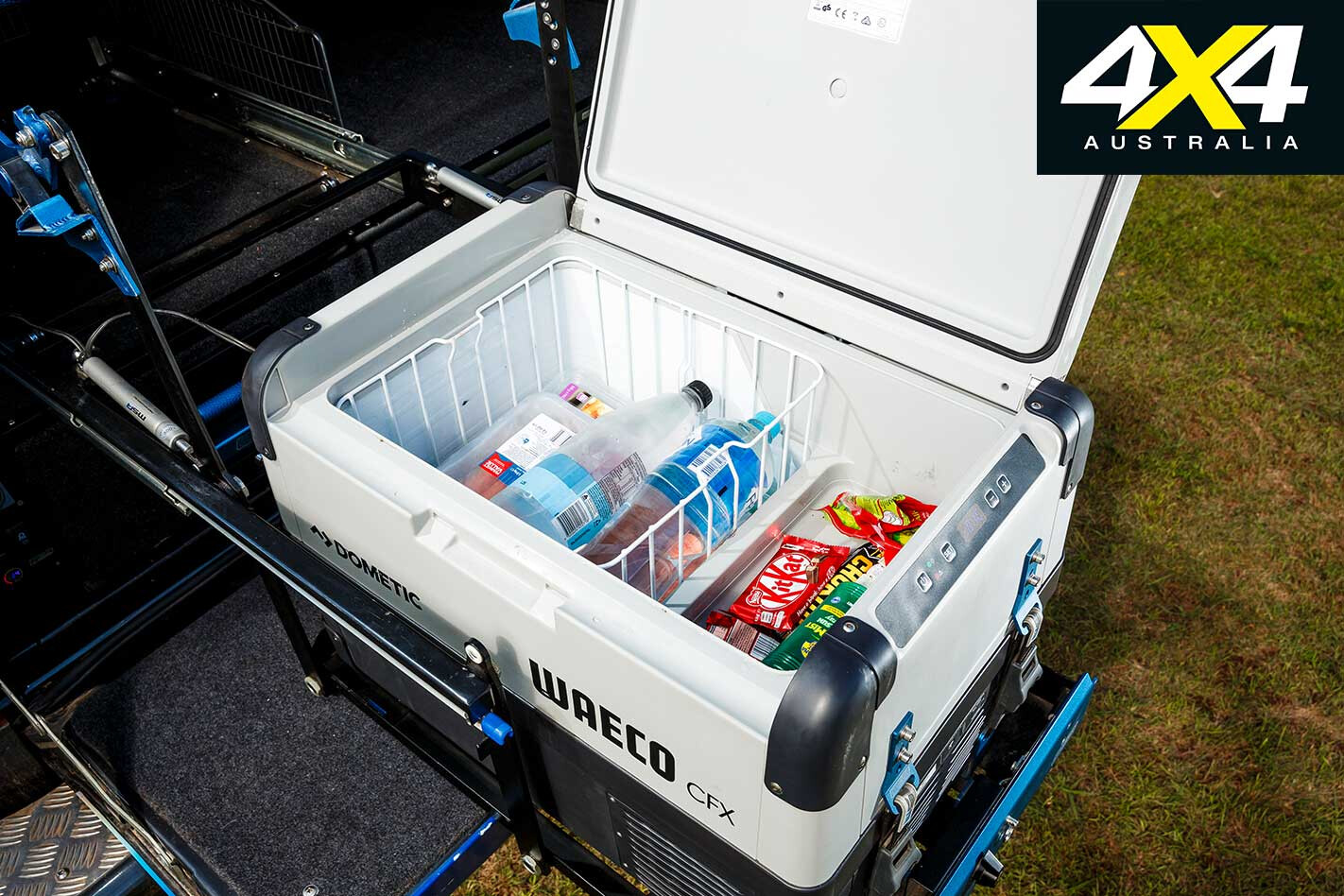
The unit features a compact and robust design, good insulation qualities, and is fitted with reinforced corners, stainless steel hinges and a tough lid lining. The lid is designed so you can choose which way it opens, and this can be changed in just a few minutes with a screwdriver. The folding handles are beauties and I wish all fridges had something similar.
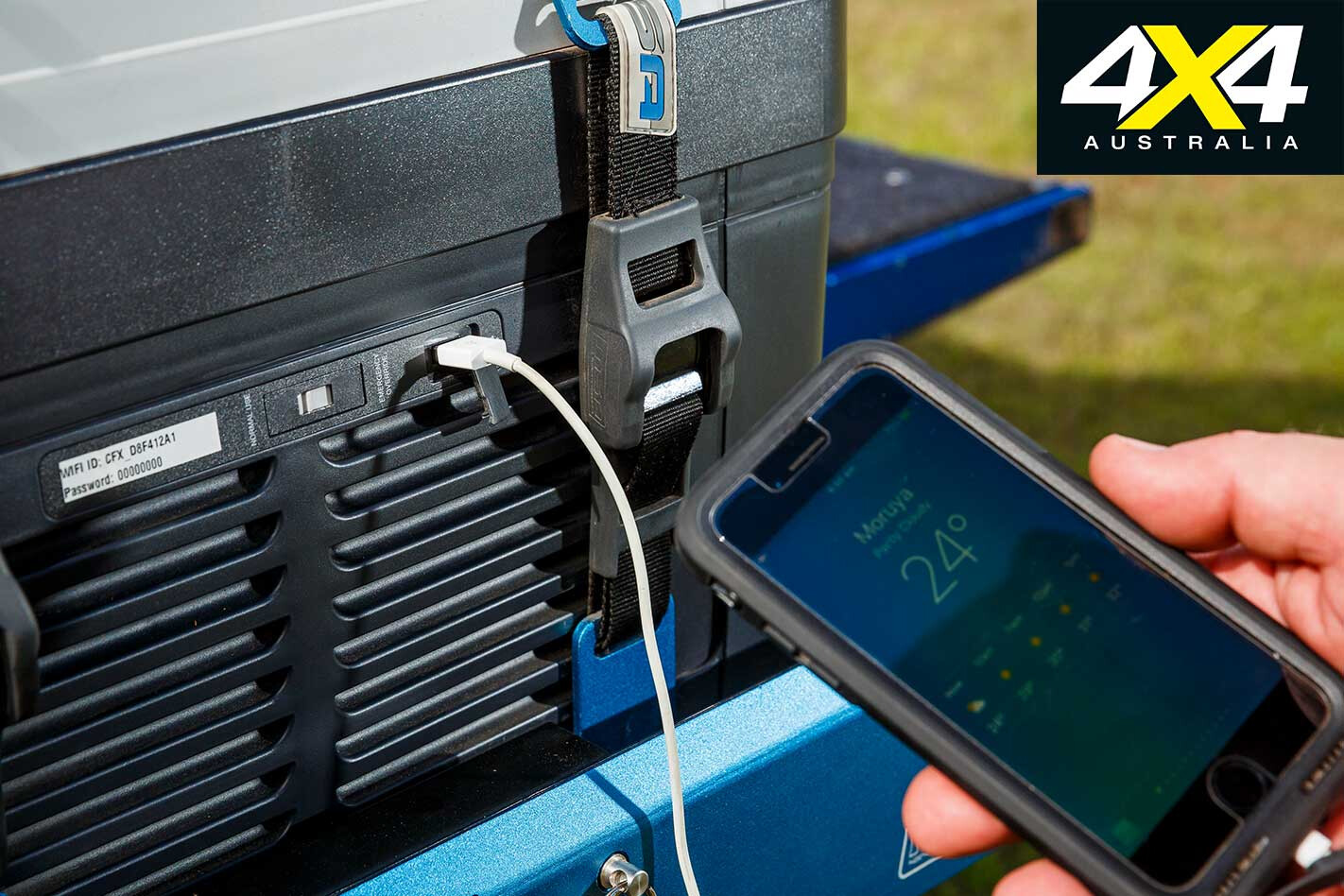
Most controls and readouts are located on one side of the fridge, though – at the top edge of the unit – which can be a bit of a pain to read, depending on how you set it up in your vehicle. There’s also a USB output near the control panel which can be used for charging phones or anything else with a USB input.
When using this unit for the first time it’s best to set the battery voltage at what the unit will switch off at. Experience tells me the ‘High’ position of 11.8V would be the safest, while the ‘Low’ setting of 10.1V is way too low and could cause premature failure of some batteries.
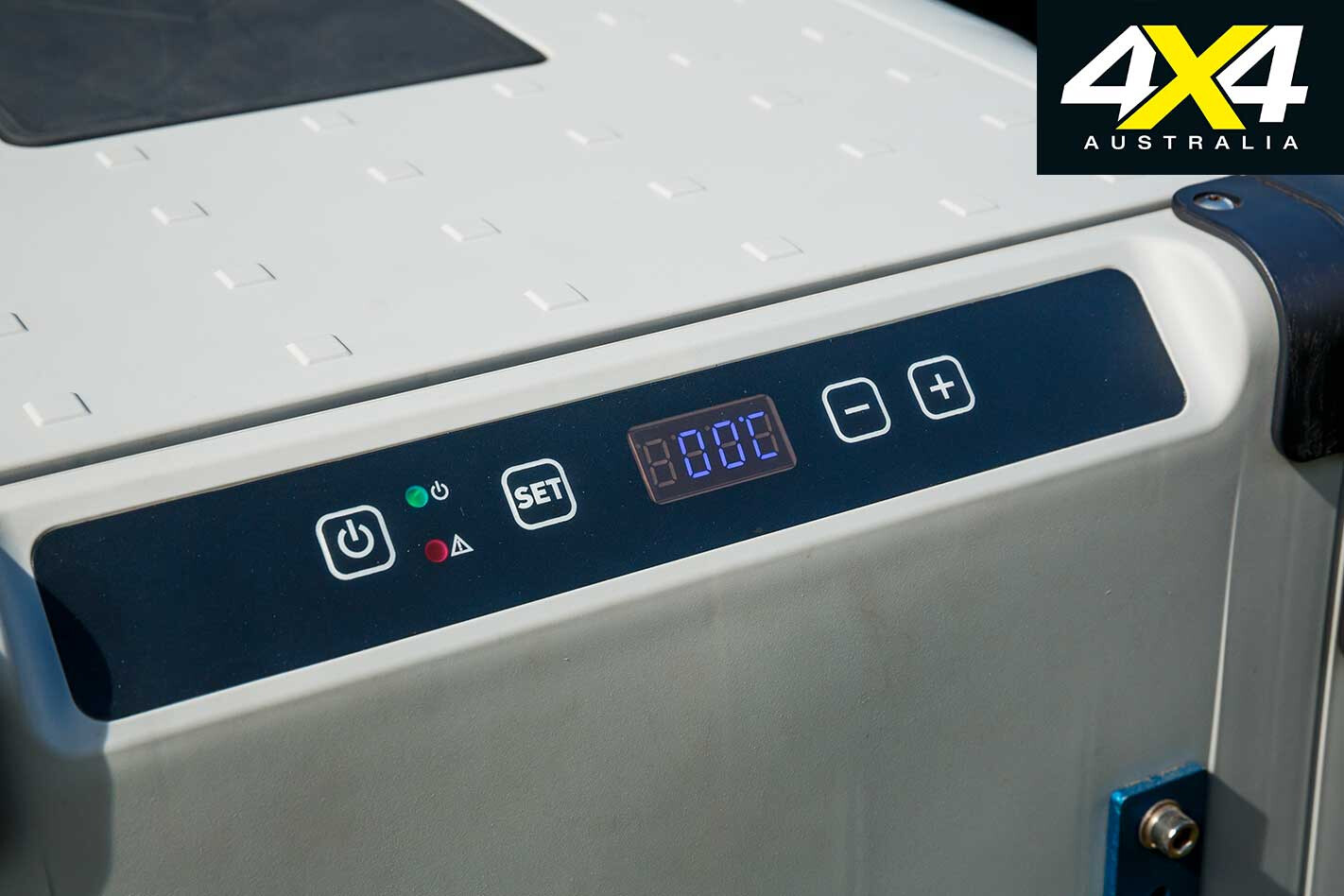
We had two units away with us, running at set temperatures of 2°C and 5°C respectively. Both units reached these temperatures with little effort and a minimum of noise, and they maintained those temperatures with a minimum of current draw.
The temperature displayed is the actual temperature of the large interior compartment, meaning the smaller shelf area of the fridge is at a slightly warmer temperature; so you can put fruit or vegetables here and it’ll be cool not cold. This unit can cool down to -22°C, which is impressive; although, I’m not sure it could do that on a 40°C day.
The unit is controllable via Wi-Fi and a smartphone app that has control, display and alarm functions. We didn’t use this app to see how good it was, but from what we’ve heard it works fine. The fridge is also available with a number of accessories including a mounting kit and a protective cover, none of which we used.
The mounting kit would be a good idea, while the covers have received criticism on review sites for their fiddly opening and closing. The unit is easy to clean and has a drain plug to make defrosting easy.
The final word: I’d take this unit away on a longer outback trip, and that’s a pretty big accolade in my world.
Power to the people
OF COURSE, a 12/240V fridge needs power to keep your food and drinks cold, and most of us will have some form of dual-battery or auxiliary power system in our 4x4s to keep the fridge running when the engine and alternator are off. This ensures you won’t drain your vehicle’s main battery and the vehicle will start when you turn the key.
Not everyone has or wants a dual-battery system, and the cramped engine bays in many modern vehicles make it difficult to fit a second battery in there. This leaves you looking for a reliable auxiliary source of power that won’t drain the car’s starting battery, and again Dometic has the answer.
New to the Dometic product range is the PLB40 power pack. PLB stands for Portable Lithium Battery and, as the name suggests, the pack contains a 40Ah/512Wh lithium-ion battery and DC-DC charger. Dometic claims the PLB will run a CFX 40W fridge for up to 40 hours on a single charge.
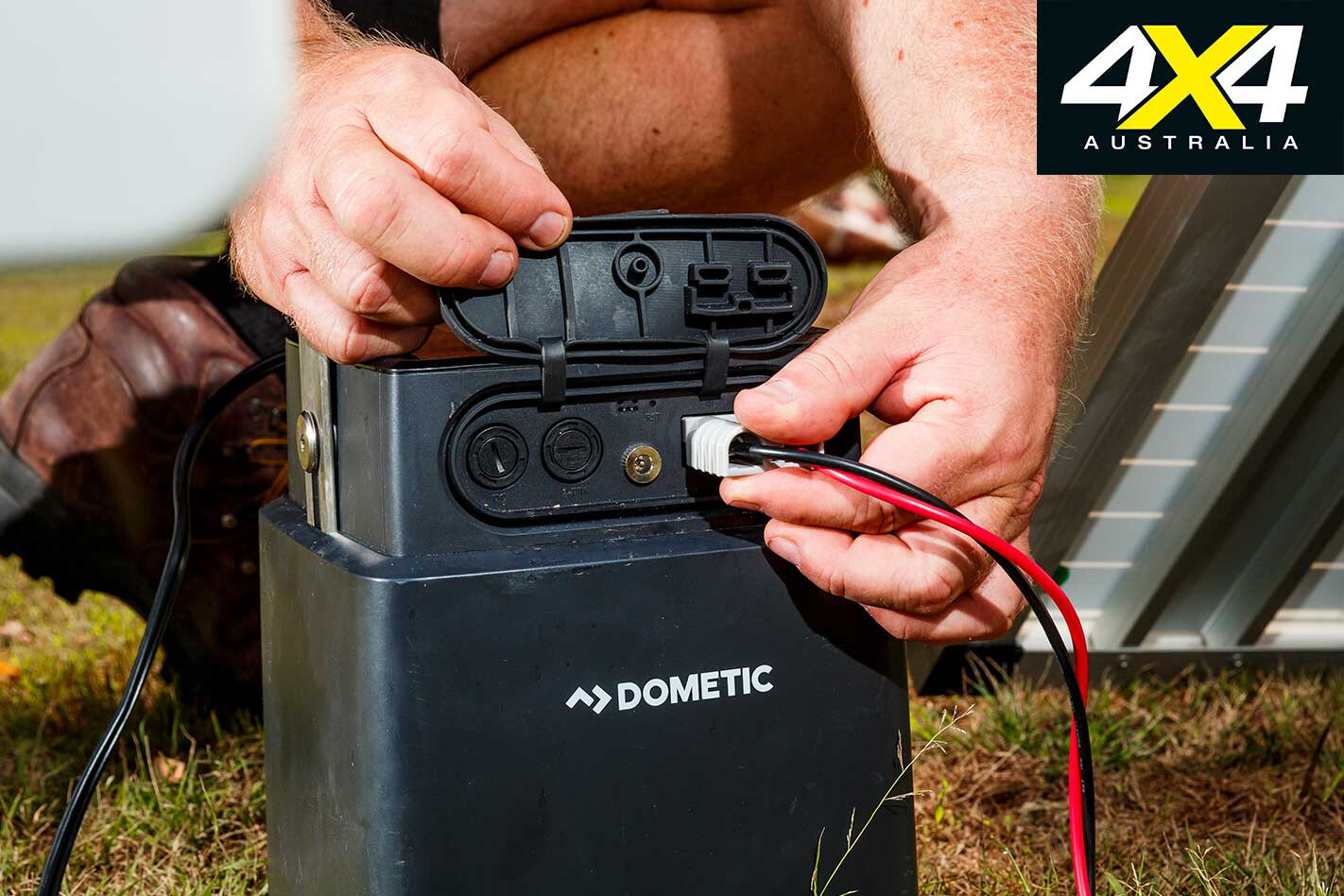
On this trip we were running one of the fridges in a standard Ford Ranger with no auxiliary battery system, so the PLB provided the backup required. The fridge was powered from the standard 12V power socket in the cargo tub during the days, while the car was running and able to power any accessories. But if we were to leave the fridge running overnight without the engine running, it would have drained the Ranger’s battery.
Also, while the car was running during the day, we had the PLB40 charging via a 12V plug in the Ranger’s console. It can be charged this way, via 240V AC power, using the included charger or using solar power, but with the Ranger running for most of the day the PLB was fully charged each afternoon. Then when we pulled up to camp for the evening, we simply plugged the fridge into the PLB for power throughout the night.
The PLB40 has a bright LED screen that displays the unit’s charging status and inputs and outputs. On the output side of the unit are a single two-pin twist-lock socket, a 12V ciggie lighter socket and a pair of USB outlets.
With the PLB tucked behind the passenger’s seat while charging throughout the day, we were also able to charge our phones. It also has a cutout that switches the PLB40 off if no load is detected on the unit for 24 hours.
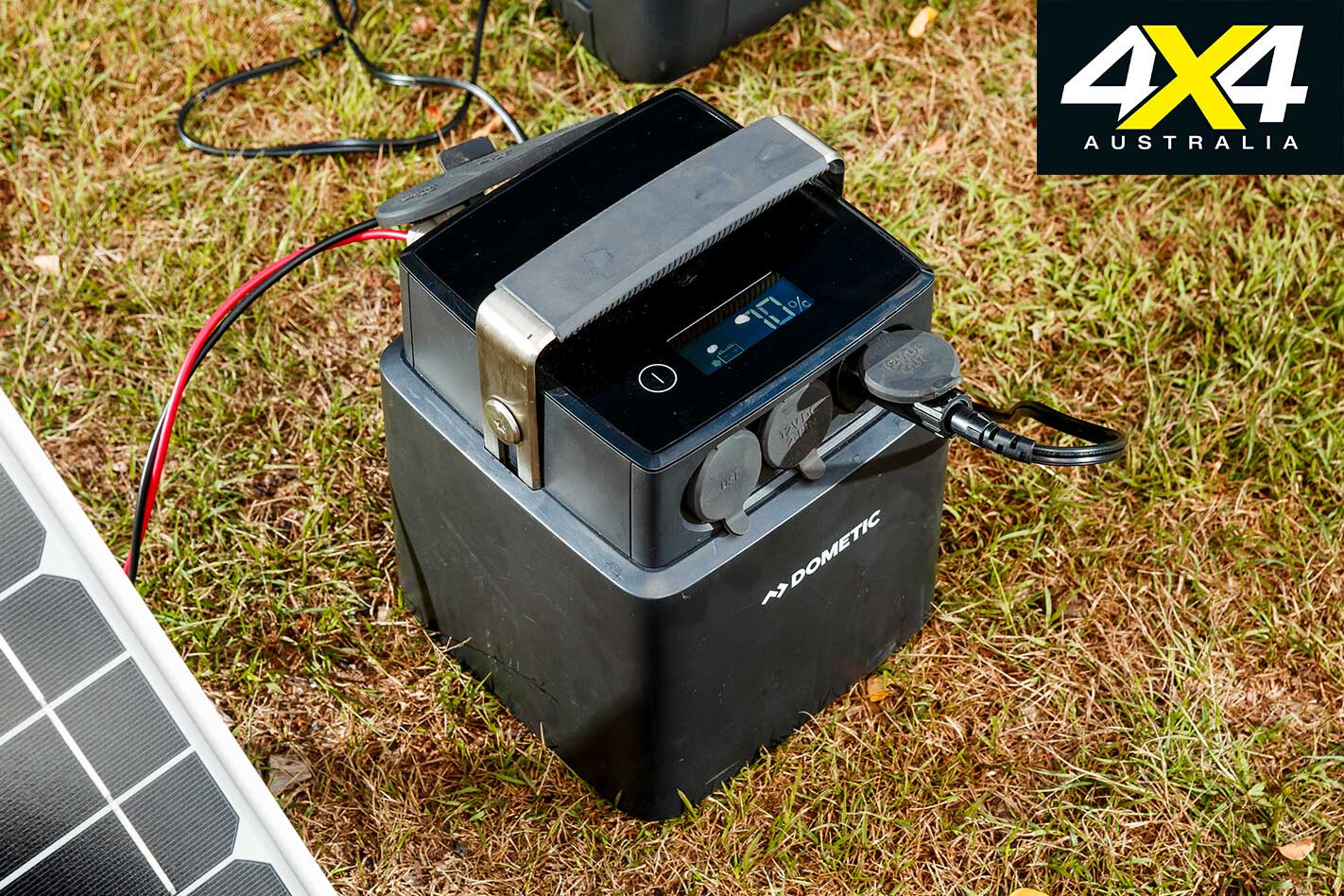
The compact PLB40 was easily stashed behind the seat. It’s relatively light at 7.5kg and has a robust case. Dometic must have done something right when designing the PLB40, because in February this year the company received an iF Product Design Award from the world’s oldest independent design organisation, iF International Forum Design GmbH.
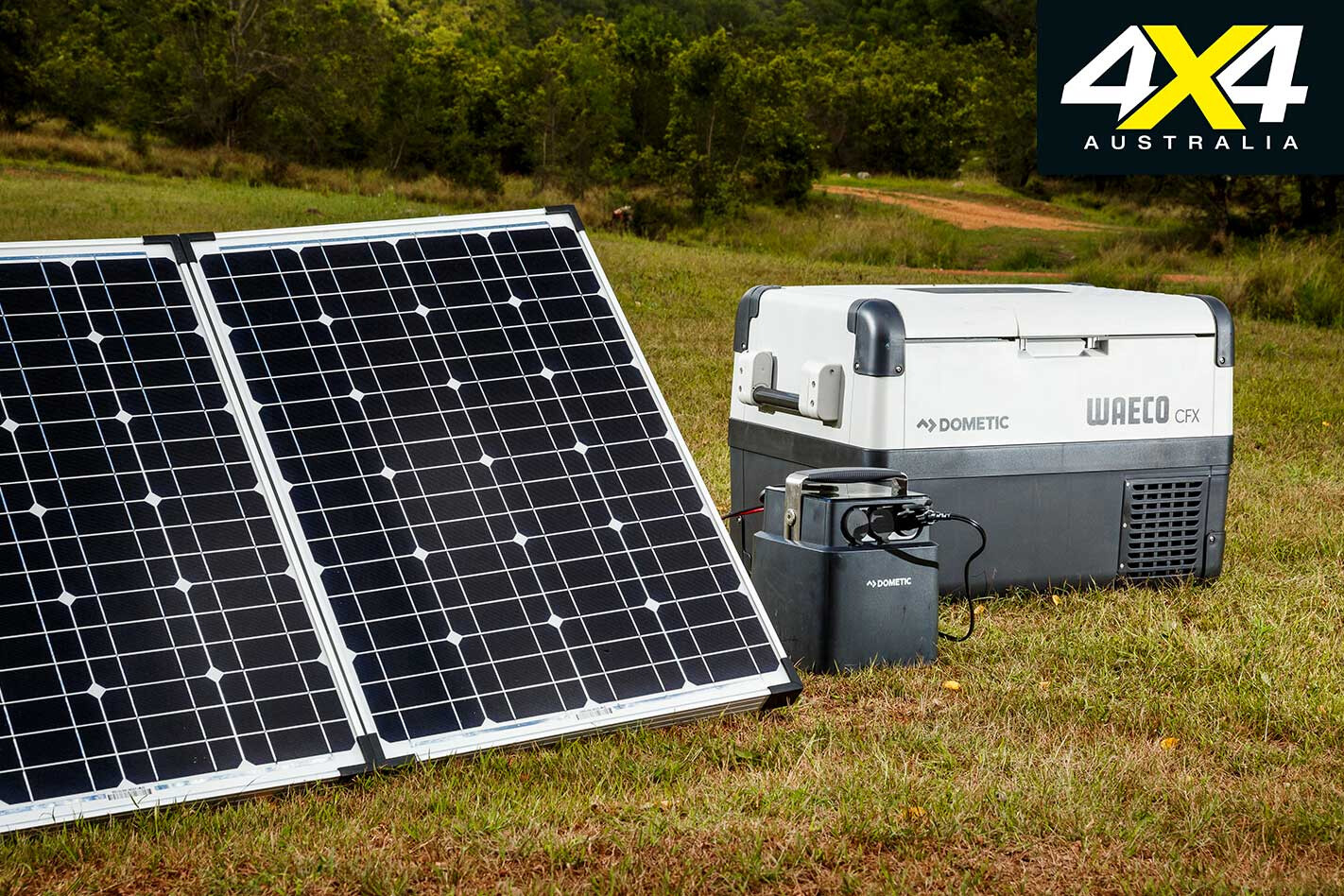
Also from Dometic is the PS120A folding solar panel, a monocrystalline panel with a 6.63amp output and an in-built 10amp regulator. When we were at a campsite for multiple nights we were able get the solar panel out during the day, charging the PLB40 from the sun while the PLB was powering the fridge.
Powered by the sun and PLB40, this trio of Dometic product provided us with a self-supporting system to keep our food and drinks cool. We had to adjust the solar panel a couple of times throughout the day to catch the most of the sun as it circled our camp, but other than that it was fuss-free. The PS120A solar panel comes in a robust carrying case, but at 754x534x70mm it’s quite large, so you need to think about where you carry it in your vehicle or trailer.
RATED Available from: www.dometic.com.au RRP: CFX 50W ($1349); PLB40 ($1199); PS120A ($499) We Say: Quiet; effective; well-designed.
THE 2019 HOLDEN COLORADO hasn’t been mechanically changed since we last tow- and load-tested it against its class rivals.
In fact, since its major top-to-bottom revision for the 2016 model year, the Colorado has participated in a 3500kg tow test comparison and two load test comparisons, one with 800kg in the tub and two people onboard, and the other with 650kg in the tub and three people aboard.
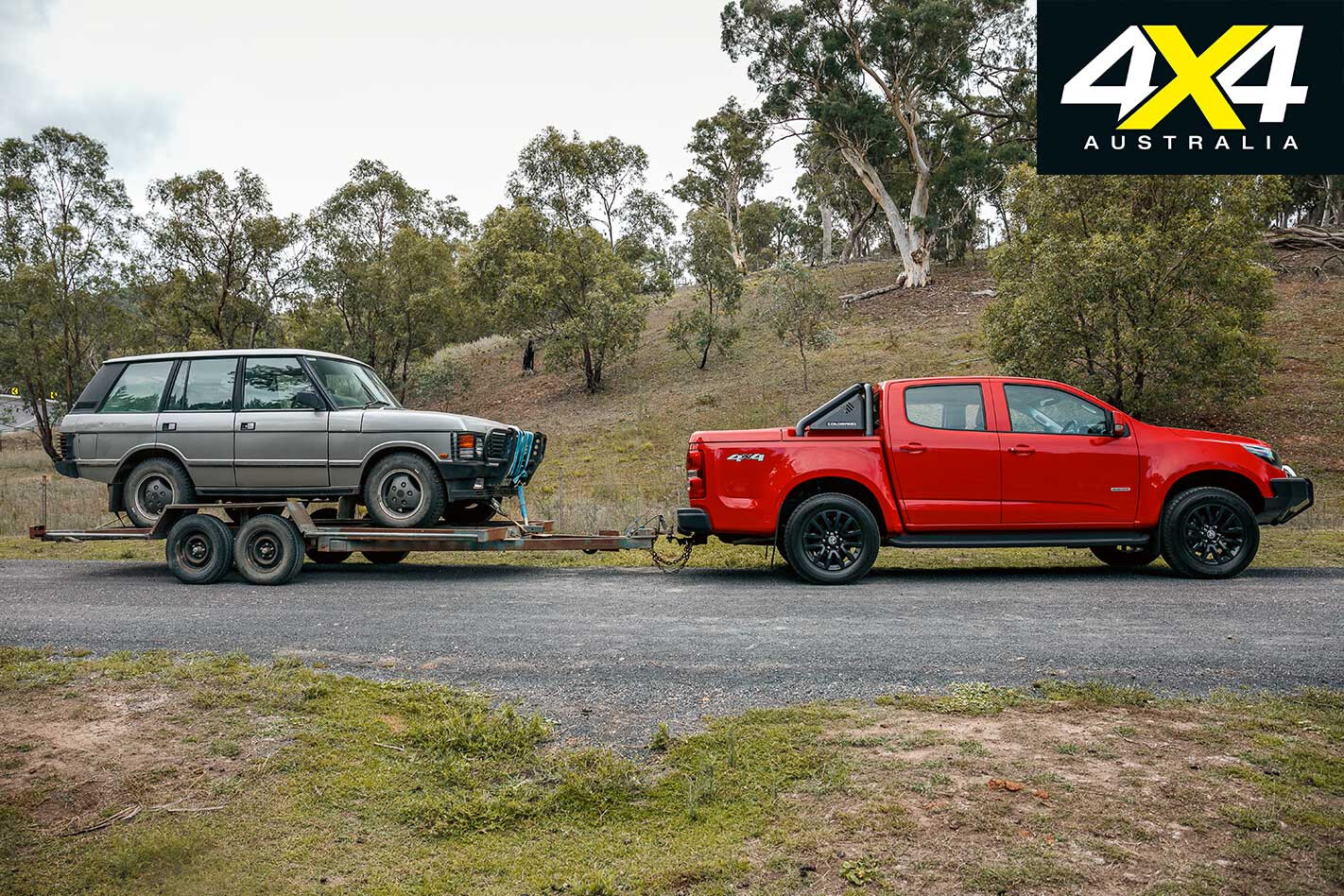
In all tests it performed well; not a winner in any of those outings but still up with the front runners on all three occasions. Its 147kW/500Nm 2.8-litre diesel engine and six-speed automatic providing competitive load-hauling performance, and its chassis proving up to the task.
The Colorado is a popular seller in a highly competitive ute market; one of the ‘big’ four behind Hilux, Ranger and Triton. Given it’s a mid-spec LT it’s also the least expensive of our six utes, whereas the D-Max, the other more affordable ute here, is a top-spec LS-T.
Holden Colorado General Load & Tow
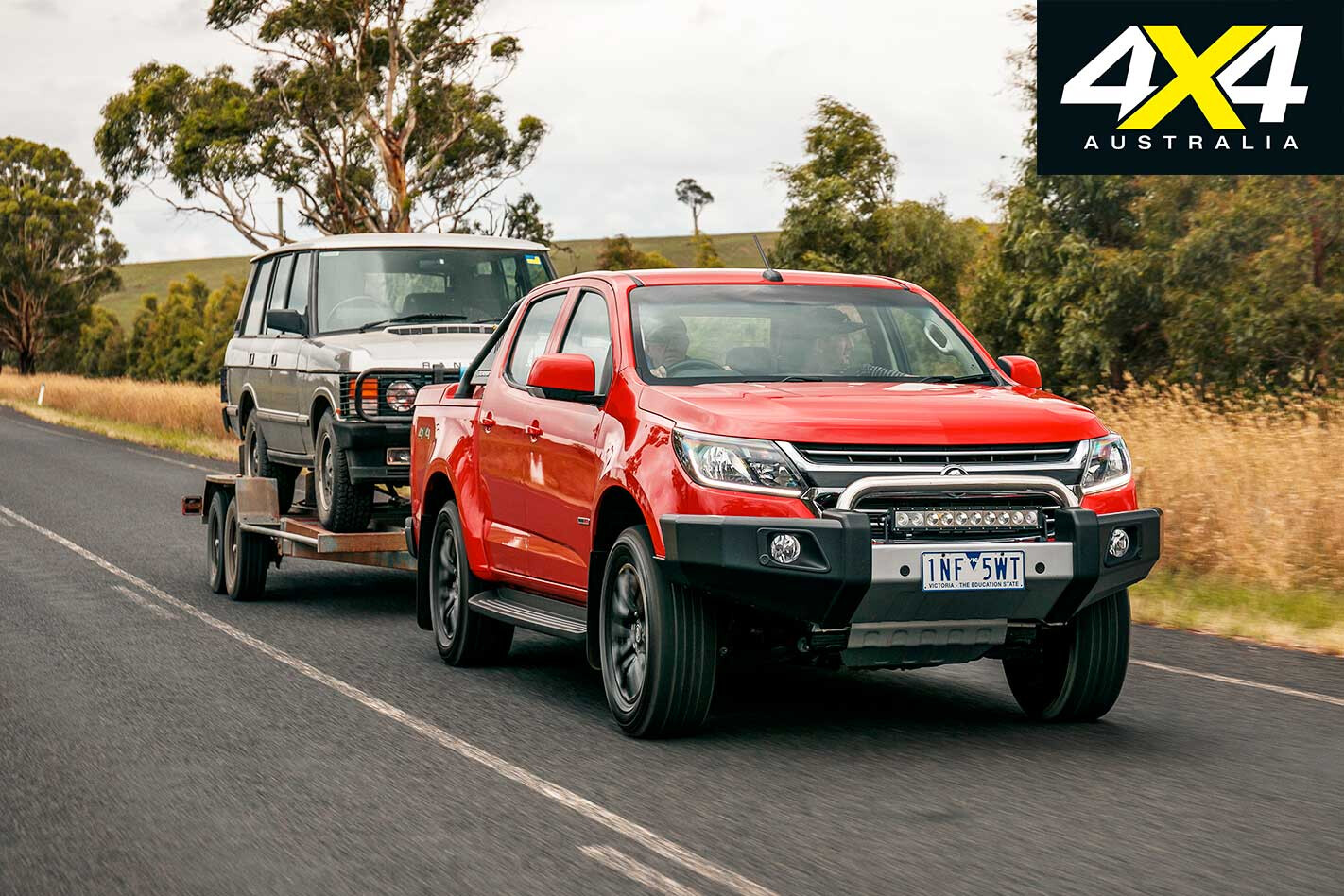
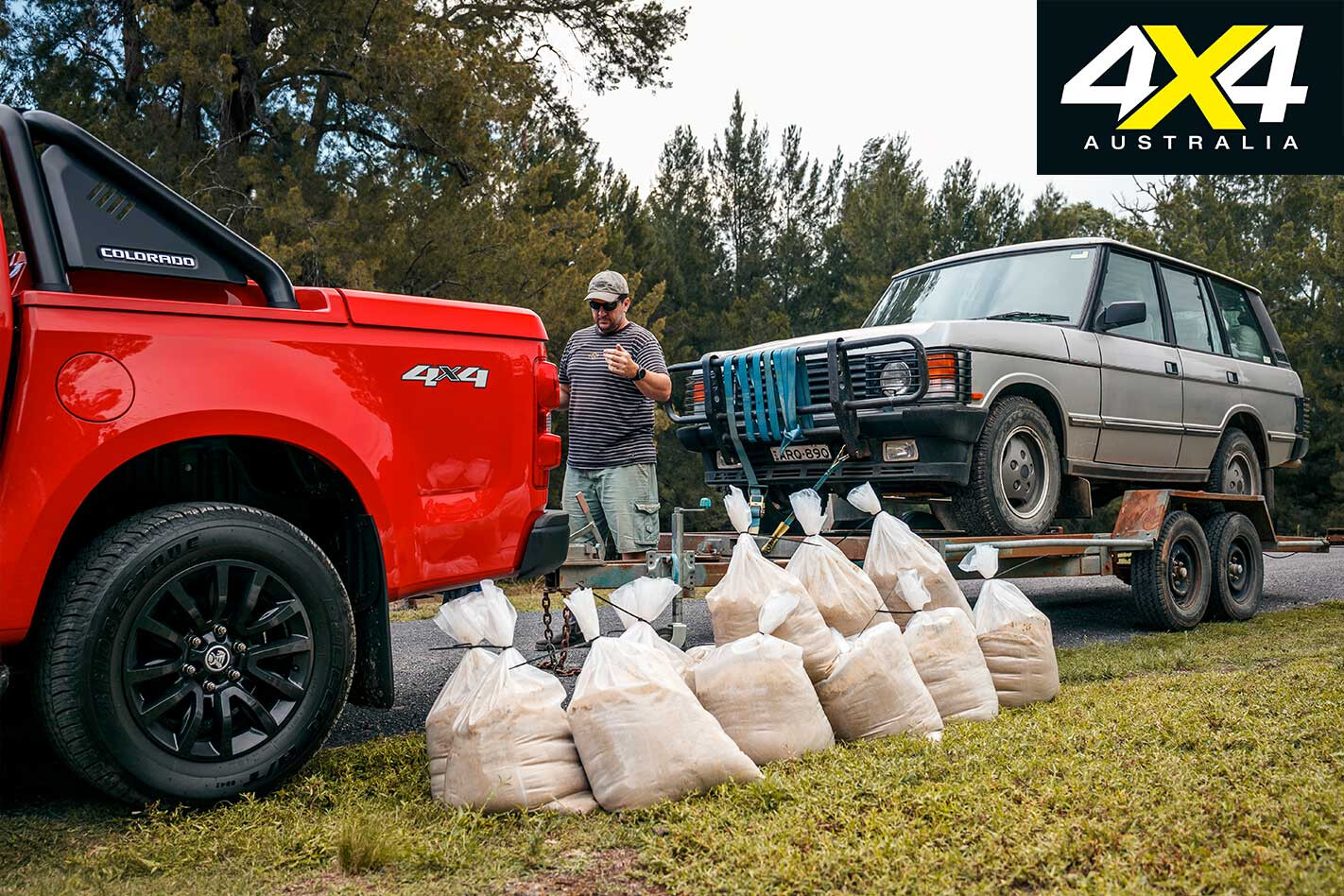
WITH THE 450kg of sandbags in the tub and the trailer hooked up, the Colorado’s rear suspension dropped 55mm, measured at the line of the rear axle. That’s a little less than all of the other utes here, which helps maintain a neutral stance; although, it’s also a reflection that the Colorado doesn’t have as much rear axle travel overall as either the Ranger or Amarok, which are both notably good in that regard.
Like the Ranger, the Colorado has electric power steering (part of the MY16 upgrade) which offers plenty of feel, even under the full test load. The overall chassis stability of the Colorado is very good when hauling the test load; although, perhaps, not as good as the Rangers or the Amarok when the roads become bumpier.
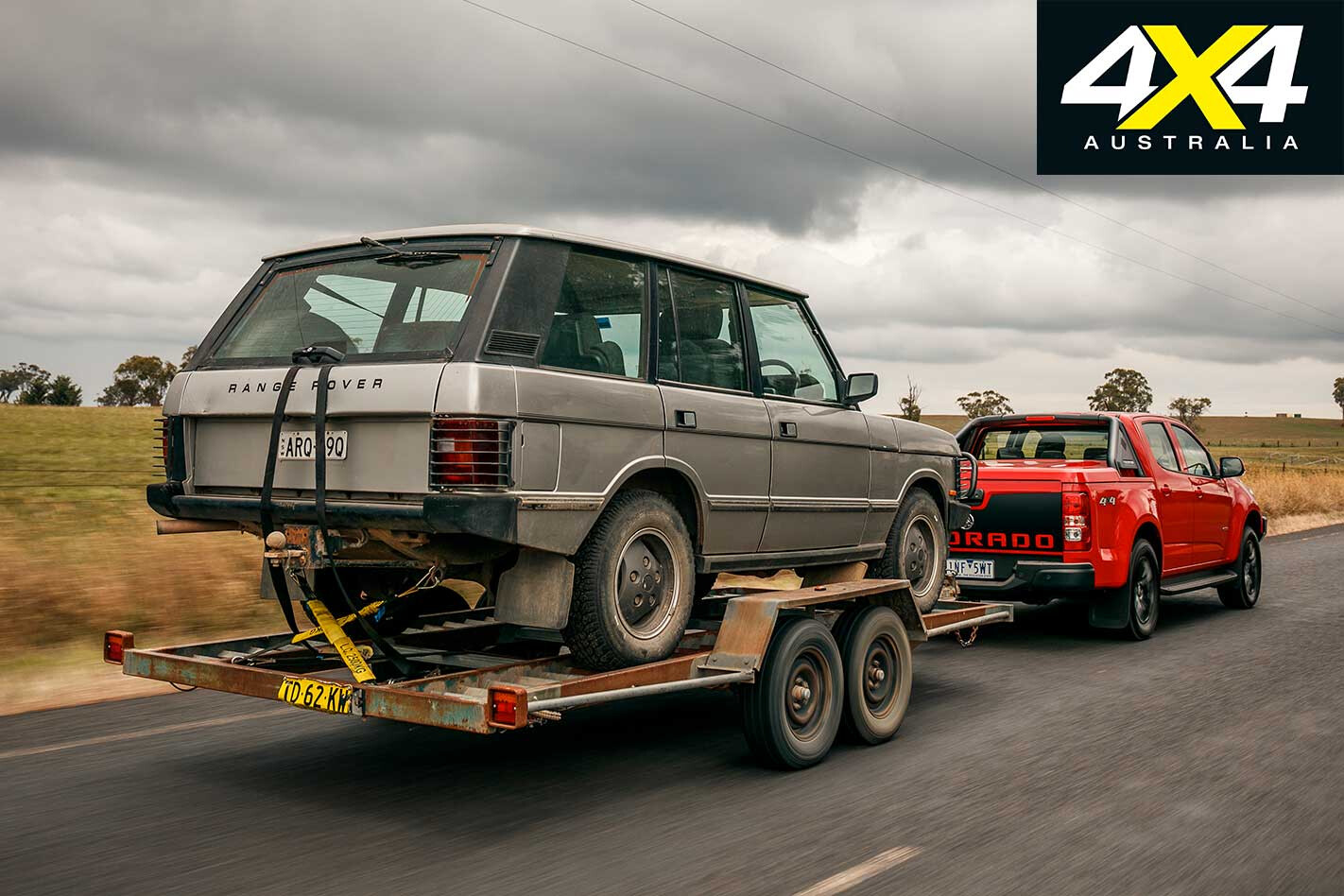
The 2.8-litre four-cylinder and six-speed auto perform solidly, even if it needs to rev more than the two V6s and the Ranger 3.2 to do the same job. And while it’s not the quietest or smoothest engine here when working hard, it doesn’t give much away to the Ranger 3.2 or D-Max in that regard.
The six-speed GM automatic works well with engine and offers notably proactive shift protocols, and it’s especially good with the timing of its automatic downshifts on off-throttle descents. Most of the others need a brake prompt to auto downshift, but the Colorado will do it more readily on gradient recognition alone.
Holden Colorado Steep Gradient Load & Tow
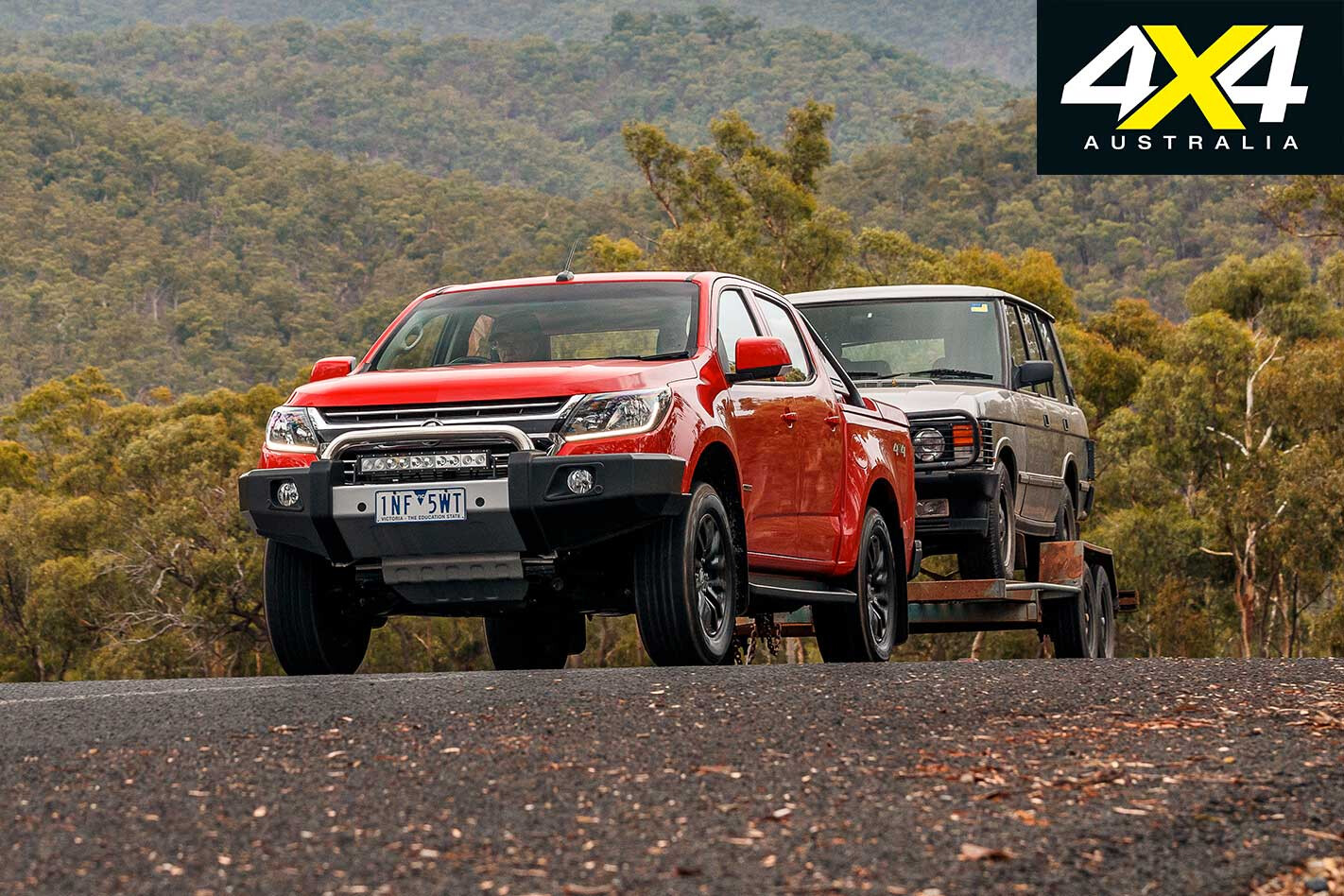
WE WERE expecting good things from the Colorado on our extreme climb and descent and, while it generally delivered up the hill, it wasn’t as strong as we expected. The engine needs relatively high revs for it to work best, and it just didn’t pull up to those high revs all that quickly. Surprisingly, it was a little slower than the less powerful (on paper) D-Max up the hill, but it was still better than the more powerful (on paper) Ranger 2.0-litre.
Aside from being a little slow out of the hairpin bends, the diesel engine was willing once up and spinning and thrived on revs. On descent the engine offers reasonable braking, aided by a responsive ‘manual’ mode.
Holden Colorado Tow Test Results
Towing Capacity: 3500kg Towball Download (max): 350kg Payload: 1048kg
2019 HOLDEN COLORADO LT SPECS: Engine: 2.8-litre 4-cyl turbo diesel Max power: 147kW @ 3600rpm Max torque: 500Nm @ 2000rpm Transmission: 6-speed auto 4×4 system: Dual-range part-time Kerb weight: 2102kg Fuel tank capacity: 76 litres ADR fuel consumption: 8.7L/100km
| 2019 HOLDEN COLORADO PRICES* | |
| LS 4×4 DC/PU (auto) | $47,190u00a0 |
| LT 4×4 DC/PU (auto) | $49,190u00a0 |
| LTZ 4×4 DC/PU (auto) | $52,690u00a0 |
| LSX 4×4 DC/PU (auto) | $54,145u00a0 |
| Z71 (auto) | $57,190u00a0 |
| *Not including on-road costs | |
THE CAMP chair has always been an awkward shape to stow in a fourbie; some fold up better than others, but in most cases you’re left with an object that’s either too long or too wide to pack easily into the limited space available.
Enter Front Runner’s Expander camp chair. The chair’s strong construction can hold a hefty 115kg, with a base that sits 430mm from the dirt and a reasonable width of 500mm. Plus, it weighs in at just four kilograms. What’s more impressive is that it collapses to 1/16 of its original size, making it an ideal option for space-challenged interiors, roof racks, camper trailers or caravan boots.
Set-up is relatively easy: slide the chair out of its (optional) carry bag, release the Velcro straps and place it vertically on the ground with one foot on the base bars, then pull up gently to raise the frame to its normal height.
Take hold of the two wings on either side of the chair frame and move them out and up in a smooth arc, so they are now positioned at the top of the chair. Hold the chair’s frame (below the wings) and spread them sideways to open the chair to full width. The material attached between the wings now forms the backrest of the chair, which can be easily folded backward into position.
Yes, it all sounds very confusing, but after a few runs you’ll be whipping the chairs up and down as fast as you can pop open a deck chair.
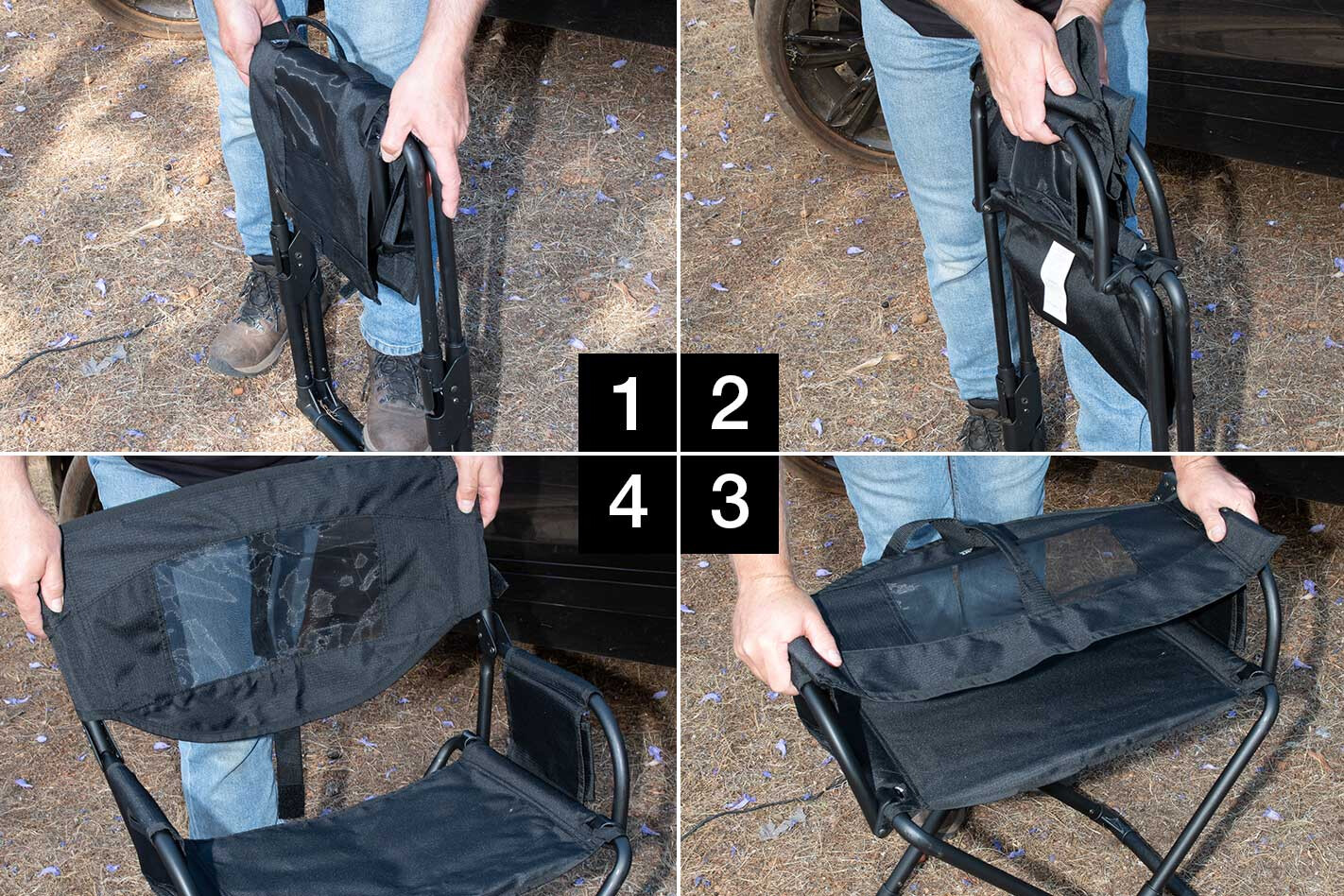
Due to its compact size the chair can live in the fourbie, so it’s also a winner as a BYO chair to a barbecue, outdoor concert or a day at the beach.
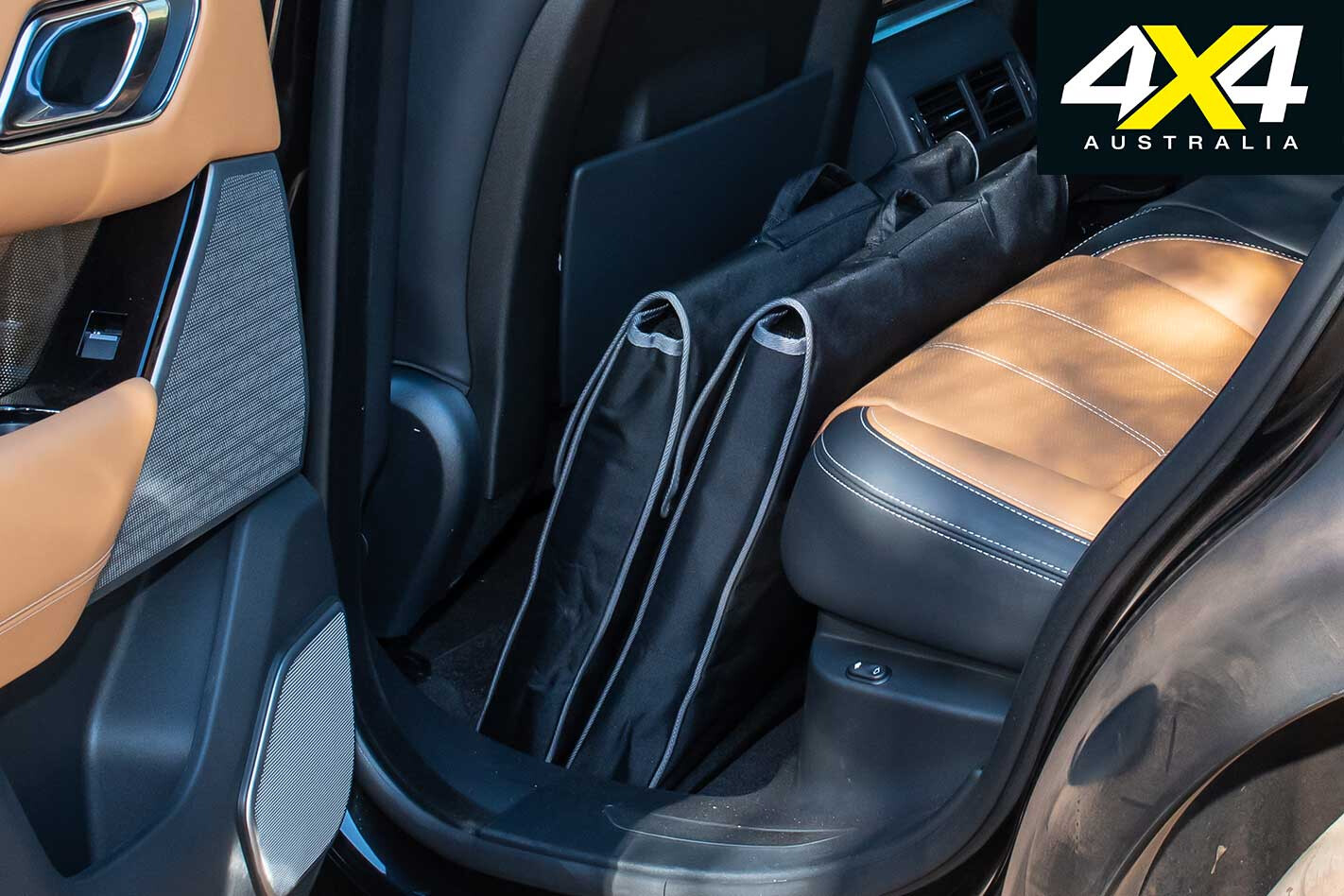
As a driver of a compact two-door 4WD, I could easily fit two camp chairs neatly in the footwell behind the driver’s seat and recover the space normally allocated in the cargo area. The Expander is also comfortable … unless you happen to be super-sized yourself (more than 115kg), in which case you’ll want to choose a larger chair to ensure your camping comfort.
RATED Available from: www.frontrunneroutfitters.com RRP: $125 We Say: Easy set-up; comfortable; clever design.
OF ALL THE changes to the 2019 Ford Ranger, the introduction of the new 157kW 500Nm 2.0-litre bi-turbo diesel and its 10-speed auto is by far the most significant.
This new ‘little’ engine brings cutting-edge diesel engine technology and a little more power and torque to a ute that, ironically, is much loved for having a ‘big’ 3.2-litre old-school diesel. How the new engine is received in the marketplace will be interesting.
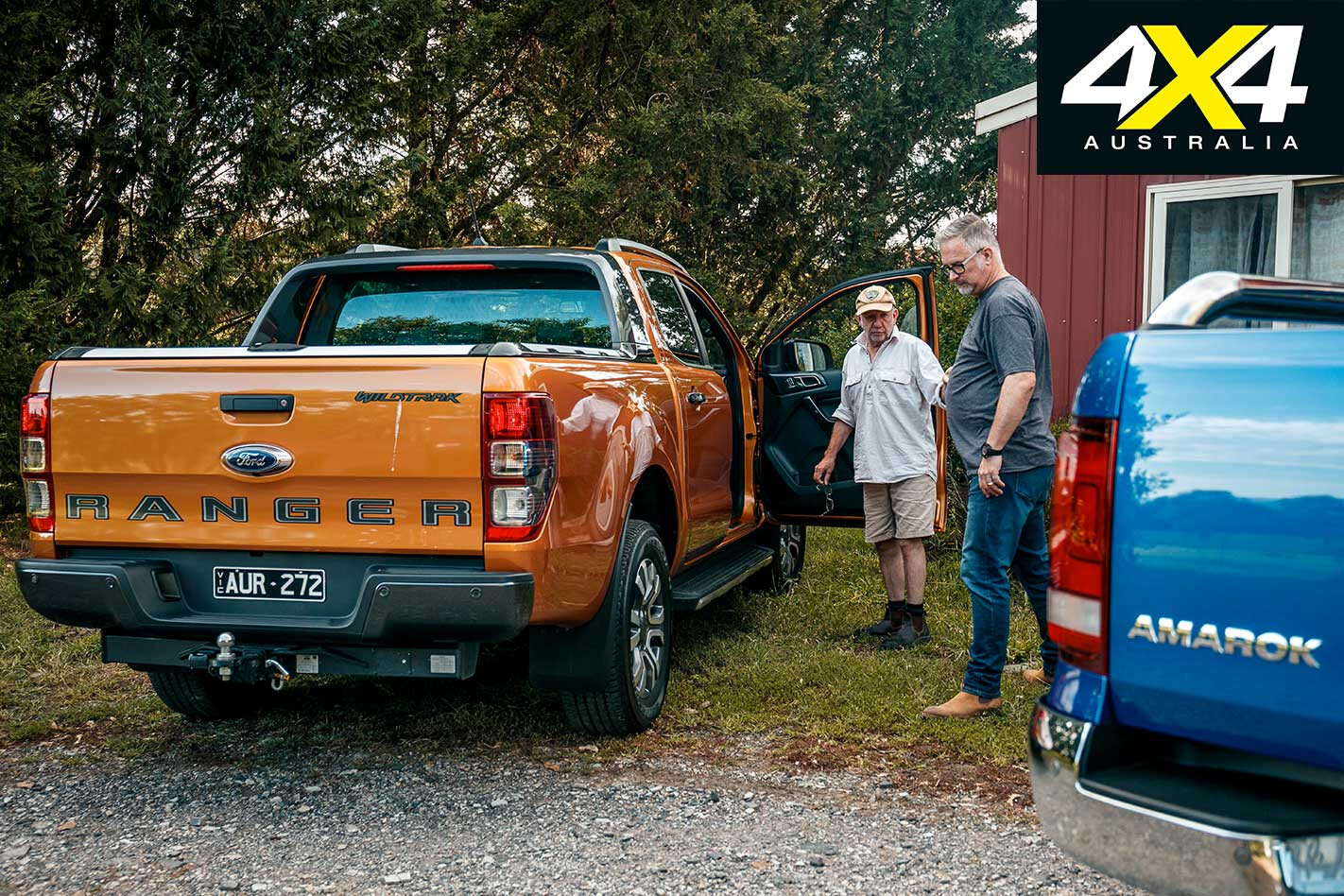
Currently the bi-turbo engine and 10-speed auto (there’s no manual with this engine) is an option for XLT and Wildtrak 4x4s (and XLT 4×2) but will no doubt become more common throughout the line-up as time goes on.
When the next-gen Ranger arrives in a couple of years’ time, it could well be the standard ‘default’ engine. Those holding out hope a VW 3.0-litre V6 will be in the next-gen Ranger, given it will be a partnership development with VW, might be disappointed.
Certainly we like what we’ve seen with this new engine so far: it powered Ford’s Ranger Raptor to a 4X4 Of The Year win, with the Ranger XLT finishing second. It was also more responsive, quieter and more refined when driven back-to-back with the 3.2 when not towing or load hauling, thanks in part to its 10-speed ’box.
Ford Ranger 2.0 General Load & Tow
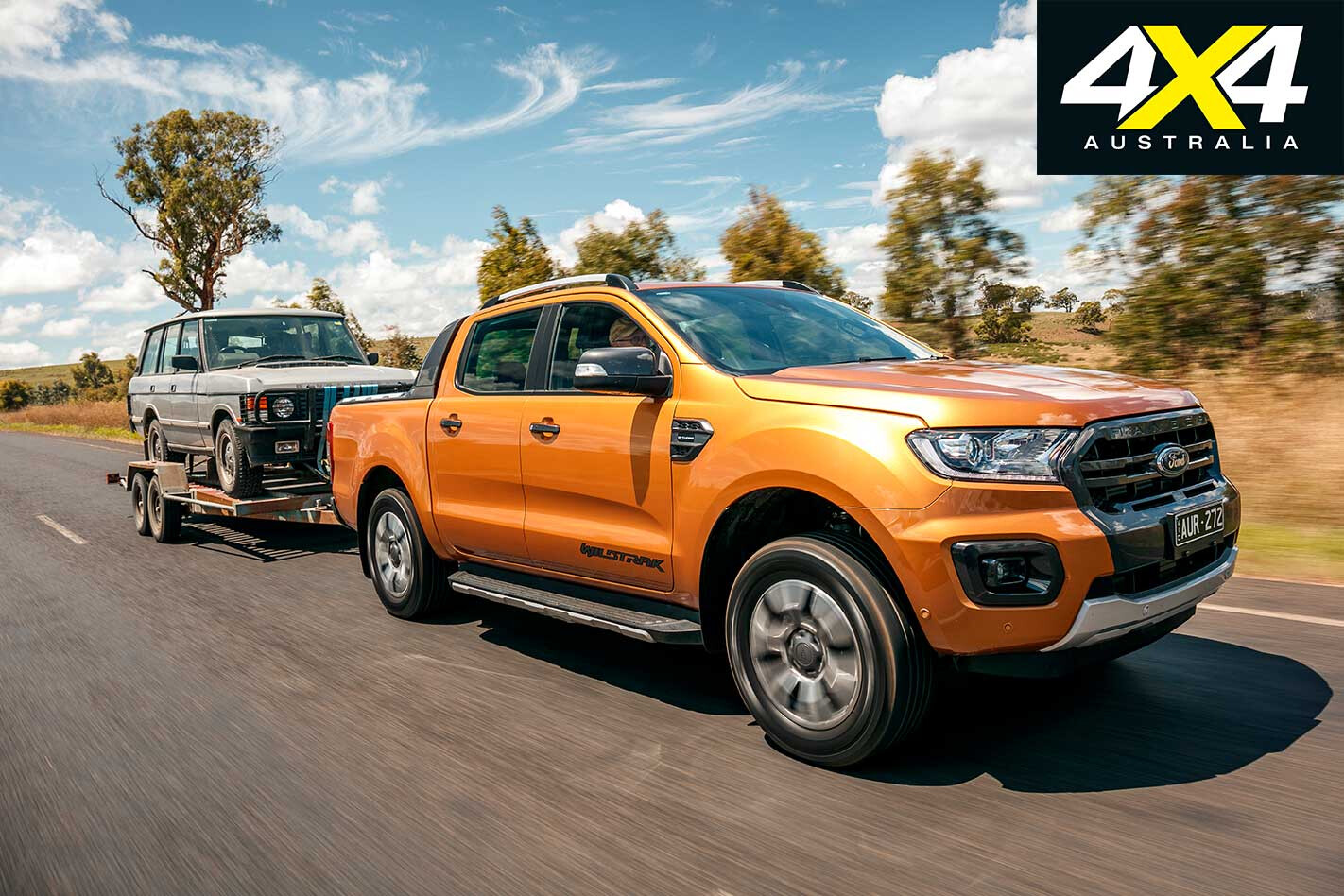
LOADING sand bags into the 2.0-litre Ranger and hooking up the trailer saw rear suspension drop about the same as the 3.2; as you’d expect with the same leaf springs, even if damper tune is variant-specific.
Once underway there’s also the same good steering, ride and chassis stability of the 3.2 when hauling the test load. There may be some subtle changes in the dampers and the front springs to cover for the slightly lighter weight of the 2.0-litre powertrain, but chassis-wise the two feel much the same, namely very good, with the 3144kg GCM load and tow increase.
The two powertrains, though, have a completely different feel and perform quite differently when lugging the extra load. The 2.0-litre is more refined but constantly needs more revs to do the same job, and it shuffles up and down the gears more frequently.
It does this partly because there are more gears, but also because of the 2.0-litre’s tall final drive gearing, taller in fact (3.31 v 3.73) than what’s behind the 3.2. That means the engine didn’t pick up the two top gears very often on undulating country roads, which contributes to the shuffling when it does change up but soon needs to shift back down again.
Ford Ranger 2.0 Steep Gradient Load & Tow
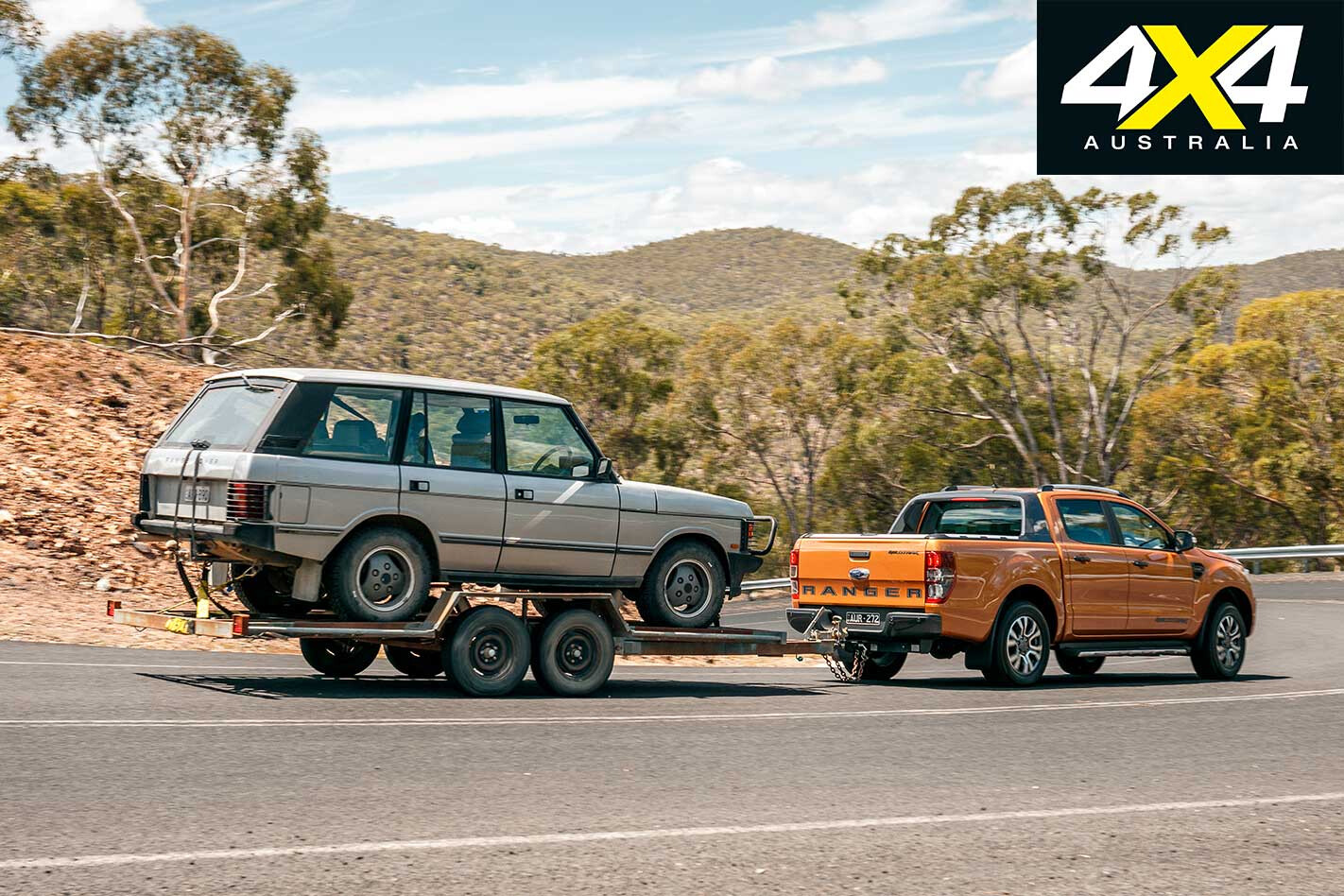
THE 2.0-litre bi-turbo’s 157kW and 500Nm should give it the edge over all but the two V6s, but once faced with hauling the additional 3144kg GCM up the steep climb the on-paper advantage evaporated.
In fact, the 2.0-litre recorded the slowest times up the hill, even if it wasn’t far behind the Colorado, and it never really felt happy. Up the steep incline it struggled to gain any sort of decent momentum and shuffled back and forth between the gears, the gear ratios seemingly wider than what you’d imagine. Not much joy coming down either, as the engine provides far less engine braking than the others.
Ford Ranger 2.0 Tow Test Results
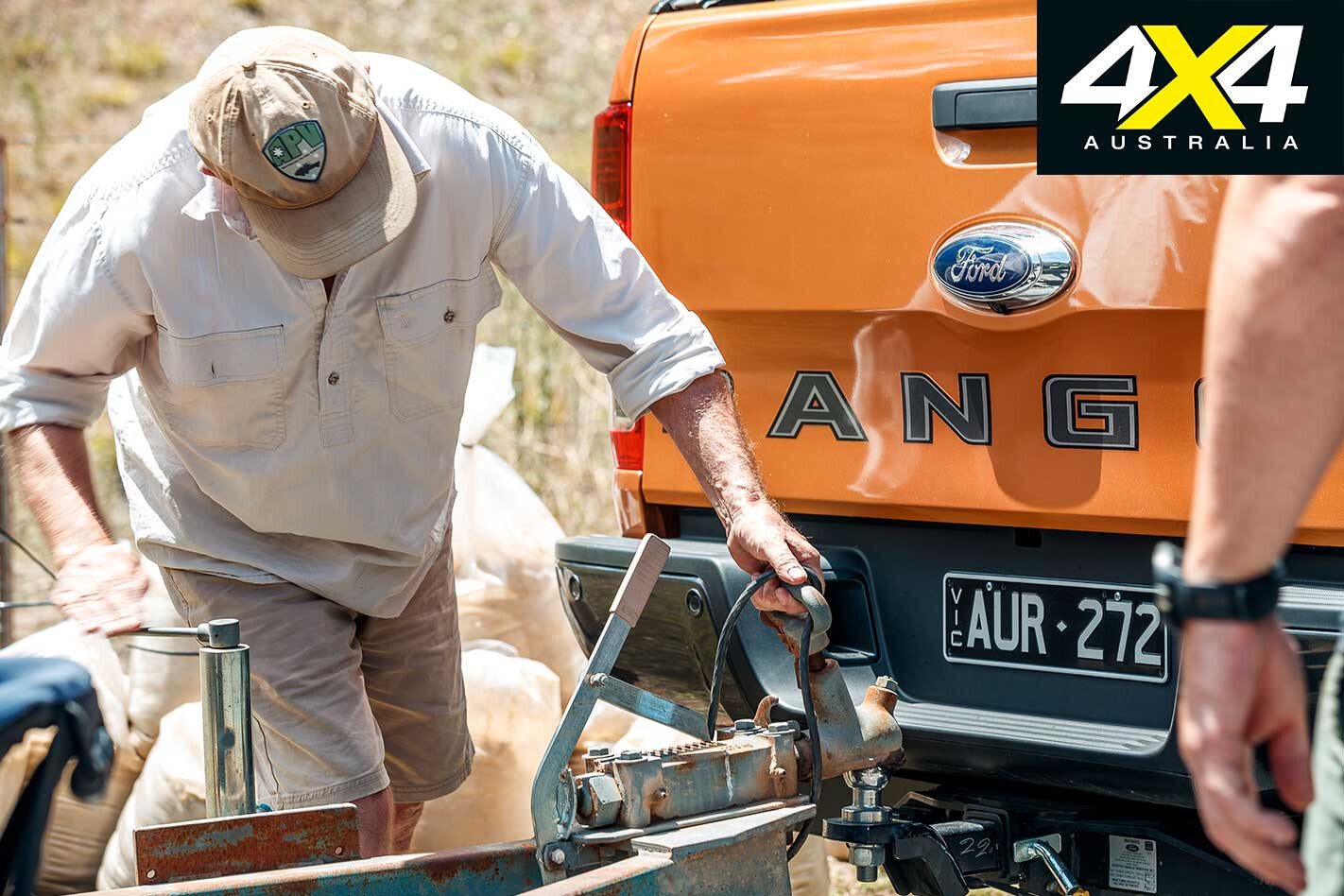
Towing Capacity: 3500kg Towball Download (max): 350kg Payload: 954kg
2019 FORD RANGER 2.0 WILDTRAK SPECS: Engine: 2.0-litre 4-cyl bi-turbo diesel Max power: 157kW @ 3750rpm Max torque: 500Nm @ 1750-2000rpm Transmission: 10-speed auto 4×4 system: Dual-range part-time Kerb weight: 2246kg Fuel tank capacity: 80 litres ADR fuel consumption: 7.4L/100km
| 2019 FORD RANGER 4×4 2.0 PRICES* | |
| XLT 4×4 | $59,790u00a0 |
| WILDTRAK (auto) | $64,490u00a0 |
| *Not including on-road costs | |
AIRING down and pumping tyres back up is part and parcel of off-road touring. When you’re driving over a variety of road and track surfaces – bitumen to sand to rocky and rutted trails – keeping tyre pressures at the optimum level lowers the chance of punctures and provides more traction and a far better ride for the vehicle’s occupants.
But it can be a pain, especially when reinflating to road pressures – crouched beside your rig’s four tyres, waiting patiently for that compressor to push in enough air, while the kids start the ‘hurry up’ chant.
This becomes tiresome if you tour regularly, and it’s the ideal scenario for a high-output air compressor.
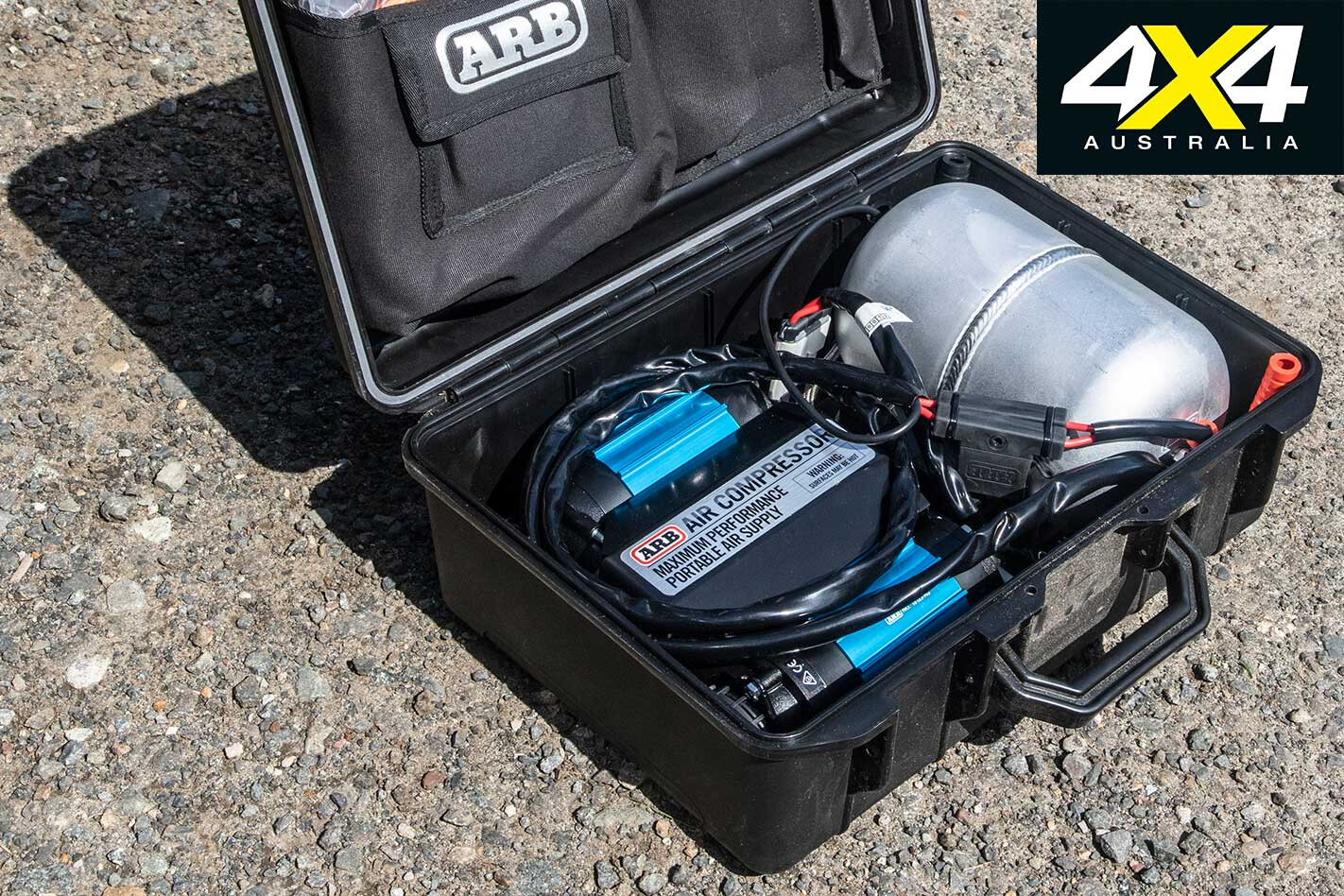
ARB’s big-bopper CKMTP12 twin air compressor is a twin-cylinder/twin-motor setup that boasts a 100 per cent duty cycle. It includes a four-litre air tank housed in a tough, waterproof hard case (you can opt to have it permanently mounted inside your vehicle/engine bay sans air tank, if needs be).
Further boosting the all-round durability is the fact the unit is sealed against dust/water ingress, with ARB claiming the twin sintered-bronze air cleaners are capable of keeping even the fine particles of bulldust out of the motor. Add in hard-anodised cylinder bores and carbon-fibre seals, and the chance of failure is miniscule.
ARB claims an airflow rate of 174lt/min when the tyre’s internal pressure is zero, and a claimed 131.8lt/min flow rate when starting from a pressure base of 29psi. So, yeah, it can push big air … fast. The unit isn’t light, but it’s pretty easy to lug around thanks to a big, solid carry handle on the case’s exterior. The weight can be attributed to the size of the unit, the accompanying four-litre air tank, and the kit inside which includes an air gun and alligator clips.
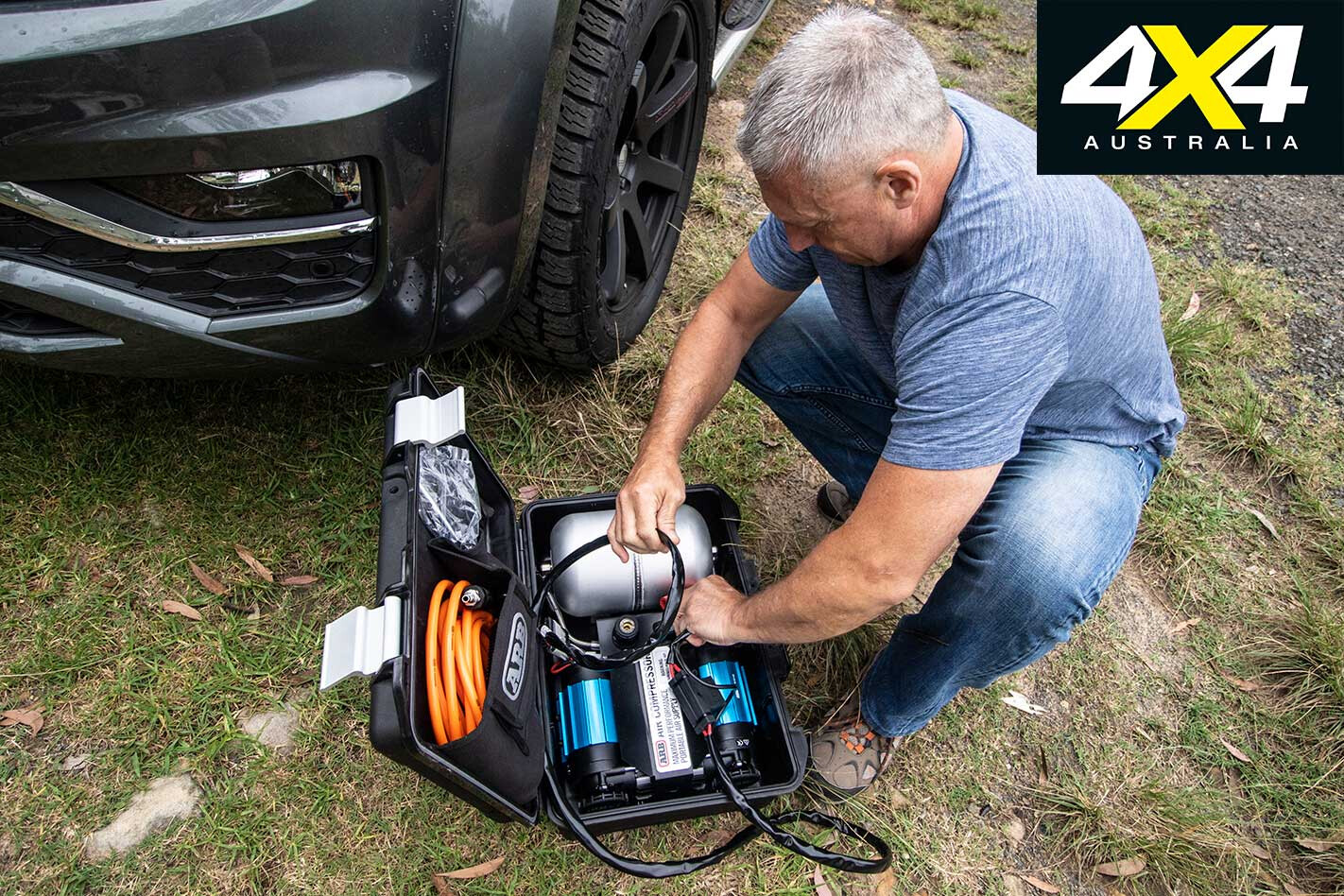
Operation is as per any portable air compressor, with the hose easily connected one-handed if need be; then it’s just the same old process of connecting the clips to the battery, flicking the big ARB switch, and you’re on the way.
The first thing that impresses is the low level of operational noise from what is a very powerful compressor. For this tester, it seemed no louder than my old one that punches out less than half the output of this monster. The speed with which the CKMTP12 reinflates a tyre is the other more obvious advantage of having those two motors shoving air through the hose at such high rates – it’s pretty bloody quick.
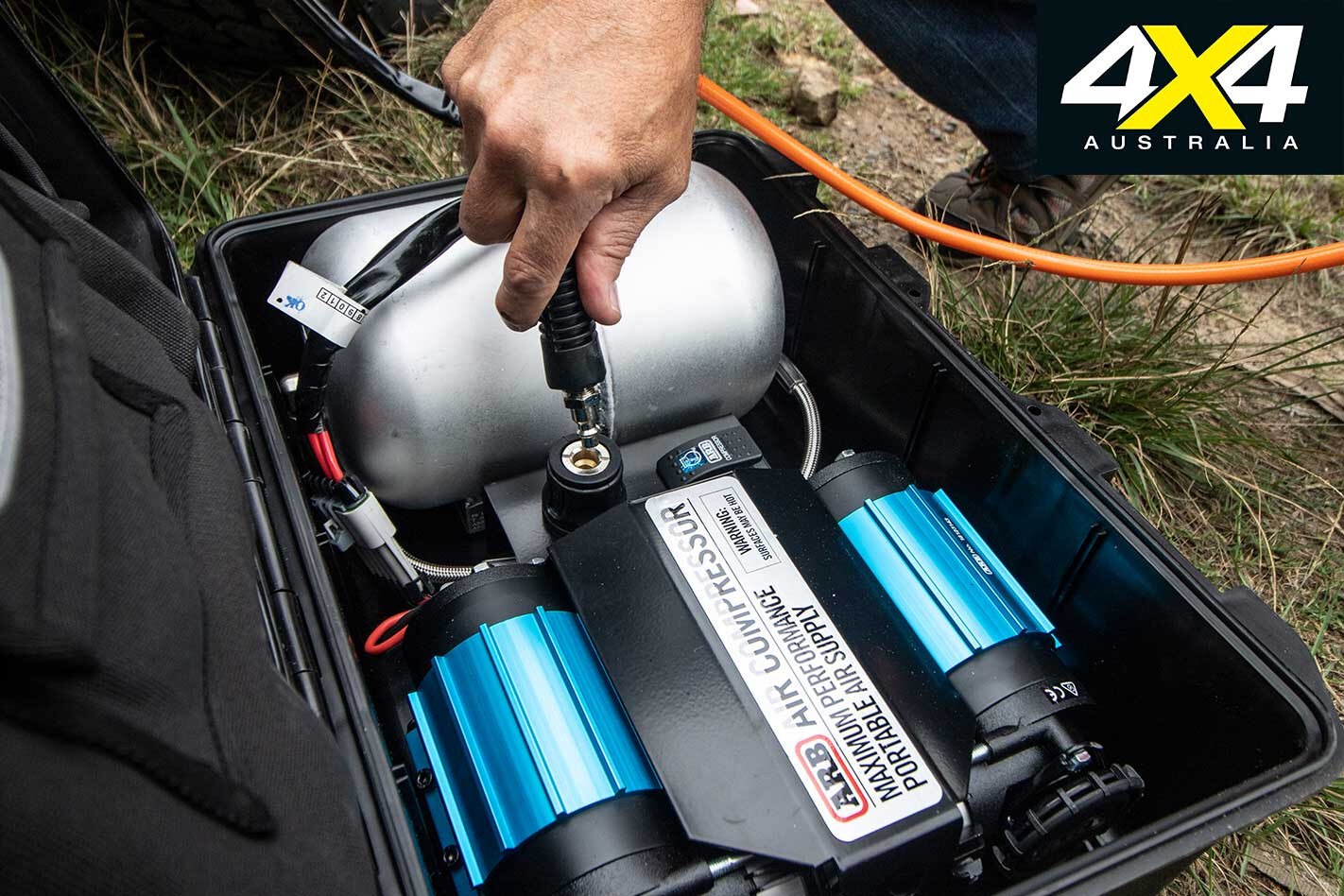
We have had this twin air compressor on test for around a month now, with it residing mostly in the back of my Discovery 2 when we’ve been out and about. It’s expensive, it takes up a bit of cargo space, and there’s no getting around its heft, but (excuse the pun) all this is easily outweighed by the CKMTP12’s fast inflation rate, versatility (you can run air tools and – hard-mounted – activate Air Lockers) and robust build quality.
For serious off-road tourers who know they’ll be deflating and re-inflating tyres regularly (and grimace at the time it usually takes), it’s a smart choice.
RATED Available from: www.arb.com.au RRP: $899 We Say: Pricey, heavy, fast inflation, excellent build quality.
THE 2019 FORD RANGER 3.2 we have here is a 2019 model and, while the 147kW/470Nm five-cylinder diesel and six-speed automatic remains largely unchanged, there are a host of updates including keyless entry and start, a new feature for Ranger. Being a Wildtrak, our test vehicle has autonomous braking (including pedestrian detection); although, this feature is now also optional on the volume-selling XLT.
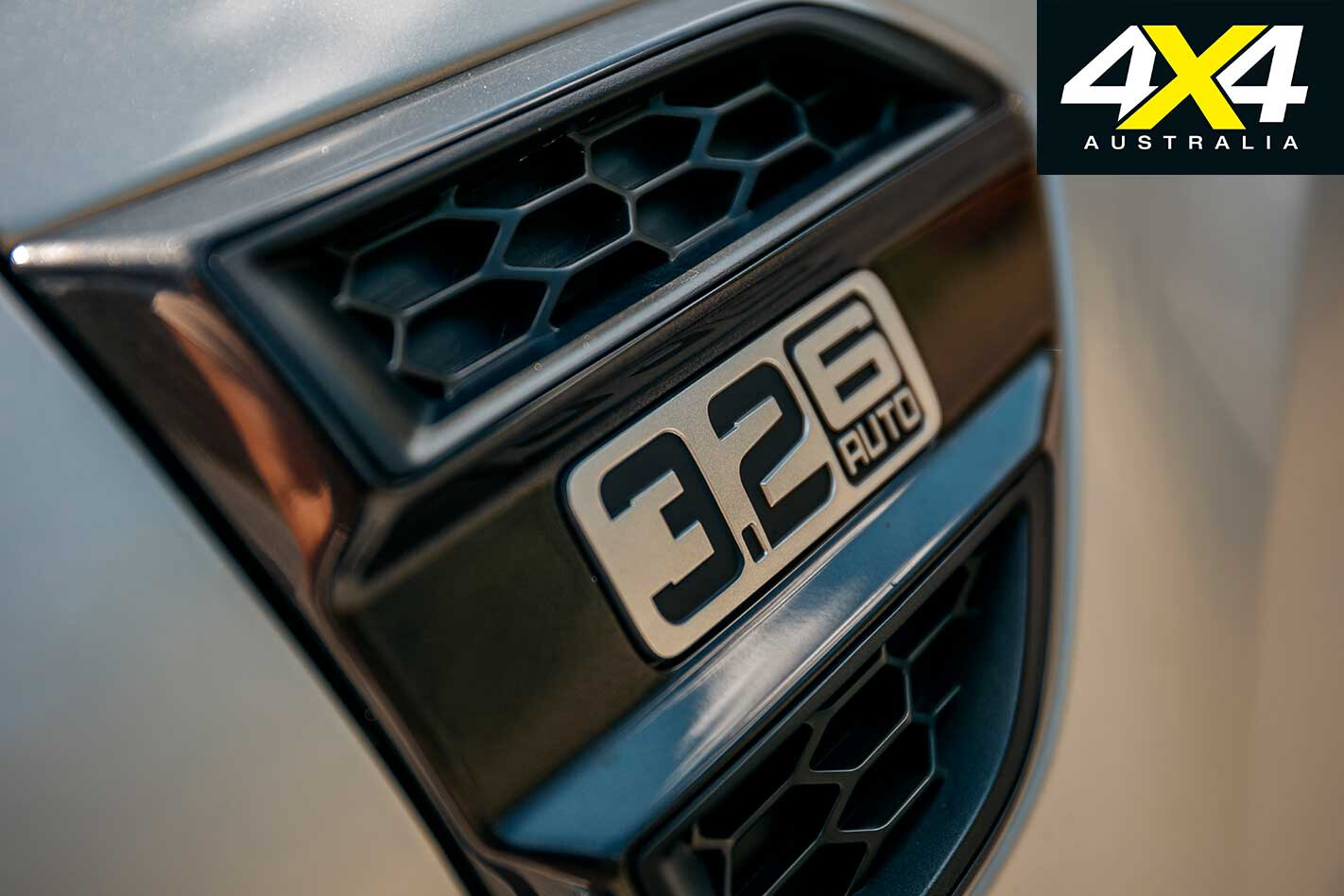
All MY19 Rangers come with a revised suspension package that offers a more comfortable ride, something we previously noticed when driving various MY19 models including a 3.2. Interestingly, the MY19 suspension changes are claimed to bring improved towing and load carrying performance.
In previous heavy duty tow and load testing the Ranger 3.2’s powertrain and chassis both proved to be top performers.
Ford Ranger 3.2 General Load & Tow
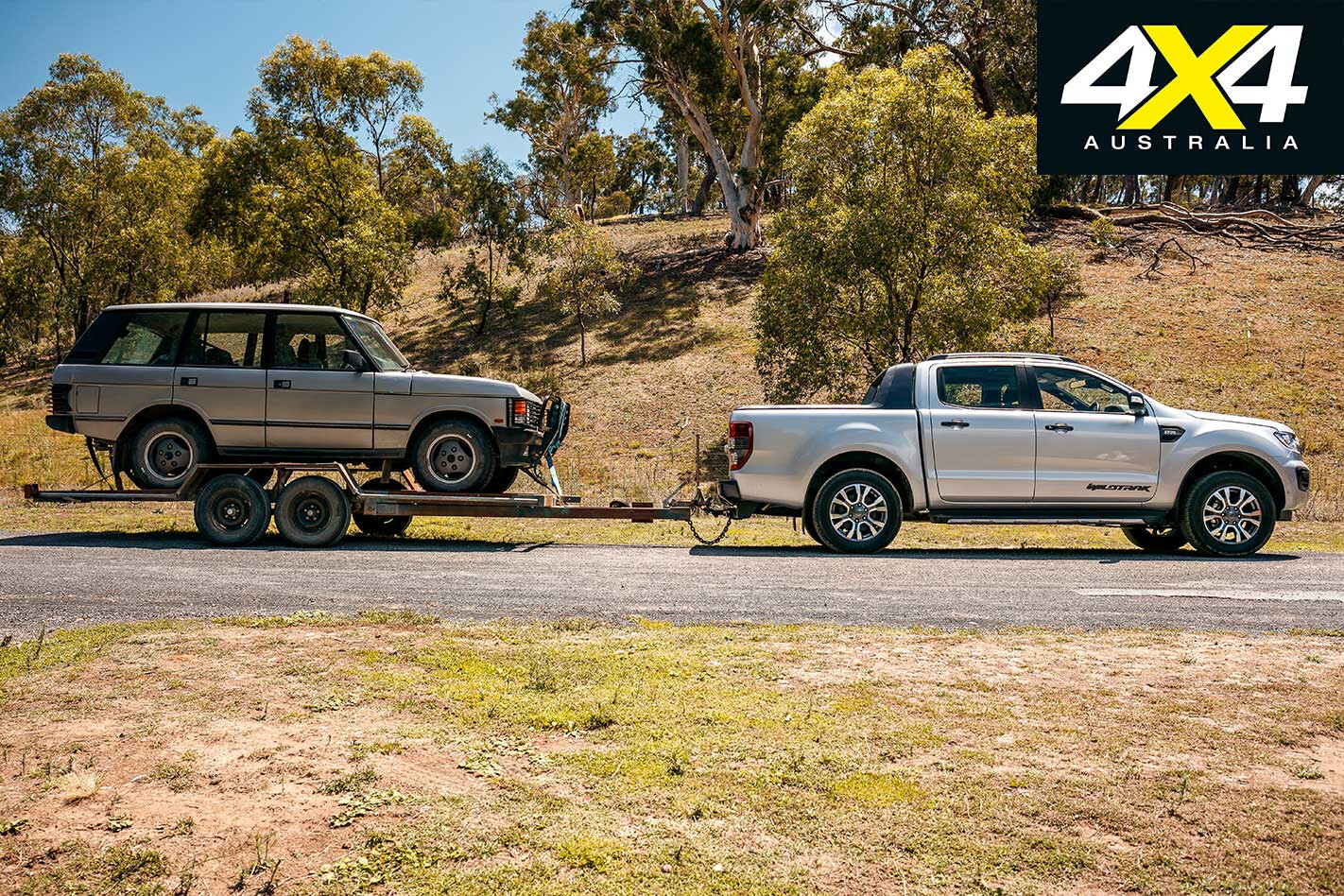
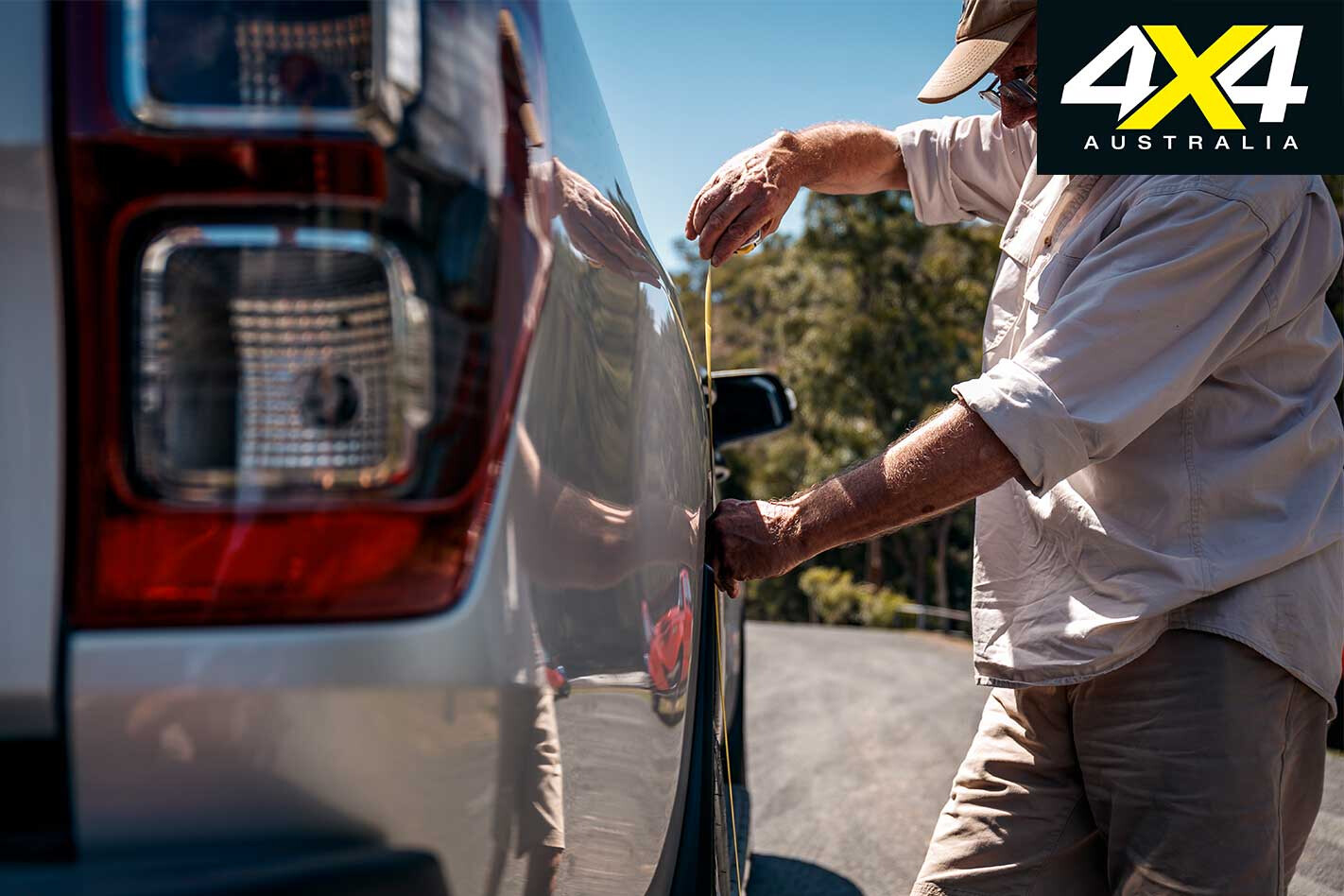
LOADING the 450kg of sand bags into the back of the 3.2 and then hooking up the loaded trailer saw the 3.2’s rear suspension drop by 70mm, the same as the Ranger 2.0 and Amarok, but a little more than the Colorado and D-Max, both of which have less overall suspension travel at the rear via their shared platforms.
Once underway the Ranger’s nicely tuned electric power steering (EPS), which is very light for slow-speed manoeuvring, offers a positive and connected feel once up to highway speeds. The general chassis stability with the carried and towed loads is good, too, as it has always been with the Ranger.
Whether it’s better than it was before the MY19 suspension revision is hard to say without towing the same load behind a MY18 and an MY19 back-to-back. Either way, there’s little to complain about.
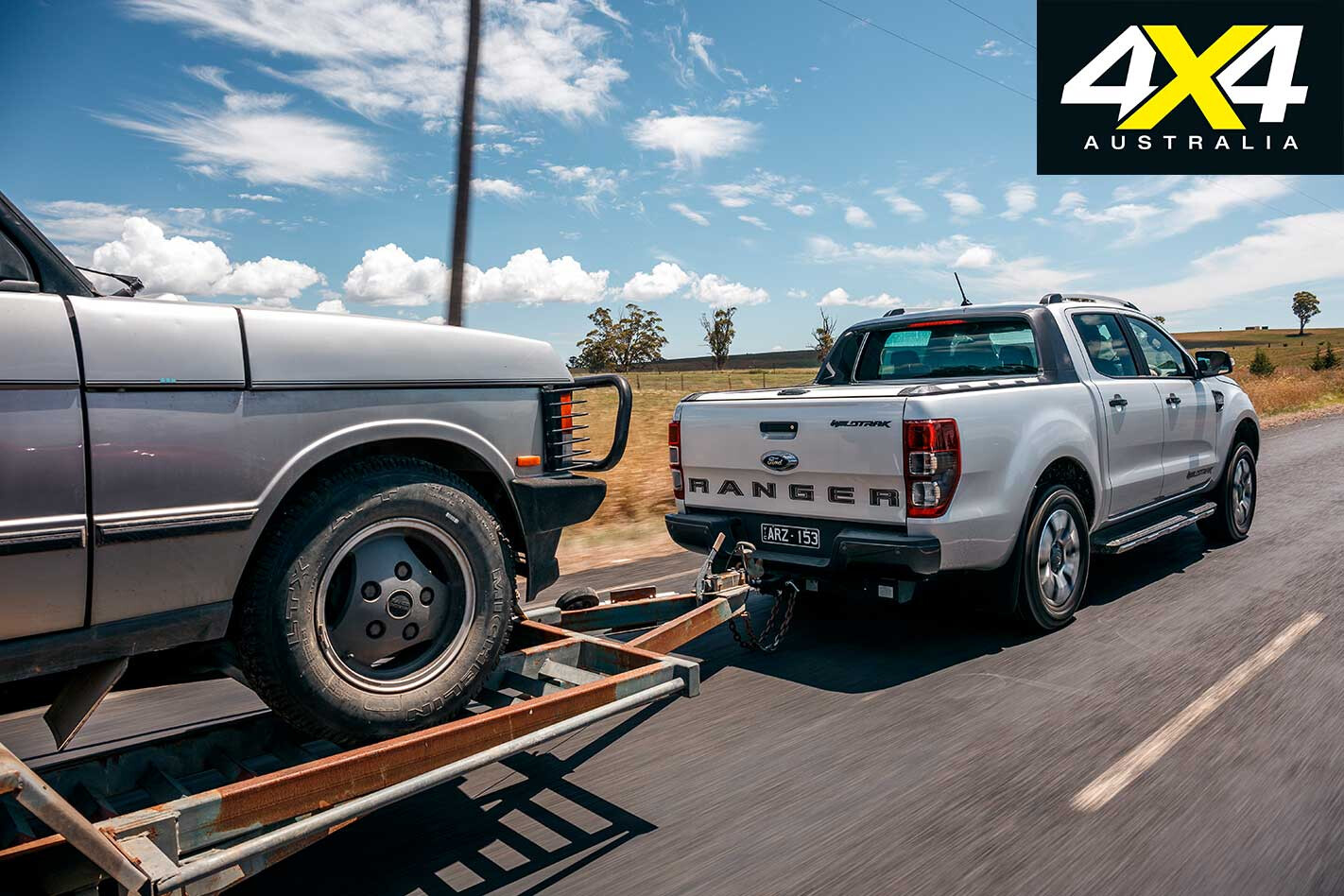
As expected, the ‘big’ 3.2-litre engine puts in a strong towing performance, thanks in part to its maximum power being on tap at just 3000rpm, that’s lower than any of the other utes here. Outside of the two V6s, the 3.2 proved to be the most effortless engine when carrying and towing the test load, and it never felt to be working all that hard. The fact the gearing isn’t overly tall helps the engine hold the taller gears on undulating and winding roads. Good shift quality and timing, too, from the six-speed ZF automatic.
The MY19 3.2 is a little quieter than before, though still not a notably quiet engine. And while its five-cylinder design sounds odd and potentially unbalanced, it’s very smooth in general running.
Ford Ranger 3.2 Steep Gradient Load & Tow
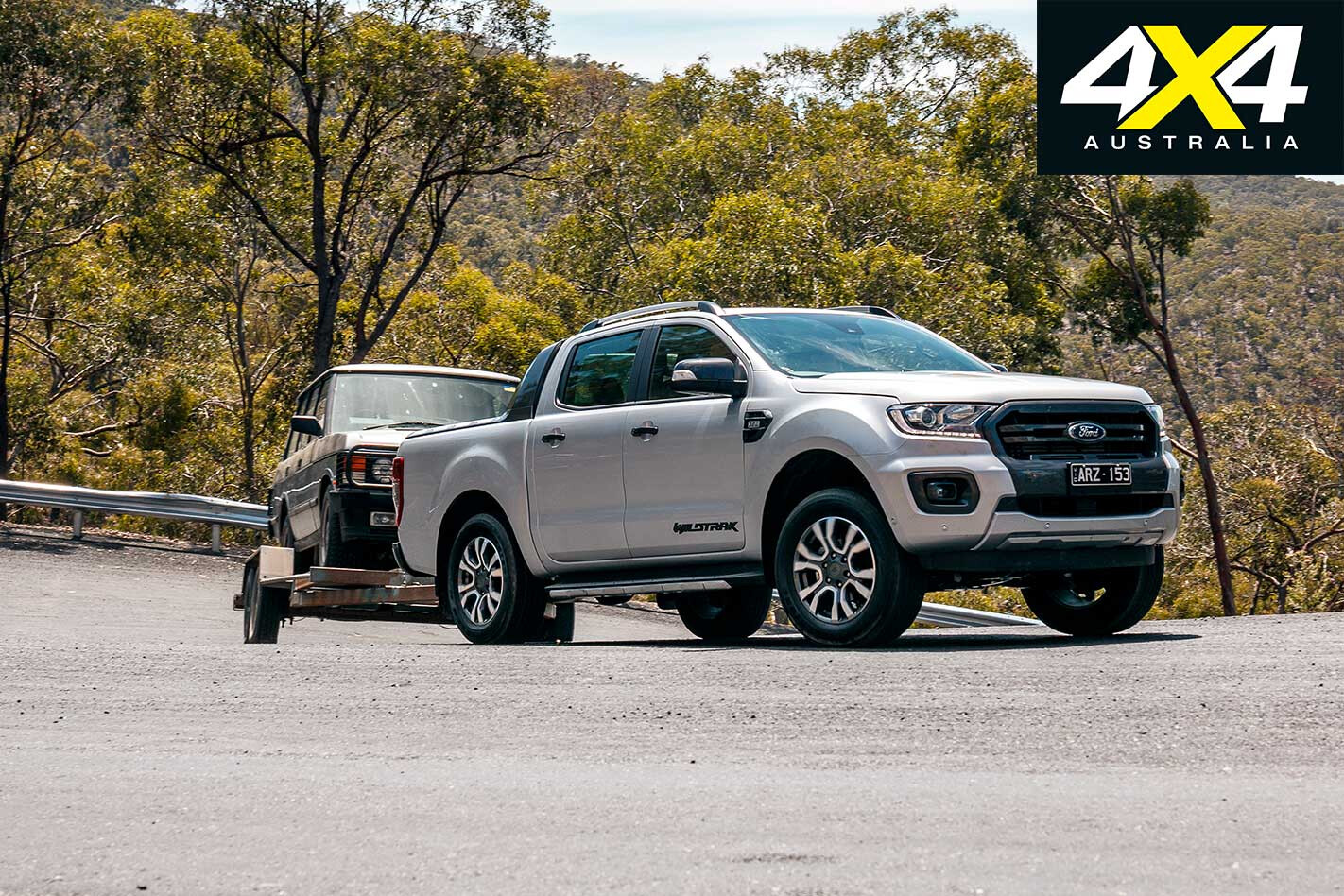
THE 3.2 continued to shine up and down our steep test incline. On the way up it covered the climb more quickly than all but the two V6s, and it wasn’t as far behind the Mercedes-Benz as you’d expect from the notable difference in the on-paper power and torque outputs.
All the way up the hill it happily slogged away between 2500 and 3000rpm without any unnecessary shuffling between gears, just decisive changes when needed. It arguably had the best engine braking, too, on the way down, no doubt due in part to having the largest capacity engine.
Ford Ranger 3.2 Tow Test Results
Towing Capacity: 3500kg Towball Download (max): 350kg Payload: 922kg
2019 FORD RANGER 3.2 WILDTRAK SPECS: Engine: 3.2-litre 5-cyl turbo diesel Max power: 147kW @ 3000rpm Max torque: 470Nm @ 1750-2500rpm Transmission: 6-speed auto 4×4 system: Dual-range part-time Kerb weight: 2278kg Fuel tank capacity: 80 litres ADR fuel consumption: 8.9L/100km
| 2019 FORD RANGER 4×4 3.2 PRICES* | |
| XL 4×4 DC/PU (auto) | $50,090u00a0 |
| XLS 4×4 DC/PU (auto) | $51,391u00a0 |
| XLT 4×4 DC/PU (auto) | $58,290u00a0 |
| WILDTRAK (auto) | $62,990u00a0 |
| *Not including on-road costs | |
A TALL smelter stack perched on top of a hill is like a beacon that can be seen for miles across the flat saltbush plains east of the rugged spine of mountains we know as the Flinders Ranges. It’s the most obvious sign of what remains of the Waukaringa Goldfields, which were first discovered in 1872 and most recently worked on in the 1990s.
We had come up from Victoria through the Danggali Conservation Park, meeting the main Barrier Highway at the small hamlet of Yunta, west of Broken Hill. For those heading to the northern Flinders, the dirt road route from Yunta is the shortest access to the Gammon Ranges or Arkaroola Resort. Most people hurtle north with little care for the surrounding landscape, but there are a few spots along the way worth checking out.
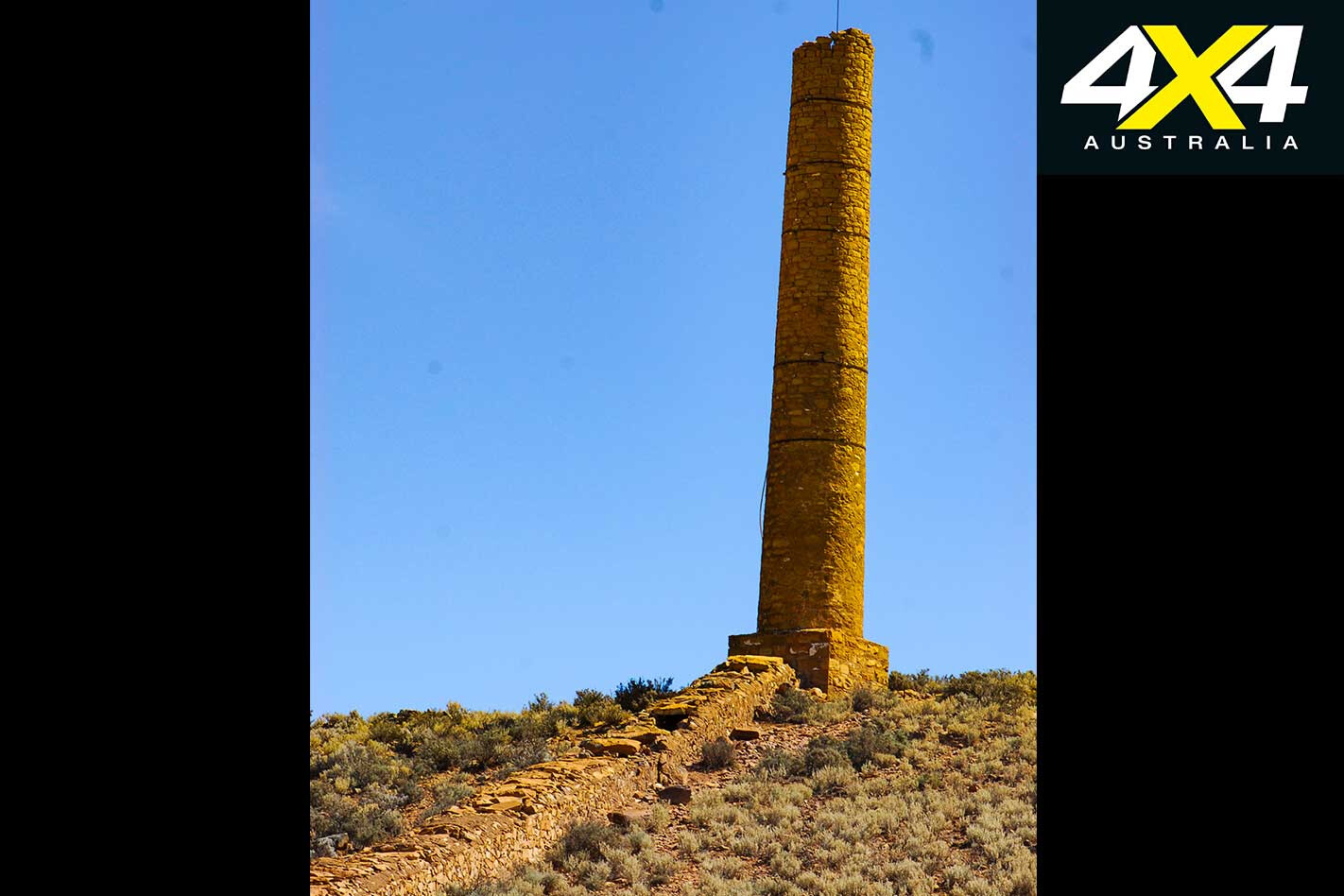
For those keen on fossicking for gold, Waukaringa and the nearby smaller goldfields of Teetulpa, Manna Hill and Nillinghoo are worth a visit, but Waukaringa is by far the best to explore. Just 35km north of Yunta, the ruins of the old Waukaringa Hotel are the most obvious remains of the old town, while a short distance away, along the line of a low hill, the smelter stack can be seen – one of two chimneys to be found here.
Nearby are the diggings and shafts of the Victoria, Alma and Alma Extended mines, with the main shaft reaching down more than 300 metres. The field produced gold worth more £300,000 in its first 20 years, so it was hardly a rich strike when compared to the golden hordes found elsewhere in the country. Still, that didn’t stop more work being done here in the 1930s, 1950s and again in the 1990s; the most obvious sign of which are the bulldozer scrapes scattered across the hillside.
Camping here is possible, but it’s hardly idyllic; we’ve always pushed on, passing through the wire barrier of the Dog Fence a couple of times close to the Frome Downs Homestead, before the route swings west and then north-west to parallel the south-western shores of the hard-to-see Lake Frome.
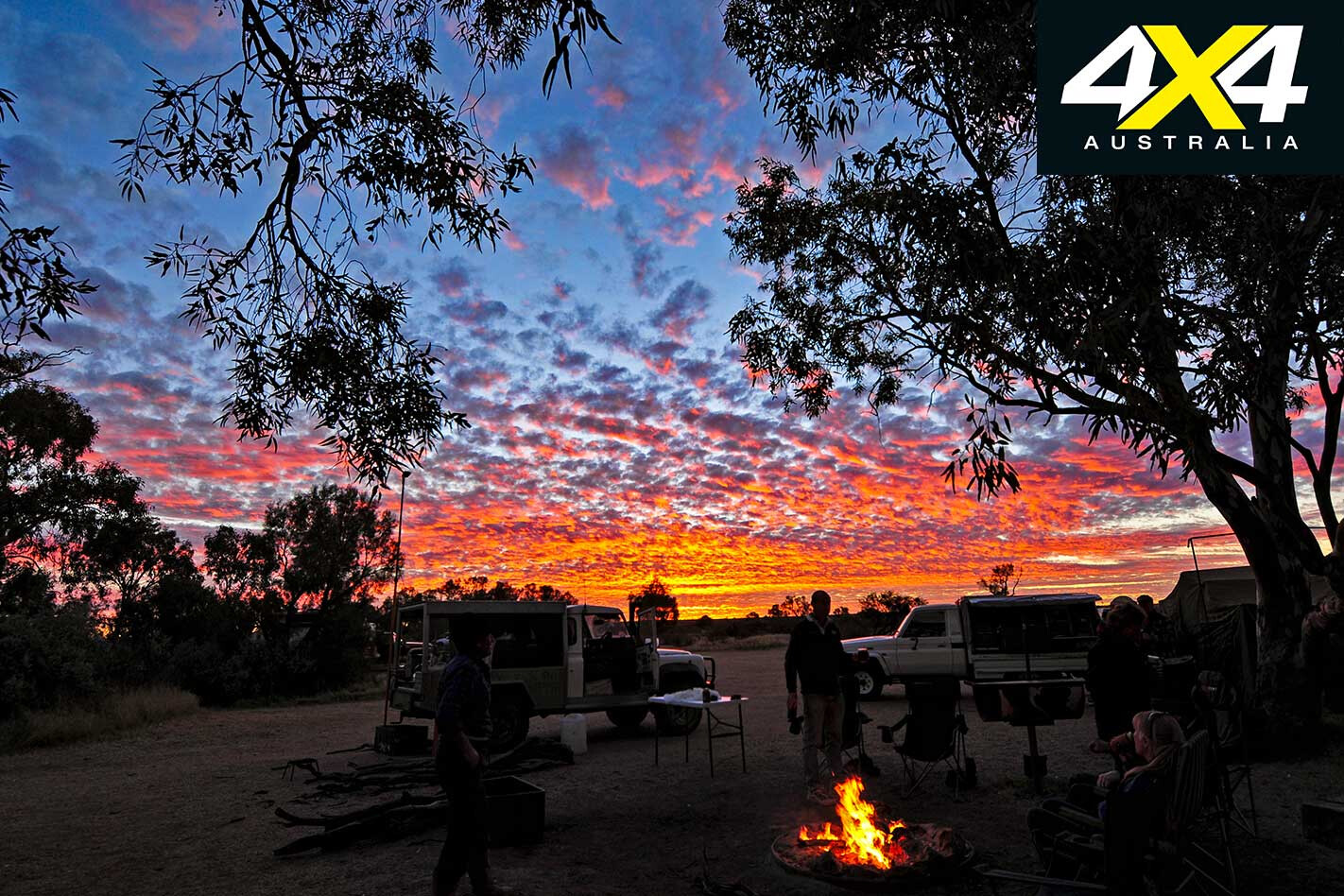
A road junction at Teatree Outstation means you can continue north to Balcanoona, the Arkaroola resort and the Gammon Ranges NP, or you can swing south-west to one of the better camps close by at Chambers Gorge. Along the access track into the gorge you’ll cross Mt Chambers Creek a few times, before arriving at a number of designated campsites and reaching a carpark where you need to leave your vehicle to explore farther into the gorge.
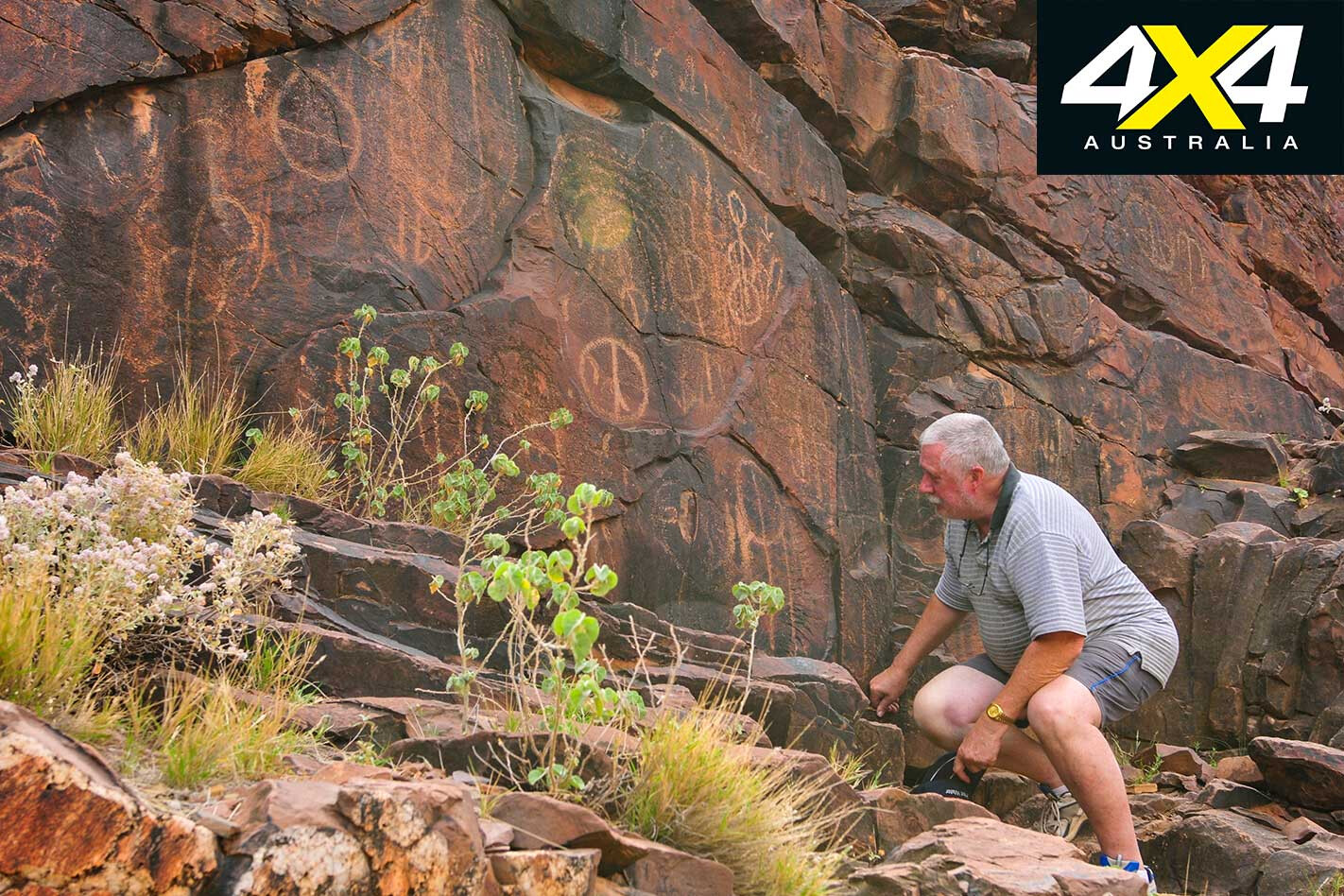
A short, easy walk along the creek brings you to the start of the gorge proper and a low but prominent bluff. By following the small creek north you’ll find, with a little exploration, some of the best Aboriginal rock art, not only in the Flinders but in all of SA, in the form of petroglyphs. For those who want to explore further it’s about a 1.5km walk from the carpark to the far end of the gorge, which ends at the impressive Windsor Pillar on the edge of the Frome Plains.
Heading north from Teatree and you’ll land at a major road junction close to Balcanoona Homestead, which is the headquarters for the surrounding Gammon Ranges NP. Turning west here leads through Italowie Gorge to the Aboriginal community of Nepabunna and the first Indigenous Protected Area (IPA) to be established in Australia, back in 1998.
There are a couple of access routes into the IPA, and a permit is required to access and camp in the area. Of the three places you can set up the camper or throw down the swag, the best is Moro Gorge. The normally small trickle of water in the gorge serves as a focal point for the area’s wildlife and you’ll often see a variety of birds, kangaroos and wallabies, including the delightful and uncommon yellow-footed rock wallaby.
Just west of the Aboriginal community is Angepena Homestead and, with permission from the people there, we headed south on bush tracks through Mudlapana Gap. About 19km from the homestead is Diggings Bore and then Windy Creek, where you’ll discover the main diggings of the Angepena Goldfields.
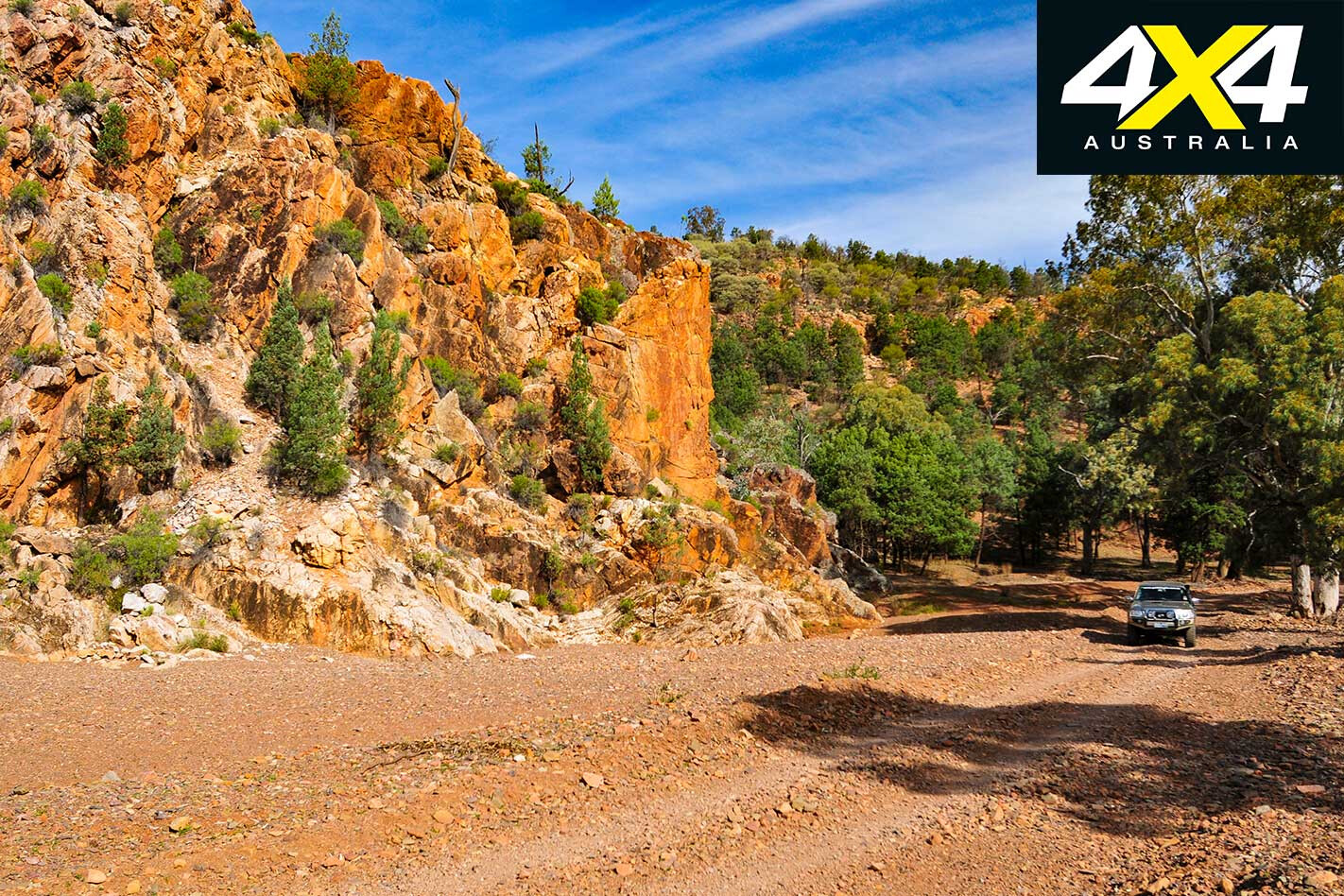
With permission from adjoining Warraweena you can travel on backtracks to the Warraweena Private Conservation Reserve, a long-time favourite for four-wheel drivers and history buffs. There are some great drives through the surrounding ranges and some enjoyable campsites along the creek, west of the homestead.
The ruins at Cadnia (Sliding Rock) are well worth investigating; the mine here, discovered in 1870, was once one of the richest copper mines in the whole of the Flinders. A town quickly sprang up and was on the way to some sense of permanency when disaster struck and the mine was suddenly inundated with massive flows of water. A steam pump was rushed to the area to no avail and the mine was soon abandoned. The town quickly followed.
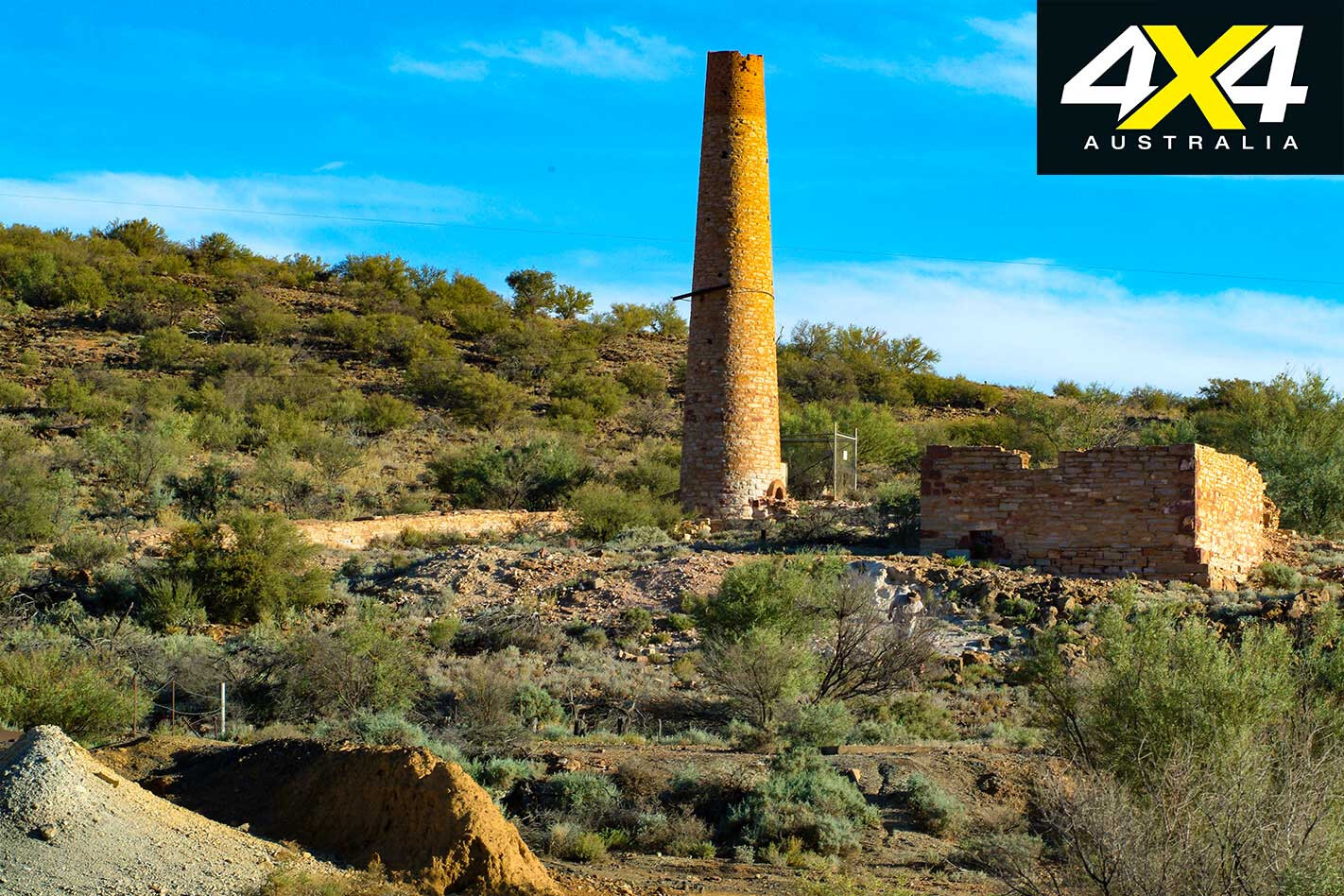
West from the ruins, along the main access track to Warraweena, is the historic and semi-ghost town of Beltana which was established to service Cadnia. In 1872 a repeater station for the OTL was set up here and in 1894 the Smith of Dunesk Mission was inaugurated, where the Rev John Flynn worked before establishing the Australian Inland Mission and his vision of a ‘mantle of safety’ across the Australian outback.
Nearby is the famous Beltana property, established in 1854, which was, by 1860, the headquarters of Sir Thomas Elders’ vast pastoral empire. With its number of historic buildings the property now offers accommodation, camping and a variety of 4×4 tracks to enjoy.
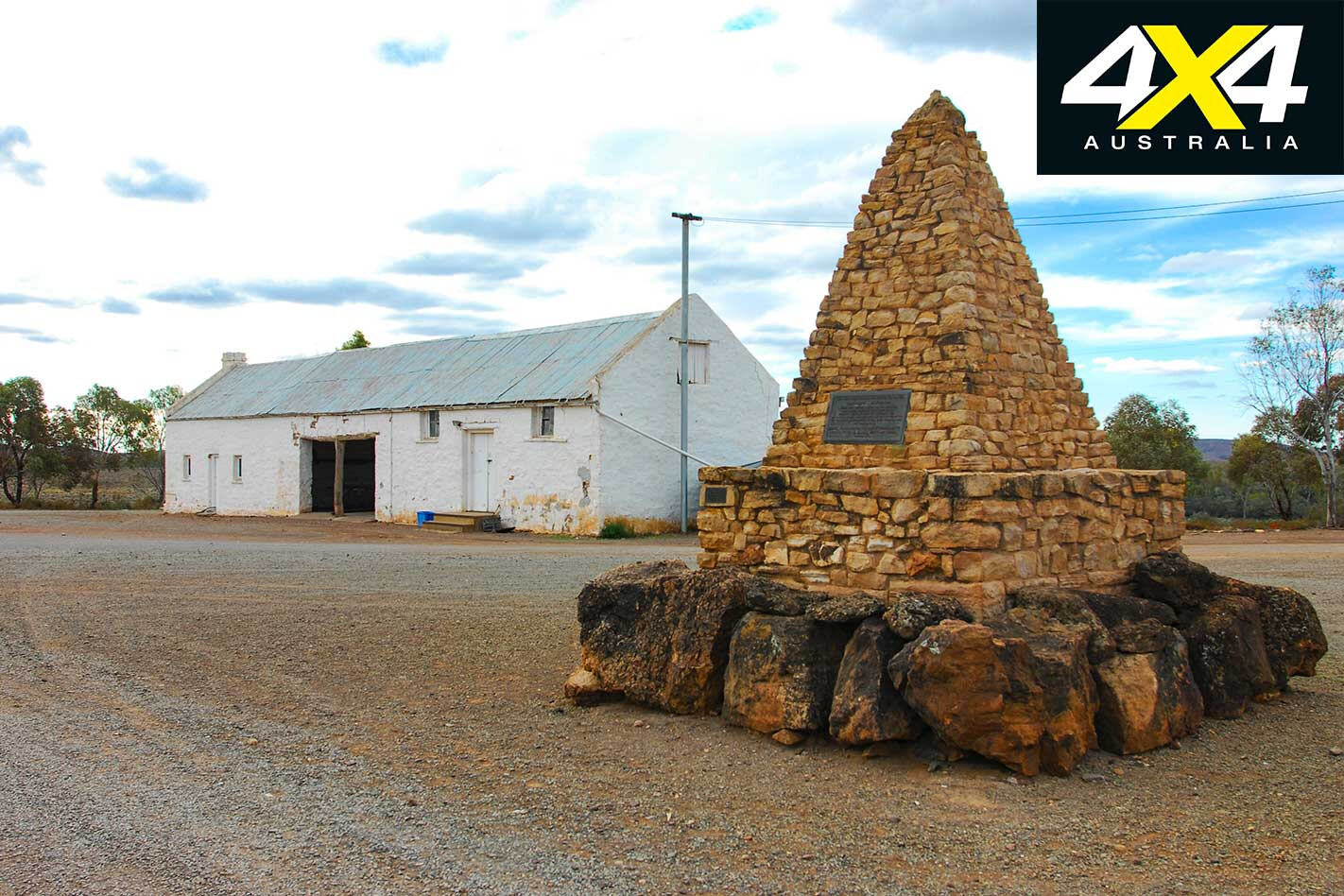
With time running away from us we turned south on the blacktop, but quickly escaped the hum of the bitumen north of Hawker as we again turned west onto dirt and headed for the crossroads, a solitary ruin and a forlorn cemetery which was once the township of Hookina.
From Hookina, another interesting back road of the Flinders heads west and then south, taking you past the tumbled-down ruins of Warrakimbo Woolshed. The route then crosses what was the railway line to the Leigh Creek Coalfield and edges a little closer to the bulk of the ranges, with the prominent peak of Mt Arden (named by Matthew Flinders in 1802) directly to the east.
At a small monument just north of Depot Creek, a track heads east towards the hills and to another monument, this one to Edward John Eyre who was the first European to explore this region in 1839. An easy walking track leads to Eyre Depot and a small dam that was once the main water supply for Port Augusta, which is just 32km farther south.
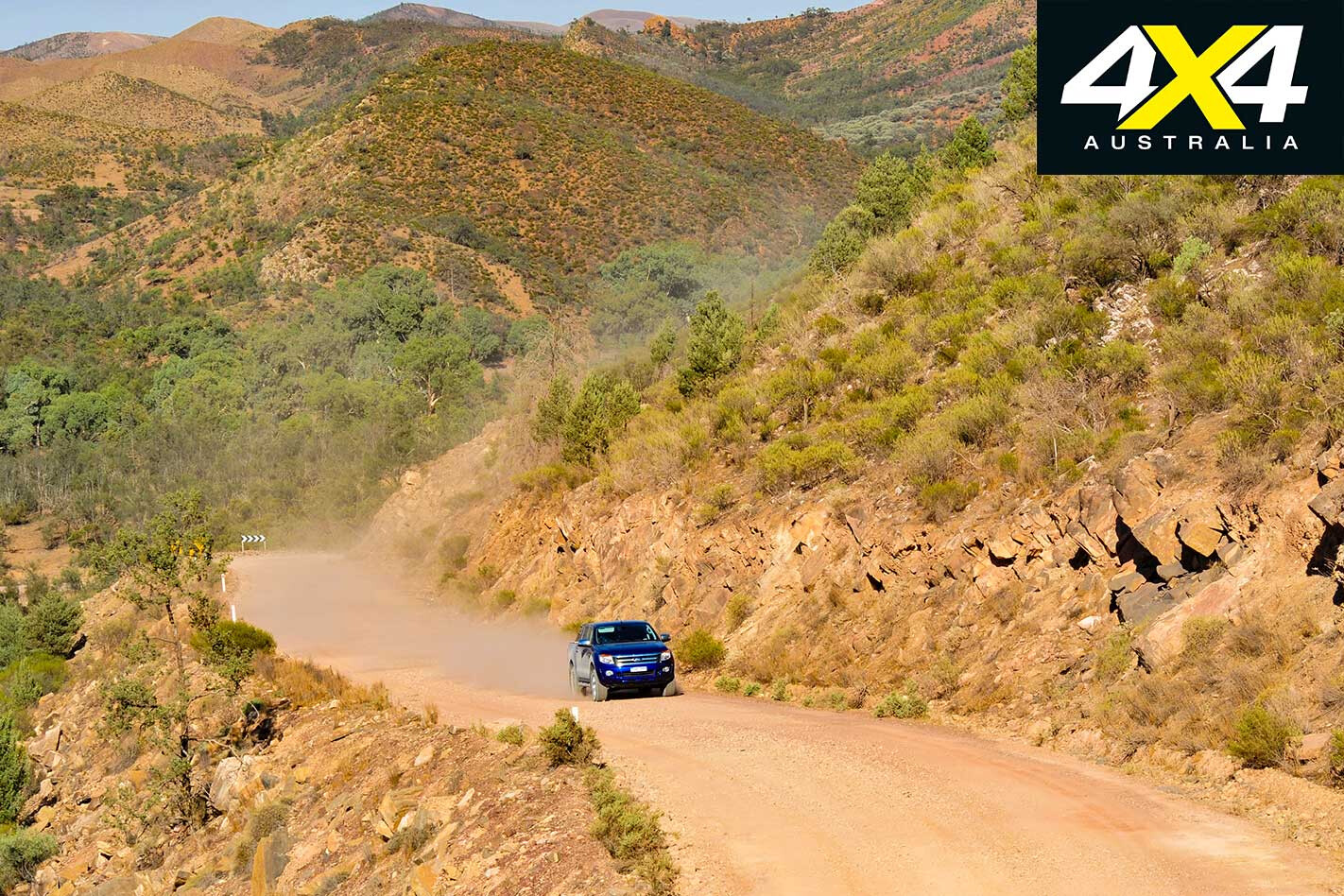
The town, at the head of Spencer Gulf, sits at the crossroads of Australia; north takes you to Alice Springs, west leads to Perth, south to Adelaide, and east eventually to Sydney. It’s a fitting and handy spot to start or end a trip on the back roads through the Flinders.
Angepena Goldfields
THIS short-lived goldfield was founded in 1892, but, as the story goes, only about 20 of the 300 diggers who rushed to this isolated spot ever found more gold than just wages. More recently, locals working with metal detectors and machinery have found gold nuggets up to an ounce in weight. Nearby are a couple of other small goldfields, while a couple of good camping spots can also be found.
Hookina
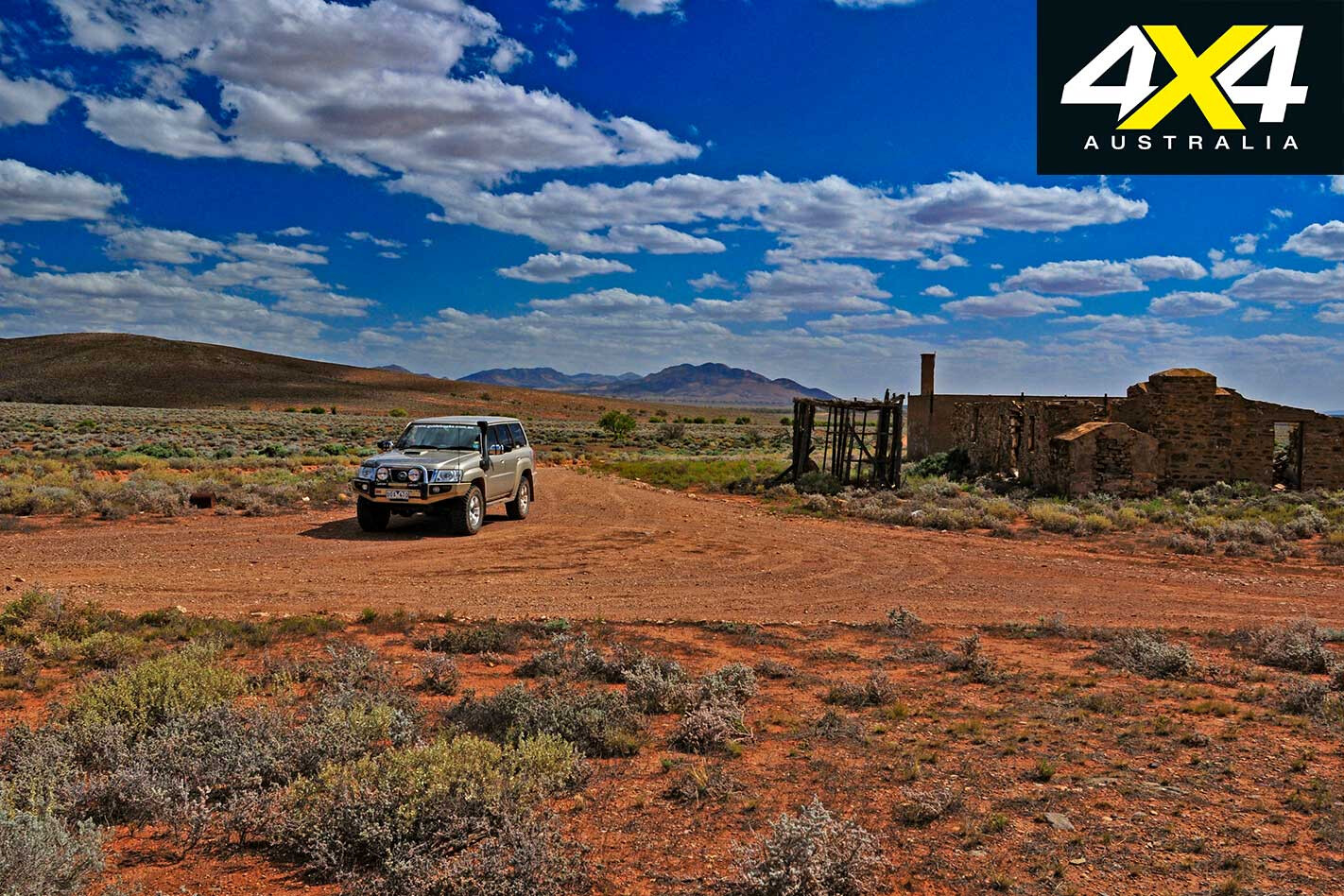
ESTABLISHED around 1860, Hookina was a stopping point for the bullock wagons heading north or south from copper mines around Beltana and Blinman. Up to 130 teamsters camped overnight here, which is hard to imagine these days. Harder to conceive was the harsh drought of the 1890s; the pub – the ruins of which still stand today – was nearly covered in drifting sand, which meant the pub, having lost the teamsters to the railway a few years previous, shut its doors in 1897.
Travel Planner
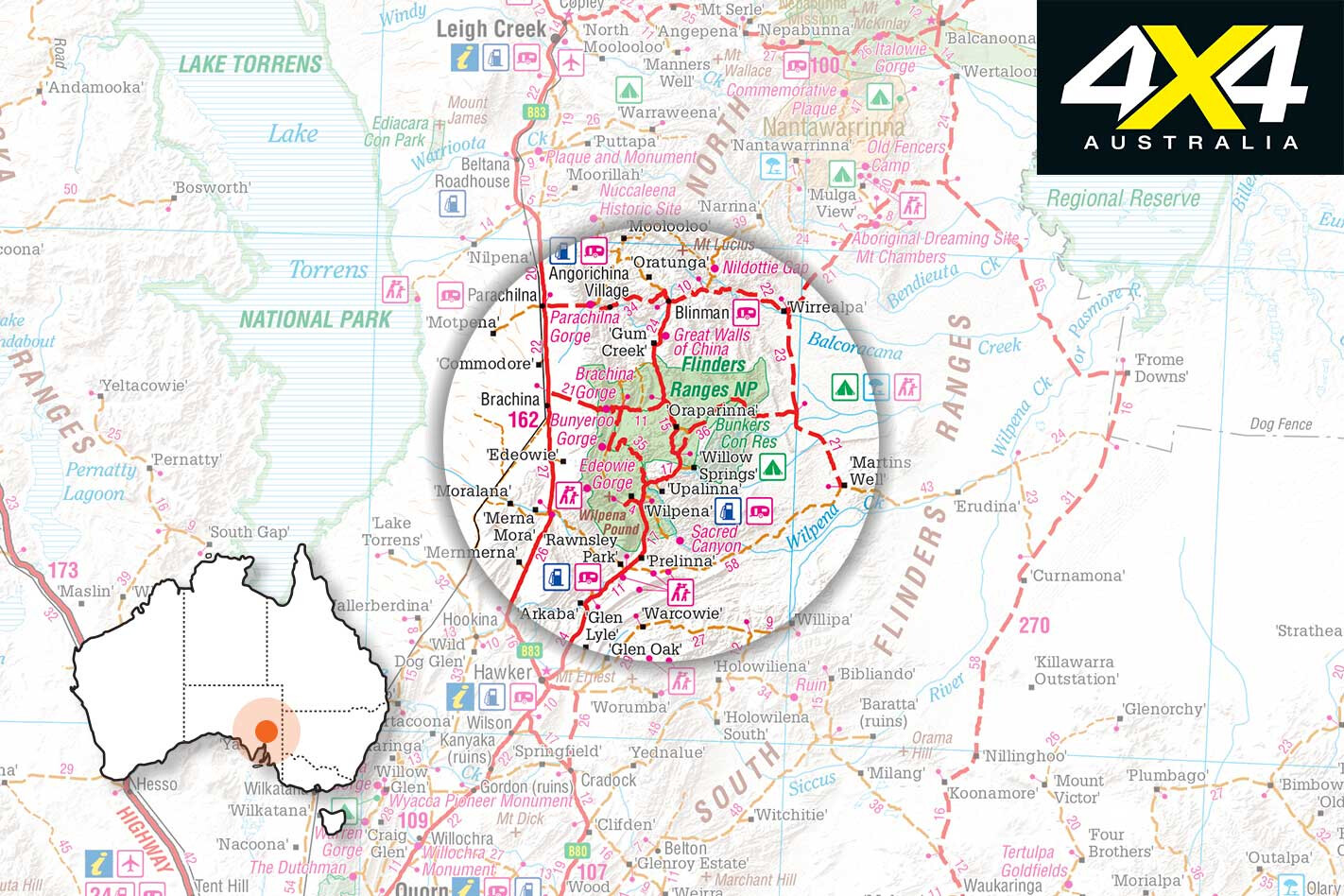
BEST MAP Hema Maps’ The Flinders Ranges.
SUPPLIES TWO state forests, three national parks, one IPA, seven conservation parks, three Public Access Routes and a host of private properties that offer four-wheel driving and camping make the Flinders Ranges an ideal and enjoyable destination for the adventurous 4×4 traveller.
CONTACTS Arkaroola Wilderness Sanctuary: www.arkaroola.com.au Nantawarrina IPA: nepabunna.com.au Beltana Station: www.beltanastation.com.au Gammon Ranges NP: www.parks.sa.gov.au
ALL OF THE utes you see here are rated to tow 3500kg, but rarely do. Trouble is, once you hook up 3500kg behind any of them you can’t carry much (if anything) legally in the tub once you have a driver and passenger onboard.
These utes are typically used to tow something in the order of 2500 to 3000kg and also carry some sort of payload, given the driver and passengers are all payload, as is the tow bar and any other fitted accessories such as bullbars and canopies. And that’s before you put anything in the tub.
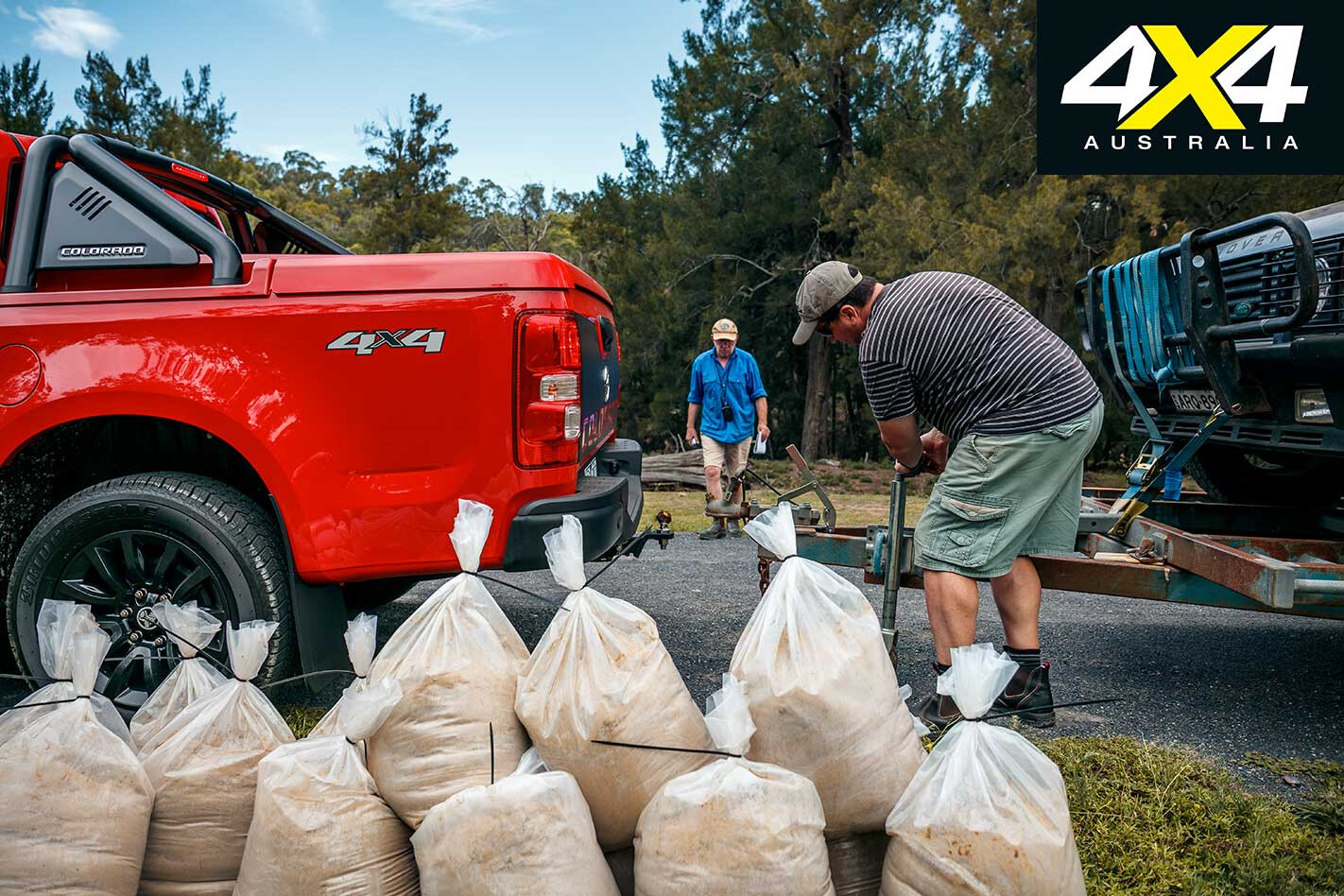
With that in mind, we decided on a more real-world test of towing 2500kg while carrying 450kg in the tub – add a driver and passenger and the payload’s about 600kg, not including the towball download. As it played out we added a total of 3144kg to each ute’s Gross Combined Mass (GCM), comprising the classic Range Rover on a tandem-axle car trailer, the sandbags in the tub, and driver and passenger onboard.
With these utes weighing between 2000kg to near 2300kg, and the maximum permissible GCMs varying from 5950kg to 6180kg, the utes were typically operating around 600kg to 750kg below maximum GCM. However, they were still asked to work hard, given they carried and towed a weight equal to one-and-half times their unladen weight.
If you think we were going to let our utes off lightly, we weren’t. Part of our test was a very steep climb – a 15 per cent average gradient, but notably steeper in parts – over 1.5km. On the steepest pinch it had three sharp (one a near-stop hairpin) bends, which meant slowing right down to a slow and safe speed and therefore losing most momentum, before accelerating back to speed (or at least trying to) on the straight sections of road between the bends. As it turned out it was mostly a full-throttle slug in first and second gears.
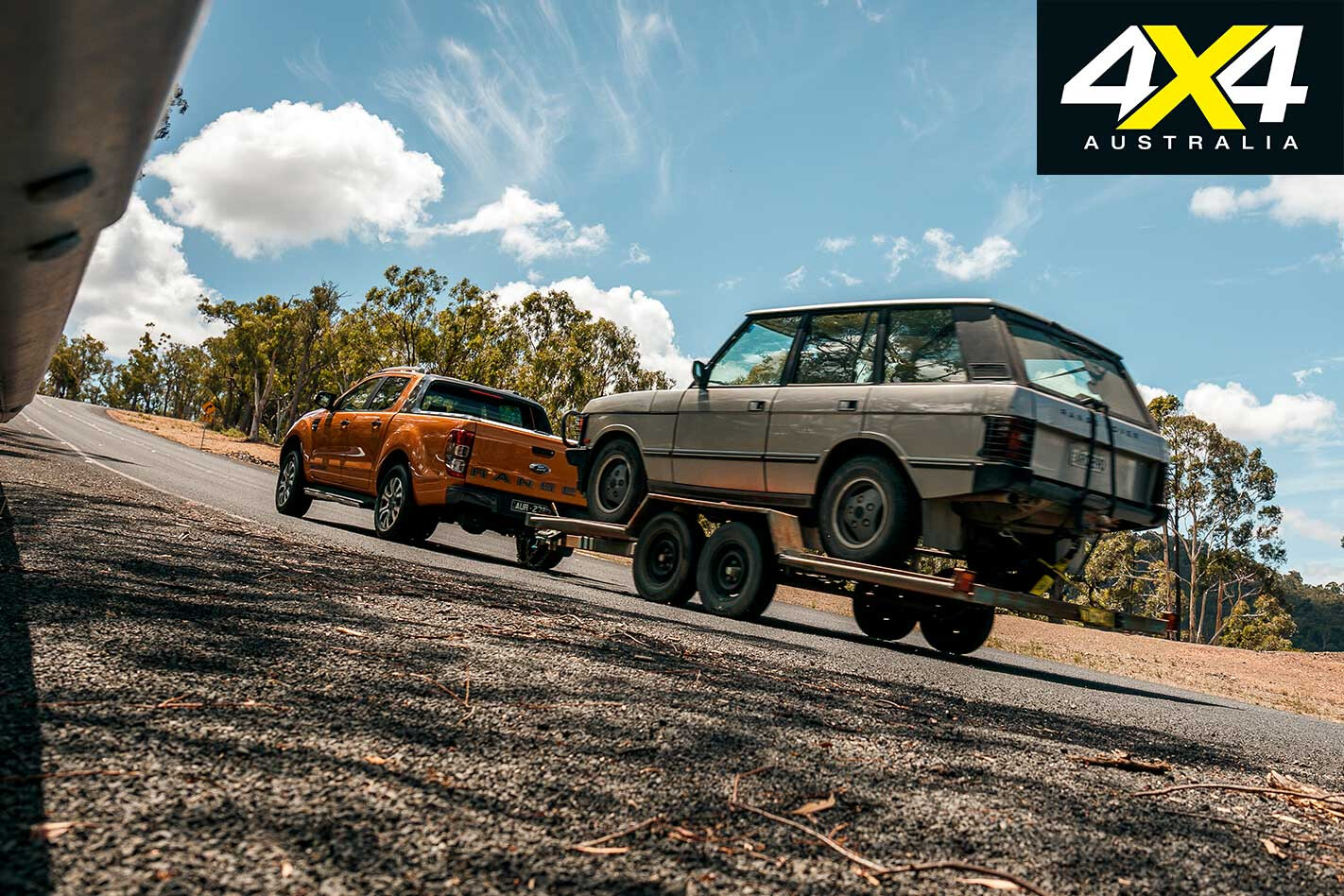
This was repeated three times for each ute, with the purpose of testing the powertrain under full-throttle climbing loads and maximum engine-braking descent loads. The climbing runs were all timed. The descents were a decent test for the brakes; although, they were deliberately slow and steady, given the steep incline and added weights, and relied largely on engine braking. The trailer was fitted with electric brakes, and all utes had electric trailer-brake controllers.
The general part of the test, conducted on an undulating and sometimes bumpy rural road, tested general chassis stability and powertrain performance under typical touring conditions at highway speeds. The incentive of this test was to see how the powerful and more expensive V6 utes from Mercedes-Benz and Volkswagen compared to the popular and affordable models from Ford, Holden and Isuzu. Comparing the two engines now available in the Ranger (the 3.2-litre ‘five’ and the new 2.0-litre bi-turbo) was also of much interest.
The 2019 Tow Test Contenders
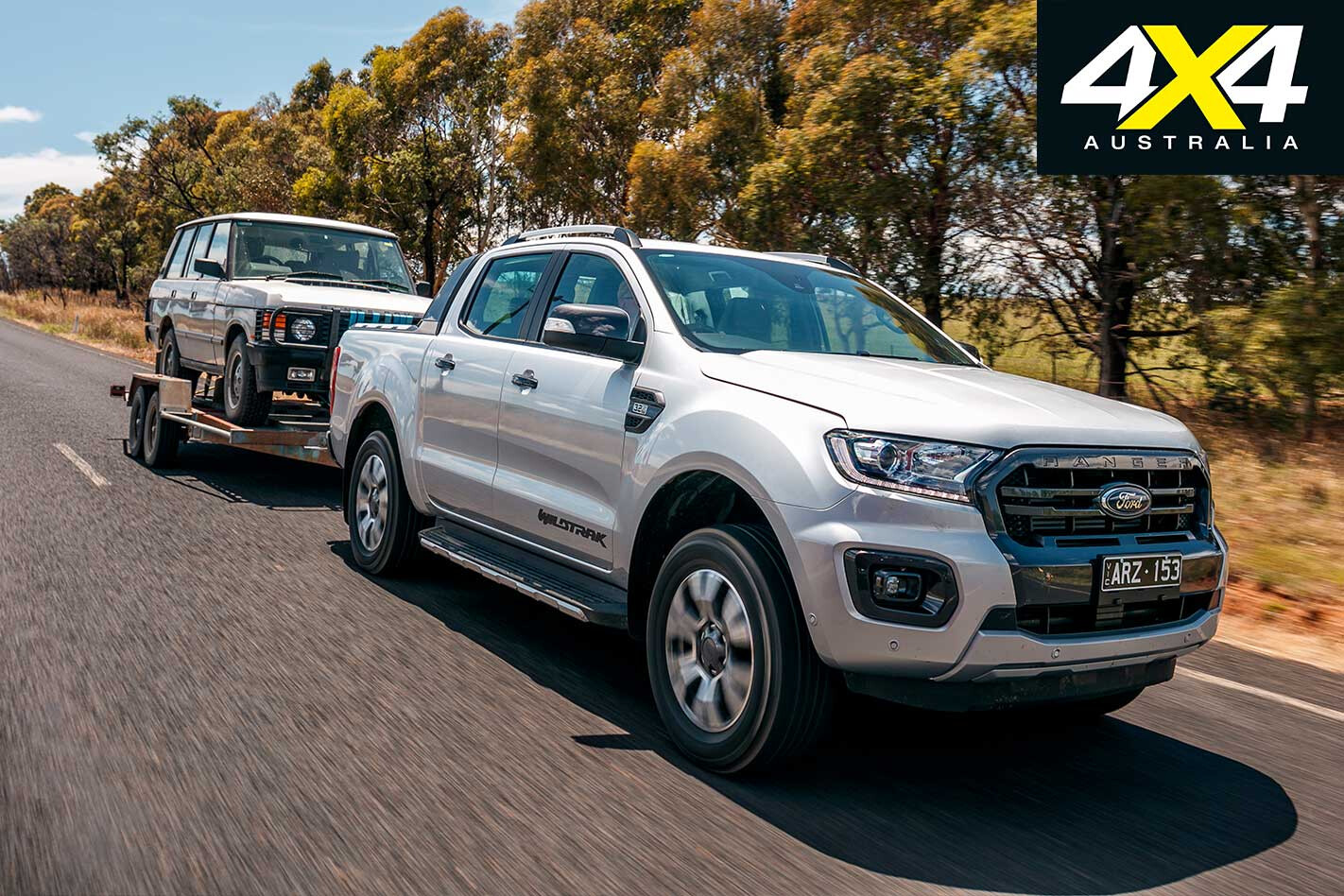
2019 FORD RANGER 3.2 WILDTRAK SPECS: Engine: 3.2-litre 5-cyl turbo diesel Max power: 147kW @ 3000rpm Max torque: 470Nm @ 1750-2500rpm Transmission: 6-speed auto 4×4 system: Dual-range part-time Kerb weight: 2278kg GVM: 3200kg Payload: 922kg Towing capacity: 3500kg Towball Download (max): 350kg GCM: 6000kg Fuel tank capacity: 80 litres ADR fuel consumption: 8.9L/100km
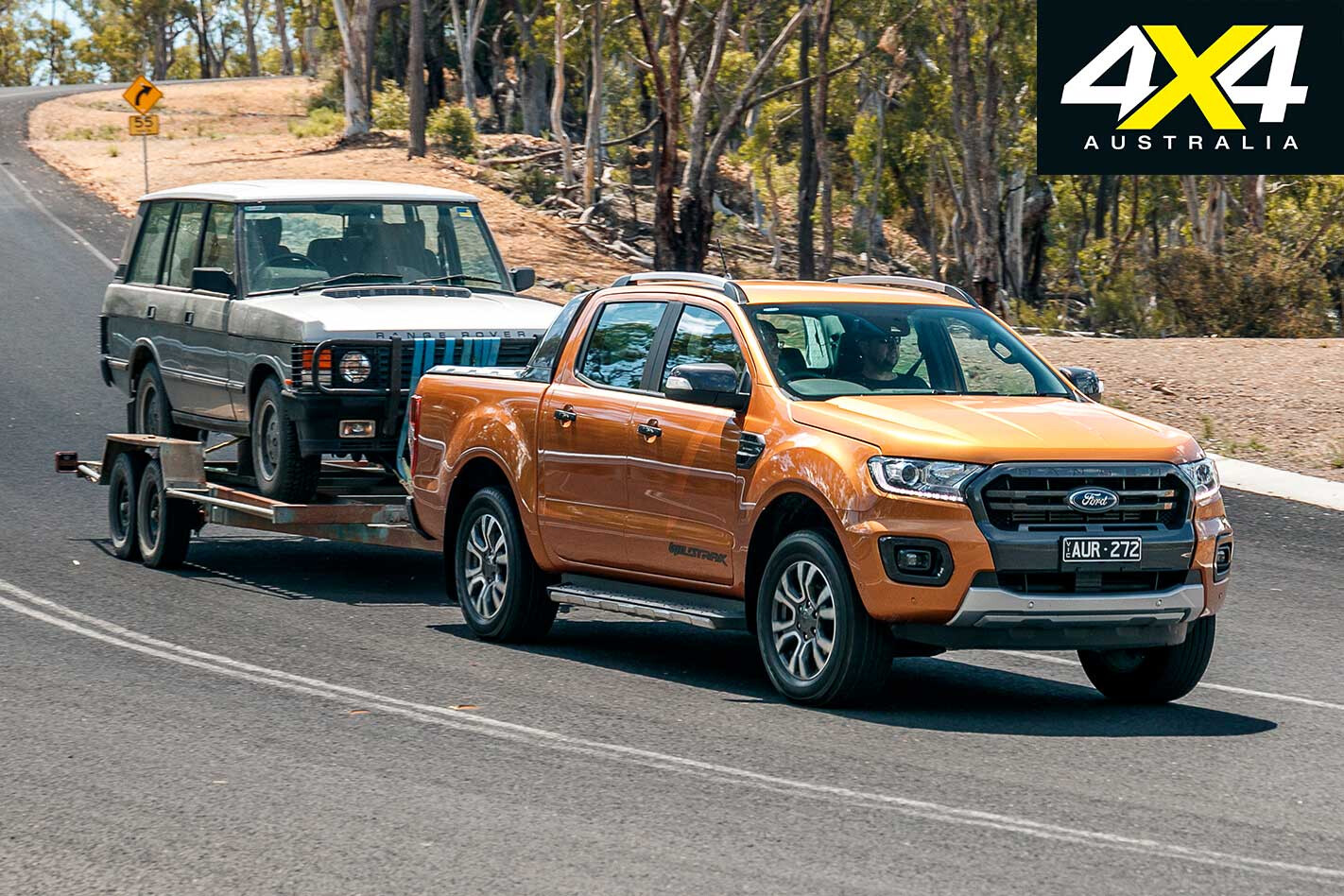
2019 FORD RANGER 2.0 WILDTRAK SPECS: Engine: 2.0-litre 4-cyl bi-turbo diesel Max power: 157kW @ 3750rpm Max torque: 500Nm @ 1750-2000rpm Transmission: 10-speed auto 4×4 system: Dual-range part-time Kerb weight: 2246kg GVM: 3200kg Payload: 954kg Towing capacity: 3500kg Towball Download (max): 350kg GCM: 6000kg Fuel tank capacity: 80 litres ADR fuel consumption: 7.4L/100km
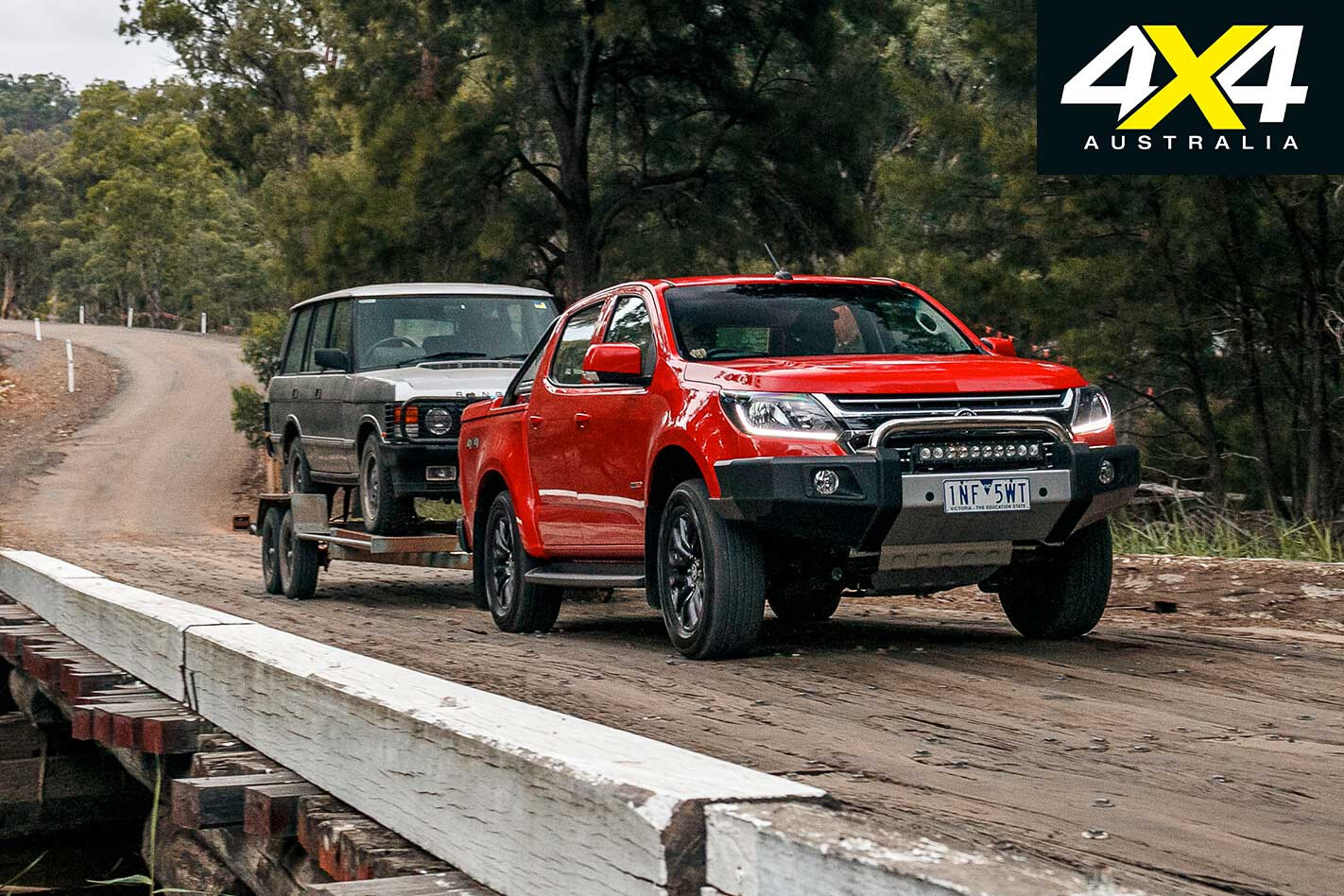
2019 HOLDEN COLORADO LT SPECS: Engine: 2.8-litre 4-cyl turbo diesel Max power: 147kW @ 3600rpm Max torque: 500Nm @ 2000rpm Transmission: 6-speed auto 4×4 system: Dual-range part-time Kerb weight: 2102kg GVM: 3150kg Payload: 1048kg Towing capacity: 3500kg Towball Download (max): 350kg GCM: 6000kg Fuel tank capacity: 76 litres ADR fuel consumption: 8.7L/100km
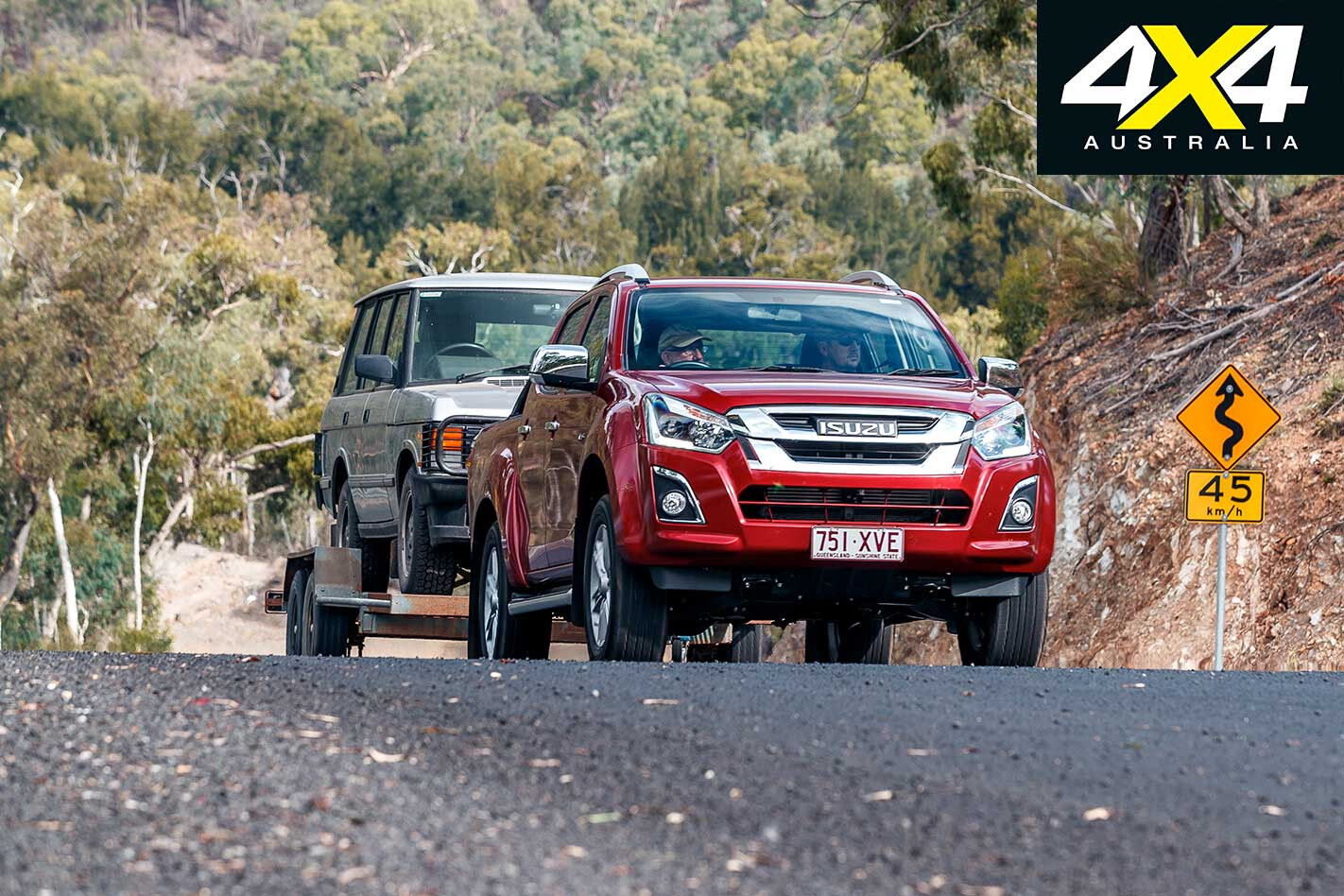
2019 ISUZU D-MAX LS-T SPECS: Engine: 3.0-litre 4-cyl turbo diesel Max power: 130kW @ 3600rpm Max torque: 430Nm @ 2000-2200rpm Transmission: 6-speed auto 4×4 system: Dual-range part-time Kerb weight: 2026kg GVM: 3050kg Payload: 1024kg Towing capacity: 3500kg Towball Download (max): 350kg GCM: 5950kg Fuel tank capacity: 76 litres ADR fuel consumption: 7.9L/100km
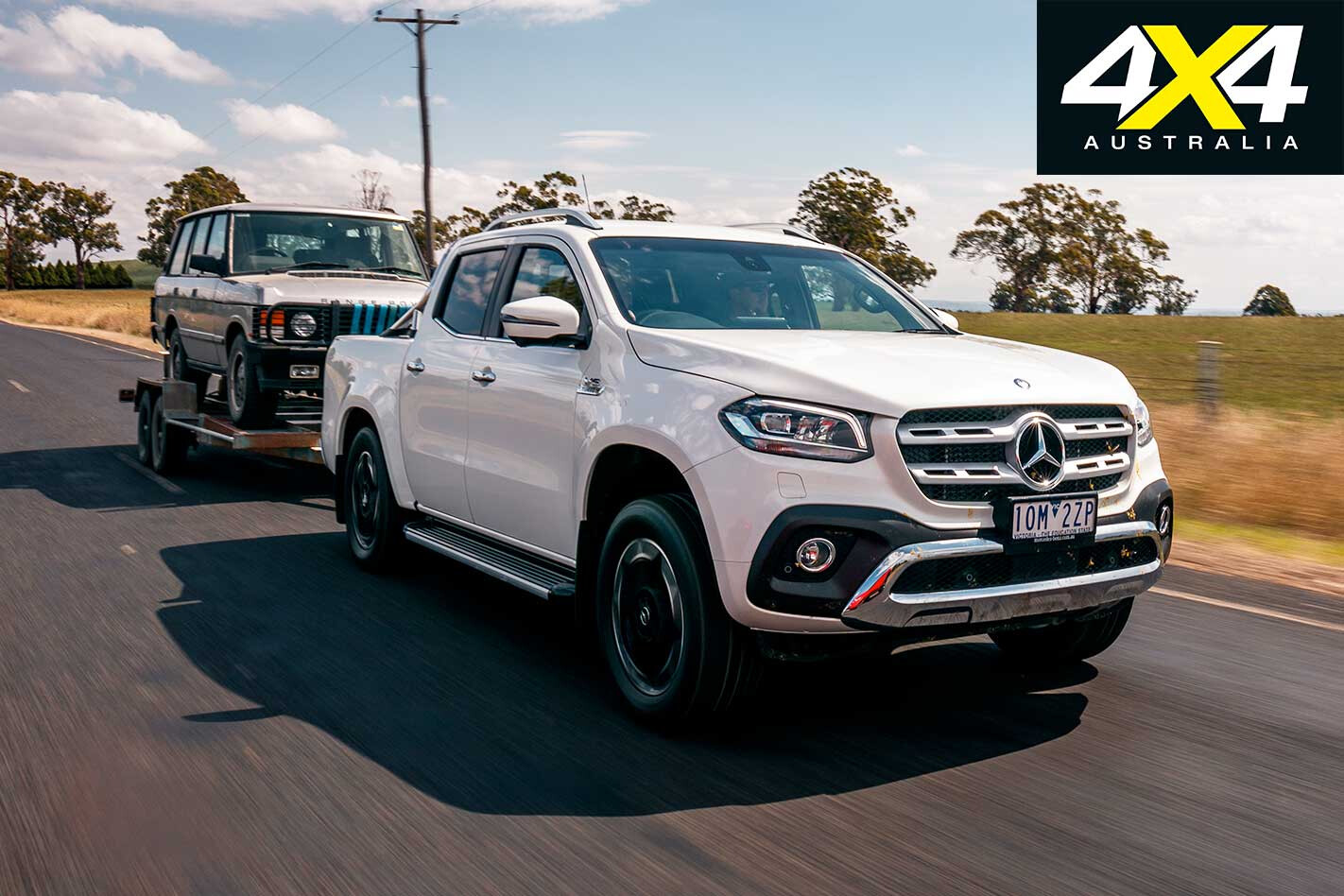
2019 MERCEDES-BENZ X350d POWER SPECS: Engine: 3.0-litre V6 turbo diesel Max power: 190kW @ 3400rpm Max torque: 550Nm @ 1400-3200rpm Transmission: 7-speed auto 4×4 system: Dual-range full-time Kerb weight: 2190kg GVM: 3250kg Payload: 1060kg Towing capacity: 3500kg Towball Download (max): 350kg GCM: 6180kg Fuel tank capacity: 80 litres ADR fuel consumption: 8.8L/100km
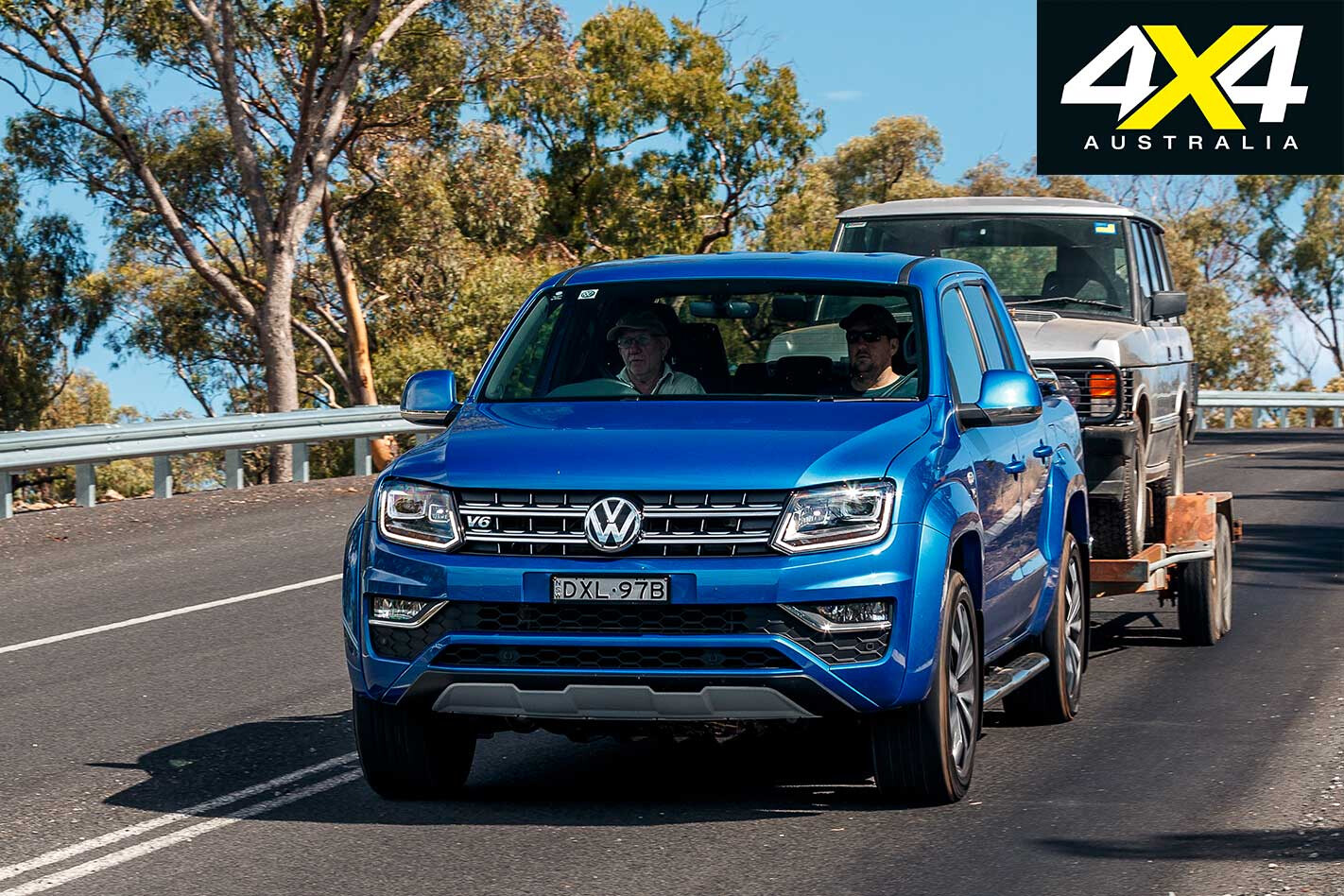
2019 VOLKSWAGEN AMAROK 580 SPECS: Engine: 3.0-litre V6 turbo diesel Max power: 190kW @ 3250-4500rpm Max torque: 580Nm @ 1400-3000rpm Transmission: 8-speed auto 4×4 system: Single-range full-time Kerb weight: 2296kg GVM: 3080kg Payload: 785kg Towing capacity: 3500kg Towball Download (max): 300kg GCM: 6000kg Fuel tank capacity: 80 litres ADR fuel consumption: 8.9L/100km
TAKE control of your power needs with these new control systems that have recently landed on aftermarket shelves.
Trigger Six Shooter
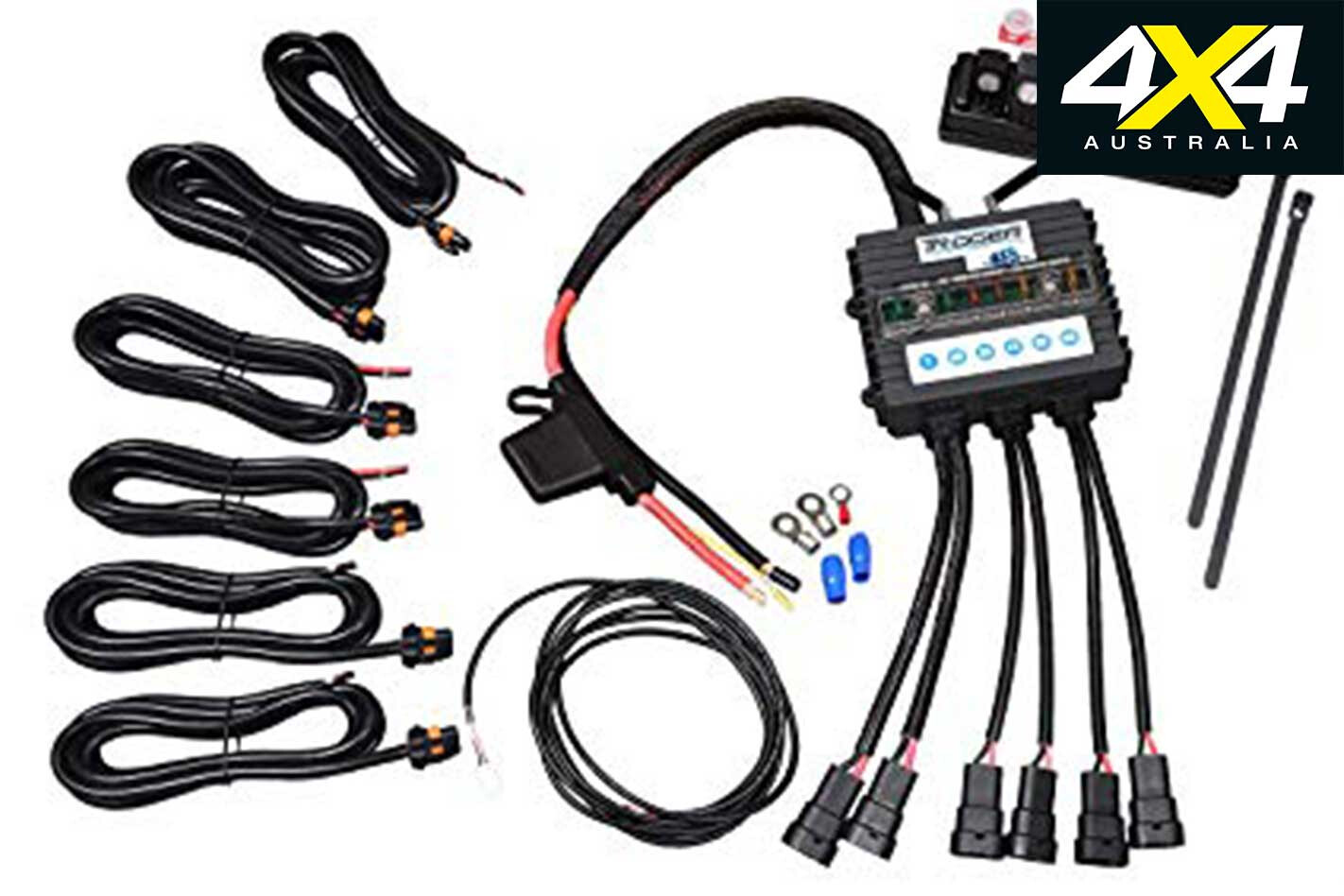
This wireless control system is ideal for those looking to throw on some extra lights or other 12-volt accessories to their vehicle. The Six Shooter’s control box features two 30amp, two 10amp and two five-amp circuits, and there’s a remote switch pad that can be used from either inside the cabin or outside your rig (so no wiring through the firewall is needed).
By eliminating the need to run wires through the firewall, installation is a lot quicker. The kit comes with complete wiring and can be either mounted in the engine bay itself or outside, thanks to its waterproof/fire-resistant case. All fuses are inbuilt while the 12 to 24V out has waterproof connectors as well. The RF remote has a replaceable battery and has a 12V hard-wired option as well.
Impressively, you can also control it via a tablet/smartphone app as well. The app itself offers a straightforward interface that allows you to easily switch the six channels off or on and you can even customise the name of each channel. Being able to remotely activate installed accessories on your vehicle has never been so easy! It comes with a three-year warranty.
Website: www.spinifexmanufacturing.com.au
Spinifex Manufacturing Power Panel
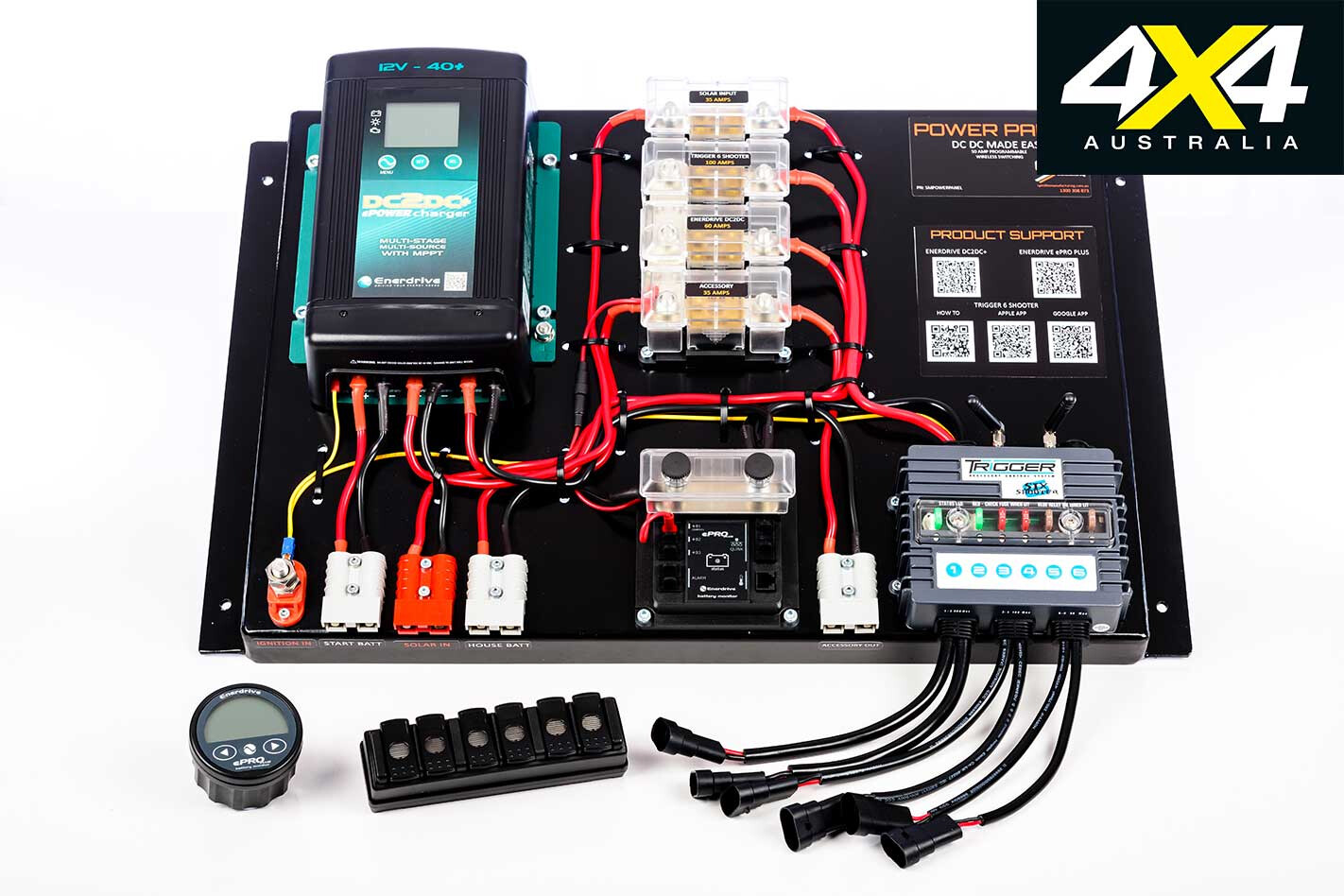
The Spinifex Manufacturing Power Panel is a plug-and-play design that allows you to control all your power needs from the one panel, such as the battery monitor, circuit protection, wireless switching, DC-DC charger (prewired for connection to a house battery, solar or a starter battery) and more.
All this is driven by the Enerdrive ePower 40 amp DC2DC+ battery charger, which offers variable (and programmable) DC charge outputs of up to 50 amps, with three stages of charging on offer. The Power Panel is solar-ready, thanks to its input solar regulator that can cope with input of up to 45V with up to 800W of solar panels.
As expected, the Power Panel is compatible with 12V or 24V systems and can be used with Gel, Flooded, AGM or Lithium batteries. All accessory circuits are controlled via the Trigger 6 shooter wireless switch unit (also app-controlled with your smartphone). Nice!
RRP: $2599 Website: www.spinifexmanufacturing.com.au
WE shine the spotlight on a set of Bushranger LED driving lights and a LedLenser MH11 head torch.
Bushranger Night Hawk VLI LED driving lights
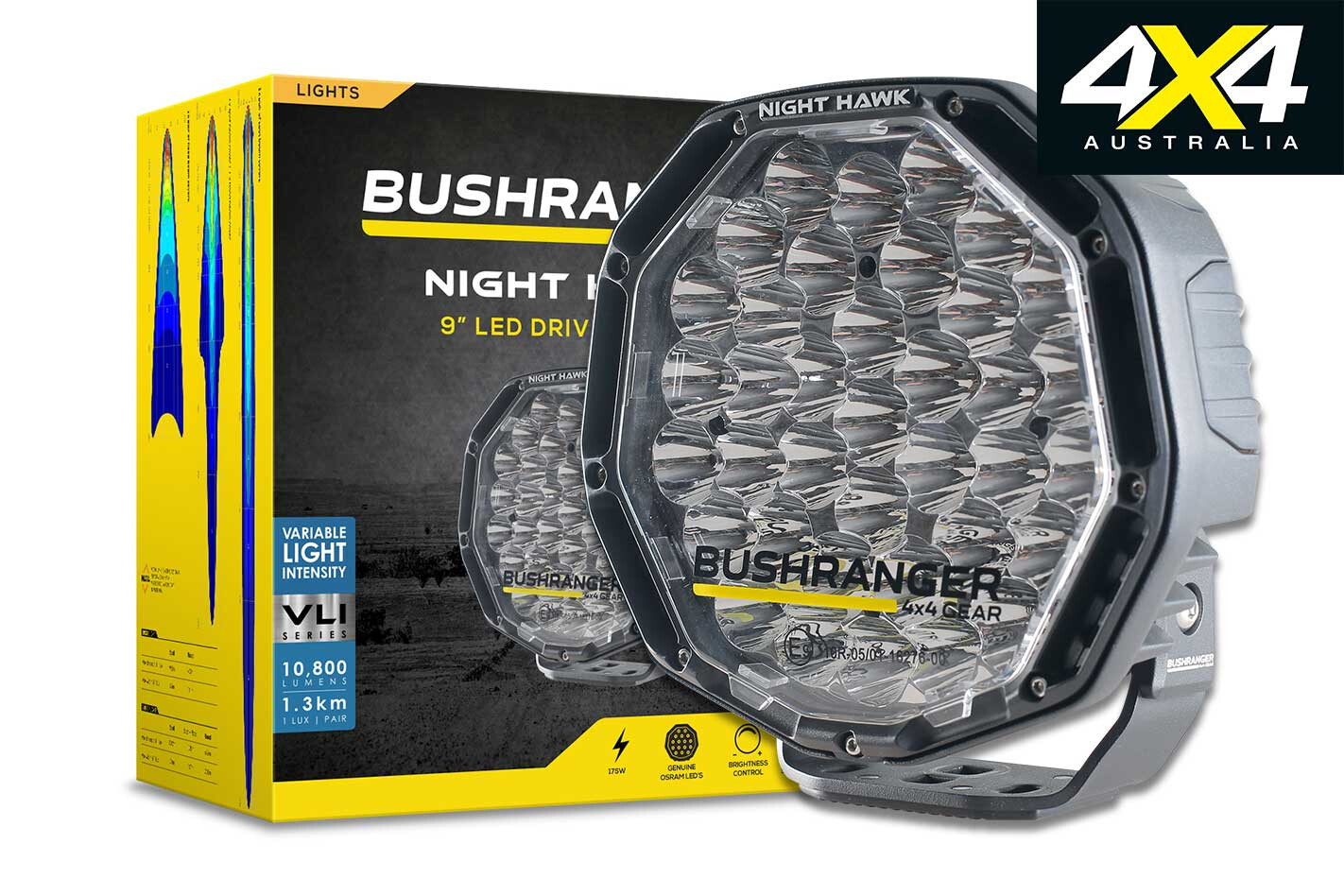
Developed in-house, the new Night Hawk 9-inch LED driving lights feature a unique design that incorporates cooling ducts for heat dissipation as well as a new relay-free wiring system (the first of its kind).
The light’s ATCS (Advanced Temperature Control System) uses the excellent cooling design to ensure the LEDs punch out maximum light while adjusting that output according to the environment.
The lens is hard-coated polycarbonate (highly scratch-resistant) and sits in a tough pressure die-cast aluminium housing, complete with 4mm steel bracket. Output is courtesy of 37 high-output OSRAM LEDs, punching out a collective 175W and 10,800 lumens per light. They come with clip-on/clip-off protective covers that offer the ability to swap quickly between beam patterns. Comes with a five-year warranty.
Website: www.bushranger.com.au
LedLenser MH11
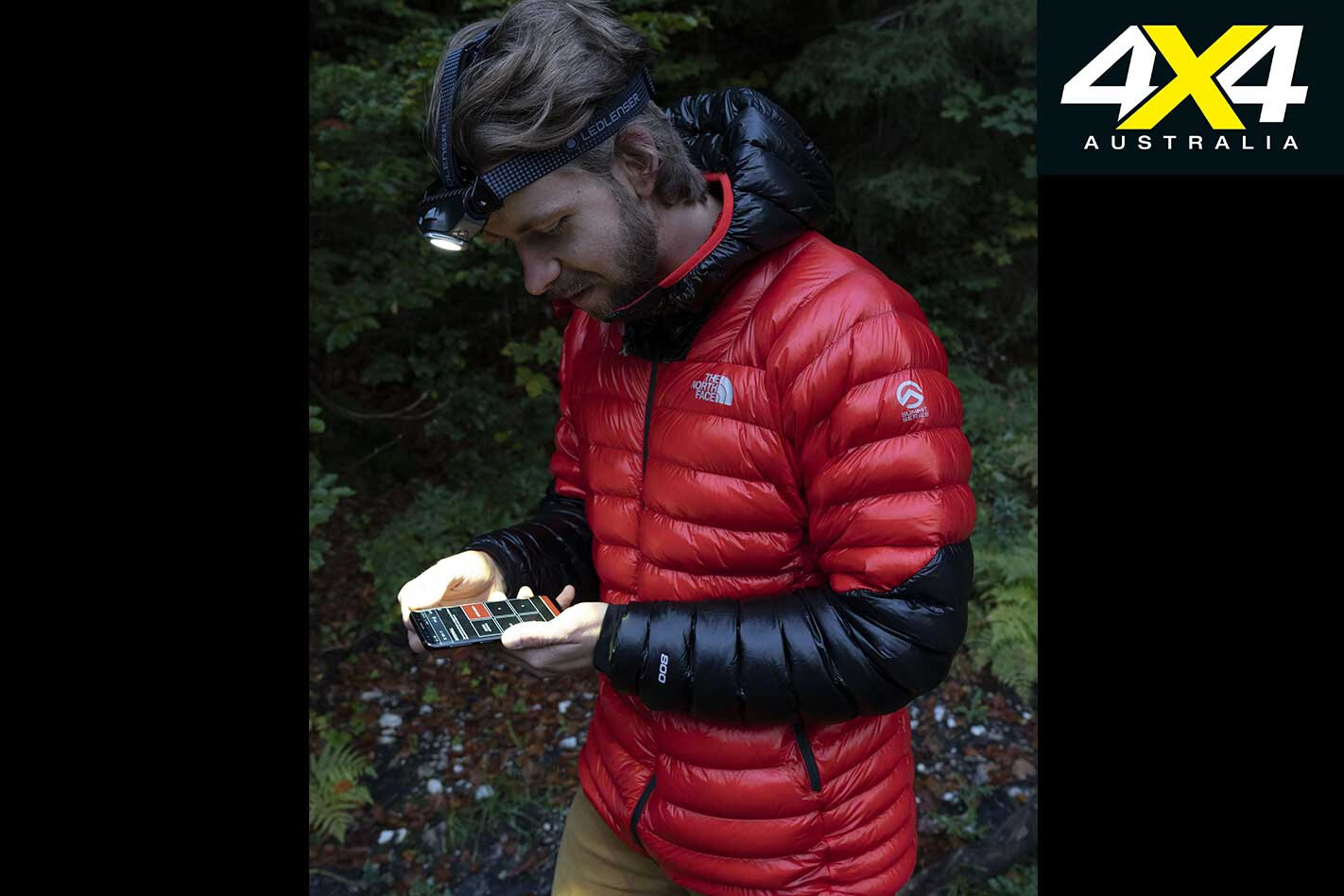
As with any camp accessory, head torch tech has advanced super-fast the past decade; from AA- or AAA-powered small lights that barely lit up the camp box or fridge-freezer interior (there’s nothing worse than pulling out an orange juice bottle when you were after that stubby), to LedLenser’s new MH11 and its massive light output.
This big bopper is powered by a rechargeable Lithium-ion battery and offers three light settings – Power (750 Lumens), Mid (300 Lumens), Low (10 Lumens) – and also a S.O.S. mode, and Boost, which sees this head-torch punch out 1000 Lumens for a limited timeframe. The high output comes courtesy of the MH11’s Xtreme LED (through a 40mm lens).
The light’s housing can also be removed from the head-strap for use as a hand torch if need be. Battery life varies according to mode used, with Power offering four hours, Mid going for eight and 100 hours available on the Low setting. Surprisingly, the MH11 is quite light, at 179g. You can even operate the MH11 via Bluetooth and the LedLenser connect app. Cool stuff.
RRP: $249.95 Website: www.ledlenser.com.au