
For the first three months of 2019 there has been a clear top three in the new 4×4 sales charts. Not only are the Toyota Hilux, Ford Ranger and Mitsubishi Triton utes the best-selling 4x4s in the country, they rank among the top-selling new vehicles overall, clearly showing the current appetite for this style of vehicle.
Due the current popularity of the 4×4 one-tonne ute we are seeing more frequent model updates from manufacturers. Not only are the utes getting new and improved features and safety tech to ensure they’re more appealing for everyday and family transport, but new models are coming around faster with shorter lifecycles, bringing new models every seven or so years.
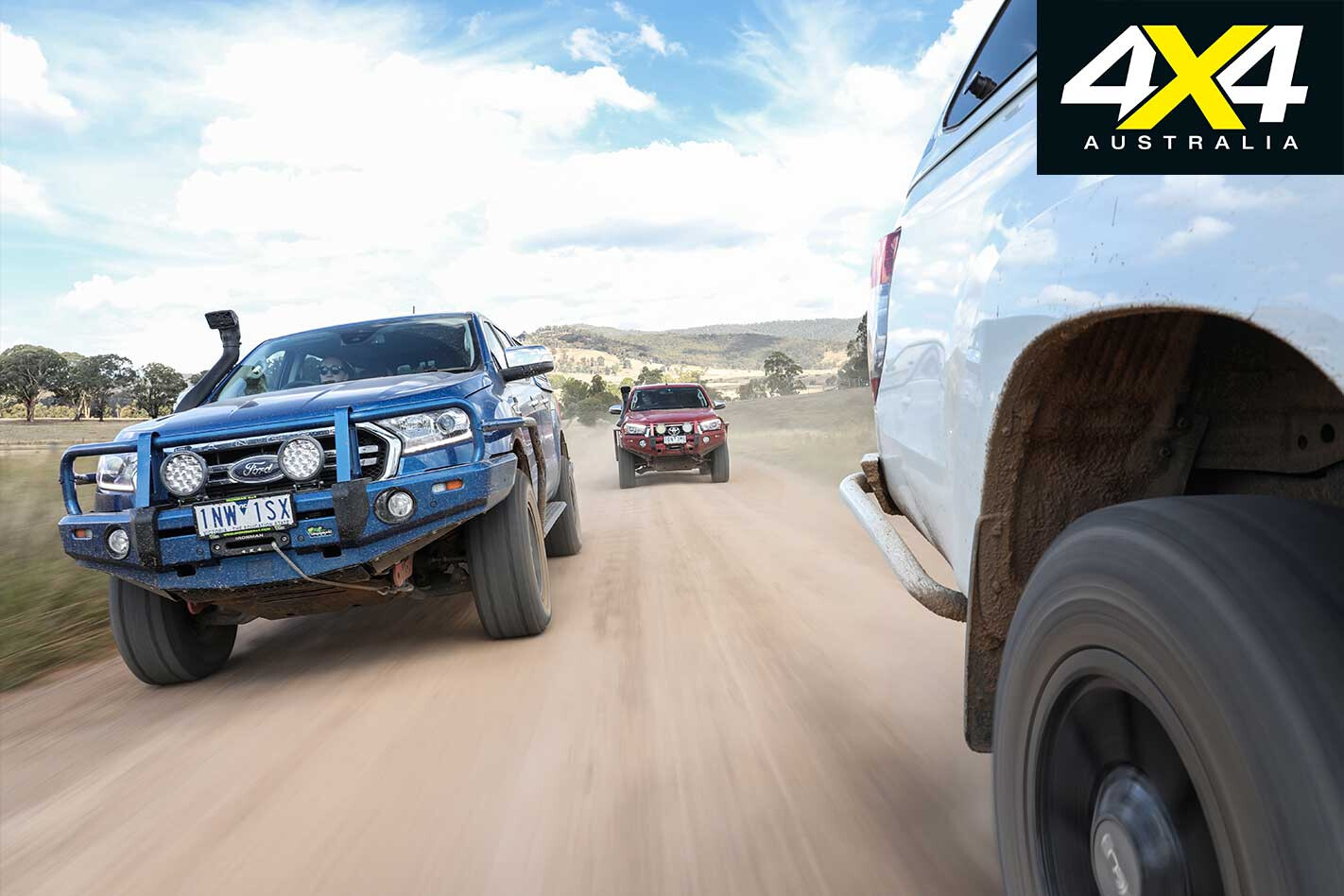
While the Hilux and Ranger mightn’t look so new they both received model upgrades in 2018, resulting in minor visual changes and differences under the skin and in the technology used. The Triton copped a more extensive update with pretty much all-new sheetmetal and safety tech, putting the Mitsubishi at the head of the field in that regard.
While Australia’s world-leading 4×4 aftermarket accessory manufacturers relish the popularity of these utes as it leads to more demand for their products, the ever-changing model line-ups create headaches for them, too. Even minor changes can require an all-new bullbar or other equipment that off-road enthusiasts want.
To take a look at the latest changes to the three top-selling 4x4s of 2019, the aftermarket off-road accessories that people fit to them and the challenges the aftermarket faces, we lined up a 2019 Toyota Hilux, a late-2018 Ford Ranger and new Mitsubishi MR Triton to see how they go off-road.
All the vehicles came from Ironman 4×4 and were fitted with the Ironman 4×4 accessories typical of the company’s average customer. We also asked Ironman’s Adam Craze to come along and tell us about the processes of getting the product right for the latest vehicles.
“Ironman 4×4 buys at least one of every new or facelifted vehicle to enable us to start the product development process,” Adam told us. “Customers want product the day the vehicles are released, sometimes this is the same time that we would have access to purchase a vehicle, so there is a fair amount of pressure around developing product for new or updated vehicles.
“Once we have the vehicle we start a testing schedule to create a baseline of the vehicle. This will include dyno testing the suspension, testing the new or additional safety and driver assist function.
“We need to ensure that we do not affect the operation of the vehicles’ safety or driver assist functions. This may include parking sensors, active park assist, adaptive cruise control and AEB. With each new vehicle, new features are added and we need to ensure that we factor these into the design of the products we manufacture and sell.”
2019 Toyota Hilux
A new front-end for Hilux in August 2018 saw Ironman base its bullbar design around the prominent grille.
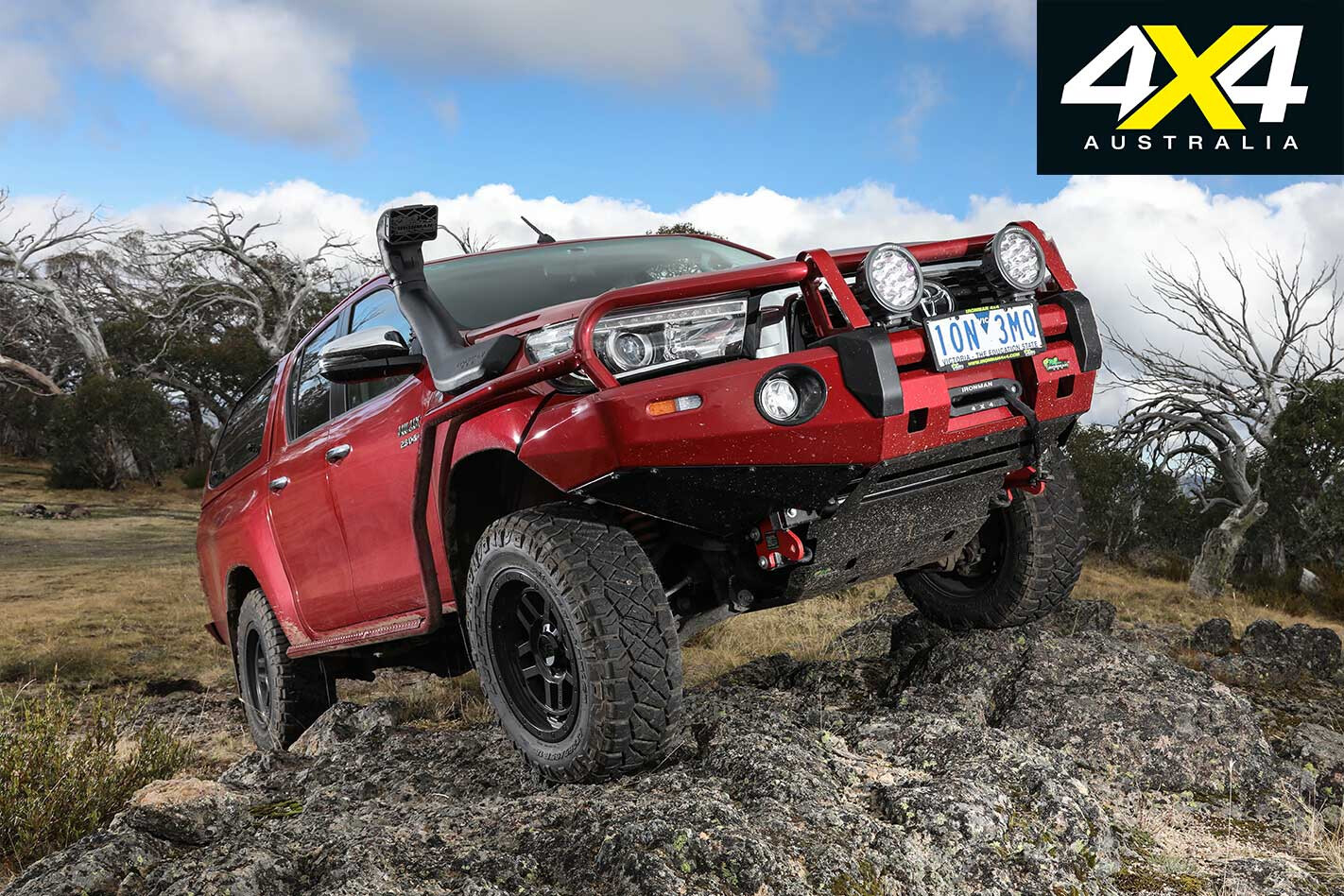
The always popular Hilux was the top-selling 4×4 over January to March 2019, with 9786 units hitting the road in Australia. Couple that with sales of 4×2 Hiluxes and it is one of the best-selling new cars overall. So it comes as no surprise that when a new or updated Hilux arrives, the aftermarket swings into overdrive to ensure they have the equipment buyers want when they get their new truck.
Toyota changed the front-end design of the Hilux in August 2018, implementing a tougher-looking ‘face’ by way of a bolder grille and new front bumper. This came on the back of similar treatment applied to the new Rugged, Rugged-X and Rogue models introduced earlier in the year. While a new grille and bumper might seem like minor changes to you and me, for the accessories industry it meant all-new bullbars and bumpers to suit.
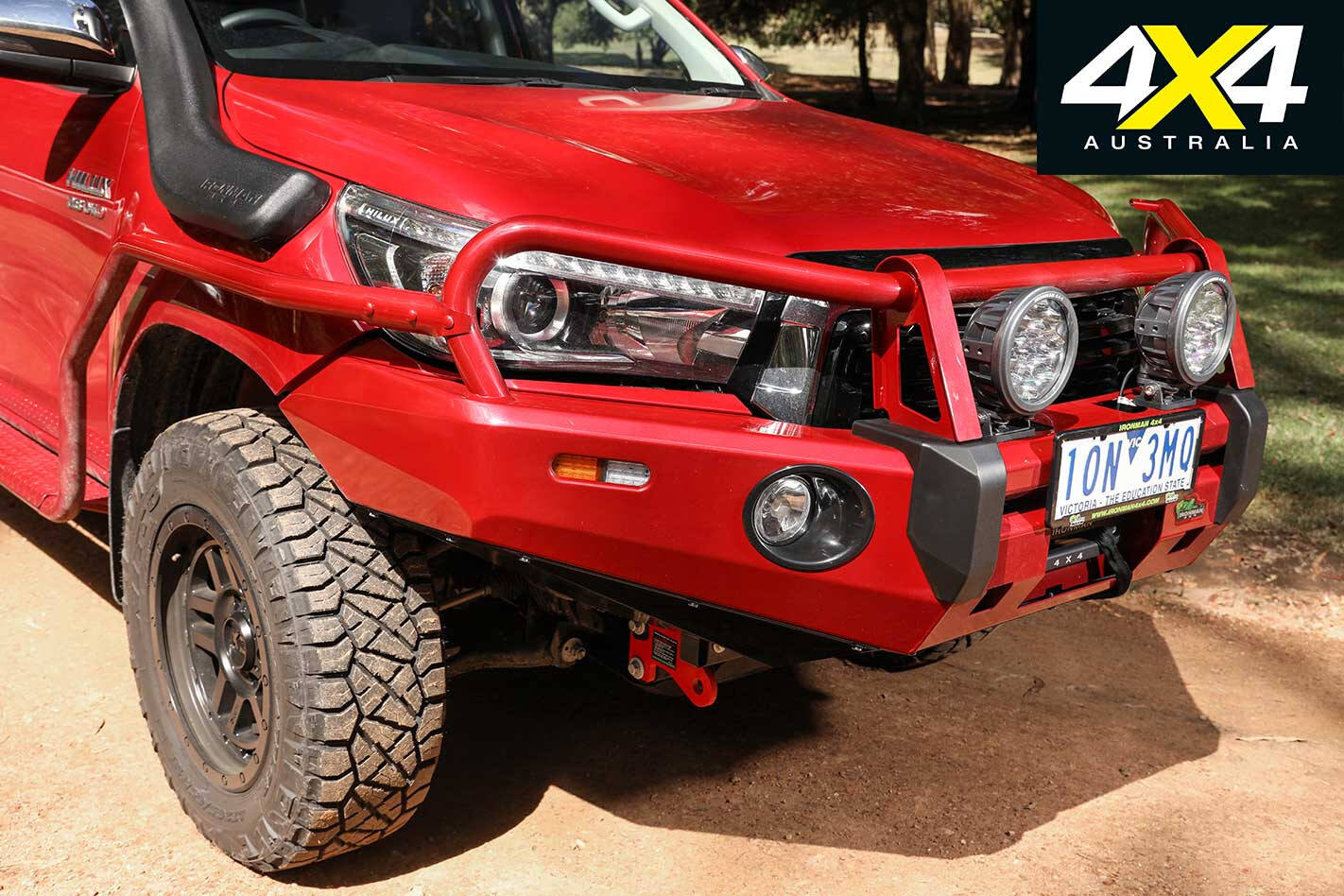
“You can actually fit the old grille to the new car and you could, if you wanted to, fit the previous bar (to a new Hilux),” Adam Craze said. “So the new design was around the grille as it comes out further.” Something the updated Hilux didn’t score, leaving it behind the latest crop of utes, is tech such as AEB. We doubt Toyota will wait too long before bringing its best-selling ute in line with the market-leaders, so will this require further updates to items like bullbars? Adam Craze thinks so.
“Yes, I think the Hilux will soon be changed to incorporate some of the more standard safety features that are found on other models. The current Hilux doesn’t even have parking sensors, so I am sure a decent update is being worked on by Toyota.
“There is normally no reason to try and second-guess the vehicle manufacturer and try and pre-empt what they may release. We need to wait until we see the vehicle and then start the work from there. You could never guess what sensors or AEB systems or adaptive cruise radar will be used, let alone the shape and design of the front of the vehicle.”
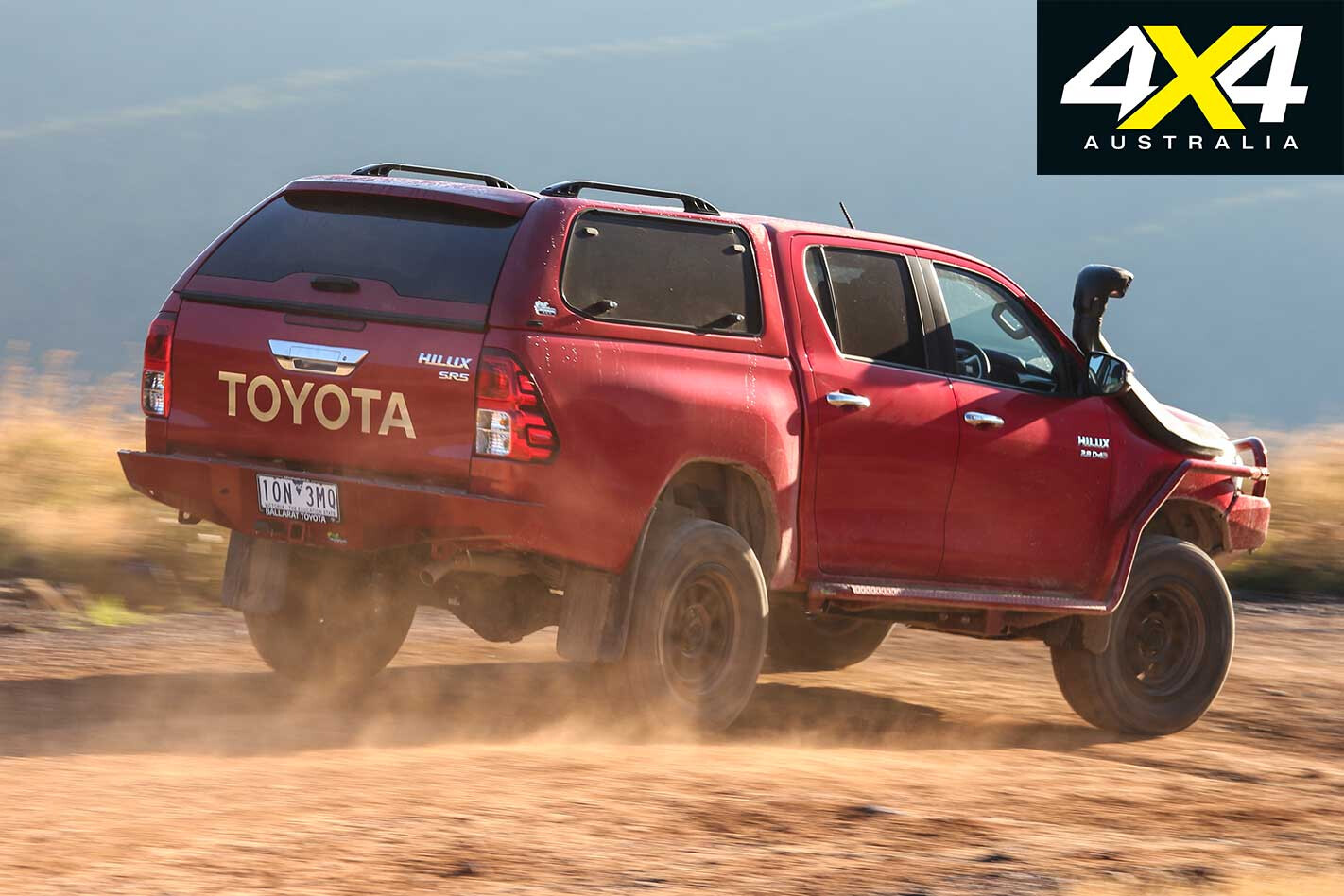
Ironman 4×4 accessories fitted: – Commercial Deluxe Bullbar – Driving Lights: Spot (Drivers Side), Combo (Passenger Side) – Rated Recovery Points – 9500lb Monster Winch (Synthetic Rope) – Premium Underbody Protection – Rear Protection Step Tow Bar – Rear Protection Tow Bar Plates – Tow Bar Wiring Loom – Side Steps and Rails – Pinnacle Canopy – Foam Cell Pro Suspension Upgrade – Airforce Snorkel – Comfort Canvas Seat Covers
2019 Ford Ranger
A new engine and added active safety tech will see a variety of changes to Ironman’s Ranger accessories.
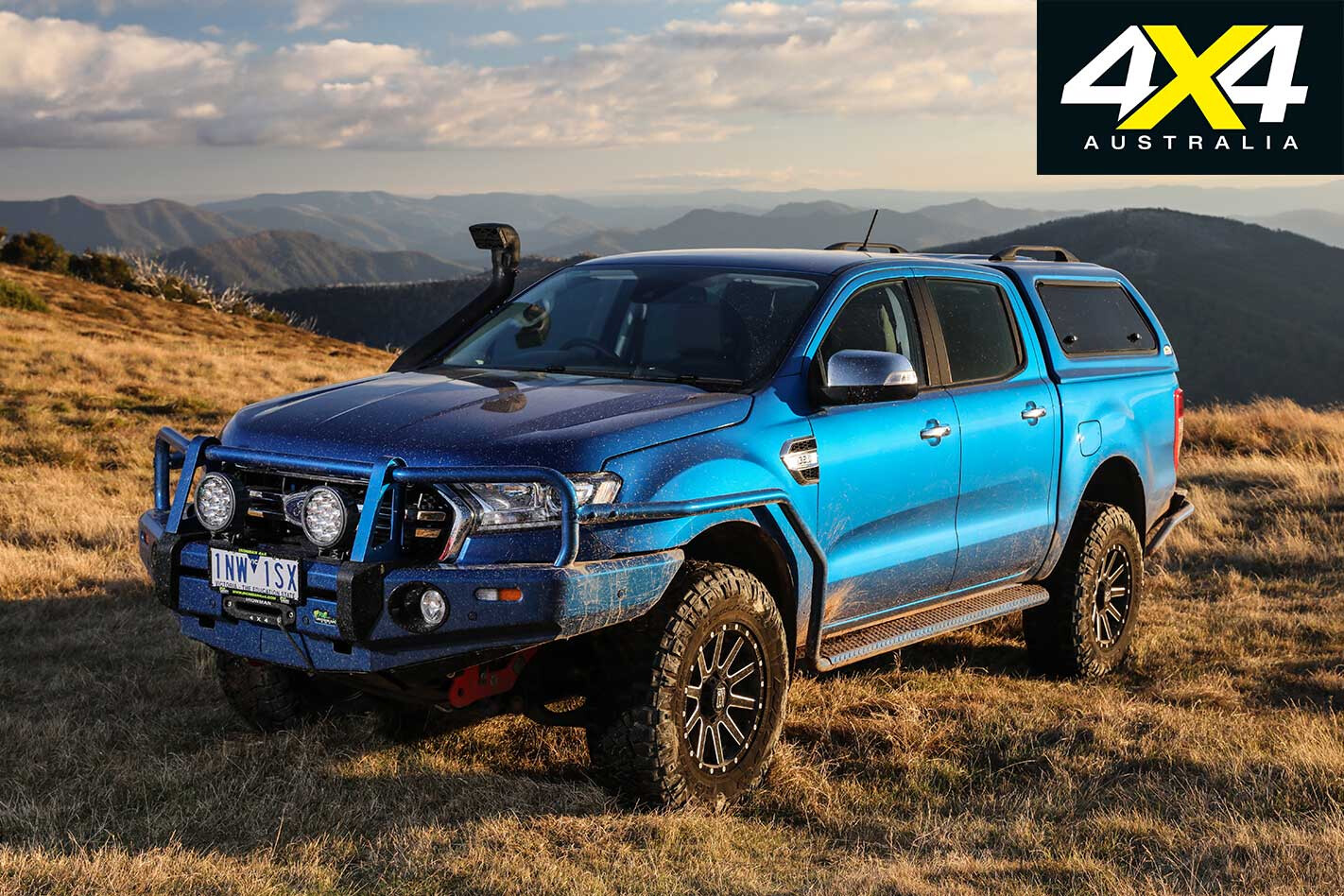
While the Toyota Hilux and Ford Ranger battled a neck-and-neck sales race throughout 2018, with the Hilux ultimately taking the win in the end, the margin is clearer over the first quarter on 2019 with the Ford’s 8521 sales to March notably behind and reflecting an overall downturn.
Ford updated the Ranger in May 2018 with the introduction of the new 2.0-litre engine and 10-speed auto being the most significant change, although the 3.2 and six-speed transmission remain available.
However, the driveline changes also came with improved safety technology including the availability of autonomous emergency braking (AEB) on many Ranger models. From June 2019, all Ranger variants will have the full suite of safety tech including AEB.
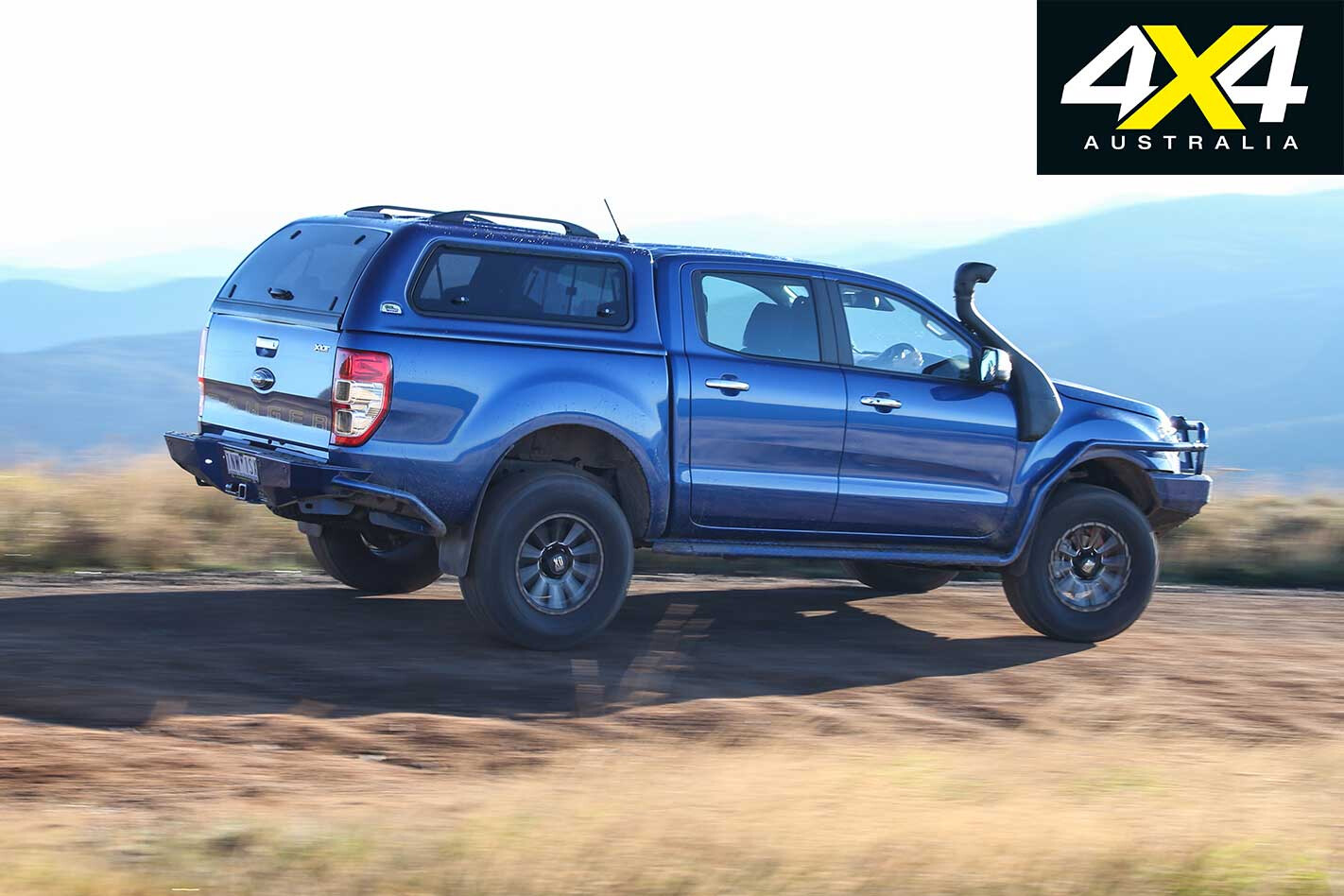
Only Ranger nerds will pick the different grille that marked the extent of exterior changes but the locations of the cameras used to operate the new technology meant changes to bullbars and other frontal accessories over the pre update models.
“Looks can be deceiving,” said Adam Craze. “For the new Ford Ranger, it is one of those updates where the vehicle manufacturer also updated parts of the suspension while the new 2.0-litre engine affects the airbox and snorkel on them. So there were a few changes that needed to be updated.
“The front bumper area where the tech pack components are located, has changed location and design from the previous model. Also in this new model new safety functions and driver assist functions were added. We had to design around the functions of these new features. We couldn’t add a bullbar that would not work with the active self-parking for instance.”
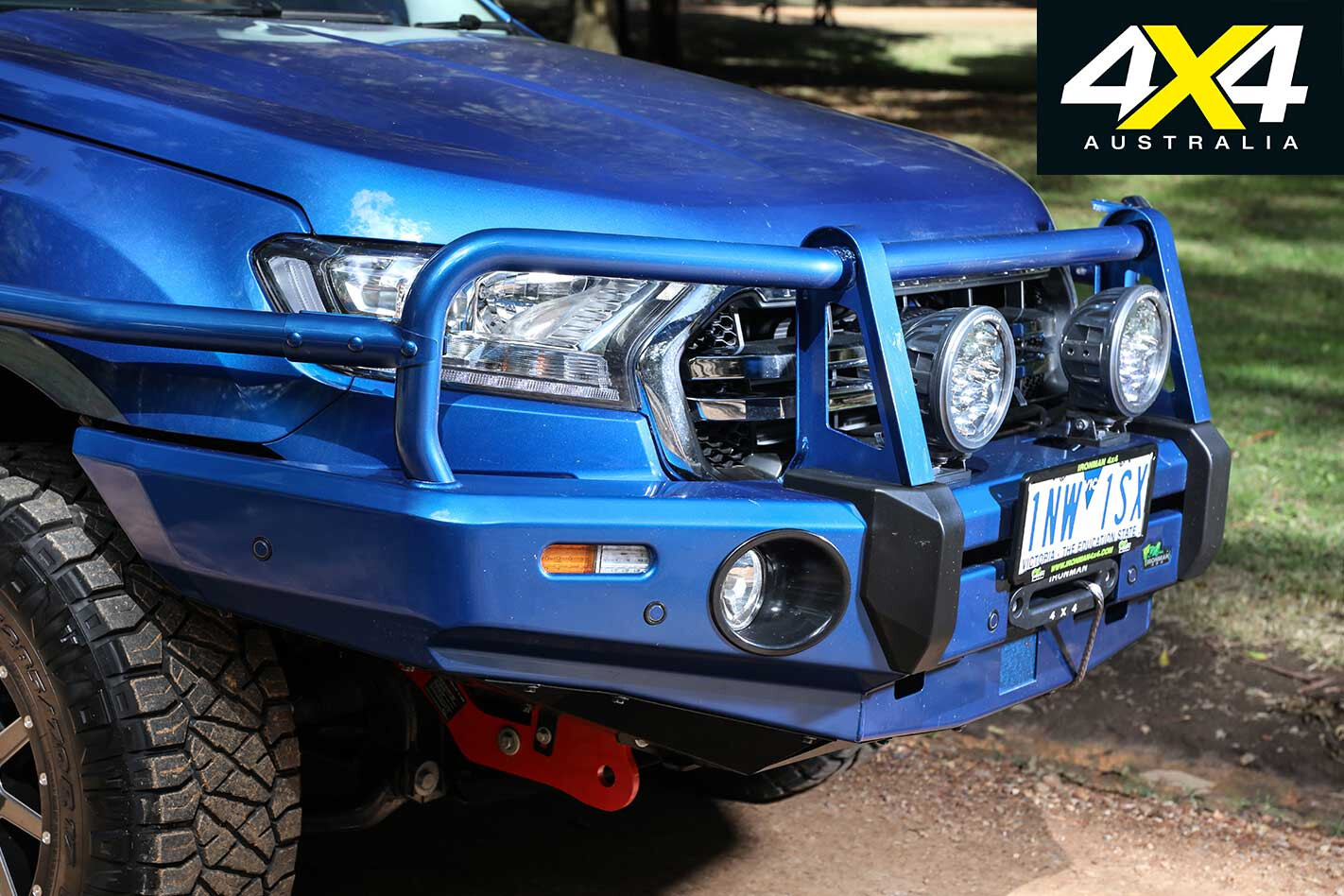
Ironman 4×4 accessories fitted: – Commercial Deluxe Bullbar – Driving Lights: Spot (Driver’s Side), Combo (Passenger Side) – Rated Recovery Points – 9500lb Monster Winch (Synthetic Rope) – Premium Underbody Protection – Rear Protection Step Tow Bar – Rear Protection Tow Bar Plates – Tow Bar Wiring Loom – Side Steps and Rails – Long Range Fuel Tank – Thermo-Plas Canopy – Foam Cell Pro Suspension Upgrade – Airforce Snorkel – Comfort Canvas Seat Covers
2019 Mitsubishi Triton
Triton’s new body and safety tech created a design challenge for the bullbar, rear protection and snorkel.
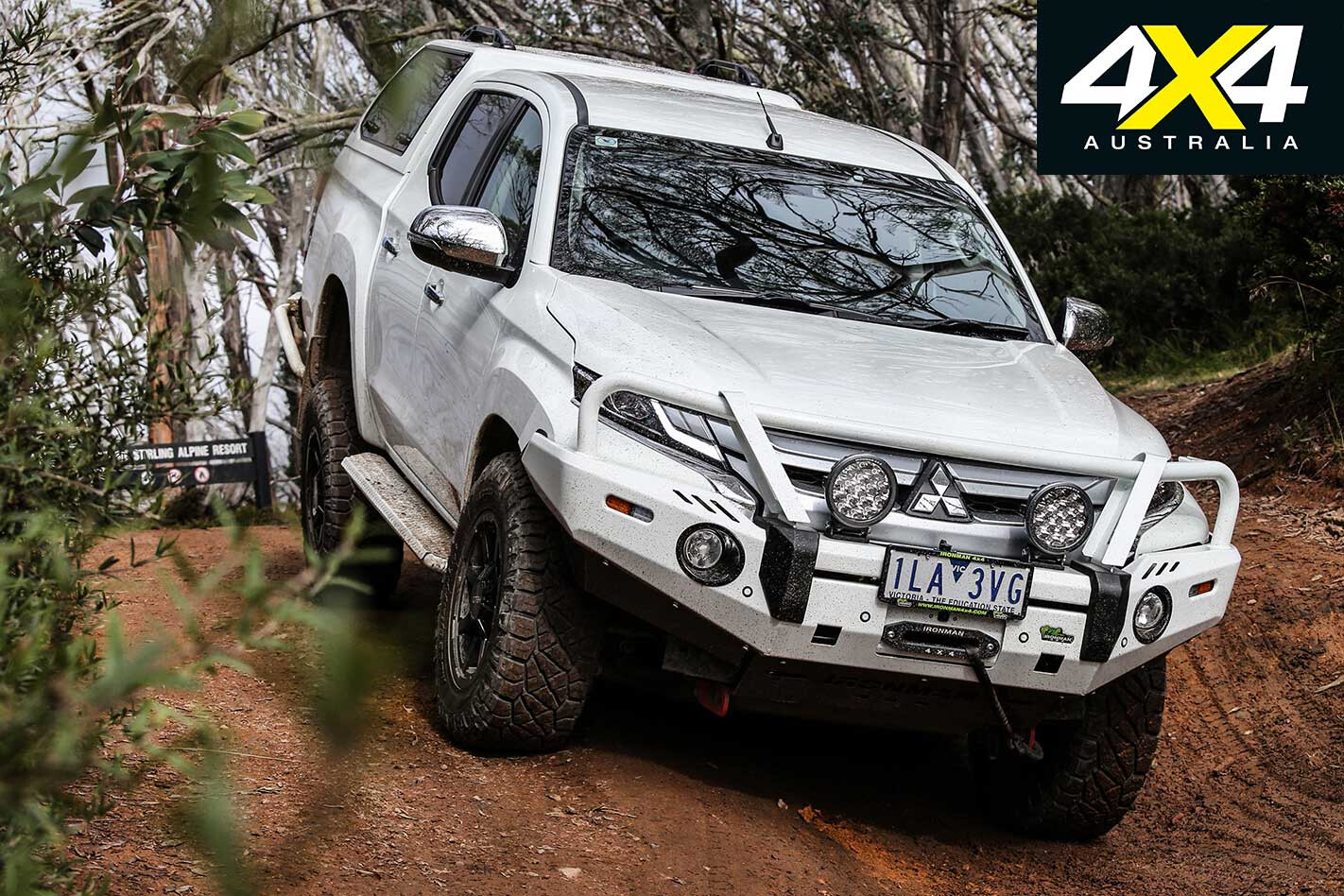
While the Ford and Toyota trucks are clearly ahead of the 4×4 ute pack in terms of sales, the Mitsubishi Triton rolls on in a solid third place. It’s a position gained mainly on value-for-money sales and the Triton is often discounted, but a fresh, new model for 2019 will see those discounts discontinued – for a while at least.
The MR Triton went on sale in December 2018 and sales of the new model combined with run-out deals on the previous -gen saw it hot on the heels of Ranger sales in February. They have slowed in March, but year-to-date the Triton sits at 6733 vehicles sold.
The MR Triton represents the biggest change in the 1-tonne ute segment with its all-new sheet metal and class-leading safety tech applied to a pretty much carried over driveline and chassis. With its bold and polarising front end design we always knew the Triton would challenge bullbar designers and with extra radar sensors for the rear-cross traffic warning system (the only 4×4 ute with this tech) even the rear bumper poses new hurdles.
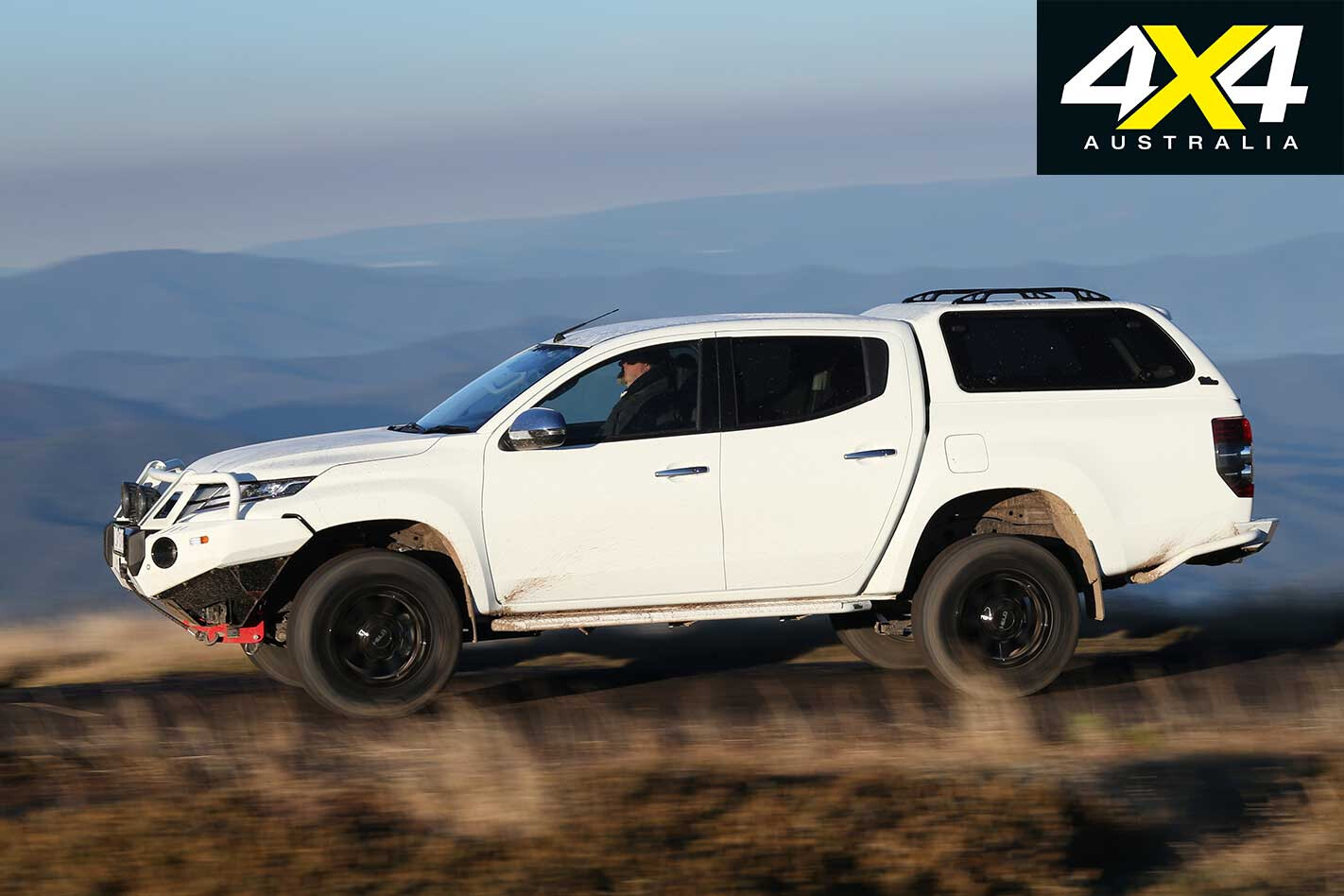
“The front bumper of the Triton has a unique design which incorporates a rather large indicator and park light and large flat wheel arches,” says Adam. “Along with the decreased size and height of the headlights and inclusion of new safety functions like forward collision mitigation system with pedestrian detection and emergency brake assist, it made for an interesting challenge.
“The size of the lights in the OE bumper was a challenge as we would normally have more to play with, but the OE lights in the bumper ruled out a lot of real estate. On the new model, we felt that the distance from the chassis up to the headlights was too large to enable a well-designed, stylish and functional full replacement bullbar.
“The rear protection on the GLS models has a large sensor for the rear-cross traffic alert,” he adds. “This needed our bar to be a total redesign to ensure this function was incorporated. The GLX version was a little simpler with a small tweak in dimensions from the previous MQ model. The MR’s new ’guard requires a new snorkel design too, something still in the design process.”
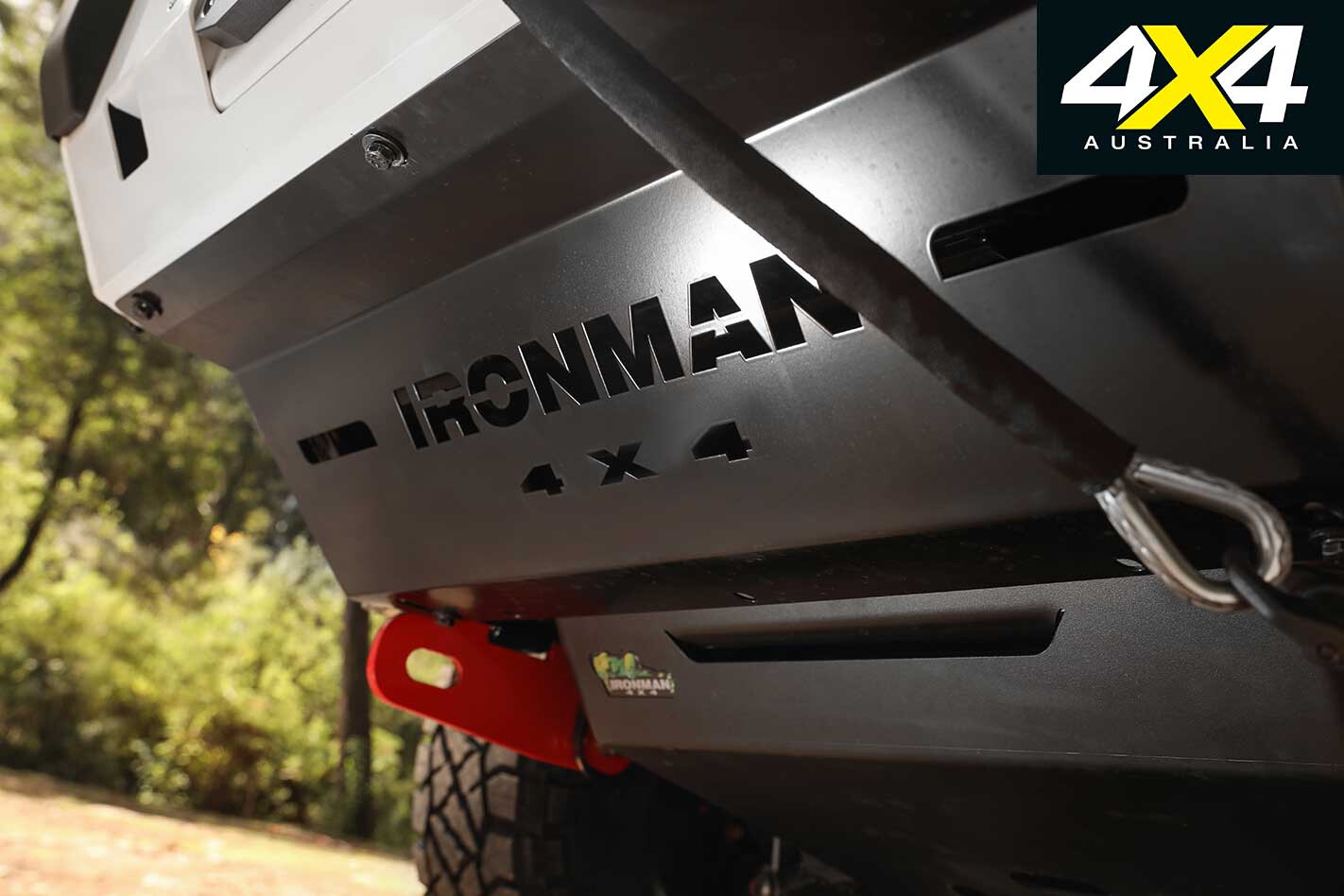
Ironman 4×4 accessories fitted: – Commercial Deluxe Bullbar – Driving Lights: Spot (Driver’s Side), Combo (Passenger Side) – Rated Recovery Points – 9500lb Monster Winch (Synthetic Rope) – Premium Underbody Protection – Rear Protection Step Tow Bar – Tow Bar Wiring Loom – Side Steps and Rails – Pinnacle Canopy – Foam Cell Suspension Upgrade – Comfort Canvas Seat Covers
Ironman 4×4 Upgrades
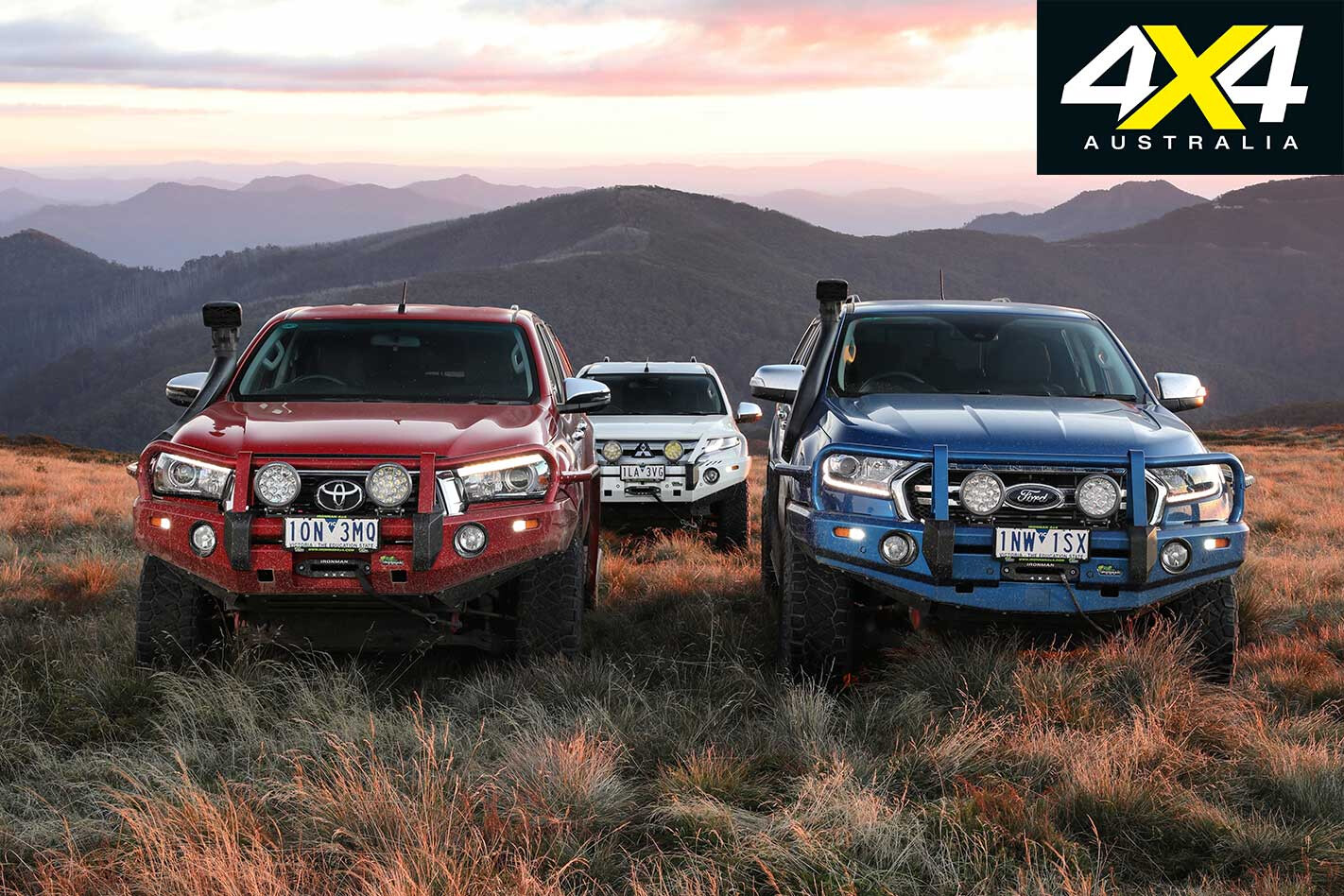
THE IRONMAN 4X4 kit fitted to these three utes represents the sort of gear most recreational 4WDers will fit to their new utes. There are all-terrain tyres for improved traction, upgraded suspension for better load-carrying and added ground clearance, front, rear and side barwork for vehicle protection, underbody protection, intake snorkels, rated recovery points, 12-volt winches, and stylish canopies to keep your gear safe in the trays. The Ranger also has an auxillary fuel tank to increase its touring range for extended treks.
The upgrades represent between $13,000 and $16,200 of fitted accessories on these three vehicles, taking into account that some of them have more kit than others. The alloy wheels and Nitto tyres aren’t Ironman products but come from Wheel Pros and perfectly accentuate the quality look of the additions.
Not surprisingly, picking a favourite from driving these three kitted-up 4×4 utes plays out much the same as it does when they’re in standard trim. The 3.2-litre Ranger is the favourite by far. It has the best engine and transmission combo, with the large-by-comparison five-cylinder engine loping along and never getting fazed by anything and the six-speed auto doing what’s needed without fuss.
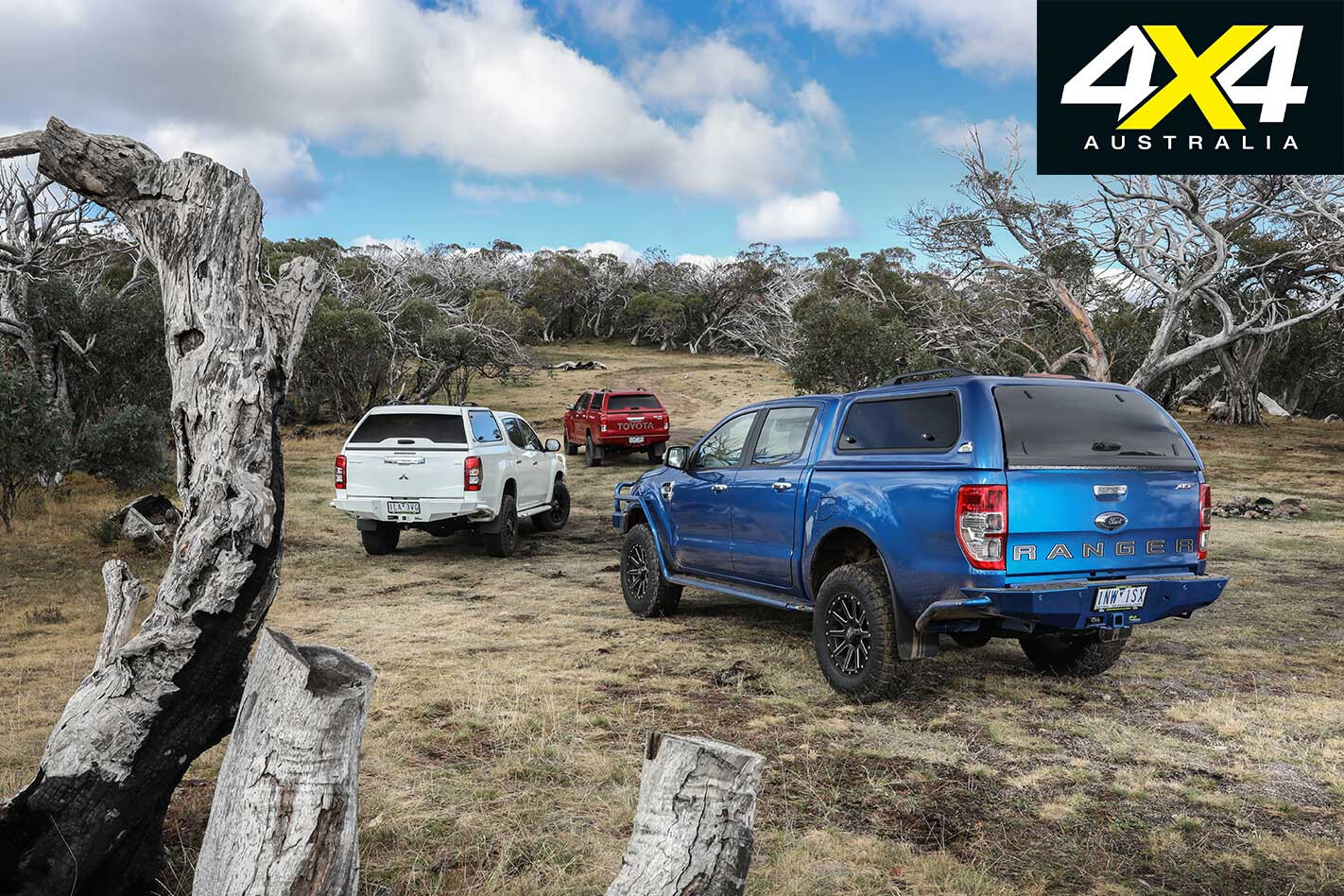
The Ranger’s cabin feels big and is user friendly and comfortable for long days in the saddle, but those HVAC controls are dark and unreadable and we complain about them in every Ranger/Everest test. The rear end has sufficient articulation to drive the Ranger out of deep ruts, and the traction control is well calibrated and even remains operative if you employ the factory locking rear differential.
The class-leading rear-axle articulation of the Hilux combines with its excellent electronic traction control calibration to make it a formidable off-road weapon. The lack of space in the wheel arches prevent anything but the smallest increase in tyre size without having to hack out the inner fender wells, and we’re still not big fans of the 2.8-litre diesel engine. It’s harsh and buzzy on the highways and doesn’t deliver what you want when you put the foot down. Disappointing aspects in an otherwise polished package.
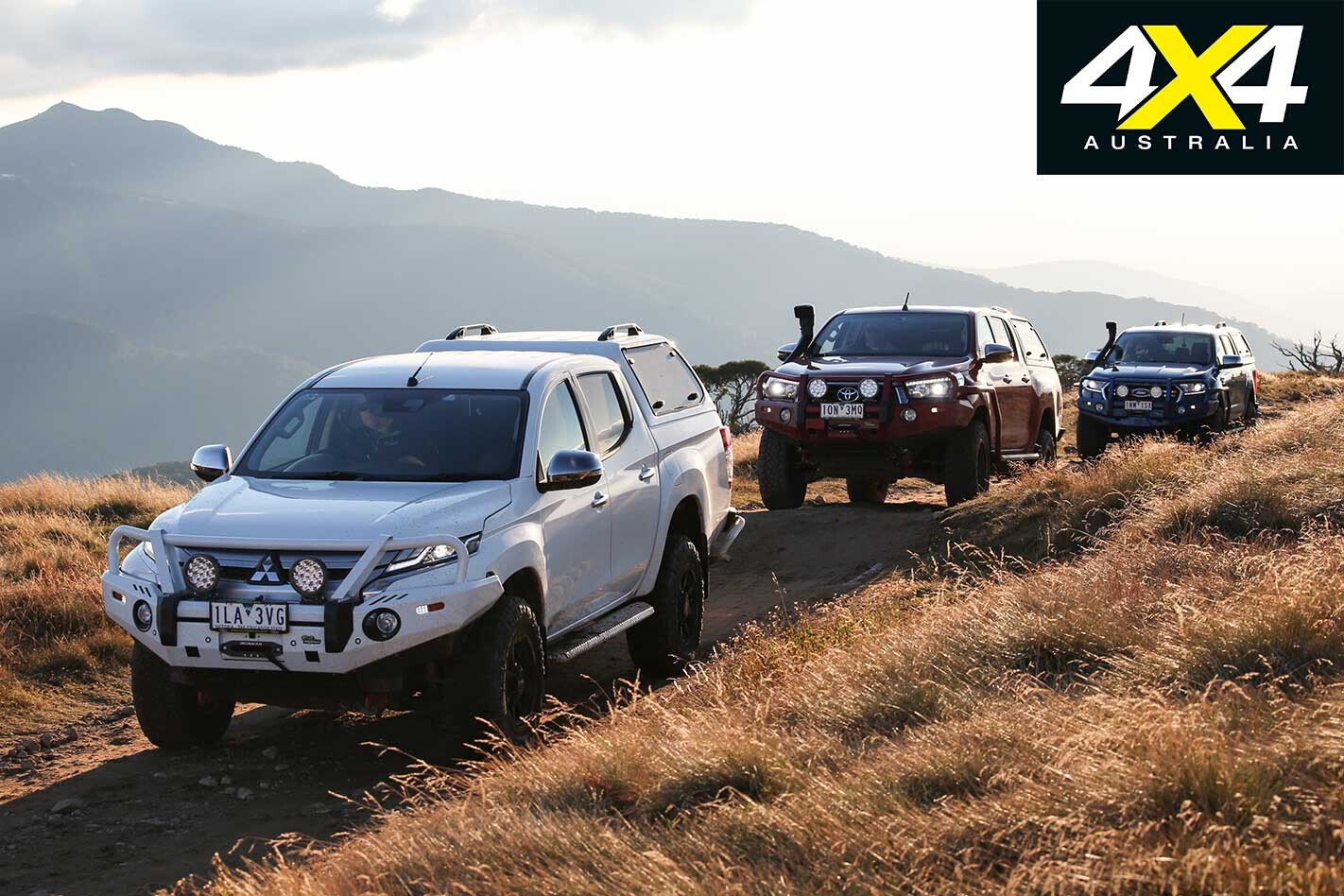
The MR model lifts the Triton range. The styling is improved over the last model and made better again with the addition of a well-designed bullbar. The step up to a six-speed auto over the previous five-speeder brings the transmission into this decade at a time when other companies are running eight, nine and 10-speed autos, but we reckon six is enough. Mitsubishi’s turbo diesel is the smallest capacity of this trio and delivers the least Newton metres, but the Triton is also smaller and lighter than the others so it gets along alright.
Each of these utes is a great basis for building an outback tourer, but it takes the type of accessories fitted to them here to make them competent, dependable and capable enough to take you on the ultimate adventure.
IT WAS with us for only a brief time, but rather than fade into the 4WD world’s collective memory the Toyota FJ Cruiser has acquired a second, far more exciting lease on life, with a number of modified examples being spotted on tracks around Australia.
It’s not hard to see why, either, considering the mechanical DNA is Toyota’s all-conquering Prado, with that chassis shunted shorter and a decidedly retro-styled body stacked on top of it.
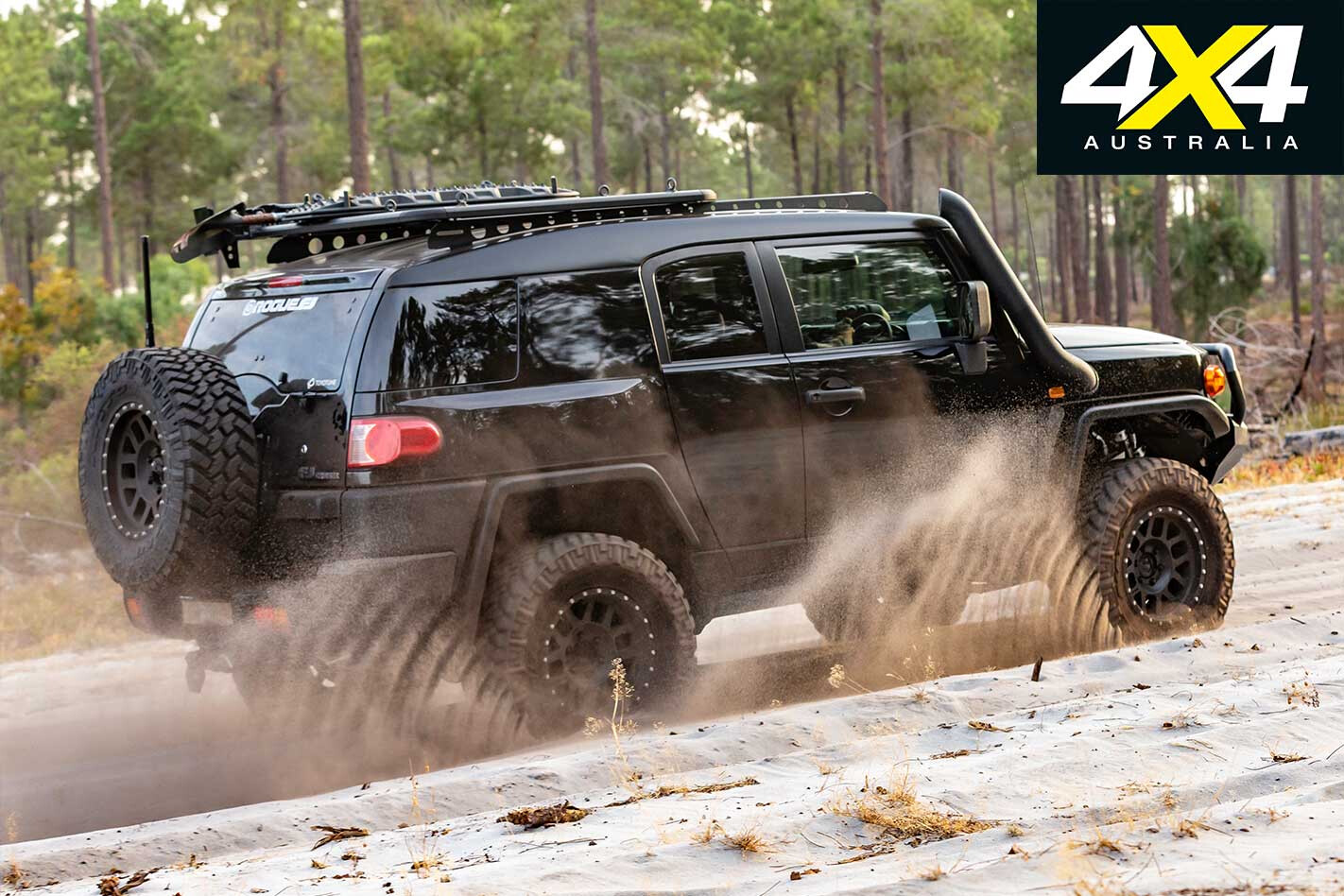
Add in that sweet 4.0-litre six-cylinder petrol engine, plenty of fuel storage to feed its thirst (on the later models), short front/rear overhangs and that seriously cool styling (suicide doors, anyone?) and, again, the explanation behind so many of them being modified and sent out to tackle Australia’s toughest tracks is easy. Case in point: this schmick but stealthy sand bruiser from WA-based Adriano Piviali.
TO ASK THE REASONS WHY
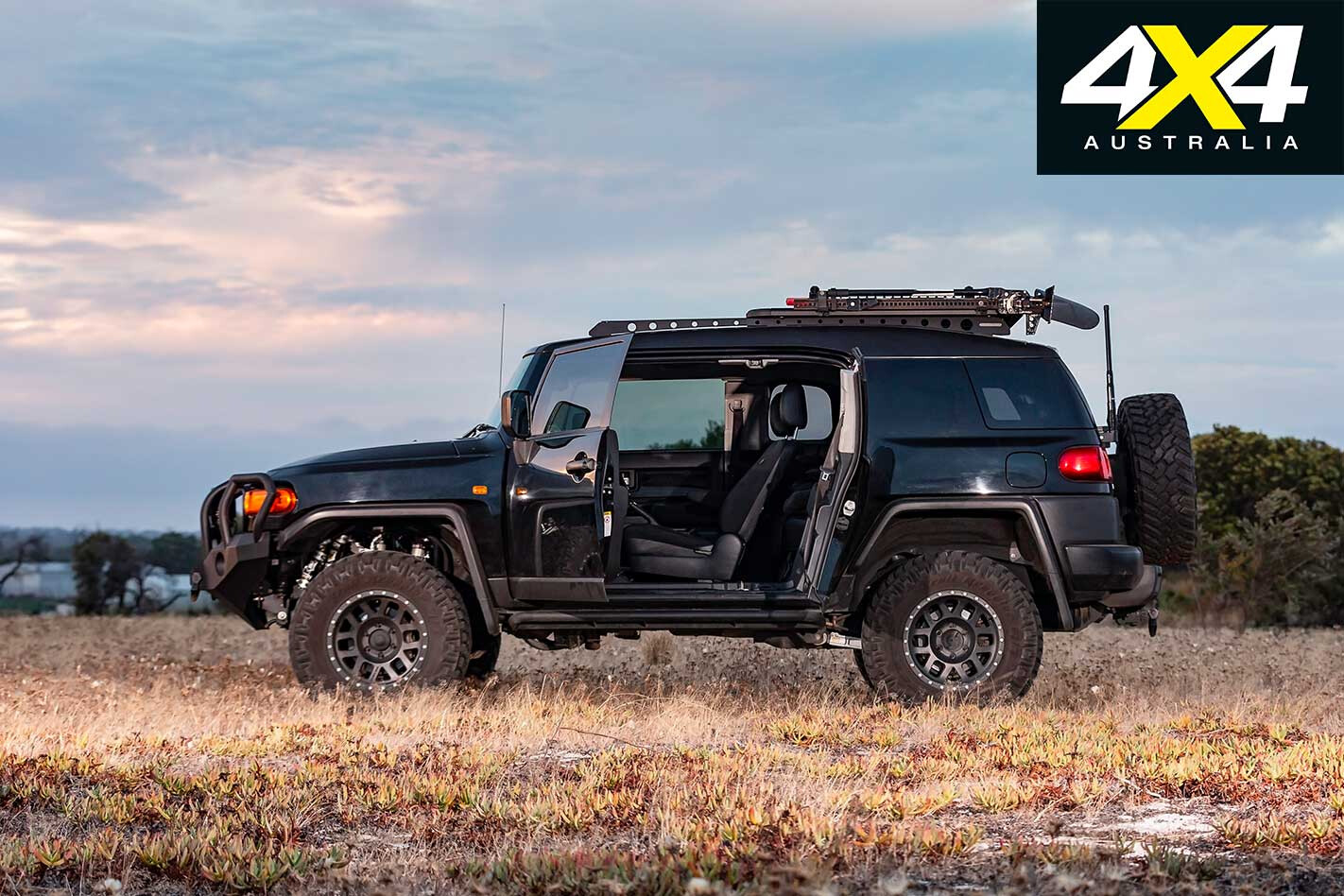
THE FJ Cruiser may not be every off-road tourer’s choice when it comes to a vehicle to modify for bush duties, but that’s probably because they haven’t had a close look at just what this rig offers. Adriano did just that, and knew it fit in with his plans, as he explains.
“I liked the unique look and the large selection of aftermarket parts available,” he says. “It was great value for money. Not many 4x4s come so well-equipped from the factory (rear diff locker, crawl control, auxiliary fuel tank), particularly below $50K new.”
The FJ’s relatively compact size was also appealing to Adriano, who wasn’t after anything as large as a Land Cruiser 200 Series but still wanted to be able to throw himself and his family – plus the dog and all their camping gear – into the vehicle for weekends away without feeling too compromised for space.
Adriano has also been very smart with how he maximises space in the FJ; by not fitting drawers or even a fridge/freezer (there is just a KAON cargo barrier inside) he can optimise the cargo area for … cargo.
As the FJ is also his daily driver for work (he’s an architect), having that space free for work equipment is paramount. This doesn’t mean the FJ isn’t used as it was intended, as day trips and overnight camping adventures occur every couple of weeks. For anything longer, he already has a solution.
“It’s my daily driver, and I often need to use the limited cargo space. This is why I haven’t installed drawers or a fridge, etc.” he explains. “The ideal setup for me and my family to go on long camping holidays would be to tow a camper trailer with everything I need.”
This is exactly what Adriano did on a two-week journey up to north-west WA.
WALK QUIETLY, BUT…
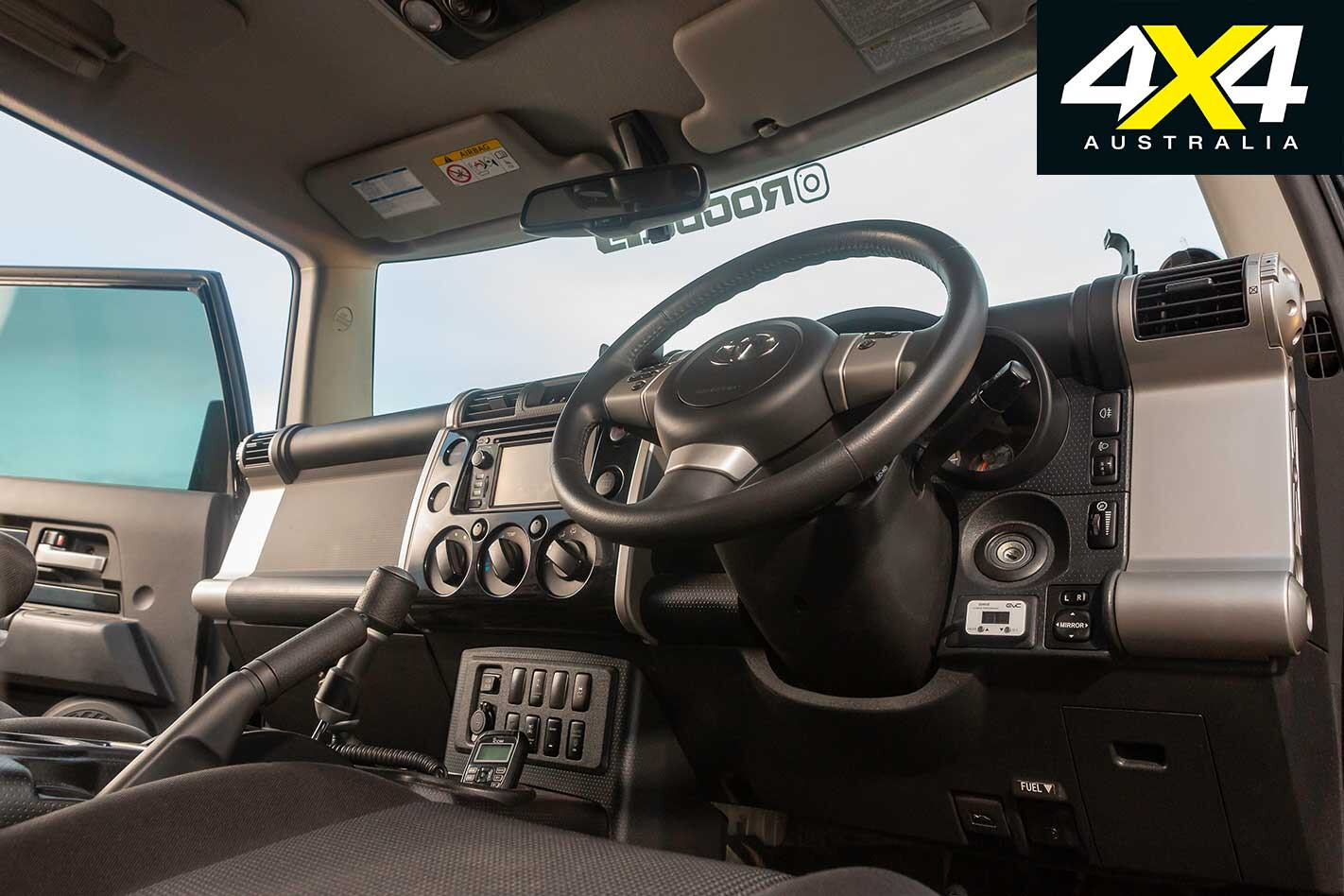
THE interior of the FJ is pretty much stock, with only that cargo barrier, an Icom UHF radio, some additional gauges on top of the dash, and an iDRIVE unit down on the fascia, close at hand for the driver.
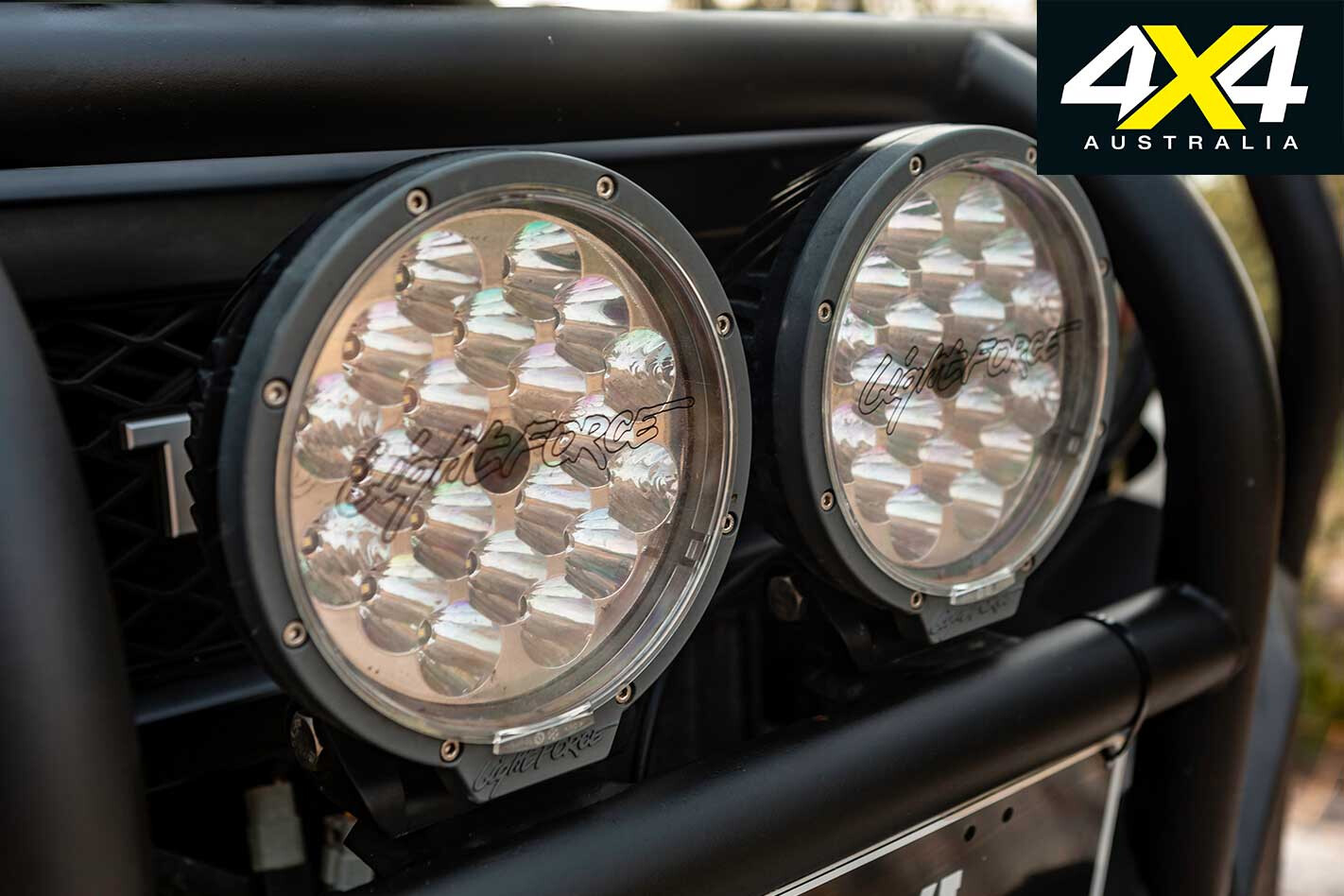
From the outside the FJ looks like a nice, subtly modified tourer and includes all the essential external mods to fulfil that role. Up front is a Stealth off-road bullbar, with Lightforce spotties ensuring plenty of visibility when Adriano and family are returning from their regular sojourns.
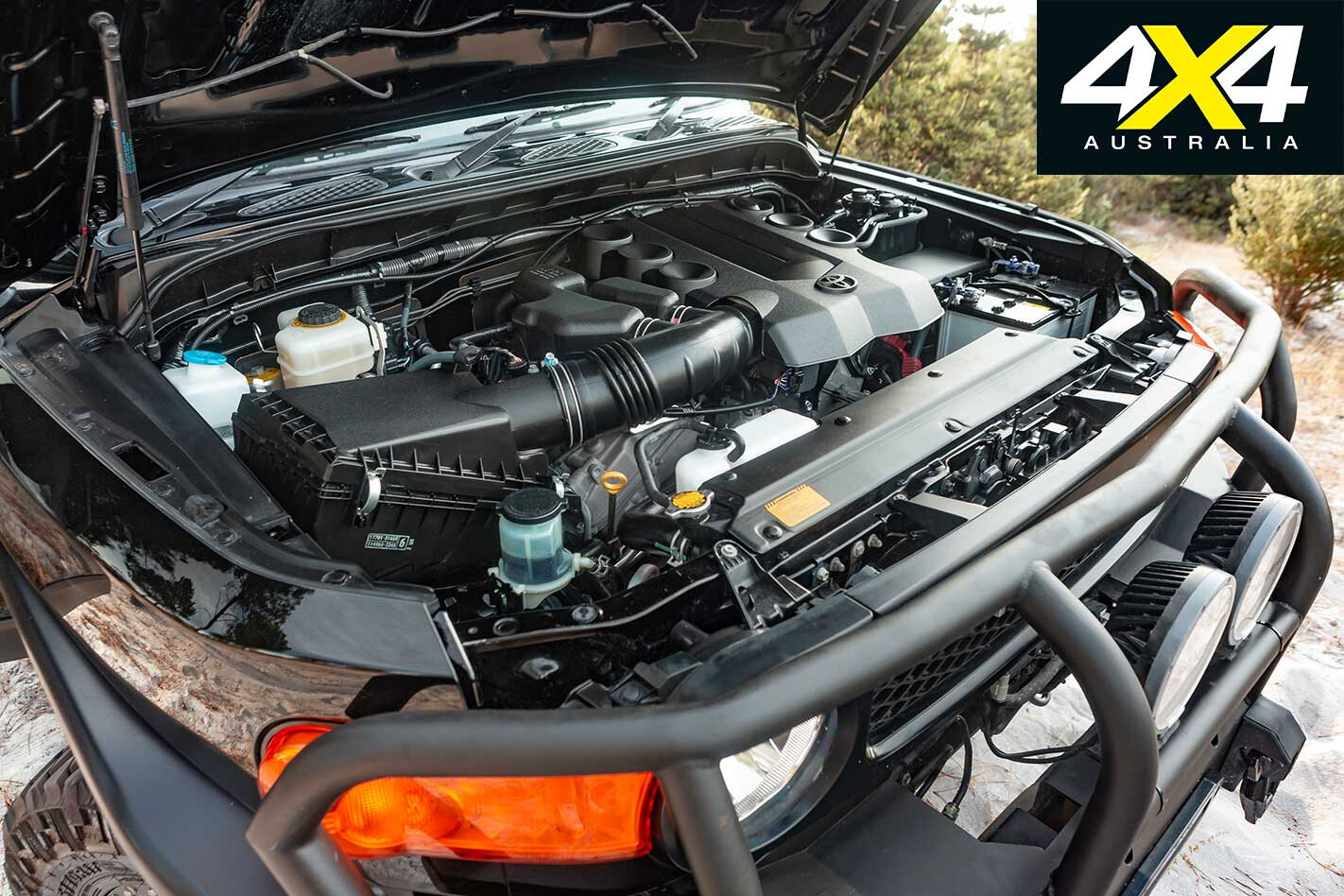
Under the front end are three Monster Hook Reaper recovery shackles (with a Monster Hook recovery hitch out back), while a JMAX Engineering snorkel (with Line-X coating) keeps that punchy V6 running cool.
Further assisting the already ample engine performance is a set of Manta extractors running back through a Manta cat-back 2.5-inch mandrel-bent performance system, complete with high-flow centre muffler. Assisting the engine in all its duties is a Richards Auto Electrical torque converter lock-up kit, transmission cooler, and a Harrop breather kit taking care of the diff, gearbox and transfer case.
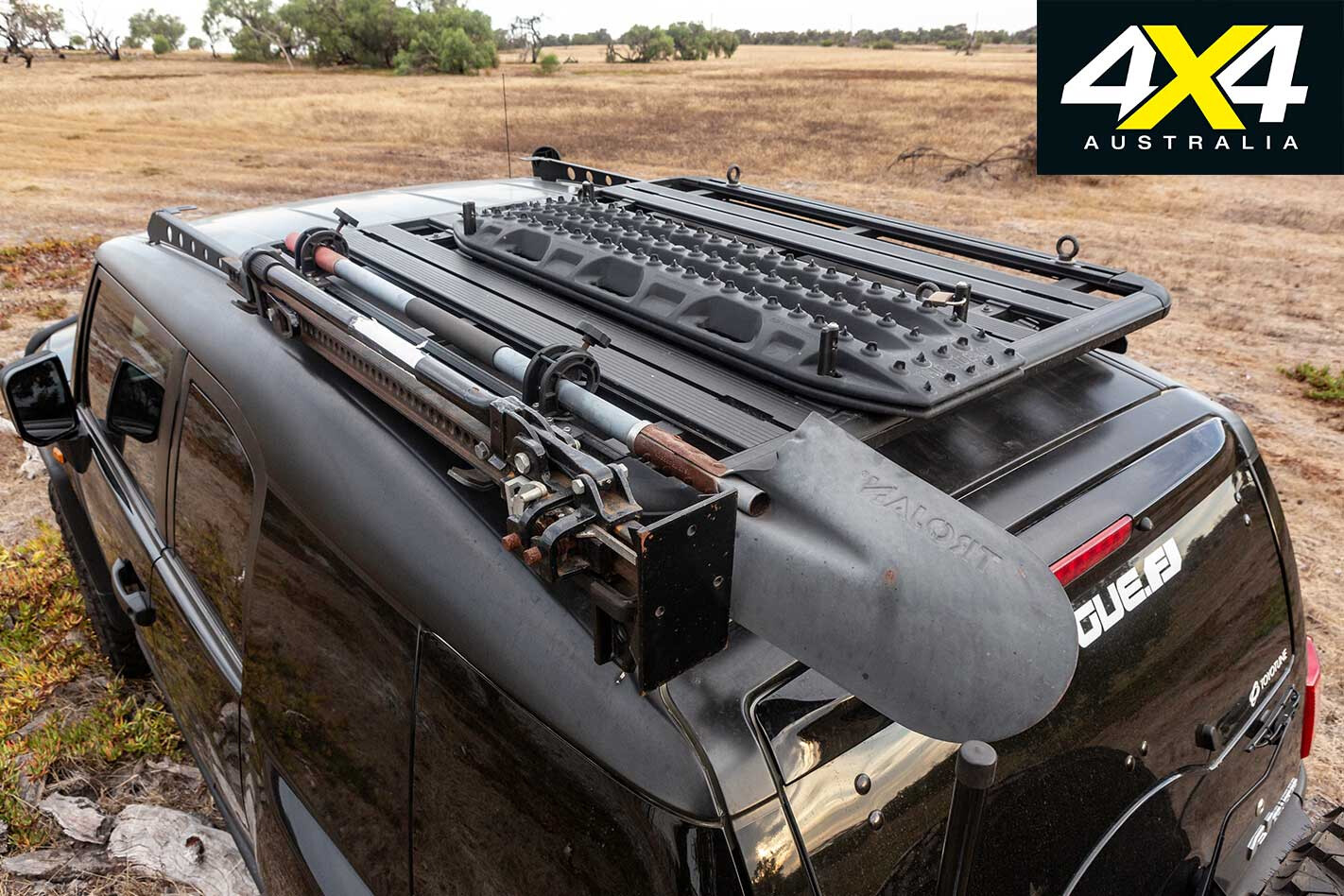
The roof is well protected thanks to a satin black vinyl roof wrap. Adriano has also fitted a Rhino-Rack Pioneer Platform roof rack, and this is where his recovery tracks, shovel and high-lift jack are stored.
The rear end features a GME antenna and a TRD Trail Teams black rear bumper, while that sweet black paint is protected when the FJ does go off-road by Rhinohide body armour. The exterior is definitely cool, but it’s what lies beneath – and directly contributes to the FJ’s enhanced off-road performance – that is even more impressive.
CREATING THE UNSTOPPABLE
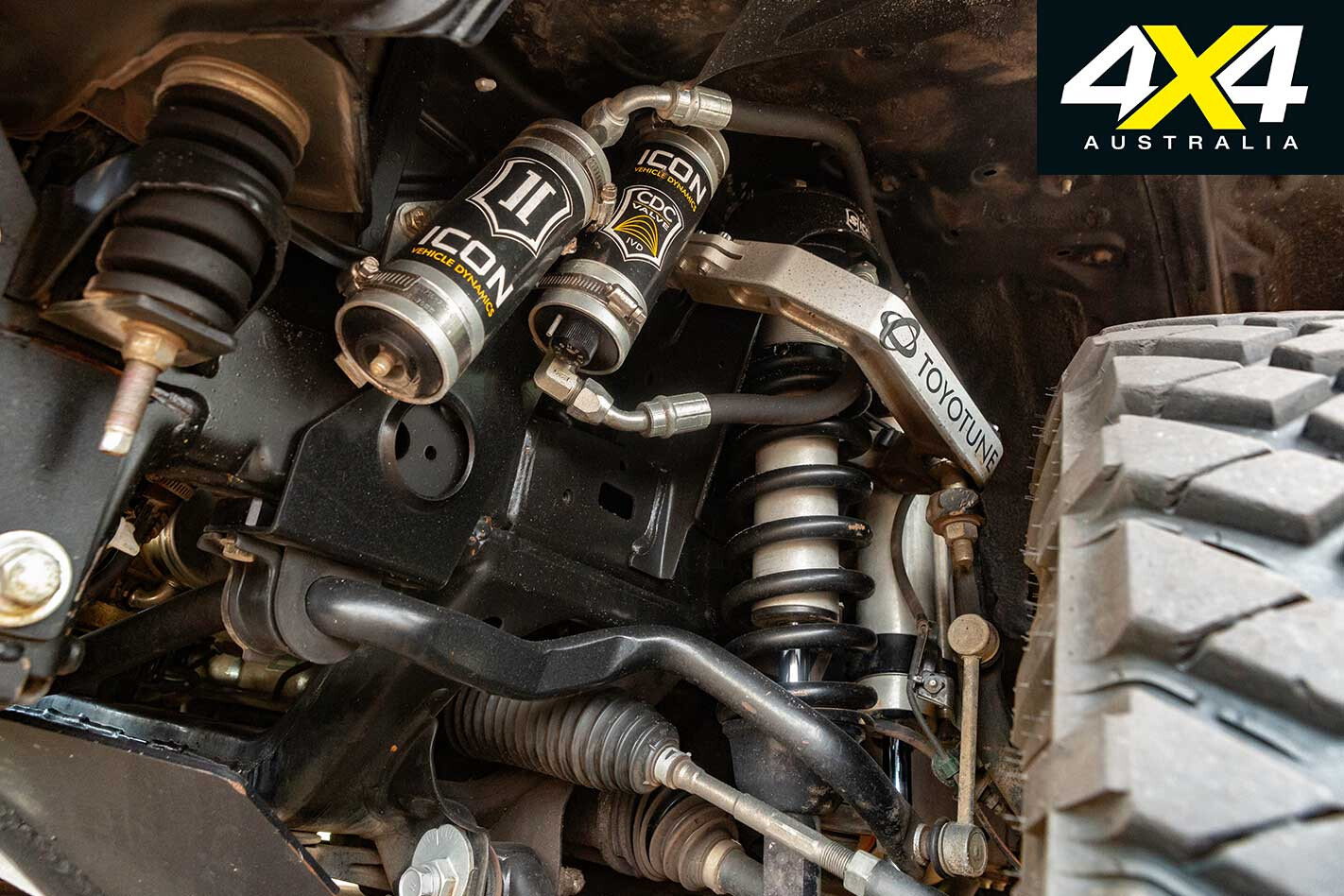
IT’S HARD to miss that Icon Vehicle Dynamics Stage 7 suspension system under the FJ and, according to Adriano, this is definitely a case of appearance is everything in terms of how it performs.
“I wanted to create a one of a kind FJ,” he says. “I wanted a go-anywhere 4×4 and spent plenty of time researching the various options available for the FJ. In the end I decided to go for the top of the range with the suspension.
“I liked the fact this kit was completely bolt-on and required no welding or modification to the chassis. This kit allows me to drive like a stadium truck or crawl over ruts. Aside from the damping attributes, it’s the increased downward wheel travel that really assists when off-road. Other FJs lift their wheels and lose traction way earlier than I do. For an IFS 4×4, it has great articulation.”
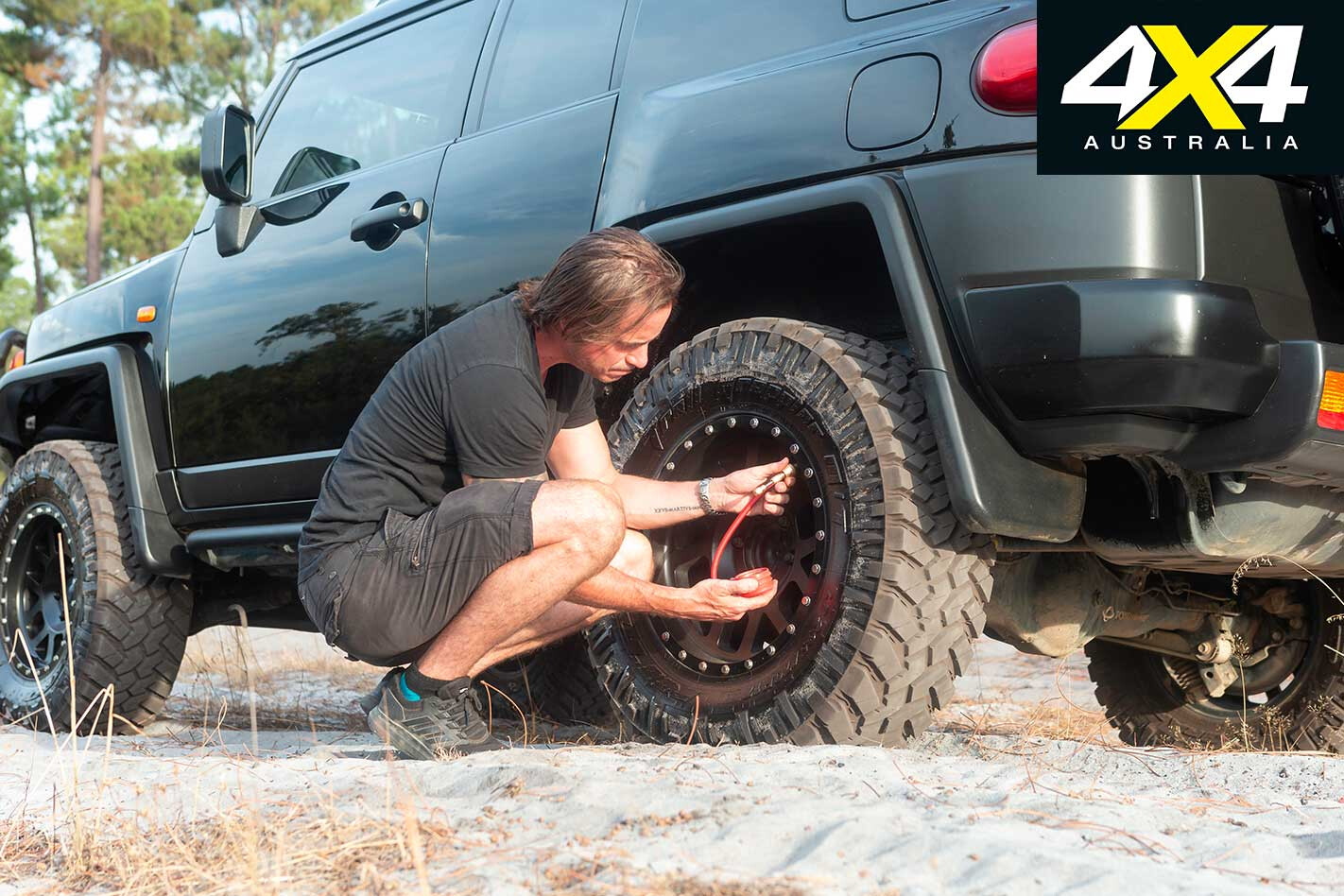
Making the most of all that articulation is a set of 17 x 8.5-inch Method Mesh Race Wheels shod with equally sizeable LT295/70R17 Nitto Grappler rubber, ensuring every single piece of tractable terrain is utilised when it’s time to get serious in the FJ.
You wouldn’t know it by looking at it now, but fitting this big wheel/tyre combo wasn’t a straightforward process (and Adriano had already tried with an even bigger set of 35s), as any wheel/tyre combo much larger than standard can cause fouling underneath, which means serious engineering work to make it fit properly … and legally.
“I took it to On Track Fabrication, who is licensed to do a compliance mod for the BMC,” Adriano explains. “I have a compliance plate in my engine bay for this work; they need to cut the body mount on an angle and re-weld a plate to the face of the body mount. It’s pretty much the first mod you need to do on the FJ if you want to fit 33-inch or larger tyres.”
MOVING ON
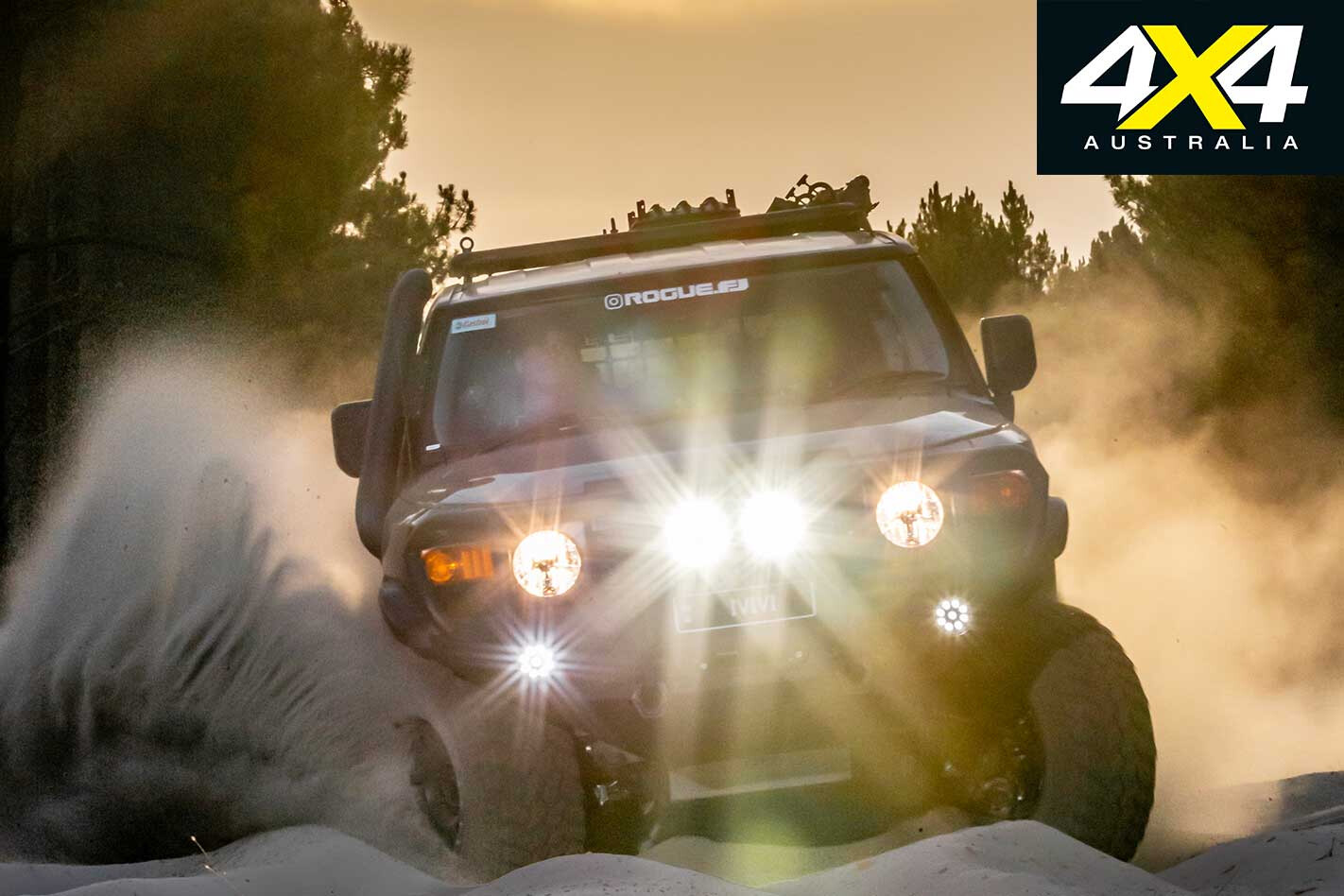
THIS FJ is definitely a keeper according to its very satisfied owner, who’d only make space in his garage for another vehicle if it was an original FJ40 with a long-travel kit for the front end; although, it would mean more engineering work to ensure it fit properly.
Other than that, Adriano is keen on switching the current bullbar to a lighter-weight, pre-runner-style bar with an integrated winch. Add in a matching light bar rack across the top of the windshield and he’d be even happier; although, he’s still searching for a local fabricator to make that mod become a reality. The last future mod – following that lottery win, of course – would be to fit a Harrop supercharger to the 4.0-litre. Dreams aside, Adriano is more than stoked with his FJ.
“I love my FJ Cruiser and will never sell it,” he affirms. “It’s unstoppable. It’s truly amazing what trails I can conquer. I’m often cruising up tracks first time that other 4x4s can’t make.”
It’s hard not to get caught up with Adriano’s pride and enthusiasm for his unique rig. The subtle styling, clever mods and engineering work all aimed at producing a top-notch tourer makes us want to start perusing the classifieds for a low-kay FJ ourselves.
To see more of Adriano’s FJ, check out his Instagram feed at: @roguefj
WHEN we were given the opportunity to spec our long-term Discovery we optioned it with 20-inch over the standard 19-inch wheels that come on the Discovery SE.
While choosing larger diameter wheels for a 4×4 might seem like the wrong decision for any vehicle planning to head off-road – or anyone who appreciates ride quality – we had our reasons for this. We would normally agree with the reasons for not going bigger, but when the standard wheel measures 19 inches – and that is the smallest OEM wheel that will go on the vehicle – we chose to go up one.
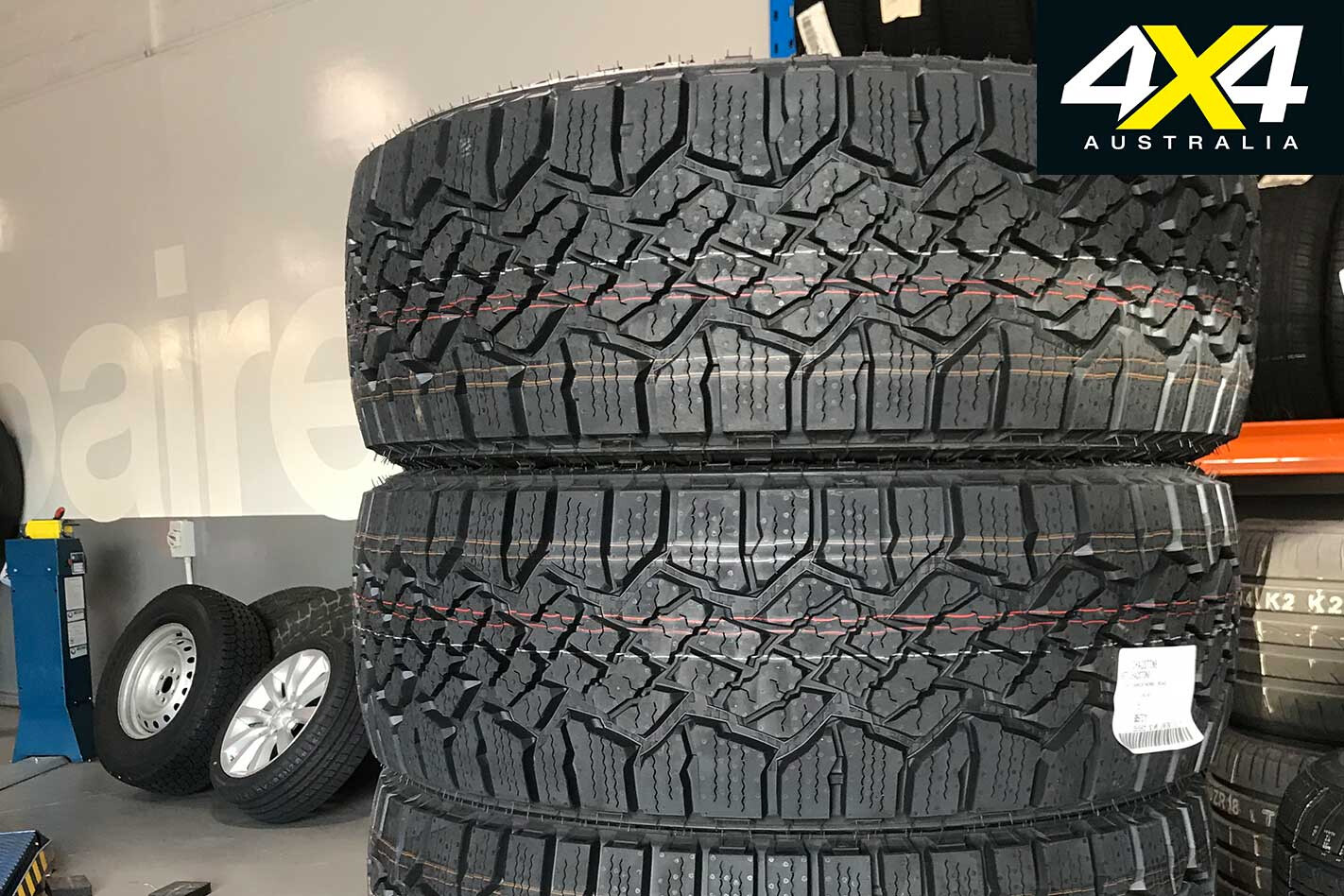
The reason is simple: there are a lot more 20-inch off-road suitable tyres than there are 19s. In fact, choosing the 20s opened up a whole swag of all-terrain and mud-terrain tyre options that we wouldn’t have had with 19s. Unfortunately for us, this is still Land Rover’s car and they wouldn’t let us fit anything but a factory approved tyre.
We weren’t about to complain, though, as the factory approved off-road tyre is Goodyear’s Duratrac all-terrain, a tyre we’ve seen on Land Rover’s own off-road-spec vehicles and one we’ve heard good things about. As well as the standard 255/55 R20 size, the Duratrac is available in a plus-one 275/55 R20 size which would fit the Discovery and still remain within legal allowances. But not Land Rover’s allowance, so we went with a set of the 255s.
Our main reason for wanting the Goodyears was durability, as the OE-spec, high speed-rated highway terrain tyres are not made for any sort of off-road use and would severely hamper any off-road adventures. It was lucky we did fit them when we did, because when they stripped the OE tyres off the alloy wheels the guys at Beaurepaires in Chadstone found a huge hunk of tread missing from the inside edge of one of the front tyres, showing the vulnerability of such rubber on rougher road surfaces.
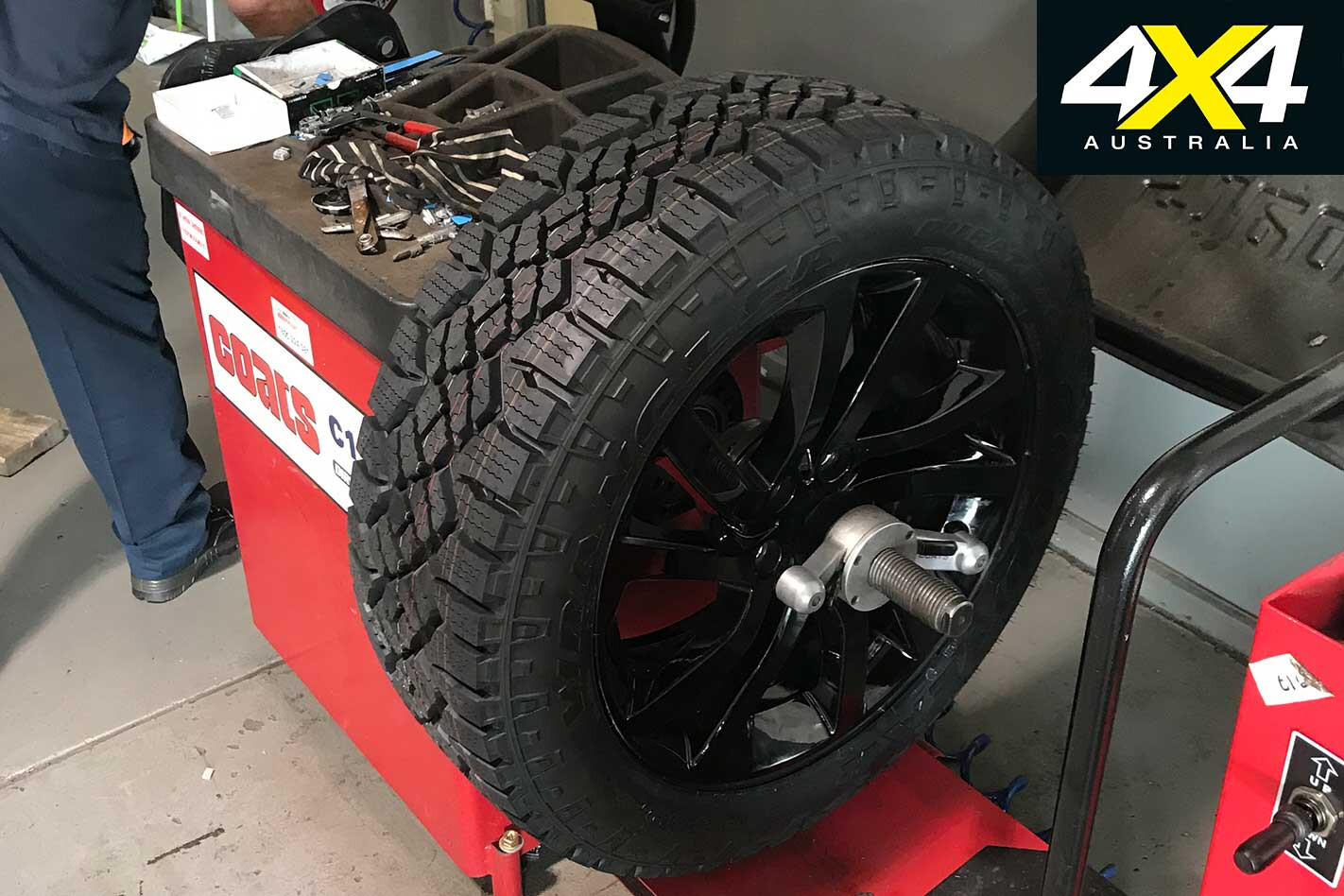
The Discovery delivers a very refined and quiet ride on the road in standard trim, so we noticed the sound of the all-terrain Goodyears as soon as we fitted them. The Duratracs don’t have an overly aggressive tread pattern, and we were initially surprised by the sound of them on-road; but that had more to do with the normally quiet ride of the Disco. It was a small price to pay for added security on the rough stuff.
The Duratrac has a passenger car tyre construction so it’s not as heavy-duty as a tyre with light truck (LT) construction; although, the 255 does have an XL ply rating for heavier loads. Interestingly the bigger 277/55 20 Duratrac only has a Standard load rating yet it has a higher ‘S’ (180km/h) speed rating. The 255s we have fitted are only Q rated, but we reckon 160km/h will be enough for our usage here in Australia and we appreciated the heavier, more durable tyre.
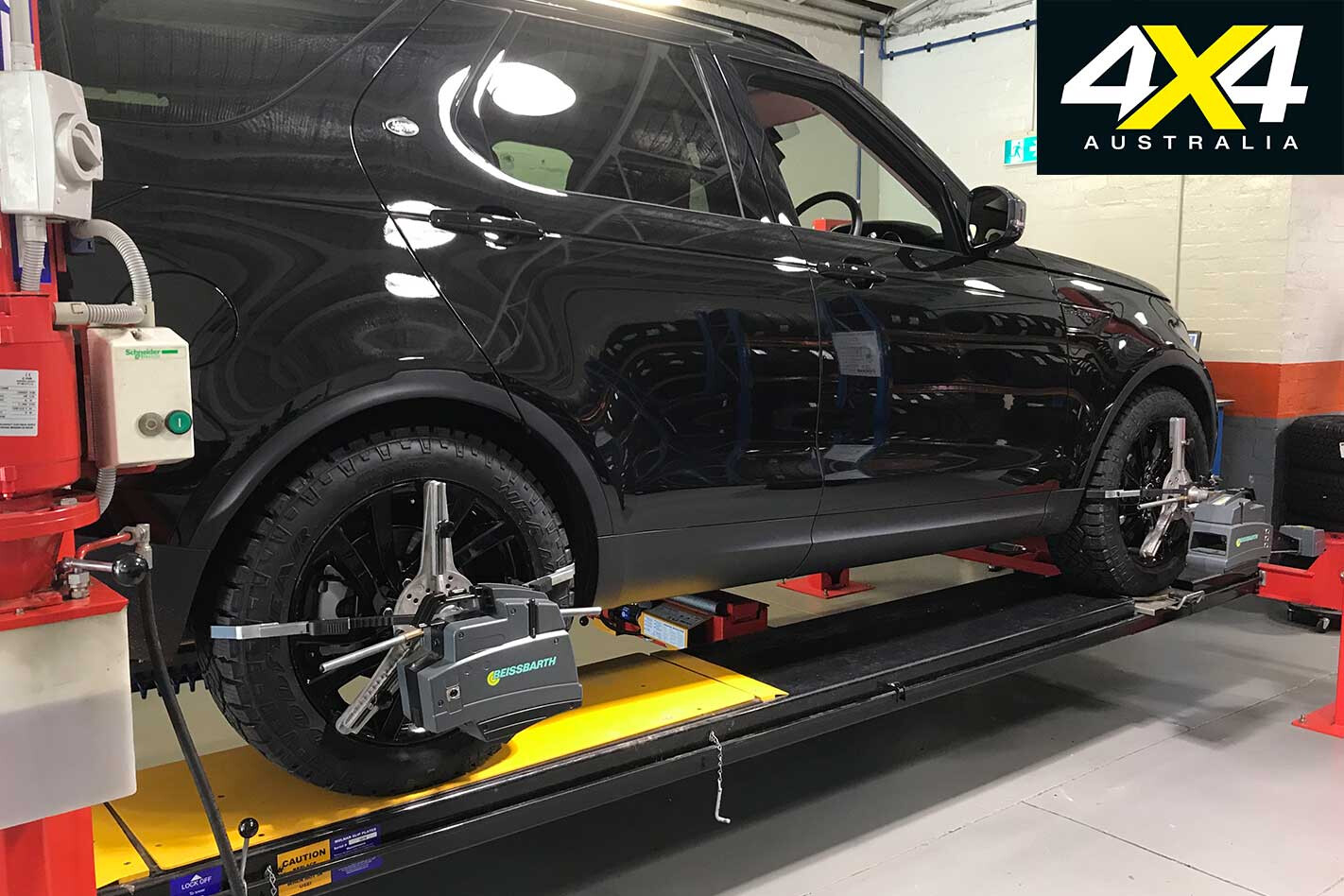
The first 1000km with the Duratracs have been on sealed roads, but we have hit some High Country trails and station tracks as well. While we’re still cautious of sharp objects on the tracks, the tyres have given us a lot of confidence in our ability to take it places where we might otherwise be concerned with the OE tyres.
We’re still running the placard tyre pressures, but we drop 8 to 10psi out of them when we hit the tracks to improve traction and comfort. So far so good, and the Goodyear Duratracs are allowing us to use and enjoy the Discovery as it is intended.
RATED Available from: www.goodyear.com.au We Say: Add confidence off-road compared to OE rubber; not LT construction; noisier than OE on-road (as expected).
‘GEEZ,’ I thought, as I clambered out of the Patrol to clear another small tree from the track, ‘another bloody tree’. This one needed some axe work before we dragged the trunk clear and then hopped into our vehicles to proceed less than 50 metres, where we did it all over again. Sometimes, the going gets tough on our journey through South-east NSW.
Our route was taking us through Bodalla State Forest and for a while we tried our luck along an unnamed fire trail that the map showed joined up with Calle Road. We had already discovered that Calle Rd was virtually indistinguishable from the surrounding scrub, so we tried this faint track just a little farther to the south.
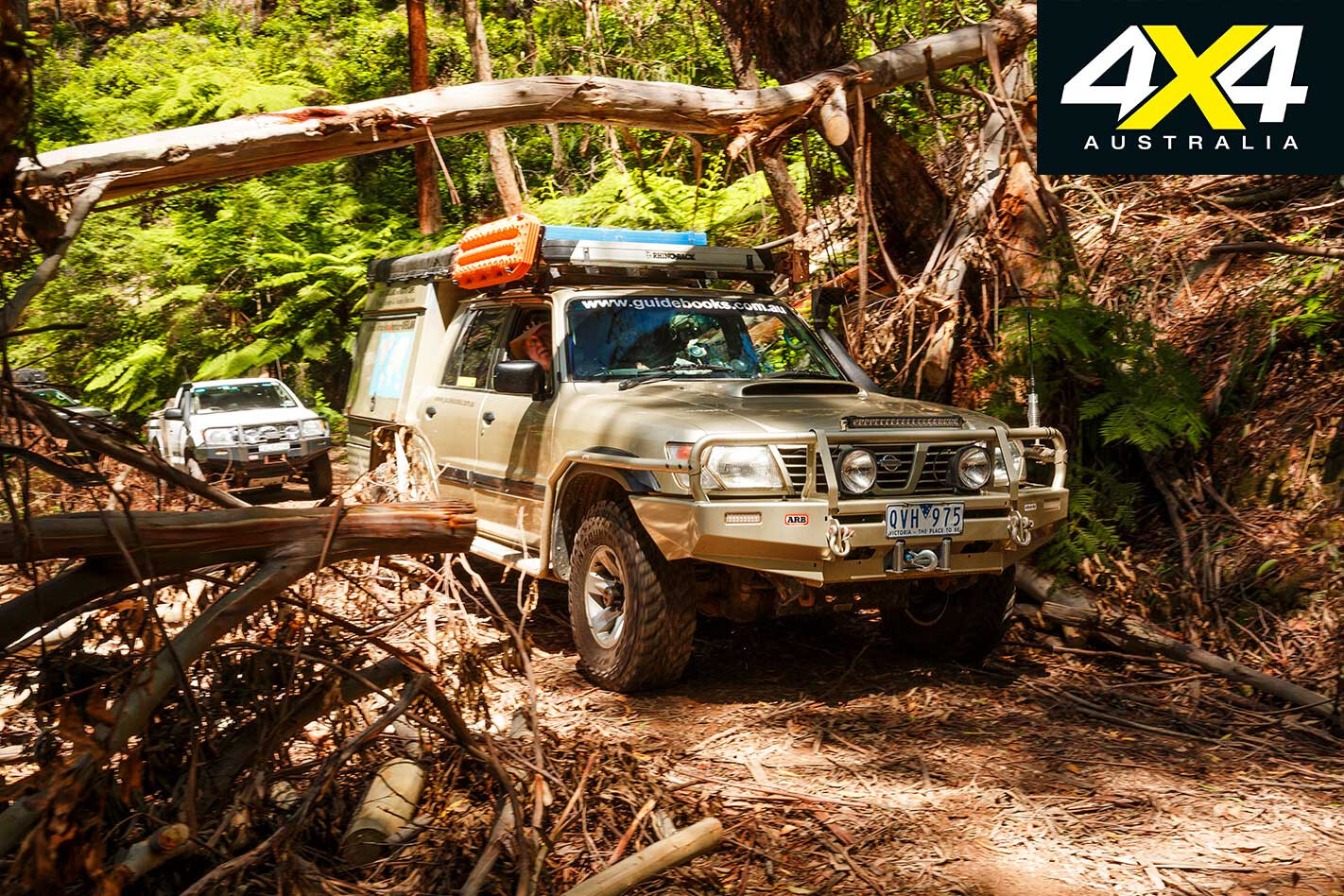
After 30 minutes of travelling less than a kilometre and spending most of the time removing logs and timber from the old trail, we decided discretion was the better part of valour and our convoy of four vehicles retreated, heading north on the main route of the Reedy Creek Road. That was pretty indicative of many of the trails we followed on our wanderings through the mountains inland from the southern coast of NSW.
The routes may seem to be well marked and named on a map, but in practice they proved to be little used and, while not greatly difficult in a 4×4 sense, the amount of fallen timber that needs clearing becomes a bloody bugbear.
Once again the Reedy Creek Road degenerated, but not to the point where we had to turn around; the forest closed in around us in parts, with tree ferns crowding the track on every moist gully we passed through.
Originally, this route was an Aboriginal footpath and then, in the early days of European settlement, it became a bridle trail as settlers followed in the Aboriginals’ footsteps. The trail heads from the coast near Wallaga Lakes and Bermagui, to the hinterland and isolated farms and small forest settlements along Reedy Creek, and then north to the wider valley and rich farmland of the Tuross River.
The Bega Valley and Eurobodalla shires upgraded the bridle trail to a formed road around the time of WWI, and they maintained them until 1958 when the Forestry Department took over. Today, the very southern section passes through Gulaga National Park before entering the Bodalla State Forest, with the northern part seeing very little traffic.
From Reedy Creek we turned south on the Tuross River Road before taking Red Creek Road deeper into the state forest. On Red Creek there was a small, little-used camping area and an easy sand-over-rock water crossing.
A short time later we arrived at the upper crossing of the Tuross River on the Peak Along Trail, but the rain over the past few days had turned the stream into a fast-flowing torrent. GT, our self-designated camp cook, VW tragic, salt lake racer and driver of the Hilux in our small group, volunteered to go into the water to investigate.
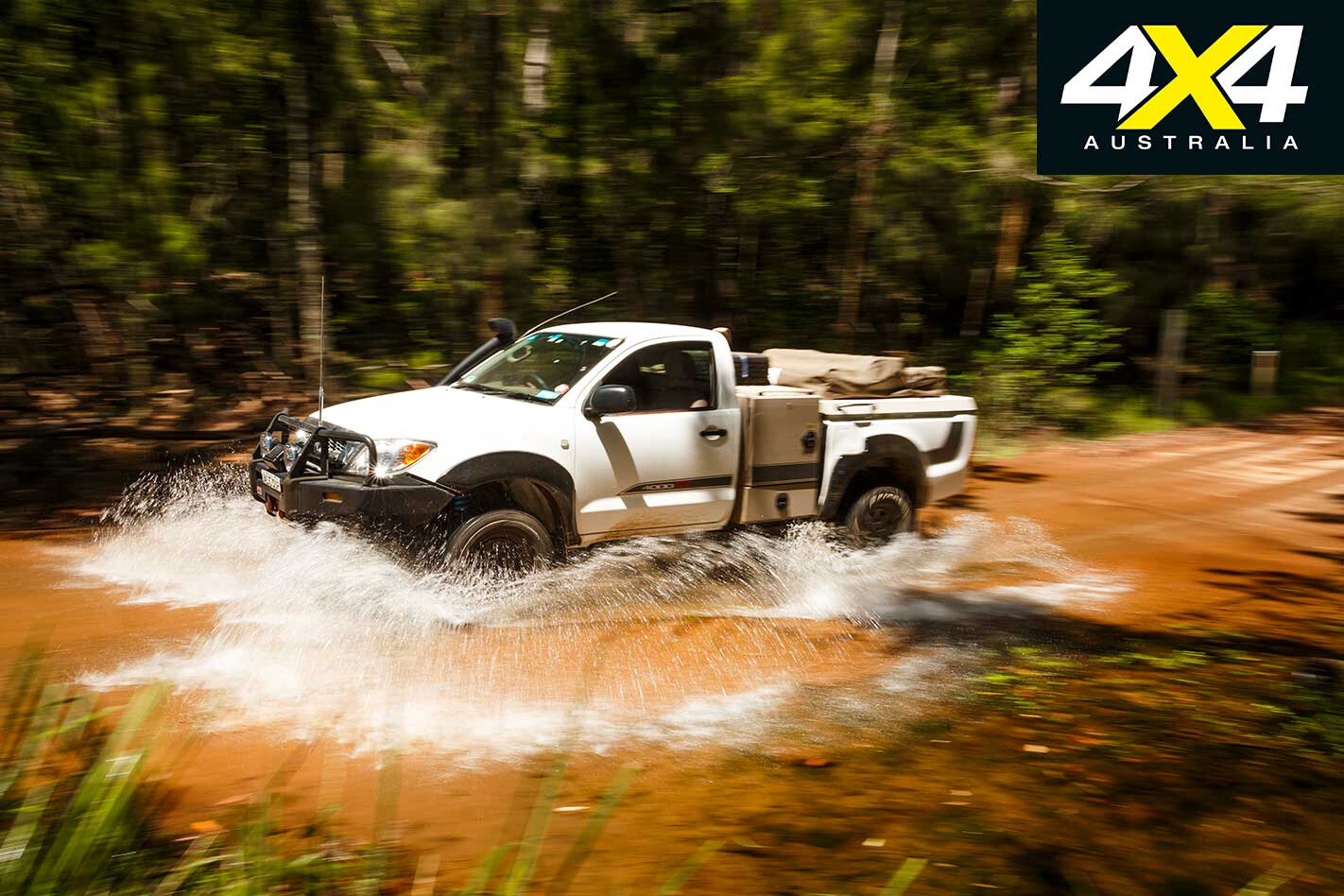
Hardly able to keep his footing, and with the water rising to his chest, we decided we’d pass on the challenge of trying to drive across. Would the crossing have been possible? Maybe, if you had to, but not without some serious preparation of the vehicles and recovery gear.
Still, we were tempted to set up camp on the sandy bed of the river, but we backtracked a short distance taking the Brass Knocker Track over the range and down into the Wadbilliga River valley near Yowrie. That night, we threw down our swags at the small but delightful Lake Creek camping area in Wadbilliga NP.
Our travels in south-east NSW to take in the delights of the coast and the far less travelled tracks of the nearby mountains had started a few days earlier when we had left Moruya and headed inland. Our route quickly took us into the Wandera State Forest and then on reasonable 4×4 tracks to the crest of Wandera Mountain and its expansive views over the surrounding mountains, forests, farmland and coastline.
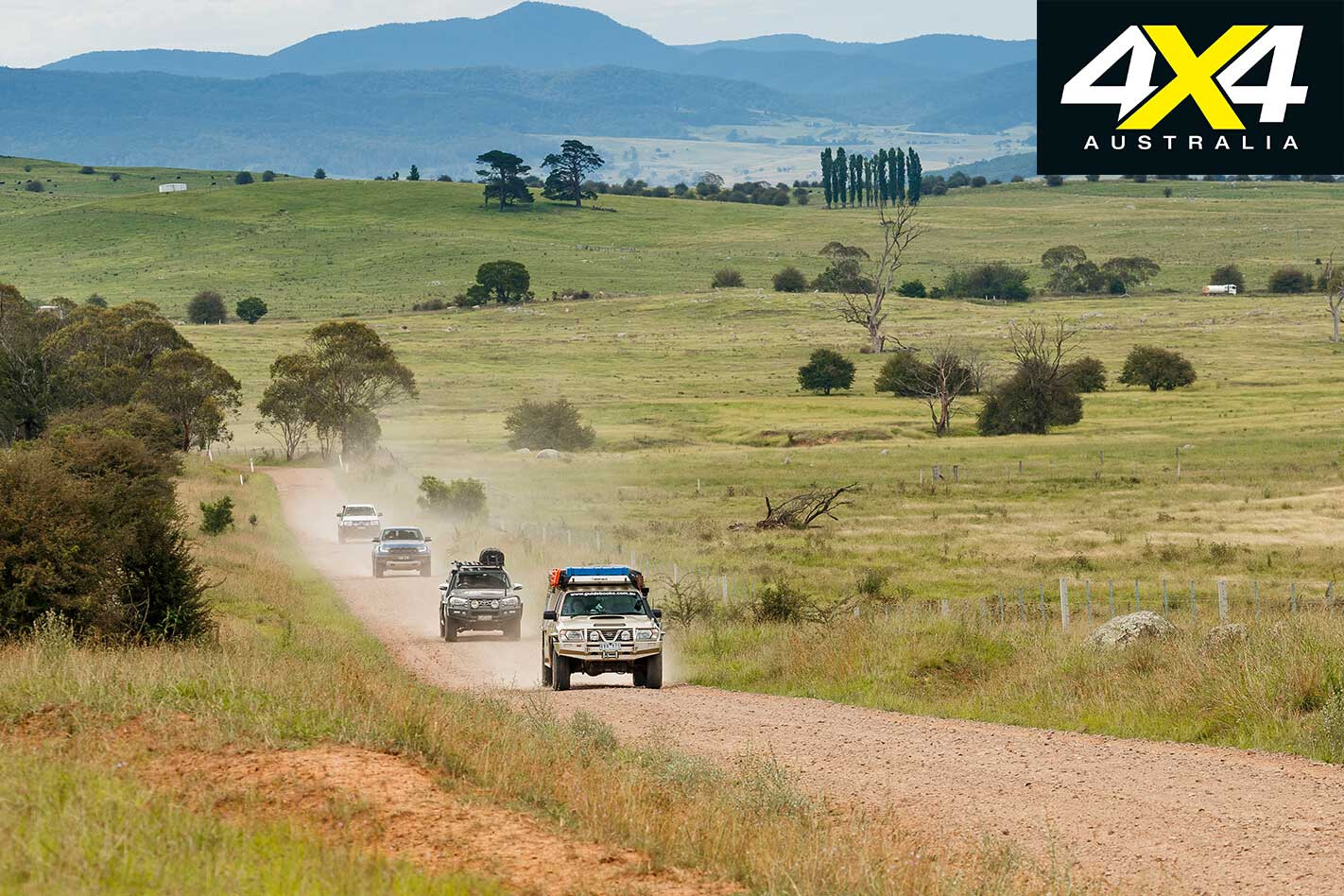
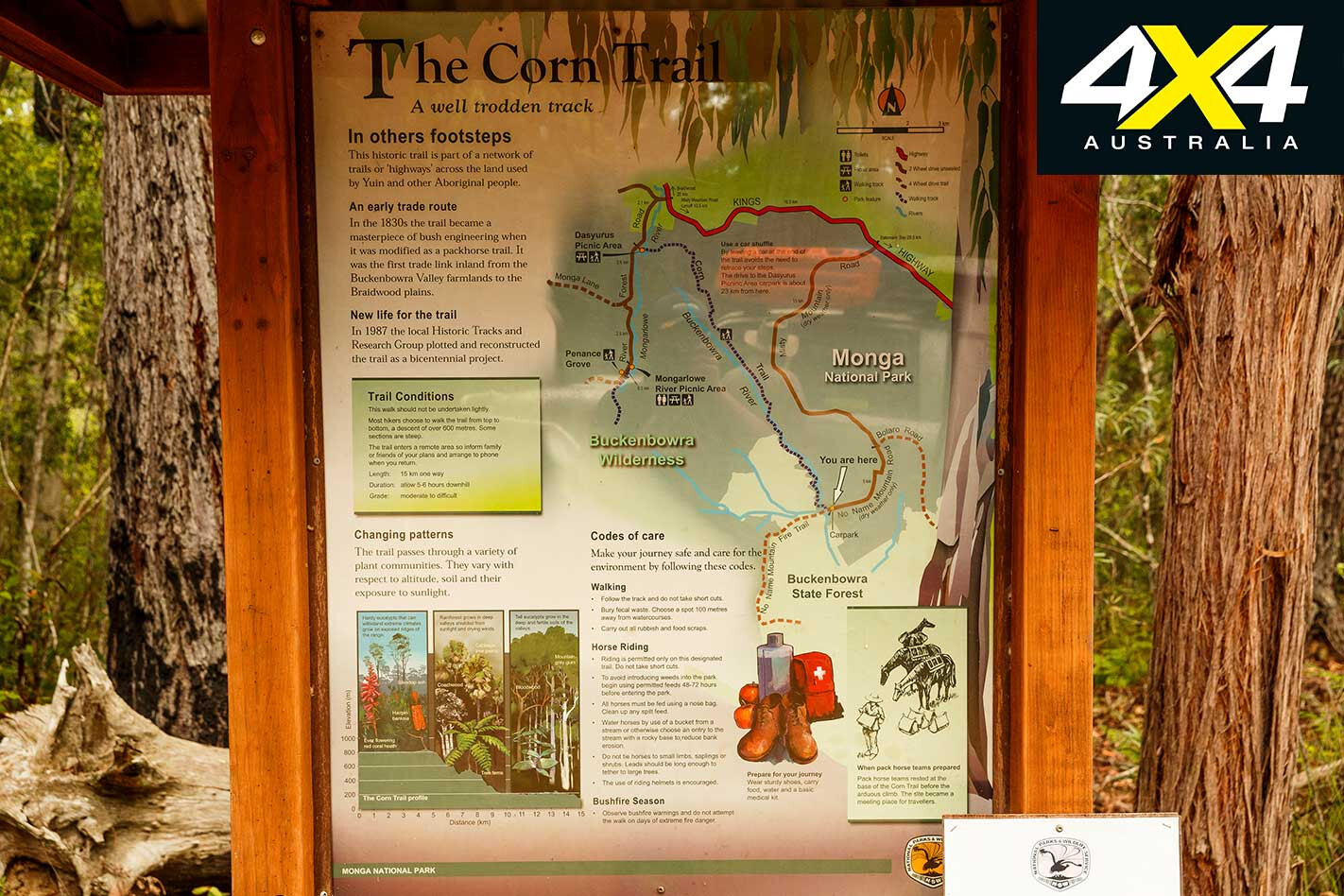
Following the No Name Mountain Fire Trail we stopped on the edge of the Buckenbowra River at the rough and small campsite of the same name, in amongst a patch of temperate rainforest. In places, we passed through drier eucalypt forest dotted with scattered stands of Burrawang palms, a member of the ancient group of plants known as cycads.
Through here and until you meet the main Braidwood Road (Kings Highway) you are on the historic Corn Trail, which was the first European link across the mountains joining the settlements along the coast to the remote settlements on the Monaro Plains.
The major crop of the valley back then was corn, hence the route’s name, but it was also used to bring cattle down from the high country to the coast – later, gold prospectors heading inland used the trail. When a new route was pioneered over Clyde Mountain in 1854 (which the main highway now follows), the Corn Trail fell into disuse and was soon overgrown.
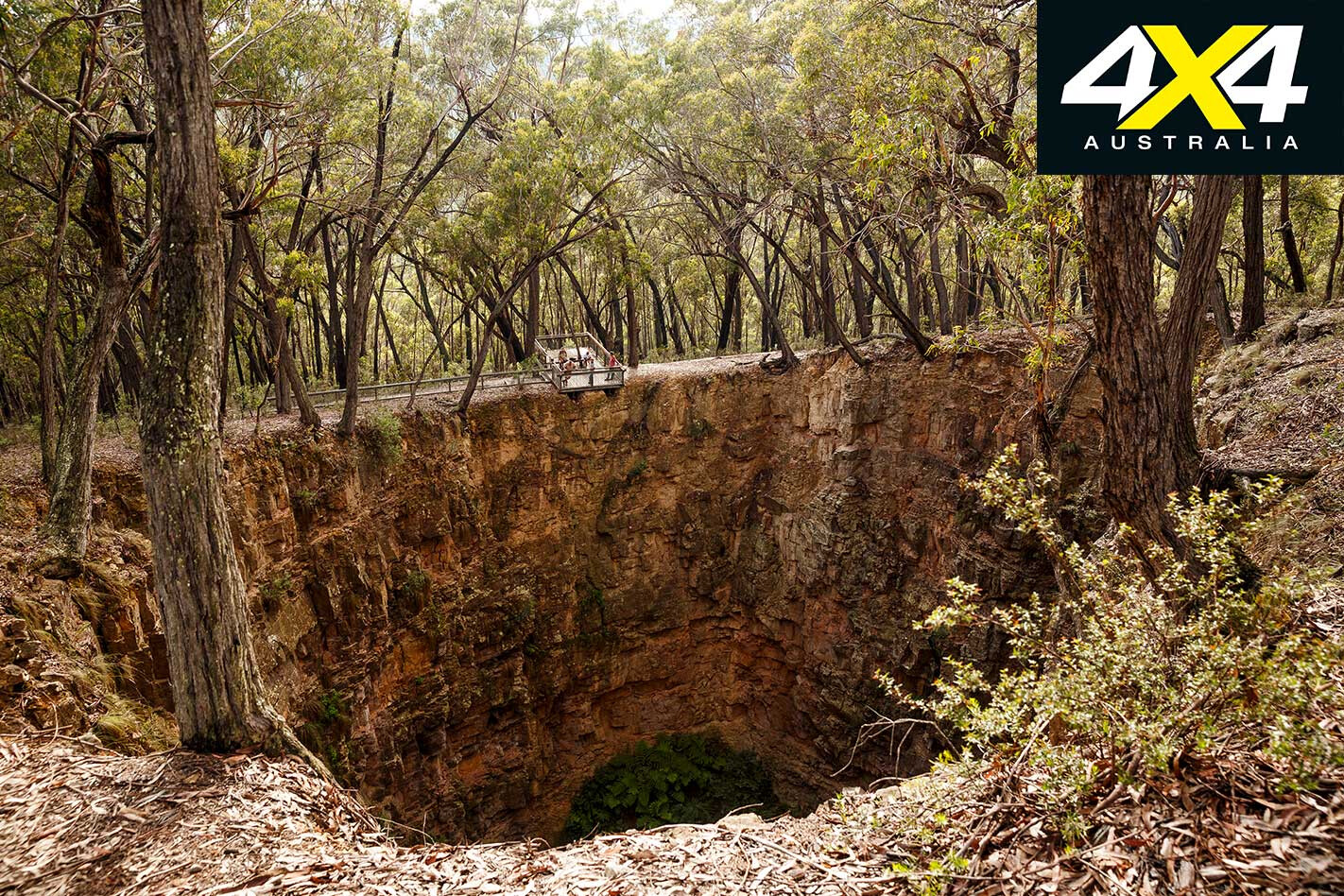
That evening we set up camp at the small, enjoyable Berlang Camp on the north-west edge of Deua NP. The next morning we took a short walk, first wading across the upper reaches of the Shoalhaven River and then climbing the gentle 1.5km-long slope to the Big Hole. It’s hardly an inspiring name, but the deep, circular rupture is a little more interesting.
From Berlang we headed south on Snowball Road before taking the Middle Mountain Trail deeper into Deua NP. This route is not recommended for anyone with a trailer (in fact, they are banned), but less than 1km from the main road there is a pleasant campsite on the edge of Currambene Creek, which can be reached with a trailer.
From here the trail winds through forest and climbs to the crest of Dampier Mountain and its trig point, before dropping steeply through a series of tight switchbacks to the valley floor and the first crossing of the Deua River.
This is the entrance to the magnificent Bendethera Valley, so named by the first European settlers here who in 1863 established their Bendethera homestead farther along the stream. Numerous cleared areas along the valley make for a great and popular camping area; certainly one of the best in NSW and one we always love to experience.
The grassy clearings are mown to park-like consistency by the large mobs of eastern grey kangaroos and the few swamp wallabies that inhabit the area. Wombats are common, we spied a feral pig, and the chimes and calls of the birds during their ‘morning chorus’ is a delight to wake up to.
After a couple of nights in the valley we headed out via Little Sugarloaf Road, passing a vehicle towing a camper which was doing it easily and slowly. We quickly tired of the gravel roads which were getting better the more we got closer to civilisation, so we turned onto the little used North Bumbo Fire Trail and soon came to the first of the fallen trees.
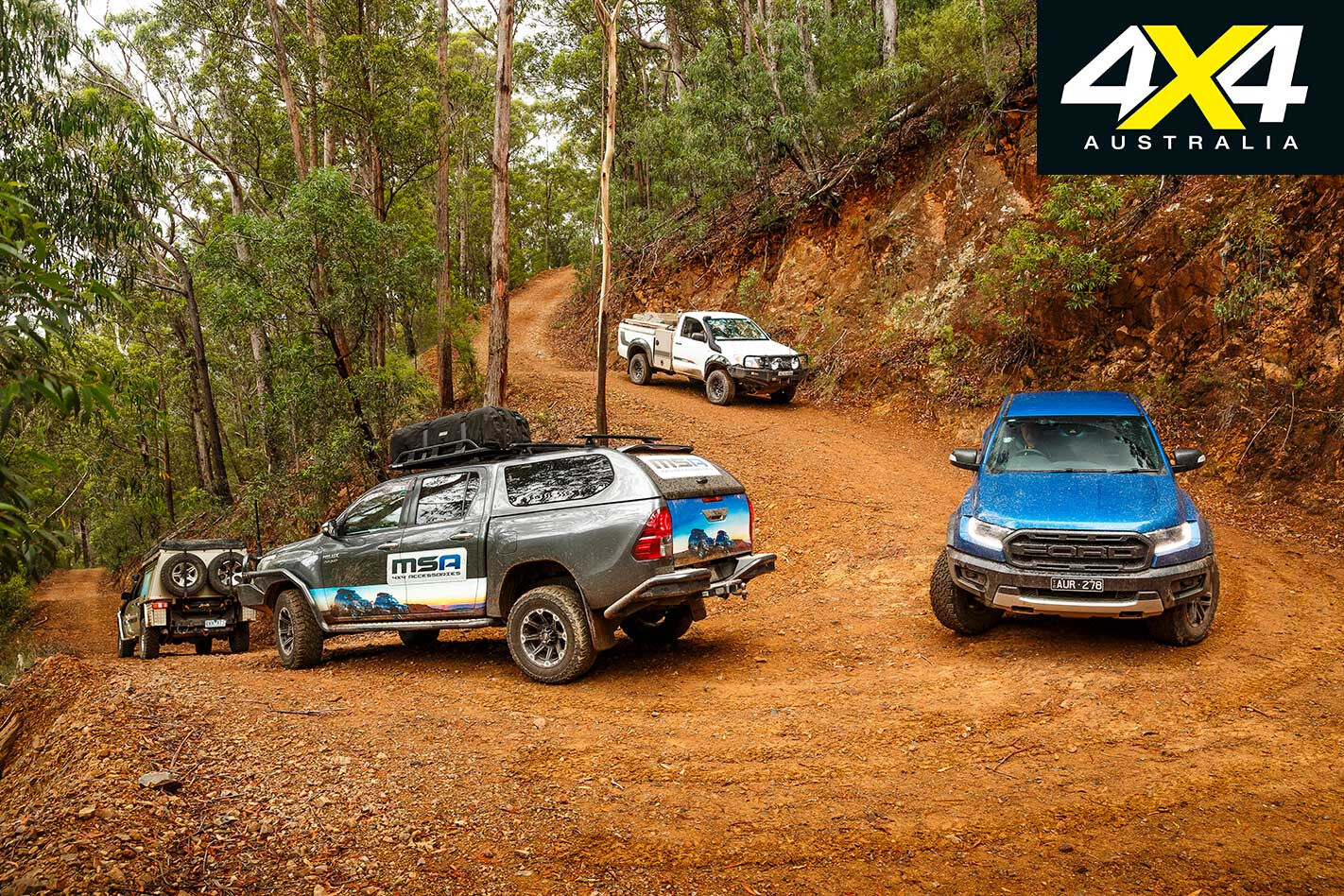
We didn’t have a chainsaw (a bit of an oversight), only a small axe and an even smaller saw, but we eventually cleared it and pushed on, clearing a few other trees along the way. Meeting with the Western Boundary Rd, we had a brew to celebrate making it through and cruised onto the highway and the coast, pitching our swags that evening in the Brou Lake camping area of Eurobodalla NP.
The next day we headed to Wadbilliga NP via our fateful meeting with the Tuross River, before pulling up for the evening at the aforementioned Lake Creek. There are easier ways to get here than the circuitous route we followed, but we were having fun exploring and using rarely used fire trails.
A little to the north we turned into the forest again and arrived at The Cascades, with three other vehicles there it was the most populated spot we visited away from the crowded coast. Situated on the Tuross River it is a short but steep walk down a series of steps to the river-worn boulders of The Cascades, and with the recent rain it was flowing quite well.
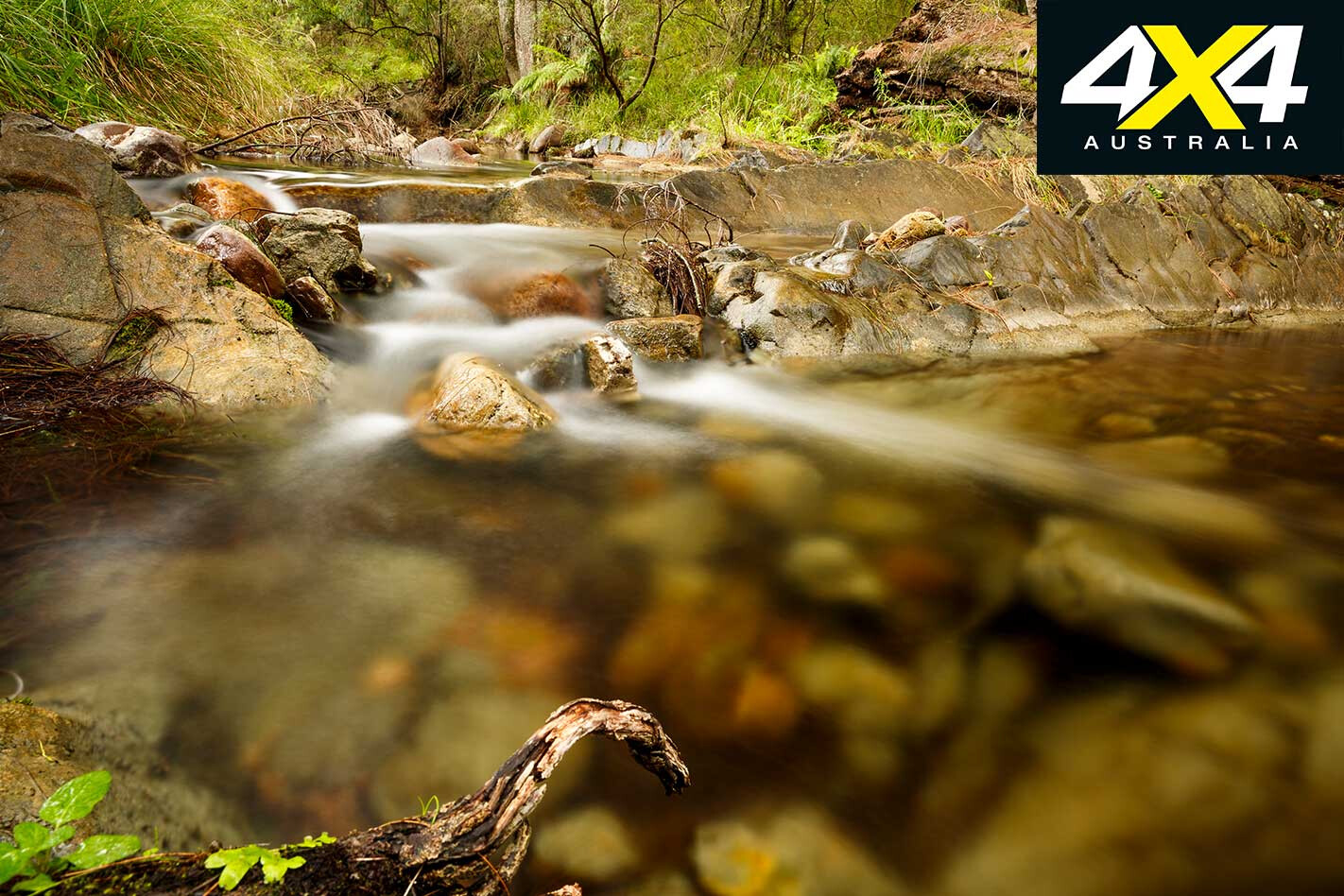
We then took Falcon Road and the Waila Creek Trail, the route marking the boundaries of both the Deua NP to the north and the Wadbilliga NP to the south. It’s an easy drive, with spectacular views as you drop off the high ridges down to the crossing of the Waila Creek. The farming land here is dotted with magnificent old trees and patches of forest, and it’s an easy, enjoyable run back to the coast via Belowra and Cadgee and the lower reaches of the Tuross River.
The following day the little-known Pambula Goldfields, just a few kilometres south-west of Pambula, was our next point for exploration. I had no inkling of this place until a friend took us to it some years back, but with any knowledge on how to get there now forgotten I touched base with Ron and asked him to again guide us into the old mines.
The area around Pambula was first settled by Europeans in the 1830s when the Imlay brothers grazed cattle on the river flats, with the town established in about 1843. By 1856 there were five licensed hotels in town catering for the thirst of farmers, graziers, loggers, bullock drivers and fisherman. Gold was discovered in 1888 and the resultant flurry of activity created a boom in the town, with shafts such as the Victory Mine, Top Victory and the Morning Star producing gold that was reported at times to crush at an incredible 40 ounces to the tonne.
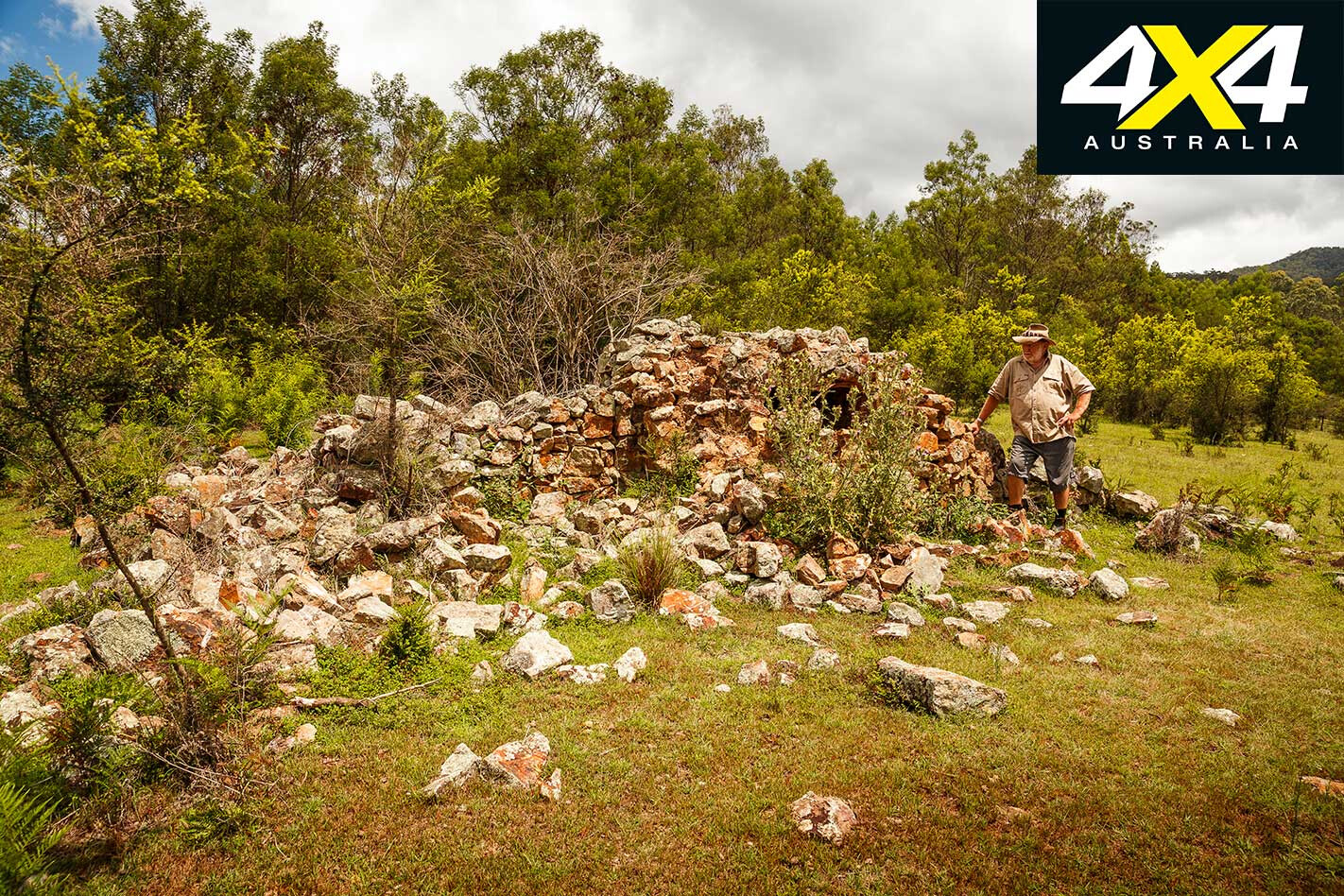
The deepest mine in the area soon reached a depth of more than 300 metres, and within months of the discovery there were a number of crushing mills in the vicinity of the workings. Interestingly, only a little alluvial gold was ever won by individual miners working along the nearby creeks; while today, fossickers with metal detectors are having better luck. Most of the old goldmine shafts are fenced and all of the old mill sites have fallen into disrepair, with most of the equipment plundered or rusted.
Still, with some local knowledge you can find a number of ruins dating back to those days, including mill sites with the remnants of a five-head stamper, a huge flywheel from a steam engine along with assorted machinery, dams still holding water, and ovens used in the production of bricks for the many buildings that once graced the field.
With time to kill before we returned to our camp at Hobart Beach camping area on the southern shores of Wallagoot Lake, we headed along forestry roads into a section of the South East Forest NP and to the crest of Wolumla Peak. At 776 metres the peak, with its tangle of radio and repeater towers nearby, is the highest point for some distance and offers great views.
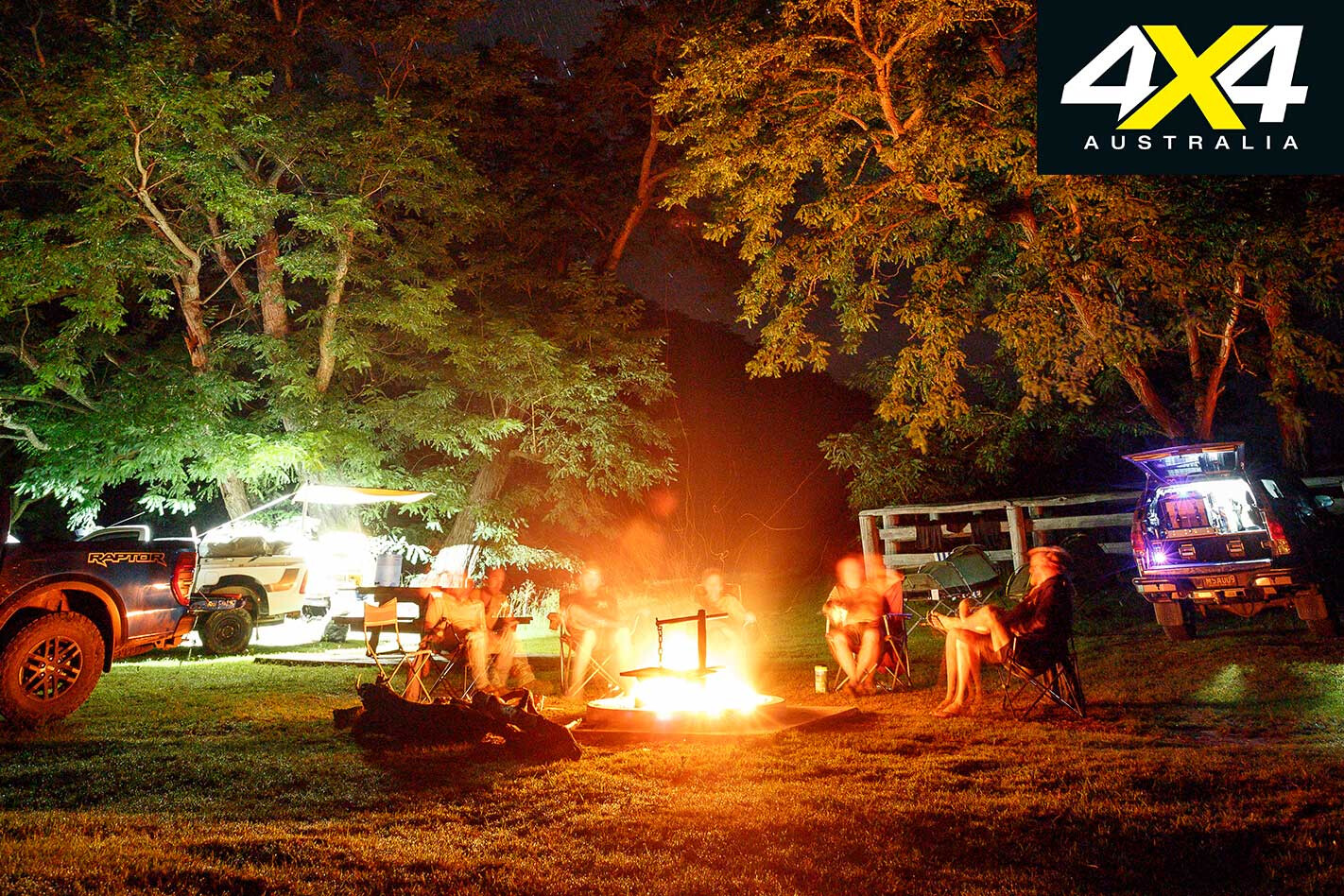
Descending from our eagle-like eyrie we took the rough and rugged Wolumla Peak Fire Trail west off the peak, passing through verdant forest before hitting the main road and turning north for our coastal camp.
Such is four-wheel driving on the NSW south coast: magic beaches in the morning or evening and a variety of trails during the day, spiced with rugged mountains and spectacular views. You can’t beat that for variety.
ON OUR travels we encounter plenty of four-wheel drives – new, old and tinkered – but there are a few that linger in our memories more than most.
We’ve squeezed 14 of these custom creations into a special edition of our magazine, and hopefully they can provide some inspiration on your next, first or current build.
The fettled fourbie on the cover is a 6.6-litre V8 Duramax-powered Nissan GU Patrol good for an earth-rumbling 2000Nm and 863 rear-wheel horsepower. It’s not the only Duramax-powered unit in this magazine, with a Ford Ranger that copped similar treatment also gracing these pages.
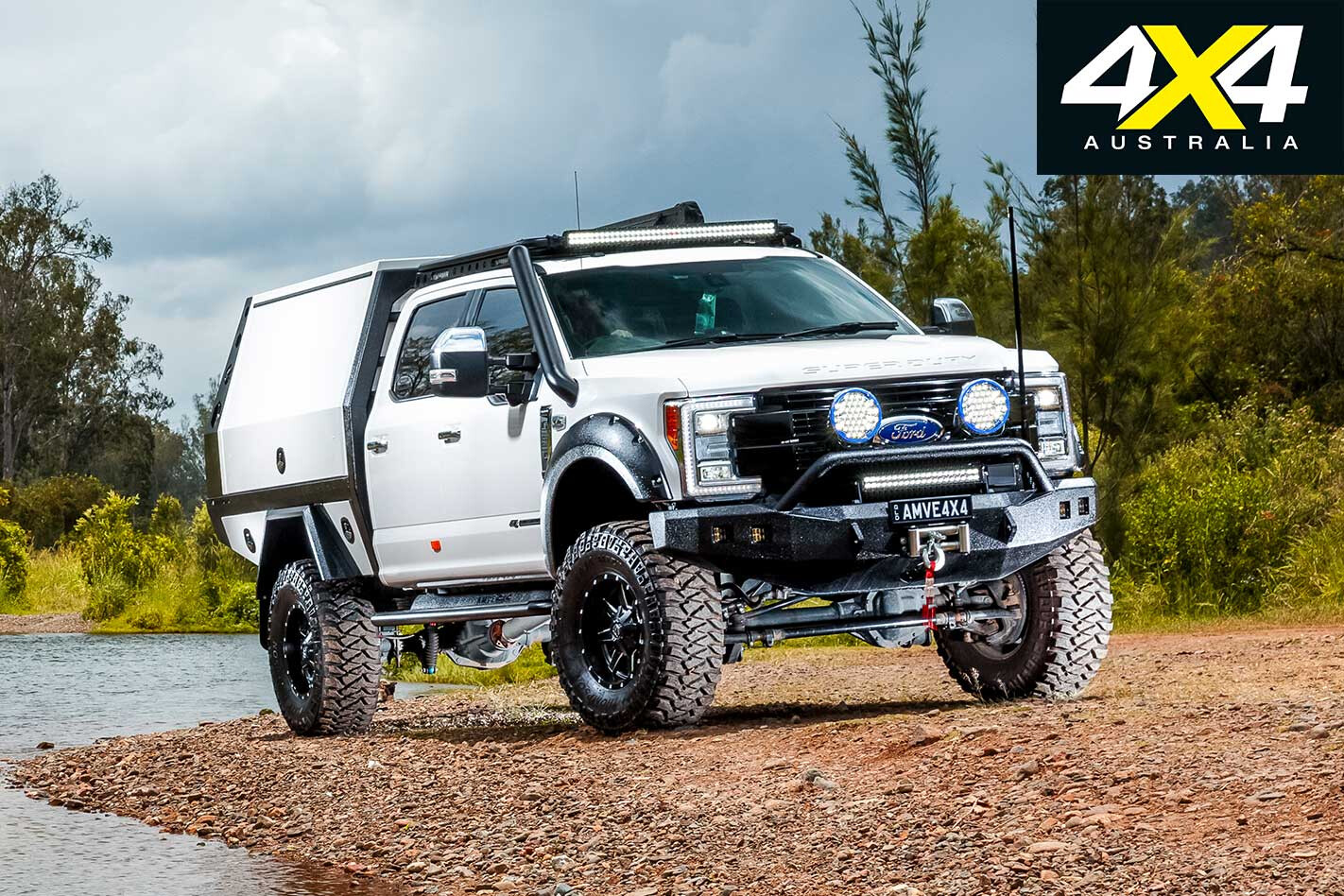
Flick through the mag and you’ll see more a whole lot more mind-melting masterpieces including a 200 Series Land Cruiser converted to six-wheel drive, a mutant Holden Tonner with a 6.2-litre LS3 donk, one of the meanest 79 Series you’ll lay eyes on, a Ranger done right with 14-inch-travel Fox coil-over shocks, and a Ram 2500 and Ford F250 that prove big trucks do it better.
In addition to the custom metal, we’ve plucked out some of the best new aftermarket equipment currently in catalogues.
WHAT ELSE IS THERE?
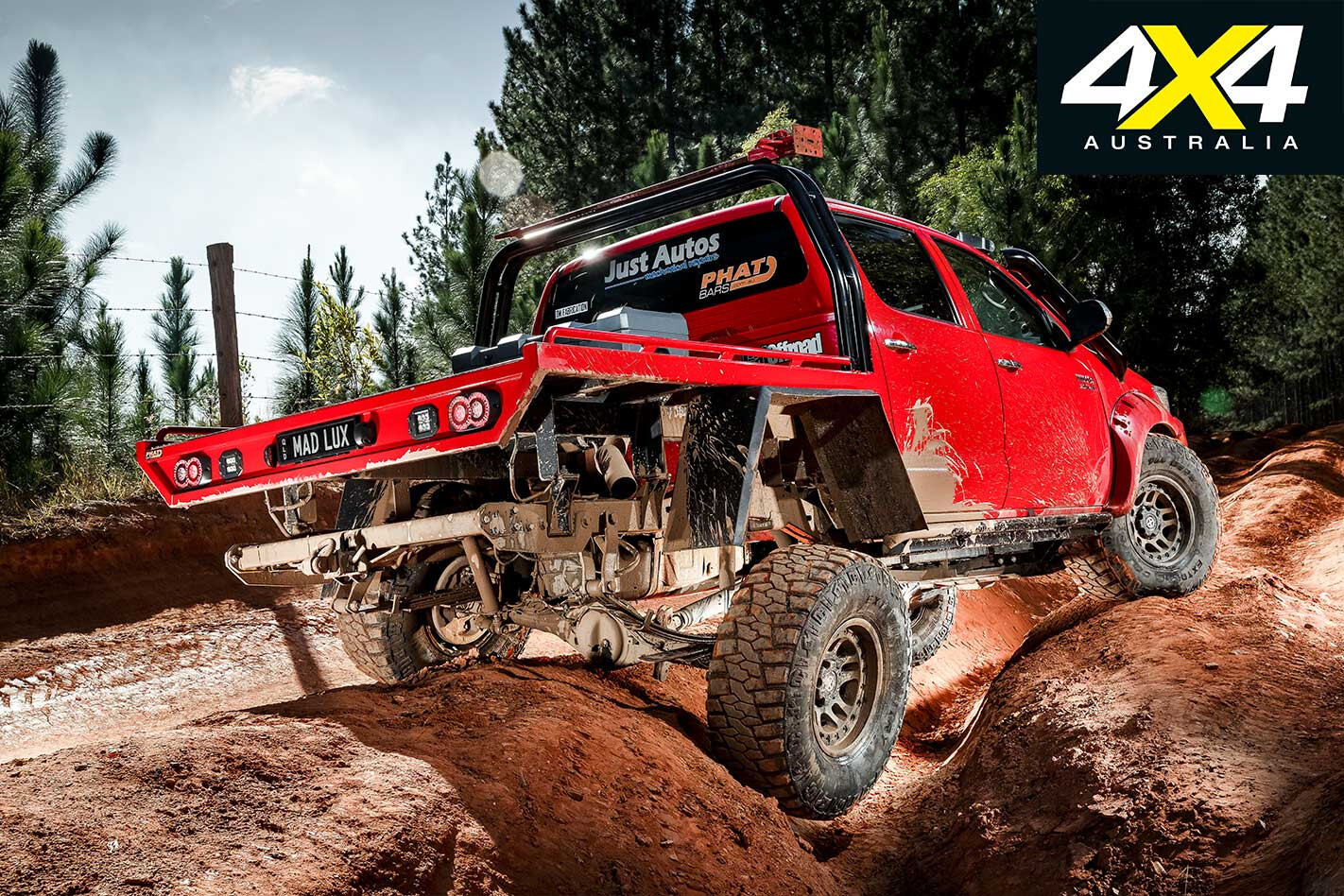
– A mega-tough red Hilux.
– Classic FJ45 ‘Trophy Truck’.
– Bite-sized Suzuki Sierra.
– D-Max maximised for remote travel.
– Jeepster Commando spotted at SEMA.
This special edition issue of 4X4 Australia is in stores June 10.
The new Suzuki Jimny might be stealing hearts and headlines at the moment, but there’s a long waiting list to get into one and it could be up to six months before you actually get your car. Thankfully, Suzuki has a long history of excellent and capable 4×4 vehicles, so there are plenty of options out there on the used car market that could be right for you.
Piranha Off Road’s Alan Johnson is bit of a Suzuki 4×4 fanatic, with part of the workshop at Piranha dedicated to a side business he calls Seriously Suzi (SS). While many of the tiny tots that pass through the shop are part of Alan’s own collection of Suzukis, he also creates a range of products, modifications, accessories and even turn key 4x4s for customers.
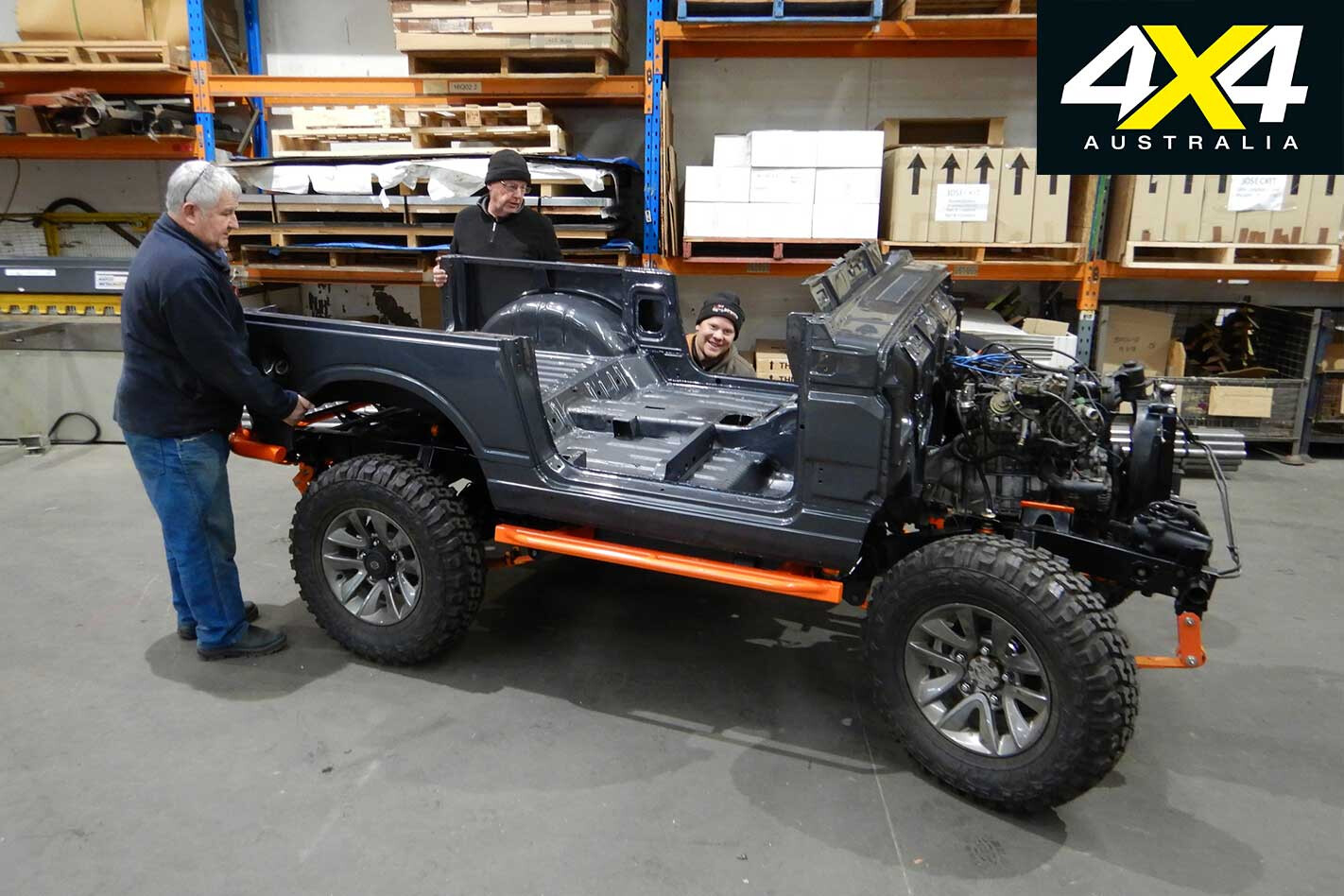
One such creation is this Suzuki Sierra, which copped a ground-up rebuild with the benefit of Alan’s years of experience with the brand. The grey and orange colour scheme has earned the Sierra the name ‘Jaffa’, and the end result was so good a customer made an offer too good to refuse – before Alan even got to enjoy the fruits of his labour.
“It was never intended that we would sell this car,” says Alan with his usual infectious enthusiasm. “But a customer wanted it and kept asking me how much it would take to get it. I threw a high figure at him and he took it!”
We managed to score a day with Jaffa just before it went for its final engineering and registration procedures and was delivered to its new owner. It also gave Alan a day to enjoy it on his property near Melbourne.
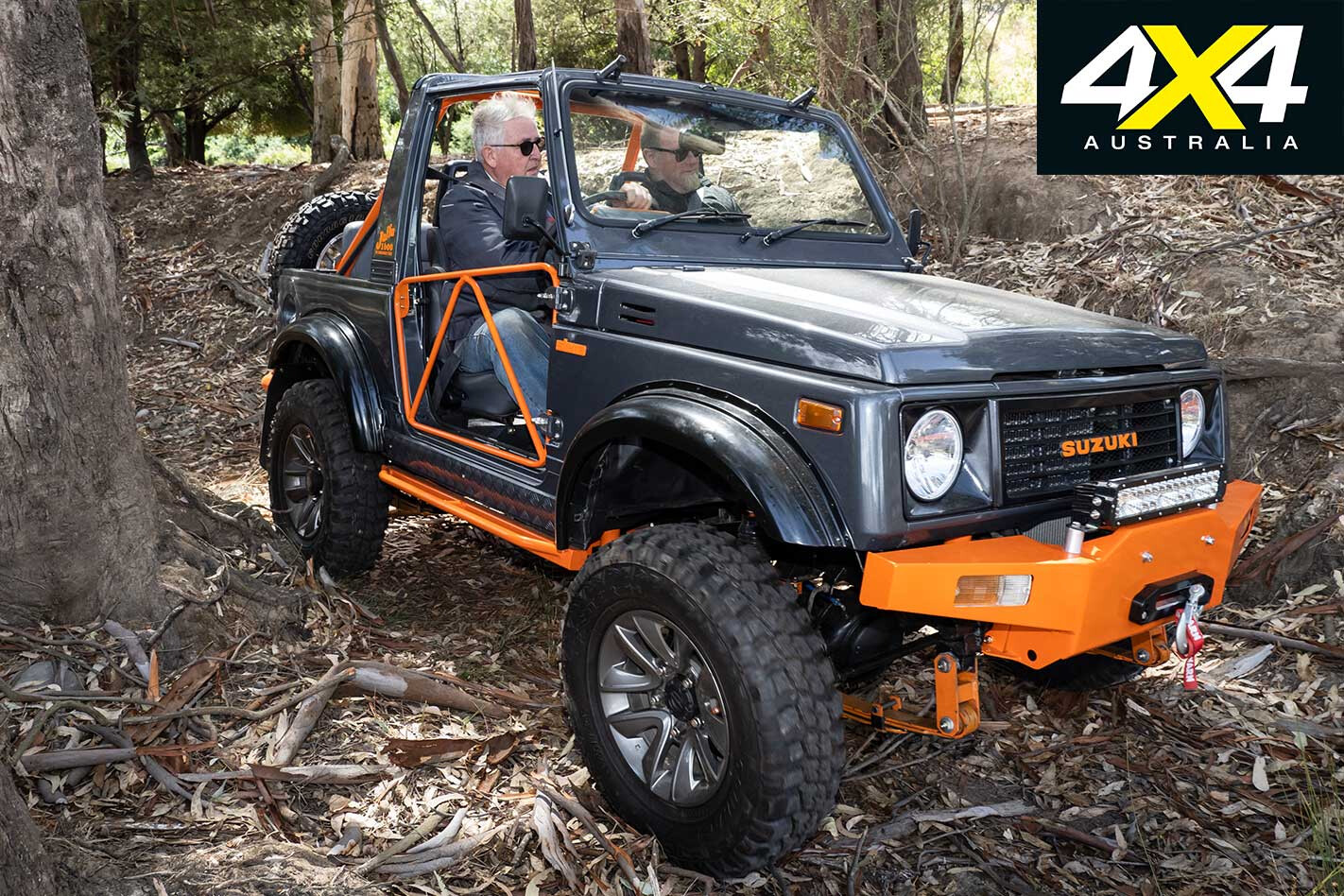
The 1988 Sierra is a short wheelbase soft-top, which was stripped back to a bare chassis before work started on it. Suzuki 4x4s of this vintage are pure and purposeful, with little regard for safety and comfort and more focus on functionality and purpose. From their diminutive size to their ladder chassis and leaf-suspended live axles, the early Suzuki 4x4s have a lot in common with the first mass-produced 4×4 vehicle, the iconic Willys Jeep.
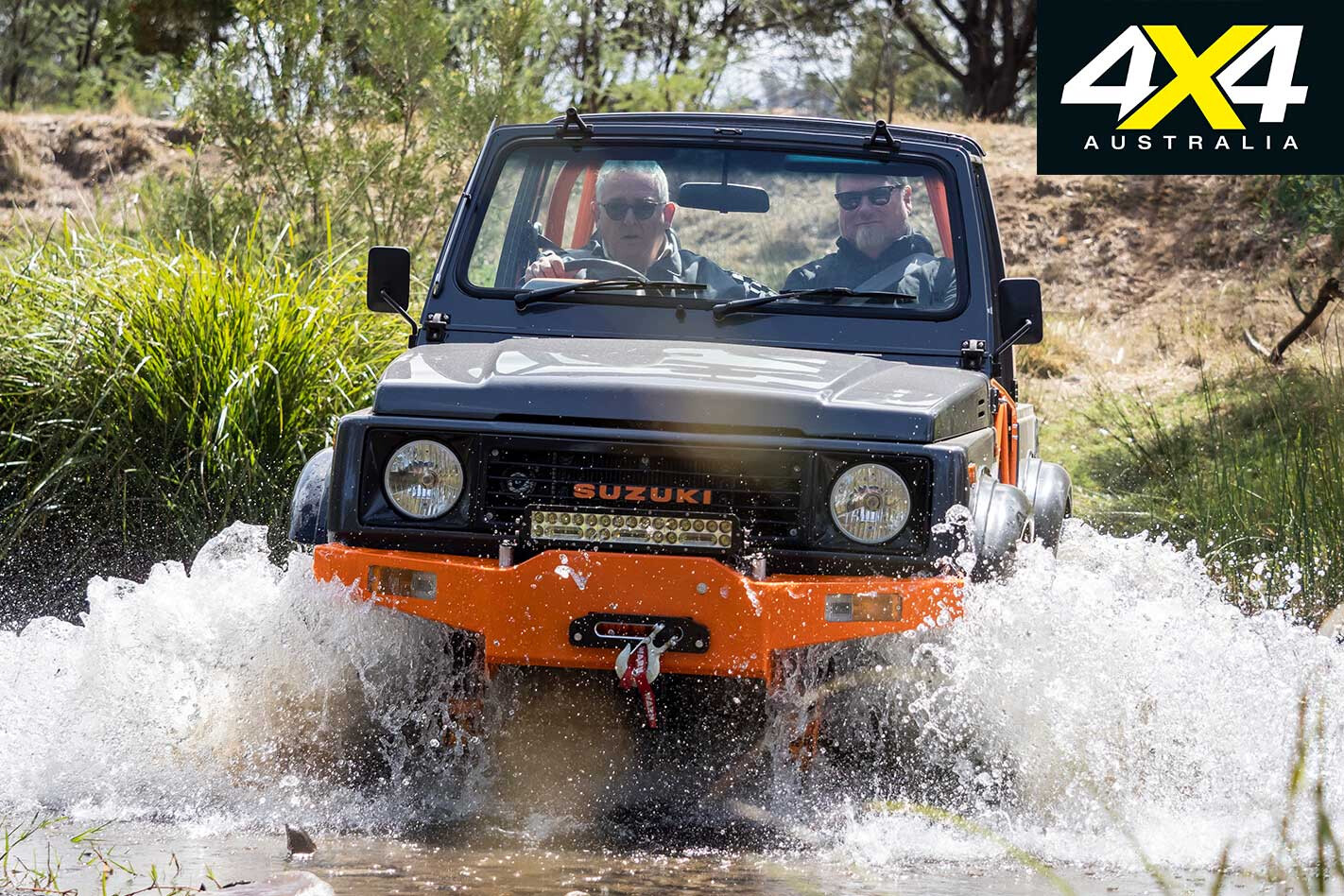
The Sierra’s chassis was cleaned up, painted and fitted with new bushes in readiness for its revamped, rebuilt and bigger capacity hardware. Alan says he’s tried all the readily available suspension kits for leaf-sprung Suzukis and none of them really get it right. With this experience he developed his own leaf packs under the Seriously Suzi brand and, after driving Jaffa around the paddocks, we have to say he’s definitely nailed it.
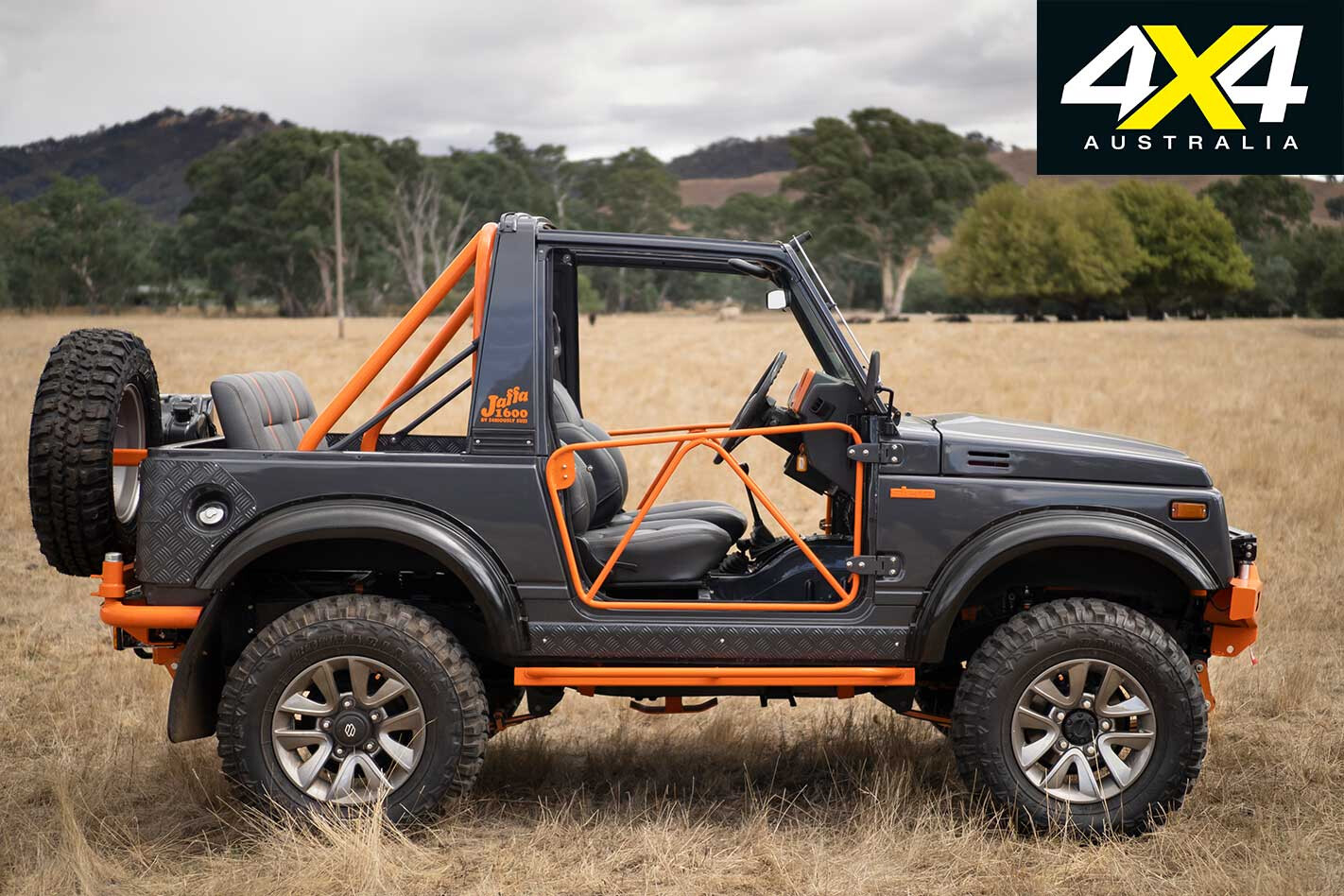
Leaf springs under a lightweight, short-wheelbase car tend to produce a bouncy, harsh ride for passengers, but the Seriously Suzi kit under Jaffa is supple enough to soften the ride and allow a modicum of axle articulation, while being sturdy enough to handle on the road.
The springs are matched to new shackles, shocks, bushes and bump stops for a fully fresh setup. The original diffs were rebuilt and fitted with new wheel bearings and brakes, before the Suzuki Vitara alloy wheels and 235/75R15 muddies were fitted to each corner to get it rolling again.
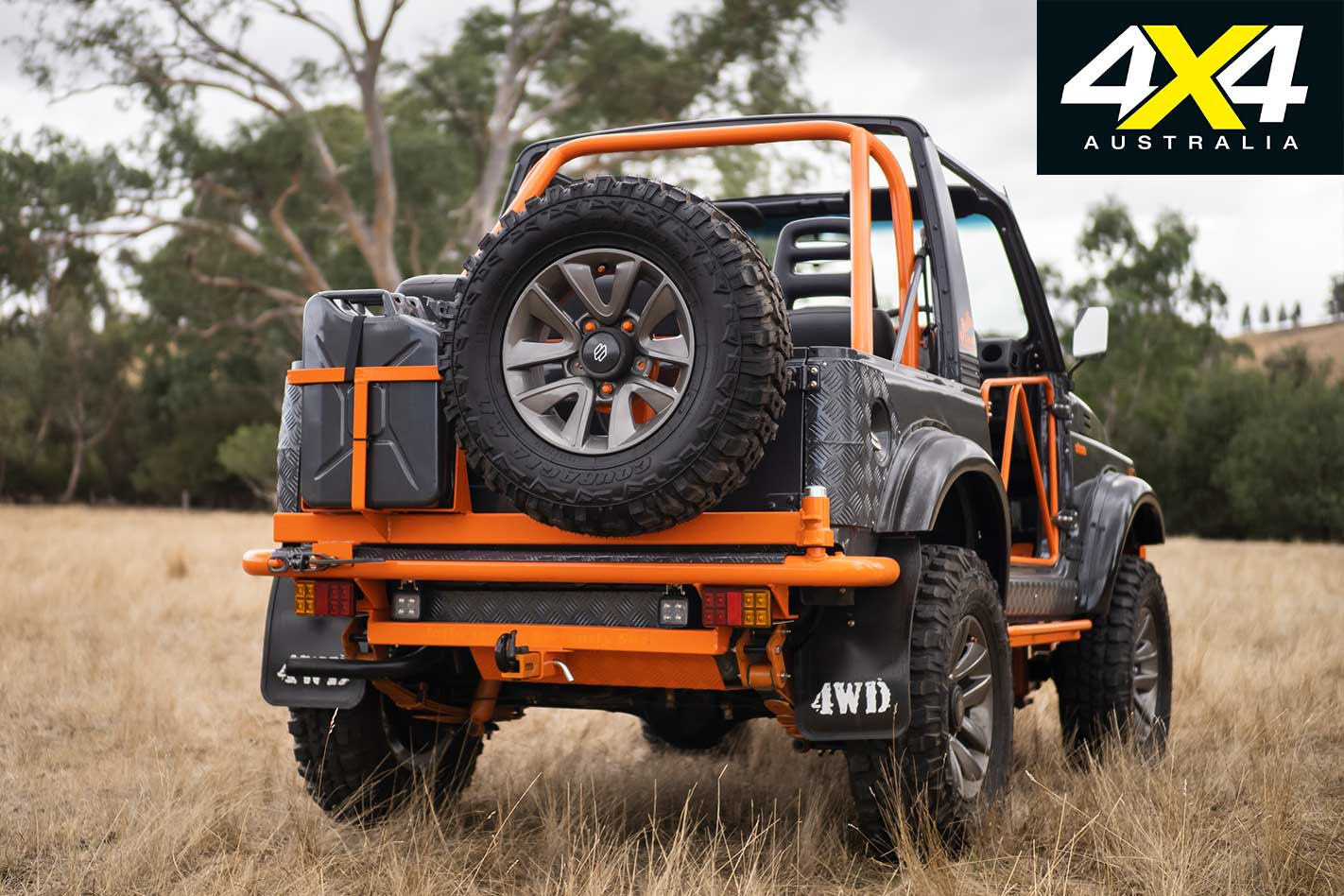
Removing the lightweight body tub from the chassis made it easier to engineer the front and rear bars and rock sliders. These are all Seriously Suzi parts, and the front bar mounts an Ultra Vision light bar and a Warn Tabor winch with Dynamica line. The rear bar incorporates a swing-away wheel carrier for the spare tyre. The hitch under the rear bar isn’t a tow hitch but is simply there to mount a recovery point.
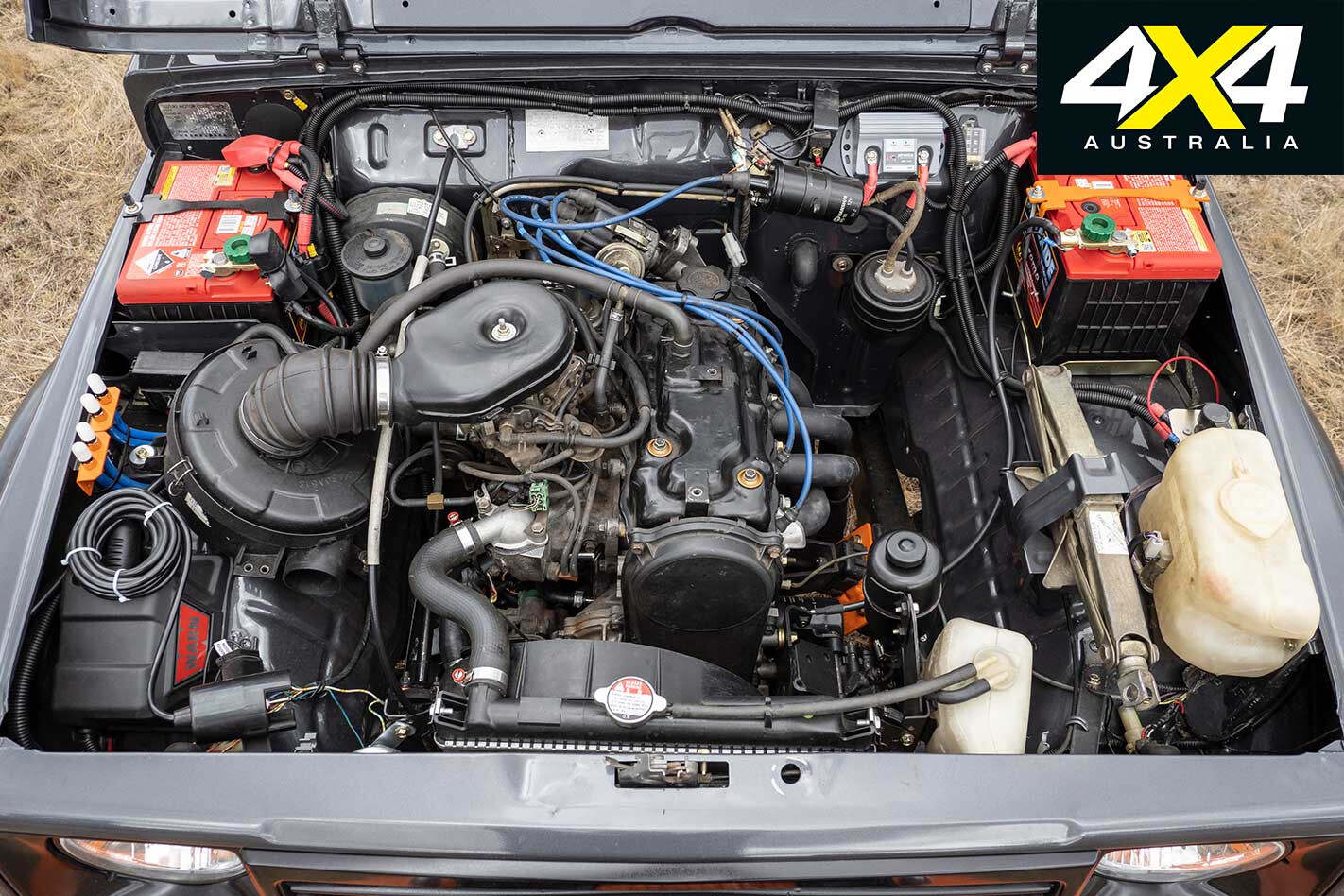
The bare chassis also makes life easier when working on the mechanicals. For Jaffa, that involved a ‘big block’ engine swap. The Sierra came out with a little 1.3-litre four-cylinder petrol engine, but Alan wanted more cubes.
He threw caution to the wind and fitted a monster 1.6-litre mill yanked from a Suzuki Vitara which, when mated to the five-speed gearbox, is sure to step up the car’s highway performance. Alan says it’s a fairly straightforward swap but one that really improves any Sierra, even though there’s only a handful of kilowatts difference between the two engines.
The added horsepower of the engine is truly unbridled thanks to a set of Redback exhaust extractors and sports exhaust system that give Jaffa a rorty note. A new radiator, clutch and all ancillaries help to complete the rebuild and make the Sierra better than new.
Also better than new is the refurbished body. There mightn’t be a lot to it, but it was massaged back into shape and scored a set of Seriously Suzi checker-plate protection panels before it was hit with the fresh coat of grey.
All the badges and body plastics were colour-coded in either grey or orange, and any items in poor condition were refurbished or replaced with new or better ones. The headlights were updated with halogen replacements for better night vision, while LED lights are fitted at the back. Flexible flares are fitted to cover the oversize mud terrain tyres.
The tube doors were made in-house at SS and will get some canvas covers to match the soft top and offer protection for occupants in inclement weather. There’s a Seriously Suzi roll bar/hoop for added protection, just in case anyone decides to roll this Jaffa down the aisle.
New seats, carpets and full re-trim complete the interior and add some comfort to what is basically a very utilitarian cabin. It’s all weatherproof for when the owner is enjoying the Sierra sans roof and full doors, appreciating the full open-air driving experience.
A ground-up, turn key rebuild like this doesn’t come cheap once you factor in the purchase price of a second-hand Suzi and all the labour involved. It can be made considerably more affordable depending on the car you find and how much of the work you can do yourself.
If anyone is thinking about undertaking such a classic Suzuki 4×4 rebuild, then it’s nice to know that people like Alan and Seriously Suzi have already done the hard yards and have the products and knowledge to help you get it done right.
We’ll be keeping a close eye on the Seriously Suzi workshop to see what they come up with for the new Jimny, and we’re sure many of those lucky enough to score a new one will be too.
LDV and Great Wall both registered solid sales growth this month, indicating there may be a shift in public perceptions on budget utes.
LDV posted a strong result, with its T60 dual-cab registering a 27.9 per cent monthly increase in sales and a 14.5 per cent YTD spike (compared to 2018). Great Wall posted a monthly increase of 19.6 per cent and YTD growth of 61.2 per cent.
This growth has gone against a consistent trend this year, which has seen the majority of 4×4 models record poorer sales both month-to-month and YTD.
In fact, the LDV market was down by 1904 sales compared to the same month last year (a drop of 9.0 per cent).
“The Australian market has seen the same trend throughout 2019, resulting in an overall decrease of around eight per cent for the first five months of the year,” Tony Weber, chief executive of the FCAI, said. “We have attributed this trend to known market factors such as an economic downturn, drought, political events, the tightening of financial lending and lack of confidence in the market.
“Now that the Federal election has been finalised, we are optimistic that the market will improve over the next few months,” he said.
It was business as usual atop the monthly 4×4 sales charts, with the Ford Ranger leading the Toyota Hilux for the second month in a row. When combining 4×2 and 4×4 vehicles, the Hilux and Ranger remain the best-selling vehicles on the overall market.
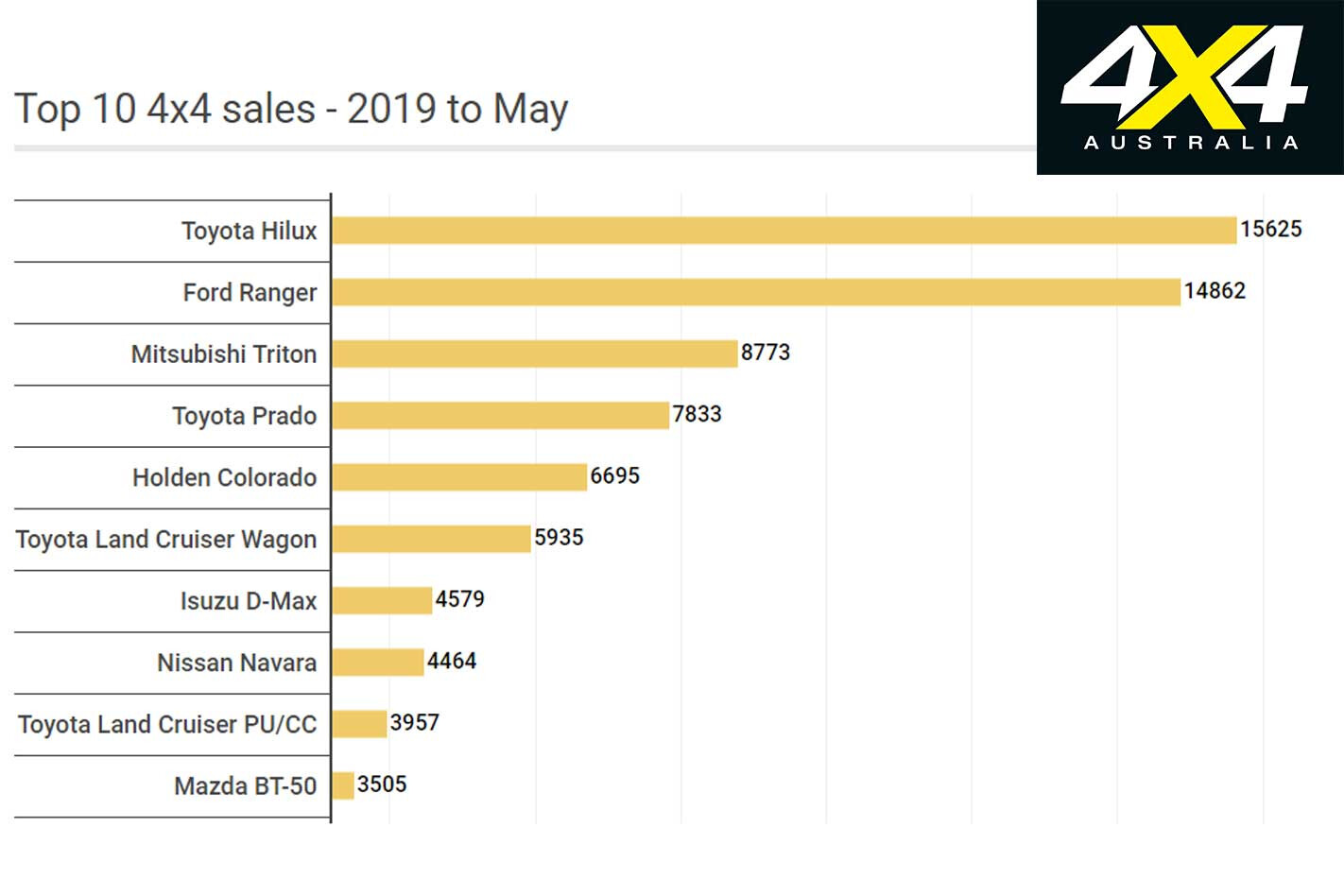
20 Best-selling 4x4s in May 2019
| Rank | 4X4 | Units Sold |
| 1 | Ford Ranger | 3604 |
| 2 | Toyota Hilux | 3137 |
| 3 | Toyota Prado | 1776 |
| 4 | Holden Colorado | 1515 |
| 5 | Toyota LandCruiser wagon | 1399 |
| 6 | Mitsubishi Triton | 1126 |
| 7 | Isuzu D-Max | 998 |
| 8 | Toyota Land Cruiser PU/CC | 902 |
| 9 | Nissan Navara | 883 |
| 10 | Volkswagen Amarok | 737 |
| 11 | Isuzu MU-X | 710 |
| 12 | Mazda BT-50 | 693 |
| 13 | Ford Everest | 360 |
| 14 | Mitsubishi Pajero Sport | 339 |
| 15 | LDV T60 | 307 |
| 16 | Toyota Fortuner | 289 |
| 17 | Jeep Grand Cherokee | 277 |
| 18 | Holden Trailblazer | 266 |
| 19 | Range Rover Sport | 200 |
| 20 | Nissan Patrol | 195 |
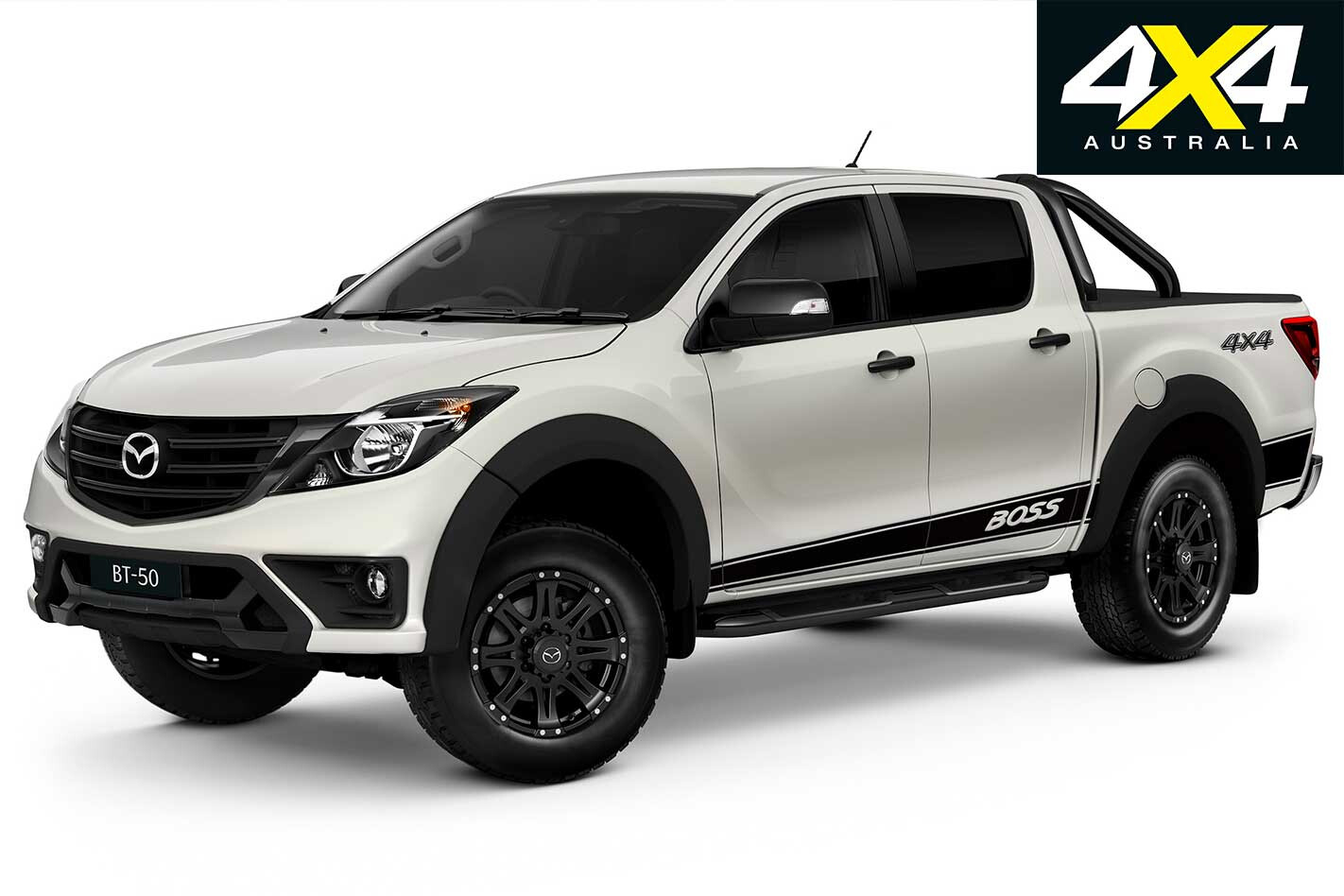
MAZDA has added a new sound system and black gloss accessories to its range-topping BT-50 GT and called it the BT-50 Boss.
That sound system is an all-new Alpine S-Series unit that utilises lightweight yet robust carbon-fibre reinforced plastic (CFRP) components and comprises of eight high-end speakers positioned front and rear.
The monochromatic Boss is available exclusively with the Snowflake White Pearl Mica hue, which contrasts neatly with the blackened grille, door handles, mirror caps, sports bar, side steps and 17-inch black alloy wheels. Further differentiating it from the GT is the ‘Boss’ decal running the length of the body.
Other than that the Boss is business as usual and shares everything else with the GT model, including the 3.2-litre inline five-cylinder engine running at 147kW and 470Nm. The Boss is only available in 4×4 configuration and with a six-speed automatic transmission.
“The new Boss grade amplifies the tough ute’s looks and adds quality equipment to improve the ownership experience,” said Mazda Australia Managing Director, Vinesh Bhindi. “Adding the Boss grade to our line-up gives customers the option to purchase an already customised, accessory loaded Mazda BT-50 that will stand out from the crowd.”
Despite the current BT-50 having a five-star ANCAP safety rating, it still lags behind some of its immediate competition (Ranger, X-Class and soon to be Hilux) due to the lack of safety tech such as AEB.
Mazda – much like Isuzu Ute Australia last month (of which it will share its architecture) – remains tight-lipped on its next-gen model.
The Boss is available with a driveaway price of $55,990.
Jeep’s Blackhawk treatment has made a comeback for the 2019 Jeep Cherokee and Jeep Grand Cherokee model range, in the form of the special edition Night Eagle.
Based on the Cherokee Longitude and Grand Cherokee Laredo – the base AWD variants of both line-ups – the Night Eagle package brings black styling elements to both models, with the Grand Cherokee receiving additional black interior treatment.
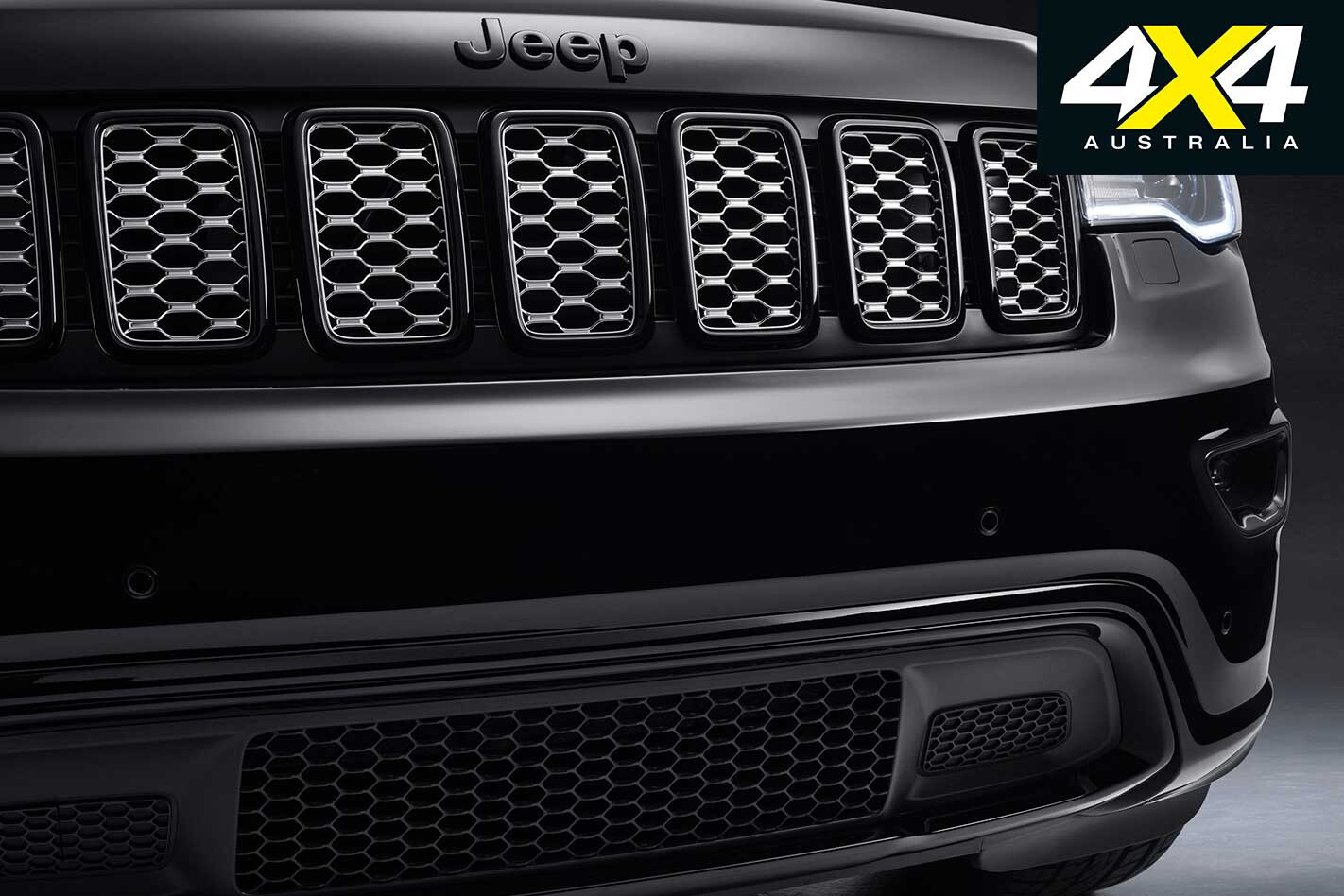
The Grand Cherokee Night Eagle gets the black treatment on its 20-inch wheels, grille surround, fog-light and tail-light bezels, roof mouldings and badging. Deep tint privacy glass is also used. The Night Eagle package adds all-black leather seat upholstery on the inside, with perforated suede inserts and black accent stitching.
The Grand Cherokee also gets the 8.4-inch Uconnect infotainment system with Apple CarPlay and Android Auto, as well as a sunroof as standard, and it can be specified with either the 3.6-litre V6 petrol or 3.0-litre V6 diesel.
The Cherokee Night Eagle receives similar exterior treatment with 18-inch wheels, a gloss-black Jeep grille surround and lower front fascia insert, along with black roof rails and badging. On the inside it gets piano-black trim pieces for the steering wheel bezel, climate control panel and door applique. The Cherokee comes equipped with the “Longitude Technology Package” that features adaptive cruise control with stop and parallel perpendicular park assist.
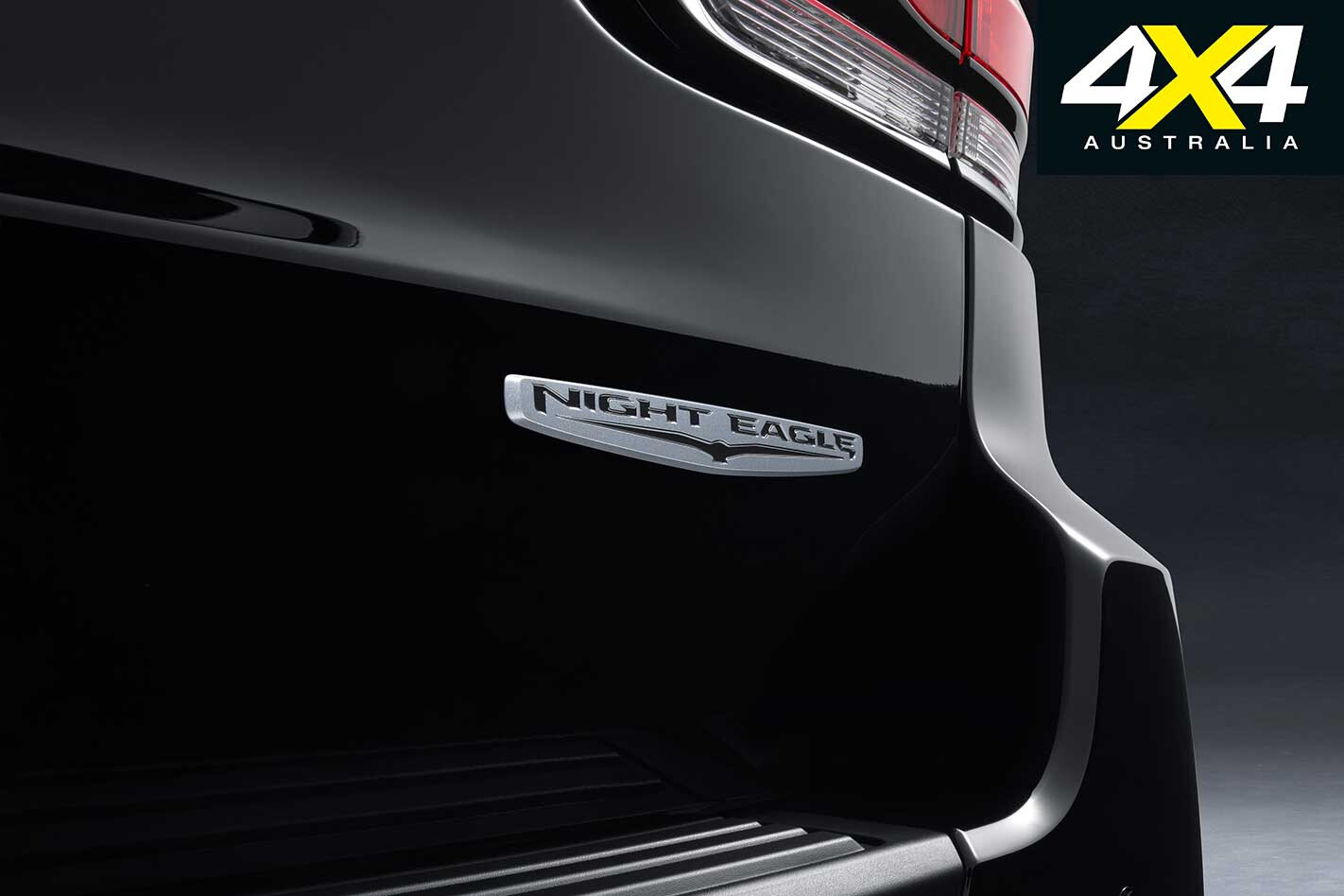
Prices for the Grand Cherokee Night Eagle start from $58,450, with the Cherokee Night Eagle’s price starting at $45,150. According to Jeep Australia, the Night Eagle package brings $10,400 and $6400 worth of extras to the mix respectively.
“Based off the most affordable AWD variants of both nameplates, the Night Eagle special editions provide not only a stunning and trendy look but also a very high content value to the customer,” said Guillaume Drelon, director of brand and product strategy for Jeep Australia.
THE LAND ROVER Defender has been the vehicle of choice for conservation work in Africa for a good chunk of recent history due to its no-fuss durability, with Land Rover being the official partner of wildlife conservation charity, Tusk, for 15 years.
So it makes sense that Land Rover chose to show off its upcoming model in Kenya, by supporting Tusk in its most recent lion conservation initiatives.
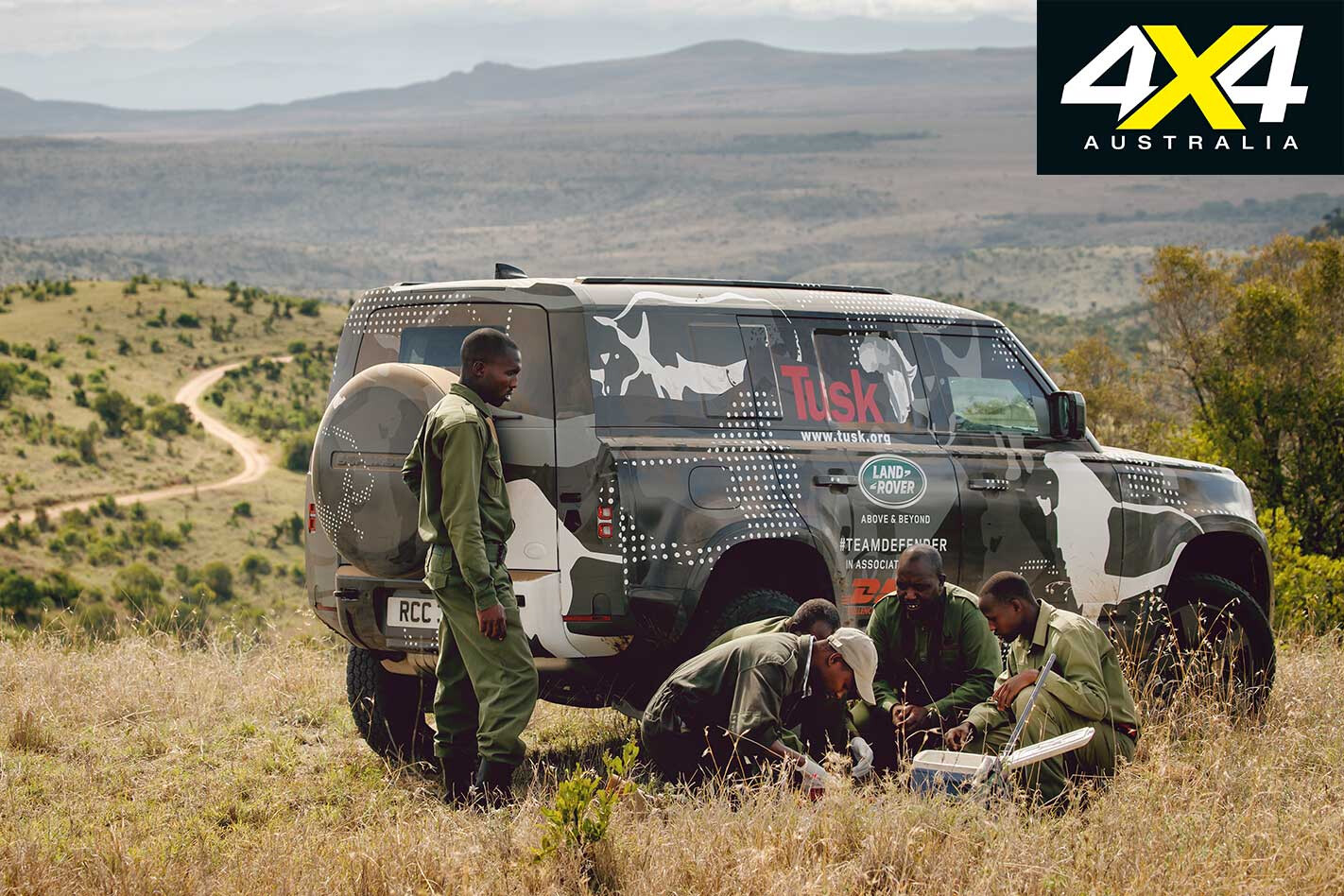
The prototype of the latest incarnation of the classic off-roader was tasked with navigating Kenya’s 14,000-hectare Borana Conservancy, the domain of a variety of terrain – flat plains, rutted tracks, rocky inclines and river banks – to track radio-collared lions and transport supplies. The initiative aimed to shine a spotlight at the critical situation faced by lions across Africa. Sadly, fewer than 20,000 lions now live in the wild.
“We are now in the advanced stages of the new Defender’s testing and development phase. Working with our partners at Tusk in Kenya enabled us to gather valuable performance data,” Nick Collins, Vehicle Line Director, Jaguar Land Rover, said. “The Borana reserve features a wide range of challenging environments, making it a perfect place to test to the extreme the all-terrain attributes of the new Defender.”
As can be seen in the above gallery, the 2020 Defender test mule wore a unique camouflage devised for the surroundings, as well as an integrated raised-air intake. The Defender was also tasked with pulling heavily loaded trailers.
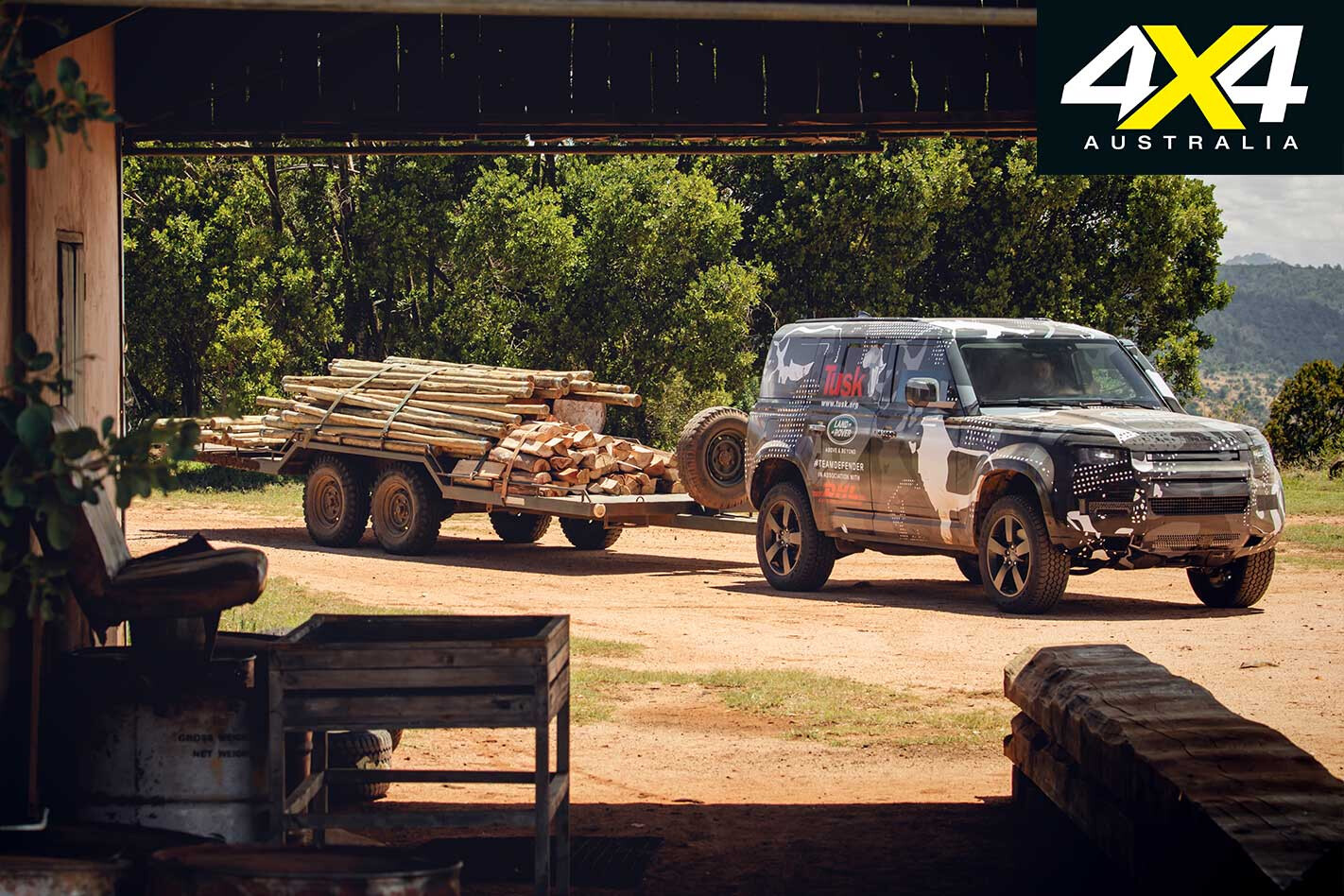
Charles Mayhew MBE, Chief Executive of Tusk said: “This year marks Tusk’s Year of the Lion. Our aim is to raise awareness of the alarming decline in lion populations across Africa.
“Fortunately, within the Borana Conservancy, there are a number of prides of lion and tracking and monitoring their movements across this vast and tough environment is vital in order to protect them and reduce any conflict with neighbouring communities.
“The new Defender took everything in its stride, from deep river wading to climbing rocky trails.”
The 2020 Defender will premiere later this year.