
PATIENCE is a virtue, but impatience gets you places faster … for better or worse. In the case of accessing your modern, electronically-controlled, drive-by-wire 4×4’s power, there is plenty hidden beneath the shiny bonnet; so, why does it take so long to be served to the driven wheels?
Lag. Yep, delays, lulls, even a hiatus from the time you stomp your right foot to the time needed to use your neck muscles to forcefully hold your head forward while your chosen rubber flicks gravel out of the rear end.
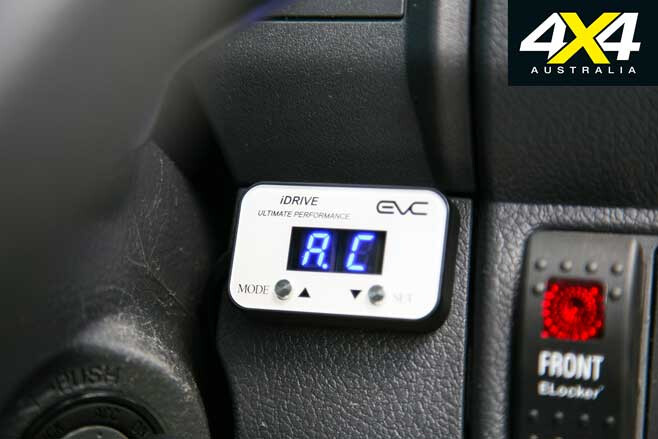
These unwelcome and unnecessarily annoying delays (generally) revolve around three sources: throttle lag, turbo lag and auto transmissions (if you have one). It’s the former that I’ve been fooling around with on my Troopy for almost two years by fitting an iDrive throttle control system.
While the inner workings of an iDrive are indeed electronically controlled, the end workings of the unit are simple. That is, to speed up or slow down the reaction times between your vehicle’s throttle pedal and the effects you are wanting from it.
The lag between pushing my foot and feeling the big lump of vehicle move can easily be controlled by the iDrive. Setting it to lessen the lag returns a faster reaction for that power to be delivered to the wheels. Changing those settings to increase the lag time provides a slower response time, or increased wait, between action and reaction.
There are occasions when both shorter and longer lag times can be desirable, and it must be stressed that neither option changes the amount of power or torque your vehicle can develop. The iDrive simply changes the wait time for the given power to react.
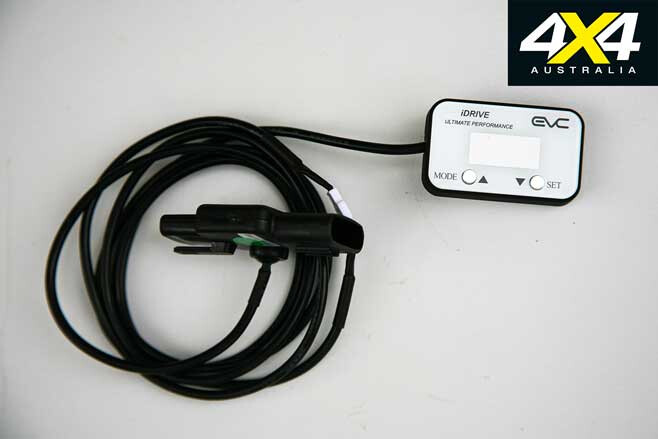
Before you ask, it’s not just as simple as pushing your foot harder, faster, softer or slower on the pedal; we are adjusting the sensitivity of the pedal and allowing you to access the power how you want it, either faster or slower, from your electronically operated drive-by-wire system.
I was initially nervous at playing around with my 4×4’s electrical system, but fitting the iDrive was a no-brainer: simply unplug the accelerator pedal, plug in the iDrive system and re-plug the O/E pedal into the iDrive to make a piggy-back system. Routing the cable and sticking the tiny control panel to the dash took longer.
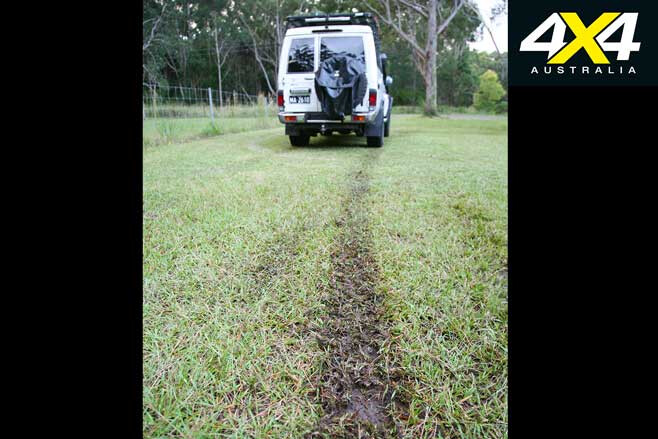
I admit to being all gung-ho when I first tried driving my Troopy with the iDrive kit fitted; I turned the performance setting (Ultimate mode) to max and accidentally laid big skid marks on my lawn. As I’d made the accelerator so sensitive, even light pressure poured maximum power into the driveline and had the rubber churning sods of grass sky-high. I’d simply made my accelerator too touchy, rendering it undriveable in that situation. Dialling the settings down to more moderate sensitivities, along with ‘desensitising’ the throttle into Eco mode, returned a massive amount of difference in throttle response.
Then there’s Auto mode, which is the best part of this unit as it seemingly returns a perfect ‘all-round’ accelerator feel by altering throttle performance based on the pressure applied to the pedal. Over the past year with the iDrive I’ve spent the majority of time in Auto mode, a bit of time in Ultimate mode, and dialled down to Eco mode for off-road driving. Just like a good suspension system, the iDrive takes out the spasmodic bumping of the accelerator; instead delivering a smoother drive experience via less responsive throttle.
It’s important to clarify that the iDrive isn’t a performance chip and it doesn’t remap your ECU or change turbo boost. Rather it alters throttle tuning, response or sensitivity to suit the type of driving you want, and it can be modified at the touch of a button depending on terrain or drive situation.
RATED Available from: www.idriveaustralia.com.au RRP: $299 We Say: Perfect throttle-tuning tool for modern vehicles
WE ALL WANT to escape our everyday lives and explore this mighty country. A weekend adventure is often within reach but, really, readers of this magazine would all like to go off-grid for far longer, something that owner Joe Spelta does as often as he can. In fact, Joe’s escapes can be up to a couple of months if he really wants, thanks to his adventurous spirit and his mega tricked-out Land Cruiser 79 Series ute.
Built up from a wish list created by Joe’s son Mark, this is a rig that makes any destination possible and delivers its ageless adventurer there and back again comfortably – and reliably – every single time he heads out to explore. Yep, it’s probably every Aussie off-road tourer’s ultimate dream turned tough, unstoppable reality.
From dream to reality
ALL GOOD things start with an excellent idea and, for Joe’s dreams of exploring the many remote and spectacular parts of his Far North Queensland backyard, that idea was a tough touring vehicle built specifically for his needs.
This meant a rig that was only used for adventure and was always ready to go on the next one, no matter how short the notice. After all, as Mark says, when you’re retired and still living life large, you don’t want to waste time messing around for a week sorting out a list of gear to take; it simply needs to be already there and ready for either a weekend or, in Joe’s case, a couple of months, as Mark explains.
“He goes whenever he wants; he’s retired,” he says. “He’s owned a business all his life so he’s finally retired and he just goes touring up the Cape whenever he needs to; he loads up and gets going. He just wanted something that was fully take-able and comfortable and easy to get through anything.”
The father-son duo laugh when I ask if any other vehicle was considered.
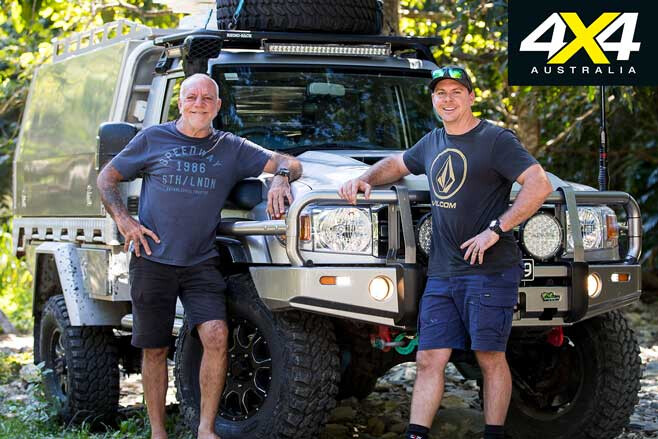
“No,” says Joe. “It was always going to be a Toyota. We have owned others in the past and it’s just knowing how tough they are – it was a clear choice.”
Land Cruiser 79 Series are, indeed, bloody tough, but that didn’t stop Mark scheming up a list of off-road touring enhancements to ensure that on those occasions when he didn’t accompany Joe he knew his dad would be able to safely and comfortably tackle the solo remote adventures he loves so much. And so it began.
No holds barred build
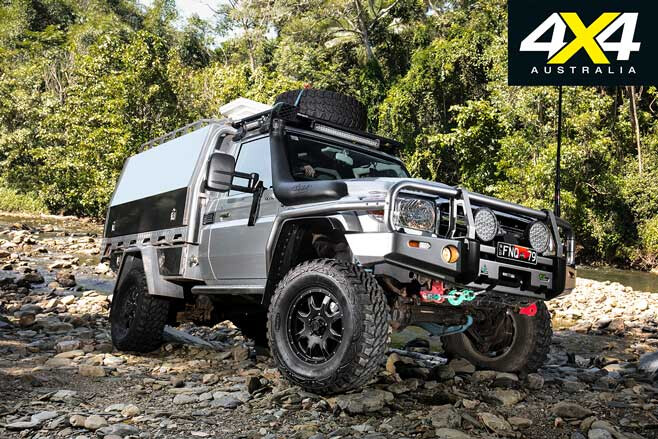
WHEN you’re creating a vehicle for what can often be solo adventures it needs to be incredibly reliable and bombproof, especially in terms of off-road capability and ease of use when in remote areas. To this point – and after plenty of research – Mark and Joe went for probably the ultimate modification: the fitment of portal axles courtesy of Marks 4WD Adaptors.
“We really read up on it [the conversion] and did our research. Just having that extra clearance and widened track; it’s a huge change to this vehicle … we just loved it and thought, yep, we’ll go with that on this one.”
The Cruiser now rides on a 140mm wider track, and the portal axles combine with a two-inch lift (courtesy of Ironman 4×4 Foam Cell Pro dampers and matching springs) and those beefy 35-inch ProComp Xtreme MT2 tyres wrapped around a set of satin-black 17 x 8-inch Moto Metal Rims, to give Joe plenty of clearance.
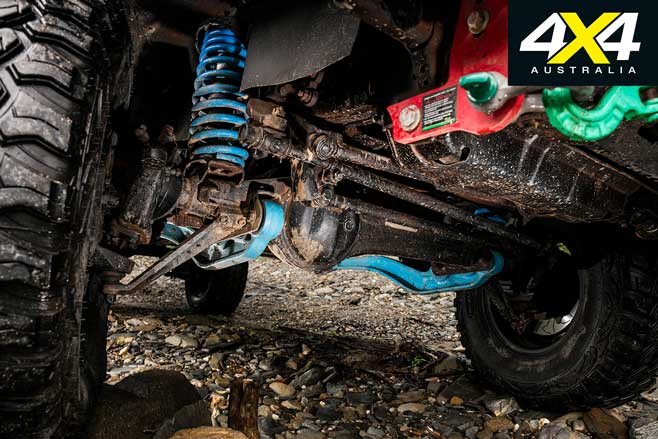
Making it an even easier drive for Joe, Mark added a GM six-speed automatic gearbox conversion (also from the team at Marks 4WD Adaptors) to the Cruiser – another super-smart mod and one that works well with the axle/suspension/tyre combo for the really rugged stuff, while ensuring a relaxed overall driving experience for his old man.
“Mark, he was a bit of a driving force behind me once we started putting it all together, and we thought, bugger it, we might as well go the whole hog,” Joe says. “Those portal axles and the auto; it’s changed the whole vehicle, along with the suspension seat (a Stratos model) and the 35s. I did a Cape trip at the end of last year and when I got back I could’ve just turned around and gone again; it was that comfortable.”
Up for any challenge
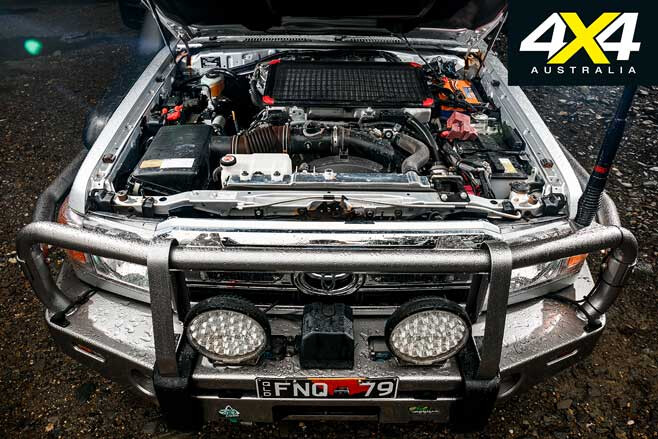
BEING built specifically for Joe, Mark ensured the Cruiser was highly personalised for his dad’s remote-area needs. On top of the rugged drivetrain and suspension, the Cruiser’s 4.5TDV8 engine (fed by an ARB 180-litre fuel tank) has copped a more-than-slight output boost, courtesy of an ECU remap by Power Torque (Victoria), matched with a GSL four-inch stainless steel exhaust (that includes a CAT and resonator). Additional powerplant mods include a Provent catch-can, MV fuel filter and Safari snorkel. So, yeah, it’s not short on grunt.
Ensuring wildlife encounters are confined to Joe spotting them through his binoculars when he’s exploring, the Cruiser is fitted with an Ironman 4×4 Premium Deluxe bullbar and Big Tube side-steps and rails – all of which have been colour-coded in that schmick silver paint.
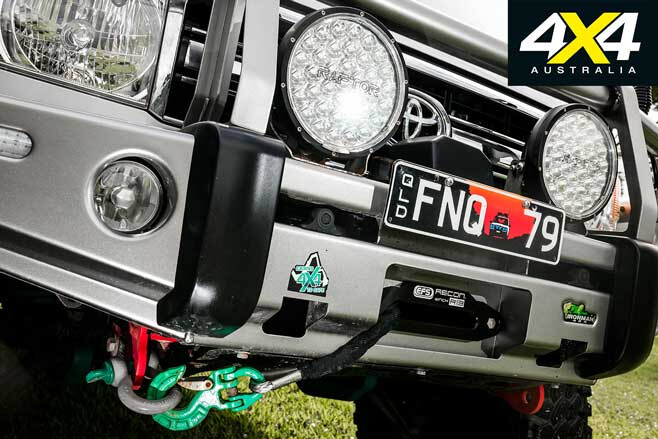
Again, due to Joe’s penchant for solo travel, the Cruiser has an EFS 13,000-pound winch (with synthetic rope) fitted both front and rear, just in case this nigh-unstoppable bruiser does stop. Recovery is further covered by the ARB hydraulic ‘Jack’ stored in the rig.
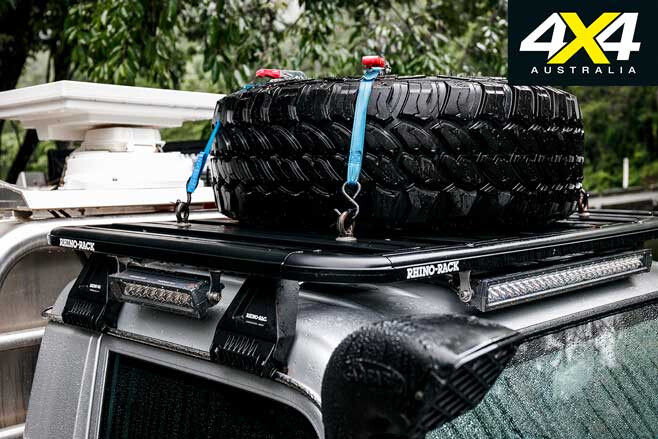
If the tyres need letting down for more traction; well, that’s a doddle, too, thanks to the fitment of one of ARB’s monster dual air compressors (with air tank). Atop the bullbar is a set of seven-inch LED spotties, with more illumination from a 135-watt single-row LED lightbar that is affixed to a Rhino-Rack Pioneer platform rack (along with a set of MaxTrax recovery aids and the satellite TV dish). In a clever nod to practicality, there’s also two side-mounted 30W LED lightbars – one above each door.
Powering all this is a mini power station of electrical accessories including three 110amp deep-cycle batteries and one crank-start battery. There’s also a host of excellent Redarc gear here – a 1000W inverter, 40amp DC-DC charger and battery management system – to keep an eye on all that current running to and fro.
Add in a number of 240V charge-points and external Anderson plugs for when Joe uses a solar charging setup and it’s not hard to laugh in understanding when Mark jokes that his dad “doesn’t need a generator!” With this much electrical grunt, a few months away would be a comfortable experience for sure. Speaking of comfort…
A man and his mobile castle
THE CRUISER’S task of delivering Joe to and back home from his many trips also expands to ensuring he is incredibly comfortable while out exploring in the Cruiser (and the quad he tows in a trailer behind it).
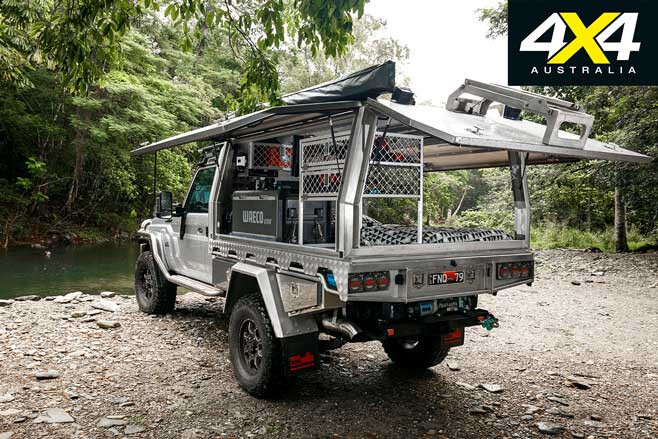
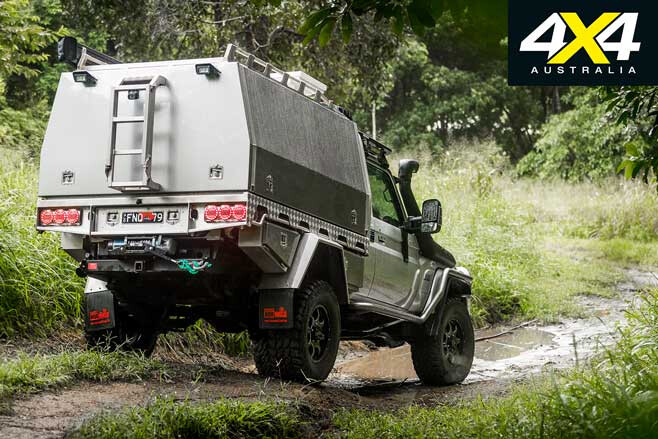
For the ‘comfort’ part of this mighty build, you just have to sit and stare at the amazing amount of thought and detail that has gone into designing the custom rear tray and canopy – it has everything Joe needs for as long as he wants to escape civilisation.
The tray/canopy combo (with central locking) is the product of the team at Norweld Cairns, and this three-door Deluxe jobbie is full of trick features specified by Mark and Joe. Open up the doors of the canopy (gas strut-assisted, of course) and on the driver’s side of the canopy is Joe’s bed – like everything else in the Cruiser, it’s always set up and ready for use – with the power accessories nestled against the front wall of the canopy behind his pillow.
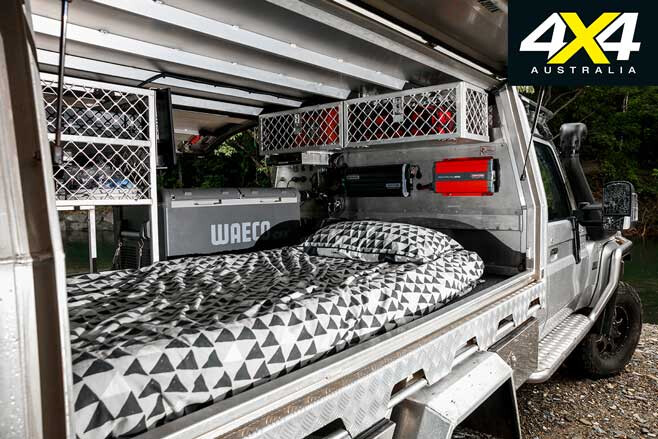
Above the Redarc equipment and the row of batteries is a full-width shelf with mesh door that holds an ARB first-aid kit, blankets and other gear. Opposite Joe’s bed is the big 95-litre Waeco CFX fridge/freezer, with plenty of room above it for easy opening of the lid for access.
Move to the rear of the canopy and there is a double shelf setup that houses ropes and other recovery gear and, again, it is very easy to access. And that black silhouette against these shelves? That’s an AXIS HD TV/DVD combo that gets its signal fed from a VAST satellite TV receiver (housed in the canopy) via a SatKing ProMax automatic motorised satellite TV dish.
Not a bad way to keep an eye on the footy scores, we reckon. There’s even more storage under-tray as well – a huge slide-out drawer carries plenty of gear, as do the four under-tray toolboxes. Joe will never go thirsty, either, with the 70-litre water tank.
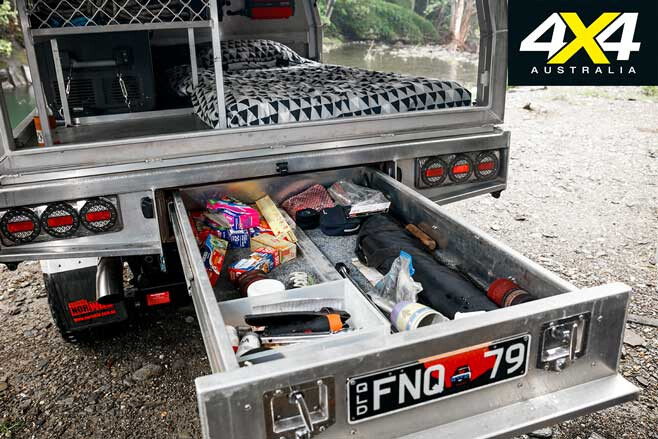
The canopy is a genuine home on wheels, with a few additional benefits for the one-night camps, too, in the form of those sizeable doors, with Joe often not bothering to set up the ARB Batwing awning (he also has sidewalls for it) as the doors give plenty of shade on their own and are a lot quicker just to close up and continue on the next day. That ease and speed of set-up is why he also went for the bed in the canopy, to limit time wasted setting up tents and the like.
The interior is no-fuss as well, but with the essentials needed for a hassle-free trip. Joe gets his music via an Alpine CD/MP3 seven-inch touchscreen multimedia system that also features two rear-view cameras. There’s a centre roof console and an Oricom Compact Dual UHF unit to keep an ear out for other tourers, plus that super comfortable Stratos Suspension driver’s seat.
To focus on fun
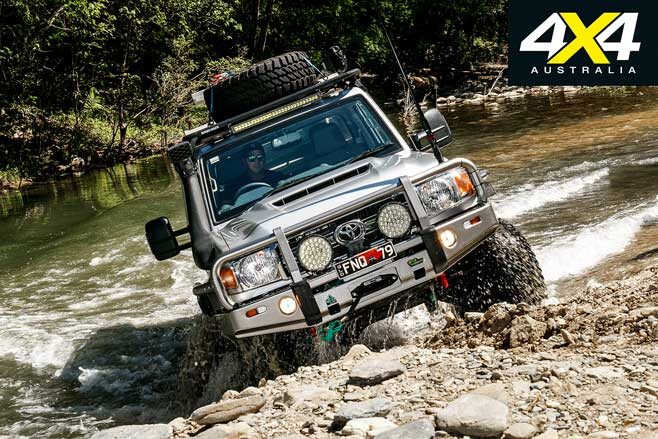
WHEN all you have to do to escape the rat race and head out on an off-road adventure is, to quote Joe, “pack some beer and food in, and then I’m gone” you know you’ve succeeded in terms of building a vehicle that exactly fits your needs.
The very clever build that Mark came up with for his dad now means that the ‘not-so-old fella’ gets to concentrate on just enjoying some of the wild places a rig like this can take you. It was a lengthy process but, again, this dynamic duo has proven that it’s better to take your time and do it properly and finish with exactly what you need. And if exactly what you need is an incredibly rugged and smart modified tourer that allows its owner to just get out there and enjoy the wild side of Australia, then this tough Cruiser more than fits the bill.
THE LEXUS name might be more synonymous with luxury rides that prowl the high streets of the world’s capitals, but a not-too-insignificant number of Lexus owners have been bringing the Lexus GX back to its Prado roots by gearing it up for off-road touring duties.
Lexus has noticed this trend and built an off-road tourer concept known as the Lexus GXOR concept (GX Off-road), based on the Facebook group and internet hashtag #GXOR that owners have been using to tag pictures of their own off-road tourer GX builds.
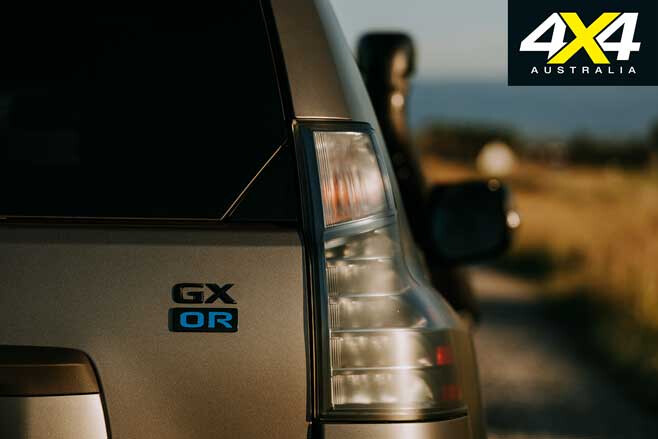
More than just strapping on a set of muddies and calling it a day, Lexus went to town by loading up the GXOR with 4×4 gear without sacrificing too much of the current-generation Lexus GX’s aesthetics.
Not to obstruct Lexus’ domineering spindle grille, the front bumper was replaced with a custom-made item from CBI that neatly holds a Warn 9.5 XPS winch. CBI was also tasked with the fitment of the GXOR’s frame sliders and full underbody armour.
Up top, the GXOR features an Eezi-Awn K9 roof rack that serves as a mount for an Overland Solar panel, MaxTrax recovery boards and a Rigid Industries’ 50-inch LED light bar.
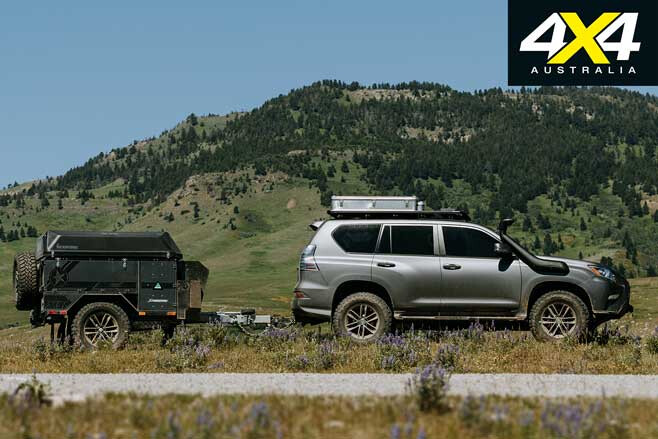
To further improve the GX’s off-road capabilities, the GXOR’s 18-inch F-Sport wheels are wrapped in General Tire Grabber X3 M/T tyres, while its suspension system is redone with ICON remote reservoir dampers and billet control arms with delta joints. A Safari Snorkel was installed to funnel air into its 4.6-litre petrol V8.
Other notable additions include an ICOM 5100A radio, Goose Gear custom drawer system and refrigerator round the back, and a Redarc Tow-Pro brake controller to allow the GXOR to tow a Patriot Campers X1H trailer.
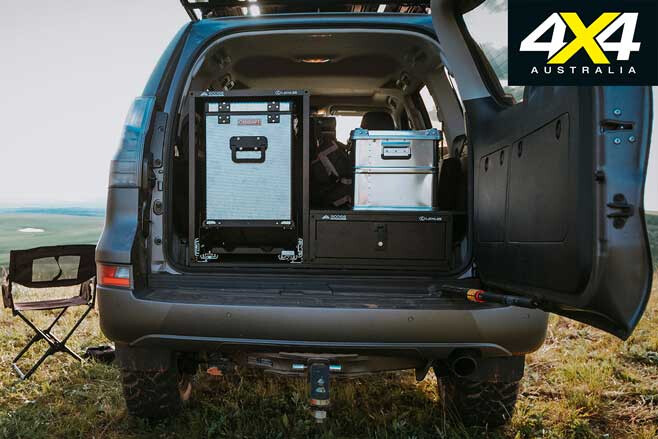
The Lexus GX isn’t available in Australia as it’s built for left-hand drive markets, but its Toyota equivalent, the LandCruiser Prado, is; albeit without the GX’s brawny 4.6-litre petrol V8.
LEAKED photos of the 2020 Mitsubishi Pajero Sport have surfaced, less than a week before its global unveiling in Thailand on July 25.
Surfacing on Philippine automotive website, AutoIndustriya.com, the spy shots appear to be snapped at the brand’s Thailand production facility; the same location production line as the all-new Triton on which the Pajero Sport is based.
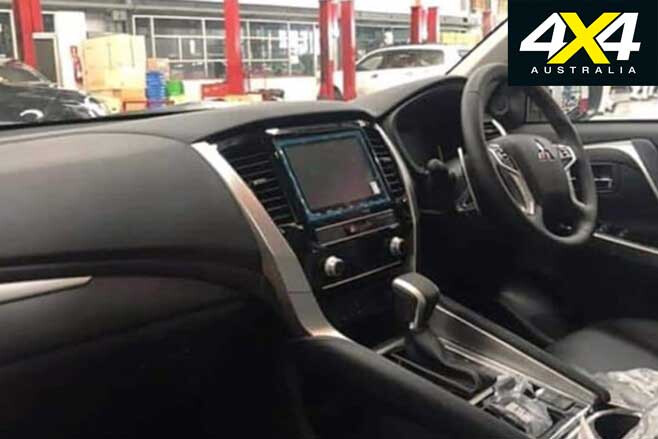
As mentioned last week when Mitsubishi teased the front end, the Pajero Sport will adopt the 2019 Triton’s ‘Dynamic Shield’ design which comprises high-set headlights, a redesigned front grille and repositioned fog lights.
The divisive tail-light shape remains unchanged, though the length appears to be shorter compared to the outgoing model. Alloy wheels can be seen in the spy shots.
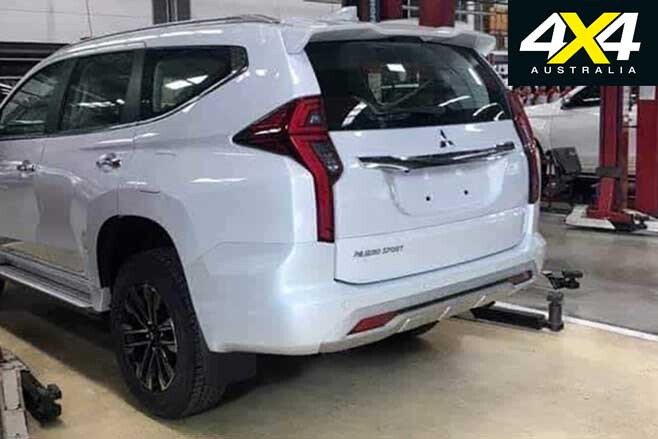
The 2020 Pajero Sport will debut on July 25, so stay tuned to whichcar.com.au/4x4australia for details.
A FAULT with the front seat wiring harness of the MY17 Volkswagen Amarok will send a total of 279 vehicles back to VW dealers.
“Due to a production fault, the front seat wiring harness may be damaged,” the ACCC recall report said. “If the front seat wiring harness is damaged, it may cause local heat damage or cause the front seat to move automatically.”
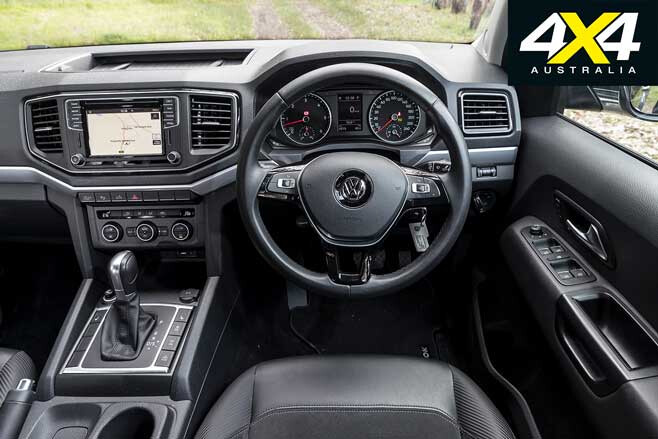
The Amaroks affected by the recall were sold nationally from October 1, 2016 to October 31, 2017. A full list of affected vehicles can be found here.
Owners of the affected dual-cabs will be contacted by Volkswagen, where they’ll be advised on reparation details which will be free of charge.
Owners can also contact the Volkswagen Recall Campaign Hotline on 1800 504 076 (Monday to Friday, 8.30am-8pm AEST).
THE MITSUBISHI PAJERO may be well overdue for a generational overhaul, but for now Mitsubishi has stuck with its ageing off-roader by streamlining the model line-up.
The Japanese brand has officially canned the range-topping Pajero Exceed and sprinkled a pocket-sized handful of updates on its now two model line-up.
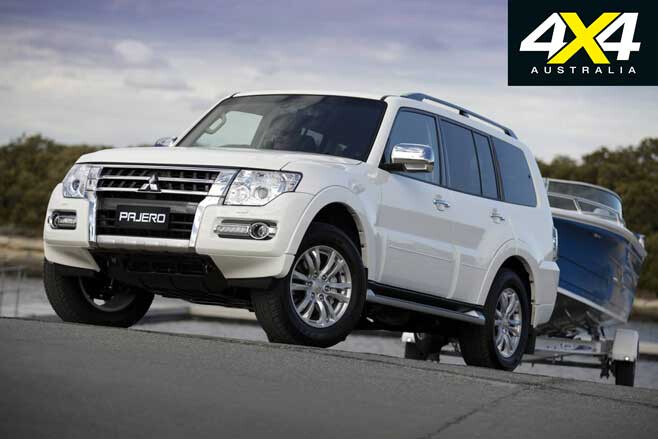
The simplified 2020 line-up now comprises of the base-model GLX and upper-spec GLS, the latter getting a Rockford Fosgate 12 speaker premium audio system with subwoofer. The only other tweaks as part of this update include the addition of an auto high-beam function, HID headlamps with auto-levelling and headlamp washers as standard, to the GLX model.
“We’ve refocused the Pajero range this year by reducing the number of variants, and adding equipment previously only available on the Exceed variant.” Mitsubishi’s Deputy Director of Marketing, Derek McIlroy, said of the changes.
Mitsubishi’s 3.2-litre turbo-diesel engine, last updated way back in 2008, is capable of 147kW and 441Nm and is mated to a five-speed automatic transmission.
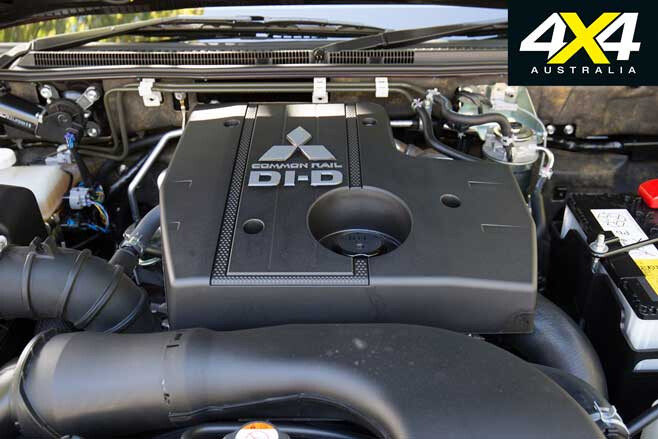
The Pajero features the Super Select II 4WD system, with both models capable in the rough stuff: 36.6° approach, 22.5° ramp breakover and 25° departure angles; and a fording depth of 700mm.
The GLS features 17-inch alloys as standard, while the GLX runs 18-inch alloys.
“The authenticity and capability of the Pajero is what our customers like the most,” said John Signoriello, Mitsubishi Motors Australia CEO. “Pajero drivers know they can depend on it when they take on their next challenge – whether that means heading out to the outback or towing. It’s an iconic part of our Australian product line-up.”
TOYOTA Motor Corporation has inked a three-year joint research agreement with the Japan Aerospace Exploration Agency (JAXA) to collaborate on the development of a manned, pressurised lunar rover.
The announcement comes four months after JAXA, together with Toyota, stated its intention to create a hydrogen-powered wheeled vehicle to cross the lunar surface in 2029 as part of an international project.
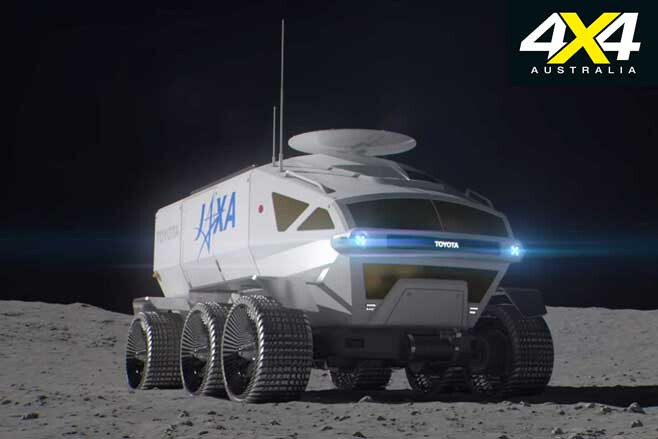
According to Toyota, the three-year programme is slated to start from the fiscal year of 2019, and will be led by Toyota’s newly formed Lunar Exploration Mobility Works department.
The first year of the programme will be focused on identifying the challenges for driving on the moon’s surface and drawing up the specifications for the prototype rover.
Interestingly, Toyota mentions the prototype rover will be “a modified version of a standard production vehicle”. We wonder if a Toyota LandCruiser 200 would be a good starting point?
In the second year Toyota plans to design and manufacture a working prototype, with the third year earmarked for the prototype’s testing and evaluation.
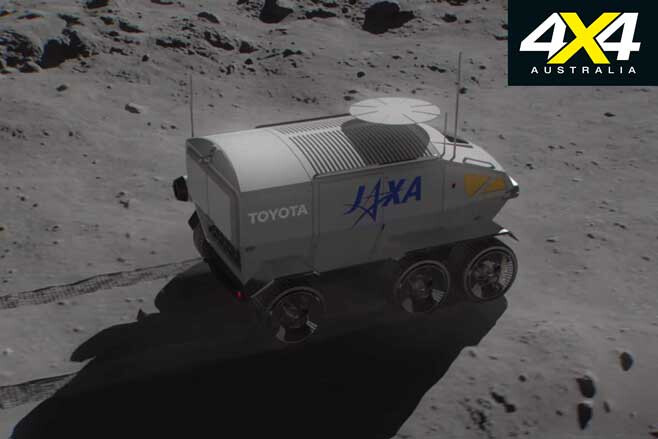
Toyota hopes its rover design will be ready for deployment in 2029 and will be capable of exploring the moon’s polar regions, with expectations that it will be able to utilise the moon’s resources, such as frozen water, to keep it running.
Returning to the moon is a daunting task, but getting a manned lunar vehicle, much less one that would allow scientists and astronauts to work without their space suits, is an entirely different story.
For comparison, NASA’s Lunar Roving Vehicle (LRV), which was nothing more than two beach chairs strapped to a ladder-frame chassis, costed the agency USD$38 million to build.
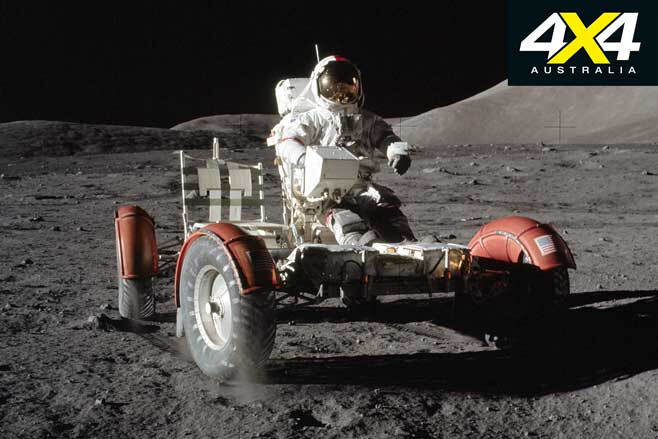
Granted, the LRV was designed and built in less than two years and featured a battery electric drivetrain that could operate in temperatures of -128°C to more than 98°C. Plus, it was able to traverse the harsh lunar terrain peppered with craters and filled with cement-like moon dust.
To top it off, the LRV weighed in at a scant 208kg and could fold into a 1.5m-long and 0.5m-wide package in order to be stowed aboard the Lunar Module.
Likewise, Toyota’s proposed hydrogen-powered lunar rover would face similar technical hurdles such as electronics-destroying static discharge and the ever-pervasive moon dust.
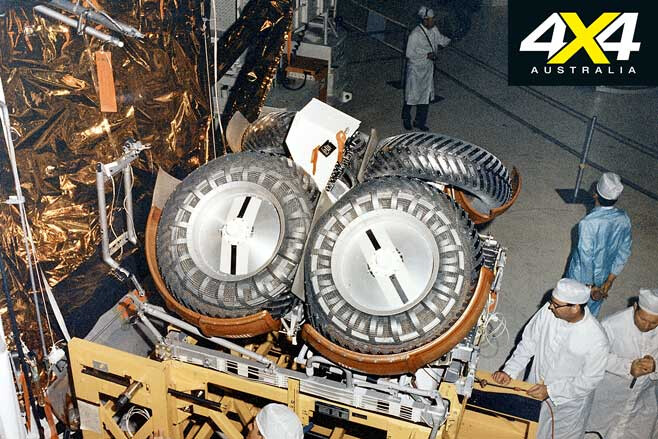
Even though the company is one of the leaders in hydrogen-fuel-cell cars, developing a fuel-cell drivetrain for lunar operations 400,000km away from the nearest Toyota service centre will be uncharted territory for the Japanese car maker.
Adding to that, with weight being one of the primary hurdles of launching an object into space, getting a pressurised lunar rover with vital life-support systems to the moon would be a monumental challenge in itself.
For every kilo of payload a rocket would have to carry, it would need to carry additional fuel which in turn adds more weight to the rocket. This exponential energy-to-mass requirement is how the Apollo space programme ended up riding on the world’s tallest and most powerful rocket ever built.

For now it is too early to tell if Toyota’s Lunar Exploration Mobility Works department will be able to find a realistic solution to JAXA’s goals of sending a lunar vehicle to the moon by 2029, much less build one that would be ready to land on the moon.
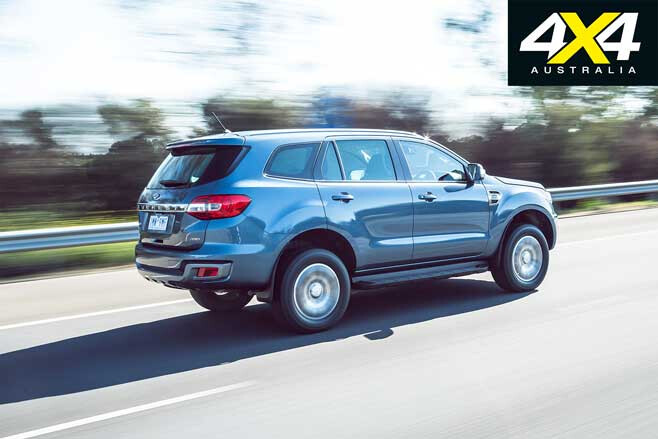
FORD has included Autonomous Emergency Braking (AEB) as standard across its entire Everest range.
AEB with Pedestrian Detection is now included as standard from the base-model Ambiente right through to the range-topping Titanium 4WD, where previously it was only available on Trend and Titanium models.
“The Everest has won many accolades, and we’re proud of that, but we are always looking to add the latest technology and the most advanced features for our customers,” said Ford Australia and New Zealand President and CEO, Kay Hart. “The addition of AEB on every model is part of our commitment to constantly improve our products, services and ownership experiences.”
Put simply, AEB technology assesses road conditions and will step in and apply the anchors when the driver fails to do so.
Last month, Toyota introduced AEB as standard across its Hilux range, but Holden failed to include AEB as standard for its recently refreshed Colorado line-up.
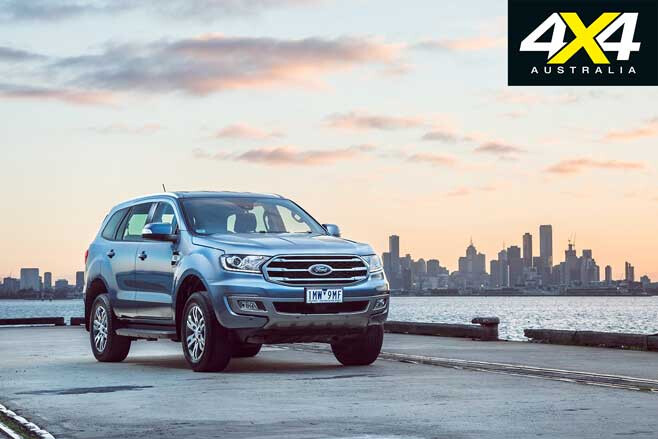
In addition, Ford also revised the pricing for its Titanium 4WD so that it can sit below the Luxury Car Tax threshold. The Titanium is now priced at $72,290 (MLP*).
The updated Everest is on sale from July 2019.
Full range pricing here:
| Everest | MLP* |
| Ambiente RWD 3.2L 6-speed Auto | $49,490 |
| Ambiente 4WD 3.2L 6-speed Auto | $54,490 |
| Trend RWD Bi-Turbo 10-speed Auto | $56,190 |
| Trend 4WD 3.2L 6-speed Auto (7 seats) | $59,990 |
| Trend 4WD Bi-Turbo 10-speed Auto | $61,490 |
| Titanium 4WD Bi-Turbo 10-speed Auto | $72,290 |
*Manufacturer List Price
MY FIRST experience with the Bluewater Macquarie forward-fold camper was in late 2018, when for a week we bounced around a few tracks at Hill End in NSW. It impressed then, so it was good to reacquaint myself with it recently.
Like many forward-fold campers and similar flip-over hard floor (call them what you will) campers these days, the base camper – the chassis, trailing arms, main ‘box’ or ‘tub’ and any ancillary boxes – comes out of China. Like it or loathe it, that is where the market has been heading for a few years now and, sadly, ‘true’ Aussie-made campers at this price are few and far between.
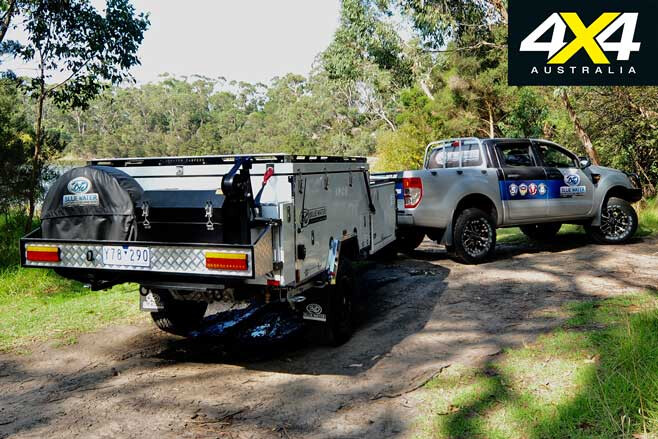
However, while some camper manufacturers import complete units with the tent area, suspension, electrics and features all made in China, Bluewater does a great job of adding some Aussie quality and flare to its campers. For starters, there are high-quality Dexter brakes, hubs and wheel bearings; Lovells coil springs; twin RidePro shocks; Aussie canvas; an Ark XO jockey wheel; and a McHitch 3.5-tonne tow coupling.
There are three campers in the Bluewater range, starting with the Darling which hits the road at around $27,900. The Macquarie is in the middle of the pack with an RRP of $32,990, while the top-of-the-line Lachlan will set you back a few grand more. There are options to add, but all these units come pretty much with everything you need.
The chassis and box seem to be well-made and finished, with a hot-dipped galvanised chassis and the zinc-annealed boxes featuring a two-pack paint job; all of which is finished off with marine-style latches, locks and hinges. The Primal 16 x 8-inch alloy wheels are wrapped in 265/75 R16 tyres that aren’t great but will do the job until you find the time to replace them with a better brand of off-road rubber.
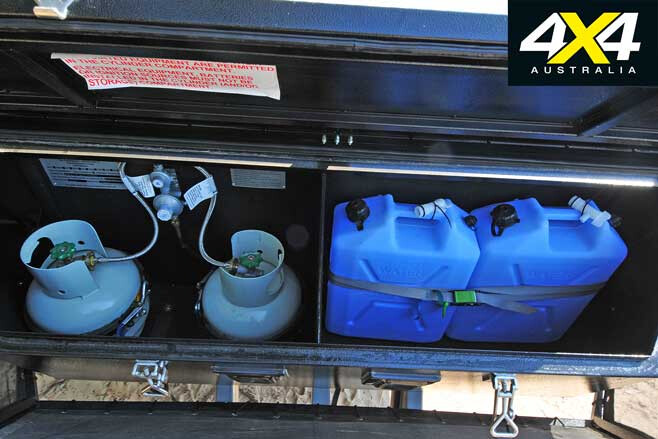
Up the front on the drawbar is a lockable box containing the gas bottles and jerry cans, along with a mesh stone-guard. Hanging off the chassis at the far end is a spare-wheel holder, bin bag and storage box suitable for tools and the like.
Lockers on the near side of the camper are accessible at all times and can hold a fridge on a fridge slide (up to a 95-litre unit will fit). The fridge is an optional extra, though many people undoubtedly already have their own.
There are also cavernous storage drawers and an outside stainless steel kitchen, which is a work of art and features a Dometic three-burner stove with tall, foldout windshields, a sink with a plumbed mixing tap, a drying rack, a couple of drawers for all those cooking utensils, a foldout side bench and a larger foldout breakfast bar behind the cooker/sink area. Gas and water are fed to the kitchen by Bluewater’s unique drag-chain system called ‘snake track’.
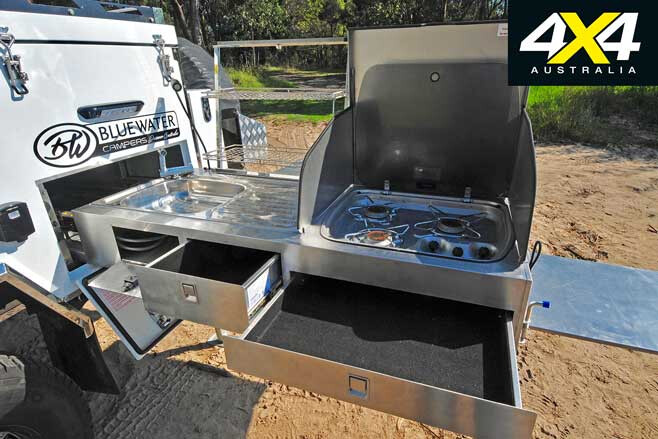
There’s even more storage on the far side of the camper which is taken up by a supplied 10-litre Porta Potti, as well as the hot-water heater which can be set up at the front of the camper to supply hot water to the sink or shower.
The tent and awnings are made using 14oz Wax Converters dynaproofed canvas, while midge-proof Finetex mesh is used throughout. A ‘safari’ roof helps keep the tent area cool in summer, and dry and warm in the cold and wet. All the windows have inside and outside canvas curtains, so you can close off the windows from both inside and out. The windows also have an awning for shade and rain protection.
All the canvas and mesh are sown in Fiji, where Bluewater’s parent company has had a factory making tents, swags and clothing since the 1970s. The quality of the sewing and the seams is as good as I’ve seen, while all the zips are top-quality YKK units. The camper comes with a zip-on awning, annex walls and a 680gsm rip-stop PVC floor, which makes for a large, dry living area. A double ensuite shower room caters for bathroom requirements.
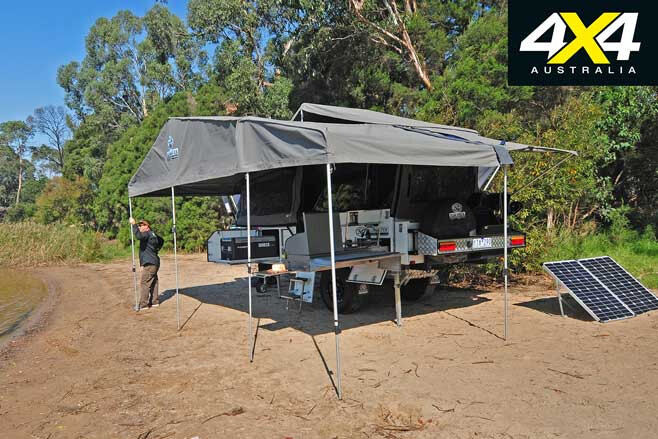
Manually opening the camper is possible, but a hand-winch setup on the front drawbar makes it a lot easier – there’s a rear-mounted winch for closing the camper. For a basic overnight stop the camper can be set up in five to 10 minutes, and add a further 15 to 20 minutes to erect the annex.
Once the camper is set, the large U-shaped dining area is quite spacious, with a fold-down step providing access to the Aussie-made, queen-size, innerspring mattress bed. The seats around the dining area also convert into a double bed, but I’d expect kids or guests to have their own swags in the outside annex area.
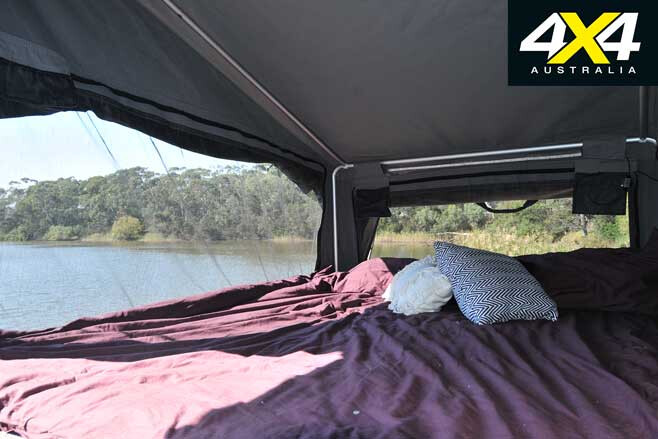
For those keen to break away from the grid, the amount of gas and water you can carry – as well as the electrical system used – becomes vital. Two stainless steel water tanks total 160 litres, while two jerry can holders can easily carry another 40 litres of life-sustaining fluid.
The water tanks are plumbed to the sink and the hot-water connections via a SeaFlo 42 Series pump, a 9.5-litre auto-demand diaphragm unit that provides good water flow. A portable Smarttek 6 continuous hot-water system ensures there’s hot water on demand, while two 4kg gas bottles (two 9kg bottles are optional) ensure there’s plenty of fuel for hot water and the three-burner Dometic stove.
The electrical system on the DC12-volt side will keep you free of mains power for as long as you want. There are two 100amp/hr AGM batteries, a CTEK 250 SA DC-DC charger, and a premium 200W folding solar panel. There are numerous 12-volt sockets and USB outlets for all charging and power requirements, while all LED lights are touch-activated.
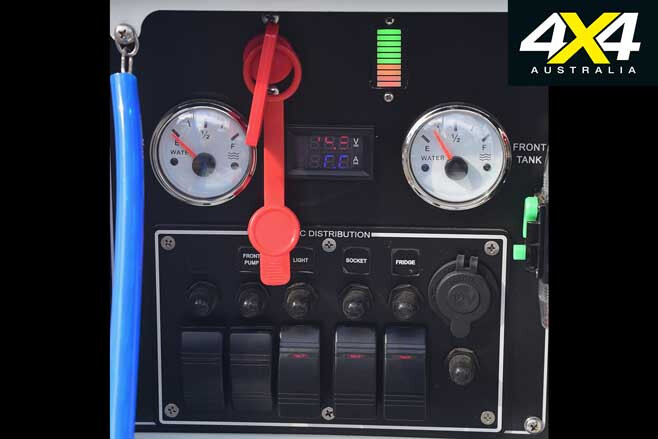
The sound system has an MP5 touch display screen with Sony speakers, which is all managed by a digital control panel that includes a volt meter, battery display, master isolation switch, circuit breaker, and rocker switches for individual control of electrical components.
An optional 240-volt installation includes a 15amp inlet, one 10amp outlet and three double power points (these were included in our test camper). A Projector 21amp, seven-stage battery charger will ensure batteries are well-charged before heading bush.
The unit weighs 1500kg (empty), but with an ATM of 2400kg it sports an impressive 900kg payload as well as an electric breakaway safety unit. We hitched this unit behind a Ford Ranger, which towed it easily; although, we were nowhere near the camper’s maximum load capacity.
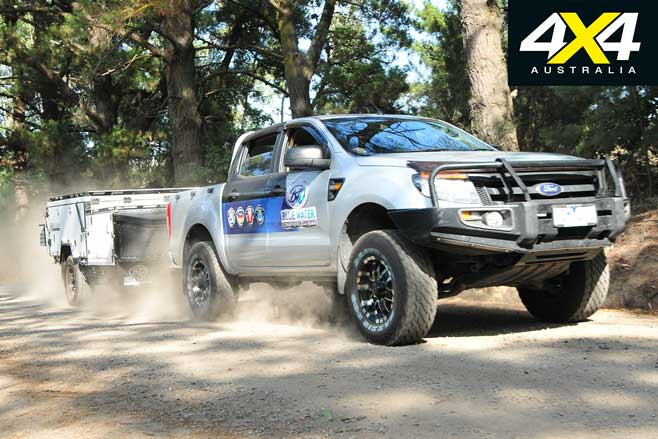
The camper will go most places in the bush, but forward-fold campers have a fairly long drawbar which compromises approach, departure and ramp-over angles, as well as their tracking ability. Still, you’d have to be on a narrow, winding track for it to be a real issue.
The Bluewater Macquarie is a robust, well-thought-out camper that has been optimised for the Australian market via the use of some high-quality Australian components. It would easily suit a couple or small family for that trip around Australia or a weekend jaunt into the nearby mountains.
ROUSH PERFORMANCE unleashed its 2019 Ford F-150 Nitemare on a drag strip, with the 650hp (485kW) ute – in regular cab two-door guise – reaching 60mph in 3.9 seconds. In addition, the ROUSH Nitemare four-door Supercrew took 4.1 seconds to get from 0 to 60mph.
“This makes these trucks the quickest production trucks ever made,” Jack Roush Jr says in the video posted to ROUSH Performance’s YouTube channel.
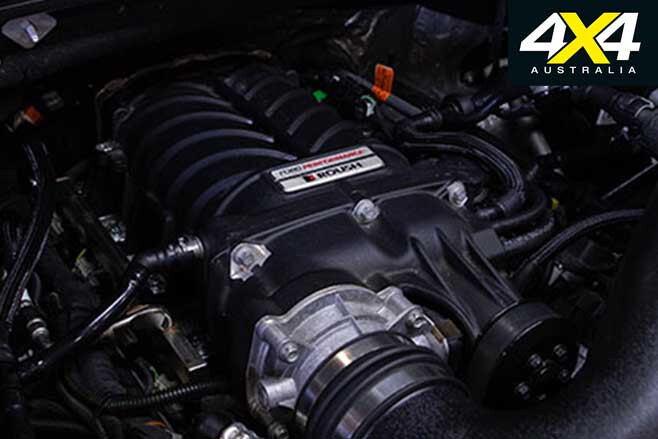
The ROUSH F-150 Nitemare is powered by Ford’s Ti-VCT V8 engine, with a ROUSH TVS R2650 supercharger system extracting 650hp (485kW) and 610lb-ft of torque (827Nm).
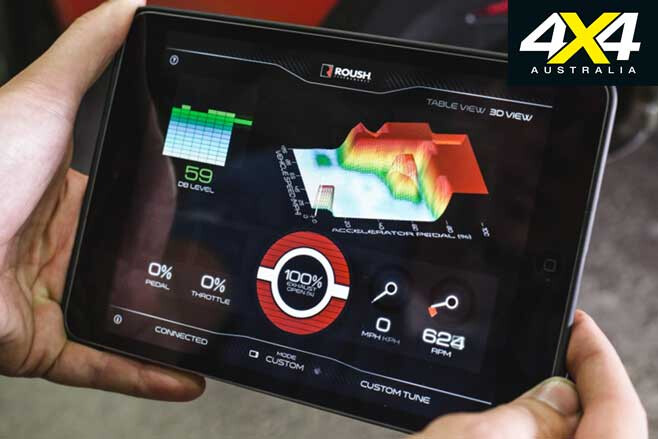
A ROUSH Performance Exhaust System adds aural bite to the package, while an optional ROUSH Active Exhaust System that utilises ROUSH Performance Valve Technology can be fitted for additional venom.
“It’s one thing just to add power … raw power to a vehicle,” Roush Jr adds in the clip. “It’s another thing to truly engineer it where it’s gonna last, it’s gonna drive well, and it’s really gonna perform at its peak.”
The Nitemare rides on 22-inch ROUSH wheels wrapped in Continental Crosscontact LX20 285/45 R22 rubber. Body modifications include a custom grille with integrated accent lighting, a front bumper cover designed to work in tandem with Ford’s adaptive cruise control, and an assortment of ROUSH graphics on the body work.
The speed test took place at Milan Dragway in Michigan, USA.