
INSTALLING new 4×4 seat covers not only provides cosmetic pizazz, but they provide a heap of practical benefits for off-roaders as they’re made tougher for heavy duty wear and tear. Here are two new 4×4-specific seat covers that recently hit the market.
EFS seat covers
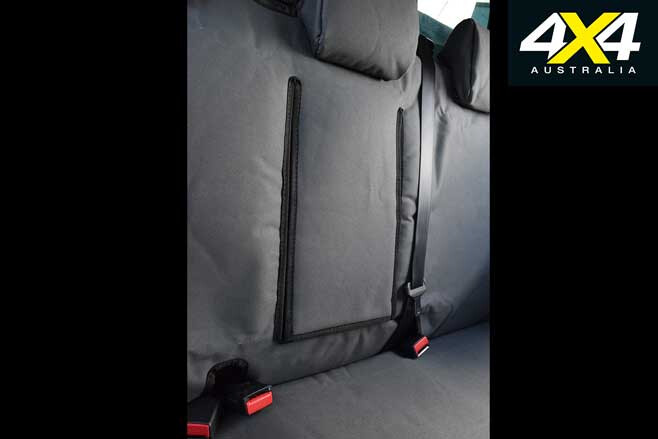
Nothing wears out a set of vehicle seats – whether fabric or leather – more than dirt, grit, sand, mud water and other common off-road touring aligned muck being ground into the seat base. It wrecks the seats and devalues the vehicle’s resale value.
The seat covers are made from ultra-tough cotton/canvas that is UV-, water- and fire-resistant and is double-stitched for optimum durability. The seats are airbag-tested to ensure they allow full functionality of that safety feature in the case of an accident. The fit is customised to each vehicle model/brand and is foam-backed for additional comfort (enhanced further by the refined outer material finish).
EFS offer the seats with a two-year warranty. They’re available for a number of 4×4 vehicles.
RRP: $299 (front pair); $330 (rear set) Website: www.efs4x4.com.au
MSA 4X4 Tradie Gear Canvas Seat Covers
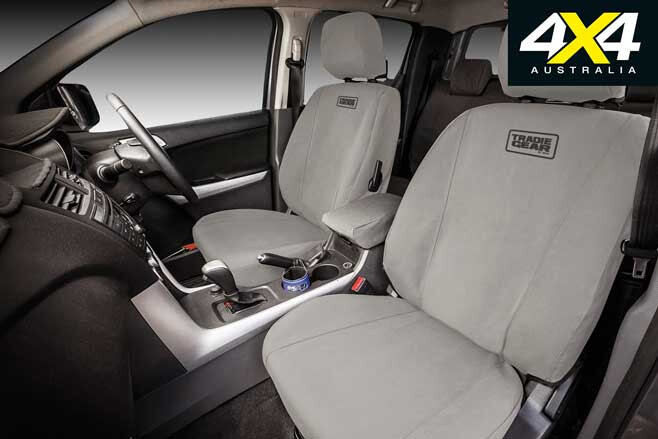
MSA 4X4’s new Tradie Gear Canvas Seat Covers are manufactured from heavy duty 14oz polyester and cotton blend canvas for maximum durability. They are polycotton lined to deliver maximum protection for vehicle car seats by providing a complete barrier between the canvas and the seat.
In addition, the Tradie Gear Canvas Seat Covers are claimed to be 100 per cent water, dirt, mud, kid and pet proof, and they are quick and easy to install thanks to a simple seat cover pattern. Importantly, all Tradie Gear Canvas Seat Covers are certified ADR compliant. The current Tradie Gear range includes seat cover patterns to suit tradie-relevant and fleet-relevant 4X4 vehciles.
RRP: $325 per row; $620 for complete front and second-row set Website: www.tradiegear.com.au
ROUND 4 of the 2019 Comeup Extreme Winch Challenge Series has been run won, but not without drama, with every team registering a DNF over the torturous weekend.
Seven teams began the weekend at Springs 4×4 Park in south-east Queensland, with the Wyong Automatic Transmissions Toyota Land Cruiser steered by Rod and Josh Rathbone setting the pace early.
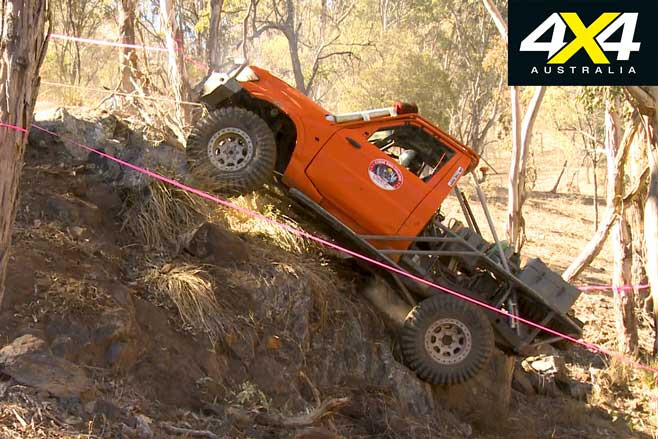
Stage 2 was snaffled up by Paul Semmens and Nathan Mills of Team Ranga, but the father-and-son Rathbone team reclaimed the lead after Stage 3. However, the tussle was short-lived, with Team Ranga rolling their GU Patrol during the last night stage to score a DNF.
The Saturday was ravaged with issues: Peter and Jayden Jilg fried the winch on their GQ Patrol; Dave and Pat Burrows were forced to retire their FJ45 due to engine gremlins; John Adamson in an 80 Series encountered electrical gremlins and a fuel pump issue; Jason and Peter Christianson in a GQ patrol got lost on the course and ran out of time; and Rod and Josh Rathbone rolled their FJ45.
The high number of DNFs levelled the playing field and paved the way for a thrilling final few stages, with Team Ranga (Paul Semmens and Nathan Mills in the GU Patrol) winning the event.
The final round of the Comeup XWC will take place in Limbri, NSW, on October 24. For more information, visit: www.facebook.com/xtreme4x4challenge
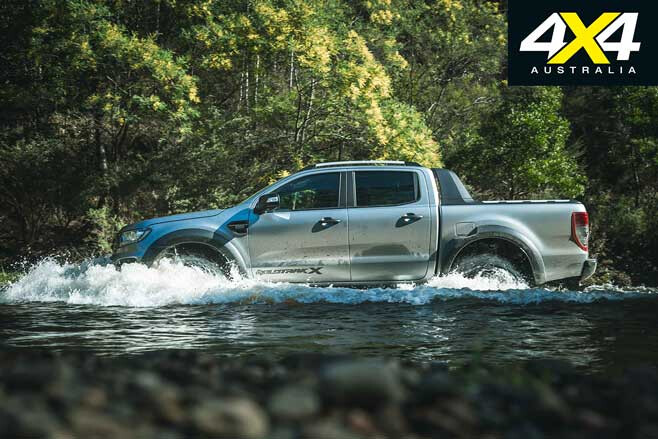
WHILE manufacturers continue the scramble to land a piece of the high-end dual-cab pie, Ford has built on what it already has by sprinkling a number of exclusive features over its Ranger Wildtrak to create the Wildtrak X.
This is the first time we’ve seen the Wildtrak X, which will sit between the Wildtrak and Raptor in the Ranger model line-up.
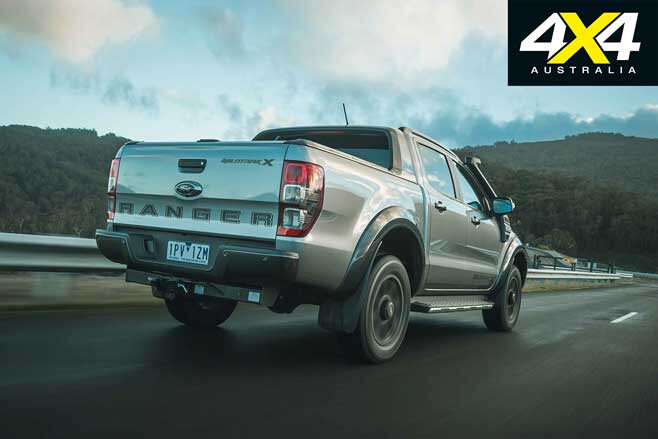
Features exclusive to Wildtrak X include new matte-black 18-inch alloy wheels (with +35 offset), bolstered black fender flares, a black nudge bar up front that houses an LED light bar, and a snorkel mounted on the A-pillar.
“Ranger owners are telling us that they want more personalisation, specialised gear and more kit for weekends away and family trips,” said Kay Hart, President and CEO of Ford Australia and New Zealand. “The Wildtrak X brings the high equipment levels, rugged good looks and tools to take things up to the next level.”
Like its Wildtrak stablemates, the Wildtrak X comes with two powertrain options: the 157kW/500Nm bi-turbo-diesel introduced with the Ranger Raptor, and the proven 147kW/470Nm 3.2-litre turbo-diesel. The bi-turbo is mated to a 10-speed automatic transmission; the 3.2L utilises a six-speed auto. Unlike the Wildtrak, however, there won’t be a manual transmission offered. The Wildtrak X maintains a 3500kg towing capacity, an on-the-fly 4×4 system and an 800mm wading depth.
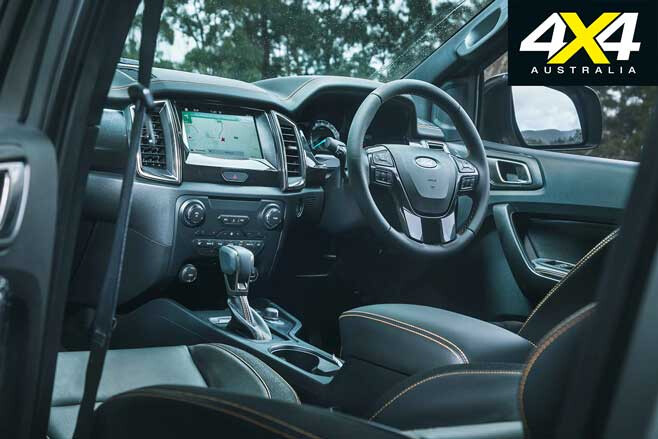
In the cabin it’s business as usual for the X, with plenty of leather upholstery, SYNC 3 with Apple CarPlay and Android Auto, an 8.0-inch screen (with the satnav breadcrumb feature) and keyless entry.
As with the rest of the range, Driver Assist Technology includes AEB with pedestrian detection, Adaptive Cruise Control, Hill Descent Control, Hill Launch Assist and an electronic rear differential lock.
Have a mate that can’t parallel park? Tell them the Wildtrak X has Active Park Assist, which uses sensors to scan for a spot and then navigates into said spot.
According to Ford, the Wildtrak X adds $6000 worth of value to the regular Wildtrak but only costs $2000 more. This puts the 3.2L Wildtrak X at $65,290 and the bi-turbo Wildtrak X at $66,790. Still, spend another $10K and you can get yourself a Ranger Raptor.
The Wildtrak X, limited to around 1000 units, will appear in Ford dealerships this month.
THE Ford Ranger has maintained an oh-so-slim sales lead ahead of the Toyota Hilux on the 4×4 sales charts.
A mere 13 units separated the Ranger (2884) and Hilux (2871) on the August 4×4 charts, and with four months left in the year just 88 units separate the Ranger (24,992) and Hilux (24,904) in year-to-date (YTD) terms, according to the Federal Chamber of Automotive Industries (FCAI) VFACTS figures.

However, a hesitation for Australians to spend big money on new metal is reflected in an increase in sales of the ‘budget’ utes. In August, the LDV T60 had a month-on-month increase of 6.9 per cent and a YTD hike of 20.9 per cent; the Great Wall Steed recorded a monthly increase of 13.6 per cent and a YTD bump of 25.4 per cent.
For comparison’s sake, the two best-sellers on the market recorded a drop (or a slight increase) in sales. The Ranger recorded -6.5 per cent (month-to-month) and +0.4 per cent (YTD); the Hilux recorded -10.5 per cent (month-to-month) and -0.8 per cent (YTD).
Fewer people are dropping their hard-earned on a new vehicle, with the Light Commercial Vehicle (LCV) segment in particular showing a downturn on 8.6 per cent compared to August 2018 – 19,165 last year versus 17,513 units this August.
Chief Executive of the FCAI, Tony Weber, puts the sales decline – the 17th consecutive month of declining overall sales – down to a number of factors.
“It is well known that Australia is one of the most competitive markets in the world, and with the current economic environment it is also one of the most difficult markets in the world,” said Weber. “This environment stems from a slow start to the year, with tight financial lending, State and Federal elections and a general lack of consumer confidence, both here in Australia and on an international basis.”
Despite sluggish sales the Toyota Hilux was the best-selling overall vehicle (4×2 and 4×4 variants combined) in August, followed by the Ford Ranger, Toyota Corolla, Hyundai i30 and Toyota RAV4.
A REMOTE-area 4×4 excursion requires special preparation. Here’s what you need to consider when preparing for a 4×4 road trip in Australia, be it big or small.
With everything we try to fit into our lives, it’s easy to forget a routine vehicle service. Rotating tyres, checking fire extinguishers, maintenance of recovery gear, and everything else that comes with owning a four-wheel drive usually takes a backseat to life’s distractions – at least until it’s time to go on a trip.
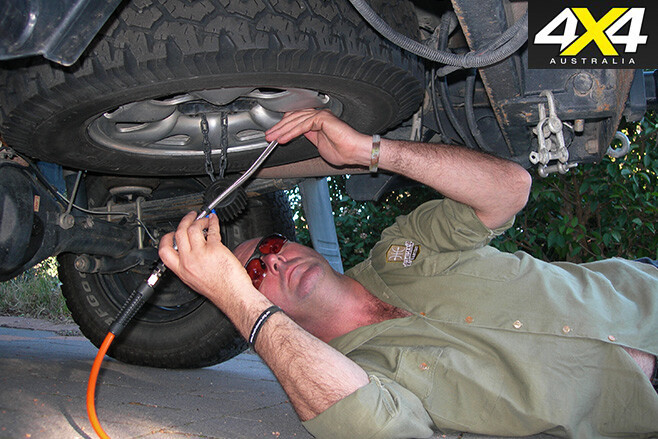
While our vehicle may just be a mode of transport from day to day, once we set off for our favourite camping or fishing destination, it becomes our safety vehicle. Remember, injuries that may be readily treatable in built-up areas could be lethal when you are hundreds of kilometres away from the nearest treatment centre. Ensuring you’re prepared is easy, and can prevent you becoming a statistic in the Australian bush.
Trip prep can be daunting when you first start thinking of all the things you need to tick off your list: vehicle readiness, navigation, the destination itself, health and safety, and ‘all the gear’ you think you may need. By allowing plenty of time and breaking your trip prep down into different groups of essentials, you’ll have more time to enjoy an epic experience.
1: ESTABLISH HOW MUCH TIME YOU HAVE
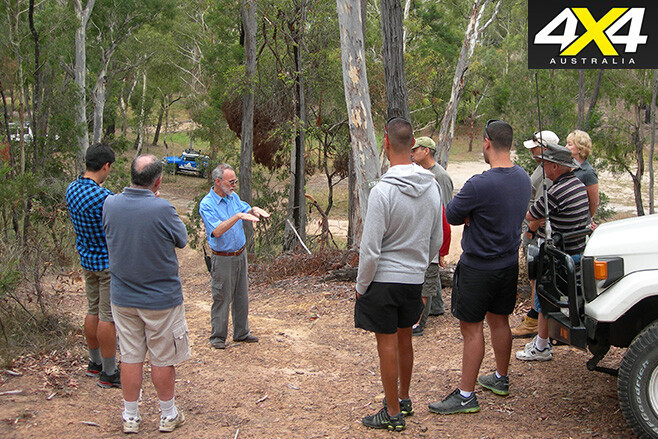
THE first thing you need to figure out is how much time you have and what destination fits in that timeframe. There’s no use planning a Kimberley adventure if you live on the eastern seaboard and only have four weeks off, as it’s logistically impossible. It’s tempting to set yourself some long driving days to get there, but don’t – driving long distances each day and trying to adhere to an unachievable schedule will cause loads of stress, tiredness and more than a few arguments, turning the wished-for trip of a lifetime into a living nightmare. Our advice is to cut your ‘usual’ daily driving time in half, or at least chop a third off it; then you can enjoy the journey to that destination and stop to check out things along the way, whether it’s a side-trip to a particular natural highlight, or just a park for the kids to play in to let off some steam.
2: CHOOSE A DESTINATION
THIS brings us to choosing the destination, a decision that will govern what (if any) specific mods you may need for your vehicle. That could be the fitment of mud-terrain tyres if you’re going somewhere with particularly rugged tracks, additional fuel storage if you’re heading into more remote areas, or season-specific camping gear and clothing. Once you have a destination sorted, the best part of trip prep begins: pulling out the maps and planning your route.
3: PICK A ROUTE
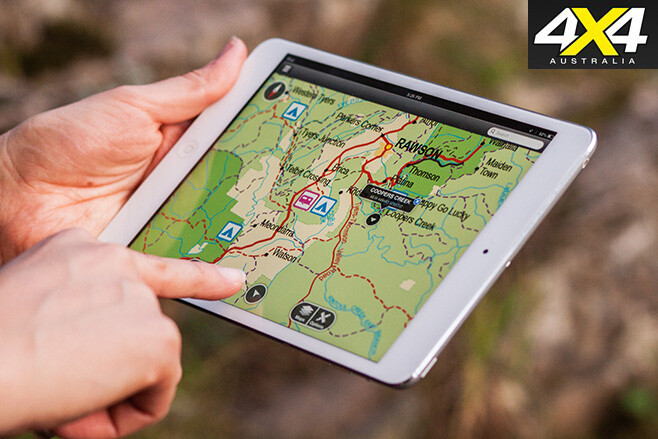
IN THE age of Google Earth, GPS and mapping apps on smartphones, it can be easy to dismiss old-school paper maps as non-essential for route planning. This would be a big mistake, as paper maps of varying scales offer a far larger impression of the area you will be travelling in, as well as the distances involved in relation to where your destination is and where you’re coming from.
For most tourers, Hema Maps’ range of maps is always the first go-to point. Hema covers the entire country (indeed, the world) with its maps and offers numerous maps based on popular destinations such as the Vic High Country, the Red Centre, Cape York and the desert country. These maps are accurate and chock-full of information including fuel stops, local highlights, and road conditions and warnings. Spend plenty of time with paper maps to rough out your itinerary, and make sure it is not too ‘tight’ in terms of time or potential overnight stops – and don’t forget to take those maps with you. A GPS and/or smartphone are brilliant for navigation once you’re under way, but they can malfunction or run out of power. By taking paper maps you’re covered for all eventualities; plus, paper maps are a great distraction for young kids (giving them a map to follow is a great way to educate and entertain when travelling).
Once the route is sorted, fuel stops marked and potential side-trips noted (either on the map or, better still, in a journal), photocopy the marked-up map or write out the itinerary, and give family and/or friends a copy so someone else has an idea of where you may be during your trip, in case of emergency. Also ensure you have a good comms setup – a UHF radio is great, but a sat-phone is better.
4: ARM YOURSELF WITH KNOWLEDGE
IT’S important to be armed with knowledge, but always remain humble because complacency and bravado can get you into trouble. Obtain a reliable survival guide appropriate to Australian conditions. Books such as these are best kept in the glovebox so they are close at hand when you need them. They are no good if you’ve left them on a shelf at home. They are also great around the campfire to teach your kids and partner some survival tips. It can also be good fun, like looking for the Southern Cross and finding south. It’s just as important for those travelling with you to have survival skills in case of an emergency.
5: IMPROVE YOUR 4X4 SKILLS
DRIVING in isolated environments takes a lot of skill. In most government/military sectors, preparing individuals to undertake 4WD responsibilities involves a minimum 16 days of training, including 125 hours behind the wheel covering various situations. This focus on ‘up-skilling drivers’ recognises that simply having a driver’s licence doesn’t mean you understand your vehicle and how to use it properly. There are several approaches you can take to develop your off-road driving skills, including a number of commercial and private trainers who can provide a great deal of assistance. Find out more from your local 4WD clubs.
6: BUY A PLB
BEFORE you set off, buy and carry a personal locating beacon (PLB) and have it registered. This has to be the most simple and important step that any of us can take towards ensuring the safety of ourselves and our loved ones when we travel.
7: PREPARE YOUR VEHICLE
MOST cars spend the majority of their time on the tarmac, but if you’re heading away, plan for your worst-case scenario regarding the type of terrain and distances you may need to travel. As a minimum, stick to routine servicing schedules as per the manufacturer’s specifications and maintain a program of routine checks between services. By doing so, you’ll have a better maintained vehicle that will perform more effectively, economically, and capable of getting you out of trouble.
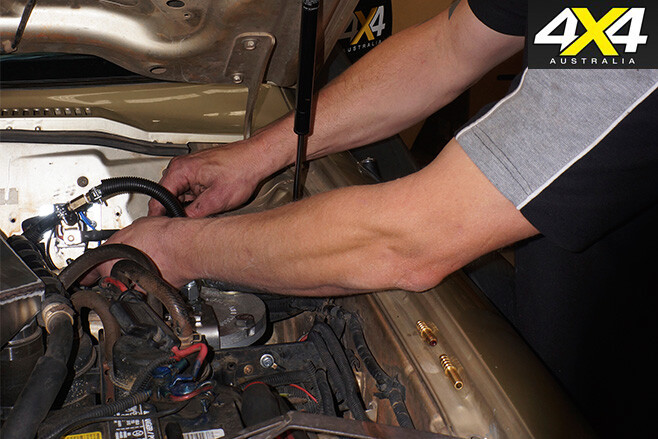
Before you do anything with your vehicle, get a thorough check-over from an experienced 4×4 mechanic – preferably one you know has worked and advised on touring rigs. Make sure you mention where you are going, as a big desert trip will offer different challenges to a rig compared to an east coast-mountains journey. A mechanic will check over all the essential mechanical items on your rig and advise on any spare parts you may need to take with you (from extra hoses and fluids to the ubiquitous gaffer tape). They’ll also advise on any mods you need for the trip, such as a second spare wheel/tyre and an up-to-date recovery kit. They should check over the outside of the vehicle for any potential problems, too: worn roof-rack brackets, dust inside door hinges and seals that causes excessive wear, tired suspension (and worn tyres), and any loose fitments such as driving lights. They’ll also replace/replenish all fluids.
As with a mechanical check, an electrical check is a must, so book in to see an auto-electrician so they can give your vehicle’s power set-up a thorough pre-trip check and recommend any spares needed or essential tweaks. If you’re going truly remote you’ll need a reliable power source – a dual-battery setup or a power pack – and an experienced auto-electrician can advise and fit the appropriate set-up. Regardless of which of these you choose you’ll need a way of replenishing power, so a portable solar set-up is an essential addition. With camp lighting, fridge/freezers and various electronic gadgets to keep powered, you don’t want to run out of juice.
Checking over your vehicle doesn’t finish once the trip starts, and you should perform daily checks on things such as fan-belt tightness, radiator levels, brake and engine fluid levels, tyres (both for wear and the correct air pressure), the security of your roof rack (corrugated roads may have loosened nuts and bolts), battery levels, door seals and dust ingression. It sounds a bit over the top, but this level of scrutiny can nip any potential problems in the bud and keep your four-wheeler running as sweet as the day you left home.
8: PACK SMART TO MAXIMISE SPACE
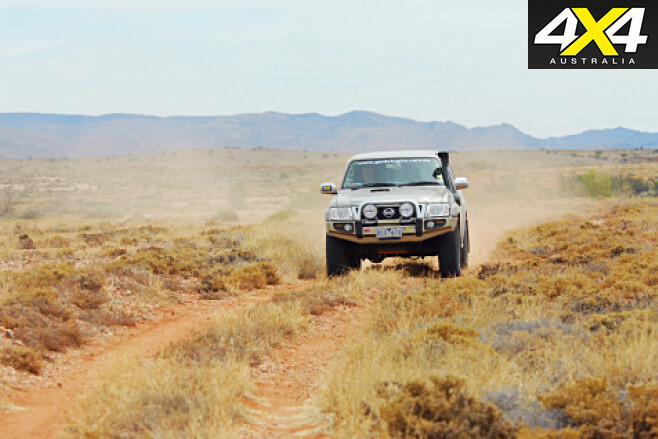
CARGO space and cargo capacity will have a big influence on what you pack for your trip, especially if you plan on keeping everything in-vehicle. A roof rack and a cargo barrier inside the rear of your vehicle will ensure optimum storage (plus passenger safety, in regards to the cargo barrier). However, check your vehicle’s roof-load capacity and pay attention to your vehicle’s GVM rating, as you will find it easy to exceed both limits by the time you pack yourself, your family and all your gear inside the vehicle. Even though they add weight, we’d consider fitting a cargo drawer set-up for bigger trips, purely for the fact they keep food and cooking/camping/fishing gear organised and out of the way.
The other option for the cargo area is a few space cases. Pelican, ARB, Rhino-Rack, Ironman 4×4 and others make tough, dustproof, lockable boxes, and you can do the same as per the cargo drawers and allocate a box for certain gear (sleeping gear, lighting, kitchen, etc.). The appeal of these is, once you’re home, you can pull them out again and repack for the next trip.
For additional fuel capacity, look at adding a few jerry-can holders to your roof-rack or, better still, fit an aftermarket rear bar that has one or two jerry-can holders. It seems excessive but these bars also offer improved rear departure angles, and some models can combine jerry-can holders with a spare wheel holder; plus, these carriers can be removed from the bar when not needed. Long-range fuel tanks are another option, but you’d have to do plenty of remote kilometres away from refuel sources to justify the price.
When packing gear in and on top of your vehicle, put heavy stuff down low in the cargo area, with light gear (duffel bags, sleeping gear, etc.) on top of it or on the roof in a weatherproof bag. The main caveat with using a roof rack is the unavoidable increase in fuel consumption, owing to the taller profile of your vehicle. This is a small price to pay for the convenience (and increased cargo space) of a roof rack. Also leave ‘breathing’ space around the fridge/freezer when packing, so the compressor runs fine and those beers stay cold.
If towing a camper trailer or caravan then you’ll have oodles of storage space for all these items mentioned, but, as with the vehicle and the roof rack, ensure you’re still aware of the load limits. Lighter is always better in regards to packing your rig and/or camper trailer – less weight means less effort to move, which means better fuel consumption.
9: PREPARE FOOD AND POWER
ON SOME off-road journeys you get to live the dream of cooking over an open fire with a steel-plate barbecue. However, the reality these days is that, with fire restrictions and the lack of available firewood, a portable stove is a more convenient camp-kitchen option. Gas-fuelled, fold-up, multi-burner stoves (Coleman’s two- and three-burner stoves are near bombproof) are easier to transport and take up minimal space in your vehicle (take a few extra gas valve connectors, just in case). The gas bottle can be easily secured to your roof rack, and kitchen gear and accessories can easily be stored in cargo drawers and/or a space case.
All this talk about cooking brings us to the biggest challenge of any off-road adventure: keeping food and drinks fresh and cool. For a long-weekend trip we’d still go for a cooler, with a number of brands (such as Pelican and EvaKool) producing products that keep ice for long stints. For longer and more remote trips we’d opt for a portable fridge/freezer. In terms of size/capacity, the best bet is to get the biggest one that’ll fit in your vehicle without sacrificing too much cargo space. For a family of four, a 50-litre fridge would be the minimum for a week away from resupply points. Engel, Waeco, ARB, EvaKool, Opposite Lock and Ironman 4×4 are some of the most popular fridge/freezer brands. With these units you’ll need a reliable power source, and a power pack combined with solar panels or a dual-battery set-up (again, with solar panels for recharging if stationary for more than a few days) are the two options. Both are well-proven and reliable.
10: PREPARE CAMP ACCOMMODATION
IN TERMS of camp accommodation, keep it simple, convenient and light in weight. A simple tent, a tall (10cm-thick mattress) self-inflating air mat and a three-season sleeping bag is often all you need for any trip. A four- to six-person tent will pack up relatively compact and can easily be thrown up on the roof rack.
Camp lighting options are numerous these days and include the tried-and-true gas-powered jobbies through to hi-tech LED lighting that’s now considered the most popular option. Gas lights use gas bottles via an additional attachment, which means you may need a bigger gas bottle. LED lights draw low power and can be bought in the form of head torches, hand torches, lanterns, or the ever-more-popular strip lighting. However, as with anything electrical, you will need to power them via – ideally – portable solar panels. Both gas and LED lighting work well, so it will ultimately come down to personal choice.
Whether your hobby includes fishing, hiking, cycling or paddling, there’s a carrier or cargo solution. Most roof-rack systems have additional extras that allow fitment of a canoe/kayak/bike, which is another reason to fit one. Just remember when fitting gear up top – especially valuable stuff – there are locks for both the rack/carrier and the canoe or bike. The best thing about these carrier systems – and indeed, roof racks – is they aren’t permanently fitted; so once you’re trip is finished, you can easily remove these from your vehicle.
11: DAY-TO-DAY PREPARATION
PREPARATION doesn’t stop the moment you lock up the house and leave town. It’s something you have to do every day of your trip.
First parade is a military term that refers to a series of checks a driver should conduct every day: prior to, during and at completion of the use of the vehicle. These are known as first parade service (before you start driving), halt parade service (at each long stop) and last parade service (when you’ve finished driving for the day).
A successful trip is one where you get to your destination and back safely while enjoying yourself. Understand the terrain you’ll cover, keep your vehicle well maintained and understand your potential vulnerabilities. By maintaining and using your vehicle properly, you will not only prolong its lifespan but also ensure you and your loved ones remain safe.
– FIRST PARADE SERVICE
(1) Check the winch (if fitted) and ensure it is disengaged.
(2) Before starting the engine:
(a) check the wheels for security, and the tyres for wear and correct pressure; and
(b) check that the fuel, oil, coolant, battery levels, and clutch and brake fluids are correct.
(3) After starting the engine, listen for unusual noises.
(4) Check everything that turns on, flashes, beeps and swishes.
(5) Check that the fuel and oil gauges are operational.
(6) Clean the windscreen, external mirrors, lights and reflectors.
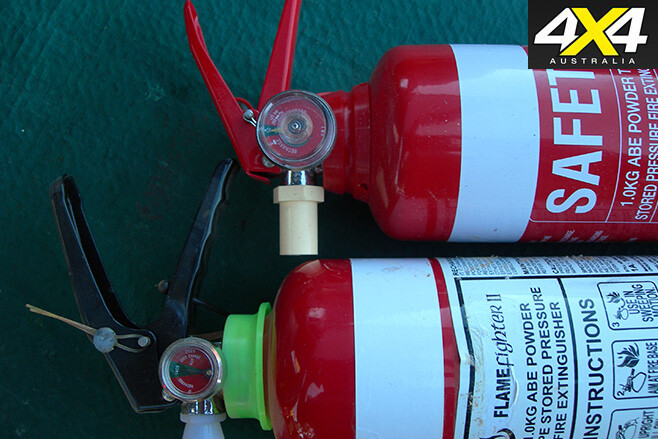
(7) Check fire extinguishers, first aid kit and tool kit.
(8) Check spare tyre and changing equipment.
(9) Adjust all mirrors.
(10) Check for steering, handbrake and footbrake faults.
(10) Complete any other requirements specified within the vehicle user handbook.
(11) Fix any defects/deficiencies before you step off.
– HALT PARADE SERVICE
(1) Check fuel, oil and coolant for leaks.
(2) Check the tyres and wheel nuts.
(3) Check hubs and brake drums for overheating.
(4) Check the stability of the load, canopy, ropes and trailer.
(5) Check all lights and indicators.
(6) Clean the windscreen.
– LAST PARADE SERVICE
(1) Check the coolant levels.
(2) Refuel and top up oils and lubricants.
(3) Check the vehicle lights and indicators.
(4) Clean the vehicle.
(5) Clean out the interior and the load compartment.
(6) Ensure that the winch (if fitted) is disengaged.
(7) Complete any other requirements detailed in the vehicle user handbook.
(8) Identify and fix any defects/deficiencies ASAP.
12: CHECK THINGS REGULARLY
CHANGE the oil every 5000km regardless of what the service manual advises. Constant short-trip driving, poor quality oil, poor air flow and contaminated oil all contribute to the creation of ‘oil sludge’. This sticks to the engine like cholesterol sticks to arteries.
Check water levels regularly. The use of coolant, rather than water in the radiator, will delay corrosion. But the anti-corrosion properties break down over time, which is why mechanics recommend routine coolant change.
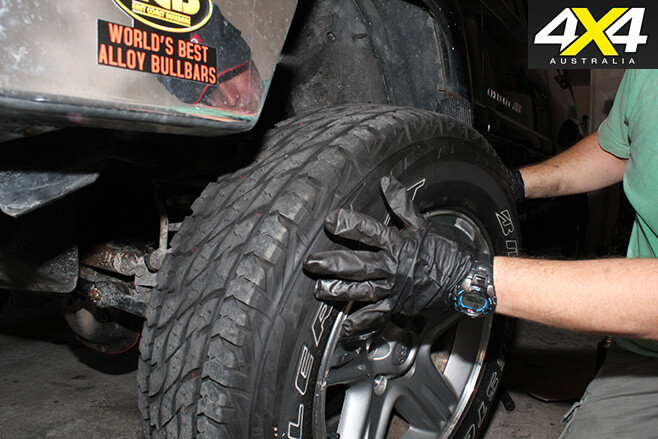
Keep tyres at recommended pressures. This can help reduce fuel consumption by 10 per cent or more on the highway. But ensure that pressures are adjusted for the actual terrain to avoid punctures and to improve ride. Remember, a lower tyre pressure may need to be set at the start of the day to ensure maintenance of appropriate pressure when the tyres heat up.
Keep a constant speed. This will reduce tyre wear and mechanical fatigue.
Check vehicle towing specifications. Overloading a vehicle places undue stresses on the engine, towbar and chassis.
Keep an eye on the brakes. City driving, driving in hilly areas and towing reduce their effectiveness (and lifespan).
Check a spare tyre’s pressure and accessibility. Also ensure that the sidewalls of spare tyres stored under the vehicle body are not damaged. Include a can of inflating foam and/or tyre puncture plugs to help get you back on the road.
13: THINGS TO REMEMBER
OBTAIN up-to-date detailed maps showing water sources and nearest communities.
Have a compass, GPS and PLB and know how to use them.
Always inform someone where you’re going, what route you plan to take and when you expect to reach your destination.
Have your vehicle undergo a major service before you leave on a big trip, and tell the mechanic your plans. He may have some suggestions for you.
On long journeys, have two complete spare wheels, extra petrol, engine oil, fan belts, filters and spare keys.
Carry water in a number of containers (in case of leaks).
If your vehicle suffers a breakdown or gets bogged, stay close to it because your vehicle will be easier to spot from the air in case of a search. Don’t set out for help unless you irrefutably know where you’re going and know you can get there.
Don’t rely on mobile phones to call for help. A reception signal may not exist where you’re going. Have a PLB and a car-mounted CB radio and/or satellite phone.
14: POST-TRIP PROCEDURE
IT MAY take a few trips but you will soon get a ‘trip system’ in place that contains a number of steps, such as these detailed here, which you can work through before each adventure to maximise smooth-sailing. Then there’s the bummer of having to return home, which can sound like a real pain in terms of having to unload gear. However, if you incorporate this process into the whole trip plan then it will feel like a matter of course and will save you loads of time and stress before the next trip.
Our post-trip procedure is always the same: unload the vehicle; send the kids into the backyard to keep them occupied; go through each space case/cargo drawer and note what items need replenishing or cleaning; then pack each of these away. This is where, again, having drawers or space cases that contain certain items make it very easy. For example, we know the ‘kitchen box’ will need emptying and all the utensils and items washed before re-storing back in the box. Plus, we have more space cases set up in our shed so that we can simply throw all the sleeping gear into the marked case once they have been aired and dried. It sounds a bit boring but it saves plenty of time when we start planning our next trip, as we know where everything is and we know it’s all ready to go, without fuss. This also means we can, instead, concentrate on having a cracking time on that next big adventure.
EVERY SO often life imitates arts, especially when it comes to the world of restomodding where the imaginations – and budgets – of custom builds run wild.
American-based Land Rover specialists, Himalaya, have created what may be the ultimate restomodded Land Rover Defender: the Spectre.
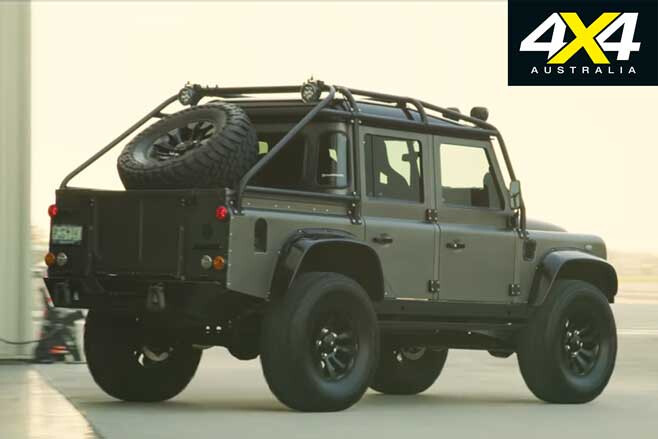
Based on the Defender 110 Crew Cab, the Spectre takes inspiration from the Defender SVX “Spectre”, of which ten were custom-built by Jaguar Land Rover’s Special Vehicle Operations for the eponymous 2015 Bond film.
Unlike the movie Defenders, Himalaya’s Spectre swaps out the tweaked 138kW/500Nm Defender donk in favour of a 390kW/670Nm 6.3-litre LS3 V8 from a Corvette, which is mated to an automatic transmission.
The Spectre’s imposing ride height is thanks to the fitment of a four-inch lift, while its suspension system has been thoroughly revamped with Fox Performance shocks and Extreme Currie Hi-Flex suspension.
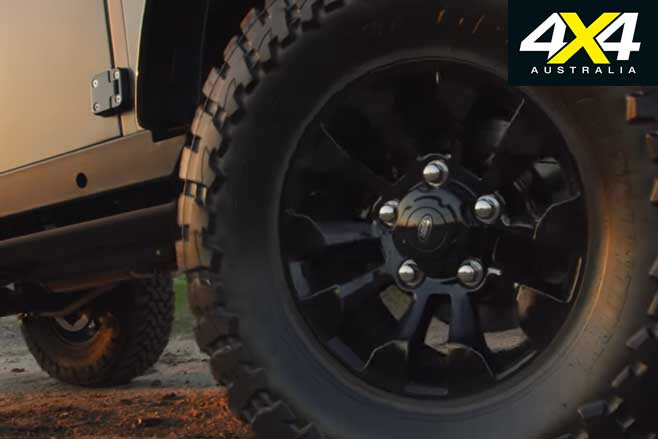
A set of 18-inch gloss-black Sawtooth alloy wheels wrapped in Toyo Open Country tyres, serve to bolster the Spectre’s off-roads looks and complements its off-road credentials.
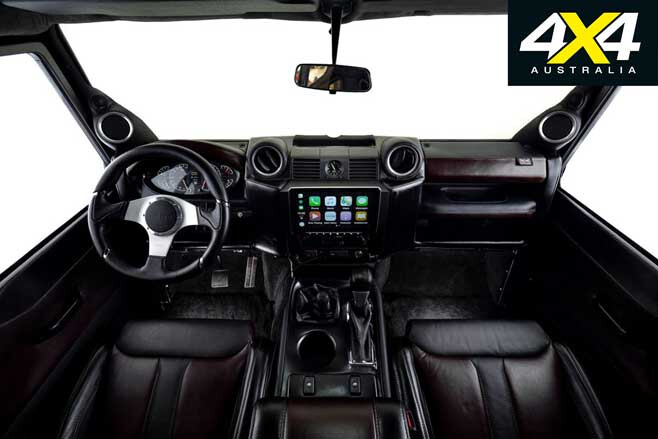
As for the cabin, Himalaya had gussied up its interior appointments with the fitment of leather Recaro seats up front and a modernised dashboard and infotainment system.
According to Himalaya, all Spectre examples it plans to build are built on classic Land Rover Defender chassis with the body remade from fresh original Land Rover panels sourced from the UK.
That being said, the price for living out your Bond villain dreams for Himalaya’s take on the villainous Defender SVX “Spectre” will cost you a pretty penny. Himalaya doesn’t quote a price tag, though it is said to be in the US$200,000 region, though that in itself can be considered a fair deal considering one of the film Defenders fetched £230,000 at auction two years ago.
Piranha Off Road Products has picked up two awards at the recent 2019 VACC Industry Awards, one for ‘Best Aftermarket & Retail Business (Small Business)’ and the other for ‘Best Parts/Component Manufacturer’.
Piranha Off Road Products, which was recently acquired by McNaughtans Pty Ltd, was started by Alan and Barbara Johnson more than 30 years ago.
Picture: Barbara (middle) and Alan Johnson (right) accept the award for ‘Best Aftermarket & Retail Business (Small Business)’
A proud Australian company, Piranha Off Road is well known for developing and manufacturing top quality dual-battery management systems and battery trays, and over the past three decades it has grown from a humble backyard business to one that manufactures and supplies a wide range of equipment for the Australian four-wheel drive touring market.
The culmination of Alan and Barbara’s hard work over the past 30 years was rewarded and acknowledged at the 2019 VACC Industry Awards held in Melbourne at the Grand Hyatt, where the Johnsons were called to the stage in front of a huge industry audience to receive the two awards.
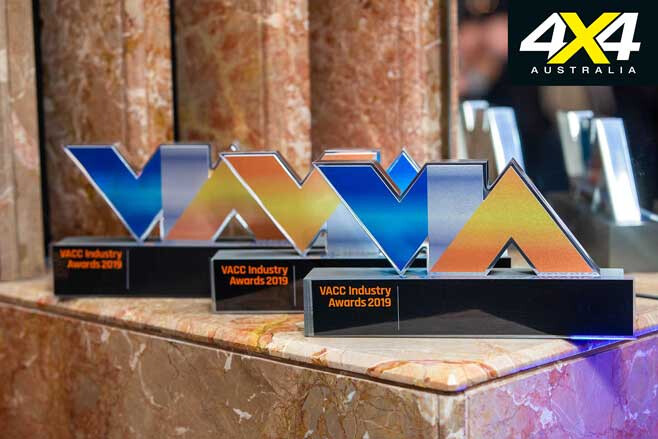
McNaughtans is excited to build upon the solid base that the Johnsons have built for Piranha Off Road, and intends to expand the company’s range of products while continuing to cater to for the growing Australian 4×4 touring, caravan and camping markets.
For more information on the range of products and services offered by Piranha Off Road Products see www.piranhaoffroad.com.au or phone (03) 9762 1000.
LEAKED photos of the 2020 Nissan Patrol indicate that earlier computer-generated images of the burly Japanese wagon weren’t far off the mark.
Early last month, a Russian website released renderings of the 2020 Patrol and, as expected, it created plenty of discussion on Nissan forums around the world.
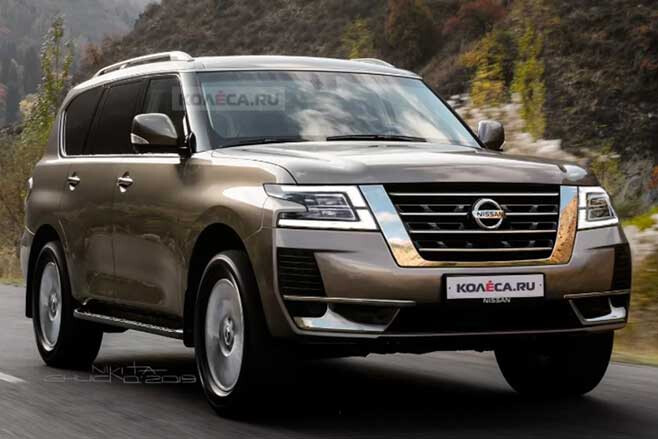
The renderings gave new life to the ageing Patrol – the wagon’s last major redesign was way back in 2010 – with larger front-end, a bigger grille and new-look headlights. The rear was also tweaked, with wider tail-lights, chrome trim and sharper design lines.
The recent spy shots of the Patrol – appearing on Performance Drive – were snapped in the Middle East and establish the new Patrol is well into production. Despite plastic cladding hiding portions of the design, the images prove the Russian boffins got plenty of details right.
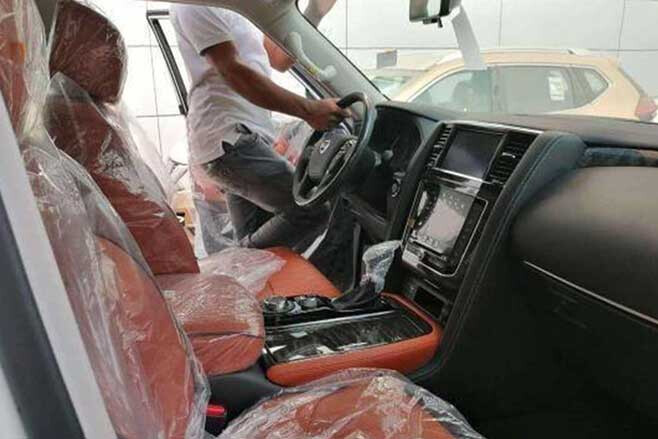
A spy shot of the interior has also been leaked, showing a major overhaul of the ageing layout. Two big screens dominate the centre console, red front pews seem to be bolstered and rugged, the controls and dials appear to be well set-up, and the layout seems clean and uncluttered.
The current Nissan Y62 Patrol on sale in Australia utilises a 5.6-litre V8 engine capable of 298kW and 560Nm, which runs through a seven-speed automatic transmission.
Specs and further details on the 2020 model are scarce, but we have contacted Nissan Australia for comment. We’ll let you know more details as soon as we get them.
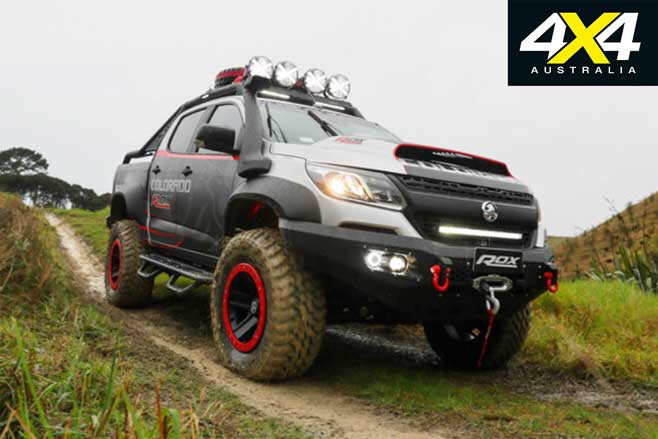
Hardcore Aussie off-roaders who like their Holdens tough could do worse than cross the ditch and try to pick up a Holden Colorado Rox complete with bespoke body kit, whopping six-inch lift and 35-inch muddies.
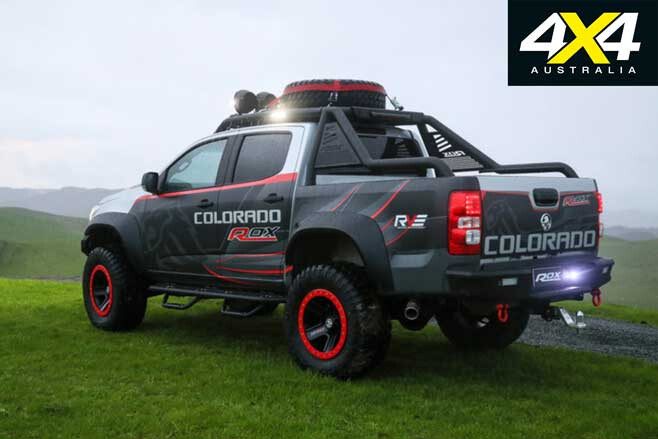
Holden New Zealand enlisted the services of RVE International, a company that specialises in creating ‘Special Edition’ packages, to help create the Colorado Rox, which has been on a nationwide dealership tour of NZ, along with appearances at major events and ag shows.
According to Holden New Zealand MD Marc Ebolo, “Our driving desire was to take our most capable vehicle, the Colorado, and beef it up to become the greatest awe-inspiring, eye-catching piece of machinery ever devised by Holden New Zealand.”
A raft of bodywork enhancements make the Rox look like no other Colorado; in addition to its less-than-subtle graphics, it scores a ‘high-rise’ lightweight carbon-fibre bonnet, an integrated light bar in the front grille, a sports bar that mates seamlessly with a custom roof rack, trick retractable roof-mounted driving lights, roof-mounted spare, snorkel, and rear deck cargo system with 500mm tray extender. And, of course, it also has generous wheel arch flares to cover those massive muddies.
The Colorado Rox offers loads of ground clearance thanks to its six-inch suspension lift and 35-inch Blackbear mud-terrain tyres. It also features custom fabricated rock sliders with innovative removable drop steps to aid vehicle ingress and egress. Additional protection comes courtesy of custom fabricated steel bars front and rear. Both bars incorporate built-in recovery points, and the front houses a top-spec Warn Zeon 8-S electric winch.
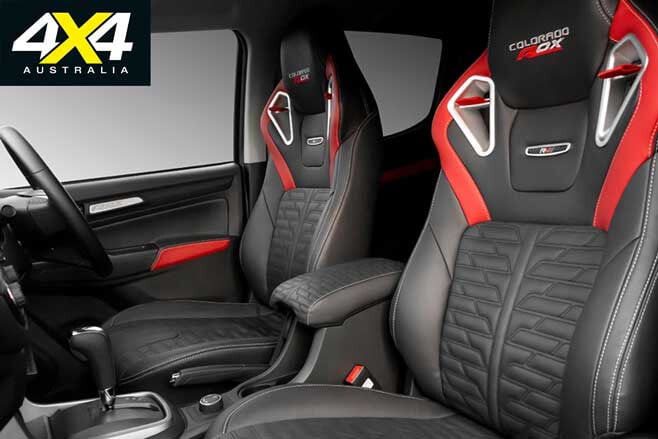
The custom treatment continues inside where there’s high-end front and rear RVE sports seats with hand-stitched leather trim finished in striking black and red with ‘Colorado Rox’ embroidery.
While the engine and auto transmission have been left standard, with 147kW and 500Nm available the Colorado Rox still offers plenty of performance, both on the road and off it. To prove this point, Holden New Zealand has been hauling a fully-laden event trailer behind the custom ute as it tours the country between dealerships and other stops along the way.
While there currently are no plans to put the Colorado Rox into production, it showcases what is possible, and perhaps hints at possible styling directions for future limited-edition Colorado variants.
The Colorado Rox is “a real statement piece and shows what’s capable with a little imagination, combined with considerable expertise and a ridiculously capable and dedicated partner such as RVE”, said Holden New Zealand’s National Marketing Manager, Marc Warr.
Terrain Tamer has released a new Parabolic Leaf Spring for Toyota Hilux KUN25/26 and GGN25 models.
Utilising the same impressive parabolic design as the popular spring released for Land Cruiser models in 2018, Terrain Tamer has added to its extensive existing suspension range.
Applying modern technology to a well-established idea to provide a quieter and more comfortable ride, Terrain Tamer’s parabolic design contains fewer leaves than regular leaf springs. A parabolic spring is thicker in the centre and thinner toward the ends, rather than the usual linear design.
Eliminating the weight of often heavy, thick traditional leaf packs, the parabolic design dramatically reduces the unsprung weight of the vehicle. This design also works to help the spring remain flexible, yet still strong enough to bear the weight of heavy loads – particularly useful in 4WD applications.
The parabolic design allows the spring to compress or extend with ease, without the leaves touching each other until there is a reasonable load on the vehicle, up to 500kg.
RRP: $400 Website: www.terraintamer.com