
Eurimbula National Park is located almost 500km north of Brisbane, near the stunning coastline of Agnes Water and Seventeen Seventy (1770). It’s a place of natural beauty, where you can stop and unwind for a while. Getting back to nature never hurt anyone, and here at Eurimbula you won’t find better.
Don’t for one minute think you can test your off-road skills here on huge hill climbs or through deep bog holes; there’s only one narrow road that leads to and from several camps, and the only challenge you’re likely to encounter is negotiating around oncoming vehicles.
To get to Eurimbula from Brisbane, follow the Bruce Highway north until the turnoff to Agnes Water and then swing a left at the ‘National Park’ sign approximately 10km before Agnes. Those who need supplies can stock up at Agnes Water, where there’s a number of outlets with food, fuel and bait. Walking around town you’ll find a cultural mix of islanders, backpackers, retirees and, of course, grey-haired nomads who spend time here soaking up the tropical Queensland sun.
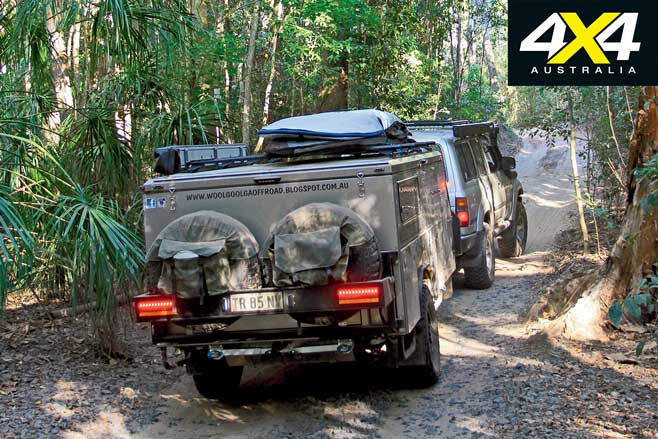
With only 17 camping sites in Eurimbula NP it’s a good idea to book ahead, but there’s decent phone coverage in the park if you prefer to look before you buy. The first 10km of the road into the NP is unsealed but usually well-maintained; although, the last section can be rough in places, albeit quite beautiful as it twists it way through a mixture of gum forest, dry rainforest and stunning pockets of cabbage tree palms that seem to reach out like a drive-through car wash, with their massive fronds brushing along the sides of your 4×4.
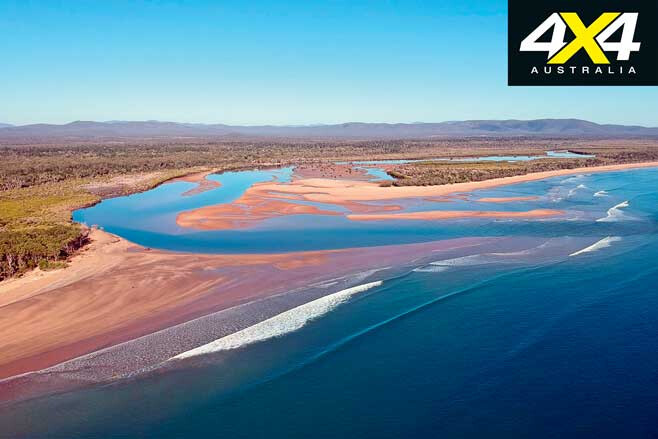
About halfway along the National Park road, keep an eye out for the Ganoonga Nnoonga lookout track, which is one of the park highlights. The easy 30-minute walk leads to a 60m-high lookout that offers stunning views across the lower heathlands and up into the mountains.
The last section of the National Park road has a sandy base but isn’t overly challenging, and despite the narrow road there are plenty of pull-over areas if you happen to encounter oncoming traffic.
Camp can be set up wherever there’s an available spot, as there are no set sites with the camp bookings. All campsites have a decent fire ring (bring your own wood), composting toilets, huge sheltered eating areas and water tanks filled with fresh water.
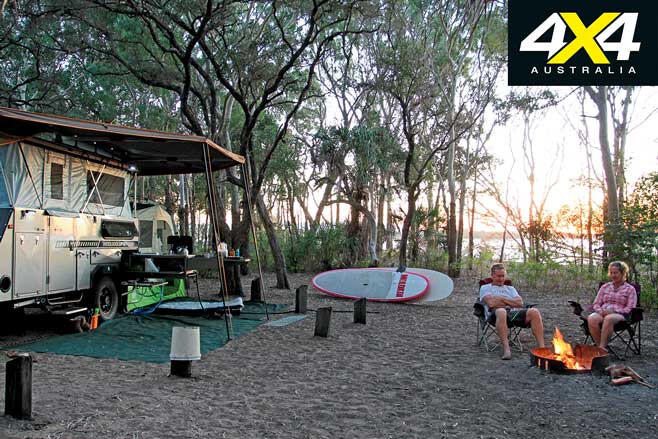
This is beachside camping at its best, with most campsites only 80-200 steps to the beach along dedicated walking tracks – fishermen and beachcombers will adore this place. And with a mix of tall coastal palms, pandanus, beautiful gums and other rich rainforest trees, all campsites offer plenty of shade.
Those who enjoy soaking up nature will love ambling along the beach with the sand between their toes, listening to the waves crash and the birds singing. Not much else happens at Eurimbula, unless you make your own fun by bringing a kayak or an SUP to explore the creek and to access the other side at Bustard Beach. If you’re a keen fisher, there’s bream, flathead or something bigger in both Eurimbula Creek and the ocean. As Eurimbula is very close to the Great Barrier Reef and located in a marine park, there are strict guidelines on fish sizes and any collection of shells and other marine life.
We also saw a few land-dwelling creatures around camp including brush turkeys, echidnas, cane toads and an array of birds, and it’s reported that coastal emus frequent the beach.
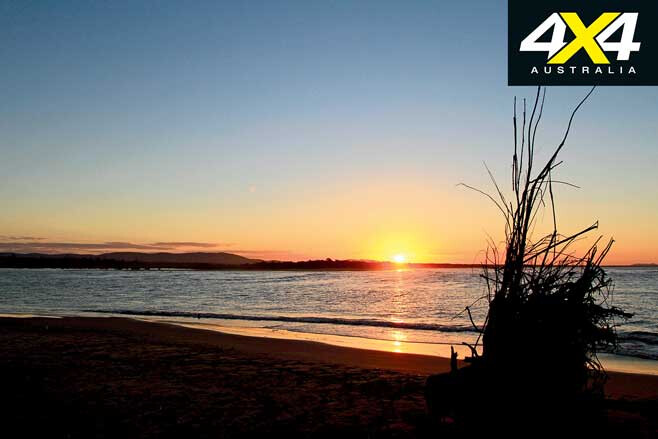
While hardcore off-roaders need not apply, Eurimbula NP is perfect for those who just need a break and want to get back to nature, with coastal camping and easy recreational activities on offer. It’s a hidden gem that, once visited, usually ends up on most travellers’ ‘must return to’ lists.
Day Trip to 1770
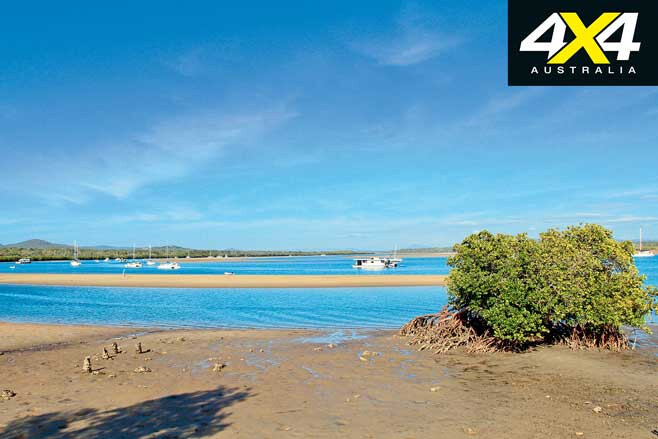
Much more than just another boutique holiday village, Seventeen Seventy (1770) has very significant importance to Australia and Queensland. Back in May, 1770, Captain James Cook landed at nearby Round Hill, the first landing of Cook to what is now called Queensland. In 1935, after the area was surveyed, the town’s name was changed to 1770. It was also here that botanist Joseph Banks came ashore – his only landing in what is now Queensland – and collected 33 new plant species.
In the town of 1770 a stone monument has been erected where Cook proclaimed his landing, and there’s a stunning coastal walk that leads along Round Hill Creek to the headland. One of the highlights along the way is the deep gully of pristine palms that creates its own ecosystem where, at the right time of the year, masses of butterflies congregate to mate and then die.
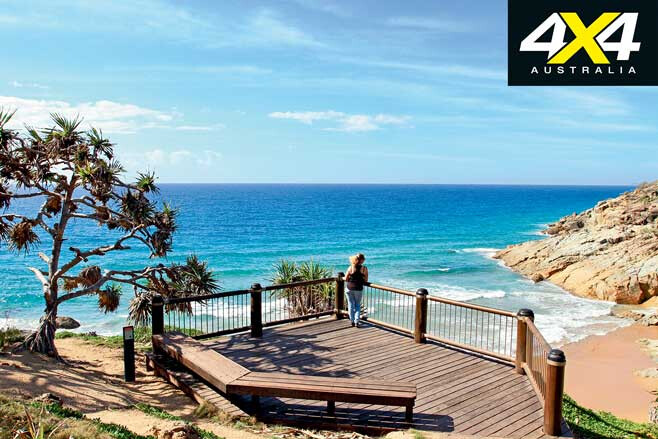
Along the walking track are stunning views up the coast to Bustard Head and the lighthouse, which was named by Cook when his convoy landed and shot a bustard turkey for food. At the end of the Round Hill walk, a viewing platform provides 180-degree views along the coastline and out to the Coral Sea. The town holds an annual re-enactment of Cooks’ landing, for historical celebrations.
Another attraction is the anchor of the Countess Russell sailing ship, which has been set up as a monument to those who died after it ran aground south of Agnes Water in 1873.
The ship set sail from London with nearly 350 immigrants, but 17 people had died by the time it reached Australia. An outbreak of typhoid then hit the ship, with another eight deaths. After the final passengers disembarked, the ship was loaded with coal in Newcastle and, on its way north, it ran aground after being hit by a huge gale at the now-named Wreck Point.
It might wear the Mitsubishi diamond on its nose, but the next-generation Triton will have been carefully polished with input from down under.
At a recent media event in South Australia, Mitsubishi Motors Australia (MMA) manager of product planning, Owen Thomson, said MMA would have significant input into the development of the next-generation Triton ute.
Thomson, who has spent several weeks at Mitsubishi Motors Corporation (MMC) in Japan, added that the next-gen Triton, which is being co-developed alongside the next-gen Nissan Navara, is well underway.
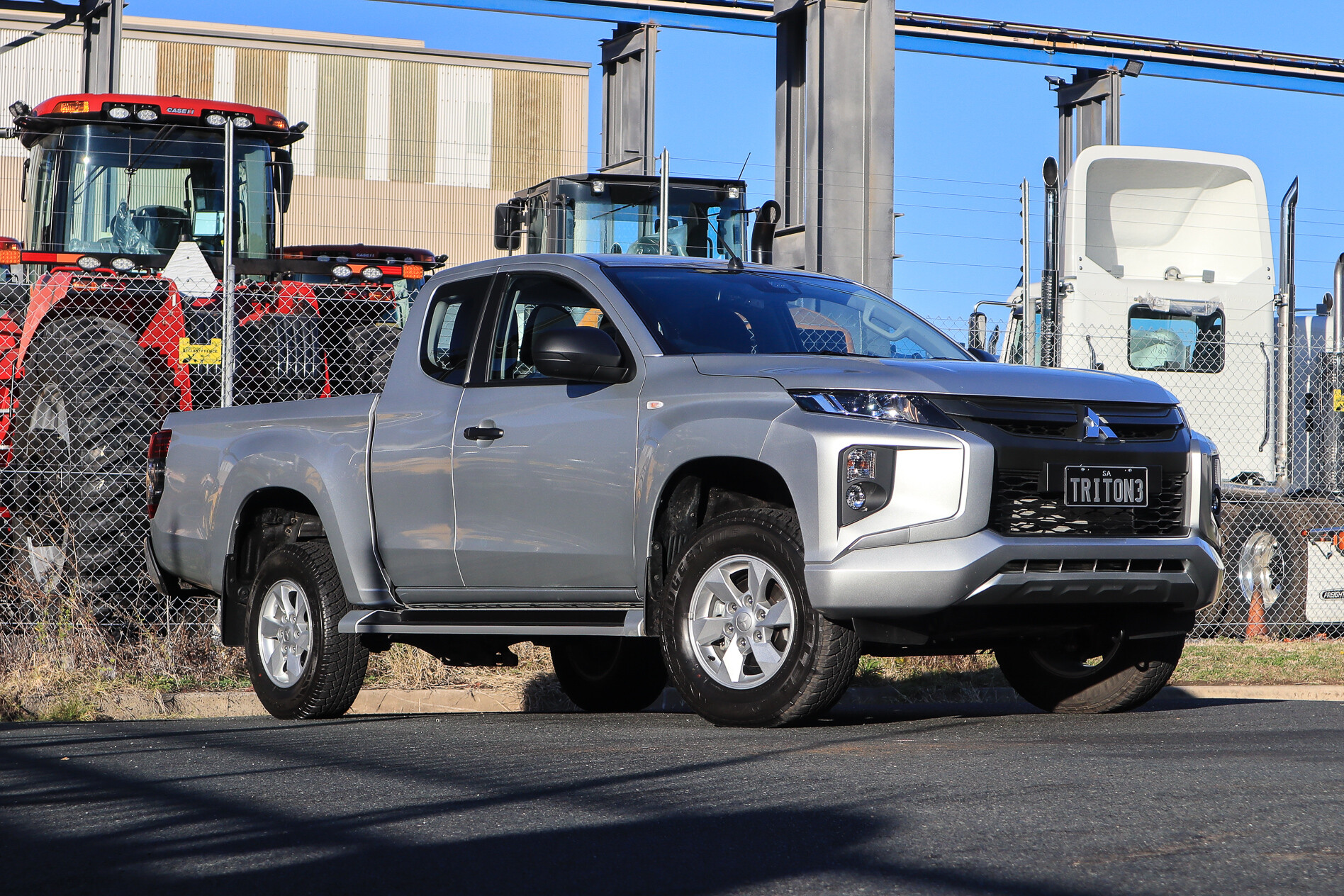
“Australia is an important market for Triton,” said Owen Thomson, referring to the fact Australia is the second biggest market for the vehicle after Thailand, where it is manufactured, “so we’ve actually got a voice in that next-generation car, they [MMC] are listening to what we have to say.”
“But for net importance to the company, it’s probably this market [Australia] that is most important,” added Derek McIlroy, the deputy director for marketing and operations.
“We’re at that critical time where we can provide feedback to MMC and give them extra guidance as to what is critical for us,” agreed Karl Gehling, MMA’s head of corporate communications and government relations.
Speaking enthusiastically about the next-gen Triton, McIlroy added, “It’s well into the development cycle. We were in the styling studio and it looked sensational, I wish we had it now. It’s a very nice progression from where we are now… it’s a whole new generation car.”
McIlroy and Thomson also responded to reports that Renault-Nissan-Mitsubishi Alliance boss Ashwani Gupta said the alliance’s next-generation utes will likely feature hybrid or plug-in hybrid powertrains.
“It really is too early for us to comment on that”, said McIlroy, adding, however, “It’s very much on the radar in terms of development… we’re [MMC’s] eyes and ears to some extent – anything we see in terms of electrification in the pick-up segment, we’ve got to get that back to MMC, so it’s very much something that’s being actively studied.”
Owen Thomson was adamant, however, that diesel also still has a long future in the Triton lineup. “When you consider a lot of these commercial vehicles, and the way they are used, particularly in more remote areas, they don’t want petrol there at all, so there’s still a strong market for diesel in these cars… it’s still a very strong demand requirement,” he said.
At this stage, Mitsubishi would not be drawn on a launch date for the next-generation Triton, but chances are it’s still a couple of years away.
We take a look at two new products to land on the 4×4 scene: Goal Zero’s Sherpa 100PD Power Bank and GME’s TX616XO radio.
Goal Zero Sherpa 100PD Power Bank
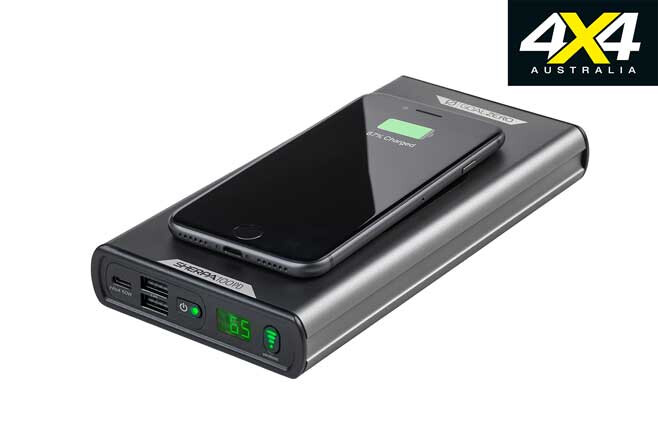
This new portable power source from Goal Zero has been designed to keep all of your gadgets going… and going. Called the Sherpa 100PD Power Bank, it has a whopping 25,600Ah capacity yet is still carry-on approved, is only slightly larger than a modern smartphone, and weighs just 635g. There are USB-A charging ports as well as a 60W USB-C port to provide reliable power for laptops, phones and tablets. The Sherpa 100PD also has a wireless QI charging pad.
Goal Zero says the Sherpa 100 PD packs enough power to fully recharge a phone up to eight times, a tablet up to four times and a laptop up to two times… all on a single charge. And when you need to top up the Sherpa 100PD, it will fully charge from a wall socket in just three hours, from a vehicle’s 12V outlet in 3.5 hours or, when connected to a compatible solar panel such as the Goal Zero Nomad 28Plus, in seven to 14 hours.
Other features include built-in charging and low battery protection, and a battery-level indicator.
RRP: $299 Website: goalzero.com.au
GME TX616XO radio
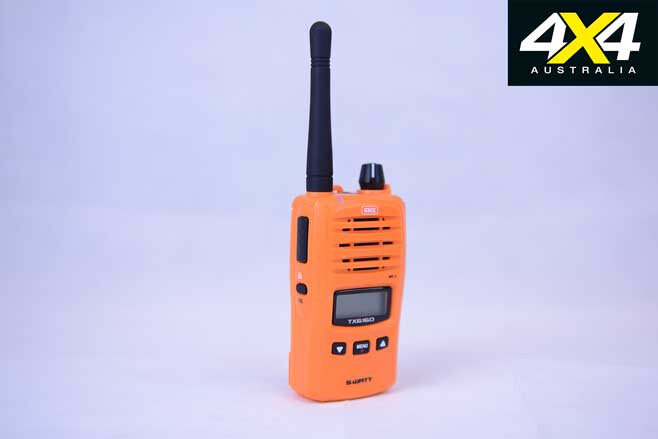
The new TX616XO is a limited edition blaze-orange handheld radio that offers class-leading five-watt transmission power, IP67 dust/water ingress protection and robust construction at a very competitive price point.
The brightly coloured radio (perfect for never losing the thing, if you ask us) claims a 30-hour battery life, courtesy of its 2800mAh Li-ion battery pack, and features include VOX hands-free mode and a built-in LED torch.
GME also claims this new unit offers improved scan speed, while there is a rotary power/volume control that enables easy operation. The TX616XO is compact and light, too, measuring only 285mm tall, 110mm wide and 95mm deep, and it comes with a desktop charger, AC adaptor and a belt clip. GME offers a two-year warranty.
RRP: $249 Website: www.gme.net.au
Sign-up here to get the best 4×4 stories of the week – FREE!
AUSTRALIAN industrial equipment auctioneer Pickles is set to host its largest online auction of military goods, consisting of more than 120 ex-military vehicles and 800 lots of ex-military general goods.
Among the line-up of ex-military vehicles will be a range of Land Rover Defender 110s in various military configurations including wagons, dual-cab utes and 6×6 infantry carriers.
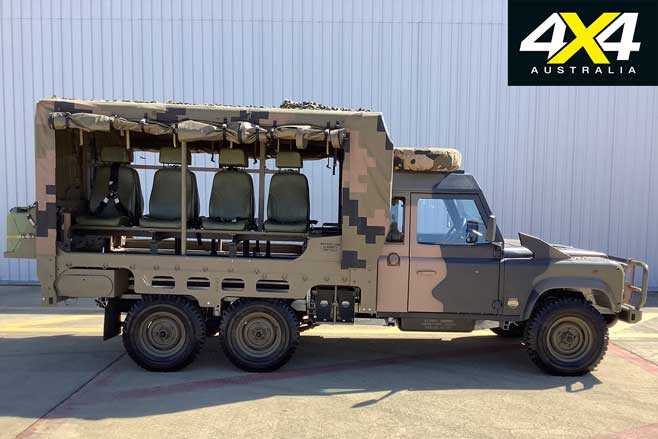
If Defenders aren’t your idea of the perfect off-road rig, Pickles also has a range of Mercedes-Benz Unimogs and Mack 6×6 trucks that may strike your fancy.
Other ex-military vehicles that are listed in the auction include Polaris UTVs and a handful of dual-purpose motorcycles.
Spares, engines, gearboxes, trailers and fittings for these ex-military vehicles are also among the general goods to be auctioned.
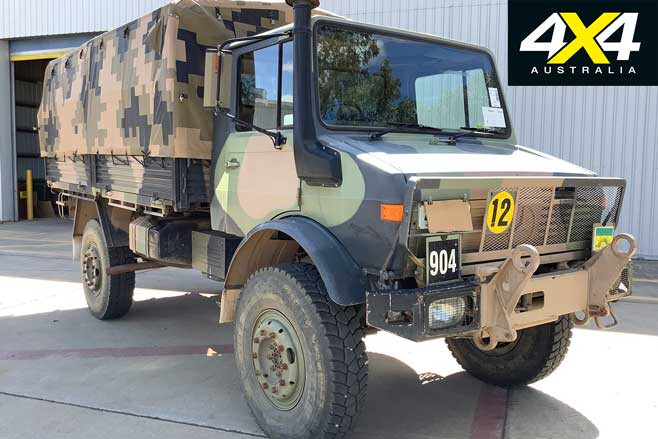
According to Pickles, the stock was sourced from Australian Frontline Machinery, which is the “exclusive seller of vehicles and equipment direct from the Australian Defence Force”.
Public viewing of the listed items will be held from October 4-5 at Thurgoona, NSW, with the online auction taking place from September 27 to October 8 (for Land Rovers, trucks and motorcycles) and September 27 to October 5/6 (for the general goods).
To see the listings visit www.pickles.com.au/ or call 02 9738 3010 for appointments.
A RECALL has been issued for the MY2011-18 Mercedes-Benz G-Class, with a total of 451 vehicles affected.
The reason for the recall is due to a brake line fault in the ABS hydraulic unit – “Strong vibrations, such as driving on corrugated roadway, could cause the brake lines in the ABS hydraulic unit to crack, resulting in brake fluid leaking and affecting the vehicle’s stopping distance,” the ACCC report says.

The units affected were sold nationally between February 1, 2011, and October 31, 2018. For a complete list of affected vehicles see: www.productsafety.gov.au
Owners of affected vehicles are entitled to free reparation and are advised to contact their nearest Mercedes-Benz dealer: www.dealerlocator.mercedes-benz.com.au/
In further news, a Takata airbag recall has been issued for more than 50,000 Mitsubishi Tritons. The affected vehicles (MY2011-14 ML and MN models) are those fitted with a four-spoke steering wheel.
A CRITICAL recall has been issued for a total of 57,025 ML and MN Mitsubishi Tritons due to defective airbags.
The affected MY2007-14 models are fitted with a four-spoke steering wheel and were sold nationally. A complete list of affected vehicles can be found here: www.productsafety.gov.au
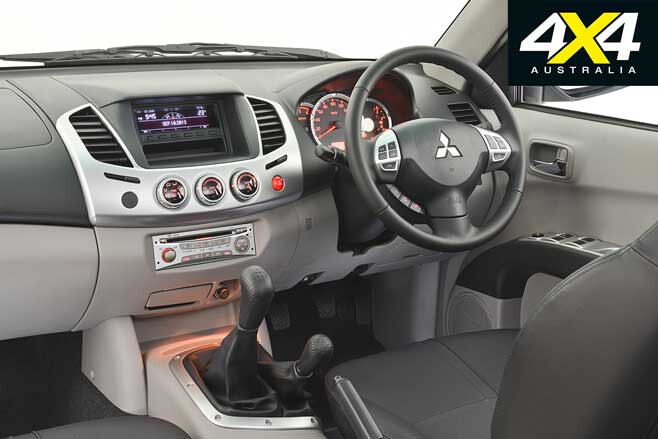
A defective airbag inflator is at the core of the Takata recalls – “as it gets older, a combination of high temperatures and humidity can cause the airbag inflator propellant to degrade. If an affected vehicle is involved in a collision triggering the airbag, the metal inflator housing may explode/rupture under too much internal pressure,” the ACCC recall report says.
The recall report advises owners of affected vehicles to stop driving the vehicle and arrange for airbag replacement as soon as possible.
“Mitsubishi Motors can arrange for your vehicle to either be towed to the place of replacement or for a mobile technician to be sent to the vehicle (or some similar arrangement), so that you do not have to drive the vehicle in order to receive a replacement airbag,” the report advises.
Owners should contact Mitsubishi to organise the free reparation: www.mitsubishi-motors.com.au
Or for more information, visit ismyairbagsafe.com.au and productsafety.gov.au.
In further recall news, a total of 451 Mercedes-Benz G-Class wagons (MY2011-18) have been recalled due to issues with the brake lines in the ABS hydraulic unit, which could cause the unit to crack and result in the leakage of brake fluid.
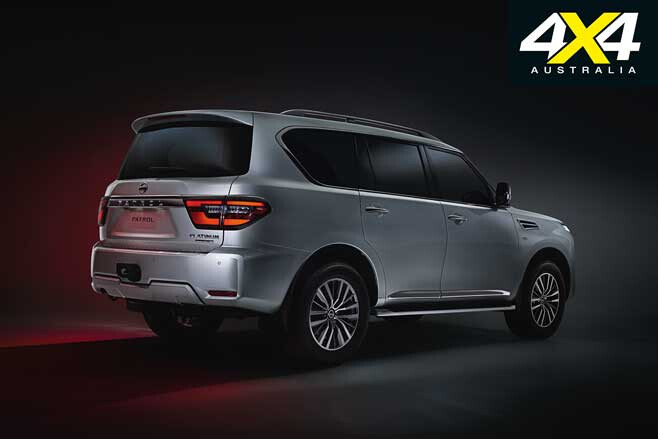
NISSAN officially dropped the curtains on its 2020 Nissan Patrol overnight in the Middle East, with the venerable off-road wagon set for an end-of-year local launch.
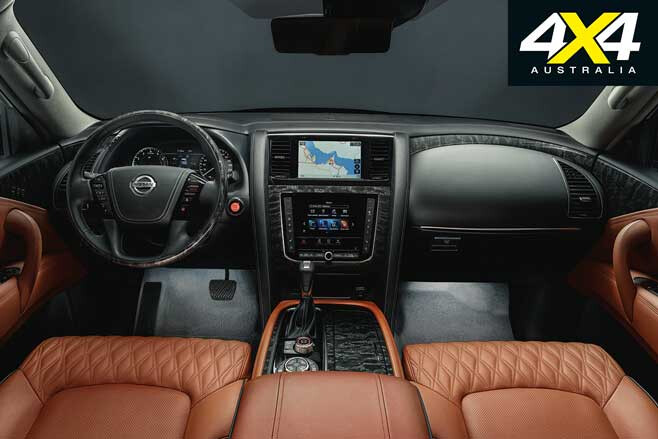
The Patrol, which first debuted back in 1951 and was last updated in 2017, has received a number of notable changes for the 2020 iteration including new safety tech and the addition of Apple CarPlay and Android Auto.
Heralding in the updated Patrol are two new technologies that have been added to the list of Nissan Intelligent Mobility technologies, with the burly wagon now getting a Forward Collision Warning system as well as Emergency Braking with pedestrian detection.
Nissan also claims there are “significant reductions” in noise and vibration with the 2020 Patrol, as well as improved cooling and airflow distribution systems ideal for that outback adventure.
Boomerang-shaped LEDs have been installed front and rear, with the angular front getting a re-interpreted V-motion grille. The rear LEDs are joined by the addition of a large chrome nameplate and sequential rear turn indicators.
In addition to Apple CarPlay and Android Auto on an updated centre console, the interior features new diamond-stitch quilted leather seats with extra padding for more comfort.
Australian-delivered Patrols will continue to be served by the All-Mode 4×4 system and 5.6-litre V8 that generates 298kW and 560Nm, which runs through the proven seven-speed automatic transmission – a 206kW/394Nm 4.0-litre V6 won’t be coming here but will be available in other markets around the world. Hydraulic Motion Body Control remains available on the V8.
“The Patrol is one of our longest-standing and most cherished models, with a long and proud heritage,” said Joni Paiva, regional vice president of the Africa, Middle East and India region at Nissan. “The new Nissan Patrol represents the peak of luxury and ultimate capability and will continue to provide authentic experiences to its loyal customers in the Middle East and around the world.”
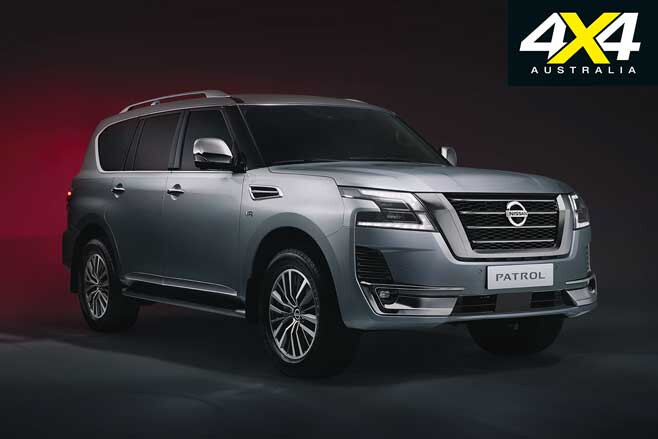
The 2020 Patrol will start rolling out of Middle Eastern dealerships this month, with a local launch expected closer to the end of 2019.
Prices for the Y62 Patrol currently on sale in Australia are $72,880 (Ti) and $89,880 (Ti-L). New pricing, and whether the suite of safety tech will be available on both the Ti and Ti-L models, is yet to be confirmed.
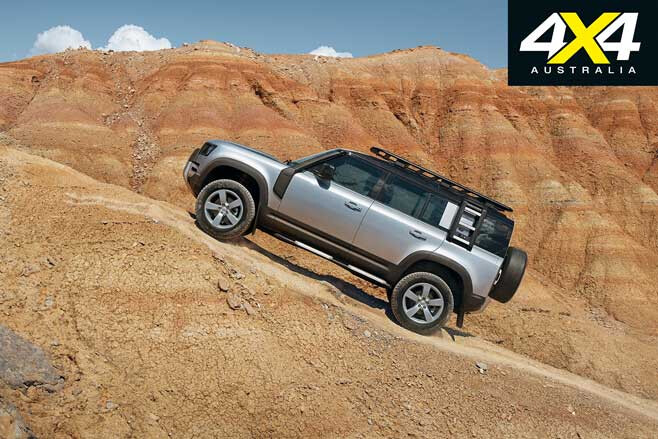
The ground-up 2020 Land Rover Defender is set to debut world-first technology that would make negotiating difficult obstacles and getting out of a bog easier by taking advantage of remote semi-autonomous functionality.
Engineers of the bigger, more luxurious Defender – one claimed to be more capable off-road than its mighty predecessor – confirmed to 4X4 Australia they are working on remote control technology.
“That’s a good idea,” said chief product engineer Stuart Frith smiling when asked about the possibility of utilising existing sensors, cameras and processing power for remote operation.
“The car is capable of being able to do that in terms of its architecture… the car is technology-ready for that.”
Far from a pie-in-the-sky prospect, Land Rover engineers have already been secretly testing the remote control technology.
“We’ve got as far as understanding how to do it and we’ve run prototypes as well.”
Frith says there are clear advantages to being able to control the car from outside, allowing careful placement of wheels without the need for someone to spot you.
“If you’re in a tight spot and you’re on your own you can get out of the car and spot it yourself,” he said.
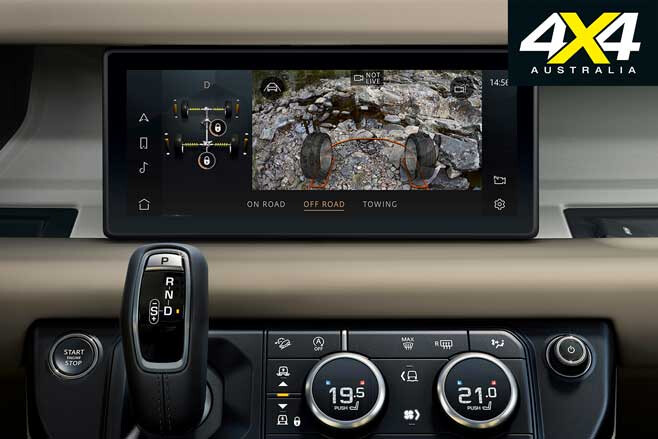
Frith says the world-first 3D Scout technology that will be available on the Defender – allowing a virtual image of the car from a distance – goes a long way to providing additional information about the car’s immediate surroundings but that “there’s nothing like getting out of the car”.
While the new Defender is capable and the technology almost ready, Frith said current regulations were proving a road block.
“The legislation is not ready yet for us to do that… we have been (lobbying regulators).”
Frith said the new generation Activity Key – which now comes with a small display screen and will be standard on all Defenders sold in Australia – is crucial to enabling the technology and getting regulatory approval.
“We do need to have the wearable key… to confirm that you’re actually close to the car and to make sure you’re the one who’s in control of the car as well.”
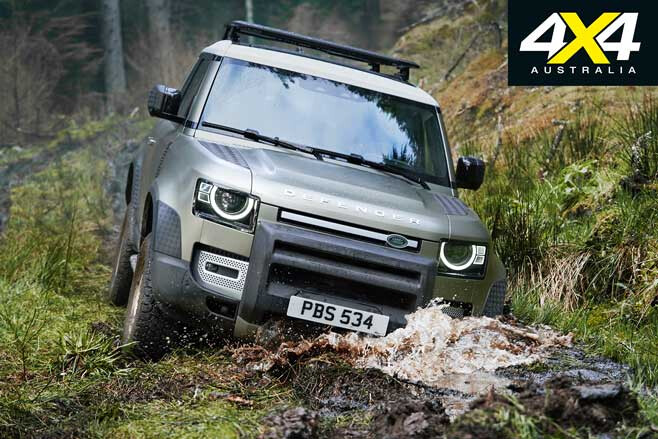
Another tech-focused option Land Rover is considering is the ability to record your journey using up to four on-board cameras and the 3D Scout system.
The car can already project a virtual image of the car on the centre screen, and Land Rover is looking at allowing owners to record their journey, providing a drone-like YouTube recording of the trip.
“In principal you could do that. It all depends on how much data we capture and the bandwidth,” he said, saying that at the moment any such feature would require streaming to the cloud (a slight issue in vast chunks of Australia, where phone range isn’t available) because there is no memory facility on board.
Land Rover chief engineer Nick Rogers also said the electrical backbone of the new Defender allowed for updates and additions throughout its life, which he hinted could be longer than other Land Rovers.
“We see big opportunities in how you rig the thing, the electrical architectures, how you give it new features and how you keep the cars up to date,” said Rogers.
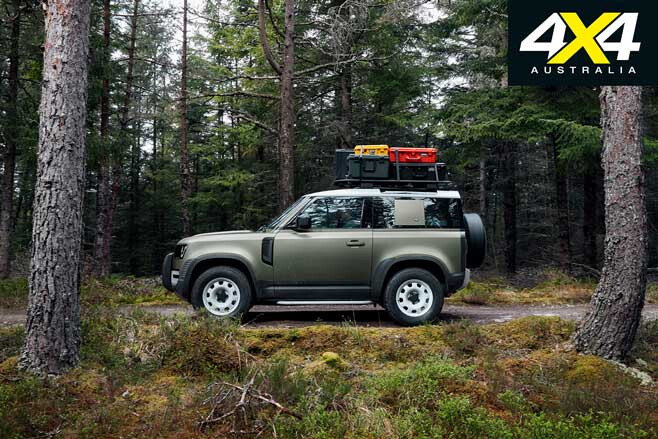
Despite the imminent arrival of the ground-breaking remote operation technology, the new Defender also promises to stay out of bogs more often.
And it’s the partial electric versions – including a plug-in hybrid electric option – that could prove the most capable.
“We like electric power for off-road vehicles,” said Frith. “The torque with electric motors is from zero rpm… you can have as much torque as you want. It’s very easy to modulate, easy to control.”
While Frith says Land Rover has no pure electric model planned, he believes partial electric propulsion can bring improved functionality with traction management systems.
All this talk of electronics and gadgets may have the off-road faithful wary, which is hardly surprising given Land Rover’s track record for problems.
With the exception of the old Defender, you don’t have to travel far in the outback to hear horror stories of Land Rovers expiring.
Rogers says there is intensive work going on to improve the reliability.
“I’m obsessed about that every single day,” he says. “All of the cars that we run now are data logged and I can see at a point in time… everything that’s going on.”
He acknowledges the brand is “on a journey” and points to being “the most improved brand in JD Power” quality and reliability surveys.
Arguably Land Rover had the most room to move, having stumbled around the bottom for years.
“Am I happy with the position? No, absolutely no. We are in an obsession to change and it will take some time but we are absolutely pushing it like nothing on Earth.”
Organisers of the Extreme E electric off-road racing championship has announced the addition of a fourth team, Veloce Racing, to join the series.
Co-founded by the team behind London-based e-sports team, Veloce Esports, Veloce Racing lists double Formula E champion Jean-Eric Vergne and Formula One technical guru Adrian Newey as two of its co-founders.
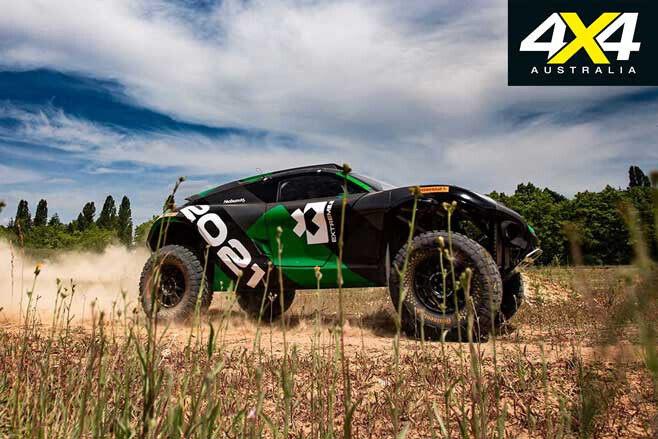
Responsible for 10 Formula One Constructors’ Championship winning cars and still the only F1 designer to win Constructors’ Championships with three different F1 teams, Newey is considered one of motorsport’s greatest engineering minds.
According to Extreme E’s organisers, Newey will be involved with Veloce Racing as a ‘Lead Visionary’, though there are no specifics on the level of input he will have on the team’s electric racer, or to what capacity he will be working for the team.
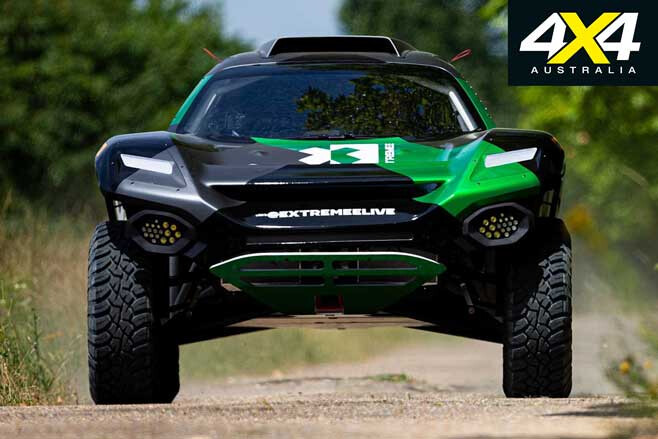
Team participating in the Extreme E race series will have to utilise a standardised race car chassis built by Spark Racing, the same company responsible for developing the Formula E race cars.
While the standardised components comprises of its tubular frame, suspension system, braking and steering system, and crash structure, teams are free to develop their own powertrain and tweak select areas of the bodywork.
“We are delighted to be announcing the launch of Veloce Racing, as well as confirming our place as a fully-fledged licensee entrant into Extreme E,” said Newey.
“The series is an exceptional platform for developing new technology, drawing attention to the earth’s environmental challenges and driving change. Veloce Racing will play an active role in as many of Extreme E’s legacy projects as possible to help regenerate the local environments. We now can’t wait to get started on our campaign.”
Extreme E is set to kick off in February 2021, with Formula E associated teams, Venturi, ABT, and HWA already signed on for the series’ debut season.
A major source of rough running and engine failure in modern diesel engines is contaminated fuel. Dirt, dust, bacteria and water all play havoc with diesel fuel systems, and the resultant damage can cost an owner tens of thousands of dollars.
Modern common-rail diesel engines are most at risk as their high-pressure fuel systems are fickle and fragile, while the diesel fuel from some of the more remote stations can leave a lot to be desired.
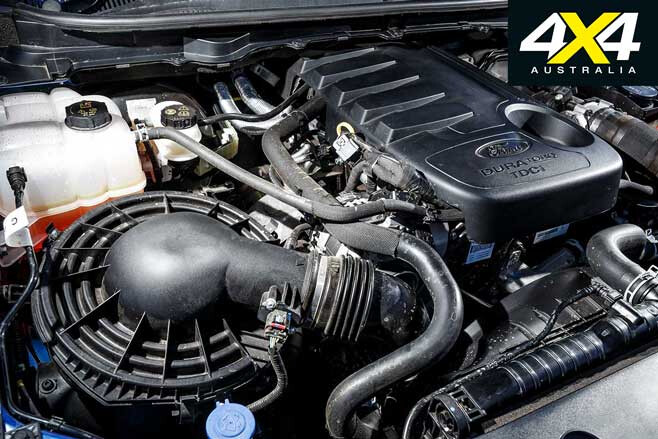
The most common way to prevent any fuel contaminants from getting into your engine’s fuel system is to fit some form of secondary prefiltration that works in conjunction with the factory diesel fuel filter.
These are usually fine, but you’re really just doubling up on what the factory fuel filter does. In fact, the car companies recommend not fitting any secondary filtration at all; use quality filters and replace them regularly and that second filter isn’t really doing much.
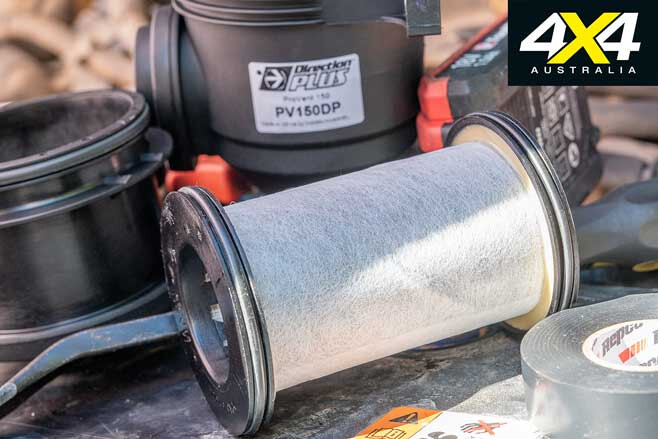
Some folks use a finer filter element than the OE unit in an effort to catch finer grains of dirt than the factory filter can, but this can place a restriction on fuel flow and as a result affect the performance of your engine. Another type of prefilter is not a filter at all but a water separator. These have been around for years and are just as relevant to today’s sophisticated high-pressure diesel fuel systems as ever.
ACT-based firm Responsive Engineering has been working on fuel system solutions for decades and was searching for a better solution to prevent engine damage caused by fuel contamination.
Responsive Engineering’s David Webster found that some of the existing filtration and water separation systems offered some success in keeping contaminants from entering the fuel system, but they didn’t provide any warning to the operator/driver of any problems in the system. This could then allow the filter or fuel bowl to clog up with contaminants and could still result in costly damage to the fuel system and engine.
The problem really came to the fore when a friend in the medical field, who was providing disaster support after the 2004 tsunami in Asia, raised concerns about generators failing in field hospitals due to fuel contamination. This spurred on David to design a product that could warn of fuel contamination before the problem got worse.
The result was the Water Watch system, developed for a wide variety of vehicle applications and for unattended engines such as generators and pumps where an optional automatic engine shutdown can switch off the engine before the damage is done.
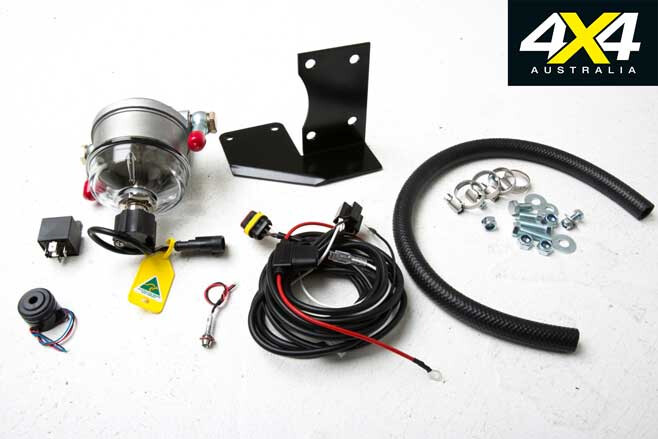
In motor vehicles, the system doesn’t use an engine shutdown but a warning alarm and light to alert the driver of a problem. The alarm also sounds when you first switch the car on, to let you know it’s operational.
The Water Watch is not a filter in the traditional sense like the fuel filter fitted by the car manufacturer. Instead, it separates contaminants from the fuel. To achieve this, the fuel is pumped by the standard pump in the car’s OE fuel system into the unit where it spins and, as dust, grit and water are heavier than the fuel itself, these contaminants will drop to the bottom of the bowl as the clean fuel is centrifugally spun out the other side and onwards to the OE filter.
There are no moving parts or paper filters to restrict fuel flow, and the alarm sounds and the warning light glows should contaminants be detected at the bottom of the bowl; so you can clean out the bowl if required.
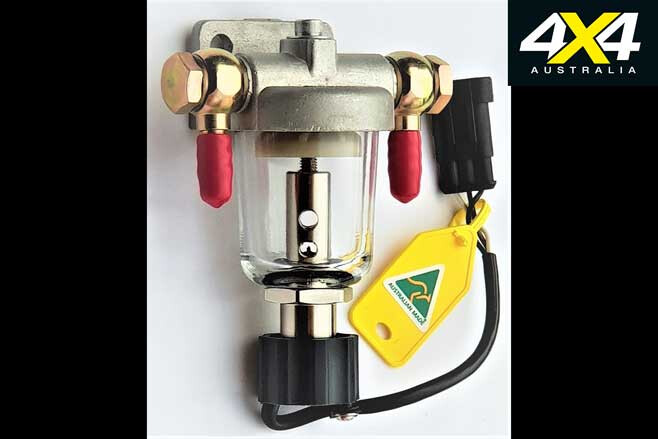
We fitted a Water Watch unit to our Ford Ranger as peace-of-mind against fuel contamination, which is vitally important considering the mileage we do and some of the remote places we fuel up at. The unit comes as a kit for the Ranger – as it does for most popular new 4×4 vehicles – and it was a relatively simple installation for our good mates at Ontrack Automotive in Ferntree Gully, Victoria (www.ontrack4x4.com.au).
In fact, the hardest part of the installation was deciding where to locate the small LED warning light inside the car. The kit contains a mounting bracket to suit the vehicle, all fitting wiring and hardware, and detailed instructions. It’s a job that anyone handy on the tools should be able to do at home.
Having a sight glass to check the WW unit for contaminants is great but, depending on where the unit sits in your engine bay, it’s not always easy to see. That’s why having the alarm and light is such a great idea.
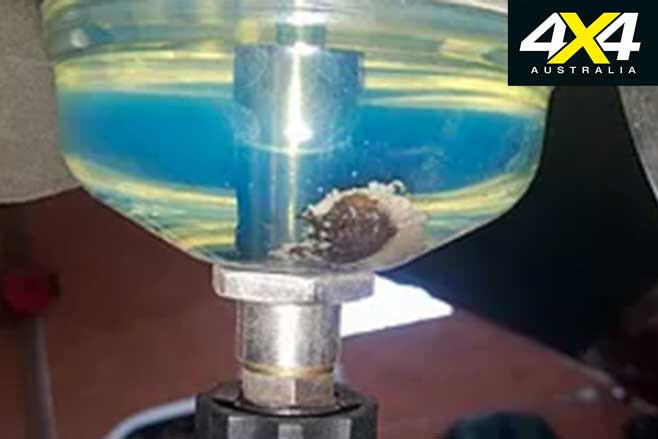
If the WW alarm sounds, stop your engine as soon as it is safe to do so and check the sight glass; even then you may not be able to see the contaminates in the bowl. To clean, unplug the sensor and remove it from the bottom of the bowl to allow the water and contaminated fuel to drain out; then refit the sensor and prime the fuel system, and you should be right to go.
We’ve done more than 6000km in the Ranger since fitting the Water Watch unit, many of them through dusty outback conditions. Thankfully, the only time we’ve heard the Water Watch alarm is when starting the car, and an occasional glance at the sight bowl shows no signs of any contaminants to date. But it’s nice to know the unit is there and actively protecting our engine, ensuring plenty more bush miles to come.
RATED Available from: www.waterindiesel.com.au RRP: $590 (Ranger/BT-50 kit) We Say: Simple and effective peace-of-mind against dirty fuel