
When I arrived, the air was so still I could hear the distant call of crows from kilometres away, and there was no one around as I wandered about the deserted railway station in the late afternoon light, feeling like the last man on earth.
As day turned to dusk, and then twilight, I saw a light in the distance. A train was coming, the intensity of its headlight growing and the high-pitched hum of the loco on the tracks becoming a roar before the heavily loaded freight thundered through the station at close to 100km/h, leaving a rush of air in its wake before silence eventually resumed.
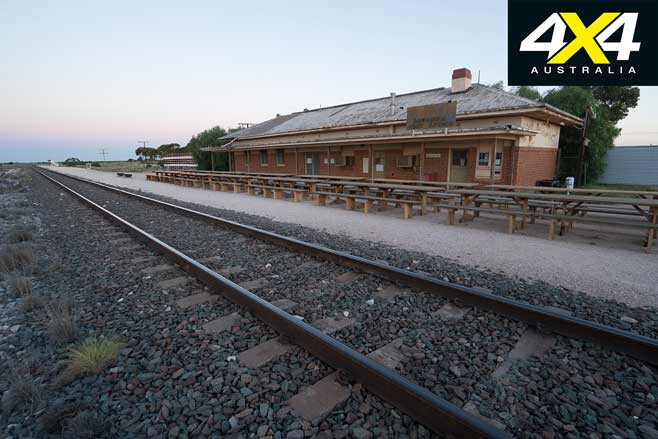
With a new moon, the starlight was brilliant, so I set up my camera for a time-lapse, retired to my swag and fell asleep under the spectacular star show above me. At midnight, I was stirred by a wind that had come up. Rawlinna is in a basin on the edge of the Nullarbor Plain and as the wind blew over the flat land it quickly increased to a gale, becoming so strong I had to take my camera from the tripod … and it howled all night. I was later told Rawlinna means wind.
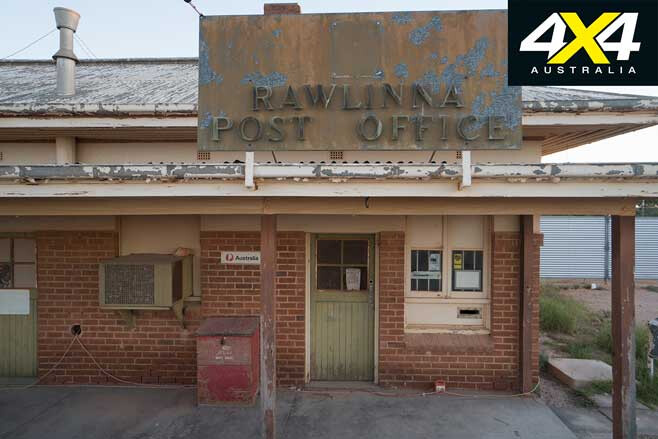
By dawn the air was still again, and I explored the station. The old post office and storefront looked like they could still open for business; they were built to last out of red brick and corrugated iron. The post office isn’t manned but apparently it’s still possible to post a letter here, as there’s a box and ‘6434’ postcode.
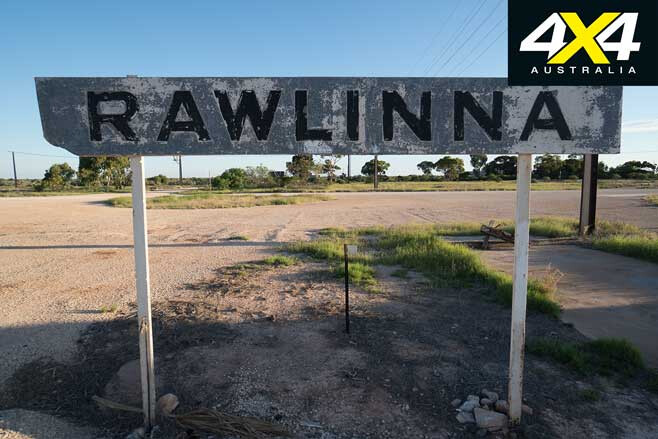
Across the tracks the tall water tower still stands but has certainly seen better days. These magnificent towers are striking features at many of the old sidings across the Nullarbor. During construction of the railway this place was one of the main depots, and it was named Rawlinna in 1915. Rawlinna also played a part in the construction of the Eyre Highway in 1941-42 for supplies arriving by train.
In 1901, when Australia was federated, Western Australia relied on the sea for transport. It was agreed a railway would link Western Australia to the other states and this was legislated in 1907. It was to join Kalgoorlie and Port Augusta by standard gauge and construction began at each site in September 1912, with work progressing quickly before it was joined at Ooldea on October 17, 1917. The Trans Australia Railway recently celebrated its 100-year anniversary at Ooldea.
When finished the distance was 1692km and the water to power the locomotives was provided by bores, however much of the water still had to be carried by the trains.
In the days of high track maintenance Rawlinna had a regular population with a school, the remains of which are on the edge of town. There used to be gangs based in Rawlinna, but then the track’s sleepers were changed from wood to concrete and regular maintenance wasn’t required. Trains also became longer with greater range, so today the town is virtually deserted, except for a ’roo shooter and some regular railway workers.
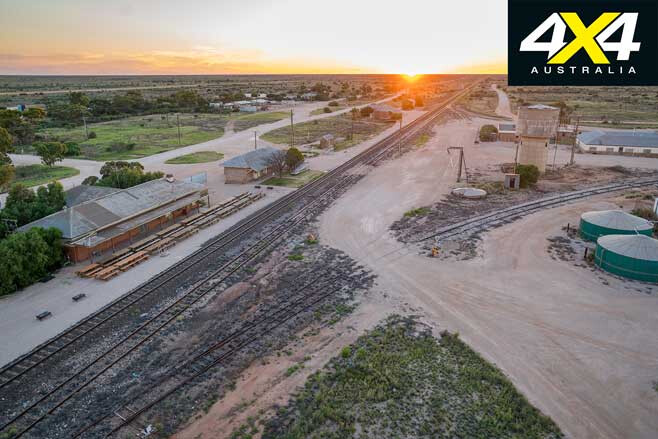
Close by is Rawlinna Station – one of the largest sheep stations in Australia. With an area of one million hectares (2.5 million acres), it can take up to eight hours to muster a paddock and the station can hold up to 80,000 sheep. In 2018 there were 64,000 sheep sheared for a wool clip of 1500 bales. Rawlinna is also the site of the Loongana Lime Mine, which is only a few kilometres from town and clearly visible. There are power lines heading out to the mine and workers’ sheds scattered about. Rawlinna also has a huge loop track. Some of the trains that head through the station here are 3km long.
Rawlinna is on the western edge of the Nullarbor, 910km from Perth, and heading east it’s flat for 660km until you reach Ooldea. Along this stretch the track runs dead straight for 478km, making it the longest straight section of track in the world. This is the true Nullarbor, where the horizon surrounds you and there are just occasional stands of trees.
The permit-only unsealed road that runs beside the railway is for maintenance workers. You can access certain sections from the highway at Cook and Ooldea, and you can also drive out to Tarcoola from the Stuart Highway. I’ve travelled in both directions across the Nullarbor on the Indian Pacific, and looking out across the endless plain is mesmerising on this amazing train journey.
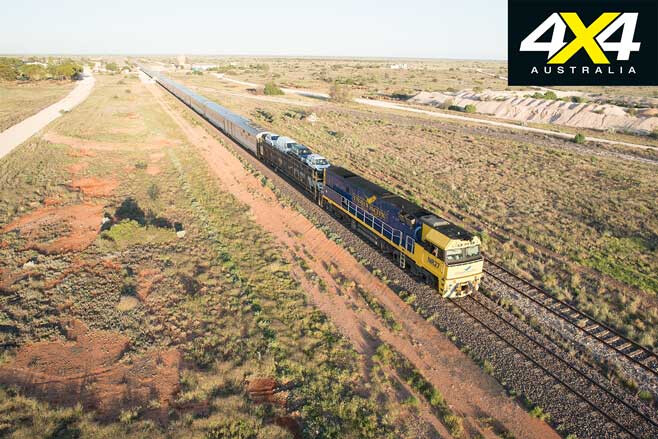
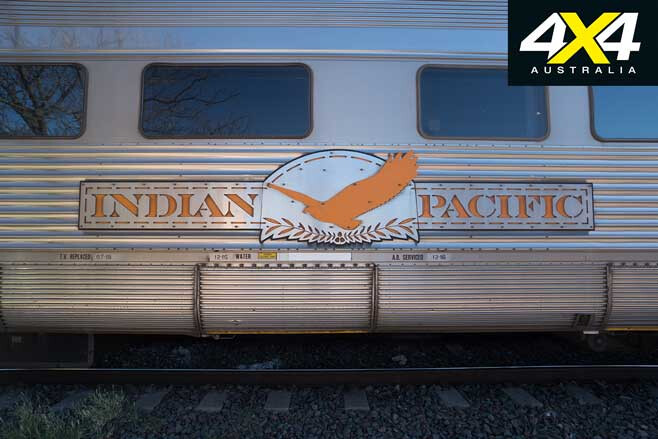
Just after sunrise at Rawlinna I glimpsed the Indian Pacific’s light as it headed towards me from the west. The train had left Perth a day prior and travelled through the night. It slowly pulled into the station, a single blue and yellow locomotive with an eagle emblazoned on its front towing a kilometre of gleaming silver carriages.
Eventually the passengers emerged; the two-hour morning tea stopover at Rawlinna is a regular schedule for eastbound passengers. Westbound passengers also stop here for an evening meal under the stars. If you are here, it’s a great opportunity to see the train pulled up in the middle of nowhere.
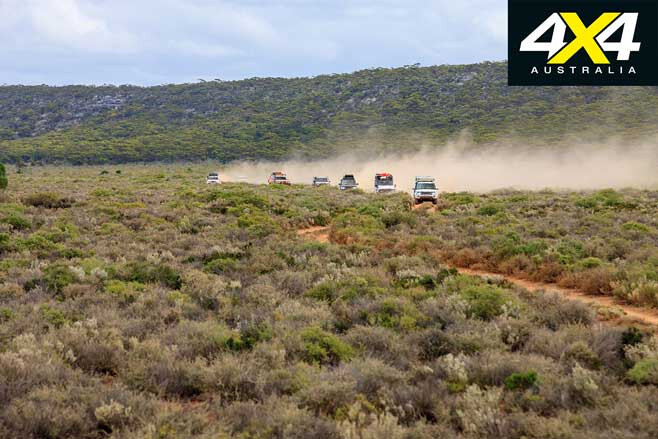
I had followed the same route as the train and driven the 375km unsealed Trans Access Road from Kalgoorlie out to Rawlinna. The road passes by mines and then through tall woodlands, and there are glimpses of the railway along the way. It’s a rough track in places and any potholes are filled with sharp stones, so be careful as this road can be a tyre killer. On occasions I left the road completely to bypass long sections of these stones. Close to Rawlinna the woodland turns to scrub and then flat limestone.
There are no services at Rawlinna, no shops nor accommodation, so you need to carry all necessities including fuel and water. As a result, the nights out here are magical; there’s no glow from any external lights and you can see the headlights of the trains coming from many kilometres away.
I took the Haig Road south to the Eyre Highway, which starts about 70km to the east of Rawlinna, at what used to be the Haig Siding. The 100km track to the highway is dirt with lots of gates, and this area quickly becomes impassable after rain. During the day kangaroos rest under low bushes on the side of the track.
Once you reach Cocklebiddy you feel like you’re back in the real world. There’s a shop, accommodation and a pub … with great food. You can also fill your tank and water bottles, and have a shower.
There are a few attractions around Cocklebiddy, so it’s worth staying around if you have the time. There are about 20 huge caves on the Nullarbor, which is the largest karst (limestone) area in the world. If the rainfall was higher there would be more extensive weathering and the landscape wouldn’t be so flat.
Many of the caves have lakes of clear water and are frequented by divers. The track to Cocklebiddy Cave is 12km west of Cocklebiddy and 10km north. The cave has been explored underwater for more than 6km, and while you can see the entrance, access is closed to the public.
There are also blowholes near the highway close to Cocklebiddy – these amazing holes blow air when the cave breathes as air pressure falls and rises. Air movement in caves has been measured at about 70km/h, and smaller caves breathe air with more force.
To the east is the Eyre Bird Observatory, established by Birds Australia in 1977. It’s in the old telegraph station building that was built out of limestone in 1897, which was left as a ruin in 1930 and restored in 1977. You can stay overnight or day visit for a fee, but you must contact the caretakers and book ahead. The turnoff is 17km east of Cocklebiddy, and it leads to a scarp, with the last part of the track descending a cliff and is 4×4-access only.
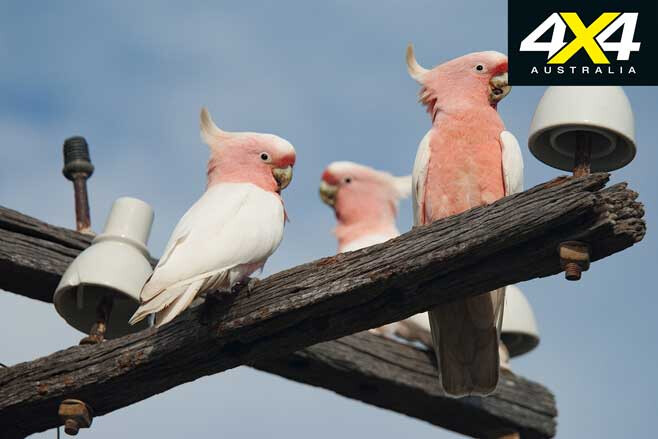
The bird observatory is obviously popular among twitchers, and around the station are many Major Mitchell’s cockatoos, along with a huge range of other bird species in the area. There are also possums, kangaroos and other fauna.
The observatory runs courses at different times of the year, including one on bird photography. There is also a museum with amazing collections including whale bones and old tools and gear that were used by the original settlers. You can walk down to the beach from the telegraph station, and the coast is beautiful with pure white dunes.
South of Cocklebiddy is some stunning coastline, much of it part of the Nuytsland Nature Reserve which covers more than 500km of coast. There are tall dunes, cliffs, coves and unique vegetation such as rare species of banksias. The wide variety of wildlife you’ll see includes eagles and dingoes, and offshore there are whales, seals and dolphins, while beneath the waves are reefs and crayfish. The one thing you won’t see too much of is people.
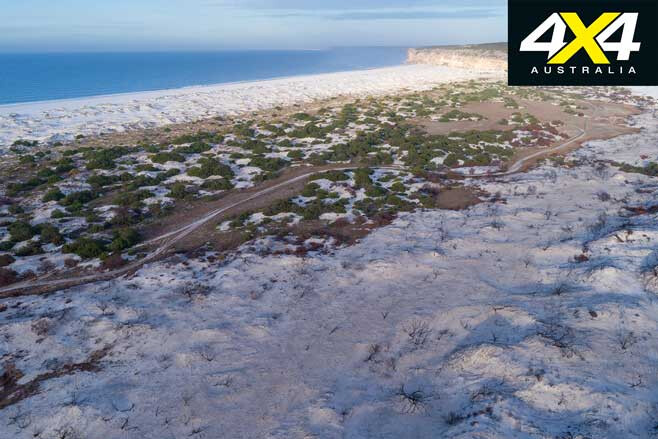
If you head down to Twilight Cove there’s a good chance you will want to stay for a few days, so head off with this in mind. The track to Twilight Cove starts behind Cocklebiddy Roadhouse and is only 26km, but it’s rough rock in places. There are also soft sand sections, so you’ll have to reduce tyre pressures. The track is also narrow and heavily vegetated, so it can scratch your vehicle. It may also be impassable after rains, so come prepared and bring recovery gear.
When you get close to the coast the track traverses a major dune system. In 2017 a huge bushfire ravaged these dunes and trees were burnt out for as far as you could see. On the last section before the beach the track gets soft and you have to traverse steep sand hills.
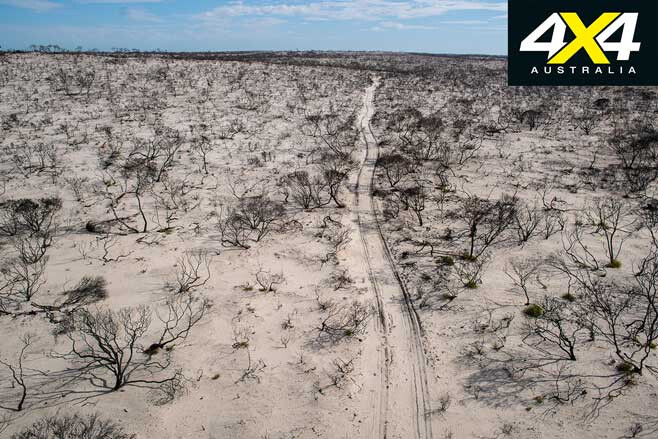
There are high dunes, and to get onto the beach you have to cross over them. It’s a long, open beach and there are nice sites to set up a camp among the dunes. Close to the water the sand is very soft, and the waves break on the shore forming deep gullies, so it can be a treacherous beach for driving on in anything but very low tides and swell.
At the western end of the cove are the magnificent Baxter Cliffs; these 70 to 100m spectacular cliffs have amazing bands and patterns in them. They stretch continuously for 190km, from past Israelite Bay to the west, and at Twilight Cove they head inland all the way to Eyre. The Cove was named after a ship called Twilight that was wrecked here in 1877, when the Telegraph line was being built. There are also signs of the past including the remains of old telegraph poles.
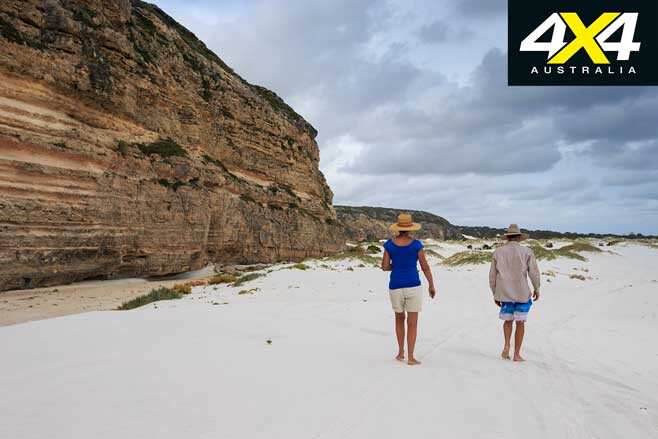
If you like the isolated beach life, this is a great spot. I’ve been stopping here for 20 years on my regular trips across to WA. There is terrific beach fishing, it’s good for a swim in the warmer months, and the photography is great. Who doesn’t love a magnificent isolated beach?
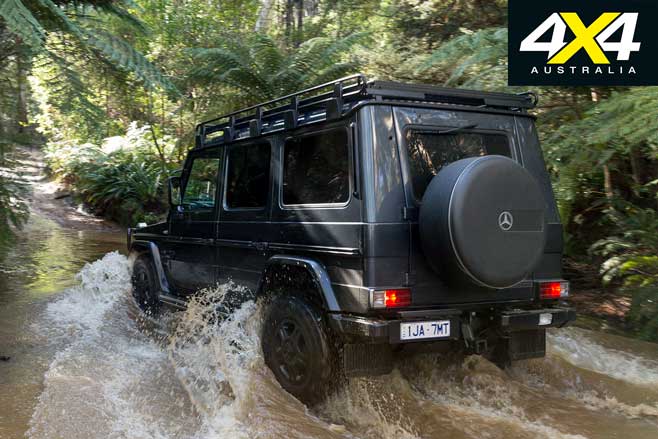
THE Mercedes-Benz G-Professional wagon and cab-chassis range has run its course in Australia, with the brand’s local arm pulling the model from its line-up. To get one, you’ll need to scoop one of the few that remain at dealerships.
The G-Pro was built on the older, live-axled W461 platform – think: square, small cabin – but prospective buyers will now have to look at the second-gen G-Class (W463) if they want to own their own Gelandewagen, with M-B Australia currently only offering the V8-powered 430kW/850Nm G63.
Still, there are a few G-Pros residing in dealerships across the country, with Mercedes-Benz Australia’s media relations and production communications manager, Ryan Lewis, telling us that both body styles are still around for the time being, with the majority being in cab-chassis configuration.
When asked of a successor to the G-Professional, Lewis said Mercedes-Benz Australia would be interested.
“There’s nothing to announce regarding a successor on the new platform at this stage,” he said, “but if a new G-Pro is confirmed we would certainly be interested.”
The G-Class is a true off-roader with almost 40 years of military heritage, and the G-Pro came about as a military vehicle for the civilian market, created courtesy of a supply contract between Mercedes-Benz Australia and the Australian Defence Force.
Powered by a 3.0-litre V6 turbo-diesel engine the G-Pro can only muscle up 135kW (at 3800rpm) and 400Nm (at 1200-1600rpm), and it sends it through a five-speed automatic transmission.
Despite steep price tags – the G300 cab-chassis is priced at $119,900; the wagon at $109,900 – the utilitarian vehicles are quite basic in their design, lacking the luxury of a car you’d expect with a price tag greater than $100K.
The 16-inch alloy wheels are wrapped in all-terrain rubber; the floors are lined with rubber mats and no carpet; and the dash layout is old-school. Still, they’re a solid, reliable off-roader, with triple diff locks and four-wheel coil suspension … you can thank their military heritage for that.
CREATING an interesting and unique custom 4×4 vehicle to promote your business at shows and on the tracks is getting harder all the time.
Like how many catalogue-built Ford Rangers and Toyota Hiluxes have you seen? And chopped, stretched and portal-axled LandCruisers are a dime a dozen these days. Standing out from the crowd requires something different, and that can often mean getting your hands on the newest vehicles as they come onto the market.
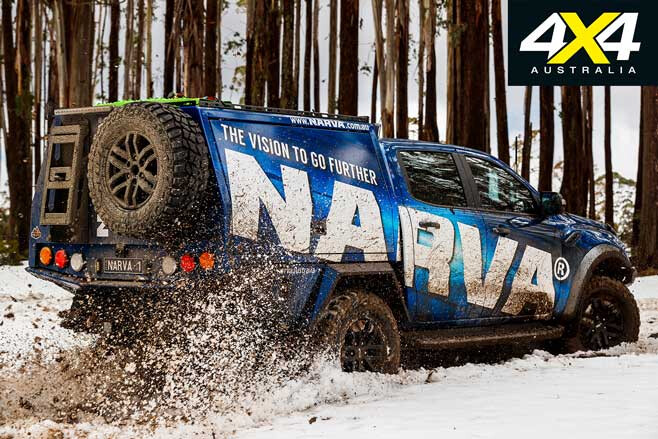
Brown & Watson marketing manager Jake Smith went through the options when considering the build for his new company car to promote B&W’s Narva brand.
Jake looked at fully kitted Cruisers and American pick-up trucks during his deliberations before settling on the then yet-to-be-released Ford Ranger Raptor, knowing that the off-road-focused ute would be hot property in 2018 and onwards.
Being one of the first to kit up any new model opens up the challenges of getting the right accessories, as many aftermarket companies won’t have them readily available yet and they could take months to engineer and make them.
Jake’s previous work vehicle was a regular PX Ranger, so he had a pretty good idea of what he wanted for his Raptor but, despite being based on the Ranger, the extra width of the Raptor meant some accessories wouldn’t be a straight bolt-on fit.
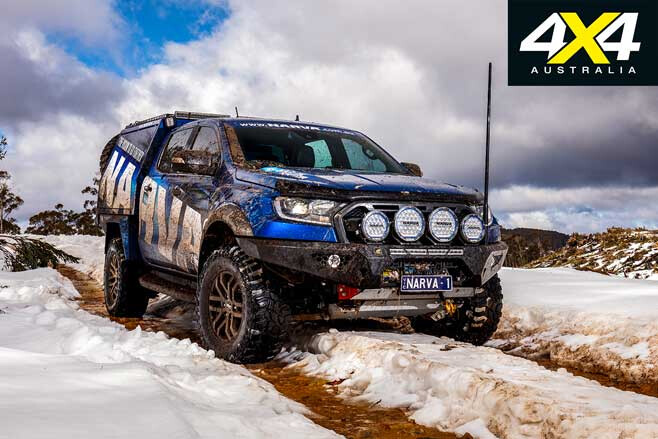
The Raptor presents another interesting conundrum as it already comes fitted with some of the best off-road suspension and tyres from the factory, but, again, Jake’s plans called for alternatives. He wanted a full-service body fitted to the back of the Raptor, but the wide wheel track and reduced load capacity of the Ford Performance vehicle required some very careful planning.
“I chose a canopy from Trig Point as it’s one of the lightest in its class, but super strong,” says Jake. “That was very important considering the Raptor doesn’t have a great load-carrying capability.”
The aluminium Trig Point canopy mounts straight to the chassis and doesn’t sit on a tray, which in itself is a weight saving over tray-mounted units. It required wider wheel arch flares to cover the wider track and has an inbuilt 70-litre water tank and integrated rear protection bar. Naturally, it’s fitted with Narva LED tail-lights and is chock-full of Narva and Projecta electrical goodies.
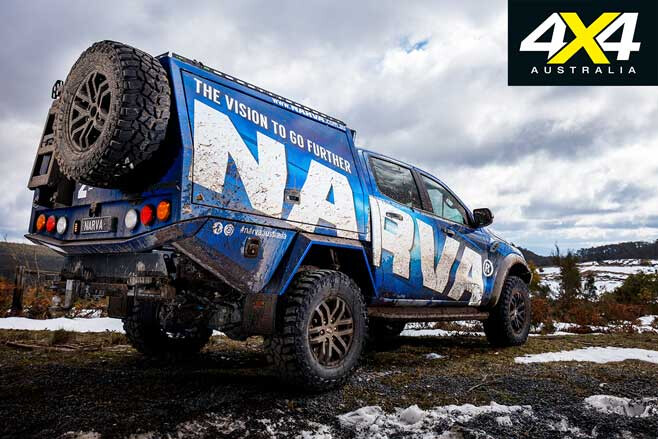
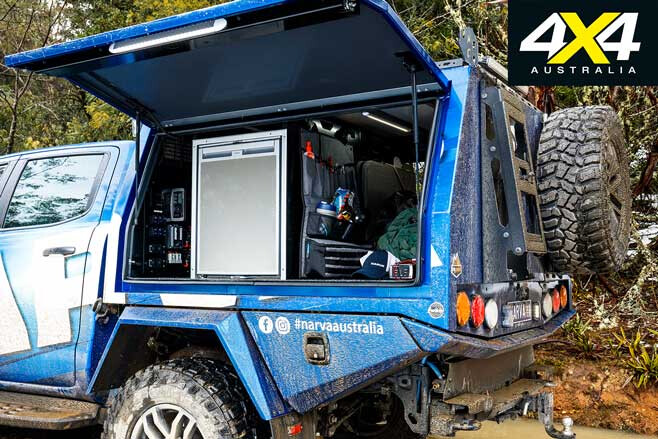
The 12-volt setup starts with a Projecta 25amp DC/Solar Lithium dual-battery system feeding a 100 amp lithium battery and a 1000W Projecta pure sine wave inverter. Projecta Smart Battery Gauge and Low Voltage Disconnect units help manage the power storage, while a host of USB, Anderson and Merit power sockets are fitted to power various accessories. The power management system is mounted to the headboard inside the canopy.
Some of the accessories permanently mounted inside the canopy include full LED strip lighting and an 80-litre Dometic upright refrigerator.
“I chose the stand-up fridge due to its light weight,” informs Jake. “It weighs no more than 25-odd kilograms compared to your standard 60L fridge and drop-down slide, which combined would weigh in at closer to 80kg.”
Despite the constant attention to weight-saving in this build, the additions of the canopy and its accessories, a 150-litre Brown Davis long-range fuel tank, a steel bumper and winch upfront and additional lighting, the Raptor was on its weight capacity, so upgrading the factory-fitted Fox suspension was needed.
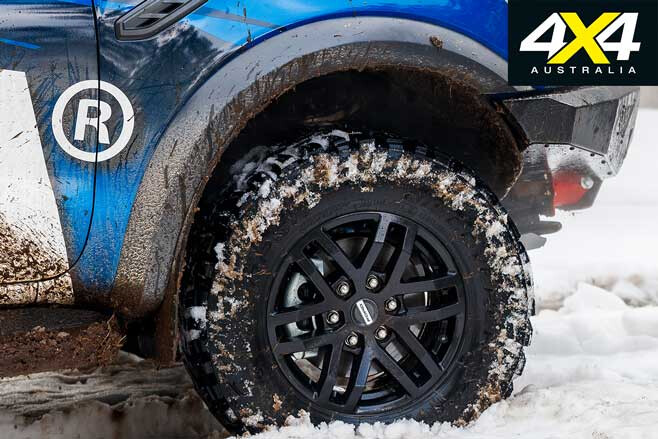
CalOffroad helped here, supplying coil springs which are 100kg constant rate and 20mm taller in the front and 400kg constant load and 30mm taller under the rear. The factory Fox shock absorbers are retained while the original tyres have been replaced with larger 305/65R17 Cooper STT Pro rubber.
As Narva is best known for its automotive lighting, it should come as no surprise to find that Jake’s Raptor is loaded with extra LED lights. Starting at the front of the car, concealed in the Offroad Animal bumper are an Explora 22-inch single-row LED light bar and Narva 90mm DRL/Fog lights, while on the bar are a pair of Ultima 215 and Ultima 180 LED driving lights.
Up on the roof is a pair of Explora 22-inch double-row LED light bars shining forwards, while a duo of work lamps shine to the sides, and there’s another LED light bar illuminating to the rear.
You might think that Jake is afraid of the dark, but you need to remember that this vehicle is a rolling showcase of the products he represents. We’ve got to say that with its bold sign-writing that complements the factory Ford blue, the Raptor project represents the Narva brand well.
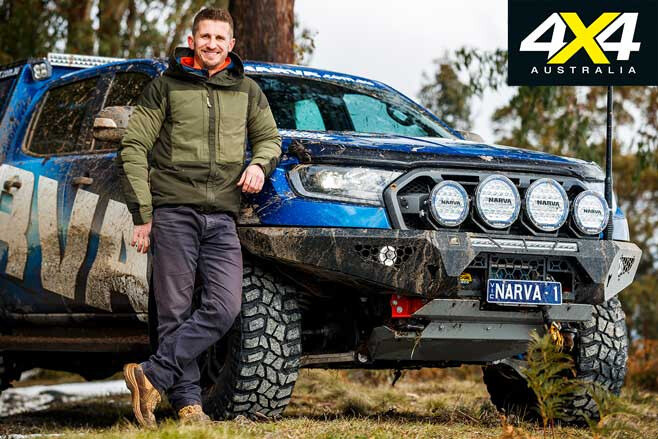
We’ve seen plenty of Raptors wearing fibreglass/plastic canopies over the factory ute tub, but this is the only one we’ve spotted with a full custom body fitted to the back, so it certainly catches attention.
Jake says he’s always being stopped by people wanting to check it out and wanting to know more about the canopy, and he never misses a chance to talk up the lights and other Narva products.
Jake also says he couldn’t be happier with the way his company car has turned out. “If I had all the money and was building it for myself, I wouldn’t change a thing.”
A TOTAL of 1197 converted RAM 2500 and 3500 pick-ups have been issued with a recall notice due to an issue with the vehicles’ steering system.
According to the ACCC recall report, the “drag link jam nut may loosen and may result in the drag link separating from the adjuster sleeve”.
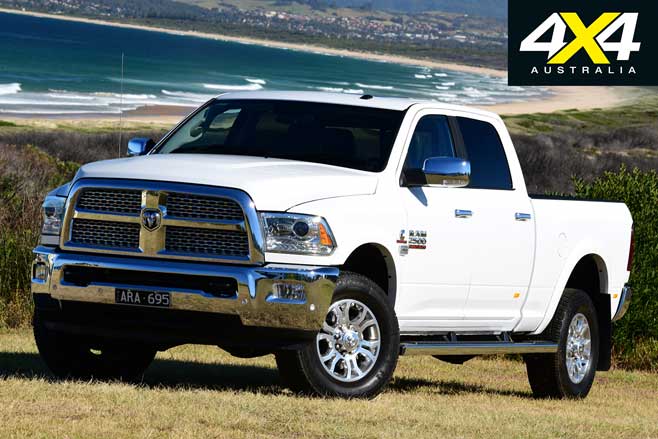
“If the drag link separates from the adjuster sleeve, the steering may become difficult to operate or potentially fail, increasing the risk of an accident or injury to vehicle occupants and other road users,” the recall report says.
The affected vehicles were supplied nationally by American Special Vehicles and sold via authorised RAM dealers between January 1, 2015 and December 31, 2018.
For a full list of affected vehicles, click here: https://www.productsafety.gov.au/system/files/VIN%20list_9.xls
Owners of affected vehicles will be contacted via mail, advising them to contact their closest RAM dealer to organise free reparation.
After a number of unfortunate setbacks in rally events in South Africa and Morocco, Fernando Alonso scored his first rally podium – a third place finish – at the recent Al Ula-Neom cross-country rally in Saudi Arabia.
Alonso and navigator, five-time Dakar rally motorcycle champion Marc Coma, started the 765km rally strong with a fourth-place finish in the first stage, trailing the leader by 7min 24sec.
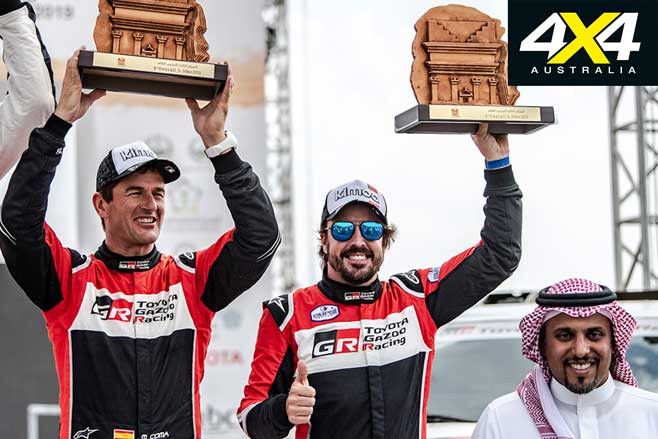
The duo managed to maintain their position in the second stage despite their V8-powered Toyota Hilux rally ute picking up a puncture and dropping behind the leader by an additional 7min 35sec.
In the penultimate stage, Alonso clawed back a position with a third-fastest overall finish, and successfully managed to secure it in the final stage with a total time of 6 hours, 52 minutes and 12 seconds, 16min 20sec behind the leader.
“[Fernando and Marc] raced a brand-new car here, which is earmarked for the Dakar Rally, so they had to balance their pace with the need to preserve the car,” said Glyn Hall, team principal.
“In the end, they achieve a maiden podium against local crews who know the terrain very well, which bodes well for January’s Dakar Rally.”
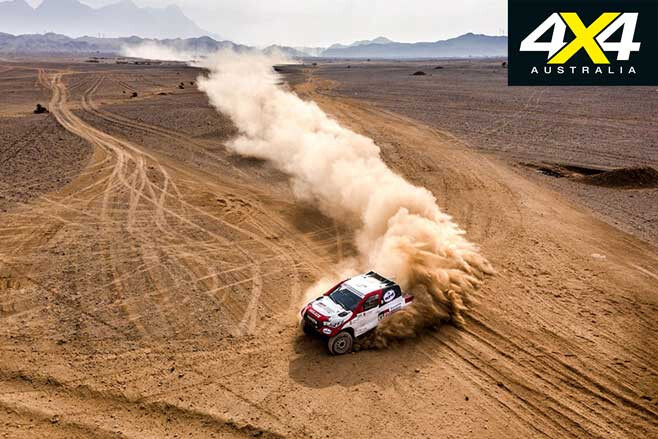
The Al Ula-Neom cross-country rally was the final competitive stop for Alonso and Coma to familiarise themselves with their Toyota Gazoo Racing Hilux. The pair will continue private testing before joining their fellow teammates at the 2020 Dakar Rally next January.
Prior to Al Ula-Neom, Alonso has had a rocky start in acclimatising himself to the rigours of rally raids, despite returning competitive times.
At his debut in the Lichtenberg 400 in South Africa, Alonso rolled his Hilux while running third in the initial stages and later hit a flock of birds, dropping him out of contention. At the Morocco Rally, Alonso hit an unmarked ditch, breaking his suspension in the process which dropped him to 27th in the standings despite being amongst the top 10 quickest competitors throughout the rally.
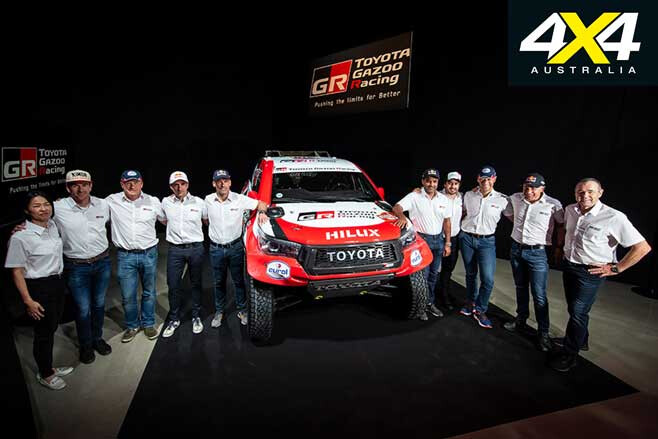
Alonso and Coma will join three other crews from Toyota Gazoo Racing at the Dakar Rally in Saudi Arabia. For the 2020 Dakar rally entry, Toyota Gazoo Racing has fielded a team that features a broad mix of Dakar champions, veteran rally-raid specialists and relative newcomers.
The 2020 Dakar Rally will take place solely in Saudi Arabia, with the event starting on January 5 in Jeddah and finishing in Al-Qiddya on January 17.
IT’S that time where we round up the best custom 4x4s of the year and hand the responsibility over to our readers to vote for a winner.
The December 2019 issue of 4×4 Australia features an eclectic selection of custom fourbies we’ve analysed and ogled throughout the year, with more than 20 pages dedicated to the top class of 2019. Vote for a winner from November 14 and you could be the lucky winner of a Maxxis Tyres voucher valued at up to $2000.
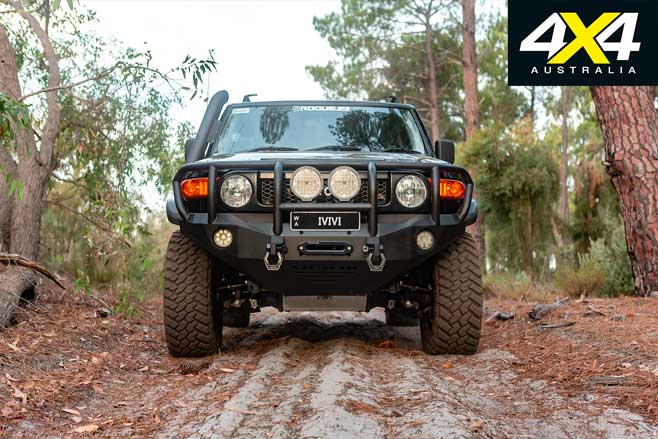
It wouldn’t be the December issue without the annual Christmas Gift Guide, where we’ve listed a heap of great stocking-stuffing ideas from a number of aftermarket companies: Ironman 4×4, MSA 4X4, Thunder Auto, Clearview Accessories, HEMA, MaxTrax, Narva, Projecta and Lightforce.
But wait, there’s more. Matt snared the keys to Harrop’s supercharged Ram 1500 and hit the hills in pursuit of an adrenaline kick. Performance is effortless, but it drinks more than the 4X4 crew around a campfire.
MSA 4X4’s ‘SuperCruiser’ 6WD build has finally wrapped up, with the beast of a thing finally transformed into an epic go-anywhere people mover. We finally get a look at how it tracks off-road.
Complete coverage of our desert drag race is also in this issue. We lined up seven dual-cab utes on a dusty claypan and pushed the pedal to the metal – first to reach 800 metres wins.
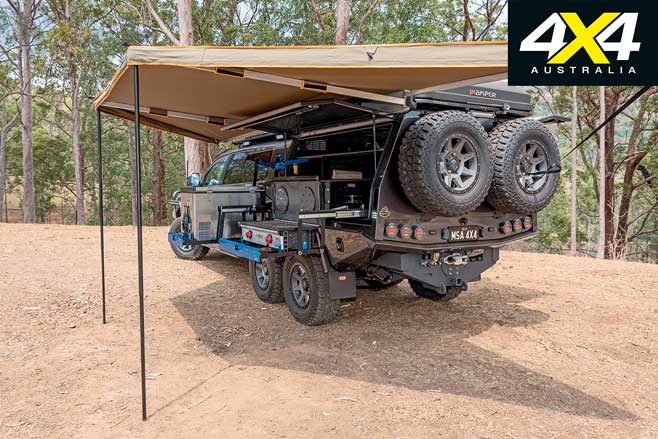
WHAT ELSE IS THERE? – JL Wrangler Rubicon V6 hits dirt – New Colorado LSX in the Flinders. – R&R along the Murray River. – Four-wheeling in Lightning Ridge. – Patrol, Ranger and Hilux in the shed. – Readers Rigs, columns, product reviews and heaps more.
The December 2019 issue of 4X4 Australia is out November 14.
SCUDERIA Cameron Glickenhaus (SCG), a boutique supercar manufacturer, will unleash its SCG Boot to battle the new Ford Bronco in Class 2 of the Baja 1000.
The 650hp (485kW) SCG Boot has undergone more than 1600km of hard off-road testing, with SCG claiming that includes more than “700 miles in Johnson Valley, California”.
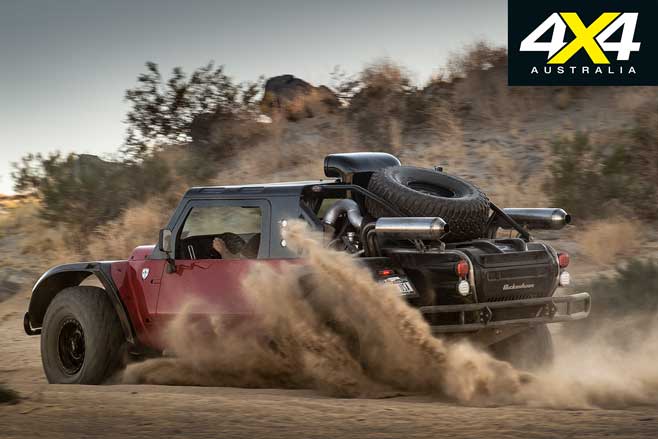
“The Boot has exceeded everyone’s expectations for handling, performance and, most of all, comfort over extreme terrain,” the company said in a statement on its website.
“We tested the Boot over 102mph (164km/h) off-road and it still had a lot to give,” it added.
SCG will use a base-model Boot to pre-run the Baja, which features 19 inches of suspension travel (front and rear), aided by Fox coil-over three-inch internal bypass shocks and 4-wheel independent A-arm suspension. It runs Method wheels wrapped in 39-inch BFG rubber.
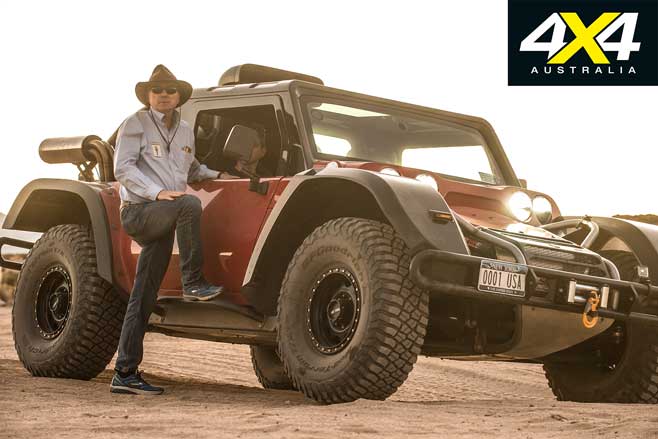
The Baja trim package provides the Boot with 22 inches of suspension travel via Fox 2.5 coil-over (front and rear) and Fox 3.0 bypass (front) and 3.5 bypass (rear) shocks, as well as 4-wheel independent A-arm suspension. Smaller 37-inch BFG tyres are used instead.
Other goodies of the Baja trim package include FIA- and SCORE-certified roll cage, door bars, race harnesses and window netting, as well as an auxiliary fuel tank, a Lowrance race GPS and radio comms.
The Baja 1000 will run from November 19 to 24, 2019.
From the very first time a cylinder fired, sending drive to a wheel, the world of off-road transportation has been slowly but steadily evolving. Each new model takes what was built by the last generation and adds to it. The worst aspects are removed; the best amplified and expanded – all with a clear lineage, if you look hard enough.
No brand flaunts its heritage more than Jeep, and this is evident in every inch of the two wild American rigs seen here. There’s perhaps no greater example of continuous, albeit slow, vehicle evolution than this pigeon pair of black, newer than new and tougher than tough Wranglers: one JL, one JT, and both a direct result of what came before them.
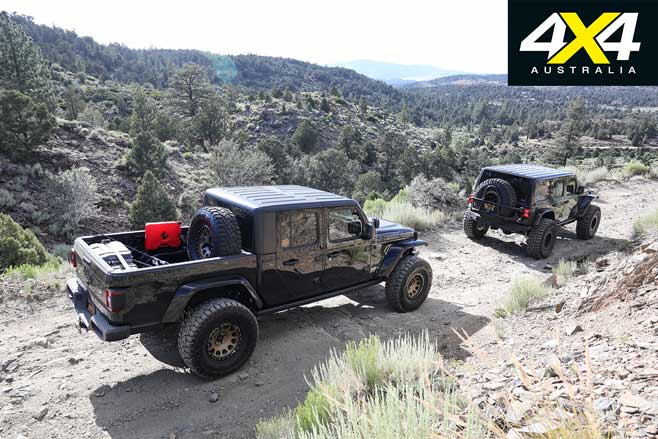
Alfred is the owner of the JL Wrangler, a five-door wagon evolved from the game-changing JK Wrangler Unlimited. Evelyn is the woman behind the wheel of what is undoubtedly the most capable off-road ute on the market, the recently released JT Gladiator, which in turn is the next step in the Wrangler platform’s progression. Of course, evolution doesn’t just happen on the production line, and both of these Jeeps have progressed far beyond the factory versions of themselves.
Starting underneath (because that’s what really counts on a Jeep) both rigs have had a comprehensive overhaul. The JT Gladiator now sits closer to the heavens thanks to a levelling kit from iconic aftermarket Jeep manufacturer EVO MFG.
The Stage 1 kit gives the long-wheelbase ute a full 2.5-inch ride-height increase thanks to in-house developed springs. To help make the most of the newfound ride height and travel, extended brake lines have been included in the kit, with bump-stop spacers front and rear keeping a healthy distance between tyre and fender, and adjustable trackbars getting things back in line.
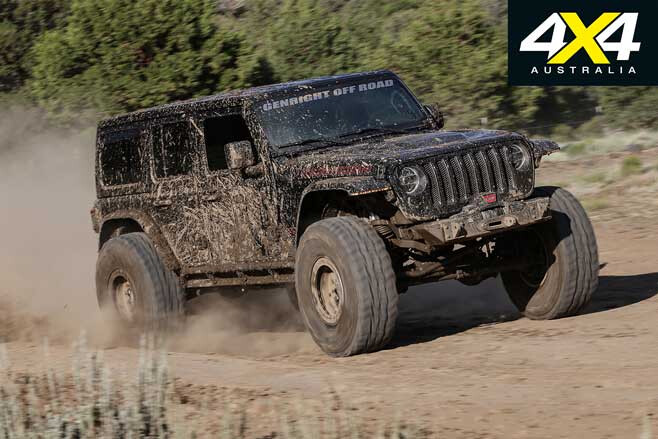
Alfred’s JL Wrangler takes things to a whole new level. On each corner externally adjustable King 2.5-inch shocks not only allow Alfred to dial in his ride height, but to change suspension stiffness depending on whether he’s hitting slow-speed rocks for a night run, or bombing across the desert.
Sitting 3.5 inches higher than stock thanks to dual-rate Metal Cloak coil springs, EVO MFG adjustable control arms were needed to help dial the caster and pinion angles back to acceptable limits, while Currie Anti-Rock swaybars have been fitted front and rear to help keep the body stable without eating into valuable articulation.
Due to the height increase, both front and rear trackbars pulled the axles out of alignment, so adjustable units from Rock Krawler have been installed to give Alfred the ability to push them back into location while providing a solid strength upgrade in the process.
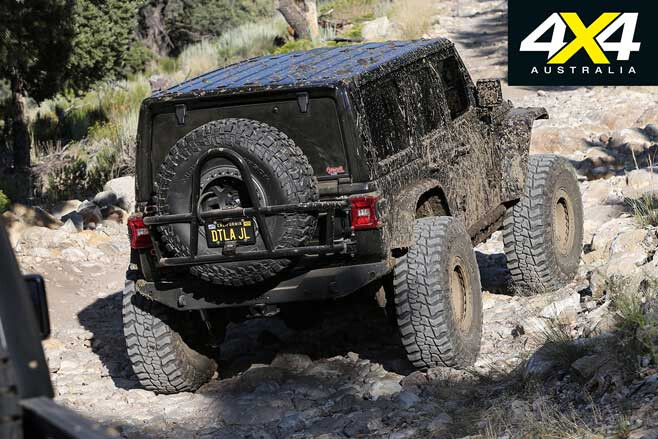
Eagle-eyed readers may notice hydraulic bump stops from DV8 Offroad peeking through the mud-covered undercarriage. An evolution of off-road race products, these are a seriously high-end piece of kit, smoothing out any big hits the Jeep comes across at speed, and giving it a silky-smooth ride no matter how rough the terrain.
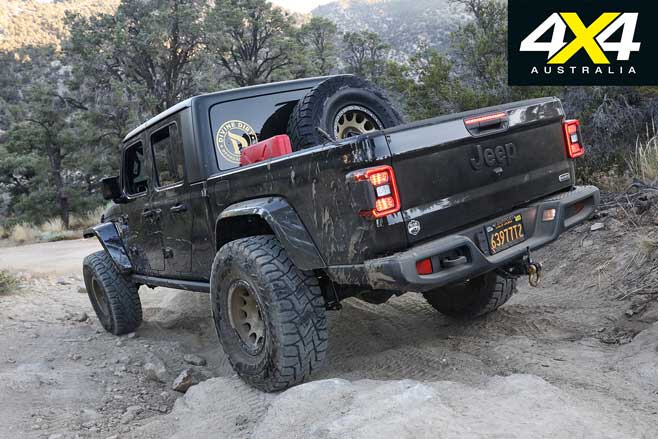
Of course, all that work isn’t done just for bragging rights. Both rigs are now sporting ‘straight to gaol’ tyres … at least in Australia they would be. Evelyn’s JT Gladiator wears a set of Toyo Open Country R/Ts punching in at 37×13.5R17. They’re wrapped around bronze Method ‘105’ beadlock alloy wheels, the mechanical locking ring allowing her to drop down to single-digit pressures for an absolutely monstrous footprint.
Not to be outdone, Alfred’s JL Wrangler is packing serious heat in the rubber department too. The brand-new Mickey Thompson Baja Boss hoops punch in at an eye-watering 40×13.5R17, which is a full 15 per cent taller than a typical 35-inch tyre. Alfred’s also sporting beadlocked alloys on each corner, this time KMC’s renowned Machete XD229, but in this case their usual machine finish is covered in a heavy-duty STEEL-IT black and grey coating.
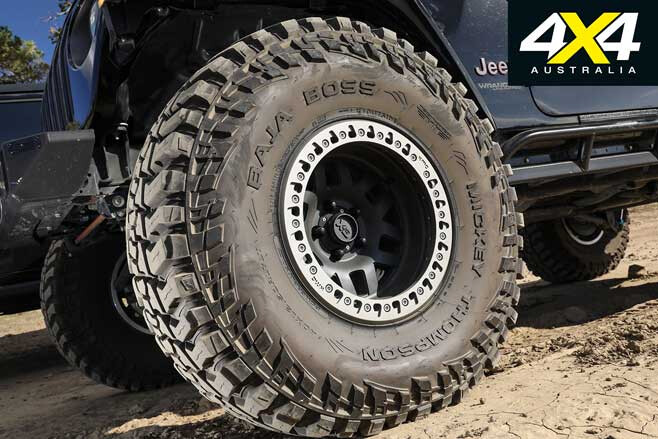
Moving onto the armour, both rigs have split paths again, with the Wrangler focussed on hardcore wheeling while the Gladiator is a seriously capable do-it-all rig for the trail or the weekend hardware store run.
Evelyn’s rig features a steel bumper from Artec Industries up front. Pieced together from solid chunks of ¼-inch plate, the bumper and stinger combo not only provides serious frontal protection, but also provides a little extra protection in the event of a front rollover, as the stinger is designed to catch a forward tilt, or help slide the nose up steep rock steps.
Nestled deep inside the bumper is Warn’s VR1000S 10,000lb 12V winch. Wrapped in synthetic winch rope, it’s topped off with a trick Factor 55 flat link, a smart evolution of the traditional open-ended winch hook allowing for more secure rigging.
Moving down the flanks, Evelyn’s Gladiator has been gifted a considerable boost in approach angle; an American Adventure Fab Lab high-fender kit has replaced the distinct JL/JT fender indicators with slimline LED versions giving a higher fender approach, and the front tyres a straight shoot at obstacles.
The Gladiator’s aesthetics package is rounded out with a pair of KC highlights 6 Pro ditch lights mounted at the bottom of the A-pillars, and a Wilco off-road tyre carrier at the back of the cab.
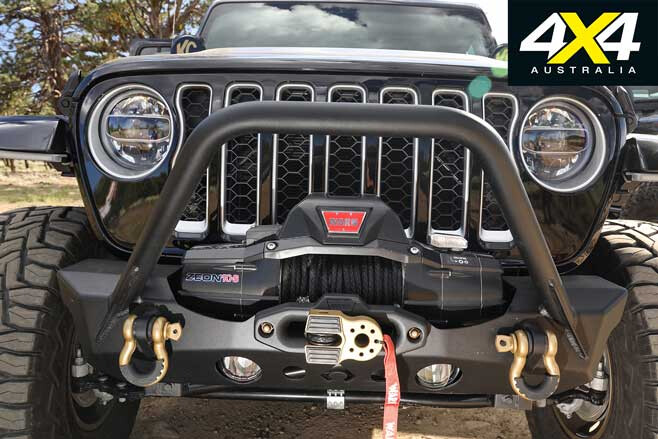
Alfred’s JL Wrangler has a similar package, although a little less everyday and a little more rock crawler. Up front a Genright ultra clearance stubby bumper teams up with another American Fab Labs high-fender kit for maximum approach angle.
Housed within is Warn’s top-tier Zeon 10S Platinum winch with a pair of integrated recovery points on either side. Matching Genright rock sliders sit high and tight to the body for all-out clearance without sacrificing strength, while a Genright alloy rear bumper helps keep weight down and clearance up. It’s topped off with a heavy-duty swing-out tyre carrier mounted to the body and holding the massive 40-inch spare.
On the mechanical front both Jeeps remain fairly simple, the Gladiator running a full Borla exhaust system, the Wrangler running an oil catch-can to help with side angles. That’s about it for the V6 petrol engines.
It might seem strange that such modified vehicles underneath are reasonably stock in the engine bay, but it’s fitting for the evolution of Jeep. When you’re climbing endless rock ledges and exploring the back country of America’s West Coast, suspension and tyres are what’ll get you home, while the engine’s really just needed to turn it all.
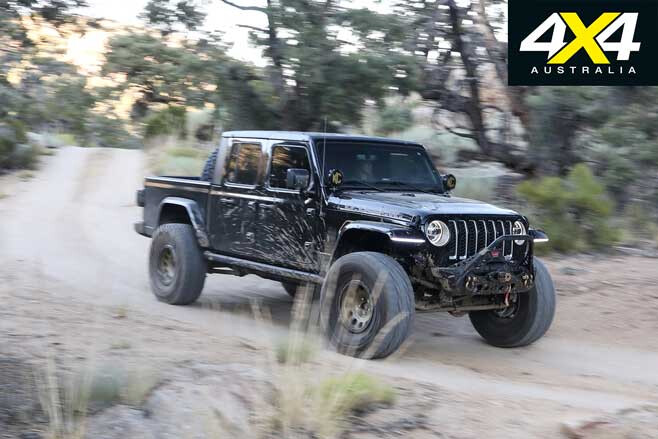
That said, evolution never really ends. It’s something Jeep has proved time and time again, and so have their owners. If you come across either of these rigs out on the trails they’ll have no doubt evolved again. After all, it’s just a part of four-wheeling.
Hidden History
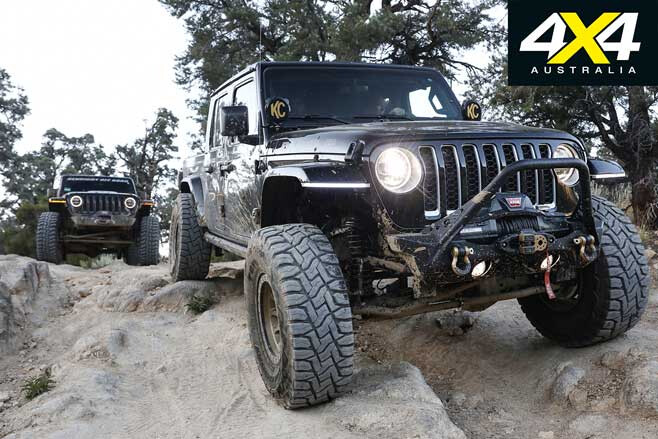
Jeep has never shied away from its heritage. In fact, it flaunts its history and its progress at every possible moment. While you probably wouldn’t have noticed much more than the iconic seven-slot grille in these two rigs, Jeep has hidden countless throwbacks to its past deep inside.
The most obvious is the Wrangler silhouette in the windscreen’s edge, but there’s also a seven-slot grille behind the rear view mirror, as well as numerous Xs throughout the interior and exterior of most 4x4s in the Jeep line-up, a throwback to the military jerry cans strapped to the side of early generation Jeeps.
That military history comes up again with the JL Wrangler sporting a Morse code printout of JL under the rear auxiliary power outlet. There are plenty more Easter eggs throughout these rigs, from thongs on the windscreen wipers to a Yeti trekking up a mountain, but Jeep’s heritage is always front and centre.
With news of popular 4×4 nameplates exploring the electrification route, Mercedes-Benz’s CEO Ola Källenius recently threw his hat into the ring by declaring “there will be a zero-emission version of the G-Class” at the recent Automobilwoche Kongress in Berlin.
The full statement – posted on Sascha Pallenberg’s (head of digital transformation at Daimler AG) Twitter feed – also mentions Källenius’ commitment to the iconic off-roader that “the last Mercedes to be built will be a G-Class”.
Aside from the tweet, there are no official details of when customers can expect an all-electric G-Class to hit showrooms, or what sort of powertrain it would have.
According to Mercedes-Benz, a full-electric drivetrain wasn’t part of the current G-Wagen’s development, so even if such a model were to be greenlit today, it is still years away.
In context, Källenius’ statement doesn’t really mean an all-electric variant will be joining the G-Wagen ranks anytime soon. The Automobilwoche Kongress is an industry event attended by auto industry executives to network and discuss challenges in the industry. Källenius himself was speaking on the topic of “From a Sustainable Strategy to a Sustainable Business Strategy”.
Picture: Ola Källenius, CEO of Mercedes-Benz with the Mercedes-Benz EQS Concept
Read in full, Källenius’ statement is more like an example of how Mercedes-Benz will continue to adapt its current model line-up to the ever-changing market landscape, rather than confirmation of an all-electric variant in the immediate future.
If such plans are indeed afoot in Mercedes-Benz’s R&D facilities, it would be a prescient move as several auto makers are already developing electrified 4x4s.
The G-Class’ immediate rival, the new Land Rover Defender, has a hybrid drivetrain in its range; Ford has committed to building hybrid and all-electric variants of its F-150 pick-up truck; American-start up Bollinger has already commenced production of its B1 and B2 electric 4x4s; and Toyota is reported to be working on a hybrid Hilux and LandCruiser.
The SEMA Show has wrapped up for another year and we’ve just touched back down on local soil. Before we catch up on some long-overdue sleep, here are a few more pics from this year’s event.
In this batch, there’s a crazy slammed Mercedes-AMG G63 (for reasons unknown to us), a Black Bison-kitted Jimny from Japan-based Wald International, the Nissan Frontier Desert Runner, and two Jeep Gladiator concepts: a resto-mod Jeep M-715 Five Quarter and a Gravity Rubicon.
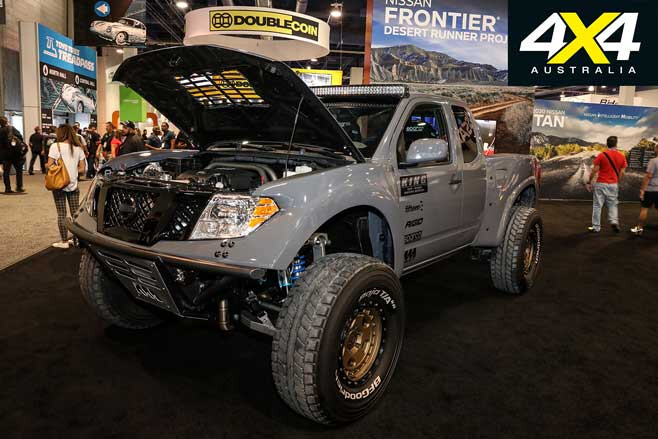
We’ve also thrown in a Porsche 911 wearing Toyo A/T Open Country tyres because … why not?
If you couldn’t make it this year, mark it in the diary for next year; it’s an event any 4×4 enthusiast needs to attend.
Saw some custom metal you really liked? Let us know in the comments section below.