It’s that time of year when we dust off the swag and head to the hills for some R&R.
Our Summer 2020 issue is out just in time for the end-of-year festive season, where many of us will use the break to put some well-earned miles beneath our tyres.
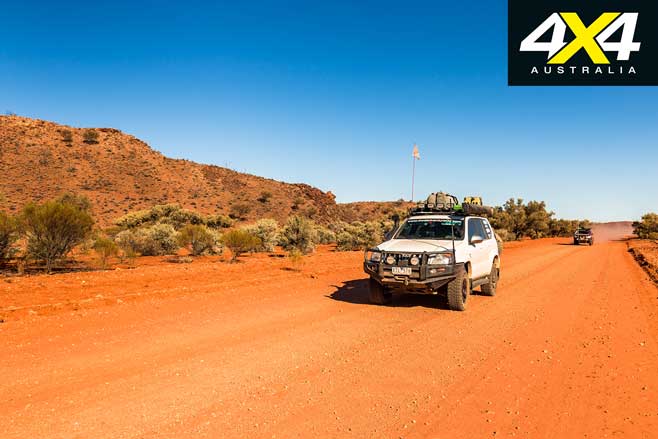
To this end, we ventured to some amazing destinations for this issue, and you could do far worse than add these to your to-do list. We traversed the iconic Binns Track in the NT; explored along the Murray River in the Chiltern-Mt Pilot National Park in Vic; hit the remote parts Idalia National Park in Qld; and took a bunch of folk from the aftermarket industry to Glenreagh in NSW for the 4X4 Australia Advertisers’ Trip.
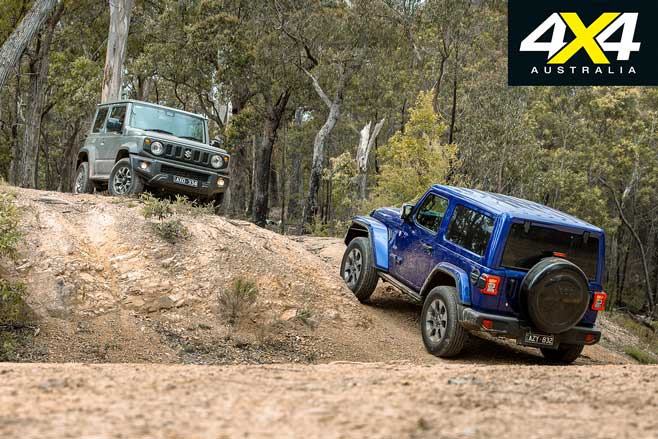
Also in this overloaded issue we took a spin in Ram’s 1500 Laramie EcoDiesel and Nissan Navara’s RX cab-chassis. Plus, we pit the only two two-door SWB 4×4 wagons currently on sale in Australia against each other: the Jeep Wrangler Overland and the Suzuki Jimny.
On the custom front we got up close with AFN 4×4’s meticulous work-rig Jimny, as well put a tidy classic FJ45 LandCruiser under the microscope.
Editor Matt headed to the SEMA Show in Las Vegas and voted for the 10 best new products at this year’s event, and we’ve spoken to the experts to bring you a comprehensive diff lock buyers’ guide.
WHAT ELSE IS THERE? – 4×4 Shed: Ranger XLS, 2001 Patrol and Jimmy’s Hilux. – Patriot X1-H camper tested. – New gear and product tests. – Opinions, news, stats and readers’ rigs.
The Summer 2020 issue of 4X4 Australia will be available in stores from December 12.
NISSAN Australia has jacked up the price of its Navara 4×4, from the base-model single-cab DX all the way up to its dual-cab ST-X Premium.
The price changes range from as little as $300 for the single-cab DX cab-chassis up to $500 for a number of variants including the dual-cab ST-X in manual and automatic guises.
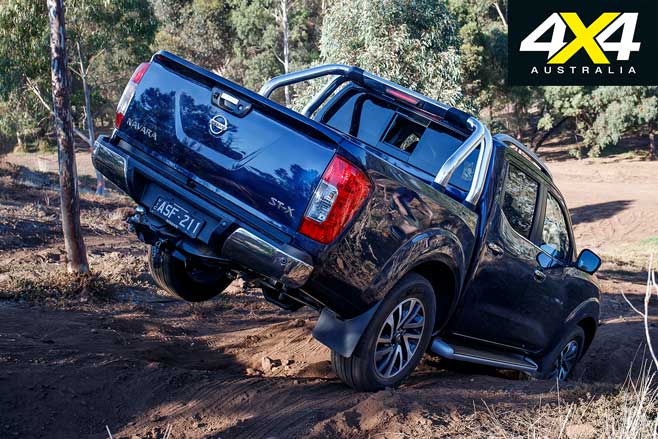
Depending on model, the Navara 4×4 range utilises either a 2.3-litre turbo-diesel engine that makes a claimed 120kW/403Nm or a 2.3-litre twin-turbo-diesel engine that peaks at 140kW/450Nm.
Pricing for the Navara N-TREK, which arrived in mid-2019, remains unchanged at $56,450 (manual) and $58,950 (auto).
| Model | Was | Now | Difference |
| Single DX c/c (M/T) | $32,350 | $32,650 | +$300 |
| Single RX c/c (M/T) | $33,350 | $33,700 | +$350 |
| Single RX c/c (A/T) | $35,850 | $36,200 | +$350 |
| King RX c/c (M/T) | $35,850 | $36,200 | +$350 |
| King RX p/u (M/T) | $37,650 | $38,000 | +$350 |
| King ST p/u (M/T) | $44,650 | $45,100 | +$450 |
| King ST p/u (A/T) | $47,150 | $47,600 | +$450 |
| King ST-X p/u (M/T) | $50,750 | $51,250 | +$500 |
| King ST-X p/u (A/T) | $53,250 | $53,750 | +$500 |
| Dual RX c/c (M/T) | $38,850 | $39,250 | +$400 |
| Dual RX c/c (A/T) | $41,350 | $41,750 | +$400 |
| Dual RX p/u (A/T) | $43,450 | $43,850 | +$400 |
| Dual SL p/u (M/T) | $44,600 | $45,050 | +$450 |
| Dual SL p/u (A/T) | $47,100 | $47,550 | +$450 |
| Dual ST p/u (M/T) | $47,450 | $47,900 | +$450 |
| Dual ST p/u (A/T) | $49,950 | $50,400 | +$450 |
| Dual ST-X p/u (M/T) | $52,750 | $53,250 | +$500 |
| Dual ST-X p/u (A/T) | $55,250 | $55,750 | +$500 |
| N-TREK (M/T) | $56,450 | $56,450 | – |
| N-TREK (A/T) | $58,950 | $58,950 | – |
FCA has announced that the full line-up of Jeep vehicles will be electrified by the year 2022.
The Australian line-up includes all of its SUVs ranging from the Compass, Cherokee, Grand Cherokee, Wrangler and the new Gladiator pick-up truck, which goes on sale in quarter two of 2020.
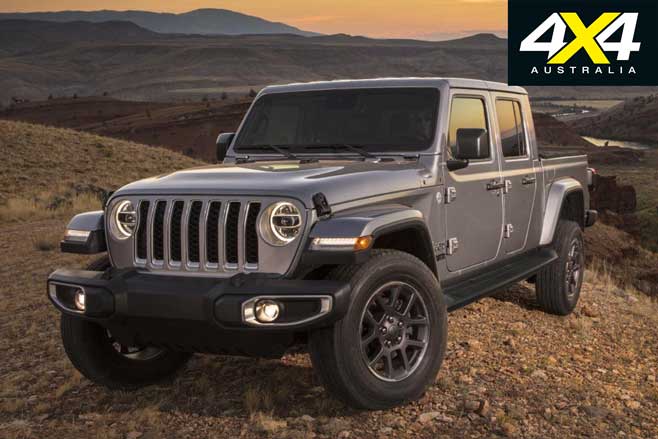
Globally, the EVs will also include the compact Renegade SUV, which is no longer sold in Australia; the seven-seat Grand Commander, which is sold exclusively in China; the yet-to-be-released Wagoneer and Grand Wagoneer large SUVs; and the next-generation Grand Cherokee. All of these vehicles will offer either PHEV or BEV variants in addition to internal combustion powertrains by 2022.
Speaking at a Jeep drive event in New Zealand this week, Jeep Global President Christian Meunièr said Jeep would be, “the greenest SUV brand in the world.”
Meunièr went on to also say that the electrified Jeeps will be, “the best Jeeps ever” and that they would be the most capable as well as being the fastest Jeep models.
The Jeep EVs will form part of a grand expansion plan for the Jeep brand worldwide.
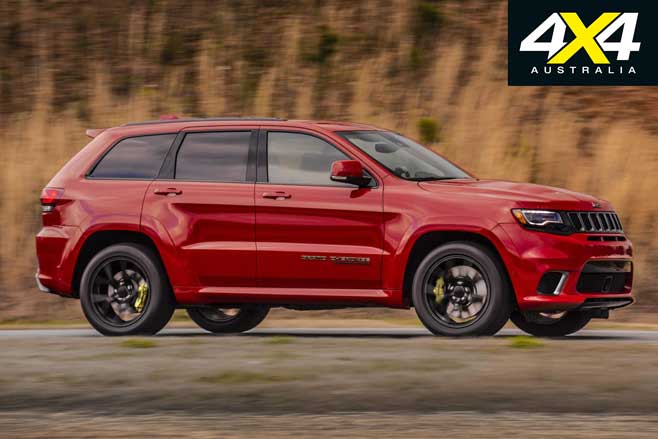
Over the last 10 years Jeeps global sales have increased five-fold from 300,000 units in 2009 to 1.5 million in 2019, and Meunier sees that growth continuing with new models and powertrains. This impressive sales growth has not been matched in the Australian market, however, with the brand selling 4193 units locally in 2009 and projected to sell 5622 units in 2019 – a more modest increase of around 34 per cent over the same 10-year period.
Nevertheless, sales could be boosted by the introduction of the 2021 Jeep Grand Cherokee, which is expected to be revealed toward the end of next year and is tipped to ride on a platform derived from an Alfa Romeo product. It will be bigger than the current generation Grand Cherokee and is expected to include a three-row, seven-seat variant. Jeep Australia’s new Managing Director, Kevin Flynn, said he would be very excited to see such a model here, while not actually confirming its existence. “I think a seven-seat Grand Cherokee would do very well in Australia,” he exclaimed.
THE JEEP JT Gladiator pick-up will hit Australian dealers in the second quarter of 2020 and it’s set to be a serious off-road contender in among the many double-cab 4×4 utes already on the market.
With its live axles front and rear and the availability of a hardcore Rubicon model sporting front and rear locking differentials, a disconnecting front sway bar, off-road tyres and suspension and super low gearing, it really is a Jeep Wrangler truck.
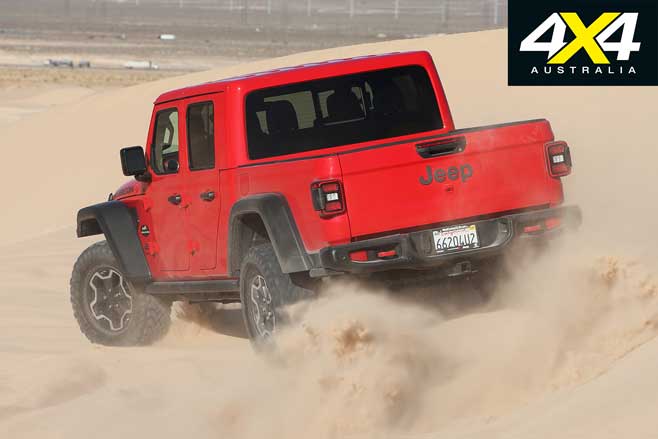
Jeep officials have been very coy when asked of a diesel-fueled engine for the Gladiator, and they will not confirm if we will get one. The double-cab 4×4 ute market in Australia is dominated by diesel engines and the appeal of a petrol-fuel-only pick-up will be limited.
The Gladiator will be available with a 3.0-litre turbo-diesel V6 engine in the US, which was recently made available in the JL Wrangler there. The international and hence Australian version of the JL Rubicon makes do with a 2.2-litre four-cylinder turbo-diesel, and neither the 2.2 nor the 3.0-litre V6 diesel have been confirmed for Australian Gladiators.
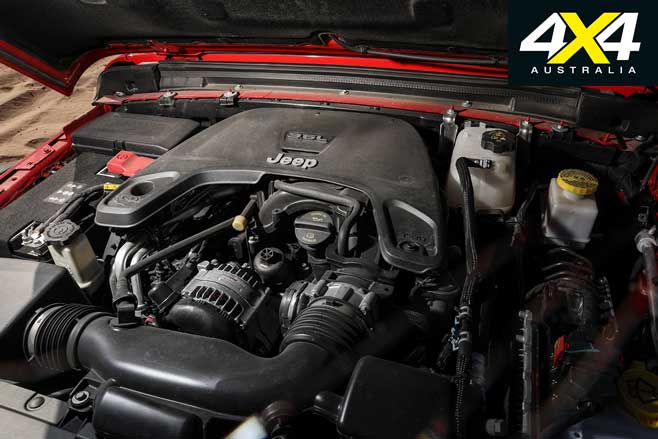
We can confirm the JT Gladiator will only be offered with the venerable 3.6-litre Pentastar V6 backed by the eight-speed ZF transmission at launch in Australia. This revvy combo makes the same 213kW and 353Nm as it does in the Wrangler, and it will be backed by either a Command-Trac transfer case in the lower specification or the 4.1:1-geared Rock-Trac T-case in the Rubicon model. We’re expecting Jeep Australia to offer just two models, the Rubicon and most likely an Overland specification.
Full Australian specification, pricing and the model range is yet to be announced, but what we do know is that, like the JL Wrangler, Australia will get an ‘international’ variant of the Gladiator, so it won’t necessarily be the same as the US models we drove recently in the USA and New Zealand.
That means it will have a transfer case that offers full-time 4×4 as well as 2WD, locked 4×4 high range and locked 4×4 low range; unlike the traditional part-time system found in the US-specification. It could also mean Aussie Gladiator Rubicons will only come with 32-inch tyres, as opposed to the 33s and 35s offered in the States.
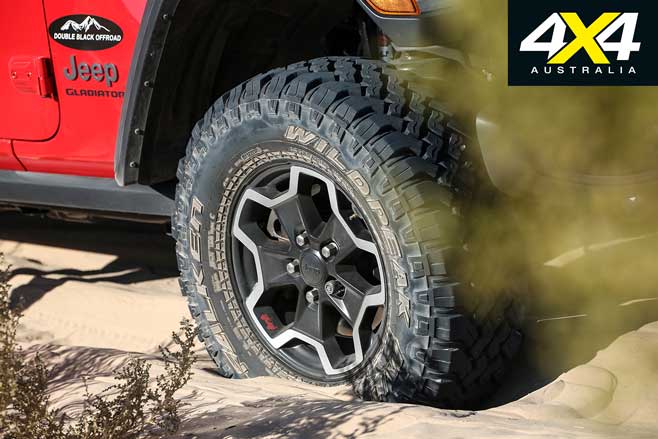
The Gladiator is a true truck and its 5-link rear suspension has been adapted from the Ram 1500 pick-up to make it a better load carrier and tow vehicle. That said, the payload is rated at just 620kg and towing at 2721kg; well short of the up-to-one-tonne and 3500kg load and tow ratings of most popular 4×4 utes.
The cargo bed is deep, and at 1.5 metres long it can accommodate a decent load or a couple of dirt bikes. The tailgate is rated to support 800kg, which itself would exceed the vehicle’s payload.
With its lower load and towing capacities and lack of a diesel engine option (at least at launch) we have to wonder how many Australians will take up the Gladiator purely on its macho looks and unrivalled off-road capability. A big part of the answer to that question will come down to local pricing, but again, we’ll have to wait until closer to its launch for that to be announced.
NISSAN Australia has pulled the wraps off its Navara N-Trek Warrior, the vehicle it hopes will take the battle up to other tricked-up 4×4 utes such as the Ford Ranger Raptor, Toyota Hilux Rugged-X and the HSV SportsCat.
It’ll be priced at $62,990 before on-road costs in six-speed manual guise, and $65,490 when fitted with an auto.
This undercuts rivals like the Ford Ranger Wildtrak X ($65,690 in 2.0-litre/10spd guise), but is more expensive in auto form than the HSV SportsCat V ($62,490), which is based on the Holden Colorado.
It’s also pipped by the more powerful Volkswagen Amarok V6 Highline Black ($64,990).
The N-Trek Warrior will be based on the recently released Navara N-Trek model, but it adds beefed-up suspension, bigger wheels and tyres, a steel front bumper and other tack-ons.
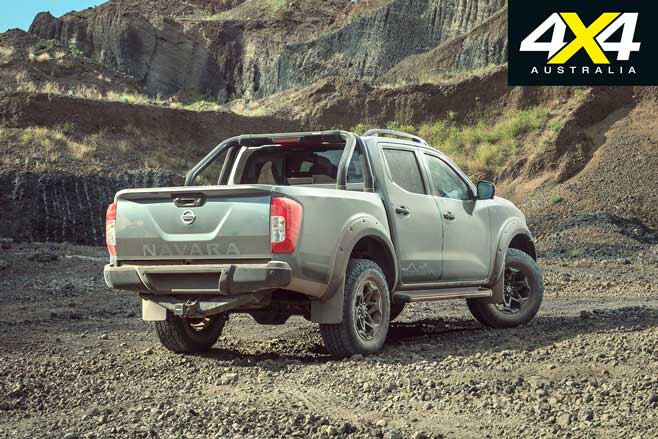
The regular Navara N-Trek retails for $56,450 in six-speed manual form.
The list of equipment fitted to the Warrior includes a steel front bumper, LED light bar, sports bar, model-specific alloy wheels and tyres, and a sticker pack just like the Rugged-X, but it adds a suspension package that adds 15mm to the ride height and is said to improve both on- and off-road ability. 275/70-17 Cooper AT3 tyres add a further 25mm to the ride height for a total of 40mm overall lift, and they widen the wheel track by 30mm to total 1600mm.
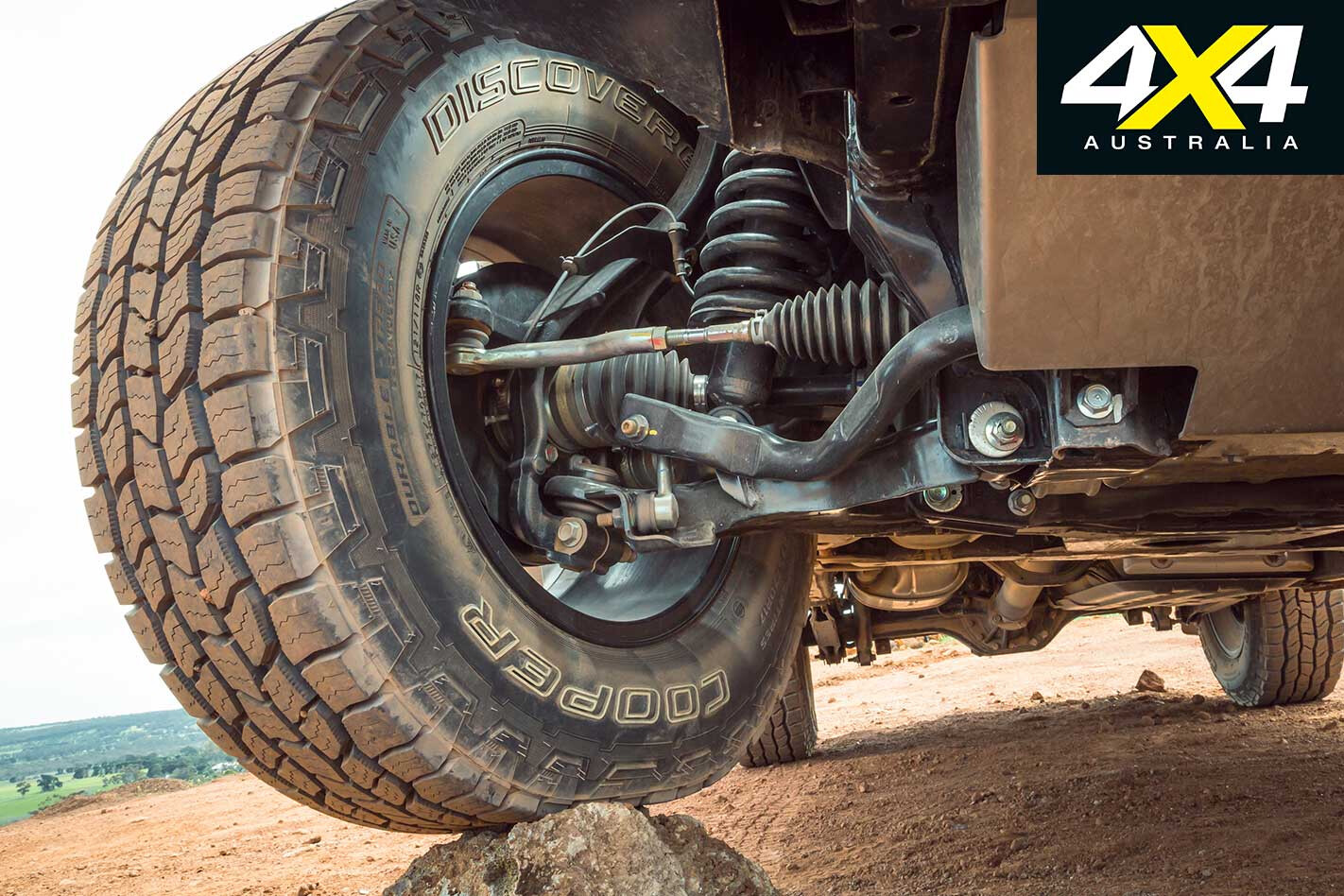
The suspension package is based on dual-rate coil springs which are softer than the standard Navara springs, to better let the suspension do its work. Special progressive bumps stops are fitted to dampen any hard knocks felt off-road. The shock absorbers are larger diameter tubing for increased oil capacity, with larger dampening rods for firmer control both on- and off-road.
Rather than simply bolt on a pile of accessories to the Navara N-Trek, Nissan Australia enlisted engineering firm Premcar to design, develop and test the product for the Warrior. Premcar is better known as a Ford performance tuner and is staffed by many former Prodrive employees who previously worked on the FPV Ford vehicles. Most recently, Premcar created the ‘Holy Grail’ Falcon.
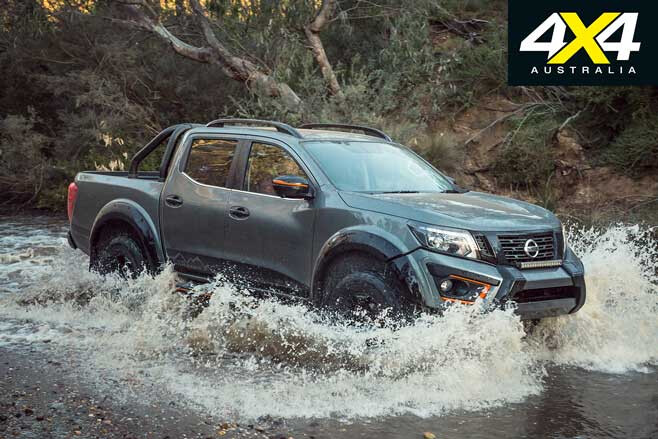
For the Nissan project, Premcar has built a new dedicated 6300 square-metre manufacturing facility in Melbourne’s northern suburbs, with 40 new hires added to the staff. With the R&D stage of the Warrior now complete, the vehicles will be hand-assembled at this bespoke facility starting in November.
With Premcar’s experience working with OE manufacturers, Nissan has been able to ensure the Warrior and all its accessories meet all the company’s standards and warranties. Additionally, the Navara’s 3500kg towing and GVM capacities are retained.
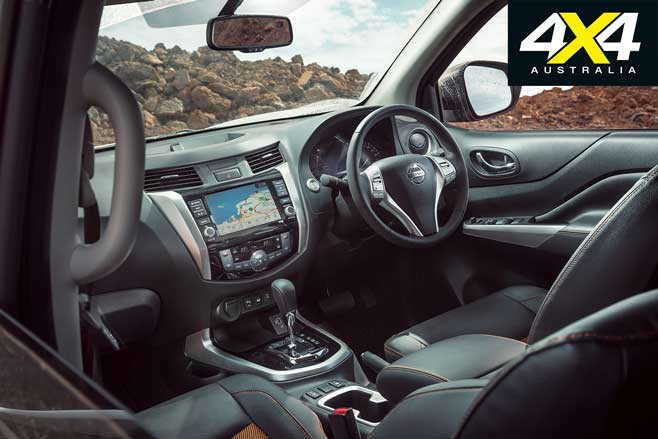
The steel front bumper is derived from the genuine Nissan accessories full bullbar but has been cut down to a loopless design and had unique bumperettes and fog lamp enclosures added. It mounts a 470mm, 16 LED light bar sourced from Hella. Under the bumper is a 3mm stainless steel underbody protection plate.
The Navara N-Trek Warrior retains all the features of the standard N-Trek including blacked-out fender flares, alloy sports bar, LED headlamp bezels, side steps, rear vision mirror caps, rear bumper, grille, door handles and roof rails, partial leather seats with dark orange fabric seat inserts and heating for the front seats, and dark orange accent stitching throughout seats, centre console, front door armrests and steering wheel. The standard N-Trek’s 18-inch alloy wheels have been replaced with 17s on the Warrior, for better off-road use.
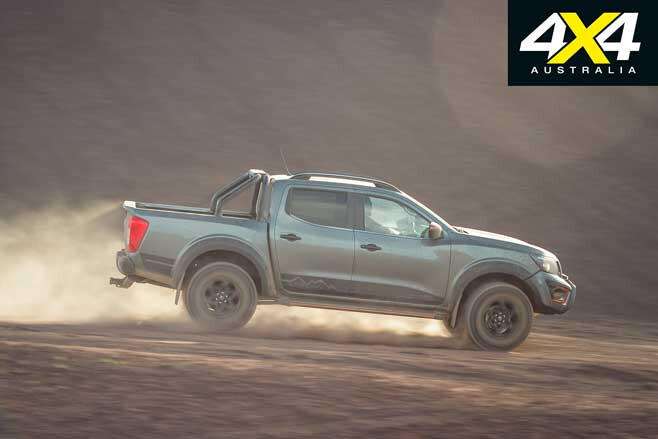
Production of the Navara N-Trek Warrior begins at the Premcar facility in November, with deliveries going out to Nissan dealers in December.
It will only be available as a double- cab 4×4 ute, with a choice of manual or auto transmissions and in only three colours. The only engine option is the 2.3-litre bi-turbo diesel as found in the regular Navara, and this remains unaltered in the Warrior.
We look forward to putting the Warrior out to play on the track to see how well the sum of its parts comes together.
THE JT GLADIATOR marks Jeep’s return to the pick-up truck market, and the good news is it’s coming to Australia.
It should land here sometime around March or April, but we couldn’t wait until then to drive it. When we found out that our mate Bill Barbas from Melbourne Jeep specialist Double Black Offroad was driving a Gladiator Rubicon around Las Vegas while we were there for the SEMA Show, we had to steal the keys for a day.
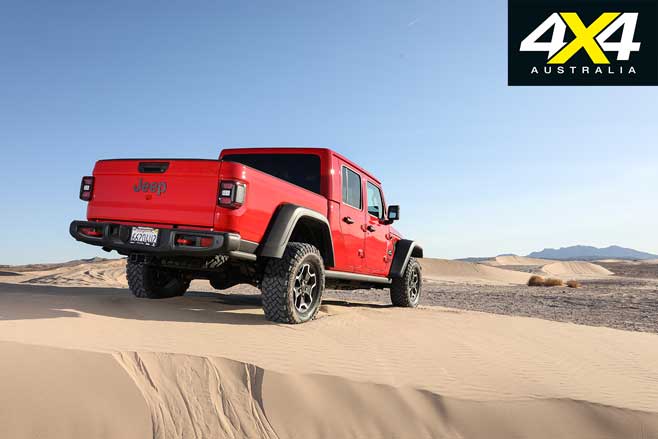
The JT Gladiator is (obviously) based on the Jeep Wrangler, and from the B-pillars forward it’s pretty much identical. At the back there is a load bed behind the four-door cabin, and the rear-end of the chassis takes design features from the Ram 1500 truck to make it a better load hauler.
The Gladiator is classed as a midsize pick-up in the USA, so it’s grouped against the likes of Toyota Tacoma, Ford Ranger and Chevy Colorado, which means many will pit it against the popular Hilux, Ranger and Colorado here; but, in reality it is a very different vehicle. For a start it rolls on live axles and coil springs both front and rear, while all our popular one-tonne utes have IFS and leaf-sprung live-axle rears. With its live axles and lockers, you can expect the Jeep to be a better off-road vehicle than any other stock ute sold in Australia.
However, the Jeep can’t match the approximate one-tonne payload of our popular utes. In the US Jeep claims best-in-class load and towing capacities, but it doesn’t match what we expect here in Australia. In US-specification, the Gladiator Rubicon as driven will carry just 526kg and tow 3175kg. That gets worse with the taller 3.73:1 final-drive gearing in the Sport and Overland models – and with the manual transmission. In the US, though, you can option the Rubicon’s 4.1:1 final drive gears into a Gladiator Sport to deliver close to 700kg payload and 3470kg towing.
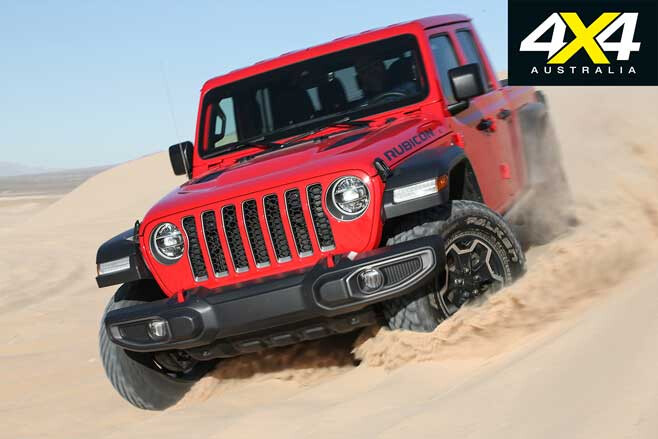
We don’t yet know what drivelines, specifications and options will be available in Australia, but you can pretty much rule out a manual gearbox, and it will only come with the eight-speed auto as is the case with the JL Wrangler. We can only hope we get a choice of both V6 petrol and turbo-diesel engines in the JT, with a low-spec and Rubicon grade. We’ll know more about Australian specification soon.
So, how does it go? Jump behind the wheel of the Gladiator and you could be in any JL Wrangler; it’s all the same interior layout, switchgear and view over the bonnet. The JT Rubicon we drove was powered by the also-familiar 3.6L Pentastar V6 engine mated to the eight-speed auto; so all good there, too. It isn’t until you hit the highway that the longer wheelbase of the JT proves markedly different to the JL.
The Gladiator rides on a 3487mm wheelbase as opposed to the JL Wrangler’s 3008mm, so it’s a bit more stable and surefooted on road than the Wrangler. There’s still the light steering that likes to wander at speed, as we’ve noted in Wranglers, but the bigger ute feels firmer on the road. The Gladiator is also long at 5573mm overall compared to the four-door Wrangler at 4882mm, and you really notice it in suburban carparks and on tight bush tracks.
We thought the long wheelbase would pose a problem for the Gladiator off-road, but even though it scraped over the peaks of sand dunes, the sand was soft and the Rubicon’s rock rails took the top off them without getting hung-up. Jeep claims a 20.3° ramp-over angle for JT Rubicon compared to 21.2° for the International-spec JL Rubi we get in Australia.
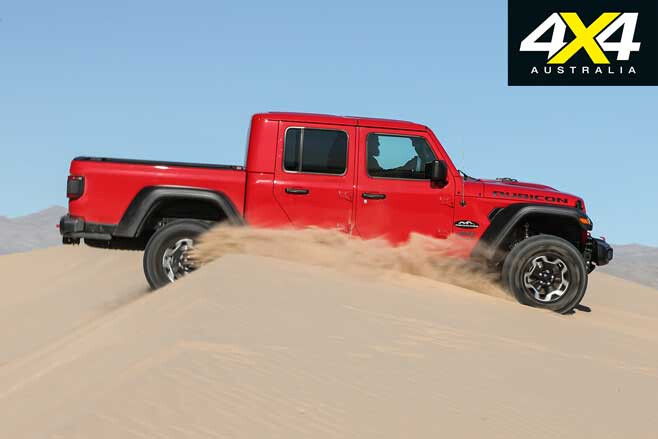
The long wheelbase and overall length didn’t pose as much of a problem as expected on a tight U-turn on the side of a steep hill, either. It was a track made for UTVs and buggies, but the XL Jeep could have made the turn in one bite; we only backed it up to get a straighter drop over a rock step on the descent.
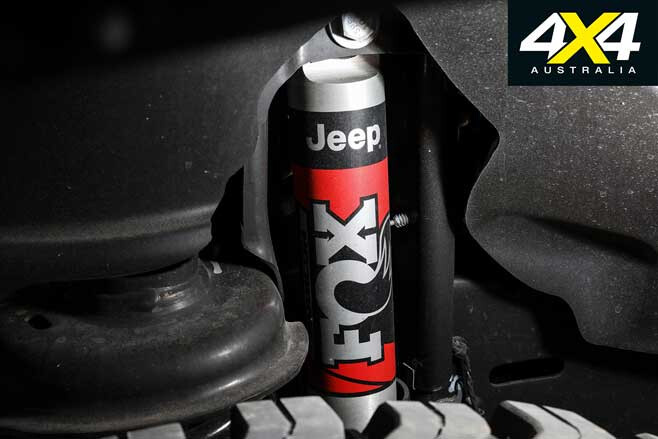
The US-spec JT Rubicon is equipped with Fox Racing shocks and 33-inch all-terrain tyres; the 33-inch muddies on this car are optional. That doesn’t necessarily mean we’ll get these goodies here as we’ve found with the local-spec JL Wrangler, which gets smaller rubber, but we’re keeping our fingers crossed that things will be different for the JT.
The quality dampers made easy work pounding over deep corrugations, ruts and rocks in the Nevada desert, and the Rubicon’s disconnecting front sway bar improved the ride and control over rough terrain at lower speeds. Front and rear lockers were also great in the rough stuff, but we found the electronic traction control struggled in some soft sand.
Whatever specification it takes when the Gladiator gets to Australia next year, a true off-road vehicle will finally materialise in the 4×4 ute market. We reckon it will sit somewhere between the common one-tonne 4×4 utes and a LandCruiser 79 in terms of price, with two variants likely; a Sport/Overland and the Rubicon. Like most Jeeps it will be bought by enthusiasts who will delve into the ocean of kit available from the factory and aftermarket, to build the Gladiator they want and need.
The Gladiator will be worth the wait and we’re looking forward to driving the JT Down Under, to see how it handles local conditions and the outback.
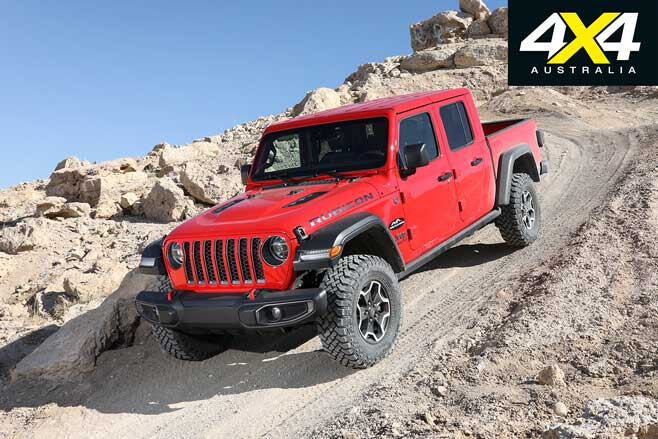
2020 JEEP GLADIATOR RUBICON SPECS Engine: Pentastar 3.6-litre V6 Output: 213kW; 353Nm Transmission: eight-speed automatic Transfer case: NV241OR Rock-Trac (Rubicon) Axles/ratios: Dana 44; 4.1:1 Crawl ratio: 84.2:1 (Rubicon Manual) Steering: Electro-hydraulic Suspension: links, coil springs, stabiliser bars (f/r) Tyres: 285/70R17 Falken A/T or M/T Base weight: 2290kg (Rubicon) Payload: 725kg Towing capacity: 3400kg Wheelbase/turning circle: 3480mm; 1356cm Approach/ramp-over/departure angles: 43.4°; 20.3°; 26° (Rubicon)
*UPDATED 09/12/2019
THE Land Rover Defender 110 and Series III used in the upcoming Bond flick, No Time To Die, are now on display at Bond in Motion at the London Film Museum, with the 110 still wearing the damage from its chase sequence.
Footage of the 110 being punished off-road – performing an iconic Bond chase sequence – was released earlier this year, with stunt co-ordinator, Lee Morrison, calling it unstoppable.
“All the vehicles we used in the film performed brilliantly. We knew we wanted to achieve something off-road and the New Defender didn’t disappoint. We put the vehicles through the most extreme conditions in a chase sequence, and they were unstoppable,” he said.
Vehicles parked alongside the 110 and Series III in the exhibit include a pair of Aston Martins, a Triumph Scrambler 1200 XE and a Royal Alloy GT125 scooter.
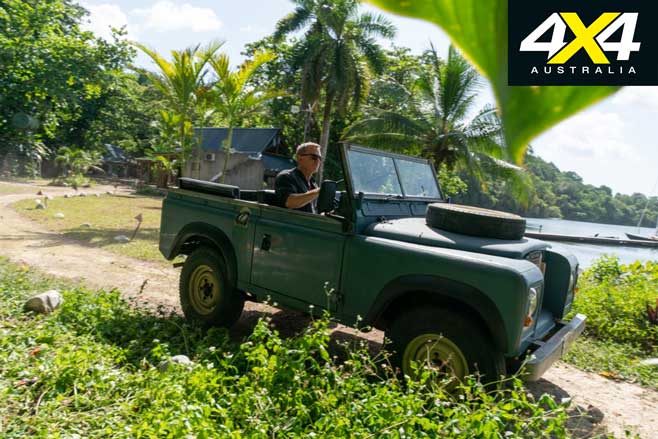
Bond in Motion houses the largest official collection of James Bond vehicles in the world.
Stunt footage of Defender 110 on the set of new Bond film
IF YOU need another reason to get excited for the next movie in the James Bond franchise, this is it.
The all-new Land Rover Defender 110 will star alongside Daniel Craig in the 25th official James Bond film, with the 2020 Land Rover joining the stunt team to perform extreme off-road antics and to undertake the iconic car chase sequences the films are known for.
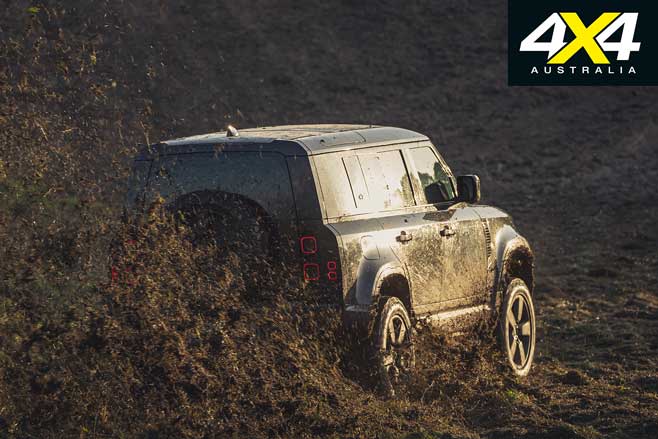
The behind-the-scenes footage of the new Defender was captured during filming of the new movie, with the 110 steered by stunt co-ordinator Lee Morrison and stunt driver Jess Hawkins.
“Designing and coordinating the action sequences for the Bond franchise requires a non-compromising mindset,” said Morrison. “We needed an unstoppable vehicle to help us battle against the elements, steep descents and river crossings so we chose the new Defender. I’m beyond impressed that the Defender is not only back but much, much better!”
The Defender’s 291mm of ground clearance; 38° approach, 28° breakover and 40° departure angles; 900mm of wading depth; and Terrain Response 2 system all worked in the vehicle’s favour when deciding on an appropriate vehicle for the extreme tasks at hand. The specific Defender used for filming is based on the Defender X and was given the black treatment: darkened skid pans, 20-inch dark-finish wheels, and a Santorini Black paintjob.
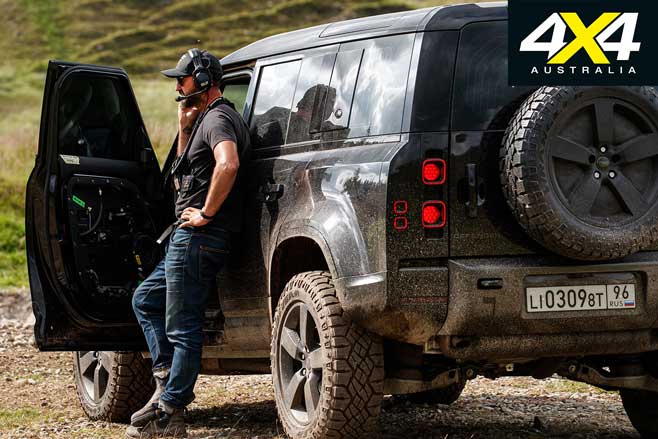
Bond and Land Rover aficionados will remember the relationship between the two brands dates back to the 1983 Bond film Octopussy, which famously features a Range Rover Convertible.
“No Time to Die is a brilliant way to showcase the New Defender’s capabilities in the latest jaw-dropping James Bond car chase. It’s been hugely exciting to continue our relationship with EON Productions and work with their teams to deliver a spectacular sequence,” said Richard Agnew, Global Communications Director for Land Rover.
The Defender 110 will arrive in Australia in June 2020, with No Time to Die to be released in cinemas in April 2020.
WHAT STARTED as a conversation between Shane Miles at MSA 4×4 and Mick McMillan at Australian Expedition Vehicles (AEV) has, after more than half a year of hard slog, finally transformed into what would surely be the most impressive family off-road tourer in the country.
2020 CUSTOM 4X4OTY: Vote now for a chance to win!
Shane wanted a vehicle big enough to take his family of seven to the most remote parts of Australia, in comfort and without towing a trailer, so he needed a vehicle with three rows of seats yet still with enough cargo capacity to carry all of the gear and supplies required for extended trips away, and with a pair of rooftop tents to sleep everyone.
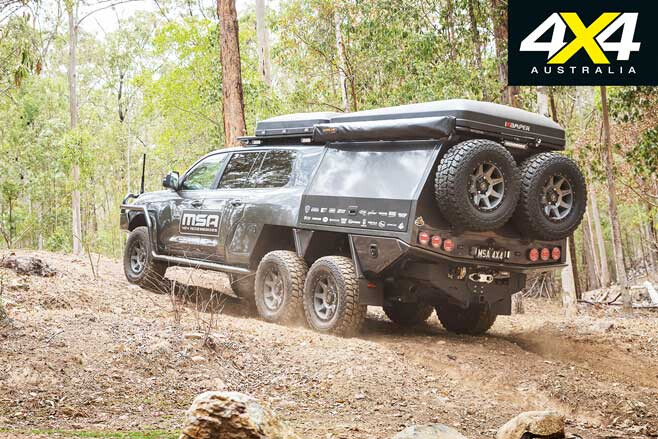
Mick McMillan, who has plenty of experience building six-wheel drive vehicles using the 6WD system he co-developed with JMACX, came up with a plan: extend a 4×4 wagon’s chassis, cut off its tailgate but retain its third-row seating, equip it with a JMACX 6WD system, and fit a bespoke service body on the back. The result would be a rig that would fulfill all of Shane’s requirements.
The pair then set about putting their incredible plan into action. Shane bought a new 200 Series Toyota LandCruiser VX wagon and shipped it off to AEV, while Mick came up with the methodology and timeline to transform it into a 6WD SuperCruiser. The only problem was a project like this had never been attempted before.
Custom Fabrication
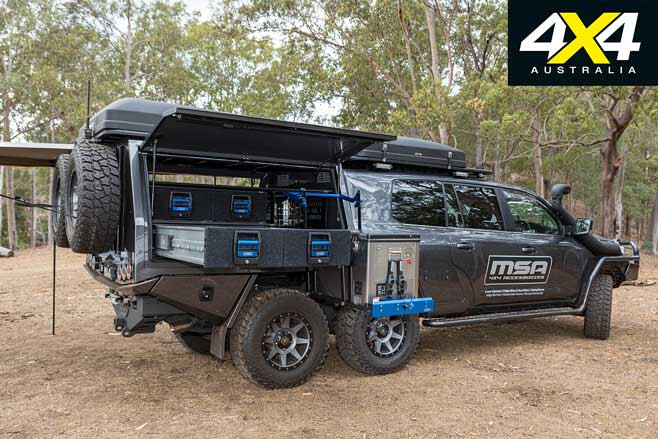
AEV HAS plenty of experience transforming 70 Series and 200 Series Cruisers into 6WDs, but none of these retained three rows of seats; so this project would require some special attention at the body shop.
The first step in the vehicle’s transformation went as planned; the tailgate and inner rear guards were removed, the body was lifted off the chassis, the rear of the chassis was cut off and a new extended section was slipped over the top. A JMACX coil-spring rear axle was then fitted to the 6WD cradle and the Cruiser was sent to David Taylor Spray Painting & Panel Beating, where new rear bodywork was to be fabricated.
Some delays at this early stage of the project were not entirely unexpected. “It’s not our normal conversion,” explained Mick at the time. “There’s a lot more custom manufacturing in panel beating than we initially anticipated … we’ve had to rely on the skill of a tradesman to put the many bits and pieces together.”
The bespoke bodywork included fabricating the rear panel for the Cruiser from scratch, and fitting a custom made rear window. “It’s not just a square panel welded on there,” said Shane. “It’s all shaped with wide-radius corners, so it has a factory look to the finish.”
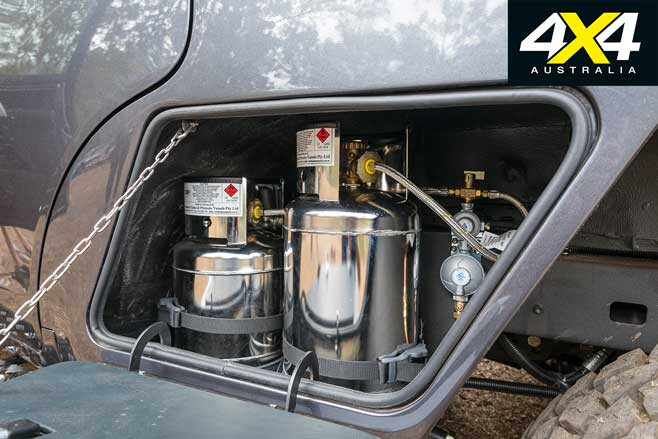
The build crew then decided to add a couple of toolboxes between the rear doors and the wheel arches. “The toolboxes, although they added another two weeks to the project, they’re a huge bonus … they’re big enough to fit gas bottles or a generator,” said Shane.
The Cruiser’s rear wheel arches were also reshaped with a straight edge to match the Trig Point canopy, resulting in a cohesive overall appearance.
Then there were several issues to be taken care of inside the cabin of the LandCruiser, which in VX specification included a large rear air-conditioning unit that had to be flipped on its side and relocated, along with all of its associated wiring and plumbing. And then the team discovered the drainage pipes from the Cruiser’s sunroof would need to be rerouted, along with significant amounts of wiring. In all, the extra fabrication and fiddling around to complete this one-off job added about three months to the overall build time.
Taking Shape
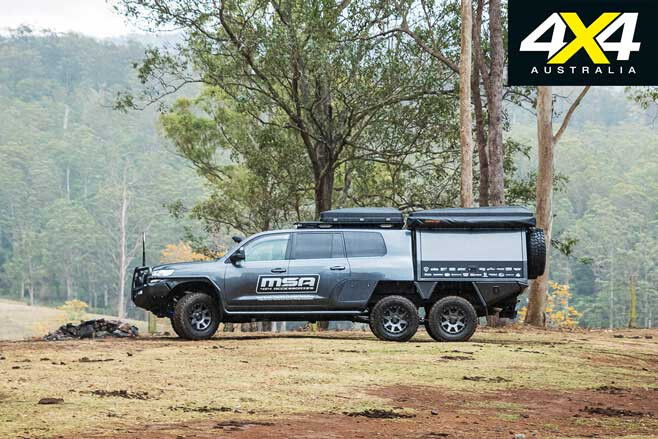
ONCE THE body work had been completed, the Cruiser was sent back to AEV where the Trig Point canopy was test-fitted, and the crew could stand back and take a good look at what they had created.
“When you see the photos you think, ‘wow, it’s a bloody road train’, but when you see it in person it’s pretty cool … it looks really good, it looks factory … as much as a six-wheel drive 200 Series can look factory, that is,” laughed Shane. “It looks extremely long, but in fact it’s not that much longer than a Hilux with a body on it.”
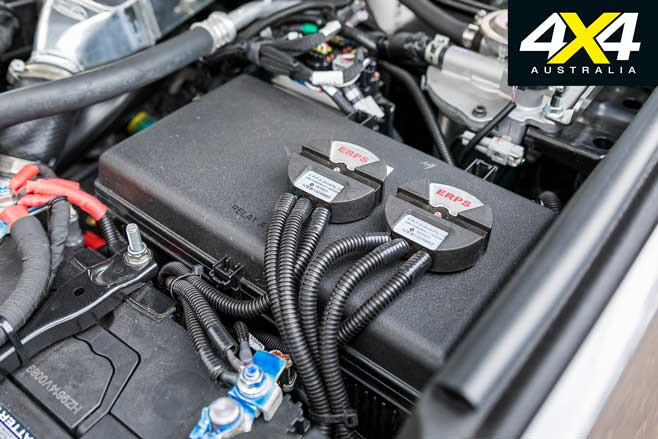
At this point in the build an auto electrician was engaged to sort out all of the vehicle’s interior wiring, as well as to fit two Electronic Rust Prevention Systems (ERPS); one for the body and one for the chassis.
With the test fit of the canopy done, the vehicle was sent back to the body shop for painting, before it returned to AEV where the whole vehicle was put back together.
Reassembly of the interior involved fabricating several unique covers and cowlings for the rear air-conditioning system, but the hard work put into it is reflected in its factory-like finish, with leather trim, premium carpet and a matching roof liner.
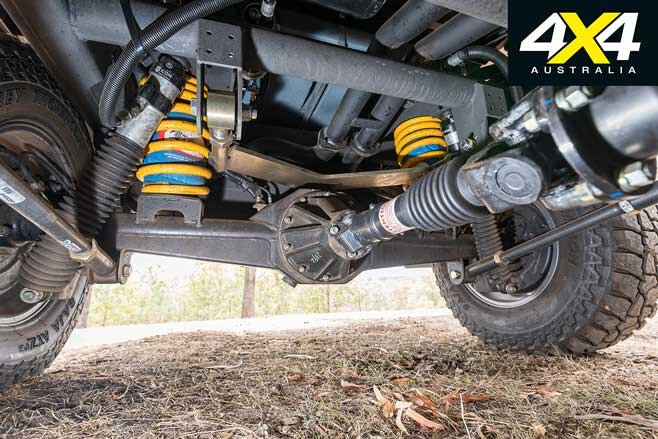
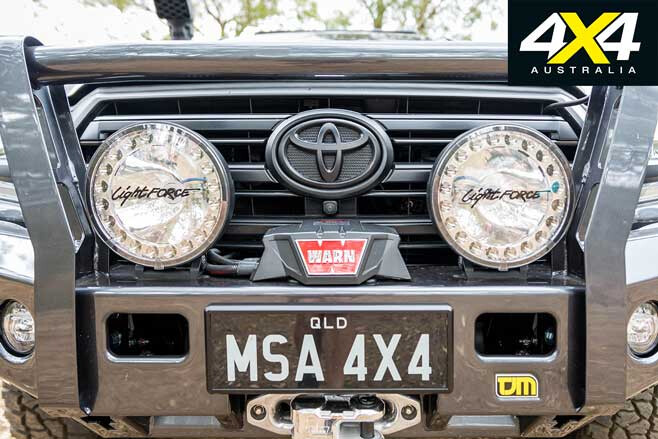
With the third axle in place and the Trig Point canopy fitted, the next step was to start equipping the Cruiser with accessories. AEV installed a 180-litre Brown Davis long-range fuel tank; Icon suspension in the front, middle and rear; Air Bag Man airbags; an ARB twin-compressor; an Air On Board 18-litre air tank; Icon alloy wheels with Mickey Thompson ATZ P3 rubber; TJM bar work; and Warn winches front and rear.
The TJM Outback bullbar and side rails are standard 200 Series parts, but the side steps are custom jobbies. “Shane sourced two sets of TJM side steps, and out of those two sets we’ve made one set to fit the vehicle,” explained Mick.
On the Road
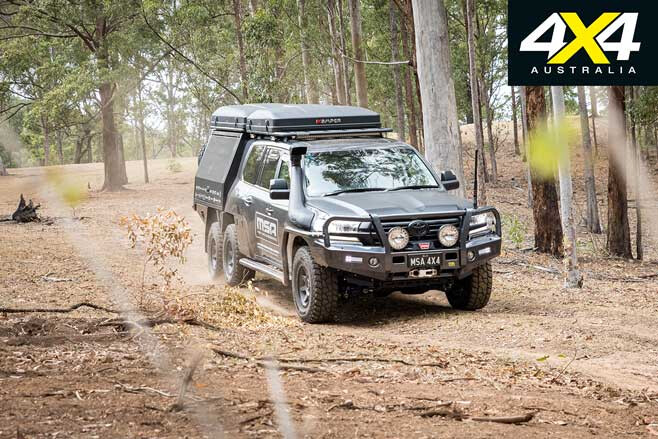
ONCE THE vehicle was kitted out with its running gear and AEV (a second stage vehicle manufacturer) fitted compliance plates, the SuperCruiser was registered as a heavy vehicle.
With ‘MSA4X4’ plates attached, Shane proudly drove his SuperCruiser down the freeway from AEV in Townsville to MSA 4×4 on the Gold Coast.
“Driving down the freeway, it felt like a luxury car,” said Shane. “I was expecting it to be military-like and vibrating and shaking, but I’ve never been so happy driving a car … it’s similar to any other 200 Series wagon fitted with all-terrain tyres.”
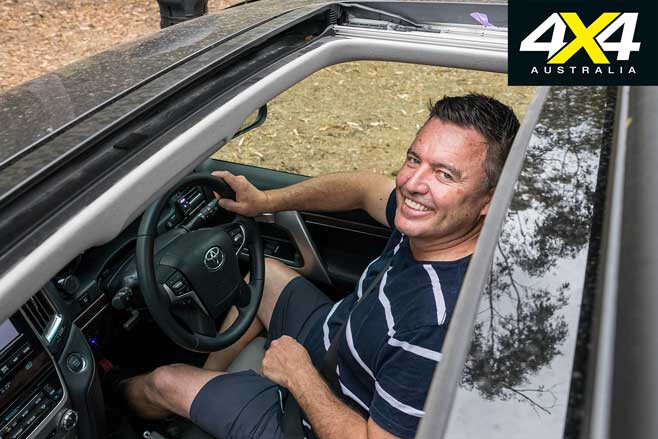
As you’d expect, performance was slightly blunted by the Cruiser’s 6WD driveline and its extra weight, but initial impressions were still good. Shane was also impressed by its manoeuvrability.
“At roundabouts, you just drive it like a normal car,” he said. “You don’t realise that there’s all this extra stuff (the extra length and extra axle) behind you. Visibility is good, too, because we have our new MSA 4×4 towing mirrors on there, you can see right to the back of the vehicle. And the reversing camera and the OE sensors and all that sort of stuff still works as it should.”
Final Fit-Out
WITH THE vehicle back on the Gold Coast, there was still plenty of work to be done before it would be ready for its first off-road family foray. Under-the-bonnet mods are limited to the fitment of a PWR intercooler and a Safari ARMAX ECU system, while the engine breathes through an ARMAX snorkel before spent gases are expelled via a 2.5-inch aftermarket exhaust system.
“We’re going to be around the five-tonne GVM mark when we’re full, so in a way it will be like towing a ’van. So we’ve dropped a little bit of performance, but with the intercooler, the Safari ARMAX and the snorkel, it brings the performance right back up,” said Shane.
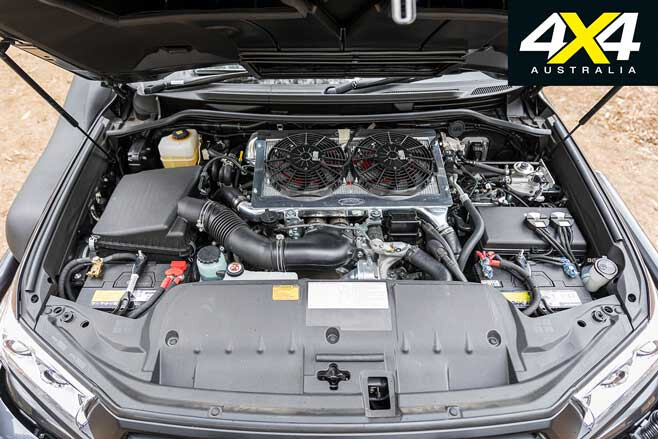
The ARMAX ECU system offers several user-selectable modes to suit different driving conditions such as towing or off-road driving, and it has built-in protection systems designed to prevent engine and driveline damage; it constantly monitors the vehicle’s exhaust gas temperature (EGT); and if abnormally high the ECU decreases the amount of fuel injected into the engine, reducing load until a return to normal EGT levels.
Direction-Plus fitted a ProVent oil separator kit (catch can) and a ProVent fuel/water separator to provide further engine protection, the latter equipped with an alarm to prevent potentially costly engine problems. To ensure the vehicle is 100 per cent road legal, Shane has kept the DPF system intact despite the fitment of the aftermarket exhaust.
“It’s got the standard twin mufflers at the front and then twin 2.5-inch pipes all the way back to the twin resonators, and both DPFs have been retained,” he said.
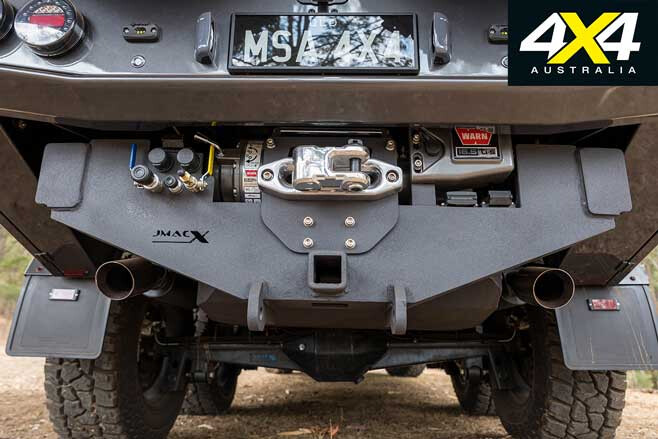
Like earlier model 200 Series LandCruisers, you’ll see this one is equipped with two starting batteries. Shane’s theory was if there’s space to fit one in there, then fit one in there. The OE alternator, located in a vulnerable spot at the bottom of the engine, has been replaced by a 220amp Rapid-Power alternator, which not only provides more output but is also fully sealed, so it’s not prone to damage when driving in wet and muddy conditions.
Should the big Cruiser struggle in off-road conditions, Warn Zeon Platinum winches have been fitted front and rear, while ARB Jindalee fitted Air Lockers in the front and rear diffs. The middle diff sports an Eaton mechanical soft locker.
To haul up the extra weight of the SuperCruiser, Rugged Brake Systems has replaced the OE front brakes with an Extreme Big Brake kit consisting of slotted rotors and big six-piston calipers manufactured from lightweight aircraft-grade aluminium. The four brakes at the rear have been upgraded with Rugged’s BlackLine pad-and-rotor kit.
Tough Vehicle Accessories supplied the Icon Vehicle Dynamics suspension package. Up front this consists of Icon 3.0 Remote Reservoir CDCV coil-overs and adjustable Icon billet aluminium control arms, while the rear has JMACX’s progressive-rate springs mated to Icon 2.5 Remote Reservoir CDCV shocks.
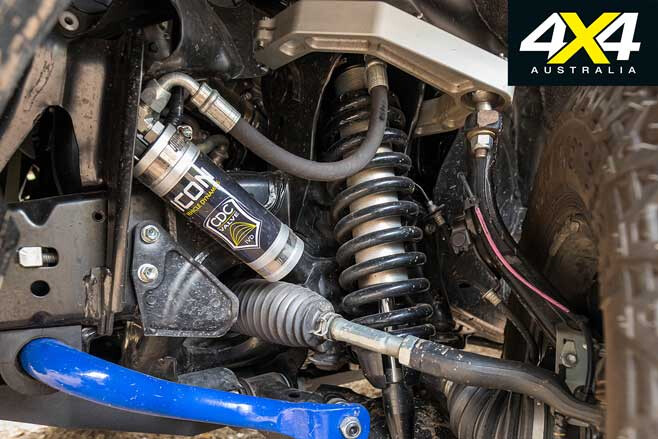
The shocks are manufactured from corrosion-resistant CAD-plated bodies with one-inch shafts in the 3.0 Series and 7/8-inch shafts in the 2.5 Series, and they are fully re-buildable and re-valve-able. They also offer tool-less compression damping adjustment by way of a dial, so they can be tailored to suit different load and driving conditions.
The SuperCruiser’s alloy wheels are also Icon units, and there are eight of them – six on the ground and two spares mounted to the back of the Trig Point canopy. They are called Rebound Satin Black 8.5 x 17 rims and have a 25mm offset and 1250kg load rating. The Icon alloys are wrapped in LT285/70R17 Mickey Thompson ATZ P3 tyres.
Camping Setup
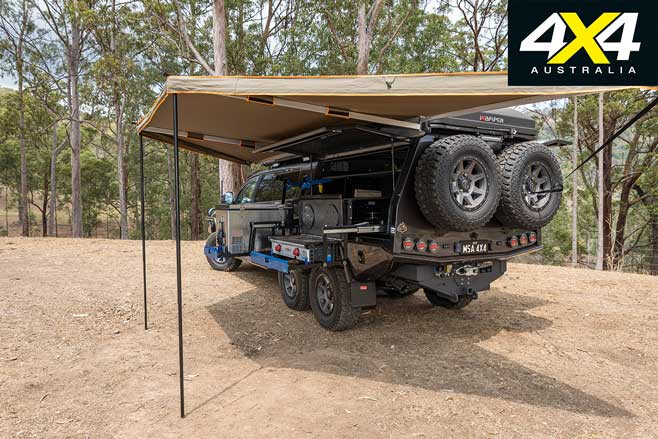
CAMPING WITH a family of seven requires plenty of load-carrying capability, lots of sleeping space and a generous power supply, and the SuperCruiser’s got all this in spades. As it’s mounted directly to the vehicle’s chassis, the Trig Point canopy offers a lower floor height than a tray-mounted service body, which means it’s easier to reach gear in the back. Shane has kitted out the canopy with an MSA 4×4 drawer system, MSA drop slides and MSA fridge barriers.
“We put 1170mm drawers on the bottom and stacked 1030mm drawers on top of them,” said Shane. “On the driver’s side there are four drawers and a DS50 Fridge Drop Slide that holds a SnoMaster 60-litre fridge, and this has one of our new fridge barriers that line up perfectly with the top of the stacked drawers.”
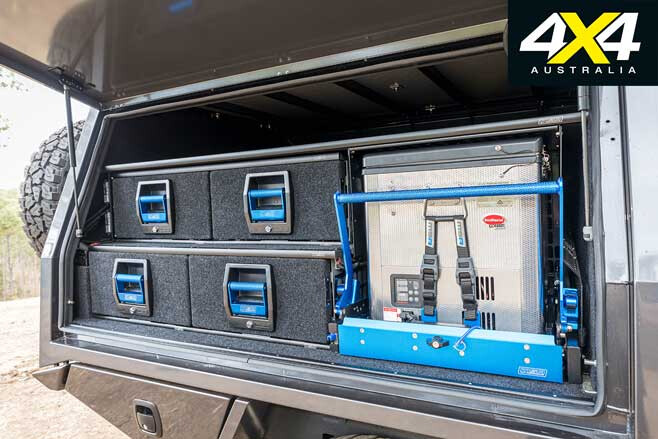
The cooker resides on the other side of the canopy, also in a fridge barrier, and across the top of all this is a flat floor that’s ideal for storing bulky items like bags and camp chairs.
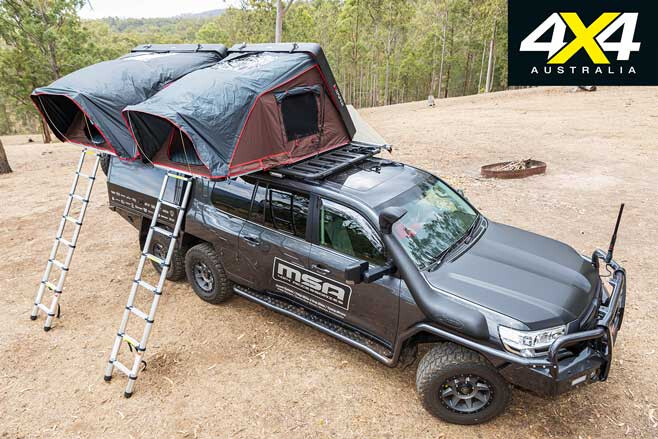
When it comes to accommodation, there are two iKamper rooftop tents up top. A Rhino-Rack Pioneer Platform on the Cruiser’s roof home to an iKamper Mini, while there’s a bigger iKamper Skycamp 4X for the kids atop the Trig Point.
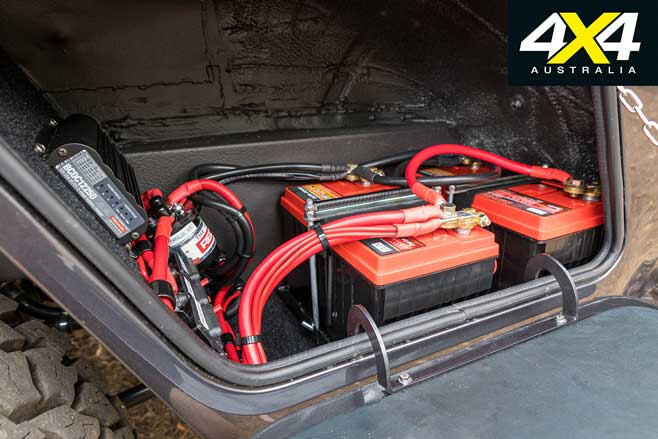
Ensuring there’s plenty of power for fridges, lights, accessory charging and more, there are six Revolution Power Australia 60amp/h Slim Lithium batteries hidden away in the canopy, and these are managed by a Redarc DC to DC charging setup and a RedVision system. There’s also a 1000W Redarc inverter that leads to a double 240V power outlet in the canopy, and another one inside the vehicle’s cabin for charging camera batteries and other equipment.
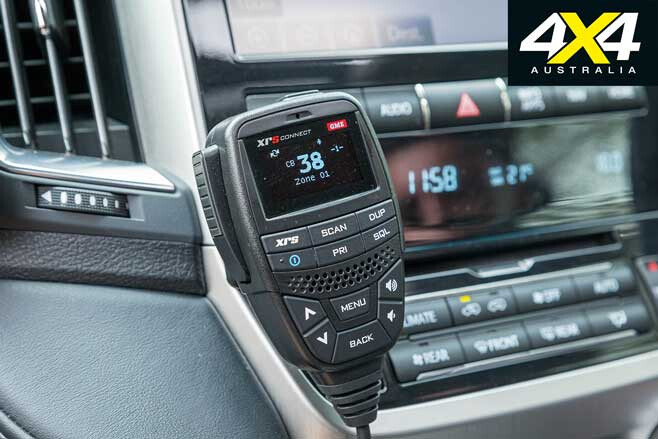
Making sure Shane and his family don’t trip over in the dark are Lightforce LED work lights on either side and at the rear, while there’s a Lightforce LED light bar up the front of the Pioneer Platform. The Rhino-Rack setup also provides a fitment point for a reversing camera and a Cel-Fi Smart Repeater Booster antenna on a GME fold-down bracket. Plus, there’s a GME XRS UHF radio inside the cabin for vehicle-to-vehicle comms.
There are a few small things still to be completed, but Shane has given the SuperCruiser its first official shakedown run with his entire family along for the ride.
“We went out to Witheren Heights Bush Retreat (near Canungra),” said Shane. “There’s a bit of dirt to get in there and then the tracks are quite rutted … and over the back side of it are really nice, hilly areas with open campgrounds and a few streams running through there, and four-wheel driving and stuff as well.
“I took the family with me and they absolutely loved it,” he said, adding that there was plenty of space for all seven of them; although, at 19 years of age, their eldest one is now happy to tag along on family trips in his own vehicle.
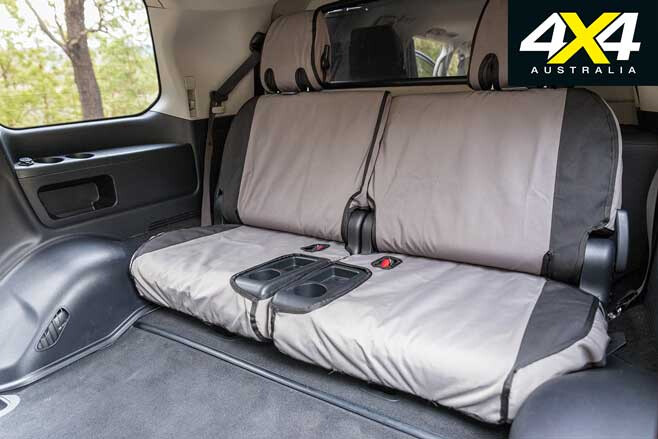
“We’re a blended family,” explained Shane. “Tameka and I both have 13-year-olds, and they were in the middle seats, and then we’ve got the 10- and 11-year-olds, and they were seated in the back row. There was heaps of room; more than enough space. They have heaps of leg room, they all have their own individual cupholders and it’s really cool. They love it; they’ve all got their spots now and their charge points for their electronics and stuff.”
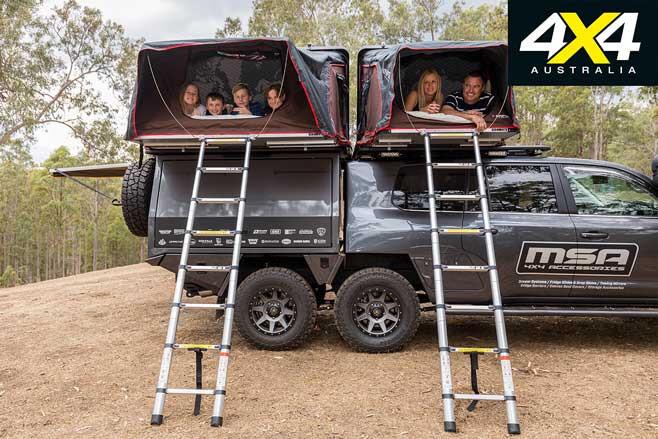
Once they’d found the right campsite, Shane said it didn’t take long for the kids to set up the two iKampers.
“We set up around a campfire and played with everything on the car. The kids set up the rooftop tents and they were up there just mucking around, and there was heaps of room for them in the bigger of the two tents.
“Those iKampers are so quick and easy to set up and pack up; you don’t dread packing them up because it’s just not a chore.
“The Darche 180° awning, it covers the area we use as a kitchen perfectly, and we can pull the barbecue/cooker out really quickly because it’s mounted on a drop slide,” he added.
Off-road Performance
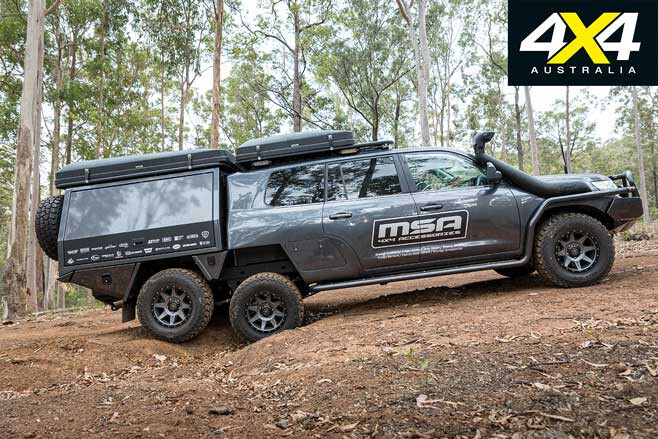
DESPITE ITS overall size, Shane is quite surprised by the manoeuvrability of the SuperCruiser and says he’s measured the turning circle and reckons it’s tighter than a LandCruiser 79.
“We went out and did a bit of four-wheel driving and the thing is just incredible off-road,” said Shane.
“I put it into low range and the traction is amazing. The wheels went down into ruts that were a foot-and-a-half deep and it had no problems whatsoever.
“The wheel travel is just incredible, the way the rear wheels articulate – one wheel will drop down into a rut and the other one just keeps driving, then it drops into the rut and the other one takes over.”
While the tracks at Witheren didn’t present too much of a challenge, Shane is confident the SuperCruiser will have no problems tackling more serious off-road terrain in the future thanks to the fitment of front and rear air lockers. The fact he has Warn winches front and rear will also instil plenty of confidence as he becomes more familiar with driving the vehicle.
Off-road Capable?
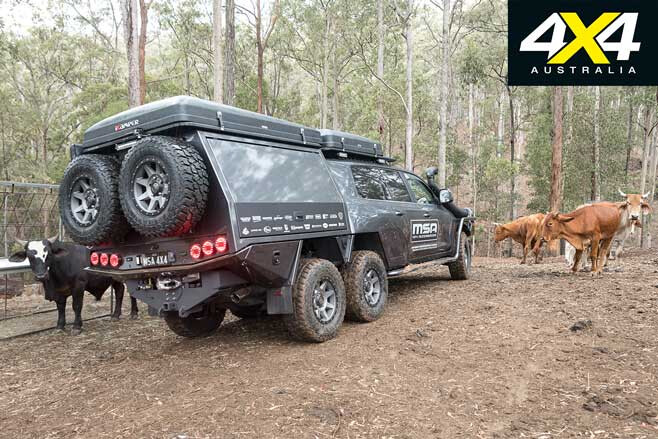
THERE’S BEEN a some social media hoo-ha about the SuperCruiser being too big to be effective off-road, but Shane disagrees.
“The turning circle (14.2m) is fantastic,” he said. “It’s my daily driver and I haven’t had any issues driving or parking it.” There’s some tyre scrub at the rearmost axle on full lock, but an Airbag Man self-levelling system should resolve this (like a truck with a lazy axle).
As for off-road axle articulation, that’s one of the highlights of the six-wheel drive system; there’s plenty of it. And it has locking diffs and two winches!
What’s Next?
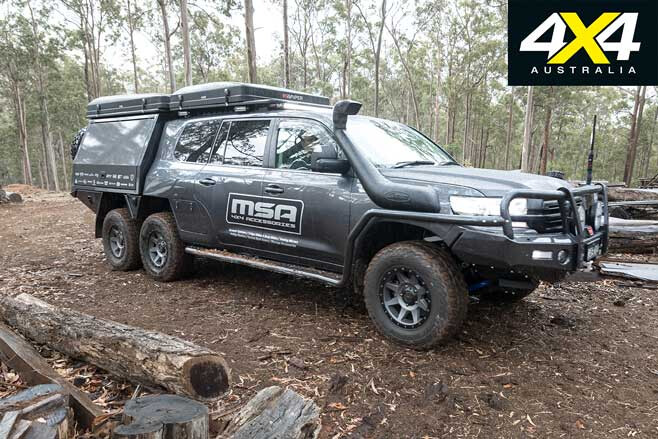
THE EXTENDED build time meant Shane and family have had to postpone a few trips but there are still plenty being planned.
“Because we missed the bigger trips we had planned, we’re going to do a lot of smaller weekends away, like Stradbroke, Morton and Fraser islands, and then next season we’ve got a trip planned up the Cape with some family and friends,” said Shane. “We’ll also do some open days and trade shows, including Brisbane next year.”
Shane’s also keen to ship the SuperCruiser stateside next year, to attend the Overland Expo in May and to take his family touring. “At Overland Expo we can use it to show off MSA 4×4 products and all the other equipment that’s been fitted to the vehicle, but that’s its secondary purpose,” said Shane. “It’s really all about family, with some promotion along the way.
“We’ll do four, five or six weeks touring in the US, probably around the canyon area, Monument Valley, the Colorado Rockies and then further east to Moab … so we’ll just go and drive around those parts.” So was the SuperCruiser worth all the heartache, time and expense that was involved in its creation?
“Absolutely! I love it,” exclaimed Shane. And so does his family.
BlackWolf, Victorinox and Pelican have released a selection of backpacks and ruck cases that could make the world of difference this holiday season. We take a closer look.
Blackwolf Sync 30 Daypack
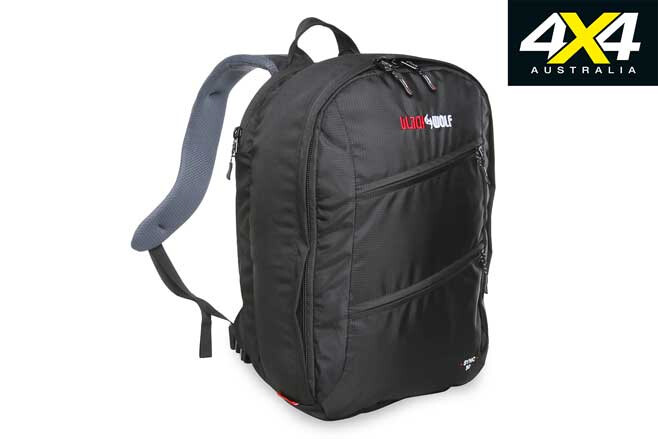
The Sync 30 Daypack from BlackWolf features an air-mesh travel backing that’s designed to keep you cool while you’re wearing it. This breathable daypack weighs in at only 1kg and is made from 420D Mini Ripstop PU, making it the ideal crossover pack for weekend trips, day hikes and mini-adventures.
Additional features include padded shoulder straps for all-day use, removable waist belt and sternum strap for added pack stability; internal organiser; removable key holder; padded laptop holder; an internal mesh water-bottle pocket; and RFID protected pocket to ensure your electronics are protected from skimming.
On the outside the Sync 30 has low-profile front pockets (one lined with tricot to protect sunnies and the like) and a pull-out rain cover, and it features sturdy No. 10 zippers. It’s available in black or titanium.
RRP: $129.99 Website: www.blackwolf.com.au
Victorinox Altmont Active
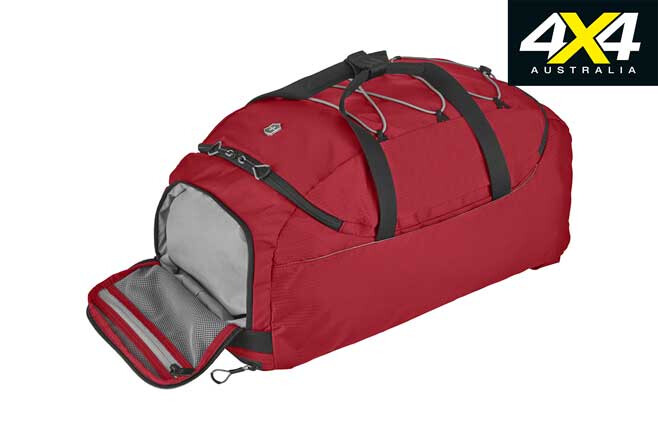
Victorinox has launched its lightest ever backpack range, reducing the weight of its Altmont Active bags by 30 per cent. Made from lightweight, durable and water-repellent nylon, Altmont Active bags feature multiple pockets, an exterior cord system for use with gear loops, compression-moulded back panels, an airflow system, and adjustable sternum and shoulder straps.
There’s also a mesh water-bottle holder in the main compartment and a dedicated space for a hydration bladder. A reflective print aids visibility at night and the packs are available in a variety of colours (black, dark teal and red) in sizes ranging from 18 to 35 litres.
To suit individual requirements, users can choose between a compact style, cap or roll-top models, an expandable version, or a rucksack that converts into a duffle bag. There are also optional rain covers ($45.95-$49.95).
RRP: $219-$319 Website: www.victorinox.com
Pelican R60 Personal Utility Ruck Case
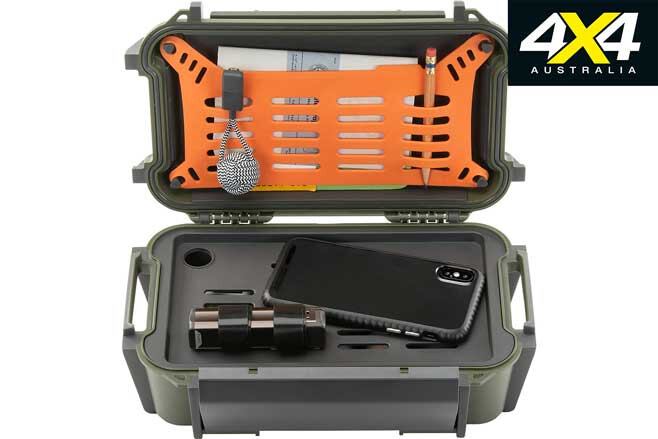
The Pelican R60 Personal Utility Ruck Case is claimed to be a crushproof, dustproof and adventure proof storage system for small items. Measuring 283mm x 174mm x 99mm, it features IP68-rated protection from water, dirt, snow and dust, a dual-pivot hinge latch, an abrasion- and impact-proof ABS outer shell, snap-in flexible lid organiser, rigid divider tray, MOLLE (Modular Lightweight Load-carrying Equipment) style loop system with Velcro straps, rubberised protective bumpers, and a built-in pressure valve.
It’s claimed to be waterproof to a depth of two meters for up to 30 minutes and is covered by a lifetime guarantee. It’s available in green, brown, black or orange.
RRP: $89.95 Website: www.pelicanstore.com.au
Lightning Ridge is one of those iconic places in Australia you need to visit at least once in your life to discover its history, natural yet harsh beauty, and the rough characters that call this place home. Most travellers know that Lightning Ridge (or The Ridge, as known by locals) is home to some of the best opal in the world and where lost people seem to go to in an attempt to escape their problems.
There’s no doubt it’s a bloody hot, remote and isolated area, but The Ridge seems to be busy all the time with travellers passing by or making it their own destination. We made the mistake of turning up without booking accommodation in advance at one of the four parks in town. Luckily, just 3km away, is Lorne Station, which is an old shearing property that has opened its gates to campers.
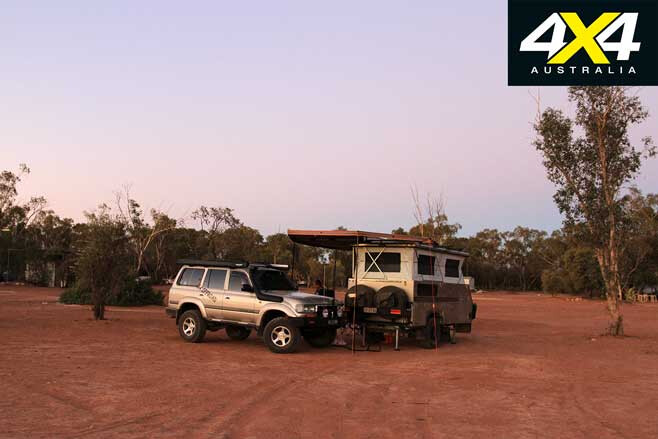
With nearly 4000ha to camp on we were guaranteed a spot at this down-to-earth park with basic facilities, where you can set-up for a day or for several weeks. Lorne Station itself allows you to fossick on its mullock heaps around the property and, while we didn’t get lucky finding any colour, the managers reckon plenty of others have.
These days Lightning Ridge is a tourist town, with coffee shops, art galleries and, in the cooler months, parks packed with southerners who flock here to soak in the artesian water that comes from nearly a kilometre underground.
Some say that soaking in this mineral-enriched water heals you of your aches and pains and may even add a few years to your life, but all we know is that once you get past the sulphur smell it certainly feels good to take a dip in the 40°C water.
Hit up the local tourist information centre and they will be more than happy to load you up with an array of booklets and advice covering the self-guided tours around town and its outer reaches. Of these, the most popular around-town tours are the four car doors.
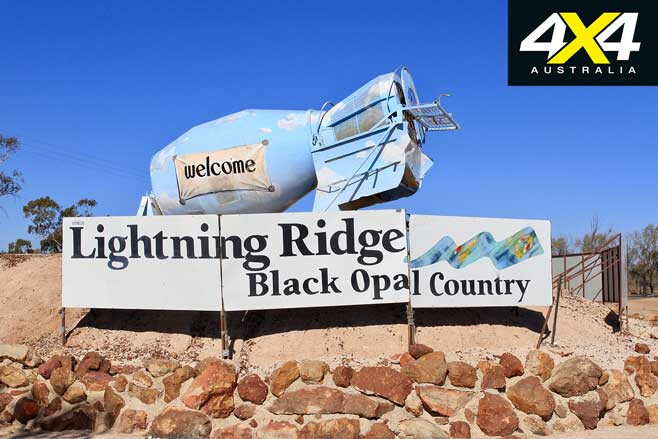
There are green, red, yellow and blue car doors scattered around town, all with a different theme, and you follow these and discover different quirky highlights. Most take around 30 minutes, and all start in the middle of town.
Depending on which one you take, they offer up tidbits such as history, unusual houses made of weird materials (like the bottle house or the castle complete with a moat), or a drive to a tin church that was built for a movie, while others take you to some of the original mines, lookouts, old car relics and much more.
The area around Lightning Ridge was used by pastoralists for huge sheep stations in the 1800s and opal wasn’t discovered here until 1901, when a boundary rider named Jack Murray picked up some ‘pretty rocks’. Fired from his job, he spent Sundays digging up these rocks, and later on he and a mate walked 700 miles to White Cliffs and sold their small diggings – and the rush was on.
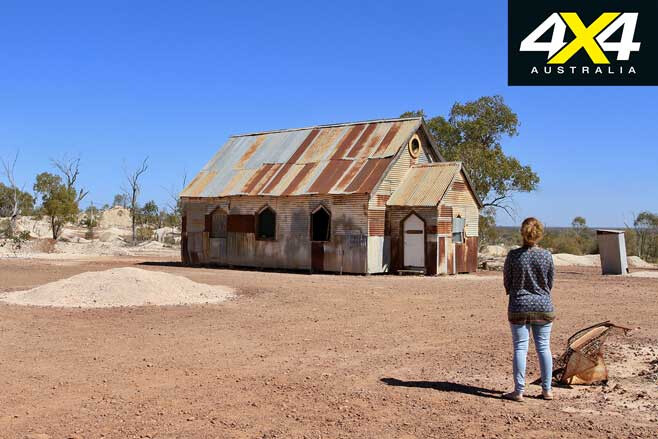
It was hard work in the early days when miners dug the hard ground by hand, then had to haul the dirt and rock to the surface. On the yellow car door tour, you’ll be led to one of the original and largest open-cut opal mines in NSW, and reportedly the richest black opal source ever found. Here at Lunatic Hill it was said that men had to dig three times deeper than other areas to find any fortune.
As word spread of black opal being found here, a village called Nettleton grew nearby, down on the Three Mile Flat workings. Over the next 60 years the ‘hole’ got so big it became too unsafe to work around, but they kept going and in 1986 a huge hand-size black opal was found, which had an estimated value of $6m. Today the area is fenced off to the public, but several viewing areas provide a good view over this massive hole.
From the air, Lightning Ridge looks like it’s covered in a million mole hills, but these are all mullock heaps – dirt taken from vertical shafts deep in the ground where miners are looking for that seam of colour … and hopefully their fortune.
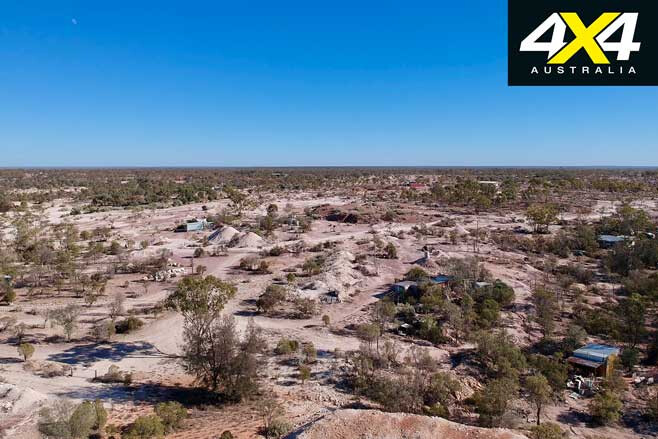
Mine claims around here are generally 50 x 50m², in which any number of holes can be sunk. Wandering around the mines on the claims is a big no no, and at night it would be especially dangerous to do so.
Wanting more than the normal tourist route we were told about ‘other’ opal fields about 100km to the west of Lightning Ridge, called the Grawin opal fields, where things were a lot tougher. The drive across to the Grawin via Cumborah is all tar, but things got pretty rough and ugly as soon as we hit the turn-off into the Grawin. There’s no shire council out here to maintain the roads, and most locals leave there tyres at 20psi due to the unforgiving and relentless corrugations.
The 20km drive into the fields is like something out of a Mad Max movie, with 40-plus-year-old trucks working the area, unregistered, with no doors and with weird mining gear welded onto the back.
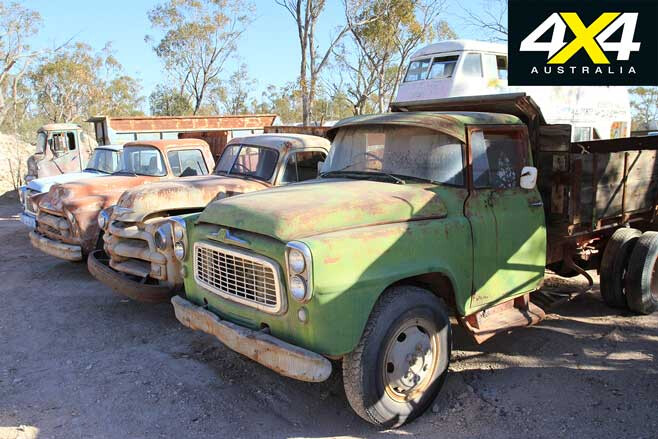
There’s nothing pretty about this area as it’s all coated in a whitish dust reminiscent of baby powder – it’s on the trees, the makeshift dwellings and the vehicles, and, trust me, it gets in everywhere.
A few years ago someone had a vision out here and created the ‘Pubs in the Scrub’ after visitors kept dropping in looking for something to do. Nowadays there are several ‘pubs’ (more like licenced sheds) where you can grab a feed and a coldie.
We found that you can free camp behind these as long as you spend a few dollars inside, and for that they will give you the heads-up where you can noodle or fossick in legal mine dumps around the area. The two most popular spots are up near the Sheepyards (one of the original mine areas) where, after 50 years of mining, the piles of rock and dirt are as large as a footy field and more than 10m high.
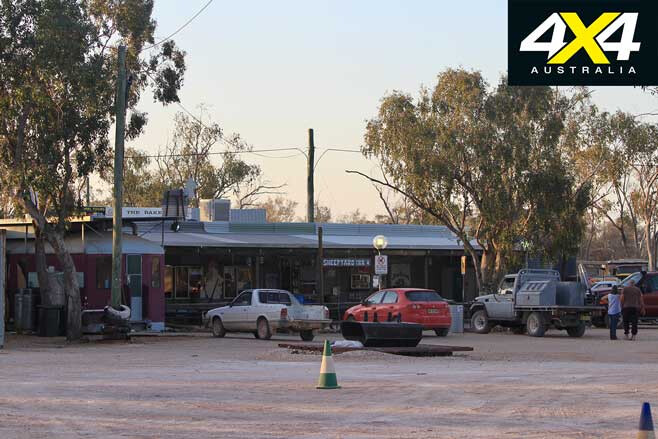
Every few hours a mine truck will drive to the top of these piles and dump a few more tonnes of rubble – just don’t get in their way. It’s a unique community where they work hard looking for that elusive big opal full of colour.
In 1905 the first opal was found nearby at Hammond Hill, but it wasn’t until 20 years later that the first substantial piece of rock created an ‘opal rush’ to the area. During the war-era, mining was conducted by candlelight and, as per The Ridge, it was all dug by hand using a pick and shovel. It wasn’t until the 1950s that ‘proper’ tools, jack hammers and trucks made an appearance in the area, making things a little easier.
By the 1990s, better gear like giant vacuum cleaners and hydraulic equipment made life much easier. These days the trucks and machinery have the right-of-way on the road, and we didn’t see too many number plates on anything – the rough roads must shake them off! Local rumour has it that when the local constabulary show up for a drive around, the town goes quiet and it’s hard to find anyone about. Maybe that’s why there’s no real population count.
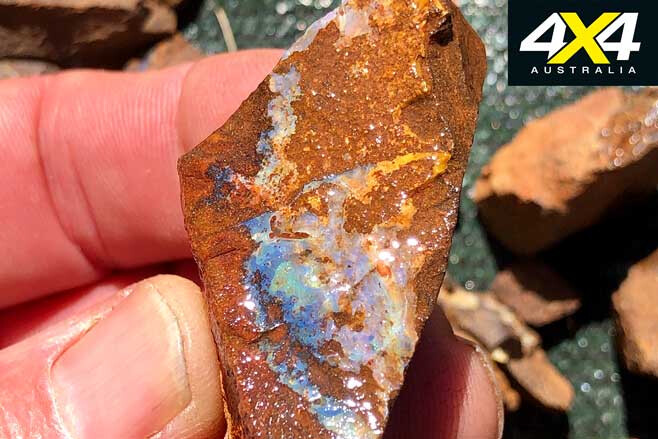
Another ‘pub’ out here is the Club in the Scrub, where you can also free camp, book a basic cabin, have a yarn to a local (maybe get a few opal mining tips), play a round of outback golf, have a feed or just relax and take in the memorabilia adorning the walls.
The Lightning Ridge area is alive with quirky and unique characters, tours, signs and more, and anyone who takes a trip to this iconic area will not be disappointed.
Travel Planner
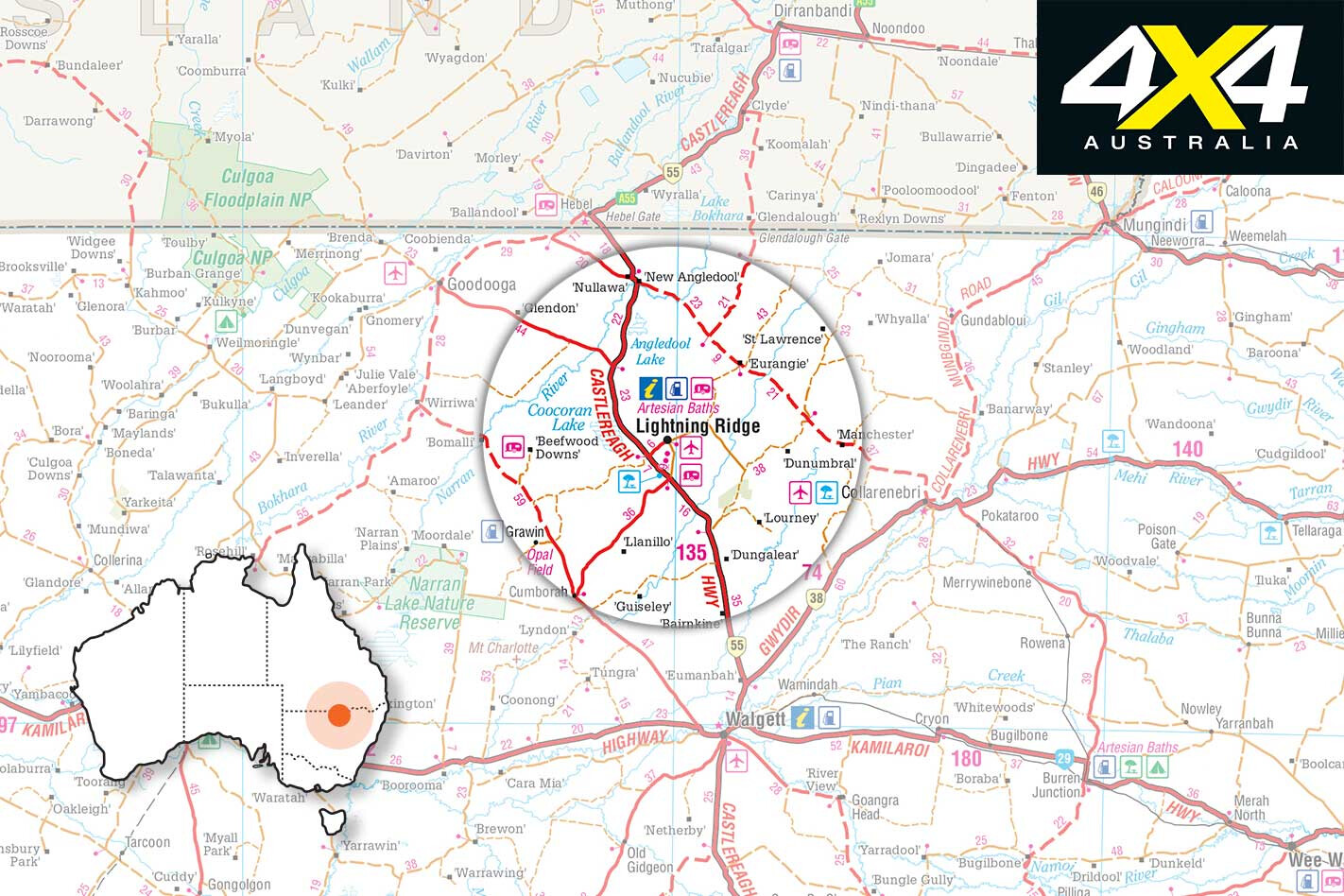
General information: lightningridgeinfo.com.au Lorne Holiday Station: (02) 6829 1869; www.lornestation.com Club in the Scrub: (02) 6829 3810; www.theclubinthescrub.com.au Sheepyard Inn: (02) 6829 3932 Glengarry Hilton: (02) 6829 3983