
Nissan has given the Patrol a freshen-up for MY2020 with new styling front and rear, tweaks to the suspension tune, and the inclusion of new safety features on both Ti and Ti-L models.
While midlife style updates often don’t do the original vehicle design justice, the new-look Patrol works well, giving the vehicle a sharper and more integrated overall look that slightly minimises the once bulbous appearance of this undeniably big eight-seat wagon.
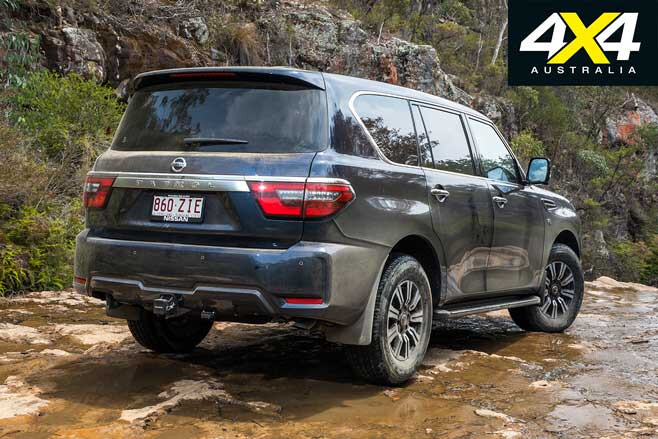
At the front new LED lights and grille combine with two new bumper designs to give the Patrol a more modern appearance. The Ti model grade (as tested) scores what Nissan describes as “a unique sporty front-end design”, while “the Patrol Ti-L front bumper showcases a more premium look”; essentially, the Ti-L bumper has more horizontal lines, more chrome and relocated fog lights. Changes at the rear of both model grades include a slightly different tailgate pressing, redesigned LED tail-lights and a full-width chrome strip with integrated nameplate, giving a tidier and wider overall look.
The equipment changes mostly centre around upgrades to Nissan’s Advanced Driver-Assistance Systems (ADAS). Both the Ti and Ti-L models are now equipped with Intelligent Emergency Braking, Intelligent Forward Collision Warning and Rear Cross Traffic Alert.
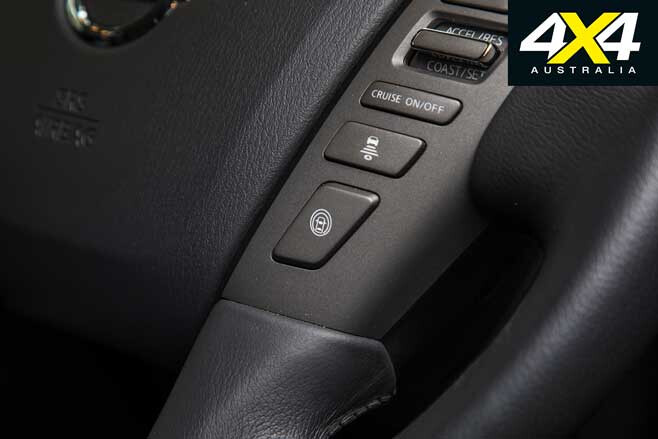
Once exclusive to the Ti-L, the lower-grade Ti now also comes with Intelligent Cruise Control (ICC), Lane Departure Warning (LDW), Intelligent Lane Intervention, Blind Spot Warning (BSW) and Intelligent Blind Spot Intervention. Both models now have auto-folding exterior mirrors.
These upgrades come at a cost, with the Patrol Ti up by $3110 to $75,990 plus on-roads, and the Ti-L up by $2110 to $91,990 plus on-roads. Despite these modest increases the Patrol is still a relative bargain compared to its most obvious direct competitor, the LandCruiser 200 Series; the well-equipped Patrol Ti is around $4K cheaper than a stripped-out LandCruiser GX, while the top-of-the-range Patrol Ti-L is the same price as a basic LandCruiser GXL. And if you want a Cruiser nearing the Patrol for equipment spec, you’ll need to fork out more than $102K for a VX or more than $123K for the top-spec Cruiser Sahara.
Regardless of the Patrol’s apparent bargain status, the LC200 outsells it on the Aussie market at a rate of almost eight to one. This can be largely attributed to the lack of a diesel engine in the Patrol, which is exclusively powered by a 5.6-litre petrol V8, while the LC200 now comes exclusively with Toyota’s 4.5-litre turbo-diesel V8. The market has spoken … and the market says “diesel rules”.
Powertrain
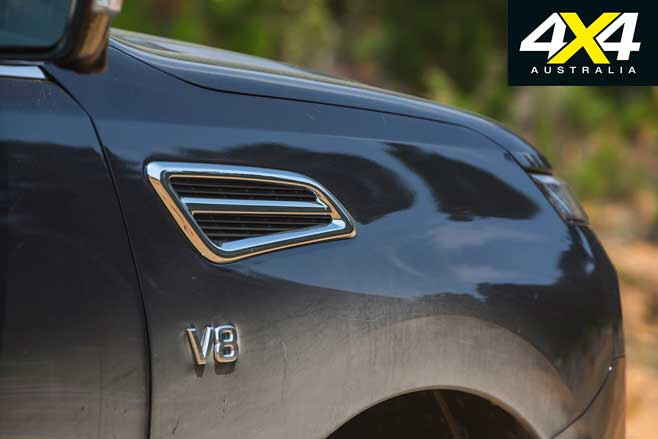
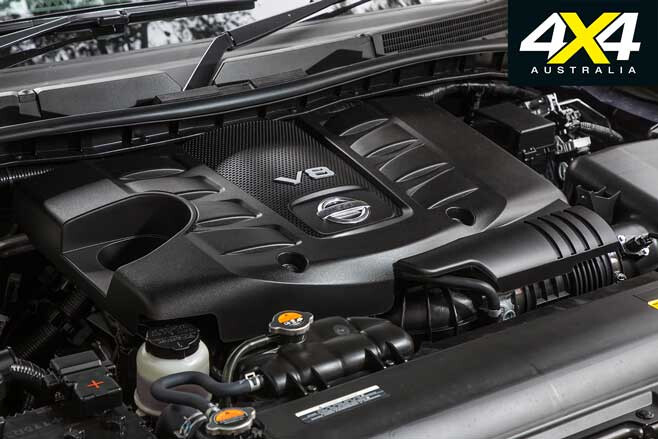
Okay, let’s start with the bleeding obvious: the Patrol is a bit of a gas guzzler. But its VK56VD engine is no old-school petrol V8 dinosaur. Despite a ‘no substitute for cubic inches’ 5.6-litre displacement, this lightweight aluminium-block V8 is a high-tech wonder, with aluminium heads, double overhead camshafts, four valves per cylinder, direct injection technology for optimum combustion efficiency, and Variable Valve Event and Lift (VVEL) for greater fuel efficiency and output. Claimed peak power is a handy 298kW at 5800rpm and torque peaks at a grunty 560Nm at 4000rpm.
The Patrol itself is no lightweight, however, and in Ti guise it weighs in at a rather hefty 2812kg, so you need to be quite generous with throttle application if you want to make the most of all that on-paper output. Being a big petrol V8, that kind of driving style will have consequences at the fuel bowser.
Nevertheless, put your boot into it and the Patrol will launch off the line with enthusiasm, before it settles into a period of rather linear acceleration throughout the mid-range. Keep your foot planted and the tacho needle goes ballistic from 5000 to 6200rpm in the lower gears, before the seven-speed auto reaches for another ratio. The whole affair is accompanied by a satisfying (if muffled) petrol V8 soundtrack that no diesel engine could ever hope to match.
Of course, you can’t drive around like a hoon all day long, and if you’re happy to plod along at a reserved pace you’ll soon realise one of the other great benefits of this V8 petrol engine; it’s super smooth, quiet and refined … and not too thirsty. On test we recorded a surprising average fuel consumption figure of 15.2L/100km, which included a mix of city, country and off-road driving, but consumption can drop to as low as 12 to 13L/100km on the freeway.
The Patrol’s seven-speed auto shifts smoothly and offers more than enough ratios for poking around town or cruising on the open road. It can sometimes be a little slow to downshift when you want to press on, but this can be quickly resolved with a prod of the throttle or by knocking the shift lever over to the left and changing gears manually.
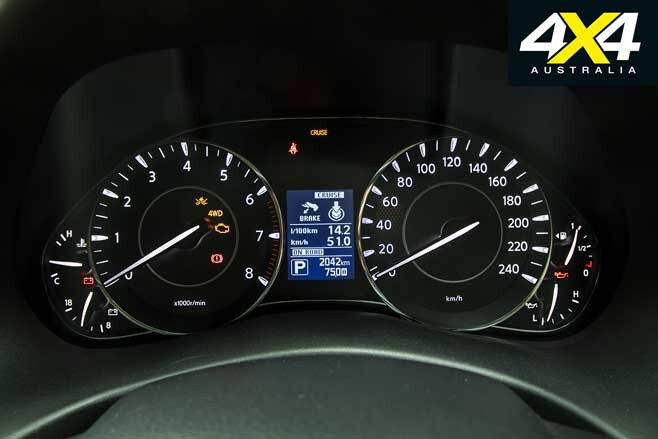
The Patrol uses Nissan’s Intelligent 4×4 system which in ‘Auto’ mode is essentially an on-demand 4×4 system that directs most torque to the rear wheels unless slip is predicted or detected, at which point it will transition up to 50 per cent of torque to the front wheels. The torque transition is seamless. As well as ‘Auto’, there are user-selectable ‘4H’ and ‘4L’ modes for off-road driving conditions, and these are engaged via a dial on the centre console. While ‘4H’ can be selected on the fly, you have to stop and shift into neutral to engage ‘4L’. The low-range gearing offers a crawl ratio of 43.95:1.
The 4×4 system also offers a range of modes to suit different driving conditions (On Road, Rock, Snow and Sand) essentially tailoring throttle sensitivity and transmission function to suit, and the Patrol also features Nissan’s Active Brake Limited Slip (ABLS) traction control system, as well as a user-lockable rear differential lock.
On-road Ride & Handling
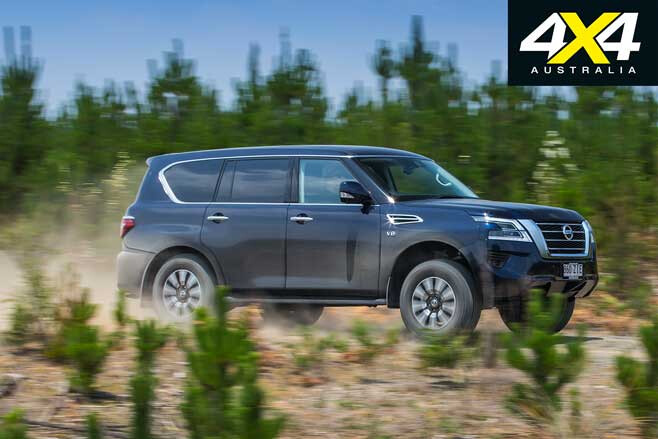
Despite its bulk and weight, the Y62 has always delivered surprisingly agile handling combined with a plush yet controlled ride, and this is still the case despite Nissan tweaking the suspension tune for MY2020. The Patrol’s fully independent double wishbone suspension is key here, with much less unsprung weight than a live-axle arrangement, but the trick Hydraulic Body Motion Control (HBMC) system also plays a big part in how the Patrol drives on the road.
The HBMC system essentially cross-links four oil cylinders (or hydraulic rams) via accumulators and hydraulic pipes so that when cornering, the fluid from the two outside rams flows to the accumulators to raise roll stiffness, which in turn minimises body roll. These rams essentially fulfil the dual functions of shock absorbers and sway bars. The result is a compliant ride when driving over rough surfaces, but the suspension ‘firms up’ when cornering for a sporty feel.
The Patrol rides on 265/70R18 Bridgestone Duelers so there’s plenty of sidewall to soak up bumps, and while the vehicle-speed-sensitive power steering is nice and light at low speeds it firms up enough at higher speeds to offer reasonable feel and good feedback. Sure, the Patrol is no sports car on the road, but it offers more composed handling than any vehicle of this size and weight has a right to … and not at the expense of ride comfort.
Off-road
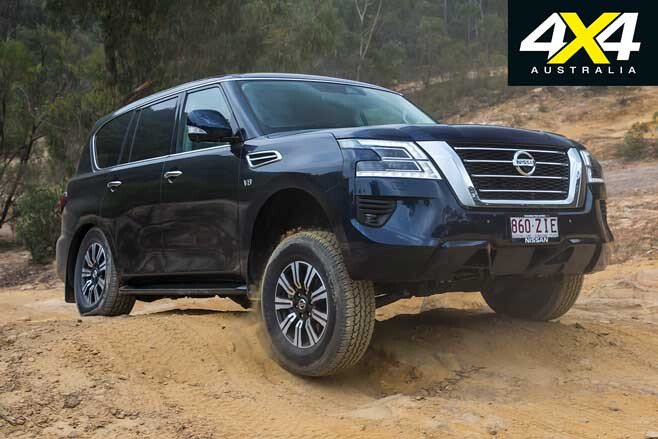
Another benefit of the Patrol’s HBMC system is that it doesn’t adversely affect wheel travel when driving off-road, as there are no sway bars. In fact, the Patrol offers impressive wheel travel both at the front and the rear, and it is this that is clearly on display when crawling over undulating terrain.
Other off-road positives include decent low-range reduction, an effective traction control system, good hill descent control, reasonable ground clearance (273mm) and a sturdy under-engine protection plate. The Patrol easily handled all of the off-road obstacles we threw its way including steep and undulating climbs, slippery descents and tight bush tracks.
On the downside, the traction control system disengages when the rear diff is locked, approach and departure angles are not fantastic, and the big side-steps are prone to grounding when driving over erosion drains or manoeuvring around obstacles.
Poor outward visibility doesn’t help in this regard, either (due to the big bonnet, high hipline and smallish rear window); although, the Patrol is equipped with a series of cameras allowing you to select different outward views (wheel placement, in front and behind the vehicle, or simulated 360-degree overhead) which proved handy when dropping over rock shelves or manoeuvring in tight spots.
Accommodation & Safety
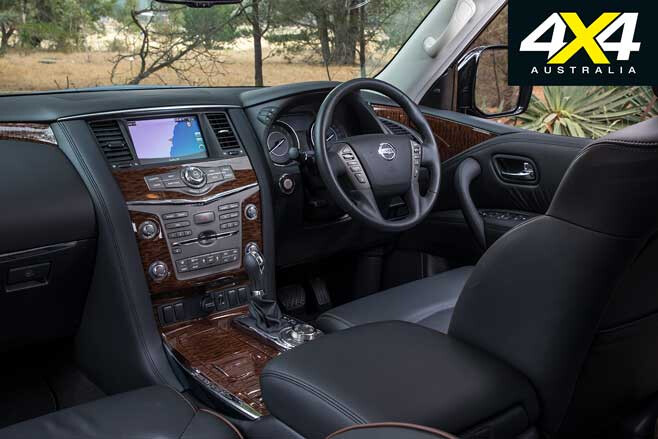
As you’d expect of a big eight-seat wagon, the Patrol offers generous interior space. The big, leather-covered front seats offer a good range of power adjustment, the driver’s seat gets lumbar adjustment, and the steering wheel is tilt/reach adjustable.
The dash design and instrument cluster are a little dated, the former with lots of faux wood and the latter with analogue gauges and monochrome graphics, and you have to reach for buttons around the instrument binnacle to scroll through trip-computer pages and reset the tripmeters.
The centre touchscreen is bright and colourful enough, but its dual controls (touch and dash-mounted buttons/dials) are awkward, while the lack of Apple CarPlay/Android Auto is an almost unforgivable oversight in this day and age. Other controls such as heating and ventilation require some user familiarisation; although, the 4×4 system and off-road mode controls are clearly marked and easy to use.
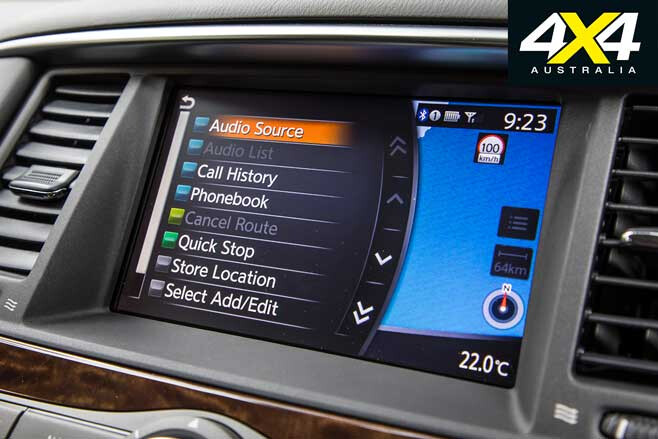
There’s plenty of storage space around the cabin including a big centre-console bin, a decent-size glove box and generous door pockets with bottle holders. There are two USB ports up front and two 12V power outlets.
The 60:40 split/fold second-row seat offers plenty of width for three occupants and good leg room, even in the centre position. There’s clever access to the centre console bin between the front seats from this row (it has a double-hinged lid), and those in the middle row also get large door pockets, AC controls, roof vents and two USB ports.
Access to the third-row seats is good thanks to tumble/fold second row seats, but once back there it’s quite cosy and really only suited to smaller kids. Fitting three across the third row would be a real challenge and, although the centre position has a three-point seat belt, there’s no headrest. There are roof vents and cup holders in the third row and the seat-backs have rake adjustment.

The cargo area is big enough to fit a 30-litre fridge and some other luggage, even with all three rows of seats in use. Fold the third-row seats down and the cargo area is huge. Fold the second-row seats down as well and it’s downright massive in the back of the Patrol, with an almost flat floor all the way to the back of the front seats. There’s a 12V power outlet in the cargo area, six cargo tie-down points and a small underfloor storage area suitable for wet or dirty gear. The one-piece lift-up tailgate is quite heavy and there’s no power assistance.
On the safety front, the Patrol packs the aforementioned Advanced Driver-Assistance Systems (ADAS), the usual array of three-letter abbreviations (ABS, TCS, VDC, EBD), driver and passenger front and side SRS airbags, curtain airbags for all three rows, two second-row ISOFIX and two top-tether child seat anchors, a third-row child seat anchor, and a tyre-pressure monitoring system (TPMS).
Practicalities
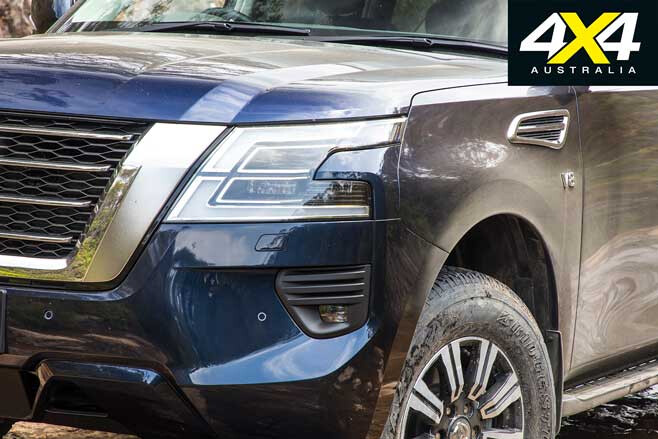
There’s no denying that the Y62 Patrol is a big beast, and when it comes to tight spots such as shopping centre carparks or bush tracks, it can be a handful; but the steering lock is reasonable and results in a 12.5m turning circle, which is on par with many 4×4 utes. The external cameras that feed the around-view monitor help in this regard.
The Patrol has recovery points fitted front and rear and a reasonable under-engine protection plate. Underbody components, including the underslung full-size spare wheel, are tucked up and out of the way.
There’s not much space under the bonnet, so those wanting to fit a dual-battery system will have to position the auxiliary battery under the vehicle or in a box in the cargo area. The air intake is located up high and through the passenger-side inner guard, but the alternator is located quite low in the engine bay.
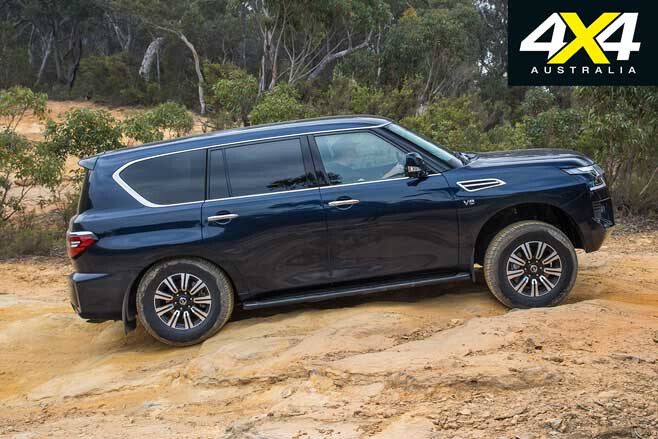
The Patrol might be a thirsty beast, but with a 140-litre fuel tank you’ll get more than 900km out of a fill, so long as you don’t get too heavy with the throttle. Nissan recommends 95 RON minimum, and there’s a sticker inside the fuel lid suggesting 98 RON, so your credit card will take a hammering at the servo.
The Patrol Ti has a decent 688kg payload capacity and it’s rated to tow a braked trailer up to 3500kg but, again, it’ll get thirsty with a big trailer on the back.
In Summary
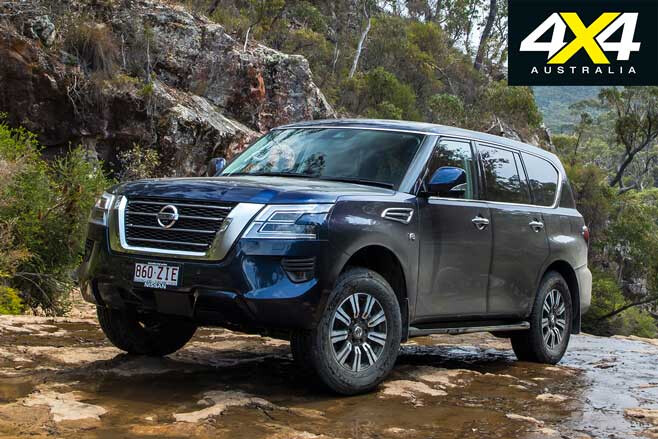
This latest update to the Y62 Patrol gives it a fresh, new exterior look, but it would’ve been nice if there were a few more updates on the inside, too. Nevertheless, the Patrol Ti is a fantastic vehicle, both on the road and off it, and it packs plenty of standard equipment for the asking price. As a petrol-V8-only proposition, though, it will always be a bit player in the upper-large 4×4 wagon segment.
Since the Y62 Patrol was launched in Australia back in 2012, there have been rumours of a diesel variant, and it’s a real pity such a model has never materialised because we reckon it would sell like hotcakes and give the 200 Series Toyota LandCruiser a run for its money, as well as some of the more expensive top-spec 4×4 utes.
NISSAN PATROL Ti SPECS: Engine: 5.6L petrol V8, direct-injection Max Power: 298kW at 5800rpm Max Torque: 560Nm at 4000rpm Gearbox: 7-speed automatic Crawl Ratio: 43.95:1 4×4 System: On-demand full-time 4×4 Construction: Separate-chassis Front Suspension: Independent/coil springs, linked hydraulic dampers Rear Suspension: Independent/coil springs, linked hydraulic dampers Wheel & Tyre: 18 x 8J alloy/265/70R18 116H Kerb Weight: 2812kg GVM: 3500kg Payload: 688kg Towing Capacity: 3500kg Towball Download: 350kg Departure angle: 23.6° Rampover angle: N/A Approach angle: 34.4° Wading depth: N/A Ground clearance: 273mm Fuel Tank Capacity: 140 litres ADR Fuel Claim: 14.4L/100km
WHILE most electric pick-up trucks coming to the market are utilising chassis platforms that lack the required rigidity for extreme off-road use – think Rivian’s skateboard platform – EV start-up Bollinger Motors has designed and manufactured an EV that’d be more than capable on the rough stuff.
Utilising a fully independent, height adjustable suspension design coupled to gear-reduction portal hubs, the Bollinger B1 and B2 EVs are promising 394mm of ground clearance, 254mm of suspension travel, and approach and departures angles of 56 and 53 degrees respectively.
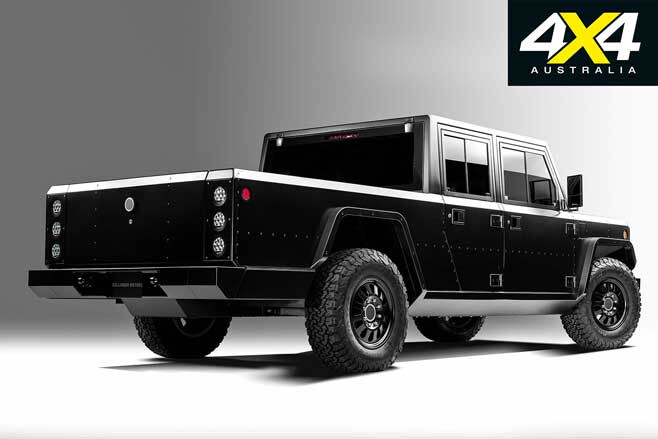
And now the Michigan-based mob has filed for patent protection for its unique all-electric, all-wheel drive vehicles, the B1 sport utility truck and B2 pick-up truck, and its associated technology.
In a press release filed by Bollinger Motors, the provisional patent “highlights the vehicle-controls strategy and innovative software solutions used to achieve performance targets including adjustable ride height, variable payload responses, virtual front and rear differential, and various modes of operations, including outboard power usage.
“The technical content contained in the application provides substantial competitive advantage and adds to a growing portfolio of intellectual property for Bollinger Motors,” the press release adds.
The provisional patent, originally filed on November 18, also contains: mechanical architecture, electrical architecture, electric drivetrain, modes of operation, configurability, and common vehicle platform with multiple embodiments.
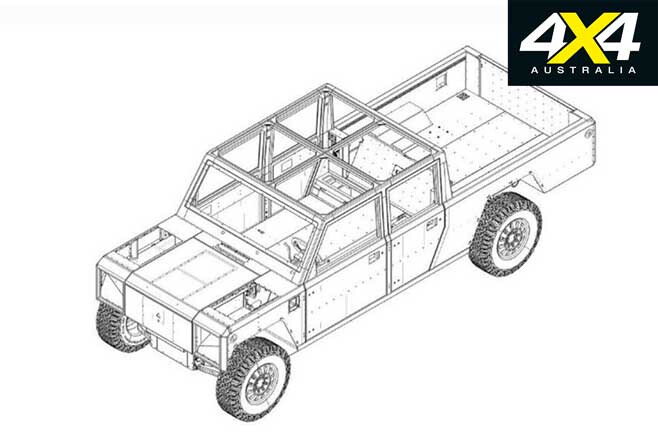
“Our team has created a vehicle that’s engineered and packaged unlike anything ever built,” said CEO Robert Bollinger. “Filing this patent will help protect that hard work, and help showcase the outstanding engineering capabilities of our company.”
The production-spec four-door 2020 B1 and B2 were officially revealed in September, 2019, with both vehicles sharing the same dual electric motor set-up – totalling 458kW and 906Nm – running through a two-speed Hi/Lo gearbox. More specs and info can be found here.
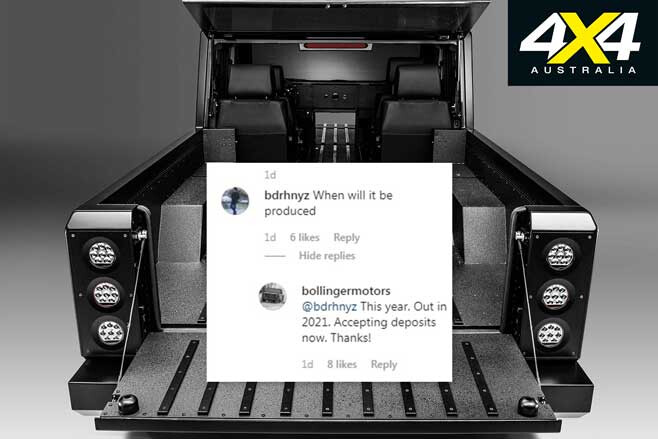
Bollinger Motors says its vehicle will go into production this year and will be available in 2021, although it is yet to reveal who will be perfroming the actual production. It is currently accepting deposits on the two variants which are expected to cost more than US$120,000. For now, however, Bollinger Motors is focusing on the US market, so we’ll have to bide our time before we see it locally.
“We are prioritizing the US market for our first production, but we are planning for export markets as well,” Bollinger says on its website.
The seven most interesting 4×4 vehicles of 2019 get together for a week to determine the 4×4 Of The Year.
INTRODUCTION
The seven most interesting 4×4 vehicles get together for a week to determine the 4×4 Of The Year.
BEHIND THE SCENES
A behind-the-scenes look at what goes into conducting 4x4OTY
JUDGES RANKING
Here is how our either 4×4 of the year contenders finished…
WINNER
Ford Ranger Raptor crowned 2019 4×4 of the Year
AFTER a total of 111 days on the road, crossing 23 countries and clocking up 19,000km, the eight-member team of The Last Overland Expedition reached its final destination of London early last month.
The team, comprising English, French, American, Belgian, Indonesian and Singaporean nationals, completed the journey in three Land Rover Defenders, including the original 64-year-old Series I wagon nicknamed “Oxford” that completed the iconic 1955-1956 expedition from London to Singapore.
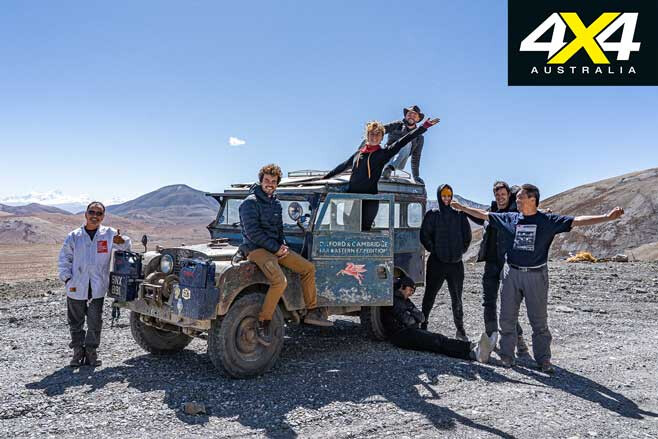
Following the original expedition Oxford ended up on the remote island of St Helena, where it was used for a few decades before being neglected. Fortunately, Oxford was recovered and restored back to roadworthy condition in the United Kingdom in 2017.
Setting off from Singapore on August 25, the team crossed into Malaysia, making its way up the peninsula into Thailand, up through Myanmar, and crossing the mountainous regions of the Himalayas and Tibet.
While the original route crossed through the regions of Pakistan, Afghanistan, Iraq and Syria, the team decided to travel through Nepal, around China, briefly skimming the borders of Tajikistan and Afghanistan up into Uzbekistan and Turkmenistan, and then across the Bosphorus into Europe.
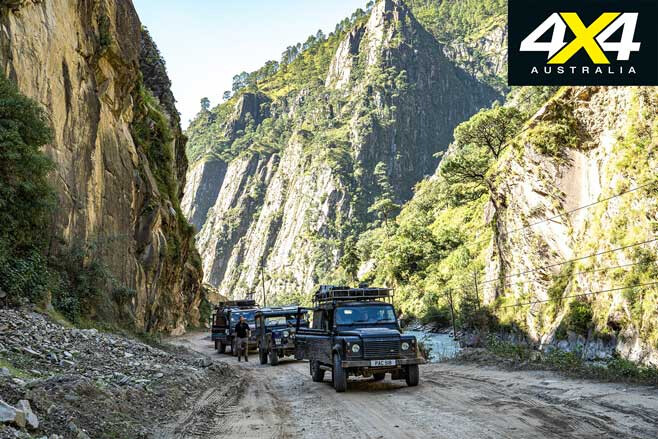
Despite the long and arduous journey the team reported that Oxford managed to complete the journey without much fault, save for one particular episode of a back wheel falling off at 70km/h in Turkmenistan, which severed the brake line. Luckily, the team managed to find a local workshop to mend Oxford.
The team members had to endure extreme altitudes and temperatures, as well as various diets along the way, with occasional food poisoning episodes and the need for supplementary oxygen to cope with altitude sickness at certain points of the journey.
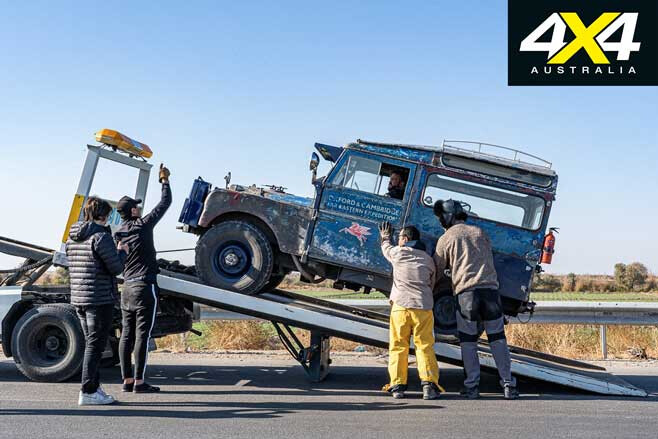
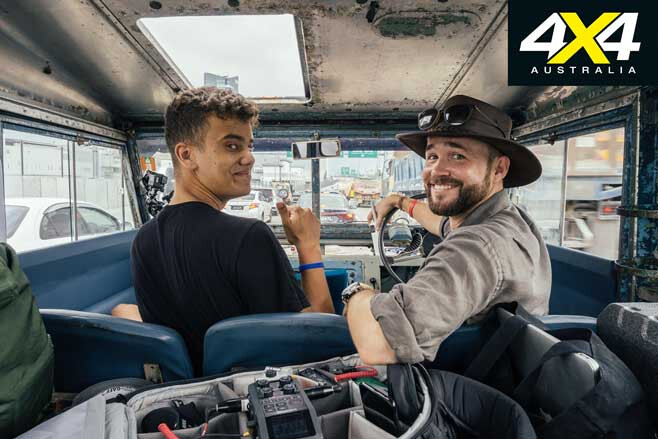
As reported initially, Tim Slessor, one of three surviving members of the original expedition, was meant to join The Last Overland team as the co-driver of Oxford. However, at the last minute, Slessor, who was recovering from a recent surgery, decided that at the advanced age of 88 the realities of his physique would be putting the expedition at risk if he were to fall ill along the way. Slessor’s grandson, Nat George, who just finished his studies in the UK, agreed to take his grandfather’s place and jumped on a plane to Singapore to join the team as its youngest member.
After crossing through mainland Europe and making a symbolic stop at the new 2020 Land Rover Defender‘s production line in Slovakia, the team was warmly received at Folkestone, the Euro Tunnel’s UK port of entry and expedition’s entry point into the country, by a welcome party and Slessor himself. There, Land Rover presented a new Defender wrapped in a special one-off Oxford & Cambridge Expedition livery to mark the occasion.
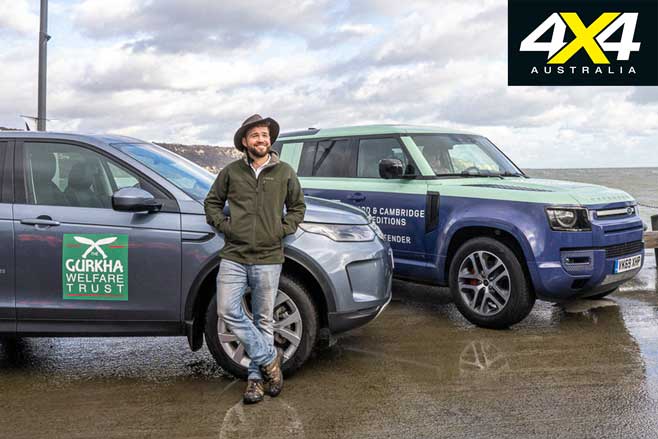
“This journey was definitely an action-packed one filled with many ups and downs, and I can’t believe how quickly the 18 months that went into planning this journey has brought us here, all in one piece,” said Alex Bescoby, film-maker and one of the expedition’s leaders.
“We’ve managed to drive this incredible 64-year-old car once more, to so many remote and fascinating parts of the world, through tropical monsoons, -20°C temperatures and at more than 5000m above sea level. Oxford took it all in stride.
“From Nagaland to Tibet, from Turkmenistan to Serbia, the welcome we’ve received has been unbelievable.”
Picture: Taking a break at the Marco Polo sheep statue that marks the entry into Tajikistan from Kyrgyzstan
Bescoby, with his documentary company, Grammar Productions, will be producing a film on The Last Overland Expedition and how much the world has changed since the original expedition travelled the route more than six decades earlier. The film is expected to come out later this year.
The team eventually made its way to its final destination, the London Hilton on Park Lane, which was located close to the starting line of The First Overland Expedition in 1956. It copped a parking fine from the City of Westminster soon after.
A mate of mine, and sometimes 4X4 Australia contributor, David Morley recently wrote an opinion piece for MOTOR magazine blaming, in a roundabout kind of way, the increase in the road toll on the rising popularity of dual-cab utes over conventional cars.
Dave pointed out that the road toll in Victoria was up by 26.3 per cent for the first 11 months of 2019 compared with the same period in 2018. He then questioned the government’s repeated and unfounded claims that speed is to blame for much of this increase.
However, as there have been no increases to the speed limit in that period and no real deterioration in the state of the roads – and as many level crossings in the state have been removed – there should have, in theory, been a reduction in the road toll over the period. Dave also points out that drivers are no more talentless than they’ve ever been, so that can’t be the reason either.
So, what’s going on? Dave surmises that vehicles must have become “less life-saving”.
This argument seems counter-intuitive because cars are said to be safer than ever before. Dave, however, is not referring to crash-worthiness, but to dynamic safety, and he goes on to argue that the growth in popularity of dual-cab utes has therefore skewed the road toll. “Utes – actually, let’s call them light-trucks, for that, thanks to their ladder-chassis construction and compromise tyres, is precisely what they are – just don’t have the dynamics of a conventional car,” Dave writes.
Having driven pretty much all of the dual-cab ute models sold in this country since 1994, I can only agree with Dave’s assessment – dual-cab utes certainly don’t have the dynamics of well-engineered, modern, conventional passenger cars.
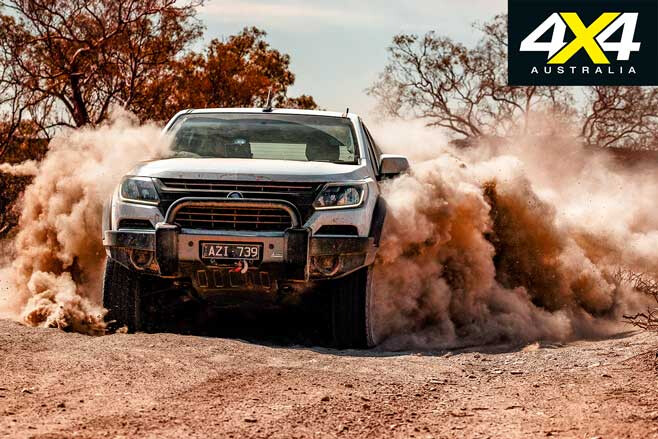
Most utes are generally heavier, have a higher centre of gravity, have higher-profile and often Light Truck construction tyres, have rudimentary live-axle rear suspension with leaf springs, and run rear drum brakes. In addition, their ability to haul up to a tonne in cargo means there are some pretty major ride and handling compromises when they are either fully unladen or, conversely, loaded to the hilt. Sure, not all conventional cars are the last word in on-road dynamics, either, but as a general rule most cars offer better dynamics than most utes on the road.
Dave also points out that “utes have been late to the autonomous braking (and other safety tech) party”, and this point is of great importance. Utes definitely have been late to the safety tech party, with passenger cars and 4×4 wagons equipped with technology such as electronic traction control and vehicle stability control much earlier than utes. As for AEB, forward collision alert, lane-departure warning and adaptive cruise control, this kind of tech is only now starting to filter through to utes, while many passenger cars have had this kind of tech for some time.
Of those utes that are equipped with the latest safety tech, they are no doubt more ‘life saving’ than ever before, because if you can avoid a crash in the first place then you’re not going to contribute to the increase in the road toll.
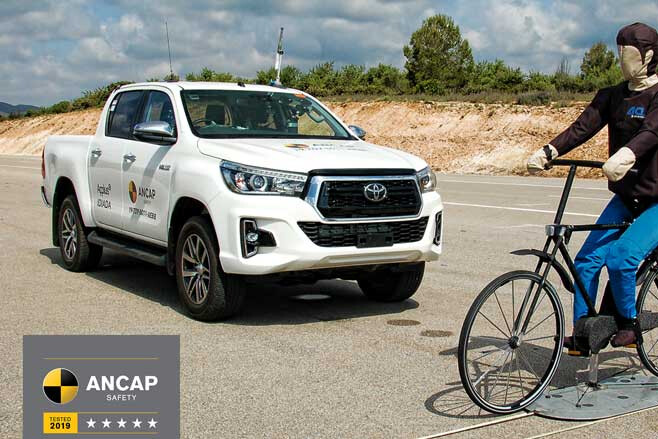
Of the modern utes equipped with stability control and AEB (Ford Ranger, Mercedes-Benz X-Class, Mitsubishi Triton and Toyota Hilux), I reckon you’d be hard pressed to crash them, except through complete inattention or sheer stupidity. Throw one into a corner too hard and the stability control will generally ensure you don’t lose control. Forget to put your foot on the brake when the car in front stops then hopefully the AEB will save your bacon. And over the next few years advanced safety tech like this will no doubt become the standard in all 4×4 utes.
Dave told me his column caused quite a stir among many who read it, with many ute owners leaping to the defense of their vehicle of choice; but regardless of how much electronic cleverness is thrown at utes, while they run old-school chassis architecture, suspension and brakes, they’re still not going to be as dynamically sound as equally equipped conventional cars. But, hey, neither are most 4×4 wagons … and if you want a vehicle that’s capable on the road as well as off it, then there will always be compromises.
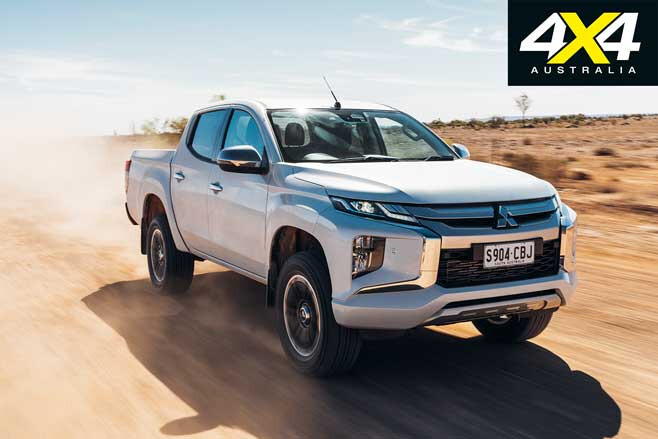
Of course, most enthusiast four-wheel drivers are aware of this and will drive their vehicles accordingly, but for those with less of an appreciation of the vehicle they are driving, we can only hope vehicle manufacturers start adding the full suite of new safety tech to utes as soon as it becomes available, rather than trickling it down from luxury cars to family cars to 4×4 wagons and lastly to utes.
P.S. Dave has been invited to a meeting with the folk at ANCAP (Australian New Car Assessment Program) to discuss some of the points he raised in his MOTOR column. If anything relevant comes out of it, we’ll let you know.
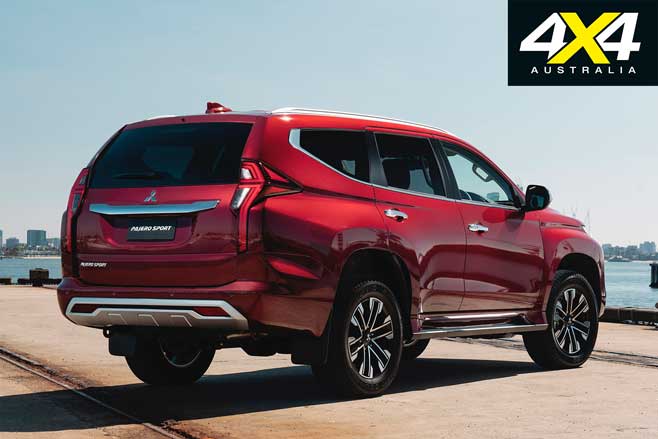
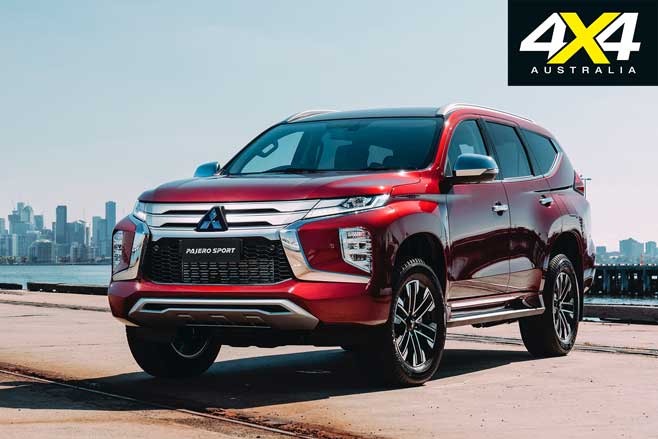
MITSUBUSHI has given its Pajero Sport a midlife update, with the 2020 model bolstered by a new-look front-end, a power tailgate and a new digital instrument display.
The Pajero Sport’s front-end has been given the same treatment that the Triton ute scored during its midlife refresh in 2019, with Mitsubishi’s ‘Dynamic Shield’ design concept giving the Sport more chrome and a wider, bolder visual punch. However, the changes – albeit minor – do run deeper than a facelift.
“This new Pajero Sport doesn’t only bring a facelift, it offers improvements to practical use,” said Owen Thomson, Senior Manager, Product Strategy at Mitsubishi Motors Australia. “There are a number of small, subtle changes in this new model that add up to deliver a better ownership experience.
“The new model adds some important functionality that I think will please Australian drivers – the digital dash, the power tailgate – and more practical and thoughtful spec changes such as small-item storage and turning lamps that will improve the overall driving experience.”
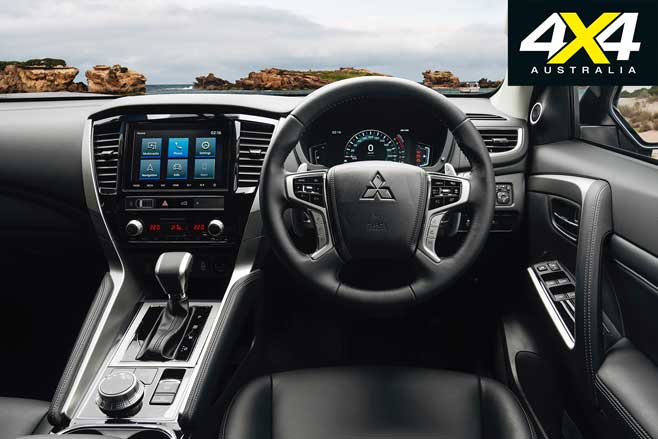
That digital dash is an eight-inch colour LCD instrument panel which is only available on Exceed models, while Apple CarPlay/Android Auto are accessible via the smartphone-link display audio (SDA) system. A nifty remote control app has also been developed, which allows the user to control aspects of the vehicle (again, Exceed only) remotely including the all-new power tailgate.
Punters can now open and shut the tailgate via hands-free operation, thanks to a kick-motion sensor positioned beneath the rear bar. Another clever feature of the power tailgate is a switch-operated intermediate stop, which can stop the tailgate at a desired position.
All else remains the same, with the 2.4-litre MIVEC turbo-diesel engine and eight-speed automatic transmission (yes, auto only) staying put. The four-cylinder unit musters a claimed 133kW and 430Nm.
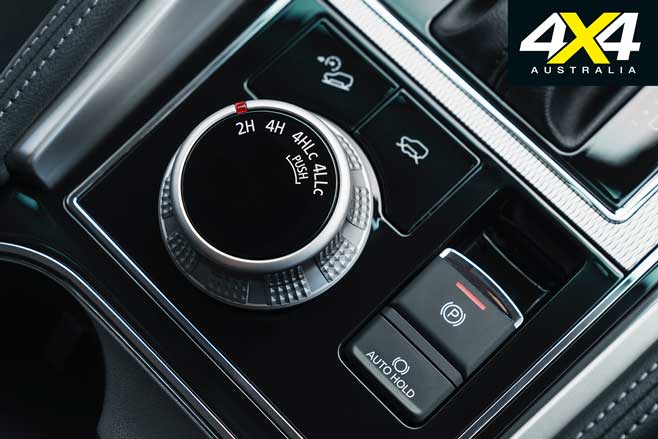
The established Super Select 4WD-II drivetrain also carries over and continues to offer four drive modes: 2H, 4H, 4HLc and 4LLc. Introduced with the MY19 update, the 4WD models retain the Off-Road Mode Selector that regulates drivetrain componentry (transmission, braking and engine torque) to maximise all-terrain performance. The Selector offers the choice of Gravel, Mud/Snow, Sand and Rock modes.
Independent front suspension with double wishbones and a live-axle three-link rear set-up have been retained.
New safety kit for 2020 includes Lane Change Assist (LCA) and Rear Cross Traffic Alert (RCTA), while carryover safety features include Electronic Brake Force Distribution (EBD), Emergency Stop Signal system (ESS), Hill Start Assist and Hill Descent Control.
Buyers now also have the choice of two brand-new hues: White Diamond and Graphite Grey (metallic).
The third-generation Pajero Sport enters its fifth year of production this year, with the off-road capable wagon first launched back in August 2015. As at June 2019, approximately 260,000 units have been produced.
2020 Mitusibishi Pajero Sport Pricing
| Vehicle | Drivetrain | Transmission | Seats | RRP |
| GLX (Auto) | 4WD | 8-speed automatic | 5 | $46,990 |
| GLS (Auto) | 4WD | 8-speed automatic | 5 | $51,490 |
| GLS (Auto) | 4WD | 8-speed automatic | 7 | $52,490 |
| Exceed | 4WD | 8-speed automatic | 7 | $57,190 |
New 4x4s from Land Rover, Jeep, Nissan, Isuzu and most likely Toyota and Mazda will hit the showrooms in 2020. Here’s a rundown on what to expect…
Nissan Y62 Patrol
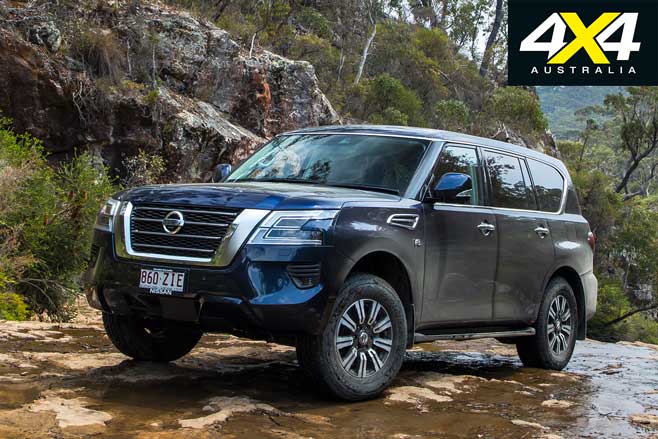
Nissan’s Y62 Patrol has been around a surprising 10 years now (eight in Australia), but somehow still seems new, perhaps because of its still-ahead-of-the-game high-tech suspension.
For 2020, all the Y62 basics, including the trick suspension and thundering V8 remain, but there’s new safety tech galore, especially on the less expensive of the two models, the Ti.
It gains radar cruise, lane-departure warning/intervention, and blind-spot warning/intervention. The Ti and the Ti-L then gain automatic emergency braking, forward collision warning and rear cross-traffic alert. New colours, distinctive new front and rear styling, and some seemingly unnecessary fiddling with high-speed damper response complete the 2020 overhaul. And while prices have drifted north by $2000 to $3000, they still remain well south of what Toyota asks for its LandCruiser 200.
What you don’t get with the Patrol is, of course, a diesel engine, but the Patrol’s 5.6-litre petrol V8 is a cracker; energetic, urgent and free revving, it brings performance aplenty despite Patrol’s notable size. And while thirsty if you dip into the power on offer, light-throttle cruising can be surprisingly thrifty.
Either way, the 140-litre tank ensures you don’t run out of petrol too often. And all this performance isn’t lost on a chassis that offers near physics-defying on-road handling with flat cornering and a supple ride thanks to fully independent Hydraulic Body Motion Control suspension. Off road, the active hydraulic rams and the lack of suspension-travel restricting swaybars provide excellent wheel articulation, even if a bit more ground clearance would be handy.
Nissan Navara N-Trek Warrior
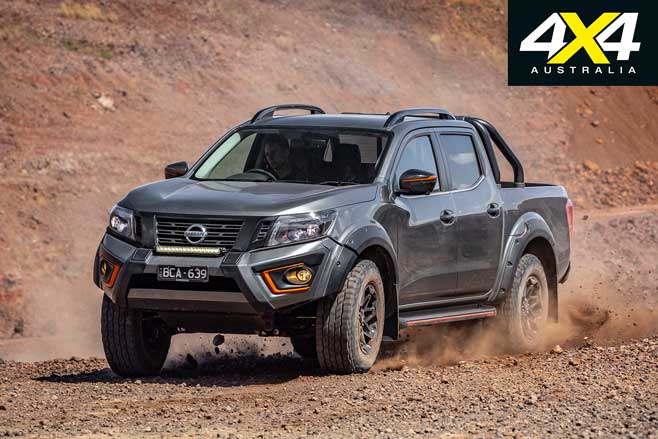
More significant than the new Patrol for Nissan in 2020 is the new ‘hero’ model in the Navara range in the form of the N-Trek Warrior.
The Warrior builds on the Navara N-Trek, but where the N-Trek is merely an exercise in styling enhancement, the Warrior is an exercise in chassis engineering. This is performed locally by Premcar, the current embodiment of the Prodrive, Tickford, FPV dynasty, so has proven expertise and experience to call upon.
Aside from new springs, dampers and wheel/tyre package that headline the Warrior’s upgrade, there’s also a bespoke steel front bar, stainless steel underbody protection, an LED light bar and various styling enhancements. Premcar will manufacture the Warrior in Melbourne and it will be sold through Nissan dealers with full Nissan factory warranty.
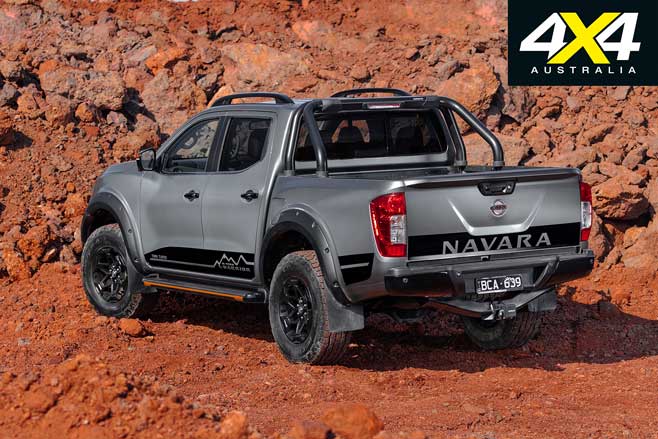
The chassis changes have brought 40mm more lift, 25mm of that via the taller 275/70R17 Cooper Discoverer light-truck all-terrains, while the extra wheel offset has increased wheel track 30mm to 1600mm at both ends. Lighter initial springs rates but firmer secondary rates, the front via an extra long progressive rubber bump stops, are matched with more substantial Tenneco dampers specifically valved by Premcar’s engineers.
We have driven it and it works. On the road the ride initially feels firm, no doubt due to stronger compression damping and despite the softer initial springs, but the faster you go the better it feels. So good in fact that every Navara should have this sort of expertise directed at its suspension.
Off-road, the larger diameter, more robust and more aggressive tyres and the extra clearance both combine to take the Warrior to an off-road competence level that a standard Navara can only dream about. The Warrior carries over a standard Navara powertrain and will be offered with both six-speed manual and seven-speed automatic gearboxes.
Land Rover Defender
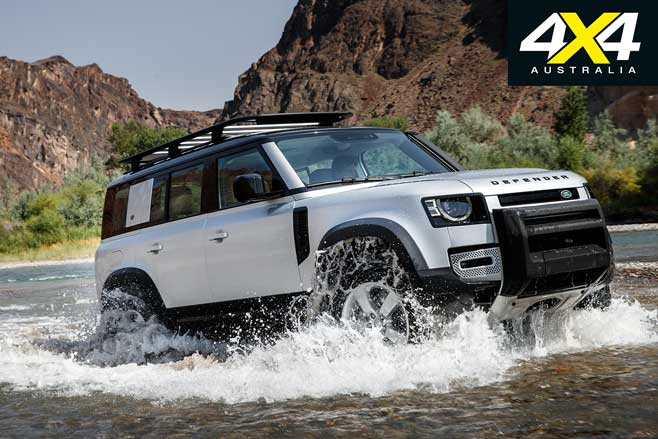
Four years have passed since the last of the ‘old Defenders’ ended 67 years of continuous production of a line of 4x4s that evolved from the original 1948 Land Rover.
What will appear as the Defender in 2020 bears no resemblance to the past and is very much a product of today. No separate chassis and no live axles, the new Defender couldn’t be any more high-tech with its largely aluminium monocoque construction and fully independent suspension.
The good news is the Defender has been developed from the current Discovery platform, which in turn was developed from the current Range Rover/Range Rover Sport platform that debuted in late 2012, so it has provenance. It will be initially available in Australia in a number of spec levels with lots of equipment options but only as a ‘110’ four-door wagon. A two-door ‘90’ will follow, possibly in 2021.
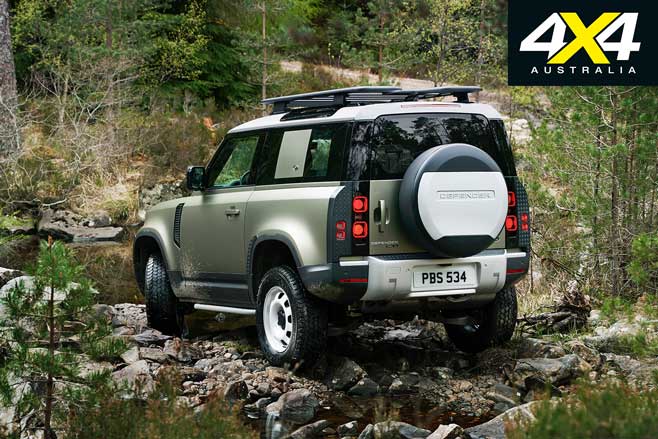
Australian buyers can choose from two four-cylinder 2.0-litre bi-turbo diesels (147kW and 177kW) or a supercharged and turbocharged 3.0-litre straight-six petrol engine with a sizzling 294kW and an energy recouping ‘mild hybrid’ system.
All Australian models will have an eight-speed automatic gearbox, dual-range full-time 4×4 and height-adjustable air suspension. Wheel sizes start at 18-inch and Land Rover promises the new Defender will be the most off-road capable Land Rover ever. We can’t wait!
Jeep Gladiator
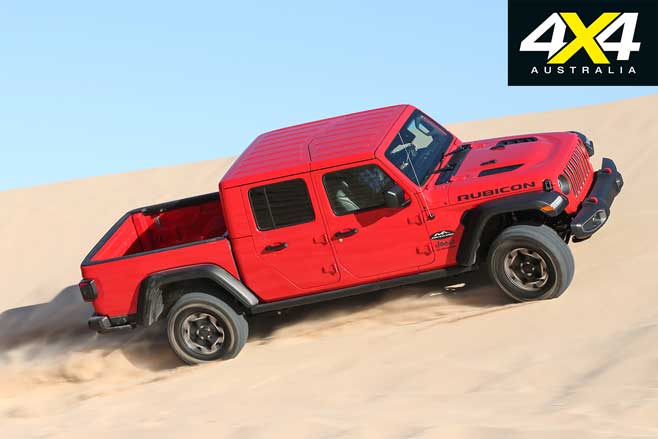
Given the popularity of pick-up trucks in North America and utes just about everywhere else in the world, it’s no surprise Jeep has developed the Gladiator. It’s actually not the first time that Jeep has made a pick-up or ute and it’s not the first time that the Gladiator name has been attached to the same.
While it looks like the Gladiator is a Wrangler with a tub on the back, the wheelbase has been extended and the five-link rear suspension adapted from the Ram 1500 pick-up to give it a bigger payload and towing capacity than the Wrangler.
However, with a payload of just 620kg and a tow rating of 2721kg it’s still well down on what the popular dual-cab utes offer. The Gladiator does have live axles at both ends, though, which will distinguish it from all of the popular utes here bar Toyota’s LC79, and will help off-road.
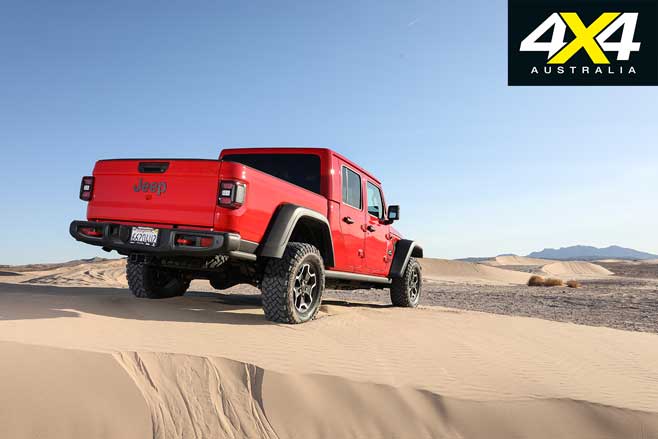
Initially, the familiar 3.6-litre petrol V6 from the Wrangler will be offered with an eight-speed automatic gearbox, and if we do see a diesel down the track it may be the 3.0-litre V6 diesel from the Ram and Grand Cherokee rather than the 2.2-litre four-cylinder diesel in the Wrangler.
Overland and Rubicon models will be offered, the latter with bits from the Wrangler Rubicon: front and rear lockers, front swaybar disconnect, lower axle ratios and a lower transfer ratio. It appears as though the Gladiator will get a full-time 4×4 mode in both of the two transfer cases on offer.
Isuzu D-Max
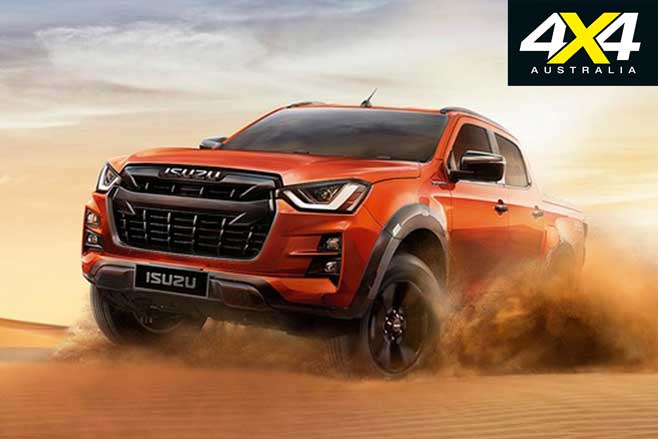
Also slated for a mid-year release is the next-generation D-Max, which unlike the current D-Max is not a result of a joint venture with General Motors. This new D-Max is in fact an Isuzu from the ground up, which is the way that Isuzu has historically gone about designing its own utes.
The 2020 D-Max is bigger overall than the current model, no doubt to compete with the big utes like the Ford Ranger and Volkswagen Amarok. The 2020 D-Max also will be better equipped and seemingly more passenger-car like in presentation and detail compared to the more commercially flavoured current model. At the same time, more wading depth and a standard rear locker suggest more 4×4 ability; although, the true benefit of the locker will depend on how it is integrated with the electronic traction control as some lockers switch off the ETC across both axles, so don’t bring much benefit.
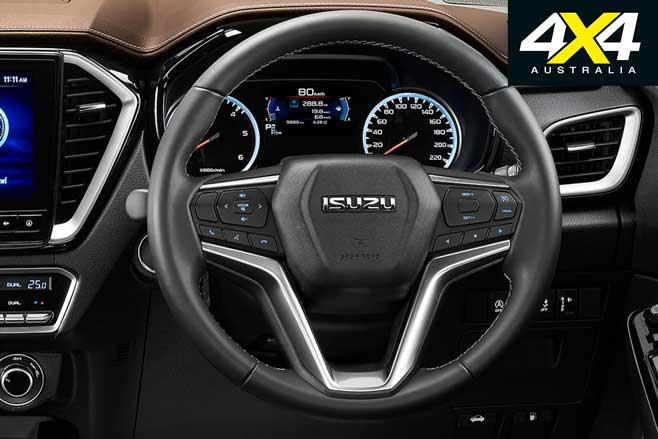
Significantly, the 2020 D-max will be powered by a slightly tuned-up (140kW/450Nm vs. 130kW/430Nm) version of long-serving 3.0-litre four-cylinder diesel currently used, presumably backed by the current six-speed Aisin automatic and six-speed Isuzu manual gearboxes.
While a smaller (1.9-litre) bi-turbo and Euro 6 compliant diesel is offered elsewhere, it’s unlikely to come to Australia until Euro 6 does. If and when Euro 6 comes into play, Isuzu may still prefer to fit selective catalytic reduction technology (AdBlue) to the ‘big’ 3.0-litre four.
New features on the D-Max include electric power steering, tilt-and-reach steering wheel adjustment, auto headlights and wipers, and Apple CarPlay/Android Auto. Rear cross-traffic alert and blind-spot warning also become standard features. The Thai reveal of the 2020 D-Max didn’t mention AEB, but that could well make it onto Australian models.
Mazda BT-50
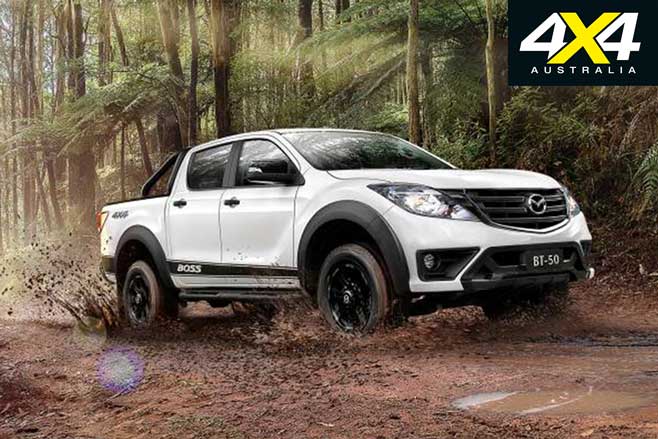
Mazda isn’t giving anything away right now but a new BT-50, with ties to the 2020 D-Max, is reportedly in the pipeline and will appear in late 2020. If so, this is a swapping of partners for Mazda and Isuzu, given Mazda worked with Ford and Isuzu with General Motors in the design and development of the current-generation utes.
The fact that Isuzu has already revealed its new D-Max while Mazda remains light-lipped suggests that, if these two new utes are indeed a co-operative effort, then Isuzu has taken the lead in this project. Isuzu being the senior partner would also make sense given Isuzu’s main game is utes (and trucks) where Mazda’s main game is passenger cars and SUVs.
Assuming that Mazda does have a new ute in the pipeline, and there’s a tie-up with Isuzu, there are a few possibilities. Mazda could just stick its badge on a D-Max , or do a re-skin (new body panels), or perhaps do all that and add its own powertrain. Mazda’s CX-8 has a 2.2-litre four-cylinder turbo diesel that claims 140kW and 450Nm, which matches the new D-Max’s numbers.
Toyota LandCruiser 200 and LandCruiser Prado
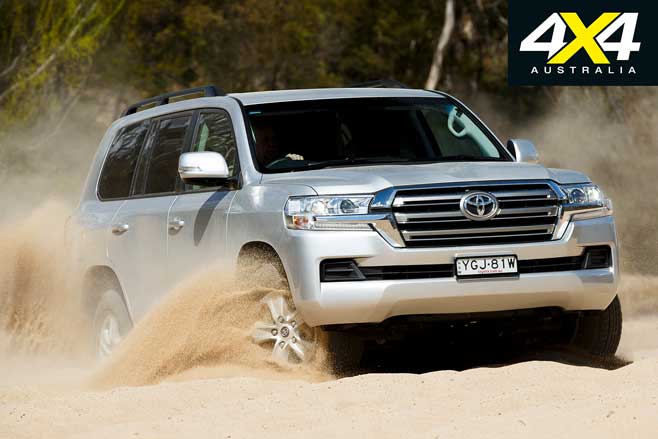
In 2020, Toyota’s LandCruiser 200 will be 13 years old while its Prado, or LandCruiser 150, will be 11 years old. Time for new models, one would think. Mind you, we have been saying that for ages and new models are yet to materialise. What’s more, Toyota is saying nothing.
The timeline for release in Australia of either a 200 replacement (let’s call it a 300) or a 150 replacement (let’s call it a 180) will likely hinge around the implementation of Euro 6 emissions regulations, which is still up in the air.
If Toyota released the ‘300’ and the ‘180’ now – as in time of writing – it could make do with the current Euro 5 diesel engines. If Euro 6 comes into play before then, the 2.8-litre four in Prado can be readily converted to Euro 6 with the addition of selective catalytic reduction (AdBlue). Toyota has already told us that much. The 4.5-litre V8 diesel should also be able to meet Euro 6 but will require more work.
New petrol engines for both the ‘300’ and the ‘180’ are also in the pipeline, but they may not appear in Australian models in the short term while buyer preference in this market sector remains firmly in the diesel camp. And when new petrol engines do appear they will be most likely teamed up to secondary electric motors in hybrid powertrains.
Otherwise it’s probably business as usual; separate chassis, a rear live axle and mechanical full-time 4×4.
Ford Raptor V8
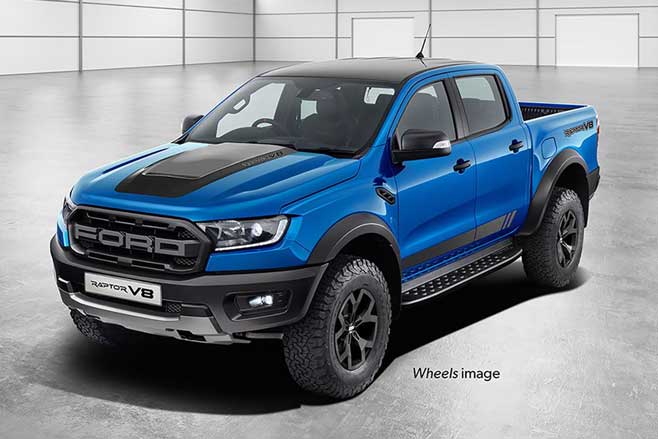
Earlier this year, Wheels Magazine published a yarn claiming Ford is readying a high-performance Ranger Raptor complete with V8 power. The report claims Ford will replace the vehicle’s four-cylinder diesel engine with a Ford Mustang-spec 5.0-litre V8; what’s even better, Wheels states the project has been sanctioned by Ford Australia and “will be the result of a local engineering effort”. Read Toby Hagon’s breaking story here.
WE USHER in the new decade with a bang, with the 4×4 Australia January 2020 magazine brimming with off-road goodness and ready for your eyeballs.
The new issue officially hits shelves on Thursday, January 9, but subscribers have already started to receive the mag in the mail.
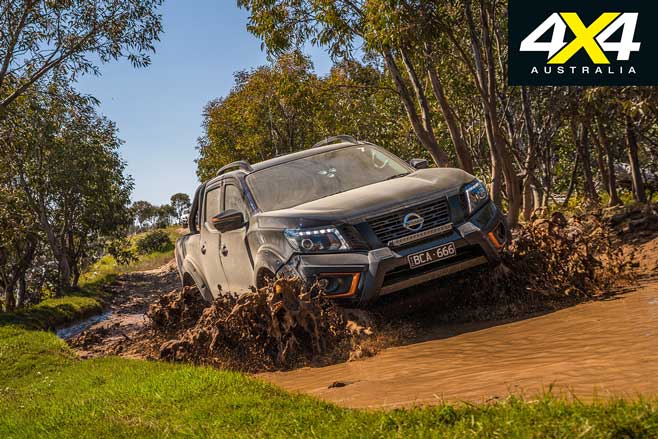
What better way to start the New Year than to preview all of the new 4x4s that’ll land locally this year. And by golly there are some good ’uns … Gladiator Rubicon, 2020 D-Max and the all-new Defender, to name but three.
Speaking of the Gladiator, we spent a day carving through the sand dunes of Nevada in a US-spec version. Plus we also drove two new Nissans coming soon to local showrooms: the Navara N-Trek Warrior and the Patrol Ti.
On the custom 4×4 front we delve into a wild HJ75 LandCruiser build – shoehorned with an LS1 V8 from a VX SS Commodore – which roams the outlaw territory of the Victorian High Country. Plus, we take a look at another V8 transplant, this time an LSA V8 into a classic Defender 90.
The Jeep Girls, Ashley and Brittany, take Synergy Manufacturing’s Jeepster Commando for a spin north of Los Angeles; Chris Collard follows a Mahindra Roxor UTV to the wilds of Mexico; and we feature our comprehensive 2020 mud-terrain tyre test.
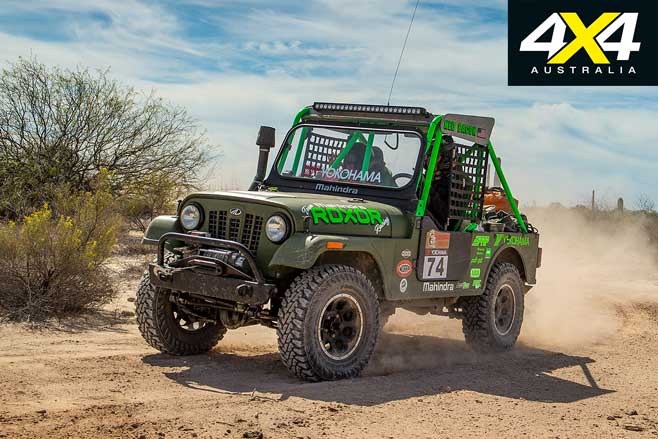
WHAT ELSE IS THERE? – Dirk Hartog Island, Western Australia – Binns Track, Northern Territory (part II) – Kennedy Developmental Road, Queensland – Diff drops explained – Product tests, columns and more.
The January 2020 issue of 4X4 Australia will be in stores from January 9.
JAPANESE tuning company Dream Automotive Design and Development (DAMD) is famous globally for its range of body kits, particularly to suit the Suzuki Jimny.
In recent years the tuning house has crafted body kits to turn the pint-sized Jimny into both a mini G-Wagen and a mini Defender, known respectively as Little G and Little D.
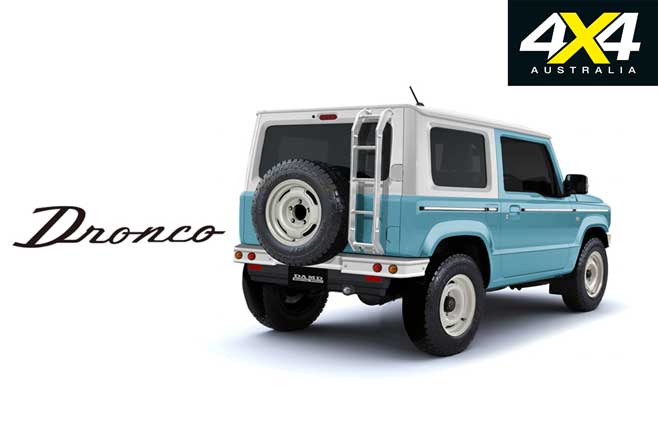
And now DAMD has created the retro-inspired Jimny “Dronco”, an obvious homage to the classic Ford Bronco of the 60s and 70s.
Details are scarce but, as can be seen in the photos, the tidy vehicle features a redesigned front and rear fascia, steel wheels and a rear ladder.
The DAMD website says the vehicle is “currently under development”, and that it’s “scheduled to be released in 2020”. It adds: “details such as sales price and parts will be distributed as soon as they are decided”.
The 2020 Ford Bronco is set to launch in the USA this year in both three-door SWB and five-door LWB form, based on the brand’s T6 platform.
We spotted the new Bronco off-roader testing in the Australian outback last year, but Ford Australia confirmed at the time that it won’t be coming to local showrooms.
IF YOU can’t wait until the Ford Ranger Raptor gets its lauded Mustang V8 transplant, there are mobs around the country that’ll do the aftermarket conversion to satiate your desire for more performance.
Here’s a handful of tweaked 4x4s that have received the V8 treatment.
Duramax V8-powered Ranger
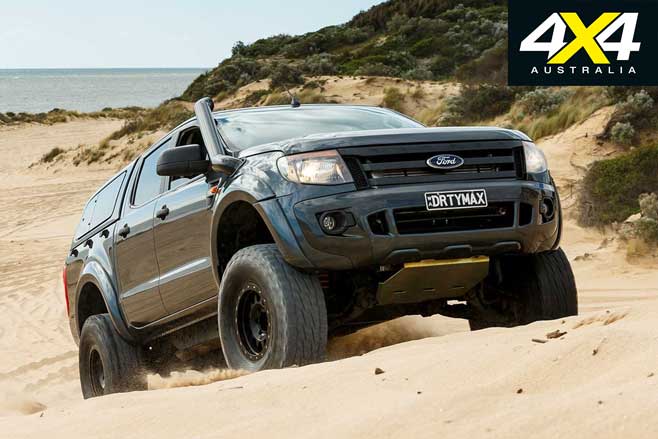
Australian company OzMax has carved out a reputation for its Duramax kits and conversions, and this example typifies the brand’s meticulous build quality. The 3.2-litre engine and six-speed transmission of the PXI Ranger were ditched and in their place went a 6.6-litre Duramax V8 and Allison transmission. At twice the capacity of the original engine, the V8 ran at up to 468rwhp and 1320Nm on a dyno. Read the full review here.
Coyote V8-powered Ranger
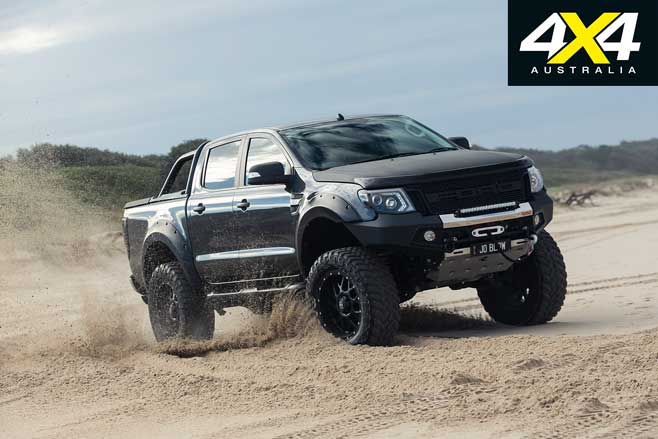
Queensland-based Diesel Leaders spent close to a year fitting this Ranger with a supercharged V8 and associated hardware, with the end result proving that good things (344kW of them) come to those who wait. The heart transplant was a slow and steady process, with a custom exhaust and heavy duty springs among a host of other key updates. Full review here.
Duramax V8-powered GU Patrol
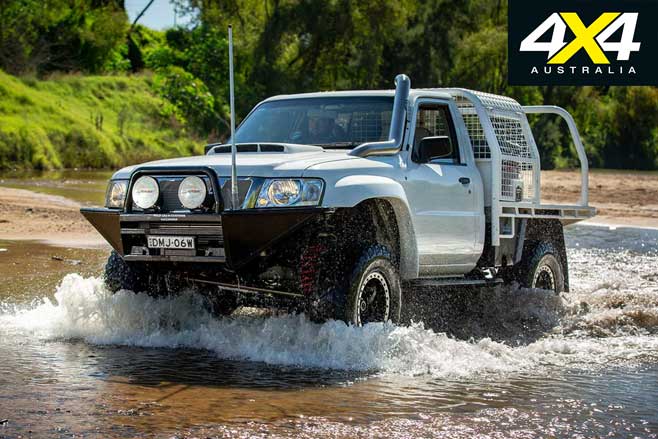
Another vehicle to be graced with the uber-popular 6.6-litre Duramax V8 and Allison six-speed combo is this fine GU Patrol ute, with a dyno run registering 335kW and 1200Nm at the rear wheels. The Patrol comprises a long list of weaponry including a front ARB Air Locker, reworked suspension, a three-inch suspension lift and a two-inch body lift, and a custom-made titanium exhaust system. Read the entire write-up.
LS3 V8 Colorado
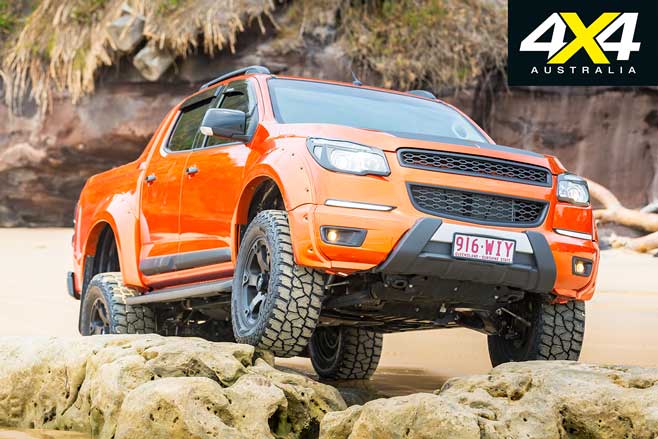
Who can forget Killa Special Vehicles’ Killarado? This special example seen spewing out sand from its tyres features a General Motors LS3 V8 engine previously found hiding in the engine bays of high-end HSV performance cars. The LS3 musters around 580Nm and runs it through a 6L80E six-speed automatic transmission. Check it out here.
Harrop Superado
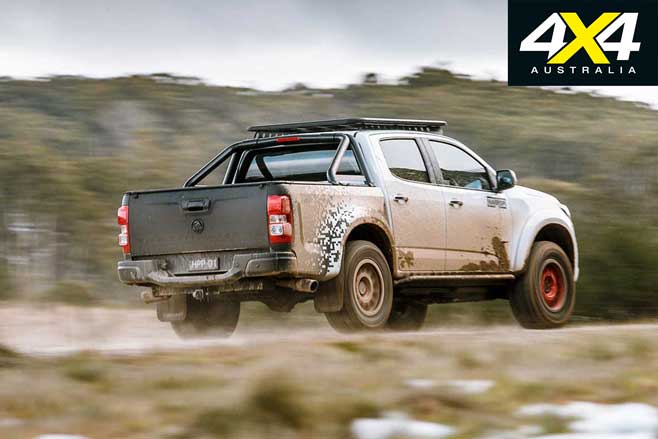
Harrop Engineering teamed up with Killa Kustoms to create the Superado. Using the Killa Kustoms Colorado as a base, Harrop turned it into an undeniable performance beast by slapping on a big ol’ Harrop-Eaton TVS2650 supercharger.
The V8 conversion is available in a few different forms: a naturally aspirated LS3 crate engine, an LS3 with a TVS supercharger, an LSA, or an LSA with the factory supercharger replaced by the TVS2650. Teamed up with bigger brakes, new suspension and a three-year driveline warranty. Full review here.
Lexus V8-powered Hilux
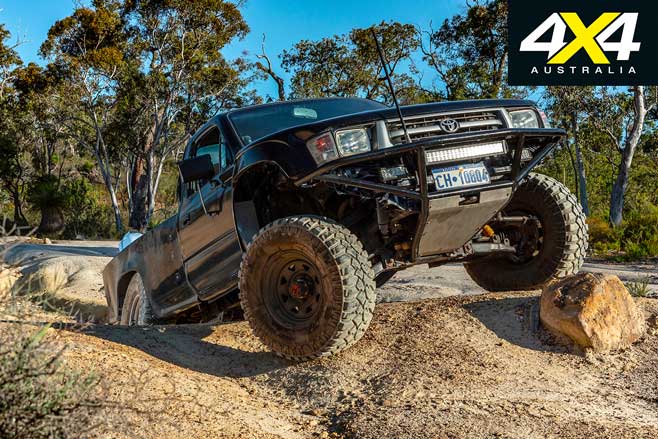
Countless hours of spanner work turned this once bog-standard 1999 Hilux into an epic PreRunner, shoehorned with a 4.0-litre V8 Lexus engine good for 250hp. The V8 runs through a Toyota R151F five-speed manual, which then runs to a rear diff-mounted ARB Air Locker. A complete overhaul of the suspension system caps off a ball-tearing custom 4×4. Read about it here.
Holden One-Tonner
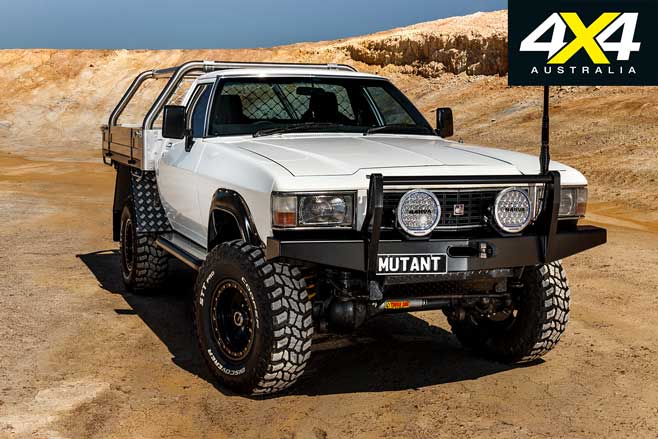
We simply had to include Mark Allen’s Holden One-Tonner in this list of V8 conversions. The 6.2-litre LS3 and six-speed auto used in the build were both transplanted from a written-off Maloo R8. Mark also acquired a 1990 GQ Patrol, with its chassis used as the underpinning for the entire build. If you haven’t read about it yet, you can follow the entire build from go-to-whoa here.