
IF YOU follow the career of professional steerer Vaughn Gittin Jnr you’ll no doubt be aware he’s the brains behind Ready To Rock (RTR), an aftermarket car specialist famous for tuning Mustangs and F-Trucks.
RTR has since tweaked the US-spec Ford Ranger, debuting the RTR Rambler Ranger at the 2019 SEMA Show in Las Vegas. We were Stateside not too long ago and got a chance to give this stunning example a run on the sand dunes in Nevada.
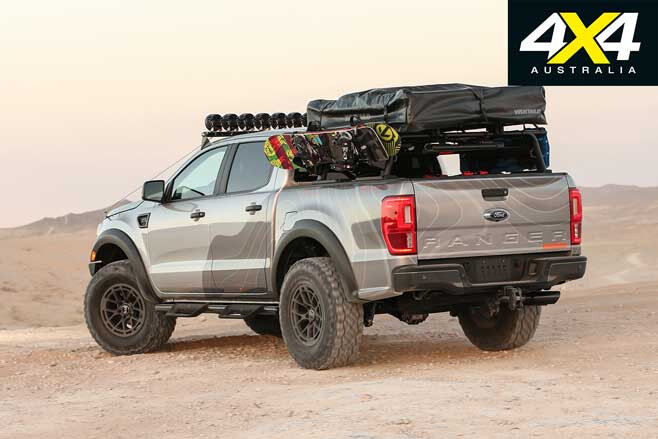
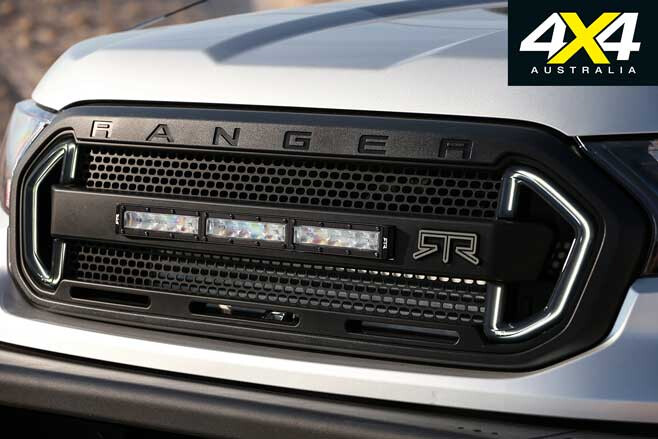
Built on top of RTR’s production Ranger package – which includes the front grille, signature lighting, badges, fenders, and the wheel (RTR Tech-6) and tyre package – RTR has added a heap of Ford Performance Parts to the Rambler.
Extra kit starts with an ARB front bar with an integrated Warn winch, side steps, Yakima storage, a Yakima tent, an ARB air compressor, Fox Performance 2.0 coil-overs under the front, Fox adjustable shocks at the rear, a Ford Performance exhaust system, limb risers (branch deflectors), and Rigid Industries LEDs on a prototype light bar. And, interestingly, everything is modular.
Watch the above video, where RTR’s creative director and designer, Lindsay Ross, goes through the ins and outs of this epic ride.
To read the complete feature on RTR’s Ranger Rambler, pick up a copy of our February 2020 issue. In stores now!
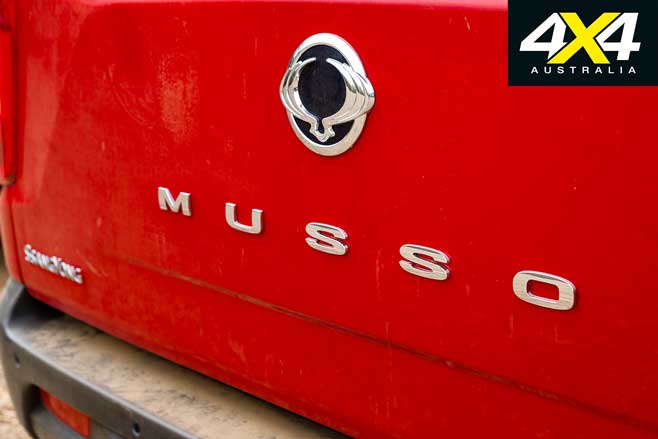
SSANGYONG has now appeared on the 4X4OTY shortlist two years in a row, if nothing else a new record. Last year it was the Rexton wagon; this year it’s the Musso ute.
This however is not a fluke but comes off the back of SsangYong setting up a factory owned and backed distributor in Australia in 2018 after a number of years of being absent from the Australian market, and a fair degree of turmoil before that.
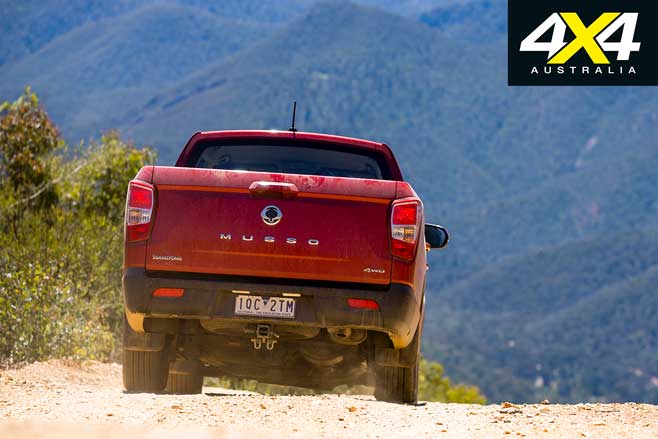
Among a number of new models, the Musso is a new-from-the-ground-up design that appeared globally in 2018. What we have is the Musso XLV, one of two quite distinct Musso variants that has a longer wheelbase and a much longer tub than the short-tub model, which is just known as the Musso.
The XLV comes in three equipment grades. The base ELX has leaf springs at the rear and the option of a manual gearbox, the Ultimate has the option of leaf or coil springs, while the Ultimate Plus is coil only. Ultimate and Ultimate Plus only come as automatics. The vehicle tested here is a coil-spring Ultimate.
Touring
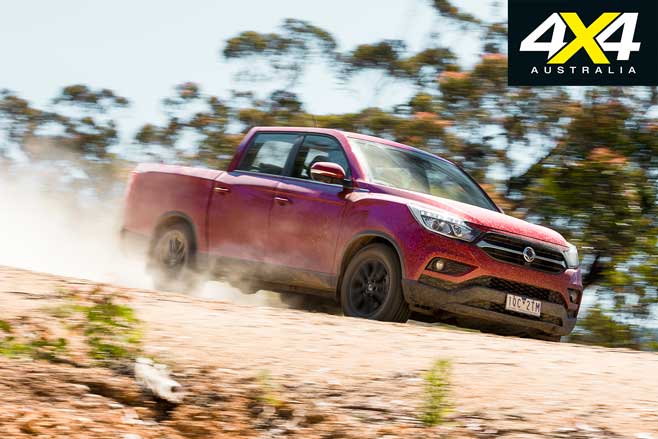
The Musso is powered by the same impressive 2.2-litre four-cylinder turbo diesel used in the Rexton, and it claims 133kW of power and 420Nm of torque. While these numbers might sound unremarkable you can’t help but be impressed by the engine’s low noise levels and general running refinement. In fact, after driving the Musso, both the Triton’s and the Navara Warrior’s similar-sized turbo-diesel fours felt somewhat gruff and unrefined.
Performance-wise, the Musso gets along effortlessly enough with good torque available from low engine speeds without ever being notably eager when pressed hard, as you’d expect of 133kW hauling a 2200kg ute. For its part the six-speed automatic is smooth shifting but tends to hang on to the taller gears, perhaps in the interests of fuel economy. The gearbox has a ‘manual’ mode, via a toggle switch on the side of the shifter, which works well enough when you get used to it.
If the overwhelming impression of the Musso’s engine is one of refinement above and beyond the asking price, so too does the chassis have a quality feel in terms of the ride and road-noise suppression. Even the unladed ride is good.
Meanwhile, the steering response and general handling offers little to complain about unless it’s pushed at higher speeds on bumpier roads.
Trail Driving
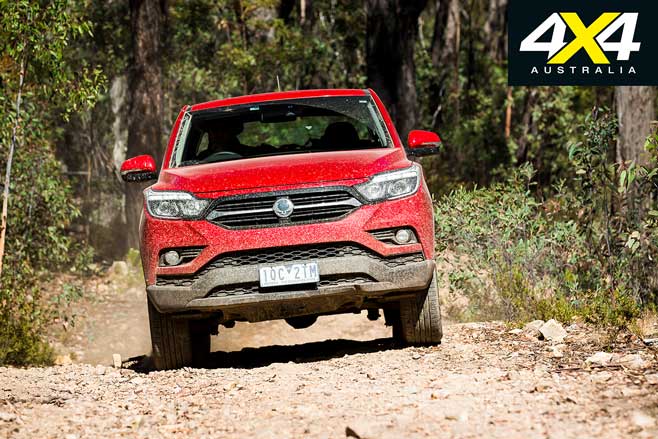
The Musso is a big ute – bigger even than a Ford Ranger – with a huge amount of rear overhang and only a modest amount of ground clearance, so tight, gnarly trails aren’t its forte. There’s not much wheel travel either and the approach angle could also be better. Still, the Musso went where all the others went on test, although it did come out the other end battle-scarred with both front and rear bumpers copping some minor damage.
The Musso’s part-time 4×4 system is electromechanically operated via a rotary dial and goes into and out of low range with less fuss than many other dial-operated systems, but it could do with a deeper low range. The six-speed automatic generally works well in low range too although needs ‘manual’ control via the shifter toggle to get the best from it.
Set-Piece Hill Climb
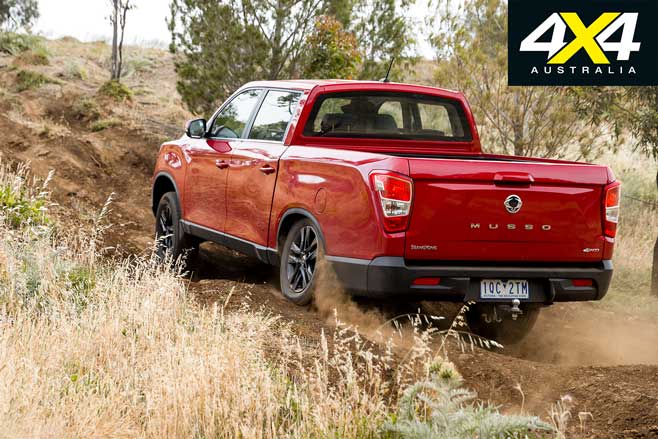
The Musso was always going to have to work hard to get up the set-piece hill climb and so it turned out. The ramp-over clearance and long rear overhang both proved a problem, while the somewhat clunky electronic traction control struggled to rein in the amount of wheelspin being generated because of the limited wheel travel. Still, it got up even on its highway tyres but only with our set-piece hill-climb expert – editor Raudonikis – working hard at wheel and throttle.
Cabin, Equipment and Safety
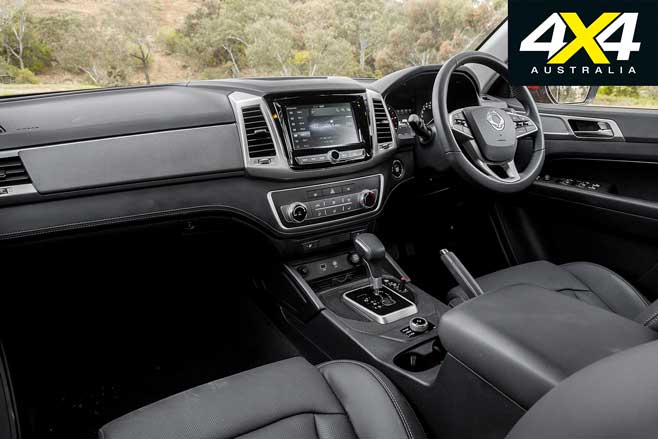
The Musso has a huge cabin that’s as wide as an Amarok and as long as a Ranger, the two benchmarks amongst the popular dual cabs in those two respective measures. And it’s nicely finished and generally well presented, leather-look seats and all, providing a quality feel that goes well above the modest asking price.
There’s tilt-only steering wheel adjustment but neither the driving position nor driver’s seat drew complaints while the rear seat is a genuine three-adult prospect. Kit includes smart key entry, push-button stop/start, heated and air-conditioned front seats, Apple CarPlay/Android Auto, auto headlights and wipers, daytime running lights and tyre-pressure monitoring. There’s no embedded satnav however and only manual climate control.
The impressive list of high-end safety kit starts with automatic emergency braking and runs to lane-departure warning, blindspot monitoring and rear cross-traffic alert. At the time of writing the Musso hadn’t undergone an ANCAP assessment.
Practicalities
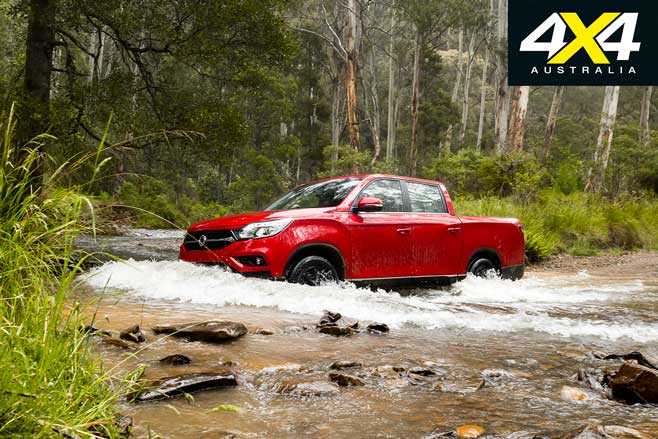
The Musso’s 1.6-metre tray (with a 12-volt outlet) is both wider and longer than the trays on all the popular dual cabs and has the distinction of being able to carry a full-size pallet between the wheel arches. This rear-coil-spring Musso has a decent 880kg payload but it should be noted that the leaf-spring model adds 240kg to the payload, GVM and GCM. Both variants are rated to tow 3500kg.
There are no recovery hooks however – only a front screw-in towing eye – while the engine air intake under the bonnet lip is not ideally placed for deep water crossings.
Summary
A quality feel from bumper to bumper, a big cabin and tray, lots of kit and a small price tag has the Musso standing out from the dual-cab crowd, but it’s no off-road weapon.
SSANGYONG MUSSO XLV ULTIMATE SPECS: Engine: 2.2-litre 4-cyl turbo diesel Max Power: 133kW at 4000rpm Max Torque: 420Nm at 1400-2800rpm Gearbox: 6-speed automatic 4×4 System: Dual-range part-time Kerb Weight: 2160kg GVM: 2980kg Payload: 880kg Towing Capacity: 3500kg GCM: 6130kg Fuel Tank Capacity: 75 litres ADR Fuel Claim: 8.2L/100km Test Fuel Use: 11.5L/100km Effective Range: 602km Base Price: $39,990 (driveaway) As-Tested: $39,990 (driveaway)* *Towbar not included
4X4 of the Year Verdict – 5th Place
Odd-looking dual-cab it may be with its plus-size tray, but the Musso is the most impressive vehicle here in terms of performing above and beyond expectations. Ron Moon, the most critical and hard-to-please of all our judges said of the Musso: “So surprisingly good I could easily live with this large dual-cab”.
The change is immense – the blacktop where savage corrugations once reigned supreme is now part of the Plenty Highway and will never be the same again. That was the feeling as we drove the section from Gemtree to Harts Range on the ‘Outback Highway’. Fuel was needed, and needed badly, as Gemtree had imposed restrictions due to the fuel truck being late.
Our timing couldn’t have been worse as the bell had rung and all the school kids from the community were packed into the store, stocking up on snacks. With fuel tanks finally filled, we continued along the Plenty for only a short stint before turning north and back onto the dirt.
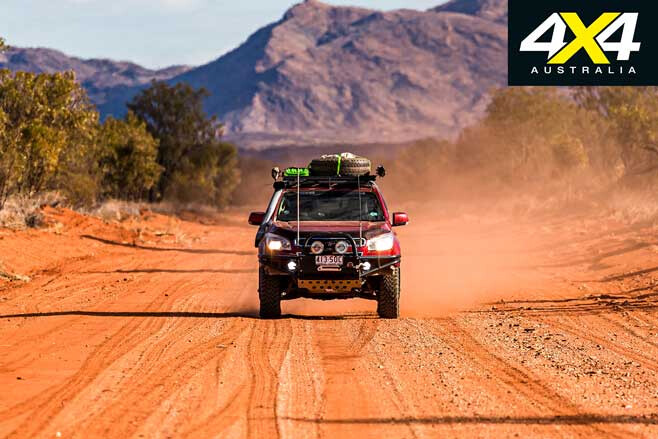
The sandy track is as wide as they come out here, and a grader must have been run over it recently, it was so smooth. As you cross the expanse of the Plenty River, check out Harts Range filling your rear-view mirrors. This is stunning country.
A nice detour is to check out Boxhole Meteorite Crater, a short drive off Binns Track via a station track. The sign for the turnoff is small and easily missed but the rewards are well worth it. An old fella and his faithful companion were relaxing in the shade and it didn’t feel right to disturb them, but the crater beckoned for a quick viewing.
Another fantastic detour is to Tower Rock. Having misread the map, we didn’t turn off to pass the station-stay property at MacDonald Downs but instead followed a little-used track. Driving directly into the sun made it hard to see the gates and we arrived at Tower Rock just as the sun sank below the horizon, quickly setting up camp between some rocks to escape the wind.
The next morning we retraced our steps along New McDonald Downs Road to the Arapunya Road. From here, turn north and head towards Derry Downs and watch the country change again; spinifex, desert oaks, ghost gums, desert pines and wattles. The road surface also changes from sand and bulldust to stones and clay; it all makes for a great drive and you almost forget the remoteness.
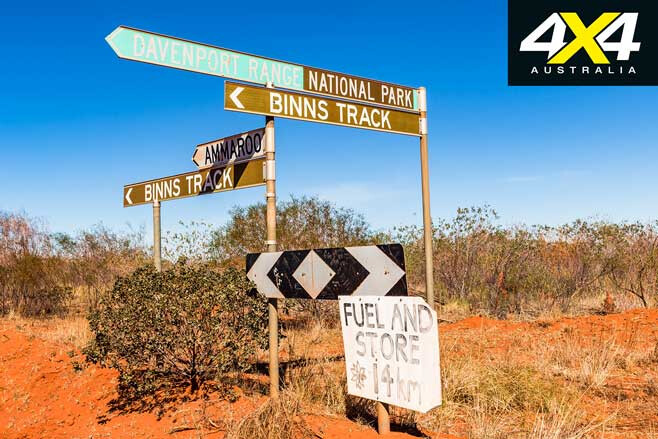
Just prior to Derry Downs, you’ll find a sign directing you along a bypass track. Having crossed the expansive Bundey River, the track then closes in and it’s slow-going as you climb a small rocky range.
Throw in some bush pinstriping and this is what remote desert travel is all about. Once you reach the cattle grid, the track becomes sandy and the country opens up again as you drive through spindly eucalypts, spinifex and gidgee. Upon reaching the Welere Road the sandy track continues and the going is good, but take care on the corners as we nearly had a head-on collision with a Pajero full of locals who were in a rush to get somewhere.
Once you reach the T-junction and turn right, the 19km of corrugations to the Sandover Highway are bone-jarring, but once on the wide-open desert highway the 27km to the Elkedra Road is fast-going. If with Telstra, your phone will start pinging as you pass Ampilatwatja and coverage will last until you’re on the Sandover-Murray Downs Road.
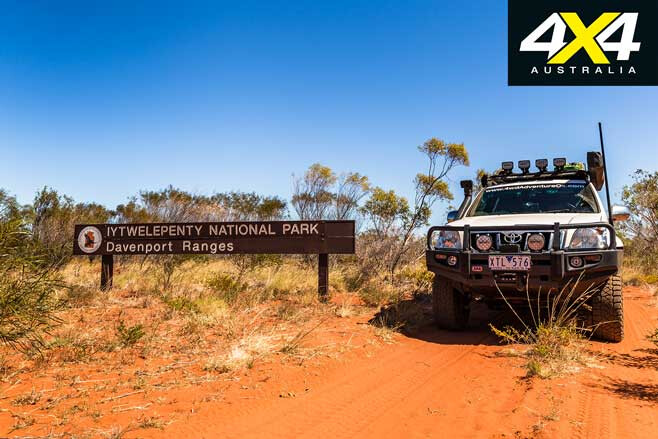
The next 75km is generally good going, and recent rain meant the grader had been out and the landscape was green and colourful. At most other times, though, expect corrugations and bulldust. The turnoff to continue along Binns Track towards Iytwelepenty/Davenport Range National Park is well-signposted. Once through the gate (leave it as you find it), the track narrows and speeds are reduced.
Closing in on the Davenport Range, the scenery is spectacular and a highlight of Binns Track. Spinifex and ghost gums dominate the rocky hills, the stony water crossings are dry and the colours are green, orange and blue. Coulter Waterhole will surprise you, while offering some shade and a place to dip your toes. A gap in the range forms a large valley and a drove of donkeys passed as we neared Hatches Creek. Once past the turnoff to the Frew River 4WD Track, wide-open plains take over and it’s cattle country out here.
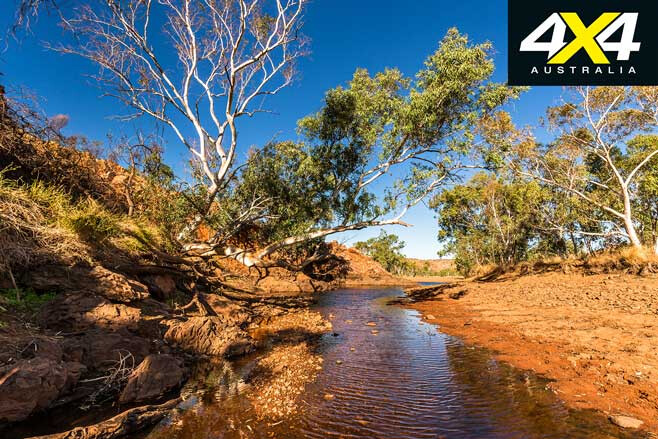
The 9km track to Old Police Station Waterhole offers some amazing landscapes, especially when golden hour kicks in. The campground along the permanent waterhole is well-spaced-out with fireplaces nicely dispersed and the perfect place to roll out a swag for a few days. With the sun gone, you’ll enjoy some relief from the bush flies –attracted by the cattle and the water, they can be frustrating.
When it comes to a remote 4×4 track full of pure awesomeness, the 17km Frew River 4WD Track is hard to beat. There are a couple of tricky climbs where wheel placement and right boot control is important, a few tight sections, and it’s overgrown in places, but the vistas are stunning. As you drive up and down the escarpments you’ll pass spinifex, ghost gums, wildflowers and termite mounds. Allow a good three hours; you’d hate to break something out here.
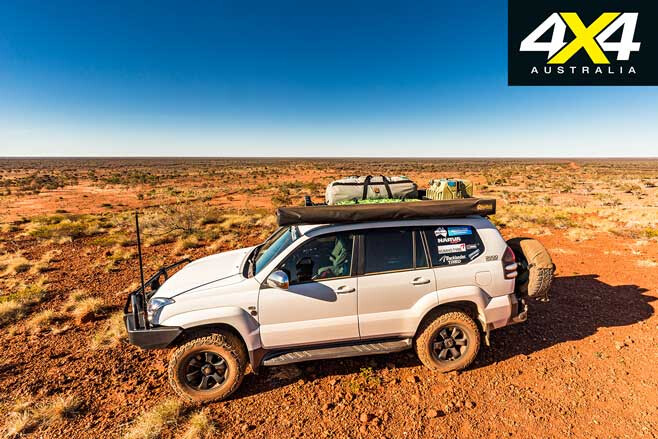
There’s camping at Whistleduck Creek, and the road leading from Old Police Station Waterhole to the north-western section of the Davenport Range handles more like a highway in most parts. The scenic 24km trek through pastoral land into Whistleduck Creek camping area was in good condition, but beware of cattle.
There are two distinct camping areas, with several sites in each one. A couple of walks are also available; one along the creek from the day visitor area to Irrmweng Rockhole, the other, for more experienced hikers, an unmarked trail north along the creek to Injaridan Rockhole.
Retracing your steps back to Kurundi Road, Binns Track continues another 68km before reaching the bitumen of the Stuart Highway. The road conditions along this stretch will vary, with corrugations aplenty in some sections. You’ll reach a small stretch of blacktop with a 60km/h speed limit as you pass Kurundi Station, a cattle property popular with fossickers. The road winds through the range before straightening out as you close in on the Stuart Highway.
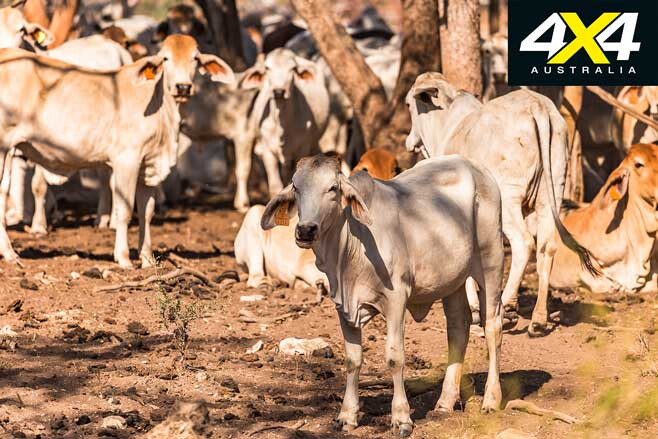
If you turn left, Boney Well Rest Area is a good spot to put some air back into your tyres, as there’s a lot of highway driving before you reach the next off-road section of Binns Track. The Karlu Karlu/Devils Marbles Conservation Reserve is only 15km south of here and well worth the slight detour. There’s cheap camping available here, and if you have the time it is well worth watching a sunset or sunrise over these gigantic boulders.
It’s a fair hike to Katherine from the Devils Marbles via Tennant Creek and Daly Waters, but an overnight stop at the Mataranka Homestead is a must. Here you have the opportunity to soak away the dust in the extremely popular thermal springs, before quenching your thirst watching the nightly entertainment.
You can top up, stock up and get any mechanical work done at Katherine. From here, jump on the Victoria Highway and head west. It’s 289km to Timber Creek and on the way you’ll get an introduction to the northern section of the Gregory National Park around Victoria River, where massive escarpments dominate the skyline. There’s a free campsite at Sullivan Creek and the old Victoria River crossing can be found down a signposted, dusty then rocky track. Be croc aware, as the salties could be about.
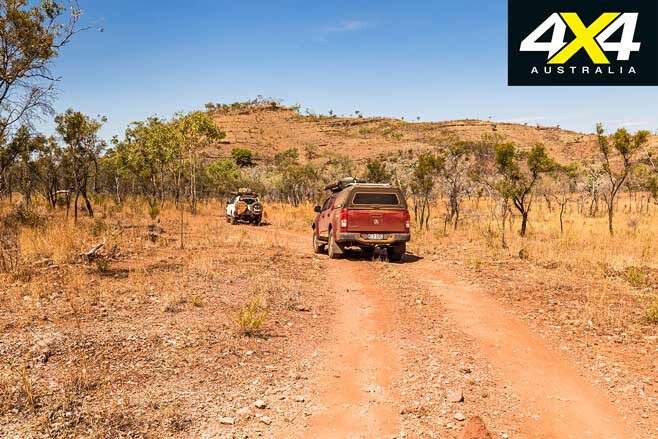
Timber Creek is the northern jump-off point for Gregory Range National Park. There’s a caravan park attached to the Timber Creek Hotel that’s a good place for an overnighter, and fuel is available, the last until Top Springs.
Not far from Timber Creek, on the Kununurra side, is a track that leads down to an old boab, blazed by the expedition artist who was with explorer Augustus Gregory when he visited the region in 1855-56.
The tree is also a sacred site for the local indigenous people, a place they loved to camp at but also for the ‘young man’ ceremony that was performed here. On the way back into Timber Creek is a turnoff on the right that will take you up to a couple of lookouts providing fantastic views of the Victoria River and Timber Creek.
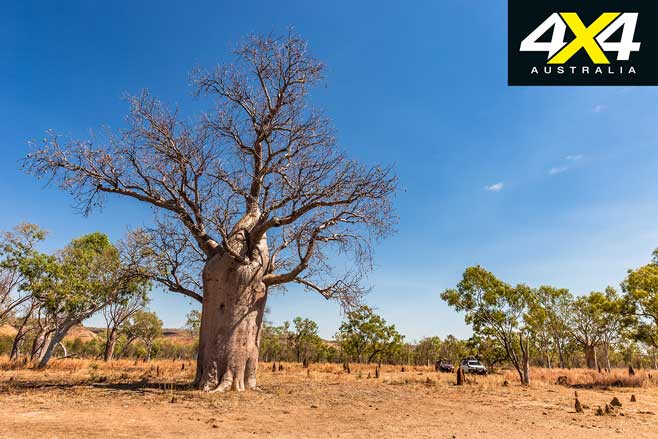
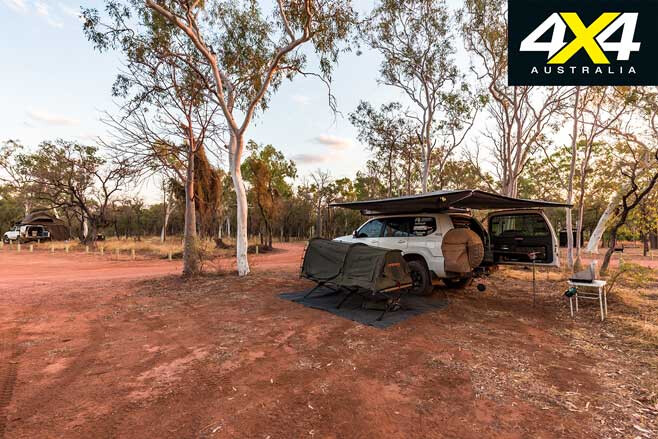
From here it’s time to tackle the last stage of Binns Track and spend a couple of days exploring JudbarraGregory National Park. The Bullita Access Road leads to a great campsite near the old homestead and stockyards. It’s only 47km on a gravel road, but it’s worth reducing tyre pressures to ease the ride over the corrugations. Unfortunately for us, Limestone Gorge and the campground were closed for maintenance works, so we missed out on some stunning scenery.
The campground is near the old homestead that is a reminder of the pastoral past of the Victoria River District. There are some information boards inside the homestead that tell the history of Bullita, and you can enjoy a cup of coffee or tea with the ranger in the shade of the rear veranda. The nearby Lancewood and Bloodwood stockyards are still maintained and used when rounding up feral cattle that stray into the National Park.
A great challenge is the 4WD-only Bullita Stock Route, a one-way loop track once used by packhorses and donkey teams bringing supplies to the isolated cattle stations. It was also a stock route to Wyndham used by Bullita and Humbert River Stations. The 92.6km track crosses the East Baines River a couple of times, and it’s usually dry during the cooler months. The first 10km of the track is rugged in places, with some nice wheel placement and low-range gearing needed at times. It then flattens and driving is easier as boabs, termite mounds, cane grass and bulldust dominates.
There is remote camping available at Spring Creek Yard, East Baines Crossing and Drovers Rest, with beautiful waterholes at the first and last camping spot. Beware the possibility of resident crocs, though, with swimming not recommended anywhere within the National Park. Allow at least six hours to complete the loop track; there is so much to see and trying to do it quickly may create mechanical issues.
Binns Track follows the Humbert Track that was used as a stock route between the Bullita Outstation and Humbert River Homestead. This is another beautiful drive that is relatively easy with only the occasional rugged section. Once out of the Park, the roads open up as you pass through private property before reaching the Buchanan Highway.
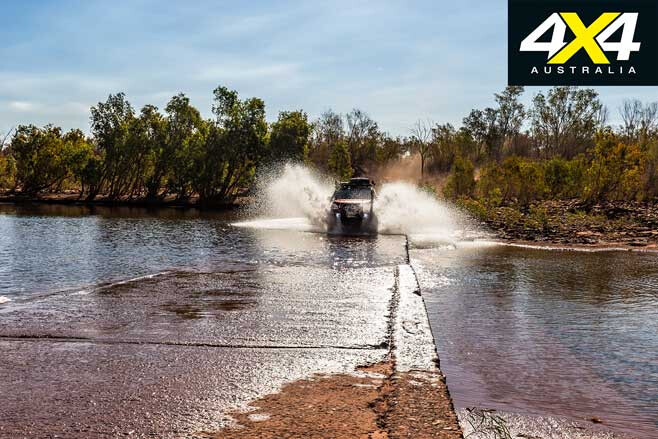
Passing the expansive Victoria River Downs Station, you soon ford the Victoria River, with a nice, little free camp on the eastern bank. If you’re rolling out a swag, publican Pauline won’t charge you if you enjoy the pub’s facilities. The grub is great and the showers the best you’ll find.
It’s only 180km until you reach the Stuart Highway and complete Binns Track. The best place to sit and reflect on the experiences, sites and scenery of this epic adventure is at the nearby historic Daly Waters Hotel, and that is exactly what we did.
Travel Planner
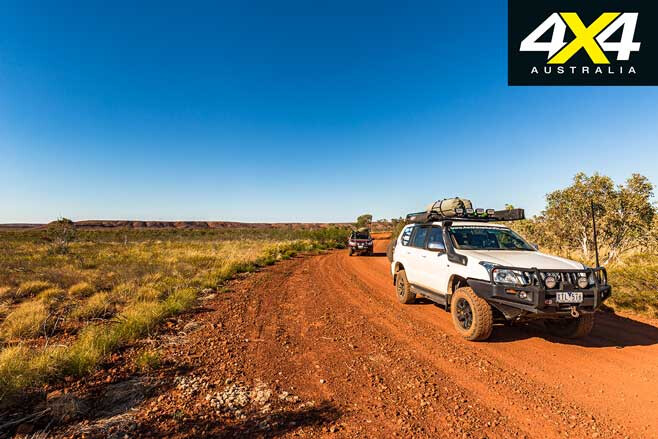
WHERE: Binns Track from Gemtree to Daly Waters Hotel via Davenport Range and Gregory National Parks is more than 2300km, with the longest distance between fuel stops around 800km (Atitjere to Tennant Creek).
PERMITS: No permits required.
FUEL: Gemtree, Atitjere, Tennant Creek, Daly Waters, Mataranka, Katherine and Timber Creek provide unleaded and diesel fuel. Expect to pay top dollar for fuel at the remote places, too, with $2/litre and above for diesel.
BEST TIME TO VISIT: From June to September as the weather is generally cooler and the wet-season waters should have receded.
MORE INFO: Paper maps, with the Hema Maps range providing excellent coverage. Some form of electronic navigation/mapping hardware/software such as the Hema HX-1 Navigator is also recommended.
FOUR years have passed since a Triton has appeared on the shortlist for 4X4OTY. That was the all-new, fifth-generation MQ model that arrived in Australia in 2015.
What you see here is Mitsubishi’s new MR Triton. It’s not so much of an all-new model but more a midlife refresh of the MQ.
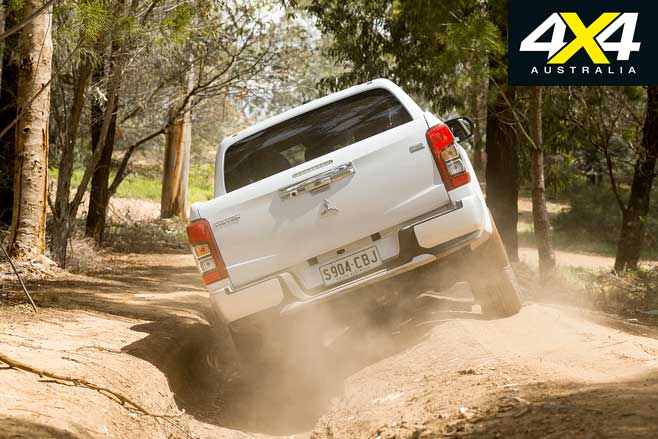
The significant mechanical change is the adoption of a new six-speed automatic that replaces the previous five-speeder but there are also new springs and dampers at the rear to improve the load carrying, it seems, and terrain-specific modes have been added to the 4×4 system. There’s also new active safety equipment and distinctive new stying just to let you know it’s a new model.
In a dual-cab market that’s both very crowded and very competitive, the Triton is outsold only by the Toyota Hilux and the Ford Ranger thanks largely to pricing only bettered by Chinese, Indian and now Korean utes. And while this new Triton is a little more expensive than the out-going model it’s still the least expensive of the mainstream dual cabs. What we have here is a GLS, so one down from the top-spec model but still a modest asking price of just over $50K on the road.
Touring
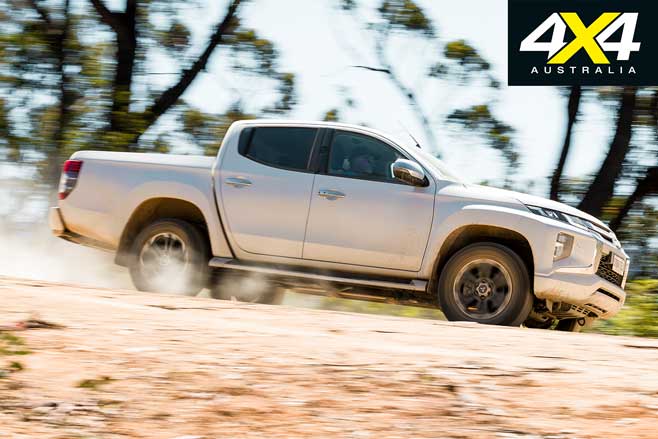
The Triton’s 2.4-litre four-cylinder diesel was an all-new design when introduced in the MQ model in 2015. It’s a revy engine by contemporary diesel standards with its maximum torque not achieved until 2500rpm, a high figure given today’s diesels typically achieve their maximum torque well below 2000rpm and even as low as 1400rpm in the case of some such as the Musso tested here.
The Triton’s general performance is helped by its trim weight and shortish final-drive gearing and it performs a little better than the on-paper maximum power (133kW) and torque (430Nm) figures suggest even if it does rev a bit more to give its best.
The engine’s still smooth running and reasonably quiet for a diesel and likewise the new six-speed automatic offers good refinement and well-sorted (i.e. not too lazy) shift protocols. The gearbox also works nicely in the ‘manual’ mode, which can be operated via the shift lever, or via paddle shifters behind the steering wheel.
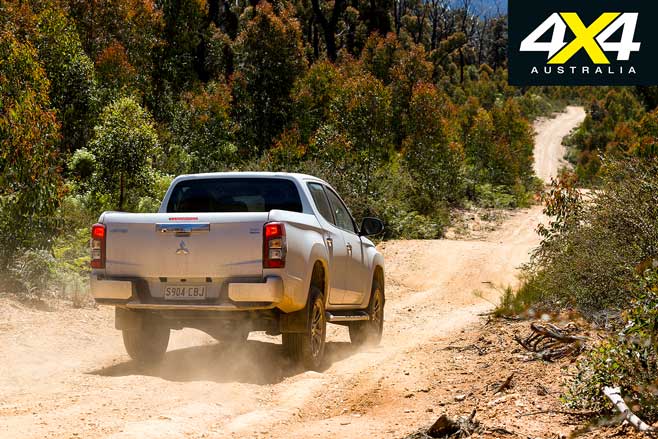
There’s a sportiness about the powertrain that’s mirrored in the Triton’s chassis with crisp steering and agile handling. On slippery roads, wet bitumen and the like, there’s also the surefootedness of full-time 4×4, courtesy of the Triton’s Super Select II transfer case that also offers a rear-wheel-drive mode.
Not so good is the firm ride and the kick that the rear suspension can give over bigger bumps, especially with little load onboard. This is the downside of improving the chassis’ load-carrying performance, which was a criticism of the previous model Triton.
Trail Driving
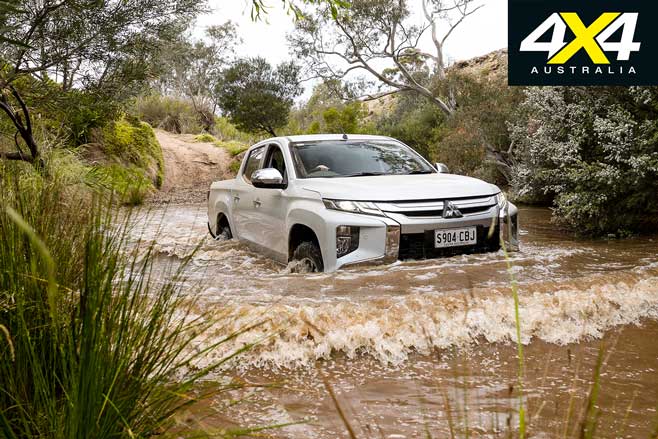
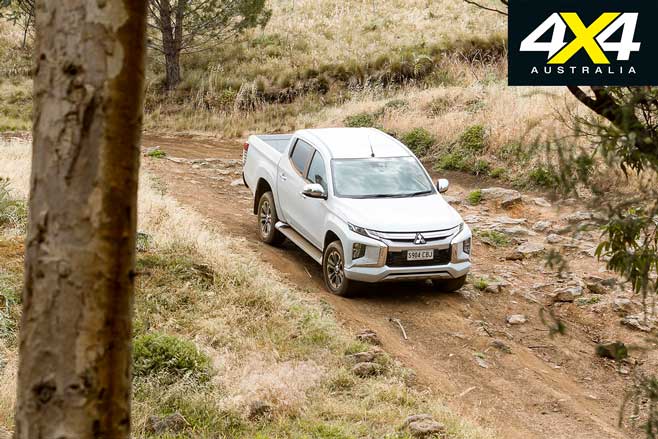
The Triton’s firm ride is something that also makes its presence felt on rougher trails but otherwise the Triton does a reasonable job. It has a relatively short wheelbase for a dual-cab ute, which helps with general manoeuvrability, and has decent clearance and a good approach angle. Not so good is the only modest wheel travel and the long rear overhang.
This new model brings driver-selectable programmes for gravel, mud/snow and sand, which can tweak the ESC and the ETC as well as the throttle mapping and gearbox shift protocols, although locking the centre diff (by selecting 4HLC on the transfer dial) and the rear diff are both done by the driver as the 4×4 system is still mechanical.
Set-Piece Hill Climb
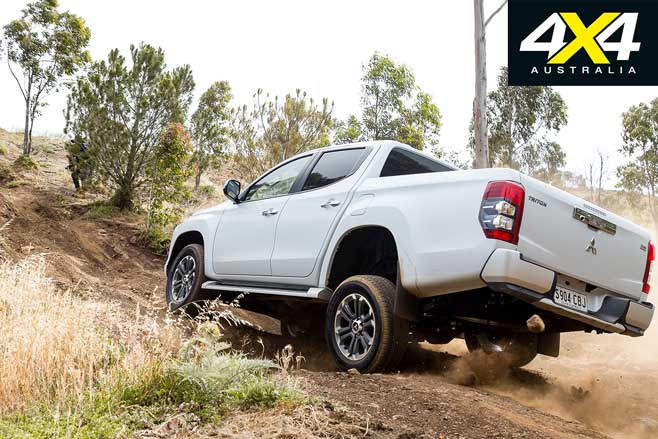
With its modest wheel travel working against it, the Triton wouldn’t get up the set-piece hill climb without engaging the rear diff lock, as the electronic traction control (ETC) is not as well sorted for off-road use as it could be. Other manufacturers have done better with specific off-road calibration of the ETC for when the vehicle is in low-range.
Engaging the Triton’s rear locker actually cancels the ETC on both axles, so is not always an advantage, but it worked on the steep set-piece climb as most of the weight is on the rear axle.
Cabin, Equipment and Safety
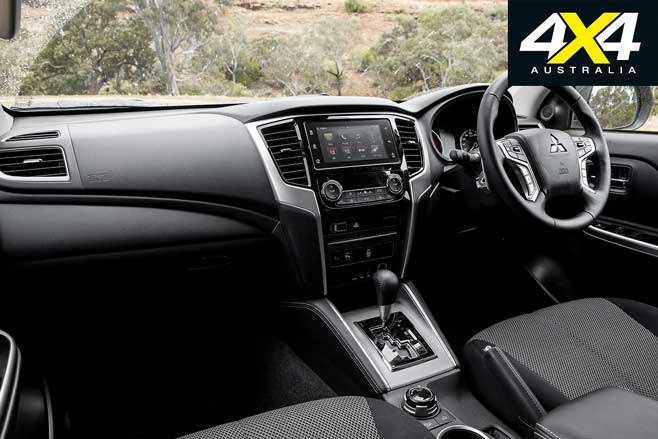
The Triton’s cabin is smallish by dual-cab standards, both up front and in the rear where it’s a squeeze for three adults. Up front the driving position suits shorter rather than taller drivers best and the seat squab is closer to the floor than in other dual cabs. Tilt-and-reach steering-wheel adjustment is however a nice touch and not too common in utes.
The cabin is nicely finished but still feels a little utilitarian, perhaps because at this spec level it lacks smart-key entry and push-button start and doesn’t have embedded satnav at any spec level, relying instead on smartphone navigation via Apple CarPlay/Android Auto.
But the Triton is loaded with safety kit which, even in this non-top-spec model, runs to seven airbags, automatic emergency braking, lane-departure warning, blindspot monitoring and rear cross-traffic alert.
Practicalities
There’s no 12-volt outlet in the rear tub, which is disappointing given this is a recreational (not commercial) grade model and, as ever, the Triton’s tub is one of the smallest among he popular dual cabs and the tie-down hooks are situated too high. The Triton also doesn’t match the big utes for tow or payload ratings. But smaller can mean handier too in any confined space, and not everyone wants a big ute anyway.
The Triton only has one front recovery hook, and none at the rear, although the engine air intake is via the inner guard, which brings some security for deep water crossings.
Summary
The Triton does absolutely nothing wrong, but aside from its full-time 4×4 system and generous lashings of safety kit it isn’t remarkable in any way. Still, it’s not expensive, so no one is complaining. Right?
MITSUBISHI TRITON GLS SPECS: Engine: 2.4-litre 4-cyl turbo diesel Max Power: 133kW at 3500rpm Max Torque: 430Nm at 2500rpm Gearbox: 6-speed automatic 4×4 System: Dual-range full-time (+2wd) Kerb Weight: 1988kg GVM: 2900kg Payload: 912kg Towing Capacity: 3100kg GCM: 5885kg Fuel Tank Capacity: 75 litres ADR Fuel Claim: 8.6L/100km Test Fuel Use: 10.9L/100km Effective Range: 638km Base Price: $47,640 (plus ORC) As-Tested: $47,650 (plus ORC)* *Towbar not included
4X4 of the Year Verdict – 6th Place
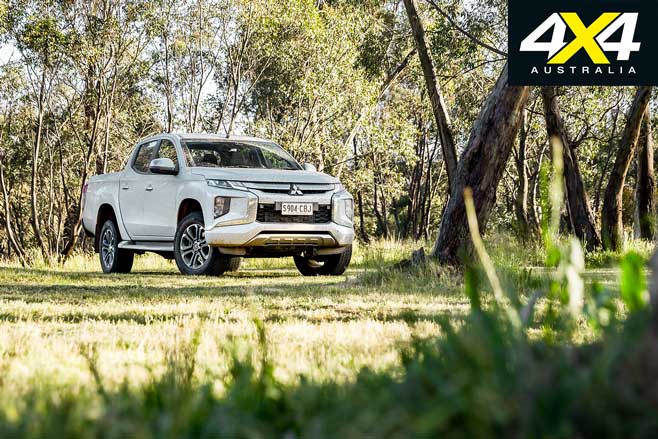
This is a ute that does nothing wrong but nothing too brilliantly either, although it does offer the convenience and safety of full-time 4×4, something that most utes don’t do. If you’re not after a boofy, heavy-duty dual-cab, the Triton offers much given its near bargain-basement pricing.
GIVEN the high development costs and relatively niche sales, Ford may not have made much money out of the Ranger Raptor. But it doesn’t matter.
What counts is that the Raptor proves that Ford knows how to get things ‘right’, and its engineering excellence not only brings praise to the Raptor itself but brings kudos to other Ranger models and Ford in general. Every car company wants a ‘hero’ model like the Raptor, to build a reputation and image around.
For its part Nissan needs anything it can to help the Navara’s image, let alone sales, which lag well behind the class leaders. For every Navara 4×4 that’s sold, three and a half Ranger and Hilux 4x4s drive out the showroom door. Given the previous generation D40 Navara was second only to the Hilux in sales in its day, Nissan couldn’t be happy.
Hence the Navara N-TREK Warrior. It’s Nissan’s new hero in the ring, beefed up and sent back into the fight with a comprehensive re-engineering of the suspension, a more off-road-focused wheel and tyre package, and a whole new look thanks largely to the bespoke bar and lights.
The general philosophy behind the Warrior mirrors that of the Raptor in as much as it aims primarily to improve the off-road performance while not compromising – and hopefully even improving – on-road dynamics.
Ford Ranger Raptor
Far more than a lift kit and a new wheel and tyre package, the Raptor brings race-bred chassis engineering.
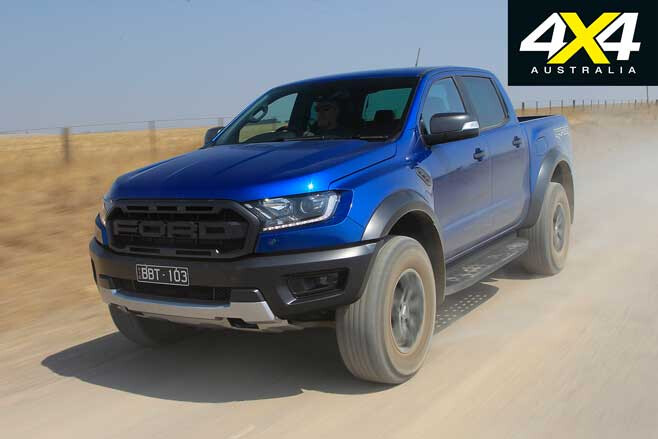
FORD Australia came up with the idea of the Raptor off the back of the success in the USA of the F150 Raptor, a desert-racing-inspired custom version of Ford’s very popular F150 pick-up.
Ford Performance, Ford’s global high-performance division, then got involved with Ford Australia to help create the Raptor. The Raptor debuted in late 2018 and went on to win our 4X4 Of The Year … comfortably.
Powertrain & Performance
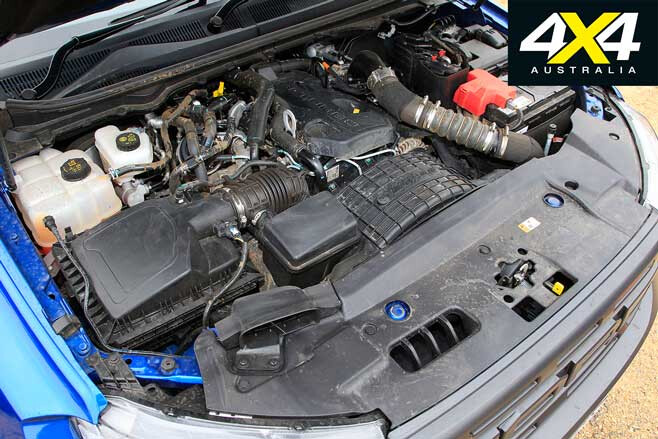
THE Raptor may be crying out for a stonking petrol V8 – and may soon get one – and some people would have liked to have seen the Ranger’s grunty and endearing 3.2-litre five-cylinder diesel under the Raptor’s bonnet, but that’s not what it has.
Instead, it has the same 2.0-litre four-cylinder bi-turbo diesel and ten-speed automatic that’s offered in the XLT and Wildtrak models, the only difference from the standard Ranger drivetrain is a lower final-drive ratio to compensate for the Raptor’s taller wheel and tyre package.
Still, there’s nothing wrong with this ‘little’ 2.0-litre diesel, which is notably refined and smooth, especially in comparison to the harsher and noisier engine in the Warrior. Thanks to its sophisticated sequential bi-turbo arrangement the Raptor’s engine is also nicely flexible, with all 500Nm of torque available from just 1750rpm. Peak power (157kW) doesn’t arrive until 3750rpm.
On wider throttle openings and especially on full throttle it has a deep, throaty voice and sounds like a much bigger capacity diesel. At the same time it also spins through the revs quickly, as you’d expect of a small engine, helped by the close ratios of its 10-speed automatic, which does its job largely undetected.
Only occasionally on sudden, wider throttle openings will it produce the odd rough shift and indecisiveness in picking what gear it wants. Pedal to the metal, the Raptor has the edge on the Warrior.
On-road ride and handling
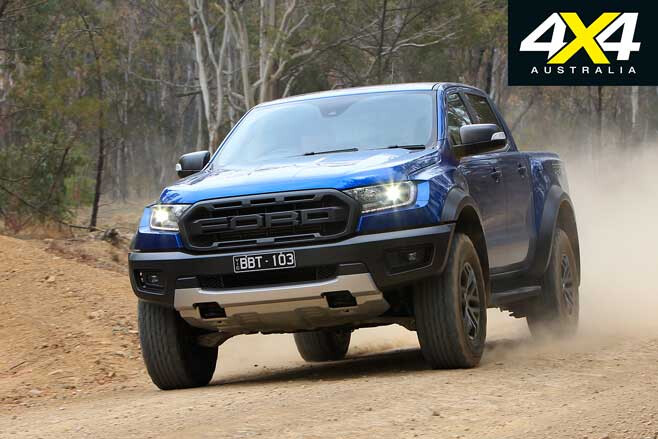
THE Raptor’s trump card isn’t its engine, though; its chassis is what makes the whole package work so well. Despite primarily aiming to make the Raptor better off-road than a stock Ranger, the quality of the re-engineering is such that the on-road dynamics, especially the ride quality and handling, is also much improved.
You can put this down to the extra suspension travel, some 30 per cent all ’round, which means suspension that soaks up the bumps beautifully. The Raptor can literally make a bumpy road feel like a smooth road.
While the Raptor retains a live axle at the rear, coils springs replace the Ranger’s leaf springs, and bespoke Fox-brand racing-tech dampers (the rears have ‘piggy-back’ reservoirs) are used all ’round. Longer A-arms up front and a different axle housing at the rear widen the stance (by 150mm) to compensate roll-stability-wise for extra ride height.
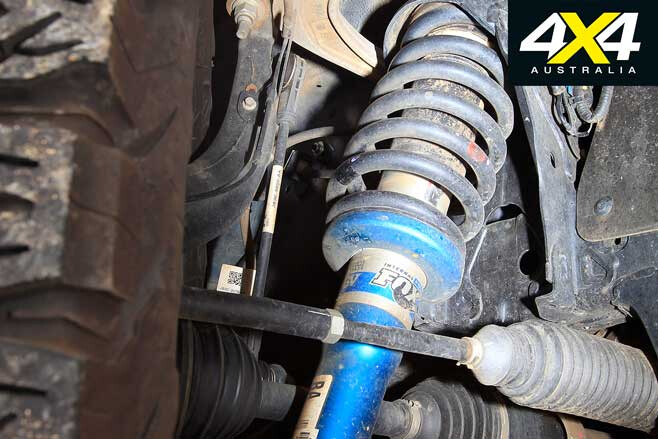
The rear axle is also laterally located by a sophisticated Watt’s link, a far superior arrangement in terms of chassis control (no bump steer) compared to the commonly used, simple and cheap to make – but dynamically flawed – Panhard rod, as used on the Warrior.
The Raptor also gets disc brakes at the rear, replacing the standard drums, another tick in its favour.
Off-road
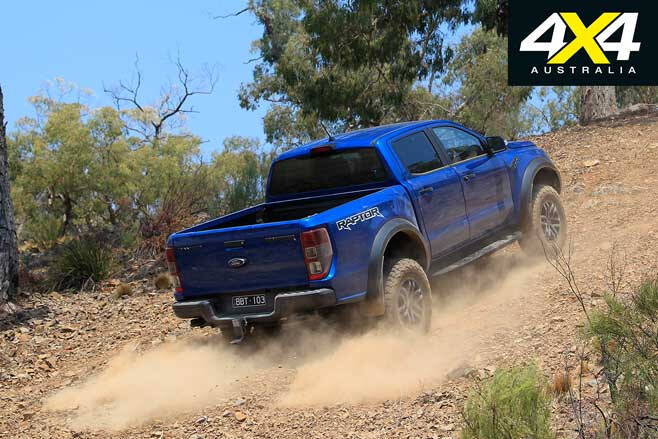
THE Raptor’s compliant, extra-long-travel suspension, loftier ground clearance and slightly taller and wider tyres also set it aside from the less off-road-capable Warrior. Not that the Warrior isn’t handy off-road, but it’s no Raptor.
The Raptor retains the Ranger’s part-time 4×4 system but has a Terrain Management’ system to fine-tune the powertrain and chassis for different driving environments. The settings run to ‘Normal’, ‘Sport’, ‘Grass/Gravel/Snow’, ‘Mud/Sand’, ‘Baja’, and ‘Rock’. All modes bar ‘Rock’ are available in high range, while all modes bar ‘Sport’ and ‘Grass/Gravel/Snow’ are available in low range.
These different modes vary the engine throttle mapping, gearbox shift protocols and the electronic traction and stability control calibration. This is a sophistication the Warrior lacks.
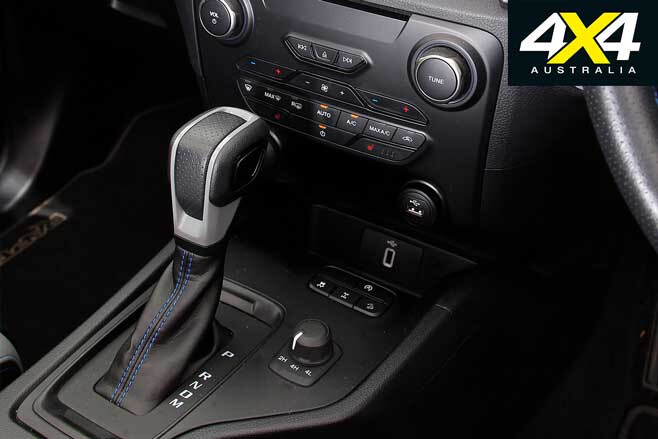
The Raptor comes with paddle shifters for ‘manual’ gear selection, which is handy off-road and again something the Warrior lacks.
The Raptor also claims an impressive 850mm wading depth, considerably more than the Warrior despite the fact the engine’s air intake is under the bonnet lip. Four heavy duty and easily accessible recovery hooks are also a nice touch, compared to the Warrior’s single front hook.
Compared to the Warrior the Raptor feels big off-road, essentially because it is big, and in tight spots it’s not as handy as the physically smaller Warrior.
Cabin, Accommodation and Safety
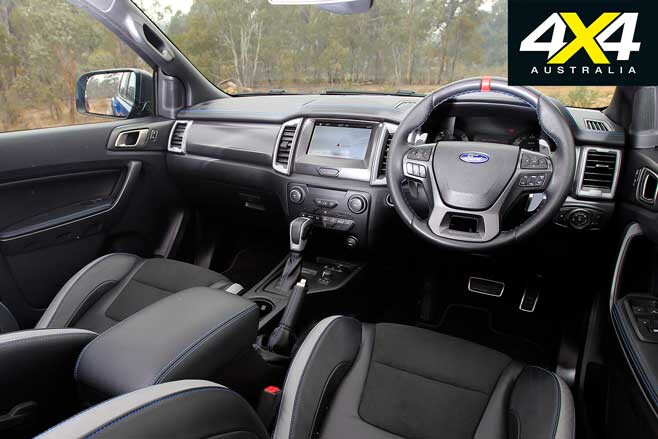
THE Raptor has a spacious and notably long cabin, just like any Ranger, and is bigger in every dimension than the more compact Warrior.
There’s still no reach adjustment for the steering wheel, but the Raptor’s heated, bespoke-leather front seats are more comfortable than the Warrior’s and the back seat also offers more space and comfort, especially for taller people and for more than two occupants.
The Raptor’s cabin wins on presentation and has the feel of a more expensive vehicle than the Warrior, which it is. With automatic emergency braking, the Raptor also leads the two in safety kit; although, it doesn’t get a driver’s knee airbag as does the Warrior.
Practicalities
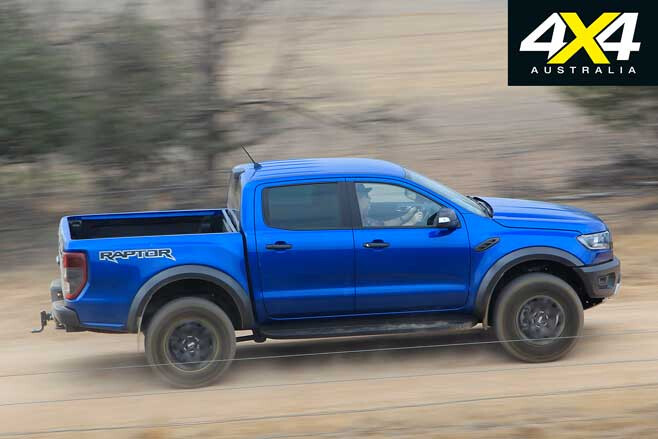
COMPARED to a standard leaf-sprung Ranger, the Raptor has less payload (758kg before you even add a driver or passengers) and less towing capacity, (reduced from 3500kg to 2500kg) which is all due to the softer, long-travel suspension. The Raptor still has a bigger tray, with a work light and better placed, but not adjustable, tie-downs.
What You Get
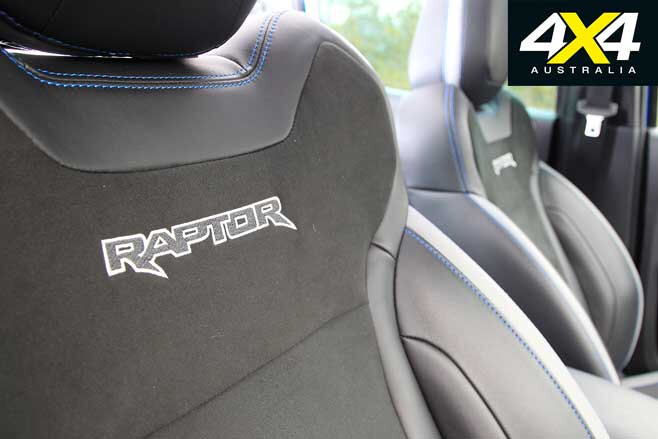
STANDARD kit on the Raptor starts with smart-key entry and push-button start, while the leather and suede-trimmed seats have eight-way power adjustment and heating up front. From there the equipment runs to auto headlights, auto high beam, rain-sensing wipers, an eight-inch touchscreen, twin USB ports, embedded sat-nav, Apple CarPlay and Android Auto, a reversing camera, dual-zone climate, a cooled centre console, paddle shifters, and a six-speaker audio complete with a CD player.
The safety kit is led by autonomous emergency braking, lane departure warning and assist, traffic sign recognition (tells you what speed zone you are in) and six airbags (front, side and curtain). The rear tub has a 12-volt outlet, a liner and a work light.
Nissan Navara N-Trek Warrior
Take one Nissan Navara and add some savvy local engineering, and you end up the N-Trek Warrior.
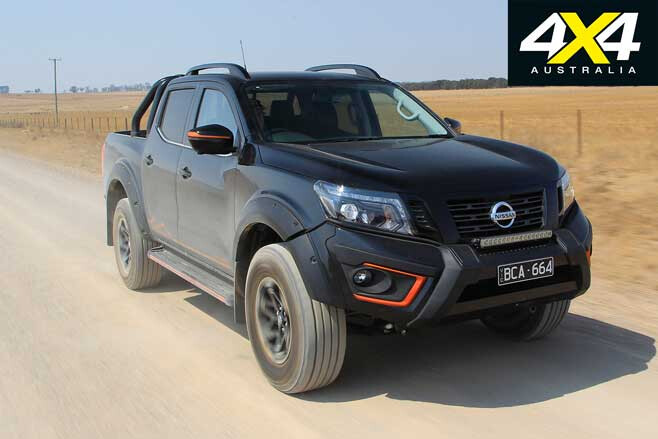
NO DOUBT inspired by the likes of the Ford Raptor and the HSV SportsCat, Nissan Australia decided that to get more cut-through with its not particularly well-loved and somewhat controversial Navara a ‘halo’ or ‘hero’ model was in order.
To this end Nissan Australia turned to Premcar, the current embodiment of Prodrive, Tickford and Ford Performance Vehicles. Premcar’s work brings specially tuned springs and dampers and a bigger wheel/tyre package, essentially to improve off-road performance.
To complete the package and to make the Warrior ready to roll from showroom to the bush, Premcar added a bespoke steel bullbar, underbody protection and siderails, as well an LED light bar, a redesigned towbar and various styling enhancements.
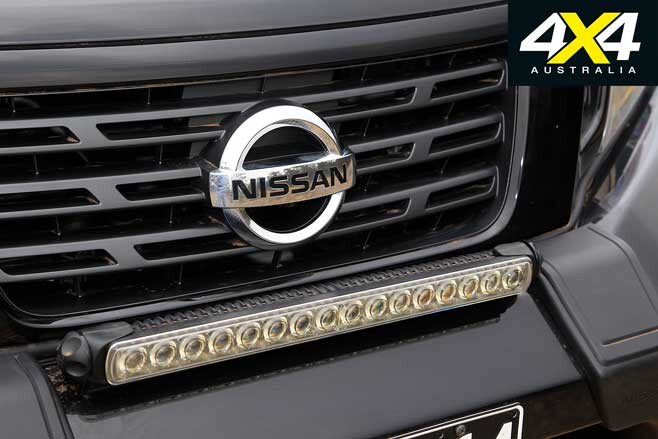
As a fully certified second-stage manufacturer, Premcar will build the Warrior in its Melbourne factory while Nissan will sell it with full factory backing and warranty via its dealer network.
The Warrior comes with standard Navara powertrain, which means it’s offered with a six-speed manual as well as a seven-speed automatic, an option the Raptor doesn’t bring to the table.
Powertrain and Performance
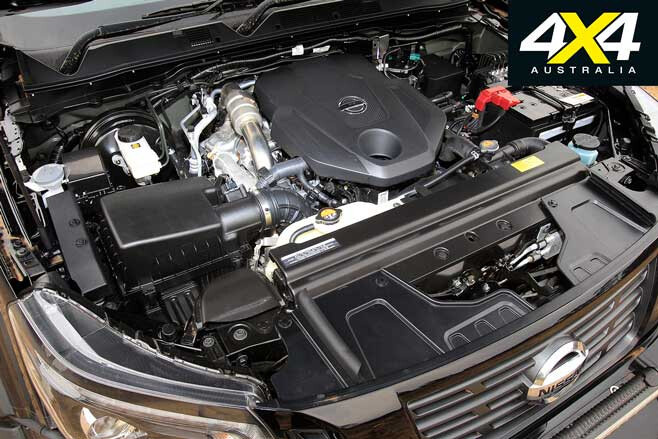
THE familiar Renault-sourced 2.3-litre bi-turbo four-cylinder diesel in the Warrior has a bit more work to do than it does in a standard Navara. First up there’s the Warrior’s extra hardware that adds some 200kg, while the taller tyres raise the overall gearing a little over seven per cent.
Still, this is a keen engine, as it is in a standard Navara, and while it’s a little muted in the Warrior it still continues to offer decent performance. In standard trim the Navara’s overall gearing is relatively short, so the taller tyres don’t really hurt as much as they would on something that’s already tall-geared. That’s why Ford lowered the Raptor’s final drive from that of a stock Ranger.
In typical bi-turbo style, the Warrior combines good off-idle response with its maximum torque (450Nm), on tap at just 1500rpm, with a keenness to rev as the peak power (140kW) doesn’t arrive until 3750rpm. Asked to give its all it’s still not as strong as the Raptor, but it isn’t really disgraced – driven in isolation it never really feels wanting. Compared to the Raptor, the more noticeable difference is that the Warrior is relatively noisy and harsh, especially under load.
Our road-test Warrior came with the seven-speed automatic, which shifts smoothly enough but can be reluctant to back-shift under load, preferring to generally hang on to a taller gear rather than reach for a shorter gear. It’s not as slick-shifting as the 10-speed in the Raptor, but it isn’t as indecisive as the Raptor’s ’box, just a bit on the lazy side.
On-road ride and handling
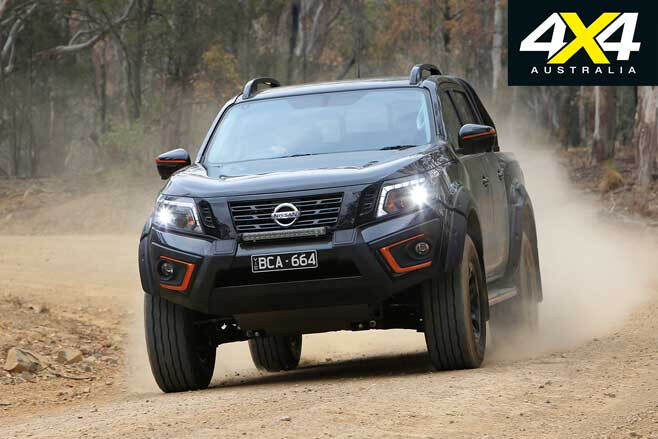
PREMCAR’S main aim with the Warrior was to improve the stock Navara’s off-road performance, but the retuned suspension works wonders on-road despite the theoretical negative of the more off-road-orientated wheel and tyre package.
The Navara is unusual among the popular utes in as much as it has coil springs rather than leaf springs at the rear. With the Warrior, dual-rate coil springs continue to be employed, but the Warrior’s (Monroe brand) springs are softer in the initial spring (34 vs 37N/mm) but firmer in the second spring (85 vs 77N/mm) than the standard items.
Up front, lighter 74N/mm springs replace the stock 79N/mm springs, but there’s an extra-long progressive bump stop which firms up the spring rate towards full compression. Quality Tenneco dampers expertly tuned by Premcar’s engineers replace the stock dampers, while the standard swaybars are retained.
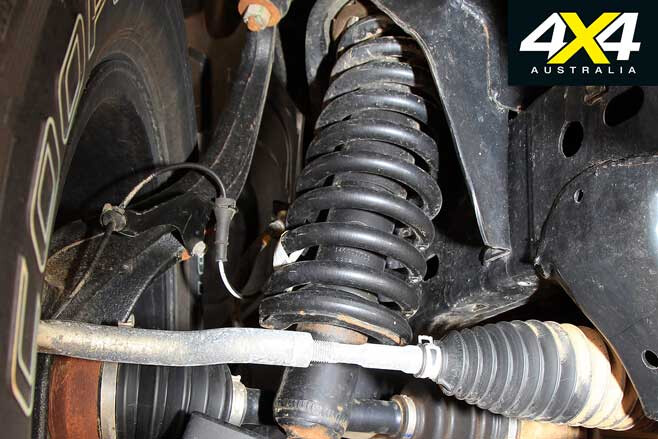
The Warrior’s ride feels firm at lower speeds, most likely due to stronger compression damping and despite the lighter initial springs, but the whole package comes together very nicely at speed and feels settled and reassuring even on bumpy, poor quality rural roads. This is a ‘Navara D23’ like you have never felt before.
The fact that the Warrior feels better on the road despite the extra ride height and light-truck all-terrain tyres is proof of the quality of Premcar’s work. Nissan has tried to get the standard Navara’s suspension right, not once, not twice, but three times, and the Warrior is still far better.
Off-road
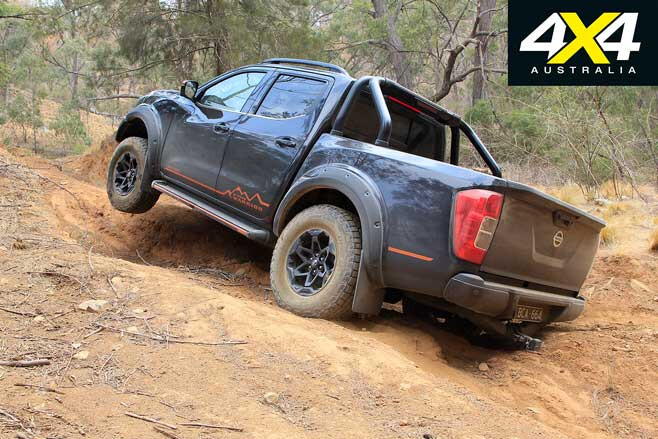
PREMCAR’S chassis changes have brought 40mm more lift, 25mm of that via the taller 275/70R17 wheel and tyre package, both of which transform the Warrior’s off-road performance from the rather modest level achieved by the standard Navara.
The Warrior has the same the rotary-dial-operated part-time 4×4 system of the standard Navara, which offers deep low-range reduction. The gearbox isn’t entirely happy in low range as it can be reluctant to downshift on descent, even when used in the ‘manual’ tip-shift mode.
Like the Raptor, the Warrior has a driver-switched rear locker, which when engaged keeps the electronic traction control active on the front axle. This is handy as you need the Warrior’s locker more often than the Raptor, as it gets by on suspension travel alone. With its shorter travel suspension, the Warrior also lacks the Raptor’s off-road comfort.
The Warrior has a shallower fording depth, despite the engine-air intake via the inner guard, but does come with a bespoke bullbar which brings some off-road toughness the Raptor doesn’t enjoy. However, there’s only one front recovery hook and none at the rear.
Cabin, Accommodation and Safety
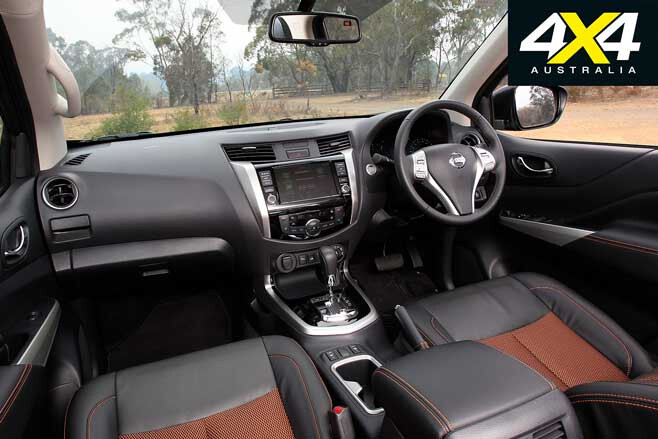
THE Warrior’s cabin isn’t as spacious up front or in the rear seat as the Raptor, and the front seats aren’t as comfortable as the excellent Raptor seats.
The Warrior is based on the top-spec ST-X Navara, which means a generous equipment list. Plus it gets its own themed interior with bespoke part-leather seat trim and carpets.
The Warrior hasn’t been ANCAP tested as such, but a standard Navara achieved a five-star rating when last tested; although, it doesn’t have any high-end safety features such as the automatic emergency braking of the Raptor.
Practicalities
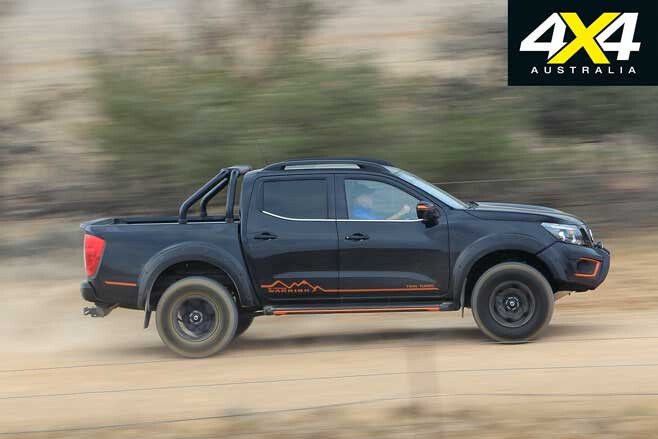
THE Warrior retains the Navara’s 3500kg towing capacity and feels like it may do a better job, chassis-wise, than a standard Navara at towing that amount; although, something around 3000kg is probably more around the mark.
Still, that’s better than the Raptor’s 2500kg limit. Truth be told, if you’re after a heavy-duty tow tug then it’s best to bypass both of these utes. Like the Raptor, the Warrior also has a modest payload rating, and while it’s good that the tie-downs in the tub are adjustable, they need to be located much lower.
What You Get
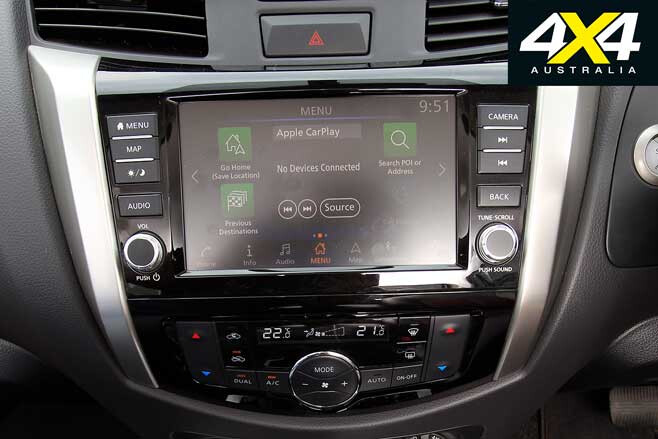
THE Warrior’s safety equipment starts with front, side, curtain and driver’s knee airbags and runs to the full suite of electronic chassis control systems, a reversing camera and a 360-degree view monitor.
Convenience and comfort features include smart-key entry, push-button start, bespoke leather seat trim, electric seat adjust for the driver and heated front seats, auto headlights, rear sliding window panel and dual-zone climate control. Embedded sat-nav, an eight-inch touchscreen and Apple CarPlay and Andriod Auto are also standard features. The rear tub has a twin-rail adjustable tie-down system and a 12-volt outlet.
The Winner – Ford Ranger Raptor
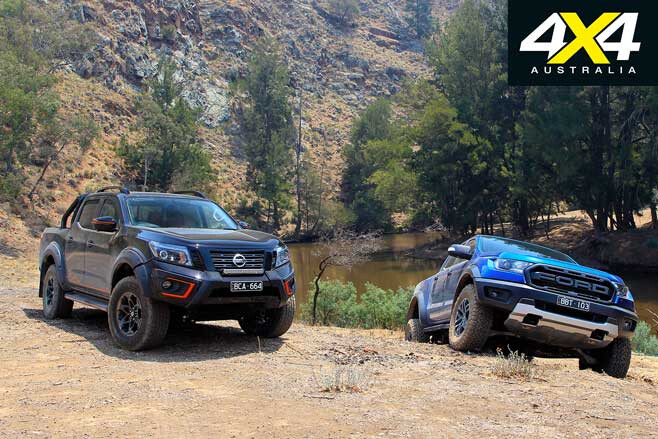
IF YOU only even want to drive a manual then there’s only one choice here, and that’s the Warrior as the Raptor is auto only. End of that story.
Then there’s the issue of budget, as there’s a significant difference here. The Raptor is $76,290 before you pay for the on-road costs, so more like $83K on the road. And that’s before you add a bullbar or lights, both standard on the Warrior.
As an automatic, the Warrior is $65,490 driveaway. The manual Warrior is $2500 less again. So, you can either buy the Warrior or spend around one-third more again to get a Raptor.
Is the Raptor a one-third better drive? Yes, that value is in there. In building the Raptor, Ford started with a better ute in the Ranger than Premcar did with the Navara, and then Ford did more work to the Ranger than has been done in creating the Warrior from the Navara.
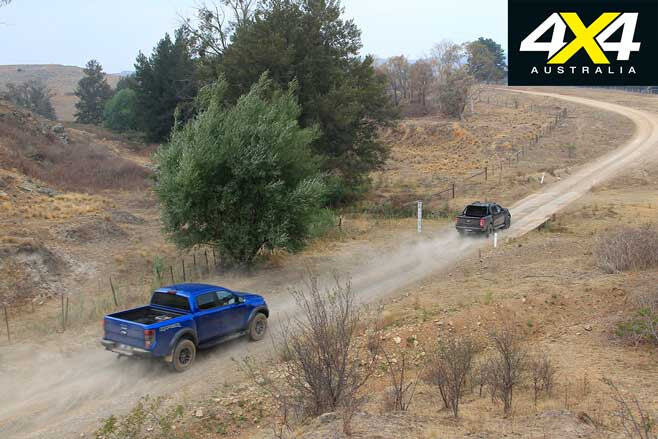
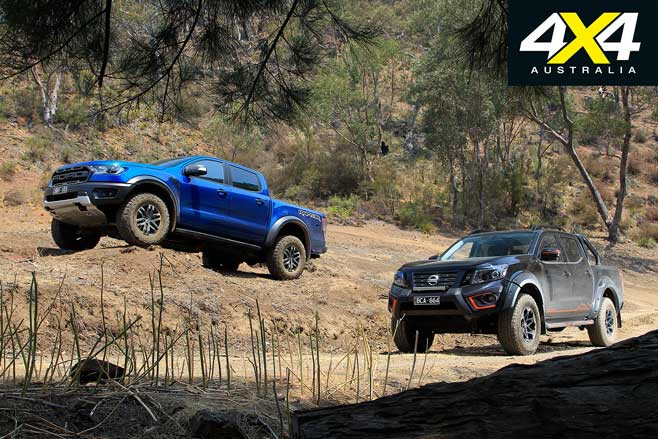
Where Premcar’s engineers have worked within the basic suspension architecture of the Navara, Ford has made fundamental suspension changes. Thanks largely to the Raptor’s suspension it is a better drive than the Warrior on the road and more capable off it. The more refined and punchier powertrain, and extra safety kit sweetens the deal.
For all that the Warrior is still not disgraced in the Raptor’s company and still feels good to drive, even jumping from one to the other. Premcar has really done a stellar job on the suspension and wheel/tyre package to make the Warrior so much better than a stock Navara, both on and off the road. Premcar’s effort even puts the Navara-based Mercedes X-Class to shame.
So while there’s value on the Raptor, there’s also plenty of value in the Warrior.
Specifications
| u00a0 | Ford Ranger Raptor | Nissan Navara N-Trek Warrior |
| Engine | 2.0-litre 4-cyl bi-turbo-diesel | 2.3-litre 4-cyl bi-turbo diesel |
| Power | 157kW @ 3750rpm | 140kW @ 3750rpm |
| Torque | 500Nm @ 1750-2000rpm | 450Nm @ 1500-2500rpm |
| Gearbox | 10-speed automatic | 7-speed automatic |
| 4×4 System | Dual-range part-time | |
| Crawl Ratio | 47.6:1 | 44.4:1 |
| Construction | Separate-chassis | |
| Suspension (f) | Independent/coil springs | Independent/coil springs |
| Suspension (r) | Live-axle/coil springs | |
| Wheel/tyre spec | LT285/70R17 116/113 S | LT275/70R17 121/118 Q |
| Departure Angle | 24.0u02da | 19.0u02da |
| Rampover Angle | 24.0u02da | 27.5u02da |
| Approach Angle | 32.5u02da | 35.0u02da |
| Wading Depth | 850mm | 500mm (approx.) |
| Ground Clearance | 283mm | 268mm |
| Kerb Weight | 2332kg | 2186kg |
| GVM | 3090kg | 2910kg |
| Payload | 758kg | 724kg |
| Towing capacity | 2500kg | 3500kg |
| GCM | 5350kg | 5910kg |
| Fuel capacity | 80 litres | 80 litres |
| ADR fuel claim | 8.2L/100km | 7.0L/100km |
| Test fuel use | 12.0L/100km | 11.6L/100km |
| Test fuel range | 617km | 640km |
| Price | $76,290 (plus ORC) | $65,490 (driveaway) |
MERCEDES-BENZ’S X-Class ute started life as a Nissan Navara. If that seems odd you need to understand that Mercedes wished to capitalise on the booming ute market, not just in Australia but globally, and turned to strategic partner Renault-Nissan for its Navara D23 so as to fast-track a design.
Perhaps not everyone within the vast Mercedes-Benz organisation thought that was a better idea than building a clean-sheet-design ute, but either way expediency won the day.
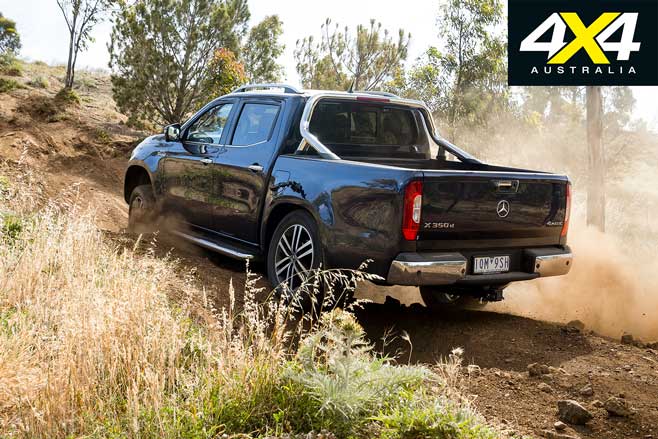
The X-Class is however far from a rebadged Navara. Strengthening the ladder frame, re-working the suspension, increasing the track, widening the body and adding a whole new interior is just the start of the detailed re-engineering that Mercedes applied to Navara to create the X-Class. And that’s just the four-cylinder model, which appeared in last year’s 4X4OTY.
In the case of the X350d you see here, Mercedes also threw out the Navara’s entire four-cylinder drivetrain and slotted in its own 3.0-litre V6 diesel, seven-speed automatic and full-time dual-range 4×4 system to complete what is a top-to-bottom transformation.
Touring
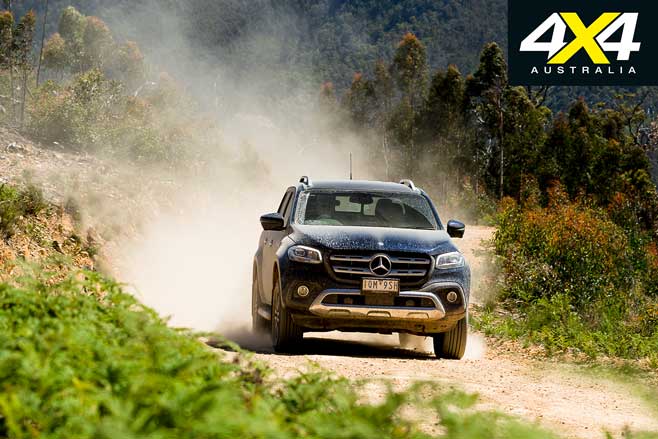
The X-Class’s 3.0-litre V6 diesel claims an impressive 190kW and lives up to that power promise with plenty of top-end zip, all helped with the relatively close ratios of the seven-speed automatic and not overly tall final-drive gearing. It has a strong midrange too but the X350d still feels a little soft off idle and at low speeds, a feeling exacerbated by the heavy, long-travel throttle.
The gearbox also doesn’t have a ‘sport’ mode to help overcome – or at least mask – the slightly doughy bottom-end power delivery, but there are steering wheel-mounted paddles if you wish to use the gearbox’s ‘manual’ mode. For less urgent driving the engine remains effortless, smooth, quiet and refined, as you would expect of something wearing a Mercedes badge.
On the road, the chassis also feels solid and substantial and gives a sense of refinement far removed from the Nissan Navara.
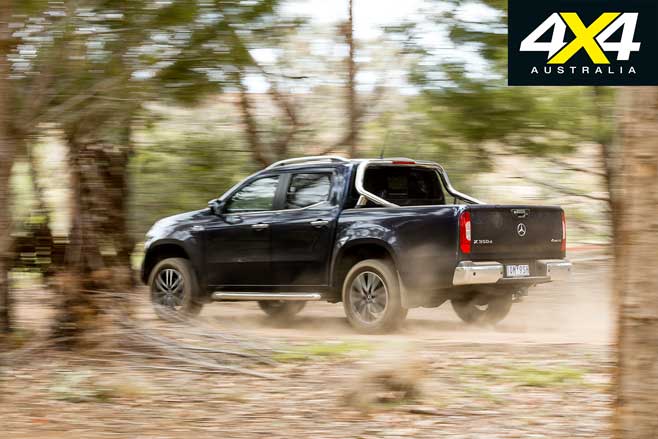
If the Navara feels like a whole lot of bits and pieces bolted together, then the X-Class feels like it’s been carved out of a solid block of metal.
On most roads and at most speeds the suspension also provides a comfortable ride despite the relatively low-profile tyres. There’s good control too, although things head south at higher speeds on bumpier roads where the X350d starts to lose its otherwise good composure.
Full-time 4×4 via the ‘4H Auto’ setting in the transfer case is however a notable advantage for touring in mixed conditions and brings both safety and convenience that part-time 4×4 can’t provide.
Trail Driving
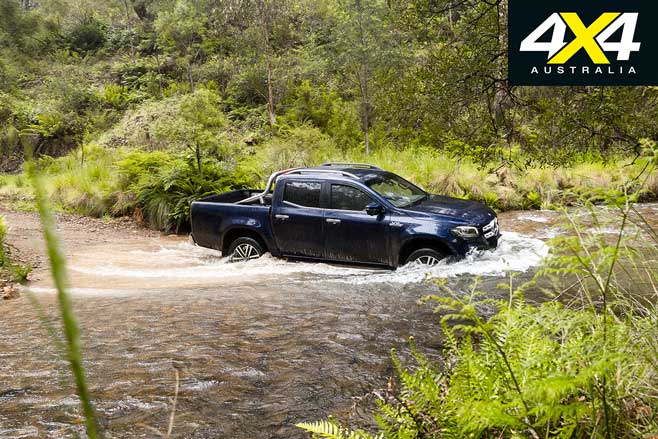
Going on its standard tyres – high-performance 255/55R19s – you would expect the X350d to be the least capable trail vehicle in this lot. More to the point you would expect low-profile tyres to not stand a chance of survival on some of the rocky trails we traversed, but luck was on our side and perhaps helped by the not-too-extreme ‘H’ (210km/h) speed rating, given higher speed ratings bring thinner and more vulnerable sidewalls.
Tyre concerns aside, the X350d works well enough off road without being a standout performer either from the way the gearbox works in low range – the paddle shifters help – or in terms of the modest ground clearance. The suspension also bangs and crashes on rougher trails, the ride quality obviously not helped by the low-profile tyres.
Set-Piece Hill Climb
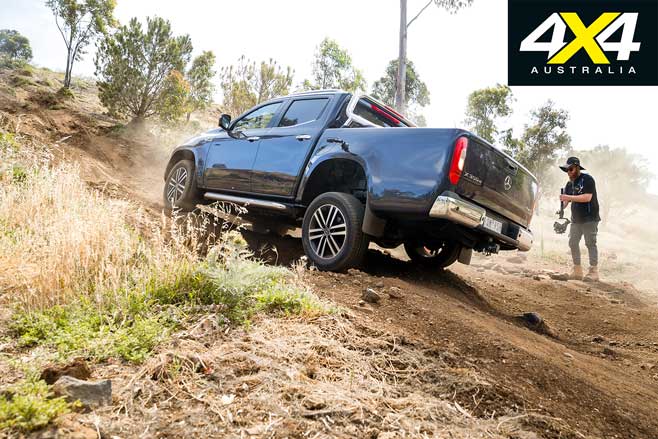
There were lots of wheel lifting on our gnarly set-piece hill climb from a platform not noted for long wheel travel and despite the best efforts of the seamless electronic traction control, the X350d wouldn’t get up the hill without engaging the rear locker.
In fact it stopped short of any of the other six contenders although much of that blame can be directed towards the road-oriented closed-tread tyres. The side-steps also took a beating on the climb…
Cabin, Equipment and Safety
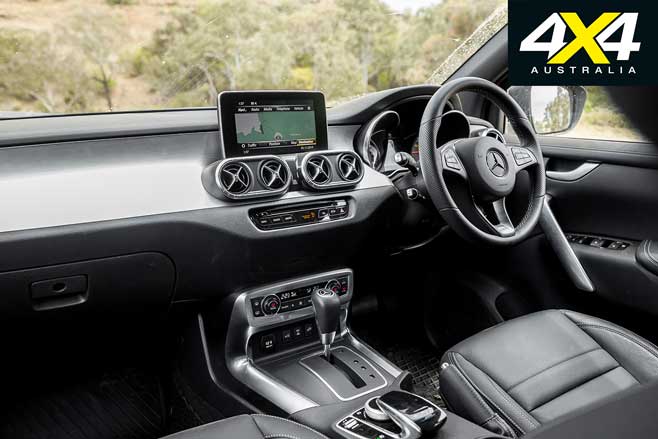
The X350d is beautifully finished and detailed inside and, Land Rover Discovery aside, feels several levels above the rest here in general presentation. Still – for the price – it should and some of the equipment in our test vehicle, like the heated leather seats, are optional, and not standard equipment.
For their part the front seats are very comfortable but like the Navara there’s still no reach adjustment for the steering wheel. Lack of stowage for items such as phones and wallets is also annoying and, while the equipment list is extensive, there’s no Apple CarPlay/Android Auto. The single stalk for the wipers and indicators takes some getting used to, as does the interface for the embedded satnav and entertainment systems.
The extensive list of safety equipment includes automatic emergency braking, lane-keeping assist and no fewer than seven airbags, all of which help the X350d achieve a five-star ANCAP rating. Tyre pressure monitoring is also a nice touch especially given the potentially damage-prone low-profile tyres.
Practicalities
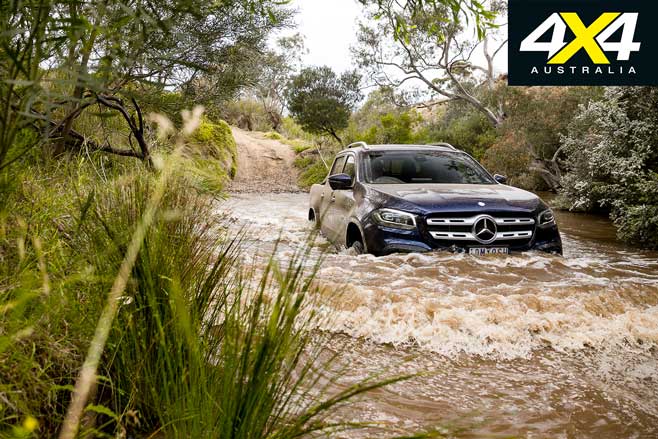
The X5350d has high payload and tow ratings thanks to GVM (3250kg) and GCM (6180kg) figures that better the popular utes like the Ford Ranger. In practice, however, we have previously found that the Merc’s chassis isn’t great at carrying or towing heavy loads, even if the punchy V6 is up to the task. A work light above the rear tub and adjustable tie-down points are both welcome touches.
The X350d has a solid front recovery point but none at the rear, while the engine air-intake at mid-grille height means water crossings need to be approached with caution.
Summary
The X350d feels solid, presents beautifully and goes hard but doesn’t come across as value at $90K.
MERCEDES-BENZ X350d SPECS: Engine: 3-litre V6 turbo diesel Max Power: 190kW at 3400rpm Max Torque: 550Nm at 1400-3200rpm Gearbox: 7-speed automatic 4×4 System: Dual-range full-time 4×4 Kerb Weight: 2190kg GVM: 3250kg Payload: 1060kg Towing Capacity: 3500kg GCM: 6180kg Fuel Tank Capacity: 80 litres ADR Fuel Claim: 8.8L/100km Test Fuel Use: 12.5L/100km Effective Range: 590km Base Price: $79,415 (plus ORC) As-Tested: $90,745 (plus ORC)
4X4 of the Year Verdict – 7th Place
This is Mercedes-Benz’s best shot at making a decent ute out of Nissan’s lukewarm D23 Navara, but a ground-up Mercedes-Benz design would surely be better. Judge Ged Bulmer summed it up best when he said: “X-Class finally gets the engine it deserves, but even the muscular turbo-diesel V6 and strong safety story isn’t enough to haul back the price penalty imposed by the three-pointed star on its grille.”
EVEN THOUGH the candles have almost burnt out for the 200 Series, they’re still burning bright for Toyota Australia’s 60th anniversary celebrations, with the company launching the special edition LandCruiser 200 Sahara Horizon.
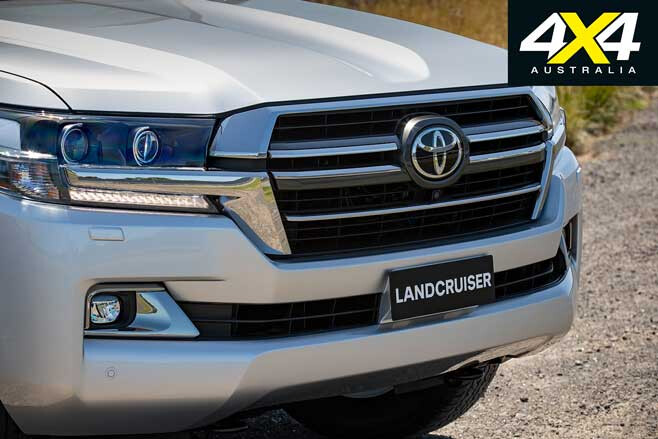
Based on the range-topping 200 Series Sahara, the special edition Horizon gets a selection of bespoke styling tweaks including a new-look grille unique to this model, black headlight surrounds and smoked chrome front fog light surrounds.
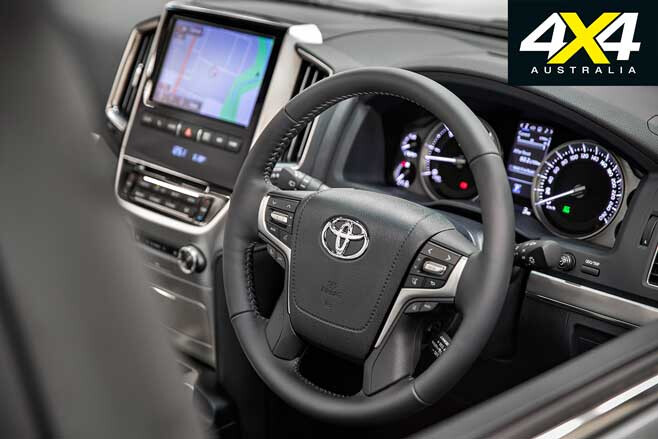
Moving inside and occupants are treated to semi-aniline leather-accented seats, a black leather-accented steering wheel, unique door trim stitching, and chrome accents throughout. Horizon and Land Cruiser badging has been stamped both inside and out.
The 200 Series’ 195kW/650Nm 4.5-litre V8 turbo-diesel runs through a six-speed automatic transmission, while standard Sahara kit also featured includes LED lighting, 18-inch alloys, a multi-terrain monitor, and a comprehensive suite of Toyota Safety Sense features.
“Toyota’s history in Australia started with the original LandCruisers brought into the country to work on the Snowy Mountains Hydro Scheme back in 1958 and since then, LandCruiser has played a role in the lives of people across the country from the bush to the beach,” said Sean Hanley, Toyota Australia’s Vice President Sales and Marketing.
“This new special edition Horizon model offers LandCruiser customers stylish and more distinctive visual appeal in a vehicle that remains as capable and competent on and off the road, wherever they choose to travel.”
The LandCruiser 200 Sahara Horizon will sell 400 units priced from $129,090.
MITSUBISHI has slotted two new Triton variants into its local line-up, with the GLX-R already in showrooms and the GSR set to be released in March 2020.
The GSR nabs that uber-cool black dynamic shield design, with the grille, headlamp garnish, skid plate, door mirrors, door handles and sidesteps all blacked out. Pairing up nicely with the visual punch are 18-inch black alloy wheels.
On the inside the GSR gets heated, leather-trimmed seats, while the steering wheel and park brake/shift knob have also received the leather treatment.
When it hits the market in March this year, the GSR will be offered with three different tonneau packs: Soft ($2699); Hard ($4699) and Rolltop ($4999). A black sports bar and under-rail tub liners will also be optional.
The GLX-R, sitting between the GLX+ and GLS variants in the line-up, ups the bling factor with the addition of chrome door mirrors and handles, as well as a silver front grille. It also adds 18-inch alloys and large fog lamps.
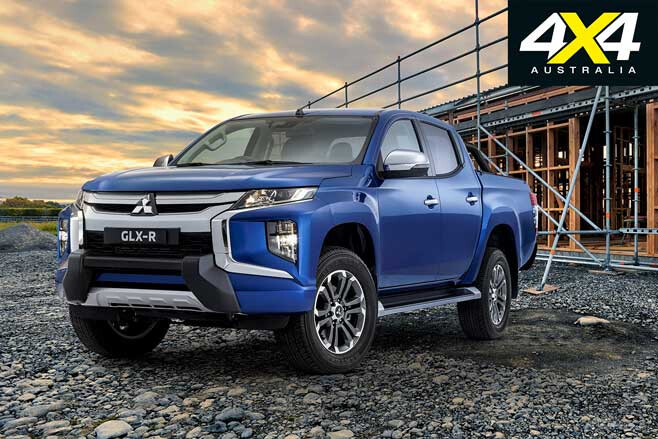
Both new variants will use the same running gear seen throughout the Triton range, which includes the 133kW/430Nm 2.4-litre turbo-diesel engine and Super Select II transfer case. The GLX-R will be available with both the six-speed manual and six-speed auto transmissions, while the GSR is auto-only.
The fact the well-kitted Triton also has a competitive price tag saw it rank as the third best-selling four-wheel drive vehicle in 2019, with 20,535 4×4 units leaving showrooms around the country.
Only the perpetual favourites, the Ranger (33,905) and Hilux (33,061), sold more 4×4 units last year. The addition of these new models to the Triton line-up, however, may see Mitsubishi close the gap to the ever-popular top two.
“These new grades bring a new level of style and functionality to the Triton range and will ensure we have the ideal vehicle for all Triton customers,” said MMA’s senior manager of product strategy, Owen Thomson.
Mitsubishi Triton GSR & GLX-R pricing
| Model | Drivetrain | Transmission | RRP |
| GLX-R | 4WD | 6-speed M/T | $41,990 |
| GLX-R | 4WD | 6-speed A/T | $44,490 |
| GSR | 4WD | 6-speed A/T | $51,890 |
What you see here is an esoteric collection of 4x4s brought together by being either new or significantly mechanically revised in the last year, to determine which is the best. That’s why it’s called 4X4 Of The Year.
It doesn’t matter that the least expensive is $25K and the most expensive nearly five times that amount, as this is not a comparison test of the type usually conducted by 4X4 Australia. Rather the seven shortlisted vehicles are scored against five long-established criteria by our experienced judging panel and by secret ballot.
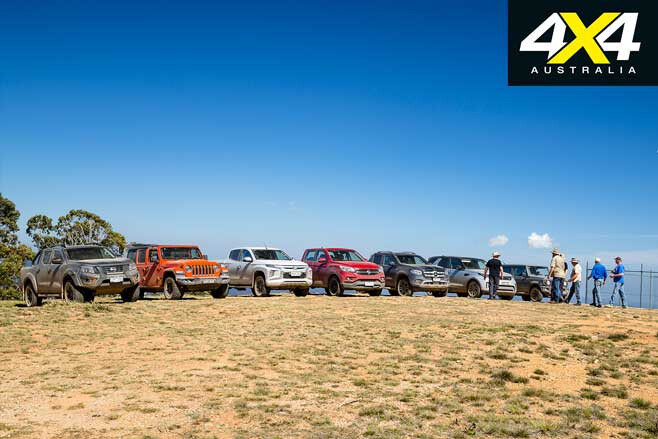
The seven shortlisted ‘new’ vehicles are the Mercedes-Benz X350d, which just missed the release date cut-off last year so may seem ‘old’ by now, the Ssangyong Musso XLV, the Suzuki Jimny and the Jeep Wrangler Rubicon.
The Mitsubishi Triton (new automatic gearbox), the Land Rover Discovery (new V6 diesel) and the Nissan Navara N-Trek Warrior (re-engineered chassis) fall more into the mechanically revised camp, although you could argue that the Warrior is a new model, not that it matters.
In many ways it’s the year for the traditionalist with the Jimny and the Rubicon both having live axles at both ends. Given only three such 4x4s are currently available as new (the Toyota LandCruiser 70 being the other), to have two new such models in the same year is indeed a fluke.
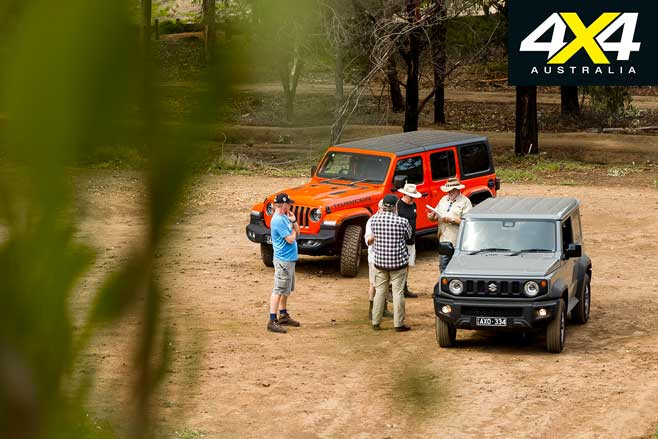
Of the remaining five shortlisted vehicles, four also have live axles at the back and, in another victory for the traditionalists, all but one of the seven are separate chassis designs.
Engines of course are a different matter; nothing too traditional here. All but one are modern and sophisticated diesels, all with turbos, high-pressure common-rail injection and diesel particulate filters to meet the latest diesel-emission laws. Some already also have selective catalytic reduction via a urea additive (AdBlue) to meet future emission laws.
All but one also have an automatic gearbox. All the seven shortlisted vehicles also have sophisticated chassis control electronics mandated by law in much the same way as the emission control systems.
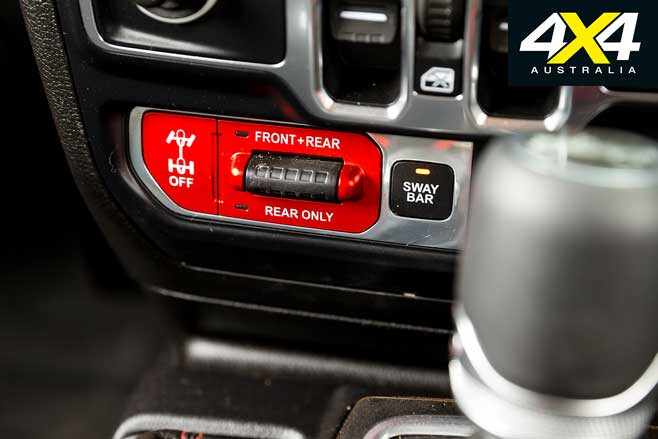
The seven shortlisted vehicles originate from six different countries: Japan, Germany, South Korea, the UK, USA and, one could argue, even Australia. And, in a sign of the times, the majority are dual-cab utes.
We did intend to include a new Ram 1500 EcoDiesel, another dual-cab, but the test vehicle offer was withdrawn at the last minute due to a factory recall for a coolant leak issue.
2020 4X4 Of The Year Judging Criteria
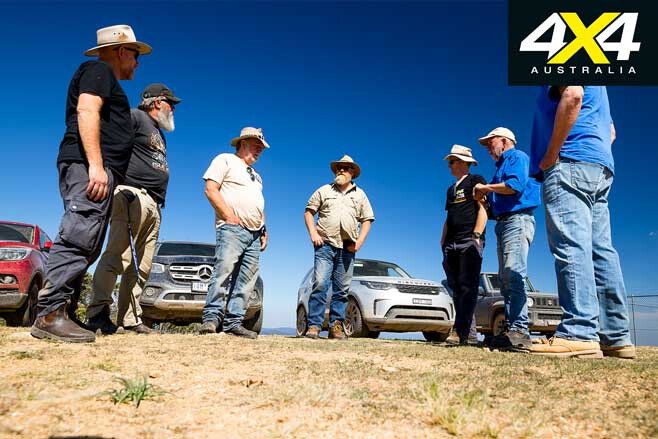
01 – Value for Money What does the vehicle offer against what it costs? Expensive vehicles can be good value just as less expensive vehicles can be poor value.
02 – Breaking New Ground To what extent does the vehicle introduce new and effective technology?
03 – Built Tough How solid and well-built is the vehicle and how will it handle tough off-road conditions?
04 – Bushability How practical is the vehicle off sealed roads and far away from service centres and what aftermarket gear is available for it?
05 – Doing the Job How well does the vehicle do the job it’s designed to do? A family 4×4 wagon, for example, isn’t designed to do the same job as a 4×4 dual-cab ute.
2020 4X4 Of The Year Route
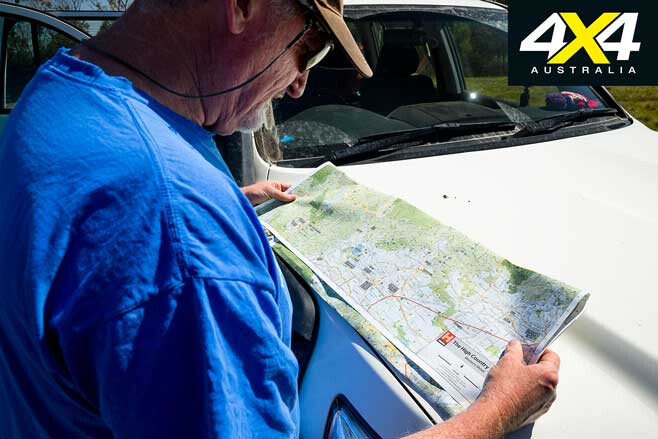
As has been the case for many previous 4X4 Of The Year events, Day 1 of testing takes place at the Melbourne 4×4 Training and Proving Ground (melbourne4x4.com.au) at Werribee, Victoria, where a range of set tracks and obstacles prove to be a great leveller.
The more dedicated 4x4s have the edge here with less scrambling on the hills and exuding more aplomb through the articulation exercises.
The Werribee River was only flowing at a low level so, like most of the river crossings around at present, it was just a splash and well within the capability of all the vehicles on test.
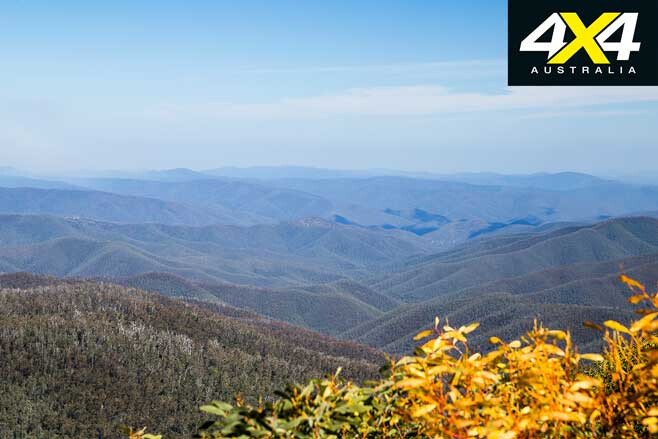
Next we braved peak-hour traffic as we skirted outer Melbourne and headed to Healesville and Marysville, finally finding some gravel roads as we headed through rich forest to Cumberland Junction and over the top of the Great Dividing Range at Matlock. It was bitterly cold with wind-blasted rain as we huddled in a shelter on the crest of the range for lunch.
We headed to Woods Point and then took Johnson Hill Track to cross Gooley Creek (some good camping there) and climbed up to meet the Aberfeldy Road on the top of Johnson Hill.
Dropping off the ridge we wandered down a steep track, bounced through a creek and clambered up some scrabbly rocky steps where the Musso needed just a little extra care to get through without any body damage.
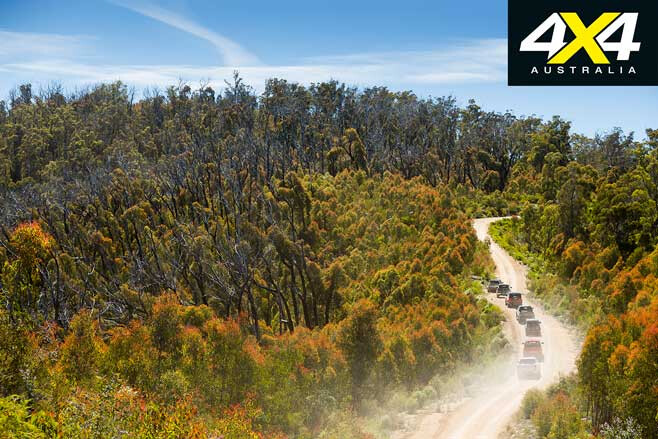
Perched on a knoll, just above the confluence of the Aberfeldy River and Donnelly Creek, we came to Junction Hut where we threw down swags inside the confines of the hut or outside on the partially sheltered verandas.
The following day dawned with a blue sky and the promise of better weather. We waded across the shallow Aberfeldy River and climbed the hill to the Donnelly Creek track junction. The track almost immediately drops to the first crossing of the creek itself, then runs parallel to the creek, crossing it on a few occasions before reaching Store Point. Here we swapped vehicles, as we do each and every hour or so on these extended multi-vehicle tests.
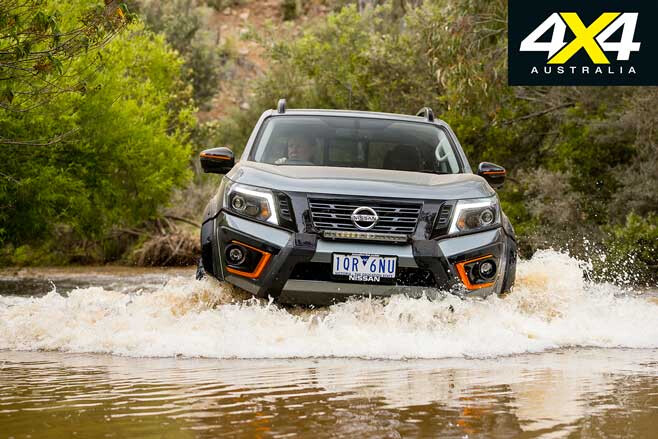
We then climbed the hills through a couple of tight switchbacks to the top of the range and Springs Road. While all the contenders handled the conditions pretty easily, the Jeep and Disco were leading the pack by this stage.
We turned onto Black Range Track and descended through ever-changing bands of vegetation that offered glimpses of views across to Gable End and Mt Wellington which, at 1634m, is one of the highest peaks in the area. We turned onto the Cheynes Bridge Track and that brought us out onto the black top of the Licola Road near the crossing of the beautiful Macalister River.
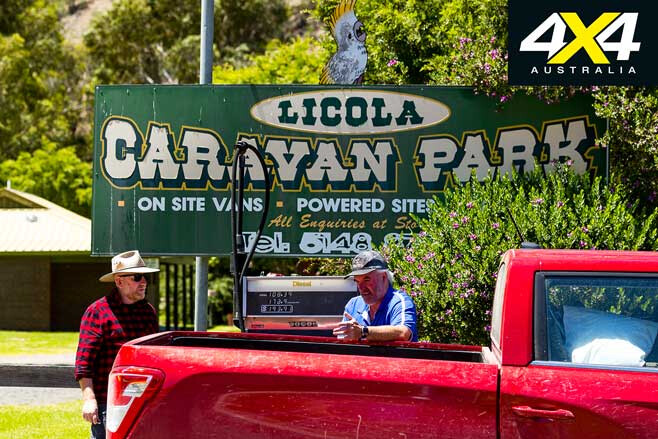
We pulled into the hamlet of Licola (licola.org.au) for fuel and lunch then headed up the main road, losing the bitumen as we crossed the last bridge over the Macalister River and began the long, winding and corner-corrugated climb to Arbuckle Junction. Taking the well-maintained Moroka Road eastwards, we pulled up at Horseyard Hut for the night.
As we clambered out of ice-covered swags to welcome the new day, the campfire was the favoured spot to begin the morning’s proceedings. Starting on Marathon Road we turned onto the Castle Hill Track before veering onto the lesser-used McDonald Gap Track for the long, steep and rough descent to the main Dargo Road.
Our lunch stop was in Dargo before we headed out on Jones Road and then took the Birregun Road where we stopped at the crest of Mt Birregun. From here we headed along Upper Livingstone Road into Omeo before our our overnight camp in the Victoria Falls Historic Area.
The next morning we cruised across the top of Mt Hotham and down the long winding road to Bright where we refuelled. Dusty and a little weather worn, we all turned our respective ways for home, some to Melbourne and others up to Sydney.
LEGENDARY motorsport constructors, Prodrive, has established a new joint venture with Bahraini sovereign wealth fund, Bahrain Mumtalakat Holding, to develop a Dakar Rally challenger from 2021.
According to the British-based company, the new entity, Prodrive International, will develop a new rally raid vehicle specifically to compete in the top level T1 prototype class of the Dakar Rally in 2021.
Prodrive International will also be contracted to run a pair of the upcoming rally cars annually, as well as produce additional customer cars along with performance parts for clients.
While Prodrive made its name in the World Rally Championship, the company’s historical link to the Middle East can be traced as far back as its very beginning, where the team won its first ever event, the Qatar International Rally, which was the first round of the inaugural FIA Middle East Rally Championship.
The team would go on to establish its name with its 19-year association with Subaru in rallying, giving the Japanese company three consecutive manufacturers’ titles, it has also won five Le Mans titles and seven Middle East Rally Championships.
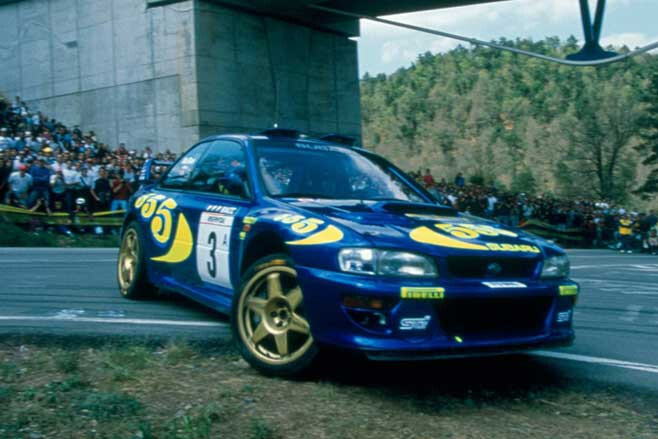
“It has been a long-held ambition of mine and Prodrive to compete in the Dakar Rally. To be able to do so in Saudi Arabia makes the prospect even more special, as the Middle East is where Prodrive started its motorsport journey in 1984,” said David Richards, Prodrive’s founder and chairman. “Dakar is a new and challenging project for Prodrive, but one that I and the whole team in Banbury are relishing.”
The recently concluded 2020 Dakar Rally, which kicked off in Jeddah and finished in Riyadh, Saudi Arabia, was the first time the rally was held in the Arabian Peninsula, with Bahrain involved as one of the big sponsors of the winning X-Raid MINI JCW buggy.