
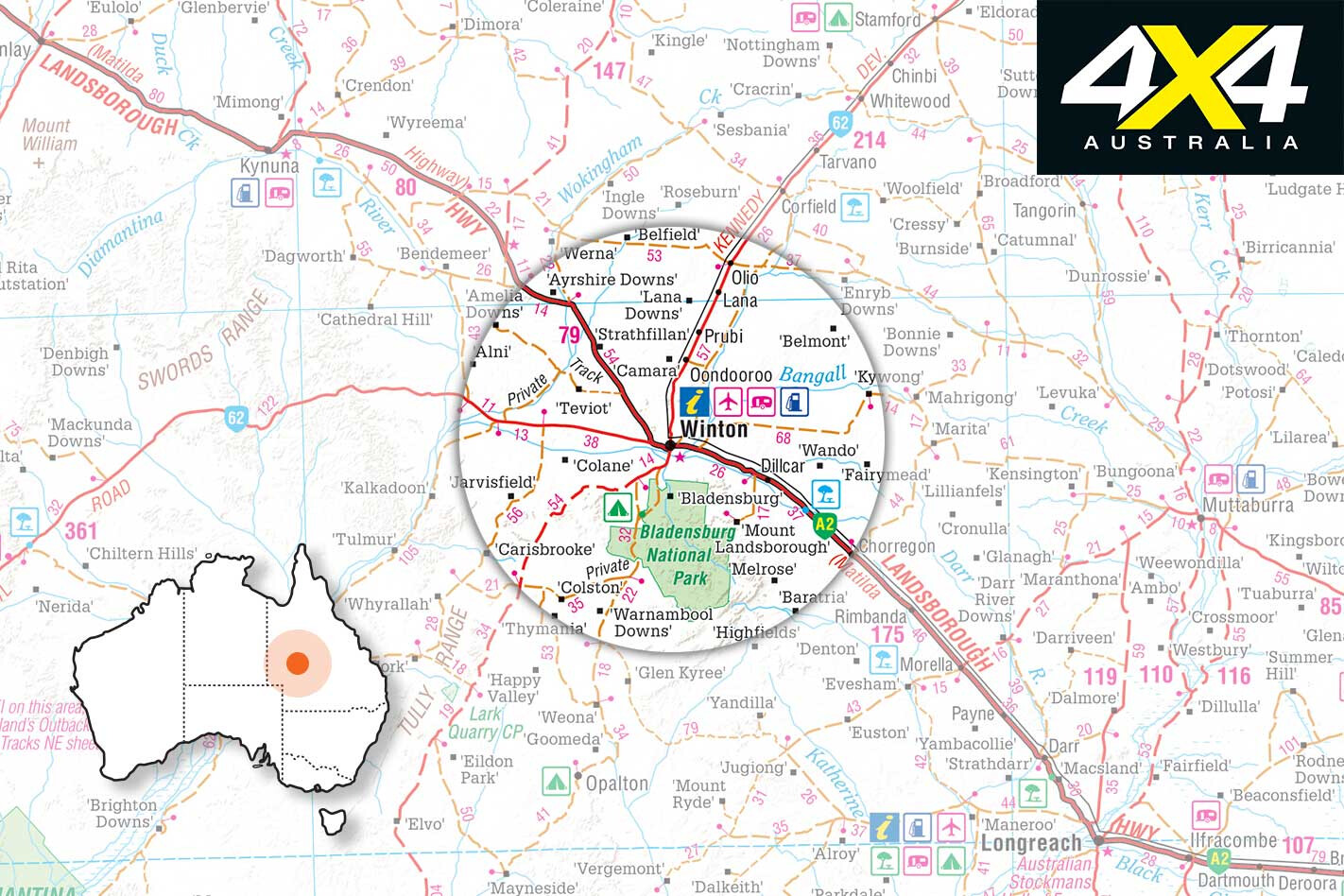
As part of our Outback Queensland odyssey we headed to Winton in far-western Queensland to check out part of the Dinosaur Trail that’s known around the world as the dinosaur capital of Australia. There are actually four parts to the trail; two are located in Winton, which is 1150km west of Brisbane, and the other two are farther north at Richmond and Hughenden.
The Australian Age of Dinosaurs Museum is 25km south-east of Winton and has the largest display of Aussie dinosaur bones in the world, plus you can check out the lab where bones are cleaned for display. The other Winton spot is Lark Quarry, about 110km south-west, where you can see impressions of dinosaur footprints in mud from a stampede that occurred millions of years ago.
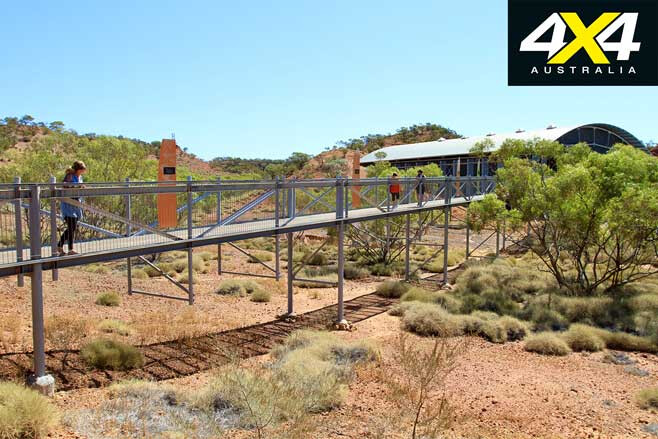
There’s plenty of fascinating history in the Winton shire and, unofficially, it is the gateway to far western Queensland and beyond. If you want to spend some time here to check out Winton on foot, there are a couple of caravan parks within walking distance of town, in which you’ll find a couple of cool old pubs that date back to 1895; Arno’s Wall, which is a huge manmade wall with quirky stuff cemented in it including the kitchen sink; the Waltzing Matilda Museum; various opal stores; and more.
Head 125km south of Winton and you’ll find the working opal fields and ‘town’ of Opalton, which is steeped in history and still offers the chance to find a little colour if you search in the right places. Being so remote, you’ll need to stock up at Winton as there is no phone service, no fuel (carry enough for a good 400km), no shops and, for the majority of this loop, no help of any kind.
The tar ends about 10km out of Winton and the rest of the drive to Opalton is on wide dirt roads. The countryside is flat, with the occasional jump or rise offering views for the next stint in what is a relentless journey over millions of corrugations. The scrub consists of low mulga trees with scatterings of silver-leafed ironbark across the plains, with stands of Mitchell grass covering the ground.
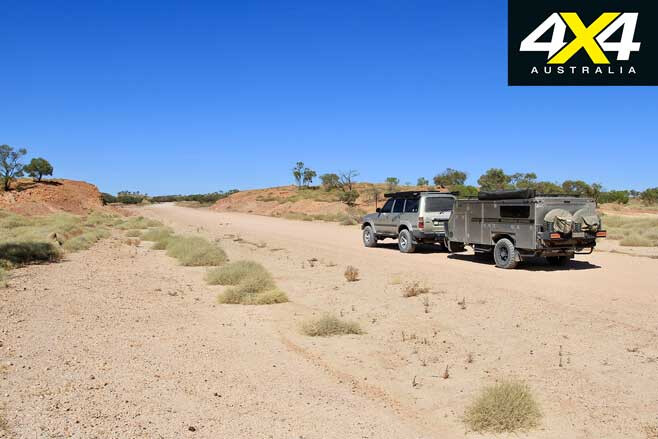
George Cragg found the first opal in the area back in 1888 and a few years later the first mine was sunk. At this time a piece almost three metres long was found here, shaped like a section of pipe. By 1900 there were more than 600 people living here and Opalton was known for the quality and quantity of its precious rock.
Today the town has dwindled to a handful of tough men and women who are still searching for ‘that’ payload. Opalton is also known for its boulder opal, which forms in an egg-like shape; over time minerals pass through this shape to form an opal colour on the inside.
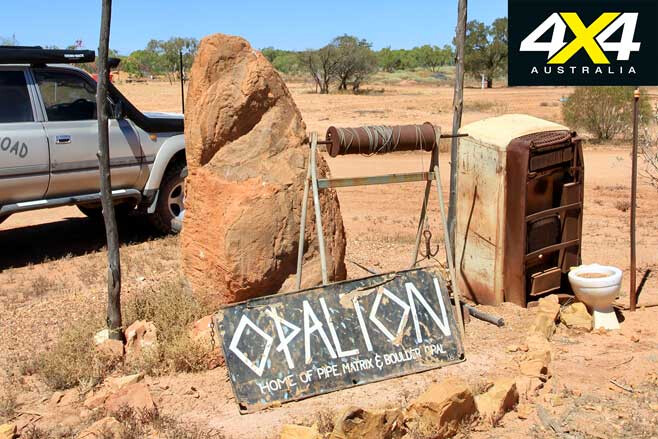
Other than a few shanty shacks and old relics here and there, Opalton doesn’t look like much these days, and that’s the way locals like it; hidden away and hard to find. Camping is at the Opalton bush camp, where for a measly $3 a night you can set up camp, use the bush kitchen and, if you light up the old donkey heater, enjoy a hot shower. We found that if there are a few campers around everybody pitches in to collect wood and take turns in lighting up the boiler.
Scratching around on other people’s property is normally deemed inappropriate around these areas, but most mornings a local will come down to the bush camping area to get a group together for a free tour around the old mines to show how they work, impart the history of the area, show off some old camps and take you to places where you can scratch around for opal.
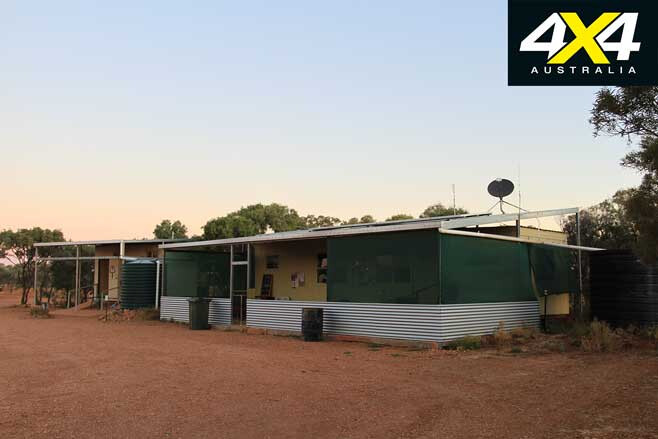
You’ll also see where the old town used to be situated, some unique buildings, and the areas in which the current miners are only allowed to use hand tools (no large-scale machinery). Today the ‘old town’ is just a few relics and signs that point out where things used to be, like the general store, the school, the butcher shop and the miners’ houses.
To get here today takes a good two hours of driving, but getting here 130 years ago must have been one hell of an adventure, walking into what would seem like the middle of nowhere. It’s a bloody harsh environment around Opalton, where months go by with no rainfall and summer temperatures often get towards the 50°C mark.
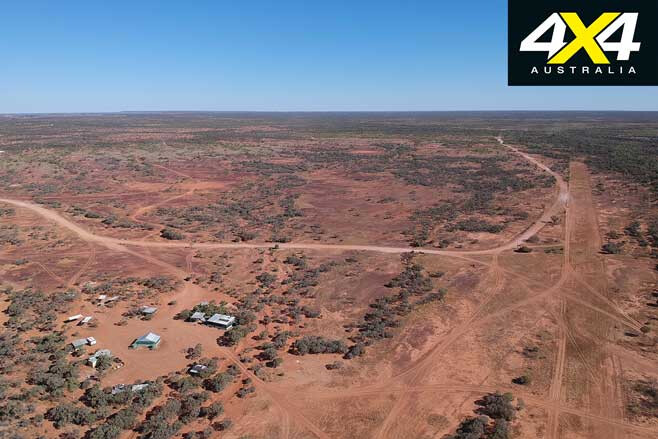
Once a week the town’s 25 or so residents gather at the bush camp for the weekly mail run and a general get-together, as most of the miners’ camps are scattered over 100km². It’s a close-knit community and, even though they might not catch up for more than a week, all the locals still seem to know what’s going on around the place.
The Queensland department of mines has set aside a few acres behind the camping area where anyone can noodle (look for rocks) or fossick. The best way is to take a spray bottle of water and spray the rocks to see if they produce any colour.
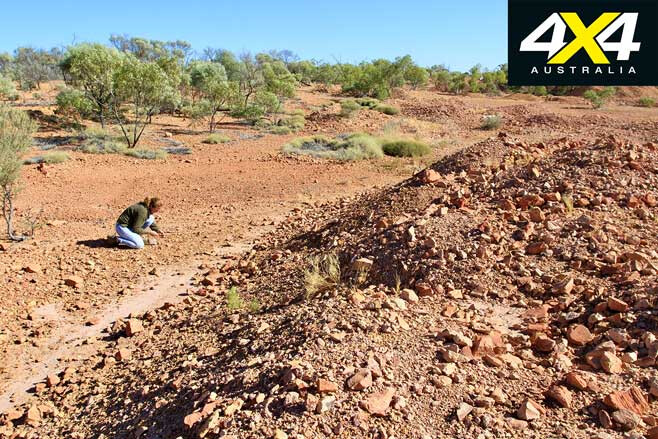
After spending a few days in town and wanting to check out the other highlights of the Dinosaur Trail we headed farther south towards Opalton Creek, which is the only spot in the area where the use of heavy-duty machinery is permitted in the hunt for opal. Here, huge bulldozers carve away at hills and take the tops off mountains looking for bucket-loads of colour, but this comes with high operating costs.
The road south is a prettier one than the road coming in to Opalton, with wide creek crossings and huge white gums lining the creek, along with what seems like millions of red and white termite mounds covering the remaining flat grounds. An hour south of Opalton along Opalton Road is Mayneside Station, where you can explore around the heritage-listed ruins. From here you can head north towards Winton; something like a big V road trip back up Jundah Road.
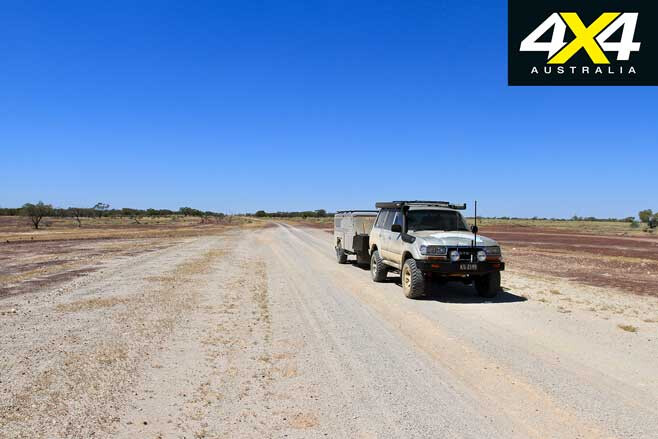
Here the surrounds change to dry and dusty open areas that have little or no vegetation, and livestock has been held here over the years. If you run a good quality GPS, keep an eye out for where you pass over the Tropic of Capricorn; there are no signs on the road, but it’s a bit of a quirky spot to stop for a quick snap.
For the next hours’ drive, Jundah Road remains flat and seems like another never-ending dirt road where the only colour around is red gibber rock under hardened mulga trees. Animal life out here is sporadic depending on the seasons, and we didn’t see any ’roos and only a few crows along the way.
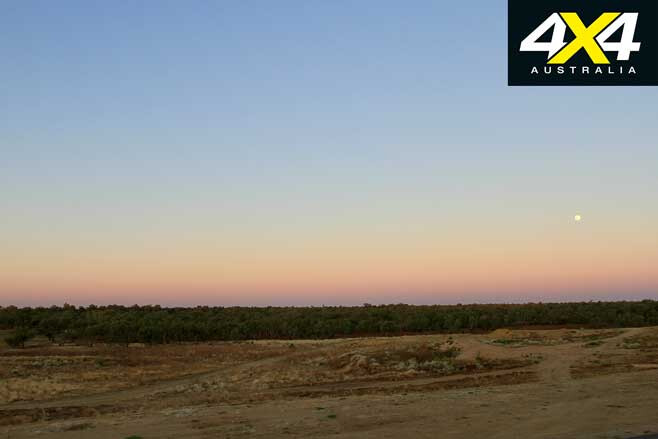
After a while you start to happen upon a few larger jump-up sections where moisture gathers and the landscape changes to taller trees and what seems like tall grasses including Mitchell grass, which is high in nutrition for livestock.
Lark Quarry Dinosaur Trackways is located on this higher ground and is only a few miles off the main road. This is one place that needs to be on your must-see list, as it’s the only place in Australia where evidence of a dinosaur stampede has been discovered. It’s a commercialised place where you can buy food, coffee and cheap souvenirs.
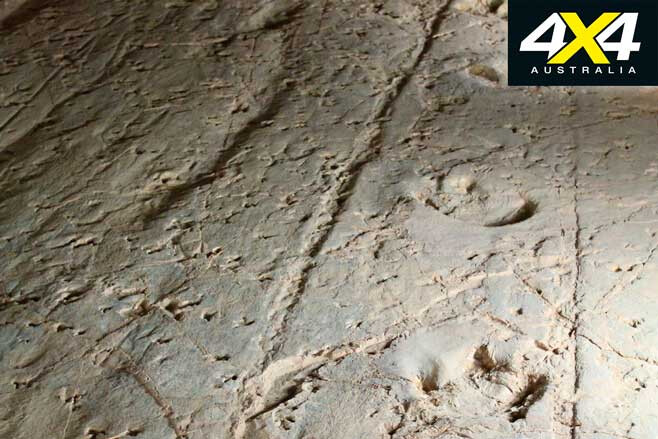
Once inside there’s a short video on how scientists think the stampede occurred, and then you’re taken inside a specially built shed where you can view the footprints in the dried mud. Volunteers run the show out here and share a wealth of information on this area and anything to do with the stampede. This is a great place for those with an interest in Australia’s prehistoric past, when mega-monsters walked the earth back in Gondwana times.
Heading out of Lark Quarry up to Winton involves another two hours of rough, undulating outback roads, where you’ll need to find your own comfortable speed after dropping some air from your tyres. The entire trip is doable with a camper trailer, but you’ll need to be prepared for a good 400km of outback roads that rarely see any maintenance.
No matter what marque you follow or support, the final death of the Holden brand in 2017 was a massive blow to automotive enthusiasts in Australia.
Holden was Australia’s car, and for generations it was the only game in town. Even the other local manufacturers of the time rarely came close to Holden’s popularity with the masses.
Holden didn’t change with the masses and the public weren’t buying what the Lion-brand was offering, so it’s been a fast ride to the scrap heap in recent years. Perhaps if Holden built a 4×4 vehicle designed, developed and manufactured here for Australians this would be different today.
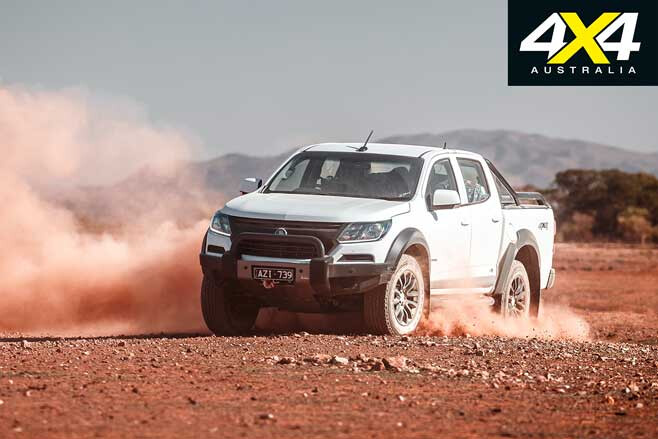
If you disregard the Arthur Hayward-developed and -built Overlander Holdens of the late 1970s, Holden’s history of 4WD vehicles has been closely tied to another former GM affiliate, Isuzu. Unlike Holden, Isuzu continues to exist without GM.
The Isuzu-based Holden Rodeo stemmed from the Chevy LUV ute, which in turn was itself an Isuzu, and it maintained close ties to the Japanese brand up to the current generation Colorado. GM had more input into the current model than ever before, and later in 2020 we’ll see a new Isuzu D-MAX without the involvement of Holden or GM.
Other Isuzu-built four-wheel drives marketed here by Holden include the popular Jackaroo wagon (over two generations of models) and the not-so-popular Frontera, which was closely related to the Rodeo. The Isuzus were good vehicles with a reputation for reliability that modern Isuzus retain to this day, but there was never a 4×4 truly made for Australia.
Back in its heyday, in an era when motor shows were still popular, Holden was also famed for its stunning show-special concept vehicles. The Holden concepts were always a highlight of any Sydney Motor Show and the unveilings were usually met with oohs and aahs by the onlookers. There was a couple of four-wheel drive vehicles among Holden’s concepts, but the one that always stands out in my mind was the Jack8 concept.
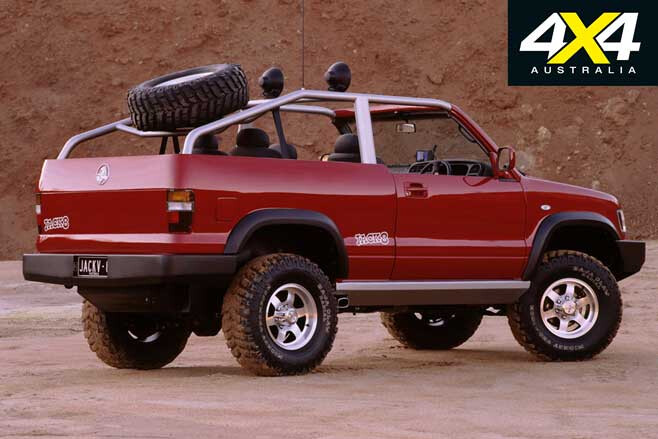
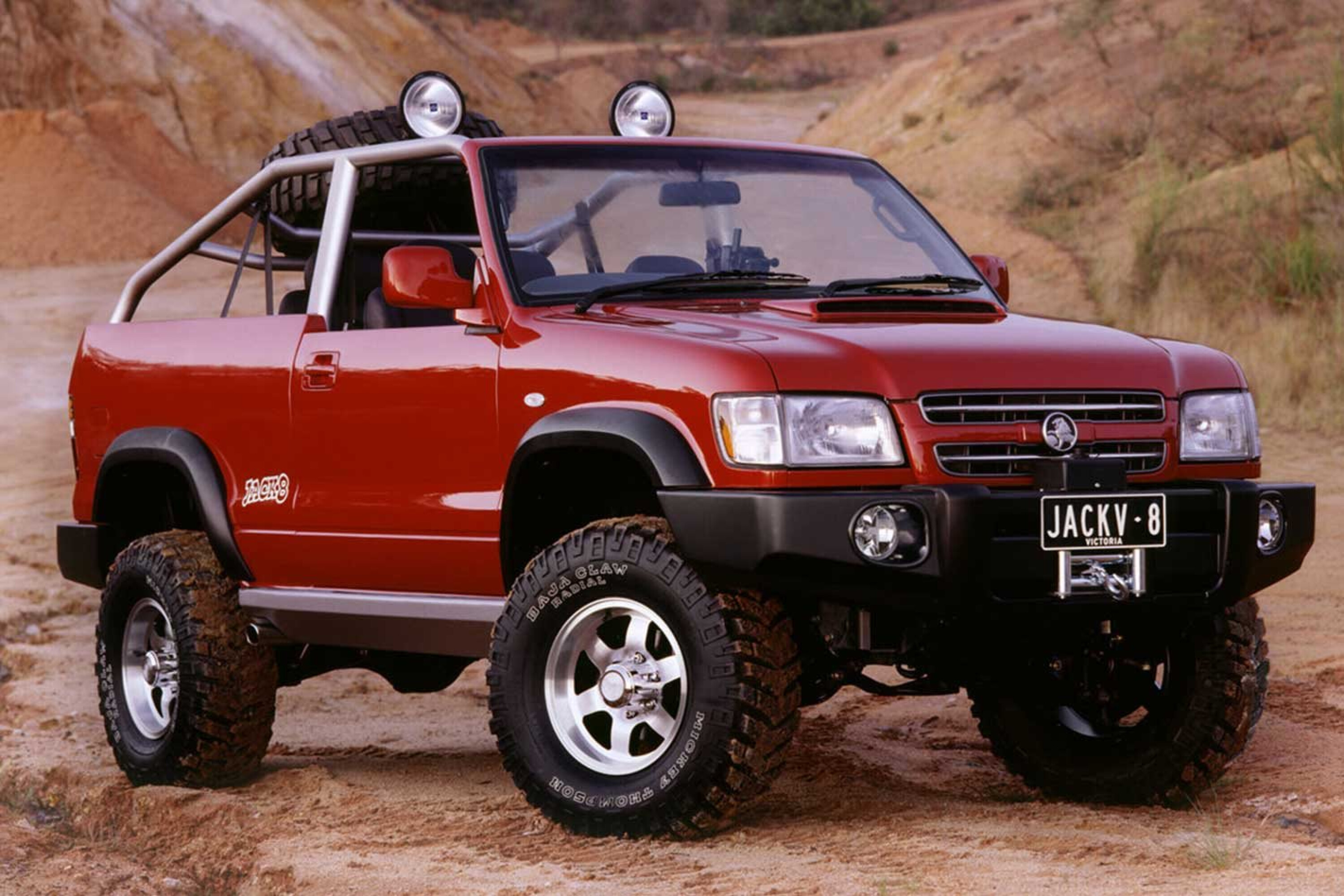
I first saw the Jackaroo-based Jack8 at the Melbourne 4×4 Show when it used to be held in the convention centre, and I loved the look of it with its bright red paint, big tyres and open top. The fact it had a V8 under the bonnet also appealed to my simple tastes, and as I admired it I wondered what would this beast be like to drive?
Holden has kept many of its one-offs, show specials and concept vehicles, but I’ve never seen the Jack8 again. Who knows where it is now?
There’s a hell of a lot of portable fridge options these days and while some manufacturers persist with old-school designs and continue to trade on their reputations, newer entrants to the market are shaking things up with more innovative designs and clever features.
One of the newer brands around is myCOOLMAN, and its fridges certainly fall into the ‘innovative design and clever features’ category. There are nine fridges in the myCOOLMAN line-up, ranging in capacity from 30L to 105L, and it’s the compact 30L model that I’ve been running for the past couple of months.
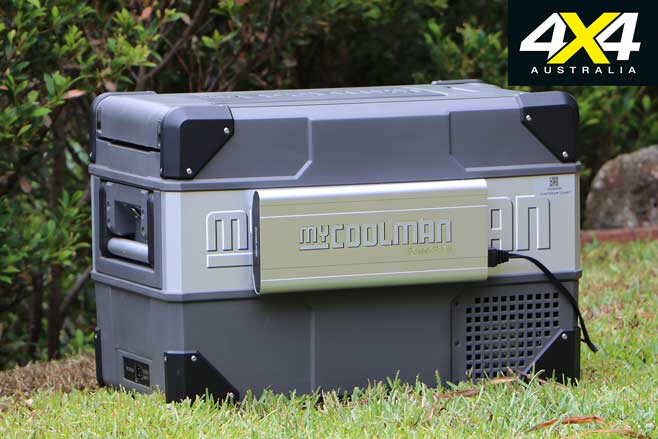
Called The Transporter, this 30L fridge is ideally suited to use in smaller 4×4 wagons, or for shorter trips such as weekend escapes with just a couple of people. The fridge’s small footprint (610mm x 340mm) means it doesn’t take up too much room inside the back of a small 4×4, and it’s relatively low height (424mm) means the lid will open completely in the back of a vehicle, and you don’t have to reach up and over too far to access fridge contents.
It’s also light at just 17.5kg, making it easy to lift into and out of the back of a vehicle, even when loaded up with food and drinks. The fridge also has big, sturdy handles that double as tie-down points, and these fold flush when not in use.
The fridge has a sturdy plastic cabinet and removable lid, and a section on each side that magnets can stick to (for the optional Power Pack), as well as reinforced panels on each corner. With a flush-mount control panel, flush lid release, and handy recessed bottle openers at each end, there’s nothing ‘sticking out’ that could otherwise get caught on something such as vehicle trim or luggage.
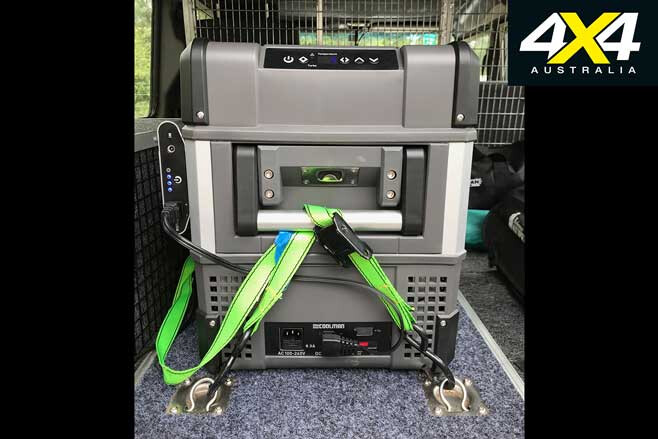
The 240V AC and 12V DC inputs at the front of the fridge are easy to access, and there’s an additional 12V DC input at the other end, which is very convenient depending on where your vehicle’s 12V power supply is. There’s also a handy USB power outlet for charging phones and other devices.
The flipside of having small external dimensions is the 30L fridge’s small interior cabinet. It has a split-level design, essentially to make space for the compressor, and in total it will hold up to 32 x 330ml cans.
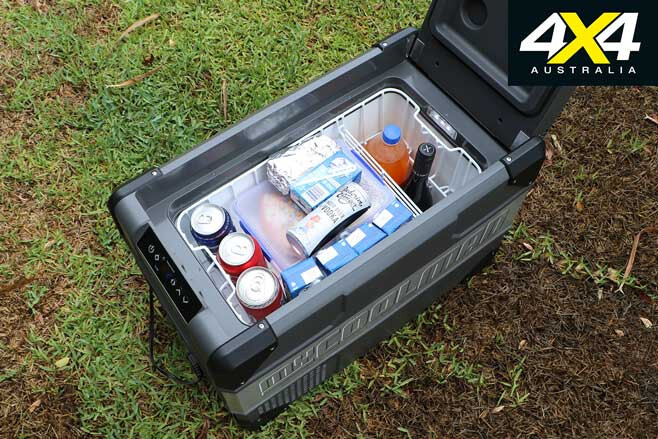
The fridge is supplied with removable baskets that allow you to keep food and drinks separate, and a fold-up section on the top basket means you can stand a couple of larger soft-drink or wine bottles upright. Other features include an interior LED light and a drain plug to aid cabinet cleaning.
The fridge operation is straightforward. There’s an on/off button, a turbo button (for faster cooldown) and up and down buttons to set the temperature. The digital display can show set temperature or cabinet temperature, and the user can set the low-voltage cutout point that best suits their requirements.
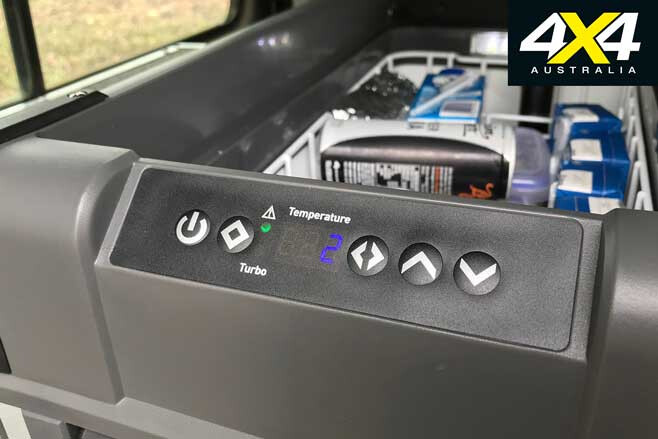
On test the myCOOLMAN 30L had no problems keeping food and drinks cold even on hot days, it cooled down from room temperature quickly with the turbo function engaged, and it’s remarkably quiet in operation.
You can monitor and set cabinet temperature from a mobile device thanks to Bluetooth connectivity – just download the free myCOOLMAN app, scan the code on the side of the fridge and connect. The app is super convenient and easy to use, and extra fridges can be added for those with more than one myCOOLMAN device.

While a 30L fridge won’t be for everyone, it’s certainly well suited to those with small vehicles. Another benefit is just how portable a fridge like this myCOOLMAN is, not only thanks to its small size but also its light weight and sturdy carry handles; I have swapped it from vehicle to vehicle a number of times, and have also used it away from a vehicle with myCOOLMAN’s optional Power Pack.
At $995, The Transporter 30L is good value for money, and it’s covered by a three-year warranty, with five years coverage for the compressor.
RATED Available from: www.mycoolman.com.au RRP: $995 (30L The Transporter); $399 (Power Pack) We Say: Good value, feature-packed compact fridge
myCOOLMAN power pack
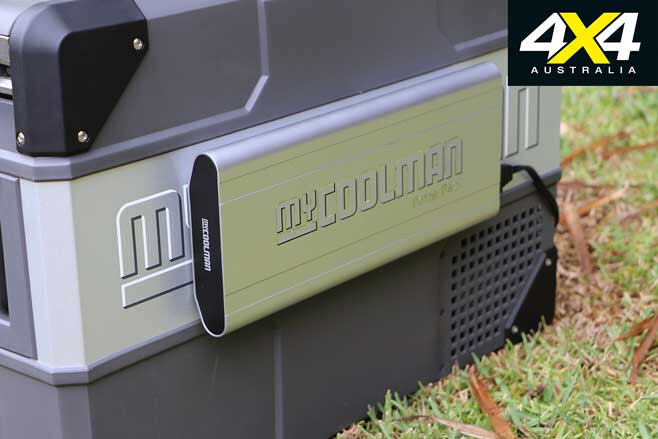
Portable power packs are nothing new but in the past if you wanted one with enough grunt to power a fridge, you’d be looking at a big, heavy device. Thanks to lithium-ion battery tech, the myCOOLMAN Power Pack is not big and heavy, but it still has enough grunt to power The Transporter 30L fridge for up to 18 hours.
The 15amp/h Power Pack weighs 1.65kg and has a magnetic base so it can ‘stick’ to the side of the fridge. It is supplied with a charging cable and a myCOOLMAN fridge cable, and the latter can be plugged into either of the 30L fridge’s 12V DC inputs.
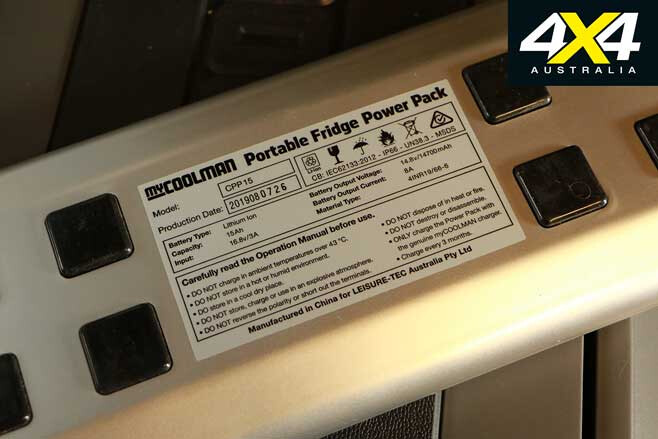
With the Power Pack you can keep your fridge running when it’s not connected to your vehicle’s power supply, which is ideal when camping where there are bollards, or for when you’re drinking at the campfire and you can’t be bothered getting up to grab another beverage (yes, first world problems are real). It’s also ideal for those who don’t have a dual-battery system in their vehicle, and who want to keep their fridge running when the vehicle is turned off.
The Power Pack can be charged from 0 to 100 per cent in five to six hours and has short-circuit protection, over-current protection, over-charging protection, over-discharge protection and over-heat protection. On Christmas Day I ran The Transporter fridge off the power pack for eight hours in the back of a stinking hot wagon and the drinks inside were still icy cold for the shotgun-ride home.
The Power Pack is covered by a 12-month warranty, and it can be used on all myCOOLMAN fridges, with run times dependent on fridge size (105L fridge up to eight hours).
Following the launch of the limited-edition Land Cruiser 200 Sahara Horizon, Toyota Australia has rolled-out a similarly-equipped Horizon variant for its smaller sibling, the Prado.
Like the Horizon-spec Land Crusier 200, the Toyota Prado Kakadu Horizon is based on the range-topping Prado variant and brings several exterior styling tweaks.
Priced from $89,590, the Horizon treatment adds $5000 over the standard Prado Kakadu’s asking price.
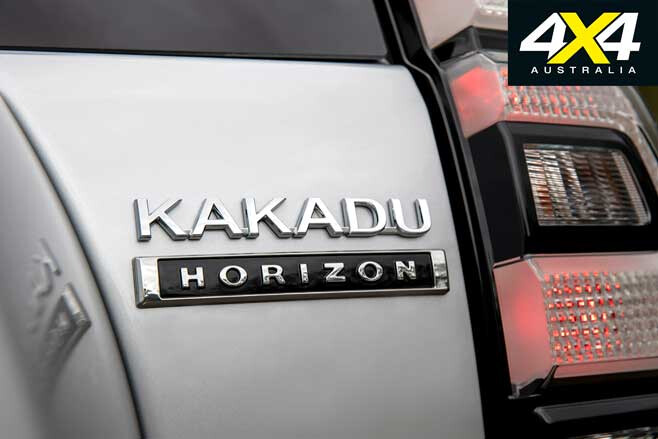
The tweaks include a front bumper spoiler, rear bumper spats, chrome side moulding and accented side mirrors, a pearlescent paint finish and clear taillights.
Inside the Prado Horizon adds two rear USB charging outlets and illuminated front scuff plates to complement the Kakadu-spec’s list of interior features that include three-zone climate control, leather-accented heated and ventilated front seats, electric folding third-row seats and rear DVD entertainment system.
Aside from the exterior and interior additions, the Prado Horizon still maintains the Prado Kakadu’s 130kW/450Nm 2.8-litre turbo diesel engine with a six-speed automatic and dual-range four-wheel drive system, as well as its adaptive variable suspension and rear air suspension setup.
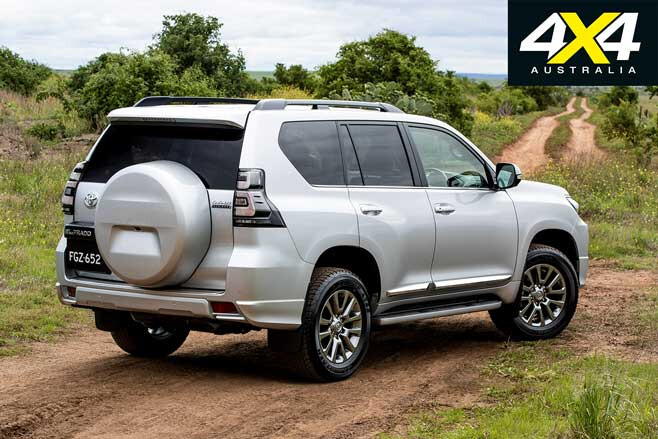
“As the smaller sibling to our LandCruiser 200 Series, the Prado has a strong reputation for its go-anywhere off-road ability and the top-of-the-range Kakadu allows customers to get off the beaten track in superb comfort,” said Sean Hanley, vice president of sales and marketing for Toyota Australia, in a statement.
“This special edition Horizon variant now adds a further degree of class and style making it a standout for a night out in the city as well.”
However, unlike the LandCruiser 200 Horizon, the Prado Horizon doesn’t have a limited build number.
Launched in 2009, there’s no sign yet of a replacement on the near horizon… but its unassailable lead in the 4×4 sales race shows that the enormously popular Prado still provides people with exactly what they need.
Sometimes, bad things happen on trips, like several years ago when we pulled up at camp and discovered our 20-litre drinking water container had sprung a leak. It was empty and the only water available to us was from a nearby waterhole, quarter-full of mud and covered in scum from cow crap.
We knew charcoal was used for filtering, so we burned some big logs and piled up a heap of charcoal, which we tipped into a bucket partly filled with the crappy water and later strained the water through a bed sheath.
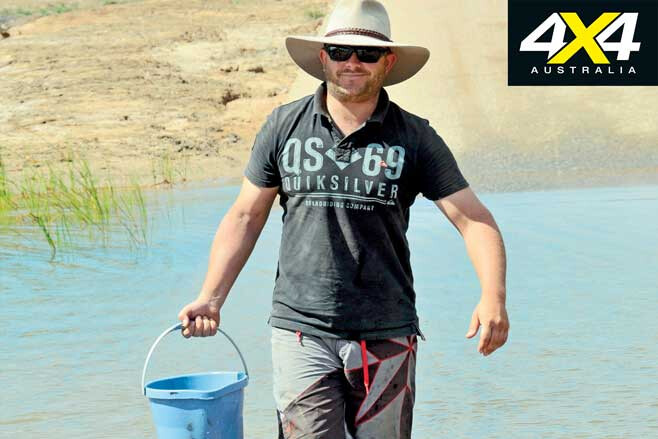
The mud had settled, but the taste of the water was not that great, even after boiling it for five minutes. Still, it was okay for cooking vegetables and making tea, so long as you didn’t mind your food tasting like charcoal. These days I just make sure I carry two water containers.
In those early days we didn’t have ice and Eskys, so taking cold beer bush was not an option. A bottle of OP Bundy rum, a pannikin and a water bag hung from the bullbar served us well. A canvas water bag keeps water reasonably cool, but you had to get used to the taste of the bag.
We used to take a few bottles of beer which could be kept cool by putting them in a potato sack and sinking it into a deep waterhole at the end of a rope. That worked very well until, on one trip, a croc ripped the bag open and spilled the beer out. No one was game to dive in after it. That sort of stuff makes modern men cry, but there were no crying sports stars about in those days; men didn’t cry even over spilt beer, though I did notice some damp eyes…
Another beer-cooling method was to put the bottles in petrol. That cooled them down quickly, but you had to wash the petrol smell off before you could drink it. It was not very safe for smokers, however, especially if they sported a beard.
Love Camping
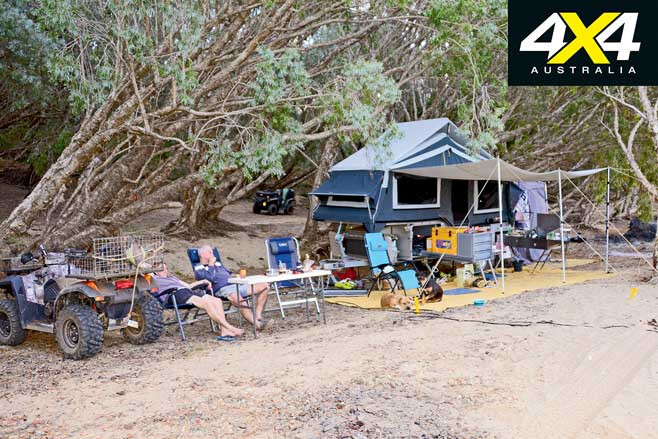
I have been caught out by flooding during unseasonal storms many times, but during one unforgettable trip we had to erect our tents in the middle of a black soil road after being trapped between two flooded creeks, south of Burketown, Queensland.
There were three vehicles in the party and we lived in the rain and mud for four days before our tyres found traction and the creeks dropped low enough to cross. I invested in a set of mud chains after that and used them on a regular basis. Mud does little for relationships, and one bloke in the party got a bit snappy until someone sat him on his backside in the gooey stuff.
Another bloke had his wife along and at the end of the ordeal he reckoned he could now only love a woman who would sleep in the mud with him, eat tin-can rations and drink warm beer and OP rum. This couple recently celebrated their 54th wedding anniversary, so the formula worked.
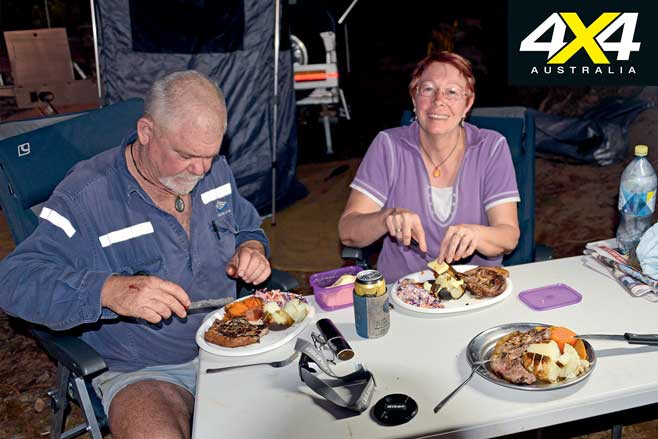
Campers are subjected to many ordeals: breakdowns, crocodile attacks, snake and insect bites, extreme cold and hot days, rain and flood, accidents, poor food, bad choice of company, no beer, and various other hazards and hassles. But we keep on going back because we love the bush and driving to wilderness places with our fourbies, to fish, hunt, prospect or hike. I have lived and loved through all of the above and still haven’t learned.
I must admit, however, that things are different nowadays and I have many comforts that were unheard of in days gone by. The portable car fridge comes to mind, allowing you to have fresh food and, of course, cold beer. I love a cold beer or two after a hot day in the bush or on the water. It’s a natural thing to do, especially in company of a few good mates when reliving the day’s events and sharing lies and jokes.
Outdoor Food and Comfort
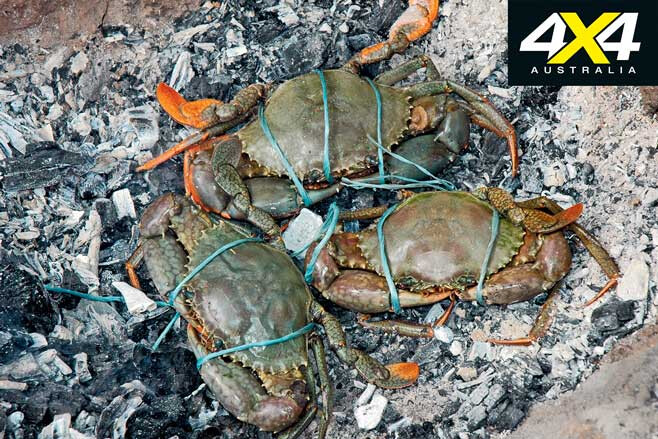
It’s marvellous how a simple meal like a piece of barbecued steak or sausage and an onion on a slice of buttered bread can taste when you’re out in the bush, but try serving something this basic up for dinner at home and see how it goes down with the family.
Good food is directly linked to enjoyment because when people are active and do things they generally don’t do at home, they tend to eat and drink more. Camping in the bush is not enjoyable if the food is bad, because having good food is paramount – better still if someone can actually cook it.
We once lived on fish and wild pigs for 10 days because someone had left all the cold-store food – steaks, bacon, eggs and more – at home in the fridge. On another trip we had no matches or lighters between three vehicles (all diesels) because all were non-smokers, so we spent much of our time rubbing sticks together trying to get a fire going.

Sometimes you have rotten luck like the time we struck really bad corrugations on a Cape York trip. We had several cartons of XXXX in the tray-back and by the time we reached our destination we discovered that all but a handful had sprung leaks from rubbing together. These days I wrap beer cans in newspaper if they are loose.
On another trip, while filming several 4WD segments for the show Escape with ET, the fridge door on the camper trailer had not been pinned and it jarred open. This wasn’t noticed until the end of the day and by this time $300 worth of meat and cold goods had gone off. At least the crows, kite hawks and dingoes were well fed.
Miss out on a good night’s sleep and you get cranky. On one fishing trip we all left our tent screens and weather flaps open for better airflow so they’d be cool when we returned, but a late wet-season thunderstorm beat us back to camp.
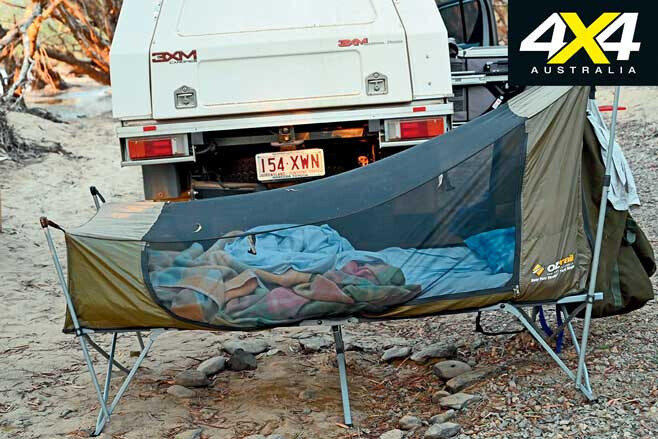
In fact, it was a good thing we weren’t there when the storm hit because half the camp had blown away; my tent fly was in the river and the tree to which it had been tied was struck by lightning. Of course, everything was wet, including our bedding. That was one miserable night I’d like to forget.
Getting wet from torrential tropical downpours is an occupational hazard when fishing and I have learnt to keep a couple of light ponchos with my life jackets – just in case. Another resides in my Can-Am quad after I got caught out in a heavy shower one day and almost froze to death on the ride home. Ironically, I’ve never been caught out in the rain since I stored the ponchos in the boat and in the quad.
Avoiding the Pitfalls

I used to spend much of my time promoting guided safari hunting and fishing operations across the tropics. These guys supply everything, including great food and accommodation.
The lodges and camps are generally full of good people with similar interests and the atmosphere and mateship is often awesome – or boring when the rich talk rubbish about stock markets, good wine, cheese, bad women and missed putts on the golf course!
But in the last few years I have gone back to basics by loading the Hilux and heading out to remote places where I camp and fish in the good company of my own choice. We share the cooking and other camp duties and, in general, are carefree in what we do.
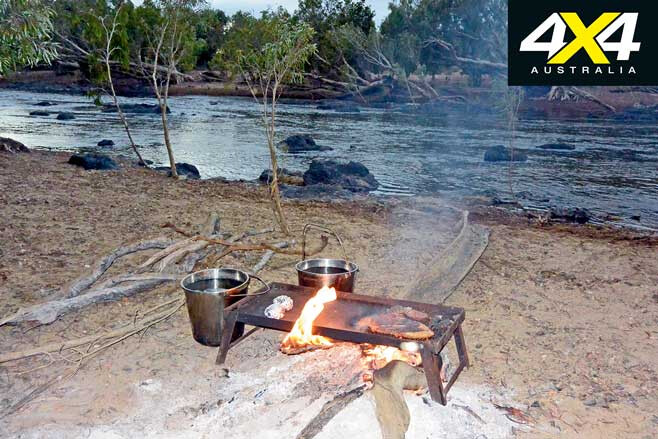
Those who join us in other vehicles all have a role. We have a backyard barbie beforehand and work out who will do the shopping for the trip, as we all share the same camp-cooking facilities and kitchen.
Money is collected and handed to the person who does the groceries, while someone else is responsible for the cooking gas, stove, camp kitchen, generator, shower room, utensils and the like, because there is no sense in doubling up on stuff in another vehicle when it can be shared by all. It is not rocket science to share and allocate duties and gear.
Eat Well
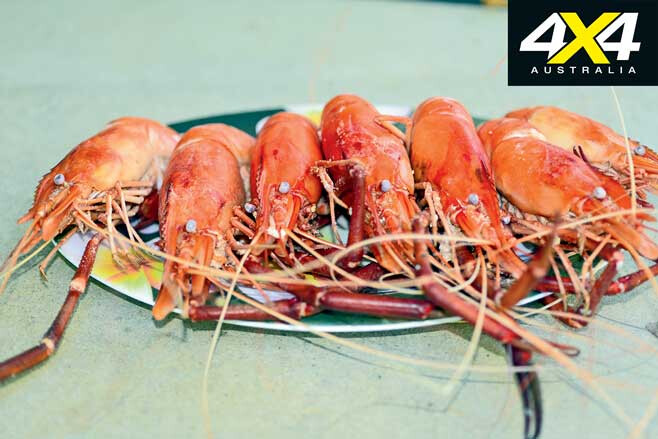
Breakfast is ignored by some people, while others eat a full brekky of bacon, eggs and toast, washed down with coffee or tea. Generally, lunches are prepared in camp by someone not engaged in cooking duties. When we fish, we cook fresh fillets on a small portable butane gas cooker in a frypan – in the boat – for lunch. Fish fillets, fried in a little butter, with an egg, onion and tomato slices, placed between slices of buttered bread, makes for a great lunch, especially on a cool day.
Dinner can be barbecued steaks, a camp-oven roast, fish of the day, or whatever takes your fancy, because modern car fridges and iceboxes allow us to take cold goods into the bush for extended periods. Being isolated in the bush, or simply by distance, means – unlike the old days – you don’t have to rough it anymore. Eating dried or tinned food is for lazy campers and for those who can’t cook.
I learned long ago that taking the rough out of roughing is commonsense. These days I don’t have to drink muddy water because I have a LifeSaver Jerrycan and cold beer in my Engel fridge/freezer. Man, you gotta love modern camping…
This comparison test was well entrained when the somewhat inevitable news broke that General Motors was closing the Holden brand in Australia. Not that we have a Holden – per se – here, but rather a Holden Special Vehicle or HSV, which is half Holden, the other half being Walkinshaw Performance, tweaker of fast cars.
And while Holden may be closing in Australia, HSV will be staying through a proposed ongoing relationship with General Motors Specialty Vehicles. Whether that means the HSV SportsCat, which is based on the Thailand-made Holden Colorado will continue, is however up in the air as GM has also closed its Thai operations. That means the Colorado (and variants) will only be built at GM’s North American and Brazilian plants, which currently only produce left-hand drive models.
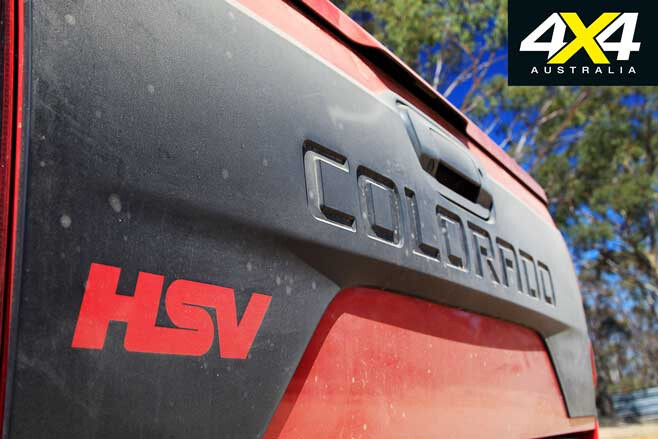
Still that may make it just the right time to buy a HSV SportsCat, given its potential collector’s item status as much, much more than a lifted, stickered and re-booted Colorado, but something that’s worthy of the HSV badge.
There’s an irony here too in that the SportsCat’s adversary, the Nissan Navara N-Trek Warrior, has been created by Premcar, which in an earlier life was Tickford Vehicle Engineering, the company behind Ford Performance Vehicles, the long-time adversary of HSV.
So here is in part a showdown of local engineering nous with a Holden verses Ford flavour primarily aimed at making a tougher and more off-road capable ute than the standard offering.
HSV Colorado SportsCat SV
In creating the SportsCat, HSV has done so much more than meets the eye…
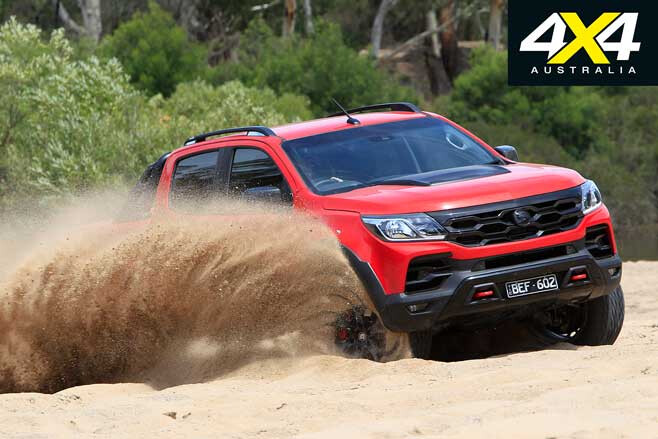
HSV made its name off the back of Commodore V8s but with the demise of the locally built Commodore in late 2017 it turned its expertise to the Colorado and came up with the SportsCat. Given the Colorado was, and still is, Holden’s best-selling vehicle, and Australia’s broader love affair with dual-cab utes, it was the obvious thing to do…
Now you might think that the HSV makeover would mean more engine power but that’s not the case. HSV has looked to bring more ‘performance’ via a better chassis where the changes run far deeper than just a new tyre/wheel package and a lift kit.
Powertrain and Performance
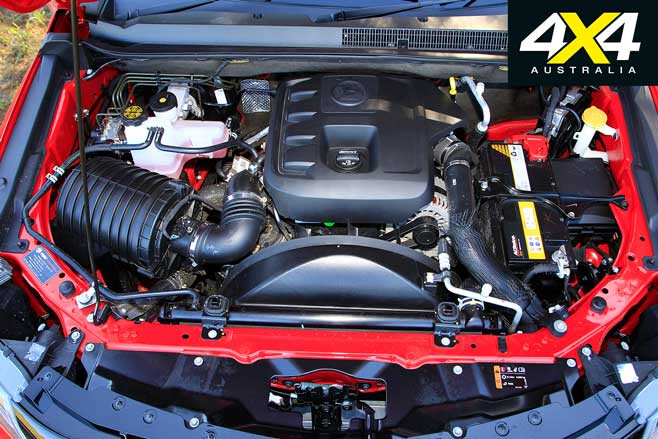
Both SportsCat models, the more expensive ‘SV’ we have here and the ‘V’, come with a standard Colorado powertrain, a VM Motori-sourced but GM-massaged 2.8-litre four-cylinder diesel backed by a GM six-speed automatic. This powertrain first appeared in 2012 in the then new-generation Colorado but was heavily and very successfully revised for the 2017 model year. Buyers also have the option of a six-speed manual.
This engine lives up its healthy claim of 147kW backed by its solid 500Nm of torque and gets on with the job nicely, all helped by a very proactive and sporty automatic gearbox. The taller overall gearing brought about by the SportsCat’s bigger tyres and the marginal increase in aero drag from what is a wider and taller vehicle knocks a little off the performance compared to a stock Colorado but it still feels relaxed and effortless in general driving – a little more so than the Warrior – and eager enough when asked to give its all.
With its midlife MY17 revamp, the Colorado’s powertrain became smoother and quieter than before but it’s still not the last word in refinement, but niether is the engine in the Warrior, so no real winner here on this count. Points however for the SportsCat’s gearbox, which seems to always pick the right gear at the right time, something that the seven-speeder in the Warrior doesn’t do as well.
On Road Ride and Handling
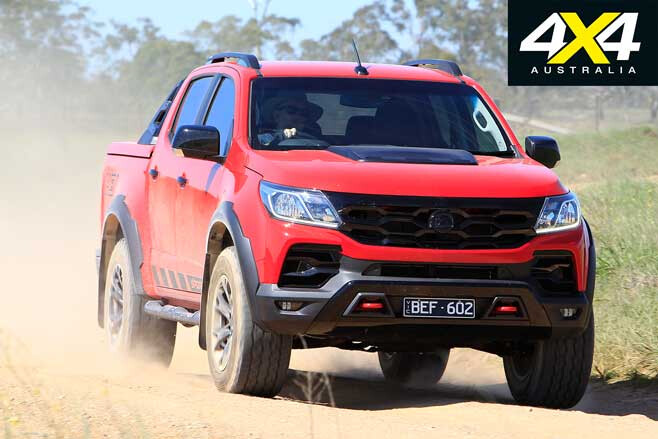
While the obvious changes – the taller and wider AT tyres and 45mm ride-height increase at the front – are aimed at improving the SportsCat off road, less obvious are the changes that make the SportsCat better on road.
These run deep and start with bracing the top mounts for the front springs and dampers. The standard pressed-steel top mounts for the front ‘struts’ are welded to the chassis rails behind the struts but are effectively open at the front.
What HSV has done is brace the front of the strut top-mount back to the chassis via a steel tube looped up and around the strut, which helps eliminate flex in this critical area and thus achieve better suspension control especially given the increased loads induced by the 30mm wider track (via wheel offset), and firmer front springs (110N/mm) and specially tuned and firmer MTV dampers.
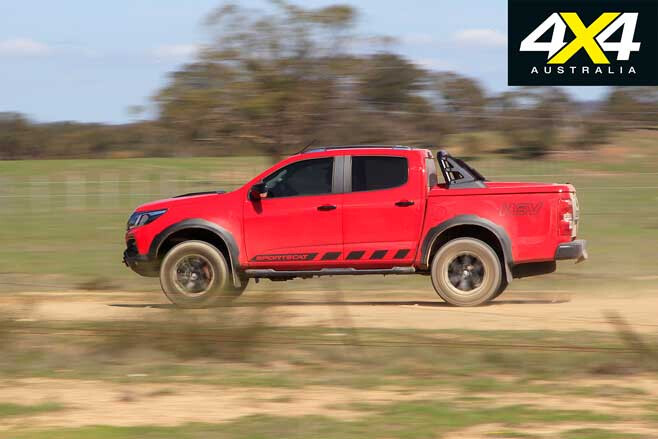
The SV model we have here also gains a real anti-roll bar that cleverly ‘decouples’ automatically when you engage low range. HSV engineers have also retuned the Electronic Stability Control to suit the heavily revised chassis.
The end result of all this is, and despite the extra ride height, the SportsCat is more dynamically engaging on-road, and the faster you drive it the better it feels. The ride is firm, even a little firmer than the already firm Warrior, but the control and confidence, especially compared to a standard Colorado is excellent.
Excellent feel too from the SportsCat’s electric power steering, which is sharper than the Warrior’s and with the extra benefit of very light low-speed manoeuvring.
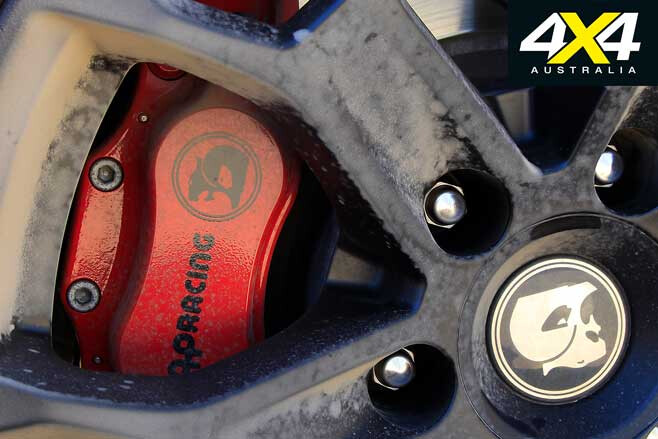
Last but certainly not least, the SV SportsCat also gets competition-quality AP Racing four-piston front brake callipers and big 362mm x 32mm front brake rotors, which provide braking power and feel far superior to that of the Warrior.
Off Road
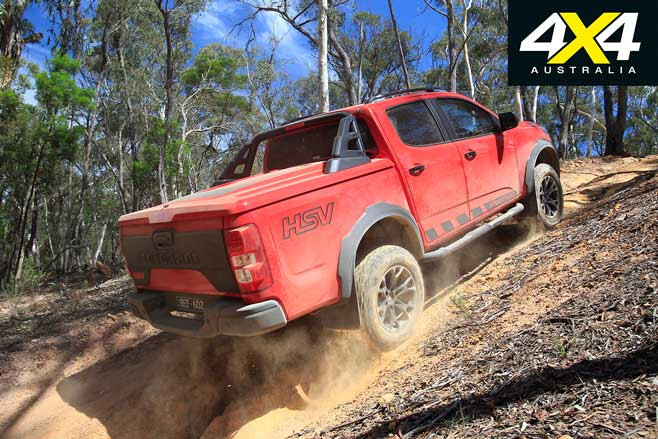
The SportsCat runs on 285/60R18 Cooper Zeon LTZs, which not only provide a more aggressive tread pattern than the standard Colorado 265/60R18 road-pattern tyres but add around 20mm in ride height all round. In addition the new springs provide another 25mm in lift at the front, which gives the SportsCat a more neutral stance than the nose-down look of a standard Colorado.
Compared to the Warrior, the SportsCat’s significant off-road advantage is that it offers more wheel travel and a more compliant ride off road. The extra wheel travel also means the electronic traction control (ETC) doesn’t need to work as hard on broken and uneven ground, but is effective when it does.
Part of the Colorado’s 2017 upgrade, which flows onto the SportsCat, is second-generation ETC with a specific off-road program that activates when low-range is engaged. As mentioned, the SV’s rear anti-roll bar also automatically decouples when low-range is engaged, so therefore doesn’t restrict the wheel travel as it would if it remained ‘attached’.
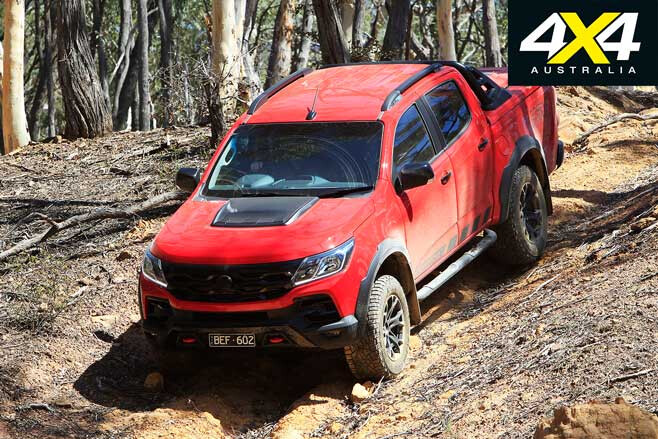
What the SportsCat doesn’t have compared to the Warrior is a driver-activated rear locker, but with the extra wheel travel and more effective ETC, it does well without it.
Not so good are the two front recovery hooks. They look tough but due to their shape and the surrounding bumper mouldings don’t easily accept shackles. As with the Warrior, there’s also no recovery hook at the rear.
Cabin, Accommodation and Safety
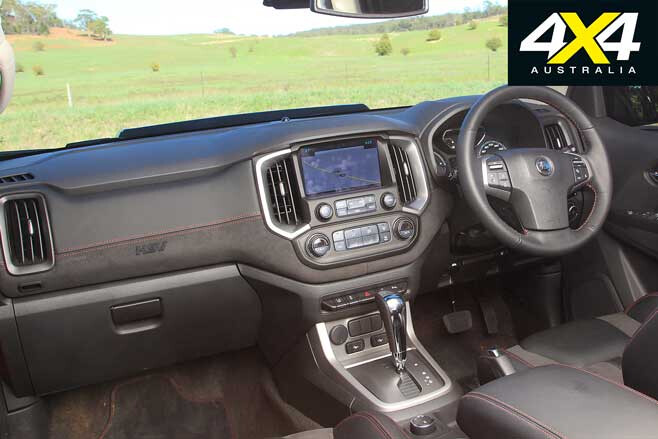
Climb aboard the revamped SportsCat and you’re greeted by a bespoke interior that includes new leather and suede trimmed seats, a new and thicker leather-trimmed steering wheel and new HSV branding on the headrests, instrument panel and floor mats.
The sports-style front seats are heated, comfortable and supportive, but there’s no steering wheel reach adjustment for the driver. The cabin feels notably bigger than the Warrior and while that doesn’t make much difference up front, rear-seat passengers will certainly appreciate the difference. Safety-wise the SportsCat offers a five-star ANCAP rating and a good dose of safety kit (see What You Get) even if it falls short of automatic emergency braking.
What You Get
The SportsCat comes with either a six-speed manual or a six-speed automatic in both spec levels. Standard equipment includes leather/suede trim, heated front sports seats (with electric adjust for the driver), satnav, auto headlights and wipers, Apple CarPlay/Android Auto and a rear-view camera. Safety kit runs to seven airbags, tyre pressure monitoring, lane-departure warning and forward-collision alert.
The SportsCat V starts at $62,490 for the manual. The 6-speed auto adds $2200 while an additional $4300 will get you into the SportsCat SV, which brings the ‘racing-spec front brakes and the rear, auto-decoupling swaybar. Optional (+$2900) on both models are SupaShock remote-reservoir dampers while the SV ‘adds’ can also be optioned on the V.
Practicalities
If you’re looking to do a bit of ute-type work then the SportsCat offers more than the Warrior in terms of tub size, payload, GVM and GCM. Put simply, the SportsCat is bigger and beefier. Both still offer a 3500kg tow rating but if the tow-performance of the standard donor vehicles is anything to go by we would put our money on the SportsCat for heavy towing.
Both SportsCat models come with a hard tonneau complete with a very handy quick release system for easy removal, although this requires at least two people. A load-restraint system and tub liner are offered as options.
On test the SportsCat proved a little thirstier than the Warrior, and has four-litre smaller tank, so suffers a little in terms of touring range.
Nissan Navara N-Trek Warrior
Thanks to some local but factory-certified engineering the N-Trek Warrior is the Navara we have always wanted.
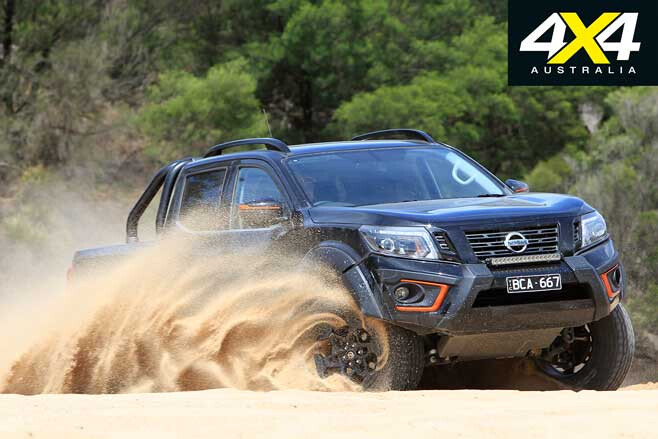
Nissan’s D23 Navara has never quite been what the doctor ordered sales-wise compared to the front-running Ford Ranger and Toyota Hilux. In fact in the 4×4 ute sales race it has also trailed behind Mitsubishi’s Triton, Holden’s Colorado and, more recently, the Isuzu D-Max. By contrast, the D23’s predecessor, the D40 Navara, was second only in sales to the then all-conquering Hilux.
To help address this, and hopefully get more customers in to its showrooms, Nissan Australia has joined up with Premcar, the current embodiment of Prodrive, Tickford and Ford Performance Vehicles. The brief was to make the D23 more off-road ready than the standard factory offering … and to also look the part as a more serious 4×4 ute. The resulting N-Trek Warrior is still sold as a factory model with full factory backing and warranty thus allowing buyers an easy route to a ‘modified 4×4’.
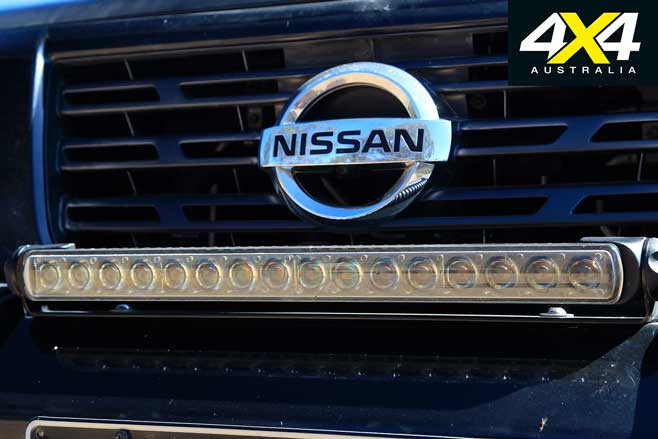
Premcar’s work brings a bigger wheel/tyre package, specially tuned springs and dampers, a bespoke steel bullbar, underbody protection, an LED light bar, a redesigned towbar and various styling enhancements. As with the SportsCat the powertrain remains standard.
Powertrain and Performance
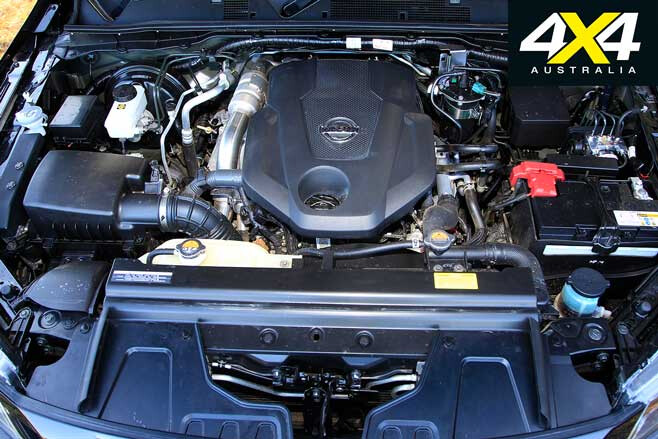
The Renault-sourced 2.3-litre bi-turbo four-cylinder diesel in the Warrior was originally designed for commercial use, in vans and the like, and is a little gruff and noisy under full load, but no more so than the 2.8-litre VM Motori-sourced diesel in the SportsCat.
Given the Warrior is some 200kg heavier than a standard Navara and the taller tyres raise the overall gearing a little over seven percent, the performance is dulled a little from a stock Navara, but still responsive enough. In standard trim the Navara’s overall gearing is relatively short so the taller tyres don’t really hurt too much as they would on something that’s already tall geared like a Hilux or D-Max.
In typical bi-turbo style the Warrior combines good off-idle response with its maximum torque (450Nm) on tap at just 1500rpm with a keenness to rev as the peak power (140kW) doesn’t arrive until 3750rpm. It’s still not quite as flexible at low revs as the 500Nm strong engine in the SportsCat but once in its stride it comfortably holds its own, and even starts to peg back the SportsCat at higher speeds, perhaps helped by the fact that the Warrior’s smaller body has less frontal area than the noticeably larger SportsCat.
For its part the seven-speed automatic shifts smoothly enough but doesn’t time its shifts as well as the gearbox in the SportsCat, tending to hang onto the taller gears longer under throttle load, and not back shifting – for stronger engine braking – on descents as readily.
On Road Ride and Handling
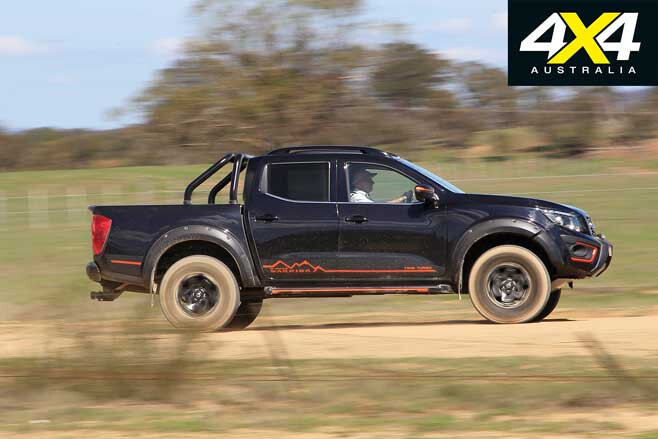
The Navara is unusual among the popular utes in as much as it has coil springs, in its case dual-rate coils, rather than leaf springs at the rear. With the Warrior, Premcar has still used dual-rate coils but they are softer in the initial spring (34 vs. 37N/mm) and firmer in the second spring (85 vs. 77N/mm).
Up front lighter 74N/mm springs replace the stock 79N/mm springs but there’s an extra long, progressive bump stop, which firms up the spring rate towards full compression. Robust Tenneco-brand dampers – tuned by Premcar’s engineers – replace the stock dampers although the standard swaybars are retained.
Premcar’s main aim with the Warrior was to improve the stock Navara’s off-road performance, but the retuned suspension also works wonders on road. And like any good suspension tune, the more demanding the conditions and the faster you drive, the better it feels. A 30mm wider track, achieved via wheel offset, also helps to provide a more stable package by countering the extra ride height.
The Warrior’s ride is firm at lower speeds, most likely due to stronger compression damping and despite the lighter initial springs, but softens up at highway speeds to provide not just control, but a level of compliance that a standard Navara can’t match.
Off Road
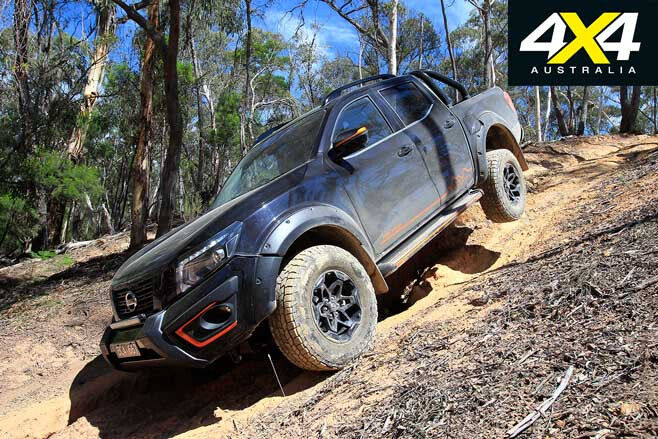
The Warrior’s taller and wider 275/70R17 wheel and tyre package, that replaces the standard 255/60R18s, brings 25mm more ride height while the new springs add another 15mm of lift. This extra 40mm of lift may not sound like much but given the stock Navara is one of the lowest slung of the mainstream utes, the extra lift is most welcome.
The new tyres – Cooper Discoverer AT3s – are a more robust ‘Light Truck’ tyre than the standard offerings and come with a more aggressive tread pattern, both also advantageous off road.
The Warrior has a conventional part-time 4×4 system but does offer a notably deep low-range reduction. Along with the short first gear the Warrior’s crawl ratio is better than that of the SportsCat but the gearbox itself doesn’t work as well in low range as the far more cooperative auto in the SportsCat.
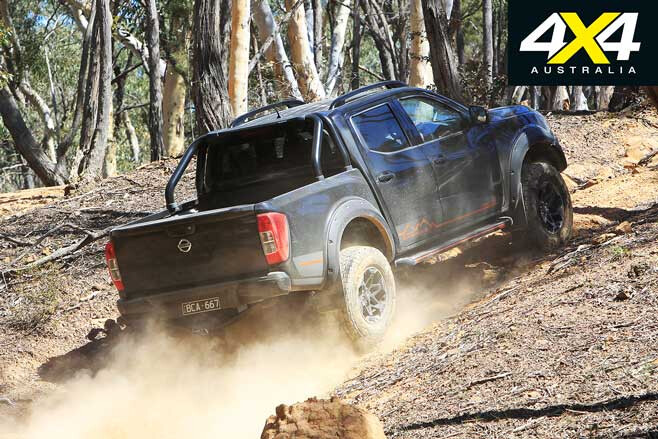
Perhaps more telling is the fact that the Warrior can’t match the wheel travel of the SportsCat, nor the SportsCat’s well-sorted electronic traction control. Still, all is not lost as the Warrior has a driver switched rear locker, which when engaged keeps the electronic traction control active on the front axle.
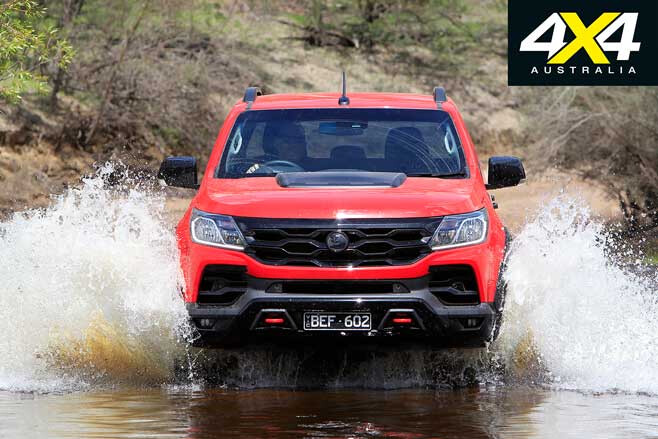
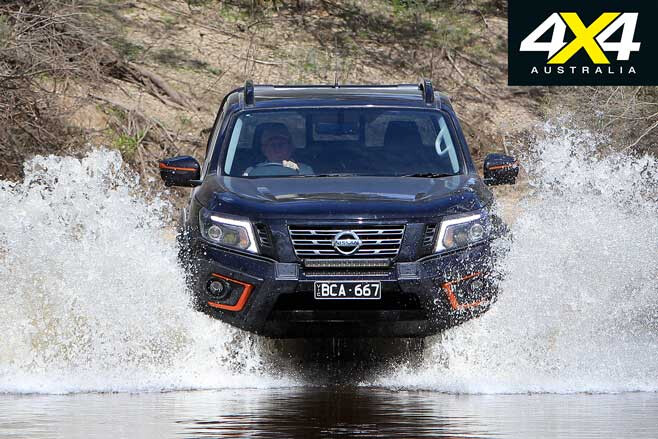
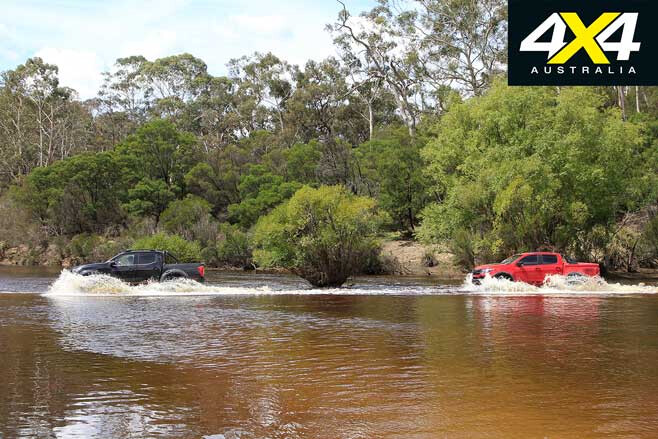
With the locker engaged the Warrior doesn’t give much or anything away to the SportsCat on washed-out climbs and the like but does give away some fording depth due to the location of its air intake under the bonnet lip.
Cabin, Accommodation and Safety
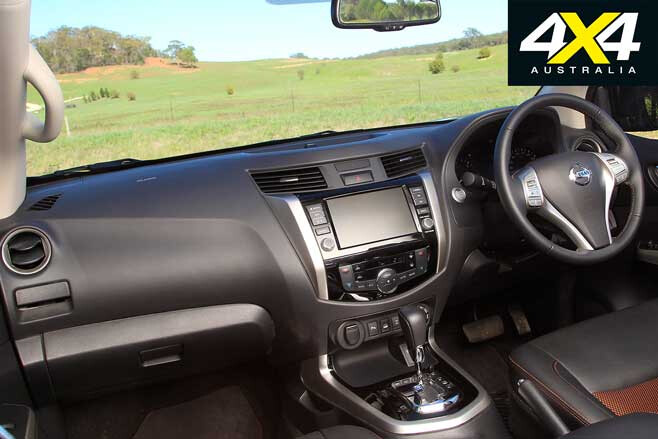
The Warrior is based on the top-spec ST-X Navara, which means plenty of kit (see ‘What You Get’) including smart key entry and push-button start, features missing on the SportsCat. The Warrior also gets its own themed interior, over and above the ST-X, with its bespoke part-leather seat trim and carpets.
The Warrior’s cabin is noticeably smaller than the SportsCat and while this doesn’t make much of a difference up front, three people will definitely feel the difference in the rear. As with the SportsCat, there’s no reach adjustment for the steering wheel, only tilt adjustment but the driving position is still comfortable enough although taller drivers might prefer the SportsCat given the extra room.
The Warrior hasn’t been ANCAP tested as such but a standard Navara achieved a five-star rating when last tested but doesn’t come with any notably high-end safety features.
What You Get
The Warrior’s safety equipment starts with front, side, curtain and driver’s-knee airbags and runs to the full suite of electronic chassis control systems, a reversing camera and a 360-degree view monitor.
Convenience and comfort features include smart-key entry, push-button start, bespoke leather seat trim, electric seat adjust for the driver and heated front seats, auto headlights, rear sliding window panel and dual-zone climate control. Embedded satnav, an eight-inch touchscreen and Apple CarPlay/Android Auto are also standard features. The rear tub has a twin-rail adjustable tie-down system and a 12-volt outlet.
Practicalities
Heavy-duty towing has never been a Navara D23 forte and while Nissan’s two attempts to improve the Navara in that regard have been in-part successful, and the Warrior feels like it may do a better job again, chassis-wise, than a standard Navara at towing the claimed maximum of 3500kg, something around 3000kg is probably more around the mark.
Certainly for towing heavy loads, if that’s what you want, the SportsCat would seem like the better prospect given the respectable heavy-duty tow performance of a standard Colorado. Likewise, the Warrior has a smaller tub than the SportsCat and notably less claimed payload.
Verdict
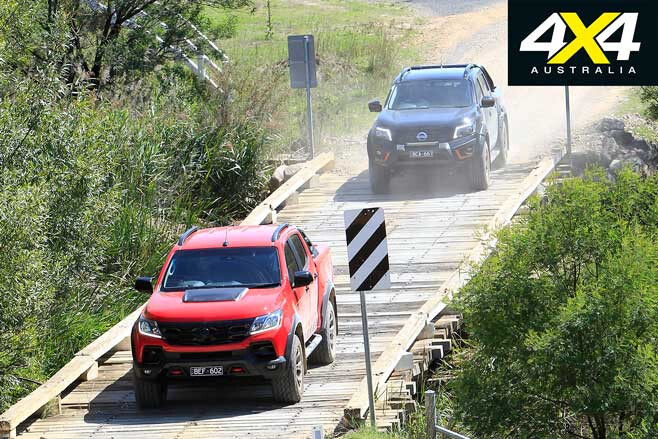
Both the HSV Colorado SportsCat and the Nissan Navara N-Trek Warrior achieve the remarkable. While both are primarily engineered to be more capable and useful off road, both also end up being far more dynamic on road than their respective donor vehicles. To do this, when both sit higher and ride on Light Truck rather than Passenger tyres, is testament to the quality of the suspension re-engineering both in terms of the components used and the expertise of the respective engineering teams. Bravo.
What separates these two utes is not however the quality of the chassis re-engineering but the core aspects of both vehicles that are unchanged in the respective transformations, most notably the powertrains and the cabins.
The fact that the SportsCat’s engine generally feels more muscular and is backed by a more in-tune gearbox applies as equally to this test as if a standard Colorado was lined up against a standard Navara. Likewise the fact that the SportsCat has a bigger cabin is also a quality inherited from its donor vehicle. The fact that the SportsCat is also a beefier workhorse also reflects the relativity of the two donor utes.
But in all things, there’s a price to be paid in all this. The Warrior is under $66K driveaway, while the SportsCat SV you see here is $69K plus on-road coats – call it $75K, depending on what state you live in. That’s the better part of $10K. Of course forgo the SV’s trick front brakes and auto-decoupling rear swaybar and save $4300 on the lower-spec V model, but then you also get a lesser vehicle. The choice is yours.
Specifications
| u00a0 | Nissan Navara N-Trek Warrior | HSV Colorado SportsCat SV |
| Engine | 2.3-litre 4-cyl bi-turbo-diesel | 2.8-litre 4-cyl turbo diesel |
| Power | 140kW @ 3750rpm | 147kW @ 3500rpm |
| Torque | 450Nm @ 1500-2500rpm | 500Nm @ 2000rpm |
| Gearbox | 7-speed automatic | 6-speed automatic |
| 4×4 System | Dual-range part-time | |
| Crawl Ratio | 44.4:1 | 36.4:1 |
| Construction | Separate-chassis | |
| Suspension (f) | Live-axle /coil springs | Independent/coil springs |
| Suspension (r) | Live-axle /coil springs | Live axle/leaf springs |
| Wheel/tyre spec | LT275/70R17 121/118 Q | LT285/60R18 120 S |
| Departure Angle | 19.0u02da | 24.0u02da |
| Rampover Angle | 27.5u02da | 27.0u02da |
| Approach Angle | 35.0u02da | 32.0u02da |
| Wading Depth | 500mm (approx.) | 600mm |
| Ground Clearance | 268mm | 251mm |
| Kerb Weight | 2186kg | 2250kg |
| GVM | 2910kg | 3150kg |
| Payload | 724kg | 900kg |
| Towing capacity | 3500kg | |
| GCM | 5910kg | 6300kg |
| Fuel capacity | 80 litres | 76 litres |
| ADR fuel claim | 7.0L/100km | 8.7L/100km |
| Test fuel use | 10.6L/100km | 12.0L/100km |
| Test fuel range | 755km (+50km) | 583km (+50km) |
| Price | $65,490 (driveaway) | $68,990 (plus ORC) |
It is a month of tough utes, clean builds, and beautiful 4×4 retreats in the March 2020 issue of 4×4 Australia.
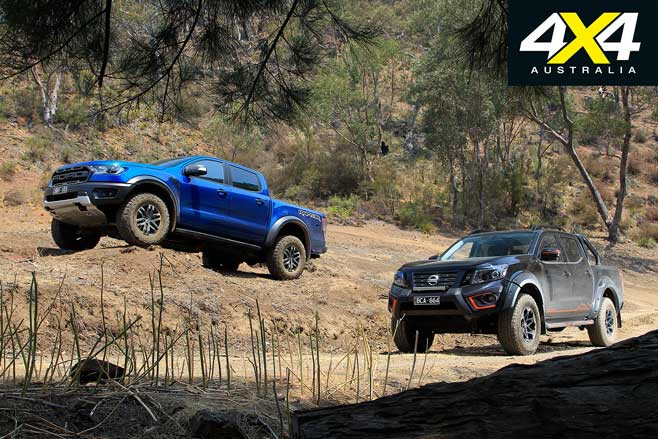
Kicking off this issue is a battle of brawn between Australia’s own tricked-up Nissan Navara N-TREK Warrior and the Ford Ranger Raptor to see which is the best adventure-ready showroom-stock ute on the market.
For those unconvinced by tweaked utes, we find out if the Amarok V6 Core’s simple manual gearbox and two-speed part-time 4×4 system coupled with good old displacement is all the ute you need.
Headlining the March 2020 issue’s custom 4×4 features are two classic Land Crusiers that have been thoroughly modernised and equipped to be the perfect home away from home.
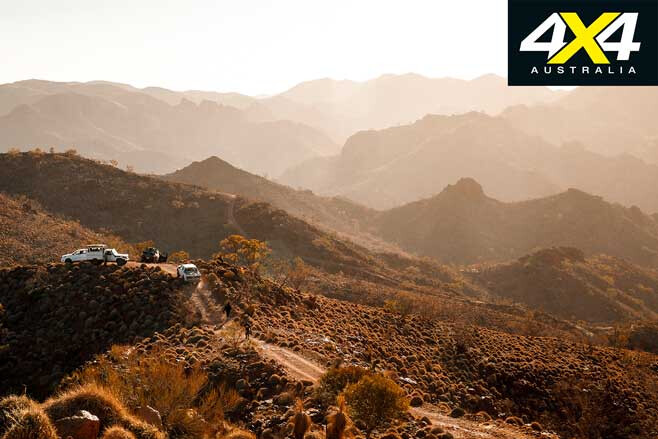
Meanwhile we wrap up Season 6 of our 4×4 Adventure Series in the northern regions of the magnificent Flinders Ranges, explore Mungo National Park, and take a deep dive into the latest portable fridges on the market.
WHAT ELSE IS IN STORE? – First drive of the LDV D90 wagon – Exploring Kroombit Tops National Park and Stringybark Creek – Long-term updates on the Project Ranger, Triton, and Hilux – and plenty of new aftermarket kit tested
All this and more in the March 2020 issue of 4×4 Australia, out now at your local news stands.
Jeep has announced the Jeep Gladiator pick-up will land in Australia in May in Overland and Rubicon spec-levels priced at $75,450 and $76,450 respectively. There will also be a limited run of 100 Launch Edition models based on the Rubicon-spec Gladiator and priced at $86,450.
All Australian-delivered Gladiators will be powered by Jeep’s 3.6-litre petrol V6 Pentastar engine that makes a claimed 209kW of power and 347Nm of torque, which will be mated to an eight-speed automatic transmission. Unusually for the ute segment, no diesel variant will be offered, but the Gladiator is unlike most other utes thanks to its live axles front and rear, removable hardtop roof and doors, and foldable windscreen.
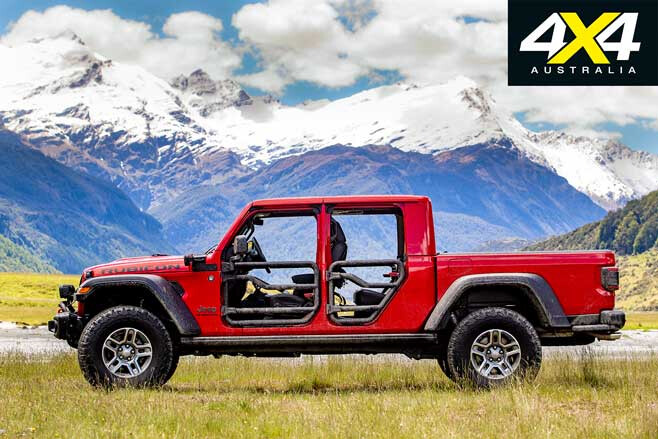
The Gladiator Overland will be equipped with Jeep’s Selec-Trac Active On-Demand 4×4 system with a 2.72:1 low-range reduction and Dana 44 axles with a 3.73:1 axle ratio. The Rubicon will get a more advanced Rock-Trac Active On-Demand II 4×4 system, with a 4:1 low-range reduction and Dana 44s with a 4.1:1 axle ratio for an overall crawl ratio of 77.2:1.
The Rubicon will also score a front electronic swaybar disconnect to improve axle articulation, front and rear locking differentials, and an Off-Road+ Button. The Off-Road+ setting would tailor the various electronic control systems for higher speed sand driving when activated in high-range, and low-speed rock crawling when activated in low-range. The Rubicon will also be equipped with upgraded FOX-branded two-inch diameter shock absorbers.
Both model grades come with LED headlights with DRLs, under-rail bed lighting, integrated tie-downs, a foldable windscreen and removable doors. The Overland model features body-colour hard-top and fender flares, whilst the Rubicon features a black hard- top roof and black fender flares.
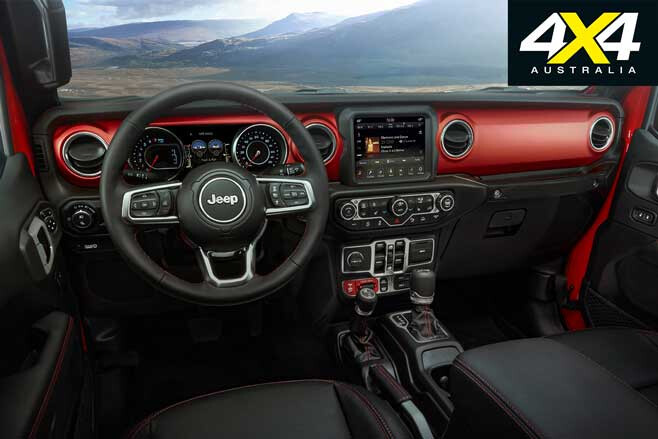
Standard kit on the Overland includes McKinley Leather Seats with Overland logo, heated front seats and steering wheel, 18-inch alloy wheels, Forward Collision Warning Plus, Adaptive Cruise Control with Stop, Blind Spot Monitor with Rear Cross Path Detection, remote proximity keyless entry, nine-speaker Alpine audio system, Uconnect 8.4-inch infotainment system with navigation and Apple CarPlay/Android Auto.
Standard Rubicon gear also includes 17-inch alloy wheels with 255/75R17 tyres, forward-facing TrailCam off-road camera, selectable Tyre-Fill Alert, and more.
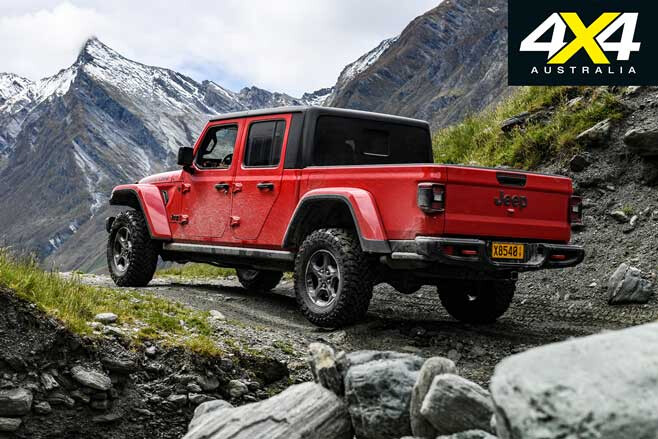
Options on both Overland and Rubicon include premium paint ($1035) and a Lifestyle Adventure Package ($3835) which incorporates Cargo Management Group with Trail Rail System Lockable Rear Underseat Storage Bin, Roll-Up Tonneau Cover, Spray-In Bedliner, Auxiliary Switch Bank (4 Programmable Switches), 240 Amp Alternator, 700 Amp Maintenance Free Battery and Wireless Bluetooth Speaker.
Other options on Rubicon include a Luxury Package ($2535) with leather trim and heated front seats/steering wheel, 17-inch Black Wheels with Polished Lip ($975), Steel Front Bumper ($1650), Body-Colour Three-Piece Hard Top: ($1950) and Premium Black Sunrider Soft Top ($3575). Most of the options listed will be offered as standard equipment on the Gladiator Launch Edition.
The Ford Ranger, Toyota Hilux and Mitsubishi Triton once again occupy the three top spots in 4×4 sales according to the latest VFACTS report for February 2020.
The Ford Ranger grabbed a whopping 25.7 per cent of the 4×4 ute segment in February, ahead of the Toyota Hilux with 23 per cent, leaving the others to fight for the other half of the segment. In year to date terms, Ford has sold 5449 Ranger 4x4s ahead of Toyota Hilux (4978 sales) and Mitsubishi Triton (3287 sales).

Toyota leads the 4×4 wagon charge selling 1316 Prados in February and 1162 Land Cruiser 200s.
While the overall vehicle market was down in February, the SUV market was actually up by 5.4 per cent, while the LCV market was down by 8.2 per cent compared to the same period last year.
Here are the 20 best-selling 4x4s in February 2020:

According to the Federal Chamber of Automotive Industries (FCAI), there were 79,940 new vehicles sold in February 2020, of which 39,304 (49.2 per cent) were classified as SUVs and 15,523 were LCVs (19.4 per cent).
The Chief Executive of the FCAI, Tony Weber, said the sales results continued a trend of negative growth in the local market.

“The Australian new vehicle market has now seen a downturn each month for the past 23 months. In economic terms, a recession is declared after two quarters of negative growth – and this industry has now seen seven consecutive quarters of negative growth.
“There is no doubt that this is an extraordinarily difficult time for the automotive industry – a situation sadly underlined by the recent announcement of Holden’s withdrawal from the Australian market,” Mr Weber said.
The FCAI attributes the difficult market conditions to several factors including political and financial uncertainty; environmental factors such as floods, drought and bushfires; and more recently, the growing concerns regarding a global pandemic from the coronavirus.
For those who aren’t sure what to throw in the tub of their Gladiator, Jeep has an idea for the more adventurous of owners.
The American car manufacturer unveiled a new e-bike that made an appearance in its latest Super Bowl ad (around the 0:39 min mark) featuring Bill Murray, star of the popular 1993 movie Groundhog Day.
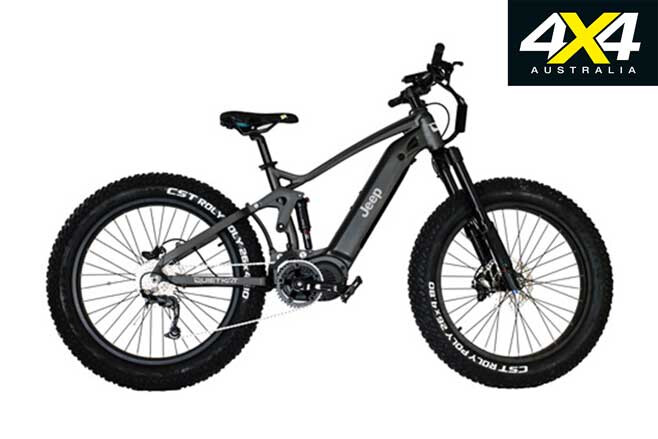
The Fat-Tire 10-speed e-bike, co-developed with bicycle manufacturer QuietKat, features a 750W (Class 2) motor that provides electric assistance up to 32km/h and has a claimed range of 50-100km. It runs an air suspension fork and RockShox Monarch RL rear shock, as well as hydraulic disc brakes. In the US it retails for between $5900-$6200 (A$9000-$9500).
The Jeep e-bike is slated to go on-sale in the US in June 2020, but there’s no word on whether it will make its way Down Under with the impending launch of the Gladiator.