
4×4 Travel Guide
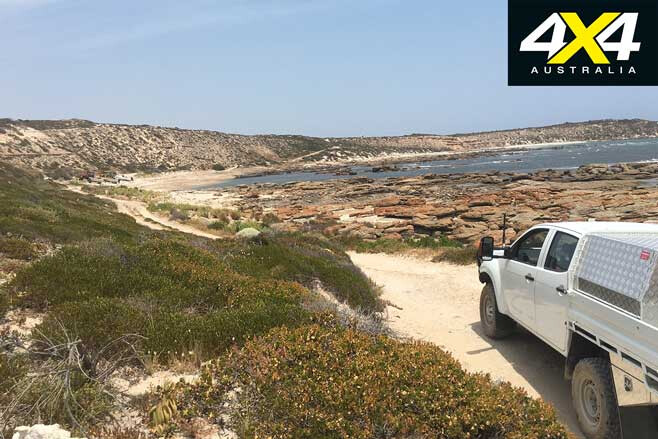
The name isn’t one to win awards or even attract many campers, but ‘Mozzie Flat’, tucked up in a small depression among sand dunes, just back from the beach, is a little beauty for a couple of campers and their vehicles.
We stumbled upon it as we’d wandered west of Edithburgh along the ‘instep’ of the coast of Yorke Peninsula. The dirt road having first taken us south from Edithburgh along the coast, past Wattle Point and Sheoak Beach, to Troubridge Point and its nearby tall, red-brick lighthouse.
There are lots of cliff-lined bays and soft sandy beaches along this stretch of coast and, while you can launch a boat off many of the beaches, driving much farther along the sand is tricky and fraught with danger. I checked out a number of beaches and, noticing banks of weed hidden under a fine covering of sand, decided it would be a braver man than I who would take up the challenge.
There’s some good beach fishing, though, to be had here and if you have a small boat or kayak, even better hauls of fish can be expected, with big red snapper being one of the prizes among mixed bags of whiting, snook, sweep and flathead. Most of this coast from north of Edithburgh to Point Davenport is protected in a marine park, but recreational fishing is allowed everywhere, apart from the sanctuary zone around Point Davenport.
There are more than 80 shipwrecks scattered along the Yorke Peninsula coast and among the many reminders of the seafaring days you’ll find in nearly every town around the peninsula’s coast are reminders of those who were lost at sea.
If you are into history and/or diving, then a good place to start your travels is on the Investigator Strait Shipwreck Trail, which includes 26 shipwreck sites stretching along the southern coast from Edithburgh to West Cape in Innes National Park.
Probably the most famous of these wrecks is the 108-metre-long schooner-rigged SS Clan Ranald, which met its end west of Troubridge Point in 1909, with the loss of 40 lives, making it one of the worst shipping disasters in South Australian history. In Edithburgh’s historic cemetery are the graves of those whose bodies were recovered, while the wreck itself is in 20m of water and makes for a great dive.
West of Troubridge Hill a good dirt road keeps heading along the coast, while a number of 4WD tracks head across the cliffs to fishing spots, small camps and access to the beaches below.
Just off our Mozzie Flat campsite is the wreck of the Yatala Reef, a 26-metre-long, single-mast cutter that sank in 1981, with the loss of its four crew members. Again, it’s a good dive.
East of Marion Bay and its small village of holiday shacks and a caravan park there is fabulous camping available at Hillocks Drive, which stretches along the best of the south coast for more than 7km. Many small protected bays, wild exposed reefs and rocky headlands along with stretches of surf-pounded beach make this a spot enjoyed by many.
Over the school holidays and the like you’ll need to book, but the rest of the time you’ll be able to easily find a spot for yourself. The Hillocks homestead, where you get your camping permit, has a small store where hot showers and rainwater for drinking is available.
West of Marion Bay the rugged headlands and high cliffs of the south-western tip of the peninsula are protected in Innes National Park.
We’ve been coming to this place since I was a young lad and, while park regulations may be a little more restrictive nowadays than in earlier times, the place is a delight with many camping areas just a stone’s throw from a protected beach, a rocky headland ideal for fishing or diving, or a top surf spot.
Once again, a marine park protects most of the coast here, but recreational fishing is allowed in all areas apart from the immediate area around the distinctive Chinamans Hat Island.
Again, there is some top diving around here, and there are also the wrecks of the Hougoumont at Stenhouse Bay, the Marion at Chinamans Hat and the Willyama, just west of Marion Bay – all in less than 9m of water, so all can be explored by snorkelling.
Our journey along the sole of Yorke Peninsula is over, but we’ll be back – nothing can keep us away!
TRAVEL INFO
Where Yorke Peninsula, SA.
Camping Various sites along coast.
Facilities Shelter sheds at some campsites. No other facilities. Hillocks Drive camping area has showers and toilets.
Trip standard Easy except on soft sandy beaches.
Maps and guides Carto Graphics map, Yorke Peninsula.
Restrictions and permits No restrictions; camping permits required for Innes NP.
Contacts and information Hillocks Drive Camping: www.hillocksdrive.com Ph: (08) 8854 4002 Innes NP: www.environment.sa.gov.au
MORE INFO
Edithburgh has everything a traveller requires. Only Marion Bay has a general store and fuel, although towns inland (never far away) can provide the essentials.
There’s some interesting information on the Shipwreck Trail and the wrecks, and also details and camping permits for Innes NP at: www.environment.sa.gov.au.
For more info on Hillocks drive and the excellent camping there, check out: www.hillocksdrive.com.
4×4 Travel Feature
This rugged coastline offers much more than just spectacular camping and amazing views. By: Miriam Blaker
We arrived the day before a forecast of Catastrophic Fire Danger. The adjoining national park had just closed and all campers inside the six campgrounds were evacuated. Some were squeezed into the park where we had booked but many had to find spots elsewhere. We were lucky to secure the last powered site in this tiny South Australian park, barely a week before Christmas. But, as we discovered, with a whopping 700km of coastline, there are loads of low-cost camping options along this pristine coast.
We were camping on the Yorke Peninsula, three hours from Adelaide on Australia’s own version of the Italian boot. However, despite its Mediterranean climate and sparkling beaches, that’s the end of the similarities. Marion Bay is uniquely Australian, abundant in wildlife and right on the toe of this peninsula, a tiny township 7km from the entrance of Innes National Park.
It was here we’d just rocked into, with our trusty D-Max Ute and Outback camper. We’d planned on spending the next day exploring Innes but with the fire danger so high we decided to instead check out other hideaways on this southern coastline.
Our destination on the first day was Corny Point, renowned for its surf and boat fishing, and perfect swimming bays. With water on three sides of the southern peninsula a drive through this area means you’re never more than 25km away from a beachfront experience. The beaches range from sheltered lonely coves to crashing surf, and many bush camp spots are tucked in amongst endless stretches of sand, some tracks only accessible by four-wheel drive.
The scenic drive to Corny Point takes in some of these lonely stretches of sand with a spectacular coastal route all the way to Berry Bay. Along the way we passed through Daly Heads, a popular surf break that offers challenging conditions for those who love to ride the waves, and lots of rocky reefs for land lovers to explore.
Gleeson’s Landing close by has great camp spots with a 4WD beach-launch for boats and loads of areas to throw down a swag. Farther on there’s camping available at picturesque Swincer Rocks, where there’s often garfish and squid off the rocks as well as good snorkelling.
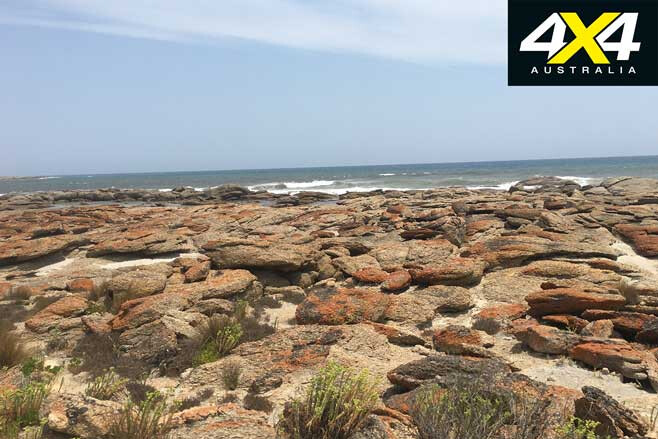
At Gravel Bay on the west coast of the foot on Berry Bay Road, 18km west of Corny Point, you can set up camp on the coastal reserve and at the bottom of the cliff. This is 4WD territory and a top spot for those who love secluded camping and waking up to crashing surf. Driving over a rocky crest towards level ground we came across a couple of campers and stopped to say g’day.
Sue and Andrew are from Adelaide, and they were in the process of securing their camper trailer after the ferocious winds on the previous night whipped their awning apart. Despite their tempestuous night they were in high spirits and were cracking a beer, stoked to be camped with the ultimate ocean view.
Barely 1km south of Berry Bay there’s a tiny secluded bay unofficially called Horseshoe Bay, undoubtedly due to its horseshoe shape. Located below the lighthouse it’s a perfect spot for rock-pool swimming.
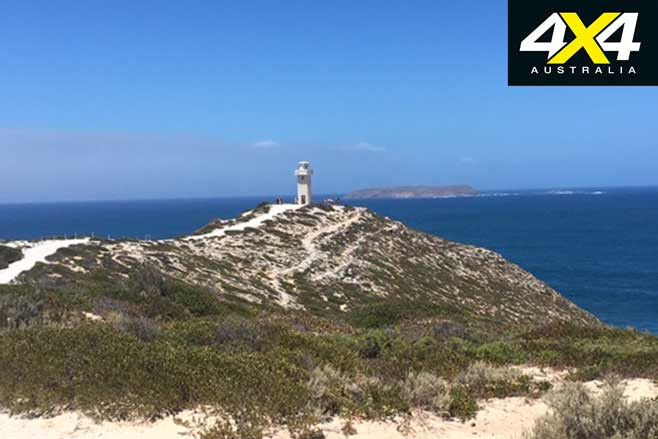
Finally, we arrived at Corny Point, named by Captain Flinders in 1802 who likened it to a growth on the toe of the Yorke Peninsula. Here the beach curves as far as the eye can see. The town was originally established as a place for a lighthouse which was eventually built in 1882. At 12.2m high and constructed from local limestone, the Corny Point lighthouse is worth a stop for a few pics before continuing down this stretch of coast.
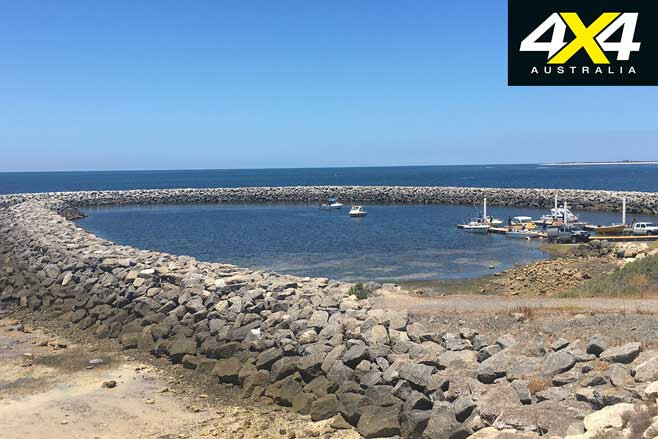
We arrived in Point Turton in time to see local fishermen hauling in their day’s catch. The jetty is a hive of activity in this small coastal town where the turquoise waters beckon, for both fishermen and holiday makers.
In the early 20th century, Point Turton was best known for its limestone flux quarries operated by BHP, but these closed around 100 years ago. Most people these days stay nearby at the Point Turton Caravan Park which nestles in the site of the old flux quarries and overlooks those turquoise waters.
Back at camp in Marion Bay the pace is relaxed. Close by there were fishermen on the jetty catching squid and I was told that from March to June mullet is often caught from the beach. Non-fishermen like us can enjoy the locally caught fish of the day at the nearby tavern, coupled with a South Australian Sav Blanc or a local beer. It’s here that we spent the last dinner of 2019. The tavern also makes delicious wood fired pizza all through the day, and just around the corner the Beach Café offers awesome homemade pies, pastries and coffee.
Innes National Park re-opened the day after and we set off early to make the most of our day, starting at the Beach Café to pick up last-minute picnic supplies, and then the Visitor Information Centre to organise our vehicle permit.
Innes covers an area of 9415ha of coastal vegetation and is the soul of the peninsula. As you crest the road towards Chinamans the view of the dramatic coastline and its curves is enough to make you stop. Shimmering waters, bush and coastline merge and, even though the sky was hazy from the neighbouring Kangaroo Island bushfire, this small national park still packs a big dose of scenic splendour.
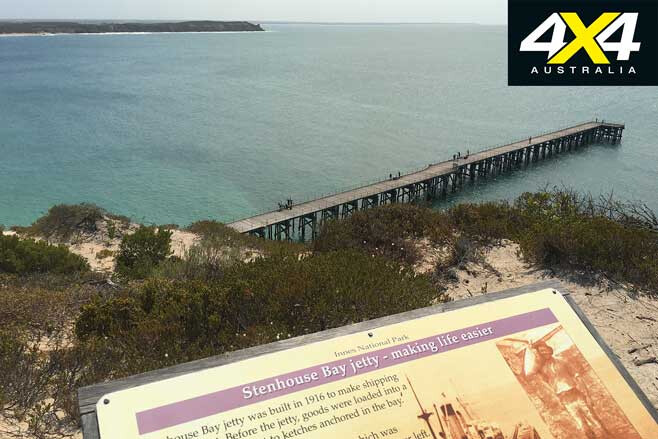
Snaky roads wind through the National Park and we take it easy on the speed, keeping an eye out for and occasionally giving way to both small and large critters. Our first stop was the turnoff to Stenhouse Bay and the picture-perfect jetty that looks out over turquoise waters. This is a favourite spot for fishermen.
Adjacent to the jetty is the 2km Stenhouse Bay Lookout Walk which leads across the clifftops to seven lookout points. The well-marked loop trail includes signs and stories of the mining era and the views from each of the lookout points are simply breathtaking. Watch out for the wildlife, though. At one stage we had a couple of emus on the tracks accompanying us, our own personal guides it seemed.
Farther along West Cape is the perfect place to stop for lunch with picnic shelters that overlook a magnificent view. It seemed the wildlife was following us as, underneath our picnic table, two stumpy-tail lizards had taken up residence. One was so curious I thought it was going to climb up on my lap.
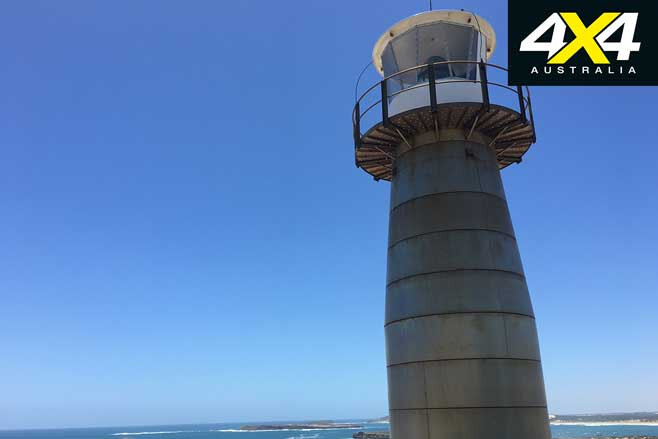
After lunch we enjoyed an exhilarating 30-minute trek along cliff tops to the extraordinary looking and fully automated West Cape Lighthouse; this was built in 1980 completely from stainless steel. Along the way there are spectacular coastal views ranging across the Spencer Gulf Marine Park and offshore islands.
Not far from West Cape is a 2km walk to historic Inneston. This was once a bustling gypsum mining town and in the early 1900s was home to about 150 miners and their families. Today it’s like a ghost town, and abandoned, but you can stay overnight in one of the fully self-contained and restored heritage buildings. Or simply explore the area and all the ruins that surround the glistening saltwater lake where mining once took place.
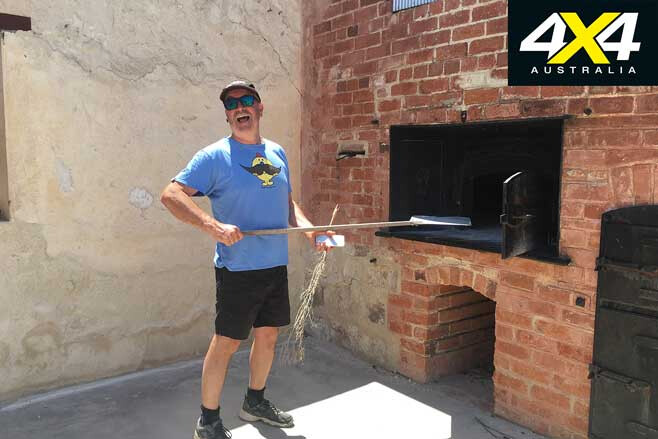
Inside the Baker’s Oven there were, so the signs say, more than 130 loaves of bread baked daily in the 1920s. Alas, no smells of baked bread when we visited, just lonely picturesque ruins that stand as a reminder of the era. Oh, and pesky March flies! They were so intent on biting that I ended up running the last 100m back to the D-Max to escape them.
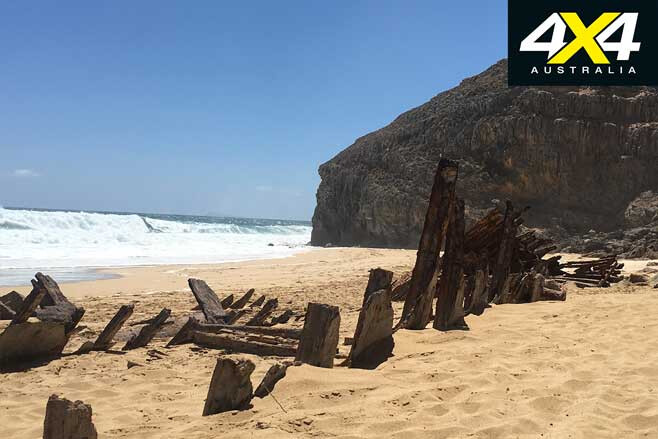
The remains of more than 40 shipwrecks are scattered off the coast of Innes and within the Southern Spencer Marine Park. At the top of the Ethel Beach carpark you can read about the wreck of the Ethel that came to grief here back in 1904, and see the original anchor, before walking the 130 steps down to the shoreline.
Here you’ll find the remains of the Ethel and the Ferret. You can feel the force of the sea and, amid the pounding of the waves and the dramatic overhanging cliffs, you can’t help but feel small and humbled. No wonder this is considered such a treacherous coastline.
Farther along, taking the turnoff to Shell Beach, is one of the best swimming spots in the National Park. Located at the far end of Shell Beach, around the corner of the rocks, is the Blue Pool. With protected rocks forming nature’s own swimming oasis, it’s the perfect spot to cool down on a hot day.
Every October long weekend the Yorke’s Classic is held in Innes National Park, one of Australia’s most prestigious surfing events. It’s no wonder that surfers love Innes. Whether you’re a surfer or a spectator, Innes is filled with hidden gems from Pondalowie Bay to Gym Beach, from vertical cliffs to small coves, and secluded beaches that house relics of wrecks. Below the water scuba divers can explore some of the remnants of these underwater time capsules in the Southern Spencer Gulf Marine Park.
There’s no phone reception in the northern part of the park, but who really cares. Entry costs $11 per vehicle and is worth every cent with seven campgrounds, roads, signs and boardwalks in an exceptionally well-maintained NP. Perhaps the best part of Innes National Park is simply that some of the best views are accessible literally right outside your 4×4’s door.
Contacts
For bush camping on the Yorke Peninsula book your camping permit at www.visityorkepeninsula.com.au or telephone 1800 202 445. The permit is transferable between all 19 sites allowing you to move around the Peninsula and experience spectacular coastlines and magnificent beaches.
Entry to Innes National Park can be organised online at parks.sa.gov.au or in person at the Visitor Information Centre, located just inside the park. Within Innes National Park there is no drinking water or supplies, so be prepared and take all your own food and water.
WHEN WE pieced together our latest 4×4 Australia Gear Guide 2020, it was intended to prepare folks for their winter 4×4 exploits.
Clearly, getting away this winter seems unlikely due to the coronavirus pandemic; but don’t let that stop you from preparing for that next adventure once restrictions lift!
In the latest instalment of the 4X4 Australia Gear Guide, we’ve hand-picked some of the best new 4×4 products on the market; and we’ve examined and tested new equipment from brands such as MSA 4×4, National Luna, myCOOLMAN and Ironman 4×4.
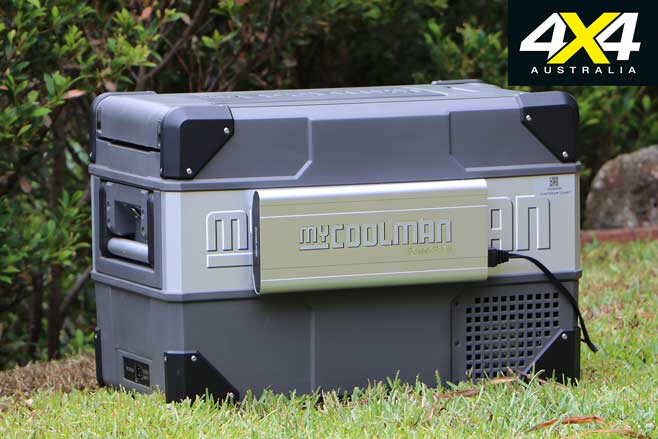
In the market for a new fridge? We’ve included a comprehensive portable fridge buyers’ guide. We’ve written in detail about diff locks (and diff drops), camper trailers, beadlocks, engine filtration and synthetic ropes. Plus, we explain how to rid your rig of carbon, as well as how to re-clutch and re-gear a 70 Series.
JW explains why trip preparation needs to be even more throrough than usual for a desert expedition, and he outlines the essentials for a stress-free dusty adventure.
For good measure, we’ve included a stack of mint custom fourbies decked out with some of the best aftermarket kit on the planet. There’s a 6×6 200 Series LandCruiser; a Wrangler and Gladiator duo from the States; a tough-as-nails N70 Hilux; and a V8-powered Defender 90.
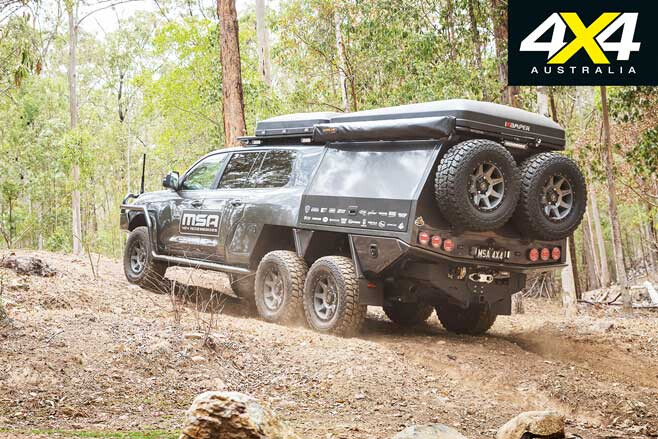
And don’t forget about our transformed XLS Ranger, which we’ve been upgrading from stock for the past eight months. Matt details the Ranger’s journey from showroom-stock to poster material.
The 4X4 Australia Gear Guide is available NOW!
COMPUTER-GENERATED images of what appears to be the 2021 Toyota Hilux have surfaced on the web overnight.
The unofficial images, from an unknown source, were posted as a blog on the Milele Motors website, a company that earns a crust exporting tax-free vehicles to Africa and Asia.
The unverified images may be the work of fiction, but they suggest the updated Hilux will wear a bolder front-end, a revised tail-end and feature LEDs on top-end models.

Rumours have been persistent of a high-output version of the 1GD –FTV 2.8-litre engine, which is speculated to be revealed in top-spec versions of the facelifted Hilux. However, the drivelines are otherwise expected to remain unchanged.
The Hilux is consistently at the pointy end of the 4×4 sales charts, going toe-to-toe with the Ford Ranger for the top spot.
In March this year, Toyota sold 2804 Hiluxes; just shy of the total number of Rangers sold (2947).
The updated Hilux is expected to launch in Australia mid-year, but we’ll bring you more information as soon as we know.
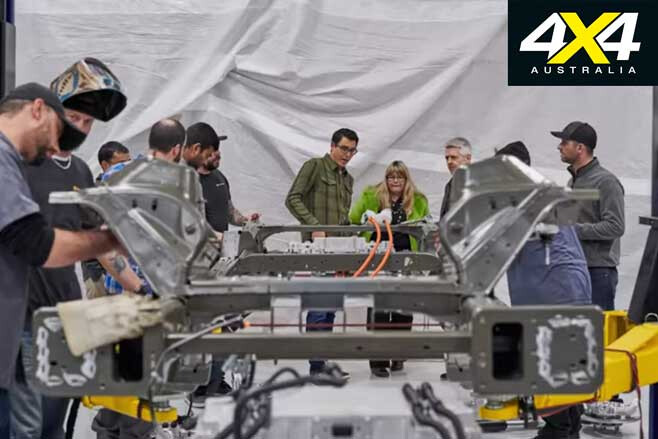
BEFORE its staff were locked down like the rest of us due to the coronavirus, Rivian filmed this behind-the-scenes footage of its R1T pick-up test rig being screwed together.
The “Progress Report” update shows the Rivian team assembling the R1T’s chassis components by hand, before marrying the vehicle’s body to the chassis.
The Rivian R1T is powered by a quad-motor system that delivers up to 750hp (559kW) and 829ft-lb (1124Nm) in total. An impressive spec sheet lists a range of up to 644km, a wading depth of more than 900mm and a maximum towing capacity just shy of 5000kg.
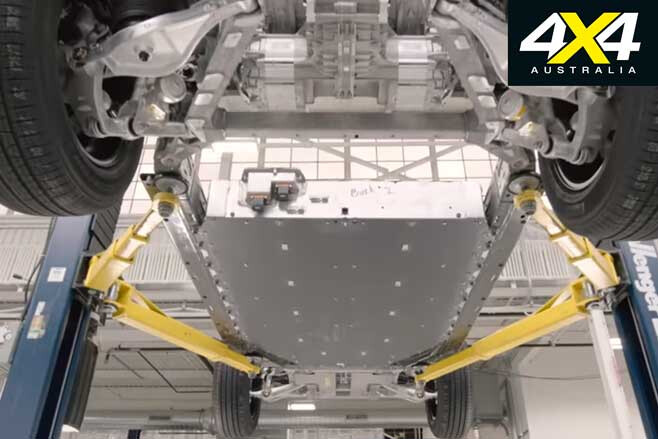
The quad-motor system is positioned on Rivian’s skateboard chassis, which also houses the independent air suspension, battery management system (either 105kWh, 135kWh or 180kWh packs), hydraulic roll control system and thermal systems.
In addition to its generous wading depth, the R1T has a breakover angle of 25.7 degrees, approach and departure angles of 34.8 degrees and 30.5 degrees respectively, and a maximum ground clearance of 368mm.
Earlier this year, EV start-up Bollinger Motors patented its all-electric B1 and B2 vehicles, while just this week a Triton SUV e-wagon was teased, promising 1100kW and a 1000km range.
The R1T was revealed – alongside the R1S seven-seat SUV – at the 2018 LA Auto Show. Rivian lists the vehicle with a starting price of US$69,900 (AU$110,000 approx.), with the Michigan-based company accepting pre-order deposits of US$1000 (AU$1600 approx.).
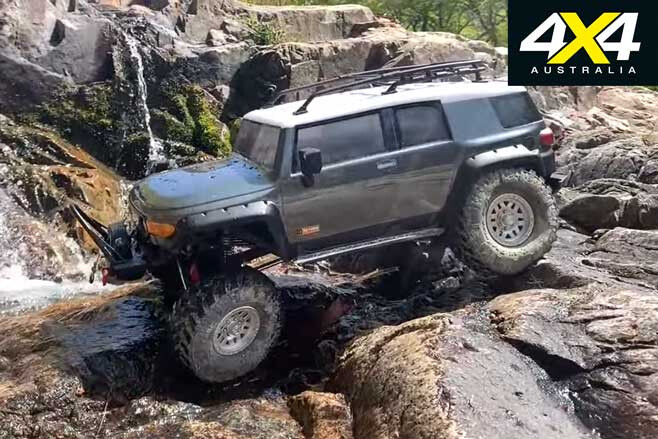
SOMEONE has screwed together a remote-control rock-crawler – a Toyota FJ Cruiser body on an Axial Racing SXC10 III platform – and sent it over some steep tracks.
The video posted to the Hoon’s RC YouTube channel shows an Axial Racing SXC10 III platform – sold by Axial with a Jeep Wrangler Rubicon JLU body – wearing the iconic FJ body.
The Axial SCX10 platform is the Jeep Wrangler of the RC world, as it comes with a smorgasboard of customisable equipment. This III example comes with portal axles, giving it the ability to climb the steep, rocky terrain seen in the above video. Those tall, wide Nitto Trail Grapplers on beadlocked wheels helped here, too.
Late last year 4X4 Australia’s editor Matt Raudonikis pieced together an Axial SCX10 with a Nukizer 715 concept truck body, using a combination of a secondhand complete car, cheap online parts and quality accessories and the result was amazing.
If the above video tickles your fancy, head to www.axialracing.com to begin a build of your own.
FROM building classic Land Rover Defenders equipped with Rover V8s and GM’s LS3 V8, American Land Rover restomod specialists, ECD Automotive Design, are moving on to 21st-century powerplants,with a Tesla electric motor retrofit.
With the likes of Bollinger Motors and Rivian set to unleash new all-electric off-roaders on the world, ECD has joined the electric bandwagon by working with UK-based Electric Classic Cars to create a retrofit electric drive package for the classic Defender.
According to ECD, the electric drive retrofit uses a Tesla Direct unit that is paired with a 100kWh Tesla battery pack and Tesla-sourced power control systems.

While no output figures are quoted, ECD claims the Electric Defender conversion will give the classic workhorse a spritely 0-96km/h acceleration time of five seconds flat and an estimated driving range of 354km.
Like many of its restomod projects, ECD says that customers would be able to fully customise their own Electric Defender to their individual spec; though as it is with many classic 4×4 restomods, don’t expect the end product to be affordable, with many of ECD’s handiwork pegged with six-figure sums.
Founded in 2013 and based in Florida, ECD Automotive Design has built a strong reputation as restoration specialists for classic Land Rovers in the United States.
IN PREPARATION for the new Jeep Grand Cherokee that’s just around the corner, Jeep Australia has refreshed its model line-up for 2020, adding updated advanced safety features, Apple CarPlay and Android Auto across the range, and a new entry-level variant.
That new entry variant replacing the Laredo is the Night Eagle, previously a limited-edition model. Clad with black exterior accents and black leather seats, the MY20 Night Eagle adds Advanced Brake Assist, Lane Departure Warning plus, Auto High-beam Control and Full Speed Forward Collision Warning plus to its otherwise unchanged spec sheet.
Much like the Laredo, the Night Eagle can be optioned with either the 3.0L V6 petrol or 3.0L V6 turbo-diesel.

Another change to the Grand Cherokee model line-up is that the S-Limited can now be had with the 3.0L V6 diesel engine, as well as the HEMI-powered 5.7-litre V8. Further to this, the Limited is now a V6 petrol-only proposition. The S-Limited also now gets a 220amp alternator and rear road-levelling suspension as standard. The other models in the Grand Cherokee shed – Trailhawk, Overland, Summit, SRT and Trackhawk- remain unchanged.
“The Jeep Grand Cherokee is renowned for its broad capability. The updated technology, safety advancements, refreshed exterior design and interior features ensure it remains one of the best offerings in its segment,” said Guillaume Drelon, Jeep Australia Director, Brand & Product Strategy.

In addition, customers who opt for a 2020 Grand Cherokee will be privy to Jeep Australia’s refreshed Capped Price Servicing program.
“Each 2020 Jeep model, including the revised Jeep Grand Cherokee range, will have a Capped Price Service cost from just $399 per service for the first five years,” explained Guillaume Drelo.

2020 JEEP GRAND CHEROKEE PRICING
– Night Eagle (petrol): $59,950 – Night Eagle (diesel): $65,950
– Limited (petrol): $63,950
– S-Limited (diesel): $72,950 – S-Limited (petrol): $72,950
– Trailhawk (diesel): $75,950
– Overland (diesel): $79,450
– Summit (diesel): $85,950
– SRT (petrol): $92,450
– Trackhawk (petrol): $134,590
REMEMBER the amphibious Jeep – ‘Seep’ – which travelled around the world back in the 1950s? Well, on a recent late-night social media binge, we stumbled on an amphibious ATV built by a Ukrainian-based mob.
Before we get into the nitty gritty, read all about the classic amphibious Jeep, piloted around the world by Australian Ben Carlin, here.
The Ukrainian-built example your eyeballs are currently feasting on is called SHERP The Ark, an “amphibious” all-terrain vehicle said to be capable of ferrying bulky cargo – or up to 21 people – over long distances under extreme conditions, and it can “move on any surface”.

Giving the SHERP The Ark its amphibious status is its ability to travel over water, at a speed of up to 6km/h, and on land, at a speed of up to 30km/h. The Ark can also overcome obstacles that are 1.5m high, and it can descend and climb 40-degree slopes.
Interestingly, to save them knees, the vehicle comprises of an air-circulation system that uses exhaust gases to inflate/deflate tyres, which are all connected via a pneumatic circuit.
In another neat touch, the trailer can be personalised for different purposes. For example, SHERP offers a universal loading platform (to lug cargo); a personal transportation unit (to transport up to 21 passengers and the driver); a dwelling module (to live in); a medical module (for rescue operations); and a tank unit (to ferry fuel, water, etc.).
Watch the above video to see the SHERP The Ark in operation, or click on the SHERP ATV YouTube channel to learn about the other machines the Ukrainian-based company is cooking up.
When poring over maps there’s no doubt the Corner Country is a fair hike from Brisbane, but if you break up your drive it won’t seem that far at all.
We started our journey from Brisbane and headed southwest via Goondiwindi and Moree, where there is a free camp just out of Brewarrina situated on the Barwon River that gives you a prime waterfront spot perfect for the first stop on your travels. Take a refreshing swim in the river or a shower in the amenities that are available here and you’ll be raring to go onto your next stop.
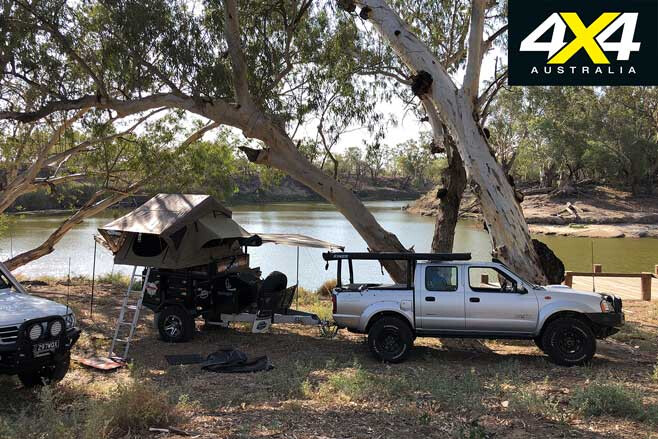
We got on the road early and pointed towards Tilpa. We know a station owner with a property on the Darling River and we were treated to a wonderful free camp on his property. The drought has had a big impact on this area and the bulldust out here is so thick you can almost cut it with a knife; the toll on all the farmers out west has been huge and there’s no doubt they appreciate travellers spending some coin in the area, either at the local pub or corner store.
Without the tourists, these small towns and businesses cannot keep their doors open. If you need basic supplies here, like ice or fuel or a cold beer, the Tilpa Pub has you covered.
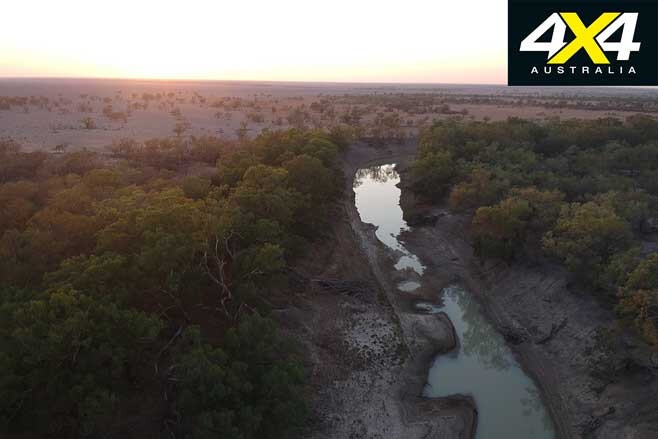
There’s plenty of history to be found along the banks of the Darling River if you know where to look. As well as the graves of two young girls who tragically drowned in the river in the 1800s, there’s the grave of John Mark (a manager of a property called Marra) who was murdered in 1887. These are perched high up on the banks overlooking one of the winding bends that snake through this property. Time and seasons have taken their toll on them and there isn’t much left to see, but there’s enough left to have you thinking about how hard life would have been like back in those days.
Our next stop was farther west through Wilcannia, and then on to Broken Hill, before we stopped in the world-famous town of Silverton which was the location for the filming of Mad Max 2. Silverton is also famous for its scattered mining ruins, art galleries and pub, and now also boasts a bakery.
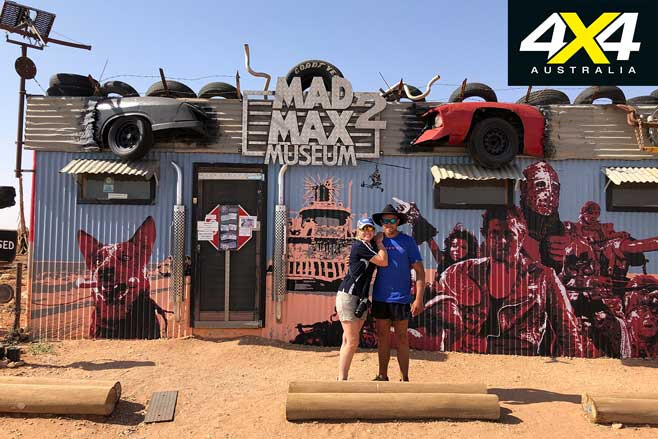
If you’re into sunsets, then Mundi Mundi lookout is the place to go, although you might have to share it with all the other travellers that pass through. The lookout stands over the spot where the famous tuck crash was filmed for Mad Max 2.
We set up camp at Penrose Park Camping Area, about 2km out of Silverton. You need a permit to camp here, but the rewards include the clean amenities and generous space to fit everyone in. It’s great for one night or more and highly recommended.
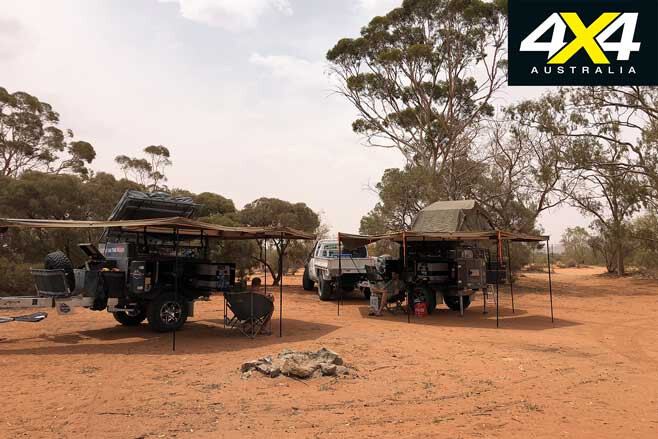
On the road again we headed back to Broken Hill to refuel and get some supplies driving north towards Tibooburra. Halfway along, we stumbled on the Packsaddle Roadhouse where we pulled up stumps for the night. The temperature was climbing into the mid-40˚Cs and the showers here were a nice way to cool down. After a good rest we got away before sunrise and then arrived in Tibooburra, the ‘Capital of Corner Country’, ready for the New Year’s Rodeo, which was a fantastic way to ring in 2020.
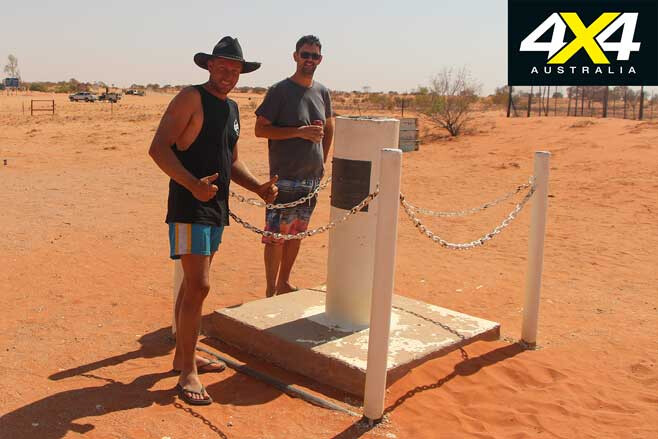
Leaving Tibooburra for Cameron Corner, you’re soon off the blacktop and are met with sections of soft red dirt, with ruts that can swallow your wheels right at the top of blind rises. Airing down is advisable, as is driving to the conditions, remembering that despite the isolation there’s always the chance of encountering oncoming traffic. You know you’ve made it when you’re greeted by the dingo fence; if you open a gate you must close it … and this is non-negotiable.
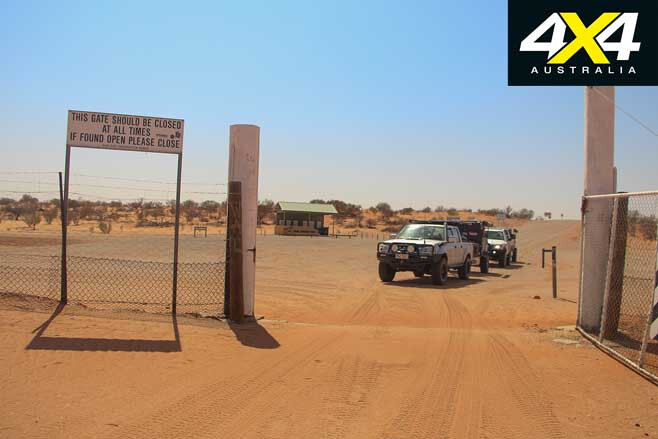
To stand in three states at once is a great feeling and for us it was a great feeling to know that we’d made it to the border of New South Wales, Queensland and South Australia, but then we realised how much farther we had to go to get back home!
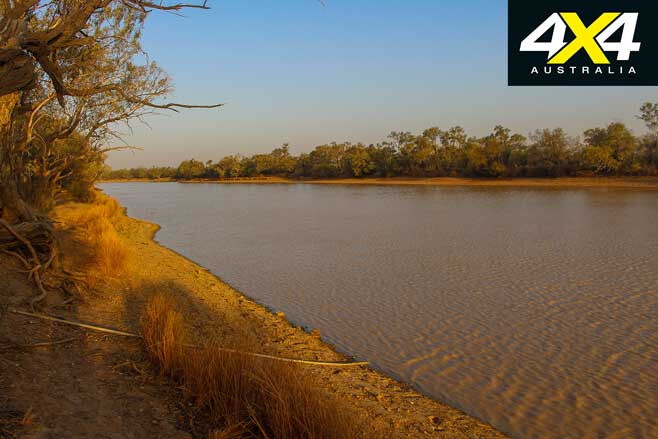
The road northeast from Cameron Corner to Noccundra proved worse (read: rougher) than the road from Tibooburra, and the 240km trek took us six hours to complete. Cracking that first beer, once we arrived at our campsite along the Wilson River in Noccundra, was a godsend … and what a scenic place to sip on an ale while watching the sun go down. We had the whole place to ourselves, which wasn’t really a surpise seeing as we hadn’t seen another car since leaving Cameron Corner. The Noccundra Pub is a good spot for a feed, refuel and refresh, with showers available.
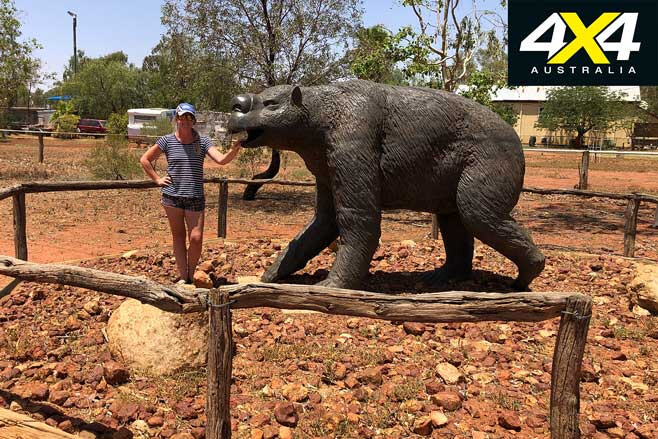
Heading east, we passed through Eulo and stopped for a photo with the Big Wombat and a beer at the Eulo Queen Hotel where had a chat with the publican who said it was pretty warm outside … 48°C to be precise! Let’s just say the beers went down a treat. After just over 500km done and dusted, we stopped at another free camp in Bollon on the banks of the Wallam Creek, which proved to be a nice spot to relax after the long, hot day on the road.
Another iconic pub to stop at is the Nindigully Pub, which provided another opportunity for a cold beer while checking out the plethora of memorabilia on the walls. From here we headed home, but only after reflecting on what was one epic 3650km bucket-list trip that we can now tick off. Not to mention we did it in the hottest part of the year, and while towing brand-new off-road camper trailers.
The small towns out west need us. Whether you just stop for a beer or do a whole grocery shop and fill up with fuel, every little bit counts. And what a beautiful country we live in … so vast, so dry and so breathtaking.
Travel Planner
Camping: We only paid for camping at Penrose Park at Silverton: $10 pp/pn (with very clean amenities and heaps of space). The rest of our campsites were free.
Facilities: Toilets and showers at Penrose Park, Silverton. Toilets and showers at Noccundra. Toilets at Bollon.
Trip Standard: Mostly red dirt, dusty, rocky, rutted, shaley, corrogated roads.
Fun Facts: 10 days on the road – 3650km
Hottest places: Hottest camp: Packsaddle Roadhouse at 44°C. Hottest place we drove through: Eulo at 48°C – we had a beer at the pub there!
Normally getting bitten or stung by an insect like a bee or wasp is a minor inconvenience, and generally not life threatening, but they can be irritating and even painful. In some cases, if you are allergic to a particular bite or insect or get stung somewhere like the mouth, then it can have fatal consequences.
When Viv and I were driving across Russia a few years back and I poured Viv a G&T, a bee landed on the lemon in the drink and when Viv drank from the glass she was promptly stung on the lip. What happened next wasn’t very nice; she had an allergic reaction to the sting and her face blew up like a balloon.
We immediately administered a cold compress to the area, found some antihistamine medicine and then got the EpiPen out of Viv’s kit, which she always carries. Luckily we didn’t need it as much of the swelling subsided after about an hour or so, but Viv had a swollen face for well over three weeks (I’m under strict instructions not to have the photos printed!). Some people aren’t so lucky and if the bite or sting happens farther down the throat then it can quickly become a life-threatening episode.
A number of years ago we were rafting the Murray River and somewhere above Tom Groggin homestead, in what is one of the remotest areas of the Victorian High Country, one of our gang was bitten by a ‘jumping jack’ ant. Until then he had no idea he was allergic to them. Anyway, he started to have breathing difficulties so we gave him a dose of antihistamine medicine and with nothing else to do we plunged him into the cold mountain stream and left him there for an hour so. He survived the ordeal and now carries a small survival kit with him whenever he is in the scrub.
More recently I picked up a tick, which hid in my belly button for a couple of weeks before I found him…or at least the doc found him. While all I got from my unwelcome visitor was a bit of pain and a burning sensation around the bite site, it never progressed any further than that. But sometimes ticks can cause much more serious issues including difficulty with breathing. And they can really knock the family pooch around something terrible!
Just recently, while we were down in Tassie, I was about to lay down and slide under the ol’ Patrol to place a jack in position when one of the crew noticed a small scorpion that had been upset by our moving of rocks, twigs and sticks. Now, unlike what you may have heard about scorpions in other countries, there have been no recorded deaths in Australia because of scorpion stings.
It also seems the most venomous ones are the smallest ones, and those that reside in the NT. Still, you can suffer from severe pain around the site of the sting for a number of hours while other side-effects may include redness, tenderness, numbness, nausea and headaches.
There are about 110 land-based snakes in Australia along with more than 30 sea snakes, and many of these are venomous and have the ability to cause moderate to severe symptoms from a single bite. All snake bites should be treated seriously and if you go bush you should know the first aid for a snake bite and have the gear to carry out the first aid. A good place to start is here.
So, do you have the right stuff and the skill to handle any bite or sting, or know what to do if somebody suffers from an allergic reaction from such a bite or sting?