
TO overcome strict EU emissions regulations and return the Jimny to the EU market, Suzuki has re-released the Japanese off-roader in light-commercial vehicle guise.
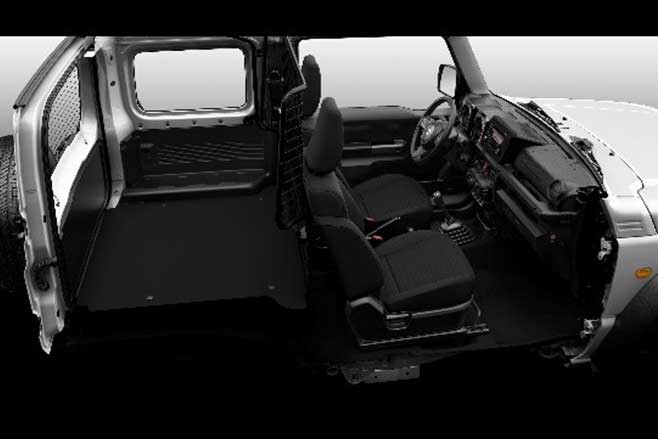
To do this Suzuki has ditched the rear seats, in turn transforming the rear compartment into a large storage area with a flat floor and a cargo partition. When compared to the four-seat version with its rear seats folded down, the two-seater has an extra 33 litres of storage capacity – up to a total of 863 litres.
It’s axing just two months ago followed a new EU ruling which stated all new cars must emit no more than 95 grams of CO2 per kilometre. Despite its lithe weight of just 1135kg (with the rear seats installed), the Jimny was said to emit north of 150g/km – so it was shelved in the EU, despite strong sales.
By reclassifying the Jimny as a commercial vehicle, it is now subject to less stringent CO2 regulations. Other than the loss of rear seats, an increase in storage capacity and a revised 1090kg kerb weight, the two-seater is otherwise unchanged.
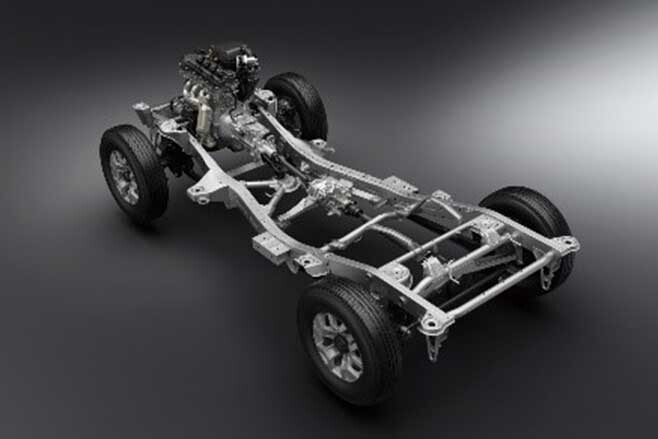
This means it’s still powered by a 75kW/130Nm 1.5-litre petrol engine; it utilises a part-time 4WD system with low range; and all of the safety features of the passenger vehicle are retained. The two-seater boasts ground clearance of 210mm, a 37-degree approach angle, 28-degree rampover angle and 49-degree departure angle.
A two-seat Jimny loaded with kit in the rear sounds like a winner to us for camping trips – Does it tick all of your boxes?
ONE OF our party was bogged!
The soft sand between the edge of the lagoon and the open sea was super soft – a bit like quicksand really – while the narrow, shallow outlet channel the lagoon had carved through the sand towards the sea, had a sheer, but luckily, low bank on each edge; just enough to slow one’s approach and exit. The sea itself was remarkably calm, with just a low swell rolling in onto the beach; but the tide was running in, which was not the best time to get bogged.
The last vehicle in our convoy to drop into the outlet channel climbed up the little step onto the surrounding sand, but with its speed washed away it quickly went down in the squelchy sand. We parked two of our convoy out of harm’s way and went to the rescue with the well-equipped 4×4 Australia Ranger.
A couple of shovels were quickly deployed ensuring we didn’t dig down too far, as the water table wasn’t that far below the surface. Then we employed a couple of MaxTrax, hitched a snatch strap and the little Hilux popped out and was soon on terra firma. That was our only incident on our run south from Temma on the west coast to the low rocky headland of Sandy Cape. We were lucky!
MACQUARIE HARBOUR
WE HAD left Queenstown a couple of days earlier and wound our way down the range from that historic enclave where, perched on the edge of Macquarie Harbour, one of the largest natural harbours in Australia, is the small but important village of Strahan.
Originally established in the 1870s as an access point for the nascent mining industry, it soon became an outlet for the Huon pine and fishing enterprises that sprang up around here. Today it thrives on tourism and is well worth a stop of a few days or more.
The narrow outlet of the vast inlet is at Macquarie Heads, and this raging, rock-strewn opening has earned the name of ‘Hell’s Gate’. The harbour’s sinister reputation was added to when the area’s first settlement was a convict prison on Sarah Island, established in 1822. During its 11 years of existence the prison gained fame as one of the harshest in the country … and that is really saying something! Today the ruins can be visited via a cruise of the harbour (and heads), and it’s an informative, enjoyable way to spend a day.
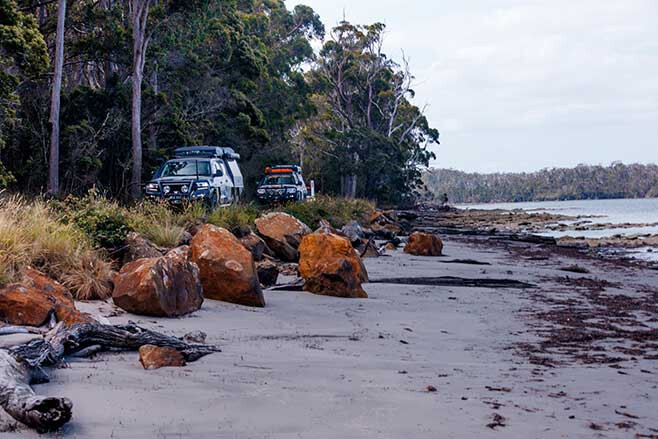
Out at Macquarie Heads, we set up camp for the evening, the camping area a bit more crowded than normal as it was a long weekend in the state. Next day we dropped on to the sand at the Heads and drove the Ocean Beach 10km north and took the exit which led back into Strahan.
We had a pretty easy drive on this last trip, the sand being firm and effortless to drive on; but it’s not always so, with winter storms stripping the beach of sand and leaving very little, if any, to drive on. If in need of more adventure, this beach drive can be extended as far north as 8km to the mouth of the Henty River, the river being generally too deep and wide to cross to go any farther.
From Strahan we headed off to Zeehan and checked out its great little museum, before finding our way on to the Montezuma Falls track. This route follows the easement of the North East Dundas Railway which was opened in 1898 to service the rich mines in the area. Today it’s a challenging and often wet and muddy 4WD trail, the route being much more eroded and rougher than the times I have driven it in the past. Still, the view of the falls, one of the tallest in Tasmania, at the end of the 4WD track, is impressive and worth the drive.
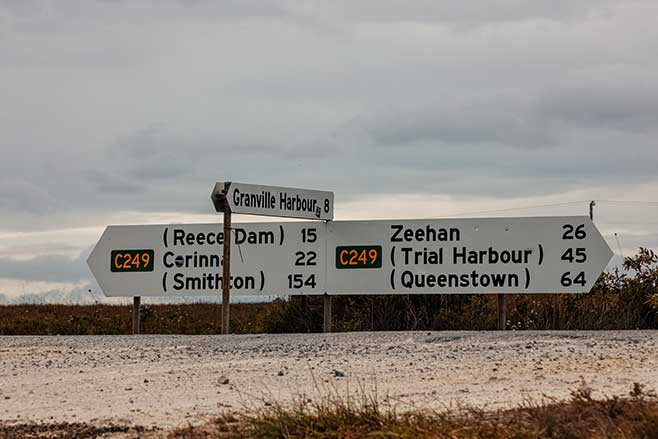
For those who don’t want to accept the 4WD challenge, the falls are also accessible via a walking track (again following the railway easement) from the other side of the chasm that guard the falls. This route begins at Williamsford, which is accessible via a good road from near Rosebery.
Back at Zeehan, after our drive to the Falls, we headed to the Zeehan Bush Camp for the night before exploring the town and enjoying the local museum, which I reckon is one of the best in all of regional Australia.
GOLDEN MAGNET
WE headed north, taking the drive to Corinna and the ferry across the mighty Pieman River. Established in 1881 when gold was discovered in the tributaries of the Pieman, Corinna once had a population of around 2500 people which is pretty hard to believe now. Back then the town was serviced by two hotels, a post office, and a number of stores and shops.
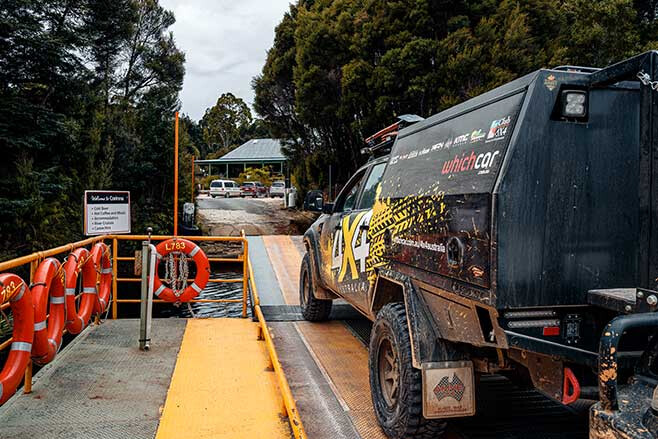
In 1883 the largest gold nugget found in Tassie was unearthed near here and weighed in at a goodly 7.5kg, worth around $567,000 today. Legend has it, though, that the nugget was smuggled into Tassie from Victoria to boost the area’s gold potential and attract more people!
The town, sitting on the edge of the river and the Tarkine Wilderness, the largest temperate rainforest in Australia, is a lot quieter today, while the Tarkine Hotel caters for the passing throng and those wanting to stay awhile. Apart from enjoyable cruises on the river onboard the MV Acadia II, there are a number of walks in the surrounding forest, while canoeing, boating and birdwatching are extremely popular ways to pass the time.
On this latest foray we didn’t stay too long, just long enough to have a beer and a meal before heading north on what is officially known as the Western Explorer Highway. It’s a pretty good gravel road for most of the way, crossing the major streams of the Savage, Donaldson and the Lindsay rivers on bridges and passing through some magical rainforest before climbing onto high button grass plains.
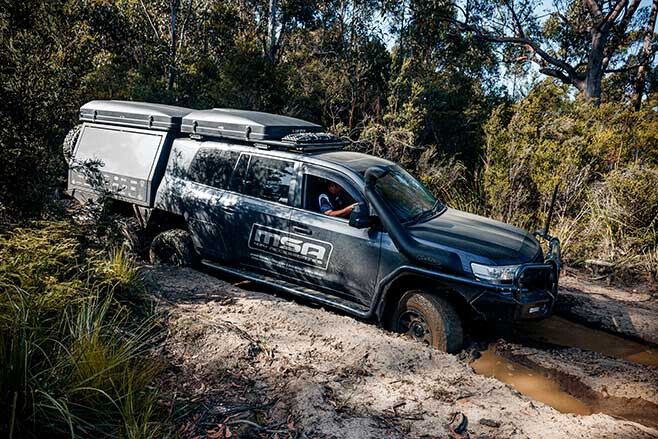
Before reaching the bitumen east of Couta Rocks the road passes the junction of the Balfour Track. Eastward leads a short distance to the old mining town of Balfour and the scattered ruins of this once important mining settlement. Westward, the Balfour Track leads to the Sandy Cape Track and is very much a challenge, even for the best set-up and experienced four-wheel drivers.
This time around we chickened out as the area had been receiving some heavy rain and the bog holes along the way would have been extremely deep … plus our time in the ‘Apple Isle’ was getting short.
Instead we headed for the tiny fishing outpost of Couta Rocks and then north to the bigger settlement of Arthur River where we set up camp in the national park campground, went and found some fuel and a beer or two before calling it quits for the night, with the weather forecast warning of rain and strong winds.
SANDY CAPE
We woke next morning to patches of cloud which cleared a little as we backtracked to Couta Rocks and pushed on to the small scattered fishing hamlet of Temma, where we lowered our tyre pressures and slipped onto what was the Sandy Cape Track. We stopped briefly at Lookout Point that gave a splendid view south towards our destination, Sandy Cape.
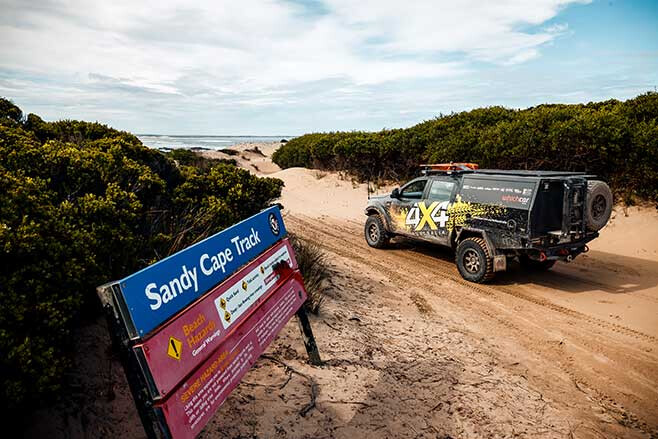
The beach looked benign enough from our vantage point, while the long strip of sand stretched away in a gentle arc into the haze of sea mist, which hung thin and vapourish over both the land and water. The sea itself was nearly as calm as the proverbial mill pond, but a weak sliver of white water oozed its way along the shore where a wave, if you could call it that, washed onto the white sands.
The beach itself was backed for much of the way by thick, verdant scrub, but at its mid-point a series of tall sinuous dunes, a few hundred metres inland from the sea, broke the strip of green into two. At the beaches’ farthest end a smudge of darkness indicated where sand ran into stone, while a speck of white marked the whereabouts of the lighthouse that perches on these distant rocks. Above us the sky was a rich cobalt blue; we were lucky the weather forecasters had got it so wrong!
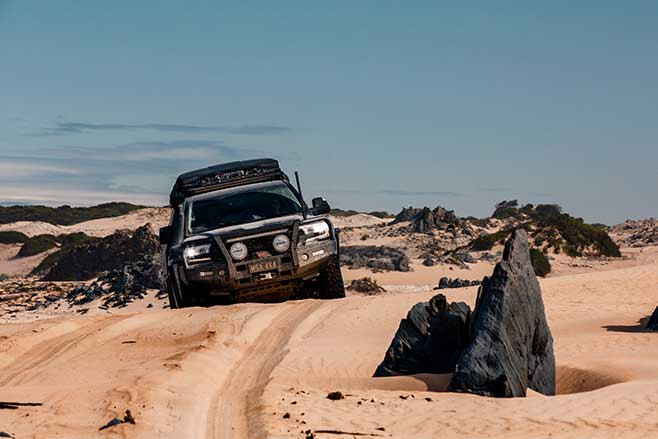
Soon after our expansive view south we dropped onto the beach, crossed Greens Creek and ran south, the waves just washing up a short distance away from our vehicle tracks. The tide had dropped to its low point an hour or so earlier and would start running in strongly in the next hour or so; it’s not the best time for a run along a dicey beach, but one we had to live with and hope we didn’t have too much trouble with.
The Thornton River was next, its tannin-stained water backed up into a large lagoon just behind the steeply shelving beach. A thin strip of running water was the lagoon’s outlet as it raced its way towards the open water. The first vehicle skipped through the creek, bounced over the lip of sand on the far side and ploughed its way across the soft intervening beach between ocean and lagoon.
The second vehicle in our convoy did the same, carving deep tracks in the soft sand and I followed staying away from the furrows, but still bogging down in one soft section before reaching safety on the far side. Our fourth and last vehicle wasn’t so lucky. After a quick recovery we pushed south along the sand crossing the next two creeks flooding across the beach easily and without an issue.
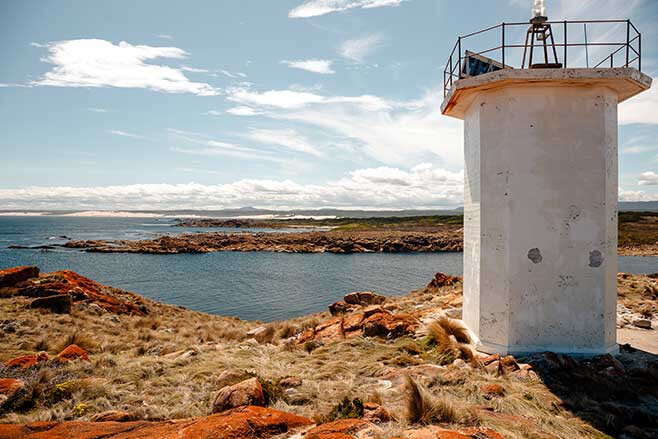
Once at the Cape we found our way via a maze of sandy tracks and checked out the view from near the lighthouse, which is more a cement box with a light on top than a ‘real’ lighthouse. I was surprised to find we had good Telstra mobile phone reception here – aaah, the wonders of modern technology, just when you had thought you’d gotten away from civilisation!
The calm, sunny weather was way too much and we wandered back to the protected beach on the inside of the cape and enjoyed an invigorating swim in the cool waters of the Southern Ocean. Then, with the tide beginning to run out, we turned our heads for home; sadly our quick circumnavigation of Tassie was over … but we’ll definitely be back.
TRAVEL PLANNER
THE best guide to 4WD touring/camping in Tassie is, 4WD Tracks in Tasmania, by Chris Boden.
QUEENSTOWN: West Coast Wilderness Railway: www.wcwr.com.au
STRAHAN: www.strahanvillage.com.au/en/explore.html
The bush camping at Macquarie Heads is basic but pleasant. A small fee is payable. See: www.campingtasmania.com/macquarie-heads-camping.htm
Zeehan Museum is one of the best regional museums in Australia: www.discovertasmania.com.au/attraction/westcoastheritagecentre
You can bush camp at Trial Harbour and Granville Harbour. There are no facilities, so be prepared.
At Corinna (https://corinna.com.au/) you can stay in the small camping area near the pub or in a range of accommodation. Take a cruise on the MV Acadia II along the Pieman River. Take note: The ferry at Corinna has a 6.5-tonne GVM capacity and a max vehicle length (wheelbase) of 9m – inc. tow tug and camper or caravan.
The Arthur-Pieman Conservation Area takes up much of the coastal area of western Tasmania from Arthur River in the north to the Pieman River in the south.
For access info and a Drivers Recreational Pass go to: https://parks.tas.gov.au/explore-our-parks/arthur-pieman-conservation-area
Camping fees are also required. At Arthur River you can choose between the national park campgrounds or the excellent Arthur River Cabin Park, see https://arthurrivercabinpark.comNote: There is no fuel at Arthur River or Corinna. The nearest fuel in the north is at Redpa or Marrawah, or in the south at Zeehan or Waratah.
TASMANIA was the perfect setting for Season 7 of the 4X4 Adventure Series, with the Apple Isle trip beginning on a cold and wet summer’s day at the iconic Jacob’s Ladder.
In this series we venture to Bridport; air down for beach fun on the run to Bellingham; stop by Derby; tour the historical Blue Tier Forest Reserve; have a brew at the Pub in the Paddock; and tackle the Peron Dunes in pursuit of the Friendly Beaches.
Down south we explore Hobart and its surrounds; head to Australia’s southern-most point at Cockle Creek; and then head back up to Strahan via Queenstown, cutting through iconic bush tracks.
We dawdle through the town of Zeehan, before getting back in our 4×4 convoy with Montezuma Falls on the itinerary. It was then on to Granville Harbour, the small fishing town of Temma, and a Sandy Cape run to Sandy Cape Light.
MSA 4X4 and MAXTRAX tagged along in their respective 6WDs, with the MAXTRAX 6×6 encountering some drivetrain gremlins en-route to Montezuma Falls.
A 4×4 trip to the small but beautiful state of Tasmania should be on every off-roader’s bucket list.
Season 7 Episodes
- Episode 1: Apple Isle adventure begins at the iconic Jacob’s Ladder.
- Episode 2: From Hobart in the south to the state’s wild west coast.
- Episode 3: Tracing the west coast north to Sandy Cape.
Season 7 Articles
- Part 1: From the beaches, mountains and forest of the north-east of Tasmania to the great cliffs of Freycinet NP.
- Part 2: Mount Wellington to the southern-most point in Australia, and then up to the Central Highlands.
- Part 3: Exploring the state’s west-coast gems, before tackling the soft stuff at Sandy Cape.
THE INEOS Grenadier has been out and about in Europe and the UK over the weekend, showing off its boxy, built-for-purpose design.
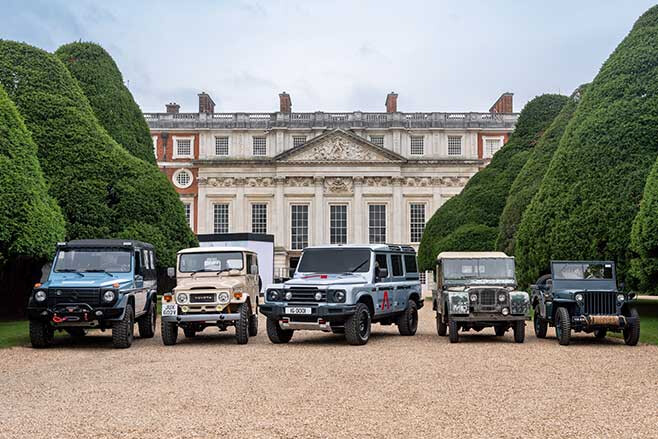
A prototype Grenadier was on display at the annual Concours of Elegance at Hampton Court Palace, near London, where it lined up with some of the iconic 4×4 vehicles from which this all-new vehicle has taken its inspiration.
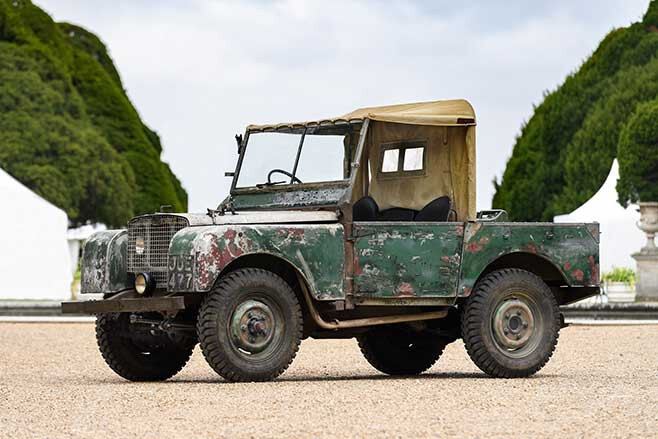
While the Concours is the playground of exotic, classic and sports cars, the line-up of classic 4x4s was impressive to say the least. Alongside the Grenadier was a Mercedes Benz two-door soft-top G-Wagen; a Toyota FJ40 LandCruiser; JUE477, which is the world’s first production Land Rover from 1948; and a WWII Willys Jeep. Esteemed company indeed.
Elsewhere in Europe, Grenadier prototypes have been spotted on the route of the Tour de France, where Ineos is the naming sponsor of the British team. This is among other high-profile sponsorships, where the Grenadier name can be seem on the Mercedes-Benz F1 Team and Ineos Team UK contesting the Americas Cup Trials in New Zealand.
After revealing the controversial look of its Grenadier wagon and pick-up vehicles earlier this year, Ineos is now well and truly in to the testing component of vehicle development. The company is in the process of building more than 100 prototype vehicles for global trials, which can now be done with the vehicles undisguised.
Over the coming year, testing will be conducted in the UK and Europe – specifically at INEOS’s partner Magna Steyr’s Austrian test facility – in the USA, and in Australia and New Zealand. The test locations are chosen to take in all conditions including extreme hot and cold weather, and the results will be used for calibration and durability of the BMW-sourced 3.0-litre six-cylinder petrol and diesel engines and eight-speed ZF transmission.
Keeps your eyes open for the Ineos Grenadier prototypes if you’re touring in outback Australia over the coming months, and be sure to send us some photos if you spot them.
YOU never know when you’re going to need winch and recovery support, so ensure your equipment is up to scratch.
IRONMAN 4X4 RECOVERY POINTS: 2018+ JIMNY
Ironman 4×4 has released rated recovery points to suit 2018+ Suzuki Jimny vehicles. The recovery points – powdercoated red and compatible with Ironman 4×4 bullbars – are designed to be fitted in pairs to allow the use of an equalisation strap and multiple attachment points. The radius edge of the points has also been redesigned so that any shackle, including soft shackles, can be used. Each recovery point has a working load limit of 3500kg, and they’re designed to connect to a recovery device via a 4.75t shackle (or rated soft shackles). All units are NATA tested and approved.
Website: www.ironman4x4.com
CARBON OFF ROAD HIDDEN WINCH MOUNTS
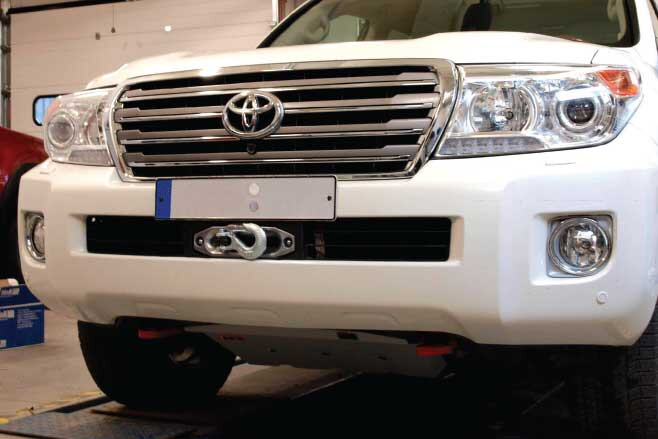
Carbon Off Road has added in-bumper winch cradles to its range of accessories, allowing you to mount a winch to your 4×4 without the need to fit a heavy bullbar. To maintain the OE look of a vehicle, the cradles generally mount behind the vehicle’s bumper. With a range to suit Toyota, Ford, Mitsubishi, Volkswagen and Isuzu vehicles, the Carbon Off Road winch cradles weigh between 10 to 15kg (depending on application) and come complete with instructions. RRP: $895 Website: www.carbonoffroad.com.au
WARN M8274 WINCH
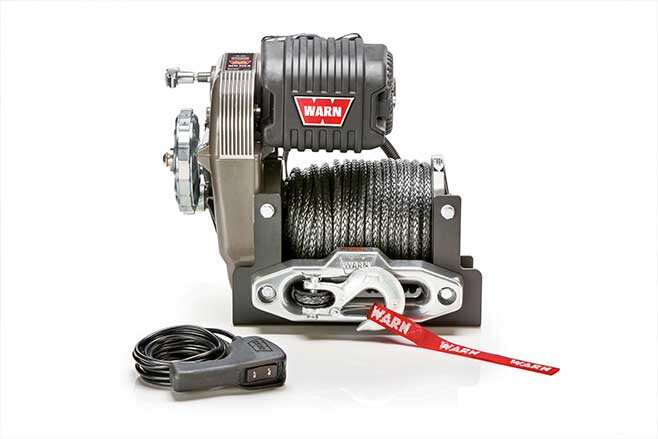
Warn has revealed new and improved versions of its legendary M8274 and M8274-S winches, now with a pulling capacity of 10,000lb. Formerly capped at 8000lb, the extra 2000lb of pulling power is achieved courtesy of a new high-output 6hp motor. In addition, Warn has switched from solenoid control to an Albright contactor, and it has improved the units’ durability by adding a stainless-steel clutch handle, two Oilite bushings and a bolt-and-washer assembly – replacing the retaining ring – on the brake shaft. The upgraded winches are also now available with the option of either Spydura synthetic rope or steel rope. Website: adventurewarehouse.com.au/
Our journey along the wild west coast of Tasmania begins at MacQuarie Heads, with an easy beach run up past the quaint town of Strahan to Zeehan, a once-bustling town previously known as the Silver City.
After a squiz at the local museum, we tackled a muddy 4×4 track that leads to Montezuma Falls. It was here where the MaxTrax 6×6 encountered an issue with its uni-joint, and a massive winch recovery delayed proceedings.
Some of the crew ditched the recovery operation and continued on to Montezuma Falls, a must-see natural attraction. The recovery was eventually successful come nightfall, thanks of course to Ron’s old Patrol.
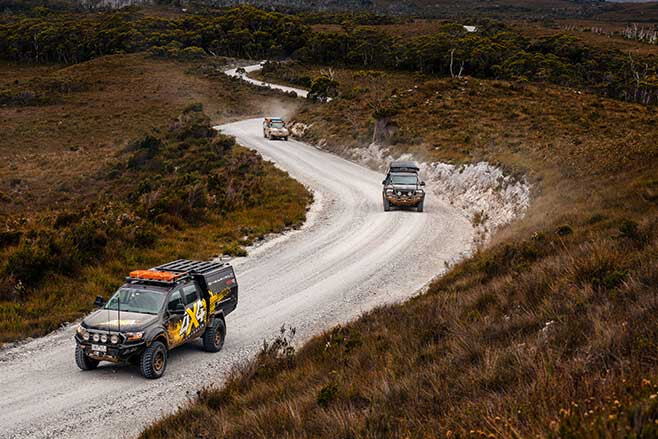
After a well-earned kip back at Zeehan, the crew travelled to Granville Harbour and on to Corinna, before heading back to the west coast and arriving at the small fishing town of Temma.
Sandy Cape was on the itinerary the following day, with plenty of sand driving on the cards. And, yep, one of our vehicles got bogged.
It was here, at the Sandy Cape Light, where our amazing Tasmania adventure ends.
IN DECEMEBER 2019 Jeep Global President Christian Meunièr said Jeep would be, “the greenest SUV brand in the world”, as it would have EV or PHEV variants of every model in its range, available by 2022.
The next step in this evolution was revealed overnight, with the wraps coming off the Jeep Wrangler 4xe PHEV. The Wrangler is the quintessential Jeep vehicle, and the 4xe PHEV will be going on sale in the United States, China and Europe in 2021, with no mention of Australia or right-hand drive availability.
All we have to go on is the comment by Jeep Australia MD Kevin Flynn, who said: “We are excited about these technical developments and advances and are monitoring the take up of electrification in Australia.
“We will be ready to launch our PHEV strategy as soon as consumer appetite, regulations and infrastructure suggests the time is right.”
Whether or not that strategy will include the Wrangler 4xe, or other models such as the Compass and Renegade 4xe models that were revealed last year, remains to be confirmed.
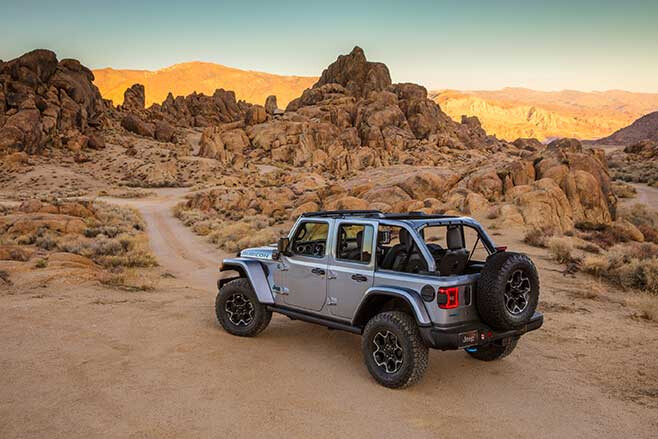
The Wrangler 4xe is built on a traditional Jeep ladder chassis, and as a PHEV it features both a petrol-fueled internal combustion engine and a pair of electric motors. It retains the Wrangler’s four-wheel drive system with dual range full-time transfer case, and Jeep says it keeps its ‘Trail Rated’ off-road ability.
It is available in both Sahara and Rubicon models and, like regular Wranglers, the Rubicon gets extra low gearing in both the transfer case and axles, locking differentials, a disconnecting front swaybar, underbody protection, and other hardware to make it supremely off-road capable.
The powertrain uses a 2.0-litre turbocharged petrol four-cylinder engine backed by an eight-speed automatic transmission. There are two electric motors, the first mounted at the front of the engine to which it is connected via a drive belt, and the second motor within the transmission.
The liquid-cooled motor at the front of the engine replaces the conventional alternator and starter motor, for charging both the 400V lithium-ion battery pack battery pack for the EV system and a conventional a 12-volt battery to run the vehicle’s accessories.
The second motor replaces the torque converter to provide added torque to the drivetrain and it is controlled by a pair of clutches. When the binary clutch is closed, torque from the petrol engine and the electric motor combine through the automatic transmission for maximum drive.
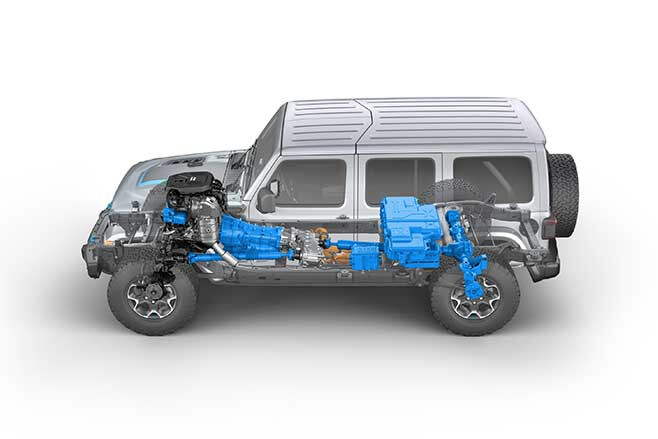
A variable clutch mounted behind the electric motor manages engagement with the transmission, to improve drivability and efficiency.
Combined, the petrol-electric drivetrain can deliver up to 280kW and 637Nm. That torque directly on the throttle should make the 4xe Wrangler an absolute weapon to drive off-road. It can also provide up to 40km of pure electric, zero emissions driving without needing a charge.
A 400-volt, 17-kWh, 96-cell lithium-ion, nickel manganese cobalt battery pack is mounted in an aluminium housing underneath the rear seat, as low as possible.
All high-voltage electronics, including the wiring between the battery pack and the electric motors, are sealed and waterproof and the Wrangler 4xe is capable of water fording up 760mm, just like any other Wrangler.
The Wrangler 4xe is certainly an interesting vehicle. There’s no doubt the additional torque supplied by the electric motor and the reduced fuel consumption of the PHEV drivetrain would make the Jeep amazing off-road; but it remains to be seen what effect the added weight and complexity of the system will have on drive ability.
Price would be another issue, with a Wrangler Rubicon already costing up to and above $70K. What would be the added purchase cost? And are we ready for a $90K Wrangler?
CRAZY times are giving us some crazy numbers on the new 4×4 sales charts, with the month of August being the first time in recent memory that the Toyota Hilux hasn’t been one of the top two best-selling vehicles.
With the updated Hilux going on sale at the start of September, Toyota was selling off the last of the previous models in August and only tallied 936 sales for the month. That’s less than half of what it would be selling in pre-COVID times and a quarter of expected sales in normal conditions.
A slow month for Hilux won’t be worrying Toyota too much in these hard times. It was still the top-selling manufacturer for the month overall, selling almost twice as many new cars as Mazda which was the second biggest-selling brand. When you combine 4×2 with 4×4 ute sales, the Hilux looks like it will again be Australia’s best-selling vehicle.
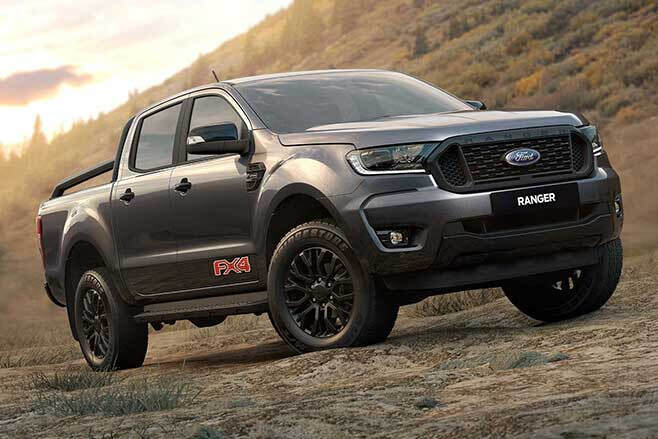
If Toyota has the stock of Hiluxes it needs in the country, we expect a huge bounce back as buyers take delivery of the more powerful updated model.
Will that be enough to reign in the Ford Ranger, which recorded an average COVID month for August? Or will the Ranger stretch its year-to-date 4×4 sales lead? Ford has revamped its Ranger model line-up but there are no significant updates expected for the ute before the end of the year, meaning we should be in for an exciting run to the flag.
Mitsubishi enjoys a stint in position two for the month but we don’t expect that to last long, but it is still by far the third most popular 4×4 ute on the market. It’s closest competitor is the Holden Colorado, which is dwindling away the remainder of its stock as the brand fades in to a memory.
Toyota Prado benefits from the same power upgrades as the Hilux in September, so we reckon it will come back strongly in the last quarter of 2020 to create a tight race to third place for the year.
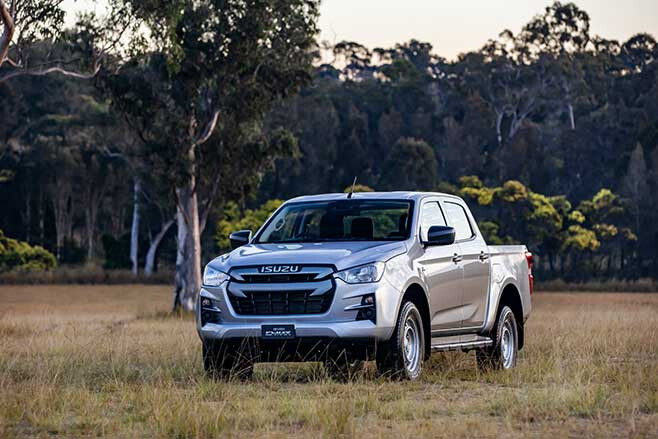
The other one to watch will be the all-new Isuzu D-MAX, which went on sale on September 1. The new model is a step up from the old in all regards, and a few strong months of sales could see it challenge the Nissan Navara as it climbs the sales ladder.
VW Amarok was another to have a stronger than usual August. As the only diesel V6-powered ute in the class it’s enjoying a revival as it gets closer to the end of production. The new Amarok is expected toward the end of 2021.
4X4 SALES: AUGUST 2020
- Ford Ranger: 2718
- Mitsubishi Triton: 1278
- Toyota Hilux: 936
- Toyota LC200: 893
- Nissan Navara: 770
- Toyota LC79: 740
- Isuzu MU-X: 597
- Volkswagen Amarok: 533
- Toyota Prado: 494
- Mazda BT-50: 433
4X4 SALES: YEAR TO DATE
- Ford Ranger: 22,923
- Toyota Hilux: 20,263
- Mitsubishi Triton: 10,914
- Toyota Prado: 9905
- Toyota LC200: 8232
- Holden Colorado: 6485
- Toyota LC79: 6373
- Nissan Navara: 5992
- Isuzu D-MAX: 5225
- Mazda BT-50: 4914
In this line of work we come across a lot of four-wheel drives. We drive them, look at them, and draw pictures of them in our notepads while we’re in meetings.
Article originally published February 8, 2016
You get the point – they’re a large part of our lives. So you can imagine it’s a bit of an oddity when something comes along that absolutely floors us. Norm’s 79 is that something.
Now we’ve all seen 79 Series Cruisers before; they’re everywhere. And why shouldn’t they be? They’re good; bloody good. So good, in fact, that Norm figured the best course of action in life was to ditch his wildly modified turbo-diesel TD42 Patrol and slot his backside into the uncompromisingly tough dual-cab 70 Series to start all over again.
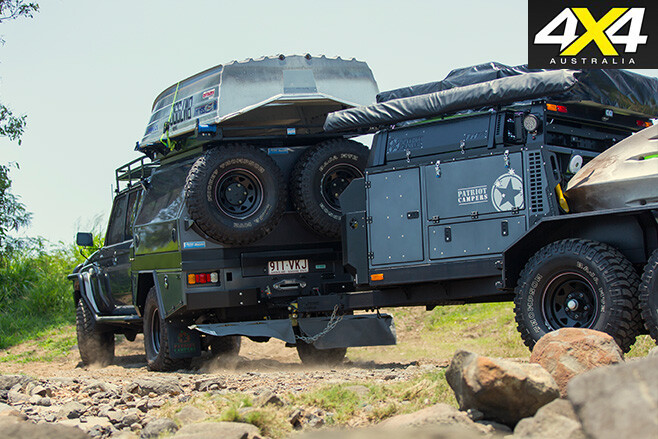
Now you can’t exactly order a 79 Series like this – you have to build it – and Norm didn’t hold back when it came to building it. The Cruiser had a grand total of zero kilometres on the clock before Norm dropped it off to the guys at Patriot Campers, ready to cut it in half with a grinder.
For now, though, we’ll take the story back to the dealership, because that’s where this story really starts. Norm has a young family and, like other young families, his family enjoys doing things like kayaking, and riding quad bikes and dirt bikes. They also enjoy doing these things for a month at a time in exotic places like Lorella Springs and less exotic places like Tasmania.
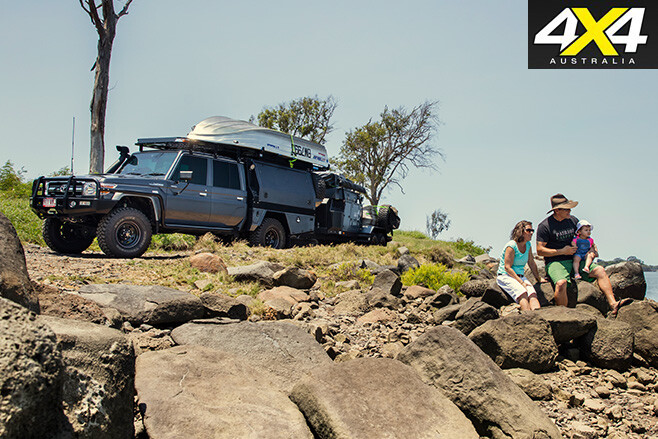
It was this that motivated him to build what he described as “the ultimate Super Tourer”. So there was Norm at the dealership, signing the dotted line for a brand-spanking-new 79 Series Cruiser. While most of us would be trying to get it down the first dirt road we could point the road-terrain tyres at, Norm was calculating.
Before he had even taken delivery of his new adventure machine, he had the guys in the service department install a Gross Vehicle Mass (GVM) upgrade from EFS suspension. By having it installed before he took delivery, it became a dealer-fitted option and, thus, would be legally engineered for every state in Australia – yes, even you, Tasmania. The upgrade allowed Norm to load an extra 700kg on the Cruiser without running afoul of the law.
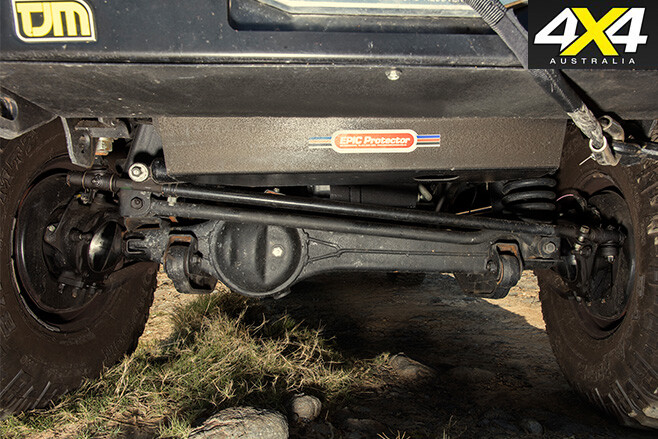
With the GVM upgrade parking the 79 a good three inches closer to the sky, Norm took it straight to the guys at Patriot Campers for one of their ‘Super Tourer’ builds. For those of you currently living under a rock, they’re the guys responsible for some of the most pants-tightening 4x4s, campers and trailers in the country.
The base model Super Tourer tray runs in at a comparatively modest $15,990. But Norm didn’t want comparatively modest; he wanted a 4×4 that’d do everything he’d ever ask of it, take him everywhere he’d ever want to go, and do it without ever complaining.
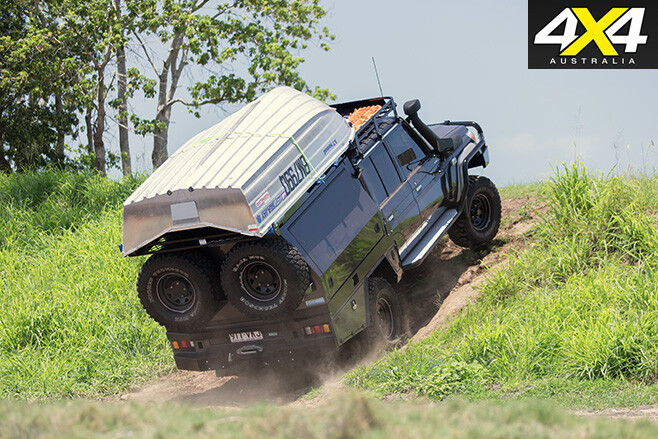
So he ticked a few boxes in the ‘optional extras’ column. Options included a 300mm chassis extension for better weight distribution and a bigger tray, as well as a built-in water tank to go with the standard pull-out kitchenette and rear drawer set-up. See what we mean by pants-tighteningly cool?
Norm didn’t order up the bigger tray because he was planning on carrying a smart car with him everywhere he went. It was given the nod so he’d have room for a massive lift-off camper tray from the guys at the ambiguously named Jackoff Campers. The lift-off camper gives Norm a versatile set-up that can function as a job-site work truck, and a family vehicle with a month’s load of camping gear on board.
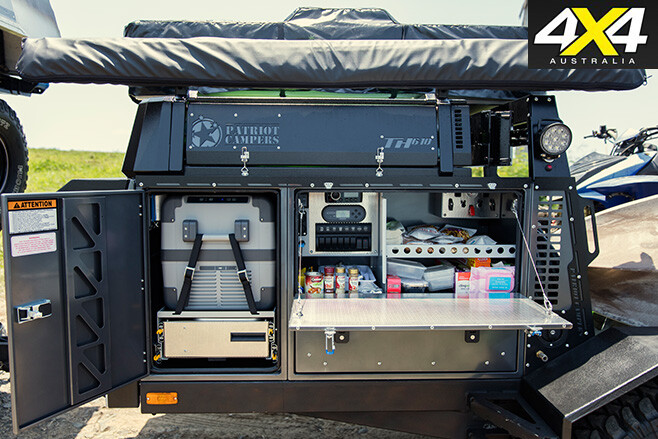
Tucked inside the canopy you’ll find twin 12V fridges: a 100L Engel and 35L Waeco, both strapped in tight to two MSA4x4 drop-down fridge slides. The pair is powered by a Redarc battery management system, which keeps the tray- and camper-mounted lithium batteries charged up so the standard battery under the bonnet can worry about doing standard stuff.
There’s also a 15hp Yamaha outboard engine attached to another slide in the camper – we assume this isn’t powered by lithium, but we’re not really boat people, so don’t quote us. What you can quote us on, though, is that Norm would need a boat to go with the outboard motor. A tinny fits the bill, and when it’s not attached to the previously mentioned engine, it’s strapped down on top to the roof-mounted boat loader.
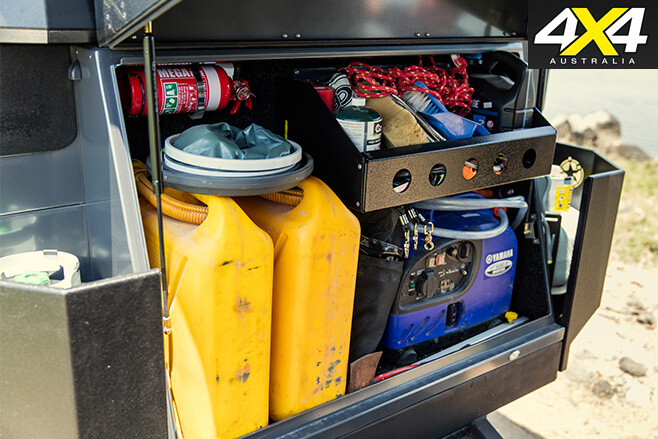
That’s handy. The canopy also plays host to the simply designed 12V electrical skeleton system. We say skeleton because Norm’s 79 is currently still in the build, so expect a whole heap more gadgetry-like LED light bars and inverters to be installed.
If you’ve got an eagle eye, you might have spotted a big vacant spot in the bullbar. Part of that electrical wizardry Norm has got on order is a pair of Lightforce’s brand-new LED driving lights. Until then, the full suite of TJM bar work will provide more than enough eye candy for you to ogle. Up top, the roof rack is a custom-built unit. It’s bare for now, but it’ll soon see a roll-out awning bolted to it with a matching Foxwing awning for the canopy.
To those who don’t know Norm, it might seem like he’s caught up in the hype and throwing every bit of gear he can find at his 79. After speaking to him and hearing firsthand the passion he has for it, I can say that couldn’t be further from the truth.
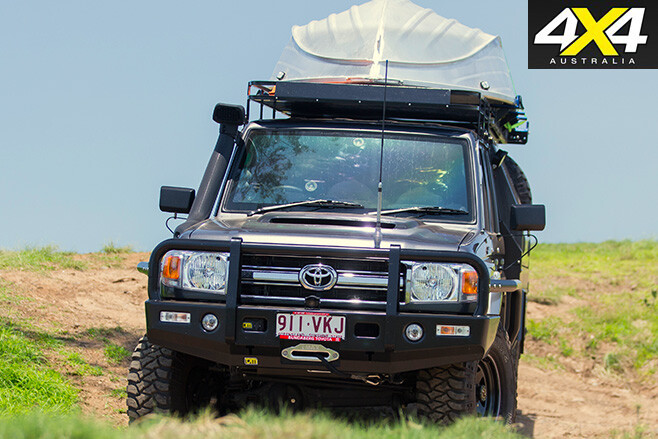
While he’s had the 79 for near on two years, it has only racked up a little over 6000km. It’s spent most of its life in shops getting work done, and getting it done right. See Norm is not the kind of bloke to rush in half-cocked, throw an eBay light bar on the roof and have it burn his pride and joy to the ground on the very next trip.
Every modification is carefully planned and executed with an attention to detail that’d make the Mars Rover look like a downhill billy cart piloted by your drunk uncle. In fact, it’s so well built, and so carefully planned, Justin Montesalvo from Patriot Campers described it as “the best camper/tourer set-up I have ever seen (besides mine of course)”. While that sounds like something only a race across Australia can adequately settle, it’s telling of the quality of this build.
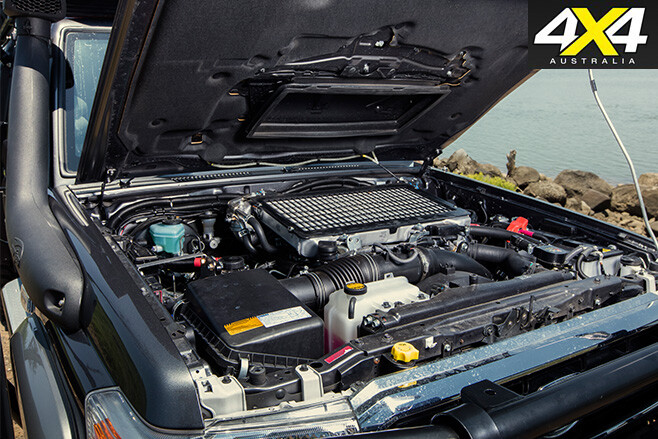
That attention to detail has found its way under the bonnet, too. While you won’t find three extra turbochargers punching out a gazillion extra horsepower, you will find subtle upgrades like an oil catch can, fuel filtration system, a three-inch exhaust and a Roo Systems chip that improve reliability and usability.
Even the rear track has been corrected to keep all the wheels in line (a problem with the 79 is the rear wheel track is narrower than the front wheel track). The wider stance helps the steel wheels and 35-inch Mickey Thompson MTZs fill out the guards.
While the interior does have the oh-so-desirable double factory diff-lock switch, it’s also copped a heap of understated, yet important upgrades. There’s the standard UHF and overhead console, but there’s also trick gear like front and rear cameras feeding into the in-dash Polaris DVD player, and a pair of fold-down seat back tables to give the kids in the back seats room for activities.
Would we say it’s the best tourer in Australia? No – but only because we don’t want Justin Montesalvo coming after us.
That trailer
Every bit as impressive as the vehicle towing it is the Patriot TH560 trailer. If we were to rattle off the spec-sheet, it’d read like a high-end 4×4 built in its own right.
500mm ground clearance, fully independent suspension with an airbag and dual shocks on each wheel, an aluminium body, a 120L water tank, a roof-top tent, a 304-grade stainless steel kitchen and 285/75 R16 mud tyres.
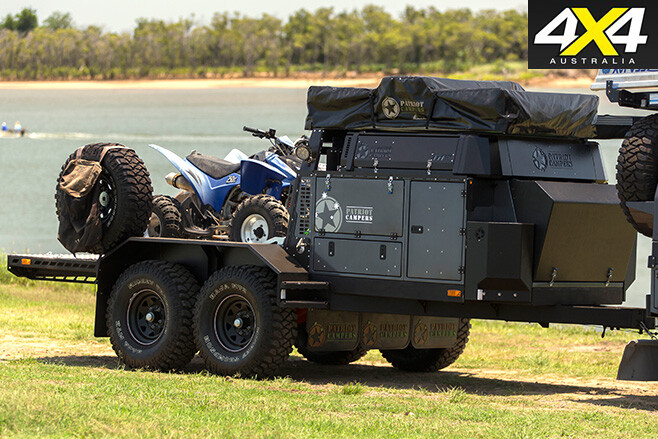
What the spec-sheet doesn’t list is the versatility the trailer allows families like Norm’s. With the one trailer they can load up the kayaks, the quad bikes, the dirt bikes, and head off for weeks at a time.
The trailer can change to suit their needs as the family’s needs change. And that’s something you won’t ever find on a spec-sheet.
- Introduction: Budget build
- Update 1: Springs & Boots
- Update 2: Breathing Easy
- Update 3: Lock and Load
- Update 4: The Dirt Locker
- Update 5: On the Pipe
- Update 6: Baby Got Back
- Update 7: Weighing Things Up
- Update 8: Muddies Muffled
- Update 9: Power Hungry
- Update 10: The Shake Down
Introduction: Budget build
While the guys down in the Melbourne office have been playing around with their shiny new Ford Ranger, throwing every accessory possible at it to build the ultimate tourer, I thought it would be a bit of fun to see what could be achieved with a bit more of a budget-conscious build.
I’ve started with a tried and true Aussie favourite in the form of a KUN26 Toyota Hilux 3.0-litre turbo-diesel manual dual cab. To keep costs down, the vehicle was purchased sight-unseen from an ex-fleet auction for $10K. Admittedly, this was a bit of a risk, but fortunately once the car arrived and we gave it the once over it turned out to be a solid purchase, with a good service history and only minor cosmetic wear and tear.
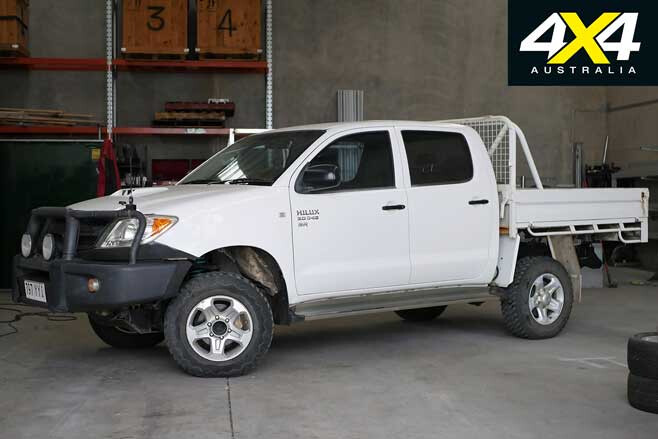
With 150,000km showing on the odometer, the Hilux’s engine required a timing belt change, and the wheels and tyres have definitely seen better days. The Hilux ticked all the boxes when it came to starting with a good platform to build a solid tourer on, and I reckon it will give Matt’s Ranger a run for its money at a fraction of the price.
APAC 4×4 on the Sunshine Coast has graciously offered its workshop and will be helping with all the fitment and advice throughout the build, and they’ll also build a custom tray for the Hilux. The team at APAC 4×4 offer complete vehicle fit-outs, custom fabrication services and have been manufacturing high-tech systems for the defence, energy and telecommunications sectors for many years.
There’s a shedload of accessories available for the popular KUN26 Hilux, and we kicked things off by fitting a heap of EFS equipment including an Adventure Stockman bullbar, a 10,000lb Recon R10 winch, nine-inch Vividmax LED driving lights, and a 19-inch Vividmax LED light bar.
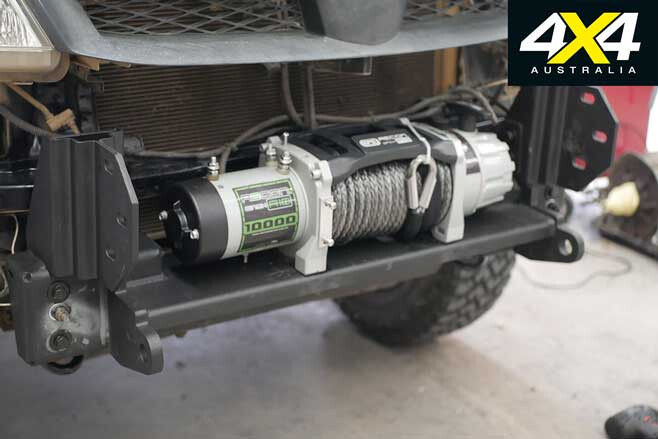
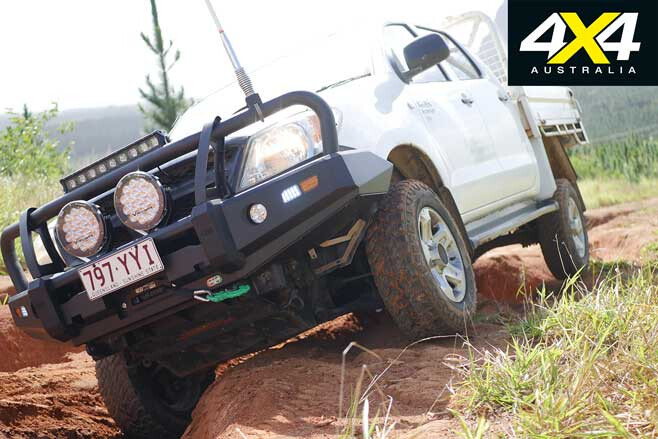
With a quick trip up to the Glasshouse Mountains to give the Hilux an off-road shakedown, it soon became clear why this model has been a staple for off-road enthusiasts for many years. The engine provides decent performance and the Hilux offers a great combination of off-road capability and on-road ride comfort.
On our example, braking performance is questionable, ground clearance is on the low side and the suspension has seen better days, and after driving a few rutted-out hills it became evident a rear locker would greatly aid off-road capability. And despite the reasonable performance on offer, the 3.0-litre turbo-diesel could always use a power upgrade.
There are plenty of other upgrades for the Hilux on the agenda, including a TJM suspension kit, the aforementioned APAC 4×4 custom tray, a TJM Pro Locker, a Yakima LockNLoad roof rack system, new wheels and tyres, and a performance upgrade.
Current mileage: 150,000km Date acquired: August 2019 Price: $10,000 Mileage since last update: N/A Average fuel consumption: N/A
Update 1: Springs & Boots
Out with the old and in with the new, as Ginger the Hilux gets a much-needed suspension upgrade and fresh ‘used’ rubber.
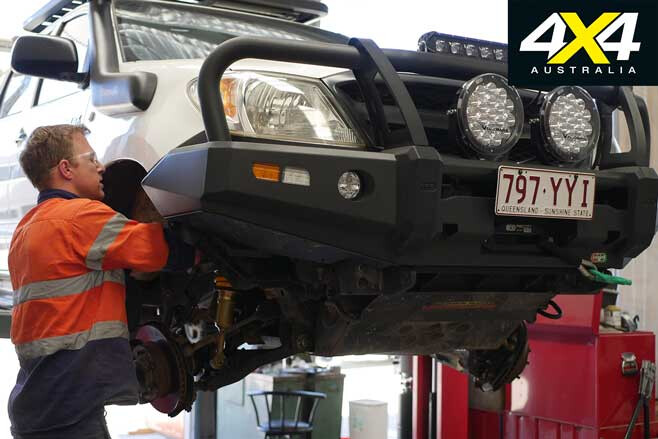
After its first shakedown trip to the Glasshouse Mountains, it became clear after only a few kilometres that the Hilux’s suspension was in dire need of an upgrade.
While it wasn’t absolutely terrible on the road, there was still a noticeable amount of unwanted body roll, and the rear-end felt a little loose when cornering. The situation was similar off-road, and the suspension bottomed out a few times on bigger hits and became increasingly noisy. The service history of the car indicated the current kit had at least 100,000km on it, and upon inspection the rear shocks were found to be leaking.
There’s a laundry list of accessories you can throw at any older 4×4, but a quick and easy way to breathe new life into one is to upgrade the suspension. I opted for a tried and proven TJM XGS Series 4000 40mm suspension lift, and I’ve had experience with the XGS range before and find it to be a good all-round kit.
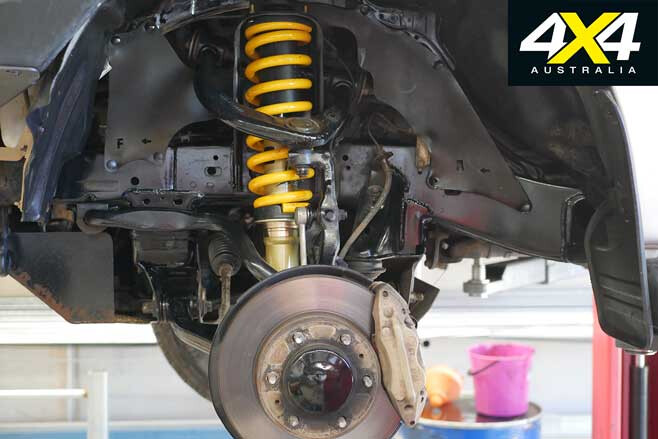
Running N2 charged twin-tube shocks with a 20mm larger diameter piston rod and 40mm large diameter piston, TJM claim the XGS Series 4000 delivers lower internal pressure for shock durability, faster damping response for improved body control, a smoother, more comfortable ride, and improved on-road handling and braking ability with reduced noise and vibration.
The guys from APAC 4×4 leant a hand in fitting the new kit and found the Hilux’s suspension bushes were either extremely worn or almost non-existent, so these were also replaced.
The Hilux’s 225/75 R16s had also seen better days and were definitely undersized for the type of touring planned. I found a set of 16×8 King steelies with generic 265/70 R16s on my local ‘marketplace’ for less than $800, so while the Hilux was up on the hoist for the suspension upgrade we swapped over the wheels.
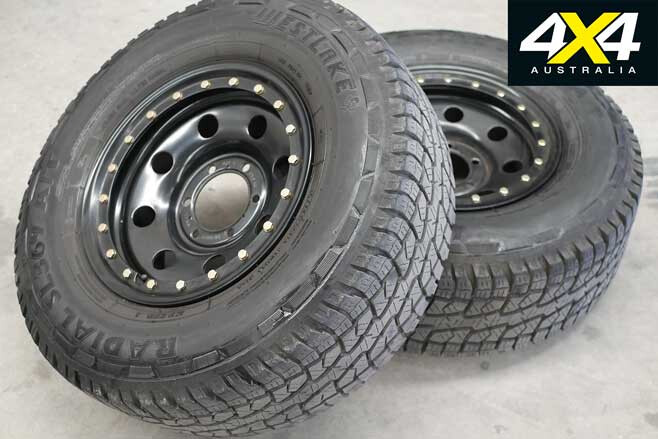
The vehicle looks the part now, but I’ve got my doubts on the longevity of the tyres. I will be putting a lot of thought into the correct tyre for the type of touring I have planned and will be fitting them prior to any long trips.
It was immediately evident on a quick road trip to settle in the new suspension that the ride, cornering and overall vehicle dynamics were greatly improved. I’m looking forward to putting the new XGS suspension through its paces on- and off-road and will provide a full review of the upgrade in an upcoming issue.
Current mileage: 150,000km Mileage since last update: N/A Average fuel consumption: N/A
Update 2: Breathing Easy
A focus on longevity and reliability are key in the most recent upgrades to ginger the Hilux.
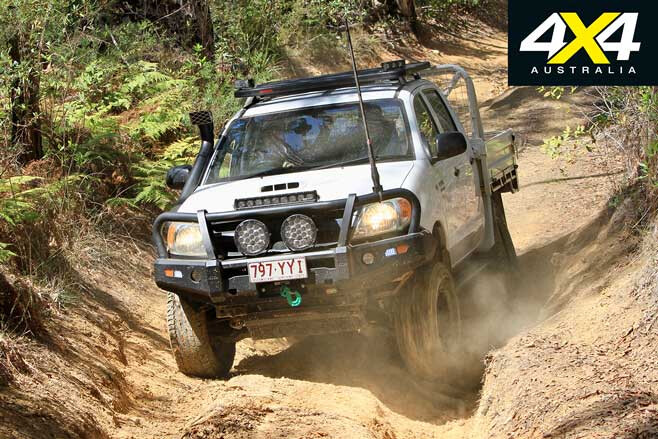
When I first took the Hilux on a test drive around the block the one thing that stood out was the 3.0-litre turbo-diesel engine’s lack of grunt, and I knew that would have to be rectified at some point.
There are many go-fast bits for the Hilux – upgraded exhausts, diesel chips, turbo upgrades, throttle response units and more – but before heading down the path of trying to squeeze every bit of power out of the engine, I wanted to start with a snorkel and a catch can, and an upgrade of the intercooler. As the Hilux already has more than 150,000km on the clock, it makes sense to invest in items that will reduce the risk of further wear and premature failure, while also increasing engine efficiency.
I spoke with the guys at 4×4 Mods Australia on the Gold Coast regarding the most suitable intercooler setup for the Hilux, and they suggested a TerraTuff front-mount intercooler kit. Intercoolers are designed to increase performance and improve reliability by reducing inlet temperatures and engine running temperatures, and shifting from the factory top-mount intercooler to a front-mount intercooler increases airflow and helps with heat exchange.
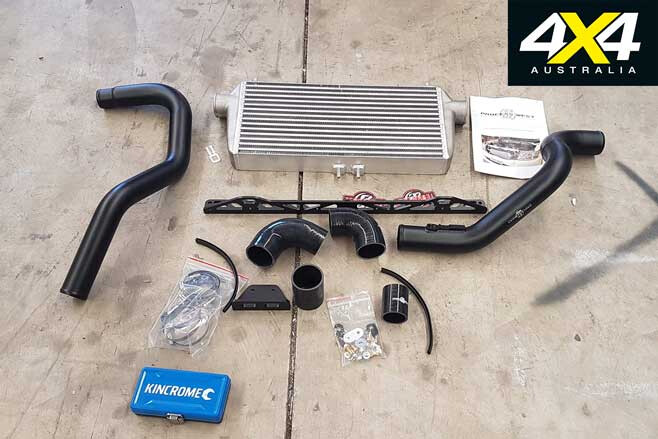
The guys at APAC 4×4 on the Sunshine Coast installed the intercooler and fitted a Sherpa snorkel at the same time. While we had the airbox out for the snorkel install, we had a good look around to see if there had been any evidence of dust making its way past the air cleaner.
Ginger is an ex-fleet vehicle, so I don’t really know how it’s been treated in the past, but thankfully there was no evidence of dust in the intake downstream from the air cleaner. While at APAC 4×4, the guys fitted a new set of brake discs, which provided a much needed and significant increase in stopping power. They also replaced a torn CV boot.
The 4×4 Mods Australia crew suggested I fit a TerraTuff SEPR8R Catch Oil Can to increase the engine’s longevity and reliability. Oil catch cans/oil air separators prevent oil from entering the intake manifold and mixing with the carbon from the EGR (exhaust gas recirculation) system, which can clog up components and increase wear and the risk of premature failure. The separator eliminates the chance of oil vapour contaminating the intake system and helps keep the internal components of the intercooler clean and working at optimum efficiency.
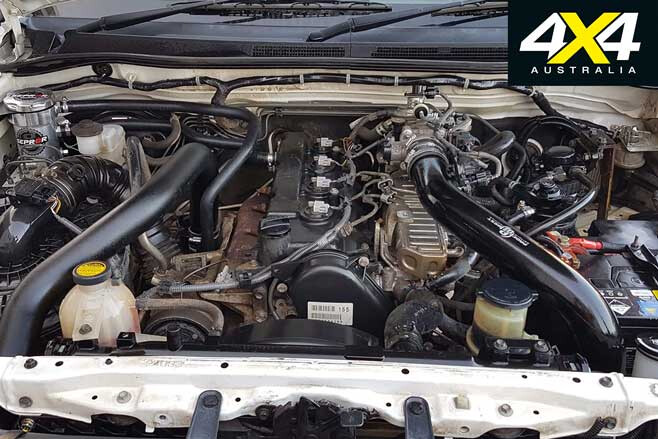
The TerraTuff SEPR8R Catch Oil Can kit is a direct bolt-in system and it looks the business with its billet alloy finish and stainless steel laser-cut brackets. At $375 it’s a relatively inexpensive investment that increases efficiency and decreases the potential for engine wear.
Since these mods I’ve put some decent highway and off-road kays on the Hilux and it has not missed a beat, performing all-day long on challenging off-road tracks, before getting back on the road for several hours of highway driving, with a steady engine temperature and no decrease in performance and reliability.
The next upgrades on my list include a rear locker and some better off-road rubber. I’m pretty happy with how it performs on the road now, so I’m starting to question whether I’ll need to make an investment in any go-fast bits.
Current mileage: 150,000km Mileage since last update: N/A Average fuel consumption: N/A
Update 3: Lock and Load
Ginger the hilux gets up-armoured courtesy of new side rails and side steps from efs. plus, a locknload platform lands up top.
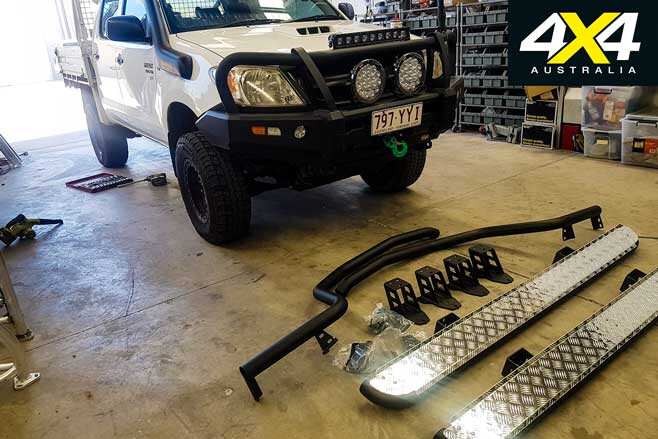
GINGER the Hilux got some much-needed side protection this week, via a new set of EFS side rails with matching side steps. Plus there are now extra storage options up top, with the addition of a Yakima LockNLoad platform.
Following a few off-road trips that resulted in bush pinstripes, as well as an altercation with a barbed-wire fence, I decided some brush bars would be a welcome accessory. When I first fitted the EFS Stockman bullbar, EFS didn’t have matching side rails or side steps available.
The EFS Adventure Series side rails were released in November this year and are just as solid and well-thought-out as the Stockman bullbar. Made from 2mm-thick steel, Black Endura coat finish and with a 63mm tube body, the side rails complement the bullbar and attach through a very neat single-point mounting and not the common clamp design seen on most other bars.
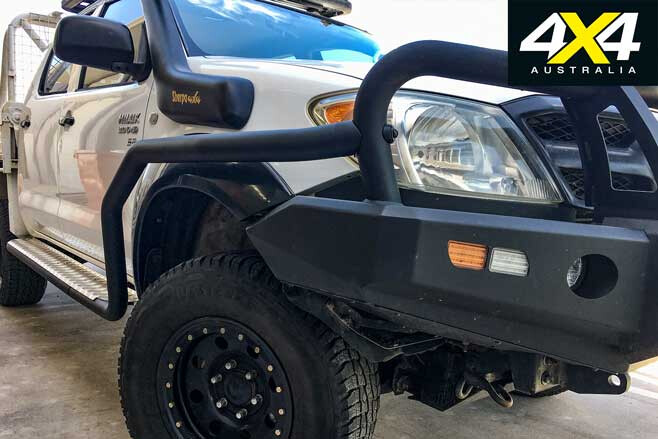
The Hilux’s standard side steps had seen better days when I first bought the vehicle, and they aren’t looking any better after some rocky off-road adventures, so I fitted a new set of EFS Adventure Series side steps with the side rails. Made from the same 2mm steel, 63mm tube as the bar and side rails, the side steps are a lot stronger than the Hilux’s original aluminium steps and match the entire EFS front and side protection set-up. The checker-plate top stands out a bit against the black rails, so I will eventually powdercoat these black to tone down the bling.
To increase load-carrying ability and versatility, I’ve added a set of Yakima LockNLoad roof racks and a LockNLoad platform on top of the Hilux. I’ve been a big fan of the Yakima range for years, as the fit, finish and innovation of its gear is at an extremely high level. Plus, the integrated bottle openers really ticked the box for me.
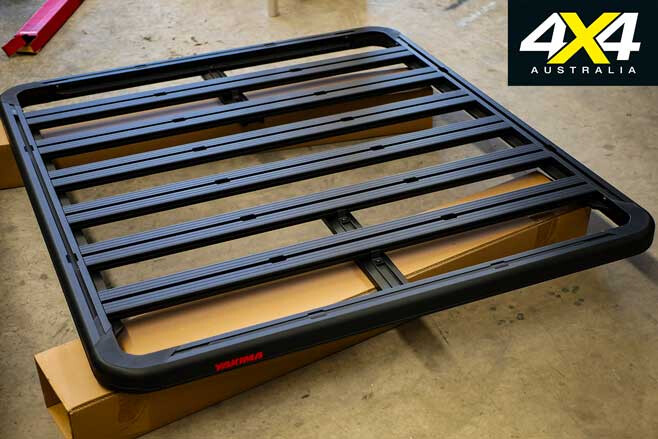
The robust LockNLoad platform is made from corrosion-resistant, powder-coated aluminium and features an additional e-coating: a process best described as a cross between plating and painting, for added strength. Unlike other racks I’ve fitted in the past with roof channel mounting points, fitment was relatively quick and easy, and it’s obvious Yakima put a lot of thought into the quality of its product and the fitment process.
The east-west orientation of the slats suits the way I prefer to tie down items, and every slat incorporates a 21mm accessory slot. The perimeter also features a top slot on all sides, for mounting accessories such as a high-lift jack, an awning and a shovel.
Aside from the build quality, one of the main reasons for choosing the Yakima LockNLoad platform was the amount of accessories available and the ease in which they are incorporated. I’m still working out exactly what I want to permanently carry up top, but it would be good to have a set of MaxTrax there full-time instead of randomly throwing them in the tray when leaving for a trip.
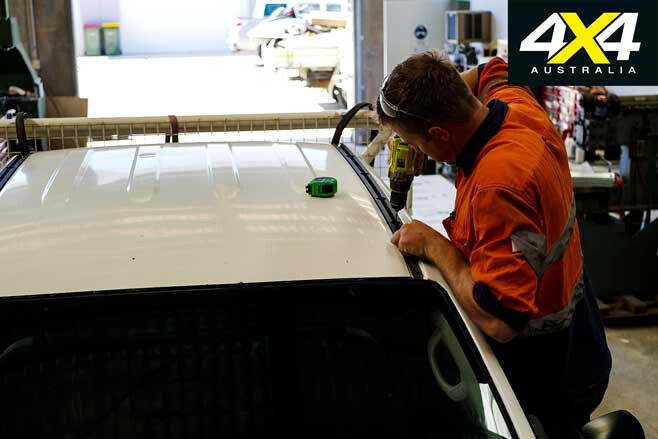
A spade mount, a quick-release awning bracket and an eyebolt kit for easy tie-down points also makes sense, leaving a decent amount of room up top for soft and light cargo like swags, chairs, tents and sporting equipment.
The Yakima platform is rated to 100kg, but you should check your vehicle’s roof load capacity, normally found in the manual (this will include the weight of your rack set-up in the total). Initial road tests show no added aero noise, but this may change when adding some permanent accessories.
The LoackNLoad is definitely not on the cheaper end of the scale when it comes to racks, but you get what you pay for. I’m looking forward to adding more accessories from the Yakima range to the platform and will be reviewing them individually in upcoming issues.
4×4 gear prices
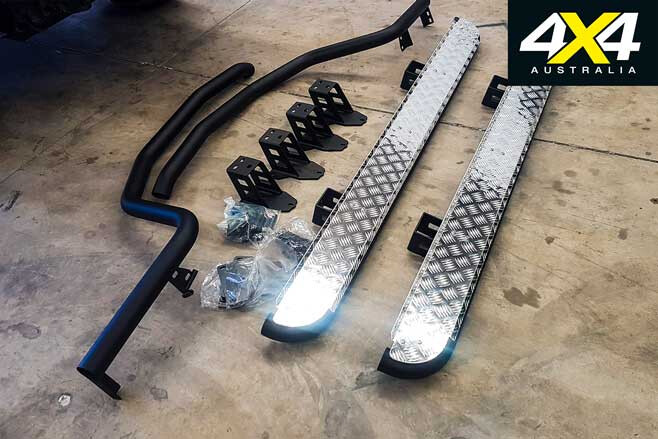
EFS Adventure Side Step: $799 (each) EFS Adventure Side Rail: $498.99 (each) Yakima LockNLoad Crossbar: $571 (pair) Yakima LockNLoad Platform: $1218
Current mileage: 161,000km Mileage since last update: 11,000km Average fuel consumption: N/A
Update 4: The Dirt Locker
Jimmy’s Hilux gets serious with a TJM Pro Locker.
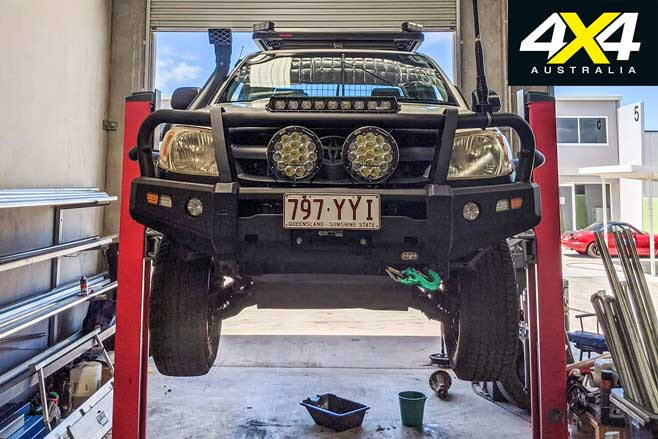
After one of our off-road trips to the Glenreagh region north-west of Coffs Harbour, it became evident on more challenging, rutted-out hill climbs just how much the Hilux and I were relying on momentum rather than utilising the torque and traction that would be available if running a locking differential.
When off-roading on uneven terrain, it is quite common to have either a front or rear wheel lose traction or even lift off the ground. When this happens the power will always take the path of least resistance and head to the tyre that is losing traction or in the air, leaving the opposite tyre, which is actually the one needing power, with limited to no power.
This is where diff locks come in handy; with a flick of an in-cabin switch you can lock the differential, forcing both wheels across an axle to rotate at the same rate to deliver equal power to each of them, but more importantly delivering power to the tyre actually planted on the ground.
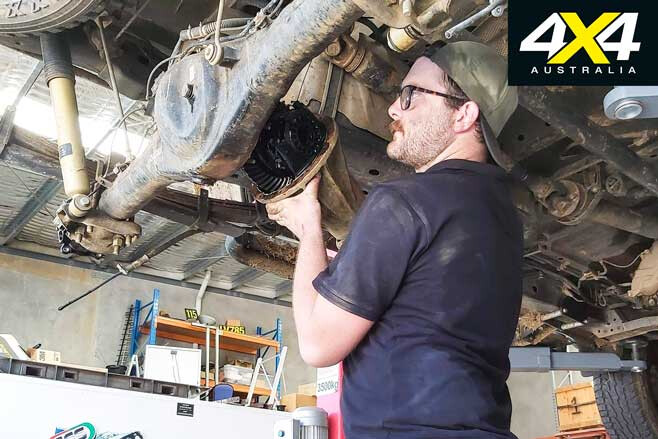
There are a few types of lockers (mechanical, air and electrical) and all essentially perform the same task but are engaged either through mechanical means, via an air compressor or via an electromagnetic mechanism. In most cases of lost traction you will generally have at least one front wheel and one rear wheel firmly on the ground, so either a front locker or rear locker is going to add significant traction by locking either axle.
There is great campfire debate about whether a single locker should be in the front or the rear. The more weight you carry over an axle increases the traction available when locked, so if you carry significant weight in the rear this could be your best option. There is also the push/pull debate when comparing front and rear, with the belief it is easier to pull the vehicle up over challenging terrain with a front locker compared to pushing from the rear.
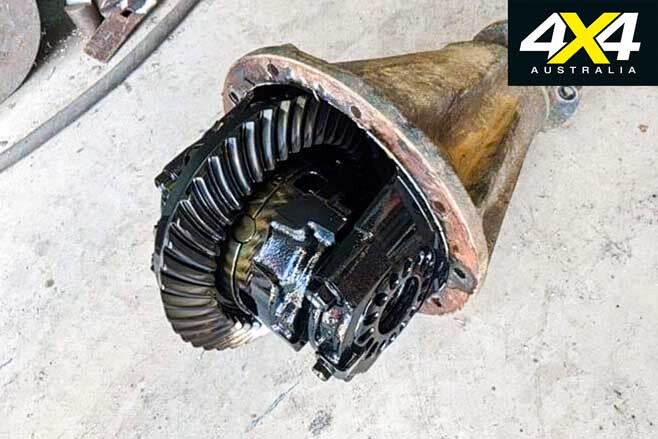
The most relevant point to this Hilux build is the stress placed on the more complicated front drivetrain when the diff is locked. As the Hilux came to me with more than 150,000km already on the clock I didn’t want to place further stress on the front diff, CV joints and steering components that I don’t have a solid history on, so I opted for a rear Pro Locker from TJM.
TJM’s Pro Locker is an innovative air-actuated locker running a unique one-piece cross shaft (instead of the usual three), hardened thrust washers and large pinion gears. It’s a solid bit of kit at $1499 and is covered by a five-year warranty. The Pro Locker comes with a small dedicated air compressor ($229) for engaging the locker, and we mounted this in the cabin behind the rear seats, running the airlines under the body and the switches up front.
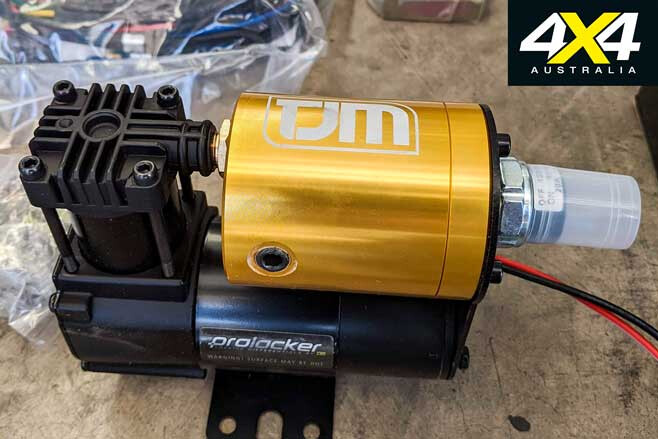
APAC 4×4 on the Sunshine Coast fitted the locker in half a day with no issues. At the time of writing the weather here was on the wet side, with a lot of flooding around my favourite proving ground, so the locker is installed but I’ve yet to take it out and put it through its paces.
The Hilux will be getting some long overdue new wheels and rubber by next issue, and hopefully some time on my favourite uphill tracks. Now that it’s equipped with its new Pro Locker, I’ll let you know how it tackles some of the more challenging climbs where it’s struggled in the past.
Current mileage: 166,000km Mileage since last update: 5000km Average fuel consumption: 11.27L/100km
Update 5: On the Pipe
Jimmy hits the pipe to unleash the wild performance of his 3.0L Hilux.
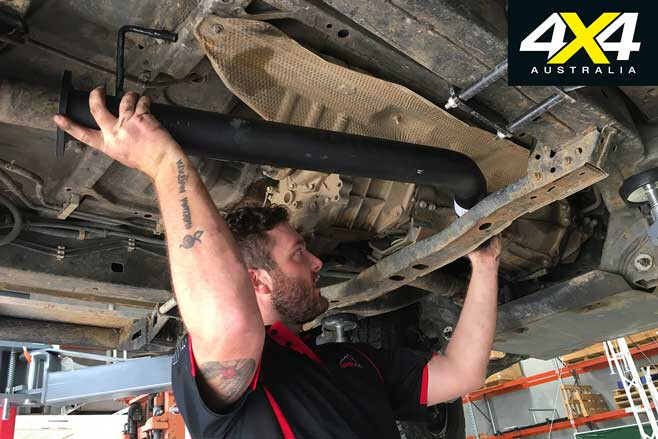
This month, the Hilux got a replacment exhaust system and we the TJM Pro Locker through its paces.
Since picking up the Hilux the exhaust has been something needing attention, not as a priority, but more as a reduction in noise pollution. The previous setup was a backyard deal, with the muffler removed in favour of a straight-through system. Not the worst sound, but it did tend to drone at highway revs.
I opted for a 3-inch turbo back with hotdog/resonator and cat setup from Carbon Off Road. This system retails for $869 using CNC mandrel-bent aluminised tubing, 10mm flange plates and electrostatic high-temp paint and two-year warranty.
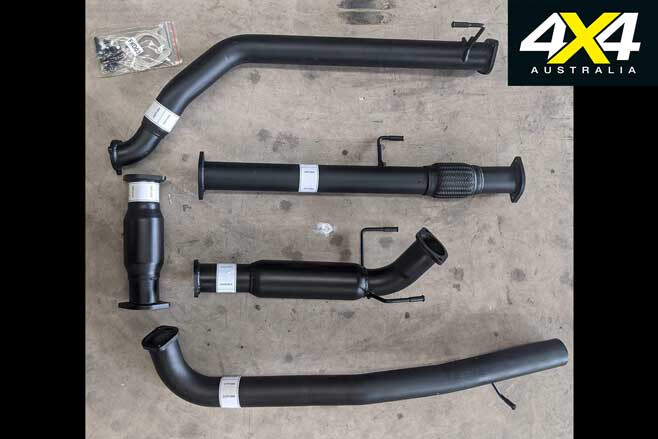
Using all the original attachment points the guys at APAC 4×4 on the Sunshine Coast had the system installed in record time, once the usual issue of seized nuts on the dump pipe we’re sorted. Upgrading your exhaust is a relatively easy DIY if you’ve got access to a hoist, and is made all the more pain-free with a system such as the Carbon Off Road that uses all the original hanger points.
After installing the exhaust it was time for a test drive to see how it sounded and if the drone at highway revs had been eliminated. Running a 3-inch exhaust with only a resonator, I did have some apprehension on sound quality, however the guys at Carbon Off Road assured me I would not be disappointed.
Overall the sound is good at highway speeds and throughout the rev range with no noticeable drone at all, and I reckon I even noticed a small increase in performance. The next step will be an ECU tune or diesel chip to take advantage of the free-flowing exhaust and the larger TerraTuff front-mount intercooler setup.
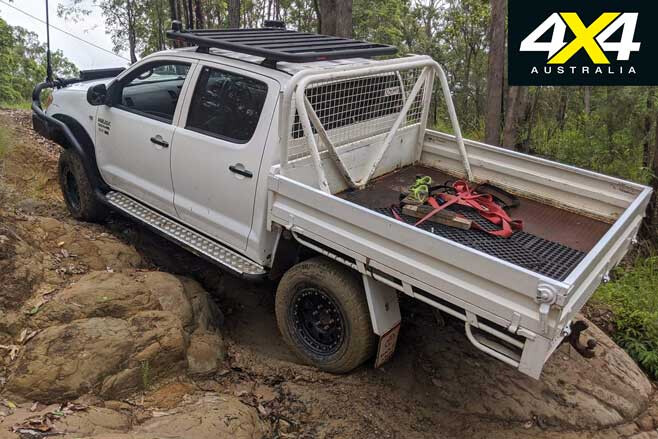
Last issue I installed a rear TJM Pro Locker with the help of APAC 4×4, and this one accessory has made a huge improvement when tackling previously challenging tracks. Rutted-out hillclimbs that seemed almost impossible on previous attempts can now be approached with reduced speed and vastly improved traction. With a reduction in momentum needed on challenging trails, the Pro Locker in my opinion should reduce wear and tear associated with more spirited approaches to deep ruts and steep undulating tracks.
At $1728 (including air-compressor) the Pro Locker is a relatively minor expense for a major off-road gain and potentially reduced wear and tear.
Current mileage: 166,000km Mileage since last update: 1000km Average fuel consumption: 11.3L/100km
WITH THANKS
www.carbonoffroad.com.au www.efs4wd.com.au http://tjm.com.au www.yakima.com.au www.4x4modsaustralia.com.au https://apac4x4.com.au www.sherpa4x4.com.au
Update 6: Baby Got Back
The tray is the most versatile part of any ute, with endless options for configuration and customisation.
This past month the Hilux has been fitted with a Trade Tuff tray (RRP $5896) from JDW Custom Fabrications on the Sunshine Coast, Queensland.
I’ve seen a lot of JDW trays getting ’round the Sunshine Coast and I liked the build quality and customisation, so it was my first port of call for a tray. JDW has been operating on the Sunshine Coast since 2016, and on top of building trays and canopies it also specialises in full custom-metal solutions for the construction commercial/residential, marine, automotive and farming industries.
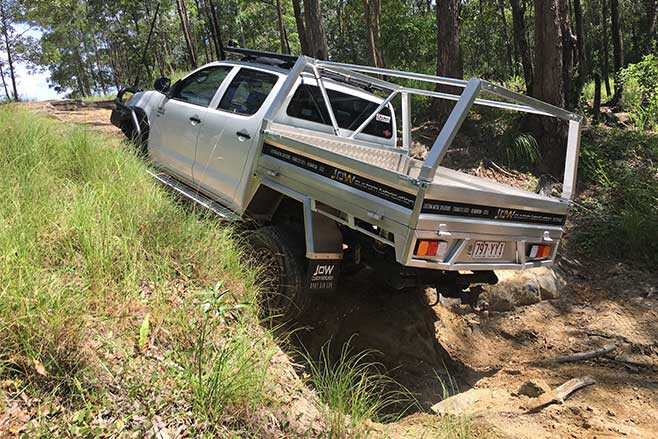
Chatting with owner John Winiata, it was clear that no job is too big or small; John said they can be building trays and canopies one day, stair stringers the next and stainless-steel kitchens the day after, on site or in the factory, no two days are the same.
JDW builds its trays on two main platforms, Trade Tuff and Adventure Ready. Trade Tuff feature full-length rope rails, two-piece guards, removable rear rack and trundle drawers, while Adventure Ready feature inbuilt tie-down points (no rope rail), tapered under-tray boxes, water tanks, one-piece mudguards and under-floor battery boxes. Both Trade Tuff and Adventure Ready are available with all options and upgrades and can be customised with limitless options.
After consulting with John, I decided on the Trade Tuff economy-build tray as a start, then add on accessories and customise as required. The Trade Tuff tray is a solid bit of kit with top-quality fit and finish using structural-grade aluminium for chassis, side rails and headboard for the added strength.
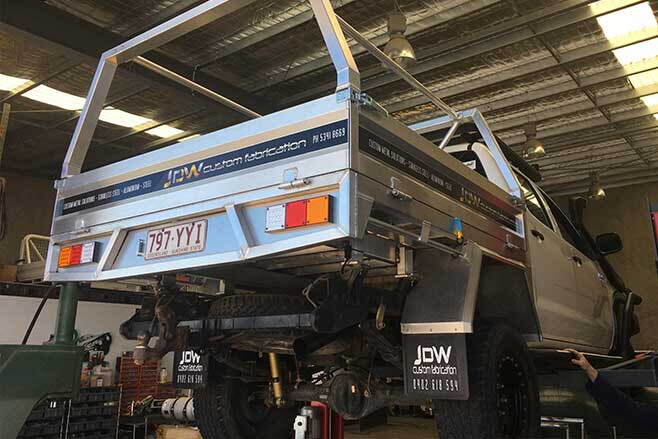
Standard features include full marine-grade aluminium construction; 3mm tread plate floor and flat sheet guards; extruded drop-side section; galvanised over-centre latches; stainless-steel fixings; fuel filler and breather covered under a three-year workmanship warranty; and 280 Series auto LED lights covered by a five-year warranty. Turnaround is roughly two to three weeks depending on options and customisation, with powder coating and two-pack colour matching available.
Over the coming months I will be adding tool boxes, a water tank and either a half- or quarter-canopy and will be consulting with John on customisation options as I add more accessories and find areas that can be adapted to my requirements.
Current mileage: 166,210km Mileage since last update: 210km Average fuel consumption: 11.27L/100km
WITH THANKS
www.jdwcf.com.au www.carbonoffroad.com.au www.efs4wd.com.au www.tjm.com.au www.yakima.com.au www.4x4modsaustralia.com.au www.apac4x4.com.au
Update 7: Weighing Things Up
Fitting an aluminium tray to the Hilux has affected the way it drives and has left Jimmy looking at his options.
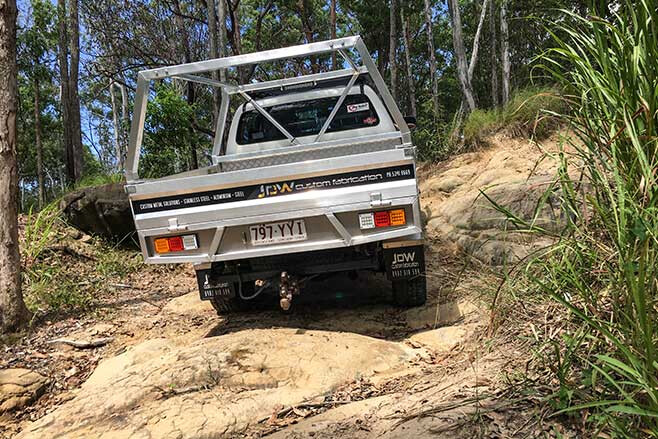
BEING an ex-fleet vehicle with a steel tray the Hilux was carrying a significant amount of weight on the rear, even with nothing in it. Since swapping it out for an alloy tray from Queensland’s JDW Custom Fabrications the reduction in weight has been quite noticeable.
The width of the new tray is more streamlined to the vehicle now and there is a reduction in wind noise over the steel tray in consequence.
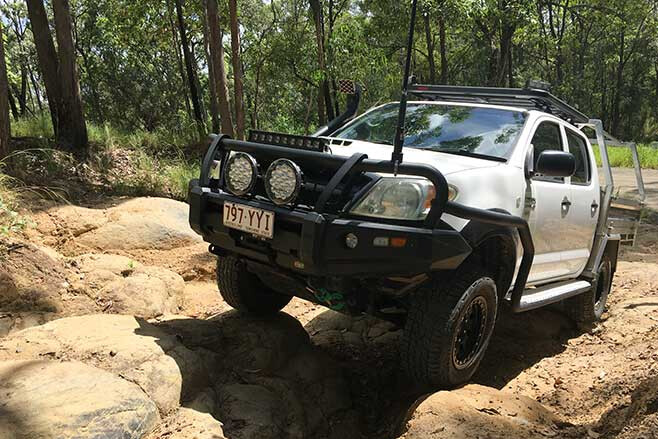
This decrease in weight and wind drag has resulted in a welcomed minor reduction in fuel consumption, too. The only negative to the tray is the reduction in weight over the rear axle, which has resulted in a noticeably stiffer rear end.
With the rear suspension running less constant load the shocks’ resting positions are nearly fully extended, which means little to no down travel; so while the front is still tracking well, the rear has a noticeable decrease in grip and comfort.
I will be fitting permanent accessories to the Hilux over the next few months, adding to the constant load. This will bring the tray back up to around the same weight as the steel tray by itself, which should address the ride issues.
THE SET-UP
When choosing the right suspension set-up for your requirements, working out your constant load (permanent extra weight added to the vehicle) is very important as there are several options to suit; but if you get it wrong you’ll end up with a poorly performing set-up on- and off-road.
Therefore any reputable suspension shop should ask you what extra accessories have been installed or planned to be installed, and then point you in the right direction for the correct set-up to suit your needs.
At the time of writing a new set of Cooper Evolution M/T tyres arrived, but we ran out of time to fit them. Due to virus restrictions at the time, I couldn’t head bush to put them through their paces, either.
As they are a chunky mud tyre I’m expecting fuel consumption to head south, but after chatting to Coopers about new technologies used, this may not be like the mud tyres of old and I’m really looking forward to giving them an initial review and further updates as I rack up the kays on- and off-road.
Current mileage: 173,000km Mileage since last update: 6790km Average fuel consumption: 10.34L/100km
WITH THANKS
www.coopertires.com.au www.jdwcf.com.au www.carbonoffroad.com.au www.efs4wd.com.au www.tjm.com.au www.yakima.com.au www.4x4modsaustralia.com.au www.apac4x4.com.au
Update 8: Muddies Muffled
Jimmy’s Hilux gets a set of mud-slinging, dirt-digging Cooper Evolution tyres.
THE Hilux got a bit of well-overdue track time and I got to put the new Cooper Evolution M/T tyres through their paces.
Going from a 265/65R16 to a 285/70R17 the Hilux gained an extra inch-and-a-half of lift adding to overall clearance and a larger footprint increasing available grip.
It was tight squeeze fitting the 285s under the guards and I had to modify a few inner-guard plastic wear points, but so far there have been no issues.
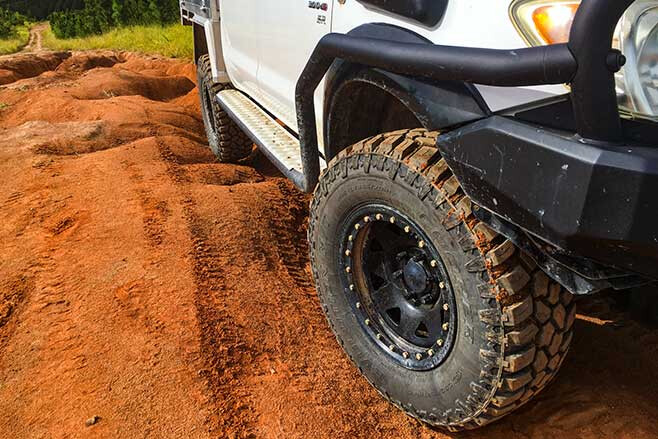
Being a mud terrain tyre, the Evolution has the typical aggressive tread pattern and wide tread blocks that can be quite noisy on road.
Considering it’s a fresh design, though, Cooper has incorporated some new technologies to address noise and wear, while also increasing sidewall strength and utilising the aptly named Mud Slingers and Earth Diggers features for added grip.
Cooper claims the Earth Diggers’ large lugs at the edge of the tyre, with the alternating scoops at every other tread block, give you extra grip by forcefully digging into loose dirt, sand and sticky mud, providing extra traction in tough situations.
The Mud Slingers, which are massive grooves between the large Earth Digger lugs, allow continuous cleaning away of stones and thick mud for improved off-road traction.
The lugs and sidewalls are designed to work with the rest of the tread design to wear more evenly, resulting in a decrease in wear noise. Plus, keeping the tyres’ servicing, rotation and balancing up to date is the best way to extend your tyres’ lifespans and reduce premature wear and noise.
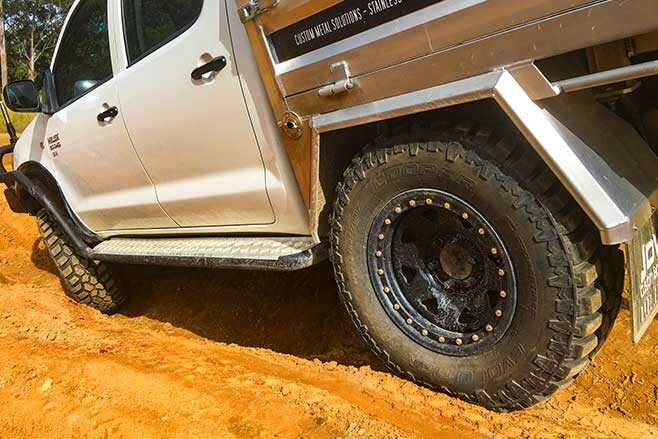
First impressions on bitumen showed no sign of excessive noise; they are really quiet for a mud terrain tyre and the ride is comfortable around town and on the highway.
Off-road, I put the Evos through their paces in sandy soil, dry rocky hills and rutted-out muddy tracks, with impressive amounts of grip on offer in all situations. The Evolutions performed well on steep downgrades and under hard braking, too.
On trails where I have previously needed to engage the rear locker, I was confident enough with the grip level to attempt these without engaging it.
This can be attributed to a few factors of increased clearance and, of course, greater amounts of grip and footprint provided by the tyres.
As they are a true mud-terrain tyre they performed as expected in muddy conditions, and were impressive in sticky clay conditions where mud tends to turn a tyre into a mud donut – the mud slingers did their job and ejected excessive mud quickly resulting in grip when I needed it.
Due the increase in rotational size going from a 265/65R16 to a 285/70R17, as well as mud-terrain tyres having an aggressive tread pattern, they tend to rob a bit of power on-road. In the case of the Hilux this was only really noticeable in second gear acceleration, so this will justify my need for a diesel chip to claw back any lost acceleration and turn the wick up just a little bit more.
As this is only a first impression of the Cooper Evolution M/T conducted over a short period of time, wear and fuel consumption can’t be evaluated as yet. However, first thoughts are Cooper has developed a mud terrain tyre that ticks a lot of boxes in noise, grip levels and overall comfort, and I look forward to evaluating them further with different pressure levels and after some significant kilometres.
Current mileage: 175,000km Mileage since last update: 2000km
Update 9: Power Hungry
Jimmy fits the final piece of the performance puzzle – 04/08/2020
THIS MONTH the Hilux received the final piece to the puzzle for the performance upgrades I wanted: a Diesel Power performance module.
The Hilux is already running an aftermarket Terra-Tuff front-mount intercooler and a Carbon Offroad three-inch turbo back exhaust, so to take advantage of the increased airflow and to deal with the power loss after the muddies were fitted last month, I installed a Diesel Power Australia tuning module.
Tuning modules have been around for years and have been the go-to performance upgrade for avid 4WD enthusiasts, especially when coupled with an exhaust or other engine upgrade.
Diesel performance chips or modules (same thing), go by many names and can work in slightly different ways. Many brands offer claimed power increases from anywhere between 10 and 35 per cent increase over factory figures.
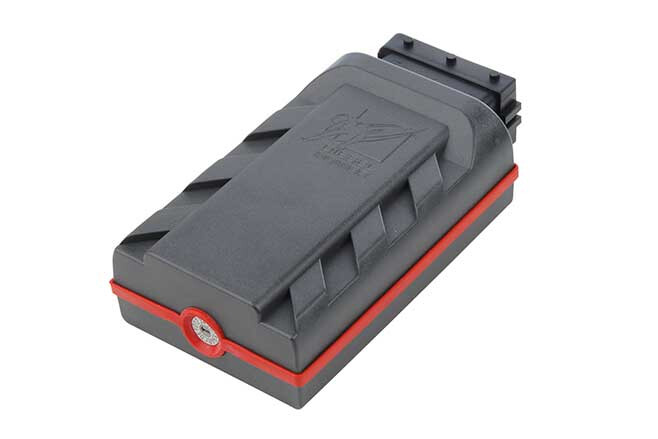
Most chips are easily installed in around 30 minutes and come with all the wiring harnesses and plugs needed to get you up and running. Once installed, the chip/module works by intercepting the signals coming from the ECU going to the fuel injection rail and then sending modified signals back to the ECU.
The control unit sees a lower fuel pressure signal than what is actually occurring and compensates by demanding more pressure from the common rail pump. The increase in fuel pressure increases the amount of diesel each injector fires, thus increasing power with the extra fuel injected. Fuel pressure is increased or decreased based on what you’re doing with the vehicle at the time.
The Diesel Power Australia module I chose for the Hilux is a two-channel chip/module that regulates fuel rail pressure and turbo boost pressure rather than just fuel rail pressure alone. Boost pressure modification optimises airflow into the motor, so a combination of increased airflow and fuel pressure results in more power and a smoother torque delivery.
As most chip/modules sit upstream from the vehicle’s ECU, the ECU still retains the power to override the chip/module if it is operating outside of the factory specifications of the engine. In the off chance there is an issue, on most vehicles a check engine light will come on or the vehicle will go into limp mode.
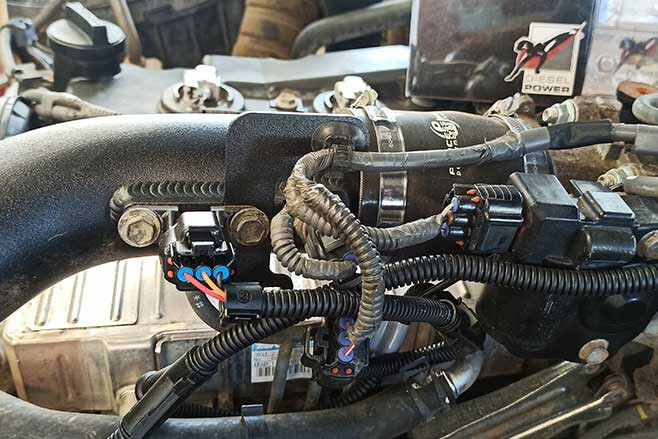
This can be cleared easily by disconnecting the chip/module, or disconnecting and reconnecting the vehicle’s battery. The Factory ECU still monitors all parameters of the motor and offers a backstop of protection and reliability.
The Diesel Power Australia tuning module came with everything needed for a relatively quick and easy installation on the Hilux, plus it came with a synthetic bag with a Velcro fitting strap to keep it tucked away and safe in the engine bay. There are 15 settings on the module (1 to 9; A to F), offering a claimed increase in power up to 25 per cent above factory.
This module has been TUV-approved and verified in Germany to meet strict performance guidelines and performance claims. Setting 9 will give you the claimed increase in power with a factory vehicle but with additional modifications; turning it up to setting C saw the sweet spot of performance. Wind it up too much and you will have a decrease in power as you are flooding in more fuel and not making the optimum burn.
The setup comes with a handy bypass plug, which, when plugged in, returns your vehicle to standard tuning without having to remove the harness. This came in handy when deciding which setting I liked and how much difference it made, as I drove the vehicle for a while on a particular setting then plugged in the bypass to compare to factory settings.
Turning it all the way up to F made a noticeable difference, but was a bit of overkill and there was the looming potential of a check engine light coming up on the old Hilux, which I’d prefer to keep as reliable as possible.
For now I’ve settled on the setting C, which provides enough power to counteract the power being robbed by the bigger tyres fitted and should provide reasonable fuel efficiency. Once some significant highway, around town and 4WD kilometres have been racked up, I’ll report back on the overall fuel consumption.
RRP Diesel Power performance module: $995
Current mileage: 178,000km Mileage since last update: 3000km
Update 10: The Shake Down
Time to take a breath and assess the modifications, with plans afoot for further improvements – 01/09/2020
ASIDE from adding a few more items to the tray and the racks, the Hilux is somewhat complete.
The planned big trips have been postponed for more shorter day trips, which have been enjoyable and a great test of the vehicle’s capabilities. However, accessories suited to more remote travel still remain on the drawing board.
Building a tourer from a stock standard ex-fleet car has been less problematic than expected and, apart from some very minor maintenance, the Hilux has stood up to the reputation as a reliable platform.
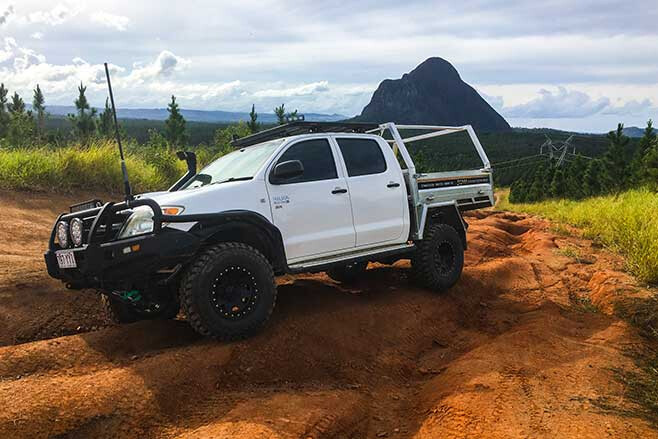
The most outstanding product among the accessories fitted has been the TJM Pro Locker. The TJM suspension upgrade with bigger wheels and tyres certainly helped with ride and grip off-road, and the addition of the Pro Locker vastly improved those capabilities.
The EFS Vividmax LED driving lights and light bar have performed perfectly, but the smaller eight-inch LEDs did have some minor water ingress but were replaced without issue by the team at EFS.
In the performance department, the TerraTuff intercooler and Carbon Offroad three-inch turbo back exhaust helped the engine breath easier, while the Diesel Power Australia chip squeezed some extra power out of the engine to compensate for power robbed by fitting the Cooper Evolution muddies. After messing around with the different settings on the diesel chip, setting C seems to be the sweet spot for increased power and reasonable economy.
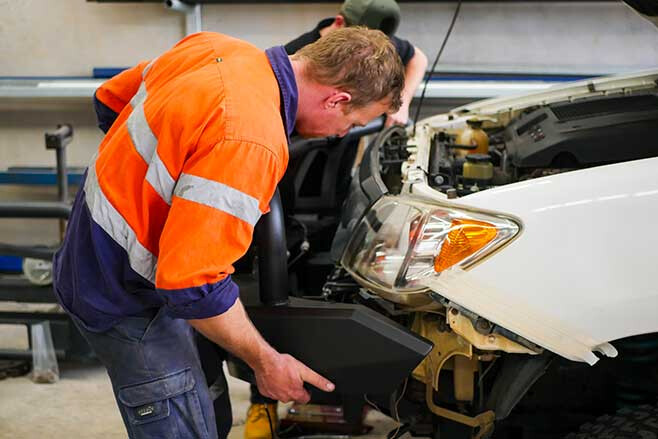
The JDW Custom Fabrications Trade Tuff tray has taken some punishment off-road and stood up to the day-to-day rigours of abuse a work ute should, with not a blemish or issue to show for it. I’m thoroughly impressed with the workmanship and attention to detail the guys at JDW have put into even their entry-level tray. I’ll be adding a quarter canopy, spare wheel carrier and water tank before some big trips later in the year.
The Yakima LockN’Load roof rack platform has worked as expected. I’m a big fan of Yakima products and have run them on other vehicles before. They look great, are strong, create no noticeable wind noise and have a multitude of accessories to make life that little bit easier with carrier loads up top. But Yakima had me sold on its racks when I first discovered the built-in stubby opener.
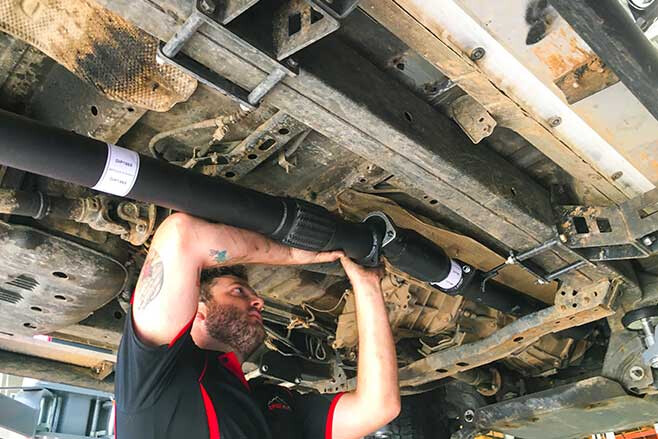
A bullbar can make or break the aesthetics of a vehicle, and there are some odd looking bars on the market. I opted for the EFS entry-level Stockman bullbar; it’s a good looking bar and built strong. After a lot of abuse off-road and some disagreements with some obstructions on tracks including a barbed wire fence, the bar has very few battle scars and surprisingly looks almost as good as the day it was fitted.
The updates on the Hilux are far from over, but the lion’s share of kit has been fitted to achieve what I was looking for: an extremely capable off-road tourer that didn’t break the bank and was, most importantly, reliable.
Current mileage: 179,000km Mileage since last update: 1000km Average Fuel: 12.0L/100km
WITH THANKS
www.coopertires.com.au www.jdwcf.com.au www.carbonoffroad.com.au www.efs4wd.com.au www.tjm.com.au www.yakima.com.au www.4x4modsaustralia.com.au www.apac4x4.com.au www.diesel-power.com.au