
The track was carpeted with twigs, branches and leaves from the surrounding forest, but it was otherwise smooth and easy going for most of the way, testimony to the low use of the track. We were searching for remnants of the Victoria Star Mine but little did we know we had driven past the major site hidden as it is, amongst the verdancy of Far East Gippsland.
Our trip had started a few days previously when we left the mountain township of Omeo and headed east looking for less frequented spots to enjoy in the Victorian High Country. Our first night had been spent camped at a remote, little-used campsite on the edge of Limestone Creek, north of the Limestone Creek-Black Mountain road that cuts through this section of High Country, west of the mighty Snowy River. Our camp beside the mountain stream was everything you look for in a bush camp: a shady glade amongst trees that weren’t so tall to be a danger, a small creek with mountain-fresh and clean water flowing past, green grass beneath our feet, and an abundance of firewood within 100 metres. Pure heaven with nobody within cooee, while dingos called during the night and the snort of a wild stallion guarding its mares woke us in the morning.

We had settled in for a few days but rain that first night continued into the morning and sent us scurrying out of this mountain fastness, the steep tracks becoming decidedly slippery after rain and no place for a four-wheel drive with a camper on the back, even one as capable as my 79 Cruiser.
For the next few nights we settled in and enjoyed the serenity of one of my favourite camps in this part of the High Country: Native Dog Flat. While it’s close to the main dirt road and easily accessible, it’s rarely crowded and for the first few days we enjoyed the spot all to ourselves and a group of wild horses that came in every day to graze on the surrounding grassy plain.

With the weekend, a couple of locals from Orbost came along, so looking for even quieter abodes we pushed east and crossed the mighty Snowy River at McKillops Bridge. The road has improved since the first time I drove it 40-odd years ago, but it’s still a long, tight descent where there are few places to pull aside and let an oncoming vehicle pass. It’s not recommended if you are towing, but we took the chance and were lucky enough to only meet one vehicle and he had seen us coming down and parked up to let us sneak by.
After a brief stop at the info shelter on the eastern approach to the bridge, we cruised on, stopping for the evening at the historic Ambyne (sometimes, Amboyne) Suspension Bridge. The old bridge crosses the Deddick River and was designed to handle vehicles weighing up to three tonnes and was in use from 1935 to 1970. It’s only one of two still standing and is classified by the National Trust and has undergone some renovation. It’s worth a stop to check it out and, while the camping area is small, it’s okay for a night camp.
BEN’S DOCK

We wound our way towards Bendoc, close to the NSW border in East Gippsland. Once an important gold-mining town, today Bendoc is pretty quiet with just a pub and not even a general store or fuel outlet to serve any visitors or passing traffic.
Local legend reckons the town’s name dates back to the 1840s when cattle from Ben Boyd’s runs, which then stretched from Eden to the Monaro, wandered south into Gippsland. Arriving at ‘Wagra’, the original name for the town and an Aboriginal word for ‘black-eyed crow’, there was a portion of clear country and Ben’s cattle congregated there. It was here that Ben and his men would dock the tails of the cattle, and so the area became known as ‘Ben’s Dock’, later to be shortened to ‘Bendoc’. However, there are other stories too.
Today, if it wasn’t for the government departments of Parks Victoria and the DPI, along with the SES and their relatively new buildings, you’d be flat out finding any life in the town. On the outskirts are a couple of logging contractors who employ most of the people in the region, but it was the old gold-mining stories of the region that had attracted our attention.

Alluvial gold was first discovered in the Bendoc River in 1855 and, while this didn’t last too long, the rich deposit of what was to become the Morning Star mine was found a couple of years later. Other deposits were soon discovered and over the next 20 years many prospectors, including a number of Chinese, were sluicing for gold in Back Creek, and in the Bendoc, Queensborough and Delegate Rivers, while hard-rock miners were digging shafts as deep as 200 metres at such mines as the Conical Star, Homeward Bound, United Welcome Stranger, Sunbeam, Wagra and Snow Storm, amongst others.
In 1889, rich reefs were discovered at what became Clarkeville, and from 1910 until the end of WWI the Victoria Mine, south of Bendoc, was taken up and worked successfully, as was the neighbouring Welcoming Stranger. Prospectors were again active in East Gippsland during the 1930s and the depression, with a hydraulic sluicing works established at Back Creek, which operated until the 1950s.
While timber harvesting was very much a part of the gold-mining process in the early days of settlement, it wasn’t until after WWII that the forests in the region were subjected to commercial logging, which continues to this day.
In 1988, the Errinundra National Park of nearly 40,000ha was established and covers an area of rich verdant forest, including the largest preserved cool temperate rainforest in Victoria. In amongst this verdancy are some of the biggest trees still standing in Victoria, with many listed by the National Trust as outstanding trees such as giant shining gums of over 60 metres in height and more than 200 years old, with mountain grey gums and messmate of similar size and vintage.
WILSON’S HUT

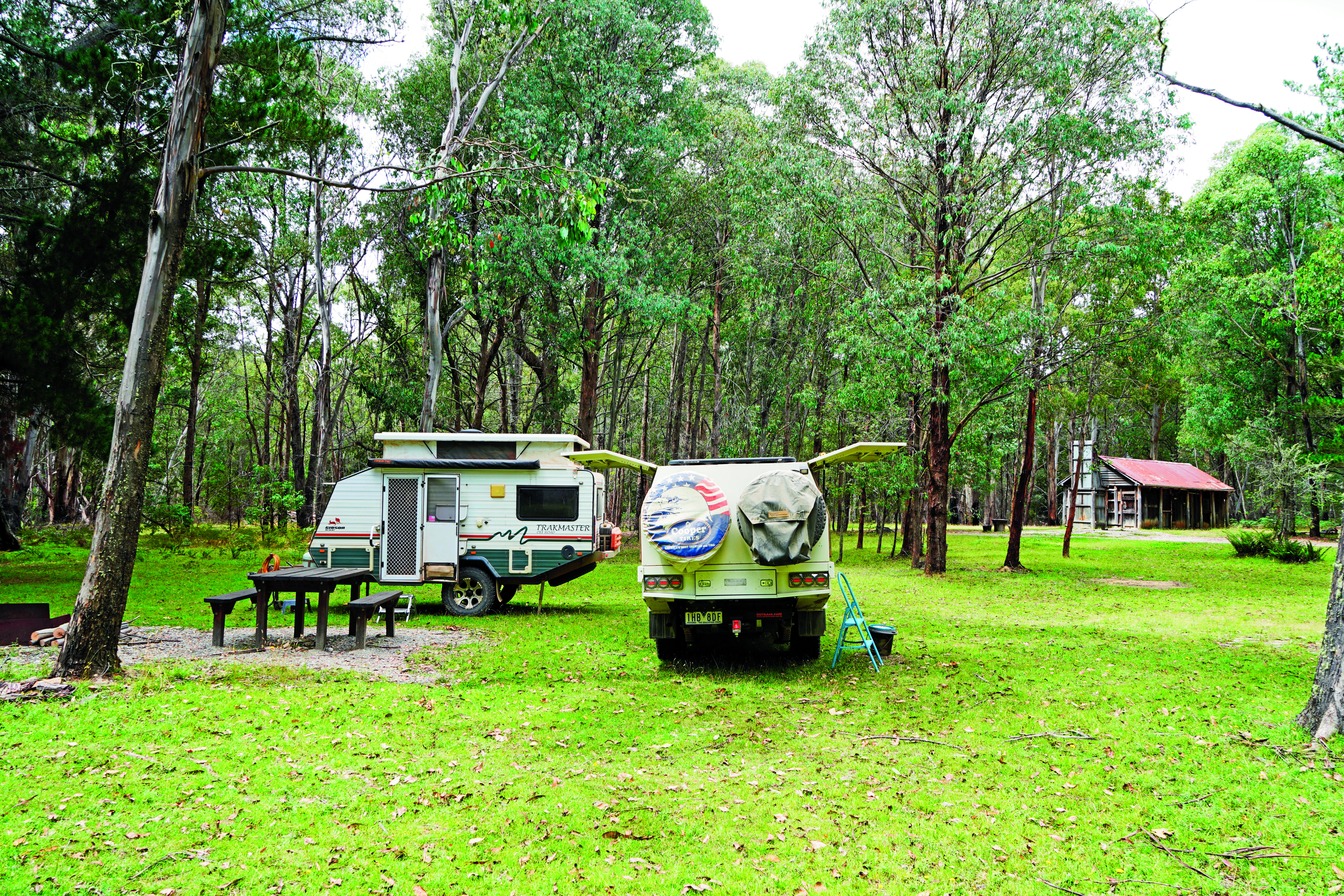
We had heard of a bush hut in the region that offered pretty good camping, so we wandered south along forest roads to Wilsons Hut, which sits in a small grassy clearing dotted with some ancient pine trees and surrounded by native forest. The hut was built, by all accounts, around 1916 and is a rare surviving example of a slab hut erected entirely of timber and bark. It’s in remarkably good condition with a couple of rooms, a little-used fireplace and a water tank outside full of water, with a stack of firewood conveniently located close to but not beside the hut.
In the surrounding cleared area a couple of established fireplaces show hardly any ash, while the nearby tables are the only other facility you’ll find here. We settled in for a few nights, which kind of extended a Victorian COVID lockdown came into effect.

Still, we had plenty of time to explore the surrounding forests and the remnants of the nearby Victoria Star Mine, mentioned at the start of this yarn, which reportedly still had the remains of its mullock heap, some mine workings and machinery foundations – the remains of a battery and a portable steam engine. The Victoria Star was reputedly the highest yielding mine in East Gippsland and was originally worked in 1869 to a depth of more than 90 metres, producing some 5337oz of gold, today worth more than 12 million Aussie dollars.
Backtracking along our little-used track, we first found the mullock heap and then some scattered old pieces of mining equipment before stumbling on the old boiler and stamper right beside the main dirt road.
Later, we ambled farther afield, driving through areas of pristine forest dominated by tall majestic trees to the Jungle King Mine, which is an example of a mining shaft dug vertically into solid rock and quartz. Nearby at the end of a short walking track are the remains of the Aspen battery, the most obvious equipment being an old boiler, while anything else is hidden in the dense scrub that surrounds it.
At other times, we drove through forest just starting to recover from the devastating fires that wreaked East Gippsland at the end of 2019 and the beginning of 2020 when more than 1.3 million hectares of wild, rugged forested country was burnt. It’ll be a long time before the forest in those places will be back to anywhere near its previous glory, but, be assured, the process is beginning and new life is sprouting, with colourful mountain daisies often in profusion alongside the tracks and roads.
Another relic of the gold-mining days is the Delegate Diversion Tunnel, which was cut through solid rock to divert the river so the resultant river bed, then cut off from the flow of the stream, could be worked for gold. How much gold was won by this tough endeavour, or even who dug the tunnel, is shrouded in mystery and the veil of time. While some say it was Chinese workers who dug the tunnel, others say it was a solitary gold prospector using hand tools and dynamite who constructed the water-filled passage. Whoever it was went to a lot of trouble, the results of which can still be seen today.
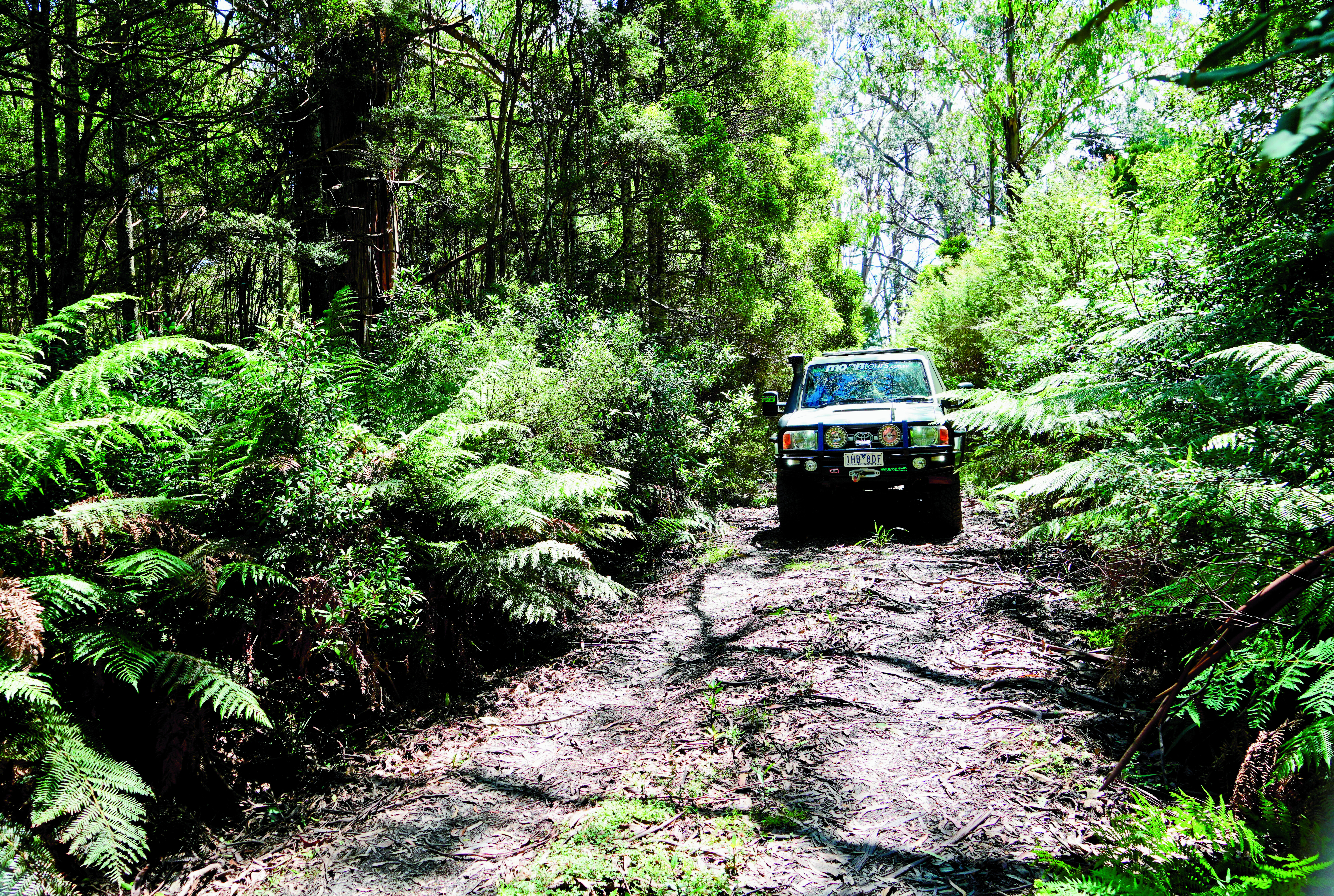
It was on yet another excursion to visit another old mining area at Golden Gully we came a bit unstuck. Wandering along a little-used track, which was absolutely covered in small branches and other debris from the surrounding forest and overhanging trees, we were continually stopping and dragging sticks and branches out from underneath the Cruiser. Then, somehow, one got stuck in an engine pulley which shredded the serpentine belt, which quickly had the battery light on and the temp gauge climbing. Needless to say, we got out of there (a long story) and had the belt replaced (we now carry a spare) before we returned to our camp at Wilsons Hut.
The pub in Bendoc was finally allowed to open and we sat with the locals enjoying a beer at the end of another day of exploring and wandering, vowing that we’d be coming back to this little-explored and visited area of Victoria. You should check it out!
TOP FIVE PLACES TO VISIT
1. The wild horses of Native Dog Flat
2. Delegate Diversion Tunnel
3. The impressive Snowy River
4. The giant trees of the Errinundra NP
5. Camping at Wilsons Hut

We’ve seen them on every trip to the local 4×4 spot. Dual-cab utes with a fresh aluminium canopy proudly bolted to the rear chassis mounts. The fact that a well set-up canopy makes sense isn’t lost on most, and there’s no shortage of companies out there with a drop saw and a spool gun ready to meld one together for you. Jimmy Egan decided he could make one better, so after assembling a team and putting in a solid 10 months of researching, development and testing, he swung the doors open at Core Off-Road in the Western Australian coastal town of Rockingham.
That was around 14 months ago, and it all revolves around clever thinking, and the use of HDPE or High Density Polyethylene, which along with an aluminium base and decorative trims make up the core (so to speak) element of the bespoke canopy-building business. Being a super-strong plastic (see more details below) that Jimmy has been able to register a patent to weld and mould, Core is able to create canopies highly resistant to damage and next to nil corrosion.

“It all started when I wanted to make a new canopy for ‘The General’, my army green 79 series,” says Jimmy. “Personally, I’d worked with aluminium with our fabrication workshop in Queensland for years, and I just wasn’t happy with the final product that aluminium gave.”
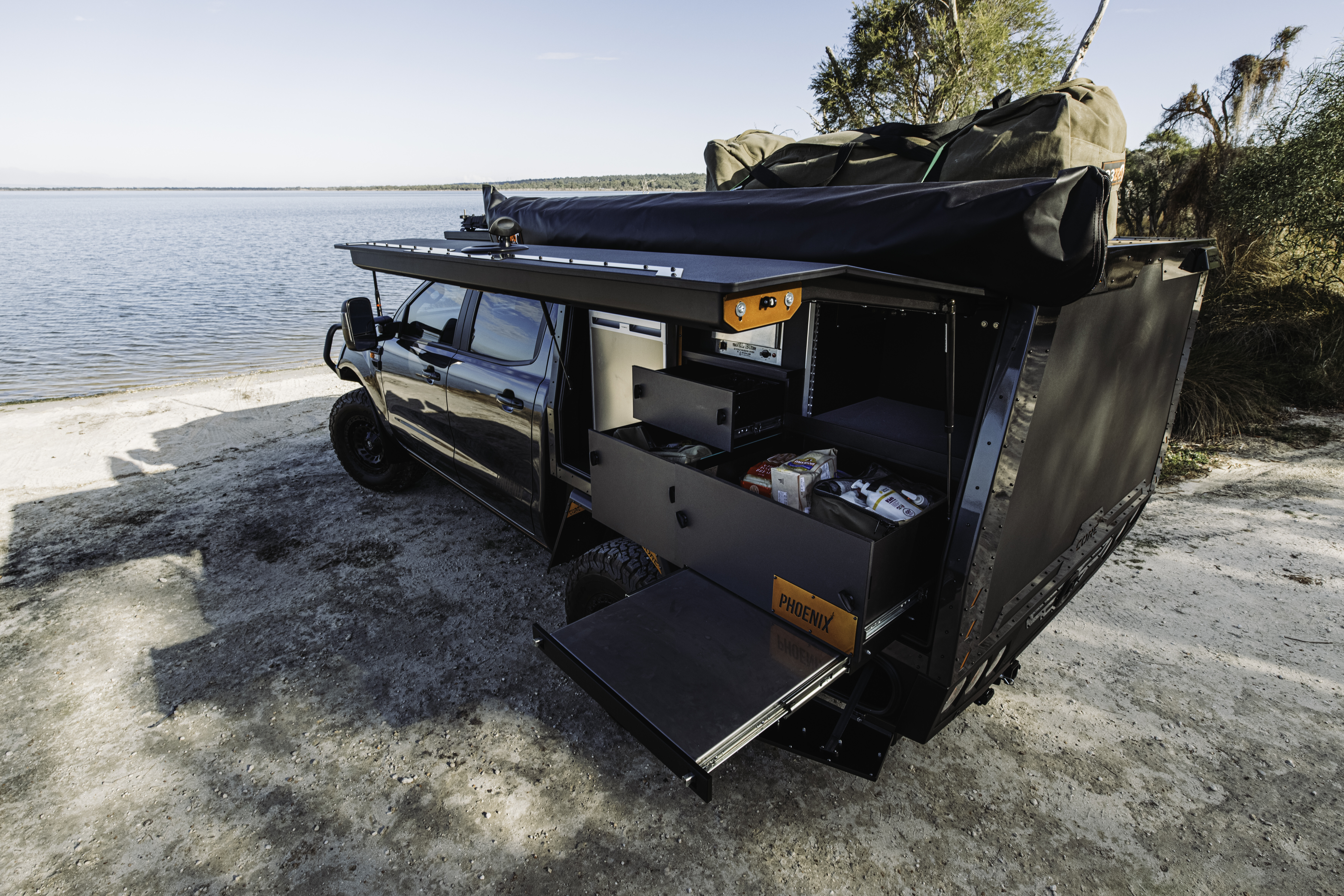

Suffice to say the team at Core have come up with a clean method of putting a canopy together, with clean being the operative word. “One thing we’ve focused on with our canopies purely from previous experience, is cleaning,” adds Jimmy. “There’s no nooks and crannies where dirt can sit or mud can get stuck. One area of interest is the rear tail-light area where we’ve designed it to be easily washed out or cleaned with a brush without smashing your knuckles.” Maintaining the clean look are a set of six LED Autolamps Maxilamp round reflector combo lights, which have had hexagonal recesses CNC-machined into the HDPE beaver panel for mounting. Central to the rear lights is a 950mm trundle drawer with top cover allowing for extra bench space when camped.

The Phoenix GTX canopy you see attached to the Ranger here is a sub-range of turnkey canopies with four models. These being the Workmate, GT, GTX and the top of the line GTU. With Core being a full-service workshop, its canopies are only fitted in-house and signed off on with all accessories already installed. Just drive your ute into its workshop and Core will give it back to you fully wired, plumbed, accessorised, and ready to go. With a host of top-shelf standard and upgrade options available across the range, like water heaters, storage baskets, compressors, roto-moulded water tanks, or pull-out pantries, it’s just a matter of deciding what you can’t do without. The layout is designed to not waste a bit of space inside, with one of the many clever ideas being the integration of a complete central-locking system. While locking the main canopy doors is an industry standard, the Core line of canopies also locks the trundle drawer and under-tray toolboxes. In addition, the fuel filler cap is located inside one of the tapered toolboxes, so once closed and locked there’s no access to your fuel cap to dirt or sticky fingers.

The GTX on the Ranger features a Dometic CRX 80L stand-up fridge as standard. The 125amp/h Enerdrive lithium battery keeps things going when parked up, and it’s supported by the DC2DC+ multistage battery charger also from Enerdrive – power is sent through Core’s custom-built switch and breaker panel. This contains the Enerdrive ePro Plus battery monitor readout, alongside a Fusion BB100 Bluetooth stereo system, with low-profile speakers located on the underside of the passenger-side canopy door.
Wanting to create a promo vehicle to demonstrate its products, the Meteor Grey Ranger you see here was screwed together in-house, but it didn’t last long in the hands of the team, being snapped up at its first camping show. “It’s worked well for us so far, where we take two, maybe three brand-new vehicles to a show fully kitted out,” Jimmy explains. “So the customer can walk in, have a look, put down a deposit and basically drive away on Monday.” The 2020 XLS Sport Ranger with Tech Pack here was chosen as it’s what a lot of Core’s Ranger customers go with. “It comes with all the bells and whistles and nothing you need to tear off, and a lot of it like door handles and grilles are already blacked out.”
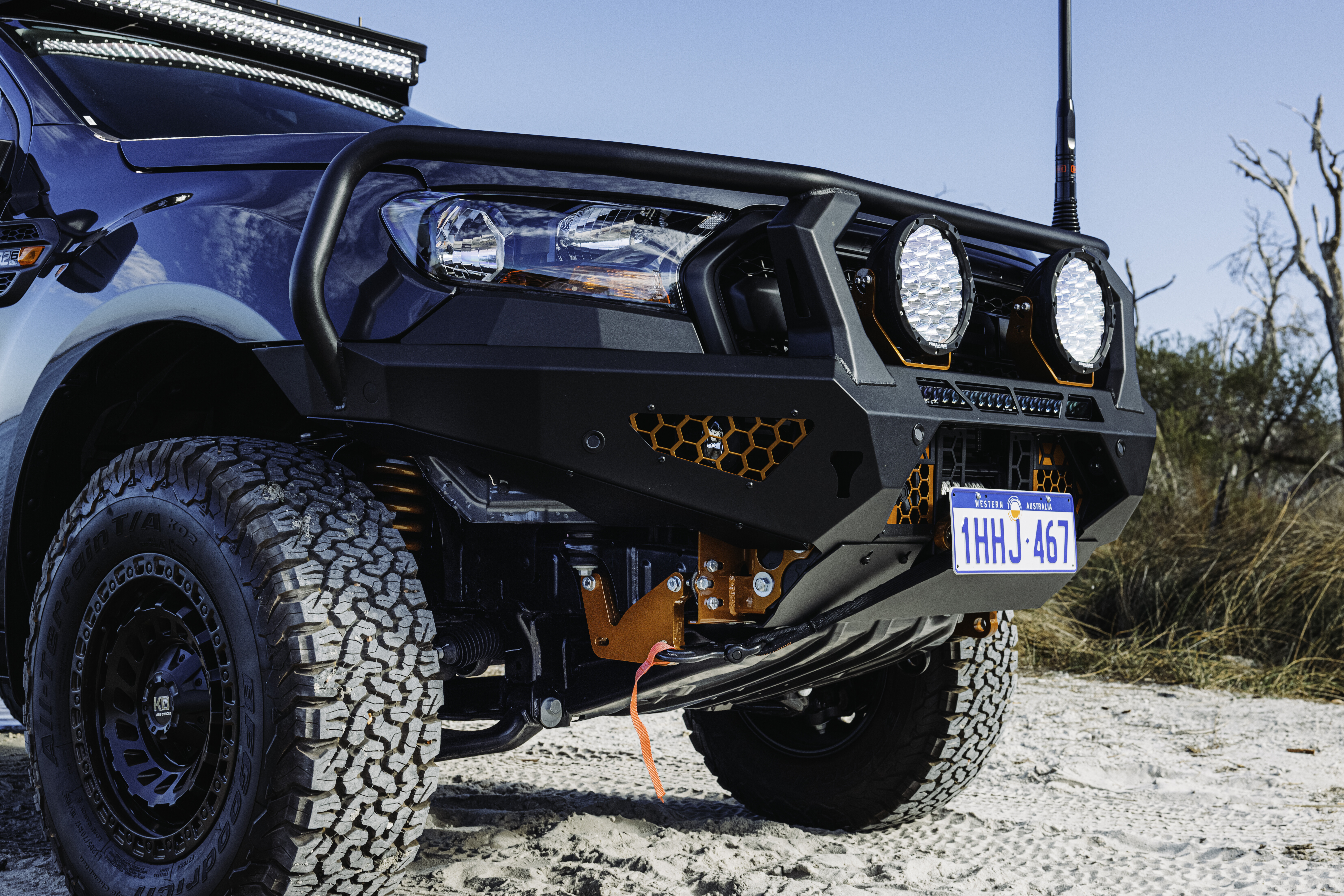
Upgrading the frontal protection is an Offroad Animal Toro bar which was pulled apart and colour-coded with orange accents, while a pair of Teralume Icon 8.5-inch lights had their brackets powder-coated to match. These were bolted down above a Stedi 21-inch STK3 light bar peaking out from behind the (you guessed it) colour-coded centre grille and the Carbon 12,000lb winch’s fairlead, while the recovery points received the same lick of colour too. Rounding out the bullbar is a GME 2.1db Radome antenna sending and receiving through an GME XRS 370C4P two-way inside the cabin. Keen eyes will pick the Raptor grille upgrade further adding to the aggressive look of the Ranger.

The 3.2-litre turbo-diesel and six-speed auto driveline was left as Ford intended, but with a few upgrades to increase the GCM to 7000kg and GVM to 3500kg. As per the newer government requirements, Core fitted an upgraded radiator and intercooler, as well as a set of Lovells springs and Gas Legend shocks, with the front coils being colour-matched to the aforementioned highlights in the front bar. Keeping the faux bead locks of the 17×9-inch +30 King Offroad Zombie hoops off the ground are a set of BFG’s venerable KO2s in a 285/70R17 sizing.

Bearing in mind the clean look Core was going for, and the interior being brand spanking new, few changes were needed in the cabin. These included a set of double denim SupaFit seat covers with an embroidered Core Offroad logo and colour-coded stitching. The GME UHF also cuts down on internal clutter with its display, and all controls are located within the hand-piece. Maintaining that clean look along the sills are Clearview motorised side-steps staying tucked away during driving, and only dropping down when using the Ranger’s doors. Keeping an eye on what is happening behind the canopy are a pair of Clearview extendable towing mirrors.
The 3.2-Litre turbo-diesel and six-speed auto driveline was left as Ford intended, but with a few upgrades to increase the GCM to 7000kg and GVM to 3500kg
Extra storage is available across the Ranger’s roof with a Rhino Pioneer platform getting the nod, but when it came to mounting it, the team at Core decided to design their own backbone-style rail system which included on-road wind-noise testing. Starting with a basic design in aluminium, this was trialled while driving with sponges inserted in gaps to find ways of cutting down the wind noise. As Jimmy recalls: “Having too large a gap creates a wind rush, and too small a gap creates a whistle.” One of the changes being the kicked-in ‘wings’ located either side of the front light bar. The final design on the Ranger being made of stainless steel and powder-coated.
Also incorporated into the design is a swag of lighting, including Stedi RGB rock lights, four Stedi ST3520 work lamps, and a 42-inch Stedi STK4 light bar tucked up underneath the rack’s leading edge. Up top you’ll find a pair of Maxtrax, a colour-coded shovel and eArc 100W solar panel. Keeping your campers cool in the shade is a Falcon 270-degree awning from 23Zero, which is capable of throwing shade without the need to drop its support poles should the wind not be too outrageous. “It’s only 19 kilos, which is pretty light for a 270 these days,” says Jimmy. “Plus it has their new LST (Light Saving Technology) which doesn’t allow the light to come through the canvas.”
With the innovation that has come out of the Core Off-Road doors in just over a year of trading, it’s no wonder the Motor Trades Association of WA chose it for an unprecedented two awards in its recent 2021 awards night. Core Off-Road walking away with Off-Road Business of the Year, and Innovative Business of the Year.
To keep up with the options, upgrades and innovations, head to the Core Off-Road website at www.coreoffroad.com.au or, alternatively, visit its regularly updated YouTube channel, Core Off-Road, for walk-throughs and build vids.
SO WHY HDPE, JIMMY?
“Plastic has next to no memory,” Jimmy tells us. “If hit with a hammer, the most you’re likely to do is mar the surface, as apposed to aluminium which will deform and hold its shape, and it takes about 200ºC of heat before it starts to deform that way. There are around 15 different manufacturers globally, and we use King StarBoard, out of Miami (USA). It’s been in the marine industry for 40-odd years, so it’s not a new product.
“With our process, we are able to do a 90º bend without deforming the outside. We end up with a 3mm radius bend on the outside on a half-inch sheet.
“Anything bolted into the plastic we use a thread insert, which ends up flush. With all of our testing, one M6 bolt is good for 300kg of pull, vertically up. With plastic it’s totally different to steel and aluminium. With metals the two parts can vibrate, and that’s when you start to have bolts come undone. But with plastic there’s no need to use anything like Loctite, because the material is so dense, vibration doesn’t affect it as the plastic doesn’t vibrate.”
A CLOSER LOOK
1.Up she goes
There’s a Lovells GVM and GCM upgrade with 2-inch suspension lift.
2.Top light
A 42-inch Stedi STK4 light bar slots between the roof and rack.
3. Solar input
Rhino-Rack platform affixes a solar panel, Maxtrax and shovel.
4. Air hose
One of many inclusions is a 9-metre retractable air hose reel.5. Basket case
GTX Canopy gets a driver’s side fold-down storage basket.
THE Toyota LandCruiser’s outgoing 4.5-litre V8 diesel and incoming 3.3-litre V6 diesel in the 300 Series are both labelled as ‘twin-turbo’ engines, which makes the V6 just seem like a smaller version of the V8. After all, if you just lopped two cylinders off the end of the 4.5-litre V8 you would have a 3.3-litre V6, or thereabouts. But that wasn’t Toyota’s way and, in the case of these two engines, the shared ‘twin-turbo’ descriptor is seriously misleading.
Where the outgoing V8 diesel has a relatively straightforward parallel-turbo system where the two turbos work completely independently from each other, both feeding off and feeding its adjacent bank of cylinders in a wide (90-degree) V-engine. As is conventional practice, the cylinders’ exhaust ports, and consequently the turbos, sit outside of the V. Turbos are best placed as close to the exhaust ports as possible, as this helps in capturing as efficiently and effectively the energy from the engine’s exhaust gas, which is half a turbo’s lot in life. The other half is using that captured energy to drive a compressor that pressurises the air that’s being fed into the engine’s cylinders.
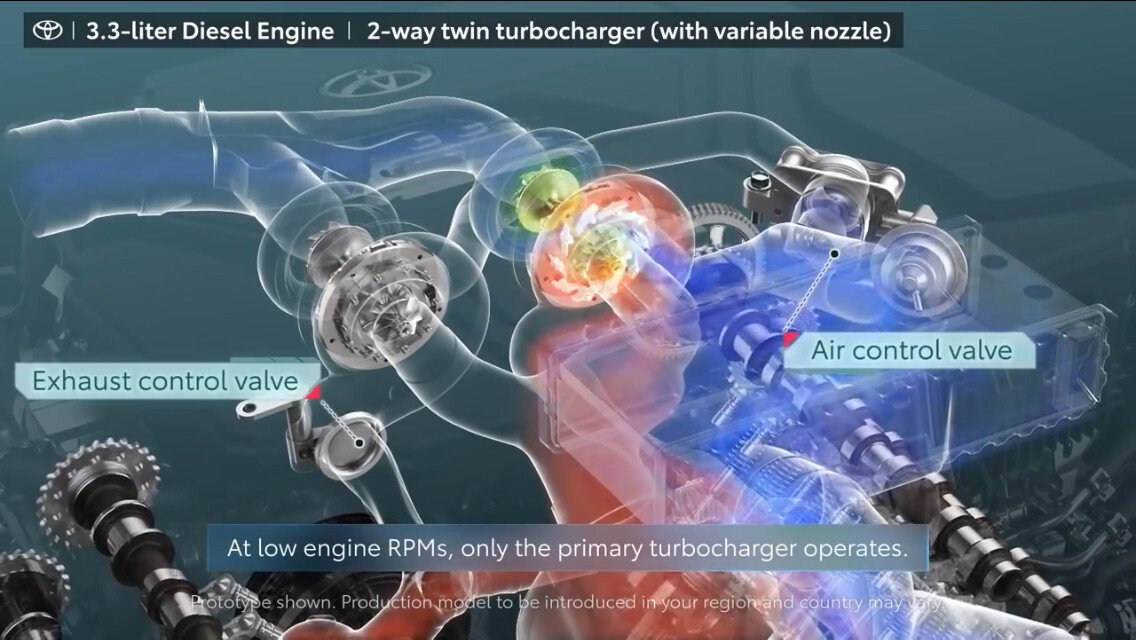
In contrast to the V8’s simple parallel-turbo system, the 3.3-litre V6 uses a complex sequential-parallel system. At lower engine speeds and under lower engine loads (i.e. less throttle) just one turbo operates, feeding off and feeding both cylinder banks. Open up the throttle however, and the second turbo joins in, hence ‘sequential’ in operation, but once up and running, works side-by-side in ‘parallel’ to the primary turbo to help pump more air into the engine. More air to the engine means you can burn more fuel and therefore make more power.
In another significant departure from the V8, the V6’s cylinder heads have been turned around so the exhaust ports face to the centre of the V, with the two turbos sitting side by side within the V in a ‘hot-V’ arrangement. Being a V6, the V angle is most likely 60 degrees to provide the smoothest running. For Toyota, this is its first ever diesel where two turbos are in play in the same inlet/exhaust path.
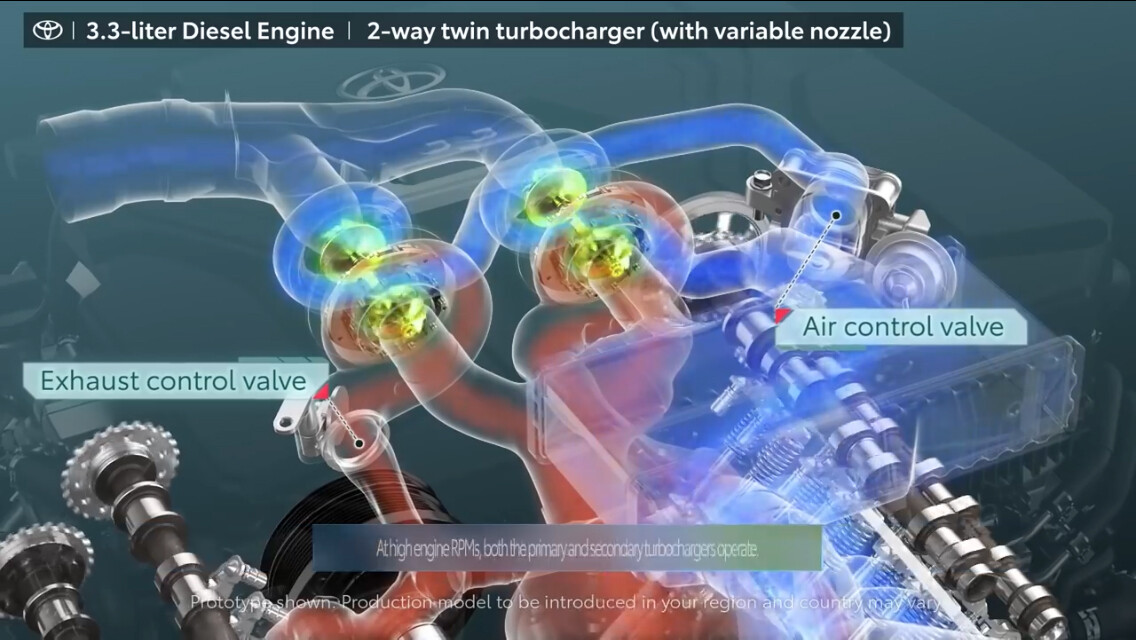
Complex multi-turbo systems aren’t new for diesels of course and amongst those already in the market, the Toyota system bares most resemblance to Land Rover’s sequential-parallel system as used with its V6s in Discovery and Range Rover/Sport. But where Land Rover used a medium-sized variable-vane primary turbo and a smaller fixed-vane turbo as the secondary, the two turbos in the Toyota system appear to be the same size and both are variable vane. The Land Rover V6s also use the more traditional ‘cold-V’ design.
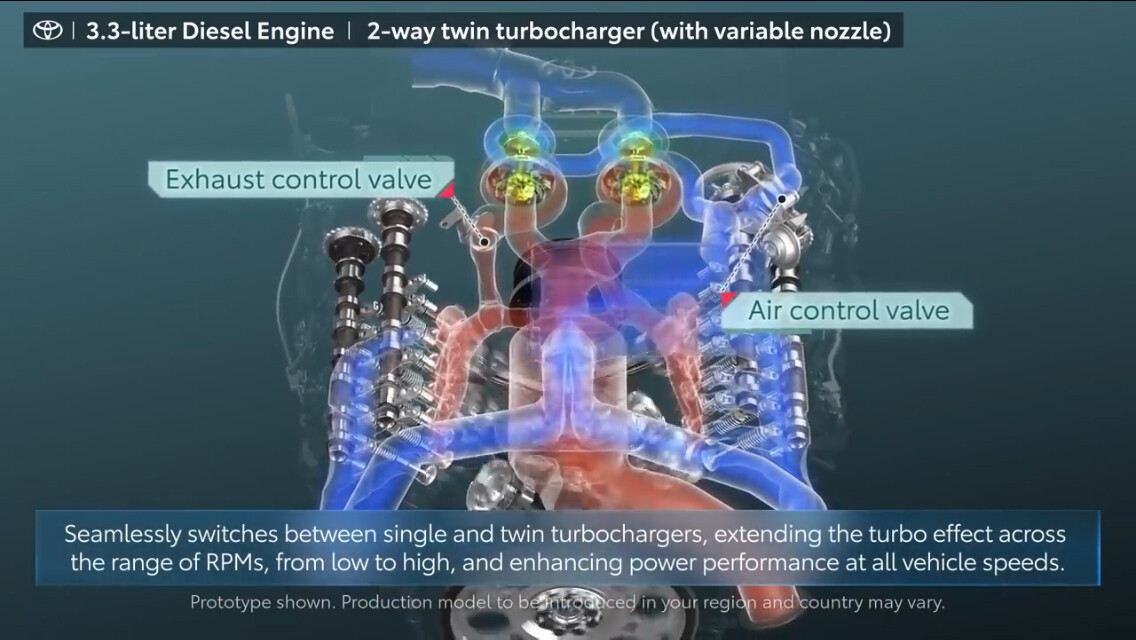
Both Toyota’s and Land Rover’s sequential-parallel systems are, of course, different again from the Ranger 2.0-litre, Amarok 4-cylinder and Navara D23, all of which are sequential systems where once the second (and main turbo) kicks in, the primary (and smaller turbo) is bypassed.
The lesson here is that the 300 Series V6 is a huge leap forward in sophistication from the V8. It may be 25 per cent smaller in capacity and number of cylinders, but it claims more power and torque. No doubt it will deliver on those promises and, more significantly, it will bring a level of NVH refinement over the gruff-running V8. And to build on its high-tech approach, a direct-shift 10-speed auto is used in place of the V8’s sequential-shift six-speed auto.
FOR a chance to win a Wurth under-bonnet LED valued at $249, head to the 4X4 Australia Facebook page and send us a photo of your 4×4 in action.
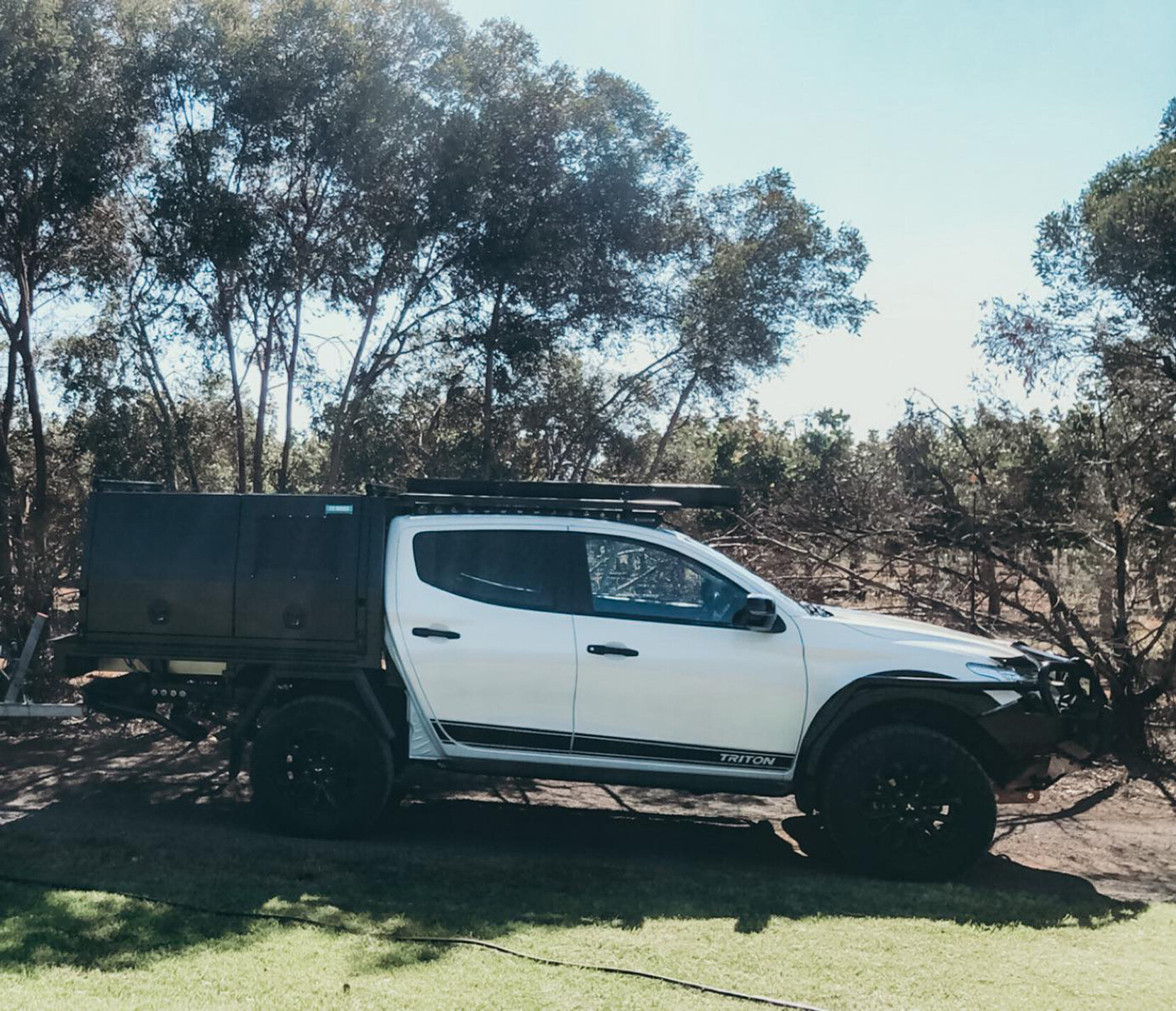
2018 MQ TRITON BLACKLINE EDITION
Our Triton is running an Ironman performance suspension kit with Ironman bullbar and side-steps. The tray is made by GDR Mechanical & Fabrication, and the TC Boxes Canopy is fully set up as we get ready to do a lap of Australia in 2022. The best place we’ve taken it is Big Desert Wilderness Park in Victoria. Our Instagram page is @wheredidthedaygo – Cameron Henson
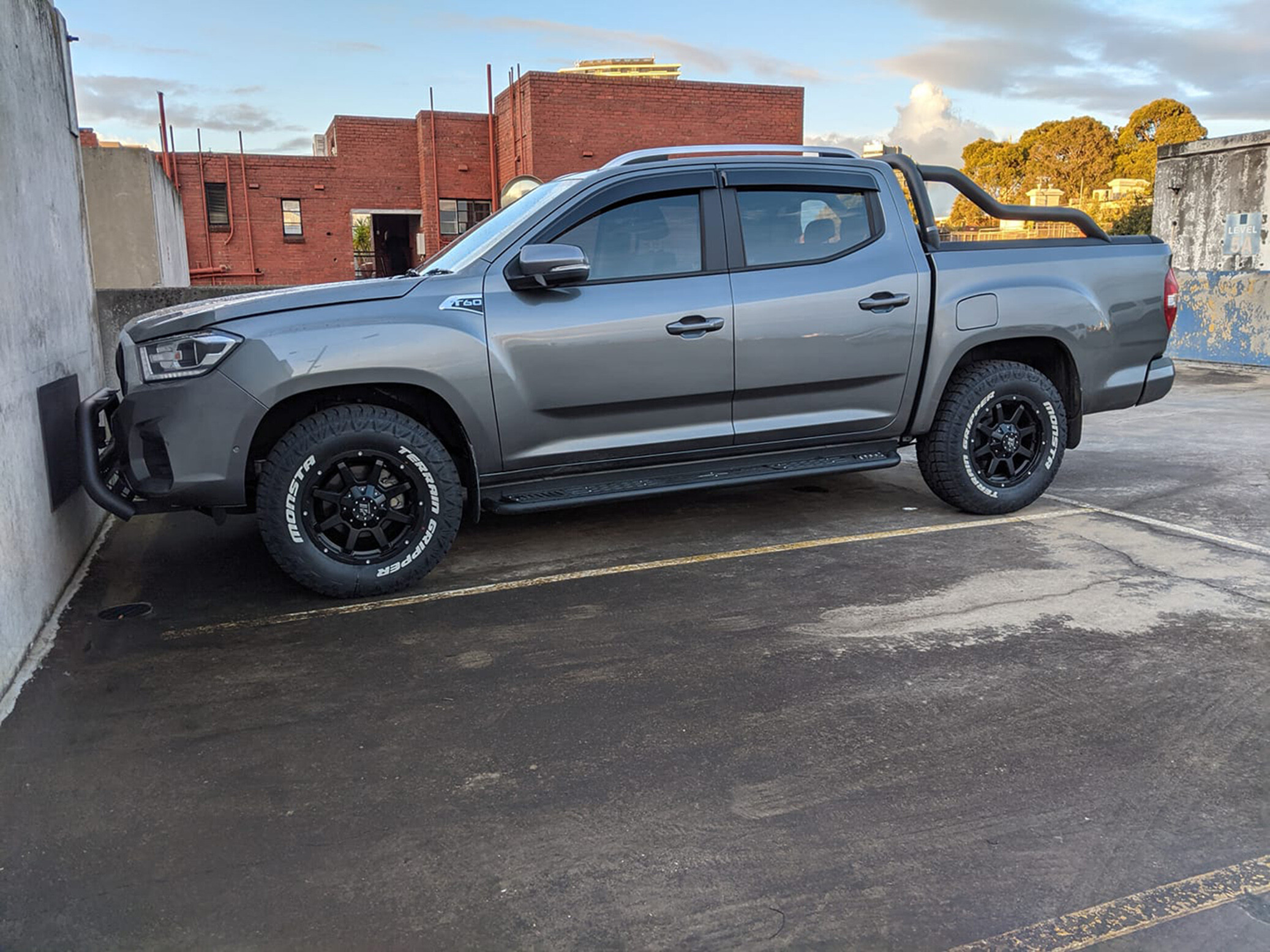
2020 LDV T60 TRAILRIDER 2
This is my first fourbie of any kind. Since I picked it up, it’s had the 19-inch wheels changed for 17-inch Hussla rims with 265/70 all-terrain tyres. Added 3mm underbody bash plates and a throttle controller for now. Later this month it’s going in to get a lift, suspension upgrade and three-hoop bullbar. Still need to get diff breather, snorkel and a few other things – Duane Miller
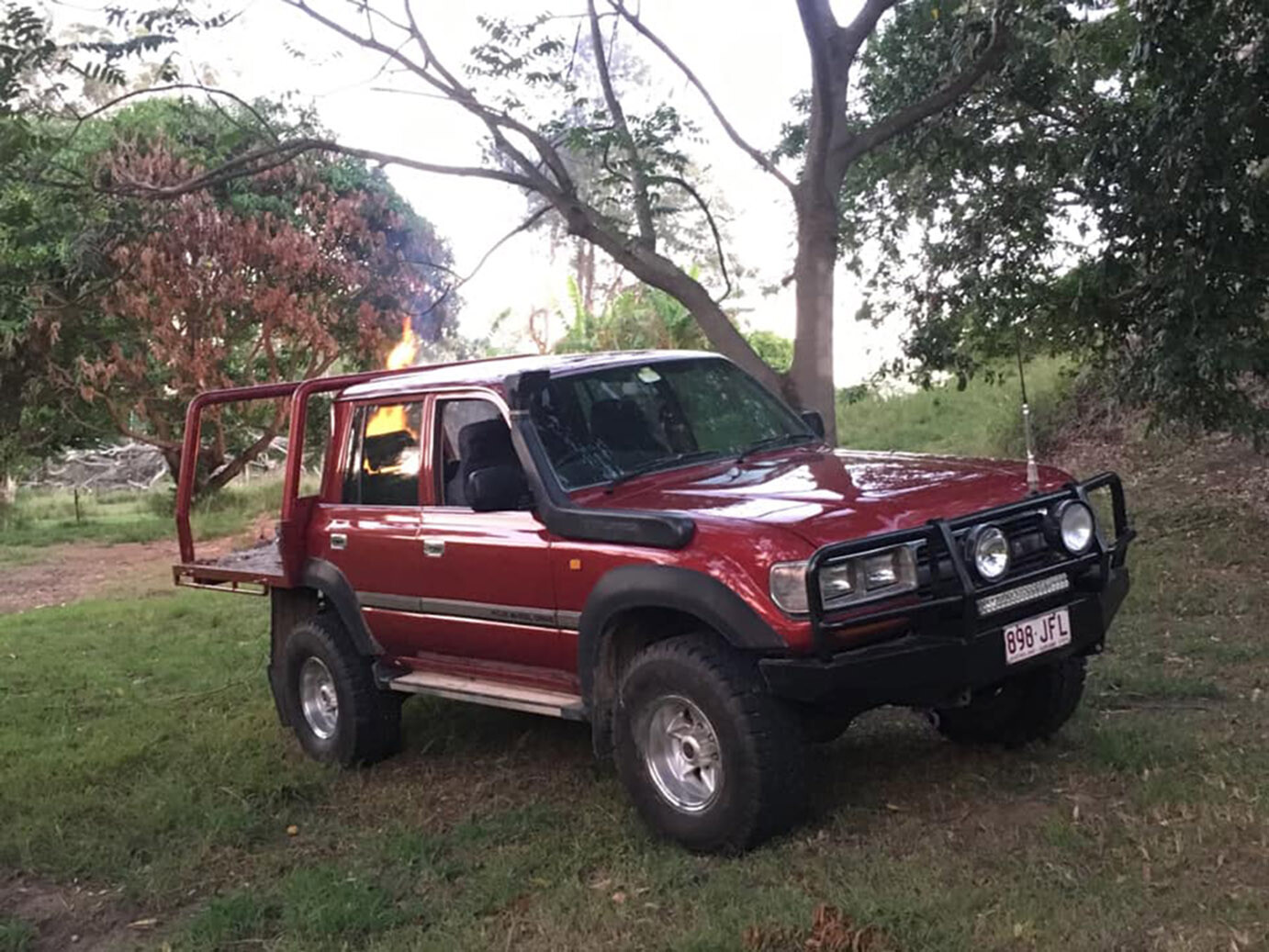
1991 80 SERIES
I have owned it for 15 years. It’s a 1991 turbo-diesel 80 Series wagon chopped in to a dual cab. It has a two-inch lift, 33×12.50 Mickey Thompson tyres and an ARB locker in the rear. It has had many other small improvements along the way – Dean Lyons
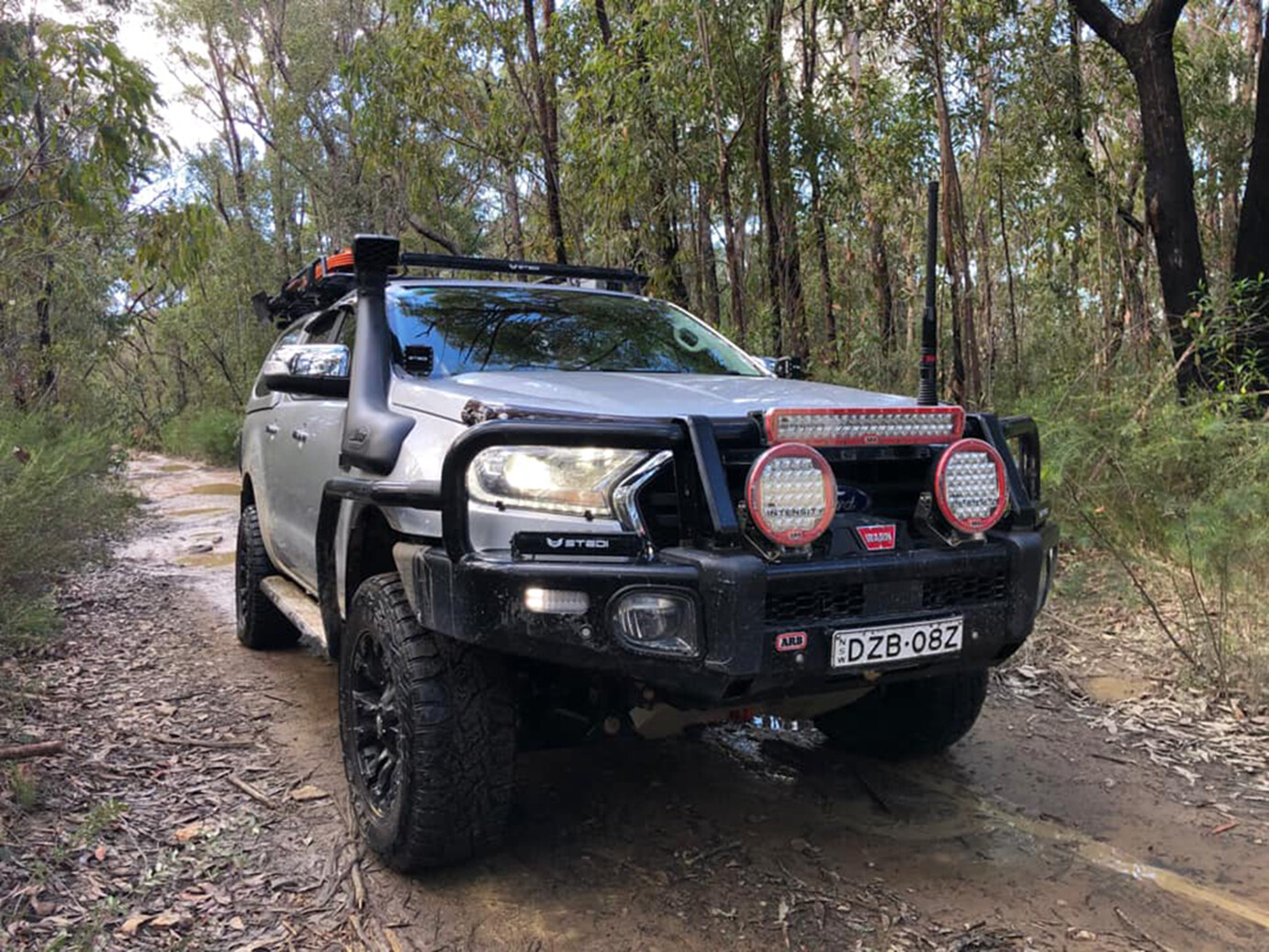
2019 FORD RANGER
This is my Ranger bi-turbo. I’ve been slowly building it over the last two years, trying to make it as efficient and capable off-road as possible. Slowly getting to the final stages of the build (hopefully)! – Josh Dardo
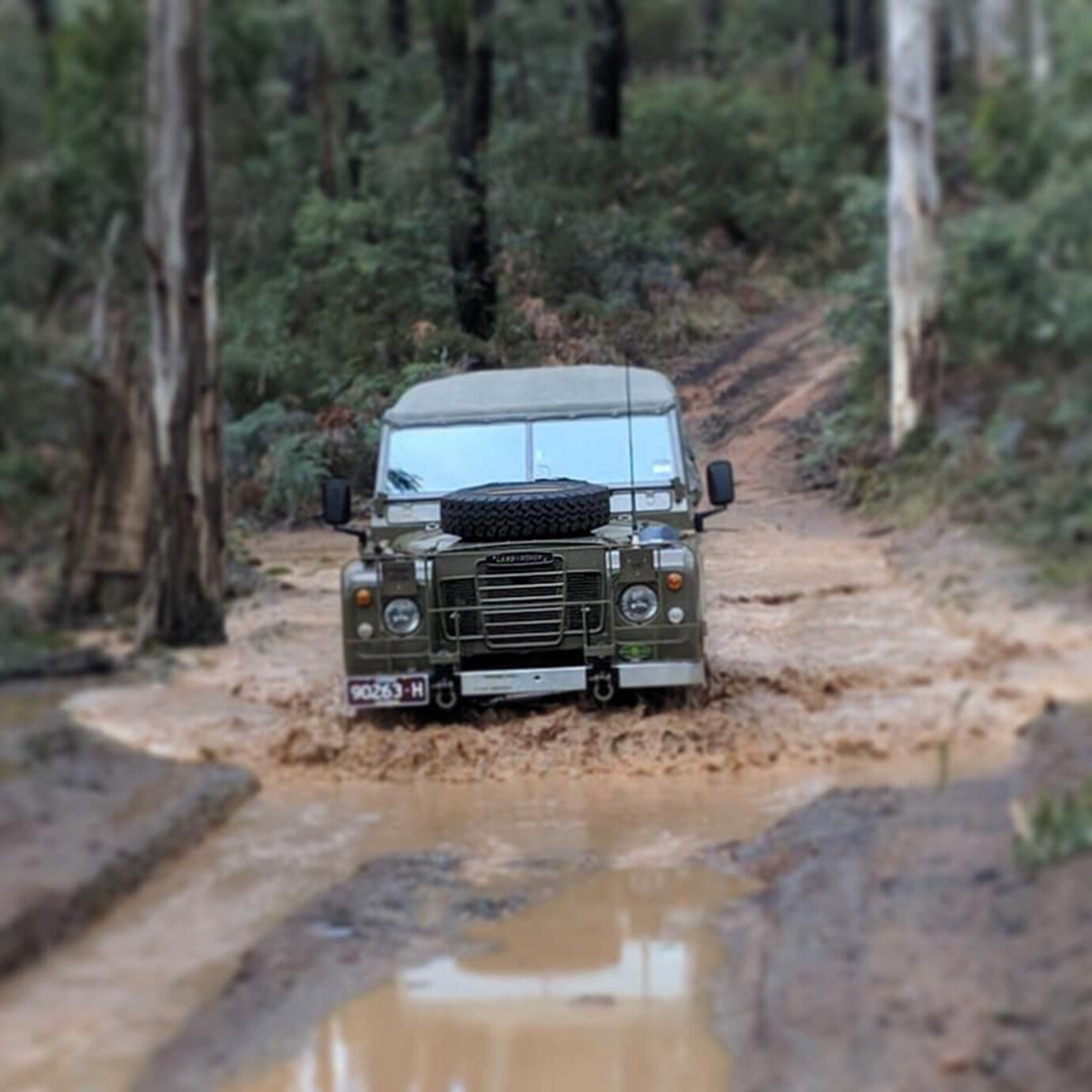
1979 SERIES 3 EX-ARMY LAND ROVER
I have kept it original since it left the army, and I love the ‘back to basics’ 4WDing in it. I also have a 1999 Disco 2, which is my budget tourer and day-to-day vehicle, and a 1969 Series 2A Carawagon which I’m restoring. The Wurth under-bonnet LED light will be worth its weight in gold on those after-dark moments when the spanners have to come out, to keep them going – John Patridge
2006 N70 HILUX
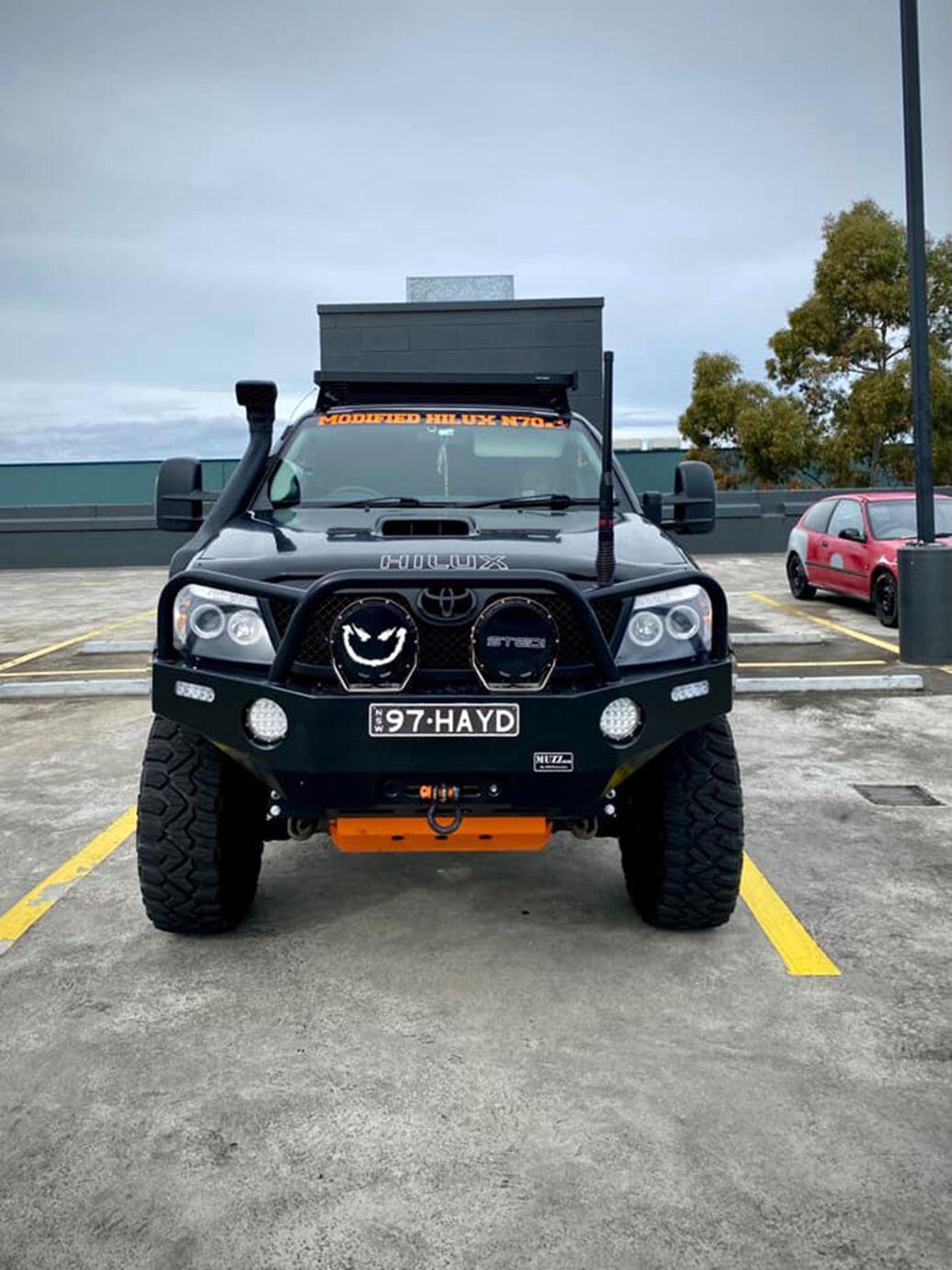
I’ve had my N70 Hilux for a year now, and I’ve still got plenty to do – Hayden Keuneman
WE all know the Isuzu D-MAX is a proven tow rig, the 3.0L motor found in our 2020 D-MAX pulls like a train. So, it was a bit of a no-brainer that we would be fitting a tow bar to the 4X4 Australia D-MAX. Being that this was a new-model vehicle, choices were somewhat limited, but we lucked out and managed to land one of the first in the country (for this model) of what would have to be the most 4×4 friendly tow bar on the market. The X-Bar from Hayman Reese, which was installed by our mates at Truracks in Penrith, NSW.
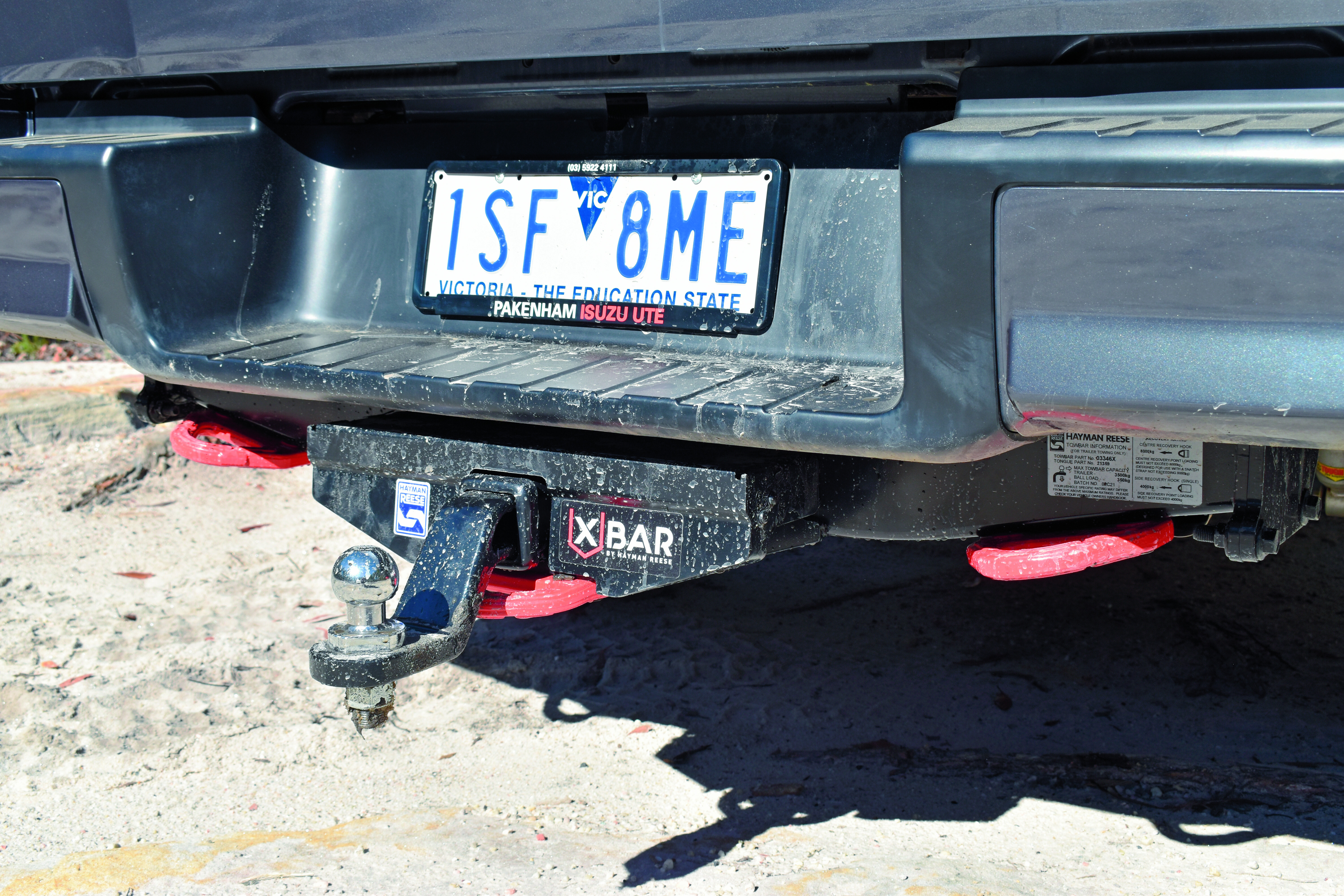
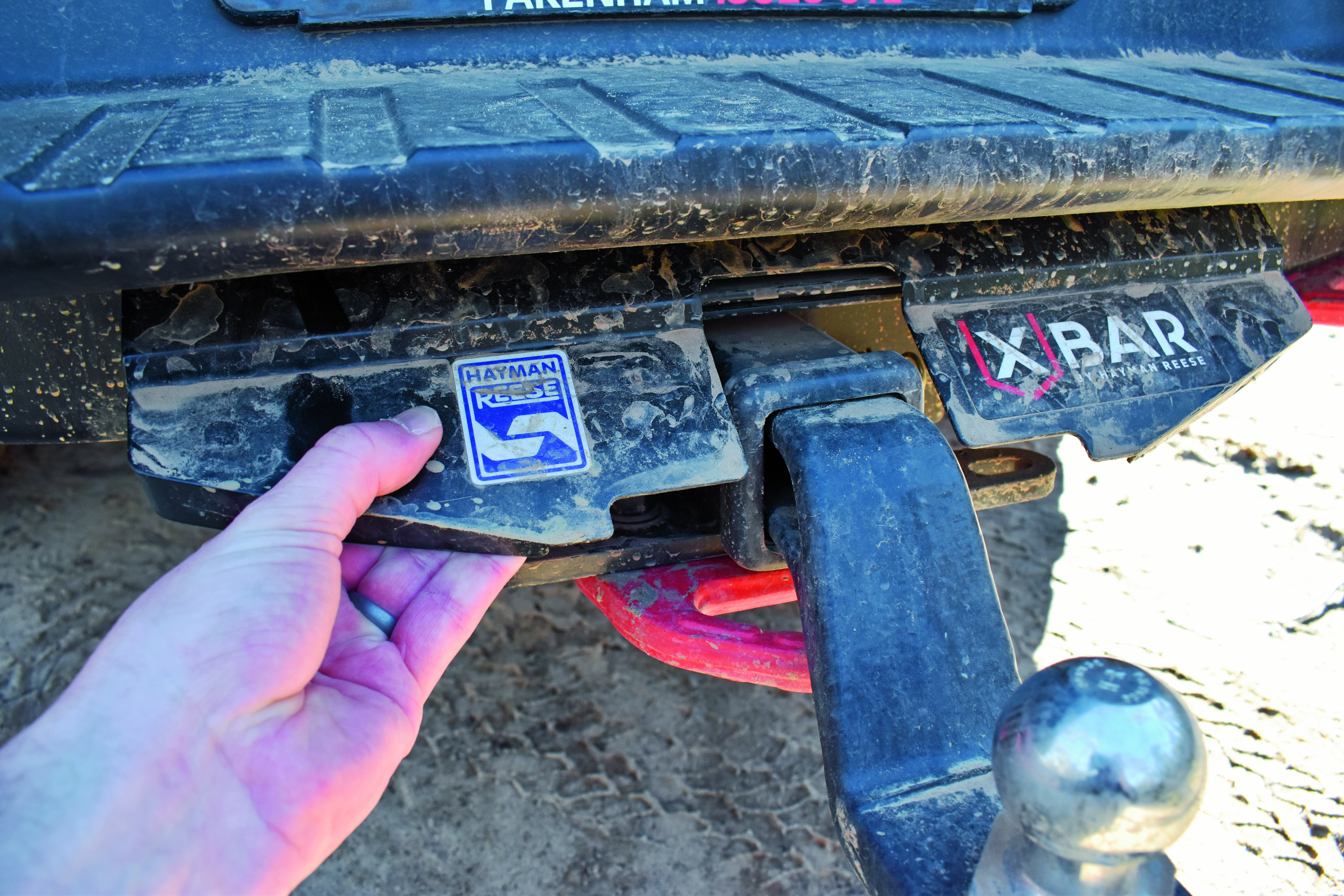
And why do I say that? Hayman Reese has been building tow bars for more than 65 years, so they have the runs on the board. And I’ll be blunt, take a look at the thing! Not only is it a beefy looking unit, it has built-in recovery points. Combined with the Ironman 4×4 recovery points and winch on the front of our D-MAX, it means we’re covered when it comes to recovery duties. I also like the design of this tow bar; it just looks the part. This is definitely helped along by the centre quick-release cover, which is a neat solution and protects the trailer-plug wiring.
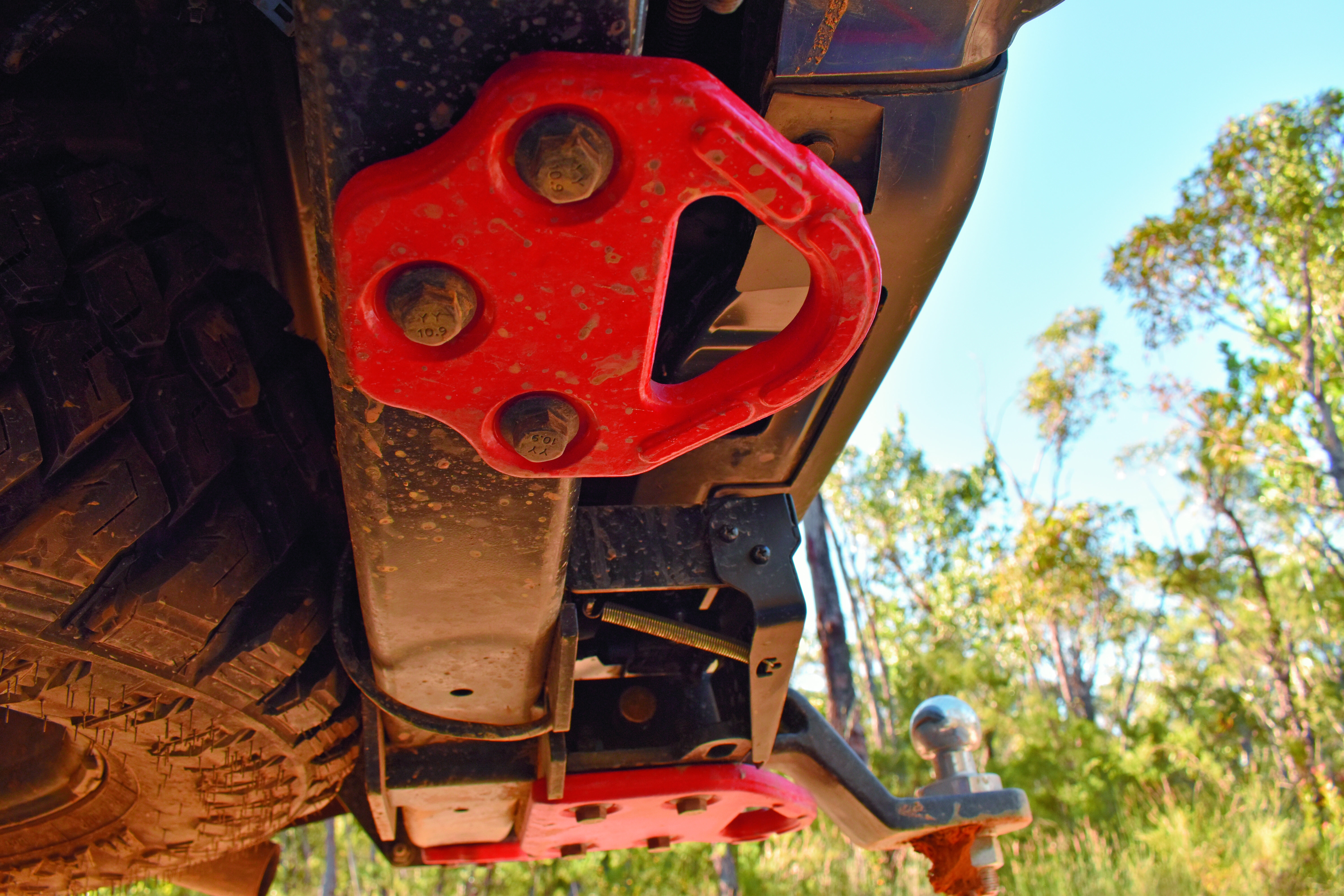
There are actually three recovery points built in to the X-Bar, two side ones and a centre point. Each side recovery point is rated to 4000kg, and the centre recovery point is rated to a whopping 8000kg. Best of all, they feature a rolled edge, so these recovery points are soft-shackle compatible. I also like that the bar has been designed for four-wheel drivers, as such departure angle clearance was a major consideration during the design process. It doesn’t stick out like a sore thumb, basically.
Snapshot
- 2021 Silverado 2500 HD to be in Australia by November
- Brings diesel power and eight-tonne towing back to GMSV’s truck range
- Pricing starts at $144,990
GMSV is set to add a bigger brother to its Silverado range later this year, announcing today it will be converting the diesel-powered 2021 Silverado 2500 HD LTZ Premium to RHD from November this year.
The new 2500 HD LTZ Premium will join its smaller Silverado 1500 LTZ Premium and LT Trail Boss siblings as part of GMSV’s Silverado range, one of the biggest differences being the 2500 offered by GMSV will use diesel power rather than the 313kW 6.2-litre EcoTec3 petrol V8 found in the 1500s.
Under the enormous bonnet is Chevy’s 6.6-litre Duramax diesel V8, which in the US makes 331kW and 1233Nm, backed up by an Allison 10-speed automatic.
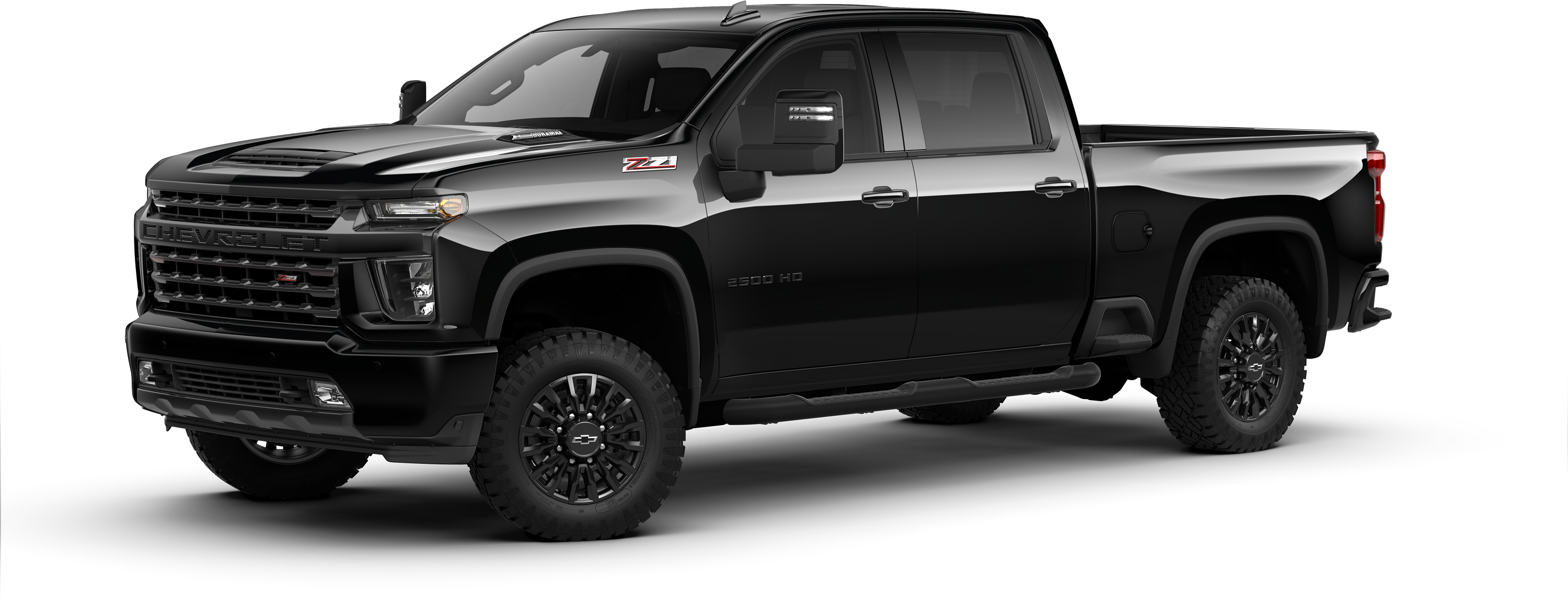
At the time of writing, GMSV has yet to specify towing and payload ratings for the Australian-converted 2500 HD, but in the US the MY21 2500 HD Duramax has a maximum tow rating of 8395kg (18,510lbs) and a payload of 1723kg (3800lbs).
By comparison, the Silverado 1500 currently offered by GMSV has a maximum towing capacity of 4500kg (4.5-ton).
At this stage, GMSV is only offering the 2500 HD in LTZ Premium trim, with pricing starting at $144,990. For comparison, the 1500 LTZ with Tech Pack is $114,990.
The 2500 HDs will feature the Z71 Off-Road Package, consisting of off-road suspension with twin tube shocks, hill descent control and skid plates with Z71 badging.
Also included as part of the LTZ Premium trim is the Appearance Pack, which includes; colour-matched bumpers and door handles, black bonnet vent, skid plate and tubular side steps, belt moulding and exterior badges. Completing the pack is a set of 20-inch gloss black alloy wheels.
The tub gets a coat of spray-on liner, and measures 2104mm long by 1814mm, with a maximum space of 1968 litres. There’s 12 tie-down points rated at 127kg each, and the 2500 HD also has a power up and down tailgate like the smaller 1500.
To make use of the mammoth eight-ton towing capacity, the 2500 HDs come fitted with the Advanced Towing Package, which consists of rear-vision camera with hitch guidance, trailer brake controller and power extendable door mirrors.
GMSV has also specified the Technology and Safety Pack 2 for all 2500 HDs, which, along with ESC and traction control, includes; lane change alert, side blind-spot and rear cross traffic alert, pedestrian and low-speed emergency braking.
Inside, the LTZ Premium scores a heated leather steering wheel, as well as heated and vented leather seats, dual zone climate control, an 8-inch interior screen, power sunroof and a multi-colour 15-inch head-up display.
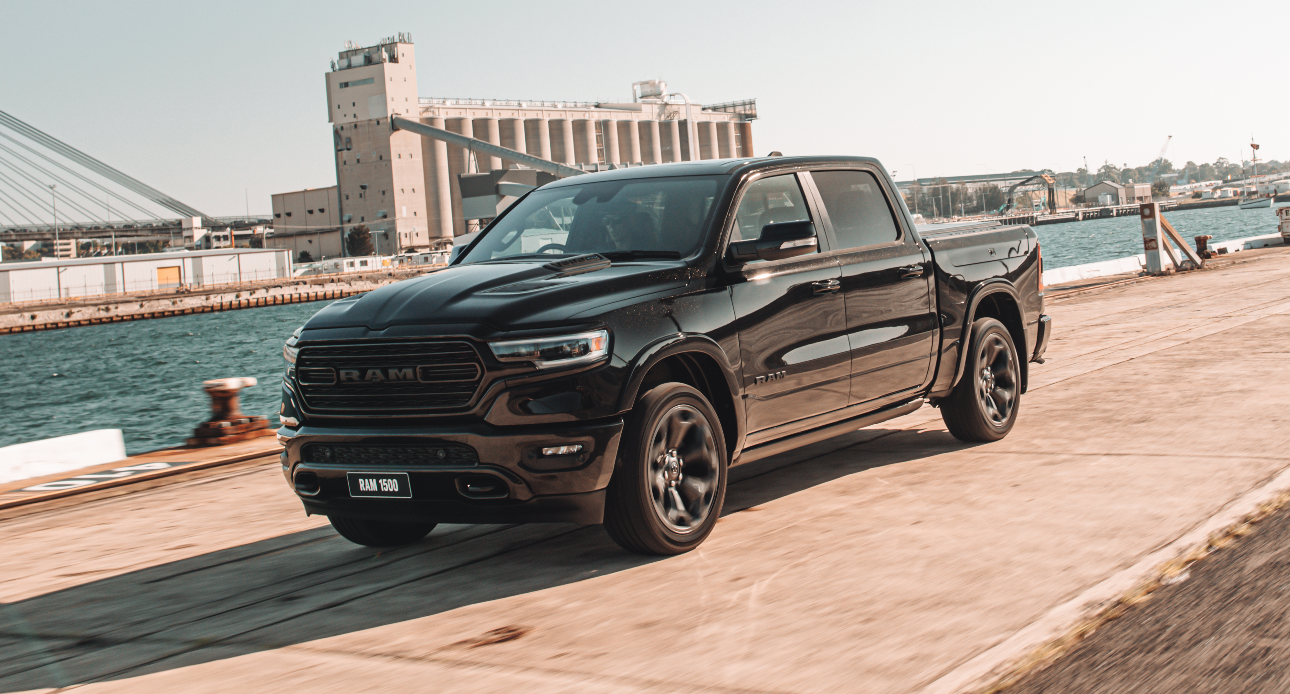
The re-introduction of the 2500 HD Silverado has been a while coming for GMSV, which discontinued the previous generation 2500 HD to focus on its current petrol-only 1500 Silverado as a direct competitor to the hugely popular Ram 1500.
The 2500 HD will serve as a direct rival to the Ram 2500 and 3500 Laramie, the latter of which uses a 6.7-litre Cummins diesel developing 276kW/1152Nm, and is converted to RHD configuration in the same factory in Clayton as the Silverado 1500 and soon-to-be 2500 HD..
GMSV will fully confirm local specification once final certification for the Silverado 2500 HD LTZ Premium is completed later this year.
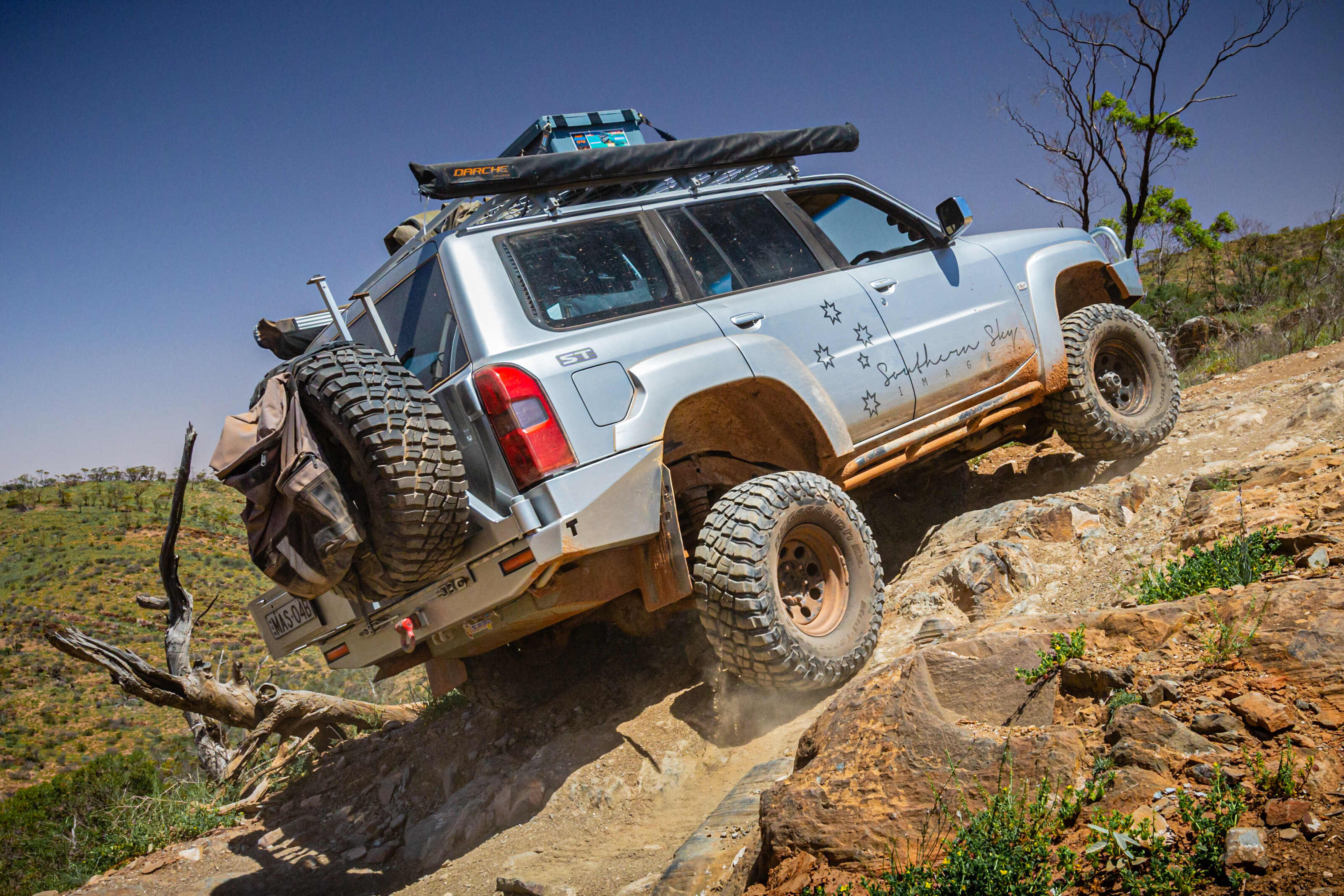
The September issue of 4X4 Australia is a big one, and the good news is it’s on sale right now.
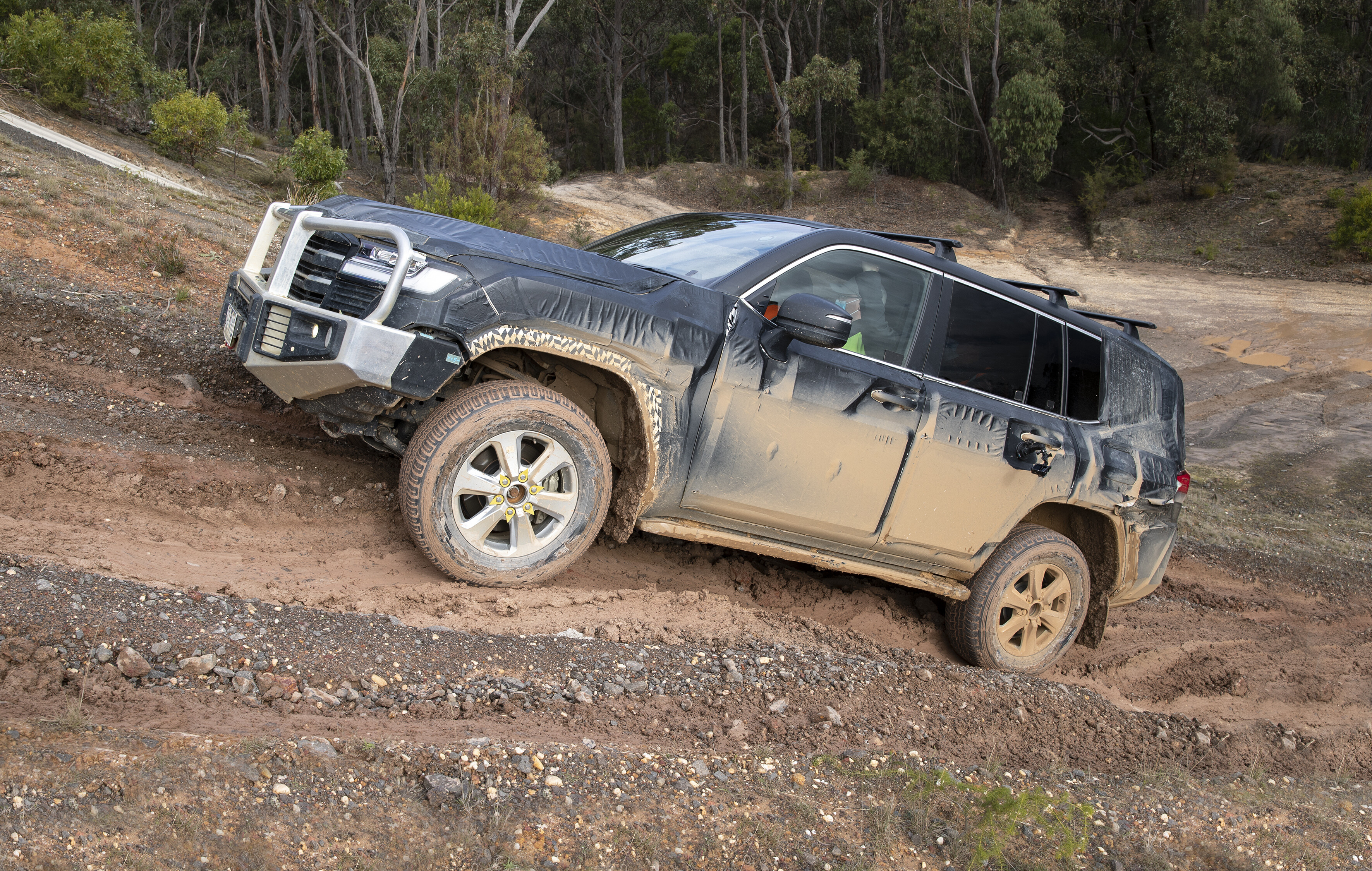
The 300 Series LandCruiser is one of the most hotly anticipated new 4x4s of recent times, and we were lucky enough to be involved in the very first drives. The big question though is, does it stack up against the previous 200 Series?
Speaking of new vehicles, we landed a set of keys to one of the first new Isuzu MU-Xs in the country, and spent a few weeks living with it on and off road. There’s loads more tech inside it, but is there enough to justify the price hike?
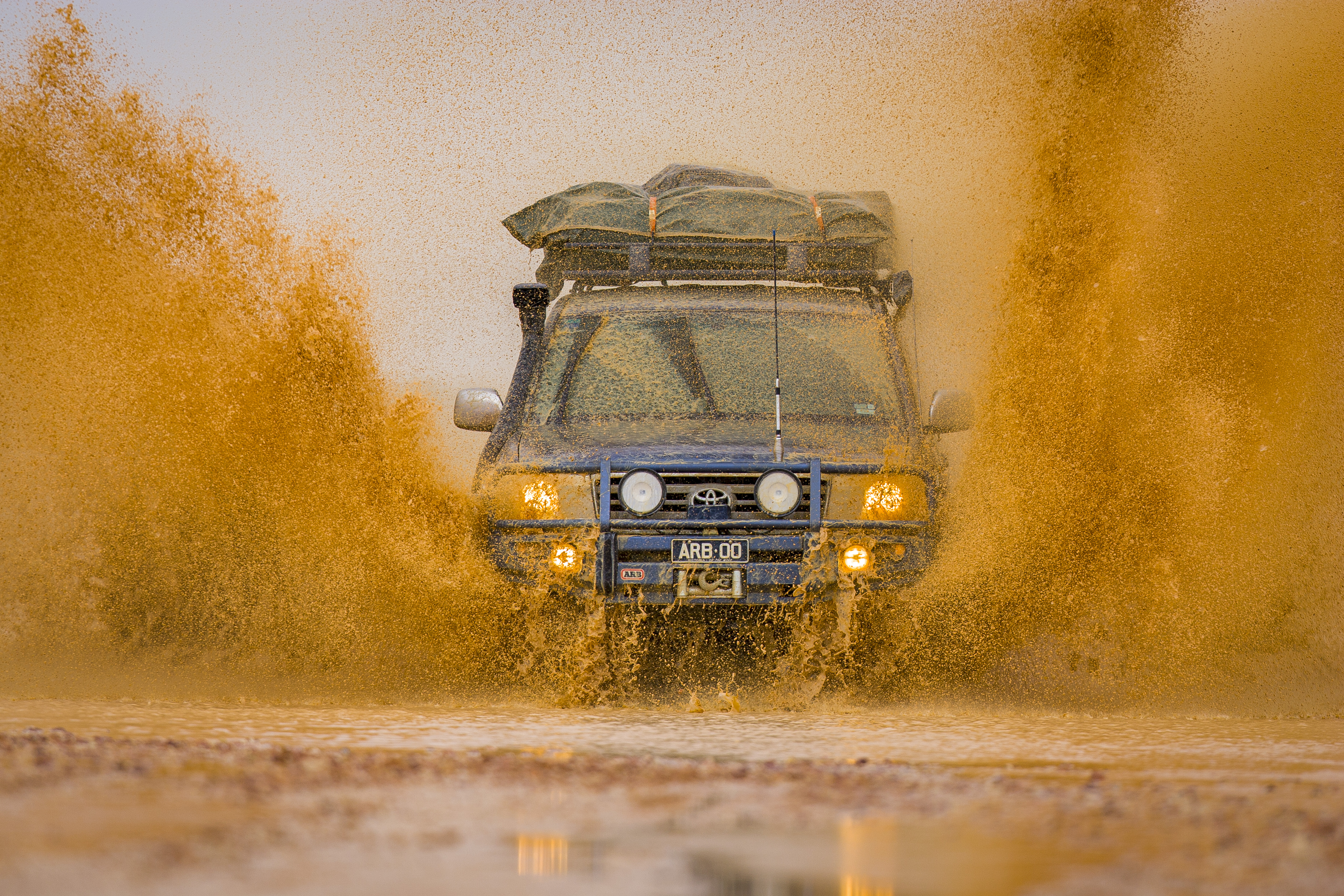
Mud driving is loads of fun, but there’s plenty that can go wrong when you drive through it. We share our expert 4×4 tips on how to drive in the sloppy stuff like a pro.
The Flinders Ranges is a bucket list destination for many four-wheel drivers, so we took one for the team and headed out to the beautiful Bendelby Ranges. If you are looking for challenging terrain, stunning views and some of the best sunsets in the country, this is one destination you need to explore.
WHAT ELSE IS THERE?
- Wild MWB LandCruiser custom
- Yakima roof platform install
- Hayman Reese X-Bar fitted to our D-MAX
- Monthly columns + New Gear + Readers’ 4x4s
The September 2021 issue of 4×4 Australia is on sale now.
UPDATE, August 25: Premcar has elaborated on the Navara Pro 4-X Warrior’s design process, revealing it conducted three months of testing in Victoria’s Big Desert Wilderness Park alongside work at the Australian Automotive Research Centre (AARC).
A team of six Premcar engineers and technicians spent up to three weeks at a time putting the pre-production vehicle through rigorous on and off-road work near the South Australian border.“Big Desert was perfect”, said Premcar engineering director Bernie Quinn. “It’s got a lot of different terrain, smooth gravel roads for high-speed testing, really rutted, muddy tracks, sand dunes and sand tracks, and deep corrugations.“Basically everything Australia can throw at you off-roading, it’s got. And then it’s a quick drive to get back onto bitumen roads to validate the changes we made.”
The story to here
August 5: Taking vehicles to their limits has always been a staple of Premcar’s operations – and its latest project, the Nissan Navara PRO-4X Warrior, is no different.
Set to be launched through Nissan dealers from September 1, the Navara PRO-4X Warrior by Premcar has been designed as the marque’s ultimate off-roader – creating a halo model to rival offerings such as the Toyota HiLux Rugged X and Ford Ranger Raptor.
The PRO-4X Warrior has been seriously fettled by the Epping-based team, with Premcar not willing to sacrifice comfort and capability given it is slated to be produced alongside the standard Navara’s lifecycle – not as a limited-run special as was the case with the N-TREK Warrior.
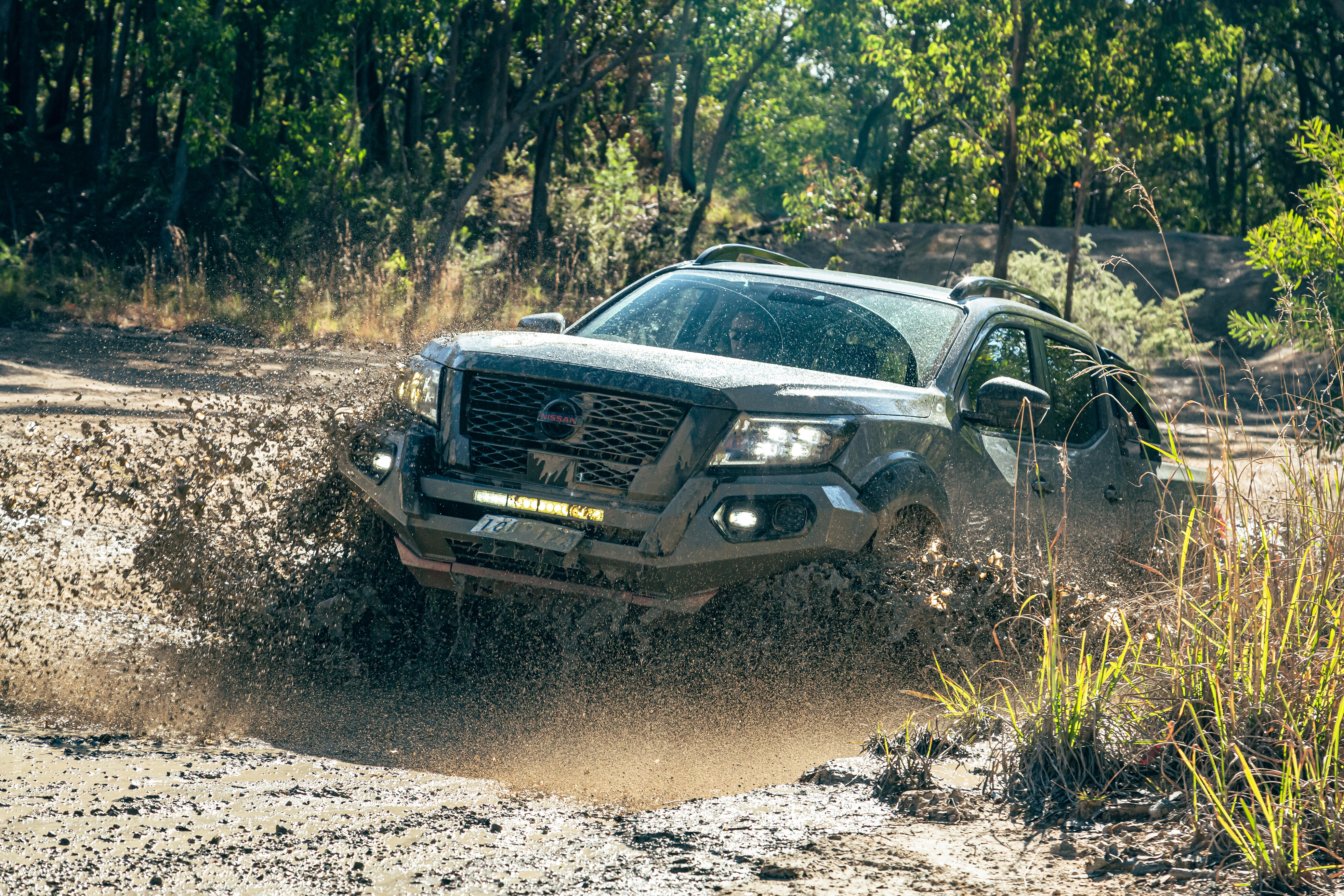
Billed as the world’s toughest Navara, Premcar’s head of programs, Tom Imbesi, said the PRO-4X Warrior’s strengths come from its local development.
“We’ve made it [the PRO-4X] even better,” said Imbesi.
“We undertook durability testing, thermal testing, NVH testing, as well as all the component testing. And we conducted a lot of it at the Australian Automotive Research Centre, and it has some of the toughest off-road tracks.”
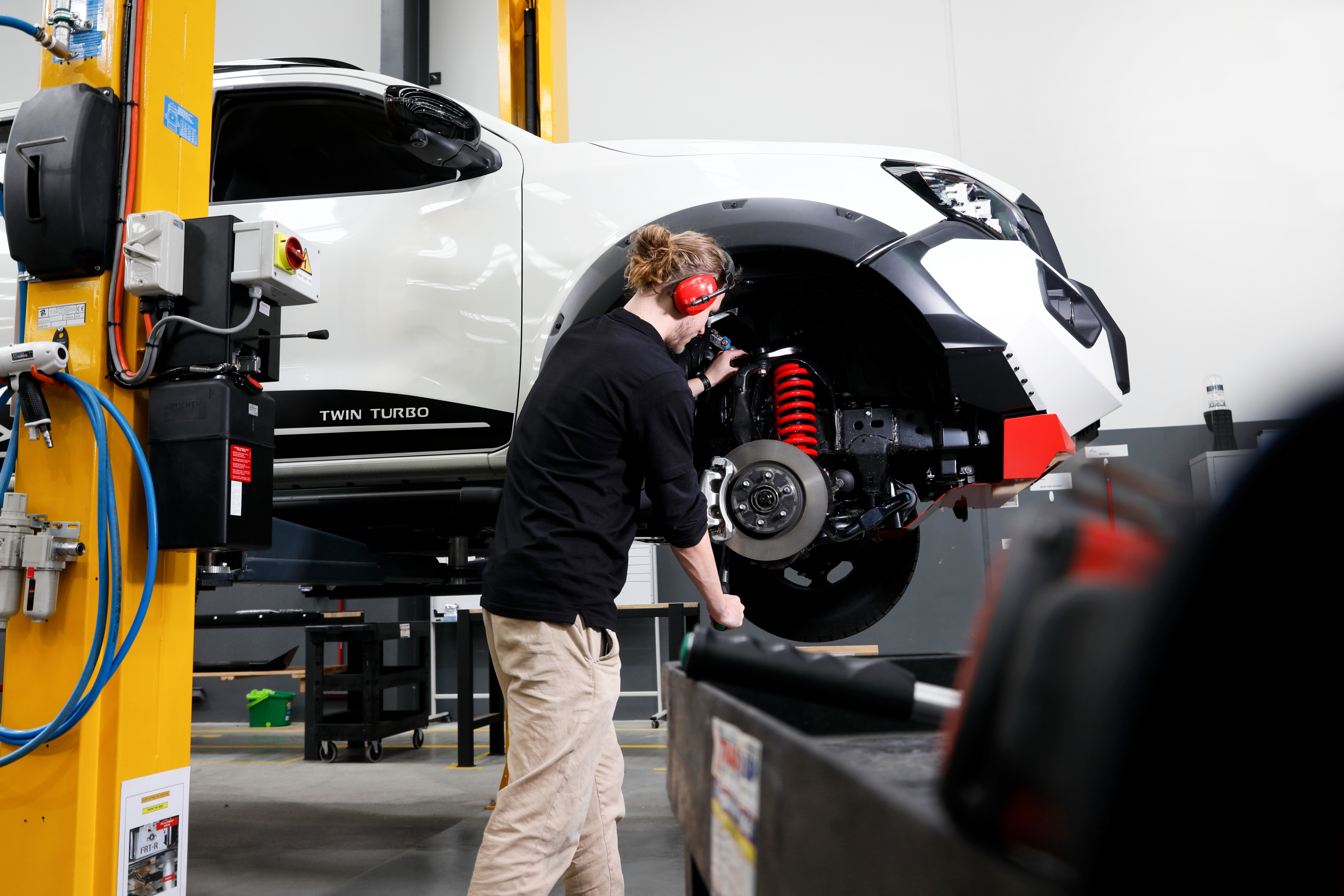
“Australians love utes, but more importantly they love to modify utes – Nissan didn’t have a product which fitted that niche,” added Matt Baily, Nissan’s senior manager of local product development and enhancement.
“From a customer’s perspective, to know it’s been locally developed, locally designed, locally tested and locally manufactured is extremely important.”
Set to arrive in showrooms next month, the PRO-4X Warrior arrives with a price tag of $67,490 in six-speed manual guise, while the seven-speed automatic incurs a $2500 premium – bumping its cost up to $69,990.
BEING located smack-bang between the capital city and the eastern border of Western Australia, the bustling mining town of Kalgoorlie-Boulder has many advantages, and one of them is not being close to a lot of the popular main places of attraction. It’s a four-hour drive for a dip in the ocean, and the state capital a leisurely seven or so hours away. Having a reliable rig capable of extended touring and the ability to do it comfortably, would arguably be high on the wish list of many an adventure seeker from the inland city.
Heading up his own building and construction business has seen Fraser owning a string of standard work utes, a 150 Series Prado and a 2018 Ford Raptor. The Raptor being fantastic for high-speed off-road driving and leaving terra firma on the regular.
“It was a lot of fun,” he says. “It liked hitting tabletops at 140km/h. They’re made for jumping, and the Fox suspension was pretty cool. You could sit sideways in it all day long.”
They say, once you get a taste for something good, it’s hard to look back, and in the end it was what was limiting the Raptor that had Fraser looking atbuilding something to fix those drawbacks. Not being able to tow a decent load being one of them.

Something with the GCM and GVM capabilities is what he needed, and the 79 Series stood out as his next ride, but with a twist. The new dual cab wasn’t going to be delivered to him in Kalgoorlie until after it had all the mods done to it.


“Creative Conversions took care of everything, managing the whole build from over there (in Queensland),” Fraser told us. This entailed fully revised front and rear suspensions, upgraded GVM and GCM, and a fully kitted out canopy ready for free-camping.
BRAND POWER
GETTING on the 79 Series train was a logical step, and the big dual cab ticks the reliability box straight out of the factory, with a rock-solid reputation built up over its long production run.
“You’re not restricted by many things, and they’re built to last,” said Fraser. “You’re able to get pretty much anywhere in it. Compared to the Raptor where you are really limited to what you can tow, it’s why I went with the LandCruiser.”
While being match-fit straight off the production line, LC79s aren’t known for offering plush levels of comfort and amenities. So even before laying eyes on his brand-spanking-new 79, Fraser had it on its way interstate to Creative Conversions for a rear coil set-up plus an extra 300mm of chassis length for good measure.
If only the freight industry were as reliable as a Toyota though, as Fraser’s unseen 79 then went missing.
“I ordered the vehicle and it was put on a train in Fremantle to go over east, and it disappeared for two months,” he says. “After it went to Victoria and up to Queensland, they couldn’t find it.”
After a couple of months, it turned up at the Creative Conversions workshop and after a few calls to verify it was the actual car Fraser had purchased, it was all systems go.
The guys separated the frame rails before adding the aforementioned extra length and removing the diff, leaf springs and all hangers. With the rear chassis laid bare, the plasma cutter was swapped for the welder and the boys set about fitting a chock-full pallet of Superior Engineering gear.
The Superior Engineering upgrade kit addresses every detail needed to upgrade the GVM-GCM, starting with a Superior Track Corrected Diamond chromoly sheet metal rear differential housing – this addressed an oddity of the 79 Series, bringing the rear wheel track outwards and in line with the front wheels. With the GXL 79 running diff locks from the factory, nothing needed adding before being slotted into the new housing, however a pair of longer RCV 300M axles were required for that extra width while also providing increased strength over the standard offerings.
Swinging the live axle through its arc of travel are heavy-duty four-link suspension arms, with adjustable upper links positioned in a triangulated set-up to keep sideways movement to a minimum but allow maximum articulation.

While a ton of work was carried out on the rear, the hits didn’t stop coming when it came to the front end. Superior supplied a pair of its Hyperflex radius arms along with heavy-duty Panhard rod, comp-spec drag link and tie rod. Taming down any unwanted feedback to the steering wheel is a Superior steering damper.
A fat pair of sway bars front and rear cope with the increased load carrying, also being fitted with billet spacers to help handle the displacement caused by the four-inch lifted Superior adjustable remote reservoir shocks and springs.
When it was time to choose a tyre size, Fraser was intent on going with 33 inches, but Jason from All 4 Adventure spied the newly modified 79 Series in the Creative Conversions’ workshop and gave Fraser a phone call.
“They saw my rig there and said ‘Nice rig mate’ and I had a bloody good yarn with them,” Fraser remembers. “I told them I was considering going with 33s and he (Jason) said ‘Nah mate, 35s all the way.’ So he convinced me to go the 35s route.”
Starting with 16×8-inch Speedy Territory rims, Fraser wrapped them in 315/75R16 Dick Cepek Fun Country all-terrains, ordering a full complement of six wheels and tyres.
BACK DECK

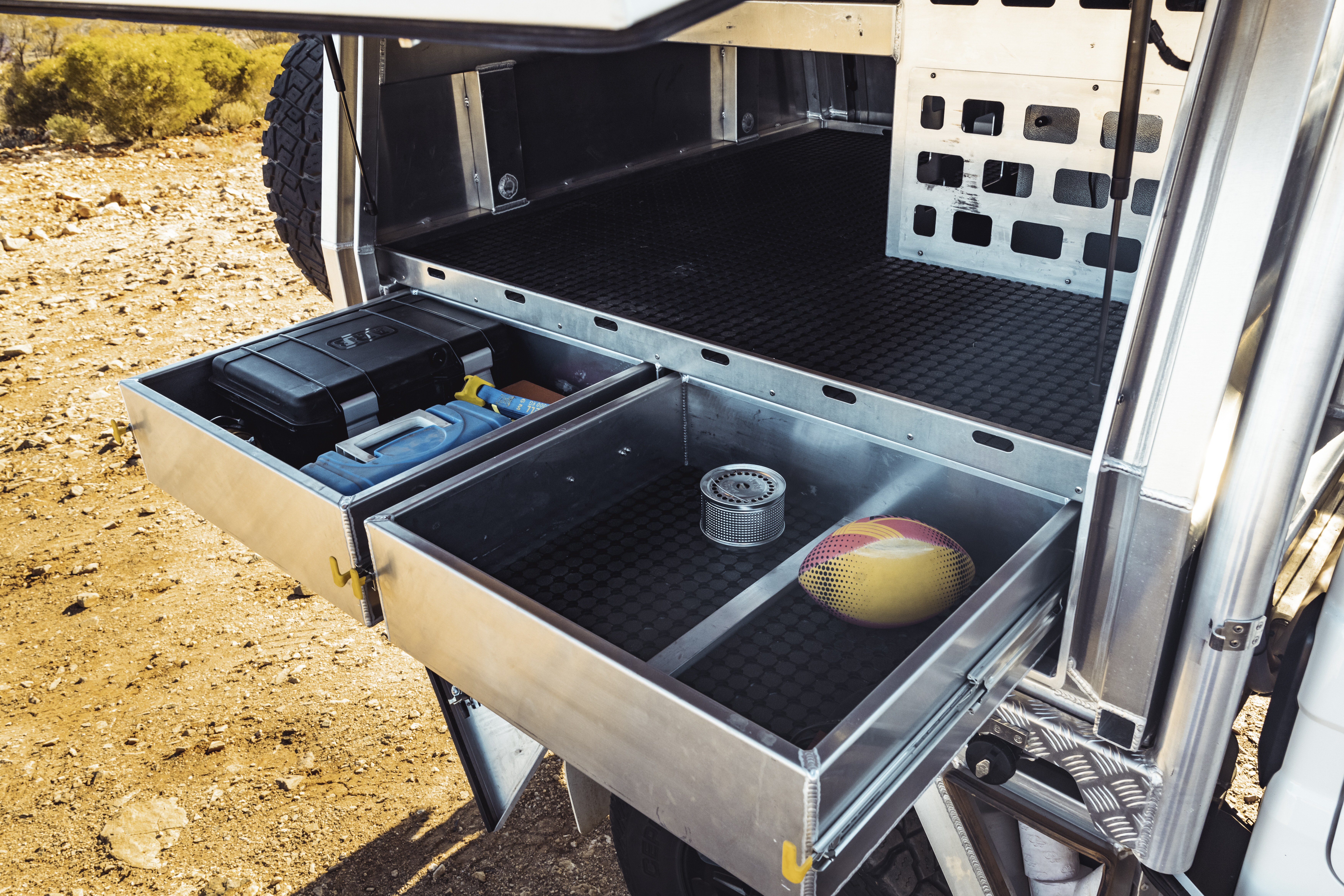
GOING full-spec on a canopy was next, with Norweld building a tray and removable canopy designed to utilise the extra 300mm of rear chassis length The guys there hopped to it, melding sheet after sheet of aluminium together to form the 1986mm long tray and 1740mm long canopy. This included internal drawers, toolboxes, trundle drawer, water tank, Maxilamps and internal locking. All doors in a two-pack finish to match the cab.

Norweld also handled the electrical fit-out of the canopy, calling in Rob’s Mobile Auto Electrics to fit a complete Enerdrive electrical system. The substantial fit-out includes a DC2DC+ charger with MPPT solar controller, ePower 3 Bank Charger capable of maintaining charge to three separate batteries at once, a 200amp/h lithium auxiliary battery, and ePower 2000W inverter. Giving a detailed readout of the state of play is an Enerdrive Pico+ Simarine screen, taking voltage and current draw readouts from a shunt, and also keeping an eye on water tank levels.

If you add all the extra equipment and upgrades regularly placed on 79 Series utes, it makes perfect sense why the 1VD-FTV engine is so sought after. With around 150hp but more importantly 430Nm available in stock form, it’s a proven performer off-road. Fraser pulled a few of the restrictions off, allowing the turbo to spool up faster with a Lundy Race Fab four-inch stainless-steel exhaust system from front to back. This woke the engine up, and after a tickle by the guys at Reaper Performance in Perth, an extra 65hp was achieved. Making short work of any fuel supply, the turbo-charged Toyota V8 likes to stay well-hydrated out on the open road, so 255 litres of diesel is on-tap from two steel Brown Davis tanks. “We originally wanted three tanks in there, but weren’t able to make them fit because of the coil conversion,” said Fraser.
Doing long trips can suck if the cabin is loud and chaotic, so Fraser kept the interior looking clean, starting with SupaFit seat covers. Giving a place for storage and the famously missing cupholders, is a full-length Cruiser Consoles unit. Also from the same company are speaker door pods containing Rockford Fosgate splits in the door panels. A Kenwood touchscreen stereo complete with Hema maps looks after entertainment, and when it’s time to party, the aftermarket speakers benefit from the extra panel damping of a full Dynamat installation, which do a stellar job keeping out road noise and increasing speaker response.
Audio signal is sent rearwards through a Rockford Fosgate amp and sub, mounted behind the rear seat. Alongside is a Cel-Fi mobile phone booster pulling signal through a GME Multi-band Cellular antenna on the ARB Summit bullbar. If antenna matching is your jam, then Fraser has it nailed with a GME 6.6dBi Gain Radome antenna mounted next to it for the Uniden RM980 UHF radio to use. Rounding out the front bar is a pair of Great Whites Attack 220 Series spotties, complementing the standard ARB fog lights.
After 18 months of build time incorporating such an extensive list of enhancements, it’s a gimme that Fraser has been enjoying the hell out of his new 79 since finally laying eyes on it in Kalgoorlie. More than 31,000km has passed under the treads within a few months, (not counting its trip accross the country and back) and with destinations calling all over the state, it’s a fair bet the big white ’Cruiser will be comfortably stacking on a whole lot more at, let’s just say, inspiring levels of velocity.
RED WHEEL WAITING
WHEN an increase in power has been achieved, it’s a sure bet the want for more is just around the corner, or in this case, back in Perth. The 79 will be heading back to Reaper Performance shortly, where it has a G-Turbo ‘Red Wheel’ G350 huffer waiting in the wings, plus a PDI front-mounted intercooler. Feeding the turbo the extra air required via the already fitted Safari snorkel will be a Fatz high-flow aluminium air-box, utilising a cone-style pod filter over the usual OEM panel filter. The extra torque won’t be a problem, however, as an NPC 1300Nm clutch and billet flywheel have already replaced the OEM unit.
CLOSER LOOK
1. Step on downClearview motorised side-steps ease access to the lifted cabin, dropping automatically whenever a door opens.
2. Clear view
Getting a clear look behind the new canopy are a pair of Clearview extendable towing mirrors.
3. Dash cam
Keeping an eye on the road is a Thinkware dash cam capable of 1440P front and 1080P rear resolutions.
4. Fuel watchSub-tank level monitoring is as simple as a dash-mounted LED display.
5. Ripper gripper
Front and rear differential locks are standard on the LC79 GXL model.

THE heavily laden work ute was bogged. Really bogged! And the young tradie who had been there for five hours already was really glad to see us.

We had been heading north from the small community of Apatula (Finke) and dodging around a wide, flooded area of track when we heard a bit of a distress call over the CB. Turns out it was another tradie who had spied our bogged mate and asked us to help.
In the end we had two vehicles, each with a double-line pull, hauling our stricken friend from the red mire. When I asked him if he was heading for Apatula, his reply was definite: “Not any bloody more I’m not. I’m going home, they can stick it. Thanks for the help!”
And with that he was gone!
Then, as we were trying to get out of the firmish area we had parked ourselves on, Trent’s 79 sunk in the red slush and we spent another half-hour extracting him and his trailer.
We were nearing the end of four weeks of wandering the outback with my son’s Moon Tours and while this recovery was one of the more intricate ones, it was by no means the only one.
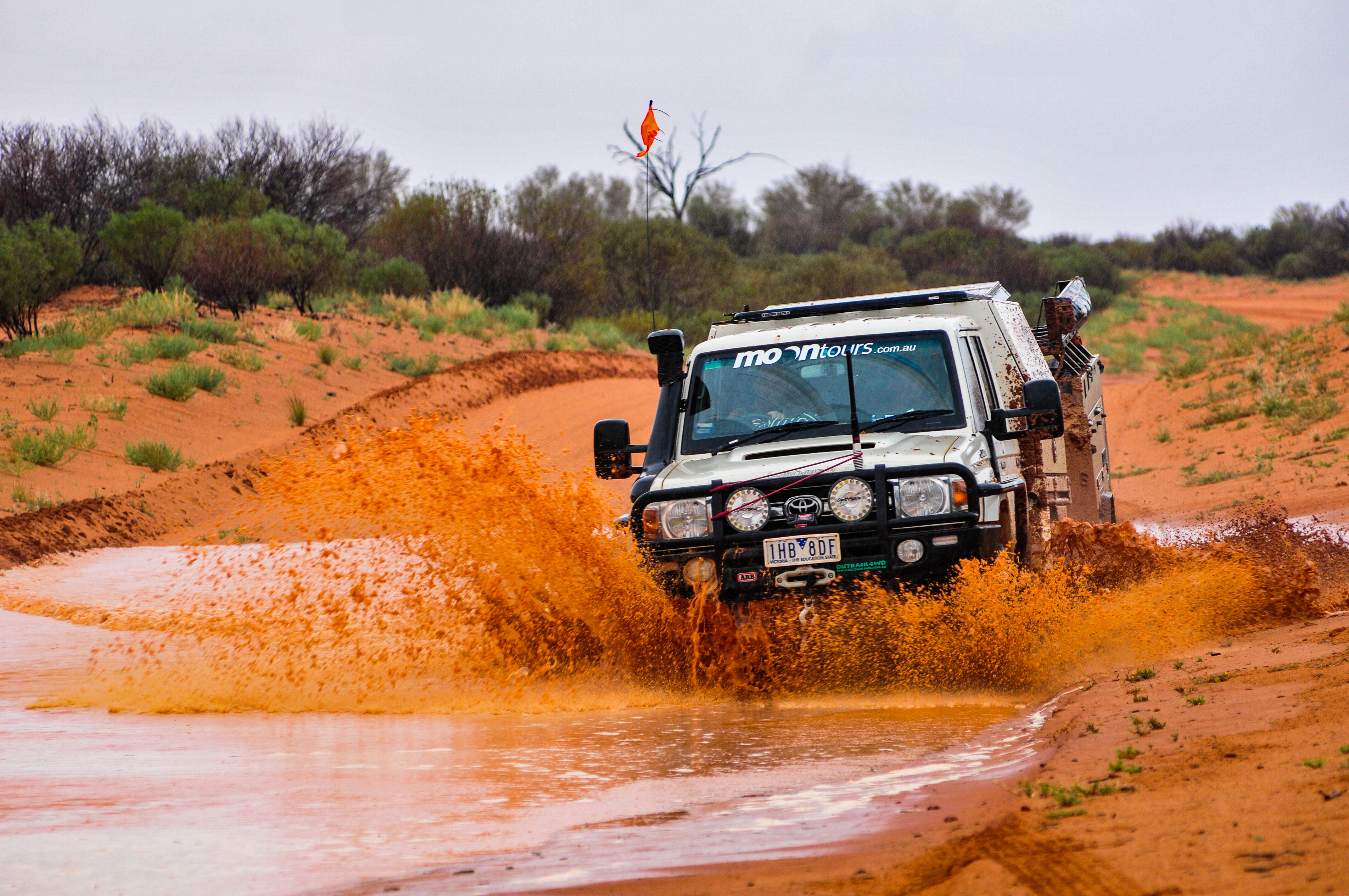
Initially, our little convoy had left Birdsville and, because of a flood warning on Eyre Creek, we were told the only way open into the desert was via the long, circuitous route of the Warburton Track. While it was a long detour we were just glad to be allowed to head into the desert, our group being one of the first, if not the first, to head west from Birdsville for the year.
We dodged around a little as we headed west, striking north to Poeppel Corner first where we came across a couple of vehicles bogged in the centre of the nearby salt lake. We took the diversion track around the north of the lake and wondered why these travellers hadn’t done the same. Their nonchalant replies and cocky attitude beggared belief really and, while we made sure they had water and didn’t need a sat phone to call for help, we left them to it.
Our route then took us down past the Approdinna Attora Knolls on to the WAA Line, a route less used than the French Line and one, I must say, I prefer. With a diversion to the Lone Gum we hit the western end of the French Line and, with the track improving greatly after Purni Bore, we made it to Mt Dare that evening, our fifth night since leaving Birdsville.
RAIN COMING
Greeted by Graham and Sandra, the current owners of this fine establishment, with dire warnings that heavy rain was on its way, we bailed out next morning before the roads closed and as the first spits of rain heralded more on the way.
At Kulgera and the safety of the bitumen the next day, we found dirt roads were closing all around us, with even the bitumen highway to Uluru and the road along the Western Macs from Alice Springs both closed due to flood waters rushing down the normally dry river beds. It seemed choices for a dirt-road adventure were dwindling fast!
A call to a friend who was running Kings Creek Station gave us some positive news with the proviso to watch the flooded creek crossings, but they were already receding when we arrived. That evening we opened the campers and I threw down my swag along the ridge-top camp they called the Drovers Rest, which has inspiring views north to the red raw ramparts of the George Gill Range. The property itself is pretty well set-up for campers and travellers, with a range of accommodation and facilities. With a new owner, expect even more and bigger changes in the future.
KINGS CANYON
As we waited for roads to dry and creeks to subside further, we took the opportunity to explore nearby spectacular Kings Canyon and later joined the manager at Kings Creek as he led us around the property which is basically being destocked. An ancient Aboriginal rock-art site was a highlight before we headed over the road to join an Aboriginal family and their Karrke Cultural Tour, run by Peter and Elma, traditional owners of the area. Over the years we’ve done a few of these tours in different areas of Australia, but this was one of the best and most informative.
Next day with news the Eastern Macs were open, we headed up the blacktop, crossing a strongly flowing Finke River which was worth a stop to view this rare happening. With news that the Hugh River Stock Route and the Old Ghan Line Road were both open, we headed that way and hardly saw any sign of water; although, the country was green from rain that had fallen through here a month or so previously. The only other travellers we saw were a couple of young Aboriginal men who had broken down, and we stopped and got them going again before continuing.
The sun was heading to the western horizon as we drove along the southern flank of the Eastern Macs, the evening light showering the mountains in the rich, reddish glow of the setting sun – it was magical!
We stopped that evening in the pleasant confines of the camping ground at the historic Ross River Homestead, one of the iconic properties of Central Australia and one of the first properties in the heart of the country to look at tourism as a way of surviving this often harsh land.
The nearby N’Dhala Gorge, reached next day at the end of a reasonable 4WD track, was so green it nearly obscured the red rocks the gorge is so well-known for, while flowing water and deep waterholes were another pleasant surprise.
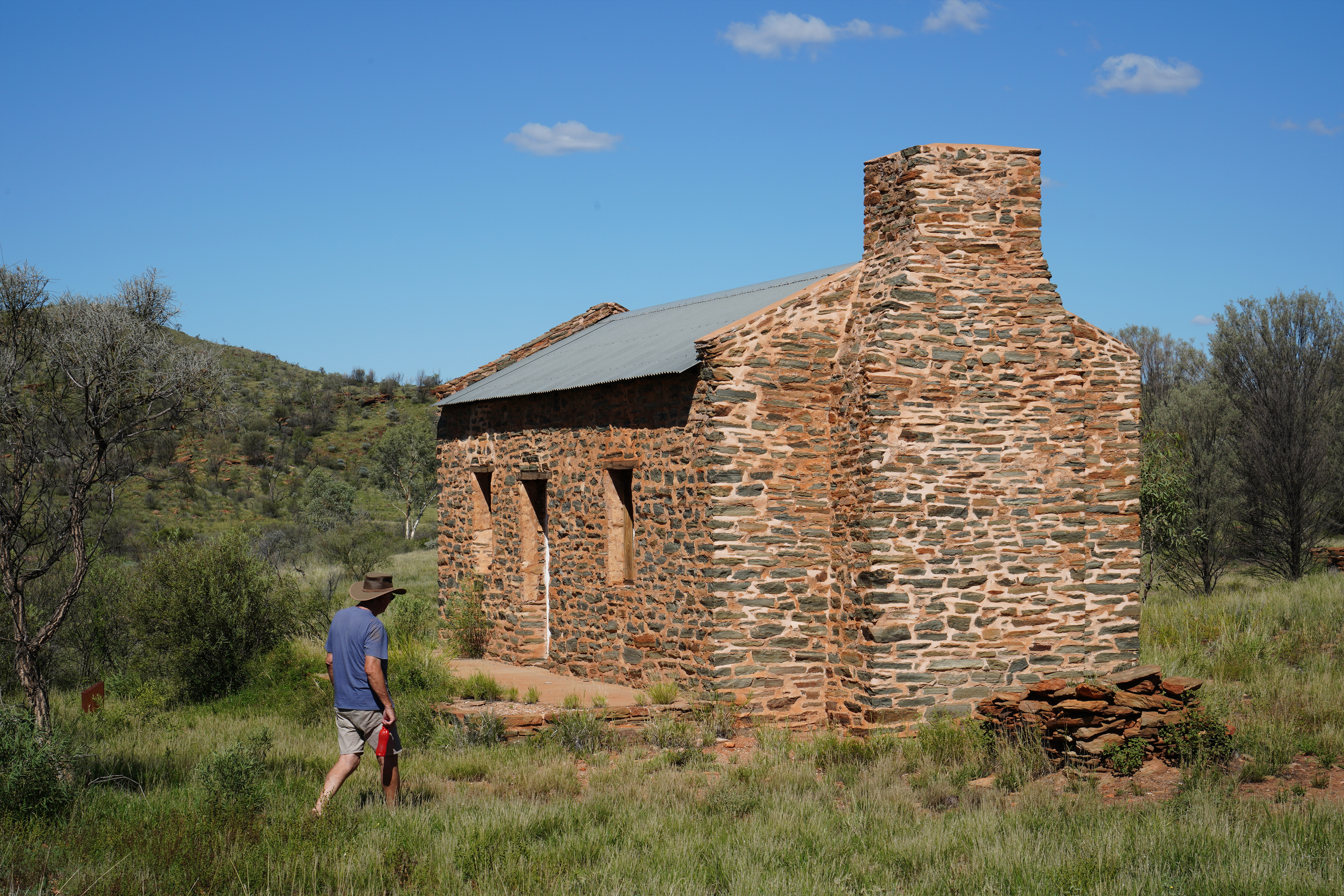
We headed east, stopping at a couple of historic sites in the Arltunga Historical Reserve and, while I’ve been here a few times, it is always an interesting place, depicting a time when pioneer prospectors helped open up the heart of the country with little more than their own feet, tough hands and a lot of manual labour.
That evening we pulled into the very pleasant and well set-up Hale River Homestead and the rich hospitality of the owners, Lynne and Sean and daughter Tracy, along with her two great kids. Set amongst the hills on the northern edge of the spectacular East MacDonnell Ranges and close to the ephemeral Hale River, it was so good our group elected to stay another day. We joined Sean on a trip around the property that the family is turning into a model of sustainable grazing for their small herd of prime cattle. As the heat of the afternoon descended, all of our party retired to the relief of the pool made from a large shipping container and decked out better than most suburban pools. Then it was time for a meal at the famous old workshed the family has converted into a fabulous rustic bar and lounge area.
FLOWER SHOW
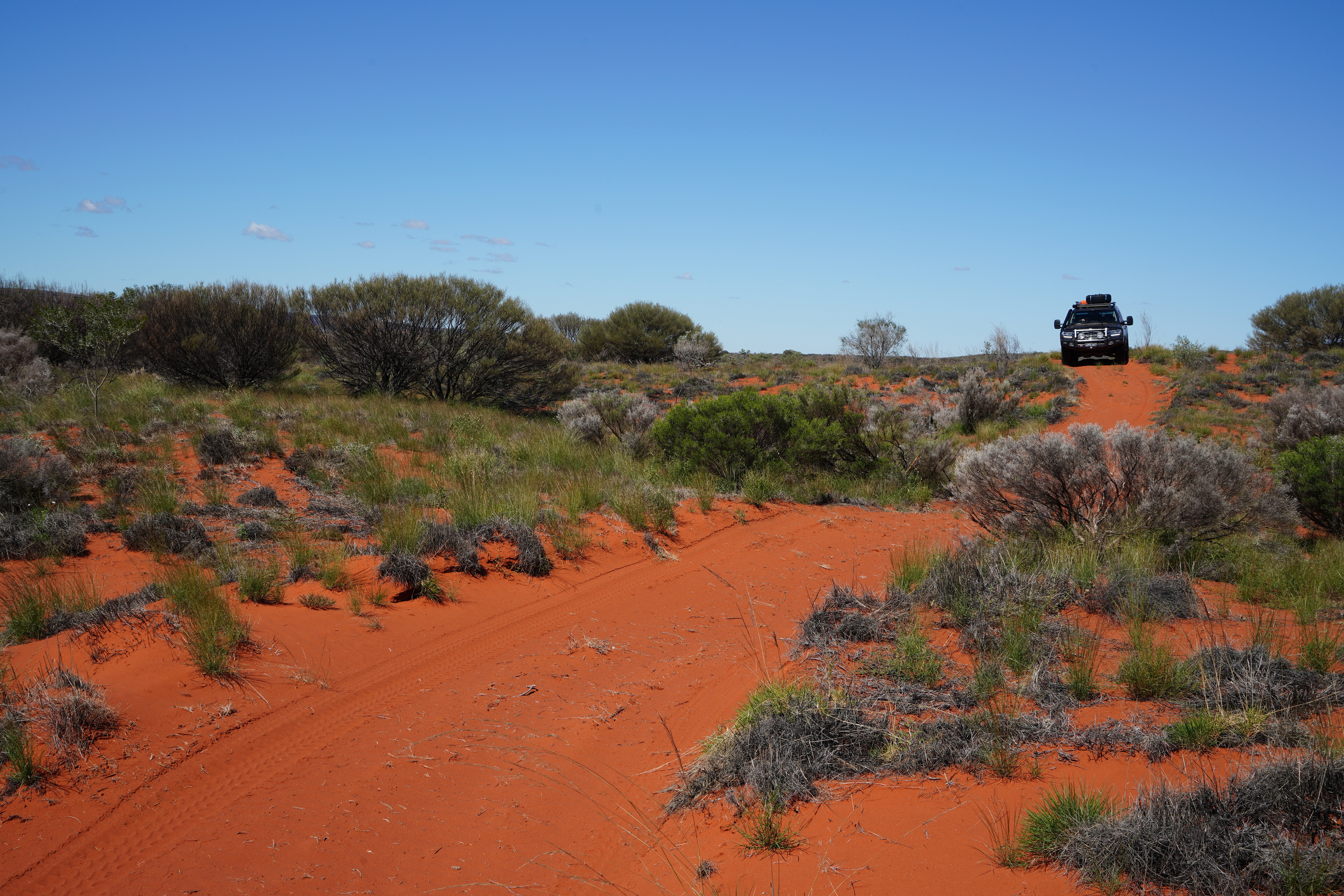
Next day, with word that the track south to Old Andado Station was open, we tore ourselves away and backtracked before taking the Santa Teresa Road through a country where the grass was seemingly growing as you looked at it. In places amongst the sandhill country farther south, daisies were starting to bloom, heralding a wildflower season in the centre of Australia that is bound to amaze travellers and locals alike in the coming months.
As we got closer to Old Andado, the country became less green as it had missed much of the rain of a month or so previously, but had received a drenching just days earlier. The track itself was relatively dry, our wheels throwing up a thin whisp of dust as we headed south, following one of the dunes that mark the western edge of the Simpson Desert. In between these widely spread dunes, the flat gibber stone country had any low-lying pan covered in a sheet of water.
Old Andado Station’s historic homestead is much the same as when the legendary Molly Clark lived there. With COVID and no travellers though, there hasn’t been a caretaker in residence for more than a year, and the dust had blown in and cobwebs hung from the rafter and across the desk where the old RFDS radio still stands. It was a sad sight but everything is still in place, so hopefully another caretaker will be found that can have the water running, the showers and toilets working, and the dust and cobwebs relegated to their rightful place.
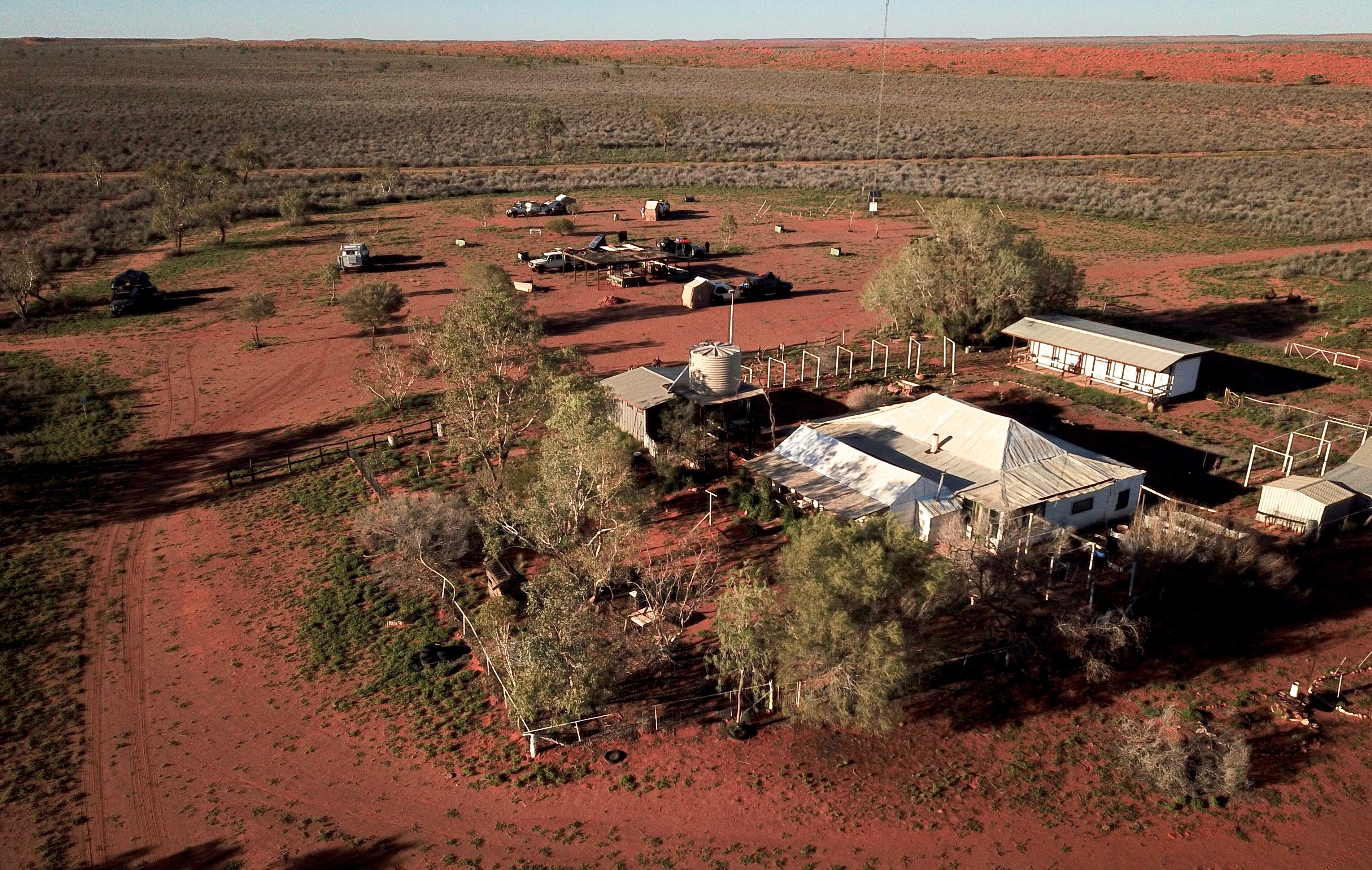
The following day we headed along better roads towards New Crown Station, the road showing more and more signs of the heavy rains of a week or so previously.
By the time we got to where the mighty Finke River breaks into a series of wide channels, as it occasionally oozes into the desert to expire amongst the Simpson’s sands, the road was rough and the approaches to the road crossing of the main channel washed away. In its place was a dry stretch of deep, soft sand with hardly a patch of water to be seen, but the first vehicle across got stopped in the sandy morass, which required a few Maxtrax before it was on the move again.
Then, with the Maxtrax still in place, the rest of our convoy slipped across without a worry.

At the Aboriginal community of Apatula we fuelled up and took a heavy toll on the steak sandwiches and sausage rolls of the general store while yarning to a few of the locals who were looking forward to the annual Finke Desert Race in June once more, after a break in 2020 due to bloody COVID.
Just north of the small community the main track to Alice Springs, part of the historic Old Ghan Railway Line route, we crossed a still flowing Finke River.
Talking to a young jackaroo who had pulled up to let us pass, he informed us that the river had been in flood for more than a week and the crossing had been closed up until that morning. While the crossing itself was a little soft, it wasn’t an issue, but it was so good to see water flowing into the desert and to experience what is, in fact, a very rare occurrence.

It was a few kilometres north of the Finke River when we came across our bogged tradie and spent more than an hour extracting him and then one of the recovery vehicles. With that adventure behind us we pushed north, the sun heading to the distant horizon and our group pulling up for the evening beside the old fettlers’ cottages at the now defunct railway siding at Rodinga.
It was our last night camped in the desert after what had been a momentous few weeks in the very heart of Australia. While the rain and water had closed roads and changed our plans considerably, the trip was made even more memorable by the verdancy of the landscape so different to the norm and the burgeoning explosion of life brought on by the rains. We’ll never forget it!
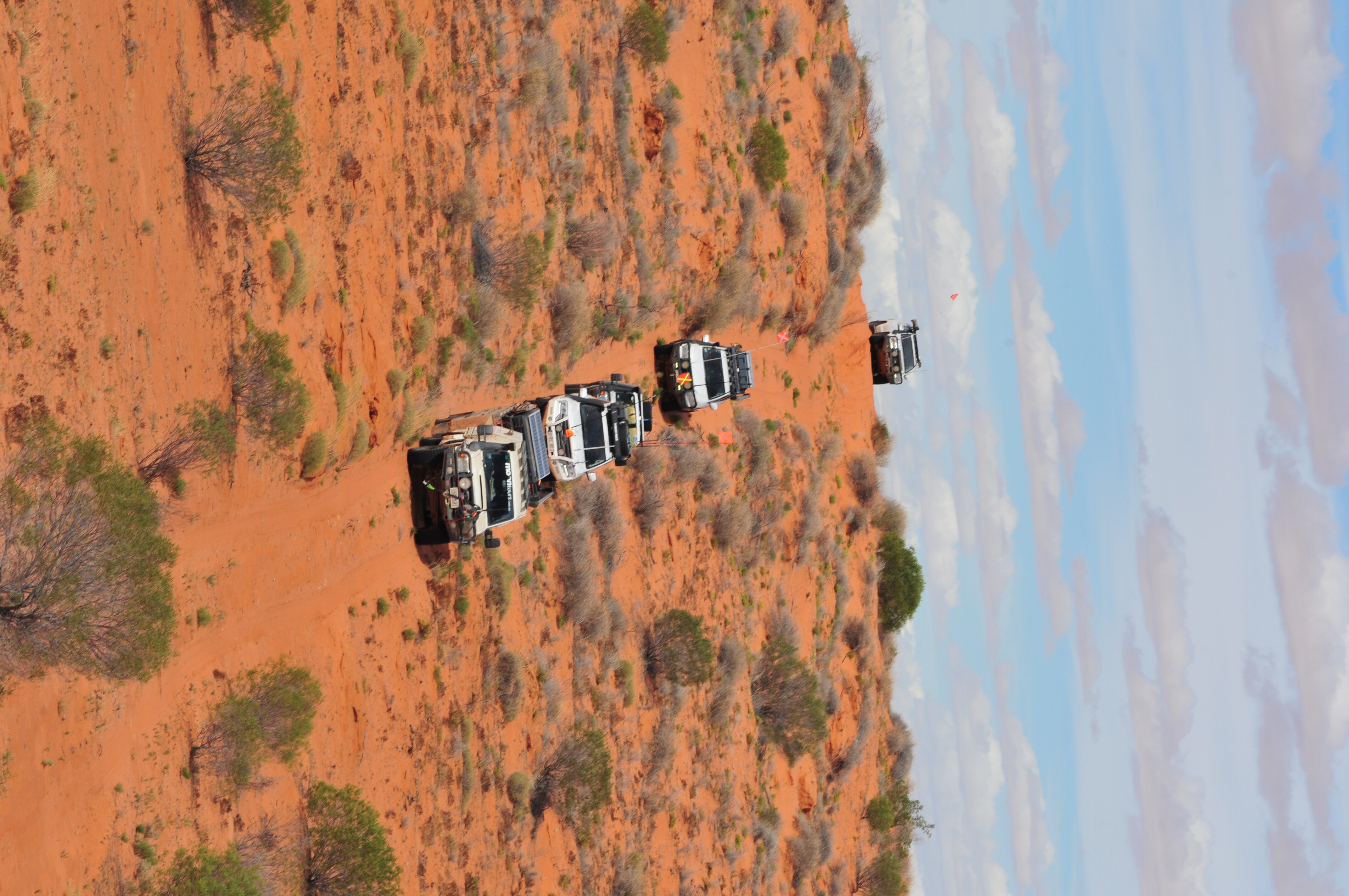
Don’t miss these spots in the red centre
1. Dalhousie Springs, SA 2. Kings Creek Station, NT 3. N’Dhala Gorge, NT 4. Arltunga Historical Reserve, NT 5. Hale River Homestead, NT