MARKS 4WD
Phone: (03) 9552 6555
Website: www.marks4wd.com [↗]

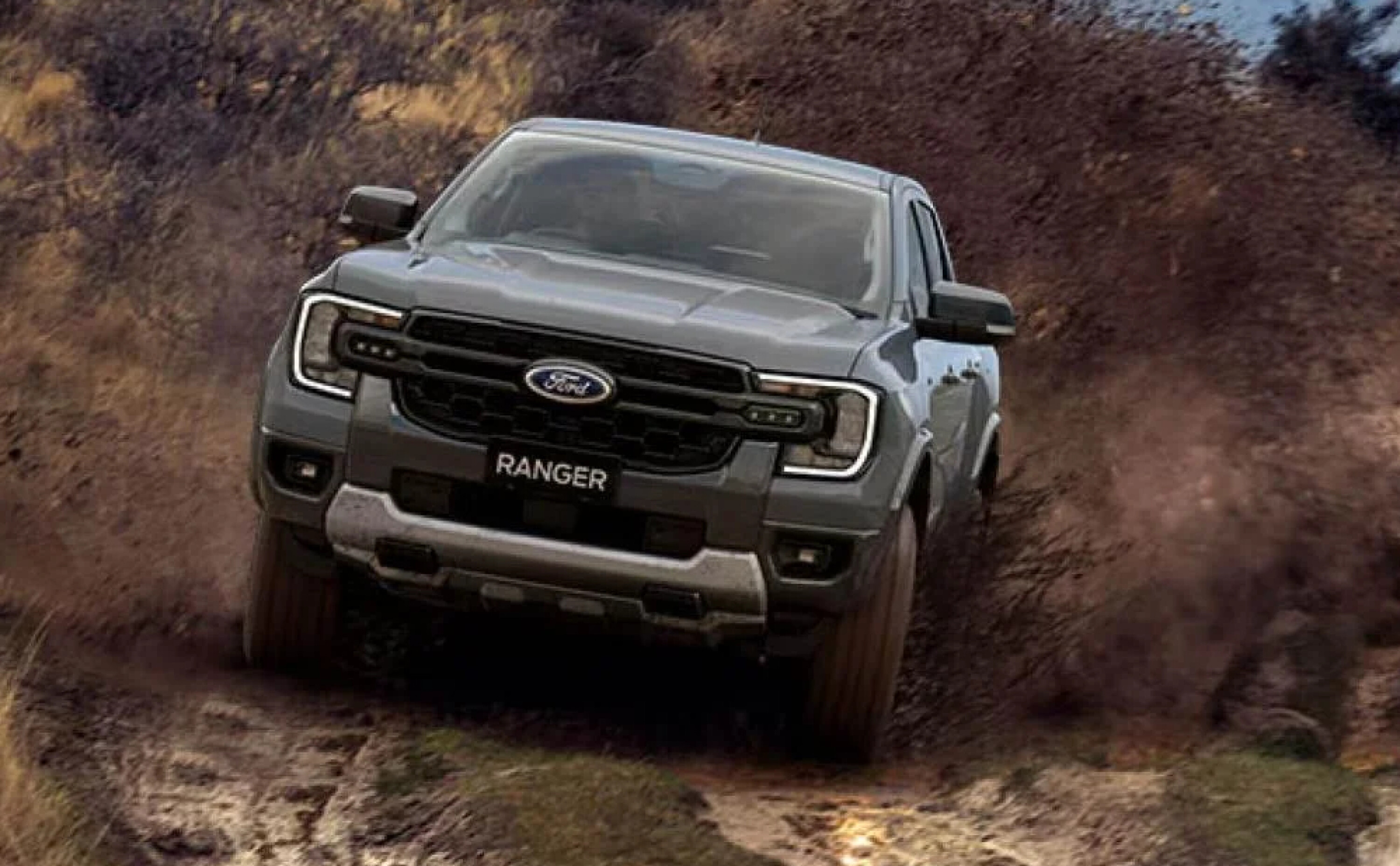
While European versions of the Ranger Tremor are built in South Africa – which supplies the Volkswagen Amarok and upcoming Ranger Plug-In Hybrid for Australia – and based on a low-spec variant similar to our XLS, the version coming to New Zealand will be built in Thailand and adapted from the mid-spec Sport.
The Ranger Tremor hasn’t been confirmed for Australia, but it could join the local line-up in the coming months as a spiritual successor to the previous-generation Ranger FX4 Max, which was sold elsewhere as the Tremor.
Like the limited-run Ranger Wildtrak X offered in 2023, the Tremor features the 150kW/500Nm 2.0-litre bi-turbo four-cylinder diesel paired with a full-time automatic 4WD system from diesel V6 and Everest models.
It also has the same Raptor-lite wider frame that sees the front and rear track width increased by 30 millimetres over the Ranger Sport, while ride height is up 24mm.
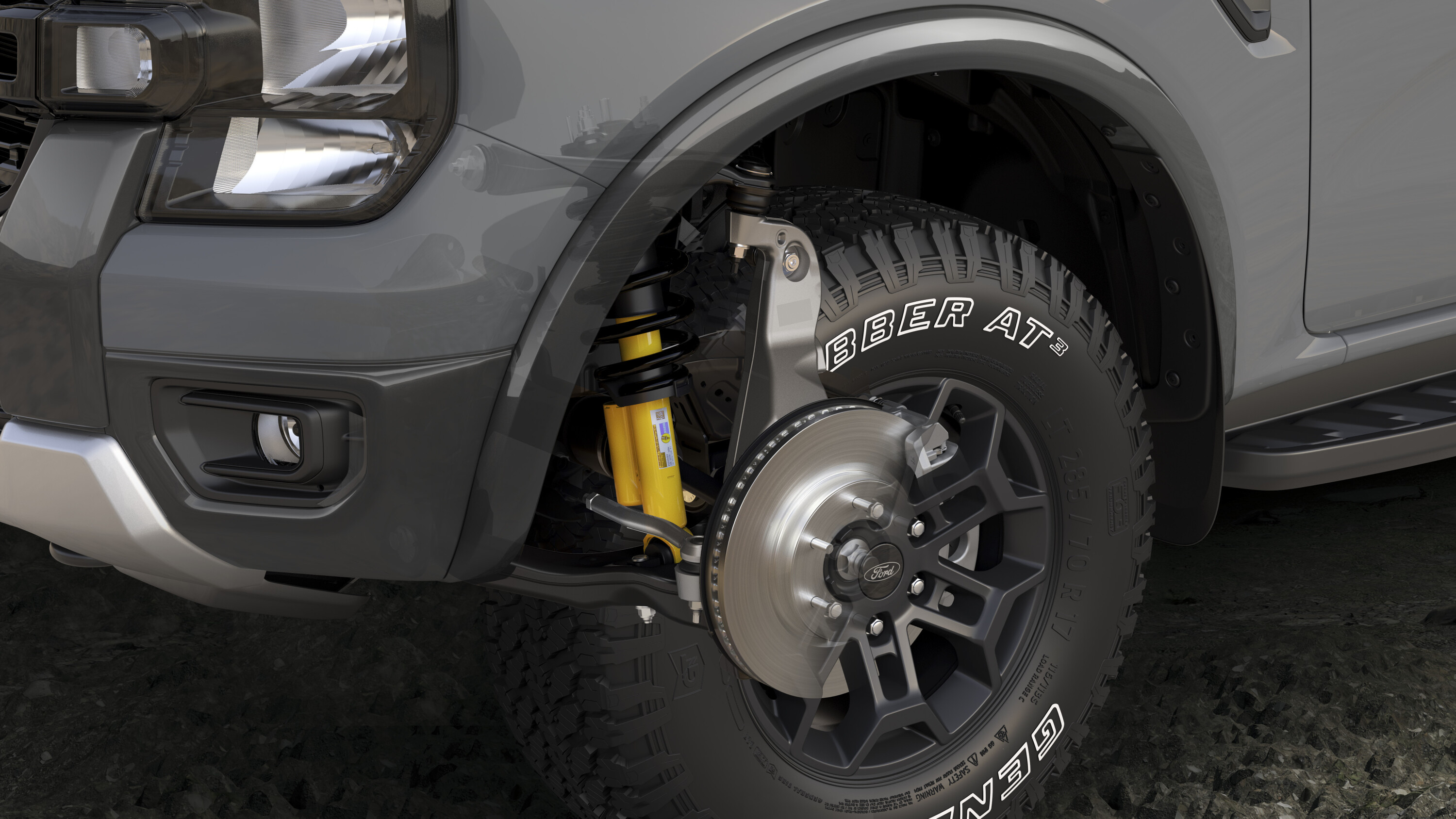
Other new additions include 17-inch ‘asphalt black’ alloy wheels, chunkier 265/70 R17 General Grabber AT3 all-terrain tyres with white lettering, and Trail Turn Assist – a Ford Bronco-derived feature – to reduce the vehicle’s turning radius by up to 25 per cent on narrow tracks by applying the brake to the inside rear wheel.
It can be engaged under 19km/h when the vehicle is engaged in either 4H or 4L, with the rear differential unlocked.
Inside, the Ranger Tremor has water-resistant black vinyl upholstery with ‘medium dark urban grey’ stitching and a Tremor logo embroidered in orange on the front seatbacks.
Unlike the Ranger Sport, the New Zealand-market Tremor reverts to vinyl flooring shared with lower-spec variants to make cleaning easier, while it also adds roof-mounted auxiliary switches as standard.
The Ranger Wildtrak X was priced at $75,990 before on-road costs when it was offered in Australia, which suggests the Tremor could be priced closer to $70,000 plus on-roads if it reaches our market.
A stock bi-turbo Ranger Sport 4×4 dual-cab is listed at $65,690 before on-road costs, while the just-updated Toyota HiLux Rogue with 48-volt tech is priced from $71,530 plus on-roads. The Nissan Navara Pro-4X Warrior auto starts from $70,765 and the Mazda BT-50 Thunder costs $74,095.
The Ford Ranger was the top-selling car in Australia in 2023, surpassing its HiLux rival, which had been the nation’s top-selling car from 2016 to 2022. Year-to-date, the Ranger remains in the top spot.
The springs utilise the same impressive parabolic design as the popular springs previously released, further expanding Terrain Tamer’s extensive suspension range. These new additions to the catalogue have been undergoing stringent research and development for several years and are suited to BJ40/42/43/45/46 and FJ40/45 models. Parabolic springs for these models retail for $503 each and $1006 per pair.
“Parabolic springs have changed the game in suspension for so many vehicles, and we’ve had constant requests from customers and on social media for the 40 Series ever since we first released them,” said Skye Kottachchi, marketing manager at Don Kyatt Group. “We didn’t want to go to market until we were sure the springs had undergone thorough R&D and were ready; we’re sure a lot of people are going to be very happy now that they’re available.”
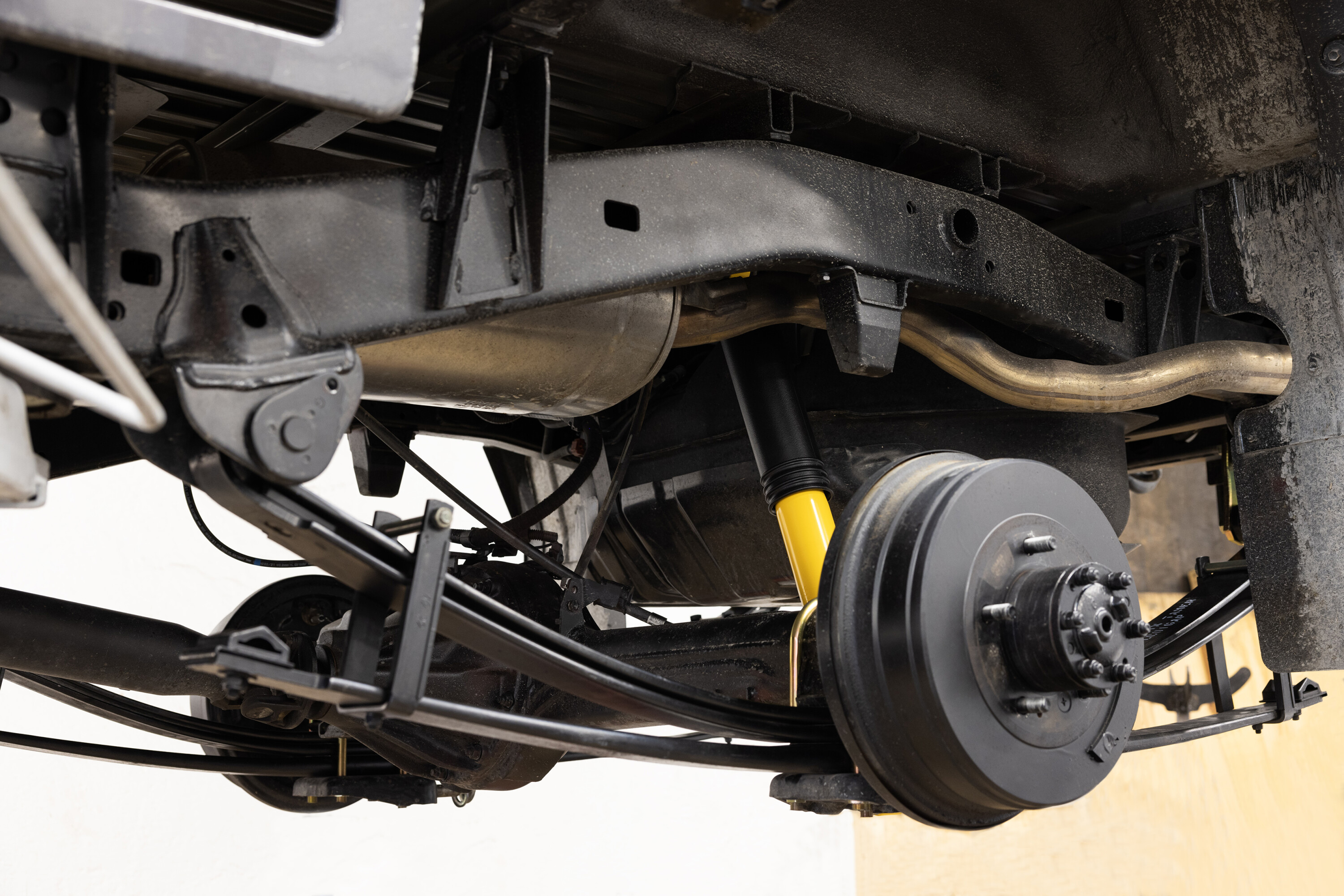
Initially released in 2018, Terrain Tamer parabolic springs apply an already well-established idea in the trucking industry – combined with modern technology and special-grade steel – to create a carefully researched design specifically for 4WD vehicles.
Typically containing fewer leaf springs, parabolic springs get their name from their tapered “parabolic” design, as they are thicker in the centre and thinner at the ends. This tapered design allows the stress to be distributed more evenly across the spring and each leaf is allowed to work independently with improved flex, keeping all four wheels on the ground while guaranteeing the strength needed to carry heavy loads and improve axle articulation.
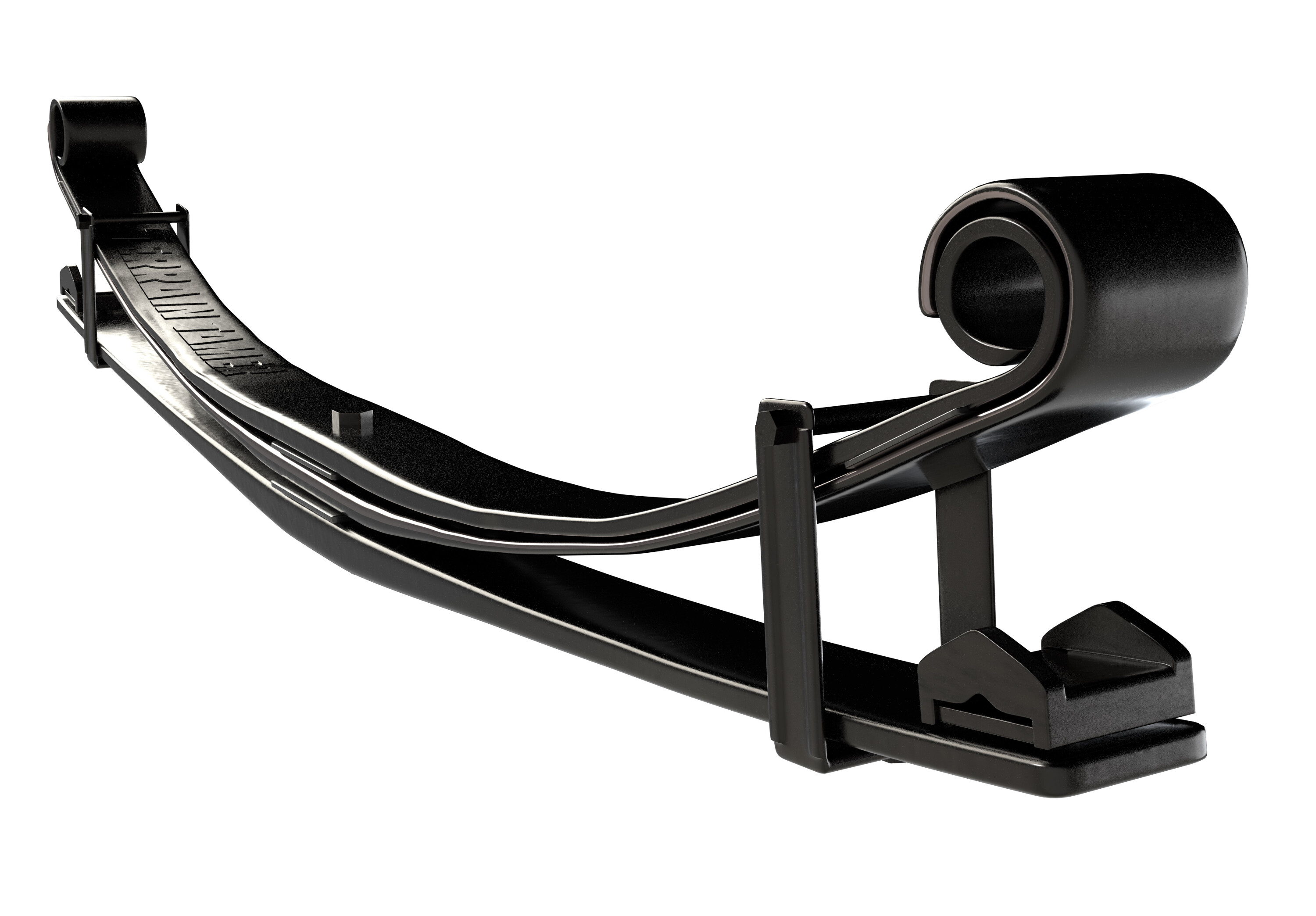
This is useful in 4WD applications that place excessive load on the driveline, or when challenged with difficult terrain, as the flex afforded with a parabolic spring allows it to give a little when the driver hits a bump, allowing the diff housing to rotate with the springs and provide a smoother ride. Parabolic springs also reduce shock transferred to the crown wheel and pinion, stopping the wheel from spinning and maintaining safety and drive.
This design also reduces the un-sprung weight of the vehicle, freeing up the weight needed for practical use, addressing the issue of GVM limits, and accommodating the varying and ever-changing applications the modern-day 4WD is used for such as towing heavy loads, carrying tools or touring with the family. It also ensures a comfortable ride, whether empty or loaded.
As leaked images earlier this week revealed, the Pajero Sport is now available in South-East Asia with Mitsubishi’s revised ‘4N16’ 2.4-litre four-cylinder diesel powertrain from the new-generation Triton ute – but it won’t come to Australia.
It is limited to the single-turbo version with similar outputs to the current Pajero Sport, rather than the more powerful 150kW/470Nm twin-turbo variant fitted to the Triton in Australia.
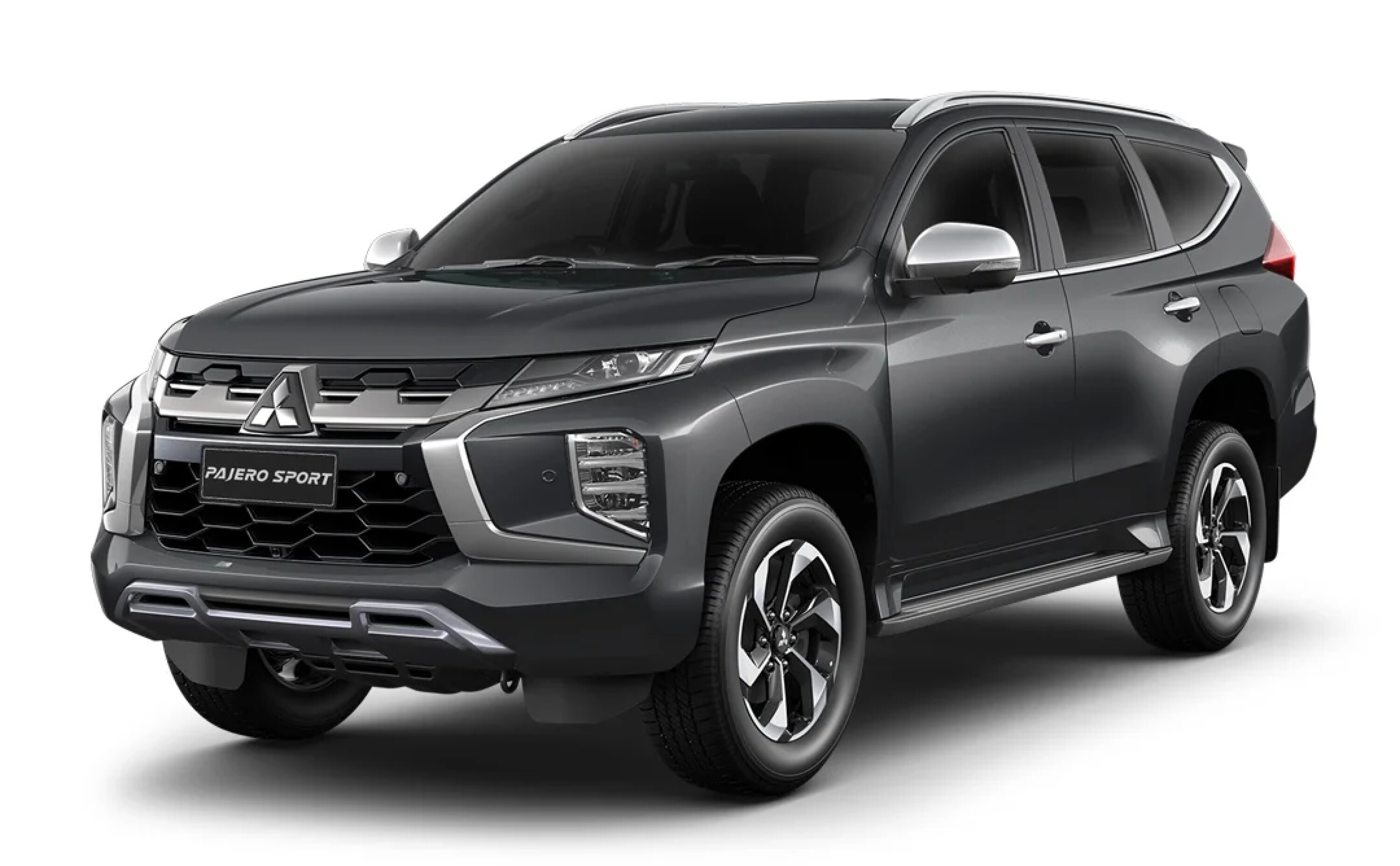
It is matched to a six-speed automatic transmission – two gears fewer than before – and two- or four-wheel-drive.
Other differences include an automatic engine stop/start system, a lower compression ratio, and a variable geometry turbocharger.
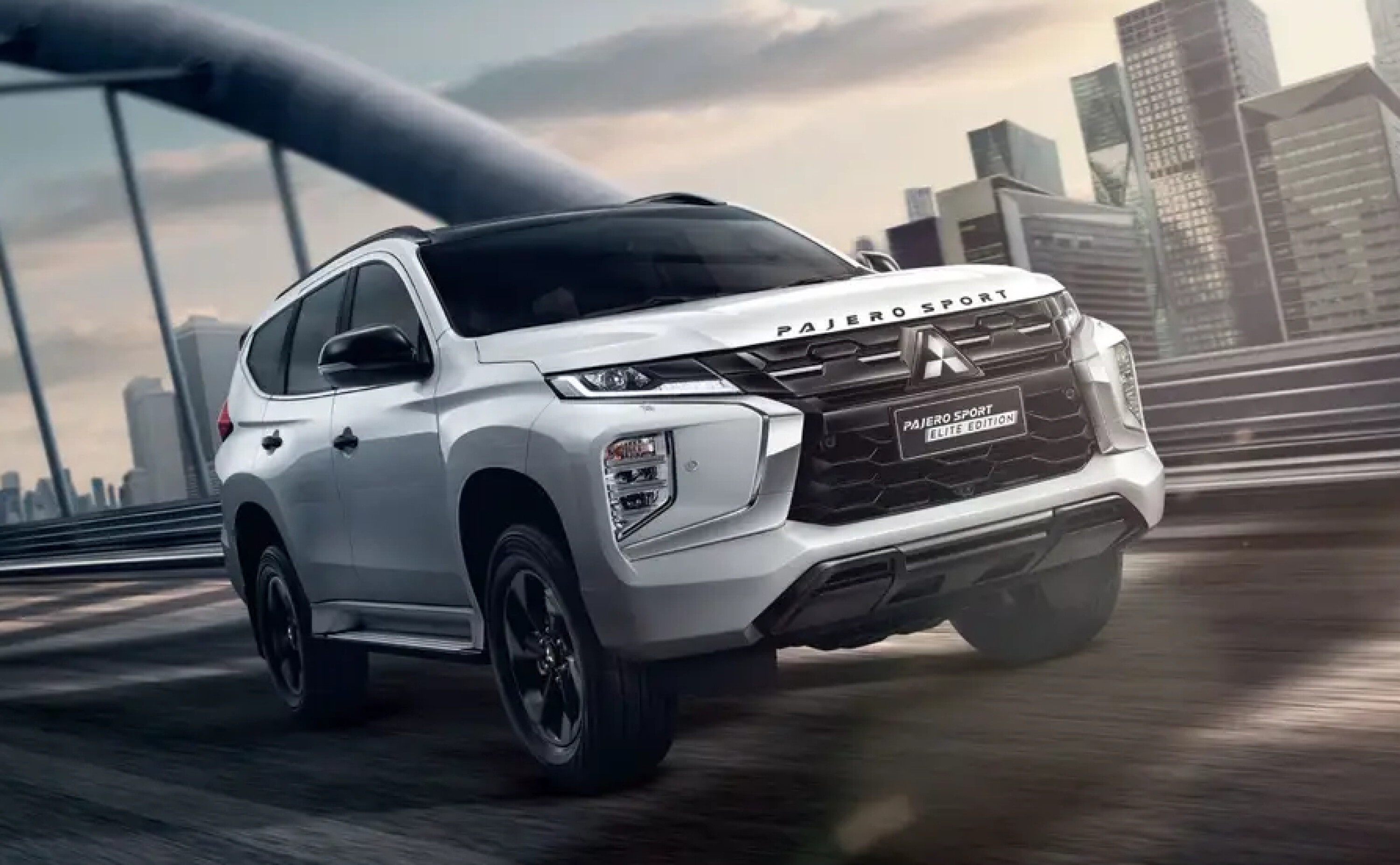
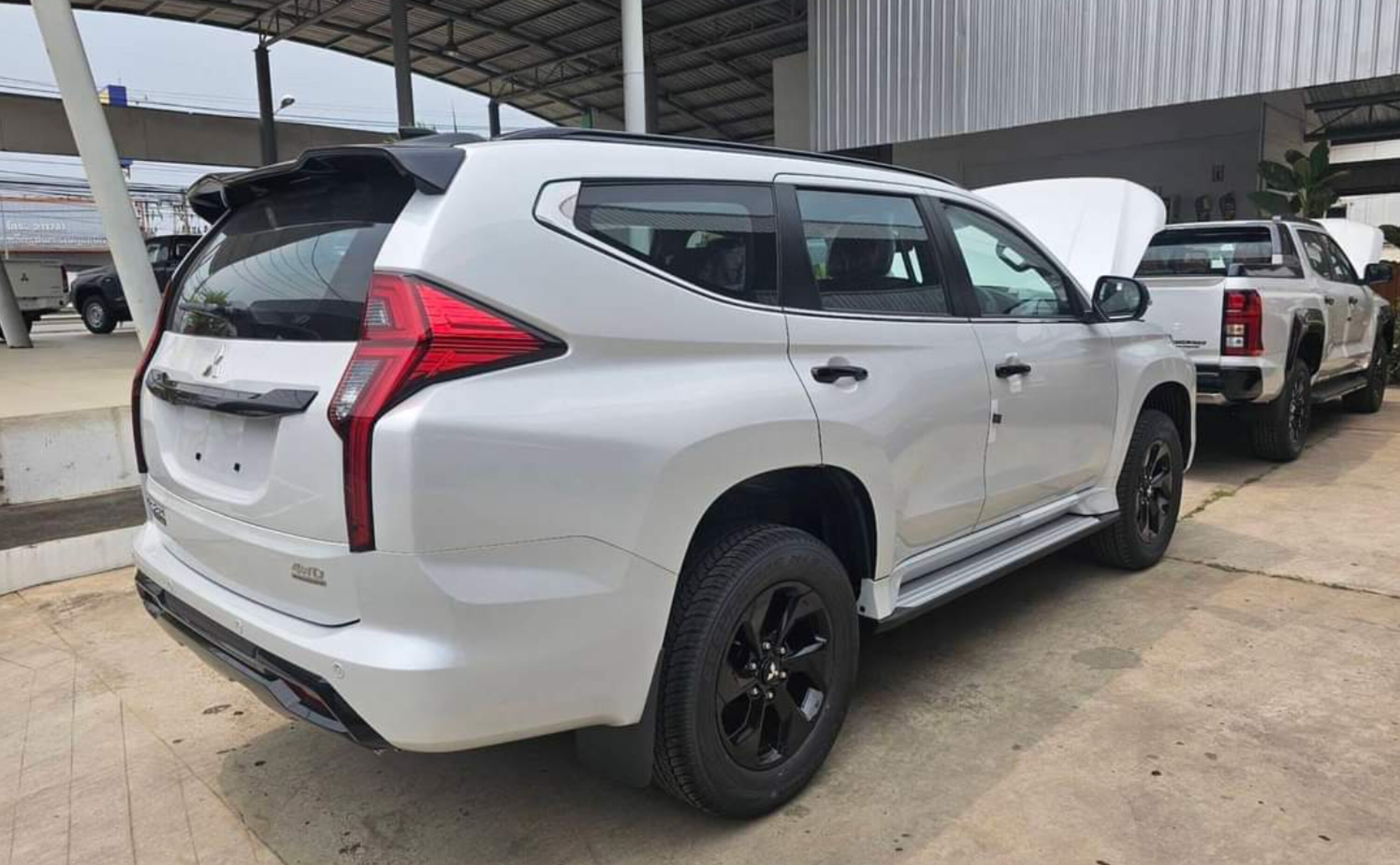
Exterior revisions include an updated grille pattern, new lower bumpers, and turbine-style 18-inch alloy wheels with a machined or black finish.
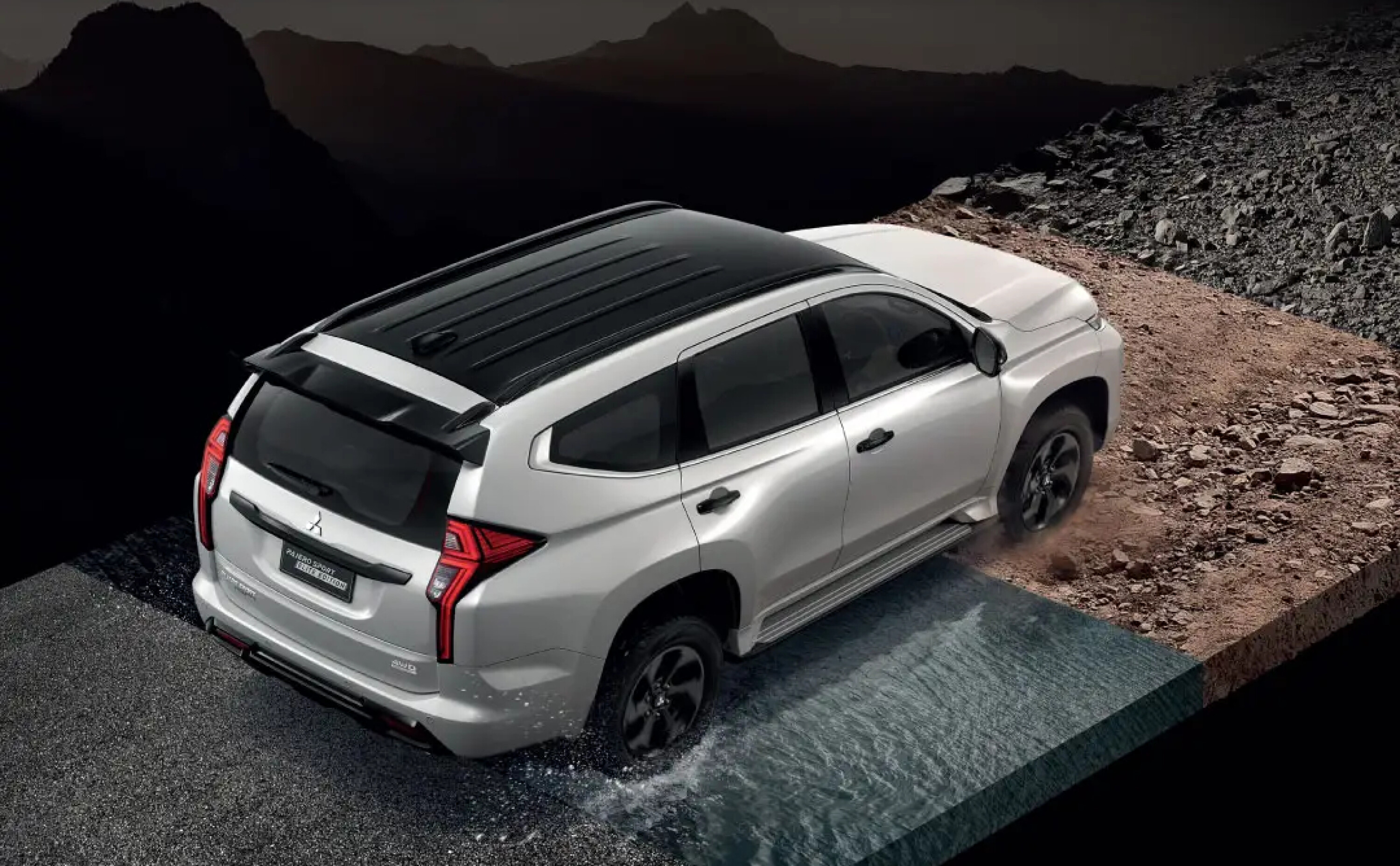
Thailand’s Elite Edition flagship model, known as the GSR in Australia, now features black trim for the door handles, side mirror caps and tailgate garnish instead of chrome.
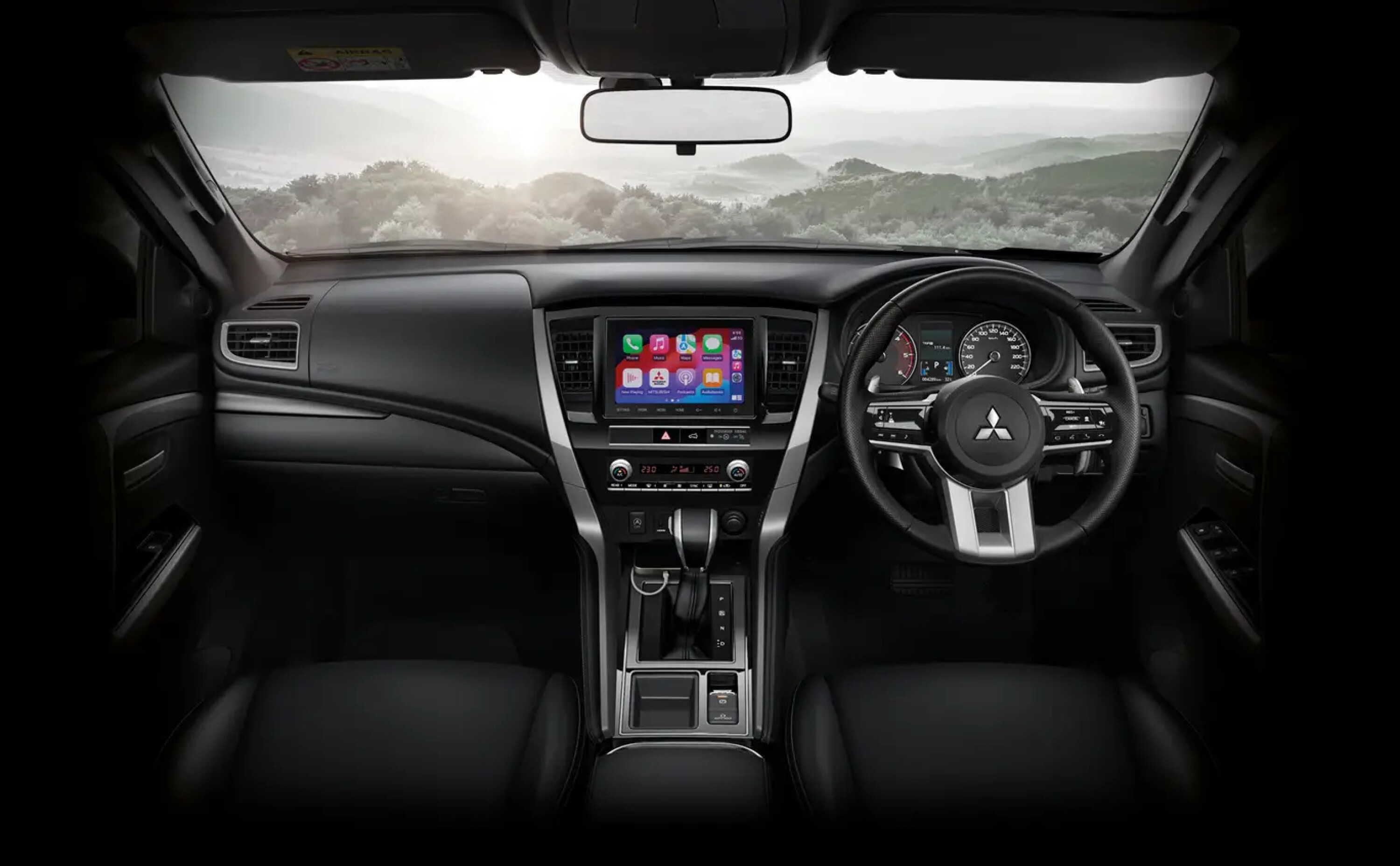
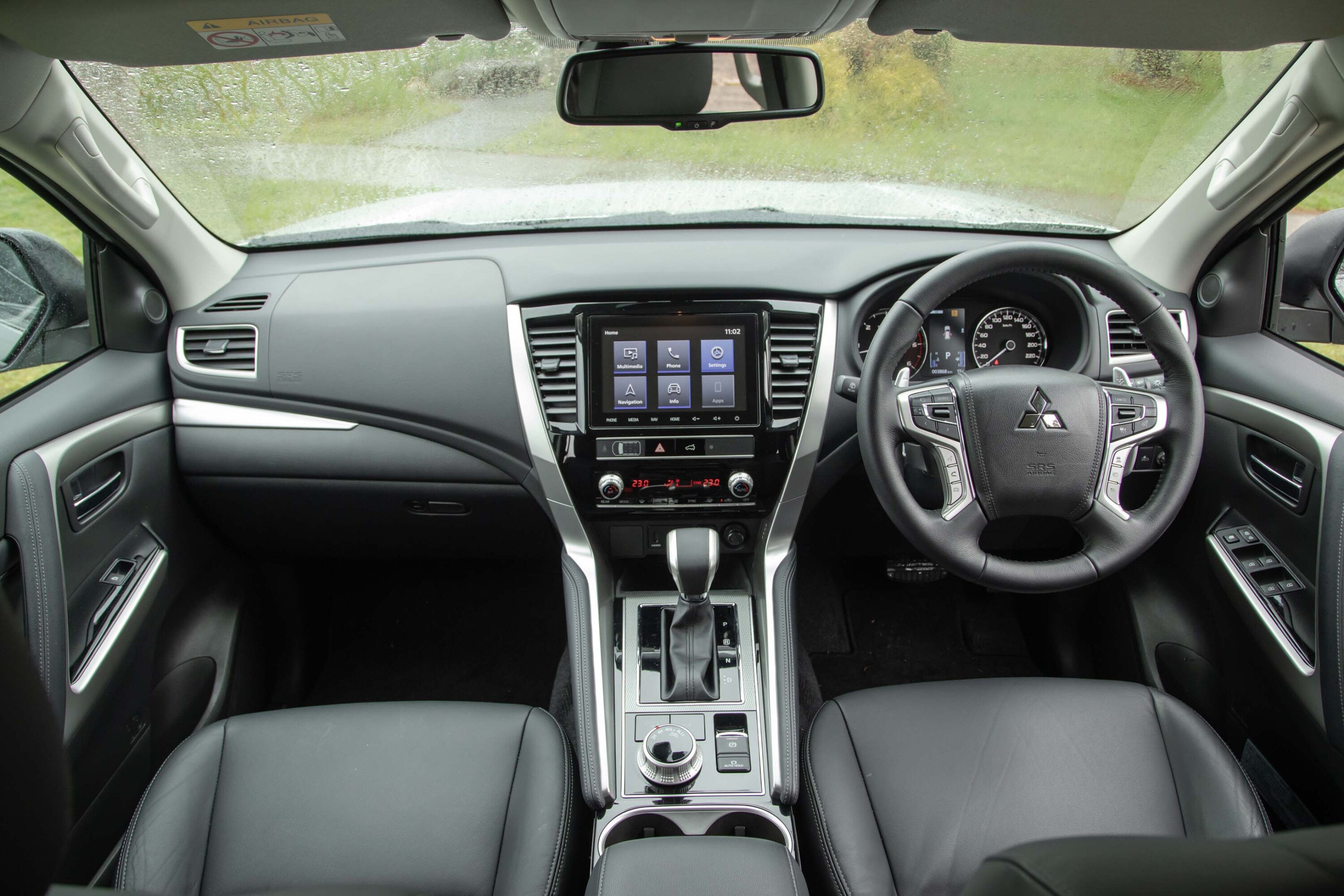
Inside, the updated Pajero Sport has a new-look steering wheel shared with the Triton and Xpander HEV people mover sold overseas.
It also has a wireless phone charger ahead of the gear shifter and a new interface for the 8-inch semi-digital instrument cluster currently fitted to Exceed and GSR variants.
There is also new quilted leather upholstery with dark red accents and black headlining for the GSR-equivalent variant sold in Thailand.
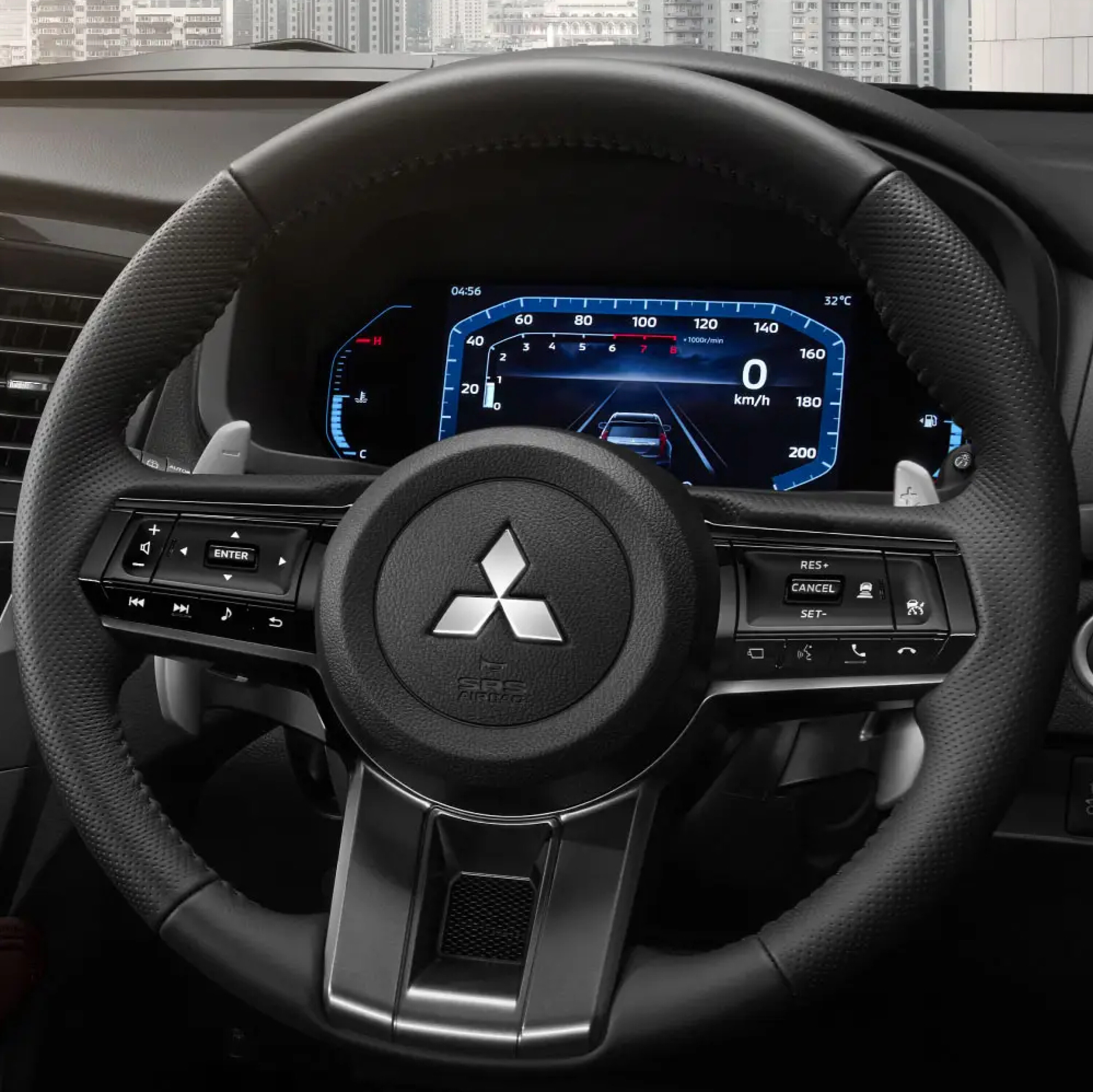
As detailed here, Mitsubishi Australia is preparing to launch the updated Pajero Sport next month with local details due to be confirmed soon.
Dealer information seen by 4X4 Australia confirms the model-year 2024 Mitsubishi Pajero Sport will adopt a new ‘QG’ model code to replace the ‘QF’ model currently in runout.
It’s a vehicle that’s equally capable of school runs and shopping trips, as it is darting to a local 4×4 park or embarking on remote weekend adventures. That it’s brimming with a heap of equipment as standard is unheard of at this price point – $45,990 in as-tested Z8L guise.
Scratch away at the surface and you might even start to think this vehicle has erroneously been put into the wrong price bracket. It features a bounty of kit more commonly seen loaded into more premium competitors, but it undercuts those vehicles by as much as 50 per cent in some instances.
To further fathom the Scorpio’s versatility, a road trip west of Melbourne beckoned via a detour to the Lerderderg State Park, of course, to have some low-range fun and test its off-road mettle. Can the budget-priced Scorpio be a one-stop-shop for all on- and off-road adventures?
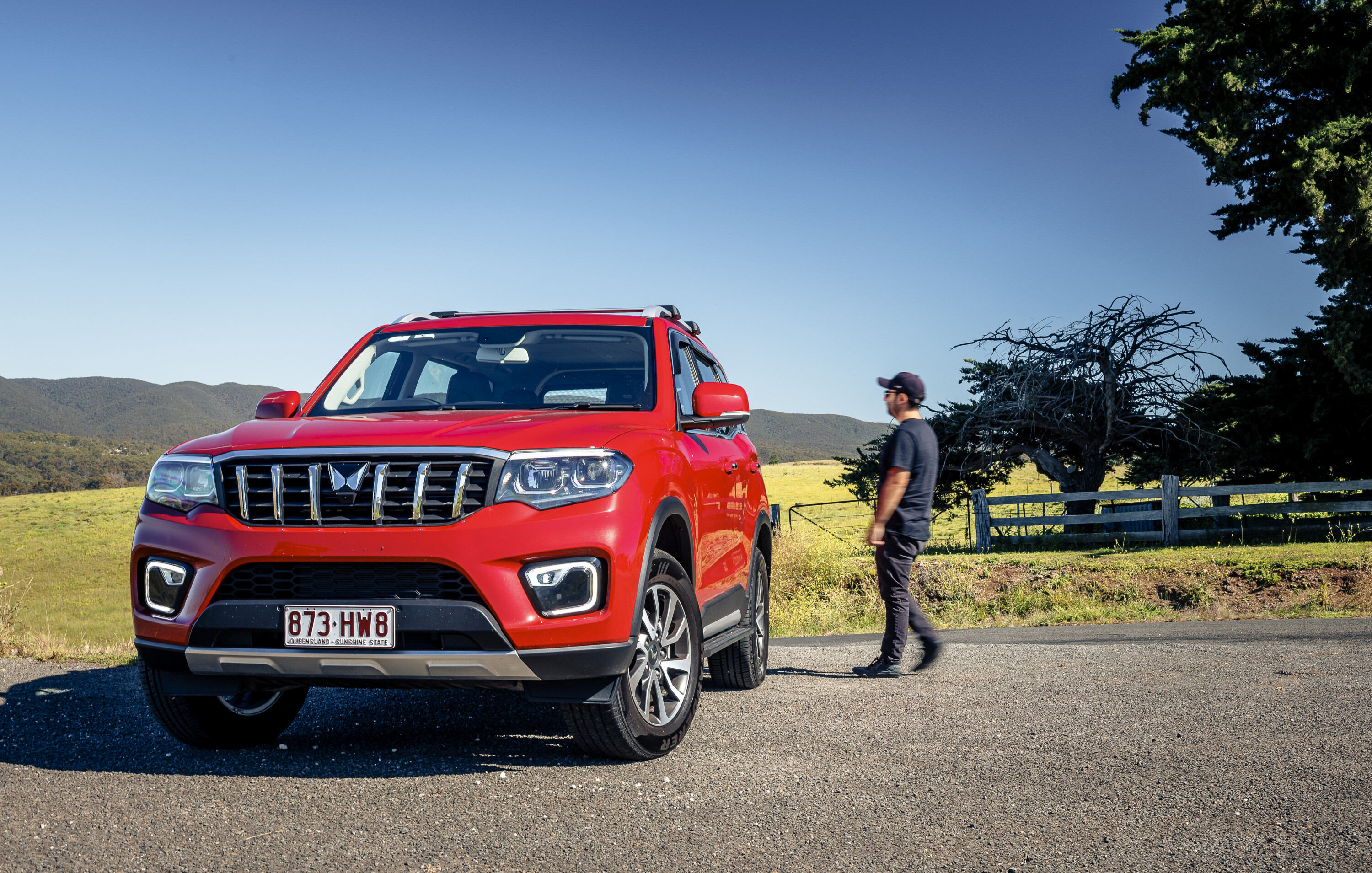
Lerderderg State Park is conveniently located just 70km west of Melbourne. The park’s sweeping vistas and incredible views of the lowlands are popular with 4×4 tourers, rock-crawlers and hikers, and that it’s only an hour’s drive from the city of Melbourne makes it an ideal destination for recreational day trippers. Key to the park’s appeal with the 4×4 community is its selection of off-road trails that vary in difficulty and cater for beginners and experienced steerers alike.
To showcase the Scorpio’s off-road nous and broad range of ability, we pointed the Z8L’s 265/60 MRF Wanderer all-season tyres – wrapped around 18-inch alloy wheels – to some of the more difficult challenges within the park.
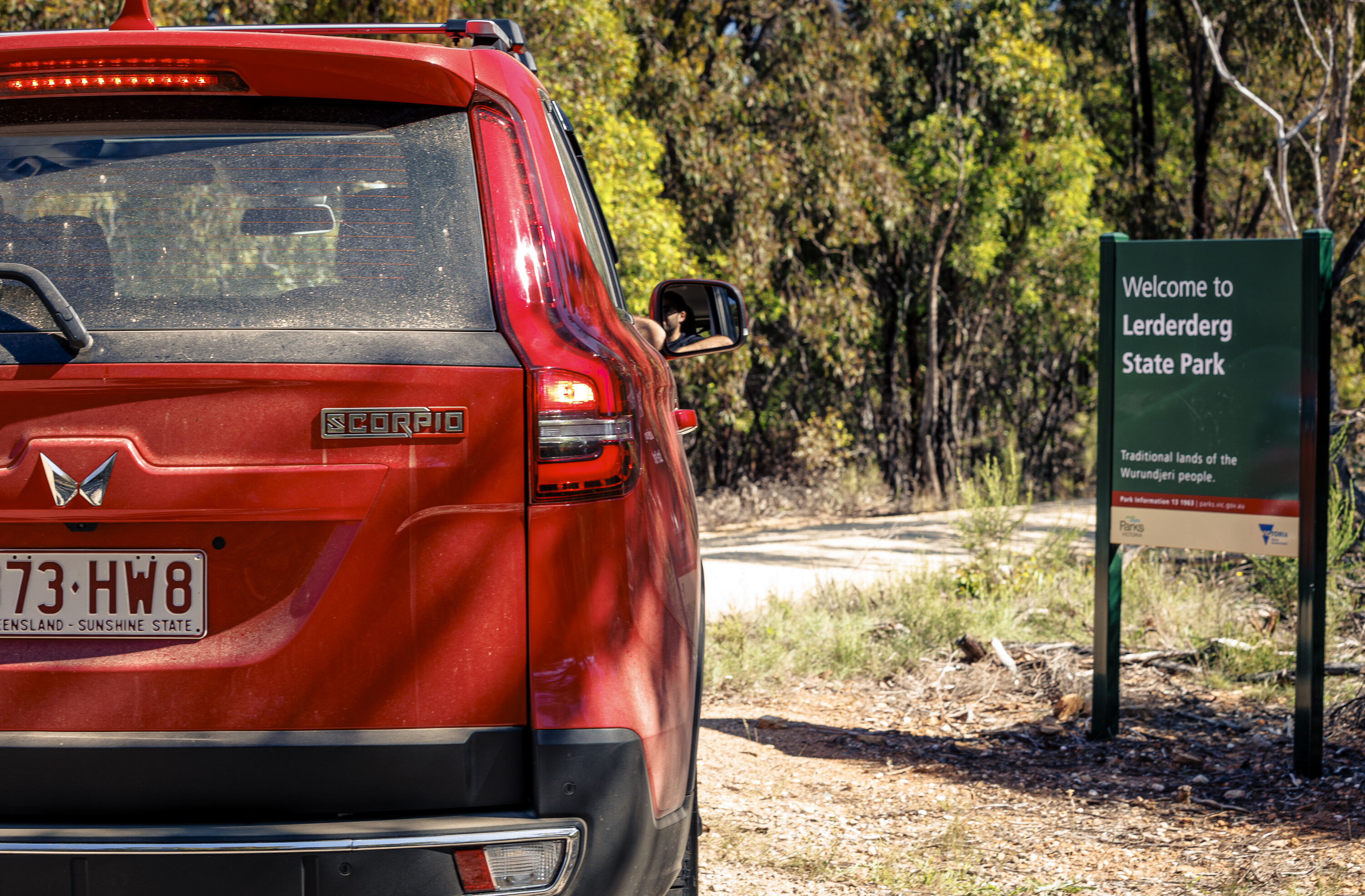
The Scorpio Z8L in stock form bested all obstacles thrown its way, from water crossings and steep rock climbs, to narrow paths and technical trails. Its suspension arrangement – so-called Frequency Selective Dampening (gas) shock absorbers and Watts link rear end – impressed in the way it tamed both smooth and bumpy terrain. An auto-locking diff lock aided when difficulty peaked, and the addition of a forward-facing camera – exclusive to the Z8L – was extremely handy on steep crests, helping to navigate descents when the view through the windshield was solely treetops and blue skies.
| Off-road specs | |
|---|---|
| Approach angle | 27.2u00b0 |
| Rampover angle | 23.5u00b0 |
| Departure angle | 21.3u00b0 |
| Ground clearance | 227mm |
| Wading depth | 500mm |
It’s obvious Mahindra spent considerable time driving its Scorpio on local soil during the testing phase of its development. In fact, the Indian company officially stated its Scorpio has done more than 120,000km of testing in the Australian Alps and the Australian outback.
With Lerderderg in the rear-view mirror and dust now caked on the big SUV’s exterior, we toggled the Scorpio back from 4WD to 2WD (on-the-fly) and settled in for a comfortable commute on tarmac where it’s suspension remained composed, soaking up road imperfections with aplomb. This leg of the trip allowed us to run a microscope over the spec sheet littered with quality kit you’d typically find on vehicles closer to twice the price.
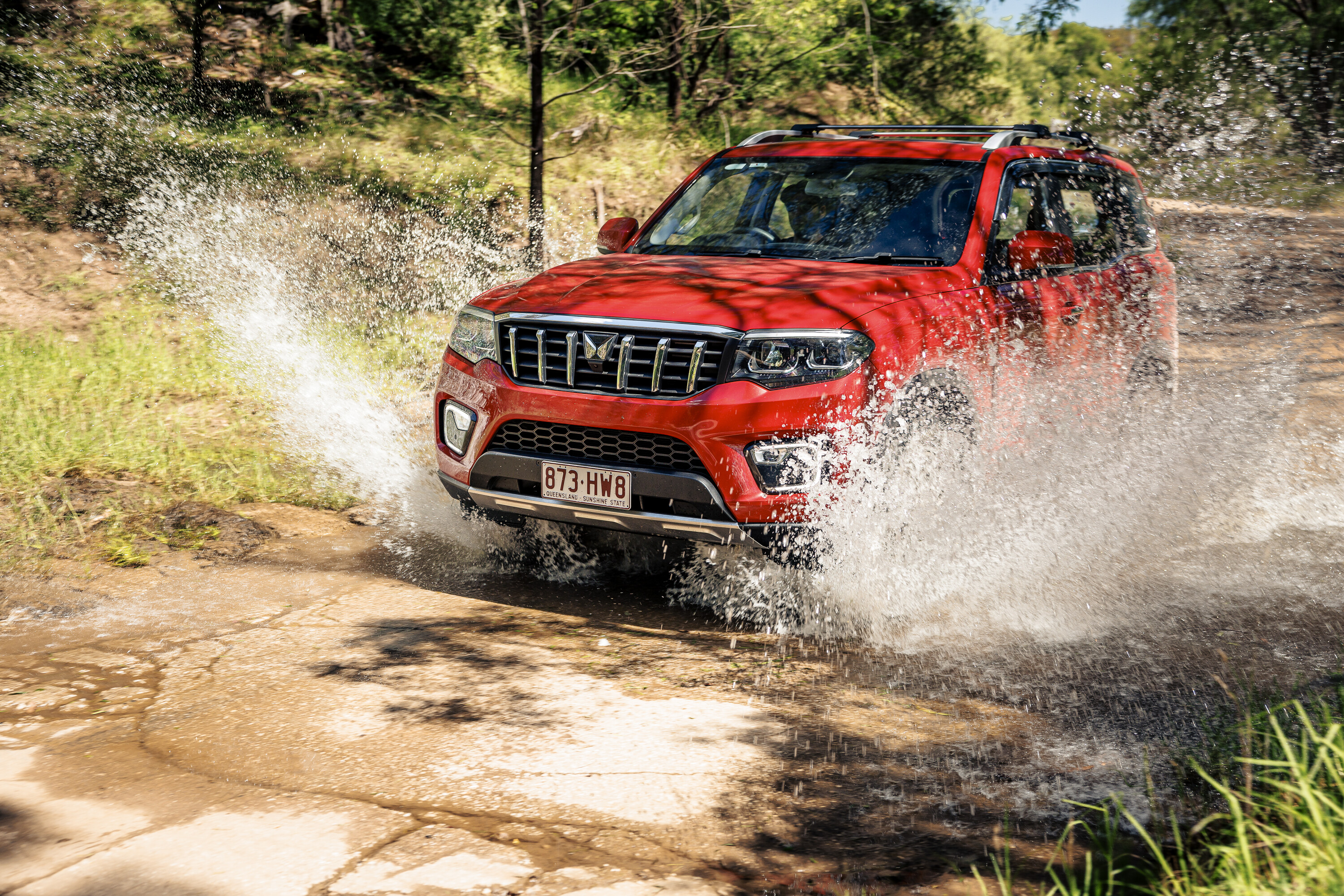
The Scorpio Z8L is the range-topping variant in a two-model line-up. The base-spec Z8 is nonetheless well-equipped with 18-inch alloy wheels; tan-coloured leather interior trim; an 8.0-inch infotainment system; wired Apple CarPlay and Android Auto; automatic wipers; projector LED headlights; dual-zone climate control; a reversing camera and rear parking sensors; push-button start; keyless entry; and a tyre pressure monitoring system – not bad at all for a vehicle which retails for a lowly sum of just $41,990.
On top of this, the Z8L sweetens the deal with a booming 12-speaker Sony audio system; front camera with front parking sensors; six-way powered front seating; a seven-inch coloured driver display; and wireless charging. That sub-$50K price tag is starting to look very enticing indeed.
The Scorpio is powered by a 129kW/400Nm mHawk diesel engine, which is quiet, refined and well-calibrated to the Aisin six-speed automatic transmission. The output of 129kW and 400Nm isn’t segment-defining, but that the vehicle only weighs a lithe 2100kg makes it more than adequate on freeways and off-road tracks alike.
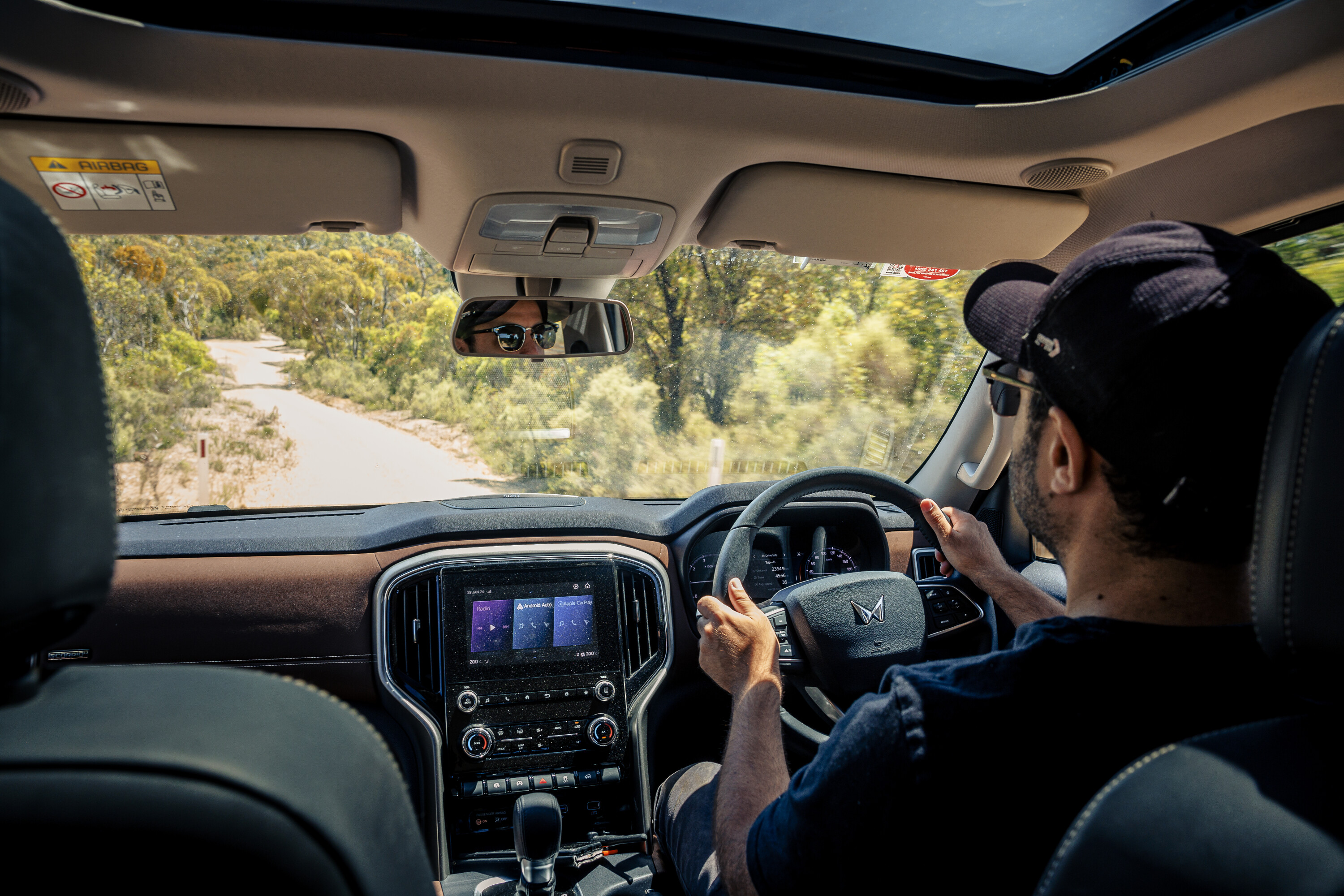
The interior layout is clean and purposeful, with its drawing card for small families being the captain’s chairs in the middle row. Yep, the Scorpio is a six-seater, but the benefit of losing a seat for one extra bum – otherwise cramped in the second row – is that the second-row passengers are now bathed in comfort. The Scorpio is an ideal vehicle for those travelling with four in company, thanks to those middle-row captain’s chairs – especially teenagers, who’ll appreciate the space and comfort of the cavernous pews.
The front seats and second-row captain’s chairs are all trimmed in faux leather and are extremely comfortable and supportive of vertebrae, notably on rutted dirt tracks. The third row is easy to access and adequate for smaller kids, but having it upright does inhibit capacity for luggage and gear – folding down the third row does open up plenty of space for a weekend escape, though.
The Scorpio is equipped with an 8.0-inch touchscreen that gets the as-mentioned Apple CarPlay and Android Auto – and the UI of the screen is well laid-out and easy to use.
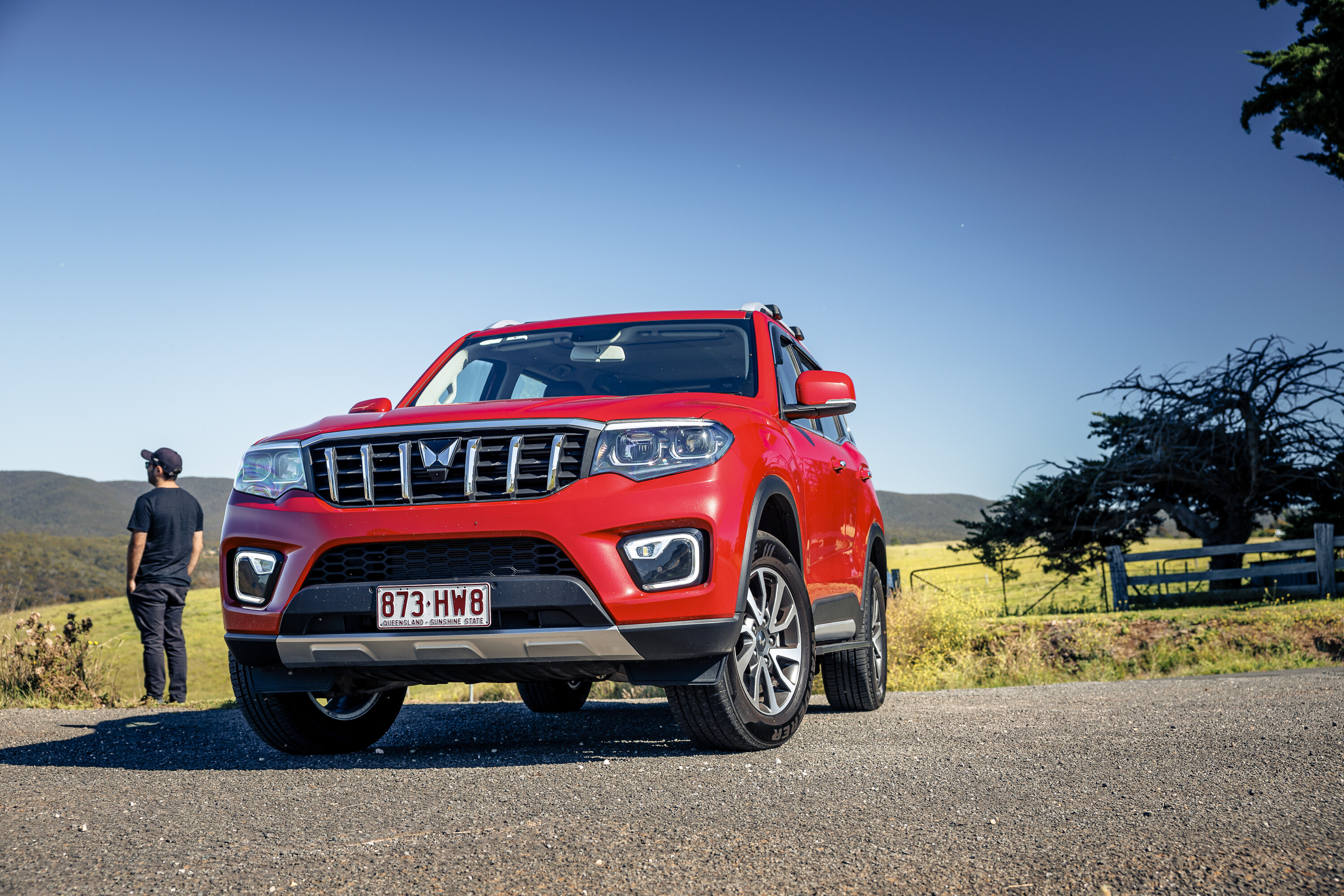
After our long day navigating on- and off-road trails, the Scorpio crystalised itself as a versatile all-rounder with credible off-road ability, supple on-road dynamics and a long list of premium features. The versatility and selection of equipment typically reserved for vehicles well beyond its price point combine to make it a compelling option as an all-rounder.
With escalating costs and purse strings ever-tightening, owning an adventure-ready 4×4 with all the mod-cons you desire may seem like a hopeless ambition. But the Indian-born Mahindra Scorpio shifts the narrative, offering that versatility for a fraction of the cost. In fact, opt for the Scorpio and you’ll have change in your pocket from $50K.
Photos posted online to AutoIndustriya [↗] and Car 250 [↗] reveal minor design revisions coming to the new Pajero Sport and what appears to be the same engine as the latest Triton ute.
4X4 Australia revealed in February that Mitsubishi Australia is preparing to launch an updated Pajero Sport around April with exterior design changes and interior enhancements.
Dealer information seen by 4X4 Australia confirms the model-year 2024 Pajero Sport will adopt a new ‘QG’ model code to replace the ‘QF’ model currently in runout.
The updated model is expected to debut at the Bangkok Auto Show in Thailand next week.
While the facelifted Pajero Sport is not based on the 2024 Mitsubishi Triton platform, an image of the engine bay appears to show shared components with the new ute.
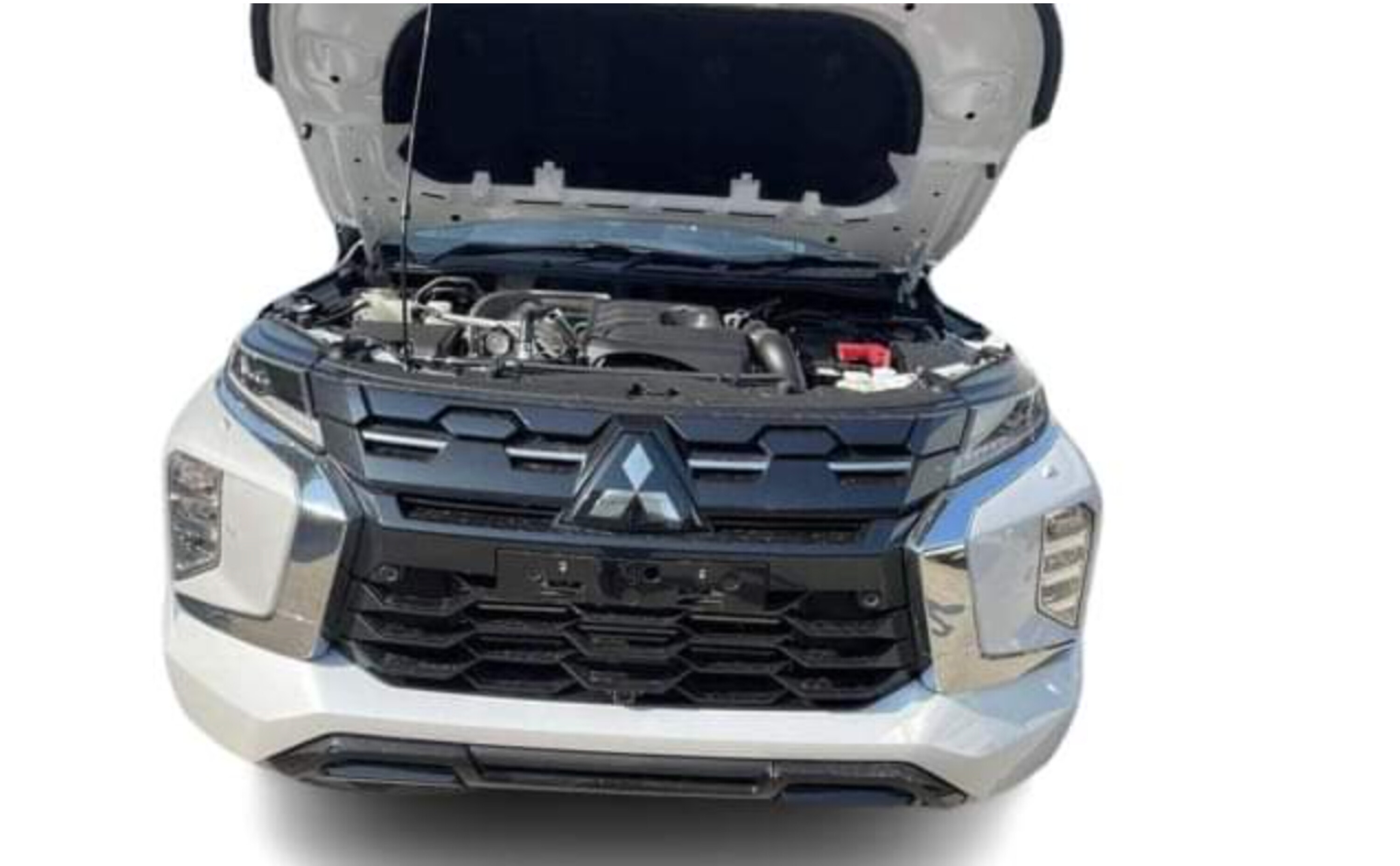
This suggests the Pajero Sport could adopt more power earlier than expected with the 150kW/470Nm ‘4N16’ 2.4-litre twin-turbo four-cylinder diesel from the Triton – an improvement over the 133kW/430Nm ‘4N15’ single-turbo diesel found in the current Pajero Sport.
The next-generation Pajero Sport – which will be based on the same platform as the new Triton – is not due until 2025 at the earliest.
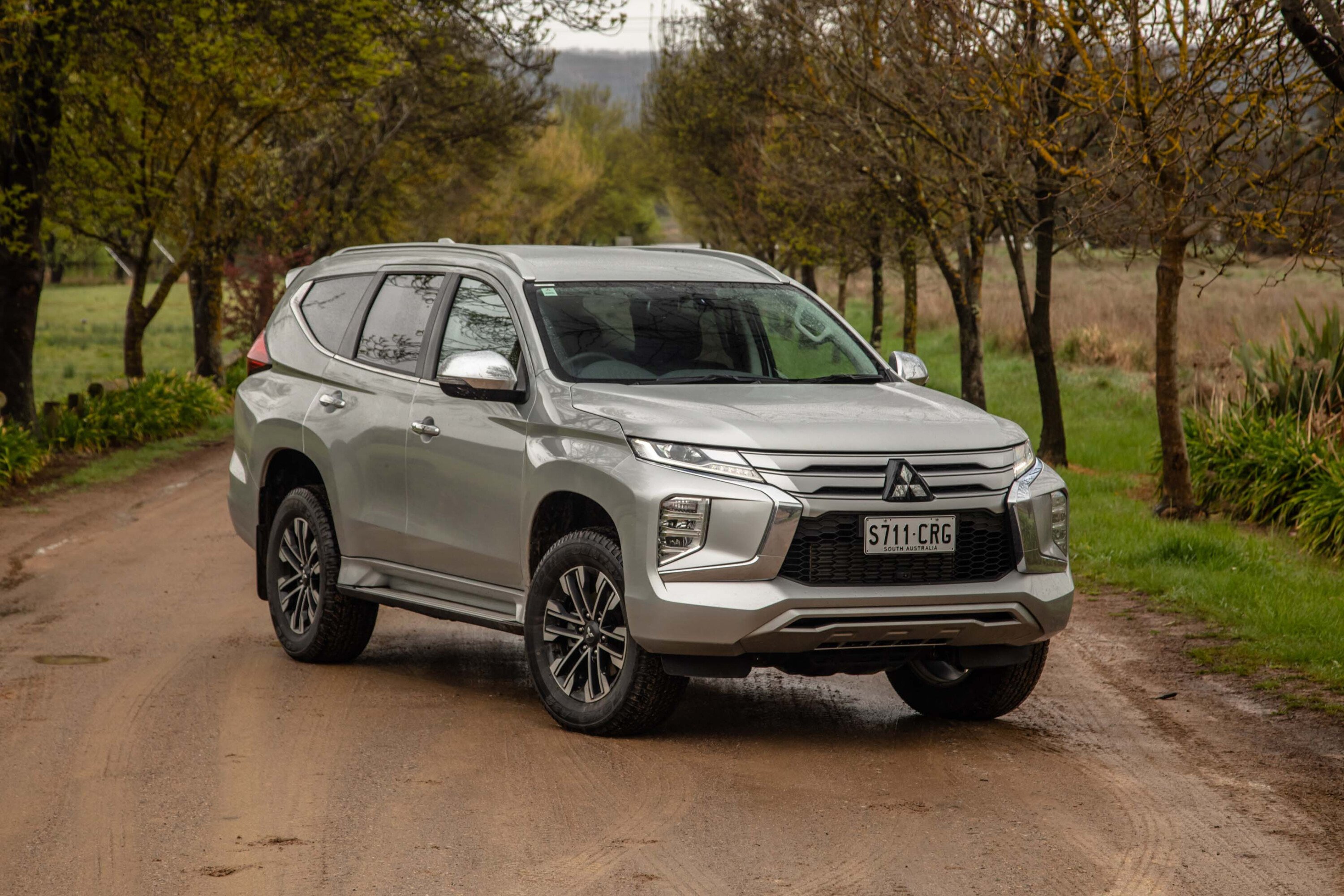
Until then, the updated version of the current Pajero Sport off-road SUV will also receive a minor exterior revision, including an updated grille, new lower bumpers, and turbine-style 18-inch alloy wheels.
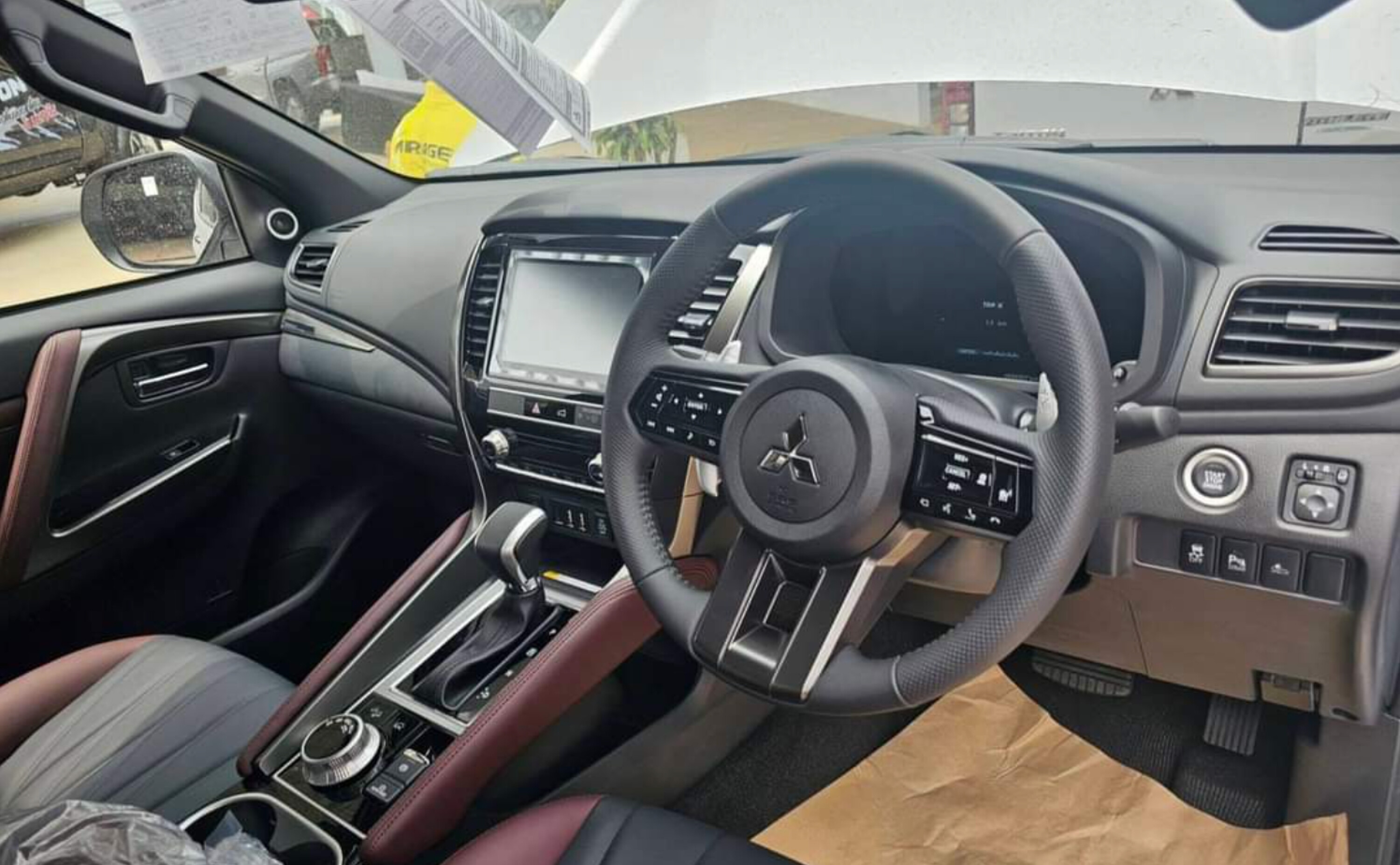
Thailand’s GSR-equivalent flagship model now features black door handles, side mirrors and tailgate garnish instead of chrome.
Inside, it has a new-look steering wheel shared with the Triton and Xpander HEV people mover sold overseas, as well as quilted leather upholstery with dark red accents and black headlining for the GSR-equivalent variant.
The images also appear to show a larger instrument cluster display, and a wireless phone charger ahead of the gear shifter.
Some active safety systems, including lane-change assist, blind-spot monitoring and rear cross-traffic alert, could be standardised for lower-spec variants. These features are currently limited to the Exceed and GSR.
Features already fitted to the Pajero Sport overseas – such as a sunroof, Rockford Fosgate audio system or Nanoe X air-cleaning system – could also become available in Australia.
The facelifted 2024 Mitsubishi Pajero Sport is due in Australia around April. More details will be confirmed in the coming weeks.
While Toyota Australia has introduced countless variants of the HiLux over the decades to sell in an ever-expanding ute market, one thing they have never offered is a V8-powered model.
The HiLux has been driven by plenty of engines over its life – from sluggish naturally aspirated four-cylinder diesels to modern turbo-diesels and even a supercharged petrol V6 in the TRD model, but never a V8 from the factory.
Another classic Australian trait is when the automotive manufacturer doesn’t offer the model or variant that you want, there’ll be a tinkering fella in a shed somewhere that will build it for you.
Melbourne’s Marks 4WD is one such company that has been developing, manufacturing and selling engine conversion kits and parts for several decades to aid those folks looking for something extra from their 4×4 vehicle, and who want a leg up on a conversion. Marks was fitting V6 petrol engines into HiLux utes long before Toyota ever did, so it makes you wonder why it’s taken the company this long to develop a V8 conversion kit for the HiLux.
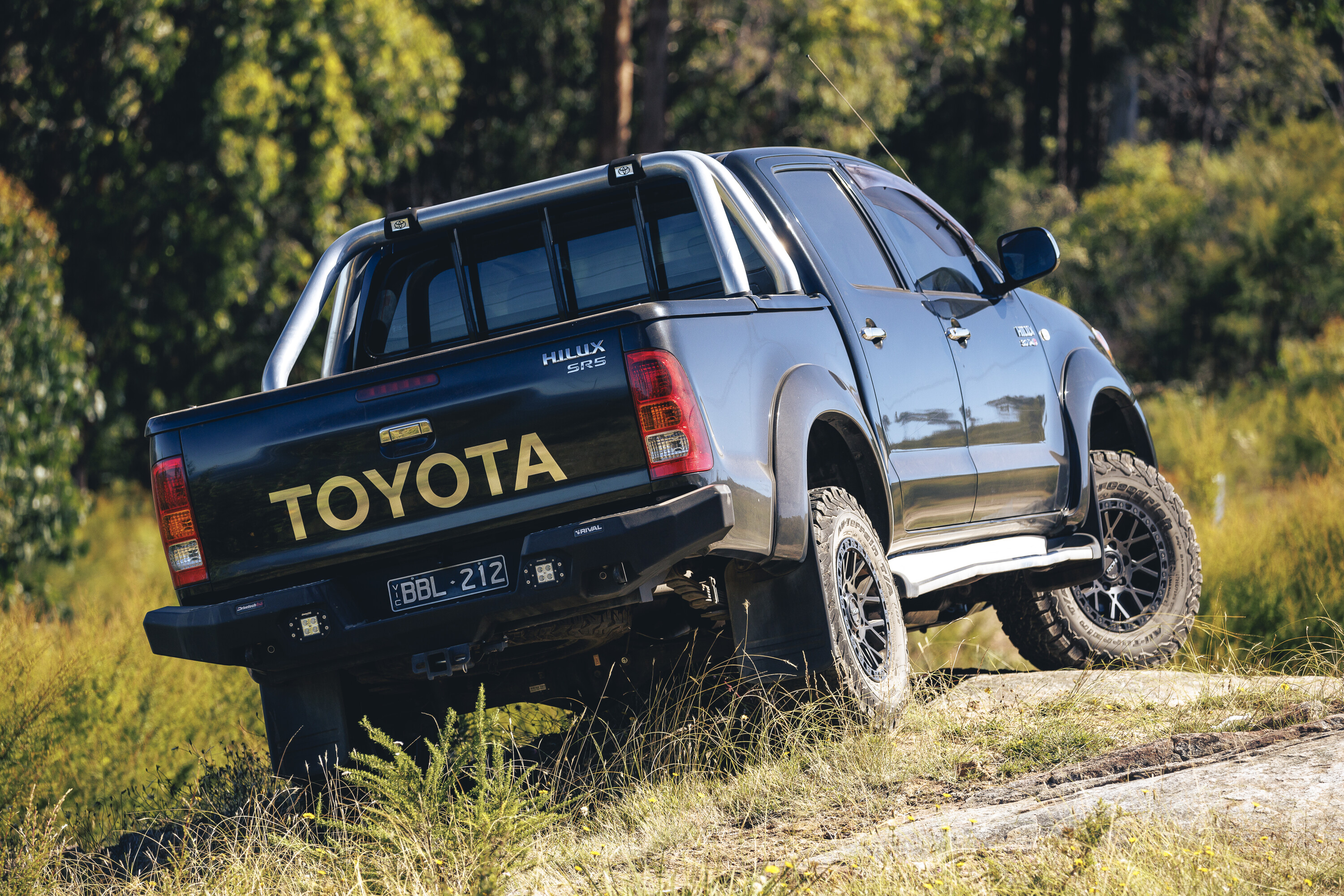
With millions of the relatively lightweight single-cam engines being produced, and aluminium engine blocks and heads available, they are the perfect candidate for so many conversions. Some of Marks’ most popular kits are to fit LS engines into Nissan GQ and GU Patrols, and there is plenty of demand for these around the world, not just in Australia.
With GQs and GUs getting older, and harder to find in good condition, but an abundance of HiLux utes still on the road, we reckon these new LS into HiLux conversions could be the next big thing, and this has been confirmed after spending a couple of days driving around in the Marks 4WD R&D mule HiLux.
The major difference between the two kits is that the manual kit has a replacement bell housing manufactured by Marks to adapt the Toyota ’box to the GM engine, while the GM auto sits at home behind the GM V8, but requires a Marks-made adapter to fit the transmission to the Toyota transfer case.
The auto conversion also requires the vehicle be fitted with a body lift to squeeze the big transmission into the HiLux’s transmission tunnel. The manual needs no such modification.
See the section below ‘All you need to V8 your HiLux’ for complete details on what components come in the kit, and what you’ll need to sort out separately.
By offering a basic kit and various extras as options, it allows the fitter to do what they can of the conversion themselves, or just buy it all from Marks 4WD depending on their skill level and budget. Marks 4WD does not offer the conversion installed on a drive in/drive out basis, so if you don’t have the know-how, you’ll need to find someone who does.
Likewise, engineering approval is on the owner/builder. While the kit has been designed and manufactured to allow the V8 conversion to be engineered and registered, the owner will have to seek the approval in the state the vehicle is to be registered in.
This particular HiLux SR5 carries its approval certificate in the glovebox in case the sound of the V8 engine raises the attention of any curious cops.
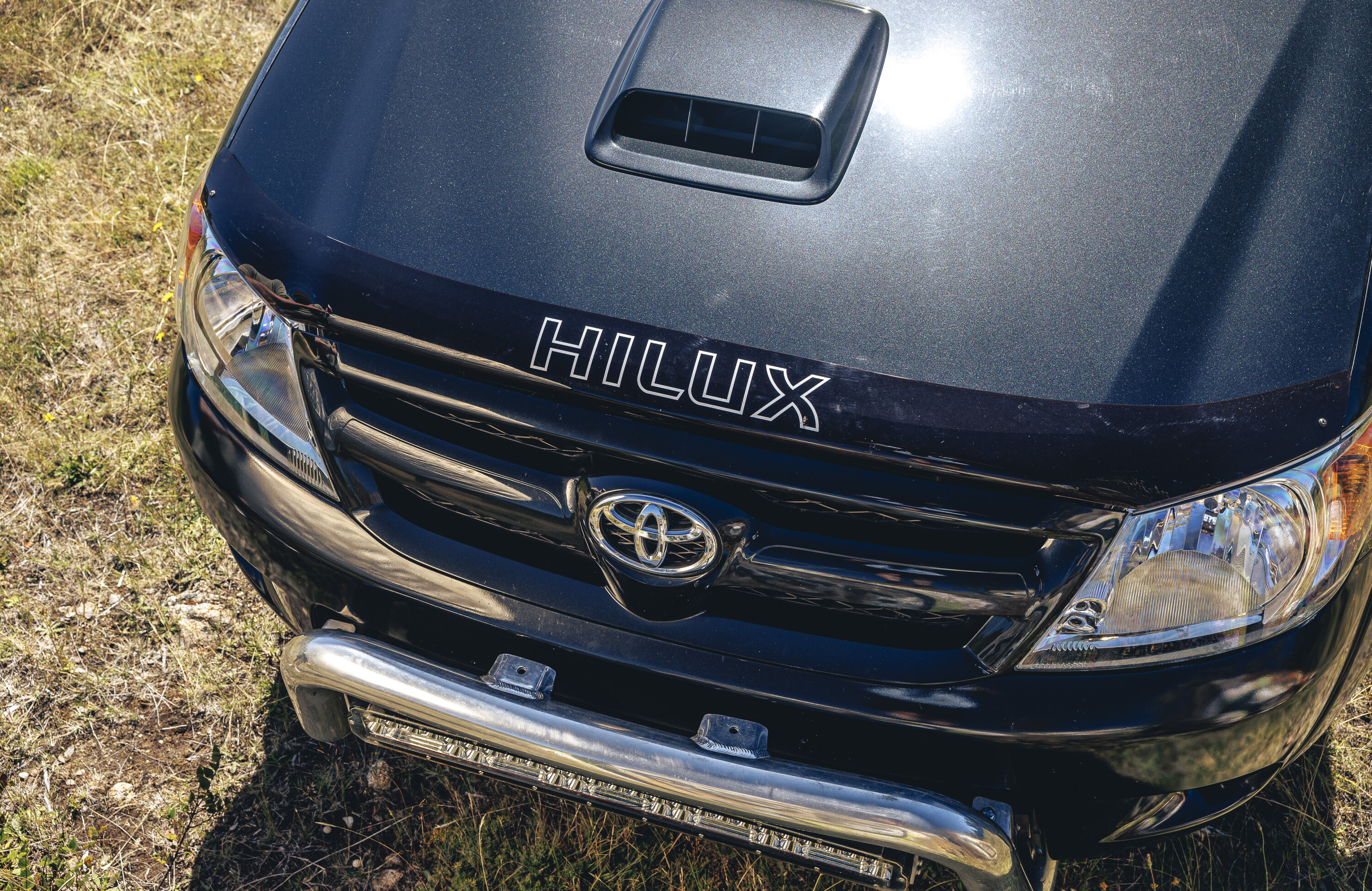
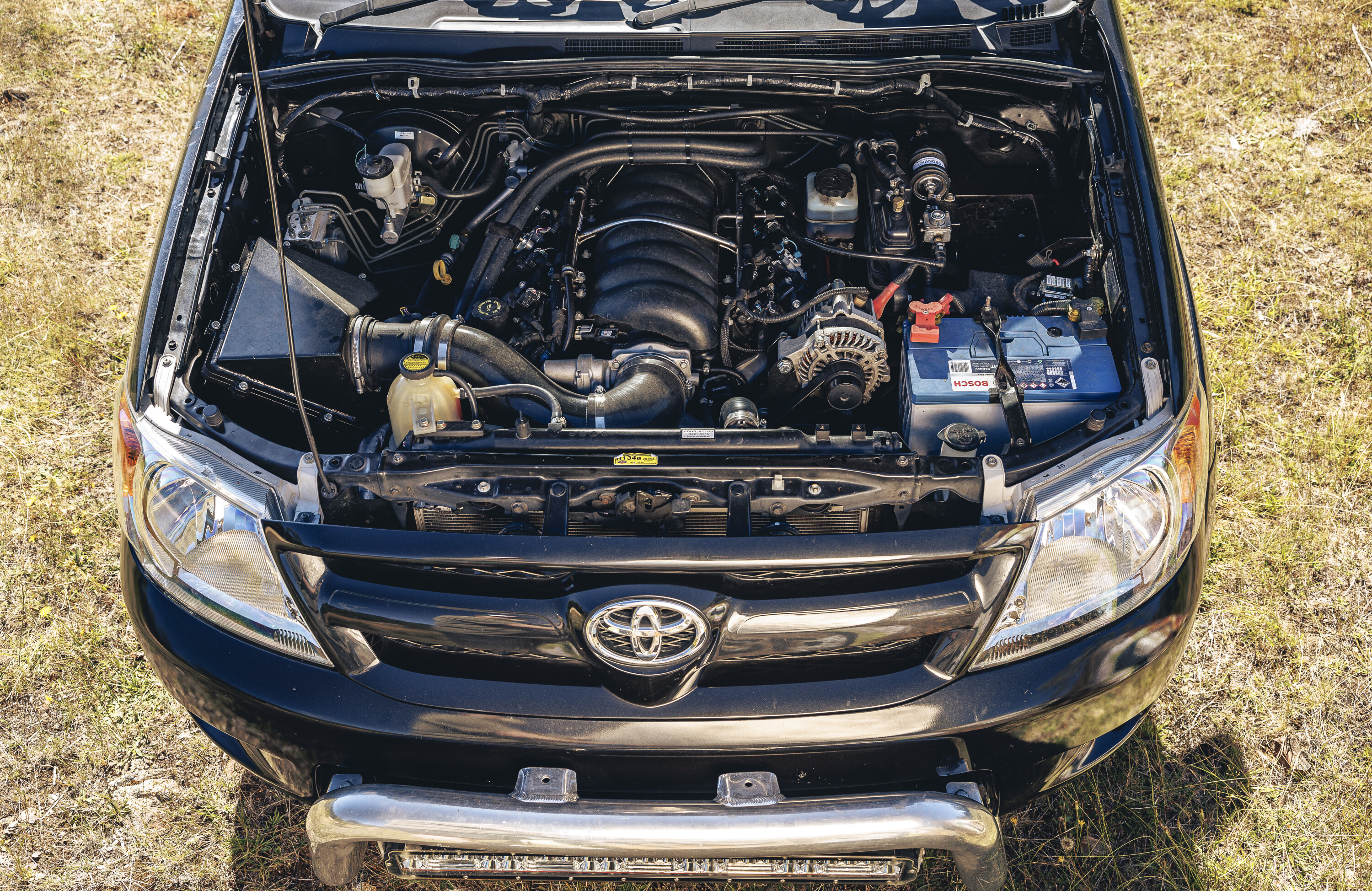
There are a number of reasons for this but it;s predominantly because these engines will best meet emissions standards when it comes to getting your V8 HiLux approved and registered, and the shorter water pump and harmonic balancer on these engines allows enough room at the front of the engine. Earlier LS1 engines with the longer water pump will not fit.
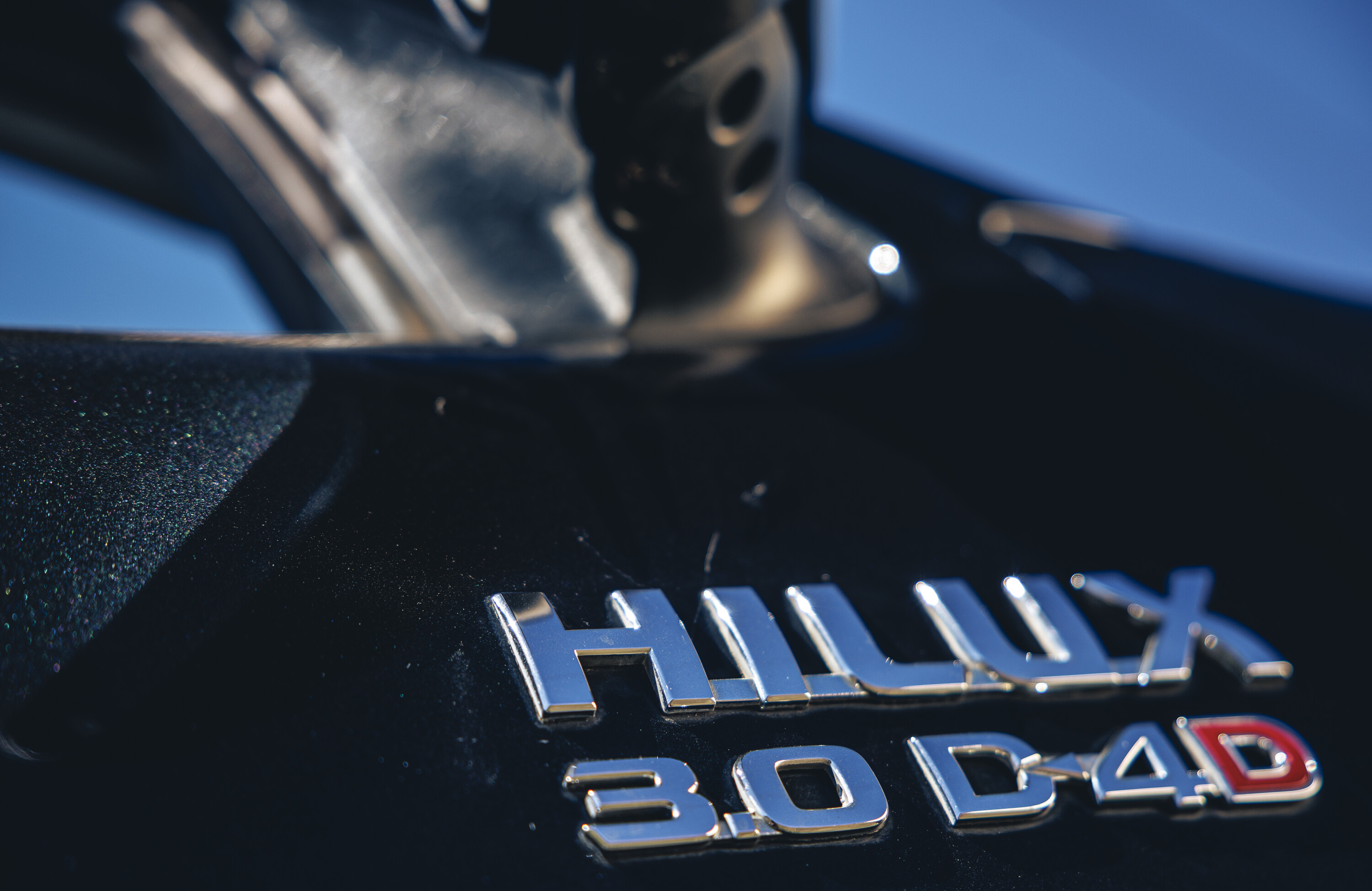
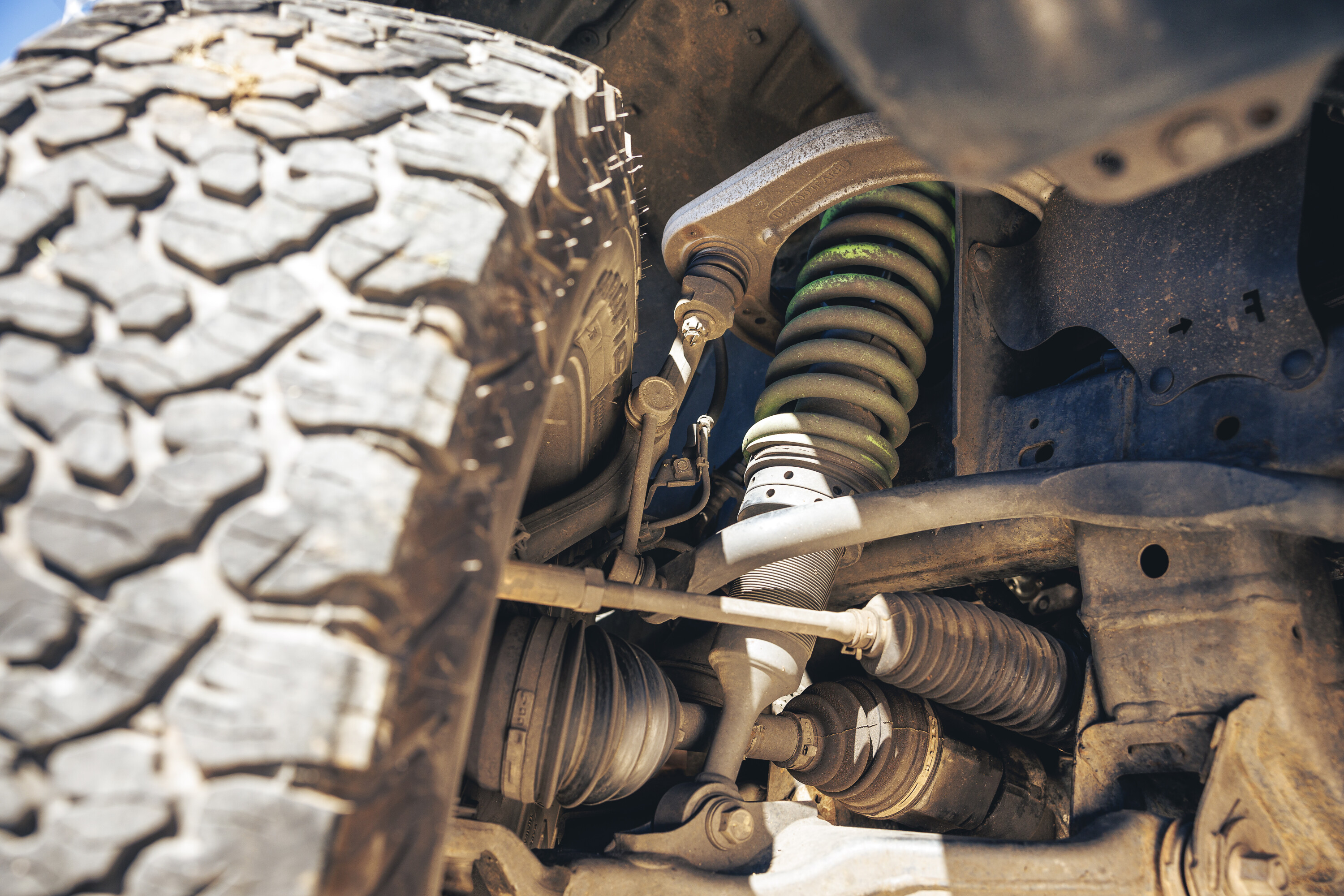
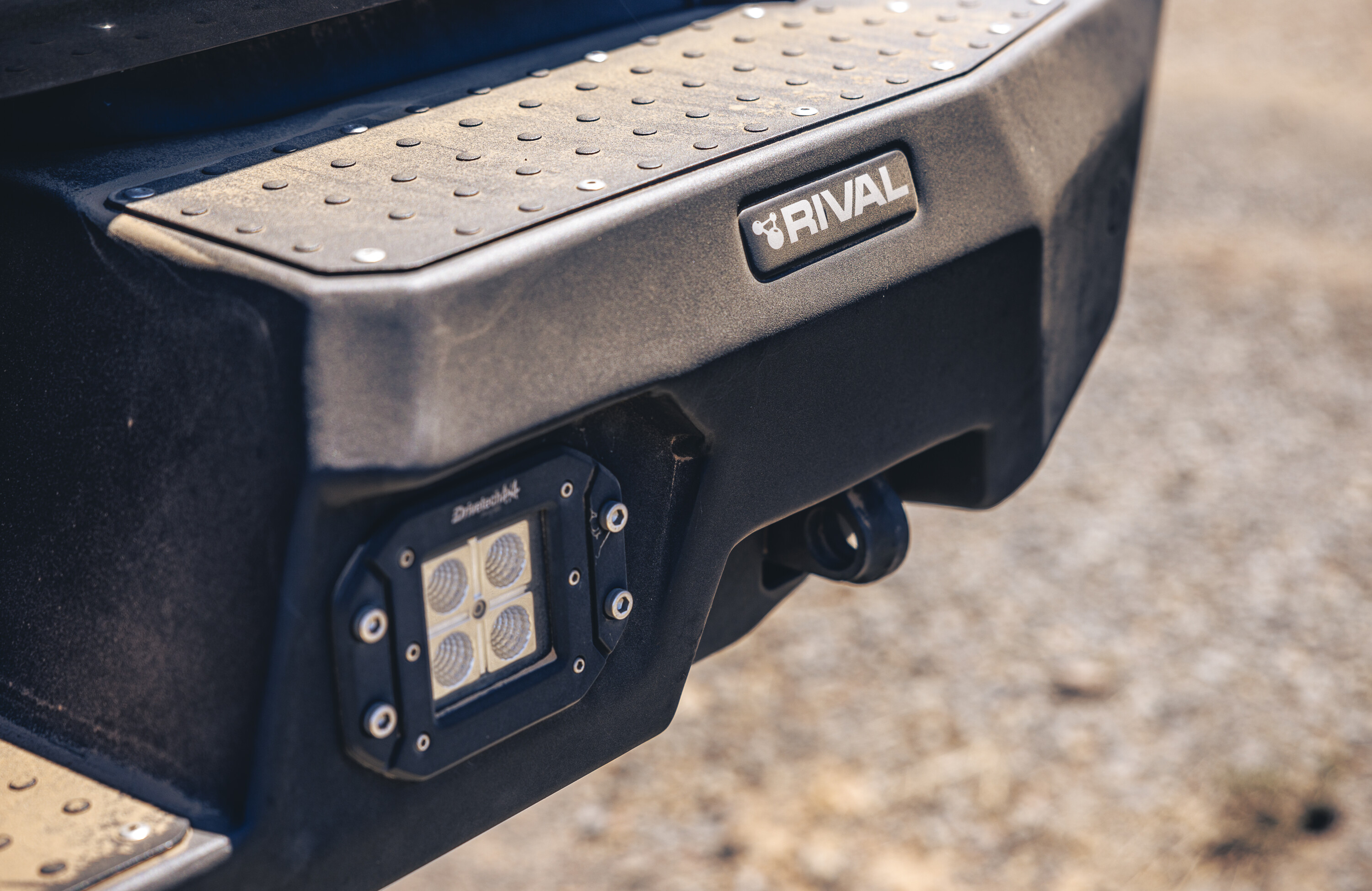
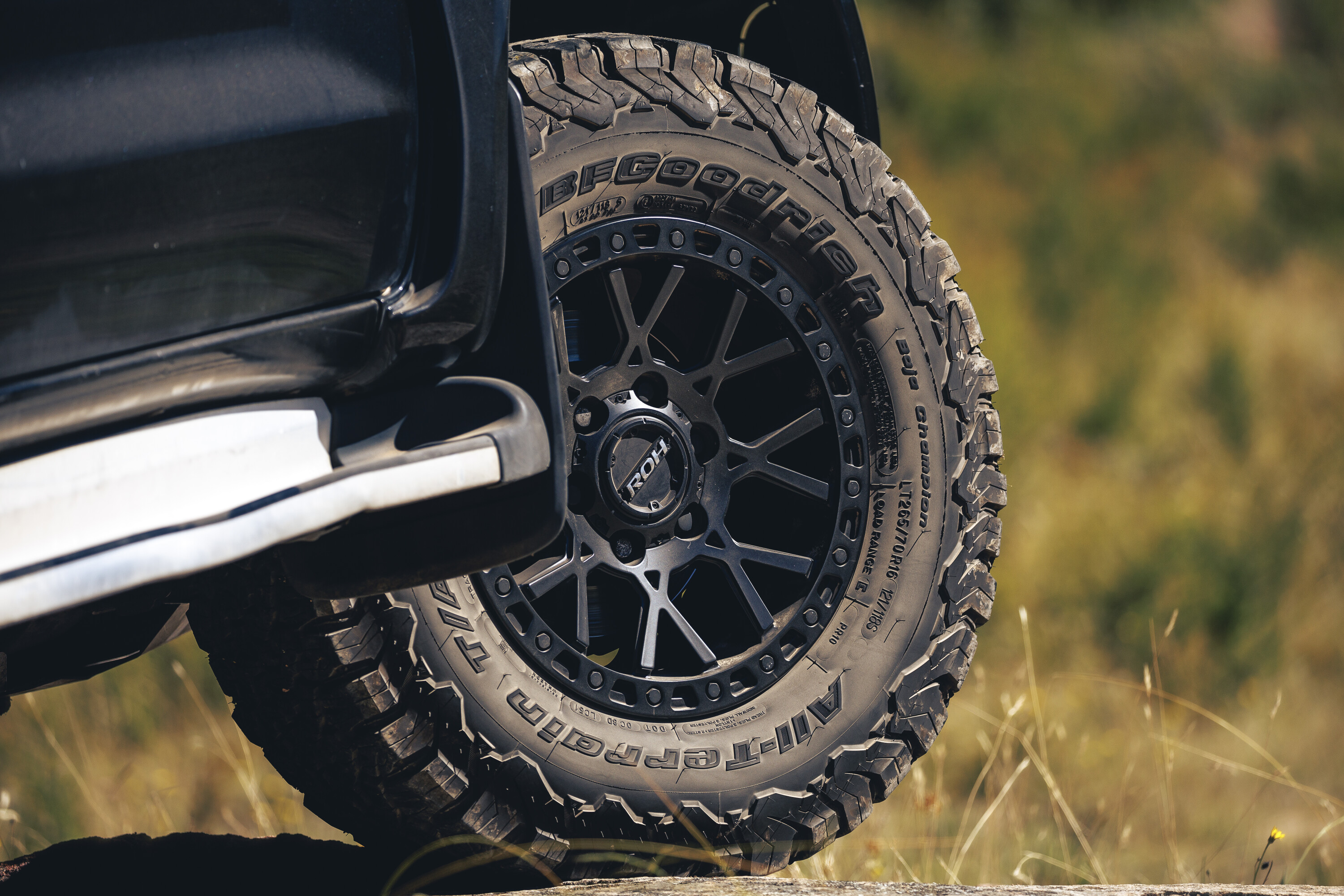
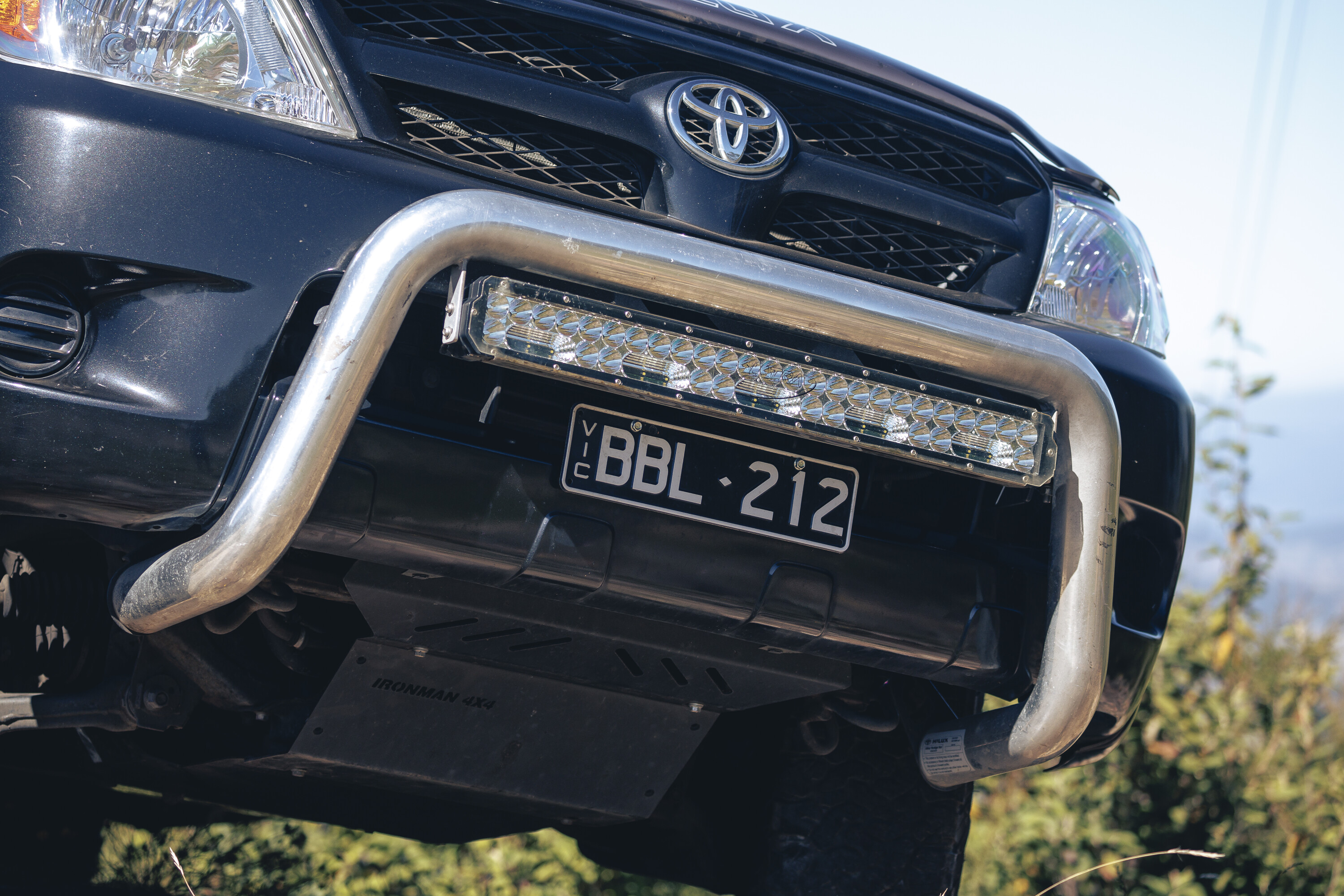
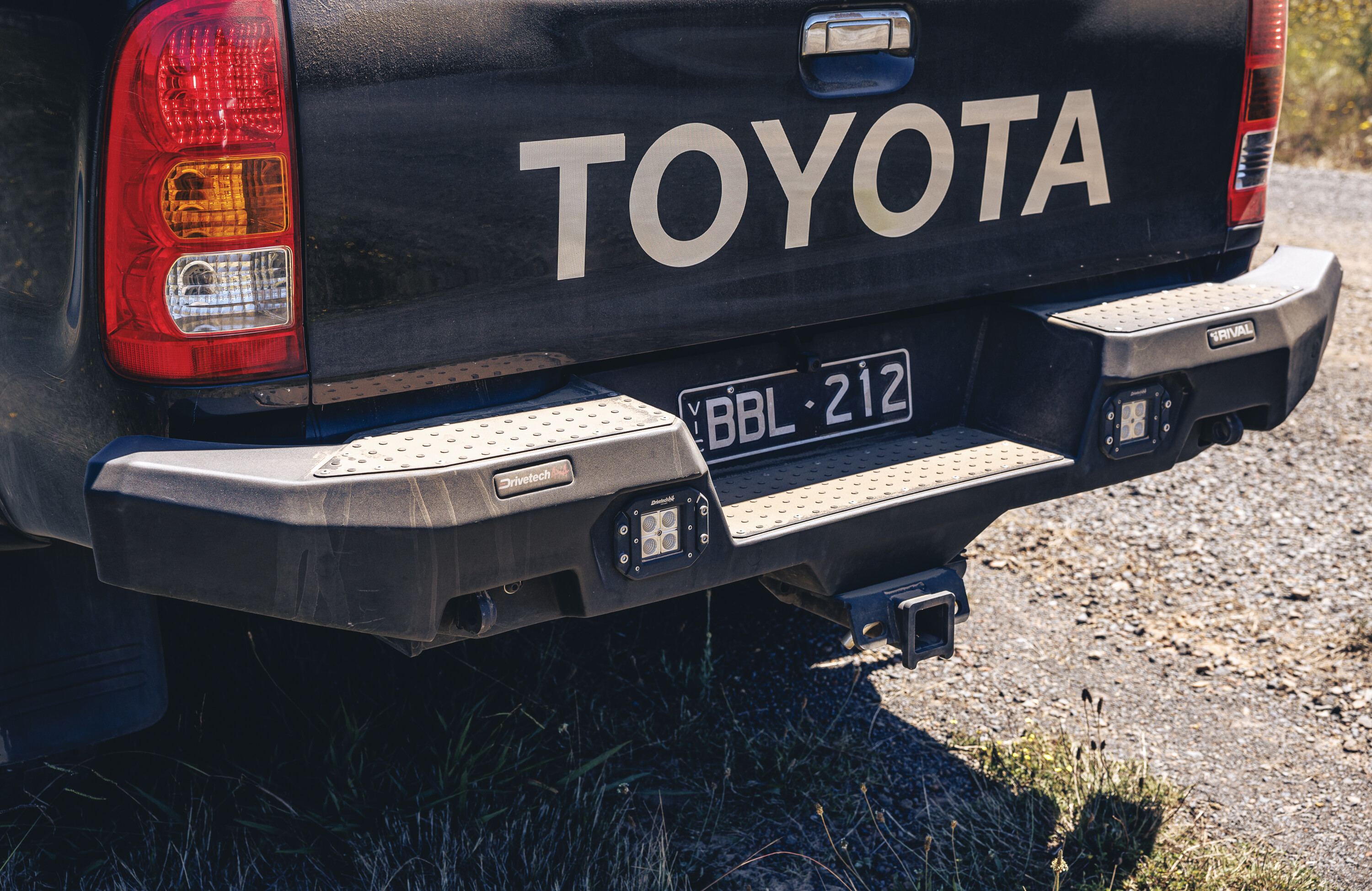
The HiLux V8 conversion mule looks like thousands of other KN26 tradie or recreational 4×4 Hiluxes on the road, with additions including BF Goodrich KO2 tyres on ROH wheels, an Ironman 4×4 suspension kit and long-range fuel tank, and a replacement rear bumper from Drivetech.
Providing the rumble in this example is an L98 6.0-litre engine from a VE Holden Commodore, and it has been fitted with a mild camshaft that gives it a nice note at idle and smooth torque delivery throughout the rev range. Marks fabricated its own stainless steel exhaust for this vehicle and there’s no confusing what engine it’s fitted with when you turn the ignition key and fire it up.
Inside it’s just like any other HiLux. The clutch is considerably heavier than a standard Toyota one, and this takes a little getting used to; it’s firm enough to make every day leg day – well left leg at least – but it’s not a problem in traffic.
The new/rebuilt gearbox requires a firm push forward to select first gear. This is a replacement ’box from Terrain Tamer and includes all of its upgraded components including fully splined gears and a taller fifth gear for better highway touring.
Working through the gears on the road is hassle free but again that stiffness of the new ’box means you’re not going to be banging gears in a hurry in this application.
The airconditioning and all other ancillaries work just as Toyota intended.
Touring through the suburbs on the way out of town, the stock looking but sweet sounding HiLux enticed some rubber-necking from other road users hip to the sound that proclaims this is no everyday HiLux. When the chance came to use a bit more throttle, the engine sounded even better as the bellow became a roar and I was pulling through the gears, but keeping a close eye on the speedometer.
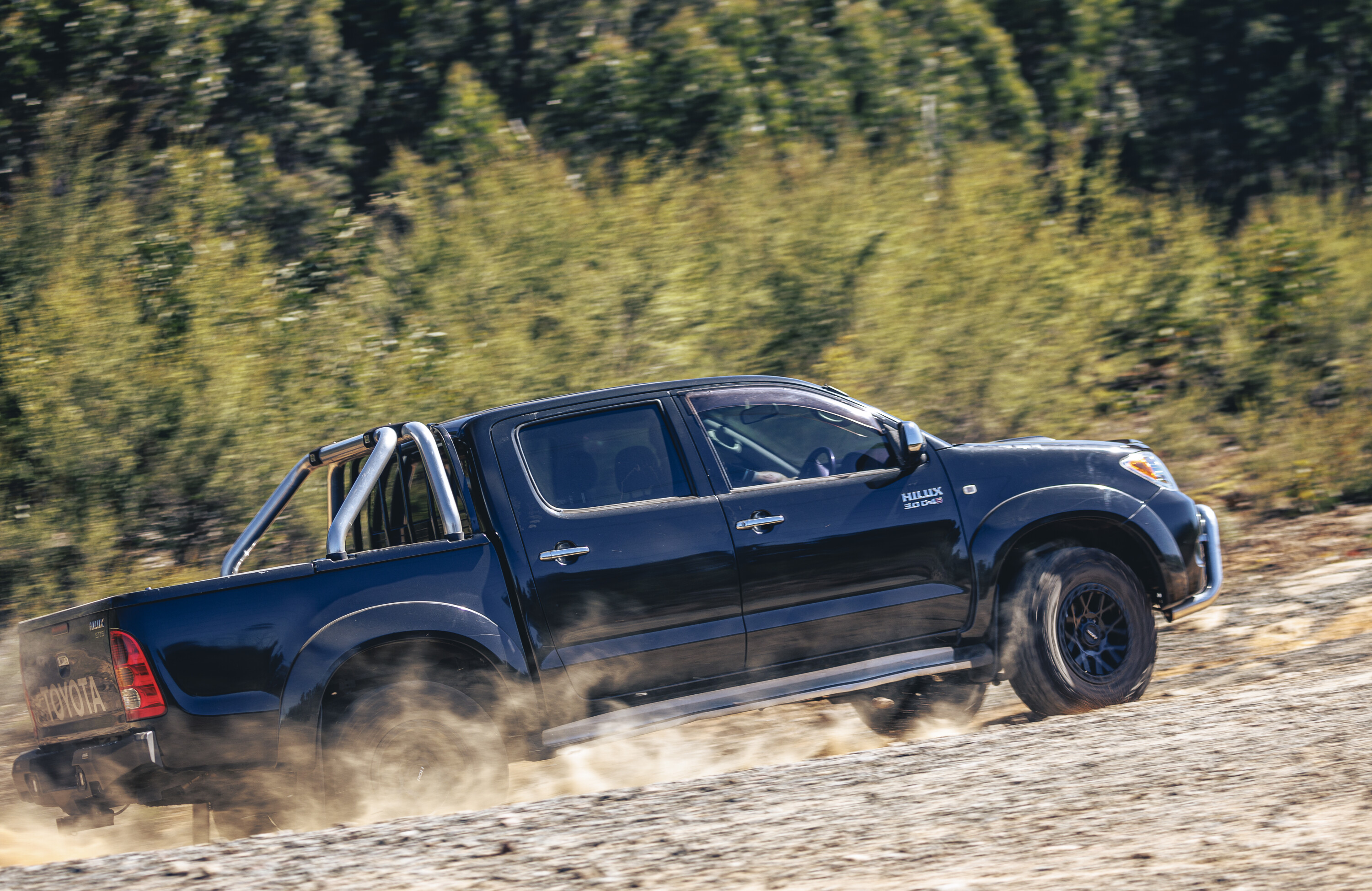
Having previously owned a few old American muscle cars, the HiLux brought back that familiar feeling of being a bit brutish, and possibly wild, but a vehicle that just wants to be driven on the open road, and in this case on forest tracks. Despite that underlying brutish feel, the HiLux is a relaxed tourer with the engine ticking over at just 1850rpm at 100km/h in top gear.
Once on the gravel I engaged 4WD-high range almost straight away, as wheelspin is near unavoidable in 2WD on loose gravel. While engaging 4×4 tamed the beast, getting loose was just a heavy application of the loud pedal away.
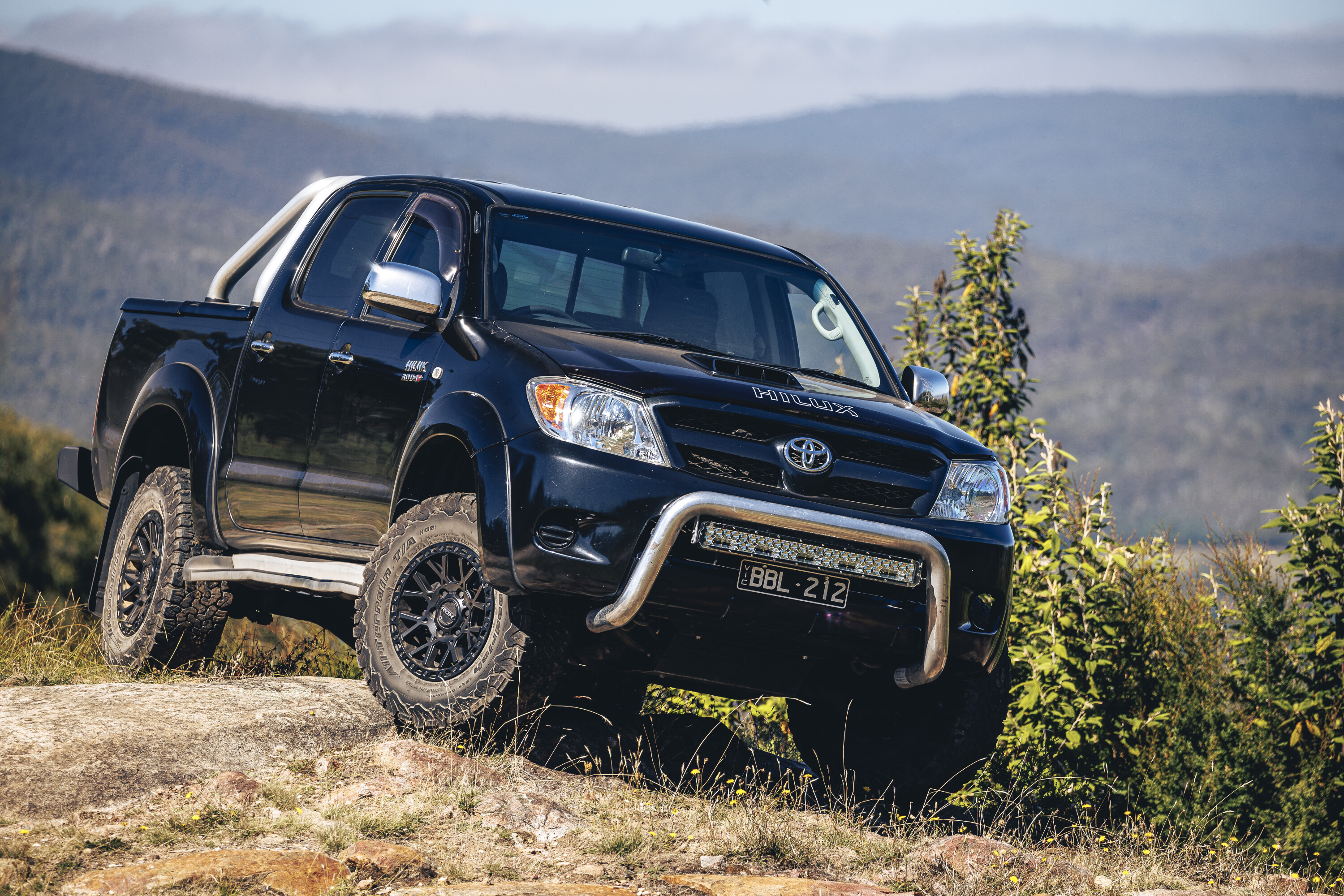
In fact, everything about this V8 HiLux is a good thing. Sure the vehicle itself is showing signs of its age, but it’s that age that’s making them more affordable on the secondhand market, and there are plenty of them out there to choose from.
Of course you can’t expect the same fuel economy from the V8 as the old four-cylinder diesel, but the smile per mile factor of the V8 engine minimises any pain at the bowser.
If you want to throw a V8 into your HiLux, this is definitely the way to go. Check out the Marks 4WD website at www.marks4wd.com [↗] for all the details.
| The LS into KUN26 HiLux kit includes the following parts: | |
|---|---|
| Full replacement bell housing u2013 pre-assembled with the internal concentric slave cylinder | Marks-specified heavy-duty clutch and flywheel kit including a specified clutch master cylinder and braided clutch line, Marks 4WD Clutch Pedal LS to KUN HiLux mount |
| Spigot bearing and Adaptor for the rear of the crankshaft | ARP flywheel bolts |
| Cover plate | Fixing hardware nuts, bolts, washers etc. |
| Genuine HiLux gearbox input shaft seal | Downloadable Instructions |
| Oil pressure and water temperature sender adaptors | |
| Not included in the basic kit but available from Marks 4WD if you donu2019t want to fabricate them yourself are: | |
|---|---|
| LS V8 to HiLux engine mounts | LS HiLux airbox |
| LS V8 to HiLux engine sump | ECU kit |
| High mount alternator relocation kit | V8 HiLux ECU kit |
| Air-conditioning compressor relocation kit | Fuel emissions kit |
| Accelerator pedal mounting kit | Fan shroud kit |
We had camped at Old Andado Station, a time capsule of a bygone era, standing testament to the mettle of Molly and Mac Clark. The massive flock of galahs were unsettled, their barren trees offering no protection. They knew the change was coming; the ants too, were moving to higher ground.
“It will rain at 08:00,” said Marc, our fearless leader, “We need to get moving before it buckets down”. We’d not long despatched our morning walkers for their daily sojourn along the track.
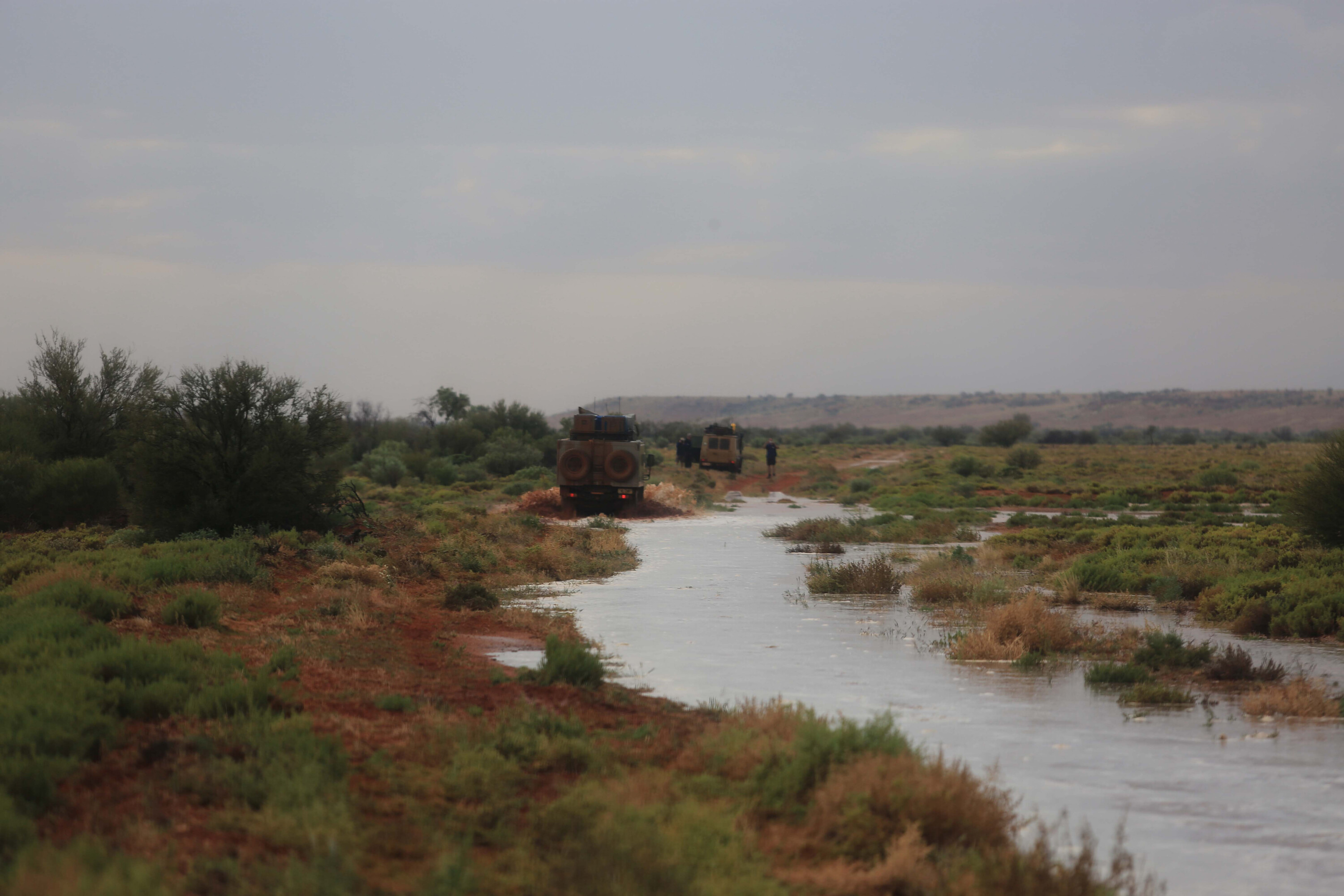
The scattered drops began as we were ‘locked and loaded’, with radios checked, tyres deflated and raincoats at the ready. Our walkers hadn’t made it far, the clay-capped dirt road already sticky.
At 8:03 it began to rain, slowly getting heavier. “You’re three minutes late!” Ian shouted at the sky; our stockbroker guest was impressed by Marc’s accurate forecasting.
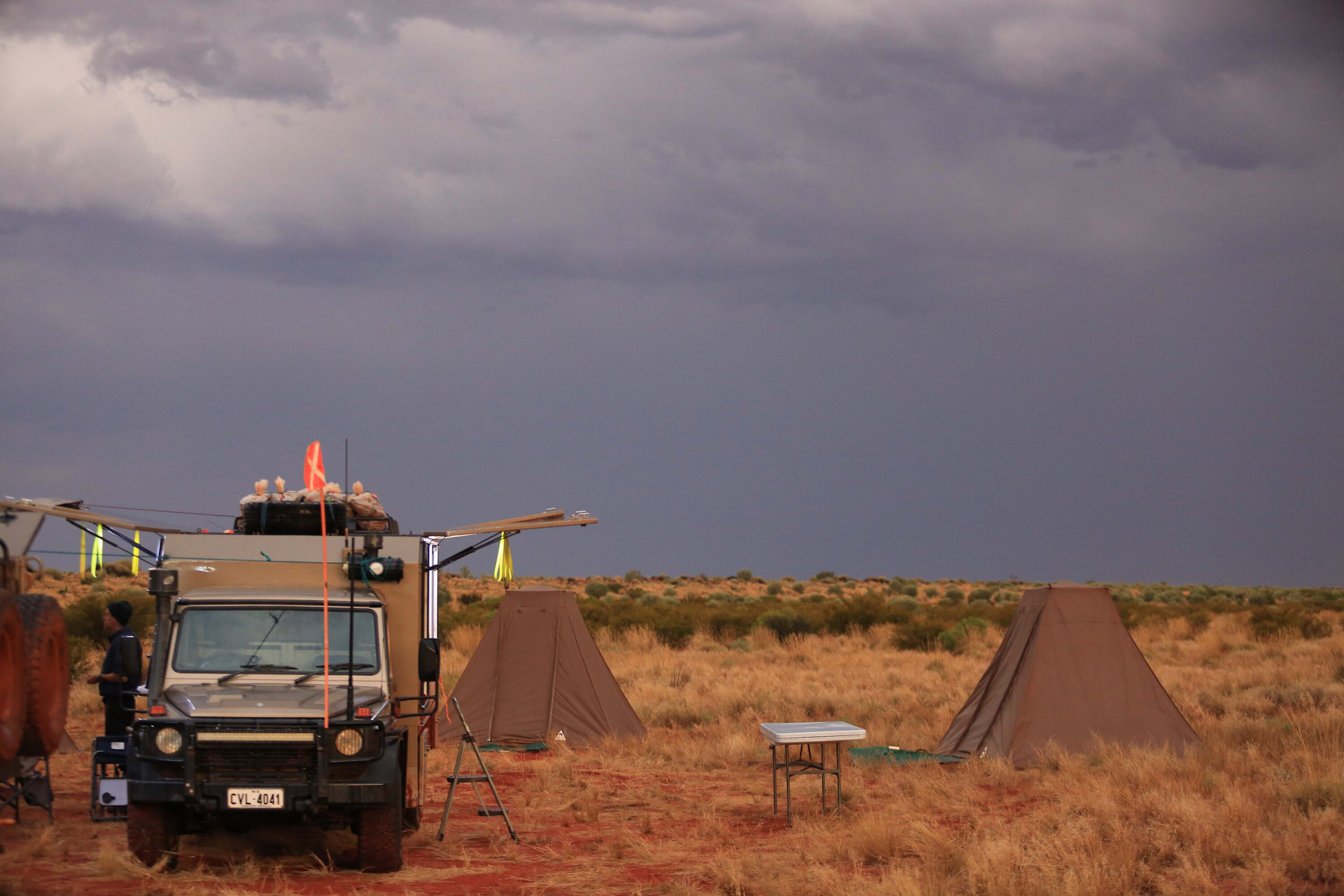
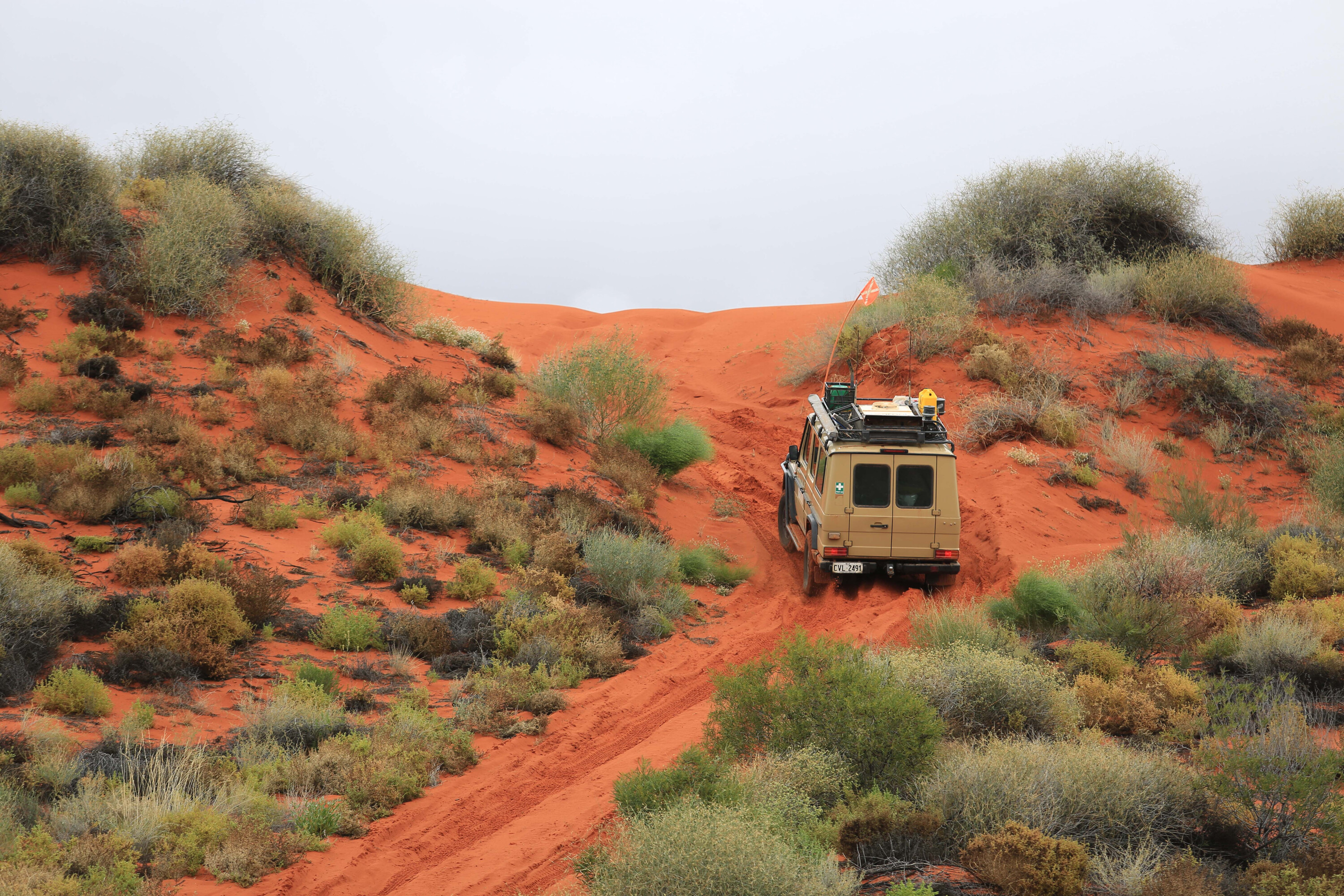
It was day three of our 12-day Simpson Desert adventure from Alice Springs to Birdsville and back again. We were heading east along the Madigan Line with four fully loaded G-Wagens in convoy. Our 6×6 supply truck weighed seven tonnes so once committed, there’d be no turning back!
We continued past the Binns Track, our alternate exit to Alice Springs now blocked, as the storms steamed in from the north-west. We swung east across the gibber plain as the lightning flashed and the horizon disappeared. Then down it came – the heavens opened and the track was soon awash with water, like a tropical tide had just rushed in.
Back in February, a tropical low (TL16U) dumped record rains around Camooweal, Qld and the Gulf region. The floodwater was making its way down the Georgina River channel country, past Bedourie, and through Lake Mipia before snaking through the sand ridges and past the tipping point into Eyre Creek.
With follow-up rain in April, it ballooned to a 15km-wide inland sea, moving slowly south towards Lake Eyre, and blocking both eastern exits to the Simpson Desert until late July.
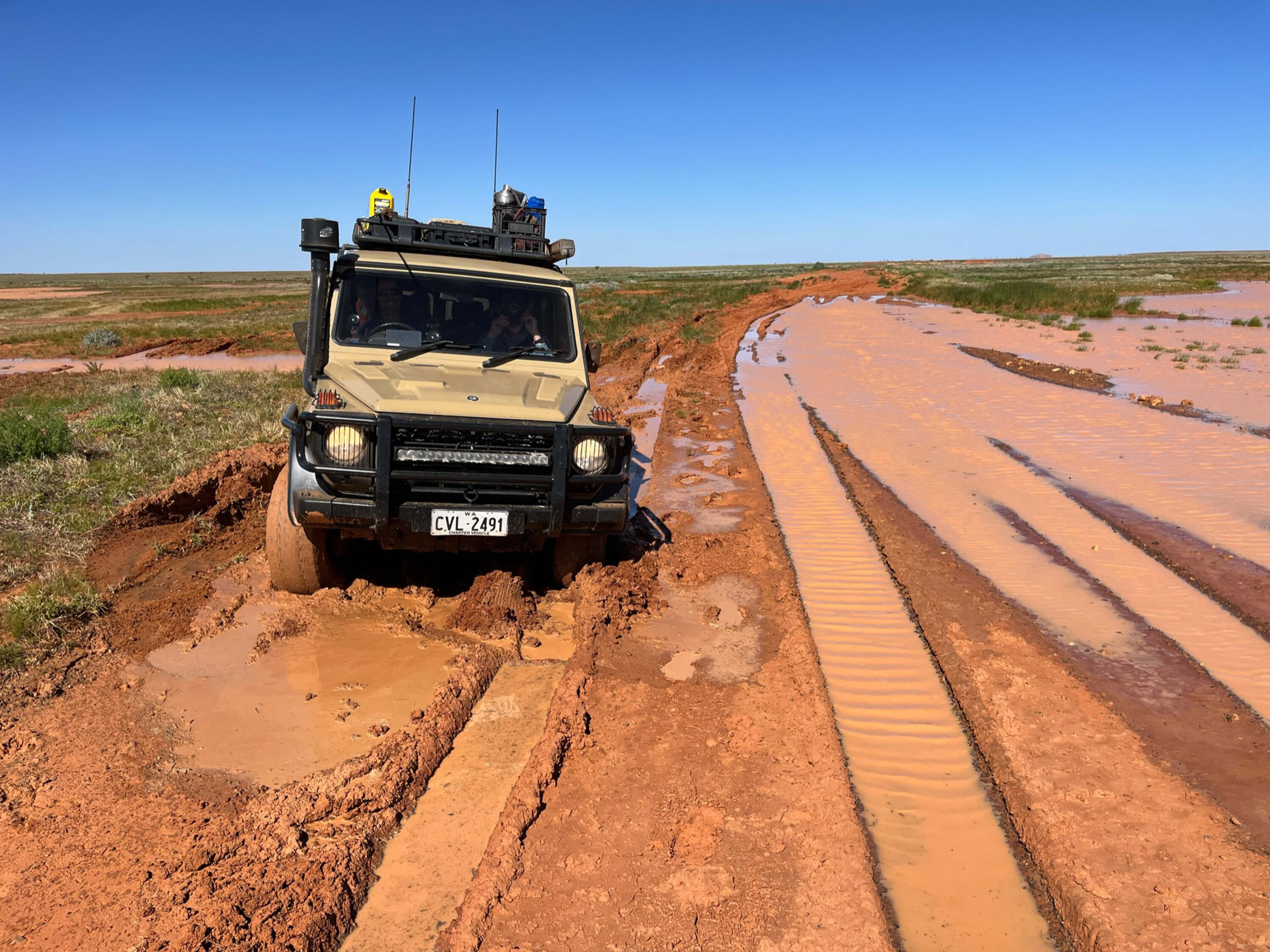
We had tours booked from April to September and cancelling them would have meant no income, and no work for me or our crew. Many of our customers had booked pre-Covid, and for some it was their last ‘once in a lifetime opportunity’.
Normally we would resupply with fuel and water in Birdsville but that was not an option. The flooding in Eyre Creek had blocked all eastern exits and entries including the Madigan and QAA lines to the east and the Warburton Track to the south. The Hay River Track to the north was still open but it’s rough and not nearly as interesting as the thousand dune crossings further south and returning west along the French and WAA Lines.
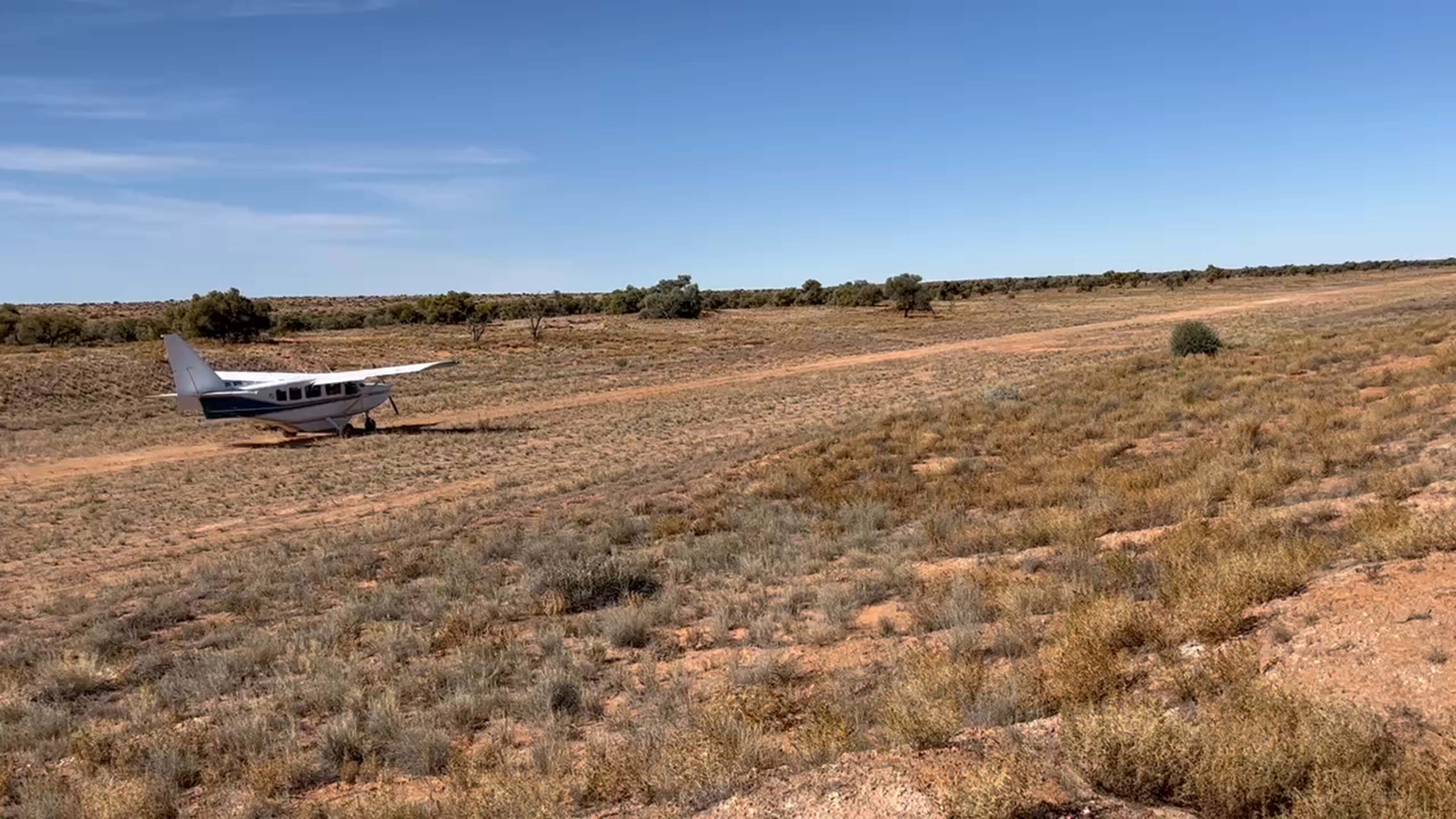
They’d still complete their crossing, get two nights in Birdsville, a beer and feed at the pub, and get to see the desert and flooded channels from the air. But this meant an 1100km round trip without a resupply – 1200 litres of fuel and 1400 litres of water, plus food and drinks for a dozen guests for 10 days!
It was worth it, though. We had the desert all to ourselves (for three straight months) passing only the occasional group heading north on the Hay River Track or spending a few days east of Mount Dare on the French Line, before heading back the same way.
It’s sad that there’s so much focus on crossing and conquering the Simpson, rather than just enjoying the serenity, the sky, the space, the sunsets, and its vast and timeless beauty.
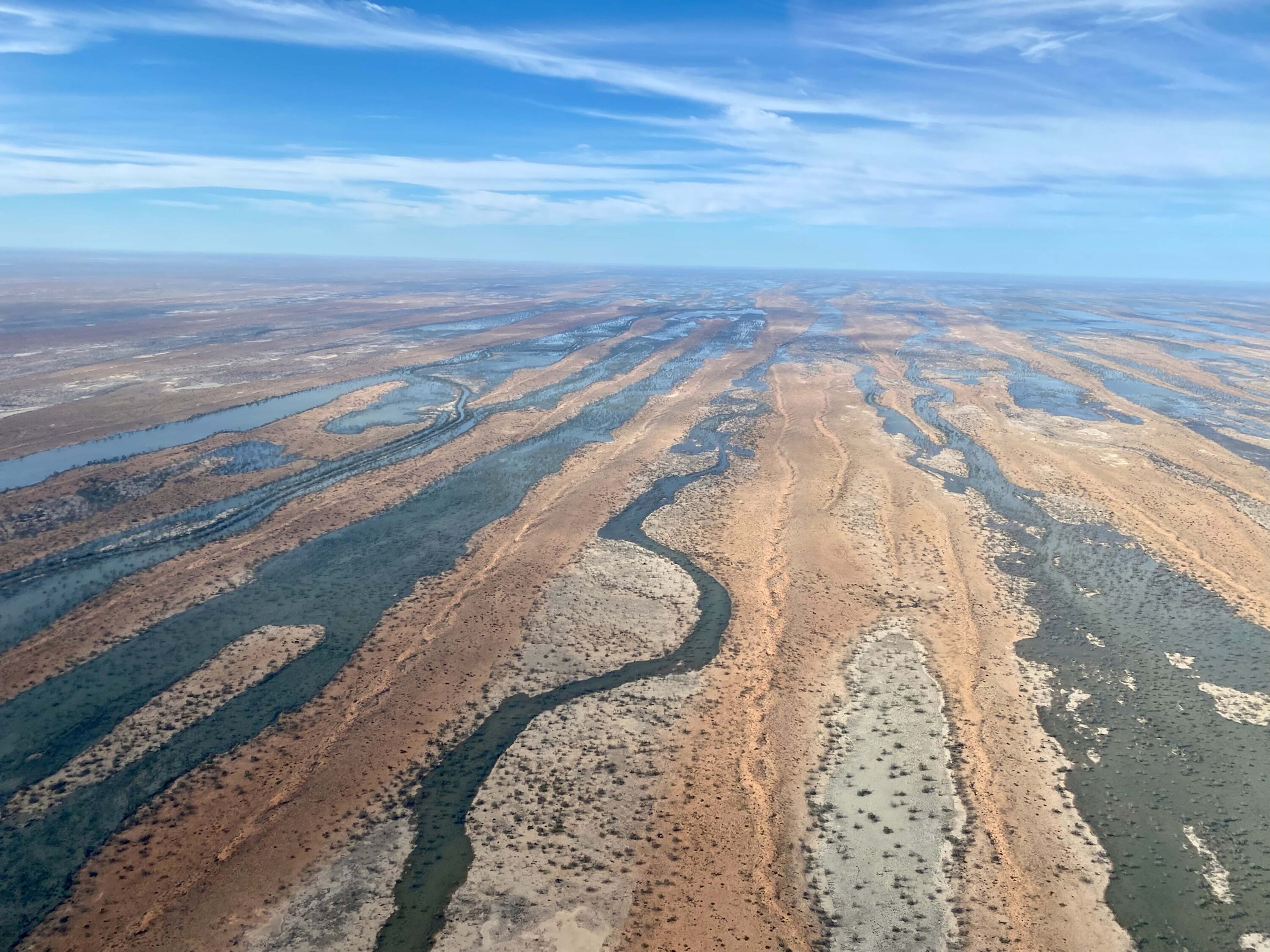
Triggered by La Nina, a string of major rain events combined to make the 2022/23 northern wet season the sixth highest on record (since 1901) with 690mm recorded from October 2022 to April 2023.
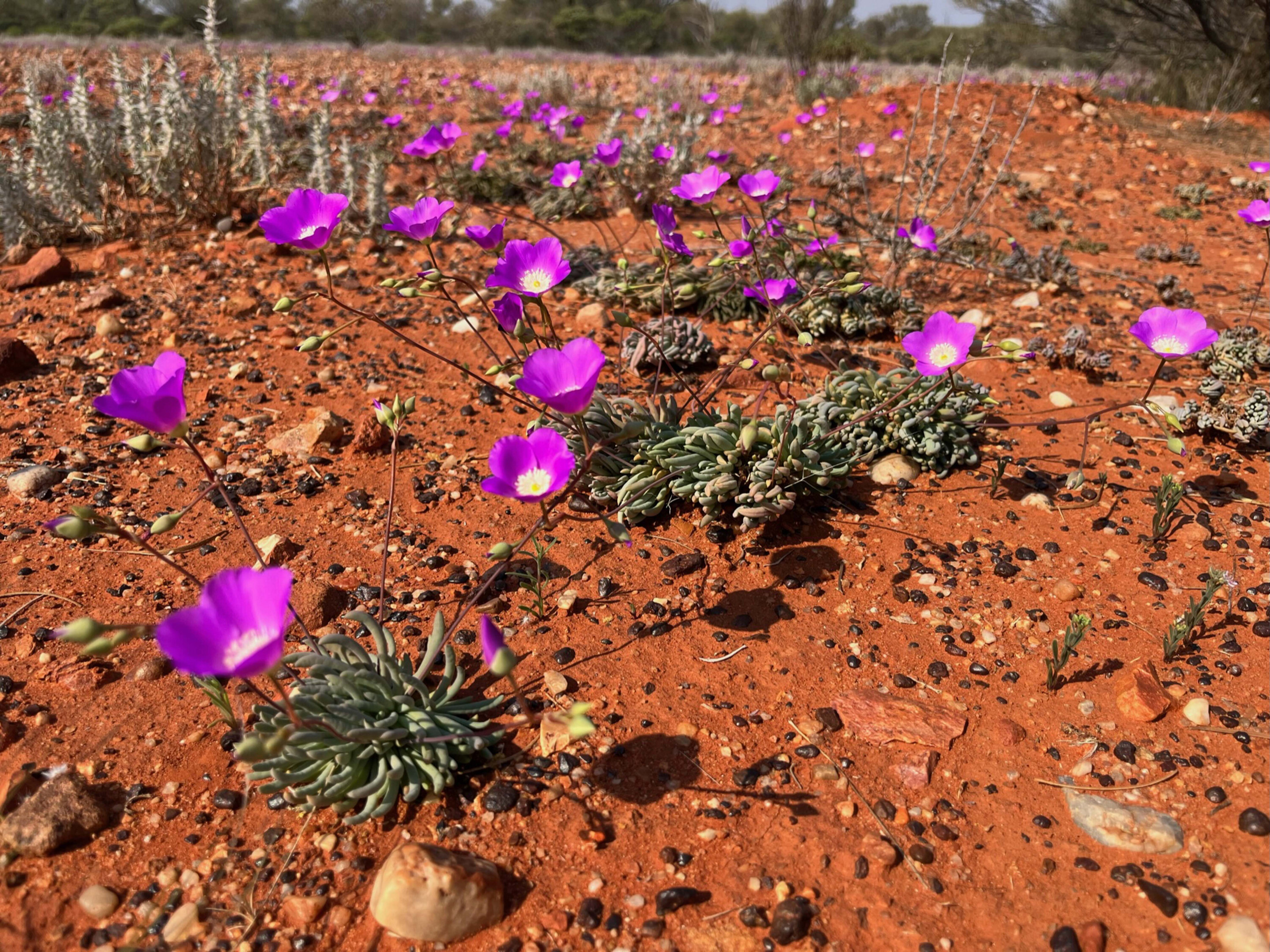
The frequent rains had brought the wildflowers out early. Everything was green, growing, booming, and blooming, especially in the northern Simpson which had received the most rain.
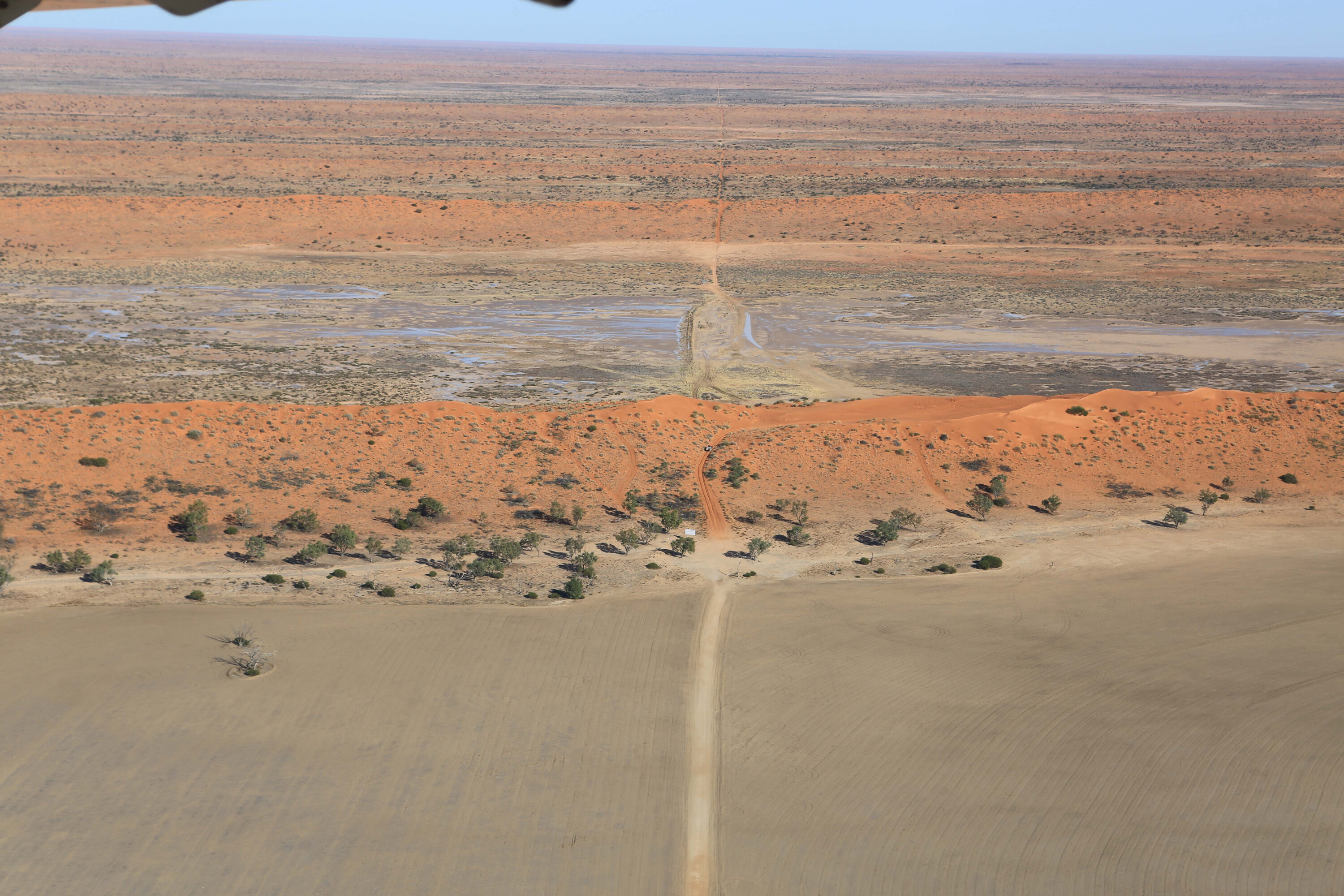
There were too many feral cat prints for my liking but great to see so many dingoes this year, even if they were missing their campsite leftovers.
The increased humidity brought its own delights; deep orange sunrises and sunsets, rainbows, heavy dews and frosts, and even an early morning fog.
The sand driving too was easier with firmer, smoother dune climbs a respite from the usual chopped-up madness.
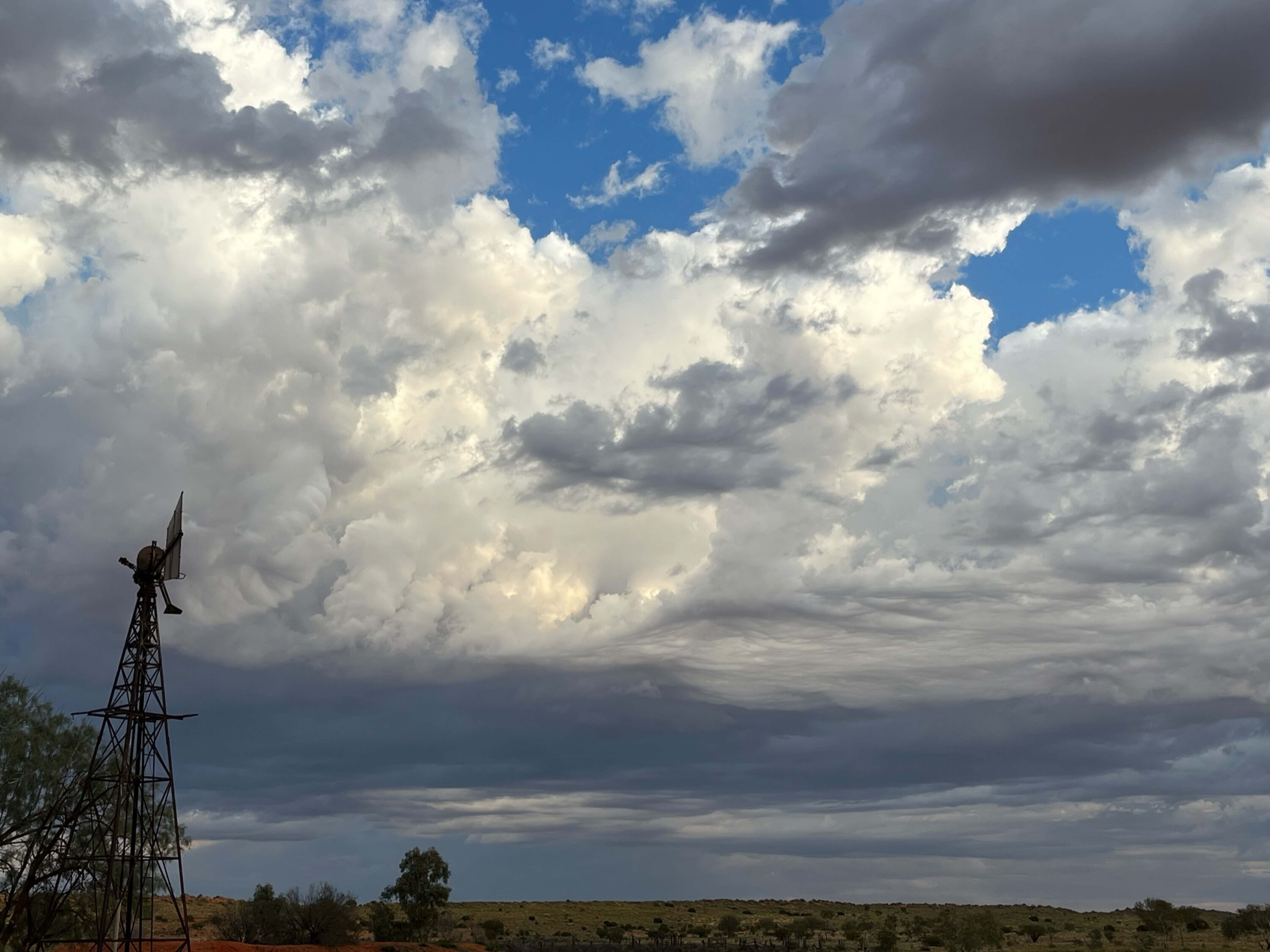
We also had to cross the Spring Creek Delta to get to the campsite at Dalhousie Springs. It too was awash with water dumped by the same storms we’d escaped a week earlier. All exits and entries were now closed!
We waited it out for a couple of days playing cards at Dalhousie, and growing taller with muddied-boots, until the roads dried out enough to push through to Mount Dare Hotel, where we were warmly welcomed with hearty home-style meals, cold beer and a warm, dry bed.
It was a fitting place to celebrate our wet desert adventure and share our stories of survival before the 480km trek back to Alice Springs the following day. As always, the challenges enrich the adventure and galvanise the expedition team, and somehow make all the post-trip cleanup seem worth it.
The kitchen truck carries all the food and cooking gear, complete with eight 60L Engel fridge/freezers. It even has one with ice-cream! The ensuite truck has twin toilet-showers complete with diesel hot water system and 1200L of fresh water to keep guests and crew both clean and relieved.
The gear truck sports a monster-size canopy that fits enough tents, stretchers, sleeping bags and luggage for up to 24 passengers and crew.
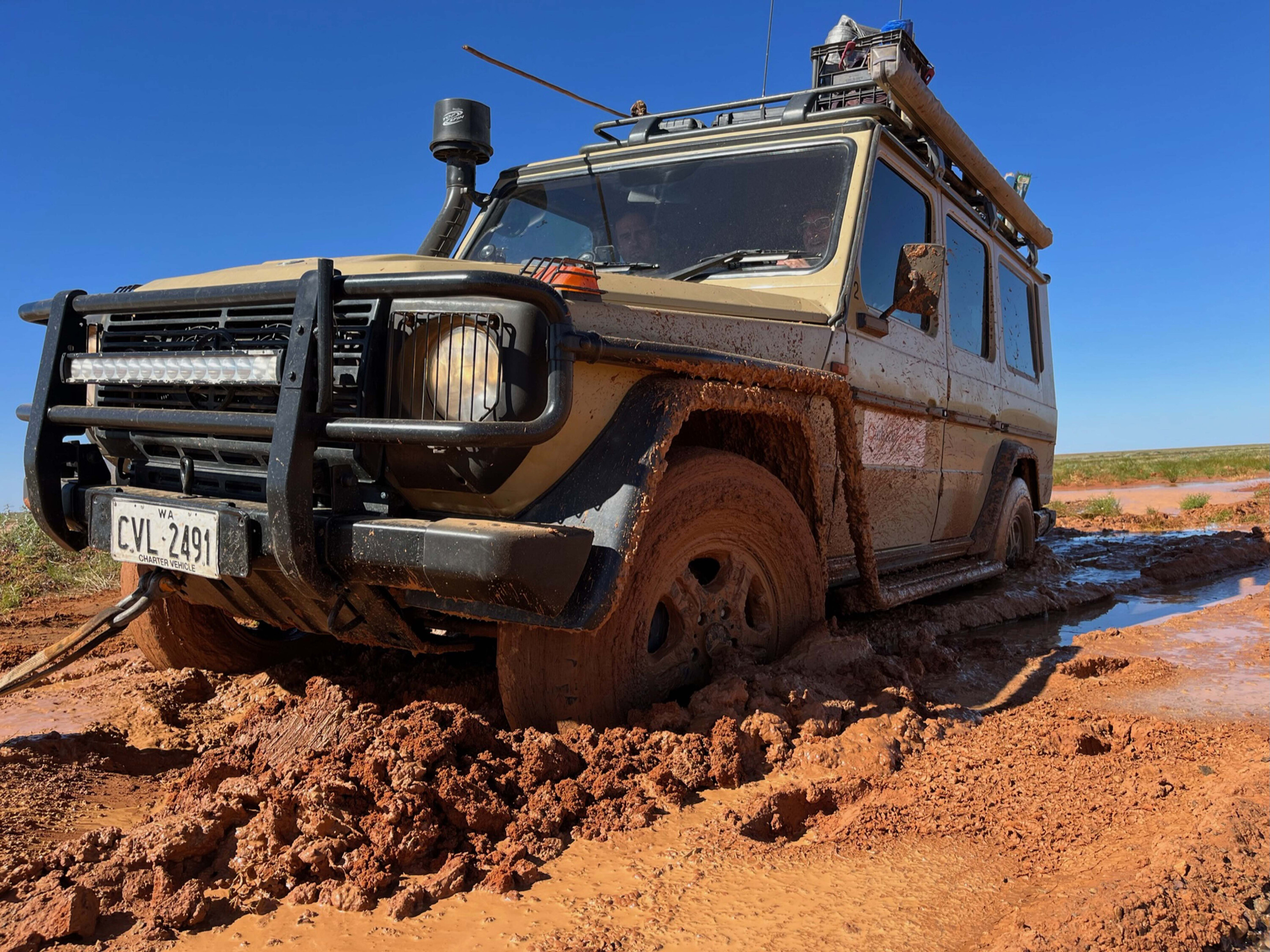
The 4x4s are the hose-out G-Wagen Professional spec but with an extended rear body, seating six adults in coach-style comfort. Whilst not as limousine smooth as the 6x6s they have the same powerful drivetrain but with 2.5T less weight.
And how do they really perform? The 6x6s are the most comfortable and capable off-road touring vehicle I’ve ever driven – I just wish they were fitted with more reliable Japanese electronics.
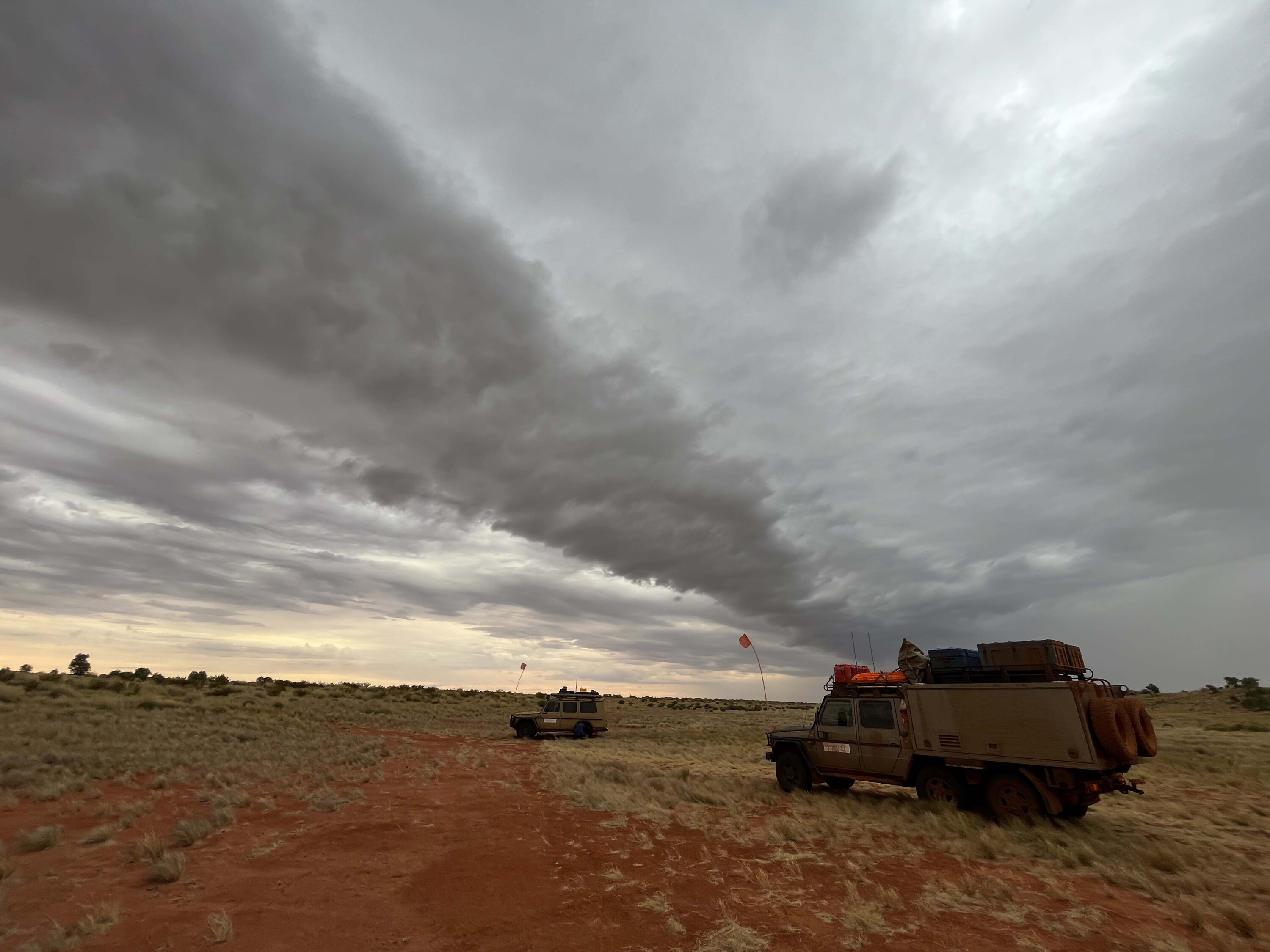
Heavy rain will often close the French and QAA Lines first as they have the most salt lakes and floodplains to cross, and a flooding Diamantina River near Birdsville will close Warburton Crossing downstream.
But assuming Warburton Crossing is open, the eastern end of the Rig Road is reasonably well maintained and mostly sandy further west, but you still have to cross the Spring Creek Delta near Dalhousie.
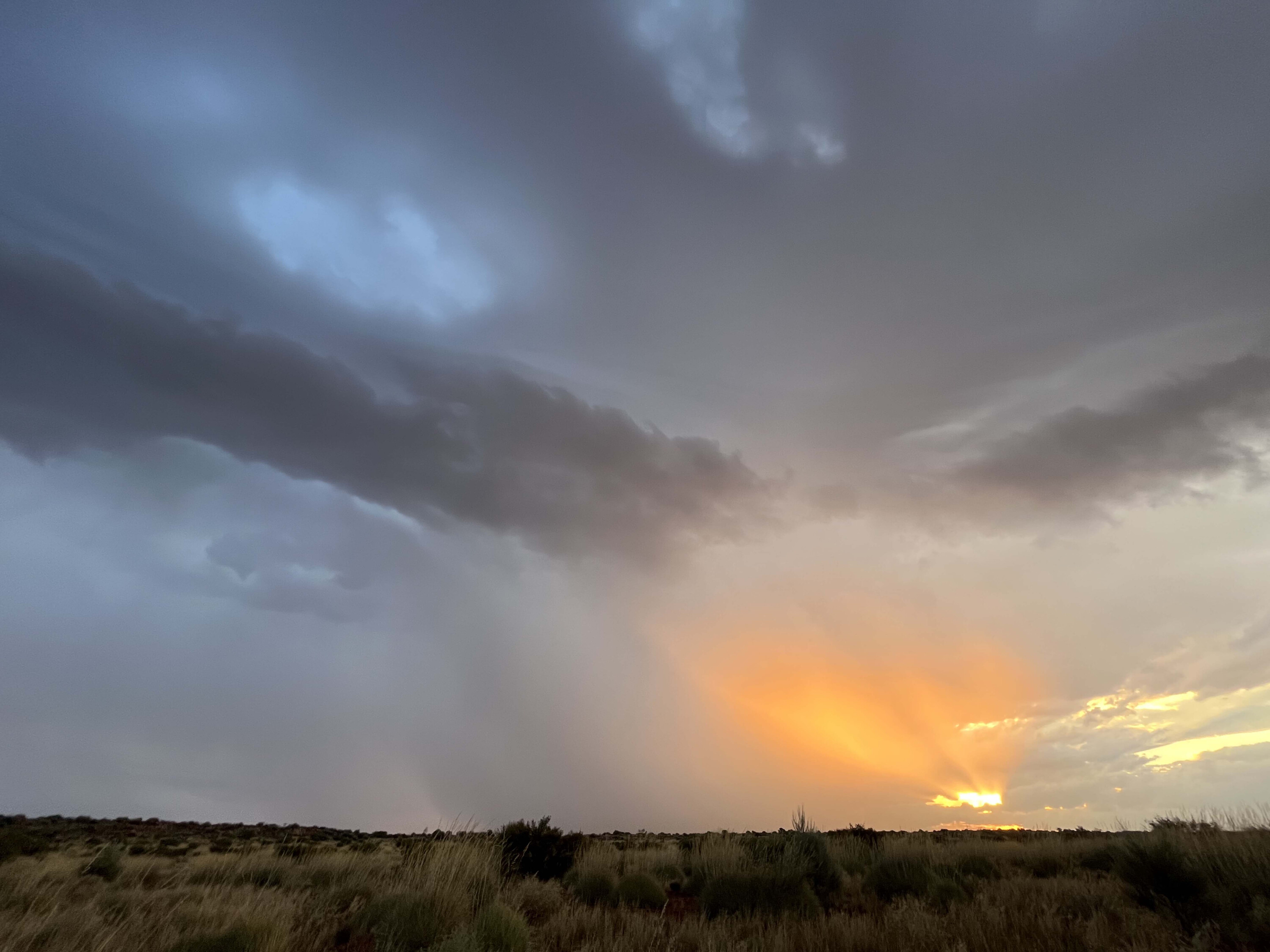
Just remember you’ll need a separate permit for the Madigan Line, allowing one-way traffic from west to east, plus you’ll need extra fuel and water for the 740km trip.
The road to Big Red from Birdsville was sealed in 2023 (for the Big Red Bash) so even if the Simpson Desert is completely closed you can still climb this desert icon.
For all the latest Simpson Desert road conditions check out:
Mt Dare: www.mtdare.com.au/outback-track-and-road-conditions-including-simpson-desert [↗]
Birdsville Hotel: birdsvillehotel.com.au/getting-to-birdsville/roads-weather/ [↗]
Parks SA: www.parks.sa.gov.au/know-before-you-go/closures-and-alerts [↗]
Metvuw weather forecast: metvuw.com [↗]
Here at 4X4 Australia, we even used the eCommerce business to shift our latest project vehicles once we were done loading them with aftermarket kit – and it was an effortless, stress-free experience.
Grays is the largest industrial, auto and commercial eCommerce business in Australasia, and with plenty of makes and models put under the hammer each month there’s bound to be a vehicle that ticks all of your boxes when pursuing your next work or adventure rig.
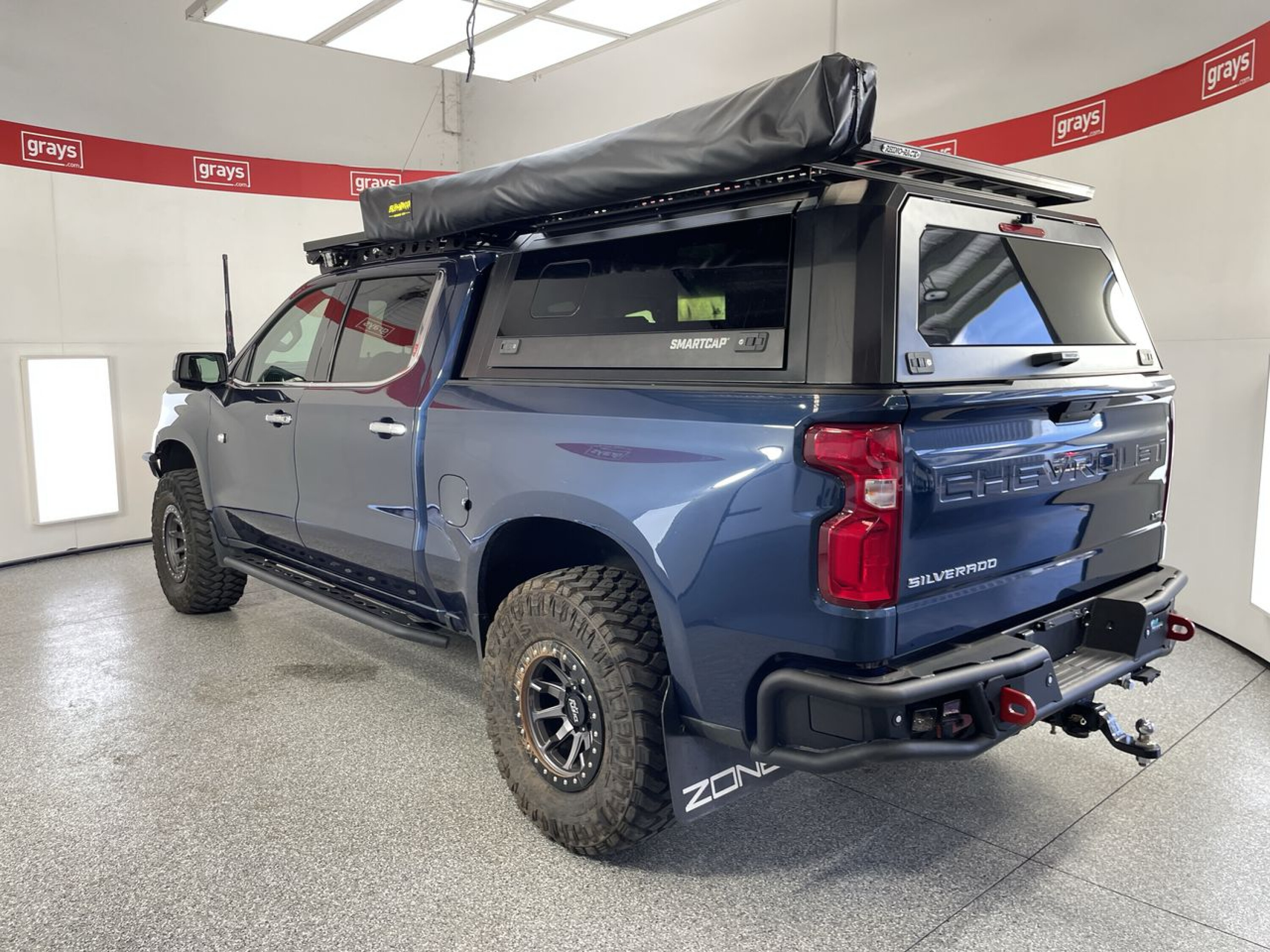
In fact, a listing will open for a 2022 Chevrolet Silverado 1500 LTZ Premium on March 14 at 5pm (AEDT), with bidding scheduled to close on March 19, 2024. The big Chevy dual-cab, powered by a petrol 6.2-litre V8 mated to a 10-speed auto, has a lowly 38,395km on its odometer. Full service history is provided, as is an owner’s manual and spare key.
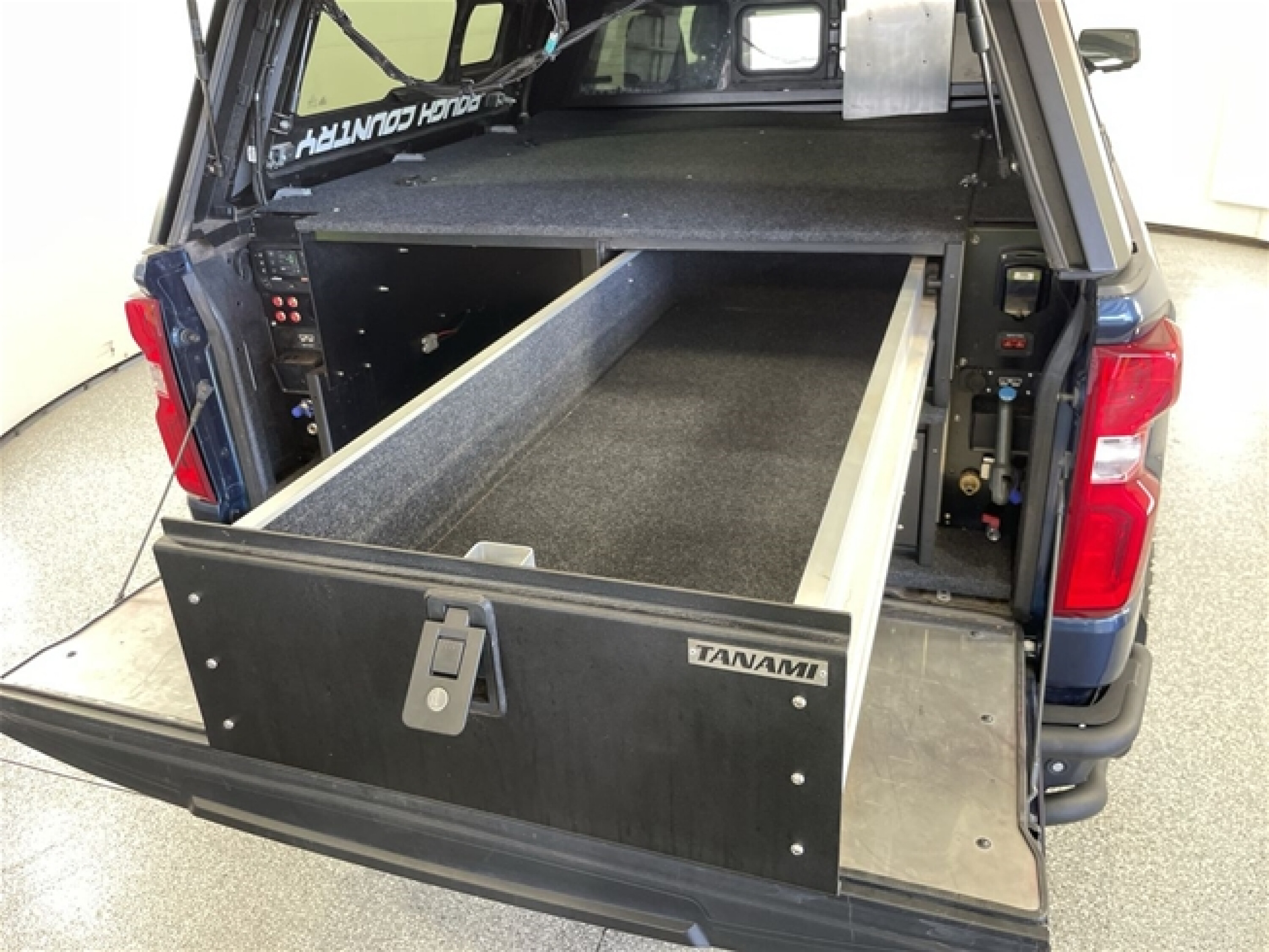
The Silverado is loaded with more than $80,000 worth of accessories including Ironman protection, an RSI Smart Cap canopy, Tanami drawers, a Rough Country 3.5-inch lift kit, and a GVM upgrade.
| Full list of accessories |
|---|
| Ironman front, rear and side bar protection with light bars and fog lights |
| RSI Smart Cap canopy with RSI table stored in roof |
| Tanami drawers, 95-litre fridge slide (suits Domestic CFX95 with room for two Frontrunner storage boxes behind) and in-fills in tub |
| Rough Country 3.5-inch lift kit |
| GVM upgrade engineering u2013 GVM 4200kg; GCM 7800kg; max towing 4500kg |
| Engineered for 35-inch tyres and 3.5-inch lift |
| Dirty Life wheels and Maxxis tyres (rear tyres brand new, front tyres and spare done 20,000km) |
| Carbon Winch with in-cab control 15000lb (winch in-cab controller disconnected forsale process, need to plug wires back in at rear of switch)u00a0 |
| Stedi work lights and roof lights with brackets |
| Lazer lamps driving lightsu00a0 x2 |
| Redarc RedVision battery and vehicle management system |
| 120AH slimline lithium batteries x2 |
| Professional auto electrical work and wiring |
| Custom exhaust |
| LongRanger 205-litre long range fuel tank |
| GME XRS Connect UHF |
| Telstra CelFiGo and aerial |
| Custom alloy switch panel and mounting accessories |
| Custom stainless steel water tank and pump |
| Bushwacker awning |
| Rhino rack front and Rhino Rack rear with accessories |
| TJM twin air compressor |
| Boss Airbags rear airbags and controller |
| Pulsar tuning module |
The vehicle is located in Pinkenba, Queensland, and has inspection windows open in the lead-up to the March 19 cut-off date. As with all models on the site, Grays provides a condition assessment and lists key features and specs of each vehicle for sale.
If the Silverado is too big for your garage, a number of other vehicles are listed including a 2014 Jeep Cherokee Trailhawk, a 2010 Toyota Hilux SR and a Nissan Navara with a manual transmission. However, the listings are constantly updating, so keep an eye on the Grays website.
The five-seater is aimed at conversion specialists and has been developed alongside the Quartermaster pick-up revealed in 2023.
However, unlike the pick-up, the double cab-chassis variant features an exposed ladder frame behind the cabin as a blank canvas for both commercial and leisure aftermarket conversions.
“Launching the Quartermaster Chassis Cab is a natural step to take our off-road expertise into many commercial areas that need a class-leading 4×4.”
“The Grenadier’s body-on-frame construction already provides huge versatility for customisation, and we know from customer configurations that our vehicles are being used equally between commercial and leisure users,” Ratcliffe added. “The ‘blank canvas’ Chassis Cab variant allows even greater versatility, from the basic trayback for agricultural use through recovery and emergency services to tourism, presenting an ideal platform for an overlanding camper.”
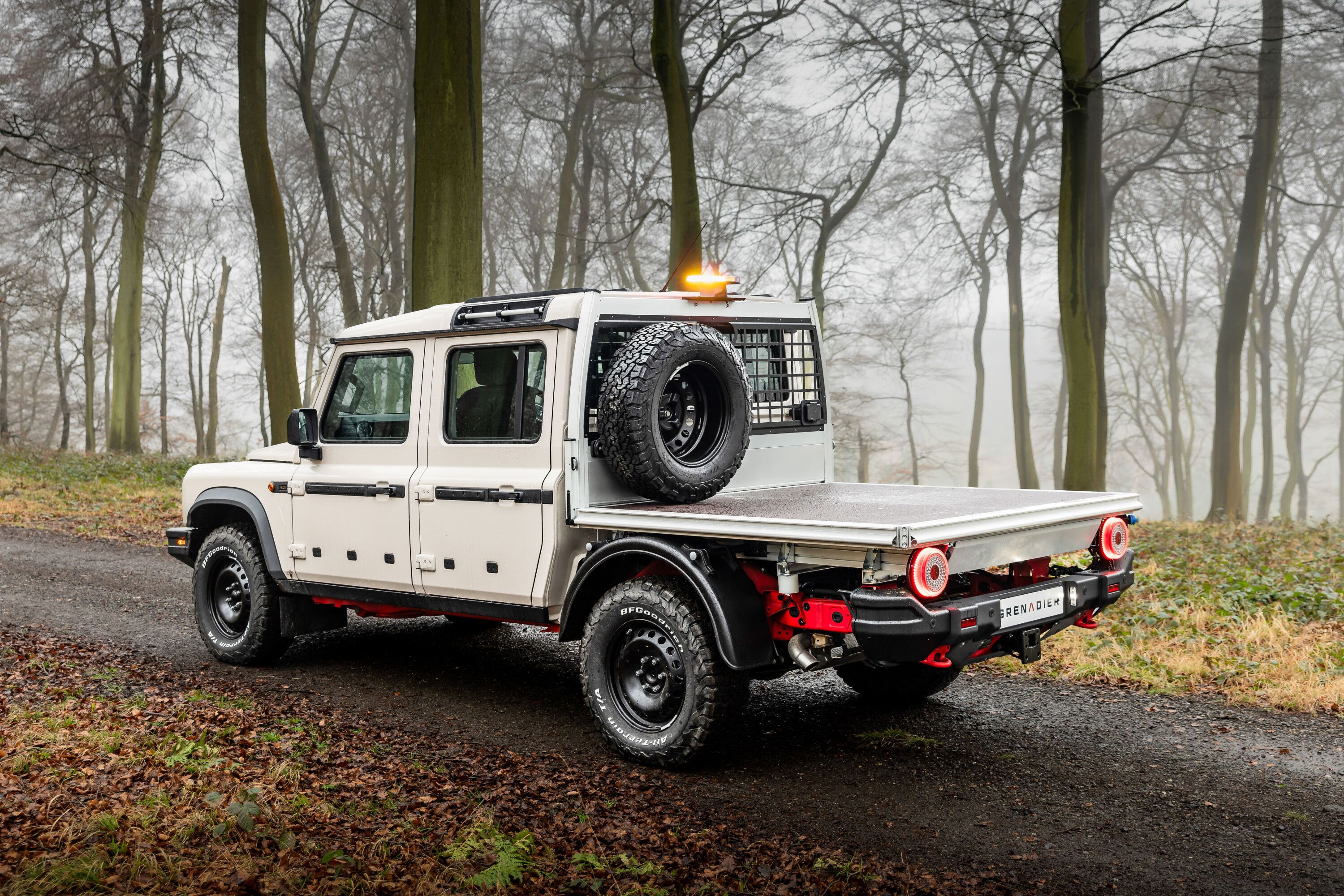
The Chassis Cab features a 3227mm wheelbase, the same as the Quartermaster pick-up but 305mm longer than the Grenadier wagon. The vehicle retains a maximum towing capacity of 3500kg, but payload capacities are yet to be released.
| Length | 5440mm |
|---|---|
| Width with mirrors | 2146mm |
| Width without mirrors | 1943mm |
| Vehicle height | 2019mm |
| Track width | 1645mm |
| Front overhang | 847mm |
| Rear overhang | 1328mm |
| Wheelbase | 3227mm |
| Petrol | Diesel | |
|---|---|---|
| Gross vehicle weight | 3550kg | 3550kg |
| Kerb weight | 2643kg | 2718kg |
| Dynamic roof load | 120kg | 120kg |
| Static roof load | 375kg | 375kg |
| Maximum unbraked trailer load | 750kg | 750kg |
| Maximum braked trailer load | 3500kg | 3500kg |
| Maximum trailer nose weight | 350kg | 350kg |
| Ground clearance | 264mm |
|---|---|
| Approach angle | 35.5u00b0 (petrol); 36.2u00b0 (diesel) |
| Ramp breakover angle | 26.2u00b0 |
| Departure angle | 22.6u00b0 |
| Gradeability | 45u00b0 |
| Wading depth | 800mm |
| Front axle articulation | 9u00b0 |
| Rear axle articulation | 12u00b0 |
| Wheel travel | 585mm |
As is the case with the pick-up variant, the Chassis Cab will share a full box-section ladder frame chassis, heavy-duty solid beam axles, two-speed transfer case, and feature up to three locking diffs.
While there’s no doubt that there’s been a boom in the number of full-size American pickups on Australian roads, the majority of them are the lower priced and lower capacity 1500 class trucks.
These include Chevrolet’s own Silverado LTZ and ZR2 models as well the RAM 1500 Big Horn, Laramie and Limited models, Ford’s two F-150 offerings and soon the Tundra from Toyota. Only Chevrolet and RAM offer the heavy duty 2500 models in Australia with RAM going a step further with the 3500 also available.
For starters, they come with big turbo-diesel engines while all the 1500s in Australia are petrol rigs. While diesel is still the preferred fuel for long-distance driving and towing in this country, this is a big drawcard.
The next thing is capacity, specifically the amount of load they can carry and tow. Depending on what licence you have, the payload can be up to 1386kg with a towing capacity of up to 4500kg. A regular Australian driving licence restricts you to just 733kg of payload as your GVM is limited to just 4495kg, but a heavier licence takes it up to 5148kg GVM. You also need to remember that the Silverado 2500 weighs in at 3762kg kerb, so it’s a lot of truck.
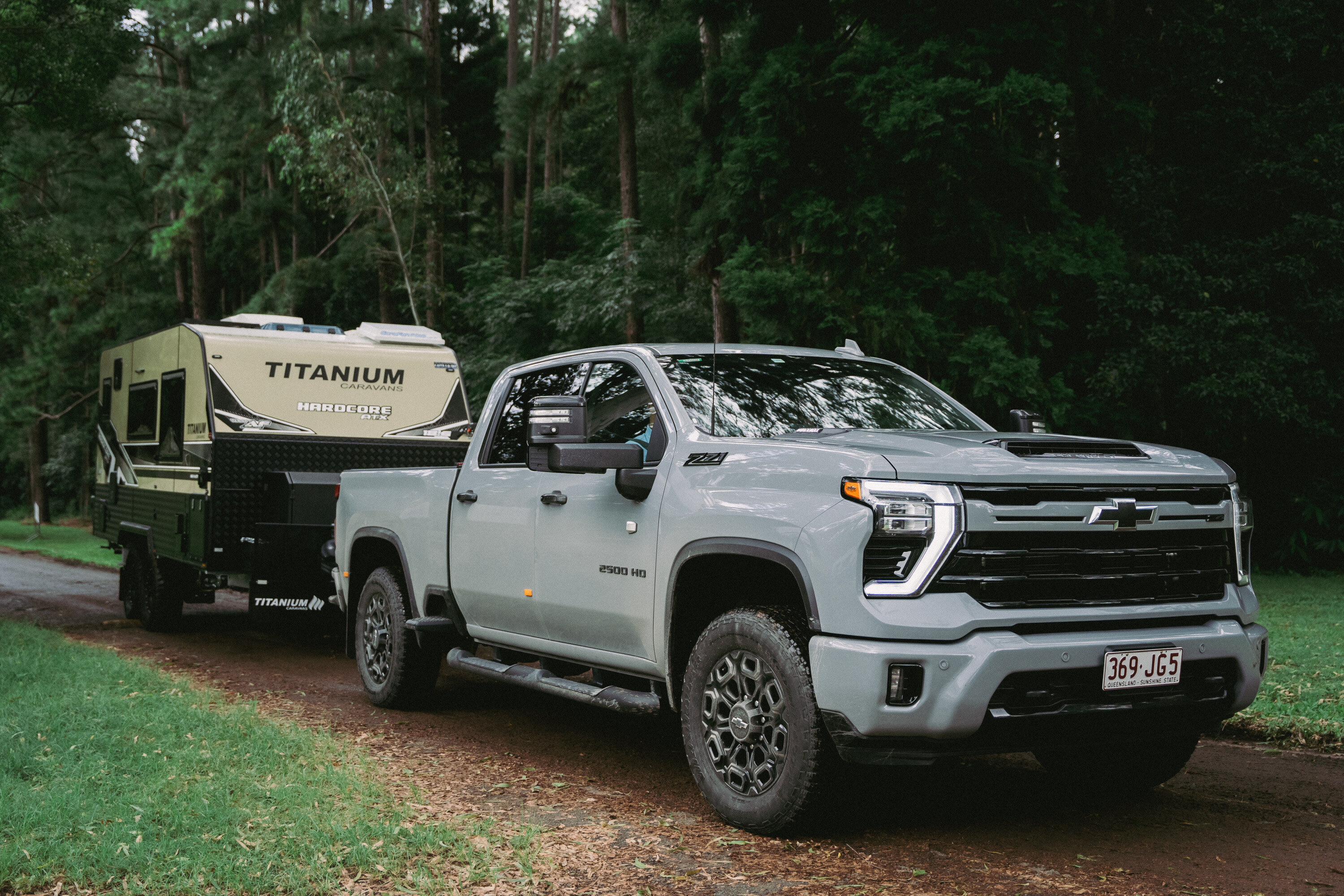
These trucks are designed and tested to haul and tow a lot more in the USA but Australian rules restrict what is allowed. A part of the testing that Chevrolet does for involves hauling a 20,000kg load up a long steep incline to make sure that the truck is up to the task.
To ensure that it is, the 2500 has a heavier duty chassis than the 1500 class Silverado, and heavier duty axles with a 2994kg rating on the rear axle and 2540kg under the front end.
Then there’s that 1322Nm, 6.6-litre turbo diesel V8 engine backed by a 10-speed Allison transmission to make light work of carrying such loads. It was updated for 2024 with the increased maximum torque figure coming courtesy of new pistons, a new turbocharger and new fuel injection system. It is a monster of an engine with a monstrous cooling system to ensure it hauls the load reliably and efficiently. A big part of the 20-tonne-long climb is to ensure the cooling system is up to the job.
Braking ability isn’t overlooked either and controlling all that towed weight on long descents is made easier with large four-wheel disc brakes, an exhaust brake and a built-in trailer brake controller.
It’s built to do its job reliably for many kilometres and our drive included towing a trailer of around three tonnes which the driveline handled with ease, albeit with a bit of bounce combing from the rear suspension.
Importantly, the Silverado 2500 is equipped with a dual-range transfer case that also offers an automatic on-demand four-wheel drive setting, allowing you to operate it in 4×4 on any road surface. This is particularly important when you are trying to put 1322Nm of grunt through the tyres when pulling a load in slippery conditions.
We nailed the throttle on the Chev a few times when climbing and only instigated a minor wheel slip that was quickly arrested by the traction control. The rear differential also has a self-locking capability when more wheel spin is inevitable on gravel roads.
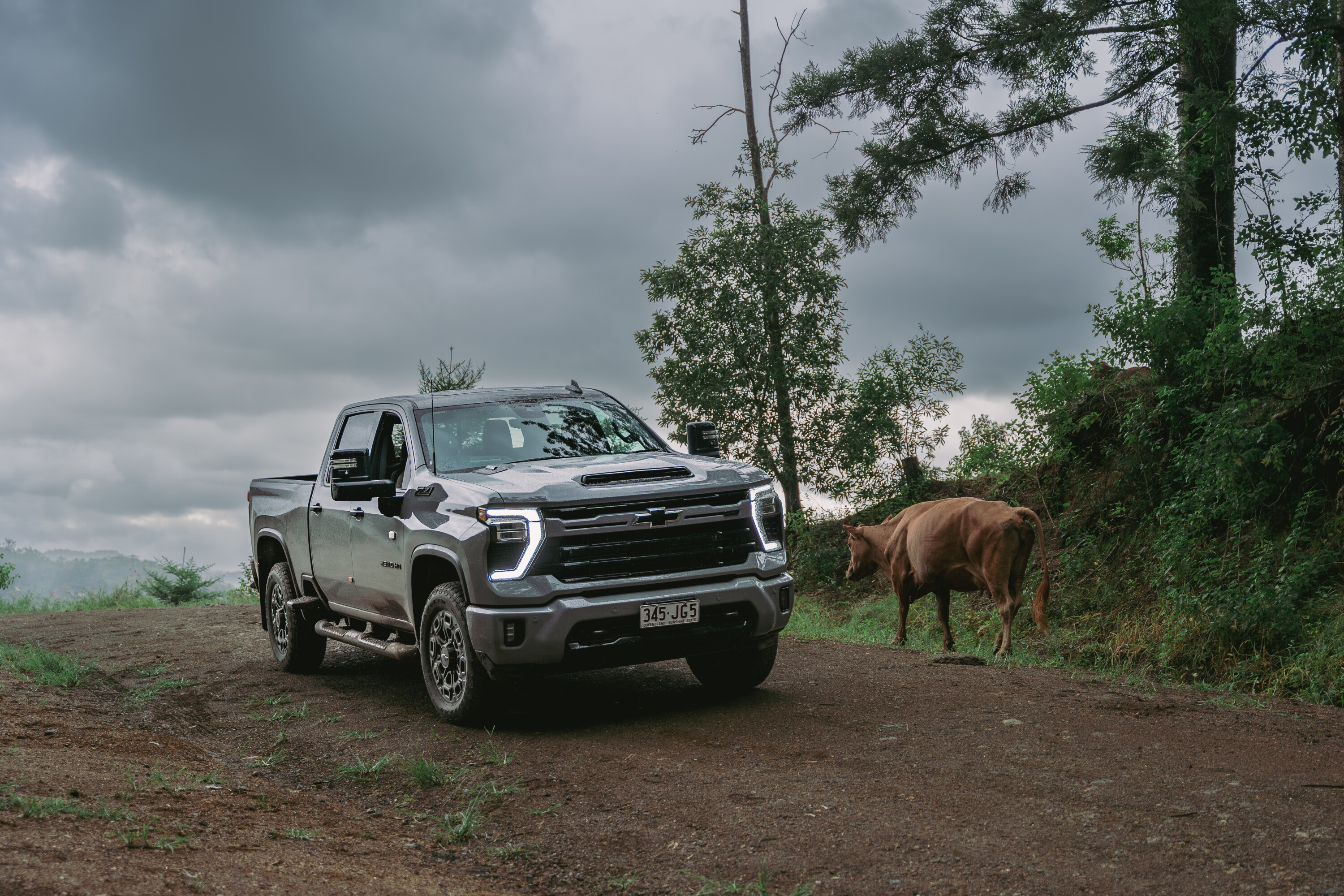
Despite having low range, the locking rear diff and reasonable ground clearance, the big Chevs are not great off-road vehicles, particularly on Australian bush tracks where their size and mass make life difficult. Australian-spec Silverados all come equipped with the Z71 off-road package which includes underbody protection plates and specifically tuned Rancho brand shock absorbers.
Even with this kit the 2500’s strengths lie in being an all-road load hauler but, being American, there is a huge aftermarket industry in the USA that you can lean on to modify a Silverado for better off road ability.
A major part of the 2024 update is a new dashboard which is inline with the updates to the 1500 trucks last year. The new dash includes a 13.4-inch touchscreen for the infotainment system and a 12.3-inch configurable screen for the driver’s dash.
These screens bring the Chev’s dash up to modern standards with accessible screens for navigation, audio, phone mirroring, many different camera angles, trailer set up and safety checks among the features. A Bose sound system and powered sunroof add to the premium feel of the cabin.
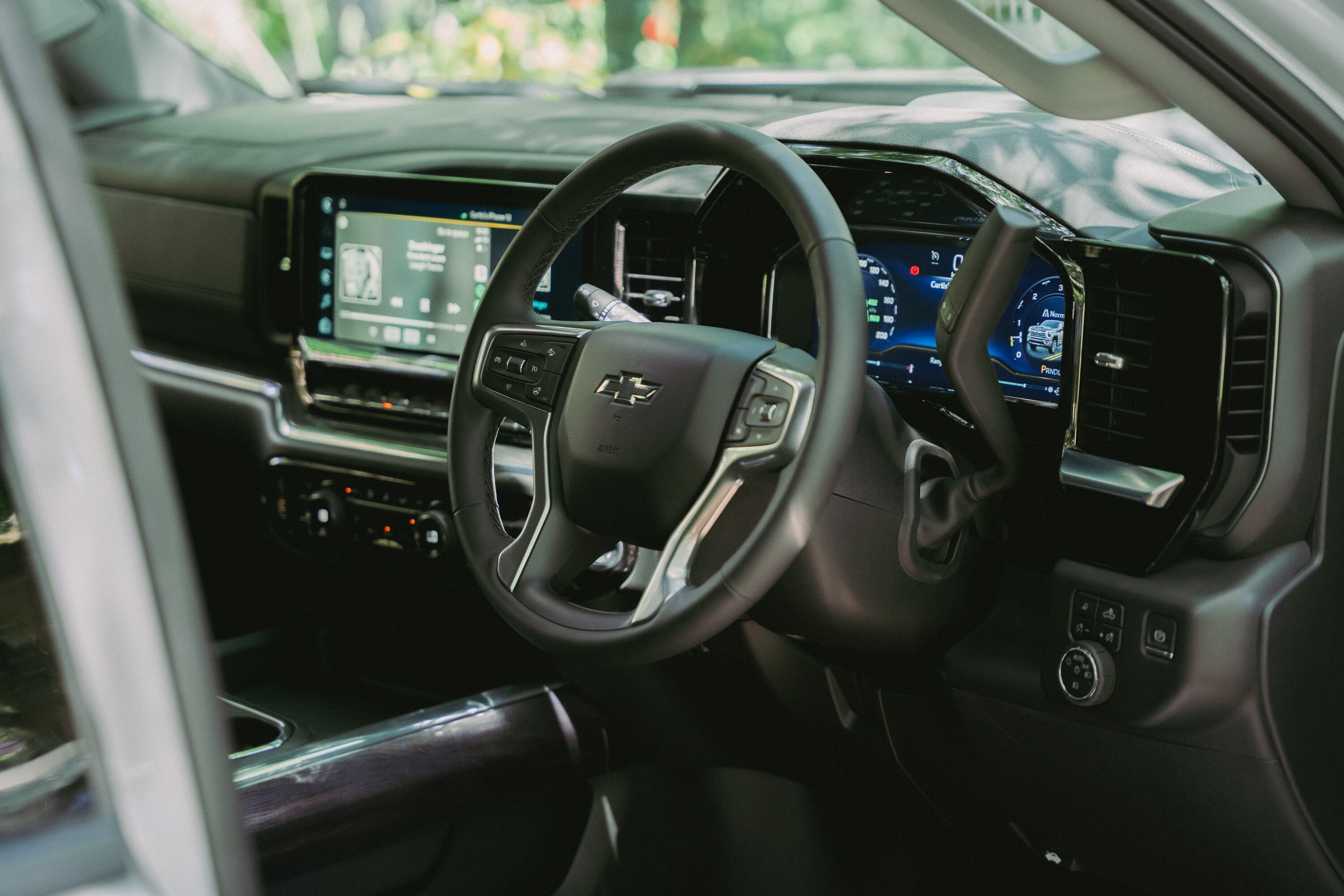
A few of the more useful camera features include side views when you use the indicator, which displays down the side of the truck and trailer, and the ability to see behind your caravan or trailer if it is equipped with its own camera. The dashtop is trimmed in leather as are the large front and rear seats.
The front seats have 10-way electric adjustment with cooling and heating while the wide rear bench makes do with heating only. As you would expect there is plenty of room in both rows of seating which is something you can’t say for any of the popular midsize 4×4 utes.
The well-appointed and spacious interior makes the Silverado a supreme long-distance tourer with the family especially for those who are towing, be it a large horse float, boat, caravan or any other heavy trailer with all the ancillary gear carried in the large load tray. Again, something that no midsize 4×4 ute can match.
And unless you live in the suburbs and this is your daily for the school and shopping run, the Silverado is plenty practical. With abundant interior space and exceptional abilities this would be a very easy truck to live with providing you have the space for it.
The cargo bed measures a massive 2089mm long, 1814mm wide and 533mm deep with 1317mm between the wheel arches, meaning there’s a heap of space back there to carry whatever you want providing it isn’t too heavy. If you were towing at the maximum – 4500kg trailer with 450kg on the towball – you’d have lost more than half of your payload and be limited to how many passengers you had on board, let alone what’s in the cargo bed.
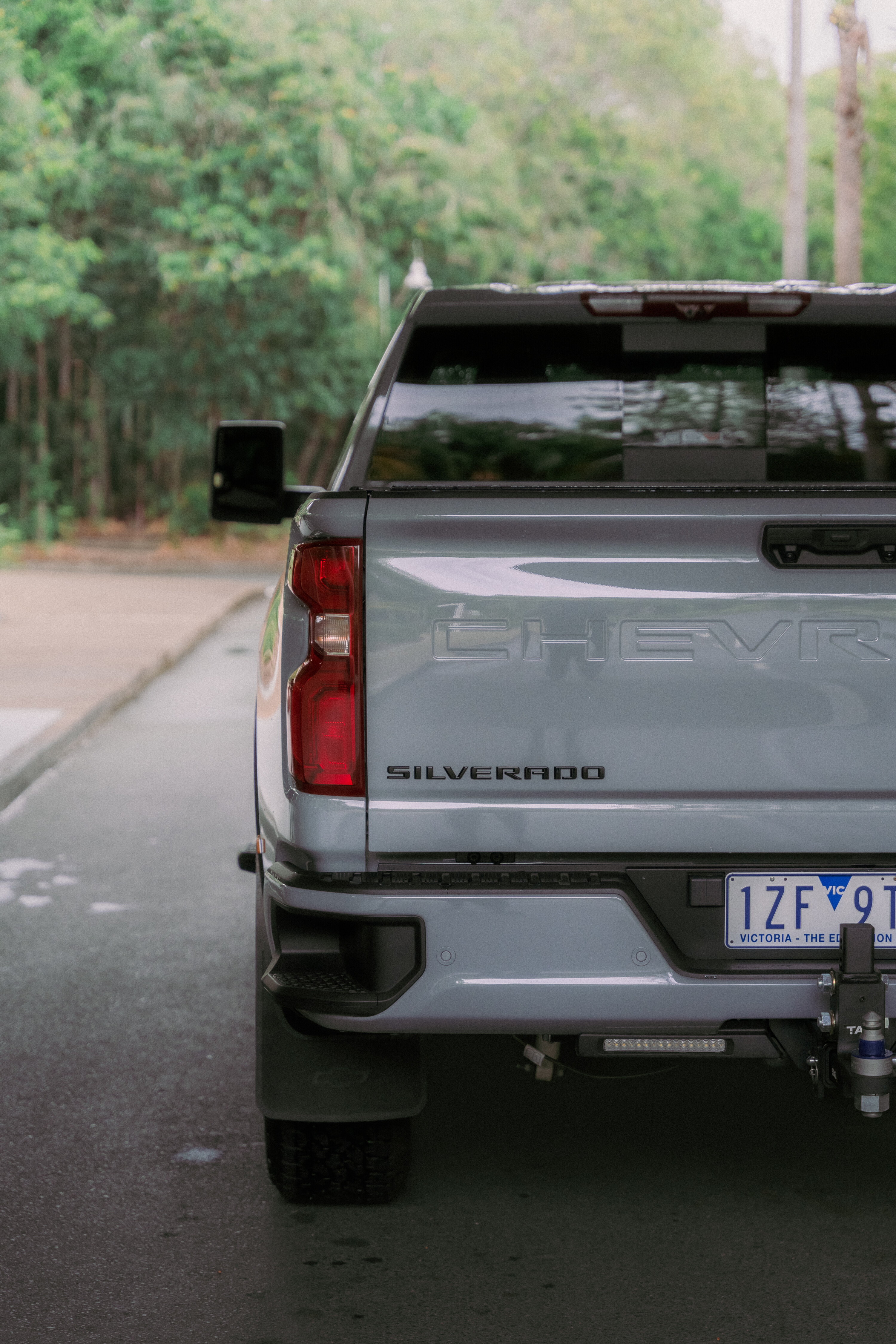
The bed has 12 tie-down points inside it but no 12-volt power outlet. Inside there are USB power points for both front and rear seat passengers and extra underseat storage in the rear. The 2500 rides on 20-inch alloy wheels but the tyres are relatively tall LT rated ones that still leave plenty of sidewall to protect the rims and cushion the ride. A TPMS is standard kit.
The standard fuel tank hold 136-litre of diesel and the AdBlue tank carries 26.5-litres. We expect a big rig like this would suck down a fair bit of AdBlue when towing at its full capacity. As mentioned there are a lot of aftermarket accessories available for the Silverado to customise the truck to whatever your use is.
GMSV only offers a three-year/100,000km warranty on its vehicles with thrre-years of roadside assistance. Scheduled serving runs out to every 12-months or 12,000km, whichever comes up first.
Standard kit includes a tyre pressure monitoring system (TPMS), electronic stability and traction control, six airbags, Forward Collision Alert with Low Speed AEB, 360 Degree camera with up to 14 Camera views, Head-Up Display, Lane Change Alert with Side Blind Alert, Lane Departure Warning, Rear Cross Traffic Alert and Front and Rear Park Assist. The Silverado 2500 has not been tested by ANCAP for a safety rating.
The RAM 2500 Laramie comes in at $172,950 as the closest rival with similar ability. The Ford F-250 is another but is not sold here by Ford Australia, but imported via independent sellers such as American Vehicle Sales, Performax and Harrison F-Trucks in various specifications and prices.
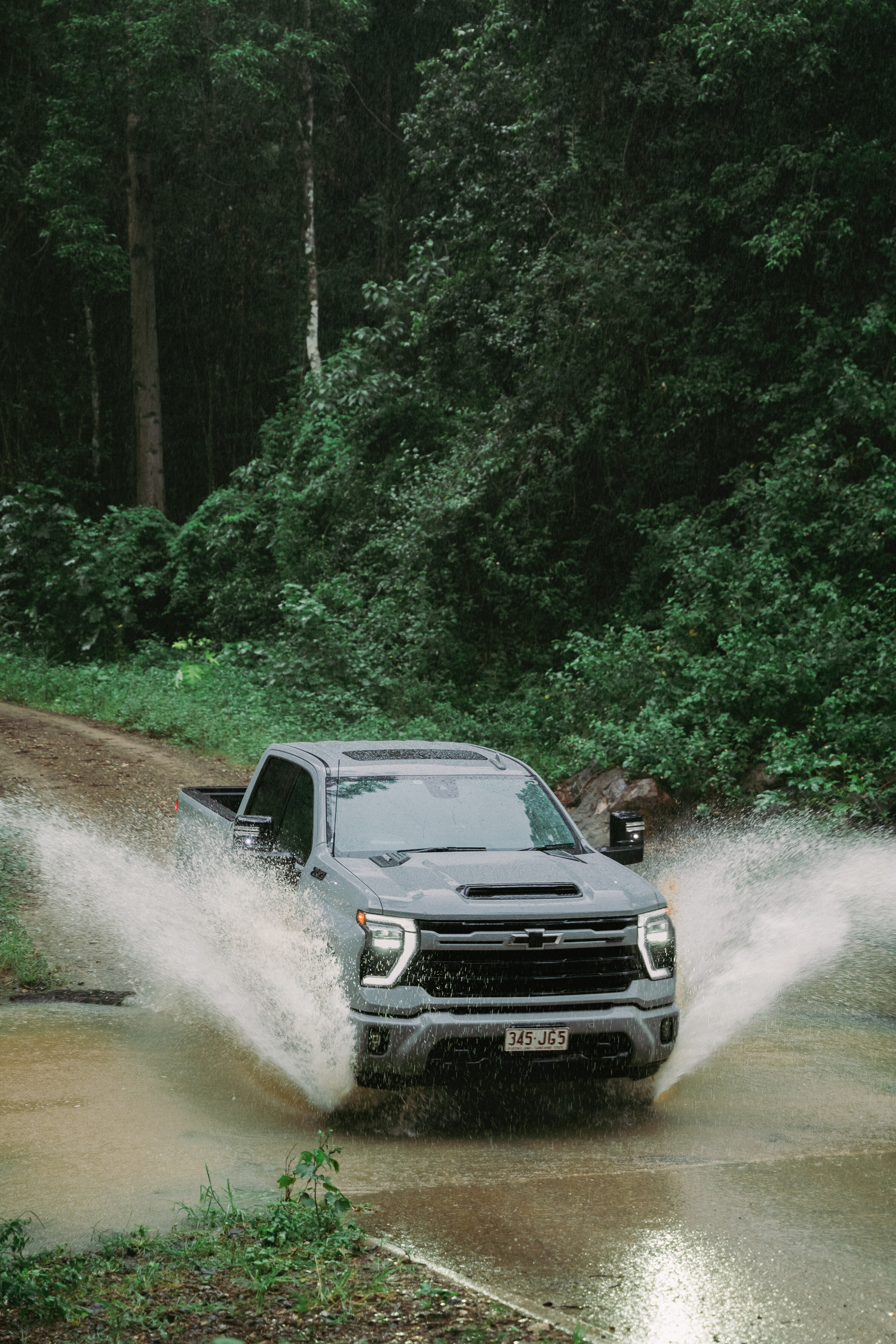
Aside from these trucks there is nothing else that can offer the space, equipment and capabilities of the Silverado 2500 HD, and with a starting price of $163k the Chev has the lowest price of entry to the HD truck market. Its size and price mean it won’t be for everyone but for those who need such attributes it makes a great choice.
Tightening global emission standards won’t be kind to trucks of this ilk and could result in derated engines and more complex powertrains in the near future, so now might be good time to secure a 2500 for your heavy haulin’ needs.
| Price | $163,000 |
|---|---|
| Engine | Diesel V8 |
| Capacity | 6619cc |
| Max power | 350kW @ 2800rpm |
| Max torque | 1322Nm @ 1600rpm |
| Transmission | 10-speed automatic |
| 4×4 system | Part-time dual range with 4×4 auto mode |
| Crawl ratio | 42.23:1 |
| Construction | Double-cab ute body on ladder chassis |
| Front suspension | IFS with coil springs |
| Rear suspension | Live axle on leafs |
| Tyres | LT275/65R20 126/123S on alloy wheels |
| Weight | 3762kg (kerb) |
| GVM | 4495kg on regular licence; 5148kg on NB2 licence |
| GCM | 12,474kg |
| Towing capacity | 4500kg (on 70mm ball) |
| Payload | 733kg on regular licence; 1386kg on NB2 licence |
| Seats | 5 |
| Fuel tank | 136L |
| Approach angle | 28.5u00b0 |
| Rampover angle | 19u00b0 |
| Departure angle | 23.6u00b0 |
| Ground clearance | 251mm |