
When people start building a touring rig, the focus usually lands on suspension, tyres, power systems and recovery gear. But one of the most important parts of any long-range setup is often overlooked: water storage.
Because once you leave towns behind, water quickly becomes more important than almost anything else you carry. Whether it’s drinking water, cooking, washing up or a quick camp shower after a dusty day on the tracks, having a reliable water setup can make remote travel far easier and far more comfortable.
The good news is there are now more options than ever for fitting 4WD water tanks into modern touring setups, from compact cabin-mounted systems through to larger underbody tanks and modular canopy setups. These systems are designed to make water storage safer, cleaner and far more practical than loose containers or jerry cans.
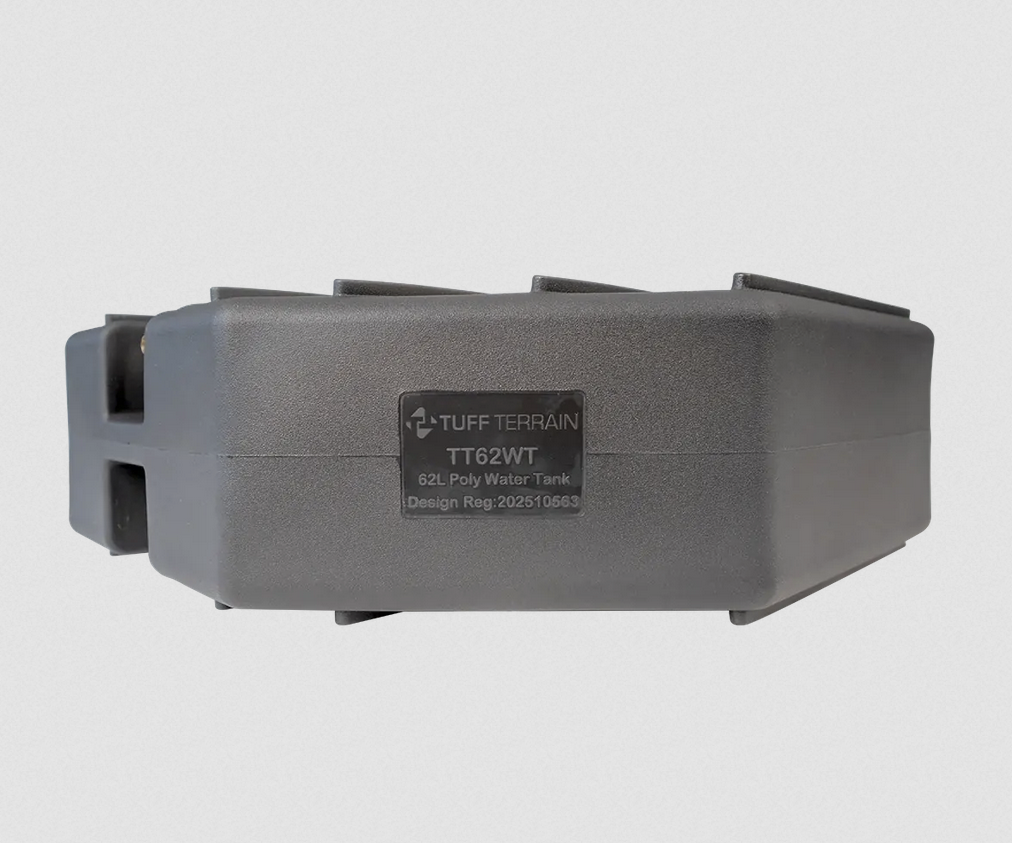
Products like the Tuff Terrain Spare Wheel Water Tank 62L (↗) and modular Outback Explorer water storage solutions (↗) are helping modern tourers maximise unused space while carrying more water safely for off-grid travel.
JUMP AHEAD
- Why a proper 4WD water tank setup matters
- How much water do you need for 4WD touring?
- Types of 4WD water tanks for touring setups
- What to look for in a 4WD water tank
- What about grey and waste water systems?
- Weight matters more than most people think
- Caravan and camper trailer setups
- Why a water tank can be essential
- FAQs
Why a proper 4WD water tank setup matters
Portable jerry cans still work, but dedicated water tanks offer a far cleaner and more practical solution for touring vehicles, especially once you start travelling longer distances or spending multiple nights off-grid.
A properly mounted tank doesn’t just store water, it changes how usable your setup is day to day. Instead of lifting heavy containers in and out of the vehicle, you get a fixed system that’s always ready to use, often with taps or pumps integrated directly into your setup. A properly installed tank:
• Keeps weight lower in the vehicle, improving handling on rough tracks
• Frees up valuable storage space in canopies or cabins
• Makes water access quicker and more convenient at camp
• Reduces movement and noise over corrugated roads
For longer trips, the biggest advantage is reliability. Water becomes a constant requirement in remote travel, and a fixed system ensures you’re not constantly managing loose containers or worrying about leaks and spillage.
How much water do you need for 4WD touring?
Water requirements vary significantly depending on trip length, climate and how self-sufficient you want to be.
In cooler conditions with minimal cooking, usage can be relatively low. In hot or remote environments, consumption increases quickly, especially if you’re washing up, showering or staying off-grid for extended periods. Most touring setups use water for:
• Drinking and hydration
• Cooking and food preparation
• Washing dishes and utensils
• Basic hygiene and cleaning
As a general baseline, 3 to 5 litres per person per day is considered the minimum for drinking and cooking only. However, once you factor in washing and comfort, real-world usage often sits closer to 5 to 10 litres per person per day. This is why 4WD touring water tanks typically fall into a few common ranges:
• 20 to 60L compact systems for weekend trips or solo touring
• 60 to 80L setups for mixed use and short off-grid stays
• 80 to 120L+ systems for extended remote travel or family touring
The right capacity comes down to balancing water independence with payload limits and available storage space in your build, whether it be underbody, portable or modular.
Types of 4WD water tanks for touring setups
Modern touring setups use a range of tank styles depending on layout, space and intended use. Each design solves a different storage challenge, and many builds use a combination of systems rather than a single tank.
Footwell water tanks (cabin-mounted storage)
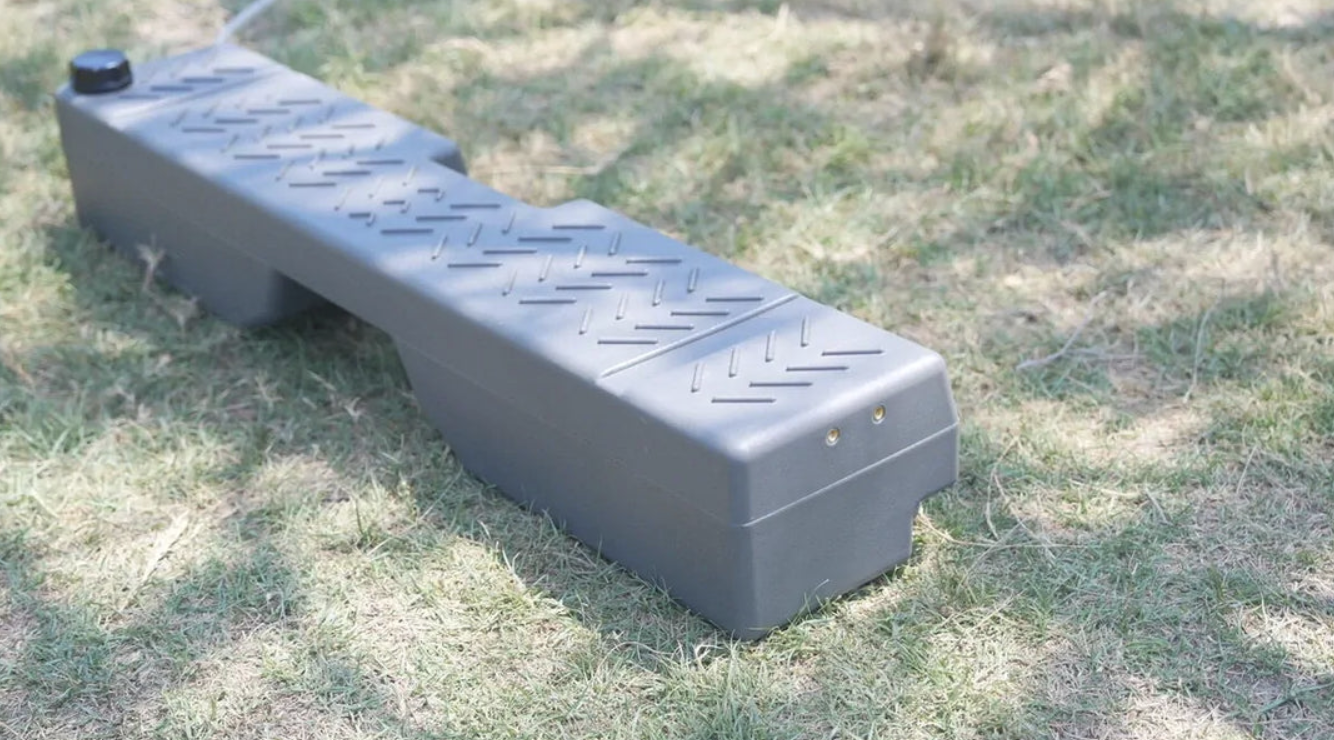
Footwell water tanks are designed to fit into unused cabin space, typically behind seats or in rear footwells. They have become especially popular in dual-cab touring setups where canopy space is already heavily used for drawers, fridges and gear storage. Compact solutions like the Tuff Terrain Poly Footwell Water Tank (↗) are increasingly used in dual-cab touring builds where every bit of canopy and drawer space counts.
Because they sit inside the cabin, these tanks are protected from external damage and temperature extremes. They also help centralise weight in the vehicle, which can improve balance on uneven terrain and reduce load on suspension components. They are best suited to weekend touring setups, compact dual-cab builds, and vehicles where canopy space is limited or fully utilised.
Underbody water tanks (long-range touring setups)
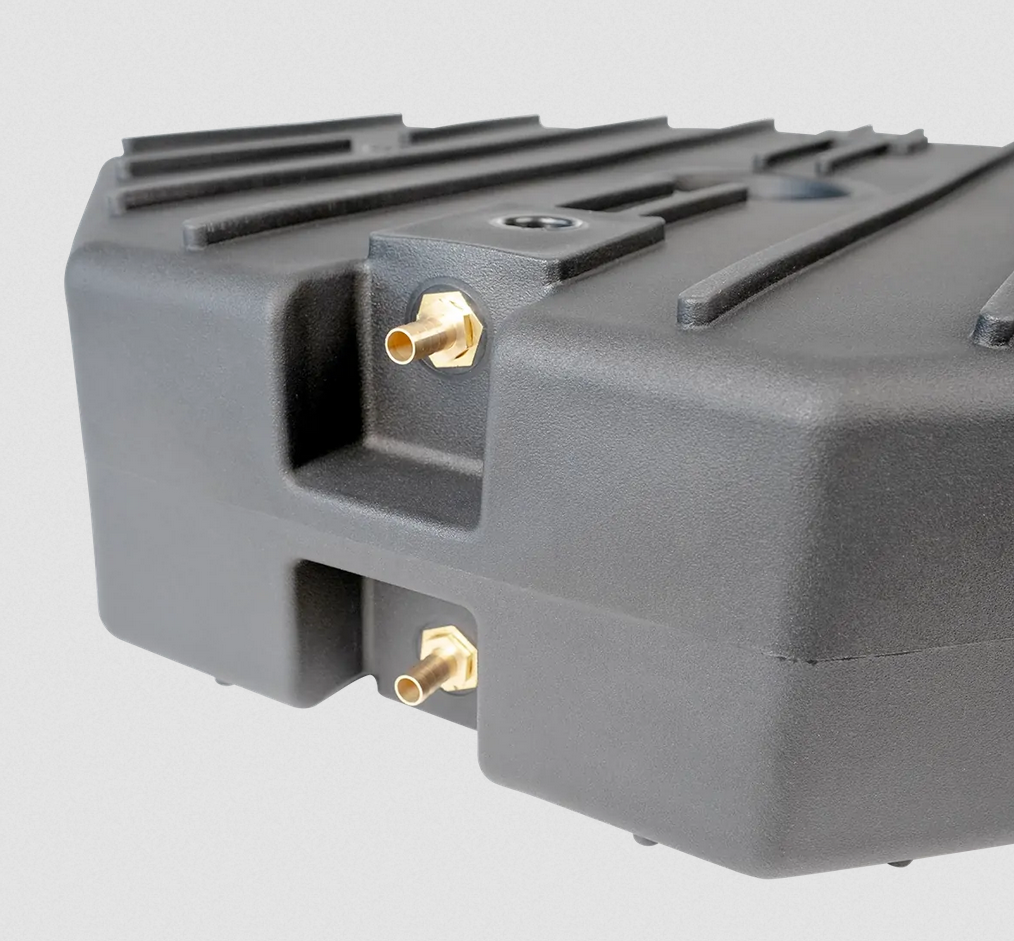
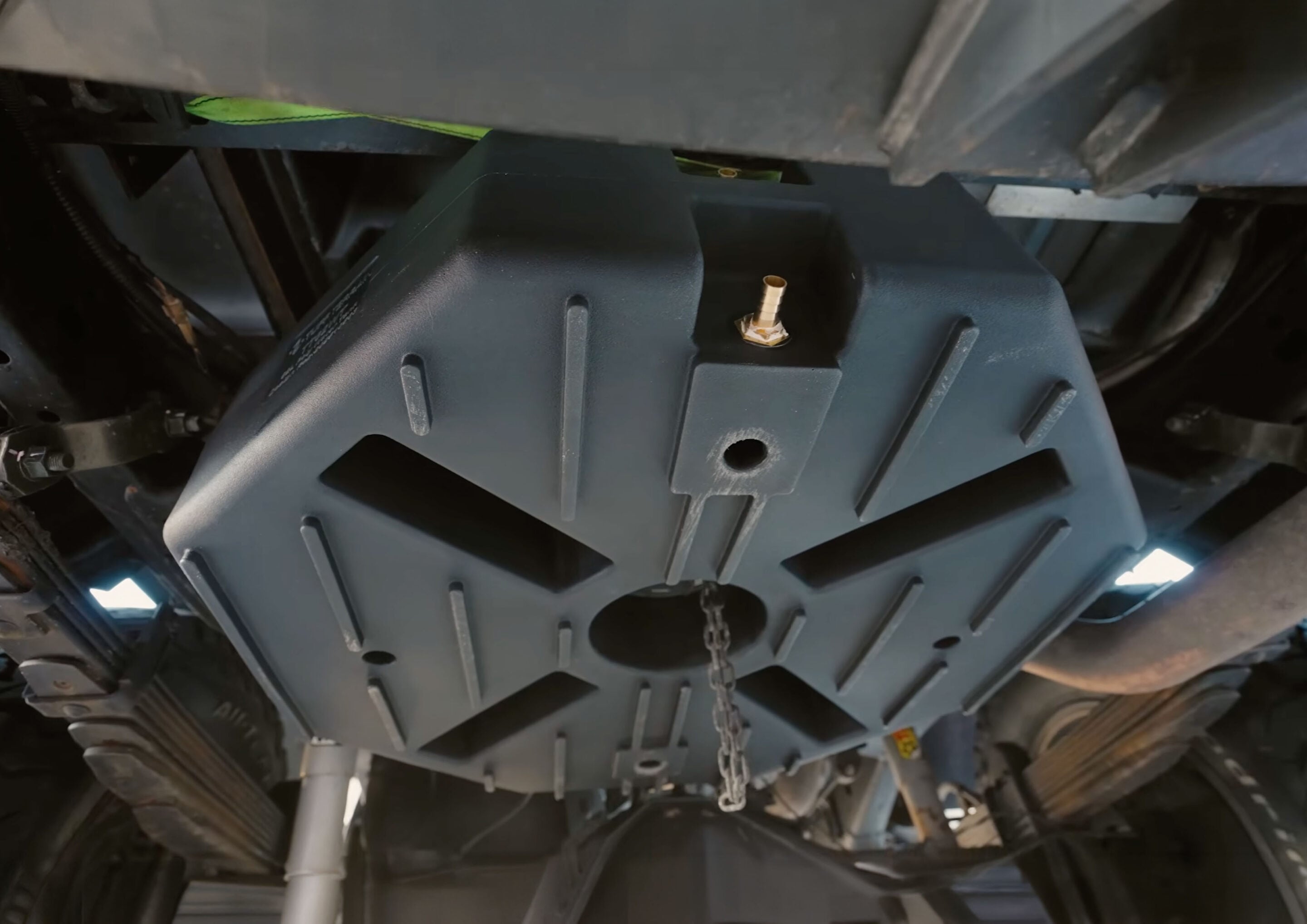
Underbody water tanks are mounted beneath the tray or chassis rails, allowing you to carry larger volumes without sacrificing internal storage space. This makes them particularly popular in long-range touring builds where space efficiency is critical.
These systems are often used in tray-back 4WDs, canopy builds and camper trailers where maximising usable storage above is a priority. The biggest advantage is capacity, you can carry significantly more water without affecting cabin or canopy layout. Underbody systems are particularly effective when paired with larger touring setups, while space-saving designs like the Tuff Terrain Spare Wheel Water Tank 62L (↗) utilise otherwise wasted spare wheel cavity space for high-capacity water storage.
However, because they are exposed, they must be properly mounted and protected. On rough tracks, they are subject to rocks, debris and impact, so build quality and installation are critical.
Vertical and modular water tank systems (canopy setups)
Vertical and modular tanks are designed to fit into tight or custom canopy layouts where space is limited or irregular. These systems are increasingly common in modern touring builds because they allow owners to tailor water capacity around their gear setup.
Modular systems are particularly useful because they can be expanded or reconfigured over time. This makes them ideal for evolving builds where storage needs change as trips become longer or more remote. Space-efficient designs like the Tuff Terrain 45L Vertical & Flat Water Tank (↗) and Tuff Terrain 42L Vertical Mount Tank (↗) are designed for tight canopy and tray setups, helping maximise usable storage space while still carrying practical water capacity for touring and camping.
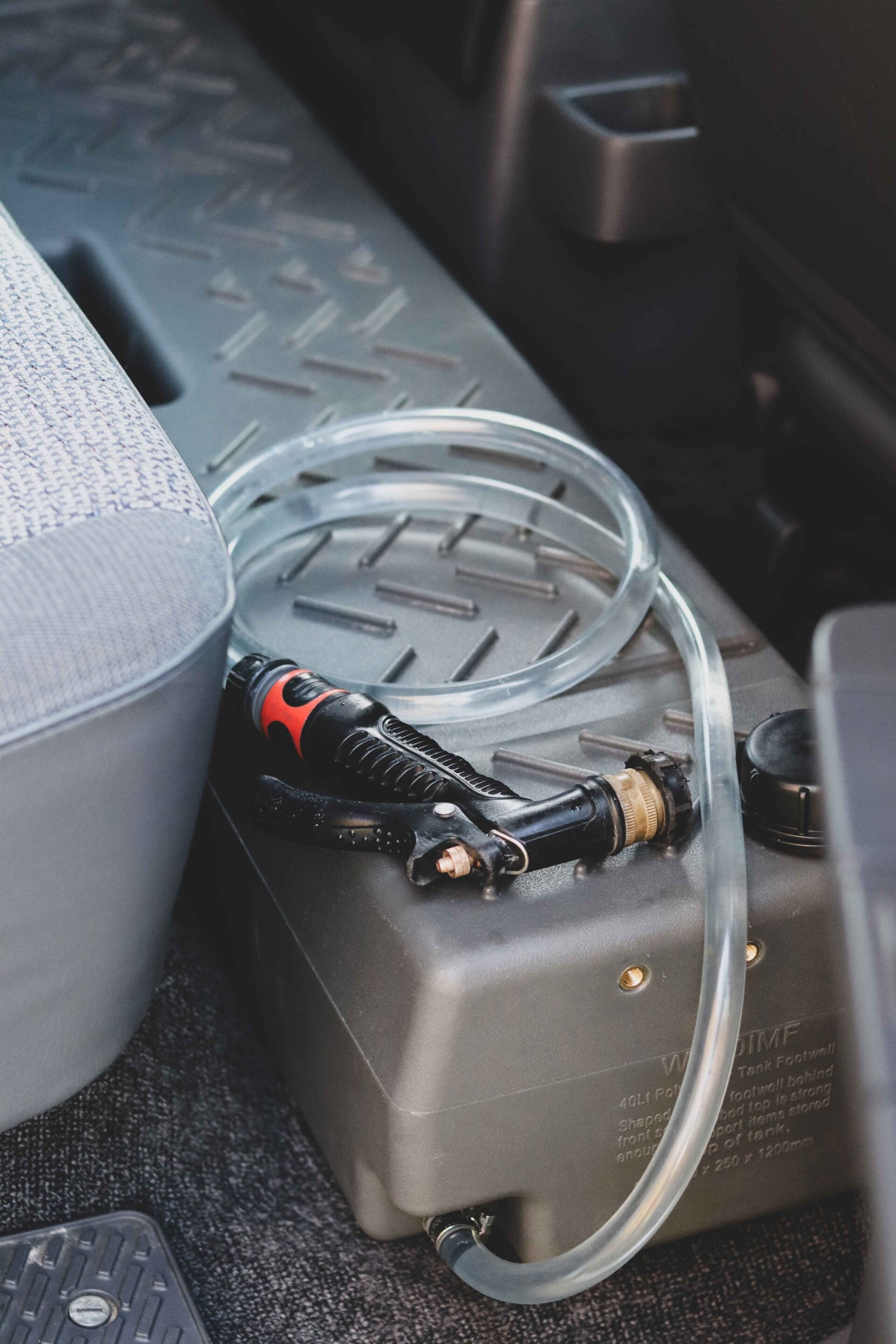
These systems can also be paired with optional pump kits for easier pressurised water access at camp, making them ideal for washing up, showers and general off-grid use. Outback Explorer pump kits (↗) are also commonly used in touring setups for similar applications. They also help distribute weight more evenly throughout the canopy, rather than concentrating it in a single area.
What to look for in a 4WD water tank
Choosing the right water tank is about more than just size, it’s about durability, compatibility and long-term reliability in off-road conditions.
Food-grade material quality: Most quality touring water tanks use food-grade polyethylene designed for potable water storage. This is essential for maintaining water safety over long periods, especially in warm conditions where lower-quality plastics can affect taste or encourage algae growth. Good-quality materials also improve resistance to cracking, UV exposure and long-term wear, which is important in vehicles exposed to constant movement and vibration.
Mounting strength and off-road durability: Water weight increases quickly, and a full tank places consistent load on mounting points. This is especially important on corrugated roads where vibration is constant. Because 1L of water equals approximately 1kg, even a mid-sized tank can add significant weight once filled. Poor mounting systems often fail not from static load, but from repeated vibration over time. Secure mounting and proper bracing are essential to ensure the tank remains stable and safe under off-road conditions.
Shape and space efficiency: Efficient tank design plays a major role in modern 4WD builds. Instead of using generic rectangular tanks, many setups now rely on purpose-shaped designs that fit into unused or awkward spaces. This includes footwells, wheel arches and vertical canopy gaps that would otherwise go unused. These designs help maximise water capacity without compromising storage for other essential touring gear.
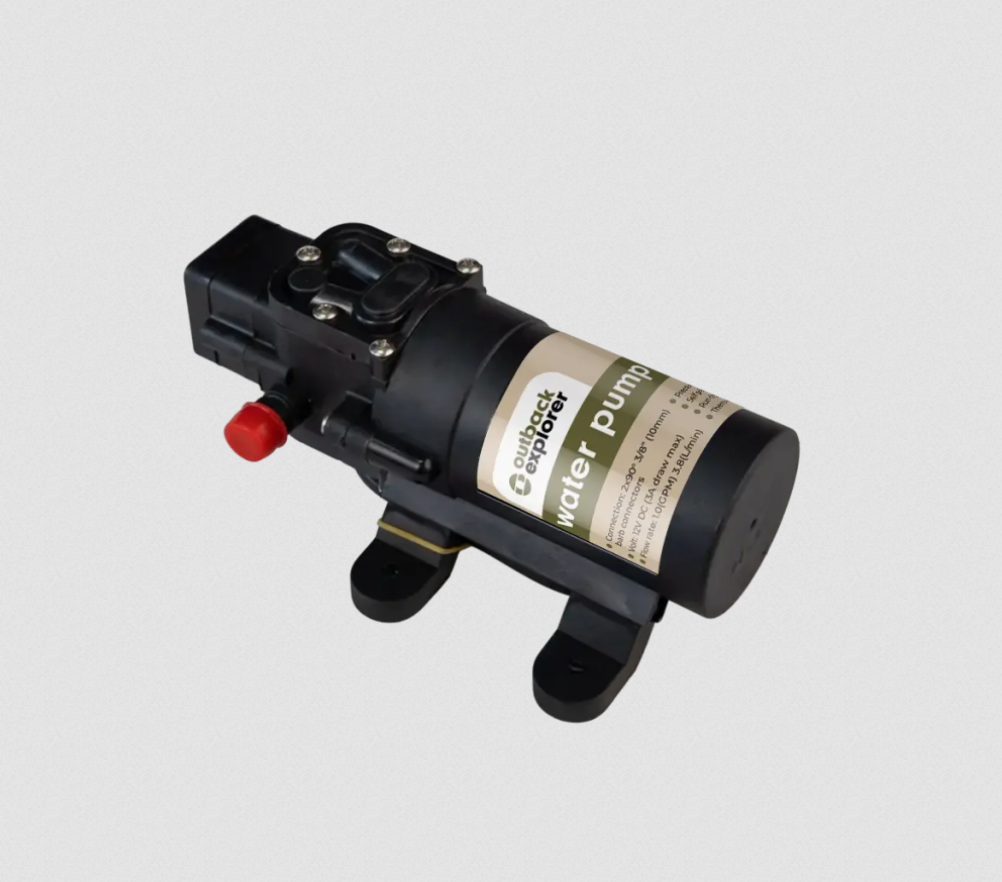
Water pumps, fittings and touring accessories: Once a water tank is installed, additional components can significantly improve usability and convenience at camp.
12V water pumps: A 12V pump allows for pressurised water delivery, making tasks like washing dishes, filling bottles or running camp showers far easier. Instead of relying on gravity-fed systems, pressurised setups provide consistent flow similar to household taps. This is now a standard upgrade in many touring builds because it dramatically improves usability without adding much complexity. Reliable pump systems such as the Outback Explorer 12V Water Pump (↗) are commonly used in touring and caravan setups to provide consistent pressurised water flow for camp kitchens, showers and general use.
Quick-connect fittings and hose systems: Quick-connect systems simplify water transfer between tanks, jerry cans or external sources. This becomes especially useful on longer trips where refilling is frequent and efficiency matters. They also reduce mess and spillage, which is a common issue when handling water in remote or uneven terrain. Pairing tanks with quality hose kits, quick-connect fittings and portable pumps can make refilling and camp setup significantly faster, especially on extended remote trips.
Tank level monitoring: Water levels are difficult to estimate accurately, especially in opaque tanks or modular systems. Simple gauges or digital monitoring systems provide real-time feedback, helping avoid unexpected shortages. This is particularly important in remote areas where water access is limited or unreliable.
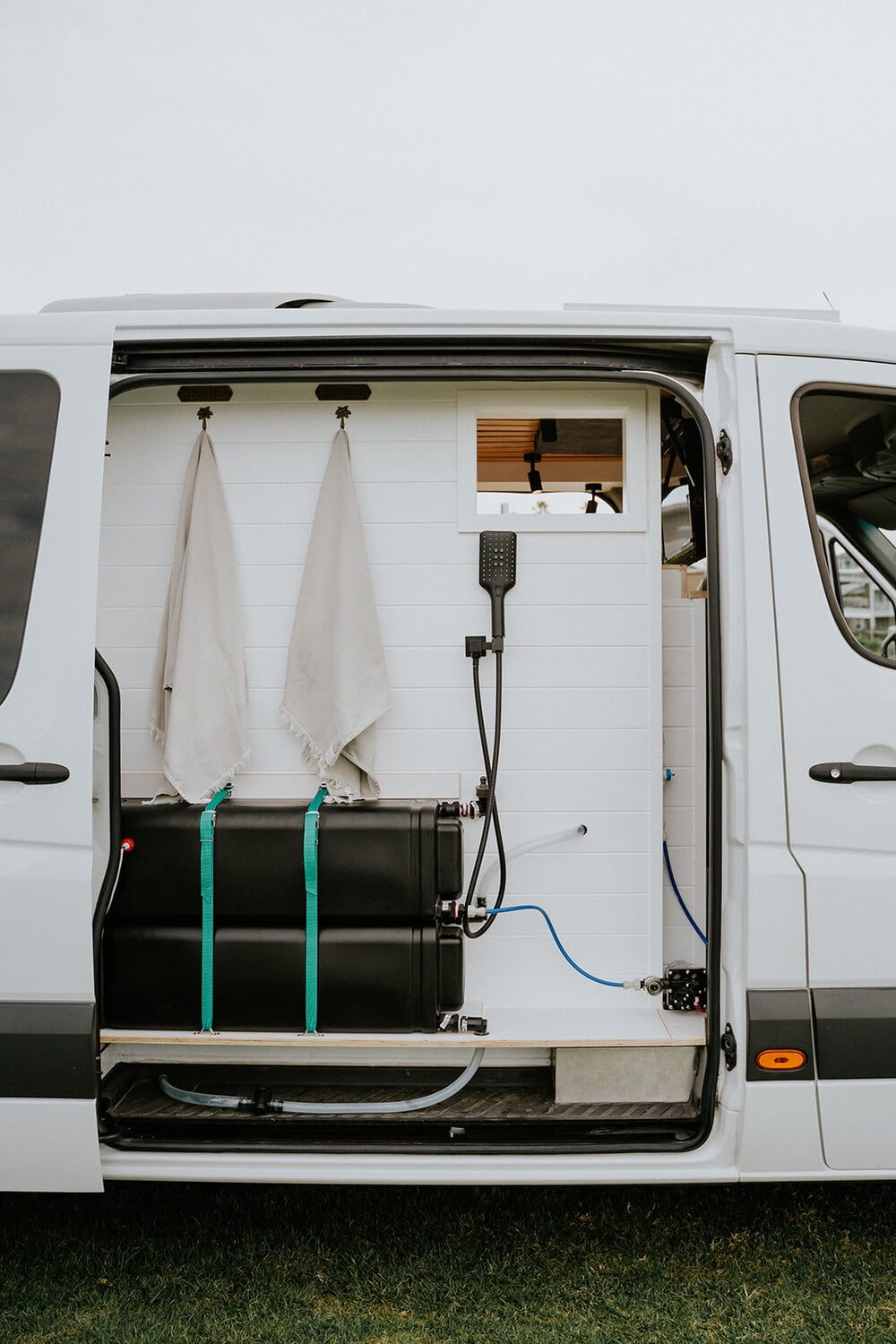
What about grey and waste water systems?
Grey water refers to wastewater from sinks, showers and washing up, while black water comes from toilets in camper trailers and caravans.
In most 4WD touring setups, grey water management is the more relevant consideration, especially when camping in areas with strict environmental rules or sensitive ecosystems. Simple diversion systems can route sink or camp kitchen runoff into a dedicated container, allowing it to be disposed of responsibly at approved dump points.
More advanced setups integrate underbody grey water tanks that store waste temporarily while travelling. Black water systems are typically only found in caravans and camper trailers, where sealed holding tanks and regulated disposal points are required.
Weight matters more than most people think in touring setups
Water is one of the heaviest consumables in any 4WD build, and its impact on vehicle dynamics is often underestimated.
When combined with other touring gear such as drawers, fridges, dual batteries, rooftop tents and recovery equipment, payload can be consumed quickly. Poor weight distribution can also affect handling, braking and suspension wear, especially on uneven or corrugated tracks. That’s why placement is just as important as capacity. Keeping water low and central helps maintain stability and reduces strain on the vehicle.
Caravan and camper trailer water tank setups
Water storage principles are similar in caravans and camper trailers, but capacity and usage patterns are often larger due to extended stays in one location.
Because caravans carry more overall weight, distribution becomes even more critical, particularly in relation to tow-ball load and axle balance. Most setups include combinations of:
• Fixed underbody tanks such as the Tuff Terrain Spare Wheel Water Tank 62L (↗)
• External fill points
• 12V pump systems
• Hot water systems for showers
Why a water tank is essential
A well-designed water system is one of the most underrated upgrades in any touring build. While it does not get the attention of suspension or tyres, it has a direct impact on how long and how comfortably you can travel off-grid.
Modern 4WD water tank systems make it far easier to carry enough clean water safely, without wasting valuable storage space or relying on loose containers. Whether it’s a compact footwell setup for weekend trips or a full underbody system for long-range touring, the right setup adds genuine independence once you leave sealed roads behind. When you’re days from the nearest town, reliable water storage stops being a convenience and becomes essential.
FAQs
What size 4WD water tank do I need for touring?
Most touring setups range from 20 to 40L for short trips up to 80 to 120L+ for extended remote travel, depending on occupants and usage.
Are 4WD water tanks better than jerry cans?
Yes. Tanks offer better weight distribution, easier access and improved storage efficiency compared to loose containers.
Where should I mount a water tank in a 4WD?
Common locations include underbody mounting, cabin footwells and inside canopy storage systems depending on vehicle layout.
Do I need a pump for a 4WD water tank?
Not always, but a 12V pump greatly improves usability for washing, drinking and camp showers.
Are underbody water tanks safe off-road?
Yes, provided they are properly mounted, reinforced and protected from impact and debris on rough terrain.
What is a spare wheel water tank?
A spare wheel water tank is a space-saving water storage solution designed to utilise the unused cavity inside a spare wheel location. Products like the Tuff Terrain 62L Spare Wheel Water Tank (↗) allow tourers to carry large water capacity without sacrificing valuable canopy or tray space.
Since having the X-Spec equipment from Expedition fitted to our INEOS Grenadier long-termer last month, we’ve had a chance to get out and use it; specifically the X-Spec on-board shower system.
This setup combines the X-Spec lockable jerry can holder (↗) with the Australian-made On Tap portable shower system (↗). The system starts with the jerry can holder, which is manufactured by Expedition HQ (↗) from aluminium and powder-coated for a durable, weather-resistant finish. The holder is mounted securely to the side of the vehicle using an X-Spec frame finished to match. We opted to mount it on the passenger side, as the X-Spec auxiliary fuel tank (↗) is fitted on the opposite side. The holder sits snugly against the body of the wagon and doesn’t protrude beyond the rear-view mirrors.
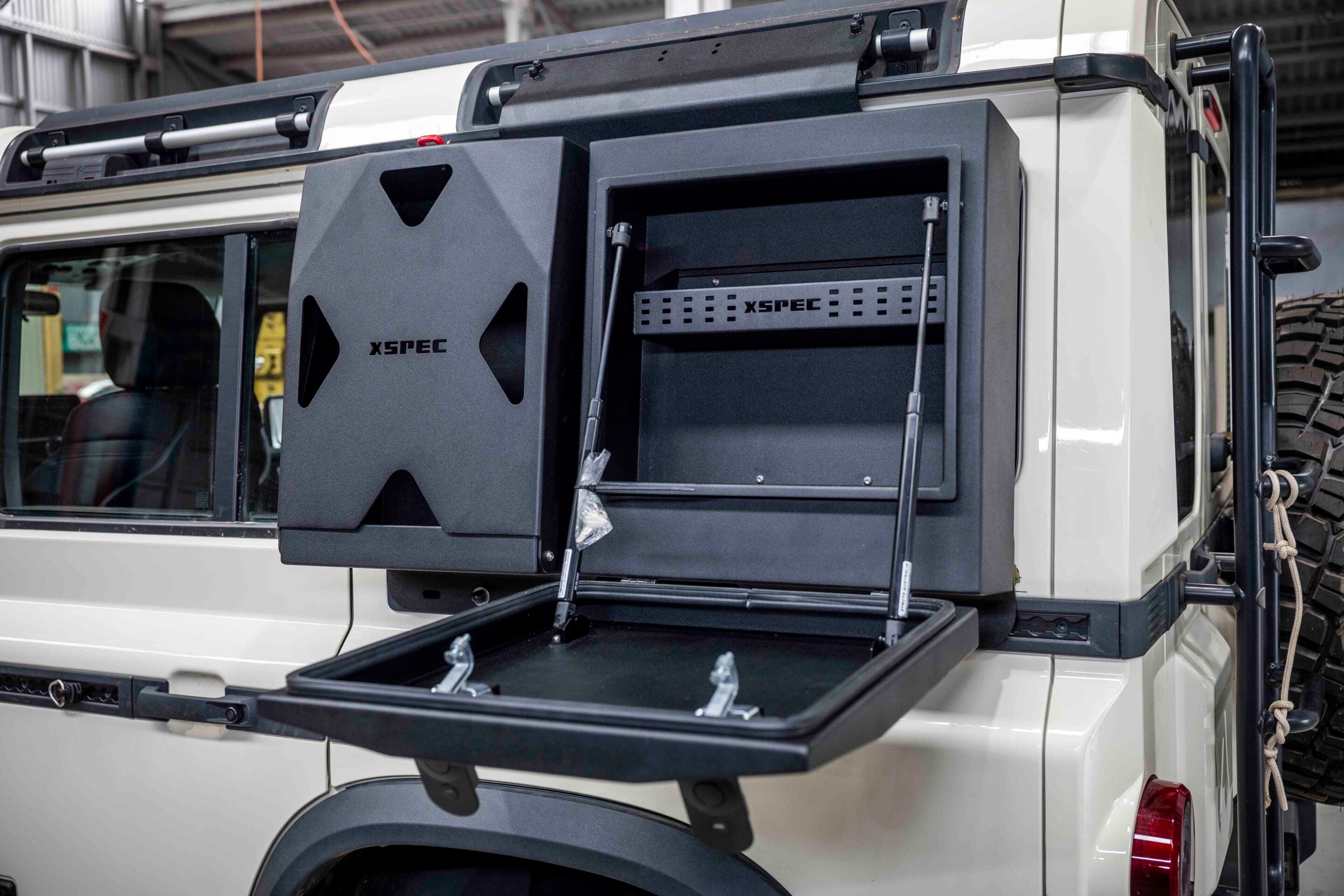
The lockable carrier neatly houses the On Tap 20L water tank, keeping it secure while remaining easy to access when needed. The On Tap kit uses a 12V pump to feed water through a hose and shower head wherever and whenever you need it. Power is supplied via a lead that runs to the 12V outlet in the Grenadier’s cargo area, with enough length to reach comfortably.
The coiled hose is easy to deploy and can be used with either a standard hose outlet or the shower head. X-Spec also offers an optional shower head with a mounting bracket to make hands-free use easier. Add a simple shower tent and you’ve got a practical setup for rinsing off after a swim or washing up at camp. The 20L tank and pump combination is claimed to deliver around five minutes of shower time. User tip: Park the vehicle so the tank faces the sun as the black jerry can absorbs heat and helps warm the water inside.
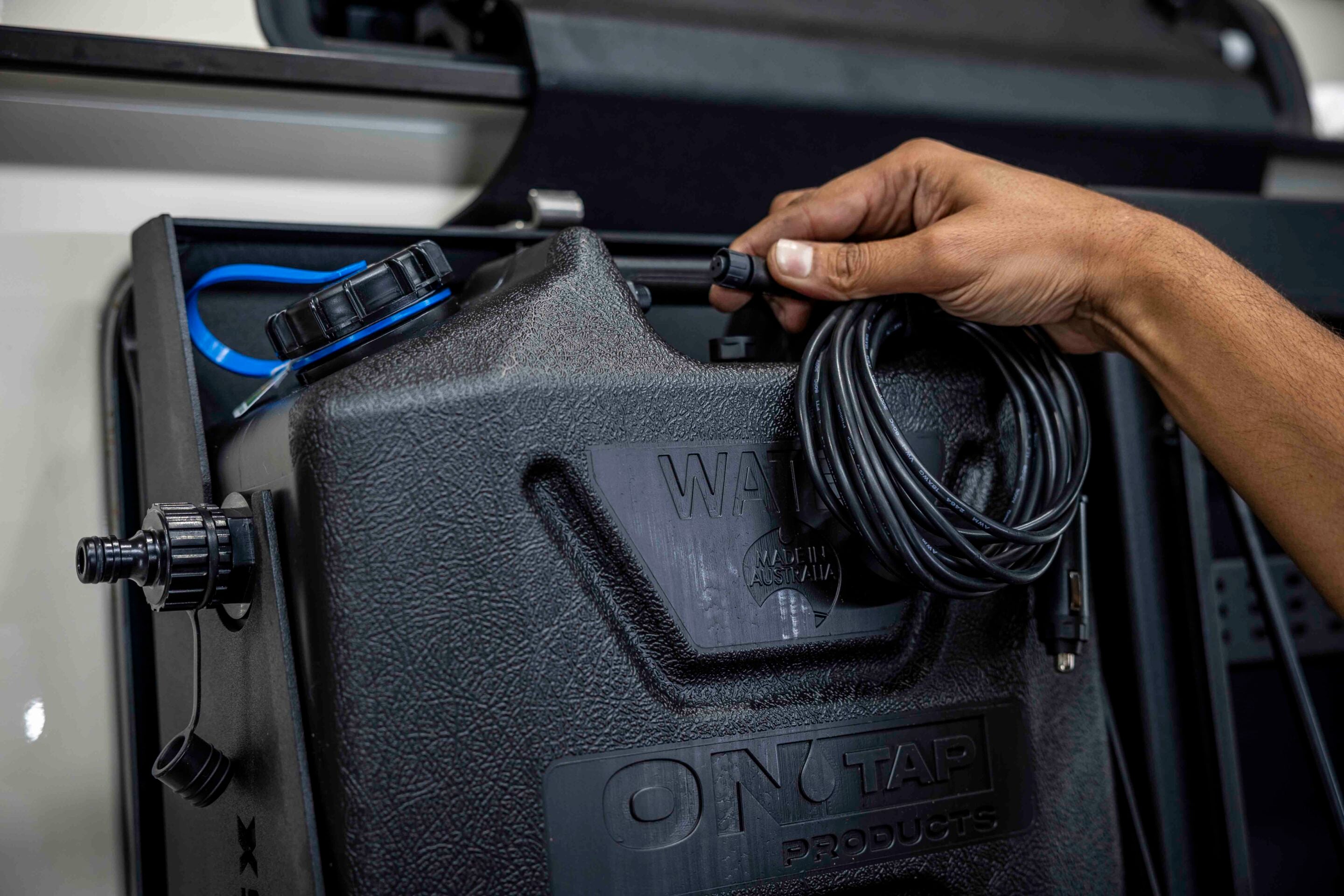
Cristian and his boys have been putting the system to good use, from rinsing off after a surf to washing mud off the Grenadier following a recovery.
The X-Spec accessories were fitted to our Grenadier by the team at Xceed Autocare in Braybrook (↗), who did an excellent job with care and attention to detail.
Pricing
- On Tap shower kit: $235
- X-Spec mounting system: $849
Mitsubishi Motors Australia has leant on Melbourne vehicle engineering firm Premcar to give its Triton midsize ute a tune-up.
The result is the Triton Raider, a halo model based on the range-topping GSR-spec Triton. The changes are centred around vehicle dynamics, with improvements to ride and handling designed to improve the ute’s performance both on and off-road.
If the Premcar name sounds familiar, it’s probably because you heard of the company when it worked its magic on the Nissan Navara and Patrol to create the Warrior models with great success. Premcar hasn’t strayed far from that successful formula with the Mitsubishi ute and the result is again a triumph.
Mitsubishi saw the popularity of higher-spec models in the ute market and wanted a halo model of its own. It also wanted to draw on its successful history in rally-raid racing with the Pajero models of the past and current racing operations with the Triton in South-East Asia. Hence the Raider name was chosen for this rally-raid-inspired model.
As the halo model, the Raider sits at the top of the Triton price list, coming in at $74,990 (+ORC). That’s almost $10K more than the next model down the range, the GSR Triton. The Triton Raider is only available in a double-cab 4×4 ute configuration.
JUMP AHEAD
- Premcar-engineered upgrades
- Interior and engine relatively unchanged
- On- and off-road driving impressions
- Verdict
- Specs
Premcar-engineered upgrades
Premcar didn’t have to reinvent the wheel when it came to improving the chassis of the Triton.
When we conducted our midsize ute test last year, our judges agreed the Triton chassis was already a great package that made the Mitsubishi one of the more fun utes to drive on dirt. Premcar turned its attention to the basics of ride and handling, specifically the tyres and suspension.
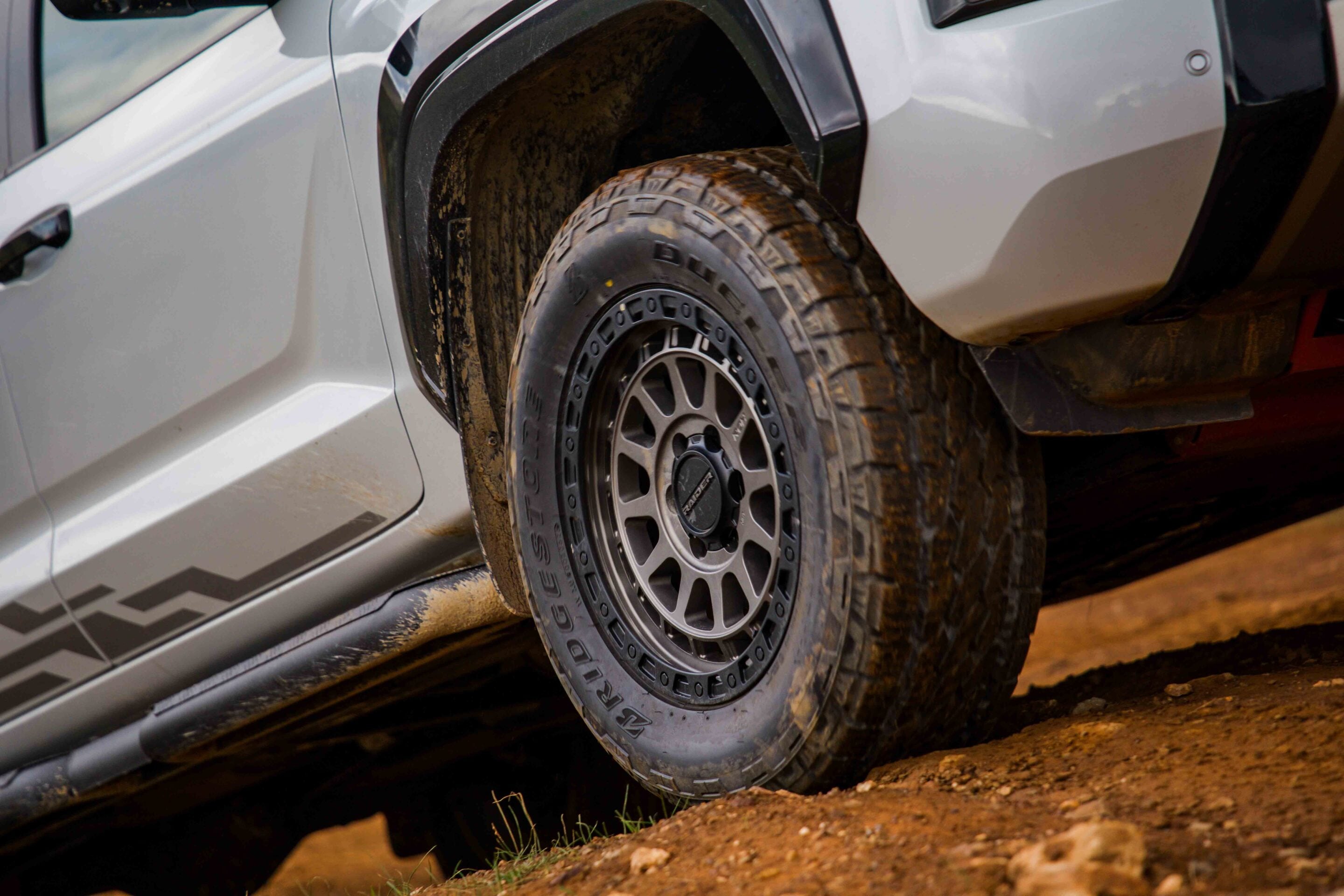
A bigger and more aggressive tyre was sought for both on- and off-road performance as well as looks, but without compromising ride comfort. The team settled on Bridgestone’s Dueler A/T 002 all-terrain tyre for the job and it fits the brief perfectly. The A/T 002 has a fairly mild tread pattern compared to some all-terrain off-road tyres and it uses a lighter construction to retain its passenger-car rating instead of the heavier light-truck (LT) rating.
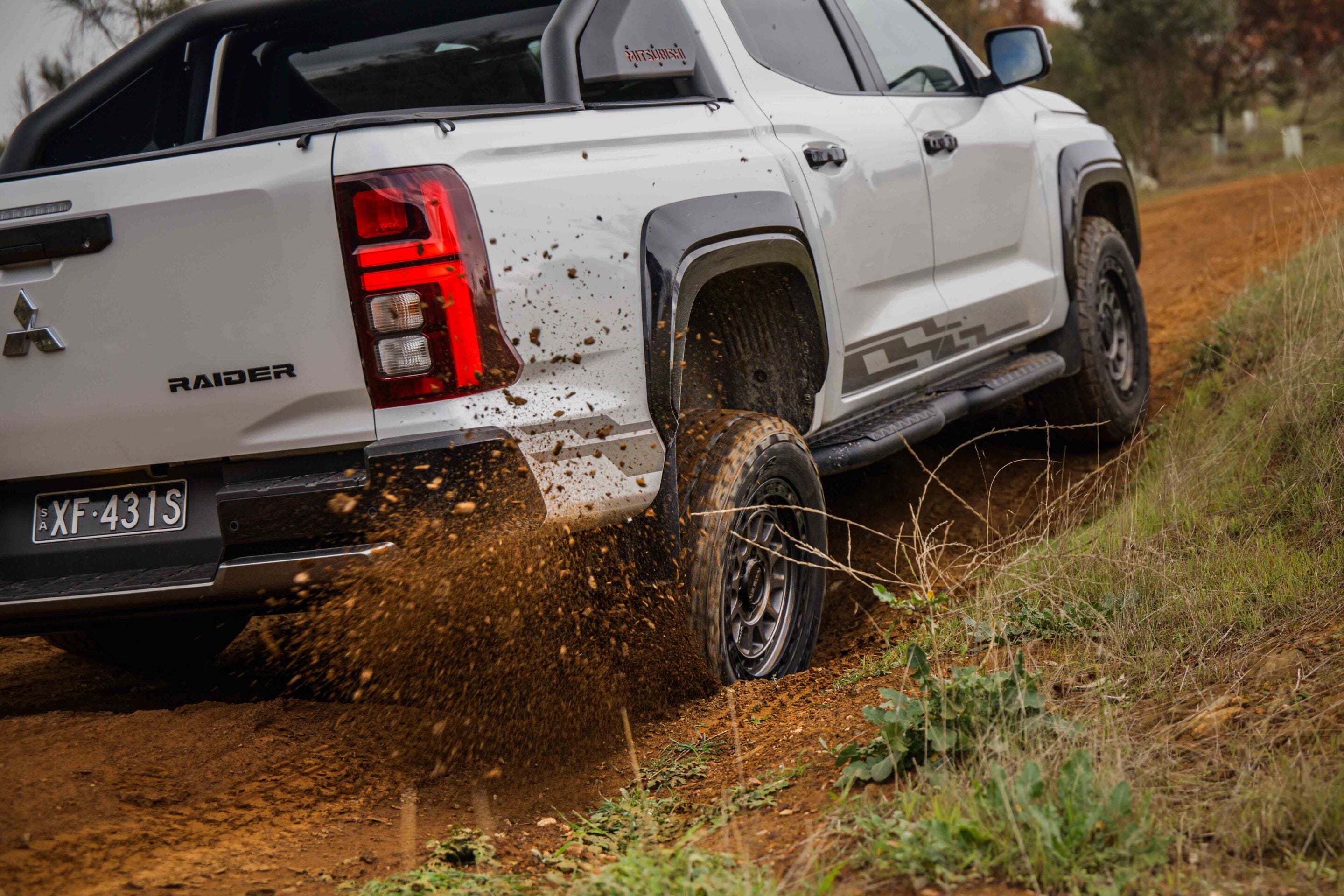
This lighter construction has huge benefits in ride quality and handling over an LT-rated tyre, while the construction and tread pattern are certainly capable of tackling most off-road conditions.
The A/T 002 Bridgies are 285/60R18s on the Raider, essentially a 33 in the old money. They are fitted to ROH Assault alloy wheels that have a bespoke offset to sit perfectly in the Raider’s wheel arches and are finished in a Raider-specific hue. These are not off-the-shelf ROH Assaults; they have been manufactured specifically for the Triton Raider and made to fit just right. The size and backspacing of the wheels give the Raider a 21mm increase in wheel track over the regular Triton GSR. This not only gives the Raider a stronger presence on the road but also improves its handling characteristics.
For the suspension, Premcar turned to its partner Monroe to supply the bespoke front struts. These include specific valving and tuning for the Triton Raider, along with internal rebound springs that work with extended bump stops to smooth out those sudden bumps when driving off-road.
The coil springs give a 10mm increase in ride height, which results in a 25mm overall increase once you add in the taller tyres. The rear leaf springs and dampers are matched to the front but also retain the Triton’s load and towing ratings. Of course, it wouldn’t be a hero model without a sticker pack and we’re glad Mitsubishi has kept this relatively subdued, although the styling bar on the tub is over the top.
Interior and engine relatively unchanged
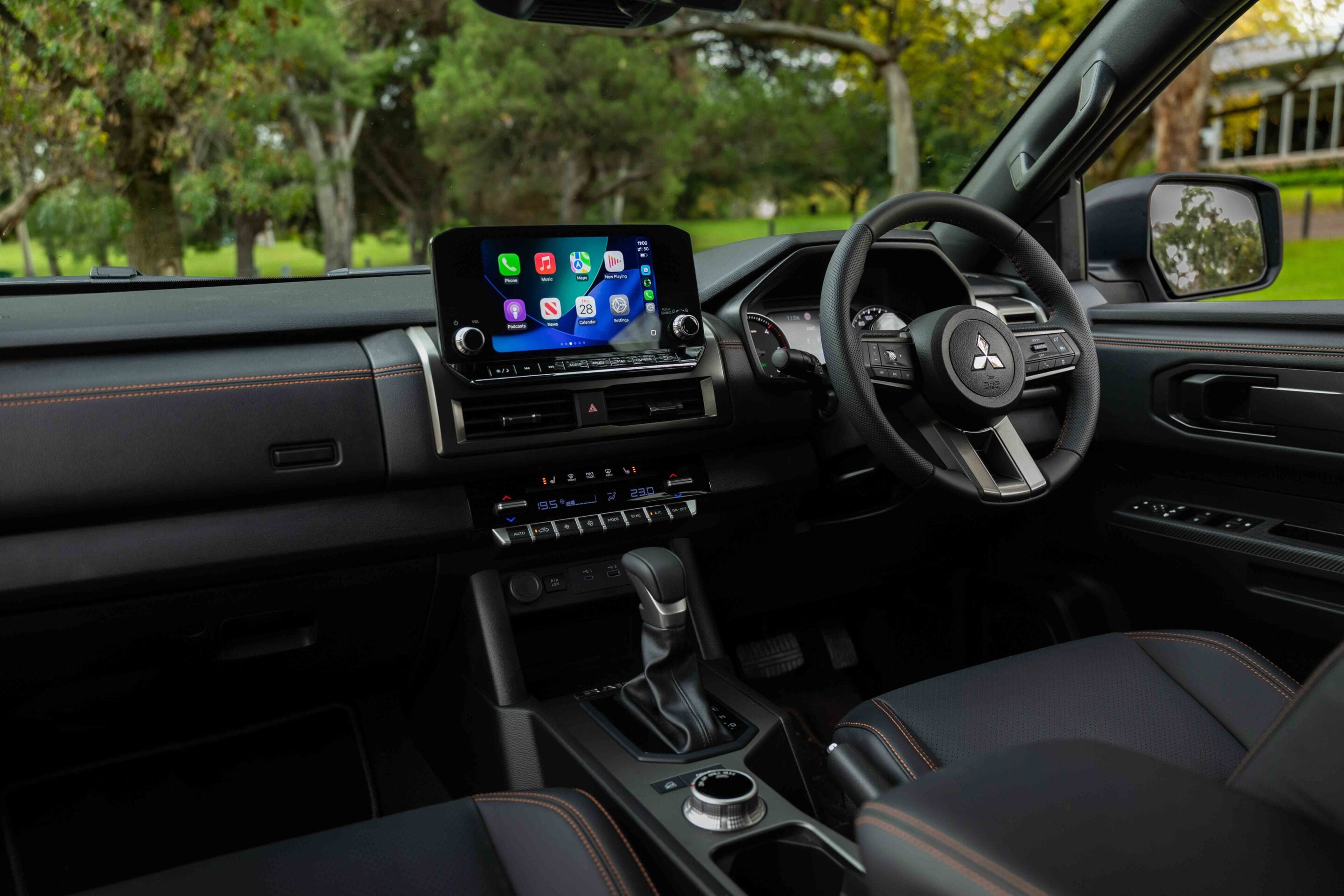
Inside, the Raider retains the high-spec Triton GSR features and trim, with just Raider branding on the headrests and a console badge. Standard kit includes heated and power-adjustable front seats, leather trim, a 9-inch infotainment screen and the full suite of ADAS systems.
Under the bonnet is the standard 2.4-litre diesel engine, pumping out a claimed 150kW and 470Nm through a six-speed automatic transmission and Mitsubishi’s Super Select 4×4 system that gives drivers the choice of two-wheel drive, full-time 4×4 and locked 4×4 in both high and low range. The rear differential is also lockable.
On- and off-road driving impressions
Our first drive of the Triton Raider took us to Adelaide and the Adelaide Hills 4×4 Park, which gave us a great mix of off-road driving plus sealed and unsealed public roads.
First impression on the city streets was a reminder of how annoying I find this six-speed transmission at a suburban pace, as it constantly shifts up and down through the ratios seemingly unnecessarily. This isn’t limited to the Raider but applies to all Tritons with this transmission, as well as the Nissan Navara, which shares this driveline.
Things got better once we broke free of the city’s shackles and hit the highway, where the Raider cruised nicely at highway pace with none of the transmission’s nonsense and a solid feeling from the chassis. The all-terrain tyres gave no indication of their presence on the road, which would be appreciated by many users, and they didn’t feel affected by a rain shower.
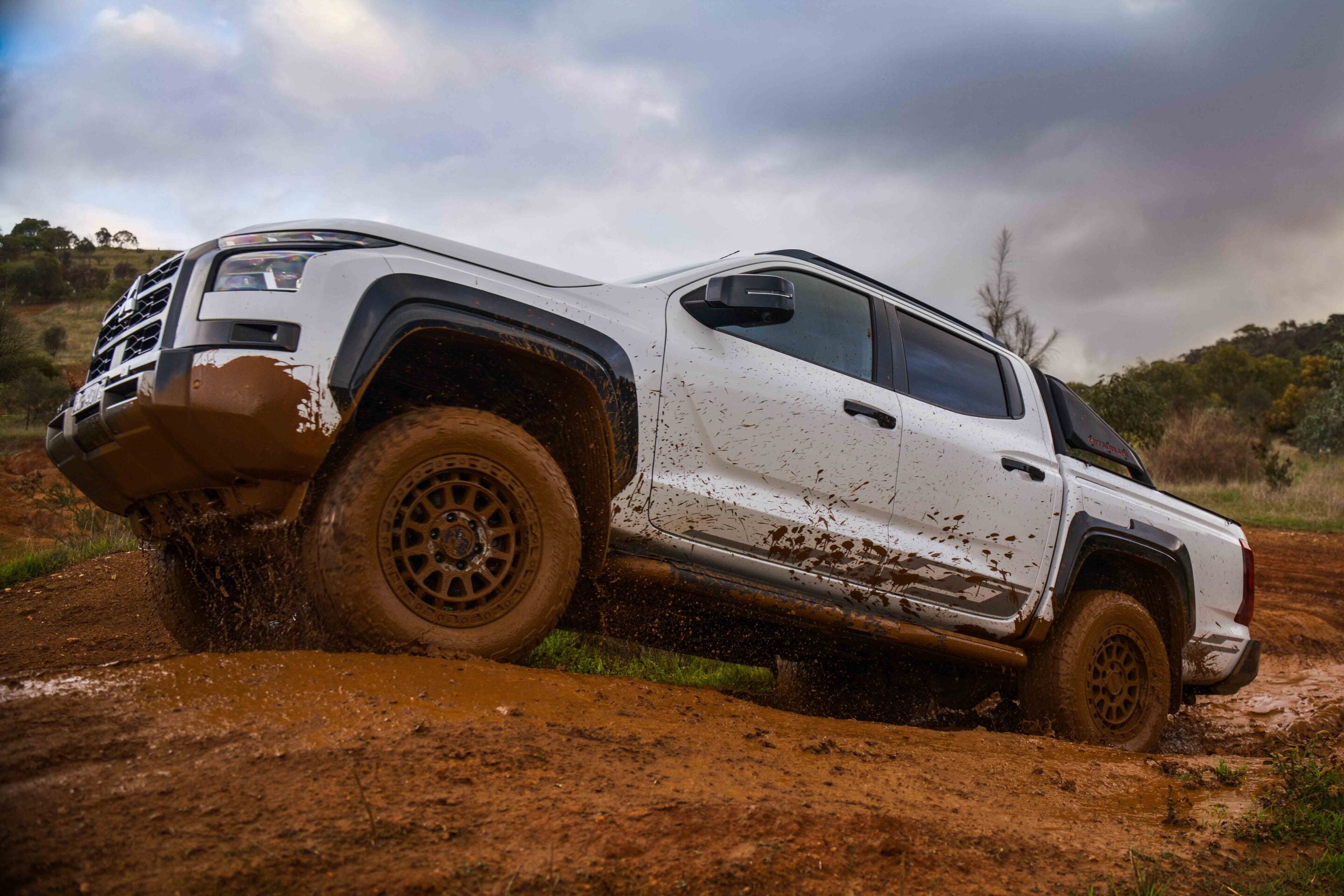
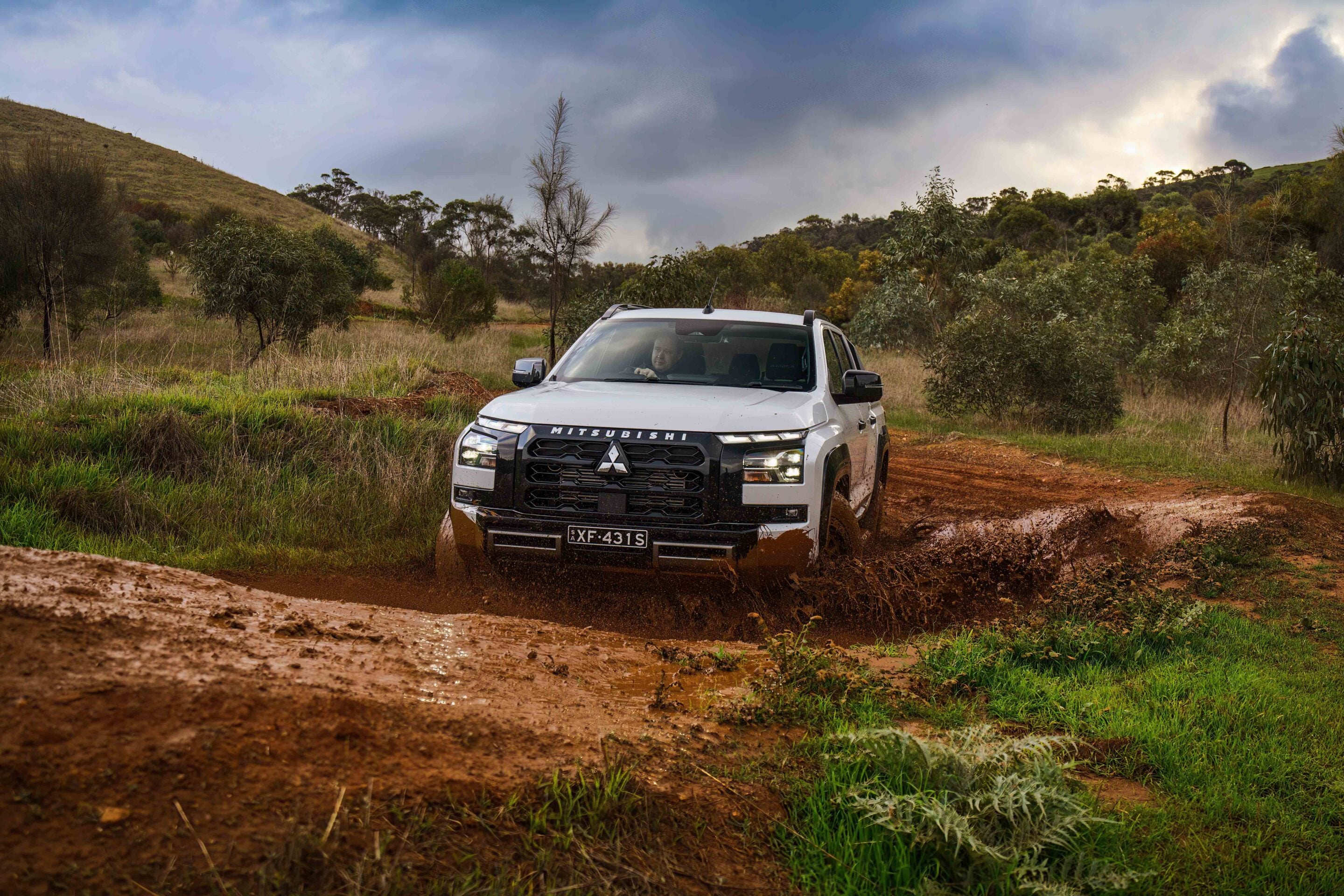
The tyres and suspension really came into their own when we reached the 4×4 park, where that rain had made most of the tracks wet. The Triton Raider crawled its way up through the wombat holes, where the rear diff needed to be locked to ensure progress. I’m sure it would have done the climb on traction control alone in dry conditions. The suspension felt sure-footed as we explored the property’s tracks and creek crossings.
More revealing was a drive on rough roads outside the park, where the Raider was composed and well-controlled in conditions that varied from wet gravel roads to potholed sealed backroads. The Raider package gives the driver confidence in the vehicle that you don’t feel in regular 4×4 utes. Again, it’s composed and controlled, and responds well to enthusiastic driving.
Verdict
The Triton Raider is no Ranger Raptor in terms of powertrain and suspension performance, but it is considerably cheaper than the Ford performance ute.
That said, the Raider is nearly $10K dearer than the GSR base vehicle, and that could be considered a lot of money for what is essentially wheels, tyres and suspension. The big difference here is that these wheels, tyres and suspension have been professionally selected, tested, tuned and developed over thousands of kilometres by the teams at Premcar and MMAL. The end result is a package that works in tune with the donor vehicle and its enhancements, while retaining all of the ride comfort, performance and features of the factory model, along with full warranty and aftersales service.
Even though the Raider was SSM-developed by Premcar, it was done in conjunction with MMAL, so the Raider retains MMAL’s 10/10/10 Diamond Advantage warranty program comprising a 10-year/200,000km manufacturer’s warranty, 10-year capped-price servicing and roadside assistance.
Specs
| Specs: Triton Raider | |
|---|---|
| Price | $74,990 (+ORC) |
| Engine | 2.4-litre four-cylinder diesel |
| Power | 150kW |
| Torque | 470Nm |
| Drive type | Super Select 4×4 |
| Transmission | Six-speed automatic |
| Length | 5350mm |
| Width | 1930mm |
| Height | 1832mm |
| Wheelbase | 3130mm |
| Front tyres | 285/60R18 Bridgestone Dueler A/T 002 |
| Rear differential | Lockable rear diff |
| Wheel track increase | +21mm over Triton GSR |
| Ride height increase | +10mm (coil springs), +25mm total with tyres |
| Wheels | ROH Assault alloy (Raider-specific offset) |
Toyota has issued a recall affecting 13,042 Prado vehicles built from 2024 to 2025.
A further 2593 vehicles from the Lexus range are also affected, including the GX 550 and several UX variants spanning electric and hybrid models, due to a shared underlying system architecture.
The recall relates to a software fault that may prevent the instrument cluster from correctly displaying key warning indicators, including the engine oil pressure warning light, coolant temperature warning, electrical charge indicator and other critical safety messages.
If the fault occurs, drivers may not be alerted to important vehicle system warnings, reducing their ability to respond to mechanical or electrical issues while driving. Toyota says this could increase the risk of an accident.
All Prado variants are powered by the 1GD-FTV 2.8-litre turbo-diesel paired with an eight-speed automatic, assisted by Toyota’s 48-volt V-Active mild-hybrid system. The mild-hybrid doesn’t increase outputs but improves efficiency and refinement, with peak figures remaining at 150kW and 500Nm.
The Prado features full-time four-wheel drive with a dual-range transfer case and lockable centre differential. A rear differential lock isn’t standard across the range, with only higher-spec variants getting one. The Lexus GX 550, by contrast, runs a 3.5-litre twin-turbocharged V6 petrol producing 260kW and 650Nm.
Owners of affected vehicles will be contacted in writing and asked to book in with an authorised dealer for rectification, with repairs carried out free of charge. A software update will also be available over the air (OTA), letting owners install the fix via the vehicle’s multimedia system without visiting a dealership.
If you are buying a Toyota Prado 250 with touring in mind, the question of what to do with the suspension is not something you can leave for later. It is one of the first decisions to make, and for good reason.
The 250 is a strong wagon straight off the showroom floor. Full-time 4×4, solid chassis rigidity, a proven turbo-diesel and a factory set-up that holds up well across the Gibb River Road or a run out to Birdsville on corrugated dirt. It is hard to fault as a starting point.
The problem is what happens once you start building it. Bull bar and winch on the front, long-range tank underneath, drawers in the back, recovery gear stashed across the floor. Each item makes sense in isolation. Together they push the vehicle well past the weight limitations Toyota engineered the factory suspension around. Add a caravan on the towball and passengers in the back, and the capacity the engineers designed for is long gone.
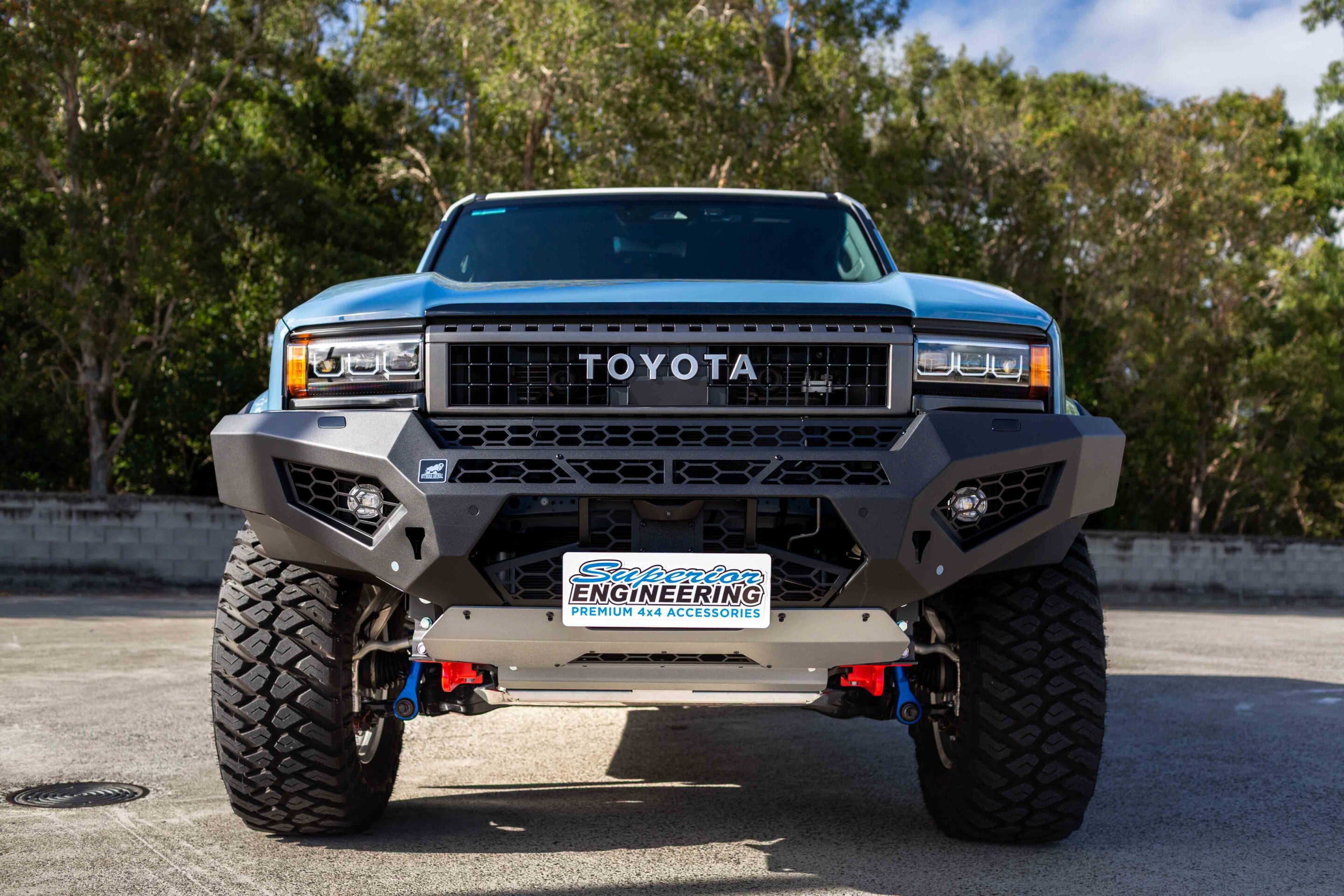
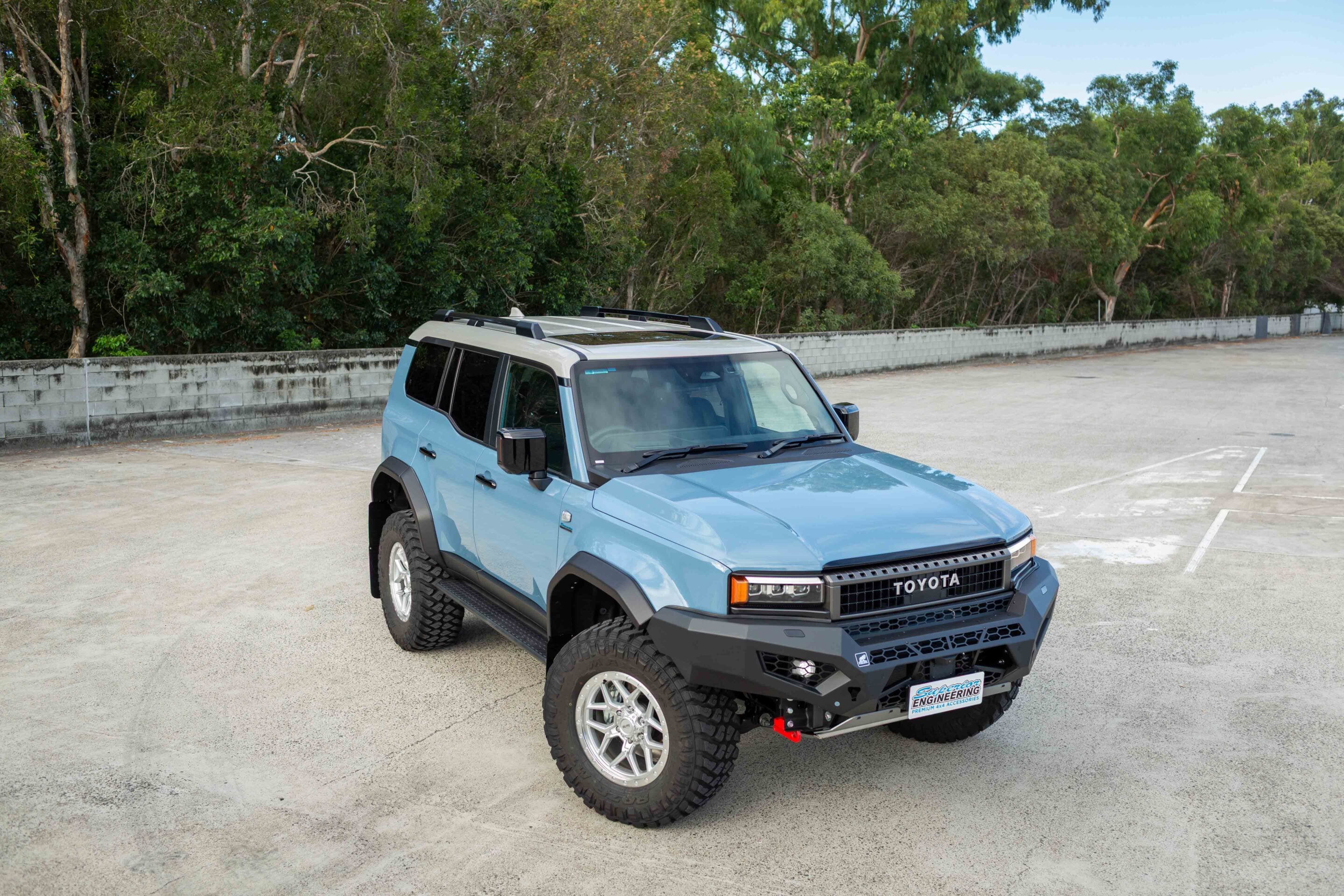
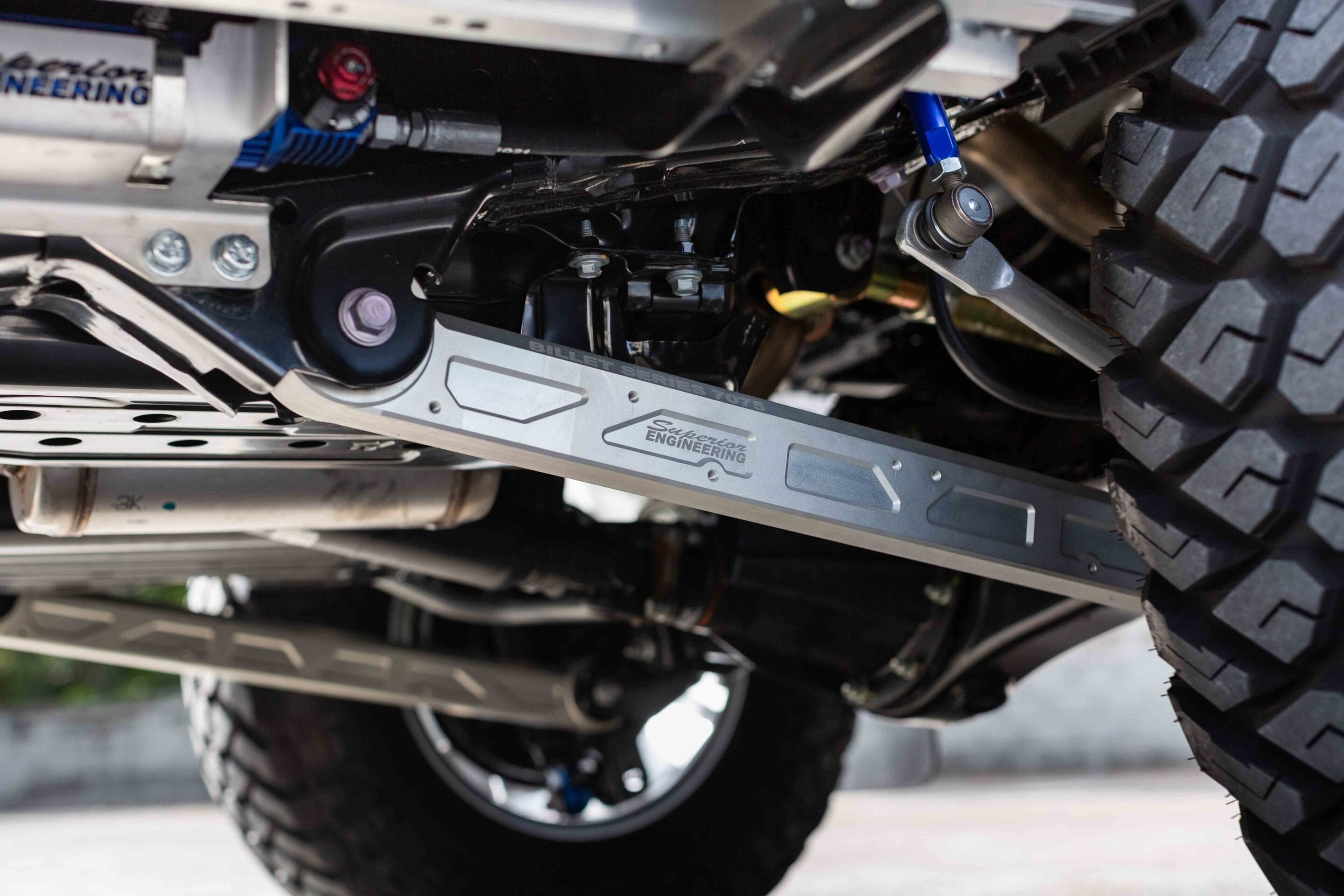
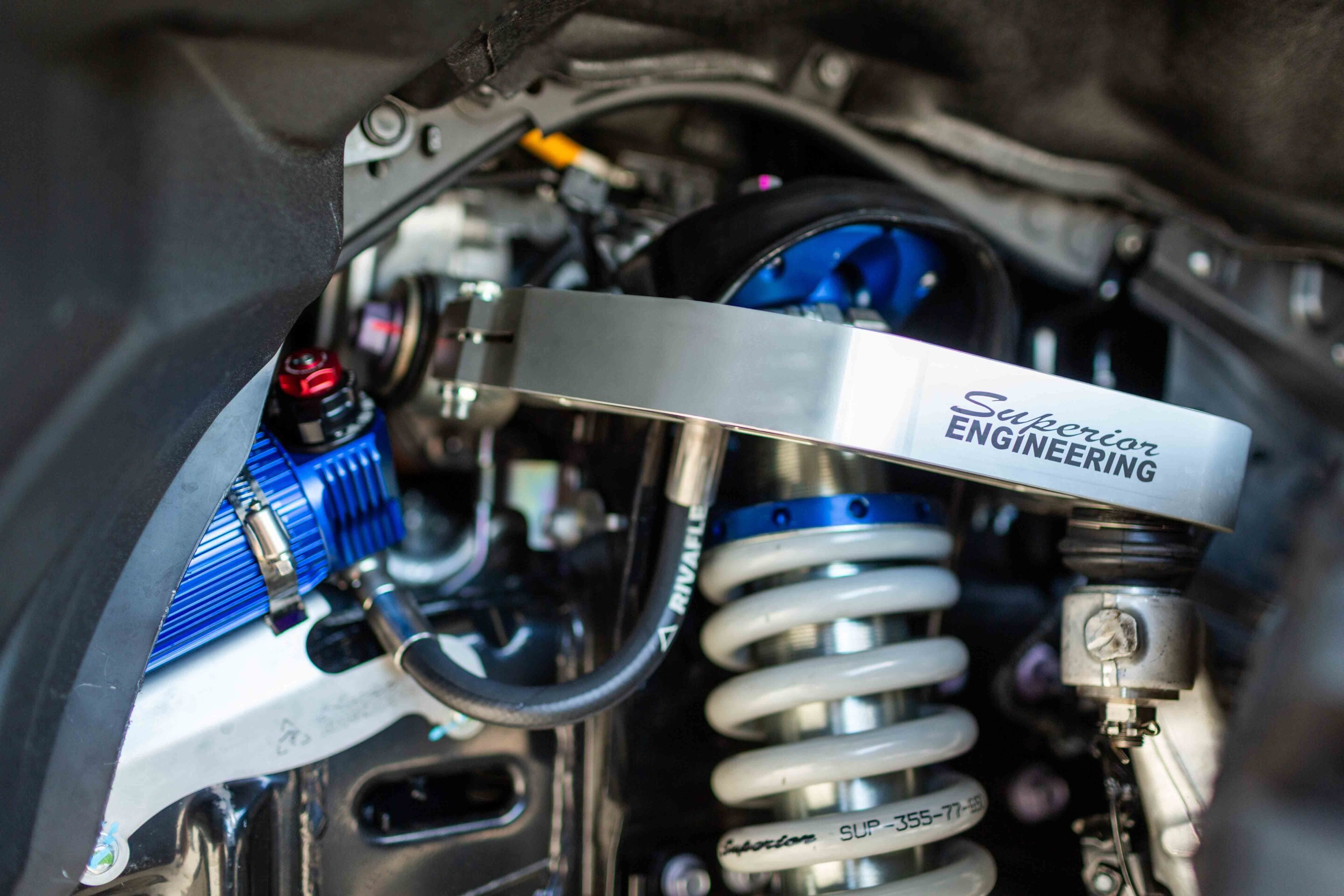
This is where Superior Engineering’s Outback Venturer kit (↗) is aimed. It is not a lift kit with a decent spring rate and a set of shocks. It is a complete engineering approach designed for the Prado 250 in its real-world touring state: Heavy, loaded, towing, and expected to cover serious distance without falling apart or drifting off the line. And it is designed to keep the vehicle driving like a proper 4WD the other 300 days a year too.
Why the factory setup runs out of headroom
The Prado 250 handles load well in standard form, up to a point.
The factory geometry, stability control calibration and drivetrain tuning all work together when the vehicle is operating within its design parameters.
The difficulty is that a fully built touring rig is rarely within those parameters. Front-end mass climbs with protection equipment. Rear axle weight increases with fuel, cargo and towing. Larger tyres change unsprung weight and alter how the suspension cycles.
The result is not a vehicle that falls apart. It is a vehicle that behaves differently. It sits differently under load, tracks differently over corrugations, and works harder over long distances. Suspension and driveline components take more punishment than they were designed to absorb. After five hundred kilometres of corrugated outback track, you feel the difference.
Why suspension planning is moving to the start of the build
Specifying suspension last used to be standard practice, but most serious 250 Prado owners are no longer doing it that way.
The shift is driven by practicality. Owners want a setup designed around the expected finished weight of the vehicle, not the factory kerb weight. Repeated suspension changes as a build progresses are expensive and disruptive. Getting it right from the outset makes more sense, particularly when the regulations around tyre size, ride height and GVM modifications tighten once a vehicle is registered in a modified state.
For buyers ordering a 250 Prado with touring in mind from day one, a pre-registered build through a Second Stage of Manufacture (SSM) approval pathway takes this further. The suspension, tyre upgrade and load-related modifications are engineered as a complete package before the vehicle is registered. The buyer drives away in a vehicle that is already compliant, already on the right tyres, and already built for how they intend to use it. No subsequent engineer’s reports. No incremental modifications after the fact. The vehicle is ready to work from the first kilometre.
For existing 250 Prado owners, the same logic applies. Getting the suspension right early, before the accessories are bolted on, avoids the cost and disruption of doing it twice.
What the Outback Venturer package actually covers
This is a full-system kit, not a height change with a pair of shocks.
The Outback Venturer package for the Prado 250 (↗) addresses the vehicle as a complete platform rather than treating suspension in isolation. The components covered include:
- Suspension matched to expected touring loads, not factory kerb weight
- Geometry correction components to restore suspension and driveline angles after the lift is introduced
- Control arms and diff drop to keep CV joints within a workable operating range and preserve articulation quality
- Braking system support to maintain stopping performance once load and tyre size change the equation
- Underbody protection engineered for the modified vehicle
- Speedometer correction for larger tyre fitment
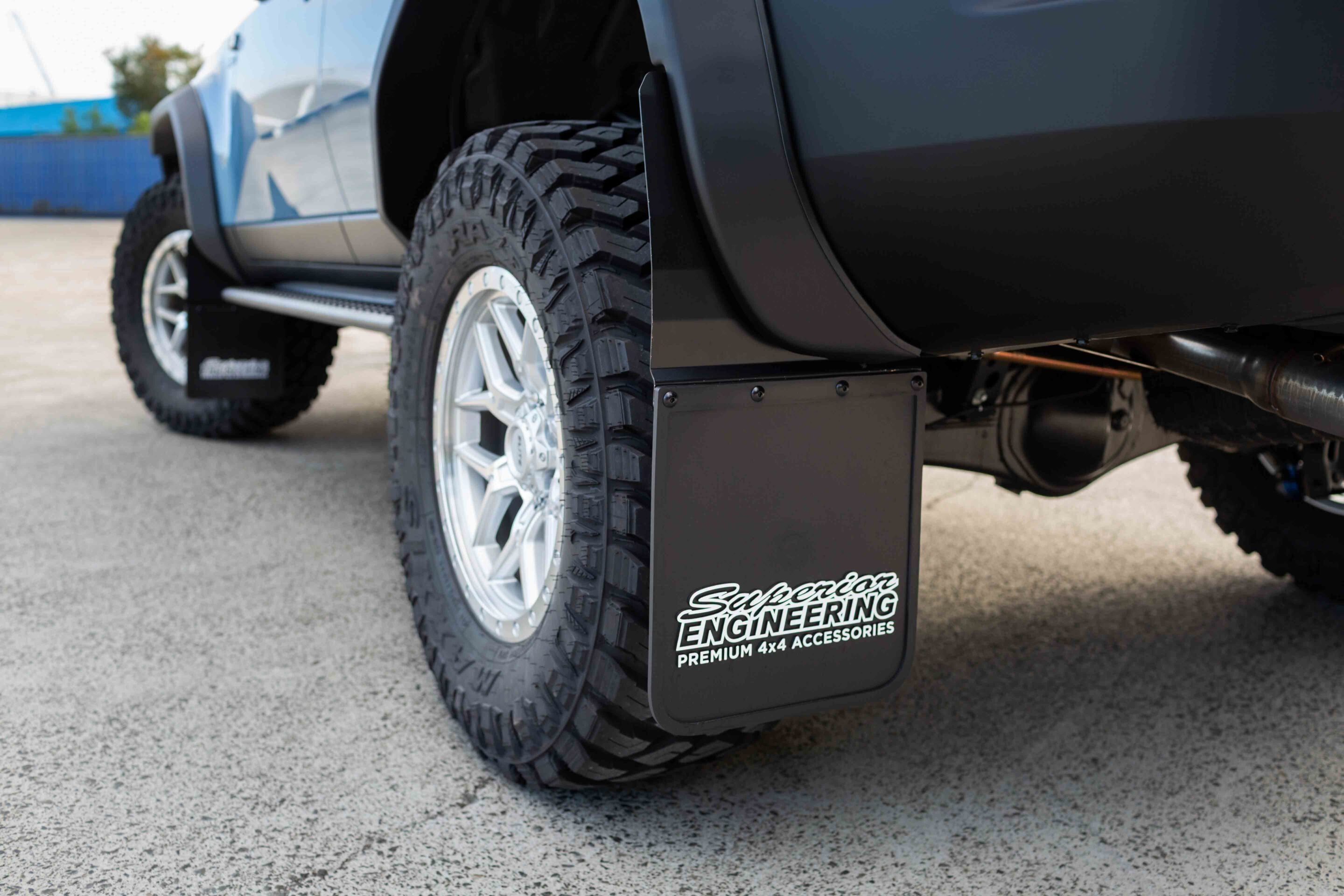
- Guard and flare coverage to suit 35-inch tyres within legal requirements
The intention is that every system on the modified vehicle works together, rather than individual upgrades creating new problems elsewhere.
Geometry: Where lifted builds succeed or fall over
Lift height alone does not tell the full story.
Once ride height increases and larger rubber goes on, suspension geometry shifts. Even moderate changes in operating angles affect how the vehicle drives across the Tanami on corrugated dirt or descends a loose track in the high country. Without correction, the results include reduced suspension efficiency, accelerated wear on key components, vague steering response and driveline angles that put CV joints under sustained stress.
Correcting geometry after a lift is not adding complexity. It is restoring the vehicle to a state where the suspension, steering and driveline all operate within a controlled range, whether the vehicle is running light or loaded to its touring weight.
Tyre size: More than a clearance question
Larger tyres affect more than appearance and ground clearance.
Gearing changes. Speedometer accuracy drops. Articulation clearances shift. Legal compliance comes into play around guard coverage. On a vehicle also carrying a lift and touring weight, tyre fitment needs to be considered as part of the full system, not fitted first and sorted later.
When tyre size, suspension setup and load are all addressed together, the outcome is a vehicle that drives consistently. Comfortable on bitumen runs between Broken Hill and Tibooburra, predictable on loose descents in Karijini, and stable on corrugated outback tracks with 2500kg on the towball.
Still a daily driver
A touring build that turns the 250 Prado into a bruiser on dirt but a handful in traffic is not a good outcome.
The Outback Venturer kit (↗) is not designed to transform the character of the vehicle. The 250 Prado earns its following partly because it works in everyday life: School runs, supermarket car parks, or highway kilometres between the city and the trailhead. A properly matched suspension setup at correct touring load ratings should improve ride quality and composure on sealed roads, not worsen it. The spring rates and geometry corrections are chosen to work with the vehicle’s weight in its built state, which on bitumen translates to a flatter, more controlled ride than the factory setup under load.
For touring families in particular, this matters. The driver clocking 1200km from Melbourne to the Victorian High Country and then spending a week on tracks around Dargo wants the same vehicle doing both. An engineered system should deliver that without compromise.
The point of all of it
A touring rig earns its reputation across long distances, not in a car park.
Five hundred kilometres of corrugations and a campsite at the end of a rough track will tell you more about a suspension setup than any spec sheet.
The aim with an engineered touring system is consistency: Maintaining ride height under sustained load, keeping suspension control predictable over repeated impacts, preserving steering stability with larger tyres fitted, and reducing driver fatigue by ensuring the vehicle feels just as composed at the end of a long day as it did at the start.
The Prado 250 is already a seriously capable platform in factory form. With the right engineering underneath it, it becomes an even more complete touring vehicle. That is the point.
Dozens of Victorian national parks and campgrounds are set to close over the King’s Birthday long weekend as Parks Victoria staff prepare to take industrial action in an escalating pay dispute with the Allan Government.
As reported by the Herald Sun (↗), up to 100 Parks Victoria employees are currently expected to walk off the job, with union organisers warning that number could increase if no agreement is reached before a Thursday deadline.
The industrial action stems from a dispute over ranger wages, with unions arguing that Parks Victoria staff are being paid less than comparable workers elsewhere within the public sector. The Australian Workers’ Union is seeking a binding review of ranger pay, a demand the state government has so far declined to accept.
The latest action follows more than 12 months of enterprise bargaining between Parks Victoria and the Australian Services Union, which says the agency has maintained its original offer of a 3 per cent wage increase. The union argues the offer falls short of pay rises secured by other Victorian public sector workers, including nurses and teachers, who are receiving increases of more than 7 per cent.
Parks Victoria staff staged a one-hour stop-work rally in May, the agency’s first protected industrial action since 2012, and warned that further action, including park closures, could occur if negotiations failed to deliver an improved outcome.
The planned strike is expected to affect a broad range of Parks Victoria operations, with participating staff including rangers and operational workers responsible for maintaining park infrastructure, conducting rescues, responding to emergencies, protecting wildlife, and ensuring public access to parks.
According to the Herald Sun (↗), the list of affected sites has expanded significantly beyond the initially impacted Colac Otways region. Additional parks and campgrounds across Victoria, from Echuca in the state’s north to Wilsons Promontory in the southeast, were added after talks between the union and Parks Victoria on Wednesday failed to produce a resolution.
The closures are expected to impact some of Victoria’s most popular destinations during one of the busiest camping and travel weekends of the year.
Parks Victoria (↗) and union representatives remain in negotiations ahead of the planned industrial action.
Australians are buying fewer petrol and diesel vehicles, with electrified models now accounting for almost half of all new vehicle sales in May, according to the latest VFACTS report.
Battery electric vehicles hit a record 20 per cent share of the market during the month, the highest monthly result on record, as the shift away from traditional powertrains continues. When hybrids and plug-in hybrids are included, electrified vehicles made up 46 per cent of all sales in May.
Drilling down into the light commercial space shows sales of both diesel and petrol vehicles continue to decline, down 16.4 per cent and 35.5 per cent respectively when comparing March 2026 to March 2025. By comparison over the same period, sales of electric and PHEV vehicles are up 328.6 per cent and 22.4 per cent respectively. That EV growth is off a small base, rising from just 42 in May 2025 to 180 in May 2026.
“As the number of EVs on the road continues to grow, charging infrastructure must become more of a priority. Continued investment and enabling policy settings will be essential to ensure infrastructure keeps pace with consumer adoption,” said Tony Weber, FCAI chief executive. “Charging infrastructure rollout must accelerate if Australia is to maintain consumer confidence and support continued uptake.”
“The evidence increasingly demonstrates that NVES is encouraging manufacturers to bring more low emissions vehicles to Australia, increasing both consumer choice and technology availability,” said Tony Weber, FCAI chief executive. “Regulatory stability and growth in public charging infrastructure is now critical to maintaining investment, consumer confidence and continued growth, particularly during a period of global economic uncertainty.”
This growth is being driven by newer entrants. BYD was up 155 per cent year-on-year, while Omoda Jaecoo surged 729 per cent and Geely rose 416 per cent, highlighting how quickly the market mix is shifting. BYD’s growth is being underpinned by tighter control of its supply chain, with the brand’s own car carrier Zhengzhou delivering vehicles directly into Australia. The purpose-built vessel is part of BYD’s expanding shipping fleet and allows the company to move vehicles from China to local ports on its own schedule, supporting rising demand.
The Ford Ranger remained Australia’s best-selling 4×4 ute in May, continuing to lead the segment ahead of the Toyota HiLux, with a noticeable gap back to the Isuzu D-MAX, BYD Shark and Mitsubishi Triton. When 4×2 variants are included, the Ranger and HiLux also dominated the broader ute market, well ahead of all rivals.
The Ford Ranger once again remains Australia’s best-selling 4×4 vehicle, with the Blue Oval securing a total of 4051 sales in May.
The new HiLux wasn’t far off the pace, registering a total of 3685 sales for the month, but there was daylight to the next best in the ute category, with the D-MAX, Shark and Triton selling 1336, 1244 and 1165 units respectively. These figured are mirrored on the overall charts, with the Ranger and HiLux outselling every other model in the Australian market in May. When combining 4×4 and 4×2 variants, the Ford Ranger accumulated 4474 sales, while the HiLux notched up a total of 4005 sales.
In the SUV space, the Ford Everest was the most sought after 4×4 for the month, with 1876 sales registered. The Everest was followed by the LandCruiser 300 Series (1262), MU-X (1062) and Prado (987). It was a soft month for the Prado, with sales down 63.9 per cent in May 2026 compared to May 2025. Its year-to-date sales are also down 45 per cent.
Speaking of soft results, the Kia Tasman 4×4 could only muster 382 sales for the month; the Amarok only 271 sales; and the Navara only 217. With a new Navara launching recently, Nissan would be hoping those numbers spike in coming months.
In the budget segment, the GWM Cannon/Cannon Alpha is experiencing a sustained period of success. In May, it sold a total of 970 units, with its year-to-date growth sitting at an impressive 85.2 per cent. Its direct competitors are well behind in terms of sales: Foton Tunland (107), Jac T9 (43), KGM Musso (137), LDV T60 (215) and MGU9 (125). At the opposite end of the spectrum, the Chevrolet Silverado/HD (297 sales) outsold the Ford F-150 (203), Ram 1500 (177) and Toyota Tundra (93).
Electrified vehicles continued their rapid rise in May 2026, accounting for 46 per cent of all new sales, including a record 20 per cent share for battery electric vehicles. As a result, petrol and diesel demand fell sharply, particularly in the light commercial segment, as fast-growing brands like BYD help drive the shift alongside expanding EV supply chains and infrastructure pressures.
A total of 100,206 new vehicles were sold in May, down 4.8 per cent compared with the same time last year. Toyota remained Australia’s top-selling brand with 16,342 sales, followed by BYD (8211), Ford (7195), Hyundai (7007) and Kia (6761).
| Top-selling 4x4s in May 2026 | |
|---|---|
| 1. Ford Ranger | 4051 |
| 2. Toyota HiLux | 3685 |
| 3. Ford Everest | 1876 |
| 4. Isuzu D-MAX | 1336 |
| 5. Toyota LC300 | 1262 |
| 6. BYD Shark | 1244 |
| 7. Mitsubishi Triton | 1165 |
| 8. Isuzu MU-X | 1062 |
| 9. GWM Cannon/Cannon Alpha | 970 |
| 10. Toyota Prado | 987 |
| Top-selling 4x4s in 2026 (YTD) | |
|---|---|
| 1. Ford Ranger | 19,074 |
| 2. Toyota HiLux | 15,171 |
| 3. Ford Everest | 8957 |
| 4. Isuzu D-MAX | 7501 |
| 5. Toyota Prado | 7372 |
| 6. Mitsubishi Triton | 7146 |
| =7. Isuzu MU-X | 6095 |
| =7. BYD Shark | 6095 |
| 9. Toyota LC300 | 5129 |
| 10. GWM Cannon/Cannon Alpha | 4678 |
Jeep Australia has rolled out a limited Wrangler Rewind edition, with just 50 units allocated locally.
Available to pre-order now, it is priced at $73,990 MSRP (excluding on-road costs) and leans heavily into late-80s and 90s nostalgia by taking the Wrangler’s familiar off-road formula and layering it with full retro attitude. The result is a Wrangler that looks like it time-travelled out of an arcade game.
Originally shown as a one-off concept at the 2025 Easter Jeep Safari, the Rewind clearly struck a chord, enough for Jeep to greenlight a production run, albeit a very small one.
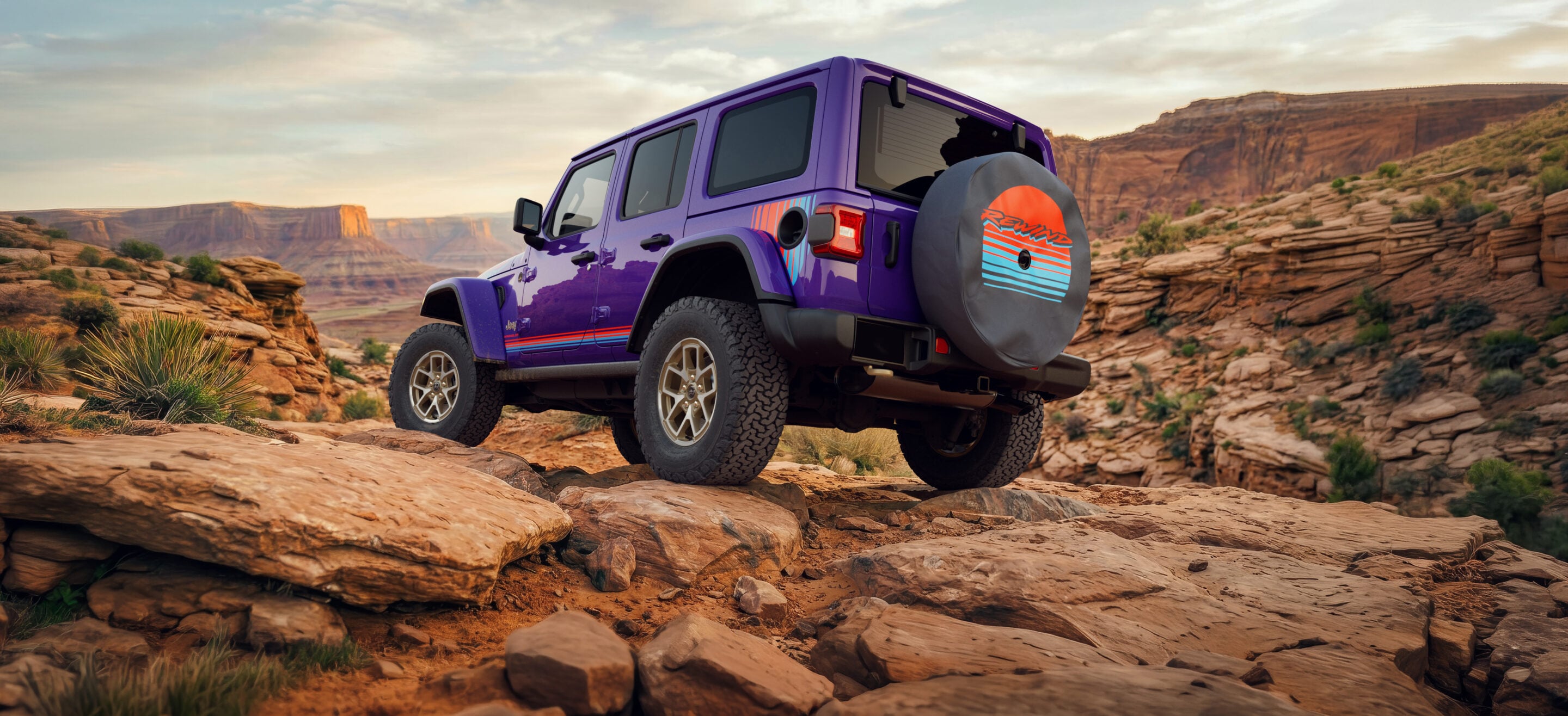
Visually, this is where the Rewind earns its name. The exterior is all loud graphics and throwback detail, with full-body red and blue streak decals straight out of an 80s neon poster, bronze ‘JEEP’ and ‘TRAIL RATED’ badging, and 17-inch gold-accent wheels. Body-coloured fender flares and a matching hardtop ensure it doesn’t look over the top. Buyers can spec it in Bright White, Black, Granite Crystal or Reign at no extra cost, with a dedicated Rewind spare tyre cover finishing the rear.
Inside, Jeep doubles down on the nostalgia theme with a more playful take than usual. Nappa leather seats feature embossed 8-bit arcade-style graphics, paired with iced blue and plum stitching that runs across the cabin, including the steering wheel and dash. There is also a custom shifter medallion and rear swing gate plaque, both styled like something pulled straight from an old Nintendo game.
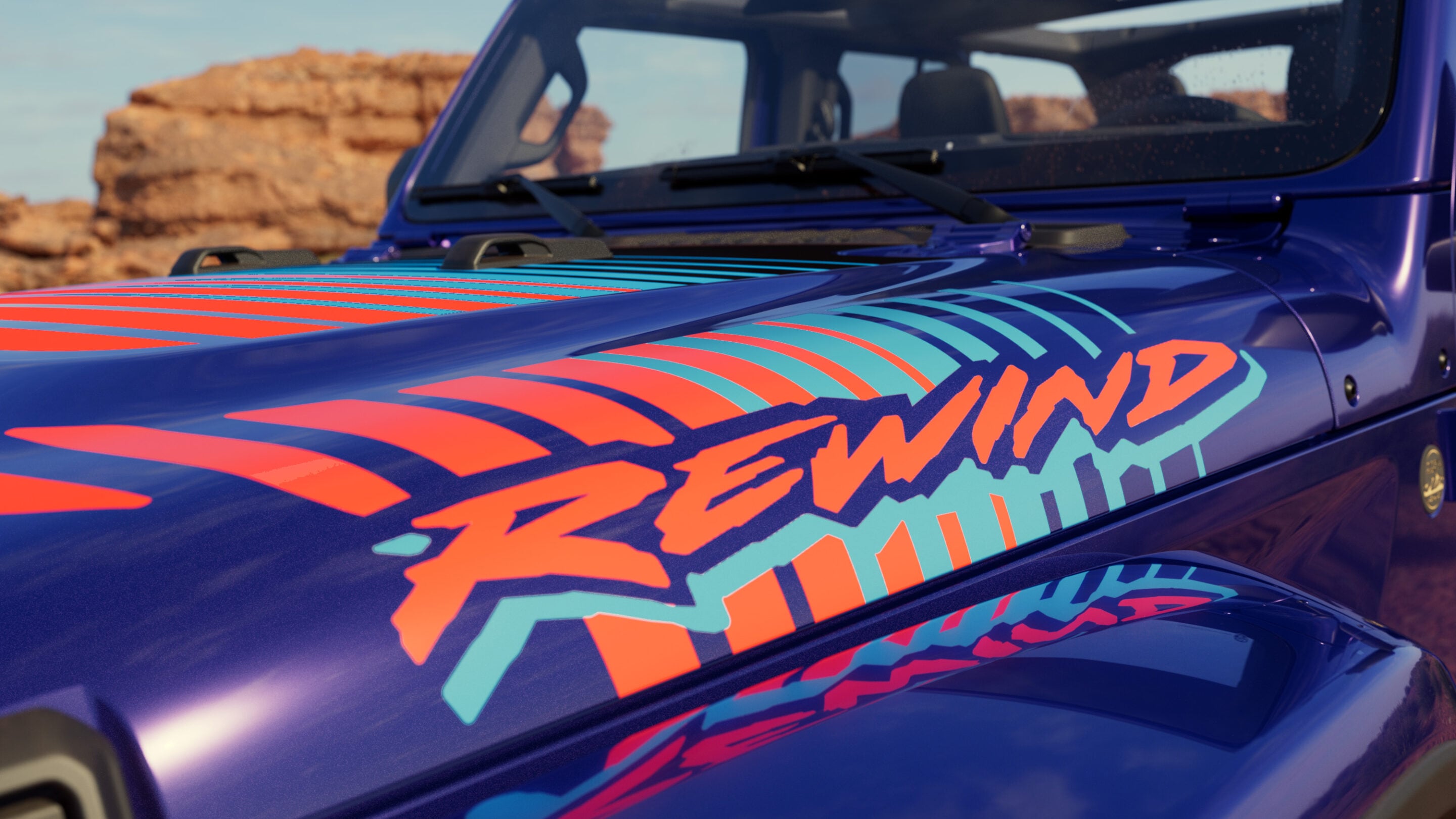
Underneath all the retro graphics, it is still a standard Wrangler. Power comes from a 2.0-litre turbocharged engine matched to an 8-speed automatic and Selec-Terrain 4×4 system. Off-road hardware remains intact too, including a two-speed transfer case, Dana front and rear axles, skid plates, and a full suite of driver assistance tech.
It also keeps the Wrangler’s party trick, proper open-air driving. Doors and roof come off via quick-release hinges, and the windscreen still folds down, keeping the focus on that classic open-air experience.
Tech has not been left in the 90s. A 12.3-inch Uconnect 5 touchscreen sits at the centre, with wireless Apple CarPlay and Android Auto, an 8-speaker audio system, and a full set of safety assists including adaptive cruise, blind spot monitoring, rear cross path detection and park assist.
The Toyota HiLux BEV has been awarded a five-star ANCAP safety rating following additional crash testing of the battery-electric variant, extending top-level safety coverage across Toyota’s dual-cab ute line-up.
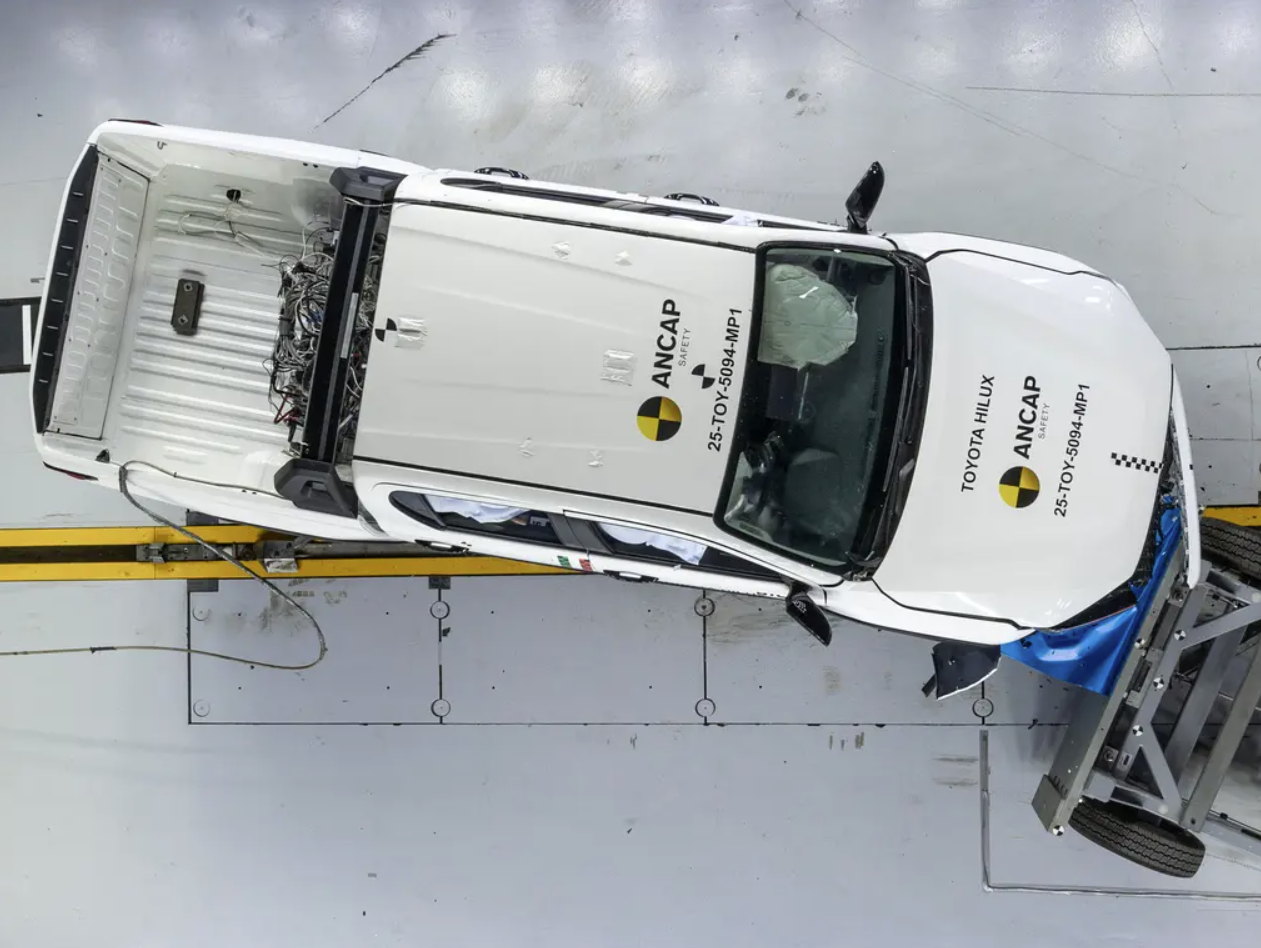
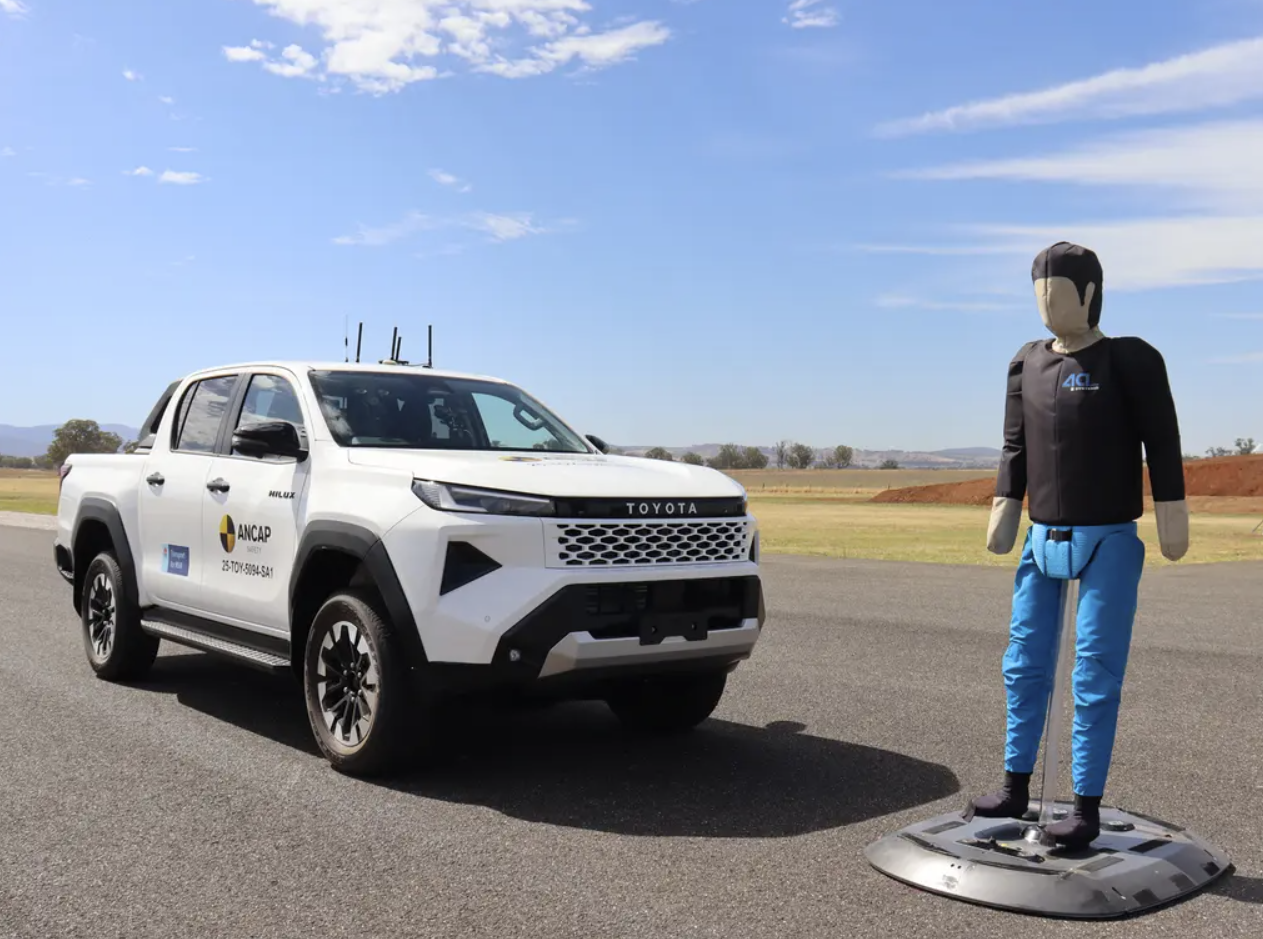
Diesel-powered HiLux variants received a five-star ANCAP rating in December 2025. With the arrival of the BEV version, ANCAP conducted additional frontal offset (MPDB) and oblique pole crash tests to assess battery integrity and high-voltage system protection. The results confirmed the electric model delivers comparable crash performance to the diesel range, with all HiLux variants now holding a five-star rating except the Rugged X.
The HiLux achieved scores of 84 per cent for Adult Occupant Protection, 89 per cent for Child Occupant Protection, 82 per cent for Vulnerable Road User Protection and 82 per cent for Safety Assist.
“In an increasing market of alternative-powered utes, business and private buyers now have another option that balances their safety needs with their powertrain considerations,” said Carla Hoorweg, ANCAP Chief Executive Officer.
The HiLux BEV is priced from $74,990 before on-road costs. The range is exclusively double-cab, starting with SR cab-chassis and SR pick-up variants from $76,490, and topping out with the SR5 pick-up at $82,990. It is powered by a dual-motor all-wheel-drive system and a 59.2kWh lithium-ion battery, producing a combined 144kW and 468Nm. The front motor produces 82kW/206Nm, while the rear produces 129kW/269Nm. Toyota’s Multi-Terrain Select system offers six drive modes.
Charging capability includes 150kW DC fast charging, allowing a 10 to 80 per cent charge in 30 minutes, and 10kW AC charging for a full charge in around 6.5 hours. Driving range is rated at 315km for pick-up variants and 245km for cab-chassis models. Hardware updates include reinforced suspension, ventilated disc brakes with regenerative braking, and a 2000kg braked towing capacity.
Inside, the SR grade includes fabric upholstery, dual-zone climate control, smart entry and start, a 12.3-inch touchscreen paired with a 12.3-inch driver display, wireless Apple CarPlay and Android Auto, and a 1500W inverter. The SR5 adds leather-accented trim, heated and powered front seats, heated steering wheel, premium LED lighting, wireless charging, and an eight-speaker audio system.
Safety equipment includes Toyota Safety Sense with autonomous emergency braking, adaptive cruise control, lane tracing assist, rear cross-traffic alert, and eight airbags, along with Toyota Connected Services integration via the myToyota Connect app.